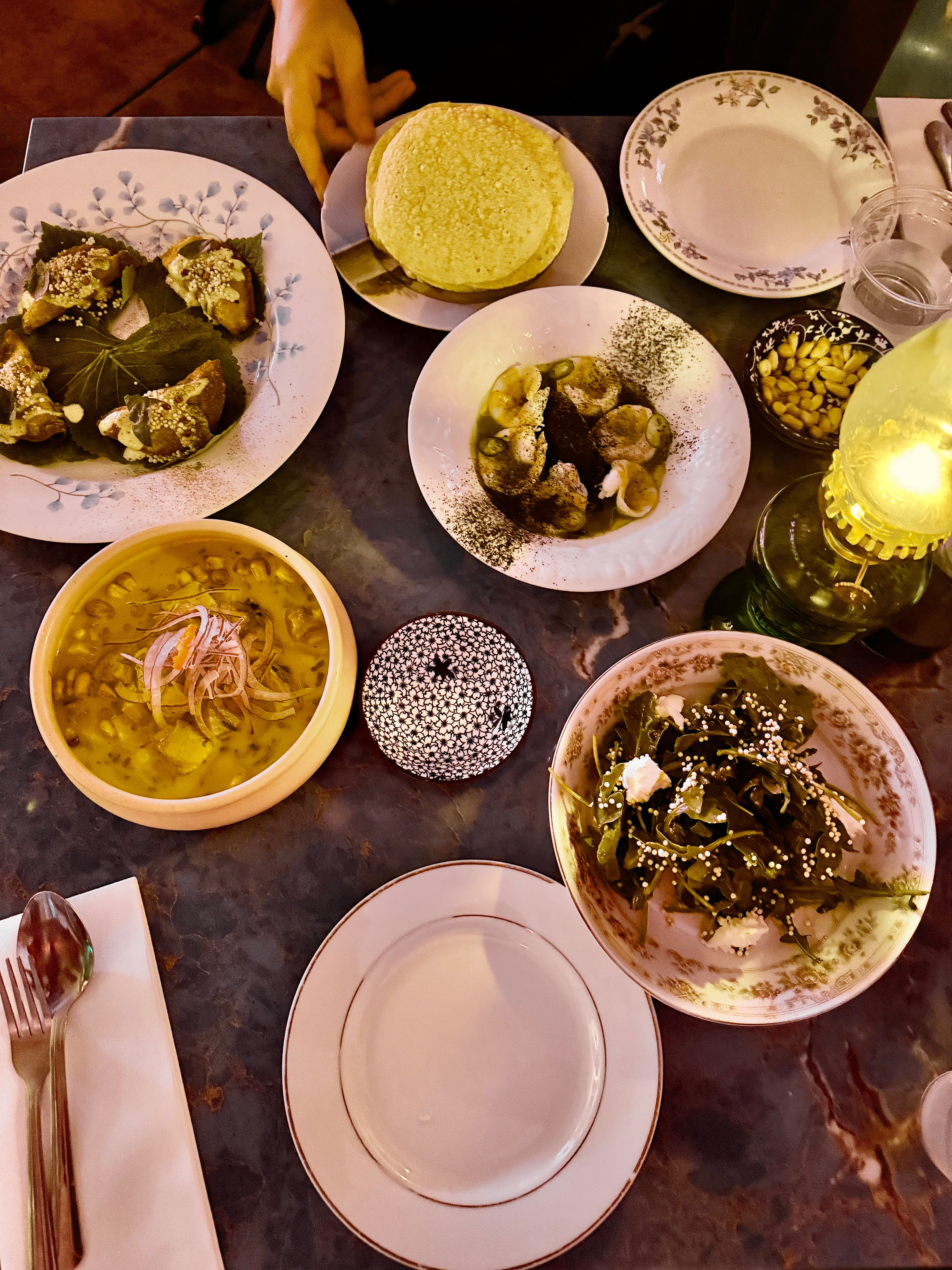
I can’t remember where I saw it or who wrote it, but they aptly described the weather in LA right now. It’s autumn in the morning, summer in the afternoon, spring in the evening, and at night winter sets in—all four seasons in one day. I never know what to wear, so I end up taking a jacket everywhere I go, just in case. And I learned my lesson well when I went out to dinner at the new Malaysian restaurant Rasarumah when stopped in LA on her book tour. Vegetarians, this place has a separate menu just for you. I highly recommend the gado gado salad and mushroom clay pot, which we ended up ordering twice that evening. The cendol sundae with coconut ice cream and pandan jelly noodles was phenomenal.
This week…
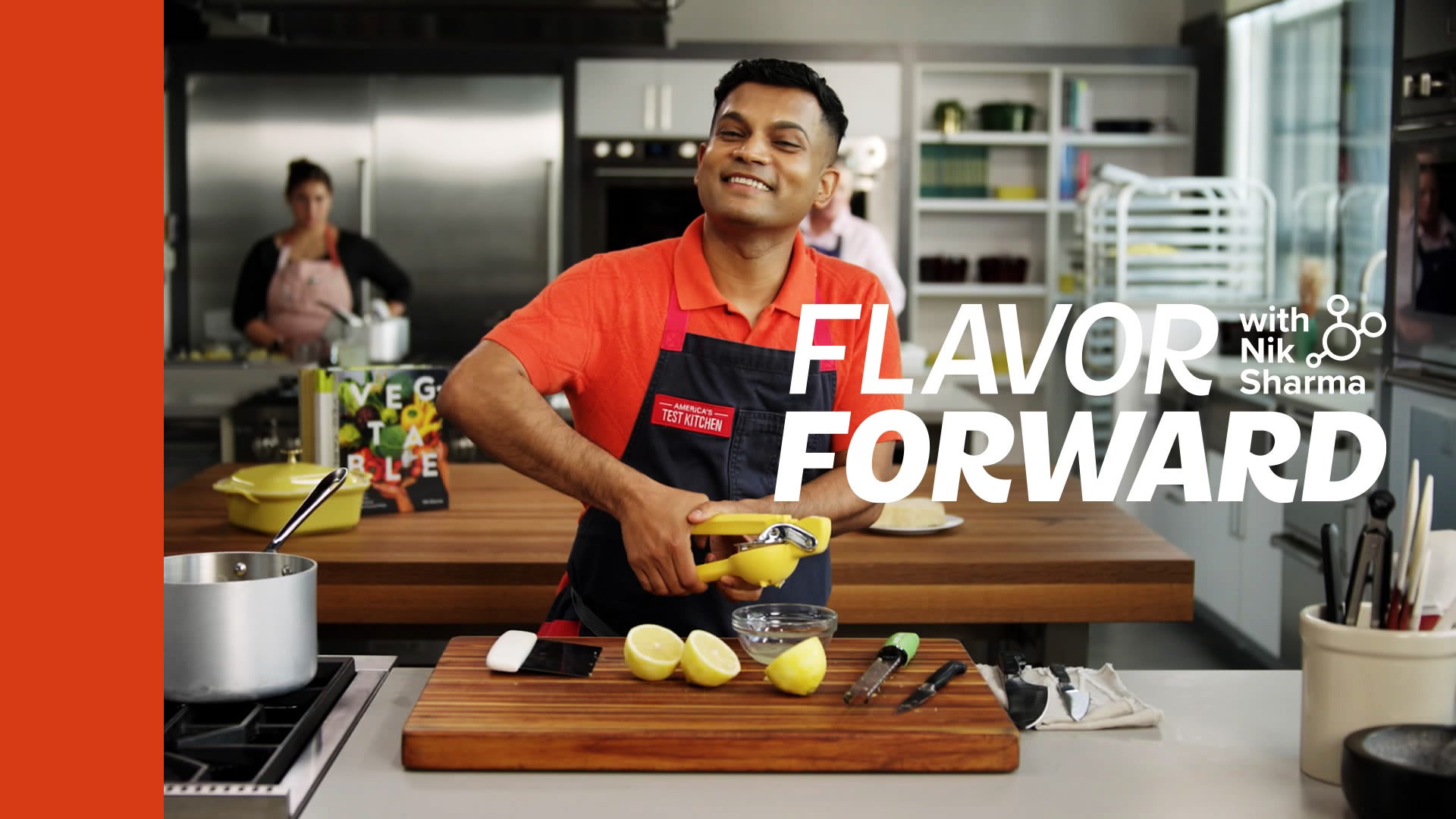
See what I’m cooking up in the latest episode of Flavor Forwardwith America’s Test Kitchen!
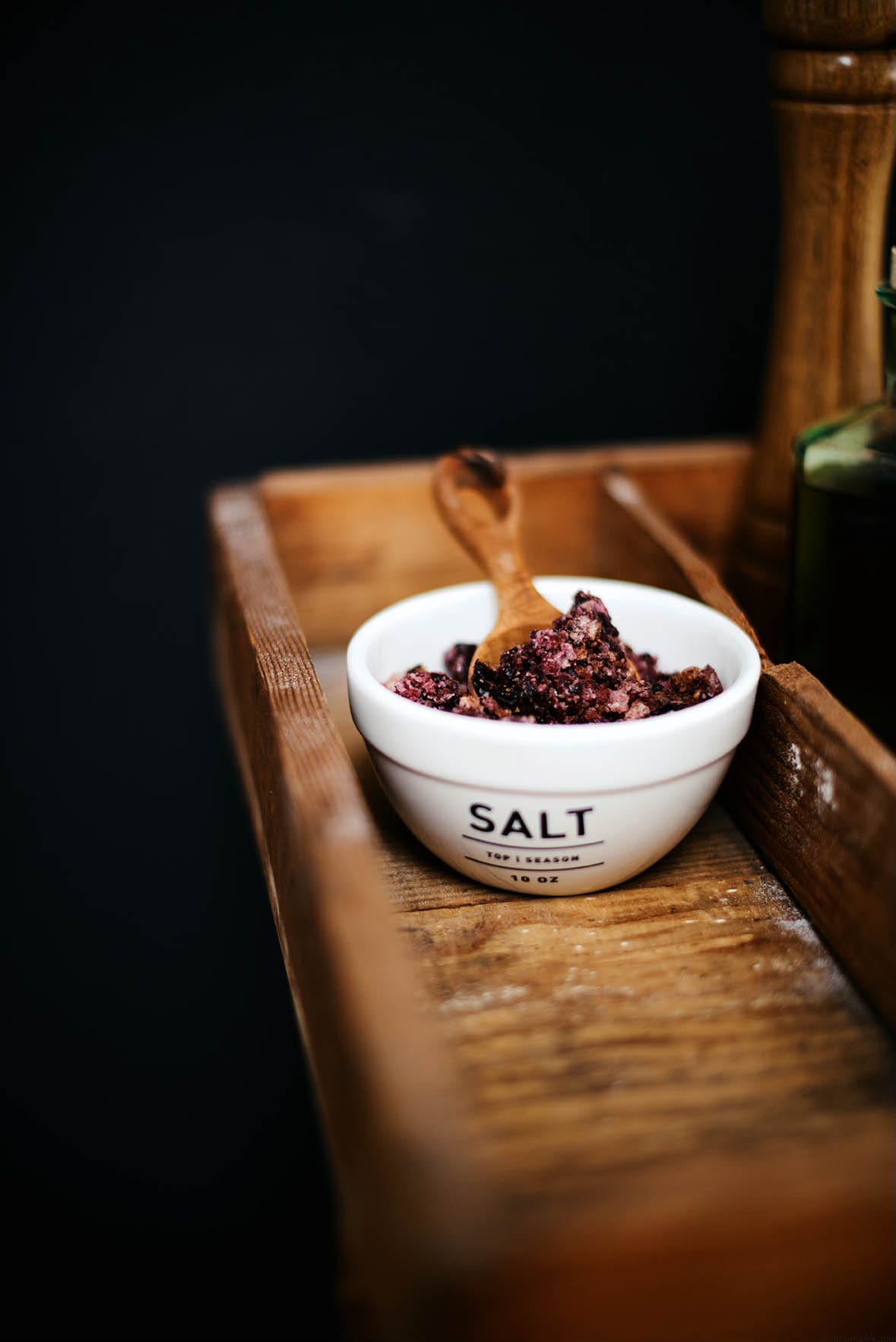
Learn about the science of salt in my salt deep dive (and get a handy chart to help with measurements for different types of salt)
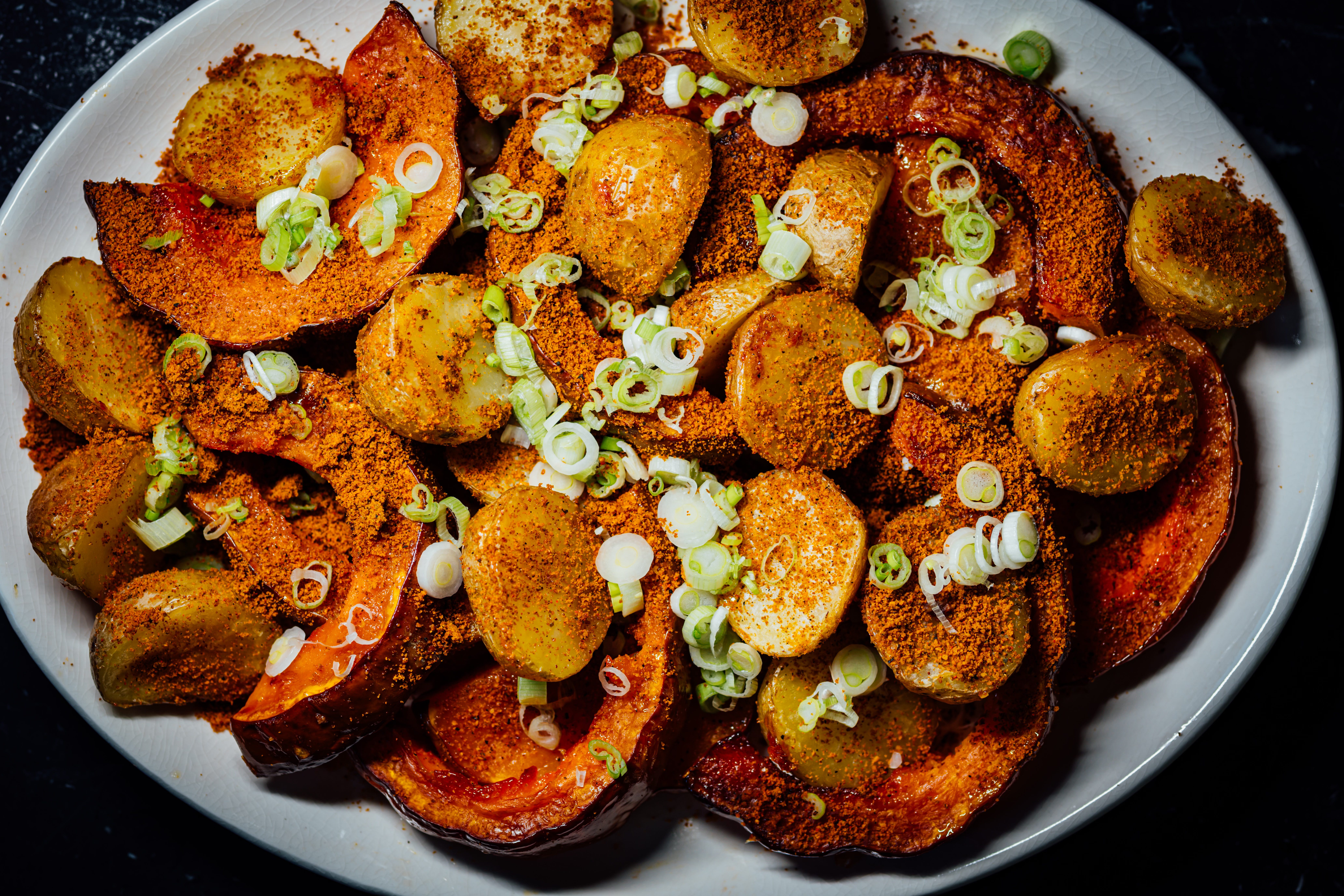
Exclusively for my Paid subscribers, my recipe for Gunpowder Butternut Squash and New Potatoes
Tandoori Salmon: Turning the Heat Up
Tandoori food delivers some of the boldest, smokiest flavors in Indian cooking, and that is precisely why I love it. Growing up in Bombay, I would sneak out with my friends at night to eat tandoori chicken fresh off the grill, wrapped in buttery naan. The meat’s charred crust, its crimson hue, and the aroma of spices that reached you before the plate did were unforgettable. For this episode of Flavor Forward, I wanted to bring that same intensity to salmon. The broiler may not hit the 900 degrees of a tandoor, but its radiant heat can still mimic that smoky, high-heat magic.
Instead of the traditional yogurt marinade, I take a different route. A brief soak in a baking soda solution raises the salmon’s pH, keeping it tender and moist while allowing time for a dark crust to form. I then brush the fillets with lemon juice, which resets the acidity, just enough for the beet juice in my spice paste to hold its deep red color. The paste combines garam masala, Kashmiri chili powder, garlic, ginger, and kasoori methi, creating a rich, earthy heat. The result is buttery, smoky salmon with layers of spice and color that rival anything from a tandoor. Watch the full episode of Flavor Forwardto see how it all comes together and learn the science behind this vibrant dish.
Missed an episode? Catch them all here at Flavor Forward.
Let’s Talk About Salt — and Why It Changes Everything You Cook
If you’ve ever wondered why salt makes food taste better, you’ll want to read this one. I just published a deep dive on the science of salt, how it sharpens aromas, balances bitterness, and even changes texture at a molecular level. It’s a quick, practical guide to understanding salt beyond “season to taste,” and it’ll change how you cook everything from pasta to pastries. You can read it here: The Science of Salt.
A trip to the Rose Bowl Flea Market in Pasadena feels a bit like rolling dice at an antique casino. You never know if you’ll come home empty-handed or juggling treasures. Held every second Sunday of the month, this legendary market is an event in itself with more than 200 vendors selling everything from vintage furniture and old cookbooks to potted plants, ceramics, clothes, and art. It is a dream for anyone with an eye for stories told through objects, whether collectors, stylists, designers, or just curious wanderers like me.
Our first visit years ago was a total bust. I had gone looking for a mirror like the one my parents have back home, an oval brass frame covered in delicate floral engravings. I found plenty of gold-painted wooden mirrors, ornate and beautiful, but not what my heart wanted. I left empty-handed and a little deflated.
Fast forward to this year. We had just finished remodeling our backyard, and I was on the hunt for a dining table, something big and full of character, and a smaller one just for us when we weren’t entertaining. On a whim, we decided to tempt fate again and head to the Rose Bowl. And wouldn’t you know it, luck was waiting. Not only did we find outdoor furniture (made by Zation Wood Works), but we also found the mirror I had been searching for all these years. Heavy brass, beautifully aged, etched with intricate patterns that catch the light just right.
The outdoor tables and benches came with their own story, too. They are made from reclaimed wood floors salvaged from old Los Angeles homes. I love that. When I look at them, I imagine they have lived many lives before ours, seen things, heard whispers, maybe even held secrets. Perhaps those floorboards once felt the boots of a pirate or covered treasure tucked below.
Now they sit in our backyard, watching the sun move across the day. And I like to think that in their long journey through time, they somehow found their way home.
Lemon Couscous Chicken with a Burst of Freshness
If you’re craving something cozy but full of brightness, this week’s recipe is it. Inspired by my love for citrus and easy one-pan meals, Lemony Chicken with Chickpeas, Artichokes, and Pearl Couscous brings sunshine straight to the dinner table. The chicken thighs soak in a lemon-spiked marinade with smoked paprika, turmeric, and oregano before crisping up and finishing atop toasted couscous, tender artichokes, and creamy chickpeas. A drizzle of lemon dressing and a handful of arugula pull it all together into something that tastes like you spent all day cooking, even though it comes together surprisingly fast. Learn how to make it on the latest episode of Flavor Forward.
Missed an episode? Watch all episodes of Flavor Forward!
Best Fall Cookbooks of 2025: New Must-Read Releases for Every Kitchen
Every fall brings a wave of new cookbooks, and this year’s lineup feels especially thoughtful. From Helen Goh’s tender reflections on baking to Hetty McKinnon’s gatherings built around food and music, these books celebrate the ways cooking connects us. I’ve rounded up my favorite fall cookbooks of 2025, each one full of stories, flavor, and heart.
I’m honestly overwhelmed with gratitude. The response to Flavor Forwardhas been beyond anything I imagined. What excites me most is hearing how you’ve used these episodes to cook something new, to see ingredients differently, or to rediscover why you love being in the kitchen. Thank you for tuning in, for cheering me on, and for sharing this journey with such kindness and curiosity.
This week’s episode is one of my favorites yet, featuring a simple weeknight pasta that combines Italian passata and Korean gochujang. It’s comfort food with a twist: silky, bold, and quietly surprising, much like this adventure has been for me. The sauce reminds me why I love cooking in the first place: how two seemingly different ingredients can come together to create something entirely new.
This week, I’m taking paid subscribers behind the scenes into my kitchen to explore how a recipe takes shape. My Guide to Recipe Creation shares the framework and principles I rely on when developing new dishes, using my Pineapple Five-Spice Rice Krispies Treats from America’s Test Kitchen’s Rice Krispies Treat Challenge as a running example. I hope it inspires you to experiment, adapt, and create your own.
Thank you, truly, for watching, for writing, and for reminding me that food connects us in more ways than I could ever put into words.
From Idea to Plate: My Guide to Recipe Creation
How to Build Recipes That Tell a Flavor Story
Cooking gets more exciting when you stop following recipes and start understanding them. This guide is meant to help you think like a recipe developer to see how flavors connect, textures form, and small choices shape big results. Once you grasp the “why” behind a recipe, you can start experimenting with confidence and make every dish your own.
Thank you so much for tuning in to the very first episode of my new show, Flavor Forward! It has been such a joy to share it with you, and the response has been incredible, all thanks to you. I am truly grateful.
In the newest episode of Flavor Forward, I take a humble can of white beans and riff on romesco, using one of my favorite pantry staples: jarred crushed Calabrian chiles. I first discovered these fiery little gems at a pizzeria years ago, and they have quickly become a permanent fixture in my kitchen. I keep two jars in constant rotation. They bring just the right amount of heat, around 25,000 to 40,000 Scoville units, along with a smoky and fruity depth. I have spooned them over eggs, tucked them into grilled cheese sandwiches, and, as in this week’s episode, used them to build dinner-worthy flavors in a romesco bean stew.
Calabrian chiles are often referred to as the “red gold” of Southern Italy. They are so beloved that there is an annual peperoncino festival in Diamante and even a museum dedicated entirely to them. Brought to Europe from the Americas in the 16th century, they quickly became an integral part of Calabria’s identity and cuisine. Their heat is considered medium, but what sets them apart is the complexity of flavor. Warm, fruity, and smoky, they lend depth without overwhelming the dish.
A spoonful of Calabrian chile paste can transform pasta, pizza, seafood, sauces, and more. Locals often say that food is not truly Calabrian without peperoncini, and many even carry them in their pockets to ensure they never face a bland meal. More than an ingredient, they are a symbol of joy and identity. You see them painted on walls, hanging from balconies, and sold in markets as charms of good luck.
Back at home, I am preparing for a family visit from Auckland. My cousin and I can be a bit of a whirlwind together, and I am sure we will keep everyone on their toes in the best possible way.
ICYMI
WHAT TO COOK IN OCTOBER: COZY RECIPES FOR FALL
October always feels like the month when the kitchen asks us back in, not with urgency but with comfort (and a little spooky Halloween fun). I find myself craving the scents that fill the house and linger long after the pans are washed: cardamom and cinnamon wrapped into a Masala Chai Pumpkin Cake, the sweet scorch of caramel over a Caramelized Nut Semolina Kefir Cake, and the vinegar tang that cuts through a Goan Coconut Curry. There are dishes that warm—like Chickpeas Stewed with Spinach, or Butter Chicken rich with spice and cream, and those that brighten, such as a Preserved Lemon Pasta that tastes of sunlight even on the grayest day. And because we can never have too many sweets, there are Cookies for Halloween, a Date and Tamarind Loaf, and a Lemon Poppy Seed Ice Cream that surprises me each time with its brightness in the middle of fall. These are the flavors I am cooking and eating this October, and I hope you will bring them to your table too.
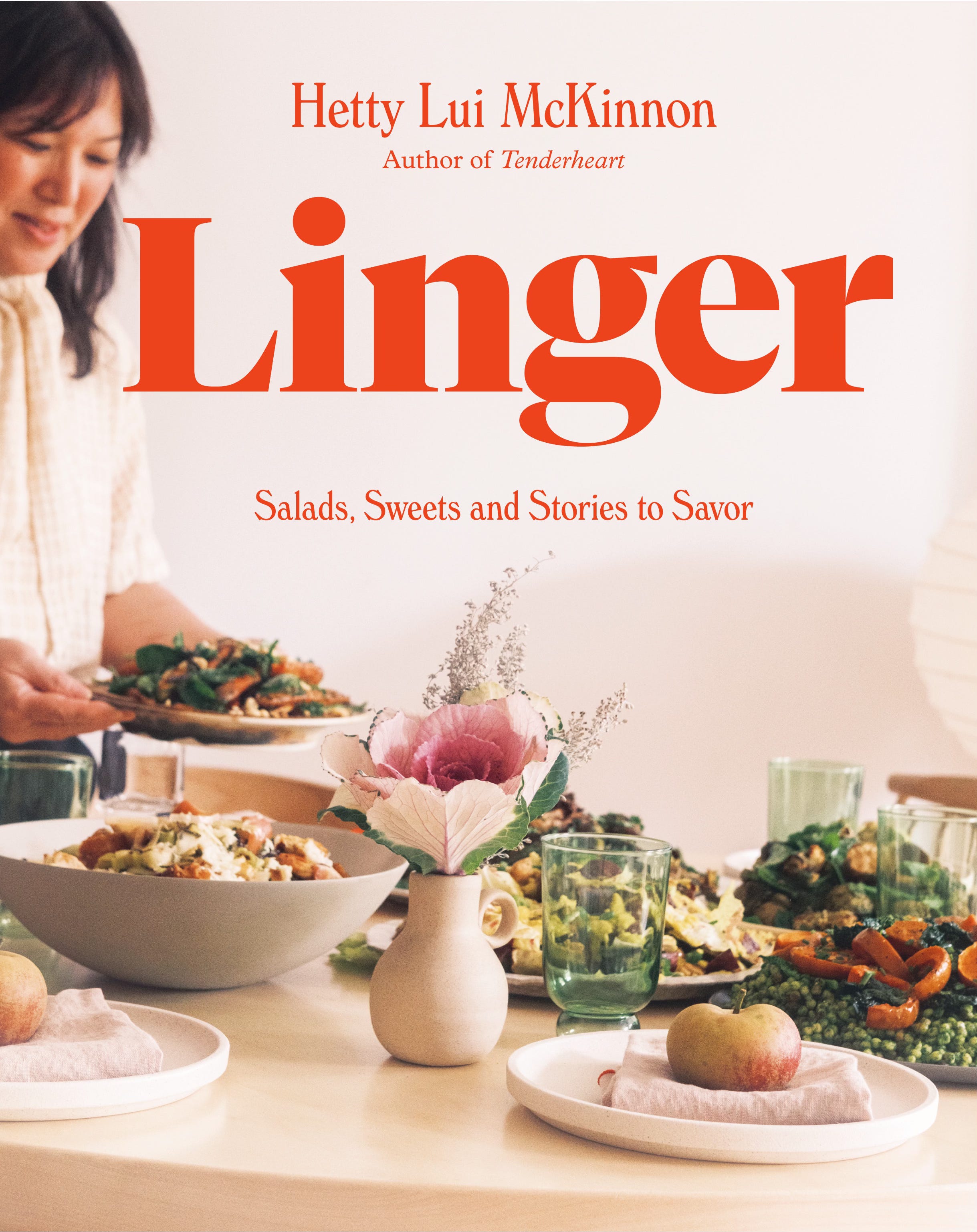
Last Sunday I was on Substack Live with Hetty Lui McKinnon to discuss her new book, Linger. If you missed us, check out the recording.
What’s taken most of my time, though, and what I’m most excited to share with you all is my new show with America’s Test Kitchen, Flavor Forward! Instead of my typical content, I wanted to share a bit more about the show, what it means to me, and what I’ll bring to you!
From Dreaming in a Lab to Cooking on Camera
There was a time, back when I was still spending long days in a molecular biology lab, when silence felt endless. I’d wait for experiments to tick away on their own clocks and sometimes, to breathe, I’d sneak home for a break. That’s when I stumbled across America’s Test Kitchen (ATK) on PBS.
It felt like fate. Here were people who looked at cooking the way I looked at science: curious, nerdy, precise, a little obsessive about the “why.” They didn’t just make dinner, they asked questions, tested ideas, explained failures, and celebrated the wins. I was hooked. They were chasing truth through food, and I saw myself in that.
I never dared imagine that one day I’d walk through those same doors, not as a fan, but as part of the story.
After I left the lab for the apron, I wrote recipes, columns, and books for years, but television? That always slipped just out of reach. A few near-misses dangled in front of me, then disappeared, first the pandemic, then media mergers. One network even told me I looked too young to cook on TV (A compliment? Apparently not). After a while, I convinced myself that maybe it wasn’t meant to happen. Some dreams, I thought, are better left alone.
And then, out of nowhere, came ATK.
Earlier this year, as an editor-in-residence, I walked into the legendary test kitchen for the first time. The smell of roasting, the hum of conversation, the sound of pots clattering; it was like stepping into a universe I’d only watched from afar. The team welcomed me in, generous with their knowledge and wild with curiosity. Together, we geeked out over the myth of lemon pith bitterness, how instant mashed potatoes act like water sponges when added to meat, and how to fix problems in the kitchen. For me, someone who lives and breathes the science of flavor, it felt like holding the keys to the kingdom.
Every trip to Boston lit me up with possibility.
Then one day, I came home, opened my inbox, and nearly dropped my laptop. An email from Dan Souza: Would I be interested in hosting a show with America’s Test Kitchen? I’d just finished recording an episode of the In The Test Kitchen podcast, and the editors loved how it turned out.
You’d think after years of waiting, I would have screamed, but instead, I held my breath. So many false starts had made me cautious. But this time, it was real. Dan and the team weren’t offering a maybe—they were offering a chance to build something together. A show where I could finally share the things that matter most to me: flavor, science, and the thrill of discovering why.
For months, we wrote scripts (harder than any essay I’ve ever written), tested recipes, filmed long days in the studio, and shaped an idea into something I can only describe as a dream come true. And none of it would exist without Dan, Lan Lam, Matt Watson, Simon Savelyev, and the entire ATK team, who poured their creativity and humor into every single episode.
It’s bold, it’s nerdy, it’s fun. And it’s the show I once thought I’d never get to make.
Flavor Forward is my love letter to flavor and to the global pantry that enriches our kitchens. It’s about honoring traditions, celebrating science, and giving you the tools to feel fearless in the kitchen.
I can’t wait for you to see it. Thank you for being here, for rooting for me, and for letting me share this dream with you.
Thank you, , , , , and many others for tuning into my live video with ! Join me for my next live video in the app.
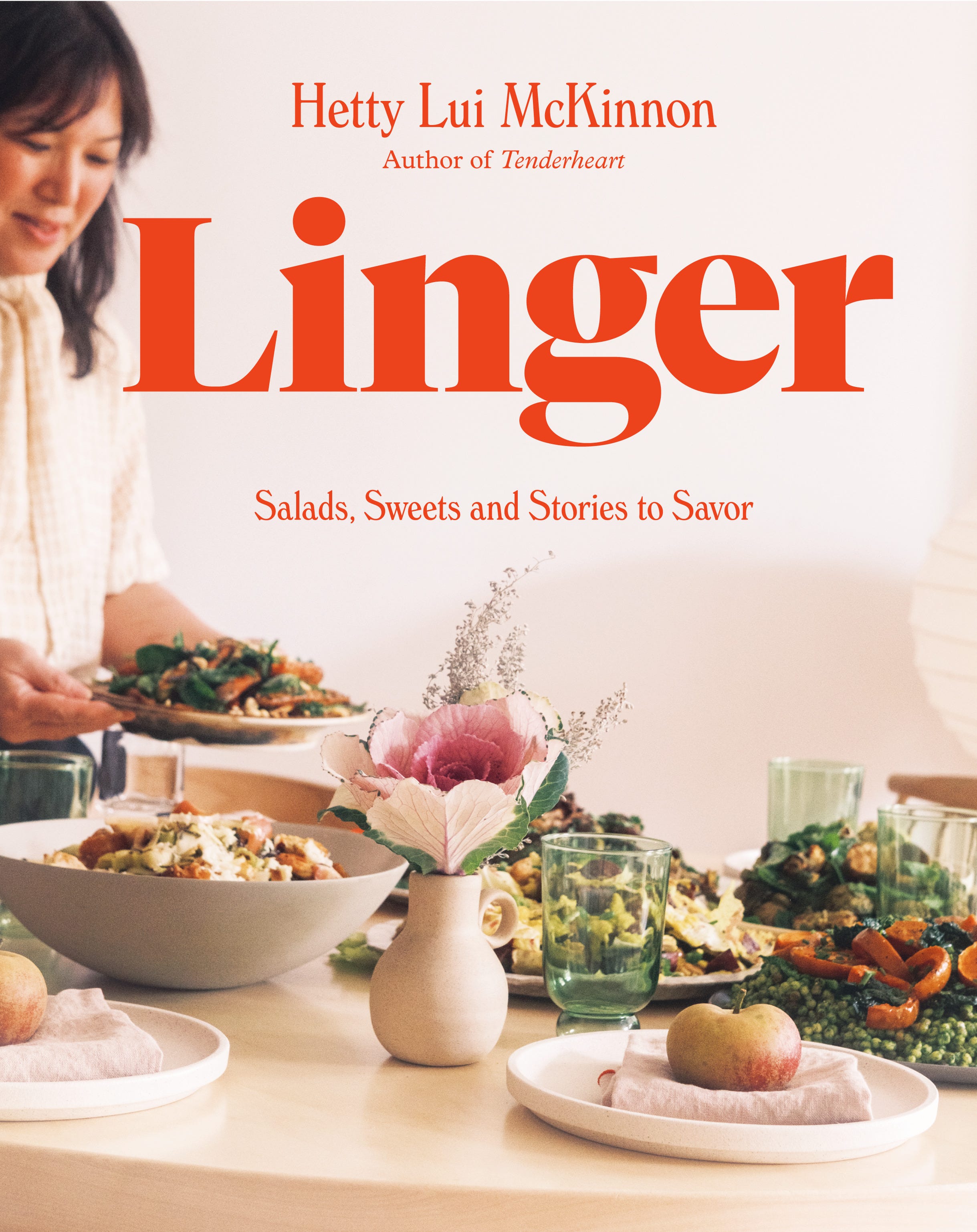
Get your copy of Hetty’s new book, Linger,HERE(for a limited time, Hetty is also providing a preorder gift if her book is ordered through some Indie bookstores). Congrats to Benjamin Adler for winning today’s giveaway of Linger (you’ll re…
I am back home after a whirlwind week in Boston, where I spent my days cooking at America’s Test Kitchen, learning a few new tricks from the chefs, and reminding myself how much fun it is to be surrounded by people who love food as much as I do. My friend and fellow cookbook author Rick Martínez even dropped by the studio, which made the week feel extra special.
Boston is growing on me. The fall foliage has officially gone full drama, with trees in reds and golds that look like they belong on a movie set. Coming from Los Angeles, where autumn mostly means I do not need sunscreen in the morning (you should still apply it), it is both thrilling and slightly confusing to need an actual jacket.
Now that I am home, my big plan for the weekend is to get back into the garden. The contractor finally signed off on the irrigation system, which means I have the green light to plant. I have seedlings lined up like eager contestants waiting to enter the stage, and I am itching to get them in the beds before they riot.
September Highlights You’ll Want to Catch
All this talk of vegetables feels like the perfect moment to share a cookbook I have been looking forward to, Linger by Hetty McKinnon. Fall always kicks off cookbook season with energy. I have two events that I am especially excited about this week.
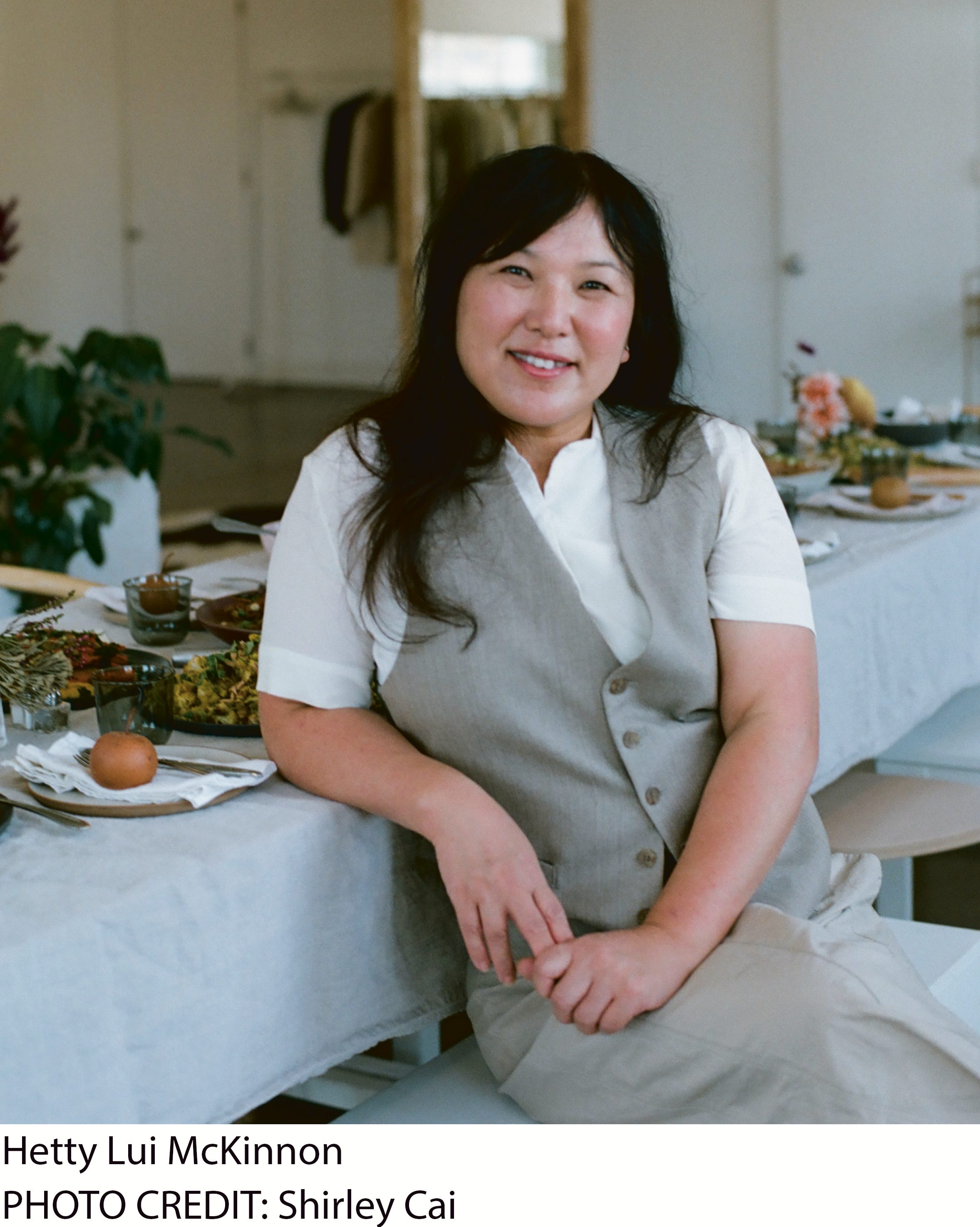
EVENT ALERT: I’ll be live with author Hetty McKinnon TODAY at 10 am PST / 1 pm EST here on Substack to talk about her new cookbook (there’s a recipe in this week’s newsletter from this lovely book). [Substack Live Here]
EVENT ALERT: I’ll be interviewing author and fellow ATK Editor-in-Residence, Aran Goyoaga, about her new The Art of Gluten-Free Baking, at Now Serving LA on September 25 [Tickets Here]
Finally, don’t forget to save September 28 on your calendars. [Hint below]
What I’m Reading
Linger by Hetty McKinnon: A Cookbook That Invites You to Stay a While
Every once in a while, a cookbook arrives that feels less like a manual and more like an invitation. ’s Linger: Salads, Sweets and Stories to Savor(Amazon/Bookshop) is precisely that kind of book. From the moment you open it, you can sense her generosity, her warmth, and her ability to take everyday ingredients and turn them into food that makes you want to gather, sit down, and stay at the table a little longer.
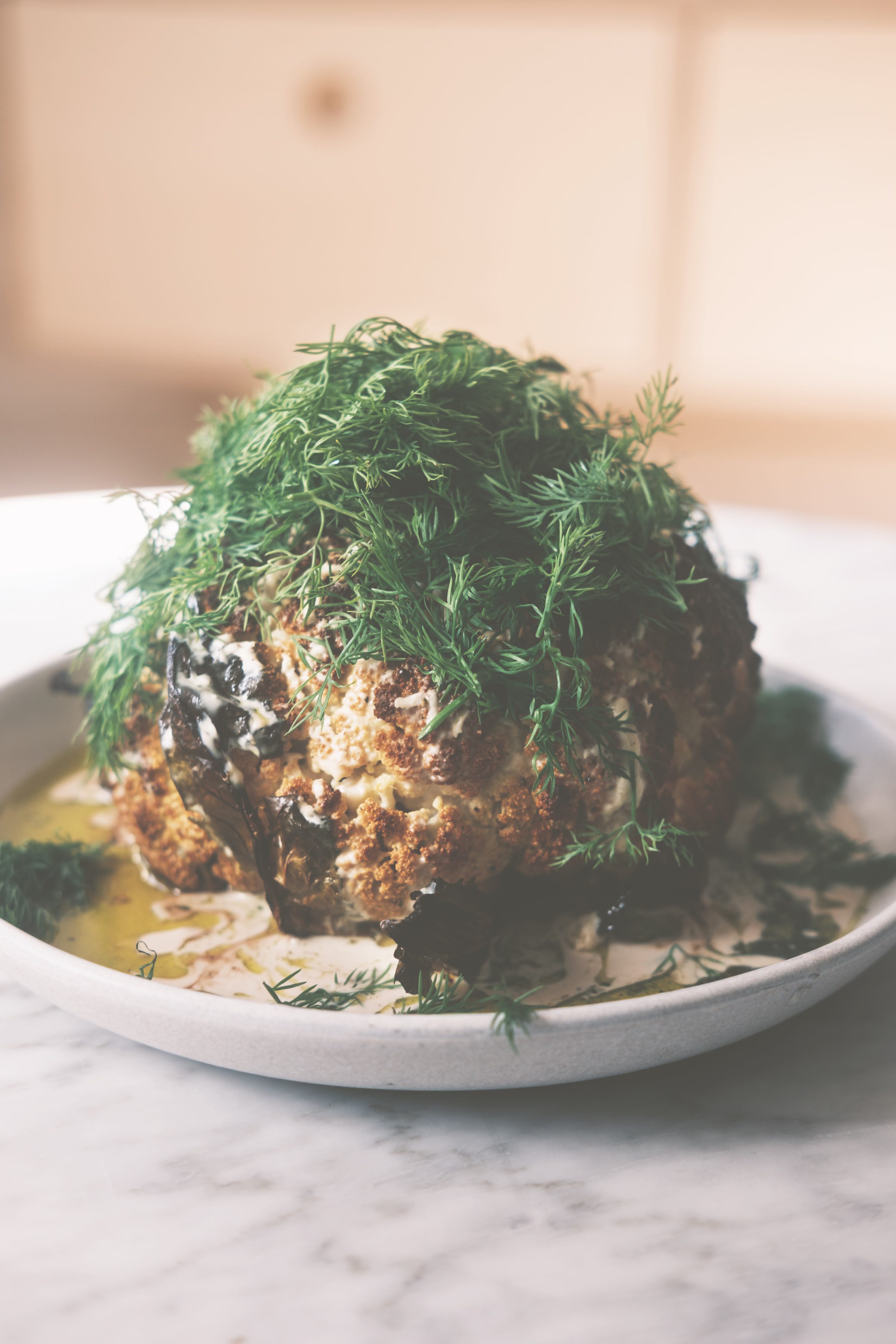
Hetty has always been a champion of vegetables, and in Linger she shows just how thrilling, comforting, and deeply satisfying they can be. The recipes travel across borders, from cauliflower buried under a mountain of dill (this week’s featured recipe), to salads brimming with seasonal fruit, to noodle bowls that feel like home in every bite. Each dish carries her unmistakable voice: thoughtful, soulful, and always centered on connection.
What makes this book truly shine is how it balances the celebratory with the everyday. These recipes are unfussy, and you can make them on a weeknight with what is in the fridge, and others that feel worthy of a dinner party centerpiece. And woven throughout are Hetty’s stories, tender reflections that remind us cooking is not just about technique, but about memory, identity, and care.
Reading Linger feels like being in the kitchen with a friend who knows exactly when to hand you a beverage, exactly how to season that salad, and exactly why it all matters. It is a cookbook that nourishes far beyond the plate.
If you are looking for a book that will expand the way you think about vegetables, inspire you to cook more often, and remind you why we gather at the table, Linger deserves a permanent spot in your kitchen.
The Tool I Never Knew I Needed
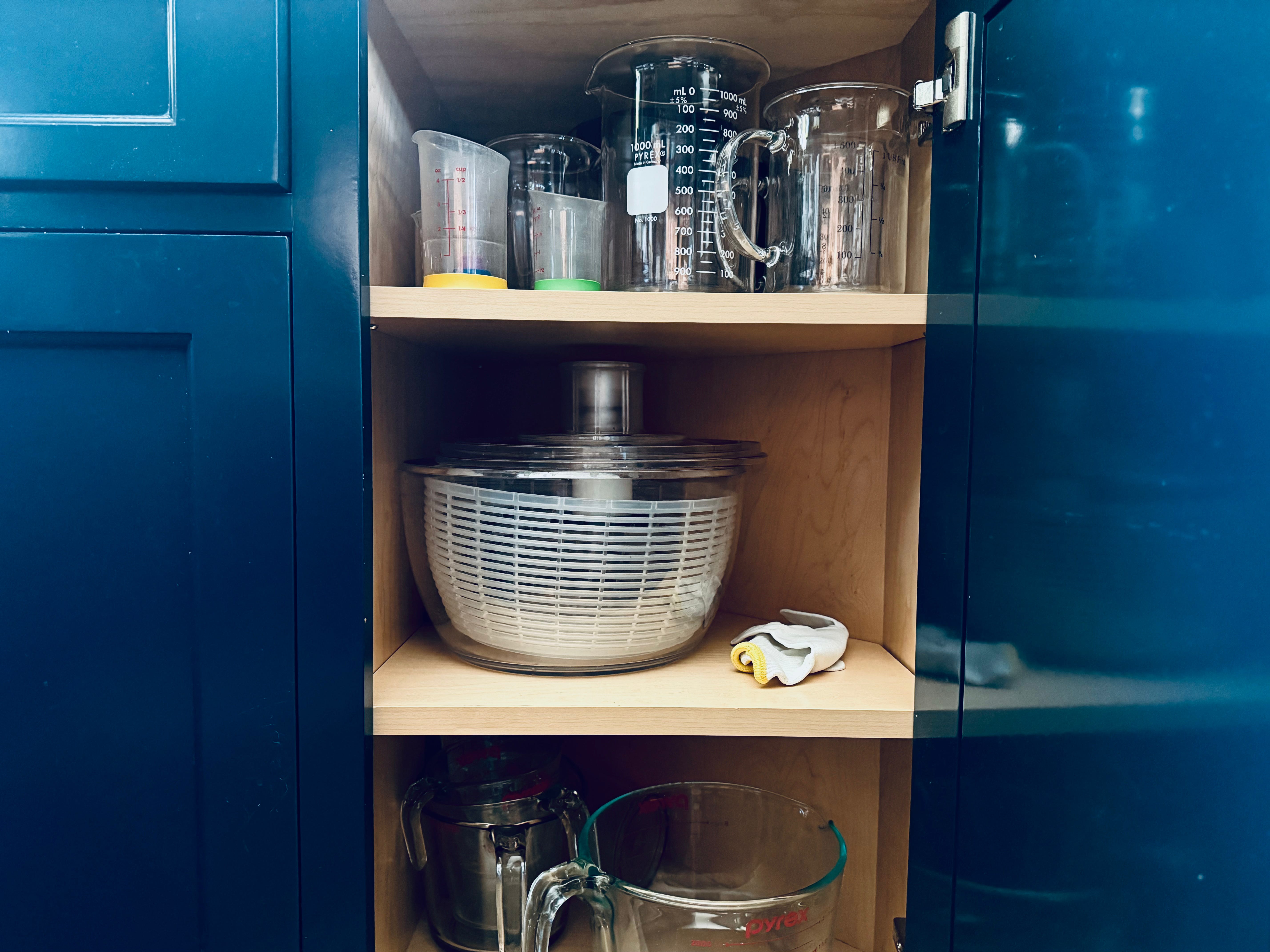
Since we’re talking about vegetables, I’d be remiss if I kept one of my favorite tools secret. Of all the tools in my kitchen, the one that surprises people when I rave about it is my salad spinner. I use the OXO Good Grips Salad Spinner, and I cannot imagine prepping greens without it. For years, I thought a spinner was unnecessary until I realized how much better salads taste when the leaves are dehydrated and look like they’re gasping for life. Dressing clings instead of slipping off, and the greens stay crisper in the fridge. The OXO Good Grips Salad Spinner version is sturdy, simple to use, and easy to clean. The push-button pump makes quick work of spinning, and the bowl doubles nicely as a serving dish. I use it not just for lettuce and herbs but also for rinsing and drying berries, leeks, and even beans after cooking. It is one of those tools that earns its keep on the shelf, and every time I pull it out, I am glad I invested in it.
RECIPE
Whole Roasted Cauliflower with a Mountain of Dill
‘s cauliflower with dill has been on repeat in my kitchen lately. It’s one of those deceptively simple dishes that’s elevated by a single herb — dill — which carries dozens of aroma molecules (like carvone and limonene) that give it that bright, anise-like lift. A dish like this is a magnificent entry point into the fall season.
I’ll be going live with Hetty McKinnon to dive into her brand-new book, Linger — a celebration of food meant to be savored slowly, surrounded by stories, friends, and conversation.
Instead of a formal interview, think of this as a relaxed Sunday gathering. We’ll chat about what inspired Linger, how Hetty thinks about salads and sweets as more than recipes, and the ways her cooking brings people together.
When: Sunday, Sept 21 at 1 pm ET Where: Listen on the Substack app (iOS/Android) or in your browser here Reminder: App users will get a push notification when we start — but I’ll also send an email before we go live.
Bring your questions, curiosity, and maybe even your lunch — this is meant to feel like you’re right at the table with us. Plus, there’ll be a book giveaway during the chat.
Click here a few minutes before 1 pm ET on Sunday to join in.
This week, I’m back at America’s Test Kitchen, where some exciting new projects are quietly coming together. There’s a small hint hidden in this newsletter—see if you catch it. September has a way of sneaking in those seasonal shifts, and landing in Boston straight from L.A., the change feels even sharper. The air is already cooler than I imagined… I really should have packed a sweater or two. LA on the other hand is still wrapped in a hot summer blanket.
On my weekend break in Boston, I stopped by Sofra Bakery to see my friend Chef Maura Kilpatrick. Chef Andy, who runs their pastry, shared the secrets to their beloved ma’amoul cookies (their cookbook is every bit as spectacular). I miss being in the bakery; moments like these always make me happy.
It’s time for the Best New Restaurant Lists - [Bon Appetit] [New York Times]. Have you been to any of these?
How to Get A Cookbook Deal - Hint - Having huge audiences on TikTok and Instagram are no longer helpful (they never were) - [Best Food Blog]
I already do this with mango peels and the pit, which is why I loved reading this Before You Throw Away Those Fruit Scraps [Punch]
EVENT ALERT: I’ll be interviewing author and fellow ATK Editor-in-Residence, Aran Goyoaga, at Now Serving LA on September 25 [Tickets Here]
This week, I’m here to equip you with all the science-backed tricks to turn those ordinary salads into flavor-forward masterpieces. Whether you still crave summer salad vibes or are itching to be inspired by fall, I have you covered. In this paid subscriber newsletter, you will…
Get my tips for storing salads to last and why the leaf cell wall structure matters.
The science behind maximizing flavor in different leafy greens-- including how heat transforms arugula and why spinach loves a calcium-rich partner
Get my recipe for Butter Lettuce Salad with Crispy Caper Breadcrumbs
How I Store Salads (and Keep Them from Going Sad and Soggy)
If you are tired of opening the fridge to find yesterday’s salad limp and watery, you are not alone. I have ruined more than a few good salads this way. Over time, I have picked up tricks that keep them fresher for longer, and there is a little history and science behind why they work.
The word “salad” originates from the Latin “sal,” meaning salt. The ancient Romans often ate raw vegetables dressed with salty brine, oil, or vinegar — one of the earliest forms of vinaigrette. In contrast, in India and many Asian countries, oil doesn’t even enter the equation of the dressing; it’s simpler.
In Renaissance Europe, raw greens were sometimes viewed with suspicion, and many people blanched them before eating. Fast forward a few centuries, and we now take for granted the joy of a crisp, raw salad. Iceberg lettuce, for example, was bred in the US in the late 19th century specifically for transport. It was shipped packed in ice, which is how it got its name.
The challenge with salads has always been freshness. Leaves are more than 90 percent water, and once picked, they lose moisture through evaporation and respiration. This is why they go limp so quickly. Storing them in a cool, humid environment slows the process, which is why refrigeration helps. But the real trick is how you store them.
First, congrats to the winners of the Jeni’s Ice Cream giveaway! (Katelyn from Seattle, Wendy from McLean, Molly from Palm Desert, Dan from Raleigh, Lisa Marie from Huntley). Be on the lookout for a shipment of Jeni’s Fall Collection!
Garden Update
I almost have an edible garden. It has been a long project in the making, and while there are still a few things left to finish, most of the big tasks are finally done. Within hours of planting, the space began to come alive again. Bees, butterflies, and dragonflies appeared, and soon after, hummingbirds and other birds followed.
I have not yet planted all the fruits and vegetables I want to grow. For now, I am giving the soil and young plants a few months to settle in and recover from the shock of transplanting, and I am waiting for the weather to cool down. I did add two new trees that I am especially excited about: a sanshoo (Sichuan peppercorn) and a finger lime.
It is also the first month of fall, even though summer seems determined to hang on tightly. The days are still hot here, but I am already thinking about the cooler months ahead, the flavors they bring, and what I want to grow in the garden next.
Alongside all this, I have been busy with the artwork and photography for my next book. It is exciting to watch the manuscript shift from black-and-white Word pages into something colorful and alive in design.
September’s Flavor Forecast
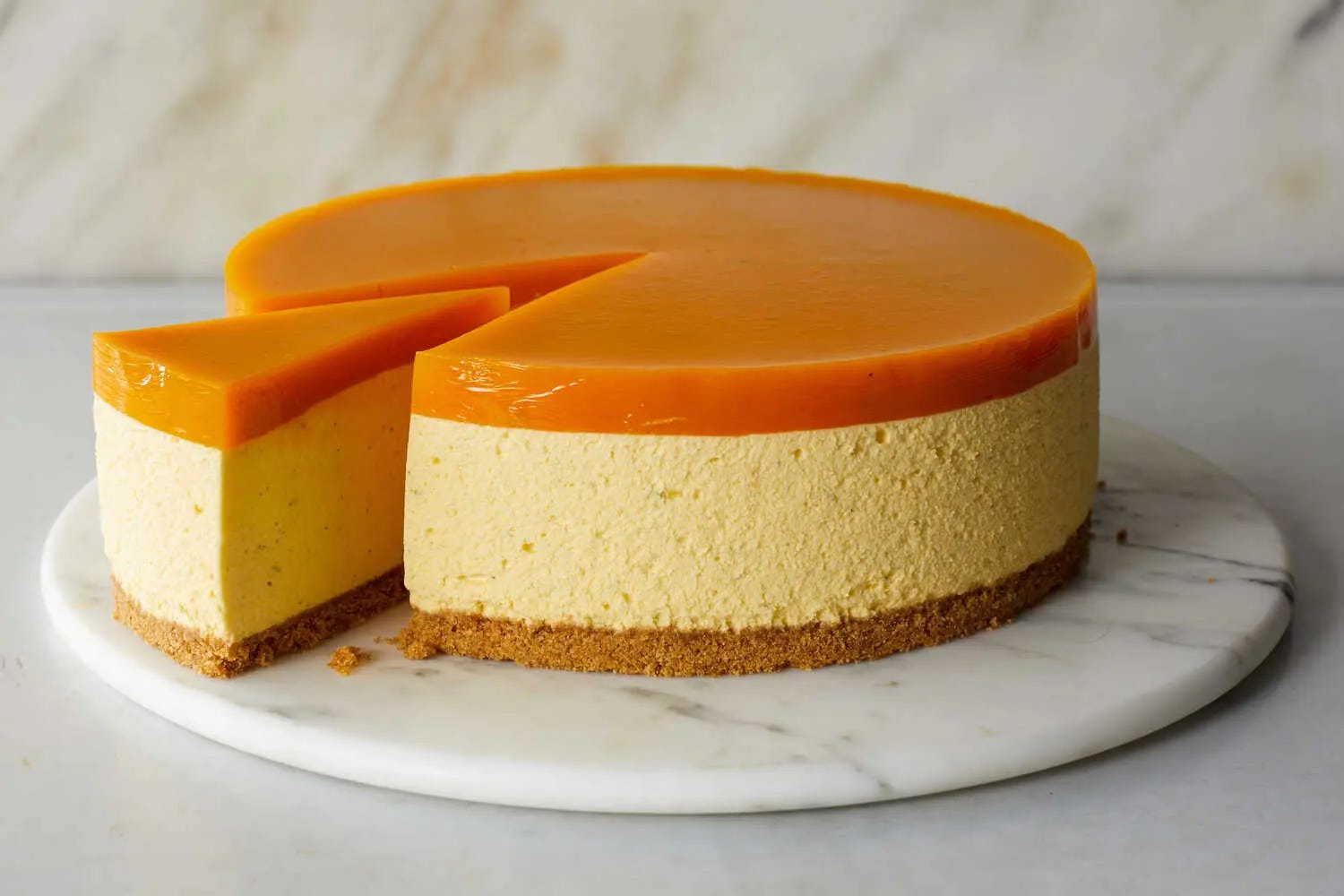
Because it is September, I have pulled together a digest of recipes to share with you this month. They reflect the season as it changes, that in-between moment when summer produce is still here but fall is on the horizon. There’s my No-Bake Mango-Lime Cheese Cake from the NYT, among others, that is a worthy endeavor in this heat!
One of the new projects I’ve taken on as Editor-in-Residence at America’s Test Kitchen is co-hosting a few episodes of the In the Test Kitchen show with Dan Souza. My first episode was with one of my favorite people, , and it was such a fun way to kick things off. Check it out and learn more about her cookbook, Dorie’s Anytime Cakes.
What I’m Reading
This week, I’m honored to share recipes from one of the world’s most respected culinary voices: Tony Tan. Born in Malaysia and based in Australia, Tony has spent his life exploring and teaching the flavors of Asia, becoming a bridge between cultures through food.
I met Tony in Los Angeles a little over a year ago, and right away I was struck by his charm, humor, and warmth. Over steaming baskets of dim sum, we compared notes on cookbooks and restaurants, how different and yet how similar America and Australia can be when it comes to food. What stood out most was Tony’s incredible depth of knowledge about Asian cooking. He has this effortless way of weaving history, technique, and personal experience into conversation, and it was an absolute breath of fresh air.
I’ve always had a soft spot for Australia (and New Zealand, too). My mom’s family lives there, and with every visit, I find myself falling more in love, not just with the landscapes, but with the people, the food, and the vibrant culture that surrounds the table. So anytime I get the chance to feature an Australian chef or cookbook here, I get a little extra excited. And Tony is the perfect example of why
His influence is remarkable. Tony has appeared on MasterChef Australia and SBS Food, introducing countless viewers to the depth and beauty of Chinese, Malaysian, and Southeast Asian cuisines. His Melbourne cooking school became a legendary institution, shaping Australia’s food culture and nurturing generations of chefs and passionate home cooks.
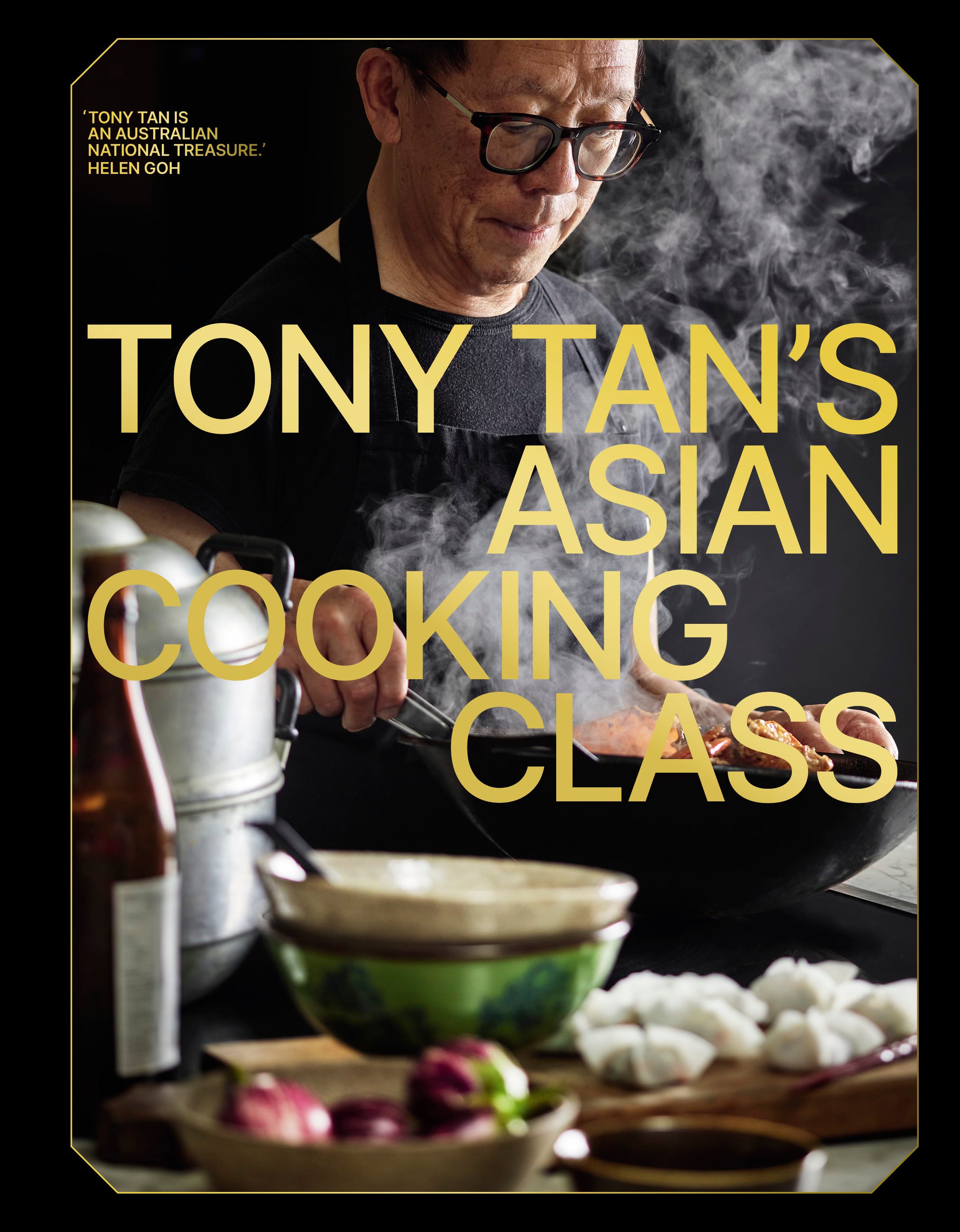
Tony’s books—including the award-winning Hong Kong Food City and his latest, Asian Cooking Class—have cemented his reputation as both a teacher and storyteller. His work has earned critical acclaim and industry awards, and he is widely regarded as one of Australia’s most important culinary educators and a global authority on Asian cuisine.
Recipes
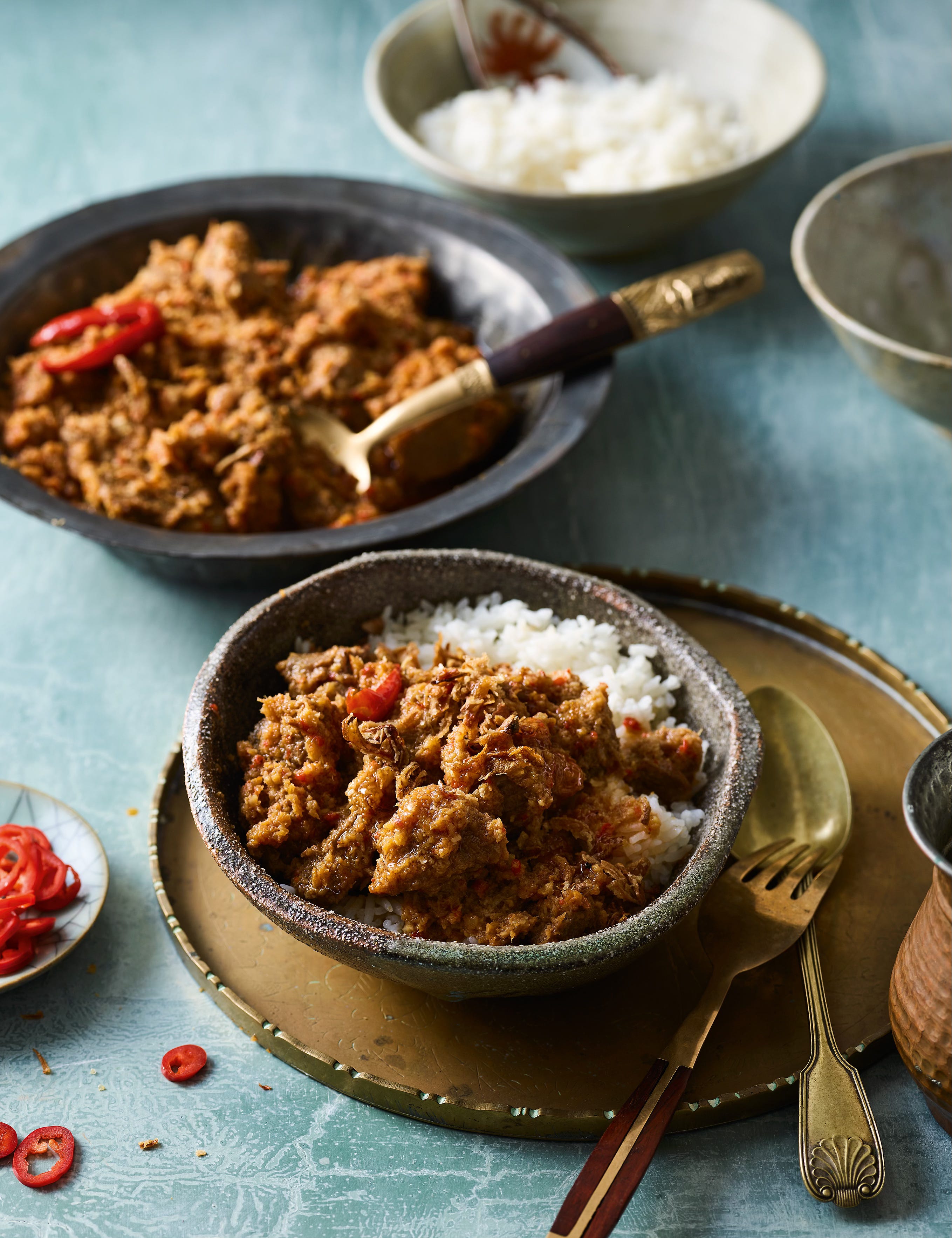
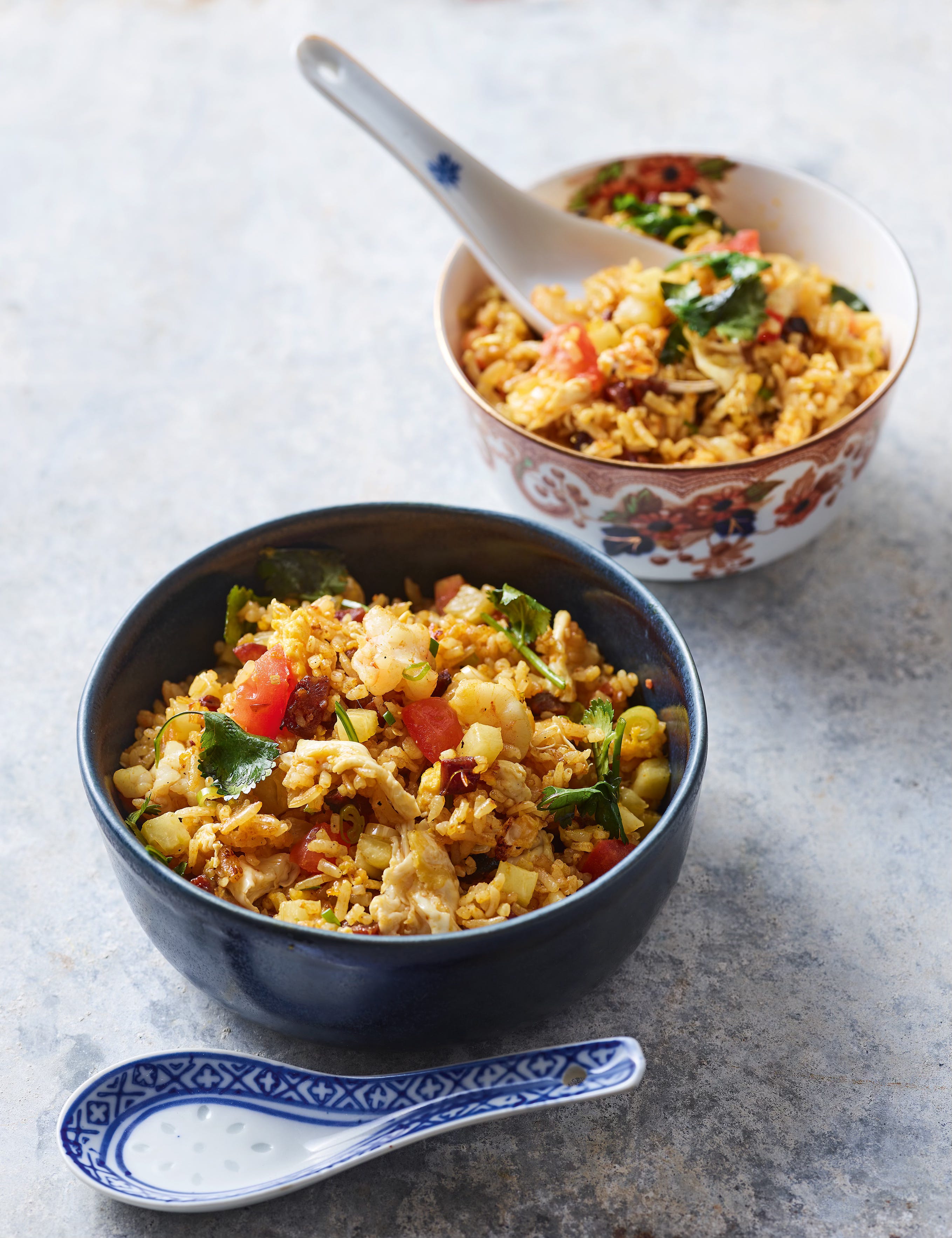
Beef Rendang and Pineapple Fried Rice from the legendary Tony Tan.
To celebrate the release of Asian Cooking Class (Amazon/Bookshop), I’m giving you free access to two of its standout recipes: his Beef Rendang, a slow-cooked masterpiece from West Sumatra, and his Pineapple Fried Rice (Khao Pad Sapparot), a vibrant Thai classic that’s equal parts festive and delicious.
Both dishes reflect Tony’s rare gift: weaving history, tradition, and technique into food that feels timeless and approachable. Cooking them at home is not only a chance to enjoy two extraordinary recipes, but also to connect with the culinary vision of a chef whose work continues to shape how we cook, eat, and understand Asian food in Australia and around the world.
Bring Tony Tan’s Kitchen to Yours If you loved these recipes, you’ll find so much more in Tony’s brilliant new book, Asian Cooking Class. It’s packed with the flavors, stories, and techniques that have made him one of Australia’s most important culinary voices.
Get your copy of Asian Cooking Class(Amazon/Bookshop) and support Tony’s incredible work. It’s a book you’ll cook from again and again.
It starts the way so many things in summer do, with a flash of sweetness that is gone almost before you have tasted it. Sweet corn does this to us every year: one moment, the ears are stacked high at the market, their silks fraying like a hundred careless ponytails; the next, the season is over, the sugars turned to starch, and we are left wishing we had bought more, eaten more, grilled more.
Learn why temperature matters when cooking corn, and how I cook corn in hot but not boiling water
Get my recipe for Roasted Paneer Sweet Corn Salad
Discover a mistake that’s easy to make with cornflour!
A Little History in Every Bite
Corn, or maize, has been with us for at least 9,000 years, originating in southern Mexico, where early farmers domesticated it from a wild grass called teosinte. That grass had just a handful of kernels hidden in a tough shell. Over centuries of cultivation and selection, the kernels grew fat and tender, the plants taller, the cobs larger. By the time corn traveled north into the Americas and east across the oceans, it had become a staple grain that could feed villages and empires.
Sweet corn, the kind we heap with butter today, is a much younger arrival. Mutations in the corn plant reduced the production of starch in the kernels, resulting in more sugars being left behind. Farmers noticed the sweeter taste and began selecting for it. In the nineteenth century, sweet corn started to appear in seed catalogs in the United States. With the advent of refrigeration and faster transportation, it made its way to markets and kitchens around the world.
The Genetics of Sweetness
Today, the sweetness of your corn comes down to genes with names like sugary1 (su1), sugar-enhanced (se), and shrunken2 (sh2). The su1 mutation was the first known genetic change that created sweet corn by slowing starch production. Later, the sh2 mutation produced what we now call supersweet corn, with three to four times the sugar content of standard sweet corn and a slower rate of sugar loss after harvest. It is the reason modern sweet corn can travel from farm to market without losing all its sweetness on the way.
However, even with these genes, enzymes continue to function. As soon as corn is picked, the sugars begin to turn into starch. Chilling slows the reaction, so the advice remains the same: eat it as soon as you can, and if you cannot, keep it cold.
When corn meets heat, chemistry takes over. High heat triggers caramelization, breaking sugars into toasty, bittersweet compounds. It also fuels the Maillard reaction, the meeting of amino acids and sugars that gives roasted corn its nutty, savory notes. This is why charred corn tastes so different from corn boiled in water. Both are delicious. One is bright and sugary, the other smoky and complex. But too much heat could spell trouble!
Friends, In honor of my ice cream newsletter, I’ve got something sweet for you this week, and not just a recipe. Jeni’s Ice Cream has partnered with me to bring a special giveaway to The Flavor Files community. Five lucky readers will each win a shipment of Jeni’s five fall flavors, handpicked for their bold, layered flavors (you know that’s my thing!).
Here’s what’s on the menu:
Caramel Apple Crumble – Crisp apple ice cream swirled with dark caramel sauce and brown sugar–oat crumble.
Burnt Orange Dreamsicle – Juicy orange ice cream with vanilla custard and a drizzle of burnt orange caramel.
Miso Butterscotch Brownie – Dark chocolate fudge brownies folded into a buttery, toasted sugar cream with a hint of savory miso.
Bay Leaf Cheesecake – A refreshing, herbaceous twist on cream cheese ice cream with a graham cracker swirl.
Cookies in Cream – Scratch-made darkest chocolate cookies with flecks of white chocolate in vanilla-scented cream.
How to Enter
All readers (free + paid): Enter by clicking the link below and sharing your favorite ice cream memory.
Paid subscribers get an edge: You’ll receive FIVE entries instead of one, increasing your chances to win. Plus one winner is guaranteed to be from my paid audience!
Winners will be selected at random, and each winner will receive a shipment of the five fall flavors. Five winners, five flavors!
Why Jeni’s?
I’ve long admired how Jeni’s layers flavor—balancing acidity, sweetness, bitterness, even umami; just like we do in the kitchen. Think of the miso in butterscotch or the bay leaf in cheesecake: these are flavor moves straight from the cook’s playbook.
This giveaway is my way of sharing that inspiration with you.
Dates & Details
Giveaway opens: Today
Giveaway closes: Tuesday, September 3rd (11:59 pm EST)
Winners announced: In my next newsletter
This one’s open to readers in the U.S. only (for shipping reasons).
Thank you for being here, especially to those of you who support The Flavor Files as paid subscribers. Your support allows me to keep sharing recipes, science, and the flavors I love. And for this giveaway, it also gives you a little extra advantage.
Good luck, and may your freezer be full of bold flavors!
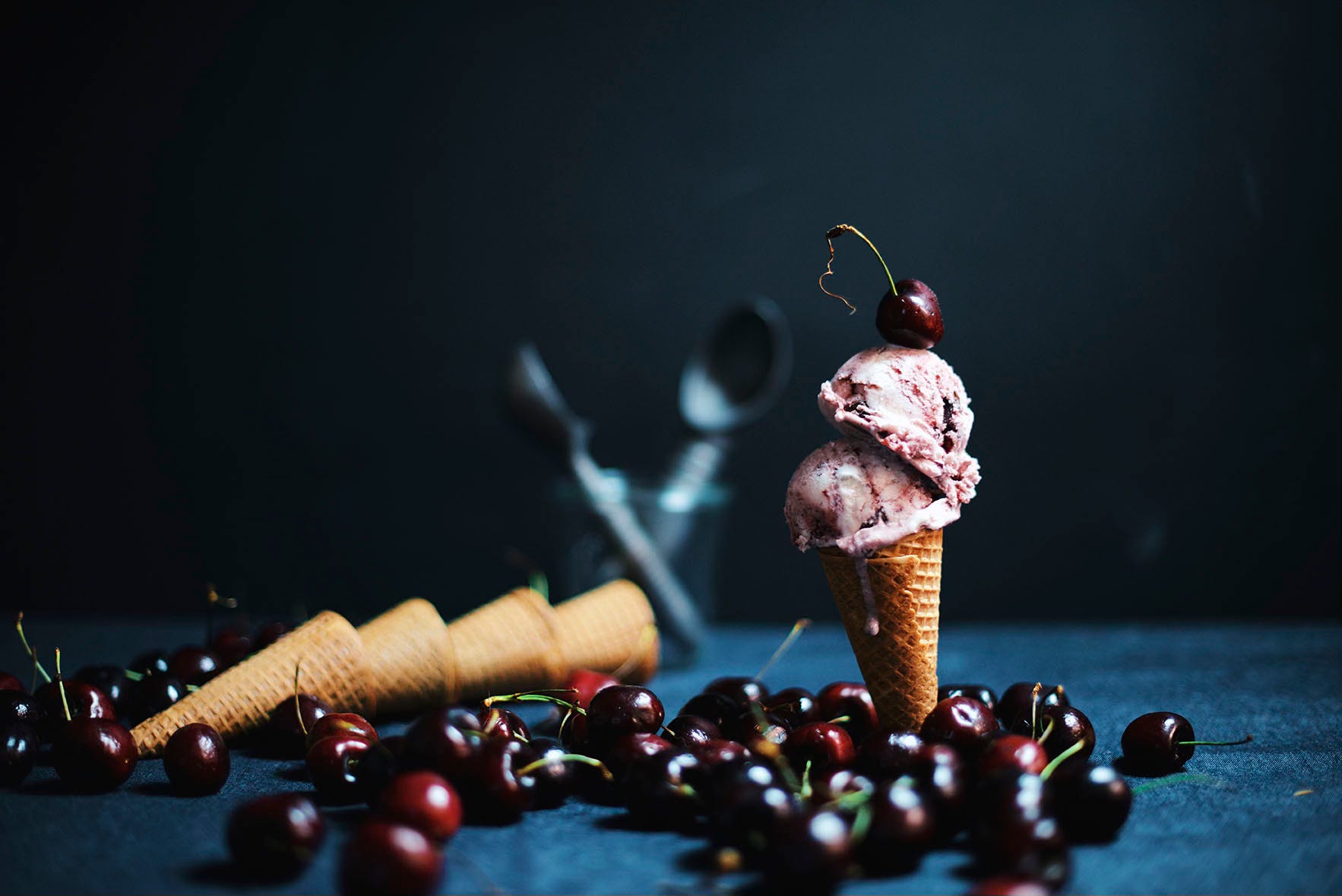
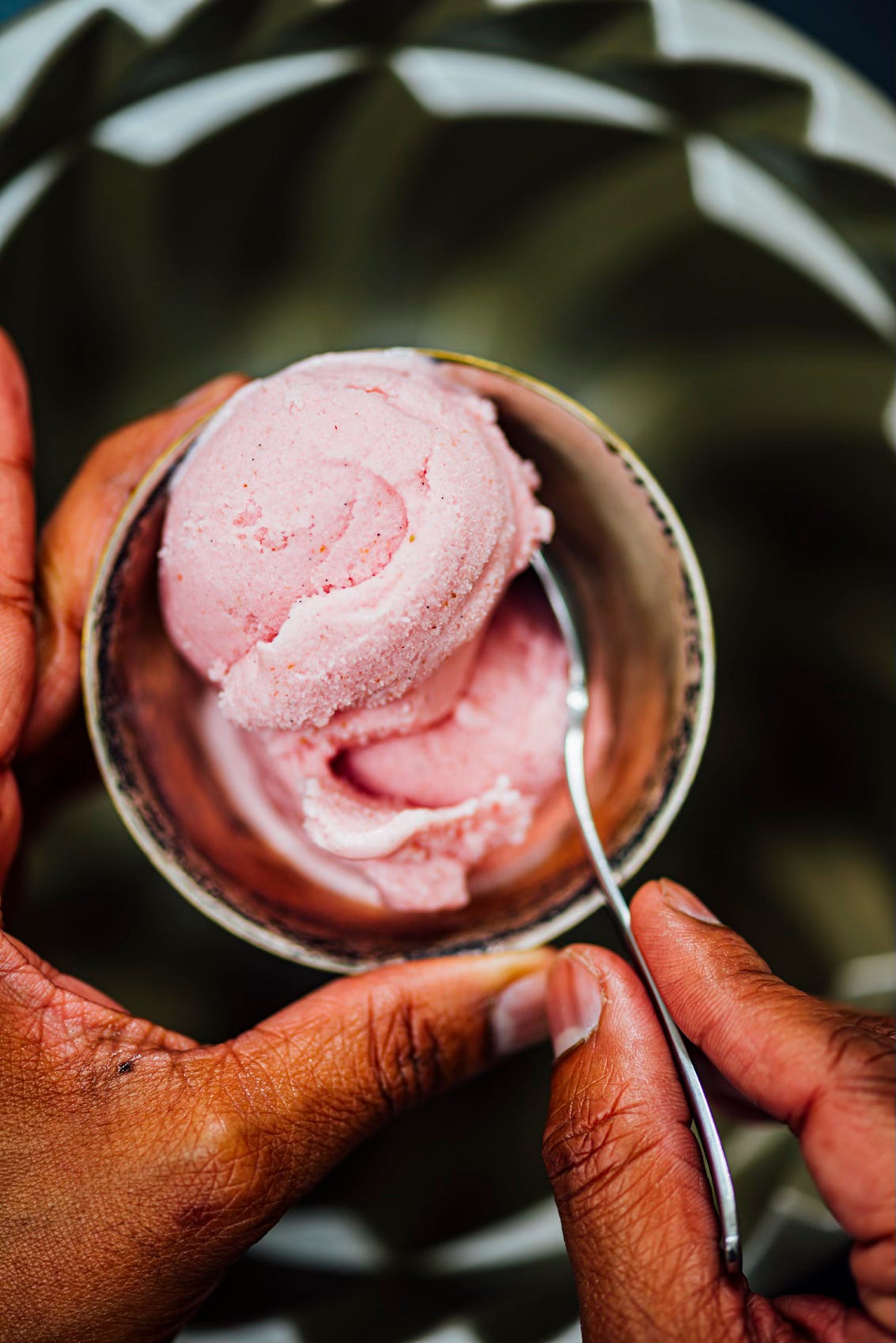
The heat has settled over Los Angeles like a heavy quilt. By five, I’m up, leash in hand, Paddington trotting beside me as we chase the last scraps of cool air before the sun bares its teeth. Neither of us has the will for anything more once the streets begin to simmer. The oven sits cold, the stove ignored. Lunch has been little more than crisp salads, sandwiches straight from the fridge, and generous bowls of ice cream. So this week, it feels only right to turn to one of my truest comforts: ice cream in all its glory.
The Scoop on Ice Cream
There are few foods that capture both memory and science like ice cream. A crack of the spoon through its surface, the first silky cold bite, suddenly you’re five years old again, chasing the music of the ice cream truck. Yet beneath the nostalgia lies an extraordinary story of chemistry, physics, and culinary invention. Today, we’ll peel back the layers of ice cream: its history, the science that makes it work, and the machines and cookbooks that have carried it into our kitchens.
A Brief History of Frozen Pleasures
It begins in ancient China, around 200 BCE, where someone thought to stir rice and milk together, sweeten it, and chill it with snow. Not simply a dessert, but a small miracle in a bowl, cold and fleeting.
A few centuries later in Persia, the royal courts sipped sharbat, fruit syrups cooled with mountain snow. A drink with sunlight in its flavor and winter in its chill, the ancestor of sherbets and sorbets to come.
By the sixteenth century in Mughal India, ice was carried down from the Himalayas on horseback to cool fruit and milk puddings. Kulfi was born here: milk slowly caramelized until nutty and golden, then frozen in metal molds. It is still eaten today, dense and creamy, the taste of centuries held on the tongue.
Then Italy, during the Renaissance, where sorbetto (sorbet), light and tart, became the pride of Florence and Naples. Entire courts competed for supremacy, the frozen fruits of summer turned into works of art.
France followed in the seventeenth century. Parisian cafés began to serve crème glacée to the aristocracy. Cold, rich, and impossibly decadent, it was spooned out as if the very essence of luxury could be captured in ice.
Across the ocean in the United States, George Washington reportedly spent a small fortune on ice cream one hot summer, while Thomas Jefferson carefully wrote down one of the earliest recipes for vanilla ice cream. You can almost picture the ink drying on the page as the dessert began to melt in the heat.
And here is the cool fact. Before refrigeration, the ice trade was a global enterprise. In the nineteenth century, blocks of ice cut from frozen New England lakes traveled by ship to India and the Caribbean, packed in sawdust to slow the inevitable melt. The idea of carrying winter to the tropics feels almost romantic now, a gesture of excess and longing.
The Science of Ice Cream
The Architecture of Ice Cream
At its heart, ice cream is a small piece of alchemy, a dessert built on a multi-phase system that somehow tastes like happiness.
There are the ice crystals, tiny shards of frozen water that, if kept under fifty microns, give that elusive smoothness. Then come the fat globules, drifting in from cream or other fats, half-joining as the churn whips through the mixture, helping to trap air. The air itself is another layer, what ice cream makers call overrun. Premium ice creams hold only about twenty to thirty percent air, while cheaper ones can be puffed up to nearly double their volume. Finally, there is the unfrozen sugar solution, the part that stays liquid, keeping everything scoopable rather than turning into an icy brick.
Together, these phases give ice cream its paradoxical nature: frozen yet soft, solid yet melting.
Sugar: The Quiet Magician
Sugar is not there only for sweetness. It lowers water’s freezing point, so the mix never becomes a block of ice. Each sugar behaves differently. Sucrose, our everyday table sugar, gives balanced sweetness and moderate freezing. Glucose or corn syrup keeps more water locked in, lending a gentle chewiness. Invert sugar, honey, and agave resist iciness altogether, keeping the texture velvety.
Emulsifiers and Stabilizers
Egg yolks, with their lecithin and proteins, hold fat and water together while giving a custardy richness. Starch, often cornstarch or arrowroot, has long been used in Italian gelato to add body. In the modern world, stabilizers like guar gum, carrageenan, and locust bean gum keep ice cream creamy for longer and prevent those dreaded shards of ice from forming as it sits in the freezer.
The War on Ice Crystals
The enemy of good ice cream is large ice crystals. The faster the freeze, the smaller they stay. That is why factories use blast freezers at minus thirty degrees Celsius. At home, patience and planning help. Chill the base overnight, pre-freeze your equipment, work quickly, and you will be rewarded with a smoother, creamier scoop.
Styles Around the World
French custard ice cream begins with a cooked egg yolk base, a custard as lush and silky as velvet. Philadelphia-style skips the yolks altogether, leaving the flavor of cream to shine through, lighter and cleaner.
In Italy, gelato is churned more slowly, served warmer, with less fat than traditional ice cream. The result is denser, the flavors more intense, the texture almost elastic on the tongue.
Sorbet is fruit and sugar syrup, nothing more, no fat at all, while sherbet adds just a touch of dairy for creaminess. In India, kulfi starts with milk slowly reduced until thick and nutty, then scented with cardamom, saffron, and pistachios before being frozen solid. Dense, chewy, fragrant.
Soft-serve, a twentieth-century invention, is held at warmer temperatures so it flows out in those familiar swirls, kept stable with modern ingredients.
And here is a story I love. In 1904, at the St. Louis World’s Fair, an ice cream vendor ran out of cups. A waffle seller at the next stall rolled his waffles into cones. The ice cream cone was born in that moment, by accident and necessity, and the world never looked back.
Inventions and Machines
In 1843, Nancy Johnson in Philadelphia patented the hand-cranked ice cream freezer, a simple device using ice and salt brine to chill the base quickly. For the first time, households could make their ice cream without waiting for winter.
In the 1930s, Clarence Birdseye’s work on rapid freezing transformed commercial production, creating smoother textures. A few years later, in Illinois, the McCullough family invented soft-serve, and Dairy Queen began.
By the 1960s, Häagen-Dazs took ice cream in the opposite direction, reducing the air for a dense, rich style that set the standard for premium ice cream.
Modern Tools
Today, compressor machines do it all in one step with their built-in freezers. Freezer-bowl machines are simpler, more affordable, but need overnight chilling before you can churn. And then there is the dry ice method, which freezes the base almost instantly at home, filling the kitchen with clouds of cold, white vapor. At home, I use the Breville the Smart Scoop, which comes with its built-in freezing unit; it’s a lot more convienent especially if you don’t have space to pre-freeze the bucket.
Cookbooks for Ice Cream Enthusiasts
Jeni’s Splendid Ice Creams at Home — my number 1-go-to cookbook for ice creams, the ideas, her iconic cream cheese technique, and the methods are a game-changer.
Frozen Desserts by Francisco J. Migoya — the Culinary Institute of America’s Ice Cream textbook. This book is geared towards chefs, but it does a fantastic job of explaining the science behind frozen desserts and is chock-full of ideas.
Science Spotlight: Freezer Burn and Recrystallization
Why does ice cream sometimes turn grainy, littered with tiny shards of ice? The culprit is recrystallization. Each time the temperature wavers, small ice crystals melt and then refreeze into larger, crunchier ones.
Keep your ice cream in the coldest, most stable corner of the freezer. Lay a sheet of parchment against the surface before sealing the lid to limit moisture migration. And resist the temptation to dip in for “just one spoonful” and put it back. Those cycles of thawing and refreezing are what give you that unwelcome crunch.
Commercial stabilizers are formulated to slow this process, which is why a supermarket pint lasts longer than any homemade batch, no matter how careful you are.
Ice cream may seem like pure whimsy, but every scoop carries history, invention, and science within it. From the first sharbats to kulfi, from the birth of gelato to Jeni’s Splendid, from freezing point depression to the happy accident of the waffle cone, it is one of the most remarkable culinary creations we have ever dreamed up.
Here are some of my favorite ice cream recipes just for you!
So what is your favorite ice cream memory? A kulfi dripping down a stick on a hot Bombay afternoon or a passion fruit ice cream in Auckland? Gelato eaten too quickly by the Arno? A neon-bright swirl of soft-serve at a state fair? Write back and tell me. I would love to share a few of your stories in a future issue.
A treat’s on its way to your inbox. I won’t say more, but you’ll know it when you see it.
There are ingredients that season, and then there are ingredients that change everything. Acid belongs to the latter camp. A squeeze of lemon over fish, the tang of yogurt on warm bread, a splash of vinegar in a simmering pot; they don’t just add flavor, they alter it entirely, reshaping textures, brightening colors, and waking up our taste buds. Cooking with acid is less about subtlety and more about transformation, the quiet but decisive shift from good to unforgettable.
In this paid subscriber newsletter, you will…
Learn which acid gives carbonated beverages a whisper of acidity, and why I store yogurts in glass or stainless steal.
Get my recipes for Poulet Sauté au Vinaigre/Chicken Sautéed in Vinegar and Noyaux (I hope you saved your apricot kernels!)
Discover why there is a trace amount of cyanide in foods like amaretti cookies, and why you shouldn’t go on a raw kernel binge bender!
An Acid Love Story
At a small square table, I pressed the edge of my tostada to keep its crisp crown from cracking, then layered it with ribbons of blue prawn, each slice shimmering under its coat of emerald-green, citrus-bright ceviche. One bite and I was elsewhere, by the ocean, where the sun’s warmth is tempered by a salt-sweet breeze and the soft susurration of coconut leaves brushing against each other.
Acid is one of the kitchen’s most thrilling sleights of hand. It brings a certain brightness, a spark, the sharp inhale of the sour taste that can lift a dish from pleasant to unforgettable. It reshapes what it touches: curdling milk into the cool tang of yogurt through the gentle work of lactic acid, loosening the taut web of gluten in bread dough with the mellow vinegar notes born of fermentation, coaxing meat into tenderness in a marinade. And here, in this ceviche, it takes the sea’s raw offering and, with a kiss of citrus, turns it into something luminous and new.
My friend and cookbook author, Rie McClenny, and I had come to The Hummingbird Ceviche House in Echo Park, a Peruvian-Japanese restaurant that hums with the precision of one cuisine and the exuberance of the other. Plate after plate arrived, each one a testament to the quiet magic of acid and the way it can transform the ordinary into something unforgettable.
Inorganic vs. Organic Acids
But here’s the thing: not all acids are created the same, and because of this, their behaviors are different. In chemistry, acids fall into two groups: inorganic and organic acids. Inorganic acids are acids that aren’t built on a carbon backbone like organic acids – citric or lactic acid, which do show up in cooking, though they’re far less common than organic acids. The ones we use are almost always very diluted because concentrated forms can be dangerous.
Not all acids are created equal, and in the kitchen, their personalities show. Some are sharp and industrial, others soft and fruit-born; each behaves differently, each with its way of coaxing flavor into life. In chemistry, they fall into two families: inorganic and organic.
Inorganic Acids
Inorganic acids are the quieter, rarer guests in the home kitchen. They don’t arrive in the squeeze of a lemon or the brine of a pickle jar, but they still have their place in the greater food world.
Hydrochloric acid (HCl) lives naturally in our stomachs, breaking down what we eat. In food production, when it’s tamed to safe, delicate dilutions, it can help in processes like starch hydrolysis, gelatin making, or crafting certain candies. But it’s far too corrosive to ever keep on the pantry shelf.
Phosphoric acid (H₃PO₄) is more familiar, hiding in the deep, dark sweetness of cola,
A big congratulations to Dale Goldberg, Carlos Castro, and Steph Fuller—winners of Boustany by Sami Tamimi! Thank you for being part of The Flavor Files community. Keep an eye out—more giveaways are on the way soon.
This week, we’re diving into the world of high heat and its transformative effect on flavor, with a special spotlight on tomato’s green cousin, the tomatillo. These little green gems are packed with sharp acidity that cuts through richness, and when roasted, they mellow into a smoky, slightly sweet flavor profile that becomes the base for countless dishes. I’ll share my recipe for a bright and bold salsa verde, perfect for tacos, grilled veggies, and beyond. And, as stone fruit season hits its peak, I’m also sharing some of my favorite ways to cook with peaches, apricots, and plums, celebrating the fleeting flavors of summer. Get ready to bring out the best of the ingredients of the season!
Science Spotlight: Why High Heat = Big Flavor
Ever wonder why your food won’t brown? It might be your heat. This week’s short video is a quick flavor science breakdown on why searing matters (it’s less about burning, more about building).
🎥 Watch the video
The Secret Life of Tomatillos (and the Sauce That Saves Me)
Tomatillos are deceptive. They masquerade as green tomatoes, wrapped in husks that rustle like old paper. Peel one open and you’ll find a sticky film clinging to the skin, a natural shield made of sugars and acids. Rinse it away, and the fruit beneath is startling: firm, luminous, quietly electric.
But there’s more to that brightness. Tomatillos brim with malic acid (and citric acid), the same compound that makes green apples sharp and snappy. Unlike tomatoes, they don’t sweeten as they ripen. Their acidity holds. It’s why they make such compelling sauces, they slice through richness, wake up oil, tame heat. They lift.
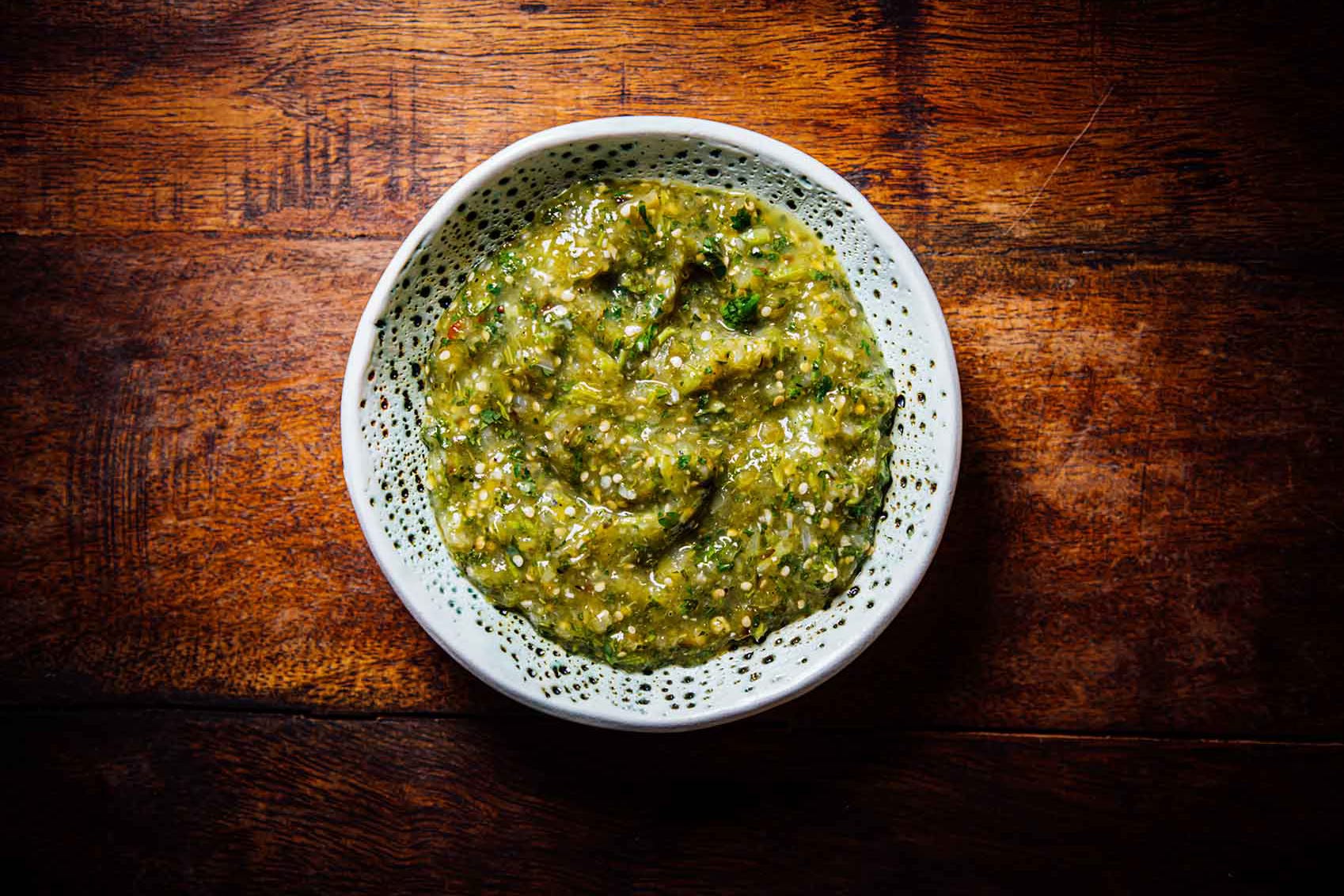
Roast them, though, and their sharpness softens. The skin blisters, the flesh collapses. You still get that green note, but it’s mellowed; smoky, slightly sweet, a little sultry. In my kitchen, they become the base of a salsa verde I return to again and again. Grilled tomatillos meet charred garlic, serrano chiles, herbs, and toasted nigella seeds. The result is something bright and bold, with just enough fire to keep it interesting, and enough depth to anchor a dish.
There are days when dinner feels like a question I don’t have the energy to answer. When the fridge offers little inspiration, and I need something that makes a meal out of not much at all. That’s when I reach for this salsa.
Not the jarred stuff (there’s nothing wrong with buying jarred stuff, but in this case, making your own is worth the extra effort). But the type you can make with whatever green you’ve got: a handful of herbs, maybe roasted scallions or a softening jalapeño, a squeeze of lime, a little olive oil. Sometimes I add an anchovy. Sometimes yogurt. Sometimes it’s just tomatillos, garlic, and salt. There are no rules. Only green.
And that’s the beauty of salsa verde. Wherever it comes from, Mexico (Mexico inspires today’s recipe), Argentina, Italy—it doesn’t ask for precision. It just shows up. You stir it into yogurt, and suddenly you’ve got a sauce for grilled zucchini or fish. Dollop it onto eggs, and breakfast feels intentional. Swirl it through potatoes or noodles, spoon it over roast chicken, drag a crust of bread through it, and call that dinner.
It stays humble, just a green sauce in a jar. But somehow, it makes everything taste like more.
This week, I’m sharing my version: smoky, herbaceous, flecked with the markings of brutal heat. I make things in double batches because I know they won’t last.
The recipe’s below. And a few ideas on how to use it, beyond tacos (though put it on tacos).
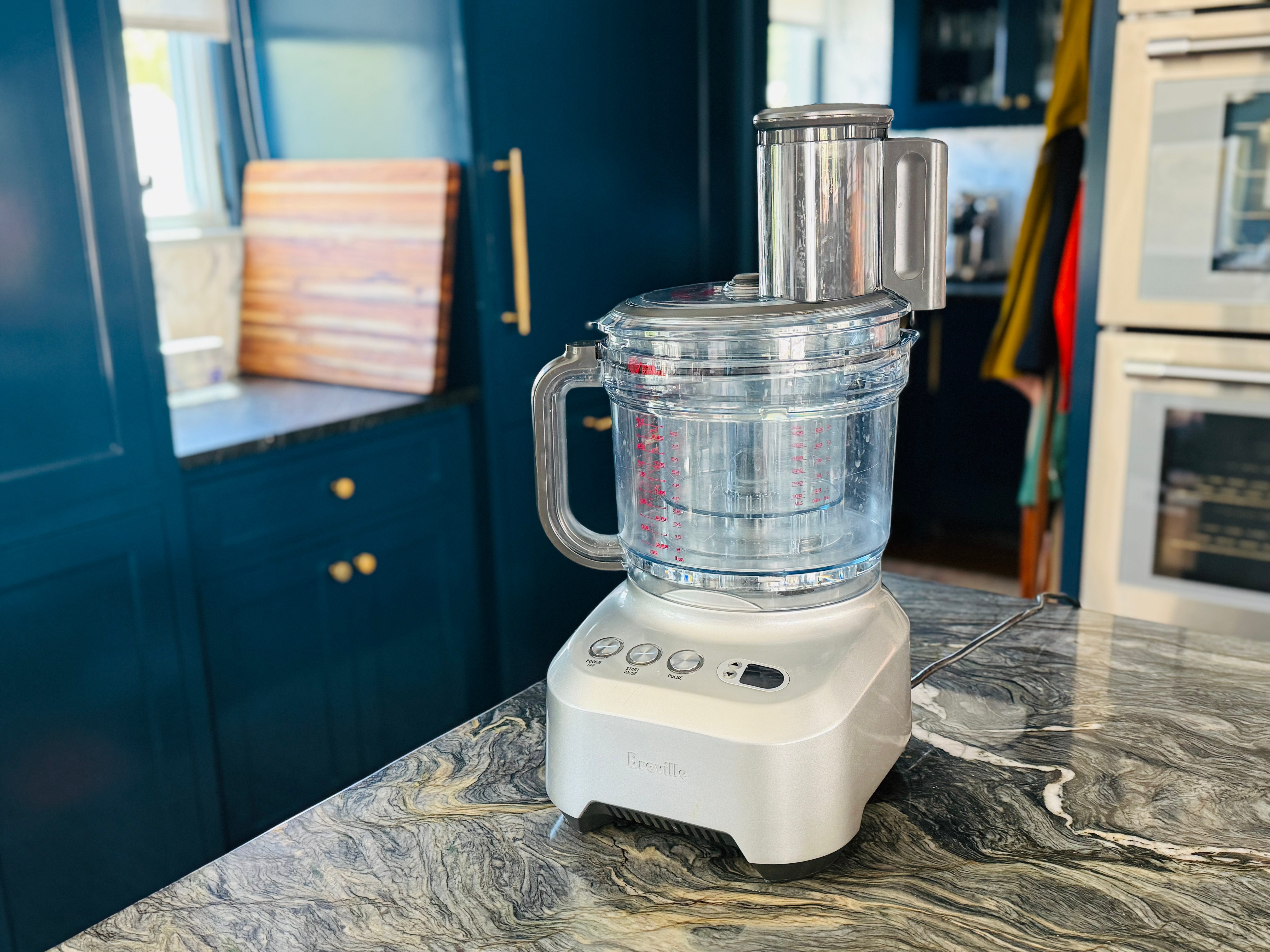
Time Saving Appliance Hack: Recipes like this used to mean a whole lot of chopping, mashing, and mixing, an arm workout disguised as dinner prep. Back in the day, you’d be breaking a sweat over a mortar and pestle. I, however, would like to personally thank modern civilization for the invention of the food processor, which has saved me countless hours. My favorite is the Breville Sous Chef 16. Once you get food processor-addicted, it’s hard to quit!
Beyond the Chip: 11 Delicious Ways to Use Salsa Verde
1. Swirled into Yogurt. Instant creamy dressing. Spoon it over grilled zucchini, roasted carrots, or steamed potatoes. Bonus: it doubles as a killer dip for crudités or spoon bread.
2. On Your Eggs (Any Style). Fried, scrambled, or poached, whatever your allegiance, salsa verde adds just the right amount of brightness and heat. Try it with jammy eggs and toasted sourdough.
3. As a Soup Finisher. Drizzle over black bean soup, dal, or a brothy chicken stew. It adds acidity and freshness like a squeeze of lime, but better.
4. In a Sandwich. Use it like a spread: slather it inside a roast chicken sandwich, grilled cheese, or breakfast burrito. Especially good with melty cheese.
5. Tossed with Noodles or Pasta. Thin with pasta water and toss with noodles, feta, and any roasted veg you’ve got lying around. Or swirl it into cold soba with sesame oil and a squeeze of lime—also, a great way to build flavor into a pasta salad.
6. As a Marinade Base. Add a splash of olive oil and use it to marinate shrimp, mushrooms, tofu, chicken, or steak. Grill or roast, and let the salsa do the heavy lifting.
7. Mixed into Beans or Lentils. Hot or cold, salsa verde + legumes = flavor-packed meal prep. Add some grains and call it a salad.
8. Tucked into Tacos (Obviously) But also: try it on quesadillas, tostadas, and even smashed avocado toast.
9. Drizzled over Roasted Potatoes. Or sweet potatoes. Or grilled corn. Or honestly, anything starchy and golden.
10. Stirred into Rice or Quinoa. Use it like a finishing sauce. Add herbs, a handful of nuts or seeds, maybe a little cheese. Suddenly, it’s a composed dish.
11. As a Pizza Topping (Yes, really). Dollop it over a white pizza with goat cheese or feta, or swirl it onto a crust before adding toppings. It adds that herbaceous zing that cuts through fat like a dream.
Stone Fruit Season Is Fleeting—Here’s How I’m Cooking Through It
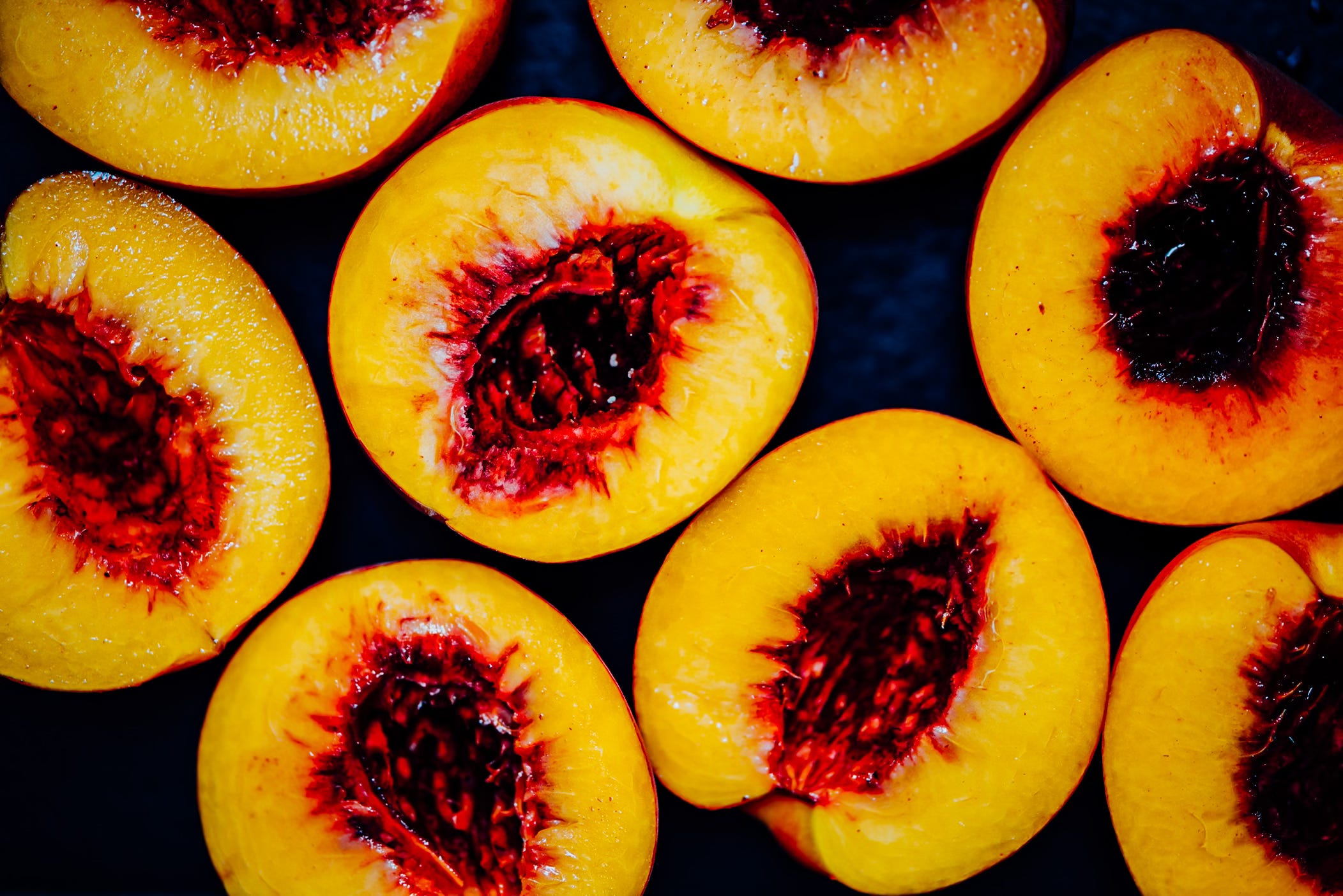
Late summer is when stone fruit truly comes into its own. The peaches are soft and perfumed, dripping with juice. Apricots glow golden-orange like little suns. And plums—whether midnight purple or soft pink—hold their tart sweetness just beneath the skin, waiting for the first bite.
This produce doesn’t need much dressing up. Just a little heat, the right spice, maybe a good swirl of cream or a crackle of crust. These are the fruits I reach for now, when the sun is still high but the days are getting shorter—my way of capturing a season that always seems to slip away too quickly.
So I’ve pulled together some of my favorite ways to cook with stone fruits: recipes that are easy, vibrant, and full of flavor. Some sweet, some savory, all built to let the fruit shine.
Sweet Recipes to Savor. There’s the Peach, Cardamom, and Saffron Cake, warm and fragrant like late afternoon sun. A Peach Thai Basil Clafoutis, which feels just fancy enough for a dinner party but simple enough for a weekday bake. Pumpkin Apricot Bread straddles the seasons—still golden and soft, but with a whisper of autumn spice. And if you're craving something cool, try the Peach and Elderflower Ice Cream—floral, creamy, and utterly dreamy.
Savory with a Stone Fruit Twist. Fruit doesn't have to mean dessert. My Spice-Roasted Chicken with Peaches is rich and aromatic, the peaches collapsing into their sauce. And the Grilled Peach Salsa with Steak Salad is a riot of textures—smoky, juicy, crisp, and fresh all at once.
Whether you’re loyal to peaches, smitten with plums, or quietly hoarding apricots, I hope you find something in this collection that makes you pause, spoon in hand, and think: yes—this is what summer tastes like.
See all the recipes below—and if you make one, I’d love to hear what you think.
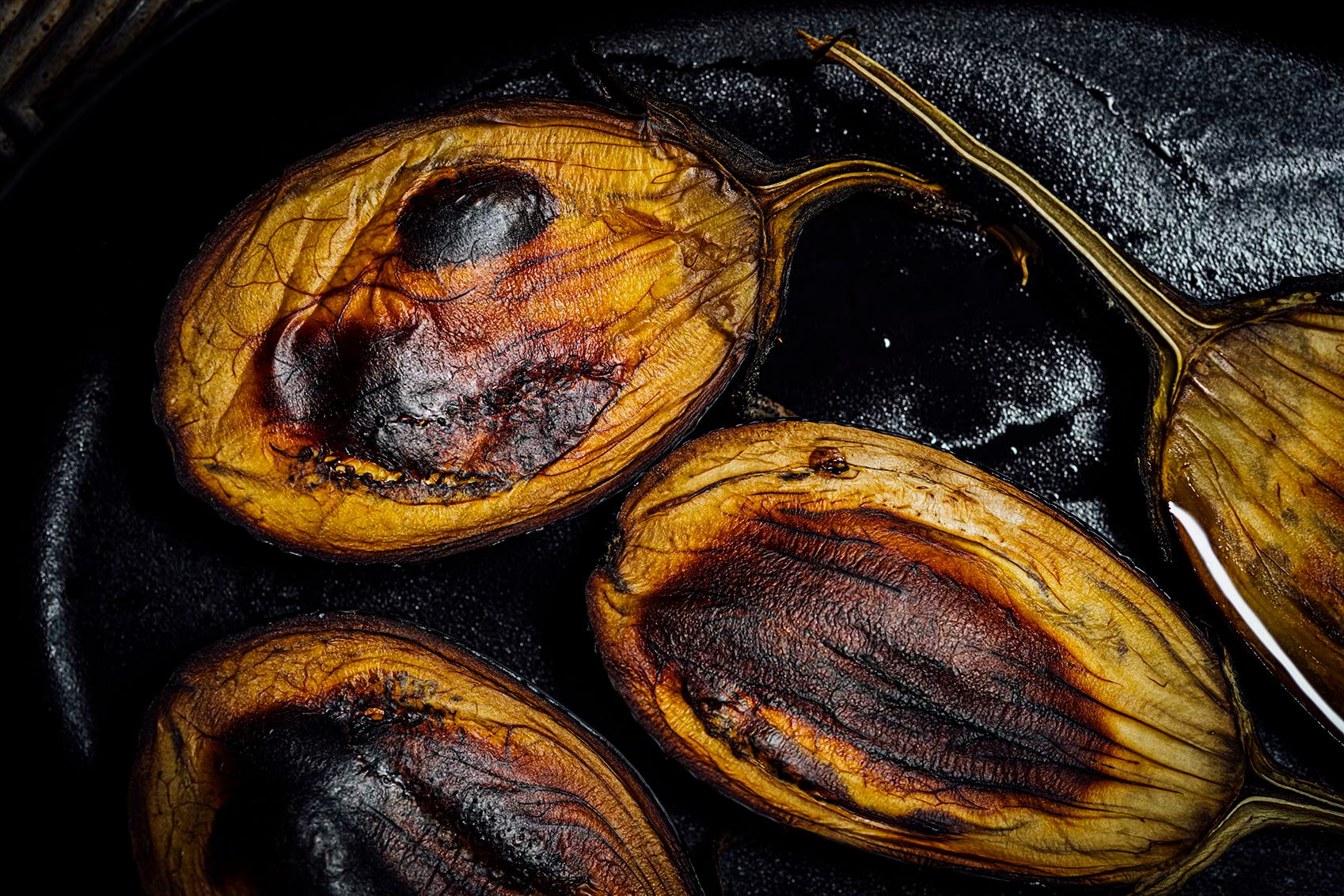
I’ve always found it quietly amusing that two of my favorite fruits—peaches and eggplants—have become internet shorthand for things far cheekier than their culinary uses. But today, we're steering clear of thirst traps and heading into the kitchen, where the eggplant, aka aubergines or brinjals, gets the attention it truly deserves. This is your little guide to cooking eggplants like a pro, with science-backed hacks, practical tips, and the kind of detail that makes all the difference. And then, there’s the reward: baingan bharta, that intensely smoky, soft-spoken yet powerful Indian classic. It’s comforting, iconic, and—if you ask me—just about the best way to eat an eggplant.
In this paid subscriber newsletter, you will…
Learn why I often quickly microwave eggplant before frying
Get to know the smoky, spiced magic of baingan bharta and how it varies across the Indian subcontinent
Get my recipe for the baingan bharta that I make at home!
And don’t miss Sami Tamimi’s Eggplant & Chickpeas with Green Lemon Sauce/ Bitinjan ma’ Hummus that I shared last week!
🔬 Kitchen Chemistry: Cooking Eggplant Like a Pro
Here’s a collection of eight clever, science-backed kitchen hacks for cooking with eggplant—whether you're roasting, frying, grilling, or storing them. These tips can help you get the most flavor and best texture out of every eggplant dish:
1. Salt for Better Texture (and Less Bitterness)
Why it works: Salt draws out excess moisture via osmosis, collapsing air pockets, and preventing sogginess when cooking. It also tames bitterness in older or larger eggplants, more so by masking the bitterness (and not destroying the bitter compounds as previously thought). However, farmers have selectively bred out bitterness from eggplants, and today’s eggplant doesn’t taste bitter, so this is now less of a concern.
How to do it:
Slice or cube eggplant.
Sprinkle with kosher salt and let sit for 30 to 60 minutes in a colander.
Pat dry (no need to rinse and pat dry, unless you do end up oversalting).
Bonus: This hack helps prevent your eggplant from soaking up too much oil during frying or roasting.
For the past few weeks, I’ve been on a bit of a tandoori bender. We’ve made skillet naan (because not all of us have a clay oven in our backyard), fast and fancy tandoori lamb, oven-roasted tandoori salmon over at America’s Test Kitchen (yes, it works, no, your smoke alarm won’t love it), and even grilled carrots because... vegetables deserve a smoky glow-up too.
And just when things were getting a little too hot, we cooled it all down with a Coconut Lychee Lime Granita. It’s icy, floral, and the opposite of standing over a grill in August, which is to say, highly recommended. Plus a double feature on apricots, featuring an Apricot Lemon and Orange Jam with a hint of orange blossom water, and an Apricot Coconut Cake laced with cardamom, accompanied by a sweet coconut crumble.
I’d love to see how you take these recipes and techniques — whether it’s tandoori-style grilling or turning fruit into frosty magic — and make them your own. Use them as a jumping-off point, remix them, and tag me on social media when you do. That’s where the real fun (and flavor) begins.
August’s Flavor Forecast
This month’s recipes are basically a vacation in your kitchen, with just enough heat to make things exciting (hello, spicy shrimp roast) and plenty of cool-downs to keep you sane. We’re twirling noodles through no-cook tomato sauces that taste like you’ve been simmering them for hours (spoiler: you haven’t), tossing preserved lemon spaghetti like it’s our full-time job, and letting miso crash the pasta party in the best way possible. There’s a retro-crunch iceberg salad, a garlic-zucchini-yogurt situation that’s begging to be scooped with everything, and desserts that scream summer: roasted strawberries with balsamic, popcorn ice cream (yes, you read that right), and a peach-saffron cake that’s basically August in a slice. Oh—and my Bombay lemonade, because we’re fancy and hydrated! Let’s cook.
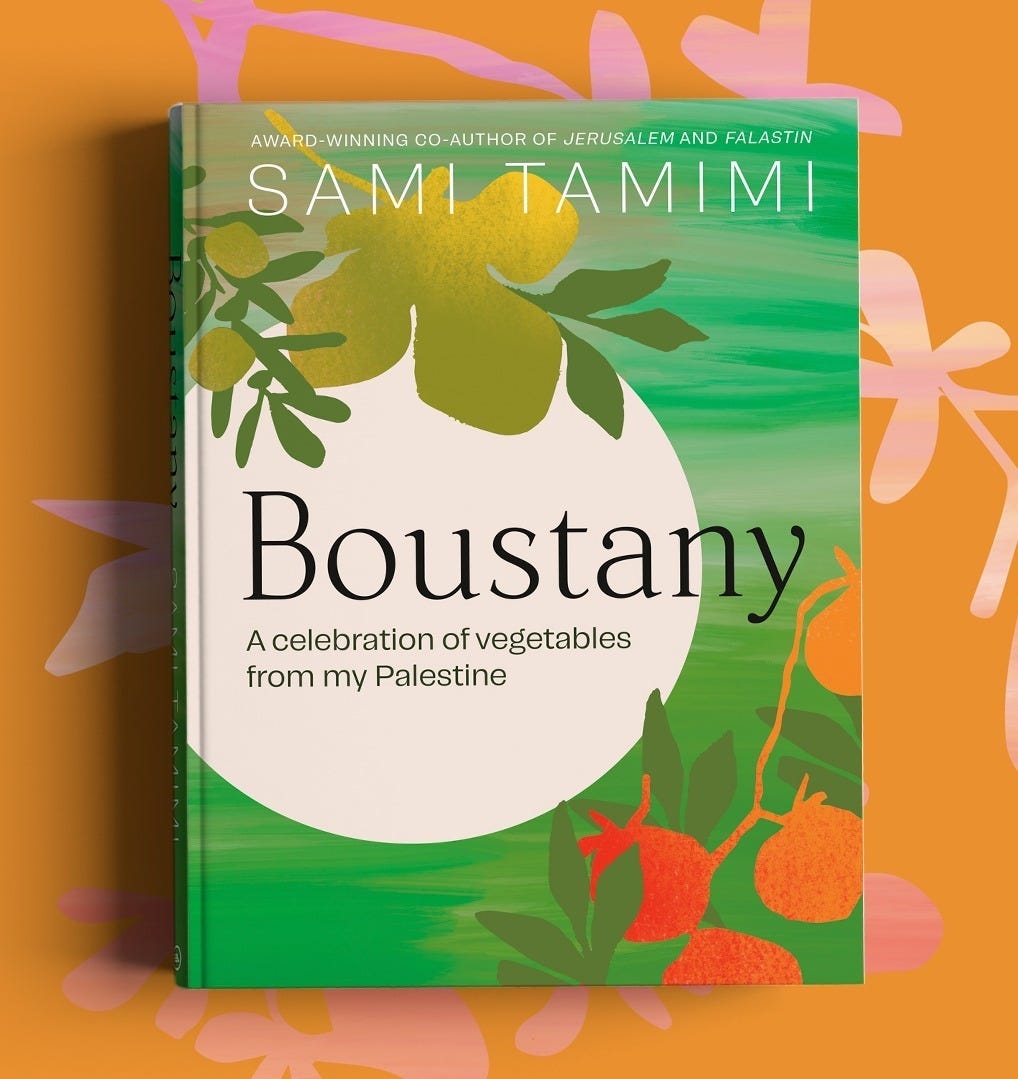
I’m looking forward to my upcoming conversation with chef and author . I don’t say this lightly: Boustany is one of the most soulful and evocative cookbooks I’ve encountered in years (and I’m featuring a recipe from it this week!). I have always admired Sami’s work. Sami has a rare talent for weaving stories through food, and in Boustany, he shares them on a deeply personal level—braiding memory, displacement, and identity into every dish and every word.
The very title, “Boustany,” translates to “my garden” in Arabic—an apt, lyrical name for a cookbook devoted to the bounty of vegetables. The word itself conjures visions of his maternal grandparents’ garden in Hebron, teeming with vibrant fruits and lush greens, and of a childhood spent wandering the hills of the Old City of Jerusalem, foraging alongside his parents. During the long days of the pandemic, Sami found solace in tending his own garden in Umbria, Italy, letting the act of nurturing plants ground him. Throughout the pages of his book, one theme stands out clearly to me: the elegance of cooking with simplicity, making the most of a few humble ingredients, leaning on the pantry, which is filled with foods like preserves, fermented foods, and pickles that carry memories of tradition throughout the year.
Sami’s book isn’t just a collection of recipes; it’s a tender tribute to Palestinian people, their kitchens, and the homes many have left behind, a reminder of the endurance of culture expressed through flavor and ritual.
My copy is already bristling with bookmarks: the Freekeh-Stuffed Peppers, Two-Lentil Mejadra, Tomato Arugula Walnut Salad, and the Jerusalem Sesame Bread Nests, where each nest cradles a golden-yolked egg. These are recipes I know I’ll return to again and again, not just for their taste but for the stories they carry. Boustany is a book to cook from, yes—but also to sit with, to reflect on, and to cherish.
Join us live TODAY at 12 pm ET on Substack Live. (Missed today’s Substack Live at noon? Paid subscribers to Flavor Files+ can now watch the full conversation below.)
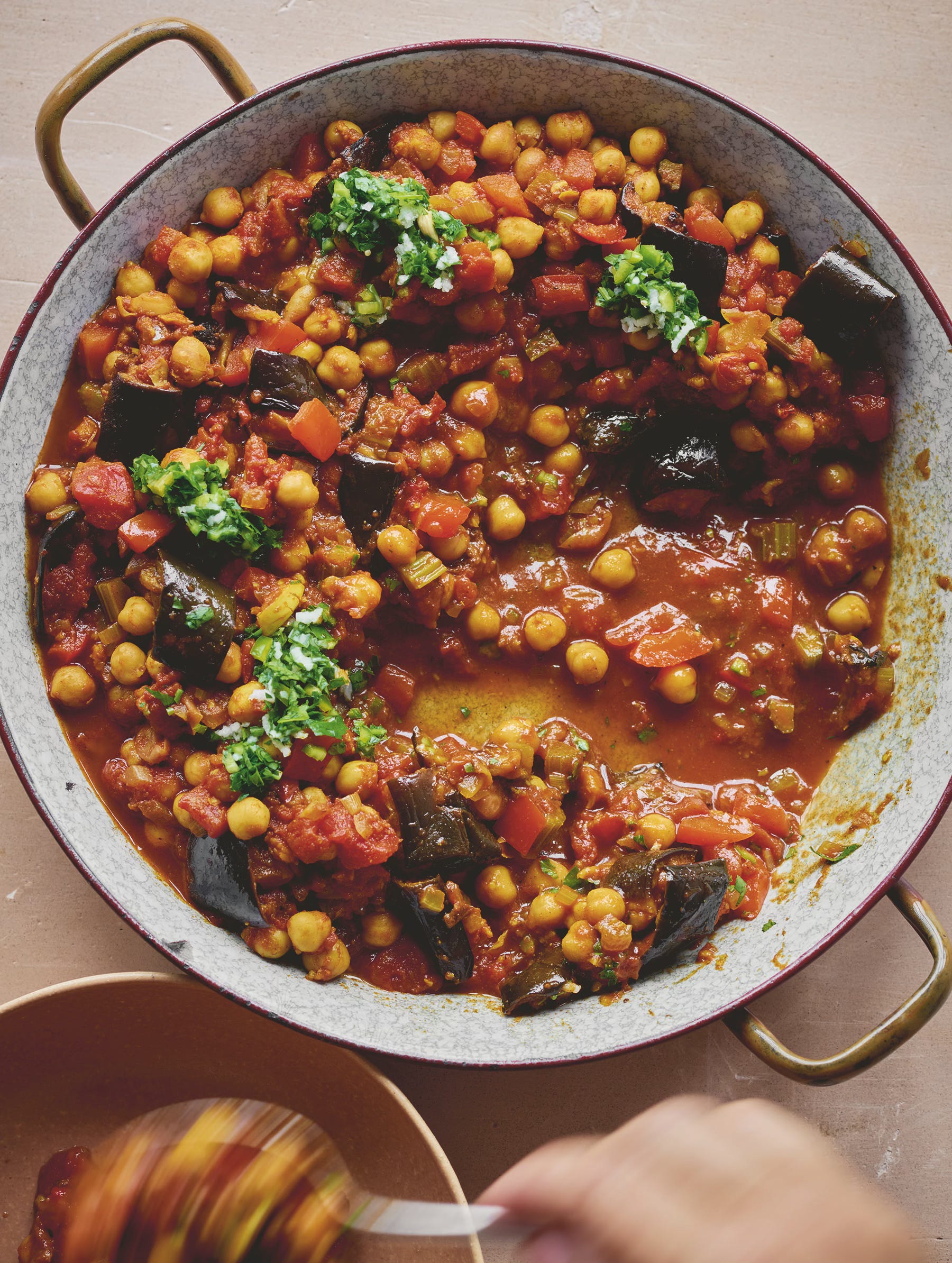
There are many kinds of eggplant and tomato dishes in the Middle East, each with its own distinct character, and this eggplant and chickpea stew is no exception. It’s a hearty dish that combines the meatiness of the eggplant, the nutty-creamy texture of the chickpeas and the umami of the tomato sauce, all complemented by the zesty green chile sauce.
📚 Don’t Miss This Sunday’s Live Chat — Plus a Boustany Book Giveaway!
Just a quick reminder that this Sunday at 12pm ET, I’ll be going live on Substack with the one and only Sami Tamimi to talk about his stunning new book, Boustany.
It’s going to be a relaxed, flavor-filled conversation about the stories, dishes, and inspiration behind the book — and we’d love to have you join us.
🎁 And we’re giving away 3 copies of Boustany
Here’s how to enter*:
🥘 1 copy will go to someone who attends the live chat this Sunday. Just show up and you’re in the running.
👥 2 more copies will go to readers who do the following:
Are active subscribers to both my Substack and Sami’s
Refer at least one person to either of our newsletters (mine or Sami’s — your choice!)
That’s it! Referrals are tracked automatically by Substack, so just use the button below, and I’ll know. The more people you refer, the better your chances.
👋🏽 I’m thrilled to be hosting a live conversation with the brilliant Sami Tamimi to talk about his beautiful new book, Boustany — a deeply personal project that blends food, memory, and heritage from Palestine.
This will be a casual, live chat where we’ll talk about the inspiration behind the book, favorite dishes, ingredients, and the stories woven through it all.
🗓 When: This Sunday at 12 pm ET 📍 Where:Join via the Substack app (for iOS or Android) or your web browser 📲 Tip: If you have the app, you’ll get a push notification when we go live — but the app isn’t required! I’ll also send you an email.
💬 You can listen in, ask questions, and be part of the conversation. And we’ll be doing a book giveaway!
How to join: Just click here Sunday a few minutes before 12pm ET. If you’re subscribed, you’ll also get a reminder when we go live.
Whether you’ve already devoured Boustany or are just curious about the stories behind it, I hope you’ll stop by!

 Login
Login