 Login
Login
A Love Letter to Okra
Hello Friends,
I’ve always wanted to write a love letter to okra. Today felt like the right moment.
Dear Okra,
You are misunderstood, unfairly maligned, and deeply loved by those who know better.
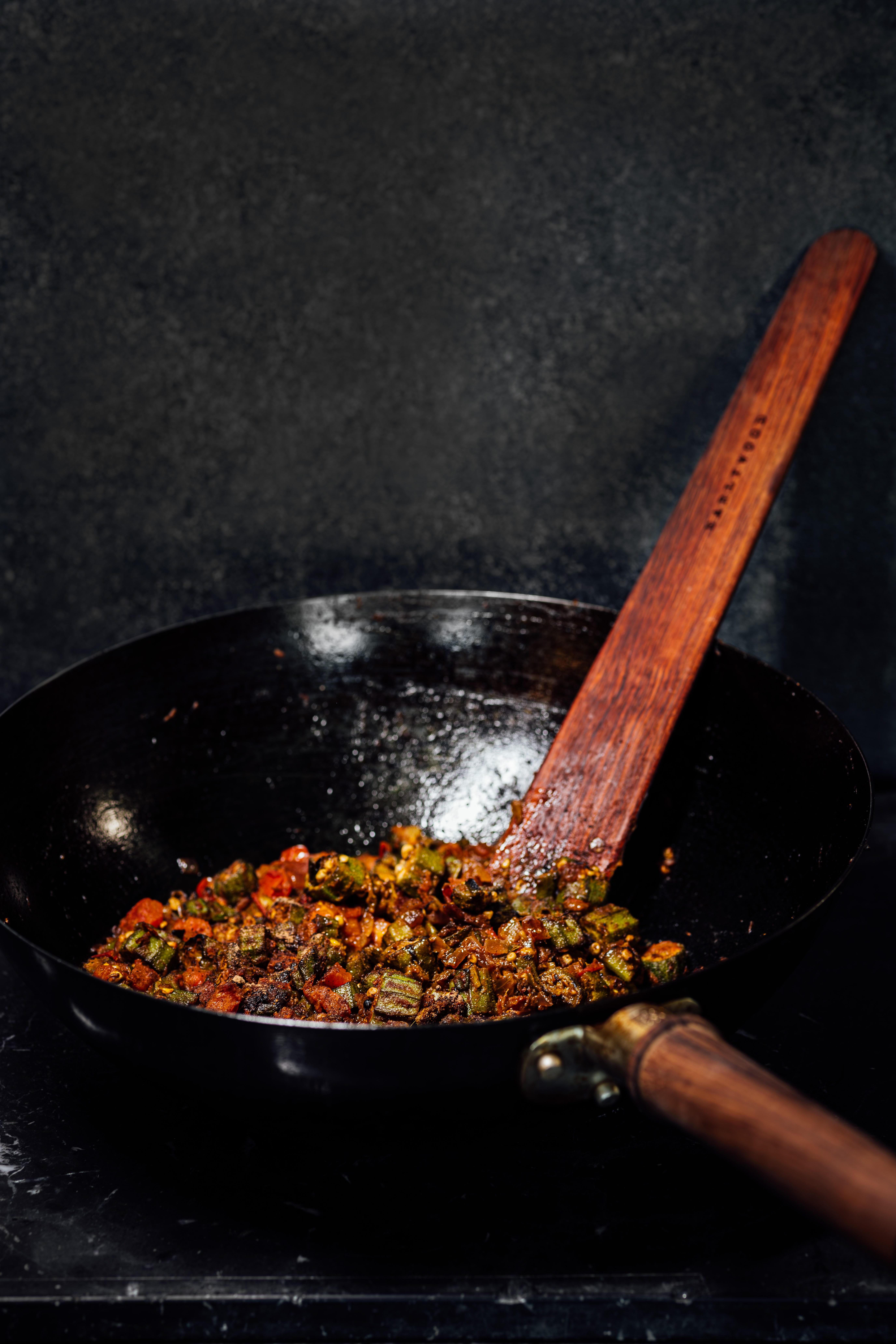
I grew up with you on the table—softened by heat, slicked with spice, caramelized just enough to catch the light. In Indian kitchens, you are bhindi—often called lady fingers: sliced carefully, dried with care, cooked patiently so your edges brown and your center turns silky rather than slippery. You appear on everyday plates and festive ones alike, proof that comfort and intention can coexist.
But your story is far bigger than my childhood table.
Across West Africa, you are foundational—pounded, stewed, stretched into soups that thicken naturally, binding ingredients together the way memory binds people to place. In Creole and Cajun kitchens, you become gumbo’s quiet architect, lending body and depth without ever demanding attention. In all of these cuisines, okra isn’t an oddity. It’s infrastructure. It does work.
What people call your “slime” is actually your superpower.
That slippery quality—your mucilage—is a complex matrix of polysaccharides that swell in the presence of water and heat. When treated with care, it creates silkiness, cohesion, and structure. When mistreated, it rebels. Which feels fair.
And the same quality cooks have managed intuitively for generations is now being studied in modern science:
Food texture engineering
Okra mucilage is being explored as a natural thickener and stabilizer in sauces, soups, and plant-based foods—especially where synthetic gums are being phased out.Edible films and coatings
Researchers are using okra mucilage to create biodegradable, edible coatings that help preserve fruits and vegetables by slowing moisture loss and oxidation.Medical and pharmaceutical uses
Because it forms gels and slows digestion, okra mucilage is being studied as a drug-delivery medium and to moderate glucose absorption—particularly relevant in diabetes research.Water purification
In some regions, okra mucilage has been tested as a natural flocculant, helping bind impurities in water so they can be removed more easily. A humble plant solving serious problems.Sustainable packaging and biomaterials
Scientists are experimenting with okra-derived polysaccharides for compostable plastics and bio-based materials, offering alternatives to petroleum-derived polymers.
And still, in the kitchen, your magic remains simple.
Dry you well, and you brown beautifully. Salt you too early, and you remind us that chemistry always wins. Cook you gently, and you reward patience with depth and richness. Finish you with acid, and everything snaps into focus.
Okra doesn’t ask to be loved loudly. It asks to be understood.
And once it is, it becomes indispensable.
With affection and respect,
Nik
If you’d like to cook along, this week’s recipe is bhindi masala—a dish built around everything I love about okra, from managing moisture to layering spice with intention. The full recipe, with all the technique spelled out, follows below for paid subscribers.