 Login
Login
The Real Danger of Russia’s Fake Elections
LIKE THE UNITED STATES, Russia is having national elections this fall. From September 18 to 20, voters will cast ballots for (but not necessarily choose) members of the lower house of the federal legislature, the Duma. So far, the only party worthy of the label “opposition,” Yabloko, has been struck from the ballot, in a decision affirmed on Monday by the appellate college of Russia’s Supreme Court. On the same day, one of the same party’s most recognizable political figures, a former member of a regional assembly, was handed a prison sentence of eleven years and one month on charges of spreading “false information” about the Russian army. Earlier, another politician who had announced his Duma candidacy on an antiwar, pro-freedom platform had fled the country after a clear signal that he had to choose between emigration and prison.
It is, in other words, the sort of election you’d expect in Vladimir Putin’s Russia as the war in Ukraine creeps closer to the five-year mark.
But does the ruthless crackdown attest to the Kremlin’s totalitarian might or to its fragility—or both? And could it energize a new generation of young pro-freedom activists, hundreds of whom braved the police in Moscow to support Yabloko?
Defend democracy. Support independent media. Join our community.
YABLOKO, FOUNDED IN 1993—its name, Russian for “apple,” is also a portmanteau of the names of three founders, of whom only one, Grigory Yavlinsky, is still sort of on the political scene—has long been regarded as a quaint relic of the 1990s and as a pathetic symbol of impotent liberalism, or even faux liberalism. It has also been perceived as Putin’s pet opposition: Not affirmatively cooperative like the “establishment opposition” parties (Just Russia, Liberal Democratic Party, and even the Communists) but nonetheless tame, toothless, and permitted to exist as long as it knew its place. A former Yabloko member, blogger and activist Maxim Katz, accused the party of “self-castration” five years ago, citing such displays of cowardice as a 2019 post on the party’s Twitter account discouraging people from attending peaceful protests.
Until recently, other opposition activists generally despised Yabloko—which hasn’t had a caucus in the Duma since 2003 and has typically received less than 1.5 percent of the vote in parliamentary elections—as an officially approved spoiler deployed against genuine opposition forces. (Yavlinsky’s former personal friendship with Putin didn’t help.) In 2015, Yabloko sued Alexei Navalny, the late anti-corruption activist, over a post charging that a regional Yabloko chapter had been “bought” by an oligarch with ties to the ruling United Russia party. In February 2021, Yavlinsky shocked many people by writing an article assailing Navalny, then already imprisoned after an attempted poisoning by Russian special services, as a nationalist and populist with his own autocratic tendencies.1
Even so, Yabloko was Russia’s only officially registered political party to oppose the Crimea annexation in 2014 and the invasion of Ukraine in 2022. It also had a few highly visible and genuinely brave activists—among them Lev Shlosberg, a former member of the Pskov regional assembly who, back in 2015, publicized evidence of Russia’s covert involvement in the war in Eastern Ukraine. That’s the man who just got an eleven-year sentence for supposed fake news about the Russian armed forces. At least four other Yabloko members and activists, including the Deputy Chairman Maxim Kruglov, are already serving sentences on the same spurious charge.
Despite the official hounding, Yabloko’s registration for September’s Duma elections was approved by Russia’s Central Elections Commission in late July. It still faced some major handicaps. It was denied registration in several localities including St. Petersburg, where it enjoys relatively high popularity. In addition, over a dozen relatively high-profile Yabloko members, including Chairman Nikolai Rybakov, were disqualified from running because of typically absurd political charges such as posting “extremist imagery” online. In Rybakov’s case, the extremist image was a photo of Navalny in a condolence message on his death.
Still, Yabloko was on the ballot, with a slate of mostly young candidates and with the slogan, “For peace and freedom—for life without fear.”
That didn’t last long. Within days, Yabloko’s registration was challenged by the small, hawkish party Rodina (“Motherland”). Yabloko’s call for the immediate cessation of hostilities in Ukraine, Rodina charged, was extremist and unconstitutional because it meant leaving “Russian territory”—i.e., Ukrainian territories annexed by Putin in September 2022 and written into the Russian Constitution, but still under Ukrainian control—in the hands of “the Kiev Nazi regime.” Other allegations had to do with foreign funding, specifically donations from Russian citizens who had income from foreign sources; illegal campaign expenditures, on the assumption that social media posts and podcasts publicizing Yabloko were (or amounted to) paid advertising; and copyright violations in campaign materials.
The copyright charges were especially Kafkaesque. Initially, Yabloko was accused of the unauthorized use of a photo from the Kommersant newspaper (a tank in a sunflower field) in its campaign materials, but it turned out that the photo had been legally purchased and properly credited. When that charge fell apart, the complaint had to fall back on far more esoteric claims. Yabloko’s logo was accused of suspicious resemblance to an image from a 1920 Soviet poster by avant-garde artist El Lissitsky: both feature a triangle piercing a circle. Also flagged were a U.S. army photo of the ruins of Hiroshima (which is in the public domain) and an image made with ChatGPT without OpenAI’s permission. And then there was a podcast host’s utterance, in an interview with Yavlinsky that was later posted on the Yabloko website, of two Soviet-era antiwar quotes that have long been part of the common language: “Anything but war,” a slightly altered line from the 1959 play Five Evenings, and “May there always be sunshine,” from a famous 1962 children’s song. (The American analogues might be “War is hell” and “What is it good for? Absolutely nothing!”) To compound the absurdity, the son of the song’s composer publicly stated that his heirs had no objection to Yabloko using the line in any way it wanted.
But whether the accusations made any sense never really mattered: On August 10, Russia’s Supreme Court ordered Yabloko struck off the ballot. An appeal was filed; but, given that the Central Election Commission and the General Prosecutor’s Office supported the decision, the chances of it being reversed on were roughly the same as Putin publicly apologizing to Ukraine for the invasion. On Monday, the disqualification was upheld, after a supposedly “open” hearing where only six members of the public were allowed inside the courtroom and no audio or video feed was permitted. (Someone still managed to smuggle out an audio recording.) A final appeal to the presidium of the Supreme Court is a simple formality.
SO, WHAT IS THE MEANING of this charade? Why was Yabloko registered? Why was it booted from the ballot when, even if it miraculously won a majority of the vote nationwide, the Kremlin could have easily rigged the results—particularly now that Russia’s electoral districts include the annexed and partially occupied provinces of Ukraine, where United Russia can freely give itself 99.9 of the vote if needed?
The consensus among Russia’s independent, mostly exiled pundits and political activists is that giving Yabloko its moment in the electoral sandbox was intended primarily to demonstrate that antiwar sentiment in Russia is pathetically marginal—between one and two percent of the electorate. There’s also a view that Yabloko was meant to split the “tame liberal” vote and weaken New People (Noviye Lyudi), a six-year-old party which backs the war in Ukraine but opposes censorship and supports more democratic elections.2 While New People is basically a Kremlin project meant to appeal to young voters, the Kremlin may feel that it shouldn’t be allowed to get too big.
But something funny happened on the way to the voting booth: Support for Yabloko started to surge. The presence of an antiwar, pro-freedom party on the ballot galvanized large number of young Russians online. The party’s fruity name proved useful: Suddenly, merely posting a clip discussing one’s love for apples, or happily munching on one, became a sly act of political defiance. Apple memes and emojis multiplied, as did Internet searches for Yabloko. “Closed” government polls reportedly showed about 10 percent of voters expressing an intent to vote for Yabloko before it had even started campaigning. The threshold for representation in the Duma is five percent. (Yes, vote-rigging is a given—but too large a gap between the actual vote and the reported results could annoy enough of the populace to give the Kremlin a headache.) Meanwhile, even official and public polls have been showing United Russia’s rating at a record low of about 32 percent. And while majorities still profess approval of Russia’s actions in Ukraine—whether out of fear, passive conformism, or sincere conviction—recent polls find that nearly two-thirds of Russians support peace talks, while one in four favor immediate concessions for peace.
What’s more, it’s likely that the regime’s real fear was not so much the actual voting as the campaign. As former Duma member Dmitry Gudkov told Radio Liberty: “There are no elections in Russia—it’s a scam, the house always wins. But if we got six weeks of a legal antiwar campaign in Russia, that could have gotten a lot of traction. There would have been hundreds of thousands of activist volunteers all over the country distributing leaflets and so on.” Not to mention at least some access to mainstream media including federal television channels, guaranteed to every party on the ballot. Perhaps, by election time, the share of Russians who want peace now—even on Ukraine-friendly terms—would have risen from a sizable minority to a majority.
Many believe that the Kremlin’s strategists made another miscalculation, counting on the Russian opposition in exile—which still has an underground following in Russia, including on banned but widely accessed platforms like YouTube and Telegram—to join in a pile-on against Yabloko. Instead, there was remarkable consolidation behind it: Even activists from Navalny’s Anti-Corruption Fund, including his widow Yulia Navalnaya, set old grudges aside and urged voting for the only antiwar and pro-freedom party on the ballot.
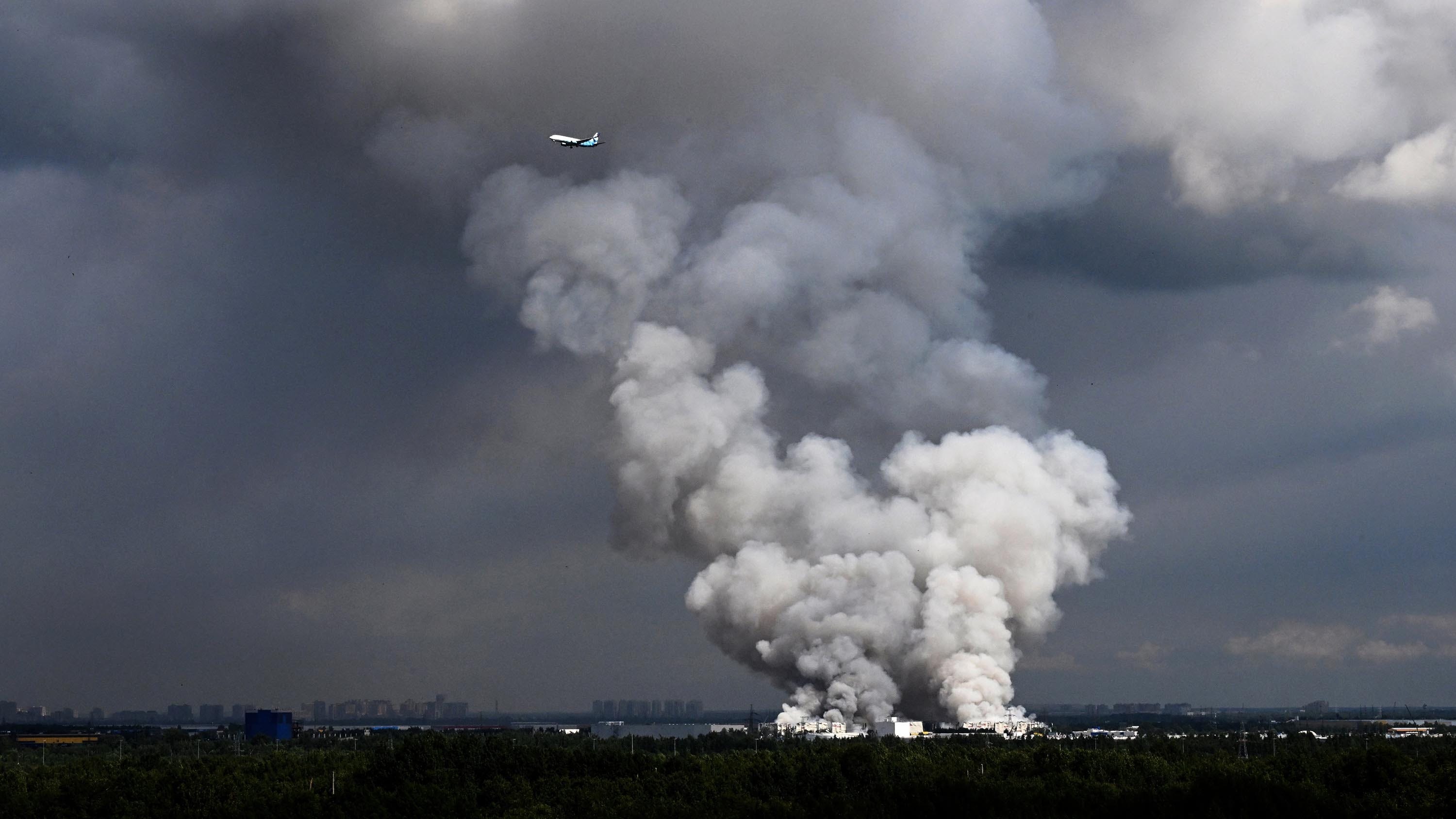
TV-RAIN host and analyst Yekaterina Kotrikadze has said that the most dramatic effect of Yabloko’s campaign was its appeal to young people who had largely withdrawn from the political into the personal, only to see their personal world invaded by the war and the state: Ukrainian drone strikes at online retail warehouses, gas lines caused by strikes at oil refineries, moves to throttle the Internet. In Kotrikadze’s words, “People realized that they don’t want to live like this.” Hundreds of young people showed up to support Yabloko outside the Supreme Court offices, both for the initial hearing and for the appeal—braving dozens of arrests, as well as police warnings to young men that protesting would get the draft board’s attention. Dmitry Medevedev, former fake president and current Putin attack dog, was sufficiently rattled to gripe about young pridurki (“retards,” basically) who, he suggested, are either lured by promised benefits or want to show off their rebellion.
POLITICAL SCIENTIST EKATERINA SHULMAN told TV-RAIN that the rash decision to greenlight Yabloko’s run, followed by a scramble to block it, was not only a “massive embarrassment in two acts” but a sign of “dysfunction” in the regime’s upper echelons. Some see it as a sign of intensifying conflict between Kremlin factions—the legendary hawks vs. doves, or quasi-liberal technocrats vs. siloviki, hardliners from the military and security structures that represent brute force. (We could call it “technocrats vs. jackboots.”) Others agree with political analyst Stanislav Belkovsky that the warring “Kremlin towers” are largely a myth, and Putin is the only decider.
Whoever (besides Putin) may have played a role in the Yabloko two-step blunder, Russian dissidents in exile have widely viewed it as an encouraging sign of the regime’s weakness: as ex-party member Maxim Katz put it in a recent video, “from ‘Kyiv in three days’ to being scared of Yabloko.” A similar fragility can be seen in the response to onetime Duma member Boris Nadezhdin’s aborted campaign. Like Yabloko, Nadezhdin was once seen as a reliable “house liberal,” known mainly as a token dissident/whipping boy on Russian propaganda shows. In early 2024, he was allowed to register as a candidate for the presidential elections; after thousands lined up to sign his nomination forms, enough signatures were invalidated to keep him off the actual ballot. This time, 63-year-old Nadezhdin was handled far more harshly: Shortly after declaring his Duma candidacy last month, he was branded a “foreign agent,” making him ineligible to hold public office, and then arrested and fined for display of “extremist imagery.” (The offense? Once again, a Navalny photo.) When a foreign travel ban notice appeared on Nadezhdin’s electronic account for government services and then disappeared, he got the message: He is now in Paris.
Displays of weakness? In a sense, yes; but these are also displays of ruthless power. That’s why, for opposition veterans like former TV journalist Viktor Shenderovich, the signs of a new generation’s awakening are both heartening and terrifying. “We see that life goes on—there are sane people, wonderful people,” Shenderovich said in an interview on a Russian-language Polish channel. “But then I remember Iran and realize that in the next round, when Putin gets scared for real, they’ll start shooting people. For now, they’ll be throwing them in jail.”
It’s tempting to believe, with former political prisoner Vladimir Kara-Murza, that the regime’s collapse could happen soon and very suddenly. One can certainly see signs of hope in the fact that Russian troops are stuck in Ukraine and that Ukrainian long-range missiles are hitting more and more Russian strategic targets. But for the moment, Putin and his totalitarian machine are still more than capable of inflicting horrific damage—on Ukrainians and on Russian resisters.
Navalny was expelled from Yabloko for his nationalist views in 2007; he himself claimed that his expulsion had more to do with challenging Yavlinsky’s leadership.
New People initially came out against the invasion of Ukraine but quickly reversed itself. It is widely seen as a project of Putin’s first deputy chief of staff Sergei Kirienko.