Login
Login
Ratatouille

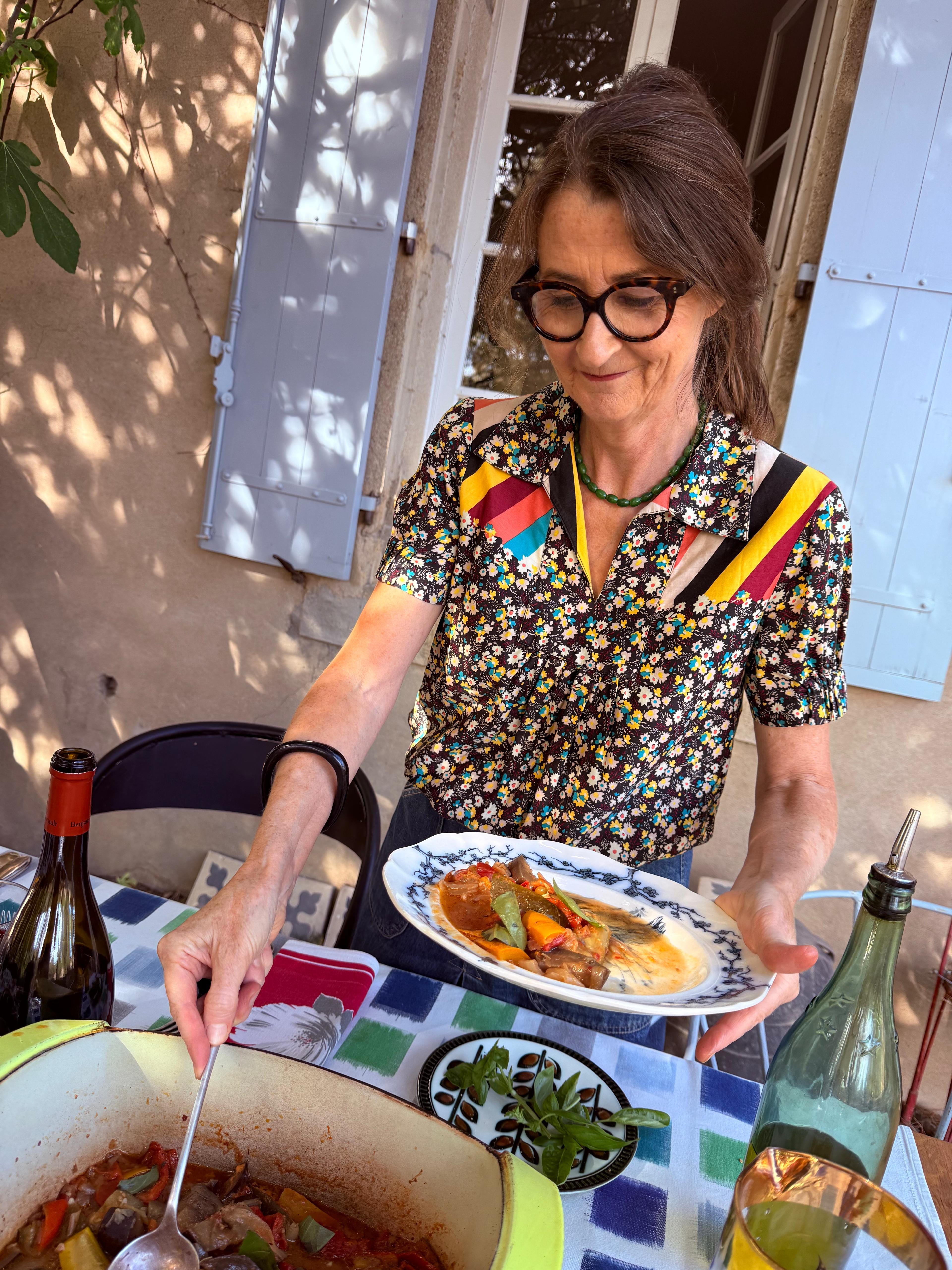
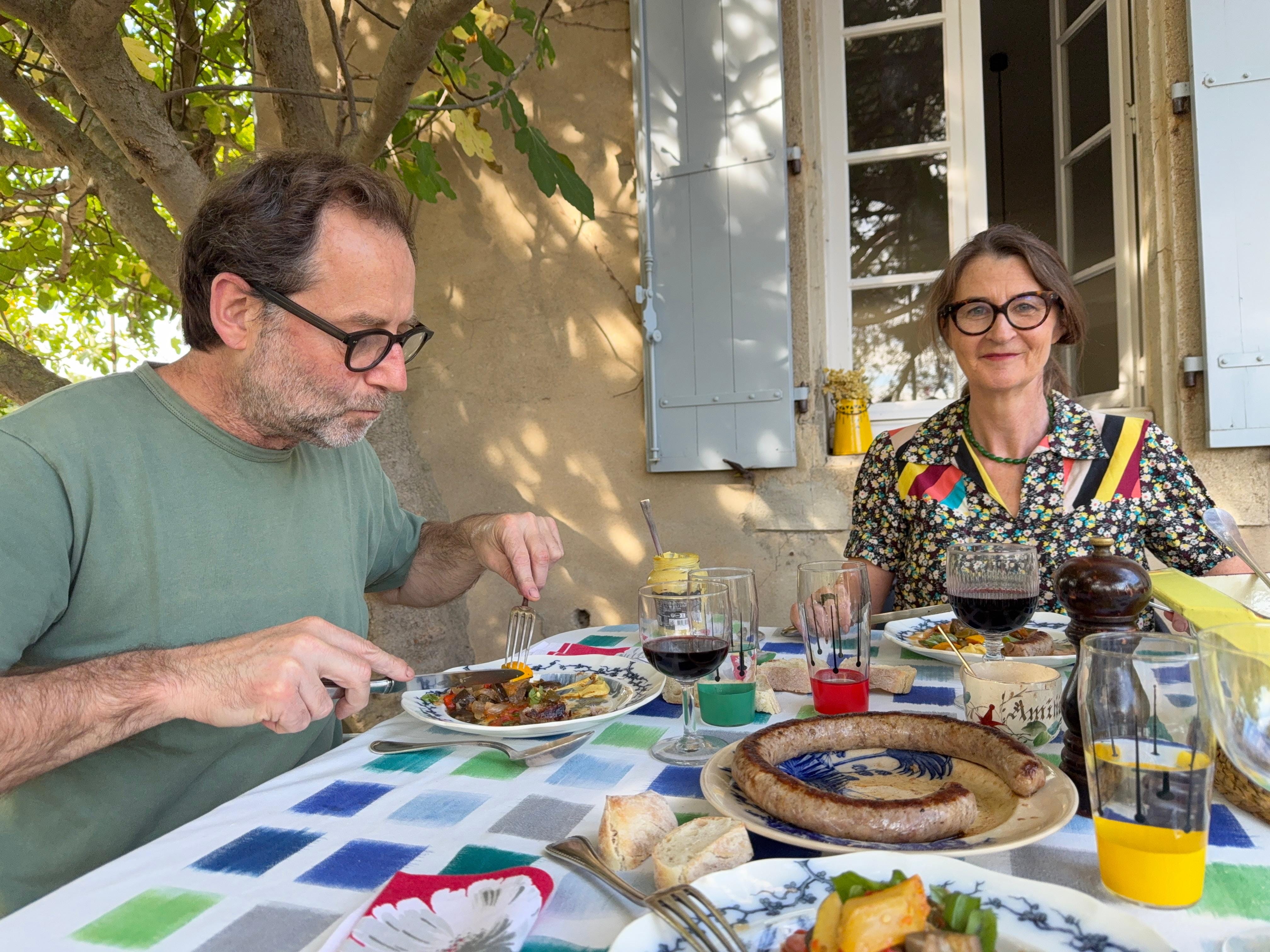
After some lively discussion about ratatouille in a recent newsletter, I thought it would be fun to ask my friend Kat, aka; The Vigneron’s Wife, who lives in the Languedoc-Roussillon region of France, with her French husband, winemaker Benjamin Darnault, to share with us how she prepares this iconic French dish in a guest post. Whenever we visit the region, Kat and Benji, as her husband is known, often invite us for lunch on their stunning terrace overlooking the vineyard. On our last visit, Kat, who is originally from Australia, made a delicious ratatouille with vegetables she picked up at the local market in Olonzac, one of the best in France, and the flavors were stunning.
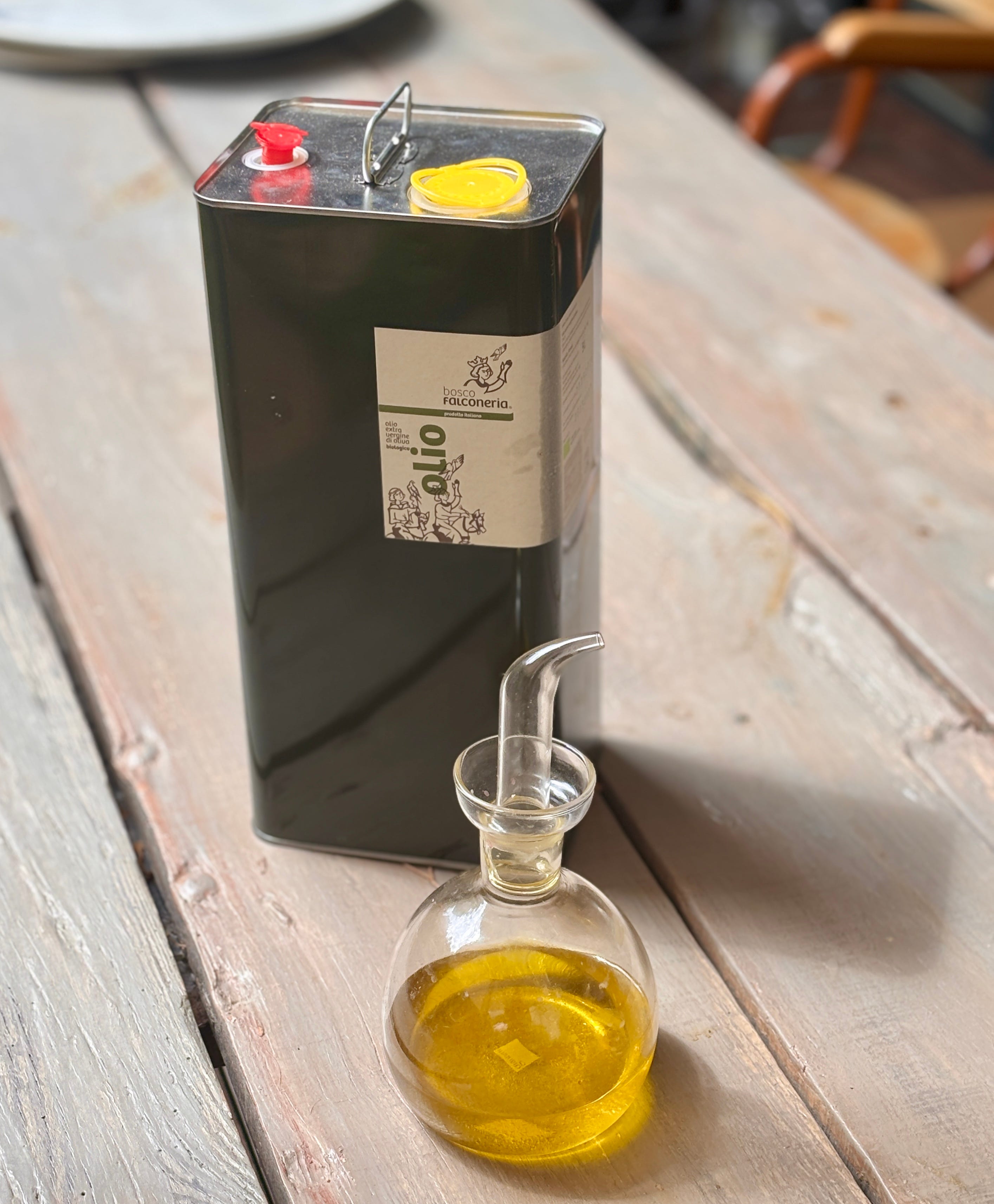
You’ll notice Kat uses quite a bit of olive oil, which is perhaps one of the reasons why it’s so good. (An Italian friend once told me, “Olive oil isn’t used just to keep foods from sticking. It’s a flavor.”) I hope you enjoy this guest post, and recipe (and photos), from Kat! - David
When I was a kid in Australia, market shopping was a treat. Every Friday night, I’d go with my parents to Adelaide’s Central Market. Dad was obsessed with Italian charcuterie, Mum loved the fresh fruits and fried Asian dishes, and I’d find myself carrying a bag of steaming roasted beer nuts, hot in my hands with burning, salty fingers, trying not to lose Mum and Dad in the crowds.
The market was packed to bursting with people and noise, vendors yelling bargain prices, excitement in the air for the weekend. Stall after stall was awash with colour and all sorts of aromas drifting to my nose. My parents bought most of our household’s food at the local supermarket, but this was our thing: to head into the city and treat ourselves to exotic produce you couldn’t often find anywhere else. The Central Market was our happy place.
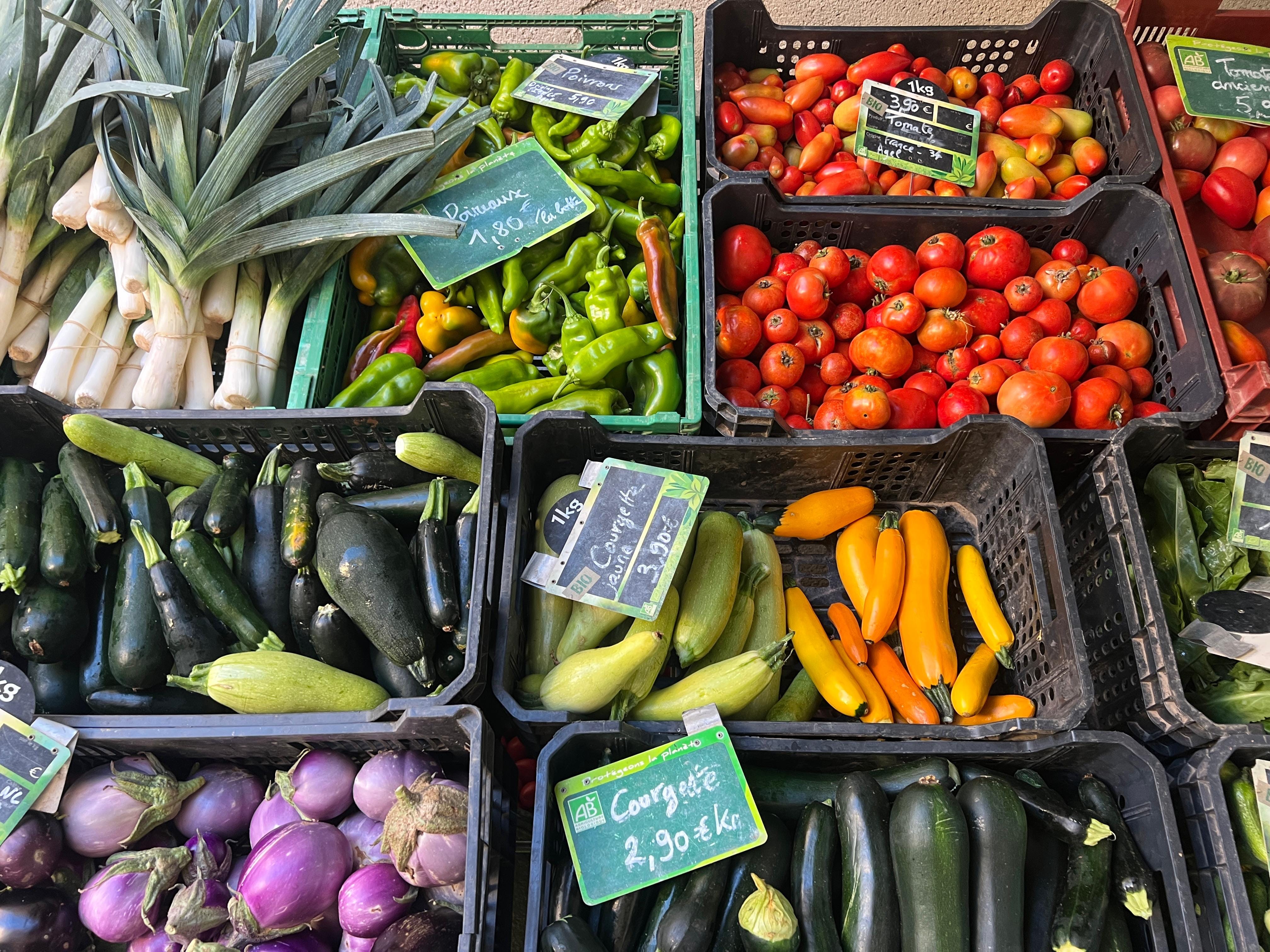
Fast forward to today, and I still do a weekly market shop, but it’s thousands of kilometers from my childhood home, in a small rural village in France called Olonzac. If ever you’d told me I’d be living in a remote region of France and shopping at an outdoor market on an ancient square, that 12-year-old Australian kid would never have believed you. And yet here I am, and I’ve been coming to this market now for over 25 years.
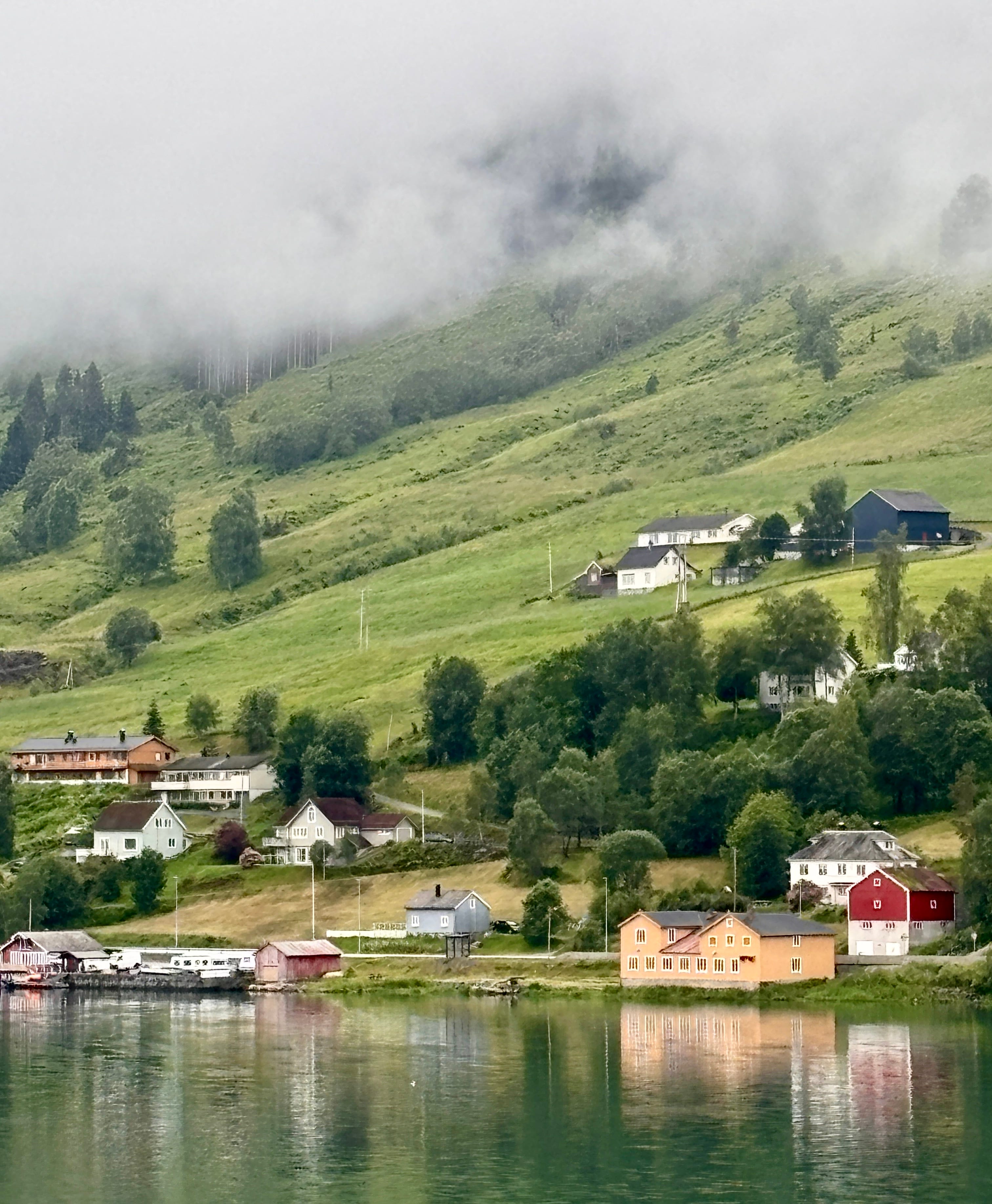
So where is Olonzac exactly? It’s a village in the heart of the Minervois, a historic wine-producing area of southern France. People have been making wine here for thousands of years, since the Romans inhabited the area. Part of this region was formerly known by the name you might be more familiar with, the Languedoc-Roussillon - which lines the Mediterranean coast and is close to the Spanish border.
Subscribe to David’s newsletter to get posts, recipes, podcasts, videos and more, sent right to your inbox!
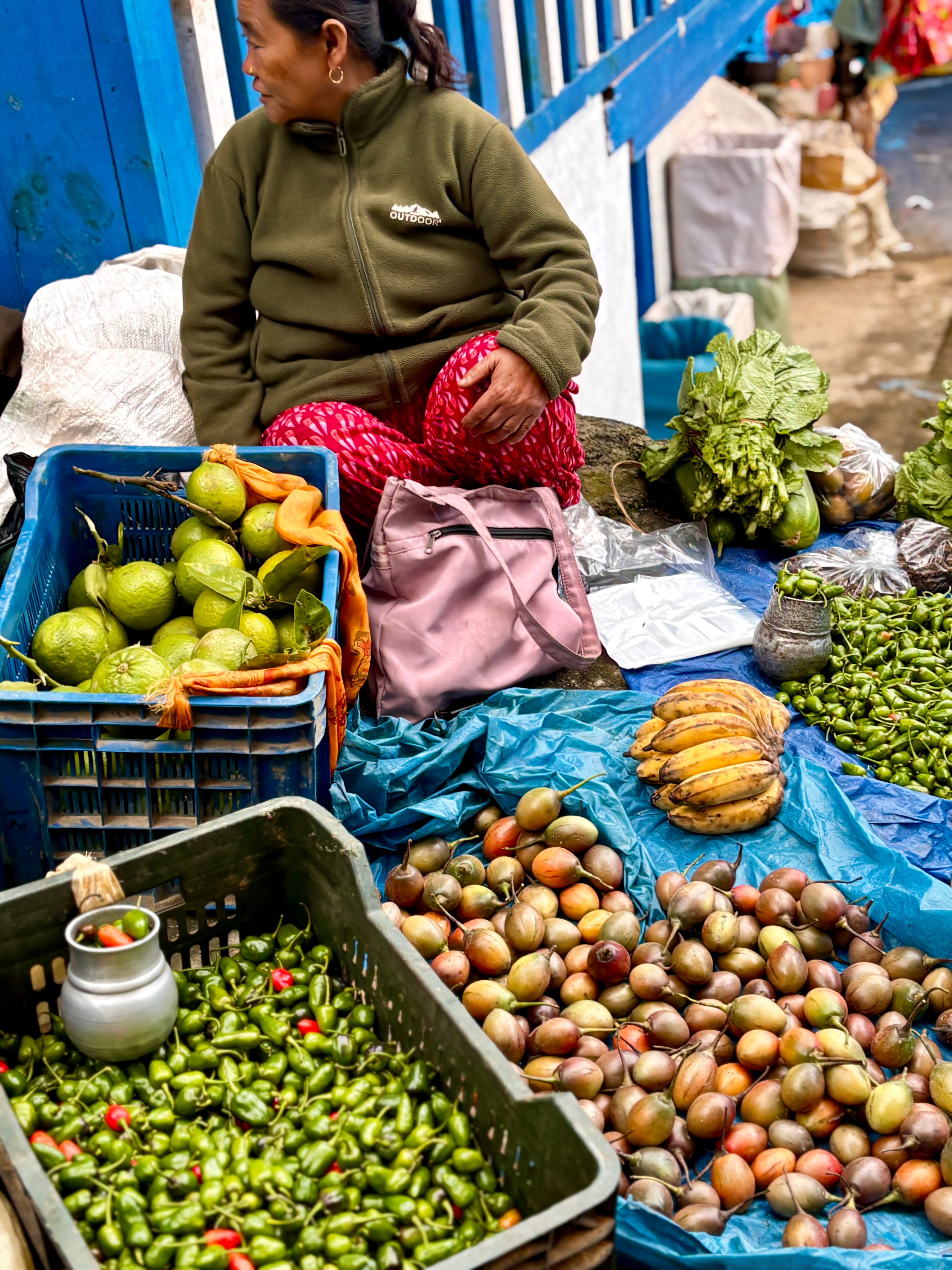
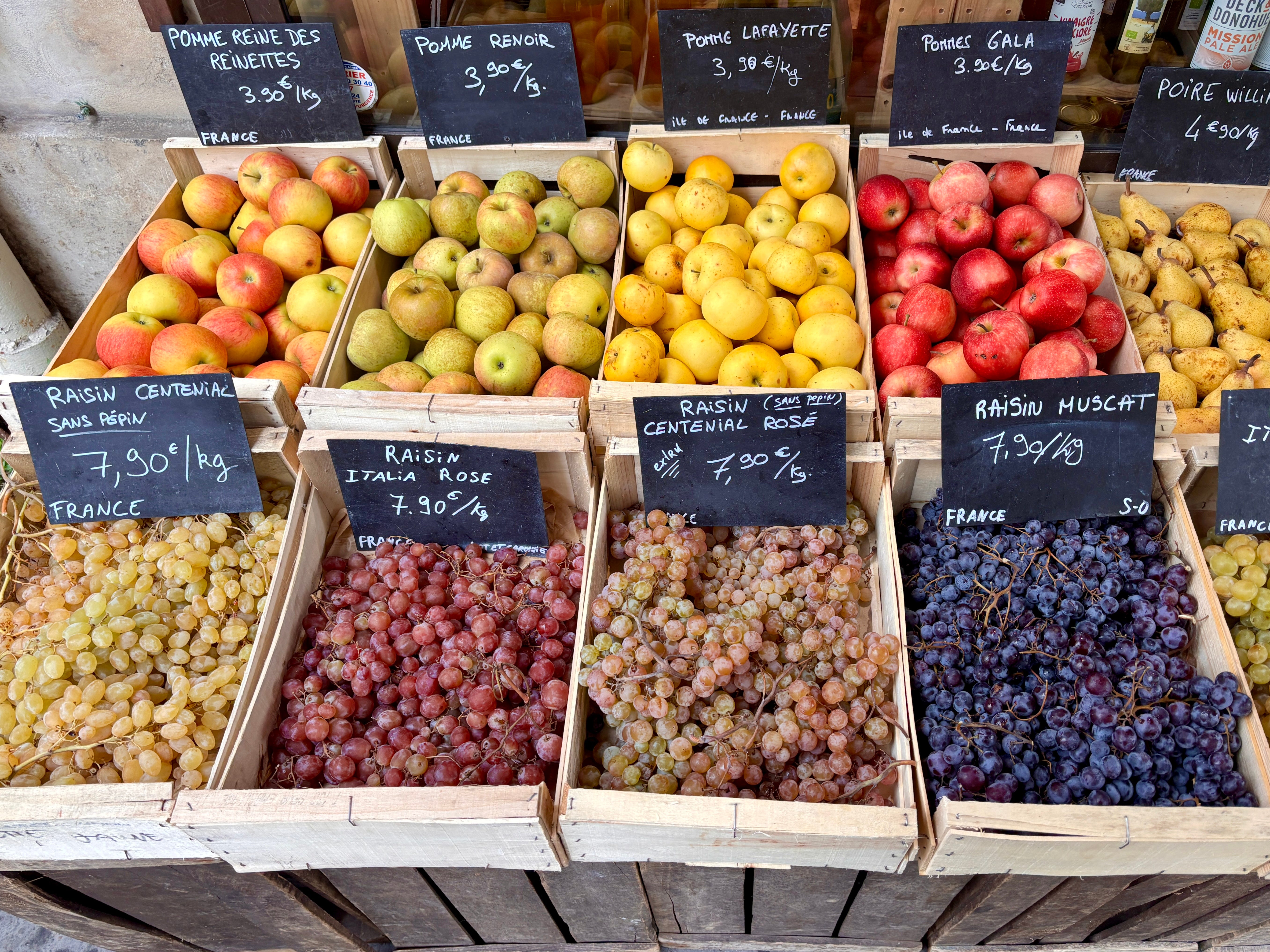
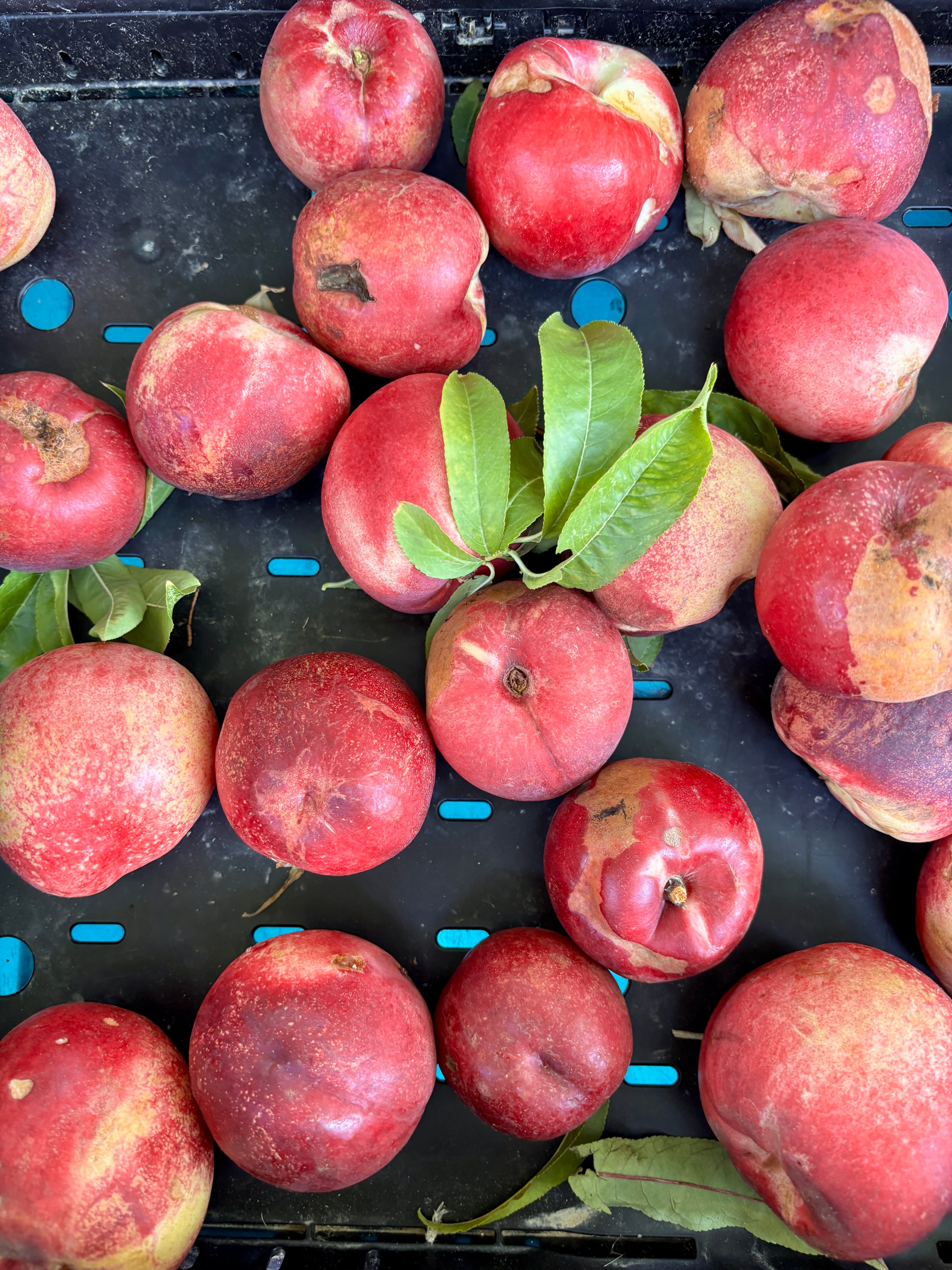
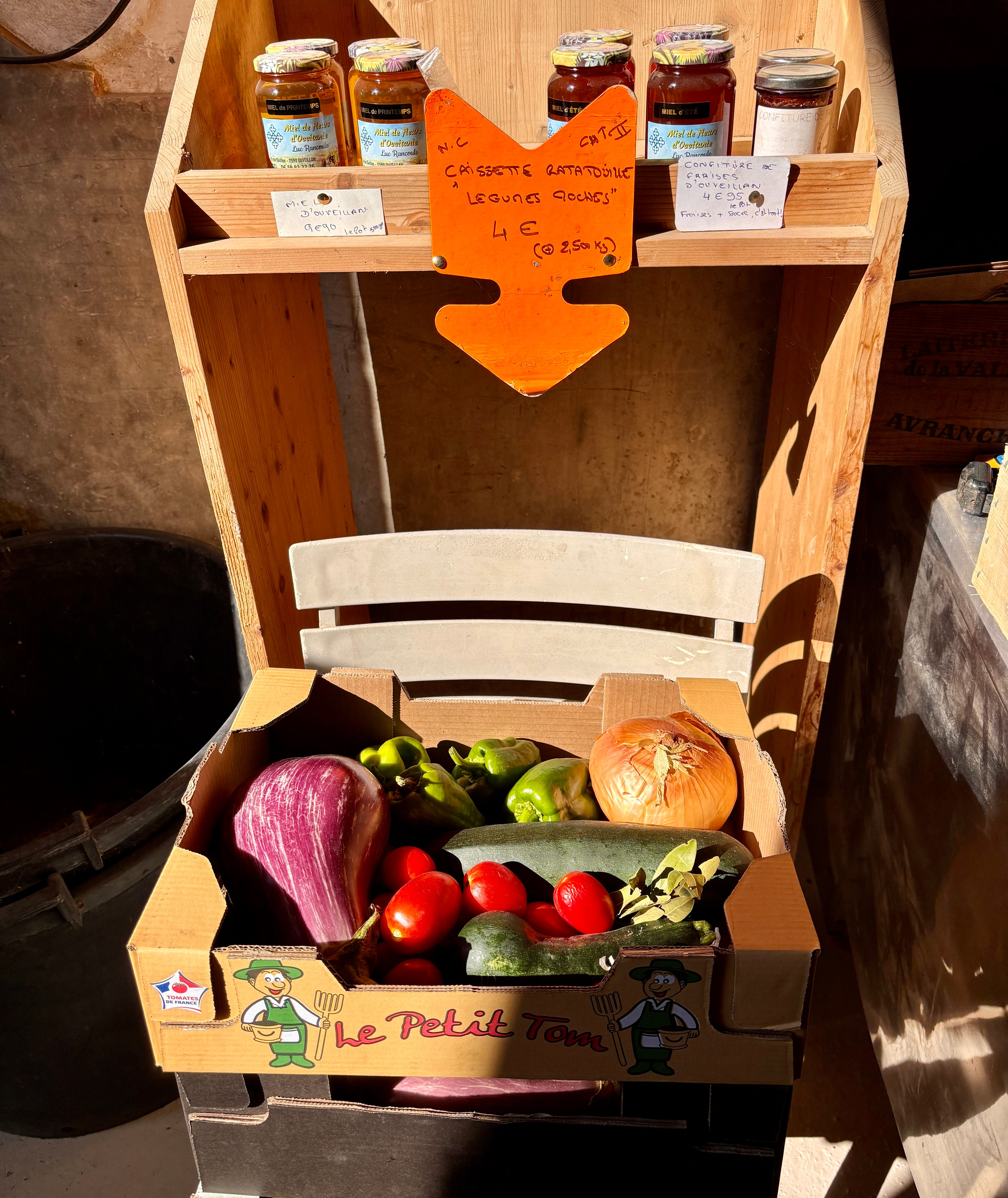
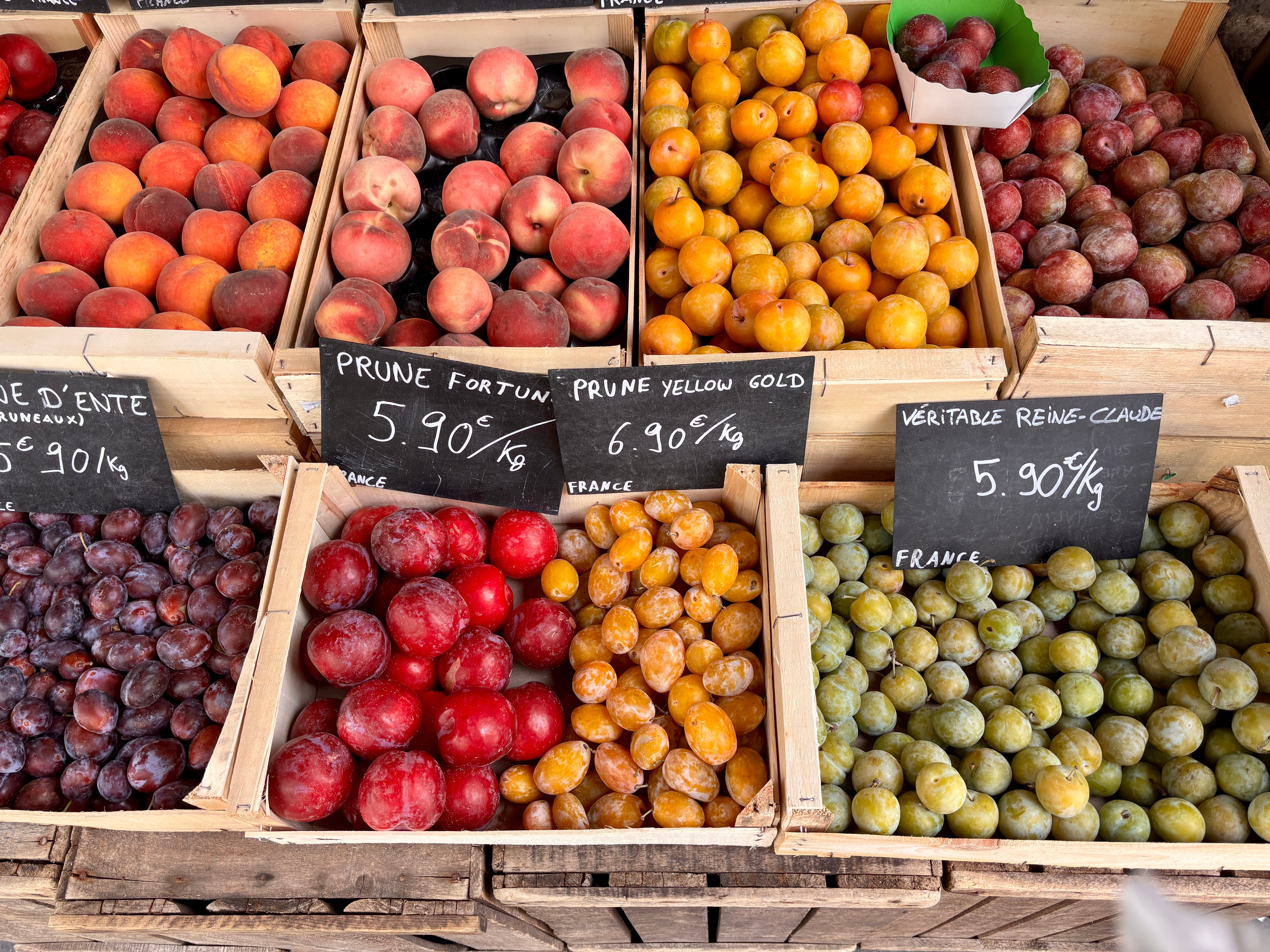
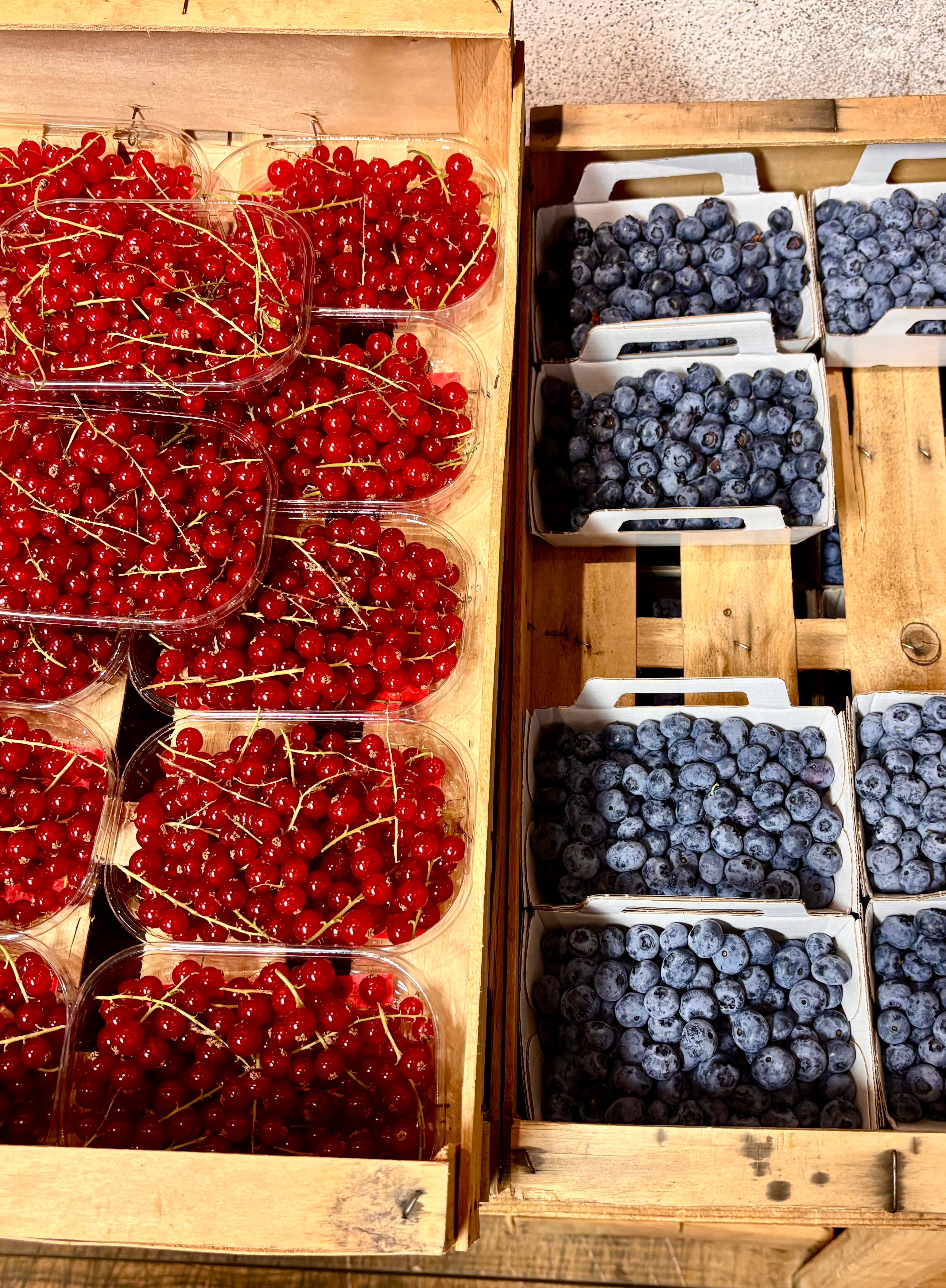
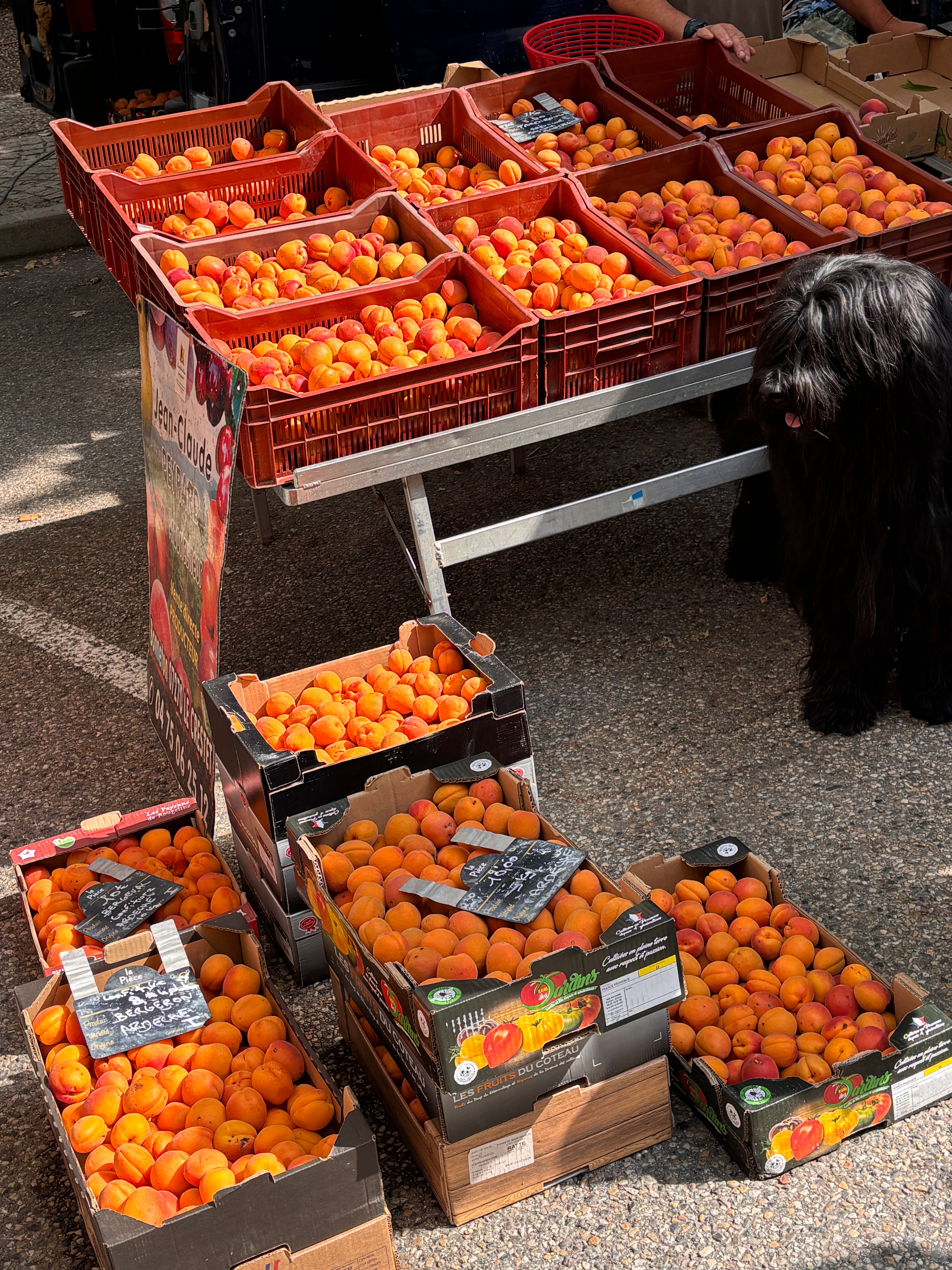
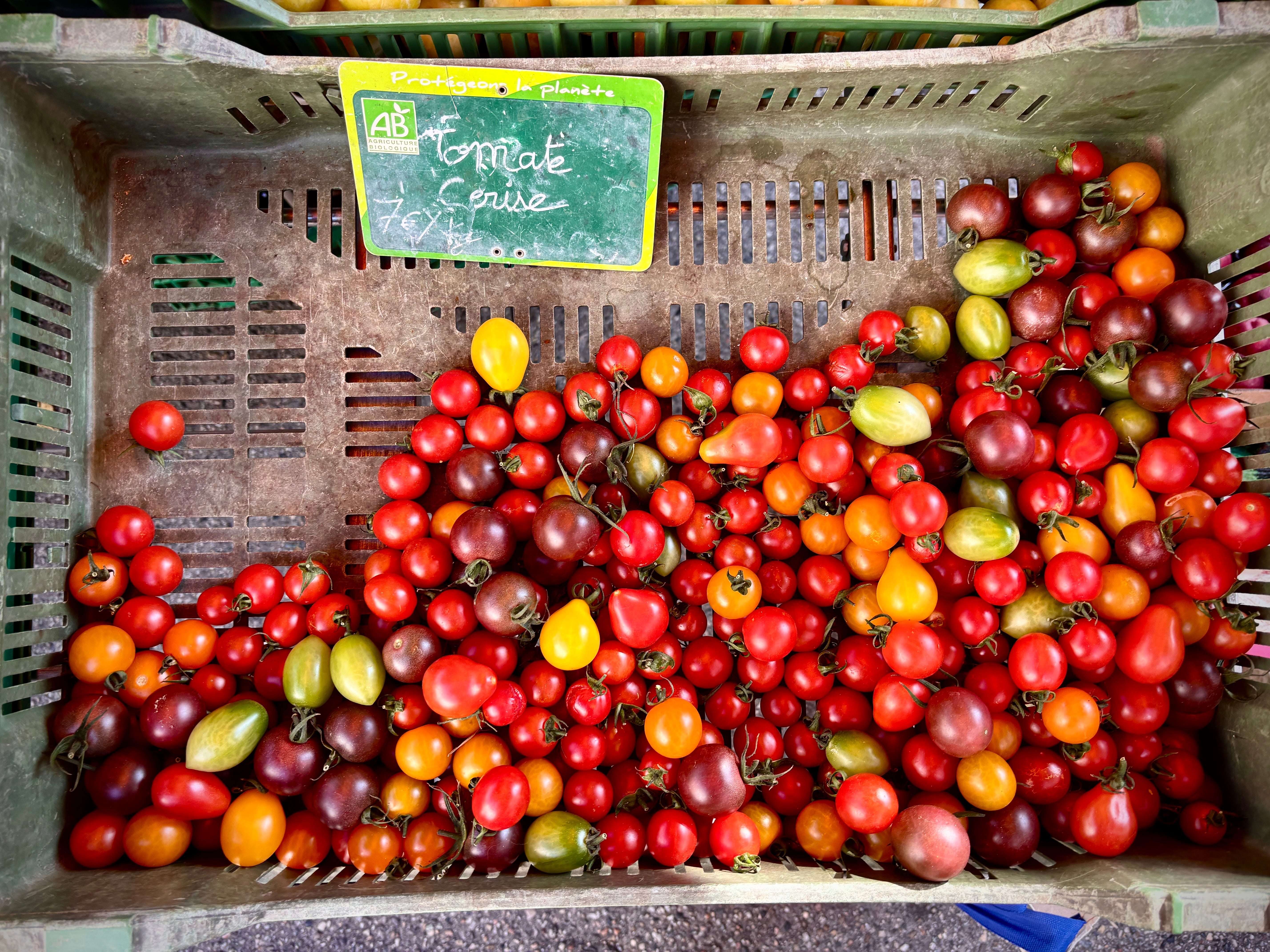
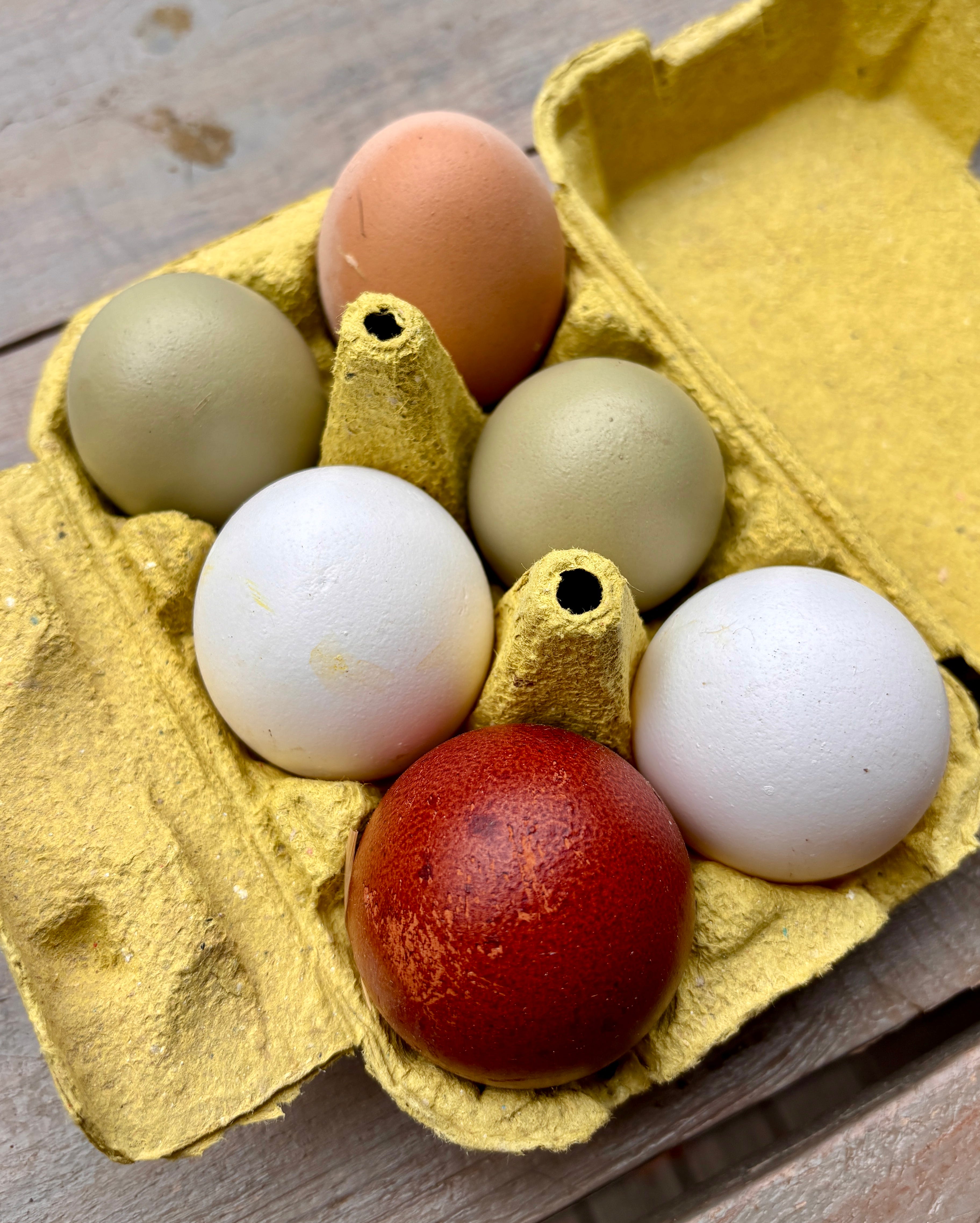
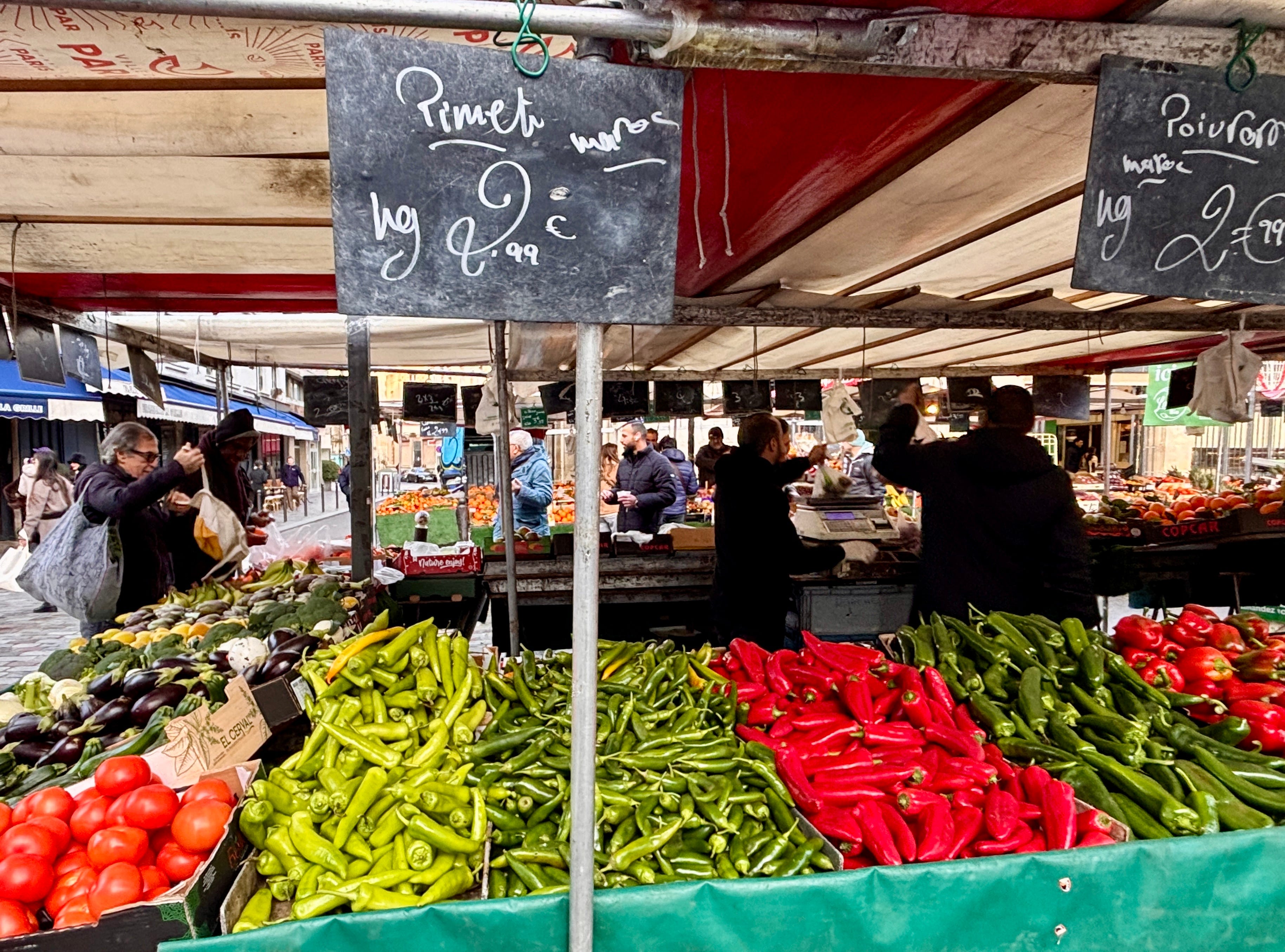
The Olonzac market is approximately 12km (7½ miles) from the village I live in, and it’s where I do the bulk of my food shopping. Every Tuesday morning, vendors from around the region set up their stalls: fresh fruit, vegetables, cheeses, meats, small goods, eggs, fish, bread, flowers freshly picked from up in the Montagnes Noires (Black Mountains). The selection of produce is amazing.
I love this market for its food. There’s a big mix of stalls selling products from all over the region, but for me the finest, most delicious produce is what’s grown in local gardens by Vanessa, Valérie, Isabelle, and Lisbeth. Many of my favourite growers are women and over the years, my nervous first attempts at communication, using my hands or a nodding, embarrassed smile, shifted to small exchanges about my hometown (‘It’s sooo far!’ they would say), the weather, or what vegetables are growing well at the moment. I can’t tell you the honour this foreigner felt when I graduated to being on a first-name basis with these people!
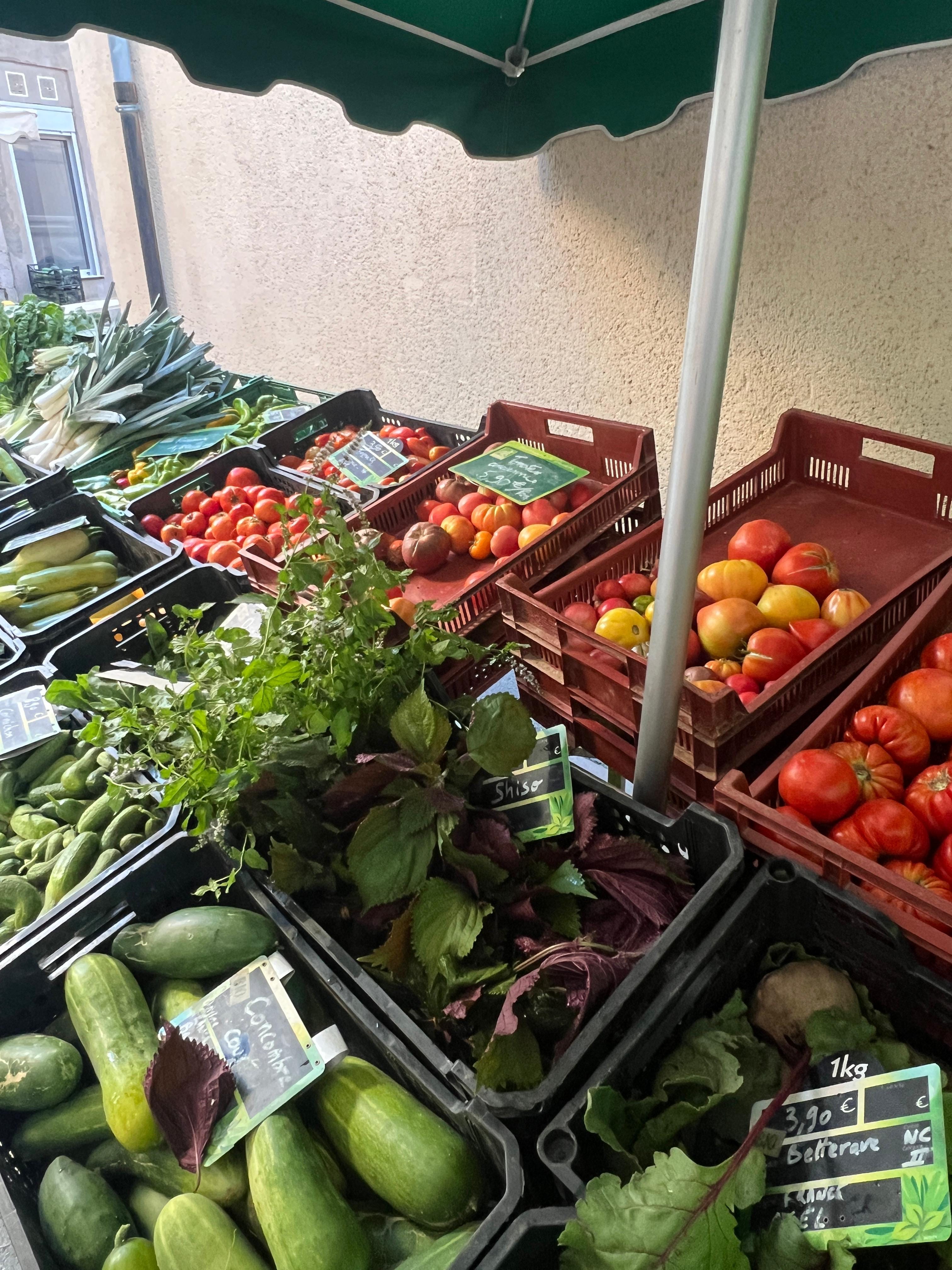
As children arrived in our lives, next came introductions to each other’s kids - mine in a pusher (stroller), while theirs sat on the ground behind the stall, reading books, or older ones helped mum refill the cucumber bins. What a joy it is now, to have a voice in their language and share a bit of our lives with each other: to be asked how my daughter is doing, what is she studying now; is my dad well, has he travelled back to Australia; hearing Valérie’s daughter is now living in Barcelona; Isabelle’s husband is back from working in Corsica.
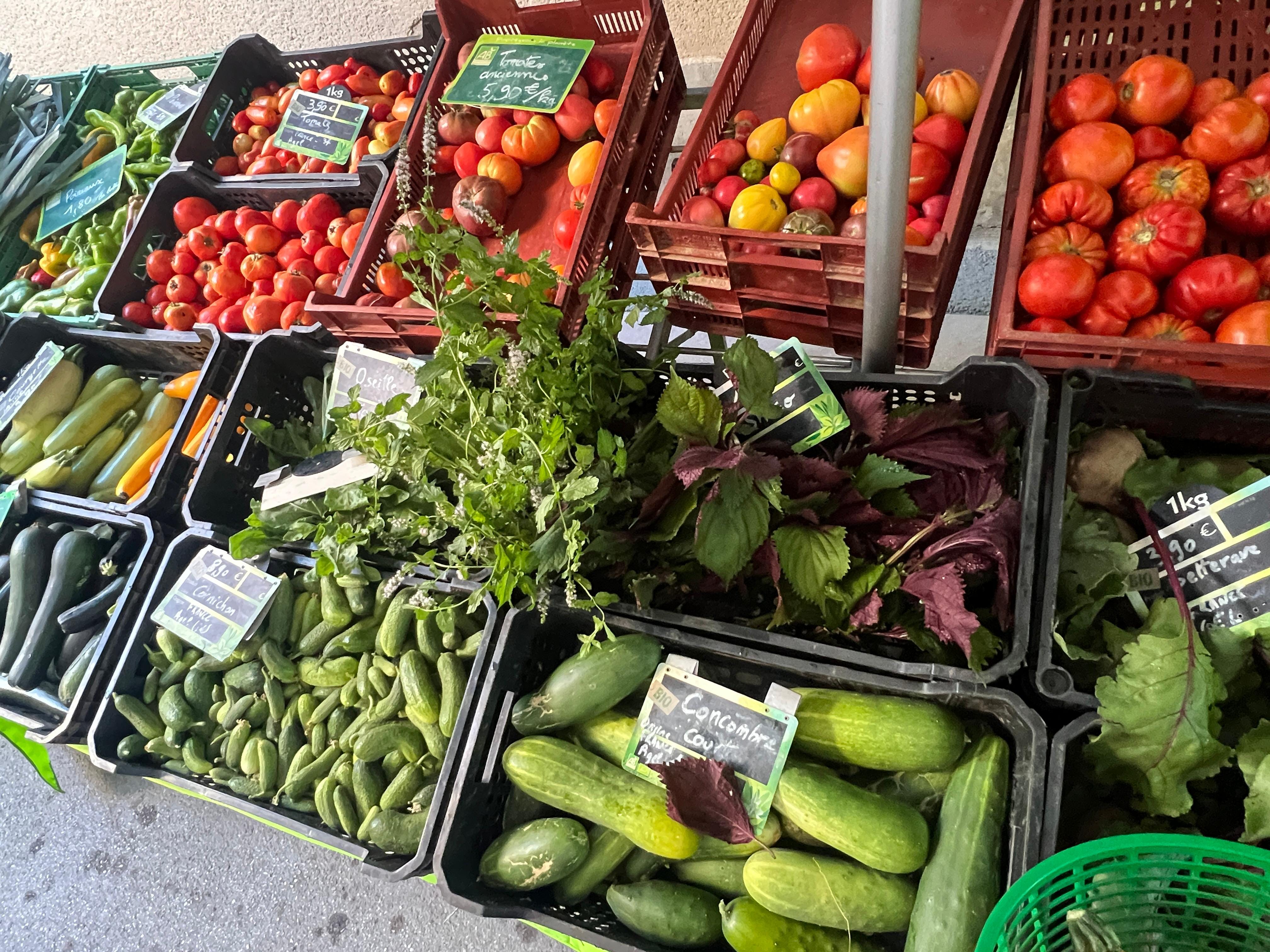
It has been a privilege getting to know these women and their lives. The market has not only given me access to, and a knowledge of, incredible local products, it has given me a sense of community in our region. In an entertaining and discreet way, it has also been a great gauge on how my French is evolving - or not! (still have a looong way to go). One more thing: it has forced me to appreciate things at a slower pace. Queuing up and waiting is all part of the process! To be honest, on some days it can be a little frustrating - and if you are rushing to get back to your desk, simply out of the question.
Follow @Vigneronswife on Instagram
But if you have the privilege of time, waiting for the butcher to prepare a farm chicken for Madame Vidal can lead to a conversation about which local doctor is taking new patients; lining up to pay for your tomatoes will allow you to hear which teacher at your kid’s school is leaving, or be given a good tomato recipe from the Monsieur in front. You can glean all sorts of VIP information.
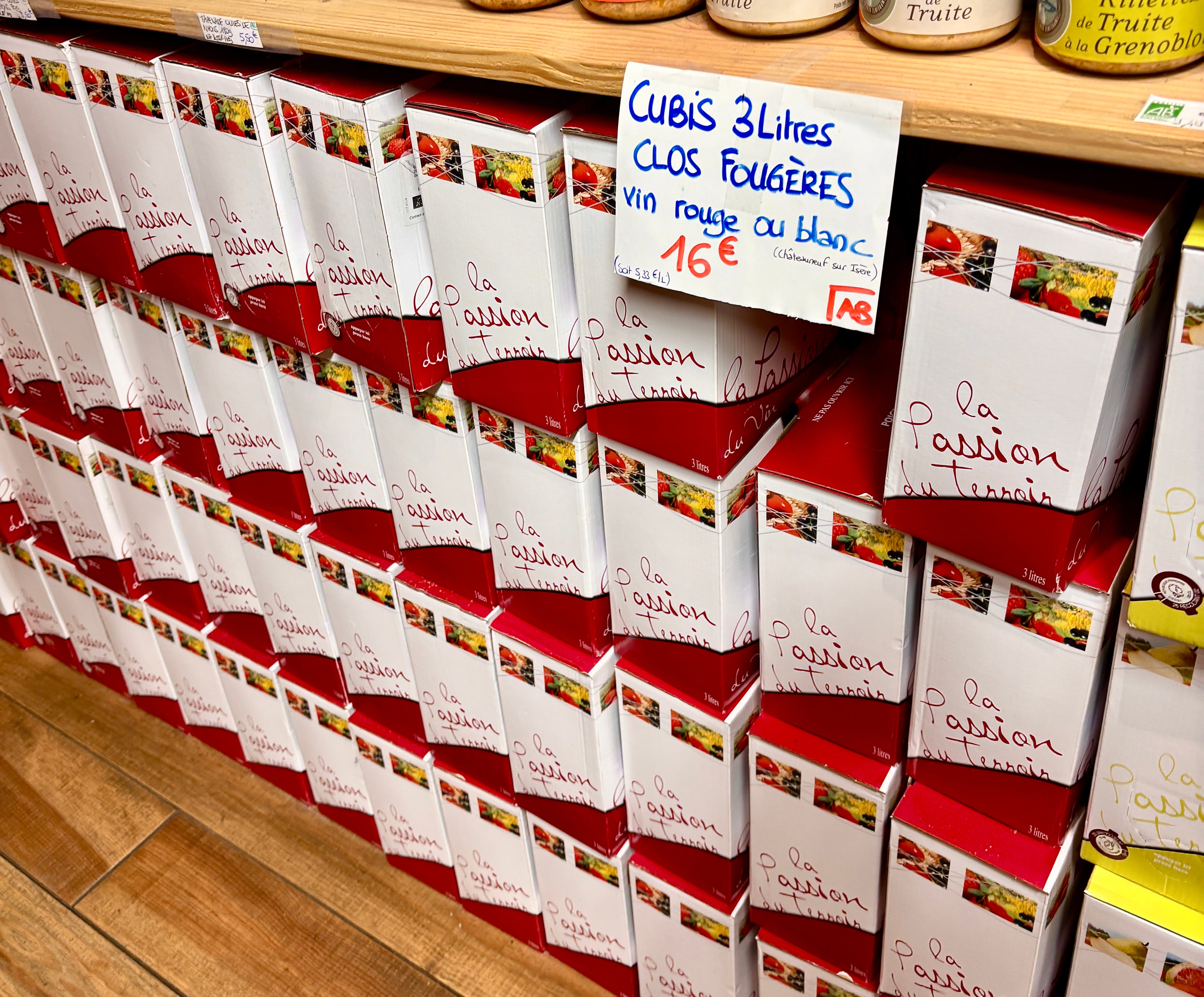
Another French product that I have a very personal connection to is wine. Yes, of course, it goes without saying that I like drinking wine! But basically why I live here is because I am married to someone who makes wine here. It’s a long story, and a very long time ago (29 years), but I married a Frenchman after an exceptionally short time together. We had met in Australia, went our separate ways, then decided to rendezvous one year later, in South Africa.
Buy Benji Darnault wines on Naked Wines
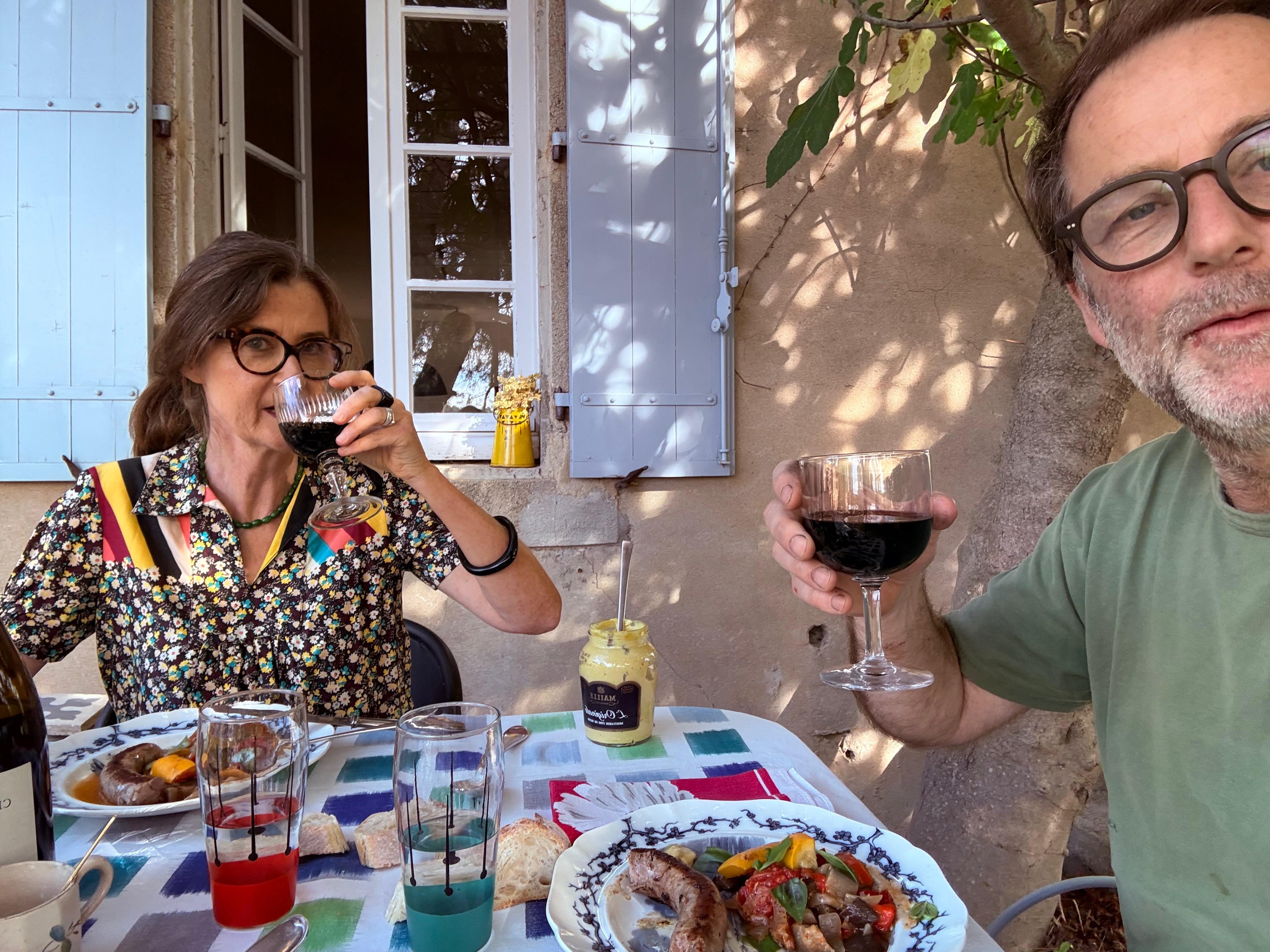
I joined Benjamin working a harvest in Paarl and within the first week, we decided to get married. One month later, we celebrated our wedding over lunch in an outdoor cafe in Cape Town, with two strangers who had also been our witnesses.
As far as everyone at home knew, I was still ‘backpacking’ with my French fling and the next stop on our itinerary was France. No one in the world knew we were married, and landing together on Benjamin’s parents’ doorstep was nerve-wracking. It was my first-ever time in France, I didn’t speak French, and here I was, living with people I’d just met, who were my in-laws.
Share David Lebovitz Newsletter
I’ll spare you the nitty-gritty, just to say I stumbled over more than a few faux pas, like telling my mother-in-law who didn’t yet know she was my mother-in-law, ‘je suis chaude’ on a hot day. I was desperate to prove to these French people that I was a nice person (and a decent daughter-in-law), but nothing impressive came out of my mouth - and what did, was often wrong.
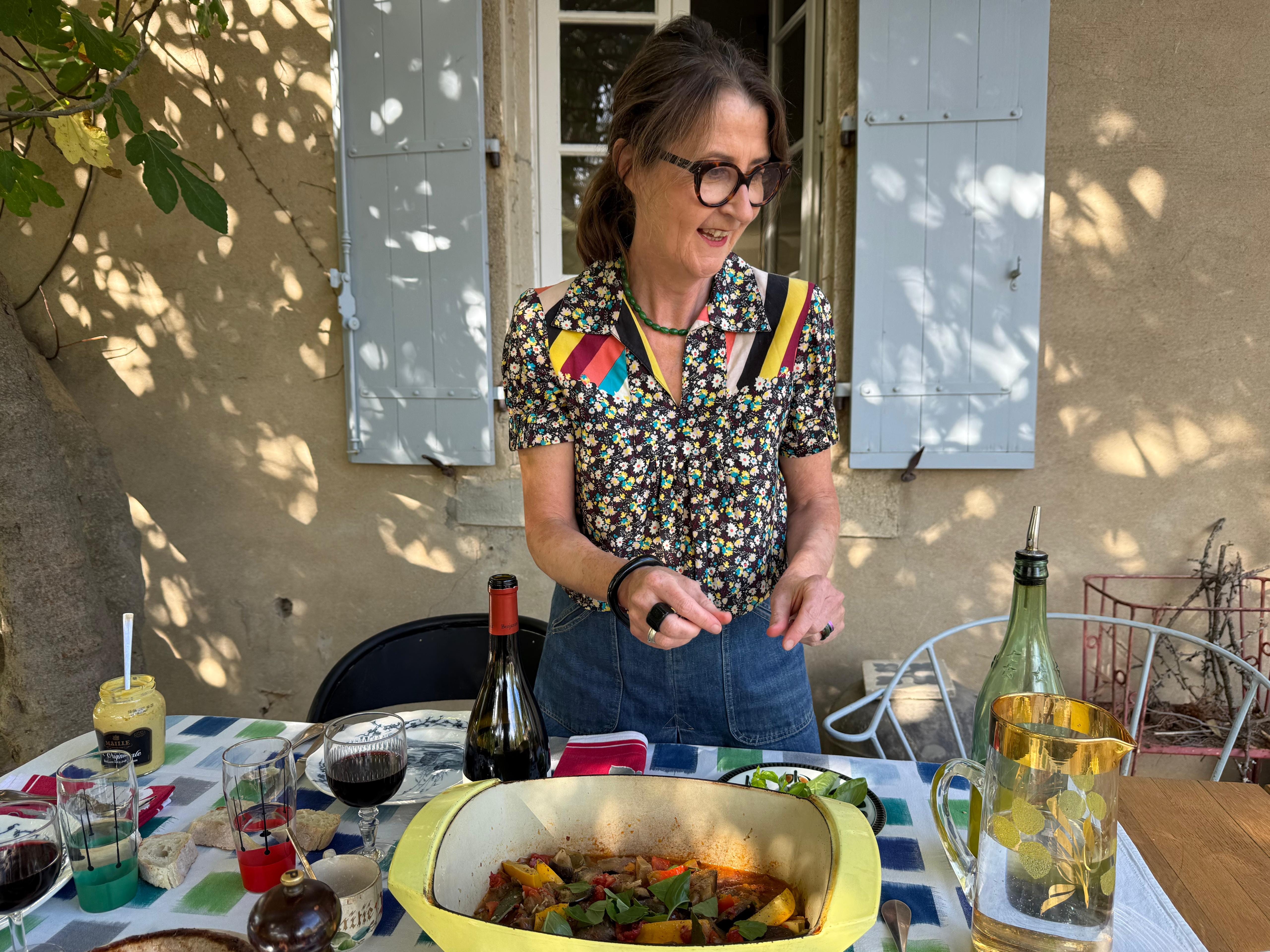
Eventually we announced the news of our marriage to both families (not good news for everyone…though Dad eventually budged at ‘winemaker’), and the next step in our grown-up life was to find work. Via a good family friend, Benjamin landed his first ‘serious’ winemaking job in the Languedoc. We gathered our belongings from each hemisphere and set up house together in the Minervois, for Benjamin’s new position as a chief winemaker in the village of La Livinière.
It was an exciting place to land. The Languedoc-Roussillon is a major wine-producing area of France, and a beautiful region with spectacular natural landscapes and a lovely, gentle climate influenced by the Mediterranean, conditions perfect for vineyards. We live, literally, surrounded by grapevines and nearly everyone has some kind of connection to vineyards or to wine; wine/viticulture is the most important agricultural industry in the area.
Just to give you an idea of the scope, the wider Occitanie region - which includes our Languedoc-Roussillon - produces around 10 million hectolitres of wine in a typical year (FYI, that’s how we measure wine production - roughly a billion litres). That’s a lotta wine! Benjamin has been making wine in this region for over 24 years now, and I am in awe of how much he has learned and created since our first days here, expanding his knowledge of the ‘terroir’, as they say, and increasing his focus on organic and biodynamic farming.
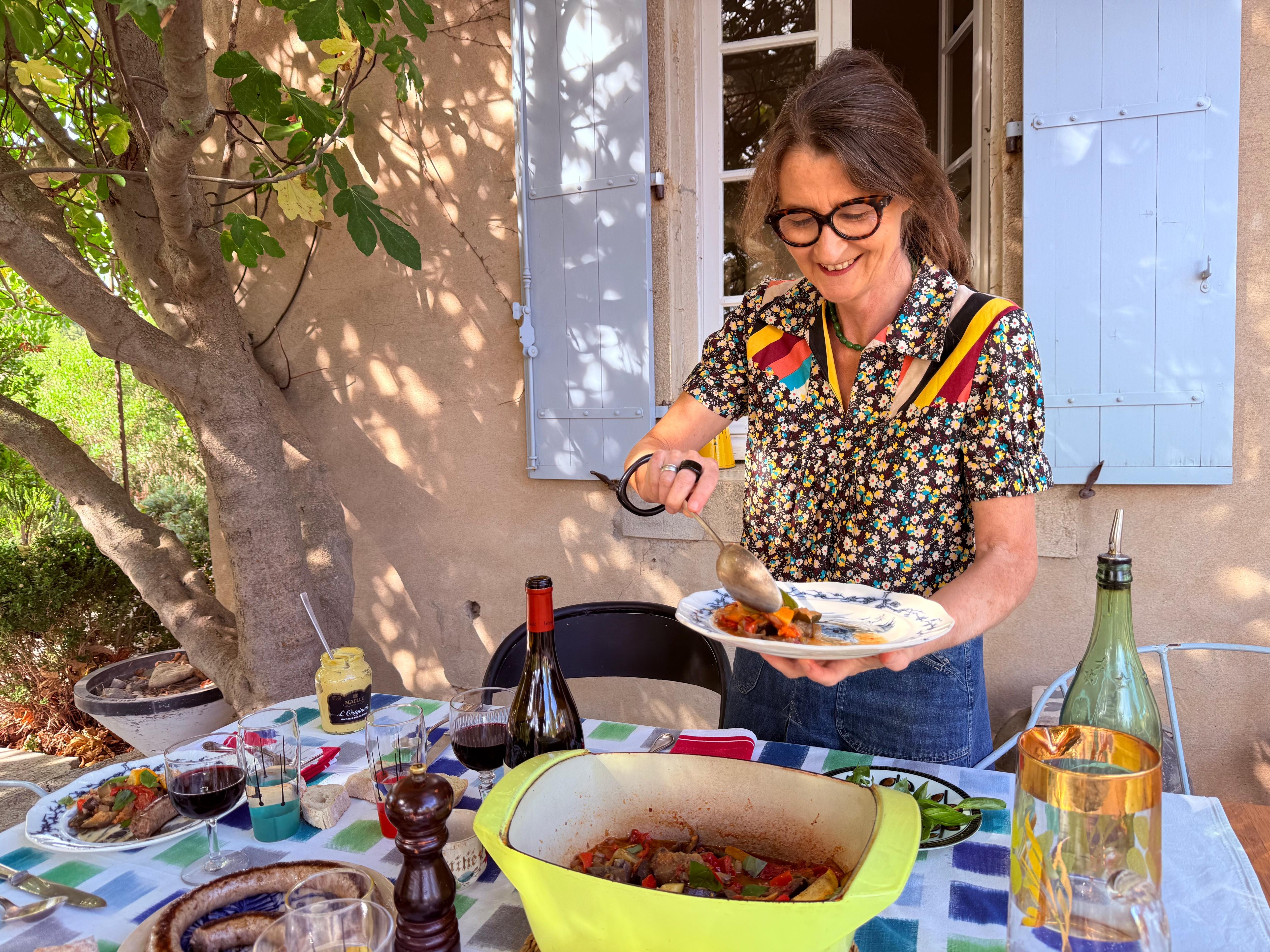
It has been an adventure…to say the least, getting to know this region together. We arrived as twenty-year-olds, the young ‘foreign’ couple (Benjamin coming from the Charente region is as much a foreigner as me) - and now it is home.
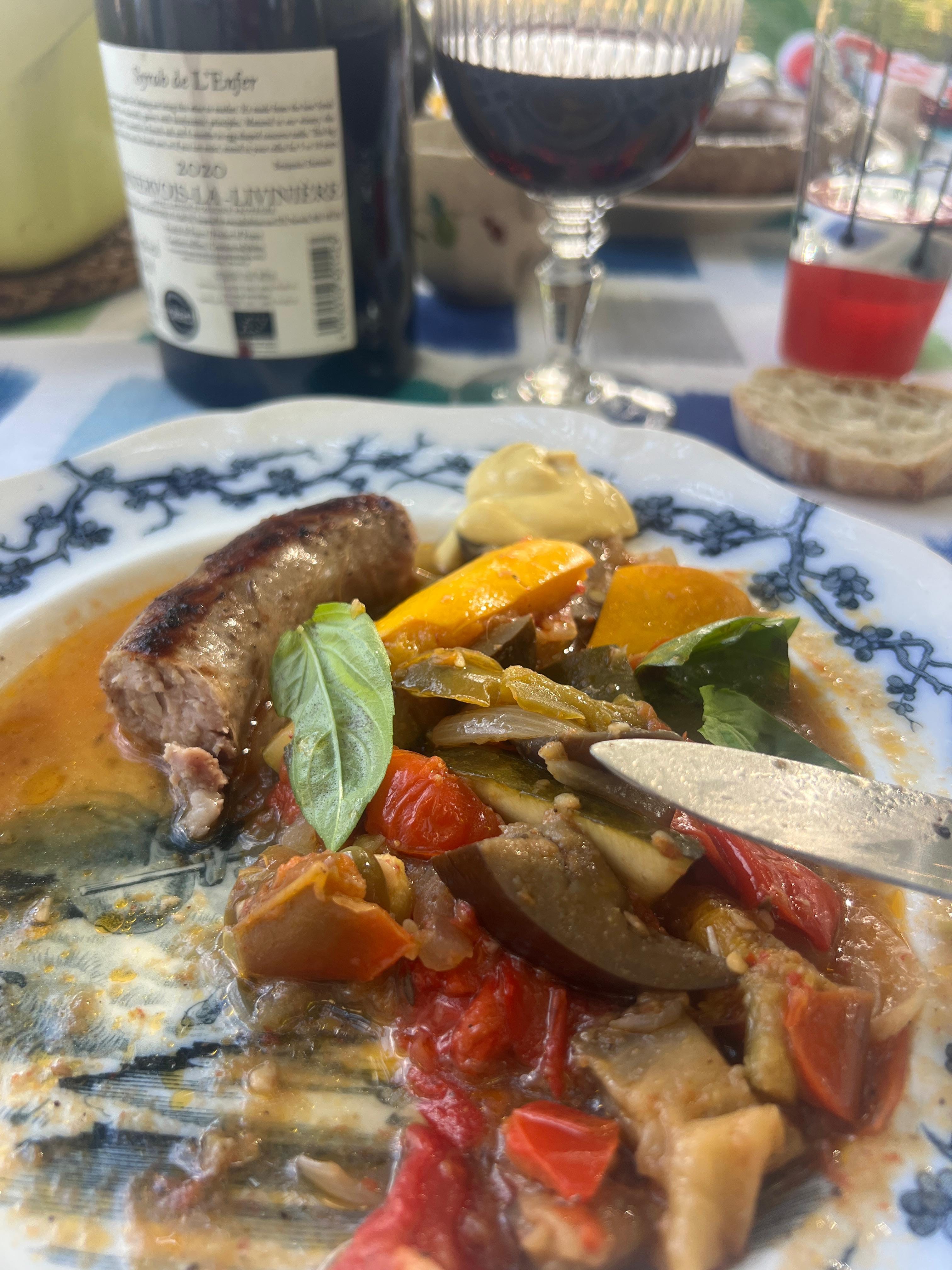
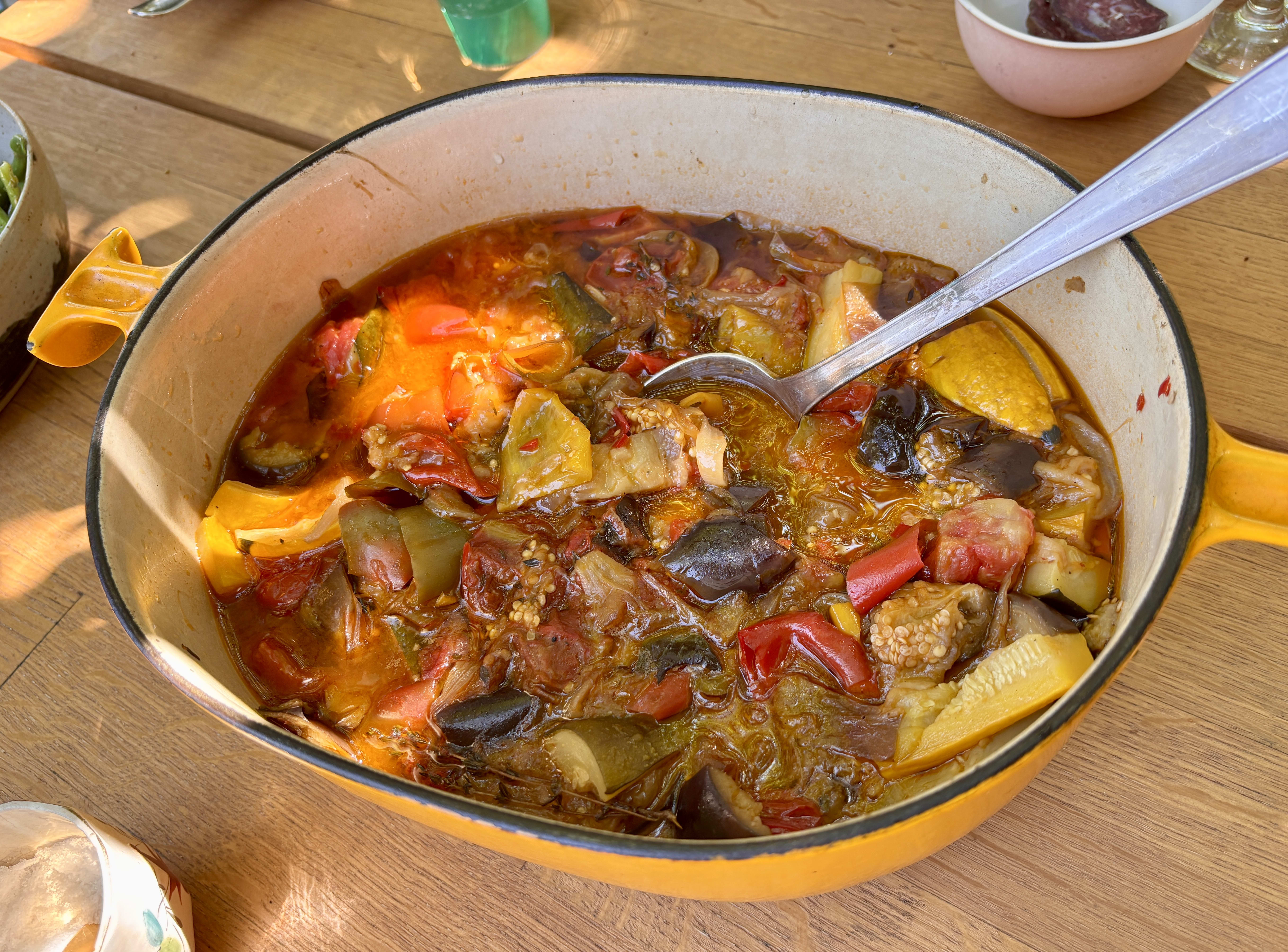
Thanks to David’s kind suggestion, something I would like to share with you from our home, is my recipe for ratatouille. This traditional southern French dish captures all the things I love about here: the colours, the seasons, the flavours and time spent shopping and cooking fresh produce. With the end of summer and the season for local tomatoes and eggplants coming to a close, I reckon it’s a good time for one last ratatouille. It is perfect for serving to your family and friends, while enjoying some slow time around the table, along with glasses of good (preferably local) wine.
Ratatouille
Serves 6
“Rat-a-too-ey”. The name is a mouthful, but what a delicious mouthful it is.
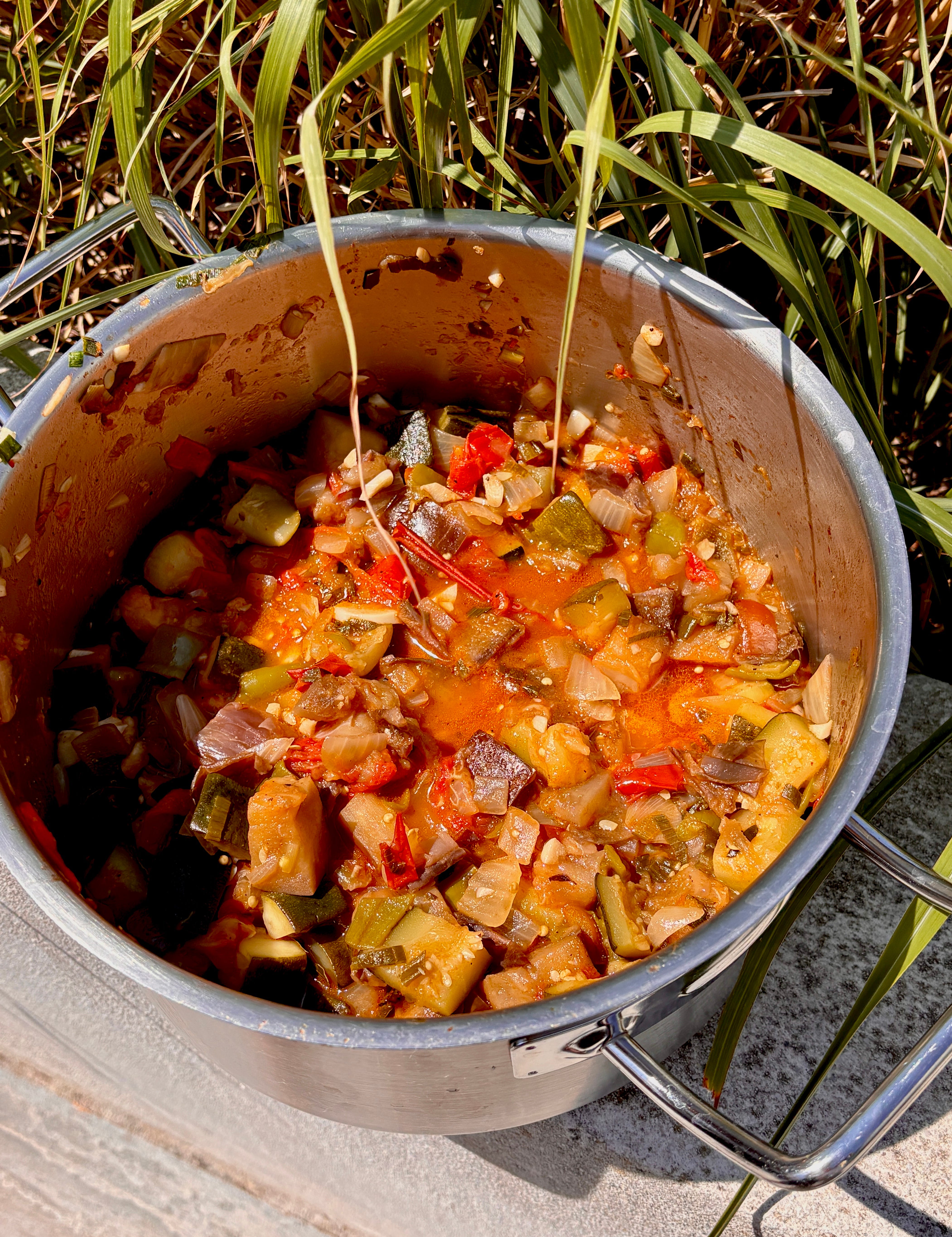
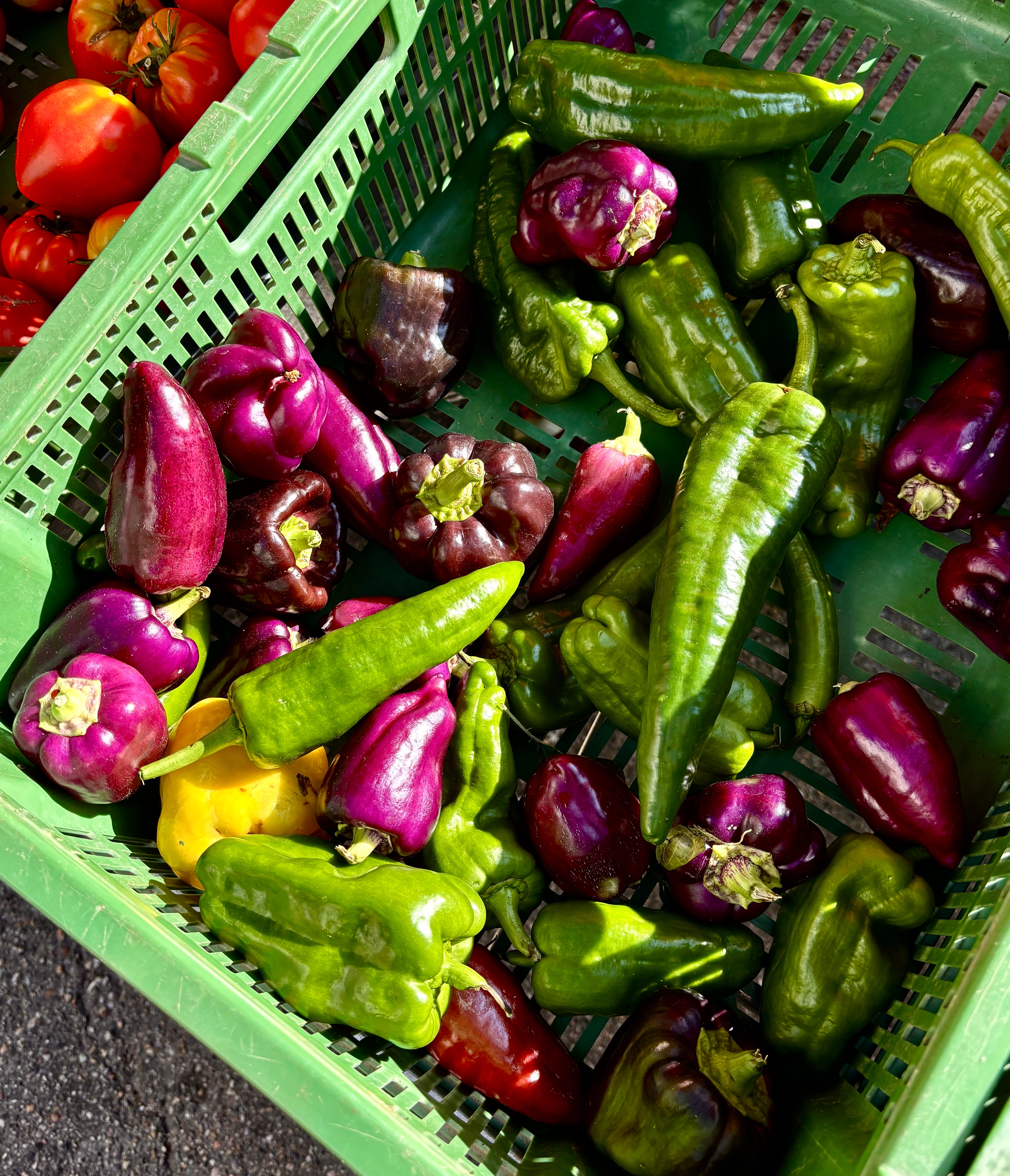
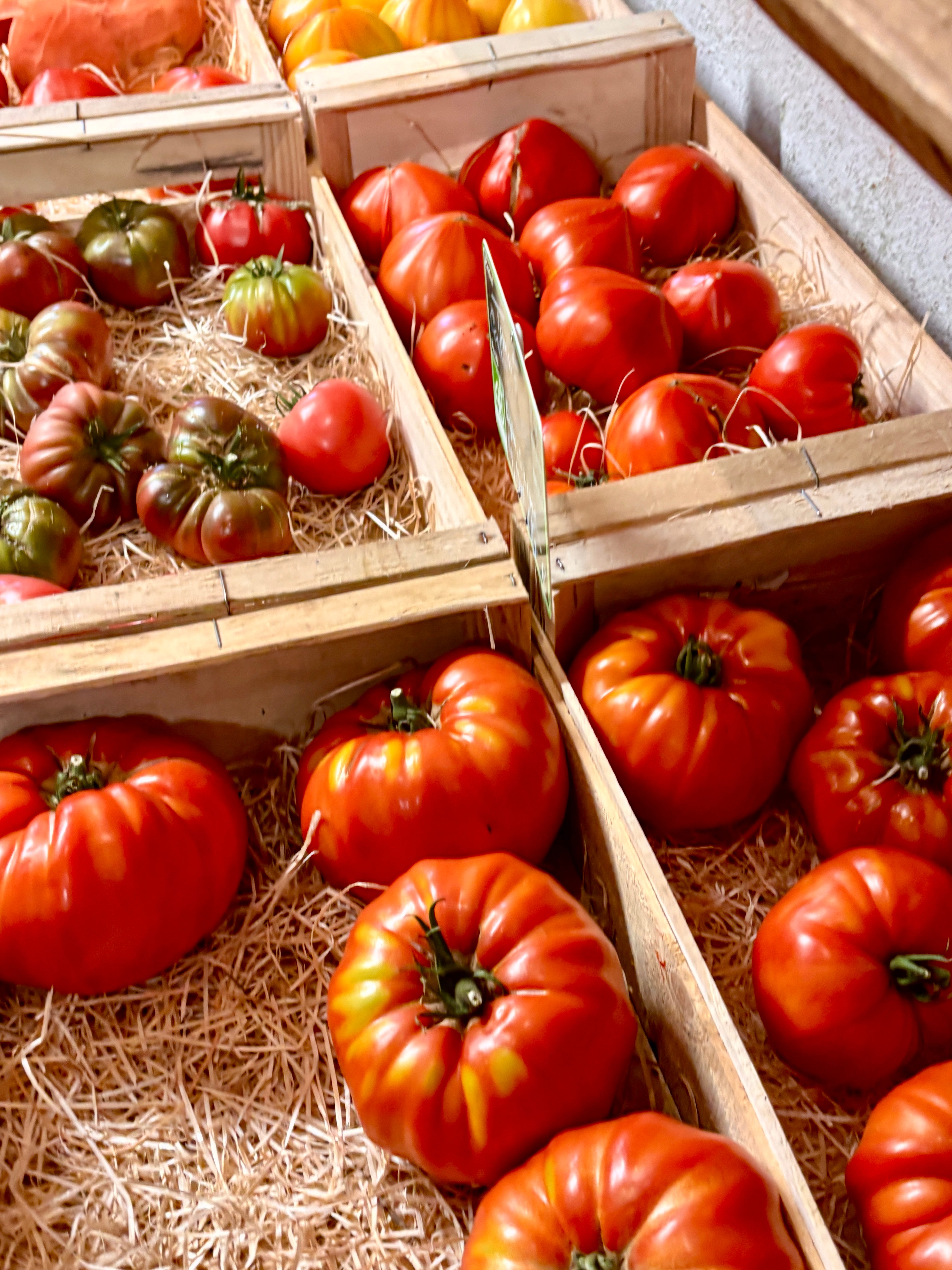
Nothing evokes Summer in the south of France more for me than this traditional French dish. At this time of year, local markets like the one in Olonzac are laden with bell peppers, eggplants, zucchinis and tomatoes. The colours are sublime and just thinking about cooking a ratatouille conjures up images of the potagers, the gardens where the vegetables are grown, and big old cast-iron casserole pots full of all these fresh Summer vegetables simmering on country kitchen stoves.
Here for you is my version of a ratatouille. And yes I say ‘my’ version, as there are many! While the ingredients are nearly always the same, the cooking methods differ (many French people = many opinions): vegetables cut big or small; diced or sliced; separate frying or fry together; oily, not so oily; fresh tomatoes or tinned...
There is no right or wrong way, it’s up to you (as I keep reminding my French husband who tends to peer over my shoulder!!). My version has changed over the years - I used to spend a lot of time preparing my eggplants - salting, rinsing, drying, and frying each piece to a golden colour before adding them to the pot. It was a lovely looking result, but SO time-consuming. And so much oilier. I now add them directly to the pot, unsalted and uncooked. I also cut my vegetables larger, which gives them a fleshier texture. You know what you are eating - unlike cutting them so small, you render the vegetables unrecognisable. The larger cut also helps maintain a level of firmness. I now only use fresh tomatoes instead of grabbing canned ones.
Ratatouille is a lovely choice for accompanying roast lamb and grilled pork sausages,* or served at room temperature or cold with crusty bread and a green salad. It is also a great leftover sauce to pour over pasta with grated cheese, which was my special way of serving vegetables to our daughter when she was ‘anti-vegetables.’ I’d like to add that she always ate her vegetables when presented this way.
*We often buy Saucisses de Toulouse (Toulouse sausages). They are made from roughly 75% to 80% coarsely minced lean pork (such as shoulder) and 20% to 25% pork belly or fat and seasoned with salt and black pepper. - Kat
- Approximately 200ml (~3/4 cup) extra-virgin olive oil
- 2 large onions, halved, then sliced roughly, about a .5cm (¼-inch) in thickness
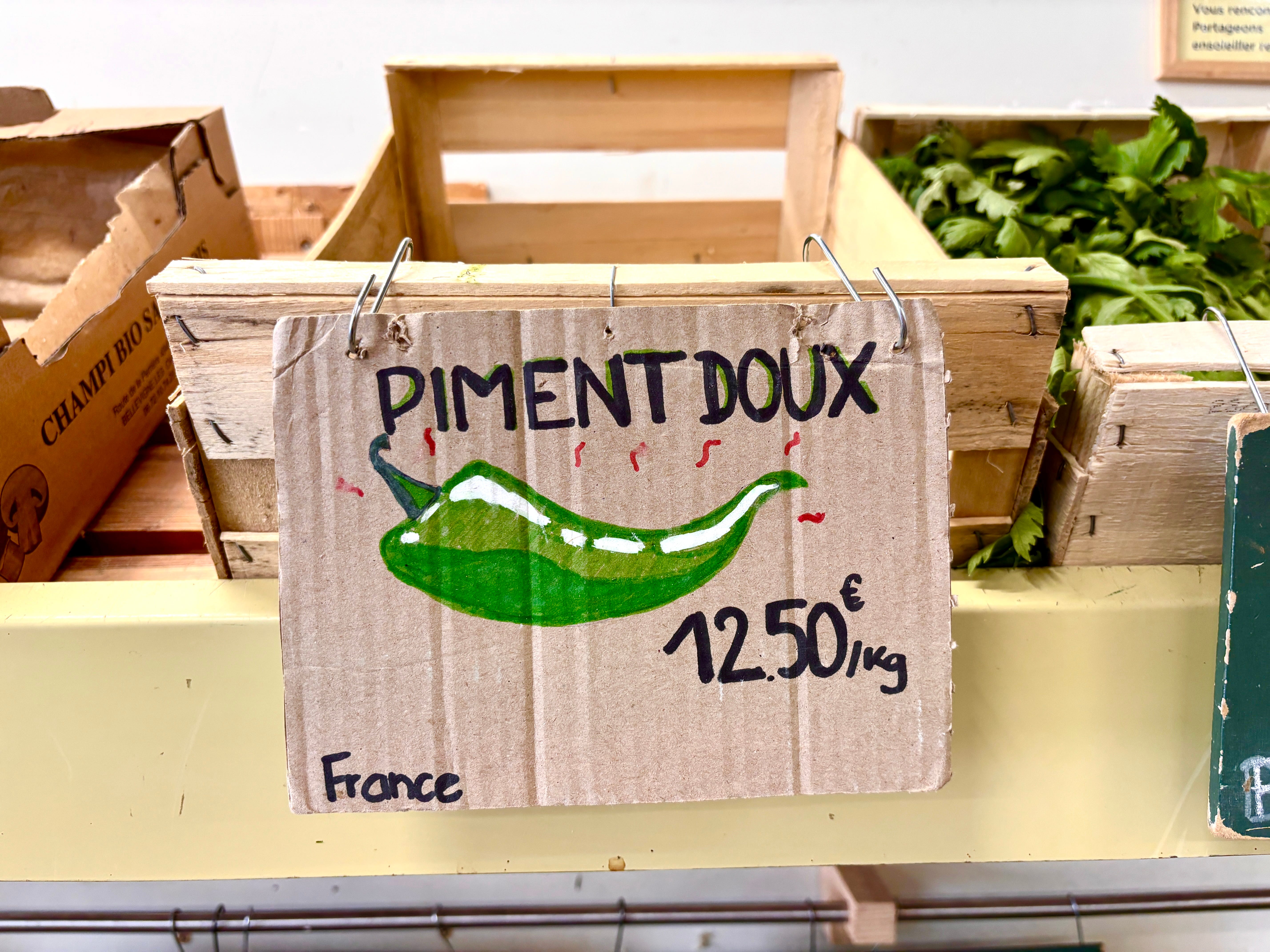
- 6 red and green bell peppers (or capsicums or poivrons, often referred to as sweet peppers), seeded and roughly cut into 3cm (1-inch) slices
- 4 medium eggplants (aubergines), sliced and quartered into about 2cm thickness
- 5 to 6 medium cloves garlic, finely chopped
- 2 bay leaves
- 1 sprig of thyme
- salt and freshly ground black pepper
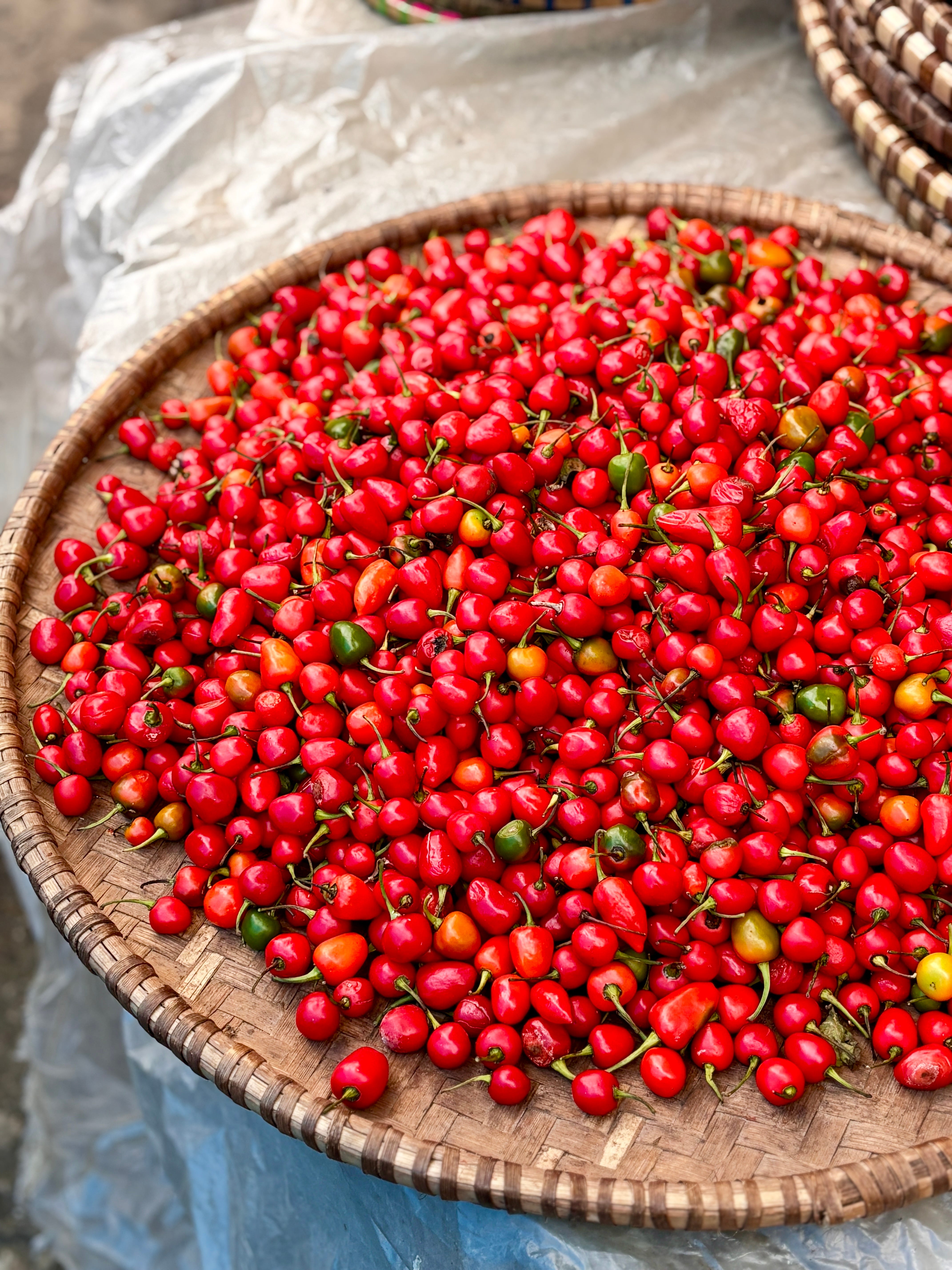
- 1 teaspoon minced fresh or dried chillies, less or more as desired; the chile adds a lovely lift
- 4 medium zucchinis (courgettes), cut lengthwise into chunky 6cm long pieces (if you can find yellow as well as green zucchinis, this adds a lovely colour to the dish)
- 4 to 5 medium tomatoes, peeled and roughly chopped or pulled apart
- Big handful of basil, about 6 sprigs with leaves
method:
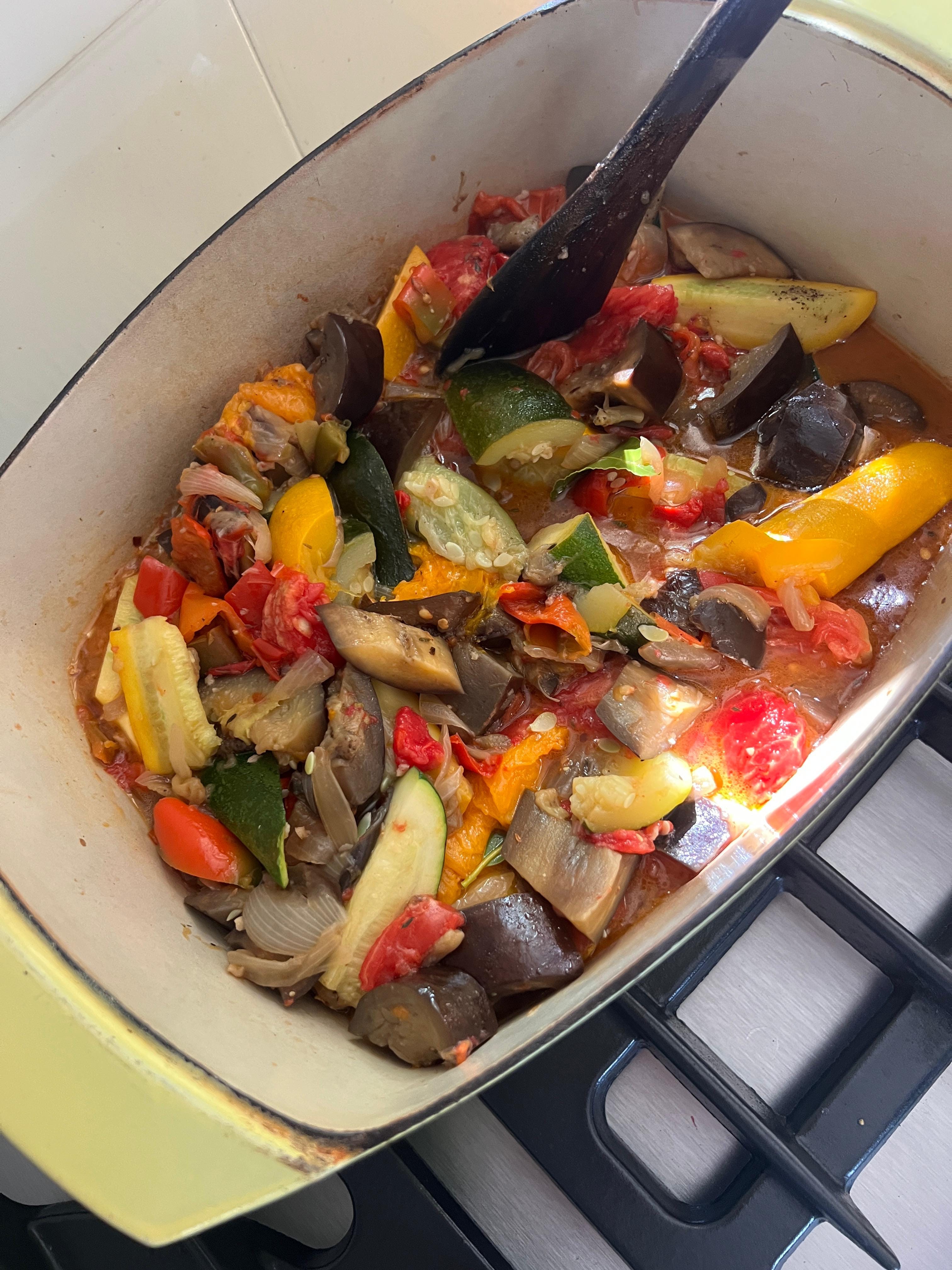
In a large cast-iron pot, heat 3-5 tablespoons (60-100ml) olive oil, enough to cover the bottom of the pot with a shallow pool of oil. Add the onions and fry over low heat until soft and golden, stirring occasionally.
As the onions become soft and golden, add the bell peppers, eggplants, garlic, bay leaves, thyme, salt and pepper, and chilli to taste, and pour over some more olive oil, about 3 tablespoons, enough to give it a glow-up! Stir well and increase the heat to medium. Cook for 20 minutes, with lid on, stirring occasionally to help the vegetables meld.
Reduce the heat to low, keeping the lid on, and cook over gentle heat for approx. 20 minutes.
Add the zucchinis and tomatoes, pour over approx. 2 tablespoons olive oil, and stir well. Place the lid back on and continue cooking for approx. 30 minutes, or until the vegetables are tender.
During this time, check every 10 minutes or so and give the vegetables a stir, being gentle so you don’t break up the zucchinis and eggplants too much.
to serve:
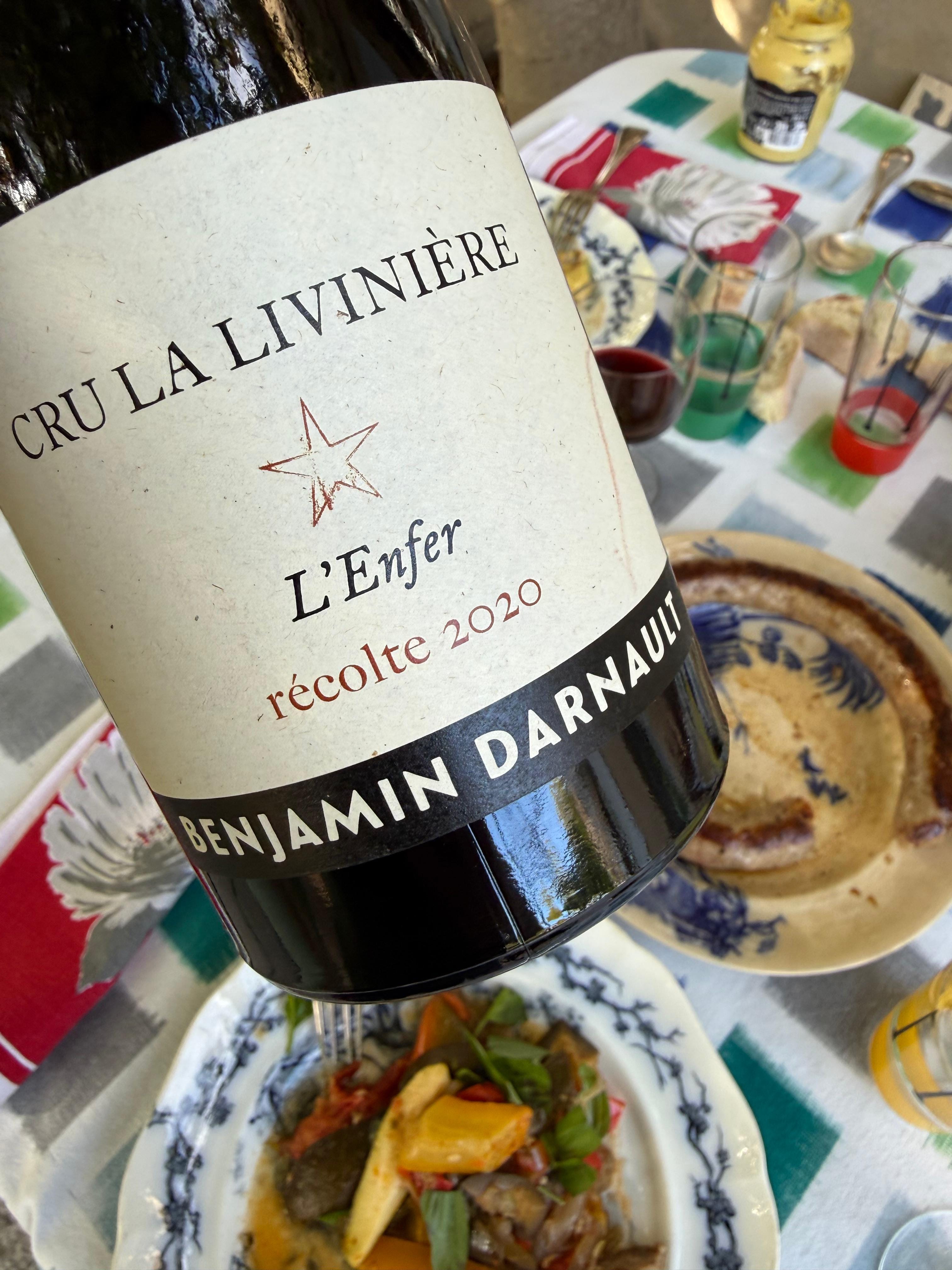
Adjust the seasoning to taste and scatter torn basil over the top. Please make sure you have some Dijon mustard handy too! It’s a delicious touch having a dollop on the side of your plate. Plus a good chilled French wine (red or white, you choose) ready to serve alongside. If you are able to find a Benjamin Darnault wine, even better!
Follow Benjamin Darnault on Instagram