Normal view

Received — 1 April 2026 David Lebovitz Newsletter

April 2026 Newsletter

1 April 2026 at 10:37

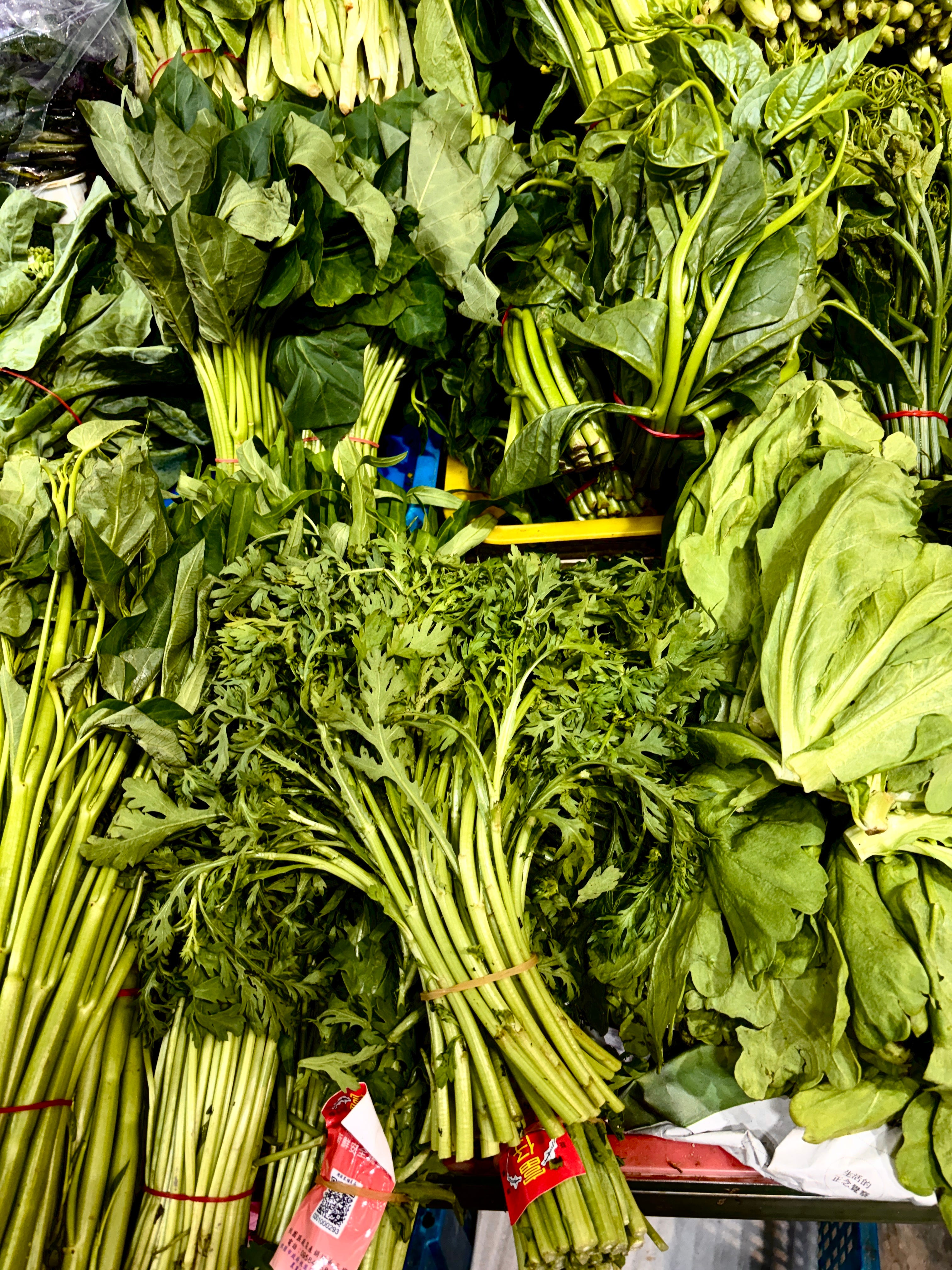
Lots and lots of greens at a market in Taiwan.

It was a month that was, and nearly wasn’t. After a few years of back and forthing with a Taiwanese-American friend, we finally set a date to meet up in Taiwan along with two other friends. I’ve been to other countries in Asia but not to Taiwan, so was anxious to see it. We started off in the south of the island, in Kaohshiung. I stayed at the Hotel Nikko there, which was terrific, but was glad I’d booked a few months in advance as the price rose substantially, which my friend found out when he tried to book a last-minute room there.

We didn’t spend too much time in the city as we were invited to family meals and events, but got to see everything from making rice noodles and tofu skins, to eating shaved ice with various jellies and candied squash and beans.

After three days in the south, I was looking forward to seeing Taipei, the capital of Taiwan. Thankfully a few friends who knew Taiwan (and a few readers, too) pointed me toward some especially delicious places in the city.
Subscribe now

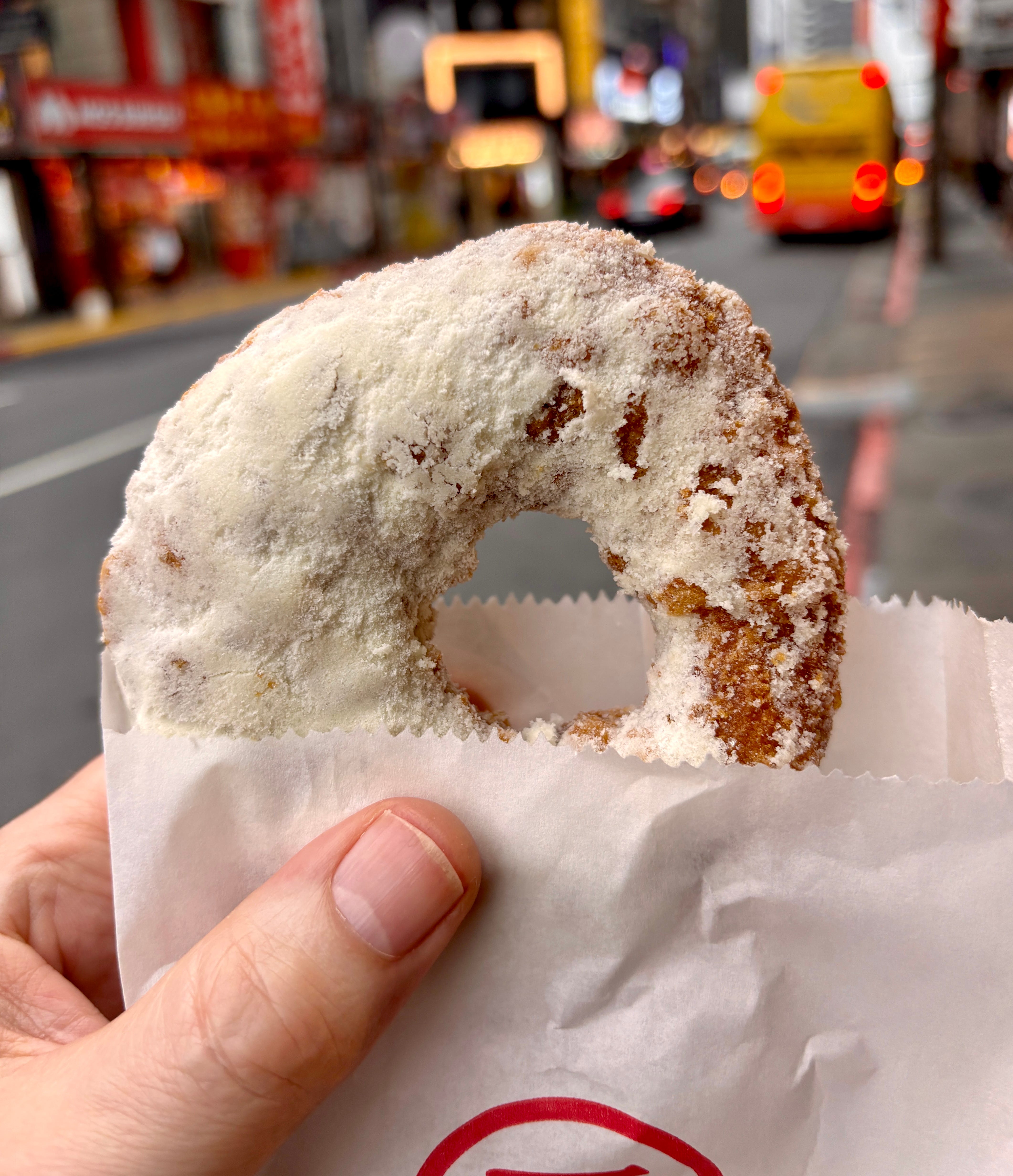
I’m not one for “viral” pastries. I’m not inclined to get up at 7am and wait an hour for a cupcake or a “life-changing” cookie — no offense to Butter & Crumble, which indeed looks delicious — but was intrigued by Crispy Milk Donuts and thought I’d brave it.

There was a short line but it moved quickly. I snagged two donuts, but only got one bite of the just-out-of-the-oven donut before being whisked away. At the urging of the friendly doorman at my hotel, who said it was “crack,” which I know is a term we’re not supposed to use anymore (I’m just quoting him), I went back to get the full-on crispy milk donut experience.

Share

Donuts can be heavy, cakey affairs, but this one was sleek, relatively thin, and lighter than a traditional donut. They dust the donuts heavily with coarsely ground powdered sugar before handing them over while still warm. You really need to eat it right away and it was something I quickly polished off. By the time I was done, my black shirt was covered with sugar.
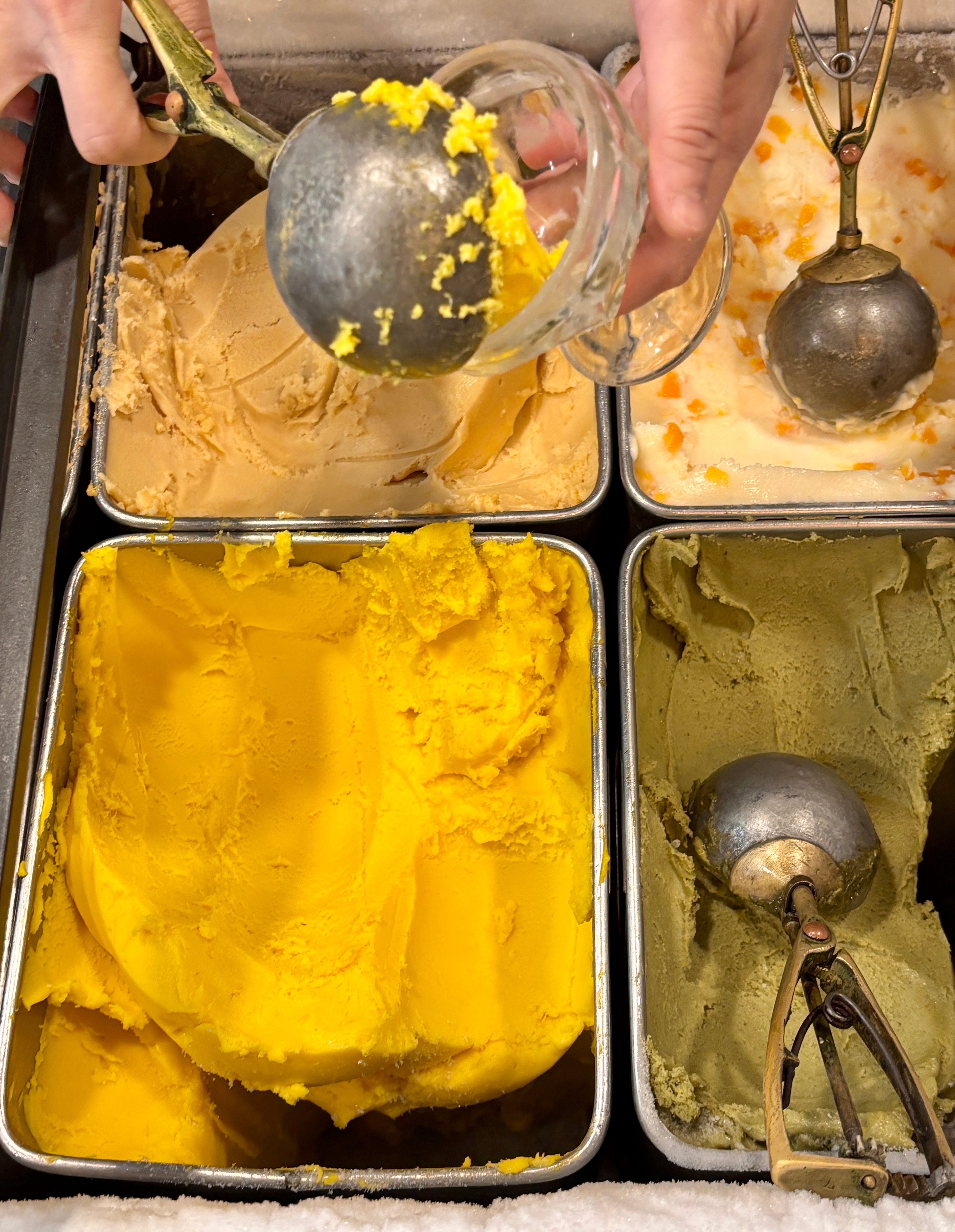
Knowing I like ice cream, two friends in the pastry world recommended Snow King. I’m not sure why it’s not Snow Queen(s) since it was staffed by three super-nice women, but this is the place to try ice cream that features Taiwanese ingredients and flavors, such as basil, mango, peanut, passion fruit, longan, taro, pork floss, kidney bean, and my favorite, sticky rice (below, right), spiked with rice wine and candied lotus seeds.
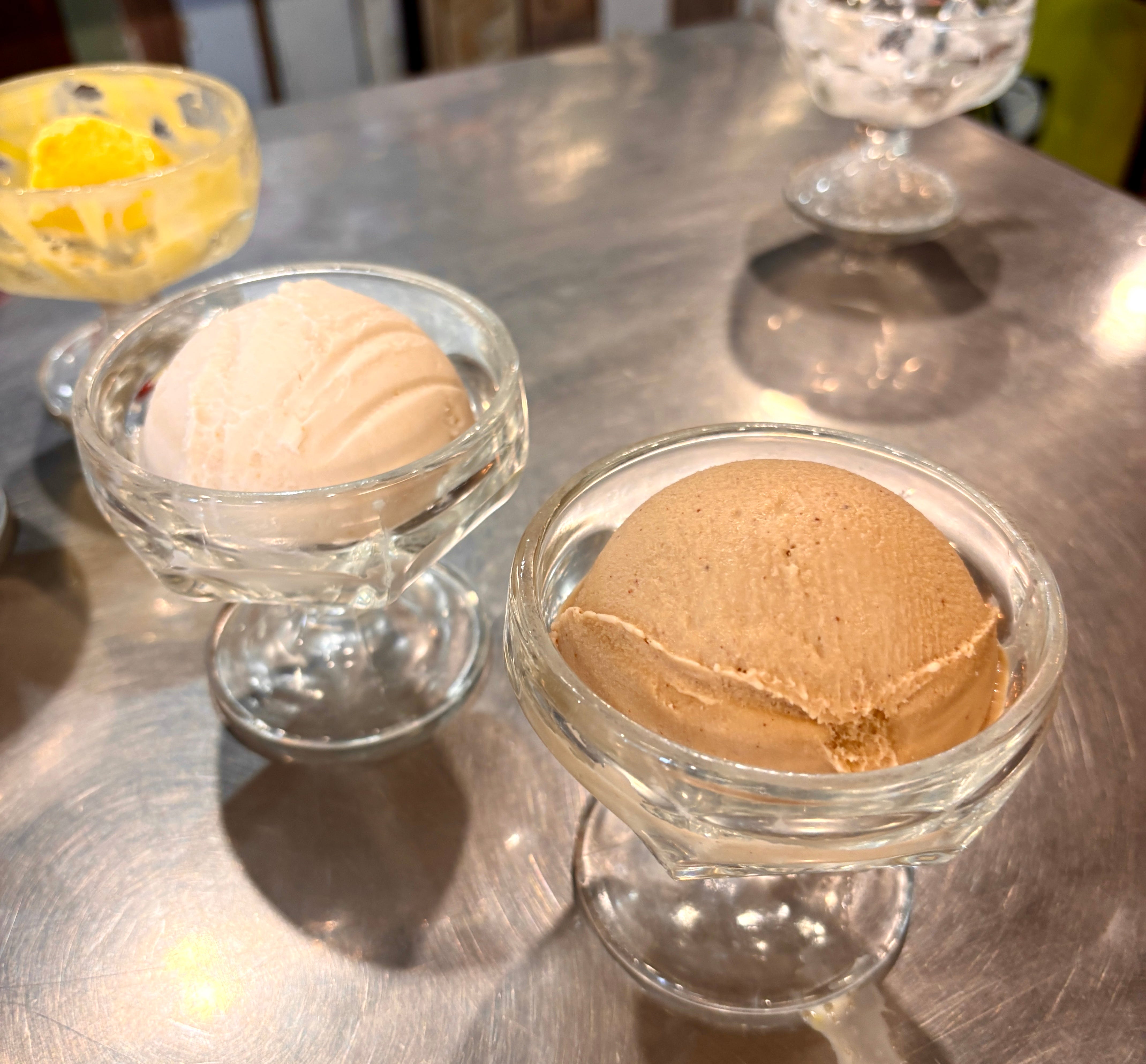
When I ordered seven scoops for the three of us, I figured each bowl would be a grouping of two or three smaller scoops, but we ended up with seven separate, generous bowls, and scoops, of ice cream.
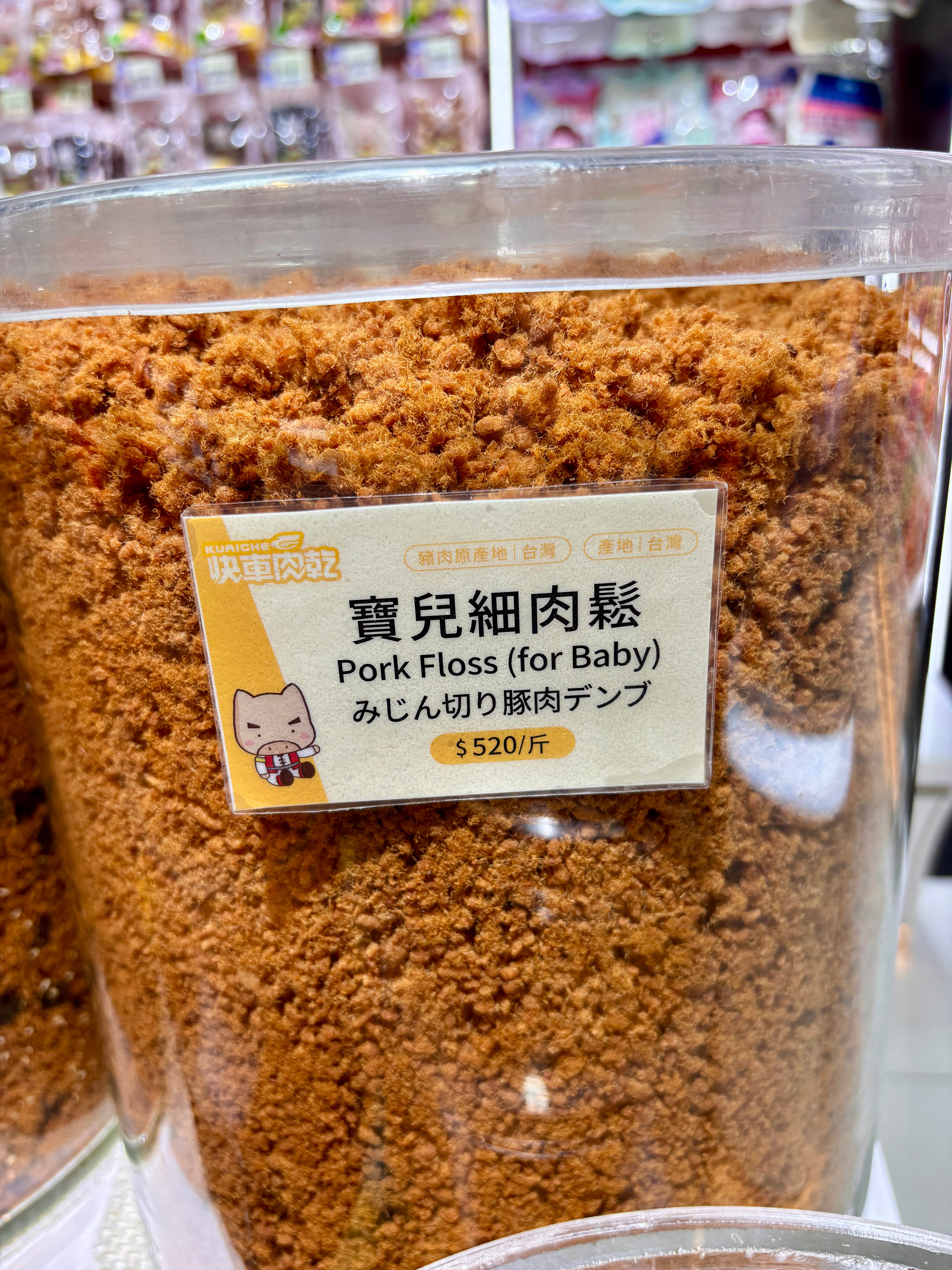
Pork floss is very popular in Taiwan. I saw this at the Nanmen Market. If anyone knows why there is special pork floss for babies, let me know!

We’d just polished off three heaping plates of dumplings that I over-ordered at Takumi Dumplings, but somehow we made it through most of the ice cream.

At Takumi, you order via an app, then wait on the sidewalk for your dumplings to be ready. Then you go inside, sit down, and eat them. The app was rather confusing, so we ended up with a lot. (Not shown: Another platter of dumplings.) Somehow, we managed to eat almost all of them.

Sunny Hills

Two other bakeries that I wanted to try were but we love butter and Sunny Hills, recommended by a reader (thx @ rmellorbessant) for their pineapple and apple cakes. They are a specialty of Taiwan, and you can find pineapple cakes in a lot of places, but these were especially good.

One thing that was interesting about both bakeries, which are a short walk from each other, is that they seat you for tea and a cookie, which are free, then (I guess) you buy something. I may have committed a gaffe at Sunny Hills because when I went to pay, they said, “No charge!” which was baffling.

But when I went to the next bakery, but we love butter, before I could buy anything, they sat me down at a table and gave me a cookie and tea. If you go, just be aware that the entrance is designed to look like a classic tailoring shop. Go ahead and step inside, then they’ll lead you to the sleek bakery space.
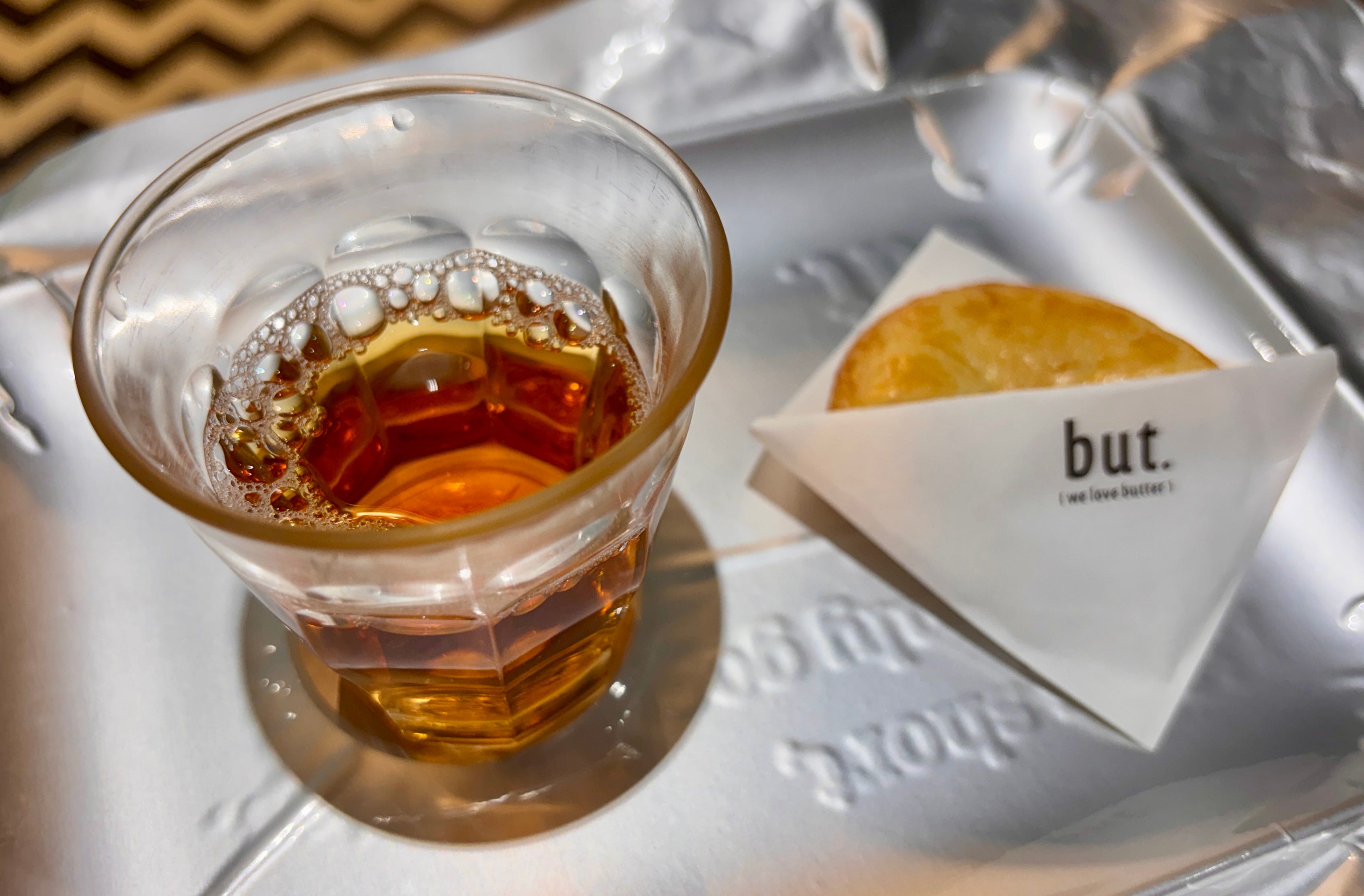
I don’t think giving away a pastry with a glass of tea is a custom that’s going to make it to Paris (or anywhere else), but I’d felt bad that I didn’t buy any cakes at Sunny Hills.

The cookie (above) was filled with candied longan and made with Échiré French butter. It was so good, I bought two boxes. Fortunately I could redeem myself with Sunny Hills (I was worried they might have posted my picture for the employees, to look out for the freeloader) when, a few days later, I found myself in the food court at 101 Taipei Tower and picked up (i.e., bought) two boxes of pineapple and apple cakes at the Sunny Hills kiosk there. So hopefully I’m off any “watch” list. 😅
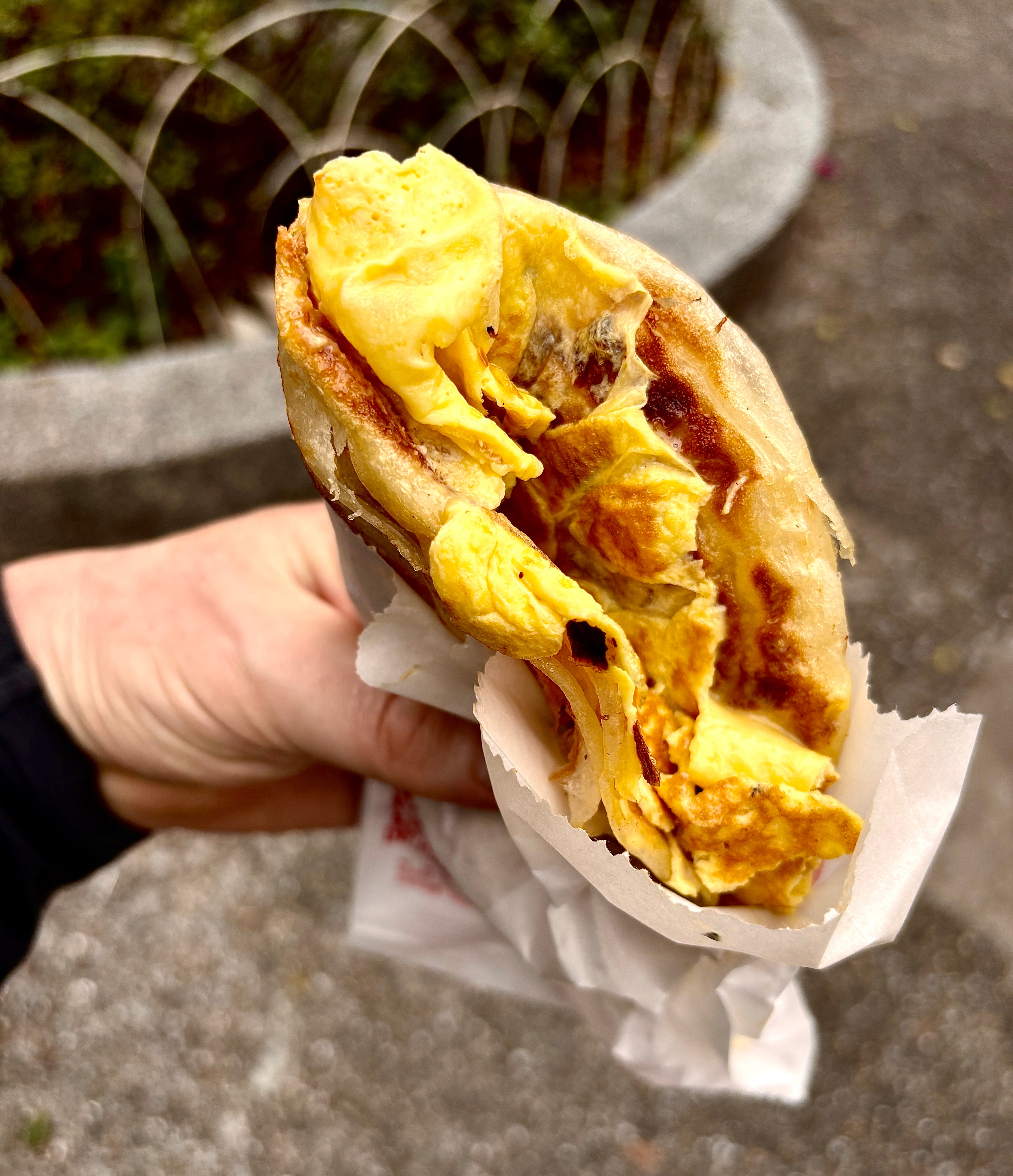
Scallion pancake with egg at Tian Jin

And while some people think I eat sweets all day (if only!), I did make it to Din Tai Fung, famous for their Xiao long bao, soup dumplings, considered by many to be the best.

The wait time for Saturday lunch at Din Tai Fung.

If you go, and it’s definitely worth it, avoid weekends. I did notice their branch at the 101 Taipei Tower had just a one-hour wait time, and I think you can browse in the mall while you wait (on their website, they list waiting times for each branch as well), but they also have a take-out, and I saw people eating their dumplings in the nearby park.

Once inside, it’s very calm and efficient. Din Tai Fung is known for treating its employees well, using high-quality ingredients, and having an exceptionally gracious staff. Their branches in the U.S. have become the top-grossing restaurants in America, and I’m crossing my fingers that one day, they’ll open a few branches in Paris. I jokingly* told a local who I was eating dumplings with at Din Tai Fung that the best raviolis asiatiques in Paris would be considered the lowest of dumplings in Taiwan.

Leave a comment

[*We actually have some good dumpling/wonton places in Paris. A few favorites are Taverne de Zhao, Chen Chen, Jixio’s Buns, Foodi Jia-Ba-Buay, and 21 Dumplings.]

caption...

It was a fun trip, and I did a lot in ten days but am happy to be home and getting back to focusing on fresh fruits and vegetables, where strawberries and asparagus are showing up at the markets. When you’re traveling, you’re often eating in restaurants, which is fun, but it’s always nice to cook for yourself, and eat at home, even if I can’t make Crispy milk donuts. (Although some can.)
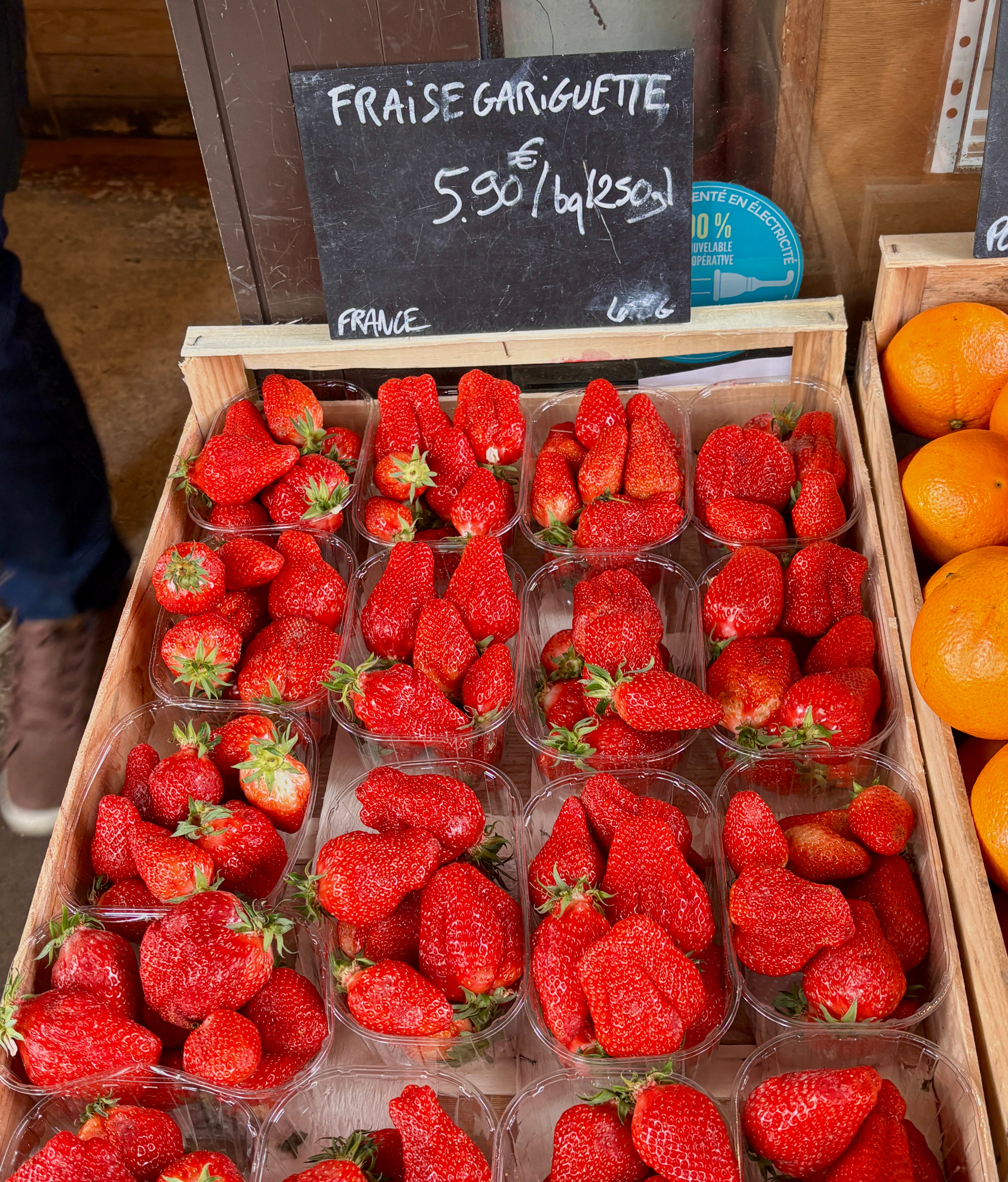
Start-of-the-season strawberries in Paris.

My friend, travel blogger Matt, says one should travel like you live. But I didn’t have a kitchen in my hotel room in Taiwan, so glad to be back in my own kitchen.

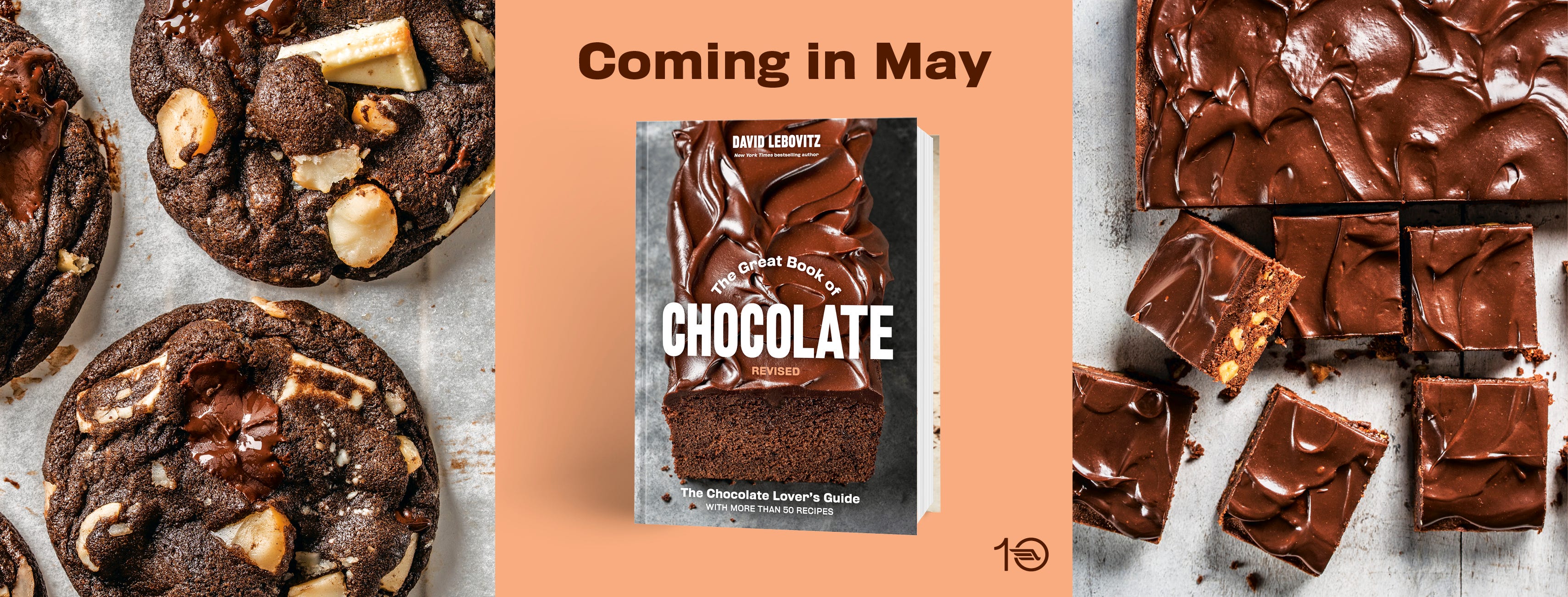
https://www.davidlebovitz.com/book/the-great-book-of-chocolate/

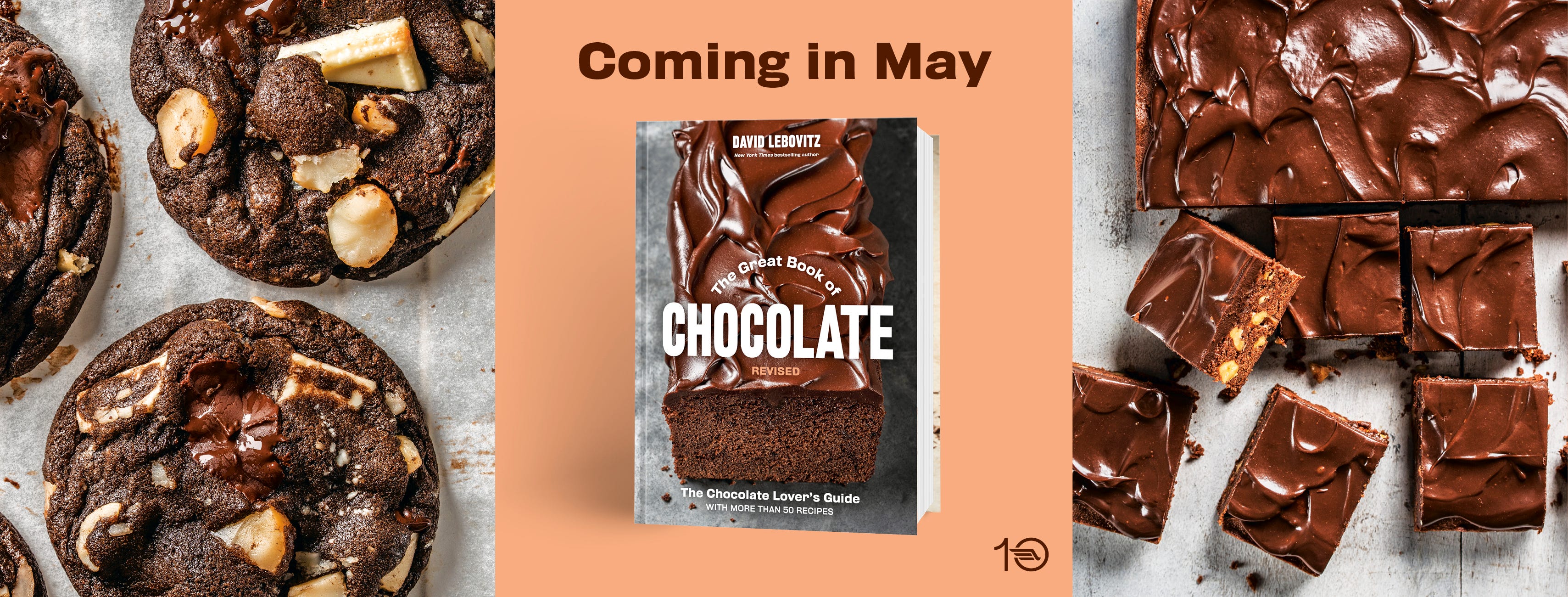
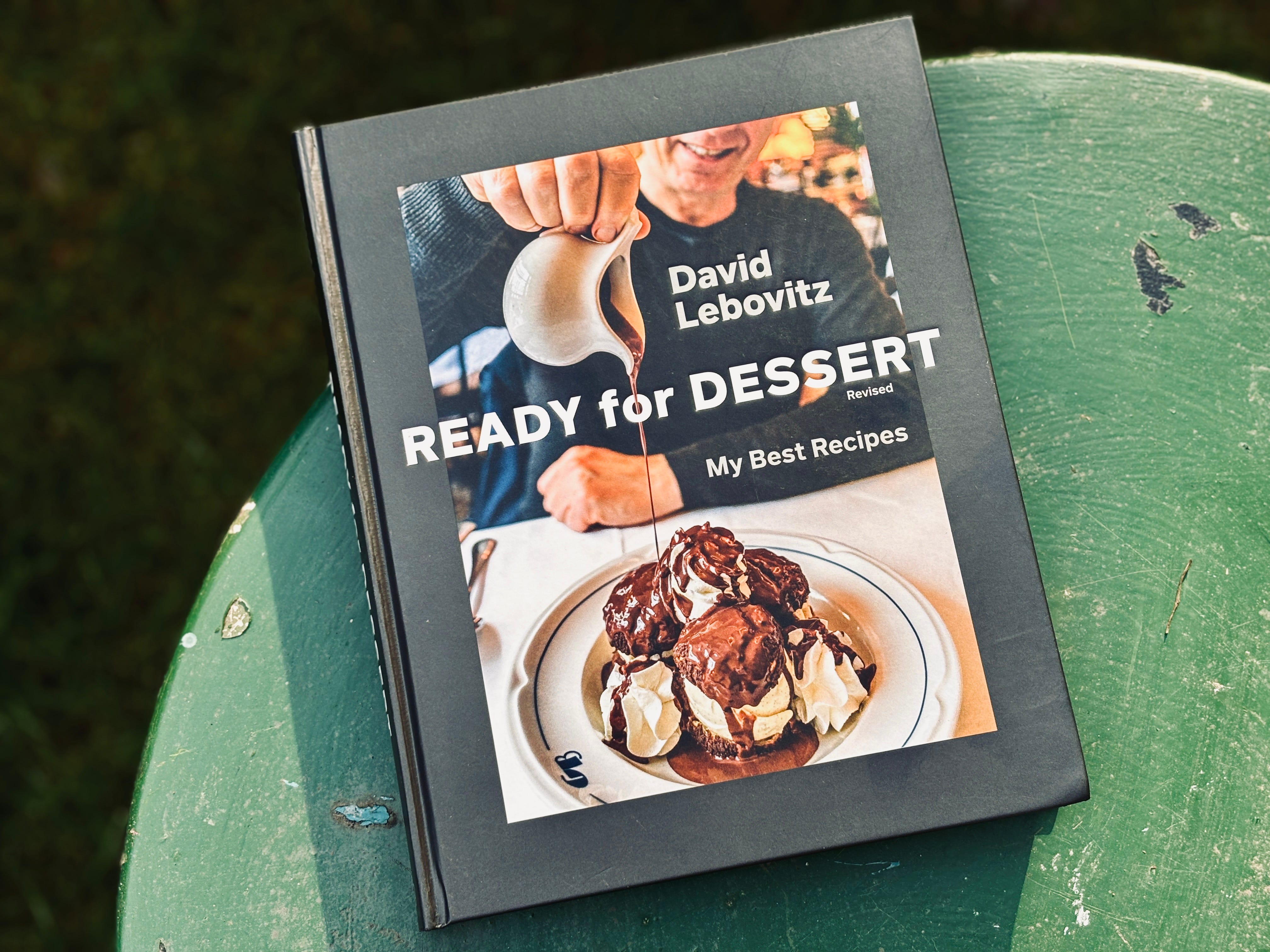
I’ve also been busily preparing for the release of my next book, a full-on revision of The Great Book of Chocolate. So much in the world of chocolate has changed since I originally wrote the book that my publisher prompted me to completely redo it, adding and updating information, recasting some of the recipes for what’s now available in the chocolate aisle at the supermarket, and creating brand-new recipes.

I loved doing this book so much!

https://www.davidlebovitz.com/book/the-great-book-of-chocolate/

Preorder The Great Book of Chocolate

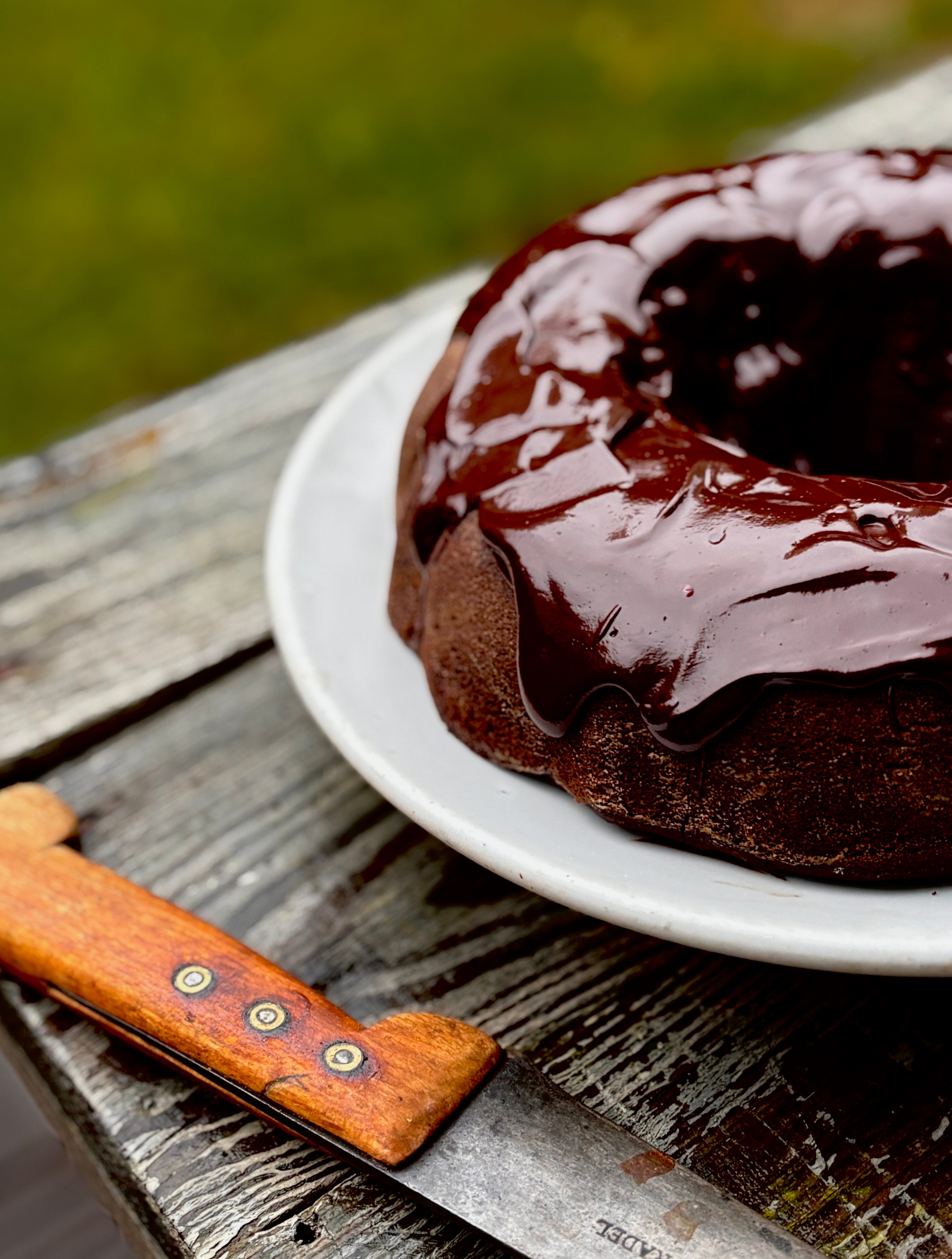
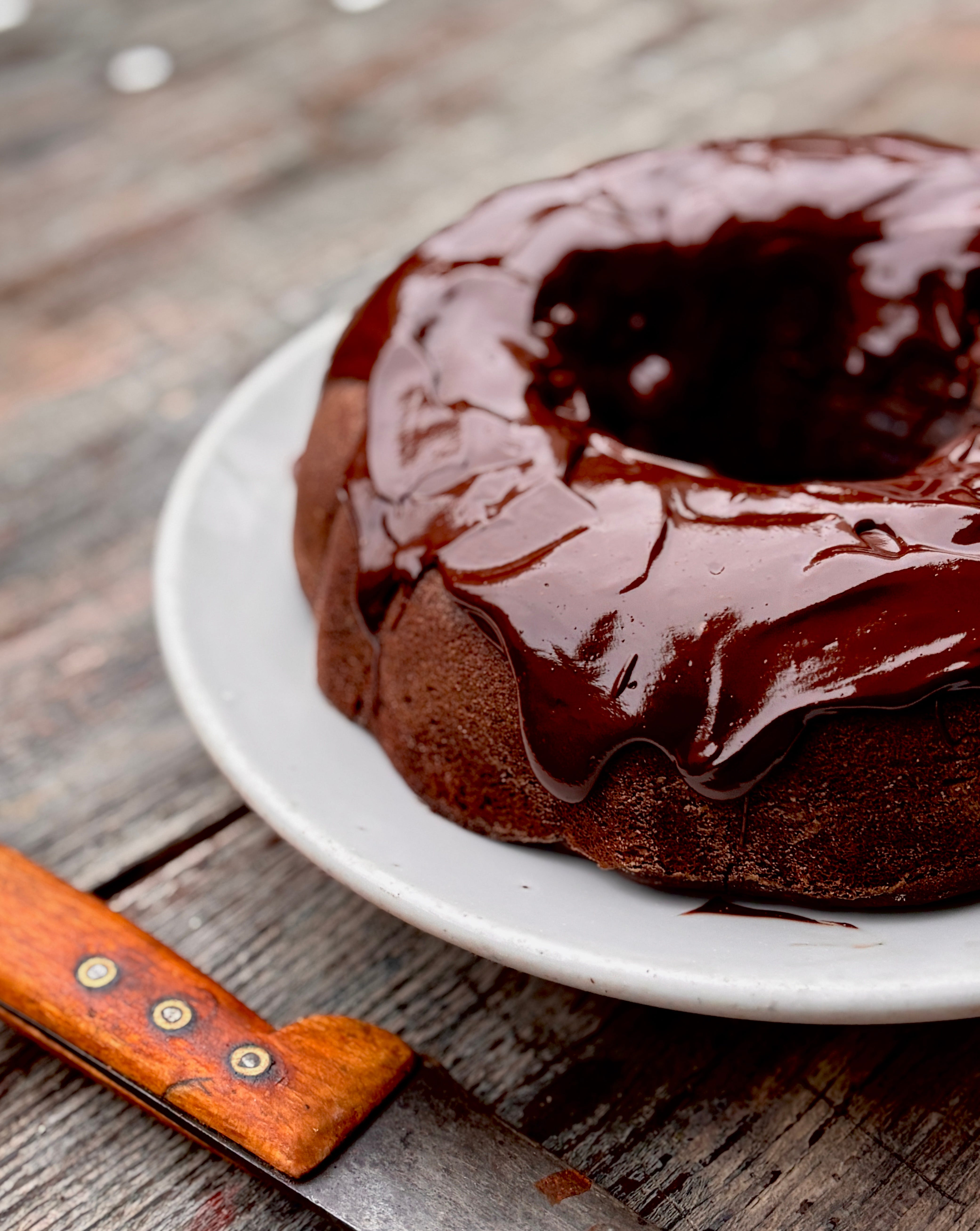
The same dream team that worked on Ready for Dessert added their talents to The Great Book of Chocolate: award-winning photographer Ed Anderson, brilliant food stylists Elisabet der Nederlanden (that cake on the cover😍) and George Dolese, as well as book designer Betsy Stromberg. It’s now available for preorder from your favorite local bookstore or online bookseller now:

There’s a chance that I may be doing some events in the U.S. for it, although the global situation changed the economics and viability of international and domestic travel, so we are working on that, to see what’s feasible. I’ll mention any updates here in the newsletter, as well as on my Schedule page.

But if I don’t make it out-and-about, I’ll be creating some videos for the newsletter, inviting friends into my kitchen in Paris, to make recipes from the book to share with you. I’ll also visit one of my favorite shops in Paris, where the owner will tell us what makes French chocolate so good, and how to buy the best vanilla, which is a natural pairing with chocolate, bien sûr

-David

Subscribe to my newsletter to get new posts, recipes, Paris tips, and videos, sent right to your Inbox!

A Visit to Staub Cookware Factory in France
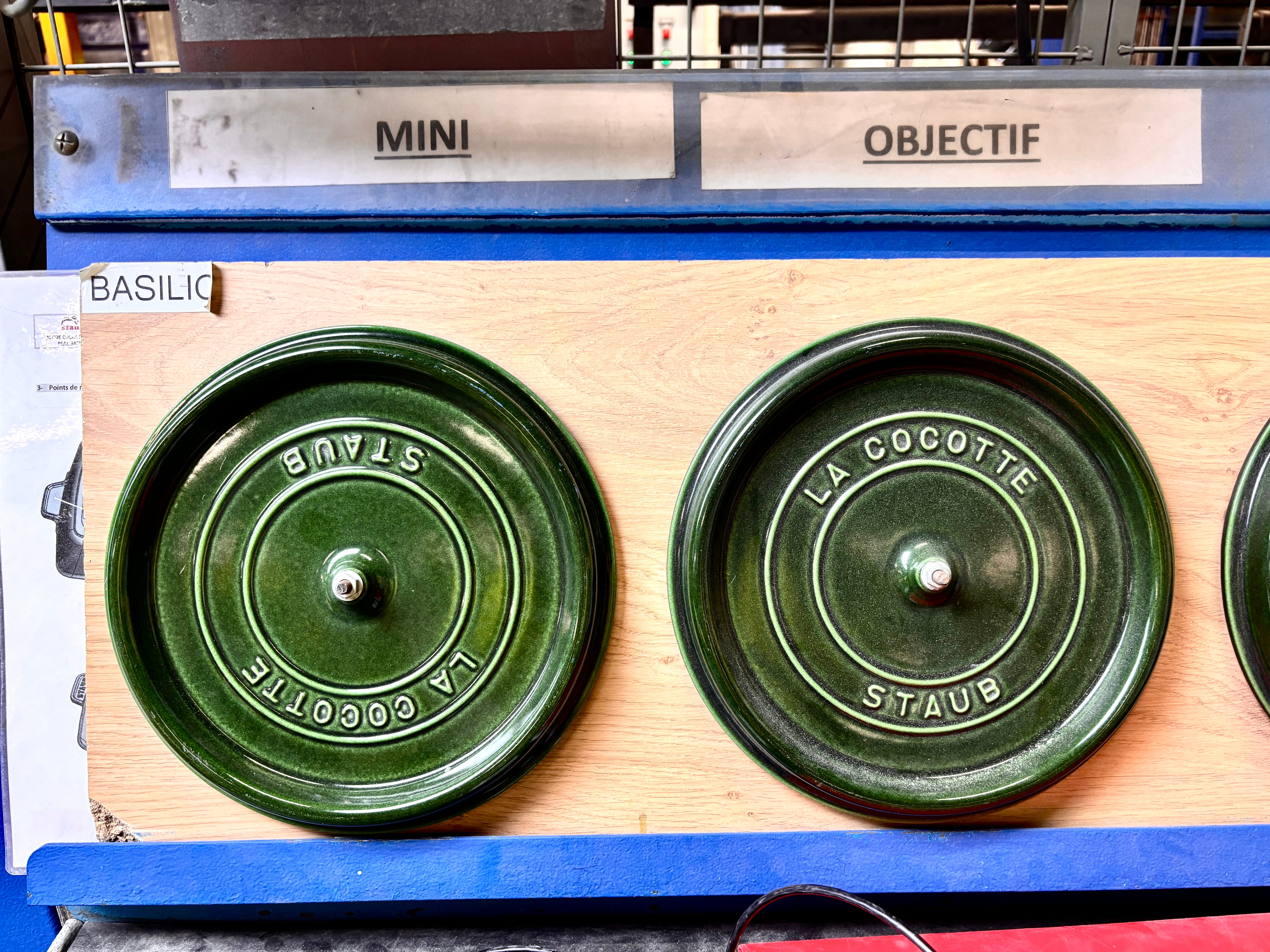
Testing various glazes: Pots and lids get glazed about 2 or 3 times, and each coating turns the pots and lids a different shade of green. It takes between 1 to 2 years to develop and test a new color.

I love going to factories, especially ones that make cookware. In the past I’ve visited All-Clad, Le Creuset, and Mauviel, and was the first “outsider” to be allowed inside the KitchenAid factory. So I was thrilled when I was invited with some friends, which included Deb of , , and Irene Wong, to visit Staub, one of my favorite French brands, makers of the iconic enameled cast-iron pots and casseroles.

Located in the north of France, the foundry turns out nearly 1,500,000 pots and pans per year. Almost all of it is made by hand, by three hundred skilled employees.
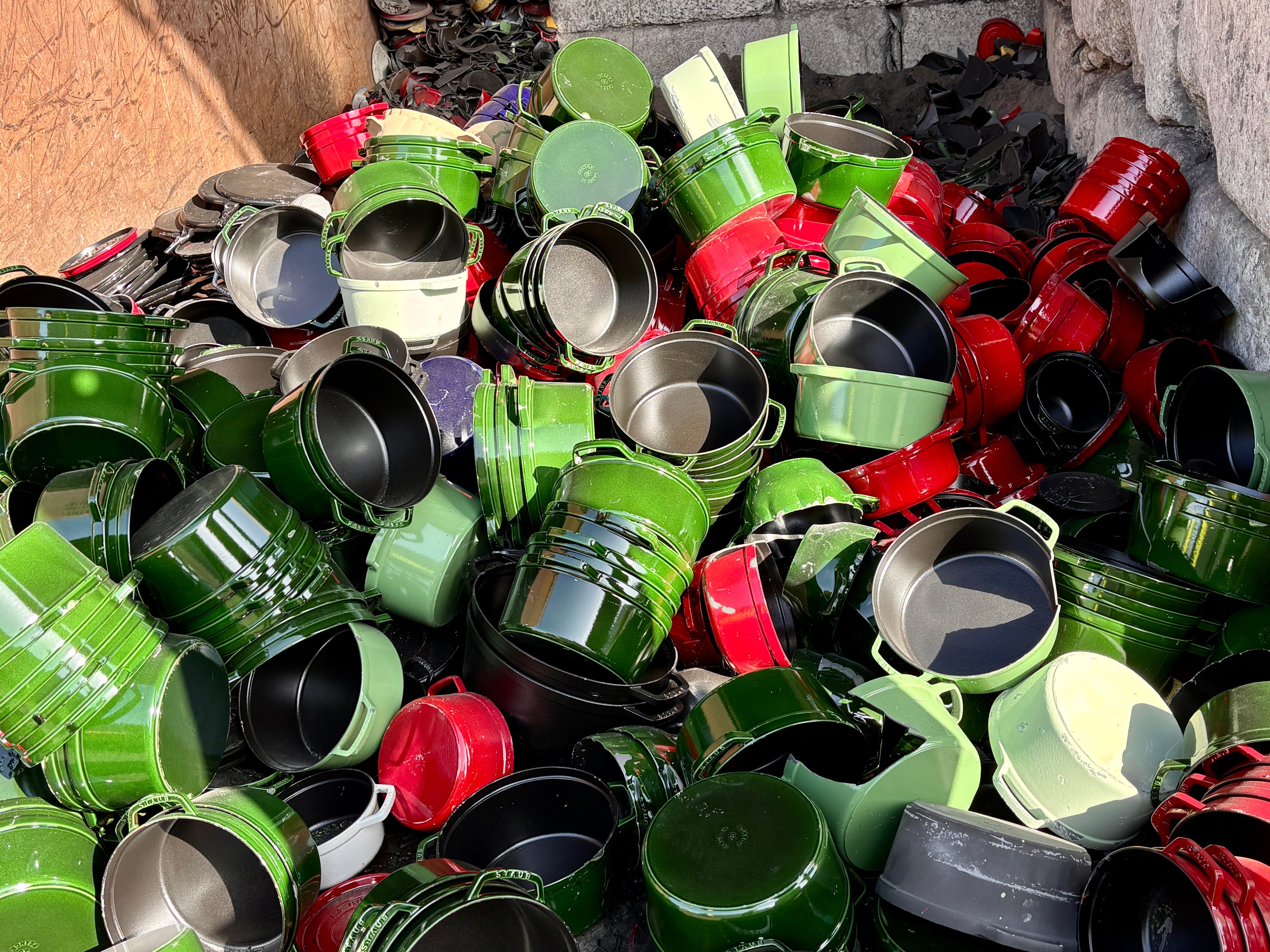
Anything that’s not perfect gets tossed in the reject pile, to be remelted (and recycled) into new pots.

It was really something to see how the cookware was made, beginning from being molten metal, to emerging as shiny new casseroles, ready to send to cooks and bakers around the world…

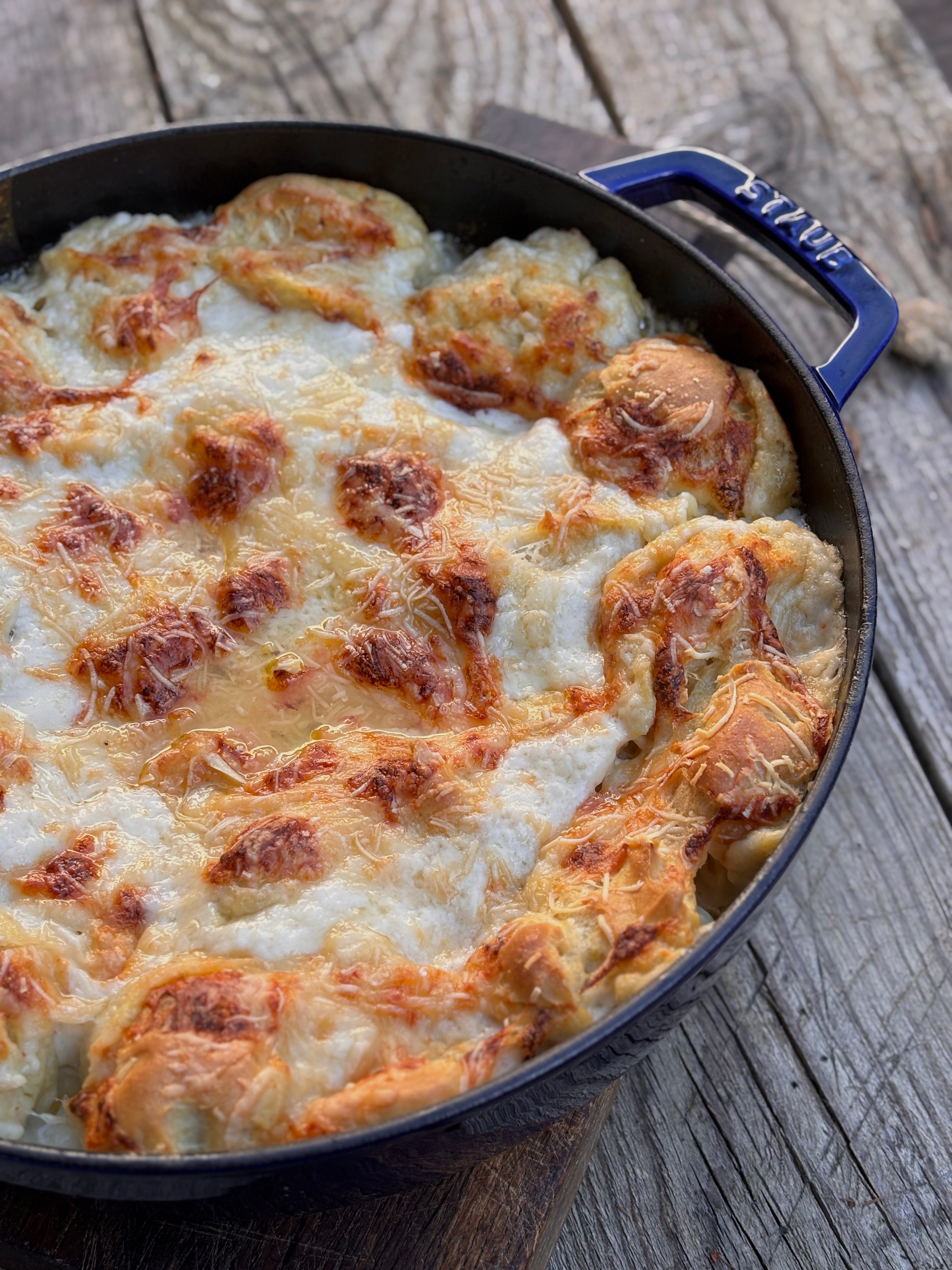
I had a great time at the factory and made some new friends as well there, and also picked up a few new pieces to add to my collection. I even got to use the smitten kitchen braiser to make Paris Gnocchi, a favorite recipe of mine from My Paris Kitchen.

Share

Leave a comment

Links I’m Liking

I spoke with Decoder Ring podcast about prunes, and the ill-fated move to rebrand them as “dried plums.” (Slate)

Tesla Diner in LA on the “struggle bus.” (SFGate)

German tourist sues NY taqueria over too-spicy salsa. (The Gothamist)

Candymakers phasing out chocolate in chocolate bars. (The Guardian)

After French tacos, the “Krousty poulet” (chicken and rice) becomes a viral sensation in France…

What lunch is like at the Noma LA pop-up. (Tom Sietsema)

E-book of Ready for Dessert on sale for $2.99 on Amazon, Google Play, Kobo, and Barnes & Noble. (Offer may be limited to U.S./for a limited time)

I’m generally not necessarily in agreement with Michelin’s ratings but here they are for 2026 in Paris. (Michelin)

Preach!…someone who feels the same way about soup in restaurants as I do…

…although I give Asian meal-in-a-bowl type of soups a pass, like the beef noodles I had in Taiwan, above, especially if they have lots of noodles or dumplings in them. (Gotofood/Instagram)

Received — 24 March 2026 David Lebovitz Newsletter

Postcard from Taiwan

24 March 2026 at 10:43

I've been confabbing with a friend from San Francisco, whose family is Hakka, from the south of Taiwan, to visit the country. And after a couple of years of talking about it, two friends of mine and I finally did it, and joined him there.

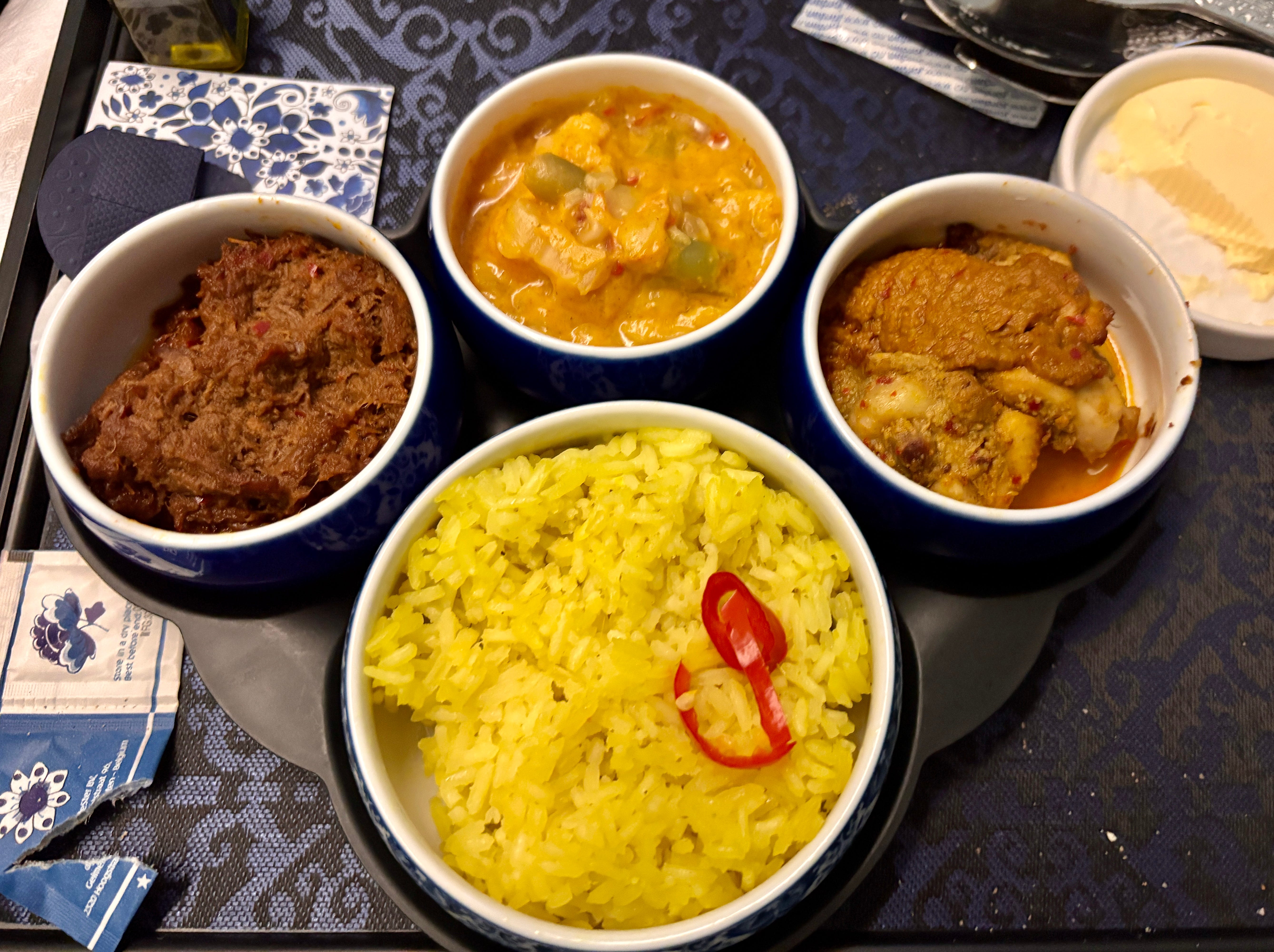
Lunch (or was it dinner?) on my KLM flight to Taiwan.

I had a bit of trepidation about the trip there since the itinerary was a bit complicated. Fortunately, though, I didn’t book on one of the flights that went through the Middle East, instead booking a KLM flight from Paris through Amsterdam, where there were only two of us going through immigration, and I made it through in record time, so making my connection was my first sense of relief.

Then I flew from Amsterdam to Taipei which, speaking of “relief,” — we were told as we were taking off that three of the bathrooms on our plane, which was filled to capacity, were out of service. So I didn’t drink much on the plane and arrived rather parched, to put it mildly. Shout-out to the flight attendants on KLM who were super lovely and very friendly. I watched two very good movies, Rental Family and Bugonia, which was wild, and had a good meal of what I think was Indonesian food.

Subscribe now

My arrival in Taipei was pretty easy as well; unlike the airport in Paris, there are tons of bathrooms at the Taipei airport — you didn't have to hike twenty minutes and take two flights of stairs to find one. After hydrating myself back to normal, I took a train from the airport in Taipei to the high-speed train station, then another train to Kaohsiung. I arrived at my hotel about 23 hours after I left home. I rehydrated some more, then went to bed, relieved that I had made it.

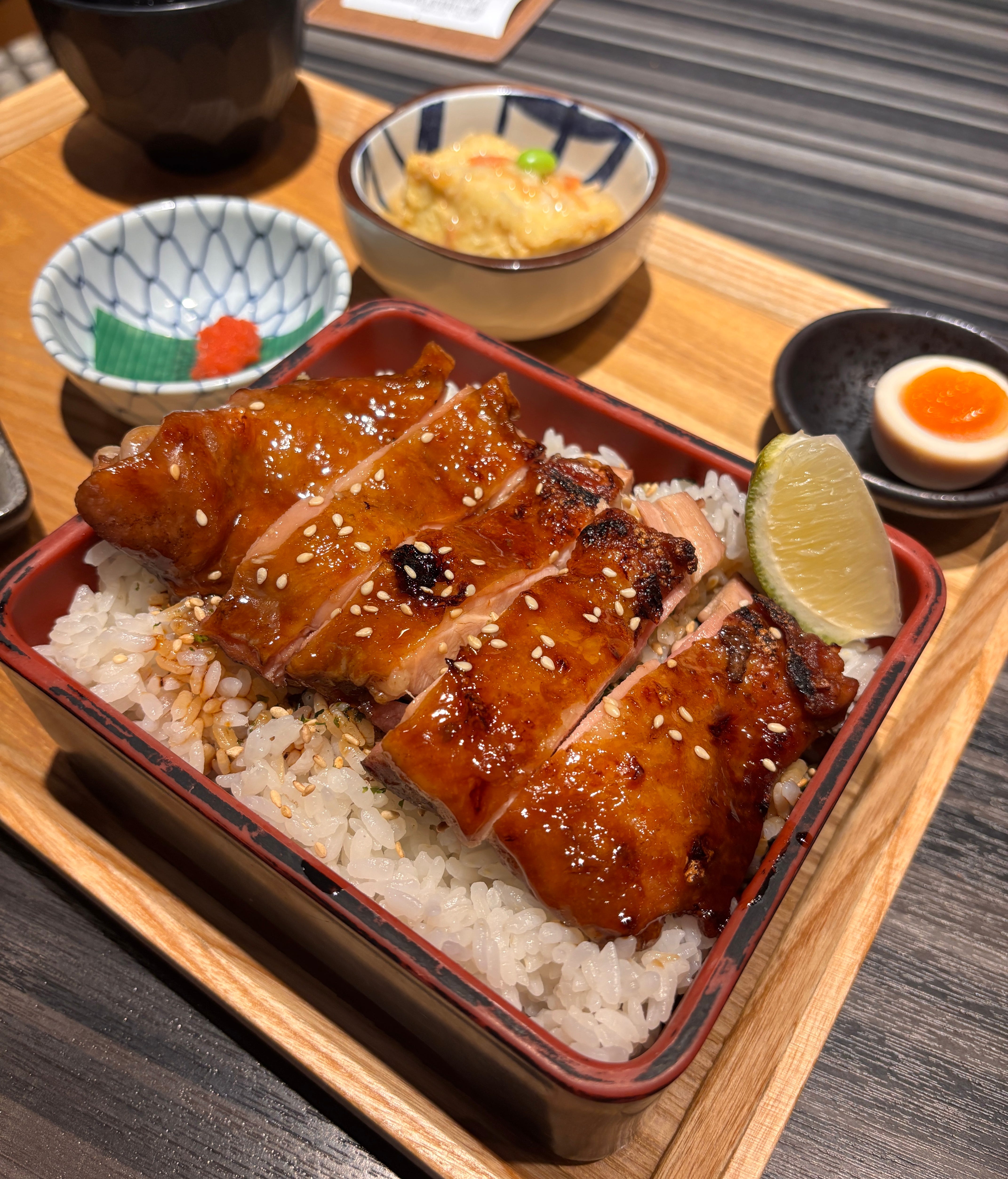
My first meal after landing with chicken teriyaki.

I don’t know much (or anything, really) about Taiwan or Hakka food, except that in San Francisco, I frequently ate at a Hakka restaurant, which was legendary — except I just read that it closed. But our friend is from this part of Taiwan and told me that because the Hakka were displaced, their food was on the simpler side. And because at one point the Japanese had colonized Taiwan, there remains a moderate Japanese influence.

The next day, I went to a funeral.

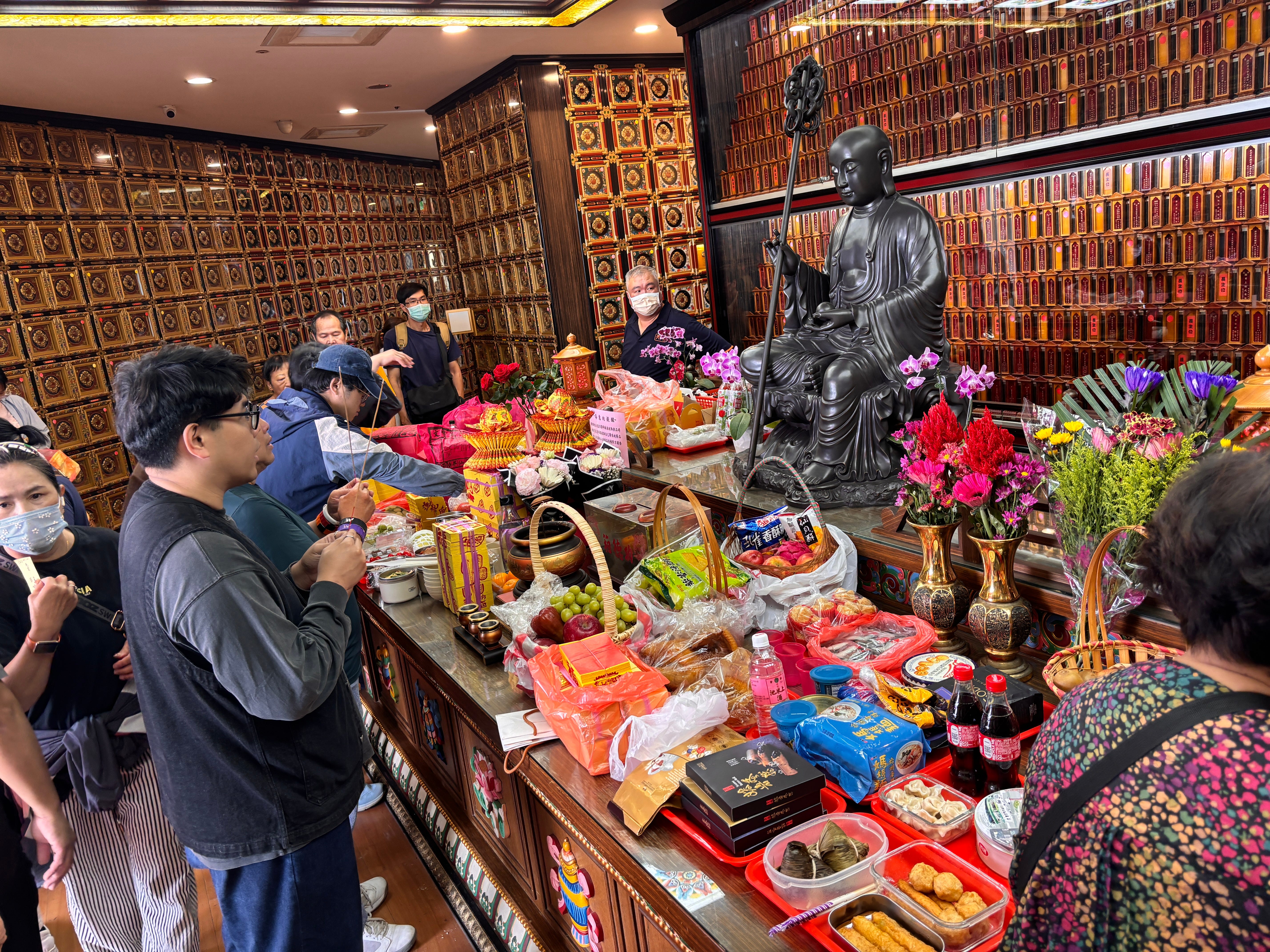
It wasn’t actually a funeral but “Tomb Sweeping Day,” when people visit cemeteries and columbariums to clean the tombstones of those who have passed. The columbarium that we visited was packed with friends and families bringing offerings of food. It was touching to be invited and to see how people celebrate and honor their ancestors. Afterward, of course, there was food.

(And don’t worry, all that food that’s brought for offerings gets taken home and eaten. I was also wondering about that…)

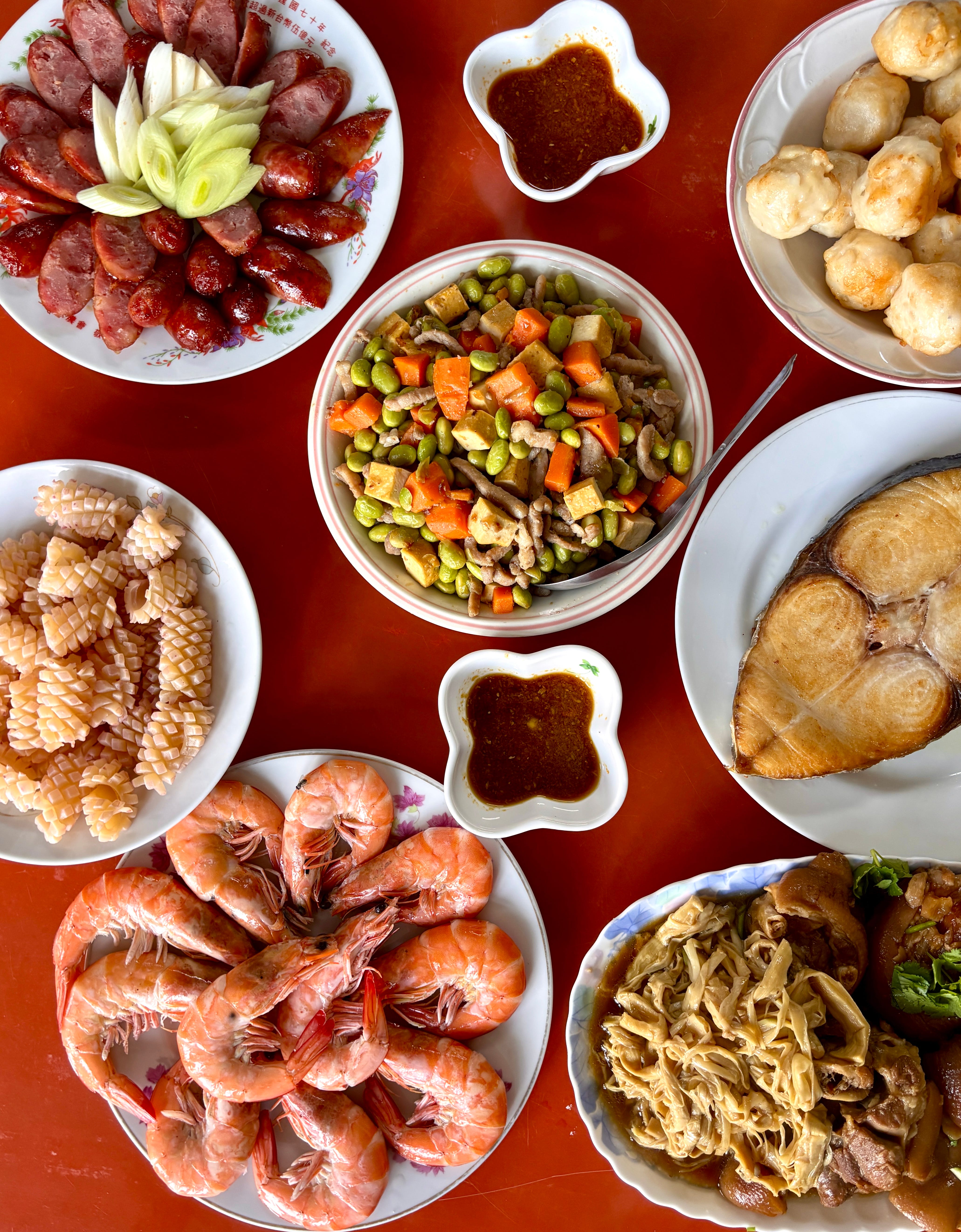
My friend’s cousin made lunch for us back at her house. And what a meal it was! There were probably ten or twelve dishes, put together in their humble kitchen, but with great finesse.

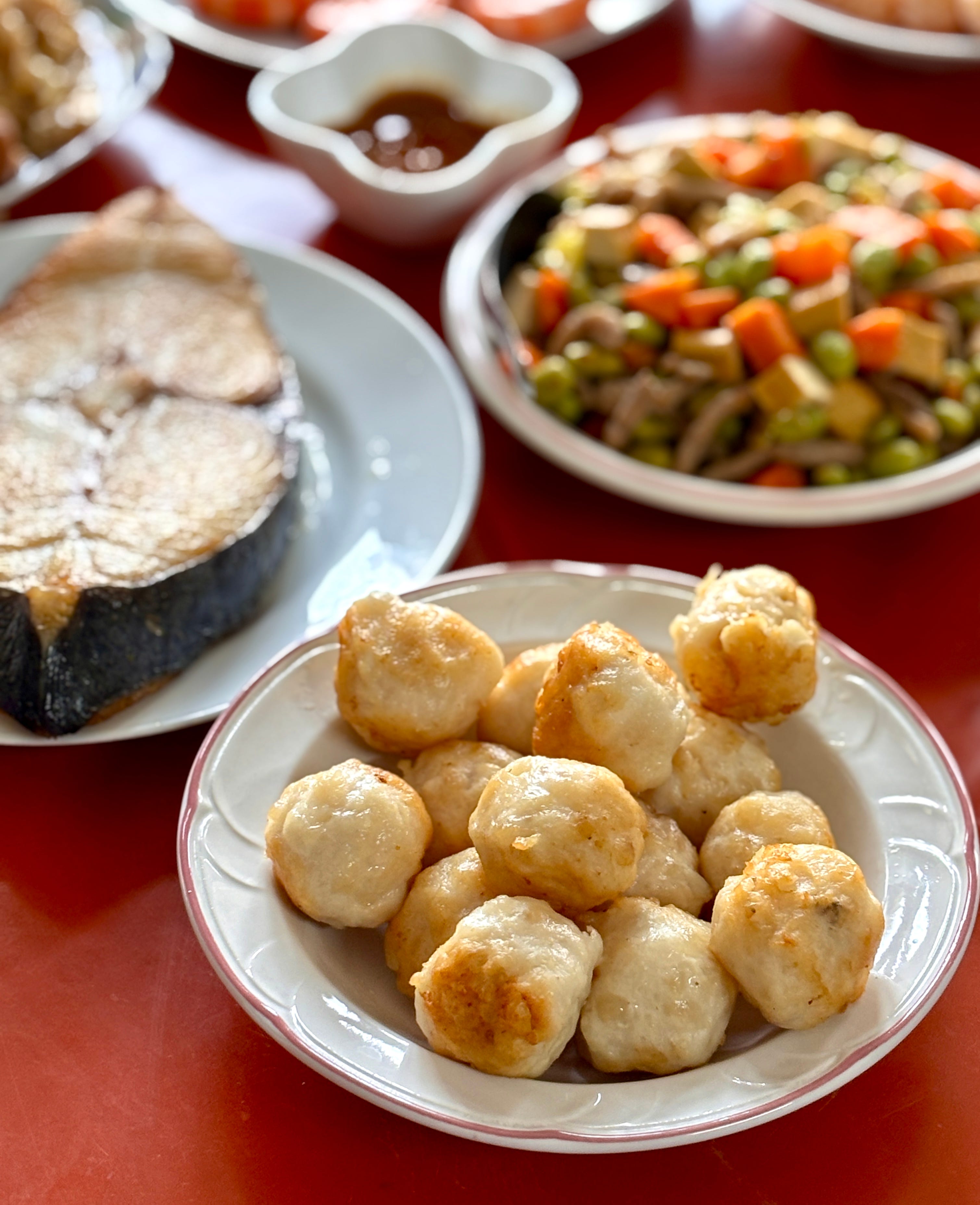
We had heaping bowls of fish cakes, and then a cascade of other platters and plates arrived. Braised pork trotters, Taiwanese sausages with fragrant and flavorful garlic greens piled in the middle, fresh shrimp and cuttlefish in the back — and my friend Cal showed me a locally grown star fruit. They are usually green, hard, and unripe, and this ripened one was a treat.

We finished the meal with an alluring soup…

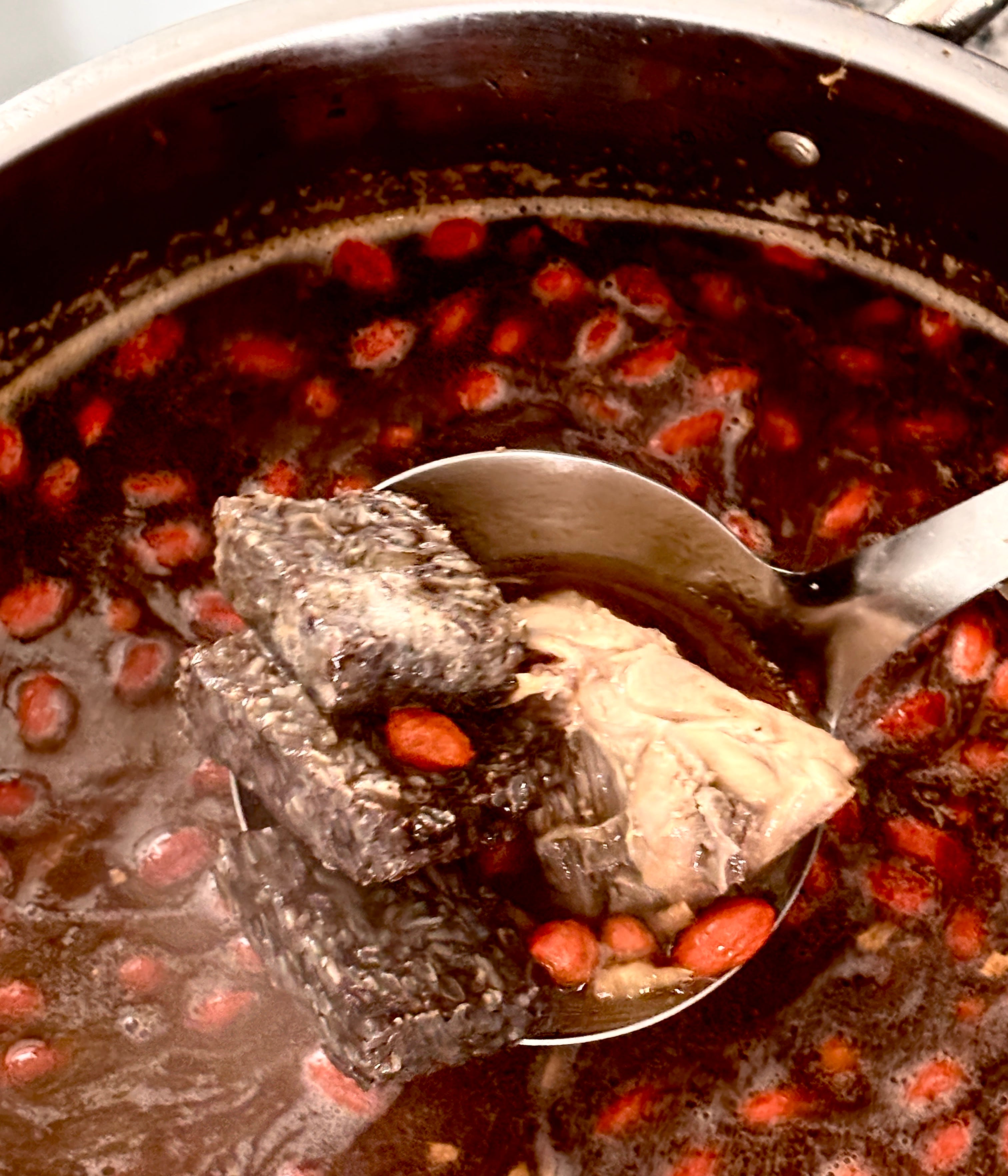
…served from a big pot with cubes of blood-rice sausage and pieces of locally raised chicken (which was “sacrificed” that morning on the farm), spiked with a lot of millet “wine” — which was actually millet eau-de-vie, at 40% (or more) alcohol. It was so strong that my friends and I had a little trouble finishing a whole bowl, but the elders in the room didn’t have any trouble.

Desserts aren’t usually served after Hakka meals, but that didn’t stop us from heading over to the local shaved ice shop.

I fell hard for my bowl of shaved ice, which had layers of candied red and mung beans, as well as chunks of starchy taro root and grass jelly under a layer of snowy, airy wisps of ice.

My absolute favorite part of the 剉冰 were the chunks of candied winter melon the owner spooned on top, with a drizzle of raw cane sugar syrup. The dessert was barely sweet and completely refreshing. We'd ordered three bowls to share amongst the five of us, but our Taiwanese friends didn't want to share, and each ended up ordering their own — and finished them, as did I.

Leave a comment

Well fed, and (finally) well-hydrated (no thanks to that soup!), the next day we visited a rice noodle factory where the layers of rice batter were rolled out by machines, then cut.

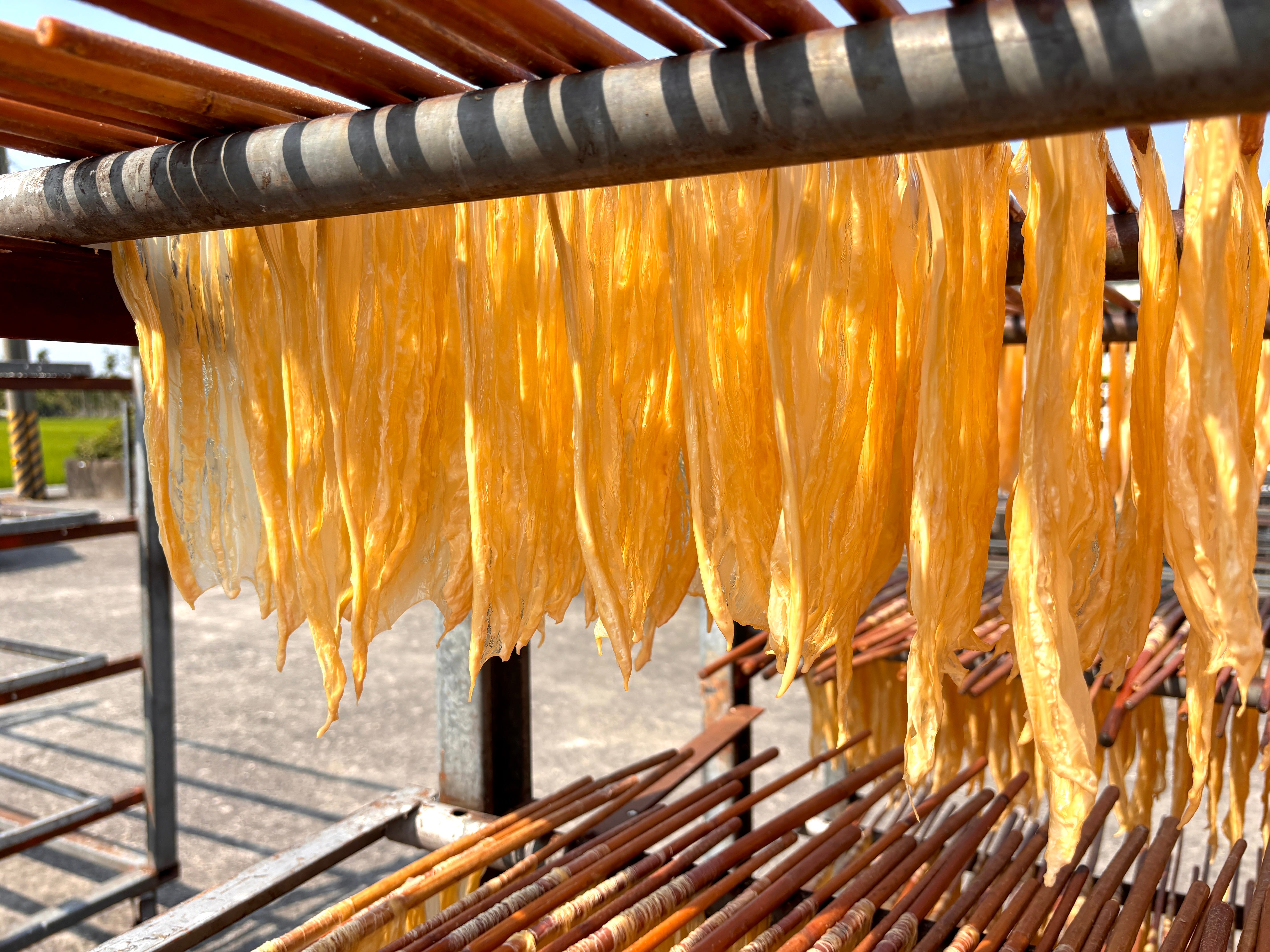
Taiwanese people are known for their love of noodles, and we also visited a famous tofu skin "factory" (although it was more like an outdoor workshop) where the soy milk is heated by fire, then poured into trays while it's warm. As soon as a skin forms on top, the women expertly run a long metal cutter to separate the skin from the edges, slip a wooden dowel underneath, and lift off the skin.

Then the skins are left to dry out in the sun until crisp. Even though they're dried, their shelf life is short — just a few weeks — so I didn't bring any home. But the tofu skins from this particular place are very sought after.

I asked if I could give it a try, after a bit of reassurance that I was a baker (so they'd know I wouldn't completely screw up their whole production) — and I got a little lesson:

It took me a few tries to get the hang of it. I was pleating them starting from the wrong end, and the woman who was showing me how to do it told me I needed to speed things up. 😂 I'm sure if I'd spent a little more time with them, which I would have been happy to do, I would have gotten faster and better at it. Watching rice noodles and tofu skins being made made me hungry for noodles. Fortunately, that was our next stop.

Share

Tofu skins can be cooked and eaten like noodles, presoaked and tossed in stir-fries, or used to wrap dumplings. They're one of my favorite things, and when I was in Osaka, we ate at a restaurant that specialized in yuba, or tofu skins.

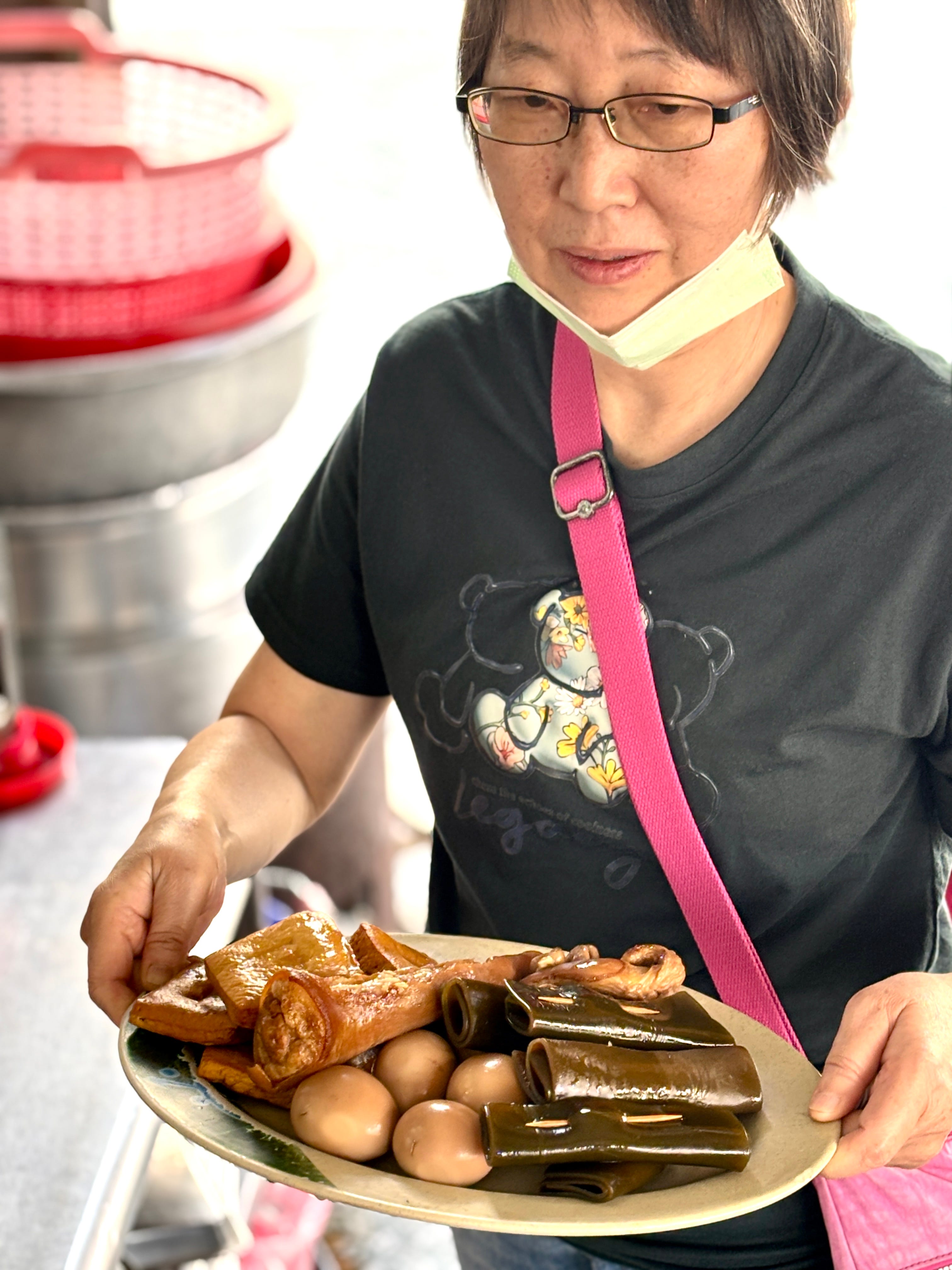
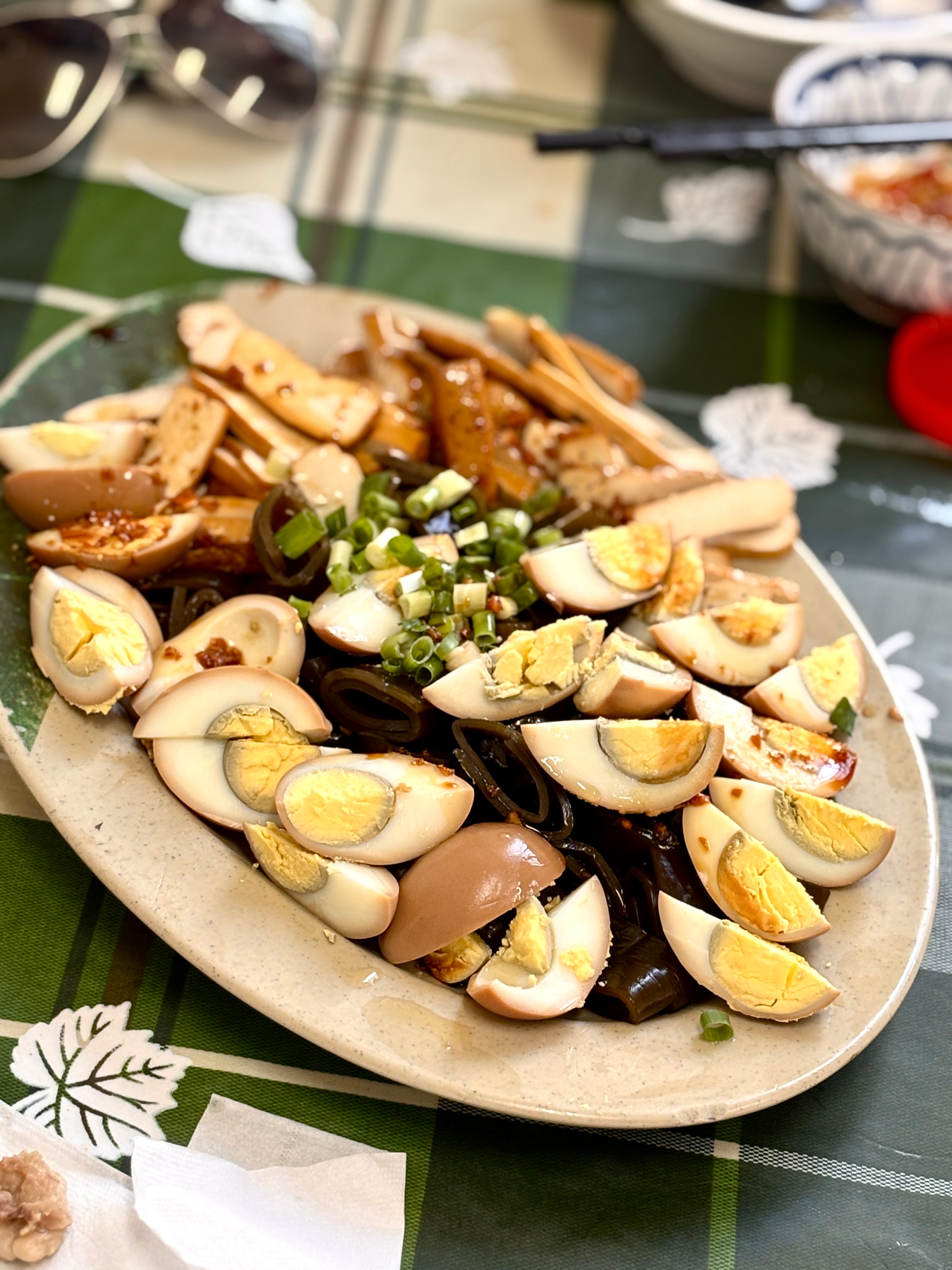
At the noodle shop, there was a platter of pig’s trotters, braised eggs, pressed tofu, kombu (seaweed), and some spicy condiments on the table, including jars of fermented pineapple.

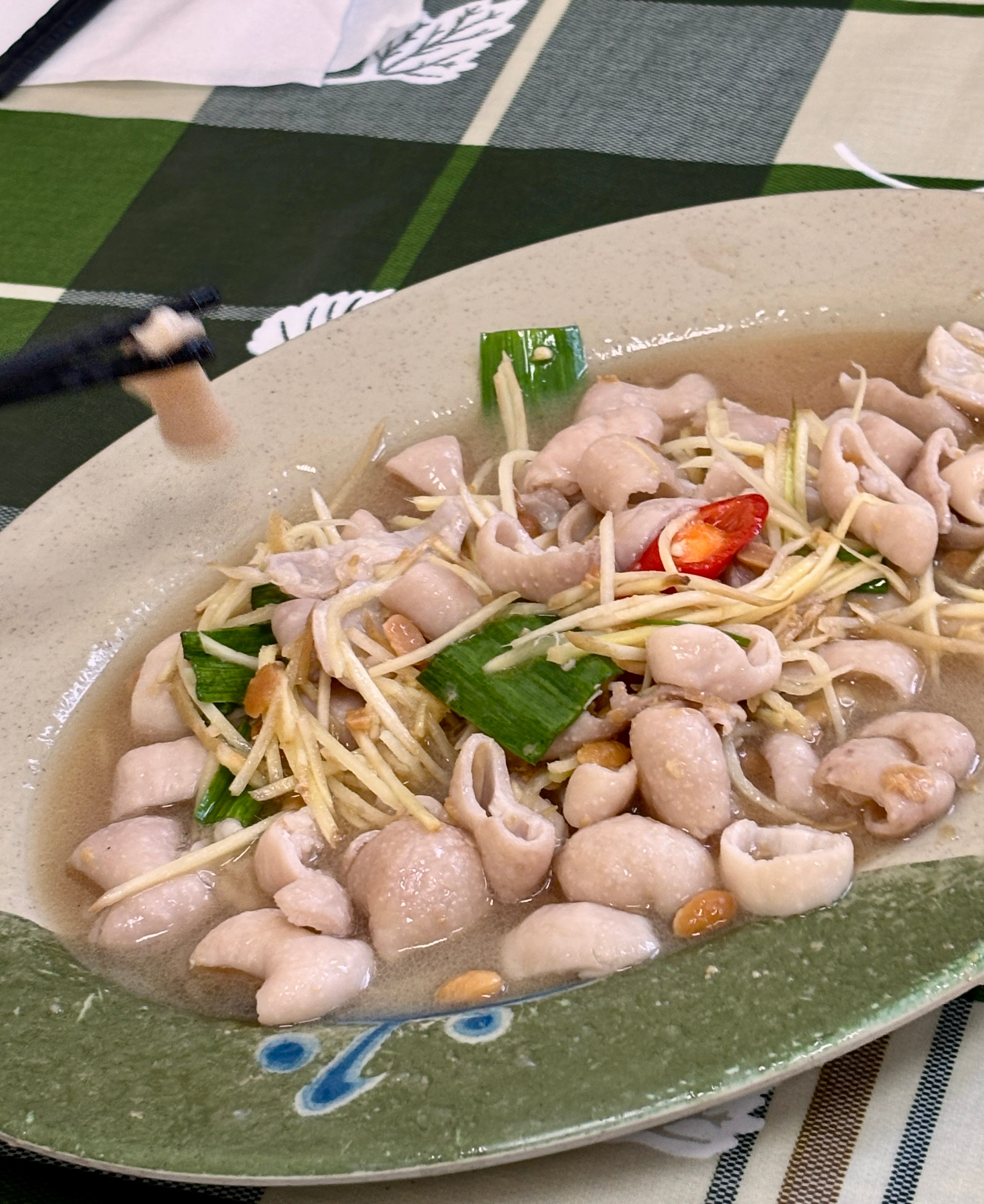
Before the noodles, out came a platter of pork intestines covered with slivered fresh ginger. The intestines were a little chewy, but the copious amount of ginger was a welcome treat.

Once all the accompaniments were sliced and presented to our table, I was ready for noodles.

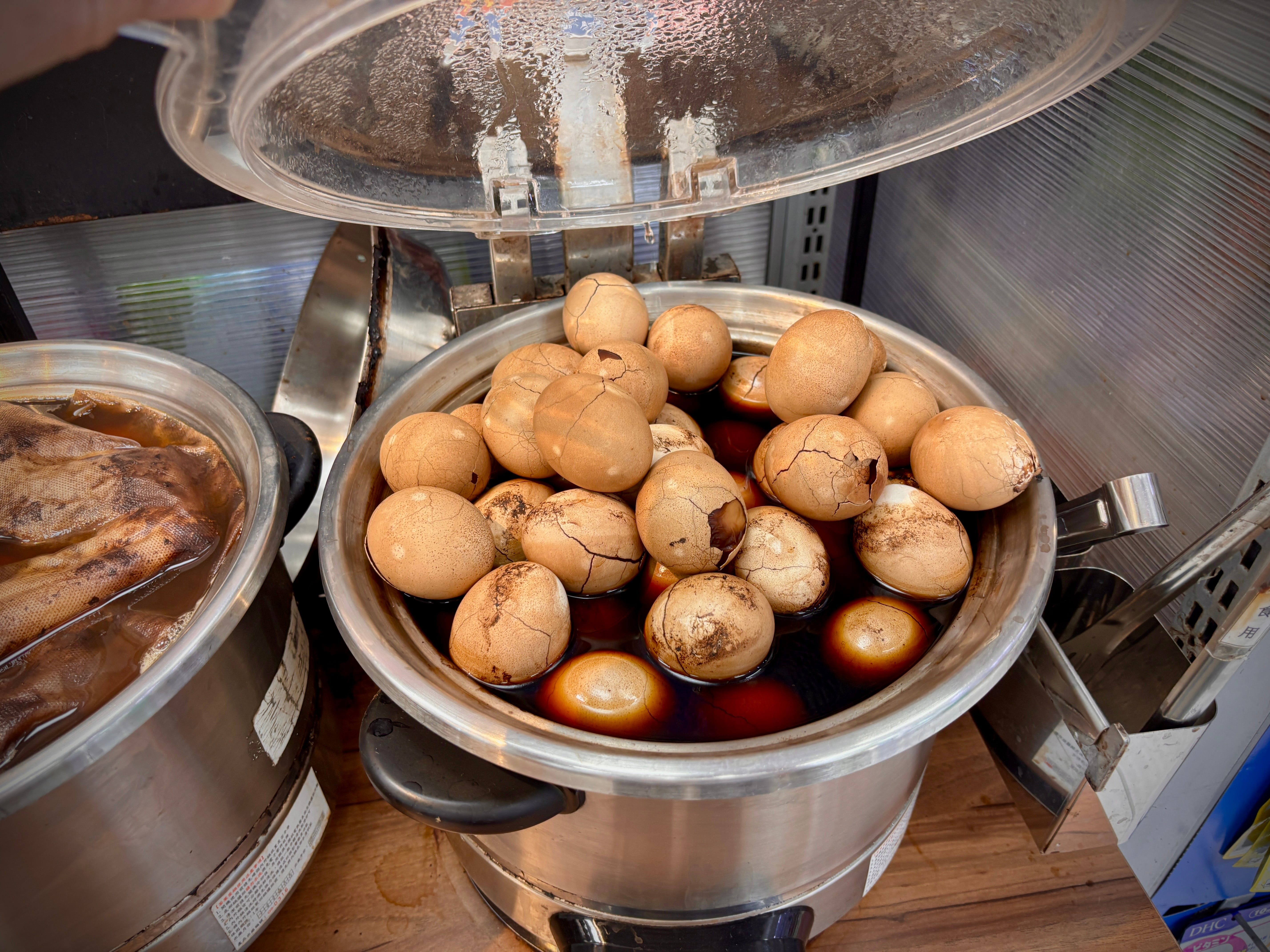
I'm sure some of you may be hovering over the "Leave a comment" button regarding the greenish outer yolks of the braised eggs, but there's a pot of them in every convenience store, bubbling away for who-knows-how-long, and they go fast. So it doesn't seem to bother anybody, including me, since they're pretty tasty.

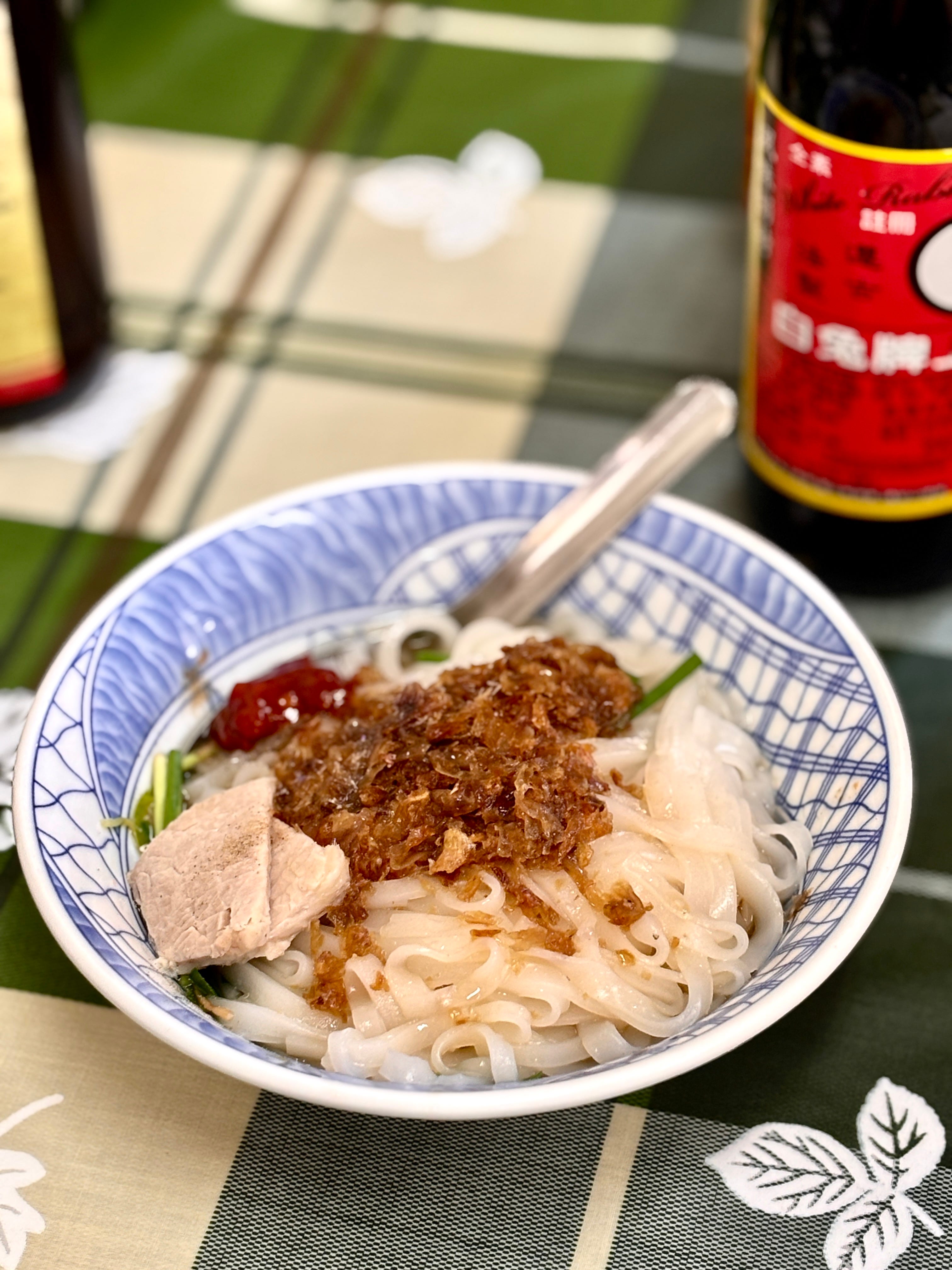
Then, out came the individual bowls of fresh rice noodles for us, which were topped with caramelized shallots — a popular condiment here — and then you add other condiments such as black vinegar, miso-based soy paste, and chili pastes. (I have this miso soy paste at home, which my Taiwanese-American friend sitting next to me on the train right now, tells me is thicker than what we had here.)

Subscriber to my newsletter here, to get the newsletter sent right to your inbox!

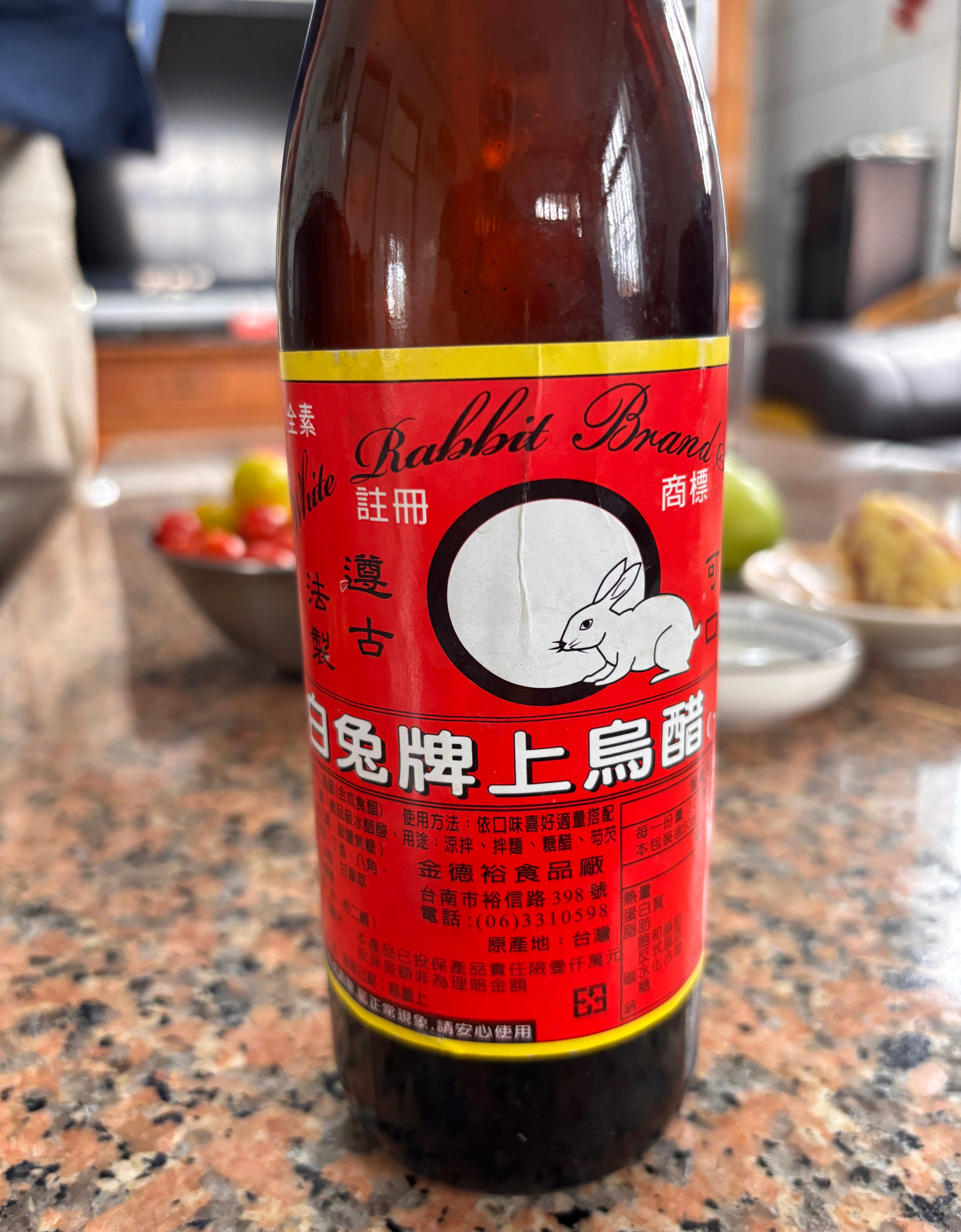
And the White Rabbit black vinegar we used was also a bit of a revelation to me as it was much better than the regular black vinegar I get at the Asian markets back home. It had a tangy, fruity flavor and my friend's cousin poured a little over my noodles, then a little of the miso soy sauce over them, and told me to mix everything up and eat. I added some of the chile sauce and paste as well.

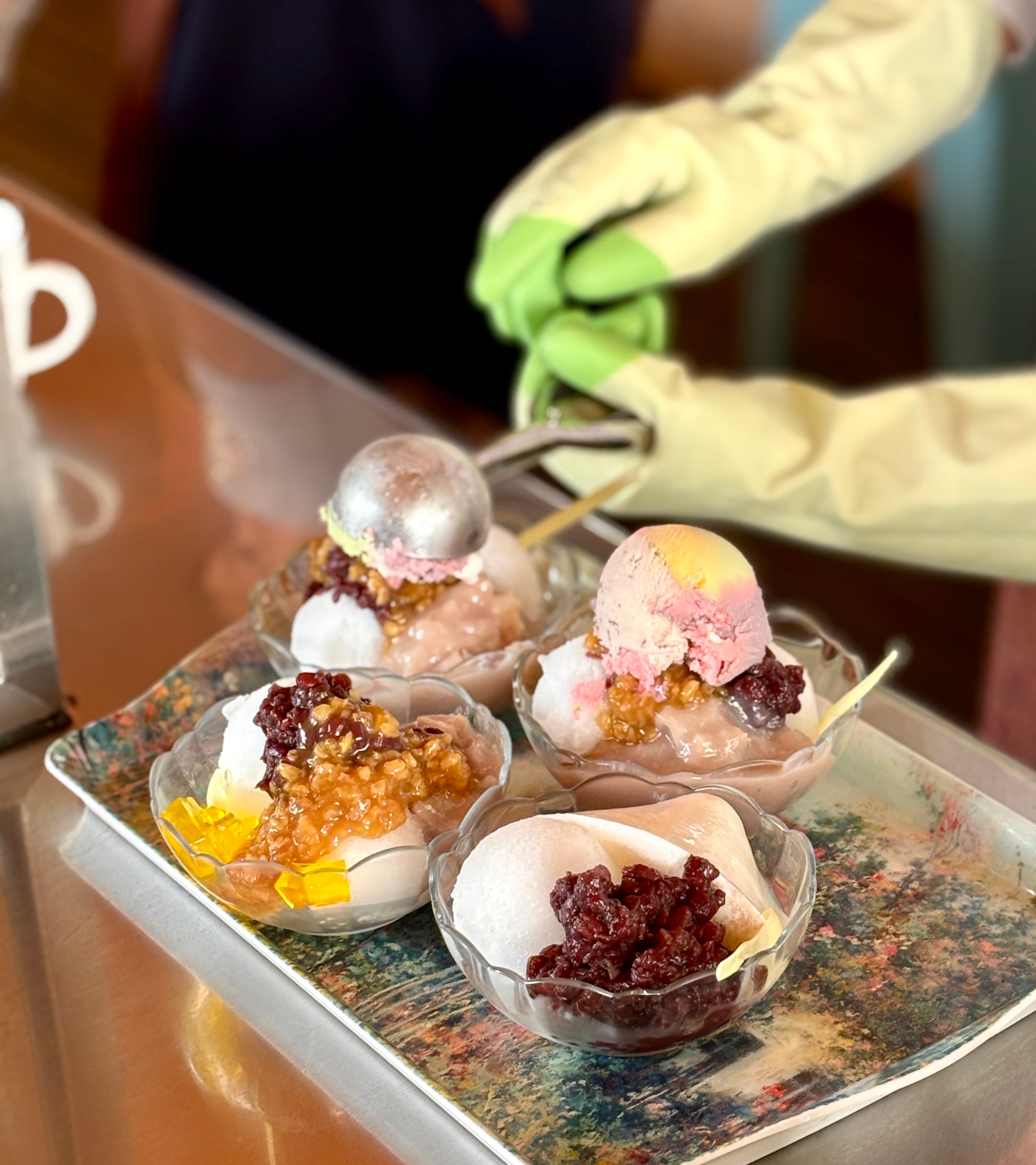
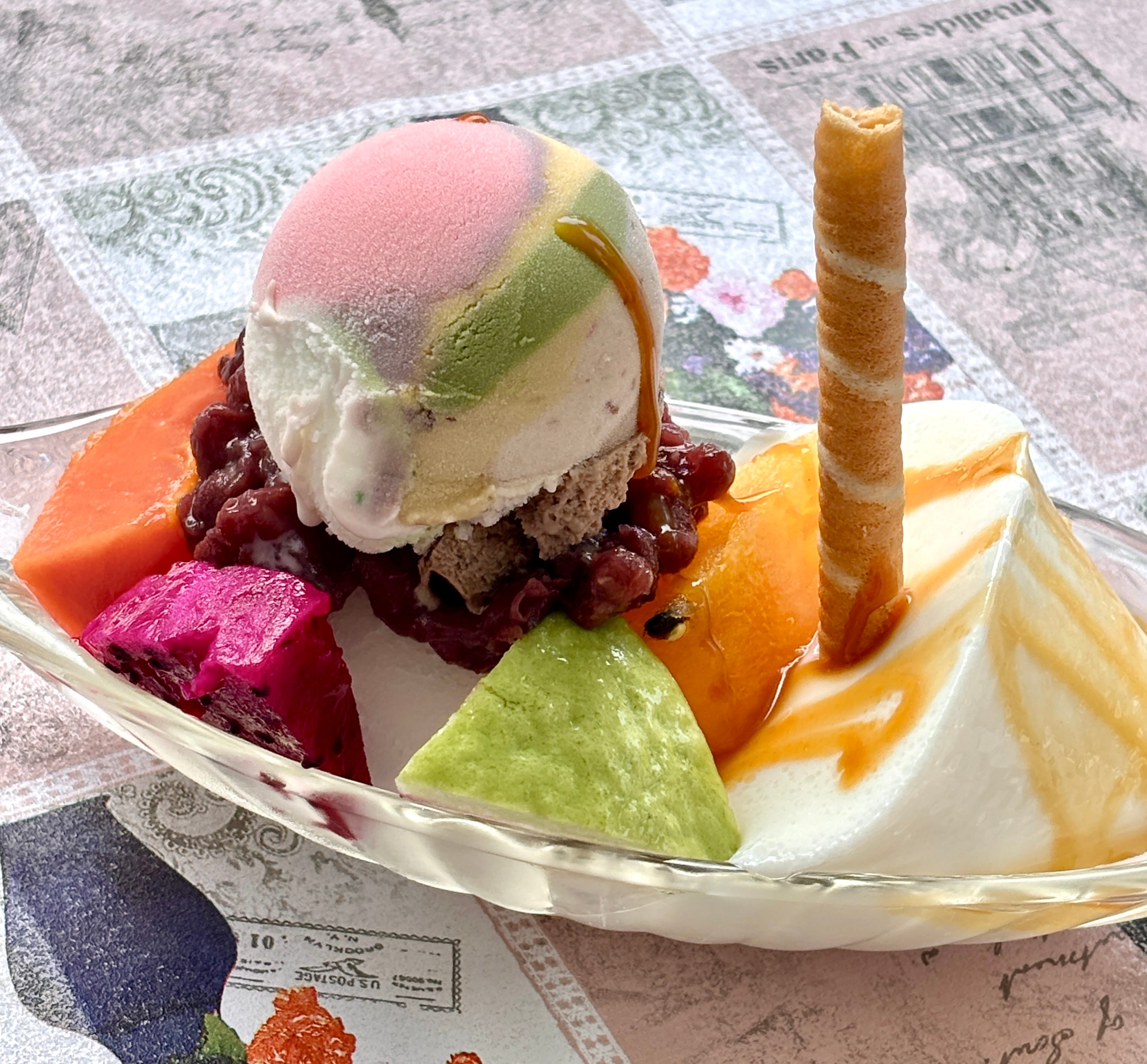
Finally there was dessert (again), and at my request, we went for ice cream.

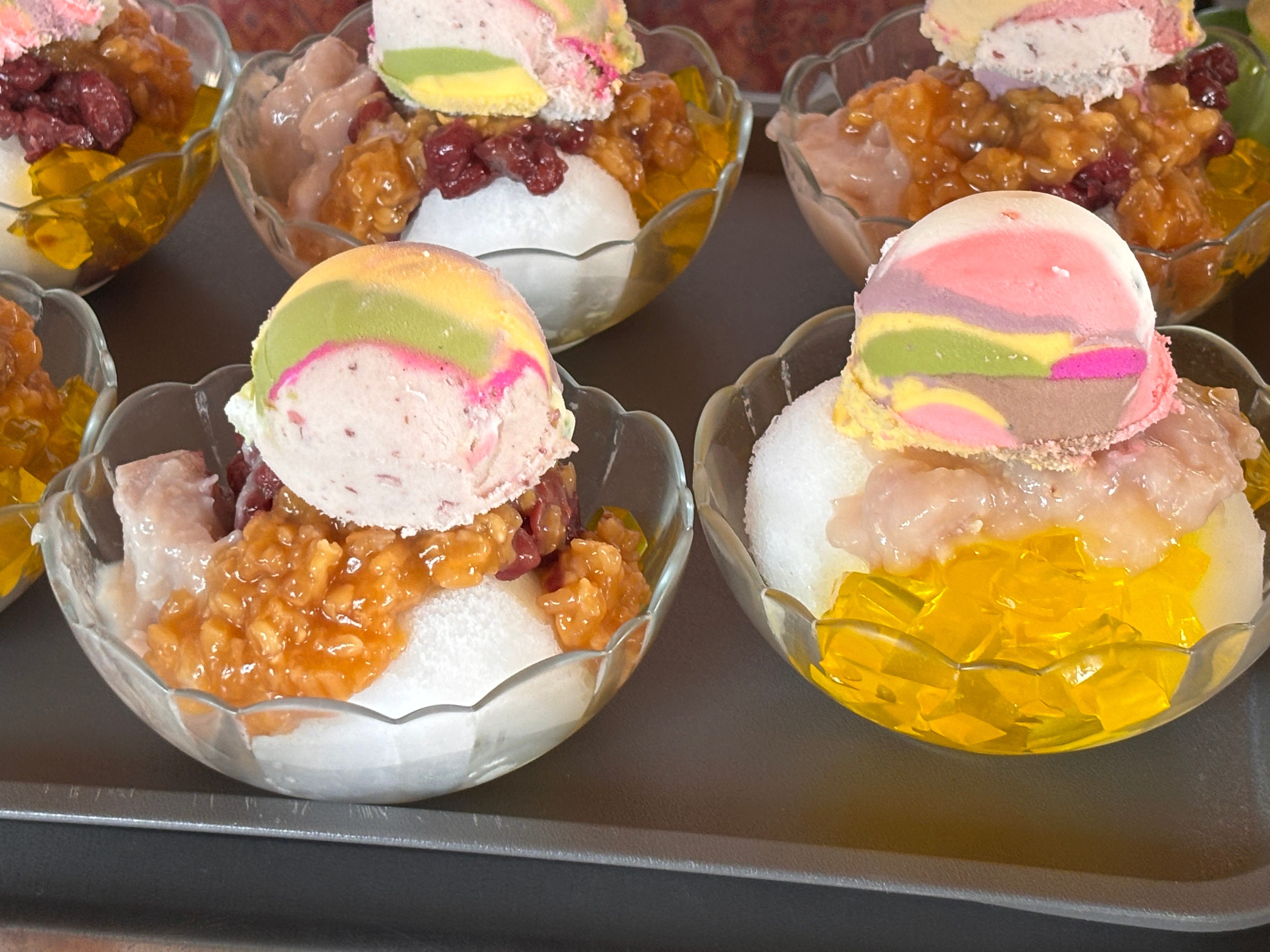
The menus were all in Chinese (or maybe they were in Hakkanese, the local language?) and while I used Google Camera to do some translating, my friend's cousin took control of the order, and I was glad that she did. She obviously knew what she was doing, and while I suggested we get a few to share, everyone wanted one of their own, customized the way they liked it, with various jellies and candied beans spooned on top and around the rainbow scoops.

I also asked if we could add an almond jelly, which I like a lot. It came served with dragon fruit, papaya, and whole guava (the green chunk, whose skin you eat), with an extra dollop of candied red beans (which I also like a lot) under the ice cream.

Share David Lebovitz Newsletter

The morning we left Kaohsiung, I planned to stop at Xing Long Ju for Taiwanese breakfast. In France, breakfast isn’t a big thing, and going “out” for breakfast means a café express and perhaps a croissant, standing at the bar in a café. Taiwanese people seem to love to eat, which they do at all hours of the day. Meal times here aren’t strictly defined as they are in France, and if you’re hungry and feel like eating, you eat.

Taiwanese breakfasts include things like cha siu bao (warm steamed BBQ pork buns), eggy pancakes, fan tuan (sticky rice rolls wrapped around crispy crullers, sometimes with meat), and dumplings. Almost over my jet lag, I woke up at 5am and was ready to head over there. Xing Long Ju opens at 4:30am, and just as I was about to head out, I did a quick search to confirm the address and saw they were closed on Tuesday. Zut!

Oh, well. You can’t do and see, and eat, everything — but when I get to Taipei, I hope to have a Taiwanese breakfast, no matter what time it is. Just as long as they’re open.

Leave a comment

A while back, I made some videos of my friend Trigg Brown making Taiwanese-style breakfast items in his kitchen. You can watch them in this post here…

Received — 17 March 2026 David Lebovitz Newsletter

Working in Restaurants

17 March 2026 at 16:20
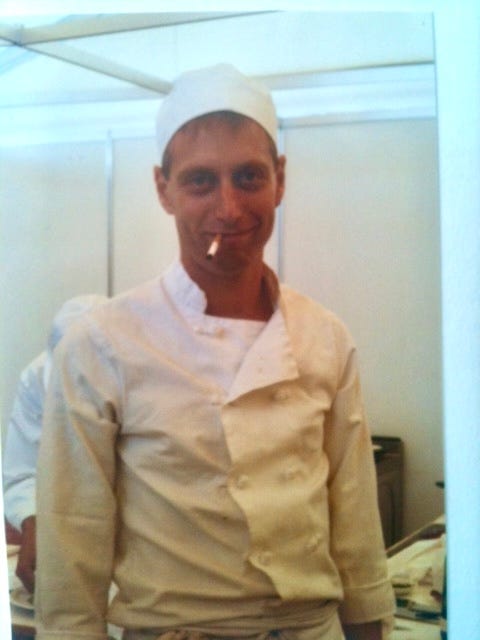
Pretending to be French, before I actually became French.

The food world has been ablaze accusations made by former employees of Noma restaurant in Copenhagen against chef René Redzepi, who is “stepping away” from his position leading the restaurant. Many of us had heard about them for nearly a decade, and while some people have been saying that if the employees were so disgruntled, they should have said something, anyone who’s been bullied, or seen someone being bullied, knows that if you don’t keep your mouth shut, you may be next.

Read more

Received — 11 March 2026 David Lebovitz Newsletter
Received — 10 March 2026 David Lebovitz Newsletter

A Visit to Bernard Antony, the Master of Ripening French Cheese

10 March 2026 at 08:56

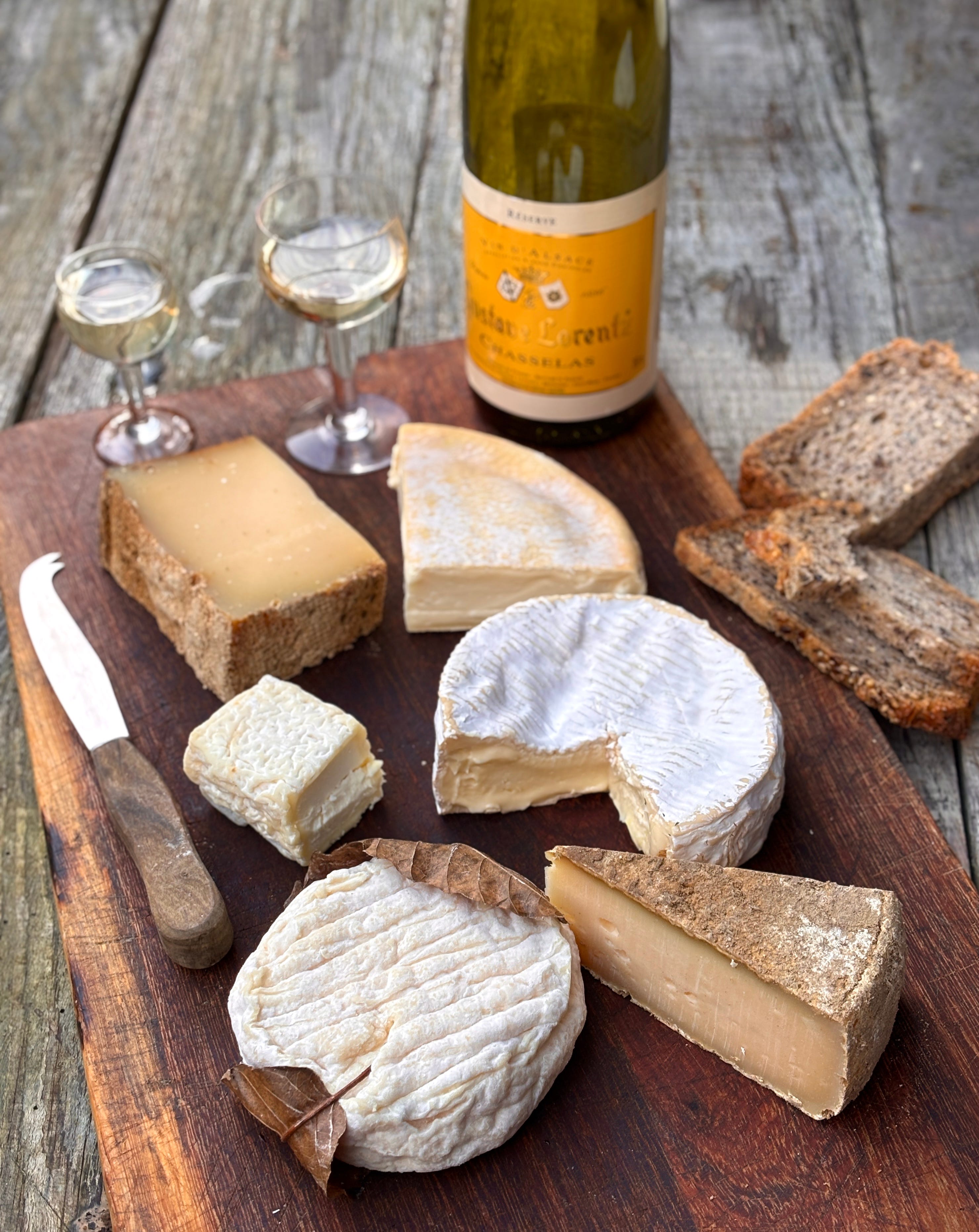
I couldn’t resist bringing home all these cheeses. Could you?

When I moved to France and was doing food tours, at some point, a guest would inevitably ask, “Why did you move to France?” while we were in front of a bakery or a cheese shop. I wouldn’t say anything (which was unusual for me) but would just point at the magnificent pastries or cheeses in the window, and they’d get the message.

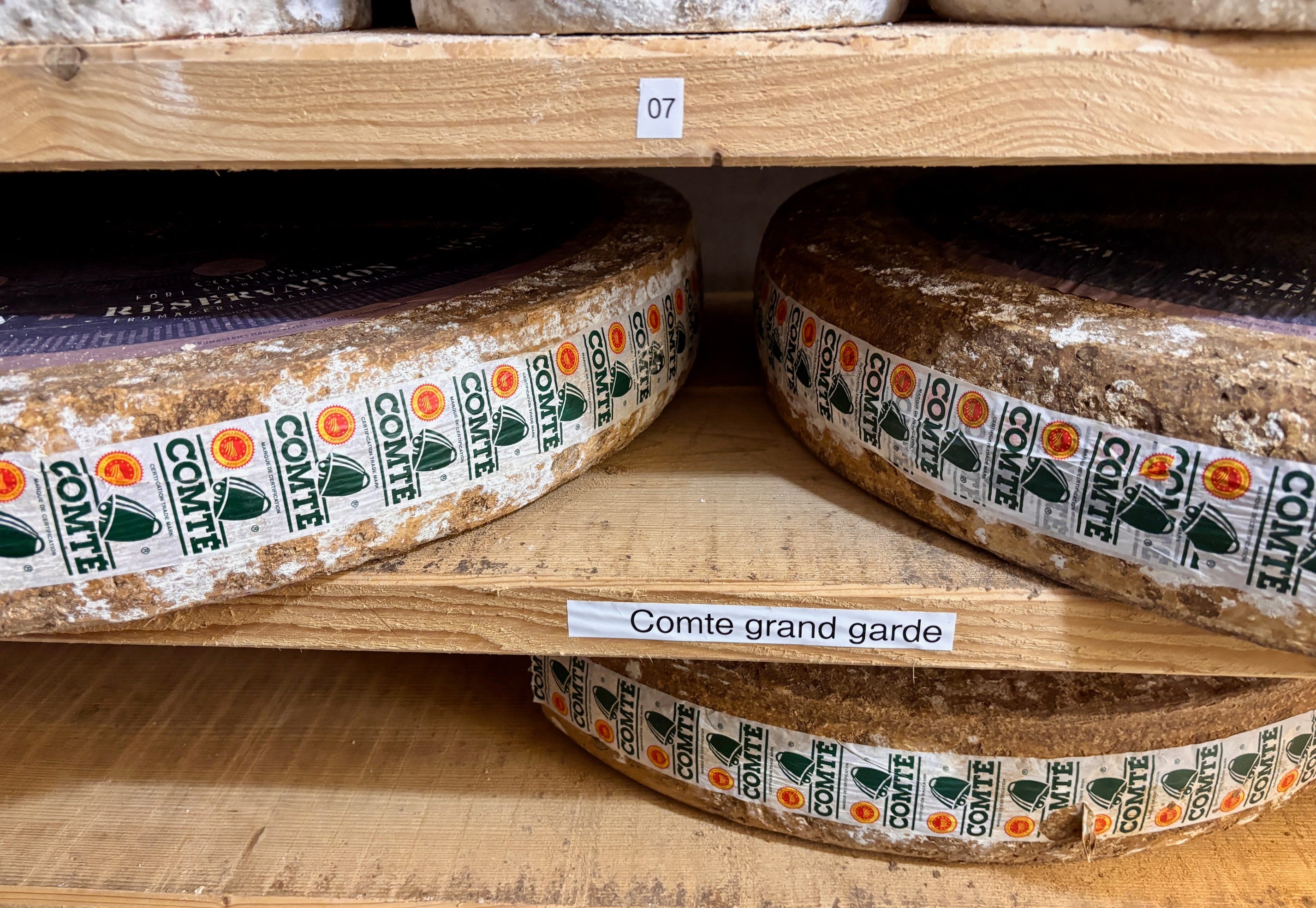
Also, nearly twenty years ago, during that same time in France, I was at a restaurant in the Champagne region and before dessert, was offered a plate of cheese that I still remember to this day. It was a Comté, aged for four years. The nutty, raw milk mountain cheese made in the French Alps is normally aged between 8 and 24 months. The longer a cheese is aged, the harder, drier, saltier, and sharper the cheese becomes, as it loses moisture.

When I visited the region, the fellows who made the cheeses told me they preferred the younger Comtés; they are smoother (doux) and milkier-tasting, which gave me a greater appreciation for younger cheeses, although I do like the concentrated flavors in a well-aged cheese.

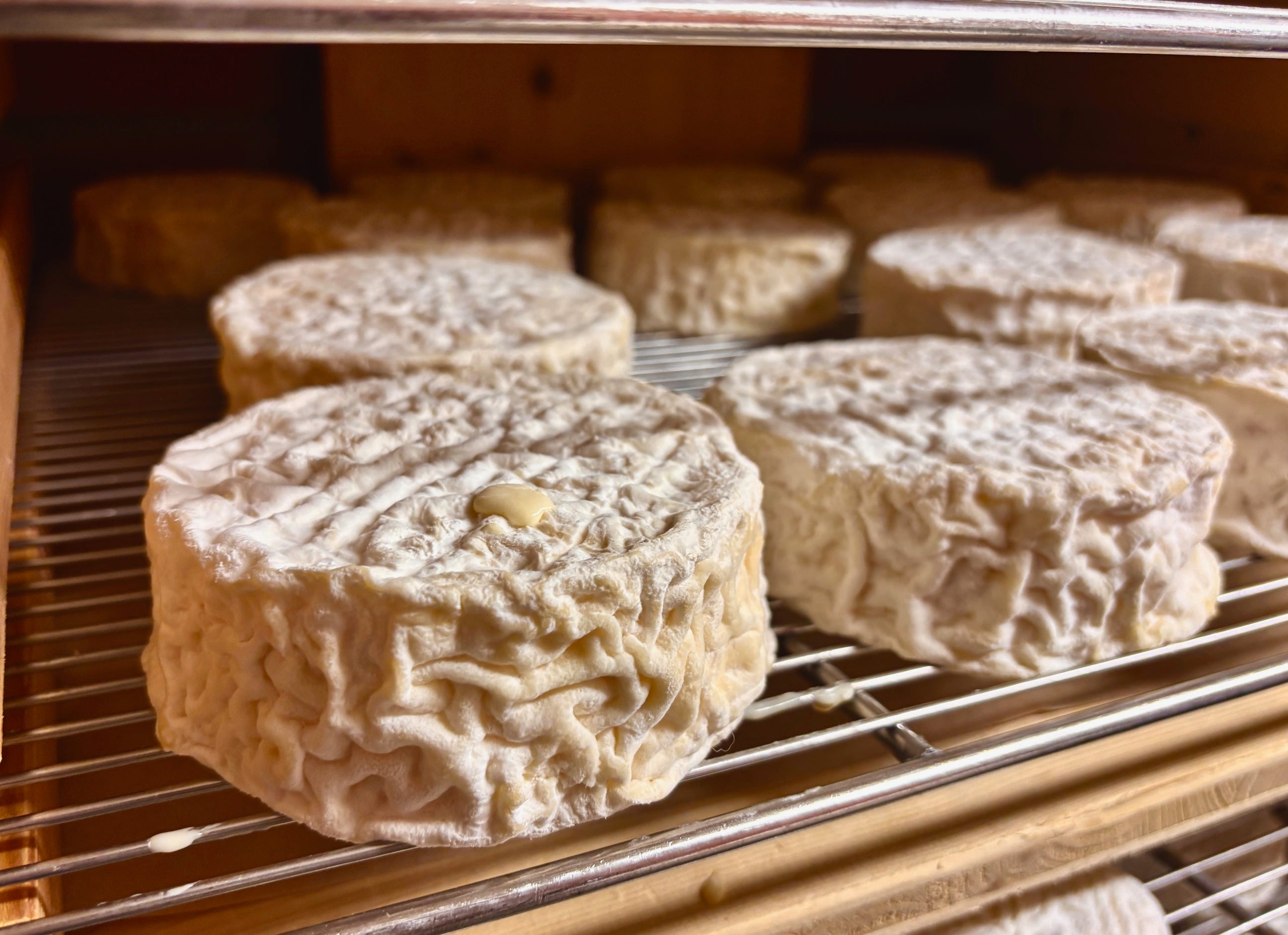
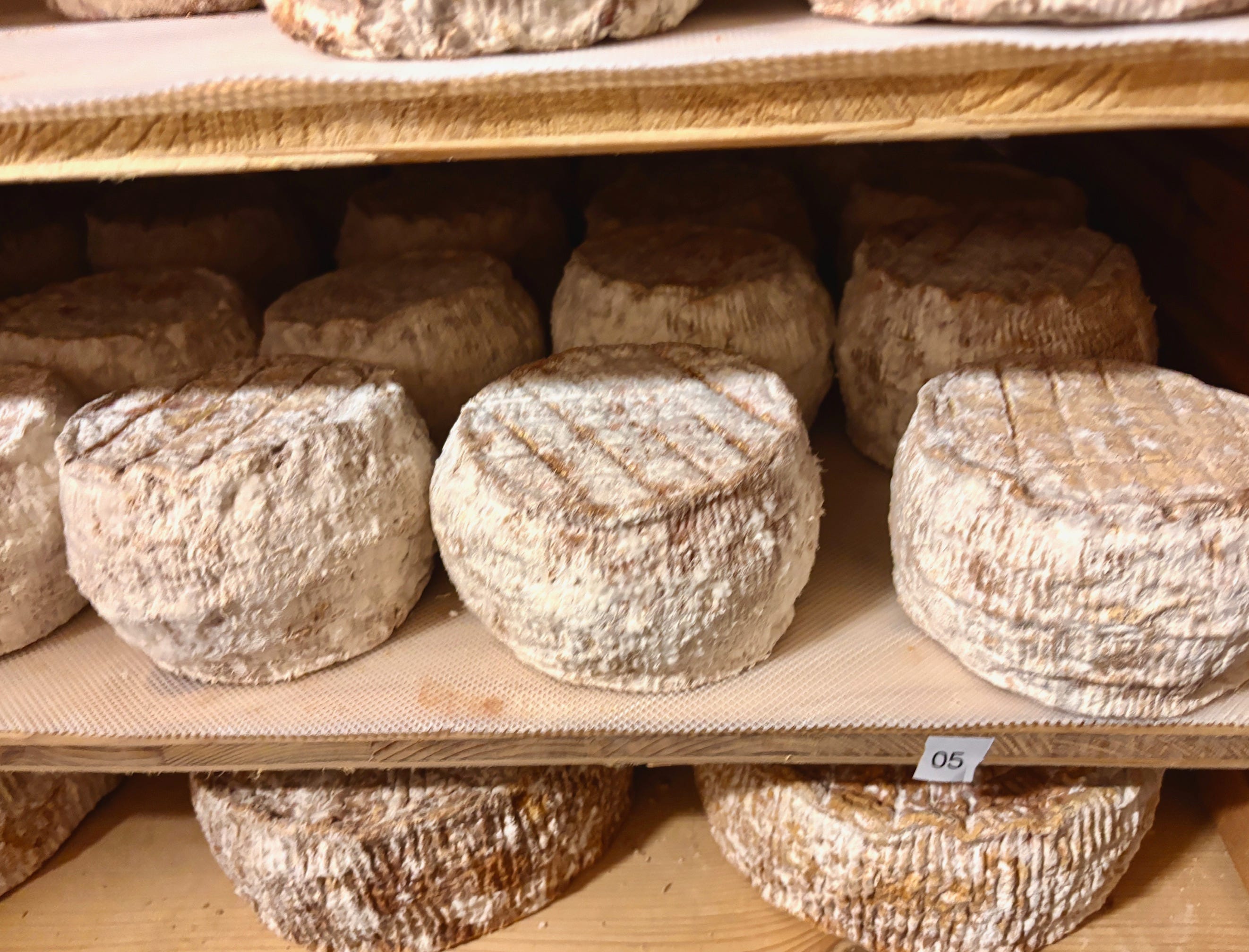
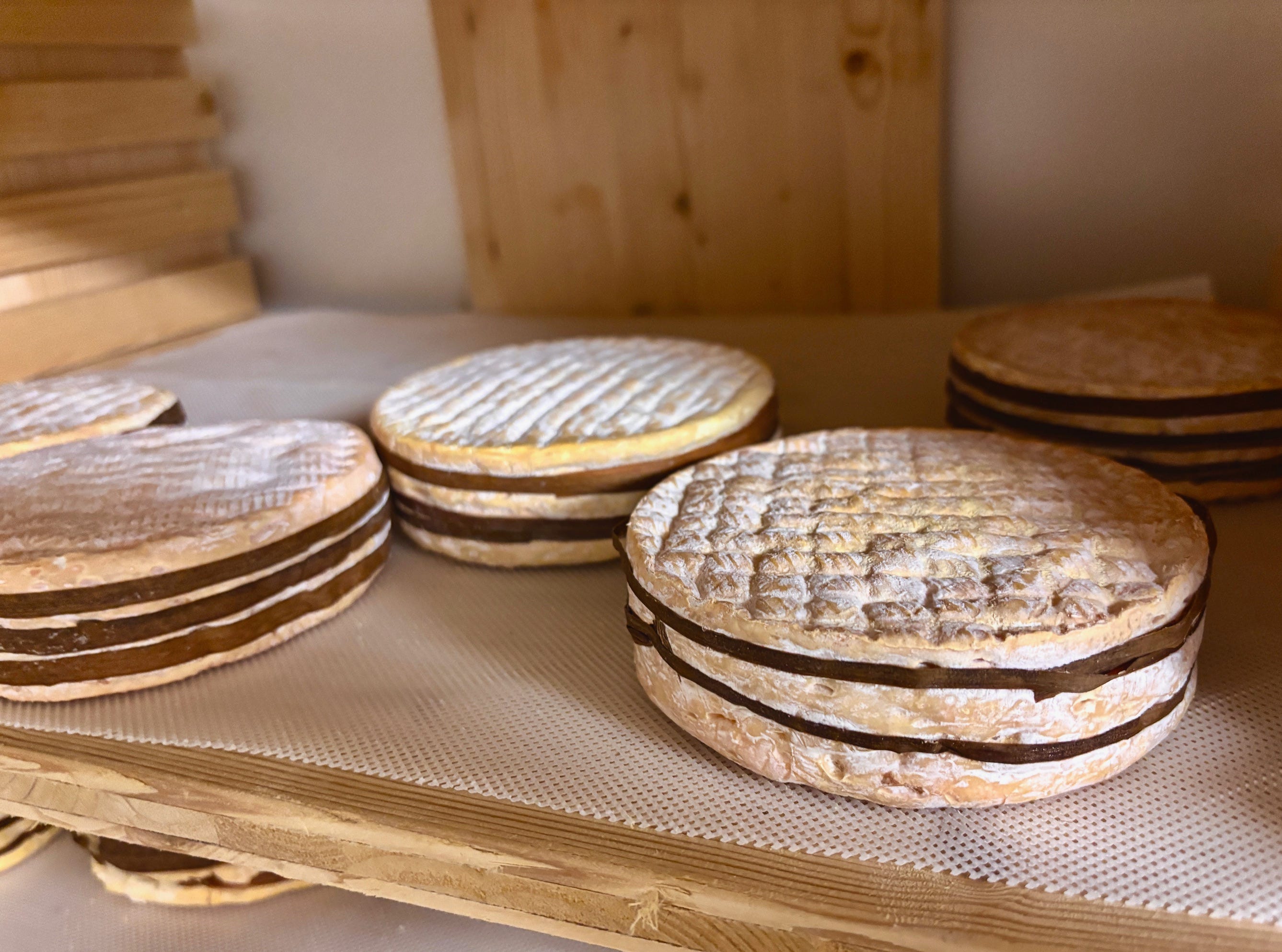
Camemberts de Normandie, one of France’s greatest cheeses.

As the years passed, I couldn’t stop thinking about the four-year-old Comté that was presented to me after dinner, served as lamelles, thin wisps stacked on a plate. The medium-dry shards of cheese, with notes of hazelnuts and grass, had little crackly bits in them and were a revelation.

Making Comté Cheese

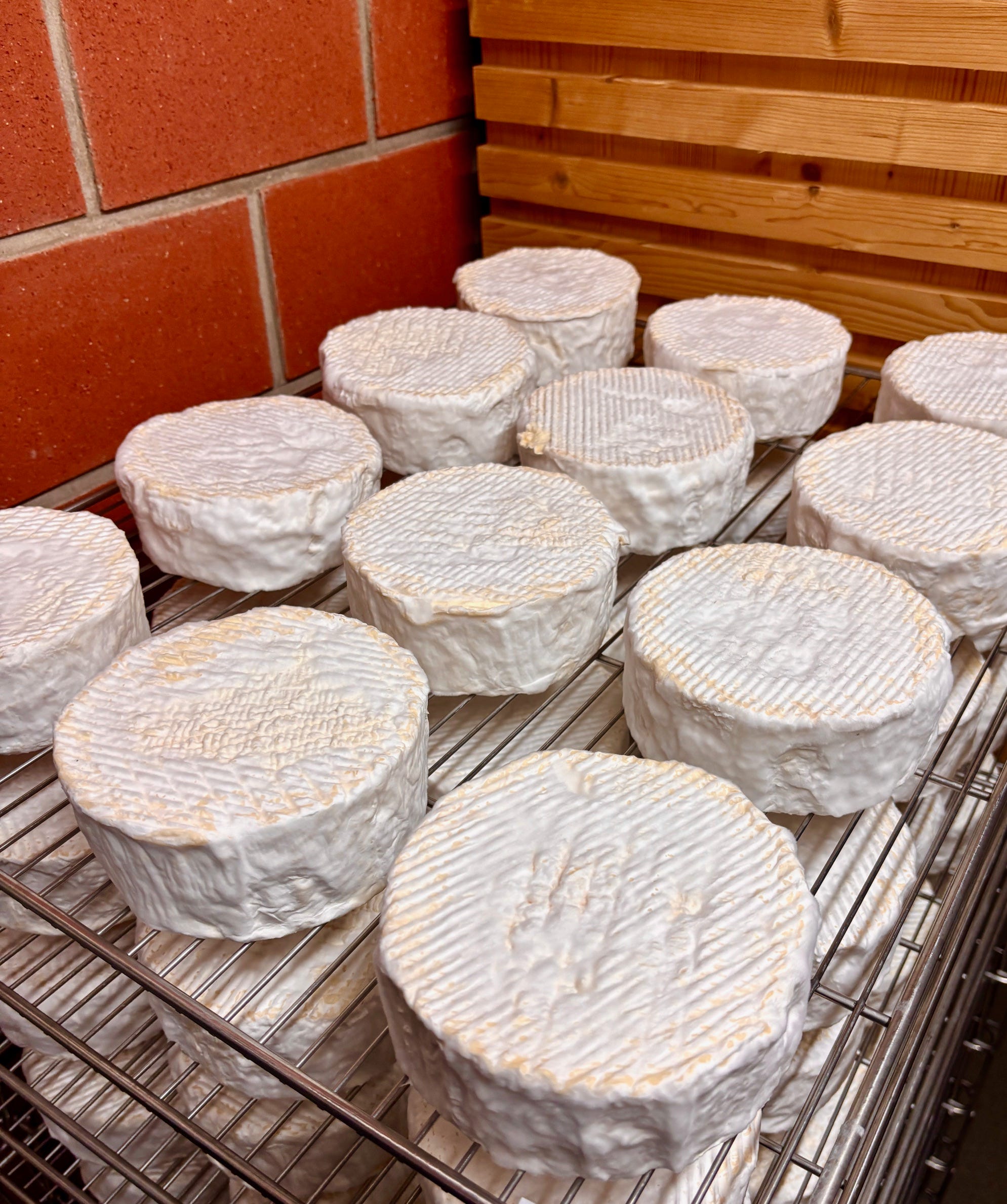
Perfectly ripened Camemberts de Normandie.

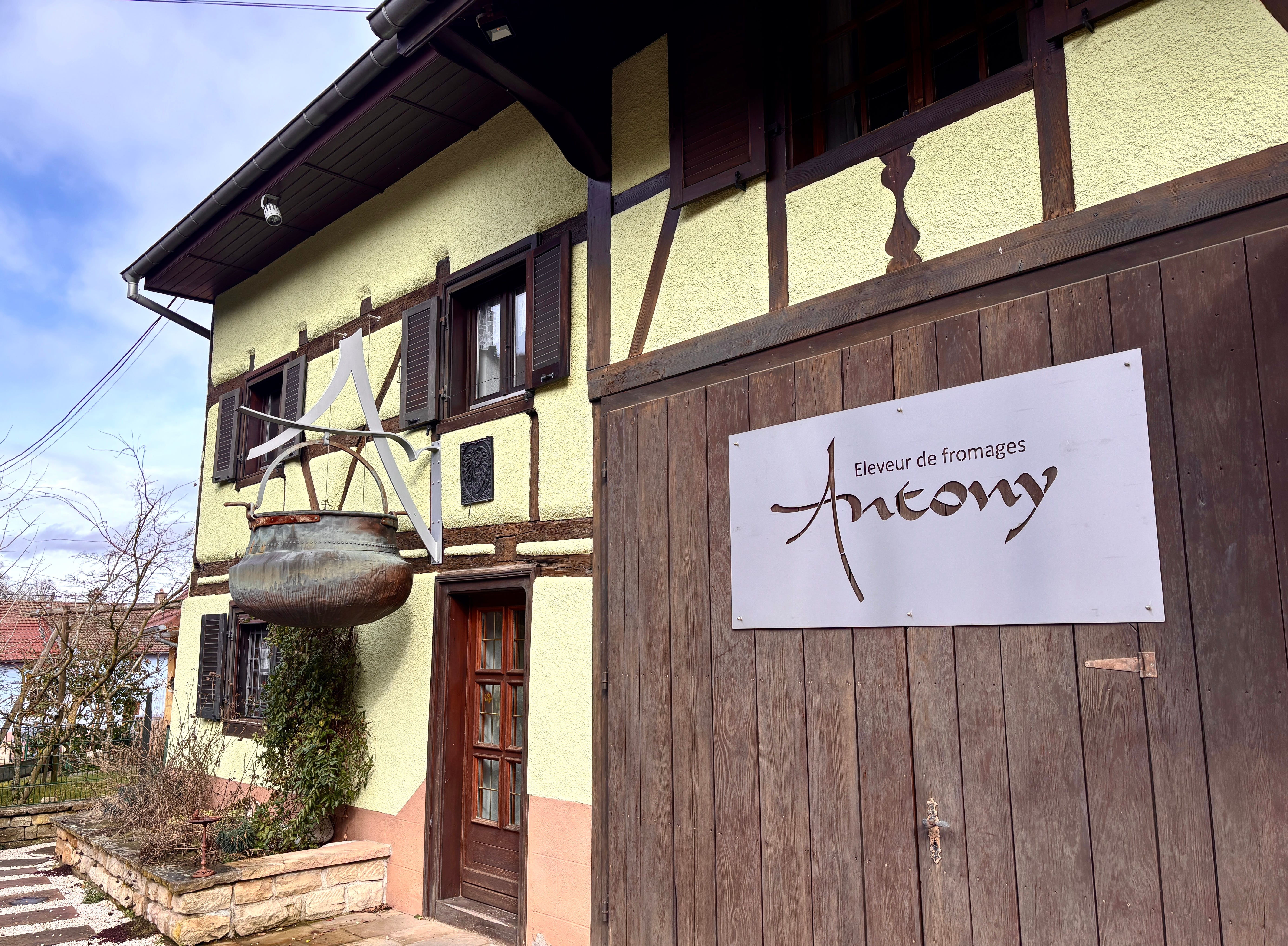
I was told that the amazing cheese was from an affineur (cheese ripener) named Bernard Antony, who was located in the small village of Vieux-Ferrette, in Alsace. As proof that good things come to those who wait, when an invitation arrived last month to visit his ripening caves and shop, it was a dream come true.

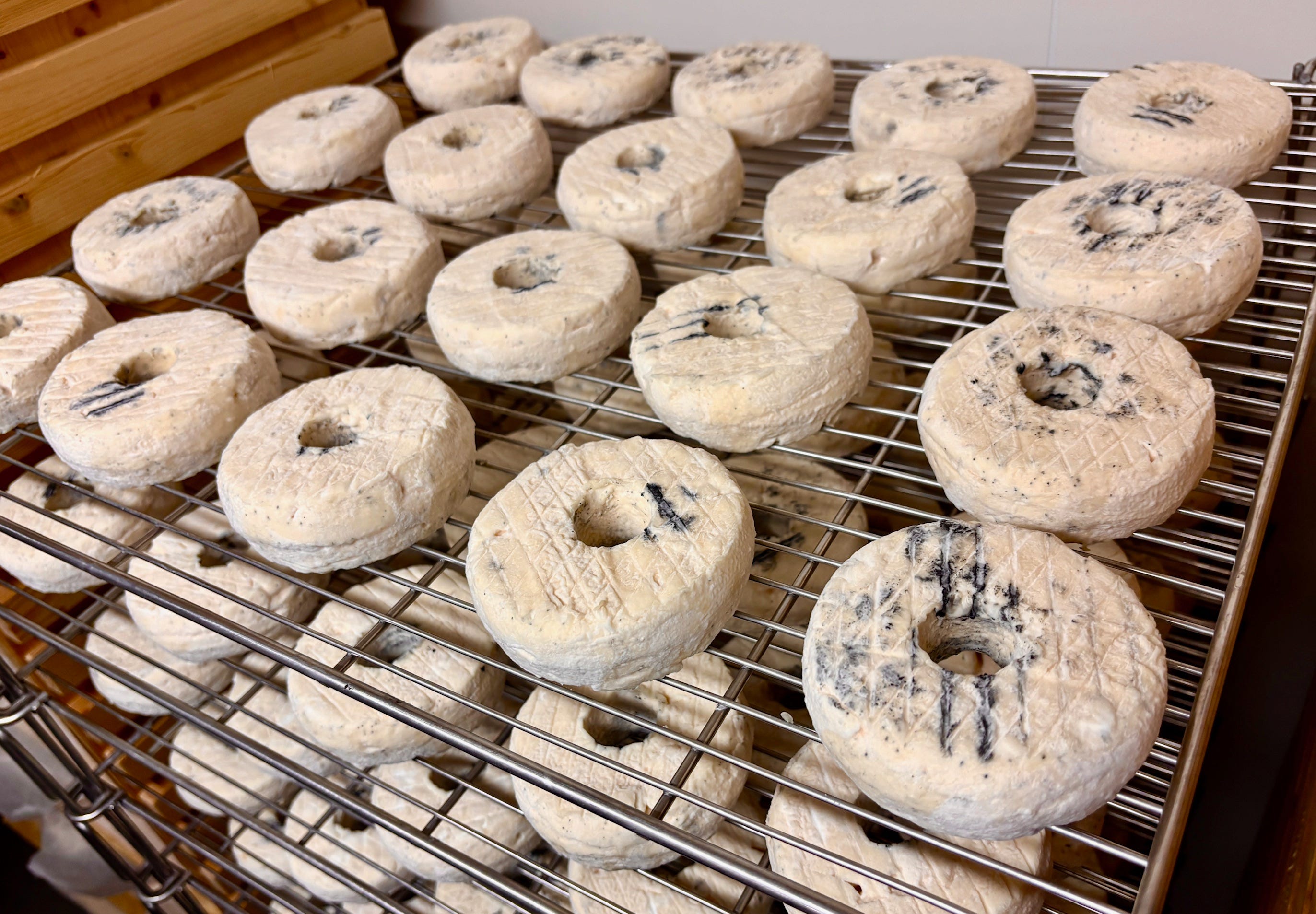
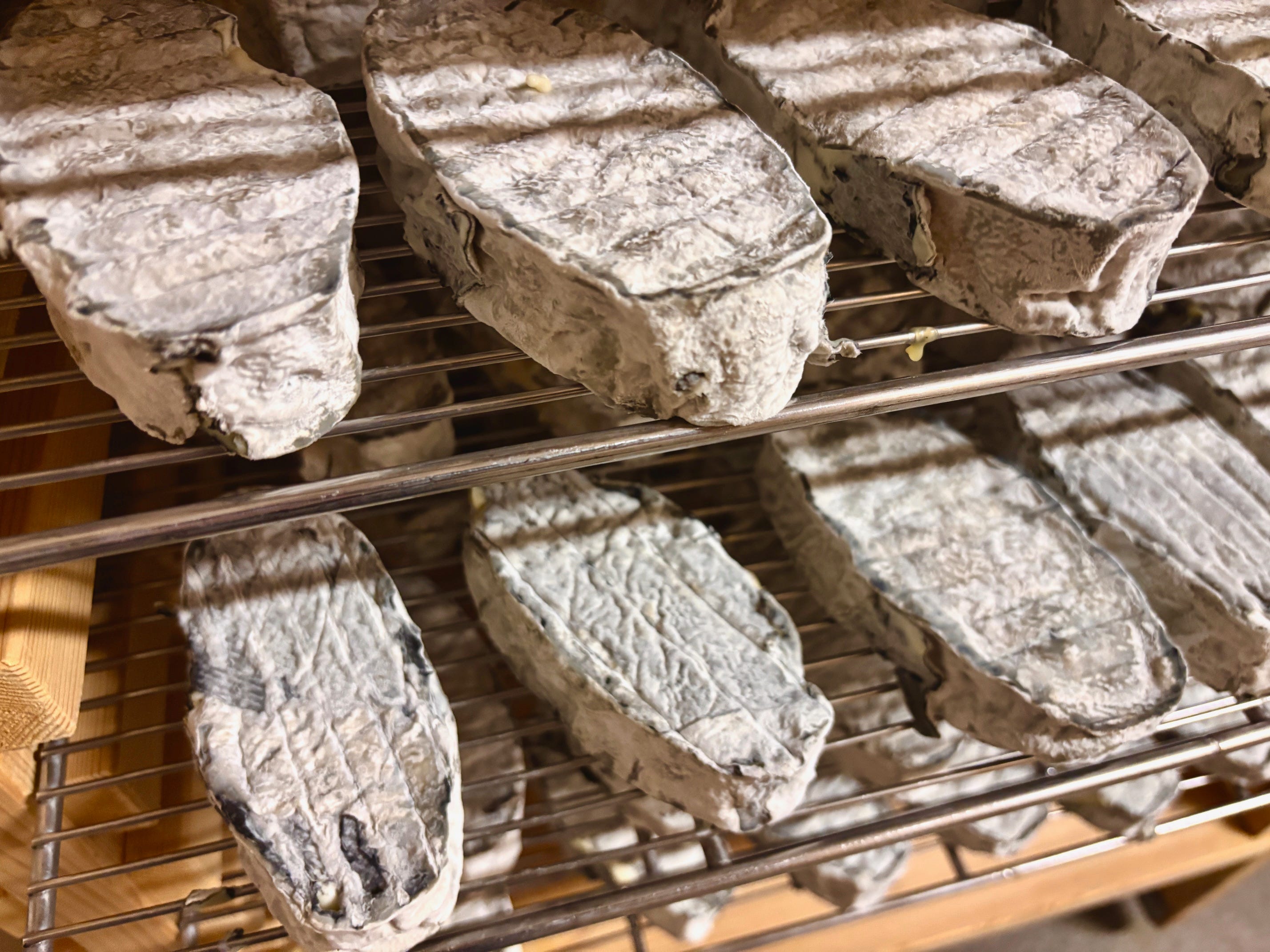
Brin d’Amour cheeses ripening.

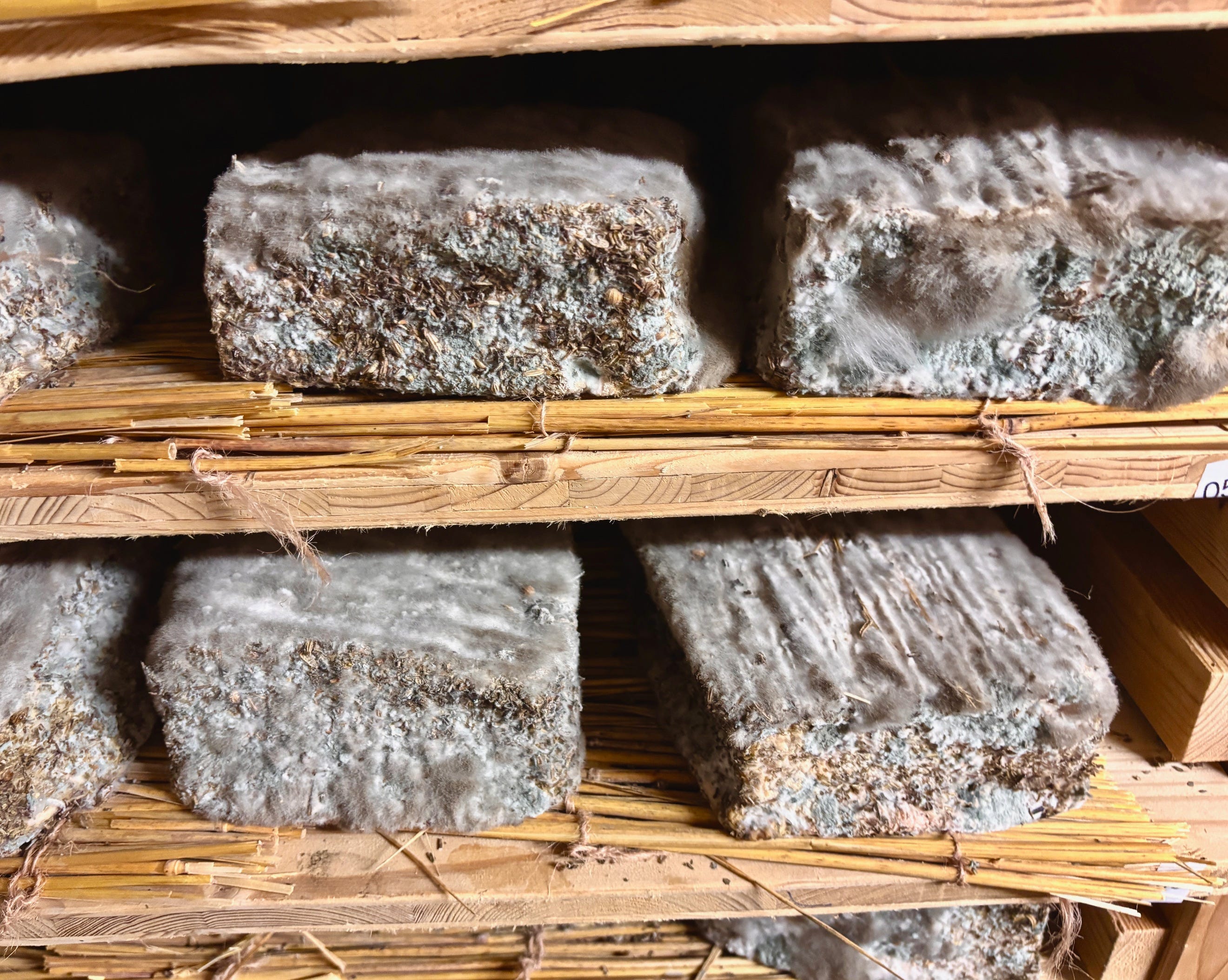
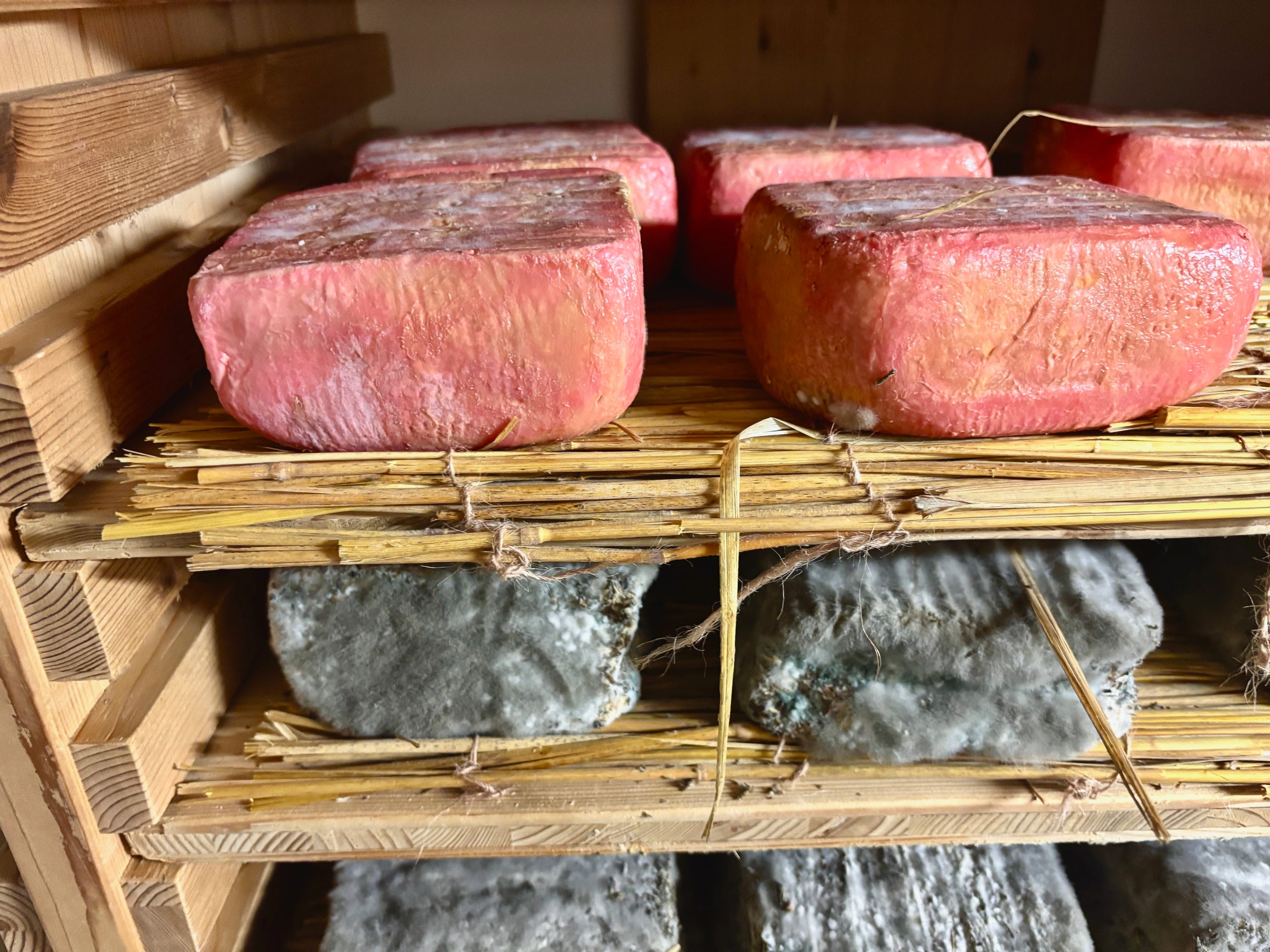
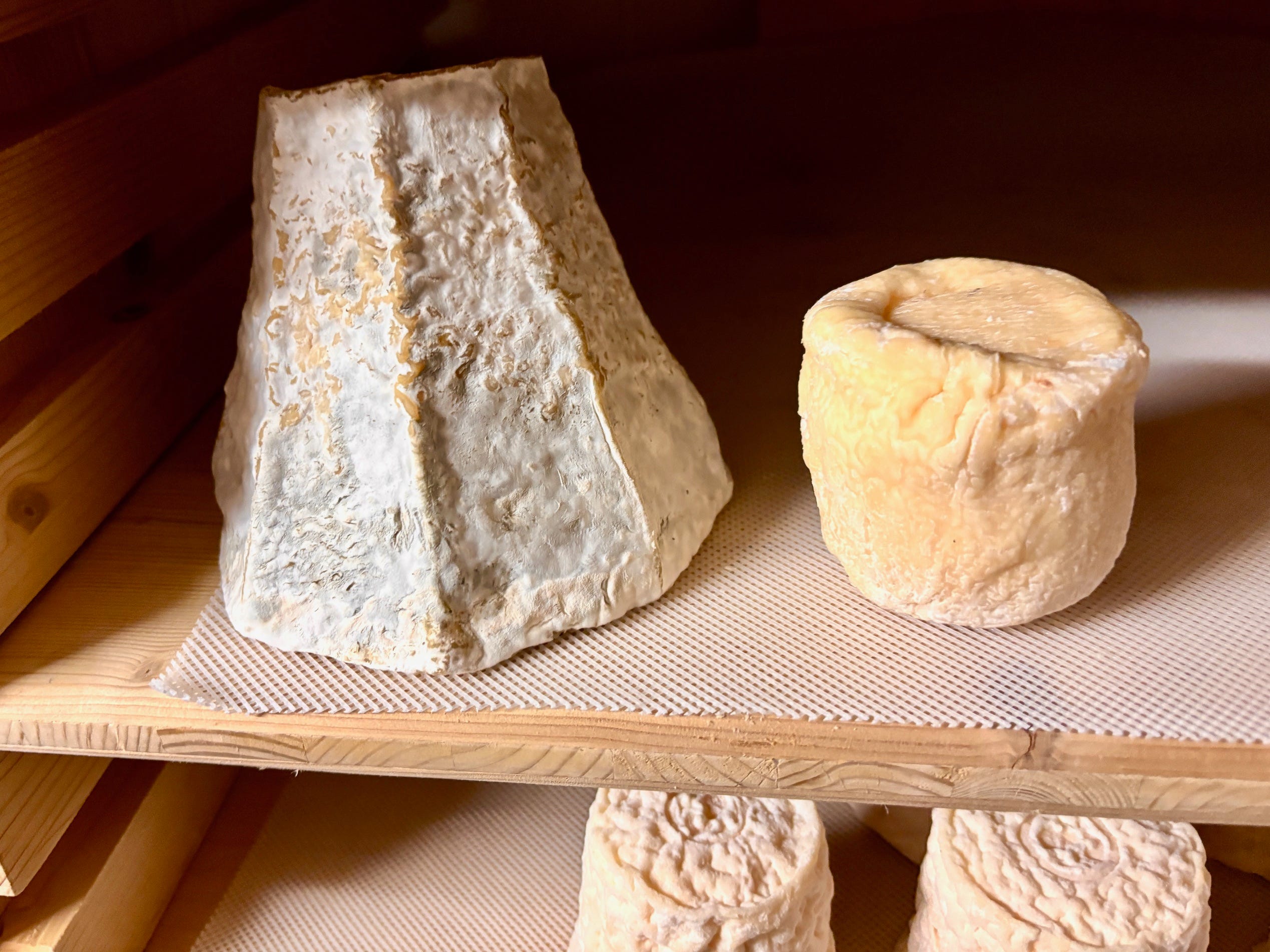
Cheese shops (fromageries) do their best to store cheese under proper conditions; some cheesemakers send their cheeses to affineurs, whose specialty is carefully ripening unfinished cheeses. They know exactly how each cheese needs to be treated, from the correct temperature and humidity levels in the caves, to what to brush or rub on the outside of the cheeses as they are ripening, and when.

As luck would have it, I was invited to join a small group of people: Chef Christophe Saintagne and sommelier Fabrice Langlois of Ducasse Baccarat restaurant, as well as Fabrice Gepner, aka, Le Cheese Geek.

At Antony, they call themselves “éleveurs,” people who “raise” cheese.

I woke up at the bleary hour of 5:45am to get to the station and leave Paris on the 7:20am train, arriving to meet Bernard Antony by late morning.

https://www.davidlebovitz.com/book/the-great-book-of-chocolate/

Pre-order The Great Book of Chocolate!

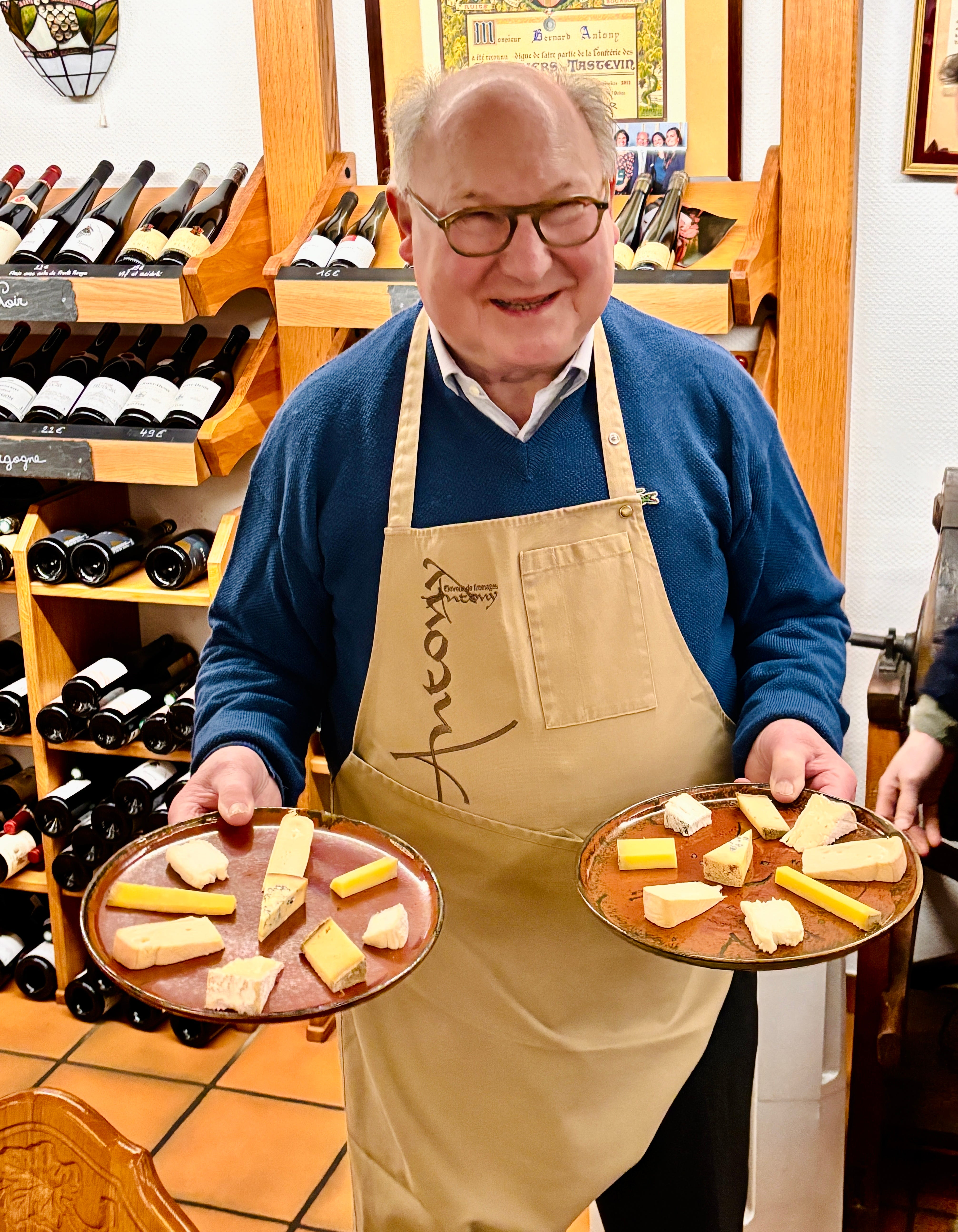
The jovial Monsieur Antony grew up in a family of farmers and started ripening cheeses in 1981 at his family farm, which is now his well-known shop and ripening caves.

This is still a local, family-owned business, and Monsieur Antony tends his six cheese cellars along with his son, Jean-François.

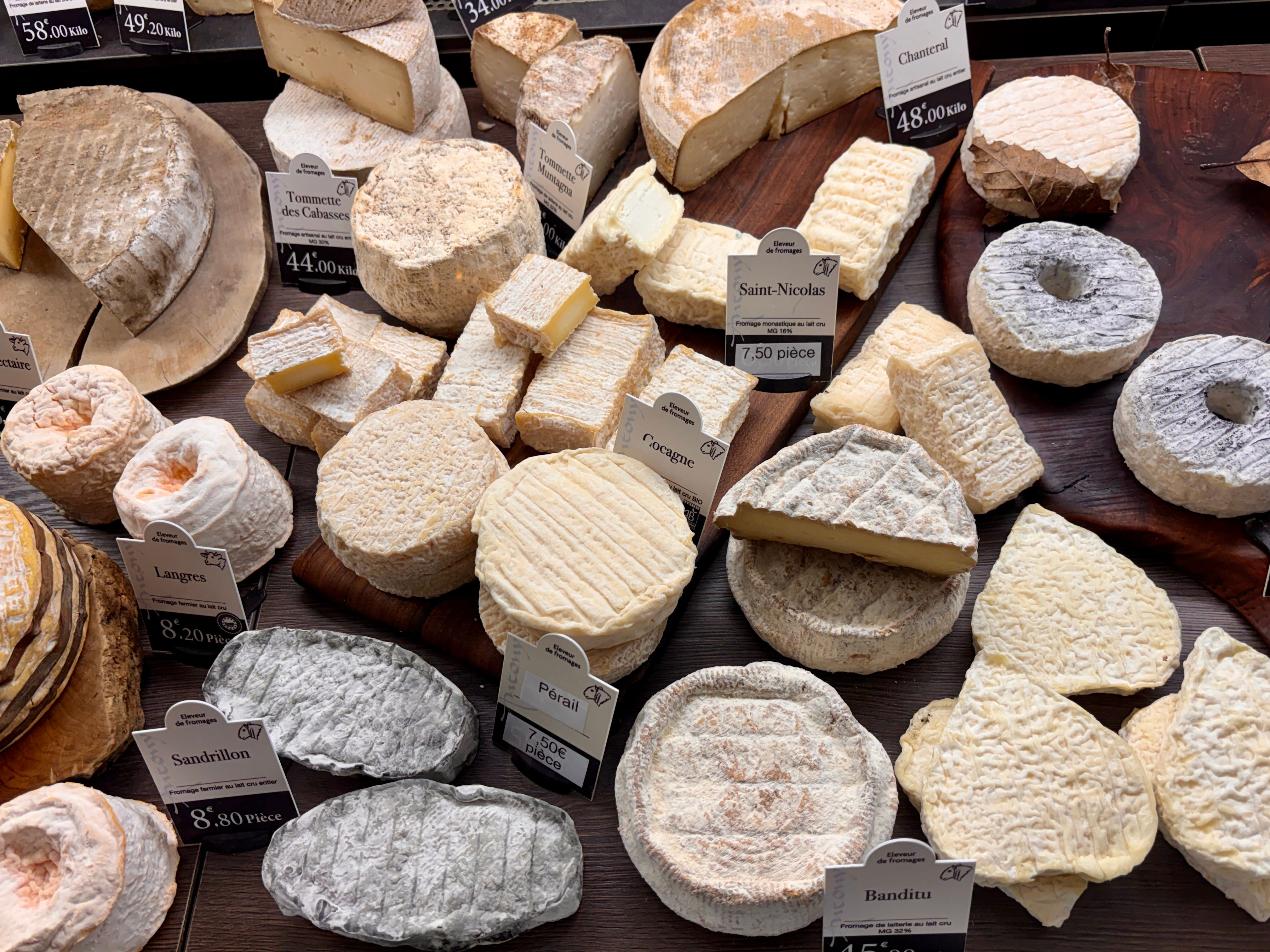
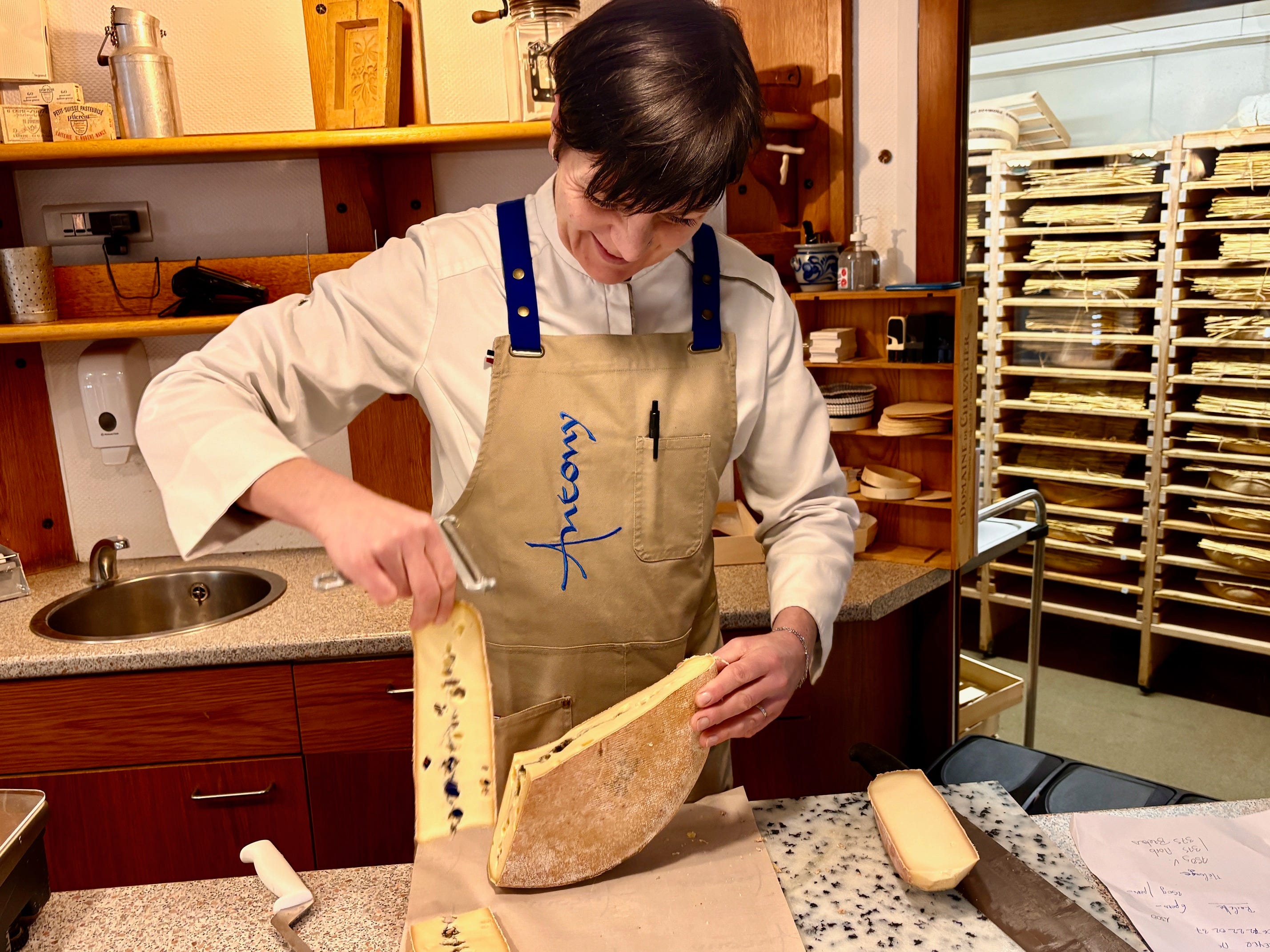
The shop was in full swing with cheesemongers talking to customers, helping them select the right cheeses, then carefully wrapping each one up to take home. The showcase was filled with spectacular cheeses. There were quite a few that I’d never seen before and was happy to try.

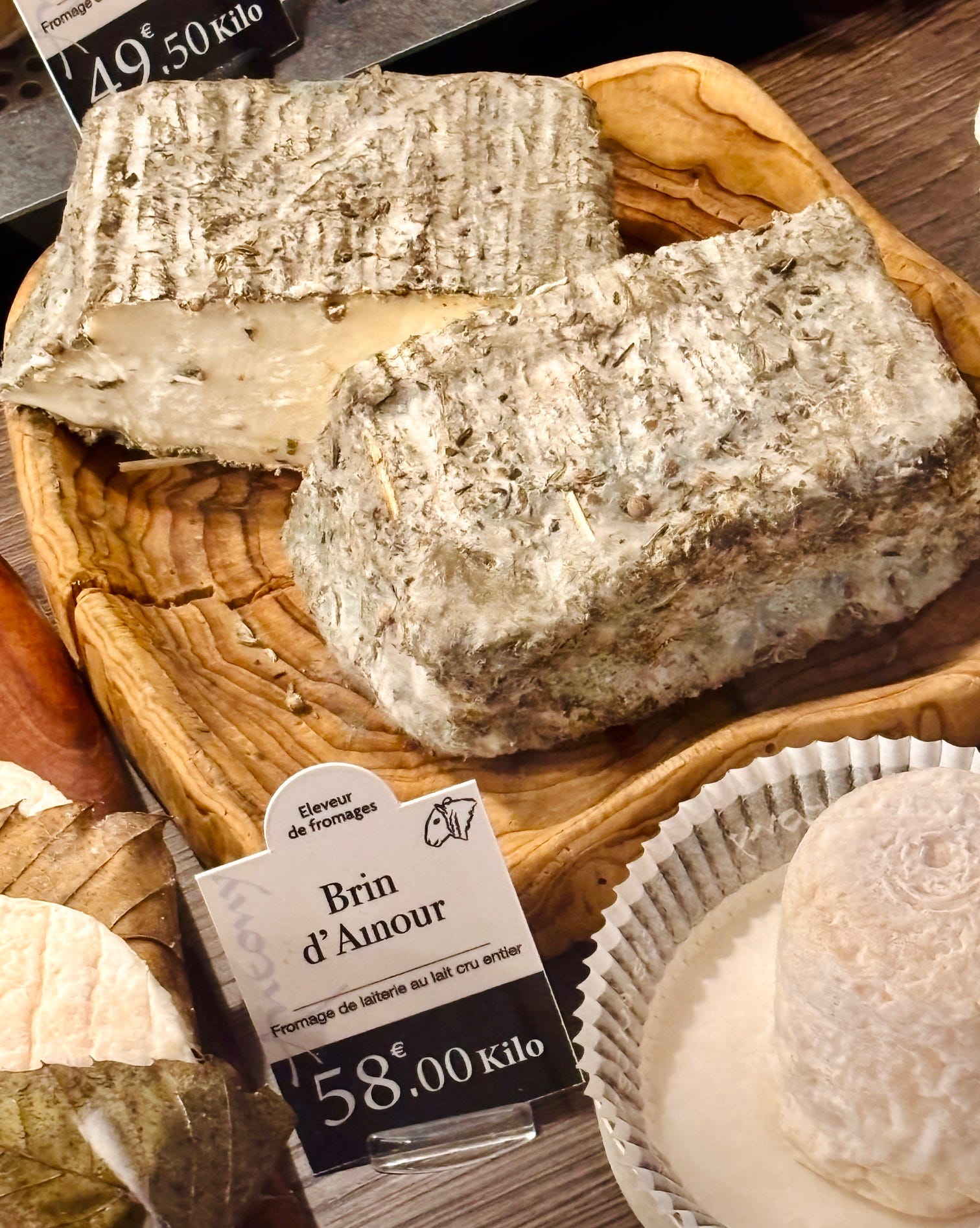
There were others that were familiar to me, such as the Brin d’Amour (below), that look quite different (and a lot better) than the ones I was used to.

Thanks for reading my Newsletter! This post is public so feel free to share it!

Share

Slicing Morbier for a customer.

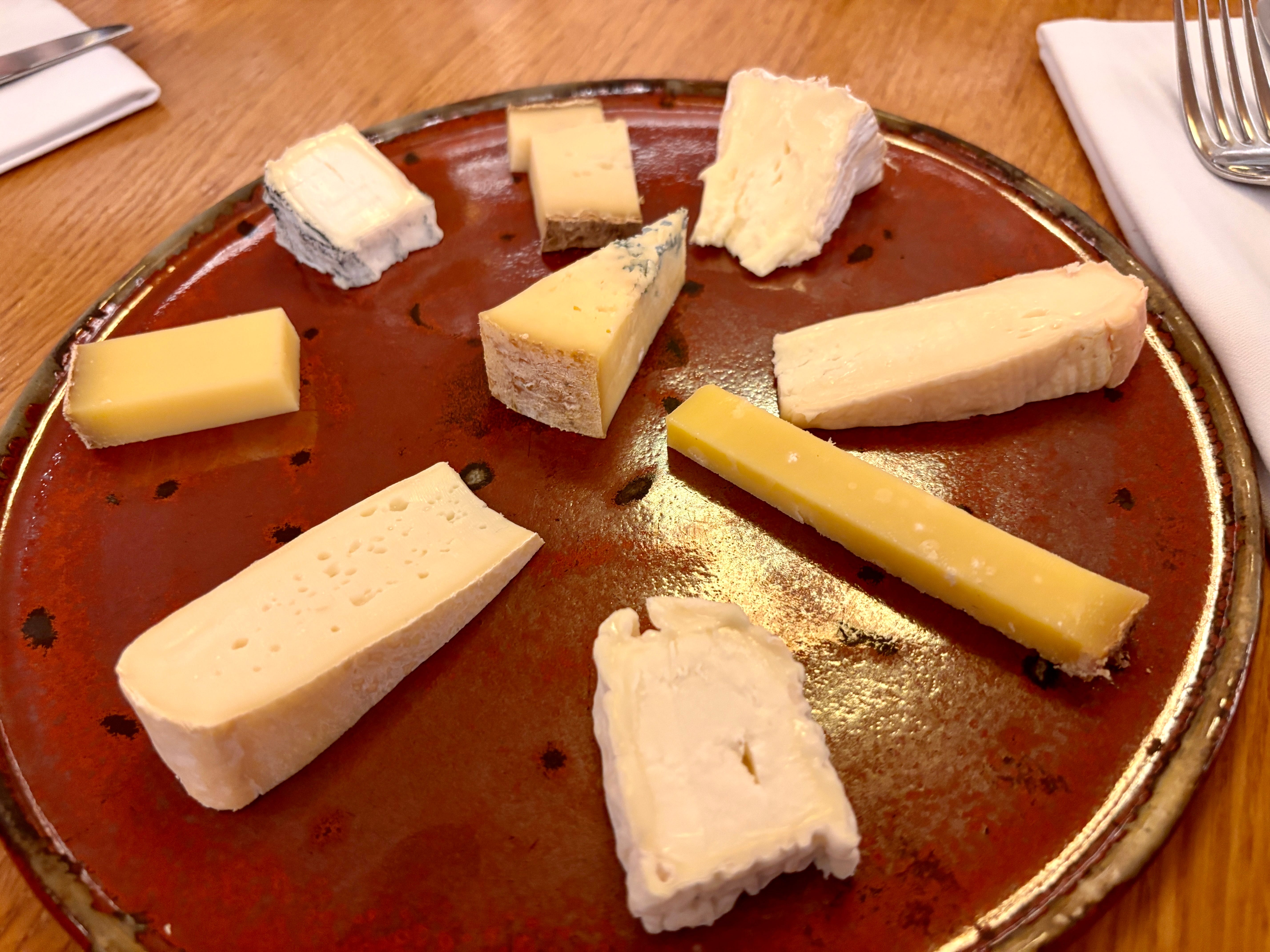
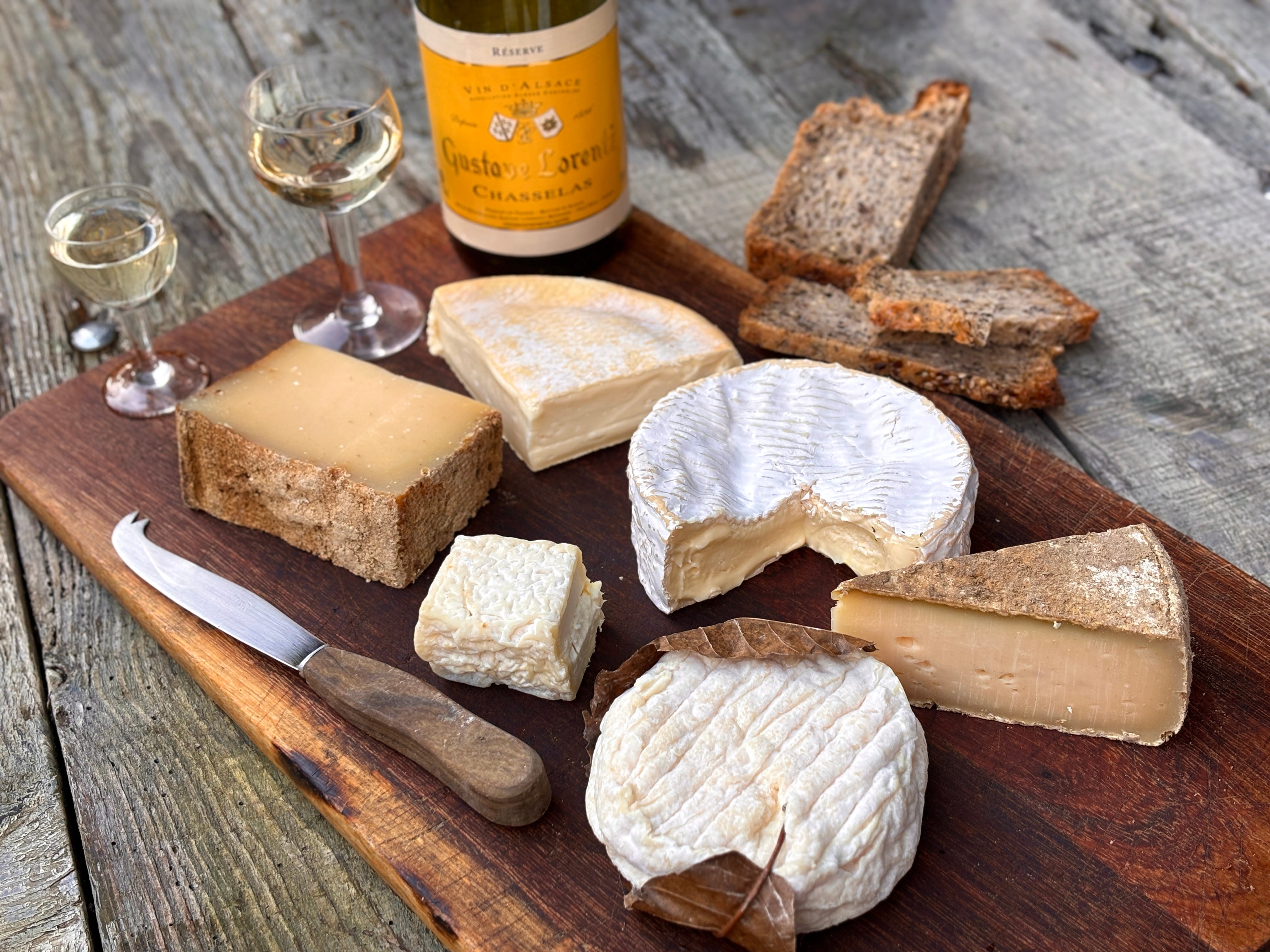
After I put my dropped jaw back into place, we were led toward a tasting room, where we were presented with a roundup of perfectly ripened cheese, ready for our dégustation.

The cheese at the bottom was Saint-Nicolas, a partially aged cheese that had a delectably creamy tang due to the sheep’s milk used to make the cheese. The one next to it, with the rounded edges to its left, was an Abbaye de Cîteaux. Sometimes these kinds of washed rind cheeses can be rubbery, like Morbier can be, so I generally avoid them. But this was the most surprising cheese on the plate and was even better than perfect. It was divine.

Moving on to the next one, the small block of golden yellow cheese was a twenty-month-old Comté Réserve. Comté is one of the most popular cheeses in France, and Jean-Francois (Monsieur Antony’s son) told us that, in his opinion, twenty months was the ideal age for Comté.

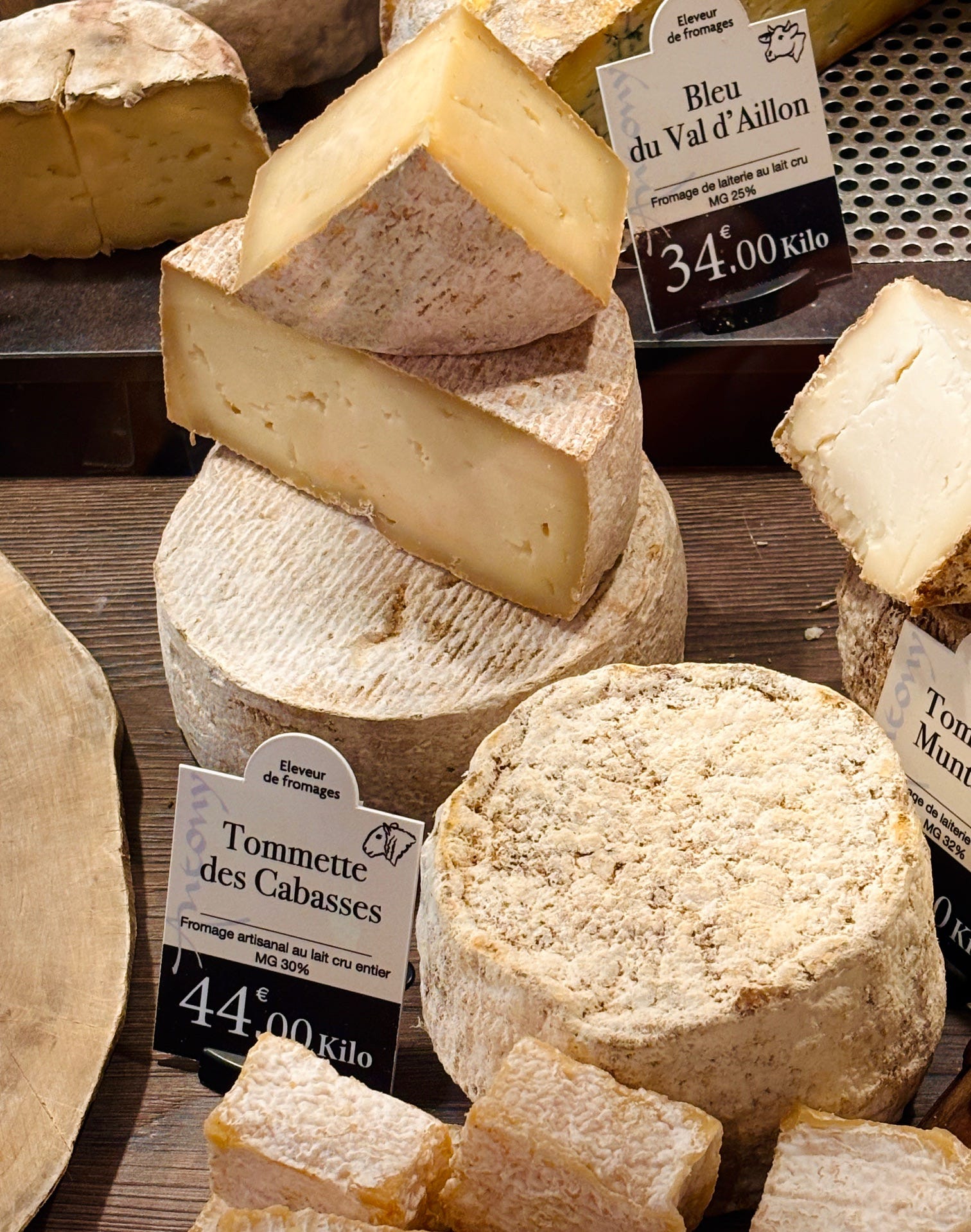
Another cheese was a Tomme de Savoie, a sort of catch-all term for a number of cheeses from the Savoie, that the Antony website says “doesn’t mean much anymore.” But like the Abbaye de Cîteaux, when you get a good version, you taste what the other tommes are missing. And this one was going on my mental list of cheeses to bring home.

Making Camembert de Normandie

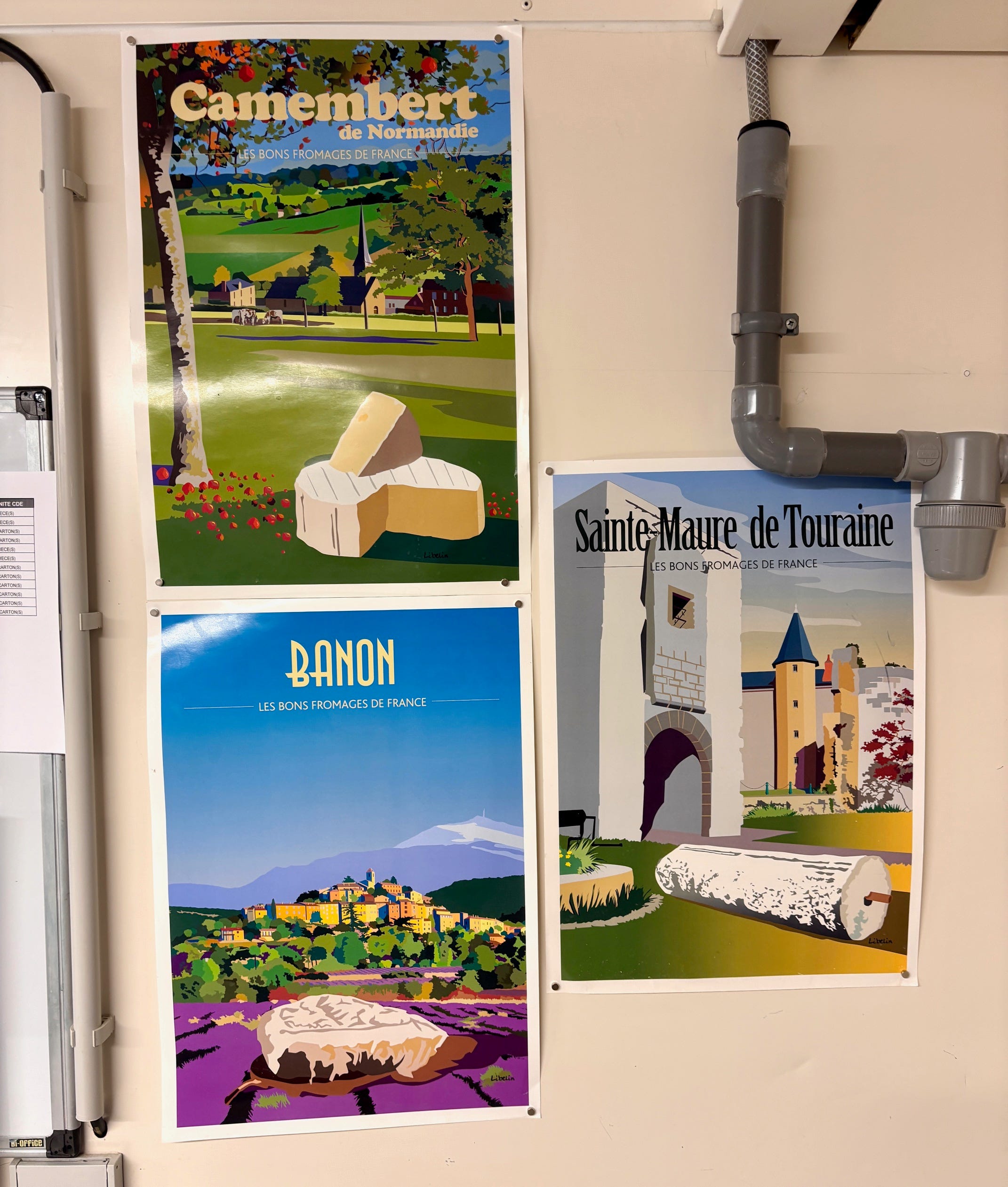
There was a small wedge of a truly remarkable Camembert de Normandie. Like “tomme,” the word camembert is applied to many cheeses that look like the real deal, but there are just a handful of producers left of Camembert de Normandie. Always look for “de Normandie” after the name if you want to get the real deal in France, made from raw milk and molded by hand.

Most Camemberts de Normandie are slightly musky and funky (in a good way), but this was a whole different category with powerful flavors of wild and dried mushrooms. It had an extra-strong creaminess thanks to the milk used to make the cheese, which comes from Normande cows, known for their especially high-quality milk.

I don’t buy Camembert too often since it’s so rich, and a good one starts oozing out shortly after you cut it - which is why they sell special boîtes to store ripe Camembert in. So when I do buy one, I get the best I can find. And while I thought bringing one home was a good idea, after it was gone two days later, I wish I’d bought at least a second one.

Because we were in Alsace, of course there was a slice of Muenster to taste. But I was still euphoric from that exceptional Camembert de Normandie and looking forward to the next cheese, the Comté I remembered from decades ago.

Yes, it was time to revisit the Comté Hors d’Age (Comté without age). They mentioned how aging this cheese up to 48 months can pose some challenges, namely a loss of moisture and higher salt content. Their knowledge of cheese ripening really shines in this elegant cheese, which keeps the character of Comté but deepens it. This was also the most expensive cheese that they sold, but all the work that goes into it definitely pays off.

Leave a comment

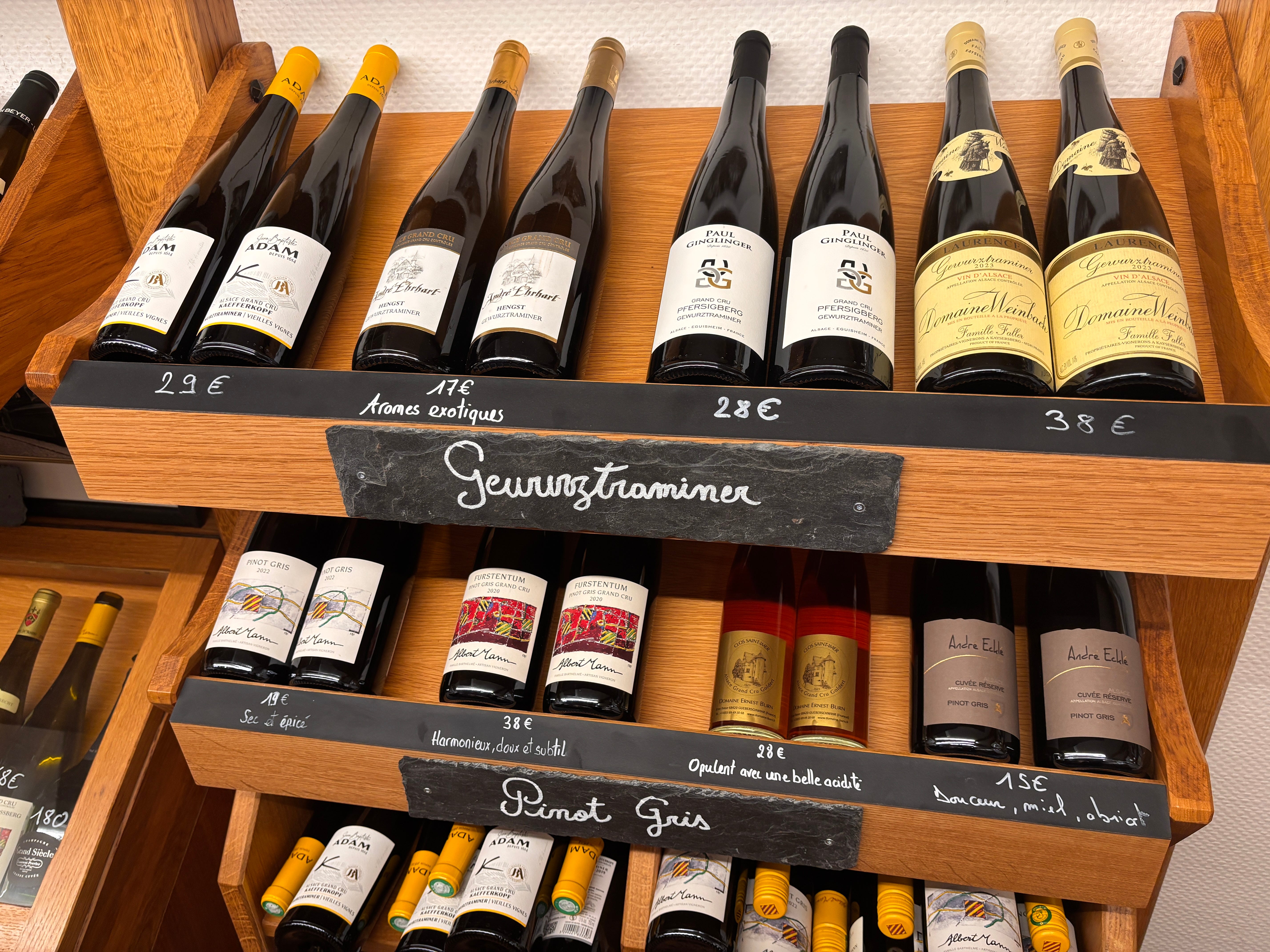
The perfect pairing with cheese is wine, with cider and beer also being fine accompaniments. Alsatian wines are some of the best you can drink. And no, they’re not all sweet.

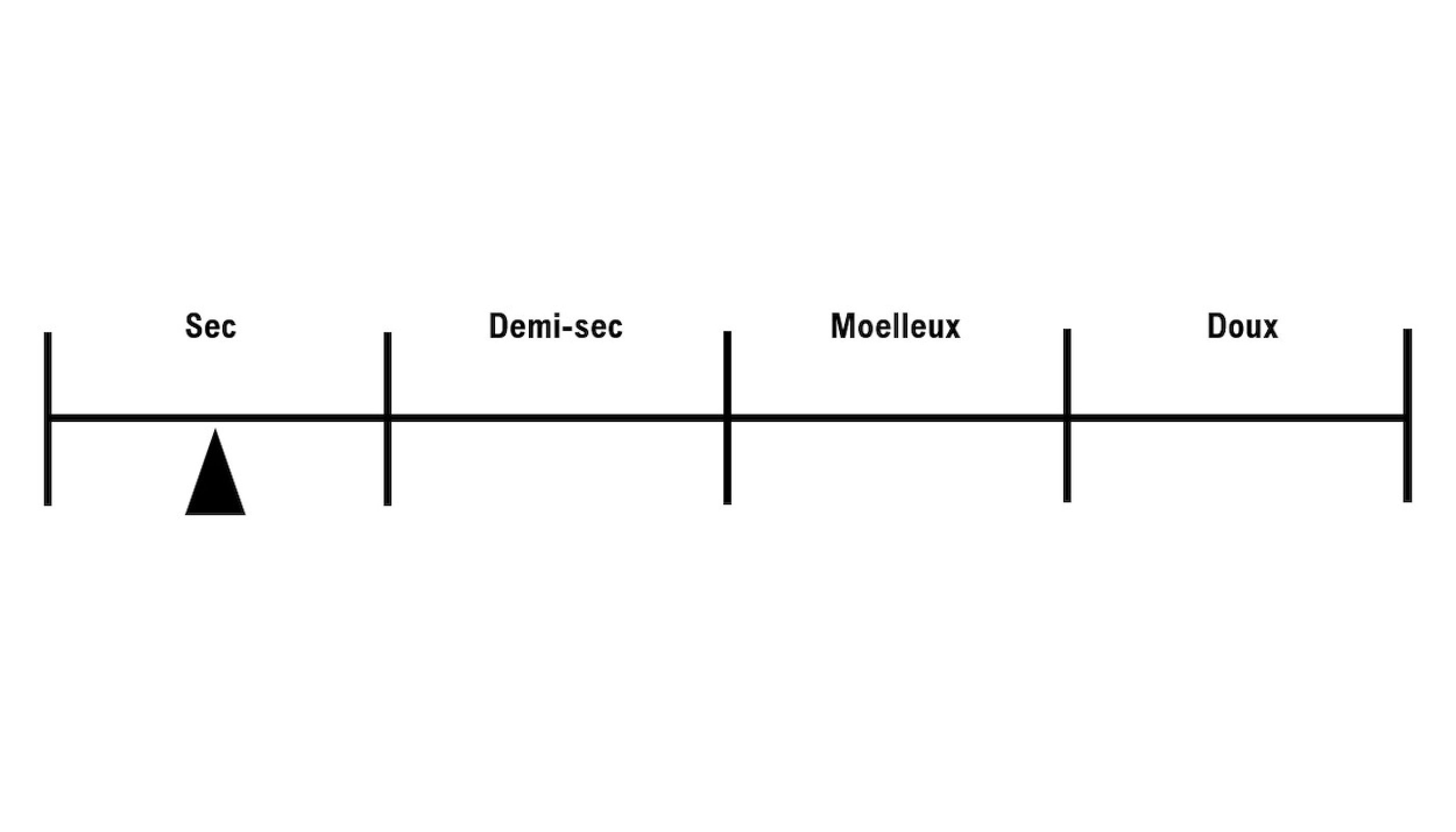
In fact, most are dry. But because that perception still exists today, a wine scale is posted on the back labels of Alsatian wines, which rates the wine from dry (sec) to sweet (doux).

Alsatian wine scale from Jancis Robinson.com, which has written more extensively about it here.

Alsatian wines are also notable as they’re sold by the cépage (grape variety) in France, rather than by the region. Few people in France know the grapes that go into, say, a red Burgundy or a white Muscadet from the Loire, but because of their Germanic influence, wines from Alsace are labeled by the grape variety and often sold in elongated bottles, called flûtes d’Alsace.

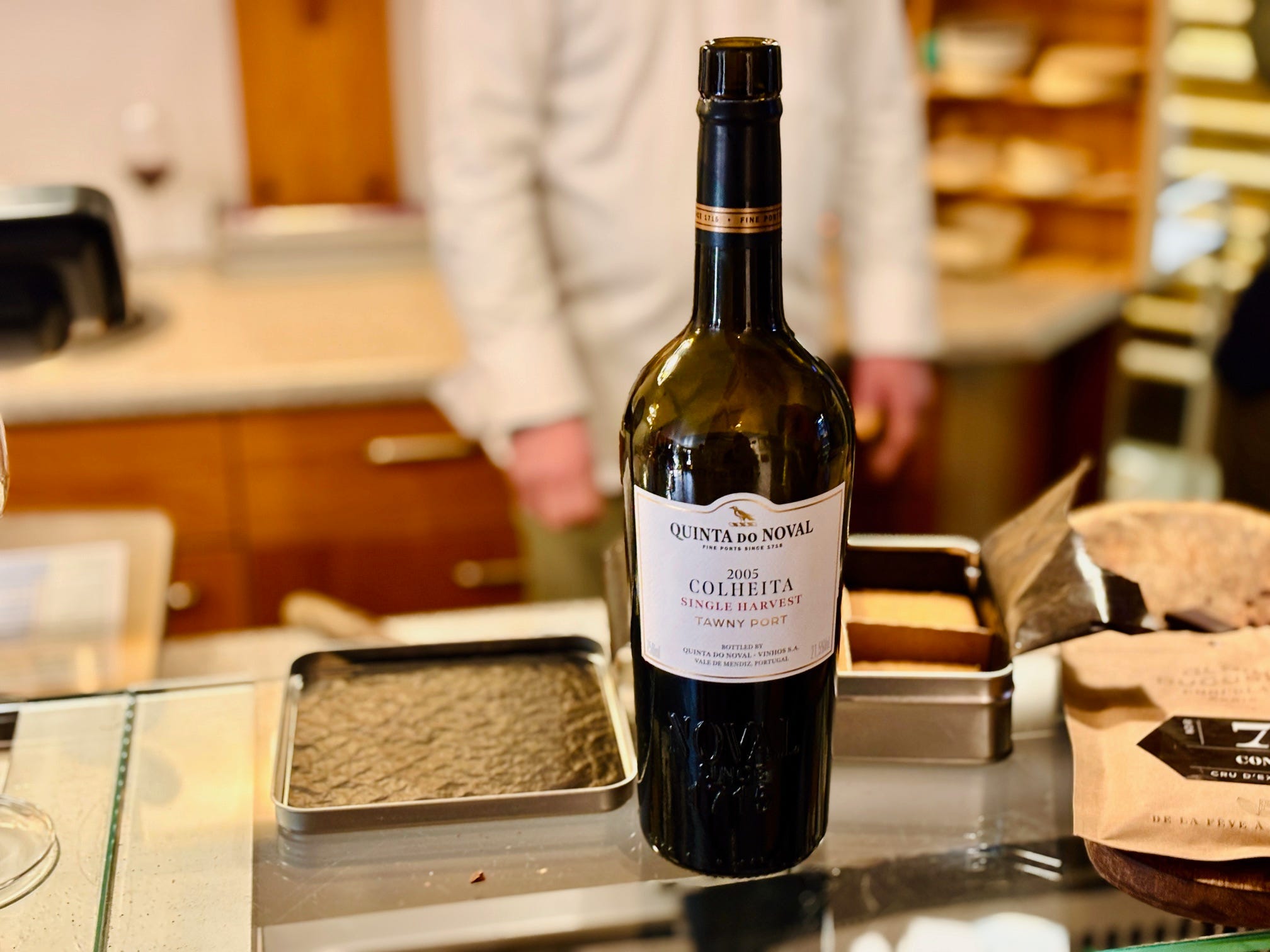
Because it goes so well with cheese, their shop sold quite a few wines, but sommelier Fabrice Langlois, who worked the night shift before our trip (and somehow managed to make the 7:20am train), came with a backpack rattling with incredible bottles of wine. This one was my favorite:

Following the “what grows together, goes together” theme, this Trimbach Grand Cru riesling was especially good with the Alsatian cheeses.

In addition to “Alsatian wines are sweet,” another myth that needs to go away is that red wine goes with cheese. There are a lot of subtle flavors in cheese and a tannic, heavy Cabernet Sauvignon, for example, can obliterate those flavors.

Even in France, the cliché of “red with cheese” is still strong. It reminded me of a passage in restaurateur Keith McNally’s memoir, I Regret Almost Everything, that I just finished. He talked about reading Don Quixote because his friends told him it was one of the best books ever written. And he hated it:

“I waded through the thousand-page ‘classic’ without enjoying a single page, but for the next thirty years told everyone it was a masterpiece. I said this not because I loved the book, but because I was supposed to love it.”

If you really do like red wine and cheese together, great! But if you want to go with red, I might suggest trying something with less tannins, or a softer, slightly sweet wine like port or sherry, which pair beautifully with many cheeses.

Subscribe now

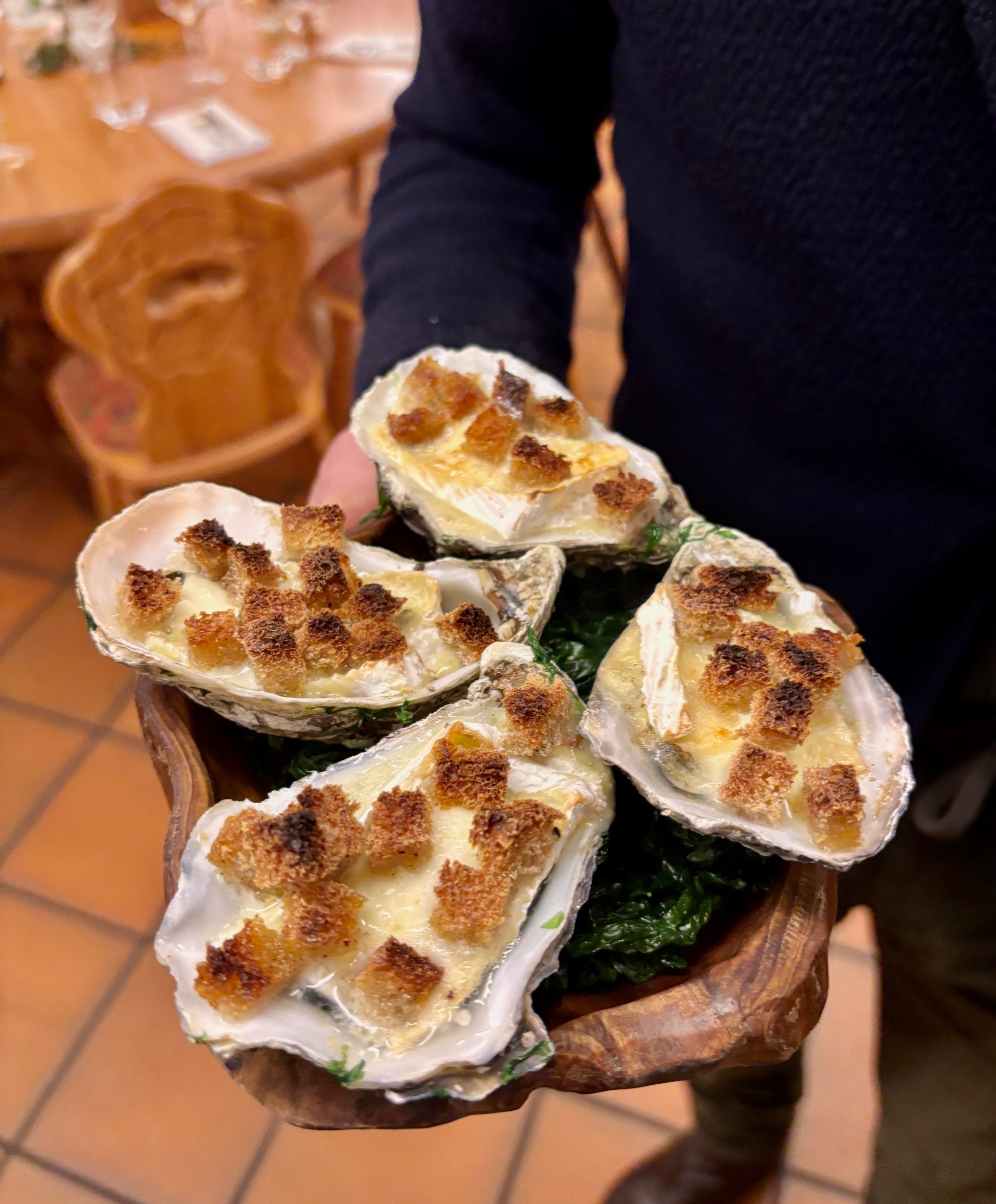
Another myth is that cheese doesn’t pair with seafood, which as anyone who’s had a tuna melt knows, isn’t true. But a pairing I wouldn’t have thought of were these oysters.

Chef Saintagne worked his magic on them, broiling up the oysters, gratinéed with slices of Camembert de Normandie, and dotted with toasted croutons on top. The salty, briny oysters were an incredible pairing with the rich cheese. They reminded me why it’s good to keep an open mind, rather than just following along with what everyone else says. Otherwise, I would have missed these oysters, which I might even try making at home.

Leave a comment

After our extensive cheese and wine tasting, we visited the caves where the cheeses are ripened. As a side note, you often go to tastings and people just…taste, and leave a lot behind on the plates. When were were done, every plate was completely cleaned.

⭐ Bernard Antony Cheese Tasting in Paris ⭐

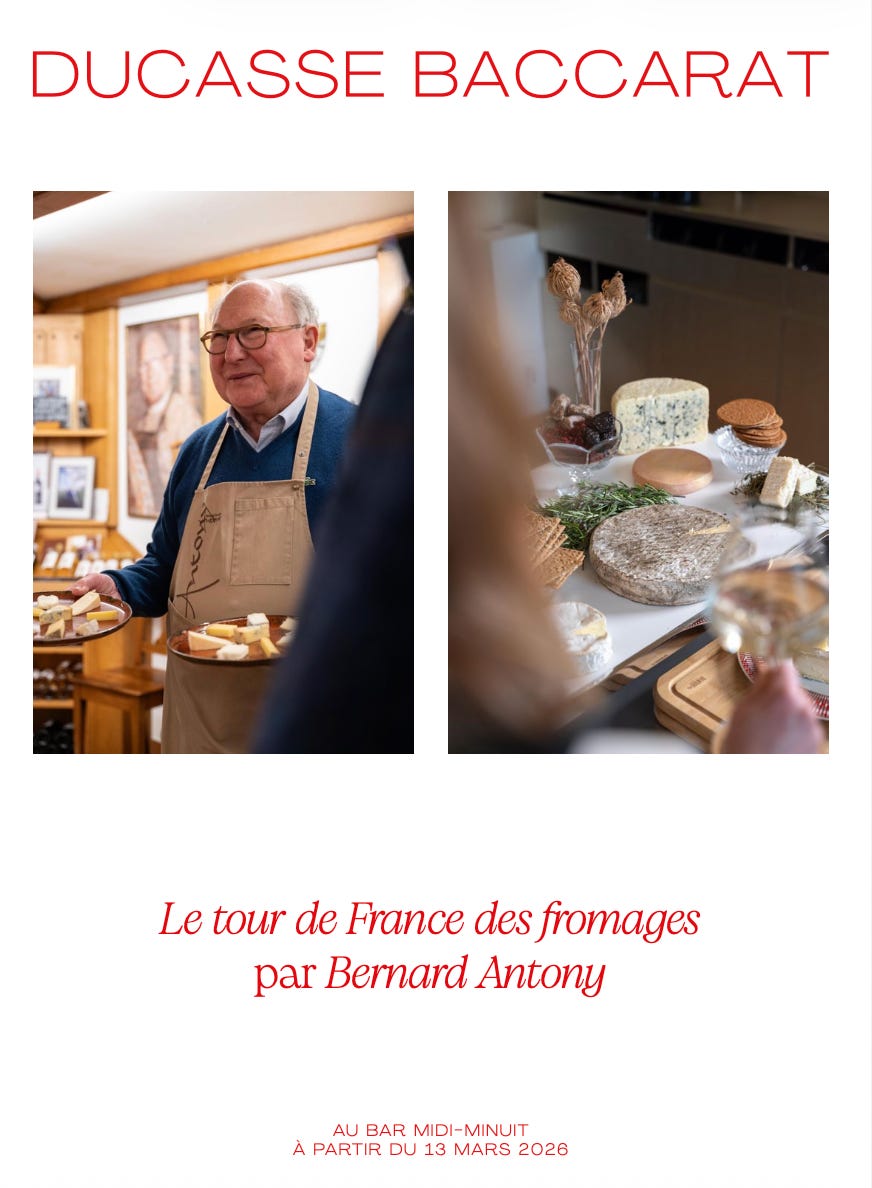
Starting on March 13th, 2026 and extending to the end of April 2026, “tour de France” cheese-tasting platters will be offered at Alain Ducasse Baccarat bar à vin, Bar Midi-Minuit for 35 euros, with the option to add a wine pairing by Sommelier Fabrice Langlois. (Bookings and more info here.)

We didn’t catch all the names of the cheeses (frankly, there were a lot), but often it’s best to go to a cheese shop and see what looks best or most appealing that day and make your selection then. That said, the shop has a page on their website in three languages that identifies and describes many of their cheeses.

Subscribe to my newsletter to get posts about eating around France and in Paris, as well as recipes, travel tips, and more, sign up to get my newsletter…sent right to your Inbox!

After visiting the caves to see the ripening cheeses, because I live in Paris, I’ve learned how to get — and remain — at the front of a line, no matter how many people are behind me. Fortunately, trying to cut in line hasn’t made it to Alsace, but because I am bien élevé (well-raised, and well-mannered), I let someone in our group go ahead of me.

Subscribe now

He ended up buying at least as many cheeses as I planned to, but I was happy to be next in line, as a lengthy line was forming and snaking out the door, since they’d just reopened after their lunch break.

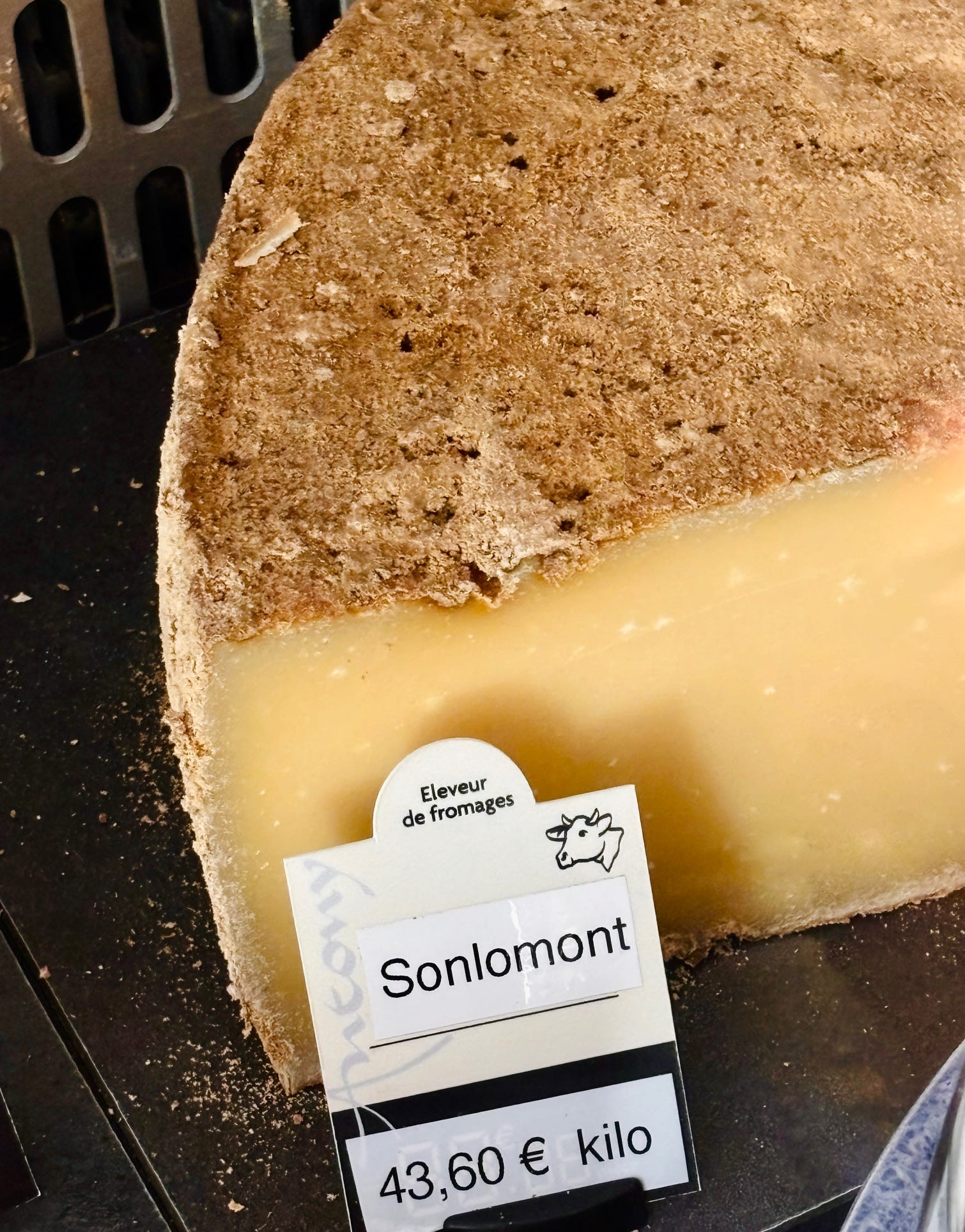
I’d never heard of Sonlomont, a cheese from Switzerland that I think is the same as Tome de Lomont, but happy to be corrected. They gave me a taste, which confirmed that I needed to bring a block of that home.

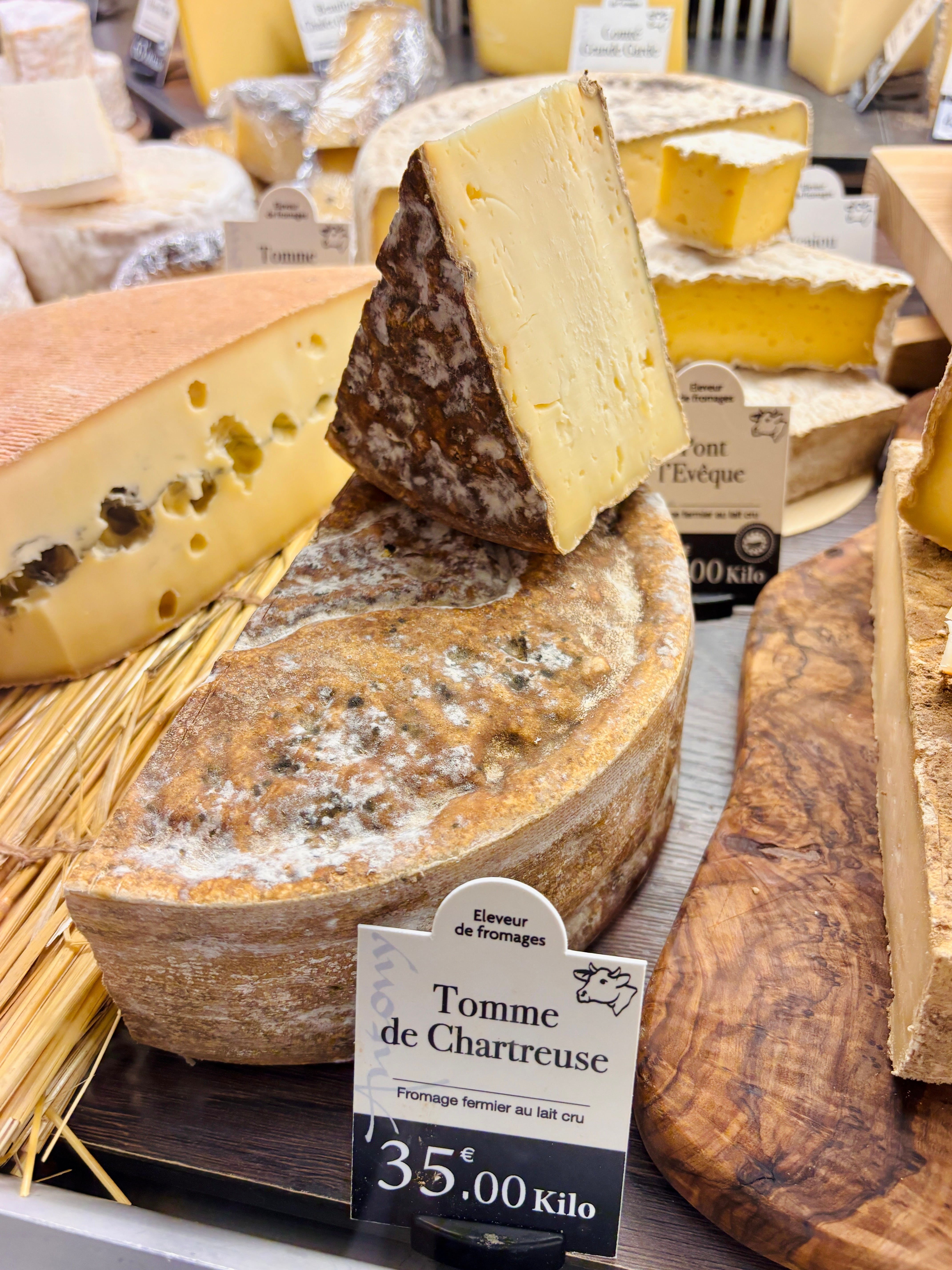
There was also this Tomme de Chartreuse, which didn’t contain any of the famed liqueur, but was made in the mountainous region called the massif de la Chartreuse. Following in the steps of “what grows together, goes together,” I’d imagined the mountain cheese with the semisoft texture and milky flavor would go well with the liqueur.

I made a mental note to bring a wedge of that home, but somehow, I forgot to ask for it, which I realized on the train back to Paris. That was also a shame because I was having drinks with friends from Chartreuse later that evening in Paris, which ended at 1:20am. (It was a long day!)

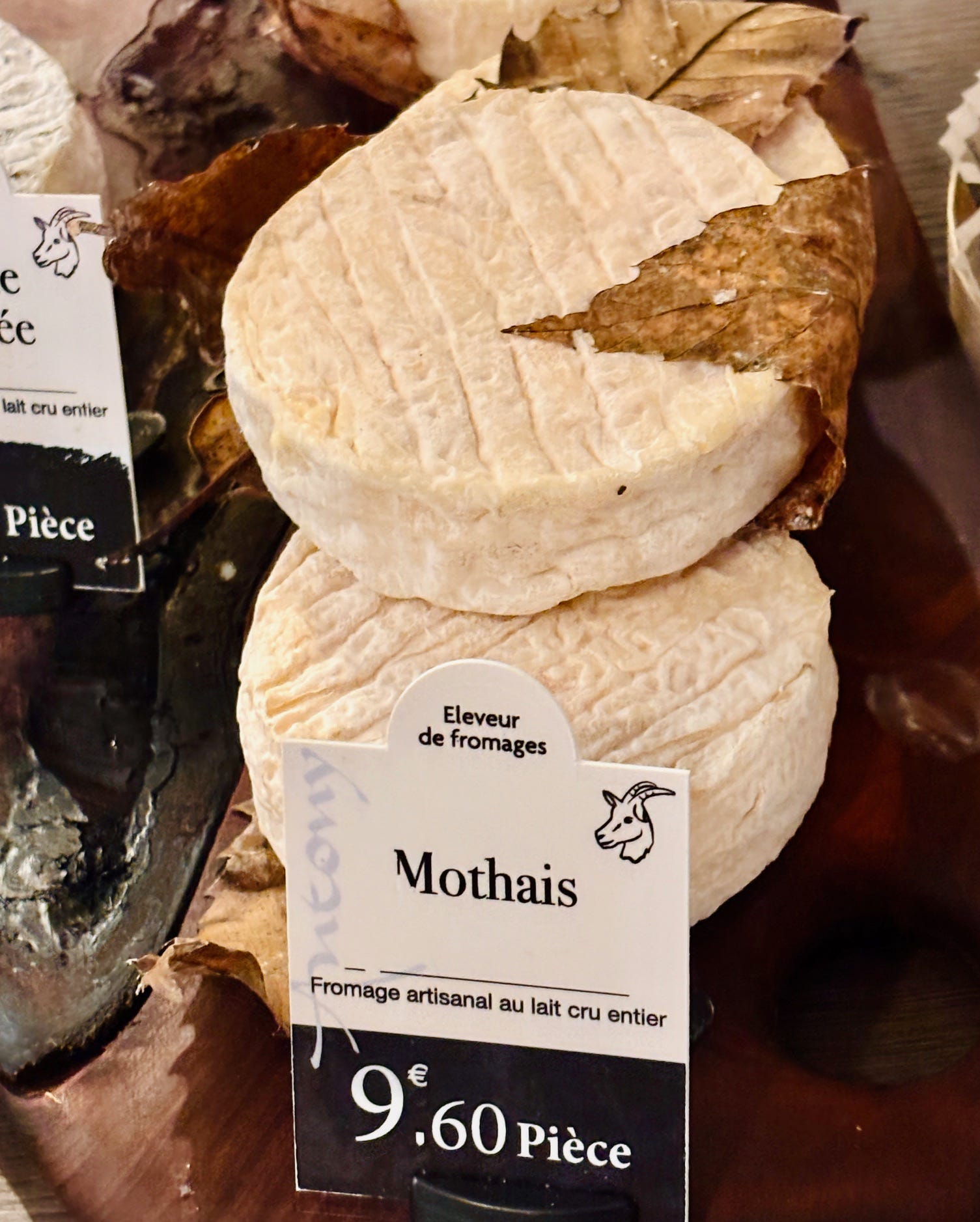
Monthais sur Feuille is one of my favorite goat cheeses, ripened on a chestnut leaf (feuille), which absorbs some of the humidity. While you can find this cheese at many fromageries, theirs is exceptionally good, made by a “passionate and incredibly gifted producer.” It’s nice to see them calling out the work and effort of producers they work with, since at Fromagerie Antony, cheese is a collaborative process. They follow the whole process, from milking the cows, to curdling and molding the cheese, and finishing it in their cellars.

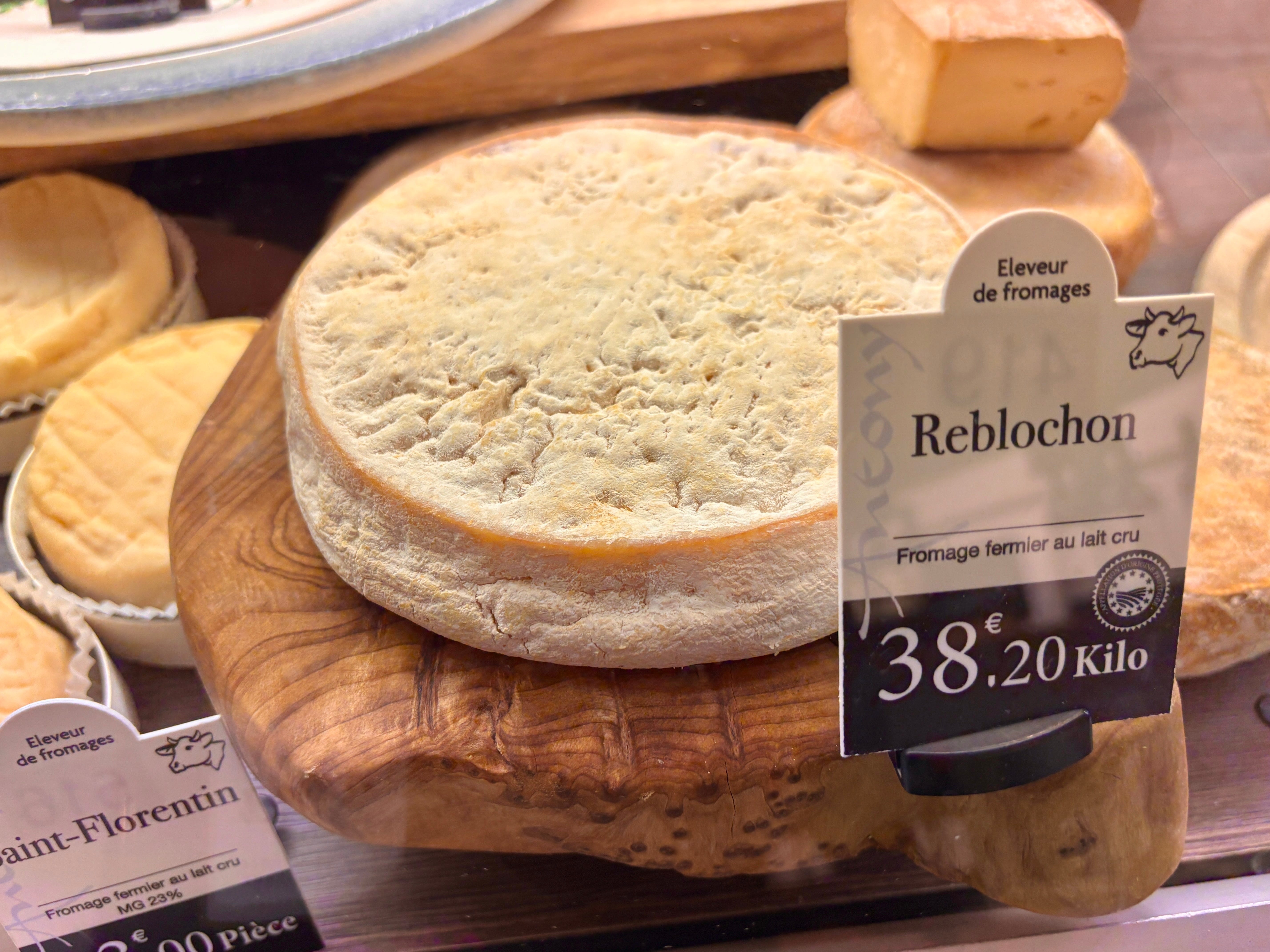
A few years ago I got picked on for making Tartiflette without Reblochon, the classic cheese. But I saw the high prices for it outside of France, and because, in reality, a lot of times in France, Tartiflette is made with other cheeses, sometimes labeled as “Le Fromage pour Tartiflette” (without a speck of Reblochon in its ingredients). I decided to let people know they can make it with other cheeses, as it’s done in France.

That said, if I lived near Fromagerie Antony, I would get my Reblochon there and make Tartiflette with that. Actually, if I lived nearby, I’d get all my cheeses there. Unfortunately, it’s a little too far to do my cheese shopping, but at least I had the good sense to bring enough cheese home to last us a few weeks…even if it didn’t.

Leave a comment

Fromagerie Antony
5 Rue de la Montagne
Vieux-Ferrette

If you want to visit, cheese tastings are available to the public by reservation here, with at least a one-day notice. Their website also offers information on lodgings in the area as well as taxi services. Getting there from Paris requires a train trip and a taxi or rental car.

(When driving, their website notes that navigation systems don’t always take you to the right village, even if you enter it correctly in a GPS system. They suggest you follow this Google Map.)

Received — 4 March 2026 David Lebovitz Newsletter

Fl'or du Jura cocktail

4 March 2026 at 12:26

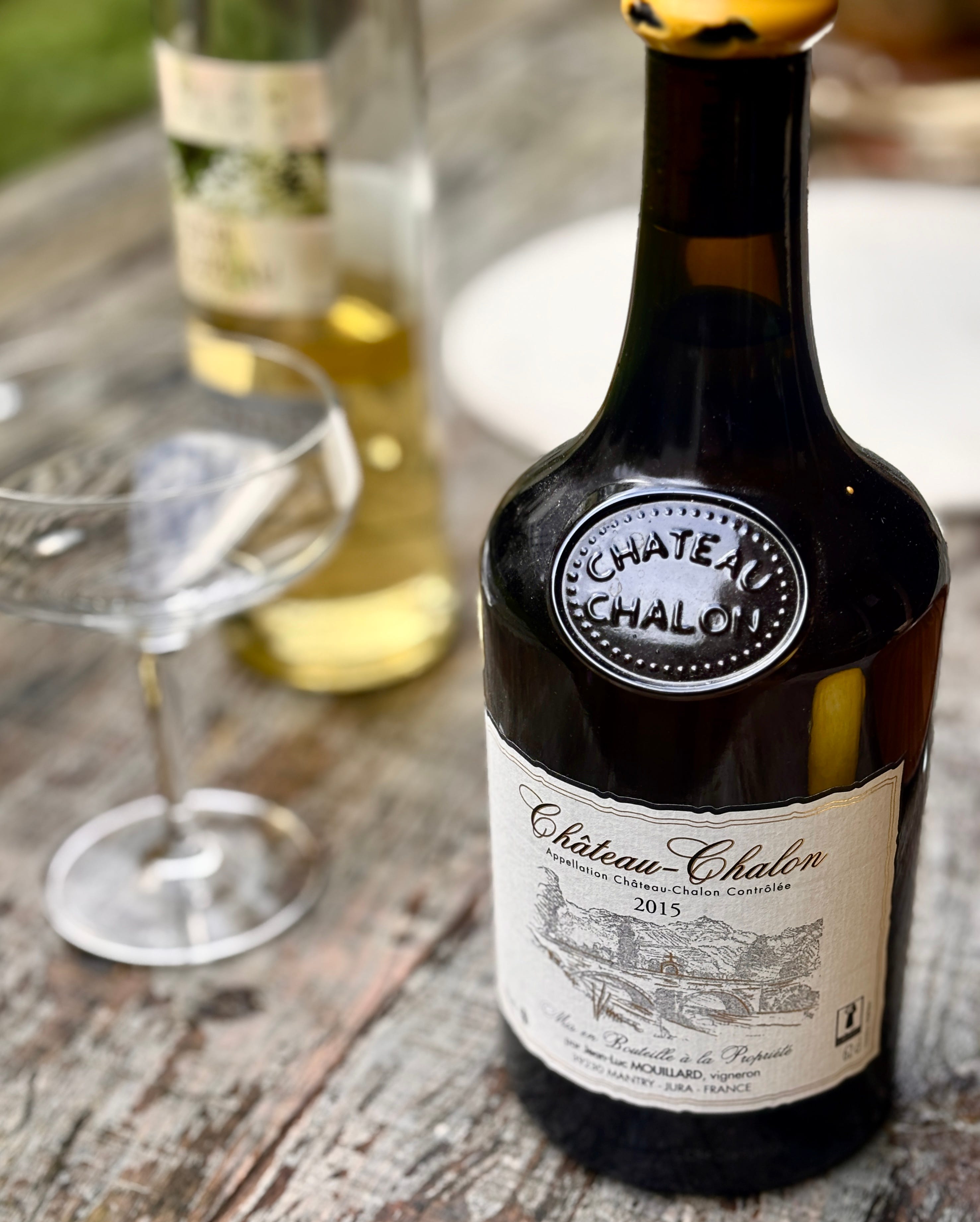
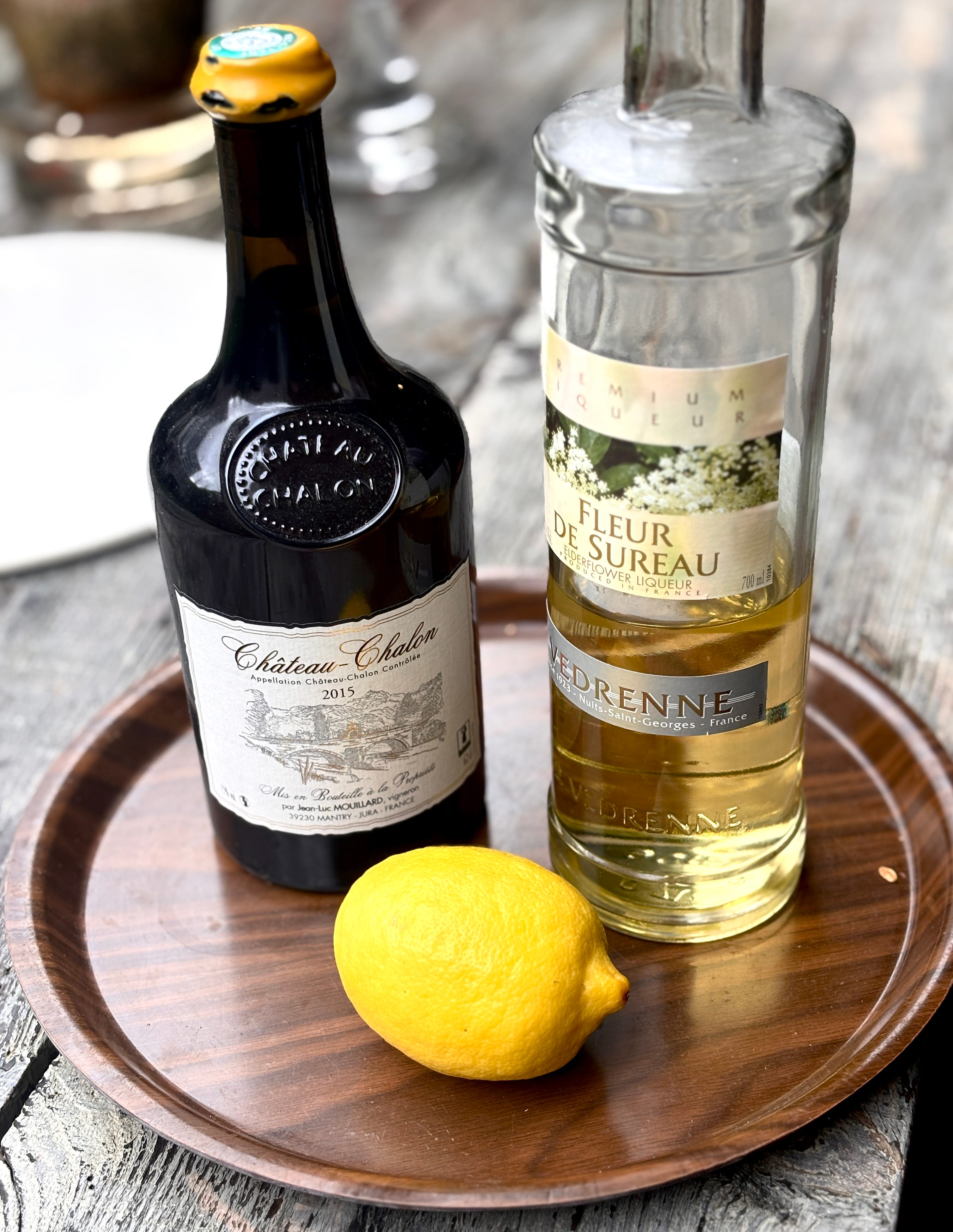
I don’t blame you if you haven’t heard of vin jaune, the primary ingredient in this cocktail. For years, the wine wasn’t available in the U.S. due to the size of the bottle: 62cl. Called a clavelin, its particular shape references the amount of wine that was historically left in the standard 70cl bottle after its 6+ years of aging. The wine that evaporates is called the part des anges, the angel’s share.

Winemakers in the Jura region, between Switzerland and Burgundy, where vin jaune is made, refused to change the size of the bottle to conform to U.S. standards, but it’s finally been cleared for legal sale in the U.S.

Even though it’s been cleared for export to the States, vin jaune remains an outlier in the wine world. In the Jura, some wines are intentionally oxidized, called sous voile. Unlike conventional wines, during aging, the oak casks for sous voile wines aren’t topped up, leaving room for a veil (voile) of yeast to form on the surface of the wine. That yeast is called the flor. Sous voile wines aren’t to everybody’s taste, and it’s easy to confuse their flavor with flawed wine. I like their more complex tastes, but for those who aren’t expecting it, they might think the wine is spoiled.

Other wines from the Jura are topped off with additional wine as they age, keeping the barrel full, called ouillé, and those wines tend to taste more like conventional wines. Because wine production in the Jura is low, the wines tend to be harder to get outside of France, and are more expensive. So I nudge visitors to France to give them a try while they’re here.* Why not?

Vin jaune means “yellow wine,” which refers to its rich golden color. It has a very distinctive nuttiness with notes of dry wood, green apples, lemon, burnt sugar, and maybe even spices. Because it’s made in the same region as Comté cheese, there is no better cheese pairing than Comté and vin jaune. It’s perfect.

https://www.davidlebovitz.com/book/the-great-book-of-chocolate/

Pre-order The Great Book of Chocolate

Better known than vin jaune is elderflower liqueur, which is now everywhere, prompting it to be dubbed the ketchup of bartenders. The sweet liqueur is a popular addition to spritzes and glasses of bubbly. And while people tell me they don’t like sweet cocktails (neither do I), cocktails often need a touch of sweetness to balance the other ingredients, such as lemon juice and stronger spirits.

Subscribe now

When I was writing my book Drinking French, bartender and bar owner Joseph Boley gave me a bottle of another French-made elderflower liqueur, which was featured in his cocktail in the book, and told me it’s the same thing but half the price. I’ve been using it (as you can see) and no one’s pointed out any difference.

Get Drinking French

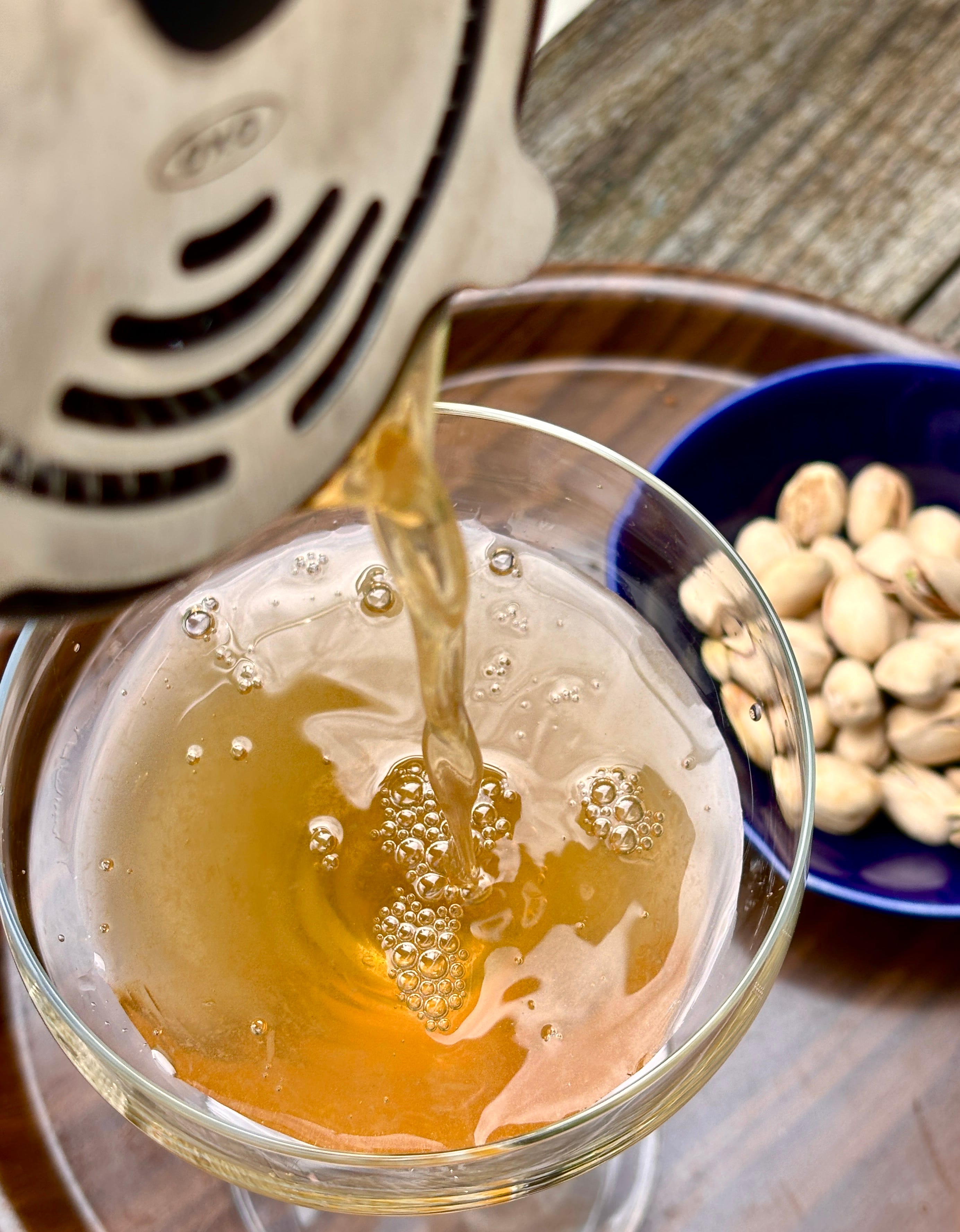
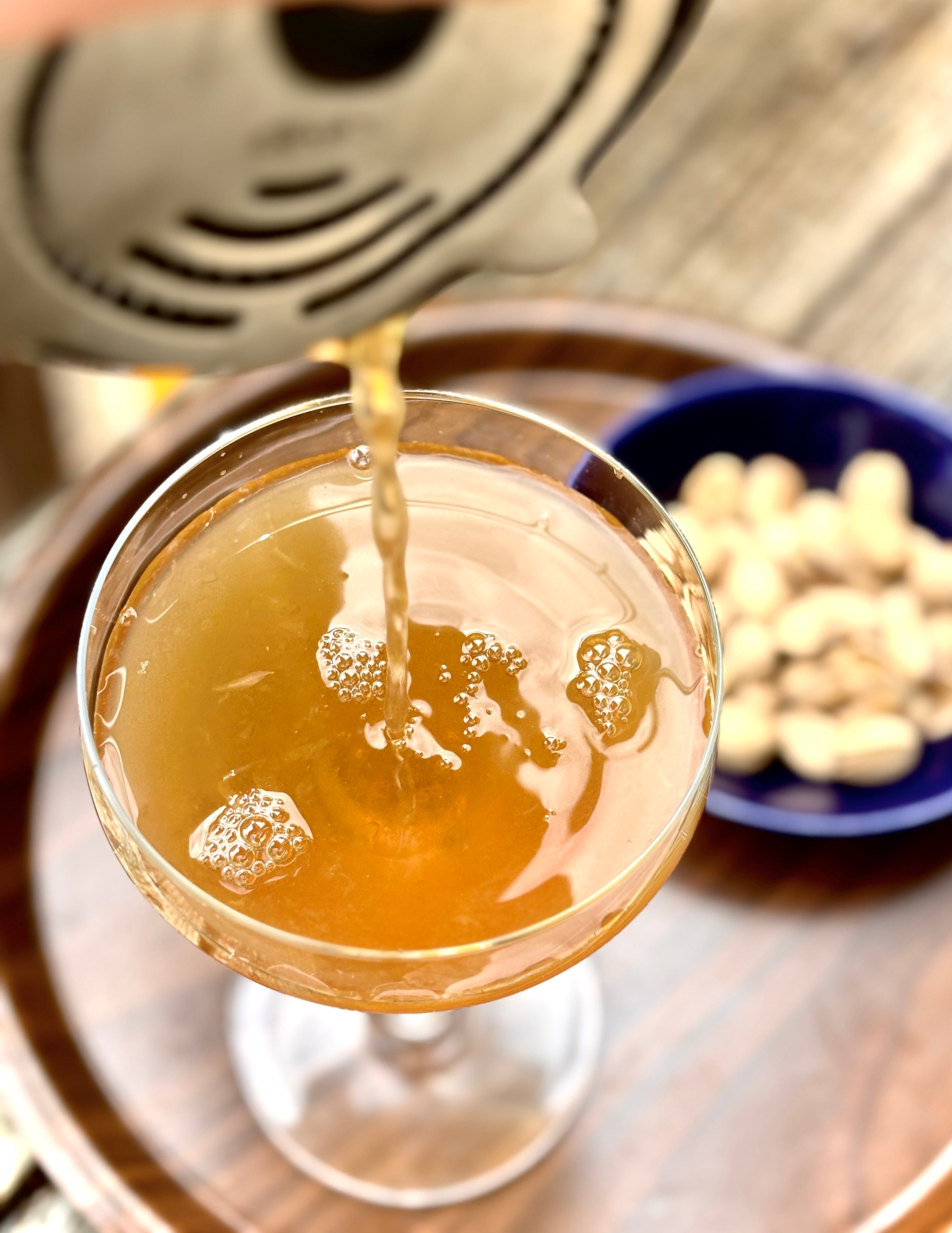
Every year, there is a vin jaune festival in the Jura called La Percée du Vin Jaune. I’ve always wanted to go but a friend who worked in the region told me it’s a lot of drinking and there are a lot of people; their website said 33,000 attended last year. The festival takes place in February, when it’s pretty cold in the Jura. However, I found a recipe that they published (above), the Fl’or du Jura, that I can enjoy in the crowd-free, cozy comfort of home.

https://www.davidlebovitz.com/book/drinking-french/

Like one of my favorite cocktails from Drinking French, the Yellow cocktail, the Fl’or du Jura combines a few seemingly disparate ingredients that come together in one cohesive cocktail. You may have to track down a bottle of vin jaune to make it, although I tested it with sherry and it was just as delicious. It’s also lower in alcohol than other cocktails since the wine and elderflower liqueur are less than half the ABV as gin, whiskey, and rum, but it’s filled with flavor. À santé…!

Leave a comment

*Some restaurants in France offer vin jaune by the glass, often listed on the menu under after-dinner drinks since it’s drunk with dessert. In his excellent book, The Food & Wine of France, , in the chapter on vin jaune (subtitled The Virtue of Rancidity), he notes about vin jaune: ”On first trying it, many people dislike it.”

Vin jaune is delicious in this cocktail and may not be what you expect when you first try it, on its own, but it does grow on you. If you get a bottle, it’s remarkable with Comté cheese or a similar nutty-tasting mountain cheese, such as Gruyère or Beaufort. Once opened, the bottle will keep in the refrigerator at least a month.

Received — 1 March 2026 David Lebovitz Newsletter

March 2026 Newsletter

1 March 2026 at 10:47
I’ve got a post coming up this month about all these AMAZING cheeses…

I had an official meeting last month to get my French ID card renewed. In spite of a reputation that doesn’t involve being efficient, the French government can surprise you as more and more public services go digital. Some of those services, however, now require a sleeker digital French ID card to access them. Unlike in places like the U.S., a driver’s license in France isn’t acceptable as an official ID. In most cases, you’ll need to present your French ID or passport as acceptable proof, and no one wants to carry around their passport all the time.

Things don’t always go smoothly, though. I’d been trying to renew and replace my card on the website since last April, filling out the lengthy information form with everything, which includes where your parents were born and on what date. A Swedish friend who moved here was perplexed when he had to do that for his Carte Vitale, the card for his health insurance. “Why does it matter when and where my parents were born? The card is for me.”

You kind of get acclimated to stuff like that and it vexes the locals, too. (Although they’re used to it.)

But every time I hit the “Send” button, I got an error message and had to start all over. I probably tried twenty times before finally giving up. At the beginning of 2026, I decided to start all over again. When it still didn’t work, I called and the woman on the phone said that I needed to use le navigateur Edge.

I knew of Chrome, Safari, and Firefox but never heard of Edge, and when I typed it into my computer, a spammy web page turned up. I was baffled that a website would only function if using a browser that no one’s ever heard of, that doesn’t even have its own website. After a thirteen-minute conversation, she offered to make an appointment for me. In a country where information is currency, and non is often the default, it was like the gates of heaven opened up and decided to let me inside. (I often think they make things hard on purpose so that when you do succeed, you forget about everything you went through before it and fall in love with the country all over again.)

Subscribe now

I picked an early appointment, wisely, so the office wouldn’t be backed up when I got there. The convocation (appointment notice) I received said that if I was late, my appointment could be canceled…but also it could be canceled if I was early. (Yes, French people find these things funny, too.) Bakers are always on time but often, early. Which I was. However, they waived the penalty and told me to take a number and a seat.

In photos for official purposes in France, you need to look as unhappy as possible. If there’s any hint of happiness, your photos (and entire file) will be rejected, hence me doing my best to look like a hardened criminal.

I’ve been to enough of these meetings to know that one mistake - a stapler used instead of a paper clip, a bit of a tooth showing in a photo, you didn’t bring your mother’s birth certificate, professionally translated and stamped by the town hall where she was born, dated within 3 months of your meeting (VitalChek becomes your best friend, but you do hold your breath waiting for the documents to be mailed to you, only exhaling when they are actually in your hands) - your whole file, the one you’ve been working on for a year, can be rejected.

I am a pro right now and had everything in order. To make matters even better, the guy behind the desk was lovely. (And so was the woman at the front desk, who didn’t kick me out for being early. I felt like buying her a box of chocolates.) I did make one mistake, though: I thought Paris was a ville (city) but it’s also a commune. I thanked the fellow for correcting it, and he replied, “That’s what I’m here for.”

A friend later suggested he was an actor, but even though it was cold, grey, and rainy in Paris that day, I left my meeting that morning in a particularly heightened state of euphoria. I was going to celebrate by tackling the local Ikea, but then I thought about it and…nope, that would be pushing it.

Leave a comment

Just one room out of four, for tasting wine.

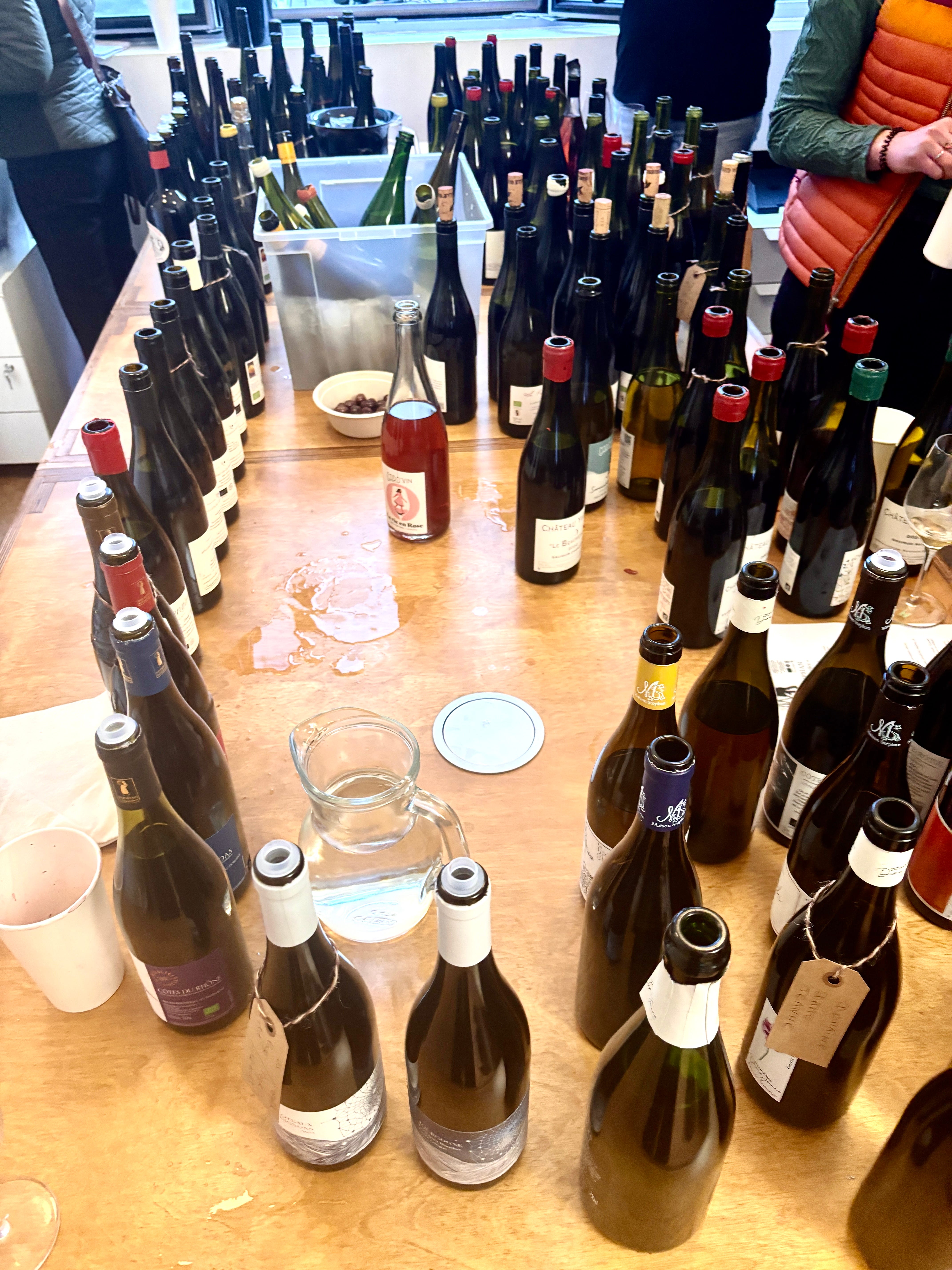
Last month a bunch of friends descended on the city for Wine Paris, a huge trade show for people in the wine and spirits industry. Not only did I get to see a lot of friends and make some new ones, I got to try a lot of wines. At one tasting (above), at Paris Wine Co., I think there were over two hundred bottles open for tasting.

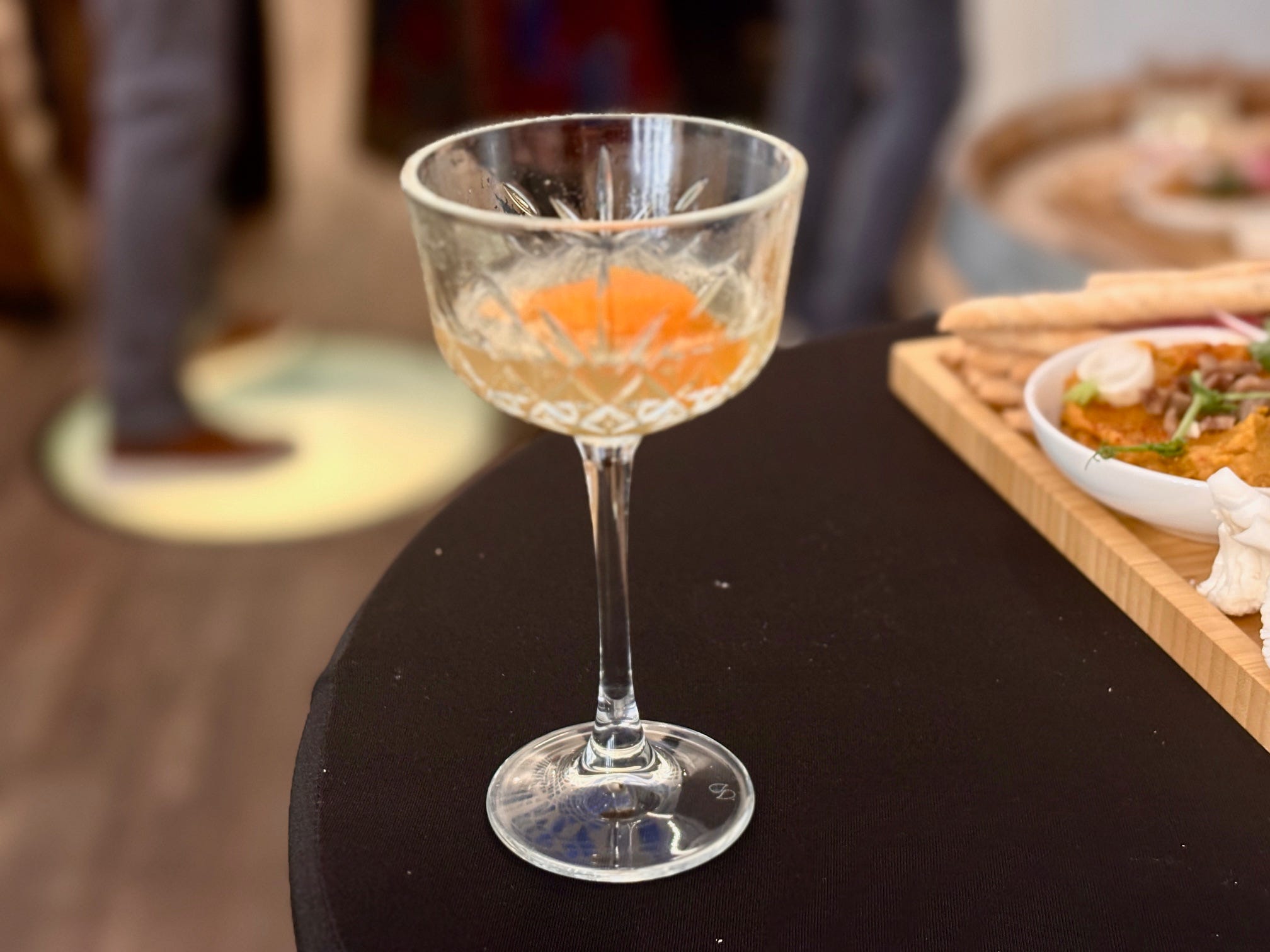
One of my favorite cocktails, a riff on the Martini called an Alaska.

I also went to an event at the Chartreuse store in Paris, a place that flies under the radar for some people. Located close to where the monks got the original recipe in 1605, which took them another hundred years to figure out how to make, the shop is a must-stop for Chartreuse fans and lovers. They have all the bottles you’re looking for in stock, plus a display of vintage bottles and herbal teas made from mountain herbs; guided tours, tastings, and cocktail workshops are also offered.

Share

Last month was also Pineau des Charentes month, or as one might call it, “The French apéritif that more people should know about…but don’t.” It’s one of my favorite French apéritifs and was another reason I wrote Drinking French, to give lesser-known bottles a shout-out so people weren’t stuck on Lillet. (Which few people in France know about, or drink. The one time I ordered a Lillet at a café, I was brought a glass of le lait - of milk.)

https://www.davidlebovitz.com/book/drinking-french/

Get Drinking French

I got to meet some really cool people and make new friends while working on that book, which is a bonus when you’re writing a book on a totally different subject than what you’re usually writing about. I’ve kept in touch with Amy and her husband, Jean Pasquet. He comes from a family that’s been making cognac and PdC for generations, and his wife, Amy, originally from North Carolina, was folded into the family business and now is the head of the organization, Comité National du Pineau des Charentes, which promotes the drink internationally.

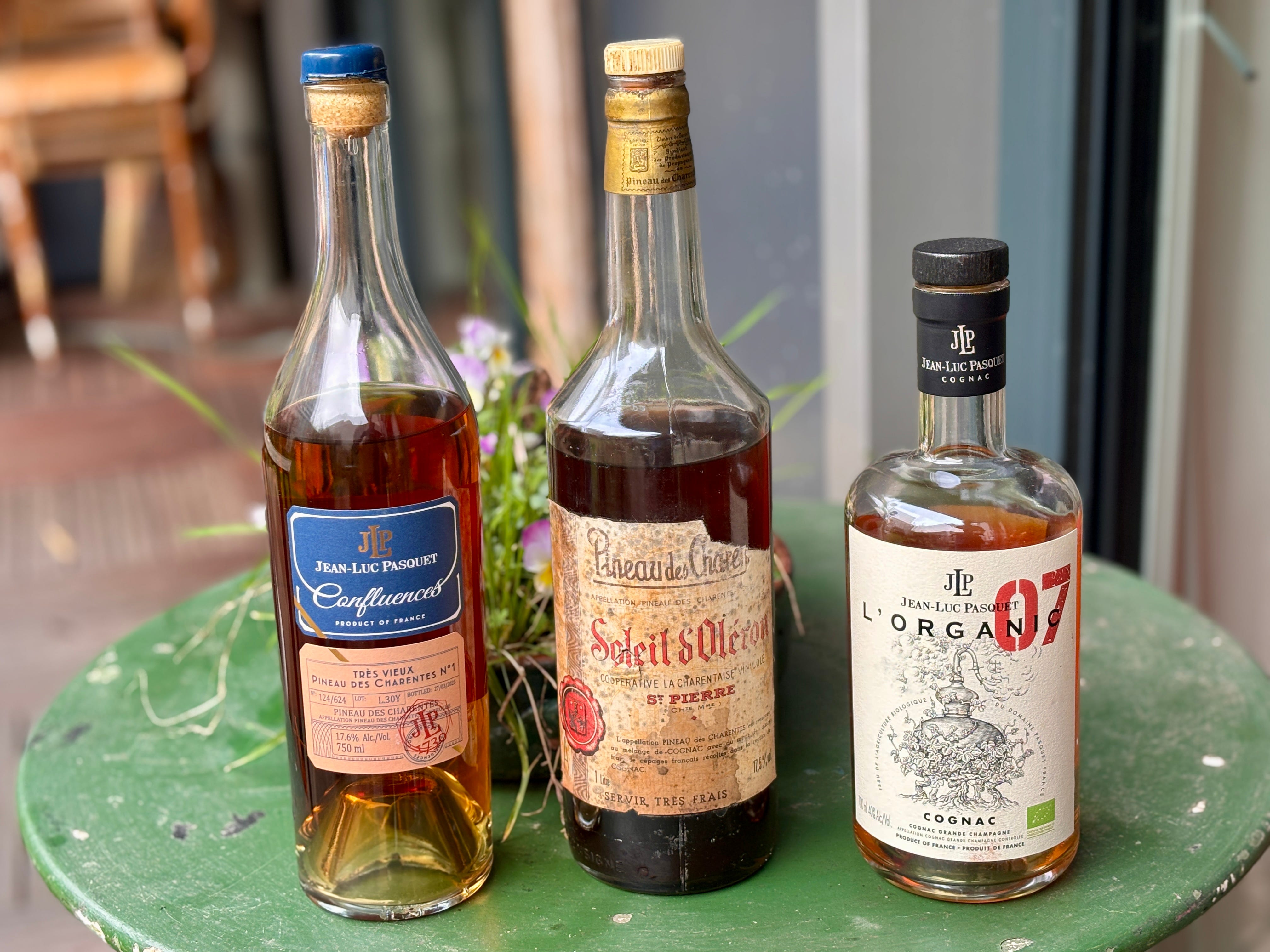
So when we met up for dinner for pizza at Oobatz, I brought a vintage bottle of PdC (in the middle, below) that I found at a bric-a-brac store in the south of France.

A bottle of Pasquet’s 18-year-old Pineau des Charentes and their excellent organic Cognac, next to my bottle of vintage PdC.

Jean estimated my vintage bottle to be from the 60s, which didn’t seem that old, until I did the mental math and realized the bottle was sixty years old. I’d brought it to the restaurant and let the staff and sommelier taste it, since I think vintage spirits are meant to be shared.

Subscribe now

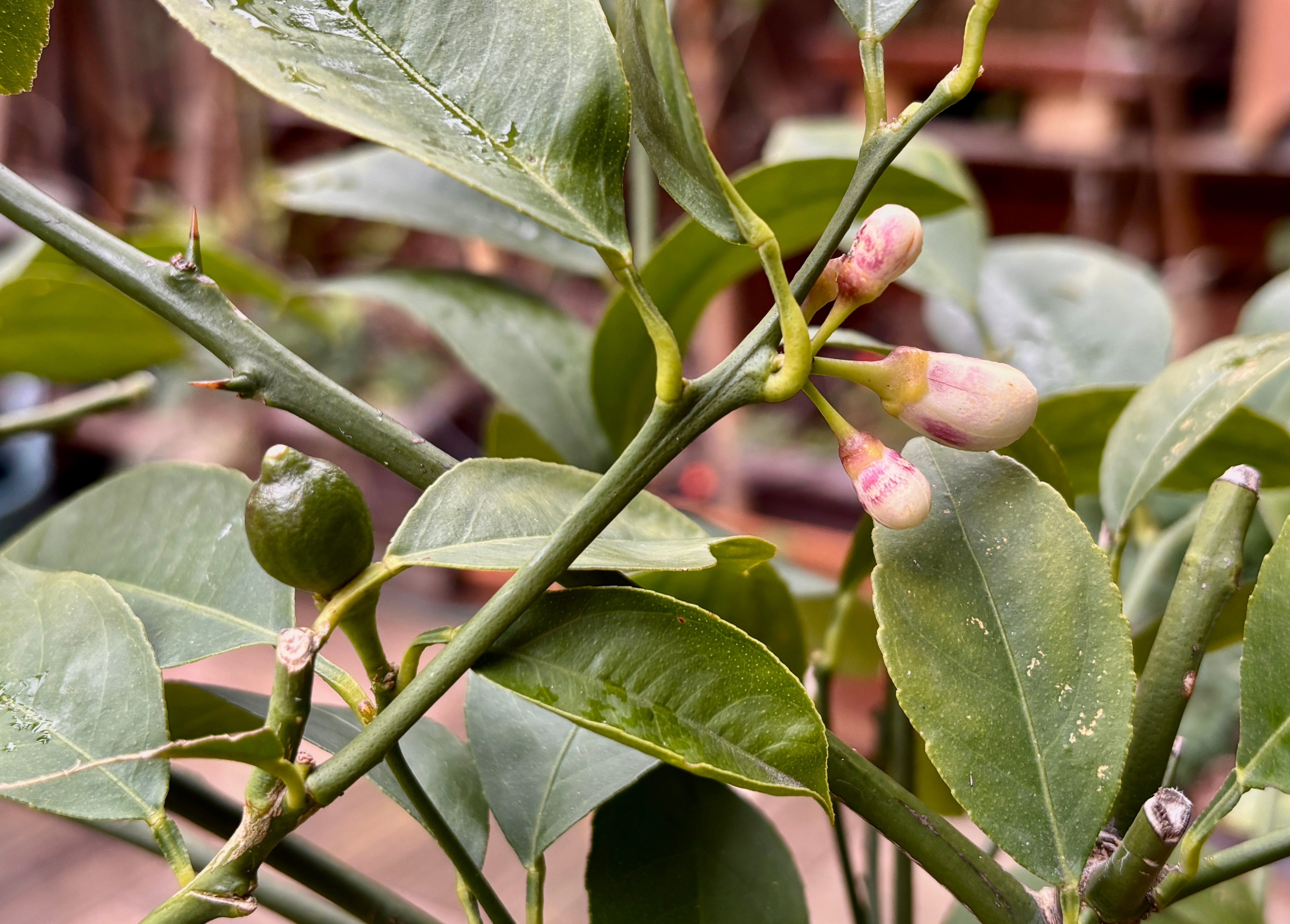
The rest of last month marked us getting closer to spring. February is always a crapshoot in terms of weather, and mood. January is the hardest in Paris since it’s grey, cold, and the days are short. But by the end of February, it gets lighter earlier, and days stay light longer. My Meyer lemon tree has a few flowers on it as well as a few little lemons poking through.

I got a lot of, um, conflicting input about how best to get the most fruit — pick off and discard one-third of the immature lemons to let the others mature, pick off two-thirds of the immature lemons to let the others mature, don’t do anything and let the tree decide, etc. I’ve tried different strategies over the years, and none seemed to be better than the other. In the end, I got two lemons last year but fingers crossed this year I’ll get a few more.

Everything else in the garden got attacked by slugs last year and thanks to an overload of input, I tried absolutely everything (yes, from beer to nematodes to copper to eggshells), but a fellow with a huge, mostly organic garden in the countryside admitted to me that the only way he found to kill slugs was via a non-natural solution. So I was relieved that it wasn’t just me.

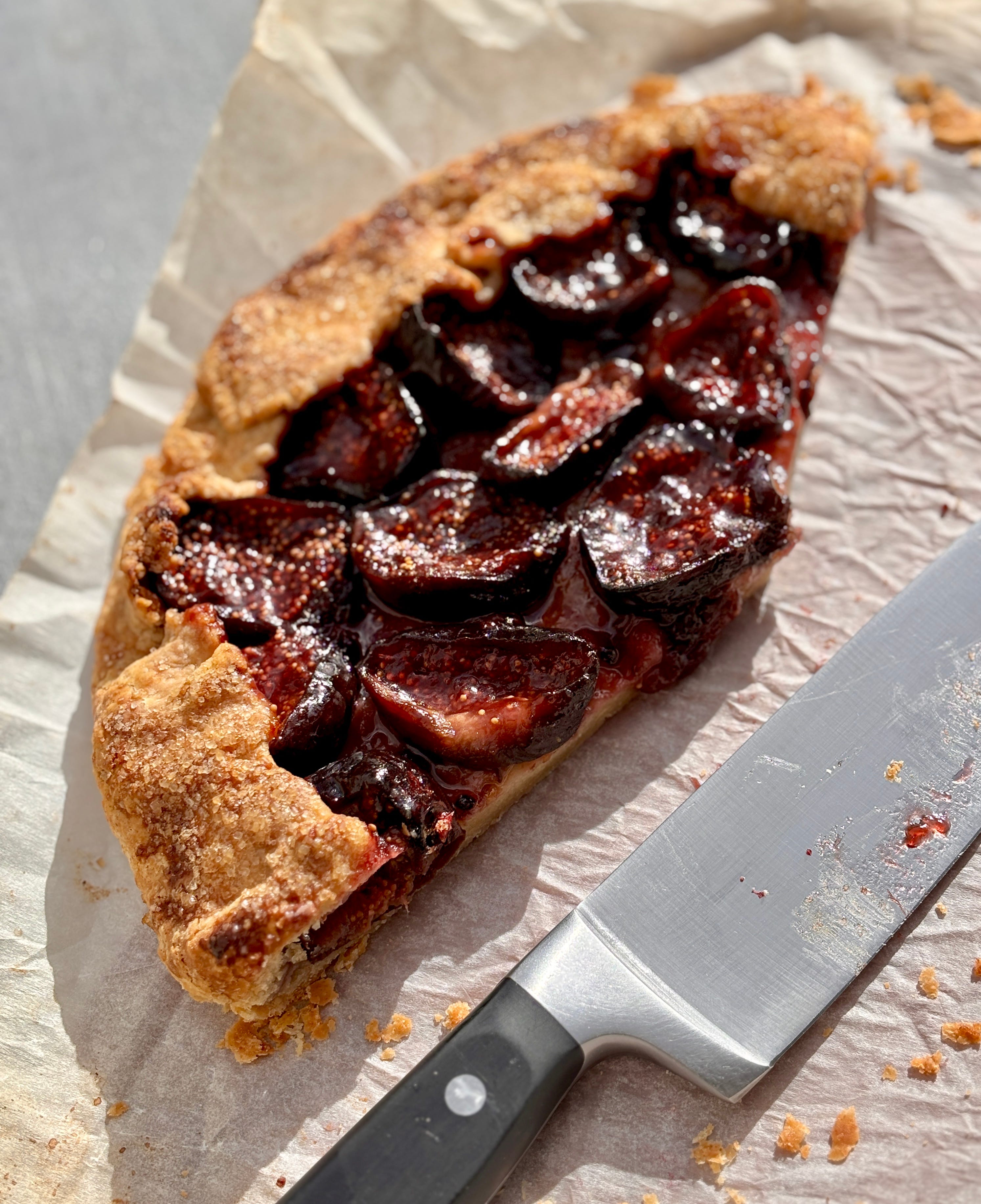
We’re not out of the woods yet, but as pears and fall fruits fade away at the markets, I pulled some figs out of the freezer and made a delicious fig galette with frangipane. I used the recipe from Ready for Dessert

https://www.davidlebovitz.com/book/ready-for-dessert-revised/

Get Ready for Dessert

…swapping out the apples in the recipe in the book with fig halves.

Everyone who’s bought the book has been super happy with it - yay! - but if you haven’t joined the in crowd of people who’ve gotten their copy, there’s a recipe on my website that you can use.

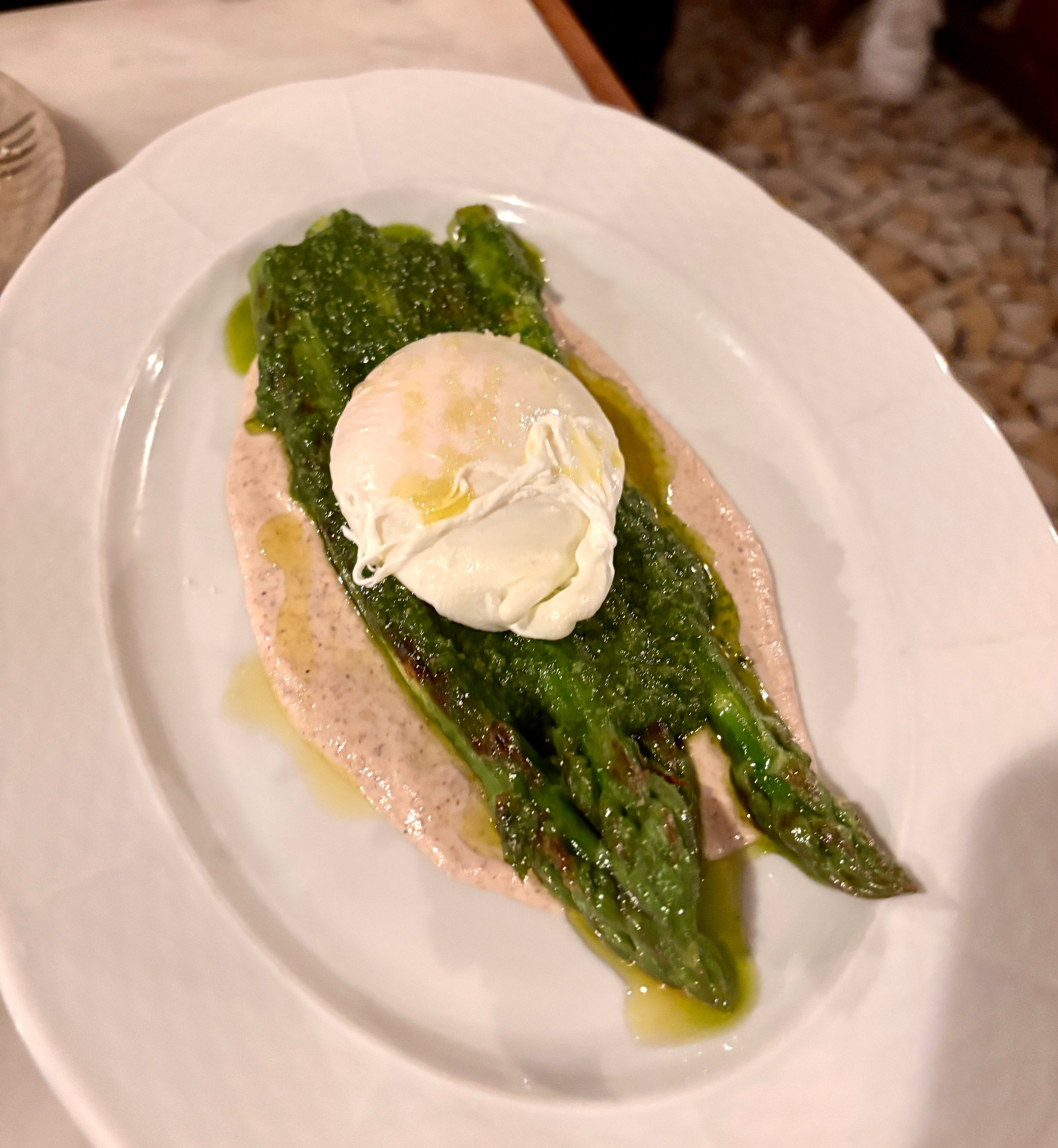
Yes! That was fresh asparagus, along with a poached egg, that I was served last night in a restaurant here in Paris.

While I patiently wait for strawberries and spring fruits and berries, and celebrate the arrival of asparagus, I’m going to cross another place off my bucket list: Taiwan, where I’m heading later this month.

A friend who has an ice cream shop in Paris filled my What’sApp with pins for places to go, and eat. I’ll be seeing a friend whose family lives there, so letting him take the reins, but looking forward to all the delicious foods I’ve been reading about in Taiwan — although I may pass on the stinky tofu. I do like durian, a fruit which has a particular fragrance that’s off-putting to some and revered by others, so maybe I’ll give the tofu a try…

-David

Subscribe now

Links I’m Liking…

I spoke with The Strategist about 10 Things I Can’t Live Without. (The Strategist/NY magazine)

Some of the differences between moving to and living in the UK vs. Netherlands vs. France, in terms of bureaucracy, health care, and finding an apartment. (via )

Is food writing dying? (via )

What Parisians hate more than anything. (Monacle…and years ago I mentioned this solution.)

Another take on the decline of the French bistro. (BBC)

[Sidenote: I’d say that’s likely true outside of Paris, but quite a few updated bistros and brasseries have opened in Paris that are quite good. Unfortunately, some of the lower-priced bistros and bouillons haven’t maintained their quality or standards.]

How they make the crazy-good (and HUGE) Devil’s Food Cake at Claud in NY. (Eater Video/Facebook)

Louvre ticket scam, operating for twelve years by employees and guides, lost $12 million for the museum. (NYT/unlocked)

Make your own amaro at home. (Saveur)

I’m on the fence about the influencer calling out Los Angeles dining “scams.” (SFGate)

[This influencer on Instagram is calling out some of the same things in France, in French.]

Leave a comment

Hoping to improve security, employee morale, and structural issues that are plaguing the museum, the Louvre hires a new director. (The Guardian)

I love the look of this peanut soup. (101 Cookbooks)

I’ve not finished a complete sentence since I’ve moved here, and I’m not the only one who’s wondered why…

My new book is coming this spring!

Pre-Order The Great Book of Chocolate

Subscribe to my newsletter to get Paris stories, restaurant and dining tips, recipes, and more, sent right to your Inbox!

Received — 22 February 2026 David Lebovitz Newsletter

Chile-Cheese Scones

22 February 2026 at 16:14

The Meaning of Life, these days, it’s a pretty loaded topic. Watching life unfold, it’s hard not to wonder why people do things to each other. Unless I’m missing something, we’re all in this together and it seems in everybody’s best interest to try to make things work, which is how recipes are: You take a bunch of disparate ingredients, mix them all together, and the result is better than the sum of its parts.

Most baking books follow a familiar pattern—a mix of baking tips, recipes, and in some cases, headnotes before the recipes, and chapter openings that explain the recipes and give some background about them. (Except in France, where recipes don’t have headnotes, which may be true elsewhere?)

Helen Goh is a trained psychologist who became a baker and pastry chef, and in addition to being one of the principal recipe developers for Yotam Ottolenghi, co-authored the books Sweet and Comfort with him. Helen has talked about the way baking has helped her manage her anxiety - and unlike other anti-anxiety prescriptions, baking has no unpleasant side effects. Others know her as the creator of what’s been dubbed the World’s Best Chocolate Cake…

That, and over a hundred other recipes, are in Baking & the Meaning of Life: How to find joy in 100 recipes, a book about sharing, giving, and receiving. I’ve got my eye on the Favorite Orange Cake (page 159) made with whole oranges and topped with a dreamy-looking, zesty orange icing, an airy Pandan & Coconut Chiffon Cake (page 185), and Crisp & Chewy Chocolate Chip Cookies (page 70).

Get Baking & the Meaning of Life

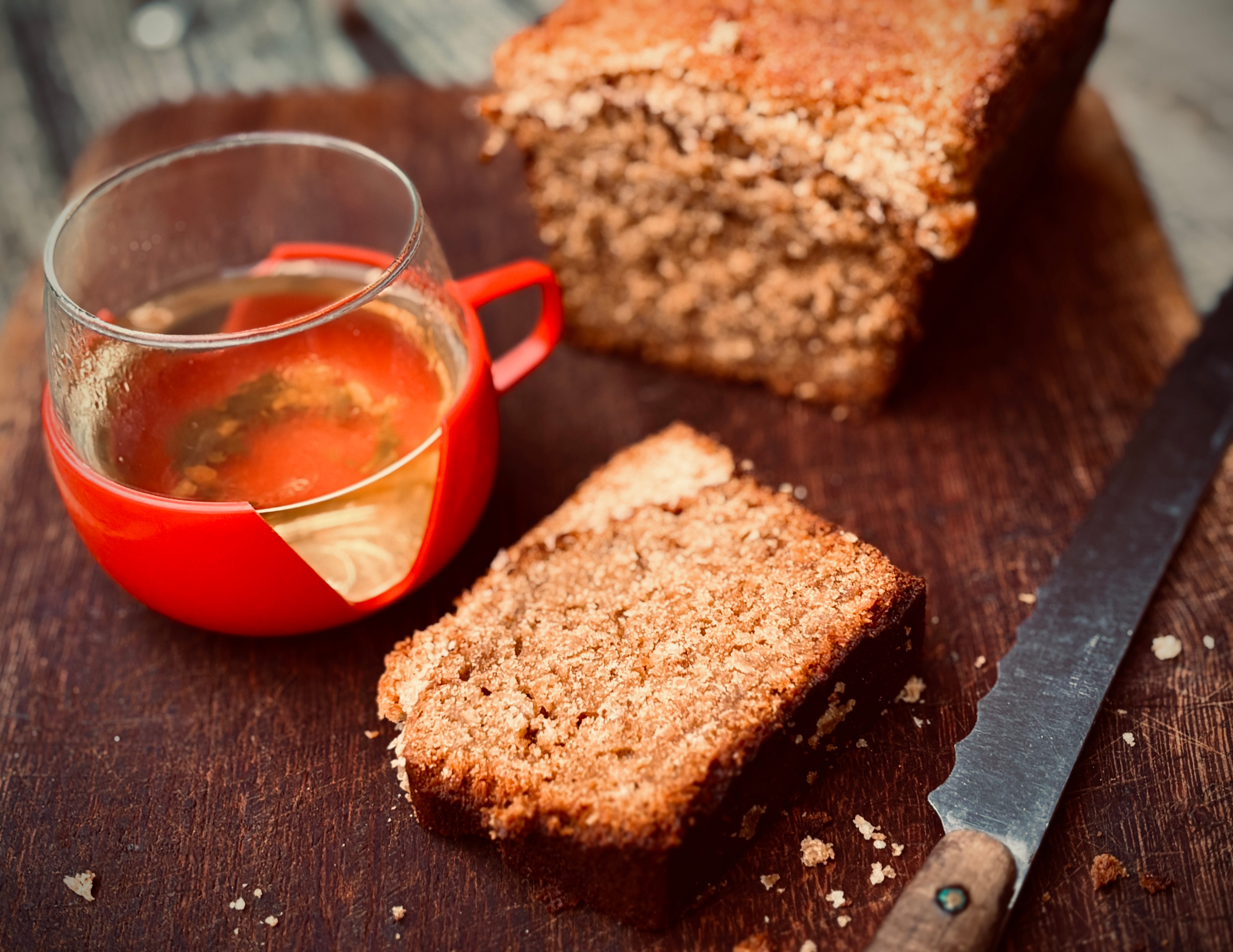
The book also prompted me to make Helen’s Anzac Cake, which appeared in a newspaper a number of years ago, and I never got around to making it. Topped with the flavors of Anzac Biscuits—coconut, oatmeal, and golden syrup—how could one not?

Helen’s Anzac Cake

As readers may have read in a recent newsletter (Feb 2026), I’ve been on a tear, cleaning out my freezers and kitchen cabinets…

I’m pretty sure that’s another anti-anxiety activity that doesn’t have any bad side effects, except maybe some guilt that you’ve let so many things get ignored or pushed back to the rear of your cabinets.

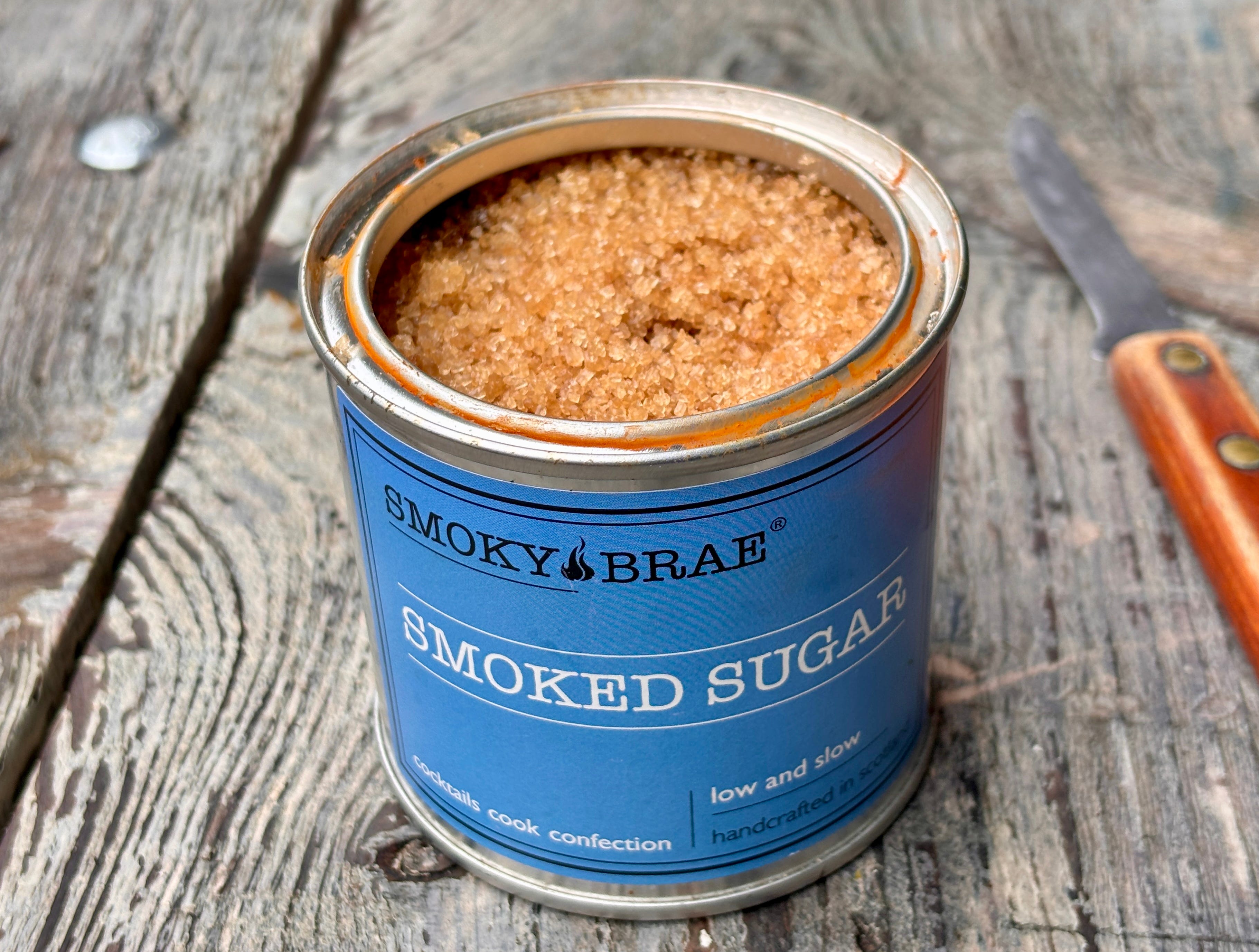
Back there, I found all sorts of odds and ends that I’d amassed over the last few years, including this smoked sugar I bought in Scotland. At the time, I wrote about it - “How could I not?” Then it languished in my kitchen cabinet for a couple of years before I finally found a place to use it.

In addition to everything from Sicilian pistachio paste to salsa negra in my cabinets, I’ve also got a problem with preserving things. I just can’t let anything go to waste. (If anyone knows what I can make with a quart jar of pickled samphire, let me know!)

Follow Helen Goh on Instagram

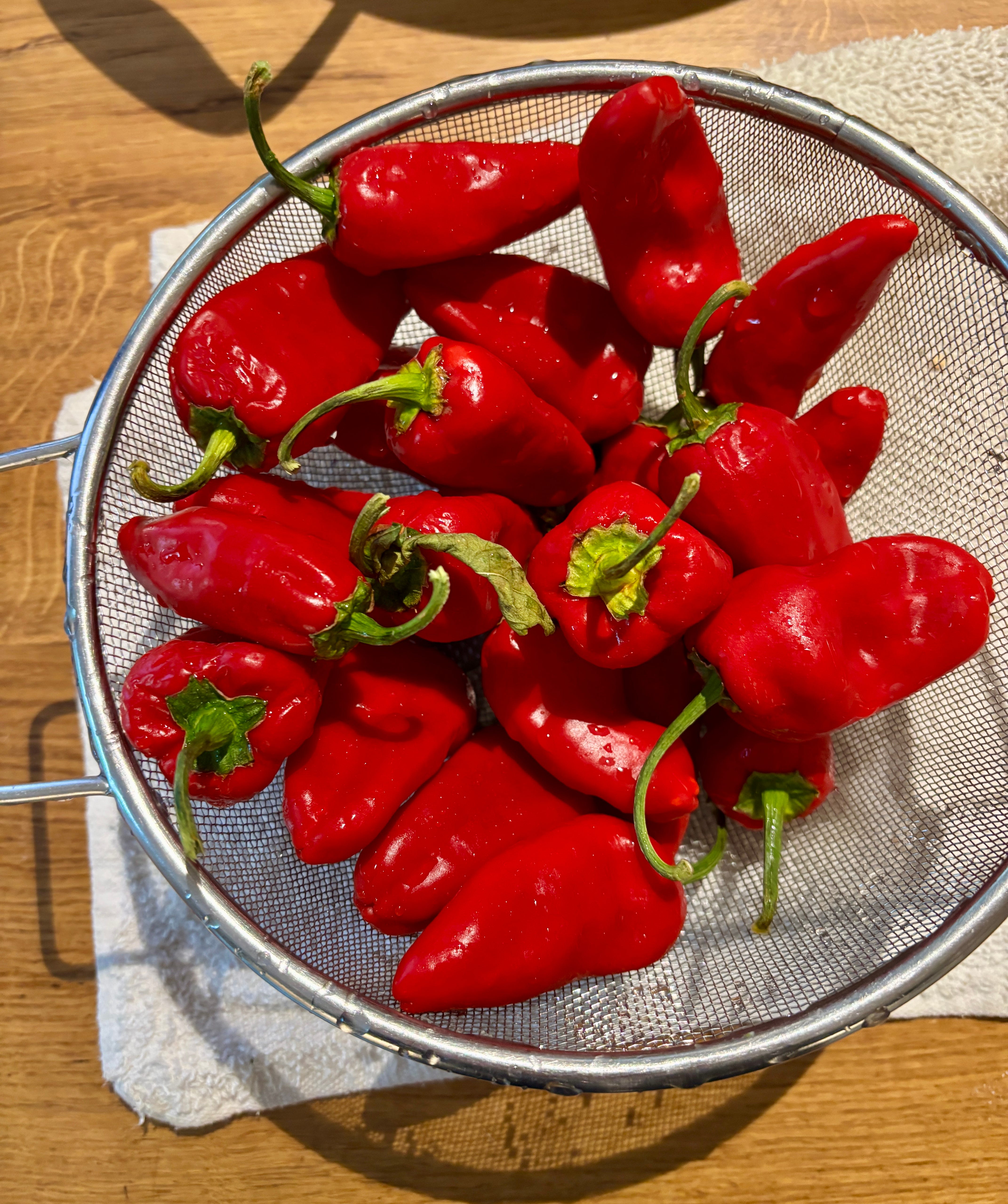
Often in the summer we’ll head to the south of France and this year, the woman who runs the farm stand in the village had a wooden crate filled with chile peppers. Almost everything else was sold out by the time we got there. Her produce is beautiful and it’s popular, but you need to have patience because once it’s someone’s turn, they need to spend some quality time catching up with her :) So you can’t be in a hurry.

While most of the other crates were empty when we got there a bit too late one morning, it looked like no one had touched the chiles. When I expressed interest, she put them all in a paper bag and gave them to me.

Score!

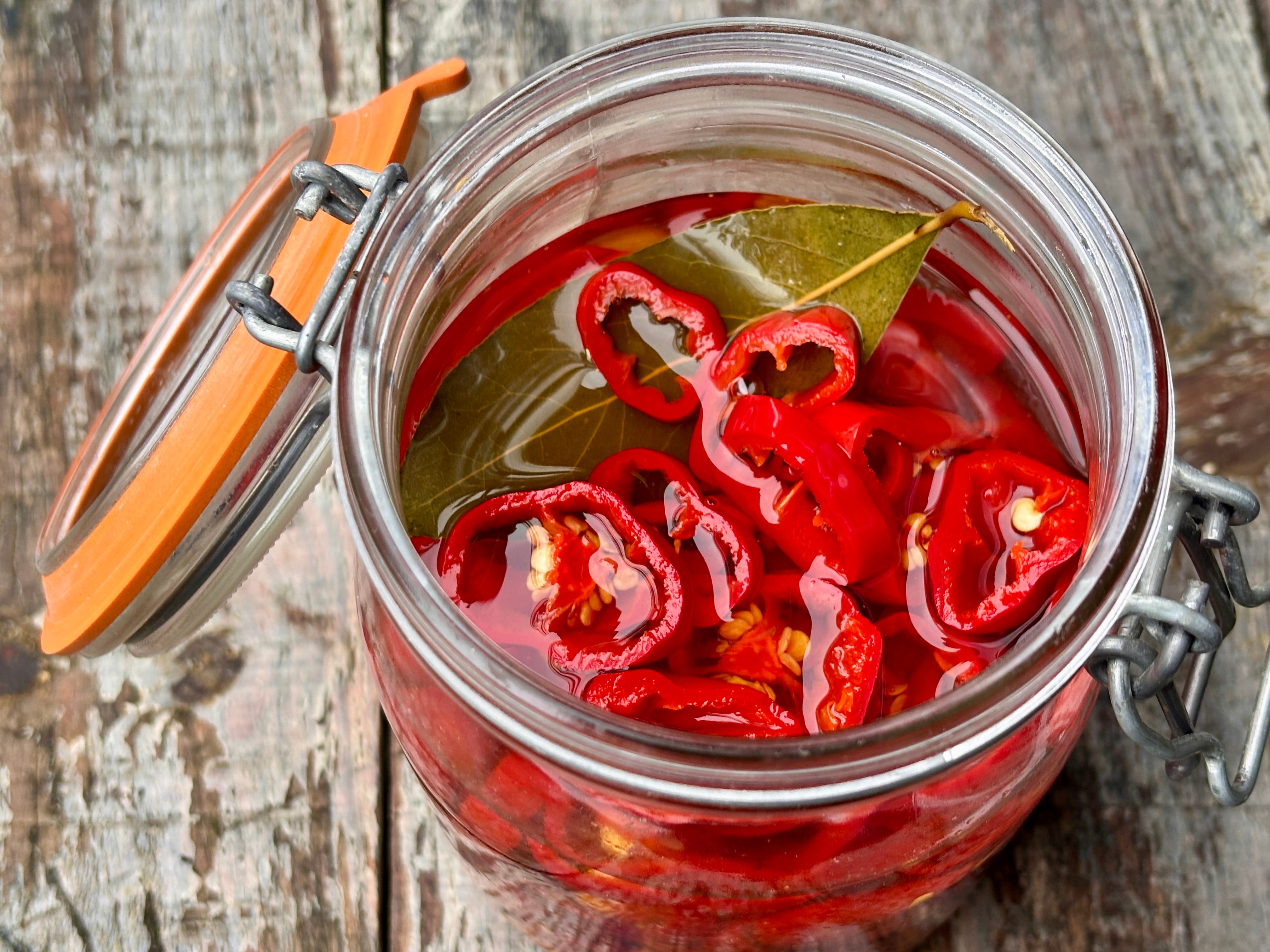
There were so many that I ended up pickling them, using my pickled jalapeño recipe, minus the carrots, red onions, and dried oregano.

Pickled Jalapeños recipe

The jar of pickled peppers has been in my refrigerator for a few months, and when I spotted a recipe in Helen’s book for Pickled Jalapeño & Cheddar Scones, I realize that this was their destiny. The recipe called for a generous amount of pickled chiles, and her recipe had come to the right place. (I also used that smoked sugar here, too.)

Living in France, I often have to modify recipes for what we can get here. I was emailing with a friend who wrote a Thai cookbook and mentioned how important substitutions are, when possible, because you want your recipes to be accessible to as many people as possible (or at least I do), while still preserving the basic integrity of them.

Subscribe now

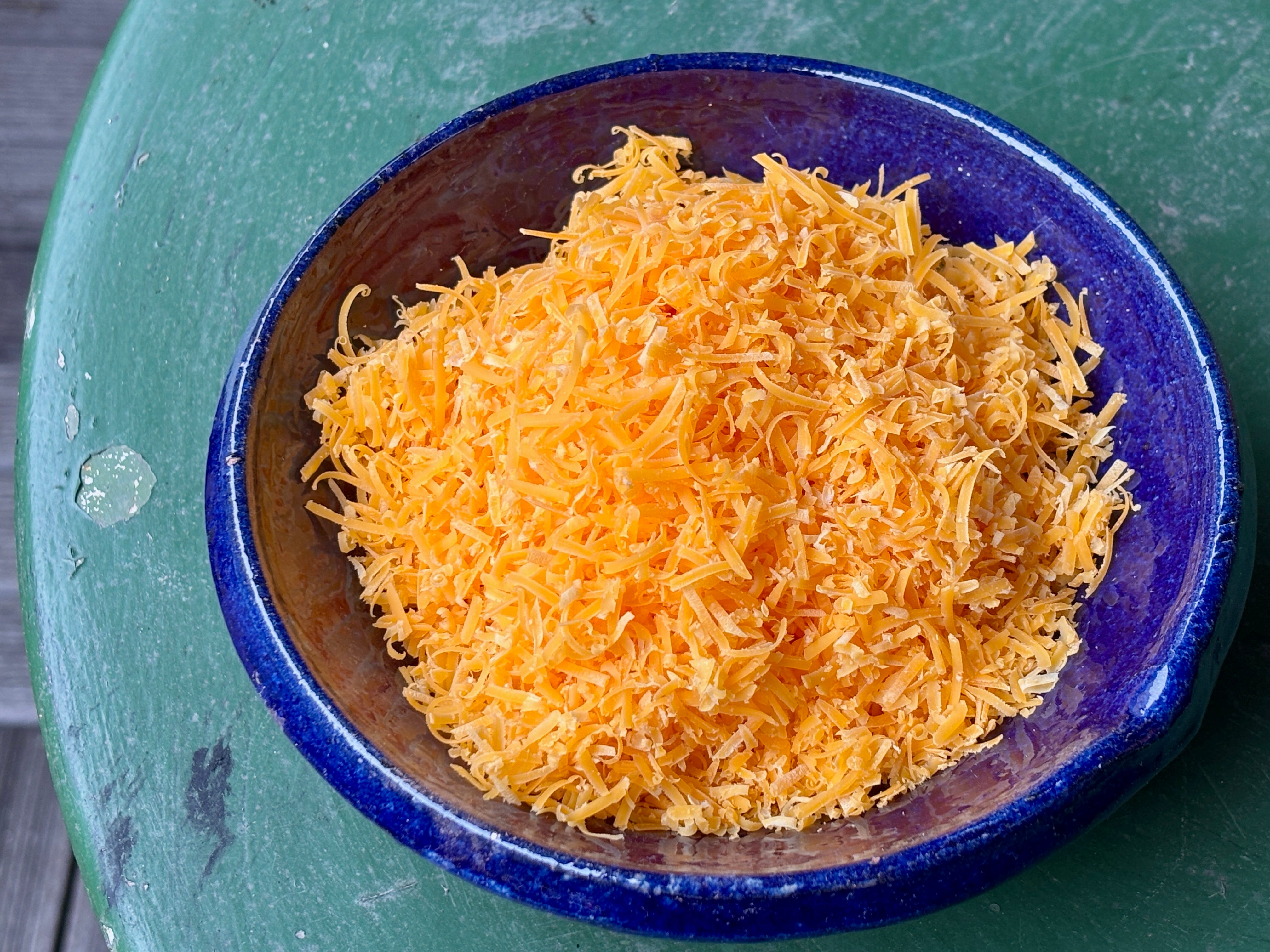
The original recipe called for cheddar, but I decided to keep it French, since I was using French-grown chiles, and grated some mimolette, a cheese that was briefly banned in the U.S. but is now available.

Making Mimolette in France

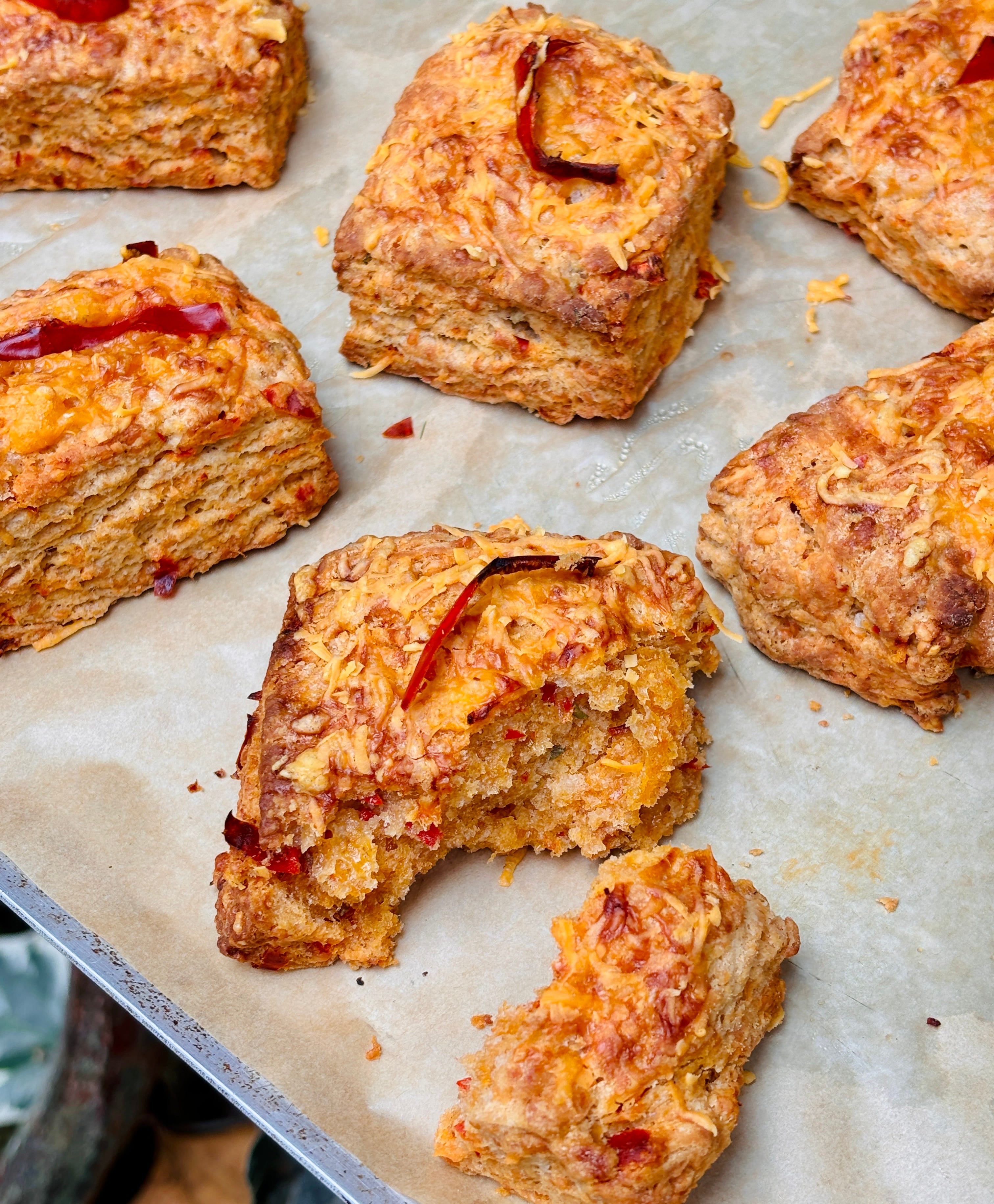
As Helen notes, these scones are close to American biscuits, and let me tell you, they were soooo good. Even before baking, when I was mixing and rolling the dough, they already smelled amazing.

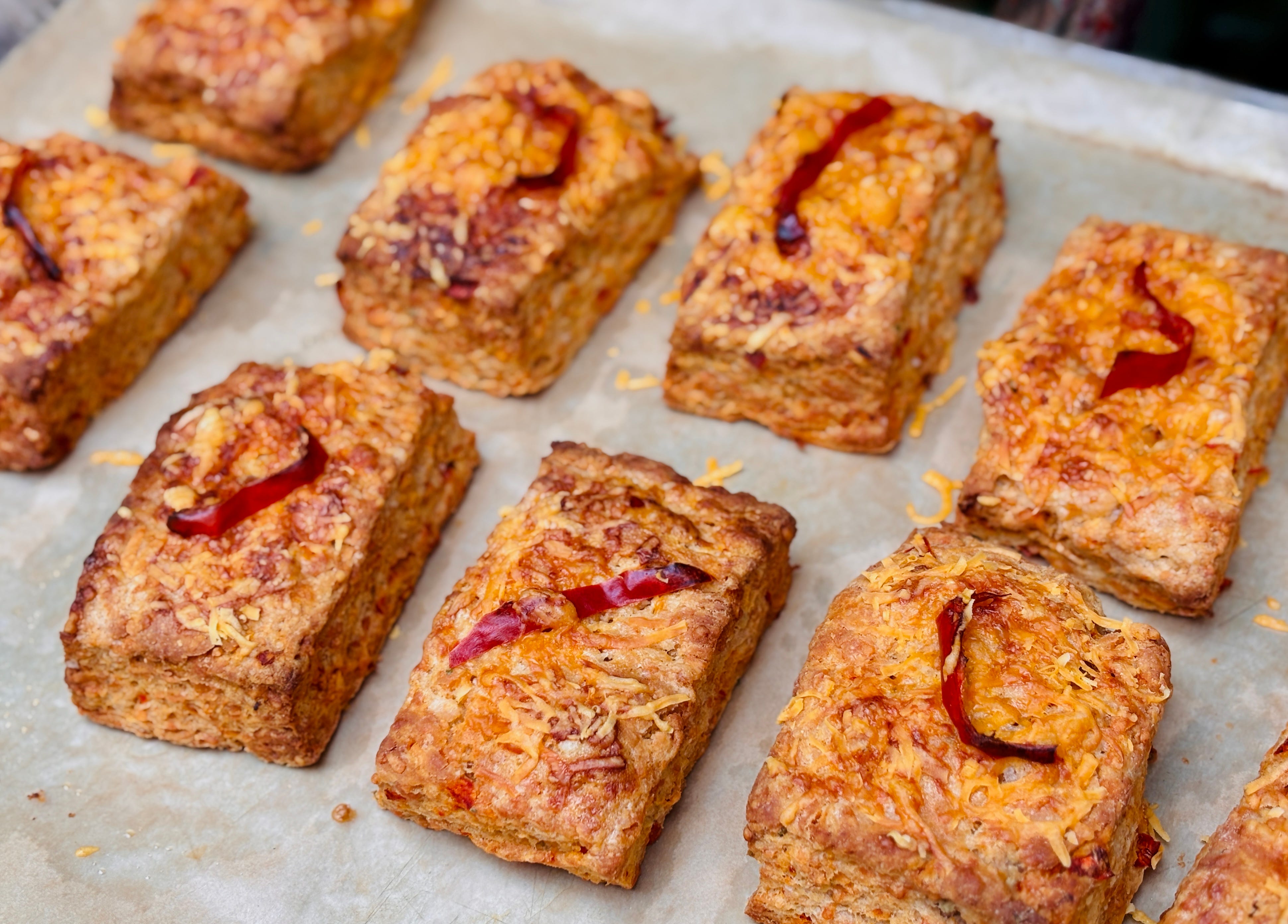
And after I baked them, the taste blew me away. They were spicy and cheesy and crispy and flaky. It was hard to resist breaking into one right when they came out of the oven because my kitchen smelled so good. Letting them cool slightly allows the cheese to firm up a bit, but they are absolutely heavenly eaten warm.

I’m sure there’s a snappier way of ending this post, but you’ll have to excuse me. I’ve got some biscuits to eat…

Leave a comment

Chile-Cheese Scones

Adapted from Baking & the Meaning of Life by Helen Goh

1 1/2 cups plus 1 tablespoon (220g) all-purpose flour, plus more for dusting

2 teaspoons baking powder, preferably aluminum-free

1/4 teaspoon baking soda

1 1/4 teaspoons smoked paprika

2 teaspoons sugar

1 teaspoon flaky sea salt or 3/4 teaspoon fine salt

1 clove garlic, grated or finely chopped

1/2 teaspoon dried oregano

6 tablespoons (85g/3oz) cold unsalted butter

5 tablespoons (70ml) whole milk

1/3 cup (75g) plain full-fat yogurt, plus 1 additional tablespoon for brushing the tops

4 ounces (115g) grated cheddar or mimolette cheese, divided

1 1/2 ounces (50g) drained weight, pickled jalapeños, blotted dry with a paper towel and finely chopped (you’ll have about 3 tablespoons of chopped chiles), plus 10 slices of pickled chiles

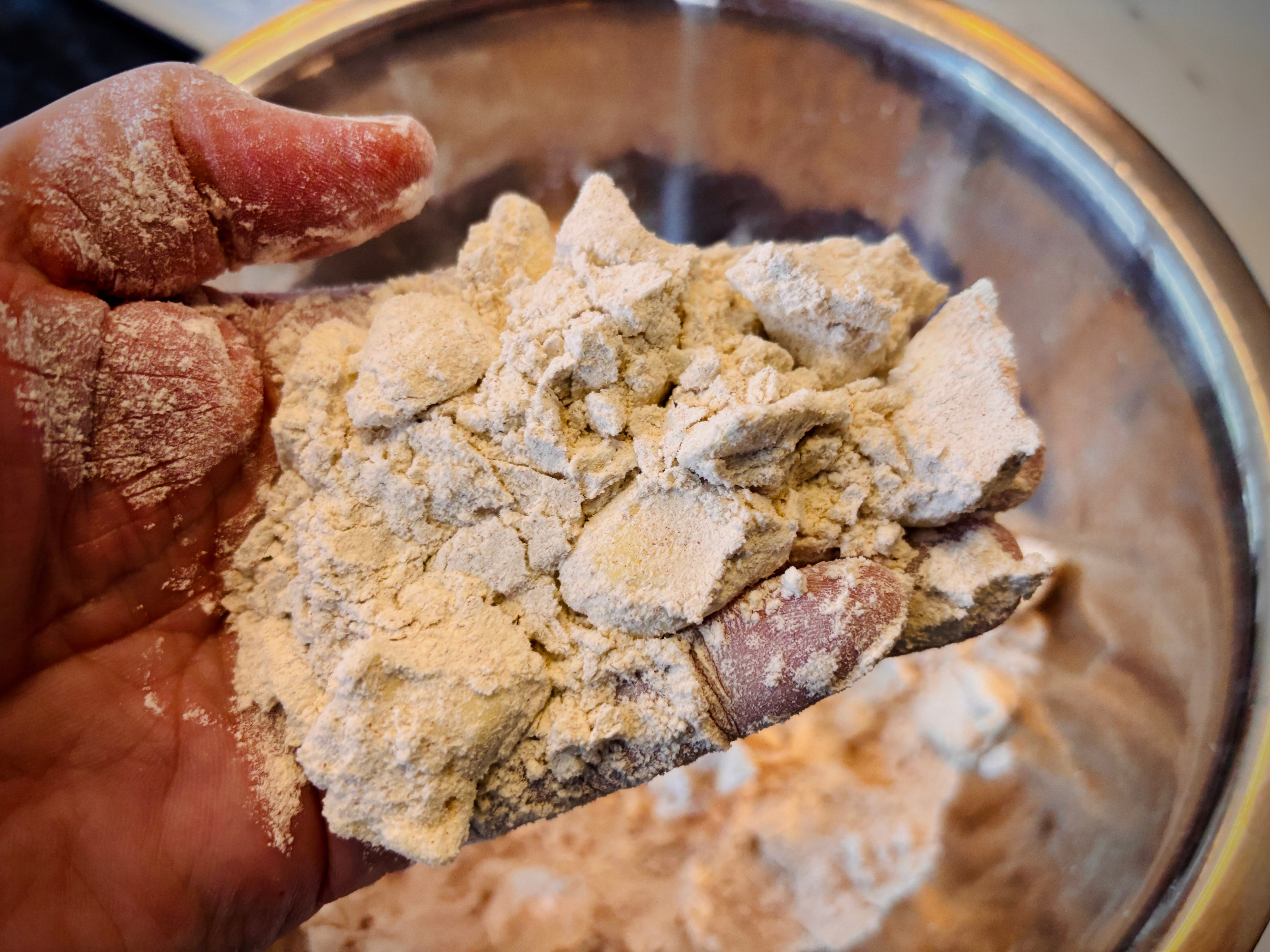
  1. Whisk together the flour, baking powder, baking soda, paprika, sugar, salt, garlic, and oregano in a medium bowl. Put the cold butter between two pieces of parchment paper (or plastic wrap) and whack it with a rolling pin until it’s about as thick as your thumb. Unwrap it and rip the butter into pieces, tossing them in the flour mixture. Using your fingers, smoosh the butter into rough 1/2-inch (2cm) flakes.
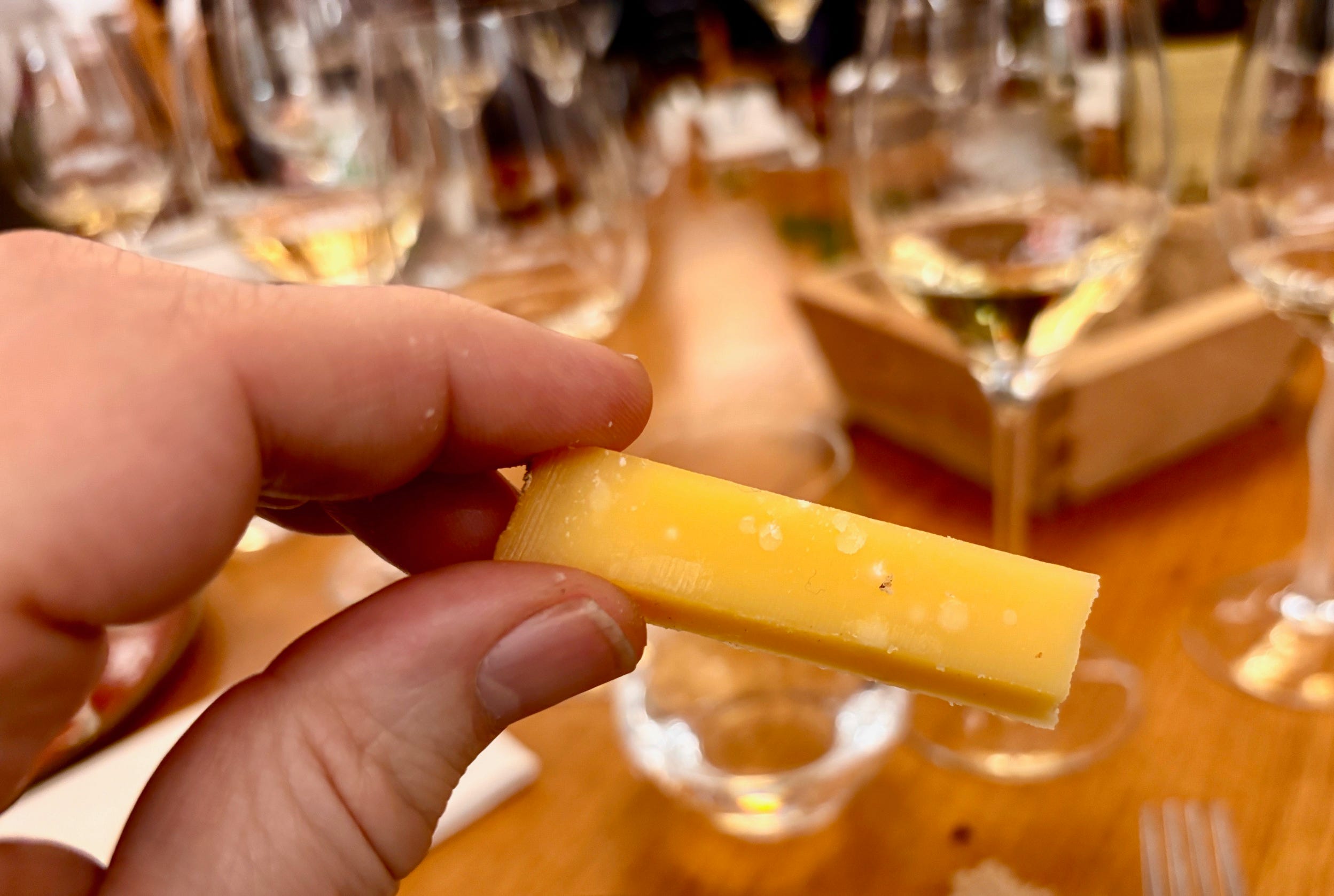
Don’t overmix the dough. You want visible flakes and chunks of butter in there.
  1. Refrigerate the bowl of ingredients for 30 minutes.

  2. To assemble and bake the scones, preheat the oven to 400ºF (200ºC) and line a baking sheet with parchment paper. Remove the flour mixture from the refrigerator. Add the milk and yogurt, stir a few times with a flexible spatula, then add three-quarters of the cheese and the chopped chiles. Sprinkle the countertop lightly with flour.
  3. Stir everything together until the dough starts coming together, then use your hands to gather the dough into a more-or-less cohesive mass. Transfer the dough to the countertop and shape it into a rough rectangle. Note: The dough will smell really good at this point.

  1. Using a pastry scraper or chef’s knife, cut the dough into three rectangles (see the photos in the post). Pile the rectangles on top of each other, then press them down, forming a rectangle. Repeat the process, patting the dough into a rectangle, cutting it into thirds, piling them on top of each other, and pressing them down again into a rectangle.

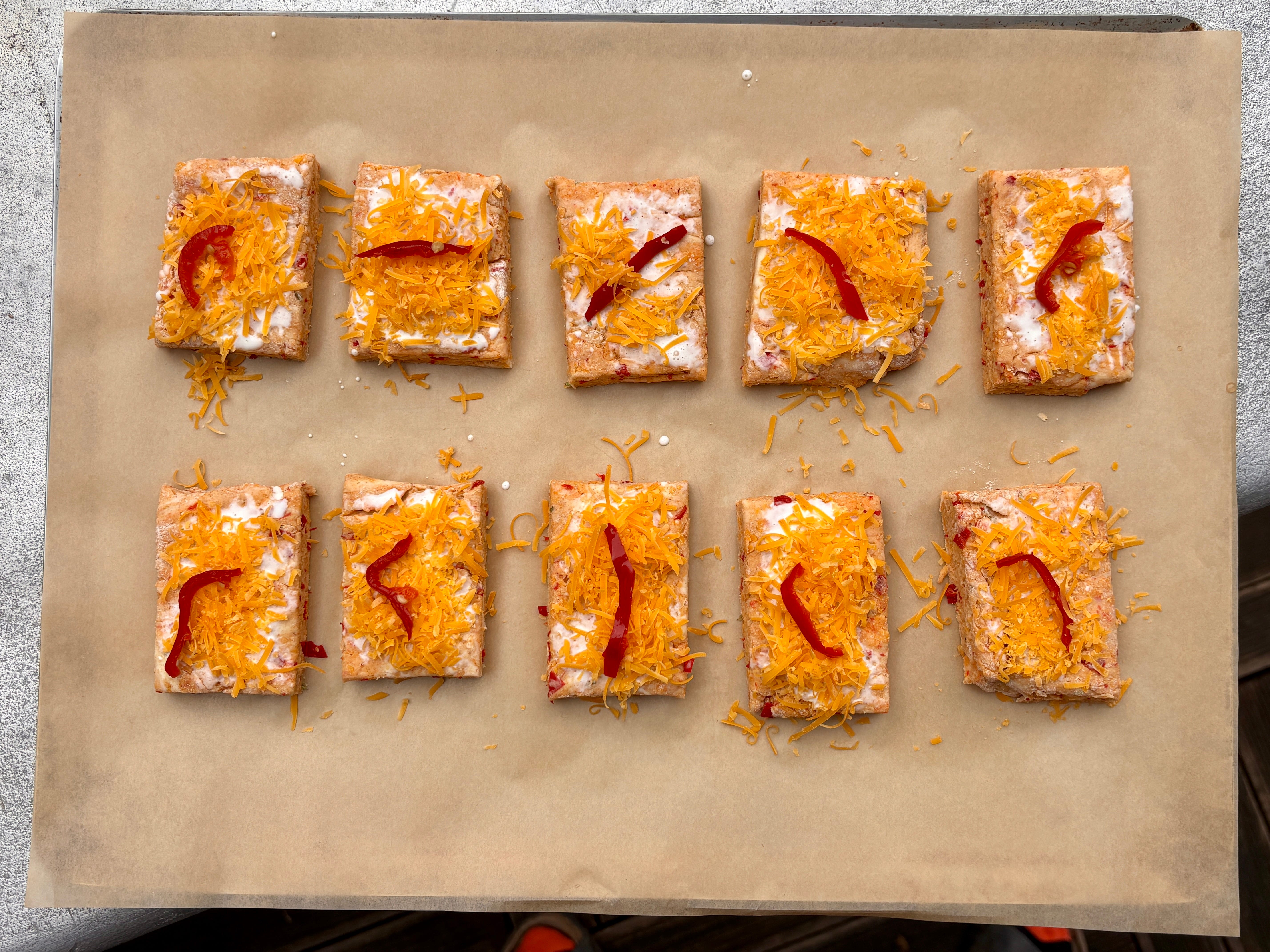
  2. With a rolling pin, roll the dough into a long rectangle measuring 10 x 4 inches (24 x 10cm). Cut the dough lengthwise in half, then cut it vertically, creating ten individual rectangular scones. (You could trim the outside edges of the rectangle to straighten them out before cutting the dough, if you want the scones neater. If you do that, gather the scraps together into a small mound and bake that alongside the scones, which’ll be a baker’s snack.) Place the unbaked scones evenly spaced apart on the baking sheet. Brush the top of each with a little yogurt, then top each with grated cheese and a thin slice of chile pepper.

  3. Bake until deep golden brown, 18 to 20 minutes, but start checking them a few minutes before.* They’re done when they’re browned across the top and up the sides, and feel almost fully baked when you press the tops.

Serving: The scones are delicious on their own, or split in half and buttered. They would also be great for breakfast, served with scrambled eggs. You could cut them smaller (and reduce the baking time) to serve as appetizers.

Storage: The scones are best the day they’re made. They can be stored in an airtight container overnight at room temperature.

Subscribe to my newsletter

Chile Cheddar Scones
73.6KB ∙ PDF file
Download
Download

Get Baking & the Meaning of Life

*My oven has a silly (and annoying) feature: When you open the door to check something, the oven turns itself off unless you remember to press the "Start” button again. Whoever came up with that idea never developed or tested recipes. I’m now hyper-vigilant about it, since I’ve had to redo recipes while testing them.

I forgot to turn it back on while baking these but luckily I remembered less than a minute after I checked on them. Helen’s book says to bake the scones for 20 minutes, but you can check them a few minutes before. (And if you have the same oven that I do, don’t forget to turn it back on!)

Received — 16 February 2026 David Lebovitz Newsletter

Poule au pot

16 February 2026 at 16:03

Well, la gastro got me again. Because la gastro is so common here in the winter, and French is so complicated to speak even for native French speakers, the name gets shortened from gastro-entérite, or gastroenteritis.

Being densely populated, Paris is a petri dish for it, although some guests were in the French Alps last week, and four out of six of them got felled by it. So escaping to the mountains doesn’t ensure that it won’t find you there.

I had it about a month ago, and just got it again, which doesn’t seem fair, although as I recently heard a doctor say, viruses don’t care about your feelings.

Share

La gastro is very contagious and the best defense is washing your hands. (Hand sanitizers aren’t that effective against the virus.) Unfortunately, in a country where greeting someone involves shaking hands, and daily life entails holding onto poles in crowded métros, eating in restaurants and shopping at markets where multiple people have handled your food, and towels for drying your hands after washing them in some restaurants and cafés are shared with perhaps a hundred or more people*, you don’t need to look very far to see how (or where) you could have gotten it.

One thing about getting sick in France is that you have to plan for it. There’s no pre-prepared chicken soup, and supermarket soups are invariably veloutés or purees of vegetables.

I don’t know about you, but when I have an upset stomach, the last thing I want is a bowl of green soup, especially if you’re old enough to remember Linda Blair in The Exorcist. When things are coming out of you fast and furiously, you want a bouillon-based easy in, easy out situation. And certainly not anything green.

Newcomers to France, from America, are surprised to find that store-bought bouillon or stock isn’t readily available in liquid form, as it is in the States, where whole aisles of the supermarkets are devoted to a range of stocks sold in quart cartons. In France cubes of stock are commonly used, from brands like Knorr, and Maggi. Ultra-processed hasn’t become a keyword in France yet, but I’ve yet to make the transition to them.

I’m not sure what people in France do when they get sick, but if you can drag yourself to the grocery store, or can manage a trip to both the butcher and the produce store, you can make a poule au pot.** This “chicken in a pot” requires little hands-on work, and is easy on the system, one that I’m doing my best not to upset any further.

Subscribe to my newsletter to get new posts sent right to your inbox…

There are fancy ways to make a poule au pot, such as one with a sauce suprême made with crème fraîche, egg yolks and butter, or this one, with 14 ingredients. Or this one with chicken stuffed with a farce (stuffing), which you’re welcome to tackle if you’ve got the fortitude for it.

There may be a definitive version of poule au pot, but I’m too zonked to track it down, nor am I up for a battle with the authenticity police. And I’m definitely not up for*** stuffing a chicken, or making or eating cream sauce.

The good thing about making this dish is that you don’t need store-bought stock as cooking a whole chicken gives you a lovely, rich broth. And while not part of the French culinary canon, since Manischewitz has not made it to France, there’s no matzoh meal at the supermarché.

Another Poule au pot

Yes, you can buy pain azyme and grind it yourself, but that also takes strength, so it’s a no-go. My neighbor who owns a deli in Brooklyn is out of town. Otherwise I’d ask him to bring some matzoh balls over. I’d be pretty surprised if he didn’t have some matzoh meal squirreled away.

Poule au pot

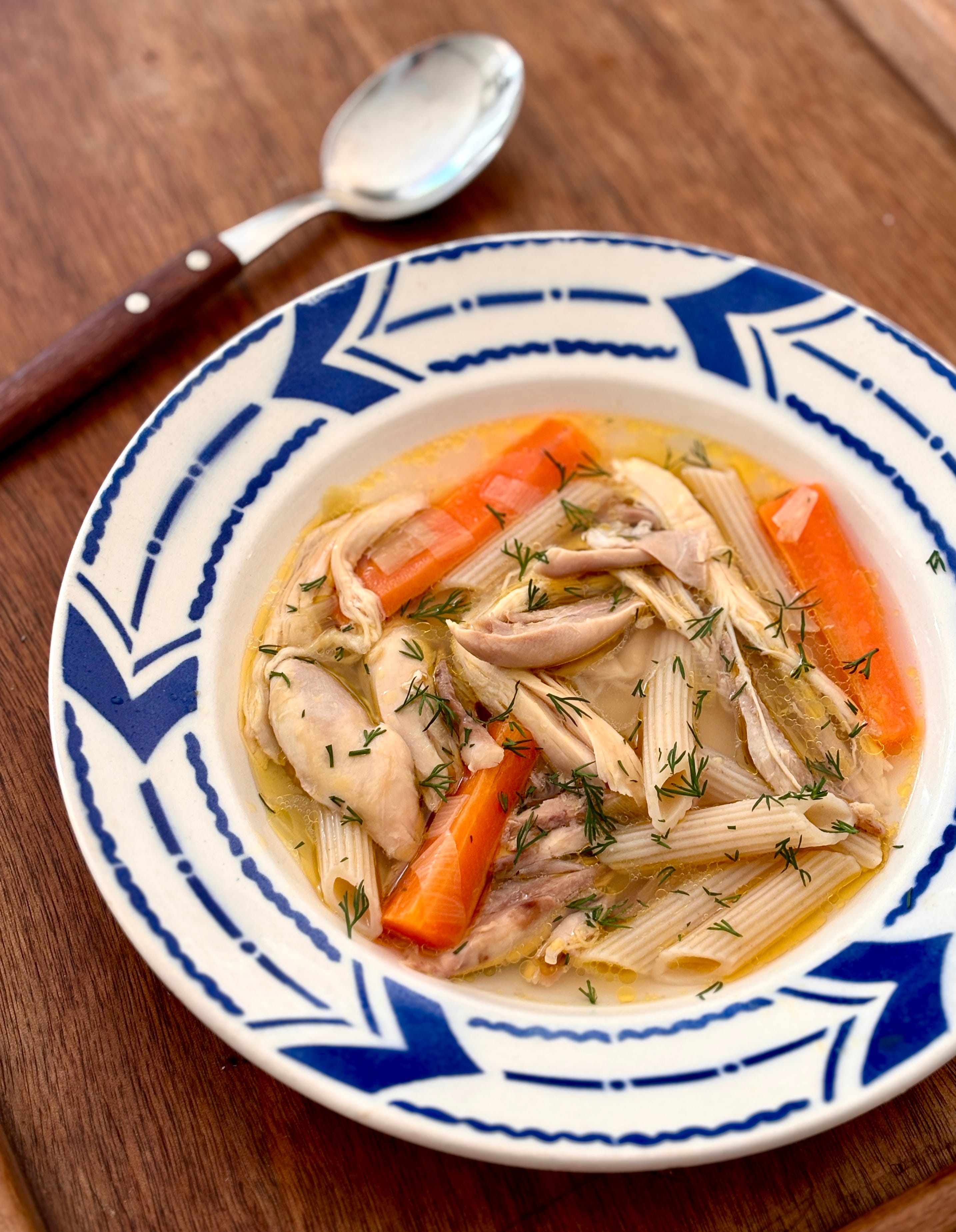
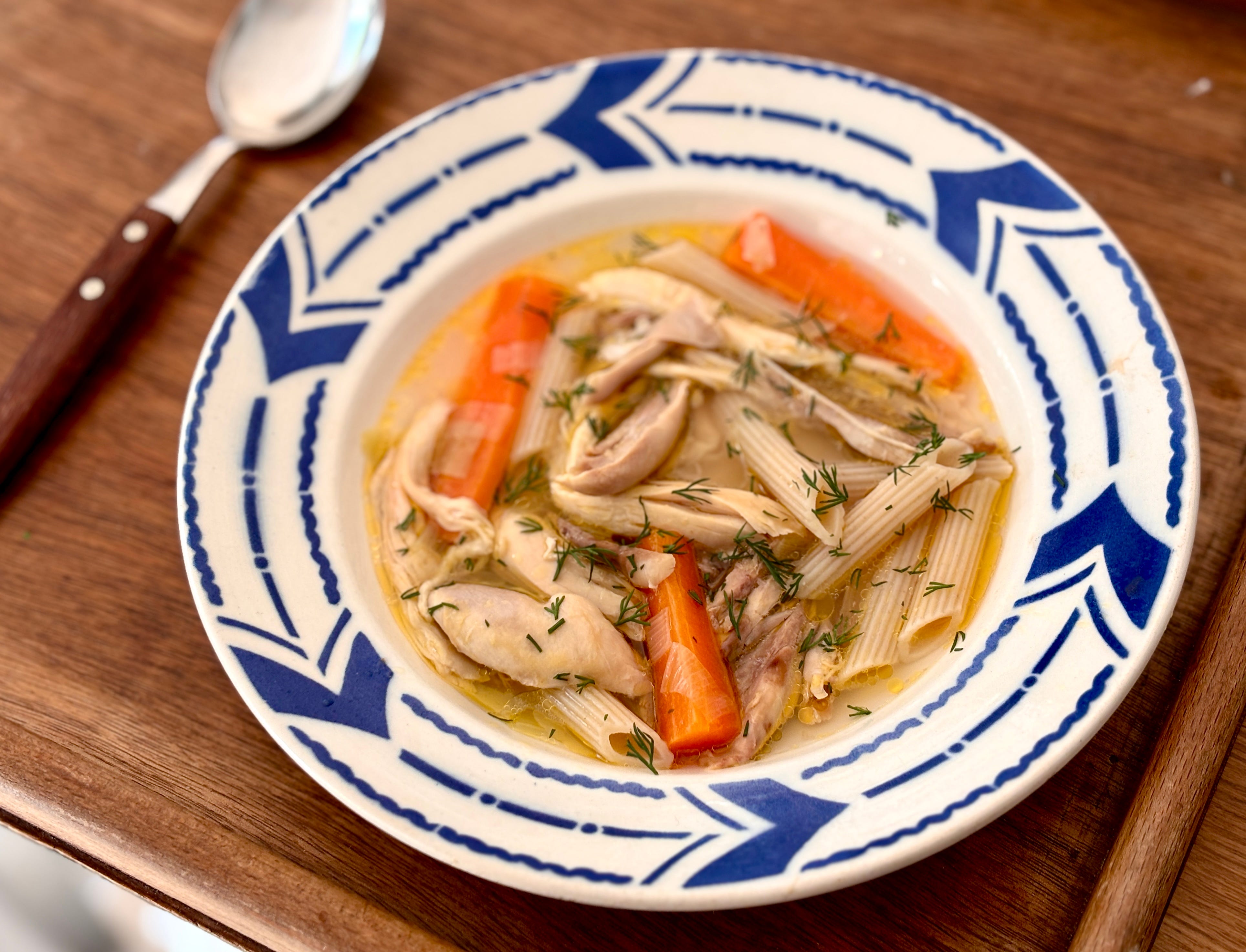
Armed with my shopping list, after Romain came back from the store, I placed the free-range chicken in a pot. I added enough cold water so it covered about three-quarters of the chicken, then added some salt as well as a chopped leek and three carrots cut into thick batons. Fortunately we have a garden so I grabbed a few sprigs of thyme and tied them in a bundle to add to the pot, as well as two bay leaves.

Garlic is used very discreetly in French cuisine; with the exception of aïoli, which technically is Provençal - and some in Provence may argue that that’s not French cooking, that it’s Provençal. (Once again, I’m not looking for a fight. I’m just being diplomatic.) Few, if any, poule au pot recipes in French call for ail — doing an online search, the only ail I found in poule au pot recipes was in the word volaille, which means chicken.

I added four minced cloves of garlic, which the authenticity police may not approve of, and even Claude AI was baffled by the request. And into the pot that went, as the health benefits of garlic outweigh any cultural conflicts.

Everything was simmered over very low heat with the lid ajar for about 90 minutes, until the chicken was very tender. About halfway through the cooking, I used tongs to pull the thighs away from the breasts to help the broth get more infused with flavor. (That may not be scientifically provable but I have a feeling that it does.)

Once the chicken was cooked, I fished the pieces out with tongs and put them in a bowl to cool. When cool enough to handle, I shredded the meat and put it back in the pot. And that’s it.

If you want to add rice or noodles****, as I did, it’s best to cook them separately and add them to individual servings right before serving, or they’ll get soggy. Fresh dill is an add-on that’s no common in France, but Romain likes it (as do I), and picked some up at the store. It adds a nice flavor to the soothing soup.

Leave a comment

*Many restrooms in France, such as those in restaurants and cafés, have a cotton towel on a hook for people to dry their hands on after washing them. That may save paper, but to me, seems to defeat the purpose of washing your hands. Although perhaps the feeling is that is everybody is washing their hands, before drying them on the towel, the towel isn’t harboring any germs or viruses.

**You’ll find recipes for soupe de poulet and soupe au poulet, that are basically variations on poule au pot, which further complicates things — especially the two different prepositions for the same soup. As mentioned, French is hard…even for the French.

***Sorry about any typos.

***Like Manischewitz matzoh meal, Goodman’s egg noodles haven’t made it to France yet. But egg noodles (pâtes aux œufs) are the best with this dish.

Received — 9 February 2026 David Lebovitz Newsletter

Podcast: Lauren Collins, Paris-based New Yorker Journalist

9 February 2026 at 08:38

Since 2015, Lauren Collins, staff writer for the New Yorker, has called Paris home. The author of When in French: Love in a Second Language, Lauren moved from Switzerland to France with her French husband and still writes for the New Yorker, continuing their tradition, which includes writers such as A. J. Liebling, Anthony Bourdain, Calvin Trillin, John McPhee, and Adam Gopnick, of outstanding food writing and reporting on food-related topics.

https://www.penguinrandomhouse.com/books/317941/when-in-french-by-lauren-collins/

When in French by Lauren Collins

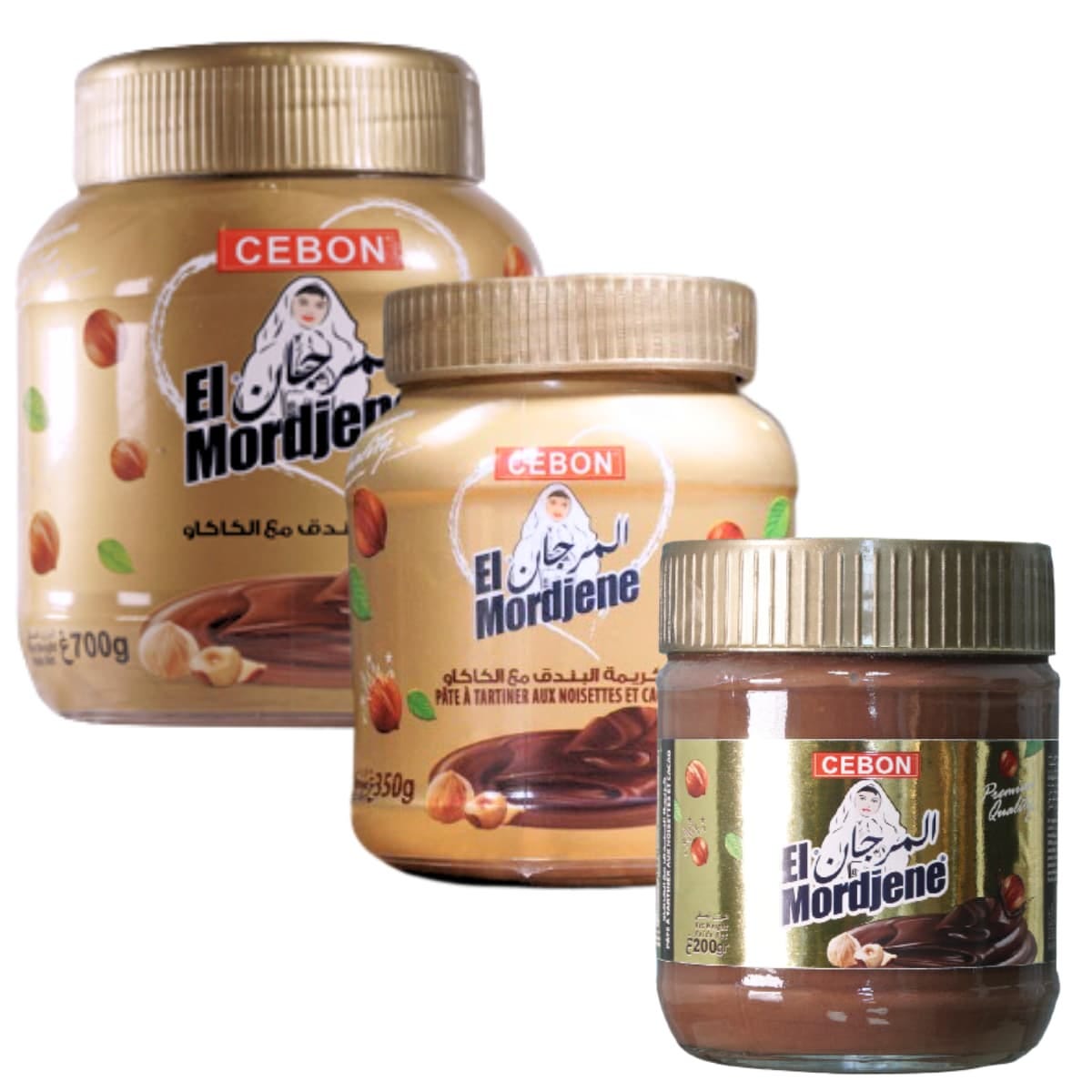
Her articles have ranged from subjects such as the controversial French tacos, spelled with an “s,” even though it’s just one; Les Grands Buffets, the all-you-can-eat buffet restaurant that’s the hardest reservation in France (in my experience trying, it’s the hardest in the world); and the elusive El Mordjene Algerian hazelnut spread, a cult favorite that’s nicknamed “beige gold,” which was banned in France.

Lauren has also written on the wonders of Japan’s fake foods, as well as “Where should I go?” a service that provides Americans and other visitors with “insider” French experiences, such as fulfilling the request of a client who wanted to be invited to a party in a French person’s home.

Subscribe to Lettre Recommandée

Recently Lauren reviewed the just-published memoir of former Président Nicolas Sarkozy’s brief time in prison, titled How Nicolas Sarkozy Survived Twenty Days Behind Bars, a book that received a mixed reception in France. In her newsletter , she titled her story The Rush Job Memoir That’s Topping the French Charts. Oh, and she got to meet Omar Sy!

In the podcast, we discuss how these stories came to be, as well as how things have changed in France since Lauren’s moved here, and what it’s like being a journalist in France. As I do with Paris-based guests on my podcast, I asked Lauren to share some of her favorite addresses in the city for dining, which she was happy to do.

Follow me on Apple Podcasts

Lauren’s recommendations are Le Récamier, Le Soufflé, Chez Carrie, Enni Udon, Magnolia, La Joie, and Rosario, as well as Finkstuebel in Strasbourg. In the podcast, she explains why they are her favorites.

Enjoy listening in!

-David

Leave a comment

https://www.davidlebovitz.com/book/ready-for-dessert-revised/

💾

Received — 4 February 2026 David Lebovitz Newsletter

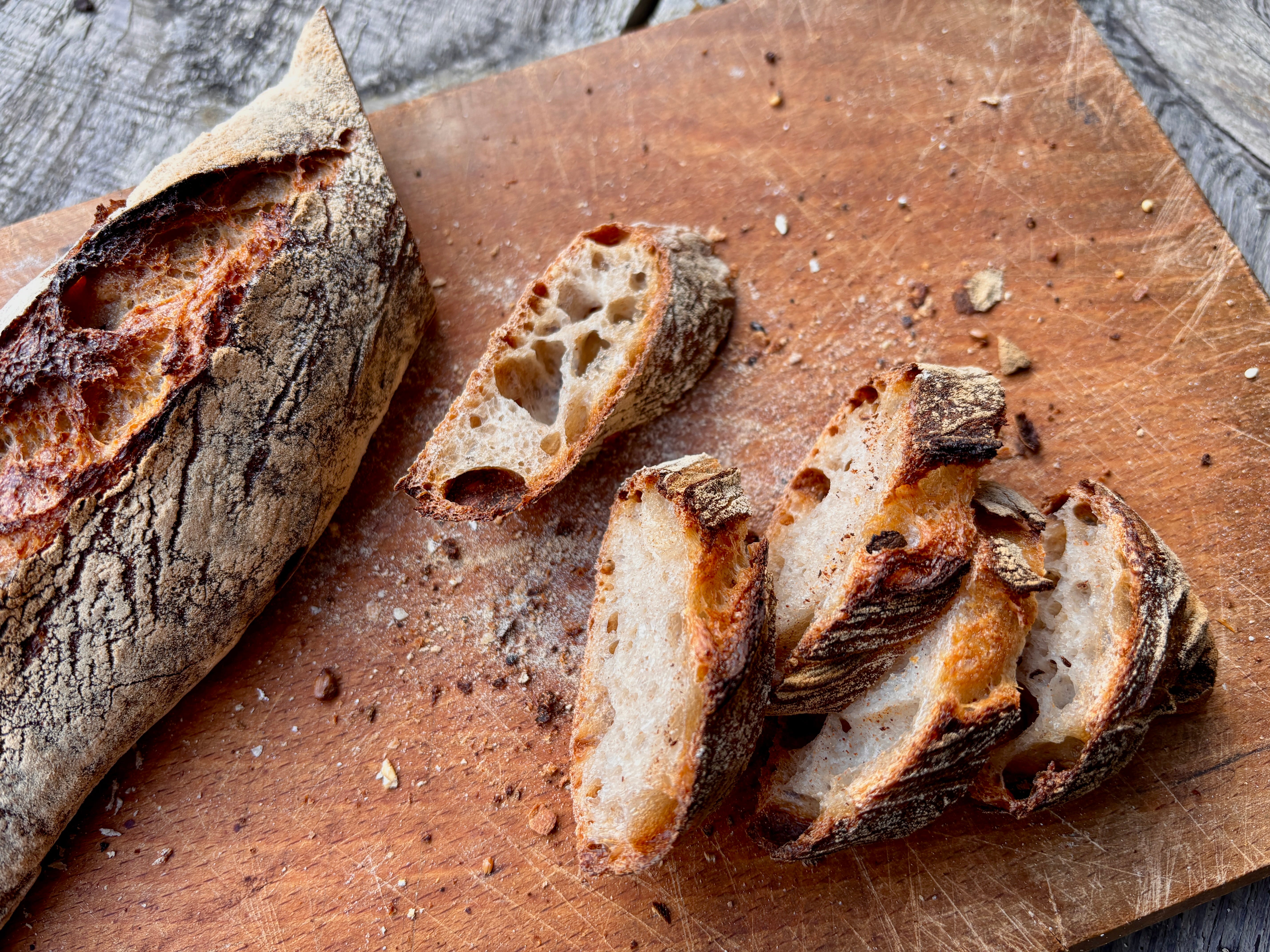
The Crispiest, Crunchiest Baguette in Paris

4 February 2026 at 17:35

I don’t really subscribe to anything being called the “best” because, A) It’s subjective, and B) Things change, and what’s great today may be gone tomorrow.

As for the “experts,” I ran into a friend who’d judged the best baguette in Paris contest and shortly after, I stopped her on the street carrying a baguette from a different bakery. I asked why she didn’t go to the place she said was the “best” and she replied, “When you taste over a hundred baguettes, after the first few, it’s hard to taste the differences.” So even the experts don’t know - although I’ve never been asked to judge, so you might not want to listen to me either.

Read more

Received — 1 February 2026 David Lebovitz Newsletter

February 2026 Newsletter

1 February 2026 at 15:04

Lately we’ve felt like we needed to do some self-care and while every country has its good points and bad, Japan gets it right when it comes to the loo. So we finally bit the bullet and got a Japanese toilet, which — thanks to the magic of plumbing — upgraded our WC into a business class experience. These days it’s nice, and vital, to do things that make us feel better whenever and wherever we can, but I can only eat so many French pastries. So the Toto, it ‘tis.

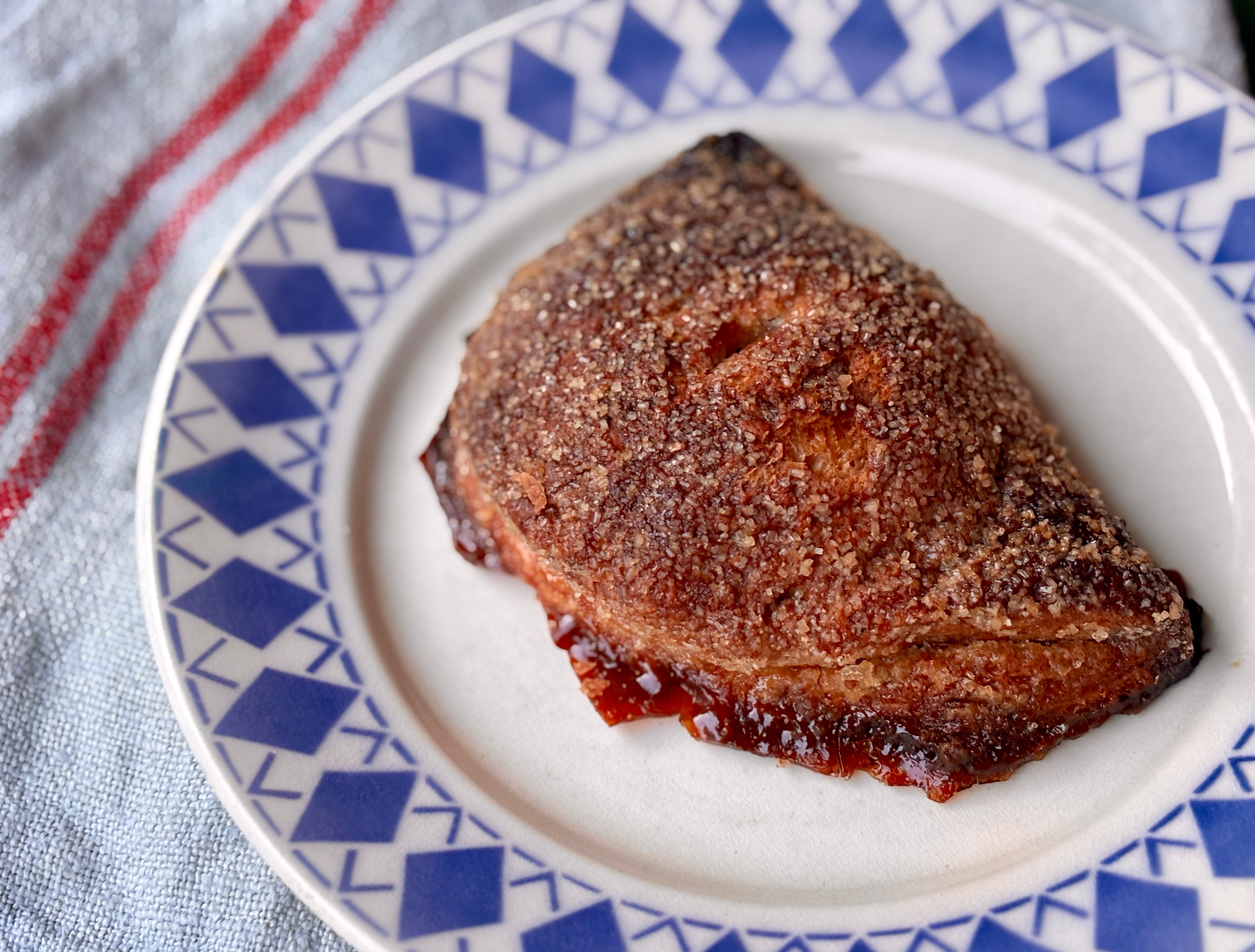
Chausson aux pommes, a caramelized apple turnover, from Sain bakery - one of my very favorite pastries in Paris.

For a little escapism (in the rest of our apartment), like a lot of you, I watch streaming shows - including a steamy show - although I’ve had to skip finishing Season 2 of The Last of Us because of the violence, in spite of the presence of Pedro Pascal, who was also in Eddington, which is a thoroughly disquieting movie. I wanted to join the “in” crowd and watch The Pitt, but a parental guidance website listed the violence and gore as “severe,” so that’s off my watch list. And I did watch Heated Rivalry, which was hot and heavy, and I saw lot more action in those six episodes than I did during several decades in San Francisco.

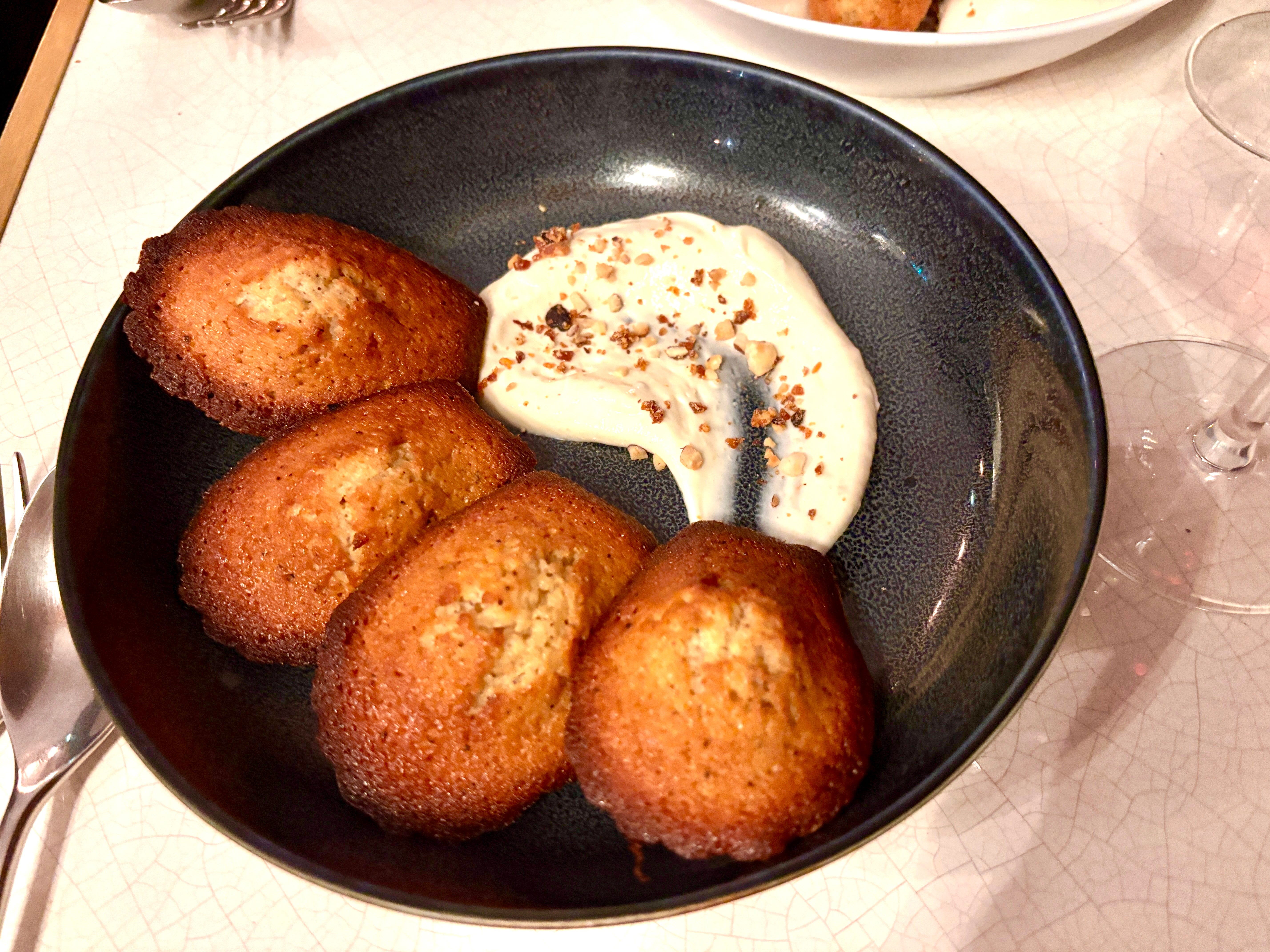
Warm madeleines with orange cream and praline for dessert at Jouvence.

I’ve also been trying to read more and have a stack of books I’m slowly making my way through. I’m in the middle of North Woods, which is brilliantly written, if a tad hard to follow if you put it down for a few days.

Subscribe now

Books I’ve recently finished were Impossible City, which takes a deep dive into the psyche of how Paris functions in the 21st century, and The Heaven and Earth Grocery Store, which the NYT described as “a murder mystery locked inside a Great American Novel.” I’ve got Quiet by Susan Cain on my docket as well as Picasso the Foreigner, a nearly six-hundred-page book about Picasso’s life in France and the conflicts he had with the country. Not to mention a bounty of new baking books that I’m anxious to start baking from.

I’ve also been revisiting some of my older cookbooks, especially classics that take me back to better times (gosh, I’m sounding old…) But reading Laurie Colwin, Richard Olney, and Marion Cunningham are a balm. That also goes for Edna Lewis, who I wrote about here…

Get newsletters sent right to your Inbox! Sign up here to get recipes, stories, Paris tips, and more…

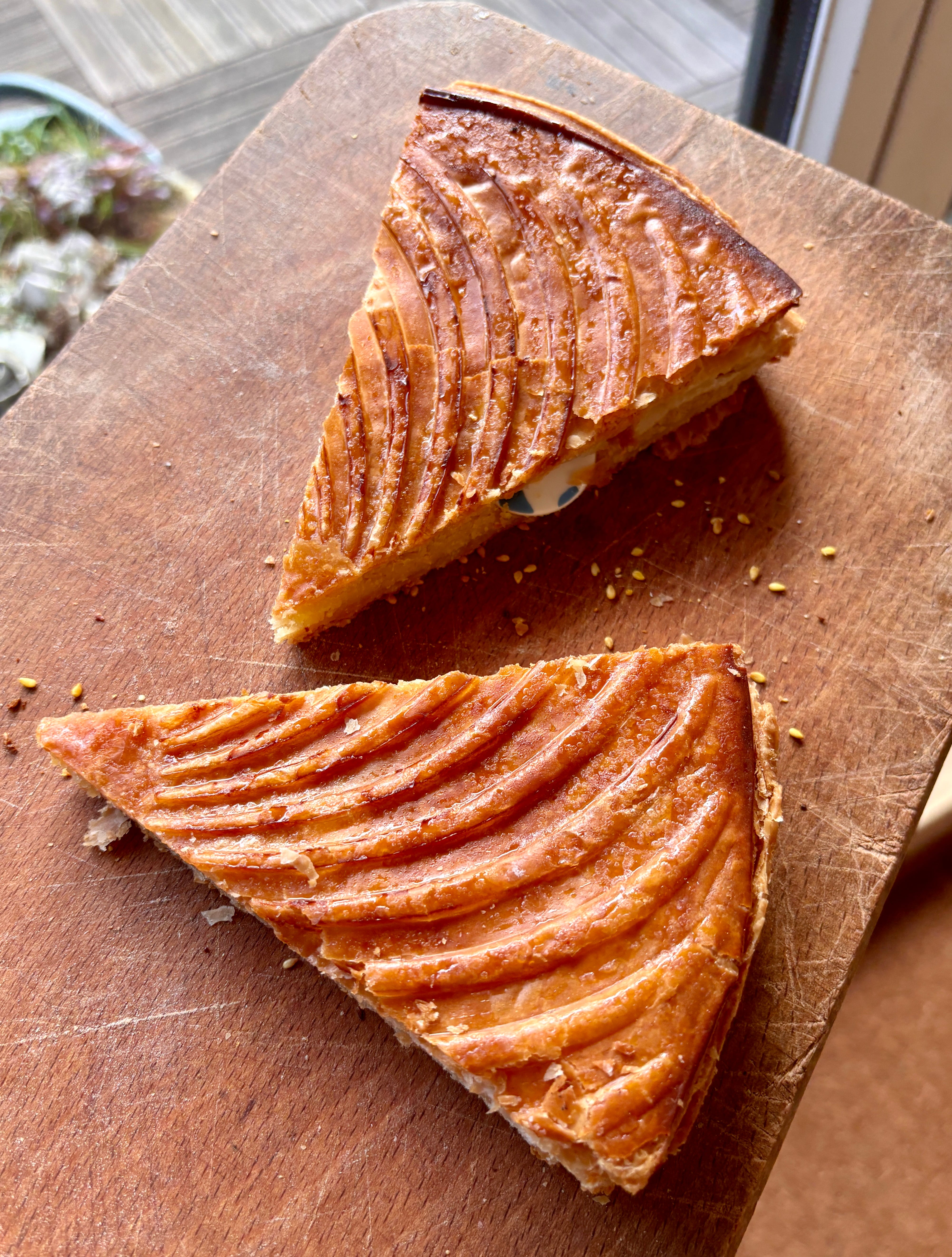
January was galette des rois season, the traditional King Cake in Paris, which is made with puff pastry and filled with almond cream. The other versions in the south of France are rings of brioche topped with crunchy pearl sugar, also called a brioche des rois.

Every year, we try to get galettes des rois from various bakeries. These are from Boulangerie Utopie.

Pâtissiers in Paris are going more and more “off script” and glowing up their galettes with everything from candied kumquats to roasted buckwheat groats, to pique people’s interest in them. Thankfully a lot of bakeries offer galettes by the part, as a whole galette for the two of us is a commitment. And if I’d ever hope to look like those dudes on Heated Rivalry, I’d need to dial down the galettes. But I’m afraid that bateau has passed…

Subscribe now

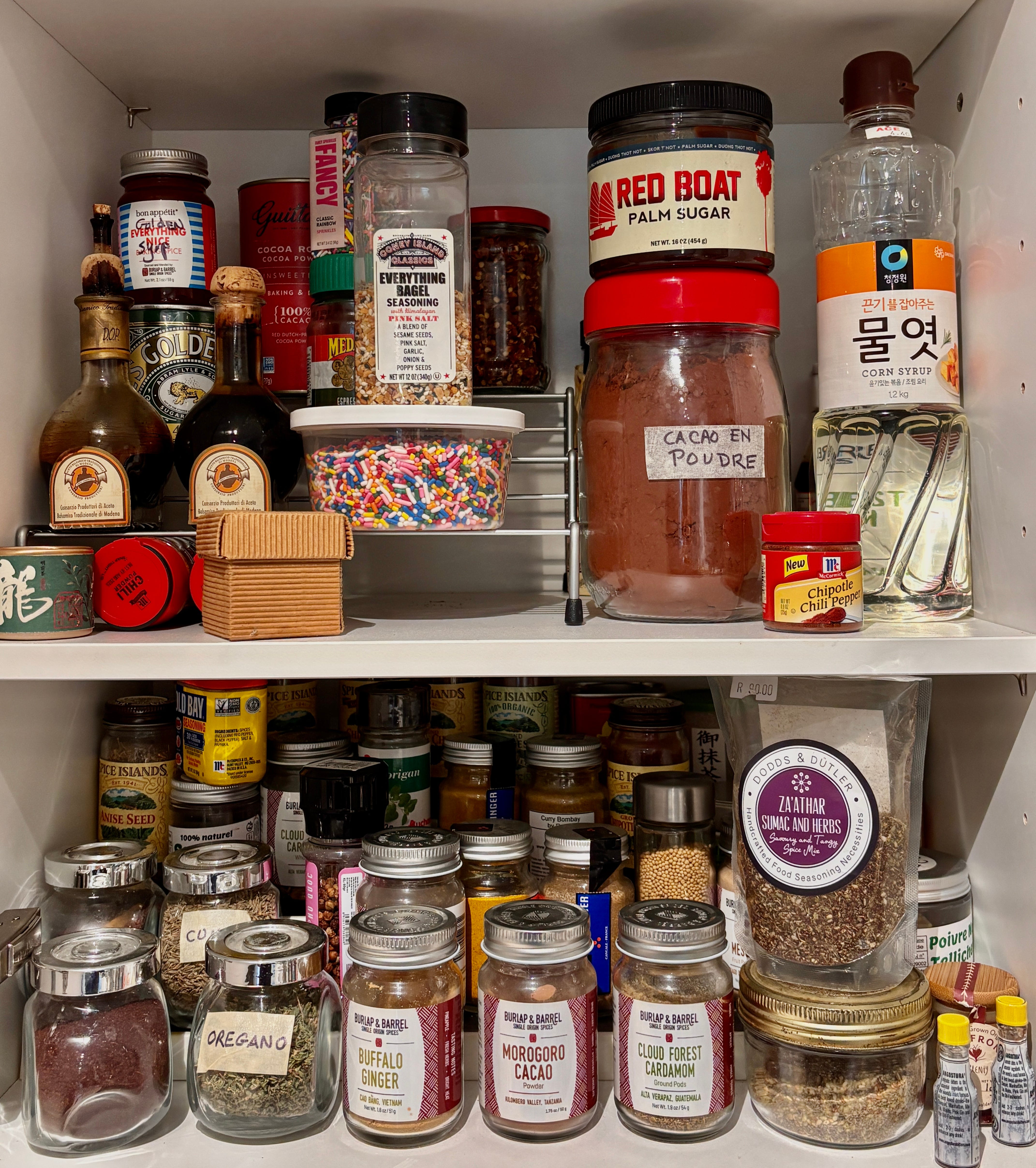
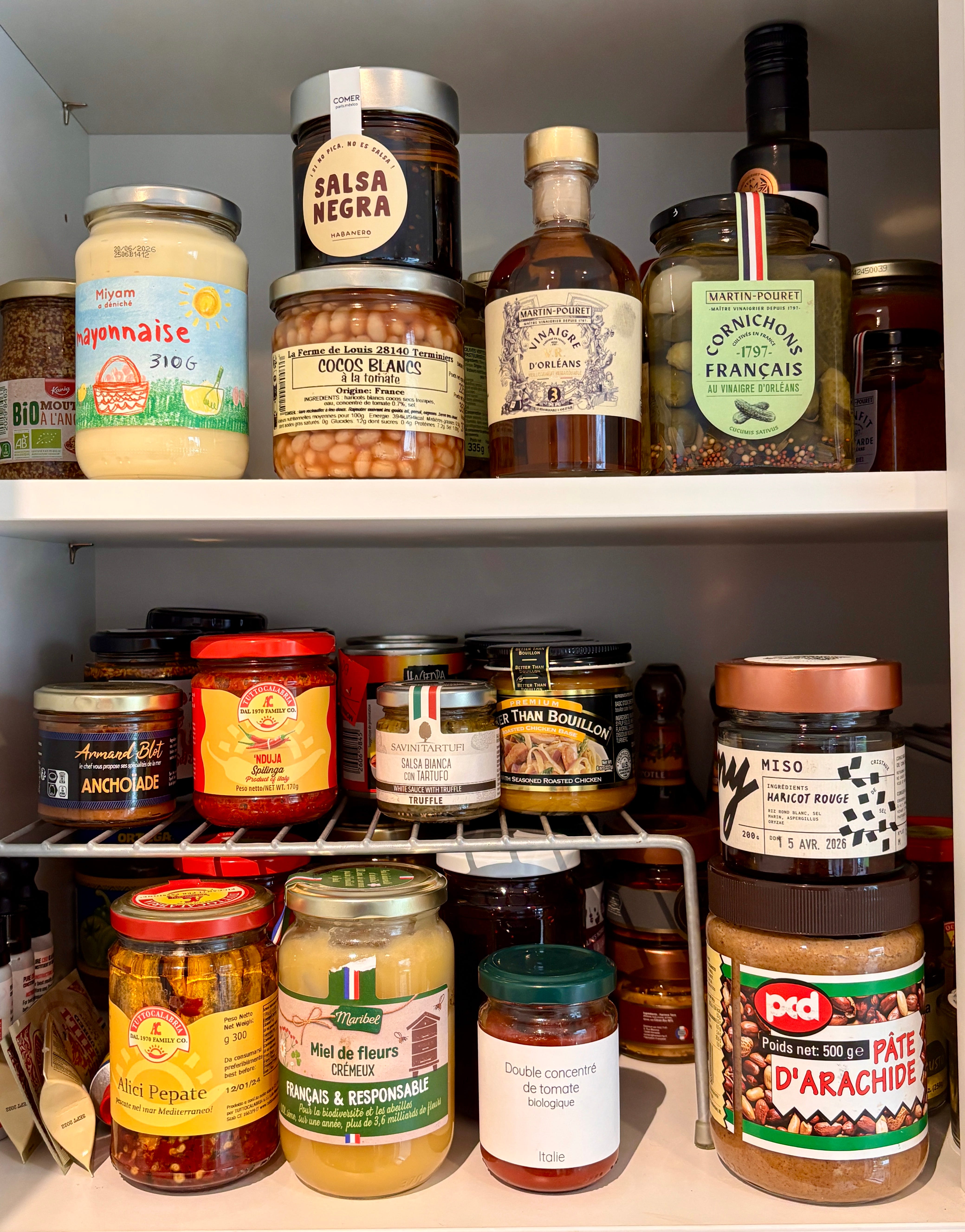
One thing about having plumbers come by is that it gives you a chance to discover, um…nooks and crannies that haven’t been cleaned in a while. The plumbers had to move our refrigerator, so I took that as an opportunity to take everything off the shelves, above and around it, and give them a good cleaning. A few weeks ago I cleaned out my freezers, which gave me the courage to tackle my kitchen cabinets, which are filled with condiments; honeys and oils, vinegars and salts, spices and seasonings, and vanillas, canned chiles, jars of chili crisp, misc. sauces from here, and more.

This cabinet has everything from rainbow sprinkles and saffron, to za’atar, aged balsamic, and cocoa powder.

Over the past few years, my kitchen has turned into a collection of cabinets of curiosities…

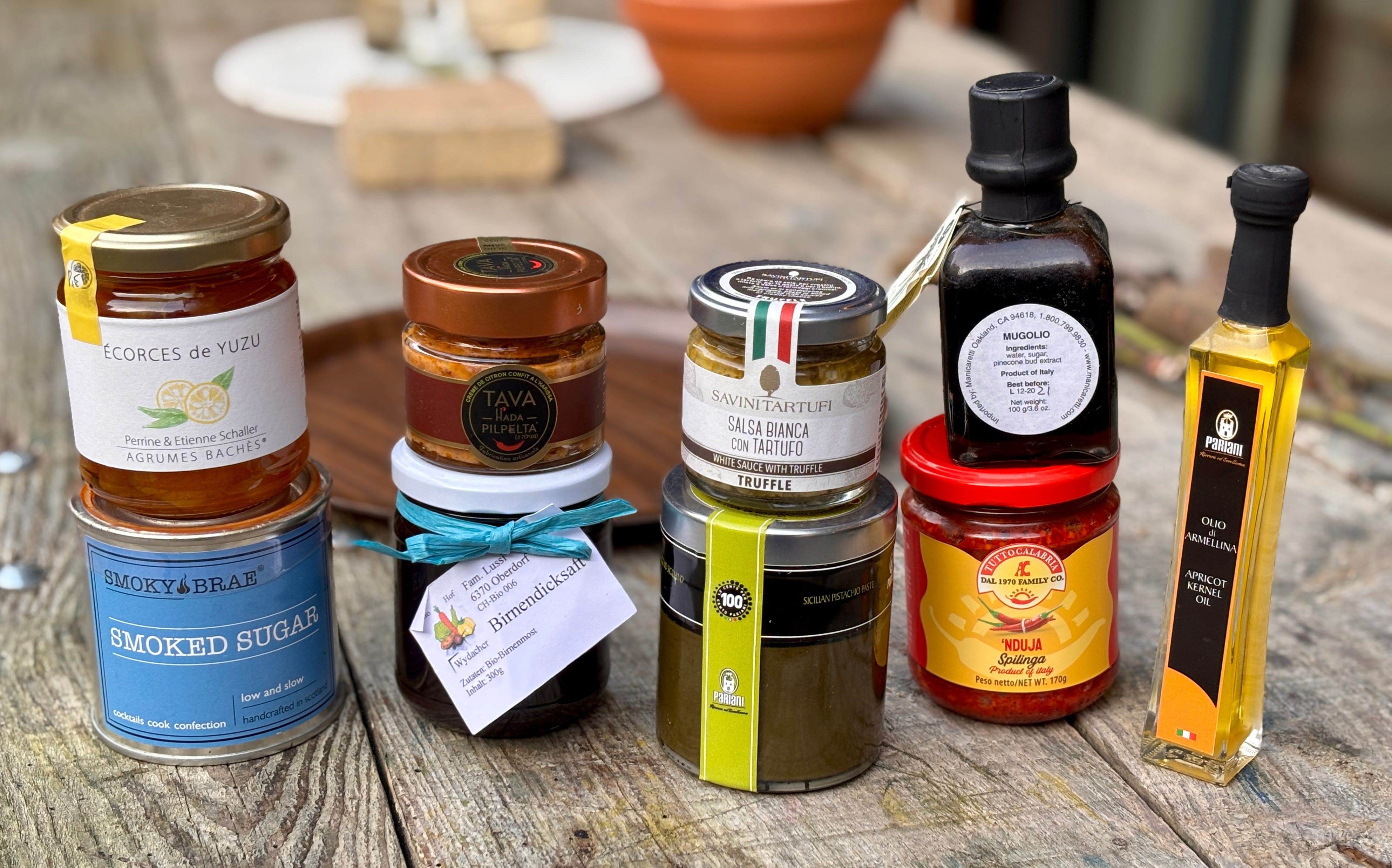
This cabinet has ‘nduja and spiced sardines from Calabria, French honey, salsa from Comer, anchoïade, peanut butter, and made-in-Paris miso, as well as vinegar and cornichons from a trip to Orléans, and a backup of Better Than Bouillon.

I don’t know what to do with everything — candied yuzu peels, Birnendicksaft (pear butter from Switzerland), smoked sugar that I got in Scotland - how could I resist?, apricot and plum kernel oils, pistachio paste, white truffle sauce, preserved lemon, and pine bud syrup, which I have two bottles of.

An Italian friend said a drop of the pine bud syrup is excellent in a Martini, but I haven’t made a Martini in a while, although considering the state of the world, I probably should start making them again. It’s hard to complain about having too much food, especially when others aren’t as fortunate to be in the same situation as many of us are, but figuring out how to use ‘em up adds more projects and recipes to my roster* and my goal for 2026 is to go outside at least once a week.

Leave a comment

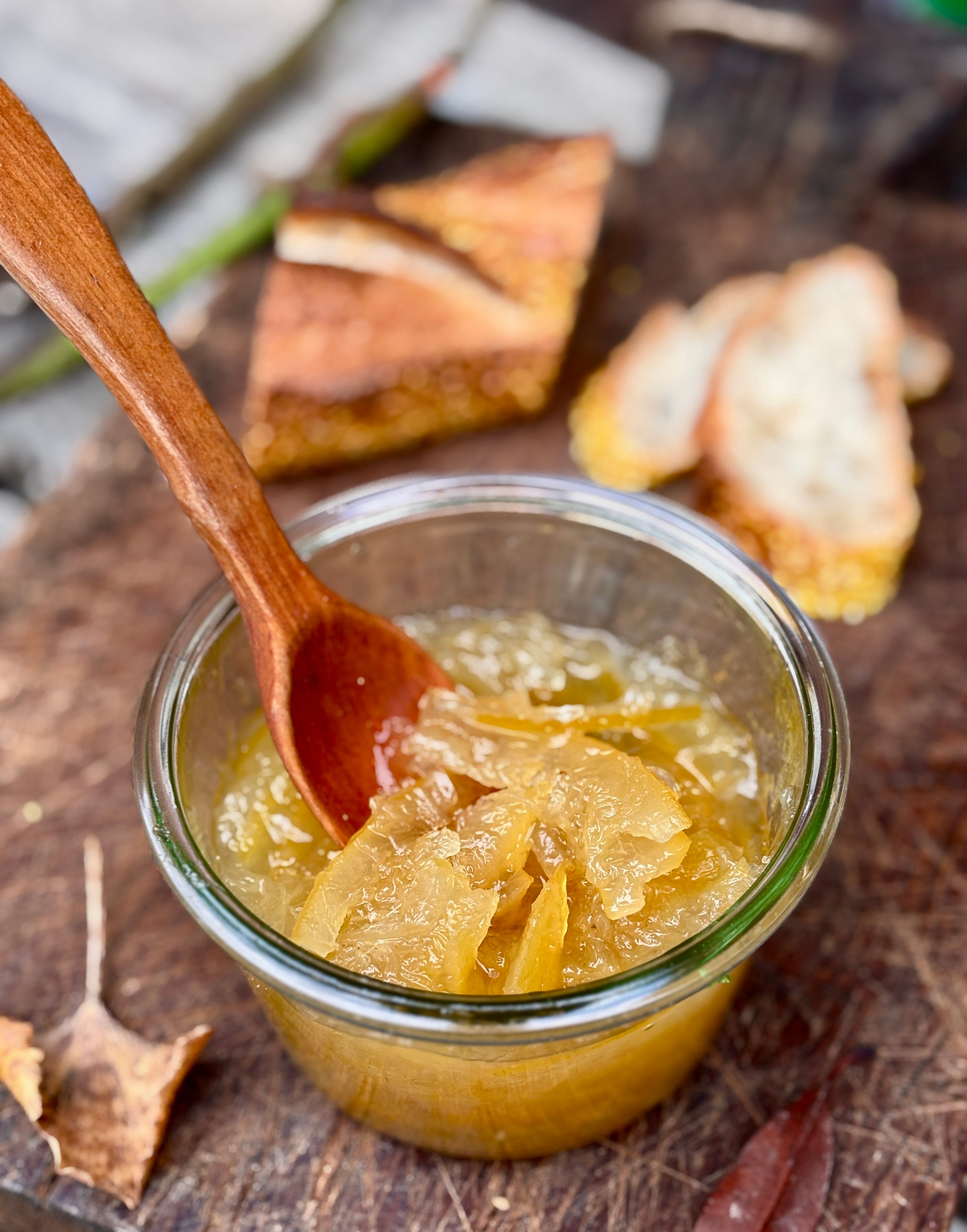
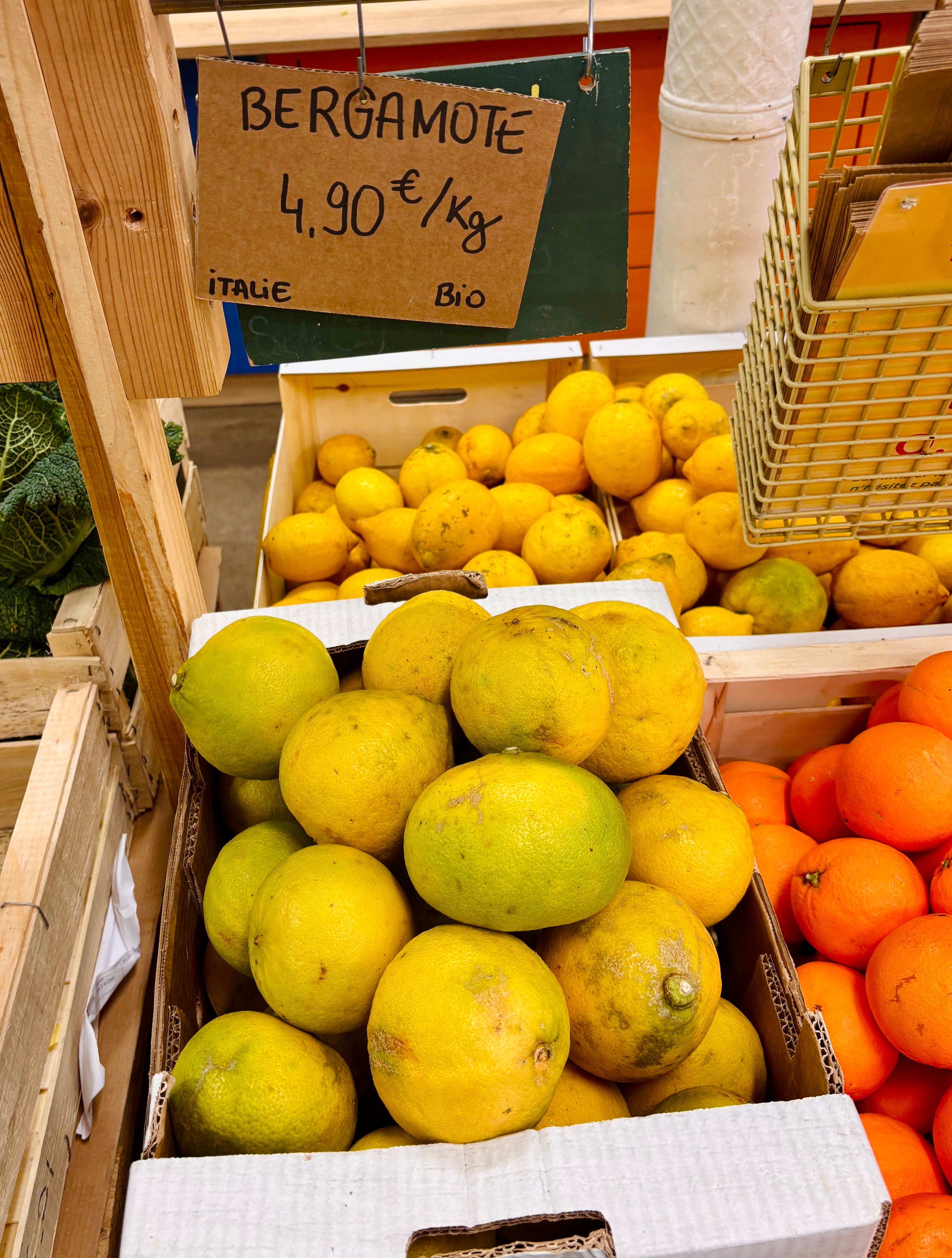
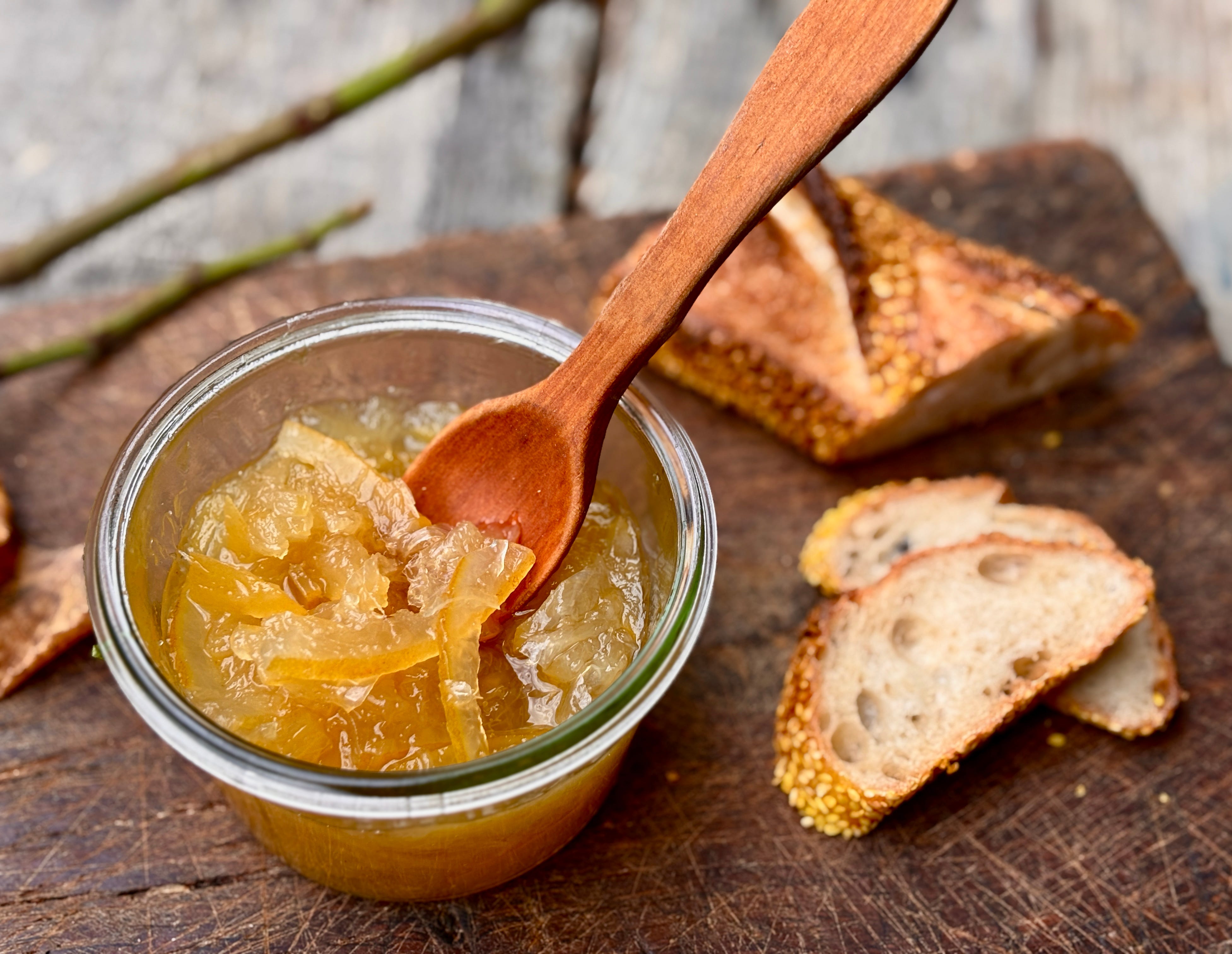
But one thing I never can have enough of is jam. So when I saw these bergamots at the store, I couldn’t resist buying some to (…yes, I know I don’t need any more projects…) make marmalade.

Bergamots at Miyam.

The name is a bit confusing in France as they often label sweet lemons as bergamots, which they’re not. True bergamots, likely a cross between a lemon or citron and Seville sour oranges, are highly perfumed and mostly valued for their aromatic peels. In the last few years, the variety of citrus available in Paris has greatly expanded. I used to comb the city looking for citrons, happy to find them wherever and whenever I could, and recently, I saw them in my local supermarket.

Candied Citron recipe

When I saw bergamots at my local produce store, I rifled through the box and plucked out three of the nicest-looking ones to make some marmalade. For those who say they “don’t like things too sweet,” bergamots lean toward the bitter side, so this marmalade is for you.

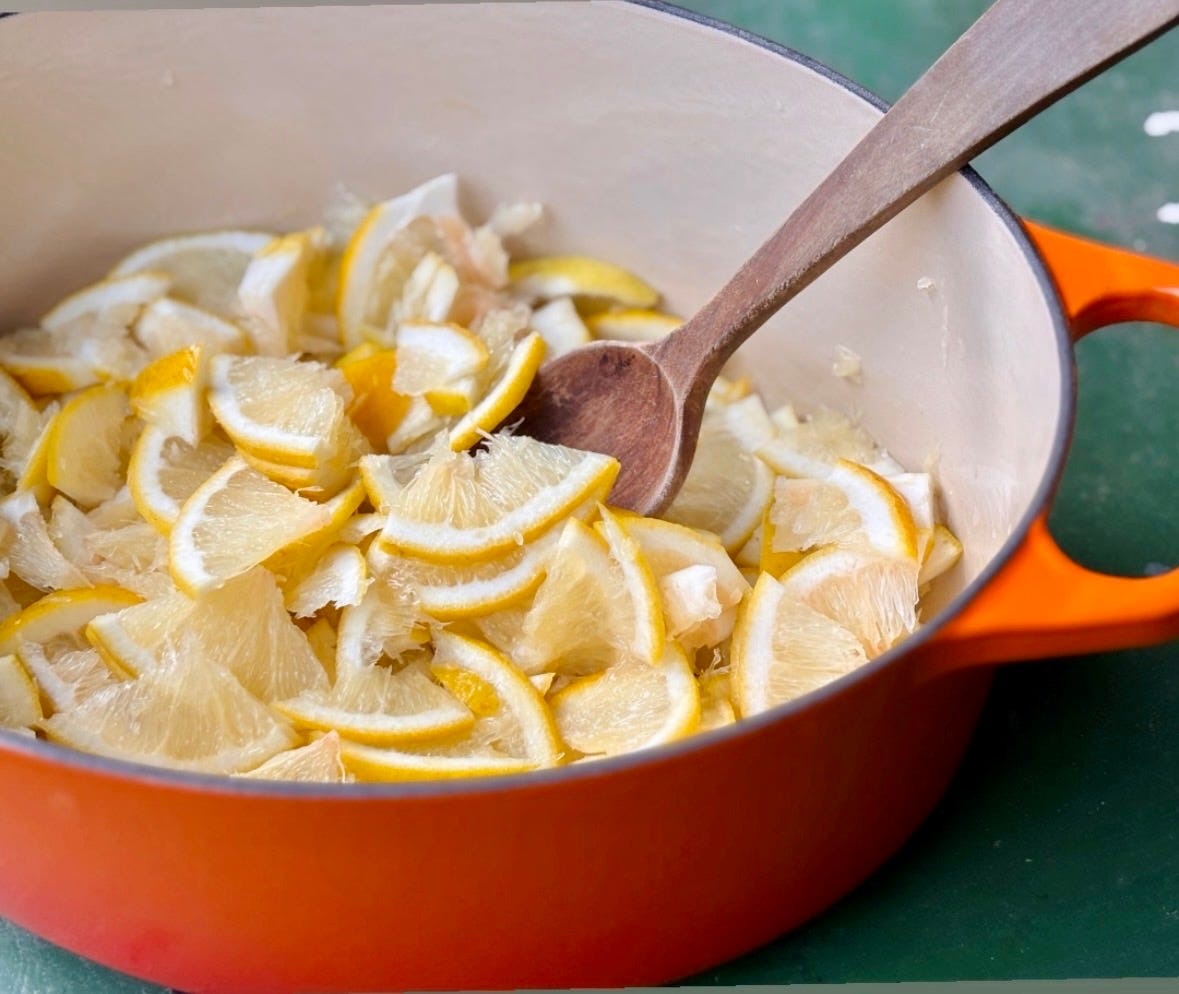
If you can find them, I rinsed and dried mine (which weighed 1 1/2 pounds/700g), trimmed off the stems, and quartered them. My bergamots had just a few seeds, but if yours have more, tie them up in a piece of cheesecloth, making a little sack full of seeds, and cook them with the marmalade, which’ll add extra pectin to help thicken the marmalade.

I don’t mind larger pieces of fruit in my marmalade but you can cut them smaller if you want.

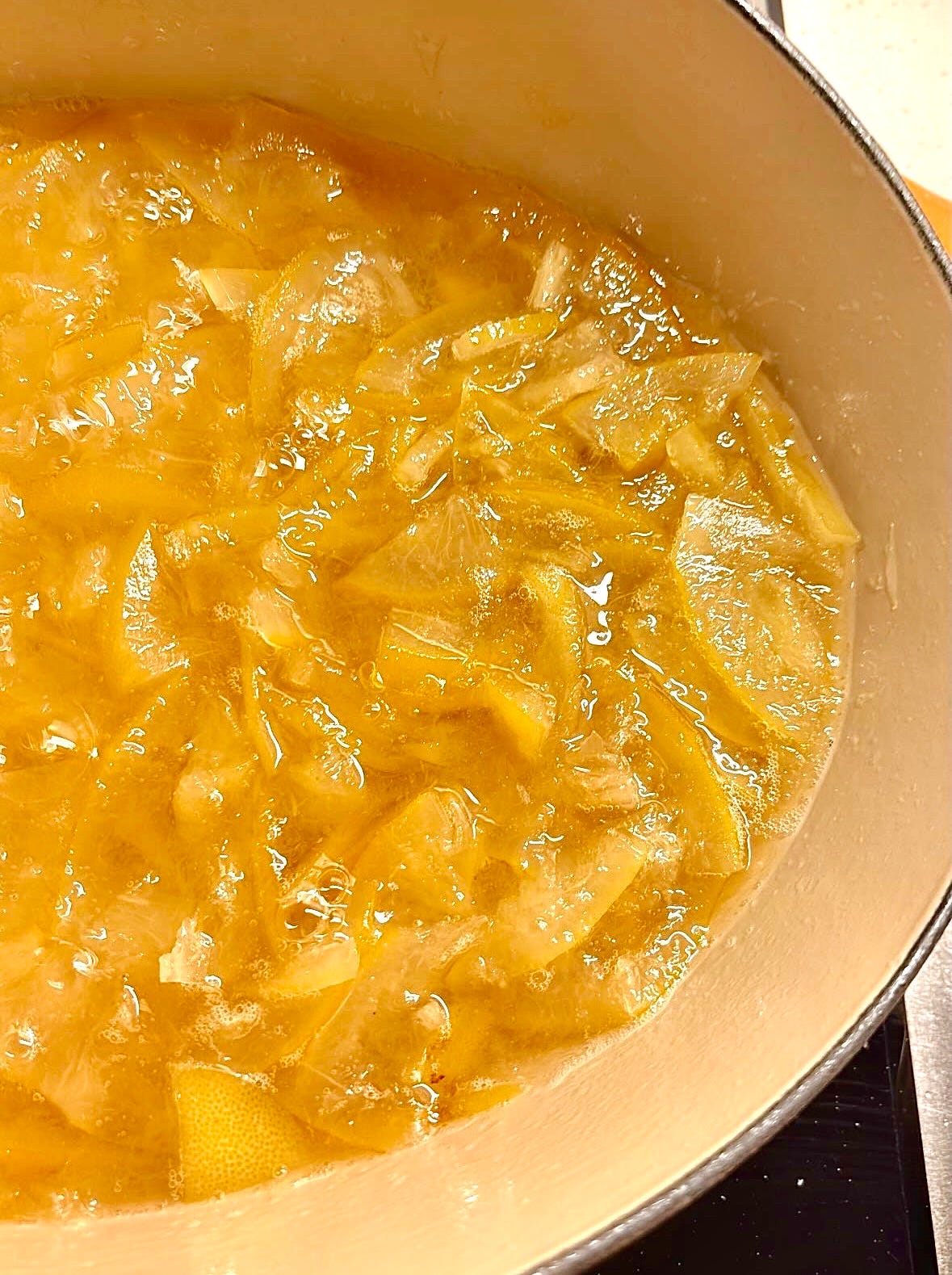
Slice the bergamots as thin as possible and put the pieces in a big nonreactive pot and cover with cold water. Bring to a boil, then reduce the heat and simmer until the pieces are translucent, about 6 minutes. Drain them and put the drained bergamot pieces back in the pot. Add 2 1/2 cups (500g) granulated sugar and 1 quart (1L) water, plus the little packet of seeds, if you have them, as well as a pinch of salt. Put a small plate in the freezer for testing the marmalade later.

Bring the mixture to a full boil, then reduce to a low boil, cooking the mixture until the syrup between the pieces of bergamots are as thick as maple syrup. Remove from the heat and place a small spoonful of marmalade on the chilled plate, then return it to the freezer for a few minutes. Take it out and nudge the marmalade with your finger; it won’t wrinkle like other preserves but will be thick enough to stand up on its own. If not, cook the marmalade more, testing it again, until it’s the right consistency. Most preserves set between 218-220ºF (103-104ºC).

For this marmalade the temperature will be about 215ºF (101-102ºC) when done. Spoon the marmalade into jars and refrigerate until ready to eat. This’ll give you two jars of marmalade, which is what we’ve been eating for breakfast the last few weeks, and has certainly brightened up our winter mornings.

If you can’t find bergamots, there are other citrus marmalade recipes here:

My Jam and Preserves recipes

Romain and I did a little Made in France shopping this month, stopping by La Trésorerie, a store that’s fun to visit in Paris. If you’re into housewares, it’s a must-stop. (Note: I’ll be doing an event there next spring for the release of my new chocolate book. I can’t wait!)

Pre-order The Great Book of Chocolate!

We picked up an old-fashioned broom, a wood-handled bottle washing brush, and…while not French, I couldn’t resist this petite Toyo Japanese toolbox, since “someone” is always, um…borrowing my tools, and not returning them. The bright red metal makes it hard to swipe : )

I’ve also been transitioning our storage containers to glass and want to support worker-owned Duralex, which has been struggling to survive. That’s what happens, I suppose, when your products are so well made that people don’t need to replace them. So I invested in new storage containers. The great thing about glass, while heavier and more expensive, is it doesn’t retain odors like plastic does.

I want Duralex to succeed and wish they’d “think outside the box” and do some fun collaborations with French designers, like Orangina did with Matali Crasset.

Unfortunately they weren’t made by Duralex and break rather easily, so I pick them up whenever I see them at flea markets. But if Duralex wants to make some glasses with me, I’m up for it.

-David

Leave a comment

Links I’m Liking…

-How a BIC pen became a symbol of France. (Engelsberg Ideas)

-27% of French adults say they would like to move out of France. So if you want to come, there may be more room… (Gallup)

-I talked to Saveur for their Amused Bouche questionnaire and shared the Marjolaine recipe from Ready for Dessert. (Saveur)

https://www.davidlebovitz.com/book/ready-for-dessert-revised/

Get Ready for Dessert!

-20,000 pieces of tableware from top restaurants in Paris up for sale, Feb. 6 and 7. (La Vaisselle des Chefs)

-Lots of mixed feelings about a new documentary on the rise and fall of Jeff Smith, aka, The Frugal Gourmet. (I Bid You Peace)

-Is fleur de sel really worth its salt? (Taste)

-Need boxes in France? This organization in France resells used cartons and packing materials. (Carton Plein)

-Doesn’t look like alligator is on la carte, but clothing brand Lacoste opens a café in Paris. (Sortir à Paris)

-$25 million in debt, Food52 files for bankruptcy. (AdWeek)

-Speaking of money, it’ll cost you $1500 to eat at Noma in Los Angeles. Update: All meals are sold out. (Eater LA)

-”Jodie in Paris” - Jodie Foster’s connection to France goes all the way back to her childhood. (NYT/article unlocked)

-European cities start cracking down on rolling suitcases. (MSN)

Subscribe now

Things I Like

I’m okay not preaching to people about what produce to buy since most of you are adults and can make your own decisions. But I recently took notice of science finding a link between pesticides and Parkinson’s disease and thought that was worth sharing, and new findings say that high-fat cheese and cream may reduce the risk of dementia. So I can relax about all the cheese we eat in France. Whew!

Plastic wrap is one of those necessary evils in the baking world. Fortunately there are more and more eco-friendly alternatives. Lately I’ve been using silicone covers that are microwave safe and many can even go in the oven. (Check the manufacturer’s advice. You don’t want your leftover macaroni and cheese served under a blanket of melted plastic or silicone.)

I picked up some silicone lids and have been loving them for covering bowls and reheating food. They’re wonderful and reusable, and mine (shown above) have a handle so you don’t get a steam burn peeling it off the bowl, as you can get with plastic wrap. I got mine at a kitchenware shop in Japan but I know they’re for sale in other countries. I use my lids almost every day and, like my new glass storage bowls, they’ve been a great investment.

Leave a comment

*A classic, and understandable, response might be to tell me to “Make ice cream!” which I do with lots of my baking projects when I’m testing recipes, and end up crumbling brownies that didn’t quite work, or candied nuts I’ve been working on, to fold into ice cream. However, I just cleaned out my freezer(s) and am not keen on filling them up again. But yes, I do have a recipe for plum kernel oil ice cream. So that’s on my docket…

Received — 26 January 2026 David Lebovitz Newsletter

Paris Restaurants & Dining

26 January 2026 at 15:28

We’ve been eating out more and more since so many new places, or at least new to me, are popping up. Some have been really good and others, not so much. When I’m eating out with friends, I’ll often ask at the end of the meal, “Would you come back?” That, to me, is one barometer of me recommending a place. Another is, “Would you have fun there?” Here’s a mix of restaurants I’ve been to recently in Paris that I liked. A few come with caveats, which are mentioned…

Read more

Received — 20 January 2026 David Lebovitz Newsletter

Edna Lewis's Gingerbread

20 January 2026 at 18:15

I feel like so much is going on in the world that it’s just too much to take everything in. Sometimes I wake up in the morning and feel like I’m in a whole new world, as I did today.

In the arc of my life, I went from washing dishes, to working as a line cook, then to rolling dough and peeling apples in restaurants, to where I am now. I never felt like I had imposter syndrome because I feel like I’m just continuing to do what I’ve always done: peel apples, bake cookies and cakes, and yes, I still wash dishes. While there’s no word for “home baker” in French, that’s who I am now. Being at home has its advantages, but I do miss working in restaurants with other people, some from vastly different cultures, and others with backgrounds similar to mine.

I’ve worked alongside people who’ve shared with me how, in their country, everything got taken away from her family — their house, their money and savings, and their business — and they came to the United States to make a new life for themselves. Another fellow had crossed the Pacific Ocean on an overcrowded boat, a voyage that took several months, and many people didn’t make it. It’s incredible what humans can do and overcome. It was so different than my life and I couldn’t imagine doing what they did. But they did it.

My copy of The Taste of Country Cooking.

Recently I opened up my copy of The Taste of Country Cooking by Edna Lewis. The granddaughter of a freed slave, she and her seven siblings grew up in Freetown, a Virginia community founded by other freed slaves that was composed of eleven families. The book reflects on a different time and a seemingly gentler place, and she bucolically recounts her childhood, skimming cream from crocks of milk to churn into butter, making jelly from wild grapes, and wine from dandelion blossoms, as well as beer, from persimmons. There was also the weeding of corn fields, gathering hickory nuts to make cookies, pickling wild mushrooms, hand-churning ice cream, and enjoying her mother’s homemade liver pudding, made after the hogs were butchered.

I’m not sure how many kids today would enjoy liver pudding, or doing chores, but her writing is so evocative that I could imagine them.

Miss Lewis, as she was later called, grew up and eventually moved to New York City where she was hired as a chef, a rarity for a Black woman in those days. She began as the chef at Cafe Nicholson in 1948, then later in life, in 1988, became the chef at Gage & Tollner when she was 72 years old.

In between, she did everything from pheasant farming and catering to teaching cooking classes. She was prodded by editor Judith Jones, who edited Julia Child, Madhur Jaffrey, James Beard, and Jacques Pépin, to write her now-classic book, The Taste of Country Cooking. It’s so beloved that there was a 30th anniversary edition of the book, and coming soon is a 50th anniversary edition. (For a more complete picture of Edna Lewis, there are some in-depth biographies of her here, here, and here.)

Subscribe to my newsletter to get future posts, recipes, Paris dining tips, and more…sent right to your Inbox!

By the time I met Edna Lewis, her hair had turned a ravishing grey color and she wore it tightly pulled back, which emphasized her striking features. She was one of the most beautiful people I’d ever seen, and I was fortunate enough to meet her and have her sign a copy of her book to me. After she passed, her likeness was featured on a U.S. postage stamp.

This post is public so feel free to share it.

Share

I recently decided to clean out my freezers. Yes, freezers, plural, and I’m hoping to tackle my kitchen cabinets next. In one cabinet I have a little jug of sorghum molasses from who-knows-when. Maybe when I made Sorghum ice cream with sorghum peanut brittle? Every time I come across it, I think, “I need to use this.” It gets brought to the front of the cabinet, waiting for its turn, then eventually gets pushed towards the back again.

But when I saw that Edna Lewis had a recipe for Warm Gingerbread with Sweetened Whipped Cream in the book that called for “1 1/2 cups sorghum molasses”* — finally, I’d found just the right place, and time, to use it.

Leave a comment

The molasses that many of us know is made from sugar cane or sugar beets. Sorghum is a grass that arrived in America from Africa. It became widely grown and used in the American South, although sorghum syrup (as it’s also called) is not as widely known, or as available, as cane sugar molasses, which is a shame because it’s really tasty stuff.

Sorghum molasses has a tangier, more complex flavor than standard baking molasses, which is called light or mild molasses. It falls between those and blackstrap molasses; the latter is very intense and too assertive for most baked goods.

When I was revising Ready for Dessert, I noticed the most prominent molasses brands in the U.S. have changed how they labeled molasses, which gave me a bit of anxiety, trying to explain them to my dear readers, so I asked a friend coming over from the States to bring them all to me so I could taste them myself. Because that’s who I am.

Get Ready for Dessert!

Brer Rabbit, one of the major brands, sells three types of molasses: Blackstrap, Mild Flavor, and Full Flavor. The blackstrap was very strong and bitter. I didn’t taste a big difference between the Mild and Full Flavor molasses, but they recommend the Full Flavor for baking and the Mild as a sweetener. Grandma’s sells Original and Robust molasses. The latter isn’t called blackstrap but tastes like it.

Molasses isn’t used much here in France, but mélasse is available in natural food stores and is very strong, similar to blackstrap molasses. So if I have to use it, I’ll cut it with honey. In the UK, there’s treacle, and here is how it compares to molasses.

American Baking Ingredients in France

The first gingerbread that I made from the book turned out quite dense, as you can see above. It tasted great (Romain loved it…), but the texture wasn’t what I was expecting. So I made it again without the 1/4 cup of oil, which I used in place of the lard** that the recipe called for, and it came out beautifully. And we’ve been snacking on it all week.

Edna Lewis’s final book, published in 1988, was titled In Pursuit of Flavor, which echoed something my grandmother, who was from the same generation as Miss Lewis, complained about. She couldn’t tell if it was because she was getting older, but to them, food had less flavor than it did when they were growing up. However, there’s no denying that this gingerbread is packed with flavor. And like Miss Lewis’s words, the warm spices and flavor of the rich, bittersweet molasses hark back to a different time, one of civility and grace — and getting a taste of both of those can’t be beat.

Leave a comment

Edna Lewis’s Gingerbread

One 8-inch (20cm) cake; ten to twelve servings
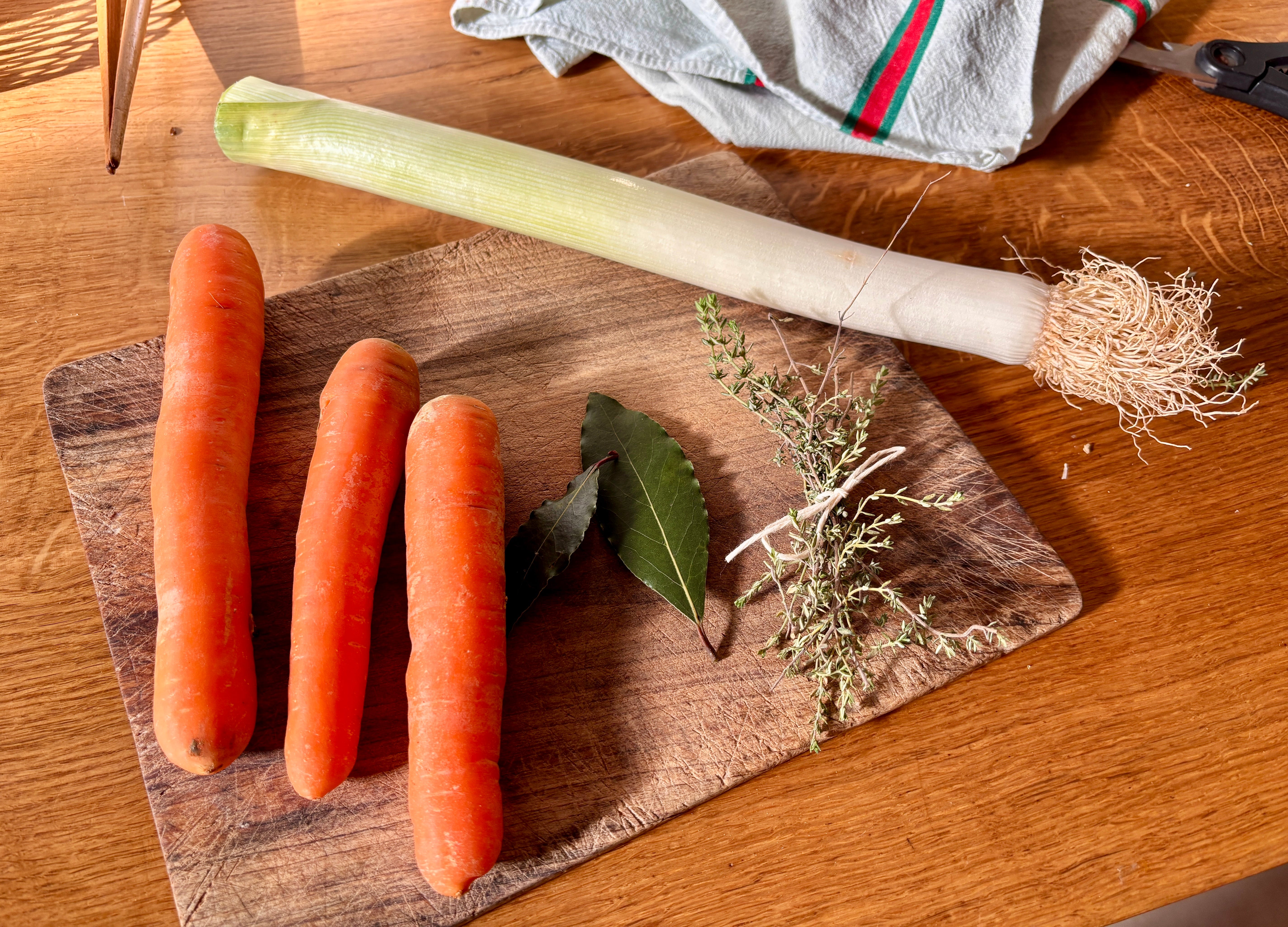
Adapted from The Taste of Country Cooking by Edna Lewis

Like many snack cakes, this one is made in a square cake pan. If you don’t have an 8-inch (20cm) square cake pan, according to this (calculated by someone better at math than me), you can use an 8-inch (20cm) round cake pan with a little math. I haven’t tried it but I’m fairly certain you could bake it in a 9-inch/23cm round cake pan if that’s all you have. It may come out thinner and you might have to adjust the baking time up or down. Just go by the toothpick test to test for doneness, which is invariably accurate. You may find the texture of this cake to be denser than other gingerbreads. (If you’re looking for a lighter gingerbread, my ginger cake recipe is lighter, and made with fresh ginger.)
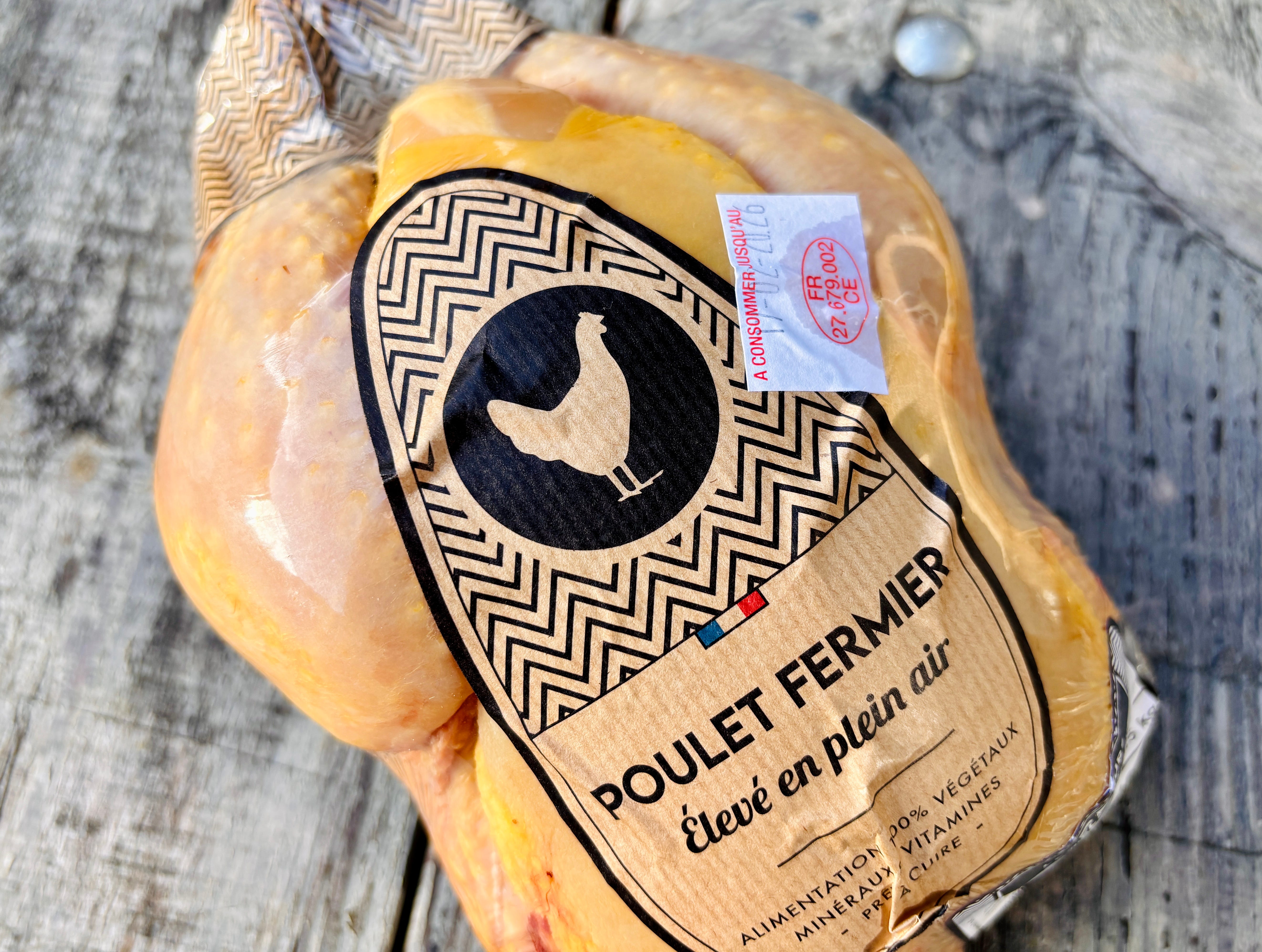
Do make sure to give the batter a good whisking if you see any little lumps in it. They won’t dissolve during baking, so you want to make sure there aren’t any before you pour the batter into the pan.

2 cups (280g) all-purpose flour

2 teaspoons baking powder, preferably aluminum-free

1/4 teaspoon baking soda

1 tablespoon ground (dried) ginger

1 teaspoon ground cinnamon

1/2 teaspoon ground cloves

1/2 teaspoon salt

1 cup (250ml) water

8 tablespoons (4 ounces/115g) unsalted butter, room temperature, cubed

2 large eggs, at room temperature

1 1/2 cups (480g) molasses (see notes in post)

Butter an 8-inch (20cm) square cake pan. Dust the inside with flour and tap out the excess. Cut a piece of parchment paper into a square to line the bottom.

Preheat the oven to 350ºF (175ºC).

In a large bowl, whisk or sift together the flour, baking powder, baking soda, ginger, cinnamon, cloves, and salt.

Heat the water until it’s very hot in a small saucepan. Remove from the heat and add the cubes of butter. Stir until the butter is melted, then stir the water and butter mixture into the dry ingredients. Mix in the eggs one at a time, stirring until smooth, then mix in the molasses. If the batter is lumpy, whisk the batter briskly until it’s completely smooth and lump-free.

Scrape the batter into the prepared cake pan. Bake the cake until it feels set in the center and a toothpick inserted into the middle of it comes out clean, 35 to 45 minutes.

Cool the cake in the pan on a wire rack. The cake can be served warm or at room temperature. To remove the cake from the pan, run a knife around the outside of the cake to separate it from the cake pan, then tilt the cake out of the pan. Peel off the parchment paper, then place the cake on a serving platter.

Serving: Edna Lewis served this cake warm with whipped cream, which she made by whipping 1 cup (250ml) of heavy cream with 2 tablespoons of sugar and 2 teaspoons of vanilla extract. Modern tastes might reduce the amount of sugar in half.

Edna Lewis's Gingerbread Recipe
77.8KB ∙ PDF file
Download
Download

*Although I see some websites refer to it as sorghum molasses, it’s often called sorghum syrup.

**Lard isn’t commonly used in baking in France. It’s available in supermarkets, called saindoux, and is mostly used for greasing the griddles when making crêpes.

Received — 13 January 2026 David Lebovitz Newsletter

Brownie Brittle with Candied Walnuts

13 January 2026 at 17:25

If I told you that today’s recipe is for dried-out brownies, I wouldn’t blame you if your finger was hovering over the keyboard, ready to click away. Look, I like soft, moist, chocolatey brownies as much as the next guy. (Perhaps even more.) But this is one of the most surprising recipes I’ve come across, and one that I wasn’t expecting to like as much as I did.

It’s from a new book, 108 Asian Cookies by whose subtitle will likely resonate with quite a few of you: Not-Too-Sweet Treats from a Third-Culture Kitchen, and I was intrigued by the idea of Asian cookies.

Flipping through the book, I found that quite a few of the recipes are variations of Western favorites, which is where the third culture comes in. There are Linzer cookies accented with yuzu, Lace cookies get drizzled with miso caramel, Thai basil perfumes Chocolate sandwich cookies, and Red velvet brownies are spiced up with doubanjiang, Chinese fermented bean paste.

I’d bookmarked a few recipes but the Chocolate brownie brittle with candied walnuts stood out, partially because I had all the ingredients on hand, and partially because I’m drawn to crispy foods, even when the moniker is applied to brownies. I couldn’t imagine how a crackly, uber-thin brownie could satisfy my chocolate cravings. I like very dark chocolate desserts yet wasn’t sure something as thin as a coin could give me the same pleasure as a dense, chewy brownie. But I was proved wrong.

My first batch, with candied pecans.

My first reaction to them, coming out of the oven was, “Um…okay…” The brittle looked like dried-out shards of chocolate batter.

Then I took a taste and wow — was that good!

Subscribe to my newsletter to get recipes, stories, Paris dining tips, and more, sent right to your Inbox!

Like a number of recipes in the book, this one called for a tablespoon of Japanese whisky in the brownie batter and a tablespoon of miso in the glazed walnuts. I’m not sure if I could discern a difference if I omitted that small amount, or maybe my palate isn’t as acute as other people’s. But you can take matters into your own hands and Kat offers up bourbon as an alternative to the Japanese whisky, which I didn’t have on hand (but I’ve got plenty of other whiskys), and I do have white miso, which I swapped for the red miso called for in the walnuts. But I also tried the candied walnuts with soy sauce in place of the miso, which works, too.

I tend to use dark cocoa powder (Valrhona or Cacao Barry extra brute) when I bake because I don’t believe you can have too much chocolate flavor. But when you use it, things’ll come out darker, and you risk people seeing your pictures and saying, “Hey, that’s burnt.” I’m not sure if comments like that are meant to be helpful, or what. But if you don’t know what you’re talking about, it’s probably best not to say anything.

For the first try (shown farther above), the brownie brittle came out quite dark due to the cocoa powder and looks almost burnt, but wasn’t. 😅

https://www.davidlebovitz.com/book/ready-for-dessert-revised/

Get Ready for Dessert

The next time I gave it a go with regular Dutch-process cocoa powder (Bensdorp), below, and they came out a little lighter. (Note: I took the pictures on different days and the light here changes almost by the hour. So there are some differences due to that, too.)

In addition to the rich chocolate color, the chocolate flavor came through loud and clear. The chocolate chips scattered about gave it an extra boost of chocolate, and the lightly savory nuts were just as delicious on their own as they were on the brittle…and thankfully the recipe makes extra, so you can toss them into a winter salad. Baker’s Bonus: A few of the nuts may fall off the brittle when you break it up, with the caramel fused to the batter, which are especially tasty to snack on.

Bravo to Kat for introducing me to this brittle. Not only that, but friends who came by and grabbed a bite loved it too. I’m not a fan of the word “addictive,” but I’m going to use it here because in this case, I know what I’m talking about and won’t shut up about it.

Leave a comment

Chocolate Brownie Brittle with Candied Walnuts

Adapted from 108 Asian Cookies: Not-Too-Sweet Treats from a Third-Culture Kitchen by Kat Lieu

This chocolate brownie brittle has lots of chocolate flavor, even though the batter has only 2 tablespoons (12g) of cocoa powder. The chocolate chips on top also dial up the chocolate flavor, but I’m a sucker for anything with candied nuts on it as well, and this brownie brittle ended up checking lots of boxes for me.

Cocoa powder FAQs

In her book, Kat calls for Japanese whisky in the brownie batter, and red miso with the candied nuts. I tinkered and tested it with various ingredients and substitutions, and if you don’t have red miso, you could use white miso or soy sauce, or leave it out and just stir in a good pinch of salt when mixing in the nuts with butter and sugar. For the Japanese whisky (or bourbon) in the brownie batter, I made it with a teaspoon of pure vanilla extract, and it came out very well, but a tablespoon of rum or brandy would work too.

I also gave the recipe a go with pecans in place of the walnuts, which work just as well. Whichever you use, you’ll end up with more candied nuts than you’ll need for the brittle; leftovers can be tossed in a winter salad or enjoyed as a snack.

Candied walnuts

2 cups (220g) whole shelled walnuts

1/4 cup (50g) sugar

2 tablespoons (30g) unsalted butter, cut into small cubes, at room temperature (very soft)

1 tablespoon red or white miso (optional, see headnote)

1/3 cup (40g) toasted white sesame seeds

Brownie brittle

1/2 cup (60g) all-purpose flour

2 tablespoons (12g) unsweetened Dutch-process cocoa powder

1/2 teaspoon baking soda

Pinch of salt

2 large egg whites (1/4 cup), at room temperature

1/2 cup (100g) sugar

4 tablespoons (60g) melted unsalted butter

1 tablespoon whisky or 1 teaspoon pure vanilla extract (see headnote)

1/2 cup (85g) bittersweet or semisweet chocolate chips

Flaky sea salt, such as Maldon or fleur de sel

To make the candied walnuts, preheat the oven to 350ºF (175ºC). Line a baking sheet with parchment paper or a silicone baking mat.

Put the walnuts in a medium saucepan, cover them with water, and bring the water to a boil (this reduces their bitterness). Drain the walnuts very well in a strainer, shaking off as much excess water as you can. Put the walnuts in a medium mixing bowl and add the sugar, cubed butter, miso (if using), and sesame seeds. Stir vigorously until the butter and sugar are melted and the nuts are well coated.

Spread the nuts and any liquid on the prepared baking sheet. Bake for a total of 18-20 minutes, stirring the nuts every 5 minutes, making sure that you mix in the nuts from the edges of the pan, which will start browning first, toward the center, so they all toast evenly. When done, the nuts should be lightly browned. There may be some syrup on the pan when the nuts are finished. If so, stir the syrup into the nuts as they cool so it coats the nuts, which’ll firm up as the nuts cool.

(The nuts can be made a few days in advance and kept in an airtight container at room temperature.)

To make the brownie brittle, reduce the heat of the oven to 325ºF (160ºC). Line a baking sheet with parchment paper or a silicone baking mat.

In a small bowl, whisk or sift together (if the cocoa powder is lumpy) the flour, cocoa powder, baking soda, and salt. In a separate medium bowl, whisk the egg whites until they just start to hold their shape when you lift the whisk, but are still a little sloshy; don’t beat them until stiff.

Whisk the sugar into the egg whites in four additions, then stir in the melted butter and whisky or vanilla. Fold in the dry ingredients with a flexible spatula. Spread the batter on the prepared baking sheet so it’s in a thin, even layer (a small, offset metal spatula works best for this). You want to end up with a rectangle that measures about 14 x 10 inches (35 x 25 cm). Top the batter with about 1 1/4 cups (115g) of the walnuts (or more, if you want) evenly spaced over the top, then the chocolate chips.

Bake the brittle until it’s baked through and crispy, 20 to 25 minutes. Remove from the oven and let cool on the baking sheet, then sprinkle with flaky sea salt and break into shards.

Storage: The brittle will keep for 3-4 days in an airtight container at room temperature.

Chocolate Brownie Brittle With Candied Walnuts
87KB ∙ PDF file
Download
Download

https://www.modernasianbaking.com/preorder

108 Asian Cookies

Received — 8 January 2026 David Lebovitz Newsletter

At Home in Paris and Bloom Where You're Planted

8 January 2026 at 14:58

Moving to a foreign country has been in the news a lot lately. But it isn’t always what people expect it to be and it’s not always easy, which I can attest to. (Although it may have been a little easier for me if my name was George Clooney.)

When I see the phrase “Live like a local!” I wonder if people really want to go to city hall to renew visa paperwork or change their internet provider in a foreign language, which in America requires you to just drop off your modem at your provider’s nearest storefront, while in France, it’s a six-month affair. And, you have to pay to quit.

When I sent my old cable box back, they had to verify that every single cable was included, even though it was 15 years old and I have no idea what they do with them. But a friend didn’t have one and got charged €200 ($240), so I made sure I had everything…and I documented it all with photos and a certified mail receipt. (Even then, after 6 months when I didn’t get my deposit back, I had to hound them for it, providing - yup - photos and a copy of the certified mailing; only then did they finally refund it. Lesson learned after many years here!)

I’ve learned a lot living here after nearly twenty-five years and while moving from one country to another poses challenges wherever you are, France has a lot of unspoken rules of conduct and etiquette, and it’s not known for its “ease of use”…shall we say. Although I was stunned when a very nice woman from the citizenship office called me to say that I made a mistake on one of my forms and wanted to confirm that it wasn’t right so that she could change it for me. France has a way of surprising you.

Not being able to easily return things (and indifferent, at best, customer service) is one of the hardest things for Americans to adapt to. When I was in French class, shortly after arriving in France, the teacher went around the room and asked people what they didn’t like about France. Most Americans in the room replied, “Lack of customer service,” which the teacher confirmed was what Americans usually said, when asked.

Some people who come here have a hard time adjusting. So much so that an organization, the Franco-American Community Center in Paris, used to have a program called Bloom Where You’re Planted, a one-day event with speakers to help newcomers learn about, and integrate into, life in Paris.

Subscribe now

Topics covered were health care questions, cultural issues, mental health, accounting and taxes, and immigration issues. For some reason they asked me to speak, perhaps to lighten the mood?…which I did by talking about some of the goofy things that happened to me, or that I did, so people would feel more at ease in their new home and realize that they weren’t the only ones going through a challenging transition.

At Home in Paris explains the complexities of life in Paris, including on the métro.

After I spoke, I took questions from attendees and found out that some people didn’t want to be in Paris. (In spite of what you see on social media, moving abroad can be very lonely, no matter how many pictures people post of croissants.) In some instances their spouses were transferred here, so they had to move their whole family (and lives) abroad. Many were baffled at cultural differences. Others, like me, were at transition points in their lives and looking for a new beginning or somewhere else to settle. Somehow, we all ended up here.

Some had had bad interactions, such as a curt shopkeeper, or they’d been shoved out of the way on the métro. It was especially hard on them because they couldn’t talk to their friends about their emotional difficulties since people would invariably say, “But you’re in Paris!” This was before Emily in Paris arrived, but if anyone expects Paris to be like that, please let the rest of us know where all those hot French guys, who somehow speak perfect English — are.

Read more

Received — 1 January 2026 David Lebovitz Newsletter

January 2026 Newsletter

1 January 2026 at 10:19

For a country with a reputation for being slow to change, France has certainly been changing in several ways. The restaurants have gotten a lot better, and more diverse, since the days of gloom and doom, when French cuisine was in decline, coffee was referred to, in French, as jus de chausette (sock juice), and chain bakeries (yuck) were being pitted against artisan boulangeries.

People who don’t live in France often don’t like to hear that France is changing, but change isn’t bad, especially when things change for the better. Sure, no one has figured out how to keep the electronic kiosks at customs at Charles de Gaulle airport in working order, which makes you miss the few humans who worked at the kiosks before. (Even though that never seemed enough, either.) Nor has the repairman come to fix our heat; only two of the eight radiators in our apartment are working right now. (This week the temperatures dropped below freezing.) And rather than a Joyeux Noël message from my accountant, she sent me a request for loads of paperwork…on Christmas Eve. Bah humbug, or however you say that in French. (They do have Père Fouettard, who punishes children who are bad with a whip. But no word if they have someone like that for heating repairmen who don’t show up.)

Subscribe now

On the other hand, we do have over 1000 kilometers (620 miles) of bike lanes in Paris, which is credited for cutting pollution in half. There’s a new wave of chocolate boutiques in Paris, and we’re in the middle of a bread renaissance, with more and more boulangeries baking great-quality bread, often with heritage grains and slow fermentation methods.

Almost a decade ago, in “Challenging the way the French think about bread,” baker Alice Quillet of Ten Belles bread remarked that when they opened, French people were outraged they didn’t make baguettes. But with the marge (profit margin) on a baguette averaging 8 to 10 centimes, it’s no wonder that some bakeries aren’t keen on making or selling them.

The breakdown of the cost (and profit, 10%) of a baguette in France.

While I love a good baguette, I’m really excited about what bread bakers are baking up in Paris right now. As bakery owner Benoît Castel recently said, “We’ve never eaten such good bread as we are right now”…and I agree.

Pumpkin seed bread from Brigat’ and corn-turmeric bread from Polka

Bakeries in France are considered a vital part of life in France and during the Covid lockdowns, bakeries were exempt, as they were considered “essential” businesses. (As were tobacco stores.) Bread is considered a right in France, hence the low prices for baguettes, which range from about €1 - €1,60 ($1.20 - $1.90), although the owner of Du Pain et des Idées shocked people by charging €4 for a croissant and €4,30 for a chocolatine (pain au chocolat), around three times what other bakeries charge, arguing that the price of the ingredients and the labor justified the price.

Beautiful breads at Le Doyenné

Leave a comment

I feel spoiled and it’s easy to get blasé about having access to good bread. Some favorite bakeries I frequent: Landemaine, Poilâne, Terroirs d’Avenir, Brigat’, Sain, Ten Belles, Archibald, and Mamiche, which is the only place in Paris that I’ll wait in a line that long. And no, I don’t have any clout or get any special favors — like getting to jump the queue — around here.

As another example, I put my name on the waiting list in early December for a panettone from Christophe Louie. I’ve been a fan since he started making them and visited his private workshop, which he kindly gave me a tour of, before he opened his own bakery in the Marais. I put my name on the waiting list to be notified when more would be available but didn’t get any notifications. I was in the neighborhood and stopped by to see if my charms could move me up a few notches.

No dice. (Although I don’t wish a visit from Père Fouettard on him.) So I got a panettone from Brigat’, which was excellent, even though a Debbie Downer online tried to dampen my excitement, saying there shouldn’t be any almonds on a panettone. I couldn’t bring myself to pick them off and throw them away.

Subscribe to my newsletter to get news from Paris, as well as recipes, restaurant tips, and more, sent right to your inbox!

In spite of it being a little chilly around here, we’re also doing our best to make it through winter and Romain keeps reminding me that, as of last month, the days are now (supposedly) getting longer.

I’m not packing up my gloves, scarves, and down comforter quite yet, but am enjoying winter cooking. One of my favorite things to make when it’s cold out is braised duck. A lot of French cooking involves braising, cooking foods at a gentle simmer until they’re tender and succulent, like this one.

There’s nothing more foolproof than braised duck legs, which are actually thighs…as Debbie D. might point out. But if someone wants to take on the English language, and all the quirky translations, be my guest. Like, why is an entrée in French a starter, whereas in American English, it’s the main course? I also once tried explaining to Romain that in English, green beans cut on the diagonal are called “French-cut.” I got a perplexed look, similar to when I offered him a pretzel filled with peanut butter from a bag a friend brought me over from the States.

The most challenging part may be finding the duck thighs. But if you can’t find them, you could use chicken and swap out white wine for the red, which would probably work better with the milder-flavored chicken. You’d also want to reduce the amount of time since chicken cooks faster than duck.

I have a braised duck with prunes recipe here that I braise in the oven…

Braised Duck recipe

…but this time around, I cooked them on the stovetop. I seasoned the duck thighs with salt and pepper, and browned them in a bit of oil, skin side down. If you’re thinking ahead, salting the duck a day or two in advance improves its flavor.

Once browned, remove the thighs from the pot, add a splash of decent red wine from a bottle, scrape the delicious bits off the bottom of the pan, then add the duck back, along with the rest of the bottle of wine. I like to add thyme, bay leaves, garlic, and orange peel, but you can use whatever you’d like.

Add enough water to cover the duck thighs (if cooking chicken, add enough water to cover them halfway). Bring the liquid to a boil, then reduce it to a very low simmer and cook gently, covered, until the thigh meat is very tender. Figure about three hours. I did add some peeled pearl onions and cubes of rutabaga an hour before the duck was done.

The duck can be cooked the day before, then cooled and refrigerated, which allows you to skim off excess fat before rewarming it. But it can be enjoyed right away, or kept in the braising liquid for an hour or so, until you’re ready for dinner. It’s good with mashed potatoes, if you’re not adding root vegetables to the pot, or wide noodles.

Share

January is the most challenging month in Paris, with the cold weather keeping most of us inside, and everyone is missing the days when we could sit on a café terrace and have a glass of wine. Smoking must make people hardier than I thought since les fumeurs remain steadfastly outside in sub-zero temperatures, puffing away.

Yes, there are smoker’s mittens…

We did get to warm ourselves by a fire for my birthday, which came at the end of December. A lot of businesses close in Paris that week so people can take a break, which is nice, although our favorite places are also closed, which makes going out for dinner a little challenging. So we headed out of town. You can read a bit more about where we went, below…

- David

Leave a comment

Le Doyenné

To end the year, we celebrated my birthday at Le Doyenné, the beautiful restaurant and guesthouse owned and run by chef James Henry and chef Shaun Kelly, who’s in charge of the potager (garden), located about 45 minutes from Paris. I’ve been meaning to go since they opened, but somehow never found the right time or date to have dinner there. But when I noticed a room available on my birthday, I booked it, along with a table for dinner.

We arrived by car in the late afternoon, just as night was getting ready to fall, and took a walk through the gardens before dinner. Most of the garden was in repose, with hardy vegetables like mâche, kale, cabbage, and Brussels sprouts holding their own in the cold. Shaun gave me a tour of the various rooms and cold chambers in the kitchens where winter squash were stored; berries, seaweeds, and other fermentations were doing their things in glass jars; charcuterie was drying; and bread was rising for the restaurant. (James worked at Tartine in San Francisco and Ten Belles in Paris, and is known for his breads.)

After our walk we curled up on the sofa with glasses of wine by the fireplace, until the sommelier stopped by with the wine list to ask us what we wanted to drink with dinner. We mostly drink white wines these days, but for a change, she helped us pick a nice red wine that was from a favorite producer in the Jura. It was great to see a wine list with good wines at a range of prices, from €39 to several hundred, and the list leans heavily into low-intervention (or natural) wines.

Visiting the vegetable cellar with Shaun.

Then we moved to the cathedral-like, glassed-in dining room, which was a bit chilly when the sun went down (I would have taken my dinner by the fire!). Dinner began with a parade of hors d’œuvres, which included two thin slices of incredibly good charcuterie; fresh scallops sitting on a dab of raw cream, with pickled wild mushroom juice and bits of Meyer lemon on top; as well as an array of crudités, raw vegetables that had been picked that day from their garden. We loved everything.

I wish I could tell you (and show you) how good this butter was, which was shot in low light, but we were too busy eating it to think about adjectives to describe it. But wow, was that good…

The next course was an onion tart made with pink onions from Roscoff, in Brittany, and wild mushrooms, held in place by a little ricotta, with a sauce spiked with the lightly oxidized wine from the Jura, vin jaune. Following that were a few slices of barely cooked dorade with seaweed, spinach, and pomelo. (Their citrus comes from a producer in the south of France.)

Then we had a flavorful plate of duck (yes, duck is popular in France in the winter…), which came with radicchio and squash from the garden, and a gratin dish of pommes boulangère, slow-cooked, well-bronzed potato slices. We skipped the optional cheese course since it was a lot of food and went right to dessert, which was a chestnut tart - and included a candle - as well as Jerusalem artichoke ice cream, made with topinambours from the garden, and ruby grapefruit sorbet.

After herbal tisane by the fire, we headed to bed, and woke up to a spectacular breakfast buffet that featured everything from housemade croissants and ham and cheese pastries, mini canelés, apple-quince sauce, yogurt and granola, to thin sliced ham from their cellar, smoky grilled bread with some of the best butter I’ve ever tasted, along with homemade bitter orange marmalade, fresh carrot juice, and lots of dark coffee.

It was quite an experience and I was sorry that I had waited so long to go. Le Doyenné is quite a special place and while so many places are boasting about their farm-to-table fare, it was reassuring to be somewhere where the connection and commitment were direct and immediate, and real.

More of that amazing butter (in better light) at breakfast.

After hitting the boutique, where they wrapped up a loaf of bread for us to take home — the butter, unfortunately, wasn’t for sale — we headed back to Paris.

Subscribe now

If you want to go, you can get to Le Doyenné from Paris by taking the RER C, then a taxi or Uber for the short trip (about 5 minutes, they said) to the restaurant. Or you can get a taxi or Uber for making the trip from Paris if you don’t have a car. (I checked the Uber app while we were there to see the price, which was €45 one-way on a Sunday afternoon, but prices fluctuate.) They have detailed instructions for getting there here.

If you go for dinner, which lasts around 2 1/2 to 3 hours, it’s probably best to either stay the night or get a ride back to Paris. It’s possible to do lunch as a day trip. Rooms run between €265 and €340 per night, which includes a fantastic breakfast. It’s a bit of a splurge, but if it’s your birthday, maybe you can justify it? ☺️

Get The Great Book of Chocolate

Lastly…

Maybe I’ve saved the best for last? (Or buried the lede…) But I’ve got a new book coming out this spring, a completely revised version of The Great Book of Chocolate. When I first wrote TGBOC in 2004, there were maybe three bean-to-bar chocolate makers in the United States, and now there are over two hundred. So much has changed!

You can now get high-quality chocolate chips and cocoa powders at supermarkets, and there’s a huge variety of chocolates available at every price point. And some companies are even experimenting with non-cacao chocolate substitutes, which I tested and wrote about in the book, along with my results baking with them. As an added bonus, I include a beautifully photographed chapter and guide on where to find the best chocolates in Paris.

The information about chocolate has been completely brought up-to-date, and I added lots of new recipes to the book. They include a rich dark Chocolate olive oil spread with flaky sea salt, Individual warm chocolate cakes with runny, salted butter caramel centers, Triple (or quadruple) chocolate cookies, Vegan chocolate marshmallows (don’t turn your nose up - they were approved, and loved, by a French policeman!), Turkey mole, and a sophisticated Chocolate Negroni from the world’s best cocktail bar.

I recast and revised the other recipes, such as the Chocolate-cherry buttermilk scones and a decidedly French Gâteau au chocolate, as well as the Homemade rocky road and the ultra-dark Mocha pudding cake.

What was once a slender volume on chocolate has grown into a full-size book with beautiful new photographs from award-winning photographer Ed Anderson with food styling by George Dolese and Elisabet der Nederlanden.

Pre-order The Great Book of Chocolate

You can pre-order The Great Book of Chocolate at your favorite independent local bookstore 😍 or online at Bookshop, Barnes & Noble, and Amazon.

Received — 23 December 2025 David Lebovitz Newsletter

Giving Thanks, and a Favorite French Cookie Recipe

23 December 2025 at 08:22

It’s almost the end of 2025 and I can probably guess that you’re feeling a bit like me right now. Somewhat overwhelmed as the year draws to a close. A little tired, but with enough enthusiasm for the current and upcoming holidays and parties. It was nice to get away to Japan before the sprint to the finish. And I am hoping Santa puts a Japanese WC under our tree. Okay, we don’t have a tree…but maybe I’ll get one for my birthday, which is a few days later.

We’re staying put this year. A friend offered his house on a sunny French island, where the temperature is currently 80ºF (27ºC), but Air France wanted €3000 ($3500) for each of us to get there, squished into an airline seat for the 13 1/2-hour flight, so we took a pass. Home is pretty nice around the holidays so I’m not too upset. Even better, lots of people leave Paris to visit family in their maisons sécondaires, so it’s rather quiet. We are going to do an overnight out in the countryside, which is my birthday treat to myself. (Although Romain is coming along too!)

Subscribe now

One of the best things that happened this year was I released a new book. Writing a book is a two-year project, from getting all the recipes tested and written, to taking the photos and designing the final book. I was really fortunate to have an excellent group of people working on the project: my main editor, the copy and production editors, proofreaders, and book designer, as well as the two remarkable food stylists and food photographer who came to Paris for three weeks to shoot the book. Thanks team!

I’m planning on making either the Marjolaine or the Lemon semifreddo from the book for Christmas dessert. My little Meyer lemon tree in our backyard only has one lone, ripe lemon on it — except I just noticed bird had attacked it 😟 — but I spotted Meyer lemons at a new, produce-oriented grocery store near me (you can also get them in France here), and scooped them all up.

I guess the birds wanted a taste of Meyer lemons, too…

So need to decide which one to make…or should I make them both?

Leave a comment

It’s been really nice to see such enthusiasm for my book, Ready for Dessert, and I thought I’d share a roundup on where it’s been.

And….I just want to also take a moment as this year draws to a close to thank everyone who is a paid subscriber to the newsletter. Making the switch from an ad-supported platform to a reader-supported one has been the right decision, and I like how this has become a comfortable community, rather than just a website of people clicking by.

So thanks to everyone of you who subscribes to the newsletter — free and paid — and looking forward to keeping in touch in 2026!

If you’re not a subscriber, subscribe here…

(If you’d like to upgrade to a paid subscription, you can do so here.)

Also…thanks for everyone who featured Ready for Dessert in their newsletter and in print. A few newsletters are partially paywalled but you can read the interviews and Q & As on most of them without (or before) subscribing:

https://amzn.to/3NdScvH

Get Ready for Dessert!

  • David Lebovitz on Boring Headnotes, New Editions, and the Cookbooks That Got Away ()

Jeffrey Morgenthaler on Instagram: "Most of you know I love to …

Also check out:

And I chatted with France24 about French cuisine…

Give a gift subscription

Croquants

About 60 cookies

Adapted from Ready for Dessert

A reader recently wrote to me about the recipe for Croquants (page 251) in Ready for Dessert, wondering if the one teaspoon of batter per cookie was correct. I assured her that was the right amount; the cookies are meant to be small, about the size of a silver dollar. In France, cookies of this size might fall under the moniker of croques-télés, which refers to snackable candies or sweets that you might eat while watching television.

Before I moved to France, I bought these little French cookies by the bagful when I’d find them in the U.S. They were expensive but were everything I wanted in a cookie: crispy, crunchy, nutty, and a touch salty. While I can now buy them in France, they’re easy to make. You just stir the ingredients together, plunk little dabs on a baking sheet, and bake them.

It’s important to chop the nuts in large pieces, roughly the size of small peas. Even though the nuts will take up seemingly precious space in the little teaspoon you’re measuring the batter with, the batter will spread quite a bit and it’s nice to bite into big pieces of nuts when eating these cookies.

Oh, and yes, you can bake them a little larger. Feel free to do so, if you wish. They’ll probably need an extra minute or so in the oven, until they’re golden brown across the top. But I’d never say no to more of anything, when it comes to cookies.

1 cup (200g) sugar

5 1/2 tablespoons (50g) all-purpose flour

1/4 cup (60ml) egg whites (from about 2 large eggs), at room temperature

Pinch of salt

3/4 cup (90g) almonds or hazelnuts, toasted and very coarsely chopped

Preheat the oven to 400ºF (200ºC). Line two baking sheets with parchment paper. (Silicone mats tend to steam cookies a bit, so I prefer to use parchment paper for these.)

In a medium bowl, mix the sugar, flour, egg whites, and salt until well combined. Stir in the chopped nuts.

Drop level teaspoons of the lumpy batter, evenly spaced apart (about 2 inches, 5cm), on the baking sheets.

Bake the cookies, rotating the baking sheets in the oven midway during baking so they bake evenly, until the cookies are light golden brown all the way across the top, 10 to 12 minutes. Remove from the oven and let the cookies cool on the baking sheets.

Storage: The batter can be stored in the refrigerator for up to one week before baking. The baked cookies are best, and crispiest, the day they are made, but can be stored in an airtight container for up to 3 days.

Croquants
58.5KB ∙ PDF file
Download
Download

Received — 19 December 2025 David Lebovitz Newsletter

Devil's Chocolate Cake

19 December 2025 at 09:38

I don’t think I’ve ever had a Thanksgiving dinner in Paris that was the same from year to year. One year a friend hired a chef and dinner was served all plated up, in the kitchen. Another year I volunteered to make Thanksgiving dinner and ended up cutting the turkey into small pieces and braising it. Since I was cooking for twenty+ people, that was the only way a turkey would fit in my French oven, which at the time was so small that I could barely squeeze a chicken into it.

Another year I was staying with friends in Provence and we were shocked when the bird that we pre-ordered from the local butcher came already stuffed, by the butcher. I was tempted to scoop his out and cook the bird with the stuffing mix we’d already prepared, but he’d done such a beautiful job of sewing it up with butcher’s twine that we cooked the turkey as is, and it was incredible.

Subscribe now

Thanksgiving is a holiday that’s traditional, of course, for Americans (Canadians have their own Thanksgiving), but French people don’t really “get” it. And to make the meal, you have to go on a scavenger hunt, tracking down all the fixings, like cranberries (nope, the airelles at Picard aren’t the same thing…let’s not pretend that they are), sweet potatoes (hold the marshmallows, at least for European guests), Pepperidge Farm stuffing mix, and whole turkeys, which you often have to pre-order, and if you live in an upscale neighborhood, they can cost a small fortune.

Oddly, when I went to look up the price of a turkey, for some reason, Pierre Hermé was listed as the 2nd best place in Paris to buy a turkey. That’s news to me! (And probably to pastry chef Pierre Hermé…)

It’s a holiday about gathering around the table with familiar foods and turkey is not high on most French people’s list of things they prefer to eat. That said, the dinde fermière, heritage free-range turkeys, in France are delicious. But once Romain discovered stuffing (la farce), he was hooked.

This year I was invited to a dinner and was tasked with making an American dessert by my French-American hosts. Since the theme was américain, I decided I should use American ingredients and dug into my stash of King Arthur flour, Guittard cocoa powder, aluminum-free Whole Foods baking powder, and Arm & Hammer baking soda to make my dessert.

American Baking in France (Ingredients)

At the top of the stack of books that came out this fall is ’s new one, Dorie’s Anytime Cakes. I had bookmarked her recipe for portokalopita, a Greek orange cake that I fell in love with in Tinos, but a cake made with filo dough didn’t seem like a T-Day dessert. So I’m saving that for when someone invites me over for a Greek dinner. Hint hint…

I have a few devil’s food cakes in my repertoire but was intrigued by Dorie’s because it’s baked in a bundt pan, which is also très américain (although there are kugelhopf pans in France). I have a few bundt pans I brought back from the States and decided to use the one with the deep and intricate design.

https://doriegreenspan.com/book/dories-anytime-cakes/

Get Dorie's Anytime Cakes

Devil’s food cake is historically made with natural cocoa powder, which hasn’t been Dutch-processed with an alkaline ingredient, so is generally used along with baking soda as a leavening agent. The reaction of the two can give the cake a reddish hue,* hence the name of the cake. Dorie recommends using Dutch-process cocoa powder in her recipe, so I stuck with that. To stay in the rouge vein, I used Guittard cocoa rouge cocoa powder, which has a reddish hue, but feel free to use your favorite cocoa powder here, Dutch-process or natural.

Share

While Romain watched me gather the ingredients for making the cake, he wondered why I was putting the dry ingredients in a sieve. I told him it was to disperse them, especially the lumpy cocoa powder.

When I lived in San Francisco, I was a member of the Bakers Dozen group, an informal association of bakers and people who like to bake at home.

At one of our get-togethers (which were heaven, being in the company of a hundred other bakers who loved to talk about things like sifting for an hour), the late baker Marion Cunningham, who was never shy about offering her opinion, chimed in with: “Well, do you have to sift is like asking: ‘Do you have to wear shoes?’”

Which is a good question.

A few years ago I ran into an acquaintance at a local bakery. When we took out our phones to exchange contact info, I looked down and noticed that he wasn’t wearing shoes. Kinda perplexed, I asked him about it and he said that he stopped wearing shoes a few years ago. I wondered aloud if he was concerned about all the grit and glass, not to mention the 💩 on the sidewalks, and he said it didn’t bother him.

And as for shoes, I’m going to continue wearing mine in Paris. And here, I did sift.

I baked the cake in my stylish bundt pan, which, woe was me, didn’t want to let go of the cake. (I can’t say I blame it…) That’s the trouble with some of the more intricate bundt pans; they look cool but don’t work for every cake.

https://www.davidlebovitz.com/book/ready-for-dessert-revised/

Get Ready for Dessert!

So I remade the cake in a less-complicated bundt pan and it released just fine. I happened to be texting my friend George that day, who was one of the food stylists for my book Ready for Dessert, and he told me that he uses Bak-Klene on intricate bundt pans and nothing ever sticks. He graciously had left me a can of it, but I forgot about it in my cupboard. Next time.

(Some bakers make a baker’s goo, mixing together flour, vegetable shortening, and vegetable oil, and use that to grease cake pans. I haven’t tried it but apparently it’s a game-changer.)

Dorie’s book lives up to its name and is filled with recipes that you’ll want to make anytime. The cake was a hit, and you don’t need to wait until Thanksgiving to enjoy it. You can be an angel and make it for your friends or family whenever the mood for an all-American chocolate cake hits.

Leave a comment

Devil’s Chocolate Cake

10-12 servings

Adapted from Dorie’s Anytime Cakes by

When you assemble the cake, you might think that the cake pan doesn’t seem filled with enough batter when you put it in the oven. But it will rise considerably while it bakes. Like most chocolate desserts, err on the side of underbaking rather than overbaking. Check the cake before the recommended baking time.

If you don’t have a bundt pan, a tube pan with smooth sides and a hollow tube in the middle will work. As mentioned in the post (thanks George!), the best pan coating is baker’s nonstick spray, the kind that has flour in it, such as Baker’s Joy or Bak-Klene, which is available at Webstaurant, Amazon, and Williams-Sonoma. Nordic Ware recommends not using regular nonstick spray on their bundt pans, which causes buildup and degrades the coating.

Dorie recommends topping the cake, after it’s glazed, with rosettes of whipped cream and either maraschino or amarena cherries, or chocolate sprinkles or shaved chocolate. I kept it squarely in the chocolate direction but if I wasn’t bringing the cake to a party, I’d serve it with ice cream.

For the cake

1 1/3 cups (180g) all-purpose flour

1/2 cup (45g) unsweetened cocoa powder, preferably Dutch-process

3/4 teaspoon baking soda

1/2 teaspoon baking powder, preferably aluminum-free

1 teaspoon kosher or sea salt

10 tablespoons (140g, 5oz) unsalted butter, at room temperature

1/2 cup (100g) granulated sugar

1/2 cup (100g) packed light brown sugar

3 large eggs, at room temperature

2 teaspoons pure vanilla extract

2 ounces (60g) bittersweet or semisweet chocolate, chopped and melted, but kept warm and fluid

1/2 cup (125ml) whole milk, at room temperature

1/2 cup (125ml) very hot dark coffee (you can use instant coffee mixed with boiling water)

4 ounces (115g) bittersweet or semisweet chocolate, finely chopped (or use mini-chips)

For the glaze

4 tablespoons (60g, 2 ounces) unsalted butter, cut in small pieces

4 ounces (115g) bittersweet or semisweet chocolate, chopped

1 1/2 tablespoons light corn syrup

To make the cake, spray the inside of a 10-cup bundt pan with baker’s spray (see the headnote), or grease it with butter or shortening, making sure to get it into all the crevasses, then dust the pan with flour, tapping out the excess.

Preheat the oven to 350ºF (175ºC).

Sift together the flour, cocoa powder, baking soda, baking powder, and salt into a medium bowl.

In the bowl of a stand mixer fitted with the paddle attachment, or by hand, beat the butter and sugars on medium-high speed until light and fluffy, about 4 minutes. Stop the mixer midway and scrape down the sides to make sure the ingredients are mixing evenly.

Turn the mixer down to medium speed and add the eggs one at a time, stopping the mixer to scrape down the sides. Once the eggs are incorporated, mix in the vanilla and melted chocolate.

With the mixer on its lowest speed, add one-third of the dry ingredients, then half of the milk. Add half of the remaining dry ingredients, mix in the rest of the milk, then mix in the last of the dry ingredients. With the mixer still on low speed, mix in the very hot coffee. Remove the bowl from the mixer and stir in the chopped chocolate by hand with a flexible spatula.

Scrape the batter into the prepared cake pan. Rap the pan gently on the counter a few times and smooth the top. Bake the cake until a toothpick inserted into the center comes out almost clean, with moist crumbs attached, about 35 minutes, but check it at the 30-minute mark, or before.

Let the cake cool on a wire rack for 10 minutes. Unmold the cake on the wire rack and let cool completely before glazing.

To make the glaze, place the butter, chocolate, and corn syrup in a medium bowl. Place the bowl over a small saucepan of barely simmering water, stirring it occasionally until the butter and chocolate are melted and the mixture is smooth. Remove from the heat and let cool for a minute or two to thicken slightly, enough so that it can be spooned over the top of the cake, but not too runny that it will all run down the sides and off the cake.

Pour or spoon the glaze over the top of the cake, using a butter knife or offset metal spatula to encourage it to flow down the sides.

Storage: The cake can be stored for up to two days at room temperature, if well-wrapped.

Devil's Chocolate Cake Recipe
73.3KB ∙ PDF file
Download
Download

*When I was in pastry school here in France, one of the chef-instructors said to add a little red food coloring to chocolate batters to enhance the color of the chocolate. Just an FYI.

Addendum

Just a footnote here on bundt pans. These are the two that I own:

The one on the left is an oldie, but goodie that I bought at a stall at the market in Paris. The one on the right is a newer on from Nordic Ware. I had trouble getting it out of the one on the right, and used the one on the left for the cake in this post.

As mentioned above, my esteemed food stylist friend says that he always uses a baking spray with flour in it on bundt pans, and they pop out easily. That was echoed a few days ago when I was talking to baking expert Brian Hart Hoffman, founder and editor-in-chief of Bake from Scratch magazine, who shared that sentiment and said to always use baking spray with flour in bundt and fluted pans, not regular non-stick spray.

Confession: I may have used non-stick spray on the pan on the above right a few times, as well as run it through the dishwasher - another no no, which may be why cakes stick in it sometimes. Nordic Ware has a video about how to wash a bundt pan.

As a treat, Brian brought me two of the cake pans he designed for Williams-Sonoma, below, so I can start afresh with my shiny new fluted tube pans. And this time, I’ll treat them right!

❌