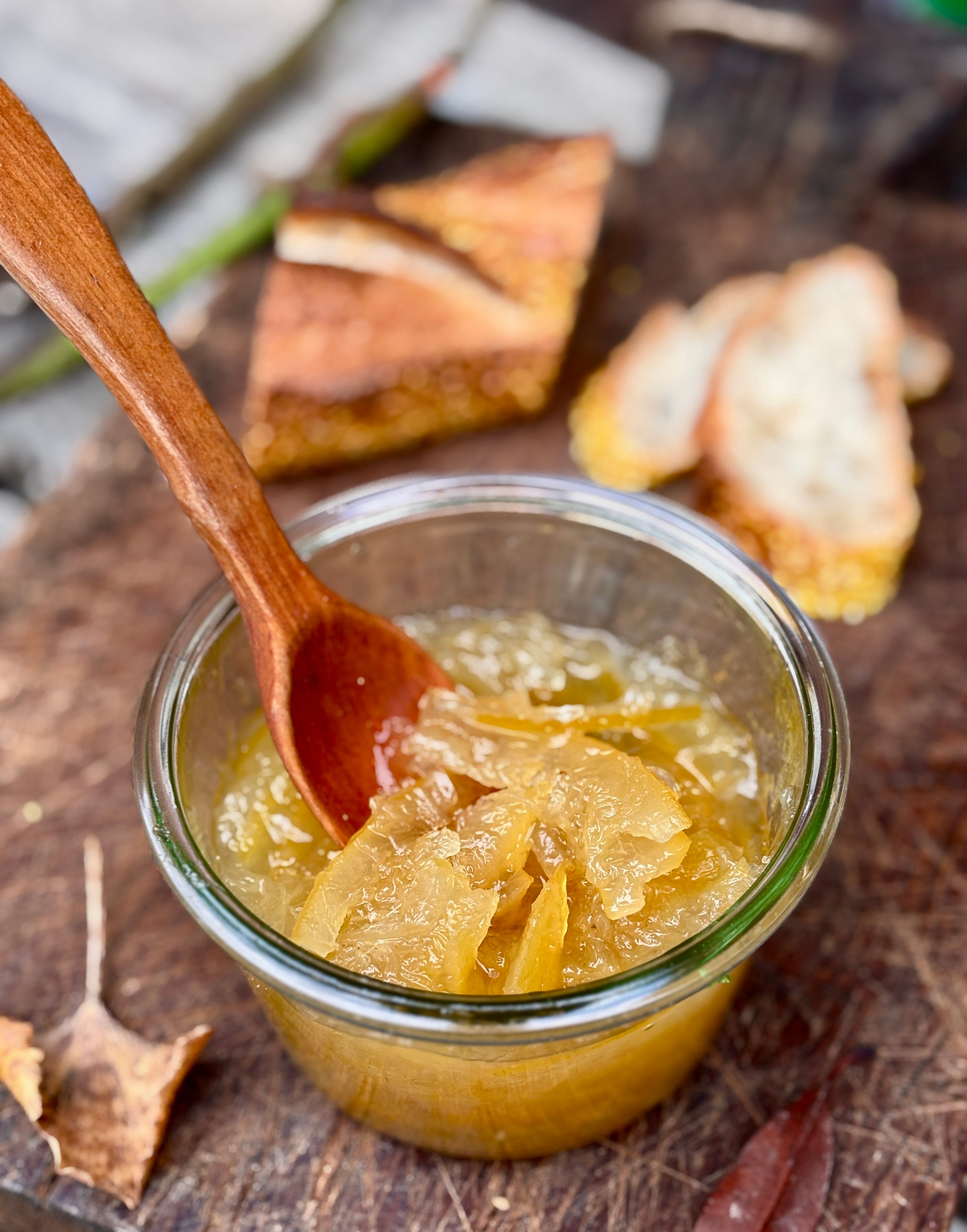
I know it’s spring and summer, and we’ve been enjoying the bounty of berries and stone fruits in Paris. But no matter what time of the year it is, I can always eat pineapple, which I did on a recent trip to Taiwan, where pineapples are a staple, either fresh or preserved.
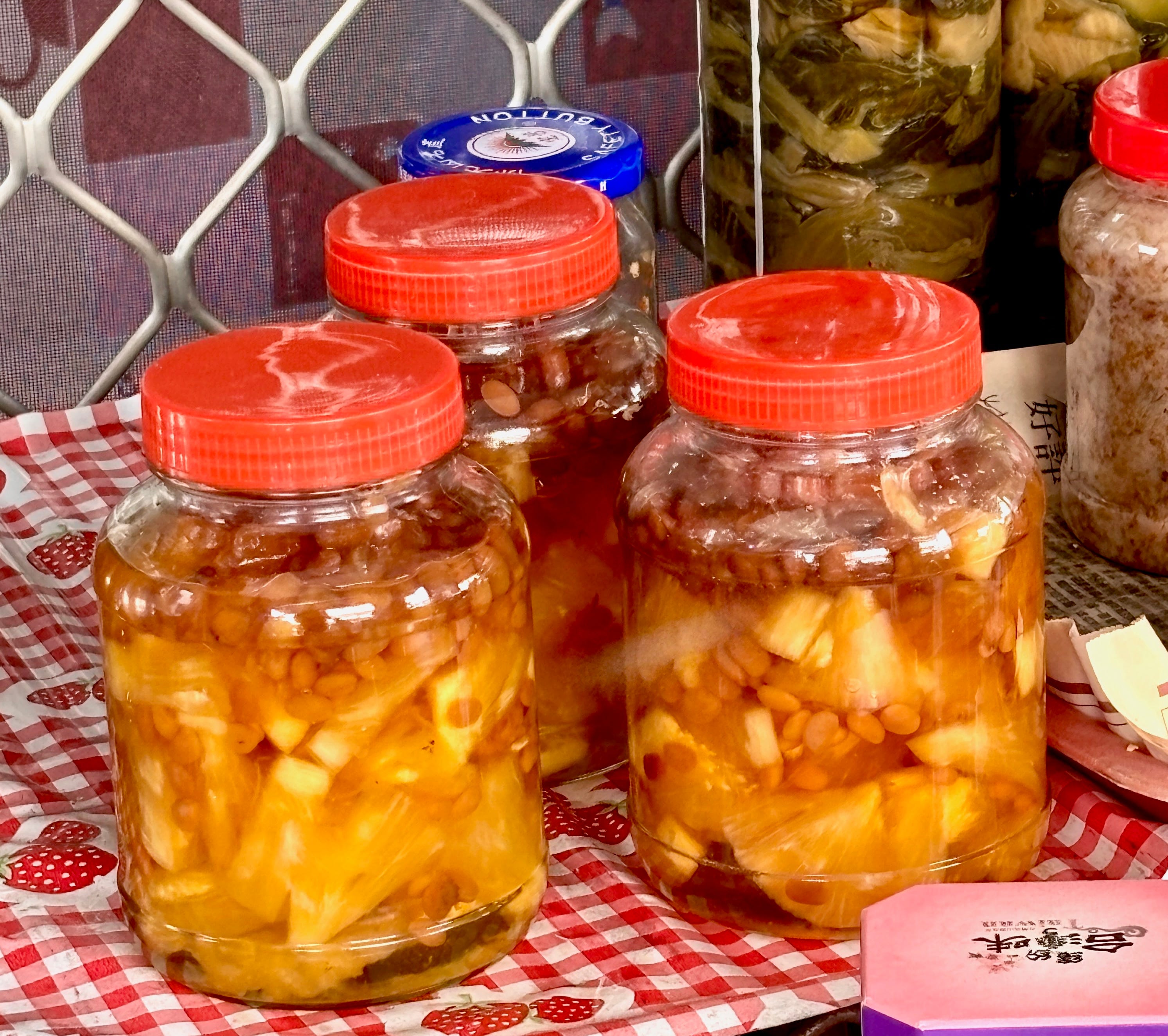
I was intrigued by the fermented pineapple I had while I was there, shown in the jars above, which was saltier than I had imagined. I liked the idea of fermenting the sweet, sturdy fruit, but when I asked my Taiwanese-American friend if he knew how that condiment was made, he asked around but never found out.
Natasha’s book explores the intersection between full-flavored foods and their beneficial properties, with recipes such as Hangar steak with dandelion green salsa, Potato and garlic pie, Farro power bowl with tahini-fig dressing, and Persimmon pudding, because persimmons are rich in carotenoids, an antioxidant that comes with a number of health benefits. I knew there was a reason I liked cake so much…
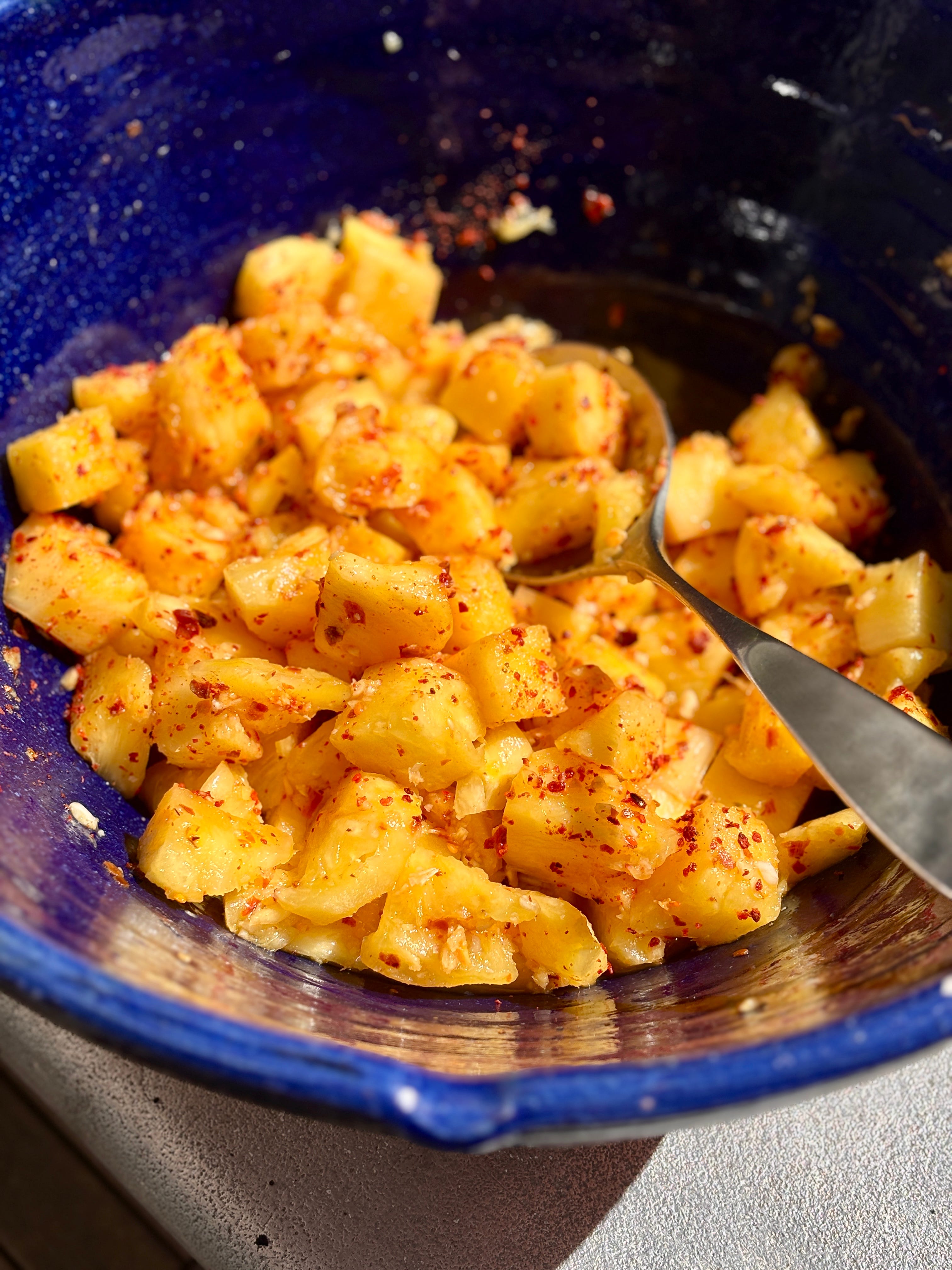
While reading the book, I came across this Pineapple kimchi recipe, which was adapted from another cookbook, Spicebox Kitchen, written by Linda Shiue MD, an internal medicine physician who studies cooking and plant-based nutrition. While my personal philosophy is to eat a wide variety of foods, making sure that I eat a lot of fruits and vegetables, as well as grains and proteins, I certainly don’t deny myself the pleasures of dessert. Otherwise, I wouldn’t have a career.
When I moved to France, way back when, I had trouble finding one of my favorite fermented foods, kimchi, so started making my own, sharing my trials and recipes on my blog. Years later, I wondered if I was going to get into trouble for the kimchi recipes that I’d posted.
Thankfully, the cancellation gods were smiling on me, no doubt realizing that I only had the best of intentions in mind, and to also let people who might not be familiar with kimchi to learn how wonderful it is, and that you can make it anywhere, even in a tiny rooftop Paris apartment.
Cancel me if you want, but I sometimes add pineapple to Thai curries, which lends a hit of cooling freshness against the coconut milk-rich, spicy sauce. But the good news is that I’m off the hook because I just looked it up and Thai people doaddpineapple to curries. Whew, that was close.
I did take a few liberties with this recipe, which called for 3 tablespoons of water, but I used the runoff of pulpy juices left on the cutting board after preparing the pineapple as part of that 3 tablespoons.
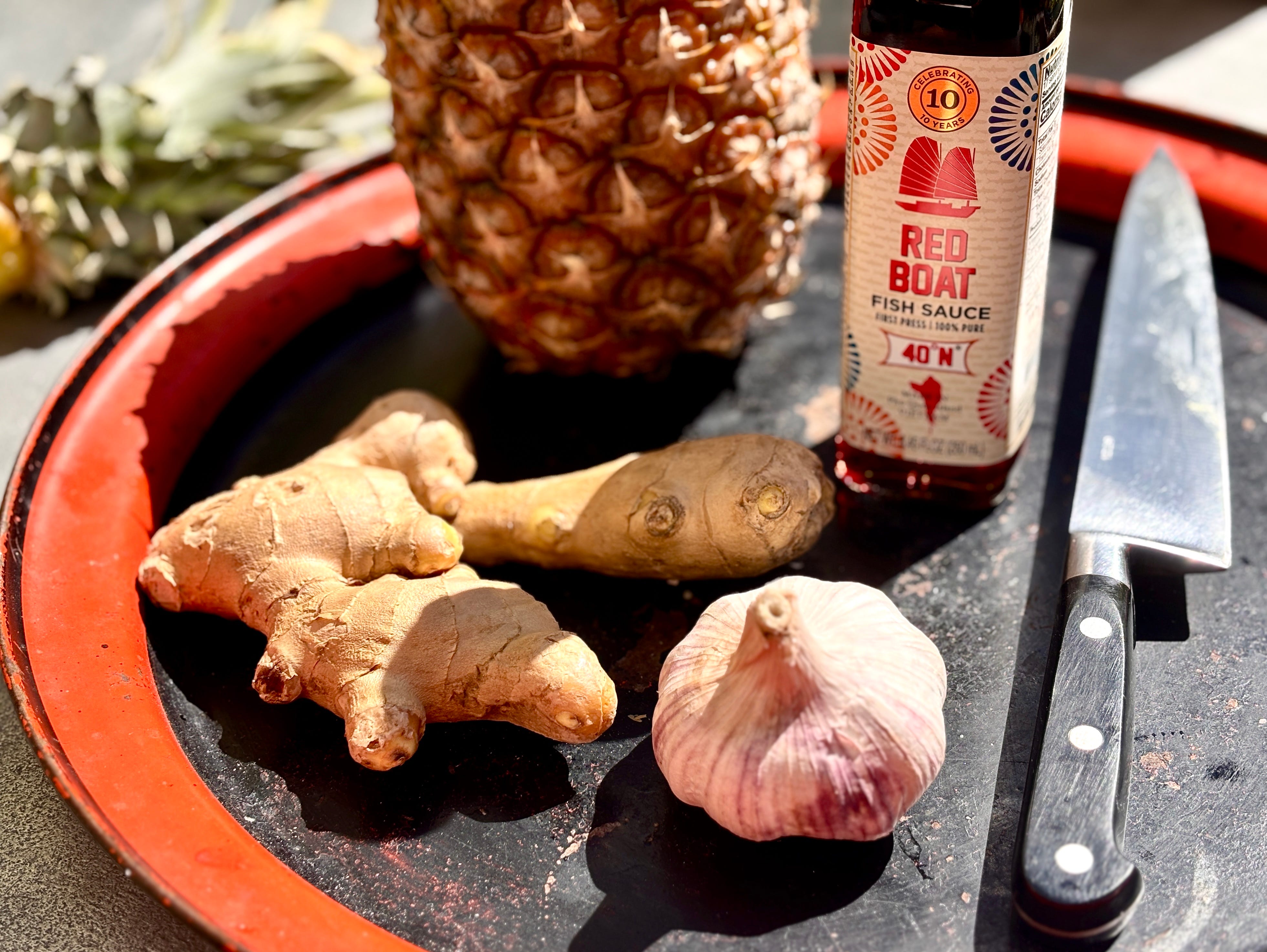
While the recipe doesn’t specifically call for it, I use Red Boat fish sauce. When I went to visit them in Vietnam, I learned that many fish sauces are made with all sorts of seafood. Cuong, who makes RB fish sauce along with his family, said that some sauces are prepared from fish that have been sitting on the boat for a couple of days, whereas the anchovies used in his fish sauce get salted right away to preserve them until they get back to shore. I’m not on their payroll, but his fish sauce is one of those quality ingredients that really does make a difference when you use it.
Speaking of quality, the theory that you can tell a pineapple is ripe ‘n ready is if you can easily pluck out a center leaf from the spiky top, which will only show you how to raise the ire of the people at the market who sell pineapples. The best way to tell if a pineapple is ripe is to sniff it near the base. It should smell sweet and like the tropics. Avoid pineapples with mold around the base or soft, mushy spots.
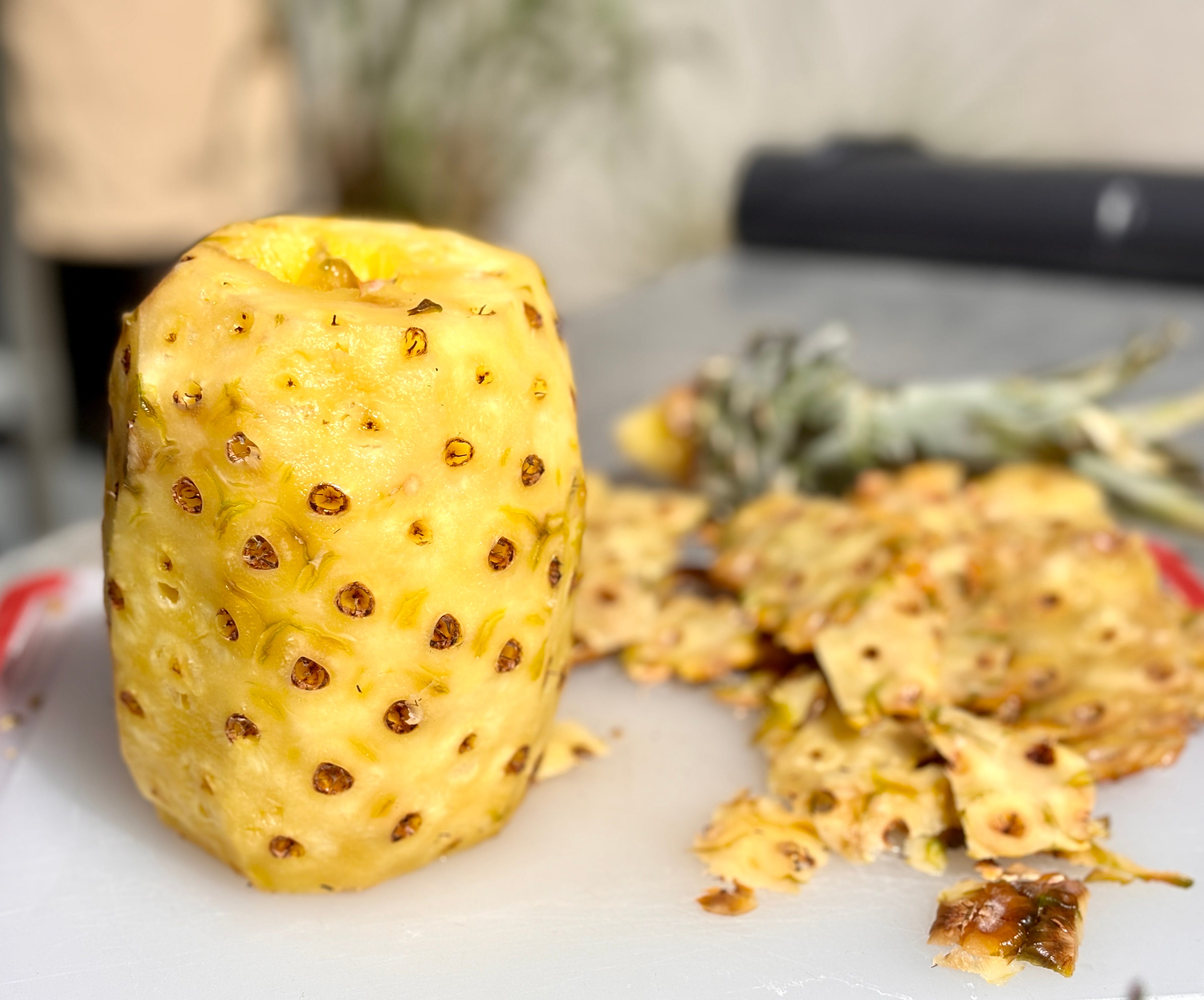
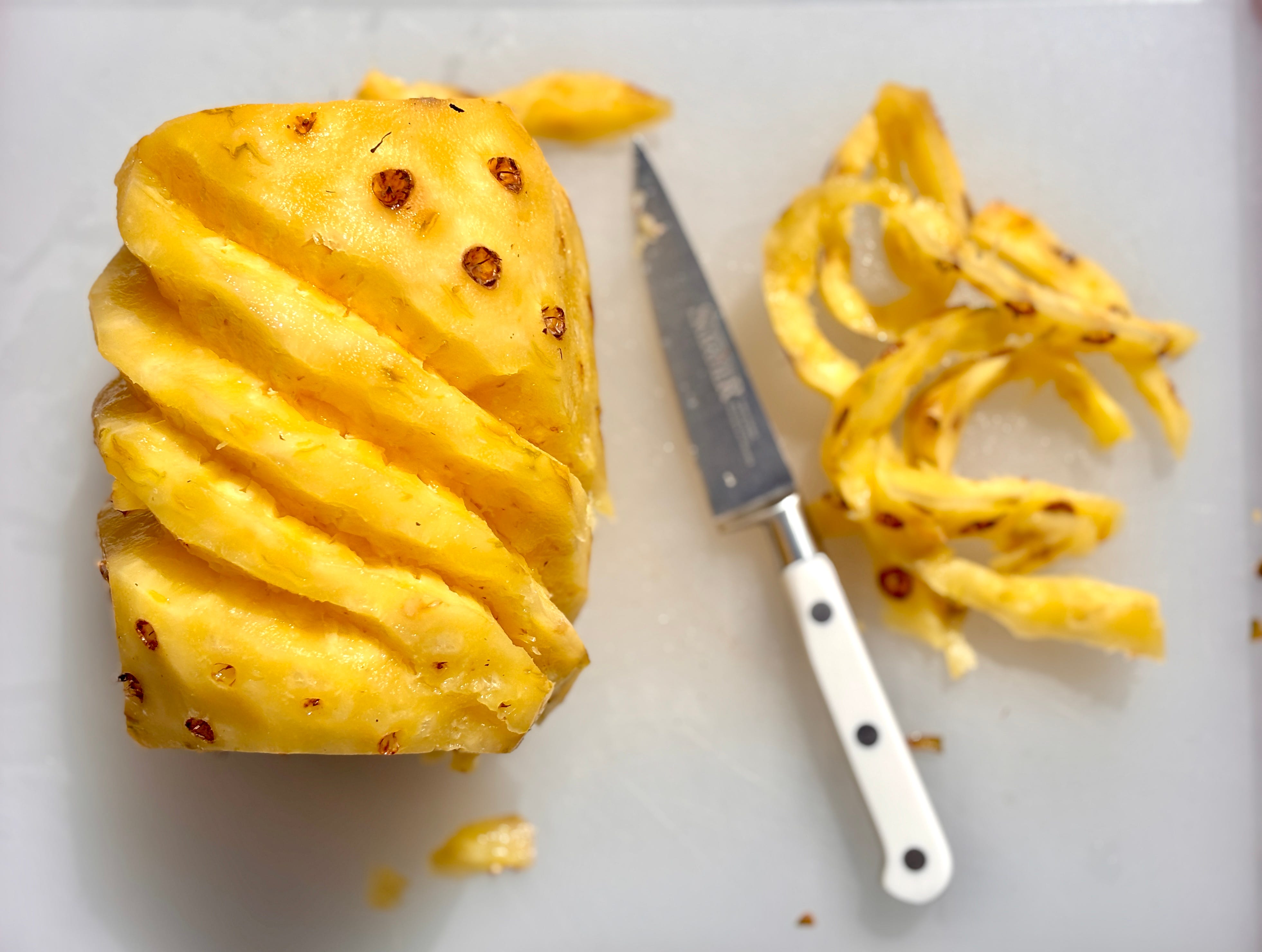
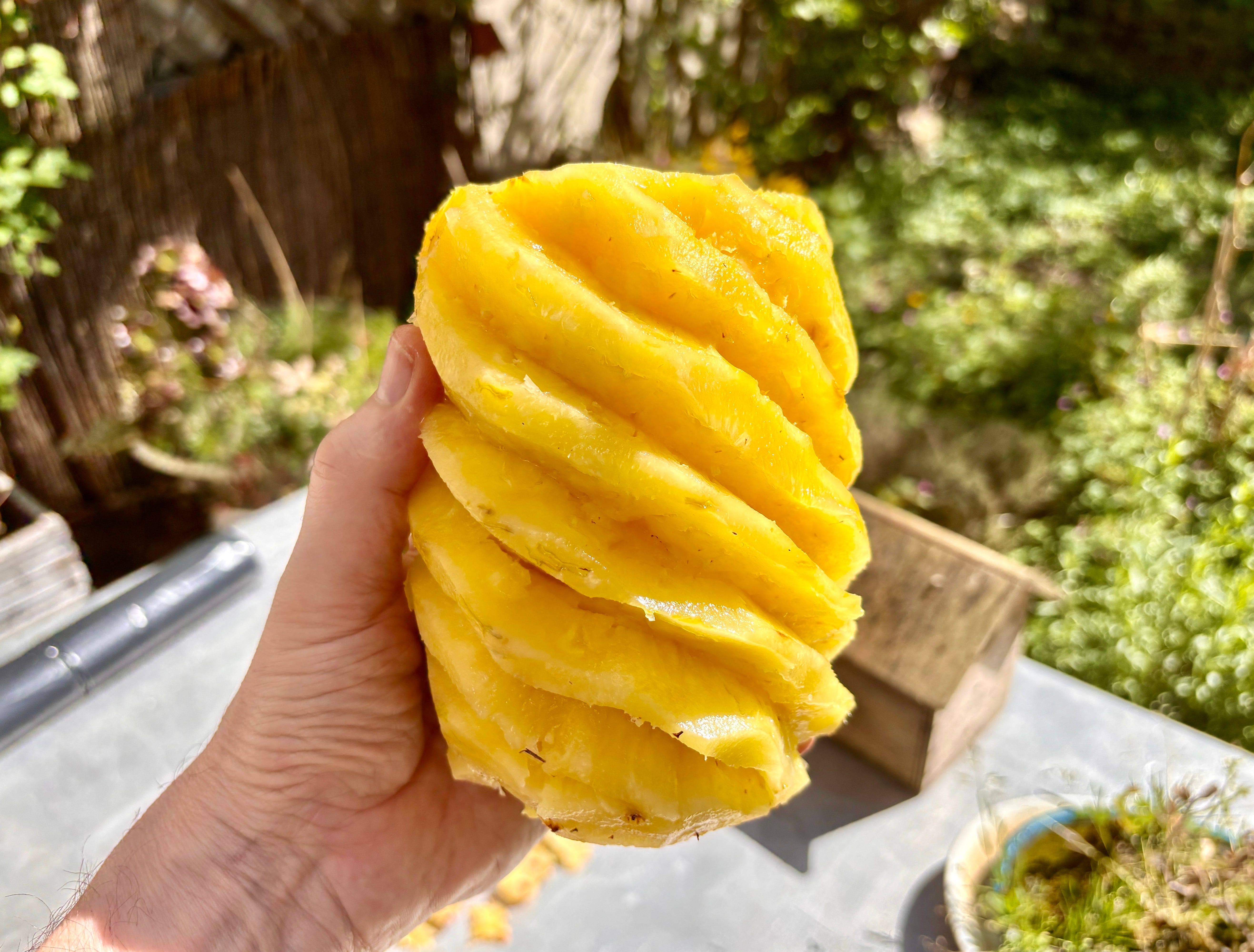
I’ve prepared a lot of pineapples in my time and my favorite way to do it is to lop off both ends, then trim off the skin with a chef’s knife. Then use a knife to cut around the line of the eyes, following them as they spiral around the pineapple, making a V-shape indentation on both sides of the eyes, to remove them. You can also pluck them out with the tip of a pointed vegetable peeler.
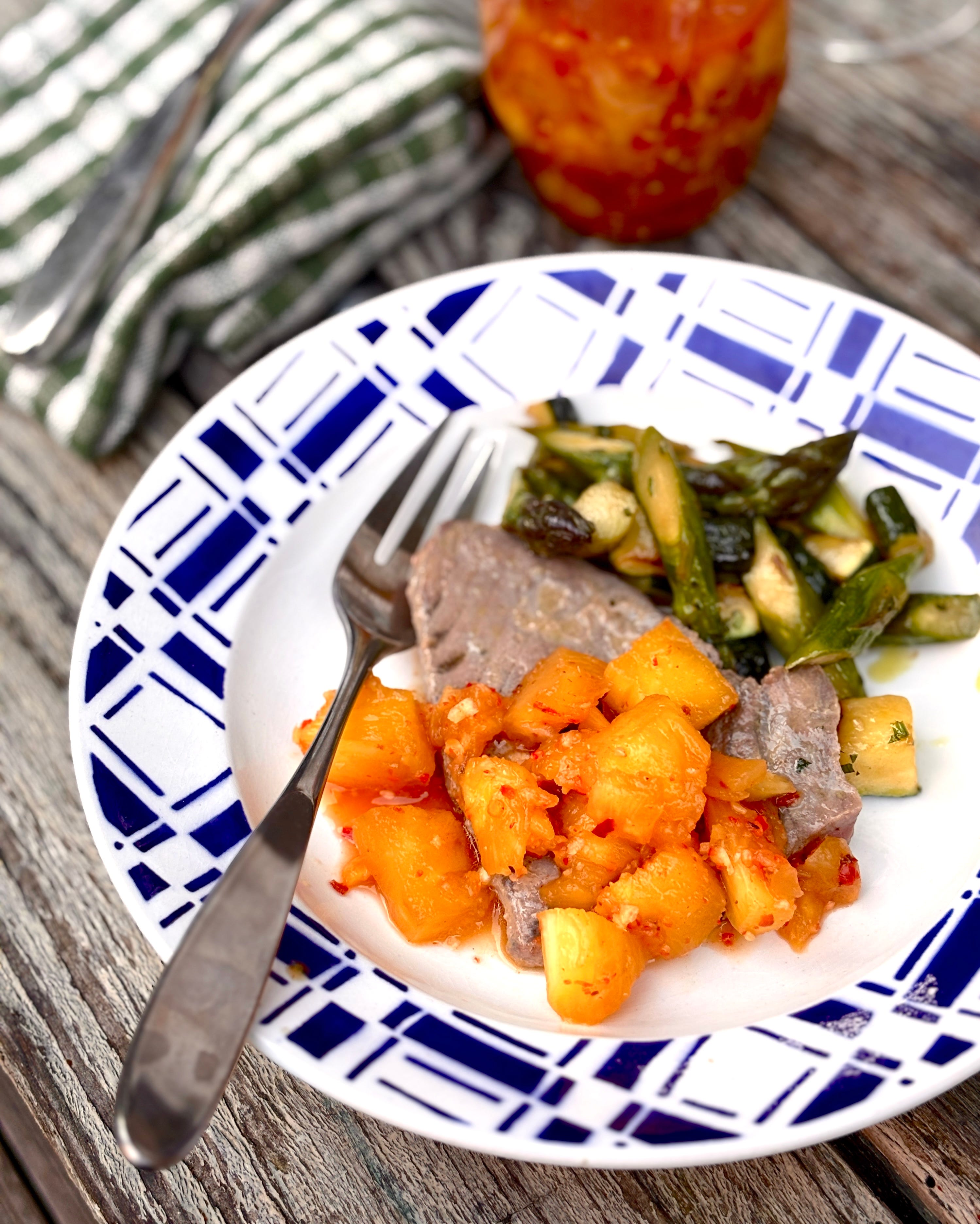
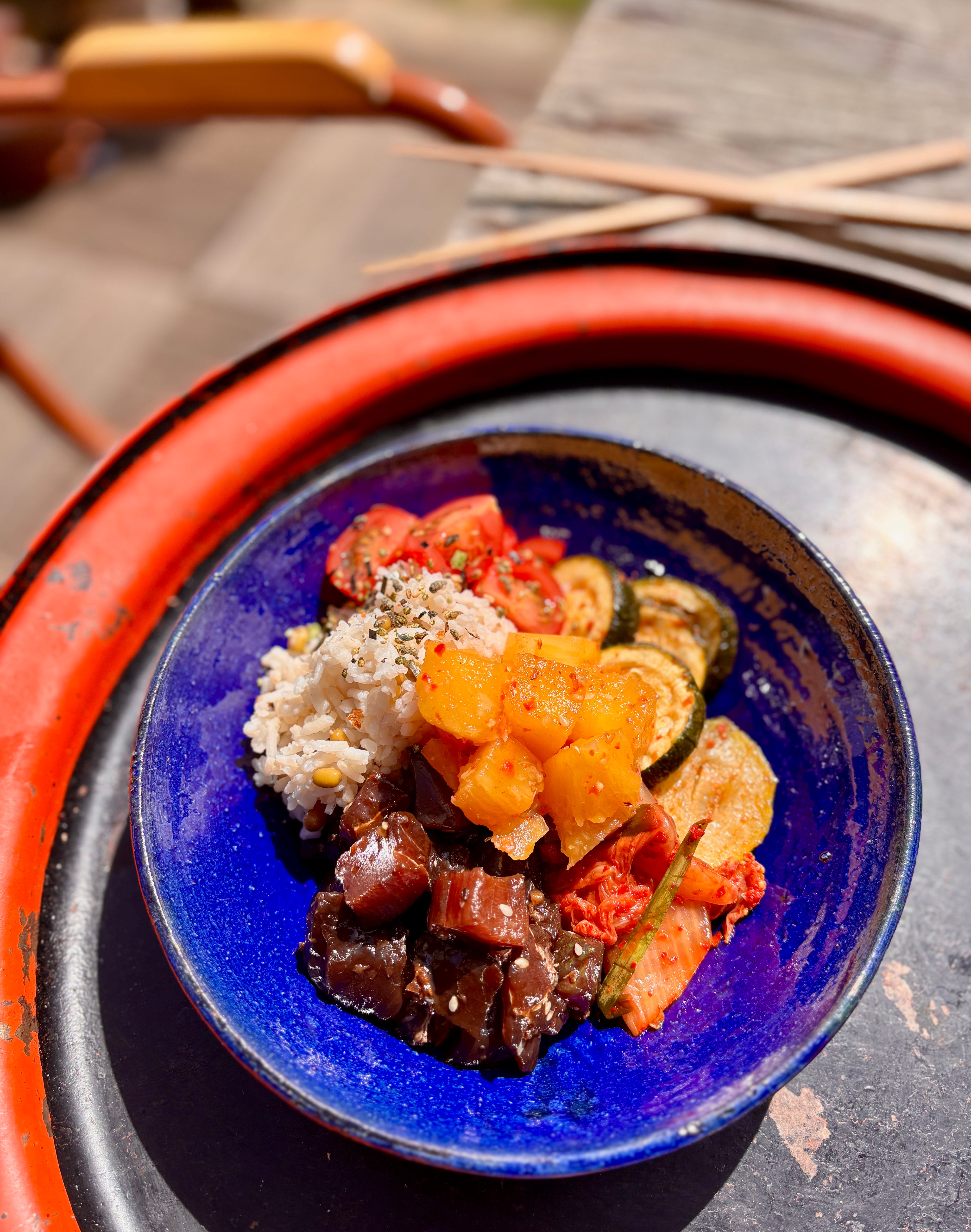
Romain loved this kimchi when I served it for dinner shortly after I made it. This is, indeed, a terrific and fresh condiment that goes well with fish or roast pork, or as a component in a rice bowl, along with tofu or shrimp, pickled vegetables, and whatever else you’ve got to add to the bowl.
While we ate some of this kimchi right away, I stored the rest in glass jars in the refrigerator, and it’s been a convenient condiment to have on hand.
Subscribe to my newsletter to get recipes, stories, Paris tips, and more — sent right to your Inbox! Free subscribers get most posts…and paid subscribers get all posts, as well as the ability to participate in the community of commenters.
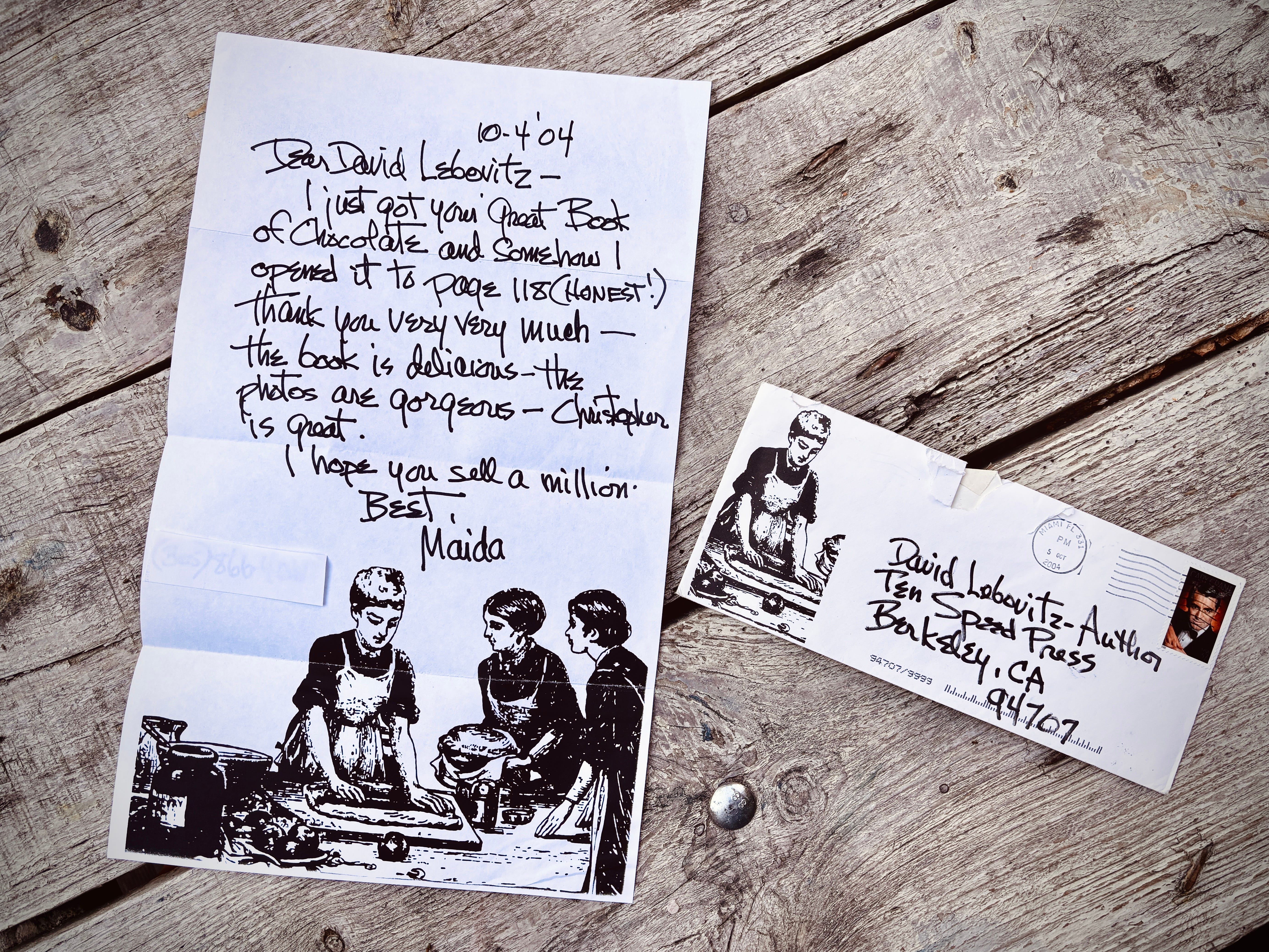
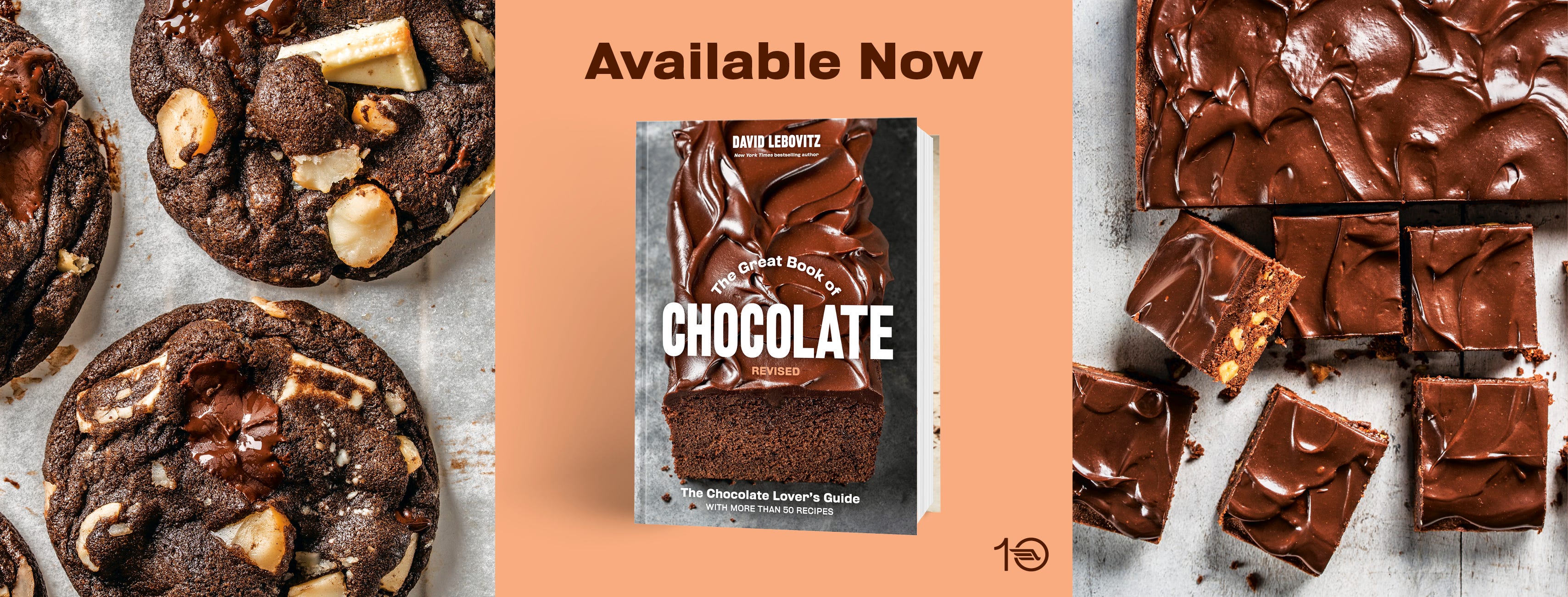
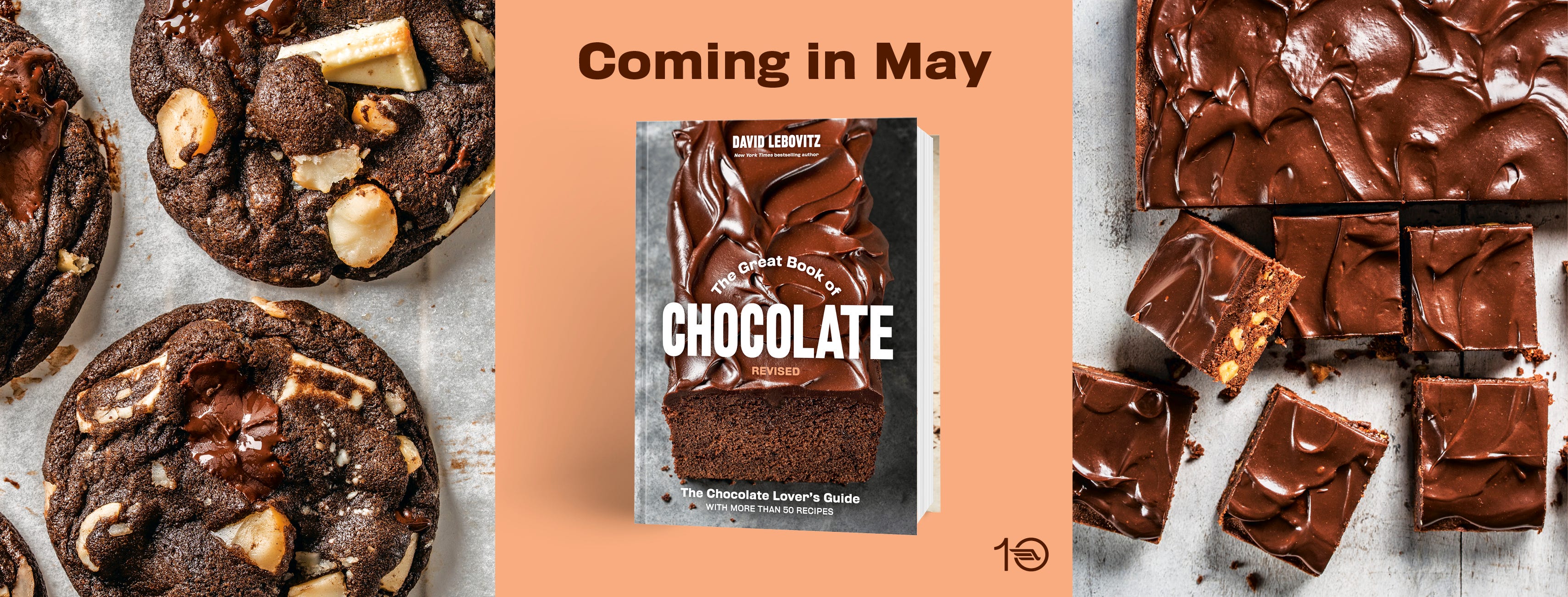
I’m very excited for the release of my newest book, The Great Book of Chocolate. This totally revised edition is filled with lots of new information about the world of chocolate, as well as a chapter on my favorite addresses for chocolate in Paris, and, yes, there are over 50 recipes that span the world of chocolate, including a chocolate cake from the late, great MaidaHeatter that she appreciated so much she sent me a letter about it…
Due to global events, it was a challenge planning an overseas trip, and some venues weren’t available on shorter notice. But I will be going to four cities — New York, New Jersey, San Francisco, and Los Angeles. Alas, I can’t visit all the places I wanted to go, but you’re welcome to come visit me wherever I am. And yes, I’ll be doing an event in Paris, in late May, if you fancy a trip to Paris! 😃
If we missed each other and you want a signed copy of The Great Book of Chocolate and Ready for Dessert, get in touch with Kitchen Arts & Letters, Omnivore Books or Now Serving LA, and they can send you a copy! -dl
Below are the dates for the events. Note that a number of them are ticketed, which usually includes the price of the book. Ticketed events also help support the bookstores and ensure that a book will be available for you. If you have questions about events, feel free to contact the venue directly.
May 5th: Release of TheGreat Book of Chocolate, which is now available for pre-order. Pre-orders will arrive on, or very close to, the release date. It’s available at these retailers, or order a copy at your local bookshop.
May 30: Booksigning at La Trésorerie Rive Gauche (48, rue de Grenelle, 7th, Paris), 3pm to 4:30pm. Copies of The Great Book of Chocolate and My Paris Kitchen will be available for sale and signing.
Please note that events are subject to change and revision (like everything these days…*sigh*), although we’re hoping that doesn’t happen. If anything changes, I’ll do my best to post about it but you’re welcome to contact a venue before an event to confirm the time and date, or if you need additional information.
I love polenta, especially in the winter. It goes well with grilled or roasted meats, vegetables, fish, and poultry. It can be served for breakfast with butter. If made in advance and left to firm up overnight, it can be cut in slabs and grilled. And if you’re the kind of person who doesn’t mind firing up the deep-fryer, you can make polenta fries. (Which I love to eat, but not clean up after. Option B is to cut the polenta into batons and fry them in olive oil a skillet )
I keep a bag of polenta at home, and used to make it by stirring it on the stovetop, which took nearly an hour of constant vigilance, not to mention cleaning up the stovetop afterwards, and nursing a few burns on my arm from getting splattered by hot polenta.
When I arrived in France, I was surprised at the prevalence of instant polenta, which is polenta that’s finely ground so it absorbs liquid quickly. (There’s also precooked polenta grains, and precooked sliced polenta, which were new to me, too.) Admittedly, it’s very easy to make and is ready in about five minutes. People don’t seem to mind it, but I like the texture of traditional polenta, so stick with that.
If you want to take your polenta to the next level, seek out stone-ground polenta. Stone-ground polenta (like stone-ground cornmeal) includes the whole grain, and contains the germ and the bran. It also has retains more of its flavor during grinding since the stones grinding the corn don’t heat it up, which can diminish its flavor. But I also like the irregularity of it. It looks like real corn, not like powder.
Stone-ground polenta.
I’ve been cooking polenta for years, stirring it on the stovetop, but recently I remembered this technique, which was introduced in the pre-internet days by the great Paula Wolfert. The recipe was in her book, Mediterranean Grains & Greens, a treatise I sadly had to leave behind in the States, but she attributed to a recipe on the back of a package of Golden Pheasant polenta, although the California-based company no longer seems to be in business. 😔
I’d made it way-back-when, but for whatever reason, I continued making polenta the traditional way. It reminds me of a quote from Judy Rodgers in the Zuni Café Cookbook, something along the lines of finding, and sticking to, a harder way of doing something. For better or for worse, that’s sometimes as I operate. Old habits die hard, I suppose.
One of my favorite parts about writing my chocolate book was getting to explore, and share, the world of chocolate. Chocolate is a pretty wonderful ingredient all by itself. But I wanted to feature friends in the chocolate world, so I culled recipes from bakers, pastry chefs, chocolatiers, cookbook authors, and even bartenders for the book.
For the revision of The Great Book of Chocolate, I completely rewrote the book (since so much has changed!) and wanted to include a chocolate marshmallow recipe. So I thought about Amanda Bankert of Boneshaker donuts in Paris, who taught me how to make vegan marshmallows, which were game-changers since many people have asked me about substitutions for the gelatin and egg whites that are normally used in marshmallow recipes.
Subscribe to my newsletter to get recipes, videos, stories from Paris, and more, sent right to your Inbox!
Amanda is one of the most fun people I know, and is also a graduate of the prestigious Cordon Bleu cooking school in Paris. So when revising The Great Book of Chocolate, I thought, “Why not veganize chocolate marshmallows?”
With the book coming out in less than a month, I then thought, “Wouldn’t it be fun to have Amanda come over and make them with me in my kitchen?”
So we made a video of us preparing them together. We had such a good time whipping them up, and it’s great that anyone - vegan or not - can enjoy these delicious marshmallows. And next time you’re in Paris, stop by Boneshaker for a donut and a cup of coffee. Like Amanda, her shop is one of the most fun things in Paris. And if you see her behind the counter, say hi for me, and enjoy the video!
You may have to do a bit of shopping to get the xanthan gum andagar-agar, a natural gelatin substitute, which, interestingly, is sold in French grocery stores. Natural food stores or online shops are good places to look where you live. In Paris, G. Detou sells them, as well as cream of tartar. The good thing is, you’ll have them on hand for next time : )
Aquafaba is the chickpea cooking liquid found in canned chickpeas, not jarred, nor is it the liquid from dried chickpeas that you cook at home. (Interestingly, aquafaba was “discovered” by a French opera singer.) In the U.S., generally one 15-ounce/425g can yields 3/4 cup (180ml) liquid, but you may want to get an extra can just to be sure. (You can use the chickpeas to make my really good hummus.)
It’s nice to have a helper in the kitchen to steady the bowl while you fold in the cocoa powder, as I did with Amanda. If you’re by yourself, resting the mixing bowl on a silicone baking mat will help keep the bowl in place.
And don’t forget to pre-order The Great Book of Chocolate - it’s out May 5th and you’ll be the first to get a copy!
Few people know, or write about, Paris as well as Elaine Sciolino. With an extensive background in journalism, Elaine was the Paris bureau chief for the New York Times and remains a contributing writer. She has also written four books on Paris and French culture.
Her book, The Only Street in Paris, put her neighborhood on the map, portraying the various merchants, food sellers, and restaurants that line the rue des Martyrs, a microcosm of life in the city.
Her recent book is Adventures in the Louvre: How to Fall in Love with the World’s Greatest Museum. If the subtitle intrigues you, it’s because the Louvre has had its ups and downs over the years, beginning its life as a fortress, then becoming a residence, then a public “shopping” center, and now, a museum. Elaine takes readers on a journey through the imposing wall and behind the scenes of this famous museum, which both captivates, and vexes, visitors.
Being right next to the Seine, the museum is prone to flooding, crowds crane their necks to see the Mona Lisa, and robbers broke in recently, in broad daylight, snatching €88 million ($102 dollars) in jewels, which haven’t been seen since. Security has been a recurring problem at the museum, and the video security system password at the time of the robbery was “Louvre.”
Elaine’s book is also full of fun facts about the museum, including one that notes if you wanted to see the whole museum, the walk would be nine miles (14.5km). Other helpful advice: “Never go on an empty stomach and with a full bladder,” because the food offerings in the museum don’t match the cultural treasures in the galleries and corridors.
In the podcast, Elaine gave a great tip for visiting the Louvre and avoiding the crowds and the lines, which you might find helpful on your next visit.
We’ve been checking out some new places in Paris and revisiting a few from the past. Here’s where we’ve gone, and what we’ve eaten…
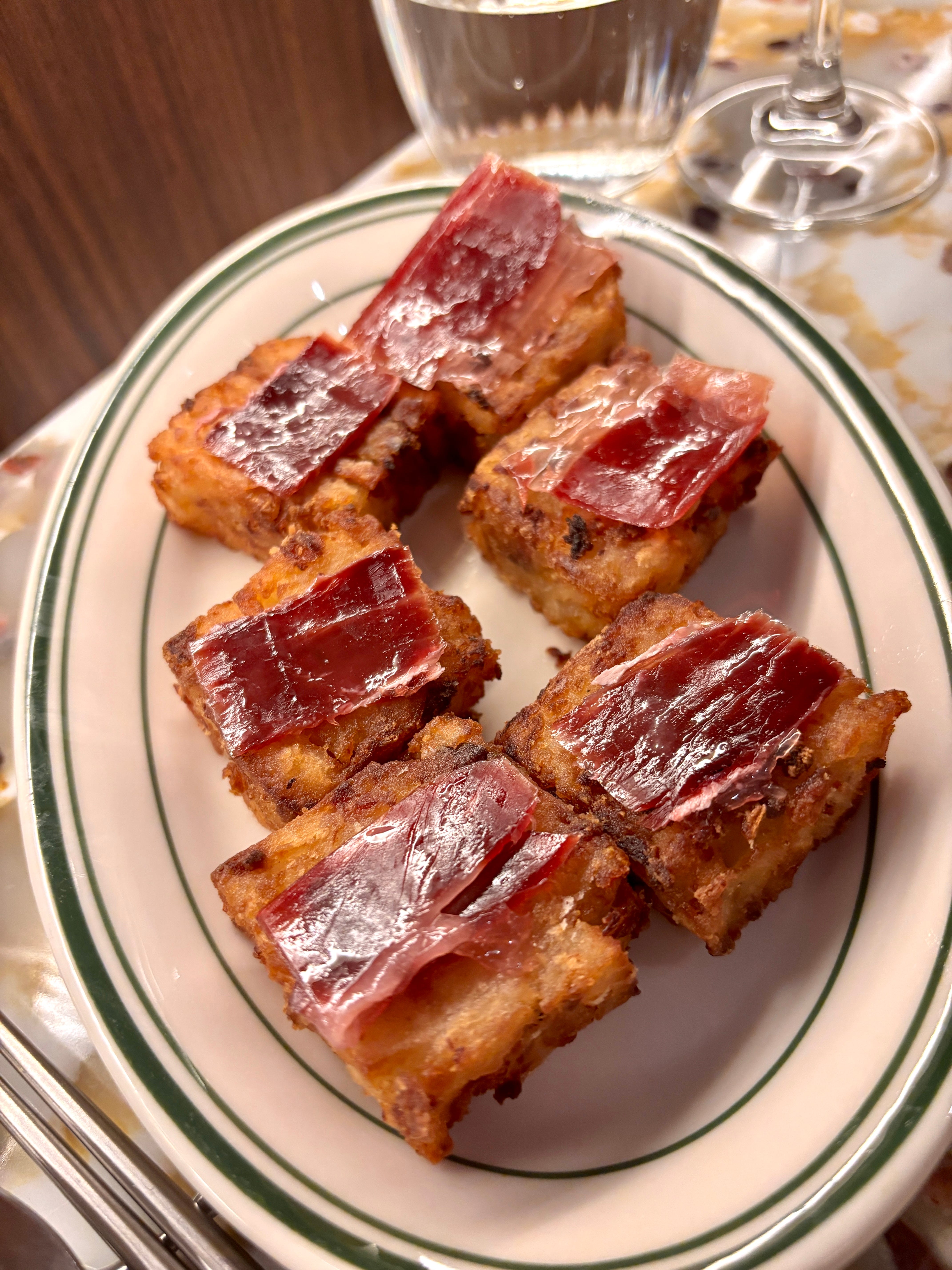
Radish cakes with Iberian ham at Sensation
Sensation
We have every reason to be wary of fusion restaurants, which often end up falling under the umbrella of confusion. When you don’t understand the foods and cultures that you’re trying to riff off of (or as some consider, rip off of), you get all sorts of weird combinations that don’t always work. But food changes, and immigration means people who are coming to another country learn to adapt and make do with local ingredients. And in some cases, sublimate the food to local tastes.
Another barrier is the expectation that cuisines from certain cultures should be dirt cheap. I wince when I read people say, “But I can get a plate of potstickers for $3!” when they see someone charging more than that. I, too, eat inexpensive dumplings.
It was a month that was, and nearly wasn’t. After a few years of back and forthing with a Taiwanese-American friend, we finally set a date to meet up in Taiwan along with two other friends. I’ve been to other countries in Asia but not to Taiwan, so was anxious to see it. We started off in the south of the island, in Kaohshiung. I stayed at the Hotel Nikko there, which was terrific, but was glad I’d booked a few months in advance as the price rose substantially, which my friend found out when he tried to book a last-minute room there.
We didn’t spend too much time in the city as we were invited to family meals and events, but got to see everything from making rice noodles and tofu skins, to eating shaved ice with various jellies and candied squash and beans.
After three days in the south, I was looking forward to seeing Taipei, the capital of Taiwan. Thankfully a few friends who knew Taiwan (and a few readers, too) pointed me toward some especially delicious places in the city.
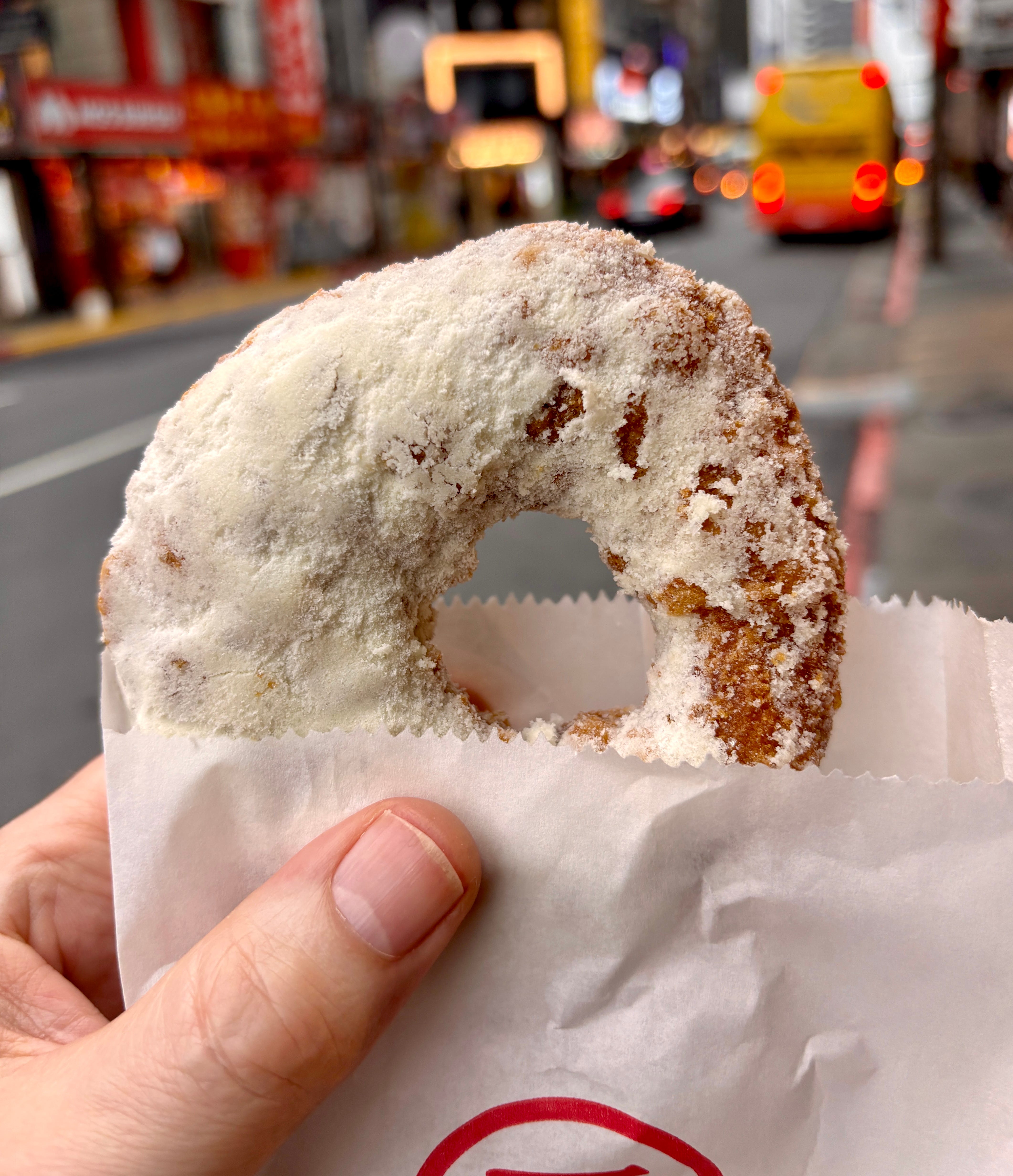
I’m not one for “viral” pastries. I’m not inclined to get up at 7am and wait an hour for a cupcake or a “life-changing” cookie — no offense to Butter & Crumble, which indeed looks delicious — but was intrigued by Crispy Milk Donuts and thought I’d brave it.
There was a short line but it moved quickly. I snagged two donuts, but only got one bite of the just-out-of-the-oven donut before being whisked away. At the urging of the friendly doorman at my hotel, who said it was “crack,” which I know is a term we’re not supposed to use anymore (I’m just quoting him), I went back to get the full-on crispy milk donut experience.
Donuts can be heavy, cakey affairs, but this one was sleek, relatively thin, and lighter than a traditional donut. They dust the donuts heavily with coarsely ground powdered sugar before handing them over while still warm. You really need to eat it right away and it was something I quickly polished off. By the time I was done, my black shirt was covered with sugar.
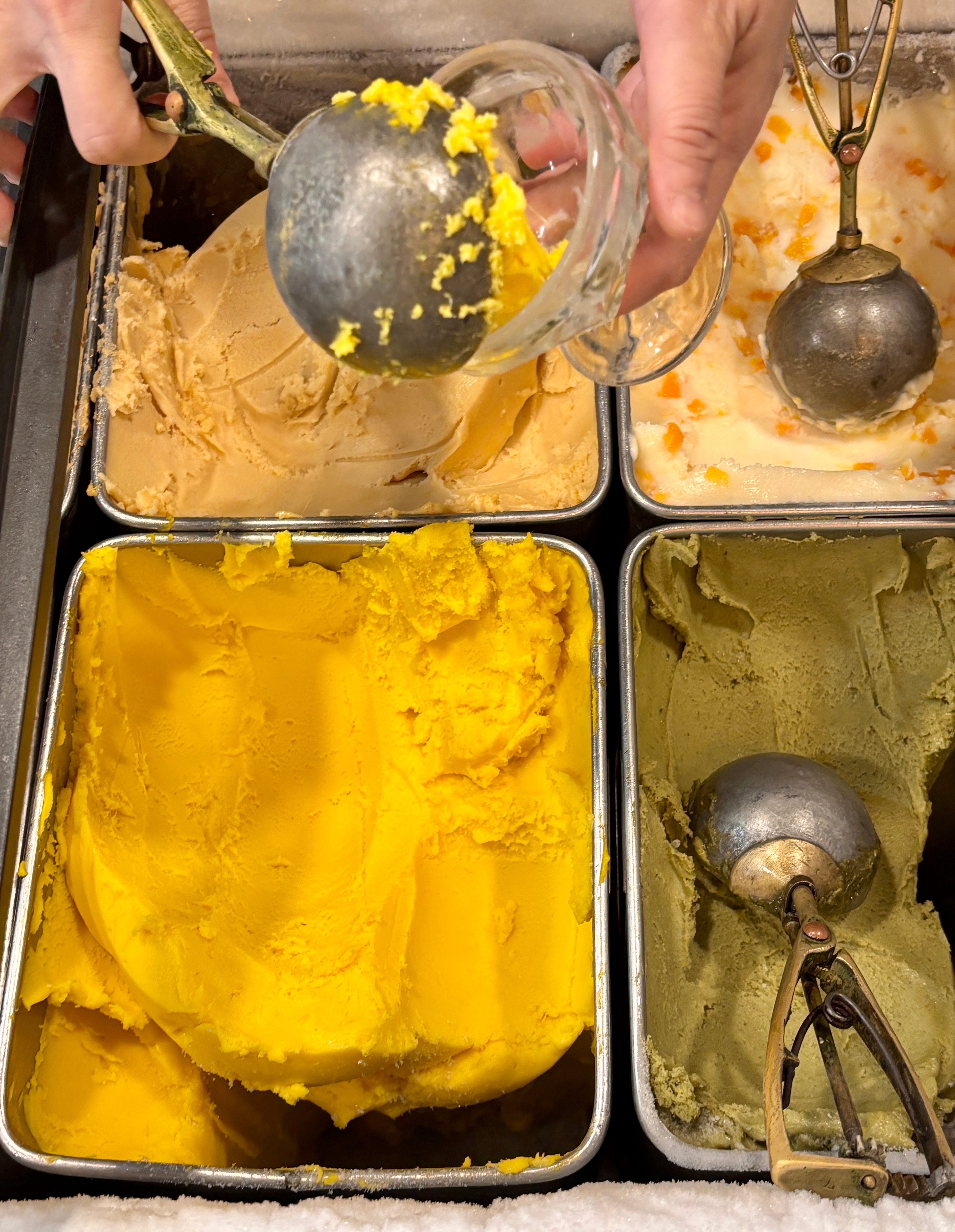
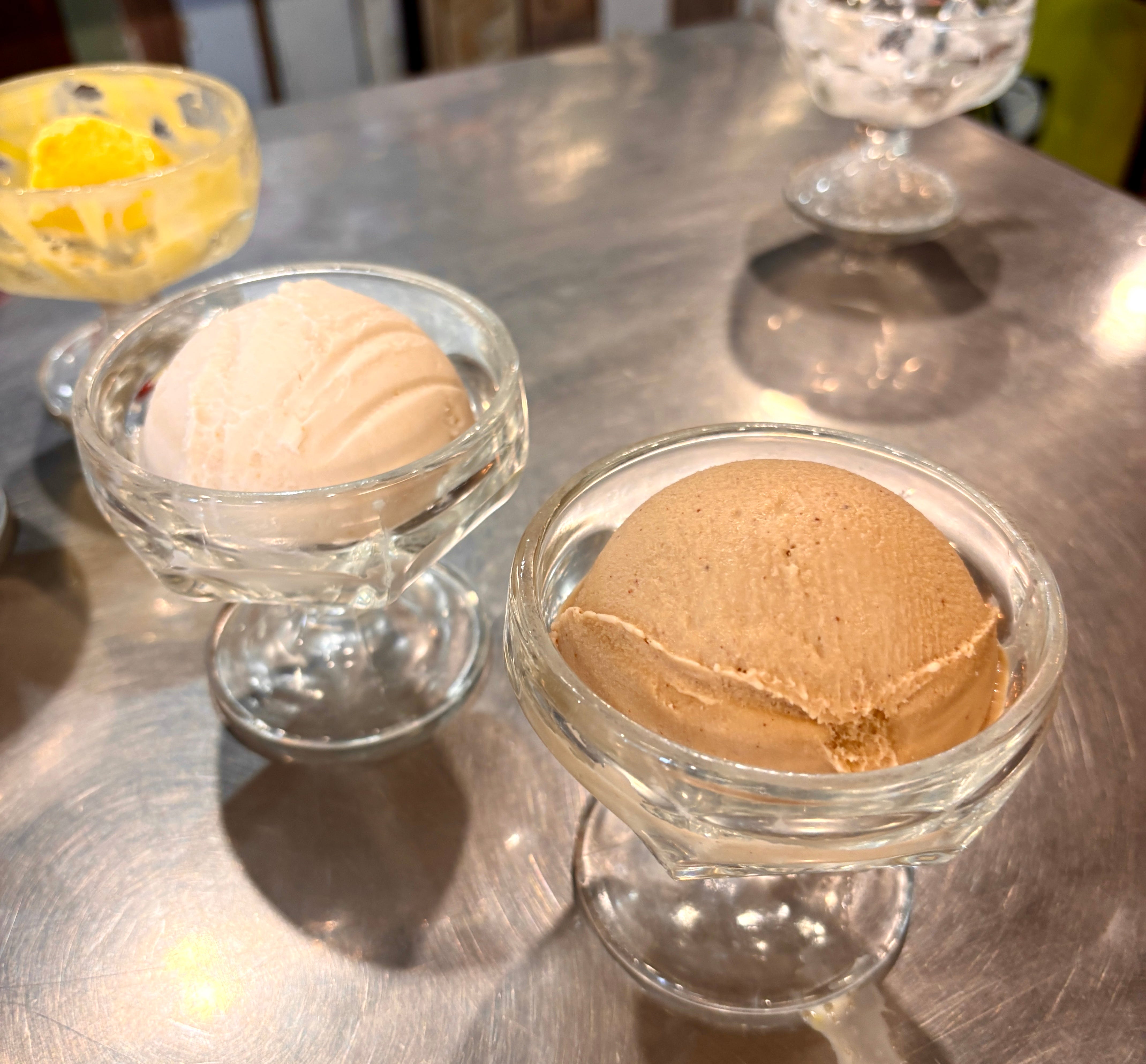
Knowing I like ice cream, two friends in the pastry world recommended Snow King. I’m not sure why it’s not Snow Queen(s) since it was staffed by three super-nice women, but this is the place to try ice cream that features Taiwanese ingredients and flavors, such as basil, mango, peanut, passion fruit, longan, taro, pork floss, kidney bean, and my favorite, sticky rice (below, right), spiked with rice wine and candied lotus seeds.
When I ordered seven scoops for the three of us, I figured each bowl would be a grouping of two or three smaller scoops, but we ended up with seven separate, generous bowls, and scoops, of ice cream.
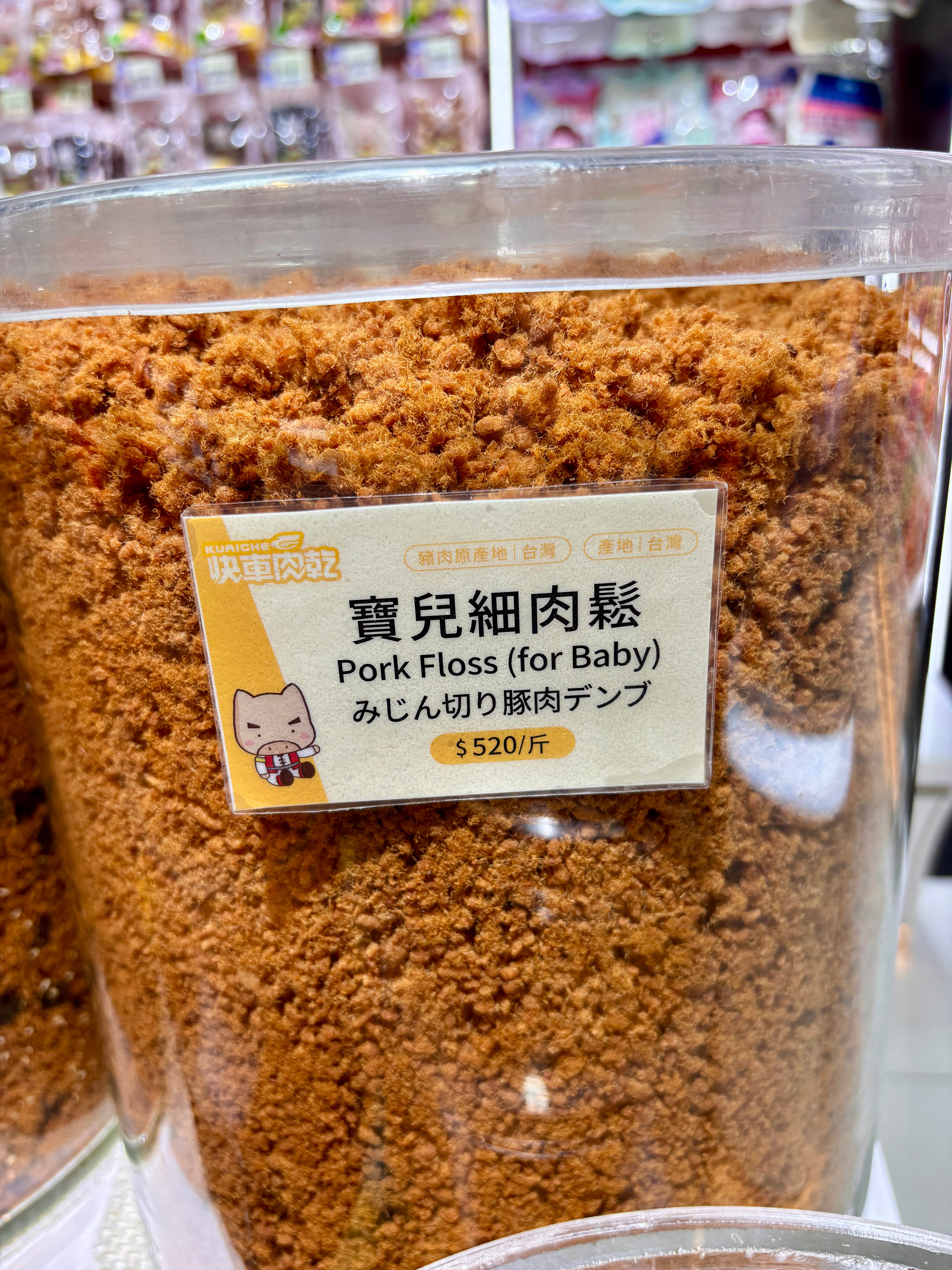
Pork floss is very popular in Taiwan. I saw this at the Nanmen Market. If anyone knows why there is special pork floss for babies, let me know!
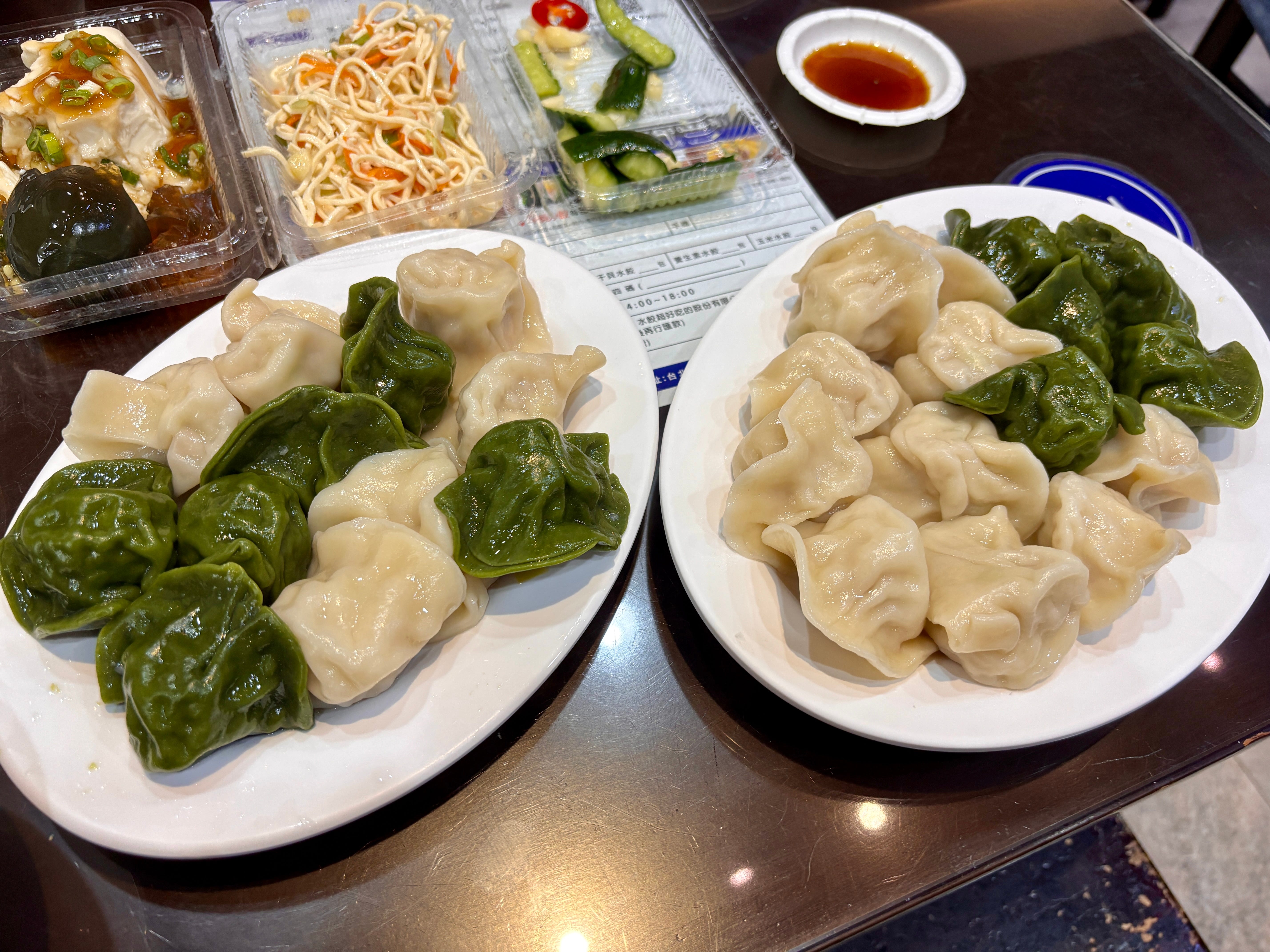
We’d just polished off three heaping plates of dumplings that I over-ordered at Takumi Dumplings, but somehow we made it through most of the ice cream.
At Takumi, you order via an app, then wait on the sidewalk for your dumplings to be ready. Then you go inside, sit down, and eat them. The app was rather confusing, so we ended up with a lot. (Not shown: Another platter of dumplings.) Somehow, we managed to eat almost all of them.
Two other bakeries that I wanted to try were but we love butter and Sunny Hills, recommended by a reader (thx @ rmellorbessant) for their pineapple and apple cakes. They are a specialty of Taiwan, and you can find pineapplecakes in a lot of places, but these were especially good.
One thing that was interesting about both bakeries, which are a short walk from each other, is that they seat you for tea and a cookie, which are free, then (I guess) you buy something. I may have committed a gaffe at Sunny Hills because when I went to pay, they said, “No charge!” which was baffling.
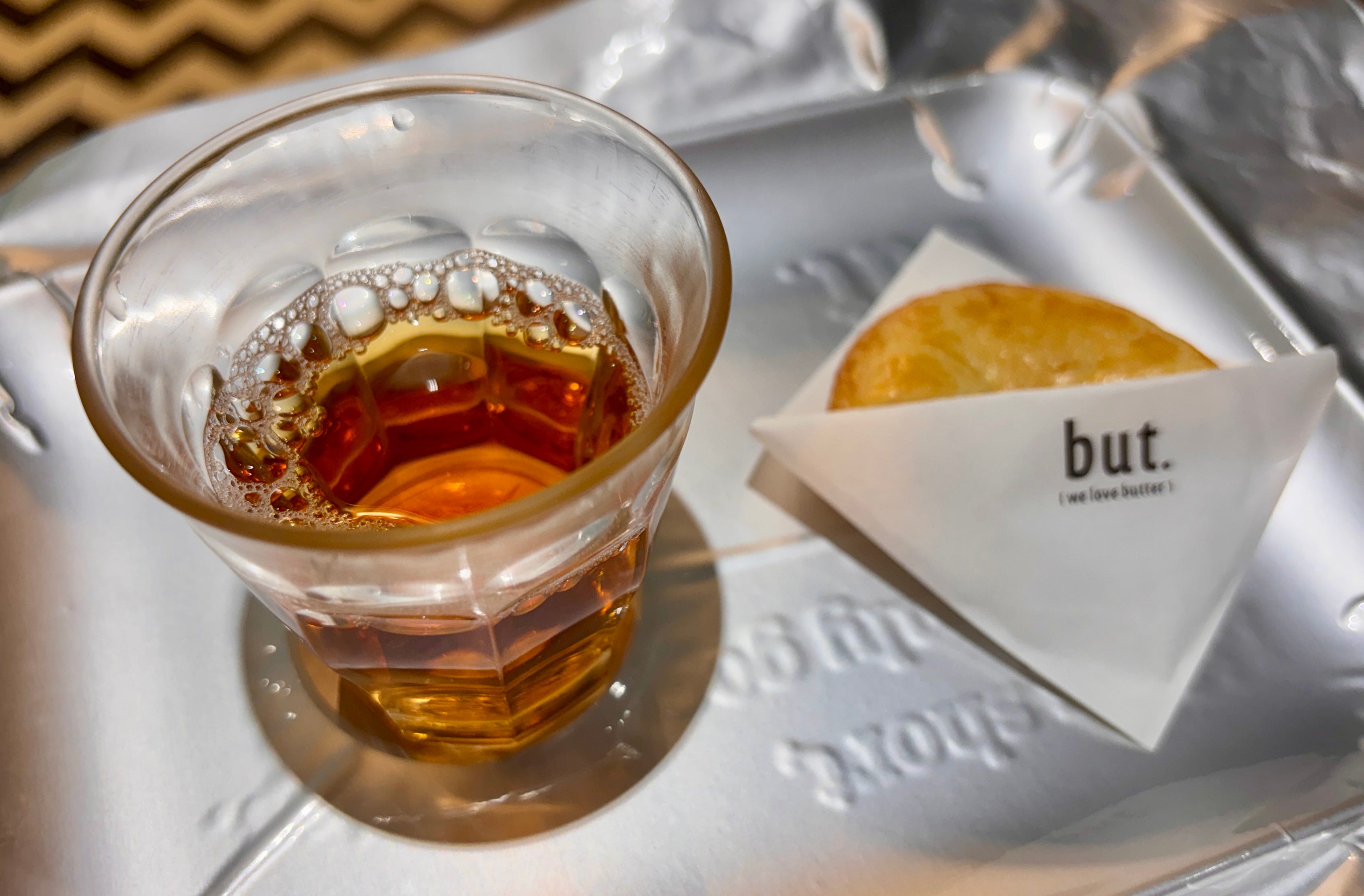
But when I went to the next bakery, but we love butter, before I could buy anything, they sat me down at a table and gave me a cookie and tea. If you go, just be aware that the entrance is designed to look like a classic tailoring shop. Go ahead and step inside, then they’ll lead you to the sleek bakery space.
I don’t think giving away a pastry with a glass of tea is a custom that’s going to make it to Paris (or anywhere else), but I’d felt bad that I didn’t buy any cakes at Sunny Hills.
The cookie (above) was filled with candied longan and made with Échiré French butter. It was so good, I bought two boxes. Fortunately I could redeem myself with Sunny Hills (I was worried they might have posted my picture for the employees, to look out for the freeloader) when, a few days later, I found myself in the food court at 101 Taipei Tower and picked up (i.e., bought) two boxes of pineapple and apple cakes at the Sunny Hills kiosk there. So hopefully I’m off any “watch” list. 😅
And while some people think I eat sweets all day (if only!), I did make it to Din Tai Fung, famous for their Xiao long bao, soup dumplings, considered by many to be the best.
The wait time for Saturday lunch at Din Tai Fung.
If you go, and it’s definitely worth it, avoid weekends. I did notice their branch at the 101 Taipei Tower had just a one-hour wait time, and I think you can browse in the mall while you wait (on their website, they list waiting times for each branch as well), but they also have a take-out, and I saw people eating their dumplings in the nearby park.
Once inside, it’s very calm and efficient. Din Tai Fung is known for treating its employees well, using high-quality ingredients, and having an exceptionally gracious staff. Their branches in the U.S. have become the top-grossing restaurants in America, and I’m crossing my fingers that one day, they’ll open a few branches in Paris. I jokingly* told a local who I was eating dumplings with at Din Tai Fung that the best raviolis asiatiques in Paris would be considered the lowest of dumplings in Taiwan.
It was a fun trip, and I did a lot in ten days but am happy to be home and getting back to focusing on fresh fruits and vegetables, where strawberries and asparagus are showing up at the markets. When you’re traveling, you’re often eating in restaurants, which is fun, but it’s always nice to cook for yourself, and eat at home, even if I can’t make Crispy milk donuts. (Although some can.)
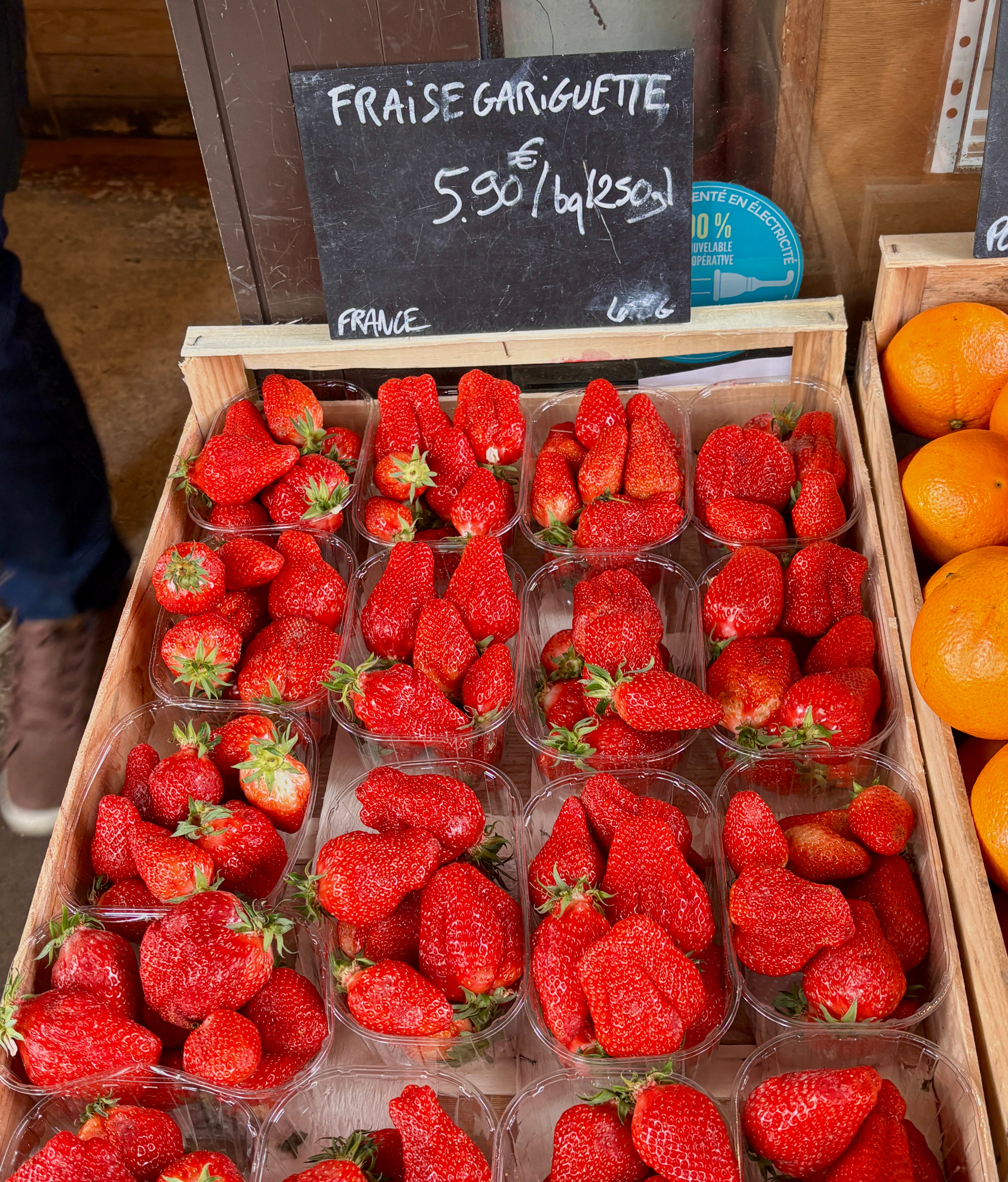
Start-of-the-season strawberries in Paris.
My friend, travel blogger Matt, says one should travel like you live. But I didn’t have a kitchen in my hotel room in Taiwan, so glad to be back in my own kitchen.
I’ve also been busily preparing for the release of my next book, a full-on revision of The Great Book of Chocolate. So much in the world of chocolate has changed since I originally wrote the book that my publisher prompted me to completely redo it, adding and updating information, recasting some of the recipes for what’s now available in the chocolate aisle at the supermarket, and creating brand-new recipes.
There’s a chance that I may be doing some events in the U.S. for it, although the global situation changed the economics and viability of international and domestic travel, so we are working on that, to see what’s feasible. I’ll mention any updates here in the newsletter, as well as on my Schedule page.
But if I don’t make it out-and-about, I’ll be creating some videos for the newsletter, inviting friends into my kitchen in Paris, to make recipes from the book to share with you. I’ll also visit one of my favorite shops in Paris, where the owner will tell us what makes French chocolate so good, and how to buy the best vanilla, which is a natural pairing with chocolate, bien sûr…
-David
Subscribe to my newsletter to get new posts, recipes, Paris tips, and videos, sent right to your Inbox!
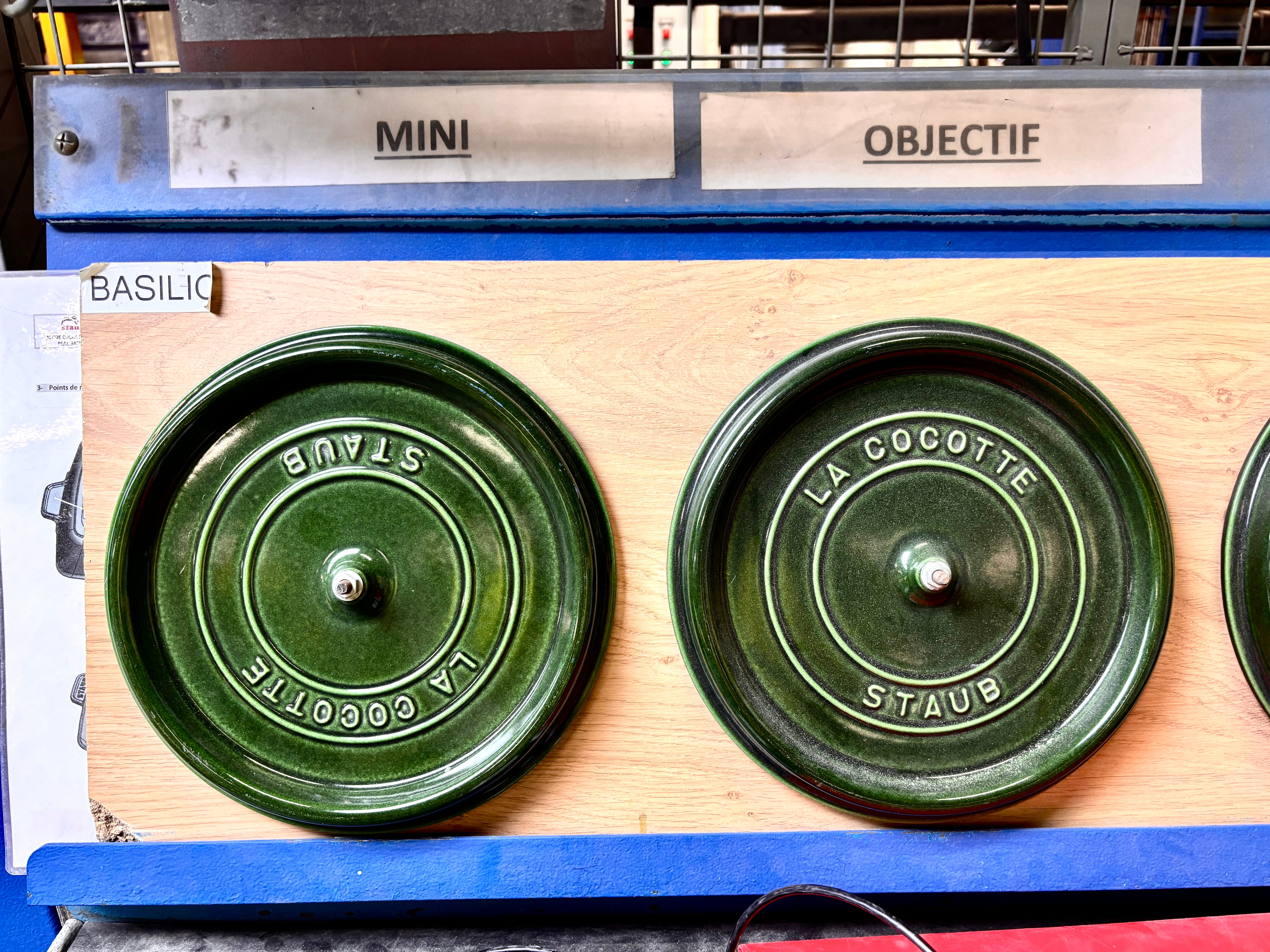
A Visit to Staub Cookware Factory in France
Testing various glazes: Pots and lids get glazed about 2 or 3 times, and each coating turns the pots and lids a different shade of green. It takes between 1 to 2 years to develop and test a new color.
I love going to factories, especially ones that make cookware. In the past I’ve visited All-Clad, Le Creuset, and Mauviel, and was the first “outsider” to be allowed inside the KitchenAid factory. So I was thrilled when I was invited with some friends, which included Deb of , , and Irene Wong, to visit Staub, one of my favorite French brands, makers of the iconic enameled cast-iron pots and casseroles.
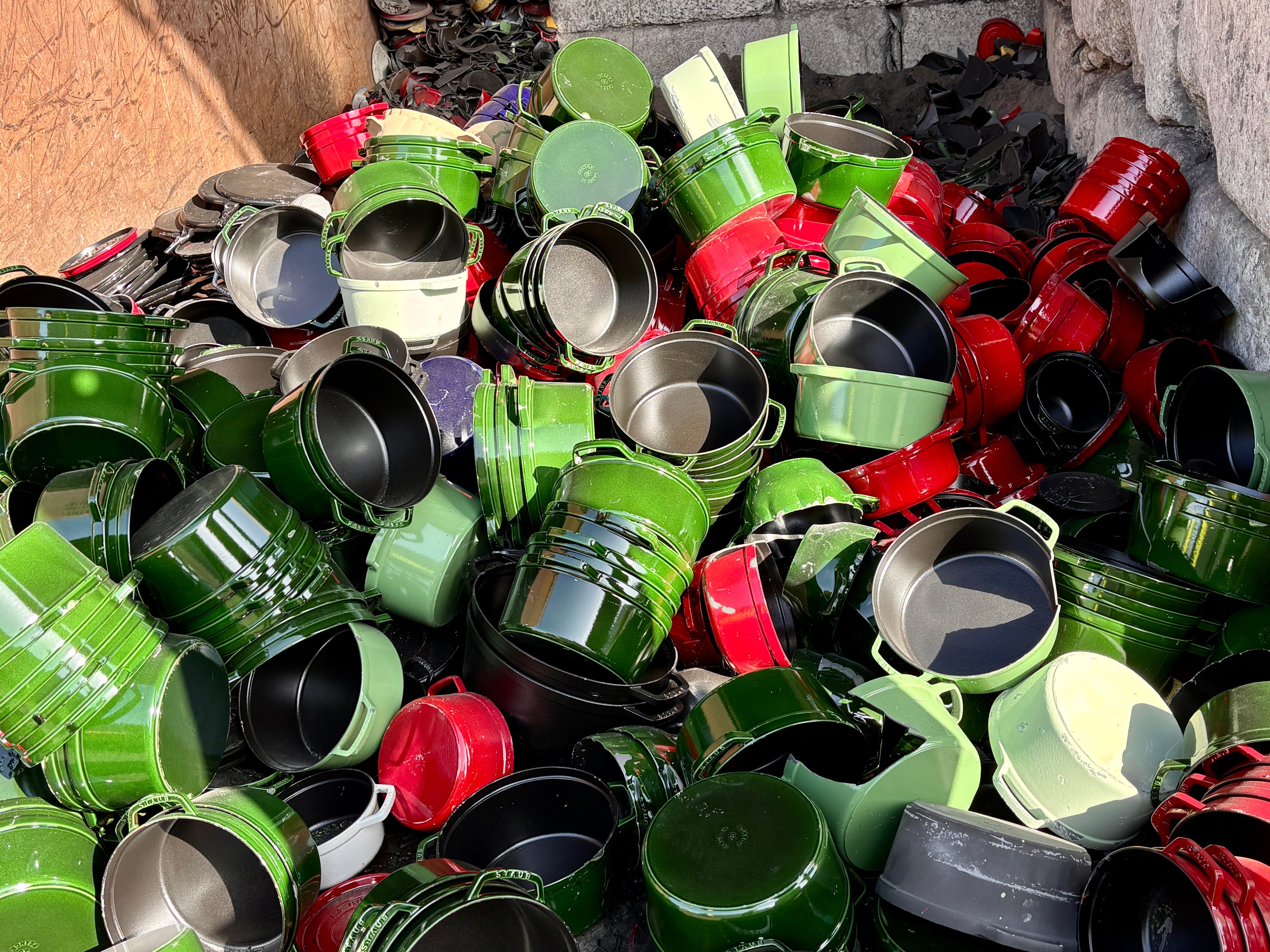
Located in the north of France, the foundry turns out nearly 1,500,000 pots and pans per year. Almost all of it is made by hand, by three hundred skilled employees.
Anything that’s not perfect gets tossed in the reject pile, to be remelted (and recycled) into new pots.
It was really something to see how the cookware was made, beginning from being molten metal, to emerging as shiny new casseroles, ready to send to cooks and bakers around the world…
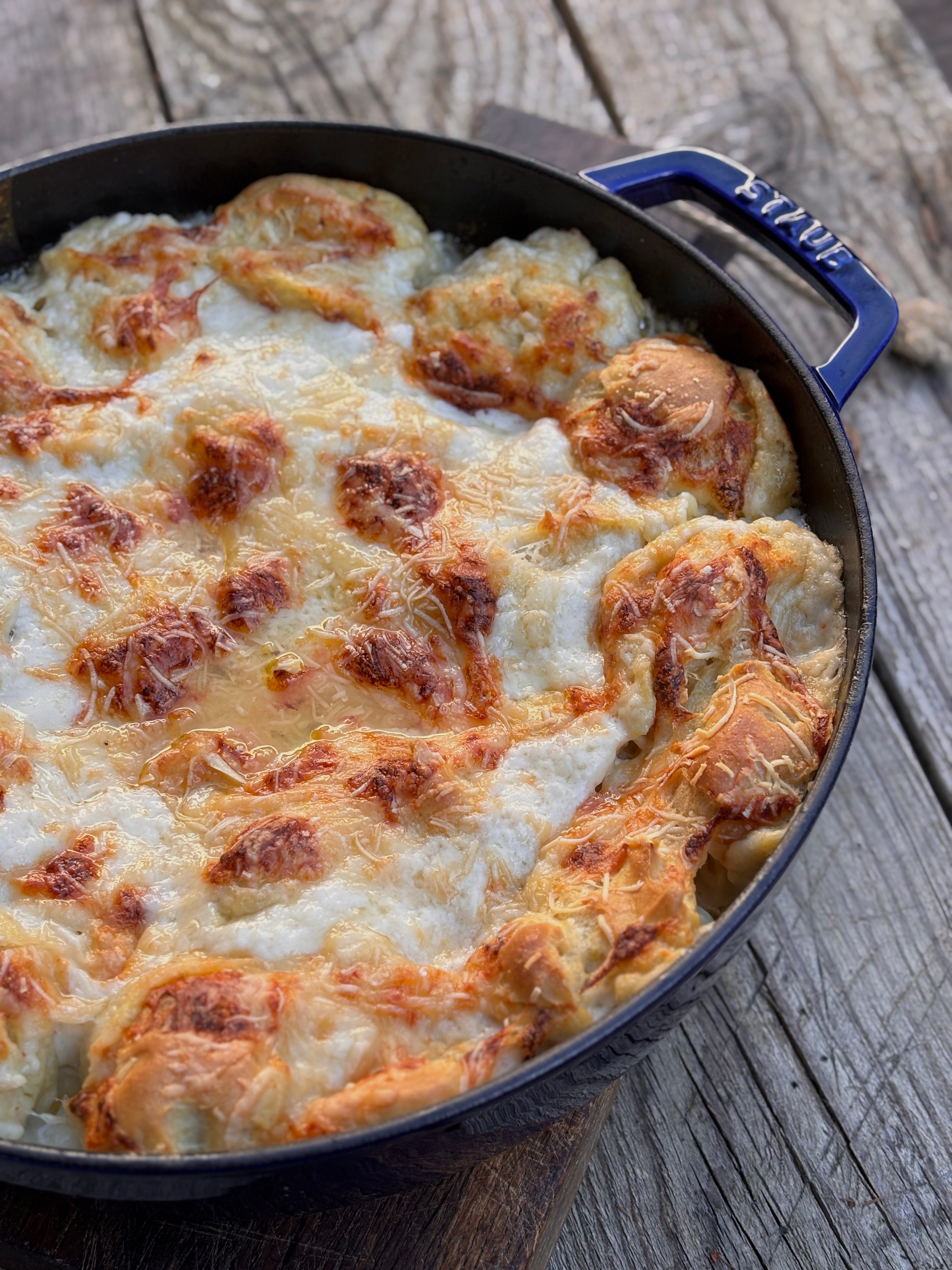
I had a great time at the factory and made some new friends as well there, and also picked up a few new pieces to add to my collection. I even got to use the smitten kitchen braiser to make Paris Gnocchi, a favorite recipe of mine from My Paris Kitchen.
Preach!…someone who feels the same way about soup in restaurants as I do…
…although I give Asian meal-in-a-bowl type of soups a pass, like the beef noodles I had in Taiwan, above, especially if they have lots of noodles or dumplings in them. (Gotofood/Instagram)
I've been confabbing with a friend from San Francisco, whose family is Hakka, from the south of Taiwan, to visit the country. And after a couple of years of talking about it, two friends of mine and I finally did it, and joined him there.
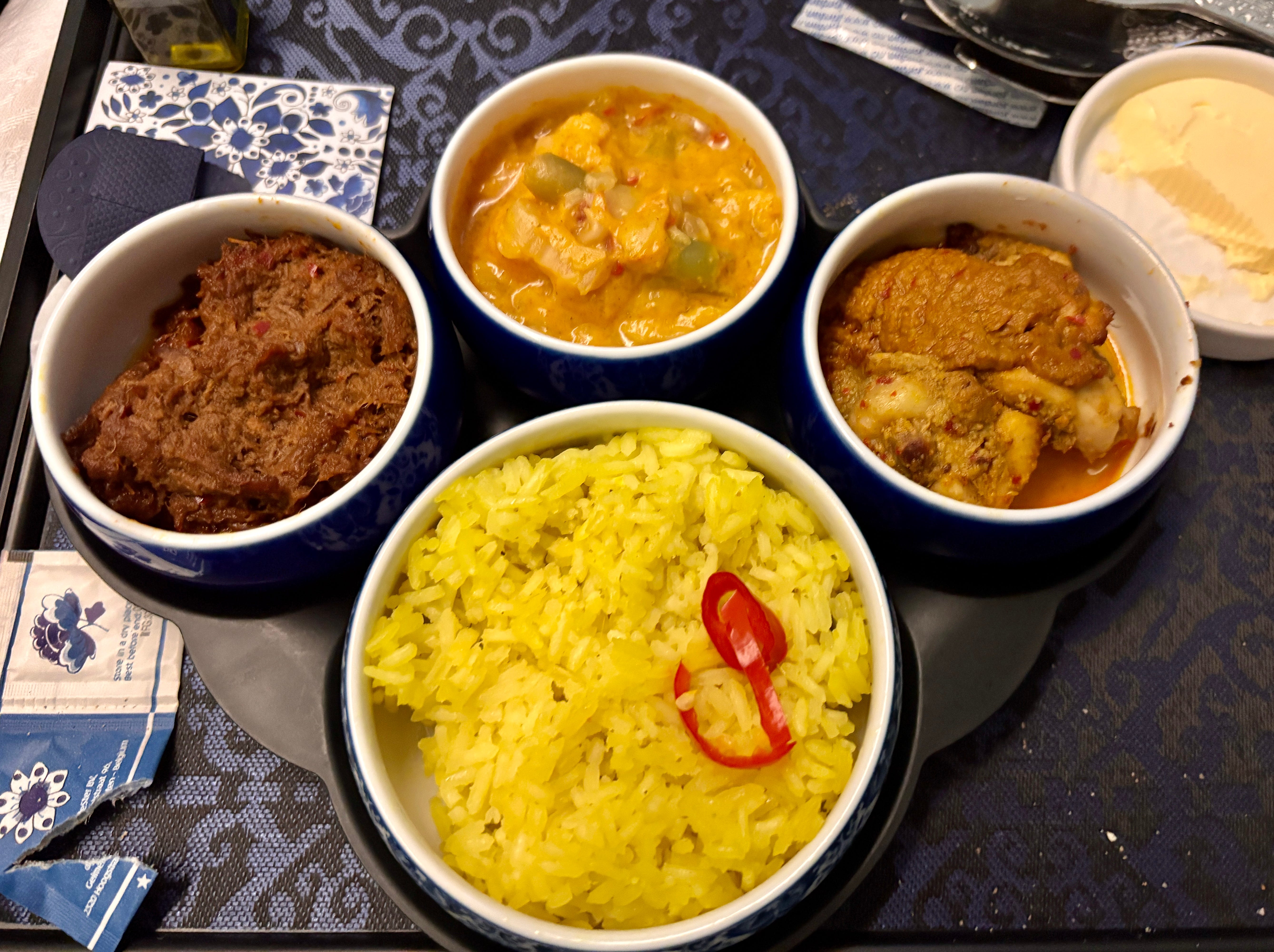
Lunch (or was it dinner?) on my KLM flight to Taiwan.
I had a bit of trepidation about the trip there since the itinerary was a bit complicated. Fortunately, though, I didn’t book on one of the flights that went through the Middle East, instead booking a KLM flight from Paris through Amsterdam, where there were only two of us going through immigration, and I made it through in record time, so making my connection was my first sense of relief.
Then I flew from Amsterdam to Taipei which, speaking of “relief,” — we were told as we were taking off that three of the bathrooms on our plane, which was filled to capacity, were out of service. So I didn’t drink much on the plane and arrived rather parched, to put it mildly. Shout-out to the flight attendants on KLM who were super lovely and very friendly. I watched two very good movies, Rental Family and Bugonia, which was wild, and had a good meal of what I think was Indonesian food.
My arrival in Taipei was pretty easy as well; unlike the airport in Paris, there are tons of bathrooms at the Taipei airport — you didn't have to hike twenty minutes and take two flights of stairs to find one. After hydrating myself back to normal, I took a train from the airport in Taipei to the high-speed train station, then another train to Kaohsiung. I arrived at my hotel about 23 hours after I left home. I rehydrated some more, then went to bed, relieved that I had made it.
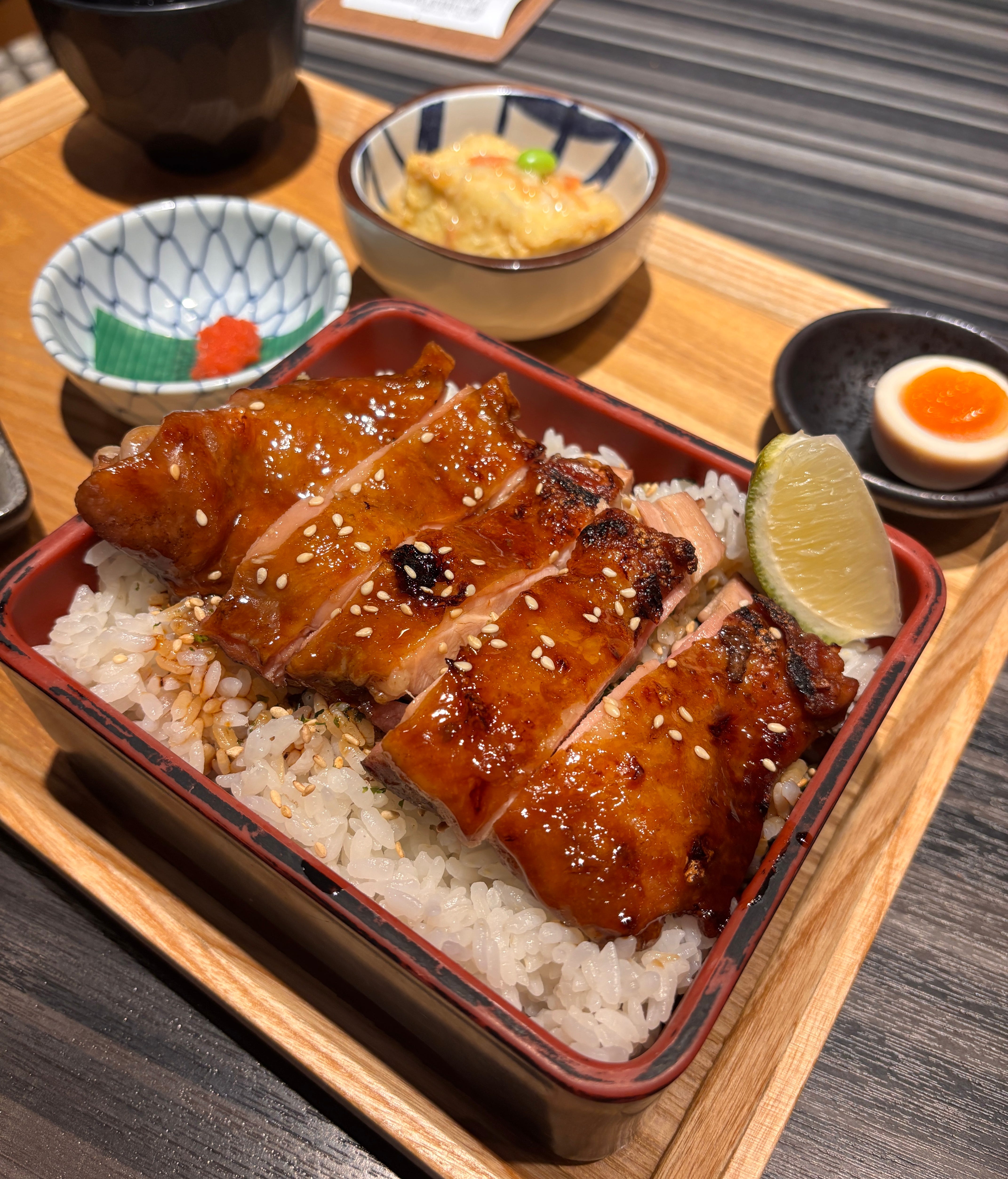
My first meal after landing with chicken teriyaki.
I don’t know much (or anything, really) about Taiwan or Hakka food, except that in San Francisco, I frequently ate at a Hakka restaurant, which was legendary — except I just read that it closed. But our friend is from this part of Taiwan and told me that because the Hakka were displaced, their food was on the simpler side. And because at one point the Japanese had colonized Taiwan, there remains a moderate Japanese influence.
The next day, I went to a funeral.
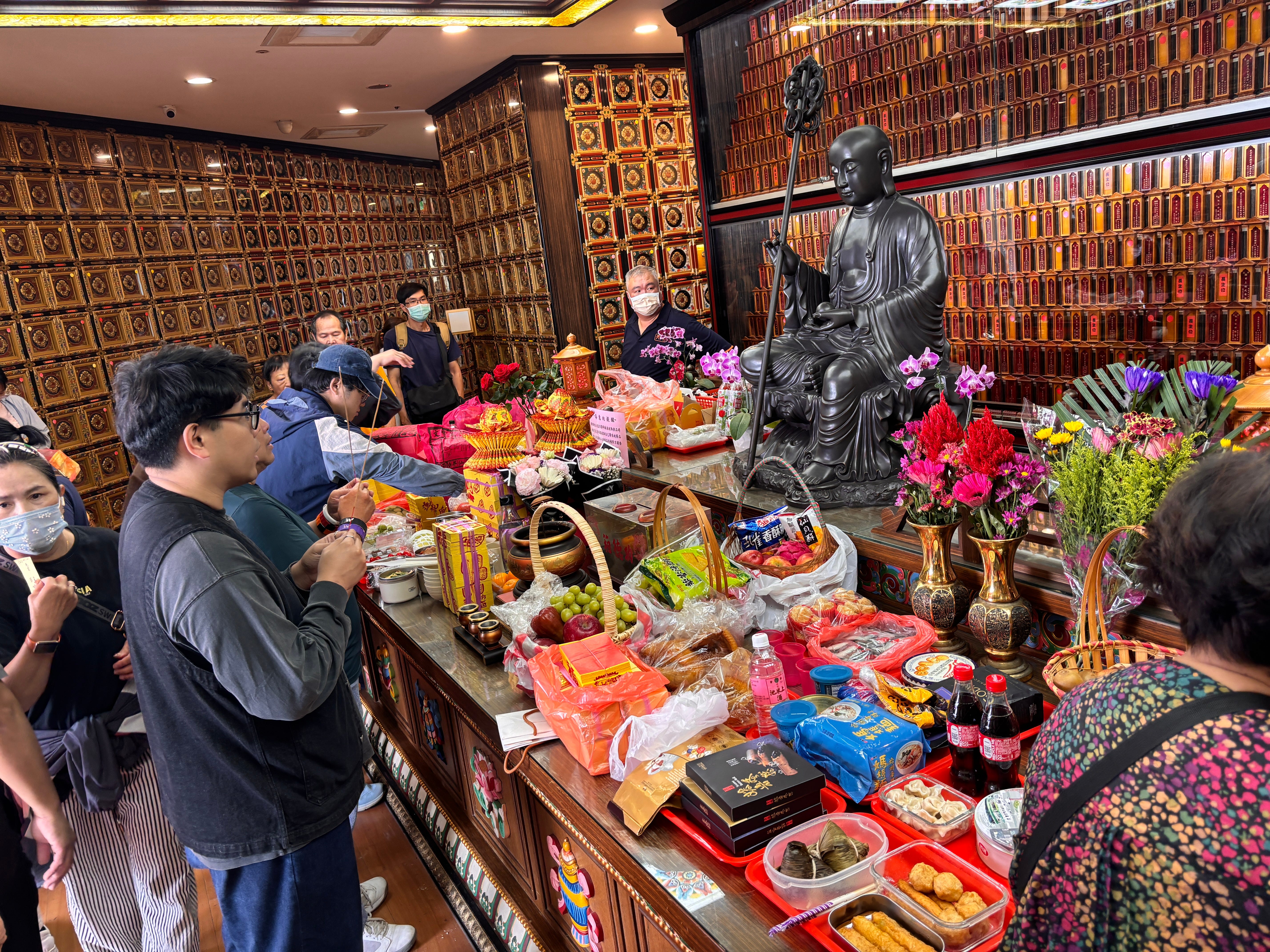
It wasn’t actually a funeral but “Tomb Sweeping Day,” when people visit cemeteries and columbariums to clean the tombstones of those who have passed. The columbarium that we visited was packed with friends and families bringing offerings of food. It was touching to be invited and to see how people celebrate and honor their ancestors. Afterward, of course, there was food.
(And don’t worry, all that food that’s brought for offerings gets taken home and eaten. I was also wondering about that…)
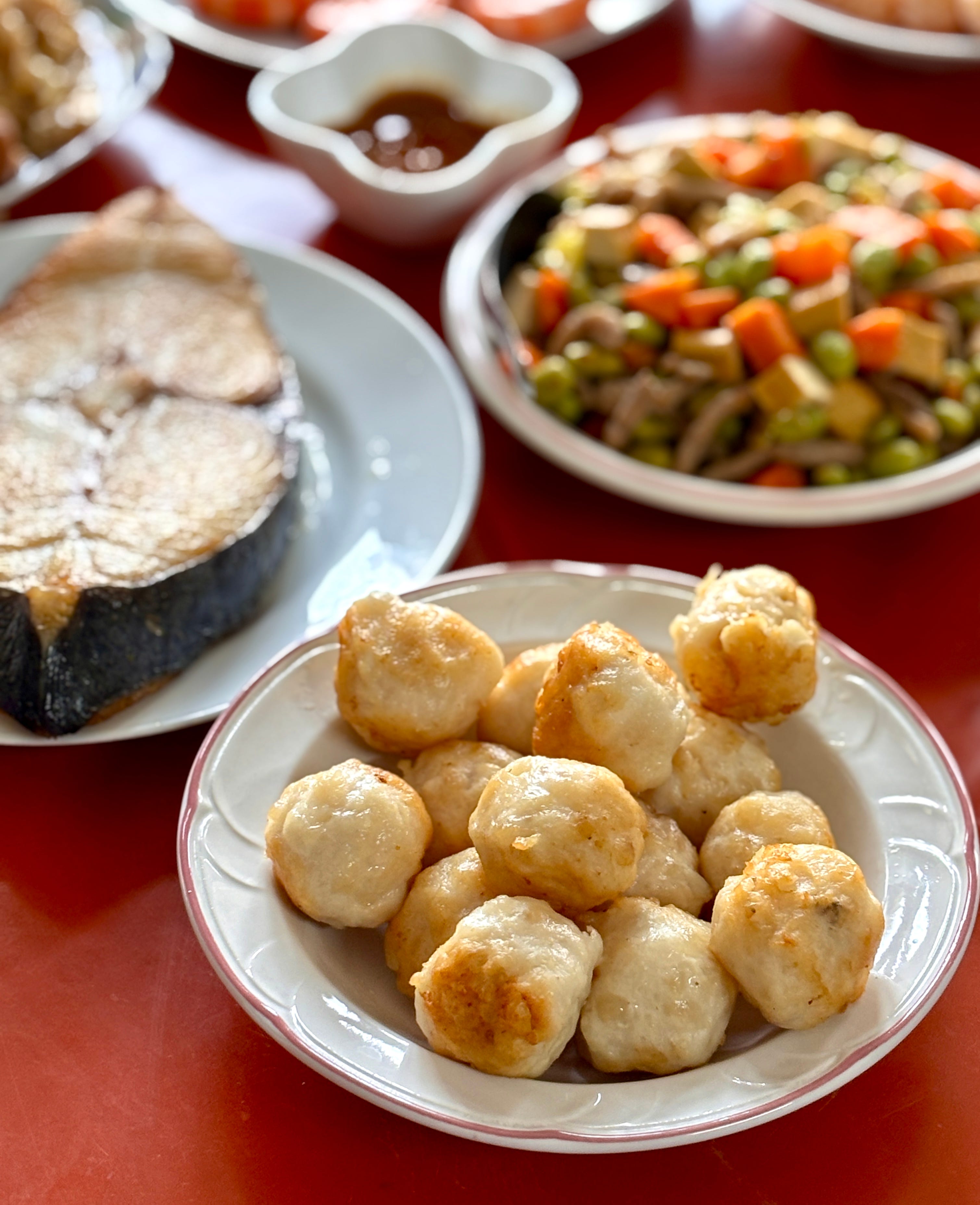
My friend’s cousin made lunch for us back at her house. And what a meal it was! There were probably ten or twelve dishes, put together in their humble kitchen, but with great finesse.
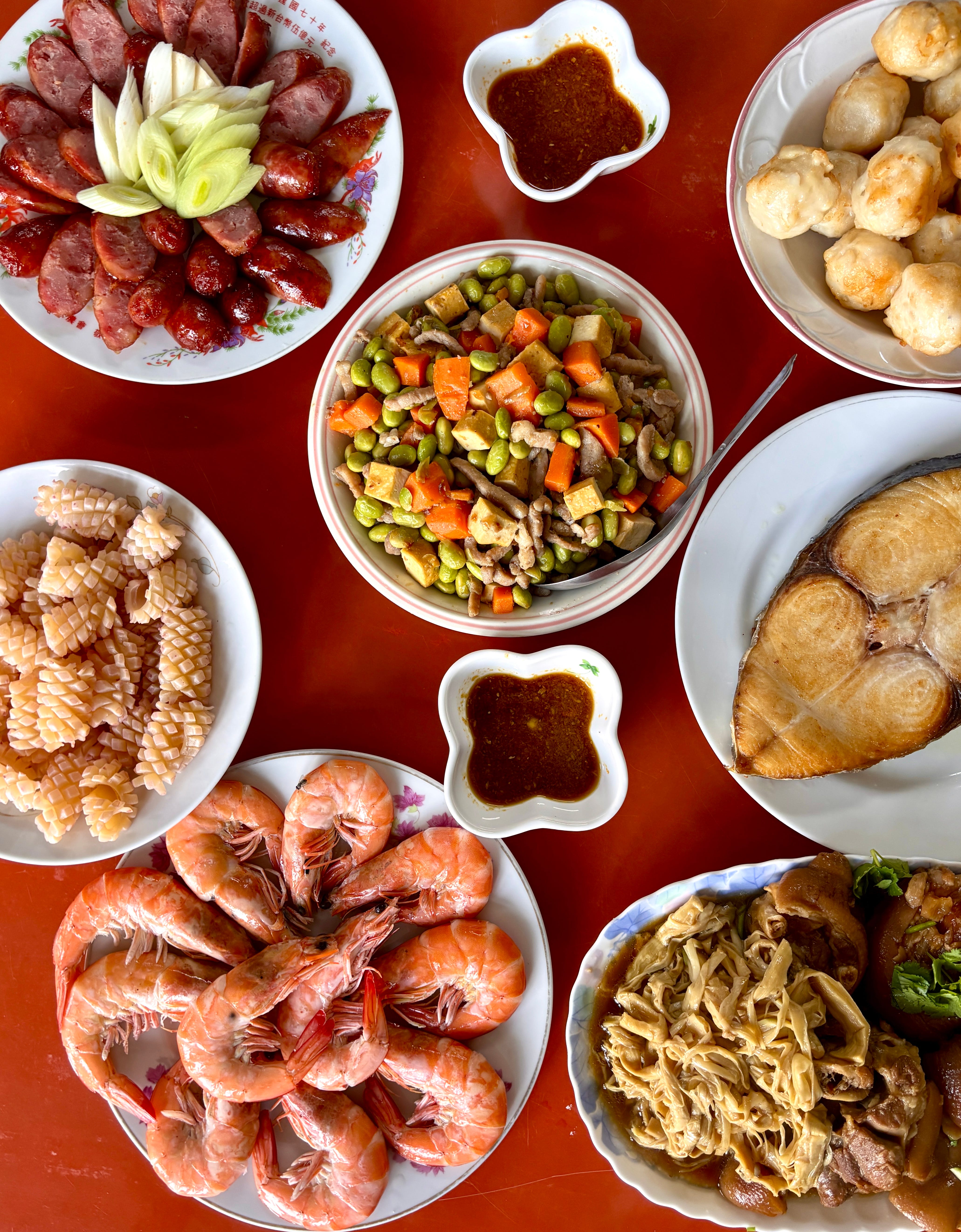
We had heaping bowls of fish cakes, and then a cascade of other platters and plates arrived. Braised pork trotters, Taiwanese sausages with fragrant and flavorful garlic greens piled in the middle, fresh shrimp and cuttlefish in the back — and my friend Cal showed me a locally grown star fruit. They are usually green, hard, and unripe, and this ripened one was a treat.
We finished the meal with an alluring soup…
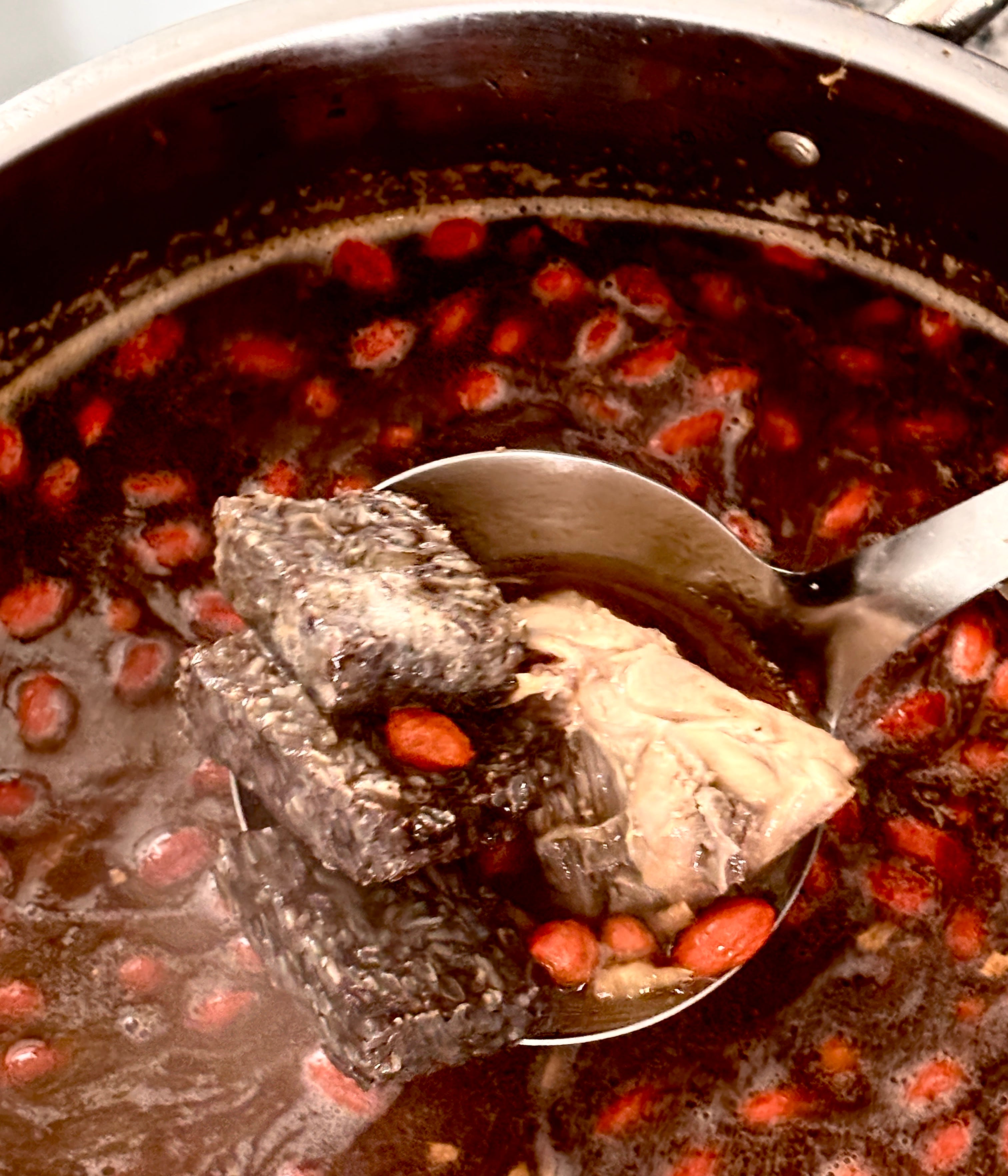
…served from a big pot with cubes of blood-rice sausage and pieces of locally raised chicken (which was “sacrificed” that morning on the farm), spiked with a lot of millet “wine” — which was actually millet eau-de-vie, at 40% (or more) alcohol. It was so strong that my friends and I had a little trouble finishing a whole bowl, but the elders in the room didn’t have any trouble.
Desserts aren’t usually served after Hakka meals, but that didn’t stop us from heading over to the local shaved ice shop.
I fell hard for my bowl of shaved ice, which had layers of candied red and mung beans, as well as chunks of starchy taro root and grass jelly under a layer of snowy, airy wisps of ice.
My absolute favorite part of the 剉冰 were the chunks of candied winter melon the owner spooned on top, with a drizzle of raw cane sugar syrup. The dessert was barely sweet and completely refreshing. We'd ordered three bowls to share amongst the five of us, but our Taiwanese friends didn't want to share, and each ended up ordering their own — and finished them, as did I.
Well fed, and (finally) well-hydrated (no thanks to that soup!), the next day we visited a rice noodle factory where the layers of rice batter were rolled out by machines, then cut.
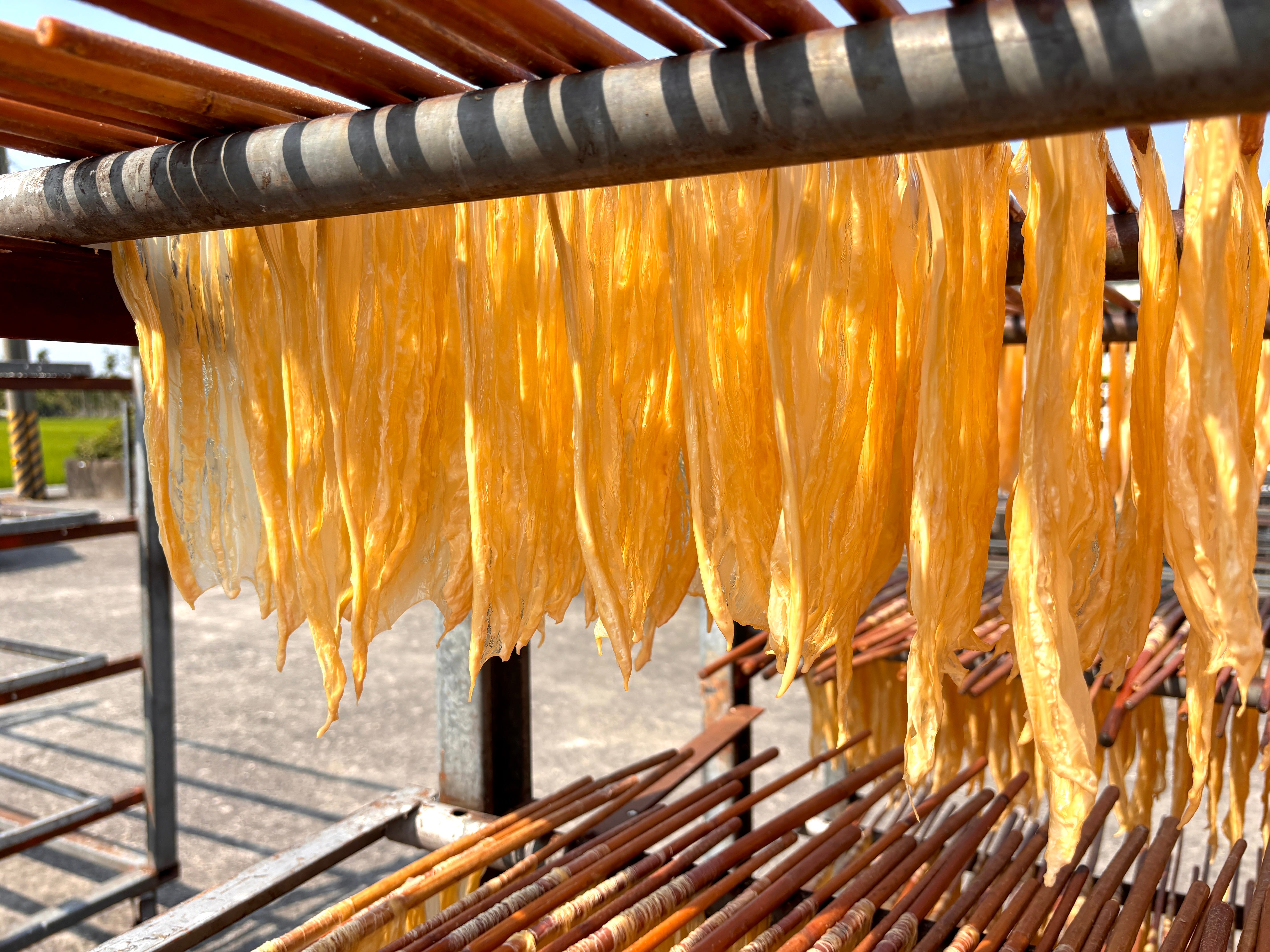
Taiwanese people are known for their love of noodles, and we also visited a famous tofu skin "factory" (although it was more like an outdoor workshop) where the soy milk is heated by fire, then poured into trays while it's warm. As soon as a skin forms on top, the women expertly run a long metal cutter to separate the skin from the edges, slip a wooden dowel underneath, and lift off the skin.
Then the skins are left to dry out in the sun until crisp. Even though they're dried, their shelf life is short — just a few weeks — so I didn't bring any home. But the tofu skins from this particular place are very sought after.
I asked if I could give it a try, after a bit of reassurance that I was a baker (so they'd know I wouldn't completely screw up their whole production) — and I got a little lesson:
It took me a few tries to get the hang of it. I was pleating them starting from the wrong end, and the woman who was showing me how to do it told me I needed to speed things up. 😂 I'm sure if I'd spent a little more time with them, which I would have been happy to do, I would have gotten faster and better at it. Watching rice noodles and tofu skins being made made me hungry for noodles. Fortunately, that was our next stop.
Tofu skins can be cooked and eaten like noodles, presoaked and tossed in stir-fries, or used to wrap dumplings. They're one of my favorite things, and when I was in Osaka, we ate at a restaurant that specialized in yuba, or tofu skins.
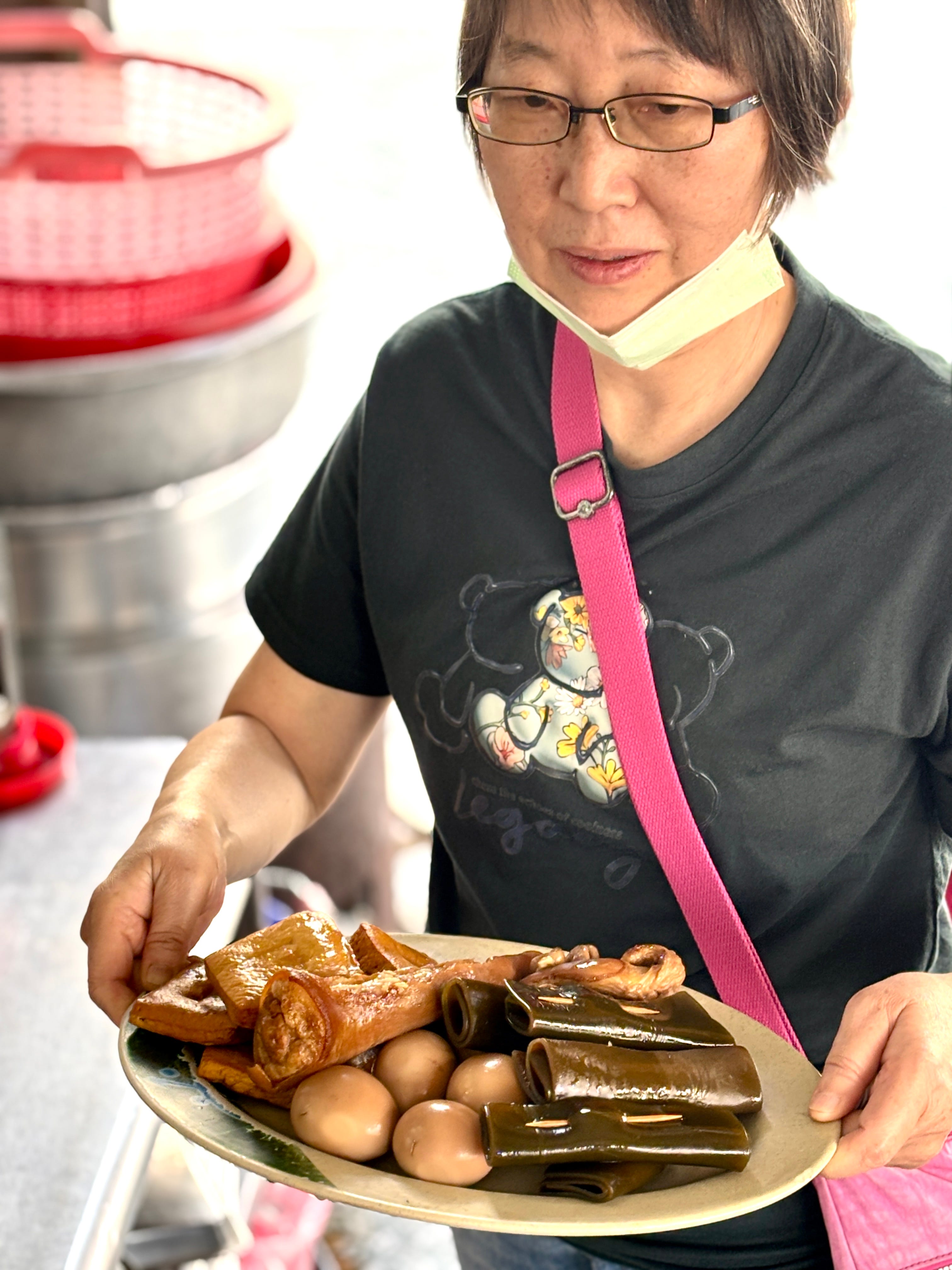
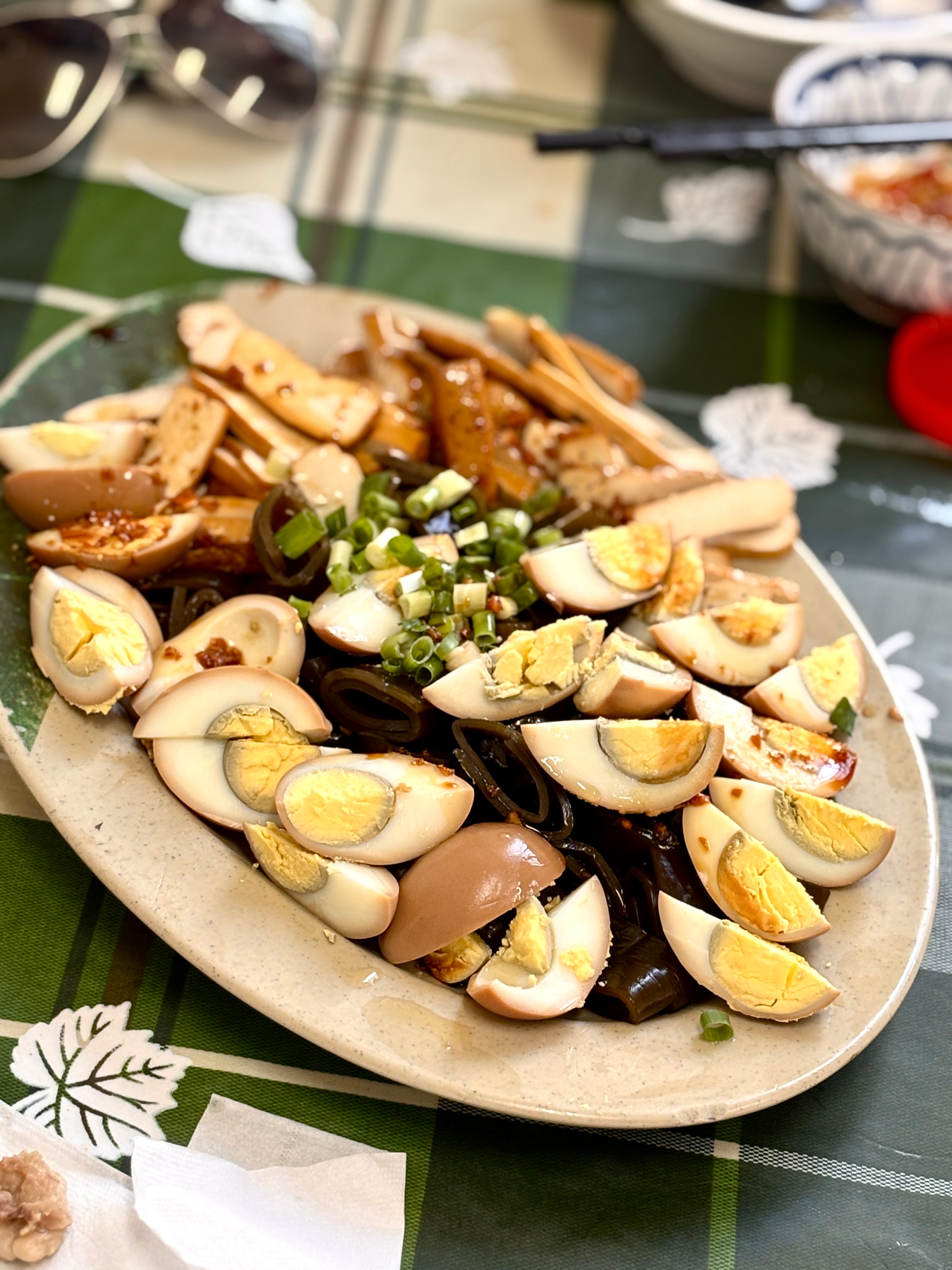
At the noodle shop, there was a platter of pig’s trotters, braised eggs, pressed tofu, kombu (seaweed), and some spicy condiments on the table, including jars of fermented pineapple.
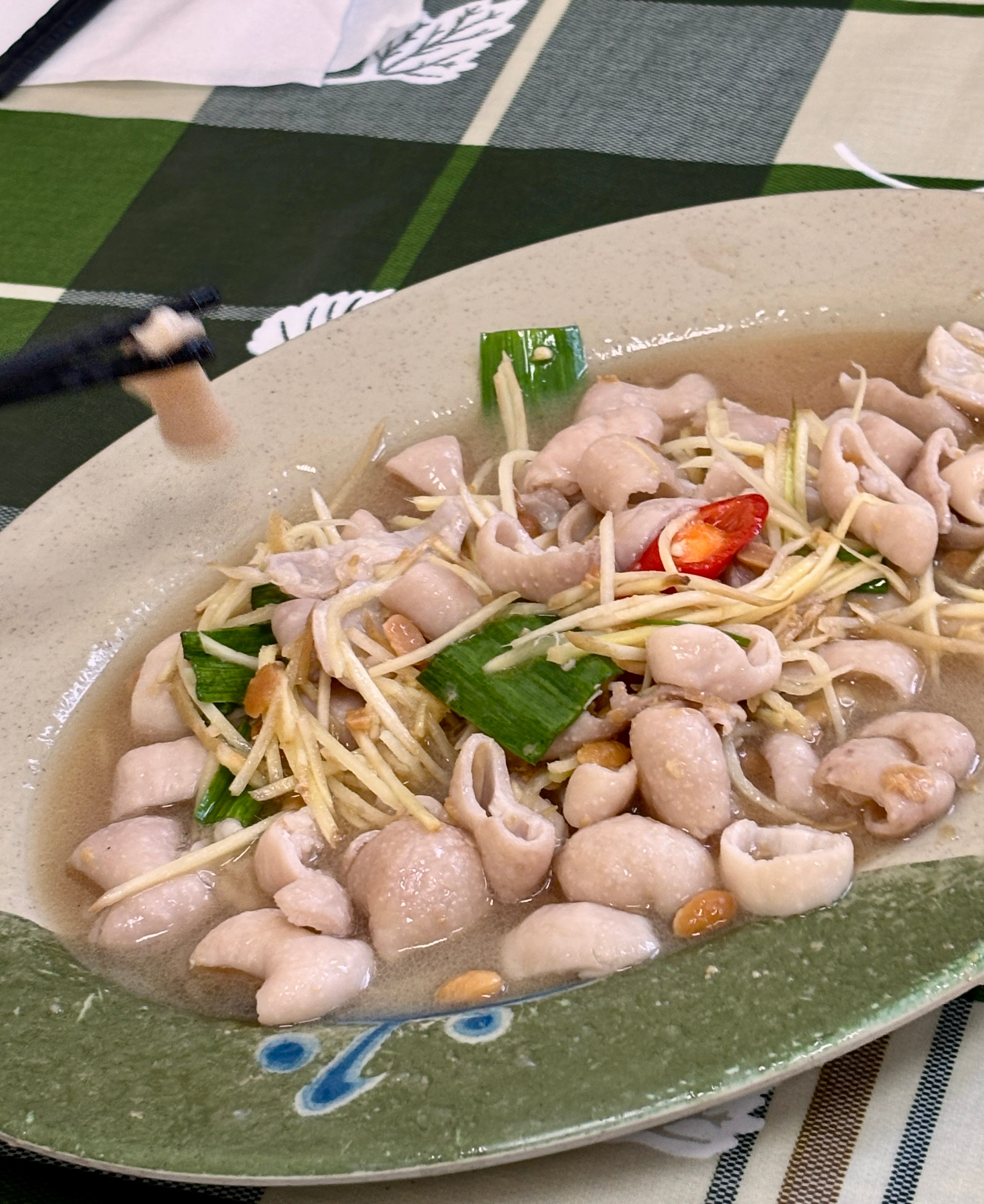
Before the noodles, out came a platter of pork intestines covered with slivered fresh ginger. The intestines were a little chewy, but the copious amount of ginger was a welcome treat.
Once all the accompaniments were sliced and presented to our table, I was ready for noodles.
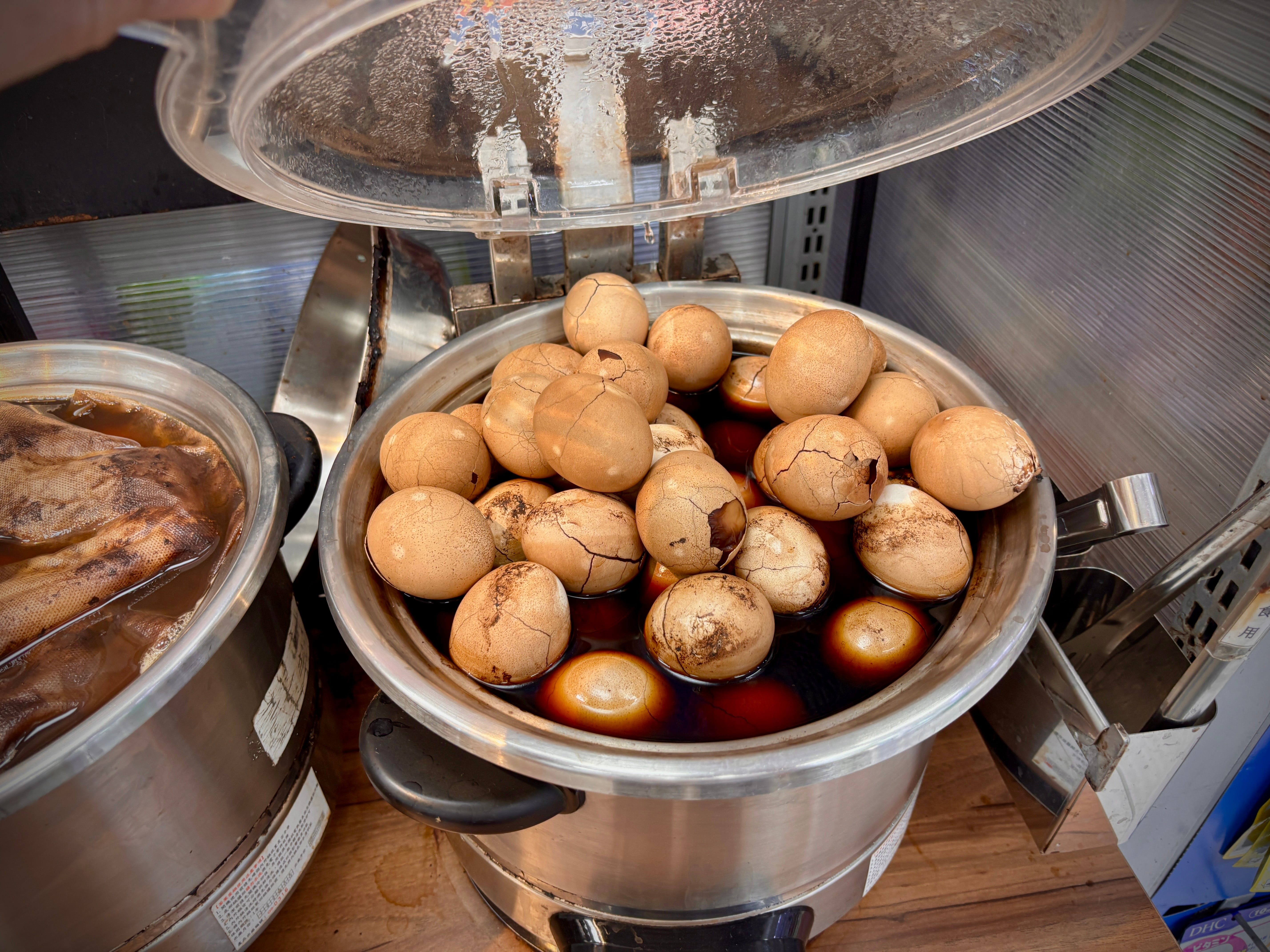
I'm sure some of you may be hovering over the "Leave a comment" button regarding the greenish outer yolks of the braised eggs, but there's a pot of them in every convenience store, bubbling away for who-knows-how-long, and they go fast. So it doesn't seem to bother anybody, including me, since they're pretty tasty.
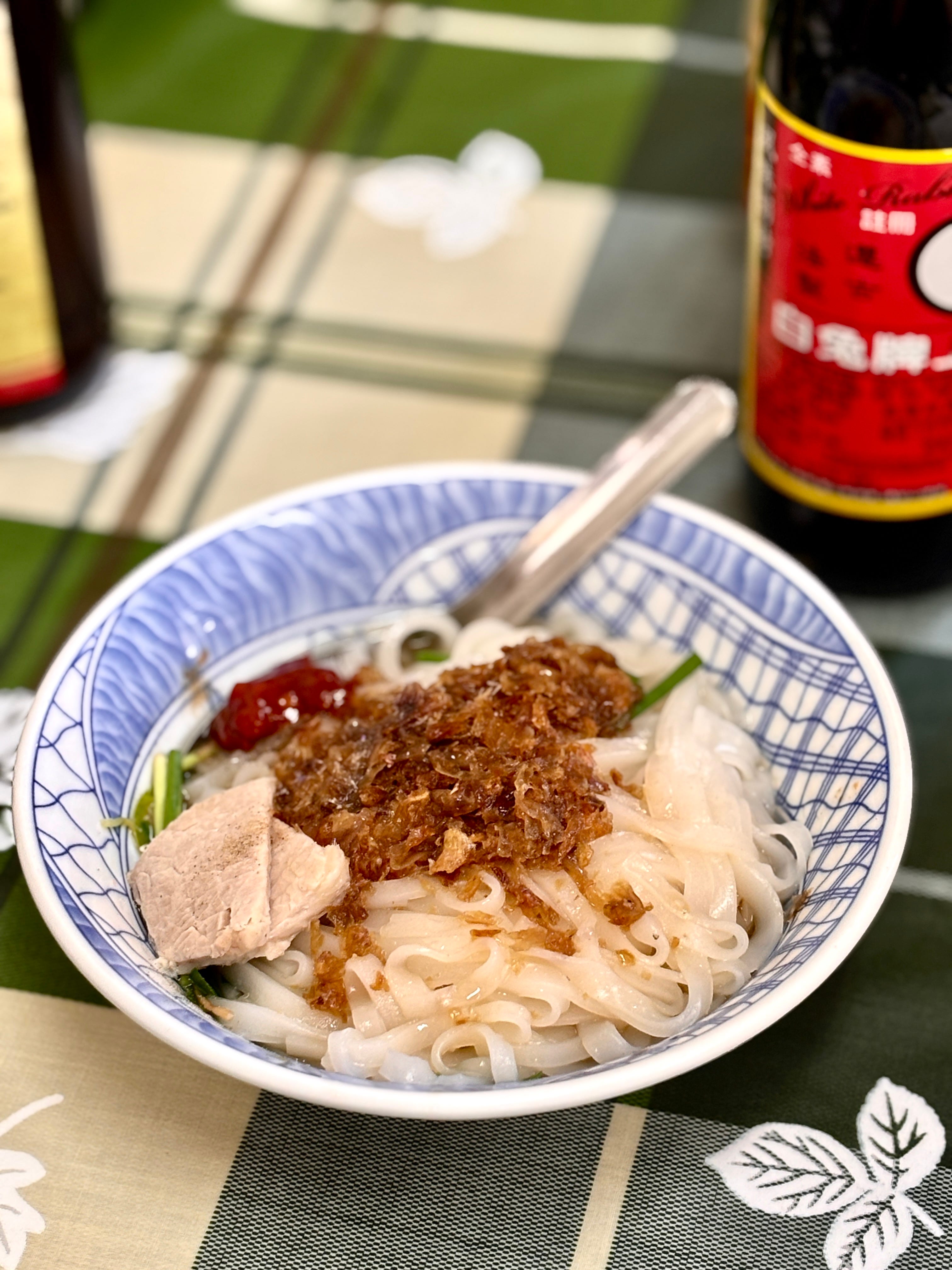
Then, out came the individual bowls of fresh rice noodles for us, which were topped with caramelized shallots — a popular condiment here — and then you add other condiments such as black vinegar, miso-based soy paste, and chili pastes. (I have this miso soy paste at home, which my Taiwanese-American friend sitting next to me on the train right now, tells me is thicker than what we had here.)
Subscriber to my newsletter here, to get the newsletter sent right to your inbox!
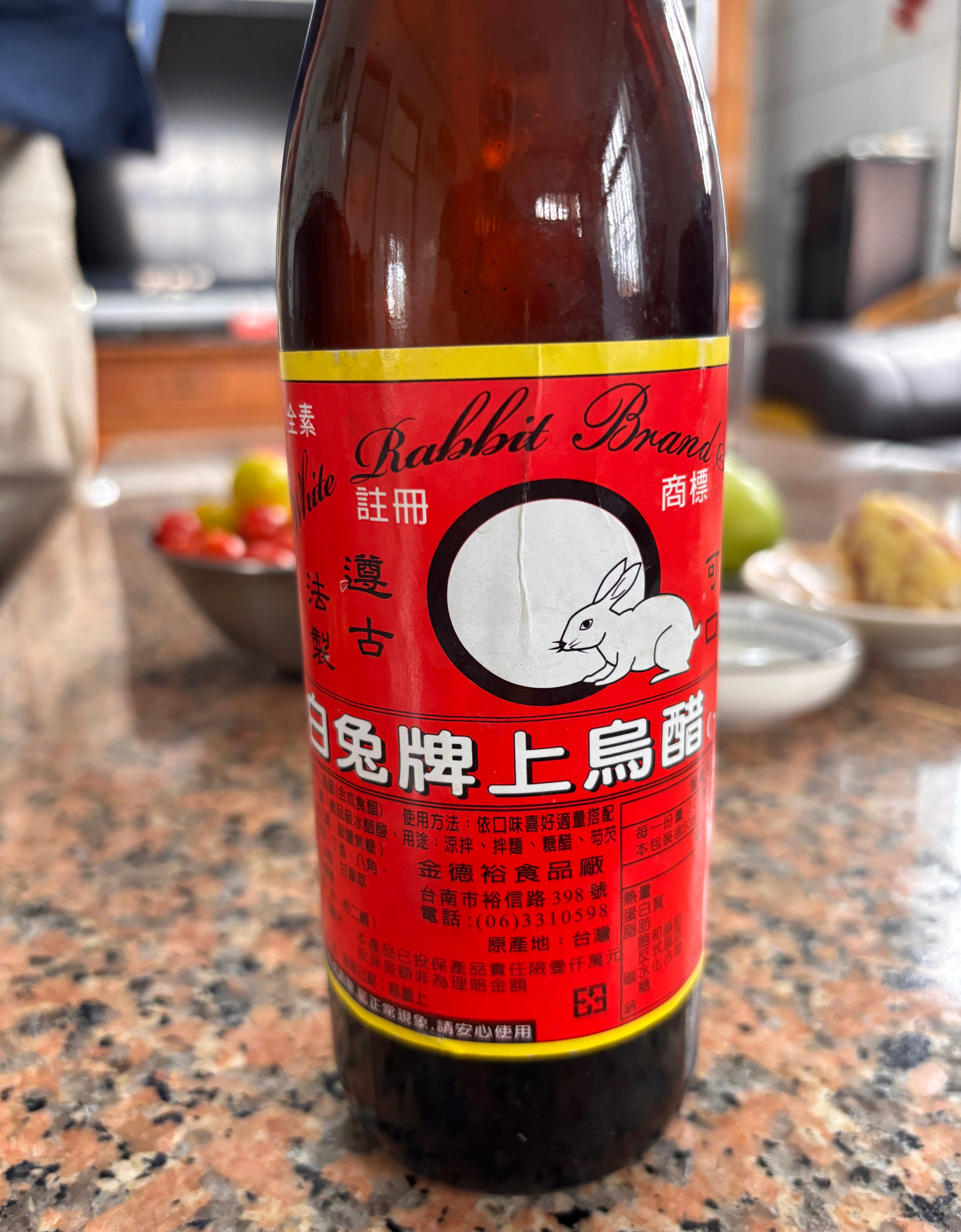
And the White Rabbit black vinegar we used was also a bit of a revelation to me as it was much better than the regular black vinegar I get at the Asian markets back home. It had a tangy, fruity flavor and my friend's cousin poured a little over my noodles, then a little of the miso soy sauce over them, and told me to mix everything up and eat. I added some of the chile sauce and paste as well.
Finally there was dessert (again), and at my request, we went for ice cream.
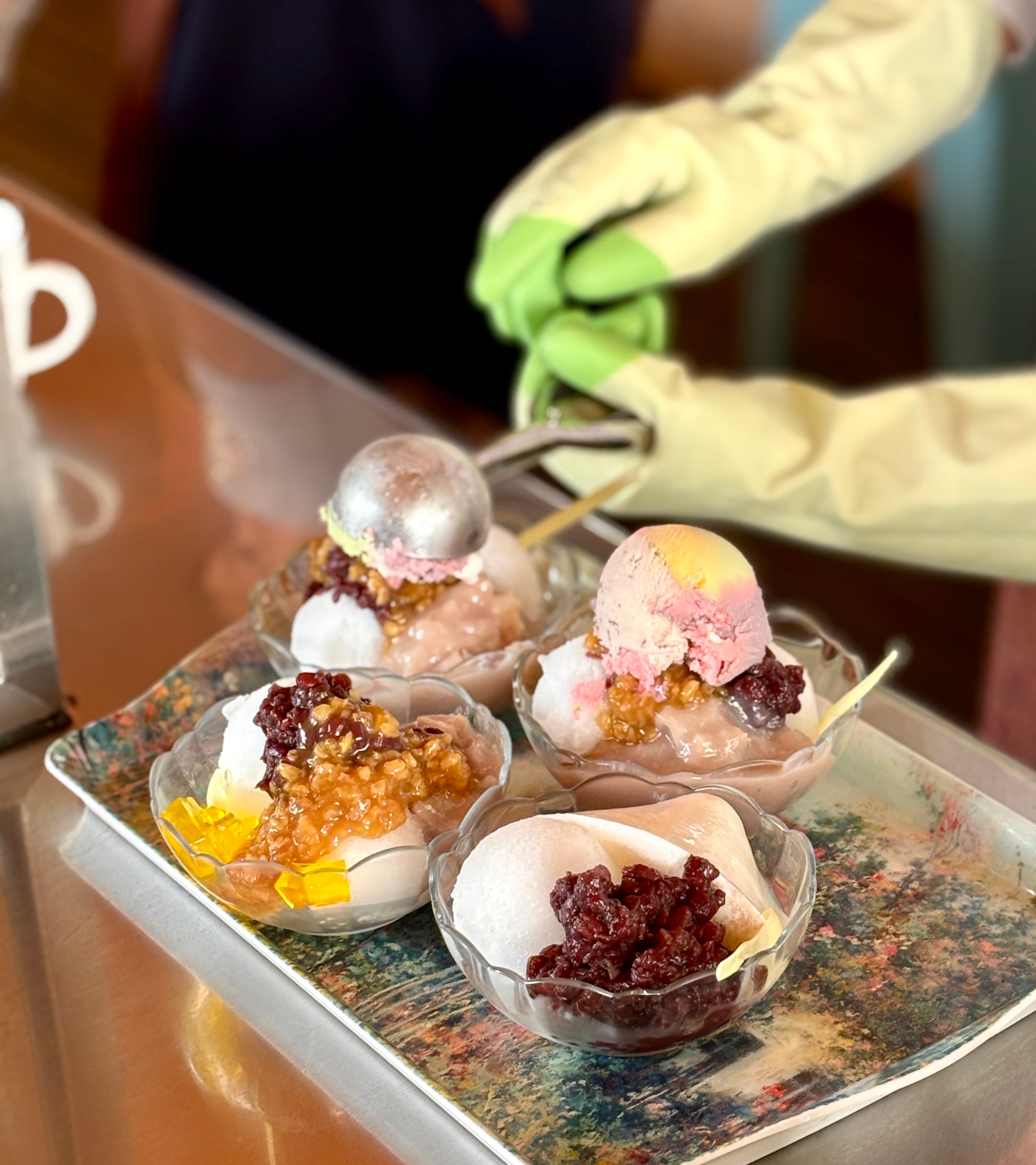
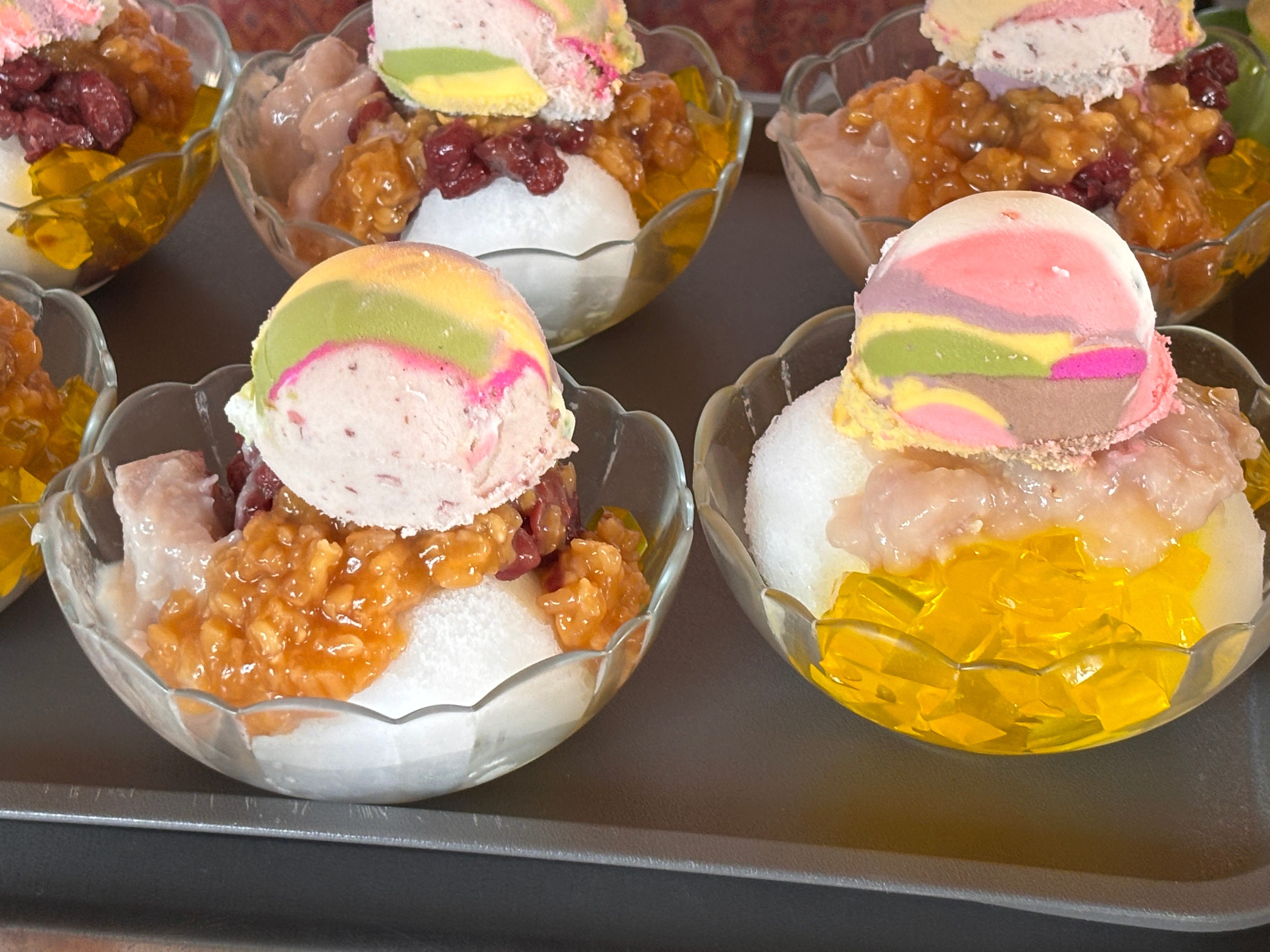
The menus were all in Chinese (or maybe they were in Hakkanese, the local language?) and while I used Google Camera to do some translating, my friend's cousin took control of the order, and I was glad that she did. She obviously knew what she was doing, and while I suggested we get a few to share, everyone wanted one of their own, customized the way they liked it, with various jellies and candied beans spooned on top and around the rainbow scoops.
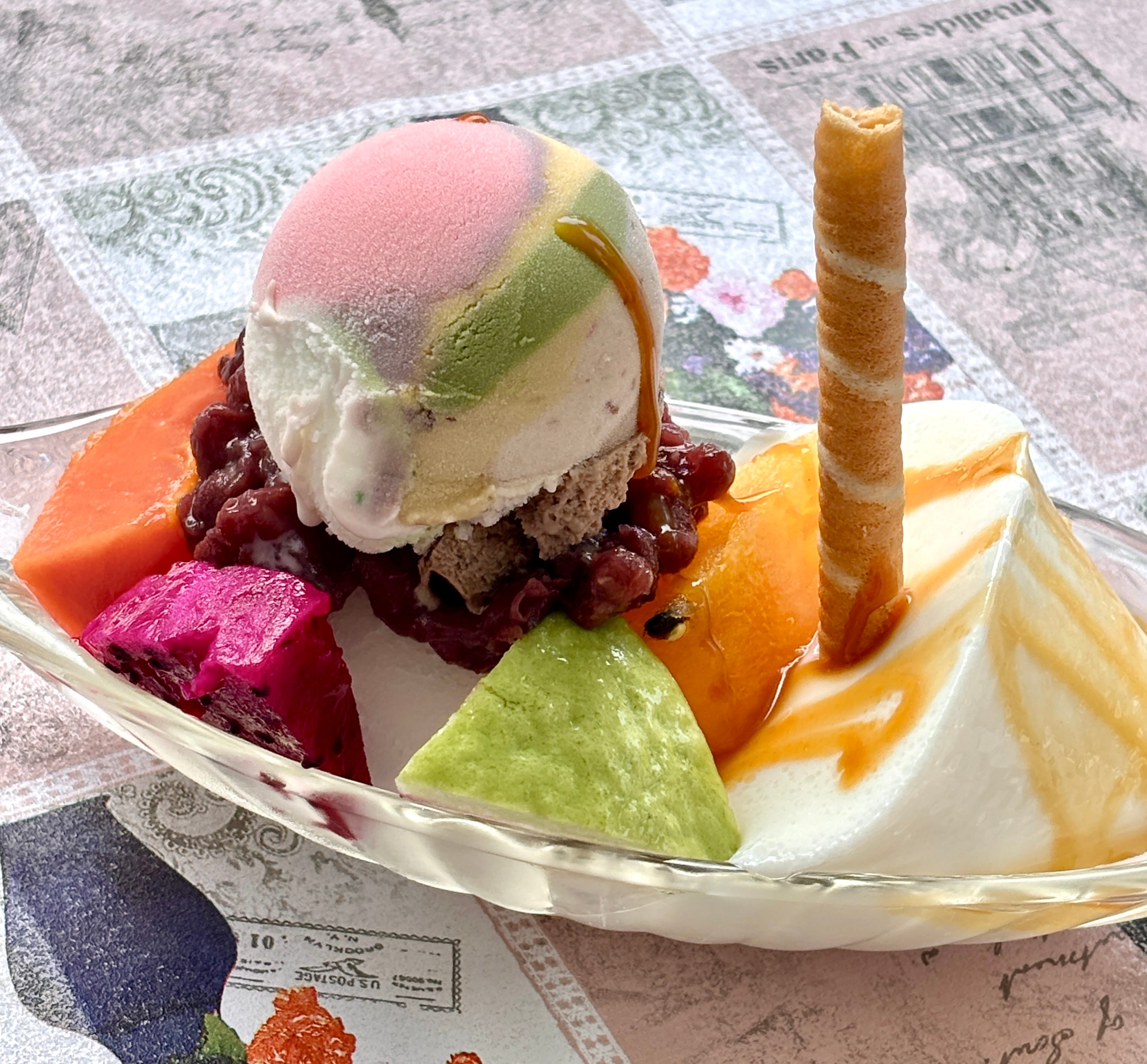
I also asked if we could add an almond jelly, which I like a lot. It came served with dragon fruit, papaya, and whole guava (the green chunk, whose skin you eat), with an extra dollop of candied red beans (which I also like a lot) under the ice cream.
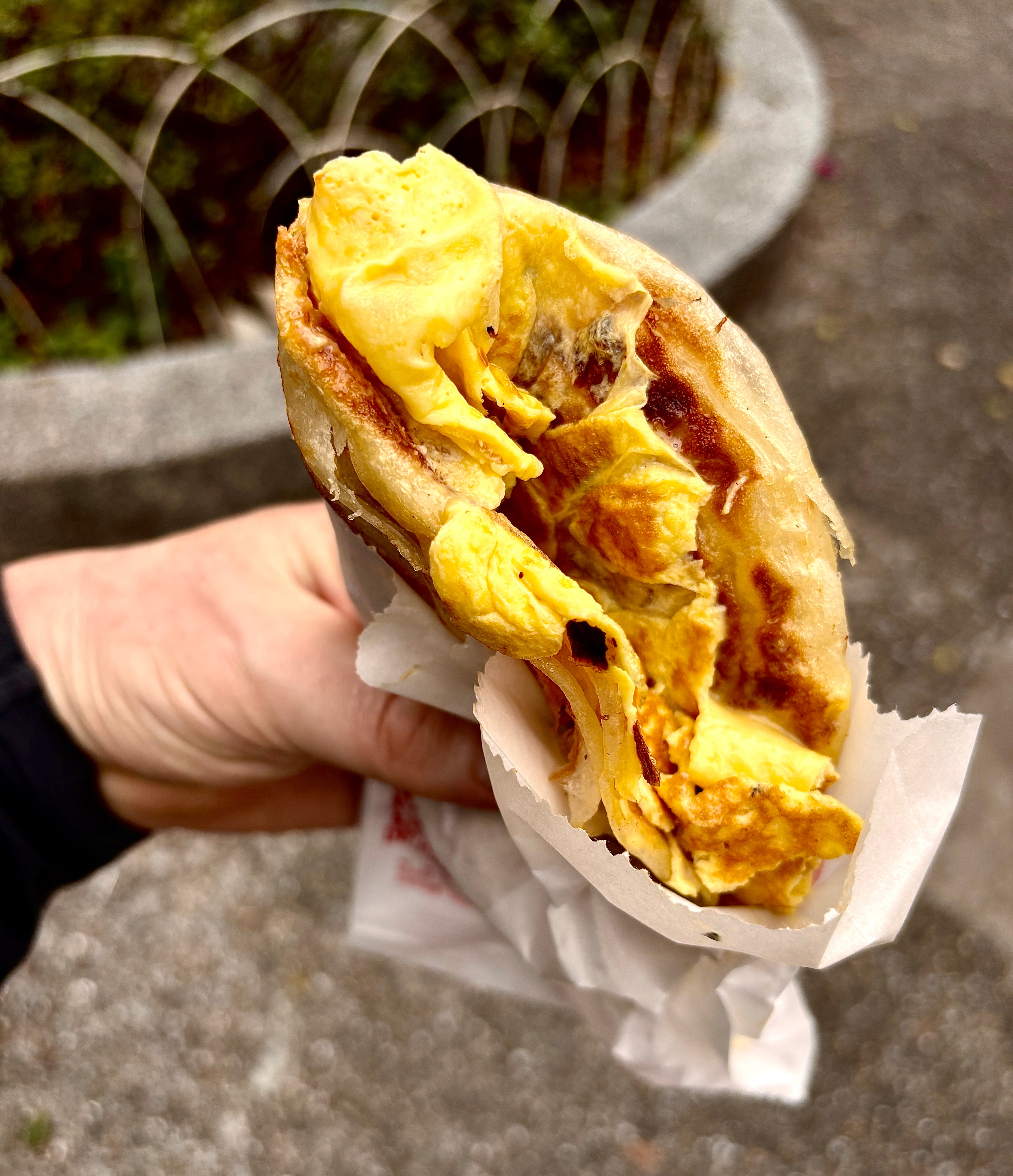
The morning we left Kaohsiung, I planned to stop at Xing Long Ju for Taiwanese breakfast. In France, breakfast isn’t a big thing, and going “out” for breakfast means a café express and perhaps a croissant, standing at the bar in a café. Taiwanese people seem to love to eat, which they do at all hours of the day. Meal times here aren’t strictly defined as they are in France, and if you’re hungry and feel like eating, you eat.
Taiwanese breakfasts include things like cha siu bao (warm steamed BBQ pork buns), eggy pancakes, fan tuan (sticky rice rolls wrapped around crispy crullers, sometimes with meat), and dumplings. Almost over my jet lag, I woke up at 5am and was ready to head over there. Xing Long Ju opens at 4:30am, and just as I was about to head out, I did a quick search to confirm the address and saw they were closed on Tuesday. Zut!
Oh, well. You can’t do and see, and eat, everything — but when I get to Taipei, I hope to have a Taiwanese breakfast, no matter what time it is. Just as long as they’re open.
Pretending to be French, before I actually became French.
The food world has been ablaze accusations made by former employees of Noma restaurant in Copenhagen against chef René Redzepi, who is “stepping away” from his position leading the restaurant. Many of us had heard about them for nearly a decade, and while some people have been saying that if the employees were so disgruntled, they should have said something, anyone who’s been bullied, or seen someone being bullied, knows that if you don’t keep your mouth shut, you may be next.
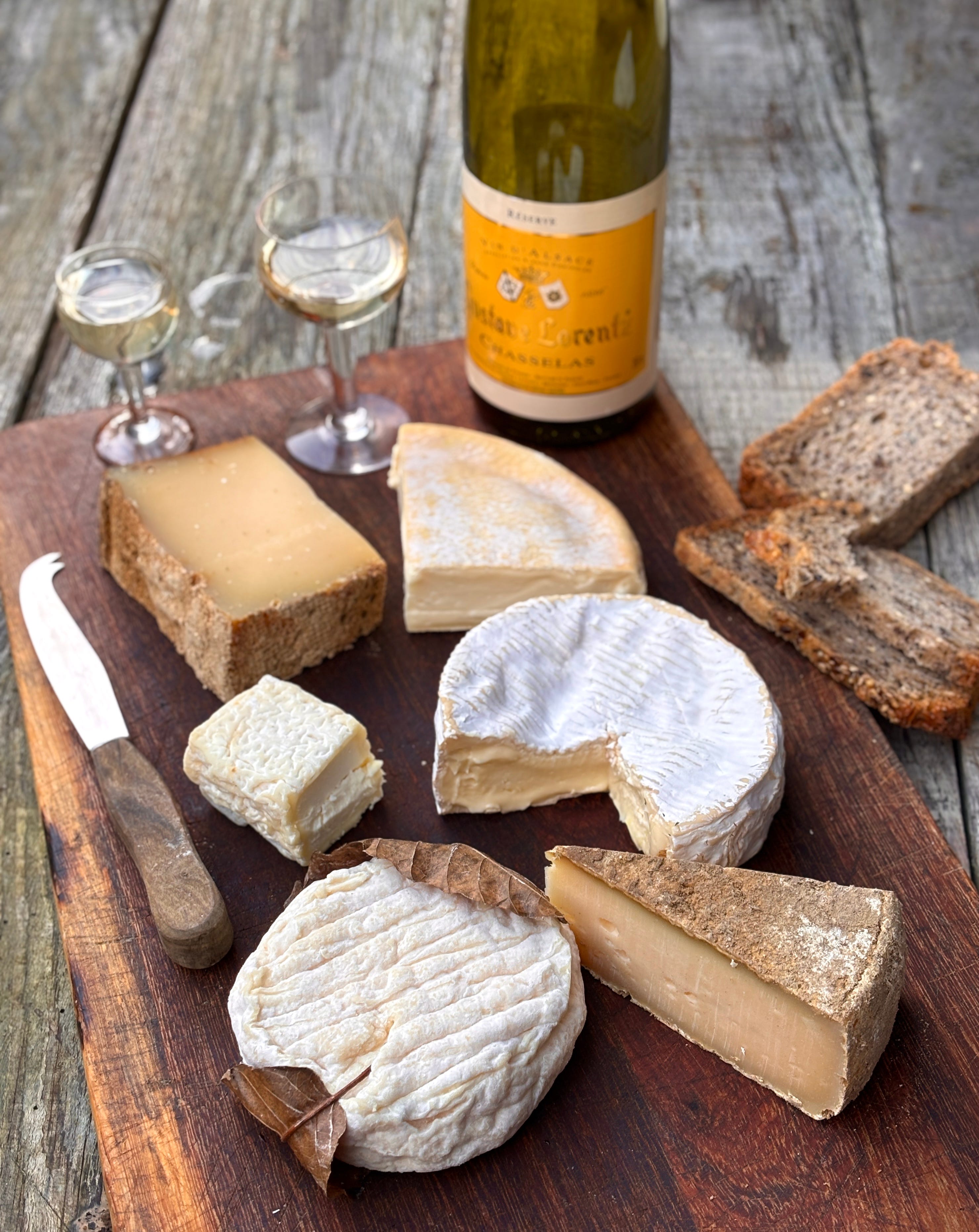
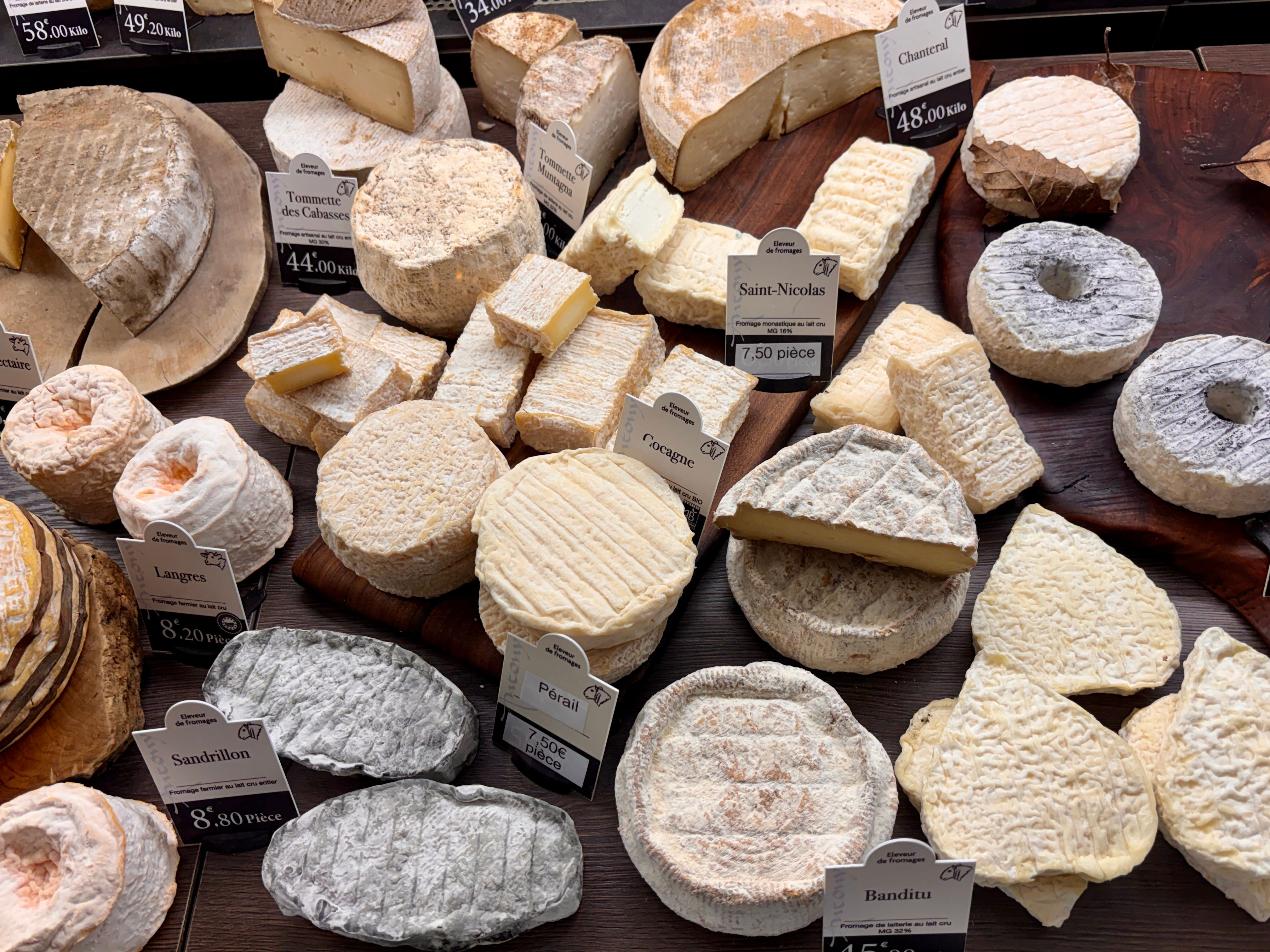
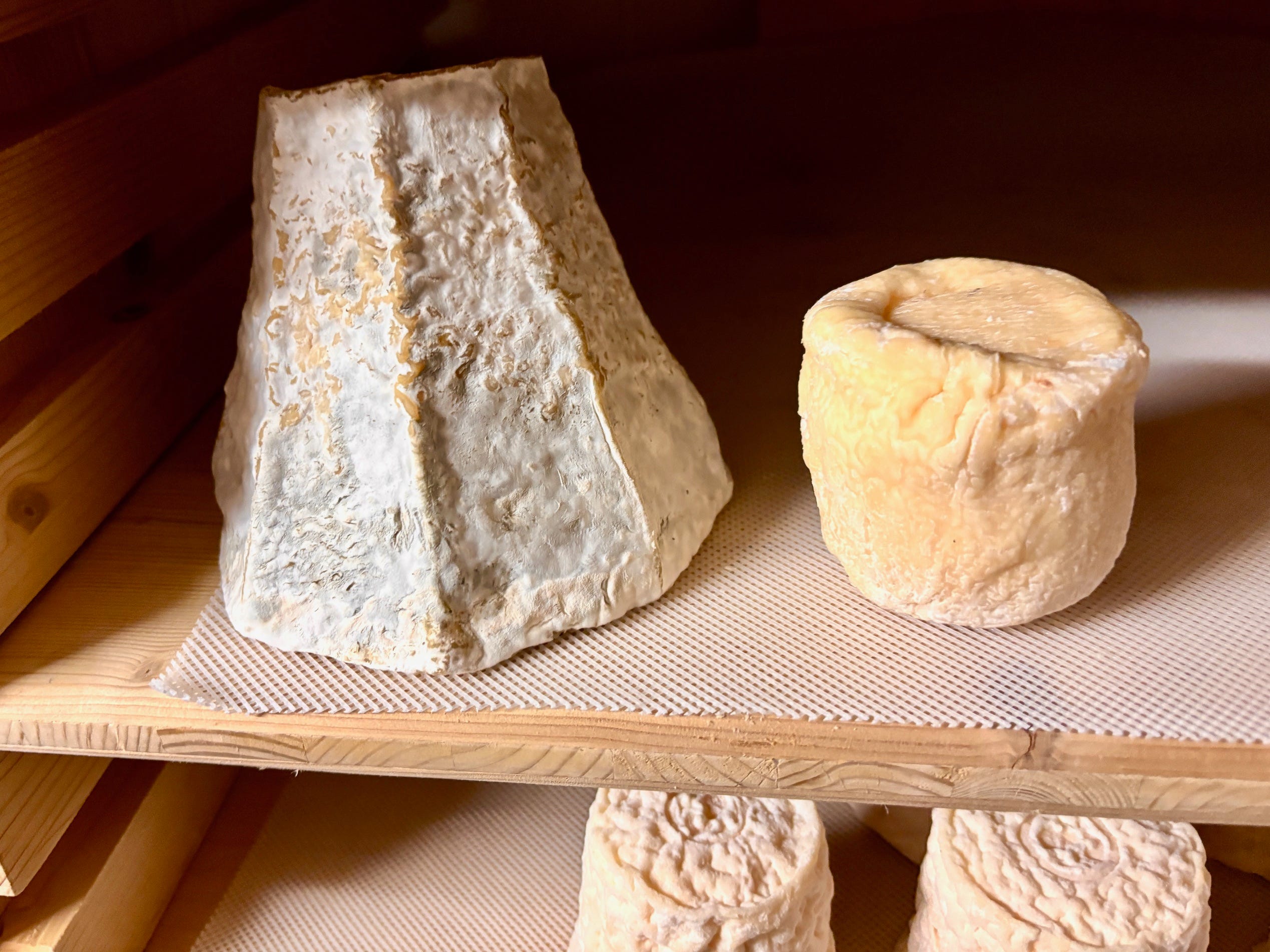
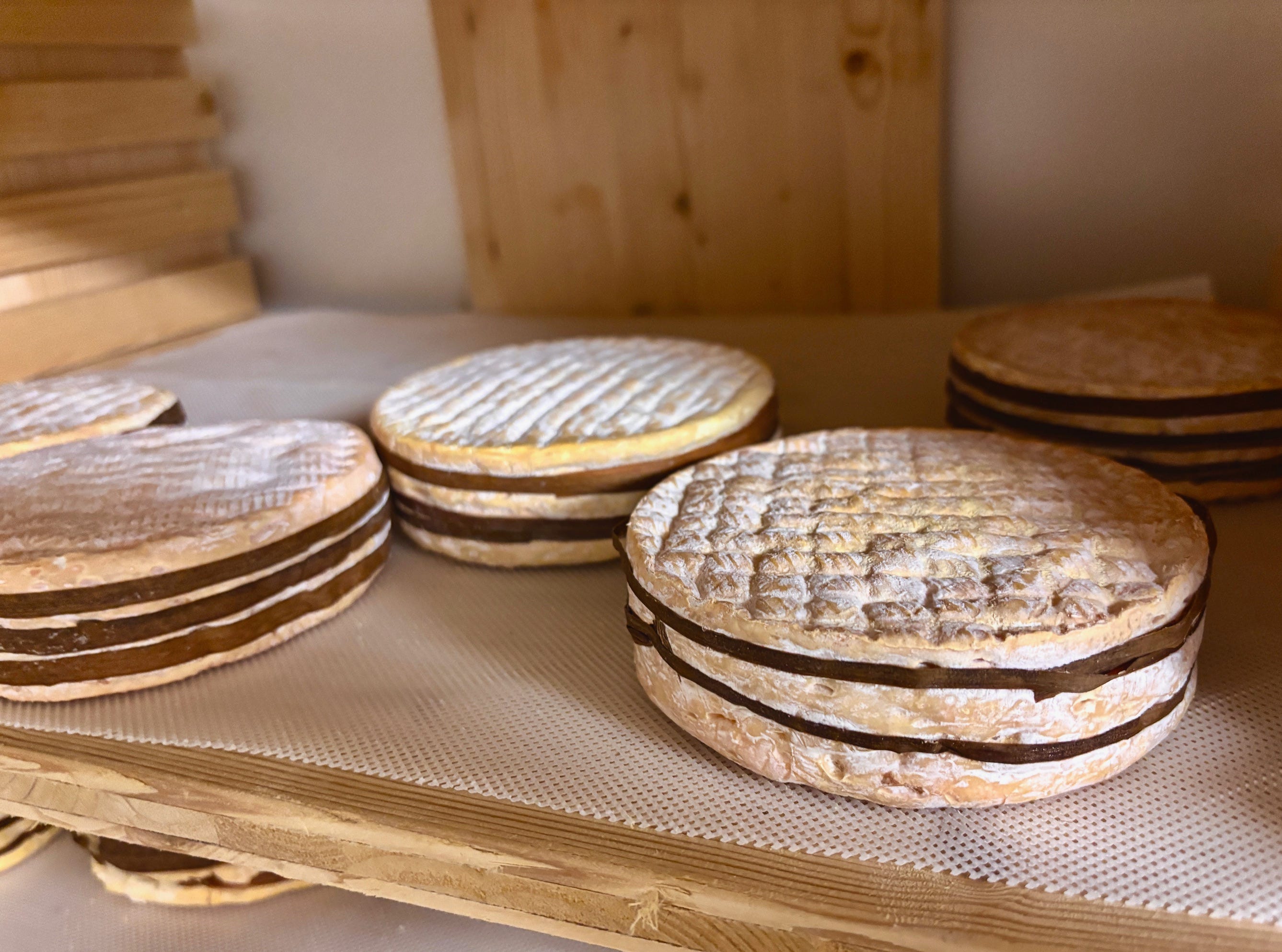
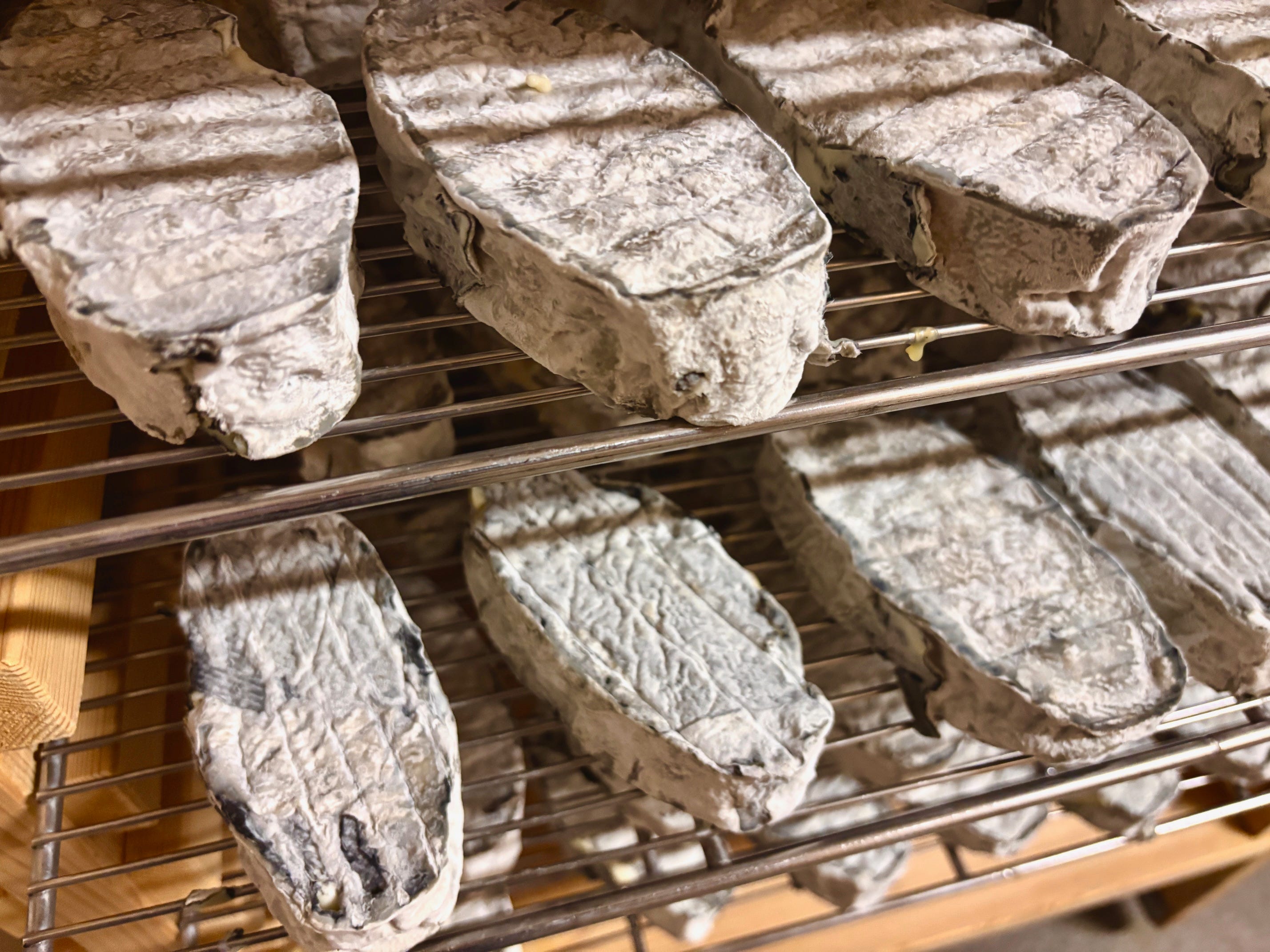
I couldn’t resist bringing home all these cheeses. Could you?
When I moved to France and was doing food tours, at some point, a guest would inevitably ask, “Why did you move to France?” while we were in front of a bakery or a cheese shop. I wouldn’t say anything (which was unusual for me) but would just point at the magnificent pastries or cheeses in the window, and they’d get the message.
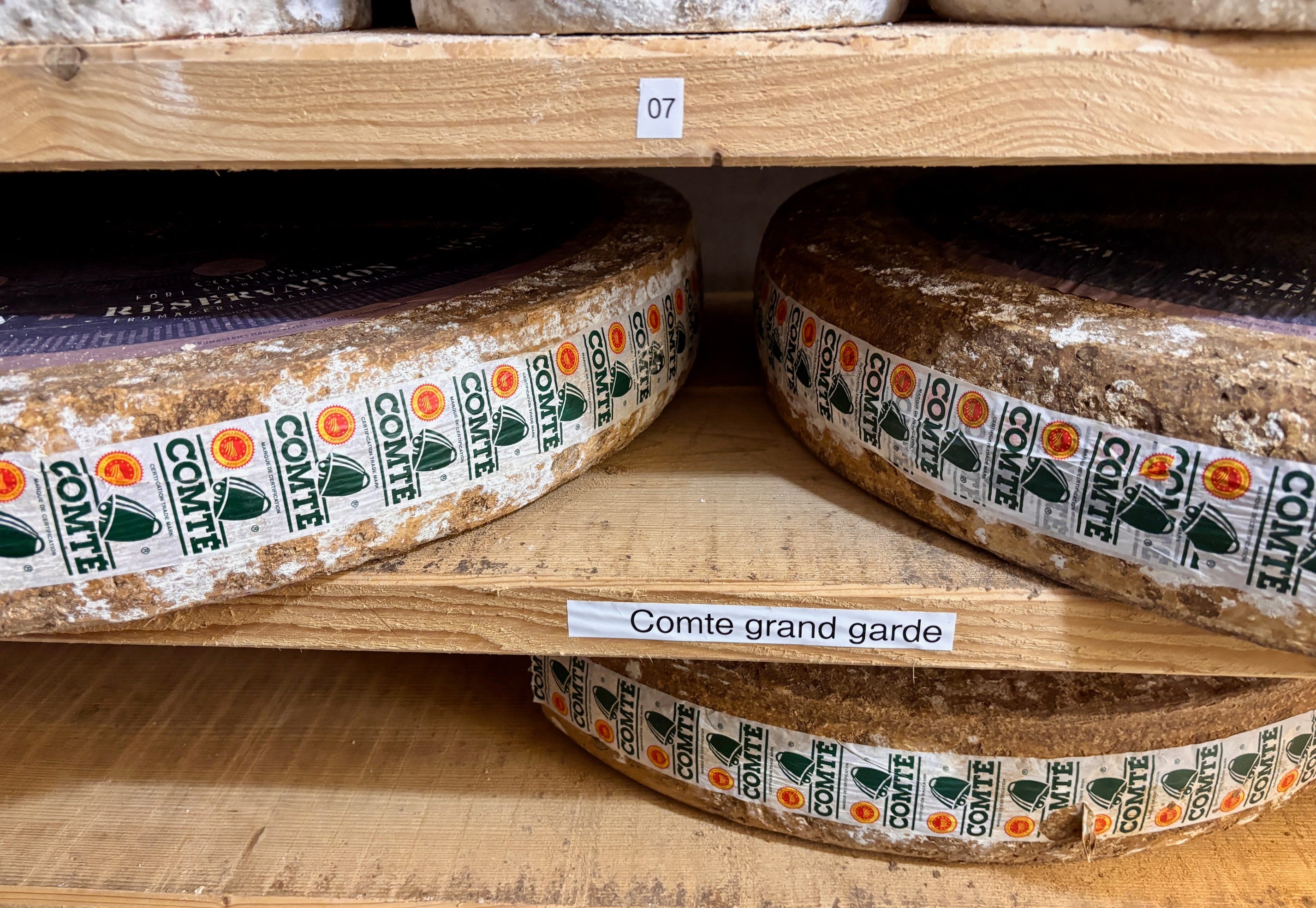
Also, nearly twenty years ago, during that same time in France, I was at a restaurant in the Champagne region and before dessert, was offered a plate of cheese that I still remember to this day. It was a Comté, aged for four years. The nutty, raw milk mountain cheese made in the French Alps is normally aged between 8 and 24 months. The longer a cheese is aged, the harder, drier, saltier, and sharper the cheese becomes, as it loses moisture.
When I visited the region, the fellows who made the cheeses told me they preferred the younger Comtés; they are smoother (doux) and milkier-tasting, which gave me a greater appreciation for younger cheeses, although I do like the concentrated flavors in a well-aged cheese.
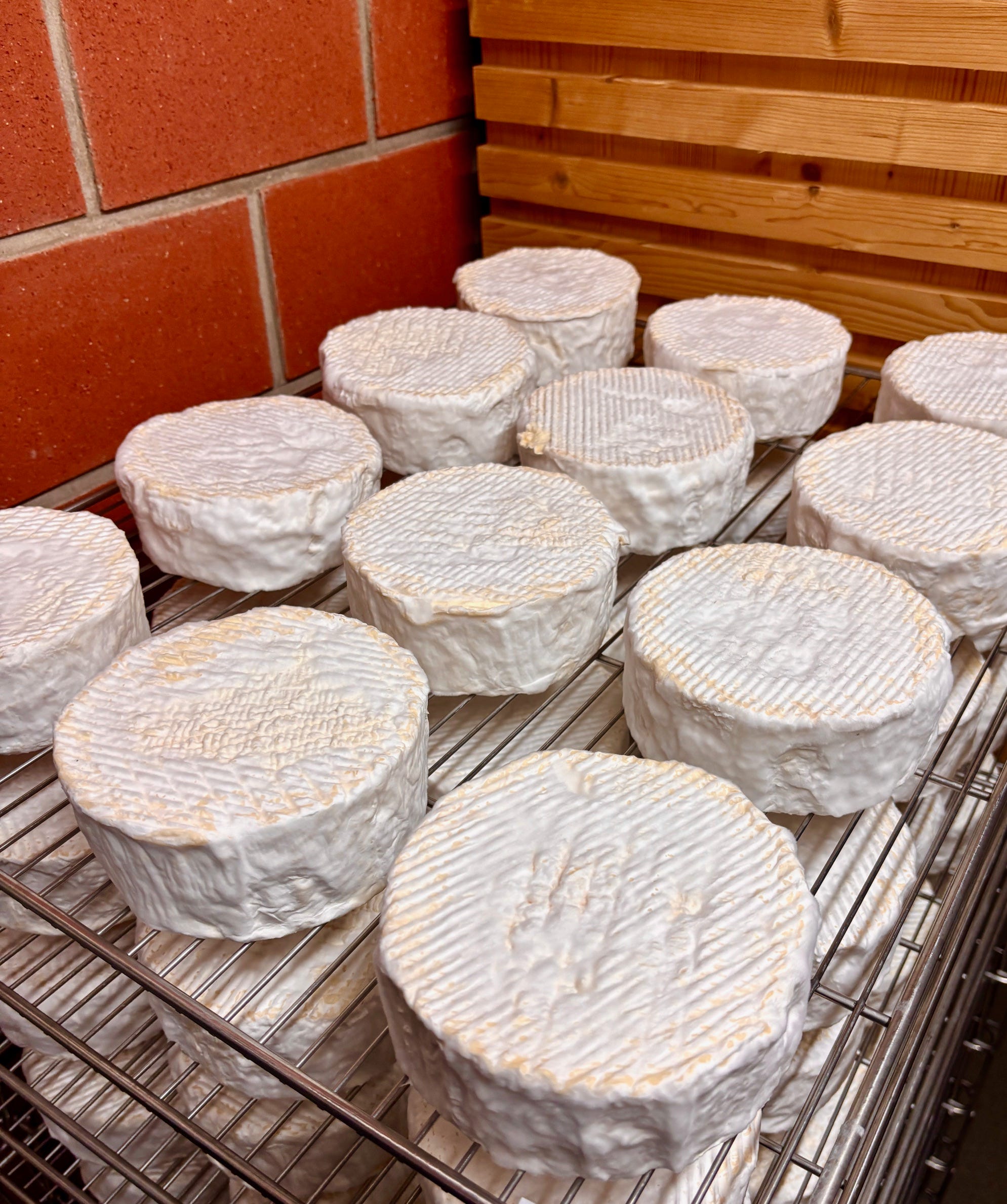
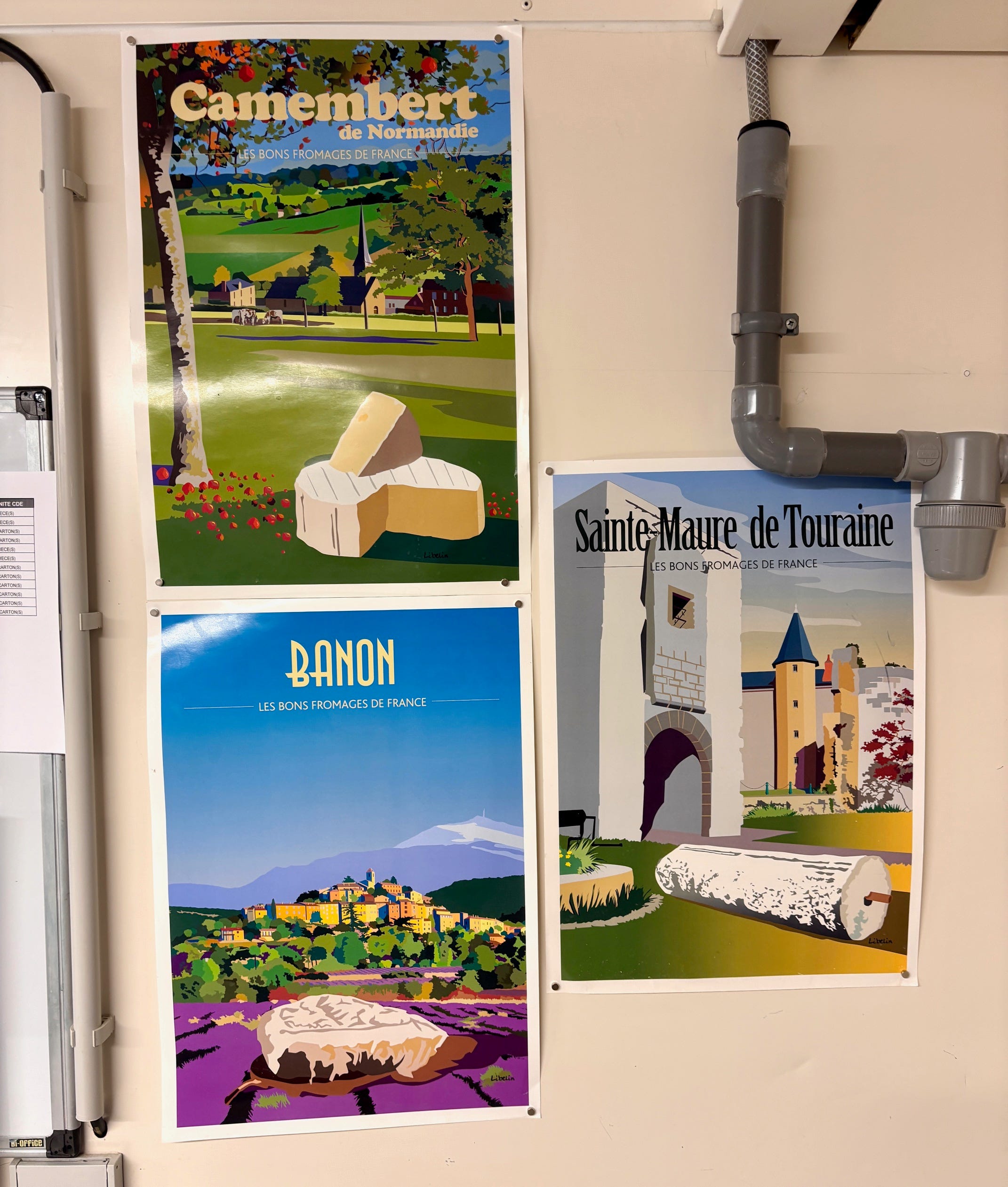
Camemberts de Normandie, one of France’s greatest cheeses.
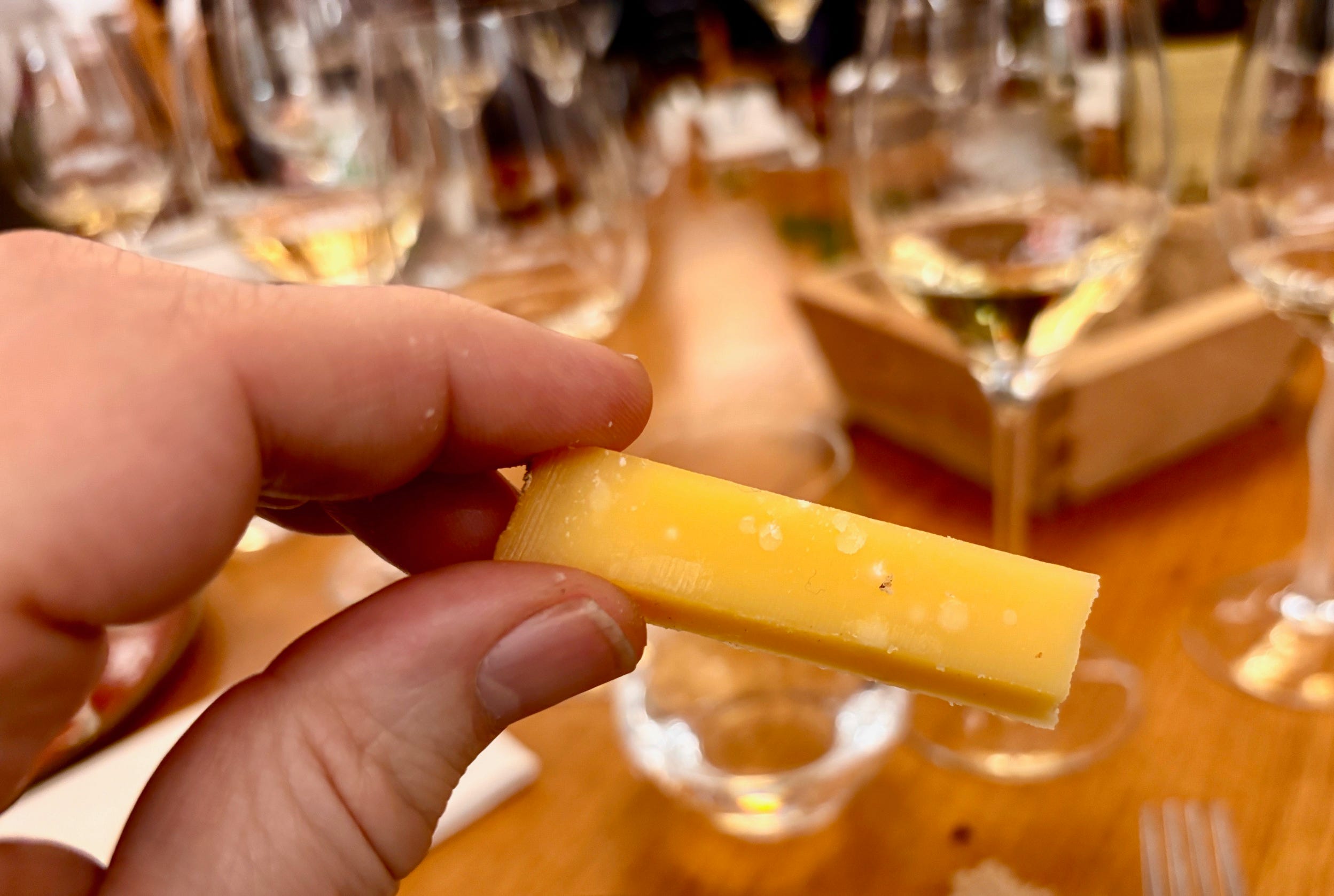
As the years passed, I couldn’t stop thinking about the four-year-old Comté that was presented to me after dinner, served as lamelles, thin wisps stacked on a plate. The medium-dry shards of cheese, with notes of hazelnuts and grass, had little crackly bits in them and were a revelation.
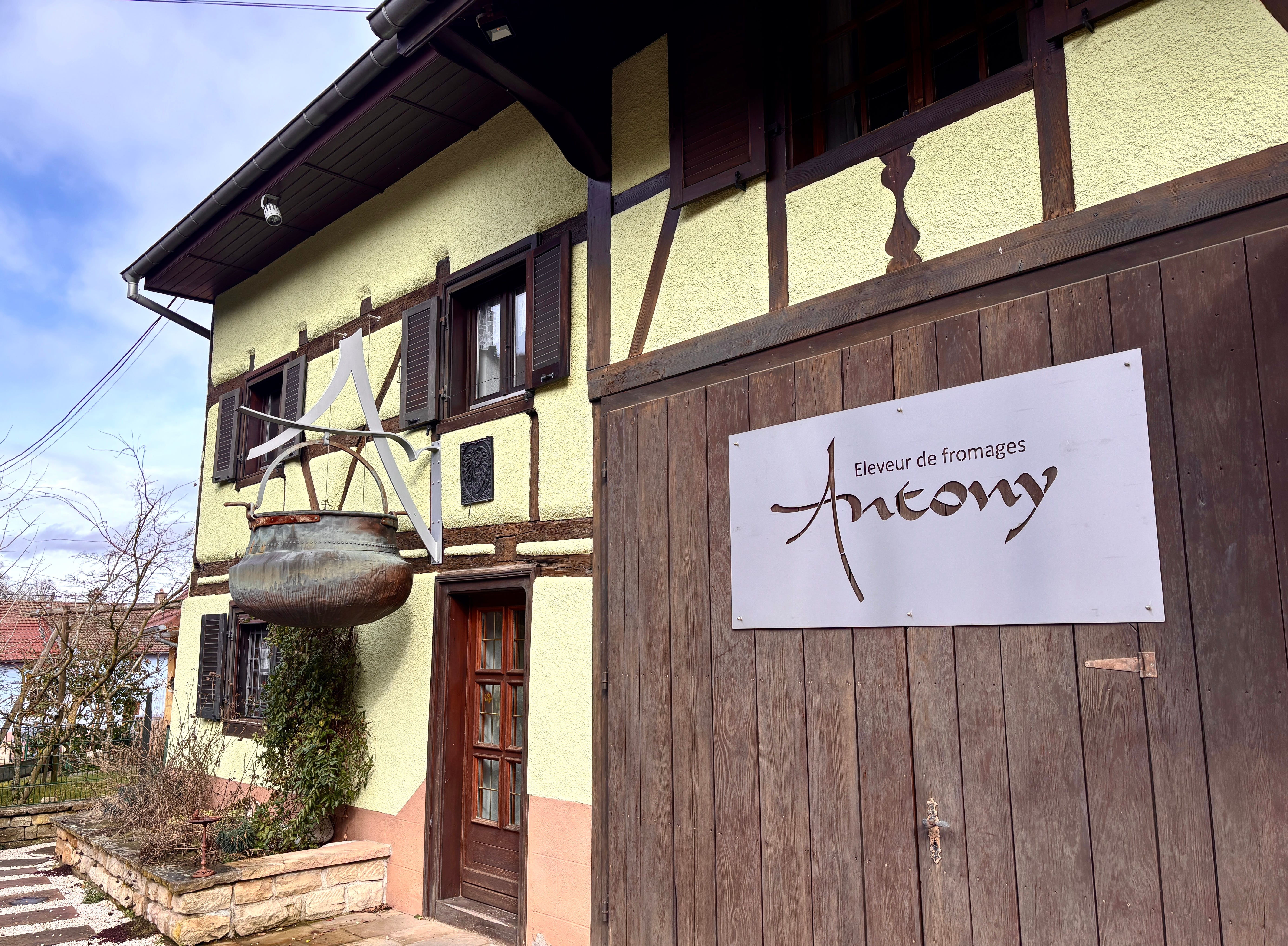
I was told that the amazing cheese was from an affineur (cheese ripener) named Bernard Antony, who was located in the small village of Vieux-Ferrette, in Alsace. As proof that good things come to those who wait, when an invitation arrived last month to visit his ripening caves and shop, it was a dream come true.
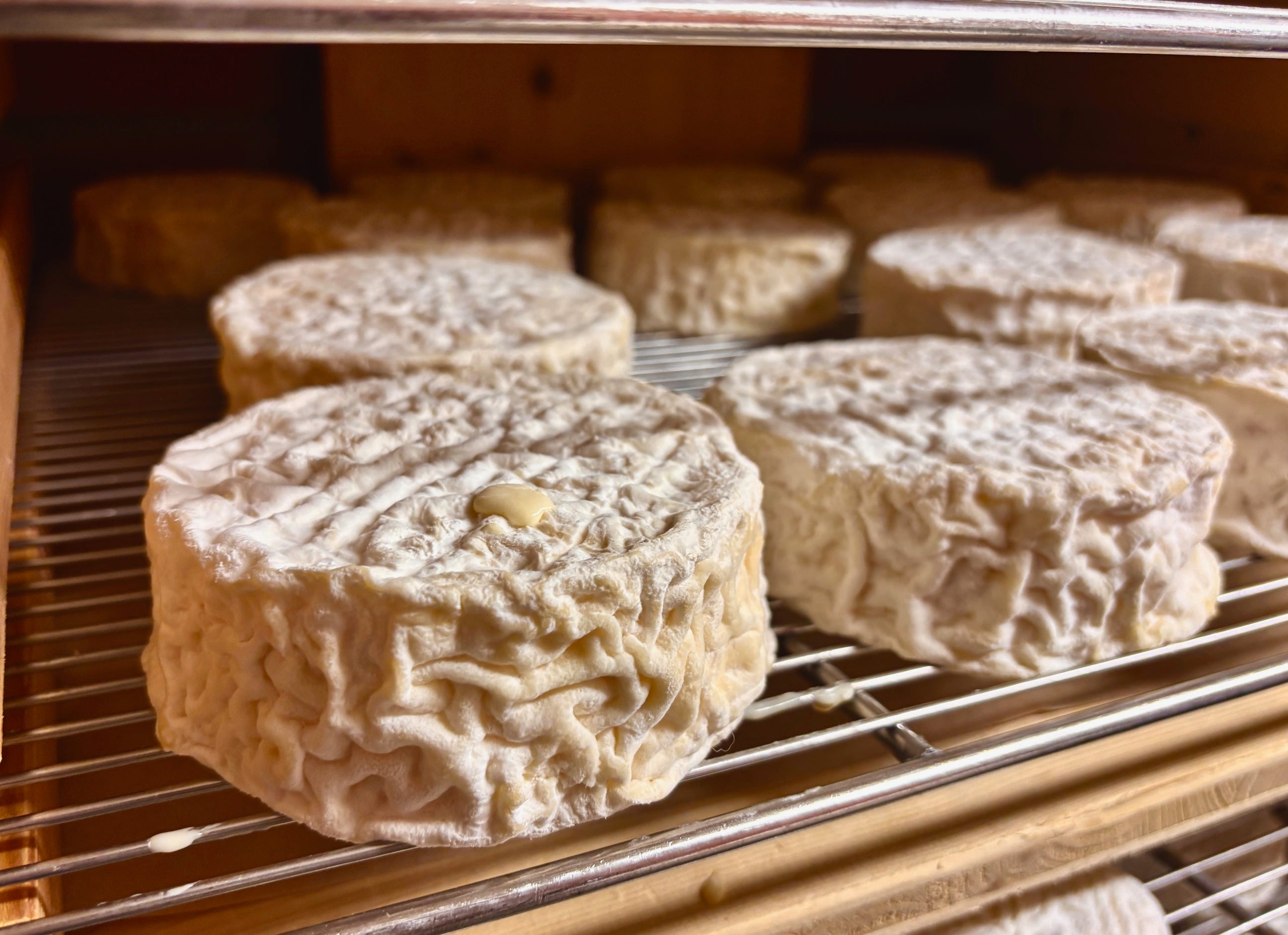
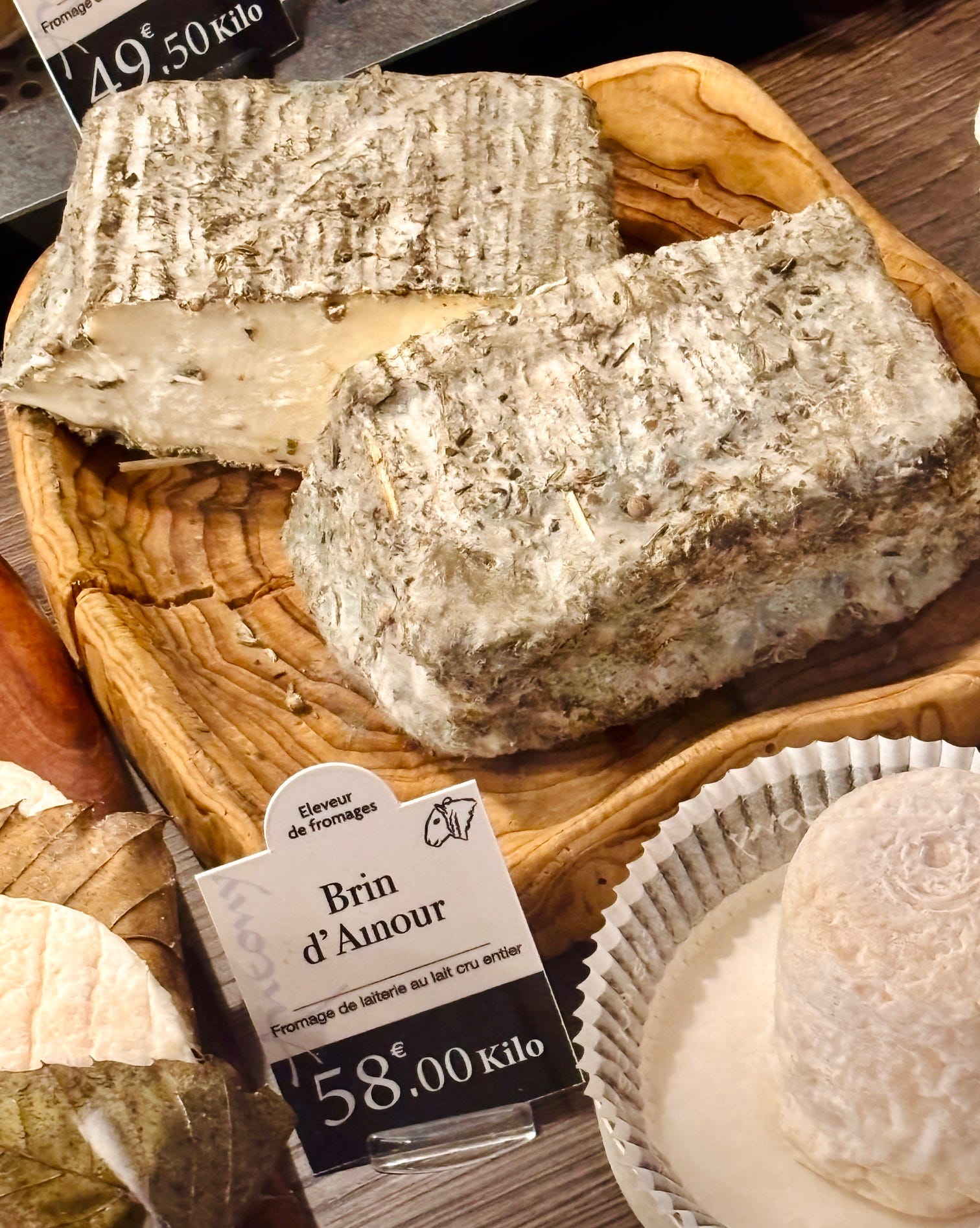
Brin d’Amour cheeses ripening.
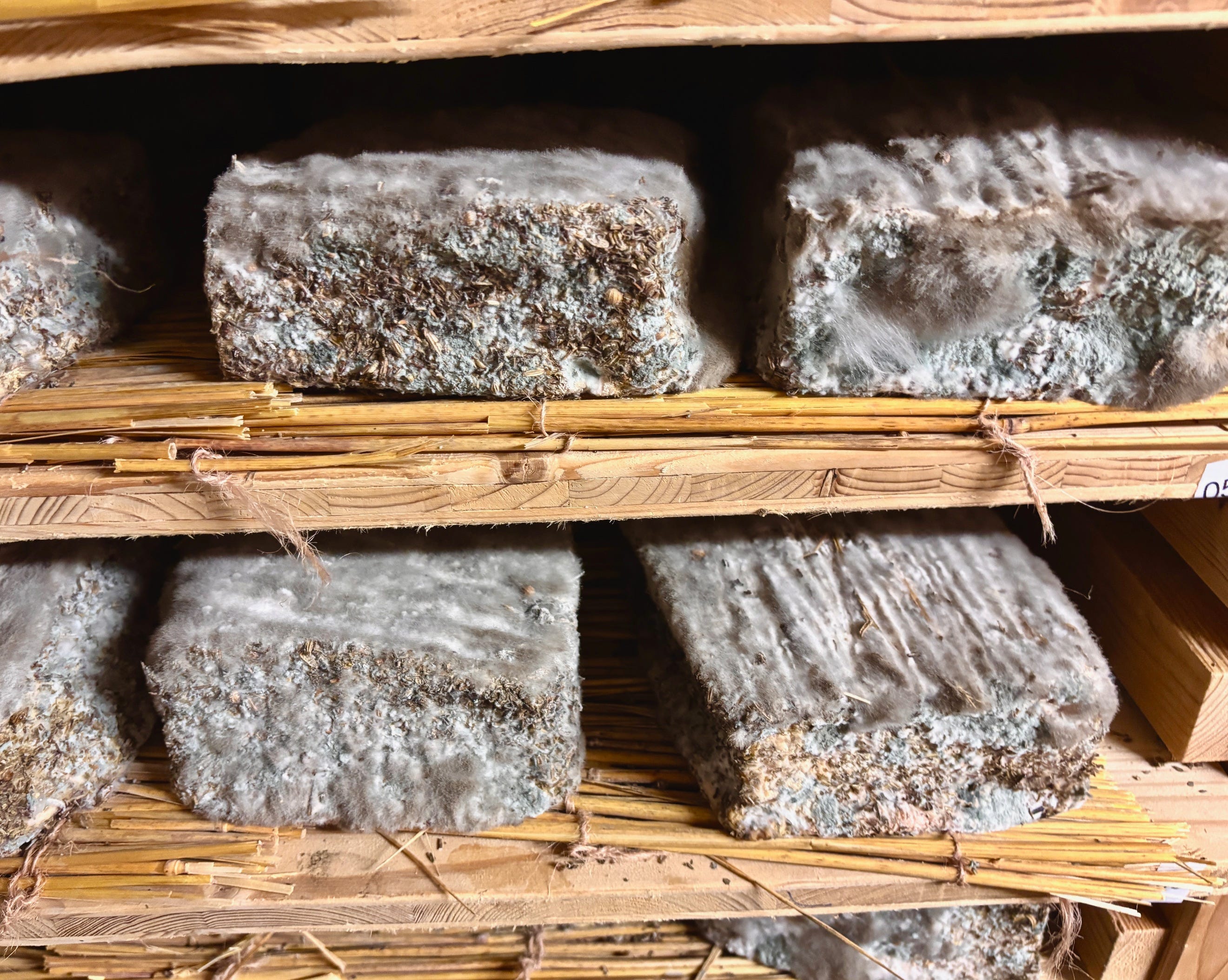
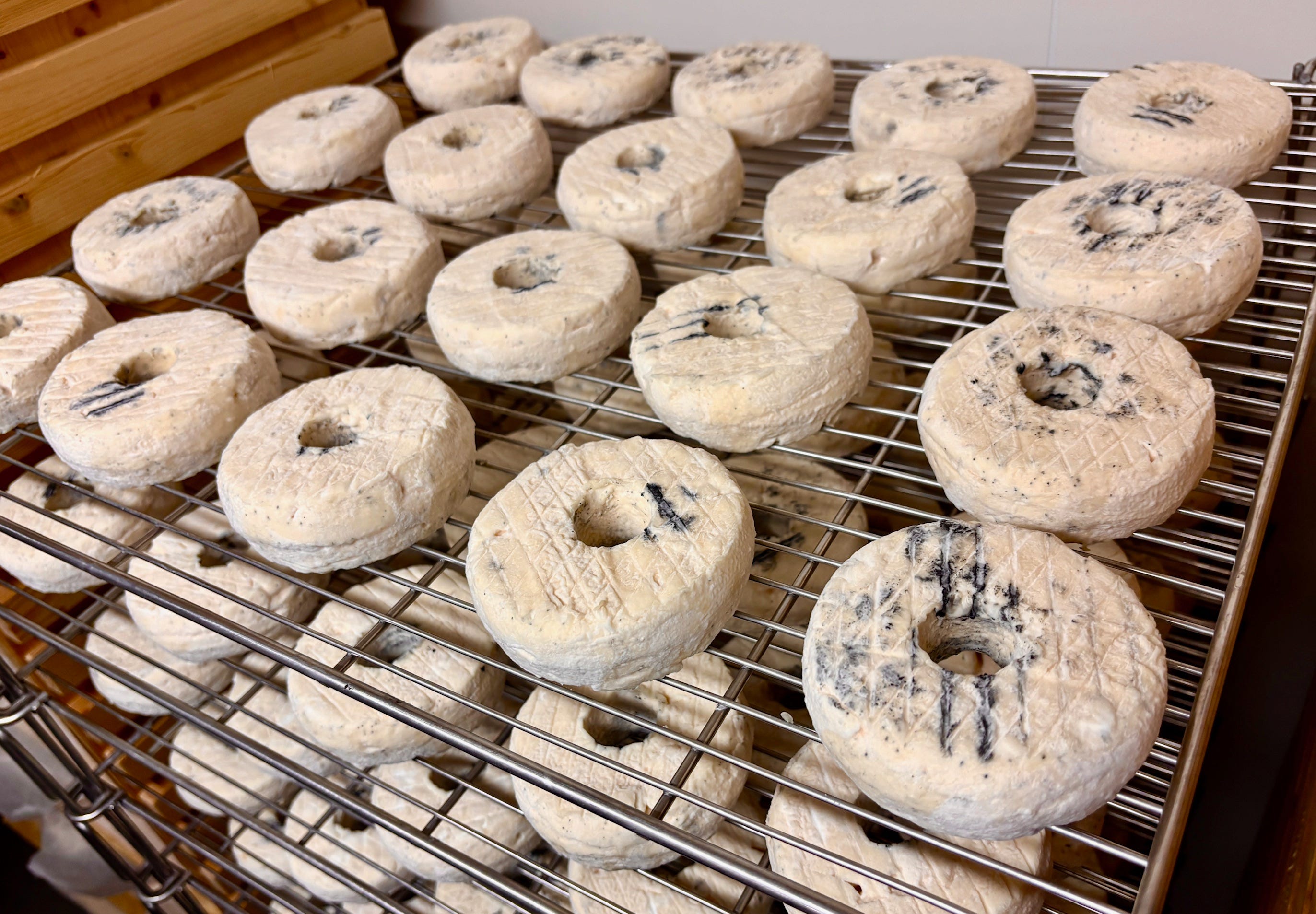
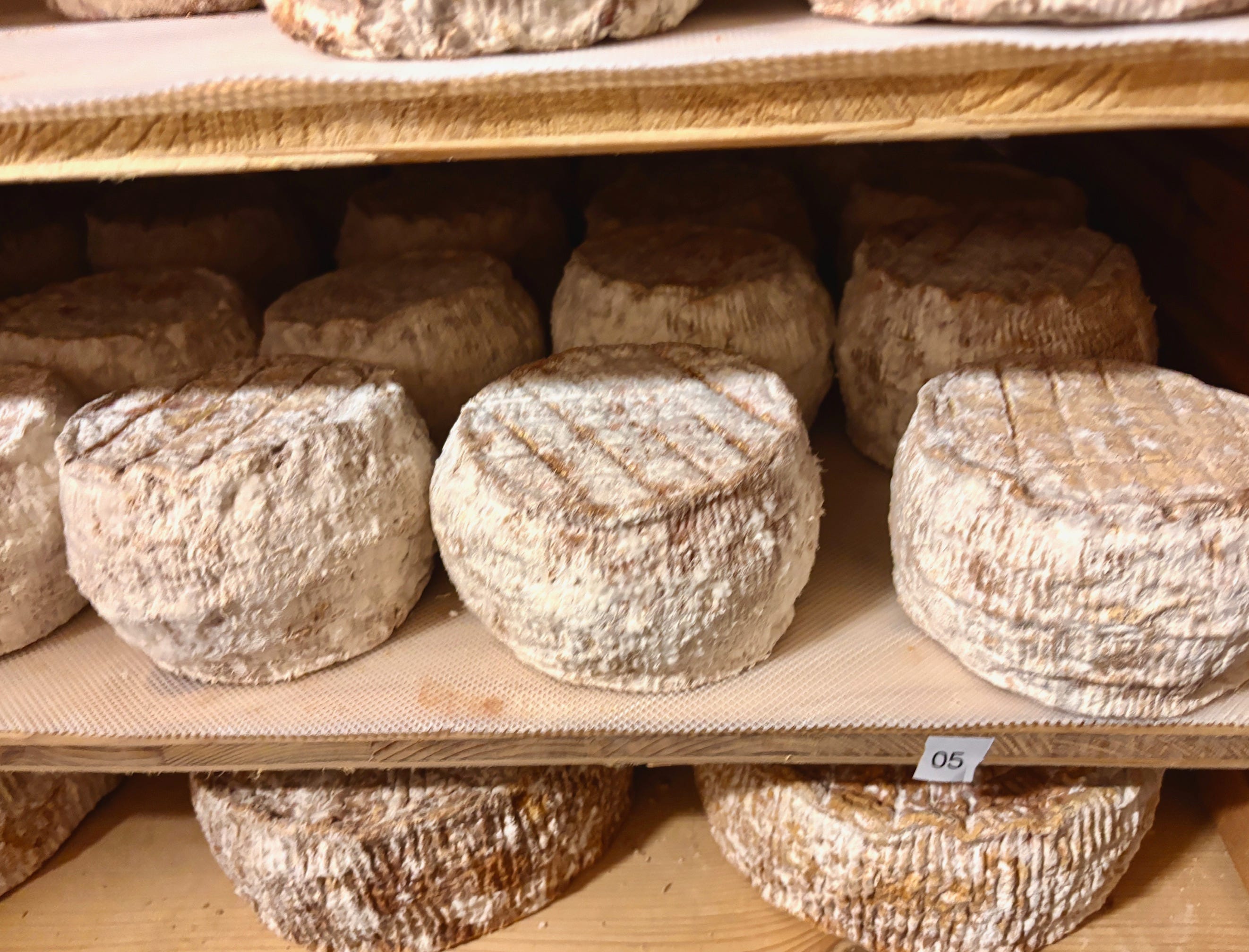
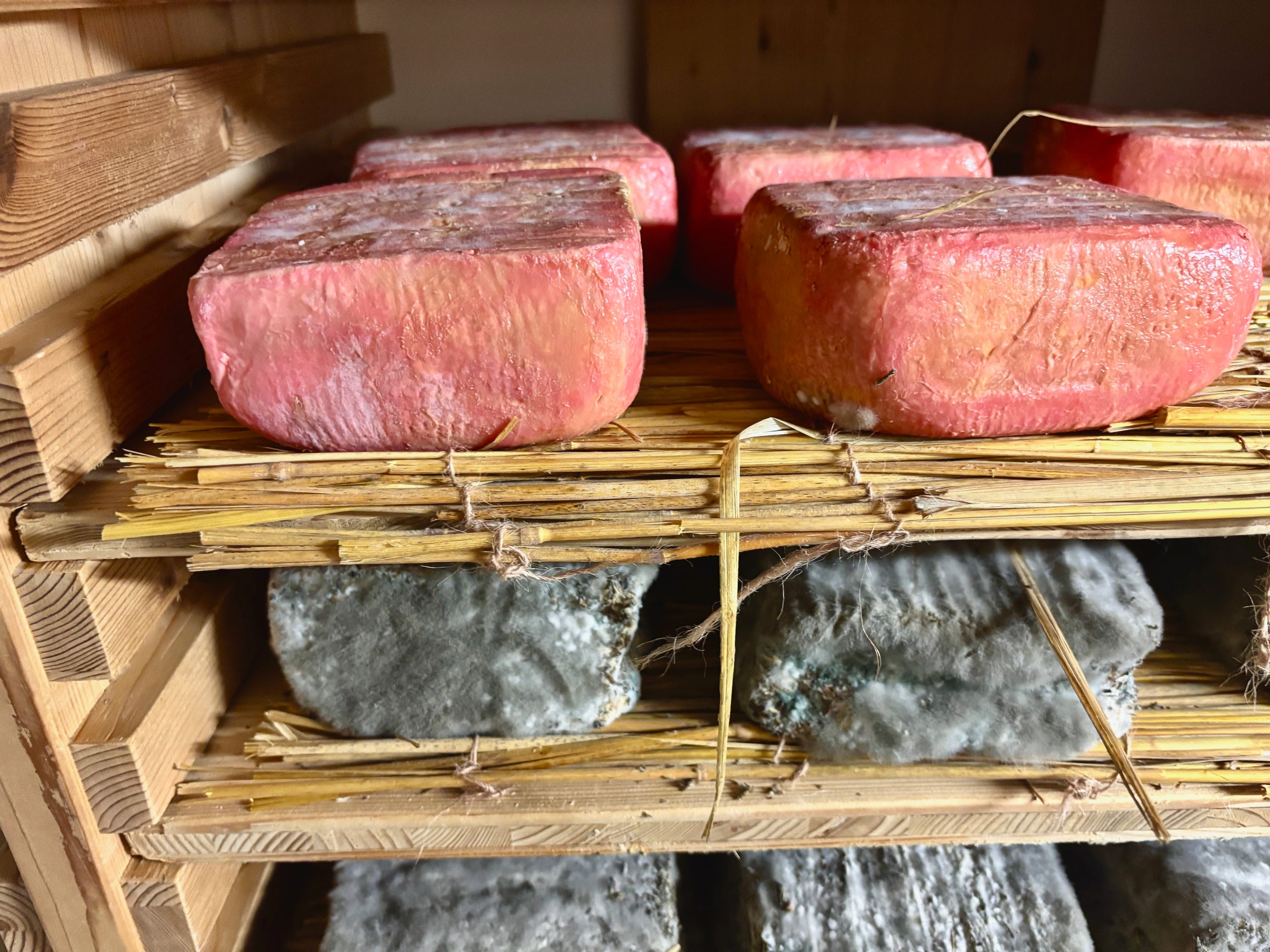
Cheese shops (fromageries) do their best to store cheese under proper conditions; some cheesemakers send their cheeses to affineurs, whose specialty is carefully ripening unfinished cheeses. They know exactly how each cheese needs to be treated, from the correct temperature and humidity levels in the caves, to what to brush or rub on the outside of the cheeses as they are ripening, and when.
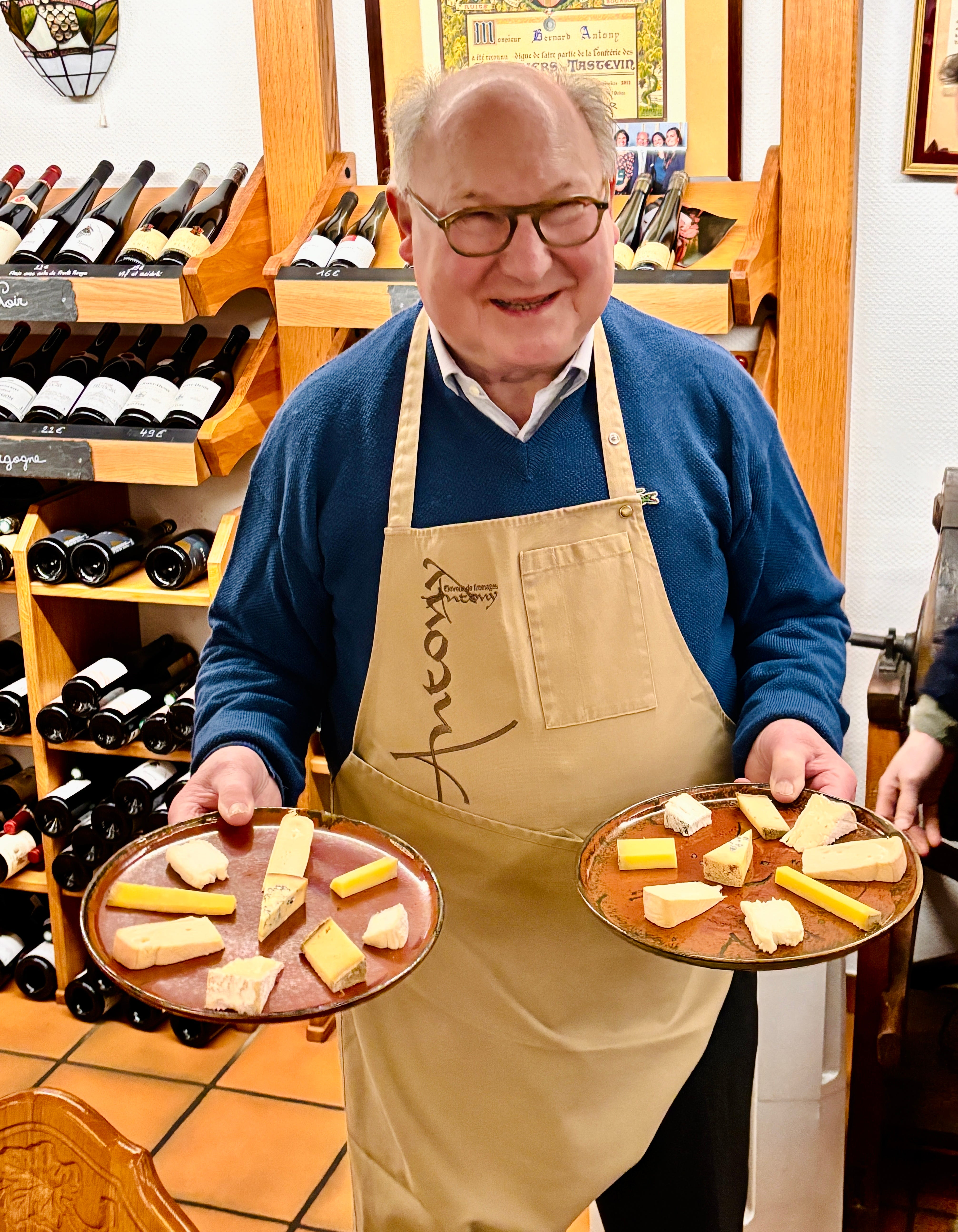
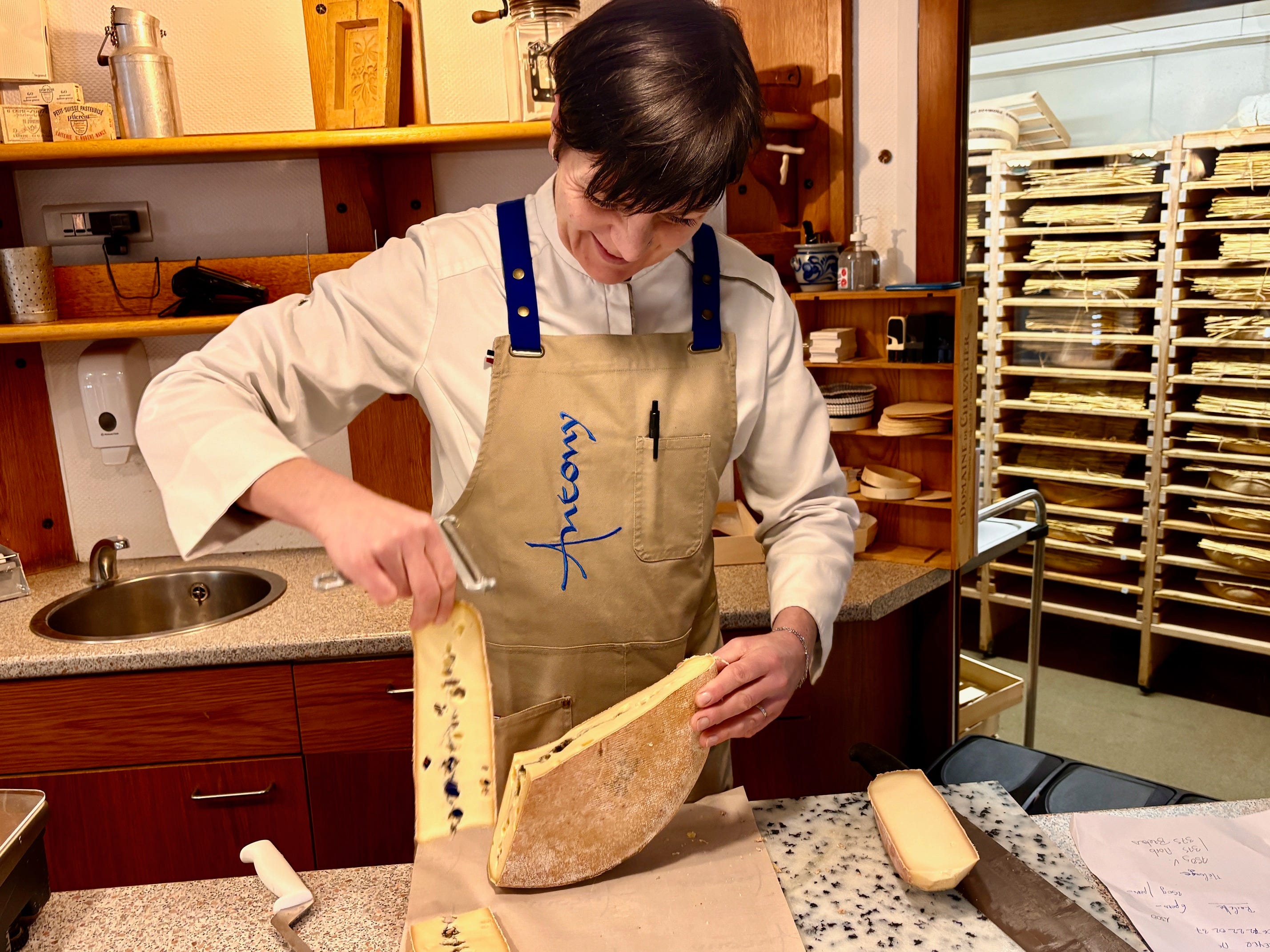
The jovial Monsieur Antony grew up in a family of farmers and started ripening cheeses in 1981 at his family farm, which is now his well-known shop and ripening caves.
This is still a local, family-owned business, and Monsieur Antony tends his six cheese cellars along with his son, Jean-François.
The shop was in full swing with cheesemongers talking to customers, helping them select the right cheeses, then carefully wrapping each one up to take home. The showcase was filled with spectacular cheeses. There were quite a few that I’d never seen before and was happy to try.
There were others that were familiar to me, such as the Brin d’Amour (below), that look quite different (and a lot better) than the ones I was used to.
Thanks for reading my Newsletter! This post is public so feel free to share it!
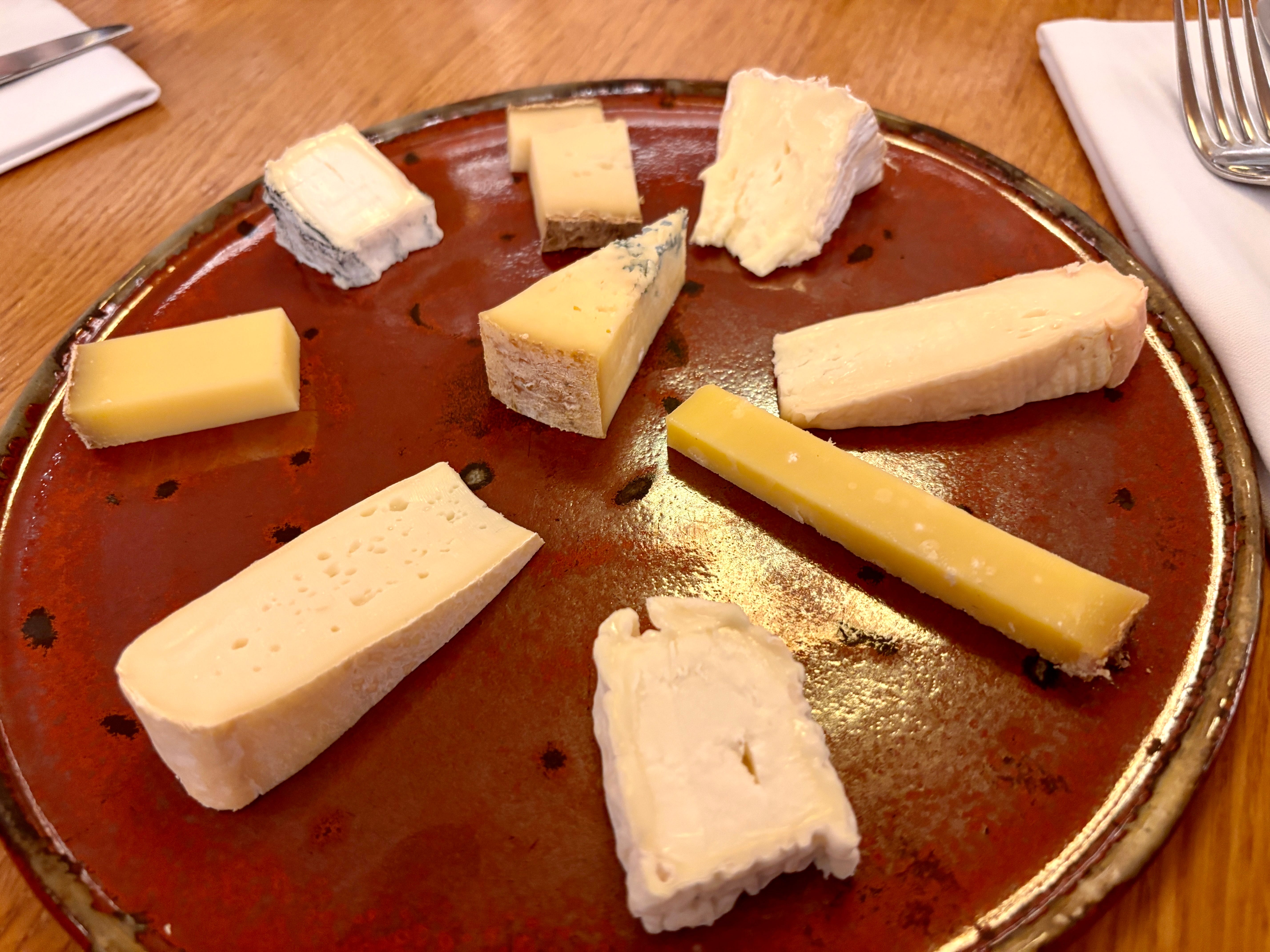
After I put my dropped jaw back into place, we were led toward a tasting room, where we were presented with a roundup of perfectly ripened cheese, ready for our dégustation.
The cheese at the bottom was Saint-Nicolas, a partially aged cheese that had a delectably creamy tang due to the sheep’s milk used to make the cheese. The one next to it, with the rounded edges to its left, was an Abbaye de Cîteaux. Sometimes these kinds of washed rind cheeses can be rubbery, like Morbier can be, so I generally avoid them. But this was the most surprising cheese on the plate and was even better than perfect. It was divine.
Moving on to the next one, the small block of golden yellow cheese was a twenty-month-old Comté Réserve. Comté is one of the most popular cheeses in France, and Jean-Francois (Monsieur Antony’s son) told us that, in his opinion, twenty months was the ideal age for Comté.
Another cheese was a Tomme de Savoie, a sort of catch-all term for a number of cheeses from the Savoie, that the Antony website says “doesn’t mean much anymore.” But like the Abbaye de Cîteaux, when you get a good version, you taste what the other tommes are missing. And this one was going on my mental list of cheeses to bring home.
There was a small wedge of a truly remarkable Camembert de Normandie. Like “tomme,” the word camembert is applied to many cheeses that look like the real deal, but there are just a handful of producers left of Camembert de Normandie. Always look for “de Normandie” after the name if you want to get the real deal in France, made from raw milk and molded by hand.
Most Camemberts de Normandie are slightly musky and funky (in a good way), but this was a whole different category with powerful flavors of wild and dried mushrooms. It had an extra-strong creaminess thanks to the milk used to make the cheese, which comes from Normande cows, known for their especially high-quality milk.
I don’t buy Camembert too often since it’s so rich, and a good one starts oozing out shortly after you cut it - which is why they sell special boîtes to store ripe Camembert in. So when I do buy one, I get the best I can find. And while I thought bringing one home was a good idea, after it was gone two days later, I wish I’d bought at least a second one.
Because we were in Alsace, of course there was a slice of Muenster to taste. But I was still euphoric from that exceptional Camembert de Normandie and looking forward to the next cheese, the Comté I remembered from decades ago.
Yes, it was time to revisit the Comté Hors d’Age (Comté without age). They mentioned how aging this cheese up to 48 months can pose some challenges, namely a loss of moisture and higher salt content. Their knowledge of cheese ripening really shines in this elegant cheese, which keeps the character of Comté but deepens it. This was also the most expensive cheese that they sold, but all the work that goes into it definitely pays off.
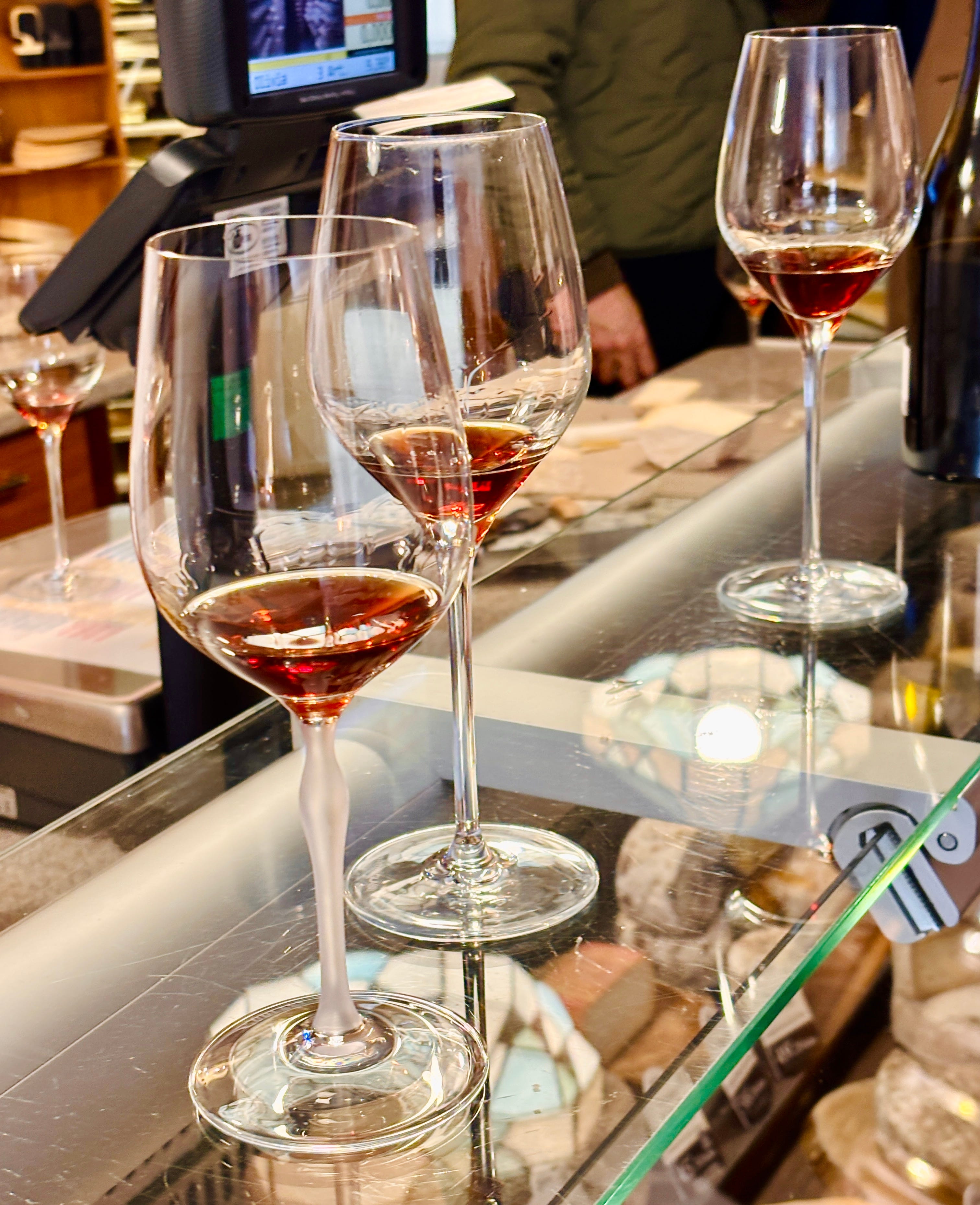
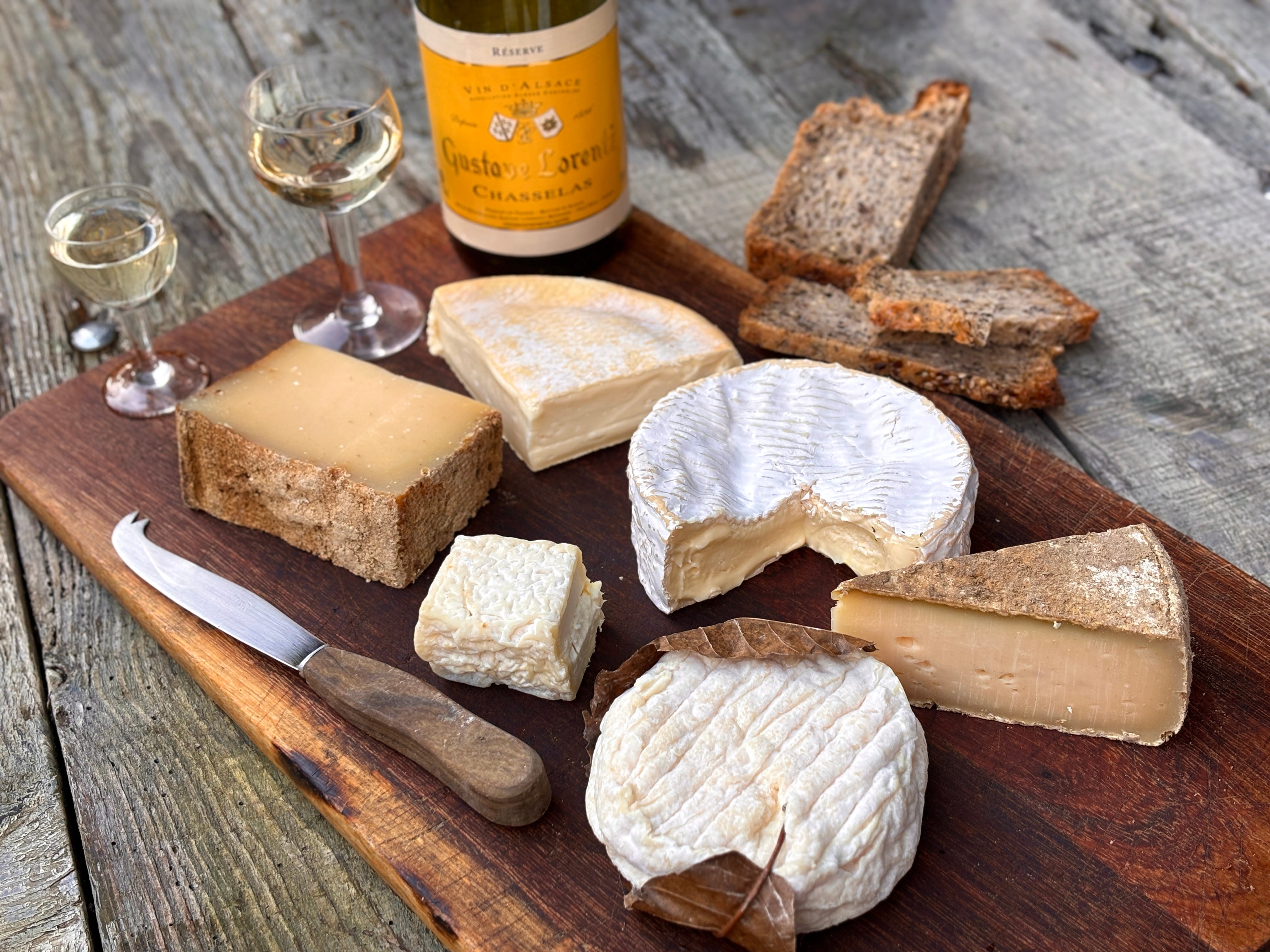
The perfect pairing with cheese is wine, with cider and beer also being fine accompaniments. Alsatian wines are some of the best you can drink. And no, they’re not all sweet.
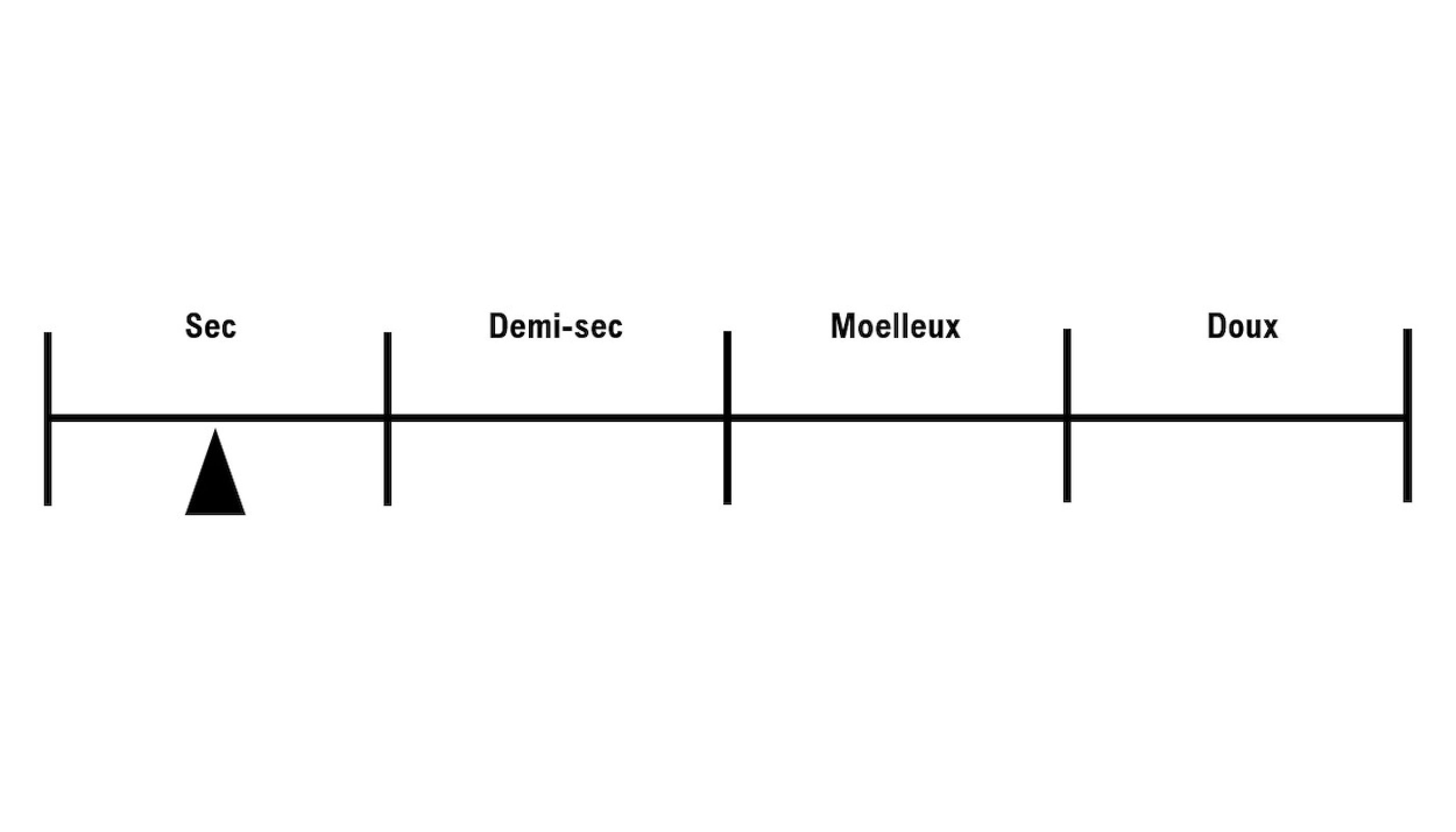
In fact, most are dry. But because that perception still exists today, a wine scale is posted on the back labels of Alsatian wines, which rates the wine from dry (sec) to sweet (doux).
Alsatian wine scale from Jancis Robinson.com, which has written more extensively about it here.
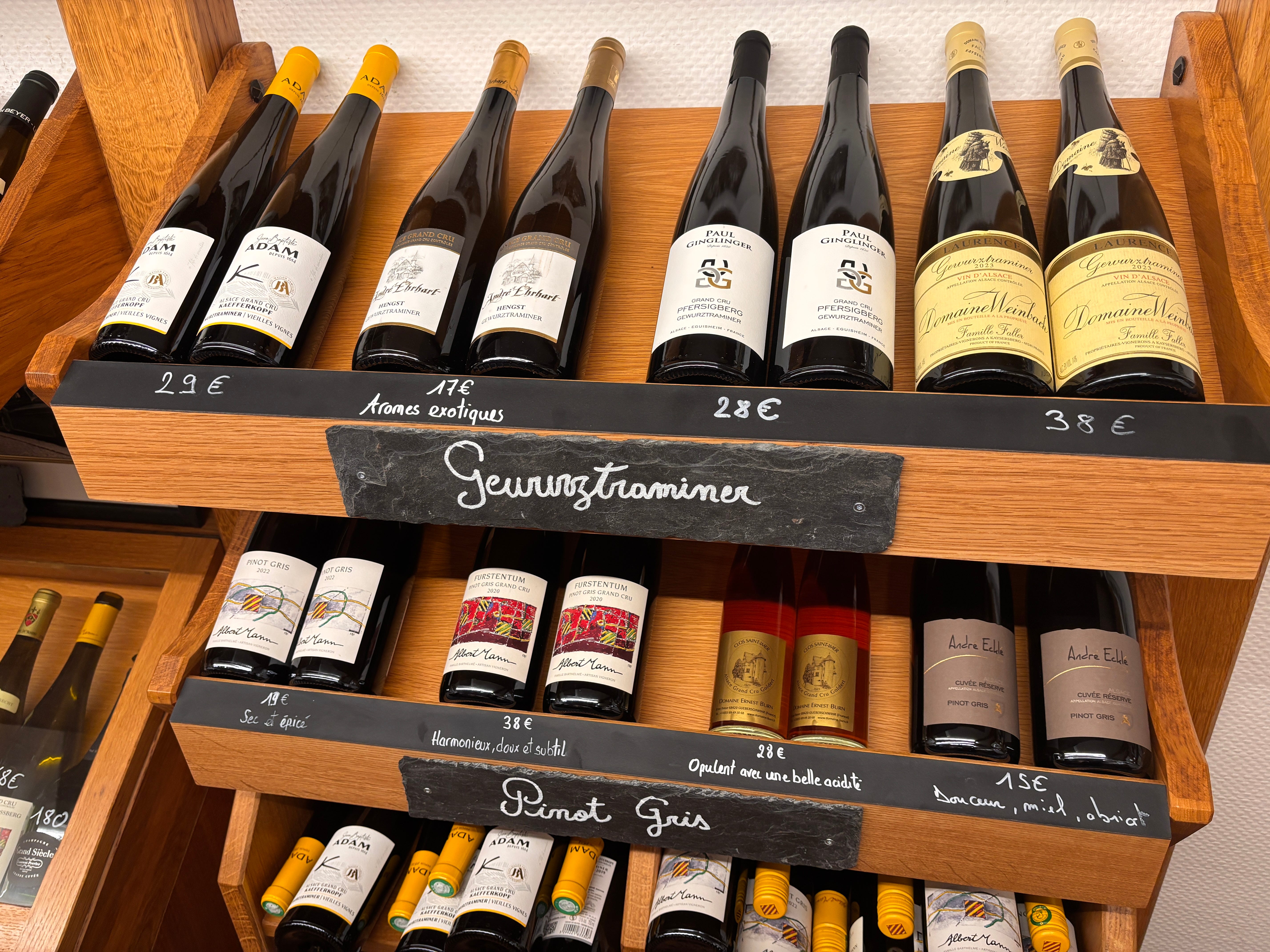
Alsatian wines are also notable as they’re sold by the cépage (grape variety) in France, rather than by the region. Few people in France know the grapes that go into, say, a red Burgundy or a white Muscadet from the Loire, but because of their Germanic influence, wines from Alsace are labeled by the grape variety and often sold in elongated bottles, called flûtes d’Alsace.
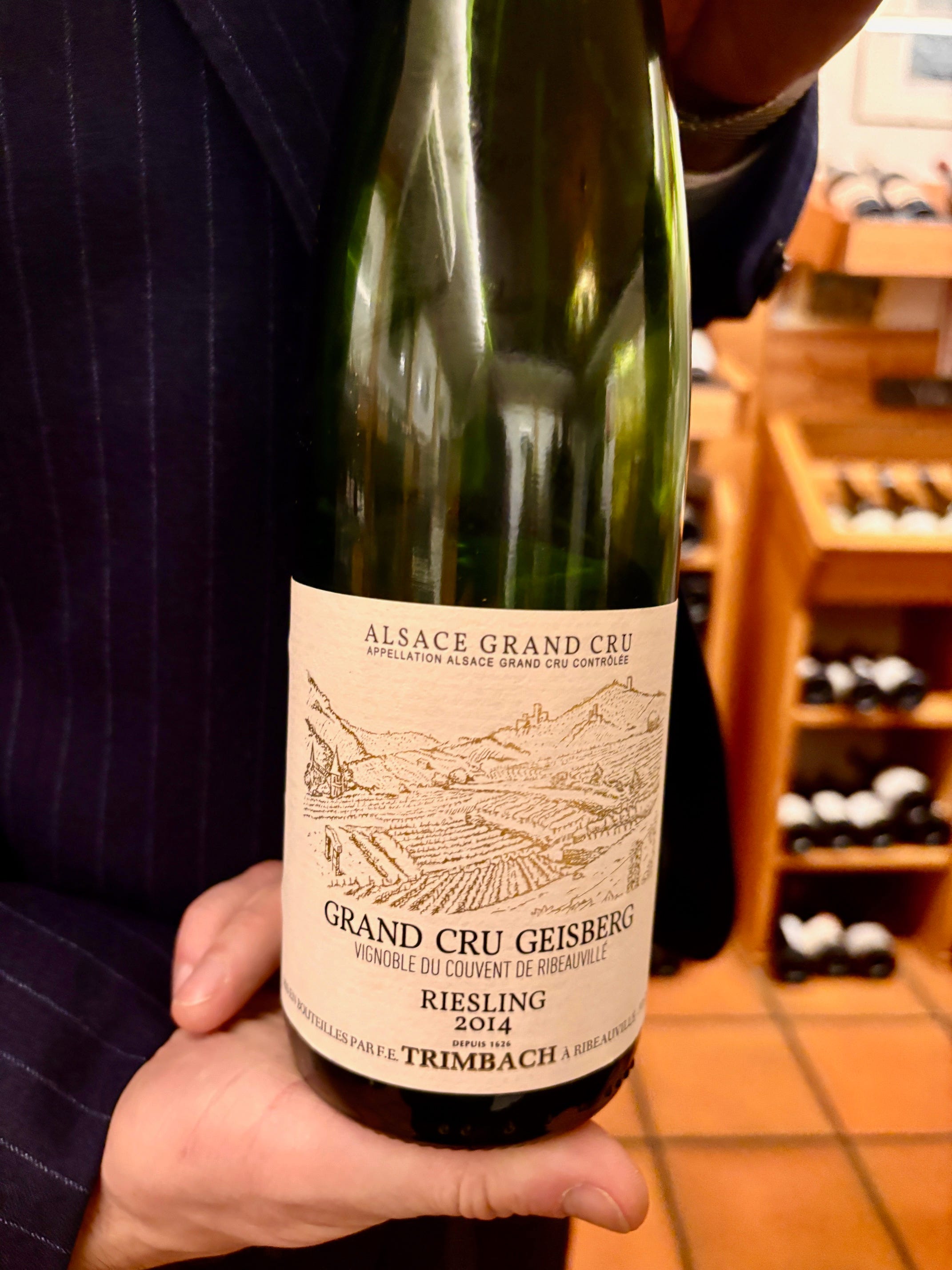
Because it goes so well with cheese, their shop sold quite a few wines, but sommelier Fabrice Langlois, who worked the night shift before our trip (and somehow managed to make the 7:20am train), came with a backpack rattling with incredible bottles of wine. This one was my favorite:
Following the “what grows together, goes together” theme, this Trimbach Grand Cru riesling was especially good with the Alsatian cheeses.
In addition to “Alsatian wines are sweet,” another myth that needs to go away is that red wine goes with cheese. There are a lot of subtle flavors in cheese and a tannic, heavy Cabernet Sauvignon, for example, can obliterate those flavors.
Even in France, the cliché of “red with cheese” is still strong. It reminded me of a passage in restaurateur Keith McNally’s memoir, I Regret Almost Everything, that I just finished. He talked about reading Don Quixote because his friends told him it was one of the best books ever written. And he hated it:
“I waded through the thousand-page ‘classic’ without enjoying a single page, but for the next thirty years told everyone it was a masterpiece. I said this not because I loved the book, but because I was supposed to love it.”
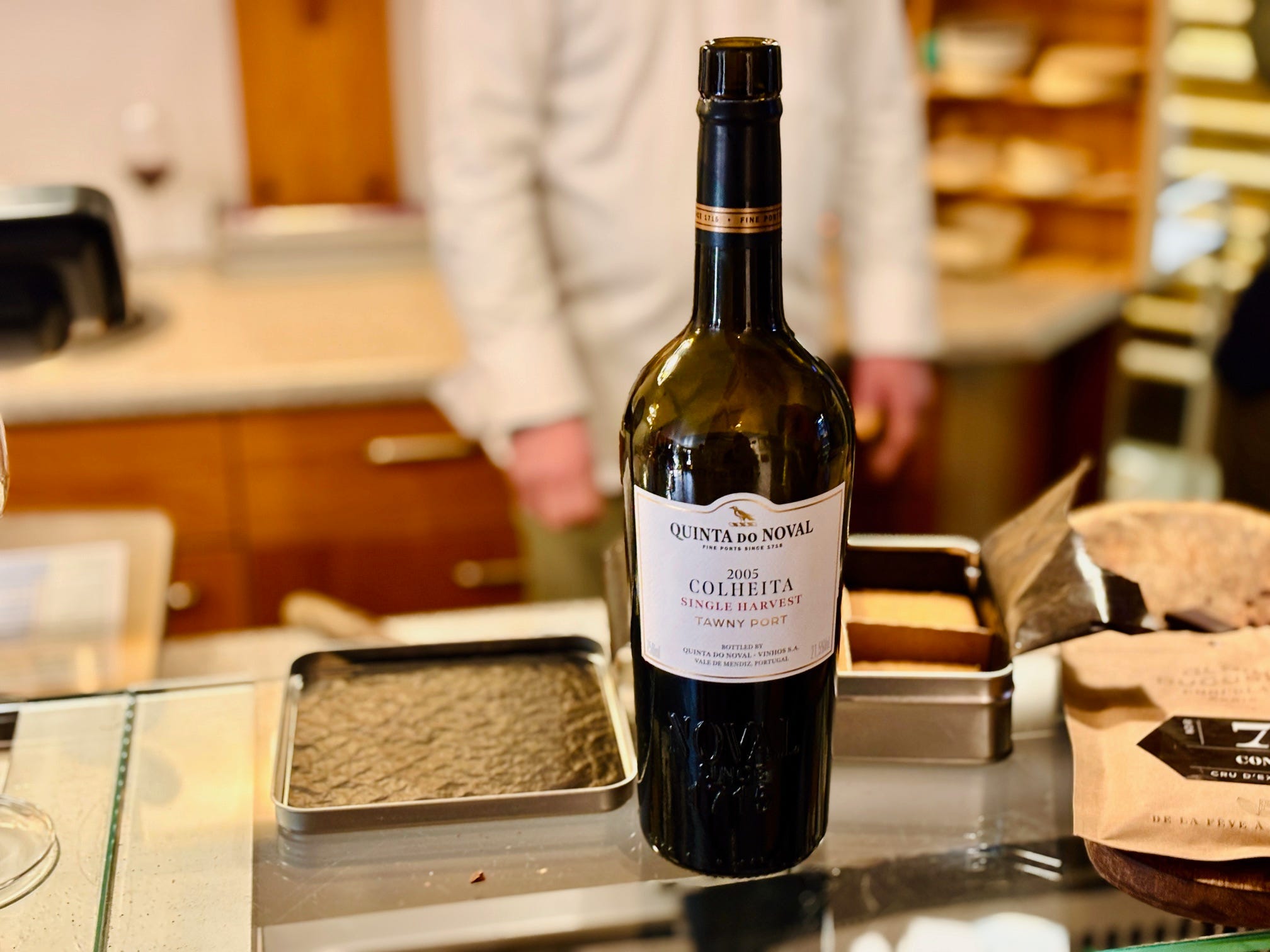
If you really do like red wine and cheese together, great! But if you want to go with red, I might suggest trying something with less tannins, or a softer, slightly sweet wine like port or sherry, which pair beautifully with many cheeses.
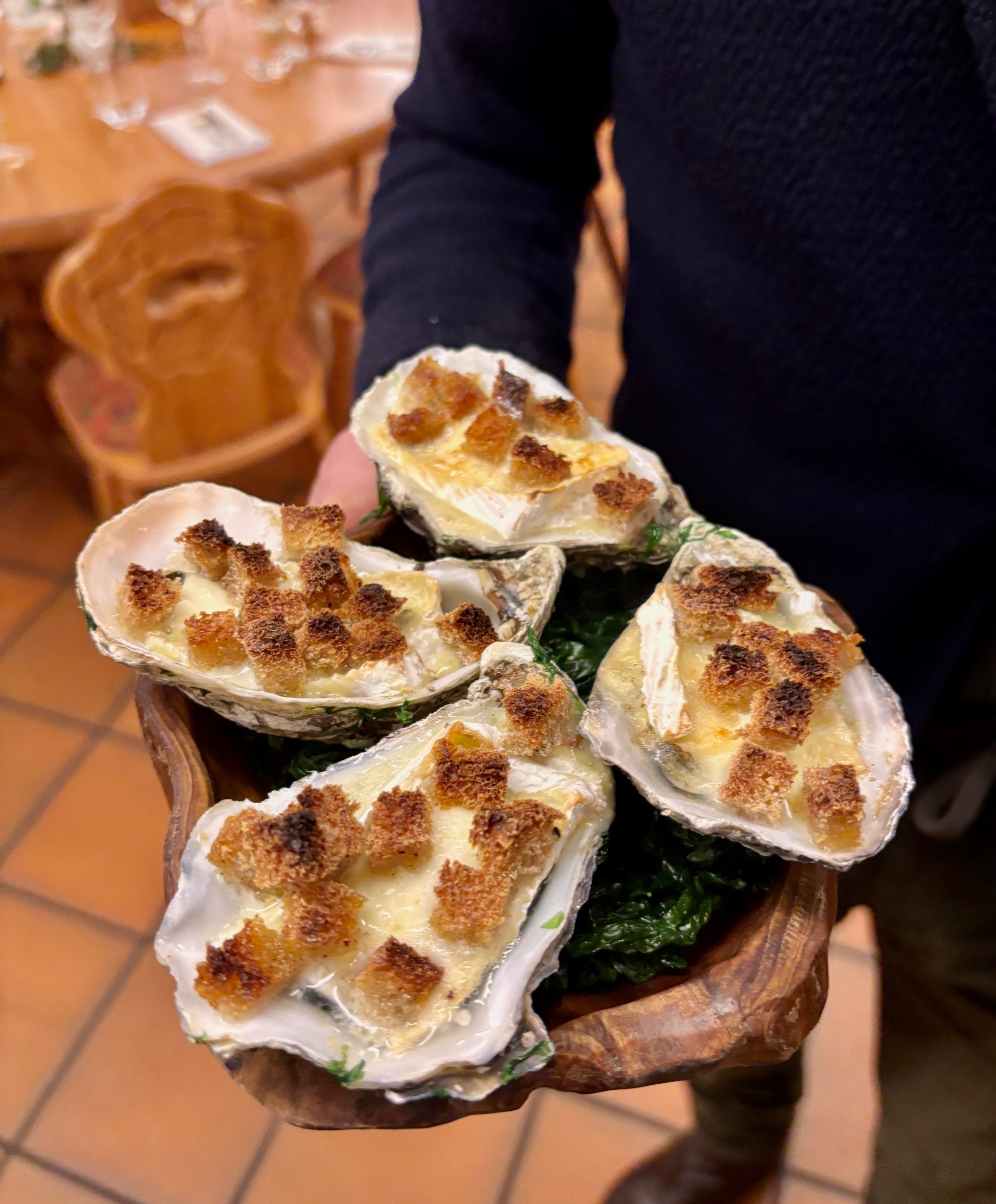
Another myth is that cheese doesn’t pair with seafood, which as anyone who’s had a tuna melt knows, isn’t true. But a pairing I wouldn’t have thought of were these oysters.
Chef Saintagne worked his magic on them, broiling up the oysters, gratinéed with slices of Camembert de Normandie, and dotted with toasted croutons on top. The salty, briny oysters were an incredible pairing with the rich cheese. They reminded me why it’s good to keep an open mind, rather than just following along with what everyone else says. Otherwise, I would have missed these oysters, which I might even try making at home.
After our extensive cheese and wine tasting, we visited the caves where the cheeses are ripened. As a side note, you often go to tastings and people just…taste, and leave a lot behind on the plates. When were were done, every plate was completely cleaned.
⭐ Bernard Antony Cheese Tasting in Paris ⭐
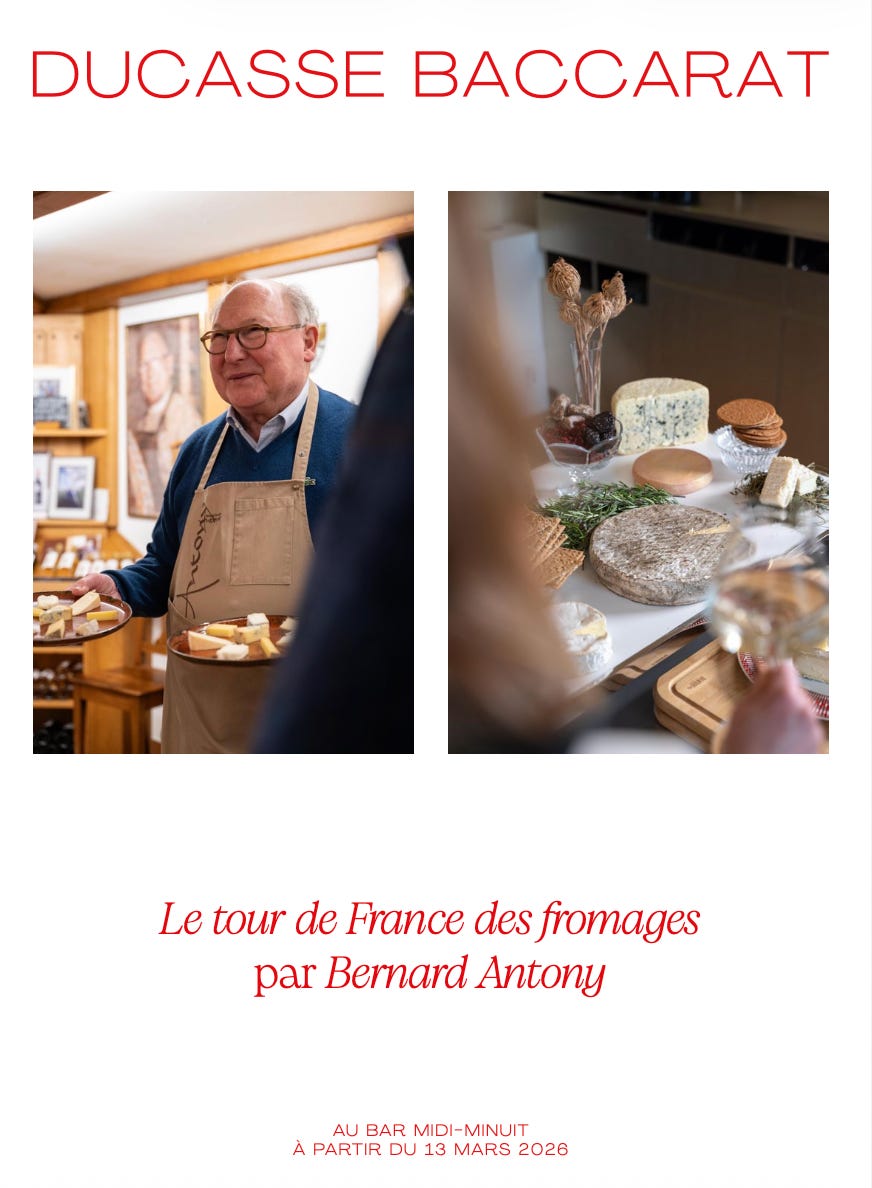
Starting on March 13th, 2026 and extending to the end of April 2026, “tour de France” cheese-tasting platters will be offered at Alain Ducasse Baccarat bar à vin, Bar Midi-Minuit for 35 euros, with the option to add a wine pairing by Sommelier Fabrice Langlois. (Bookings and more info here.)
We didn’t catch all the names of the cheeses (frankly, there were a lot), but often it’s best to go to a cheese shop and see what looks best or most appealing that day and make your selection then. That said, the shop has a page on their website in three languages that identifies and describes many of their cheeses.
Subscribe to my newsletter to get posts about eating around France and in Paris, as well as recipes, travel tips, and more, sign up to get my newsletter…sent right to your Inbox!
After visiting the caves to see the ripening cheeses, because I live in Paris, I’ve learned how to get — and remain — at the front of a line, no matter how many people are behind me. Fortunately, trying to cut in line hasn’t made it to Alsace, but because I am bien élevé (well-raised, and well-mannered), I let someone in our group go ahead of me.
He ended up buying at least as many cheeses as I planned to, but I was happy to be next in line, as a lengthy line was forming and snaking out the door, since they’d just reopened after their lunch break.
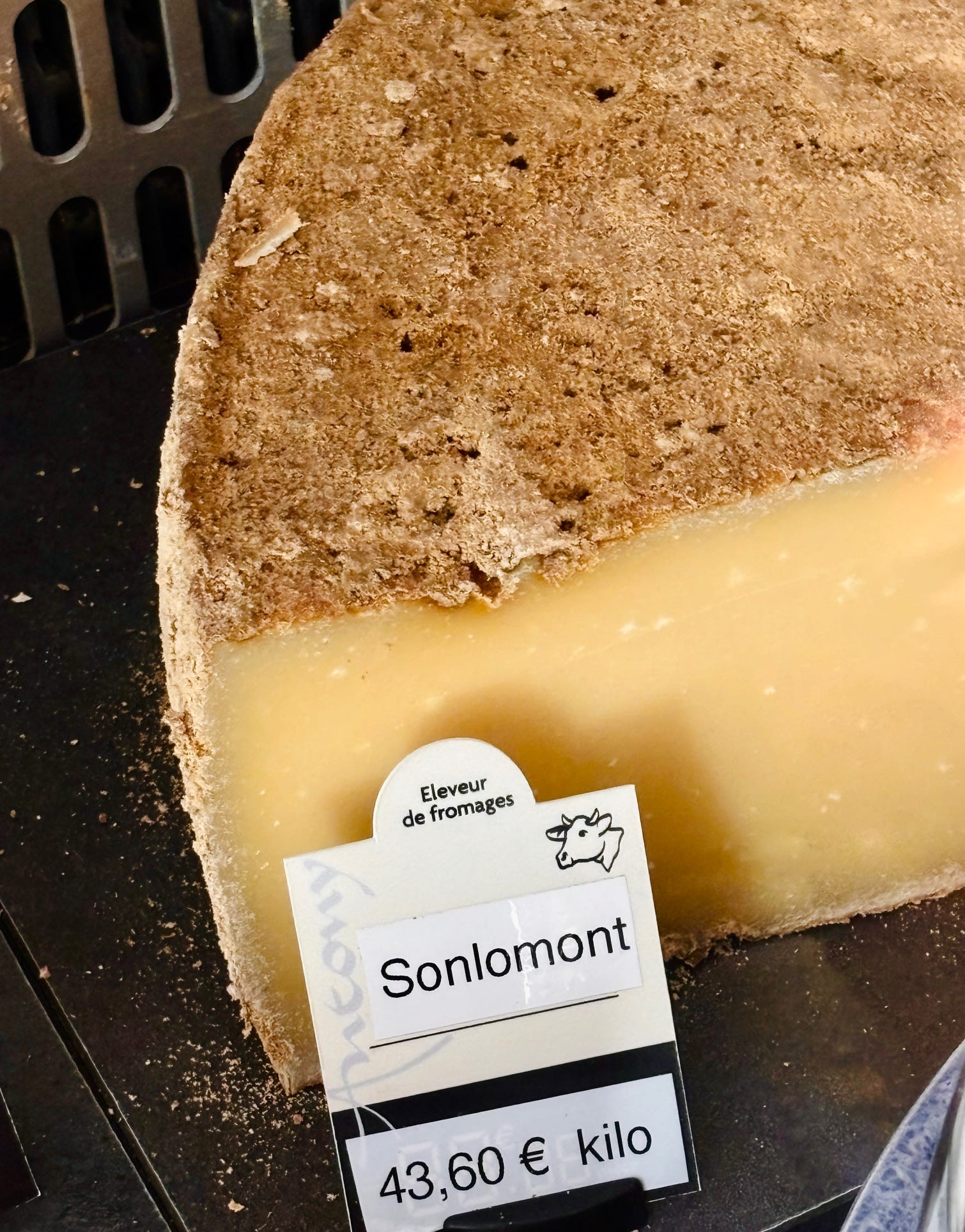
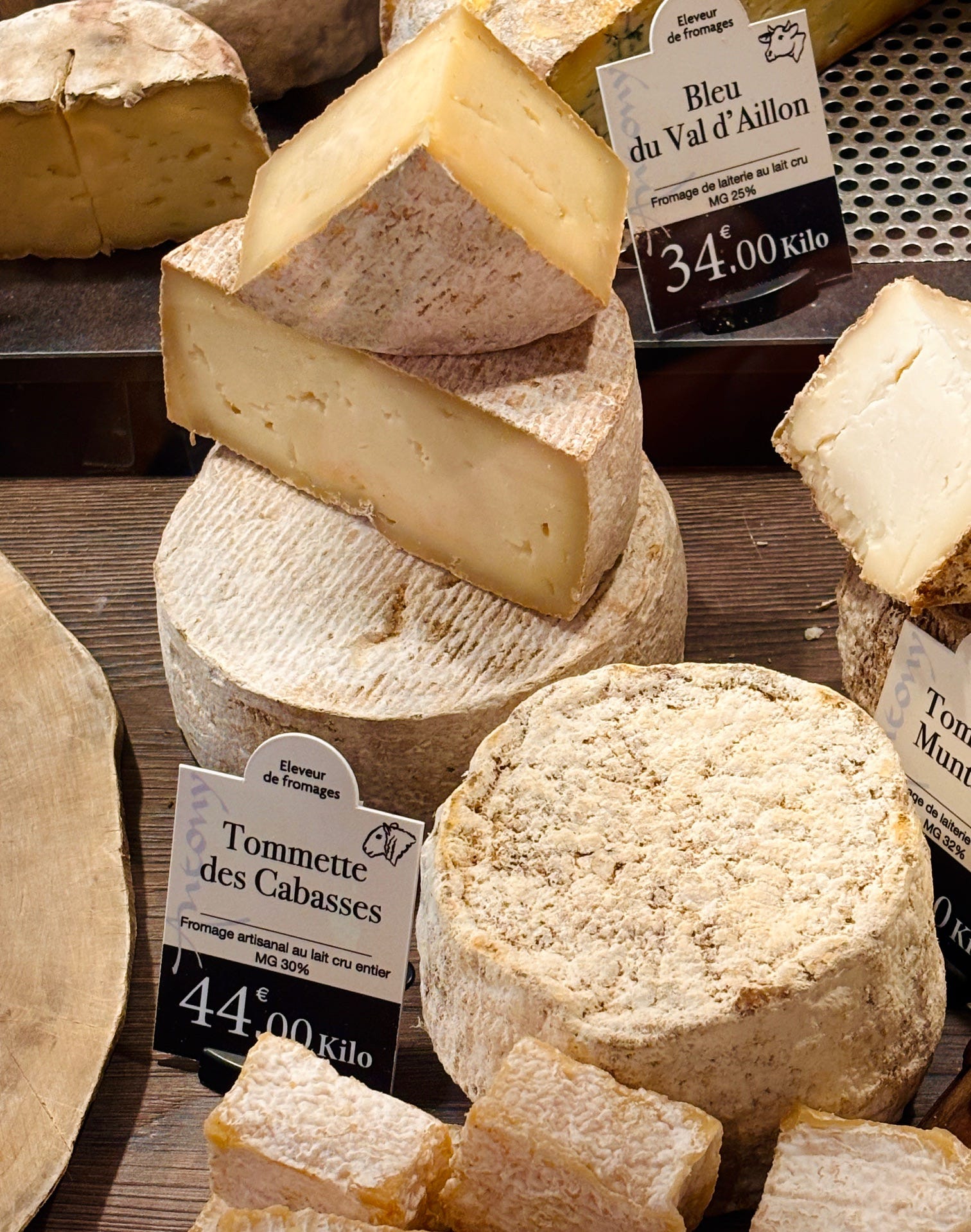
I’d never heard of Sonlomont, a cheese from Switzerland that I think is the same as Tome de Lomont, but happy to be corrected. They gave me a taste, which confirmed that I needed to bring a block of that home.
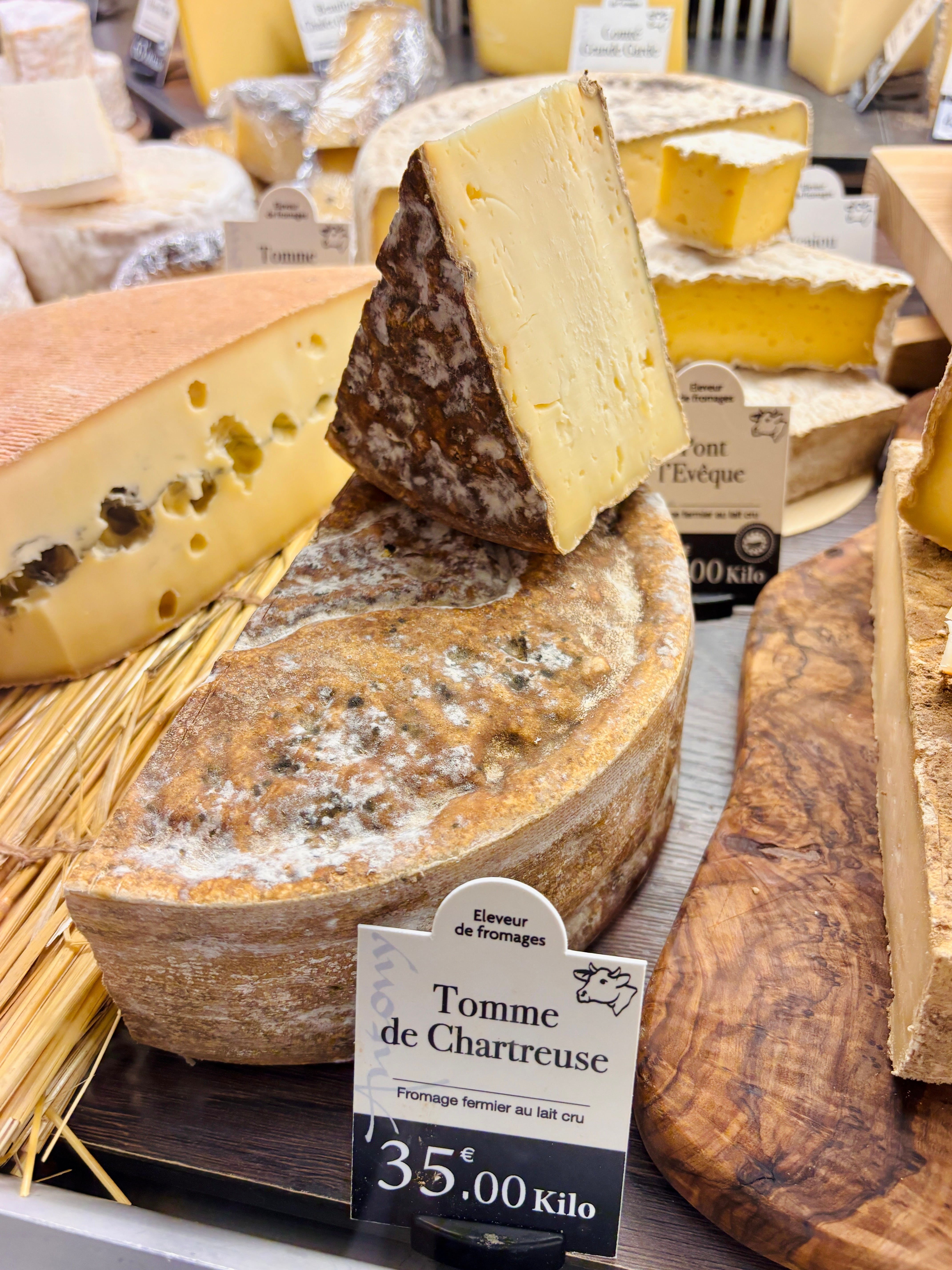
There was also this Tomme de Chartreuse, which didn’t contain any of the famed liqueur, but was made in the mountainous region called the massif de la Chartreuse. Following in the steps of “what grows together, goes together,” I’d imagined the mountain cheese with the semisoft texture and milky flavor would go well with the liqueur.
I made a mental note to bring a wedge of that home, but somehow, I forgot to ask for it, which I realized on the train back to Paris. That was also a shame because I was having drinks with friends from Chartreuse later that evening in Paris, which ended at 1:20am. (It was a long day!)
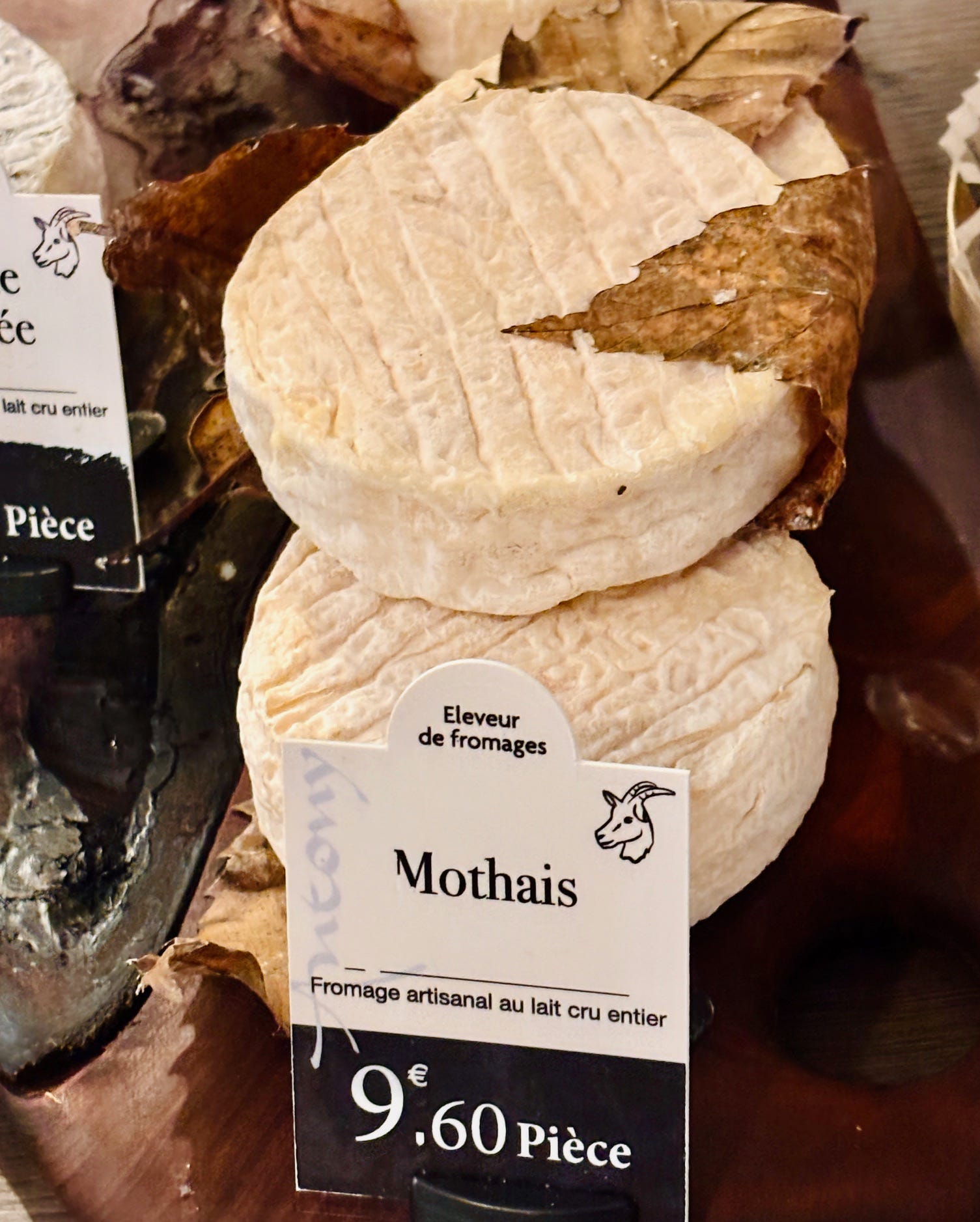
Monthais sur Feuille is one of my favorite goat cheeses, ripened on a chestnut leaf (feuille), which absorbs some of the humidity. While you can find this cheese at many fromageries, theirs is exceptionally good, made by a “passionate and incredibly gifted producer.” It’s nice to see them calling out the work and effort of producers they work with, since at Fromagerie Antony, cheese is a collaborative process. They follow the whole process, from milking the cows, to curdling and molding the cheese, and finishing it in their cellars.
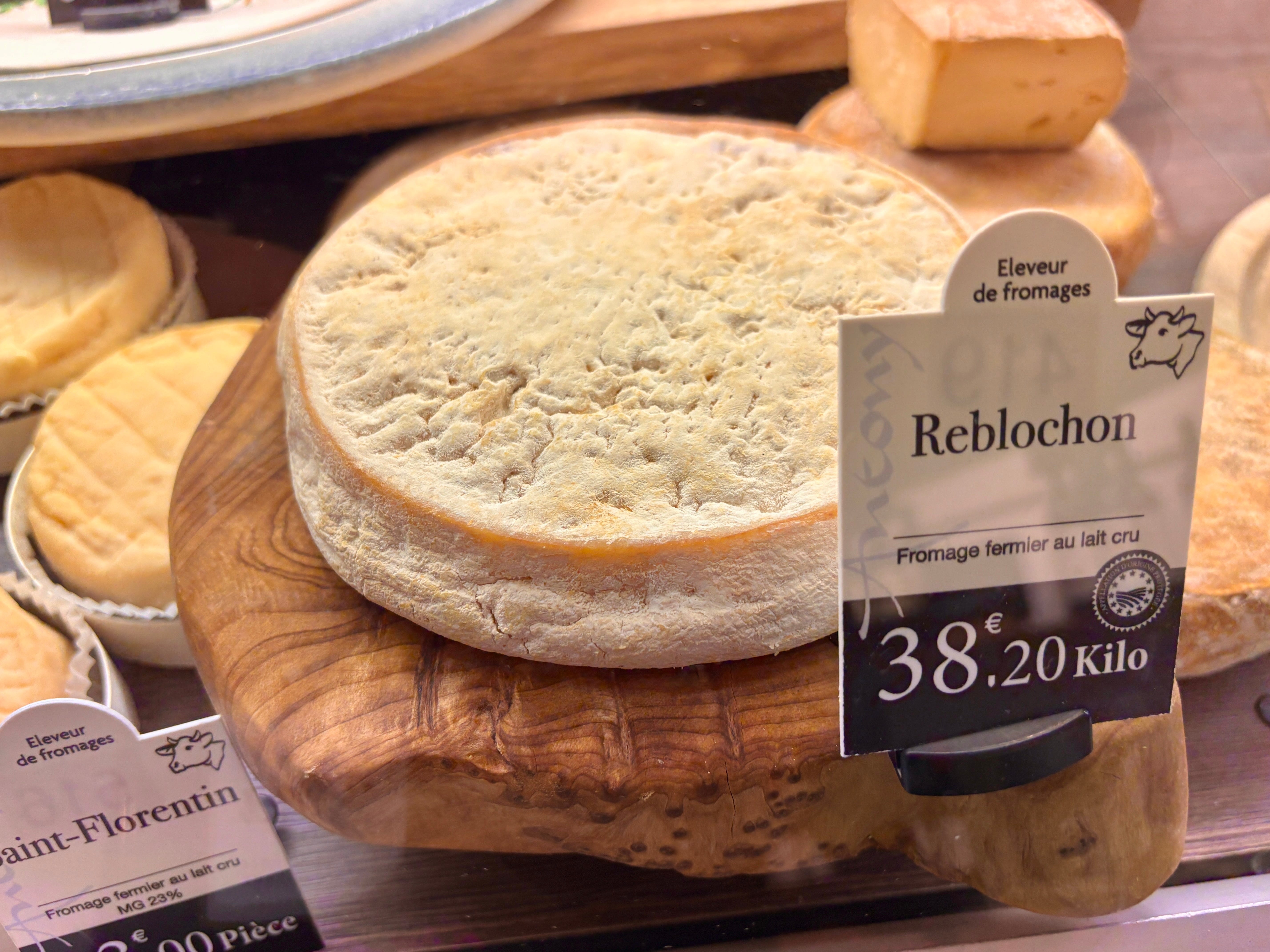
A few years ago I got picked on for making Tartiflette without Reblochon, the classic cheese. But I saw the high prices for it outside of France, and because, in reality, a lot of times in France, Tartiflette is made with othercheeses, sometimes labeled as “Le Fromage pour Tartiflette” (without a speck of Reblochon in its ingredients). I decided to let people know they can make it with other cheeses, as it’s done in France.
That said, if I lived near Fromagerie Antony, I would get my Reblochon there and make Tartiflette with that. Actually, if I lived nearby, I’d get all my cheeses there. Unfortunately, it’s a little too far to do my cheese shopping, but at least I had the good sense to bring enough cheese home to last us a few weeks…even if it didn’t.
If you want to visit, cheese tastings are available to the public by reservation here, with at least a one-day notice. Their website also offers information on lodgings in the area as well as taxi services. Getting there from Paris requires a train tripand a taxi or rental car.
(When driving, their website notes that navigation systems don’t always take you to the right village, even if you enter it correctly in a GPS system. They suggest you follow this Google Map.)
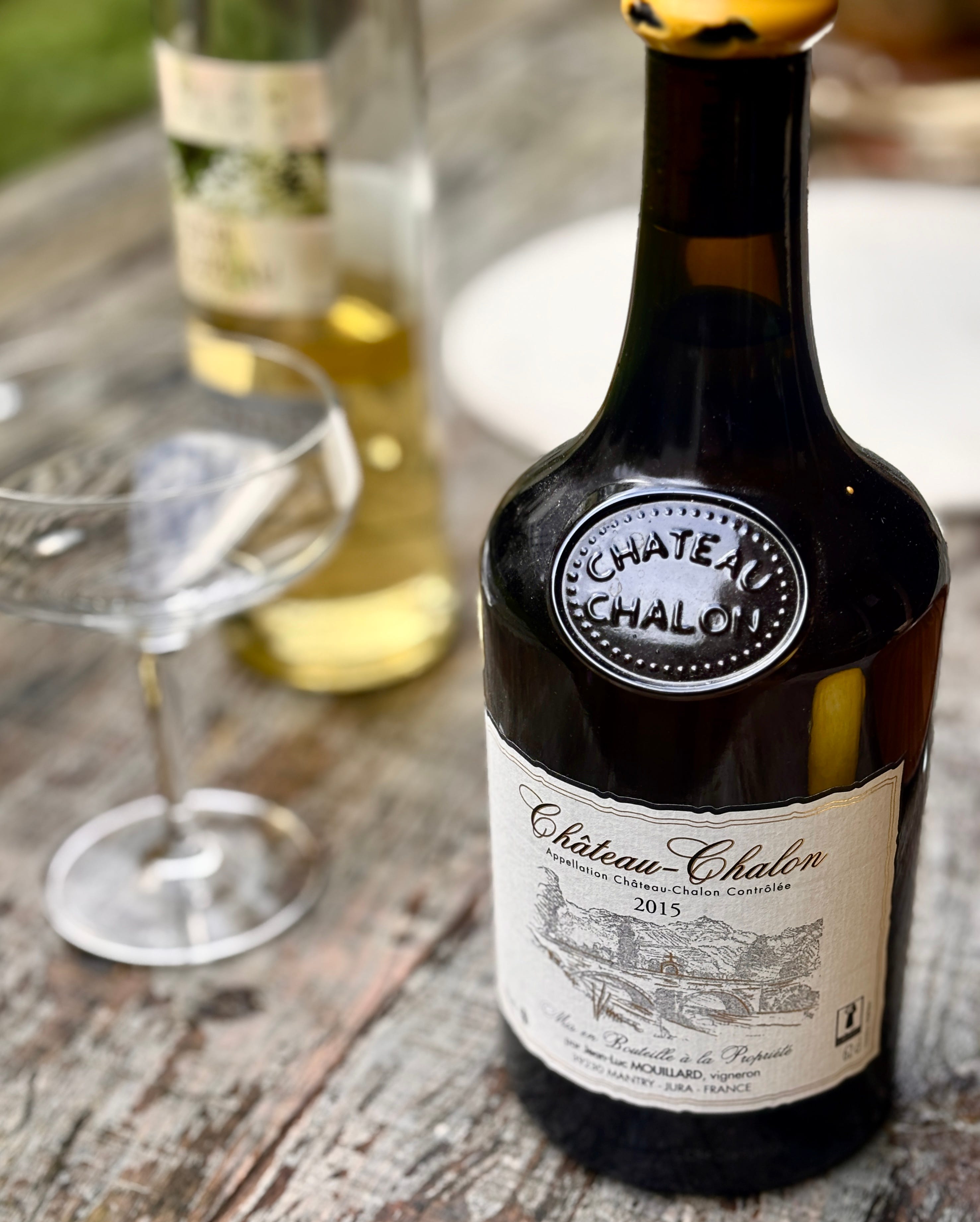
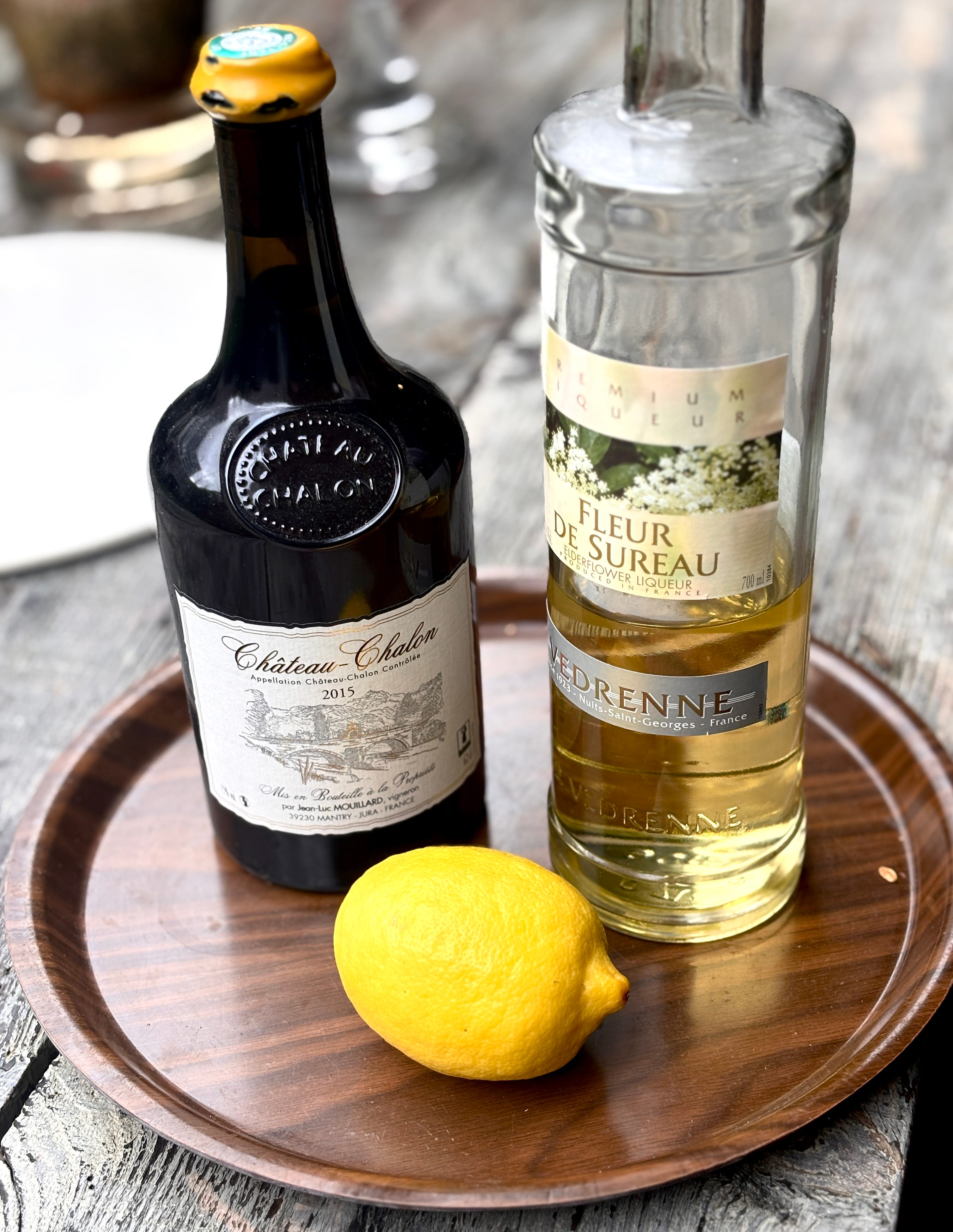
I don’t blame you if you haven’t heard of vin jaune, the primary ingredient in this cocktail. For years, the wine wasn’t available in the U.S. due to the size of the bottle: 62cl. Called a clavelin, its particular shape references the amount of wine that was historically left in the standard 70cl bottle after its 6+ years of aging. The wine that evaporates is called the part des anges, the angel’s share.
Winemakers in the Jura region, between Switzerland and Burgundy, where vin jaune is made, refused to change the size of the bottle to conform to U.S. standards, but it’s finally been cleared for legal sale in the U.S.
Even though it’s been cleared for export to the States, vin jaune remains an outlier in the wine world. In the Jura, some wines are intentionally oxidized, called sous voile. Unlike conventional wines, during aging, the oak casks for sous voile wines aren’t topped up, leaving room for a veil (voile) of yeast to form on the surface of the wine. That yeast is called the flor. Sous voile wines aren’t to everybody’s taste, and it’s easy to confuse their flavor with flawed wine. I like their more complex tastes, but for those who aren’t expecting it, they might think the wine is spoiled.
Other wines from the Jura are topped off with additional wine as they age, keeping the barrel full, called ouillé, and those wines tend to taste more like conventional wines. Because wine production in the Jura is low, the wines tend to be harder to get outside of France, and are more expensive. So I nudge visitors to France to give them a try while they’re here.* Why not?
Vin jaune means “yellow wine,” which refers to its rich golden color. It has a very distinctive nuttiness with notes of dry wood, green apples, lemon, burnt sugar, and maybe even spices. Because it’s made in the same region as Comté cheese, there is no better cheese pairing than Comté and vin jaune. It’s perfect.
Better known than vin jaune is elderflower liqueur, which is now everywhere, prompting it to be dubbed the ketchup of bartenders. The sweet liqueur is a popular addition to spritzes and glasses of bubbly. And while people tell me they don’t like sweet cocktails (neither do I), cocktails often need a touch of sweetness to balance the other ingredients, such as lemon juice and stronger spirits.
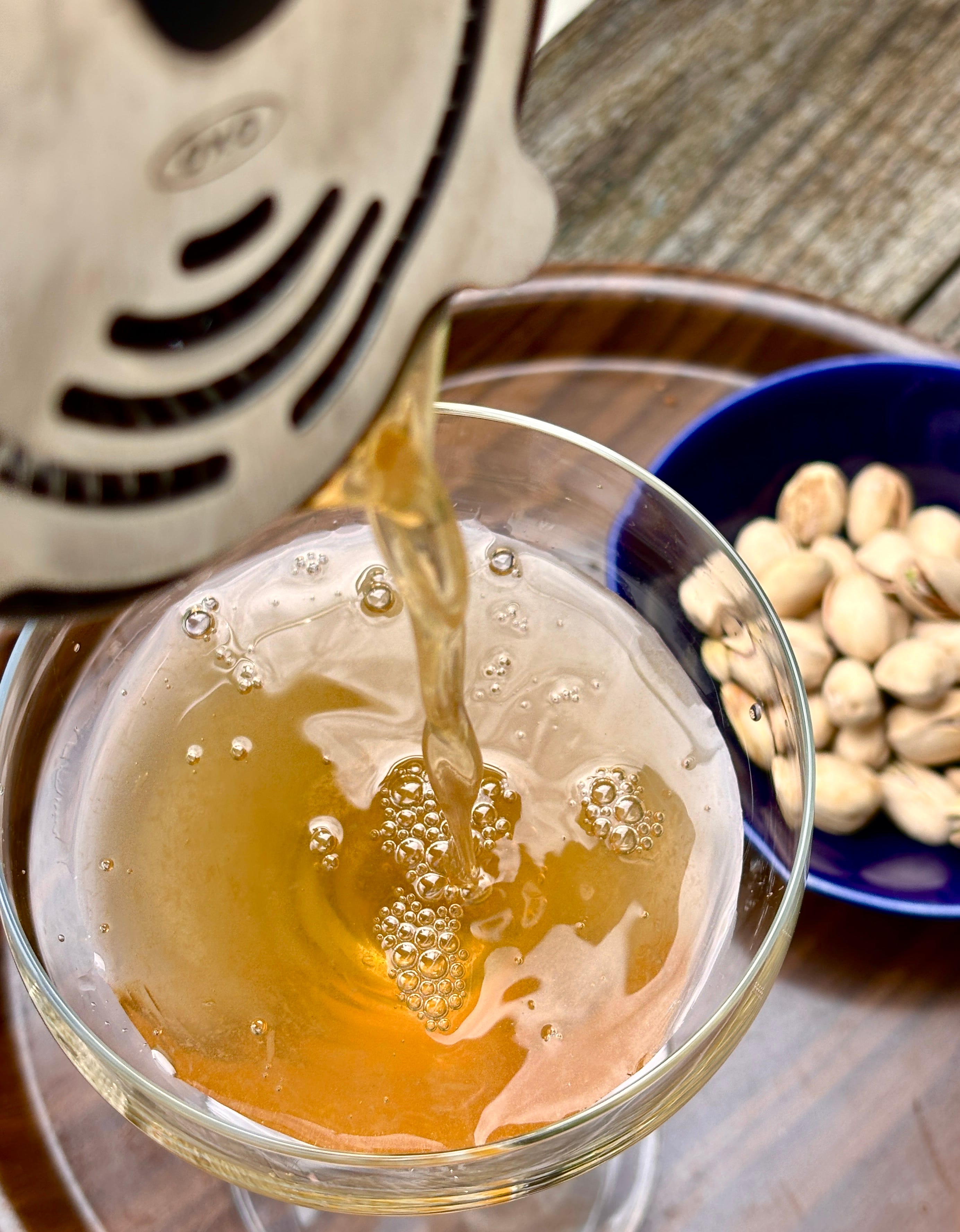
When I was writing my book Drinking French, bartender and bar owner Joseph Boley gave me a bottle of another French-made elderflower liqueur, which was featured in his cocktail in the book, and told me it’s the same thing but half the price. I’ve been using it (as you can see) and no one’s pointed out any difference.
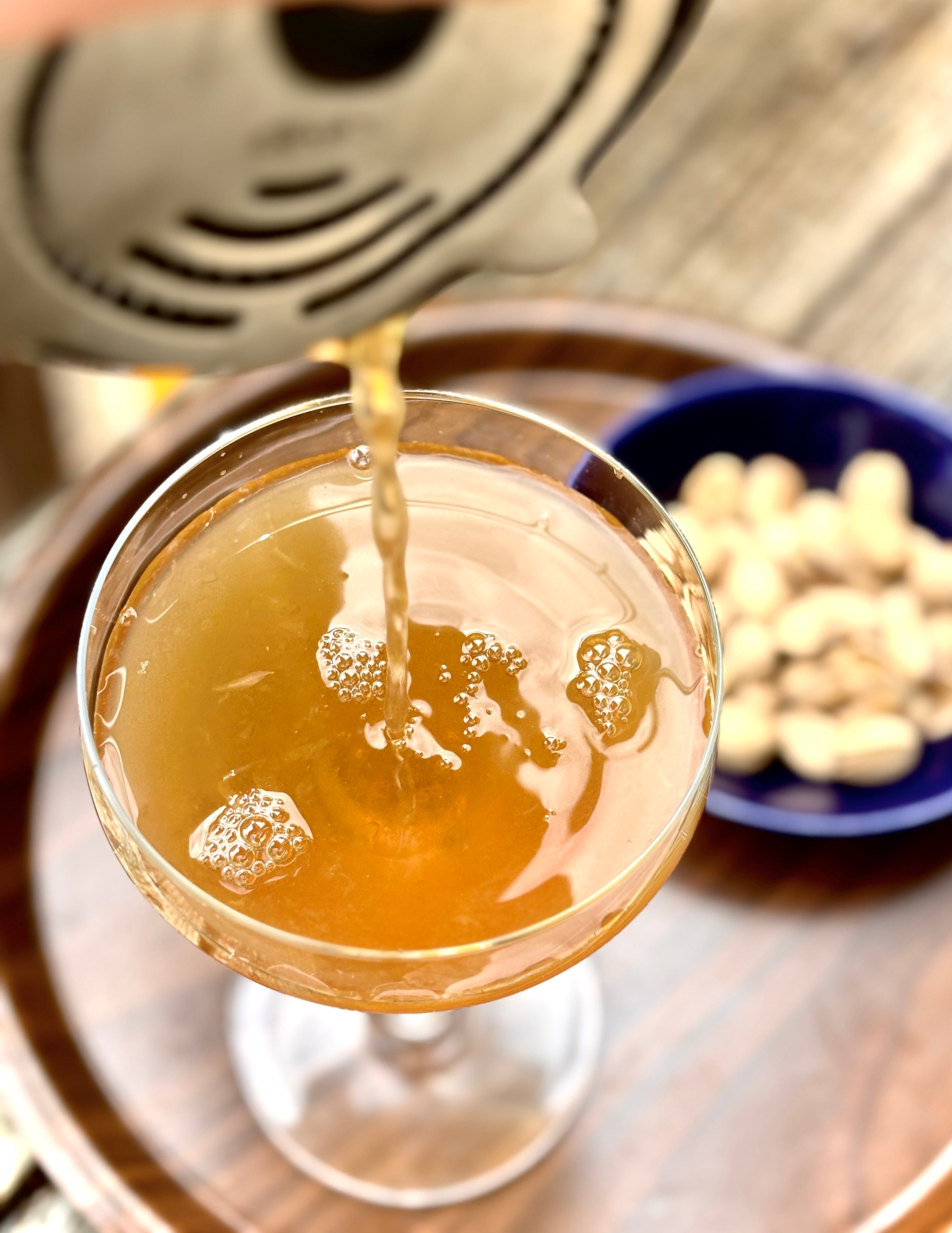
Every year, there is a vin jaune festival in the Jura called La Percée du Vin Jaune. I’ve always wanted to go but a friend who worked in the region told me it’s a lot of drinking and there are a lot of people; their website said 33,000 attended last year. The festival takes place in February, when it’s pretty cold in the Jura. However, I found a recipe that they published (above), the Fl’or du Jura, that I can enjoy in the crowd-free, cozy comfort of home.
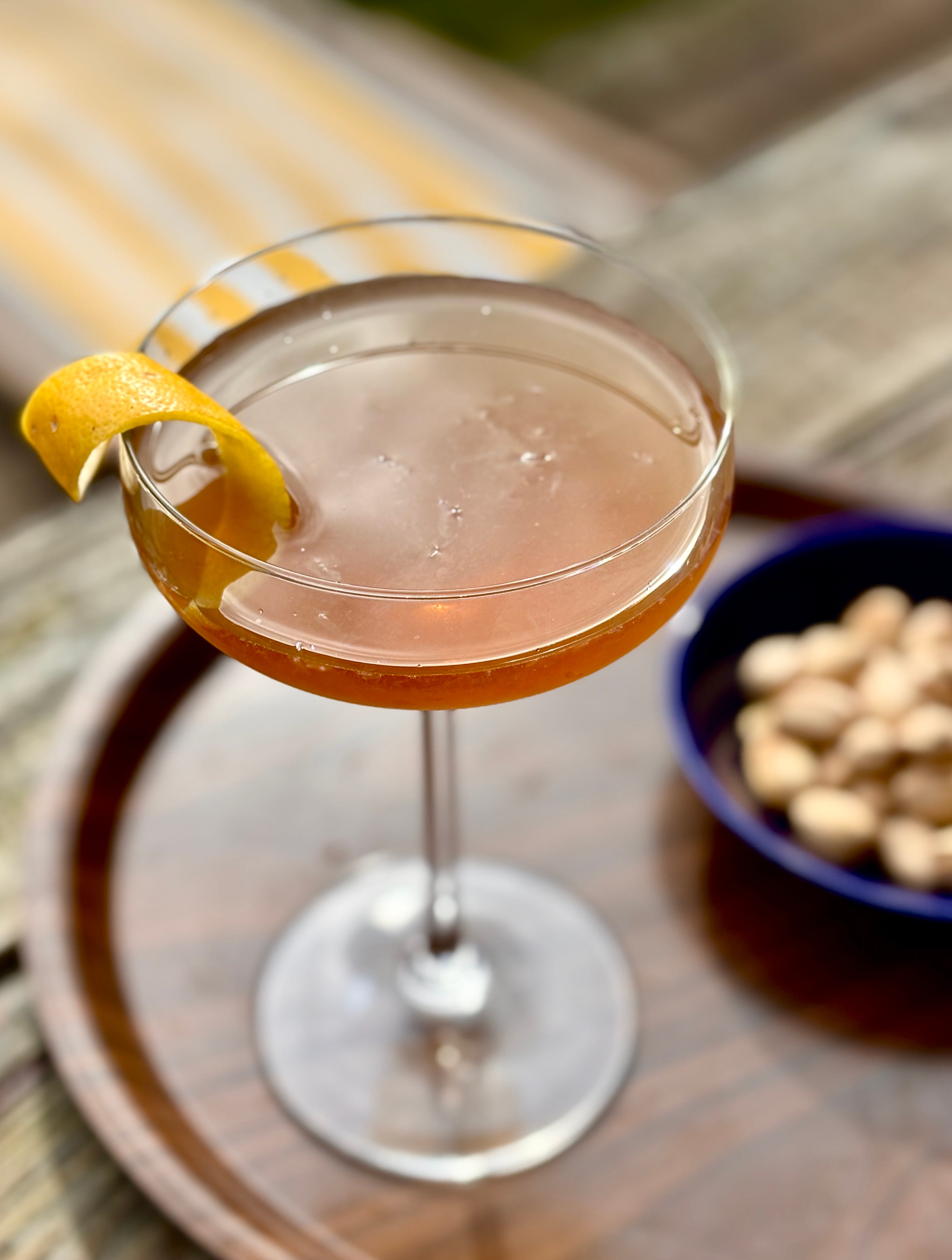
Like one of my favorite cocktails from Drinking French, the Yellow cocktail, the Fl’or du Jura combines a few seemingly disparate ingredients that come together in one cohesive cocktail. You may have to track down a bottle of vin jaune to make it, although I tested it with sherry and it was just as delicious. It’s also lower in alcohol than other cocktails since the wine and elderflower liqueur are less than half the ABV as gin, whiskey, and rum, but it’s filled with flavor. À santé…!
*Some restaurants in France offer vin jaune by the glass, often listed on the menu under after-dinner drinks since it’s drunk with dessert. In his excellent book, The Food & Wine of France, , in the chapter on vin jaune (subtitled The Virtue of Rancidity), he notes about vin jaune: ”On first trying it, many people dislike it.”
Vin jaune is delicious in this cocktail and may not be what you expect when you first try it, on its own, but it does grow on you. If you get a bottle, it’s remarkable with Comté cheese or a similar nutty-tasting mountain cheese, such as Gruyère or Beaufort. Once opened, the bottle will keep in the refrigerator at least a month.
I’ve got a post coming up this month about all these AMAZING cheeses…
I had an official meeting last month to get my French ID card renewed. In spite of a reputation that doesn’t involve being efficient, the French government can surprise you as more and more public services go digital. Some of those services, however, now require a sleeker digital French ID card to access them. Unlike in places like the U.S., a driver’s license in France isn’t acceptable as an official ID. In most cases, you’ll need to present your French ID or passport as acceptable proof, and no one wants to carry around their passport all the time.
Things don’t always go smoothly, though. I’d been trying to renew and replace my card on the website since last April, filling out the lengthy information form with everything, which includes where your parents were born and on what date. A Swedish friend who moved here was perplexed when he had to do that for his Carte Vitale, the card for his health insurance. “Why does it matter when and where my parents were born? The card is for me.”
You kind of get acclimated to stuff like that and it vexes the locals, too. (Although they’re used to it.)
But every time I hit the “Send” button, I got an error message and had to start all over. I probably tried twenty times before finally giving up. At the beginning of 2026, I decided to start all over again. When it still didn’t work, I called and the woman on the phone said that I needed to use le navigateur Edge.
I knew of Chrome, Safari, and Firefox but never heard of Edge, and when I typed it into my computer, a spammy web page turned up. I was baffled that a website would only function if using a browser that no one’s ever heard of, that doesn’t even have its own website. After a thirteen-minute conversation, she offered to make an appointment for me. In a country where information is currency, and non is often the default, it was like the gates of heaven opened up and decided to let me inside. (I often think they make things hard on purpose so that when you do succeed, you forget about everything you went through before it and fall in love with the country all over again.)
I picked an early appointment, wisely, so the office wouldn’t be backed up when I got there. The convocation (appointment notice) I received said that if I was late, my appointment could be canceled…but also it could be canceled if I was early. (Yes, French people find these things funny, too.) Bakers are always on time but often, early. Which I was. However, they waived the penalty and told me to take a number and a seat.
In photos for official purposes in France, you need to look as unhappy as possible. If there’s any hint of happiness, your photos (and entire file) will be rejected, hence me doing my best to look like a hardened criminal.
I’ve been to enough of these meetings to know that one mistake - a stapler used instead of a paper clip, a bit of a tooth showing in a photo, you didn’t bring your mother’s birth certificate, professionally translated and stamped by the town hall where she was born, dated within 3 months of your meeting(VitalChek becomes your best friend, but you do hold your breath waiting for the documents to be mailed to you, only exhaling when they are actually in your hands) - your whole file, the one you’ve been working on for a year, can be rejected.
I am a pro right now and had everything in order. To make matters even better, the guy behind the desk was lovely. (And so was the woman at the front desk, who didn’t kick me out for being early. I felt like buying her a box of chocolates.) I did make one mistake, though: I thought Paris was a ville (city) but it’s also a commune. I thanked the fellow for correcting it, and he replied, “That’s what I’m here for.”
A friend later suggested he was an actor, but even though it was cold, grey, and rainy in Paris that day, I left my meeting that morning in a particularly heightened state of euphoria. I was going to celebrate by tackling the local Ikea, but then I thought about it and…nope, that would be pushing it.
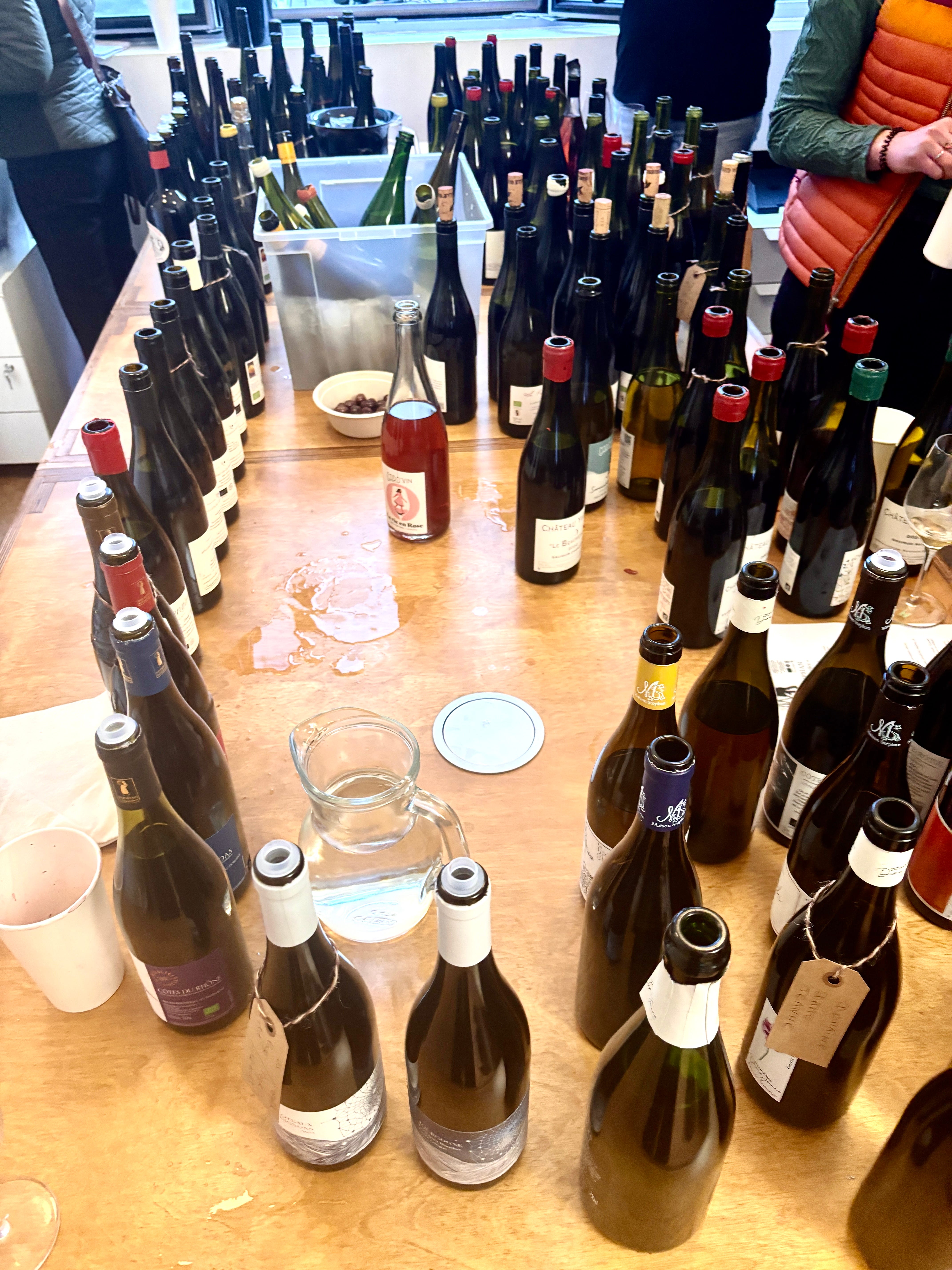
Last month a bunch of friends descended on the city for WineParis, a huge trade show for people in the wine and spirits industry. Not only did I get to see a lot of friends and make some new ones, I got to try a lot of wines. At one tasting (above), at Paris Wine Co., I think there were over two hundred bottles open for tasting.
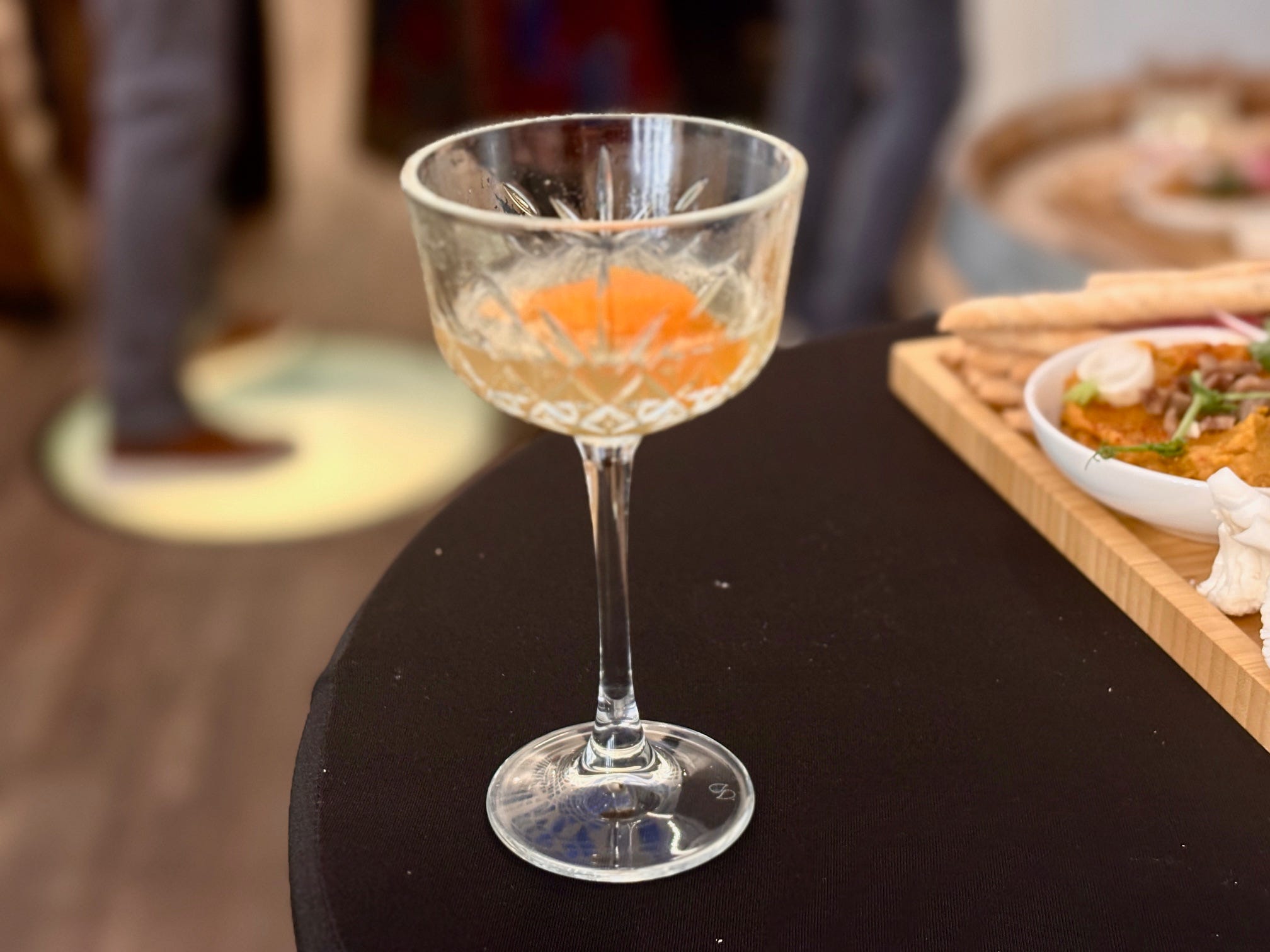
One of my favorite cocktails, a riff on the Martini called an Alaska.
I also went to an event at the Chartreuse store in Paris, a place that flies under the radar for some people. Located close to where the monks got the original recipe in 1605, which took them another hundred years to figure out how to make, the shop is a must-stop for Chartreuse fans and lovers. They have all the bottles you’re looking for in stock, plus a display of vintage bottles and herbal teas made from mountain herbs; guided tours, tastings, and cocktail workshops are also offered.
Last month was also Pineau des Charentes month, or as one might call it, “The French apéritif that more people should know about…but don’t.” It’s one of my favorite French apéritifs and was another reason I wrote Drinking French, to give lesser-known bottles a shout-out so people weren’t stuck on Lillet. (Which few people in France know about, or drink. The one time I ordered a Lillet at a café, I was brought a glass of le lait - of milk.)
I got to meet some really cool people and make new friends while working on that book, which is a bonus when you’re writing a book on a totally different subject than what you’re usually writing about. I’ve kept in touch with Amy and her husband, Jean Pasquet. He comes from a family that’s been making cognac and PdC for generations, and his wife, Amy, originally from North Carolina, was folded into the family business and now is the head of the organization, Comité National du Pineau des Charentes, which promotes the drink internationally.
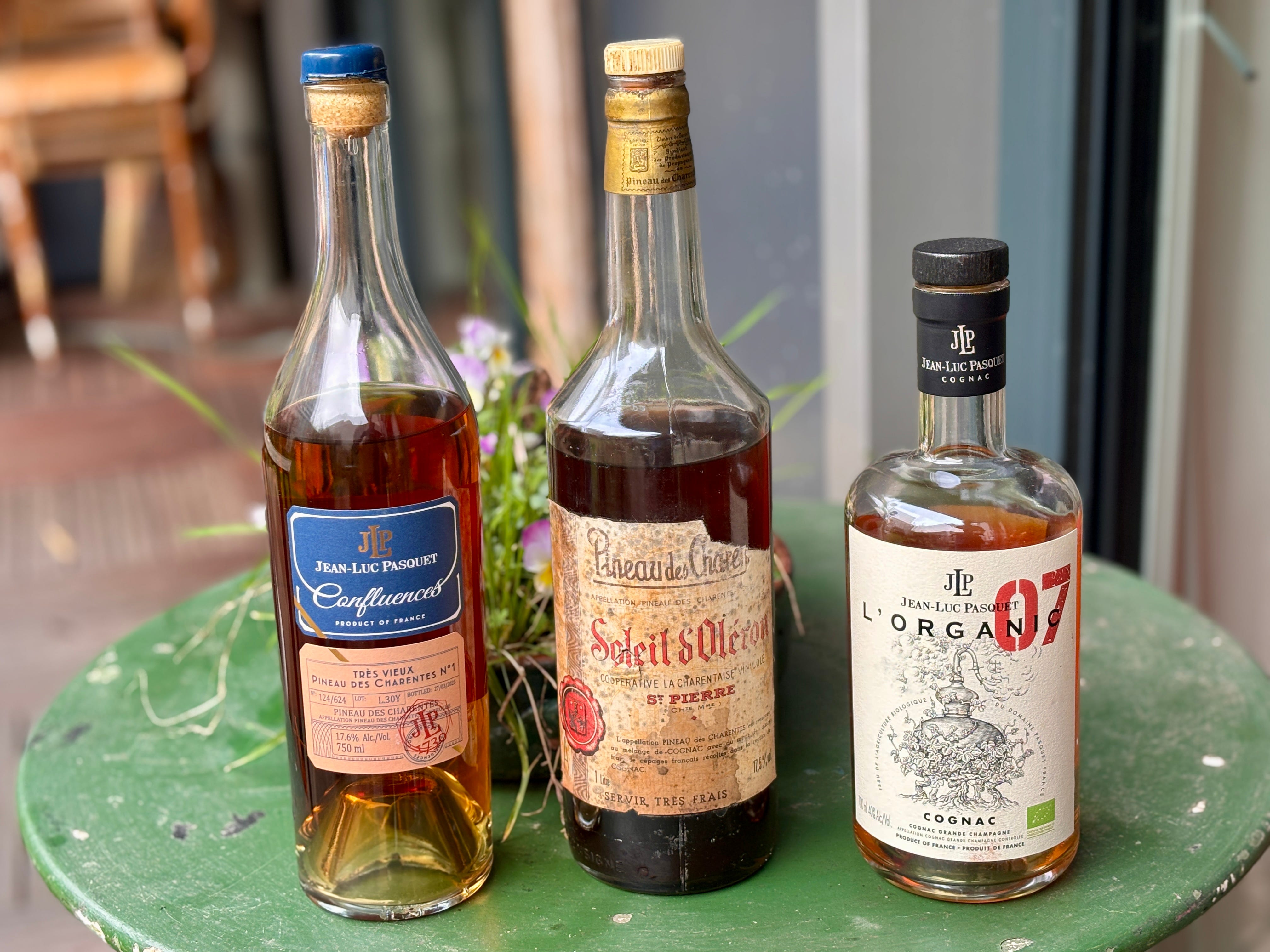
So when we met up for dinner for pizza at Oobatz, I brought a vintage bottle of PdC (in the middle, below) that I found at a bric-a-brac store in the south of France.
A bottle of Pasquet’s 18-year-old Pineau des Charentes and their excellent organic Cognac, next to my bottle of vintage PdC.
Jean estimated my vintage bottle to be from the 60s, which didn’t seem that old, until I did the mental math and realized the bottle was sixty years old. I’d brought it to the restaurant and let the staff and sommelier taste it, since I think vintage spirits are meant to be shared.
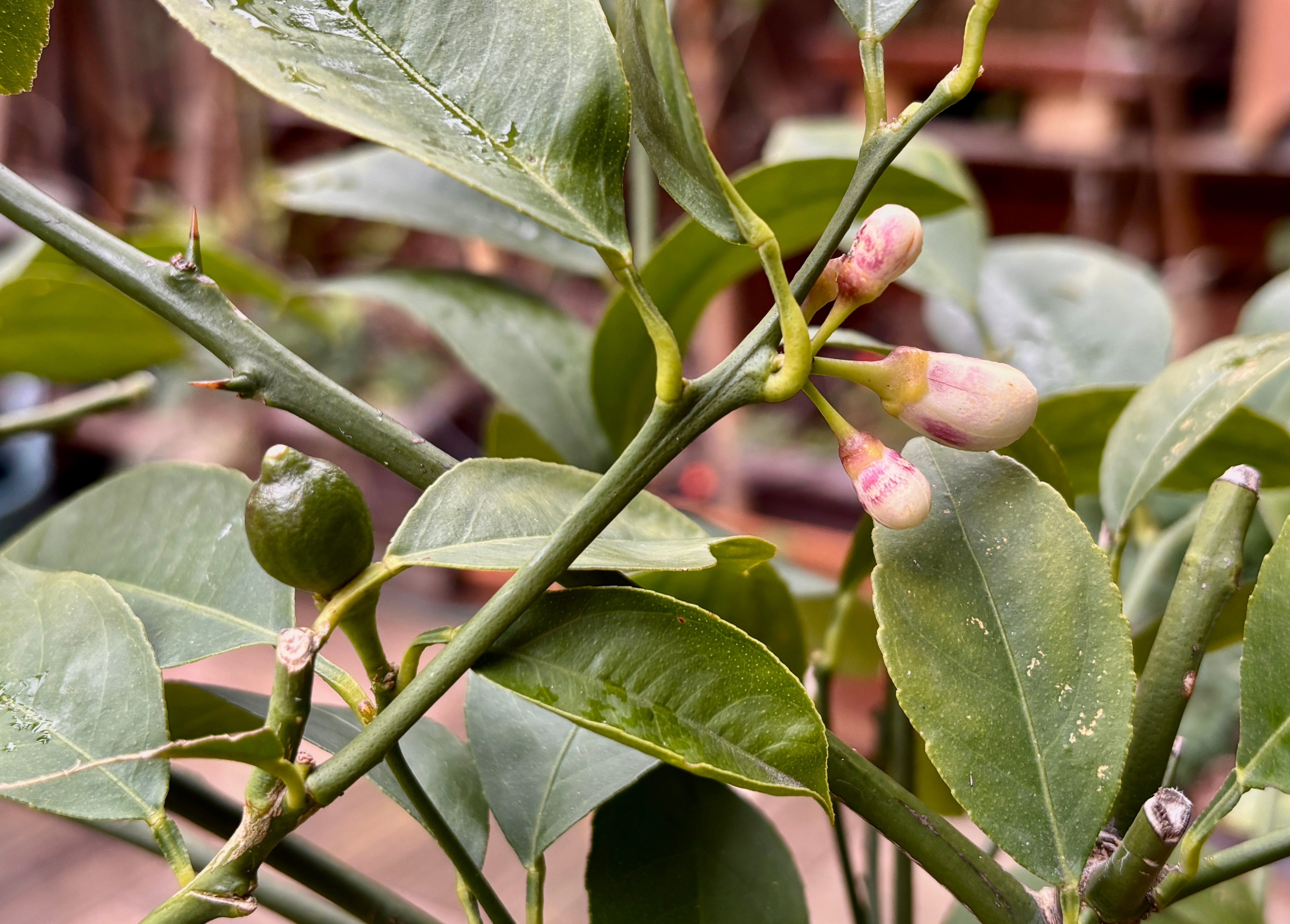
The rest of last month marked us getting closer to spring. February is always a crapshoot in terms of weather, and mood. January is the hardest in Paris since it’s grey, cold, and the days are short. But by the end of February, it gets lighter earlier, and days stay light longer. My Meyer lemon tree has a few flowers on it as well as a few little lemons poking through.
I got a lot of, um, conflicting input about how best to get the most fruit — pick off and discard one-third of the immature lemons to let the others mature, pick off two-thirds of the immature lemons to let the others mature, don’t do anything and let the tree decide, etc. I’ve tried different strategies over the years, and none seemed to be better than the other. In the end, I got two lemons last year but fingers crossed this year I’ll get a few more.
Everything else in the garden got attacked by slugs last year and thanks to an overload of input, I tried absolutely everything (yes, from beer to nematodes to copper to eggshells), but a fellow with a huge, mostly organic garden in the countryside admitted to me that the only way he found to kill slugs was via a non-natural solution. So I was relieved that it wasn’t just me.
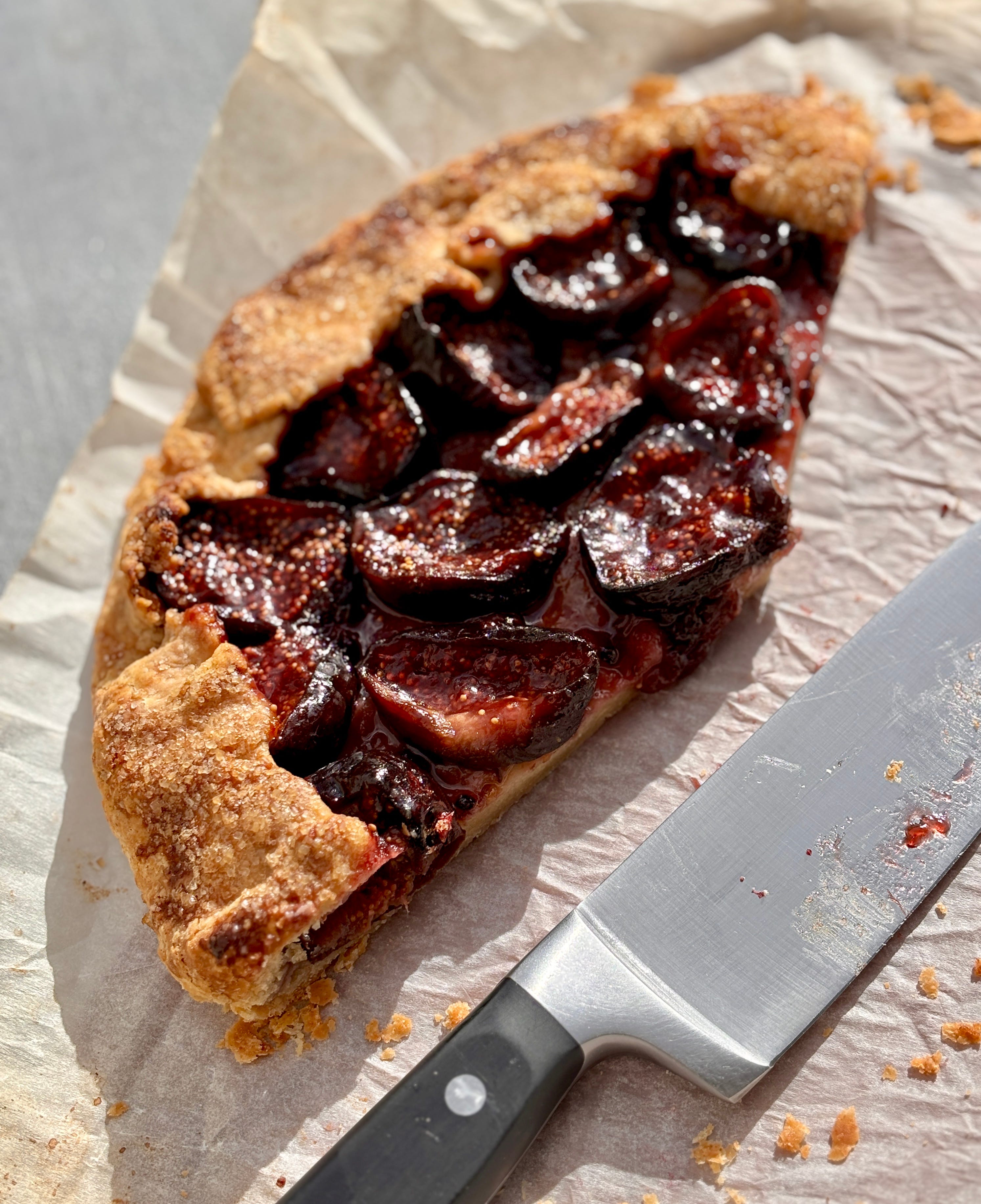
We’re not out of the woods yet, but as pears and fall fruits fade away at the markets, I pulled some figs out of the freezer and made a delicious fig galette with frangipane. I used the recipe from Ready for Dessert…
…swapping out the apples in the recipe in the book with fig halves.
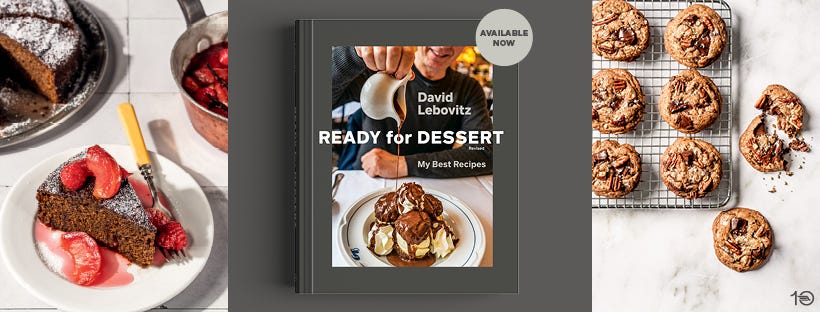
Everyone who’s bought the book has been super happy with it - yay! - but if you haven’t joined the in crowd of people who’ve gotten their copy, there’s a recipe on my website that you can use.
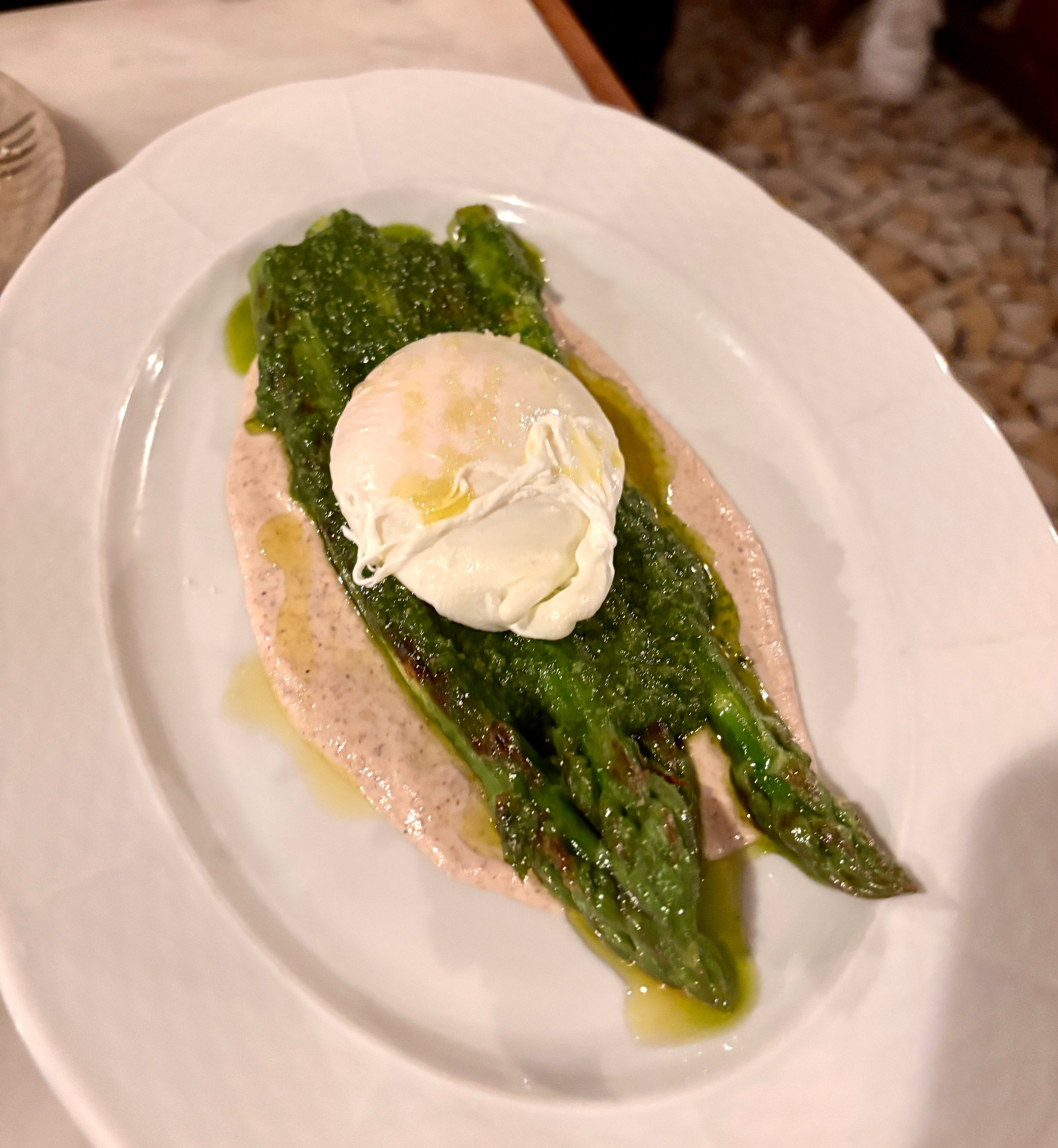
Yes! That was fresh asparagus, along with a poached egg, that I was served last night in a restaurant here in Paris.
While I patiently wait for strawberries and spring fruits and berries, and celebrate the arrival of asparagus, I’m going to cross another place off my bucket list: Taiwan, where I’m heading later this month.
A friend who has an ice cream shop in Paris filled myWhat’sApp with pins for places to go, and eat. I’ll be seeing a friend whose family lives there, so letting him take the reins, but looking forward to all the delicious foods I’ve been reading about in Taiwan — although I may pass on the stinky tofu. I do like durian, a fruit which has a particular fragrance that’s off-putting to some and revered by others, so maybe I’ll give the tofu a try…
Some of the differences between moving to and living in the UK vs. Netherlands vs. France, in terms of bureaucracy, health care, and finding an apartment. (via )
[Sidenote: I’d say that’s likely true outside of Paris, but quite a few updated bistros and brasseries have opened in Paris that are quite good. Unfortunately, some of the lower-pricedbistros andbouillons haven’t maintained their quality or standards.]
The Meaning of Life, these days, it’s a pretty loaded topic. Watching life unfold, it’s hard not to wonder why people do things to each other. Unless I’m missing something, we’re all in this together and it seems in everybody’s best interest to try to make things work, which is how recipes are: You take a bunch of disparate ingredients, mix them all together, and the result is better than the sum of its parts.
Most baking books follow a familiar pattern—a mix of baking tips, recipes, and in some cases, headnotes before the recipes, and chapter openings that explain the recipes and give some background about them. (Except in France, where recipes don’t have headnotes, which may be true elsewhere?)
Helen Goh is a trained psychologist who became a baker and pastry chef, and in addition to being one of the principal recipe developers for Yotam Ottolenghi, co-authored the books Sweet and Comfort with him. Helen has talked about the way baking has helped her manage her anxiety - and unlike other anti-anxiety prescriptions, baking has no unpleasant side effects. Others know her as the creator of what’s been dubbed the World’s Best Chocolate Cake…
That, and over a hundred other recipes, are in Baking & the Meaning of Life: How to find joy in 100 recipes, a book about sharing, giving, and receiving. I’ve got my eye on the Favorite Orange Cake (page 159) made with whole oranges and topped with a dreamy-looking, zesty orange icing, an airy Pandan & Coconut Chiffon Cake (page 185), and Crisp & Chewy Chocolate Chip Cookies (page 70).
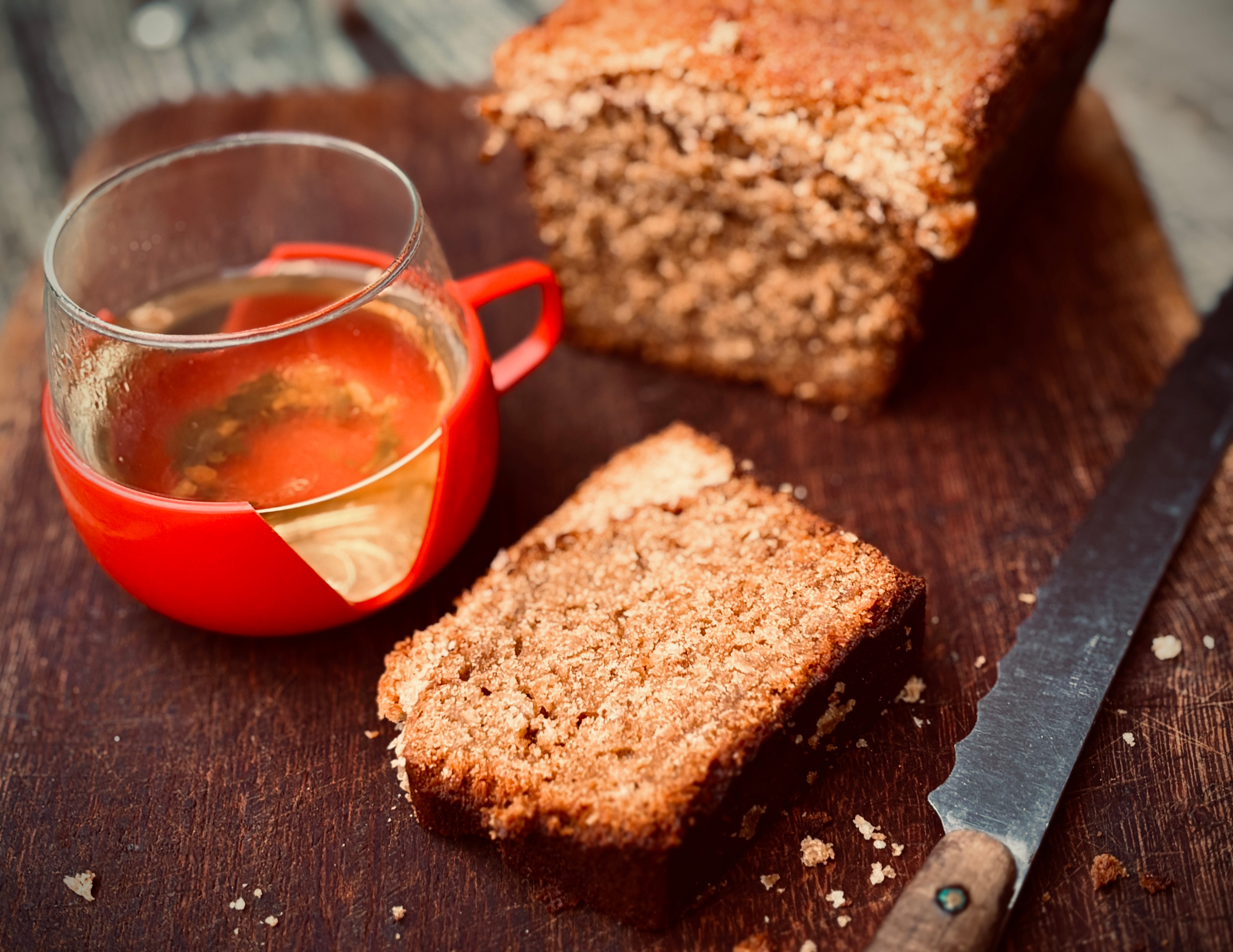
The book also prompted me to make Helen’s Anzac Cake, which appeared in a newspaper a number of years ago, and I never got around to making it. Topped with the flavors of Anzac Biscuits—coconut, oatmeal, and golden syrup—how could one not?
Helen’s Anzac Cake
As readers may have read in a recent newsletter (Feb 2026), I’ve been on a tear, cleaning out my freezers and kitchen cabinets…
I’m pretty sure that’s another anti-anxiety activity that doesn’t have any bad side effects, except maybe some guilt that you’ve let so many things get ignored or pushed back to the rear of your cabinets.
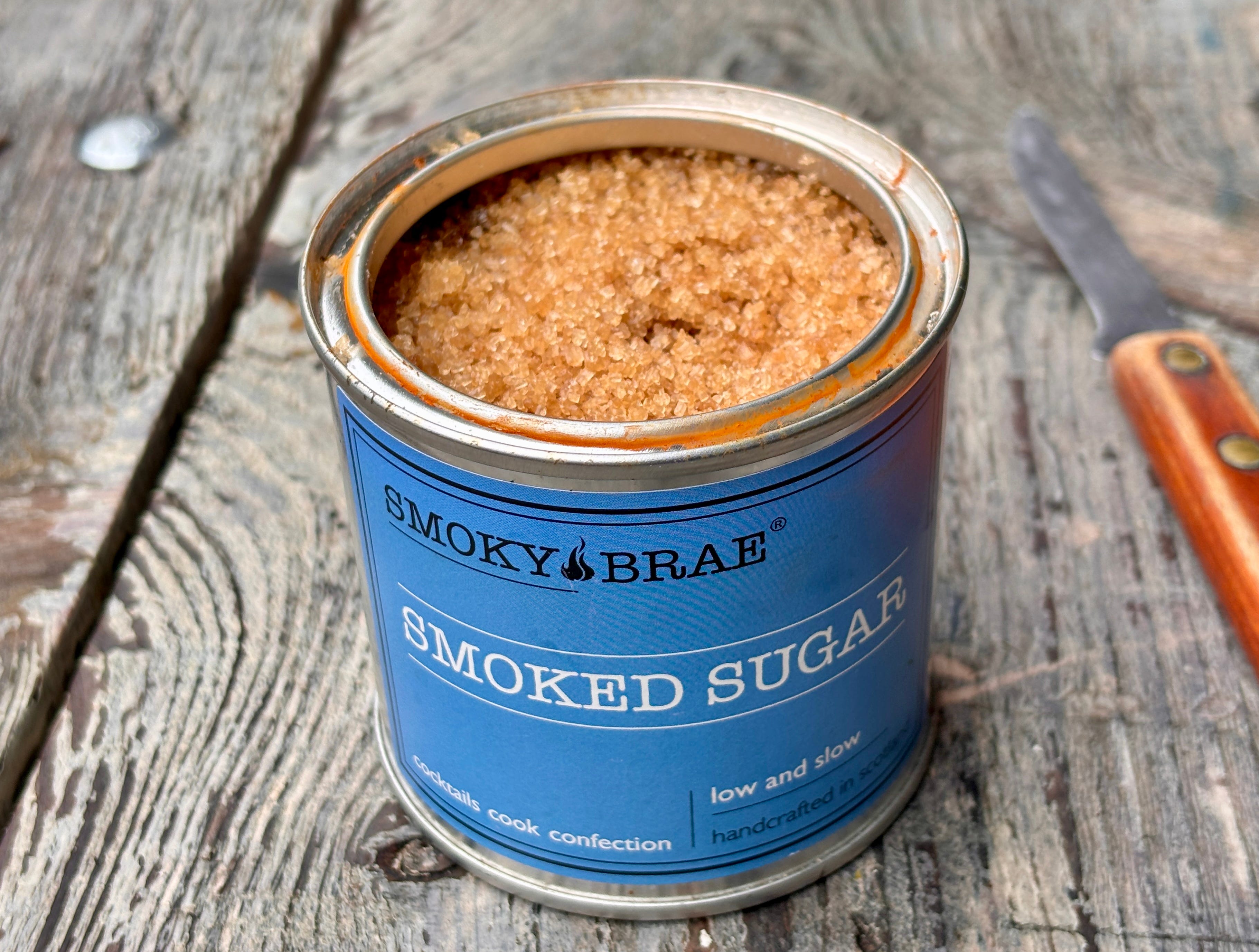
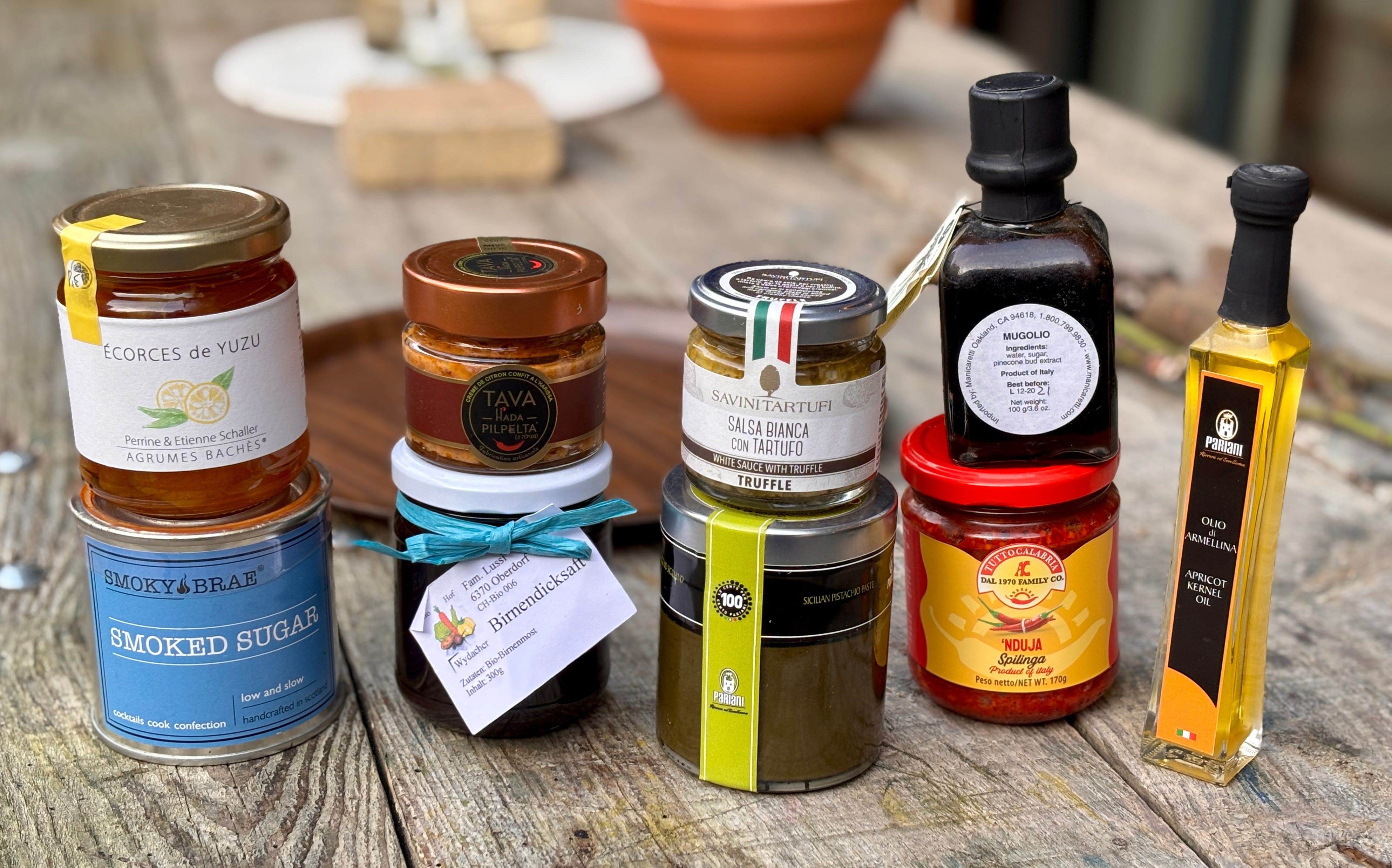
Back there, I found all sorts of odds and ends that I’d amassed over the last few years, including this smoked sugar I bought in Scotland. At the time, I wrote about it - “How could I not?” Then it languished in my kitchen cabinet for a couple of years before I finally found a place to use it.
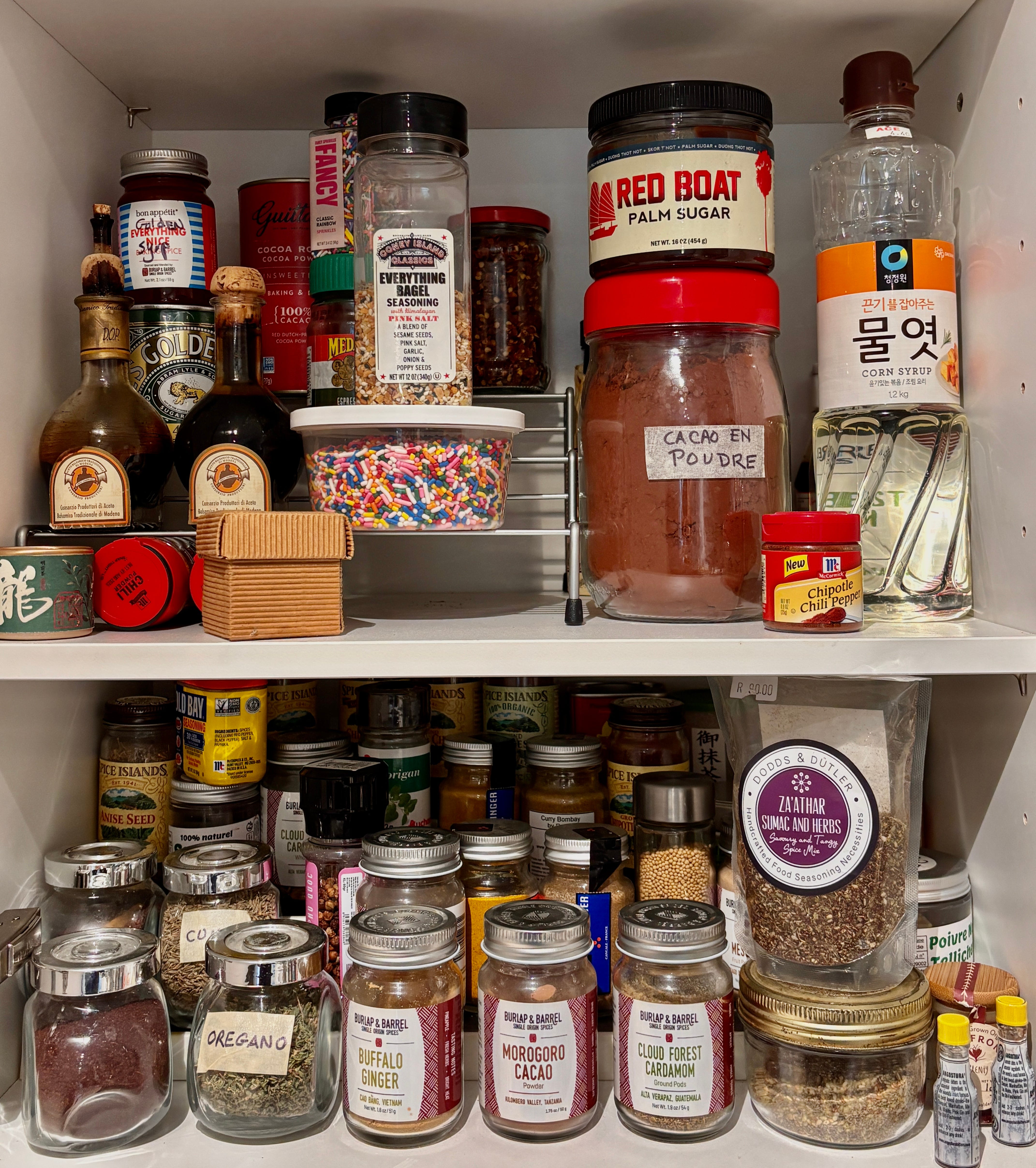
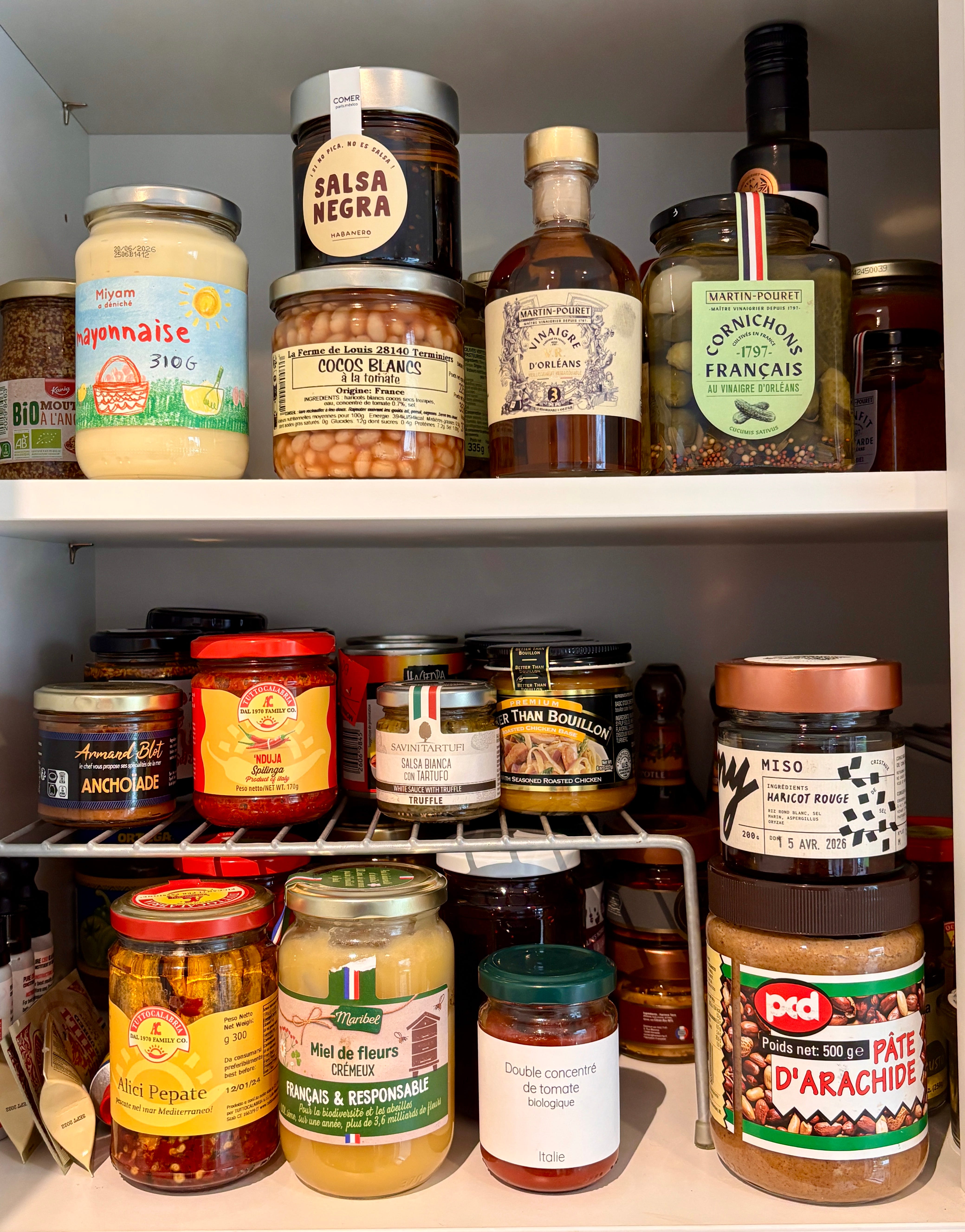
In addition to everything from Sicilian pistachio paste to salsa negra in my cabinets, I’ve also got a problem with preserving things. I just can’t let anything go to waste. (If anyone knows what I can make with a quart jar of pickled samphire, let me know!)
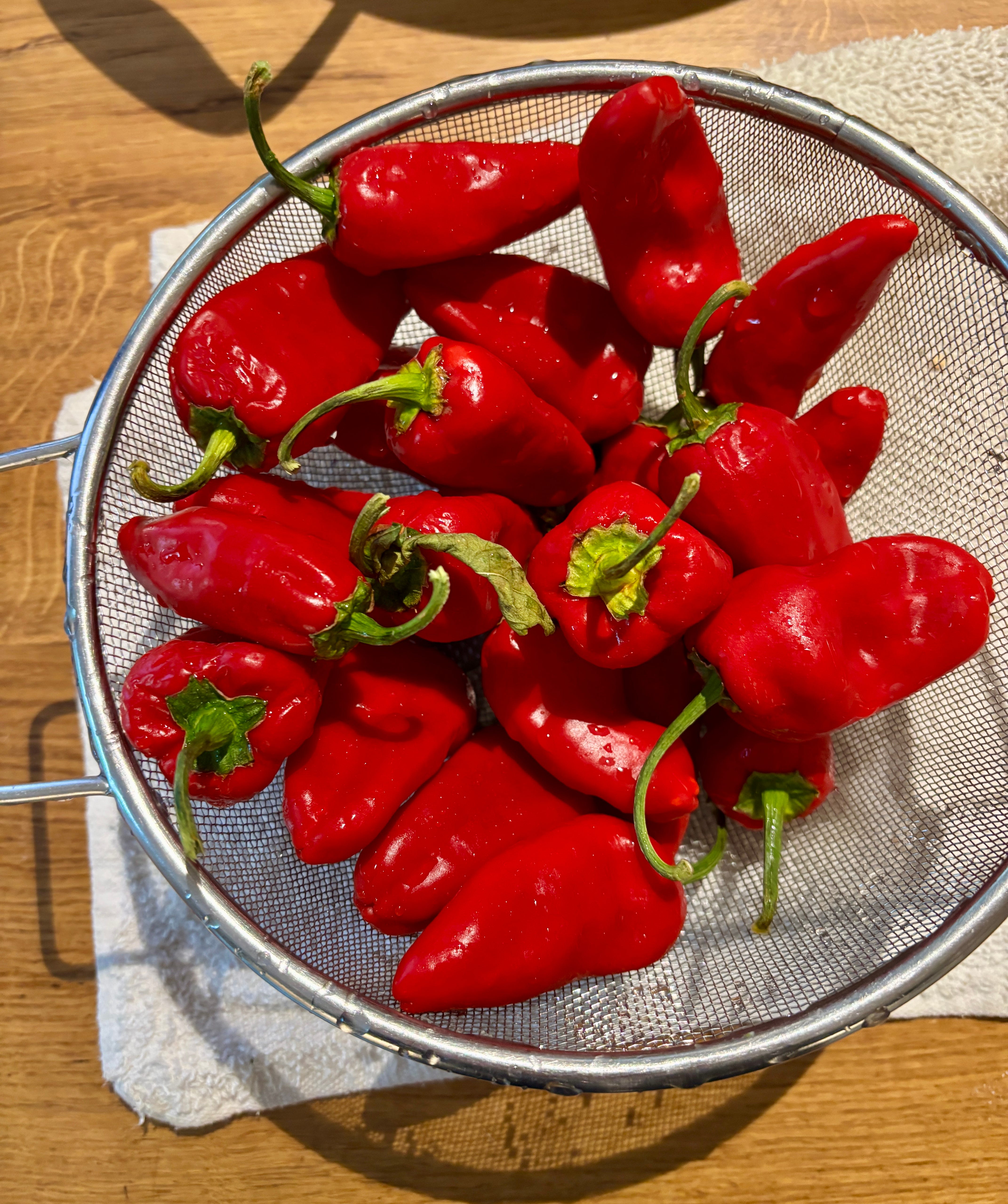
Often in the summer we’ll head to the south of France and this year, the woman who runs the farm stand in the village had a wooden crate filled with chile peppers. Almost everything else was sold out by the time we got there. Her produce is beautiful and it’s popular, but you need to have patience because once it’s someone’s turn, they need to spend some quality time catching up with her :) So you can’t be in a hurry.
While most of the other crates were empty when we got there a bit too late one morning, it looked like no one had touched the chiles. When I expressed interest, she put them all in a paper bag and gave them to me.
Score!
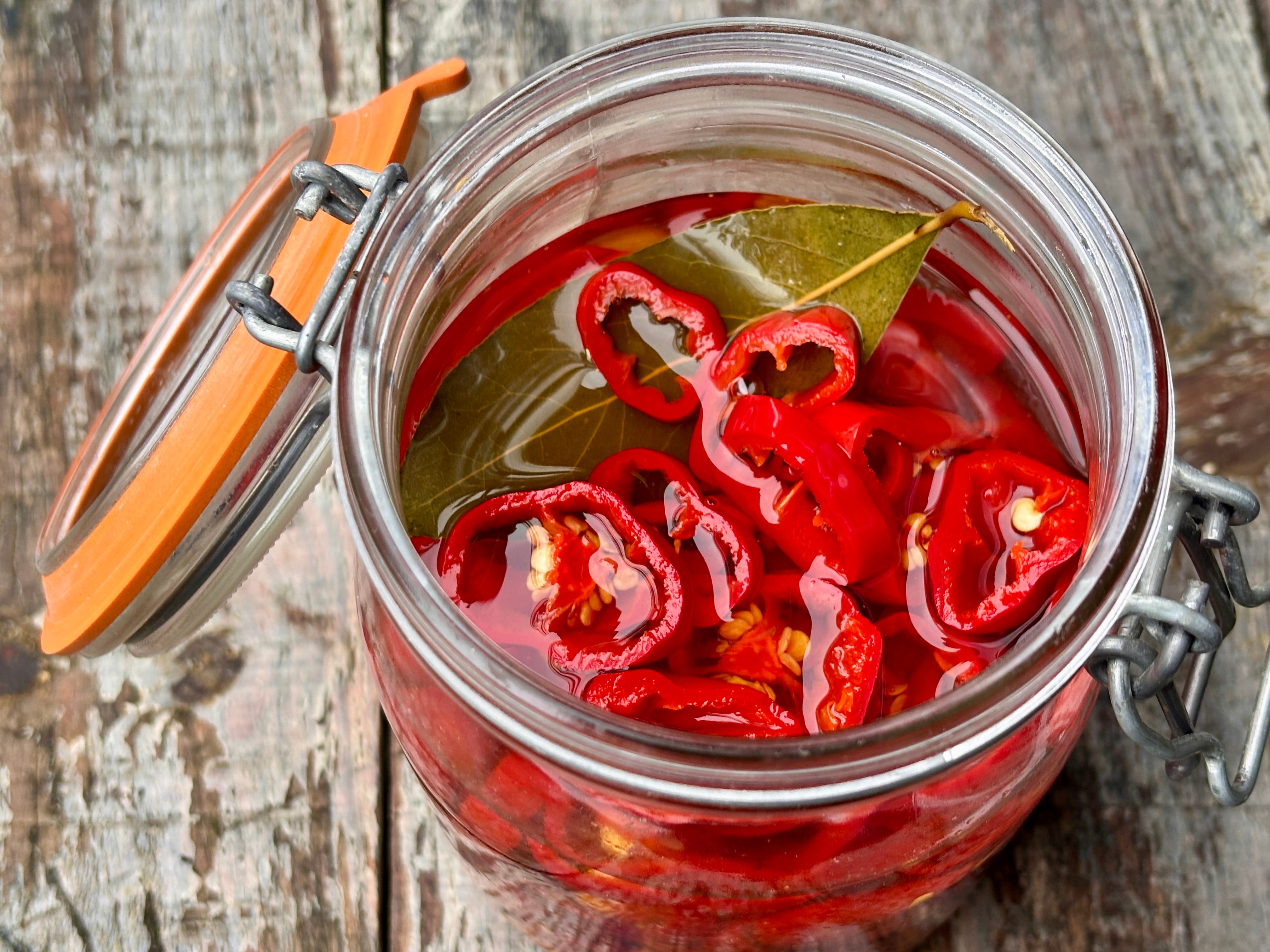
There were so many that I ended up pickling them, using my pickled jalapeño recipe, minus the carrots, red onions, and dried oregano.
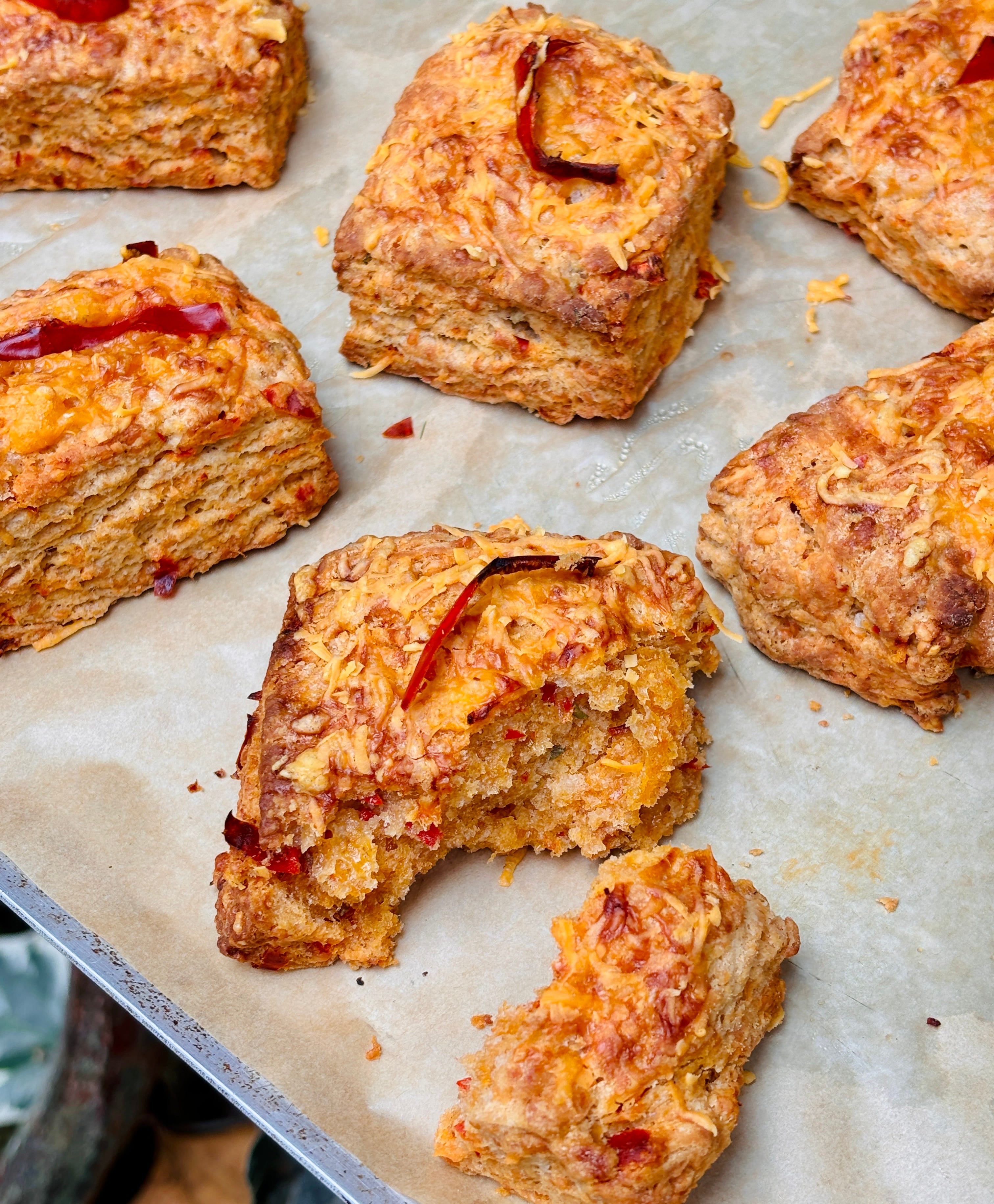
The jar of pickled peppers has been in my refrigerator for a few months, and when I spotted a recipe in Helen’s book for Pickled Jalapeño & Cheddar Scones, I realize that this was their destiny. The recipe called for a generous amount of pickled chiles, and her recipe had come to the right place. (I also used that smoked sugar here, too.)
Living in France, I often have to modify recipes for what we can get here. I was emailing with a friend who wrote a Thai cookbook and mentioned how important substitutions are, when possible, because you want your recipes to be accessible to as many people as possible (or at least I do), while still preserving the basic integrity of them.
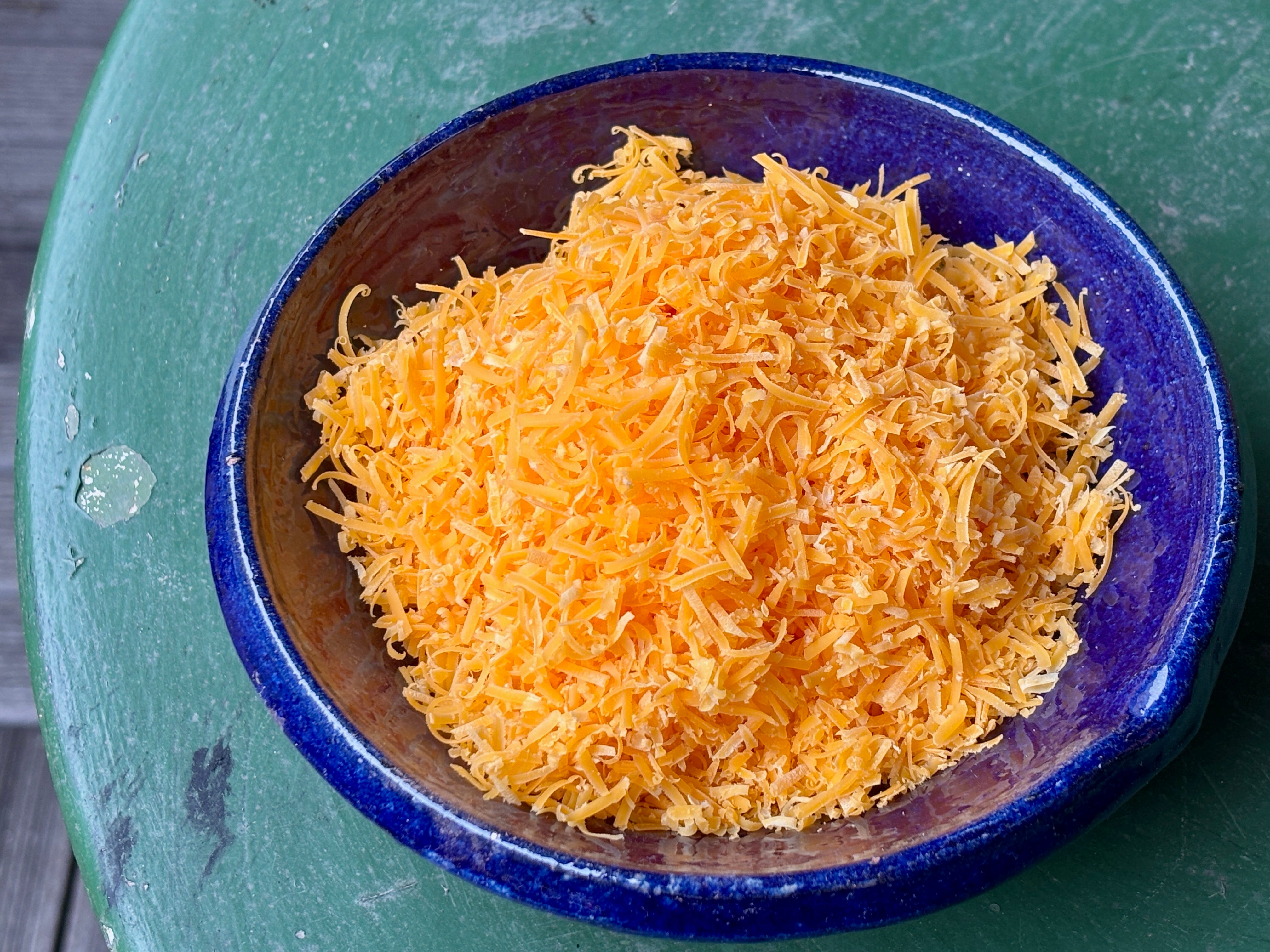
The original recipe called for cheddar, but I decided to keep it French, since I was using French-grown chiles, and grated some mimolette, a cheese that was briefly banned in the U.S. but is now available.
As Helen notes, these scones are close to American biscuits, and let me tell you, they were soooo good. Even before baking, when I was mixing and rolling the dough, they already smelled amazing.
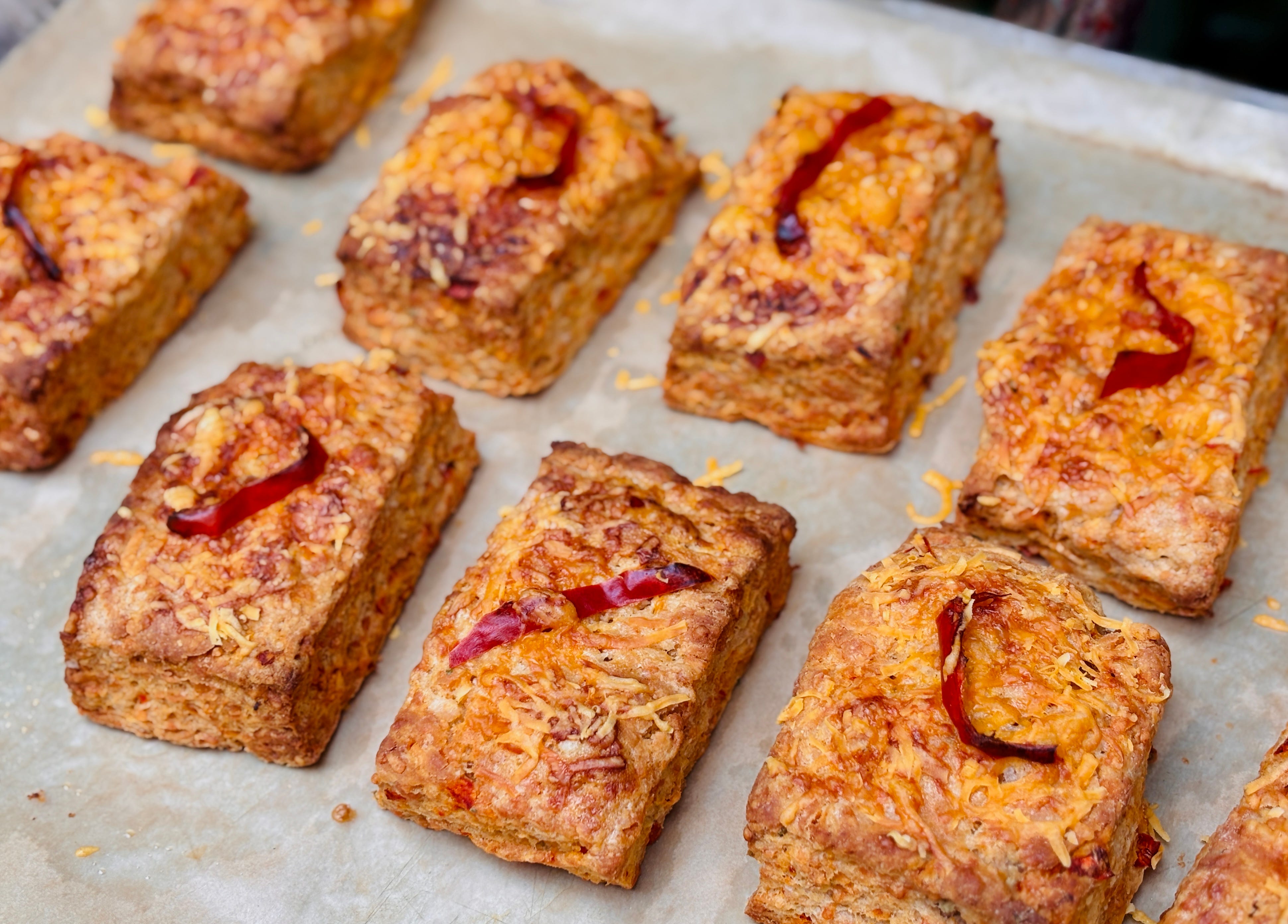
And after I baked them, the taste blew me away. They were spicy and cheesy and crispy and flaky. It was hard to resist breaking into one right when they came out of the oven because my kitchen smelled so good. Letting them cool slightly allows the cheese to firm up a bit, but they are absolutely heavenly eaten warm.
I’m sure there’s a snappier way of ending this post, but you’ll have to excuse me. I’ve got some biscuits to eat…
1 teaspoon flaky sea salt or 3/4 teaspoon fine salt
1 clove garlic, grated or finely chopped
1/2 teaspoon dried oregano
6 tablespoons (85g/3oz) cold unsalted butter
5 tablespoons (70ml) whole milk
1/3 cup (75g) plain full-fat yogurt, plus 1 additional tablespoon for brushing the tops
4 ounces (115g) grated cheddar or mimolette cheese, divided
1 1/2 ounces (50g) drained weight, pickled jalapeños, blotted dry with a paper towel and finely chopped (you’ll have about 3 tablespoons of chopped chiles), plus 10 slices of pickled chiles
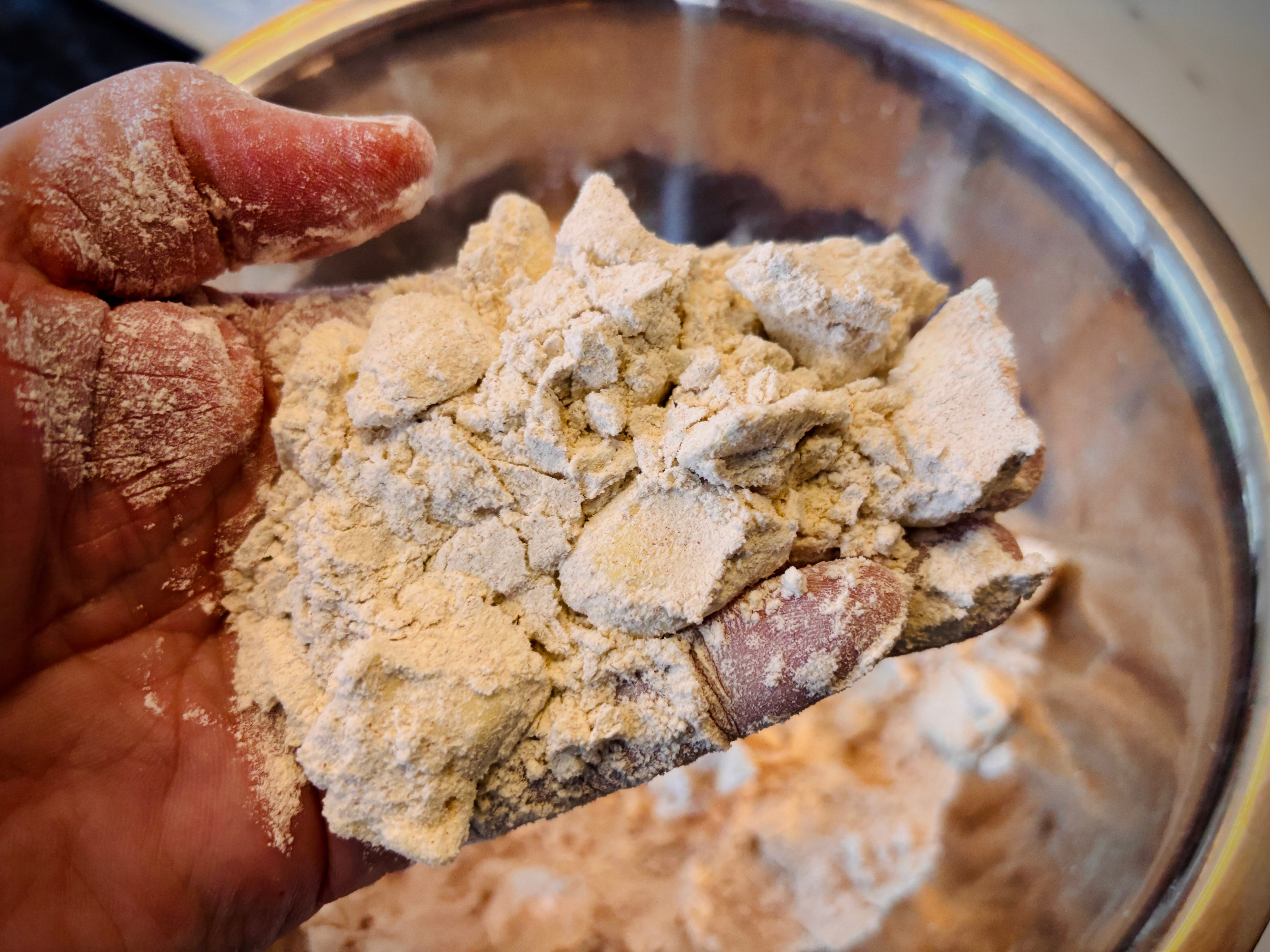
Whisk together the flour, baking powder, baking soda, paprika, sugar, salt, garlic, and oregano in a medium bowl. Put the cold butter between two pieces of parchment paper (or plastic wrap) and whack it with a rolling pin until it’s about as thick as your thumb. Unwrap it and rip the butter into pieces, tossing them in the flour mixture. Using your fingers, smoosh the butter into rough 1/2-inch (2cm) flakes.
Don’t overmix the dough. You want visible flakes and chunks of butter in there.
Refrigerate the bowl of ingredients for 30 minutes.
To assemble and bake the scones, preheat the oven to 400ºF (200ºC) and line a baking sheet with parchment paper. Remove the flour mixture from the refrigerator. Add the milk and yogurt, stir a few times with a flexible spatula, then add three-quarters of the cheese and the chopped chiles. Sprinkle the countertop lightly with flour.
Stir everything together until the dough starts coming together, then use your hands to gather the dough into a more-or-less cohesive mass. Transfer the dough to the countertop and shape it into a rough rectangle. Note: The dough will smell really good at this point.
Using a pastry scraper or chef’s knife, cut the dough into three rectangles (see the photos in the post). Pile the rectangles on top of each other, then press them down, forming a rectangle. Repeat the process, patting the dough into a rectangle, cutting it into thirds, piling them on top of each other, and pressing them down again into a rectangle.
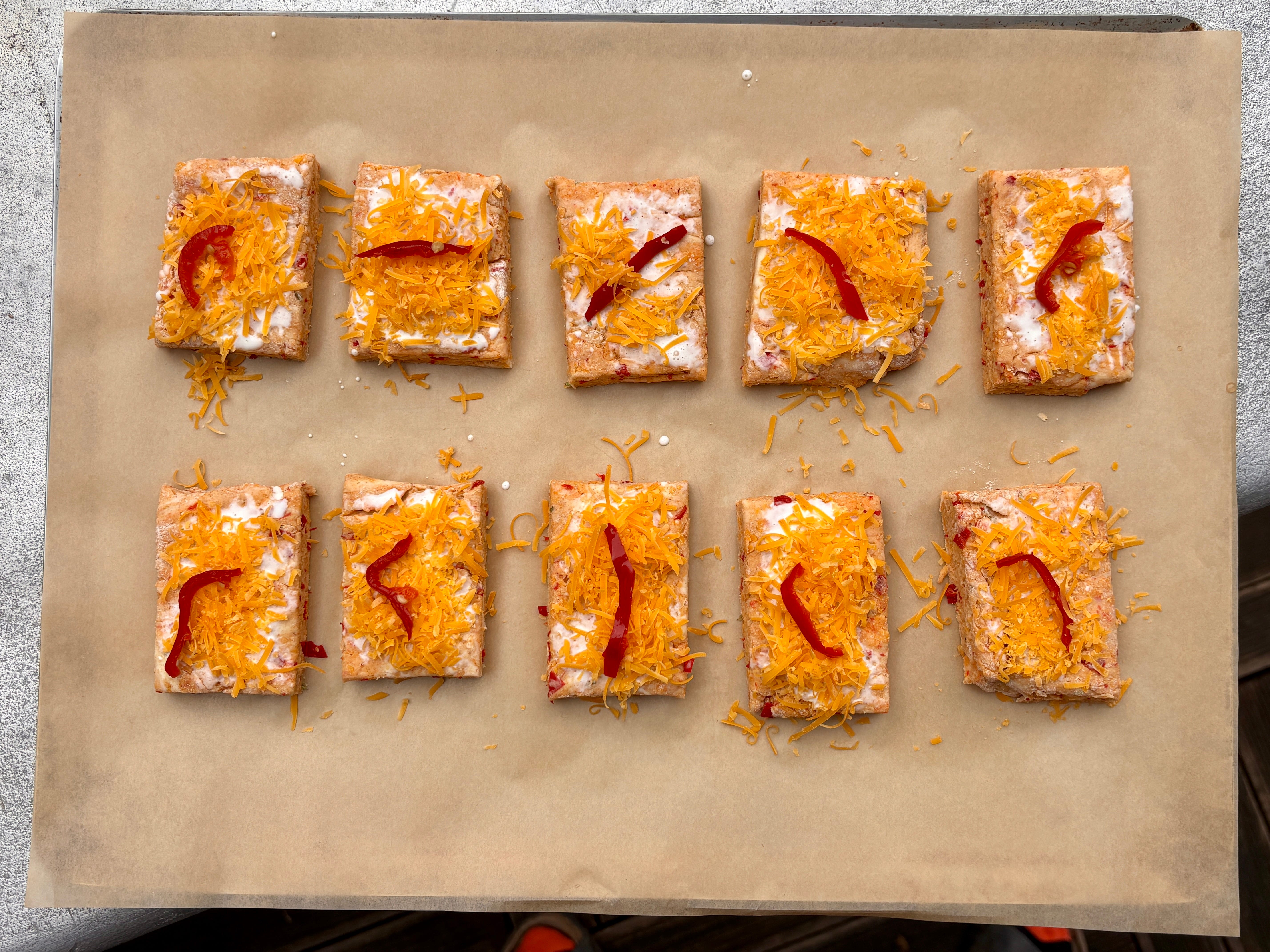
With a rolling pin, roll the dough into a long rectangle measuring 10 x 4 inches (24 x 10cm). Cut the dough lengthwise in half, then cut it vertically, creating ten individual rectangular scones. (You could trim the outside edges of the rectangle to straighten them out before cutting the dough, if you want the scones neater. If you do that, gather the scraps together into a small mound and bake that alongside the scones, which’ll be a baker’s snack.) Place the unbaked scones evenly spaced apart on the baking sheet. Brush the top of each with a little yogurt, then top each with grated cheese and a thin slice of chile pepper.
Bake until deep golden brown, 18 to 20 minutes, but start checking them a few minutes before.* They’re done when they’re browned across the top and up the sides, and feel almost fully baked when you press the tops.
Serving: The scones are delicious on their own, or split in half and buttered. They would also be great for breakfast, served with scrambled eggs. You could cut them smaller (and reduce the baking time) to serve as appetizers.
Storage: The scones are best the day they’re made. They can be stored in an airtight container overnight at room temperature.
*My oven has a silly (and annoying) feature: When you open the door to check something, the oven turns itself off unless you remember to press the "Start” button again. Whoever came up with that idea never developed or tested recipes. I’m now hyper-vigilant about it, since I’ve had to redo recipes while testing them.
I forgot to turn it back on while baking these but luckily I remembered less than a minute after I checked on them. Helen’s book says to bake the scones for 20 minutes, but you can check them a few minutes before. (And if you have the same oven that I do, don’t forget to turn it back on!)
Well, la gastro got me again. Because la gastro is so common here in the winter, and French is so complicated to speak even for native French speakers, the name gets shortened from gastro-entérite, or gastroenteritis.
Being densely populated, Paris is a petri dish for it, although some guests were in the French Alps last week, and four out of six of them got felled by it. So escaping to the mountains doesn’t ensure that it won’t find you there.
I had it about a month ago, and just got it again, which doesn’t seem fair, although as I recently heard a doctor say, viruses don’t care about your feelings.
La gastro is very contagious and the best defense is washing your hands. (Hand sanitizers aren’t that effective against the virus.) Unfortunately, in a country where greeting someone involves shaking hands, and daily life entails holding onto poles in crowded métros, eating in restaurants and shopping at markets where multiple people have handled your food, and towels for drying your hands after washing them in some restaurants and cafés are shared with perhaps a hundred or more people*, you don’t need to look very far to see how (or where) you could have gotten it.
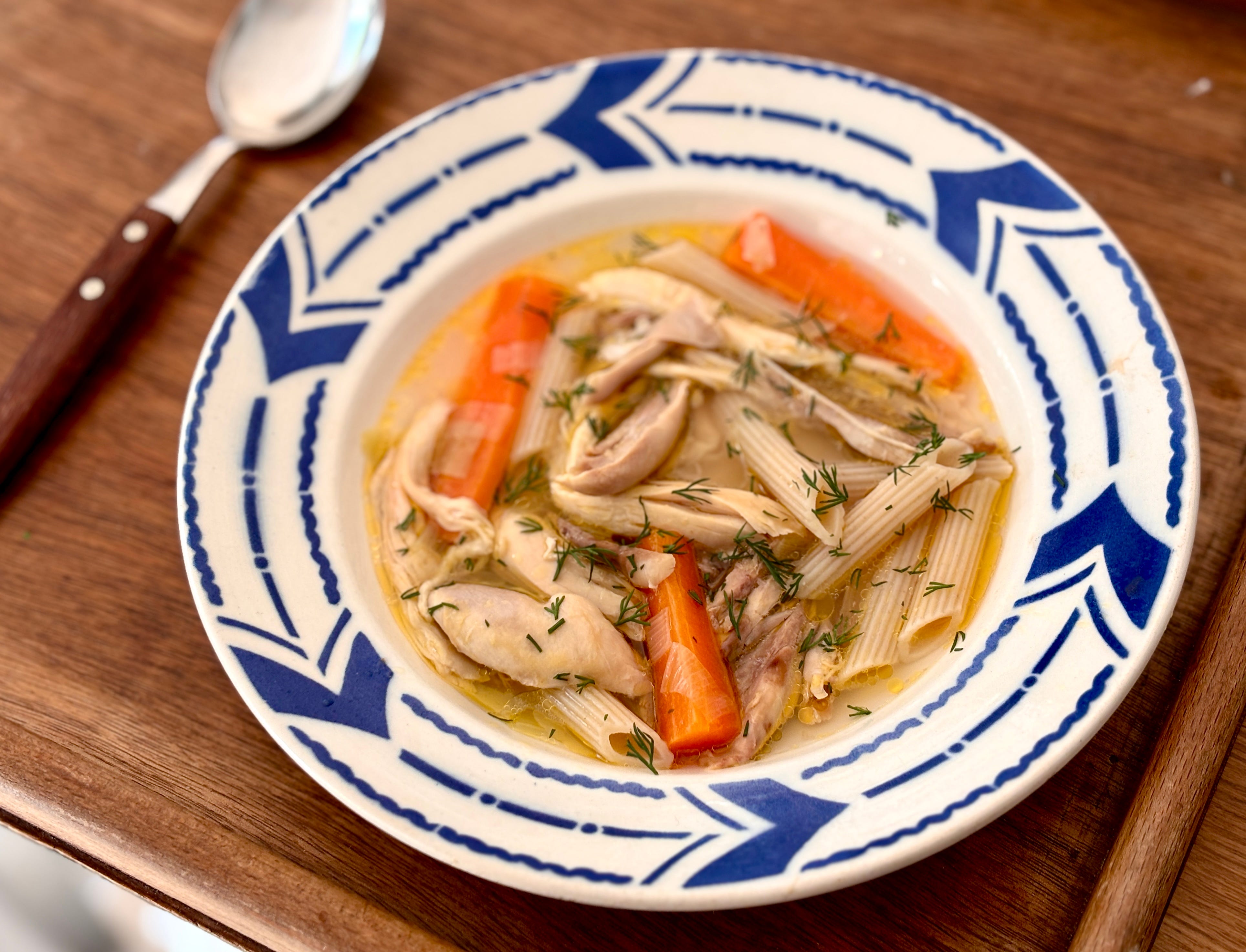
One thing about getting sick in France is that you have to plan for it. There’s no pre-prepared chicken soup, and supermarket soups are invariably veloutés or purees of vegetables.
I don’t know about you, but when I have an upset stomach, the last thing I want is a bowl of green soup, especially if you’re old enough to remember Linda Blair in The Exorcist. When things are coming out of you fast and furiously, you want a bouillon-based easy in, easy out situation. And certainly not anything green.
Newcomers to France, from America, are surprised to find that store-bought bouillon or stock isn’t readily available in liquid form, as it is in the States, where whole aisles of the supermarkets are devoted to a range of stocks sold in quart cartons. In France cubes of stock are commonly used, from brands like Knorr, and Maggi. Ultra-processed hasn’t become a keyword in France yet, but I’ve yet to make the transition to them.
I’m not sure what people in France do when they get sick, but if you can drag yourself to the grocery store, or can manage a trip to both the butcher and the produce store, you can make a poule au pot.** This “chicken in a pot” requires little hands-on work, and is easy on the system, one that I’m doing my best not to upset any further.
Subscribe to my newsletter to get new posts sent right to your inbox…
There are fancy ways to make a poule au pot, such as one with a sauce suprême made with crème fraîche, egg yolks and butter, or this one, with 14 ingredients. Or this one with chicken stuffed with a farce (stuffing), which you’re welcome to tackle if you’ve got the fortitude for it.
There may be a definitive version of poule au pot, but I’m too zonked to track it down, nor am I up for a battle with the authenticity police. And I’m definitely not up for*** stuffing a chicken, or making or eating cream sauce.
The good thing about making this dish is that you don’t need store-bought stock as cooking a whole chicken gives you a lovely, rich broth. And while not part of the French culinary canon, since Manischewitz has not made it to France, there’s no matzoh meal at the supermarché.
Yes, you can buy pain azyme and grind it yourself, but that also takes strength, so it’s a no-go. My neighbor who owns a deli in Brooklyn is out of town. Otherwise I’d ask him to bring some matzoh balls over. I’d be pretty surprised if he didn’t have some matzoh meal squirreled away.
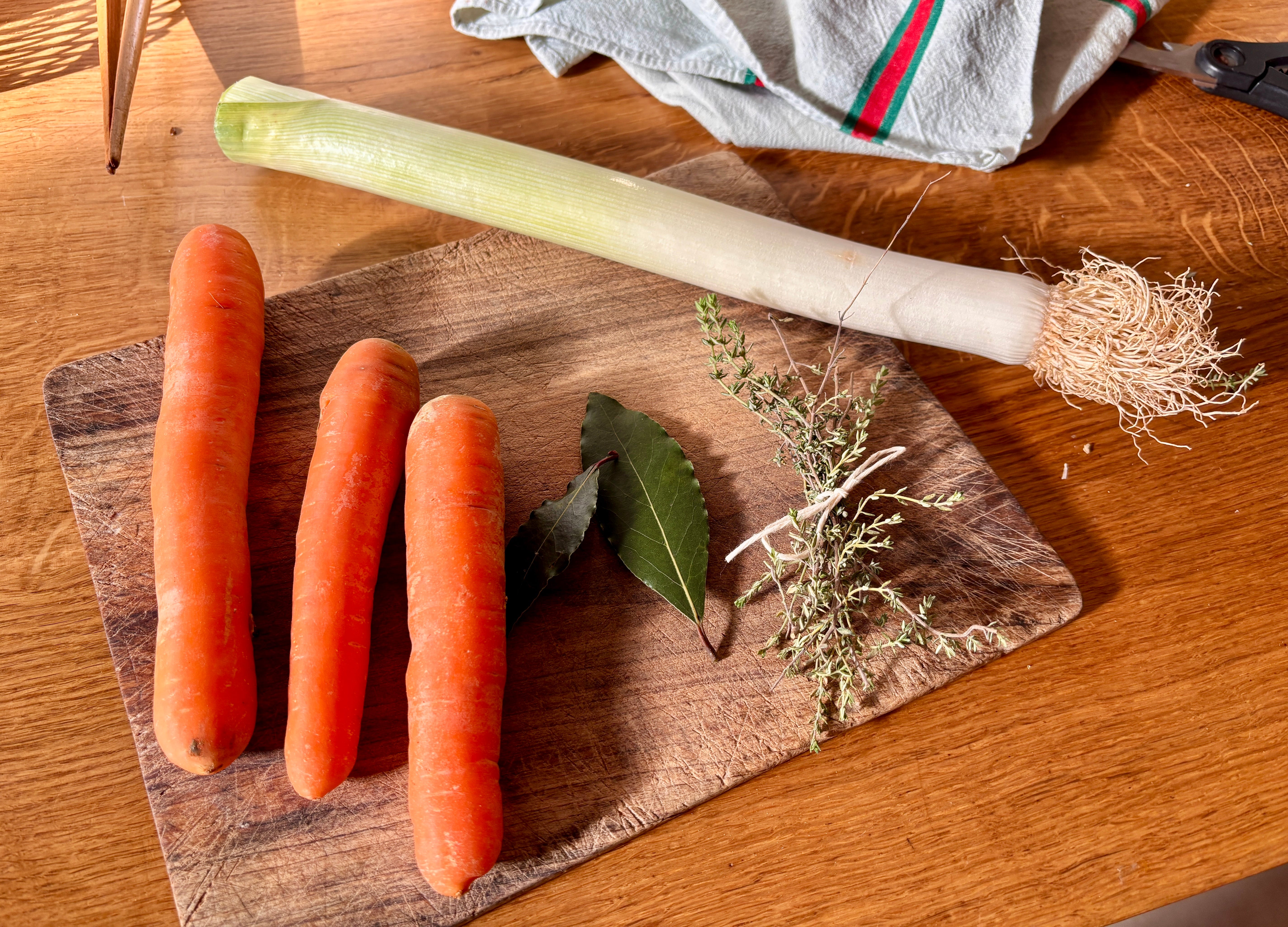
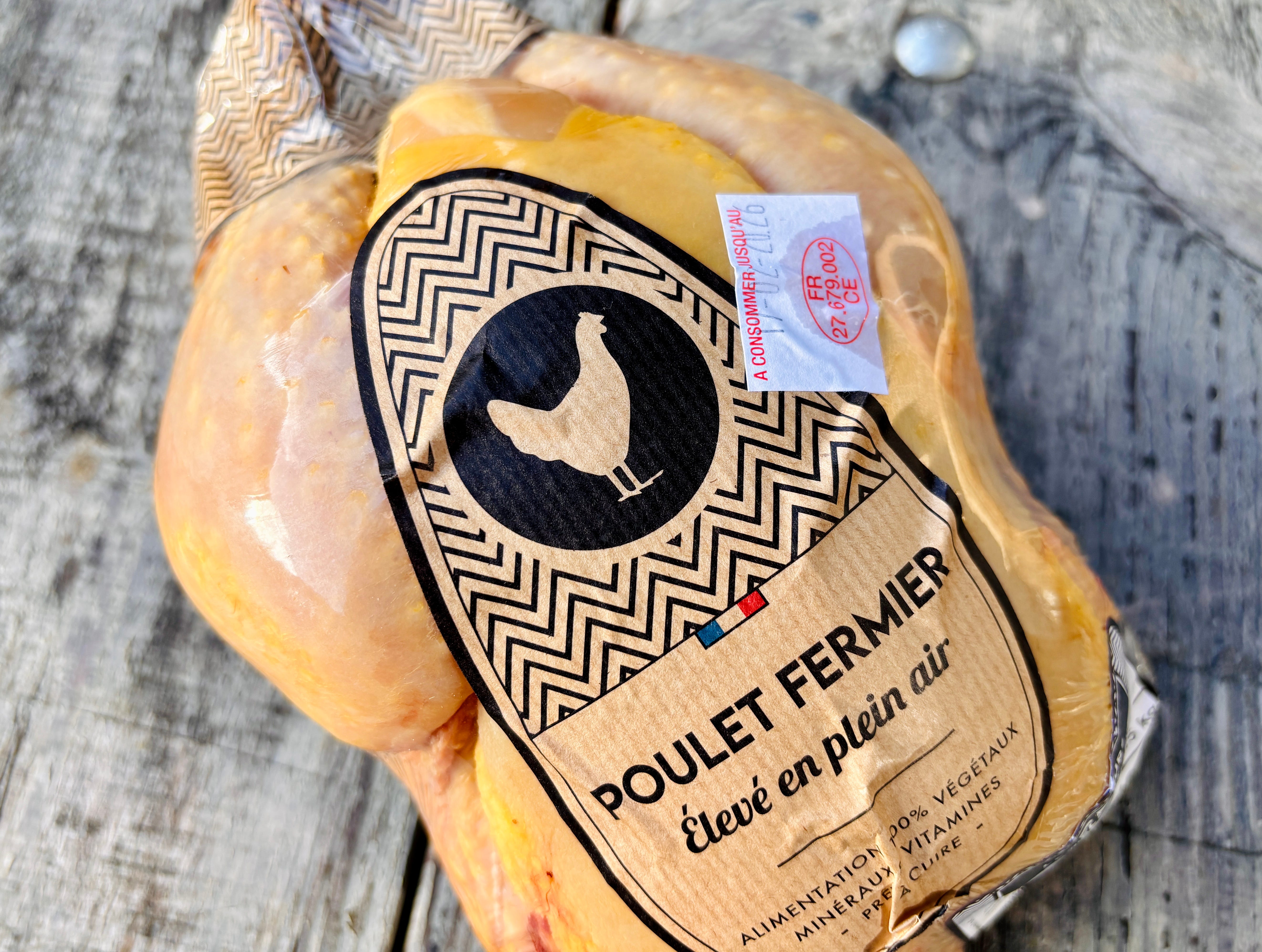
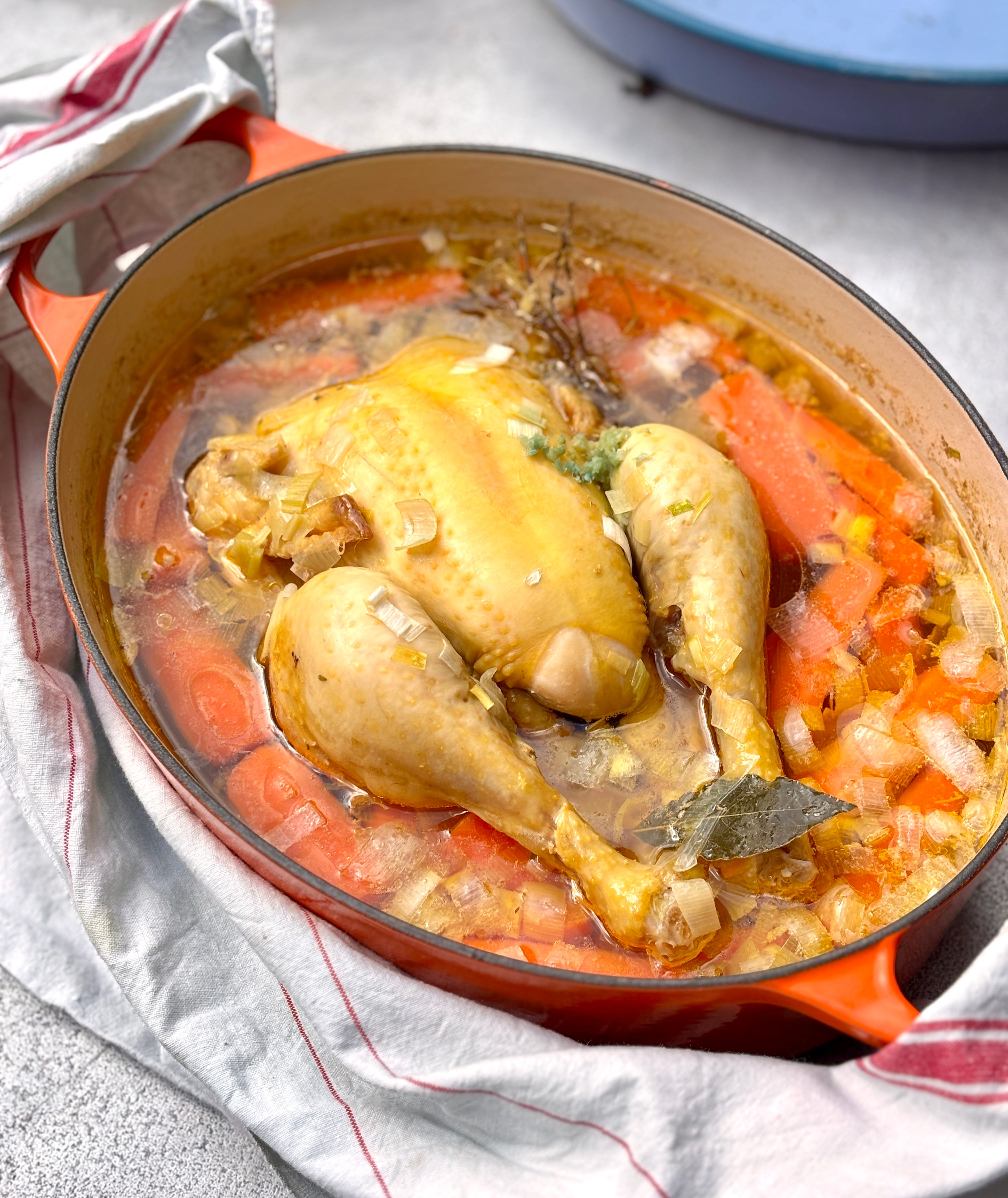
Armed with my shopping list, after Romain came back from the store, I placed the free-range chicken in a pot. I added enough cold water so it covered about three-quarters of the chicken, then added some salt as well as a chopped leek and three carrots cut into thick batons. Fortunately we have a garden so I grabbed a few sprigs of thyme and tied them in a bundle to add to the pot, as well as two bay leaves.
Garlic is used very discreetly in French cuisine; with the exception of aïoli, which technically is Provençal - and some in Provence may argue that that’s not French cooking, that it’s Provençal. (Once again, I’m not looking for a fight. I’m just being diplomatic.) Few, if any, poule au pot recipes in French call for ail — doing an online search, the only ail I found in poule au pot recipes was in the word volaille, which means chicken.
I added four minced cloves of garlic, which the authenticity police may not approve of, and even Claude AI was baffled by the request. And into the pot that went, as the health benefits of garlic outweigh any cultural conflicts.
Everything was simmered over very low heat with the lid ajar for about 90 minutes, until the chicken was very tender. About halfway through the cooking, I used tongs to pull the thighs away from the breasts to help the broth get more infused with flavor. (That may not be scientifically provable but I have a feeling that it does.)
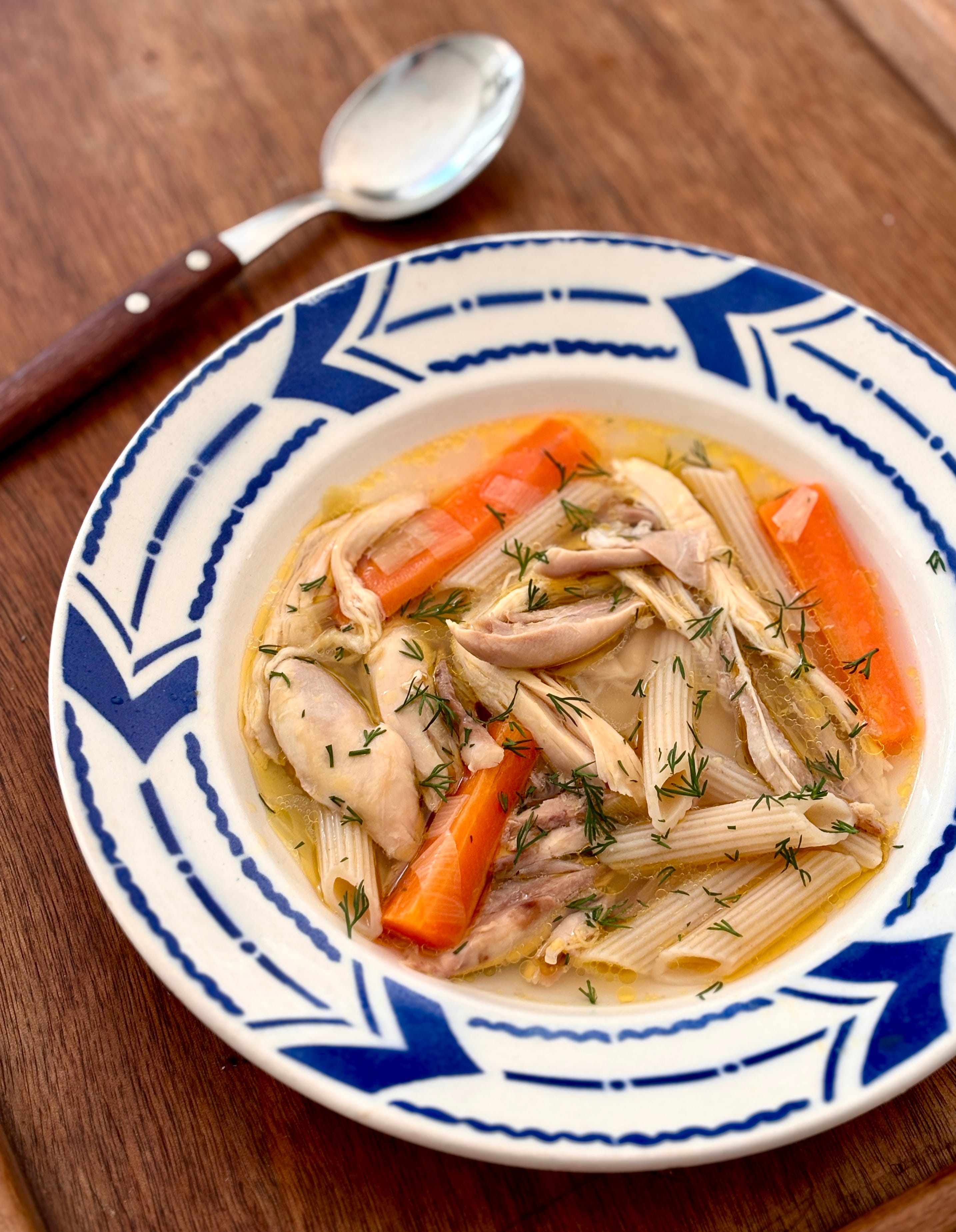
Once the chicken was cooked, I fished the pieces out with tongs and put them in a bowl to cool. When cool enough to handle, I shredded the meat and put it back in the pot. And that’s it.
If you want to add rice or noodles****, as I did, it’s best to cook them separately and add them to individual servings right before serving, or they’ll get soggy. Fresh dill is an add-on that’s no common in France, but Romain likes it (as do I), and picked some up at the store. It adds a nice flavor to the soothing soup.
*Many restrooms in France, such as those in restaurants and cafés, have a cotton towel on a hook for people to dry their hands on after washing them. That may save paper, but to me, seems to defeat the purpose of washing your hands. Although perhaps the feeling is that is everybody is washing their hands, before drying them on the towel, the towel isn’t harboring any germs or viruses.
**You’ll find recipes for soupe de poulet and soupe au poulet, that are basically variations on poule au pot, which further complicates things — especially the two different prepositions for the same soup. As mentioned, French is hard…even for the French.
***Sorry about any typos.
***Like Manischewitz matzoh meal, Goodman’s egg noodles haven’t made it to France yet. But egg noodles (pâtes aux œufs) are the best with this dish.
Since 2015, Lauren Collins, staff writer for the New Yorker, has called Paris home. The author of When in French: Love in a Second Language, Lauren moved from Switzerland to France with her French husband and stillwrites for the New Yorker, continuing their tradition, which includes writers such as A. J. Liebling, Anthony Bourdain, Calvin Trillin, John McPhee, and Adam Gopnick, of outstanding food writing and reporting on food-related topics.
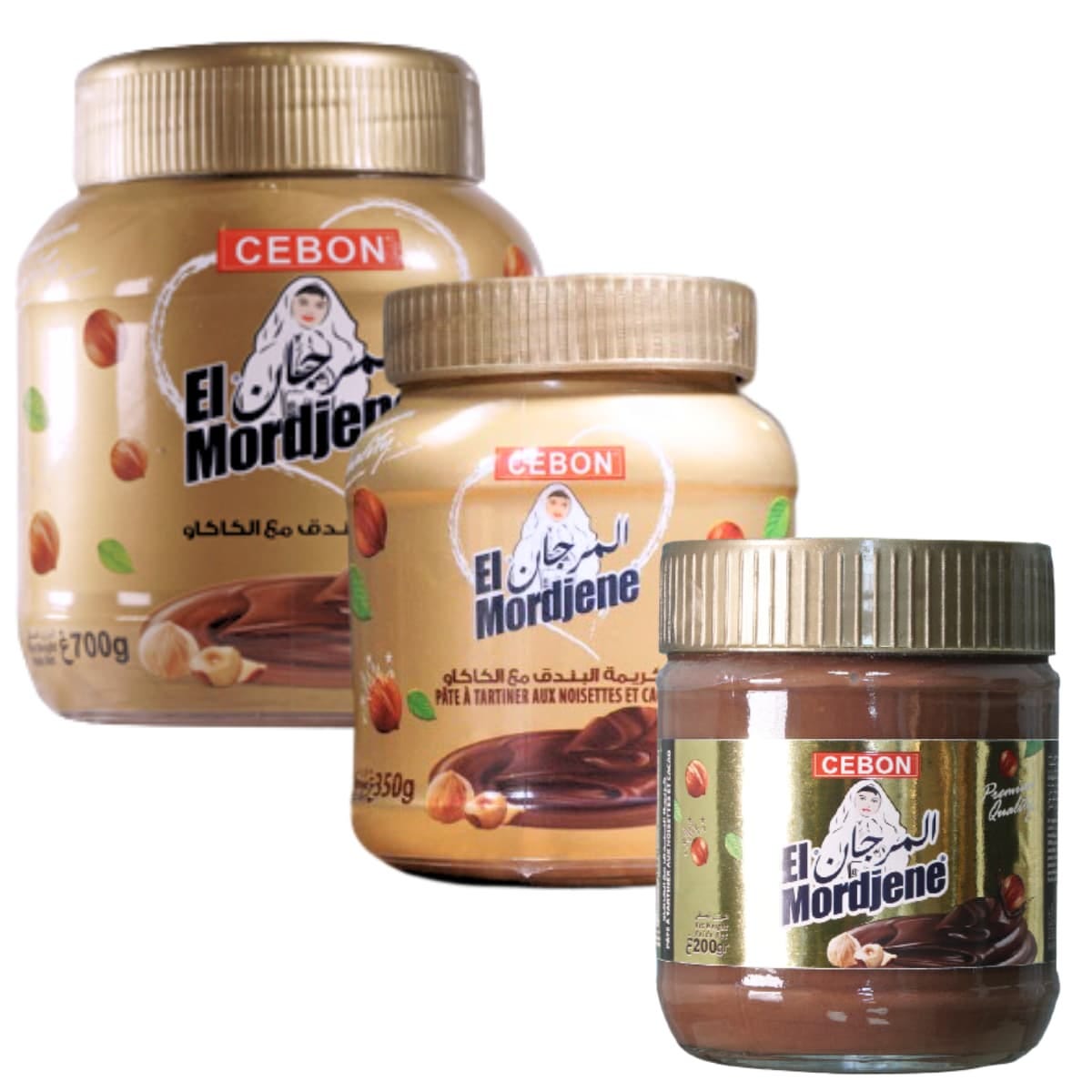
Her articles have ranged from subjects such as the controversial French tacos, spelled with an “s,” even though it’s just one; Les Grands Buffets, the all-you-can-eat buffet restaurant that’s the hardest reservation in France (in my experience trying, it’s the hardest in the world); and the elusive El Mordjene Algerian hazelnut spread, a cult favorite that’s nicknamed “beige gold,” which was banned in France.
Lauren has also written on the wonders of Japan’s fake foods, as well as “Where should I go?” a service that provides Americans and other visitors with “insider” French experiences, such as fulfilling the request of a client who wanted to be invited to a party in a French person’s home.
In the podcast, we discuss how these stories came to be, as well as how things have changed in France since Lauren’s moved here, and what it’s like being a journalist in France. As I do with Paris-based guests on my podcast, I asked Lauren to share some of her favorite addresses in the city for dining, which she was happy to do.
I don’t really subscribe to anything being called the “best” because, A) It’s subjective, and B) Things change, and what’s great today may be gone tomorrow.
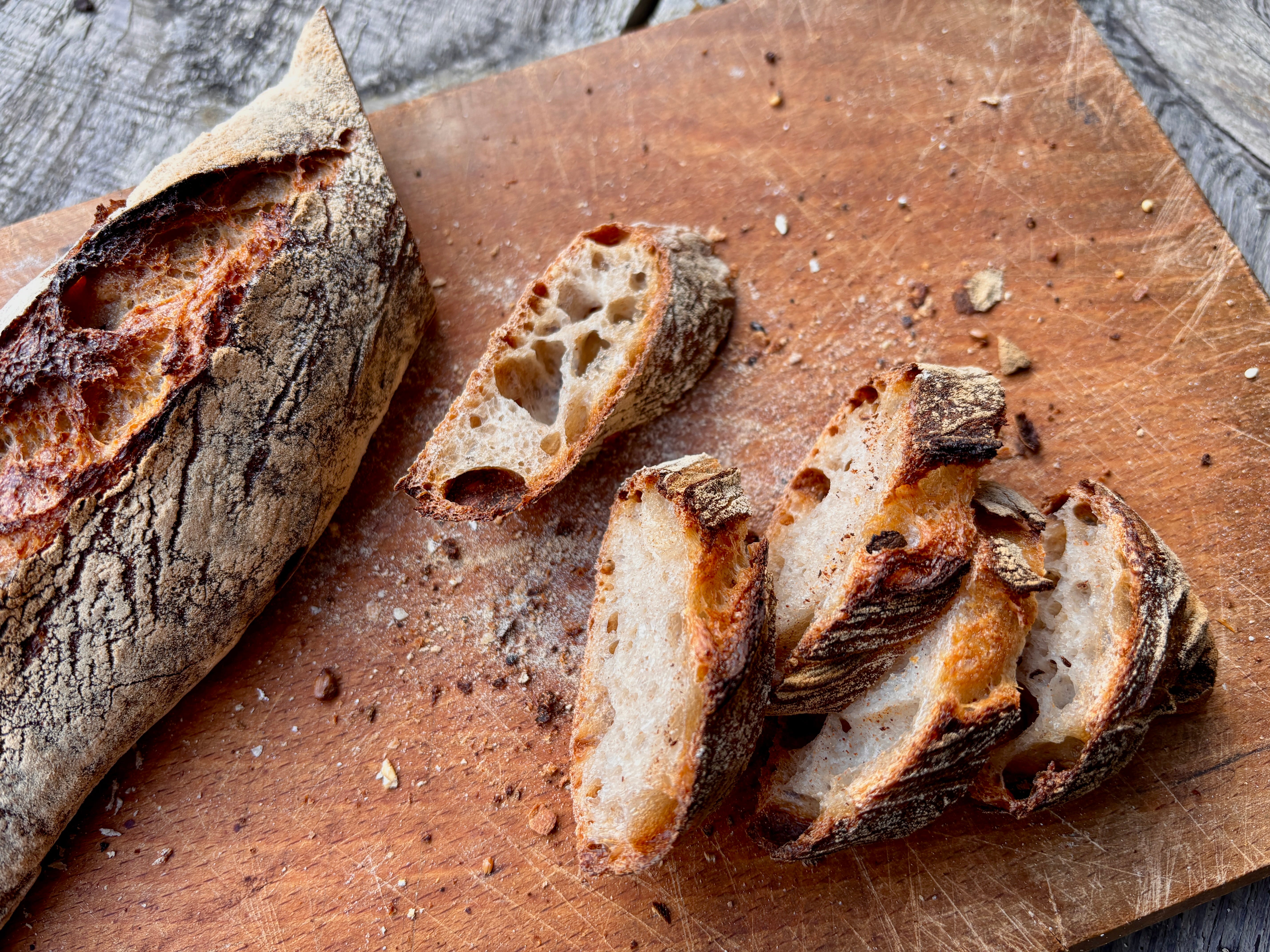
As for the “experts,” I ran into a friend who’d judged the best baguette in Paris contest and shortly after, I stopped her on the street carrying a baguette from a different bakery. I asked why she didn’t go to the place she said was the “best” and she replied, “When you taste over a hundred baguettes, after the first few, it’s hard to taste the differences.” So even the experts don’t know - although I’ve never been asked to judge, so you might not want to listen to me either.
Lately we’ve felt like we needed to do some self-care and while every country has its good points and bad, Japan gets it right when it comes to the loo. So we finally bit the bullet and got a Japanese toilet, which — thanks to the magic of plumbing — upgraded our WC into a business class experience. These days it’s nice, and vital, to do things that make us feel better whenever and wherever we can, but I can only eat so many French pastries. So the Toto, it ‘tis.
Chausson aux pommes, a caramelized apple turnover, from Sain bakery - one of my very favorite pastries in Paris.
For a little escapism (in the rest of our apartment), like a lot of you, I watch streaming shows - including a steamy show - although I’ve had to skip finishing Season 2 of The Last of Us because of the violence, in spite of the presence of Pedro Pascal, who was also in Eddington, which is a thoroughly disquieting movie. I wanted to join the “in” crowd and watch The Pitt, but a parental guidance website listed the violence and gore as “severe,” so that’s off my watch list. And I did watch Heated Rivalry, which was hot and heavy, and I saw lot more action in those six episodes than I did during several decades in San Francisco.
Warm madeleines with orange cream and praline for dessert at Jouvence.
I’ve also been trying to read more and have a stack of books I’m slowly making my way through. I’m in the middle of North Woods, which is brilliantly written, if a tad hard to follow if you put it down for a few days.
Books I’ve recently finished wereImpossible City, which takes a deep dive into the psyche of how Paris functions in the 21st century, and The Heaven and Earth Grocery Store, which the NYT described as “a murder mystery locked inside a Great American Novel.” I’ve got Quiet by Susan Cain on my docket as well as Picasso the Foreigner, a nearly six-hundred-page book about Picasso’s life in France and the conflicts he had with the country. Not to mention a bounty of new baking books that I’m anxious to start baking from.
I’ve also been revisiting some of my older cookbooks, especially classics that take me back to better times (gosh, I’m sounding old…) But reading Laurie Colwin, Richard Olney, andMarion Cunningham are a balm. That also goes for Edna Lewis, who I wrote about here…
Get newsletters sent right to your Inbox! Sign up here to get recipes, stories, Paris tips, and more…
January was galette des rois season, the traditional King Cake in Paris, which is made with puff pastry and filled with almond cream. The other versions in the south of France are rings of brioche topped with crunchy pearl sugar, also called a brioche des rois.
Every year, we try to get galettes des rois from various bakeries. These are from Boulangerie Utopie.
Pâtissiers in Paris are going more and more “off script” and glowing up their galettes with everything from candied kumquats to roasted buckwheat groats, to pique people’s interest in them. Thankfully a lot of bakeries offer galettes by the part, as a whole galette for the two of us is a commitment. And if I’d ever hope to look like those dudes on Heated Rivalry, I’d need to dial down the galettes. But I’m afraid thatbateau has passed…
One thing about having plumbers come by is that it gives you a chance to discover, um…nooks and crannies that haven’t been cleaned in a while. The plumbers had to move our refrigerator, so I took that as an opportunity to take everything off the shelves, above and around it, and give them a good cleaning. A few weeks ago I cleaned out my freezers, which gave me the courage to tackle my kitchen cabinets, which are filled with condiments; honeys and oils, vinegars and salts, spices and seasonings, and vanillas, canned chiles, jars of chili crisp, misc. sauces from here, and more.
This cabinet has everything from rainbow sprinkles and saffron, to za’atar, aged balsamic, and cocoa powder.
Over the past few years, my kitchen has turned into a collection of cabinets of curiosities…
This cabinet has ‘nduja and spiced sardines from Calabria, French honey, salsa from Comer, anchoïade, peanut butter, and made-in-Paris miso, as well as vinegar and cornichons from a trip to Orléans, and a backup of Better Than Bouillon.
I don’t know what to do with everything — candied yuzu peels, Birnendicksaft (pear butter from Switzerland), smoked sugar that I got in Scotland - how could I resist?,apricot and plum kernel oils, pistachio paste, white truffle sauce, preserved lemon, andpine bud syrup, which I have two bottles of.
An Italian friend said a drop of thepine bud syrup is excellent in a Martini, but I haven’t made a Martini in a while, although considering the state of the world, I probably should start making them again. It’s hard to complain about having too much food, especially when others aren’t as fortunate to be in the same situation as many of us are, but figuring out how to use ‘em up adds more projects and recipes to my roster* and my goal for 2026 is to go outside at least once a week.
But one thing I never can have enough of is jam. So when I saw these bergamots at the store, I couldn’t resist buying some to (…yes, I know I don’t need any more projects…) makemarmalade.
The name is a bit confusing in France as they often label sweet lemons as bergamots, which they’re not. True bergamots, likely a cross between a lemon or citron and Seville sour oranges, are highly perfumed and mostly valued for their aromatic peels. In the last few years, the variety of citrus available in Paris has greatly expanded. I used to comb the city looking for citrons, happy to find them wherever and whenever I could, and recently, I saw them in my local supermarket.
When I saw bergamots at my local produce store, I rifled through the box and plucked out three of the nicest-looking ones to make some marmalade. For those who say they “don’t like things too sweet,” bergamots lean toward the bitter side, so this marmalade is for you.
If you can find them, I rinsed and dried mine (which weighed1 1/2 pounds/700g), trimmed off the stems, and quartered them. My bergamots had just a few seeds, but if yours have more, tie them up in a piece of cheesecloth, making a little sack full of seeds, and cook them with the marmalade, which’ll add extra pectin to help thicken the marmalade.
I don’t mind larger pieces of fruit in my marmalade but you can cut them smaller if you want.
Slice the bergamots as thin as possible and put the pieces in a big nonreactive pot and cover with cold water. Bring to a boil, then reduce the heat and simmer until the pieces are translucent, about 6 minutes. Drain them and put the drained bergamot pieces back in the pot. Add 2 1/2 cups (500g) granulated sugar and 1 quart (1L) water, plus the little packet of seeds, if you have them, as well as a pinch of salt. Put a small plate in the freezer for testing the marmalade later.
Bring the mixture to a full boil, then reduce to a low boil,cooking the mixture until the syrup between the pieces of bergamots are as thick as maple syrup. Remove from the heat and place a small spoonful of marmalade on the chilled plate, then return it to the freezer for a few minutes. Take it out and nudge the marmalade with your finger; it won’t wrinkle like other preserves but will be thick enough to stand up on its own. If not, cook the marmalade more, testing it again, until it’s the right consistency. Most preserves set between 218-220ºF (103-104ºC).
For this marmalade the temperature will be about 215ºF (101-102ºC) when done. Spoon the marmalade into jars and refrigerate until ready to eat.This’ll give you two jars of marmalade, which is what we’ve been eating for breakfast the last few weeks, and has certainly brightened up our winter mornings.
If you can’t find bergamots, there are other citrus marmalade recipes here:
Romain and I did a little Made in France shopping this month, stopping by La Trésorerie, a store that’s fun to visit in Paris. If you’re into housewares, it’s amust-stop. (Note: I’ll be doing an event there next spring for the release of my new chocolate book. I can’t wait!)
We picked up an old-fashioned broom, a wood-handled bottle washing brush, and…while not French, I couldn’t resist this petite Toyo Japanese toolbox, since “someone” is always, um…borrowing my tools, and not returning them. The bright red metal makes it hard to swipe : )
I’ve also been transitioning our storage containers to glass and want to support worker-owned Duralex, which has been struggling to survive. That’s what happens, I suppose, when your products are so well made that people don’t need to replace them. So I invested in new storage containers. The great thing about glass, while heavier and more expensive, is it doesn’t retain odors like plastic does.
I want Duralex to succeed and wish they’d “think outside the box” and do some fun collaborations with French designers, like Orangina did with Matali Crasset.
Unfortunately they weren’t made by Duralex and break rather easily, so I pick them up whenever I see them at flea markets. But if Duralex wants to make some glasses with me, I’m up for it.
I’m okay not preaching to people about what produce to buy since most of you are adults and can make your own decisions. But I recently took notice of science finding a link between pesticides and Parkinson’s disease and thought that was worth sharing, and new findings say that high-fat cheese and cream may reduce the risk of dementia. So I can relax about all the cheese we eat in France. Whew!
Plastic wrap is one of those necessary evils in the baking world. Fortunately there are more and more eco-friendly alternatives. Lately I’ve been using silicone covers that are microwave safe and many can even go in the oven. (Check the manufacturer’s advice. You don’t want your leftover macaroni and cheese served under a blanket of melted plastic or silicone.)
I picked up some silicone lids and have been loving them for covering bowls and reheating food. They’re wonderful and reusable, and mine (shown above) have a handle so you don’t get a steam burn peeling it off the bowl, as you can get with plastic wrap. I got mine at a kitchenware shop in Japan but I know they’re for sale in other countries. I use my lids almost every day and, like my new glass storage bowls, they’ve been a great investment.
*A classic, and understandable, response might be to tell me to “Make ice cream!” which I do with lots of my baking projects when I’m testing recipes, and end up crumbling brownies that didn’t quite work, or candied nuts I’ve been working on, to fold into ice cream. However, I just cleaned out my freezer(s) and am not keen on filling them up again. But yes, I do have a recipe for plum kernel oil ice cream. So that’s on my docket…
We’ve been eating out more and more since so many new places, or at least new to me, are popping up. Some have been really good and others, not so much. When I’m eating out with friends, I’ll often ask at the end of the meal, “Would you come back?” That, to me, is one barometer of me recommending a place. Another is, “Would you have fun there?” Here’s a mix of restaurants I’ve been to recently in Paris that I liked. A few come with caveats, which are mentioned…

 Login
Login