Login
Login
French Food Shopping in Paris
2 July 2026 at 11:57
Subscribe to my newsletter to get posts, recipes, videos, and more, sent right to your inbox!

Subscribe to my newsletter to get posts, recipes, videos, and more, sent right to your inbox!
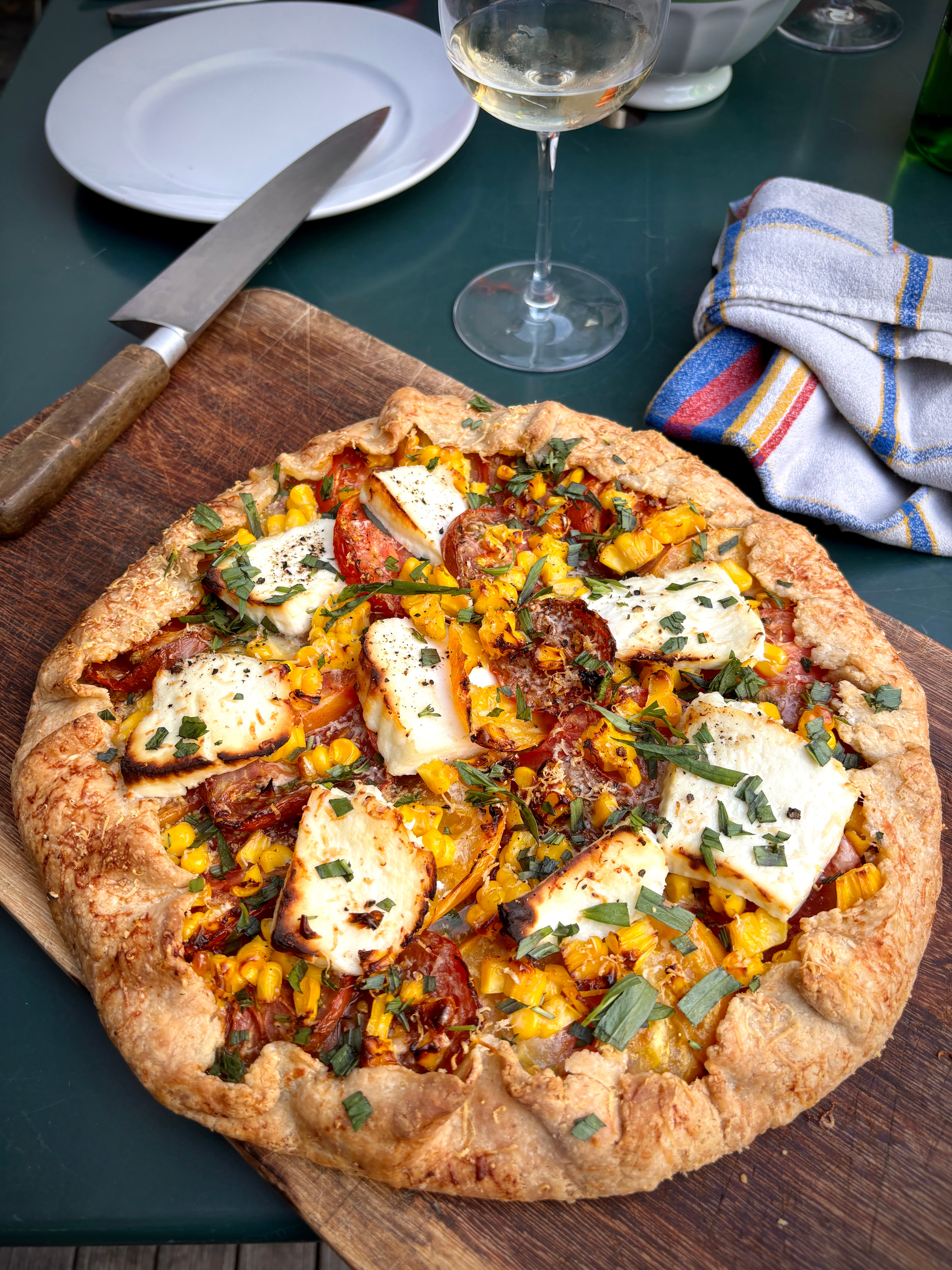

I’m away until the end of the month, traveling, and (fortunately) escaping the heat in Paris. Here’s a summer recipe I thought I’d reshare that’s easy to make, and captures the essence of the season. It’s definitely going on rotation when I get home! - David
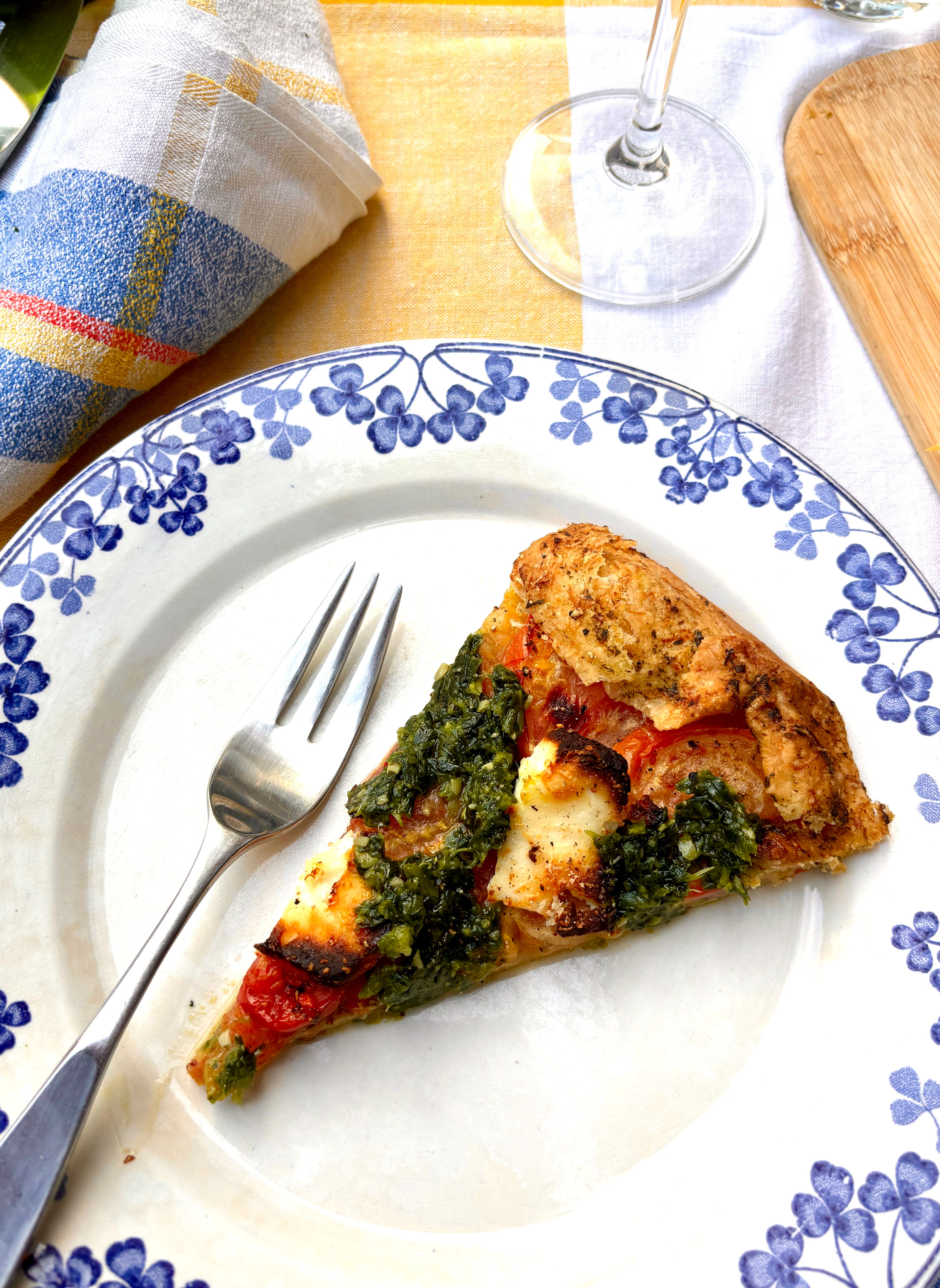
Tarts, or galettes as they’re sometimes called, are a great way to use summer. I know some people are timid about making dough, but this dough couldn’t be simpler, and it’s very hard to screw up.
And if it’s warm where you are, it comes together in a flash. Just be sure to chill the butter and I know sometimes people chill the flour as well, but I’ve never done that. (I actually learned to make puff pastry in a hot restaurant kitchen, in the summer. So making this kind of dough seems to me like a walk in the park…)
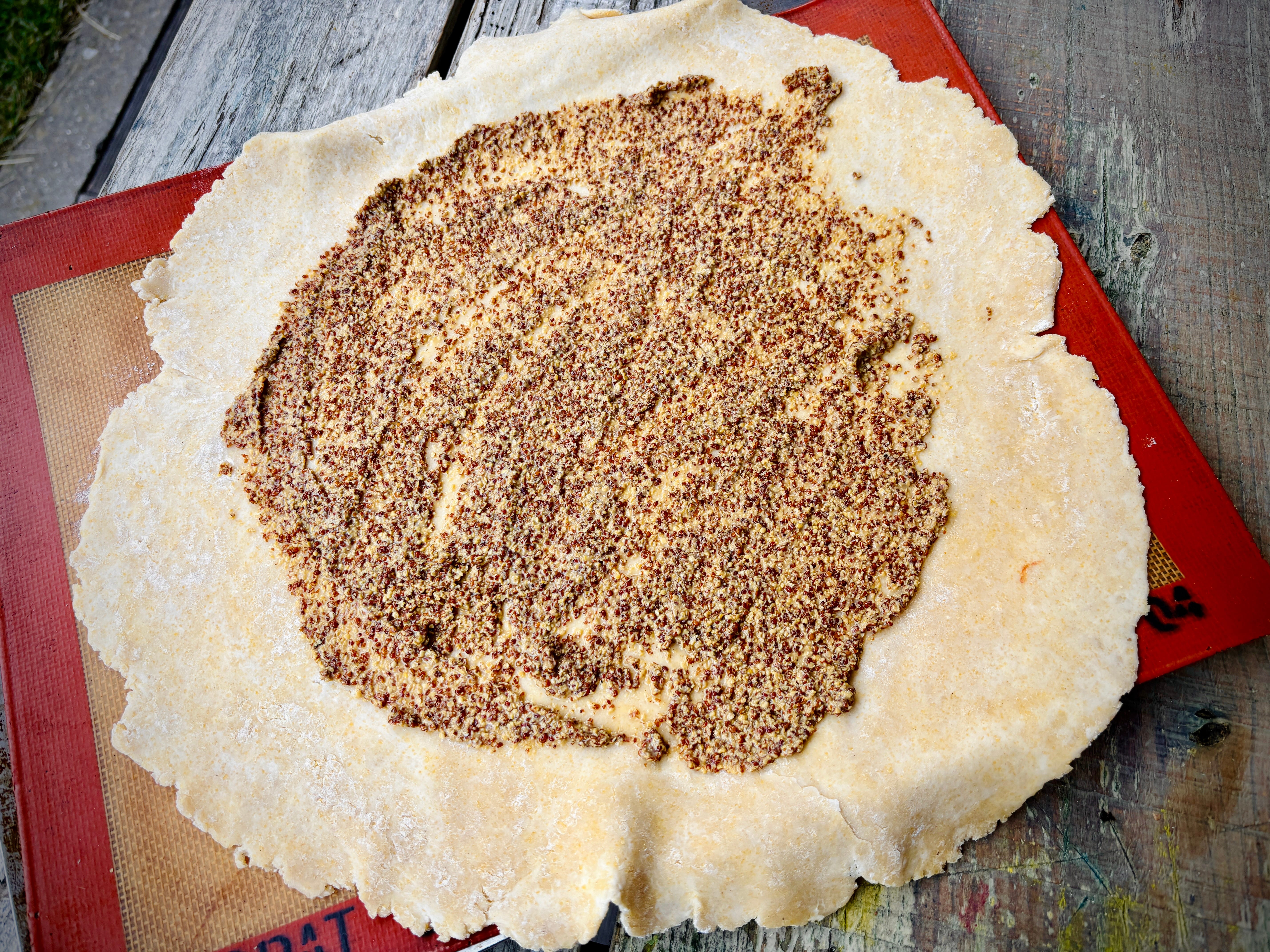
Regarding the mustard, to be honest, I’m more of a fan of Dijon mustard than Romain, who prefers the grainy type. But during the mustard shortage last year, we could only get grainy mustard, so I had a lot of that on hand. But I remain on team Dijon.
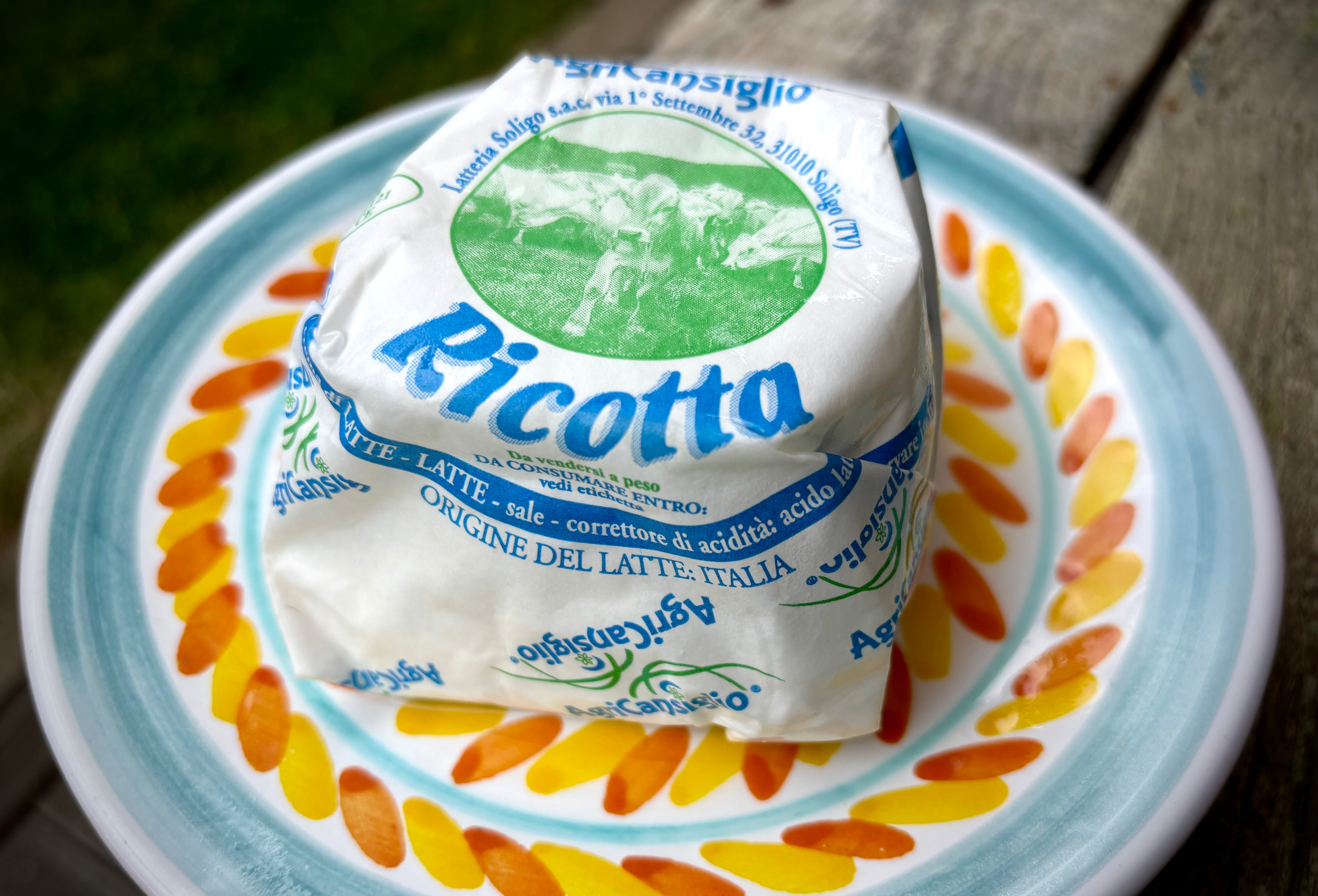
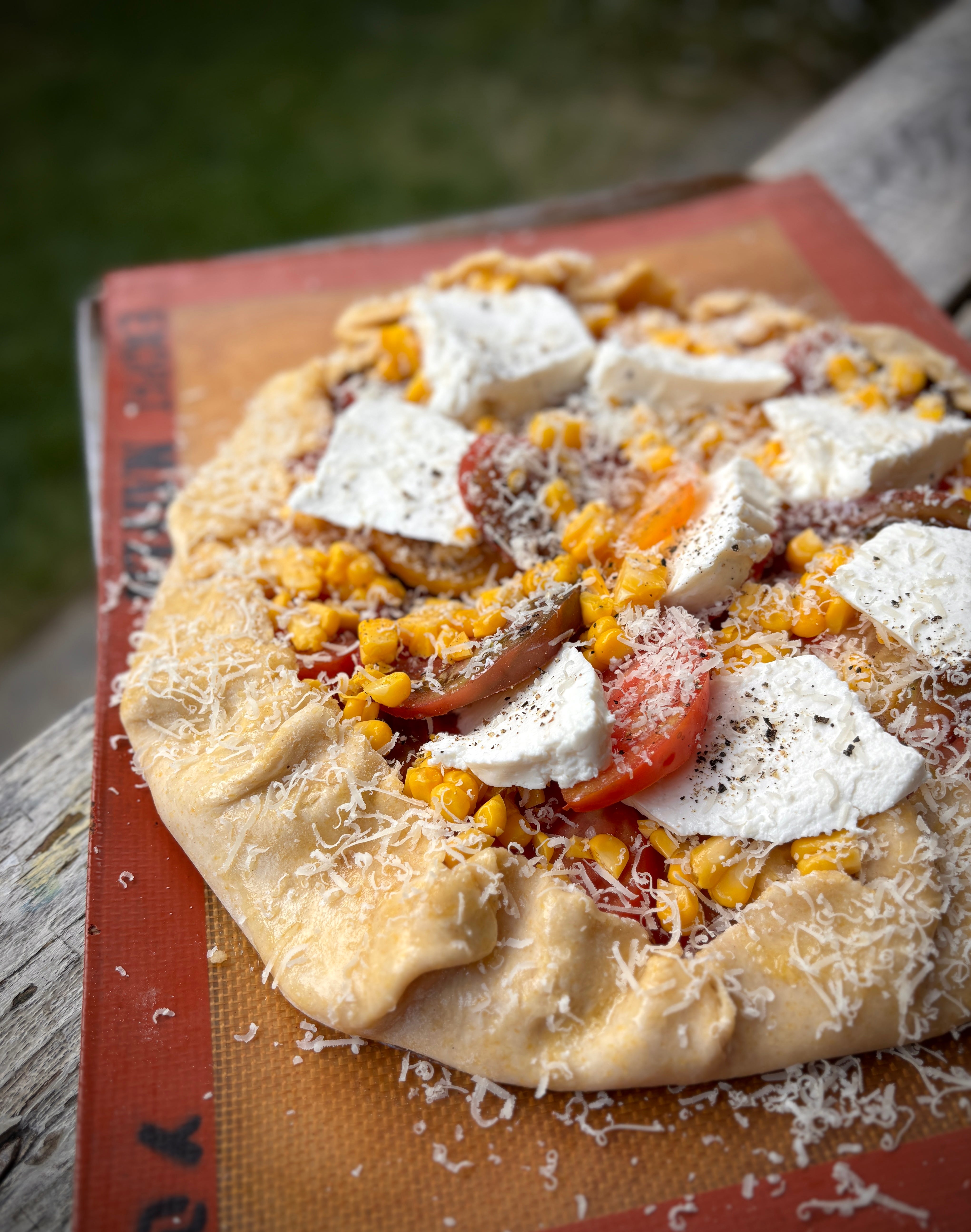
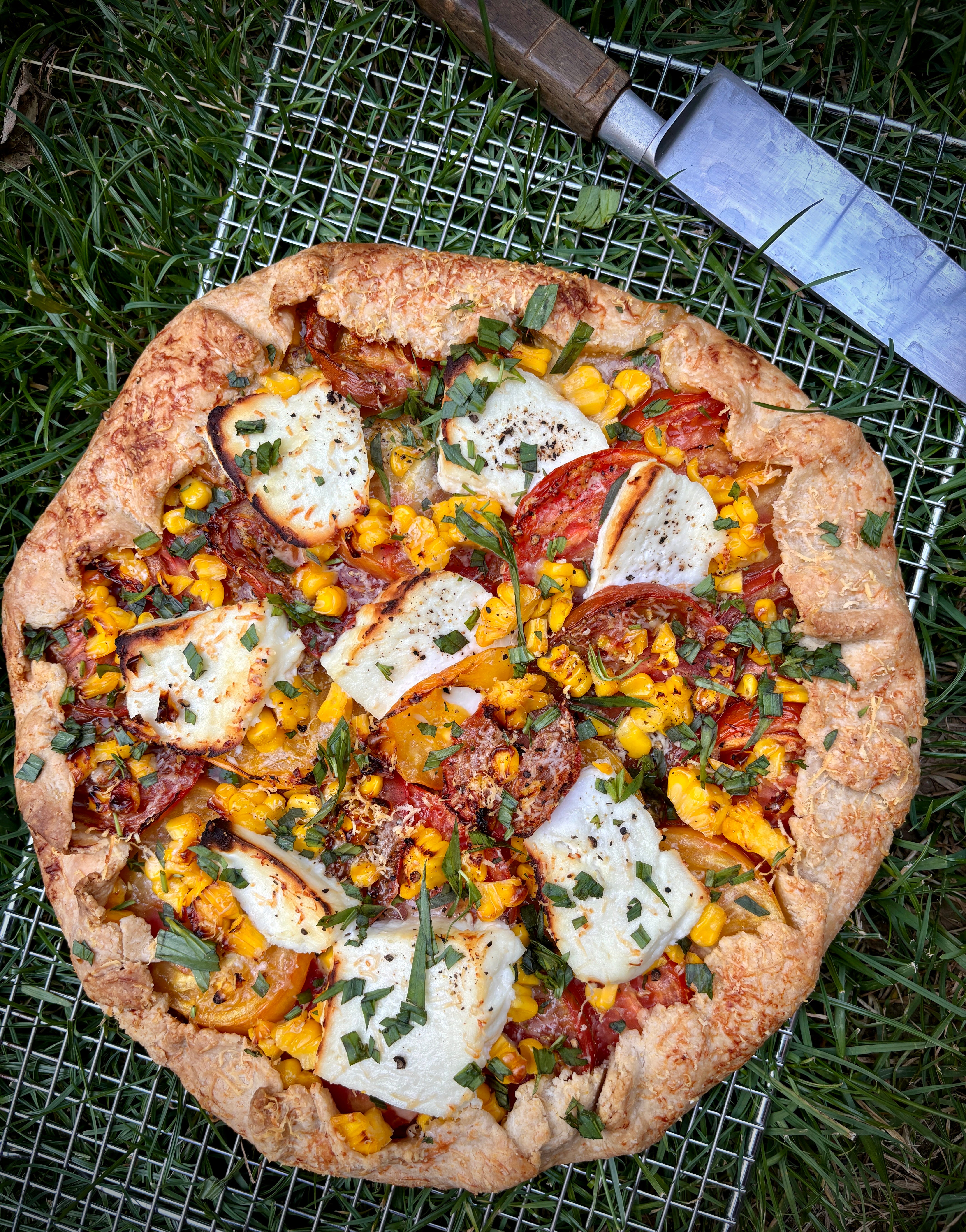
I sometimes top the tart with slices of fresh ricotta before baking, and if you’ve got fresh corn, you can add that as well.
Serves 8 (Although everyone always wants a second slice so realistically, it serves 4)
Polenta will make the dough a little less smooth to roll out, but I do like the taste and texture of the coarse bits of ground corn, so it’s worth it for the flavor. You can use fine polenta or cornmeal or additional all-purpose flour (or a whole-grain flour, such as teff or buckwheat) in place of the polenta if you want to leave it out.
I love fresh ricotta with this tart, but you could try it with another cheese that’s relatively moist but won’t melt into a puddle, such as feta or provolone.
I’ve added corn kernels to this tart before baking when I had a hankering for corn. (Fresh or frozen will work.) You can finish the tart with fresh herbs, such as basil, tarragon, savory, or parsley.
For the dough
1 1/4 (175g) cups all-purpose flour
1/4 cup (35g) polenta or cornmeal
2 teaspoons sugar
1/2 teaspoon salt
3 ounces (85g) unsalted butter, chilled and cubed
5 tablespoons (70ml) ice water, plus more if necessary
For the tart
1/4 cup (60g) Dijon or whole-grain mustard
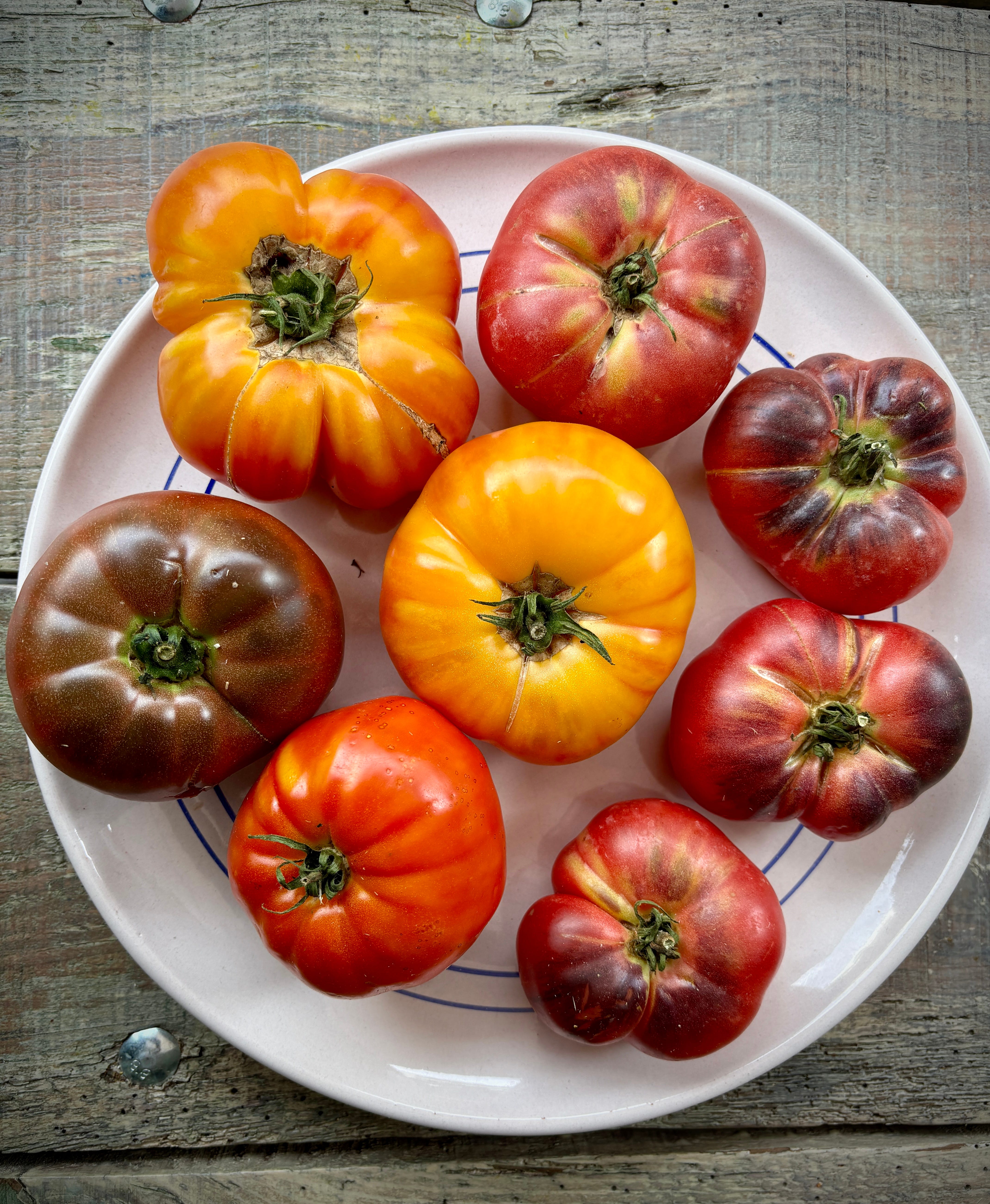
3 medium tomatoes (~1 1/2 pounds)
Salt and freshly ground pepper
6 ounces (170g) whole-milk ricotta
1 1/2 tablespoons melted butter
Parmesan cheese
To make the dough, mix together the flour, polenta, sugar, and salt in the bowl of a stand mixer fitted with the paddle attachment, or make it by hand by putting the dry ingredients in a medium bowl (and use a pastry blender or your fingers to mix the dough). Add the cubed, cold butter and mix until the pieces of butter are the size of large corn kernels. Add the water and continue to mix until the dough starts to come together. Use your hands to gather the dough and shape it into a disk. If the dough feels too dry to do that, add more water, 1/2 tablespoon at a time, until it comes together. Wrap the dough in plastic wrap or your favorite eco-friendly alternative and chill for at least an hour. (The dough can be made up to 3 days in advance.)
To make the tart, remove the dough from the refrigerator. Unwrap it and, holding the disk of dough perpendicular to the counter, rap the sides of the dough on the counter, turning it as you go, to soften the edges, which helps them stay together and not get too ragged when you’re rolling out the dough.
On a lightly floured countertop, roll the dough out to a 14-inch (36cm) circle, turning the dough and sprinkling more flour on the counter and the dough to keep it from sticking as you’re rolling.
Place the dough on a baking sheet lined with parchment paper or a silicone baking mat. Preheat the oven to 400ºF (200ºC) while you assemble the tart.
Spread a layer of mustard on the dough, leaving a few inches/centimeters empty around the perimeter, which you’ll fold over the filling later.
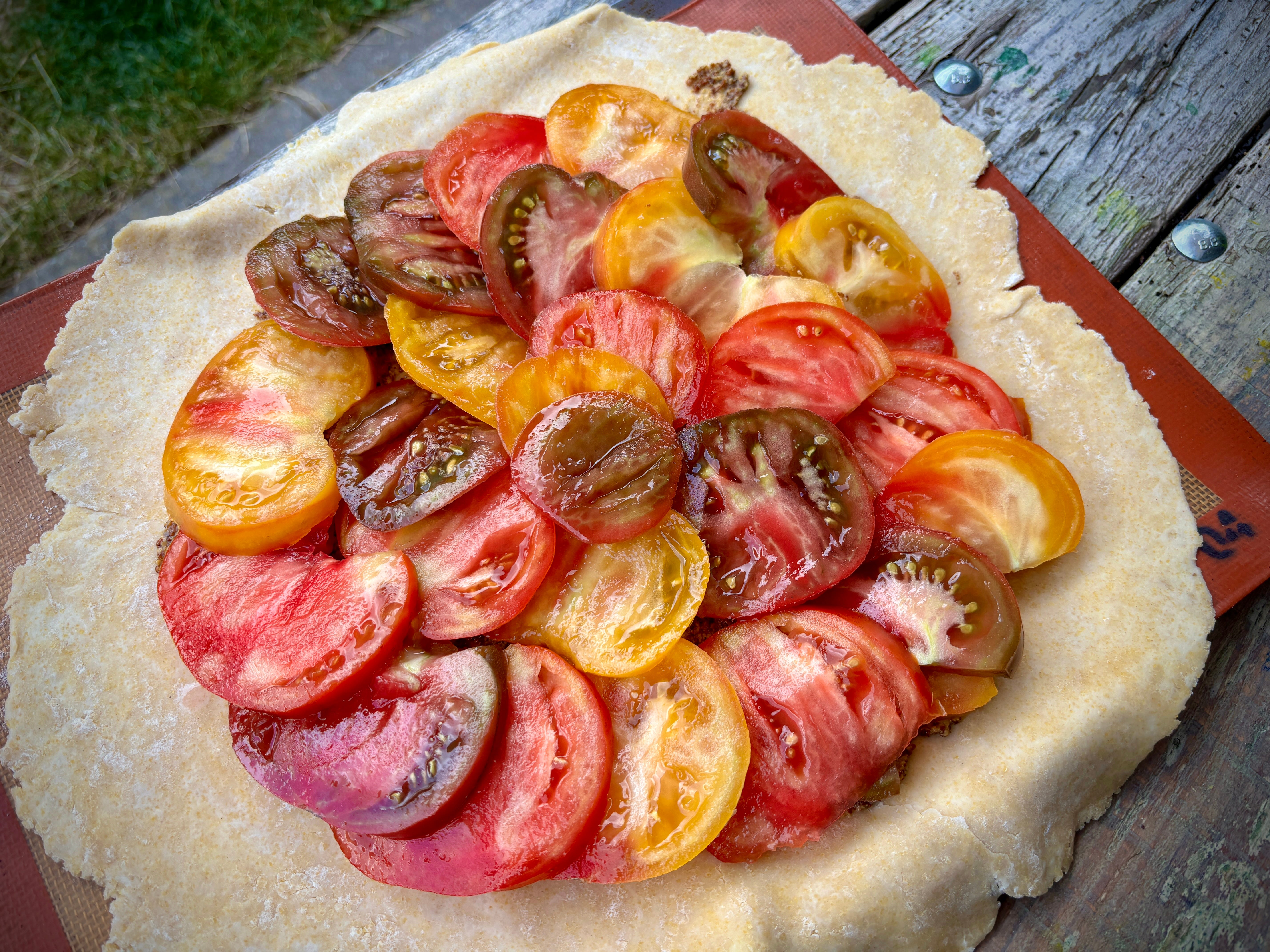
Slice the tomatoes about 1/3-inch (1cm) thick and layer them in concentric circles, overlapping them a little, over the mustard. Sprinkle the tomatoes with a little salt and freshly ground pepper. Fold the edges of the dough over the tomatoes to make an outer crust.
Place chunks of ricotta cheese over and, in some places, partially tucked under the tomatoes. Brush the edges of the dough with melted butter and grate Parmesan cheese over the entire tart, including the crust.
Bake until the tomatoes are soft and cooked through and the crust is dark golden brown, about 35-40 minutes. Slide the tart off the pan onto a wire rack and let cool for about ten minutes before serving.
Share David Lebovitz Newsletter
Subscribe to my newsletter to get more recipes, stories, and Paris travel tips. Free subscribers get some posts, and paid subscribers get all posts and the ability to participate in the community of commenters!
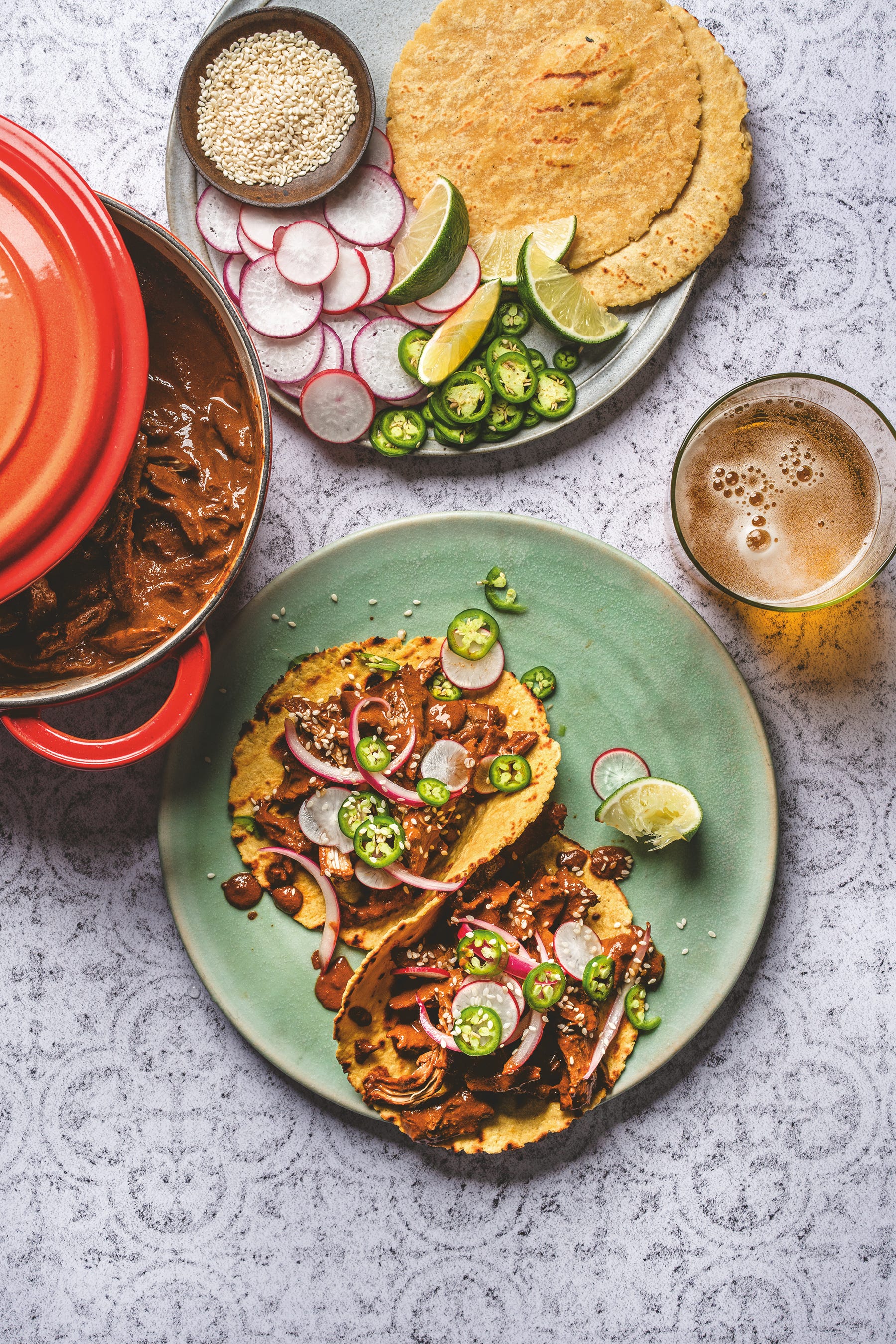
I met Carlos Moreno when he was delivering taco kits during the pandemic, when we all wanted to eat “out,” but were stuck eating in. Prior to that period Mexican food wasn’t well represented in Paris. (A lesser-known fact is that France tried to colonize Mexico twice in the mid-1800s.) I loved Carlos’ food and we had a few nice conversations on the sidewalk when he made his deliveries.
Since then he’s gone on to open his own restaurant in Paris, Comer. As I mention in the video, you might not think you want to go to a Mexican restaurant in Paris, but I can assure you that yes, you do. It’s really, really good.
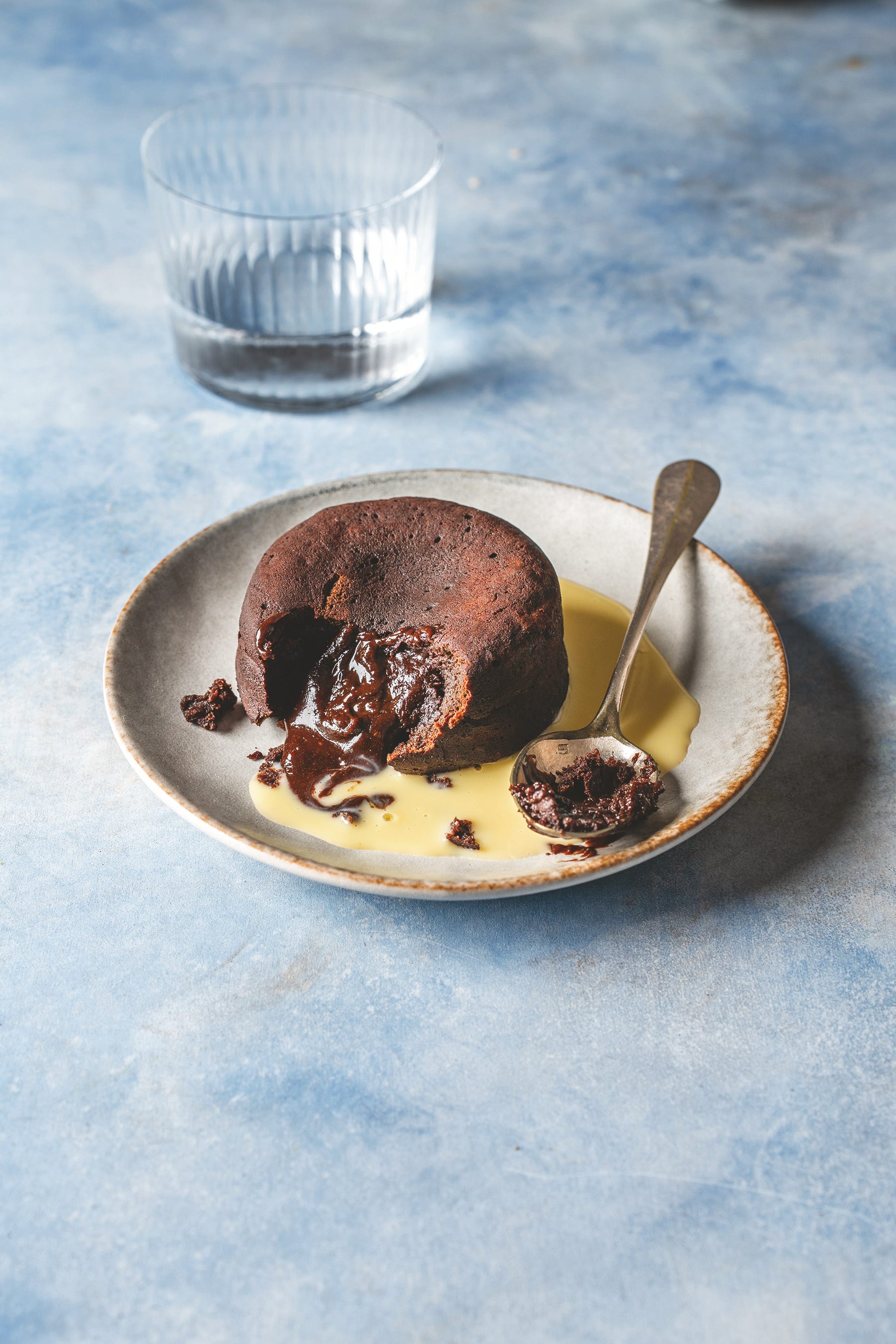
His cooking is based in traditional Mexican fare with lively moles and amazing salsas, as well as a menu that changes based on the season and what’s available, which includes tostadas with raw tuna crudo, peas and citrus, tacos with pork al pastor, a mille-feuille of fresh tomatoes with housemade salsa macha, and a truly melt-in-your-mouth horneado of beef. One item on the dessert menu that’s a particular favorite are his mole brownies, which are slightly spicy, and served with a vanilla atole sauce and mezcal.
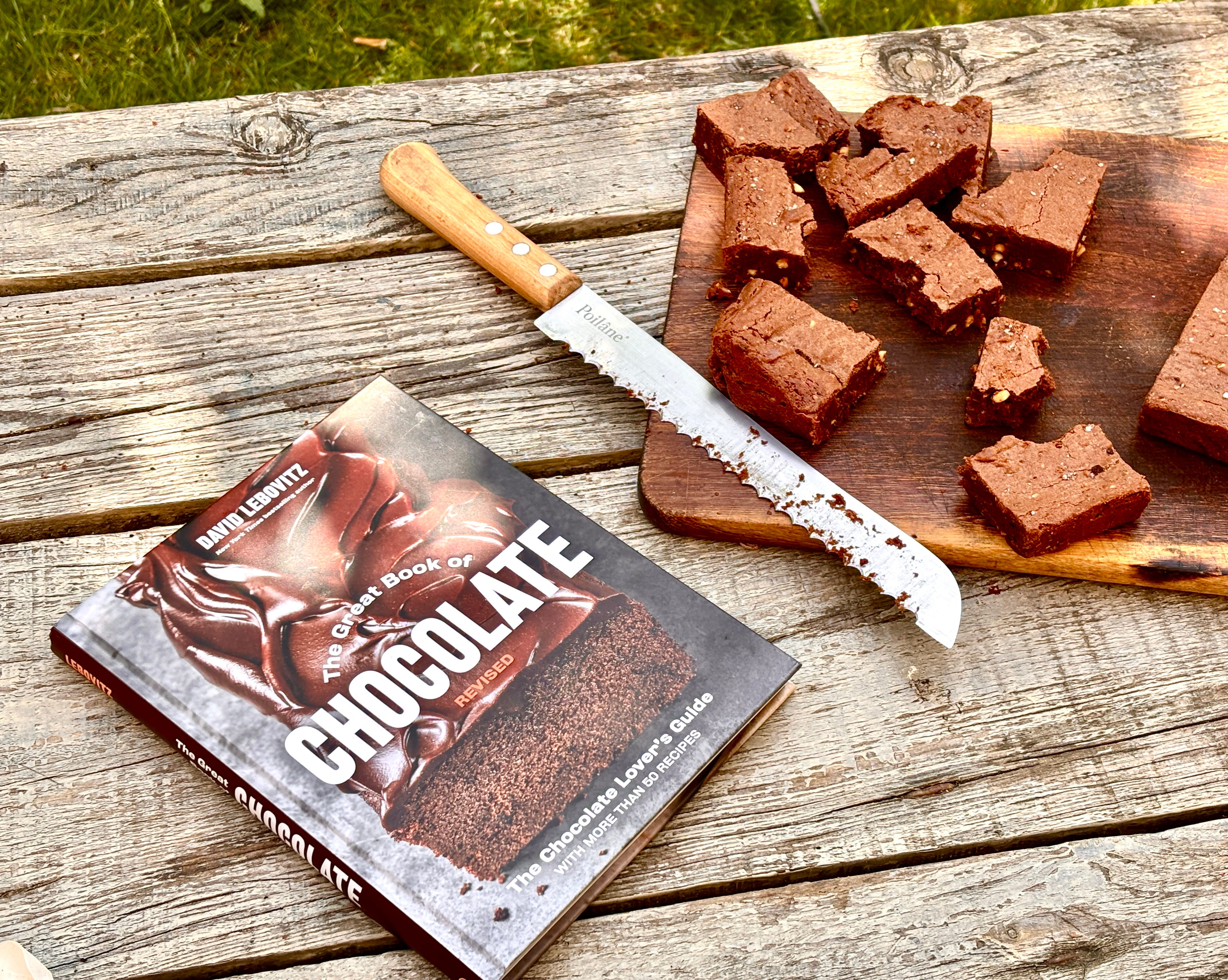
I was happy that when I asked Carlos to stop by and make his famous brownies with me, he said yes. We didn’t make the vanilla atole sauce (you can find my recipe here), which he spikes with mezcal at Comer, but the brownies were delicious all on their own. I hope you enjoy them as much as we did making them!
And if you’re in Paris, Comer is some of the best Mexican food you’ll ever have, anywhere.
Comer
96 rue d’Hauteville (10th)
Paris
Subscribe to my newsletter to get new posts, recipes, videos, Paris travel tips, and more, sent right to your inbox!
Get The Great Book of Chocolate

A few days ago I ran into our neighbor, who kindly invited us for dinner this weekend. She was the first neighbor we met in the building, over our shared back wall, and we hit it off, right off the bat. People in Paris can have complicated (or, um…thorny) relationships with neighbors, which I wrote about in my book L’Appart. But we scored with this one. We now trade keys, look after each other’s apartments when one of us goes away, accept packages for each other, and even call on each other if there’s an emergency.
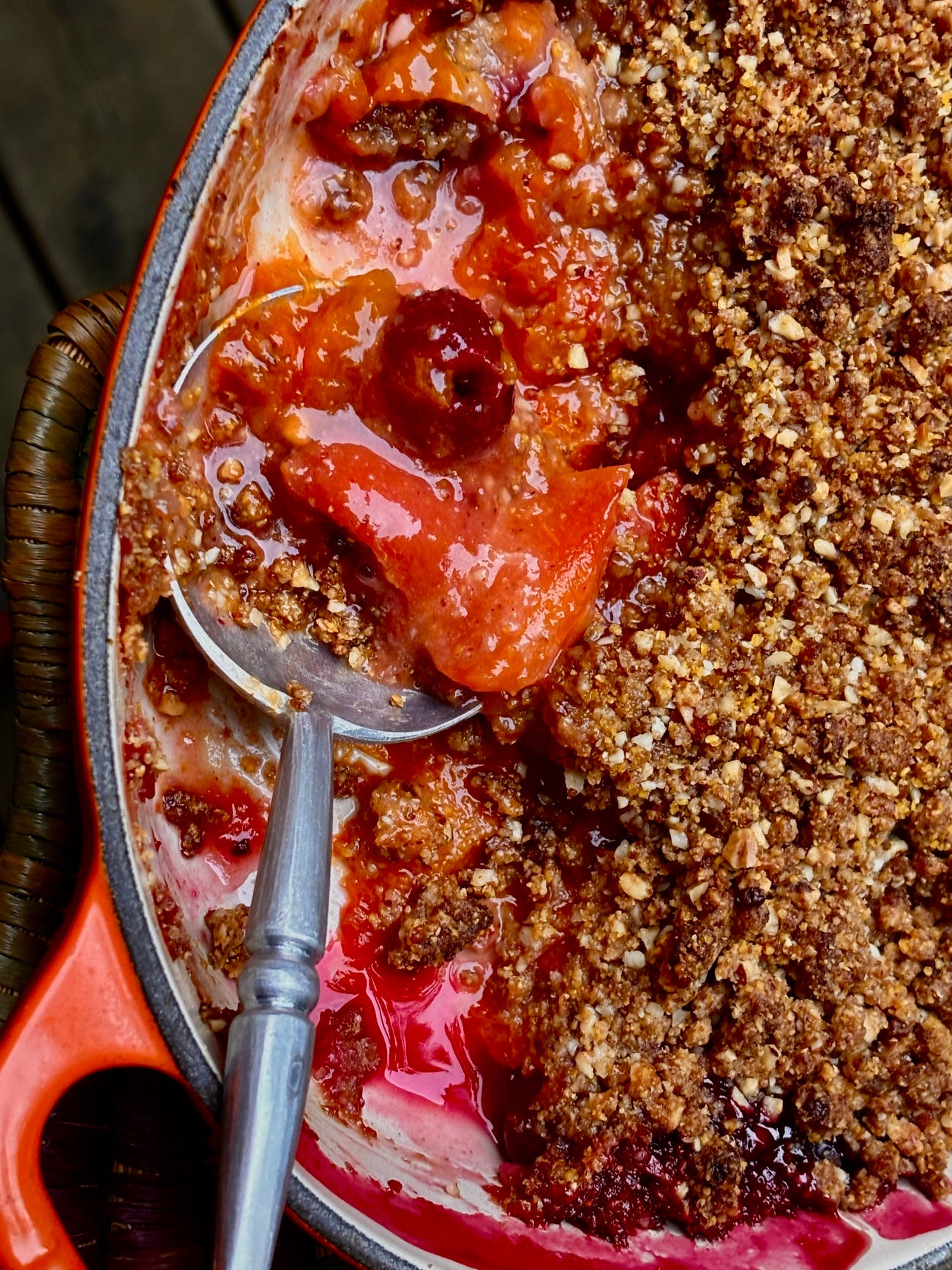
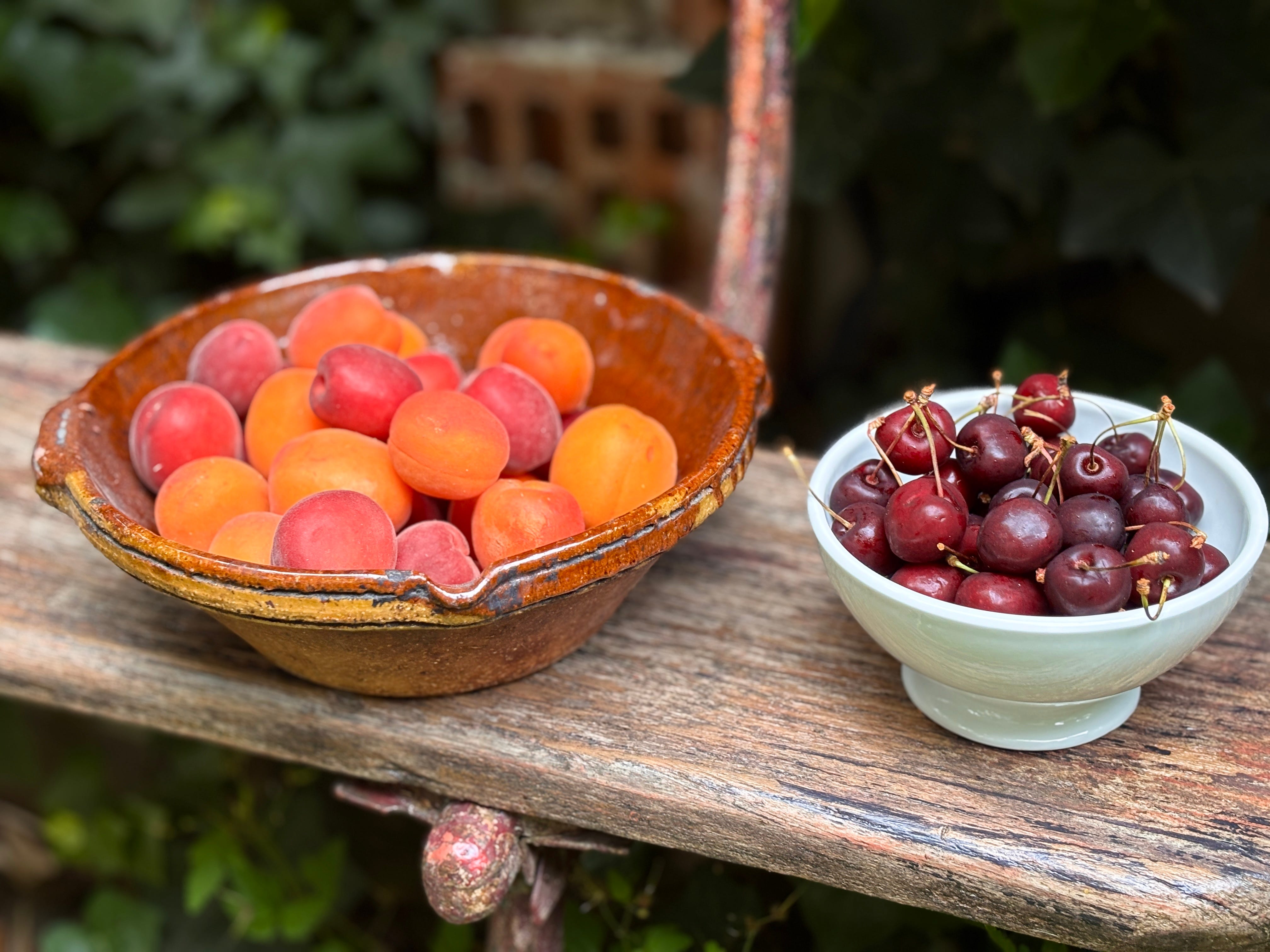
I offered to make dessert and decided to scoop up as many of the beautiful fresh apricots I could find, let them ripen a few days, and turn them into a fruit crisp, which are called crumbles in France. That’s a term picked up from our neighbors in England — un crisp doesn’t come off the tongue as readily as un crumble, but both sound a little funny to me with a French accent. But now that I’m on the 🇫🇷 team here, I call them crumbles, too.
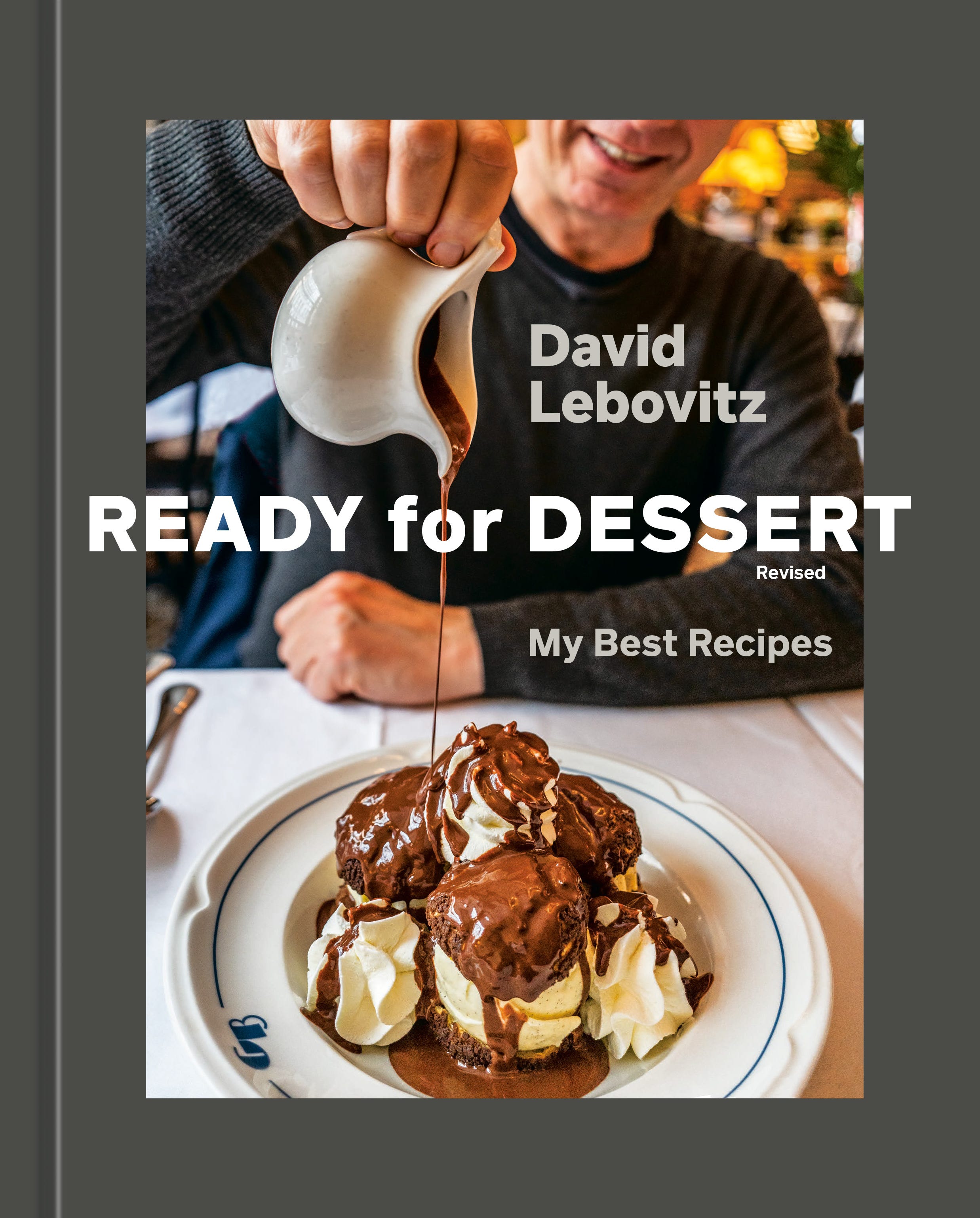
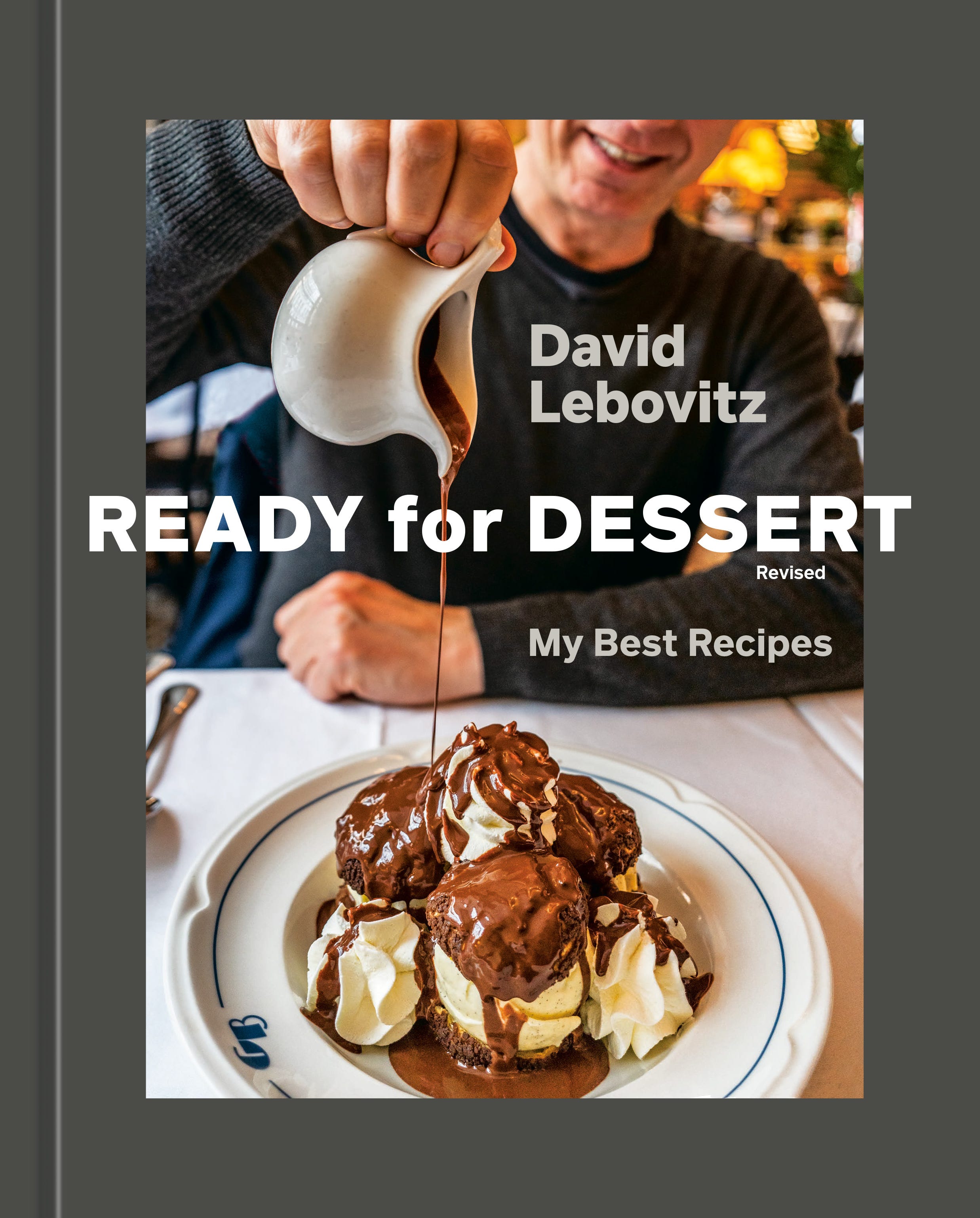
But for now, I’m going to write them as crisps, and this is my favorite, go-to crisp topping. What makes it extra-crisp is the addition of polenta. It’s from my book Ready for Dessert, which is subtitled my “best” recipes, and it really is the best crisp topping, if I do say so myself.
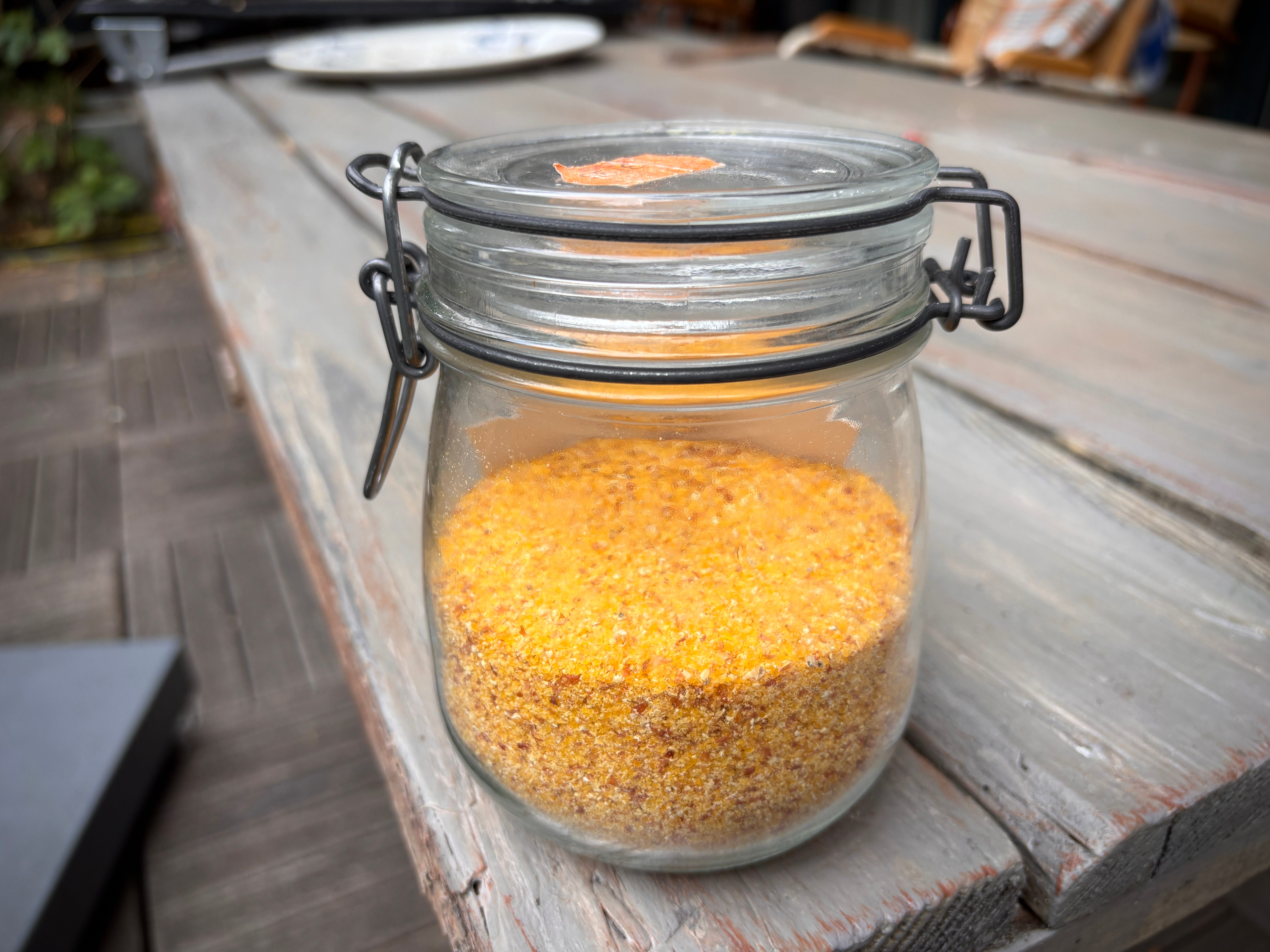
I use very coarse, stone-ground polenta since that has the most crunch, although regular polenta works well, and while I’m not as much of a fan of instant polenta as others are around here, that works too, as does cornmeal. As for the nuts, I generally go with almonds since they go well with stone fruits, but you can use walnuts or pecans if you prefer.
When I wrote my first book, back in 1999, I assumed people didn’t have food processors, although I think they may be more common these days? My KitchenAid food processor* has a broken bowl so the handle is filling with gunk, and they don’t sell replacements. I miss having a classic Cuisinart food processor, which I had in the States, and it was really a workhorse in the kitchen. (Even Wirecutter agrees with me.) But they’re not available in France.

I’m thinking of springing for a Robot-Coupe, although with a starting price of €1200 ($1390) 💸 I’m going to hang on to my food processor until the day dies, then consider my options.
While I prefer to mix the topping in a food processor, you can also mix it in a stand mixer with the paddle attachment, or by hand if you chop the nuts first. When I make it, I pulse all the dry ingredients until the mixture is sandy, then add the butter and pulse it rapidly a few more times, just until I see small clumps sticking together. I like large, discernible bits of crisp topping in the finished crisp rather than a smooth, sandy texture.
Subscribe to my newsletter and get more recipes, posts, and Paris travel tips, sent right to your Inbox! Paid subscribers get full access to all posts as well as the recipe archives.
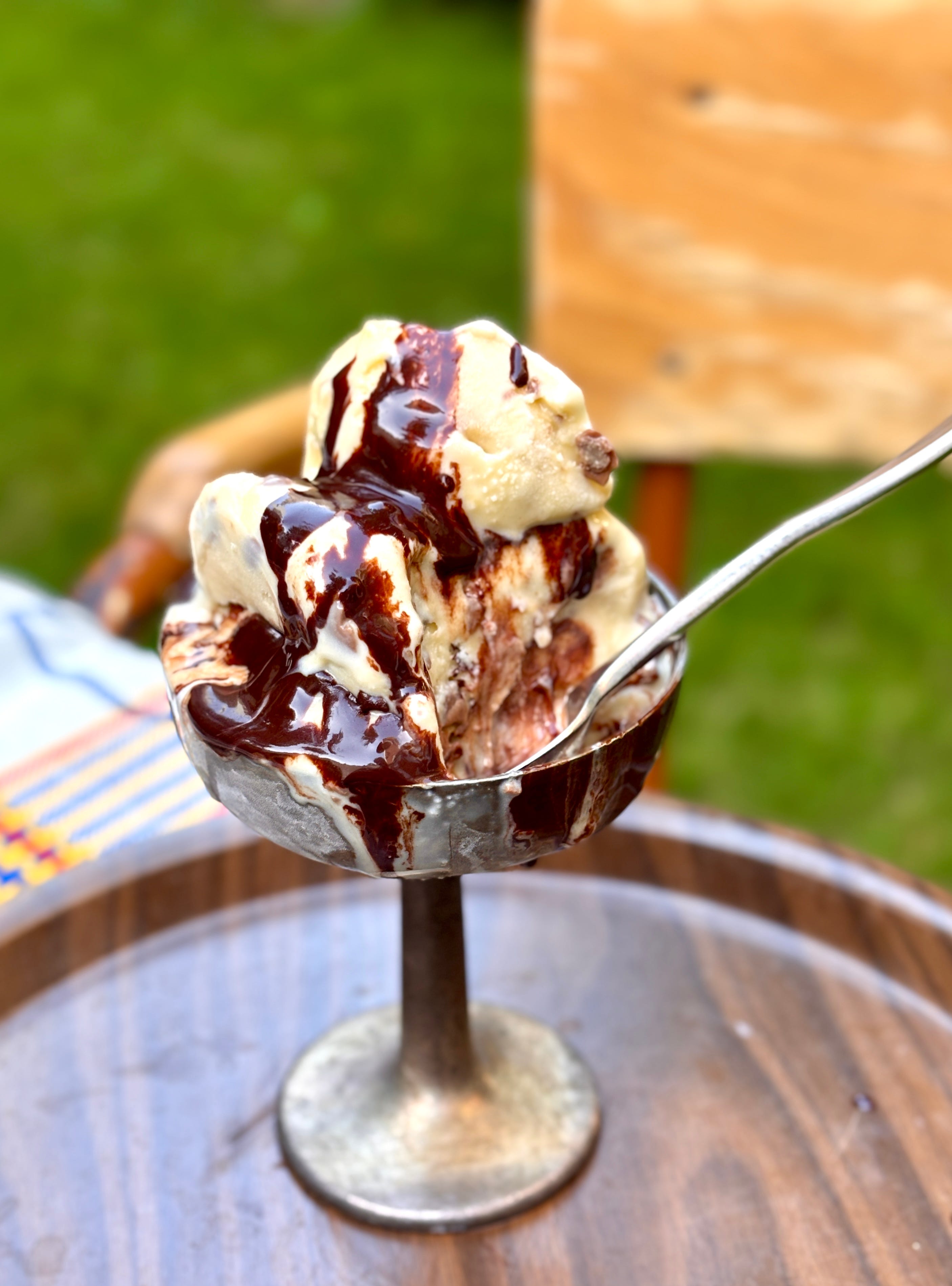
Ice cream, of course, is the preferred pairing with a warm fruit crisp. I just happen to have a lot of ice cream in my freezer at the moment, but the one I’m going to bring is the leftover apricot kernel oil ice cream that I made to impress a chef friend who came to make an upcoming video with me.
That was one of those recipes I shared back in 2008, when a few companies were making apricot or plum kernel oil, which has become harder to find. Some of it is sold for cosmetic purposes and isn’t intended for food use. I used the last of my bottle, but Vanilla, Cinnamon, White Chocolate-Fresh Ginger, or Malted Milk ice cream are great accompaniments, or just serve the crisp warm with a pitcher of cold heavy cream on the side.

Eight servings
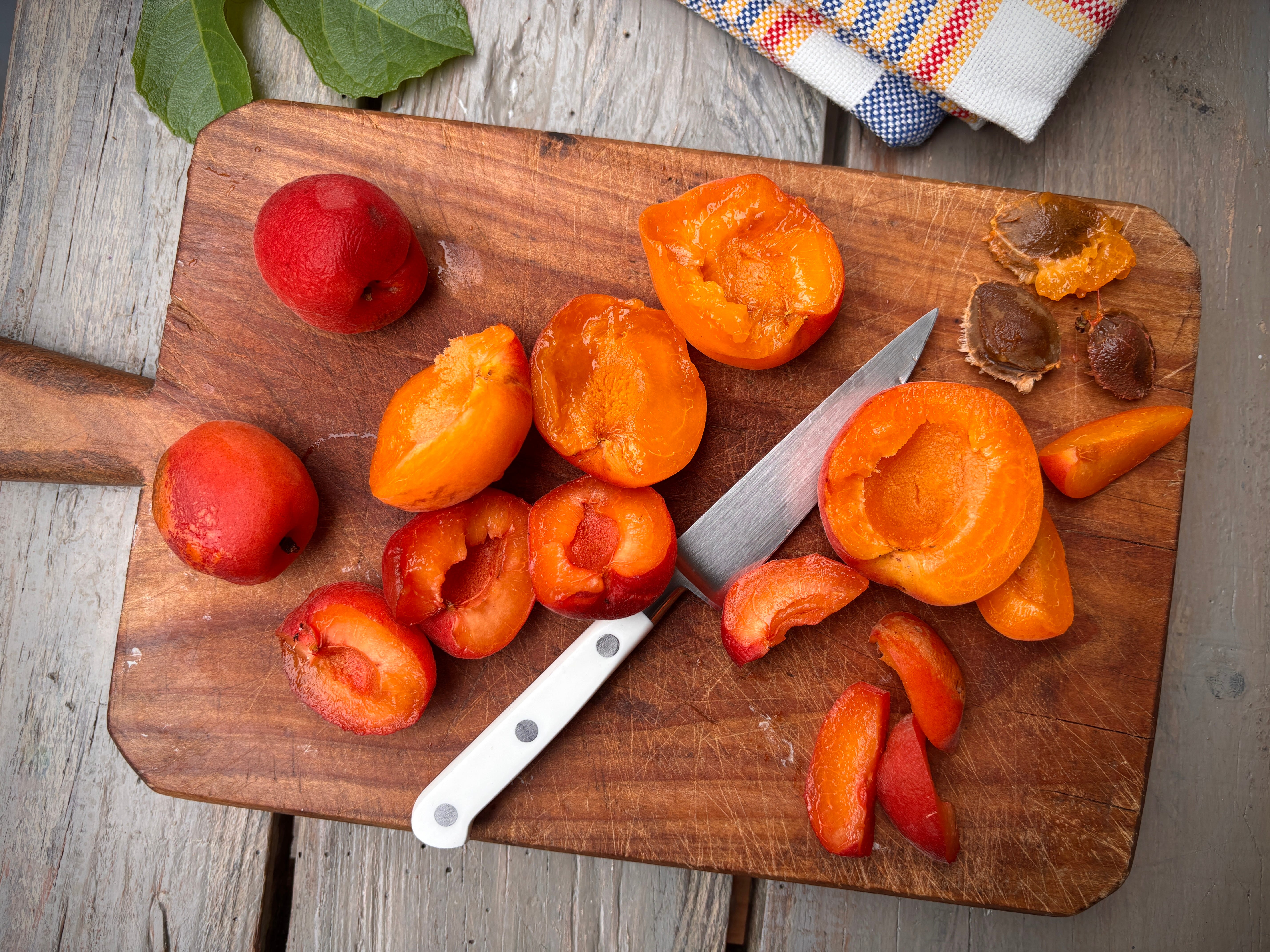
We’re fortunate to have a lot of fresh apricots available to us right now, but if you want to swap in slices of nectarines or peeled peaches, reduce the sugar in the filling to 2 tablespoons. In place of the cherries, feel free to swap in blackberries, blueberries, or raspberries, or just use more apricots.
In place of the kirsch and almond extract, you can use 1 teaspoon pure vanilla extract, total. You can make the topping up to one week in advance and refrigerate or freeze it.
Topping
3/4 cup (110g) flour
2/3 cup (100g) polenta
1/2 cup (65g) lightly toasted almonds, walnuts, or pecans
1/2 cup (90g) packed light brown sugar
1 teaspoon ground cinnamon
1/4 teaspoon salt
8 tablespoons (4 ounces, 115g) unsalted butter, cubed and chilled
Filling
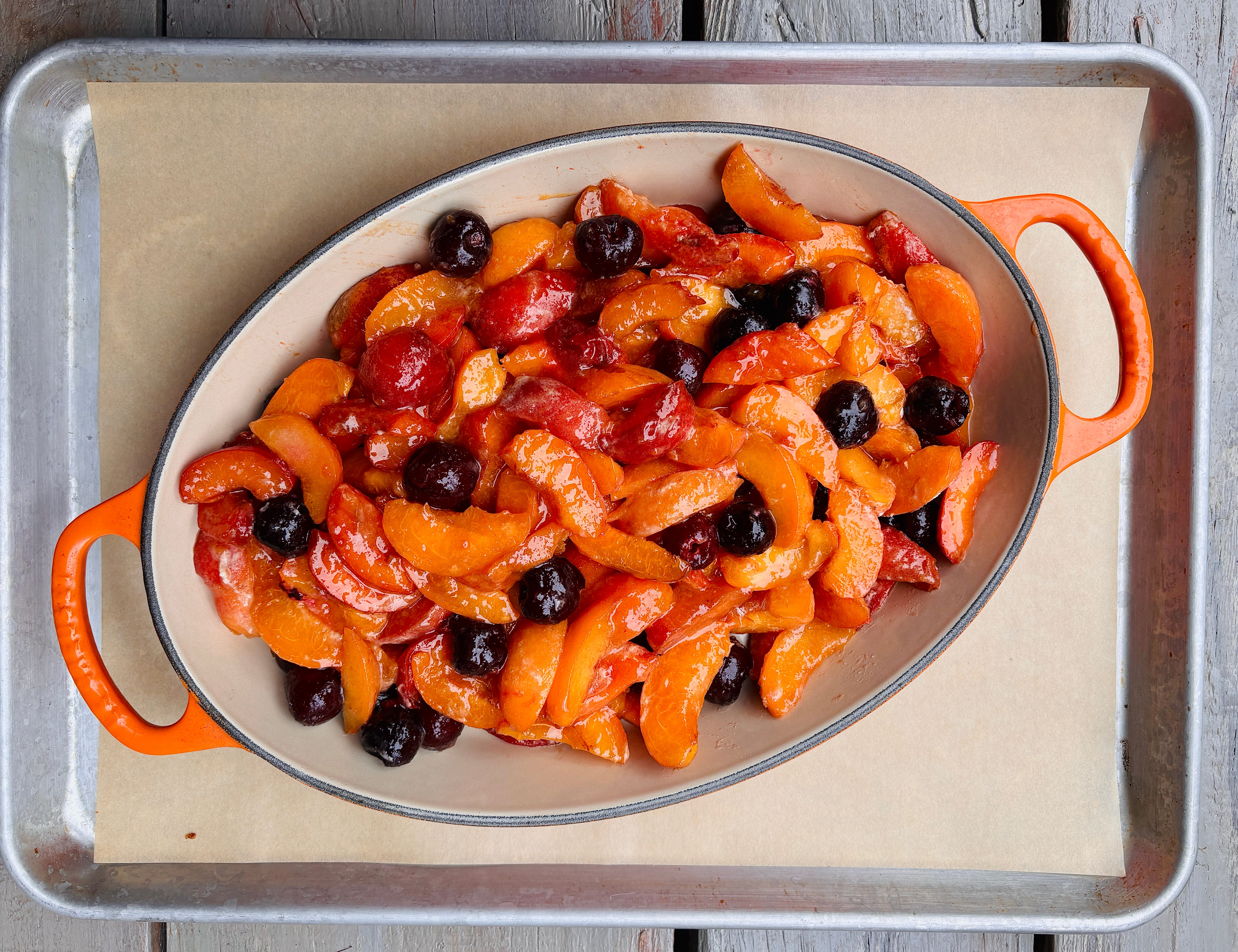
6 cups (3 pounds, 1.4kg) sliced, fresh apricots (cut into 1-inch/3cm) slices
1 cup (200g) pitted fresh cherries, sweet or sour
1/3 cup (65g) granulated sugar
1 1/2 tablespoons flour
2 teaspoons kirsch
1/8 teaspoon almond extract
Ice cream or heavy cream, for serving
Make the topping by pulsing together the flour, polenta, nuts, brown sugar, cinnamon, and salt, just until the nuts are slightly broken up. Add the cubes of cold butter and pulse until the butter is well integrated. Pulse a few more times until little bits of the mixture begin to clump together.
Preheat the oven to 375ºF (190ºC).
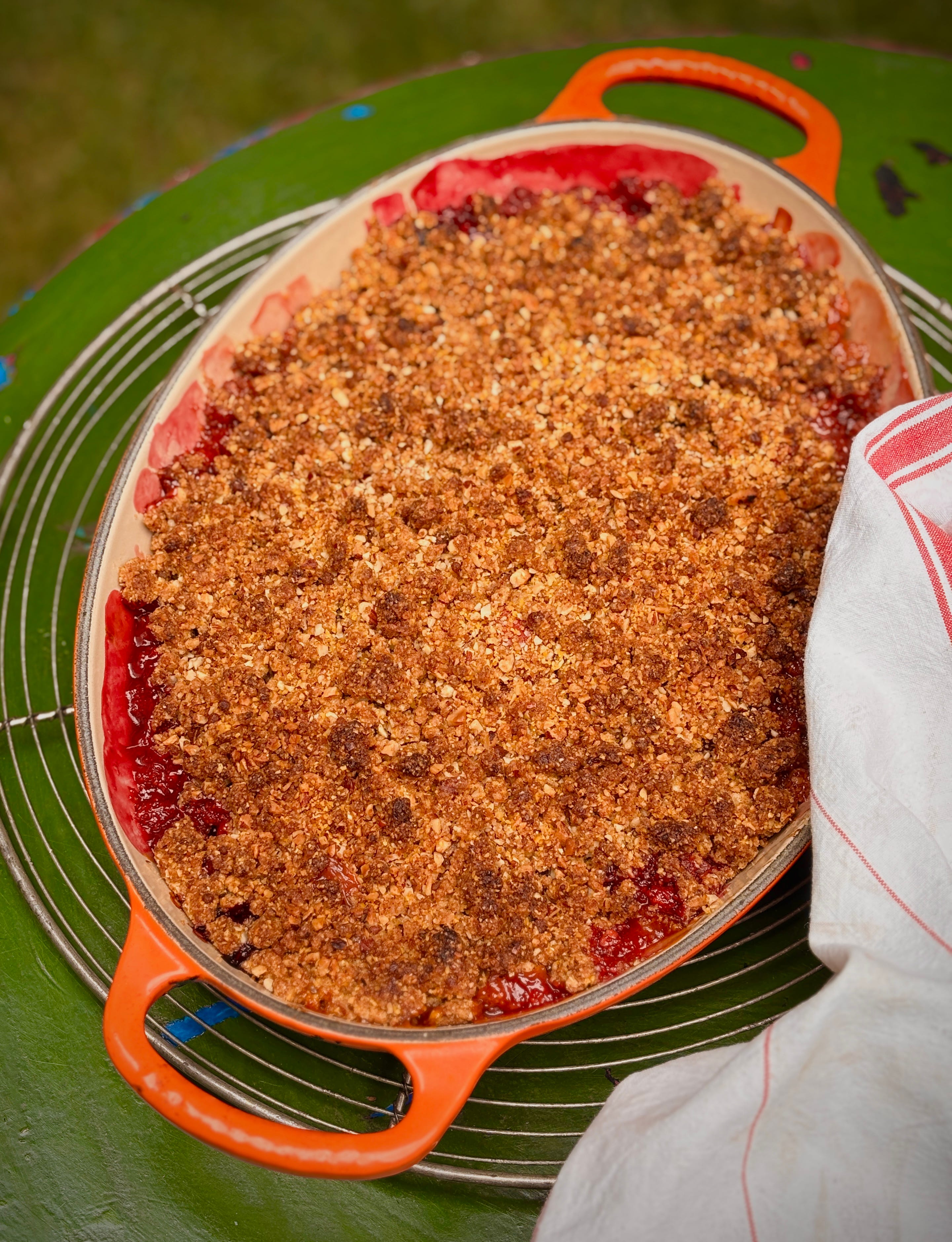
To make the filling, in a medium bowl, mix together the sliced apricots, cherries, sugar, flour, kirsch, and almond extract. Spread the fruit into a 2-quart (2L) baking dish, then strew the crisp topping evenly over the fruit. Resist the urge to press it down so it’s completely flat; I think it’s best when it’s a little unevenly baked, so you get lots of crunchy bits here and there.
Place the baking dish on a baking sheet lined with parchment paper or aluminum foil, shiny side down. Bake in the oven until the top is golden brown and there are thick juices bubbling up around the edges. When you poke a paring knife into the center, if it meets no resistance, it’s done. If the topping is getting too dark before the fruit is fully cooked, you can drape a sheet of aluminum foil over the top and finish cooking.
The exact baking time depends a bit on the ripeness of the fruit but will take around 40 minutes to bake. Serve warm or at room temperature, with a scoop of ice cream or heavy cream.
*A number of people chimed in the comments, a few saying Cuisinart makes replacement bowls, but my current food processor is (or was) made by KitchenAid, and I’ve not been able to find a replacement bowl after a considerable amount of searching. (I’ve had mixed results ordering replacement parts online. A few times the item didn’t fit the machine I had, even through the item description said it did.
The model number of my KitchenAid food processor is #5KFPM771EWH0 - if anyone finds one, let me know : )
Thanks for reading my newsletter! Feel free to share it.
When you write a cookbook, a question people frequently ask is, “What’s your favorite recipe in the book?” It’s hard to say because if a recipe wasn’t one of my favorites, I wouldn’t have put it in a book. I don’t have kids, but some people say that’s like asking a parent who their favorite child is. (Although I suspect if that question was asked to parents anonymously, some might have an opinion on that.)
When a recipe goes in one of my books, it’s generally been tested between three to five times, minimum, and sometimes up to seventeen, which was one recipe I got particularly obsessive about. (Often if I don’t get it by the sixth or seventh try, I give up because I think it just might be too fussy or difficult.) Years ago I was at a culinary conference talking with Flo Braker, an expert baker and cookbook author, and a young woman came over to us, who said she was working on her first cookbook. “Sometimes I have to test a recipe three times!” she told us.
When she walked away, Flo turned to me and said, “Oh my goodness, you’re lucky if you get it right by the third try.”
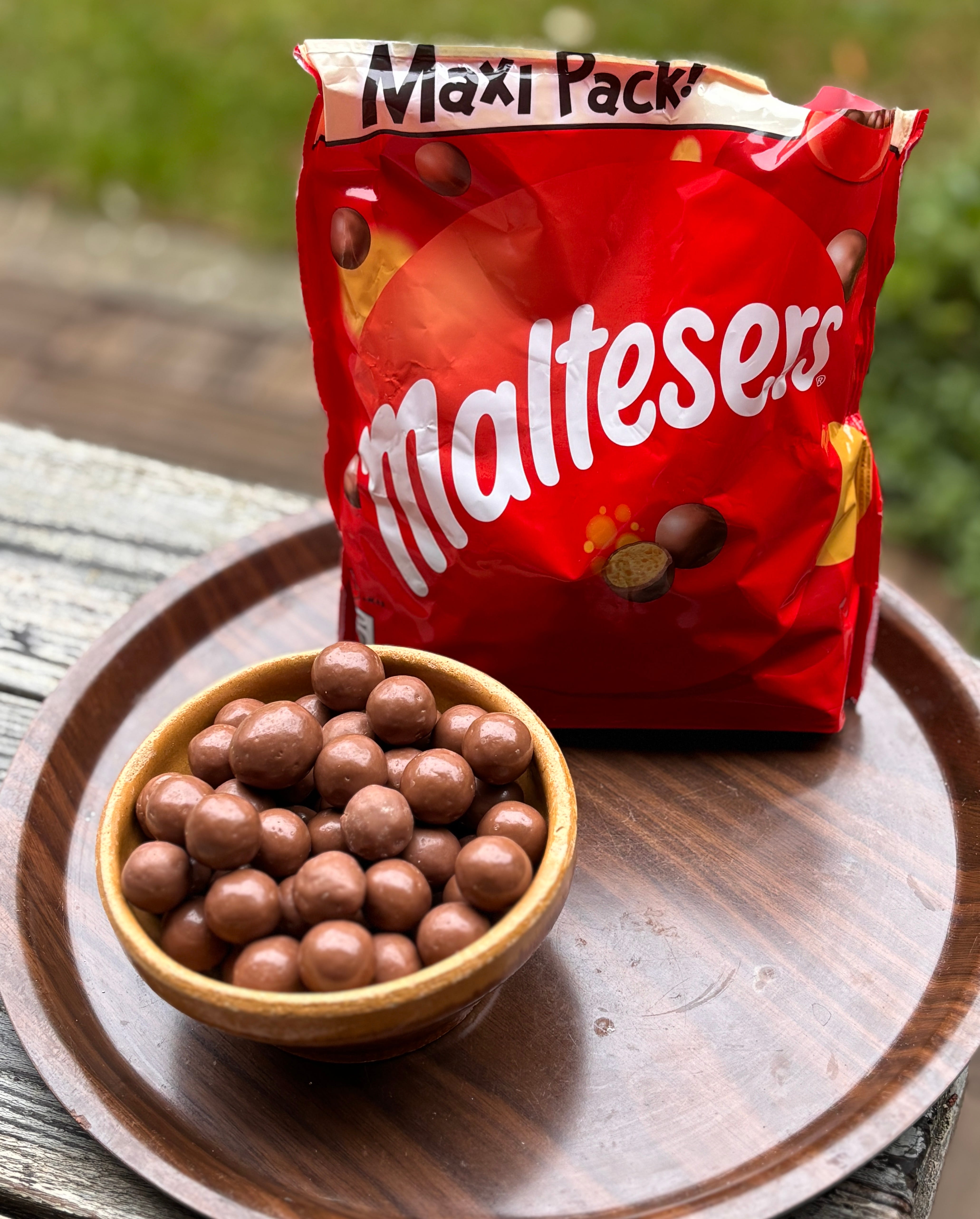
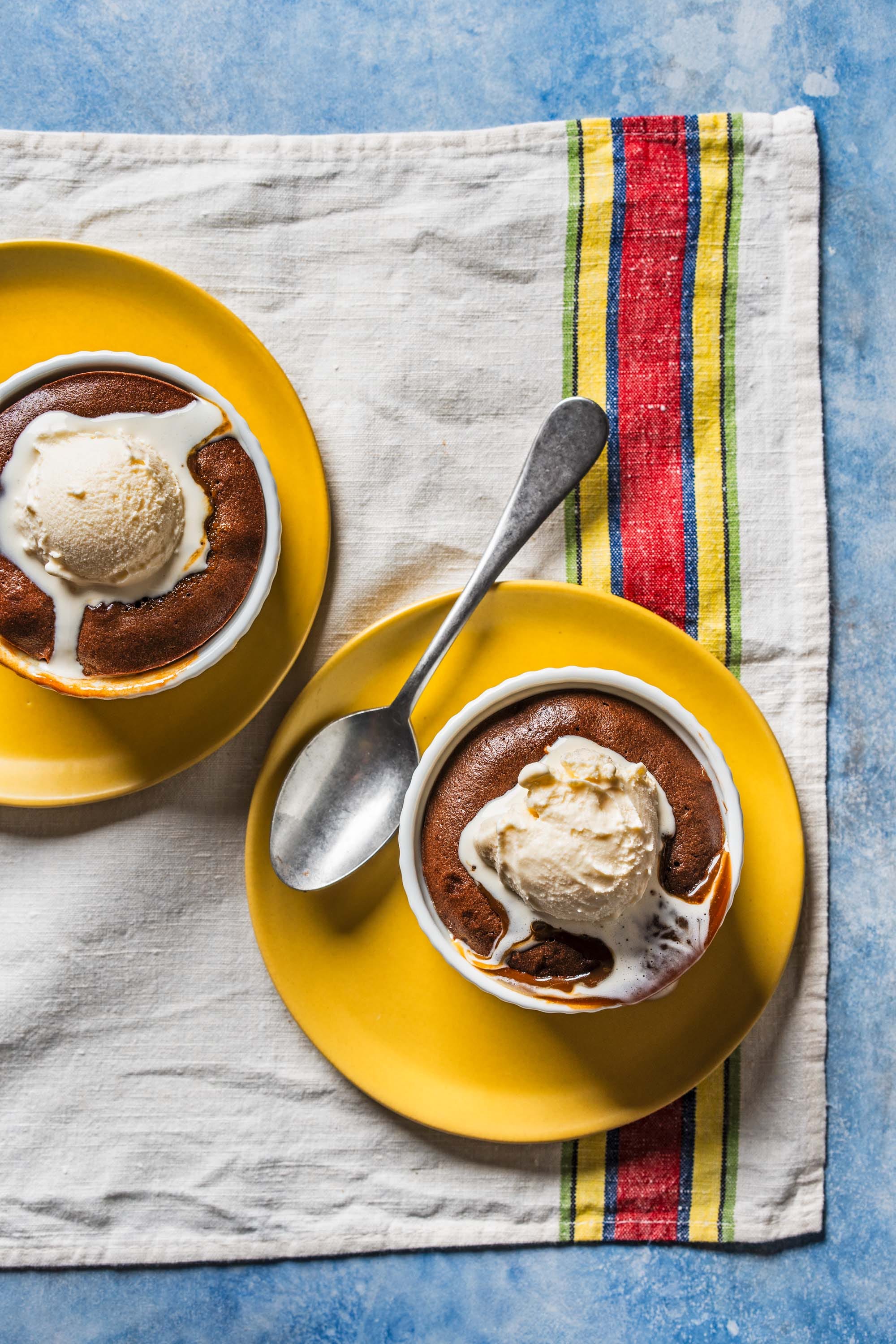
When The Perfect Scoop came out, I had an unofficial system of calibrating which recipe was my favorite. Because I was churning up so much ice cream, and a freezer can only fit so much ice cream in it, I had to give my trials away as fast as I could to make room for subsequent batches. But the one I didn’t give up was this one: Malted Milk Ice Cream.
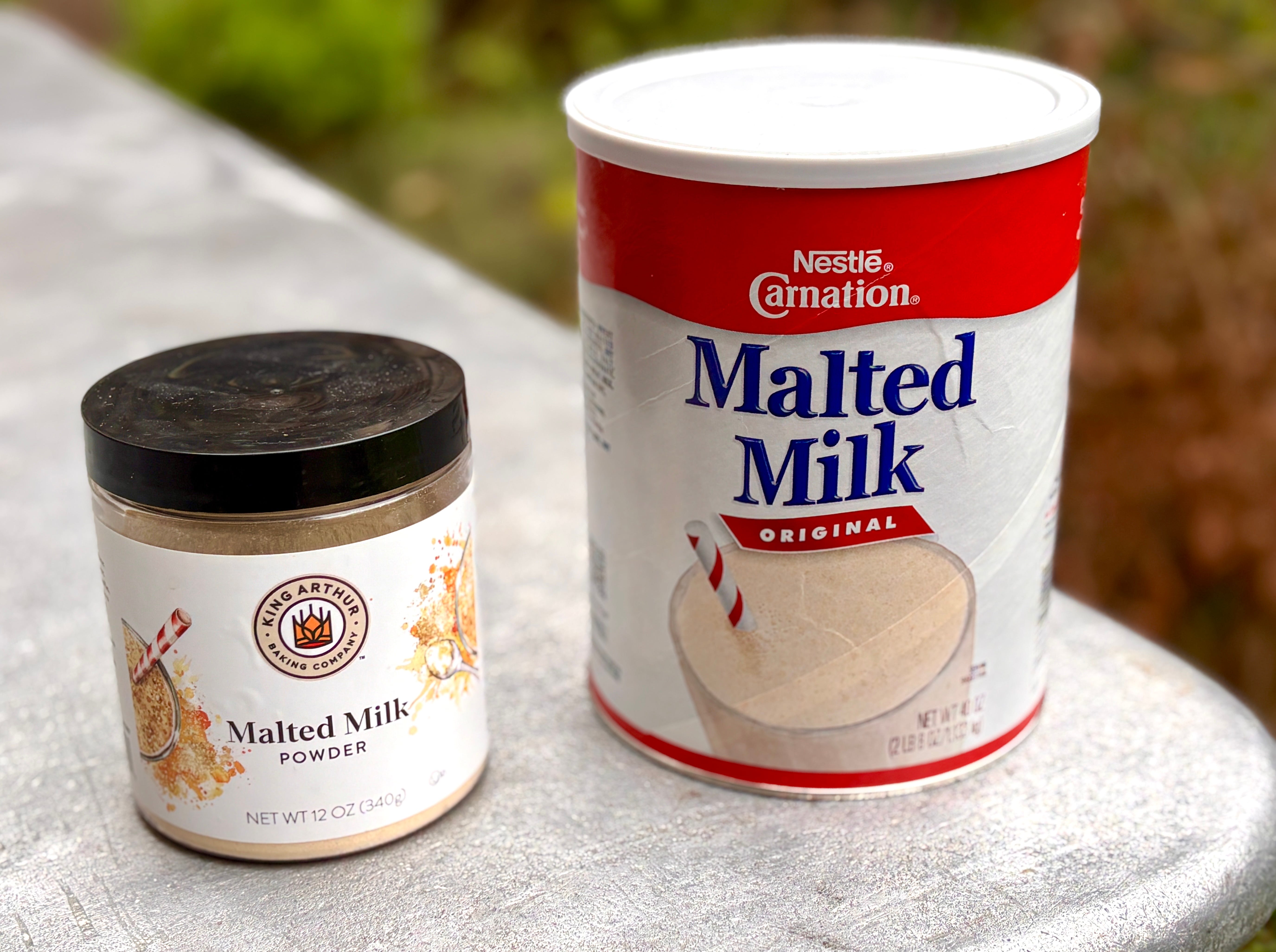
This year I was happy to revise and update two of my books: Ready for Dessert and The Great Book of Chocolate. Anyone who cooks or bakes knows that when you make the same thing over and over, after a while, you might change an ingredient, or figure out a new technique for making it that’s faster or more effective.
I thought - why not toast the malted milk powder first? How smart would I be, adding that step to the recipe? Feeling very satisfied with myself, I started heating the powder in a skillet and within a few seconds…

As someone who is passionate about cookbooks, I’m always up for talking about them with other cookbook collectors. I know there are lots of cookbook collectors out there, but one who really stands out is , who writes the Cookbookery Collective newsletter, which she describes as:
…a hub for the cookbook community—authors, eaters, cooks, editors, publicists, publishers, agents, and aspiring authors alike. It’s a place to celebrate all cookbooks, new and old, blockbuster and under-the-radar. It’s a place to hear from your favorite authors and talk amongst ourselves in the comments section. It’s a place where everyone is welcome, whether you have just a handful of beloved books or a collection in the hundreds.
David Lebovitz on Apple Podcasts
I couldn’t have said it better, except to add what a wonderful resource Jenna, and her newsletter, have become to the cookbook community, which features interviews with cookbook authors, including me…
…plus seasonal round-ups of the latest cookbooks to hit the shelves, previews of cookbooks that are about to be released, as well as recipes from her favorite cookbooks.
Not only does Jenna write a newsletter, she’s also the food director at Real Simple magazine, the author of five cookbooks, and runs a personal chef business. Whew!
In addition to her other activities, Jenna is now a novelist, having penned her first novel, coming out this Fall, The Foreign Correspondent’s Wife, a mystery set in Paris.

Get The Foreign Correspondent's Wife
I was thrilled to get a chance to sit down for this podcast episode with Jenna to talk about our favorite subject: Cookbooks! We talked about everything, from what makes a good cookbook (and what drives her crazy in a cookbook) to how she decides which cookbooks that cross her desk she holds on to, and which ones she lets go. We also discussed what she thinks of influencer cookbooks, and talked about one of the big questions of our time - how will AI affect cookbooks, and will it (or can it) replace them.
Subscribe to my newsletter to get future podcasts, videos, recipes, and Paris travel tips, sent right to your inbox!
I hope you enjoy my chat with Jenna as much as I did…and let us know in the comments what are some of your favorite cookbooks, and why.
- David
Follow Cookbookery Collective and Jenna Helwig on Instagram
Visit Jenna Helwig’s website
Subscribe to the Cookbookery Collective newsletter
Subscribe to Cookbookery Collective
My book tour was fun, which was how I spent most of May, with a final stop in Paris. Along the way, it was amazing to meet so many of you, including readers and followers, as well as other cookbook authors, bakers, owners of cookbook shops, chocolate-makers, and Paris-lovers.
I was bowled over by the turnout at my events and my only wish was that I could have done more, although it’s hard to be away from home longer than three weeks, and it takes the better part of the week after you return to get over the jet lag and catch up on everything that happened while you were away. Such as somehow in my absence, something smelling like industrial-strength mint syrup (or cleaner?) was put into the refillable spray bottle of locally made, eco-friendly bathroom cleaner that we use, and no one knows what it is or how it got there.
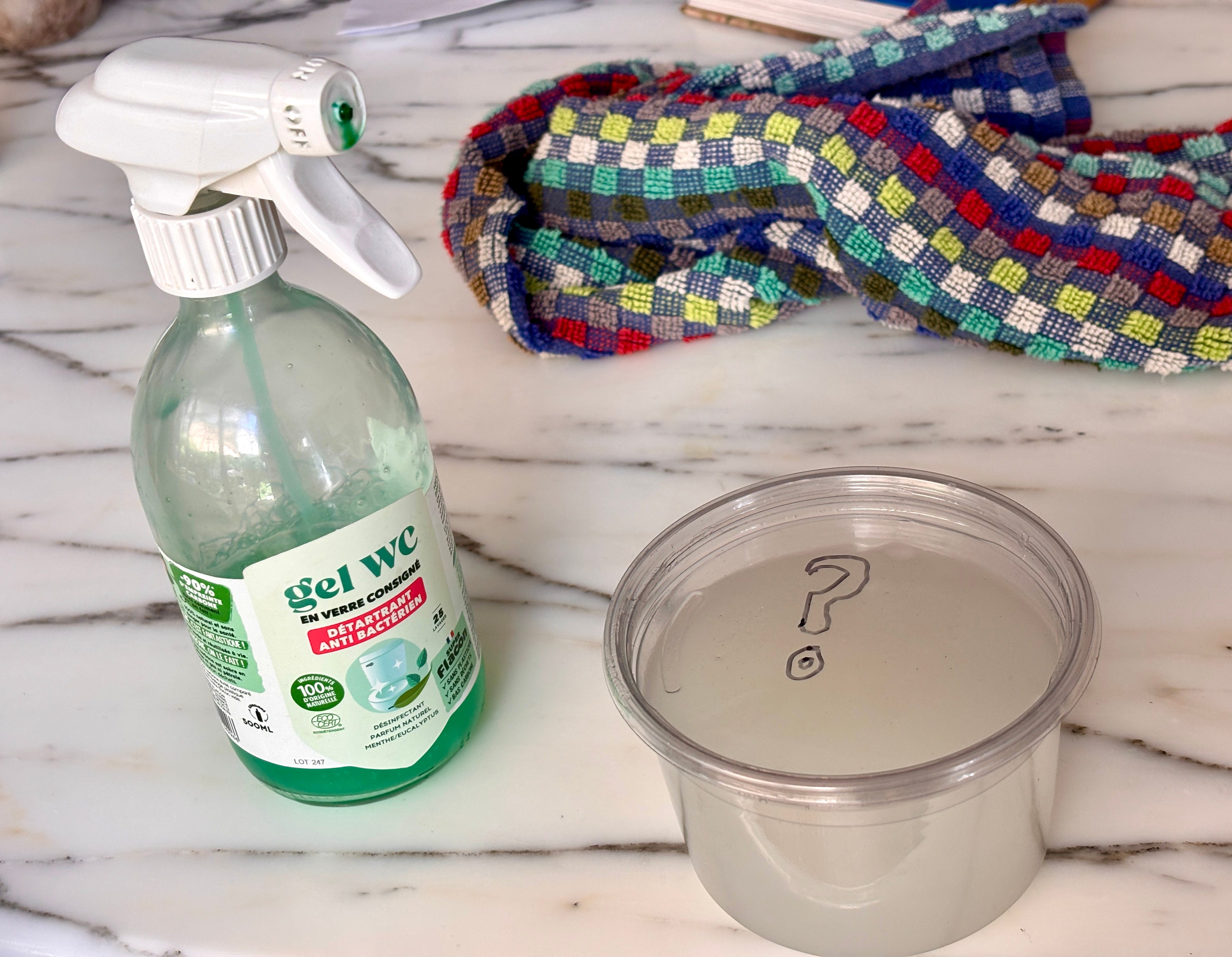
If anyone has a clue, kindly tell me. I don’t know whether to clean the bathroom with it, or mix it with sparkling water.

As anyone who’s traveled lately knows, things have become a lot more challenging both on the ground and in the air. I give a lot of credit to people who work in airports and on airplanes, as well as travelers who can handle the rigors of travel.
Well, except for the guy next to me on the flight from SFO to LAX, who loudly used his phone just until the last nanosecond when we took off, then continuing the conversation, equally as loud, timed exactly at the moment the wheels of our plane touched ground.
All of us in rows 12-22 (but especially me) got to hear all about how Carol wasn’t in on the meeting but Bill and Warren were, and Pam doesn’t know about it but they’ve got to get the files to the branch in Tennessee, although if they don’t make it there, Tom is going to have a meltdown, and Bill and Howard in other branch offices are going to have to cover for them. I learned that Susan may have to be looped in for the meeting about it, but not to tell Carol. I don’t know what that guy does, but it must be important enough to interrupt the lives of everyone around him.
I’ve always found this post about what authors should do, and shouldn’t do, on book tours pretty spot-on. I think I followed most of them, although I’m waiting for someone to write one about how not to behave on airplanes, which people should have to sign a paper stating that they read it and agree to its terms.
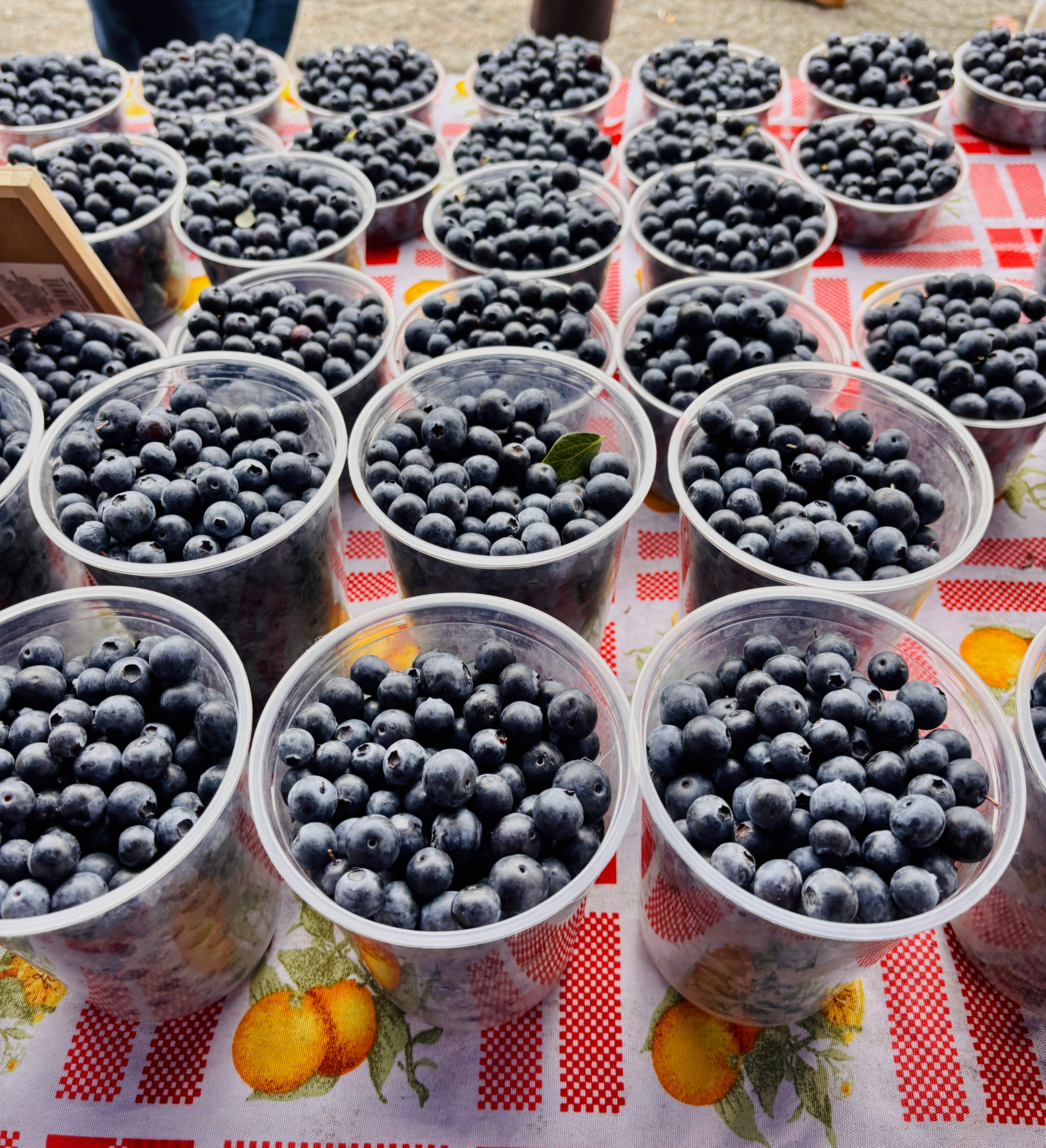
I tried to use my downtime wisely, to keep my energy high for meeting everyone. But one thing I recommend that everyone do on the road is to eat well. It can be hard to get your fruits and vegetables in when you’re traveling, which, curiously, is one of the things that American visitors tell me they miss when they’re in France. (If you want fruits and vegetables, rather than looking in cafés and restaurants, it’s best to go to the markets to pick them up.) Maybe our reputation precedes us, but when I come across a salad bar when I’m traveling, in spite of the Debbie Downers about them, it feels really good to have a big bowl (or box) of spinach, cherry tomatoes, tofu, florets of broccoli, grated raw carrots, some proteins, and even alfalfa sprouts, which Pee-wee Herman said, look and taste like hair.
It’s nice to eat “healthy” whenever you can….so you can indulge when something extra-delicious crosses your path, such as this incredible Tin Roof Sundae…
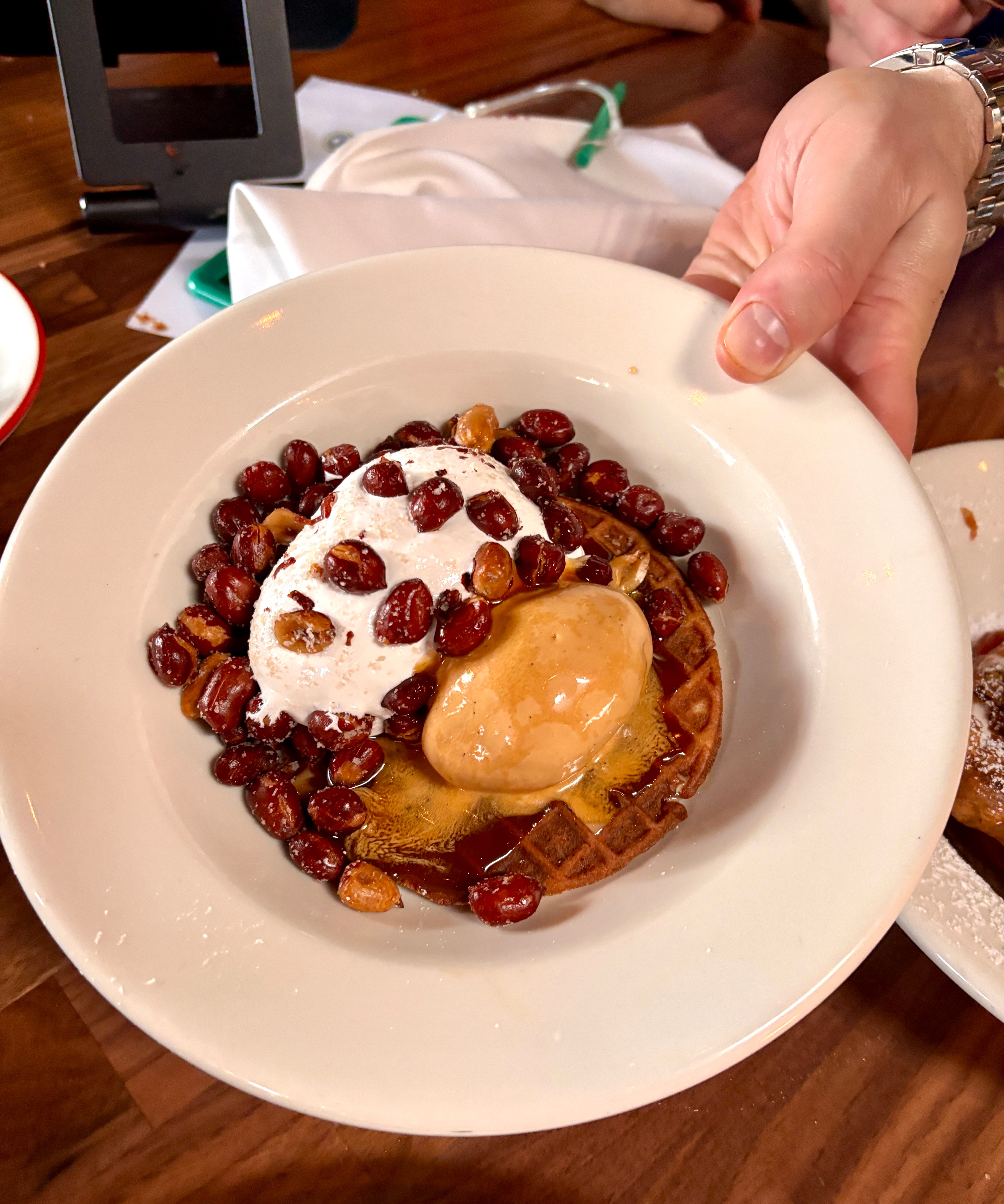
How could I resist?
I also got to indulge in slices of pepperoni pizza, uber-dark brownies at Hani’s, and marshmallowy S’Mores at a.o.c., as well as Mexican, Chinese, and Thai food. I wrote roundups of what and where I ate in Notes from the Road (San Francisco) and NYC Eats x Book Tour. Apparently I said a few controversial things in New York while being interviewed by on the Taste podcast, which was recorded at my first book tour stop at Rizzoli bookstore. The crowd was so nice and welcoming, it was hard not to get personal with everyone who came to the sold-out event, but I guess a few things I said were controversial.
I haven’t listened to it, but I try to steer clear of trouble when being interviewed, since I’m sure some of the things I’ve said over the years have me teetering on the edge of being cancelled. But there’s soooo much to talk about, and I can never resist a challenging interviewer’s question. Talking face-to-face is different than via the internet, where things can be misunderstood or misconstrued. Clearly I need to get out more.
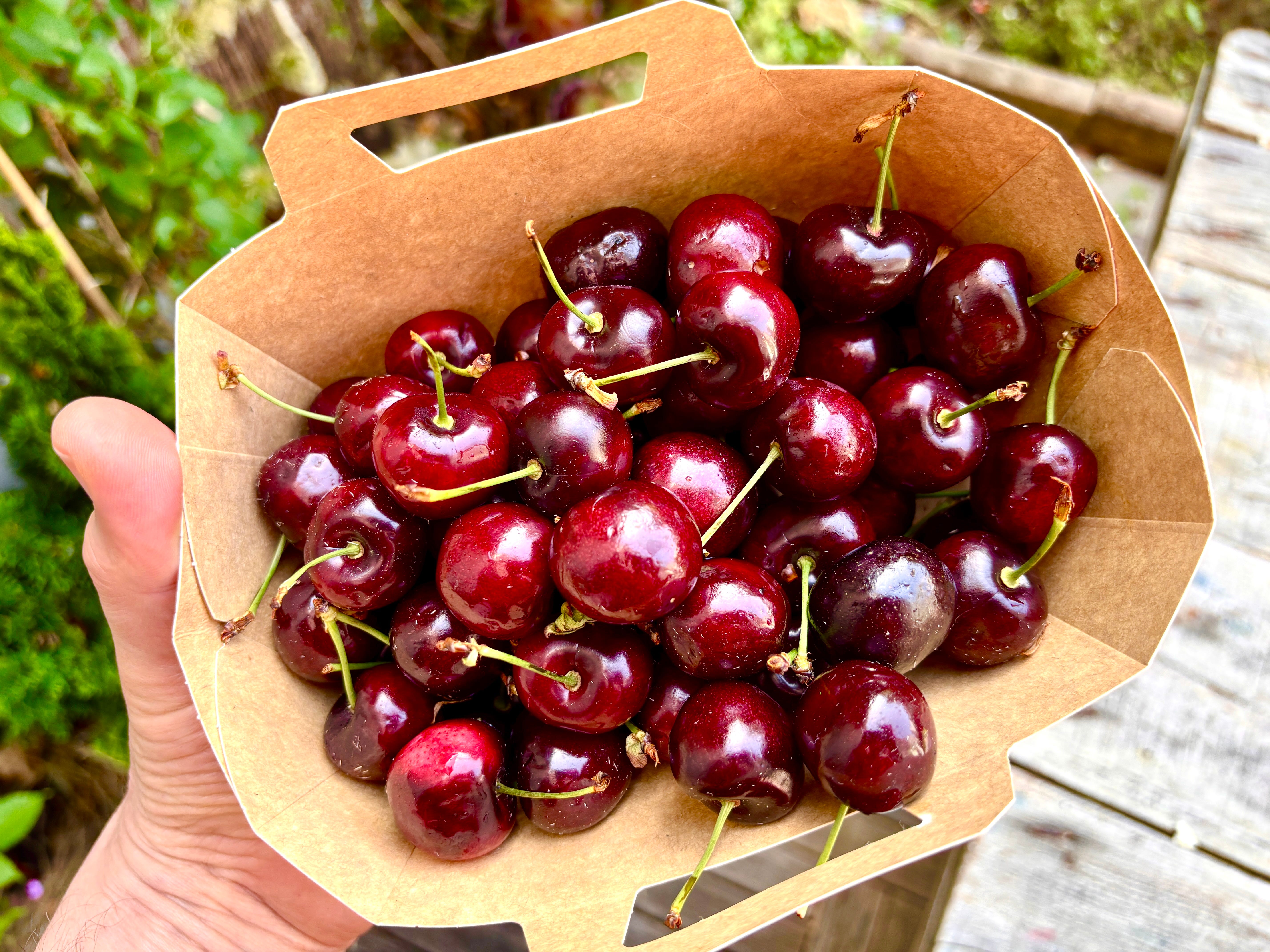
I did get out to the produce stores near where we live when I got home and picked up baskets of fresh cherries and apricots as well as the last asparagus spears at Le Pari Local. I’d bookmarked the Easy, Springy Frittata in Jenna Helwig’s must-read newsletter, Cookbookery Collective, which was adapted from ’s new book, Vegetables the Italian Way…
…and gave it a go. But first, I had to explain to Romain that it wasn’t an omelette because it was fried, hence the name frittata, and wasn’t folded up but served open face, which was when things started to get complicated. So I served it, and hoped for the best. (French people can be quite literal. If you don’t believe me, you should see some of the messages that I get, not to mention the hoops I have to jump through at home.)
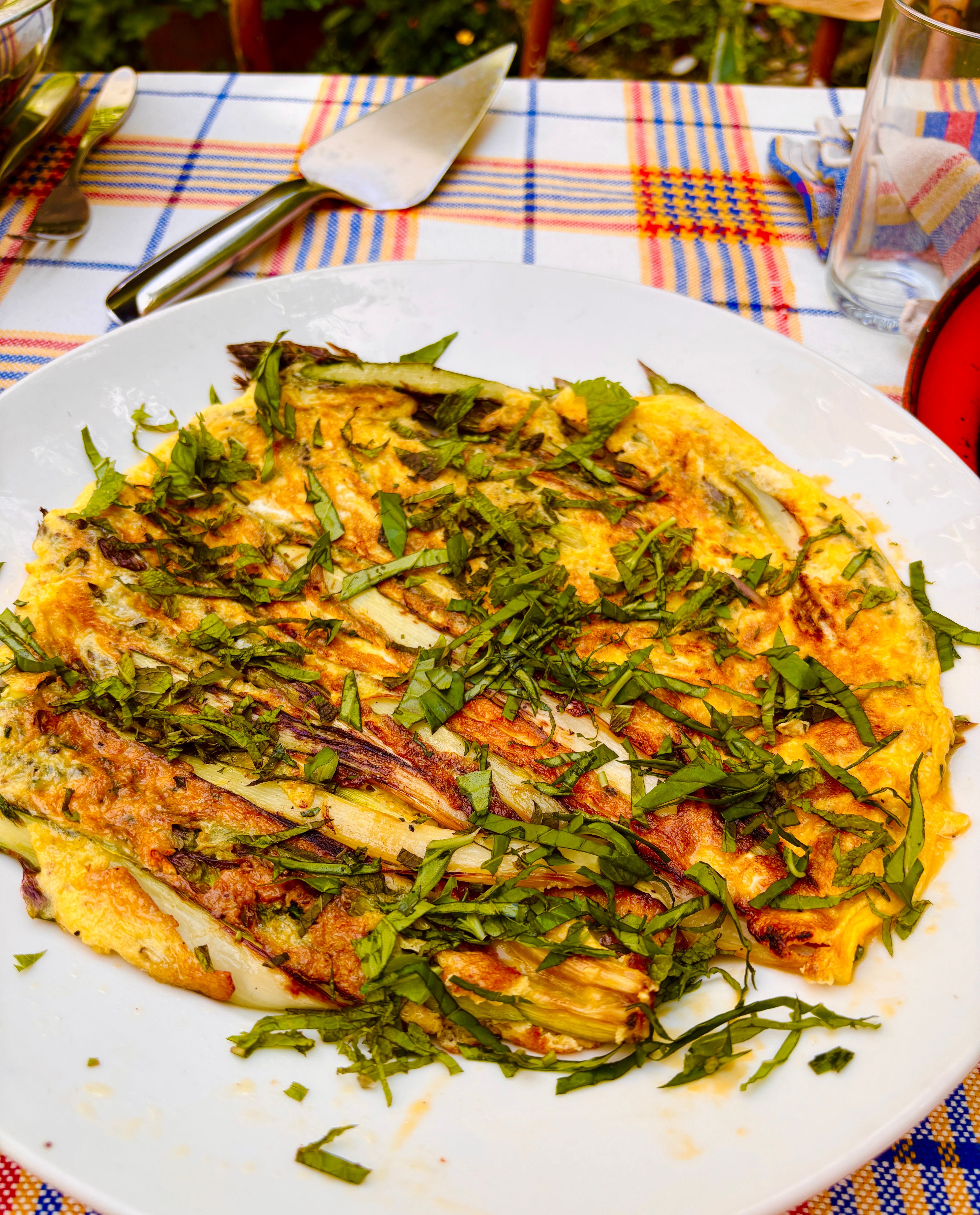
I went a bit rogue with the frittata, oven-roasting the asparagus first and adding chopped basil to the eggs, plus a chiffonade of leaves on top. I snuck in an extra egg white since I have a few in the frigo. Mine wasn’t as neat as Jenna’s, but now Romain knows what a frittata is…even though I’ve made them before.
I’m going to go a bit here, who recounts what he’s been watching and reading in his newsletter:
I finally finished The Comeback, which became one of my all-time favorite TV series. It took a few episodes to get into it — season 2 came out ten years after the first season, and the final season, season 3, came out a decade later — but the evolution of Valerie Cherish, the main character (pitch-perfectly played by Lisa Kudrow, who also co-wrote the series), was a tour de force and often very touching. What, on the surface was a superficial character, evolved into something and someone completely different and unexpected.
On the 11-hour plane ride back from Los Angeles, I finished Beef, season 2, which had a bit of The White Lotus vibes but ended up being a deep dive into a group of very complicated humans that, like The White Lotus, cross socio-economic classes. I tried to get into Rooster but not much was happening, kind of Emily in Paris, where the characters end up just circling around each other over and over, with little character progression. I tuned into Margo’s Got Money Troubles, mostly because who doesn’t want to watch anything with Michelle Pfeiffer? Both she and Elle Fanning are excellent actors but like some mini-series (I’m looks at you, Rooster and Your Friends & Neighbors), it could have been half as long. The story plodded a bit, then got much better as it reached its final two episodes. Wanda Sykes has a new comedy special on Netflix, and as usual, she’s hilarious. And some folks may be sad to learn that Emily in Paris is finally saying adieu, and coming to an end.
As for reading, I wrote what I’m currently reading in the links below, but I brought three books back from the States, which was the maximum that my luggage allowance allowed.
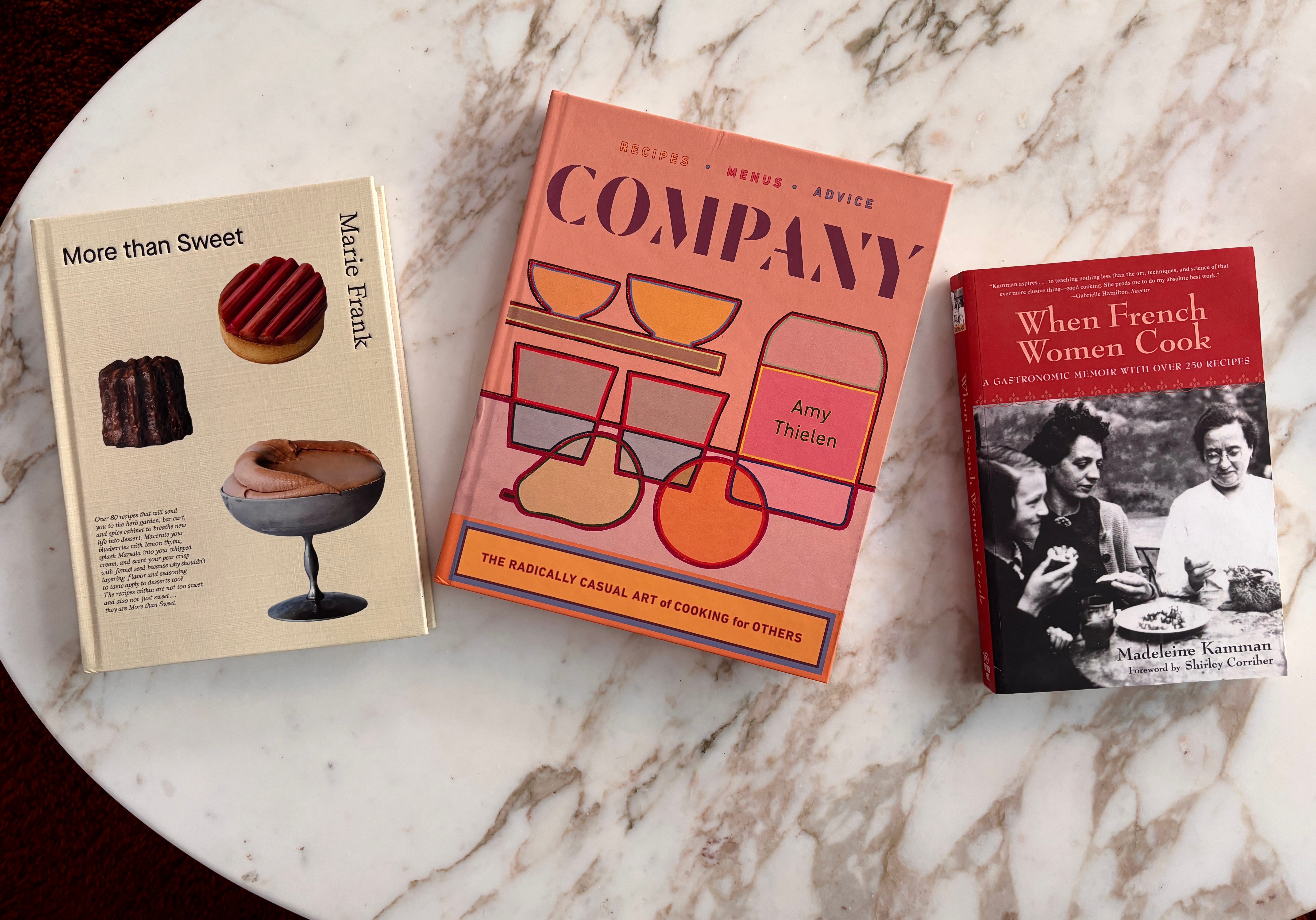
My friend, cookbook author, and collaborator Kate Leahy told me that Company was one of the best-written cookbooks she’d come across, so I picked up a copy. I also bought More than Sweet, a new baking book that “breaks down the boundaries between sweet and savory with confidence,” as well as a copy of When French Women Cook by Madeleine Kamman, one of the most important and influential cooks of our generation.
As I write this, we are at the tail end of another heat wave in Paris, with the hottest days on record. (Europe is heating up faster than the rest of the world, and not everyone makes it through.) No one was expecting the heat waves to start as soon as May, but here we are.
During the heat waves, people swelter, and some businesses close due to the heat. Tourists wonder why there are no fans or AC or ice in drinks. Once heat waves are over, people forget about them, so solutions evolve slowly. Sixty percent of the roofs in Paris are zinc, and I lived in a top floor apartment where the temperature would hit 110ºF (43ºC) inside. Painting them white or coating them with something reflective would be an effective solution, but with the city seeking to make the zinc roofs protected as UNESCO cultural heritage, it’s doubtful that that’s going to happen.
If you plan to come to Paris, or anywhere in Western Europe, check the weather forecast and bring light clothing, sunscreen, and a refillable water bottle to beat the heat. You might want to cross “waiting in lines outside to get into museums” off your list. And it’s not recommended that you ignore the advice of city officials and jump into the canals to cool down:
So lieu of that, we’re heading to Copenhagen and Norway this month, where it’s cooler.
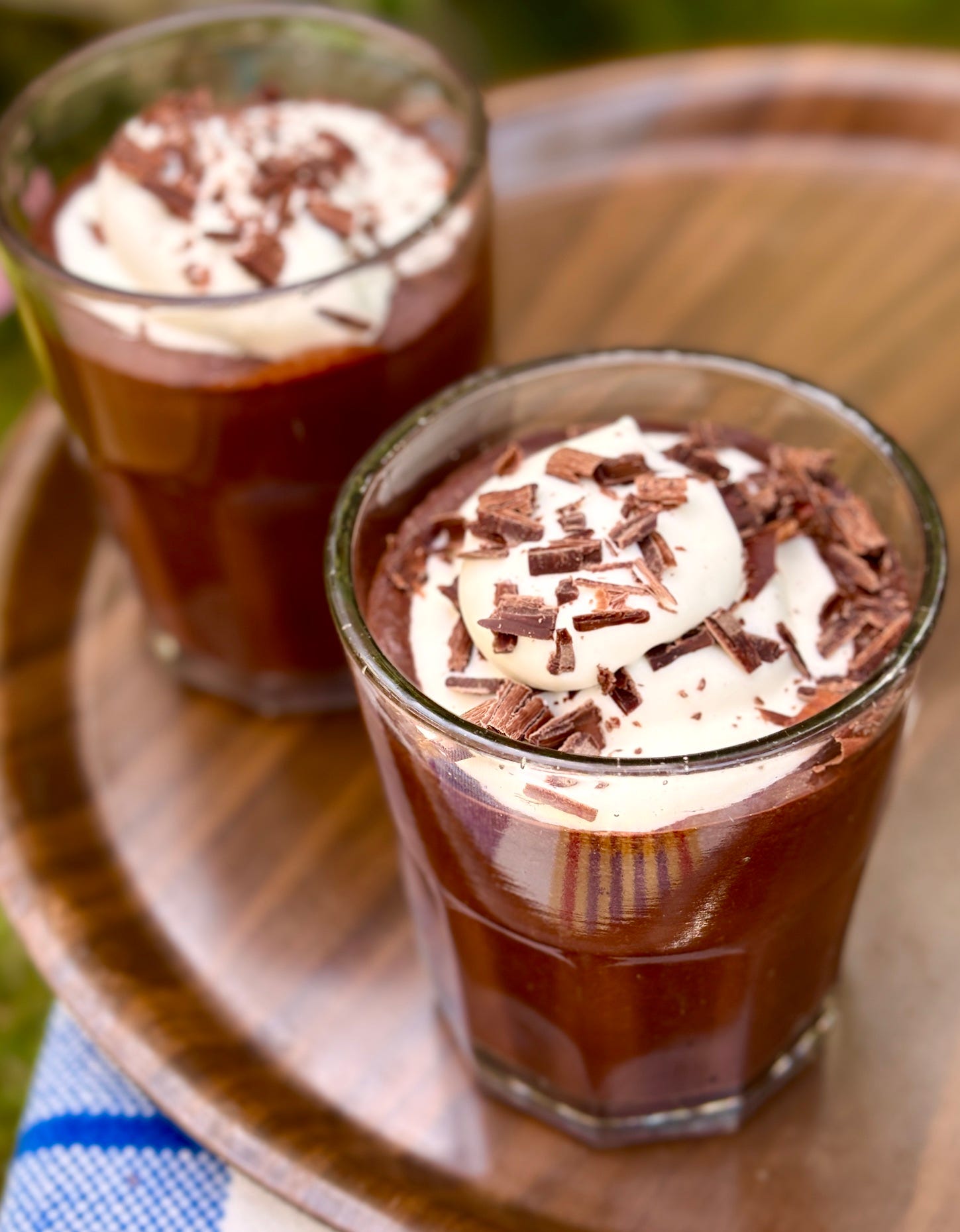
In the meantime, I’ve been mixing up glasses of Chocolate Frappés from Drinking French, made by vigorously shaking up 1/2 cup (125ml) whole, low-fat, or plant-based milk, 2 tablespoons best-quality Dutch-process cocoa powder, a tablespoon of sugar, and 3 ice cubes in a cocktail shaker. That gets poured into a glass (it’s okay to add any ice chunks to the glass, too). You can top it with whipped cream and chocolate shavings, or just serve as is. I recommend drinking one of these frappés over the water in the canal.
-David

The original Basque cheesecake isn’t “burnt,” according to its creator, who passed the business on to his kids. (NYT/article unlocked)
goes down the rabbit hole of Dave & Kate’s Brownies. (XOXO Dorie)
I’m eying this crispy rice spring vegetable tachin. ()
Testing “instant” ice cream makers: Pitting the Ninja Creami against the Cuisinart FastFreeze. (Bon Appétit/IG video)
Still trying to wrestle with time management and projects, so started reading Four Thousand Weeks: Time Management for Mortals, again. (h/t )
Deb shares my seasonal recipe for a tart and tangy rhubarb cordial. (Smitten Kitchen)

While I was on book tour, one thing people told me about was how much they enjoyed their trips to Paris, thanking me for restaurant suggestions and other tips I post here and there. It makes me happy when people come to Paris and have a good time, and eat well.
After I flew back to Paris last month and collected my luggage, I did what I usually do: I headed to the taxi stand. The airport has affixed large signs on the floor of baggage claim, which you can follow all the way outside to the official taxi stand. (I’ve also seen young people in official vests, guiding and leading people from the baggage claim area, all the way to the official taxi stand.)
On my way, I was asked by at least a dozen men, who whispered almost under their breath, if I needed a taxi. I kept walking but one guy told me I was going the wrong way, and to go to a different doorway, presumably where his car was waiting.
Most of us are zonked after flying into a foreign city, but whatever you do, never, ever take a non-official taxi from the airport in Paris. Always follow the signs for the official taxi stand, where there will be a person in a vest, organizing the taxis and passengers. Getting into an unofficial taxi means you may be paying more than you should or what was originally quoted to you. In one extreme case, a driver tried to charge some tourists €247 ($288) for the trip. This does happen in other airports, but Americans tend to be polite when we travel and might say, “Sorry, no thank you.“ Locals will just walk by them without saying anything, which I do, and suggest doing as well.
Official taxi prices to and from airports in Paris are fixed by law (current fares are here) and fares are reasonable.
Pro Tip: To get to and from the airport in Paris, probably the best and most reliable taxi service is G7. You can reserve a taxi online (in French or English) or via their app.
The streets of Paris, and the roads around it, are generally a knot of traffic and official taxis are allowed to use the bus lanes, which are less congested. Drivers for services like Uber and Bolt cannot use them.
When going to the airport, you can reserve a pickup online, which costs a few euros more but comes with more peace of mind. After arriving at the airport, unless you’ve ordered a taxi in advance, you’ll have to take whatever one is available from the queue. But official taxis are obliged to charge the fixed price. All drivers are required to take credit cards, but occasionally one will say the machine is broken, and can you pay cash. I always ask before getting in if I can pay by carte bleue (credit card), just to confirm.
Tipping is optional but I often add 5%. You can tip up to 10% if you’ve got a lot of luggage or the driver makes an extra effort, but it isn’t required.
In the spring of 2027, a dedicated CDG Express train is set to launch, which’ll take you to and from the Gare de l’Est (as well as other stations), right to the airport for €25 ($29) one-way. The project has been delayed for a number of years but appears to be on track to open then, so to speak.
Some take the RER B train, which goes to CDG airport from several stops in Paris, such as Châtelet, Saint-Michel Notre Dame, and the Gare du Nord. But if you have luggage, you may have to schlep it up and down some stairs, and there are reports of pickpockets on the trains. RER B trains can be crowded and have limited ventilation, and occasionally there may be a problème téchnique or construction that can cause a delay. We once missed a flight because of a colis suspect (suspicious package). Then we spent the day at the airport waiting for the next flight, and got stuck in the middle seats in the last row of the plane, which weren’t the most pleasant eleven hours of my life. That was about ten years ago, but I still haven’t been able to uncramp my legs from that journey.
It’s no secret that one of my favorite places in Paris is G. Detou. In fact, I depend on it so much, for everything from chocolate to vanilla—and lots, lots more. I’ve been quoted as saying that if G. Detou didn’t exist, I couldn’t live in Paris. It’s got everything I need.
Owner Benoît Bourloton is a busy man, spending his days keeping the shop well-stocked with a wide variety of French chocolates, as well as other delicacies. Since we’ve become friends (and what a friend to have!), I asked Benoît if I could stop by and discuss French chocolates, and he gladly invited me into the shop to talk about some of them.
I hope you enjoy the video!
-David
Get The Great Book of Chocolate!
Subscribe to my newsletter to get recipes, videos, podcasts, and Paris stories sent right to your Inbox!
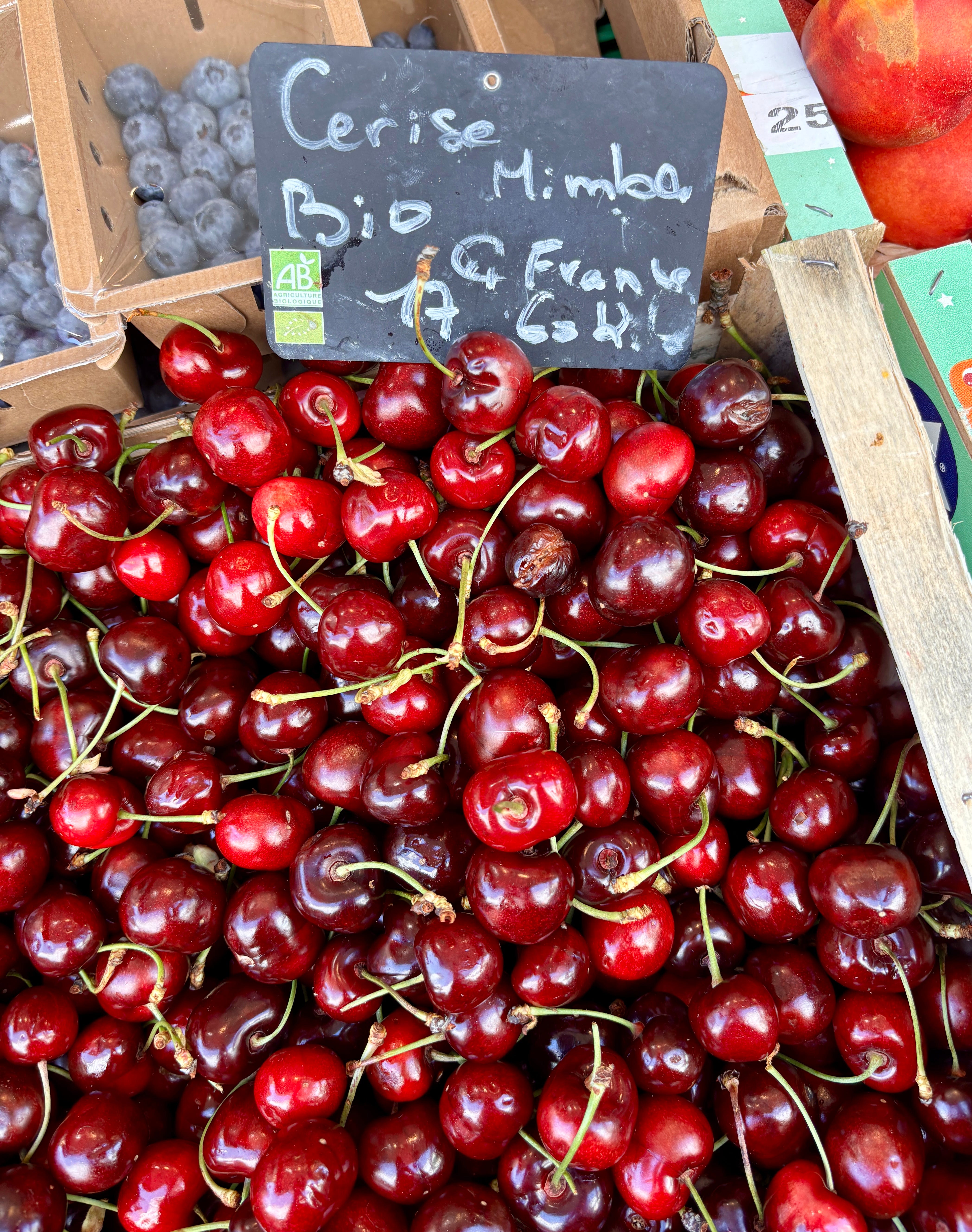

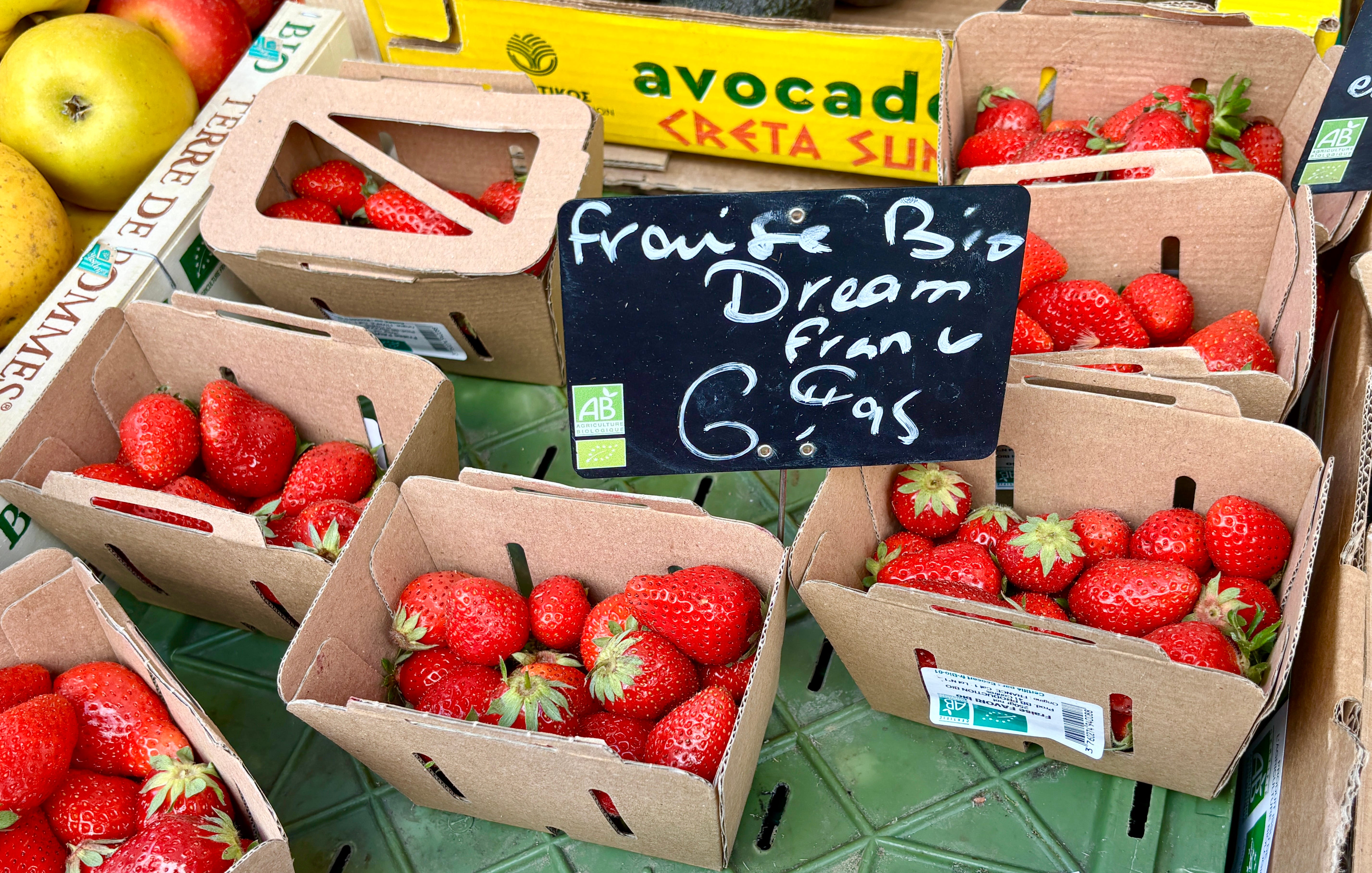
I came back from my travels on book tour in the U.S. to a bounty of gorgeous summer produce in Paris. Strawberries, nectarines, apricots, and rhubarb were glowing at the markets and produce shops, and I’m excited to start baking with them.
Here are some of my summer fruit recipes that are favorites around here…
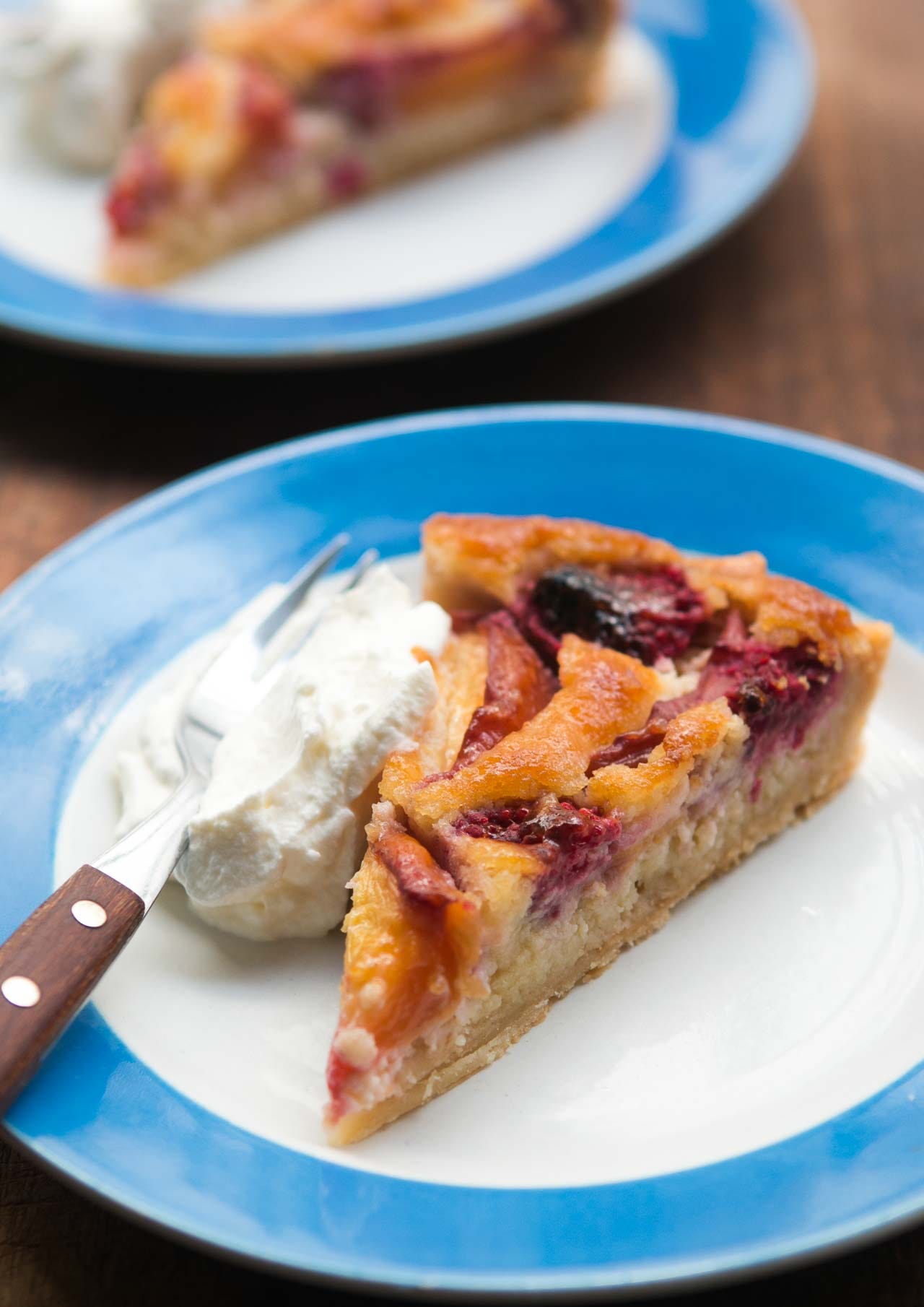
If you want to give summer fruits a glow-up, bake them over a layer of delectable almond cream, aka, frangipane, in this Summer Fruit Tart. It slices into beautiful wedges and the almond cream keeps the crust crisp. It works with many summer fruits. My favorite is to pair it with just one type of fruit and one type of berry. But you do you.
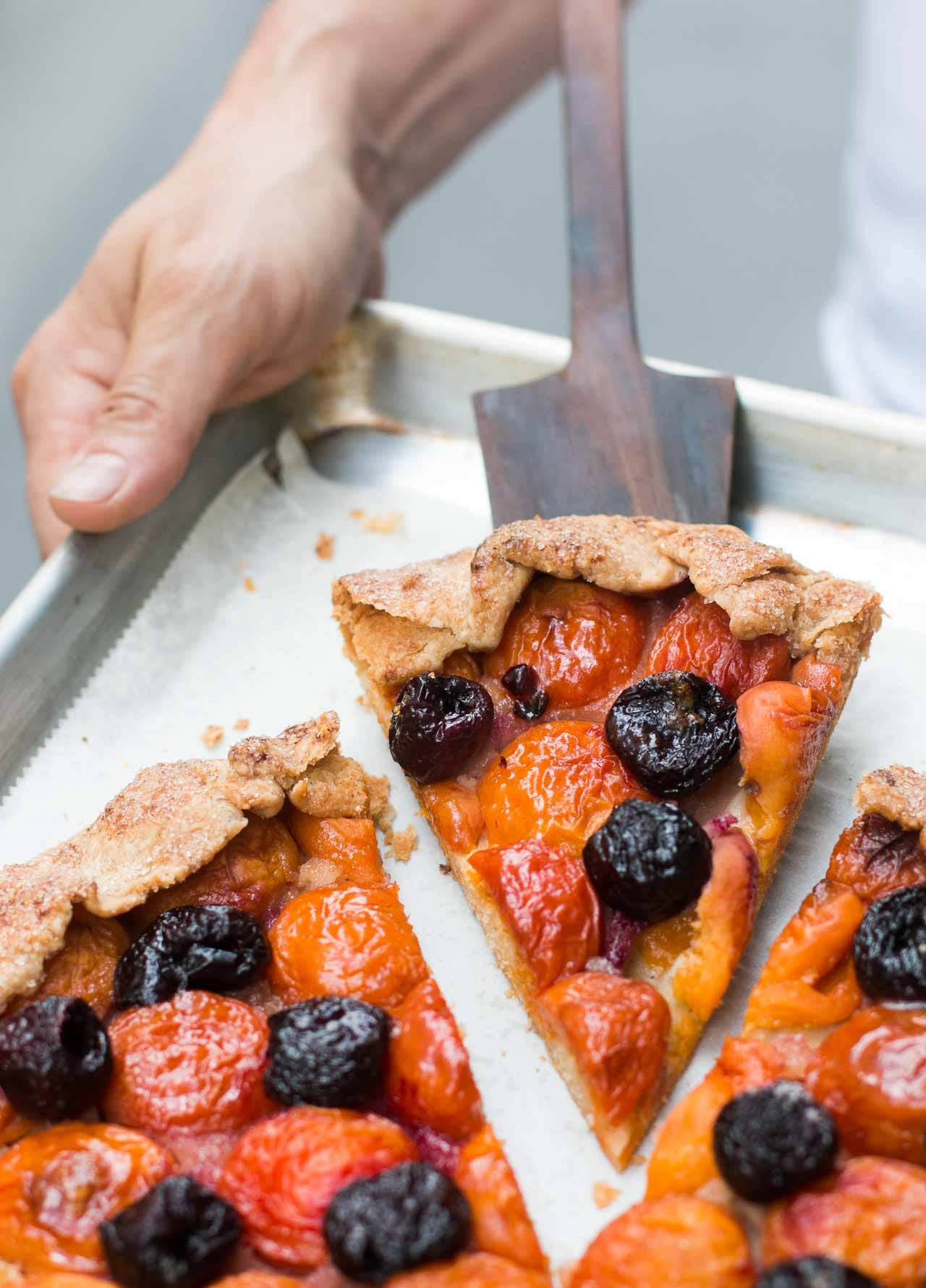
The nomenclature may be a bit “open to interpretation.” I’ve never seen a fruit tart called a galette in France. But if I went around tsk-tsking people (myself included) for calling a fruit tart a Summer Fruit Galette, I wouldn’t have time to bake…or really, do anything else. And who wants to be a spoilsport?
Get The Great Book of Chocolate!
The word galette is, admittedly pretty, and so is this tart, or galette. (Or, er…crostata.) I’m making one this weekend since it’s easy to put together with a no-fail dough and doesn’t require a tart ring — all that’s needed are your favorite seasonal fruits.
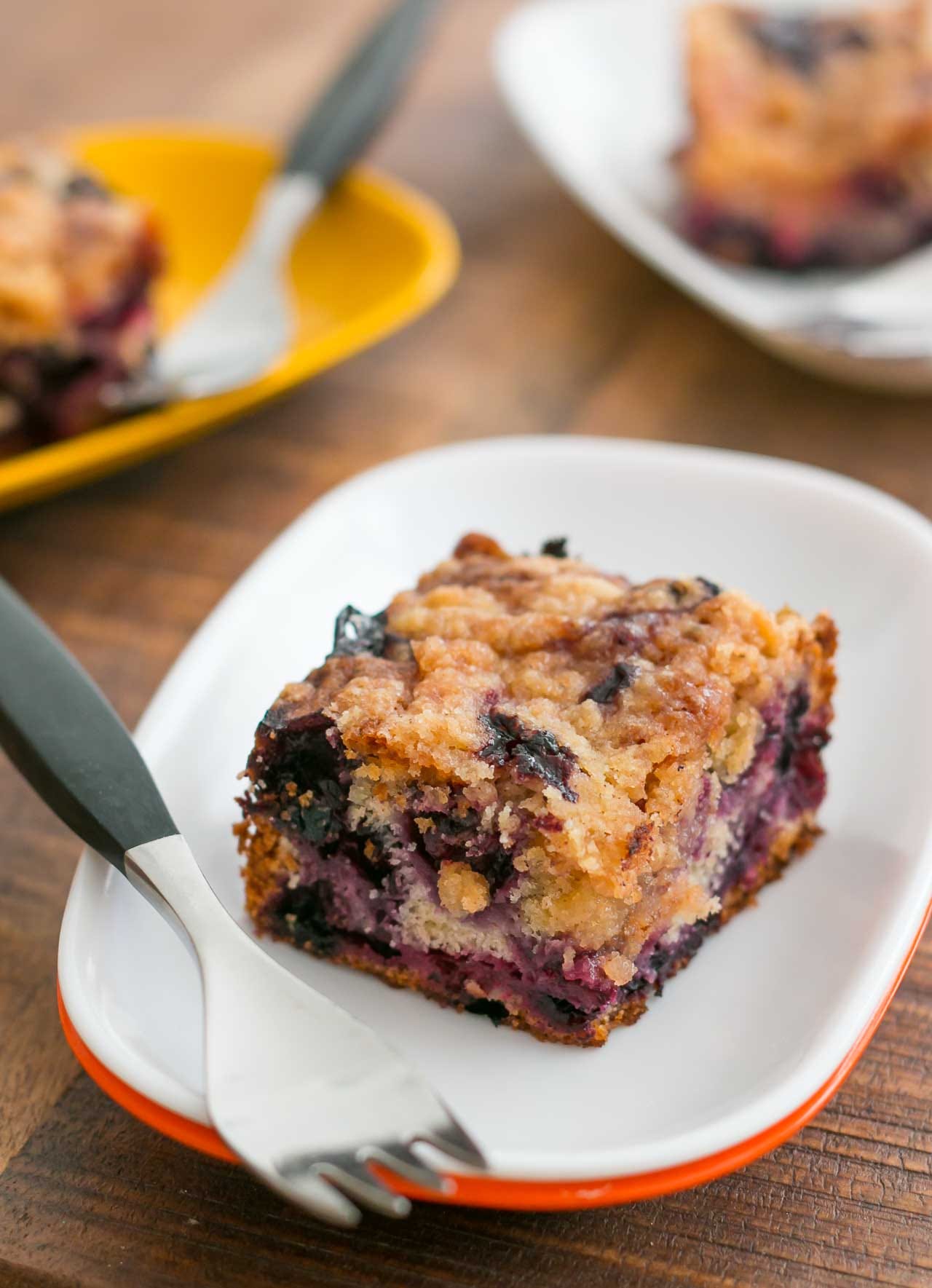
Speaking of names, fruit desserts go by monikers such as grunts, crisps, crumbles, and slumps. I wasn’t the brightest student at school so can’t click off all the differences, but I do know what I like, and this Blueberry Buckle is one heckuva dessert. Imbibed with lemon syrup, it’s incredibly moist, so buckle up… make it, and you’ll find it’s one of the best ways to bake up summer blueberries.
Subscribe to my newsletter to get recipes, posts, Paris tips, and more, sent right to your inbox!
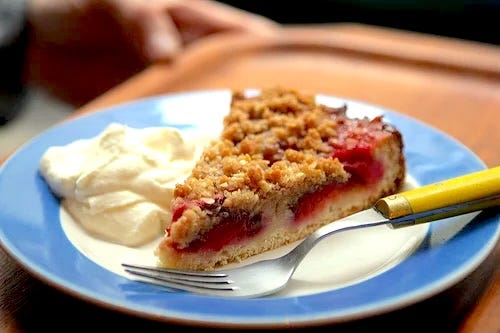
I took a cue from our friends in Germany, who are no slouches when it comes to baking, via my friend in Berlin, and like to bake up her Yeasted Plum Tart. One could argue (again!) that it’s close to a cake, but one could also argue that it has a press-in crust, which means no rolling, so it’s a draw. Either way, it’s a neat way to enjoy plums.
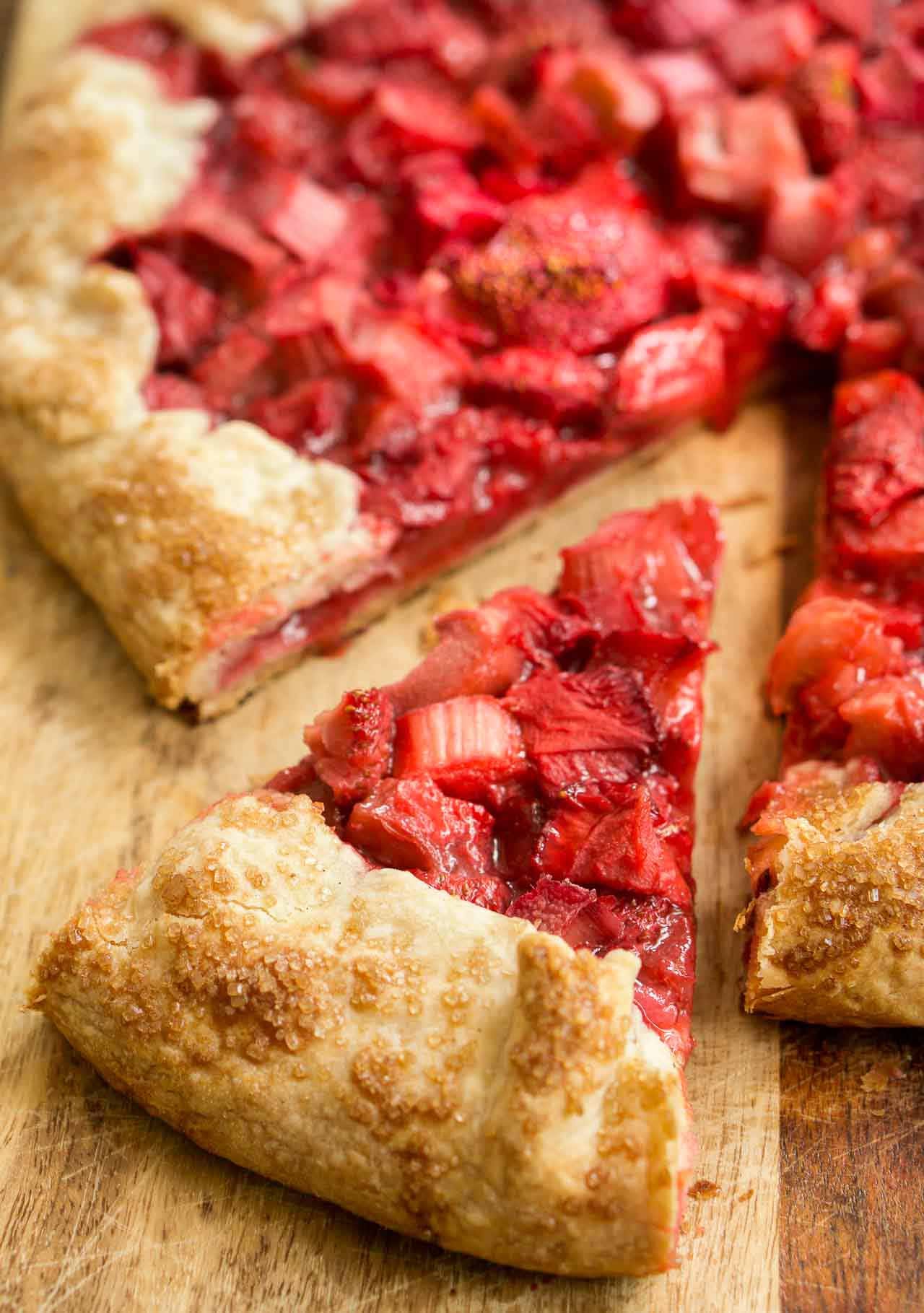
This Strawberry Rhubarb Tart marries tangy rhubarb with its natural partner, strawberries. For those who like not-too-sweet desserts, anything with rhubarb fits that bill. But I won’t say a word if you pair it with a sunny scoop of Lemon Verbena Ice Cream, or spoon liquor-spiked Sabayon alongside, as an accompaniment.
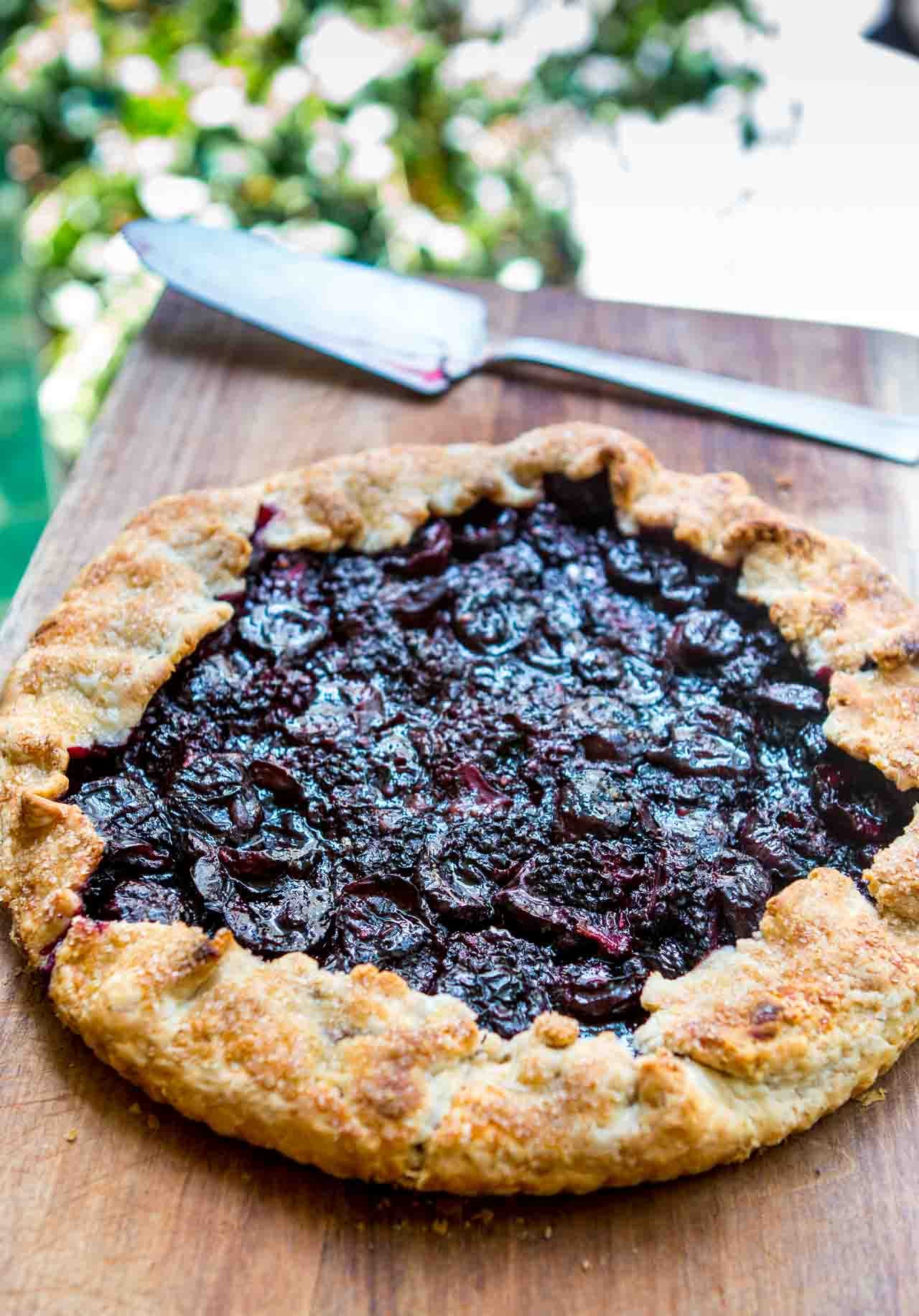
As Elijah Kelley sang in the musical Hairspray, the blacker the berry, the sweeter the juice…
And the tumble of dark berries in this Black Berry Galette is both juicy and black. I used blackberries and cherries in the one above, but there’s no reason you can’t swap in blueberries, boysenberries, or if you’re lucky enough to get them, mulberries, which are the juiciest of all the blackest of berries.
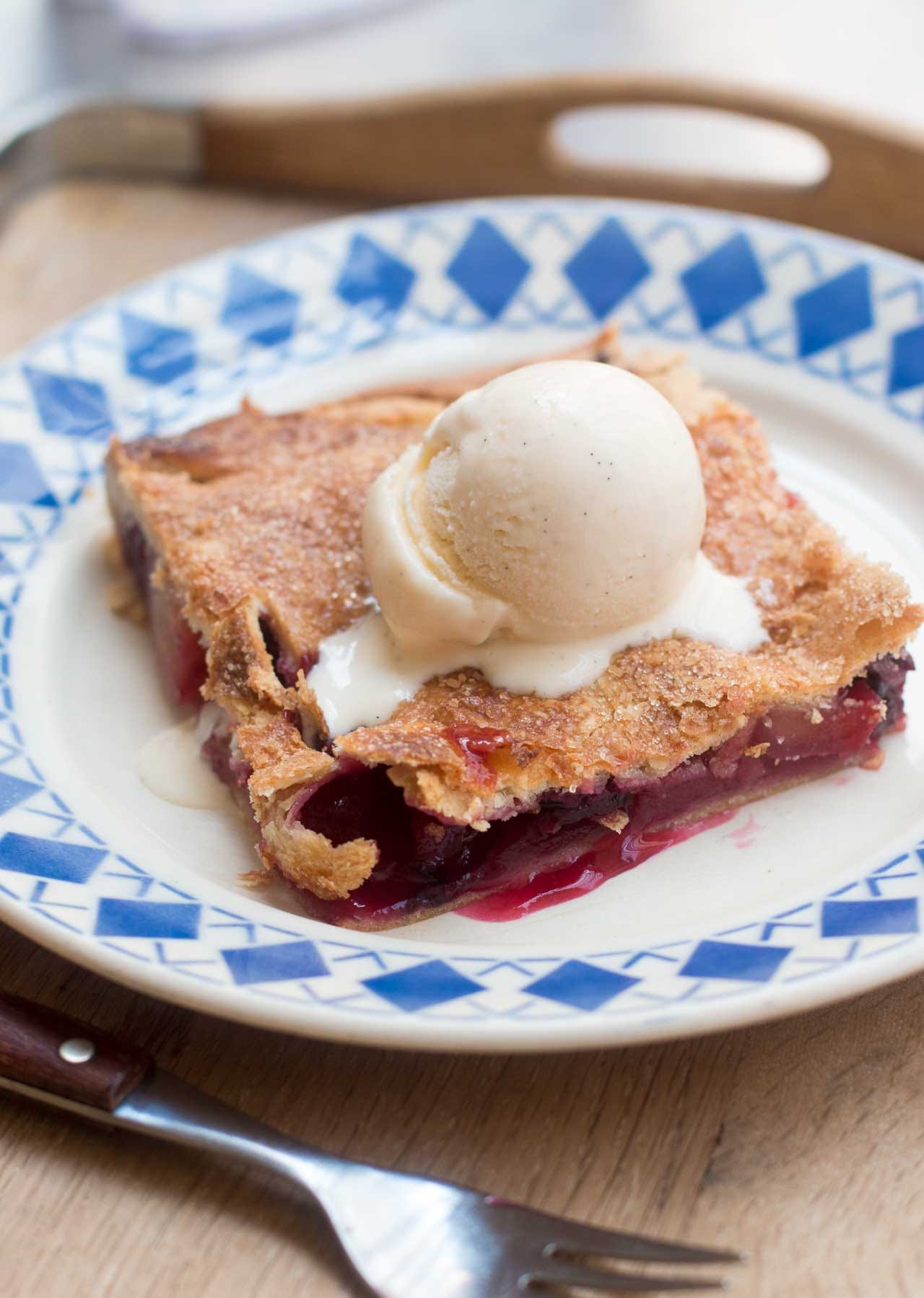
Whenever we visit French friends in the countryside, even in the middle of summer, invariably there’s a bowl of apples in the kitchen. If you can’t resist apples either, this Apple-Blackberry Slab Pie, inspired by pie-whiz Cathy Barrow, is sure to please. While the combination of apples and berries might surprise you, I assure you, they’re a perfect match.
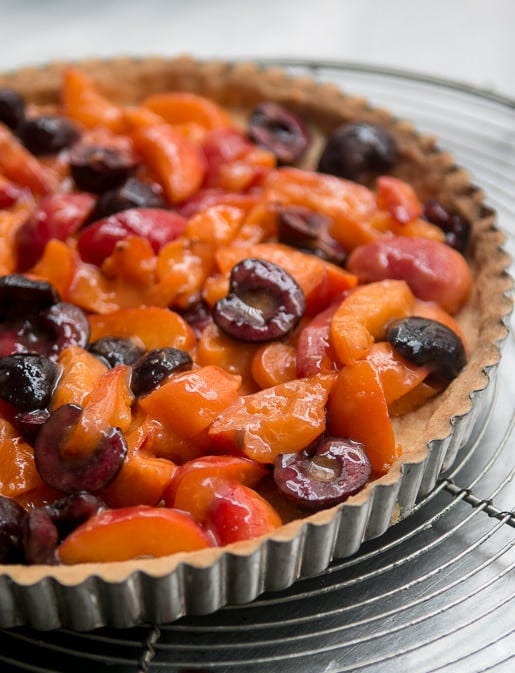
As anyone who’s asked me, “What’s your favorite________?” you know I don’t like to play favorites, but I’ll admit that some of my favorite fruits to bake with are fresh apricots. Raw, they’re sweet and juicy but when baked, the skins soften, making them tart and tangy. Under a layer of crunchy, almond-scented topping, this Apricot and Cherry Tart doesn’t need much embellishment, although Vanilla Ice Cream provides a sweet contrast to the assertive fruits in the tart.
Thanks for reading my newsletter! This post is public so feel free to share it.
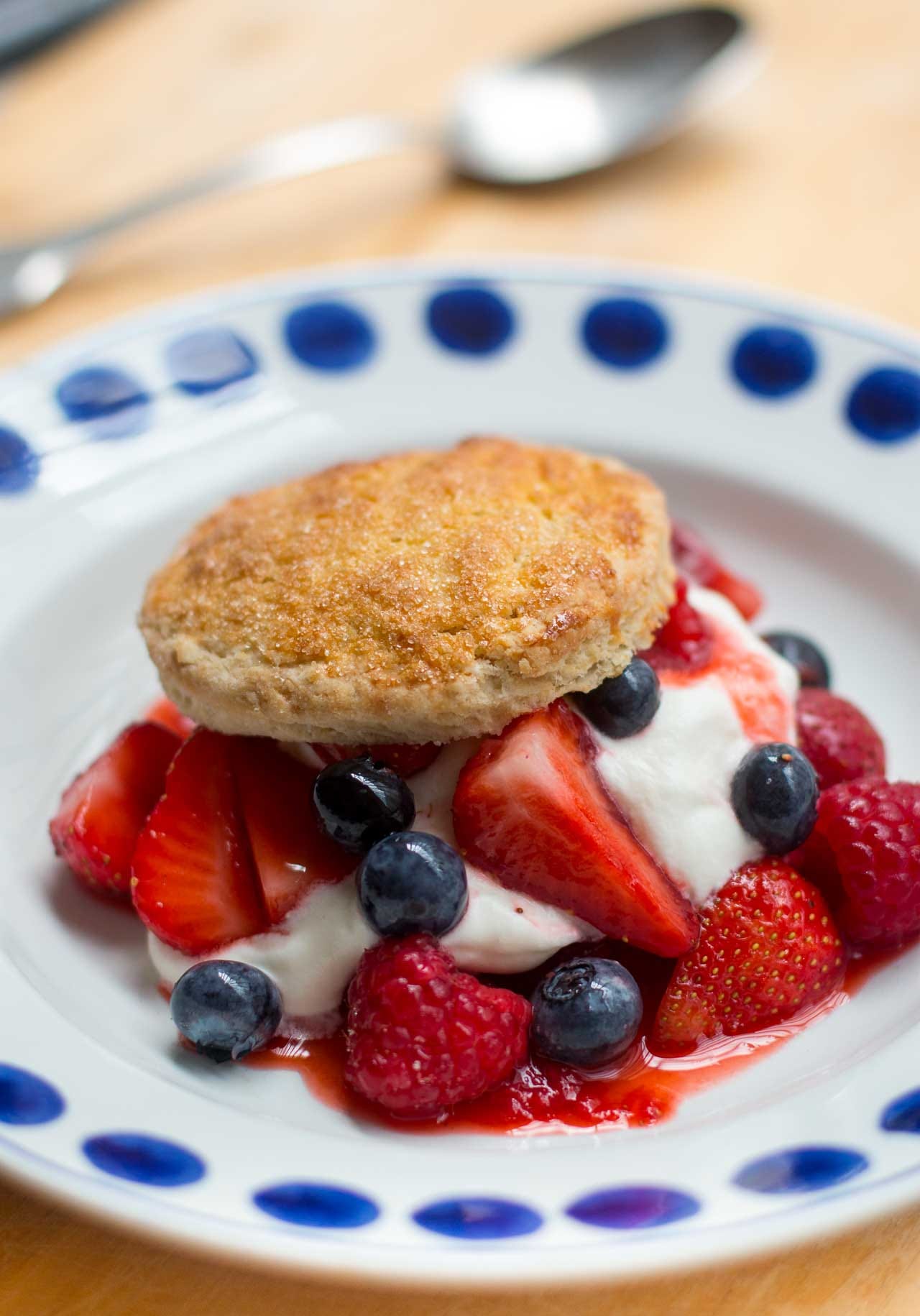
Mixed Berry Shortcakes are the things to prepare when you just can’t make up your mind which berries to use. This dessert proves that you can have it all. Top it off with a crispy-topped biscuit, soaked with a puddle of berry juices, and the whole shebang just screams summer.
When I was at Chez Panisse, a chef accused us of not cooking, but shopping. Not sure if it was meant to be an insult, or what, but gathering the best ingredients and sometimes doing as little to them as possible are still my goals. Shopping is where it all begins.
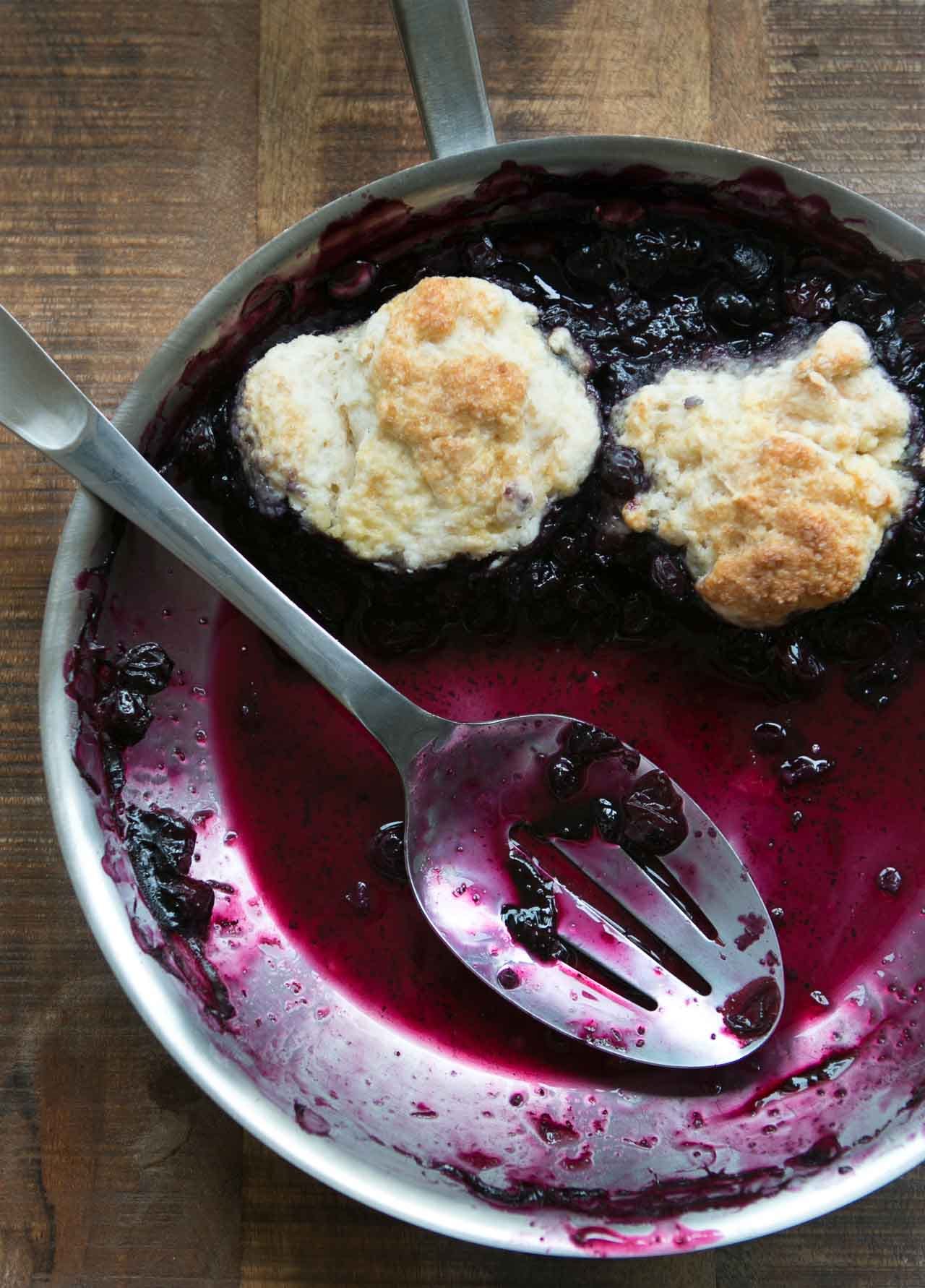
We don’t get a lot of blueberries here in Paris, but in the south of France, I find them at the markets, locally grown, and I’ve never tasted better blueberries. This simple Blueberry Cobbler highlights these berries and is easy to make in a skillet, which is great since when I’m staying in someone else’s home on vacation, it’s rare to find just the right size cake pan or baking dish. And this cobbler is adaptable. The drop biscuits on top save you from rolling anything out, which is another reason this recipe is a keeper.
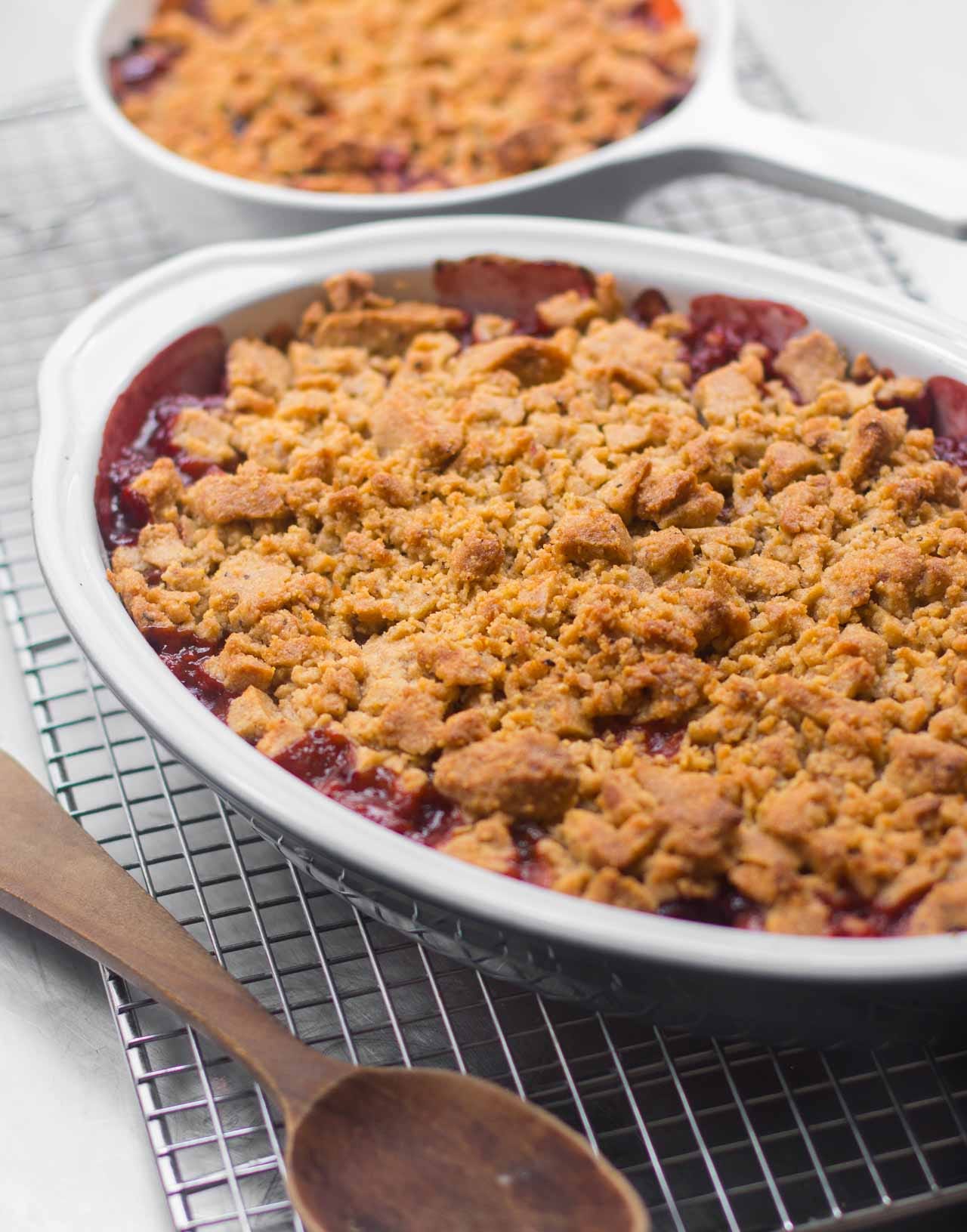
I’m not a fan of “You should”-ing people, but if you haven’t been to Ireland, you might consider going. When I was there, Irish cooking star Rachel Allen made this very tasty Plum-Rhubarb Crisp, a combination that I’d never considered. I should get back to Ireland more than I do, but I still dream about the lunch Rachel made for me, and the hearty Irish Brown Bread I learned to make while I was there. (Unfortunately due to Brexit, I can no longer get the extra-coarse Irish flour that makes the loaf so special. Maybe it’s time to make up and invite the UK back?)
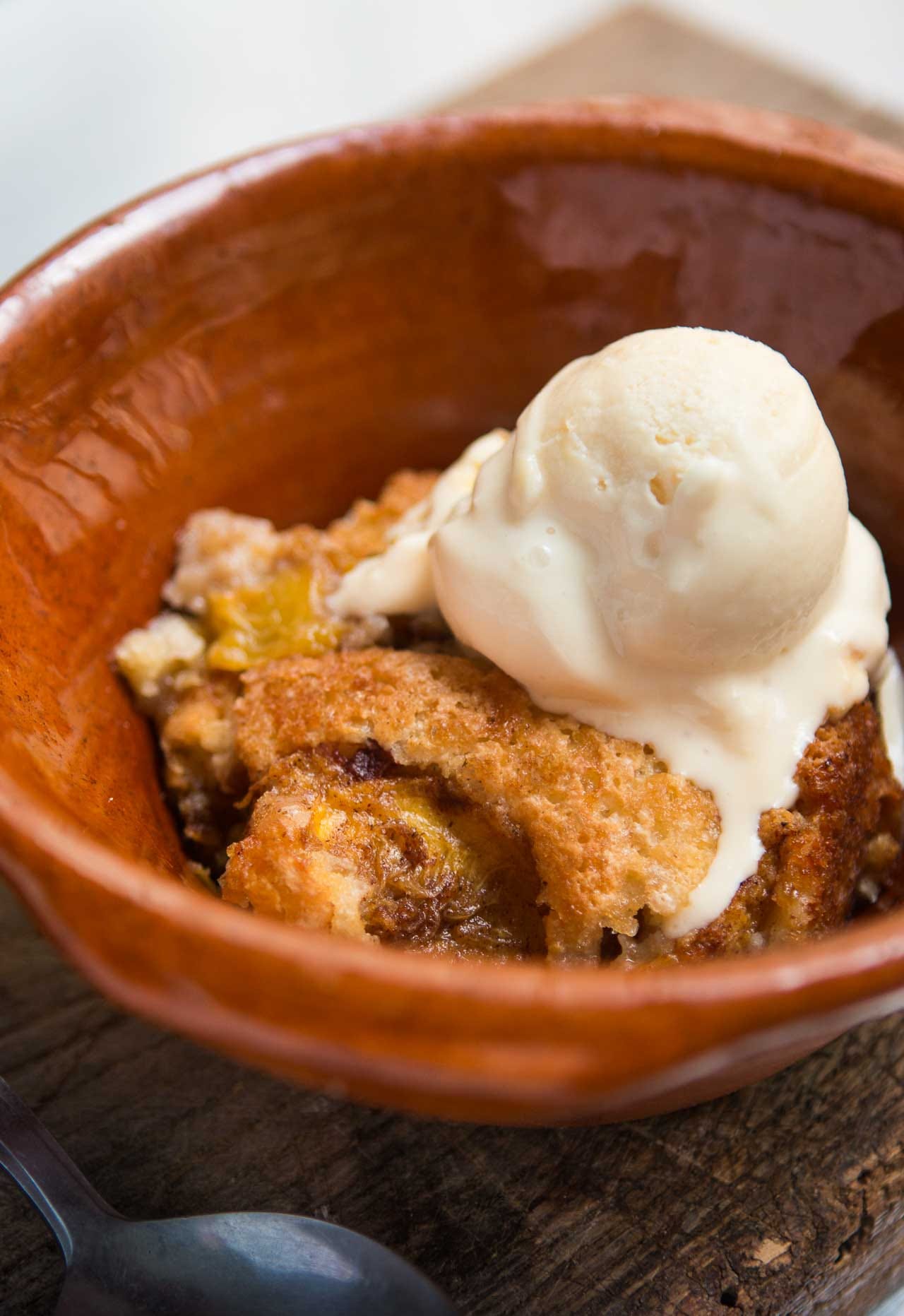
If you want to call something “Texan,” you’d better be prepared to get an earful about it. So I went right to the source, Texas baker Rebecca Rather, baking up her Peach Cobbler. Texans sure like their desserts, and traditions, and if you want something equally all-American, my Peach Shortcake is another way to use a bounty of ripe peaches.
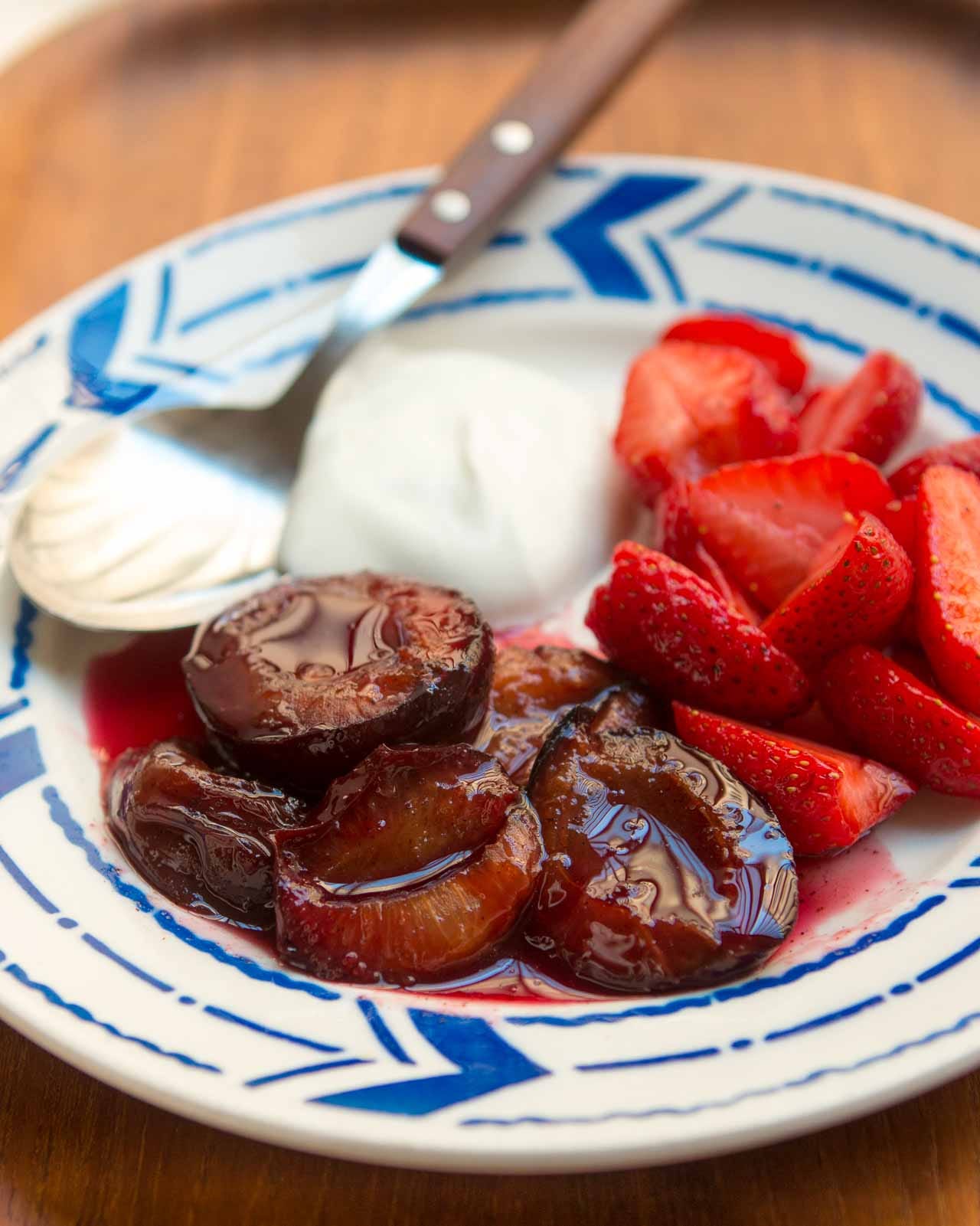
Sometimes you just want a simple dessert that doesn’t require anything more than tossing a few ingredients together and baking them. When that’s the case, these Honey-Roasted Plums come to the rescue. They form their own sauce in the baking dish and are terrific paired with yogurt, fromage blanc, or a little crème fraîche.
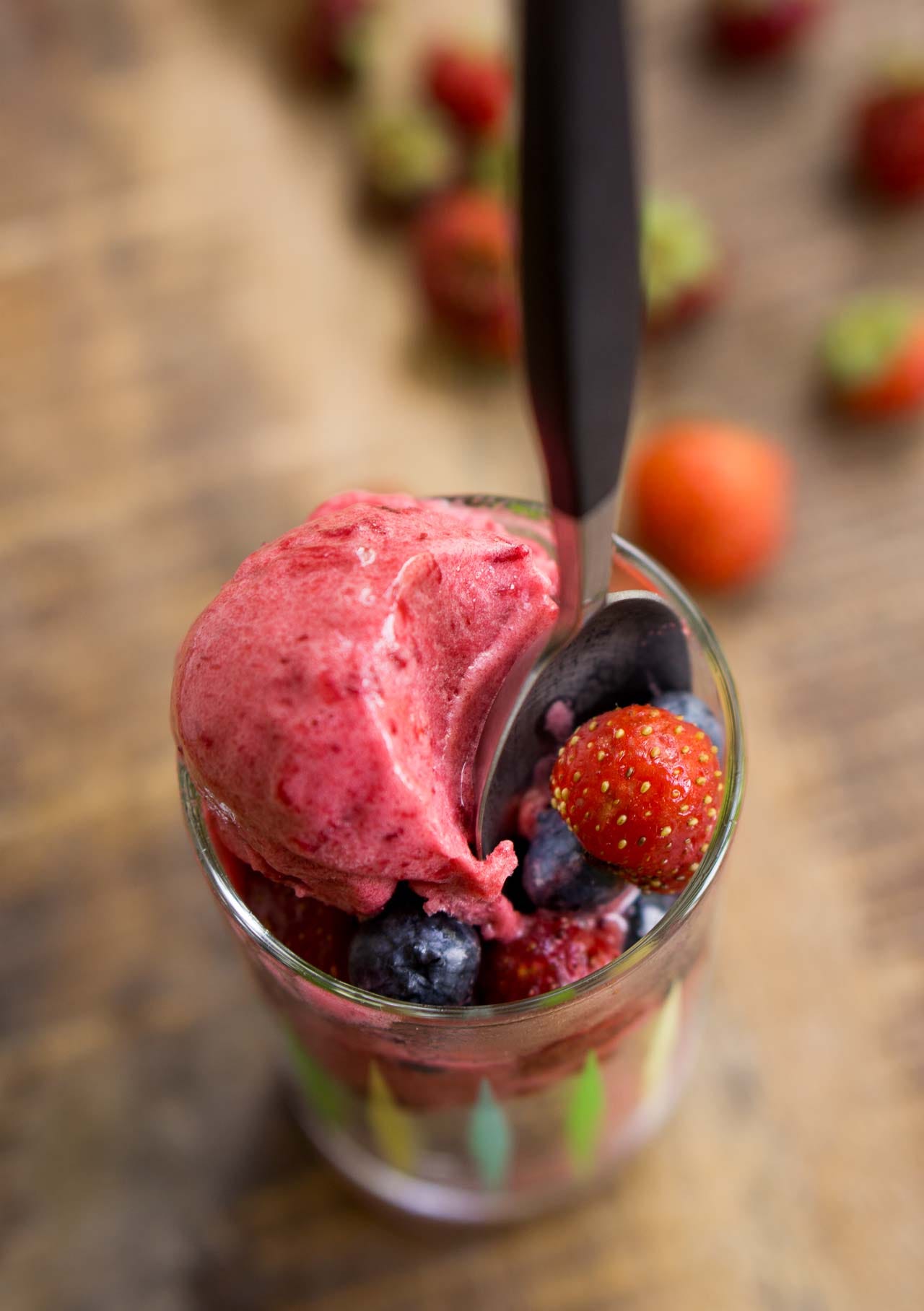
When it comes to frozen fruit desserts, where fruits really shine are in sorbets, such as this Plum Sorbet, which doesn’t have a drop of milk or cream in it. But I assure you, you won’t miss them. This sorbet is smooth and creamy all by itself. I like to serve it with a compote of fresh berries and a few crisp cookies alongside, such as these extra-crisp, nutty Pains d’Amande or Italian Almond Cookies.
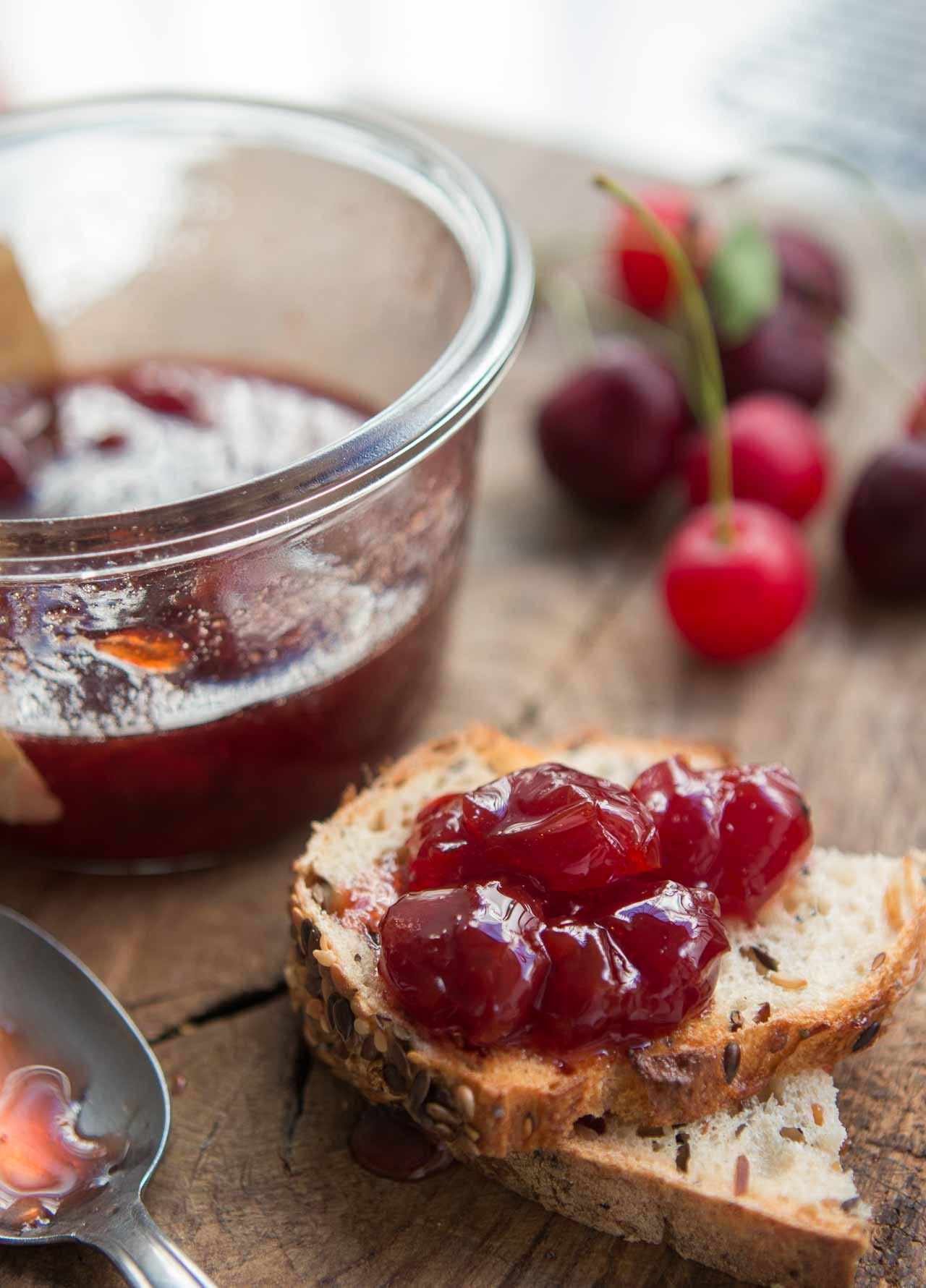
Here in Paris, what really gets me excited is when I see piles of cherries at the market. I get even more excited when I see griottes, sour cherries, which are rarities, and fragile, but are oh-so-good. Whether you find sweet or sour cherries, or a mix, all are good in my no-recipe Cherry Jam, which was even a hit (well, mostly…) with the “Recipe, please!” crowd.
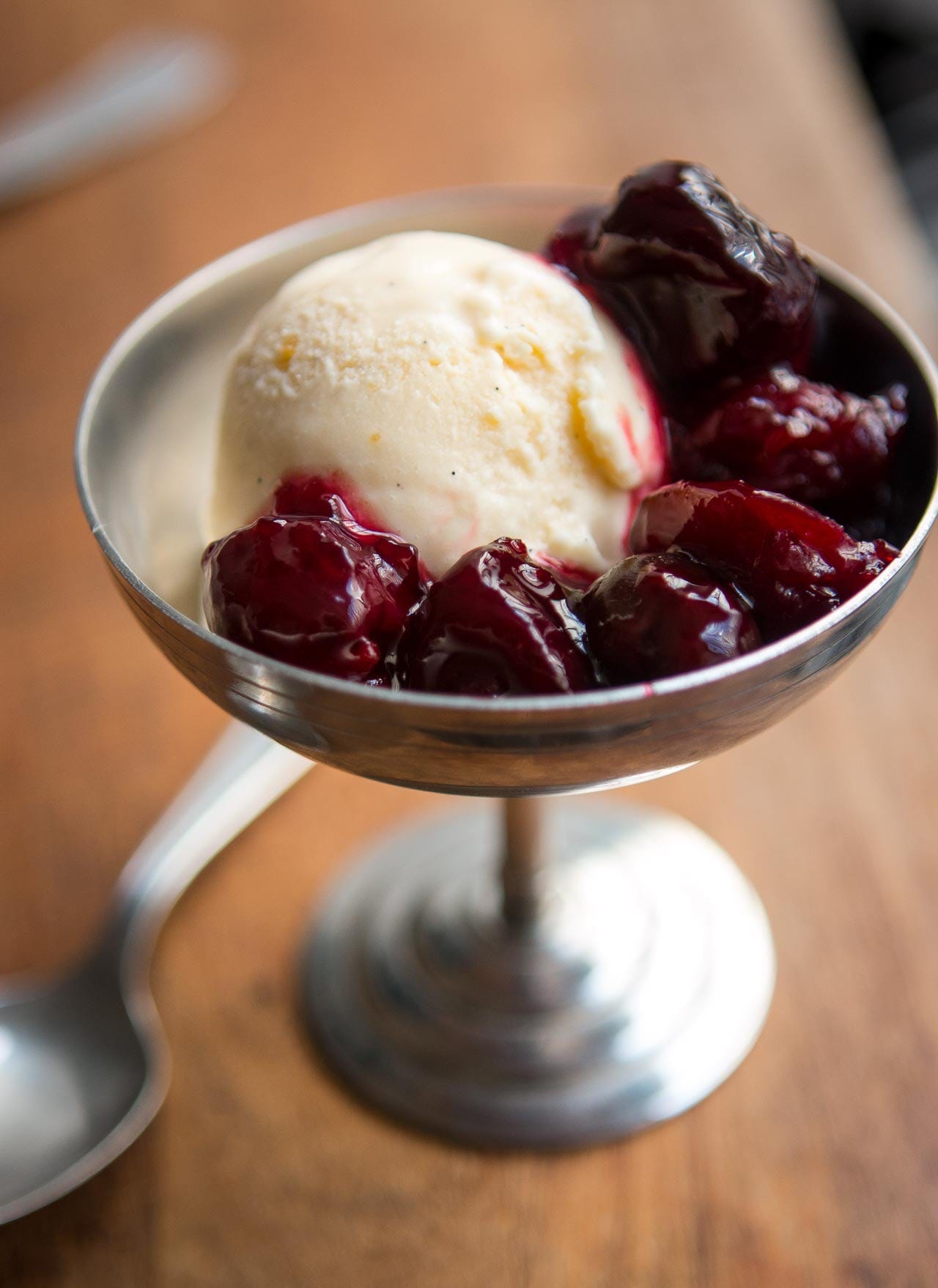
I eventually caved and gave exact proportions for it. But if you’re not in a jam-making mood, check out this Cherry Compote, which I like to freeze in small portions, ready to defrost in the colder months. I enjoy serving it with a scoop of ice cream, such as Fresh-Ginger White Chocolate or Fig Leaf and Honey.
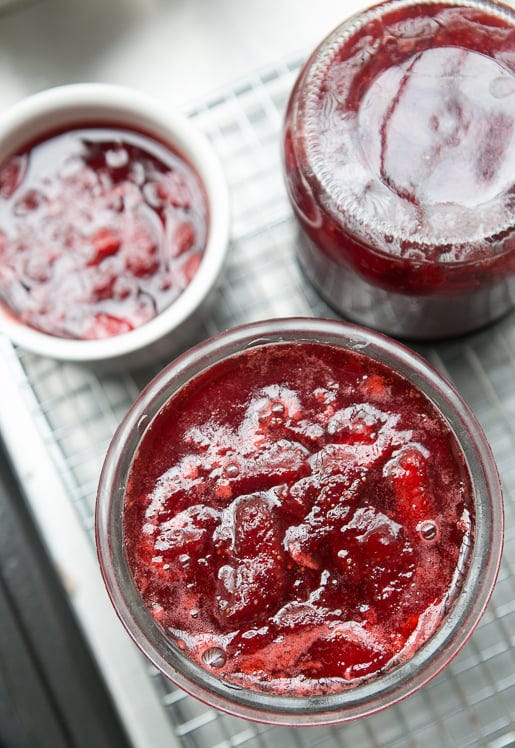
Another way to get a taste of summer the rest of the year — I make sure to have a few jars of Strawberry Jam to put on our breakfast table, which are very welcome, well after berry season is behind us.
Today the temperature hit 82ºF (28ºC), and I’m planning to serve glasses of Strawberry Spritz for upcoming apéro hours, a low-ABV refresher that is pretty much summer in a glass.
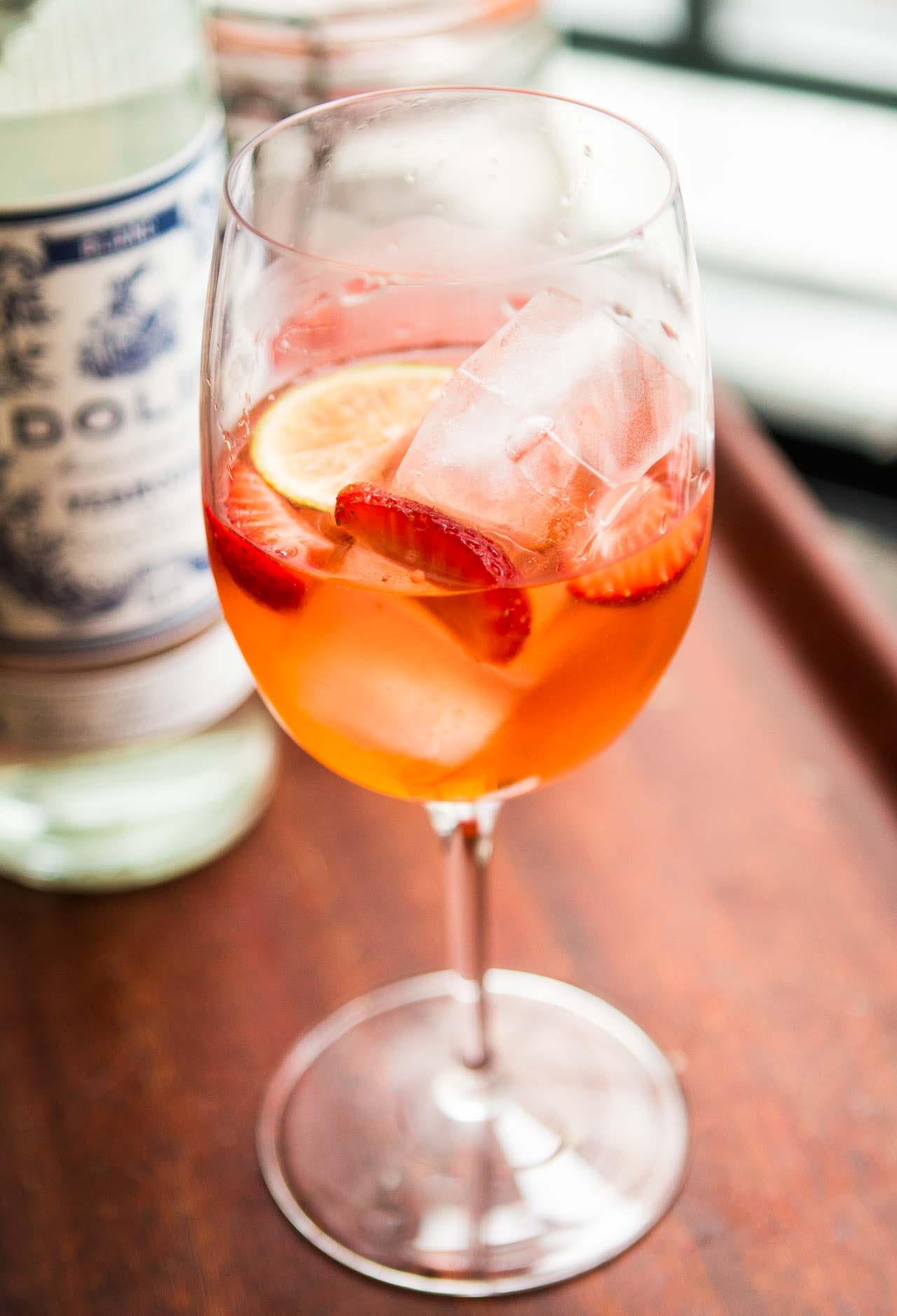
I’ve got some fresh strawberries infusing in white vermouth at the moment (I’m sure you could use frozen berries, too), which’ll be mixed with tonic water, a handful of ice, and some additional berries.
— À santé!

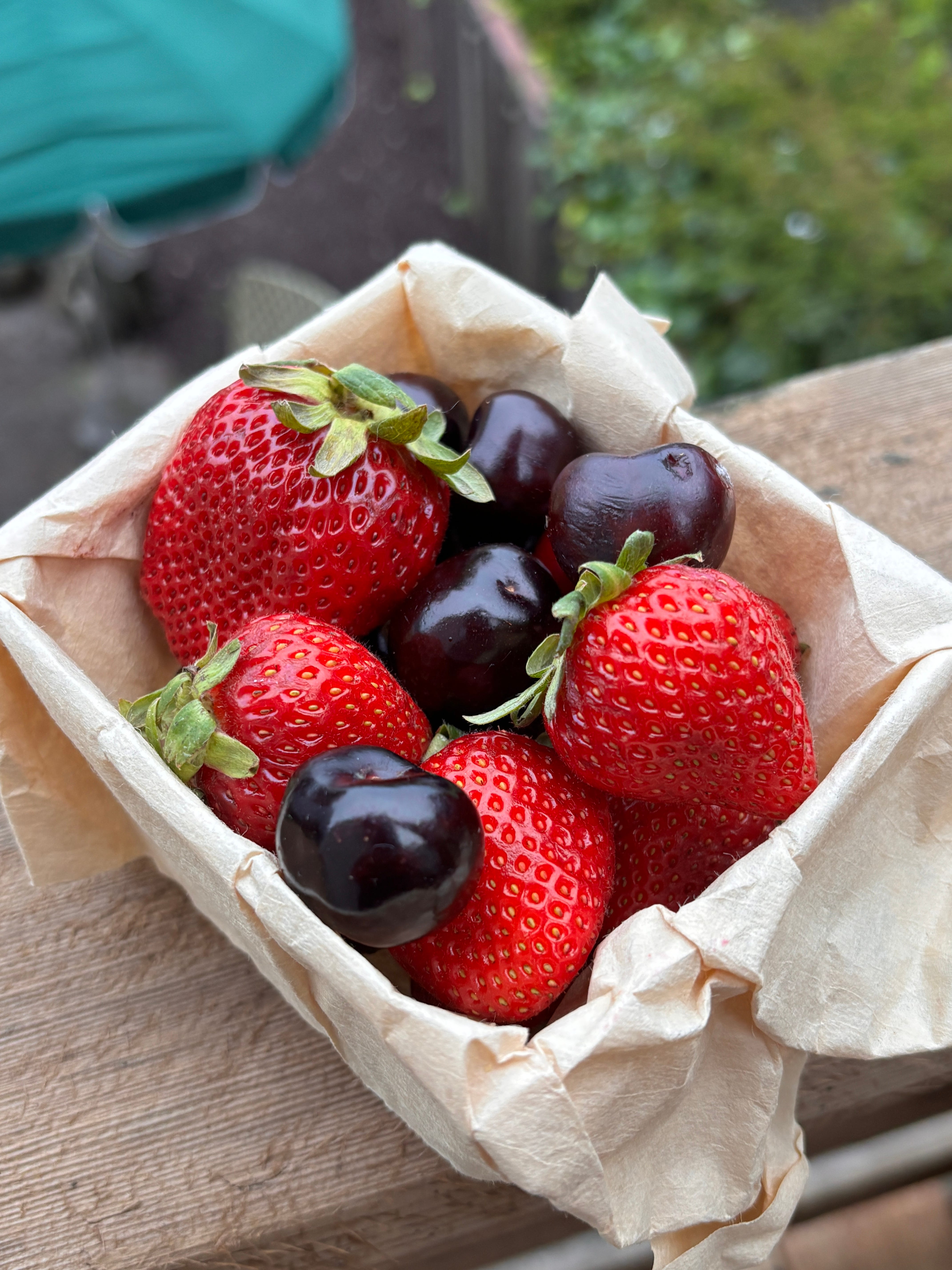
Book tours are lots of fun. It’s exciting meeting people, and in spite of the jet lag, and bleariness from sometimes getting up at 4am, you try to get in some good meals, too. Also important is getting fresh food, which we eat a lot of at home, but hard to do while on the road.
Thankfully, some wonderful folks brought me a beautiful basket of cherries and strawberries from the Berkeley Farmers’ Market while I was doing a booksigning nearby at Market Hall Foods, and I enjoyed the fruit as soon as I got home. (Thanks to the women who gave them to me!) I did also get a few gifts of chocolate, some more chocolate, and then, some more chocolate, which I guess is to be expected when you’re doing a tour for a chocolate book. 😊
My suitcase is already at capacity, even though I arrived with it half full. But it’s nice to see people enjoying the book, which has surpassed our (me and my publisher’s) expectations, as well as the venues selling the book. So thanks to everyone who bought or ordered a copy.
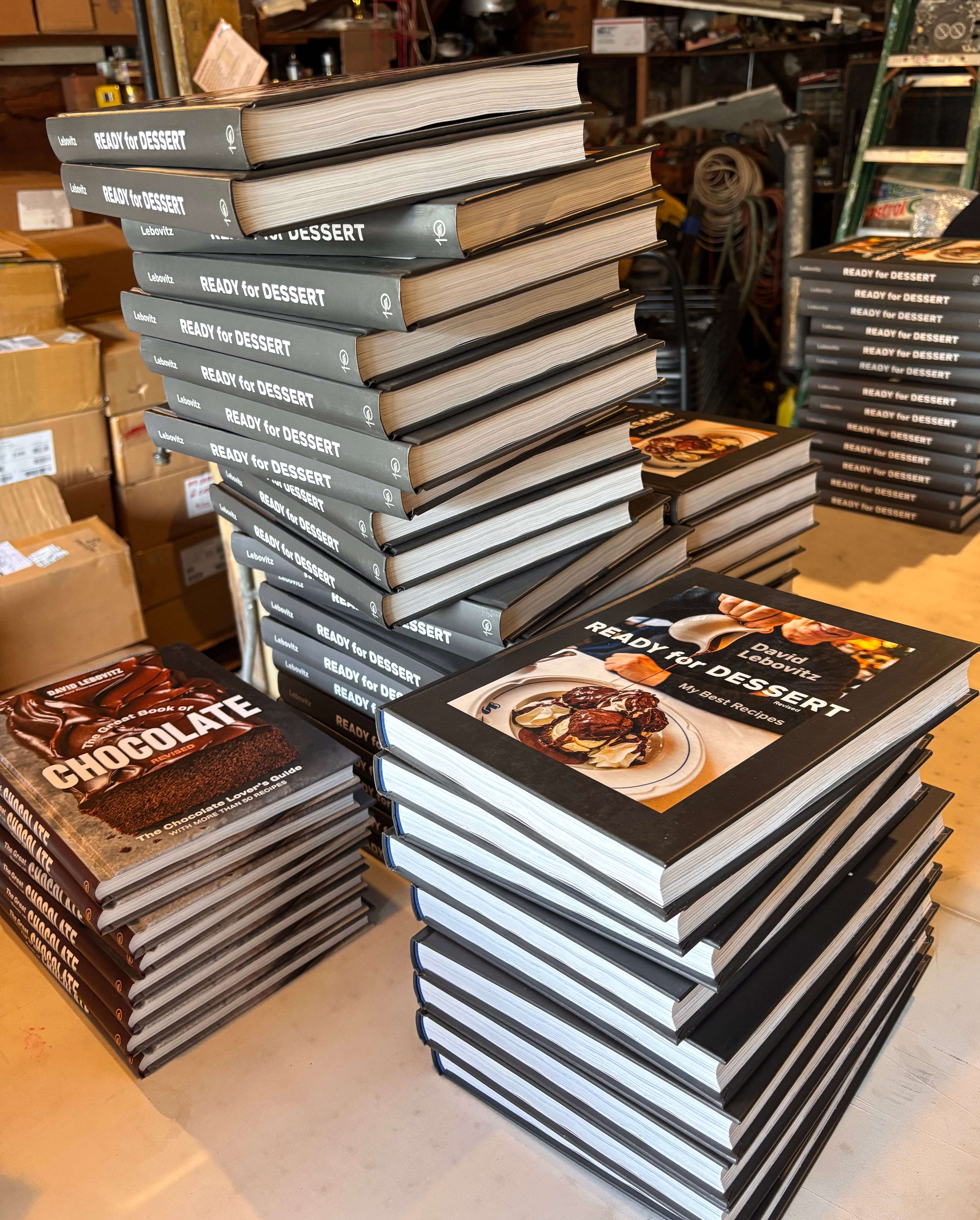
I signed a few hundred at Omnivore Books for people who came to say hi, and for others who ordered signed copies. If you ordered one, it should arrive shortly.
I did another event at Dandelion Chocolate in San Francisco. That sold out quickly since they could only seat so many people, but if you’re in San Francisco, do stop by. They do factory tours, teach classes, and have a chocolate salon where you can sip hot chocolate and enjoy delicious desserts made with their small-batch, single-origin chocolate. (Pro tip: Go for the S’more, if they have it on the menu.)
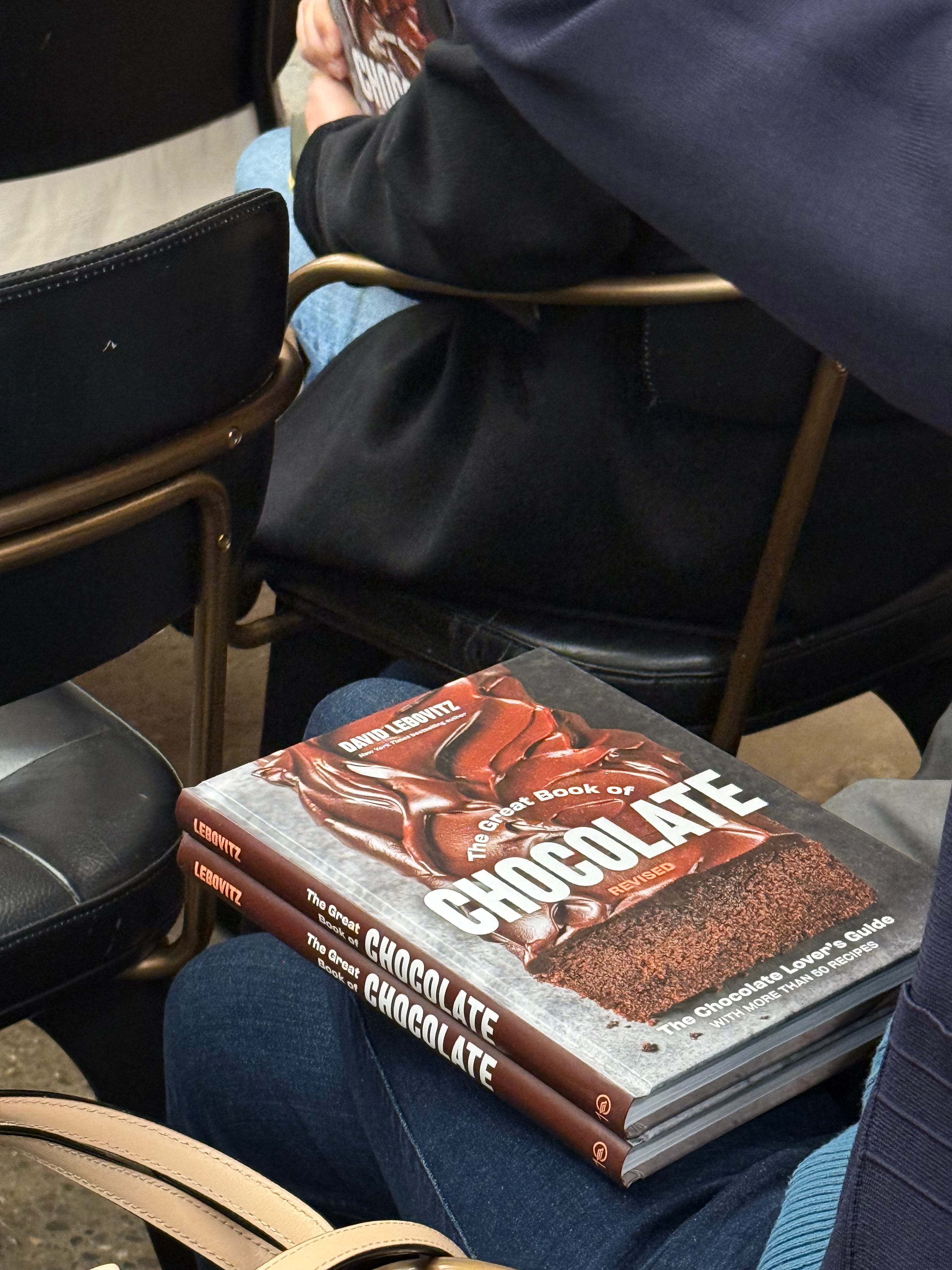
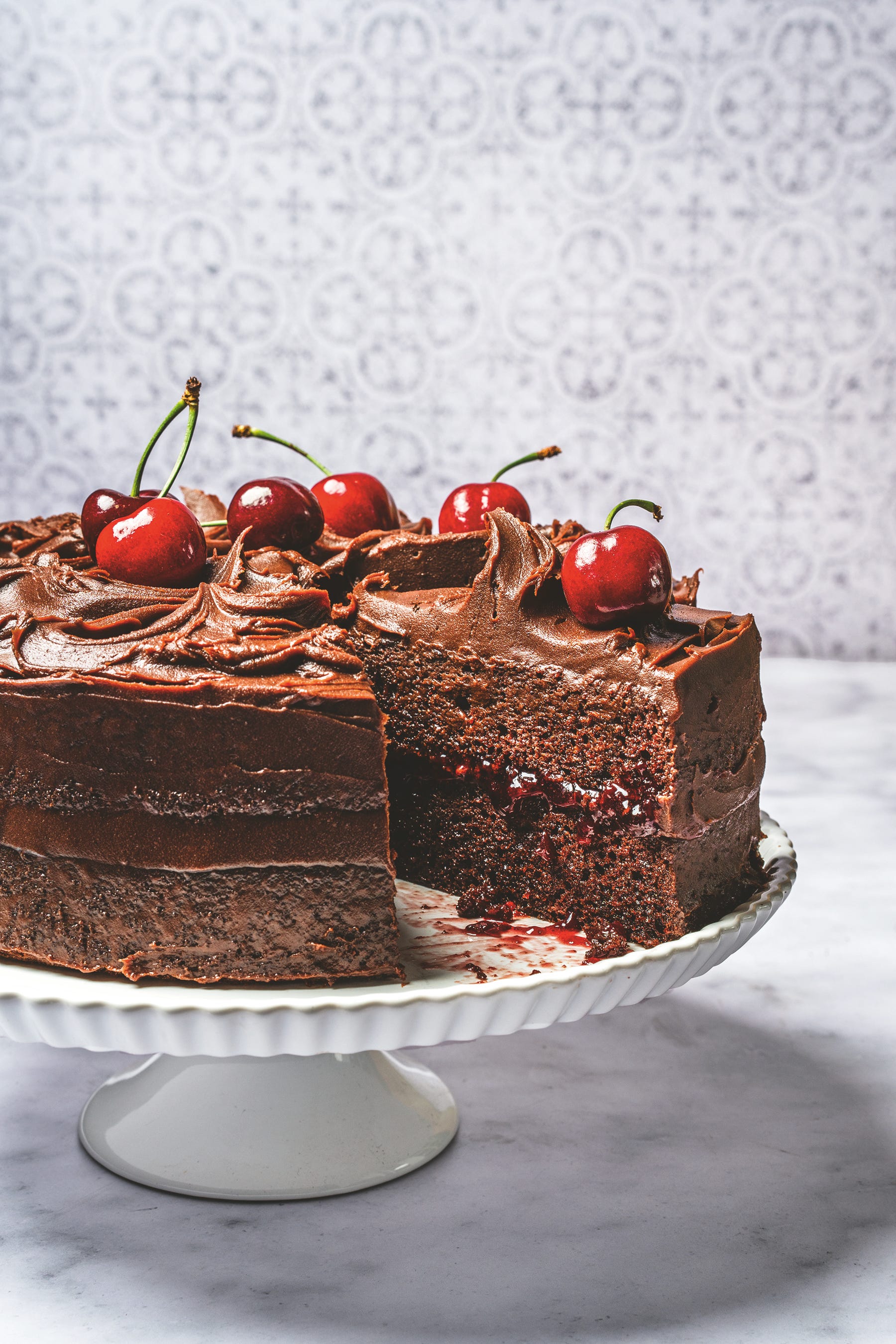
We had a wonderful turnout and enthusiastic crowd at Dandelion Chocolate, where pastry chef Stephen Durfee did a masterful job of baking and slicing Torta Divina, a rich chocolate cake that’s in The Great Book of Chocolate, adapted from author and baking instructor Nick Malgieri.
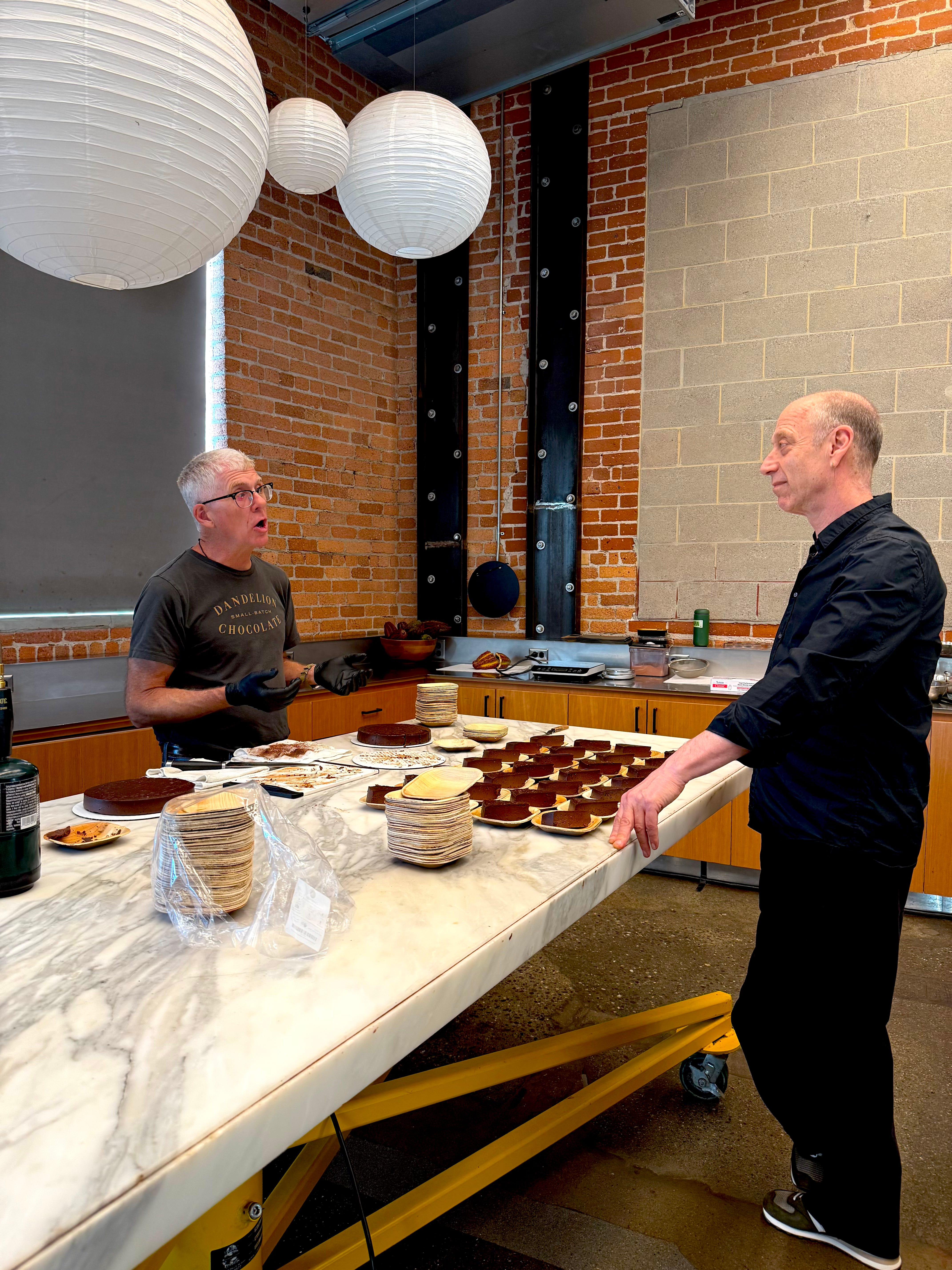
I had a really terrific time chatting with Stephen. (I want to call him “chef,” but he’s wearing a T-shirt, so I’m just going to go with Stephen.) We both talked about how the world of chocolate has greatly expanded since I wrote the first edition of the book and since the founding of Dandelion in 2010; the owners came to Paris and did a chocolate tour with me, then returned and started making chocolate.
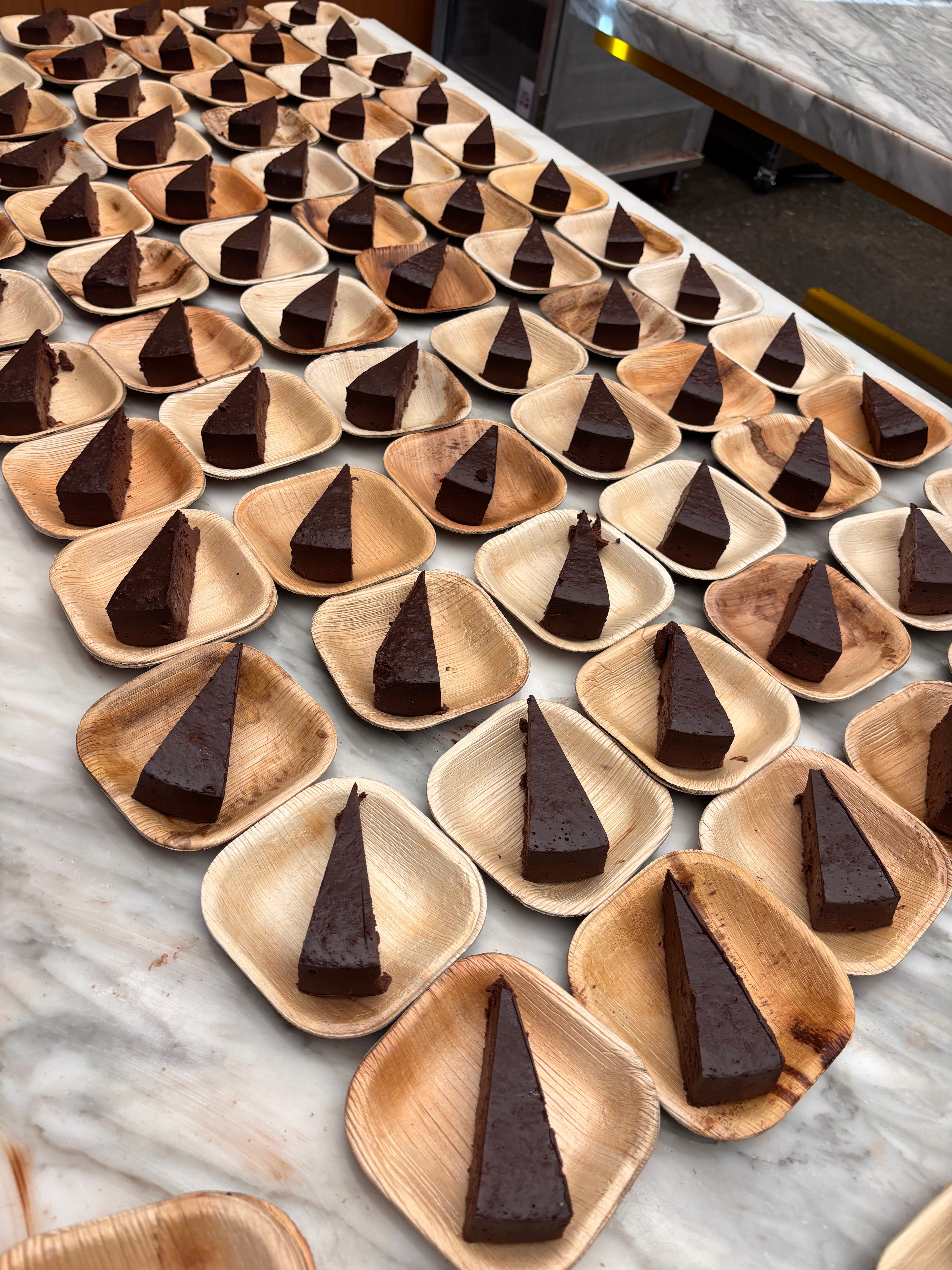
While I can say that I didn’t have anything to do with their success, I’m glad they’ve been successful, and their chocolate is considered some of the best in the world. I did also mention how bean to bar has now become a thing in France as well, influenced by the American chocolate revolution, as chocolate specialist Chloé Doutre-Roussel dubbed it; they use the English term, bean to bar, in France.
Get The Great Book of Chocolate

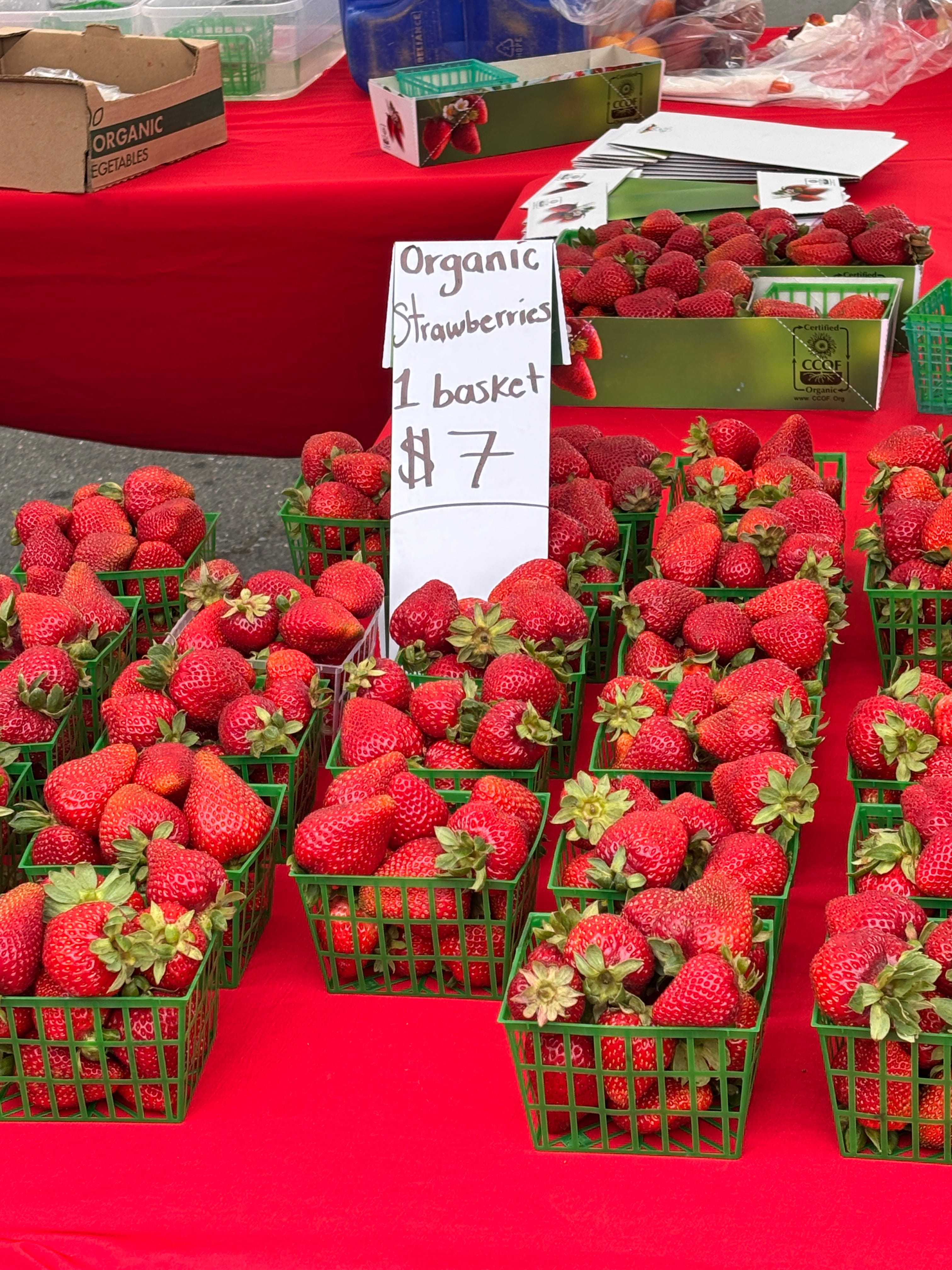
On the road, especially with all the chocolate I’m eating, I make an effort to get as much fresh food as I can, whenever and wherever possible. I was happy to be staying near a greenmarket in San Francisco, and was relieved to see baskets and boxes of berries and other fruits and vegetables that came from local farms.
I know it’s triggering for some when I post pictures of strawberries that cost $7/basket, but since that’s what they cost in France — at least the good ones — I’m not stupefied. I also know that it takes a lot of work to grow, pick, and deliver berries, which are fragile, and I didn’t see any of the berry farmers pulling up in BMWs. All I know is that last year I spent over €80 ($93) on things that would repel the slugs that decimated our garden, including the peppers, basil, and tomatoes, so I’m fine paying for someone who succeeds in the battle against them.
Speaking of $$, I remember when the $4 toast was considered a harbinger of the downfall of San Francisco.
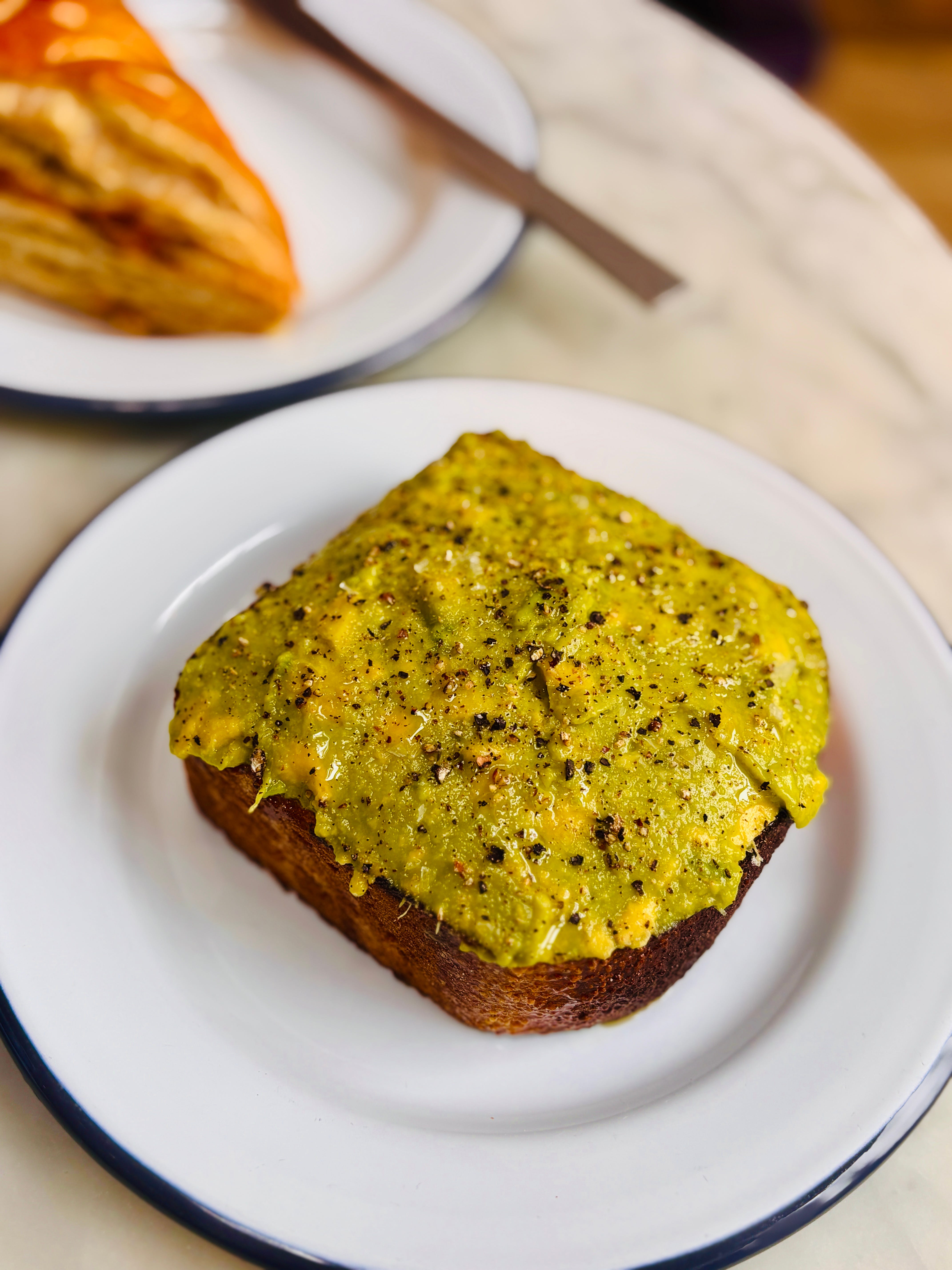
Now, that seems like a bargain. But one of my first stops in SF is The Mill, where it’s become a custom for me to meet up with Heidi Swanson of 101 Cookbooks, one of the OG food blogs. Heidi moved to Los Angeles a few years ago, but lucky for me (and for San Francisco), she recently moved back. We caught up over avocado toast and talked about the difference between sunny SoCal and foggy San Francisco. As wistful as I am about San Francisco, the chilly fog that rolls in at night is a deal-breaker for me, moving back there.
The Mexican food scene has ramped up in Paris, partially thanks to my friend Carlos at Comer, which is excellent, but a lot of it still doesn’t match what you can get in California. I arrived rather late in San Francisco the first night and my friends who I was staying with saved me a burrito from El Castillito. Like bagels in New York, there’s an endless discussion about who makes the best Mission burrito in SF. I still rank Pancho Villa at the top. But I had many a burrito from El Castillito in my lifetime — at least in San Francisco — although nowadays, my French-trained tummy can only handle a half of one before I’m full.
Before my event at Market Hall Foods, I had what Diana Kennedy railed about: the Mexican combo platter, at Cactus Taqueria. The late Ms. Kennedy was famously prickly about, well…everything. I once spent a week with her and avoided her wrath but heard about it from others who were on the receiving end of it. However, I stopped caring what people thought of me, or what I ate, a few years ago, and am a lot happier. Besides, if I went around scolding people making non-authentic Niçoise salads or putting chicken on Caesar salads, I wouldn’t have time to write about all the delicious things I get to eat. And when you’re at the airport, or on book tour, a chicken Caesar often hits the spot.
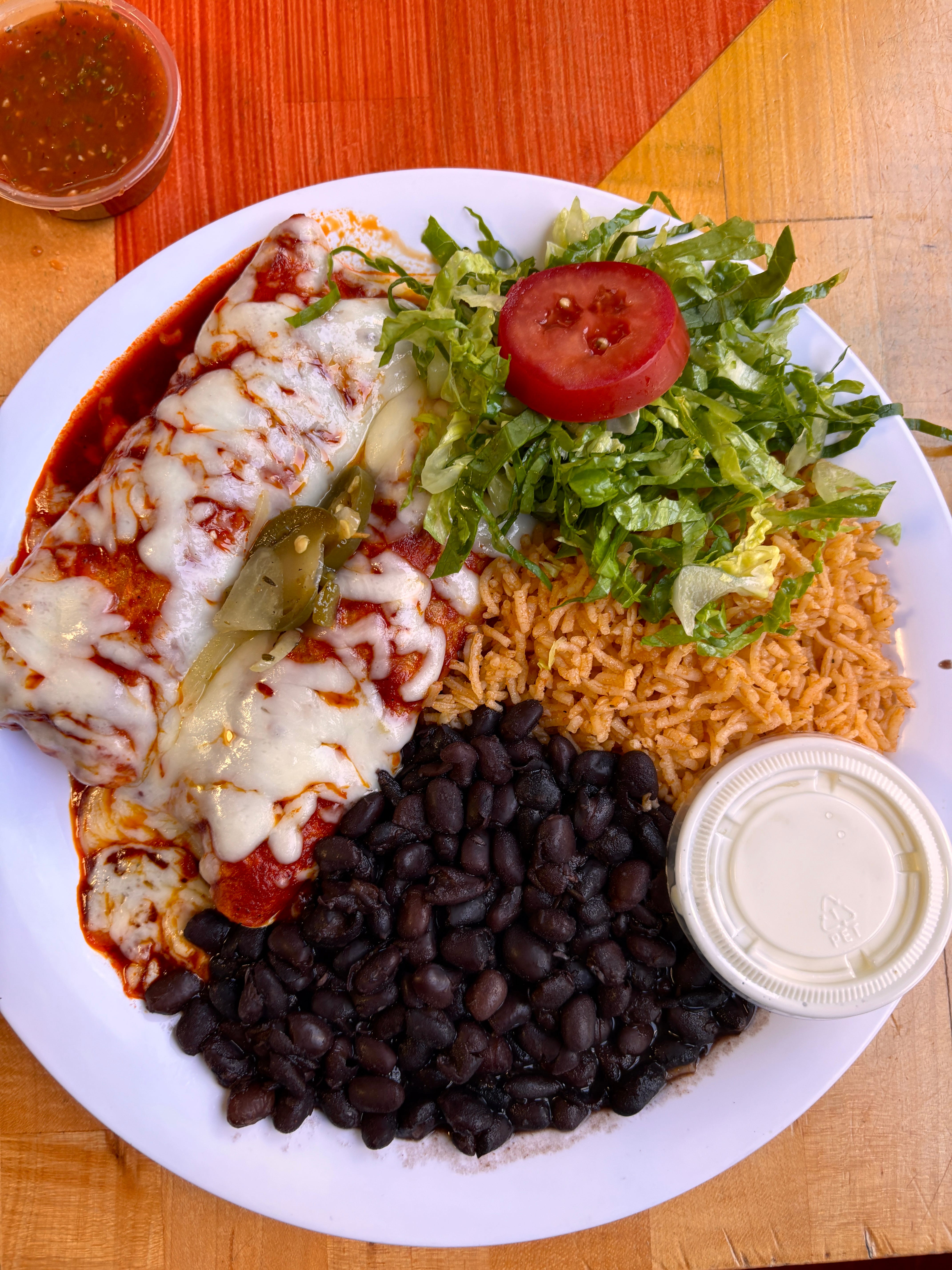
Not sure what Madame Kennedy would have to say about Nopalito, but the crisp quesadilla with asparagus, brussels sprouts, and fresh epazote (above, right) was so good, I went back a second time to have it. Literally everything is good at Nopalito, including the tamal with soft masa filled with ancho-braised chicken, and the enchiladas de mole con pollo, chicken enchiladas with mole, above left. (Yes, there’s a mole recipe in my chocolate book, too.)
A few months ago I went to the Staub factory in France and met Belle English, who runs the test kitchen at Williams-Sonoma in San Francisco. I remember going into my first Williams-Sonoma store in San Francisco, which was on Sutter Street, where I saw such wonders as Duralex glasses, Le Creuset cookware, and curiosities like madeleine molds and tart rings from France. Chuck Williams introduced America to the food processor. It was a store for people who liked to cook, and I was fascinated by everything they carried.
So it was a pleasure to be in their gorgeous test kitchen, where I got to play with all the kitchen gadgets, and Belle and I made Bouchons together, from my chocolate book. As soon as they were cool enough to handle (actually, she ate one that was still a bit too warm…), dove into them.
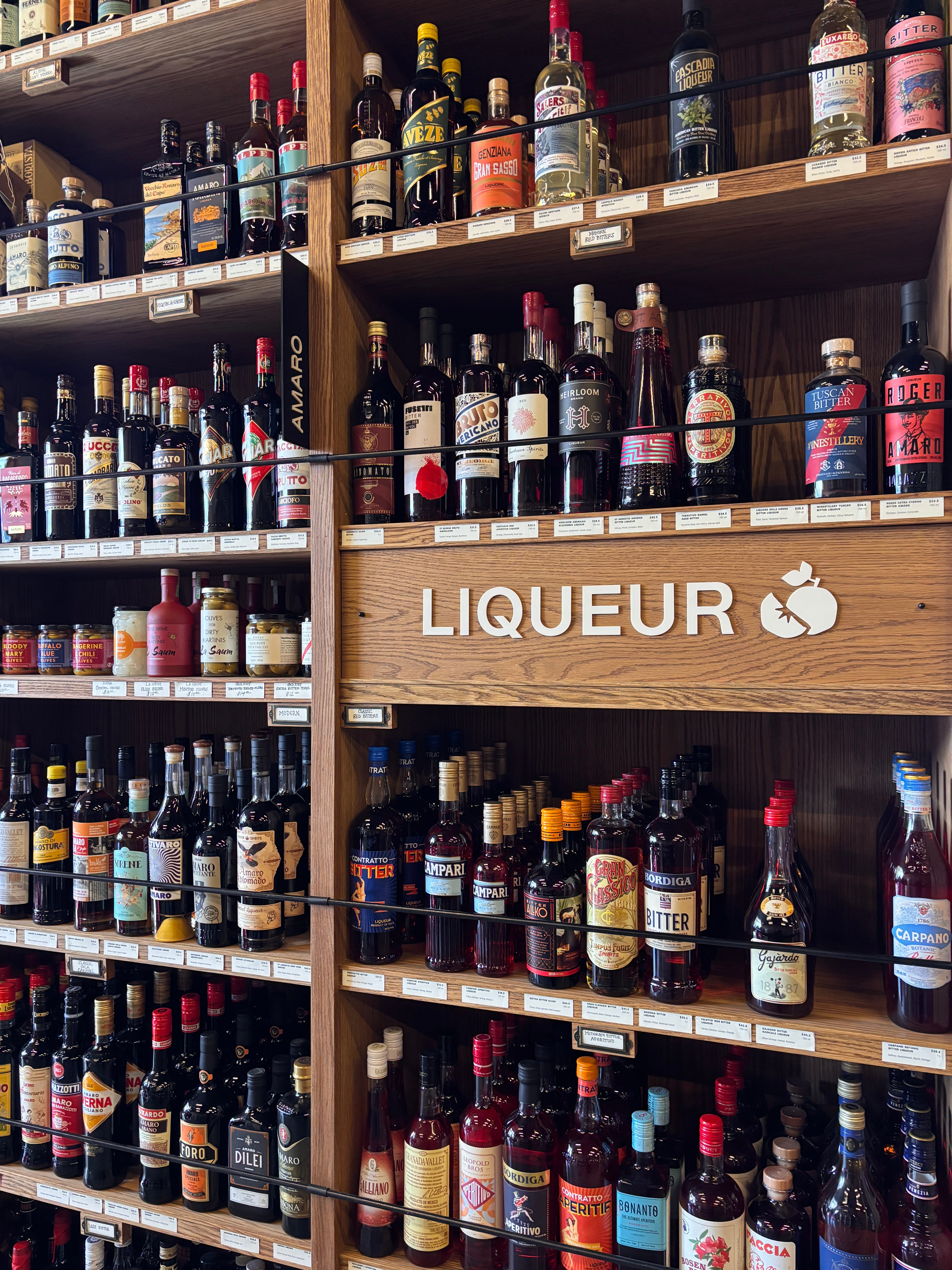
I also stopped into Bitters and Bottles, a shop I discovered during Covid when I was doing Drinking French apéro hours on Instagram. When I wrote the book, I did a lot of checking around to see what French bottles were available in the U.S., and Bitters and Bottles had a stellar selection, including some that are hard to find, even in France. Interestingly, Americans seem to like many French apéritifs more than the French do!
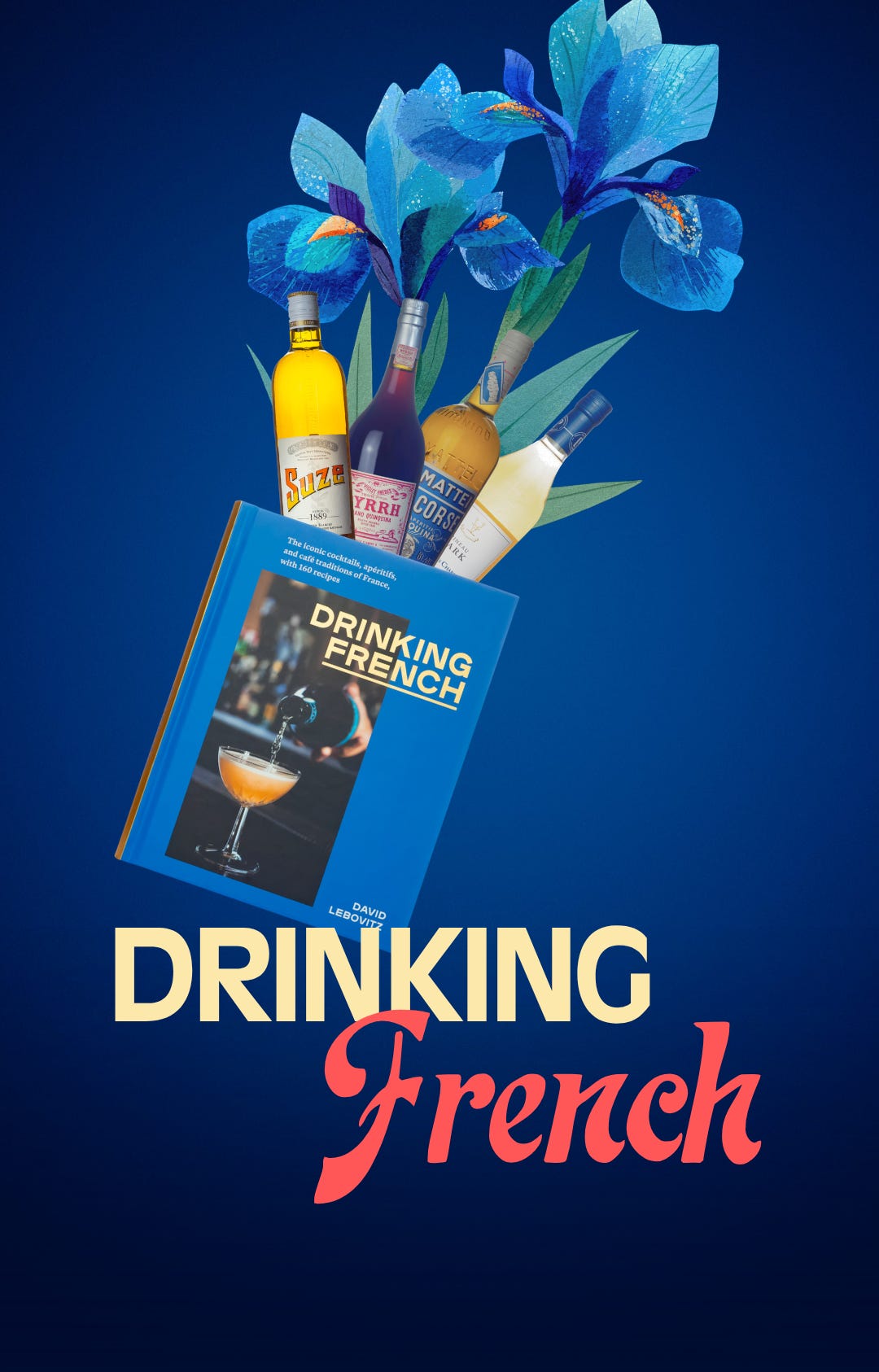
I did see that after my visit, they’re offering a Drinking French box with seven of my favorite bottles, which are perfect for summer, including Cap Corse and Byrrh; these are especially good over ice or with a splash of tonic water and an orange slice for a refreshing spritz.
I loved my meal at Nari, above, and am looking forward to chef/owner Pim Techamuanvivit’s upcoming book, Cooking Thai, co-authored with . I got a sneak preview of it, and it’s not only a beautiful book, but very well-written, making the authentic Thai dishes approachable.
Subscribe to my newsletter to get recipes and posts sent right to your inbox!
I was sad to learn a few years back that one of my favorite dim sum places, Hong Kong Lounge II, had a fire and had closed. So it was nice to hear they reopened as HK Lounge Bistro in the unlikely neighborhood of South of Market. In my day, people used to hang out in that area late at night and into the morning hours, when they wanted to have some unrestrained fun, which sometimes involved restraints. Although you didn’t hear that from me…
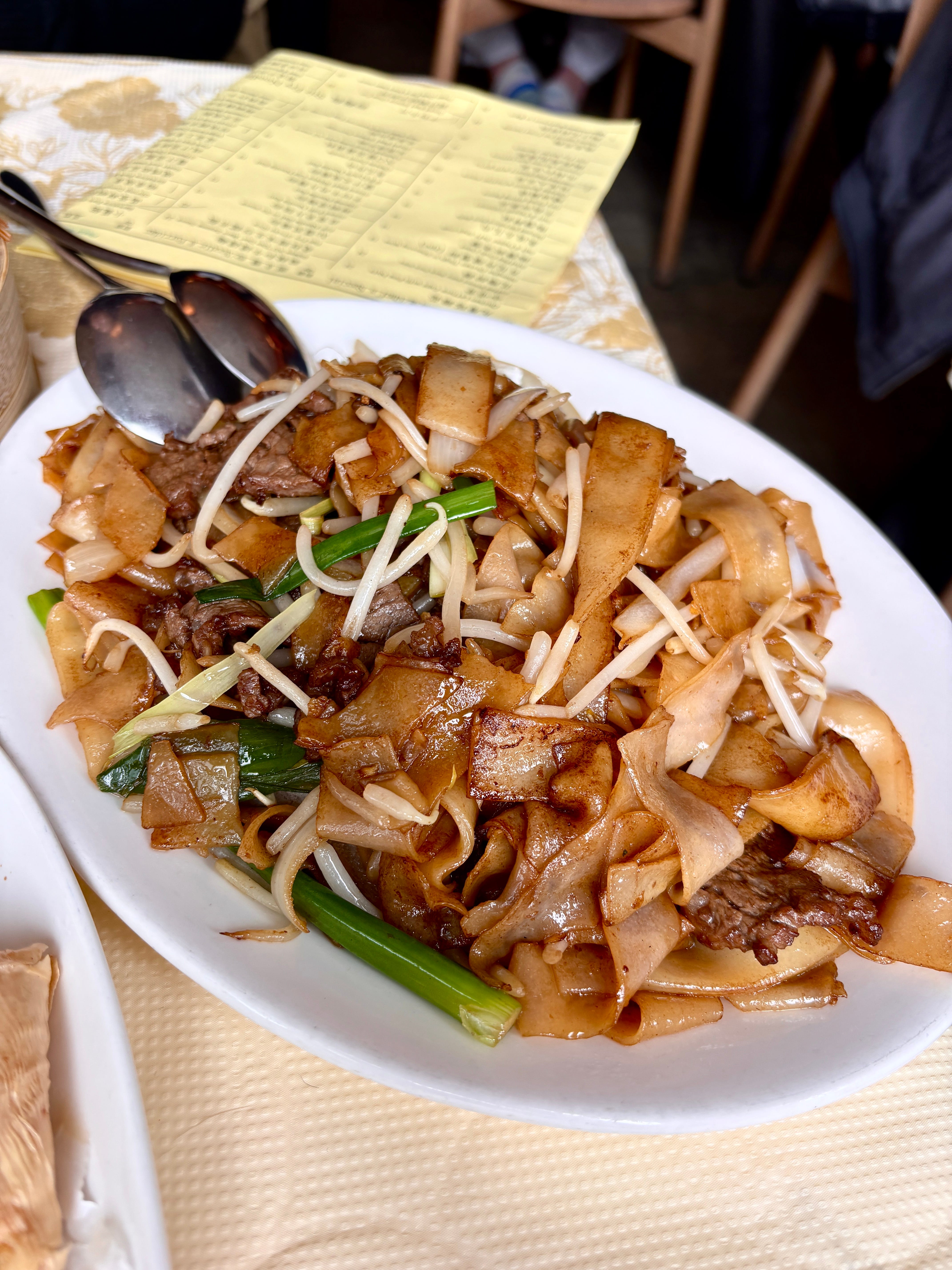
I was thrilled to dig into a big platter of their beef chow fun, above, was still excellent, and had wok hei, the smoky char that rice noodles get from being wok-fried. That smokiness is a big part of the flavor of a good chow fun. Otherwise it’s just a big heap of noodles.
While they may not look all that good in the picture (above, right), I dreamed about their crisp tofu skins with shrimp. They weren’t quite as good as I remembered, but it was nice to have a big plate of pea shoots, above left. When Romain first tasted pea shoots, he asked the same question as I did: Why don’t we have those in Paris? I even memorized the words for them in Chinese, thinking they might be an “off-menu” item. But no, they don’t seem to exist in France. However, it’s hard to believe anyone could make them better than here.
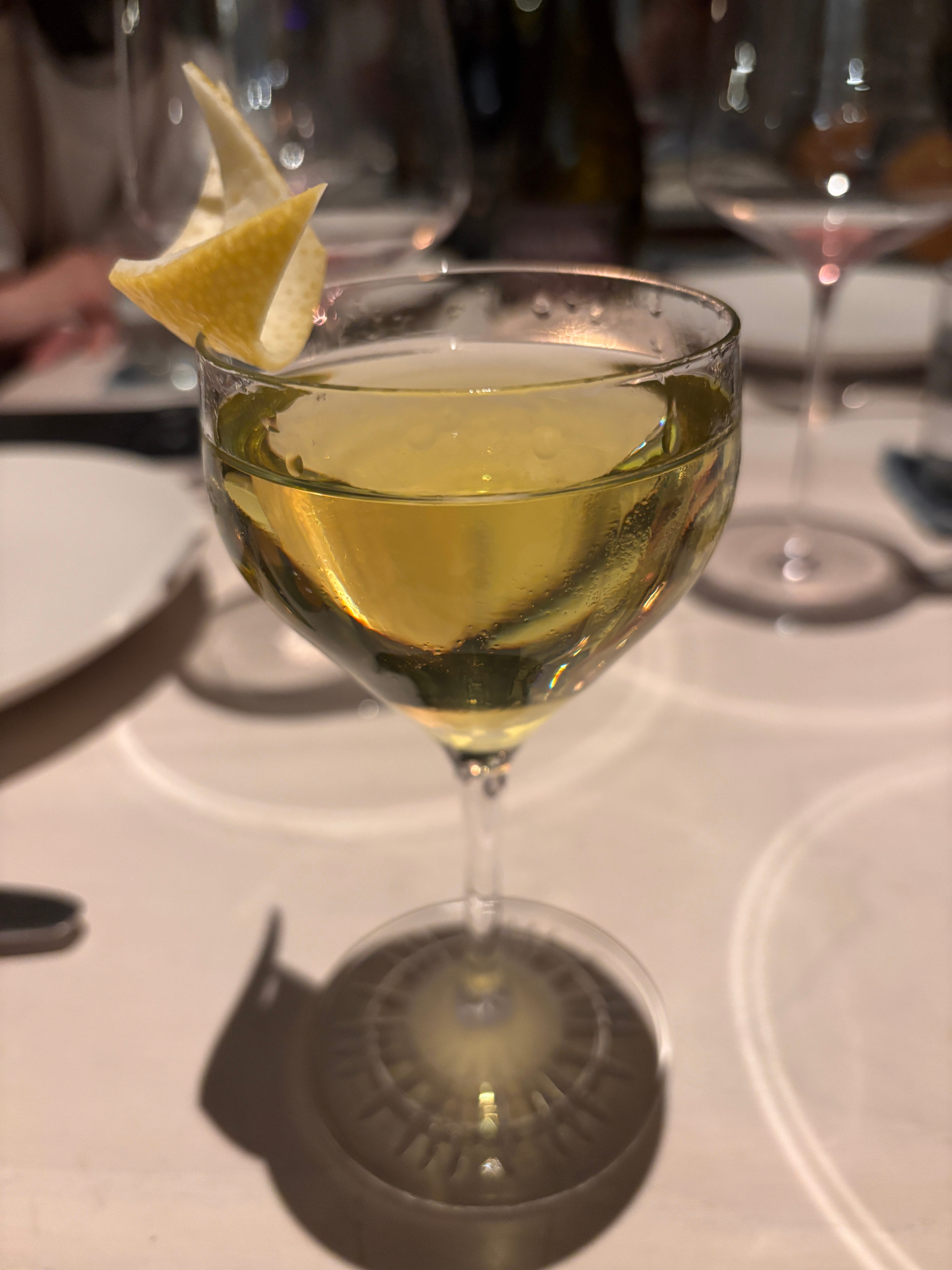
After my event at Dandelion Chocolate, I met up with friends at The Morris. One of them was owner Paul Einbund, a major fan of, and expert on, Chartreuse. I did a video with him in his apartment, which is filled with bottles of Chartreuse, old and new, but Instagram seems to have buried all my videos somewhere (which is why I’m now doing them here). I started off with an Alaska cocktail. If you go, the Chartreuse Slushy is a must.
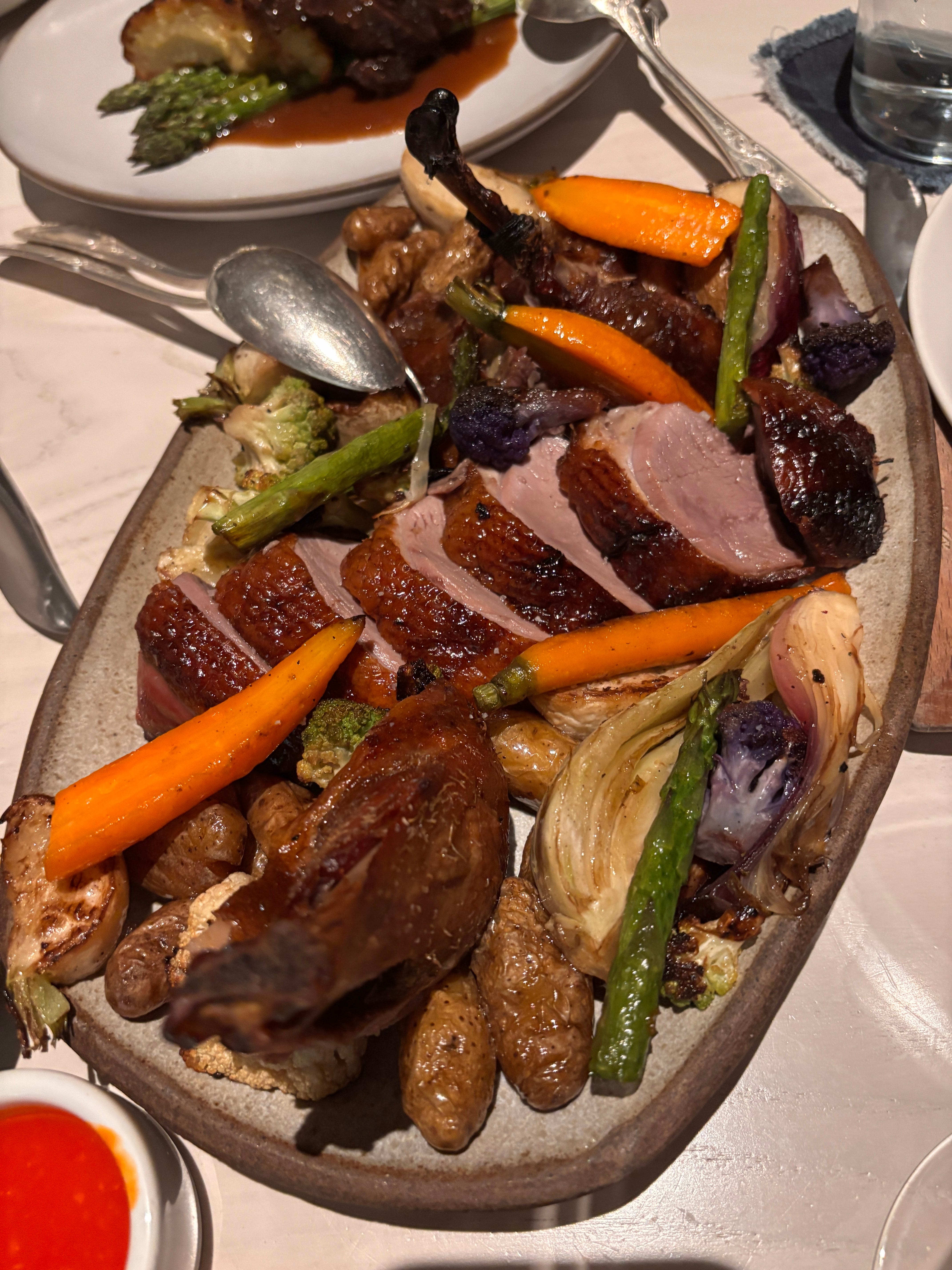
We share a whole smoked duck with root vegetables, which was generous enough to feed five of us. I’d filled up on chocolate cake before dinner — oops! That shocked Paul, but others who know me are used to it.
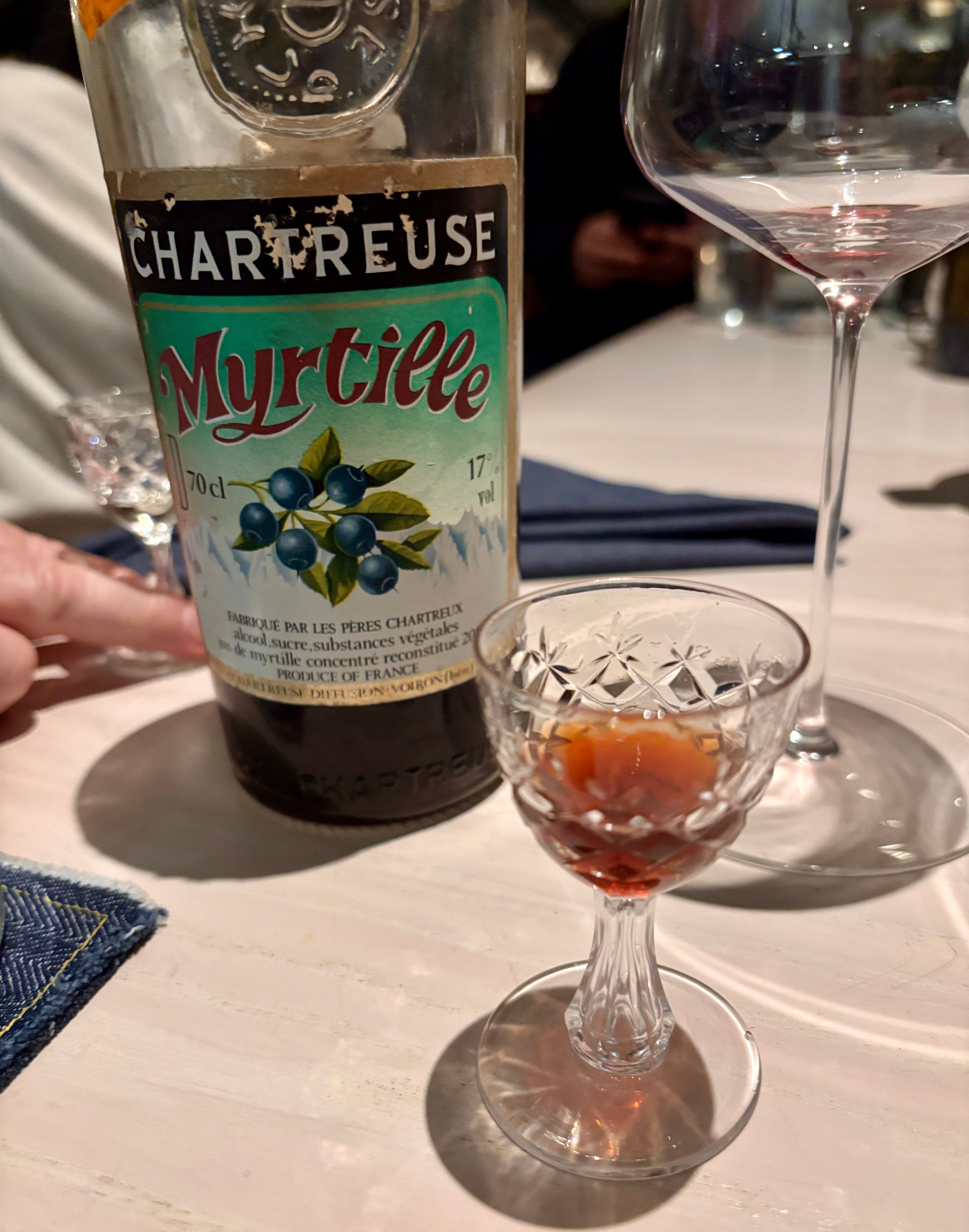
After dinner Paul brought out a special treat: Blueberry Chartreuse. In the 1970s, the monks who make Chartreuse tried to make it more popular, and had the idea to add fresh blueberry juice to it and bottle it. There’s also an orange version and Paul swears there was a raspberry one as well. They’re really hard to find, although one doesn’t drink them for the flavor since they didn’t age well. He called the taste “Flat Coke,” which was hard to dispute. Paul said in an article: “I would actively dissuade my guests from purchasing the late ’70s fruit Chartreuse bottlings.”
I woke up the next day feeling okay. The blueberry-flavored Chartreuse didn’t cause any harm. And I’m looking forward to the book on Chartreuse that Jordan Mackay wrote with Paul, which is the book that I wanted to do. But they know more than I do about the subject, although I’m happy to do more research on it. Maybe that’ll be my next book…and book tour?
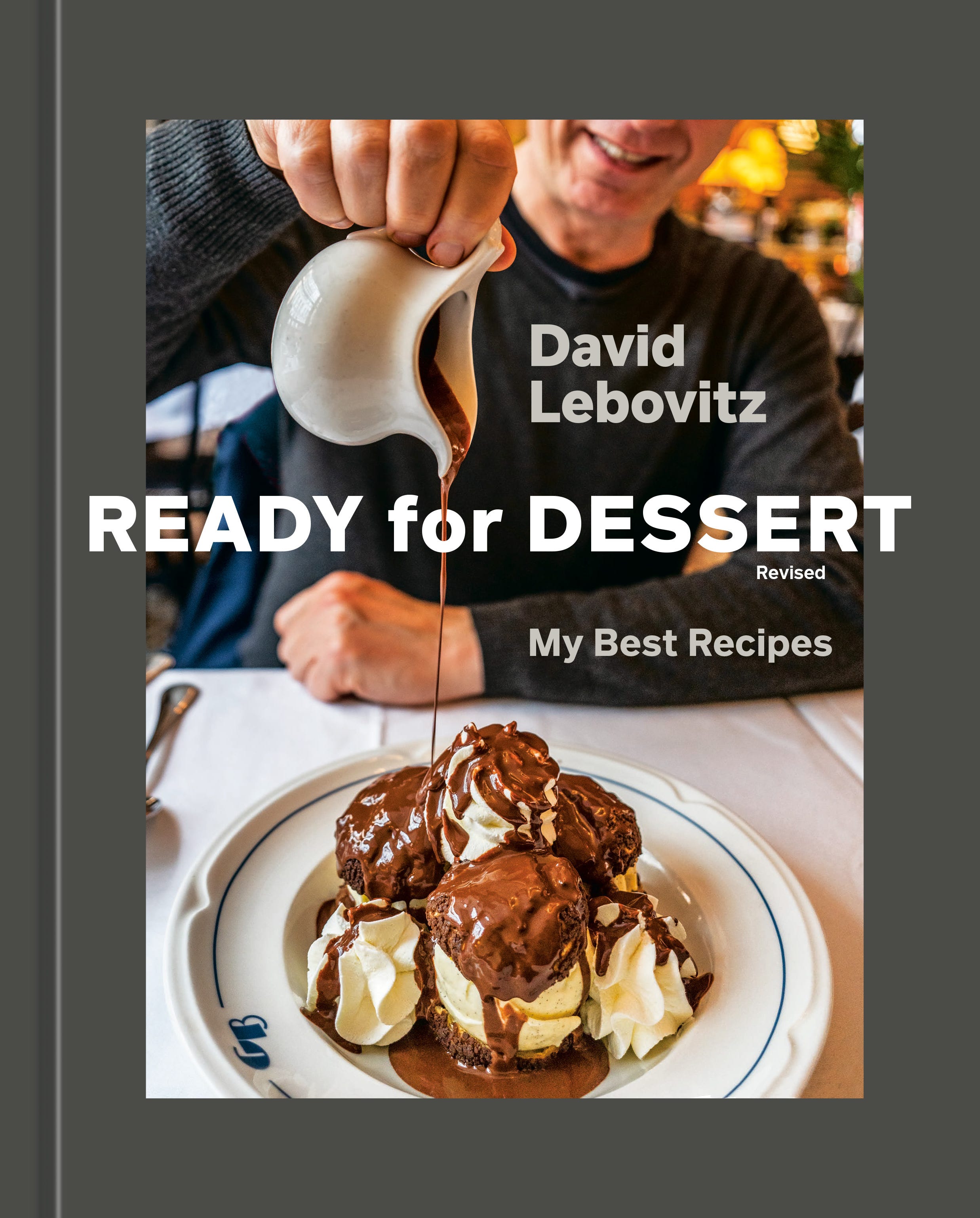
When I told Deb Perelman of Smitten Kitchen that I was doing a complete revision of The Great Book of Chocolate, which included adding new recipes, she insisted that I include her Chocolate-Olive Oil Spread. For those who follow Deb know that when she says something is delicious and worth making, you not only listen, but in my case, you spread the word. No pun intended.

Get The Great Book of Chocolate
As luck would have it, Deb was recently in Paris so I invited her into my kitchen to make her Chocolate-Olive Oil Spread. As you can see in the video, not only is the recipe fun to make, but its very easy as well. And unlike store-bought spreads, you know exactly what’s in it. The only thing that’s a bit tricky is to get it to just the right consistency for spreading. But if I can do it, so can you.
Deb finishes the dark chocolate spread by leaving it on the counter at room temperature for a few hours, whereas in The Great Book of Chocolate, I’m a bit more impatient so I place it in the refrigerator until it reaches the right consistency, then transfer it to a jar. Because it has no dairy, it can be stored at room temperature.
After you make this spread, if you find that it’s too firm, a few seconds in the microwave will soften it just enough to make it spreadable. If you don’t have a microwave, you can warm the jar in a small saucepan of warm water. The temperature of your room can be a factor, and I did find that using a high-percentage chocolate — one that’s 70% or more cacao solids — will firm up more solidly than one that’s 50-55% cacao solids, which is what we used in the video.
[Thanks to Irene Wong for shooting the video, Michael Sellers for editing.]
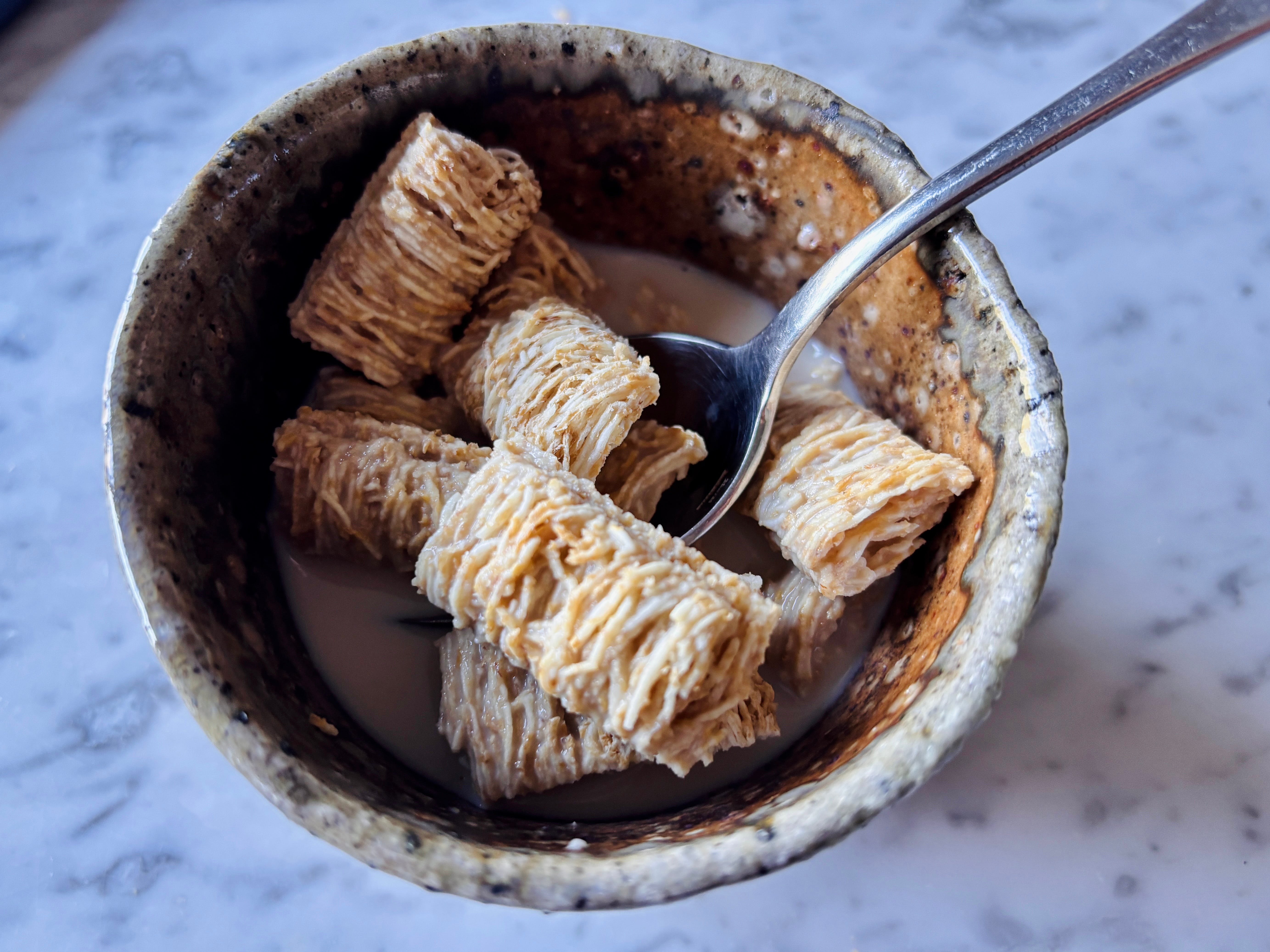

Sometimes when I travel, people point me towards Michelin-starred restaurants. I’m not sure why, since (hopefully) that’s not the vibe I put out. I’ve sat through those meals and honestly, I’m just as happy having a slice of pepperoni pizza, an incredible bánh mi sandwich, or even something as simple as a bowl of shredded wheat; spooning up those little woven squares of whole wheat, floating in a bowl of cold milk, is a Proustian moment for me.
One thing I was especially craving when I arrived in New York City was an everything bagel. CDG airport in Paris can be confusing, something they plan to address in 2027, so hopefully when you’re looking for gate 4, you’ll find it between gates 3 and 5, rather than way on the other side of another terminal, which you need to take a shuttle to.
JFK airport is doing what CDG should do: a complete and total overhaul. My taxi driver was swearing all the way through the tangle of roads that led to my terminal in Paris, and even almost came to blows with another driver. I’m pretty much used to that from living in France for so long, but I admire that French people get over altercations quickly…c’est normal, whereas I hold them in forever.) At JFK, I waited 45 minutes for my suitcase at baggage claim, my Lyft took nearly 30 minutes to arrive, and the drive to Manhattan added another 95 minutes. So while I appreciate people asking me to come to their city, travel is certainly a challenge these days, to put it mildly.
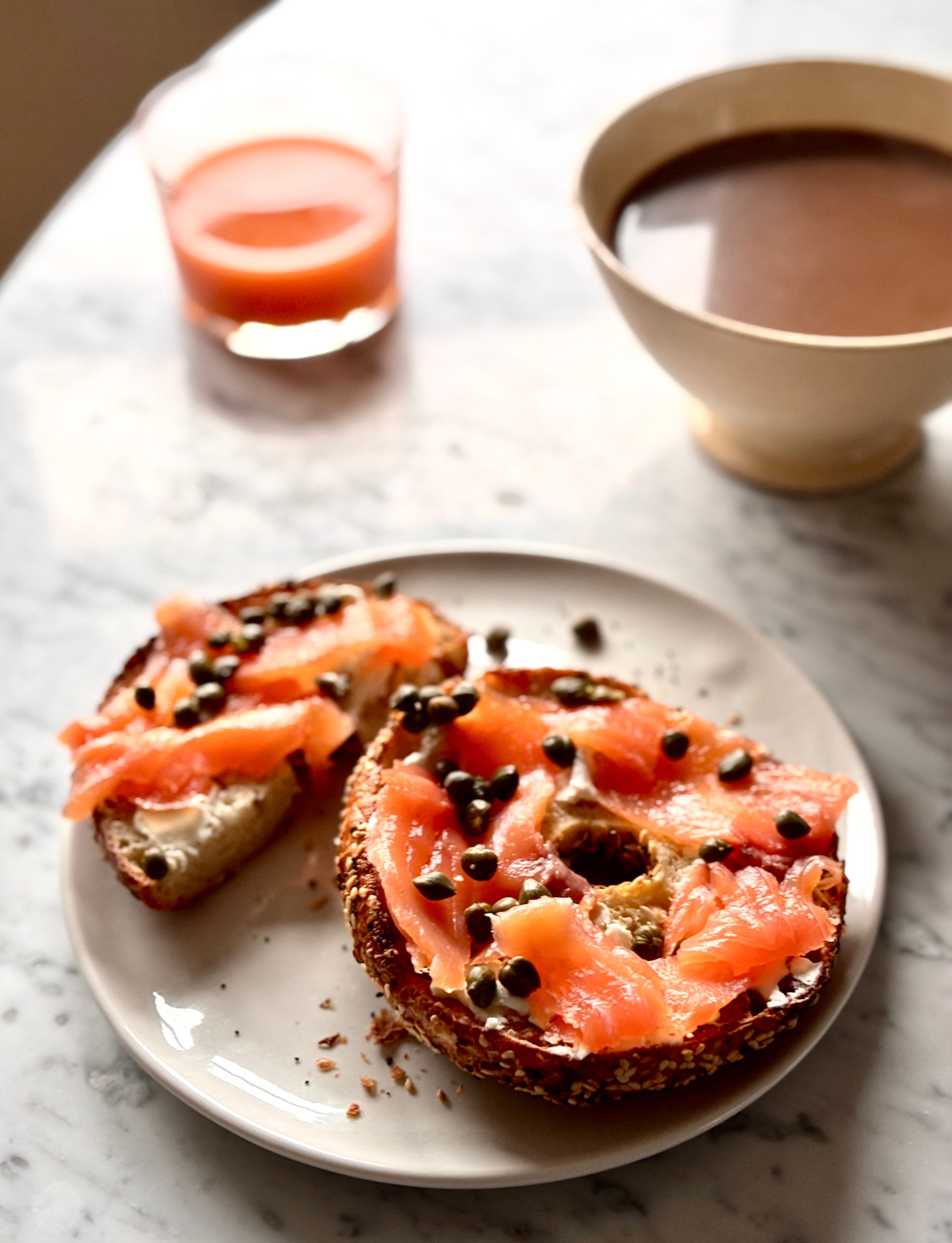
I was staying just down the street from Apollo Bagels, which is one of those places that always has a line. Their website describes their bagels as having a “shattering crisp exterior,” which is certainly truth in advertising. The surfaces, both top and bottom, are embedded with a thick layer of “everything” seeds, and they’re not too thick or puffy. (My other faves are Russ & Daughters, but that would’ve been a longer hike from where I was staying and time was of the essence.)
Even though my flight arrived at 12:30pm, by the time I got there two minutes before closing time, at 4:58pm, they were out of bagels. Apologies to the person who tried to talk to me on the street as I was on the verge of hysteria, but getting a bagel was my priority.
The next morning I was up at 2:30am, thanks to the décalage horaire (or, le jet-lag, as we call it in my dual language home), and took care of the cavalcade of emails and messages that piled up in my absence. I got a bagel when Apollo at 7:01am, right as they opened, and topped it with cream cheese, smoked salmon, and capers. I know there’s no red onion on it — and to me, I save the tomatoes for summer salads — but travel means that you take what you can get. As a French friend once told me: On ne peut pas tout avoir, You can’t have it all. But that bagel was darned good.
One thing that Paris still lags on is dumplings. After catching up with a good friend who I worked with at Chez Panisse, over dim sum at Tim Ho Wan, I told her about the remarkable brownies at Hani’s, just a few blocks away.
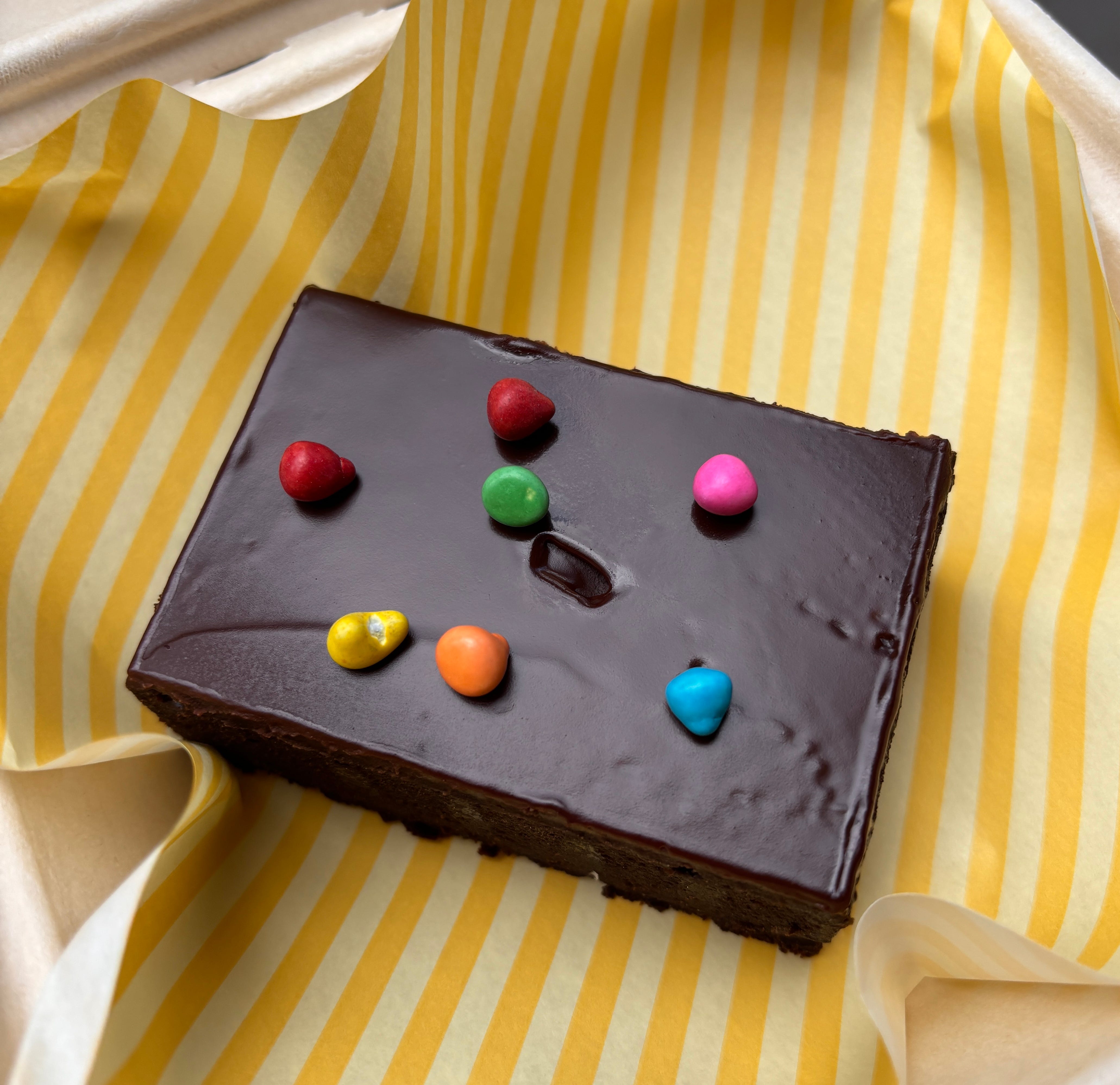
You don’t know how good a brownie can be until you’ve had one at Hani’s. They’re hard to describe, but it’s like a solid block of the densest, darkest chocolate one can imagine. Even I can’t imagine it. You just need to experience it.
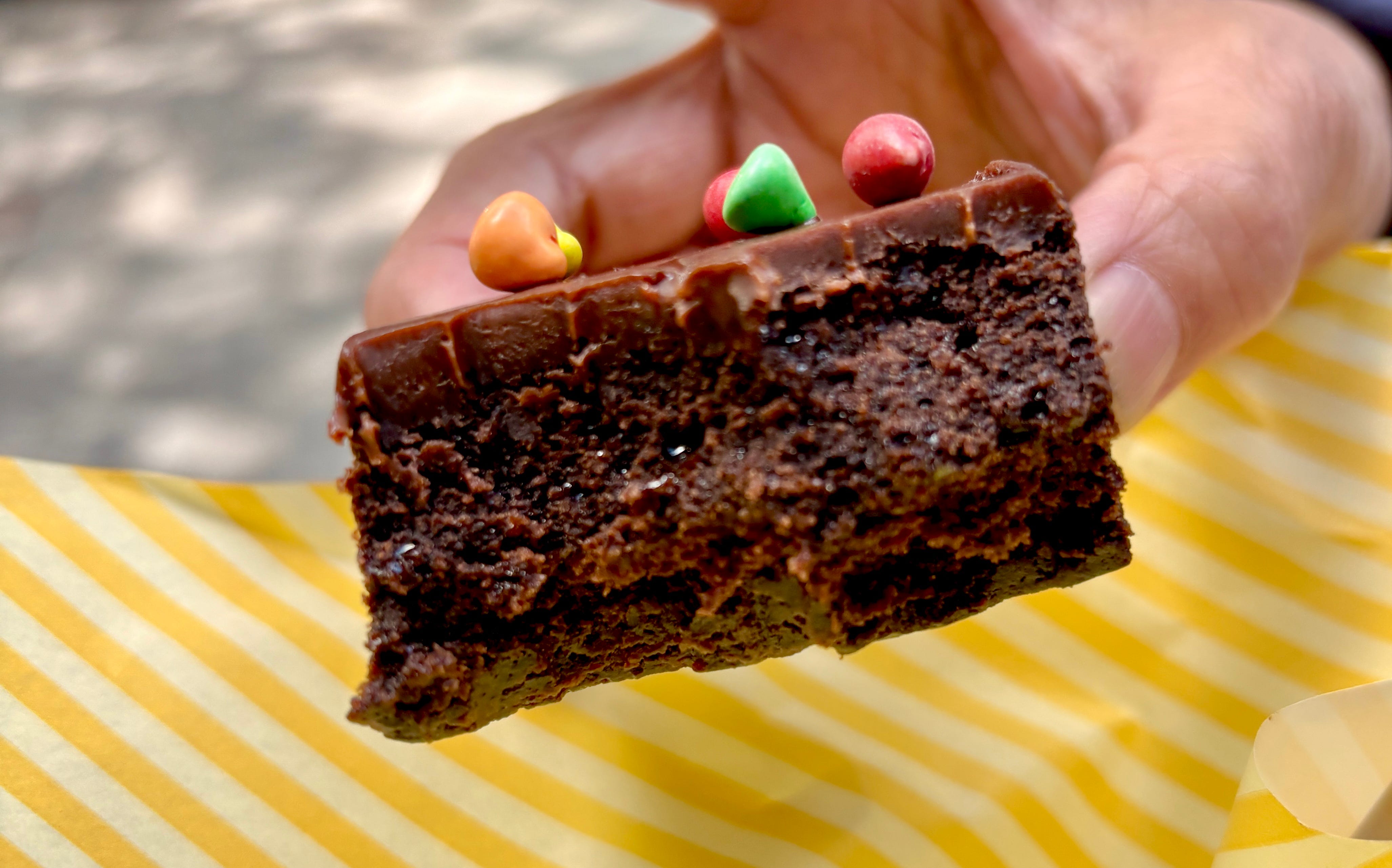
The line was long since it was Sunday, but Miro, the super-friendly baker and owner, was manning the door, smiling as he ushered people in, anxious for one of their awesome cinnamon buns or tahini-pistachio Rice Krispies treats, which are also unimaginably good.
One perk of being a baker is that we look out for each other, and Miro kindly stepped inside and emerged with a brownie for us, with a chocolate chip cookie as an added bonus, which was the size of a toddler’s head.
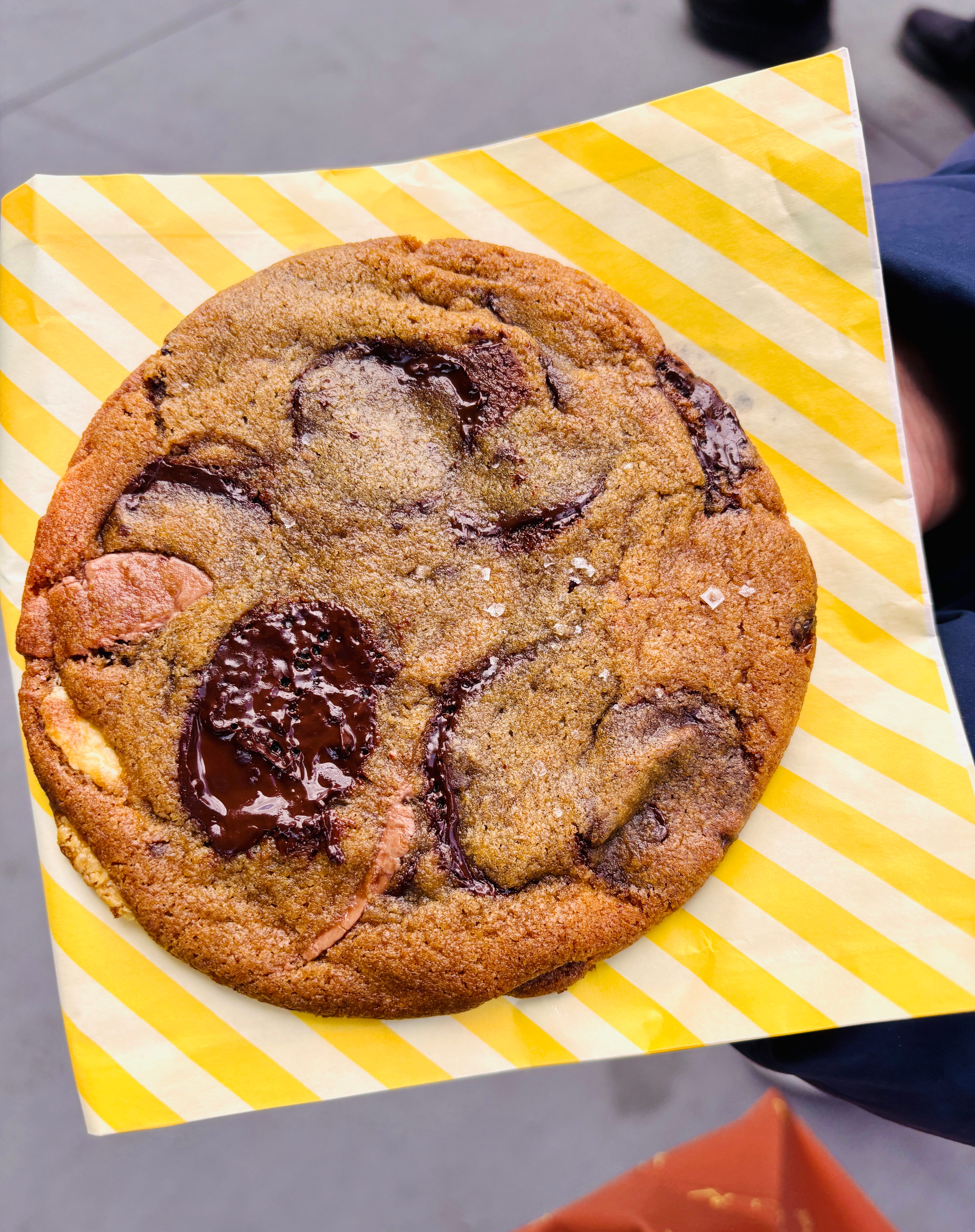
My friend is très exigeante, meaning she has a very discerning palate, and she was also swooning over the brownie (and cookie) that we wolfed down on the sidewalk.
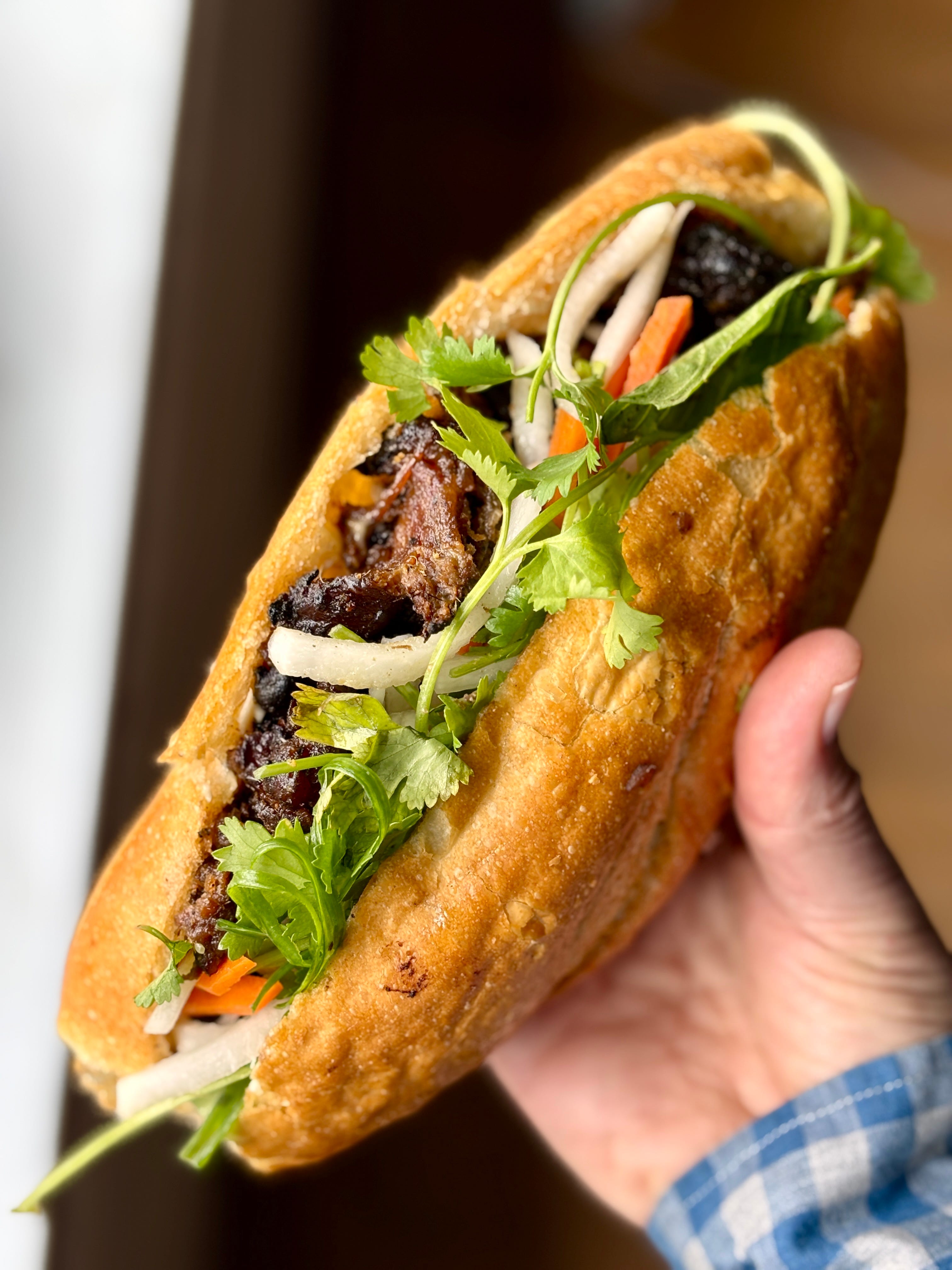
On another day, my friend asked me what I was doing for lunch. She was out of town but recommended the bánh mi sandwich at Bánh Anh Em. When she described the housemade bread as “so light and crispy…it just kind of melts as you eat the sandwich,” I was sold. And another sandwich was sold. Thankfully, you can order online and pick up your sandwich at a designated time. I ordered the char-fired barbecued pork belly with pickled vegetables, hoisin sauce, and scallion oil, and I have to say, it was one of the best sandwiches I’ve had in my life. (Thanks, Susan!)
It was also huge and was so big that I had a hard time eating the whole thing, but I also had a hard time stopping.
Not too far away is Astor Wines & Spirits, a place I used as a reference when I was writing Drinking French to see what French spirits and apéritifs were available in the U.S. In spite of tariffs and other shipping issues, it’s nice to see that Astor still has a great selection of French spirits and apéritifs at drinkable prices. Some bottles were less expensive here, and easier to find, than they are in France.
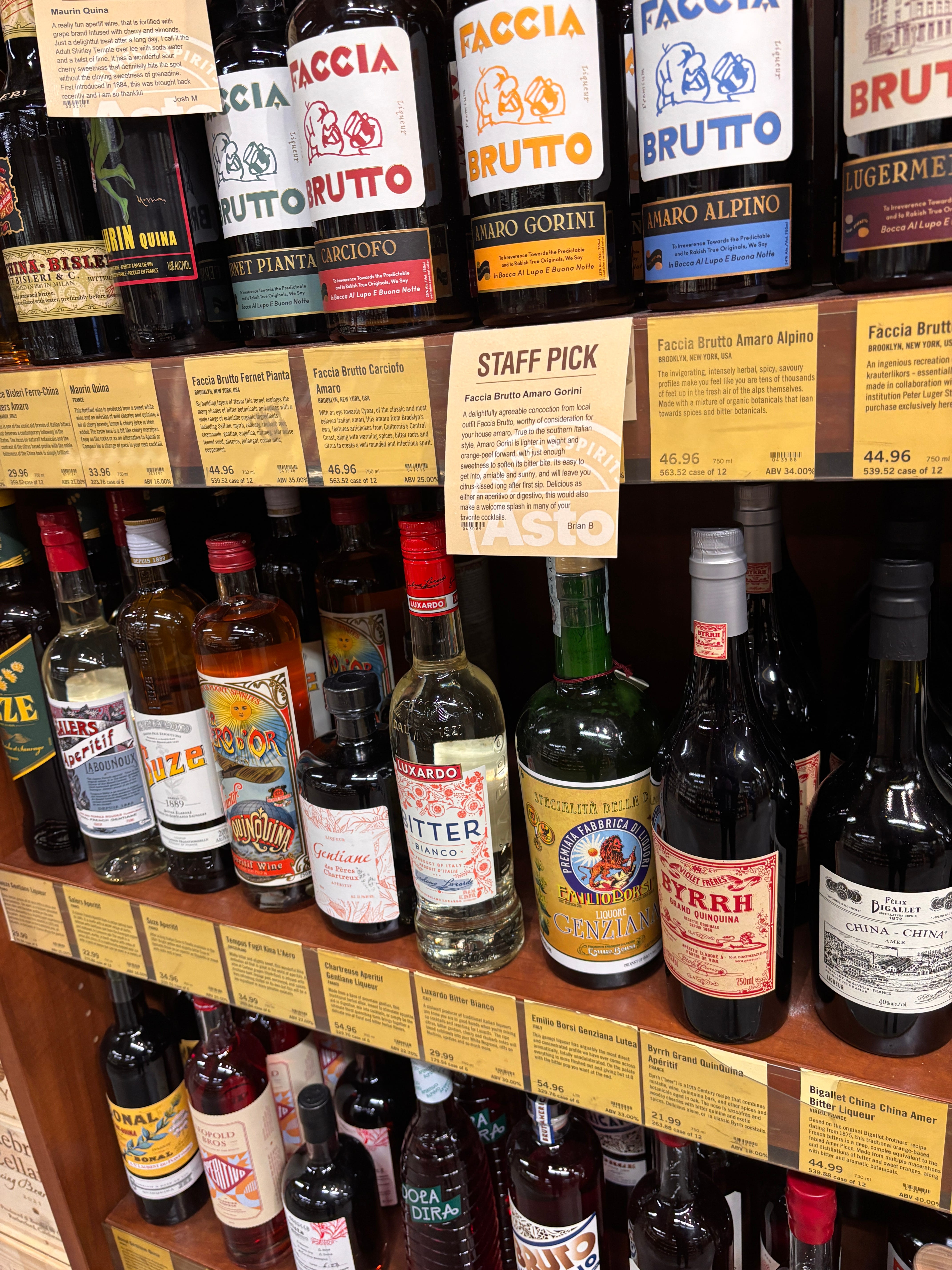
Astor has elusive bottles like Bonal, Salers, Avèze, Byrrh Grand Quinquina, Bigallet China-China, an even-better replacement for Picon Amer (which is unavailable in the U.S.), and cherry-flavored Maurin Quina.
Other finds include Dola Dira, made in Burgundy, a lovely low-sugar, bitter red apéritif flavored with rhubarb and bitter oranges, as well as Bruto Americano from St. George Spirits in California, a better swap-out for brash Campari, plus a lineup of Brooklyn-born spirits from Faccia Brutto. I was tempted to bring a few bottles home, but I’m still working on the 200+ bottles I amassed while writing Drinking French. Cheers!
I normally avoid French restaurants and French bakeries when I’m traveling, since I live in France. True, there are great French restaurants and bakeries outside of France, for sure, but I don’t need a macaron in Taipei, and would prefer to drink sake over Sancerre when I’m in Tokyo. But a friend reserved at Marcel, the new restaurant in the Breuer building, a brutalist masterpiece in New York City, and I didn’t want to miss a chance not only to see my friend, but also to dine in that building.
The restaurant is helmed by French chef Marie-Aude Rose, who’s cooking elevated French food, dishes rooted in classic French cuisine, but updated and spiffed up, with stiffer prices. (Although prices are similar to what you’d pay at an elevated bistro in Paris nowadays.) Between the five of us, we shared two endive salads ($28 each) that came with apples, bacon, and Gruyère cheese, then had mains. I had a very good steak hachée à la française ($48), a pan-fried patty of ground beef over slices of potatoes, topped with a perfectly poached egg. The restaurant is not inexpensive but it’s located in a swanky part of town and you’re paying to eat in that fabulous space designed by Breuer. The food was well prepared and more filling than it is in France, thanks for rich, well-made sauces.
The dessert menu is divided into two parts, and the second part is called Les Grands. While the prices seem steep…
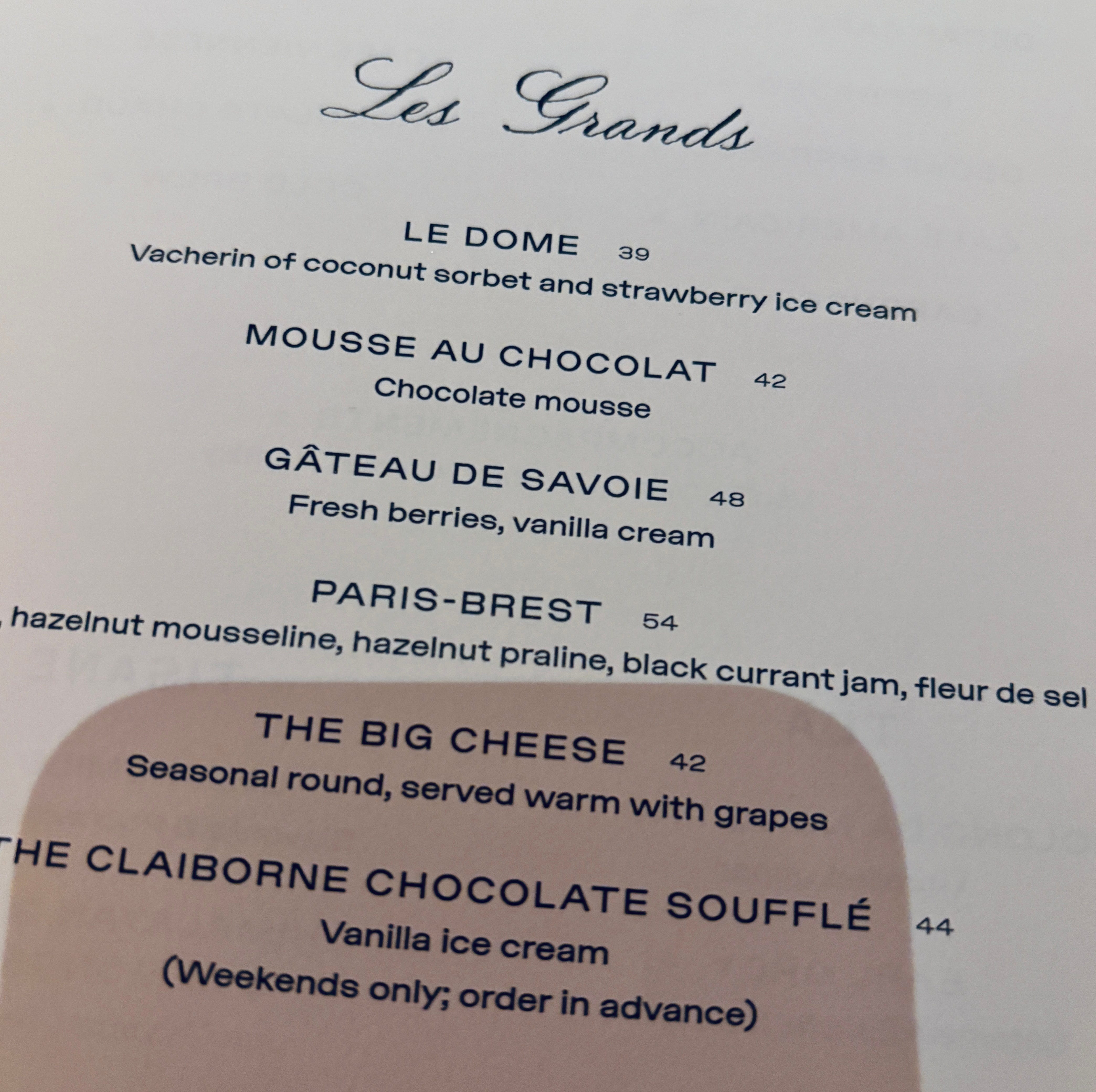
…they bring out a whole cake. As usual, everyone looked at me when it was time to order dessert, which happens…even though another guest at our table was a well-known pastry chef. The waiter had mentioned the soufflé needed to be ordered in advance, which I should have been more dynamic about ordering, but no one could decide, so we didn’t.
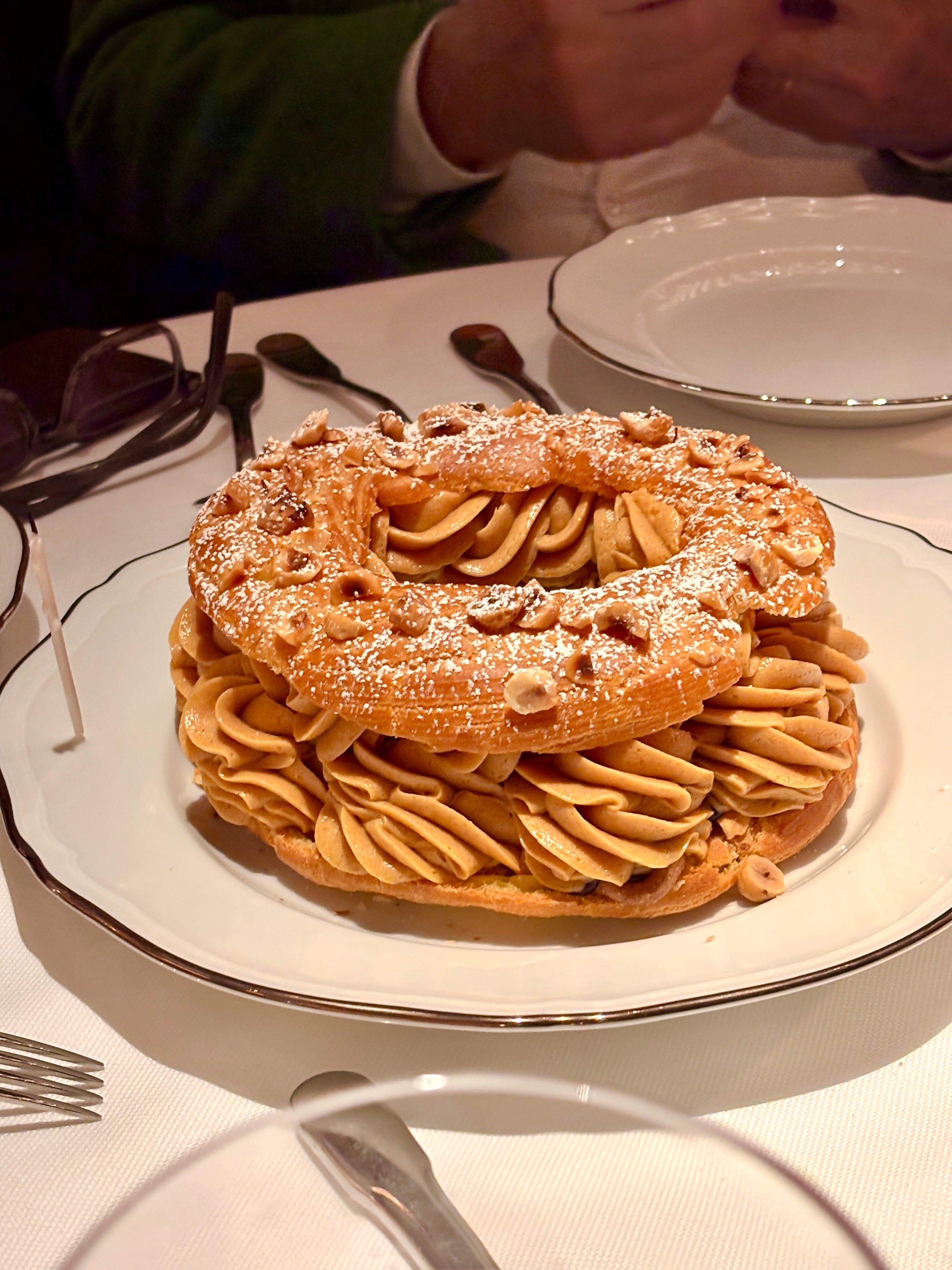
Instead we had this Paris-Brest, which was fabulous. Laced with a bit of black currant puree, it was filled with a rich caramelized hazelnut cream and was well worth it.
Share David Lebovitz Newsletter
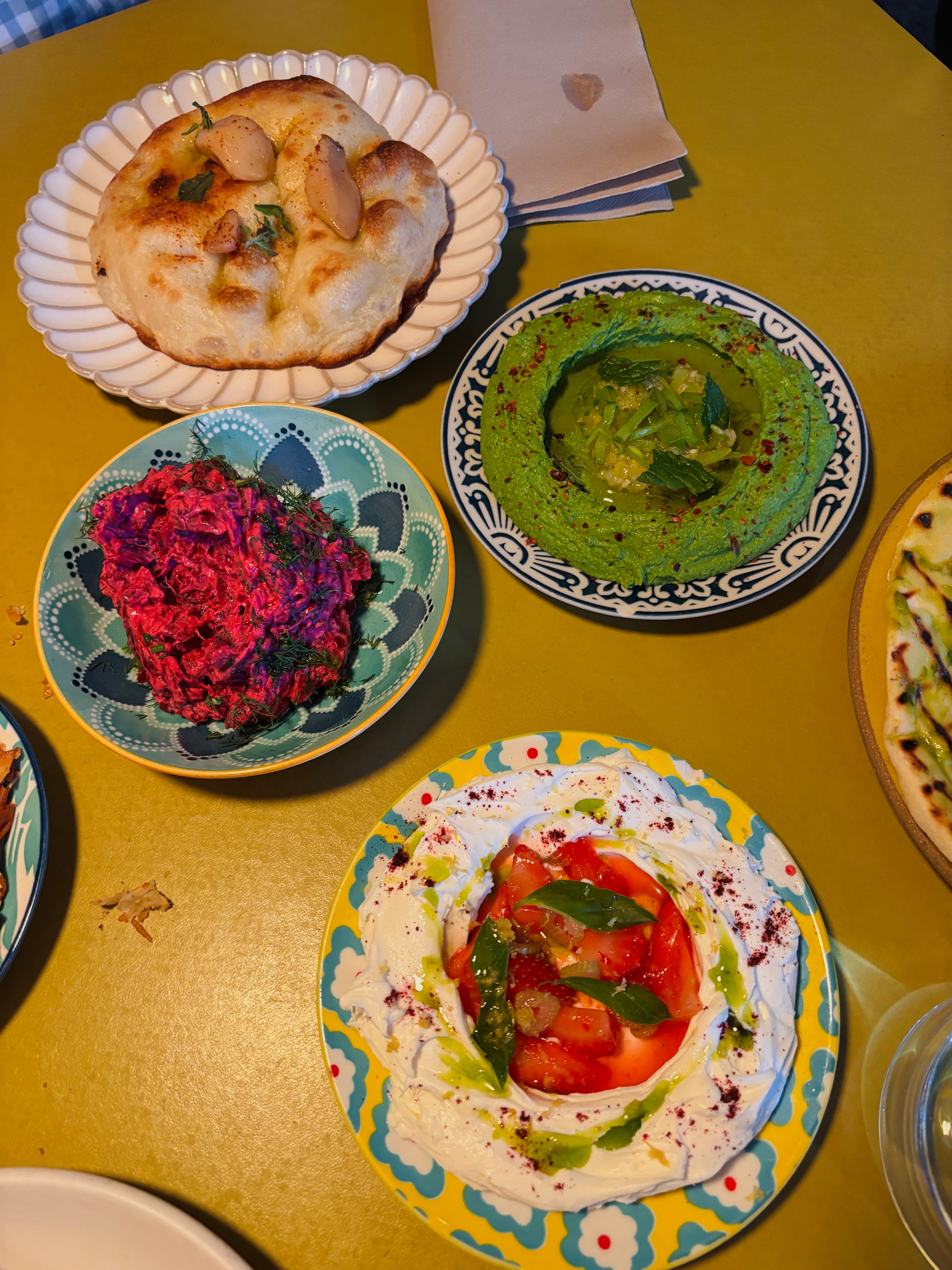
A must-stop for me in New York is Shukette. Even in the Middle East, I haven’t had food like this. That bottom dish is labneh with strawberries and basil oil, which sounds like a questionable idea. But wow — the strawberries on top were bright and slightly acidic, and melded perfectly with the rich labneh cream, along with a swirl of herby basil oil. I wasn’t thinking of ordering it, but , who I was dining with, added it to our order.
The spring pea dip was also a dream, with spring garlic and preserved lemon, and you can’t eat at Shukette without having a few things from the “Rip This” portion of the menu, which features housemade breads. The best was the frena, fluffy (yet crisp on the bottom) Moroccan bread topped with roasted garlic. Another, not shown, was lafa - a grilled flatbread liberally brushed with ramp butter.
There were also shawarma-spiced fries, toum (garlic spread), beet tzatziki, and tahini soft-serve ice cream for dessert, topped with halvah floss and pomegranate syrup. I don’t know how many recipes chef will be sharing in her upcoming book, Mediterranean All the Way, but I can’t wait to see it.
Speaking of books, while I can’t see everyone I want to when I come to New York - with apologies to Renato, Casey, , and , which makes me feel like a heel, I make time to see Susan Friedland, who acquired and edited my first two cookbooks. If it wasn’t for her, I wouldn’t be writing cookbooks.
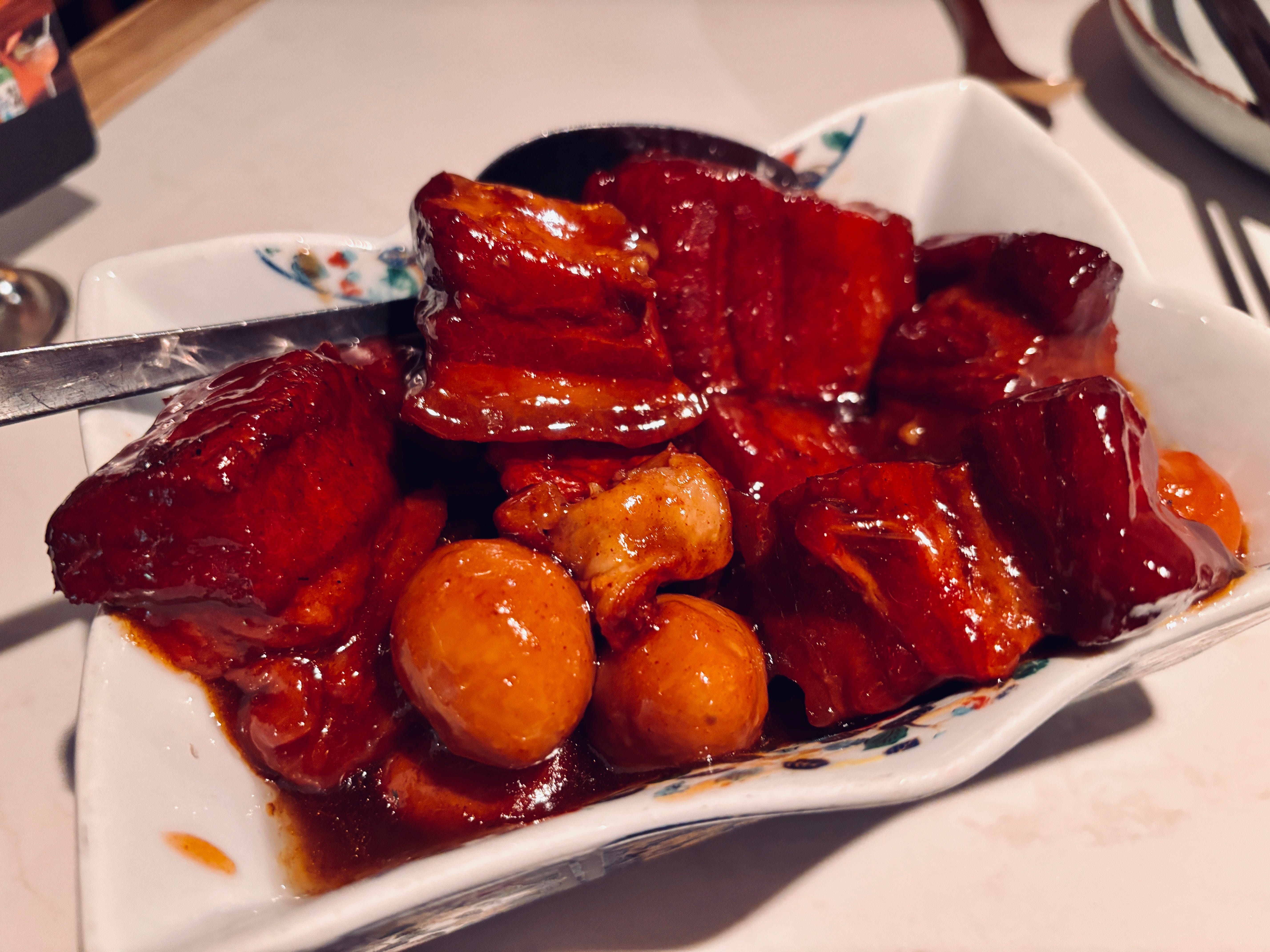
We met up at CheLi, and unlike everyone else I dine out with, she doesn’t reply to my asking what she wants to order with, “I don’t know, what do you want to order?” She knows what she wants, and she knows good food. She also spilled some tea when I had her on my podcast, talking the truth about the world of cookbook publishing:
So I let her guide us through the menu and she was pretty insistent we order the pork belly with quail eggs, shown above. It was excellent as were the dry-fried green beans, a necessity when you travel since you never want to miss a chance to get some vegetables into your diet. One cannot live by brownies and pork belly alone, although it certainly feels like I’m giving it a try.

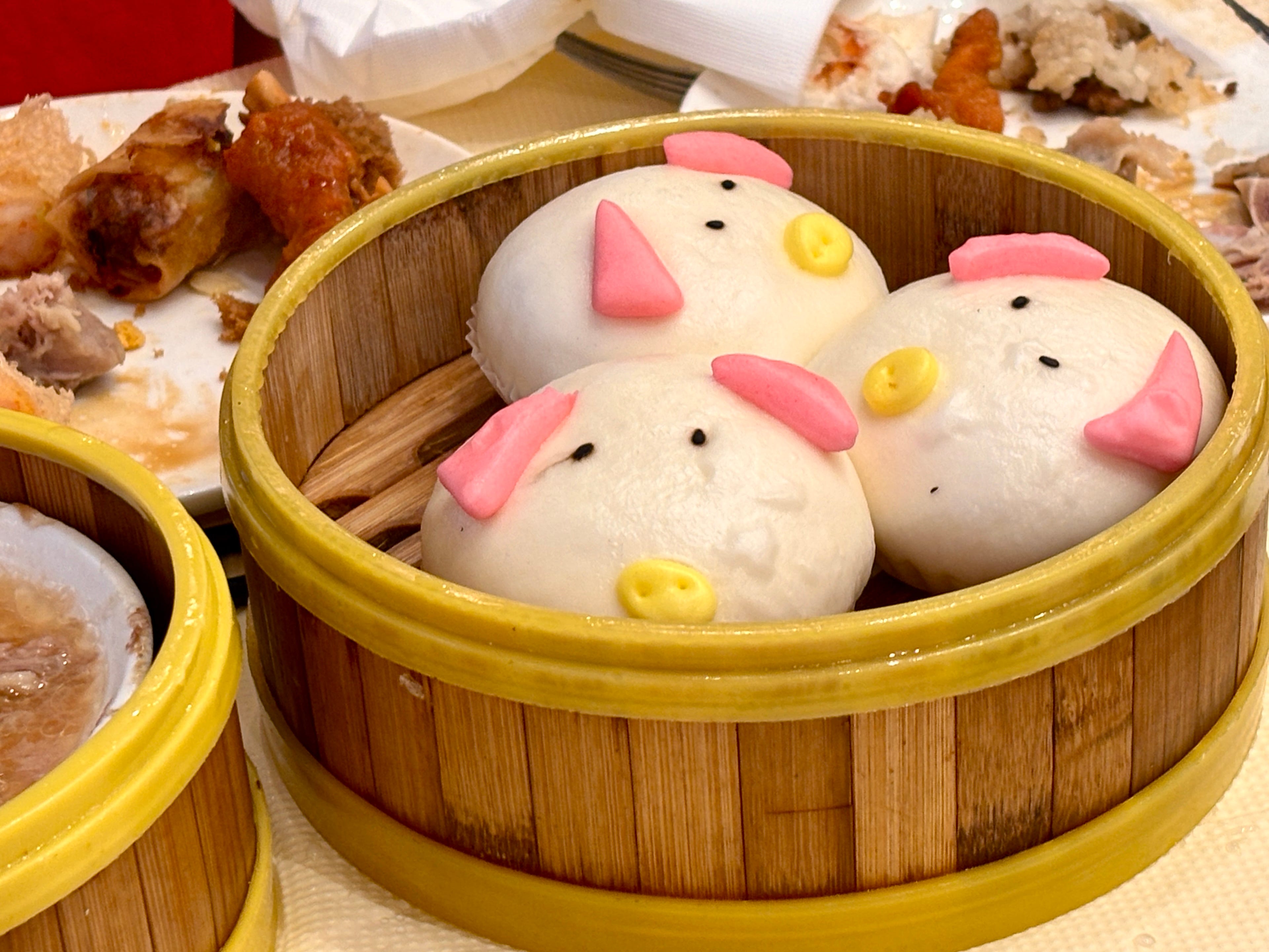
Yesterday I met with friends, ramen master Ivan Orkin, and cookbook author J. J. Goode, at 100 Feast & Lounge for more dim sum, then I hoofed it up to Kitchen Arts & Letters to sign copies of my book for folks who pre-ordered, and left a stack of signed copies for those who come into the shop or order online.
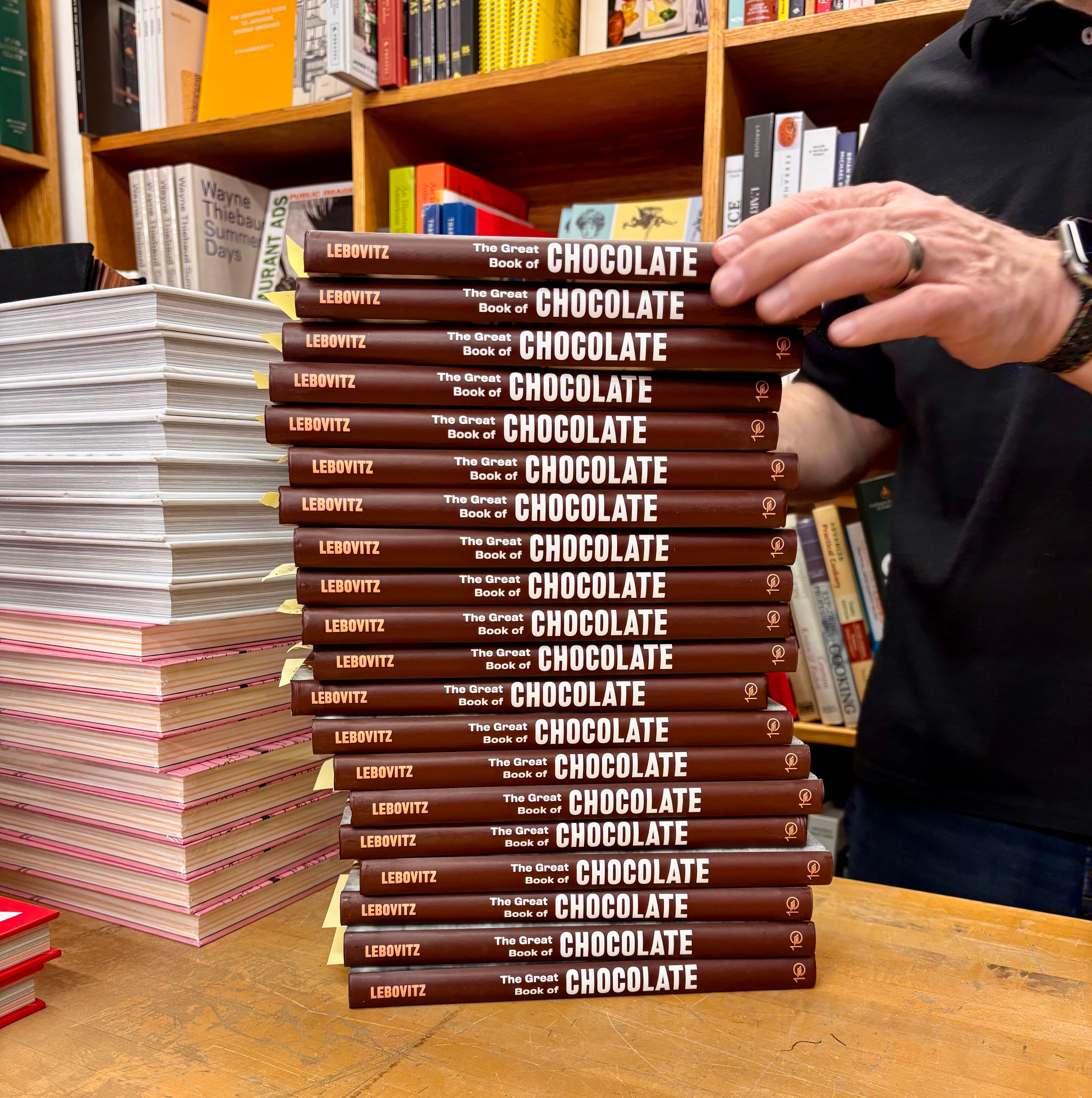
I also stopped in Wild Sorrel Cookbooks, a new cookbook store in the East Village, then headed to Williams-Sonoma to do a signing at their store in Columbus Circle. Whew!
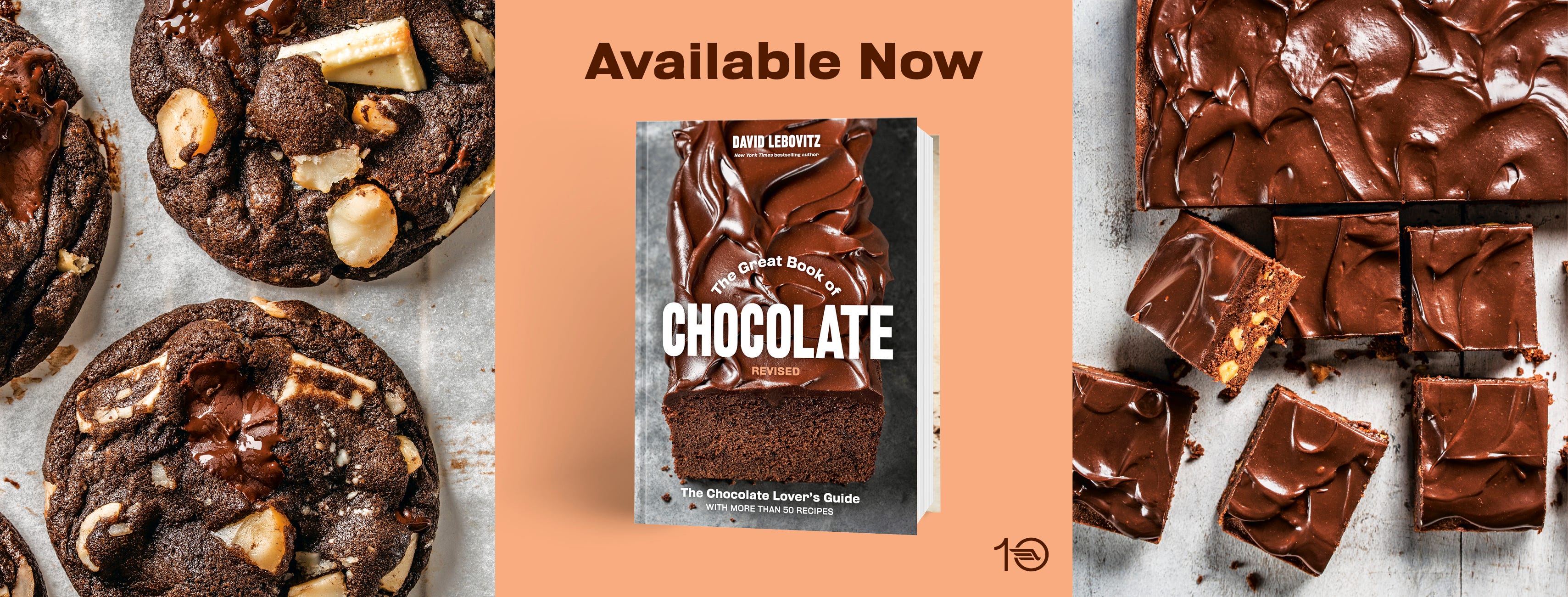
Get The Great Book of Chocolate here!
Thanks for everybody who turned out for my events in New York. It was a whirlwind trip, but as you can see, I got a lot in…with more places to go.

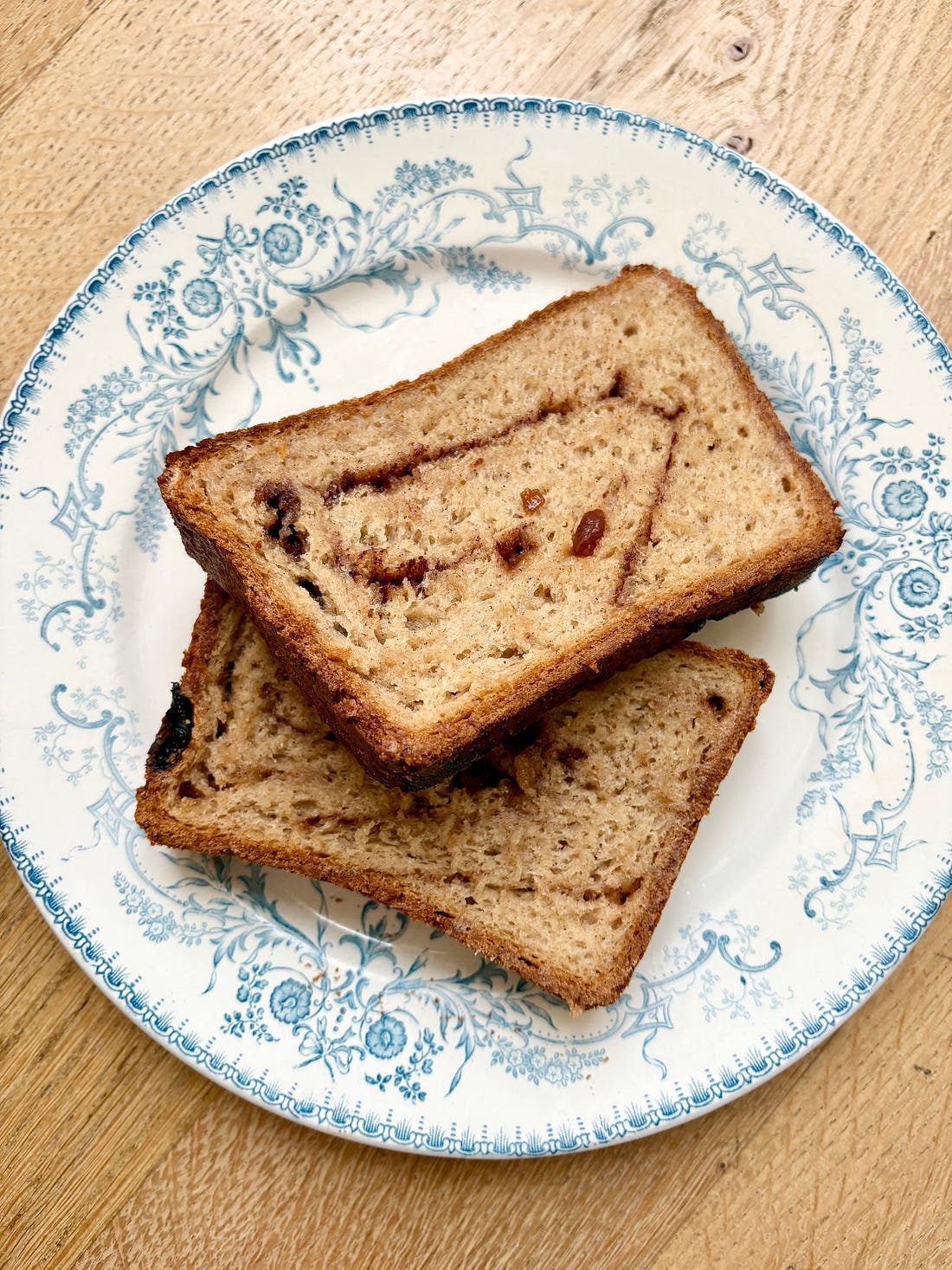

Bonjour, here! When David received a copy of ’s perfect new cookbook, The Art of Gluten-Free Bread, I (as the resident celiac) jumped straight on it, having adored her recipes for years.
Baking bread is like alchemy, seeing something so delicious come of almost nothing, balanced delicately with the disappointment when it goes wrong for no discernible reason, but with Aran’s well-researched explanations, everyone can become a successful gluten-free baker. It’s written to help you succeed, suitable for all levels from beginner to expert, and is divided into eight logical chapters.
Alongside the groundbreaking recipes you’ll find equipment and technical explanations, pantry staples, instructions for making a starter and thoughtful ways to use the discard, and information on different flours, including how to mill your own at home. Aran also gives clear directions for buying psyllium husk and swapping out dairy, eggs, and different types of yeast (there’s even a yeast-free bread recipe).
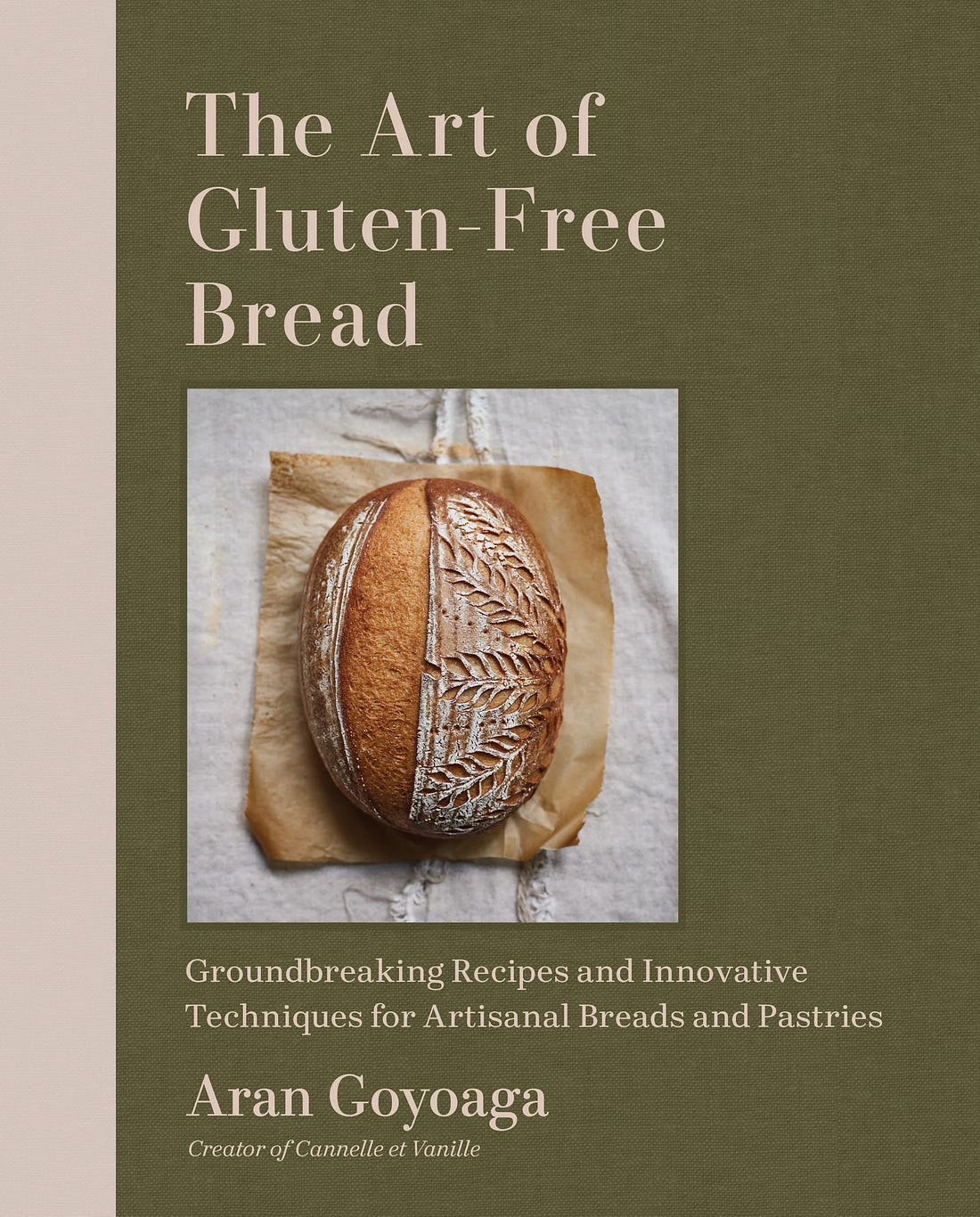
Get The Art of Gluten-Free Bread
I’ve so far made the Roscón de Reyes, popovers, soft pretzels, and vanilla-glazed donuts, and have a sourdough starter bubbling away happily. Although I’m handing David back his copy (admittedly with a few butter smudges - sorry!), I’ve already ordered my own to keep, and you can find yours here or in your local bookshop.
Open the book to any page and you will want to eat, so choosing just one project to share here was a challenge (Aran said the recipe she’s most proud of is the Danish). I eventually settled on pain de mie (pain means bread and mie refers to the soft interior crumb) because of its connection to France. It’s a square loaf that’s baked in a sealed pan to give it a thin crust and tight crumb. This bread is very popular for sandwiches and ideal for making croque-monsieur and croque-madame.
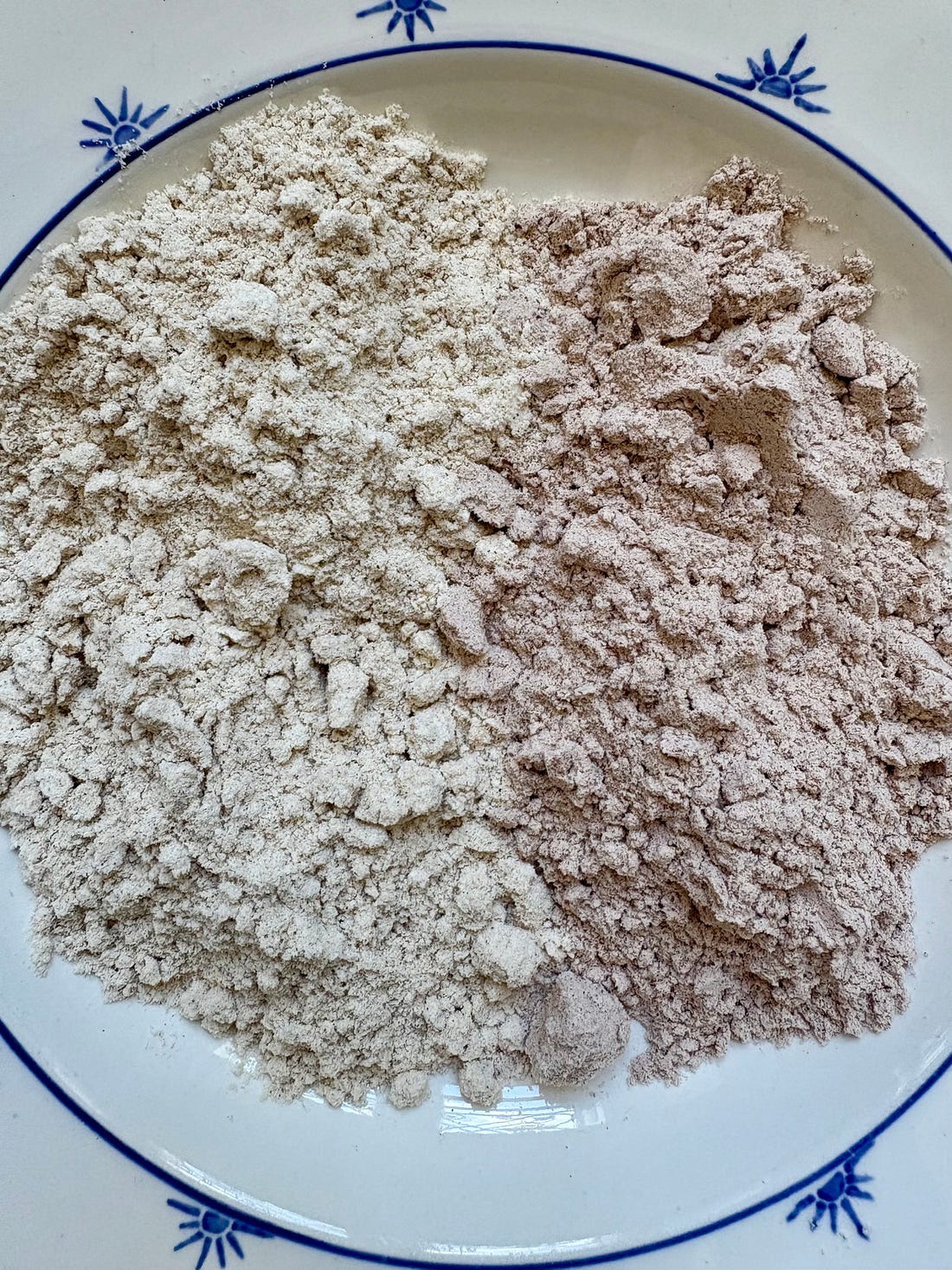
Aran describes sorghum (the main ingredient) as “slightly sweet, wheat-y tasting and light yellow flour… grows well in the US, but it seems harder to find in parts of Europe” and suggests millet in its place if necessary. I found sorghum flour easily in France but it was quite dark, so my loaves came out looking slightly more rustic than the image in the cookbook. Then while traveling I found Bob’s Red Mill sorghum flour, which was a lighter color and baked very pleasing loaves.
Subscribe to David’s newsletter to get more recipes, Paris dining tips, and stories, sent right to your Inbox!
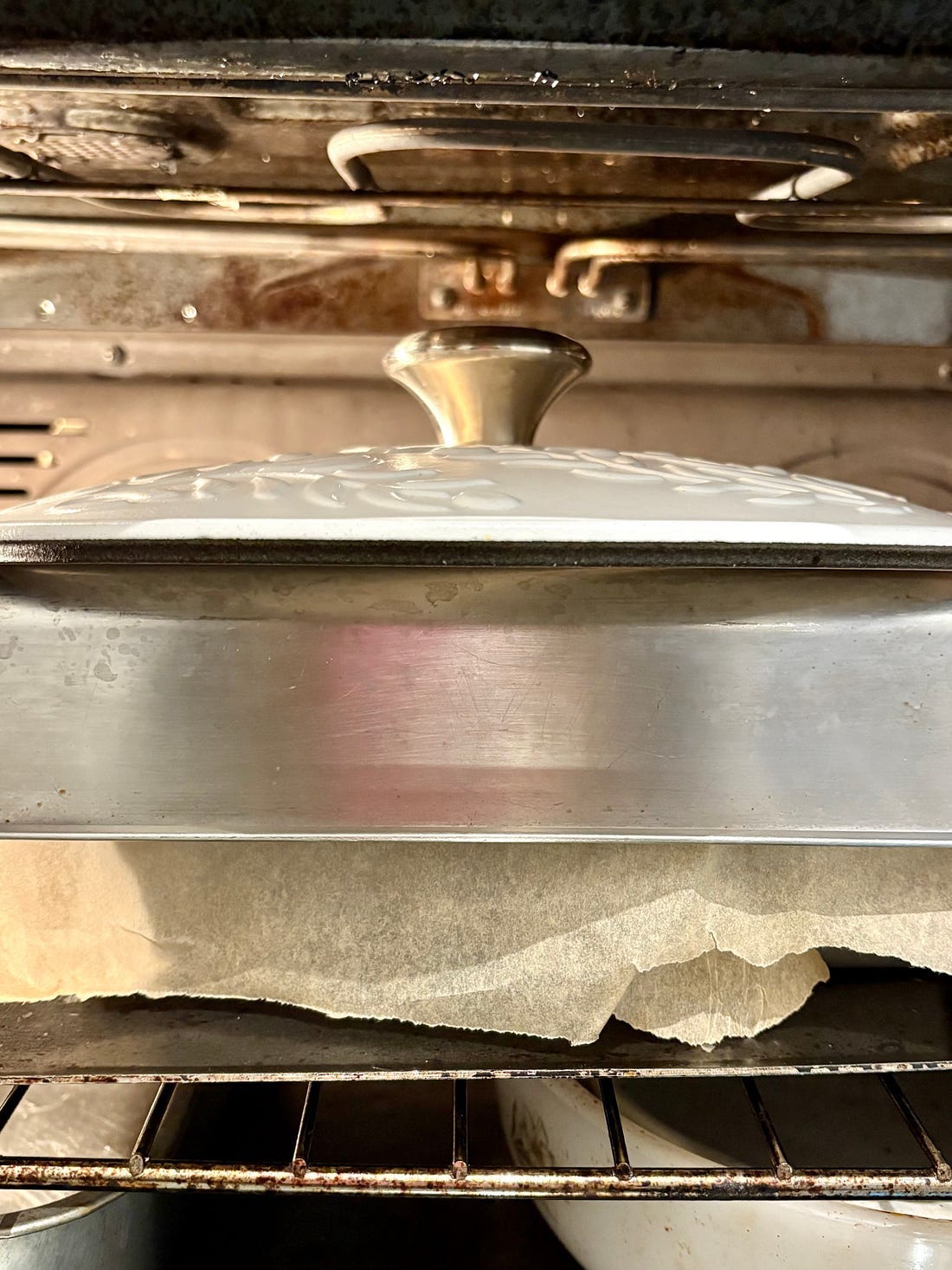
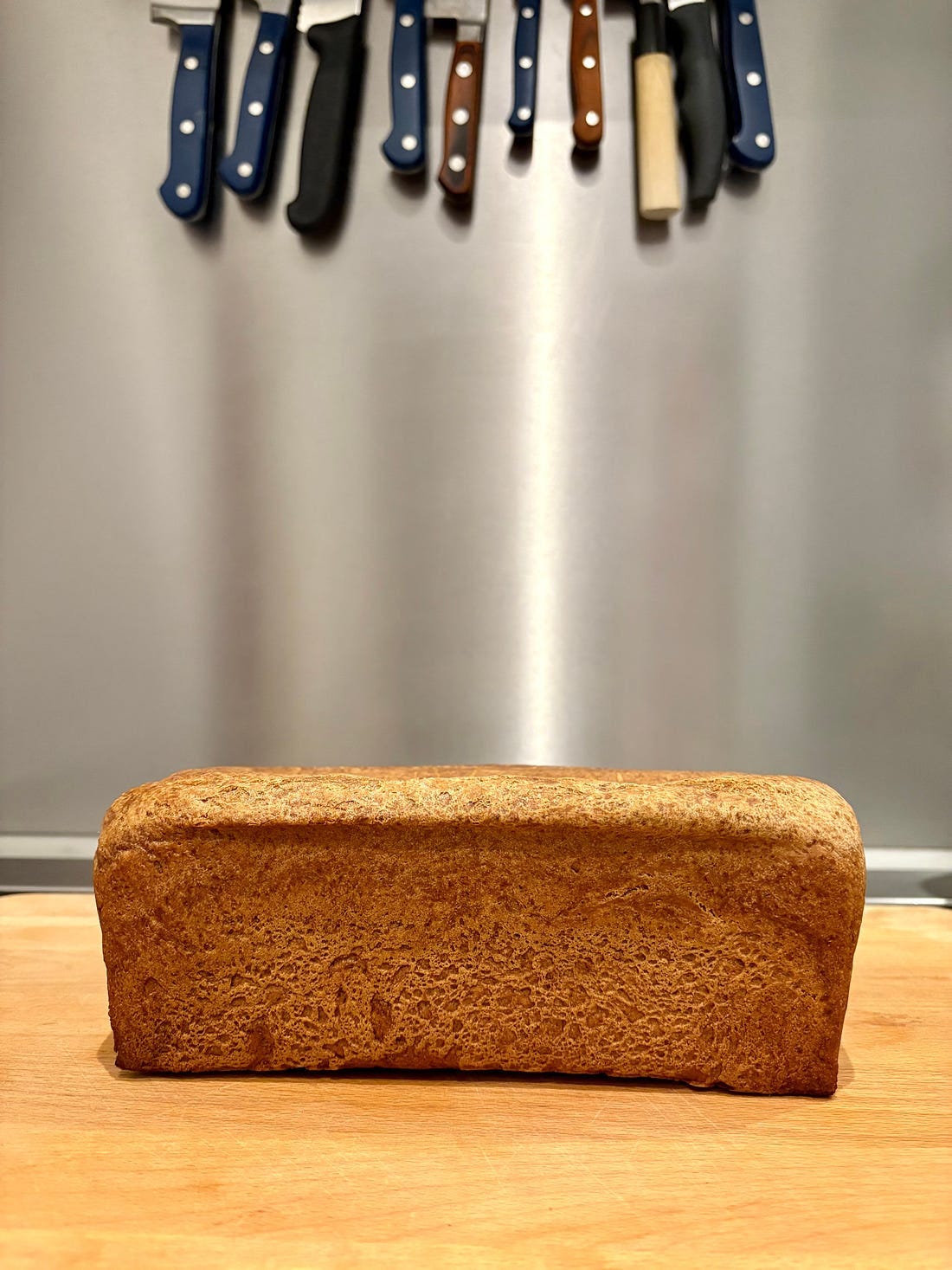
This recipe calls for a Pullman tin with a lid and I considered buying one but know I’ll use it once, lose the lid, and forever feel regret when opening the baking drawer. Instead I used a 9-inch (23cm) loaf tin and for my first bake MacGyvered a lid out of baking paper, a roasting tray, and a Le Creuset lid to weigh it down. This almost contained the bread into a rectangle and on the second try, I got it to behave. I also tried a version where I let it roam free with no lid and as promised by Aran in the notes, the crust was very slightly thicker and the crumb was less tight, but it was equally as delicious.
I used to be slapdash with baking but have learned that with gluten-free recipes, it pays to stick to them as precisely as possible (my heart sung when she presented the liquids by weight rather than volume), and I used my timer methodically at each step. It’s a long recipe (around three hours) but mostly done in 30-minute increments of waiting. While it takes patience to leave the bread in the cooling oven and then again on a wire rack for another half hour, these two steps had a noticeable effect on the finished structure of the loaf, exactly as promised in the instructions. Her writing may feel effortless, but it’s clear Aran takes recipe development seriously and has tested each one to the nth degree.
Follow Aran Goyoaga on Instagram
The first time I tried this recipe there were snowflakes dancing on the glass ceiling of our kitchen, so I allowed an extra 15 minutes proofing to make up for the cooler room temperature, but on regular weather days the dough was right on time at each step.
Happy baking - Emily

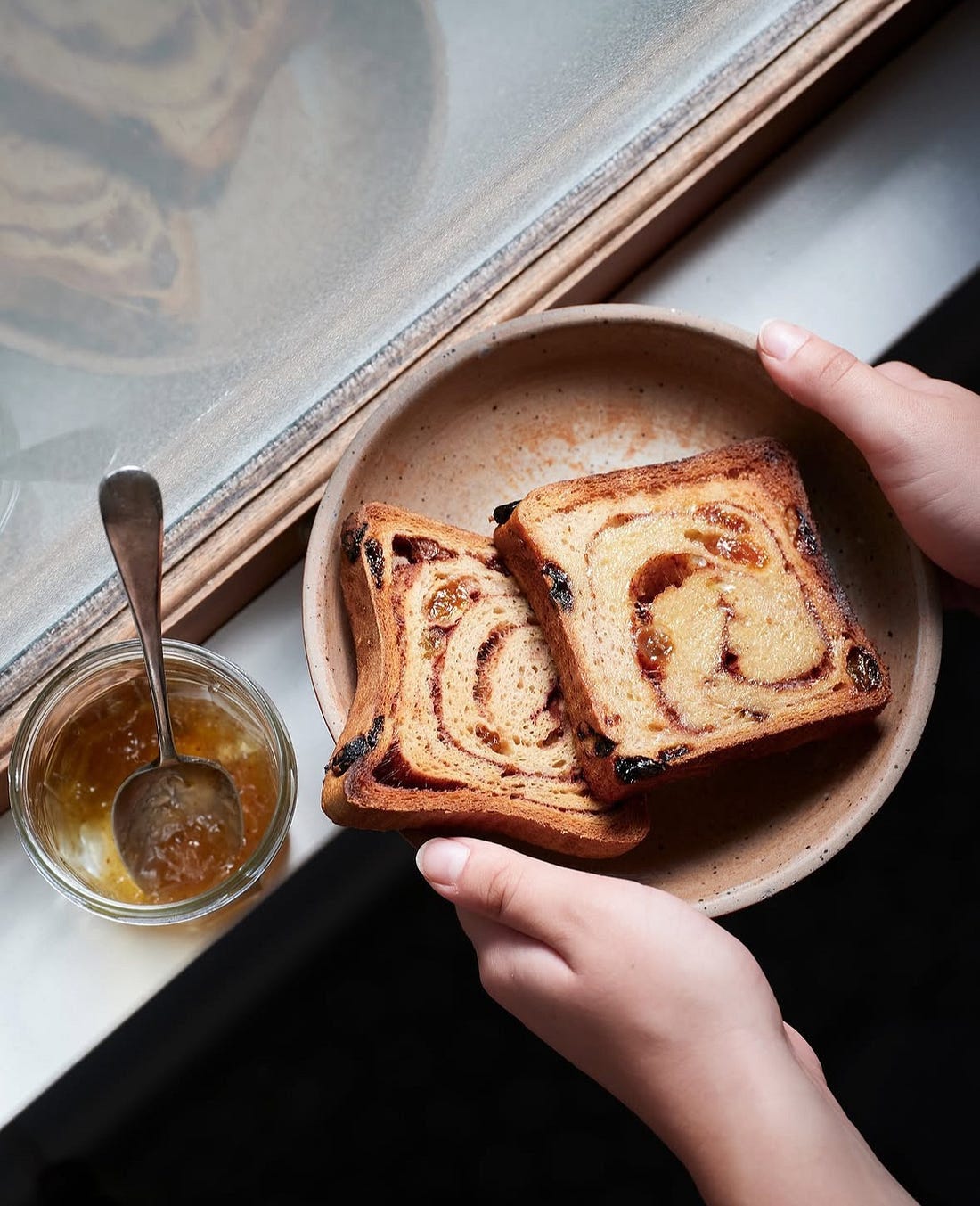
Adapted from The Art of Gluten-Free Bread by
Makes 1 loaf
2 1/2 teaspoons (10g) active dry yeast
300 grams water, heated to 105°F (41°C)
300 grams whole milk or oat milk, heated to 105°F (41°C)
40 grams honey or maple syrup
30 grams psyllium husk powder
280 grams sorghum flour
160 grams tapioca starch
100 grams potato starch
12 grams kosher salt
1 teaspoon (4g) baking powder
55 grams unsalted butter or vegan butter, at room temperature, plus more for greasing
Psyllium-yeast mixture: Sprinkle the yeast into a large bowl. Add the water, milk, and honey and whisk until dissolved. Let the mixture sit until frothy, about 10 minutes. Whisk in the psyllium. Let it gel for 5 minutes.
Make the dough: In a stand mixer, stir together the sorghum flour, tapioca starch, potato starch, salt, and baking powder. Add the psyllium-yeast mixture and the butter (cut into small cubes) to the dry ingredients. Snap on the dough hook and mix on medium-low speed until the dough comes together, 2 to 3 minutes. Make sure there is no loose flour under the dough ball. It will look quite wet but should hold together nicely and fall out in one big ball when you tip it onto the work surface.
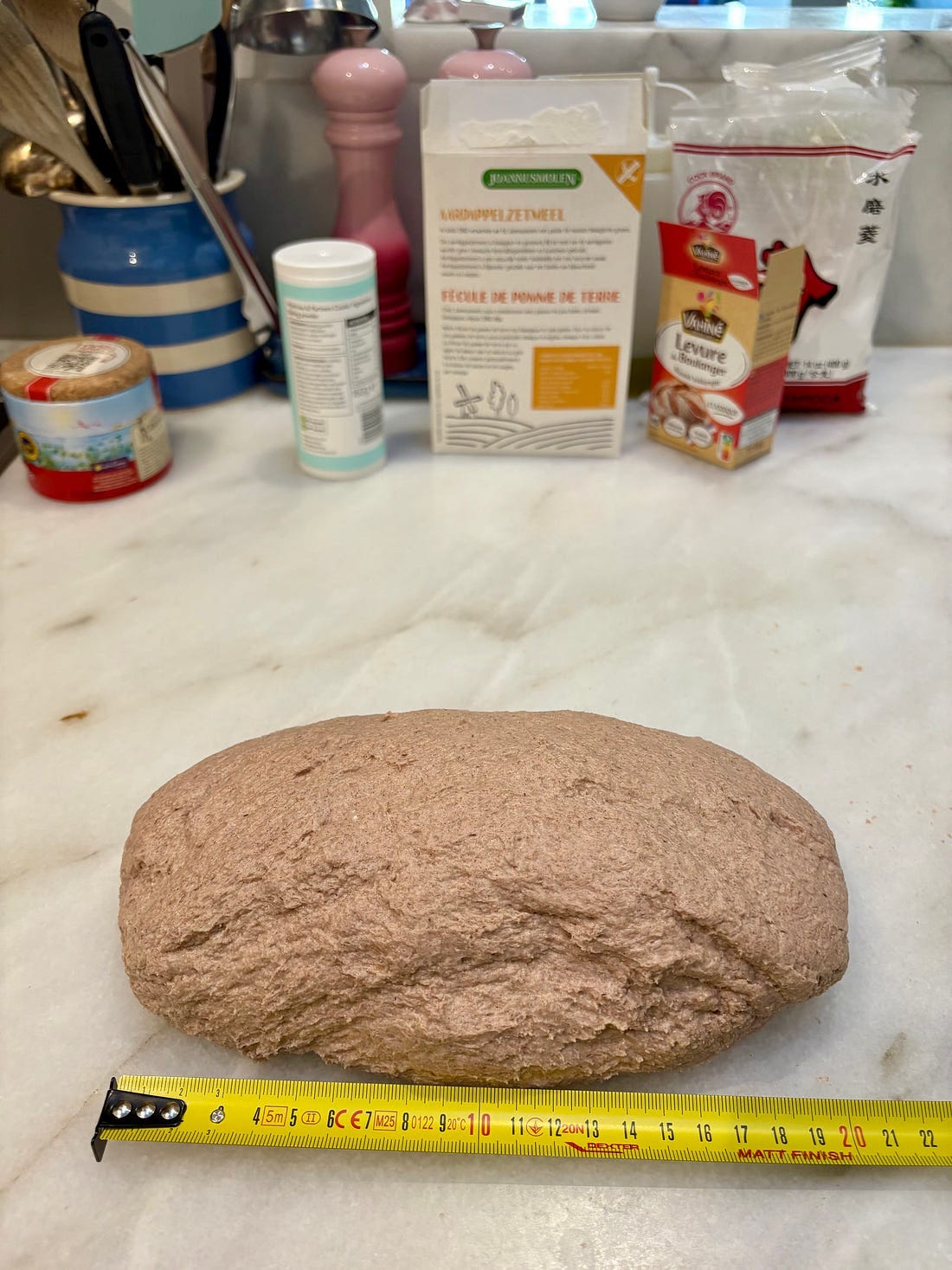
Shape and proof the dough: Transfer the dough to a work surface and knead a few times to shape into a tight ball. Roll this ball into an oval shape that is about 8 inches (20cm) long. Grease the bottom and sides of a 9-inch (23cm) Pullman loaf pan as well as the underside part of the lid with butter. Place the dough inside, cover the pan with a kitchen towel, and leave at room temperature. Proof the dough until it almost reaches the top rim of the pan, about 30 minutes. Don’t let it go past the top of the pan or it can overproof and collapse while baking.
Preheat the oven: Position a rack in the bottom third of the oven and preheat to 425°F (220°C).
Bake the bread: Cover the Pullman pan with its lid. Bake for 30 minutes. Reduce the oven temperature to 375°F (190°C) and bake for a further 30 minutes. Turn the oven off and remove the lid, but leave the pan in the closed oven for another 30 minutes.
Cool the bread: Invert the bread onto a wire rack and let it cool for at least 30 minutes before cutting. If the edges cave slightly, don’t despair; even the bread in the cookbook photo has a slightly concave shape.
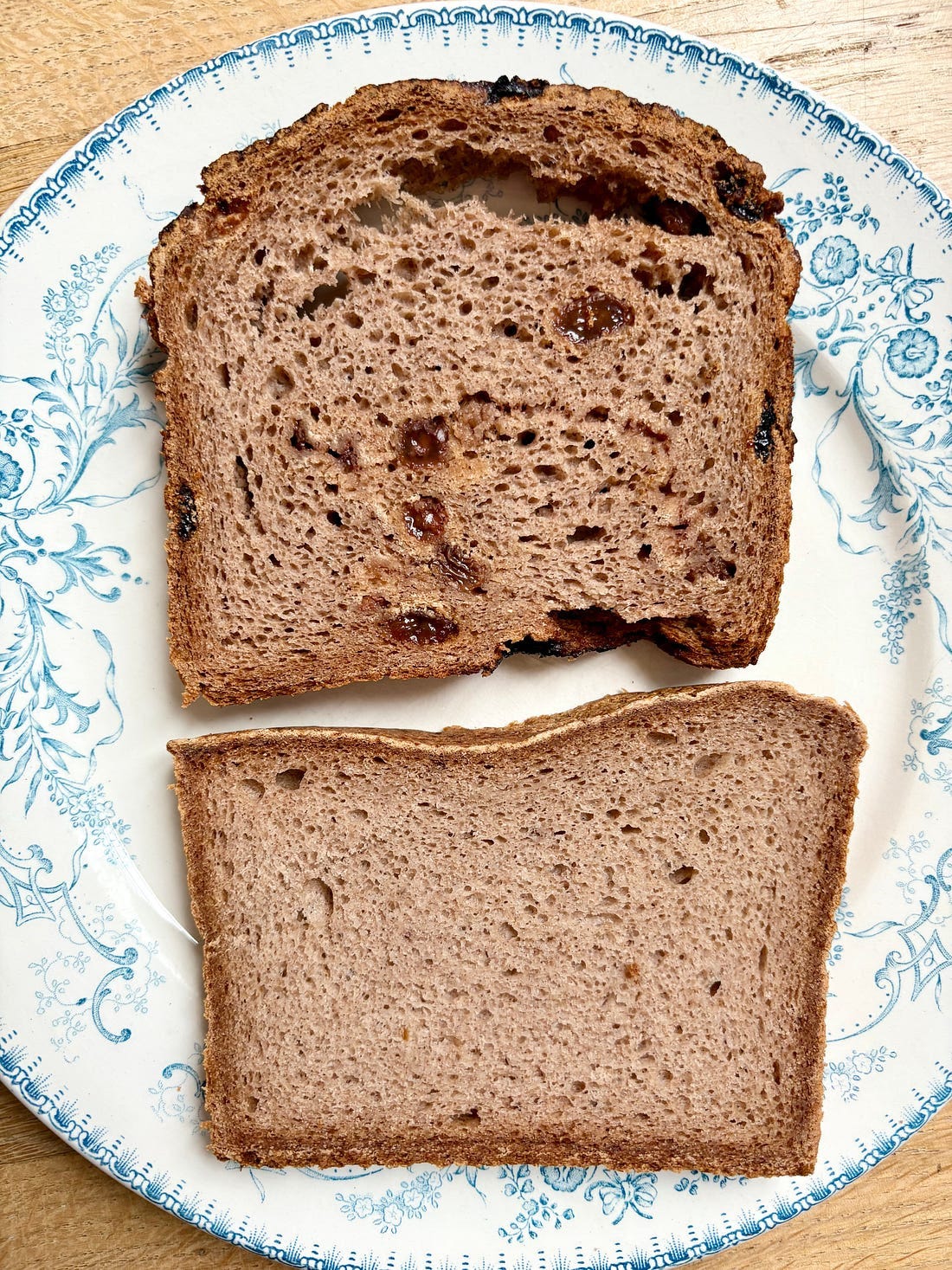
Cinnamon-Raisin Option: Add 1 1/2 teaspoons (4g) of cinnamon along with the dry ingredients when making the dough, then add 80 grams of raisins at the end of the mixing time. Dust a work surface with a bit of sorghum flour and knead the dough a few times until a tight ball forms. Roll into a rectangle about 12 x 10 inches (30 x 25cm) and 1/2 inch (1.3cm) thick. In a small bowl, mix 50 grams of sugar with 2 teaspoons (6g) of cinnamon.
Sprinkle the surface of the dough with half the mixture. With a short side facing you, fold the top third onto the middle and the lower third up over it, creating a letter fold. Turn the dough 90 degrees and roll again into a rectangle 13 x 8 inches (33 by 20cm). Sprinkle the surface with the remaining cinnamon sugar and roll from a short side into a tight log. Continue to roll a few times to seal the seam. Place in the greased pan, seam side down, then proof and bake as directed.
Tips: If you’re like me and not sure when you bought your baking powder, test some with a little acid (vinegar or lemon juice) to check if it still fizzes nicely.
As yeast in France can be hit or miss, I activate it in a small amount of warm water to be sure it’s alive before proceeding (make sure to keep the total amount of water in the recipe the same by subtracting the amount). Once you see bubbles forming, you know your yeast is working and can proceed.
Storage: Like most gluten-free bakes, this one is best eaten the day it’s made but freezes well and toasts up nicely. Aran suggests storing the bread at room temperature, wrapped in a paper bag, for up to three days, but by day two, mine was quite hard so best to eat it fresh, and freeze whatever you won’t eat. You can slice bread and freeze it in slices, then pop the frozen slices directly into the toaster.

Share David Lebovitz Newsletter
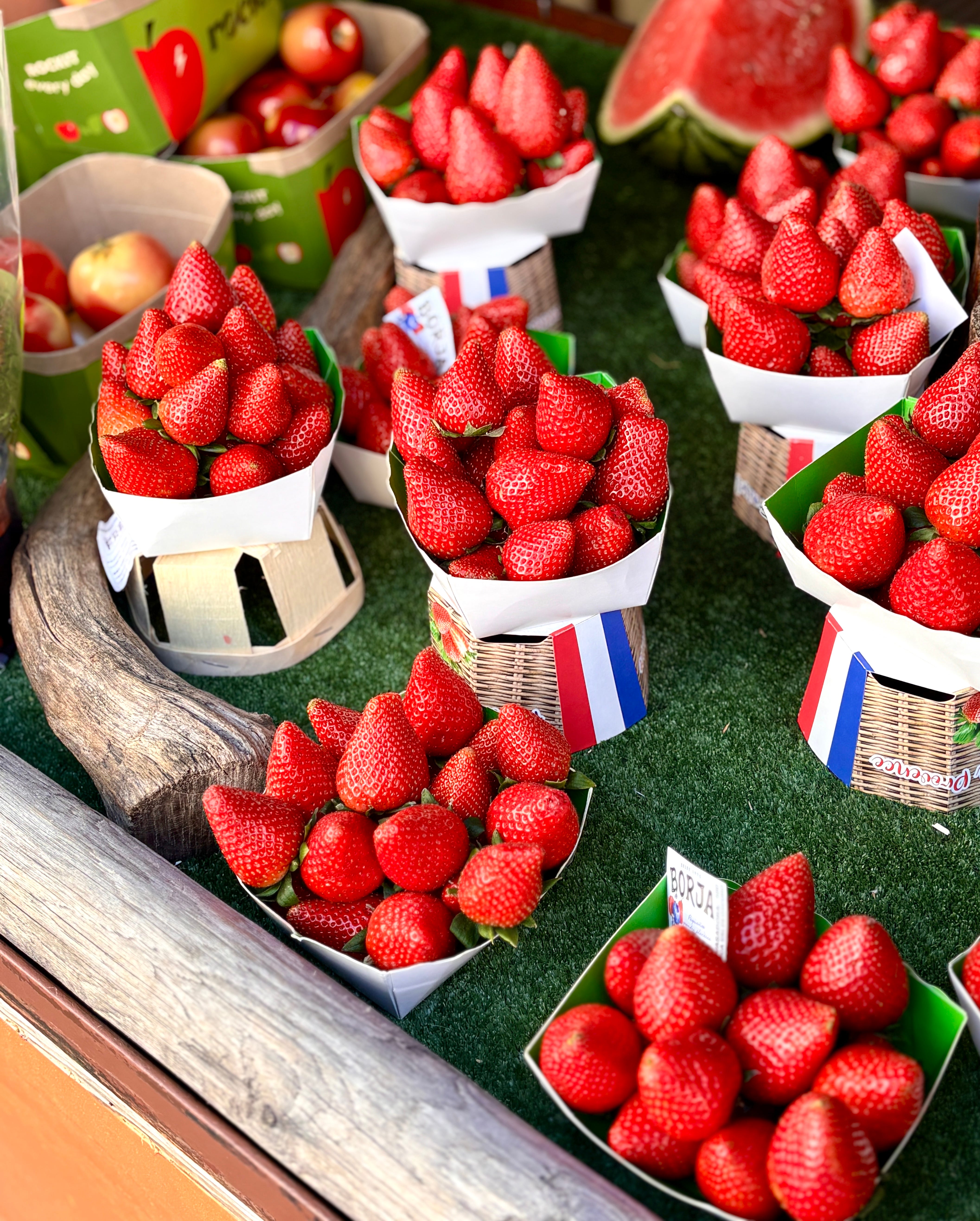
It’s a little difficult for me to leave Paris right now, especially since the weather has turned remarkably and unapologetically glorious, and the markets and food shops have been bursting with fresh strawberries, spears of white and green asparagus, sweet peas still in their pods, and bundles of fragrant wild garlic leaves, which are similar to ramps but botanically different. The upside is that I’m headed to the U.S. for a book tour to launch my latest book: The Great Book of Chocolate!
Get The Great Book of Chocolate!
Of all the books I’ve written, this was definitely one of the most fun to write, since who doesn’t love chocolate? (But don’t worry if you don’t. I have a section in the book on the new “non-cacao” chocolate substitutes.) I’ve always been fascinated by chocolate, ever since my days as a professional baker and pastry chef. I loved it so much that I ended up going to two different chocolate schools, one in Belgium and the other in France, as well as doing an internship at a swanky chocolate shop in Bruxelles, Belgium, which I wrote about in the book.
The Great Book of Chocolate is a guidebook to the wonderful world of chocolate. It explains how chocolate is made, where it comes from, and what to make with it, including over fifty of my favorite chocolate recipes, from sweet to savory. If you want to know what percentages on chocolate bars mean, which chocolates are best for baking, and where to get the best chocolates in Paris, which I’ve devoted an entire chapter to — pick up a copy at your local bookseller or online retailer.
This month I’ll be out and about on a book tour in the U.S. Due to global events, we were uncertain how international travel was going to play out, which was becoming a lot more challenging. While I wish I could go everywhere, here are the places that I’ll be:

If we can’t see each other, these independent bookstores are happy to send you a signed copy of the book, which I’ll personalize just for you: Kitchen Arts & Letters (order before May 2nd), Omnivore Books (order before May 11th), or Now Serving LA (order before May 14th).
If you’re in Paris at the end of the month, on May 30th, I’ll be doing a book signing at La Trésorerie Rive Gauche (48, rue de Grenelle, 7th) from 3pm to 4:30pm. Copies of The Great Book of Chocolate and My Paris Kitchen will be available for sale and signing…and there may be some chocolate treats to sample, too.
[Some Updates: The event at Dandelion chocolate in San Francisco is sold out but the Omnivore book signing and talk is open to all. The event at Now Serving in Los Angeles is also sold out, but you can come to my book event at Friends & Family bakery, which is open to all. For that, there’s a pre-order option to get a ticket for a book, if you want to ensure there will be one there for you.
There are just a few tickets left for the Rizzoli event with Taste Live in New York, but you can come to my events at Williams-Sonoma in New York and New Jersey here, which are open to all, but the stores request that you purchase a book, which you can pre-order from them at that link to ensure there’s a copy for you.]
Shout out to the very talented Ed Anderson for doing such a great job photographing The Great Book of Chocolate, the incredibly talented food styling team of George Dolese and Elisabet der Nederlanden, and book designer Betsy Stromberg, for making the book even more beautiful than I imagined. And if you come to my book event at Omnivore Books in San Francisco, I’ll be in conversation with Kate Leahy, who helped edit, recast, reorganize, and test the recipes in the book, and you can ask her what it’s really like to work with me… 😬 😂

In addition to all the French chocolate, one of the joys of living in Paris is that I get to see a lot of friends. I guess everyone bought their tickets months ago, wisely, and I had a kaleidoscope of visitors, which was fun, but required a bit of planning and dexterity, as well as a hearty appetite for eating out more than I normally do. In the future, people need to find a way to stagger their visits out.
One visitor was my friend Bryce, an Australian who lived in Paris and met his equally wonderful wife here, who was a Lido showgirl. Once I learned that those gals needed calories, doing two strenuous shows a night, she stopped by my place on the way to work to pick up leftovers from recipe testing, to feed and fuel the ravenous showgirls between shows.
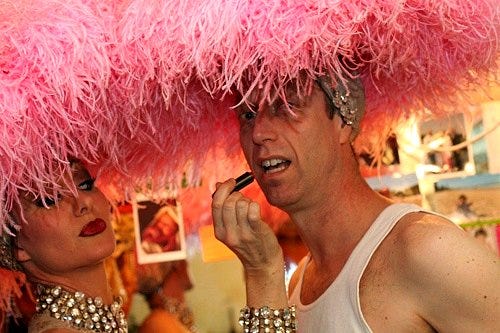
They liked me so much that when I went to visit them backstage, they tried to dress me up as a showgirl, but I decided it was best to leave the dancing and prancing to those lovely ladies and stick with my day job.
Being our houseguest, when Bryce told me he picked up a chasson aux pommes, a flaky apple turnover, at our local bakery, I chastised him for not picking one up from Sain. I should be used to it by now, but I often say around here, “No one listens to me…” (usually to Romain) but this time, someone did. Bryce woke up the next morning and hoofed it over to Sain bakery, and swooned over it as much as I swooned over being backstage with a gaggle of showgirls.
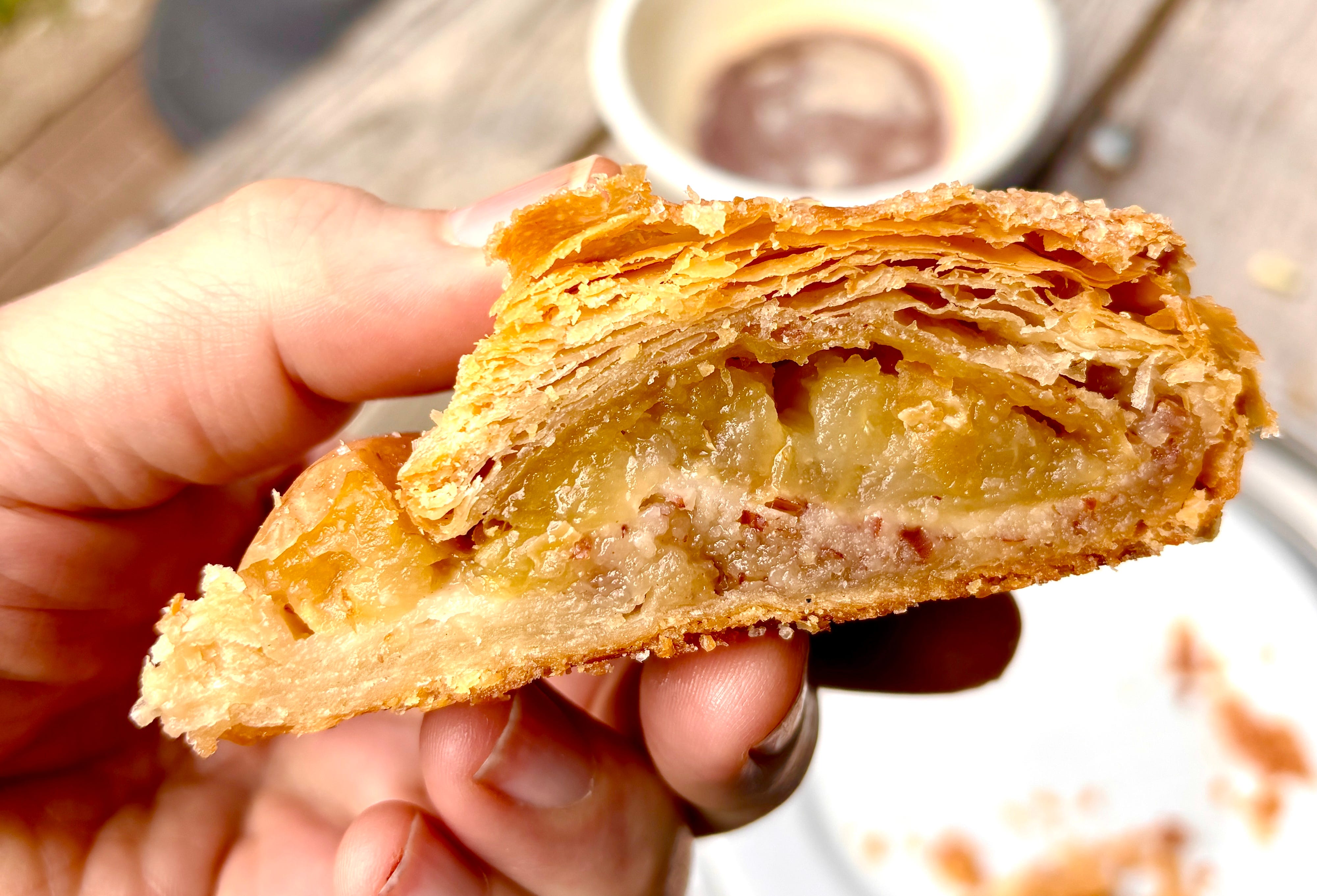
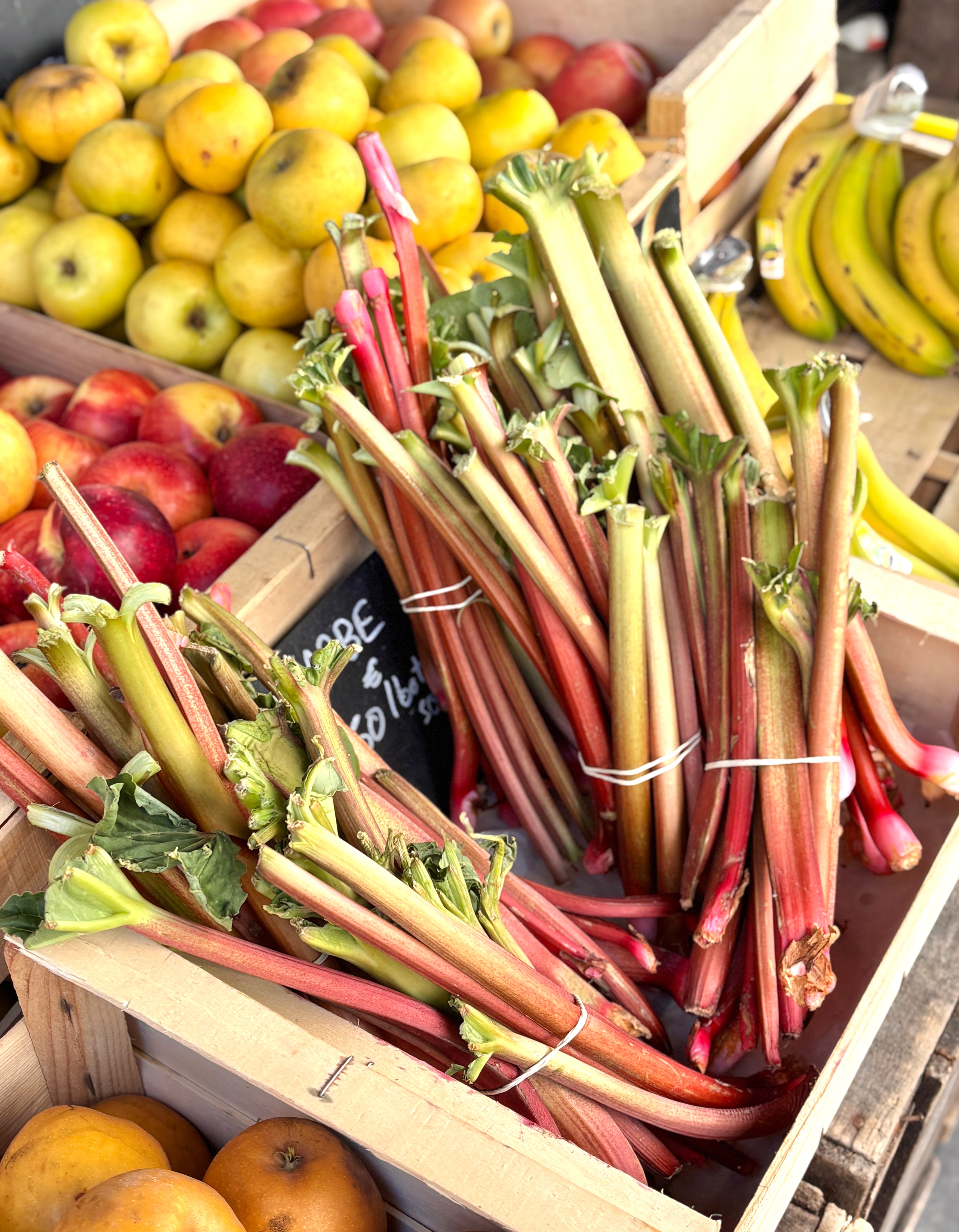
The bakery does change the fruit according to the season; soon, they told me, they’re going to switch the filling to rhubarb, which is coming into season right now. And in the summer, they generally go with apricots, which are heavenly baked between the layers of caramelized puff pastry.
Trust me on that.
While I was busy packing and planning (and panicking a bit) to leave on my book tour, I started feeling a little overwhelmed by everything and the world began to spin. I chalked my dizziness up to nerves. I figured putting a few extra things on my plate was perhaps harder than I thought.
Normally stuff like that passes, but it didn’t. A day later I was feeling especially off-kilter and decided to go to bed at 9pm to relax. But when I closed my eyes the world was spinning so hard, I felt like I was hallucinating, and even walking when I got out of bed was very difficult. My insides were beyond queasy, but I’ll spare you those details.

It was getting late, but Romain called SOS Médecins, an organization of doctors who make house calls 24/7, which are conventionnées, meaning the price is in line with what the French health care system lets them charge: €24. Although Romain said it might have been €25.
(I was in an altered state when the doctor left, but when I later looked it up, I found the current prices here, which are mostly reimbursed by the French health care system. You need to have a really sharp mind to understand all the complications of French administration, but the upside is that most native French people don’t fully understand them either, so you’re not alone. The other upside is that you don’t really need to.)
What I had was VPPB. Like most French terms, my vertige positionnel paroxystique bénin gets mercifully shortened to VPPB, which involved having a physiotherapist rearrange the crystals in my ears so they line up again. I don’t understand that either.
I thought VPPB may be one of those “only in France” things, like a bouffée délirante, which is described on Wikipedia as a “uniquely French psychiatric term” for teenagers who become delusional. I never heard of that one either. I had a particularly awkward adolescence, but that was a new one on me.
The kiné (therapist) put me on the table, held my head, and moved me and my head quickly from side to side, and up and down, to get things lined up again. Like the French health care system, I’m not sure how it works, but it does.
[Disclaimer: If you have a medical condition or similar symptoms, see a doctor or certified medical professional for advice and diagnosis. What you have may be different than what I had.]
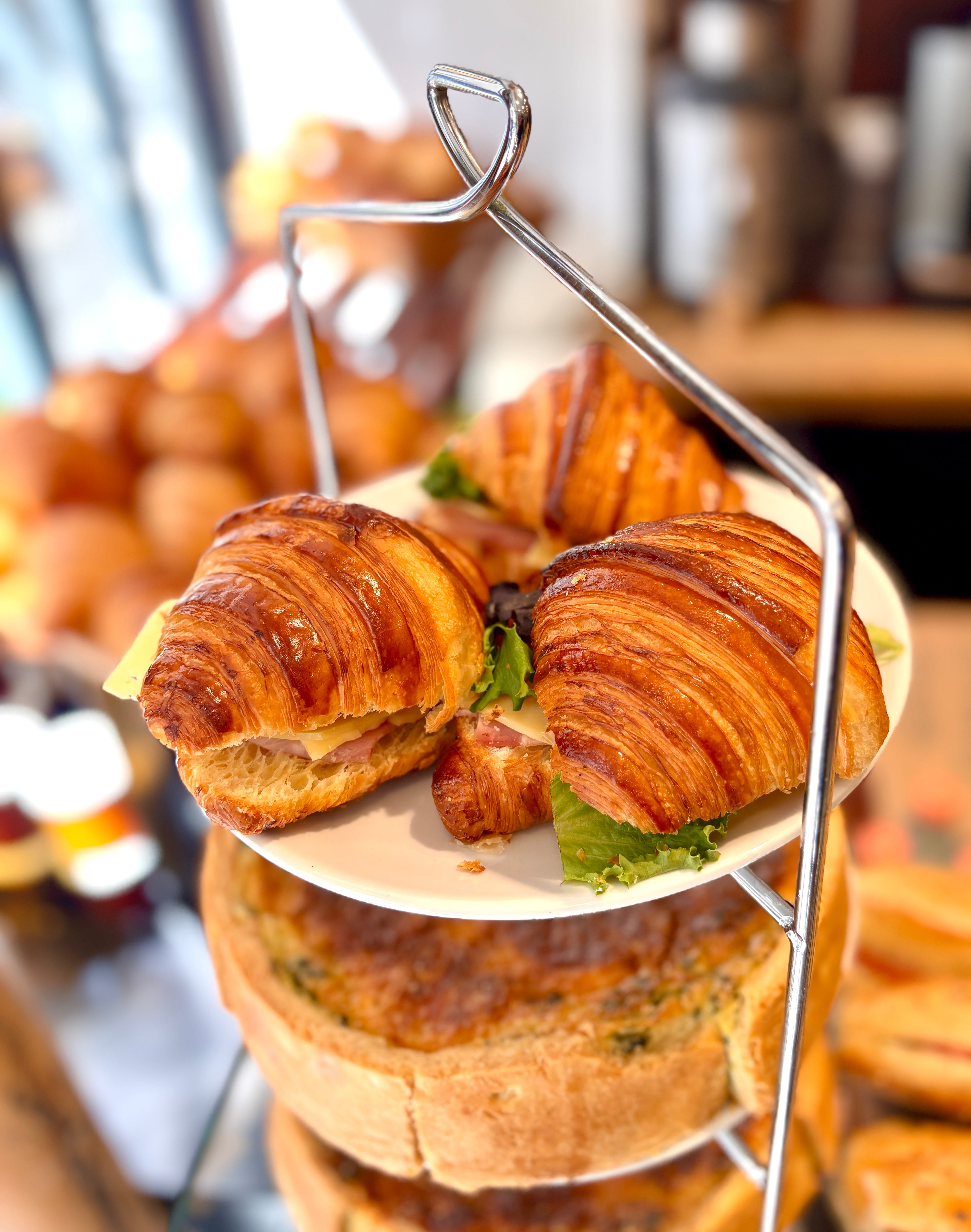
In addition to having visitors (and getting over the shock that we have crystals moving around in our ears), I made some videos in my Paris kitchen and garden for the newsletter, which I’ll be posting here. It was fun talking to shopkeepers and friends who bake or have restaurants in Paris, learning more about chocolate (and vanilla), and how they bake with chocolate.
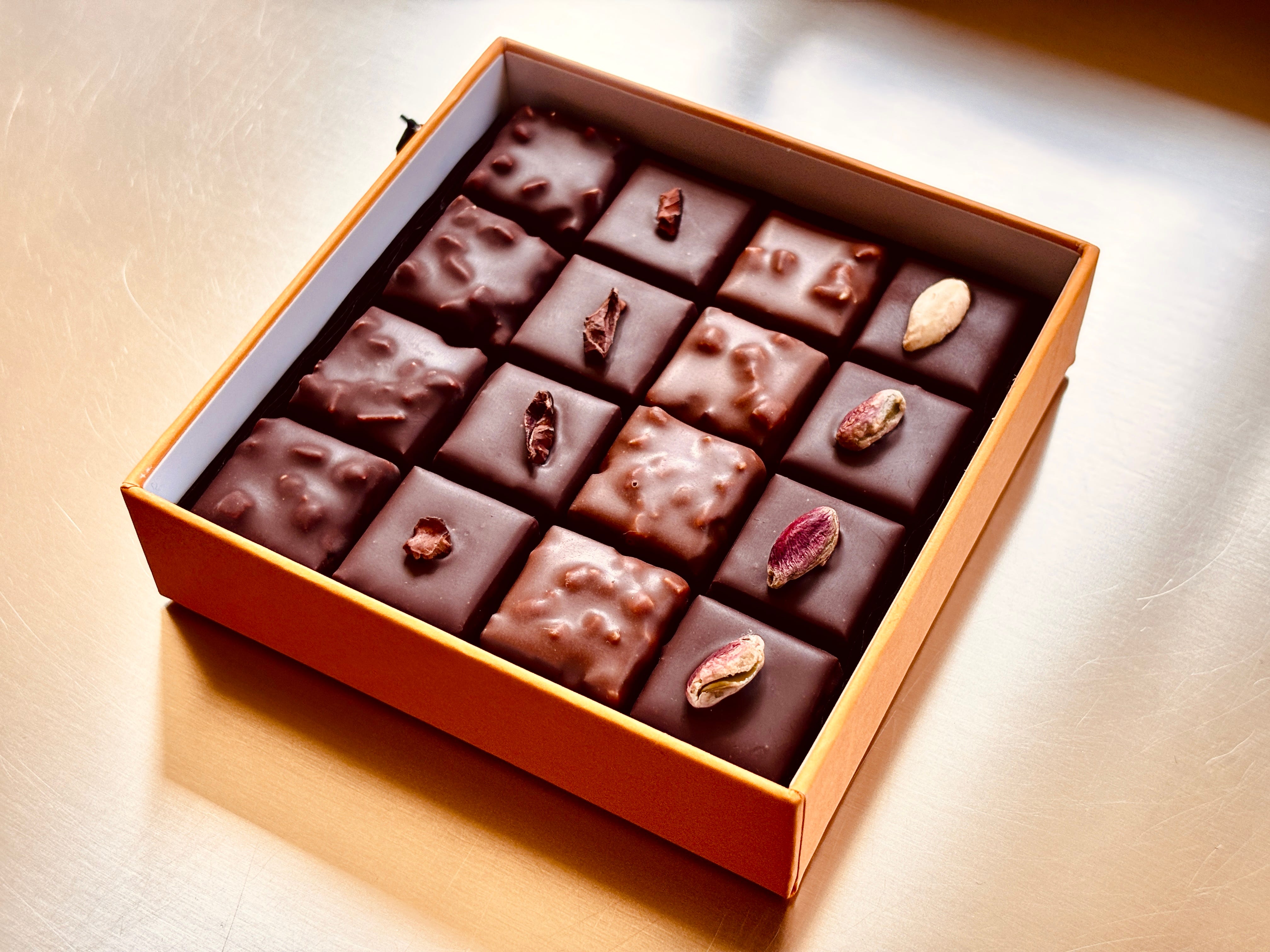
By the time you read this, I’ll be on a plane heading west. I’m looking forward to a slice of New York-style pepperoni pizza, an everything bagel with lox and cream cheese, a bacon, egg, and scallion pancake and a fermented red rice donut at Win Son, pastries at Hani’s and Elbow, a Mission burrito at Pancho Villa (although I can no longer eat a whole one, in one sitting - I’ve lost my SF cred!), chicken and bread salad (and a martini) at Zuni, and hopefully some fresh corn on the cob from one of the incredible greenmarkets that have been flourishing in the U.S., although I may be a little too early for that. Which means I might have to come back.
-David

Nutella now contains…peanuts. (Food & Wine)

It was fun being a guest on Things Bakers Know, the King Arthur Baking podcast with Jessica Battilana. Listen in! (King Arthur Baking)
In spite of the off-kilter title they gave it, the Washington Post spoke to me, and and , about how to find a good restaurant in Paris. (Washington Post/article unlocked, but they’ll prompt you sign up for a free acct.)
Why (some) French people and politicians are creating a ruckus about a poulet rôti chain opening in their neighborhood. ()
Is it time to stop being afraid of MSG? (Serious Eats)
What happens when stops by your kitchen in Paris to make lunch with you…
Subscribe to my newsletter to get recipes, Paris tips, stories, and more, delivered right to your Inbox!

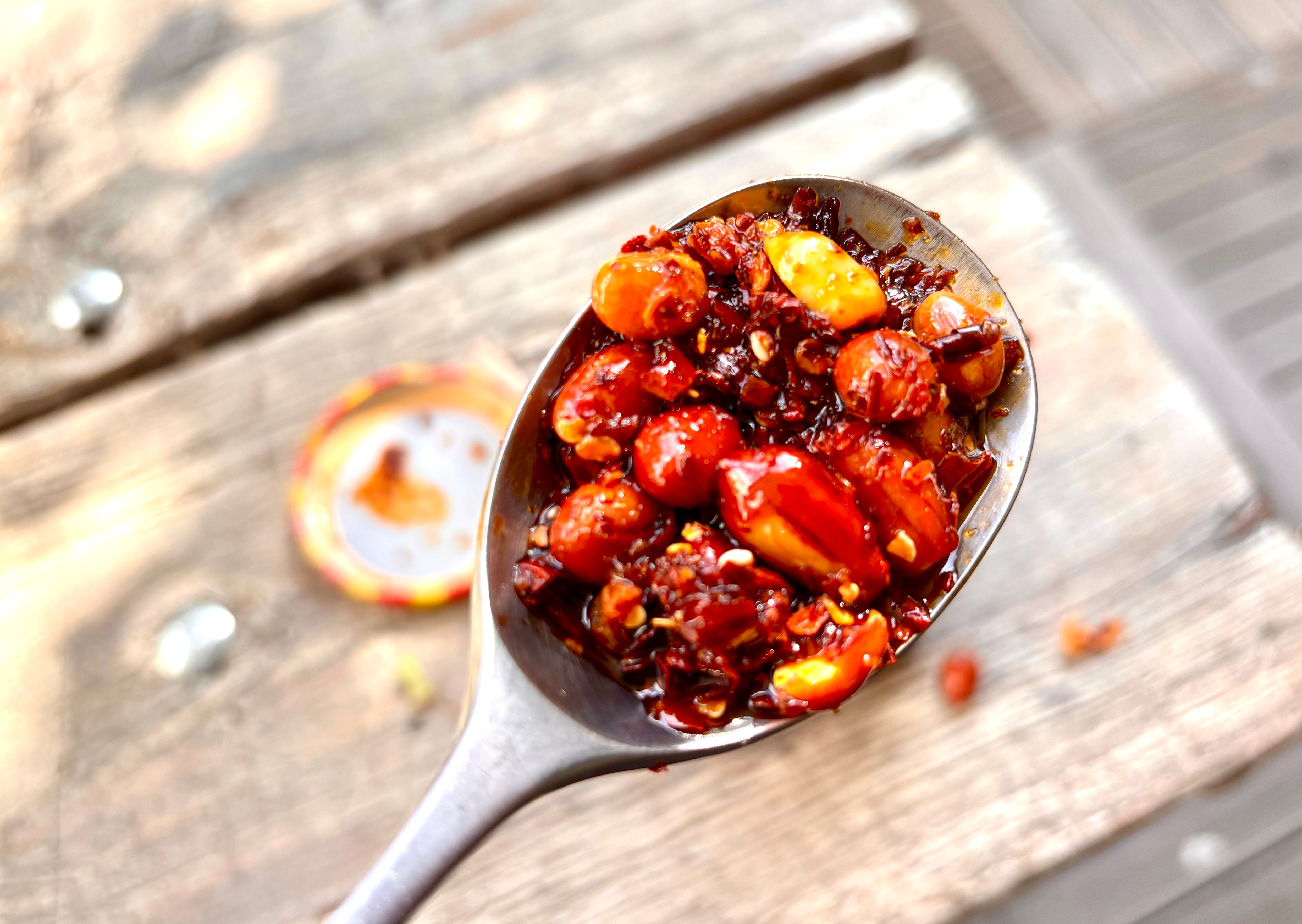
I may have bought this by accident, but when I opened the jar of Chuannan chili crisp I purchased a few months ago that was in my pantry, I was surprised to dig in and see it loaded up with crunchy roasted peanuts. I have a few chili crisps in my fridge, but this one was different. And now, it’s the one I reach for the most.
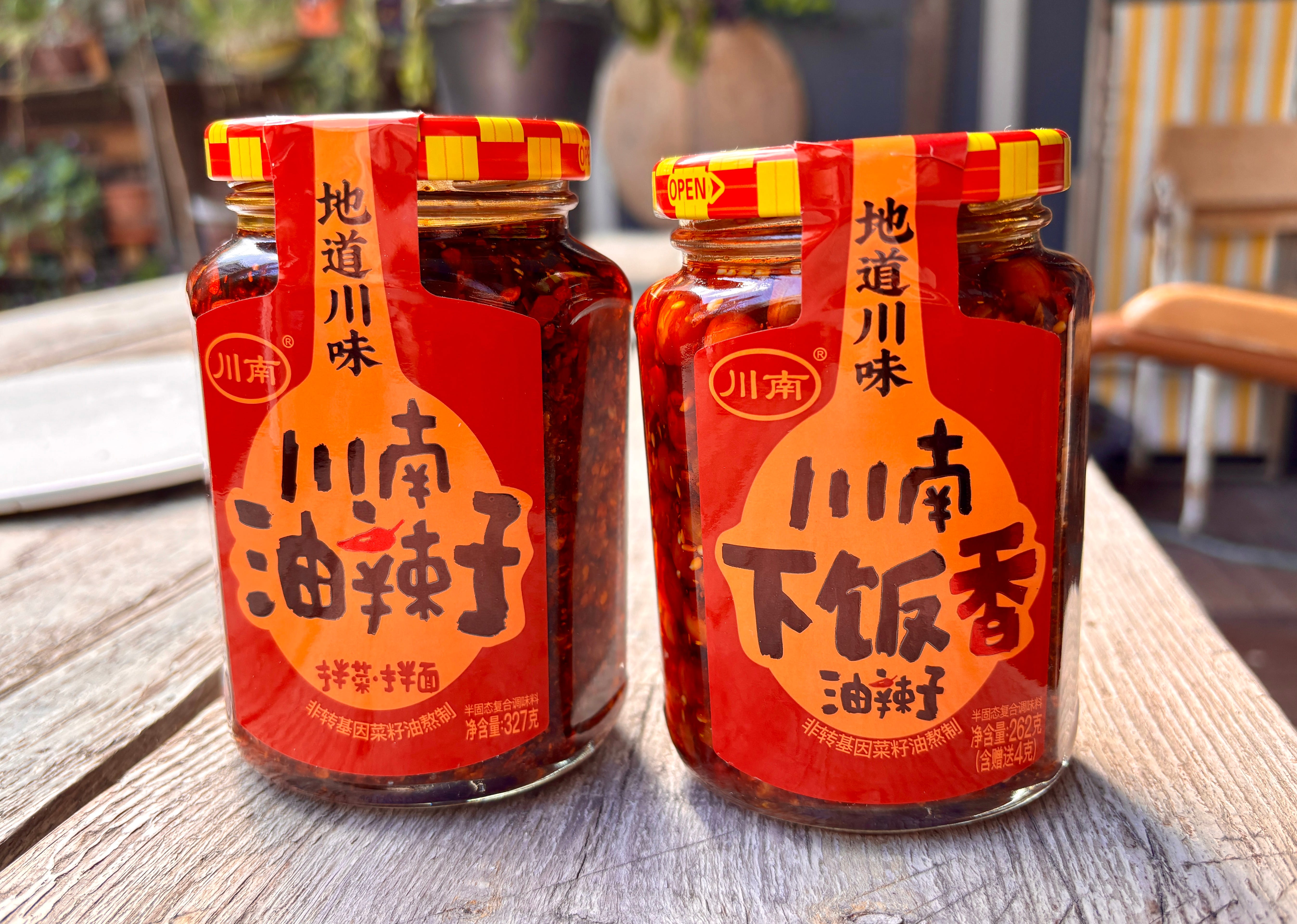
The company makes a few different types of chili crisps. The one in the smaller jar (on the right) has less oil and a higher concentration of peanuts than the one in the larger jar (above, left), which has soybeans as well as peanuts. My preference is the one on the right, which is packed with peanuts. With either one, you can tilt the jar and take a look at the inside of the jar, next to the label: If you see a lot of peanuts floating around in there, that’s likely the one I prefer, although if you like chili crisp, I don’t think you’ll be disappointed with either.
You can find this brand on Amazon in the U.S., but I’d check Asian markets in your neighborhood or city to find it. I love poking around the shelves there, and I always find jars and packages of other intriguing things. Plus it’s nice to shop locally if you can.
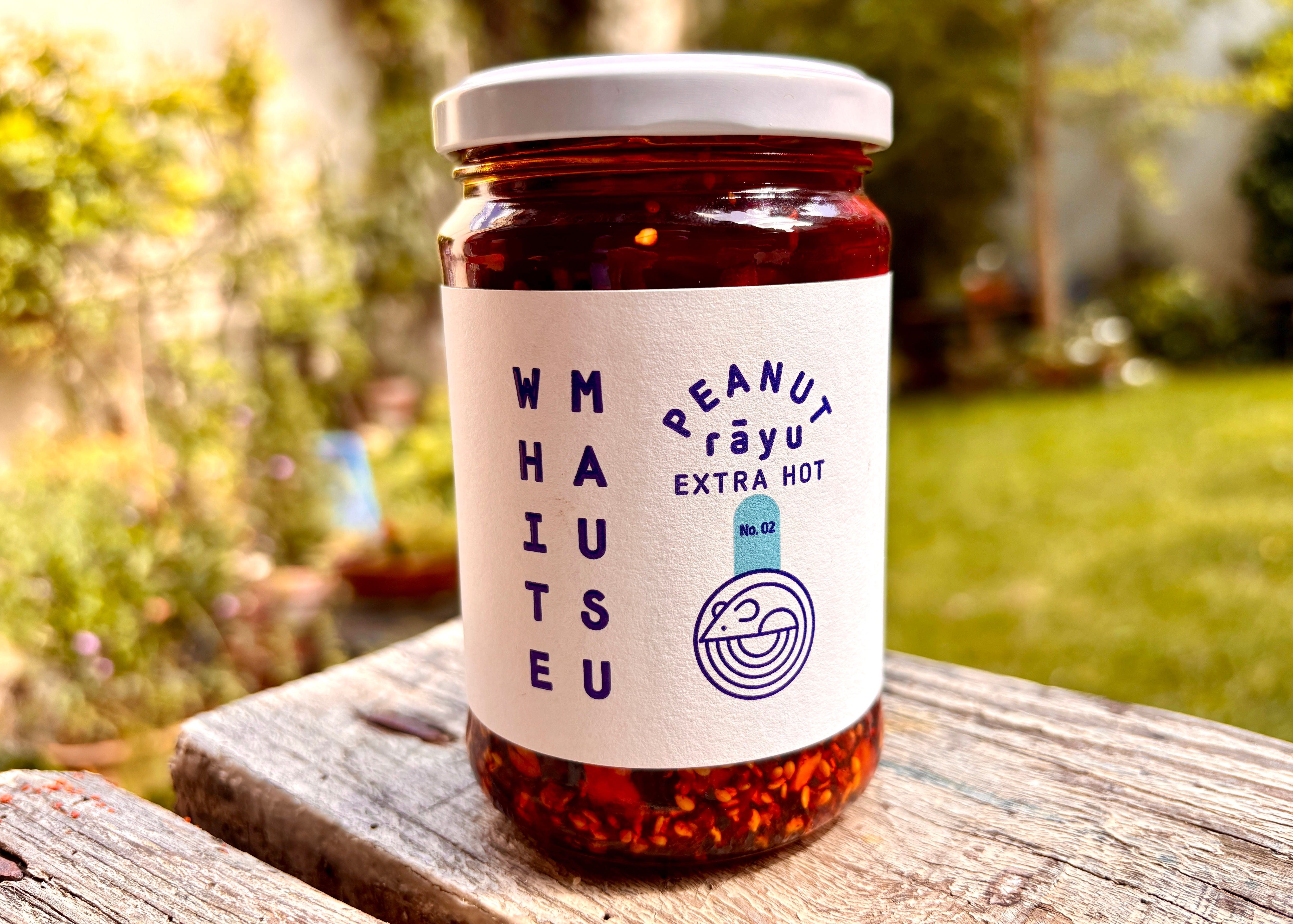
Speaking of which, I was delighted to find that my favorite coffee shop in my neighborhood, Early Bird Coffee, carries White Mausu chili crisp with peanuts (made in Ireland), so patronizing local businesses has its rewards. Another brand of peanut chili crisp that I see is Guiz, which I haven’t tried.
There are recipes here and here if you want to try making chili crisp yourself, but I just read there’s a book about a present-day tradwife influencer who wakes up and finds herself back in the 1800s, and has to fend for herself. It’s dizzying (again!) to think of waking up tomorrow and having to press my own oil, plant my own chiles, and dig up my own peanuts for chili crisp, so I’m fine letting someone else do that for me.
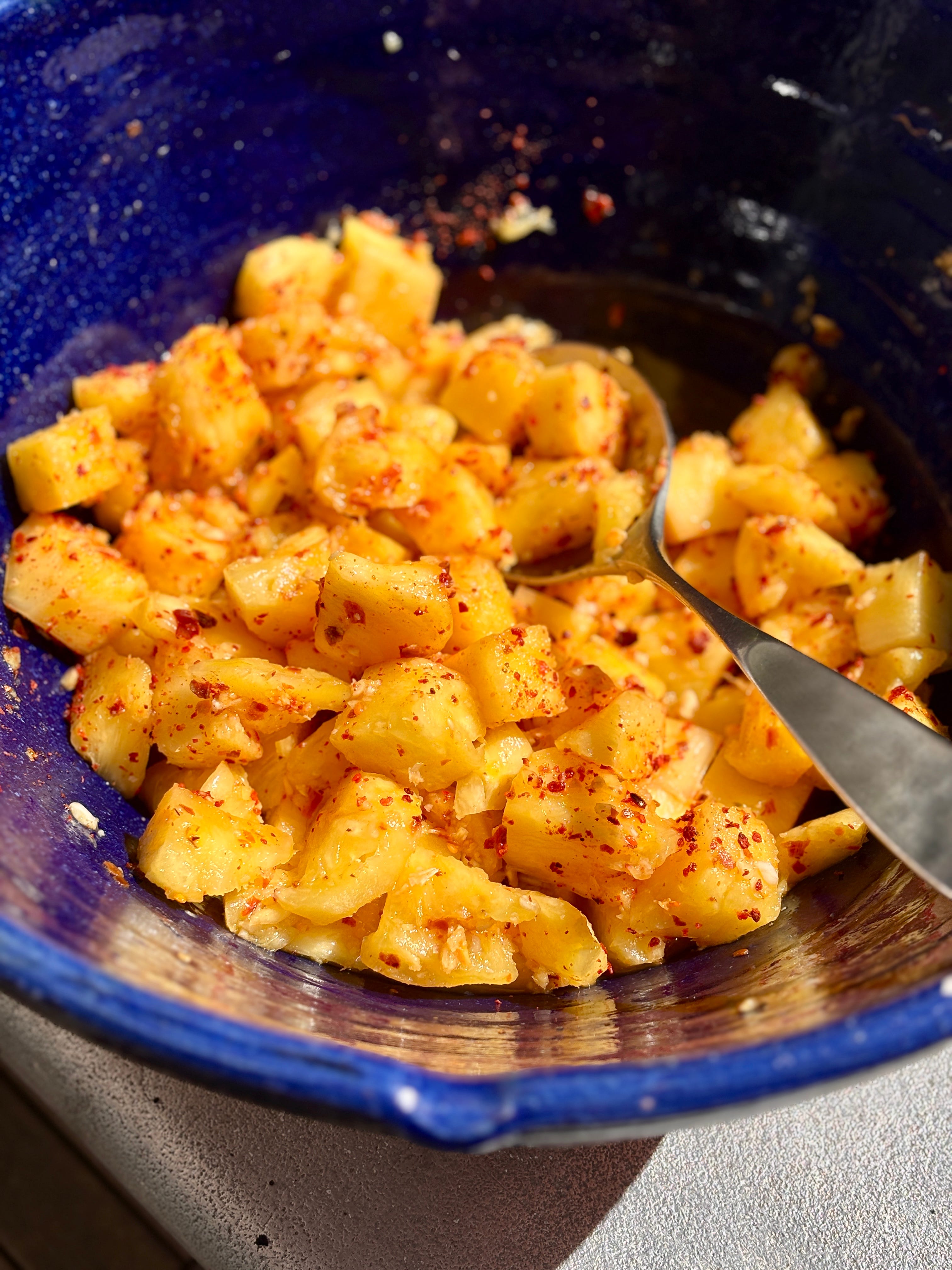

I know it’s spring and summer, and we’ve been enjoying the bounty of berries and stone fruits in Paris. But no matter what time of the year it is, I can always eat pineapple, which I did on a recent trip to Taiwan, where pineapples are a staple, either fresh or preserved.
I was intrigued by the fermented pineapple I had while I was there, shown in the jars above, which was saltier than I had imagined. I liked the idea of fermenting the sweet, sturdy fruit, but when I asked my Taiwanese-American friend if he knew how that condiment was made, he asked around but never found out.
I was flipping through my copy of The Apothecary Chef, written by a friend, Natasha MacAller, a former ballerina who became a caterer, then a pastry chef, who included my tarragon vinaigrette recipe in her book:
Natasha’s book explores the intersection between full-flavored foods and their beneficial properties, with recipes such as Hangar steak with dandelion green salsa, Potato and garlic pie, Farro power bowl with tahini-fig dressing, and Persimmon pudding, because persimmons are rich in carotenoids, an antioxidant that comes with a number of health benefits. I knew there was a reason I liked cake so much…
While reading the book, I came across this Pineapple kimchi recipe, which was adapted from another cookbook, Spicebox Kitchen, written by Linda Shiue MD, an internal medicine physician who studies cooking and plant-based nutrition. While my personal philosophy is to eat a wide variety of foods, making sure that I eat a lot of fruits and vegetables, as well as grains and proteins, I certainly don’t deny myself the pleasures of dessert. Otherwise, I wouldn’t have a career.
When I moved to France, way back when, I had trouble finding one of my favorite fermented foods, kimchi, so started making my own, sharing my trials and recipes on my blog. Years later, I wondered if I was going to get into trouble for the kimchi recipes that I’d posted.
Share David Lebovitz Newsletter
Thankfully, the cancellation gods were smiling on me, no doubt realizing that I only had the best of intentions in mind, and to also let people who might not be familiar with kimchi to learn how wonderful it is, and that you can make it anywhere, even in a tiny rooftop Paris apartment.
Cancel me if you want, but I sometimes add pineapple to Thai curries, which lends a hit of cooling freshness against the coconut milk-rich, spicy sauce. But the good news is that I’m off the hook because I just looked it up and Thai people do add pineapple to curries. Whew, that was close.
I did take a few liberties with this recipe, which called for 3 tablespoons of water, but I used the runoff of pulpy juices left on the cutting board after preparing the pineapple as part of that 3 tablespoons.
My Visit to Red Boat Fish Sauce
While the recipe doesn’t specifically call for it, I use Red Boat fish sauce. When I went to visit them in Vietnam, I learned that many fish sauces are made with all sorts of seafood. Cuong, who makes RB fish sauce along with his family, said that some sauces are prepared from fish that have been sitting on the boat for a couple of days, whereas the anchovies used in his fish sauce get salted right away to preserve them until they get back to shore. I’m not on their payroll, but his fish sauce is one of those quality ingredients that really does make a difference when you use it.
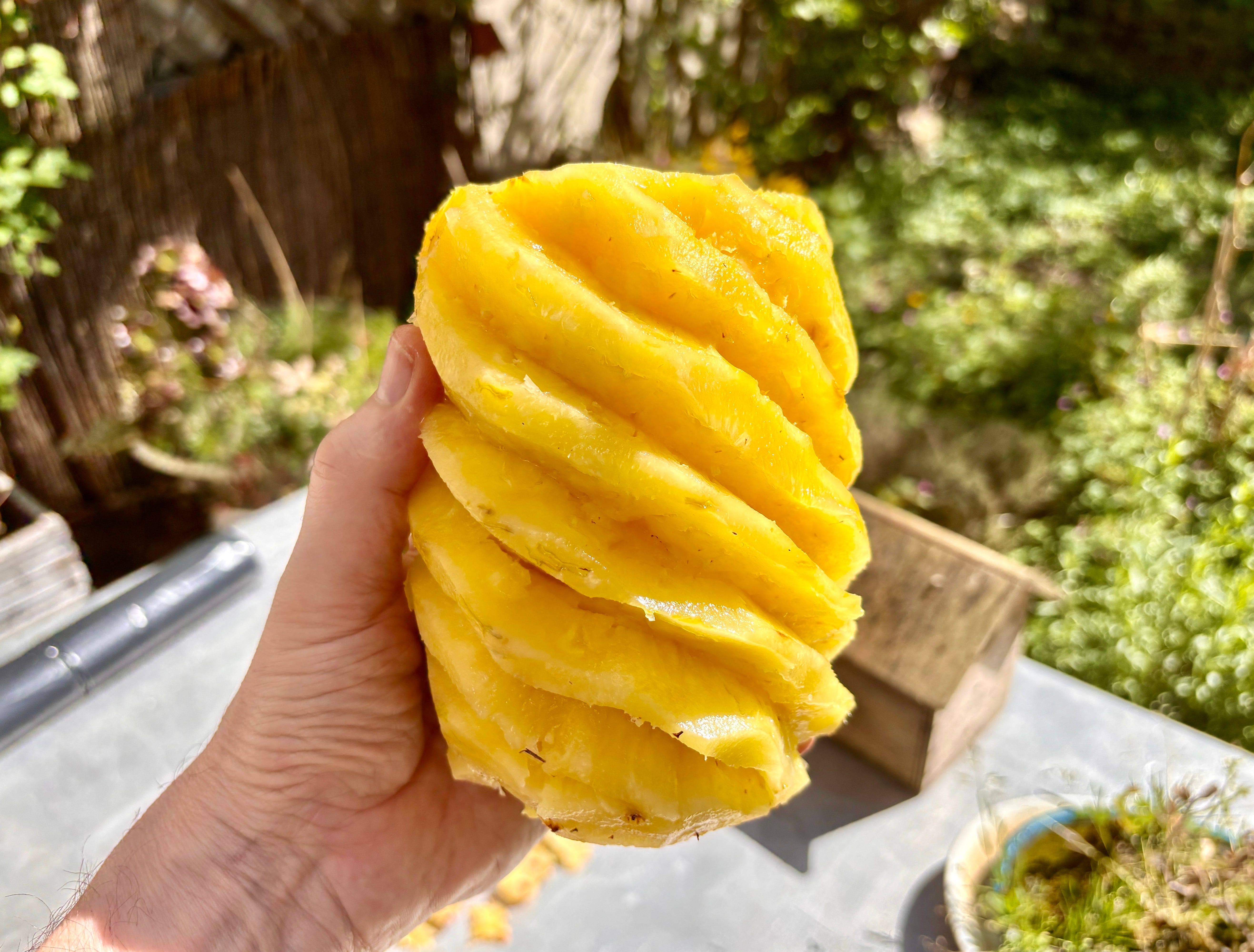
Speaking of quality, the theory that you can tell a pineapple is ripe ‘n ready is if you can easily pluck out a center leaf from the spiky top, which will only show you how to raise the ire of the people at the market who sell pineapples. The best way to tell if a pineapple is ripe is to sniff it near the base. It should smell sweet and like the tropics. Avoid pineapples with mold around the base or soft, mushy spots.
I’ve prepared a lot of pineapples in my time and my favorite way to do it is to lop off both ends, then trim off the skin with a chef’s knife. Then use a knife to cut around the line of the eyes, following them as they spiral around the pineapple, making a V-shape indentation on both sides of the eyes, to remove them. You can also pluck them out with the tip of a pointed vegetable peeler.
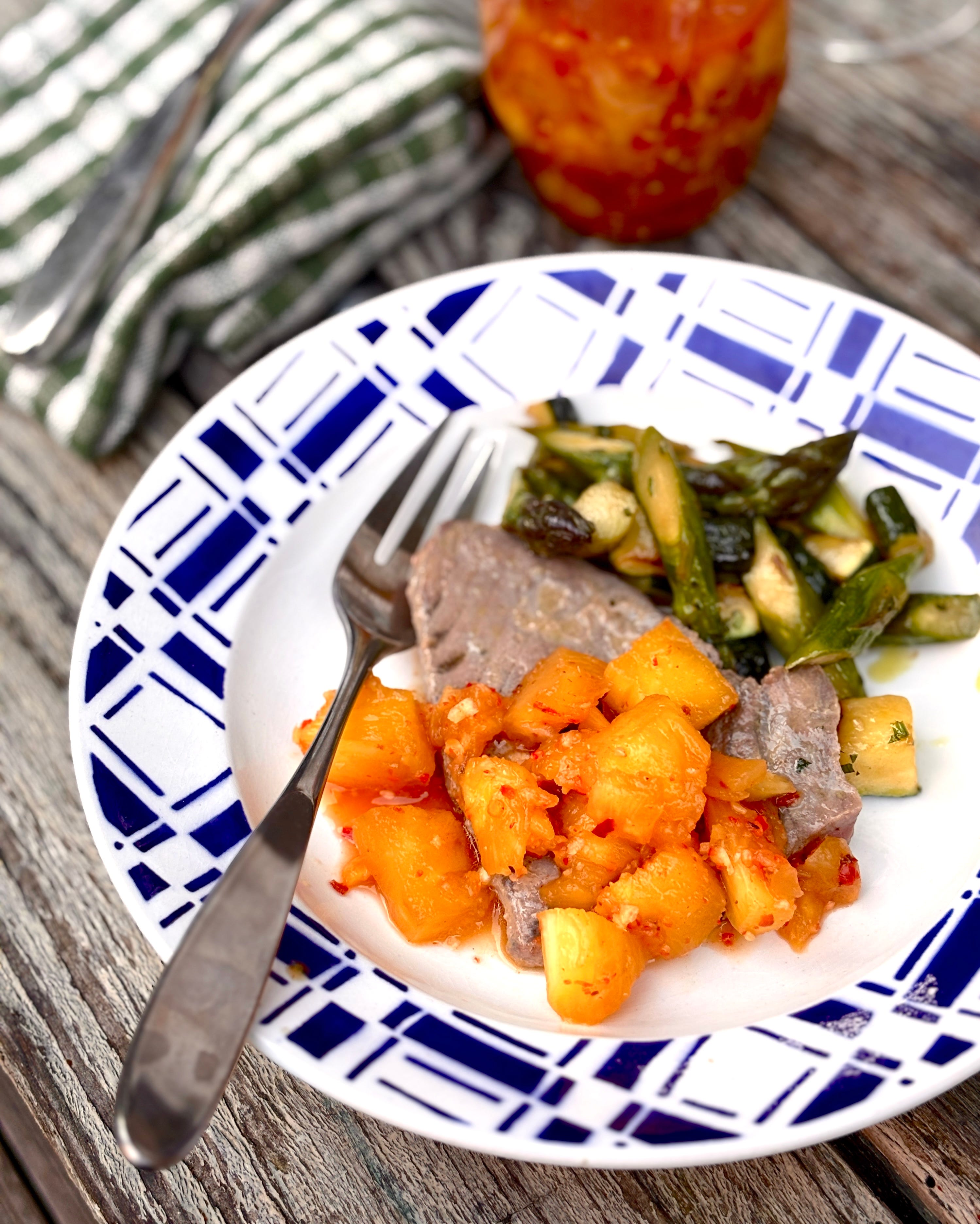
Romain loved this kimchi when I served it for dinner shortly after I made it. This is, indeed, a terrific and fresh condiment that goes well with fish or roast pork, or as a component in a rice bowl, along with tofu or shrimp, pickled vegetables, and whatever else you’ve got to add to the bowl.
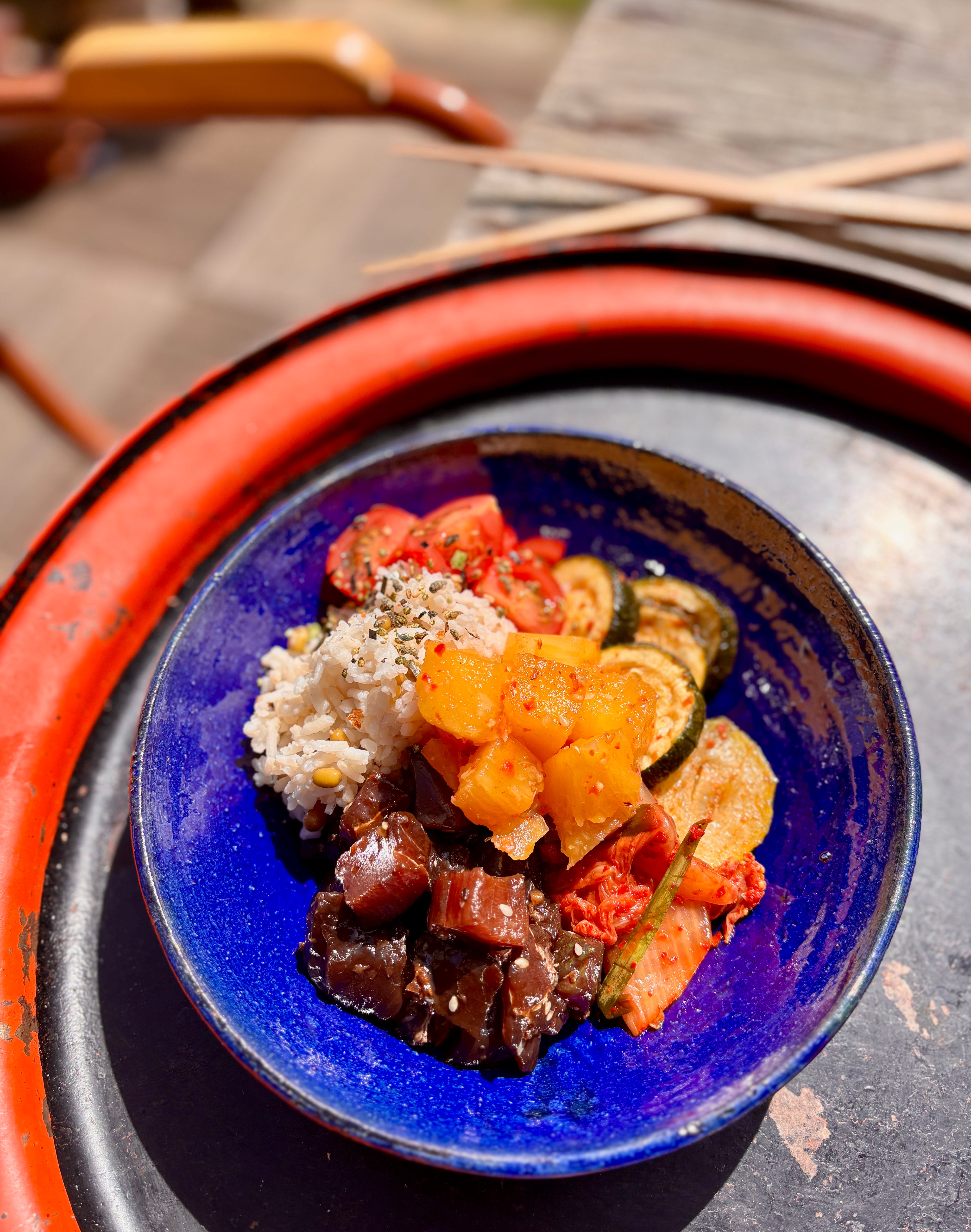
While we ate some of this kimchi right away, I stored the rest in glass jars in the refrigerator, and it’s been a convenient condiment to have on hand.
Subscribe to my newsletter to get recipes, stories, Paris tips, and more — sent right to your Inbox! Free subscribers get most posts…and paid subscribers get all posts, as well as the ability to participate in the community of commenters.

I’m very excited for the release of my newest book, The Great Book of Chocolate. This totally revised edition is filled with lots of new information about the world of chocolate, as well as a chapter on my favorite addresses for chocolate in Paris, and, yes, there are over 50 recipes that span the world of chocolate, including a chocolate cake from the late, great Maida Heatter that she appreciated so much she sent me a letter about it…
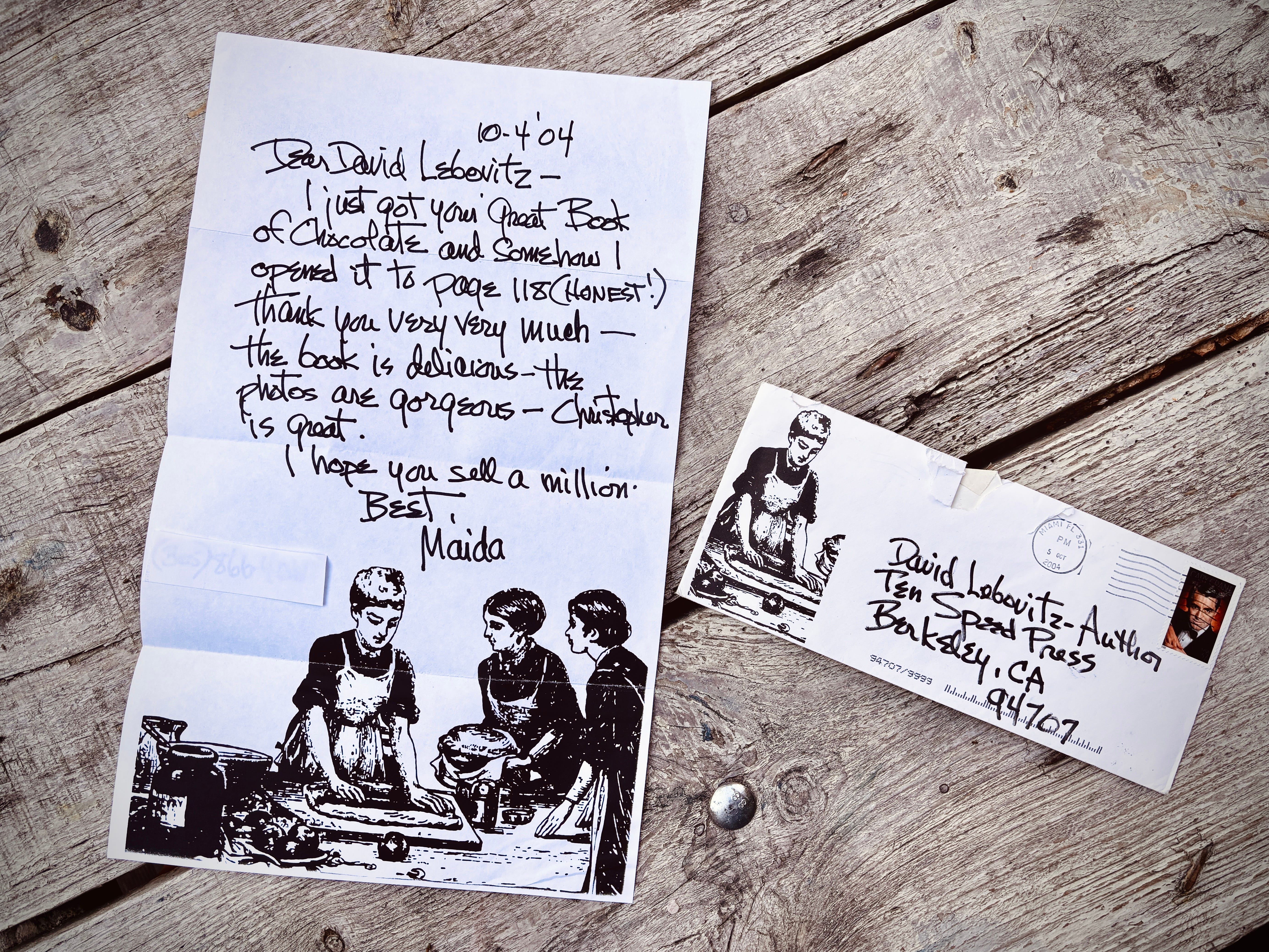
Due to global events, it was a challenge planning an overseas trip, and some venues weren’t available on shorter notice. But I will be going to four cities — New York, New Jersey, San Francisco, and Los Angeles. Alas, I can’t visit all the places I wanted to go, but you’re welcome to come visit me wherever I am. And yes, I’ll be doing an event in Paris, in late May, if you fancy a trip to Paris! 😃
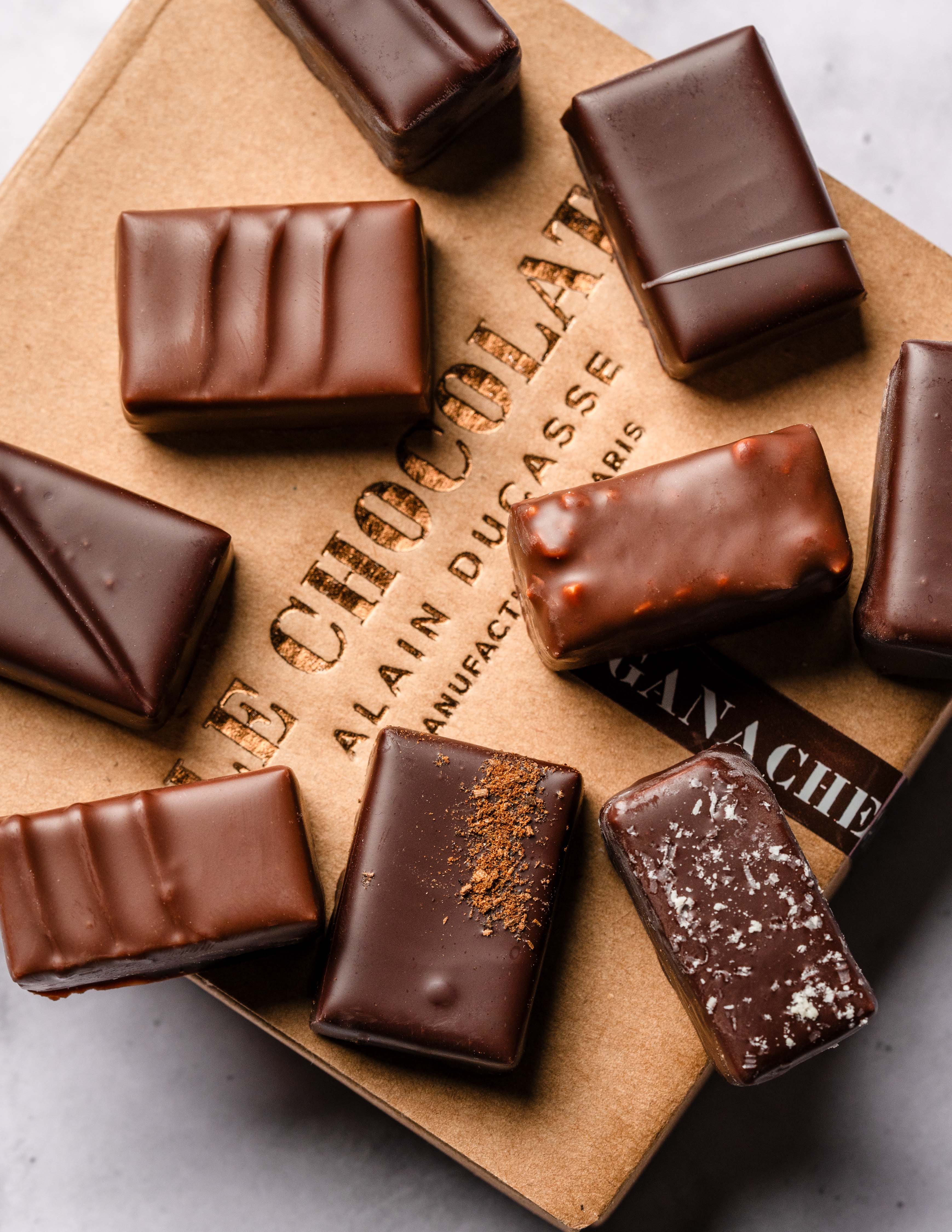
If we missed each other and you want a signed copy of The Great Book of Chocolate and Ready for Dessert, get in touch with Kitchen Arts & Letters, Omnivore Books or Now Serving LA, and they can send you a copy! -dl
Get The Great Book of Chocolate!
Below are the dates for the events. Note that a number of them are ticketed, which usually includes the price of the book. Ticketed events also help support the bookstores and ensure that a book will be available for you. If you have questions about events, feel free to contact the venue directly.
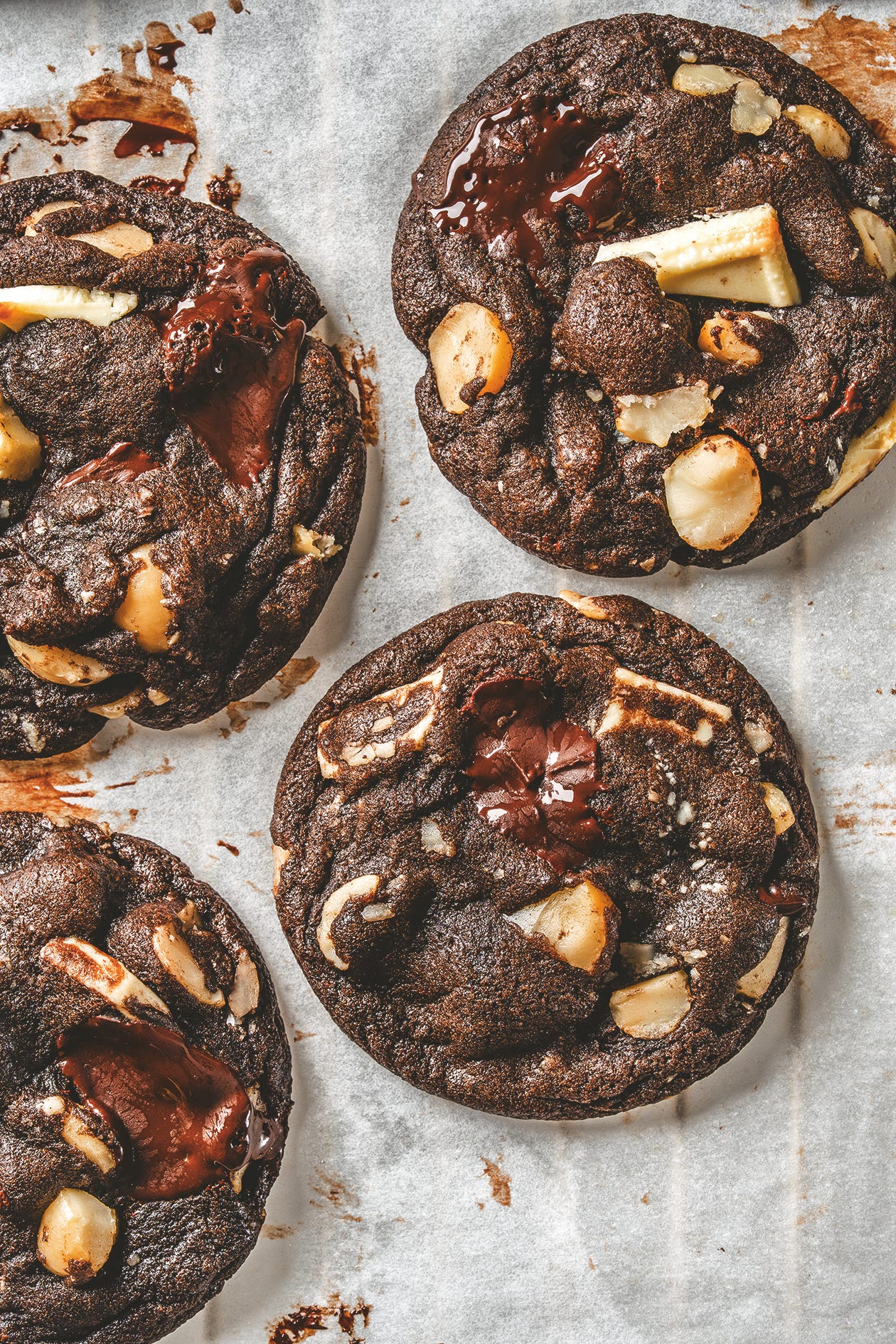

May 5th: Release of The Great Book of Chocolate, which is now available for pre-order. Pre-orders will arrive on, or very close to, the release date. It’s available at these retailers, or order a copy at your local bookshop.
Bookshop.org | Now Serving | Barnes & Noble | Omnivore | Book Larder | Amazon | Kitchen Arts & Letters | Bold Fork | Books are Magic | Amazon France | Powell’s | RJ Julia | Strand | Smith & Son Paris | Amazon UK | Politics and Prose | Vivienne Culinary Books | Book Passage | Elliot Bay | Village Books | East End Books | Indigo Canada | Penguin Australia | Shakespeare and Company Paris
May 4: I’ll be kicking off the NYC events at Rizzoli Bookstore with Matt Rodbard of TASTE Live – tickets here SOLD OUT
May 5: Booksigning at Williams-Sonoma, Columbus Circle, New York City – tickets here
May 6: Booksigning at Williams-Sonoma, Short Hills, New Jersey – tickets here
May 9: Markethall Foods, Oakland, CA – Noon to 1:30pm, more info here
May 11: Omnivore Books, in conversation with Kate Leahy, San Francisco, CA – more info here - no tickets required
May 12: Dandelion Chocolate, San Francisco, CA – SOLD OUT
May 14: Now Serving LA, Los Angeles, CA, in conversation with Clémence de Lutz of Petitgrain boulangerie – tickets here SOLD OUT
May 16: Friends & Family Bakery, with Roxana Jullapat, Los Angeles, CA – tickets here.
May 30: Booksigning at La Trésorerie Rive Gauche (48, rue de Grenelle, 7th, Paris), 3pm to 4:30pm. Copies of The Great Book of Chocolate and My Paris Kitchen will be available for sale and signing.
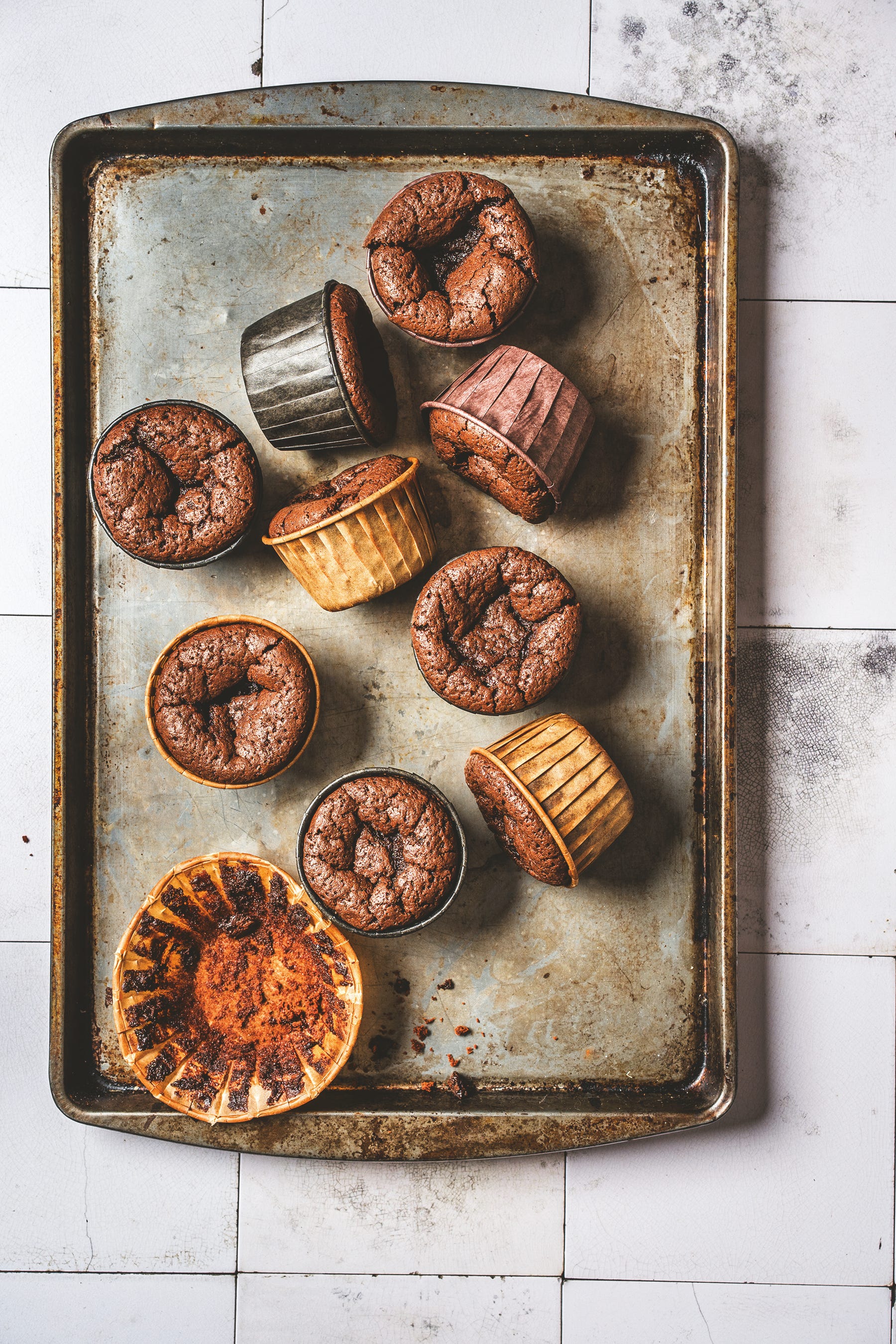

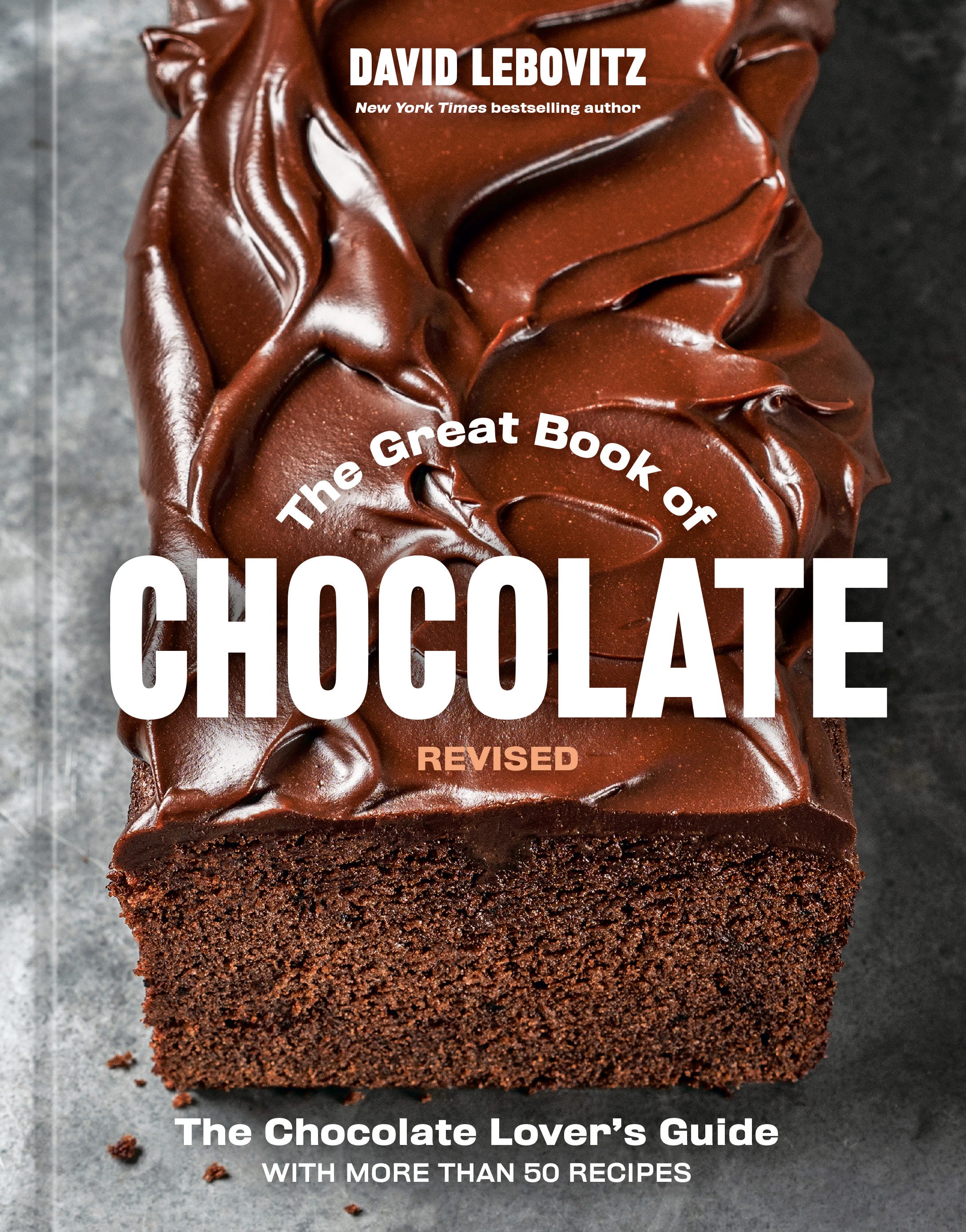
Get The Great Book of Chocolate
Please note that events are subject to change and revision (like everything these days…*sigh*), although we’re hoping that doesn’t happen. If anything changes, I’ll do my best to post about it but you’re welcome to contact a venue before an event to confirm the time and date, or if you need additional information.
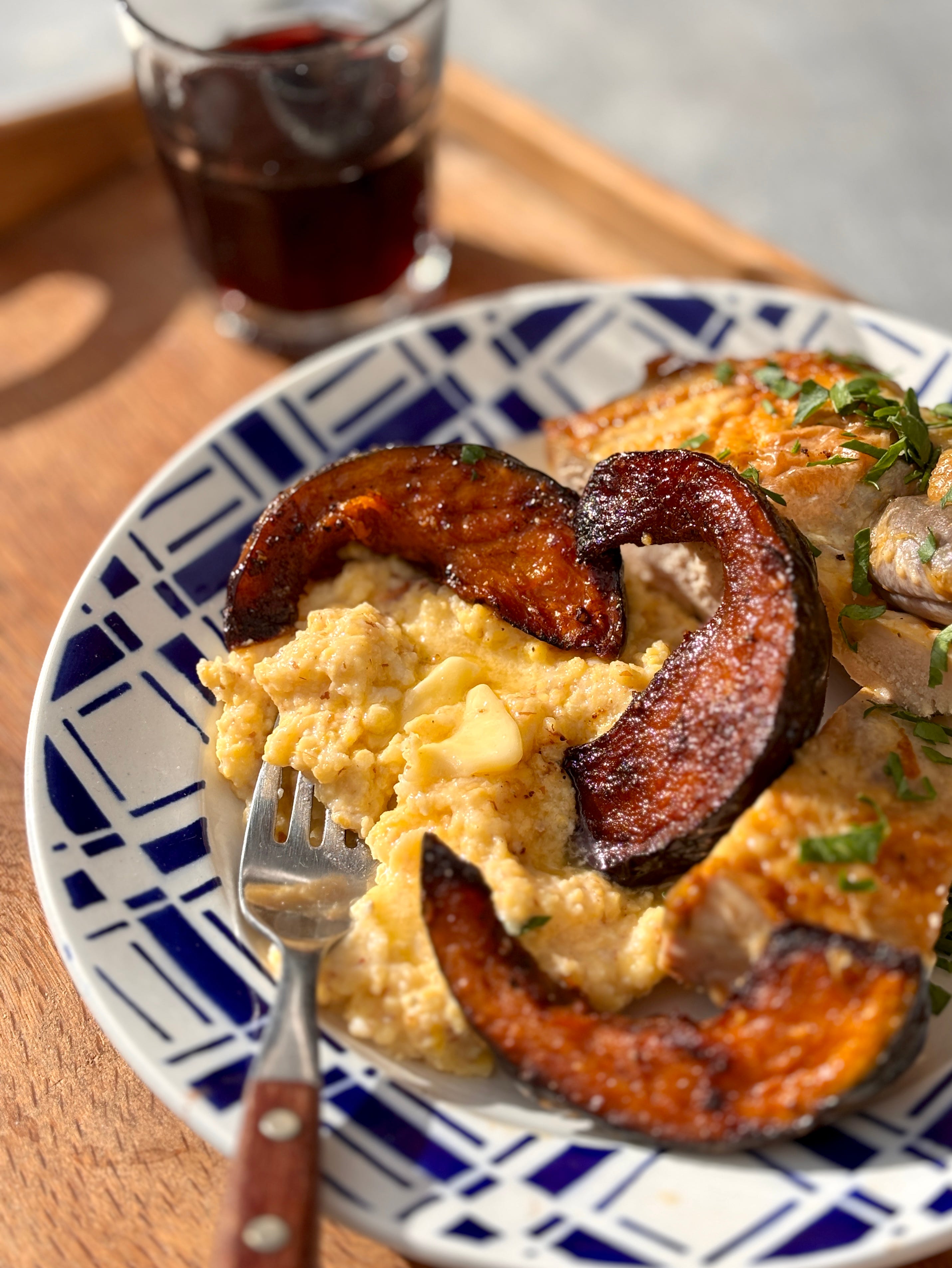

I love polenta, especially in the winter. It goes well with grilled or roasted meats, vegetables, fish, and poultry. It can be served for breakfast with butter. If made in advance and left to firm up overnight, it can be cut in slabs and grilled. And if you’re the kind of person who doesn’t mind firing up the deep-fryer, you can make polenta fries. (Which I love to eat, but not clean up after. Option B is to cut the polenta into batons and fry them in olive oil a skillet )
I keep a bag of polenta at home, and used to make it by stirring it on the stovetop, which took nearly an hour of constant vigilance, not to mention cleaning up the stovetop afterwards, and nursing a few burns on my arm from getting splattered by hot polenta.
When I arrived in France, I was surprised at the prevalence of instant polenta, which is polenta that’s finely ground so it absorbs liquid quickly. (There’s also precooked polenta grains, and precooked sliced polenta, which were new to me, too.) Admittedly, it’s very easy to make and is ready in about five minutes. People don’t seem to mind it, but I like the texture of traditional polenta, so stick with that.
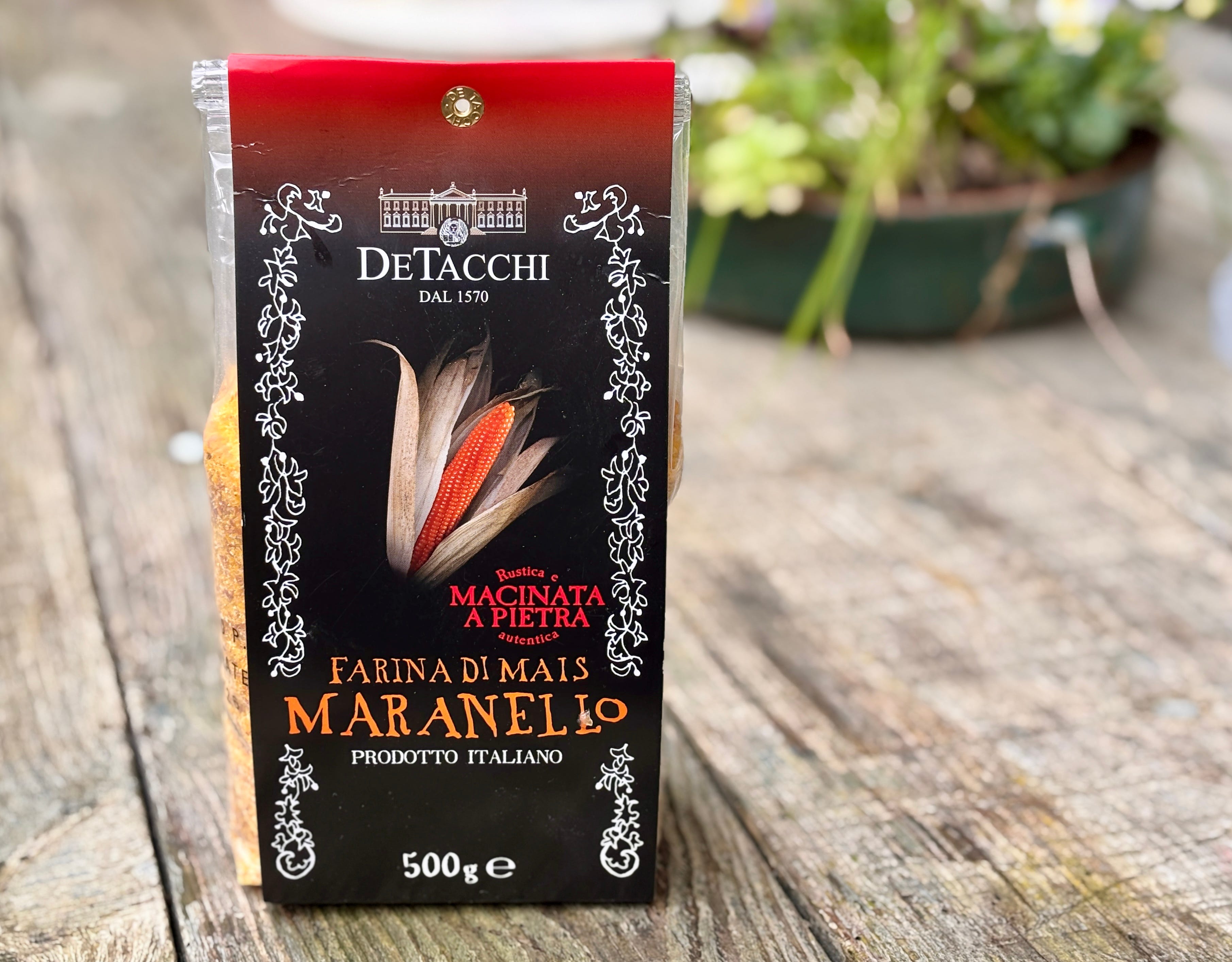
If you want to take your polenta to the next level, seek out stone-ground polenta. Stone-ground polenta (like stone-ground cornmeal) includes the whole grain, and contains the germ and the bran. It also has retains more of its flavor during grinding since the stones grinding the corn don’t heat it up, which can diminish its flavor. But I also like the irregularity of it. It looks like real corn, not like powder.
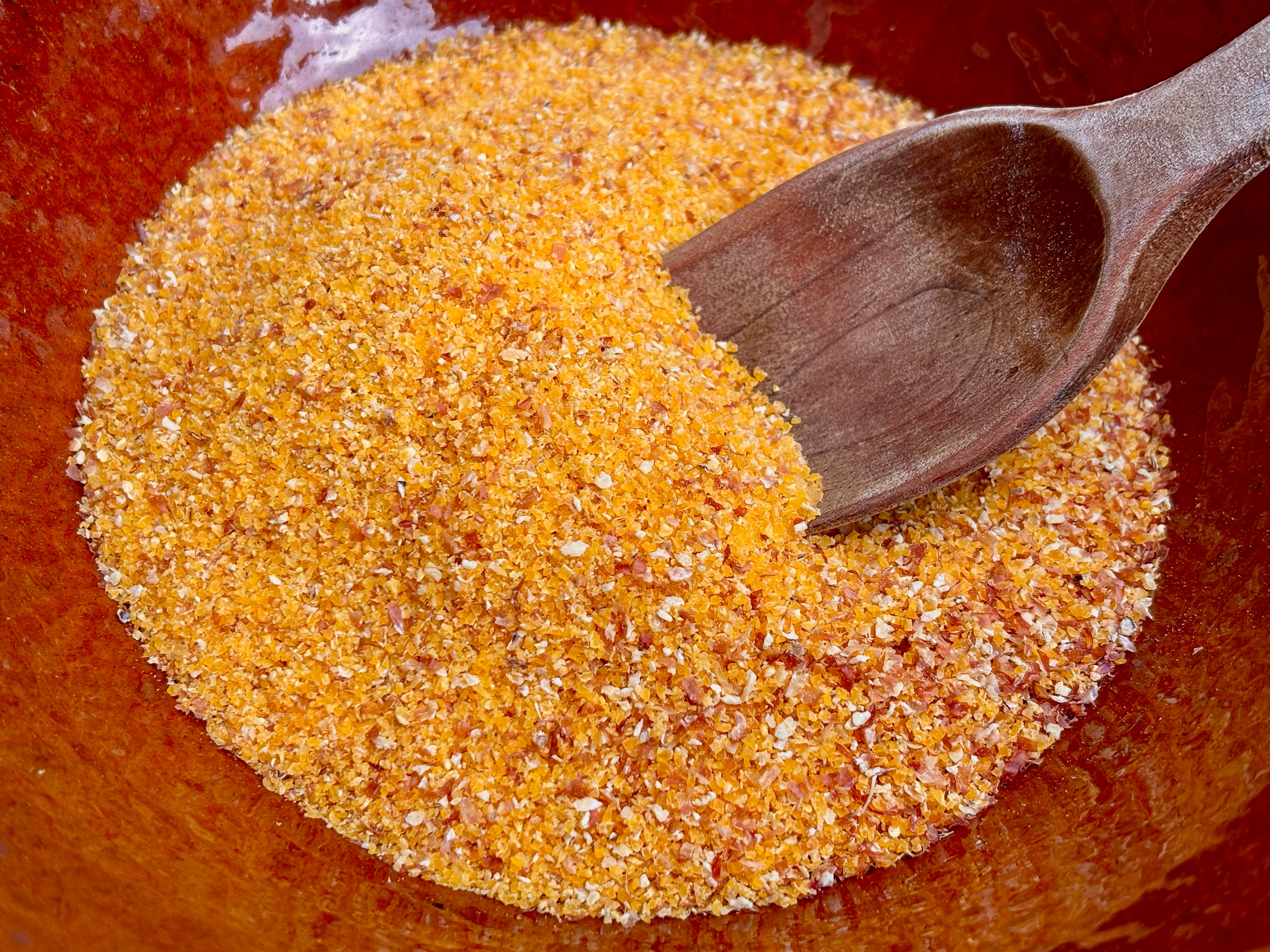
I’ve been cooking polenta for years, stirring it on the stovetop, but recently I remembered this technique, which was introduced in the pre-internet days by the great Paula Wolfert. The recipe was in her book, Mediterranean Grains & Greens, a treatise I sadly had to leave behind in the States, but she attributed to a recipe on the back of a package of Golden Pheasant polenta, although the California-based company no longer seems to be in business. 😔
I’d made it way-back-when, but for whatever reason, I continued making polenta the traditional way. It reminds me of a quote from Judy Rodgers in the Zuni Café Cookbook, something along the lines of finding, and sticking to, a harder way of doing something. For better or for worse, that’s sometimes as I operate. Old habits die hard, I suppose.
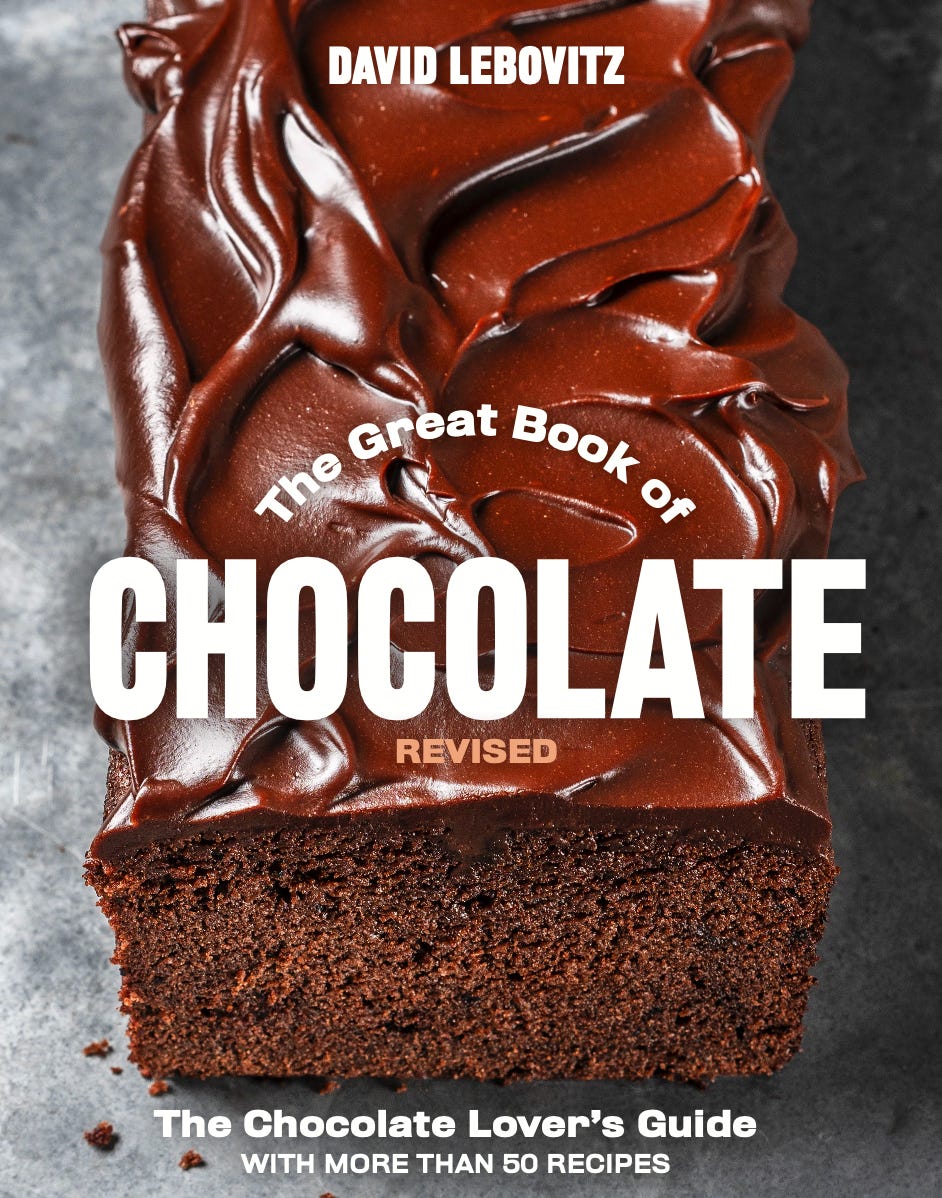
Get The Great Book of Chocolate!
One of my favorite parts about writing my chocolate book was getting to explore, and share, the world of chocolate. Chocolate is a pretty wonderful ingredient all by itself. But I wanted to feature friends in the chocolate world, so I culled recipes from bakers, pastry chefs, chocolatiers, cookbook authors, and even bartenders for the book.
For the revision of The Great Book of Chocolate, I completely rewrote the book (since so much has changed!) and wanted to include a chocolate marshmallow recipe. So I thought about Amanda Bankert of Boneshaker donuts in Paris, who taught me how to make vegan marshmallows, which were game-changers since many people have asked me about substitutions for the gelatin and egg whites that are normally used in marshmallow recipes.
Subscribe to my newsletter to get recipes, videos, stories from Paris, and more, sent right to your Inbox!
Amanda is one of the most fun people I know, and is also a graduate of the prestigious Cordon Bleu cooking school in Paris. So when revising The Great Book of Chocolate, I thought, “Why not veganize chocolate marshmallows?”

With the book coming out in less than a month, I then thought, “Wouldn’t it be fun to have Amanda come over and make them with me in my kitchen?”
So we made a video of us preparing them together. We had such a good time whipping them up, and it’s great that anyone - vegan or not - can enjoy these delicious marshmallows. And next time you’re in Paris, stop by Boneshaker for a donut and a cup of coffee. Like Amanda, her shop is one of the most fun things in Paris. And if you see her behind the counter, say hi for me, and enjoy the video!

A few helpful tips to read before making the recipe:
Be sure to stir and scrape the bottom of the pot while the syrup is cooking to scrape up any agar-agar that’s sticking to the pan.
The better (and darker) the cocoa powder, the tastier the marshmallows will be. I like Valrhona cocoa powder and Guittard cocoa rouge. King Arthur sells a double dark cocoa blend that I haven’t tried, but any Dutch-process cocoa powder will do. Hershey’s Special Dark is a sleeper in this category, and affordable.
You may have to do a bit of shopping to get the xanthan gum and agar-agar, a natural gelatin substitute, which, interestingly, is sold in French grocery stores. Natural food stores or online shops are good places to look where you live. In Paris, G. Detou sells them, as well as cream of tartar. The good thing is, you’ll have them on hand for next time : )
Aquafaba is the chickpea cooking liquid found in canned chickpeas, not jarred, nor is it the liquid from dried chickpeas that you cook at home. (Interestingly, aquafaba was “discovered” by a French opera singer.) In the U.S., generally one 15-ounce/425g can yields 3/4 cup (180ml) liquid, but you may want to get an extra can just to be sure. (You can use the chickpeas to make my really good hummus.)
It’s nice to have a helper in the kitchen to steady the bowl while you fold in the cocoa powder, as I did with Amanda. If you’re by yourself, resting the mixing bowl on a silicone baking mat will help keep the bowl in place.
And don’t forget to pre-order The Great Book of Chocolate - it’s out May 5th and you’ll be the first to get a copy!
Share David Lebovitz Newsletter

Few people know, or write about, Paris as well as Elaine Sciolino. With an extensive background in journalism, Elaine was the Paris bureau chief for the New York Times and remains a contributing writer. She has also written four books on Paris and French culture.
Her book, The Only Street in Paris, put her neighborhood on the map, portraying the various merchants, food sellers, and restaurants that line the rue des Martyrs, a microcosm of life in the city.

Her recent book is Adventures in the Louvre: How to Fall in Love with the World’s Greatest Museum. If the subtitle intrigues you, it’s because the Louvre has had its ups and downs over the years, beginning its life as a fortress, then becoming a residence, then a public “shopping” center, and now, a museum. Elaine takes readers on a journey through the imposing wall and behind the scenes of this famous museum, which both captivates, and vexes, visitors.
Being right next to the Seine, the museum is prone to flooding, crowds crane their necks to see the Mona Lisa, and robbers broke in recently, in broad daylight, snatching €88 million ($102 dollars) in jewels, which haven’t been seen since. Security has been a recurring problem at the museum, and the video security system password at the time of the robbery was “Louvre.”
Elaine’s book is also full of fun facts about the museum, including one that notes if you wanted to see the whole museum, the walk would be nine miles (14.5km). Other helpful advice: “Never go on an empty stomach and with a full bladder,” because the food offerings in the museum don’t match the cultural treasures in the galleries and corridors.
In the podcast, Elaine gave a great tip for visiting the Louvre and avoiding the crowds and the lines, which you might find helpful on your next visit.
Enjoy the chat!
-David

Follow Elaine Sciolino on Instagram.
Connect with Elaine on Facebook.
Visit Elaine’s website.
Read Elaine’s articles in the New York Times.
As always, I ask my podcast guests their favorite addresses in Paris. Here are the ones Elaine mentioned, with a few of her notes:
-Les Poissonniers de Montmartre (5 rue des Martyrs, 9th)
Elaine says every Thursday Akim, the owner, makes his version of bouillabaisse available to-go, priced at €13.90 for two servings.
-La Pâtisserie des Martyrs – Sébastien Gaudard
This has her favorite lemon tart, and she also likes the “original”-style macarons.
Owner Yann always gives a warm welcome.
-Le Comptoir Canaille
Italian cuisine.
Elaine is fond of their bœuf bourguinon, billed as joue de bœuf, or beef cheeks.
-Le Quincy (28 Av. Ledru Rollin, 12th)
Auberge dining that’s “frozen in 1950s Paris” featuring escargots, frogs legs, pork terrine, and stuffed cabbage.