
 Login
Login
Les Grands Buffets

It was quite an experience eating at les Grands Buffets, the world-famous, all-you-can-eat buffet in France, last month. There was a lot to eat, and a lot to write about. So I divided the post into two parts. You can read part 1 here:
After grazing our way through appetizers, truffle-scented scrambled eggs and soup, lobsters and oysters (and foie gras and ham), we headed over to the main course area, known as La Rôtisserie, which serves up more of Escoffier’s recipes. The main area offers several different dishes, each one plated to order.
You stand in a single, well-organized line and let them know what you want. Then, depending on what you’ve ordered, they hand you a plate with what you asked for, some of it having been cooked almost to order. Among the offerings are filets of beef Rossini, sautéed in butter, with foie gras and black truffles, vol au vent (puff pastry) filled with sweetbreads and morel mushrooms, quail stuffed with foie gras, and lièvre à la royale, a traditional dish of hare braised in red wine, with blood sauce and innards (although more modern renditions often use a bit of chocolate in place of the blood and innards), along with cassoulet de Castelnaudary.
The last two I don’t remember seeing on offer, but they’re not exactly summer dishes. Although I do love cassoulet and would have liked to have tried theirs. (Maybe I need to go back in the winter?)
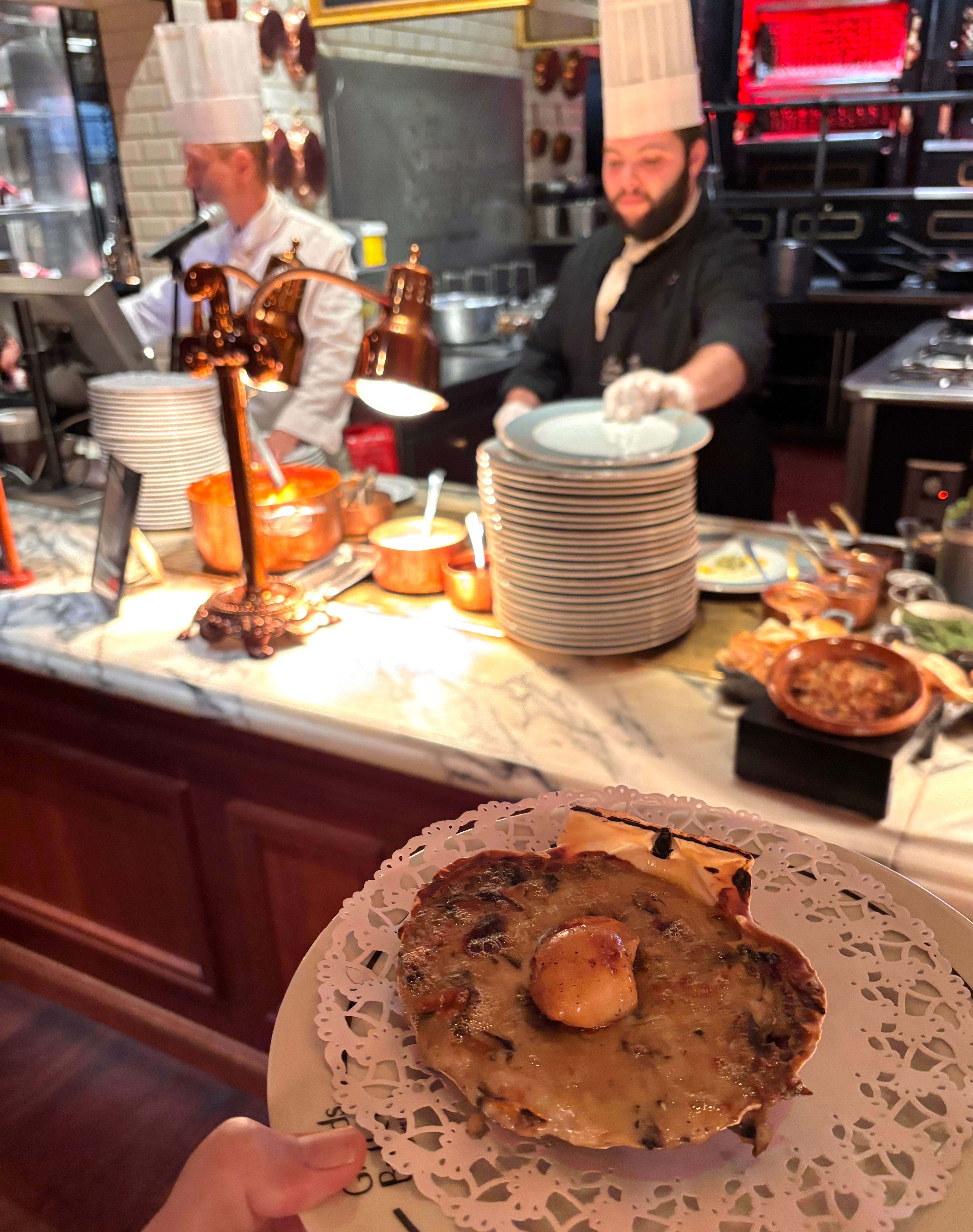
On the rich front, I ordered a Saint-Jacques à la Nantaise, a dish I wasn’t familiar with. After looking it up (and after eating it), I found out that it’s traditionally scallops, mussels, and a sauce made from mashed pain de mie (white bread). It’s perhaps a dish that was better left in the past, when French cooking meant smothering foods, including seafood, with rich, thick sauces. While it was good, with apologies to Escoffier, I think it’s pretty hard to improve on fresh scallops pan-seared in butter. I ended up picking out the seafood and eating that, since I didn’t want to fill up on sauce.
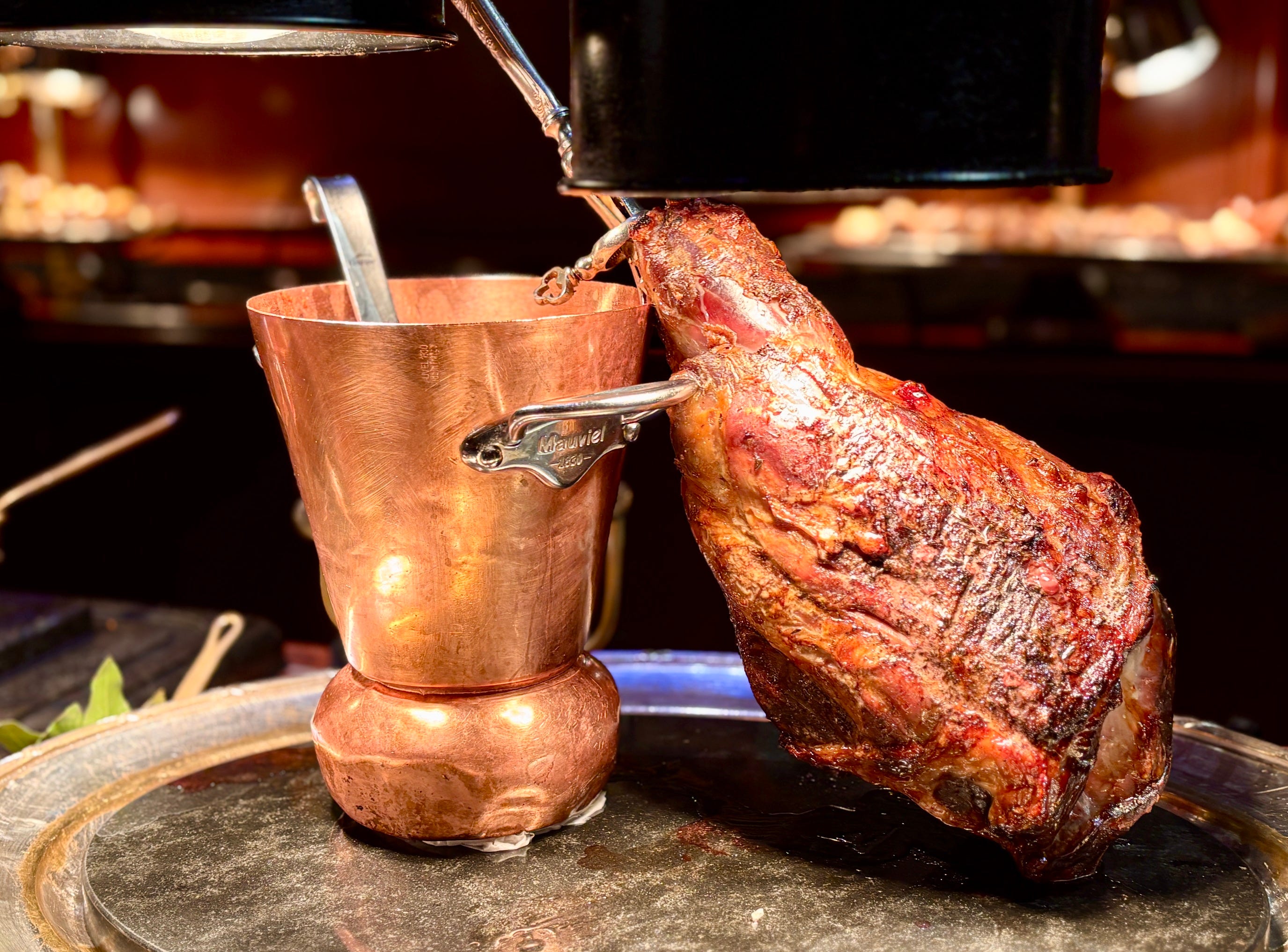
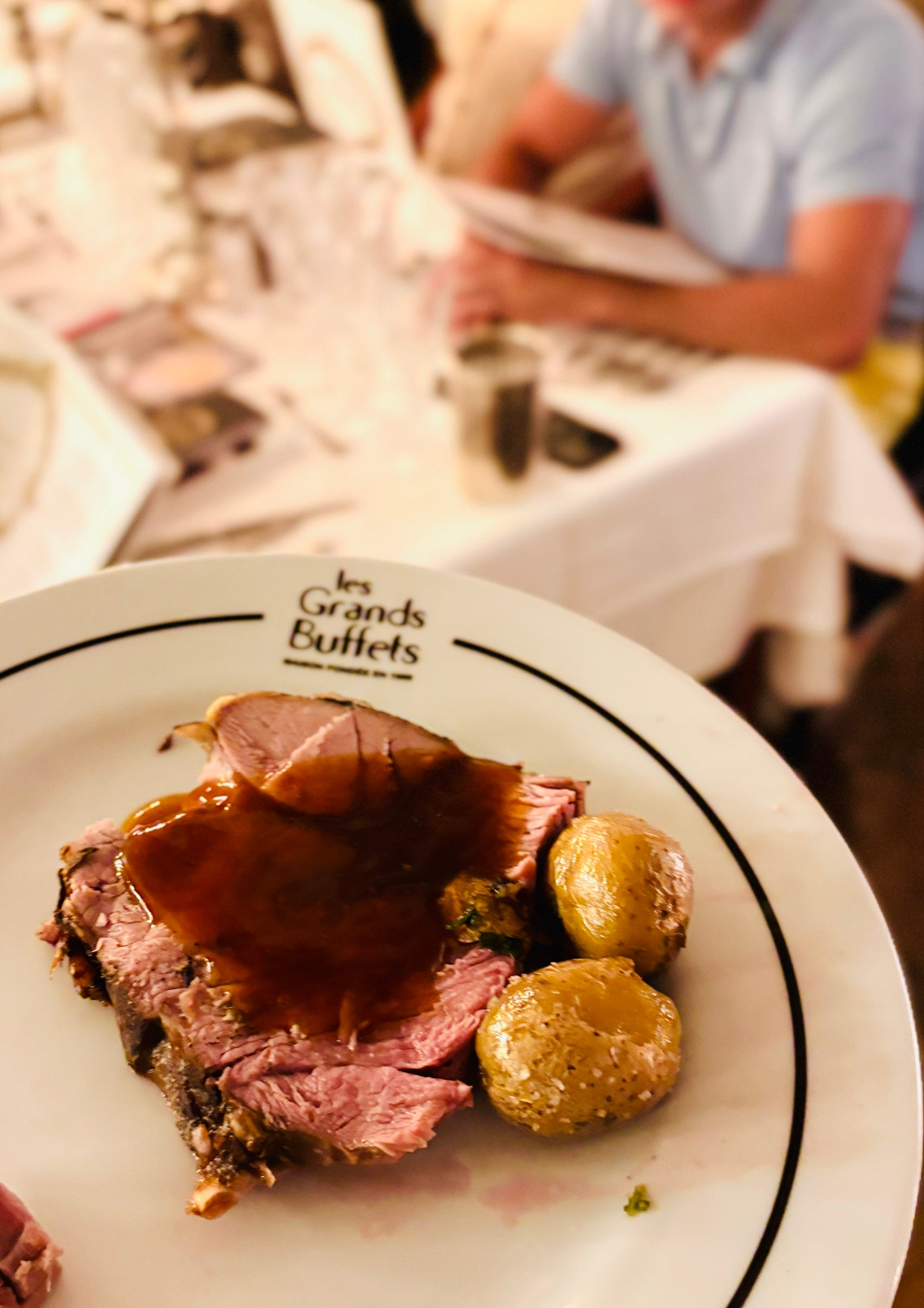
There were also stations where you could get leg of lamb, which I enjoyed a slab of. I did jockey myself in line so when it was my turn, I’d get a piece with some of the crispy crust. And I broke my rule about not filling up on carbs with two delicious pommes grenaille flecked with sea salt.
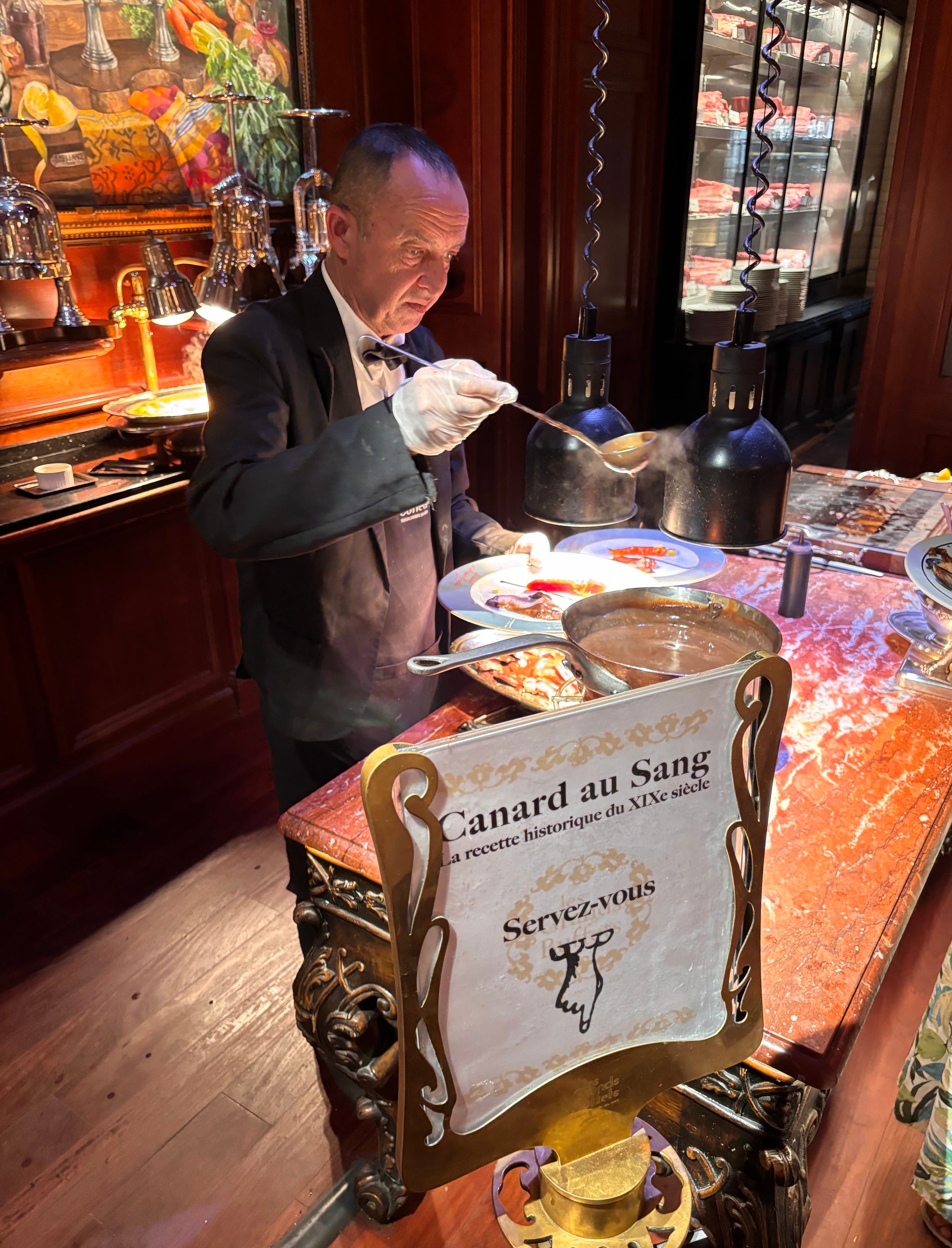
At another station, which some consider the highlight of the buffet, a serious-looking gentleman was serving canard au sang: duck served with a sauce made by crushing the carcass and using the juices, and the blood, to thicken the sauce.
As you can see, the portions aren’t huge.
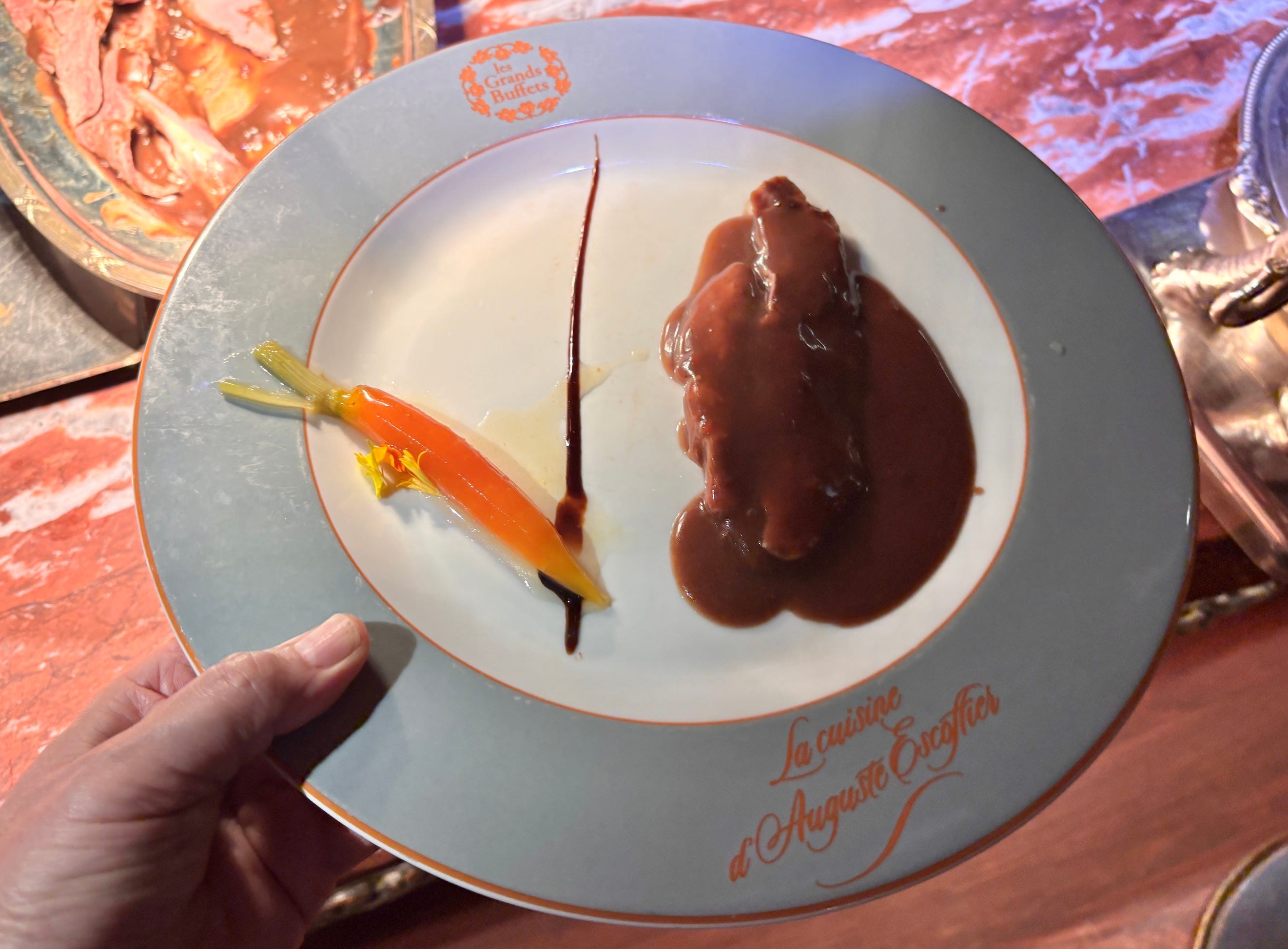
They’re not being stingy. They don’t want you piling a whole bunch of things on the same plate. Being France, where appearance is everything, a big pile of food on a plate isn’t very becoming. Plus they don’t want to waste food. I didn’t see any signs at les Grands Buffets, but restaurants elsewhere with buffets are starting to charge people for uneaten food. The average diner at les Grands Buffets eats between seven and eight plates of food, which I found was about right. The owner was quoted as saying something along the lines of, it’s not about all you can eat, but it’s all about what you want to eat.
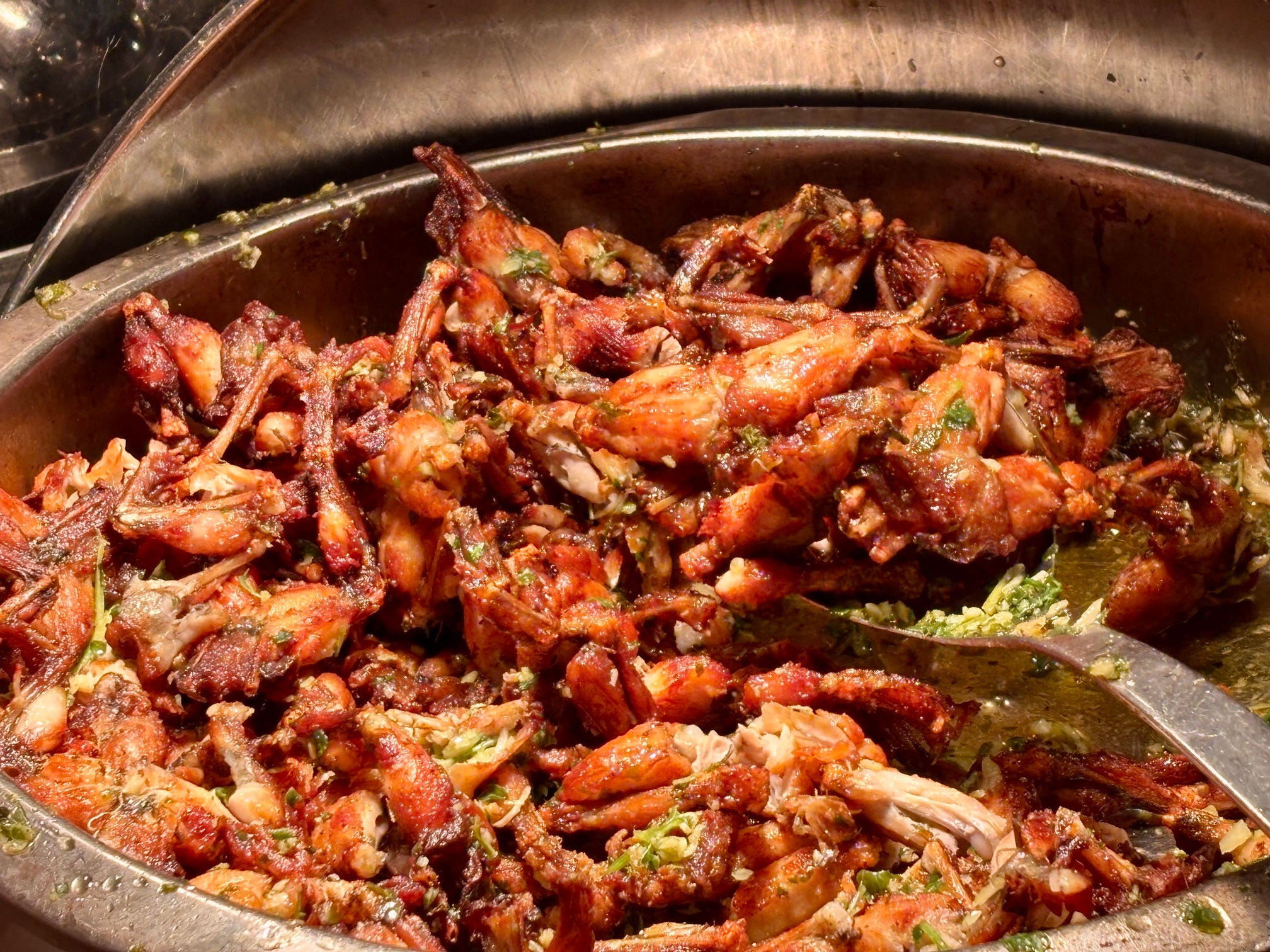
Intriguing, but less compelling to me, were the plats mijotés, simmered dishes, which were presented in chafing dishes, with items like frog’s legs, snails, veal kidneys, and tripe. In case you’re interested, some of those recipes appear in Escoffier’s book on pages 544, 543, and 626. You’re welcome.
Before dessert, you’re faced with what Guinness World Records certifies is the largest restaurant selection of cheese in the world.
