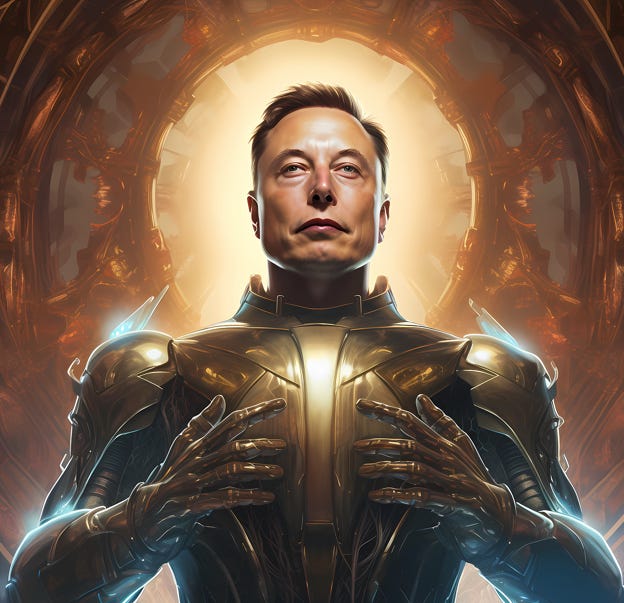
In a sharp New York Times column, David French argues that Elon Musk’s problems at Twitter show how the “new right’s theory of power” has failed. The new right—culture war focused, often very online, rejects small government conservatism as weak—thought Musk buying Twitter would force their cultural preferences onto America, as they believe the old owners did for the left. But American culture is too much of a bottom-up process. Individual preferences and the market are bigger forces, which we’re seeing now as advertisers flee, and companies launch Twitter competitors that attract some interest, such as Threads.
It’s a good point, but I’m going to take it further: This theory of power is not just wrong, it’s insane. Nuts. A distortion of reality. More conspiracy theory than empirical assessment, based on a false premise that stokes feelings of victimization.
Here’s how French explains the theory:
“In the new right’s telling, the story of contemporary American culture is the story of progressive elite capture of the nation’s most important institutions — from the academy to big business to pop culture to the “deep state” — followed by its remorseless use of that institutional power to warp and distort American values.”
French argues that the new right’s counter-strategy of “domination and imposition” isn’t working and won’t, but he doesn’t really interrogate the premise.
The idea that leftists executed a hostile takeover of all major institutions and now use them to persecute conservatives is a foundational truism for the new right. Feeling like a victim of that persecution, and justified in taking drastic action in response, might be the main thing holding the movement together.
For example, here’s some typical rhetoric from Christopher Rufo, who Governor Ron DeSantis recently empowered to reshape higher education in Florida:
Rufo doesn’t say anything issue focused, like “reforming higher education.” Nor something generic, like “get the government out of the way.” Instead, it’s sweeping language with martial metaphors like “recapturing the institutions” (all of them). Elsewhere, he called his plan “laying siege to the institutions,” and announced his appointment to New College of Florida’s Board of Trustees with “we are now over the walls.”
Why would such dramatic action be needed? Because “left-wing radicals” did it first.
Except they didn’t. But pretending that happened offers a handy rationalization for doing what the new right wanted to do already—in Rufo’s case, use state power to purge universities of “wokeness” and other ideas he doesn’t like—and calling it self-defense.
To claim progressive elites control all of America’s important institutions, you first have to define the following as powerless:
The Supreme Court, many lower courts, U.S. Senators, the Electoral College, states (including two of the biggest, Texas and Florida), the most-watched news network, some of the most-read websites, some of the biggest podcasts, the most shared pundits on Facebook, a bunch of religious institutions (that don’t have to pay taxes), a lot of the business world (energy, finance, agriculture, etc.), police unions, and more.
You also need to ignore any distinction between the progressive left and the centrist establishment that leftists deride, and to employ a narrowly social conservative definition of left and right.
Take Hollywood, considered a powerful, quintessentially left-wing institution. But entertainment products portray wealth and guns as awesome. Talented rich men who play by their own rules—Bruce Wayne, Tony Stark—will save the day, if only bureaucracy stops interfering, like something out of Ayn Rand. As writers and actors strike, Hollywood bosses are at the forefront of the fight against labor, trying not to share future profits from artificial intelligence with workers.
But Hollywood also sends the message that sex is fun and fine to do outside marriage, insists that LGBT people should be treated as equals, sometimes casts women and non-white people in heroic roles, tends to mock or look down on people of faith, and the most public-facing component (actors) includes a lot of outspoken Democrats. In the new right’s culture war taxonomy, that puts the institution on the left.
But even within that frame it gets ridiculous. For example, right-wing influencer Benny Johnson, one of 23 people Musk now pays to make content for Twitter, mocked what he calls the “communist writers strike.” Hollywood studios good! He also declared that America is “a nation in decline” because he saw a photo from the set of Disney’s live action remake of Snow White showing a multiracial, rather than all-white, Seven Dwarfs. Hollywood studios bad!
The movie and TV industry doing some things the right cheers and the left opposes is hard to square with the claim that it’s dominated by crusading leftists.
Or take academia. The faculty tends progressive, but the administration doesn’t. Like Hollywood bosses, the people with real power often try to exploit labor, such as adjuncts.
It’s reasonable to classify Diversity, Equity, and Inclusion initiatives, and most research programs on identity, such as Gender Studies, as culturally progressive, but that’s hardly all of academia. University presidents, trustees, and football programs tend conservative. The most common major is business, with health professions second. All social sciences combined are third, which includes more quantitative economists and political scientists than identity theorists. Fourth is engineering.
The average college student is, unsurprisingly, to the left of the average American. Of professors who make political contributions, far more donate to Democrats than to Republicans. Higher education is staunchly pro-science, and rejecting science on things like climate and vaccines—or rejecting the authority of experts in general—is a prominent feature of today’s right. Academia treats diversity as a value, while much of the new right is organized around opposing that idea. The internal culture and external influence of academia are both, on balance, to the left.
The institution is not, however, dominated by left-wing radicals ruthlessly prioritizing an activist agenda. Public and private institutions educate, employ, and elevate conservatives. Millions of college graduates vote Republican (just not as many as vote Democrat). Even if academia as a whole leans left, some prominent institutions, such as the University of Chicago, make a public contribution that is, on balance, to the right.
Five of the six Republican-nominated Supreme Court Justices got their law degree from Harvard or Yale—Amy Coney Barrett went to Notre Dame—as did multiple Republican senators. Ted Cruz (R-TX) graduated Harvard Law, then clerked for Chief Justice William Rehnquist (also Harvard, nominated by Richard Nixon). The conservative Federalist Society is thriving, placing judges and clerks throughout the judiciary.
Recounting these well-known facts doesn’t address questions about tolerance towards alternative viewpoints, measuring the effectiveness of DEI approaches, or the ideal allocation of education funds. They don’t show that academia (or Hollywood) is actually right-wing, nor totally neutral. But they’re more than enough to disprove claims of leftist institutional dominance focused on crushing the right.
The claim of progressive-dominated institutions grows even more stretched when branching beyond academia and Hollywood into other influential areas. The idea that the FBI is a bunch of leftists persecuting conservatives, as Congressional Republicans insisted in a recent hearing with Trump-appointed, GOP Senate-confirmed FBI Director Christopher Wray, is laughably absurd. And that theory isn’t much better when applied to sports and business.
For example, you’d have to say the NFL stifling antiracist protest by Colin Kaepernick and other players doesn’t count. But an NFL team calling a Thursday game in September “Pride Night” and expecting players to go along with it, as they expect for every promo, is of great importance.
To most people, these look like business decisions. (1) A bunch of our customers don’t like players kneeling during the national anthem, let’s stop it. (2) Maybe we can get more gay people to buy our stuff if we do a theme night and make merch with rainbows. But to the aggrieved culture war right, Pride Night is proof that not just football, but sports as an institution, is in the tank for the left.
Or consider a recent business decision the new right turned into a cause celebre. Dylan Mulvaney, an influencer who posted videos documenting her gender transition, partnered with Bud Light on a promotion during the NCAA’s March Madness, where they sent her some cans with her picture on them and she talked up the beer on Instagram. In response, right-wing figures called for a boycott. A commoncomplaint was “people just don’t want it shoved down their throat.”
Except it wasn’t. At least not by Bud or Mulvaney.
It looks like a straightforward social media marketing move. A wide variety of people like to drink alcohol, the Bud Light brand might have a frat bro image, so during a major college sporting event, they did a promo with a Gen Z internet personality who has a different audience (10 million followers on TikTok; 2 million on Instagram).
Budweiser didn’t make Mulvaney the star of Super Bowl commercials or put her picture on every can. Even if you think that would be wrong for some reason, this was a niche promotion, targeting Mulvaney’s Instagram circles. Most outside those circles who heard about this did so because right wing social and professional media amplified the ad campaign and drove outrage about it viral.
To the extent anyone “shoved” this “down their throats,” they did it to themselves. Then called it an example of their persecution.
As the boycott grew, parent company Anheuser-Busch put out an empty corporate statement about “bringing people together over a beer” instead of being “part of a discussion that divides people.” Mulvaney got online mobbing, offline stalking, and death threats. While Bud stood by the promotion in generic terms, they made another business decision and kept their distance from her.
An institution captured by progressive gender activists hellbent on pushing their religion-like ideology would’ve issued statements in support of Mulvaney. Crusading woke leftists would’ve grabbed the opportunity to portray her as a victim, tried to blame the Republican Party, and deepened the brand’s public partnership with her. Anheuser-Busch did not.
Who, exactly, was hurt by a beer brand hiring a trans woman for a promotion? I don’t mean whether it was a smart/dumb business decision—those happen all the time—but whether anyone suffered any real harm.
No one has to be into Mulvaney’s schtick (I’ve never watched her videos), and like any other public figure, she’s not above criticism. But this went far beyond that. Why spread corporate marketing to people it doesn’t target and say its existence, which they otherwise wouldn’t know about, is a personal attack on them?
The complaint appears to be that Dylan Mulvaney is out in public, acting happy and proud to be trans, while an All-American brand like Bud Light treated Mulvaney and her fans as normal – just another internet celebrity and potential customers. The only way to satisfy that complaint would be for Bud Light—for every brand—to shun trans people, or at least not openly welcome them the way they do numerous other demographic groups.
That doesn’t look like conservative persecution by institution-dominating progressives. It looks like frustration with lost dominance.
Social conservatives aren’t wrong to think their beliefs have less influence in America today than in past eras, but that doesn’t make them victims. Rather, they’ve gone from the overwhelmingly dominant force in the culture to a large faction within it, with less ability to impose their values upon others, or take for granted that their views were default.
It wasn’t long ago that no gay teacher was out of the closet, at least not in school. Now some display rainbow flags and a picture of their same-sex spouse in class, and Republican-led state governments pass ambiguous, potentially onerous laws to chill it.
It wasn’t long ago that virtually no trans people were out and seeking mainstream recognition. Now they’re asking others to use their pronouns, calling people who reject their gender identity bigoted, and getting sponsorship deals online.
LGBT people haven’t taken over all major American institutions and started repressing their enemies, but they have carved out enough acceptance in society that trying to bully them out doesn’t work like it used to. Now people who want to shun them have to compete, and competing at the national level requires appealing to a wide variety of people, not just those on your “side.” Especially when we’re talking about all of society here, not just partisan politics, since tons of Americans don’t vote (about 80 million, even in record-turnout 2020).
Yes, the new right’s theory of power, with culture-transforming dictates imposed from above, is wrong. But the illustrative case they use to build their theory, and the way they measure power distribution in society, are both so far off—more a fantasy that casts themselves as victims, with anything they want justified in response, than an empirical study—that any theory based on it is fundamentally flawed.
The reason no one has a good explanation for how left-wing radicals took over all major institutions, and how the right can counter these leftists’ remorseful application of power, is because that didn’t happen, and isn’t close.
Henry Kissinger died on Wednesday at his home in Connecticut, his consulting firm said in a statement. The notorious war criminal was 100.
Measuring purely by confirmed kills, the worst mass murderer ever executed by the United States was the white-supremacist terrorist Timothy McVeigh. On April 19, 1995, McVeigh detonated a massive bomb at the Murrah federal building in Oklahoma City, killing 168 people, including 19 children. The government killed McVeigh by lethal injection in June 2001. Whatever hesitation a state execution provokes, even over a man such as McVeigh — necessary questions about the legitimacy of killing even an unrepentant soldier of white supremacy — his death provided a measure of closure to the mother of one of his victims. “It’s a period at the end of a sentence,” said Kathleen Treanor, whose four-year-old McVeigh killed.
McVeigh, who in his own psychotic way thought he was saving America, never remotely killed on the scale of Kissinger, the most revered American grand strategist of the second half of the 20th century.
The Yale University historian Greg Grandin, author of the biography Kissinger’s Shadow, estimates that Kissinger’s actions from 1969 through 1976, a period of eight brief years when Kissinger made Richard Nixon’s and then Gerald Ford’s foreign policy as national security adviser and secretary of state, meant the end of between three and four million people. That includes “crimes of commission,” he explained, as in Cambodia and Chile, and omission, like greenlighting Indonesia’s bloodshed in East Timor; Pakistan’s bloodshed in Bangladesh; and the inauguration of an American tradition of using and then abandoning the Kurds.
“The Cubans say there is no evil that lasts a hundred years, and Kissinger is making a run to prove them wrong,” Grandin told Rolling Stone not long before Kissinger died. “There is no doubt he’ll be hailed as a geopolitical grand strategist, even though he bungled most crises, leading to escalation. He’ll get credit for opening China, but that was De Gaulle’s original idea and initiative. He’ll be praised for detente, and that was a success, but he undermined his own legacy by aligning with the neocons. And of course, he’ll get off scot free from Watergate, even though his obsession with Daniel Ellsberg really drove the crime.”
No infamy will find Kissinger on a day like today. Instead, in a demonstration of why he was able to kill so many people and get away with it, the day of his passage will be a solemn one in Congress and — shamefully, since Kissinger had reporters like CBS’ Marvin Kalb and TheNew York Times‘ Hendrick Smith wiretapped — newsrooms. Kissinger, a refugee from the Nazis who became a pedigreed member of the “Eastern Establishment” Nixon hated, was a practitioner of American greatness, and so the press lionized him as the cold-blooded genius who restored America’s prestige from the agony of Vietnam.
Not once in the half-century that followed Kissinger’s departure from power did the millions the United States killed matter for his reputation, except to confirm a ruthlessness that pundits occasionally find thrilling. America, like every empire, champions its state murderers. The only time I was ever in the same room as Henry Kissinger was at a 2015 national security conference at West Point. He was surrounded by fawning Army officers and ex-officials basking in the presence of a statesman.
Seymour Hersh, the investigative reporter who was the most prominent exception to the fawning coverage of Kissinger, watched journalistic deference take shape as soon as Kissinger entered the White House in 1969. “His social comings and goings could make or break a Washington party,” Hersh wrote in his biography The Price of Power. Reporters like the Times’ James Reston were eager participants in what Hersh called “an implicit shakedown scheme” — that is, access journalism — “in which reporters who got inside information in turn protected Kissinger by not divulging either the full consequences of his acts or his own connection to them.” Kissinger’s approach to the press was his approach to Nixon: sniveling obsequiousness. (Although Kissinger could vent frustration on reporters that he never could on his boss.) Hersh quotes H.R. Haldeman, Nixon’s chief of staff, remarking that Kissinger was the “hawk of hawks” inside the White House, but “touching glasses at a party with his liberal friends, the belligerent Kissinger would suddenly become a dove.”
Reviewing one of Kissinger’s litany of books, Hillary Clinton in 2014 said Kissinger, “a friend” whose counsel she relied upon as secretary of state, possessed “a conviction that we, and President Obama, share: a belief in the indispensability of continued American leadership in service of a just and liberal order.” Kissinger told USA Today within days that Clinton, presumed then to be a president-in-waiting, “ran the State Department in the most effective way that I’ve ever seen.” The same story noticed a photograph autographed by Obama thanking Kissinger for his “continued leadership.”
It’s always valuable to hear the reverent tones with which American elites speak of their monsters. When the Kissingers of the world pass, their humanity, their purpose, their sacrifices are foremost in the minds of the respectable. American elites recoiled in disgust when Iranians in great numbers took to the streets to honor one of their monsters, Qassem Soleimani, after a U.S. drone strike executed the Iranian external security chief in January 2020. Soleimani, whom the United States declared to be a terrorist and killed as such, killed far more people than Timothy McVeigh. But even if we attribute to him all the deaths in the Syrian Civil War, never in Soleimani’s wildest dreams could he kill as many people as Henry Kissinger. Nor did Soleimani get to date Jill St. John, who played Bond girl Tiffany Case in Diamonds Are Forever.
KISSINGER’S ASCENT OCCURRED THROUGH AN OBSCENITY THAT TIME CANNOT DIMINISH. In 1968, Lyndon Johnson agreed to peace negotiations with the North Vietnamese in tacit recognition of the nightmare he, building on the works of his two immediate predecessors, brought to life in Vietnam. Kissinger, an influential Cold War defense intellectual at Harvard, had access to members of the diplomatic delegation to the Paris talks. He used it to feed information from the negotiations to Richard Nixon’s presidential campaign — a campaign whose defeated GOP rival, Nelson Rockefeller, Kissinger advised — and despite Kissinger’s closer political ties to the coterie around Hubert Humphrey, Nixon’s Democratic rival.
Nixon ran for president claiming to have a secret plan to end the war. His advisers told Hersh they were deeply afraid that Johnson and Hanoi would reach an accord before the election. It would save lives in Vietnam, American and Vietnamese, but it would undermine Nixon’s hopes of exploiting the explosion in domestic antiwar sentiment. Nixon gratefully took what Kissinger gave him to make the U.S.’ proxy regime in Saigon, whose regime peace would destabilize, more intransigent. No agreement was reached until 1973, and the war ended in American humiliation with Hanoi’s 1975 victory.
“It took some balls to give us those tips,” Richard Allen, a foreign policy researcher on the Nixon campaign, later reflected to Hersh. After all, it was “a pretty dangerous thing for [Kissinger] to be screwing around with the national security.”
Every single person who died in Vietnam between autumn 1968 and the Fall of Saigon — and all who died in Laos and Cambodia, where Nixon and Kissinger secretly expanded the war within months of taking office, as well as all who died in the aftermath, like the Cambodian genocide their destabilization set into motion — died because of Henry Kissinger. We will never know what might have been, the question Kissinger’s apologists, and those in the U.S. foreign policy elite who imagine themselves standing in Kissinger’s shoes, insist upon when explaining away his crimes. We can only know what actually happened. What actually happened was that Kissinger materially sabotaged the only chance for an end to the war in 1968 as a hedged bet to ensure he would achieve power in Nixon’s administration or Humphrey’s. A true tally will probably never be known of everyone who died so Kissinger could be national security adviser.
Once in the White House, Nixon and Kissinger found themselves without leverage to produce a peace accord with Hanoi. In the hopes of manufacturing one, they came up with the “Madman Theory,” the idea that North Vietnam would negotiate peace after they came to believe Nixon was adventurous and bloodthirsty enough to risk anything. In February 1969, weeks after taking office, and lasting through April 1970, U.S. warplanes secretly dropped 110,000 tons of bombs on Cambodia. By the summer of 1969, according to a colonel on the Joint Staff, Kissinger — who had no constitutional role in the military chain of command — was personally selecting bombing targets. “Not only was Henry carefully screening the raids, he was reading the raw intelligence,” Col. Ray B. Sitton told Hersh for The Price of Power. A second phase of bombing continued until August 1973, five months after the final U.S. combat troops withdrew from Vietnam. By then, U.S. bombs had killed an estimated 100,000 people out of a population of only 7,000,000. The final phase of the bombing, which occurred after the Paris Peace Accords mandated U.S. withdrawal from Vietnam, was its most intense, an act of cruel vengeance from a thwarted superpower.
Cambodia, like Laos before it, was a formally neutral country, meaning that bombing it was an illegal aggression under the United Nations Charter. But beyond the control of Prince Sihanouk, the North Vietnamese used Cambodian territory for the Ho Chi Minh Trail, a weapons pipeline not unlike the one America is currently operating for Ukraine. In April 1970, following a coup by American client Col. Lon Nol that overthrew Sihanouk, Nixon ordered U.S. troops in Vietnam to invade Cambodia outright. In the air or on the ground, they were unable to destroy the trail, only human beings. Those who survived reacted. “Sometimes the bombs fell and hit the little children, and their fathers would be all for the Khmer Rouge,” a former Khmer Rouge cadre told historian Ben Kiernan, founder of Yale University’s Genocide Studies Program.
Nixon and Kissinger’s failure in Cambodia prompted in 1971 the U.S.-South Vietnamese invasion of Laos, another failure. Kissinger later blamed defeat on the U.S.’ clients, rather than, say, people like himself. “In retrospect, I have come to doubt whether the South Vietnamese ever really understood what we were trying to accomplish,” Kissinger wrote in his memoirs.
At the time, the secret bombing of Cambodia was a startling offense that prompted substantial political backlash when it became public. One of the articles of impeachment against Nixon prepared by the House Judiciary Committee in 1974 held that bombing Cambodia was a constitutional usurpation of Congress’ war powers. But on July 30, the committee ended up rejecting the article, 26 votes to 12, and it never became part of the coalescing impeachment effort that stopped with Nixon’s resignation.
Forty years later, and likely as a consequence, U.S. presidents routinely bomb countries the U.S. is not at war with. They provide the barest minimum of disclosure that the bombs have fallen, and often not even that. When the U.S.’ declared wars fail, as they did in Iraq and Afghanistan, their architects and stewards blame the client militaries and governments they propped up. They cover their troop withdrawals with futile bombing campaigns that kill people so American statesmen can save face. Whether he realized it or not, when President Biden in July 2021 blamed the Afghans for losing the Afghanistan war — “the Afghan military collapsed, sometimes without trying to fight” was a typical line — he was reaching for Nixon and Kissinger’s template.
Former US Secretary of State Henry Kissinger in 2016. BRENDAN SMIALOWSKI/AFP/Getty Images
KISSINGER PLAYED A ROLE IN THE DEATHS OF SO MANY DIFFERENT PEOPLES that treating each with due consideration requires writing a book. Here is one example among many of the sort of carnage Kissinger inflicted indirectly rather than by edict. In 1971, the Pakistani government waged a campaign of genocide to suppress the independence movement in what would become Bangladesh. Pakistan’s Yahya Khan, an architect of the genocide, was valuable to Nixon’s ambitions of restoring diplomatic relations with China. So the U.S. let Khan’s forces rape and murder at least 300,000 people — and perhaps three million. “We can’t allow a friend of ours and China’s to get screwed in a conflict with a friend of India’s,” Nixon quoted Kissinger shrugging.
That perspective typified Kissinger. The Cold War was a geopolitical balance among two great powers. The purpose of Cold War statecraft was to maximize American freedom of action to inflict Washington’s will on the world — a zero-sum contest that meant restricting the ability of the Soviet Union to inflict Moscow’s — without the destabilization, or outright armageddon, that would result from pursuing a final defeat of the Soviets. That last part explains much right-wing hostility toward Kissinger. Kissinger represented anticommunism without ideological zeal. He was an energetic, even relentless practitioner of the Cold War, the theater of anticommunist conflict. But like George Kennan before him, Kissinger thought viewing the Cold War in ideological terms missed the point. The point was American geopolitical dominance, something measured in impunity and achieved by any means necessary. That permitted Nixon and Kissinger the creativity to reopen China, something Nixon would have demagogued anyone else for attempting.
Reopening China was by far the greatest achievement of Nixon’s foreign policy. It was the rare geopolitical initiative where Kissinger was a mere facilitator. Sy Hersh, in The Price of Power, calls Nixon “the grand theoretician” of rapprochement with Beijing, with Kissinger Nixon’s “occasional operative.” Kissinger’s dramatic, secret July 1971 trip to Beijing in advance of Nixon’s visit probably renders that description parsimonious. But, writes Hersh, “there is no evidence that Kissinger seriously considered the question of an American-Chinese rapprochement before his appointment as Nixon’s national security adviser.” Once it happened, Kissinger became an overnight celebrity, the sort of person destined to be shrouded in myth and apology.
President Richard Nixon and Secretary of State Henry Kissinger confer aboard Air Force One. Bettmann Archive/Getty Images
Kissinger might not have been motivated by hatred of communism. But he was a reactionary who empowered and enabled the sort of reactionaries for whom anticommunism was a respectable channel for America’s racist and exploitative socio-economic traditions. His chief aide on the National Security Council was a rabid anticommunist militarist, Army Col. Alexander Haig, a future secretary of state for Ronald Reagan. When Kissinger came under attack from neoconservatives and others on the right who couldn’t tolerate detente with the Soviets and rapprochement with the Chinese, neither he nor they recognized that both of them were driven by the Cold War forces that Kissinger stoked when convenient.
Most important of all the reactionaries was Nixon, without whom Kissinger would have lacked power, and from whom Kissinger would withstand any indignity.
Nixon was one of the original Cold War demagogues, the men who never hesitated to identify communism with Black people and the “Eastern Establishment” liberals who postured as allies. His escalation in Vietnam, along with the secret bombing in Cambodia he revealed in a televised address, prompted a resurgence of the antiwar movement. Nixon exploited the mass protests by contrasting them with the “silent majority” of loyal Americans. Instead of ending the war, as he had campaigned on doing, and silencing or co-opting the antiwar movement in the process, Nixon inflamed a culture war to distract from it. It was an echo of his infamous “Southern Strategy” to harness for the Republican Party the electoral benefits of white backlash to the civil rights movement.
Nixon was not subtle about who he meant by the Eastern Establishment. When the media seized upon the U.S. massacre at My Lai, Nixon remarked, “It’s those dirty rotten Jews from New York who are behind it.” Nixon’s White House counsel, John Erlichman, recalled Nixon talking about “Jewish traitors” in front of Kissinger, including “Jews at Harvard.” Kissinger would assure the boss he was one of the good ones. “Well, Mr. President,” Erlichman quoted him responding, “there are Jews and Jews.”
Kissinger maintained his standing in part by savaging the Eastern Establishment from which he emerged. It was not entirely cynical. Kissinger shared with Nixon a contempt for the “defeatism” and “pessimism” of those who flinched at the unsavory Vietnam War they once supported. He rationalized his purges of the National Security Council bureaucracy and his marginalization of the State Department — measures that made him indispensable to foreign policy, and to Nixon — as protecting American power from those who lacked the confidence to wield it. It is revealing that among those who make U.S. foreign policy, Kissinger’s perspective is not considered ideological.
Kissinger’s consolidation of bureaucratic control was punitive and paranoid. He used the fear of internal leaks to get the FBI to wiretap his staff and the journalists he suspected of receiving their information. Yet the Eastern Establishmentarians around Kissinger, on his staff or in the press, followed him like a puppy seeking an ear scratch. His coldblooded American exceptionalism was the perfect tone for speaking to a shaken ruling class. Anthony Lake, who would go on to become national security adviser to Bill Clinton, finally quit in May 1970, alongside his colleague Roger Morris. Their breaking points were the Vietnam escalation, Nixon’s alcoholism, and the surreptitious White House wiretaps that Nixon also pursued to enforce loyalty. But Lake and Morris opted not to go public. “I consider the failure to do so to be the biggest failure of my life,” Morris told Hersh for The Price of Power. “We didn’t do so on the single calculation that it would destroy Henry.” Weeks later, Kissinger, via Haig, had the FBI wiretap Lake.
IN SOUTHEAST ASIA, KISSINGER DESTROYED. But in Chile, he helped build a template for the world in which we currently live.
On September 4, 1970, Chileans elected the democratic socialist Salvador Allende president. Allende’s program was more than redistributionist. It demanded reparation from the U.S. for exploiting it. Chile is rich in copper, and by the mid-1960s, 80 percent of its copper production was controlled by American corporations, particularly the firms Anaconda Copper and Kennecott. When Allende nationalized mining assets held by the two companies, Allende informed them he would deduct estimated “excess profit” from a compensatory package he was willing to pay the firms. It was this sort of unacceptable policy that prompted Kissinger to remark, during an intelligence meeting about two months before Allende’s election, “I don’t see why we need to stand idly by and watch a country go communist due to the irresponsibility of its own people.”
Protesters shout “Arrest Henry Kissinger for war crimes” as Former U.S. Secretary of State Henry Kissinger waits to testify in 2015. Win McNamee/Getty Images
Kissinger meant that there must never be an example of a country in America’s sphere of influence delivering socialism through the ballot. “Henry saw Allende as being a far more serious threat than Castro,” Kissinger staffer Morris told Hersh. “Allende was a living example of democratic social reform in Latin America.”
Kissinger and the CIA had decided to overthrow Allende just days after Allende’s election. Upon learning what was in motion, the U.S. ambassador in Santiago, Edward Korry, who was second to none in opposing Allende, cabled Kissinger that “to actively encourage a coup could lead us to a Bay of Pigs failure.” An “apoplectic Kissinger” told Korry to stay out of the way, according to Tim Weiner’s Legacy of Ashes: The History of The CIA. When the CIA failed at what Korry termed a Rube Goldberg gambit to get the Chilean Congress to stop Allende from taking office — that’s right, the CIA tried a January 6 in Chile — Haig urged his boss to purge “the key left-wing dominated slots” in the agency.
Korry was wrong in the end. Kissinger’s policy of overthrowing Allende — “Why not support extremists?” he spitballed in a December 1970 White House meeting with the CIA’s covert-operations chief, Tom Karamessines — paid off on September 11, 1973, when a military junta took power, prompting Allende’s suicide. He would be among the first of 3,200 Chileans to die violently under the 17-year regime of Augusto Pinochet and his Caravana de la Muerte, to say nothing of the tens of thousands tortured and imprisoned. “In the Eisenhower period, we would be heroes,” Kissinger told Nixon in a telephone conversation days after the coup. The same week he denied at his Senate confirmation hearings that the U.S. played any role in it.
The coup was only the beginning. Within two years, Pinochet’s regime invited Milton Friedman, Arnold Harberger, and other economists from the University of Chicago to advise them. Chile pioneered the implementation of their agenda: severe government budgetary austerity; relentless assaults on organized labor; privatization of state assets, including health care and public pensions; layoffs of government employees; abolition of wages and price controls; and deregulation of capital markets. “Multinationals were not only granted the right to repatriate 100 percent of their profits but given guaranteed exchange rates to help them do so,” Grandin writes in his book Empire’s Workshop. European and American bankers flocked to Chile before its 1982 economic collapse. The World Bank and Inter-American Development Bank loaned Pinochet $3.1 billion between 1976 and 1986. As Corey Robin has documented, Friedrich von Hayek’s neoliberal Mont Pelerin Society held a 1981 meeting in the very city where the junta plotted the replacement of democratic socialism with a harbinger of today’s global economic order.
Pinochet’s torture chambers were the maternity ward of neoliberalism, a baby delivered bloody and screaming by Henry Kissinger. This was the “just and liberal world order” Hillary Clinton considered Kissinger’s life work.
He was no less foundational in pushing the frontiers of where American military power could operate. It turned out the secret bombing of Cambodia and Laos, which lasted years, represented a template. When Nixon in 1970 revealed the secret bombings, it was a step too far even for Thomas Schelling, one of the Pentagon’s favorite defense academics, who called them “sickening.” As Grandin writes in Kissinger’s Shadow, the Cambridge-to-Washington set was not prepared in 1970 to accept that the U.S. had the right to destroy an enemy “safe haven” in a country it was not at war with and to do it all in secret, thereby shielding a war from basic public scrutiny. After 9/11, those assertions became accepted, foundational pillars of a War on Terror permitting four presidents to bomb, for 20 years, Pakistanis, Yemenis, Somalis, Libyans, Syrians, and others.
Kissinger met with Pinochet in Santiago in June 1976. It was a time of rising U.S. congressional anger at Pinochet’s reign of terror. Kissinger informed the general that he was obliged to make an anodyne criticism of Pinochet to forestall adverse legislation. “My evaluation is that you are a victim of all left-wing groups around the world,” Kissinger said, according to a declassified cable, “and that your greatest sin was that you overthrew a government which was going Communist.” Three months later, U.S. diplomats warned Kissinger about Operation Condor, an international campaign of right-wing assassinations pursued by the anticommunist regimes of Chile, Argentina, and Uruguay. Kissinger “has instructed that no further action be taken on this matter,” according to a September 16, 1976 cable. Five days later, a car bomb emplaced by Pinochet’s agents detonated along Washington D.C.’s Embassy Row, killing Orlando Letelier, Allende’s foreign minister, and his American co-worker, Ronni Moffitt.
In 1999, Pinochet was arrested in London through an effort by Baltazar Garzon, a Spanish judge investigating Operation Condor. Kissinger urged the British not to extradite the general. “I would be very happy if Pinochet was allowed home,” he told an interviewer. “This episode has gone on long enough and all my sympathies are with him.” Two years later, the administration of George W. Bush responded contemptuously to the Chilean Supreme Court’s efforts to compel Kissinger to testify. “It is unjust and ridiculous that a distinguished servant of this country should be harassed by foreign courts in this way,” an official told the Daily Telegraph. The paper noted that Kissinger was an “informal adviser” to Bush, as he was to many presidents.
Bush’s declaration of protection for Kissinger, coupled with his rejection of the Rome Treaty on the International Criminal Court, extinguished a glimmer of hope that Kissinger would someday join Pinochet under arrest. It was always a fantasy. The international architecture that the U.S. and its allies established after World War II, shorthanded today as the “rules-based international order,” somehow never gets around to applying the same pressure on a hegemonic United States as it applies to U.S.-hostile or defiant powers. It reflects the organizing principle of American exceptionalism: America acts; it is not acted upon. Henry Kissinger was a supreme architect of the rules-based international order.
In that regard, Kissinger was singular but was by no means unique. Kissinger built upon foundations constructed by Henry Morgenthau, Dean Acheson, George Kennan, Paul Nitze, the Dulles brothers, the Bundy brothers, JFK — you could go back to Albert Thayer Mahan and Teddy Roosevelt if you wanted; or James Monroe; or, depending on how fundamental you think empire is to America, 1619. He and Nixon chose to escalate in Vietnam and pursue the destruction of Cambodia. But the Pentagon Papers showed that the Vietnam War was the result of compounding decisions made in the Eisenhower, Kennedy, and Johnson administrations. The Vietnamese guerilla and justice minister Truong Nhu Tang writes in his Viet Cong Memoir that Kissinger, whose intellect he praises, “inherited a conceptual framework from his American and French predecessors … that led him to disaster.”
Kissinger and Nixon turned that into Watergate — as Grandin pointed out earlier in this story, Watergate began with a demand for vengeance on Daniel Ellsberg, the anti-Kissinger, for leaking the Pentagon Papers. Watergate was a grim demonstration, for neither the first nor the last time, that the crimes America commits abroad have a dialectical relationship with the crimes that America commits at home. Infamy has as many fathers as victory.
That, ultimately, is why Kissinger died a celebrity, with the wealth necessary to get taken in by Theranos. It is why Roger Morris and Anthony Lake opted against telling the country that the commander-in-chief was an alcoholic who was secretly surveilling his real and imagined critics. Whatever Kissinger’s origins, whatever rants about Jewboys he had to endure, Kissinger was an exemplar of the self-confident geopolitical potency that America’s elites, whatever they might personally think of Henry Kissinger, want America to make the world respect. When the Roger Morrises and Anthony Lakes and Hillary Clintons see Henry Kissinger, they see, despite what they will rotely and euphemistically acknowledge as his flaws, themselves as they wish to be.
Kissinger lived for over half a century in the world he had made. He was its hubris. He could see that the Iraq war would be a disaster, but he went along with it anyway, declaring: “the case for removing Iraq’s capacity of mass destruction is extremely strong.” Kissinger’s calculation, expressed in the noblest possible way, is that acceptance of an impending disaster is the price of influencing and hence mitigating it. His accommodation to the inevitability of political decisions he thought were folly hearkened back to his 1968 embrace of Nixon. What were the lives of Vietnamese, Cambodians, or Iraqis compared to Kissinger’s opportunity to help shape history?
But Iraq, and the broader War on Terror that Kissinger wanted expanded lest it “pete[r] out into an intelligence operation while the rest of the region gradually slides back to the pre-9/11 pattern,” presaged the world Kissinger made coming apart at the foundations. The man who repositioned U.S. foreign policy as a wedge between Russia and China lived long enough to see the February 4 Declaration uniting Moscow and Beijing. The reactionary forces he encouraged at home and abroad are showing the world that the rules-based international order is about capitalism, not democracy.
Whatever bitterness Kissinger, in his final days, experienced over the erosion of his enterprise is little comfort to his millions of victims. America denied them the closure Kathleen Treanor experienced when America, declaring justice, ended Timothy McVeigh.
For several years, if asked what online forum represented the largest, most authoritative resource on kitchen knives, there was some debate between Reddit’s r/chefknives and KitchenKnifeForums (KKF). Since July 2023, the latter reigns supreme.
On KKF you can buy second-hand knives at retail price. The only knives that are sold are the sellers’ favorite knives, and the edges are always original.
Anybody who spends long enough on the Buy/Sell/Trade subforum (usually shortened to BST) is aware of the duplicity Dr. Eriksson describes. Seemingly nobody doubts the truthfulness of any claim made on BST. No, that knife has never left the box — a real miracle, given how much they brag about using it on Instagram. Yes, the knife is in excellent condition — unless, of course, you happen to see a massive warp in it when it arrives, in which case that definitely happened during shipping.
Quietly, just about every veteran knife nerd admits that BST’s greatest use is for clearing disappointments and developing their taste in knives without shouldering as much risk
Why is BST so notoriously bad?
Simply put, KKF has always had financial conflicts of interest — BST is the most heavily trafficked subforum on the site by a long shot and the users drawn to it are a significant source of their funding.
Screenshot of newest posts across all of KKF taken November 21st at 10:50AM EST. Note that “WTS” (want to sell) posts on BST account for over half of new posts; which isn’t unusual.
The way KKF makes money is through forum sponsorships (professional craftspeople and vendors) and premium memberships (everybody else). Alienating those financial backers would result in an intolerable loss of income for KKF. Criticisms against current or future sponsors could impact their bottom line.
Any comment that a seller may be deceitful or artificially inflating a knife’s price is required by KKF rules to be posted in a thread outside BST. Since many such abuses are difficult to prove or are detectable only after-the-fact, most knowledgeable buyers stay quiet, leaving naïve newcomers to pay the price. The sole allowance of positive comments on BST posts allows friend groups to hype up one another’s knives to the point of lunacy.
The situation has gotten so bad that it’s developed a shorthand in BST: GLWS, or “good luck with sale”. This is coded sarcasm for a knife that should never reasonably sell given the assumed condition/price.
A short historical overview of BST abuse
The DIY Toyama Saga — KKF user ma_sha1 made major waves with various modification projects to other knives. After one especially ill-advised project saw a Shigefusa cut open using a table saw, ma_sha1 returned shortly thereafter with a grander symptom of psychosis.
Starting with a damascus blank of unreported origin, the so-called “DIY Toyama” was born. Some called it irresponsible and others called it a blatant attempt at cheap profit. Critics, however, were less kind.
Matters came to a head after ma_sha1 listed the abomination for sale as a Toyama “project” without clarifying that the knife was, in fact, not a Toyama. The original BST sale thread is now gone, but moderators left it up for days before finally shutting it down. ma_sha1 was never banned for these antics; the account was active as recently as early 2023.
In fact, the only bans issued by KKF site admins were to those who protested the deceitful BST sale, among them industry professionals and veteran experts.
Example comment from the original thread; while ma_sha1 escaped unscathed, Forty Ounce was banned
The Tansu Honyaki — A 2023 sale of a secondhand Mert Tansu honyaki gyuto made splashes after the buyer received the knife. The original sale thread (again, deleted in the aftermath) used a mix of Tansu’s original product photos with poor quality cell phone snapshots that hid the current condition.
Tansu himself detailed the restoration process on Instagram, showing especially the extensive damage and how much the blade had differed from its represented state. Again, the original seller never had action taken against their account for their duplicity.
The Not-so-New-ham— perhaps the most recent case of bald-face lying saw the KKF user Tekkz purchase a secondhand Newham gyuto. The seller’s description of condition was short and to the point: very little use almost new. I have never sharpened.
An astonishing claim, considering the user had elsewhere shown usage over months in a commercial kitchen and even sent the blade back to the maker after removing a significant amount of height due to gross negligence while sharpening with a powered belt. An interesting interpretation of very little use, almost new. Though “never sharpened” sounds fair given that the only thing he managed to do to the edge was destroy it.
Credit to the administrators of KKF here — after Tekkz gathered evidence including corroborating evidence from other makers — the seller was banned.
The “retiring chef” scheme — this one has too many instances for me to list, but every few months it seems to crop up. A new user joins KKF, claims to be an industry professional retiring, and offers to sell their arsenal at a discount.
Of course, when the prices are inevitably posted, it turns out that these knives are not discounted at all. Instead, dime-a-dozen Kurosakis and Nenox are being posted for 10% over MSRP — and of course, the chef refuses to take PayPal Goods & Services payments.
What can KKF do to fix its BST?
I’ve been harsh on KKF’s seller-centric culture in this piece. While it’s true that there are serious issues with the forum’s BST, I’d like to end by suggesting that the administrators are clearly bothered by these abuses and would like them to end.
Allow me to suggest several key changes that could accomplish this.
1. Allow critical comments in BST threads.
This rule change would prevent friends and conspirators from hyping up bad knives; it furthermore provides potential warning for otherwise naïve buyers who may not recognize red flags themselves.
2. Prosecute flipping, market manipulation, and deception more seriously.
It’s all too common to see KKF users post glowing reviews of a knife, add it to the “knife finds” megathread, and do all manner of public marketing before conveniently — and of course spontaneously — deciding to sell that knife at a markup.
KKF must also reconcile its legacy of hype marketing with regard to historic and current vendors. One former sponsor perpetuated the myth of Togo Reigo steel largely to sell more knives at a higher price. A currently listed sponsor hypes up their own personal knives before listing them as BNIB on their site. KKF administrators owe users more transparency of such practices.
3. Actively protect newcomers through G&S and prosecuting sellers who solicit against buyer protections.
One common pushback I hear against these criticisms is “yeah, but c’mon this seller has a horrible reputation” or “everybody knows that BNIB has a flexible meaning.” Tacitly accepting these facts is a self-perpetuating legacy. It’s also admitting hostility against any newcomer.
While KKF need not require specific platform payments such as PayPal, they should change their BST rules to require sellers to accept good and services (G&S) type payments. Sellers who discourage G&S or actively solicit for F&F payments should be at risk of having their accounts banned or restricted from ever selling again on the site.
Correction Nov 22, 2023 1:01PM — the final point of this article implies KKF does not require G&S type payments. This is incorrect, caused by a misreading of BST and PayPal Rules:
Screencap taken Nov 22, showing KKF clarification that sellers cannot ask buyer to cover PayPal fees
The full text of the original rule is found in Guidelines for B/S/T and is as follows:
Price is to be determined using the “Goods and Services” Paypal (or other) option. Sellers are forbidden to request, or require, “Personal Payments” (aka “Gift” or “Friends and Family” option) for items being sold.
Italien ist keine Demokratie mit einer rechten Regierung, sondern ein Musterbeispiel für das Zusammenspiel von postdemokratischem Neoliberalismus und Faschisierung der Gesellschaft. In der EU wird diese Entwicklung weitgehend ignoriert – auch weil es der Regierung Meloni noch gelingt, nicht alle Elemente ihrer Machtergreifung deutlich sichtbar werden zu lassen.
Gallionsfiguren der drei maßgeblichen Fraktionen des italienischen Rechtsextremismus (erste Reihe von links nach rechts): Ministerpräsidentin Giorgia Meloni (Fratelli d‘Italia), der am 12. Juni dieses Jahres verstorbene ehemalige Ministerpräsident Silvio Berlusconi (Forza Italia) und der ehemalige stellvertretende Ministerpräsident und Innenminister Matteo Salvini (Lega). (Foto: EPA-EFE/Fabio Frustaci)
Über die verschlafene mitteleuropäische Presse kam, jedenfalls dort, wo sie noch Reste von sozialem Gewissen aufweist, die jüngste Nachricht aus dem (post-)faschistischen Italien wie ein kleiner Gruselschock: Per SMS hat die Regierung Giorgia Melonis Hunderttausenden Menschen mitgeteilt, dass sie von jetzt an keinen Anspruch auf den „reddito di cittadinanza“, das Bürgergeld, als Sozialleistung mehr hätten.
Die Kommunen waren so wenig auf diesen Coup vorbereitet wie die Betroffenen. Man hätte es allerdings wissen können, dass diese Sanierung der Staatsfinanzen auf Kosten der Armen in solch brachialer Weise kommen würde – und doch glaubten die meisten, die neofaschistische Regierung würde es unter den Augen der Weltöffentlichkeit doch nicht so weit treiben, wie es ihre Rhetorik des „runter vom Sofa“ vermuten ließ, mit der sie ihren Geldgebern von Industrie, Landwirtschaft und Tourismus billige Arbeitskraft zutreibt. Nicht so sehr, weil nun diese Betroffenen, die plötzlich keine Miete, keine Mahlzeiten, keine Ausbildung für die Kinder mehr zahlen können, sogleich ins Billiglohn-Prekariat wechseln könnten, sondern weil sich Angst breit machen soll und mit der gleichzeitigen zähen Ablehnung des Mindestlohns von neun Euro pro Stunde, wie ihn die Opposition fordert, ein Heer der Arbeitsreserve gebildet werden soll, eine strukturelle Neosklaverei, auf der die „Melonomics“ ihr Wirtschaftsmodell aufbauen wollen.
Die italienische Republik, so steht es in der Verfassung von 1947, ist auf Arbeit aufgebaut; die Faschisten von heute übersetzen Arbeit mit Ausbeutung, Entrechtung und Verachtung.
Der Krieg gegen die Armen
Wenn man die scheinbar so rücksichtslose wie übers Knie gebrochenen Maßnahme zur radikalen Reduktion des Bürgergeldes als eine Art von Demaskierung oder als einen ideologischen Bruch ansieht, sitzt man einer doppelten Täuschung auf. Erstens nämlich gehörte diese Reduktion ja zum Wahlprogramm der „Fratelli d’Italia“ (FdI), der Partei Melonis: Sie wurden gewählt (und vor allem: finanziert), damit sie diesen Krieg gegen die Armen führen. Denn neben dem Rassismus gehört der Klassenhass zur DNA des Postfaschismus: Die „Fremden“ werden genauso gehasst wie die „unten“, die Schmutzigen und die Nutzlosen. Nur in der Sklavenarbeit auf den Tomatenfeldern oder in niederen Dienstleistungen im Tourismusgeschäft, mit Löhnen, die zum Sterben zu viel und zum Leben zu wenig abwerfen, sollen sie geduldet werden. Und in beiden Fällen gehören die europäischen Konsumenten, die europäischen Urlauber mit zu den Nutznießern.
Und zweitens gehört es durchaus zum Plan, dass diese Reduktion Protest und Chaos auslöst. Denn jedes rechte Regime braucht ein solches Spektakel des Aufruhrs, der „niedergeschlagen“ werden kann. Es ist ein bewährtes Mittel der Faschisten, sich als Bezwinger des Chaos zu inszenieren, das sie selber angerichtet haben.
Zum zweiten Mal zeigt dieses Regime „Härte“, nach der brutalen Verweigerung von Hilfe für die Geflüchteten im Frühjahr dieses Jahres, und zum zweiten Mal ist diese Härte auch als Schauspiel gedacht. Beide Male hatte Giorgia Meloni die Wahl, sich auch gegen ihre Vasallen und ihre Programme als mütterlich-mitfühlend, als eine Rechte mit menschlichem Gesicht zu zeigen. Sie hat es demonstrativ nicht gemacht; Giorgia Meloni ist eine Faschistin durch und durch.
Neben dem kulturellen Kahlschlag, der zähen, aber konsequenten Arbeit an einer Transformation der parlamentarischen Demokratie in ein autoritäres Präsidialsystem, neben der brutalen Politik gegen Geflüchtete, der schrittweisen Übernahme von Schulen und Universitäten durch die Organisationen der Rechten ist dieser Krieg gegen die Armen ein weiterer Beleg eines für ganz Europa entscheidenden Vorgangs: Italien ist keine Demokratie mit einer rechten Regierung, Italien ist ein Land, in dem modellhaft der innere Zusammenschluss von neoliberaler Postdemokratie und funktionalem Postfaschismus erprobt wird. Die Totalität dieser Transformation wird leicht übersehen, da es der Regierung Meloni noch gelingt, nicht alle Elemente ihrer Machtergreifung deutlich sichtbar werden zu lassen.
Fahrplan der faschistischen Transformation
Dabei hat sie einen sehr einfachen Fahrplan, den jeder kritische Beobachter ohne weiteres durchschauen könnte. Es werden fünf „Kriege“ geführt:
1. Der Krieg gegen die Kultur. Die simpelsten Elemente sind die „Nationalisierungen“. Überall werden Kuratorinnen, Museumsleiter oder Gremien-Entscheider ausgetauscht und durch FdI-Leute oder FdI-genehme Leute ersetzt. Verträge werden nicht verlängert, fadenscheinige Entlassungsgründe konstruiert, man verhängt einen „Ausländerstopp“ et cetera. Das jüngste Beispiel ist die absehbare Vernichtung einer Einrichtung, um die ganz Europa die italienische Filmkultur beneidet hat, des „Centro Sperimentale“ in Rom. Für jede kulturelle Institution, die man durch neue Regelungen oder durch Sperrung von Mitteln kaputtkriegt, entsteht irgendwo ein neurechter „Think Tank“ in einem korrupten System der „Beratungen“.
2. Der Krieg gegen die Flüchtlinge und gegen die Ausländer. Was das anbelangt, ist die italienische Rechte genau auf der Linie der anderen europäischen Rechten, allerdings kommt noch eine nationale Kränkung hinzu, wie in anderen Bereichen auch: Man lässt „uns“ mit dem Problem allein; man will zugleich „uns“ belehren und bevormunden.
3. Der Krieg gegen die Linken, die Liberalen und die Kritiker, die allesamt „fälschen“ und „hetzen“, insbesondere was die italienische Vergangenheit oder die dubiosen Geschäfte rechter Politiker*innen anbelangt. In Ermangelung eines wirklichen linken Feindes richten sich auch hier die Tiraden gegen alle, die auch nur um eine Nuance abweichen. Die linke und demokratische Opposition ist so schwach, dass man sich die inneren und äußeren Feinde schon herbeizwitschern muss. Wird, wie jüngst, ein besonders dreister Fall ruchbar, die Geschichte des Rechtsterrorismus in Italien zu fälschen, wird die Woche drauf gleich ein aufwendiger „Blitz“ gegen eine Handvoll Anarchisten durchgeführt, die ein paar Monate lang ein kleines Blättchen herausgaben: Vier oder fünf Anarchisten, die böse Artikel in einem Blatt schreiben, das niemand liest und das schon vor einem Monat sein Erscheinen einstellen musste – eine „nationale Gefahr“.
4. Der Krieg gegen Frauen, Queere und Dissident*innen. Hier versucht es vor allem Giorgia Meloni – „Mutter und Italienerin“ – eher mit einem Rückgriff auf das konservative Familienbild als mit der offenen Konfrontation. Auffallend immerhin ist der Abbau aller Foren und Beratungsstellen, wenn sie staatliche Unterstützung bräuchten. Während sich die rechte Propaganda immer weiter verstaatlicht, wird alles, was dem Regime nicht nutzt, ins Private abgeschoben.
5. Der bereits erwähnte Krieg gegen die Armen. Was diese Regierung anstrebt, ist offenbar eine Form der strukturellen Zwangsarbeit beziehungsweise eine neue Klassenstruktur: eine rassistisch-ideologische neue „Elite“ (von der Giorgia Meloni vor den Vertretern der „Gioventù Nazionale“, der Jugendorganisation der Fratelli, schwärmt), eine für ihren Fleiß, ihren Gehorsam und ihre Korruption belohnte Kleinbürgerschicht und das neue Heer der willenlosen Arbeitskräfte, das durch Disziplinierung, Propaganda und Feindbilder zusammengehalten wird. Ein geradezu klassisches Gesellschaftsbild des Faschismus, das sich hier zwanglos mit den neoliberalen Phantasmen und den Idiotien der Unterhaltung verbindet.
Die Stärke dieser faschistischen Transformationsbewegung rührt nicht zuletzt daher, dass sich in ihr die Interessen der Wirtschaft, das Befinden der konservativen Kleinbürger (die ihre politische Heimat bei der längst verblichenen Democrazia Cristiana verloren haben), die Schwurbeleien etlicher „Querfrontler“ oder Vertreter des „Dritten Wegs“, schließlich aber genauso die Impulse der Mussolini-Nostalgie, des Rechtsterrorismus und der „Neuen Rechten“ zusammenfinden. Ganz im Gegensatz zur Linken, die sich immer weiter aufspaltete, deren Fraktionen sich gegenseitig immer heftiger ablehnten, ließ die italienische Rechte ständig Verbindungen zwischen legalen und illegalen, populistischen und sektiererischen, „konservativen“ und neofaschistischen, ja, zwischen offiziellen Parteien und Untergrundorganisationen bestehen.
Spuren in den schwarzen Untergrund
Die Biographie und die verzweigte Familiengeschichte von Giorgia Meloni zeigt im Übrigen, wie mannigfach und scheinbar widersprüchlich die Entstehungsgeschichte des Regimes ist. Seit ihren Anfängen als Anführerin der „Azione Studentesca“ und als „Koordinatorin“ der faschistischen Jugendorganisation der „Azione Nazionale“ im Jahr 2002 – als diese gerade mit öffentlichen Verbrennungen von Büchern, die das Ansehen Italiens „beschmutzen“, Furore machte (unter einer zünftigen Bücherverbrennung machen sie es nun mal nicht) –, kreuzten Giorgia Melonis politischen und familiären Weg eine Reihe von dubiosen Gestalten samt deren unaufgeklärter Taten. Immer wieder tauchen Bilder aus ihrem politischen „Familienalbum“ auf, wie das des neofaschistischen Bandenmitglieds Marcello De Angelis, Bruder eines einstigen „Verlobten“ Melonis und Herausgeber einer ultrarechten Postille, der Spuren im Fascho-Rock wie in der rechten Szene des Terrors hinterlassen hat.
Giorgia Meloni hat immer klargemacht, dass sie sich nicht von Organisationen und Personen des Rechts- terrorismus distanzieren will. Wie auch? Die Übergänge etwa zwischen „Lotta Studentesca“, „Terza Posizione“ und „Nuclei Armati Rivoluzionari“ (NAR, neofaschistische Terrororganisation 1977 bis 1981) waren immer fließend. Und nach und nach wird bekannt, wie viele Spuren aus Giorgia Melonis direktem Umfeld in den schwarzen Untergrund führen. In diesem Fall kommen sich selbst alternative Fakten gelegentlich in die Quere: Während De Angelis die Kriminalgeschichte der italienischen Rechten zu fälschen versucht – er bezeichnete drei wegen des Anschlags von August 1980 auf den Bahnhof von Bologna mit 85 Toten verurteilte rechte Terroristen der NAR als unschuldig –, muss Giorgia Meloni ihre eigene Vita fälschen. Um ihre Macht zu festigen, muss sie Posten verteilen an ihre Vasallen, die so geltungssüchtig, inkompetent und korrupt sind, dass man es beim besten Willen nicht mehr verschleiern kann. Auf eines allerdings verstehen sich diese Postfaschisten, nämlich auf Propaganda.
Daneben gibt es die fünf nuclei der faschistischen Gesellschaft, das sind Territorien oder Institutionen, die für sich in relativer Geschlossenheit schon „voll“ faschistisch funktionieren, ohne das allgemeine Bild des Alltags- und Tourismusitaliens zu sehr zu beeinflussen: das sind die Sommercamps der faschistischen Jugend; die für rechten Terrorismus offenen „Kultureinrichtungen“ wie das besetzte Haus „Casa Pound“ in Rom; jene Schulen und Universitäten, die bereits vollständig in rechter Hand und mehr noch der der FdI sind; mehrheitlich rechtsgerichtete Medien und schließlich der reale, gewalttätige faschistische Untergrund und seine Social-Media-Wolken, von denen sich das Meloni-Regime nie offen distanziert.
Zudem gibt es fünf Punkte, die den Erfolg der Rechten stabilisieren:
1. Der Organisationsgrad der neofaschistischen „Bewegung“, der sich in Jahrzehnten und viel zu wenig beachtet herausgebildet hat.
2. Die Galionsfigur(en): Meloni, Matteo Salvini („Lega“, ehemaliger Innenminister und stellvertretender Ministerpräsident) und (bis zu seinem Tod im Juni) Silvio Berlusconi (viermaliger Ministerpräsident) sind und waren nicht nur Vertreter, sondern so präzise Darsteller für die Interessen und Phantasmen der drei Fraktionen des Rechtsextremismus – Faschismus, Populismus, libertärer Neoliberalismus –, dass sie immer ein wenig wie gecastet erscheinen.
3. Die Drift des konservativen Kleinbürgertums nach rechts, wie sie in ganz Europa zu beobachten ist.
4. Die Bereitschaft der staatlichen und gesellschaftlichen Institutionen, Justiz, Polizei, Bürokratie et cetera, sich den Rechten zu öffnen und anzudienen.
5. Die Erschöpfung, Lähmung und Selbstbeschränkung der gesellschaftlichen Mehrheit. Nirgendwo scheint die Flucht vor der Politik, der Rückzug ins Familiäre und „Private“ so ausgeprägt wie in Italien. Dazu kommt eine seit Jahren beobachtete Flucht der ästhetischen, wissenschaftlichen und kritischen Intelligenz ins Ausland.
Faschistische Nachwuchsförderung
Der Krieg um die Schulen und Universitäten wird auf drei Ebenen geführt. Zum einen werden die (post-)faschistischen Organisationen von Schülern, Studenten und Lehrpersonal nach Kräften gefördert. Allein unter den älteren Schüler*innen und den Student*innen gibt es sechs rechtsextreme Gruppierungen, die häufig zusammen, selten gegeneinander wirken:
Will die Europäische Union von innen transformieren, anstatt sie von außen zu bekämpfen: Italiens Ministerpräsidentin Giorgia Meloni am 29. Juni dieses Jahres in Brüssel. (Foto: EPA-EFE/Olivier Matthys)
Das „Centro Casaggì“ (das sich selbst als „spazio identitario“, als identitären Raum, bezeichnet) ist eine 2005 in Florenz entstandene Parallelorganisation zur „Azione Studentesca“ – die es seit 1996 gibt –, der Jugendorganisation des AN („Azione Nazionale“), und mittlerweile, 2016 neu ausgerichtet, das universitäre Instrument der „Fratelli d’Italia“. Der „Blocco Studentesco“ ist der militante Ableger aus der Casa Pound und offen neofaschistisch, ohne sich mit dem „Post“ des Melonismo aufzuhalten. Sie sind bekannt dafür, schon junge Mitglieder an den Mittelschulen für ihre Zwecke zu rekrutieren. „Lealtà Azione“ (Treue Aktion) stammt aus Mailand und ist der studentische Arm der rechtsextremen Terrorszene der „Hammerskins“. Die „Generazione identitaria“ schließlich hat ihre Wurzeln in Frankreich und entspricht in etwa den „identitären“ Rechten hierzulande, sie sieht sich im Gegensatz zur „Lealtà Azione“ eher als „Elite“.
Bleibt am Ende „Lotta Studentesca“, die es schon seit 1976 gibt, die Jugendorganisation der „Forza Nuova“, der größten gewaltbereiten faschistischen Kraft in Italien, die besonders im Milieu der „Querfront“-Propagandisten verwurzelt ist, die wiederum im Habitus wie in den Sprechweisen Aspekte der einstigen linken Studentenbewegung übernehmen – tatsächlich gaben De Angelis und Maurice Bignami, einst führender Kopf der linksradikalen militanten Gruppe „Prima Linea“, in den 1990er-Jahren gemeinsam eine Zeitung heraus: „La spina nel fianco“ (etwa: Der Stachel im Fleisch). Diese studentischen faschistischen Gruppen tun sich, auch wenn sie „kulturell“ nicht ganz zusammenzupassen scheinen, immer wieder zu Protesten und Aktionen zusammen.
Der einzige wirkliche Widerspruch besteht bei der Haltung zu Russland. Es gibt knallharte Putin-Verehrer wie die „Lotta Studentesca“, während die „Azione Studentesca“ mehr oder weniger dem offiziellen Regierungskurs folgt, der sich in dieser Hinsicht an der Außenpolitik der EU orientiert. Alle eint aber der Drang zur Aktion: „Pensiero che diventa azione“ (Gedanke, der zur Tat wird) lautet einer der gemeinsamen Slogans, der die antidemokratische Grundhaltung, die Ablehnung aller „ökologischen“ Bedenken, den fundamentalen Rassismus und vor allem den bedenkenlosen Voluntarismus ausdrückt.
Offensichtlich wirken diese militant rechten studentischen Gruppen auch auf die „Unpolitischen“ attraktiv; die rechtsradikalen Gruppierungen sind aus Querfront-Bewegungen bei Demonstrationen gestärkt hervorgegangen, die „neutrale“ Belange behandelten wie die Pandemiemaßnahmen, und sie übernehmen Ausdrucksweisen und Strategien der linken Studentenbewegung von einst. Die Lieblingsworte sind denn auch hier immer wieder die „libertà“ und der „nonconformismo“.
Im Februar dieses Jahres organisierten die rechten Schüler und Studenten gemeinsam einen medienwirksamen „Marsch“ in Rom, und dieses Bündnis hat mittlerweile in fast allen italienischen Universitätsstädten Fuß gefasst. Die Gruppen sind straff und hierarchisch geführt, finanziell gut ausgestattet, von Politik, Medien und Justiz weitgehend unbehelligt und einig mit der Regierung darin, die italienische Demokratie in einen autokratischen Präsidial- oder Führerstaat umzuwandeln. Über die „Azione Studentesca“ spricht Giorgia Meloni in den höchsten Tönen: Diese repräsentiere, sagt sie, „die Schulungsinstanz für die kommende politische Führungsklasse“. Deutlicher kann man als Postfaschistin wohl nicht werden.
Das rechte Jugendnetzwerk wird im Großen und Ganzen zusammengehalten durch die „Gioventù Nazionale“, die offizielle Jugendorganisation der „Fratelli d’Italia“, die immer mehr Züge faschistischer Erziehungskader annimmt. Die jungen Schülerinnen und Schüler finden bei den „Sommerlagern“ der „Gioventù Nazionale“ sportliche Ertüchtigung, paramilitärische „Kameradschaft“ und politische Unterweisung. Gerade die weniger begüterten Eltern sind froh, ihre Kids während der langen Ferien für wenig Geld versorgt und beschäftigt zu sehen.
So also wird der (nicht gar so) neue italienische Faschismus von unten her aufgebaut. Der Krieg gegen die Armen ist nun ein Teil des faschistischen Kriegs gegen die Arbeiterklasse. Er ist damit nicht nur die Erfüllung eines zumindest impliziten Versprechens an die neoliberalen Geldgeber, er dient auch dazu, die Jugend in den Griff zu bekommen, für die insbesondere im Süden eigentlich keine Hoffnung auf ein bürgerliches Leben besteht. Es gibt nun unter den gegebenen Umständen nur drei Lebensentwürfe für sie: ein Leben als ewiger Hungerleider, Verlierer, Ausgebeuteter, eine Position in der jeweiligen Mafiafamilie – oder eine Karriere in der faschistischen Durchorganisation.
Jede dieser drei Optionen ist in der einen oder anderen Weise nützlich für das (post-)faschistische Regime. Demgegenüber wirken die Kämpfe von Gewerkschaften und Opposition für einen Mindestlohn und eine Grundsicherung chancenlos, selbst dann, wenn sich die Regierung Meloni hier und da zu einem Kompromiss bereit- erklären will oder mit der symbolischen Abschöpfung der Extraprofite von Banken ihre Art von „Gerechtigkeit“ inszeniert. Der neoliberale Flügel sorgt schon dafür, dass es nicht so schlimm wird.
Dazu wird das öffentliche Fernsehen, vielleicht nicht mehr das zeitgemäßeste aller Medien, aber gerade in den weniger wohlhabenden Familien doch immer noch ein medialer Anker, in Windeseile unter den Einfluss der Regierungsparteien gebracht und von den einstigen Vertretern eines unabhängigen kritischen Journalismus „gesäubert“. Aber damit nicht genug: Auch das schiere Entertainment wird attackiert; unbotmäßige Äußerungen von Schlagerstars in San Remo führen dazu, dass man die Festivalübertragung von nun an zensieren wird. Einstige Größen des Showgeschäfts werden ebenso aus den Sendern gedrängt wie die Redakteure, die nicht auf Linie sind, und die FdI geben unumwunden zu, dass es sich dabei auch um „Rache“ handelt.
Keine Partisanen, nirgends
So ist also die Gegenwart durch die Hegemonie in Medien, Kultur und Öffentlichkeit wie die Zukunft durch die faschistische Organisation der Jugend weitgehend unter der Kontrolle des postfaschistischen Dreierpakts geraten. Fehlt noch die Vergangenheit. In der Sommerpause gilt vor allem die italienische Geschichte in ihren pädagogischen Grundübereinkünften als Angriffsziel (wir erinnern uns: Bücherverbrennung im Namen der faschistischen Geschichtsrevision war bereits Melonis Anliegen in Studententagen). In Giorgia Melonis gehäuften Ansprachen an das Lehrpersonal und die Gremien kommen die Wörter „resistenza“ und „partigiano“ (Partisan) nicht mehr vor; der italienische Faschismus wird als Epoche der Sauberkeit und Ordnung dargestellt, wo man es nur an einigen Punkten übertrieben hat, vor allem aber werden die „Helden“ des Faschismus so sehr rehabilitiert wie die Partisanen zu „Banden“ herabgestuft werden, denen es nur um persönliche Abrechnungen und Interessen gegangen sei.
Wie die Geschichtsrevision im Alltag vollzogen wird, mag ein kleines Beispiel zeigen: In dem Städtchen Nervi, unweit von Genua, befindet sich ein kommunales Schwimmbad, das nicht nur wegen seiner tollen Aussicht aufs Meer berühmt ist, sondern auch, weil hier Nanni Moretti 1989 seinen Film „Palombella rossa“ (deutscher Verleihtitel: „Wasserball und Kommunismus“) gedreht hat. Zunächst stand der Erhalt des Bades auf der Kippe; als sich dann der rechte Bürgermeister doch zum Erhalt durchringen konnte, benannte er das Bad nach dem Faschisten Luigi Ferraro, der noch in der Republik von Salò der berüchtigten faschistischen Elitetruppe „Xª Flottiglia MAS“ angehörte und nach dem Krieg zwar als Taucher berühmt wurde, aber nicht müde wurde, zu erklären, dass er es nie bereute, für den Faschismus gegen eigene Landsleute gekämpft zu haben. Trotz der Proteste der Gewerkschaften und etlicher Bürgerinnen und Bürger von Nervi wurde die Namensgebung durchgesetzt und, nicht genug damit, im Internet mit dem Emblem des Casa Pound, des „Kulturzentrums“ der Neofaschisten in Rom, verbreitet. Wie viele italienische Gemeinden können solche Geschichten erzählen! Neben der Revision der Schulbücher, der gewalttätigen Unterdrückung „falscher Darstellungen“ des Faschismus in Italien an den Universitäten werden solche Rehabilitierungen faschistischer „Helden“ zur Alltagserfahrung. Sie sind das andere Gesicht einer Obstruktionspolitik, die die Vertreter der rechten Parteien in jenen kommunalen und regionalen Einrichtungen betreiben, in denen sie noch nicht das Sagen haben. Jede noch so kleine Verbesserung auf dem Gebiet der lokalen Infrastruktur wird mit einer faschistischen Aneignung teuer bezahlt.
Nach den Worten Melonis in einem Interview mit der Tageszeitung „Corriere della Sera“ ist das wohl einzig Schlechte am historischen Faschismus, dass er die Demokratie abschaffte. Es ist offensichtlich das Ziel des Postfaschismus, eine faschistische Gesellschaft, eine Regierung nach dem Präsidialprinzip (natürlich ohne Amtszeitbegrenzung) zu errichten, bei Beibehaltung gewisser demokratischer, eher: postdemokratischer Rituale wie Wahlen (Putin, Orbán, Erdoğan et cetera lassen grüßen).
Melonis Politik, anders als die einiger ihrer Vasallen, besteht auch darin, die innere Faschisierung nicht allzu sehr als ein international lesbares Bild zu präsentieren. Die Giorgia Meloni, die auftritt, wo man unter sich ist, und die Giorgia Meloni, die vor internationalen Kameras spricht, unterscheiden sich gewaltig. Möglicherweise ist es das Glück der Demokratie in anderen Ländern, dass bei den dortigen Faschisten niemand intelligent genug für ein solches Possenspiel ist.
Faschisierung und Europa
Bleibt am Ende die Frage, wie das alles geschehen kann. Die eine Antwort: Der (post-)faschistische Angriff gilt einer in weiten Teilen „erschöpften“ Gesellschaft. Selbst denjenigen in der Mitte der italienischen Gesellschaft, die sich von diesem Totalangriff fernhalten, fehlt die Kraft, fehlen aber auch die Medien, die Diskurse, die Ideen zum Widerstand. Diese Gesellschaft, die aus einem jeweils in sich widersprüchlichen Lager der Linken und der katholischen Gemeinde, aber auch aus den drei Landesteilen Norden, Mitte und Süden besteht, ist zerbrochen, alle gesellschaftlichen Fortschritte, auch die im Kampf gegen die Mafia, gegen die Steuerflucht, gegen den Zerfall von Bildung und Infrastruktur, werden abgewickelt. Italien heute, das ist vor allem Beute.
Der zweite Grund ist ein Europa, dessen Länder mit ihren eigenen Post- oder Präfaschisten genug zu tun haben und einfach nicht genau hinsehen wollen, solange Giorgia Meloni außenpolitisch und europäisch Zurückhaltung übt. Denn all das, was in Italien passiert, das passiert auch in anderen europäischen Ländern, wenn vielleicht auch nicht mit dieser Deutlichkeit.
Der dritte Grund – auch das ein Phänomen, das in ganz Europa beobachtet werden kann – ist der desolate Zustand der demokratischen Zivilgesellschaft und der linksliberalen Milieus. Elly Schlein, die designierte Vorsitzende des oppositionellen „Partito Democratico“, konnte gewiss einiges wiedergutmachen, was ihre Vorgänger an Zugewandtheit und Engagement vermissen ließen, und doch lässt sich einfach keine wirkliche linke, demokratische Einheit herstellen, die es wahlrechnerisch und öffentlichkeitsrelevant mit der Rechten aufnehmen könnte.
Ist also Italien, anders als Spanien, für die Demokratie verloren? Ganz sicher nicht, wenn sich die oppositionellen Kräfte nur einmal besinnen könnten, wenn es eine europäische Solidarität gäbe, in der es nicht bloß um die Wettbewerbsfreigabe von Badestränden und die Frage nach Flüchtlingsaufnahmen ginge, und wenn sich auch die entmachtete Kultur ihrer ursprünglichen Aufgaben wieder besänne.
Georg Seeßlen arbeitet als freier Autor, Feuilletonist und Filmkritiker; er lebt im Allgäu.
Fünf Gründe für den Erfolg der italienischen Rechten:
1. Gestiegener Organisationsgrad der neofaschistischen Bewegung. 2. Verknüpfung der drei Fraktionen des Rechtsextremismus: Faschismus, Populismus und libertärer Neoliberalismus. 3. Drift des konservativen Kleinbürgertums nach rechts. 4. Bereitschaft der staatlichen und gesellschaftlichen Institutionen, sich den Rechten zu öffnen und anzudienen. 5. Lähmung und Selbstbeschränkung der gesellschaftlichen Mehrheit.
Das könnte Sie auch interessieren:
Cet article vous a plu ? Nous offrons gratuitement nos articles avec leur regard résolument écologique, féministe et progressiste sur le monde. Sans pub ni offre premium ou paywall. Nous avons en effet la conviction que l’accès à l’information doit rester libre. Afin de pouvoir garantir qu’à l’avenir nos articles seront accessibles à quiconque s’y intéresse, nous avons besoin de votre soutien – à travers un abonnement ou un don : woxx.lu/support.
Hat Ihnen dieser Artikel gefallen? Wir stellen unsere Artikel mit unserem einzigartigen, ökologischen, feministischen, gesellschaftskritischen und linkem Blick auf die Welt allen kostenlos zur Verfügung – ohne Werbung, ohne „Plus“-, „Premium“-Angebot oder eine Paywall. Denn wir sind der Meinung, dass der Zugang zu Informationen frei sein sollte. Um das auch in Zukunft gewährleisten zu können, benötigen wir Ihre Unterstützung; mit einem Abonnement oder einer Spende: woxx.lu/support.
If you’ve ever been a tourist in Rome, odds are that someone has exhorted you to visit Roscioli. The family of businesses includes the original Antico Forno Roscioli, situated in a two-hundred-year-old bakery; Salumeria Roscioli, a deli-style-grocery-cum-restaurant; Roscioli Caffe e Pasticceria, home to the TikTok-famous maritozzi cream bun; and Rimessa Roscioli, a sleek, wine-focussed dining room. If you’ve made the pilgrimage to any of these locations, you’re likely to have been confronted with a horde of other tourists following similar advice. All of you have lined up together, in pursuit of what has been described as the best pizza in Rome, the best salumeria, the best pasta. I’ve never been to Rome, so I can’t weigh in on the worthiness of that endeavor, but now Roscioli has come to New York. There are no lines down the block just yet, though competition for tables on Resy is fierce.
Roscioli 43 MacDougal St. Tasting menu $130; à-la-carte dishes $8-$60
The New York Roscioli is a collaboration between Alessandro Pepe, the head sommelier of Rimessa Roscioli, and Ariel Arce, a New York City restaurateur who has a knack for serving wine—an act that, even at its most scintillating, is always at least thirty per cent tedious—in a way that feels urgent and alive. At her now-closed SoHo restaurant Niche Niche, which occupied the space that now houses Roscioli, Arce adhered to a “dinner party” format, with diners served nightly set menus of food-and-wine pairings, at strikingly affordable all-inclusive prices, that showed off a particular producer or region or theme. Famous sommeliers would come through to show off rare selections, legendary cellars would be raided for no better reason than it was a Wednesday, and it was New York, and why the hell not. The wine was great, but, more important, it was selected for you, which robbed it of its powers of intimidation—all that was left was pure enjoyment. In 2021, Niche Niche played host to Rimessa Roscioli for a week of Rome-themed suppers, and from there a partnership was born.
The downstairs dining room at the new Roscioli continues that whole wine-soaked-dinner-party vibe. You arrive at your table and are immediately handed a drink, which gives way to a parade of predetermined courses, and a parallel parade of Italian wines to match. (At a hundred and thirty dollars per person, it remains an almost disorientingly good bargain.) On a recent visit, the opening course was panzanella—the tomatoes semi-roasted, to condense their flavor into a reminder of the Dionysian sweetnesses of late summer. It landed on the table along with a heap of mortadella, sliced whisper-thin, and a plate bearing a milky blob of burrata, doused in golden olive oil and studded with more of those concentrated tomatoes. “We fly the burrata in from Puglia,” my server said, as he set down the plate of cheese, and then laughed. “No, seriously, could you imagine the carbon footprint?” The Roman location of Roscioli is a temple to the abundance of Italy; in New York, thanks to import restrictions and logistical impracticalities, the focus has to be on quality rather than provenance. The burrata, warm as breath, bloomed against my knife into a river of sweet cream. The wine, a leaf-yellow Asprinio di Aversa, was frizzy and sharp—like the best pairings, it made everything on the table taste better, brighter, more alive.
Downstairs is a tasting room offering a set menu of dishes and a parade of Italian wines to match.
The shelves upstairs are lined with jarred sauces and vegetables preserved sott’olio.
The rhythm of a restaurant changes when everyone in the dining room is eating the same things simultaneously. The kitchen moves quickly, in a practiced choreography, and there are none of the lags or pauses necessitated by a dozen different orders coming in at different times, as in a standard à-la-carte dining room. It’s exhilarating and energetic, at first—a propulsive rat-a-tat of activity as the appetizers are swapped out for an impossibly buttery saffron risotto, then an all-time tremendous rendition of pasta carbonara, in which fried slivers of guanciale crackled like tiny morsels of chicharron in the funky-rich emulsion of the sauce. And then, all at once—maybe it was the mood, maybe it was the wine, maybe the pasta was so wonderful that all my circuits blew out—it all seemed like too much, too fast. I craved the pause of a kitchen in the weeds, the welcome breather of a lull between courses. When the next dish came—a meatball (soft, mild) atop a dollop of polenta (mild, soft)—I could hardly bring myself to take a second bite. I wanted to close my eyes. I wanted to hide in the bathroom and do a crossword puzzle on my phone. In a way, it’s a testament to the success of the dinner-party model: this is exactly how I feel after about ninety minutes at the table in someone else’s home. I wanted to skip dessert completely (tiramisu and a lovely little cannoli, with a perfectly silly glass of Moscato) and slip into the kitchen to eat more carbonara straight from the stove.
The Roman pastas on the menu include a superior version of carbonara.
In early October, Roscioli opened its “upstairs”—a street-level space—where meals adhere to a more familiar rhythm. There’s an à-la-carte menu, and a shop-the-pantry conceit that harks back to the whole dinner-in-a-deli vibe of its Roman progenitor. The walls are lined with shelves bearing packages of dried pasta, bottles of vinegars and oils, and jars of honey and prepared sauces and Italian vegetables preserved sott’olio. Customers eating at a long counter in the back face a glass case of cheeses, meats, breads, and condiments. Everything is for sale, grocery store-style; almost everything is also available to order as components of a wide-ranging menu. That molten puddle of honey in which you dipped a piece of salt-flecked focaccia; those oil-cured heads of puntarelle, with their ghostly bitterness and alien curls; even the caciocavallo, a cheese aged in a clay pot that must be dramatically shattered to get to the pleasures within, are all available to take home, as souvenirs, or trophies. Even without a reservation, you can walk in and shop the provisions of the alimentari (or order online, with in-person pickup). The contents of Alessandro Pepe’s extensive Italian wine list (from which the downstairs pairings are drawn) are not for sale directly, though you can get a few bottles by joining the Roscioli Wine Club, a work-around for restrictive retail-spirits laws.
That unreal carbonara is available upstairs, thank God, as are other holy Roman pastas. All’amatriciana (with guanciale and tomatoes) is tart and bright. Cacio e pepe (cheese and pepper) is saved from predictability, and mac-and-cheese adjacency, with the use of springy fresh tagliolini in lieu of more conventional dried noodles. The menu, a wide-ranging tour of Roman classics and modern Romanesque creations, seems designed for grazing: a bite of oxtail-stuffed supplì (fried balls of arborio rice—like arancini, except oblong, and from Rome rather than Sicily); a forkful of paper-thin zucchini fried with mint; a bit of cheese; a bit of prosciutto. I was especially enchanted by a tasting of tunas—crudos of belly and loin, paired with two different oil-cured versions, each form of the fish enhancing the preciousness of every other.
Homemade pasta makes a surprising appearance in Roscioli’s cacio e pepe.
Even without a reservation, you can walk in and shop for provisions.
There was something ineffable—not quite a je ne sais quoi, more like non so che cosa—about the offhand elegance of the place. The tables in the upstairs space are awkwardly cramped, and the room is glaringly loud, with conversations seeming to ricochet off the jars on the walls. But it’s an energizing, convivial cacophony. Servers hand out samples of interesting sausages, or climb onto a banquette to reach a particular bottle of oil from a high shelf. Dishes like lamb tartare, with crispy fried capers and an earthy artichoke aioli, or fried baccalà (fresh cod), over a swirl of ultra-floral red-pepper cream, have the easy, sexy lightness of an unplanned meal eaten late: lunch at four, or dinner at eleven, too many glasses of wine, a taxi home. Is it just like being in Rome? I couldn’t tell you. But it’s absolutely just like being in New York. ♦
With alleged accomplices flippingleft and right, it’s been a rough week for Donald Trump. On Tuesday, though, Trump’s attorneys looked to turn that momentum around, filing three additional motions to dismiss the Jack Smith–led federal prosecution of his efforts to overturn the 2020 election.
The legal filings offer a fascinating preview of Trump’s potential defenses in the Washington prosecution brought by the special counsel. Will it work? Almost certainly not. Legal experts say the arguments are almost certain to fail to result in dismissal of the case, and in many ways, Trump’s defenses are outright absurd. Former federal prosecutor and impeachment expert Frank Bowman called the dismissal motions “an embarrassing goulash of mischaracterized facts and inverted logic, not to speak of misapplied legal citations.”
How bad are Trump’s latest motions for dismissal—and thus his possible defenses at trial? At one point, Trump’s attorneys literally argue who’s to say what’s true and what’s not true in regards to Trump’s (untrue) claim that the election was stolen. That claim, remember, underpins the entire case. “Bottom line on all of this stuff is that it’s so bad from a legal perspective that some of it comes close to being sanctionable by the court,” Bowman said.
Here’s a quick look at some of the most ridiculous and grotesque arguments for Trump’s innocence made by his legal team in these latest filings.
Argument 1: You Can’t Prove That the Election Wasn’t Stolen
This is the argument that takes the cake—and is likely in there almost exclusively for the satisfaction of the client. One of Trump’s motions to dismiss rests on the premise that he’s being persecuted for unpopular—but First Amendment–protected—political speech. That claim rests on the notion that none of the actions he and his alleged co-conspirators took to try to overturn the election went beyond such protected speech, a debatable premise at best.
Here, though, is where Trump’s lawyers truly go off the rails. They state that there’s no way to prove that Trump’s claims about a stolen election were even false, and so therefore all of his actions could have been taken to secure the sanctity of, not warp, the 2020 election.
From the motion (emphasis mine):
Claims about the integrity of the 2020 Presidential election—including claims that the election was “rigged” and/or “stolen,” or that fraud and irregularities tainted the outcome in certain States or across the Nation … constitute … core political speech … that is not readily verifiable or falsifiable. Thus, they lie at the heartland of the First Amendment’s protection, and the federal government may not dictate whether such claims are true or false—nor prosecute the purveyors of the allegedly “false” views.
This is especially true because claims that the 2020 Presidential election was “rigged” or tainted by fraud and irregularity … do not involve “easily verifiable facts.” … Such claims require the assessment of mountains of information from which each person will draw competing inferences based on facts as well as their personal, deep-seated political views and presuppositions. They are not readily verifiable or falsifiable.
Bowman summed up this legal claim: “There is, apparently, no such thing as reality.”
Trump’s premise here is that because he used the bully pulpit to convince large segments of the country of the lie that he won the 2020 election, which he lost, the position is now debatable and any actions he took to turn that “big lie” into political reality were protected by the First Amendment. The motion states:
This is why Americans’ opinions on these issues are profoundly divided, very much to this day. The First Amendment does not permit the prosecution to dictate what is “true” and what is “false” on such broad, vigorously disputed, politically charged questions—especially not in the context of a criminal prosecution that effectively seeks to criminalize a political viewpoint shared by over 100 million Americans.
Bowman summarized this position as “a testament to the fact that Trump and the right-wing media complex have—astonishingly—managed to convince a segment of the population that the crime Trump committed in plain sight was not really a crime.” He concluded that this idea that there is no such thing as the truth is “not a proposition that the law can admit. At least, I hope not.”
Argument 2: Trump Is the Subject of a Witch Hunt Led by Joe Biden
One of Trump’s latest motions to dismiss focuses exclusively on the notion that this is a “selective prosecution” orchestrated by President Joe Biden as a means of taking out a top political rival, i.e., a witch hunt. From the motion:
This prosecution is also driven by an unconstitutional discriminatory purpose: Biden’s publicly stated objective is to use the criminal justice system to incapacitate President Trump, his main political rival and the leading candidate in the upcoming election.
If the case is not dismissed, Trump’s legal team is asking that a hearing be held to subject members of the prosecution to direct examination as to whether or not they are “witch hunters.”
The problem for Trump is that the bar for proving such a political prosecution is … very high.
“Trump will have to establish that 1) others similarly situated could have been prosecuted but were not and 2) that the government’s selection of him for prosecution was motivated by insidious intent. It is an almost-impossible-to-meet standard,” said Norman L. Eisen, a former special counsel to the House Judiciary Committee during Trump’s first impeachment.
To demonstrate Trump’s claim of a witch hunt, the defense points to a pair of Trump’s Truth Social posts, as well as two mainstream newsarticles reporting that, behind the scenes, Biden was frustrated that Attorney General Merrick Garland took so long to put Trump in the sights of federal prosecutors. But these articles—and the defense—offer no evidence that Biden meddled in the prosecution, or even had any contact with Garland over it. (Biden’s comments that Trump was a threat to democracy and should be prosecuted, which were anonymously sourced, were reportedly made privately to members of his “inner circle.” The New York Times article cited by Trump’s legal team explicitly says, “The president has never communicated his frustrations directly to Mr. Garland.”)
Another comment cited in the motion references Biden as saying, “I’m making sure he, under legitimate efforts of our Constitution, does not become the next President again.” The motion claims that Biden’s statement was in reference to prosecuting Trump, but that claim has been fact-checked by the Associated Press as false.
“The quoted statements seem pretty plainly to refer to beating Trump in the next election,” Bowman said. “There is no evidence Biden has interfered in the DOJ’s decisionmaking.”
Argument 3: Trump’s Impeachment Means He’s Protected by Double Jeopardy
I covered a version of this argument after Trump’s legal team first made it in a previous motion to dismiss earlier this month, but Trump’s attorneys make it a primary focus of one of the new motions to dismiss, stating:
The government—through Congress—already put President Trump on trial once, placing him in jeopardy for an alleged criminal offense arising from the same course of conduct alleged in the indictment. Having failed to obtain a conviction, President Trump’s acquittal in the United States Senate must stand, and the prosecution may not seek a retrial in this forum.
As I wrote earlier, this is the opposite of what Trump’s legal team stated when he won that acquittal in the Senate. Then, they claimed the appropriate venue for accountability for Jan. 6 was the criminal justice system and not an impeachment of a former president and private citizen. Here, though, Trump’s team goes a step further, saying that he has already been tried via impeachment and can’t be tried again.
“The double-jeopardy claim is comical,” noted Bowman, who wrote a 478-page comprehensive history of impeachment. “It mischaracterizes the impeachment clauses and rests on the wholly incorrect notion that impeachments are criminal proceedings that trigger double-jeopardy protections.”
Argument 4: Trump’s “Stop the Steal” Campaign Did Not Constitute “Deceit or Trickery”
This one is a little wonky, but the bottom line is that one of the statutes Trump is charged under—conspiracy to defraud the United States—demands a showing that the criminal action be taken with the purpose of “deceit or trickery.” Trump argues that he had no such purpose and that, even if he had, there’s no way that little old he could have possibly been responsible for convincing anyone of anything during his efforts to strong-arm officials into overturning the election results. As the lawyers write:
To assert that President Trump, as one voice among countless millions, was somehow capable of unilaterally “tricking” or “deceiving” these individuals, who include some of the most informed politicians on the planet, simply by advocating his opinions on this contentious issue, is beyond absurd.
As anyone who might have lived through that period would know, it is not absurd.
Ultimately, the defense goulash rests on the premise that Trump did nothing wrong and is a victim of political persecution, without offering any evidence of either. No serious prosecutor thinks that this will go well for him.
“The evidence that has been unearthed during the past year is simply overwhelming,” said Marty London, the defense attorney who negotiated Spiro Agnew’s plea deal with federal prosecutors when Agnew was vice president. “The rats are abandoning the sinking ship. And the ship will sink, I believe, and the big rat will go down with it.”

 Login
Login