 Login
Login
What fair food says about America
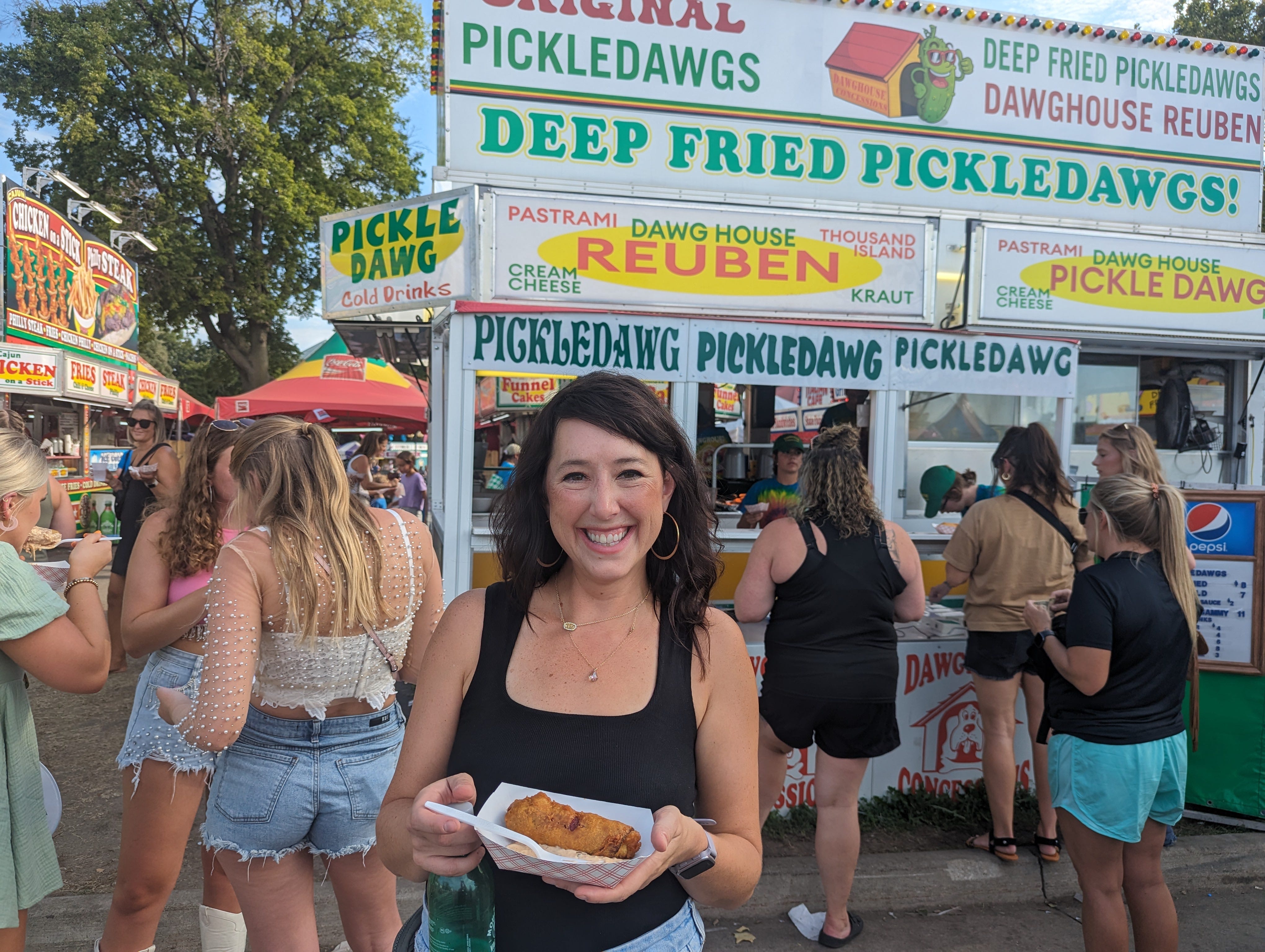
My favorite fair food is the spicy pickle dog from the Pickle Dawg truck. It’s a dill pickle covered in spicy cream cheese, wrapped in pastrami, covered in batter, and deep-fried.
The first bite is crisp, warm, and crunchy with a little bit of peppery heat. I look forward to it every year.
When we talk about the foods of American fairs, we talk about excess and quantity. It’s novelty, nostalgia, and class, all deep-fried and put on a stick for our collective consumption.
So many of the foods are designed to make us laugh, to invert expectations, like deep-fried butter, fried beer, and fried jelly beans. They also seem to mock us by deep-frying cultural stereotypes. In 2022, a vendor at the Iowa state fair was selling the Iowa Twinkie, which was a jalapeno filled with pulled pork, corn, and cream cheese, wrapped in bacon, smoked with sweet and sticky BBQ, then finished with ranch
And while these foods can seem indulgent and exciting, they may also elicit disgust and disdain. I think that is on purpose. Fair foods bait you to try them with novelty, mocking you if you hate them. The foods almost invite you to moralize about nutritional value, fats and carbs and caloric consumption and in response, these foods laugh at you with their fried profligacy. They are not real foods in the sense that you would eat them every day. They are surreal foods — excessive, bizarre, and delightful, existing only in one world: the world of the fair.
Fair food is America inverted, a mirror image reflected back to itself in its greasy plenty, mass-produced and served up hot.
Fair foods find their origins in the celebration of abundance that drove attendance to fairs around the turn of the 20th century. In her article “Eat Me at the Fair,” historian Francine Kirsch describes how food installations at fairs were in part an advertisement for a state to attract people to move there. Look at us, Iowa could declare with an attention-getting palace of corn. We are a land of growth. A land where you can harvest enough corn to build a kingdom.
Historically, it has been through food exhibitions that new foods have captured the American imagination. Fairs are sites of cultural exchange and cultural flattening, a place where, through humor, we negotiate who and what we are through what we eat.
Kirsch writes, “If the food exhibits at later fairs were particularly lavish, their genesis can be seen in drawings made at the 1876 Philadelphia Centennial.” Here in the Agricultural Building, Mary Todd Lincoln’s favorite confectioner Henry Maillard displayed a 15-foot-tall sugar spire covered with edible historical figures. At one booth, a mammoth grape vine from California grew toward the ceiling. The New Hampshire booth displayed stuffed hogs that when they were alive had weighed 1,307 and 1,253 pounds. And this was the same fair that launched the butter sculpture trend when Caroline Shawk Brooks delicately carved Iolanthe.
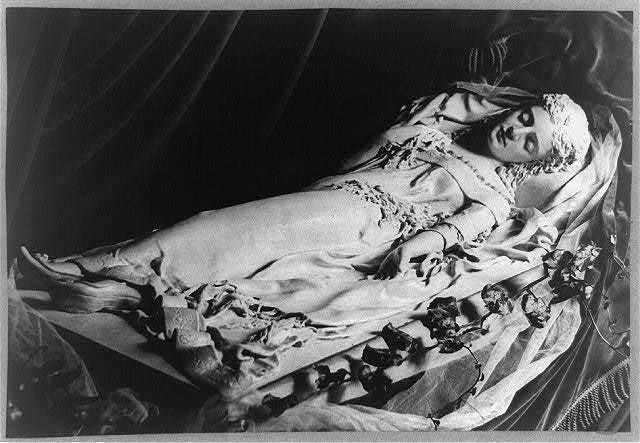
Taken together, these food exhibits “reflected America’s exuberance at its coming of age best,” Kirsch writes. “And that desire to have and be the biggest would truly take hold in more ways than food in the century to come.”
But were they only about size, scale, and excess, I don’t think state fair foods would have nearly the grip they do on our culture. They are also about humor and desire.
Mikhail Bakhtin, in his writings on the carnival, described it as a space outside the everyday, one that is both temporary and freeing for lower classes often oppressed by the usual social order. Here, laughter is a key element, and is built on the subversions of expectations. Whereas in the outside world, we are expected and cautioned to eat more salads, in the world of the fair, that salad is on a stick. Cows are made of their own butter. It’s silly. It’s fun. It’s dark. It’s complicated. Who cares? It’s the fair. And how often is food allowed to be fun? How often are we just allowed to eat and enjoy it and eat some more?
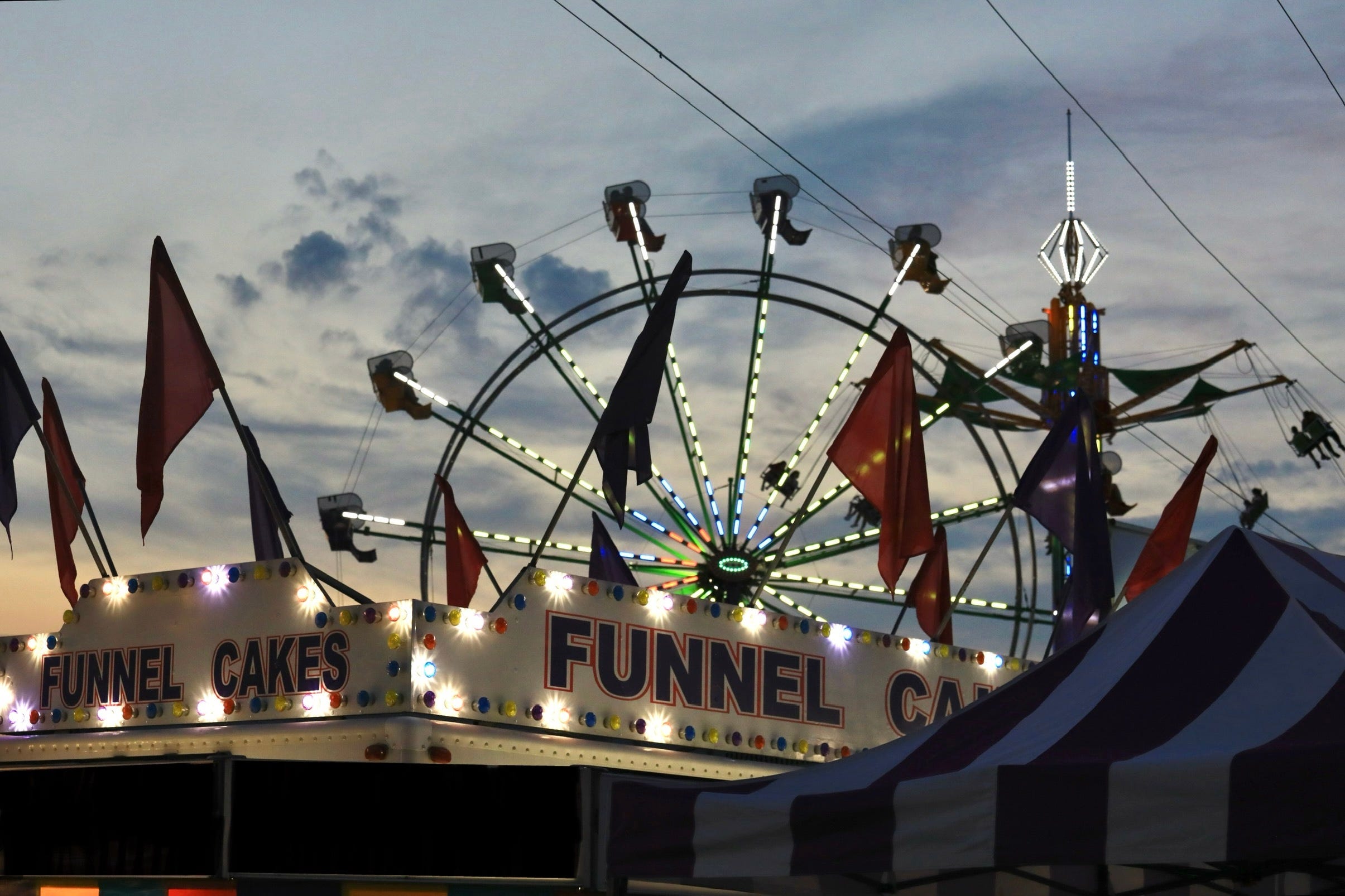
In the oppressive superego of keto, Weight Watchers, protein goals, carb-free, and Noom, state-fair food is our culinary id — a grotesquely joyous display of all that is forbidden and still desired. Waffles and Snickers, battered and fried and put on a stick. Bacon dipped in chocolate. It’s fried and sugary and, unless it’s corn or coleslaw, there is rarely a vegetable to be found.
While fair foods reinforce American identity, they also reveal that our identity is changing.
Because beyond the smorgasbord of deep-fried consumption, fair foods are also the space in which our cultural identity is mediated, processed, put on a stick, and sold back to us.
In Trump’s America 2.0, where DEI is under attack and masked ICE agents are rounding up immigrants, food is both a negotiation of identity and exploitative capitalism.
And, like the food, these conversations can feel a little gross. Last year, at the fair, I went to find a hyped-up Korean BBQ vendor, only to find it was run by a very white couple. I made assumptions. They profited. And I wondered at the people who would take a culture’s food, sell it, and then vote for a president who vowed to deport the same immigrants who brought that food to America in the first place.
Are people more likely to try new foods at a fair? Will it make them more open to other cultures and foods? It’s hard to know. But despite the moralizing, it won’t go away. Egg rolls with bacon and ranch are here to stay. Fiesta wontons. Korean corn dogs.
I can’t tell you if this is good or if it’s bad, only that this is America.
In this world already turned on its head, it’s easy to introduce new foods and change the narrative about who and what America is. The safe space of the familiar fair, combined with the gleeful embrace of novelty foods, creates an environment rich for experimentation.
Every year, new foods are introduced to the fair. This year, at the Iowa State fair, amid all the usual fried concoctions, there are also bacon chicken ranch egg rolls, potato half & half Korean corn dog, and a Saigon lobster dog. The Minnesota State Fair offers a variety of foods that fuse cultures and traditions, like a steamed bun with lutefisk and hoisin sauce, hot honey cheese sticks, and a dill pickle cheese curd taco.1 Other state fairs, too, are embracing and selling more diverse ranges of food, offering a safe environment for people to try new things and experience new flavors.
Fair food is America inverted, a mirror image reflected back to itself in its greasy plenty, mass-produced and served up hot.
This essay is an edited and updated version of a newsletter that I wrote in 2023.
Deep-fried food takes:
"Toward a Theory of American Festival Cuisine” (Eater)
“Fried, Fatty, and Fanciful: State Fair Foods” (Modern Farmer)
“Eating While Politicking Is Harder Than It’s Ever Been. Here’s Why.” (Politico)