Login
Login
The time I was told to "Go Back to China" and why I learned Chinese
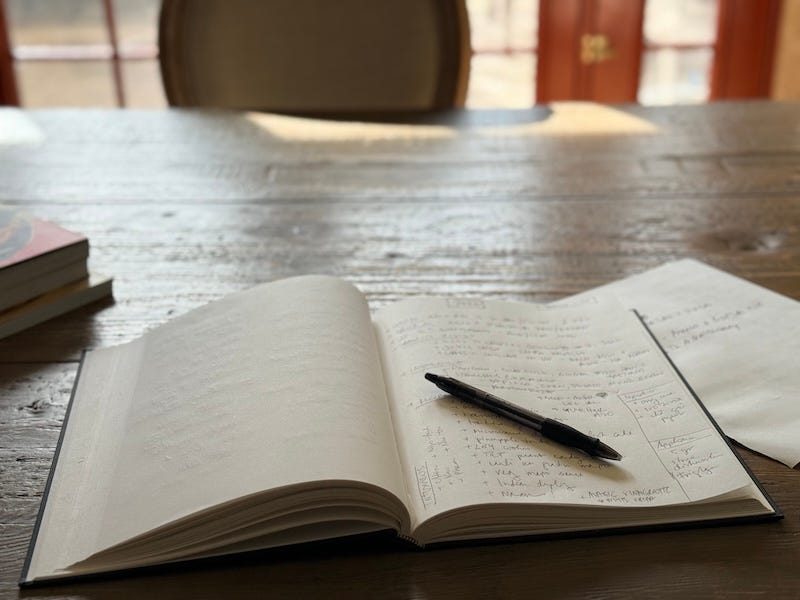
It’s been a brutal work week because we’re sending Cooking Thai to print very, very soon. This weekend, chef Pim and I are reviewing the book for the final time. Authors work with a team of folks to produce cookbooks, and given that there are countless moving parts (ingredient measurements, instructions, photos, page number references), mistakes may be made. At this stage, we scrub and polish and then practice the art of letting go.
It’s always an exhaustive process at the end but this time, I feel extra energized. That’s because now more than ever, there is incredible openness and interest in Asian cultures. I credit that to phenomena like Korean pop stars and Japanese anime.
Recently, there’s “Chinamaxxing” — a social media trend that has young American TikTokers wanting to ‘become Chinese’ by getting into things like practicing qigong, cooking congee, stocking up on groceries at Asian markets, and wearing slippers around the house. They want to be their “Chinese baddie” best because this is their “Chinese time of life”. (Remember the 1980 hit song, Turning Japanese by the Vapors? It did not result in women running out to buy kimonos.)
The rise of Chinese soft power, mostly among Generation Z, is an unexpected 180-degree turn. It’s uplifting but also ironic, given that there’s been a certain level of suspicion of Chinese goods and services for a long time.
Here at PTFS, we’ve discussed things like the fervent Prop 65 warnings on Asian ingredient labels. A few years back, shared his insights on people’s concerns over French made-in China cookware to empower consumers to thoughtfully choose.
And, remember when some folks nicknamed Covid-19 as “kung flu” and how the pandemic caused a surge in Asian hate crimes and discrimination? Those were good times, right?
Way before the pandemic, looking Asian could be viewed negatively. About fifteen years ago, as Rory and I were taking a walk in our neighborhood, a group of young men drove passed and one of them leaned his head out the window and screamed, “Go back to China!”
I reflexively stopped, raised my middle finger to give them the bird, and screamed back, “Fuck off! I’m not Chinese! I’m Vietnamese!” I stood my ground with minimal fear because we were across the street from a friendly Black-owned barbershop. We could run there for help, if needed.
The car briefly stopped before the young men took off. They surely forgot about the incident. For all I know, in 2026, they may be looking to live their best Chinese lives.
There’s plenty of analysis of Chinamaxxing from TIME magazine and also some humorous-not-so-humorous advice from the South Morning Post, the leading newspaper outlet in Hong Kong, China. I’m usure what to make of the current Chinamaxxing meme and trends, but I do hope that it results in genuine greater cultural appreciation.
Making Chinese-Vietnamese connections
Chinamaxxing also got me thinking about my own interests in Chinese culture, which started in college when I decided to minor in Chinese languages and culture. I eventually scored a fellowship in Hong Kong, traveled to China and partly built my food writing career on researching and writing about Chinese food.
Why go out of my Vietnamese lane? China is geographically and culturally connected to Vietnam through migration, politics, war, language, and yes, food. The relationship between the two countries has not always been a happy one, but understanding China helped me to better understand my Vietnamese heritage and history.
For instance, when I was in my twenties, I hung out with Teresa, a gal from Hong Kong whose father used to be film director. Their family lived in Monterey Park and Teresa introduced me to a wonderful Chinese-Islamic restaurant, where I fell for dishes such as fragrant stir-fried lamb spiced with cumin and lots of green onions and a thick, crunchy sesame scallion bread. To this day, I love to eat the two together, stuffing the stir-fry into the bread and wiping up the sauce with even more bread!
Over the decades, I’ve tried all kinds of recipes for a fabulous rendition of the bread recipe and this past Friday, to get my mind off of book proofreading, I made it again and landed on my best rendition yet. Get the sesame-scallion bread recipe and make it sooner than later to enjoy its tender chewy, nutty, rich flavors.
Because Vietnamese and Chinese languages are linked in many ways, when I learned that the sesame scallion bread (zhīma dà bǐng) was a type of bǐng (餠, the Chinese word for bread, pancakes, pies, and certain other doughy foods), I was able to wrap my head around the Vietnamese notion of bánh, a very broad category of food that includes bánh mì, cookies, cakes, dumplings, crepes and other starchy foods.
Chinese Vietnamese people and food
When I started out writing about food, I befriended Chinese Vietnamese chefs too. The late chef Charles Phan of the Slanted Door was Chinese Vietnamese, for instance. So are my pals, chef restaurateurs Eric and Sophie Banh of Monsoon and Ba Bar in Seattle. Chinese people have been in Vietnam for a long time, so much so that there are countless people who identify as Chinese Vietnamese. They mostly see themselves as Vietnamese but can speak Cantonese and or Teochew.
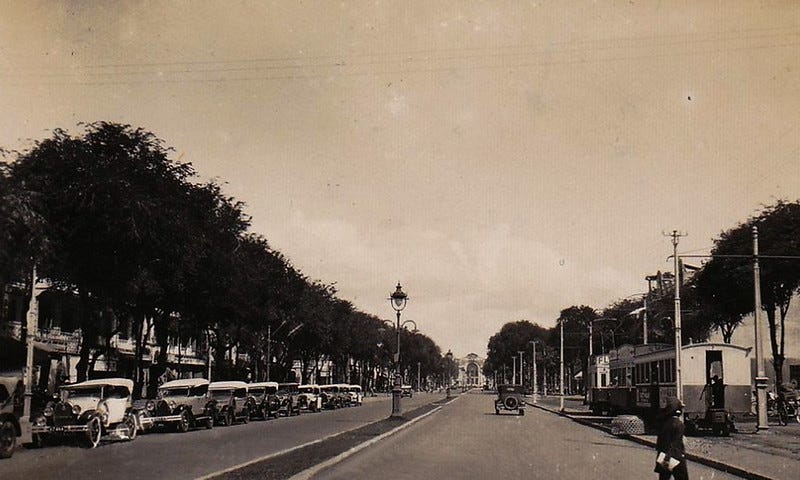
Knowing about and being able to prepare and share Chinese cuisine is part of Vietnamese culture. In the early 1960s, when my dad was provincial governor in Phan Thiet in South Vietnam, my mom planned dinners that included Vietnamese, Chinese, and French dishes. She employed two cooks — one of whom was nicknamed Chú Năm Bếp (Uncle of Five Kitchens). Mom described him as a charming, talented man whose could cook practically anything; the five kitchens reflected his mastery of five cuisines.
Those factors and many others contributed to my affinity for Viet cha gio fried imperial rolls and bun rice noodle bowls as well as for Chinese fried wontons, lo mai gai sticky rice in lotus leaf, and wonton noodle soup. Hybrid foods like bo kho — the beef stew with star anise, lemongrass, tomato and carrot has southern Chinese Vietnamese roots and is considered an iconic Vietnamese dish. It has evolved over the years and cooks have taken to serve in many ways but it’s still Vietnamese at heart. I felt confident with turning the classic stew into a quick bolognese-style bo kho sauce to enjoy with wide rice noodles or pappardelle pasta. (Along the same vein, what would stop you from putting some in a banh mi roll because or use for a Viet-ish sloppy Joe. Just some suggestions!)
Chinese-ness in unexpected savors
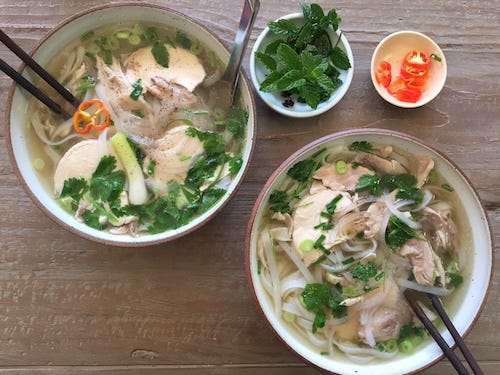
So when I researched and wrote about the history of pho, it wasn’t a surprise that Chinese cooks and language were part of the story, which also includes the French colonials too. I’d always wondered if there was a Chinese pho recipe. ’s cookbook on Yunnan cuisine answered my question with its Chinese beef pho recipe, which you could add pickled mustard greens to, if you want. (The Red River flows from Yunnan eastward through Hanoi and out to the Gulf of Tonkin, so of course there are connections!)
Pho is highly elastic as I’ve written in The Pho Cookbook so you can play around with it with recipes like the beef short rib and vegetable pho. My traditionalist mother may think it’s weird but I like the recipe’s vegetable component, lower cost, and easy cooking in a pressure cooker or Instant Pot.
And, if you survey global cuisines, you’ll see how far Chinese foodways have migrated. Consider how widespread ingredients like tofu, soy sauce and rice noodles are. Chinese la mian noodles begot Japanese ramen. Wok cooking went to Peru and birthed Chifa cuisine and lomo saltado which then went back to Asia and eventually into Vietnam, where it yielded a beef stir-fry served atop fried potatoes. (Make my delicious umami-rich tofu and French fries iteration.)
Pass the Fish Sauce is a reader-supported publication. Get new posts and support my work by becoming a free or paid subscriber.
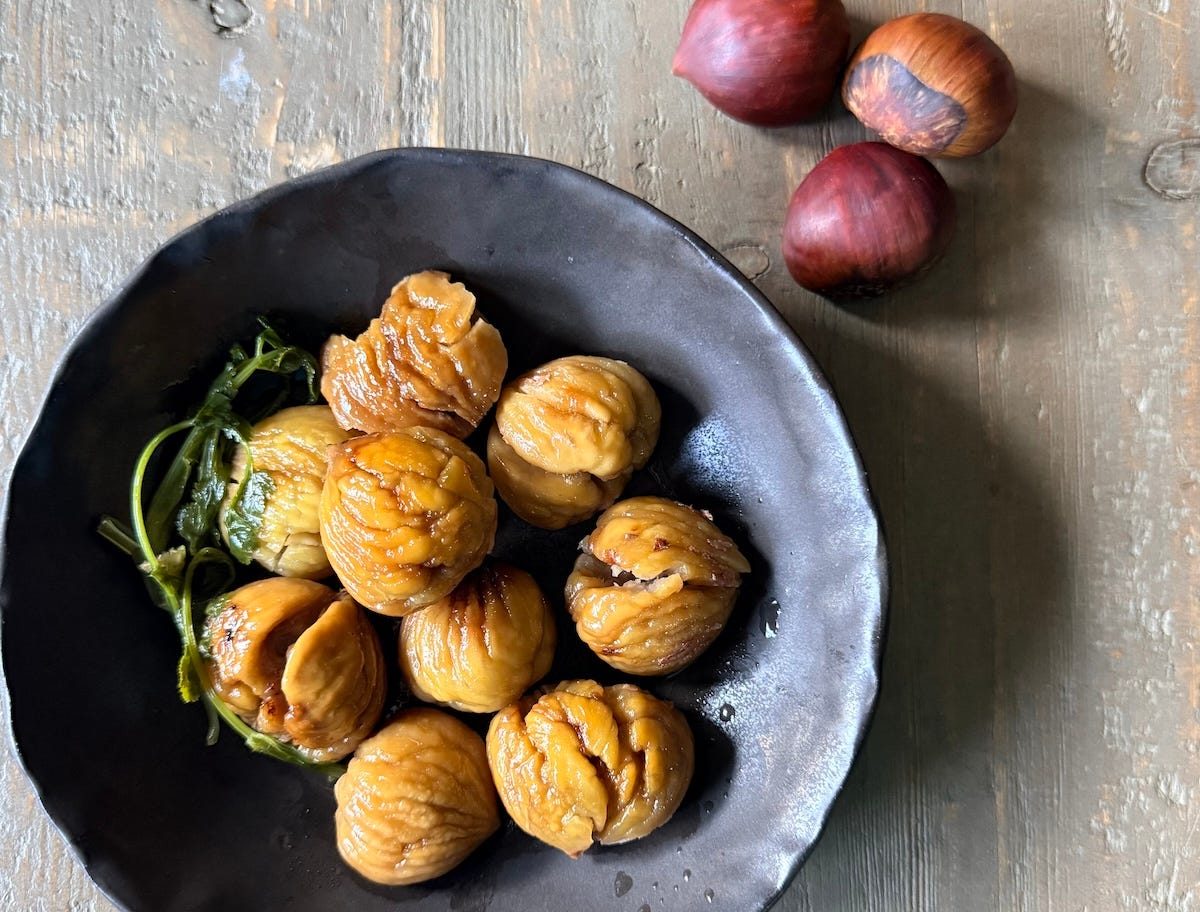
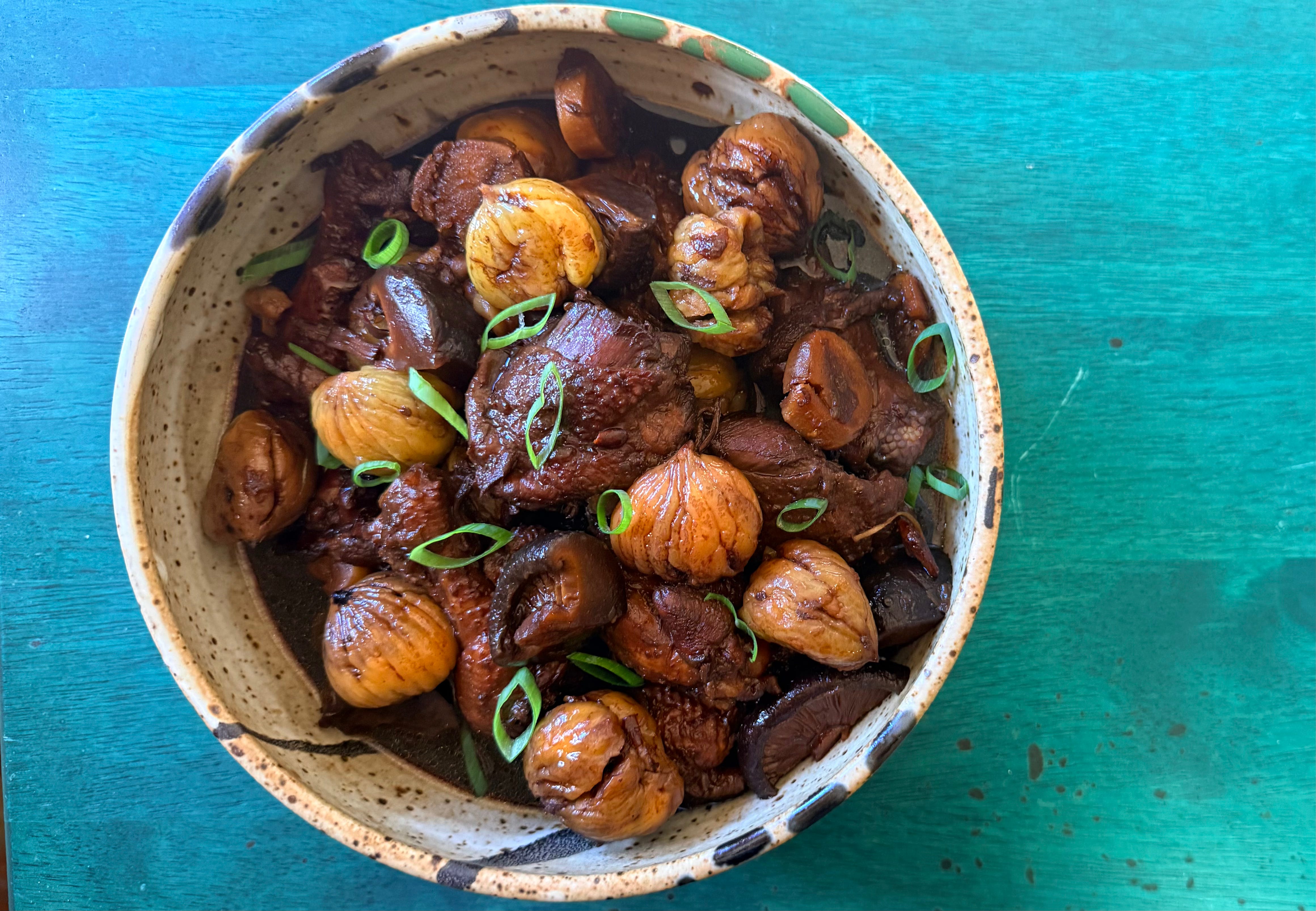
Finally, if you shop at a Chinese market or online at Weee!, check the frozen food section because you may find frozen peeled Chestnuts from China. As noted in an earlier newsletter, American chestnuts grow on Chinese trees. So you can purchase the Chinese chestnuts, know about their history, and use them in Chinese ways like the Red-Cooked Chestnut Chicken and Braised Chestnuts with Napa Cabbage which hail from Shanghai. These are no longer fall or winter dishes. They can be enjoyed whenever, if you get your paws on frozen Chinese chestnuts!

Today’s world is incredibly economically, politically, and culinarily interrelated. If you consider all the ways that China influences our lives, there is a certain truth to what China calls itself in Chinese: 中国 (中國; Zhōng Guó), which literally means the Middle Kingdom, the center of the world.
As a Vietnamese person who’s gone the extra distance to understand Chinese culture, do I want to become Chinese?
No way! I’m too feisty and proud to relinquish who I am. However, by cooking and looking around to connect the dots, I know that I can be a Chinese baddie on my own terms. I hope you find these insights and ideas to help you add to your knowledge base, if not just sound awesome to a young person. 😆
Back to proofreading the book. Thanks for being here.