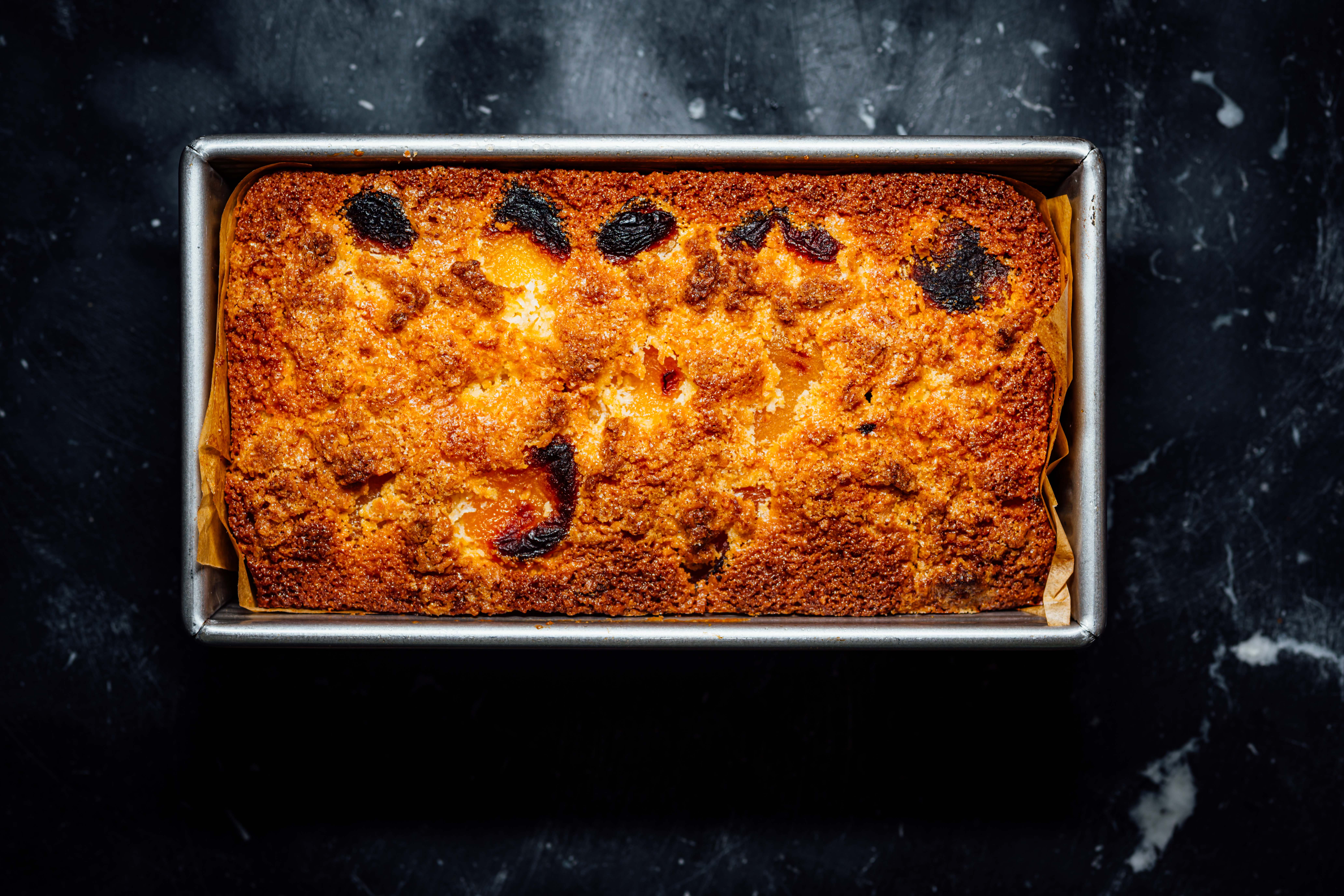
If you're in the US or UK, it's peak stone fruit season (Aussie and Kiwi friends and family—you’re deep in winter, but your time will come!). And one of my FAVORITE stone fruits is apricots. The velvety golden-orange skin and sweet-tart flavor just bring me peak summer joy, and all my worries fade away. In this paid subscriber newsletter, you will…
Learn why I use underripe apricots for jams (and other science cooking facts)
Get my kitchen hacks to maximize flavor and a culinary use for those apricot pits you might not be aware of!
Make Apricot Lemon Orange Jam and Apricot Coconut Semolina Cake with the two exclusive recipes I’m sharing
But before we get to the good stuff, I need your quick input! I’m planning a series of chats for all subscribers with some of my favorite cookbook authors and want to know who you want to hear from most! Click below, answer 2 quick questions, and THANK YOU!
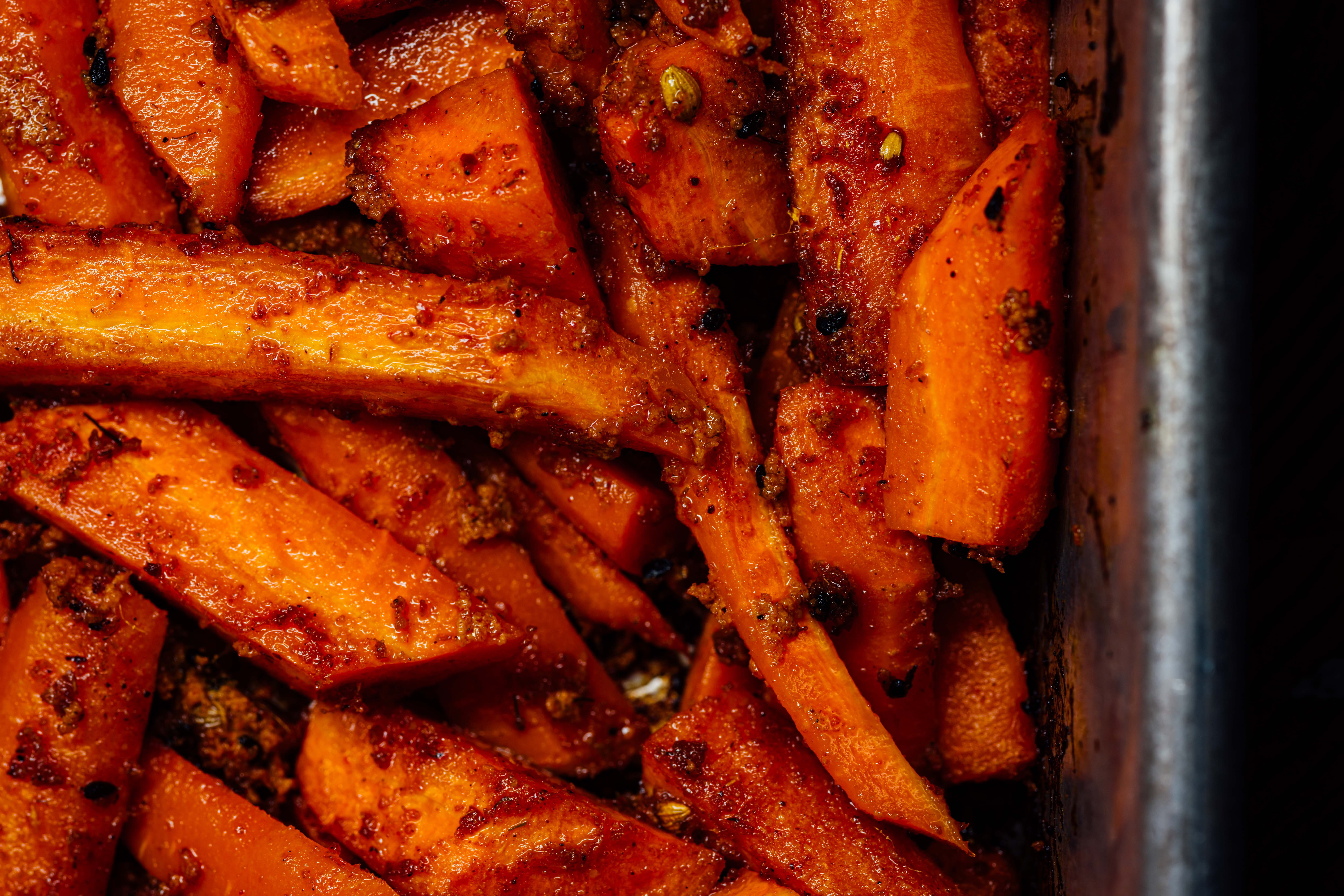
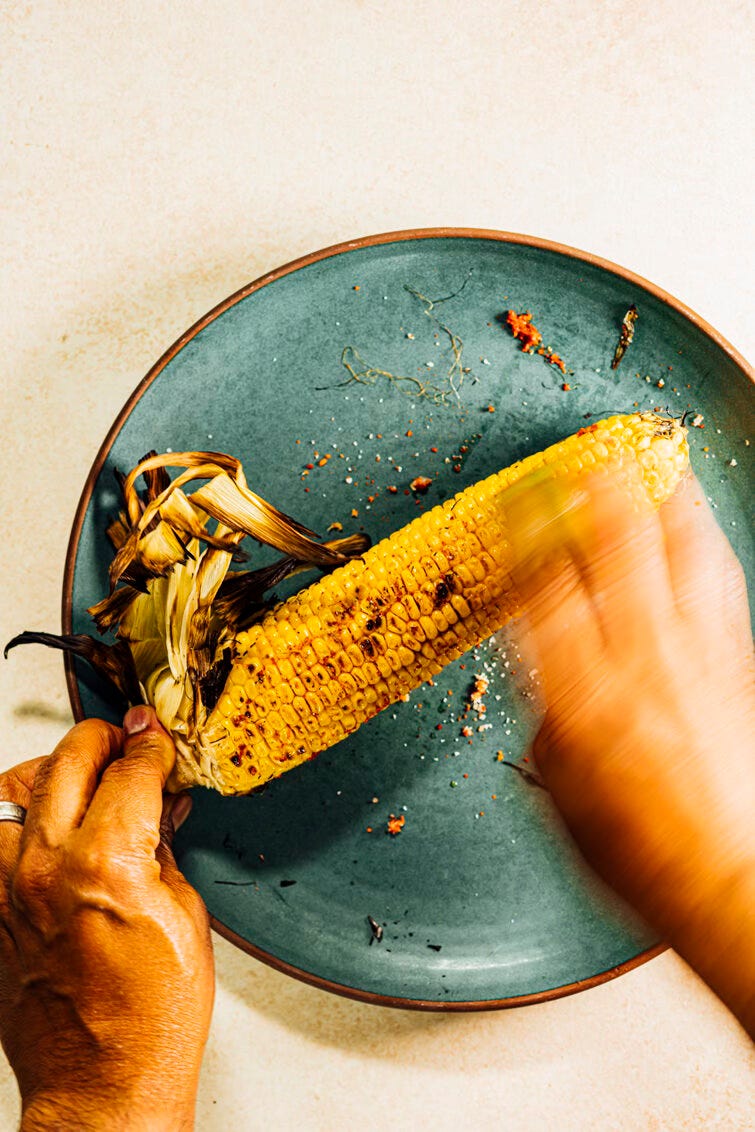
It’s peak grilling season—and peak produce season, and I can’t think of a better way to bring the two together than with tandoori vegetables. Smoky, spiced, deeply charred, and boldly flavored, tandoori-style cooking works surprisingly well with the right vegetables. But the trick? Choosing the ones with the structure to hold up to the heat.
If you’ve ever tried tossing delicate zucchini rounds or thinly sliced eggplant into a hot oven or onto the grill, only to watch them collapse into a mushy mess. In that case, you already know: not all vegetables are built for this kind of intensity. Tandoori cooking requires vegetables with sturdier textures—ones that can absorb a marinade, withstand high heat, and develop a smoky crust without falling apart.
That’s why I’m reaching for crunchy, firm carrots this summer.
Carrots (especially thick ones, halved or quartered lengthwise) are just the kind of vegetable that thrives in this environment. They grab the spiced yogurt mixture beautifully, caramelize in all the right places, and pick up that slightly charred, smoky flavor that makes tandoori cooking so irresistible.
Why Sturdier Vegetables Work Better:
Tandoori-style cooking relies on a high-heat environment (traditionally a clay tandoor, but at home, we use the oven, grill, or even a cast-iron pan). At these temperatures, water evaporates quickly. Vegetables with low water content and higher structural integrity, like carrots, cabbages, beets, sweet potatoes, celeriac, and even cauliflower, don’t collapse or weep as easily. They develop a seared exterior while the insides cook to tender perfection.
Science Corner:
The proteins in yogurt help with browning, thanks to the Maillard reaction. Acids from lemon juice or vinegar will help brighten the flavors. And when you pair that with sturdy produce, the result is a vegetable with flavor that’s both deep and bright—smoky, tangy, and kissed with spice.
In this week’s post, I’m sharing my recipe for Tandoori-Roasted Carrots —a dish that’s as good hot off the grill as it is at room temperature. It’s simple, vibrant, and makes a strong case for why vegetables deserve a spot in your upcoming cookout lineup. Use this tandoori spice mixture to experiment with other vegetables too.
Why I Avoid Calling this Tandoori Spice Blend a Marinade
We often assume that marinades will "tenderize" vegetables in the same way they can with meat. This likely comes from a surface-level association: "marinate = make soft + flavorful." But the science behind how marinades interact with meat and vegetables is fundamentally different.
The Science: Meat vs. Vegetables
Meat
Meat is mainly composed of protein fibers (like collagen and myosin), which are tough when raw.
Marinades that contain acids (such as lemon juice or vinegar), enzymes (like bromelain in pineapple), or salt can denature proteins and break down connective tissue, thereby helping to tenderize meat.
Time matters: the longer the marination (within limits), the more opportunity for these effects to take place.
Vegetables
Vegetables are primarily made of cellulose, hemicellulose, and pectin—structural carbohydrates that don't respond to acid or salt in the same way proteins do.
Acids do not break down vegetable fibers the same way they do meat proteins.
Acidic marinades can sometimes firm up vegetables (think of how pickling crisps cucumbers).
Additionally, many vegetables have a high water content and absorb flavors more rapidly than meat, so prolonged marination isn't necessary.
Why This Matters in Cooking
Vegetables don’t need to be tenderized by a marinade. What they do need is surface flavor and sometimes a brief soak to allow salt, acid, or aromatics to cling or slightly permeate.
Over-marinating some vegetables (like zucchini or mushrooms) can lead to sogginess, off-textures, or overpowered flavors.
When and Why to Marinate Vegetables
Short marination (15 to 30 minutes) can add flavor without compromising texture.
Use marinades more for seasoning and caramelization (especially before grilling or roasting), rather than for tenderizing.
Vegetables like carrots, sweet potatoes, and cauliflower—those with denser cell structures —can benefit from longer marination, but not for tenderness. It's more about flavor absorption and surface browning.
Happy Grilling,
Nik
Coconut-Lychee Granita: The Summer Dessert I Can’t Stop Making (and Scraping)
We’ve had our moment with hot and spicy—now let’s cool off with something icy, floral, and ridiculously easy.
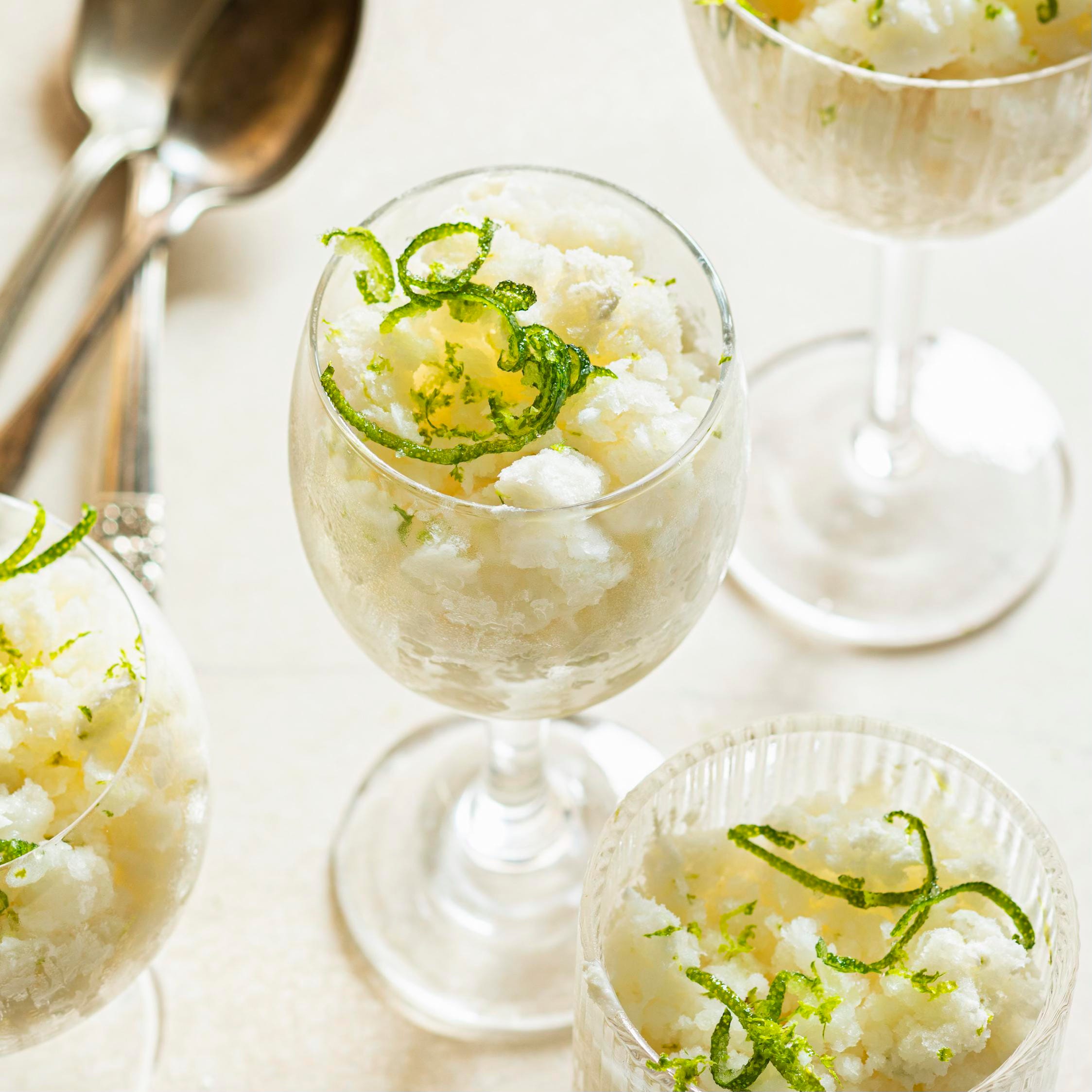
This Coconut-Lychee Granita is the chilled sweet treat I recently made at America’s Test Kitchen, and it’s giving you a tropical vacation in a bowl (or directly out of the freezer, no shame).
I love a frozen dessert that doesn’t require an ice cream maker, candy thermometer, or seven bowls in the sink. This Coconut-Lychee Granita is just that—and frankly, it’s the dessert I wish I had every time I’ve opened the freezer in July and found nothing but a tragic half-bag of peas.
This one’s got tropical flavor turned up to eleven: I toast the coconut to unlock its nutty, almost buttery aroma, then steep it in coconut milk so it infuses every bite with richness. Lychees bring that floral, perfume-y sweetness that feels nearly too luxurious to be this easy. A splash of lime juice adds a bright, punchy note, rather than a sugary sweetness.
And the texture? This is where the science gets fun. Sugar doesn’t just sweeten; it helps manage ice crystal formation. That means delicate flakes you can scrape with a fork and spoon straight into your mouth (or your guests’ if you’re sharing, but no judgment if you aren’t).
You can make this ahead, forget about it, and then casually serve it after a grilled dinner, as if you’re the kind of person who always has a granita on hand. Which, honestly, you might become.
Recipe’s below—go make it, freeze it, and thank yourself in a few hours.
Note: This recipe resides on ATK and is free. I love seeing you share your excitement! ATK makes several recipes from the residency available for free. You may need to enter your email address so they can send you more great content, but you can always opt out at any time. I’ve been a longtime subscriber to their newsletters and have found them super valuable. I hope that helps clarify how to access these co-created recipes—we put a lot of love into them, and I’d love for you to give them a try! I appreciate your support!
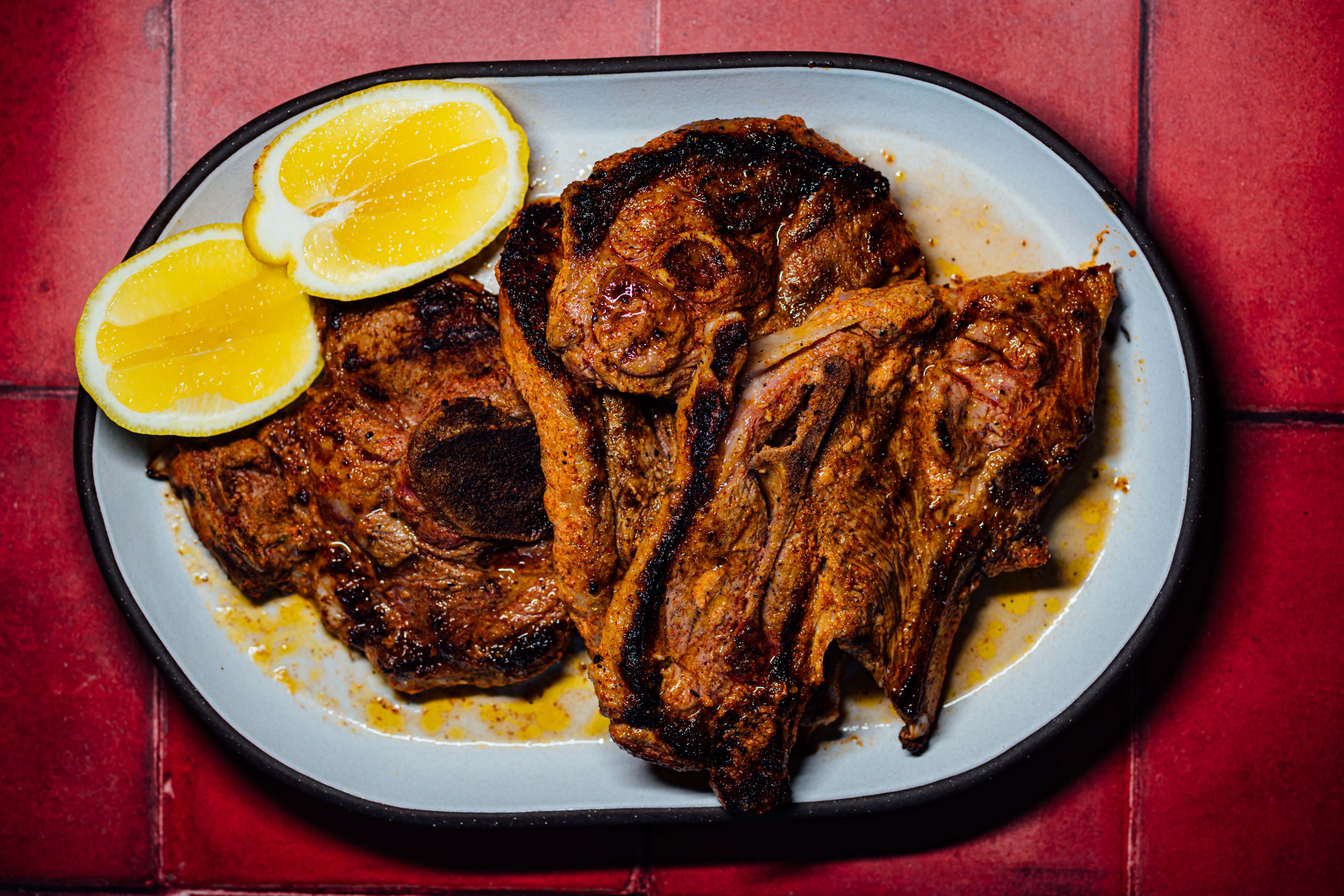
Miss my Tandoori Lamb recipe earlier this week? Or prefer more visuals when cooking? Well you are in luck! I made a short video of my recipe. You can almost smell the aroma through the screen…Kashmiri Chili, Garlic, Ginger, Lemon… As a paid subscriber, enjoy this bonus content this week! Full recipe linked below so you don’t have to search your inbox.
This week, we continue our exploration into tandoori flavor and technique. In this new newsletter format for my paid subscribers, I’ll provide a deeper dive into how this flavor is created and the techniques that are critical to achieving the right result. Keep reading to…
Learn common tandoori spices and the importance of the marinade
Get my tandoori lamb recipe (simple enough for weeknight dinner yet delicious enough for a dinner party)
Recommended go-to resources and my favorite books for Tandoori cooking and recipes
Welcome to The Flavor Files (New and Improved)! Thanks for being a loyal subscriber to my work. Your support means a lot, and I recently shared a survey to make sure I’m providing you more of what you crave! Thanks for all the responses, suggestions, and comments! I’m making a few tweaks to my Substack going forward, based on this, and I wanted to share what you can expect.
If you are a free subscriber:
At least 2 new recipes a month
More “weeknight meals” with quick recipes
More vegetables!
More of the “science behind food”, ingredients, techniques, etc.
If you are a paid subscriber:
All free subscriber content
At least one additional monthly recipe, with a focus on flavor inventiveness
In-depth video demos (recipes, techniques, ingredient deep dives, science!)
Access to past Substack recipes
Pre-public and exclusive access to events, classes, and new books
Newsletters (for now) will continue to be released on Sundays, featuring both free and paid content every other week. If you are a free subscriber, don’t fret! You’ll also get a preview of the new paid content, so you can decide what’s best for you. I appreciate everyone’s support, regardless of subscriber level!
Need my latest cookbook,Veg-Table, in your kitchen? Grab a copy here—your veggies will thank you. 🌱💥
Now let’s get into the good stuff. 🔥 This month will be all about TANDOORI!
The Flavor Files is a reader-supported publication. To receive new posts and support my work, consider becoming a free or paid subscriber.
Before we jump into tandoori food, next weekend is the long July 4th holiday, and I’ve got my curated list of recipes for you right here! It’s time to plan your ultimate summer menu! This roundup is packed with easy and crowd-pleasing 4th of July recipes—think grilled hot dogs with all the fixings, fresh and colorful summer salads, backyard-style pizzas, and homemade ice cream that’ll cool everyone down. Whether you’re hosting a party or heading to a potluck, these festive July 4th dishes are guaranteed to bring the flavor and keep your guests happy from the first bite to the fireworks.
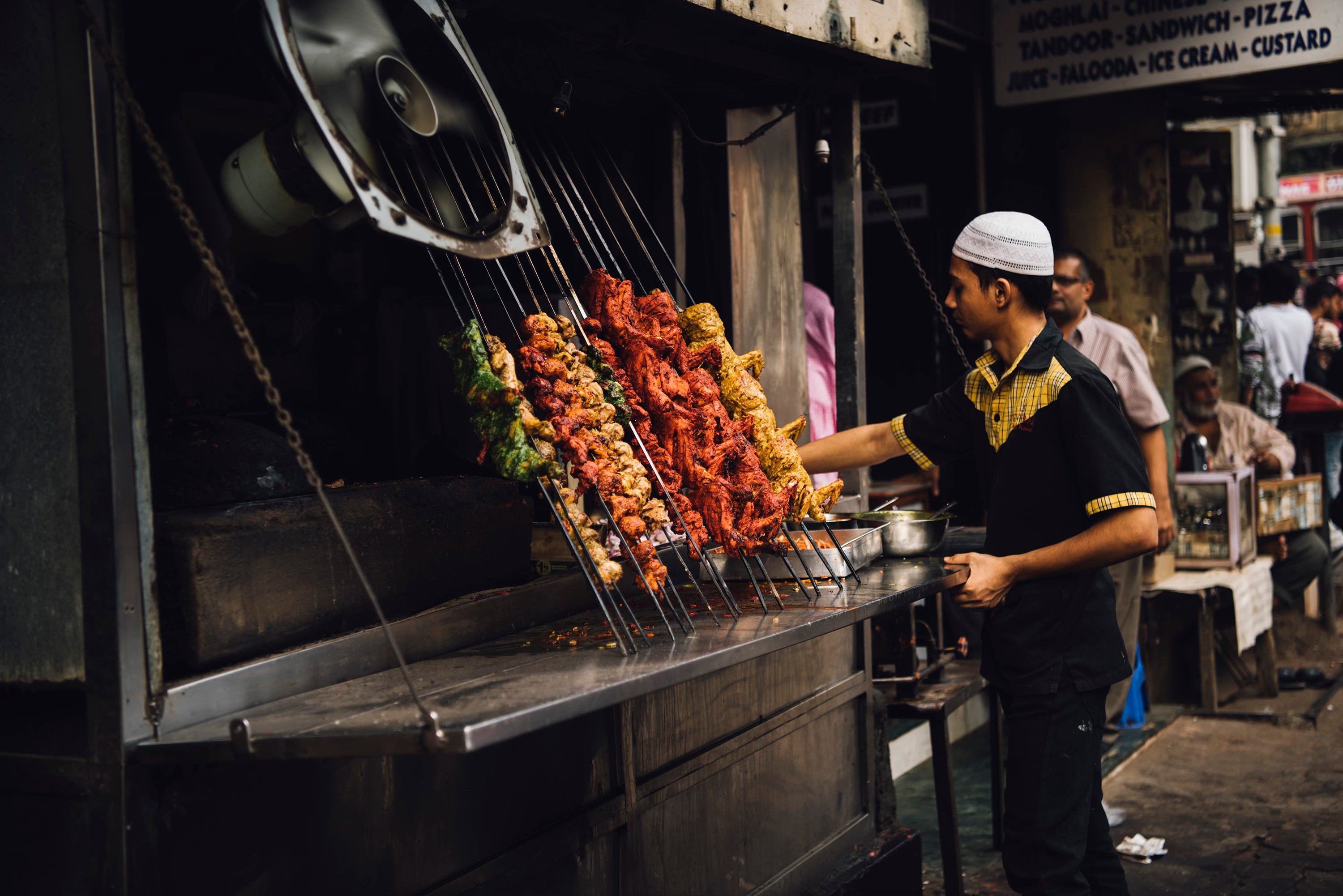
Kebab Stall in South Bombay, India/ Season Chronicle Books (2018) (C) Nik Sharma
🔥 Fire, Flavor, and Fermentation: The Magic of Tandoori Cooking
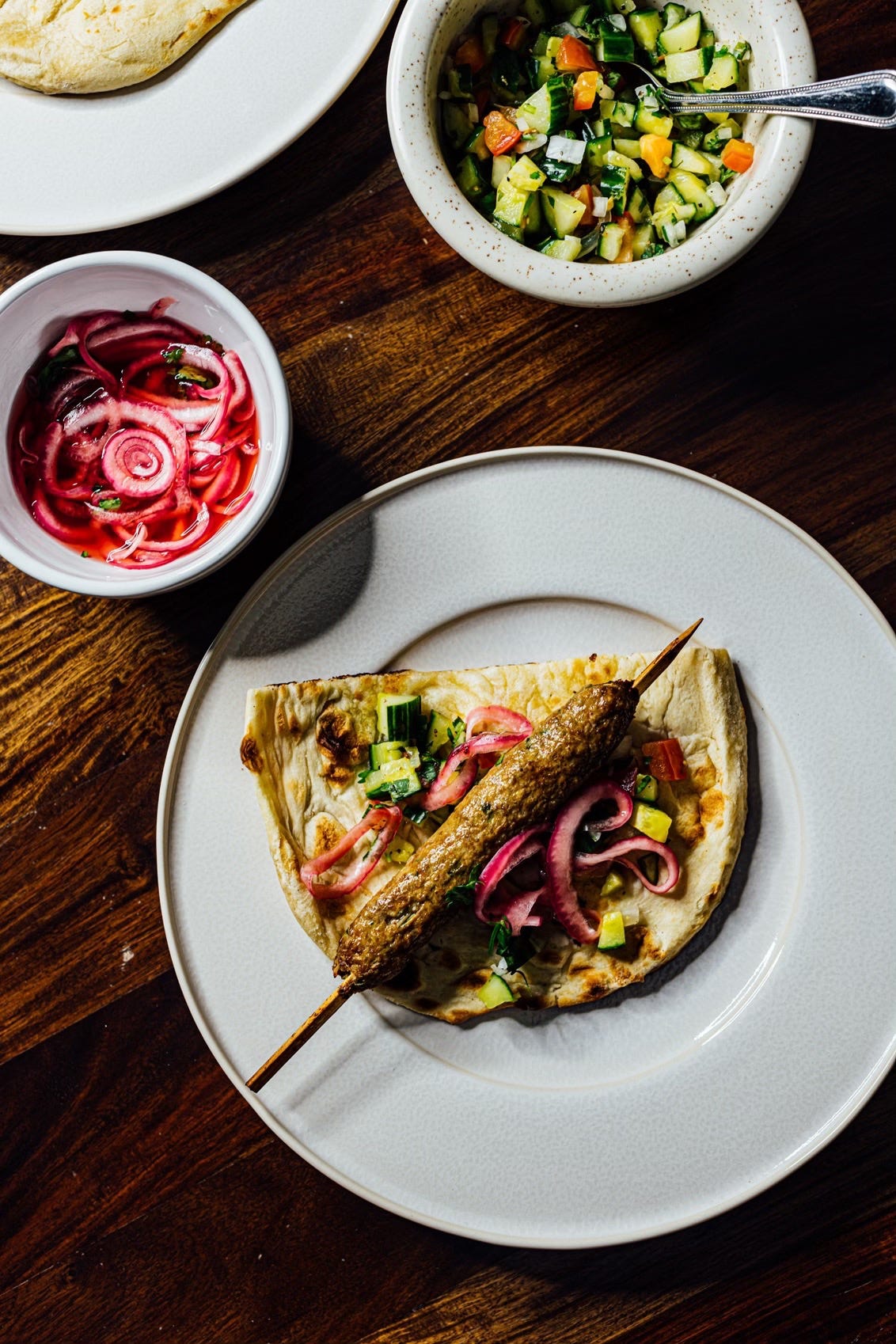
I have many fond memories of slipping out late at night with my friends to sneak to the southern tip of Bombay (Mumbai) in India, just to eat kebabs and naan at the famous Bademiya. They served all the North Indian and tandoori dishes we loved, as well as dishes we never had at home, from creamy, tangy butter chicken to spicy chapli and seekh kebabs and caramelized, succulent paneer on skewers, which we enjoyed with fresh, hot naan. It was a joy! And I was young enough to do this a few times a week. It was one of the most rebellious things I did as a kid because I never divulged the details of these trips at home.
Over the next few weeks, we’ll delve into the world of tandoori cuisine, exploring its origins, techniques, and flavors, and even prepare a few dishes together along the way.
There are several reasons why tandoori dishes, such as naan, aren’t prepared at home even in India. Naan is not a daily Indian bread made at home; skillet-prepared rotis and parathas are. The most common reason for this is that a tandoor, the clay oven used to make naan, is large and impractical to keep at home. In India, most people (like we did) will go to a restaurant, and if they’re fortunate to have outdoor space, will hire a chef to haul in a portable tandoor and make it in their backyard.
Tandoori cooking isn't just for chicken. Lamb, fish, shrimp, vegetables, paneer, and even breads like naan and a special version of roti called tandoori roti are prepared in this oven. When most people hear tandoori, they think tandoori chicken—bright red, smoky, served on a sizzling platter. But the technique behind it goes far deeper than a marinade or color. Tandoori cooking is one of the oldest and most flavorful high-heat cooking methods around, and it’s worth knowing for more than just its restaurant fame. Interestingly, while we associate it with North Indian and Pakistani cuisines, this oven has a rich history.
Tandoors date back to ancient civilizations, including the Indus Valley, where communal ovens were often dug into the ground. The word tandoor likely comes from the Persian tanūr, meaning fire oven.
While tandoors have been used for centuries across South and Central Asia, modern tandoori cooking, as we know it today, was popularized in post-Partition Delhi in the 1940s by Punjabi restaurateurs, who brought the technique from cities like Peshawar and Lahore, now in Pakistan. In India, Kundan Lal Gujral, who opened Moti Mahal in Delhi, is credited with popularizing dishes that we know today, including butter chicken (murgh makhani), dal makhani (butter lentils), and tandoori chicken.
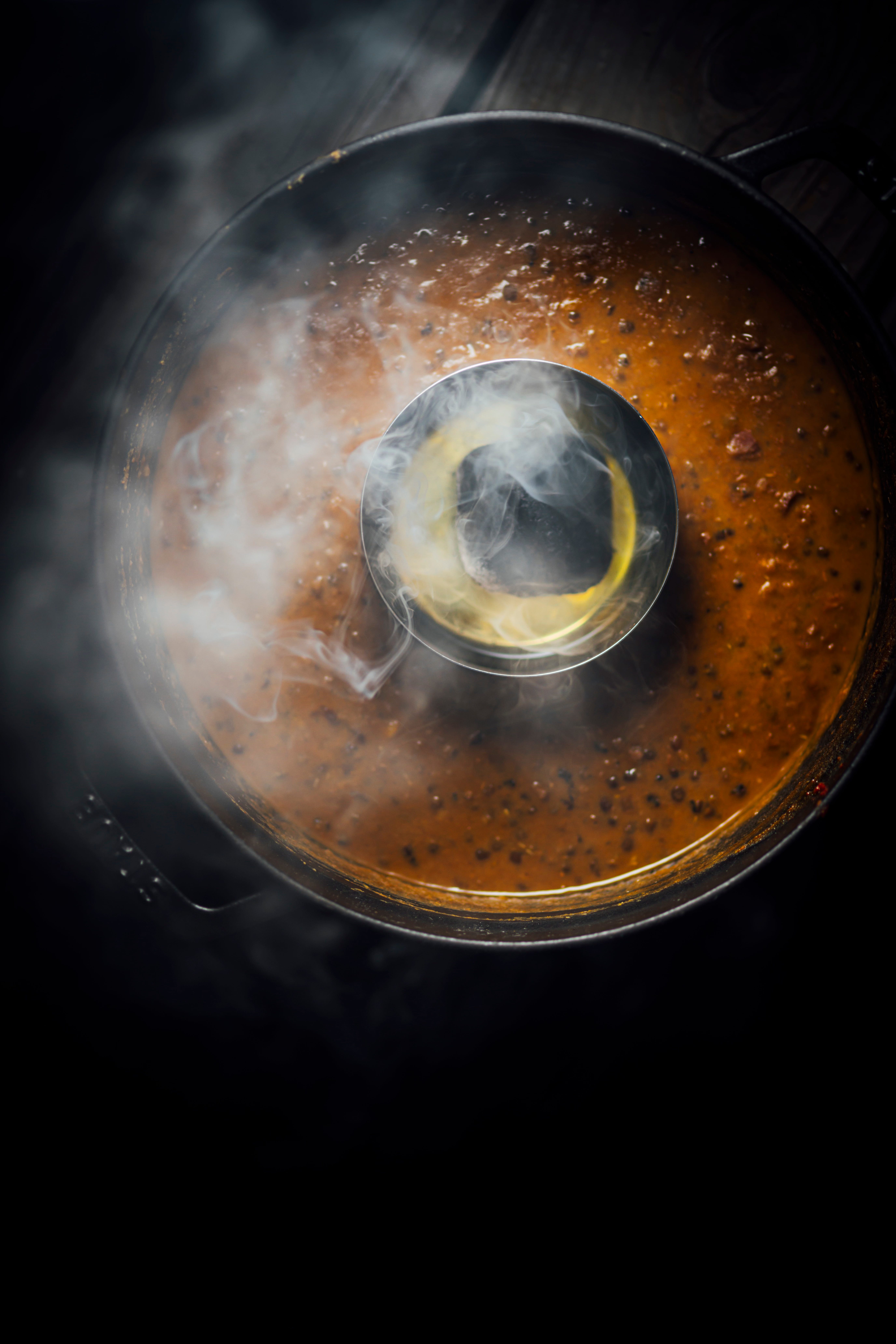
Dal Makhani from The Flavor Equation/Chronicle Books 2020 (C) Nik Sharma
🪵 What Is Tandoori Cooking, Really?
At its essence, tandoori cooking is about fire, flavor, and speed. Food is roasted inside a tall, cylindrical clay oven called a tandoor, where wood or charcoal creates blazing heat. Temperatures can soar past 900°F [480°C], cooking food in minutes while sealing in moisture and infusing it with a deep, smoky intensity.
It’s part wood-fired grill, part natural convection oven. Radiant heat from the clay walls, convection from the swirling air, and live smoke all work in tandem, layering texture and flavor with every second.
Traditional tandoors are built from clay, sometimes reinforced with sand, straw, or hay, then insulated with brick. Clay holds and radiates heat beautifully, echoing ancient methods of cooking meat directly over coals.
Using a tandoor is a craft.
Even now, when I visit India, I’ll linger by restaurant kitchens to watch the tandoor cooks in action, slapping dough against the scorching walls for naan, turning skewers of marinated kebabs with practiced precision. There’s a rhythm to it, a speed born of necessity. When the oven’s that hot, there’s no time to hesitate.
I don’t own a tandoor—yet.
This month, in a special series, I’ll show you how to bring those bold, fire-kissed flavors into your home kitchen, no clay oven required. There’s a gleaming stainless steel tandoor I’ve been eyeing for years, still on my wishlist, waiting for the right moment.
A Little Cultural & Historical Context
Tandoors date back to ancient civilizations, including the Indus Valley, where communal ovens were often dug into the ground. The word tandoor likely originates from the Persian tanūr, meaning fire oven.
While they're used across Central and South Asia (and even parts of the Middle East), tandoori cooking as we know it was popularized in post-Partition Delhi in the 1940s, thanks to Punjabi restaurateurs who brought the technique from what is now Pakistan.
And that vivid red hue? Traditionally, it comes from chili and turmeric, but in restaurants, food coloring is often added for consistency and drama.
Maillard Reaction: That blistered, charred exterior? It’s a product of the Maillard reaction, which caramelizes the surface and builds flavor fast.
Yogurt Marinades: The lactic acid and enzymes in yogurt help tenderize proteins while clinging to the surface, with no runoff like watery marinades.
Spice oils + Heat: Spices like earthy cumin, sweet green cardamom, citrusy coriander, and smoky Kashmiri chili contain volatile oils that release their full aroma under high heat, meaning the hotter the oven, the bigger the flavor. Kasoori methi, or dried fenugreek leaves, is another ingredient you will often come across; it is used in many of these dishes to add a sweet scent.
And fun fact: Even vegetables benefit from these effects. Cauliflower, sweet potatoes, and paneer all caramelize beautifully in tandoori-style cooking.
It’s Not Just About Chicken
Tandoori lamb chops, fish, shrimp, and even duck take beautifully to the heat. But vegetables are an unsung hero here, cauliflower, potatoes, carrots, even Brussels sprouts caramelize and char to sweet, smoky perfection.
Don’t forget paneer. Cubes of fresh cheese bind marinades and retain their shape when cooked under high heat, making them ideal for skewering.
If you don’t have a tandoor (and let’s face it, most of us don’t), you can still get close:
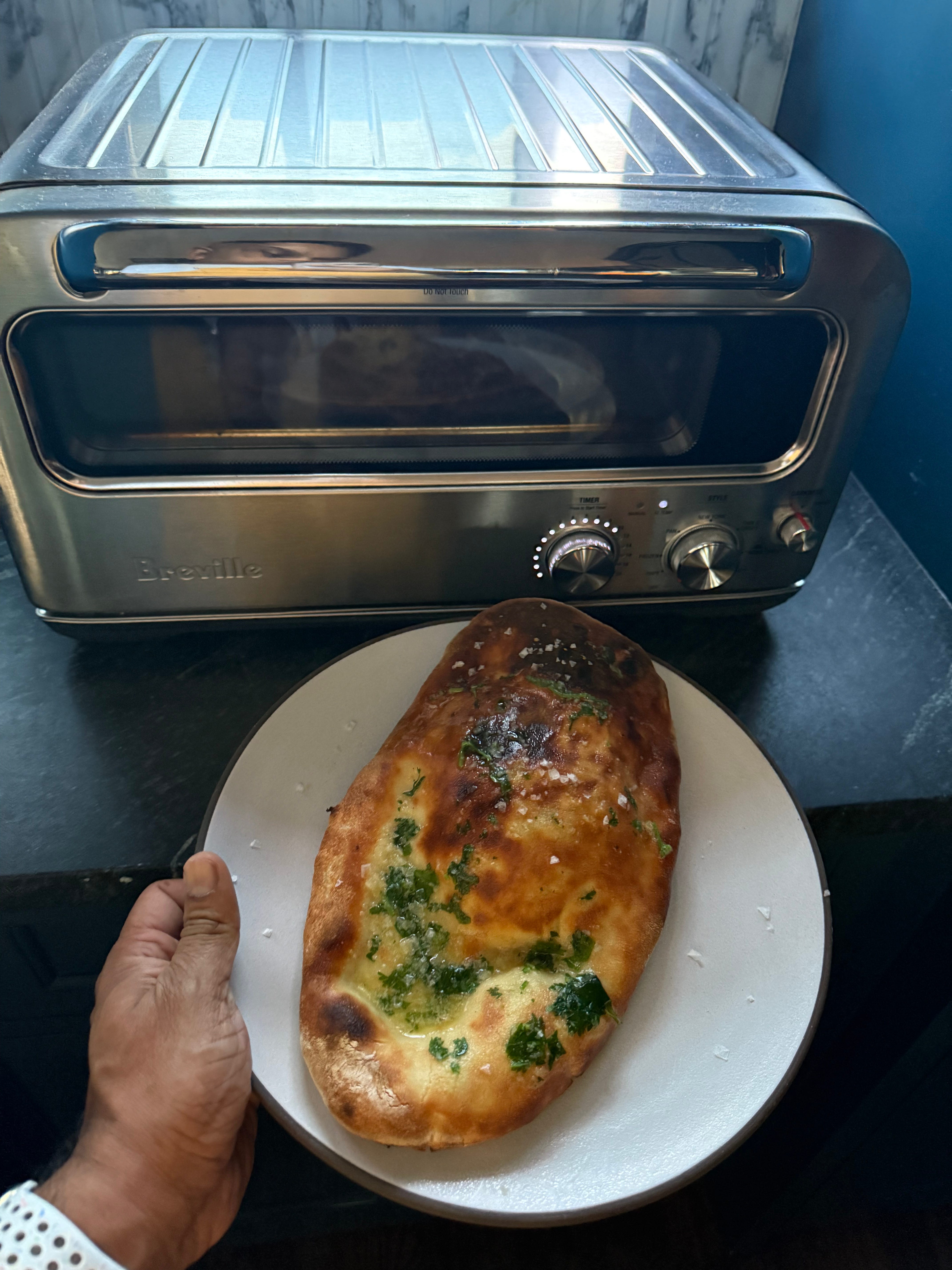
A pizza oven is another option that can provide the same degree of heat. With a few tweaks, it’s a worthy contender. I cooked the naan in my Breville Pizzaiolo at 700°F [371°C] for 3 to 4 minutes without rotating or flipping it. Because of its design, the oven will give the naan a more even browning, but where the bread bubbles up, the naan will blister.
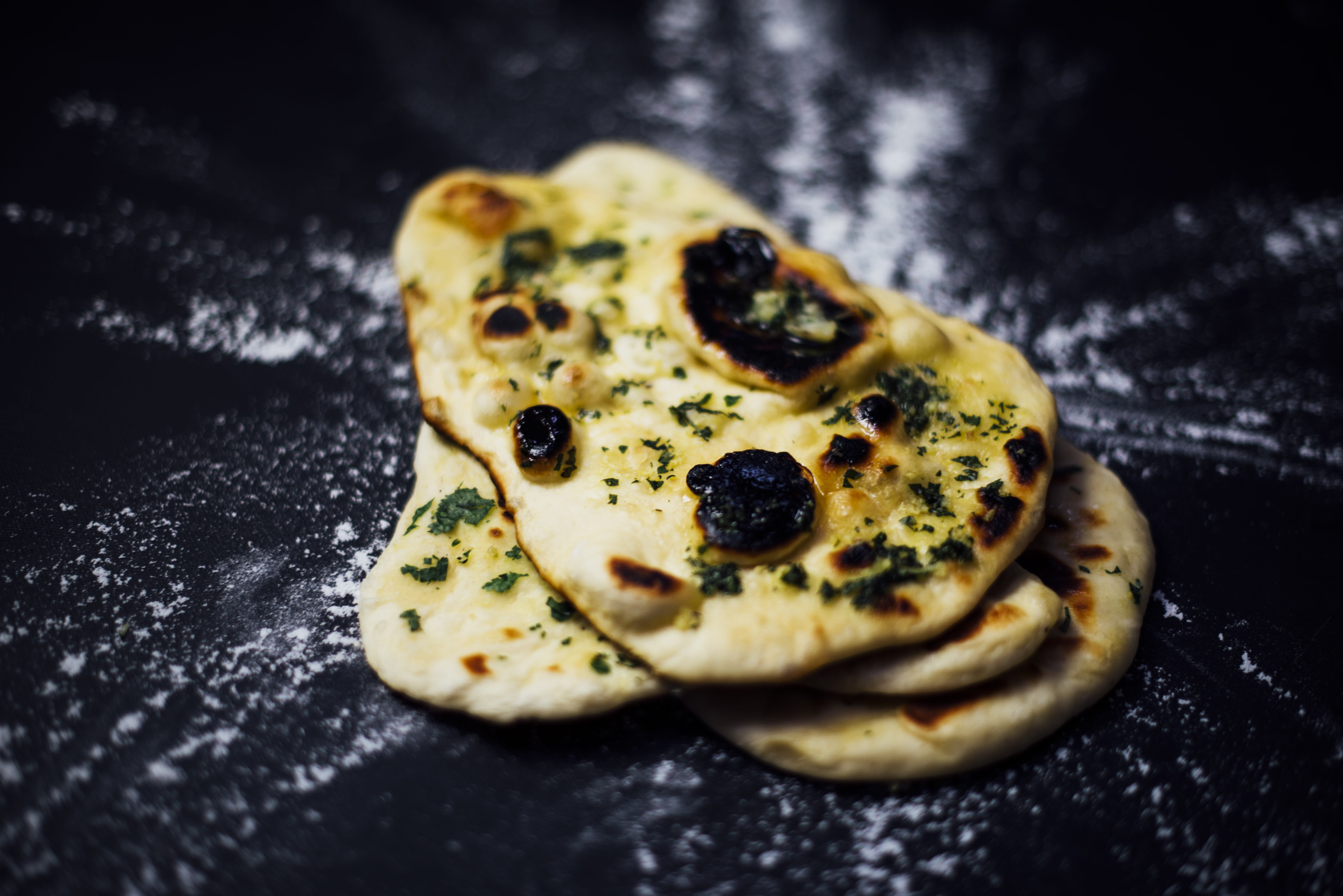
Let’s start with Naan?
You’ll need naan—preferably blistered and puffy. My go-to naan recipe (from my cookbook, Season) is simple, flexible, and great with or without a tandoor. It’s this week’s free recipe.
Welcome to The Flavor Files! 🎉This is where my love for cooking, flavor, and food science all come together—because delicious food is even better when you understand a little of the magic behind it.
Looking for more recipes? You’ll find them all at Nik Sharma Cooks. Still need a copy of my latest cookbook, Veg-Table? You can grab it here—it’s filled with veggie-driven inspiration. 🌱✨
You might spot a few affiliate links sprinkled throughout this newsletter; they help keep the spice—and the science—flowing.
Now, let’s dive in. 🔥
The Flavor Files is a reader-supported publication. To receive new posts and support my work, consider becoming a free or paid subscriber.
When I shop, whether for work or just the thrill of beautiful ingredients, I almost always buy more than I need. Some of it is instinct, some is habit, and some is the quiet knowledge that I’ll want those things later, when I’m too tired to face the grocery store or when a recipe needs one last test. So I freeze what I can. Vegetables blanched, meats portioned, sauces tucked away like love notes to my future self.
Freezing has become more than just a practical move, my version of self-care that’s both frugal and freeing. Especially now, when food costs feel like they climb higher each week, it’s a way to stretch what I have and waste less. A safety net. A second chance. A reminder that flavor doesn’t always need to be fresh-picked, it just needs to be well-kept. This week, I share my brief guide to how I freeze food at home.
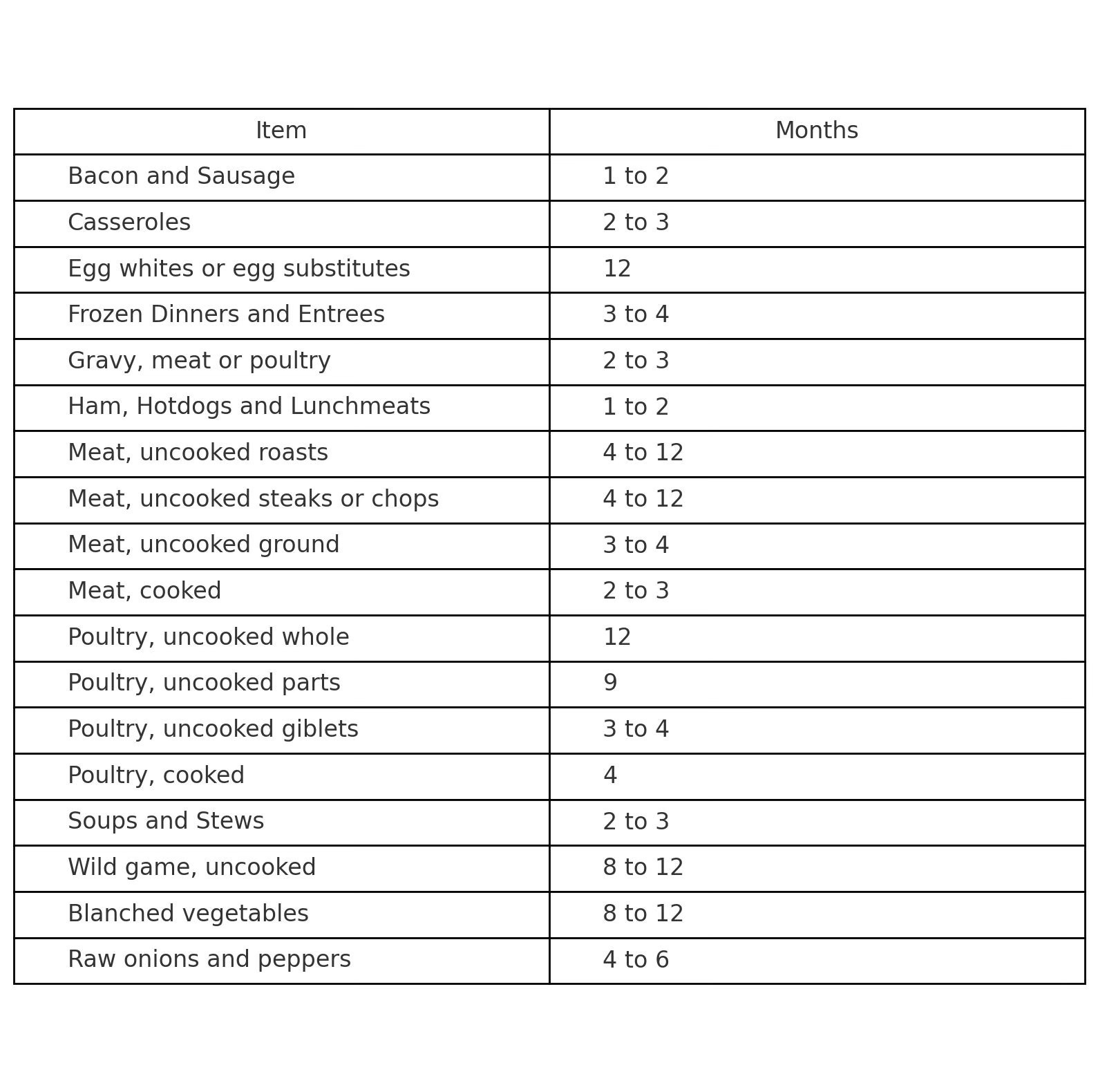
🧊 The Smart Cook’s Guide to Freezing Proteins and Veggies (The Right Way)
Freezing is like hitting pause on food spoilage, but only if done right. Here’s how to stash proteins and veggies in your freezer like a pro, with tips grounded in USDA food safety guidelines.
For Proteins: Freeze Fast, Pack Smart
1. Start With Clean Hands & Fresh Meat
Always freeze meat, poultry, or seafood before the “use by” date. The USDA says that freezing does not kill bacteria; it only pauses their growth. So, don’t freeze meat that's already questionable, and once thawed, don’t refreeze it; use it soon.
Do not freeze whole eggs; the shells can crack. If, for some reason, a whole egg is frozen in the shell (and if the shell didn't crack), you can hard-cook the egg, but you will not be able to use the yolks. Freezing changes the texture of the yolk, making it very thick and syrupy, and it won’t behave like a fresh egg yolk in recipes (freezing encourages the egg yolk proteins to aggregate, and the lipids are released).
USDA Tip: Freeze raw meats within 1 to 2 days (ground meat, poultry) or 3 to 5 days (steaks, chops, roasts) of buying.
2. Ditch the Grocery Packaging
Store packaging is thin and prone to freezer burn. Wrap tightly in plastic wrap or foil, then slide into a freezer bag or vacuum-seal for best protection.
Hack: Label with date and weight. Add marinade or spice rub before sealing to make meal prep easier later.
3. Freeze Flat
Lay bags of meat or fish flat to freeze quickly and stack efficiently. I do this by keeping them on a flat tray or baking sheet and taking out the tray after the food is frozen.
Quick freezing results in smaller ice crystals, which leads to a better texture when thawed.
For Vegetables: Blanch Before You Freeze
1. Clean and Cut Evenly
Wash thoroughly, then chop the pieces into uniform sizes. Uneven sizes = uneven cooking later.
2. Blanch First, Freeze Later
Blanching (brief boiling or steaming, then plunging into ice water) deactivates enzymes that cause off-flavors, color loss, and mushiness in frozen veggies.
Examples
Broccoli florets: 3 minutes
Carrots: Blanch 2 to 3 minutes
Corn kernels: 4 minutes
Green beans: 3 minute
Skip blanching only for onions, bell peppers, and herbs; they freeze well raw.
3. Dry Thoroughly
You can use a clean dish towel or a salad spinner. Excess moisture = ice crystals = soggy veggies.
4. Freeze on a Sheet Pan First
I’ve found that vacuum bag stores produce the best.
Spread the veggies in a single layer on a tray, freeze until firm, and then transfer them to bags. This prevents clumping, so you can grab a handful when needed.
Faster: Submerge the sealed bag in cold water and change it every 30 minutes.
Avoid: Countertop thawing, as it risks the "danger zone" (40°F to 140°F/4°C to 60°C), where bacteria multiply.
If you decide to microwave thawed food, please cook it immediately, as some parts of the food can warm up in the microwave.
✅ Final Tips:
Keep your freezer at 0°F [-18°C] or lower.
Don’t refreeze raw proteins after thawing (unless cooked first).
If it smells bad, you can just throw it. Some foods develop funky odors during storage because fats can go rancid.
FIFO = First In, First Out. Use older items first.
Peanut Salsa Macha & Roasted Japanese Sweet Potatoes with Peanut Salsa Macha and Labneh
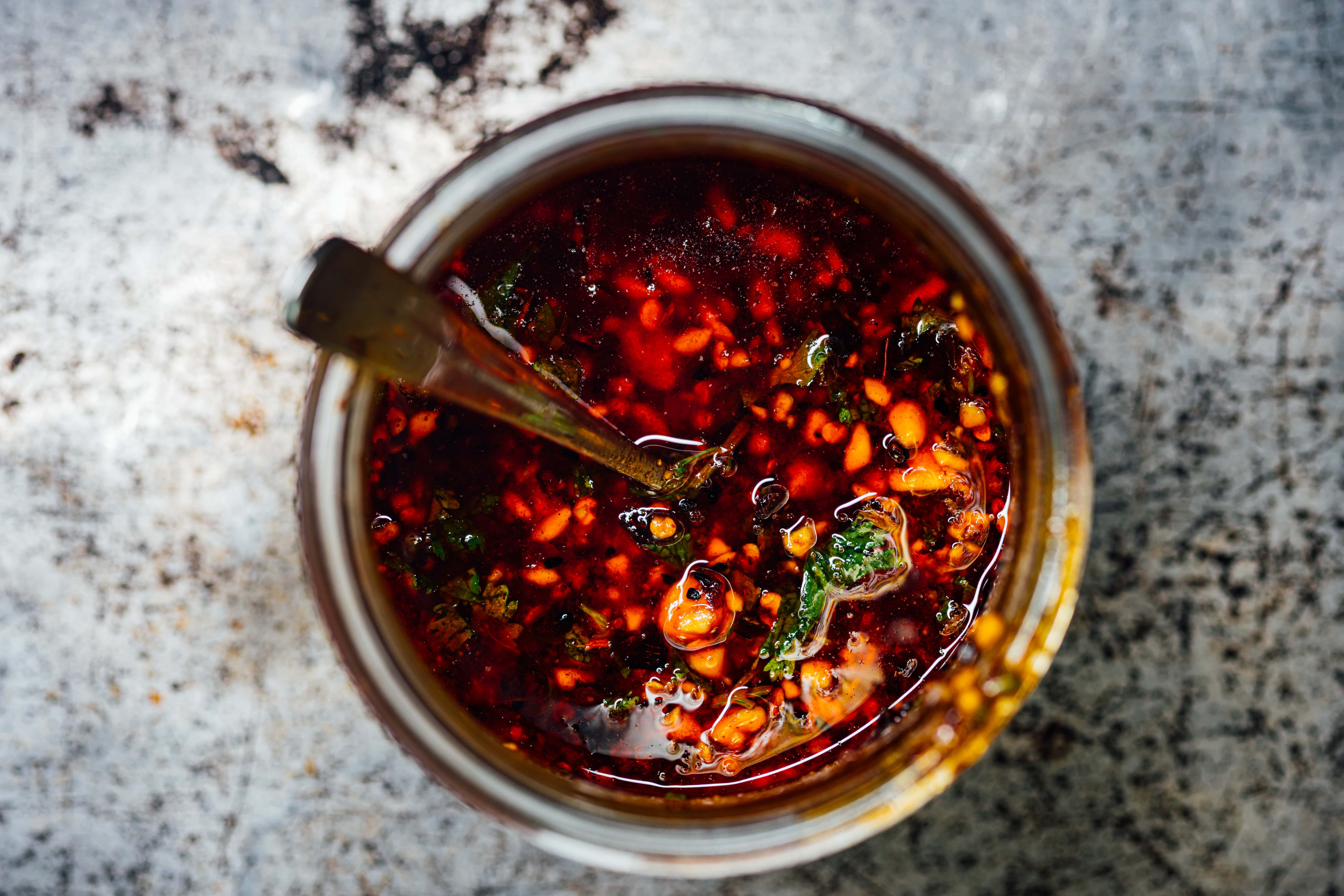
What is Salsa Macha
A few weeks ago, I had dinner at Holbox, a small seafood restaurant tucked into the heart of DTLA. The kind of place where the scent of charred chiles and sea brine lingers in the air, and every plate feels like a revelation. One dish, in particular, stayed with me: a delicate tortilla cradling sweet crab meat, blanketed in a deep, rust-colored peanut salsa macha. It was rich and smoky, with just the right amount of heat, luxurious without trying to be.
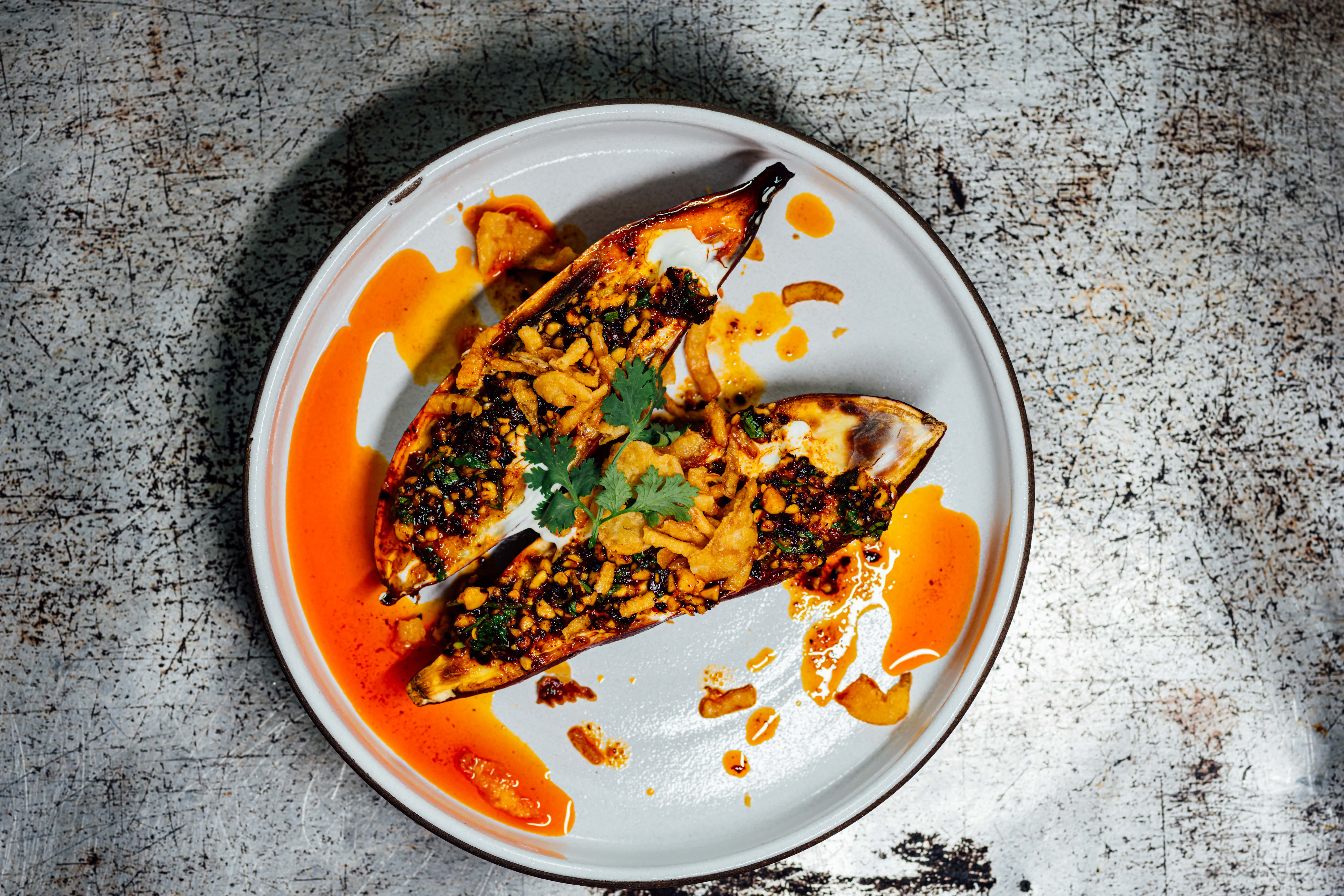
I left thinking about that salsa. The way it clung to the crab, the warmth it left on my tongue. That night, I came home and headed straight to the kitchen, determined to recreate it, not the whole dish, just the essence. Something simple, quick, and unforgettable. Roasted Japanese sweet potatoes meet their match: a cool, creamy scoop of salted labneh, draped in smoky peanut salsa macha. Crispy fried onions add crunch, fresh cilantro brings lift, and every bite lands exactly where it should.
Salsa macha is an intensely flavorful, nutty, and spicy Mexican chili oil, more of a condiment than a sauce, originally from the state of Veracruz. However, it’s strongly associated with the cuisine of Oaxaca and parts of Jalisco. It reminds me of Asian chilli crisps, but smoky, earthy, and sometimes with a whisper of sweetness.
Welcome to The Flavor Files—Summer Edition. ☀️ Here’s where my love of cooking, food science, and peak-season produce all come together. From juicy tomatoes to smoky grilled peaches, summer ingredients deserve a little chemistry and a lot of flavor.
Want more recipes? You’ll find them all at Nik Sharma Cooks. Still need a copy of Veg-Table? Grab it here—it’s full of ideas to make vegetables the star of your summer table. 🌿🍆
This newsletter includes the occasional affiliate link—they help keep the spice (and the science) flowing.
Now let’s dive into the good stuff—because summer won’t wait. 🔥
The Flavor Files is a reader-supported publication. To receive new posts and support my work, consider becoming a free or paid subscriber.
The first time I ate asparagus was awkward and mildly terrifying. It’s not a common vegetable in India, so I’d never seen it until it showed up as a roasted side dish at a restaurant in Cincinnati. I loved its crisp-tender texture and the nutty, slightly grassy flavor. So I went all in. Possibly too in.
About an hour later, I took a trip to the restroom, and that’s when the existential dread kicked in. A strange, sharp odor hit me—something sulfurous and… frankly alarming. I was convinced my kidneys were failing or that I had minutes left on this planet. Too embarrassed to ask anyone, I waited until I was alone, then launched into a frantic Medline search for “sudden onset deadly body odor.”
That rabbit hole led me straight to asparagusic acid, a sulfur-containing compound unique to asparagus. When digested, it breaks down into volatile molecules that get excreted in urine, giving rise to that notorious smell. But here’s the twist: not everyone notices it. Some people don’t produce the smelly compounds at all, while others do but lack the specific receptors to detect them.
In other words, if you’ve never noticed a weird asparagus smell in the bathroom… congratulations, you’re either a non-producer or your nose is genetically blessed.
Why We Still Don’t Fully Understand the Asparagus Pee Phenomenon
Asparagus is famously rich in sulfur-containing compounds, especially asparagusic acid, which breaks down in the human body into volatile, often pungent-smelling molecules. But here’s the twist: despite decades of study, we still don’t fully know which exact chemicals are responsible for the odor, or why only some people seem to detect it.
That surprised me.
In grad school, one of the core lessons we learned when testing hypotheses was this: it’s not enough to observe an interesting effect — you have to prove it, challenge it, recreate it. So in this case, let’s say you detect sulfurous compounds like methanethiol or dimethyl sulfide in urine post-asparagus. Interesting, yes.
But here’s the scientific standard: If you remove those molecules and add them back in, do people still smell the same odor?
And if they do, is that smell identical to what happens after eating asparagus?
The answer so far is: not exactly.
Multiple studies have identified likely candidates for the smell, including various volatile sulfur compounds; however, no one has been able to reproduce the full “asparagus bouquet” from scratch. In short, we’ve found some of the suspects, but haven’t reassembled the crime scene. These molecules may be present, but we haven’t definitively shown they’re both necessary and sufficient to account for the whole odor.
What we do know, thanks to large-scale genetic studies (like the one by 23andMe), is that most people produce the smell, but not everyone can detect it. Smelling it — or not — is primarily a function of olfactory receptor gene variants. Your body might be excreting the funk, but your nose might not be wired to notice.
But here’s where I need to raise a red flag: Those studies were conducted almost entirely on individuals of Northern European ancestry. Which means the findings, while fascinating, are not universally applicable.
In India, where I grew up, asparagus isn’t a staple. The data on whether South Asians, people from Africa, Southeast Asia, or the Middle East, can detect odors is essentially nonexistent. The genetic variants associated with “asparagus anosmia” may be absent or behave differently in those populations. Scientists need to study larger populations and conduct more controlled studies.
So yes, asparagus pee is a funny cultural reference. Still, it’s also a case study in how scientific conclusions get shaped by who we study, what we measure, and what assumptions we make about universality.
In short, the asparagus mystery isn’t fully solved. The chemistry is still inconclusive. And the genetics? Likely more diverse than we’ve measured so far.
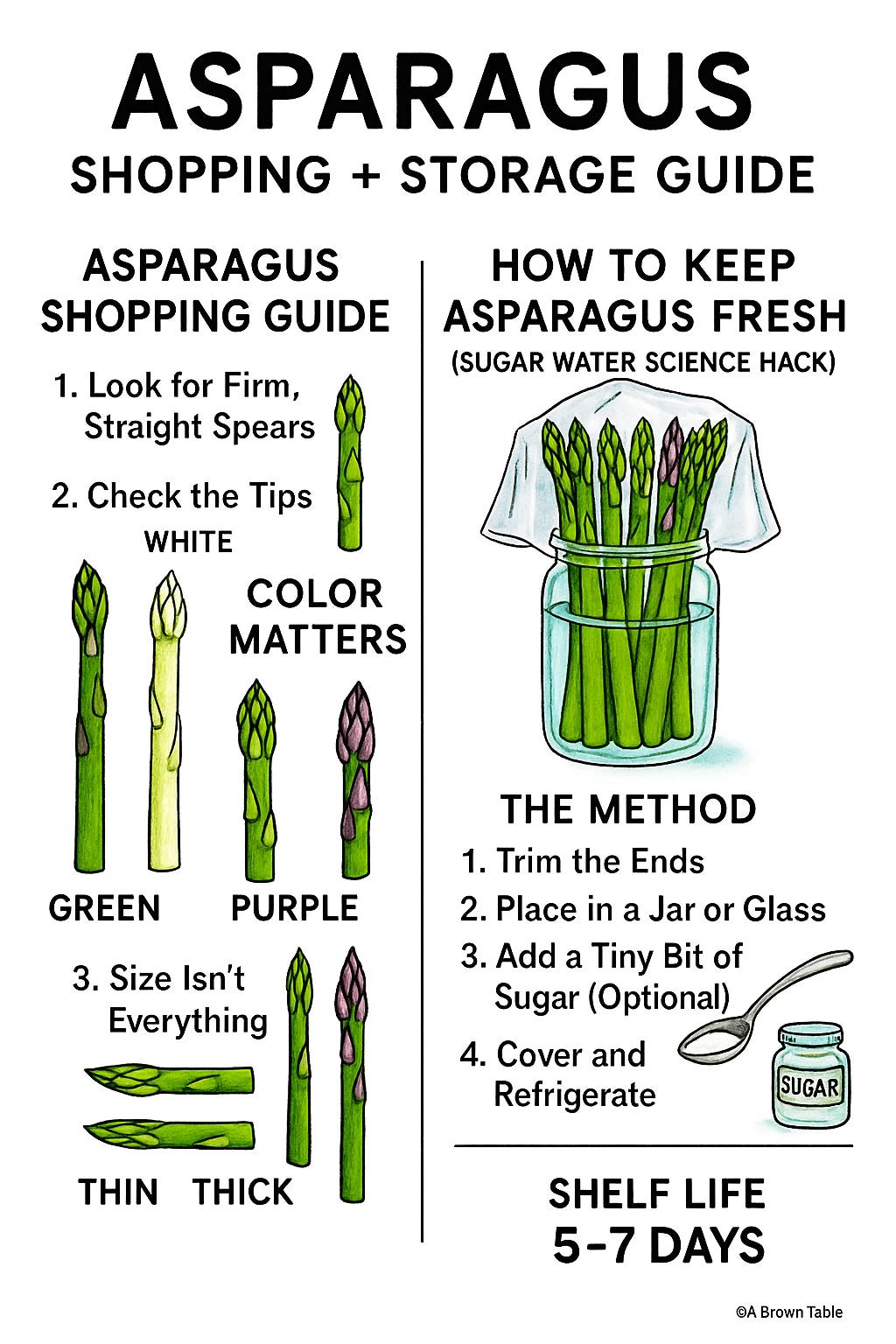
The Asparagus Guide
Asparagus Shopping Guide
Look for Firm, Straight Spears: Stalks should feel crisp, not bendy or limp. Avoid wrinkled or shriveled ends.
Check the Tips: The tips (aka the buds) should be tightly closed and compact, not mushy, flowering, or frayed.
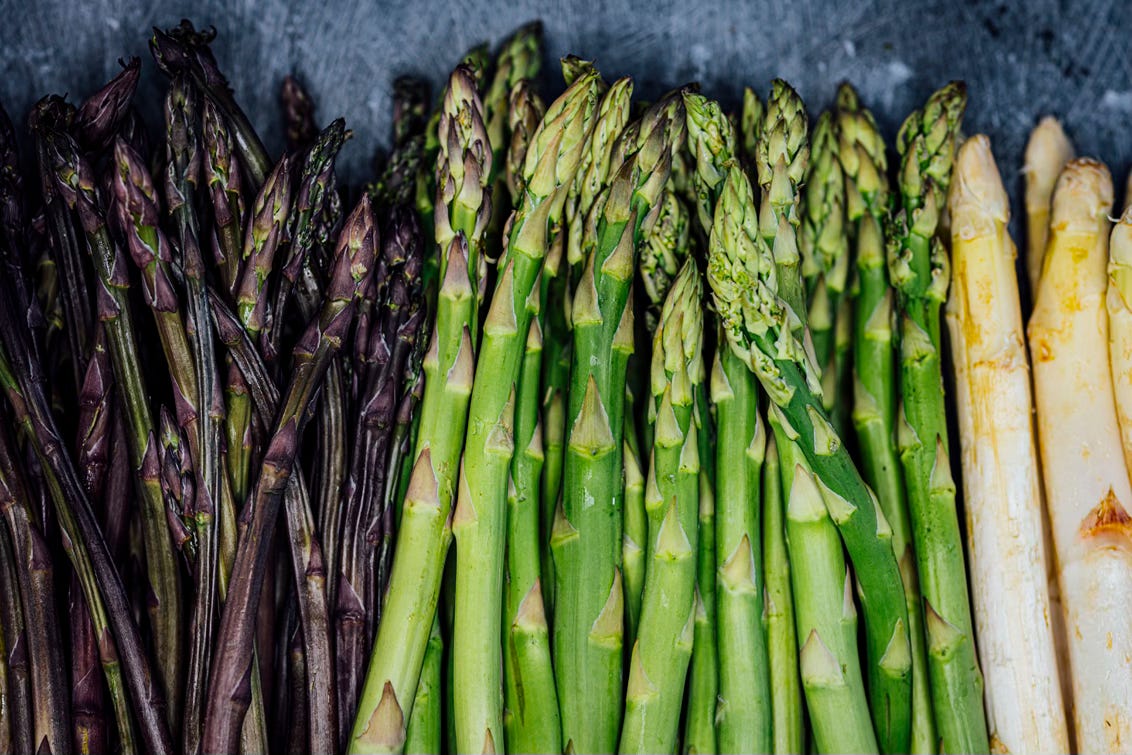
Color Matters: Green asparagus should have vibrant, bright-green stalks with a slight purple tinge at the tips. White asparagus should be ivory, not gray or dried out. Purple asparagus should be evenly colored without fading or brown spots.
Size Isn’t Everything: Thin spears cook faster and are great for quick sautés or roasting. Thicker spears have a meatier bite and are better for grilling or blanching. Both are equally tender when fresh; adjust your cooking time accordingly.
How to Keep Asparagus Fresh (Sugar Water Science Hack)
Asparagus is essentially a flower stalk, and like cut flowers, it stays fresher when stored upright in water. Here’s how to extend its life:
The Method:
Trim the Ends: Cut about ½ inch [13 mm] off the bottom of the stalks.
Place in a Jar or Glass: Stand the spears upright in a glass or jar with about 1 in [2.5 cm] of cold water.
Add a Tiny Bit of Sugar (Optional): Stir in ½ teaspoon sugar per cup of water. Why? Sugar feeds the stalks and keeps them metabolically active a bit longer; it’s plant life support.
Cover and Refrigerate: Loosely cover the tops with a produce bag or plastic wrap. Change the water every couple of days.
Shelf Life: This method can keep asparagus crisp and flavorful for 5 to 7 days, sometimes longer, especially if they were super fresh at purchase.
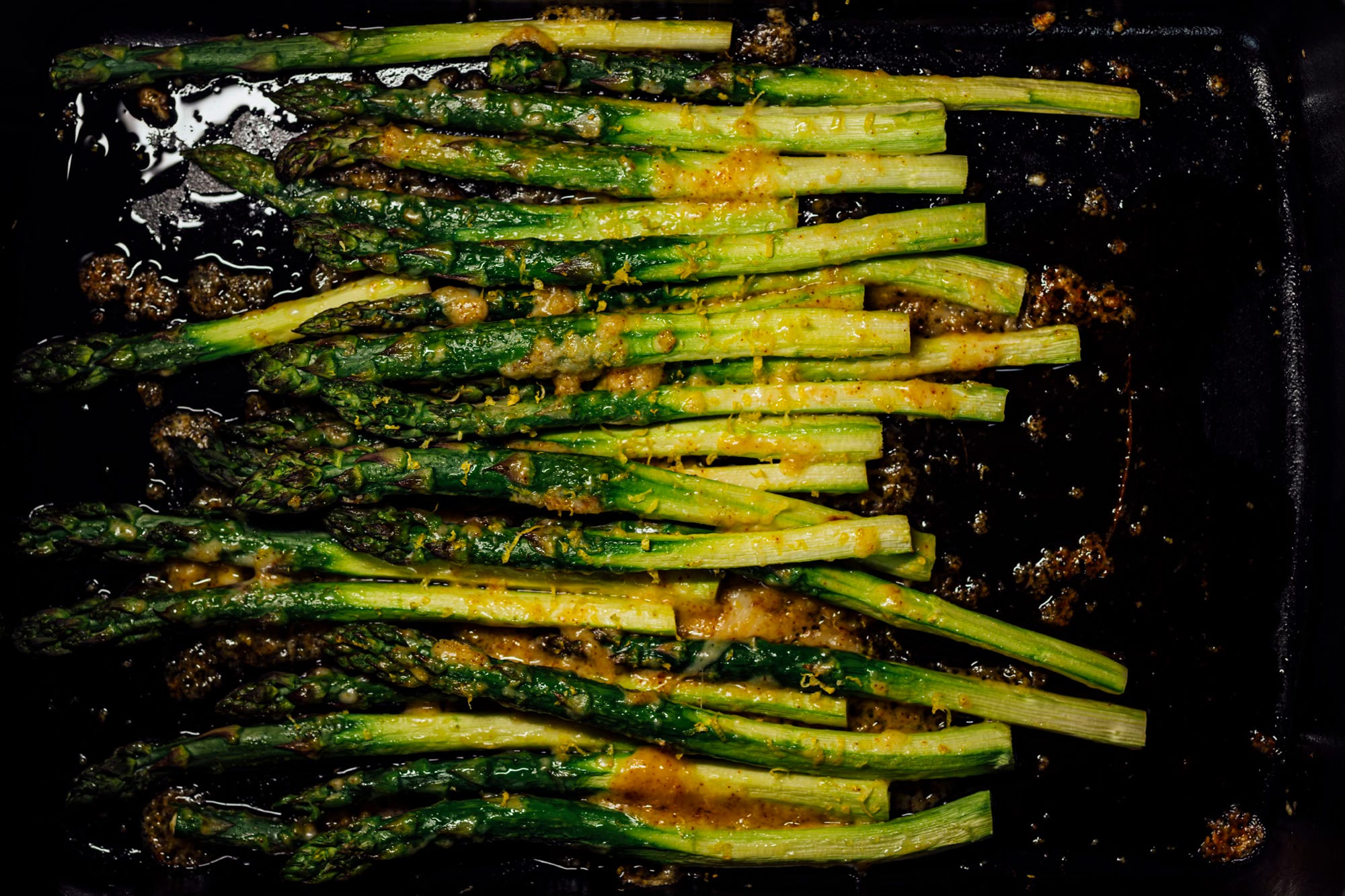
A bright, bold riff on the classic lemon-asparagus combo. I layer the lemon zest, half before cooking, half after, to coax out both warmth and fresh citrusy zing. Garlic and a hint of cayenne enhance the savory notes, accentuating the umami-rich saltiness of Parmesan. It’s fast, flexible, and just elegant enough to land on any weeknight or dinner party table. Peel those thick woody stems, it will ensure a more tender asparagus.
Welcome to The Flavor Files! 🎉This is where my love for cooking, flavor, and food science all come together—because delicious food is even better when you understand a little of the magic behind it.
Looking for more recipes? You’ll find them all at Nik Sharma Cooks. Still need a copy of my latest cookbook, Veg-Table? You can grab it here—it’s filled with veggie-driven inspiration. 🌱✨
You might spot a few affiliate links sprinkled throughout this newsletter; they help keep the spice—and the science—flowing.
Now, let’s dive in. 🔥
The Flavor Files is a reader-supported publication. To receive new posts and support my work, consider becoming a free or paid subscriber.
The Flavor Files is a reader-supported publication. To receive new posts and support my work, consider becoming a free or paid subscriber.
Do you know how to make Basmati rice the right way? Well, I have the secret for you! I'll tell you why Basmati is different and why that matters for preparation. Serve the perfect rice every time.
(I'm in a generous mood and wanted to share content I typically provide only to paid subscribers. If you are interested in more in-depth content like this, click on Subscribe Now to upgrade.)
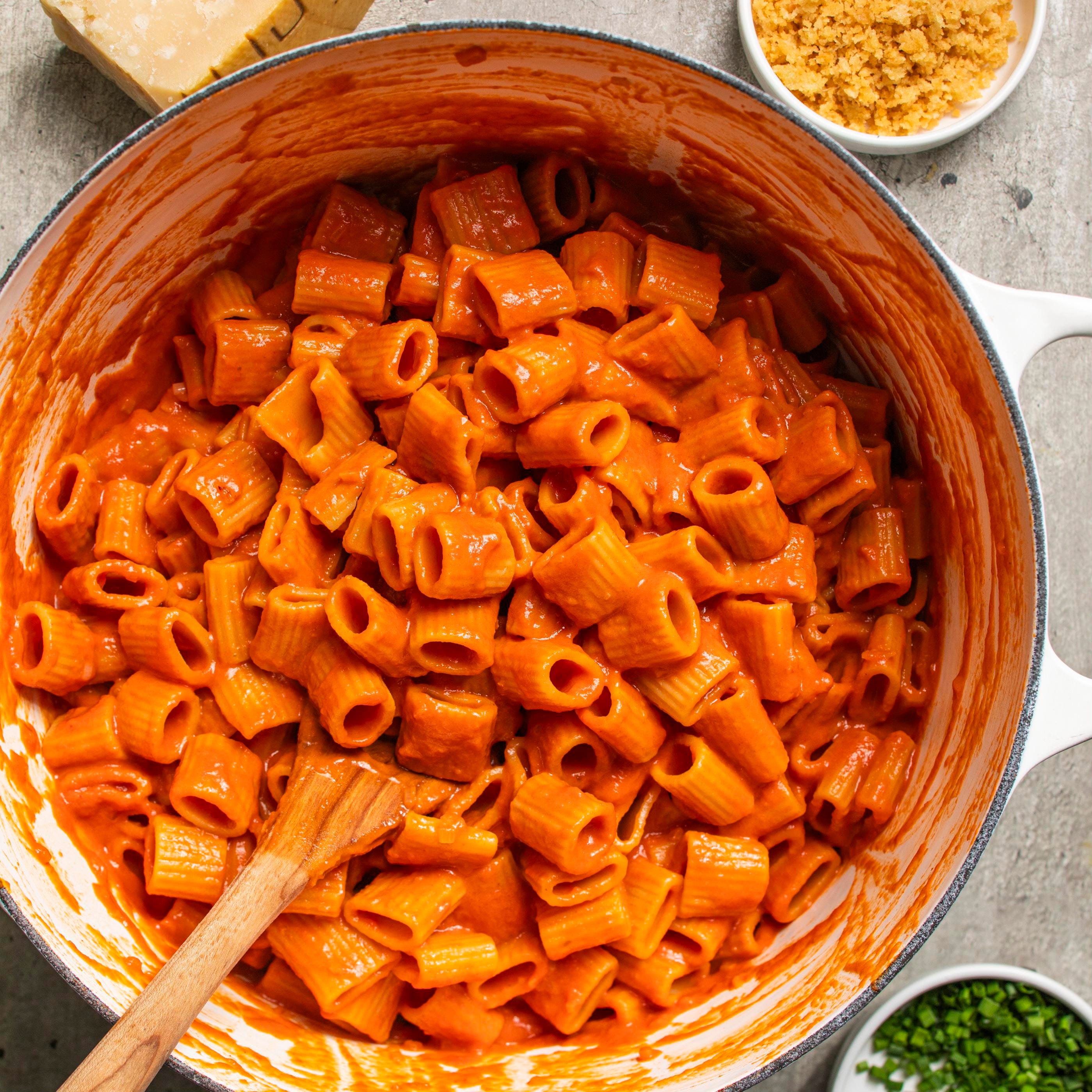
In this quick weeknight meal, Italian passata and Korean gochujang combine to create a smooth, bold sauce reminiscent of silky Italian vodka sauce, but with a deeper layer of umami and a pleasant hint of heat. Passata, an uncooked, strained puree of ripe tomatoes with the skins and seeds removed, is smooth and bright. Gochujang, a deeply savory, fermented chili paste made from glutinous rice, soybeans, and gochugaru (Korean chili powder), brings gentle heat and a touch of sweetness. Together, they formed a rich, harmonious sauce that clung beautifully to pasta and delivered depth well beyond the effort it took to make. A sprinkle of garlicky bread crumbs over the pasta before serving added a pleasant crunch and another layer of flavor.
This recipe resides on ATK and is free. I love seeing you share your excitement! ATK makes several recipes from the residency available for free. You might need to enter your email so they can send you more great content, but you can always opt out anytime. I’ve been a longtime subscriber to their newsletters and have found them super valuable. I hope that helps clarify how to access these co-created recipes—we put a lot of love into them, and I’d love for you to check them out! I appreciate your support!
Welcome to The Flavor Files! 🎉This is where my love for cooking, flavor, and food science all come together—because delicious food is even better when you understand a little of the magic behind it.
Looking for more recipes? You’ll find them all at Nik Sharma Cooks. Still need a copy of my latest cookbook, Veg-Table? You can grab it here—it’s filled with veggie-driven inspiration. 🌱✨
You might spot a few affiliate links sprinkled throughout this newsletter; they help keep the spice—and the science—flowing.
Now, let’s dive in. 🔥
The Flavor Files is a reader-supported publication. To receive new posts and support my work, consider becoming a free or paid subscriber.
Summer has arrived, and June is in full swing. It’s hot enough that I think about cold coffee, ice cream, and sorbets, morning to night. Pretty much anything that’s filled with a heaping of ice.
I got myself a new fine mesh strainer that is STRONG and filters stuff out well - I tested the Rösele fine mesh strainer with blended coconut, and it did a fantastic job of straining the solids out to give me a smooth, clear milk (I got the 7.5-inch strainer).
I grew tired of sticking wet towels between the counter and my cutting boards to prevent the boards from slipping, so I finally got a slip mat for my large cutting board. It’s made prep work a breeze.
I LOVE this small kitchen remodel. It is tasteful, refreshing, and thoughtful, and the rest of the home is equally cozy and beautiful.
I finally scored a reservation at Panda Inn in Pasadena, yes, the birthplace of Panda Express. Ever since their remodel and grand reopening, getting a table has felt almost impossible. So when a friend invited me to join them for lunch, I jumped at the chance. The place was buzzing with energy, and the food? It was well worth the wait. I couldn’t get enough of the Phoenix Chicken and the Honey Walnut Shrimp, both perfectly executed and deeply nostalgic in flavor.
And while I’m on the topic of local gems, I have to shout out 61 Hundred Bakery in Santa Ana. I first tasted their stunning blue corn masa sourdough at Somni a few weeks ago. When Chef Aitor Zabala mentioned he sources it from this bakery, I immediately added it to my must-visit list. I finally made the trip and was blown away. The croissants? Flaky, layered, and intensely flavorful. Every item I tried showed a level of craft and precision that speaks to true mastery. The bakers and staff are extremely friendly.
I was absolutely delighted to read Roopa Gulati’s new cookbook, Indian Kitchens: Treasured Family Recipes from Across the Land (Bloomsbury, 2025; Amazon / Bookshop). It reads like a deeply soulful love letter to the kitchens of India, kitchens that tell stories, hold memories, and reflect the incredible diversity of communities across the country.
India isn’t a closed book — it absorbs influences from global kitchens and has done so for centuries.
As someone who grew up in Bombay (Mumbai), this resonated strongly with me. French, Portuguese, British, Middle Eastern, Central and North Asian, these influences (and many more) have all woven themselves into the rich, evolving tapestry of Indian cuisine. And yet, so many myths still persist:
→ that all Indian food is “curry”
→ that garam masala is some kind of universal magic key
→ that naan is our everyday bread (it’s not — it’s a restaurant treat!)
→ that Indian food is always fiery hot
Roopa’s book gently and beautifully dismantles these clichés by showcasing the stunning range of dishes and traditions from kitchens all over India; dishes rooted in place, memory, and family. It’s a journey told through food, and one I know you’ll savor as much as I did.
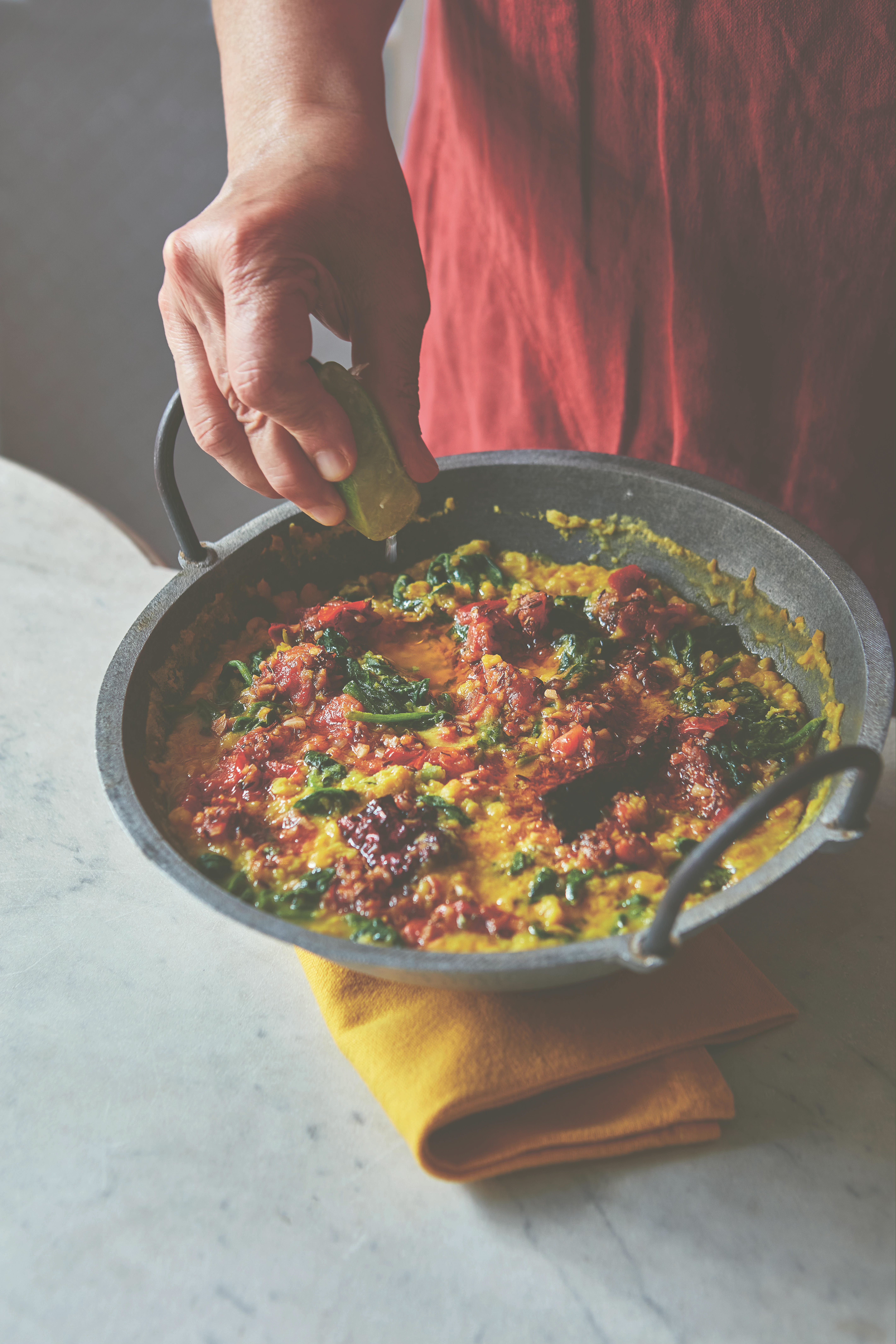
This week, I’m sharing one of my favorites from the book: Chana Dal with Spinach, a comforting and nourishing dish layered with subtle flavor.
Chana Dal with Spinach
It’s usual to use chana dal for this dish, but you could also make it with split yellow peas. Both have a robust, almost meaty flavour, which stands up well to leafy green vegetables. Add the softened spinach at the last minute, so that it retains its fresh grassy-green colour. This dal is finished with a fried tarka flourish, made with sizzling spices, garlic, ginger and the sharpness of green chillies.
Serves 4
7 oz [200g] split Bengal gram (chana dal ), washed and soaked in hot water for 2–3 hours
¼ tsp ground turmeric
12 1/4 oz [350g] baby spinach leaves
juice of ½ lime
sea salt
FOR THE TARKA
1 3/4 oz [50g] ghee or 5 tbsp sunflower oil
1 teaspoon cumin seeds
1 dried Kashmiri red chilli
4 garlic cloves, finely chopped
1 oz [30g] ginger root, peeled and finely grated
2 green chillies, deseeded and chopped
1 tomato, diced
Discard the soaking water from the Bengal gram and transfer the dal to a pressure cooker. Cover with water by a depth of 4 cm. Add the turmeric and cook under pressure for 30 minutes, until the gram is soft and has broken down. Roughly crush the dal with a potato masher against the side of the pan.
Aim for the consistency of thick soup. If it looks a bit watery, boil the dal for a few more minutes without any pressure. Alternatively, put the Bengal gram and turmeric in a medium pan and cover with water to a depth of 4cm. Half-cover the pan and cook the dal on a medium heat for about 1½–2 hours, until completely tender, adding extra water if needed to prevent it from becoming too thick. Roughly crush the dal in the same way with a potato masher. Keep the dal warm.
Heat a sturdy, dry pan on a high heat and add the spinach. Cook, stirring all the time, until the leaves start to wilt – this should take 1 minute. (You may need to do this in batches.) Scoop the leaves into a colander set over a bowl and leave to cool. When the spinach is cool enough to handle, squeeze any excess liquid out of the leaves with the palms of your hands, then roughly chop them. Leave to one side.
For the tarka, heat the ghee or oil in a small pan on a medium–high heat and add the cumin seeds and Kashmiri chilli. Swirl everything around for about 20 seconds, until the cumin releases its nutty fragrance and the chilli swells and becomes darker.
Turn down the heat to medium and add the garlic, ginger and green chillies and fry for 1 minute. Stir the diced tomato and cook for another 2 minutes, until softened.Tip this tarka into the hot dal, season generously with salt, then stir in the chopped spinach. Reheat and finish with the lime juice before serving straight away.
(Note: I’ve not changed anything in the original recipe, but I’ve included measurements for American audiences.)
Welcome to The Flavor Files! 🎉This is where my love for cooking, flavor, and food science all come together—because delicious food is even better when you understand a little of the magic behind it.
Looking for more recipes? You’ll find them all at Nik Sharma Cooks. Still need a copy of my latest cookbook, Veg-Table? You can grab it here—it’s filled with veggie-driven inspiration. 🌱✨
You might spot a few affiliate links sprinkled throughout this newsletter; they help keep the spice—and the science—flowing.
Now, let’s dive in. 🔥
The Flavor Files is a reader-supported publication. To receive new posts and support my work, consider becoming a free or paid subscriber.
This week’s newsletter is a little shorter, but it’s stacked with flavor. I’ve pulled together a curated lineup of recipes perfect for your Memorial Day cookout, whether you’re grilling, chilling, or just enjoying an extra scoop of dessert. I’m taking a moment to unwind this holiday weekend before diving into a very exciting new project (more on that soon). In the meantime, fire up that grill and let’s get cooking
This week, I traded my usual kitchen for the iconic halls of America’s Test Kitchen in Boston, and let me tell you, if you’ve ever wondered what happens when science meets studio lights and a bunch of overachieving spatulas, it’s magic.
I filmed my segments for the ATK TV show with the incredible Bridget Lancaster and Julia Collin Davison; two hosts, two totally different vibes, and one shared love for food that made me realize how much I enjoy talking about cooking. Watching the crew work behind the scenes was like witnessing a well-seasoned army of culinary ninjas. These people do not mess around. It’s a well-oiled and seasoned machine. Things I learned: How long it takes to grate a teaspoon of lemon zest and grate ginger on camera without crying (because it takes longer than you think).
Between takes, I cooked up some new recipes (stay tuned), had the cooks taste test them out in the test kitchen, attended several other tastings (doughnuts, ramen, chicken bakes, pot pies, and more), and learned a ton. And just when I thought the week couldn’t get any sweeter, in walked the baking queen herself: Rose Levy Beranbaum. That’s right, THE Rose. She brought cookies. Cookies that she baked. For me. I’m still recovering. Rose shared several tips and juicy stories, and we even got to give her a tour of the test kitchen.
Memorial Day weekend is the unofficial kickoff to summer, and you know what that means: sunshine, smoky grills, and unapologetically good food. I’ve rounded up my absolute favorite recipes to help you build the perfect cookout menu, whether you’re going full BBQ mode or keeping things fresh and simple. Think juicy grilled mains, vibrant veggie sides, and a few sweet (and salty) surprises. These are the dishes I’ll be making, and trust me, your guests will thank you.
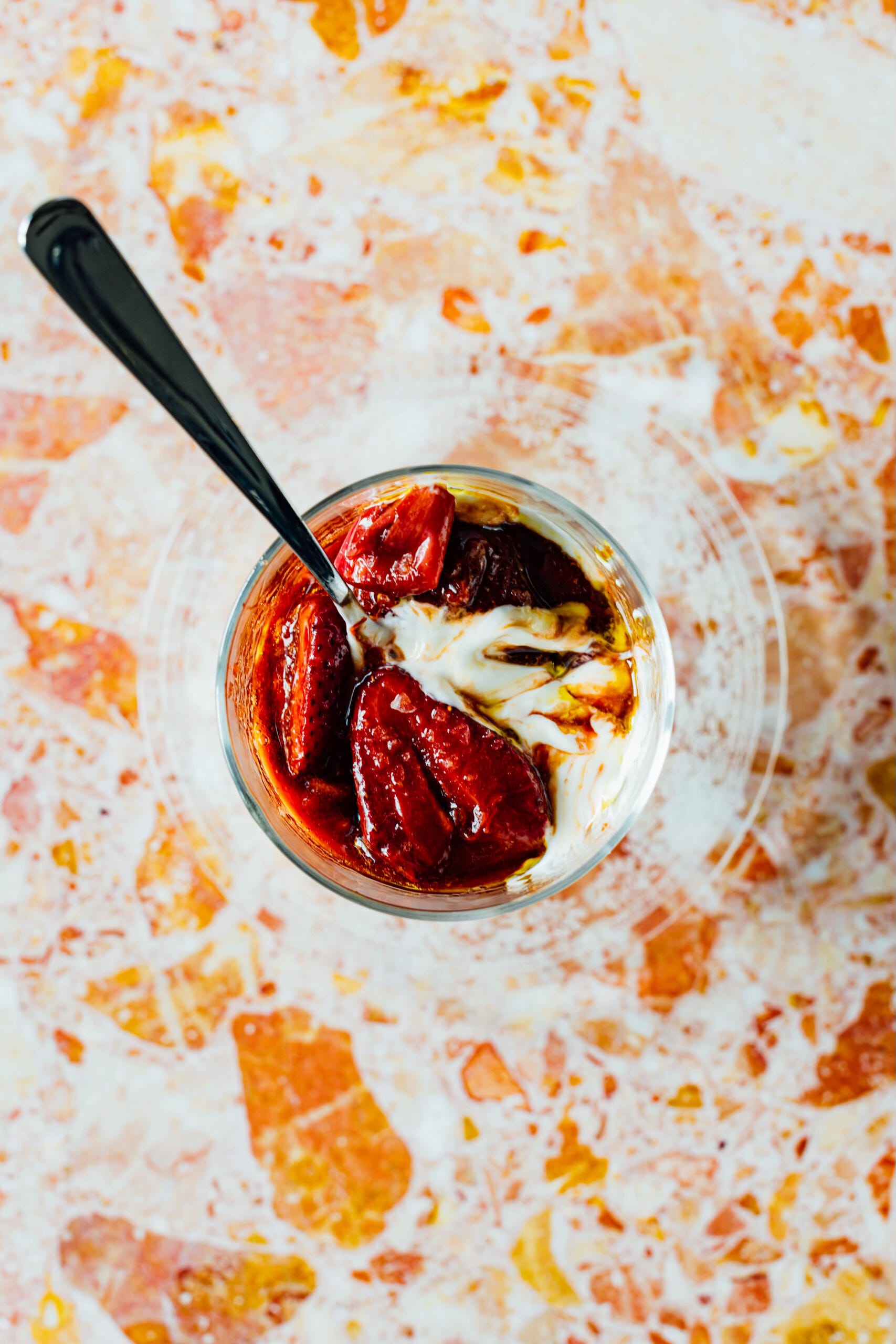
I’ve also included a new recipe - something simple, seasonal, and seriously delicious: roasted strawberries and rhubarb with a balsamic glaze, served over a cloud of thick, creamy Greek yogurt. It’s the kind of dessert (or breakfast—I won’t judge) that looks fancy but takes almost no time. Sweet, tangy, creamy, it’s joy in a bowl.
Here’s wishing you a delicious and restful holiday weekend. I hope you get a chance to kick back, soak up some sun, and savor something good.
Welcome to The Flavor Files! 🎉This is where my love for cooking, flavor, and food science all come together—because delicious food is even better when you understand a little of the magic behind it.
Looking for more recipes? You’ll find them all at Nik Sharma Cooks.Still need a copy of my latest cookbook, Veg-Table? You can grab it here—it’s filled with veggie-
driven inspiration. 🌱✨
You might spot a few affiliate links sprinkled throughout this newsletter; they help keep the spice—and the science—flowing.
Now, let’s dive in. 🔥
The Flavor Files is a reader-supported publication. To receive new posts and support my work, consider becoming a free or paid subscriber.
🔬 Why Does My Silicone Spatula Stink? And How to Actually Fix it
The other day, I reached for my silicone spatula, one I'd recently used to stir together a saucy pasta. The dish was long gone, but its memory lingered… in scent. I took one whiff and immediately regretted not cleaning the spatula more thoroughly. That garlicky, savory smell, which had been so inviting during dinner, was now clinging to the tool. And I was about to make a dessert.
To be clear, it's unlikely that the aroma would've actually transferred into the cake batter, but still, the smell bothered me. It always has. As much as I love silicone tools (they're gentle on my cast iron, flexible, and nearly indestructible), they have one annoying quirk: they hold on to smells.
Silicone is often celebrated for being chemically stable and non-reactive; it doesn't leach like plastic can, resists heat, UV, oxygen, and moisture, and it's considered food-safe and non-toxic. It also repels water, which makes it ideal for spatulas, baking mats, molds, and more.
But here's the catch: silicone is permeable to gases and fat-soluble molecules.
Structurally, silicone is a flexible polymer with tiny microscopic pores between its molecular chains. These pores are too small for water to enter quickly, but they allow volatile aromatic compounds, like garlic oil, spices, and caramelized onions, to slip right in.
When silicone is exposed to heat, its pores expand slightly, making it even easier for aroma compounds to embed themselves deeper. Once inside, they're tough to dislodge with soap and a sponge, no matter how often you run it through the dishwasher.
Over the years, I've found that the intensity of absorption doesn't always correlate with the price or brand. Even high-quality, food-grade silicone can hold on to those delicious (but unwanted) smells. It's not about poor hygiene, it's chemistry.
Place on a baking sheet in a preheated oven at 350°F [180°C].
Bake for 30 minutes to "outgas" the trapped odors.
Let cool completely before using or storing.
Tip: Ventilate your kitchen; those odors are released as vapor.
How to Avoid the Smell in the First Place
Use separate tools for sweet and savory cooking when possible. (I forget to do this)
Avoid storing silicone near spices or oils, as they can pick up ambient aromas.
Choose high-quality, platinum-cured silicone; it's denser and less porous than lower-grade versions.
Silicone tools may not be perfect, but their durability, versatility, and ease of use keep me reaching for them. With the right care, you can keep them clean—and stink-free—for years.
Do you have a kitchen mystery you'd like me to unpack in a future issue? Hit reply and let me know.
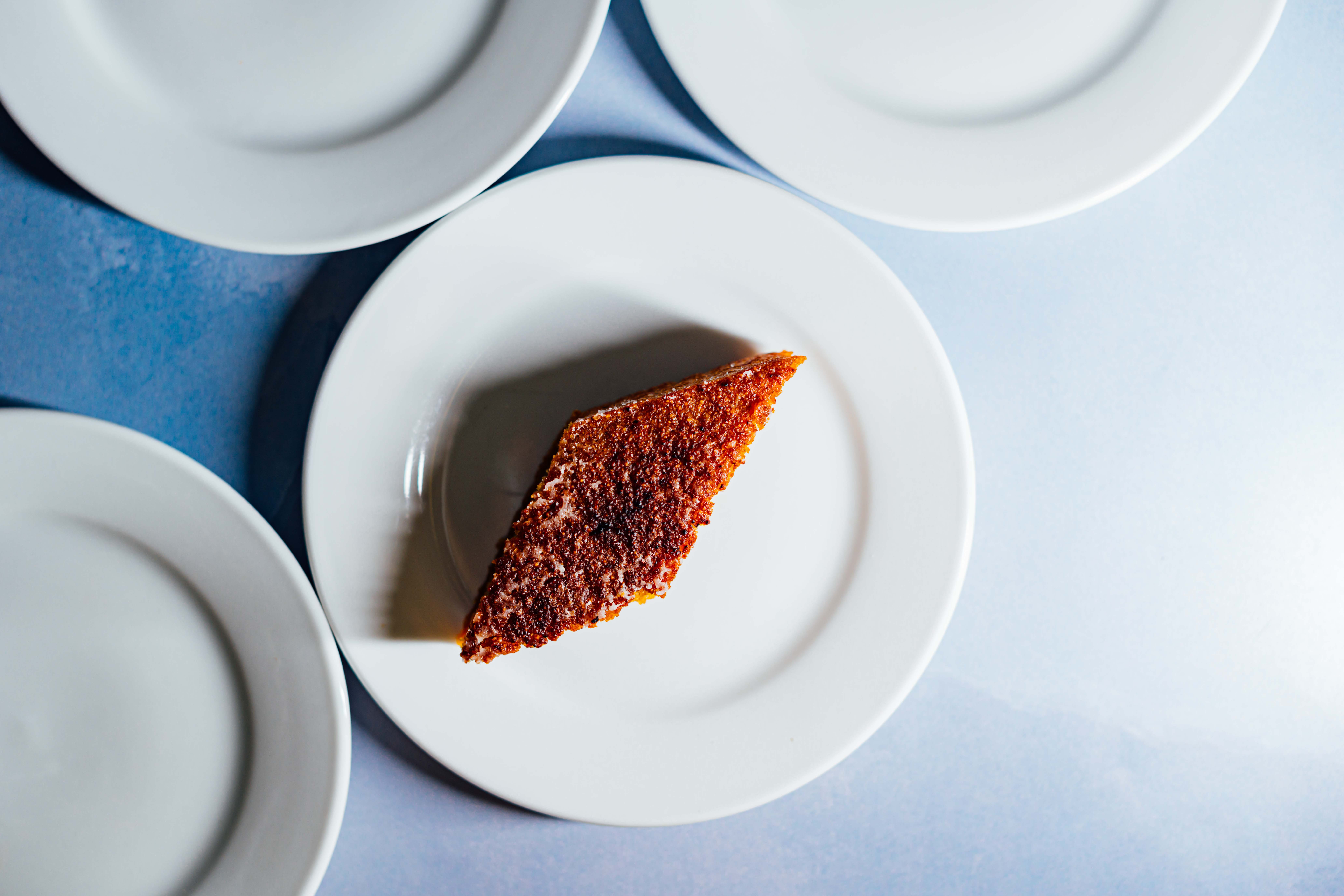
This week’s recipe: A caramel-crusted semolina cake scented with coconut and browned butter.
If a rice pudding and a cake had a golden, coconut-scented love child, it might be this beauty from Myanmar: Shwe Gyi Sanwin Makin; also known as Burmese Semolina Cake or simply Sanwei Makin. It’s soft, fragrant, and lush, denser than a classic Western cake, with a gently grainy texture that comes from coarse semolina (rava) and the deeply satisfying flavor of toasted coconut and jaggery. Today I’m sharing my version of this splendid cake, and I hope you’ll give it a try.
Welcome to The Flavor Files! 🎉This is where my love for cooking, flavor, and food science all come together—because delicious food is even better when you understand a little of the magic behind it.
Looking for more recipes? You’ll find them all at Nik Sharma Cooks.Still need a copy of my latest cookbook, Veg-Table? You can grab it here—it’s filled with veggie-
driven inspiration. 🌱✨
You might spot a few affiliate links sprinkled throughout this newsletter; they help keep the spice—and the science—flowing.
Now, let’s dive in. 🔥
The Flavor Files is a reader-supported publication. To receive new posts and support my work, consider becoming a free or paid subscriber.
If you missed last week’s May recipe digest and this month’s free recipes by me at America’s Test Kitchen - the iconic Chicken 65 from India and the Calabrian Chile White Beans, get them here.
Wishing a warm and heartfelt Mother’s Day to everyone celebrating, whether you're honoring a mother, remembering one, or navigating the day in your own way. May today bring comfort, gratitude, and love in all its beautiful forms.
This week, my friend Rie McClenny invited me to do one of my favorite things: cook, geek out, and eat. Hosted by J. Kenji López-Alt and Balmuda, we cooked in sync around their sleek new electric teppanyaki grill. I whipped up kimchi fried rice because nothing says “test-drive this grill” like fermented cabbage and sizzling rice. I need to get myself one of these grills because they’re fun to cook on, easy to work with, and clean.
You might’ve noticed things are looking a little different around here! I’ve been refreshing the newsletter, tidying things up, adding categories, and making it easier for you to find old favorites and stumble on something new and delicious. The full revamp should be completed by next week, so stay tuned!
Recently, I accidentally bought a massive bag of fresh ginger; far more than I could use in a week. Rather than let it go bad, I froze it. I rely on this method, especially when I pull ginger straight from the garden during harvest season. Freezing helps preserve its bold flavor, and bonus: frozen ginger grates like a dream. Here’s exactly how I do it.
Slice, grate, or julienne the ginger before freezing, depending on how you plan to use it.
Frozen ginger is much easier to grate finely and great for stir-fries, teas, and dressings.
You don't need to worry about thawing before use. Just grab what you need and go ahead with your recipe.
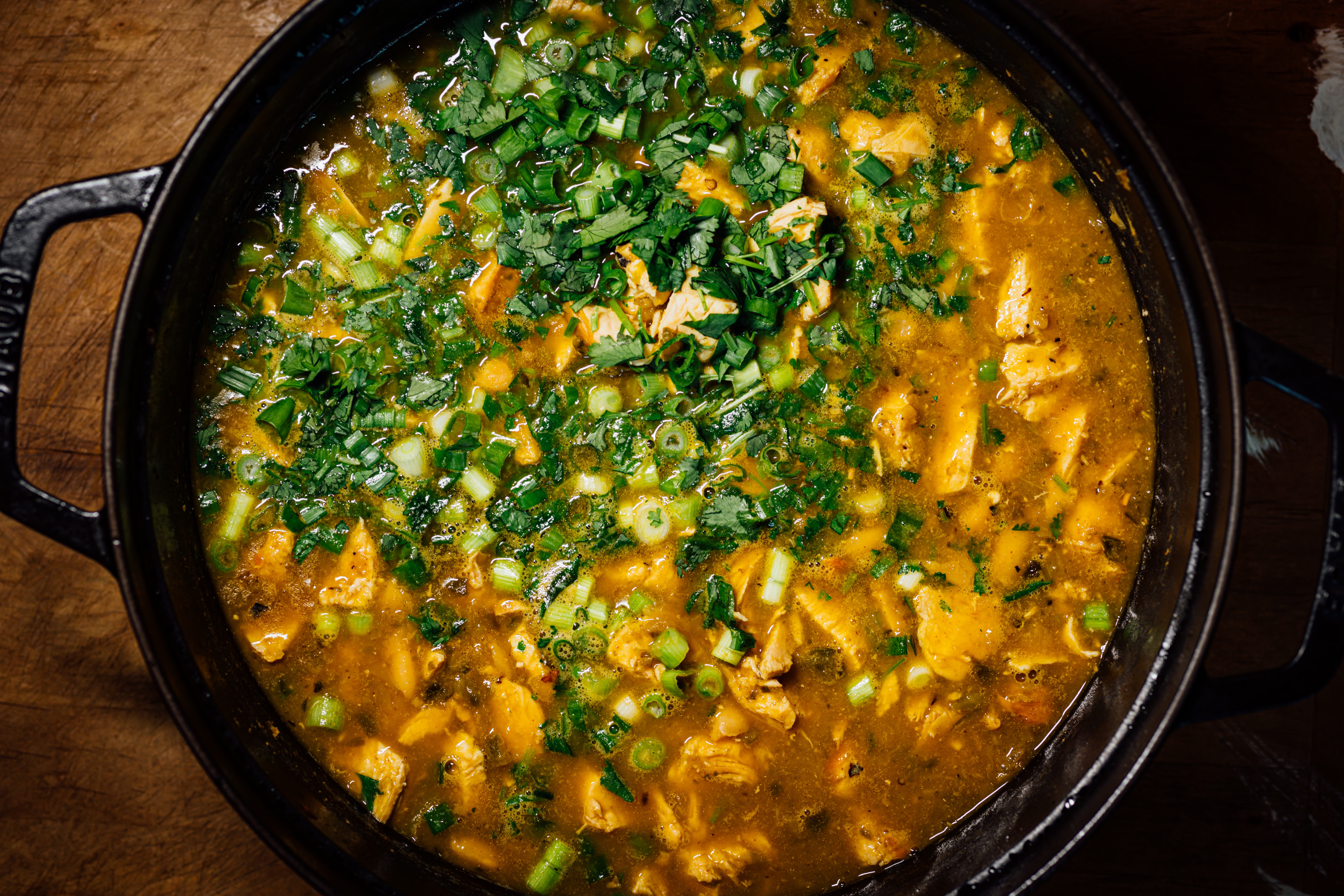
This week’s recipe for my paid subscribers is comfort food in the form of this White Chilli with white beans and chicken. There are days when I need comfort to come quickly. Not the kind that simmers all afternoon, but that that arrives with a bit of ease, a little heat, and the steadying warmth of something deeply familiar. This soup is exactly that. Maybe it’s no surprise that it draws on the parallels between Indian and Mexican cooking, two cuisines that speak the same flavor language. Both celebrate fragrant spices and the slow layering of flavor. Both lean on bright acids like lime or tamarind to cut through richness and love to play with the fire of chiles. And yes, both are proudly rooted in the joy and ingenuity of street food. These similarities aren't coincidental. Colonization shaped the culinary landscapes of both countries; the Spanish in Mexico, the British, Dutch, Portuguese, and French in India, leaving behind a complicated legacy of migration, trade, and exchange. Ingredients like chiles, tomatoes, and potatoes crossed oceans and rewrote recipes. But somehow, even across continents, these two cuisines remain in conversation, with each other, and with those of us who cook and crave them.
Welcome to The Flavor Files! 🎉This is where my love for cooking, flavor, and food science all come together—because delicious food is even better when you understand a little of the magic behind it.
Looking for more recipes? You’ll find them all at Nik Sharma Cooks.Still need a copy of my latest cookbook, Veg-Table? You can grab it here—it’s filled with veggie-driven inspiration. 🌱✨
You might spot a few affiliate links sprinkled throughout this newsletter; they help keep the spice—and the science—flowing.
Now, let’s dive in. 🔥
The Flavor Files is a reader-supported publication. To receive new posts and support my work, consider becoming a free or paid subscriber.
Last Sunday was a special one; I finally made it to the LA Times Festival of Books (I usually miss it because it overlaps with my birthday!). I had the chance to sign copies of my books at the {Pages} a Bookstore booth and, more importantly, to meet so many of you; some who’ve been cooking my recipes for years, and others who discovered my work for the first time. It was truly energizing.
Thank you all for the lovely birthday wishes. I celebrated in peak May fashion, with mangoes, of course. A mango curd–filled cruffin from my favorite LA patisserie, Artelice, was the highlight (fate, if you ask me). There were also lemony, passion fruit–laced desserts in the mix—bright, tart, just the way I like them.
This week on In the Kitchen, Dan, Lan, and I got into it—in the best way. We talked about my intense dislike of bananas and the story of how I went from being a molecular biologist before food science stole my heart. Oh, and Dan casually dropped that his mom is a fan of my work, which honestly made my week. It’s a fun, honest, slightly nerdy episode, and if you’ve ever wondered what goes on behind the scenes at America’s Test Kitchen, you’ll want to give it a listen.
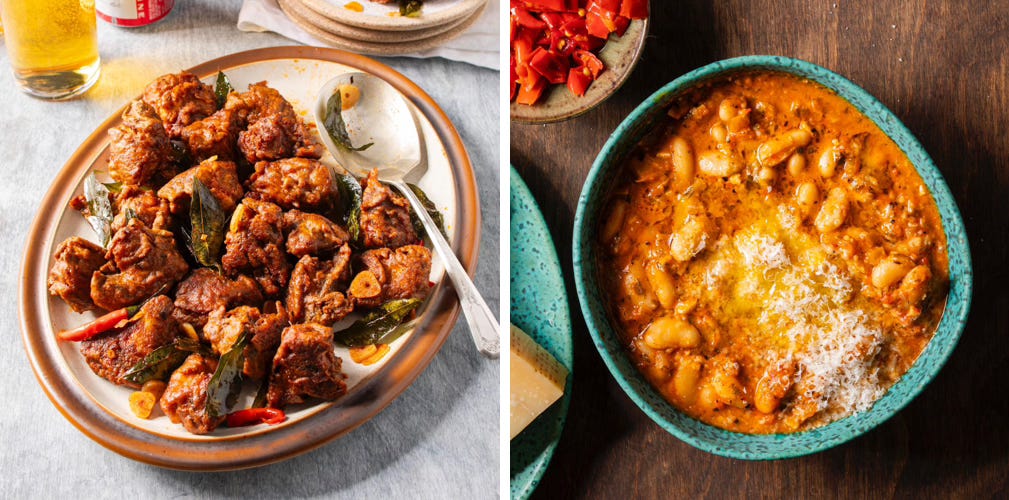
This May, I’ve developed two new recipes for America’s Test Kitchen (ATK)that turn up the flavor and the heat. First up, a classic Indian icon: Chicken 65. Originating in Chennai in 1965 (hence the name), this South Indian classic brings crispy, juicy chicken coated in a yogurt-spice marinade and finished with a fiery, lemony glaze that sticks to your fingers in the best way. The crust? A light mix of cornstarch and rice flour that holds its crunch. The aromatics? Curry leaves and Thai chillies that bring a serious punch.
The second dish detours to Italy: Calabrian Chile White Beans with Almond Pesto. It’s cozy, bright, and intensely flavorful. We broil red pepper and tomato to build a bit of smokiness, then blitz them with almonds, vinegar, garlic, and spicy Calabrian chiles into a rustic pesto that clings to creamy white beans. You can swap in Great Northern beans or chickpeas if that’s what you have on hand; it’s weeknight-friendly and pantry-adaptable.
And if you’re wondering just how spicy these dishes are: Thai chillies clock in between 50,000–100,000 SHU on the Scoville scale, while Calabrian chillies sit comfortably in the 25,000–40,000 SHU range. Heat is a central player in both recipes, but so is balance. Acid in lemon and vinegar ties it all together in these recipes.
A note on the curry leaves in Chicken 65: They’re essential, and you can now find them fresh or dried at Indian/Asian grocery stores or online. I like this brand for the jarred crushed Calabrian Chiles in the Calabrian Chile White Beans with Almond Pesto, but there are many different options in stores.
These two recipes reside on ATK and are free. I love seeing you share your excitement! ATK makes several recipes from the residency available for free. You might need to enter your email so they can send you more great content, but you can always opt out anytime. I’ve been a longtime subscriber to their newsletters and have found them super valuable. I hope that helps clarify how to access these co-created recipes—we put a lot of love into them, and I’d love for you to check them out! I appreciate your support!
More things to cook this May
Spring is in full swing, and it’s the perfect time to shake things up in the kitchen. I’ve rounded up 10 bold, seasonal recipes to cook this May—from prawn kebabs and smoky pulled pork vindaloo to a lychee pastis and an almond-polenta plum tart. Whether you're in the mood for something cozy, spicy, or sweet, this list has a little something for every craving.
The Flavor Files is a reader-supported publication. To receive new posts and support my work, consider becoming a free or paid subscriber.
Welcome to The Flavor Files! 🎉This is where my love for cooking, flavor, and food science all come together—because delicious food is even better when you understand a little of the magic behind it.
Looking for more recipes? You’ll find them all at Nik Sharma Cooks.Still need a copy of my latest cookbook, Veg-Table? You can grab it here—it’s filled with veggie-driven inspiration. 🌱✨
You might spot a few affiliate links sprinkled throughout this newsletter; they help keep the spice—and the science—flowing.
Now, let’s dive in. 🔥
The Flavor Files is a reader-supported publication. To receive new posts and support my work, consider becoming a free or paid subscriber.
My birthday is coming up next week. And as I was thinking about how I wanted to celebrate, I kept coming back to this space—this little community we've built together through curiosity, food, flavor, and a lot of heart.
To thank you and invite more of you into this growing circle, I’m offering 20% off all annual subscriptions now through May 3, 2025.
If you’ve been here a while, you know this newsletter isn’t just about recipes or science experiments in the kitchen. It’s about creating a place where we can slow down, savor the details, and maybe find a little more wonder in the everyday.
Thank you for reading, supporting, and being part of this journey with me. It means more than you know.
Lately, I’ve found myself baking again. Maybe it’s because I just turned in my new cookbook's first round of edits. Perhaps it’s because my birthday is coming up next week. Or maybe it’s just because baking feels like a kind of homecoming.
I miss the quiet rhythm of the patisserie days, the way we made something with our hands, something meant purely for someone else’s joy. What don’t I miss? Making the same thing every day. No tweaking, no experimenting, no "what if I added just a little more cardamom?"; just a strict devotion to the same recipe, day after day, like a pastry-driven version of Groundhog Day.
In a fit of what I can only call "productive procrastination," I cleaned out my baking tools. If I hadn’t used them in a while, they got donated. The same is true with my cookbooks, especially the ones that gather dust for four years or more. What stayed? My science books, my baking books, and the ones that remind me why I started doing this in the first place.
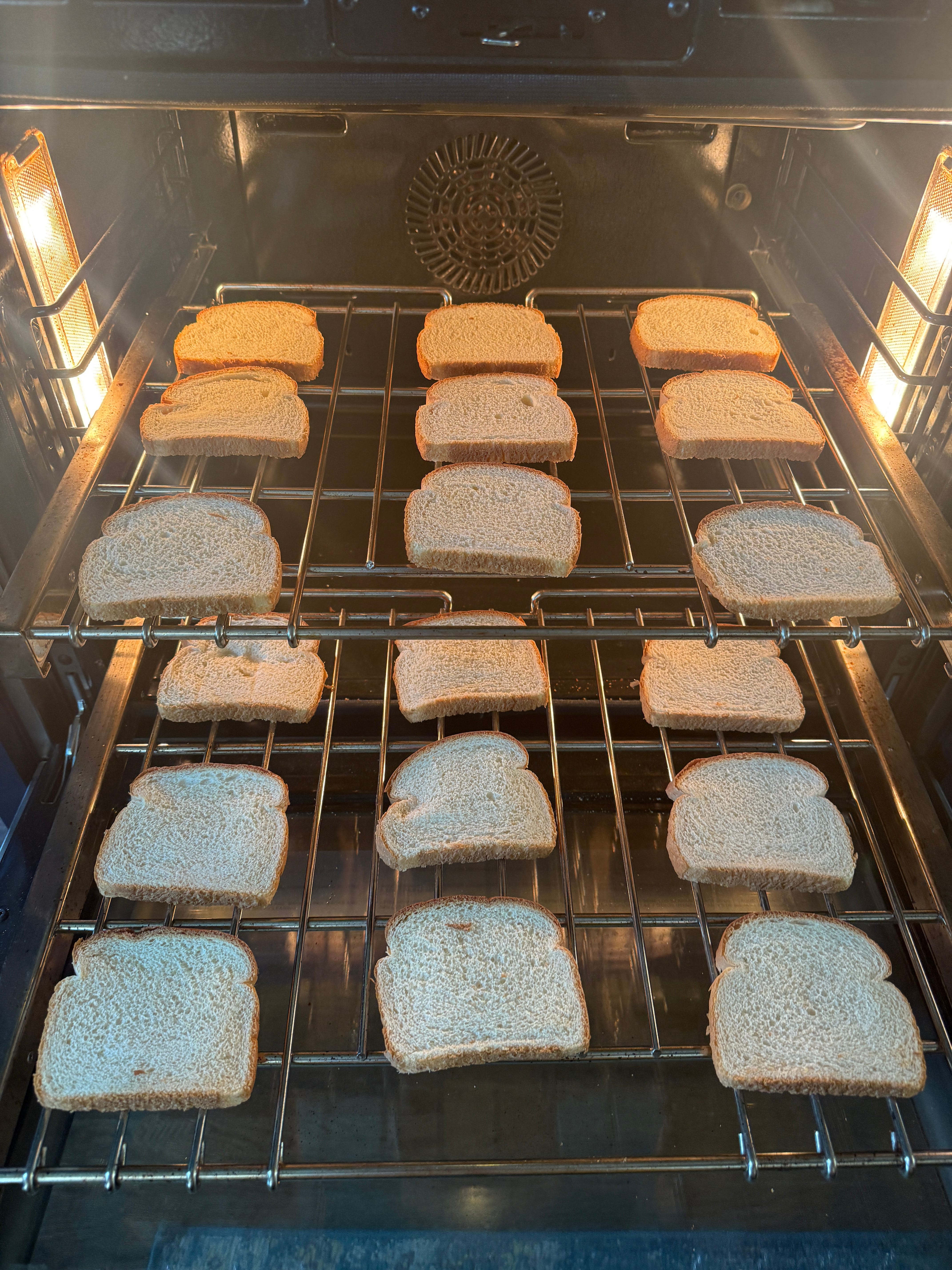
And because no good cleaning spree is complete without a small existential crisis, I decided to test my oven for hot spots. (I’ve talked about why knowing your oven’s true temperature is essential. This is that, but nerdier.)
Here’s how you do it:
Take an inexpensive loaf of white sandwich bread.
Preheat your oven to 350°F [180°C], but don’t stop there—let it keep heating for an extra 30 minutes. Ovens are like moody artists; they need a little extra time to get their act together. Once it’s good and ready, spread the bread slices across the racks you use most often and bake for 15 minutes.
Where do the slices brown the fastest? That’s where your oven’s hot spots are, usually near the top, bottom, and sides.
Happily (and somewhat smugly), my Thermador passed with flying colors. No hot spots. I suspected it for a while, the even browning, the fact that I can occasionally forget to rotate a pan and still get a beautiful bake.
If your oven does have hot spots (and you’re not alone if it does), don’t panic. Rotate your pans halfway through cooking. Switch them between racks if you’re baking more than one sheet at a time. Move them from front to back. Use your common sense. Do everything you can to allow your food to cook and brown evenly.
It’s not about achieving perfection. It’s about giving yourself the best conditions to create something a little magical. (And maybe having a few slices of test toast to nibble on afterward.)
A few days ago, something I’ve been waiting for finally showed up at my door—the new Ooni Halo Pro Spiral Mixer. I don’t usually get this excited over kitchen appliances (okay, maybe sometimes), but this one felt different. It’s built to take on the kind of dough that usually makes my stand mixers rattle and groan—the dense, elastic kind you need for good bread or pizza.
With my other mixers, the moment the gluten develops and the dough tightens up, you can almost hear them struggling. The dough climbs the spiral hook, the machine wobbles, and I end up wrestling it by hand. But this mixer was made for that fight. The Halo Pro features a rotating 7.3 quart stainless steel bowl and a spiral dough hook, providing dual-kneading action. The patent-pending removable breaker bar is a standout feature, which prevents dough from riding up the hook, ensuring efficiency and even mixing. This little clip will show you what I mean (I’m making Neapolitan pizza dough).
What surprised me most, though, is how versatile it is. It’s not just a bread machine. This mixer includes a flexible beater and a geared whisk, allowing for making buttercream frostings and cakes (I’ve yet to test this out, so stay tuned). The intuitive control panel on top offers 58 speed settings ranging from 60 to over 1,000 RPMs and includes a timer function.
It’s rare when a new tool feels like it actually understands the work you’re trying to do in the kitchen. This one does. And I’m excited to see what else it can handle.
As we enter the auspicious season of mangoes and my birthday, make this mango cardamom flan. It’s one of my favorite treats. This recipe is free to all members.
For my paid subscribers, we’re making a savory loaf inspired by a trip to the South of France. It’s great for breakfast, but honestly, it’s great at any meal.
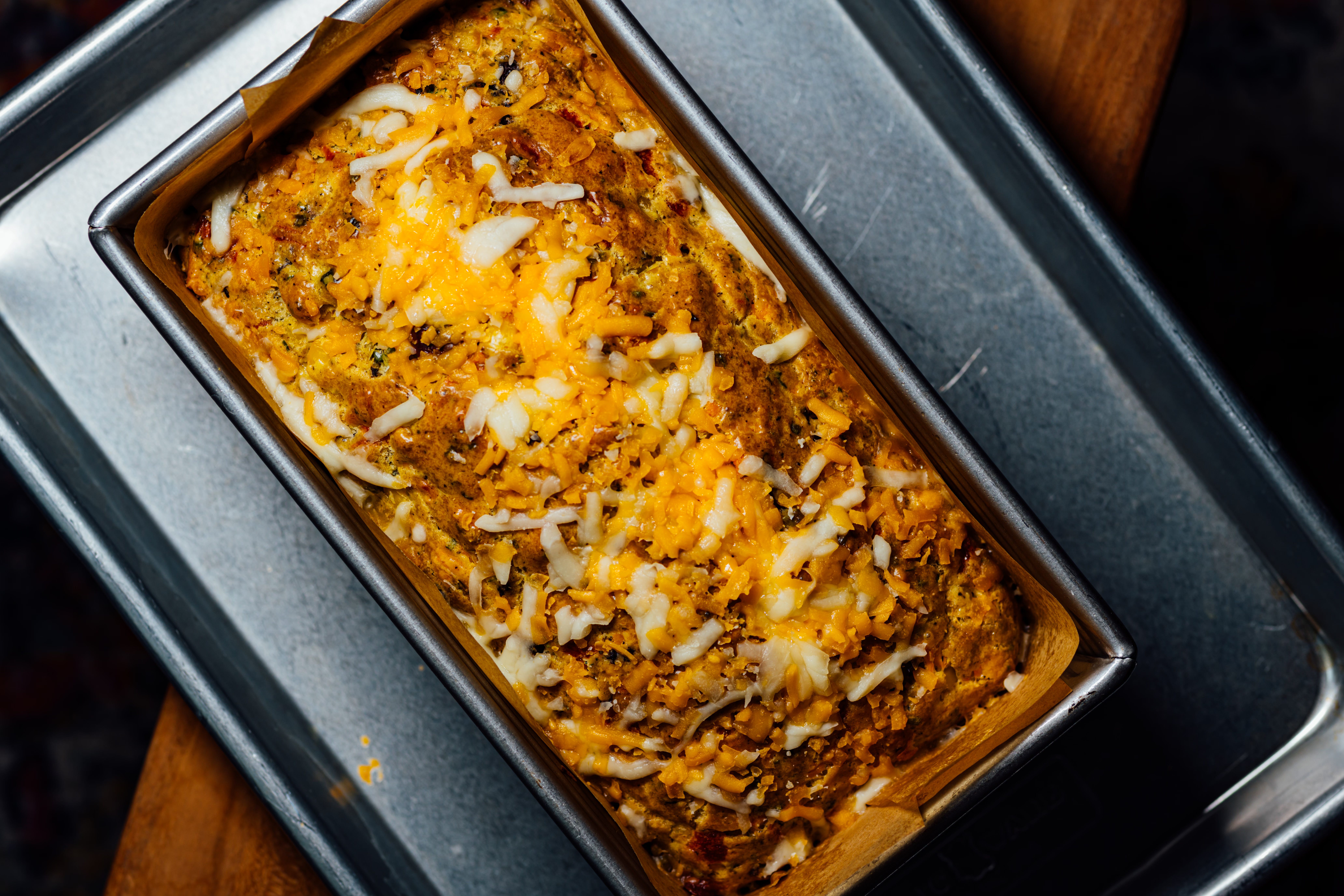
Savory Olive and Sweet Corn Loaf
In Provence, mornings stretch long and slow, stitched together by the scent of coffee, the chatter of markets, and the sight of savory loaves stacked in bakery windows. Last summer, I made a quiet promise to myself to bring a little of that feeling home and to you.
This loaf is my way of keeping that promise. I use dried herbs because they carry a sharper, clearer flavor, an anchor in a tender, rich crumb. Instead of the old method of tossing the olives, corn, and cheese separately, I fold them straight into the dry ingredients; sometimes the easiest way is the best way. Toasted and slathered with salted butter, a slice feels both indulgent and honest, flavorful food that reminds you where you are, and maybe, where you still dream of going.
Welcome to The Flavor Files! 🎉 This is where I dive into my love for cooking, flavor, and food science—because delicious food deserves a little curiosity.
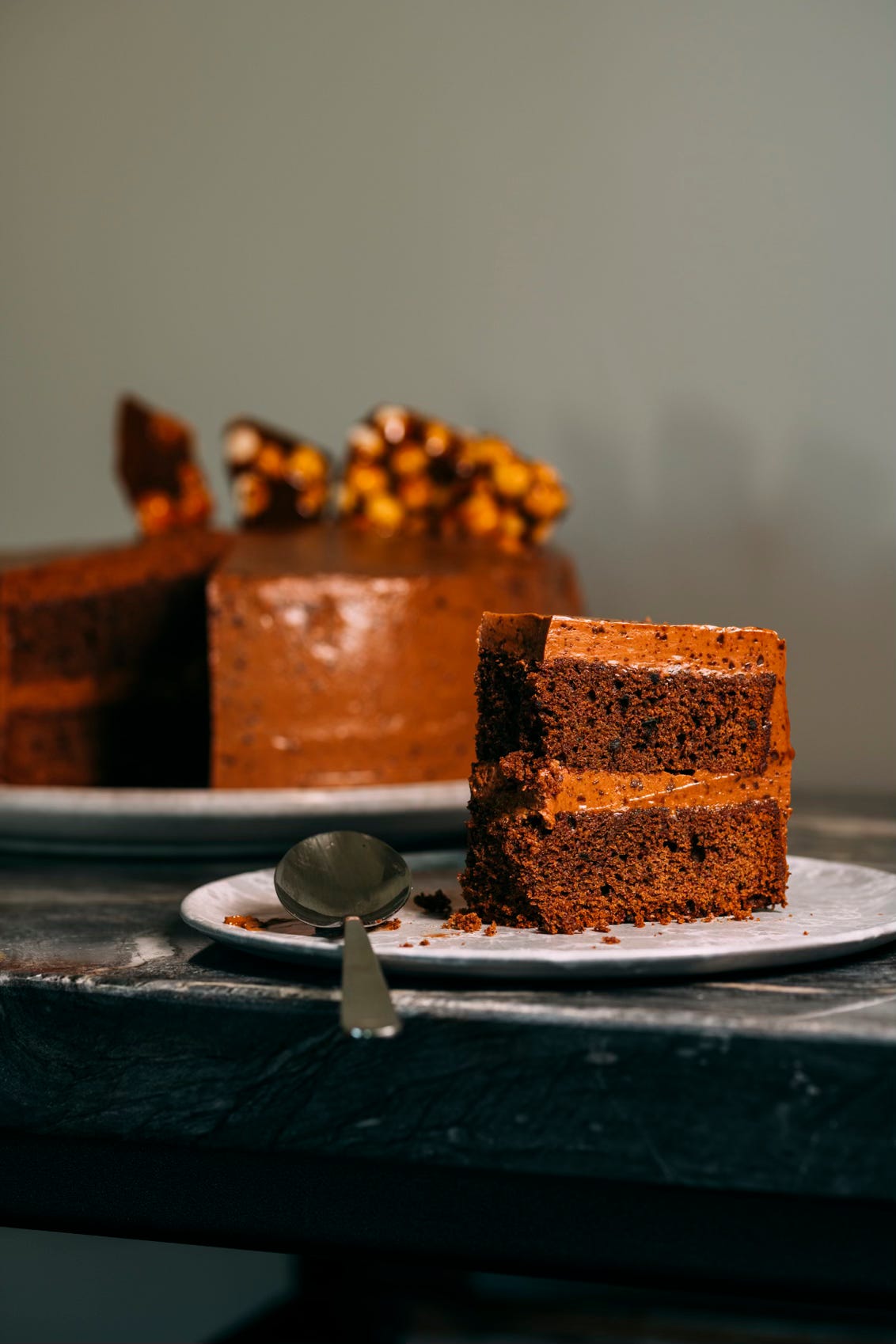
Also, April is my birthday month, which means: Cake and Ice Cream Season™. I bake myself one cake and treat myself to a new ice cream flavor a week leading up to the big day because I deserve it (and so do my neighbors, who conveniently show up right when dessert is ready). This week’s cake? A chocolate hazelnut praline situation that’s so decadent and happy, I smile every time I look at it. Chocolate + Hazelnuts = the Superior Sombo. I don’t make the rules, I just bake by them.
It might sound a little sad that I bake myself a birthday cake every year—but honestly? It’s the best kind of self-love. Sure, I could go to a bakery and pick one up, but they never seem to have the exact flavor I’m craving (where’s the cake that tastes like childhood memories, three types of toasted nuts, and a hint of existential crisis?).
Plus, baking it myself gives me a solid excuse to say, “I’m not procrastinating, I’m celebrating me.” And that, my friends, is what I call personal growth… in layers, with frosting. I need to pick a new cake to make this week. There will be frosting!
I’m knee-deep in book edits right now, which basically means I’m in a committed relationship with several Word docs, a chorus of line edits, and my ever-vigilant fact checker. On Thursday, I heroically powered through an entire chapter, feeling, dare I say, productive, only to discover that the file wasn’t auto-saving to the cloud like I thought. Then it crashed. Completely. Gone.
So, I did what any rational adult on the verge of a Word-induced breakdown would do: I closed my laptop, dramatically whispered “we were rooting for you,” and took myself to a movie. Honestly, there was nothing else to do, and it wasn’t worth crying over. Pick up and move on.
The Wedding Banquet(a remake of the 1993 original by Ang Lee), to be exact. It’s emotional, but tender and warm, like a hug from someone who doesn’t need to say, “you’ll be fine,” because somehow you already believe it.
Until next time,
Nik
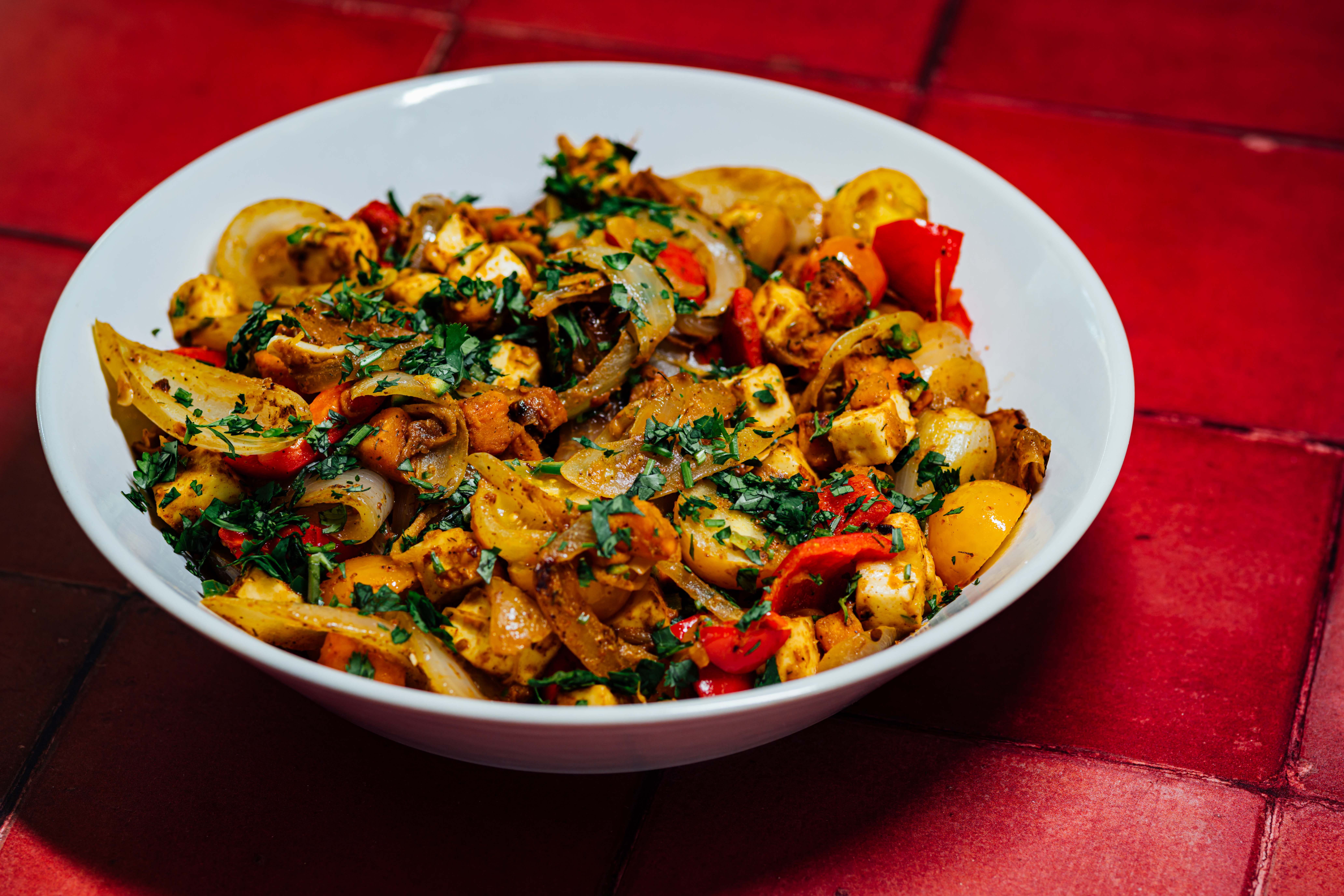
For my paid subscribers, we’re making an Indian-style stir fry of vegetables and paneer for my paid subscribers.
Paneer and Mixed Vegetable Stir Fry
There are some meals that don’t come from a recipe card passed down or a dish served at a holiday table. They come from a feeling of wanting something warm, something nourishing, something that reminds you that you're still here, still trying.
Welcome to The Flavor Files! 🎉 This is where I dive into my love for cooking, flavor, and food science—because delicious food deserves a little curiosity.
The garden’s putting on quite the show right now. One moment, it smells like a perfume ad, jasmine and citrus swirling in the breeze, and the next, I’m chasing hummingbirds with my eyes as they duel over the African basil like tiny, caffeinated swordsmen. (Seriously, if you’ve never grown African basil, you should; it’s the basil that refuses to die because it doesn’t produce seeds. Basil with main-character energy.)
The octopus agave is flowering, bees are swarming its blossoms, and I was starting to feel like I was living in a luxurious nature documentary. Until.
I spotted a garden snake sunbathing like it owned the place, and suddenly, my calm, botanical reverie turned into a live-action survival film. I grabbed the dog and ran inside like a cartoon character in slippers, only to look back and realize the snake was also scrambling for life. Classic mutual panic. Nature: 1. Me: 0.
Anyway, all is well now. The snake’s off writing about the scary human it saw in its journal. I am more of a bee, butterfly, bird, and rabbit-loving type of person.
The Flavor Files is a reader-supported publication. To receive new posts and support my work, consider becoming a free or paid subscriber.
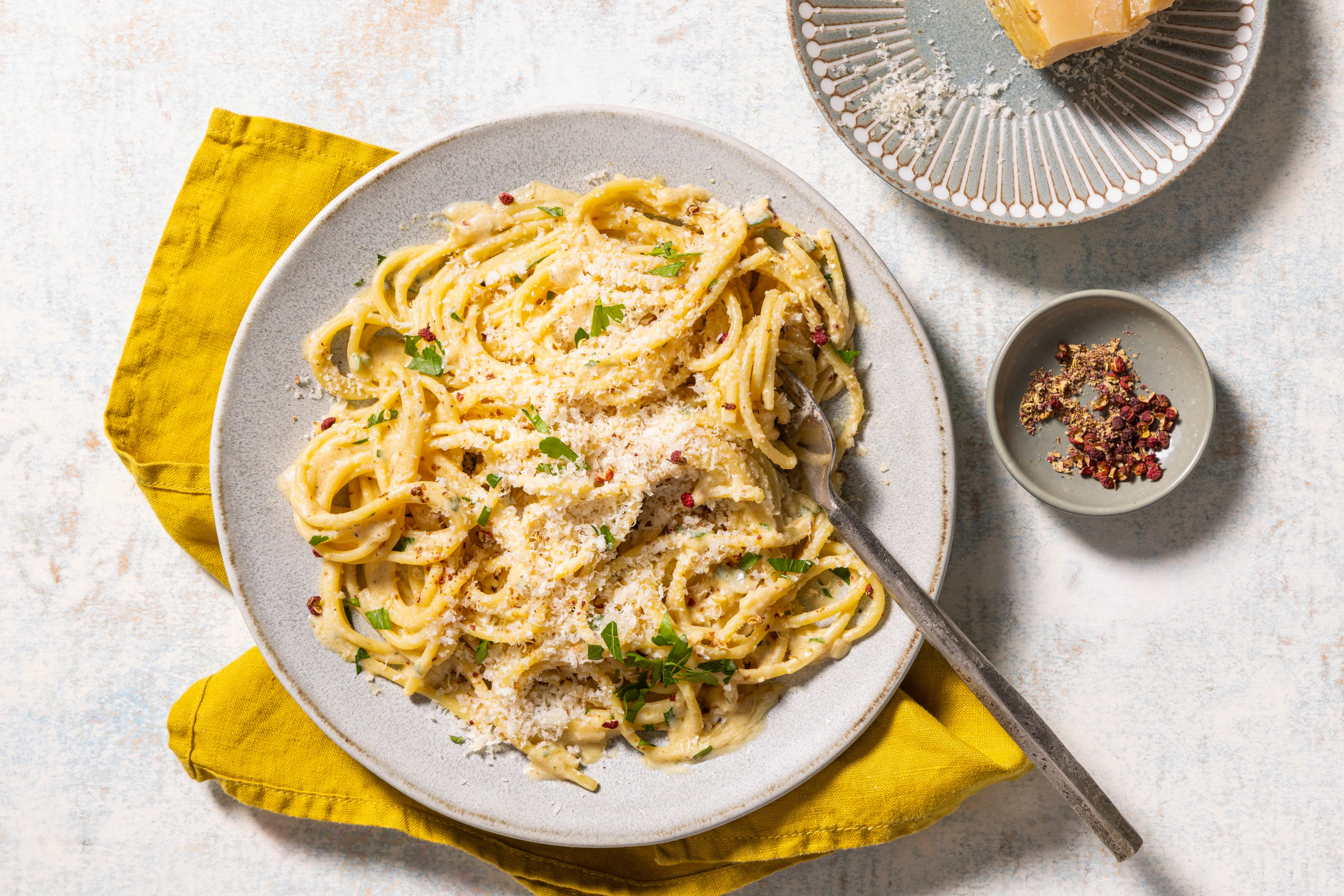
This week, we’re twirling our forks into a creamy lemon pasta that’s citrusy, silky, and... buzzing? That’s right, we’re spiking the sauce with Sichuan peppercorns, the only spice I know that flirts with your taste buds and messes with your neurons.
Now, don’t be fooled by the name. Sichuan peppercorns are neither peppercorns nor peppers, they’re the citrusy husks from the Zanthoxylum plant (same family as the curry leaf tree), and they’ve been electrifying palates since the mid-fourth millennium BCE. That’s older than your sourdough starter. They even got name-dropped in The Book of Songs, China’s oldest poetry anthology. Spicy and poetic, love that for them.
Give one a good rub between your palms, and you’ll get a whiff of lemony brightness, like a lime tree on a hot day. But pop one in your mouth and suddenly — zap! — your lips tingle, your tongue goes fizzy, and everything feels... weirdly alive. That’s thanks to a molecule called hydroxy-alpha-sanshool (I know, sounds like a Marvel villain), which tricks your brain into thinking you're touching something vibrating at 50Hz — the same frequency as a humming air conditioner. It’s not a flavor. It’s a full-on somatosensory event.
And here’s the wild part: this numbing sensation can mess with your perception of other flavors. Bitterness, saltiness, even sweetness — they all get temporarily scrambled. It also kicks your salivary glands into overdrive, which is why some researchers are looking into Sichuan pepper as a treatment for dry mouth. A spicy science miracle? Maybe!
In Chinese cooking, you’ll often find these peppercorns doing the málà dance, a flavor combo of numbing (má) and hot (là), where they cozy up with chili heat in dishes like Mapo Tofu or your favorite chili crisp. But they’re not just for savory dishes. I’ve had them in chocolate bars, cocktails, even poached fruit; and they’re just as magical.
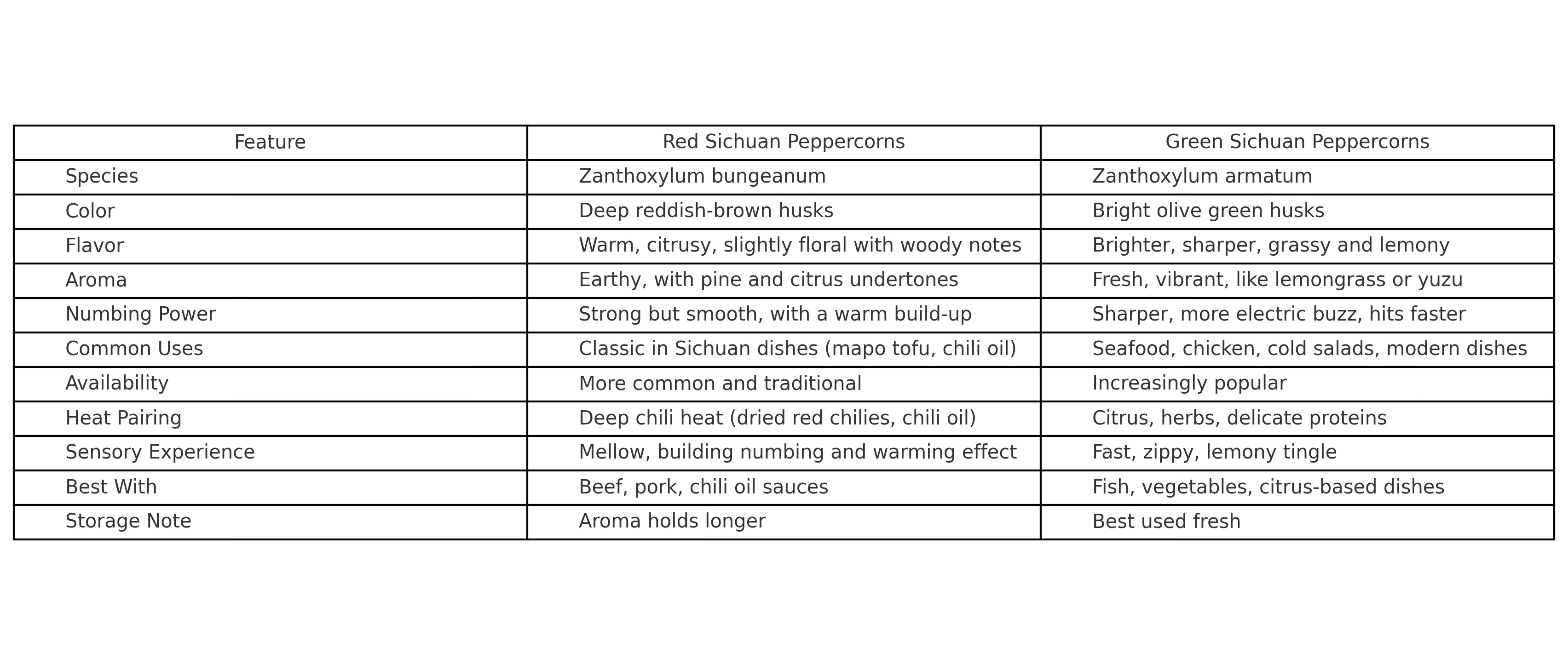
If you’re shopping for them, look for split-open husks — where the flavor is. Avoid the hard black seeds inside; they’re “peppercorn” packing peanuts. They’re gritty and bitter. You’ll usually find two types: red (warmer, floral) and green (zippier, citrusy). They’re mostly interchangeable unless you’re deep in a flavor rabbit hole, in which case: welcome, friend.
Quick kitchen science tip: that buzzy molecule? It’s fat-soluble and doesn’t play well with acid. So when I developed this lemony pasta recipe for America’s Test Kitchen, I bloomed the peppercorns in the fat of the crème fraîche first, then added a second hit right at the end to make sure the lemon juice didn’t mute the magic.
What is the moral of the story? Don’t sleep on Sichuan peppercorns. They’ll wake your dinner (and your mouth) right up.
Among the brands of Sichuan peppercorns commercially sold, I like 50 Hertz Tingly Foods—they make and sell a wide variety of products using this spice. The peanuts are delightful!
This recipe resides on ATK and is free. I love seeing you share your excitement! ATK makes several recipes from the residency available for free. You might need to enter your email so they can send you more great content—but you can always opt out anytime. I’ve been a longtime subscriber to their newsletters and have found them super valuable. I hope that helps clarify how to access these co-created recipes—we put a lot of love into them, and I’d love for you to check them out! I appreciate your support!
Have a lovely week,
Nik
The Flavor Files is a reader-supported publication. To receive new posts and support my work, consider becoming a free or paid subscriber.
Welcome to The Flavor Files! 🎉 This is where I dive into my love for cooking, flavor, and food science—because delicious food deserves a little curiosity.
Miss me? I missed you! I took a little two-week pause from the newsletter—not to sip a margarita under a palm tree, sadly. I was deep in the cookbook trenches, juggling flour, chestnuts, and a camera. I wrapped up testing and photographing all 100 recipes for my fourth cookbook, and I needed every minute to crank through the mountain of photos. When I shoot, I prefer to tackle one chapter at a time so everything looks cohesive; think of it as visual feng shui but with more butter stains. This also means fewer reshoots, and my book designer is happier.
Then I zipped over to Boston for a few days for rehearsals for Season 26 of America’s Test Kitchen (!!!). I got to hang out with the brilliant and fabulous Bridget Lancaster and Julia Collin Davison, the queens of calm kitchen confidence. They’re funny, and the most challenging part was trying to keep a straight face during rehearsals. The iconic popped in the test kitchen on Friday and we worked on something fun with Dan Souza! She tasted the hoshigaki (I made last year with my buddy, Rie) —no pressure at all, offering homemade dried persimmons to one of the greatest bakers ever. She approved! Dorie smiled and said her mother loved persimmons—and would have absolutely adored these. Safe to say, my heart grew three sizes. 🧡
The test kitchen was buzzing like a beehive on espresso. I taste-tested cookies, cinnamon rolls, and pasta dishes—it was carb heaven. I cooked a few new dishes for the team to try and filmed something fun that will be out later this year.
Oh, and on the non-cooking front, we fell into a not-new-but-new-to-me TV obsession: Drops of God. If you’re into flavor (which, let’s face it, you are), this show is a wild ride. Based on a manga series by Tadashi Agi and illustrated by Shu Okimoto, wine tasting is turned into an Olympic-level emotional experience. Expect poetic aroma metaphors, family drama, and plot twists worthy of a telenovela. Highly recommend.
You’ve definitely heard of that book, unless you live under a rock made of uncooked rice. It’s the most talked about cookbook right now, and rightly so.
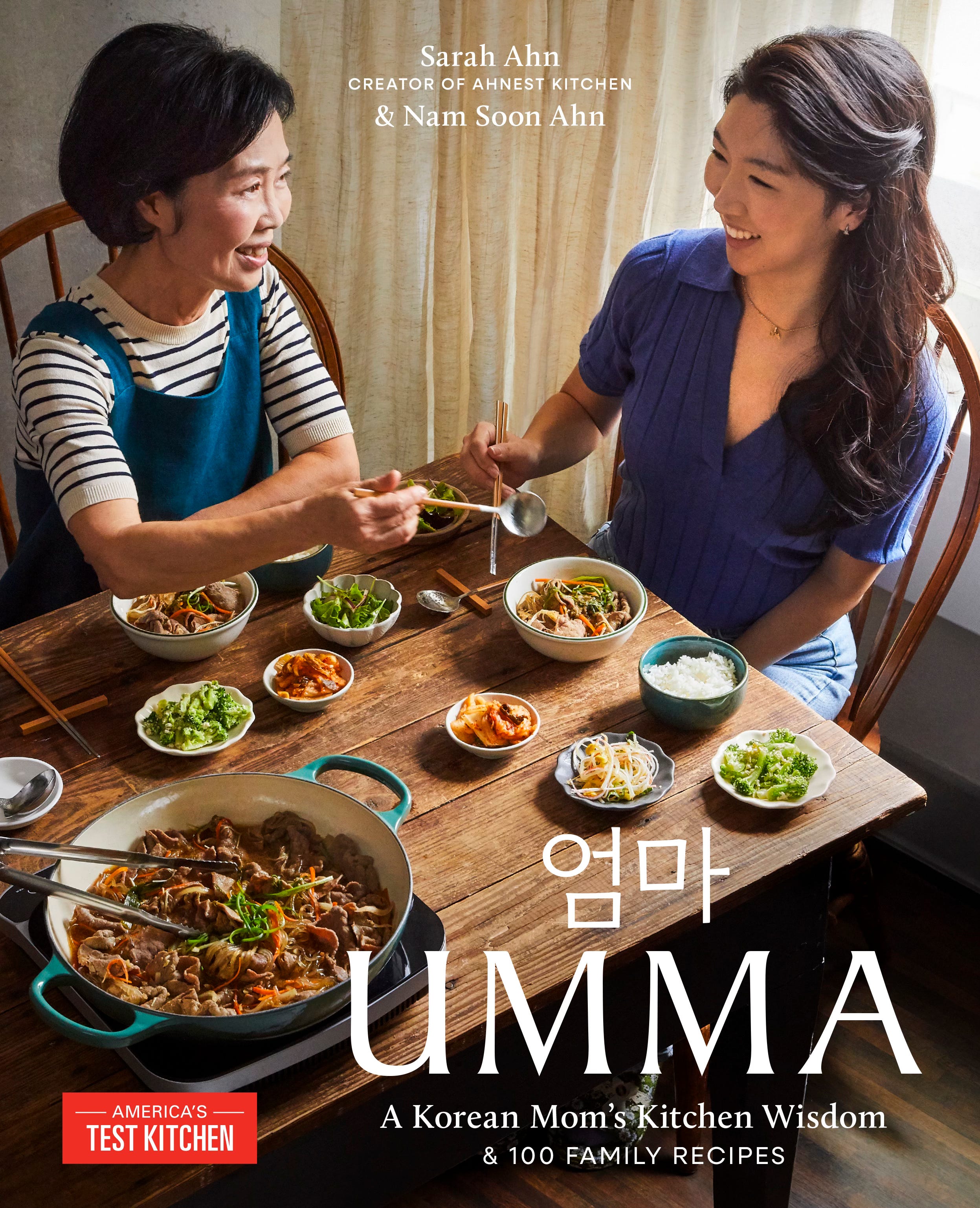
This week’s newsletter is a special shoutout to one of my favorite upcoming releases: Umma: A Korean Mom’s Kitchen Wisdom and 100 Family Recipes by the dynamic mother-daughter duo Sarah Ahn and Nam Soon Ahn, in collaboration with the wizards over at America’s Test Kitchen (April 2025).
I’ve been following Sarah Ahn on Instagram for a few years now, and from the moment I stumbled across her page, I was hooked—not just by the food (though wow), but by the deep sense of love and family that shines through everything she shares. Her posts always feel like a cozy seat at her family’s table—complete with laughter, kimchi, and the occasional cameo from her adorable dog, MayBee, who might be the fluffiest sous-chef on the internet. (Paddington would be jealous of MayBee’s meals).
When I finally sat down with her new book, Umma, I didn’t just read it—I felt it. I stayed up late that first night, turning pages, laughing, tearing up, and bookmarking nearly everything. It’s a book that hugs you back. It’s something we all need right now.
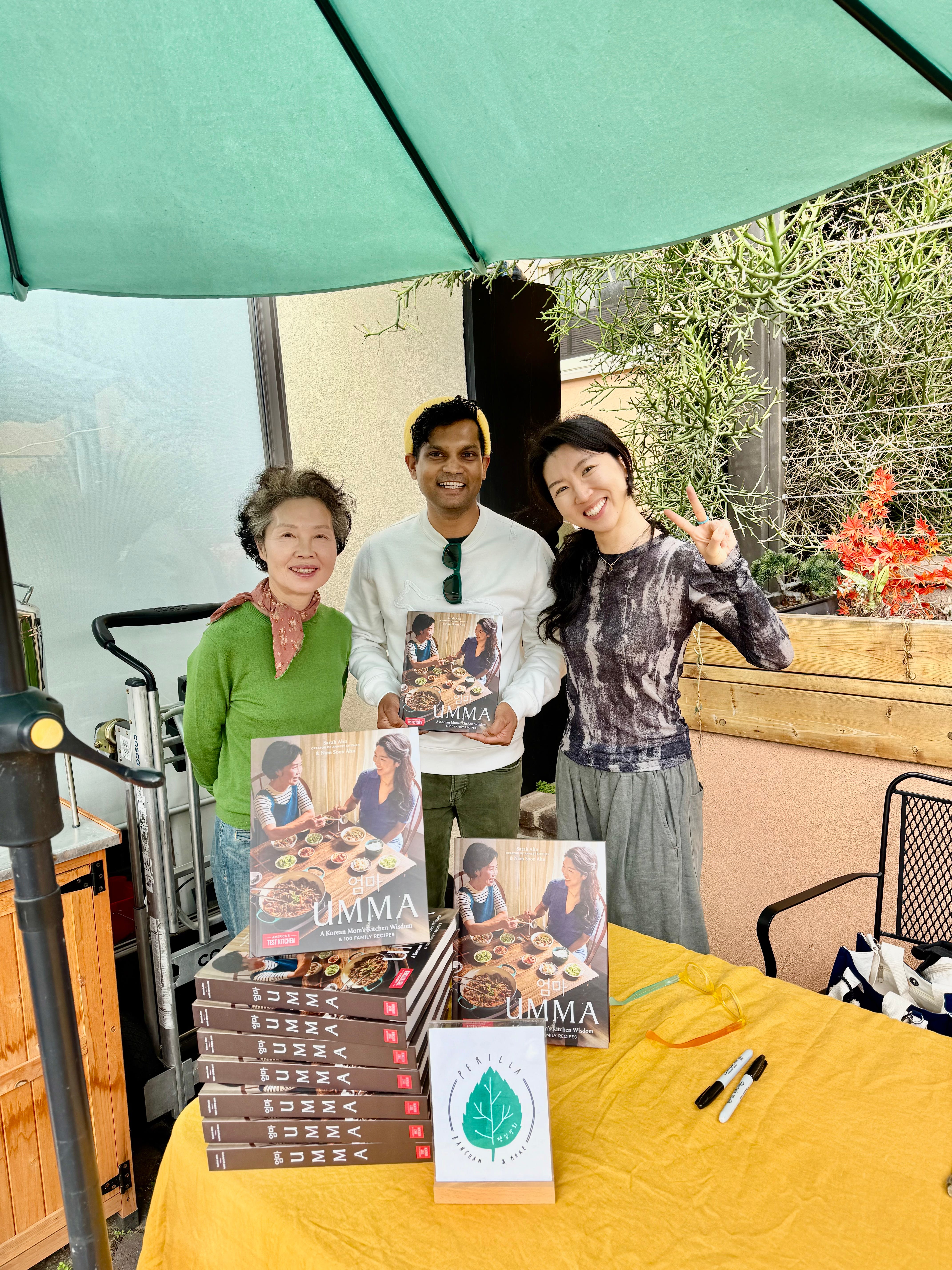
Last Sunday, we went to Sarah’s book signing at Perilla in L.A. I finally met her (I meet Sarah on Zoom calls for work) and her amazing mom, Nam, the original “Umma.” She’s every bit as lovely and generous as the stories in the book. Watching them together, signing books, and sharing stories was like witnessing a living cookbook in action.
This isn’t just a collection of recipes. It’s a legacy. A love letter. A reminder that food is so much more than what’s on the plate—it’s who we share it with (pets included).
Now, let’s talk food. I’ve got two standout recipes from Umma that I can’t stop thinking about, and can’t wait to see you make them.
Kimchi Grilled Cheese – Think melty, crunchy, tangy, funky, and salty, all hanging out in a sandwich that delivers all five tastes and then some. It’s the lovechild of comfort food and flavor science. This isn’t just kimchi and cheese; a lot of flavor magic is layered throughout.
Honey Garlic Chicken—This one’s easy enough to whip up on a weeknight but fancy enough to pretend you planned it. It's sticky, sweet, and savory, and it's the kind of dish that makes you lick the spoon and not even pretend to be sorry.
Big flavors. Big feelings. Big fan.
More delicious things soon,
Nik
The Flavor Files is a reader-supported publication. To receive new posts and support my work, consider becoming a free or paid subscriber.
Welcome to The Flavor Files! 🎉 This is where I dive into my love for cooking, flavor, and food science—because delicious food deserves a little curiosity.
I know, I know, three emails in a week? I promise I don’t make a habit of it, but we’ve been busy with the Grubstack Festival, and I had to share a quick update and recipes!
Last Friday, I hosted my first-ever Substack Live with Dan Souza from America’s Test Kitchen, and let me tell you, it was an absolute blast! A huge thank you to everyone who tuned in. If you missed it, don’t worry; you can catch the replay here.
I had so much fun with the live format that I’m seriously thinking about making it a regular thing. Imagine cooking chats, deep dives into flavors, and some fantastic guests. What do you think, should I go for it? Let me know!
I just returned fromSan Francisco, where I had the honor of delivering the keynoteforThe Tasty Awards. While there, I ran into my dear friend and one of the most brilliant minds in baking, Alice Medrich. Her books have been a masterclass in flavor and technique for me, and Flavor Flours is a must-read (I highly recommend reading all her books because you will become a more brilliant pastry chef and chocolate expert), whether or not you bake gluten-free. It completely changed the way I think about grains in my cooking.
One more thing: there is some confusion about recipe access at ATK. So, I want to address and clarify things. The recipes are free. I love seeing you share your excitement! ATK makes several recipes from the residency available for free. You might need to enter your email so they can send you more great content—but you can always opt-out anytime. I’ve been a longtime subscriber to their newsletters and have found them super valuable. I hope that helps clarify how to access these co-created recipes—we put a lot of love into them, and I’d love for you to check them out! I appreciate your support!
More soon, but I’ll keep it short and sweet for now.
Catch you next time!
Nik
It’s St. Patrick’s Day, and I’ve got two recipes that bring a little twist to tradition! 🍀
First up: Colcannon, but with a punch. I’ve taken the classic Irish mashed potatoes and given them a bold upgrade with chaat masala. Creamy, comforting, and just the right amount of tangy-spiced magic. And here’s a tip: leftovers make an insanely good grilled cheese filling. Trust me, you’ll want to try this.
Then there’sIrish soda bread, but we’re keeping it OG Irish: no sugar, no eggs, no raisins. Just a few pantry staples, a rustic crust, and that signature “X” on top (legend has it, it helps let the fairies out; who am I to mess with folklore?). I swap in kefir instead of buttermilk (both work great), and it works like a charm. I’ve added baking powder to give the dough extra leavening insurance.
So, ready to cook up something delicious for St. Paddy’s?
In The News
Synbiotic Chocolates Here’s a wild (and delicious) idea: chocolate infused with probiotics. Scientists are experimenting with this combo, turning our favorite treat into a gut-friendly indulgence. The catch? Heat is not its friend, so baking with it will likely wipe out the probiotics. But if you’re using it in no-cook treats, you might just get a tasty health boost! And even if the bacteria don’t survive, you’ll still benefit from all the good-for-you biochemicals in chocolate.
The Flavor Files is a reader-supported publication. To receive new posts and support my work, consider becoming a free or paid subscriber.
Thanks for reading The Flavor Files! This post is public so feel free to share it.

 Login
Login