
 Login
Login
Poulet Sauté au Vinaigre, Noyaux, and the Culinary Elegance of Acids
There are ingredients that season, and then there are ingredients that change everything. Acid belongs to the latter camp. A squeeze of lemon over fish, the tang of yogurt on warm bread, a splash of vinegar in a simmering pot; they don’t just add flavor, they alter it entirely, reshaping textures, brightening colors, and waking up our taste buds. Cooking with acid is less about subtlety and more about transformation, the quiet but decisive shift from good to unforgettable.
In this paid subscriber newsletter, you will…
Learn which acid gives carbonated beverages a whisper of acidity, and why I store yogurts in glass or stainless steal.
Get my recipes for Poulet Sauté au Vinaigre/Chicken Sautéed in Vinegar and Noyaux (I hope you saved your apricot kernels!)
Discover why there is a trace amount of cyanide in foods like amaretti cookies, and why you shouldn’t go on a raw kernel binge bender!
An Acid Love Story
At a small square table, I pressed the edge of my tostada to keep its crisp crown from cracking, then layered it with ribbons of blue prawn, each slice shimmering under its coat of emerald-green, citrus-bright ceviche. One bite and I was elsewhere, by the ocean, where the sun’s warmth is tempered by a salt-sweet breeze and the soft susurration of coconut leaves brushing against each other.
Acid is one of the kitchen’s most thrilling sleights of hand. It brings a certain brightness, a spark, the sharp inhale of the sour taste that can lift a dish from pleasant to unforgettable. It reshapes what it touches: curdling milk into the cool tang of yogurt through the gentle work of lactic acid, loosening the taut web of gluten in bread dough with the mellow vinegar notes born of fermentation, coaxing meat into tenderness in a marinade. And here, in this ceviche, it takes the sea’s raw offering and, with a kiss of citrus, turns it into something luminous and new.
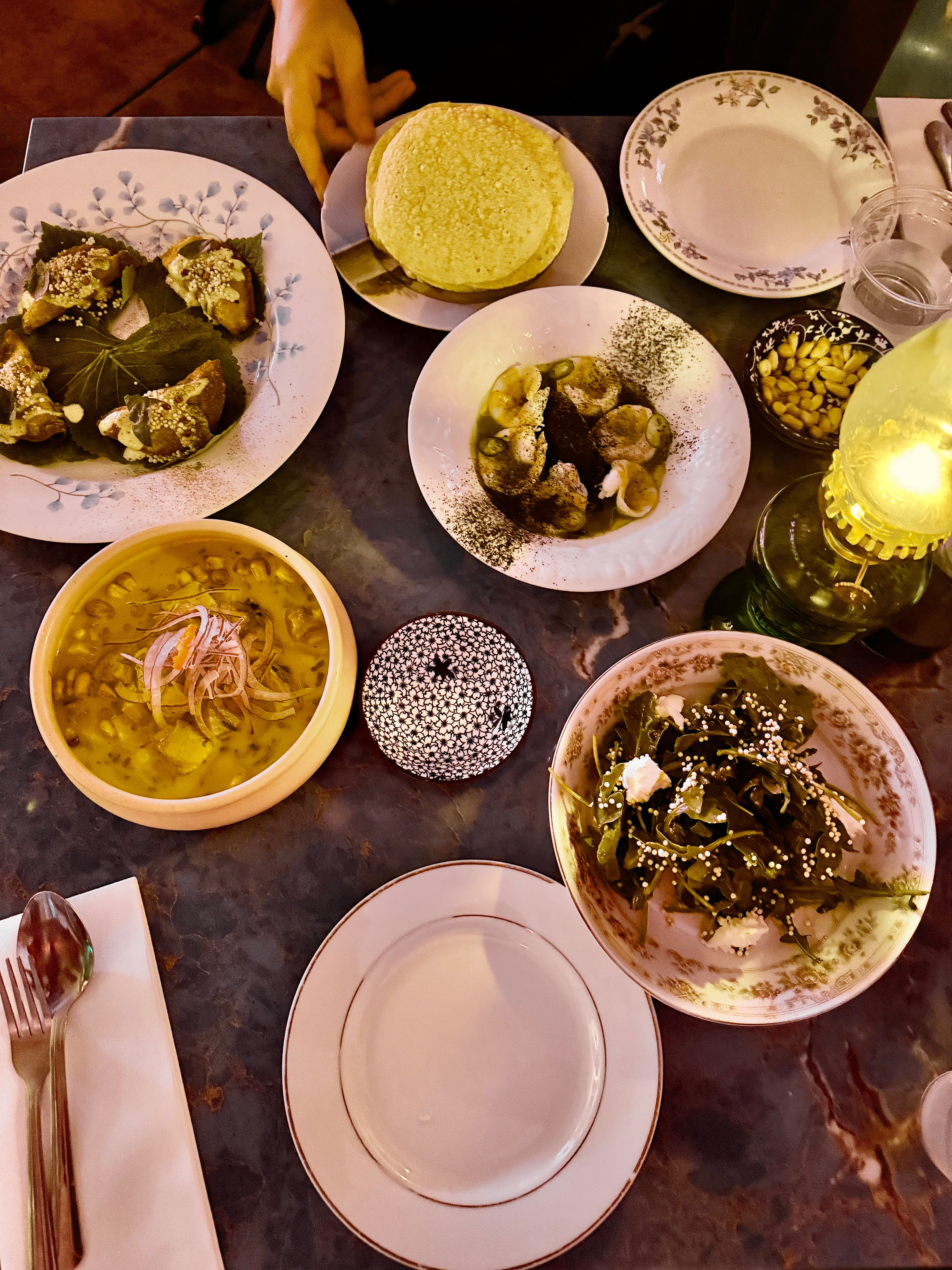
My friend and cookbook author, Rie McClenny, and I had come to The Hummingbird Ceviche House in Echo Park, a Peruvian-Japanese restaurant that hums with the precision of one cuisine and the exuberance of the other. Plate after plate arrived, each one a testament to the quiet magic of acid and the way it can transform the ordinary into something unforgettable.
Inorganic vs. Organic Acids
But here’s the thing: not all acids are created the same, and because of this, their behaviors are different. In chemistry, acids fall into two groups: inorganic and organic acids. Inorganic acids are acids that aren’t built on a carbon backbone like organic acids – citric or lactic acid, which do show up in cooking, though they’re far less common than organic acids. The ones we use are almost always very diluted because concentrated forms can be dangerous.
Not all acids are created equal, and in the kitchen, their personalities show. Some are sharp and industrial, others soft and fruit-born; each behaves differently, each with its way of coaxing flavor into life. In chemistry, they fall into two families: inorganic and organic.
Inorganic Acids
Inorganic acids are the quieter, rarer guests in the home kitchen. They don’t arrive in the squeeze of a lemon or the brine of a pickle jar, but they still have their place in the greater food world.
Hydrochloric acid (HCl) lives naturally in our stomachs, breaking down what we eat. In food production, when it’s tamed to safe, delicate dilutions, it can help in processes like starch hydrolysis, gelatin making, or crafting certain candies. But it’s far too corrosive to ever keep on the pantry shelf.
Phosphoric acid (H₃PO₄) is more familiar, hiding in the deep, dark sweetness of cola,

