A quick note: There’s no shortage of people telling you Trump is corrupt. Catherine brings the numbers, the evidence, and, well, the receipts. Support that kind of journalism by becoming a Bulwark member.
Even Republicans are starting to notice Trump’s staggering corruption. Catherine Rampell and JVL take on the latest scandals engulfing Trump’s inner circle, new polling showing his own voters recognize the grift, and the economic damage being inflicted on ordinary Americans while Trump’s friends cash in.
(Photo illustration by Bill Kuchman/The Bulwark | Photos: Getty, Shutterstock)
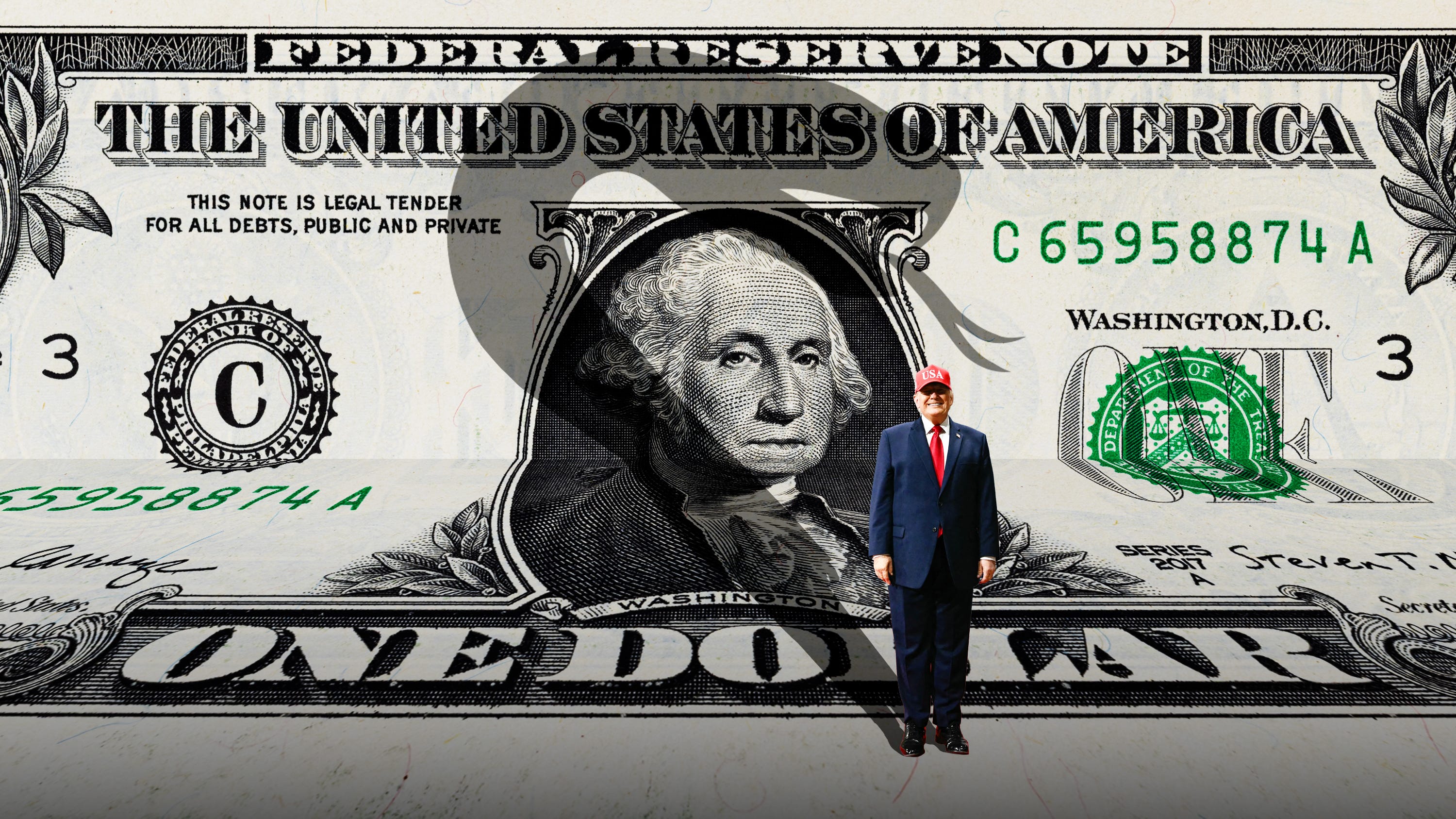
DONALD TRUMP IS ROBBING Americans blind, and even Republicans are starting to notice.
You may recall that back in March, there were some suspiciously timed, uncannily lucrative oil and stock trades. About fifteen minutes before Trump abruptly announced he was retracting some threats against Iran, billions of dollars’ worth of contracts were placed on bets that oil prices would fall and the S&P 500 would jump. And those lucky bastards turned out to be right!
Less known was that the Commodity Futures Trading Commission, a federal regulator that supervises futures markets, began a preliminary investigation of the suspicious trading volume surge. But according to a bombshell story this week from Bloomberg, a senior adviser to the Trump-appointed CFTC chairman subsequently “intervened” and told them to lay off. Staff had made a referral to CFTC’s internal enforcement division to launch a full-scale insider trading investigation; they were ordered to retract it.
If this was a case of insider trading—and there are some beet-red flags to suggest it was—it would not be a victimless crime. There were losers on the other side of those bets, the chumps whom the insiders got to steal money from by virtue of having an inside line to the White House.
Sure, some of those chumps might have been rich, unsympathetic Wall Street traders; but some of them might have been your pension fund.
Were this an isolated incident, it would be bad enough: Trump and/or his cronies may have used access to market-moving information to enrich themselves, and the Trump-appointed regulators made sure none of their actions were properly investigated.
But this sort of apparent malfeasance looks like one of the defining characteristics of the Trump era.
For months Trump Media has been trying to shake down Wall Street firms for early access to Trump’s Truth Social posts. The idea being to more formally monetize insider access, and give Trump a cut. As San Francisco City Attorney David Chiu, who is suing Trump Media on behalf of Californians, put it: “Trump Media created a marketplace that enables insider trading, which Trump directly profits from. . . . Californians should not be forced to compete against wealthy trading firms buying early access to market‑moving information.”
This is public robbery, and it isn’t confined to selling early information about administration decisions to allies and eager profiteers. Under this administration, selling out American voters is a going concern.
To wit, check out these two stories from just this Wednesday:
(Photo illustration by Bill Kuchman/The Bulwark | Photos: Getty, Shutterstock)
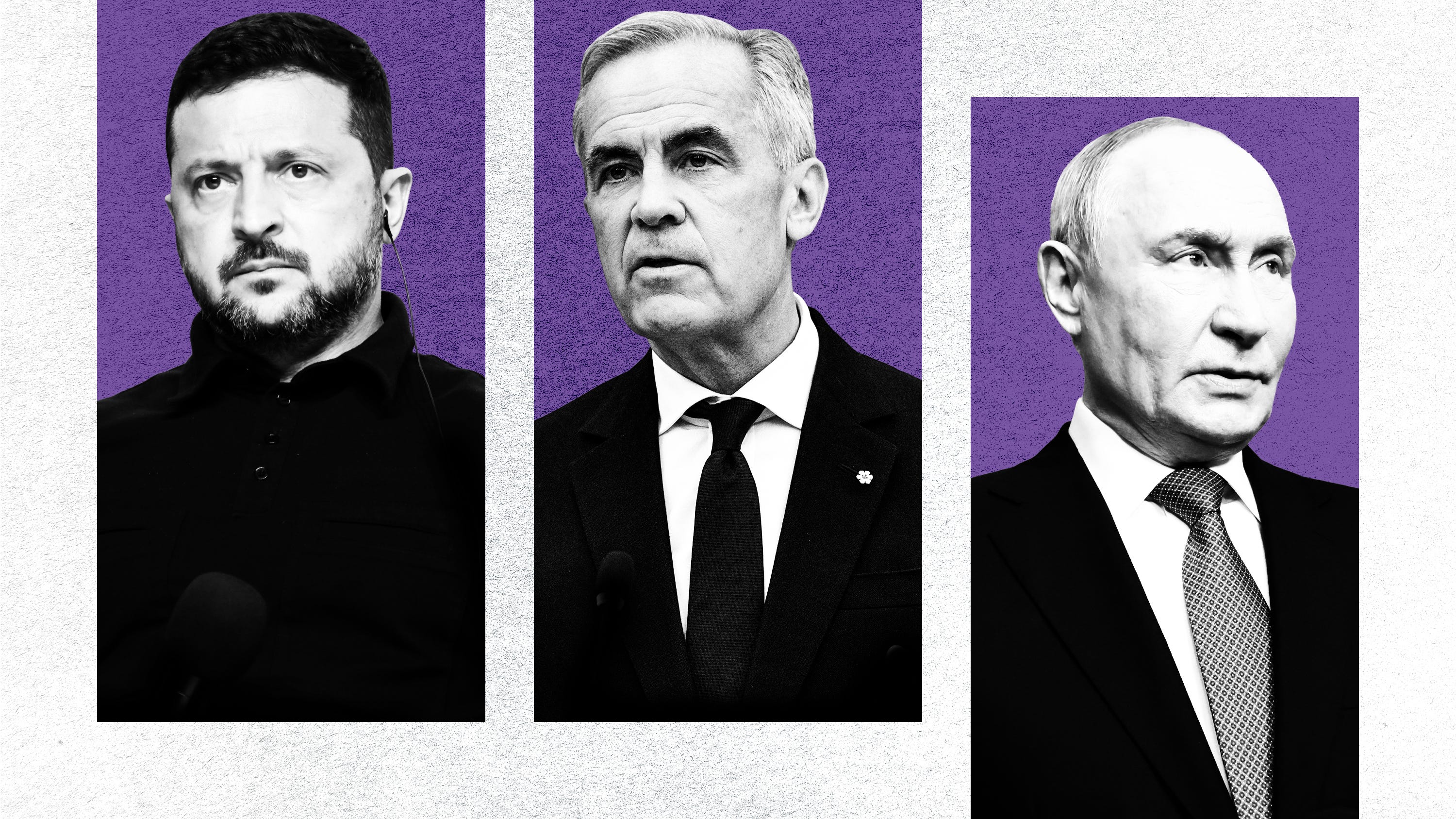
Should Canada consider withholding oil sales from the United States? How should the world respond to Donald Trump’s decision to openly side with Putin and against Ukraine? And what the hell happened to Scott Bessent??
Those are some of the biggest questions at the nexus of business and politics right now. And few people are better equipped to answer all three thanChrystia Freeland, Canada’s former deputy PM and finance minister.
Chrystia Freeland joined me today on the latest episode of Receipts.
Freeland didn’t just negotiate the new NAFTA deal in Trump’s first term; she is now serving as an adviser to Ukrainian President Volodymyr Zelensky. And she started her career by getting thrown out of Kyiv by the KGB when she was a college student, meeting with dissidents. So, she has some personal experience dealing with bullies (or dating an “Unreliable Boyfriend,” as her new book frames it).
Here at Receipts, we’ve been talking about these issues, but this is the first time we’ve had a real player in the game who can share her own (trade) war stories. The conversation wasn’t just retrospective, though. Freeland also had some sharp thoughts about what world leaders should be doing at this precarious moment, in which Donald Trump is upending alliances, energy markets, and the global economy—seemingly by the hour.
“The initial reaction of all of America’s allies was to try to appease the president,” Freeland said. “I always thought it was a miscalculation.”
She also explained why she sort of admires the Russian oligarchs . . . and thinks they might have some painful lessons for their American counterparts.
“What happened in Russia was the businessmen became oligarchs who took over the state. And, you know, in some ways, that became a tragedy for them personally, because they thought that they would control the state,” she mused. “But then an even bigger gangster showed up, actually put in place by the oligarchs. His name was Vladimir Putin. Initially, the oligarchs supported him because they thought they could control him, but he got the last laugh.”
But to start, I’m joined by my colleague Andrew Egger to chat about some of the latest news of the week, including Sen. Darline Graham’s apparent ignorance of the fact that Trump just spat on her late brother’s legacy. We also talk about Trump’s latest effort to weaponize antitrust against media organizations—no, not the media organizations that are consolidating, but the ones refusing to provide the kind of White House coverage Trump wants.
CLICK 👆 TO WATCH NOW
Receipts With Catherine Rampell is a new companion podcast to Catherine’s weekly newsletter. New episodes drop Tuesdays and Fridays wherever you get your podcasts or YouTube. Follow the Receipts:
Catherine Rampell is joined by Andrew Egger to discuss Elon Musk’s $276 million effort to rescue Republicans in the midterms, Trump’s DOJ targeting news organizations, and his latest deal with Vladimir Putin.
Then, former Canadian Deputy Prime Minister Chrystia Freeland shares what she learned negotiating with Trump, why appeasing him doesn’t work, and what America’s billionaires should learn from the rise of Russia’s oligarchs.
Unreliable Boyfriend by Chrystia Freeland is available on Amazon or Bookshop
A quick note: One of the things we want Receipts to do is give conversations like this the room they deserve: go deep with people who know their industries inside and out, and trace government policy all the way from Washington to its effects on businesses, workers, and communities. Your support for The Bulwark gives us the freedom to make more of that kind of work.
And if you do want to join, you’re in luck—we’re running 30% sale right now!
A quick note: The Bulwark doesn’t believe in phony balance that gives liars the benefit of the doubt or treats bad-faith arguments as legitimate debate. We call out the lies and explain what’s actually happening. If you value that kind of independent media, join Bulwark+ and help us keep doing it.
If you do want to support us, you’re in luck—we’re running a 30% off sale for a limited time.
Sam Stein and Catherine Rampell give their takes on Trump’s decision to buy oil from Putin, just weeks after Trump signed Lindsey Graham’s Russia sanctions bill into law. Instead of increasing pressure on Russia, Trump is opening the door to Russian fuel exports that could help bankroll Putin’s war on Ukraine.
Plus, they examine the bill’s loopholes, whether the deal will actually lower fuel prices, and why Trump is pressuring Ukraine to stop attacking Russian oil refineries. As Zelensky pushes back, Trump’s deal risks a major rupture in U.S.-Ukraine relations.
Catherine Rampell and JVL break down Trump’s escalating war on the Federal Reserve, including his latest attempt to remove Fed Governor Lisa Cook and the growing threat to the central bank’s independence. They discuss how Trump’s tariffs and war with Iran are fueling inflation, driving up prices for everything from tomatoes to Texas brisket, and potentially hurting Republicans in key Senate races. Plus, JD Vance struggles to define socialism, the administration’s crackdown on H-1B workers raises questions about anti-immigrant politics, and why both parties may be moving toward a more government-controlled economy.
(Photo illustration by Sarah Rogers/The Bulwark | Photos: Shutterstock)
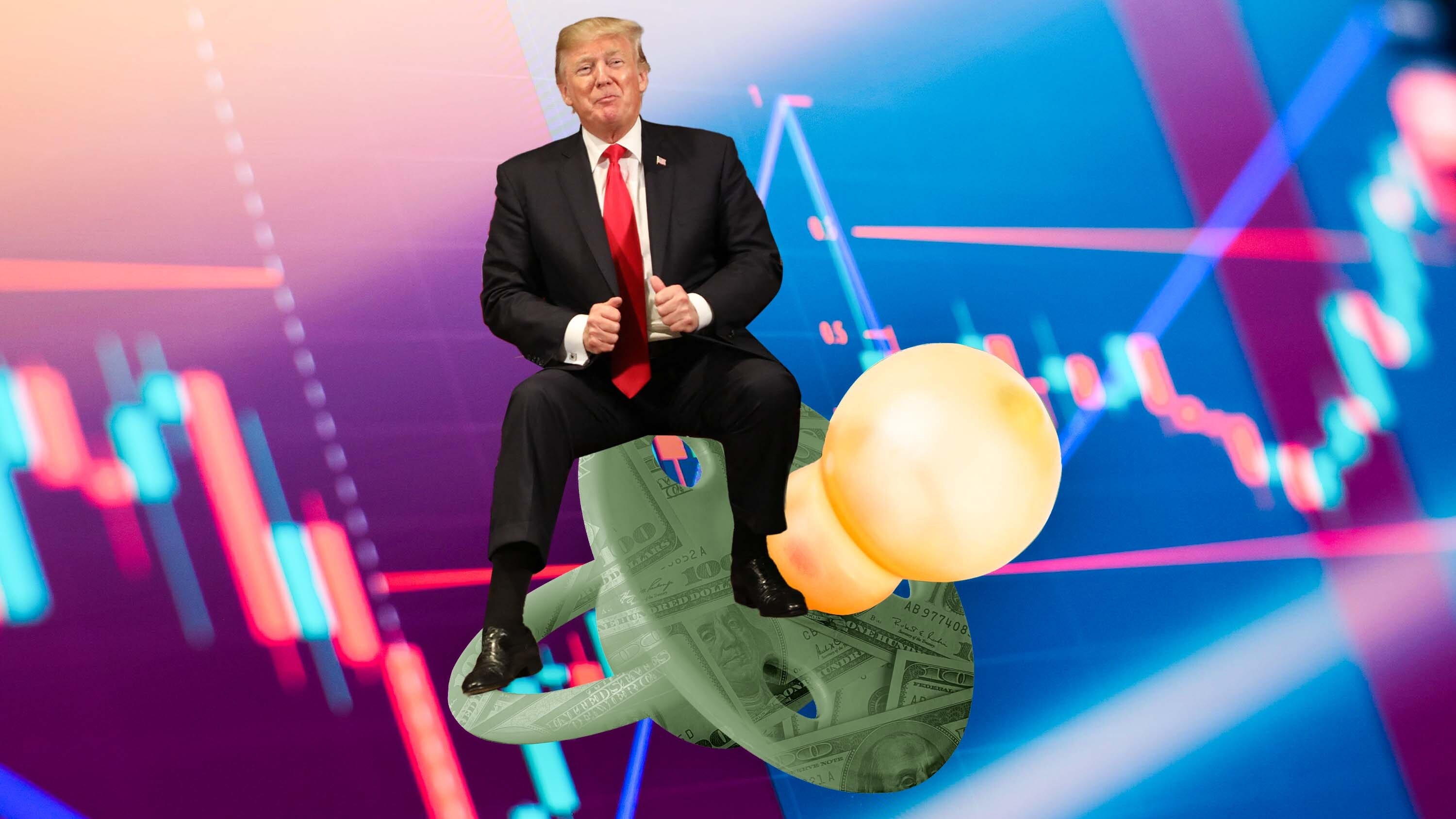
SHAMELESS BRANDING ASIDE, “Trump Accounts,” the new program that gives every baby in America access to some savings, is generally benign, and maybe even useful. But Donald Trump being Donald Trump, he can’t help but taint an otherwise inoffensive concept with a bit of good old-fashioned corruption. Or at least, corruption-adjacent activity.
In this case, our president is helping rich donors offload overvalued stocks onto children, who are forced to hold the stocks for five years whether they want to or not.
There’s a host of reasons why this could prove problematic. But before we get to that, it’s worth explaining what Trump Accounts are and what they’re supposed to do.
Last year’s “One Big Beautiful Bill” created a new category of tax-deferred savings accounts that would be available to every child in America. For newborns at least, the federal government would seed those accounts with an initial $1,000. Versions of this proposal had been kicking around D.C. for some time, usually called something like “child saving accounts” or “baby bonds.”
When our Eponym-in-Chief decided to slap his own name on the program, that of course polarized some Dems against it. But the basic concept has carried bipartisan support in the past, finding champions in lawmakers as far apart as Sens. Cory Booker (D-N.J.) and Ted Cruz (R-Texas).
The bleeding-heart left generally likes the idea of “baby bonds” because they make it possible for even the poorest kids to have a little bit of savings, which those kids could draw on in adulthood to buy a house, pay tuition, or fund whatever other purposes their richer counterparts might use a regular individual retirement account for.1
“The idea was to add wealth to the social contract,” explained Ray Boshara, a senior policy adviser at the Aspen Institute. “Wealth is as important as income for resilience and economic mobility.”2
Meanwhile, the rock-ribbed right liked that the accounts were universal—that is, not specifically targeted to poor moochers and takers, and instead available to everyone. Republicans have also argued that giving children a taste of the stock market might make them more financially literate and pro-business—and, crucially, more hostile to lefty ideas like corporate tax hikes.
“We are creating a whole new generation of capitalists,” Cruz declared during an Oval Office event this week celebrating the Trump Accounts rollout. Trump likewise said that his namesake program would keep impressionable young tots from falling for “communism.”
There were some problems with the original design of the Trump Accounts, however. The main one was that families had to opt in.
That meant wealthier parents were more likely to benefit from the program than lower-income ones, which could, in turn, worsen the wealth gap. That’s because richer families have more financial flexibility (not to mention tax advisers giving them guidance) to open accounts, claim the $1,000 from Uncle Sam, and continue socking money away. This has long been the case with 529 plans, a tax-advantaged way to help pay for educational expenses that is disproportionately used by higher-income families.3
To its credit, the Trump administration fixed that recently, by auto-enrolling every eligible child in America. As a result, virtually overnight, the number of kids enrolled in Trump Accounts shot up from fewer than 8 million (the group whose parents were savvy enough to sign up) to now more than 70 million.
Families still have to do a bit of work4 to “claim” their $1,000 seed money from Uncle Sam, which every U.S.-citizen baby born in 2025 through 2028 is eligible for. But the accounts are there, in a group trust.
Upgrade Today at 30% OFF & Join Our Member-Only Livestream with Pete Buttigieg
The midterms are coming. The surprises are inevitable. Get the reporting, analysis, and conversations you won’t get anywhere else.
🔓 Unlock everything: articles, newsletters and ad-free shows
💬 Go deeper: live chats and conversations with a community built on good faith
📺 Hear what others don’t: access member-only shows including our October 18 livestream featuring Pete Buttigieg with Sarah, Tim, and JVL—live from Charlotte
SOON AFTER CONGRESS created Trump Accounts, philanthropists and employers began pledging contributions to kids around the country. Dell Technologies founder Michael Dell and his wife, Susan, for instance, made a $6.25 billion commitment last December; the money was originally set to go to 25 million American children under age 10 living in zip codes with median family incomes below $150,000 (the cutoff was later changed to $118,000). Investors Ray Dalio and Brad Gerstner have made commitments, too.
Are pledges like this motivated by pure altruism, or are they an effort to ingratiate donors with Trump? Hard to say; maybe some combination. But whatever the motivation, at least the kids were getting some cash, invested in a plain-vanilla index fund.
But last week, the Trump administration changed the ways that these benefactors could benefact. Now, instead of giving cash, donors can give shares of individualstocks, so long as they give the stock grants to groups of at least 5,000 kids in a given age group and geographic area. Moreover, the recipients cannot refuse the gift.
Already at least one high-profile donor, SpaceX president and COO Gwynne Shotwell, has announced she will give corporate shares of the Elon Musk–helmed company to millions of American kids.
The administration argues that this policy change will encourage many more donations, since lots of patriotic rich people out there might be sitting on mountains of appreciated stocks that they don’t know what to do with. Which may well be true.
But there are a few . . . icky things about this arrangement.
First, it may not be legal. When Congress created Trump Accounts, it very clearly said account holders can invest only in low-cost, low-risk index funds.5 Not individual stocks. Lawmakers presumably included this limitation because part of the stated goal of the program is financial literacy, and good financial advisers generally recommend broad, diversified index funds.
Beyond that, kids (or their families) have no way to refuse these grants of stock. Treasury has requested comments for how families could “disclaim” the entirety of their auto-enrolled Trump Account, but it has neither provided a way to disclaim individual donations or stock contributions nor requested comments on doing so.
Bottom line: As of now, a donor can, with Treasury’s approval, stash a stock in your kid’s account and there’s no way for you to decline it—even if the gift doesn’t align with your values, and even if it creates other ethical concerns.
For example, maybe for religious or moral reasons you don’t want your child to be a shareholder in a company that manufactures weapons, runs casinos, or is helmed by a possible neo-Nazi.
Too bad.
Or maybe your employer prohibits you from owning shares of a specific company because doing so creates a conflict of interest. News organizations, for instance, typically prohibit financial journalists from owning individual stocks. Regulatory agencies often have similar rules regarding companies their employees oversee.
Your kid’s account may now have those stocks in it. Your employer may not mind. But if he or she does, well, again, too bad.
The ickiest part of all this, though, is the “lockup” period: Not only are families barred from rejecting donated shares at the outset, they are also prohibited from selling those unwanted shares, in most cases for at least five years.6
I can understand why this arrangement might be attractive to donors. The best time for an executive to offload stock is when they think it’s overvalued, and may soon drop. Their “donation” can therefore net them a big tax writeoff for a gift that may soon not be worth very much.
And in this case, the gift recipient is a captive audience, which may help set a sort of price floor on a falling stock. After all, some portion of the company’s shares can’t get dumped for a while, no matter how crappy the stock looks.
Financial experts I spoke with, including some who were generally enthusiastic about “baby bond”-type ideas, also expressed unease about whether these “gifts” of individual stocks might be used to pressure recipients into doing things that are in the best interests of a corporation, and not necessarily the best interests of the public.
For example, let’s say a company wants to build a data center in your area. That company might try to effectively bribe locals by stuffing cash into the Trump Accounts of the area’s kids. Or, an executive might lobby Congress against some regulation or other, on the grounds that the policy will hurt profits—and therefore, punish the children in a given lawmaker’s district. Deregulate our industry, Mr. Congressman! Please—it’s for the children! Hell, maybe the parents in that district will whip votes on the company’s behalf, too.
Indeed the text of the new regulation nakedly pledges as much: “Donors are attracted by the hope that a stock contribution with a five-year holding period may lead recipients and their families to feel that they have a stake in the fate of the corporation to a greater extent than if the child’s holdings of the corporation were only through an index fund.”
They just . . . said it out loud.
In short, this is about enlisting American kids in Trump-style transactionalism, right from birth. Again, the whole thing feels icky, especially the fact that the design of the program seems to hew more to the interests of billionaire donors than the interests of poor families.
But hey, at least the political kickbacks in this Trumpy scenario might benefit millions of kids, rather than just those sired by the president and his top advisers.
— Vice President JD Vance might have just recruited some future donors to the Trump Accounts program: Vance announced today that the administration is suspending a bunch of tech companies (Microsoft, Adobe, Cognizant, Infosys, Tata, Wipro, HCL, Capgemini) from participation in a program employers use to sponsor workers for employment-based green cards, alleging fraud. In any other administration you might assume this was about actually rooting out fraud; in this administration, an announcement like this immediately raises questions about who might have refused a shakedown and when.
In the same press conference, Vance also said that Harvard, Yale, Stanford, Brown, Pitt, UC Davis, Caltech, Arizona State, and MIT are under investigation for their use of J-1 visas. Watch this space.
— Vance, a noted political philosopher, also offered up a new definition of “socialism”: “I think in reality, what it actually means in the American context is that you want to replace American workers with foreign workers, and you want boys to play in girls’ sports.” It reminded me a bit of the discourse on “gluten” from the film This Is the End.
— The U.S. Energy Information Administration, an independent federal agency, predicts that gas prices next year will be 21 cents higher than it had forecast just a month ago, and that oil will be $10 per barrel higher next year than forecast a month ago. The forecasts were ratcheted up after attacks on the East-West pipeline in Saudi Arabia “highlight[ed] the potential for continued volatility in physical oil flows and oil prices amid ongoing withdrawals of oil inventories globally.”
— A new study from the Federal Reserve Bank of New York estimates that, as of February 2026, Trump’s tariffs had contributed 2.9 percentage points to consumer-goods price inflation. Without tariffs, goods prices would have fallen slightly. The tariffs raised the cost of imported goods and their domestically produced competitors. Why would domestically produced goods prices rise due to tariffs? Two reasons: “because producers pay more for imported parts and materials, and because producers raise their markups when competing imports cost more.”
— For the first time since Gallup has been asking the question, a majority of Americans have responded either “not much” or “none at all” when asked how much confidence they have in the government to ensure food safety.
My own view on baby bonds: I think it’s a reasonable idea, but it’s probably not what I’d prioritize if the goal is helping poor kids. My general view is that if you have $1,000 in taxpayer money to spend on a child, it’s more useful to just give the child’s family that cash today than to sock it away in a savings account for them to use tomorrow. Kids are expensive, and the sooner their families get the resources they need, the better. But I get that investing more in kids today is not always on the table.
Another issue with the Trump Accounts is that the tax benefits aren’t that attractive. For example, 529s generally offer better tax benefits than Trump Accounts, since a qualified 529 withdrawal is excluded from federal taxable income, while a Trump Account only defers tax.
The statute text says that the only investments that are eligible are mutual funds or exchange-traded funds that track the Standard and Poor’s 500 stock market index, or any other qualifying index composed of “equity investments in primarily United States companies.” Even sector-specific indices are not allowed, let alone individual stocks.
(Photo illustration by Bill Kuchman/The Bulwark | Photos: Getty, Shutterstock)
Hi everyone, I think you’re going to love the new episode of my Receiptspodcast. Sam Stein and I decided to dissect Treasury Secretary Scott Bessent’s very odd interview with Axios. Among other things, Bessent declared he was totes in the right for declaring “I am the house now” in his failed bond-market interventions, before determining that, eh, sometimes the house loses. (Former failed-casino owner Donald Trump can relate.)
We also talked about Bessent’s record with the ladies (according to Bessent, Trump’s female friends are disappointed to learn that the secretary is into men), and whether a comparison to the nation’s first treasury secretary, Alexander Hamilton, proves entirely favorable.
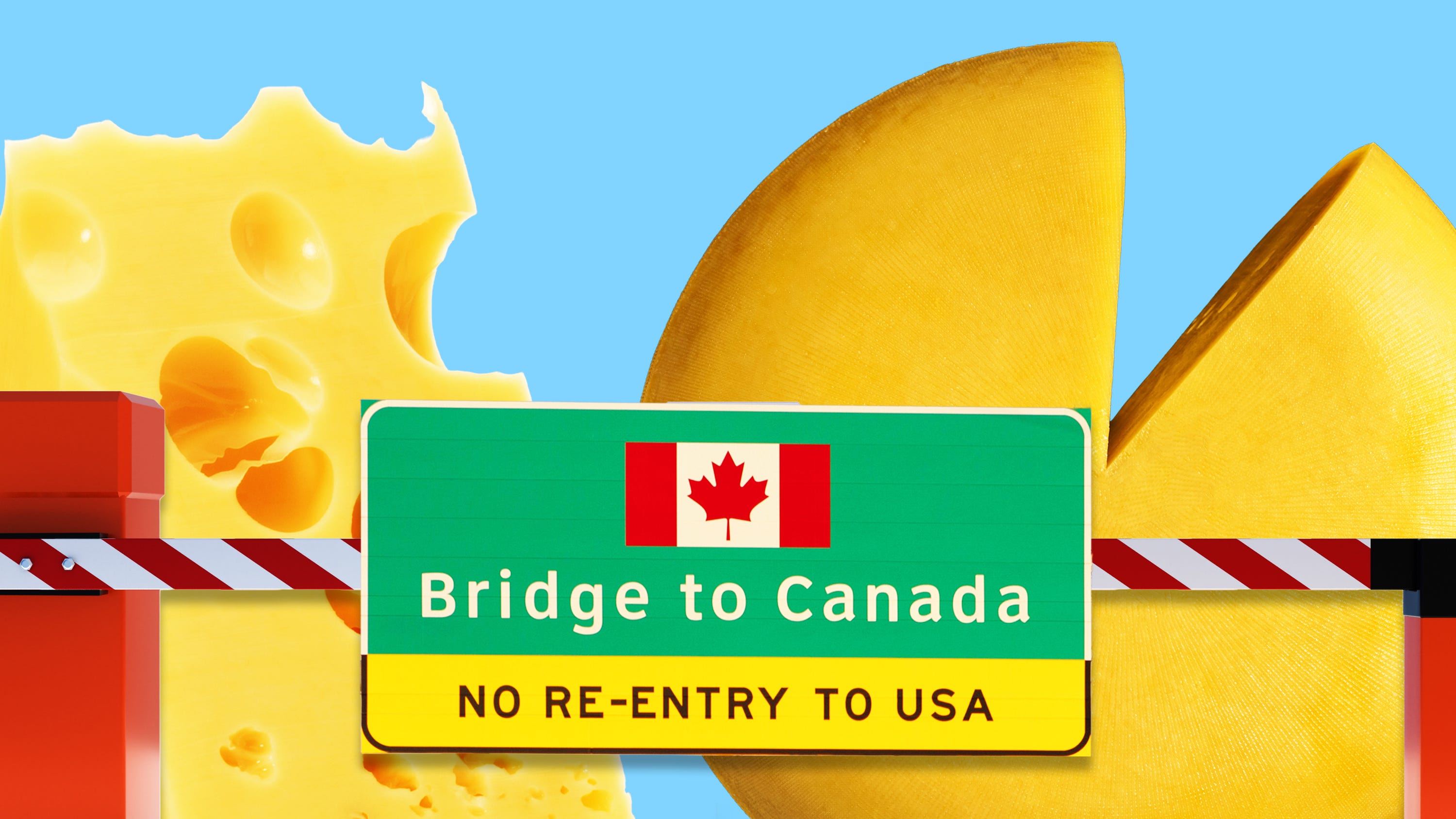
I also spoke with Mateo Kehler, the CEO and cofounder of Jasper Hill Farm in northern Vermont. Kehler is a dairy farmer who makes delicious, rich, award-winning cheeses, and is supposed to be exactly the kind of person Trump’s trade war with Canada is helping. Instead, the president has obliterated Kehler’s export business. We spoke about why Trump’s trade wars and hot war are hurting dairy farmers on both sides of the border, despite Trump’s specific callouts promising to rescue U.S. dairy farmers. Trump’s cheese wreckage was the subject of my recent Receiptsnewsletter, as well:
IN HIS OTHERWISE INEXPLICABLE trade war with Canada, U.S. dairy was supposed to be the one industry President Donald Trump was actually helping.
He frequently namechecks the sector in his social media posts and interviews about Canada, citing it as evidence that our polite northern neighbors are really a bunch of dirty cheats. Sometimes, Trump complains that Canadian dairy tariffs on the United States are 250 percent; sometimes, according to Trump, they’re 400 percent.
And look, it’s true that dairy trade has been a source of friction between the two countries over the years. Trump’s response to that friction, however, has been to tariff, bully, and ban his way to prosperity. To which American dairy farmers are now saying: Please, stop helping.
Thanks for all your terrifically cheesy cheese puns, by the way! Very hallouminating. I’ll see you back here Thursday for the next edition of Receipts.
Catherine Rampell and Sam Stein discuss Scott Bessent’s strange interview, from his “I am the house” bravado and boasts about Melania’s friends to his temper and possible political ambitions. They also react to Trump’s latest pitch for $5,000 checks and his remarkable claim that he knows more about basically everything than anyone.
Then Jasper Hill Farm’s Mateo Kehler joins to explains how Trump’s trade war with Canada wiped out the cheese company’s fastest-growing export market and why policies sold as a lifeline for American dairy farmers are instead driving up costs and squeezing businesses.
A quick note: One of the things we want Receipts to do is give conversations like this the room they deserve: go deep with people who know their industries inside and out, and trace government policy all the way from Washington to its effects on businesses, workers, and communities. Your support for the Bulwark gives us the freedom to make more of that kind of work.
And if you do want to join, you’re in luck—we’re running 30% sale right now!
Catherine Rampell and Jonathan Cohn give their takes on Donald Trump’s latest checks to Americans, including $500 payments to some ACA marketplace enrollees and $90 payments to certain Medicare recipients. They explain where the money is coming from, why the ACA payments may lack clear legal authority, and how diverting money from healthcare outreach could further undermine the Affordable Care Act.
Plus, Catherine and Jonathan discuss reports of a possible plague outbreak in Russia, what is known about the death of a laboratory worker, and why the Trump administration’s retreat from global health programs and international cooperation could leave the U.S. less prepared for the next major outbreak.
A bombshell New York Times/Siena poll shows Democrats running surprisingly strong across traditionally red states, including Texas, Alaska, Ohio, Iowa, and Kansas. Catherine Rampell and Bill Kristol explain what the numbers actually tell us, why Trump’s erosion with his own voters matters, and whether this is what a real electoral wave looks like.
Catherine Rampell and JVL break down the weak jobs report, the impact of immigration and tariffs on the labor market, and the economic challenges facing Trump’s manufacturing agenda. They also discuss Trump’s ideas for dealing with the national debt, including his suggestion that inflation could help pay it off, and what his attacks on the Federal Reserve could mean for America’s borrowing costs.
Plus, they examine why Republican counties are losing population, the country’s declining fertility rate, the economic consequences of an aging population, and Trump’s reliance on Grok to kidnap Nicolás Maduro.
Receipts With Catherine Rampell is a new companion podcast to Catherine’s weekly newsletter. Join Catherine and JVL on Fridays wherever you get your podcasts or YouTube. Follow the Receipts:
(Photo illustration by Bill Kuchman/The Bulwark | Photos: Shutterstock, Getty)
IN HIS OTHERWISE INEXPLICABLE trade war with Canada, U.S. dairy was supposed to be the one industry President Donald Trump was actually helping.
He frequently namechecks the sector in his socialmediapostsandinterviews about Canada, citing it as evidence that our polite northern neighbors are really a bunch of dirty cheats. Sometimes, Trump complains that Canadian dairy tariffs on the United States are 250 percent; sometimes, according to Trump, they’re 400 percent.
And look, it’s true that dairy trade has been a source of friction between the two countries over the years. Trump’s response to that friction, however, has been to tariff, bully, and ban his way to prosperity. To which American dairy farmers are now saying: Please, stop helping.
“I can’t figure out who’s winning here,” Mateo Kehler, CEO of Jasper Hill Farm, a cheese company in northern Vermont, told me. “Everybody I know is losing.”
Jasper Hill Farm makes mouth-watering, high-end, award-winning cheeses, the kinds served at Michelin-starred restaurants and stocked at your local cut-to-order cheesemonger counter. In fact its rich, bark-wrapped, “spoonably soft” Winnimere cheese just won the American Cheese Society’s Best of Show prize. Yet in the Trump era, the company’s export business has imploded. Jasper Hill Farm’s once-booming Canadian customer base evaporated almost overnight last year, due to a combination of tariffs, counter-tariffs, and pissed-off Canadian customers boycotting American goods.
And you know what? Kehler says he doesn’t blame them.
“Honestly, if I was a Canadian consumer, I would not be buying anything from the U.S. either,” he acknowledged. “This is a time for resistance, and I applaud Canadians for voting with their dollars.”
Let’s talk about how we got here. This is gonna get gouda.1
Catherine Rampell and Andrew Egger break down Donald Trump’s bizarre new interview with Time Magazine, from his claims about having the “highest” IQ to his ever-changing story about how long the war in Iran was supposed to last.
They also discuss Trump’s claim that annihilating Iran would create peace, his latest attempt to rewrite his four-to-six-week timeline, his complaints about “negative” questions, and his fixation on the White House renovations and other personal projects.
Why are we in a trade war with Canada, exactly? What was Canada’s alleged transgression?
In the latest episode of Receipts, Sam and I discussed how Trump has lost the plot on the whole Canada tariffs thing, which this week transmogrified into an all-out ban on importing certain Canadian goods. Roughly $1 billion of Canadian-made motorcycles, alcohol, and dairy are now barred from entry into the United States, for no discernible reason. Contrary to Trump’s claims, these hissy fits are hurting U.S. exporters, including the dairy industry he says he wants to help.
We also talked about the latest on Trump’s definitely forthcoming $5,000 checks, and how the “dividend” he promised to deliver if Republicans retain control of Congress is polling with the American public. (Not as well as you’d think!) Meanwhile, on the affordability front, the Trump administration has decided to relax fuel-economy standards in the middle of an energy price spike.
Finally, Sam was eager to discuss rumors that Sydney Sweeney may be contemplating conversion to Judaism. How might that affect her market value as an increasingly controversial spokesperson?
Check out the latest episode of my Receipts podcast on the site, YouTube, Apple Podcasts, Spotify, or wherever you get your podcasts.
And if you haven’t already, please subscribe to the podcast feed for Receipts With Catherine Rampell wherever you get your podcasts. It really helps us get in front of new audiences. Thanks, and let us know what topics you want JVL and me to cover later this week in the live show.
Enjoy this ad-free preview. This premium edition of Receipts with Catherine Rampell is exclusively for Bulwark+ members. Upgrade to listen and watch the full episode—ad free—and get access to more member-only content from The Bulwark.
Catherine Rampell and Will Sommer take on Trump’s escalating war on the White House press, the amateur-hour MAGA media operation stepping in to replace the traditional White House pool, and Byron Donalds’ awkward attempt to put a little distance between himself and Trump. Plus, Kimberly Guilfoyle’s misadventures as ambassador to Greece involve a mysterious lobbyist, questionable energy dealings, a middle-of-the-night trip to Albania, a shattered vodka venture, and one extraordinary warning to a U.S. ally.
Catherine Rampell and JVL break down the latest economic warning signs, from surging Treasury yields and 7% mortgage rates to the fallout from the Iran war and rising energy prices.
They discuss why Scott Bessent’s efforts to push down bond yields are running into broader problems with inflation, government debt and uncertainty over the war. Catherine also explains why Donald Trump’s proposed diesel export ban could backfire by raising prices for gasoline and other petroleum products while disrupting global energy markets.
Plus, they discuss the growing influence of corporate leaders in the Trump administration, the erosion of the rule of law and what economic uncertainty means for long-term business investment. And they debate Jensen Huang’s argument that students may not need to learn basic math in the age of AI—and what gets lost when foundational skills are treated as obsolete.
Receipts With Catherine Rampell—a new companion podcast to Catherine’s weekly Receipts newsletter—is available wherever you get your podcasts or YouTube. Follow the Receipts:
Catherine Rampell is joining the gang—JVL, Sarah, Tim and Sam—for Bulwark LIVE on Sunday, October 18 in Charlotte, N.C. Pete Buttigieg is the special guest for this live show at the Carolina Theatre.
For details about our Bulwark LIVE: Good Fight Tour in the Southeast, head to TheBulwark.com/events.
(Photo illustration by Bill Kuchman/The Bulwark | Photos: Getty, Shutterstock)
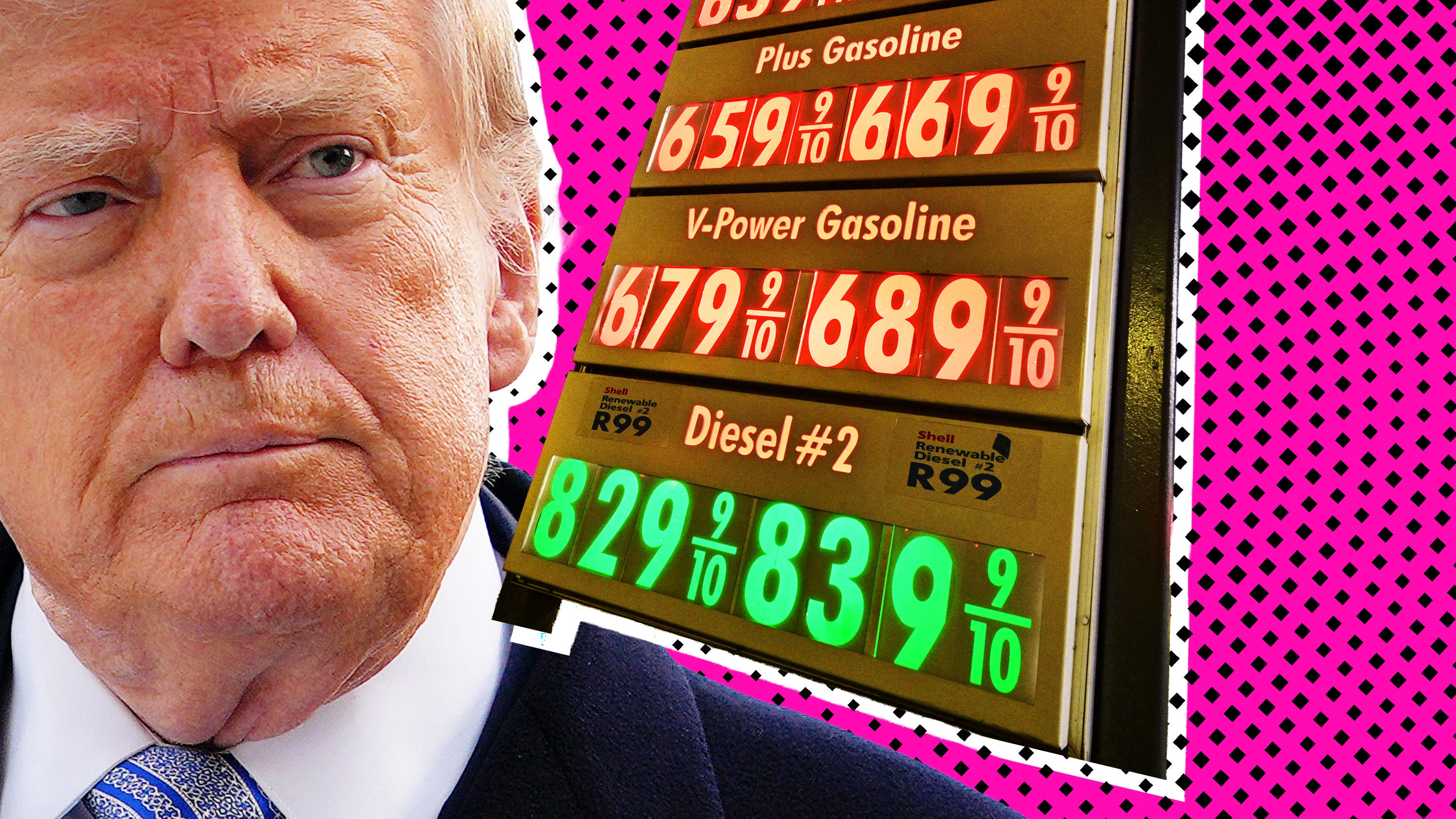
Dallas, Texas Diesel prices have soared to all-time highs, nearly double their pre-Iran-war levels. This has devastated truckers, farmers, and really anyone who buys goods that need to be moved from one place to another.
It’s all pretty inconvenient for an incumbent party heading into an election, obviously. Since President Donald Trump either can’t or won’t resolve the primary reason behind this price surge—that being his war of choice with Iran—he is contemplating an alternative: make it illegal to export any of the diesel refined in the United States.
It would be the first time in modern history that we have imposed such a ban.1 It’s also a quintessentially Trumpian idea: It involves restricting trade (Trump’s Veg-o-Matic2 solution for every problem); he appears to have done zero homework prior to entertaining the proposal; and it would likely backfire economically, diplomatically, and politically—in fairly spectacular fashion.
Photo Illustration by Bill Kuchman/The Bulwark | Photos: Getty, Shutterstock
Hey everyone,
ICYMI: Last week I launched a new podcast—Receipts with Catherine Rampell. This new Bulwark show is a companion to my weekly newsletter, which isn’t going anywhere.
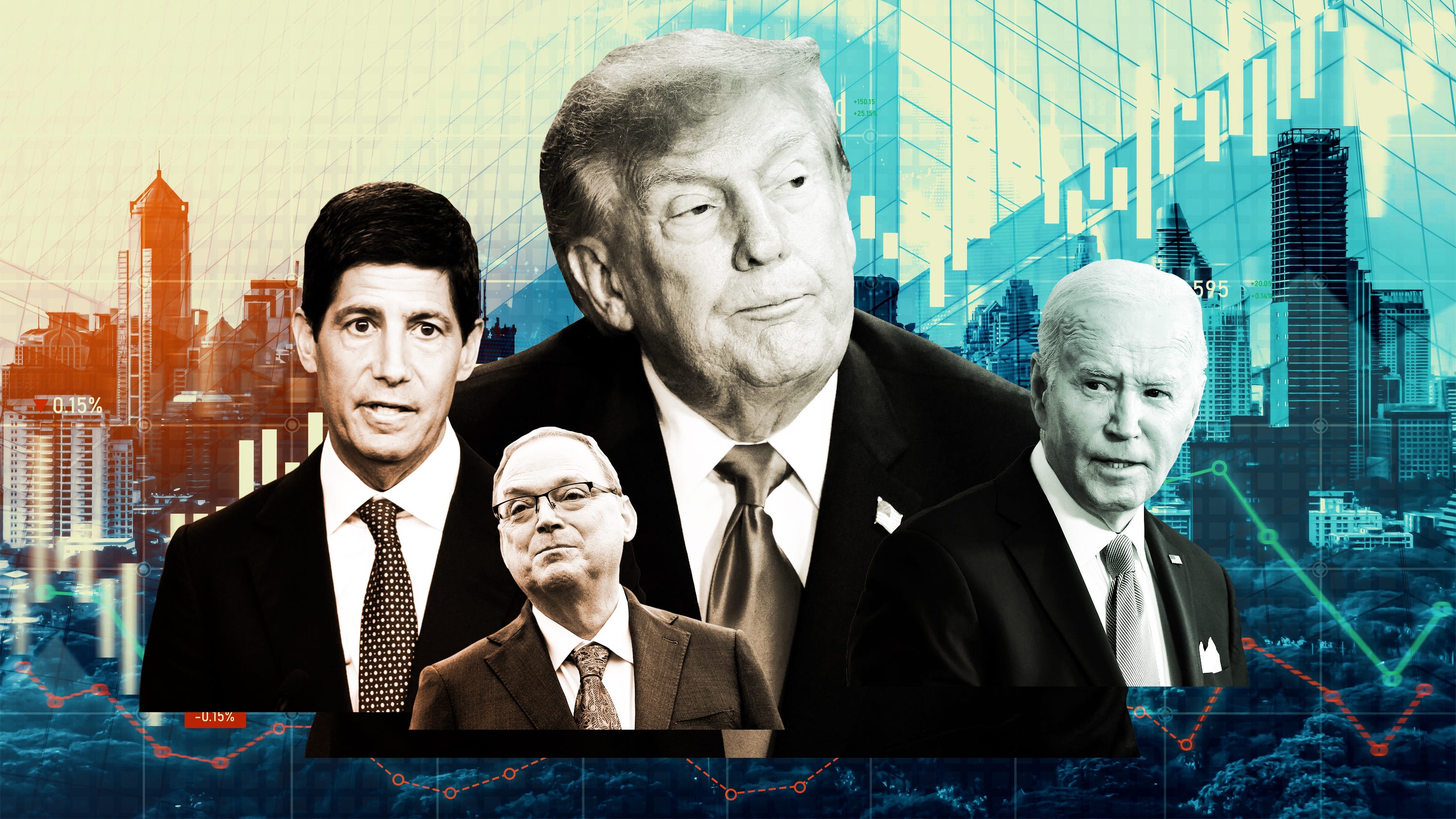
I hope you’ll check out my latest episode—a conversation with the economist Jason Furman, a former top adviser to Barack Obama and occasional liberal apostate. You may know him as one of the few prominent Democratic administration alumni who warned about Bidenflation early on.
We spoke about why the economy—and especially the stock market—appear to be so resilient in the face of Trumponomics. Among other things, Jason thinks that liberals may be blinkered to the positive economic impact of some of Trump’s policies, however destructive he agrees they might be for, you know, democracy.
Jason also says he feels more confident about Fed independence after last week’s interest rate hike. And if it turns out that Fed Chair Kevin Warsh threw his Fed colleagues under the bus by allowing Trump to believe they were the main obstacle to rate cuts—well, Jason says that wouldn’t be the worst thing. I’m not totally convinced by his arguments, but you should definitely hear him out.
And, like a real pro, Jason shared some advice for Trump’s economic surrogates, including Kevin Hassett, who appears to be struggling a wee bit with even softball interviews on Fox News. To round it out, we also discussed Trump seizing control of NIH grants, what Dems have (or haven’t) learned from Bidenomics, and Jason’s favorite example of economics in pop culture and the arts. (Send me your favorites, too.)
Catherine Rampell welcomes former Obama economic adviser Jason Furman to make sense of an economy that keeps confusing almost everyone. They also talk about Trump’s pressure on the Fed, the White House’s economic spin, the risks of politicizing scientific research, and why Democrats may be learning the wrong lessons from inflation and the affordability crisis.
Enjoy this ad-free preview. This premium edition of Receipts is exclusively for Bulwark+ members. Upgrade to listen and watch the full episode—ad free—and get access to more member-only content from The Bulwark.

 Login
Login