Let’s be clear about what we’re doing here. The Bulwark exists to fight authoritarianism and defend American democracy. We do that with reporting, analysis, accountability, and by building a community of people who refuse to look away or pretend this is normal. If you believe this fight matters, join Bulwark+ and help us do the work.
Sarah Longwell and Andrew Weissmann discuss the FBI raid on Ilhan Omar, Trump’s latest overtures to Putin, and the courts’ efforts to stop his taxpayer-funded campaign ads. Plus, Weissmann explains why simply ordering Trump to stop breaking the rules isn’t enough, and whether DOJ lawyers pursuing politically motivated prosecutions could eventually face disbarment.
(Photo illustration by Sarah Rogers/The Bulwark | Photos: Getty, Shutterstock)
ONE OF THE UNEXPECTED NEW STARS of this midterm election has been Adam Hamilton, the Kansas megachurch pastor who has a chance—though it’s nowhere near certain—of defeating Republican Sen. Roger Marshall and becoming the first Democratic senator elected from Kansas in ninety-four years.
Donald Trump won Kansas two years ago by 16 points. That’s bigger than his margins in Iowa, Florida, Alaska, or Texas. So a Hamilton win would be one of the most impressive feats of any Democratic candidate this cycle. Hamilton has tied or led in every poll tracked by the New York Times since mid-September, but never by more than 5 points (and that was in a poll his campaign sponsored).
Getting to the heart of why Hamilton is overperforming is important, because Democrats are going to take lessons from this race about how they should run—and whom they should run—in red parts of the country, even if he falls just short. It’s important they learn the right lessons.
We talked to 2024 Kansas Trump voters to find those lessons. And what we found out was that
Republicans have been on a long winning streak in Florida...but they might be playing defense in 2026...because they have one candidate who's REALLY into data centers, and another candidate running what's being called a 'Joe Biden Basement' campaign. And the Democratic ticket may be one of the oddest couples in the history of politics, led by a former Republican Congressman (David Jolly) and a DSA-aligned state legislator (Angie Nixon). POLITICO's Kimberly Leonard joins Sarah to discuss whether Florida is back in the 'swing state' column in 2026.
Show links:
Tickets are on sale for CrookedCon on November 7 in Washington. Get discounted tickets at CrookedCon.com/Tickets, with code Bulwark20.
If you value this kind of in depth coverage and want to show your support for the our work, upgrade now to watch or listen to our premium ad free editions of Bulwark shows—PLUS you’ll get access to Sarah’s Focus Group newsletter too.
Each membership ensures we can give away subscriptions to those who can’t afford to join our community. The only way through is together.
Full ad-supported episodes ofThe Focus Groupare available wherever you get your podcasts and on YouTube. Hit that like 🤍 button and share this episode with a friend. Click here to add the show to your player of choice.
(Photo illustration by Sarah Rogers/The Bulwark | Photos: Getty, Shutterstock)
IF YOU’VE SPENT MUCH TIME watching the NFL, college football, or Dancing with the Stars over the past week, or if you’re just an average political obsessive,1 you’ve probably noticed the taxpayer-funded ads from Donald Trump.
They’re billed as “public service announcements,” and one of the spots features excerpts from a speech Trump gave at one of his 2024 campaign rallies. The speech goes like this:
With you at my side, we will demolish the deep state. We will expel the warmongers from our government. We will drive out the globalists. We will cast out the Communists, Marxists, and fascists. We will throw off the sick political class that hates our country. We will rout the fake news media, and we will liberate America from these villains once and for all.
Since the ads began to air, it’s become pretty clear that people hate the idea of the government using taxpayer money to broadcast them. And I mean, they truly hate it.
A recent Reuters/Ipsos poll found that people oppose “using taxpayer funds to pay for election-related television ads featuring the President or members of his cabinet” by a margin of 86–9.2
What’s been less clear is whether the ads themselves are effective. After all, voters always claim to hate political ads. Even when campaign commercials are really effective, voters almost never admit to liking them, trusting them, or being influenced by them. And yet they work. But do Trump’s?
To find out, we convened a group of voters from Florida who backed Trump in 2024 but now disapprove of his job performance—the very voters he needs to win back—and showed them the ad. What we saw wasa whole new level of revulsion. In fact, we couldn’t even get through the question.
“If you’ve watched the NFL or watched college football, you might’ve seen it around a little bit,” the focus group moderator began. They were immediately interrupted.
“Oh my God,” Ramiro, 58, from Miami interjected, clearly knowing what was coming.
Then we played the ad.
This is what makes The Bulwark different: We conduct focus groups with voters to try to understand what makes them tick—what moves them. We do this in service of getting answers you won’t hear anywhere else. We help you see around corners. If you value that work, please consider supporting us by becoming a Bulwark+ member.
Let’s be clear about what we’re doing here. The Bulwark exists to fight authoritarianism and defend American democracy. We do that with reporting, analysis, accountability, and by building a community of people who refuse to look away or pretend this is normal. If you believe this fight matters, join Bulwark+ and help us do the work.
Sarah Longwell and Andrew Weissmann explain the explosive Kimberly Guilfoyle corruption allegations, including the $100,000 Amex payment, incriminating text messages, and why Trump might be reluctant to turn against her. Plus, Weissmann explains why Trump’s $5,000 election promise could constitute a crime, how a federal judge shut down a Trump DOJ prosecution, and why the administration’s defiance of court orders in its El Salvador deportations could still have serious consequences.
(Photo illustration by Bill Kuchman/The Bulwark | Photos: Getty, Shutterstock)
OF ALL THE STATES THAT COULD give us an indication of how big the blue wave will be this cycle, Iowa is one of the most intriguing.
Donald Trump never came within 8 points of losing the state. But of the ten polls of this race since September 1 in the New York Times polling aggregator, the Democrat leads in four, the Republican leads in five, and one was a tie.1
The state is a petri dish for Trump’s toxicity: diesel prices, corruption, and concerns about AI and data centers all have particular relevance in Iowa. It also will be a strong case study in what types of Democratic candidates can play in states that have drifted right over the Trump years. The Democratic nominee for Senate, Josh Turek, is likeable, admirable, and has run a non-stupid campaign.
And yet, if the focus groups I conducted in the state last week are telling me anything, one of the deciding factors in the race will be
The October Surprise? You’re going to want The Bulwark.
The midterms are coming. The surprises are inevitable. Get the reporting, analysis, and conversations you won’t get anywhere else.
• Unlock everything: Every Bulwark story + exclusive newsletters, including this one—Sarah Longwell’s Focus Group.
• Hear what others don’t: Member-only pods like The Secret Podcast with Sarah Longwell and JVL.
It’s October, and the political environment is really, really, REALLY bad for the Republican Party. Cook Political Report editor in chief Amy Walter explains how Cook is approaching its race ratings this year, and she and Sarah discuss the ever-growing list of reasons swing voters are mad about the state of the country, discuss Michigan’s Senate race and Sarah’s latest Focus Group Newsletter, and have a more high-minded discussion about how AI is affecting voters’ information diets (and the next election).
If you value this kind of in depth coverage and want to show your support for the our work, upgrade now to watch or listen to our premium ad free editions of Bulwark shows—PLUS you’ll get access to The Focus Group newsletter by Sarah too.
Each membership ensures we can give away subscriptions to those who can’t afford to join our community. The only way through is together.
Full ad-supported episodes ofThe Focus Groupare available wherever you get your podcasts and on YouTube. Hit that like 🤍 button and share this episode with a friend. Click here to add the show to your player of choice.
Let’s be clear about what we’re doing here. The Bulwark exists to fight authoritarianism and defend American democracy. We do that with reporting, analysis, accountability, and by building a community of people who refuse to look away or pretend this is normal. If you believe this fight matters, join Bulwark+ and help us do the work.
Sarah Longwell and Andrew Weissmann discuss Jack Smith’s latest Senate testimony, including the questions Republicans didn’t ask about the actual cases against Trump and the Eric Schmitt gotcha that blew up in spectacular fashion. They also dig into the turmoil inside Trump’s DOJ, the fight over White House press access, Trump’s $1.776 billion “slush fund” case, and a Supreme Court election decision ahead of the midterms.
(Photo illustration by Bill Kuchman/The Bulwark | Photos: Getty, Shutterstock)
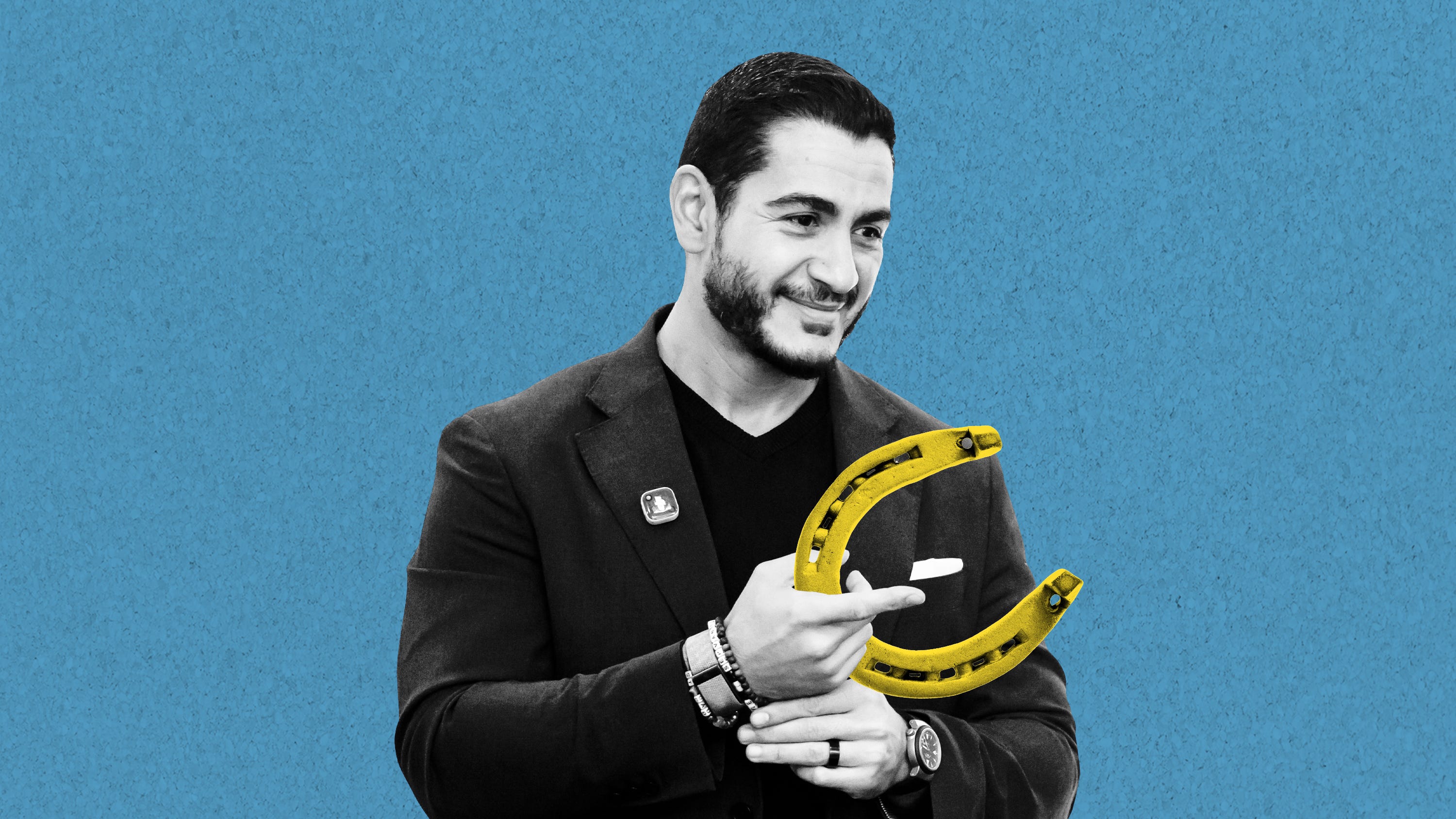
WHAT DOES ABDUL EL-SAYED have in common with Marjorie Taylor Greene?
El-Sayed doesn’t think there’s much. In a July interview with Politico’s Dasha Burns, he mostly rejected the comparison, which Burns made based on the fact that both politicians condemned AIPAC, opposed all aid to Israel, and called for lower health insurance costs.
“When you ask me about why establishment, elite Democrats are so worried about me,” El-Sayed said, “it’s because there are a lot of people who listen to [MTG] who are going to vote for me in the general election.”
But while El-Sayed may not like being talked about in the same breath as MTG, others see some common threads. After El-Sayed won his primary, Tucker Carlson called his campaign “literally Trumpian” (as a compliment), and said that El-Sayed’s opponent, former Rep. Mike Rogers, was “unfit to serve.”
Clearly, there’s some El-Sayed crossover appeal. And you don’t just have to take Tucker’s word for it. In a recent New York Times/Siena poll, El-Sayed is performing better with 2024 Trump voters than other Democratic Senate candidates in swing states, winning 8 percent of 2024 Trump voters, compared to 5 percent for New Hampshire’s Chris Pappas or 3 percent for Maine’s Troy Jackson.1
I had been wondering about this dynamic for a while (partially because I want El-Sayed to win). So a couple weeks ago, I did a focus group in Michigan with 2024 Trump voters who disapprove of Trump’s job performance. And what I discovered were
Ohio used to be the biggest swing state in the country. It's turned pretty red, (Trump won it by 11 points in 2024) but it's very hotly contested this year, and there's one big overarching local issue driving it. Signal Ohio state government and politics reporter Andrew Tobias joins Sarah to break down the major players.
Sarah is going to host an AMA for all of you on Friday, October 2 at 2:00 p.m. EDT on Substack and YouTube. Just drop your burning questions in the comments on this post, and I will answer the best ones on video. We can’t wait to dig into this elephant with you.
Send questions for the show to focusgroup@thebulwark.com.
If you value this kind of in depth coverage and want to show your support for the our work, upgrade now to watch or listen to our premium ad free editions of Bulwark shows—PLUS you’ll get access to The Focus Group newsletter by Sarah too.
Each membership ensures we can give away subscriptions to those who can’t afford to join our community. The only way through is together.
Full ad-supported episodes ofThe Focus Groupare available wherever you get your podcasts and on YouTube. Hit that like 🤍 button and share this episode with a friend. Click here to add the show to your player of choice.
I want to talk to you for a minute about my favorite thing in the world: this community.
As you likely know, a whole bunch of us at The Bulwarkare currently jumping on planes to head to Ohio for a live show to stand with the Haitian community in the Springfield area—a community currently being targeted by the Trump administration’s inhumane deportation regime. We keep having to expand the size of the venue because so many of you are coming. We can’t wait to be with you tonight.
We’ve been raising money to support the Haitian Support Center, and my goodness have you shown up. We’ll be announcing the final tally soon. But rest assured, you’ve already exceeded our expectations and we can’t thank you enough.
But I also have some personal gratitude I want to share. I’ve been all over the country over the last few weeks on my book tour, and I’ve gotten to be in the room with so many of you, and it has been the stuff of dreams.
I knew that when I wrote a book,The Bulwarkcommunity was going to show up—even if it was just because you wanted to see JVL moderate a focus group! (I put that goal at 50,000 copies sold. We’re not there yet but we’re getting close.)
Thanks to you, my book, How to Eat an Elephant: One Voter at a Time, debuted at #2 on the New York Times best sellers list in its first week. And now it’s back on the list for a second week in a row. (Ted Cruz is no longer on the list at all, not that I’m checking.)
But as cool as it is to see my book on the best sellers list, that isn’t what’s made me happiest over the last couple of weeks. What’s really touched me is how many of you are actually reading the book. THANK YOU.
Let me tell you a little secret about how D.C. book publishing works: On the MAGA right, lots and lots of authors write—or “write”—books that they don’t expect anyone to read. These are cynical messaging vehicles, usually expressly put out to fluff Trump and his cronies. In exchange, they get a Truth Social post from Trump, make the best seller list, and the book is quickly forgotten. Which is exactly what happened with the book that beat us out for the #1 NYT spot.
But I can tell from the reviews you guys are leaving on Amazon and Goodreads, and from what you’re telling me when you show up to events, that you’re actually reading this book. And that means the world to me. I didn’t write this book as a vanity project to sit on someone’s shelf. I wrote it so people would read it and get something out of it. I want it to make a positive difference.
The next step for me is that I want to talk about it with you. So I can answer your questions and take your feedback. We’re going to host an AMA for all of you on Friday, October 2 at 2:00 p.m. EDT. Just drop your burning questions in the comments on this post, and I will answer the best ones on video. I can’t wait to dig into this elephant with you.
To each and every one of you who bought the book, read it, commented, watched any of the clips from our tour, showed up at the live shows, or told a friend—THANK YOU, from the bottom of my heart. You are the reason we do what we do.
Now here’s my last plug: If you’ve been holding out, and haven’t done so yet, please go and buy the book today.If people keep buying the book, that means it gets more press, which means that more new people see it, ultimately helping spread these ideas and this community even farther. It would mean the world to me if you help us do that.
Sarah and Andrew cover Trump’s escalating war with the press, from his White House ban on CNN, MS NOW, and Politico to the growing consolidation of major media companies. They also debate Zohran Mamdani’s approach to Trump, unpack the dubious “national security” rationale for Trump’s giant arch, and discuss Weissmann’s victory in the defamation lawsuit brought against him by Cassidy Hutchinson’s former lawyer.
(Photo illustration by Bill Kuchman/The Bulwark | Photos: Getty, Shutterstock)
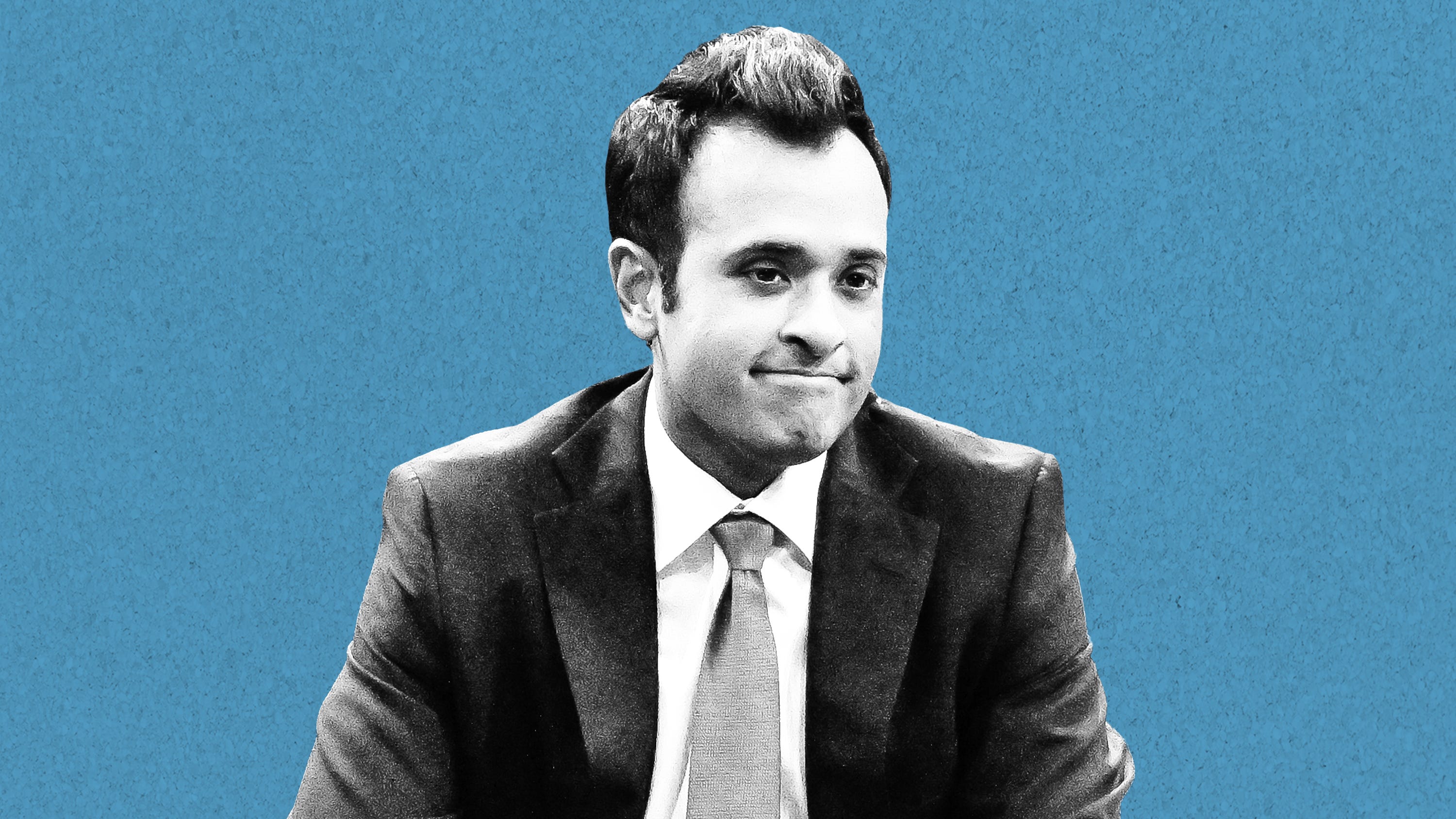
FOR YEARS, I’VE BEEN ASKING Trump’s voters whom they’d like to see run for president in the future, or simply which political figures they feel are speaking their language—since, after all, Trump can’t run again.
And for a long time, one of the more popular answers has been a somewhat unexpected figure: 2024 presidential candidate Vivek Ramaswamy.
These are the kinds of things I have heard about Ramaswamy from Trump voters around the country, both MAGA veterans and Biden-to-Trump types newer to the GOP coalition:
“I think that he’s helping to control the narrative and lead the discussion, especially at the debates.” (from a November 2023 focus group)
“I think he’s very smart. He’d be great in the cabinet. I don’t think he’s ready to be a president. I think he’s young, like others say, but very much a know-it-all.” (January 2024)
“He’s really intelligent, seems to really have a grasp on the economy, and is a good speaker, like Trump, without some of the craziness.” (July 2025)1
This all sounds pretty complimentary, the type of foundation for a long career in politics: Vivek is a brainiac, a striver, and someone who’s good at being “right” and owning his debate opponents à la Ben Shapiro.
But when you narrow the focus groups to Trump voters in Ohio—where Ramaswamy is locked in a tight race for governor—the reaction radically changes. In fact, it shows that Ramaswamy has a major problem:

 Login
Login