Andrew Egger and Catherine Rampell discuss Sen. Bill Cassidy’s criticism of vaccine policy after his vote to confirm RFK Jr., questions surrounding Mitch McConnell’s prolonged absence, growing support for price controls in the GOP, the political fallout from Trump’s tariffs, and the Navy’s potential multibillion-dollar warship redesign to suit the president’s aesthetic preferences.
Will Saletan gives his take on how Republicans accused of serious misconduct have learned to survive scandal. All they have do is follow Donald Trump’s example: never resign, deny everything, attack the accusers, call the investigation “political,” and invoke Trump’s own history as proof that they can stay in the fight. From Duncan Hunter and Matt Gaetz to George Santos, Cory Mills and Max Miller, Will walks through how Trump has become the model for Republican politicians facing allegations, investigations and convictions — with endorsements, pardons and political support often waiting on the other side.
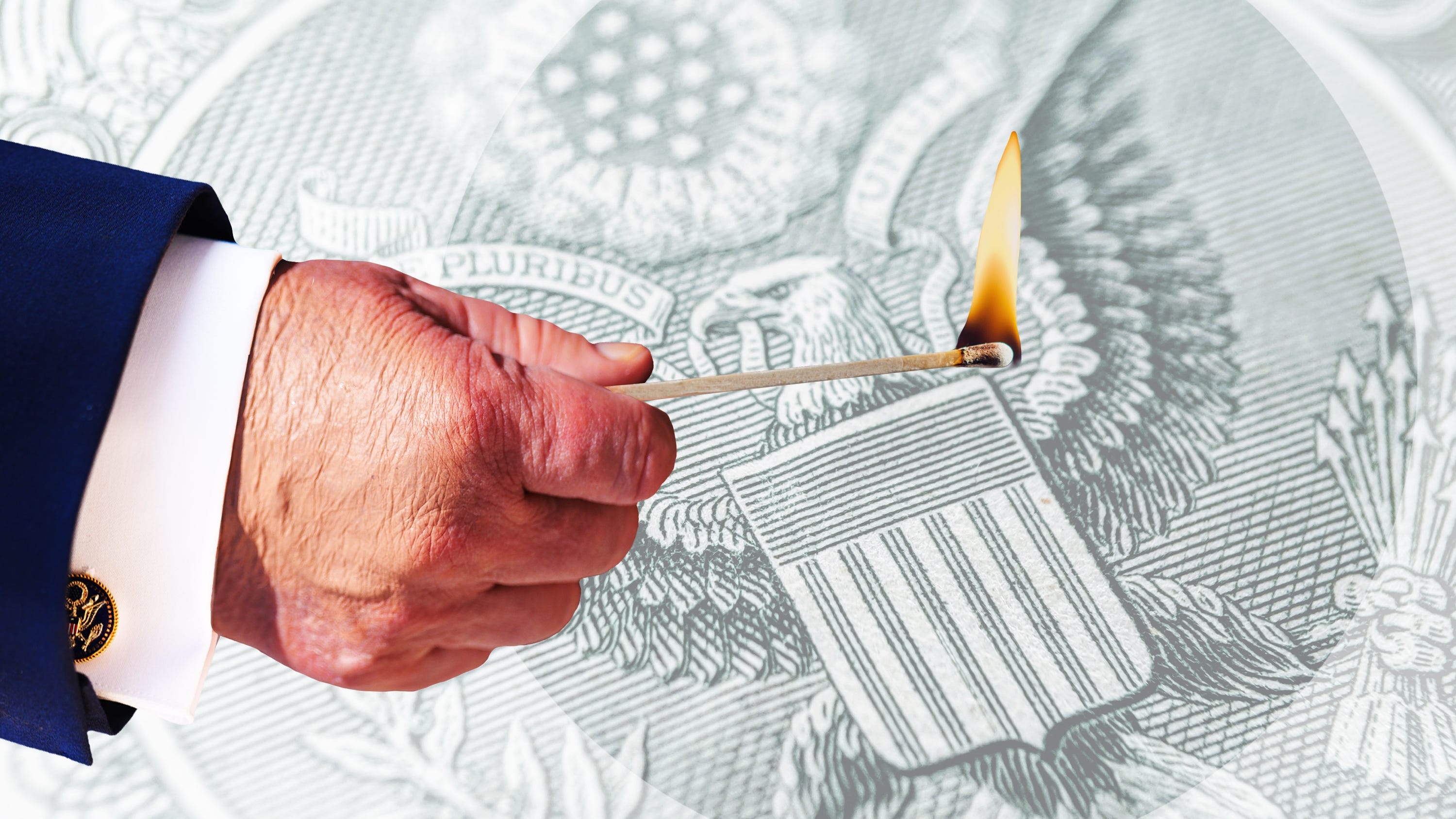
(Photo illustration by Bill Kuchman/The Bulwark | Photos: Daily Mail, Fox News, Shutterstock)
A NEW MAGA ATTACK on Abdul El-Sayed is making the rounds. This one is about his tenure as public health director in Detroit, and how he supposedly oversaw an animal control unit that was rife with abuse and cruelty. The unit was a “slaughterhouse,” according to a Thursday Daily Mail headline that by now has almost certainly landed in millions of social media feeds, thanks to retweets from prominent right-wing influencers and Republican politicians.
But the attack appears to be nonsense.
Not spin. Not shading of the truth. Total, utter nonsense—the kind that tells the very opposite of the actual story.
As it happens, that actual story is politically relevant. There really were big problems with animal control in Detroit. But El-Sayed didn’t create them. He inherited them when he became Detroit’s public health director. And according to every source I could find on Friday, as this controversy was ricocheting across the internet, El-Sayed’s efforts helped to make those problems better.
A single set of figures illustrates the progress during his sixteen-month tenure. The “save” rate—meaning, the percentage of animals not euthanized—was no higher than 26 percent when he took over in 2015, and probably lower. (The exact figure is unclear because of some data issues back then.1)
In 2016, the first full year animal control was under his management, the save rate was up to around 60 percent. By the time he left in 2017, in order to run for governor, it was approaching 70 percent.2
Those numbers come from Melissa Miller, the animal rights advocate and expert whom El-Sayed had put in charge of animal control—and who told me during a phone interview Friday that she was furious about the stories circulating on social media, because they were so off-base. Miller described El-Sayed as “transformational,” explaining that “he inherited an extremely dysfunctional and inhumane department” and yet managed to bring in new management and start changing the culture within a few weeks.3
“I think that’s pretty impressive,” she said.
Tracking down Miller was not difficult: It took just one call. But even that small effort was not necessary to understand the truth. The two news clips now making the rounds on social media—that article in the Daily Mail, another on the Fox News website—contain exonerating information. But it’s buried in the text, below headlines and framing making it seem as if the animal control unit’s problems were El-Sayed’s doing.
That’s what makes the smear of El-Sayed more than just another instance of dishonest propaganda. It’s a case study in how easily misinformation can metastasize in our national political debates. And it’s best understood by looking back at what was actually happening in Detroit’s animal control when El-Sayed first took his post in city government.
CONDITIONS AND PRACTICES in Detroit’s animal control department were bleak in 2015, according to media reports from the time. Drains in the nearly century-old building backed up regularly, creating pools of raw sewage. Maggots fed on dead rats.
Owners who came to reclaim their pets frequently discovered they were injured or had infections, Miller told me. And for those that weren’t claimed? “There were no adoptions,” Miller said. “Basically, if an owner did not reclaim a dog or cat, they did not leave. Everything was euthanized.”
At the time, Mayor Mike Duggan was less than two years into his tenure, and still in the early stages of a project to rebuild government infrastructure after years of downsizing and then a full municipal bankruptcy. In late August, Duggan appointed El-Sayed with a mission to reconstitute the public health department, which had shrunk to just five employees and was outsourcing most of its work to contractors. Less than two months later, in mid-October, Duggan formally announced that he was giving El-Sayed oversight of the animal control unit, which previously had been under the police department’s management.
It’s not clear whether the idea was Duggan’s or El-Sayed’s, or how long before that announcement El-Sayed had begun to prepare for his new responsibilities. Either way, El-Sayed had to quickly learn about both the state of the unit and the basics of animal control, which is not something doctors or epidemiologists (El-Sayed is both) typically learn in school.
“Abdul did something that we had long hoped for within the animal welfare community,” Miller told me, “which is to meet with professionals, go see some shelters that are doing it right, talk to subject matter professionals and get an understanding of why everyone was saying like, no, this isn’t right.”
Almost immediately, Miller said, El-Sayed initiated a program to make a limited number of animals available for adoption every week. But that was a prelude to a bigger change: The appointment of Miller as the unit’s new director. That happened in December, about six weeks after El-Sayed had taken charge, in what the Detroit Newsdescribed as his “first major act.”
“The facility was in terrible shape and some of the practices were, frankly, inappropriate,” El-Sayed told the News. “Our system was, in many ways, broken. Both in terms of the way that we brought dogs in, we sheltered dogs, we paid and took care of the dogs with us. . . . All of those things needed to be rethought and they are being rethought actively.”
Shortly afterwards, he met with some activists who were protesting conditions at the shelter. “In the coming year the face of animal control will look very different than it has in the past,” he promised them.
El-Sayed followed through on those vows, Miller told me, pointing to the rapid drop in the euthanasia rate that began one month after she took over. And while she said El-Sayed mostly delegated management to her, she credits him with teaching her the ins and outs of department administration—and with responding quickly to time-sensitive matters, like finding contractors to clear the drains that were backing up fetid water into the kennels, even though he had his hands full trying to rebuild the health department.
“He gets when the decisions need to be made that day, and he was very responsive to that,” Miller said.
Could there be some hitherto unreported and unpublicized animal control problems from the time when El-Sayed had oversight? Sure. But El-Sayed has talked about this part of his biography for years and publicly he’s gotten praise for it, including from the mayor who put him in charge.
“He (El-Sayed) took it over, got us into the interim facility, lowered the euthanasia rate and wanted the permanent facility,” Duggan said in 2021, when announcing plans for a new shelter. “This is the culmination of what he had hoped for.”
Fight lies with truth: Share this newsletter as widely as possible.
THE DAILY MAIL STORY STARTS with a menacing headline:
As the article explains in the text, the word “slaughterhouse” comes from a whistleblower lawsuit, by an employee who had reported poor conditions and abusive behavior to supervisors.4 But all of the incidents in the lawsuit are from before El-Sayed was in charge of the animal control unit, or even before he started as health commissioner.
The lawsuit never mentions him or the city health department. Instead, it mentions the police department, which was the agency that had overseen animal control before Duggan moved it over to El-Sayed’s portfolio.
Likewise, the Daily Mail article cites “particularly stark” euthanasia figures from 2015 as proof of what El-Sayed oversaw during some of the animal unit’s “darkest days.” Then, as an aside, it notes that the figures improved afterwards. But this is just another version of what Miller told me: That the unit had a high euthanasia rate until late 2015, when El-Sayed came in and started making changes.
The Fox Newsstory on the controversy actually notes this fact explicitly:
Detroit Animal Care and Control’s (DACC) live-release rate was roughly 20% to 26% when El-Sayed inherited the operation in late 2015 but climbed to about 61% to 62% by late 2016—an improvement his campaign points to in arguing that the raw number of animals euthanized during his tenure obscures a turnaround from the dire conditions and euthanasia rates he inherited.
But the headline on the article says:
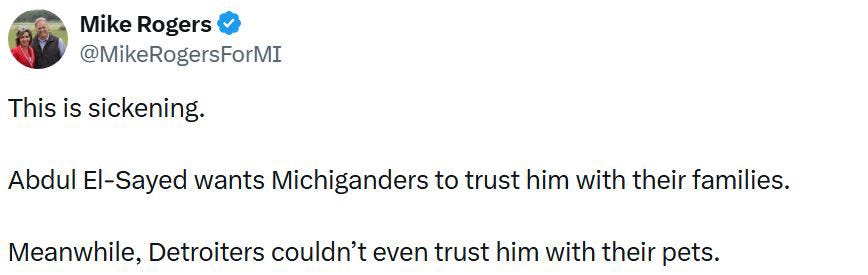
Somebody who saw only the headline would assume the stories were real, especially if they also saw tweets by the likes of Mike Rogers, the Republican former congressman running against El-Sayed for Senate.
Lisa McClain, a Michigan Republican who is chair of the House Republican Conference, tweeted that El-Sayed “literally ran a puppy slaughterhouse.”
The Republican National Committee tweeted that “Abdul is a puppy killer.”
The National Republican Senatorial Committee announced it was forming a group called “Dogs Against Abdul.”
The newly formed “Democrats for Mike Rogers” tweeted “PURE EVIL” and warned the election posed a choice between “Abdul El-Sayed and your pets.”
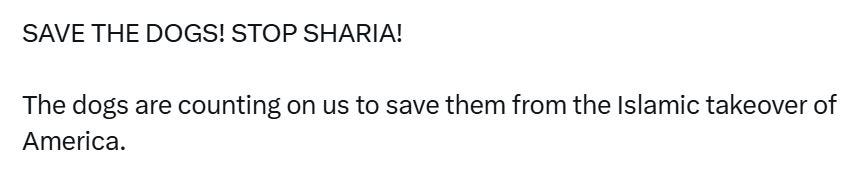
Right-wing influencers like LibsOfTikTok and Laura Loomer also made big impressions—the latter by linking up the alleged animal abuse (which she’d actually tweeted about before the Daily Mail article) to her feelings about Muslims:
Just how much political impact any of this will have remains to be seen. El-Sayed is on the receiving end of an absolute torrent of attacks right now, many of them straight-up appeals to anti-Muslim and anti-Arab sentiments. And it’s likely just a taste of what’s to come. The animal control unit story might barely register by the time the campaign is done.
But stories about pet abuse, real or imagined, can break through to the public in ways that few other controversies can. Just ask Mitt Romney or Kristi Noem. That might help explain why attacks involving animal abuse have become a weapon of choice for Republicans, whether they’re lies about Haitian immigrants eating people’s pets or distortions of Anthony Fauci’s record on animal experimentation.
Republicans and their allies don’t have to do this, obviously. El-Sayed has provided plenty of material for honest critics to attack. But going after his actual record would leave open the possibility voters might agree with him. Calling him a puppy killer is more likely to work and easier to spread, thanks to social media where even the most baseless, malicious rumors can count on credulous amplification.
Animal control units have many responsibilities, including protecting the public from violent animals. But the save/non-euthanasia rate is the metric that’s at the heart of this controversy. And in 2016 the animal control department announced that dog bites citywide were down 30 percent, attributing the improvement to outreach and education efforts.
Miller went on to serve as animal control director in nearby St. Clair County, resigning earlier this summer in protest of a policy local officials had adopted. She is now a private consultant on animal welfare issues.
Happy Saturday! Overtime is for everyone. If you’re a Bulwark+ membmer: thank you. If you’re not, there’s no better time to subscribe to Bulwark+ than today. If you like today’s issue, you can share this newsletter with someone you think would value it.
Well, it’s the end of summer… Our tradition, since moving here, has been to get to King’s Island before the regular season closes. Growing up in Cleveland, I am a big roller coaster fan (as most are). After a week of storms (and a derecho!) it was a gamble, but it turned out to be a beautiful, uncrowded day.
As seasons change, I get a little nostalgic, turning into Chris Stevens from Northern Exposure who once opined:
We look behind us to see how far we’ve come, and we realize that our past isn’t a solitary trail through secret woods, but a vista… as big and expansive as the ocean itself, with our experiences stretching to the horizon, like tiny dot-like sailboats sucked up into the enormous sea.
A good perspective from a great old show. But now that school and election season is in full swing, it’s good to know from whence you came, but clear about the path forward.
If you’re thinking: what’s something I can do? There’s an easy answer if money and time are tight: volunteer to be a poll worker. In 2023, I wrote an article on a great group called “Power to the Polls” trying to fill the ever present need for people to step up and administer our elections.
The battle lines of the next Republican primary are being drawn in Florida’s Republican primary for governor. There’s a ‘MAGA establishment’ frontrunner running with Donald Trump’s endorsement (but who a lot of Republicans aren’t that excited about). There’s a flamboyantly racist groyper with a wild personal life. And there’s a more Ron DeSantis-aligned candidate struggling to catch on. False Flag author Will Sommer joins Sarah to talk about:
The Florida governor’s race
The future of the America First faction that Tucker Carlson is leading
The growing dissatisfaction among rank-and-file Trump voters
Bulwark LIVE: The GOOD FIGHT TOURwith Tim, Sarah, Sam, and JVL is coming to the Southeast in October. Tickets go on sale August 21. Bulwark+ members get early access via our presale starting August 18. Watch your inbox for details. Head to TheBulwark.com/Events for details and to get your tickets.
How to Eat an Elephant book tour is coming in September.Join Sarah and friends at one of these stops:
Washington, D.C. | New York City | Boston | Los Angeles | San Francisco | Chicago | Kenyon College
Full ad-supported episodes of The Focus Group are available wherever you get your podcasts and on YouTube. Hit that like 🤍 button and share this episode with a friend. Click here to add the show to your player of choice.
Ad-free editions like this one are available exclusively for Bulwark+ members on the site, the Bulwark App, via your member-only RSS feeds, and the Substack mobile and TV Apps. Upgrade now to listen without ads and to join the community in the comments.
(Photo illustraton by The Bulwark / Cover courtesy W. W. Norton & Company)
For the next Bulwark Book Club, Mona Charen and Sonny Bunch will talk all things the Odyssey after the epic poem had quite the summer at the box office.
Mona and Sonny will be reading Emily Wilson’s translation of Homer’s ancient Greek text. It’s the first English translation by a woman, and Wilson herself has had much critical feedback on Christopher Nolan’s film adaption.
See the film, read the translation or do both!
Mona and Sonny would love to hear from you, so please send your questions and thoughts to them on the Odyssey in the comments section of this post.
Programming note: Mona and Sonny will discuss the Odyssey LIVE on Wednesday, September 16 for Bulwark+ members at 1:30 p.m. Eastern time. Can’t join in live? A replay will be available as part of the Mona Charen Show.
Look for Emily Wilson’s translation of the Odyssey at local libraries or through major retailers including Amazon, Barnes & Noble and BookShop.org.
If you’re not yet a member, join today and join us for this discussion of the ancient classic turned summer box office phenomenon.
Tim Miller joins Alicia Menendez to discuss widespread calls for Defense Secretary Pete Hegseth to resign, Trump’s continued support for him, Democrats’ affordability message, and efforts to recruit stronger young candidates for down-ballot races nationwide.
When Graham Platner’s campaign was imploding, Republicans made sure to hang him around every Democrat's neck. Now, Democrats need to make Republicans own Rep. Max Miller, the alleged violent domestic abuser. That definitely includes Neverland Ranch fan Mike Lawler. Plus: Tim reads from the mailbag, more and more focus group voters are seeing that Trump only cares about his vanity projects, Joe Rogan does not seem to be following the news, Woke 1 got some things wrong but not "Abolish ICE," Sarah is sounding kind of left on healthcare, and Bill K is mayor of The Bulwark.
Sarah Longwell joins Tim Miller for the weekend pod.
Recommended films: Idiocracy, Face in the crowd, Primary Colors
Bulwark LIVE: GOOD FIGHT TOUR with Tim, Sarah, Sam and JVL is coming to the Southeast in October. Tickets go on sale August 21. Bulwark+ members get early access via our presale starting August 18. Watch your inbox for details. Head to TheBulwark.com/Events for details and to get your tickets.
As always: Watch, listen, hit the like button or leave a comment. We want to hear from you.
Ad-free editions of The Bulwark Daily are available exclusively for Bulwark+ members.
Tim Miller’s Bulwark Daily is available wherever you get podcasts and on YouTube. New shows drop each weekday afternoon. If you like the show, leave a comment and ⭐⭐⭐⭐ wherever you listen.
Add The Bulwark Daily to your player of choice, here.
Ben Parker and Lt. Gen. Mark Hertling (Ret.) give their takes on the growing crisis aboard the USS Abraham Lincoln, where sailors have endured months at sea with poor food and living conditions, disrupted communications, and little clarity about when they will finally come home. Now, there's been several reports that sailors have considered or attempted jumping overboard. And yet, Defense Secretary Pete Hegseth called the situation “completely misrepresented.”
(1) There are still balcony seats left for the Best Friends Show in NYC on September 8. Come sell out the 92nd Street Y with us! You can get tickets here.
If we sell this show out, JVL will do something nuts.
(2) Sarah, Tim, Sam and I are coming to South Carolina, North Carolina, and Atlanta in October for Bulwark LIVE. We’re bringing friends. Tickets go on sale August 21, but Bulwark+ members get access to an exclusive presale on August 18. Upgrade today to get early access to the best seats.
Trump is trying to put his name on the Kennedy Center again. Grandpa is so thirsty.
Karoline Leavitt is taking her talent for baldfaced lying to the private sector. Who will be the lucky news organization to buy the privilege of having her lie to its audience? And what lucky liar will inherit her spot behind the podium?
JVL loses his mind over the revelation that after DHS agents murdered Alex Pretti, the federal government launched far-reaching investigations against . . . liberal activist groups in Minnesota. This story will take your hate-fire to 11.
Sarah was always right about the Wisconsin Democratic primary.
Why don’t progressives say a little prayer of thanksgiving for winning a big race in Minnesota with Peggy Flanagan while not having to defend Francesca Hong? Take the W.
Also: JVL has some nice things to say about Bernie while Sarah is totally getting there on AOC.
(4) And then there’s the feelings talk. JVL has a lot of them. About Flash and mortality and his gratitude to all of you guys.
(Also: (5) We have news about Rebecca taking us home.)
This isn’t an Instant Classic level show, but it’s a good one. Top quintile for sure. Come to the comments and hang with us there all weekend.
The Secret Podcast with JVL and Sarah is exclusively for members of Bulwark+. Upgrade now to watch (or listen) to this episode and join the Secret community in the comments. New shows drop each Friday. Ride with us!
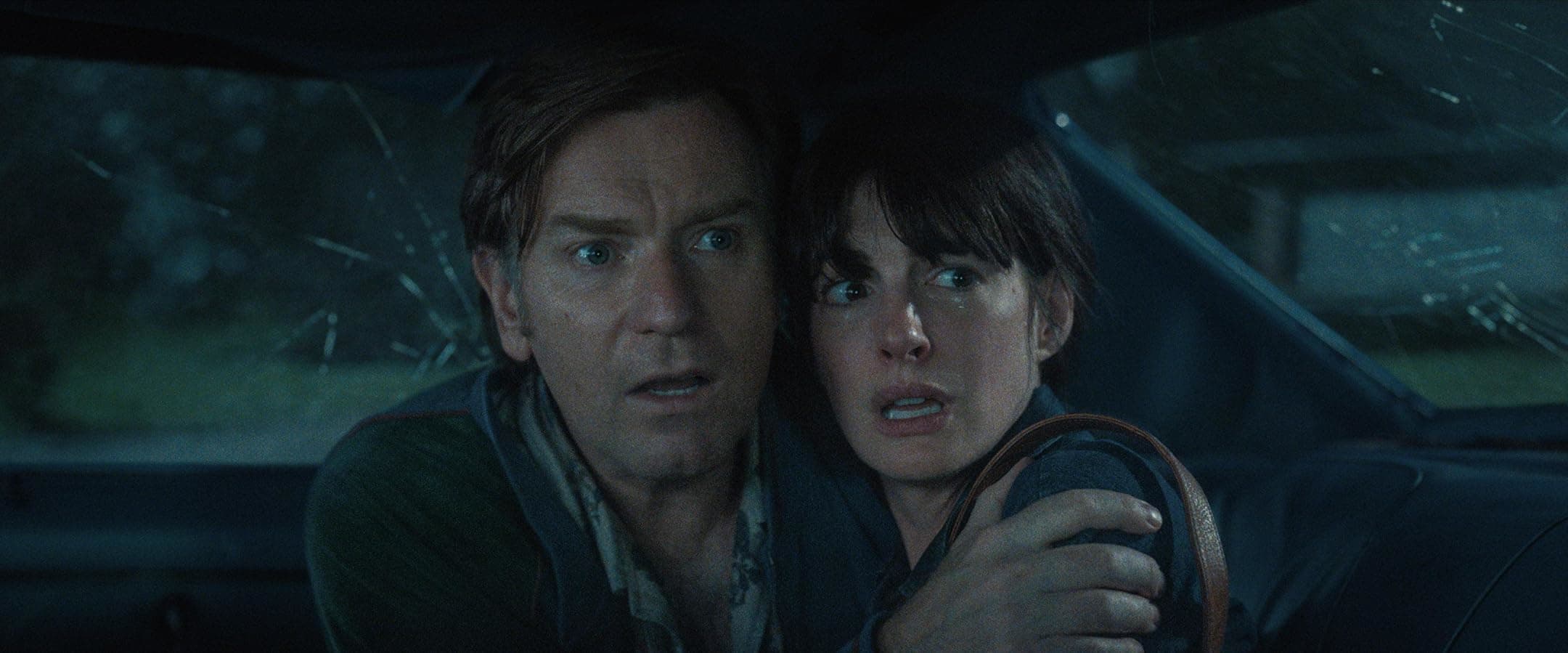
Ewan McGregor and Anne Hathaway in The End of Oak Street. (Courtesy Warner Bros. Pictures)
The End of Oak Street is a movie from another time. I mean this both literally and figuratively.
In the literal sense, The End of Oak Street is about a street that is transported back in time. We open on an unhappy family at a block party sometime in the early 1980s, judging by the clothing, cars, and music. Denise Platt (Anne Hathaway) is struggling to keep it together as her marriage to Greg (Ewan McGregor) disintegrates. She’s unhappy and writing a novel about that unhappiness; he’s out of work and delivering pizzas to make ends meet.
Their kids, Audrey (Maisy Stella) and Brian (Christian Convery) are like the kids of so many 1980s movies: not nearly as oblivious as their parents seem, but hopeful life can revert to normal. Though everyone’s confusion may be amplified by how disjointed this whole opening segment is; there’s a weird disconnect here between how Denise and Greg react to his leaving the block party to make deliveries and what we learn later about his work situation. But picking nits about how much Greg has told Denise about their financial difficulties seems moot when, moments later, there’s a storm, a flash of light, and the entire neighborhood goes back to the Mesozoic for reasons that are never really explained.
Again, this is quite literally a movie about a town transported through time. The people of this pleasant neighborhood wake up as bait for dinos, mangled by marauding meatasauruses. (And I feel the need to warn that this is a hard PG-13; my kids love the first two Jurassic Park films, but I don’t know that I’d take them to this. Not just because of the violence—again, people literally eaten alive/ripped apart—but because there is an extended sequence of dog peril.1) The last hour or so of The End of Oak Street is like all the best parts of the Jurassic Park films rolled into one: an extended chase-hide-escape-repeat segment, featuring raptors, T. rexes, pterodactyls, and, uh, giant snake things, with writer-director David Robert Mitchell doing an outstanding job of building the suspense by hiding the beasties just long enough to stoke our interest and let the terror mount.
Just to linger on Mitchell for a moment, this movie calls to mind the work he did in It Follows, a film in which a stranger slowly walking towards you became a portent of existential dread. The heroes of that movie aren’t being chased by dinosaurs but by a poltergeist that functions a bit like a sexually transmitted disease, ambling at a steady pace in the direction of those who have been cursed. Never before has an audience been kept on the edge of their seat by the image of an old woman walking across a high school campus; Mitchell knows precisely where to position his actors to instantly convey a sense of space and the directions from which danger might spring. (For a bit more on It Follows, check out Assigned Viewing, below.)
Christian Convery, Maisy Stella, and a colleague in The End of Oak Street. (Courtesy Warner Bros. Pictures)
For all its references to 1990s dinosaur movies and 2010s indie horror, however, The End of Oak Street is rooted firmly in the cinema of the 1980s. And that’s what I mean, figuratively, when I say this is a movie from another time. It is an original film, bereft of intellectual property, focused on a family in peril that comes together through adversity, with a high-concept idea that is, on its face, a little goofy. I mean, look: It’s a goofy idea, this whole ‘unexplained wormholes transport a town back in time 200 million years, forcing ordinary folks to face off against dinosaurs.’ But if you can abide that weirdness, you realize that this is a more Spielbergian film than anything Steven Spielberg himself has made in the last few decades. (No surprise that J.J. Abrams and Bad Robot, the team behind Super 8, produced The End of Oak Street.) This movie is pure Amblin, undiluted 1980s.
The domestic box office has been on a real winning streak lately, particularly in the form of mega-blockbusters like Spider-Man: Brand New Day and The Odyssey. But the real story of the year has been the surprise success of originals like Obsession and nouveau-IP like Backrooms. But those were low-budget breakouts; The End of Oak Street is a much pricier affair, with genuine stars and big effects. And, again, kind of a weird premise, one that’s hard to explain in a trailer. It’s a strange movie.
But it’s an original, and I think you’ll enjoy it.2 And we need strange, one-off originals like this to succeed if we want movies beyond the big tentpoles driven by superheroes and tired franchises.
Support our growing coverage of movies, books, arts, ideas, and culture—become a Bulwark+ member today:
On this week’s Bulwark Goes to Hollywood, I talked to FIRE general counsel (and former chief counsel to FCC for a time in the 1990s) Robert Corn-Revere about the unprecedented overreach of Brendan Carr’s FCC and his active efforts to stifle speech that hurts the president’s feelings. Of particular interest here is Carr’s effort to redefine “in the public interest” as “in Trump’s interest,” a dangerous precedent for a regulatory body.
Coyote vs. Acme review
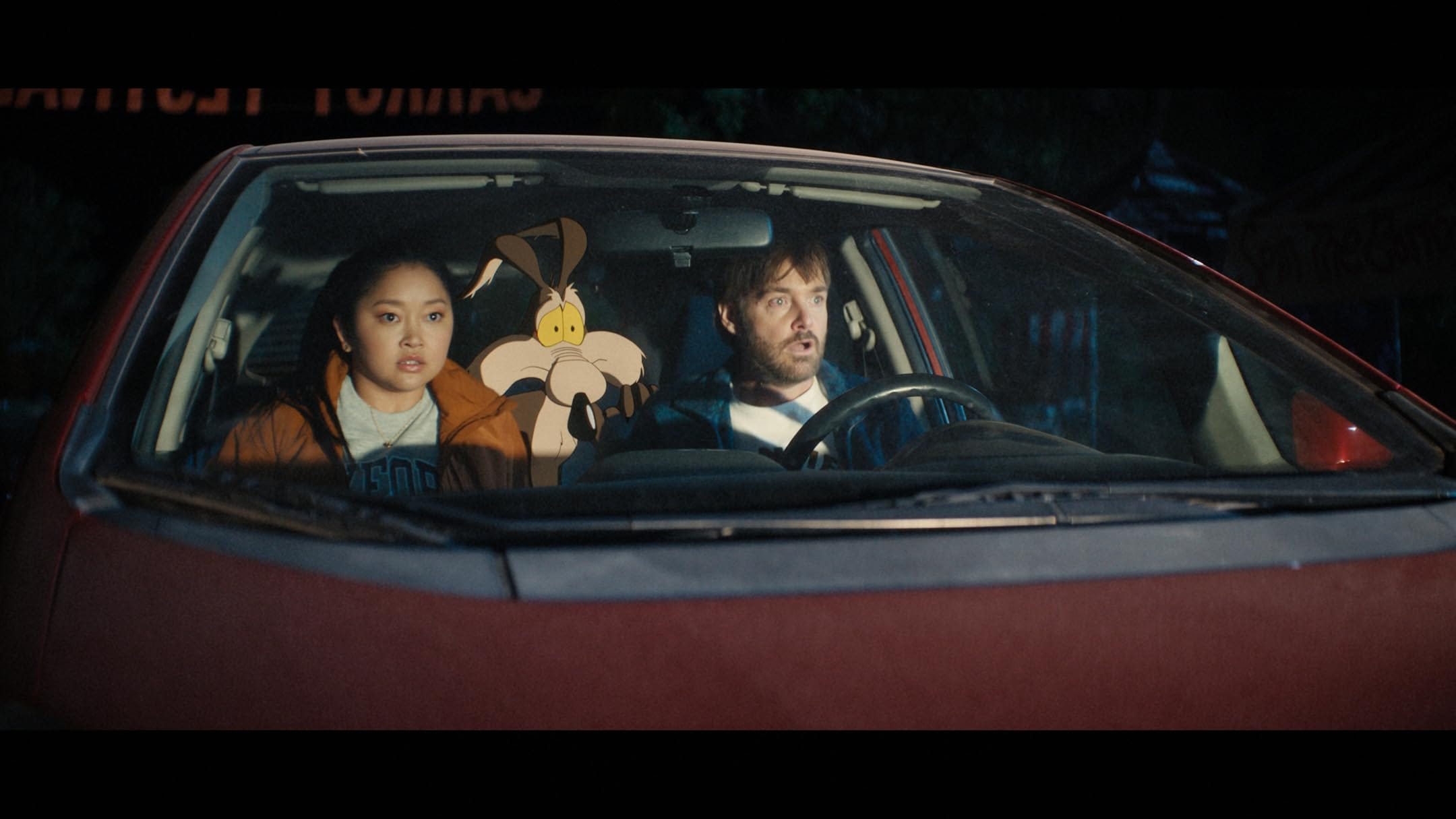
Lana Condor, Wile E. Coyote, and Will Forte in Coyote vs. Acme. (Courtesy Ketchup Entertainment)
This is, in part, a brief history of the economics of the streaming age and, in part, a review of the movie itself. A little taste of both parts:
At a reported cost of around $70 million, Coyote vs. Acme is perfectly representative of a very weird moment in history, when studios were a.) strip-mining their intellectual property while b.) throwing theatrical budgets at streaming-first productions, only to c.) realize this was a terrible way to do business if you’re not named Netflix and don’t have streaming revenue of $12 billion a quarter.
As understanding of that last part kicked in, Zaslav and his number crunchers figured (probably correctly) that it made more sense to take a tax writeoff on these films rather than dumping them to streaming, the idea being that you’re not likely to generate more subscribers by airing it than the tens of millions in tax savings you’d make by killing it. So they unceremoniously dumped a Batgirl film and a Scooby-Doo film before spending millions on post-production. This led to some noisy but impotent complaints. But when Warner Bros. announced in late 2023 that Coyote vs. Acme was to meet the same fate—despite having been completed and being ready for release—the online masses went into open revolt. Eventually, indie distributor Ketchup Entertainment picked up the title for a reported $50 million and, at the end of this month, is releasing it in theaters.
Was it worth the wait?
I’m pleased to say that Coyote vs. Acme is cleverly constructed and features lots of fun little gags from both the worlds of law and Looney Tunes, though it is decidedly “clever chuckle” funny and rarely “laugh out loud” funny.
I’m a pretty big fan of David Robert Mitchell’s It Follows, despite the fact that I also find it incredibly frustrating for one very simple reason: It doesn’t follow its own rules. Horror movies need rules and internal consistency, and the rules for this horror movie are all over the place. To wit: It’s about a girl who is cursed with a sort of demonic poltergeist after having sex with a man similarly cursed. Having sex passes along the curse. (Imagine: spooky STD.) If the currently cursed person is killed by the murderous ghost, which only the cursed can see, the curse reverts back to the last cursed person, and the spooky STD walks, slowly, directly toward that person. The problem with this film that the following in It Follows is awfully plot-dependent, which undercuts the tension. If there are no rules, there are no stakes. (Mitchell plays fast and loose with the “rules” in The End of Oak Street in ways that I hint at, but do not reveal, in the second footnote below.)
Small complaint, I guess, as the movie is effective enough that I keep returning to it. And while I think his Under the Silver Lakeis a more profound film—indeed, I think it’s among the most important films of the last decade in terms of helping us understand how we got where we are, societally—It Follows and its treatment of sex as the curse of the younger generations also hits a pretty interesting mark.3
Though there will definitely be a contingent of people who are angry about the temporal paradox introduced by the film’s finale. We won’t go into that here; suffice to say, if you’re the sort of person who gets mad because a sci-fi movie doesn’t make perfectly logical sense, well, this may not be the movie for you.
(Photo illustration by Sarah Rogers/The Bulwark | Photos: Getty, Shutterstock)
“WHY DID HOMES GET SO UNAFFORDABLE?” JD Vance wondered aloud in a televised cabinet meeting late last year. The question was entirely rhetorical. Vance had a ready-made scapegoat. “Because we had twenty million illegal aliens in this country taking homes that ought by right to go to American citizens,” he continued, inflating the number of undocumented immigrants.
It’s a claim the vice president had made before, including in his 2024 debate with Democratic VP nominee Tim Walz. Back then, Vance cited a “study” from the Federal Reserve—which in reality was a short speech prepared for an official—that supposedly showed immigration, especially illegal immigration, increased house prices. Linking immigration and affordability is a key part of the forgotten-man shtick Vance has been peddling for a while now, turning real anxieties about the cost of living into support for Trump’s mass deportation agenda.
Here’s the catch: that mass deportation push isn’t helping lower the costs of housing, it appears to be driving it up.
In the first year of the second Trump administration, new-home prices rose sharply in the Northeast and West—the two U.S. regions most dependent on immigrant construction labor (23 percent and 25 percent respectively). The rise in cost was almost certainly a result of ICE enforcement actions.
That’s because construction is an enormous source of jobs for immigrants, documented and otherwise. Estimates developed by the immigration-reform group FWD.us put the number of immigrants in the U.S. construction industry at
The jerks in the federal courts might have VICIOUSLY and UNGRATEFULLY taken President Trump’s name off the Kennedy Center earlier this year, but fear not: The tireless patriots on the center’s board have thought of a new solution. The board voted yesterday to update the building’s inscription to read: “The John F. Kennedy Center for the Performing Arts, Restored and Renovated by President Donald J. Trump.”
Not that any restoring and renovating has actually happened yet, but first things first: gotta make the Make-a-Wish president happy. Happy Friday.
Join Catherine Rampell and JVL for Receipts Live on Substack and YouTube today at 12:30 p.m. EDT.
(Photo illustration by Bill Kuchman/The Bulwark | Photos: Getty, Shutterstock)
Of Sailors and Scoundrels
by William Kristol
The USS Abraham Lincoln, one of our eleven nuclear-powered aircraft carriers, left port in San Diego on November 21 for a routine deployment to the Indo-Pacific region. It was redirected to the Middle East in January 2026 in anticipation of Donald Trump’s attack on Iran. But despite the greater attention that would presumably be paid to service members engaged in a theater of war, credible reports emerged several weeks later, in mid-April, of unusually poor living conditions besetting the sailors aboard the ship, and of family members concerned about the sailors’ well-being.
Nothing to see here, we were told by the brass. The reports “grossly mischaracterized” the situation, Chief of Naval Operations Adm. Daryl Caudle assured the service, the families, and the country. This is the same Caudle who, the New York Timesreported, became CNO last year after campaigning for the job by sucking up to Defense Secretary Pete Hegseth in a grossly partisan, political manner unbefitting an officer, especially a service chief. He did this both before and after Hegseth fired Caudle’s widely respected predecessor, Adm. Lisa Franchetti, apparently because she is a woman.
Hegseth also chimed in about reports from the Lincoln, calling them “fake news.”
The families of the service members deployed on the ship responded that the reports were not fake.
They were telling the truth. Hegseth and Caudle were not.
Nor, it seems, did Hegseth and Caudle do anything to address the situation. Last week, on August 5, MSNOW Pentagon correspondent Priya Sridhar reported on conversations with a dozen family members of sailors aboard the Lincoln increasingly alarmed about morale, safety, and conditions on the ship, as the carrier entered its ninth month at sea.
We’re building a pro-democracy community because the only way we’re going to get better politics is if we do it ourselves. Join us.
On the evening of August 6, in a two-hundred-person meeting at Naval Air Station North Island in San Diego, families confronted acting Navy Secretary Hung Cao and other Navy leaders about the situation. Cao is acting secretary because his predecessor, John Phelan, was fired in April of this year after repeatedly clashing with Hegseth. This is the same Cao who, after retiring from Navy service as a captain in 2021, ran for Congress in 2022 and for the Senate in 2024 in Virginia, and had received some national attention when he said “witchcraft” had taken over the city of Monterey, California. In 2024, in response to a question about military recruiting, Cao said, “What we need is alpha males and alpha females who are going to rip out their own guts, eat ‘em, and ask for seconds. Those are young men and women that are going to win wars.” This presumably is what got him a job as under secretary of the Navy in Hegseth’s Pentagon, and got him promoted—even though Phelan had so little confidence in Cao that he routinely excluded him from briefings and meetings.
Cao didn’t reassure families at the meeting. Nor did an unidentified representative of the Navy brass, who was asked about a sailor who had reportedly jumped off the Lincoln a few days earlier. The official responded by saying it wasn’t clear if the sailor had fallen or jumped, and that in any case the sailor was back on board and was “fine.” This met with incredulity and jeers in the room. It now turns out the sailor had jumped on August 3, and in fact was in the water for about an hour before he was rescued. Navy officials didn’t contact his wife about the incident until four days after her husband jumped overboard—until the day after the town hall in San Diego. And this week, the Navy Timesreported that several Lincoln sailors have tried to go overboard during their extended deployment.
Yesterday, Hegseth pushed back on the reports of poor conditions aboard the Lincoln.
“We make sure that every ship, every crew, every captain has everything we can provide them at every single moment,” he told reporters during a visit to Panama.
Nicole Conrad’s son is serving on the Lincoln. Conrad says she would like Hegseth to visit the Lincoln and see the conditions for the roughly 5,000 sailors and marines onboard. “Go visit,” she said. “If you want to sit here and you want to say that Trump is taking care of the soldiers, go yourself.” Mrs. Conrad, by the way, says she voted for Trump.
ghislaine maxwell is living a better life in that prison camp todd blanche transferred her to, than the sailors on USS Abraham Lincoln.
The United States Navy is a large and capable organization. Its budget is close to $300 billion a year. It is capable of adequately resupplying an aircraft carrier in the Arabian Sea. It is capable of acting in response to reports of conditions endangering sailors’ well-being. It is capable of managing its ships and taking care of its personnel.
If the people in charge are using up sailors as carelessly and recklessly as they are using up their munitions, it’s because they don’t care enough to do otherwise.
The Navy announced on Thursday that it would send another carrier group to the Middle East, allowing the Lincoln to return to its home port in San Diego.
But it’s not just the Lincoln that should return home. It’s all the troops deployed to Donald Trump’s misbegotten and mismanaged war who should return. And their commanders and nominal “leaders”—from Donald Trump to Pete Hegseth to Daryl Caudle to Hung Cao—should be held accountable.
The Death of Reading Has Been Greatly Exaggerated… Reading is good. Reading more would be better. But literate societies can be susceptible to illiberalism, argues CATHY YOUNG.
Five Years Since the Fall of Kabul, the Betrayal Continues… When we forget Afghanistan, and the Americans and Afghans who fought there, we turn our backs on our own, writes WILL SELBER.
How to Save the Smithsonian… The institution was born of debate and chance. Surviving today’s culture wars requires grounding its mission in open inquiry, shared inheritance, and the objects in its collection, writes SARAH ROGERS MORRIS.
HELD WITHOUT BOND: One of the Supreme Court’s highest-profile decisions next term will involve the Trump administration’s “detention without bond” policy, under which any illegal immigrant detained by ICE—even if they have no criminal record and have lived in the country for many years—is treated as an “applicant seeking admission” who can be detained indefinitely as their cases proceed. Politico has the background on how Trump keeps losing at the lower level:
A divided panel of the 1st Circuit Court of Appeals concluded 2-1 that the Trump administration’s massive expansion of detention without bond was a distortion of decades-old immigration laws that were aimed primarily at recent border-crossers, not those who have resided in the country for years.
The administration’s unprecedented interpretation of ICE’s detention powers, adopted on July 8, 2025, ignited a tsunami of emergency lawsuits filed by people detained under the new policy. And judges across the country have overwhelmingly rejected the administration’s position, with more than 460 concluding it was a misreading of a 1996 statute while just 54 have sided with the Trump administration.
The deluge has left a trail of shattered families, strained courts, traumatized attorneys and a massive trail of legal rejection.
Earlier this year, the American Immigration Council reported that the number of people in ICE detention swelled by about 75 percent during Trump’s first year, with a corresponding 2,450 percent increase—more than twenty four times as many—in people held on any given day despite no criminal record.
TRUTH API SUIT: Donald Trump’s sale of early access to his Truth Social posts is an extraordinarily corrupt attempt to profit personally off the decisions he makes as the head of government. Now, the new practice has drawn a significant lawsuit from the Intercept and the Freedom of the Press Foundation. CNBC has more:
The lawsuit, filed in U.S. District Court in Manhattan, notes that Trump’s posts on his own social media site often move financial markets with announcements about government policy, military actions and other decisions.
“President Donald Trump is charging $100,000 per month for advance access to his official government announcements on Truth Social, the social media platform he owns,” the civil suit says. . . .
The complaint alleges that the new service, known as Truth API, violates the First and Fifth Amendments of the U.S. Constitution by giving subscribers preferential access to Trump’s public announcements for “unreasonable sums.”
It’s a shame the plaintiffs have to make a constitutional argument—there really ought to be a law against this type of corruption.
BURYING THE HATCHET: Donald Trump and Elon Musk had a legendary breakup over Trump’s “One Big Beautiful Bill” last year, which culminated in Musk calling for Trump’s third impeachment and accusing him of being in the Epstein files. Now the WSJ reports on Republicans’ yearlong effort to reconcile the two:
One day after the public falling out between the two men, Vice President JD Vance and White House Chief of Staff Susie Wiles quietly reached out to Musk in an attempt to lower tensions. They figured things were so bad, they had little to lose by trying. The conversation went well, according to people familiar with the matter.
Early the next week, Musk called Trump and they also had a positive conversation, the people said. Musk followed the call with a social-media post expressing regret for some of his comments, saying they went too far.
But it would be many months before the relationship was more fully repaired. In September, Trump told a senior White House official that he wasn’t ready to bring Musk back into his inner circle.
Vance played a central role in mending ties between the two men, keeping open lines of communication with the businessman and his allies. Late last summer—in what was viewed as a peace offering by some of Trump’s advisers—Musk abandoned plans to start a new political party, according to people familiar with the matter, in part because he wanted to maintain a relationship with Vance, who is widely seen as a likely 2028 presidential candidate.
Check out JD the peacemaker over here! He can’t land the plane with Iran, but this isn’t bad work either—and just in time for Musk to plow another hundred million or so into the GOP’s midterm efforts.
This week, I’m joined by Robert Corn-Revere. Currently the chief counsel at the Foundation for Individual Rights and Expression, Corn-Revere also served as the chief counsel to the Federal Communications Commission chair in 1993 and as a counsel on important First Amendment cases that have made their way all the way to the Supreme Court. (Seriously, check out his Wiki, it’s crazy.) We had a pretty in-depth chat about how the FCC works and the myriad ways in which Trump’s hand-picked chair, Brendan Carr, is perverting some of the long-term ideals of the commission.
This October the gang is hitting the road again—bringing the good fight to South Carolina, North Carolina, and Georgia.
Join Sarah, Tim, JVL, Sam, and surprise guests for The Good Fight Tour:
Columbia, SC on October 16
Charlotte, NC on October 18
Atlanta, GA on October 20
Come hang with the gang!
Tickets go on sale August 21, but Bulwark+ members get access to an exclusive presale on August 18. Get your tickets at TheBulwark.com/Events.
Membership has its benefits, and one of them is early access to Bulwark LIVE events.Join Bulwark+ today to get early access, and on Tuesday we’ll email you the pre-sale code.
Bulwark Founders and Best Friends are invited to a pre-show meet and greet with the Bulwarkgang and fellow founding members. Learn more about becoming a founding member here and watch your inbox for details.
Visitors view the “Many Voices, One Nation” exhibition at the Smithsonian National Museum of American History on June 6, 2026, in Washington, D.C. (Photo by Maxine Wallace / Washington Post via Getty Images)
THE SMITHSONIAN IS AN IMPROBABLE INSTITUTION. Its founding traces back to James Smithson, a wealthy Englishman who never set foot in America. Only after his sole heir died childless was Smithson’s fortune bequeathed to the United States, as specified in his will, to fund an institution dedicated to the “increase and diffusion of knowledge.” In 1846, James K. Polk signed the law establishing it, but before that moment Congress and the scientific community had fiercely debated how to carry out Smithson’s vision. Even the Smithsonian’s first secretary argued against a “brick-and-mortar” museum, favoring instead a center devoted to research. The sprawling, multifaceted institution we know today was born of debate and chance.
I love the Smithsonian. It is truly public—free and open nearly every day of the year, preserving the many complex stories of our pluralistic country. I count myself deeply fortunate to have benefited from the Smithsonian’s intellectual, social, and cultural riches, as a former fellow at the Smithsonian American Art Museum, and as a researcher at the Renwick Gallery, where I had the privilege of working on the major exhibition State Fairs: Growing American Craft.
This wonderful, improbable institution faces a new challenge it must carefully confront. Last March, the Trump administration issued an executive order directing the organization to restore “Truth and Sanity to American History.” The order called for a sweeping audit targeting the Smithsonian’s exhibitions and collections strategy, governance structure, grant agreements, educational materials, public-facing content, and more. In April, the White House proposed an 11 percent cut to the Smithsonian’s federal budget along with staffing reductions. Then, on Independence Day, the White House issued a report condemning the Smithsonian’s National Museum of American History (NMAH) for purportedly abandoning an honest, unifying story of American history in favor of an ideologically driven program focused on race, gender, and immigration. The report calls on the vice president, along with the chief justice1 and speaker of the House, to help “restore the integrity” of the museum. A few weeks later, NMAH director Anthea Hartig testified before Congress.
It is easy to fixate on the particularities of the situation: the theatrics of Hartig’s congressional hearings, the public firing of a member of the Smithsonian’s leadership team, outdoor signage disclaiming “inaccurate information” at the NMAH, the heated rhetoric of politicians and museum advocates alike. But we must step back and take a broad view of the situation, one that puts the fracas at the Smithsonian within a broader, and arguably more concerning, context.
Join The Bulwark for thoughtful analysis and sharp political commentary. It’s your civic duty.
American museums are in trouble. The signs of that trouble are everywhere. Museum attendance is down, funding is increasingly competitive and scarce, and institutions are struggling to maintain their physical infrastructure. The Philadelphia Museum of Art is facing a formidable deficit, and the Art Institute of Chicago recently eliminated its entire custodial staff. For museums attached to academic institutions, the situation is especially dire. The DePaul Art Museum shuttered its doors in June in an effort to address DePaul University’s financial woes.
The American Alliance of Museums, a leading advocacy and professional organization for U.S. museums, attributes the turbulence to a set of external pressures: the impacts of the COVID-19 pandemic, shifts in philanthropy, inflation, market instability, weakened tourism, and the cancellation of grants and contracts from federal funding bodies.
Real as they may be, these broader trends do not fully account for something even more corrosive: a steady loss of social trust in our museums. This corresponds with a broader collapse of public confidence in institutions of all kinds, and although museums have, by the numbers, fared better than other types of institutions, they have earned their share of skepticism. And that skepticism does not come from conservative politicians alone. From the left, particularly in the wake of the social justice reckoning of the past decade, there have been sustained calls for museums to dismantle entrenched systems of power, decolonize collections, and repair historical trauma. Museums have responded—sometimes thoughtfully, sometimes convulsively—by publicly examining their own histories, structural biases, and donor relationships. In its more destructive manifestations, this form of institutional critique has amounted to a shift away from trusting the museumgoer to make judgments, forge connections, and discover meaning without being told what to think.
In a democratic civil society, museums belong to the public—a plural body made up of humans who see, experience, and think about the world differently from one another. That plurality is the museum’s challenge and its salvation. Today, what we need more than anything are institutions that trust that public, and a public that trusts them back. A museum in thrall to any orthodoxy, whether from the right or the left, forfeits that possibility.
BUT HOW DO WE BUILD TRUST among a divided people? By turning to the things we all share in common, despite our differences. In the context of the museum, that is the “museological object” itself—a painting, a sculpture, Dorothy’s ruby slippers, a past president’s top hat, and yes, even the diary of a young transgender person. Members of the museumgoing public will, undoubtedly, have wildly different views on the works of art and objects that we inherit from the past. But no one can deny the fact that someone made, wore, wrote, and put those objects into the world. These are human artifacts that we are left to contend with, together, in one way or another.
Neither our politicians nor our museums can ignore these physical residues of human thought and action. But neither should they be expected to agree on the appropriateness, historical relevance, aesthetic value, or meaning that these objects carry. Rather, lawmakers must refuse to censor what museums collect and exhibit, and museums must develop interpretive strategies that endow the viewer with the freedom to think for themselves. Slipping into self-righteous didacticism betrays both the public trust and the museum’s mission.
This is not a recipe for comfort. It means bringing conflicting views into conversation and leaving room for complexity, contradiction, and even irresolution. Imagine, for instance, one of the Smithsonian’s museums is preparing an exhibition on the latest in wind energy technology. The museum might develop a curatorial framework based on conversations not only with environmentalists who see wind as a pathway to a sustainable future, but also a worker in the oil and gas industry anxious about losing his job in the face of decarbonization, a biologist concerned about the impact of turbines on migratory birds, and community members fretting about disruptions to the country’s scenic landscapes as a result of the massive infrastructure required to produce wind energy at scale.
It is not up to our politicians or even the museum’s curators to deliver a “correct” story here, but rather, to honestly embrace the reality that there are many competing, and sometimes irreconcilable, ways of tackling a historical or political problem. Museums cannot ignore contemporary events and a history as it is being made. A curatorial framework that presents that history as something that has yet, and may not be, fully resolved safeguards the institution against claims of ideological capture. The museum can never wholly account for every voice in a plural society, and it must avoid the trap of overexplanation, but it can ground its work in open-ended questions and leave judgment about the possibilities and perils of renewable energy, and other contested subjects, to the museumgoing public.
Some objects are not contested historically—no one disputes what a plantation whip was for—but their display is politically fraught. These objects must be allowed to speak for themselves. This need not amount to a total eschewal of interpretive material, but instead an approach to public engagement that gives museumgoers the tools for close and careful looking. When we are invited to exercise our observational skills, we are also asked to stop and think about the world as we find it. Thoughtfulness is a path to finding meaning in and making judgments about that world.
Simple questions, presented alongside an object such as an 1850s snake whip, can be powerful. “What materials are used in the construction of this artifact from a plantation in antebellum Georgia? Why might those materials have been selected?” Through close looking, the viewer might note a smooth round metal handle designed to fit comfortably in the palm of a slave owner’s hand at one end, and a braid of stiff leather intended to lacerate human flesh on the other. Out of the contrast between the whip’s metal and worn leather parts emerges a relationship between the human subjects that once occupied opposite ends of the object. It is up to the viewer to think through the nature of that relationship. Another viewer might instead note the raised stitching that binds the leather whip together. This evidence of skilled handwork raises a different question: whose hands made this object and under what conditions was it made?
There are those, the president of the United States included, who might contend that the mere appearance of the snake whip within the Smithsonian’s collections and exhibitions is the symptom of “wokeness” and anti-patriotism, a disavowal of a collective sense of national identity and pride.
But the snake whip is our shared inheritance. Like the Declaration of Independence, with its faded, curlicued script on now-yellowed parchment, or Emanuel Leutze’s luminous, heroic oil-on-canvas Washington Crossing the Delaware, it persists into the present and therefore belongs to a past that all Americans hold in common. The collection, preservation, and display of historical objects is a core function of museums. To suppress those activities, to deny the whip, or any historical object, its place in the museum on the grounds of protecting our national self-image, is to reject a truth, and that is dangerous business, not least because it undermines history, the foundation upon which a people’s collective identity is forged.
Museums are not passive repositories. They originate images and words—wall texts, publications, graphics, photographs, films, and more. Like historical objects, these things have staying power, a kind of worldly durability. An infographic diagnosing the “aspects and assumptions of whiteness” and published by the Smithsonian’s National Museum of African American History and Culture in 2020 continues to circulate in the public realm, and stir controversy, years after the museum retracted it. Because these things last, museums must take great care in developing scholarship that they can defend and which will outlive the moment. The best place to begin is in rethinking the way curators interface with the public.
Curating is an act of judgment, one that rests on the curator’s scholarly expertise, personal taste, and even their politics. That judgment is likewise influenced by an institution’s collection strengths, audience, physical constraints, conservation limitations, donor expectations, and more. Curatorial judgment is indispensable, but it should also be shaped through structured engagement with a broad and representative body of people who see and think about the world differently from one another. Rather than concentrating authority over object selection and acquisitions among a narrow set of like-minded specialists, museums should find ways to draw the public into these decisions so that what gets collected, preserved, and written about for the edification of future generations is not determined by a self-selected few. This is not a challenge to curatorial authority, but a way of strengthening it. It is a means of informing curatorial decision-making up front rather than subjecting finished work to ex post facto referendums.
In the U.K., museums such as the National Gallery are turning to citizen assemblies as a way of bringing the public into the curatorial process. If the Smithsonian were to adopt a similar model, citizens of every political persuasion and background, selected at random, could be summoned to hear about an institutional policy, prospective exhibition, or acquisition. After being presented with a proposal, the group would decide on the facts, deliberate, and make recommendations that would inform, rather than take the place of, the discretion of museum professionals. In this paradigm, extreme political positions, which may or may not be held by members of the assembly, are balanced against the diversity and deliberative judgment of the group. The citizen assembly gives the public an opportunity to take part in shaping their democratic institutions, and the institution builds confidence and goodwill among the people it serves. A member of the public who invests their time and thought into an exhibition or collection is liable to become an advocate for the work our museums do.
In addition to foregrounding objects, creating the conditions for open-ended thinking, and exploring new approaches to public participation, museums should cultivate a work environment in which staff and board members are encouraged to speak freely and disagree respectfully. Intellectual diversity within institutions builds social trust outside them. Friction, not division, is a necessary condition of institutional and democratic life. In that spirit, museums should also build curatorial teams that prize not only disciplinary specialization and expertise, but also an openness to discovery and generosity of intellectual spirit. The best curators are fellow learners, modeling for museumgoers what it looks like to be challenged and transformed by the objects in front of them.
Finally, museums should pursue their work based on their own institutional values rather than in response to the agendas of private funders. Grant-makers nudge our arts organizations, as they do humanities research and teaching, in directions that blur the boundaries between open inquiry and activism. Museums that resist that pull are likely to find a more trusting public and, over time, more enduring support.
Just as our museums have a responsibility to the public, the public has a responsibility to our museums. Members of the public should take an active part in their museums, not only as visitors, but as participants in citizen assemblies, members, volunteers, and trustees. These are not insular institutions. They are ours to shape. Active involvement in an institution such as the Smithsonian is an act of civic patriotism, a way of living out the great democratic ideals upon which this nation was founded.
Where possible, the public must also regularly and reliably make financial donations toward the general operating expenses of our museums. That means funding unglamorous expenses such as staff salaries, utilities, and building maintenance, as opposed to—or better yet, in addition to—splashy new wings and blockbuster shows. These institutions cannot subsist without unrestricted philanthropic support.
Most importantly, members of the public should embrace the opportunity, offered by museums, to step outside themselves and enlarge their point of view. The act of looking at a landscape, a human face, or an abstract form as it has been rendered through the hands and vision of an artist, or of reading the diary of a young person with life experiences that differ from those we know, is an exercise in seeing the world through the eyes of another. When we seek out perspectives unlike our own, we strengthen our democracy. And that, I am confident, will keep museums like the Smithsonian resilient to any chance turn of history that might come its way.
By a combination of law, bylaws, and tradition, the chief justice of the United States serves as the chancellor of the Smithsonian and the chair of its governing Board of Regents, and the vice president serves as a member of that board.
(Photo illustration by Bill Kuchman/The Bulwark | Photos: Shutterstock)
THERE IS IRONY IN THE FACT that last month’s controversy over the “end of reading,” heralded in an Atlantic essay of that name by Rose Horowitch, was succeeded by a far bigger controversy over a film retelling one of humanity’s oldest works of literature—which spurred a surge in print sales of the work itself. Christopher Nolan may or may not have helped give reading a boost with his film The Odyssey, but the debate over the “end of reading” is worth revisiting now that the dust has settled.
Horowitch is far from alone in sounding the alarm over reading in crisis. In a recent piece in the Conversation, Austin Sarat, a political science professor at Amherst College (and an occasional contributor to The Bulwark), writes that complaints about “students’ reading habits, or rather nonreading habits” have become common among faculty. Sarat concludes: “Reading—not just any kind of reading, but reading long, complex, challenging books—is quickly vanishing from the American scene.”
What’s more, we are warned that not only the fate of literature but the fate of liberalism is at stake: Liberal democracy cannot thrive without a literate citizenry capable of processing complex information. Horowitch quotes Marshall McLuhan’s observation that “the liberal world by definition is literate.” Horowitch adds: “The inverse appears to be true as well.” In other words, a postliterate world is turning postliberal—or make that simply illiberal.
Should we be worried? About illiberalism, of course. About postliteracy? That, to quote the description of Odysseus that apparently inspired Nolan, is complicated. Yes, Americans read less than they did forty years ago—not surprising, considering how many other forms of entertainment and information are competing for our time and attention. But does this spell decline or diversification? And is it really related to liberal democracy’s prospects?
MY OWN THOUGHTS on these questions are informed by my decades as a reader and a writer, and by my childhood in a culture that was at once both book-centric and part of a totalitarian system.1
But my thoughts are also informed by previous iterations of this debate. The reading (or non-reading) panic has been with us for the duration of my life in the United States, where I came from the Soviet Union as a teenager in 1980. The following year, a book titled Why Johnny Still Can’t Readby Rudolf Flesch,a blistering critique of American reading education, became an instant bestseller—though not as big as its predecessor, Why Johnny Can’t Read, published in1955. In the early 1980s, I remember buying paperback books that featured public-service ads with the stark warning that one in five Americans can’t read. (I was shocked until I figured out that “can’t read” did not refer to actual illiteracy but to lack of sufficient reading and writing skills to function in everyday life.) Illiterate America, by activist educator Jonathan Kozol, came out in 1985. As a student at Rutgers University in 1987, I wrote a review for the Detroit News of Allan Bloom’s The Closing of the American Mind, which asserted that “our students have lost the practice of and the taste for reading” and portrayed a generation addled by rock music and television. (I thought Bloom was overgeneralizing.) There was also E.D. Hirsch’s 1987 bestseller Cultural Literacy, the premise of which was that young Americans need to remedy their lack of familiarity with the basics of history, culture, and art. In 1990, literary critic Alvin Kernan published The Death of Literature, which took note of a survey showing that nearly 60 percent of Americans had not read a single full book in the preceding year while most of the rest had only read one. Books, Kernan thought, had been done in by television and computers. The following year, a piece by Daniel Singal in—yes—the Atlantic warned that even smart and high-achieving students were often unprepared, poorly read (“one can’t assume that college students know anything anymore”), and generally familiar with political candidates only from commercials. On a familiar note, Singal warned that this situation was a potential danger to democracy.2
Horowitch acknowledges that warnings about the death of reading and of literacy itself aren’t new: McLuhan foretold the coming postliteracy in 1962, and his friend Neil Postman amplified the alarm in 1985 in Amusing Ourselves to Death. Maybe, Horowitch suggests, they weren’t wrong but “merely early”: Maybe it just took that long for the full transition from text to visual media to take place. Maybe doomsday is now.
Plenty of data confirm that Americans—children and adults—are reading less. The percentage of 13-year-olds who read for fun every or almost every day, as measured by the National Assessment of Educational Progress (NAEP), fell only slightly from 1984 to 2012 (from 35 percent to 27 percent); but it plunged to 17 percent in 2020 and 14 percent in 2025. The share of those who never or hardly ever read for pleasure hovered around 10 to 12 percent in the 1980s and 1990s, then jumped to 24 percent in 2008 and 29 percent in 2020 and 2025. The post-2012 decline in daily or almost daily reading for fun has also been tracked for 9-year-olds (from 53 percent to 37 percent). As for adults, the American Time Use Survey has found that the share of those who report any reading for personal interest dropped from 26 percent in 2003 to 16 percent in 2023.
Blame smartphones? Social media? Video games? All of the above? Probably. But before we get depressed, a few caveats are in order. We have no idea what kind of reading these surveys capture (they do not specify books, either print or digital) or what kind of reading has declined. You could be reading Jane Austen or a celebrity gossip magazine; the survey would count them as the same. Is it possible that at least some of the drop in reading reflects a shift to other media among consumers of lighter fare? People who would have been reading celebrity gossip columns twenty-five years ago, for instance, are now more likely to scratch that itch with TikTok or Instagram. People who once read the sports pages may now be listening to podcasts, and so on.
A fascinating factoid from the time-use survey actually does suggest that it was the more casual, less serious readers who drifted away between 2003 and 2023: Even as the share of people who reported reading for personal interest dropped by 10 percentage points, mean reading time among those who do read went up over the same period—from about 80 minutes to nearly 100 minutes on a given day. That’s not necessarily because serious readers started reading more. Most likely, the change reflects the fact that many people who might once have spent five or ten minutes a day reading are no longer reading at all and are consuming other media instead.
Many commentators see a particularly dire sign in the fact that fewer children are reading today: given that reading declines with age, this seems to presage an ever-shrinking minority of adult readers. But we do not know if the pattern will still hold for today’s children and adolescents.
One pessimistic nugget in Horowitch’s essay also leads to data that paint a more nuanced picture: “Nearly 30 percent of American adults cannot paraphrase or make inferences from a multipage text,” up from less than 20 percent in 2017. Those numbers, from the Survey of Adult Skills conducted by the Organization for Economic Co-operation and Development (OECD), refer to adults with literacy scores at Level 1 or below—ones who can, at best, understand short texts and find simple pieces of explicit information. But the OECD data for the United States also show little decline in the share of high-competency readers, scoring at Level 3 and above. The share of adult Americans reading at Level 3, considered to be the minimum required for functioning in modern society, dropped from 35 to 31 percent between 2017 and 2023. Level 4 and 5 readers, who can, among other things, compare different texts and evaluate the persuasiveness of arguments, remained constant at 13 percent of the adult population. The drop in reading skills was primarily among those scoring at Level 2—which is marginally better than Level 1, but is still considered below high school education goals. According to one document, it’s enough to “locate information in text, make simple inferences, and integrate easily identifiable information.”
NAEP assessments show a similar trend for high school seniors. The share of those with “below basic” reading skills rose from 20 to 25 percent in the 1990s, and then to 32 percent in 2024; but the biggest drop has been in the share of twelfth graders with “basic” skills, while the share categorized as “proficient” has decreased only slightly and the percentage with “advanced” reading skills has remained steady.3
Or, to put it more concisely: The poorly literate are getting poorer while the rest are mostly staying as they are. Is this bad? Yes, I think so. But is it a death knell for reading, or even for reading difficult books? Probably not.
If you’ve reached this point in this article, you’re obviously a reader. Send this article to other readers you know:
WHEN MY FAMILY CAME HERE from the Soviet Union in 1980, one of the first things we heard from quite a few Soviet émigrés was, “Americans don’t read.” (“Except cookbooks,” said one woman, who stopped talking to my parents after my mother asked in a rather acid tone whether bookstores and publishers in America existed solely for Soviet émigrés.) As off-putting as this snobbery was, it had a certain sliver of truth in that Russia, at the time, was a “book culture” in a sense that America was not. For a college-educated person to show a lack of familiarity with the classics, including then-controversial modern classics like Mikhail Bulgakov’s The Master and Margarita, was a very definite faux pas. At the school I attended (admittedly, a specialized school that mostly drew students from a more educated background than average), nearly everyone read on his or her own time, and the reading fare often included both Russian and foreign classics; I don’t think there was a single person who hadn’t read Dumas’s The Three Musketeers and The Count of Monte Cristo by 14 or 15. Partly, the reading reflected the paucity of other entertainment: While Soviet television was not pure propaganda, as some might imagine, and it did offer some good programming, there just wasn’t very much of it. Besides, in a censoriously prudish culture, books offered glimpses of sex: Everything from Guy de Maupassant’s Bel-Ami to Ernest Hemingway’s For Whom the Bell Tolls to occasionally published translations of twentieth-century American or European mystery novels was devoured in search of titillating tidbits.
But Soviet/Russian book culture was also, in a very real sense, performative. Bookshelves full of classics—including multivolume complete collections of everyone from Anton Chekhov to the sixteenth/seventeenth-century Spanish playwright Lope de Vega—were a status symbol; so were books from the two-hundred-volume “Library of World Literature” collection, a Soviet equivalent of Everyman’s Library. It’s a fair bet that many of those books were never opened; I heard stories of people borrowing books from friends and finding uncut pages inside. Some people hunted books without the slightest knowledge of either books or authors: My father once approached a long line outside a bookstore and asked a woman what was on sale. “Some guy named Garpo,” she replied. The book turned out to be a volume of Edgar Poe in Russian translation.
For many people in the Soviet era, reading was an outlet for dissent: People took great risks to circulate banned books, in samizdat typescript and in smuggled-in foreign editions. (Sometimes, a book was borrowed for a single day and read in an all-night marathon.) And yet, as Russia’s post-Soviet experience shows, literacy did not produce liberalism. In the first years of reform and opening up—perestroika and glasnost—people avidly read once-forbidden books by Alexander Solzhenitsyn or Vladimir Voinovich. A little over a decade later, the Russian book market was inundated with trash promoting Stalin apologism or historical revisionism with a Russian nationalist and anti-Western slant. On several trips to Russia in the 1990s, I found that my former classmates—who had almost certainly read more books than the average American of similar age and social status—were dismayingly credulous toward conspiracy theories and con artists such as psychic healers on television. We haven’t kept in touch, but I wouldn’t be at all surprised if they are now equally credulous toward the Kremlin’s war propaganda.
Does that mean reading is useless? No, of course not. But the literacy/liberalism connection is much too simplistic. The Soviets, and other Communist regimes, aggressively promoted literacy and reading in their early years to use books and newspapers as propaganda tools. The Nazi regime in Germany sprang from a highly literate society with a great appreciation of art and culture; if radio played a major role in the Third Reich, so did newspapers (and the book Mein Kampf, which had sold 12 million copies by the time the regime collapsed). Audiovisual media may be more suited to stirring up mindless anger and paranoia, but there is no shortage of examples of print media doing the same—from pamphlets and newspapers during the French Revolution to books like None Dare Call It Conspiracyin the United States in the 1970s. All things being equal, I’d rather see people get their information from books than podcasts—all things being equal, I agree that information from books is likely to be processed more thoughtfully—but obviously, it all depends on the podcast and the book.
DOES THAT MEAN EVERYTHING IS FINE as far as Americans’ cultural literacy and reading habits? I wouldn’t say that. I think there was something to be said for the middlebrow culture of the 1950s in which classics—literary, artistic, or musical—had a cachet of prestige and television networks felt a patrician and paternalistic obligation to bring them to the masses. On the other hand, I also realize that replicating that ancien régime is impossible in a media environment of infinite variety—and that even that golden age wasn’t all gold: Mike Wallace complained on his CBS interview show that only 39 percent of Americans, according to a Gallup poll, had read one or more books in 1955.
Besides the distractions of the digital age, the culture of reading has undoubtedly taken other hits—some of them political. George Orwell’s 1946 essay assailing the dominance of left-wing orthodoxies in the literary world of his time was titled “The Prevention of Literature”; paraphrasing it, one can certainly say that the modern left has engaged in what one might call ‘the prevention of reading,’ not only on the college level but in many high schools and many progressive cultural spaces. It’s hard to sustain love for books when authors and their works are “problematized” for inane reasons, identities are elevated above everything else, and classics become something to be “interrogated” rather than understood and appreciated. But today’s right with its scorn for the humanities and its suspicion of anything perceived as unpatriotic, “elitist,” or unmanly—like an overly “female” focus on feelings—is no less hostile to reading, literacy, or culture. (True, some red states such as Texas have genuflected toward “great books” with school reading lists that feature classics, but these initiatives still keep literature political: Those lists have a distinct rightward slant.)
Academics’ first-person accounts of students who don’t read assigned books and seem unable to finish a twenty-page text, let alone a book, certainly shouldn’t be ignored—even if one such account, by Tyler Jagt in the Chronicle of Higher Education in June, opens with the acknowledgment that “every generation of professors has complained that their students cannot read.” Jagt writes that “the lament is usually overblown, but data have caught up to anecdote.” Yet his own article seems short on data, other than some recent drops in NAEP reading scores—primarily, it seems likely, among the non-college-bound. And there are also competing or complicating reports from college professors and even high school teachers who say they still assign long and complex texts and that plenty of students still love to read.
The flurry of “reading in crisis” essays may have its positive side even if the alarm is overblown—if only because it gets people to talk about reading and ways to support it. But the concern shouldn’t turn to defeatism.4 We can note encouraging signs, such as the resurgence of book clubs among “Generation Z.” Maybe the trend of TikTok videos making fun of “performative reading,” such as showing off a big book while actually holding it upside down, reflects respect and not contempt for actual reading. Maybe even the Odyssey firestorm reflects an underlying sense that our literary heritage matters.
We can also talk about solutions, from improving reading programs in schools to putting pressure on institutions to help build a more reading-friendly culture. (Jeff Bezos, whose fortune started with books, should have gotten a lot more backlash for killing the Washington Post Book Review.) But one thing we shouldn’t do, I think, is link the fate of books to the fate of liberal democracy. Right now, restoring sanity and humanity to our politics should be our top priority. But one of the blessings of a saner and more humane political environment is that it will free up many of us to focus on more essential things that matter—including literature and art.
I’m the sort of person who worries about the decline of books. I am a lifelong bookworm raised in a book-loving, even book-revering home. I believe that books enrich lives; serious reading may not make you a better person, but I think it does make you a more thoughtful, insightful and well-rounded one. I also have a personal stake in book appreciation, as a writer who has published two nonfiction books, has recently finished her first novel, and has plans for more nonfiction books and translations of beloved classics. Obviously, I don’t want to write into a void.
More recently, the Atlantic also published Nicholas Carr’s 2008 lament “Is Google Making Us Stupid?” in which he complained that “the deep reading that used to come naturally has become a struggle” for him and his friends because of the attention-span-eroding internet.
A look at the numbers year by year shows that comparisons should be treated with caution, since some of the shifts are likely to be flukes. For instance, the share of students with “below basic” reading skills was 20 percent in the NAEP’s 1992 sample, but 25 percent in the 1994 sample and 23 in the 1998 sample. The share labeled “proficient” was 36 percent in 1992 and 32 percent in 1994. A comparison of 1992 and 2019, when 31 percent of seniors were classified as proficient in reading, seems to show a 5-point drop—but taking 1994 as the baseline reduces that drop to just one point.
Also not helpful: snobbish dismissal of books that don’t qualify as literary fiction but are smart and well-written. Horowitch, for instance, takes a swipe at Suzanne Collins’s latest bestseller in the “Hunger Games” series—Sunrise on the Reaping, which, for what it’s worth, is rich in quotes from classics.
Brandon Herrera is running for Congress in Texas and we’ve discovered a very strange side of his public persona. Sam Stein, Tim Miller, and Will Sommer dig into Herrera’s podcast, where he discusses “Lock & Load,” a supplement he says helps men with...something. The trio goes down the bizarre rabbit hole of male-enhancement supplements, the nine-pills-a-day regimen, and the strange world surrounding these products. Plus: Sean Duffy’s son-in-law is running for Congress, a MAGA podcast fight turns physical, and Candace Owens is preparing for a bizarre $300,000 debate.
(Photo illustration by Bill Kuchman/The Bulwark | Photos: Getty, Shutterstock)
DONALD TRUMP PROMISED Americans a new golden age. Unfortunately, it turns out to be a golden age for diarrhea and white-collar crime.
Biological, social, and financial parasites are all flourishing, because the Trump administration has destroyed the institutional capacity necessary to detect and eradicate them.
In the latest (non-GI-related) development, the Department of the Treasury announced this week that it would destroy the government’s registry of shell-company ownership. This is an anti-corruption database that Treasury is by law required to maintain, so that law enforcement can more easily “follow the money” when investigating crimes.
Even worse, the Trump administration will also destroy all the data it has already collected, so that no future presidential administration or local police department can use it, either.
“It’s like Trump ordering the deletion of the FBI’s entire fingerprint database,” former congressman Tom Malinowski (D-N.J.), a champion of the 2021 law that created the corporate registry, told The Bulwark.
They’re effectively salting the earth, so that sex traffickers, scam artists, drug lords, money-launderers, and tax cheats can roam free not only through the end of Trump’s time in office but long after he’s out, too.
We are clearly in desperate need of more accountability. Luckily, that’s our mission. Become a Bulwark+ member.
“Shell companies” are companies that exist only on paper to hold other assets or businesses. Their existence is entirely legal and they are usually used for legitimate business activity. But ownership structures of these entities are often opaque, with shell companies buried within other shell companies within other shell companies, like a Russian nesting doll. The opportunities for complexity, subterfuge, and misdirection can make them useful in obscuring the identities of those engaging in illegal activity.
Massive data leaks such as the Panama Papers and the Paradise Papers have helped shed light on how some of these front companies work and what they were hiding—and the blind spots in U.S. law that allowed international criminal organizations to thrive.
“It became clear that the U.S. was actually a key node in the global money-laundering network,” Malinowski said. “We thought we were clean, that it was just Swiss banks and Virgin Islands and places like that. But actually the U.S. had some of the most lax laws in the world when it comes to registering companies.”
The result was that Russian oligarchs trying to hide their assets, or drug and human-trafficking cartels trying to shield their identities, or terrorists trying to funnel money to cells, could create an anonymous shell company in, say, Delaware. The Delaware company might in turn have twenty shell-company subsidiaries in tax havens around the world, making the funds flowing through them virtually untraceable—and thus harder for investigators to intercept.
So Malinowski and his colleagues introduced the Corporate Transparency Act, which mandated that shell companies report basic information about the names and contact info of their owners to a bureau within the Treasury Department.1 This information is kept confidential—it is not available to the public in any form—but could be used by law enforcement agencies around the country.
The bill became law in the very last days of Trump’s first term as part of a defense funding bill, which passed over Trump’s veto.2 It had broad bipartisan support. Besides Malinowski, one of the law’s cosponsors and greatest champions was Marco Rubio, then a Republican senator from Florida. Rubio, now Trump’s secretary of state, touted it at the time as “the most significant anti-corruption & money laundering law in decades.”
Give the gift of Receipts: Pop this newsletter into a friend’s inbox or post it to social media:
Then Trump got re-elected. Suddenly cracking down on corruption and money-laundering was no longer so appealing to the federal government.
One of Trump’s earliest actions upon returning to office last year, for instance, was to pause enforcement of the Foreign Corrupt Practices Act. He claimed that punishing companies for bribing foreign officials put U.S. firms at a competitive disadvantage.
Which could well be true; if nothing else, this president probably has a decent understanding of how helpful palm-greasing might be for real-estate developers in, say, Azerbaijan.
He also understands how annoying it is to have a corporate account flagged for possible money laundering, given recent statements from Capital One about why it “de-banked” him.
And he has extensive experience dealing with shell companies, including for some lessthansavory purposes.
In addition to pausing the FCPA and pardoning lots of white-collar criminals, Trump also suspended most data collection required under that Corporate Transparency Act. He exempted roughly 99 percent of companies that had been required to disclose their ownership, according to a recent U.S. Government Accountability Office report. The new rule announced this week then made that suspension permanent, while also pledging to destroy any existing data.
Treasury says it still mandates disclosure of ownership of foreign shell companies. This may be technically true as a matter of following the letter of the law, but the administration crafted loopholes big enough to drive a cocaine-packed Mack truck through.
Or, perhaps, a cocaine-carrying private jet: A recent investigative series from the Amsterdam-based Organized Crime and Corruption Reporting Project found that international drug cartels have been buying aircraft by using shell companies that appear likely to avoid disclosure under Trump’s new rollback.
“One of the things we found in that corporate aircraft story is that cartels are using trusts and shell companies that made them look like U.S. citizens,” said OCCRP’s North America editor Kevin G. Hall. “We’re blowing boats up in the Caribbean Sea while letting cartels buy aircraft anytime they want.”
Ostensibly this is about reducing small businesses’ regulatory burden, according to Treasury Secretary Scott Bessent and GOP allies in the House. Malinowski acknowledged that the 2021 law probably dragged in some people or entities that Congress wasn’t interested in collecting information from—voluntary board members of condo associations and the like. But he said that could have easily been addressed with a technical fix.
Instead Trump has declared he will, for all intents and purposes, ignore the law and delete any data collected while the law was still being enforced under his predecessor.
The result, financial experts say, is that law enforcement officials will have fewer leads available when tracking down fraudsters and cartels.
“Before today, bad actors probably thought that there was still a chance of being caught by the reporting,” said Richard Berner, codirector of New York University’s Volatility and Risk Institute and former director of Treasury’s Office of Financial Research. “Now there’s zero chance.”
These developments should be seen as part of the Trump administration’s broader effort to misuse or destroy government data.
In the grand scheme of Trump transgressions, this may sound like a nerdy, low-stakes thing to track,3 but it has enormous consequences. By hollowing out our statistical and scientific agencies, purging government records, and illegally seizing or sharing confidential records, the administration is making it harder for voters to objectively assess policy outcomes and hold elected officials to account.
The administration is also making it harder to enforce the laws that keep Americans safe, whether from pathogens or pump-and-dump scammers. The government needs rigorous, secure data collection to track supply chains for tainted lettuce, just as it needs rigorous, secure data collection to trace the spread of measles or the manipulation of markets or the nodes of a fentanyl-trafficking network. As the saying goes: You can’t manage what you don’t measure.
Of course that aphorism assumes that managing societal or biological ills is an actual objective of this administration. At best, Trump officials often seem indifferent to this aim; at worst, they are colluding in its subversion.
— On the bright side, hollowing out government capacity to track food pathogens could help Trump finally deliver on affordability. At least it’s helping reduce lettuce prices.
— Or maybe greed is just dead? Big Chicken is losing out, too.
— A new merger coming to Broadway: Hollywood mogul Ari Emanuel will acquire ATG Entertainment, a British company that operates seven theaters on Broadway and ten in the West End. Hey, maybe Broadway is worth investing in after all, despite Andrew Lloyd Webber’s warnings.
— “More than 10” companies have signed up to purchase early access to Trump’s posts on Truth Social, Trump Media says. On the one hand: “more than 10” doesn’t sound like a ton. On the other hand: 11 signups × ~$100k/month × 12 months/year = $13.2 million/year. That’s pretty good money. On the other, other hand: Trump Media on Monday reported $238 million in net losses in its second quarter (mostly due to bad bitcoin bets). So it’s still got a pretty big hole to dig itself out of.
— Meanwhile, a new lawsuit has been filed challenging this Truth Social scheme. Watch this space.
— Trump is paying yet another company to cancel its offshore wind projects. Including this latest deal, the government has so far spent roughly $3.9 billion to get companies to terminate twelve offshore wind leases. The irony here is that turbines are back-ordered, so this might never have gotten built anyway. But we’re spending billions of taxpayer dollars to make certain.
At the time the White House said he vetoed this primarily for reasons unrelated to these shell-company provisions, including language renaming military installations honoring Confederate figures.

 Login
Login