Login
LoginApple News Ad of the Week
5 August 2026 at 21:29
I look forward to this level of class and brand prestige coming to Apple Maps.

I look forward to this level of class and brand prestige coming to Apple Maps.
Paul Thurrott:
We didn’t need more evidence that Qualcomm’s Snapdragon X2 compute platform is superior to anything in the x86 world. But here it is, regardless: The HP OmniBook Ultra 14 is yet another nearly-perfect laptop running Windows 11 on Arm, an ideal combination of hardware and software that delivers a superior overall experience.
Thurrott has high praise for the performance, battery life, and silence (it has a fan, but Thurrott says he never heard it engage). Intel and the x86 platform seem well and fully cooked. They completely lost Apple 6 years ago and the Windows world is finally catching up. Maybe they can hold onto the gaming market for a while but for a work laptop it sounds like you’re crazy if you don’t go with Qualcomm’s ARM chips.
Thurrott likes the design too:
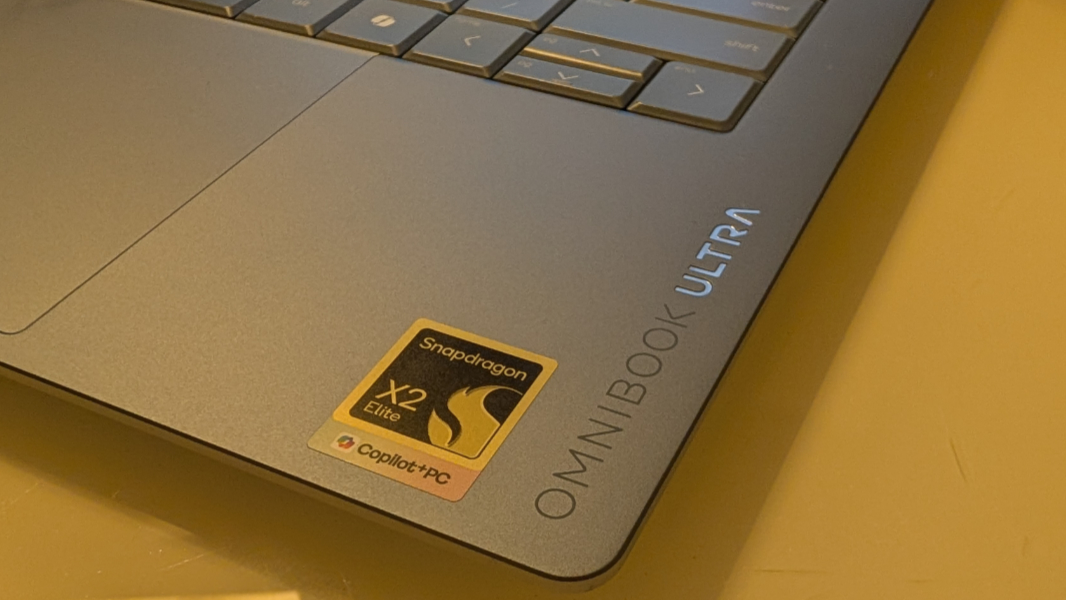
In Snapdragon X2 guise, the laptop comes in a unique blue-gray Stone Blue color that’s nicely complemented by the darker gray of the keyboard keycaps. But if you get an Intel model, oh the horror, you can choose between Eclipse Gray and Silk Sand colors instead. Either way, the branding is minimal and classy and premium all the way.
He helpfully includes this photo of the “Snapdragon X2 Elite / Copilot+PC” sticker on the palm rest to prove how minimal and classy and premium all the way” it is.
Coming from the Mac world, I think the irregular shape of the OmniBook case is ungainly and bizarre. And the default display is criminally crude — low-res and only 300 nits. But if you spend to upgrade the display it seems like a nice machine, and 2.8 pounds is lighter than a MacBook Air (3.0 pounds).
There’s an old adage that you should never bring a knife to a gunfight. My take on OpenAI’s response yesterday was expressing incredulity that OpenAI was bringing, like, a box of chocolates to the gunfight. Apple is trying to kill io, and OpenAI’s public response is basically “We love you guys, can’t we just be friends?”
This thread on Hacker News though points out that their response doesn’t even explain what they’re responding to. There’s no context. They just assume the reader is up to date on the lawsuit Apple filed. If you didn’t know anything about the suit and started with this post, it would make no sense at all. I’ve heard from friends there that the OpenAI culture is “too online”, and this might be the best proof of it.

OpenAI published an unbylined blog post overnight, responding in public — but not yet in court — to Apple’s new motion for a preliminary injunction. It’s an unusual move to respond to a high-stakes legal filing with a blog post, but OpenAI is an unusual company. A few snippets from their post, and some commentary:
Apple had claimed that they contacted OpenAI in February and that we didn’t respond. They now admit that their outside lawyers emailed the wrong person after confusing two Asian last names — only after we brought this to their attention.
OpenAI is hanging on to the fact that Apple’s outside counsel, Gabriel Gross, sent one email to the wrong address, and quickly emailed an apology. In OpenAI’s phrasing, it sounds like Apple’s attorney sent the entire initial letter of concern to the wrong person, and that’s why OpenAI never responded — because it wasn’t sent to the correct person (OpenAI general counsel Che Chang). That’s not what happened. The initial blockbuster “hey we think you guys are stealing our trade secrets and we want to talk to you about it” letter was sent to Che Chang. And Che Chang never did respond to Apple’s lawyers. That a mistaken email thanking Che Chang for a phone call that never happened (because that email was intended for another OpenAI employee) was also sent is irrelevant. I don’t understand why OpenAI is continuing to focus on this inconsequential mistake. (Apple’s motion for a preliminary injunction includes the full text of the mistaken email and subsequent apology.)
Apple accuses Chang Liu of accessing Apple confidential information after leaving the company, but only now admits that Apple employees reached out to him and asked for his help to locate this information (you can read the messages here). Apple now tries to shift the blame to “residual access”, but they also don’t disclose that this is a common issue with Apple which is caused by them failing to properly manage system access when people leave. What that means in practice is that former employees who are trying to do the right thing when they leave still have access to Apple files — despite not wanting them or even being aware of them.
OpenAI is seemingly alluding to Apple’s unusual use of iCloud Drive, tied to employees’ personal Apple Account IDs, that I (coincidentally?) wrote about yesterday. Apple’s motion for injunction, however, addresses this very point. From page 3 of the motion:
Mr. Liu resigned on Thursday, January 22, 2026, and provided notice that he would start at OpenAI the following Tuesday. On his last day, he failed to respond to Apple’s attempt to schedule his exit interview or sign his confidentiality reminder.
In the days following his departure, Mr. Liu seemed initially cooperative and aware of his obligations to Apple. He worked with others on his former Apple team to return certain Apple information remaining on his personal iCloud account to Apple.1 He also continued to converse with former co-workers, for example, to answer questions about his earlier work and where certain information was stored. But these interactions and exchanges cannot explain the repeated, unauthorized downloading of voluminous technical files from Apple’s cloud-based storage discussed below, which Mr. Liu performed on multiple occasions from February to April 2026 while employed by OpenAI.
That footnote reads:
1 While Apple seeks discovery into what Apple confidential information Mr. Liu accessed from his personal storage accounts (including iCloud) and devices after his departure, the specific unauthorized downloads referenced in the complaint and at the heart of this motion are not based on iCloud activity, but instead relate to Apple’s third-party cloud storage.
Nowhere in any of Apple’s filings (here’s the Court Listener index page for all the documents filed in the case) does it say who the third-party cloud storage provider is, but I’m almost certain it’s Box, which I know is widely used throughout Apple.
The iMessage transcripts that OpenAI provides at the bottom of their post do not contradict Apple’s claims at all. Apple’s motion states that Liu helped former colleagues find certain documents that were in iCloud; that’s what OpenAI’s transcript shows. But that’s not in dispute. Apple also claims that Liu accessed confidential information, presumably in Box and definitely not in iCloud Drive, on five different occasions, up until 27 April 2026, over three months after he left Apple. These chat transcripts offer no explanation for that. The chat transcripts explain iCloud Drive access that Apple itself says is not in dispute, and do not explain the 37 documents Liu downloaded from the third-party cloud provider (Box?) that Apple says are at the heart of naming him in the lawsuit. Here is Apple’s declaration from digital forensic specialist Daniel Roffman, documenting Liu’s access to confidential files post-employment (albeit with significant redactions).
I do not understand why OpenAI is treating this as a PR problem instead of as a legal problem. Dan Moren, linking to it from Six Colors, is of similar mind, writing:
What kept running through my head while reading this was the old legal chestnut: “If you have the facts on your side, pound the facts. If you have the law on your side, pound the law. If you have neither on your side, pound the table.”
Thus far this feels like table-pounding from OpenAI to me. Their blog post does, however, move the ball from “we have no interest” in Apple’s trade secrets to “we don’t have them”, (emphasis added):
Apple also accuses Tang Tan of trying to get and use their trade secrets. However, Tang has always been clear with the team that we do not want, and must not use, any confidential information from other companies. Tang served Apple for more than 24 years and was widely known as one of the most innovative leaders at the company. [...]
Apple’s request for a preliminary injunction is both based on false information and completely unnecessary because we do not have, nor want, any of their trade secrets. We’re much more interested in building innovative products and technologies that push the frontier.
To me, the most interesting response from OpenAI wasn’t their blog post. It was an email released by Apple, as “Exhibit F” to one of their expert declarations submitted to the court last night. OpenAI has retained the renowned law firm Quinn Emanuel as outside counsel, and this exhibit is a long email from Quinn Emanuel attorney Patrick Curran to Apple’s attorneys. From that email, dated Monday July 20, Curran writes:
You also ask that we “revisit” the specific points proposed in your July 15 letter. It appears that you want to move backwards. As noted, we already discussed these during our meet and confer but Apple was unable to respond to basic questions my colleagues raised about these requests. For example, your letter proposes that OpenAI “[p]roduce witnesses to testify at deposition” but Apple was unable to identify who those witnesses would be. Similarly, Apple was unsure when we asked if it was actually proposing that hundreds of OpenAI employees fill out “questionnaires” even if Apple has no basis to allege (and is indeed not alleging) that such employees have any connection to this litigation. The seven sections in your letter are broadly worded and remain vague and general. This is not what a forensic protocol looks like and we’re sure you understand that you will not get this as relief from the court. You first need to (preliminarily) identify the TS you are suing for, and your email states that you “appreciate the need” to do so. Any protocol will be informed by such identification. A forensic protocol cannot be based on general terms like “Apple confidential information”; you need to tell us what you’re looking for, and it sounds like you understand that and are prepared to do so. The efficient way forward is therefore to tackle these issues as part of the negotiation of a proper, detailed forensic protocol. If you instead prefer to move for a PI because OpenAI did not agree off the bat to subject hundreds of employees to “questionnaires” about “Apple confidential information” generally, that is unfortunate — and inconsistent with what I understand both our clients have requested. If you choose this path instead of working with us, we look forward to filing an opposition that sets the record straight.
Apple, obviously, did choose this path (“PI” = preliminary injunction), and I too look forward to OpenAI’s setting the record straight, especially if they do so in plainspoken language like Curran’s in this email. Curran continues:
Finally, although I know OpenAI would like to resolve this amicably, as their counsel I have to tell you what I think you already know — this case lacks merit. You have not articulated any basis to support a preliminary injunction. Your complaint is predicated on a misrepresentation of facts and allegations that are speculative at best. It fails to even remotely identify any trade secrets. You are attacking ordinary business practices (used widely across the industry). You are complaining about situations that you have caused, including through your own procedures and decisions. We stand ready to oppose any preliminary injunction motion and tell the world what really happened here to set the record straight. We made clear we would prefer to quickly and collaboratively address any legitimate concerns that your client has, but that is not well-served by repeated threats.
This email is a far better response than what OpenAI published on their blog.
TBPN seems like a show I wouldn’t enjoy guesting on, but I actually enjoy it quite a bit.
Reuters:
Apple on Monday asked a U.S. judge for a preliminary injunction barring two former employees and OpenAI from accessing, acquiring, using or disclosing alleged confidential information as it moves ahead with its trade secrets case. [...]
The iPhone maker also filed a concurrent motion on Monday seeking expedited discovery, including production of documents relating to the defendants’ alleged access of Apple’s proprietary and trade secret information. It asked the judge to order the two former Apple employees named in the lawsuit, Chang Liu and Tang Yew Tan, to sit for depositions, along with OpenAI employee Yu-Ting Peng and an unnamed OpenAI employee who previously worked at Apple.
The request for expedited discovery and the depositions, I understand. Apple wants to move fast, and they want to get depositions (especially, I’m sure, with Tan) now. The preliminary injunction request, though, I think Reuters is underplaying here.
I suggest reading Apple’s actual motion, not the news coverage. From Apple’s motion:
OpenAI, its people, and partners should not be permitted to develop, release, and benefit from products using and developed with the benefit of Apple’s trade secrets.
Ivan Mehta, reporting for TechCrunch:
In its first acquisition since going public last month, Bending Spoons on Tuesday said that it has agreed to buy spreadsheet and database startup Airtable for $1.28 billion in cash.
Founded in 2013, Airtable has so far raised over $1.4 billion over multiple funding rounds. At its peak, during the boom days of 2021, it was valued at over $11 billion, but earlier this year, its shares were said to be trading on the secondary markets at a valuation of $4 billion.
With its current net cash-and-cash-equivalents balance, Airtable is now valued at about $2.25 billion, Bending Spoons said.
The problem isn’t that Airtable isn’t a good product with a good business. According to the announcement, Airtable’s revenue is up to $480 million/year and grew 20 percent year-over-year. That’s good. That’s just not $11-billion-valuation good. In the abstract building a company worth $1 billion is a success; it’s a problem, though, if its financials are such that it needs to justify a valuation an order of magnitude greater than what it’s actually worth.
New app from Brett Terpstra:
TerminalWidget lets you send output from commands, scripts, APIs, and Shortcuts directly to widgets across macOS, iOS, and iPadOS with rich formatting, progress bars, sparklines, and image support. It is available as a universal app on the App Store for $19.99.
I don’t know what I’m going to use this for, but I know I want to use it.
REST serves the developers building against your API. MCP serves the agents now trying to use it. Most teams treat these as competing standards and have to pick one.
They’re not rivals, they’re layers: most MCP servers just call REST internally to do the real work. The best ones don’t convert every endpoint into a tool, they design around what the agent’s trying to accomplish.
Shipping that server also means shipping OAuth 2.1 with scoped tokens. WorkOS AuthKit already speaks that spec, so you skip building an auth provider on top.
Juli Clover, MacRumors:
Incoming Apple CEO John Ternus is rehiring Laura Legros, a former vice president of hardware engineering who retired from Apple in 2022, reports Bloomberg. Legros previously managed product delivery, development schedules, and coordination across engineering teams. Under Ternus, she will work across different parts of the company, and report directly to him.
According to Bloomberg, Legros was one of Ternus’ most trusted deputies before she retired. She has presented at past Apple events, introducing the 2018 MacBook Air and the 2020 iPad Air.
The 2018 introduction of the first retina MacBook Air was an interesting event. I noted at the time that it was conspicuous how seldom Apple mentioned “Intel”, despite the fact that all the products introduced ran on Intel chips. Then you look at the specs of that MacBook Air compared to the then-current iPad Pros (see link above) and you can see why Apple, privately, was seething.
Aaron “Homeboy” Tilley, reporting for The Information (paywalled without gift links, alas, but MacRumors has a summary):
When new employees join Apple, the company often issues them an iPhone and Mac and pays for an iCloud account with a large amount of online storage capacity. Crucially, during the onboarding process, Apple encourages new hires to use their preexisting personal Apple IDs with this iCloud account, through which their co-workers can share internal Apple documents and other files with them.
There’s a practical reason for Apple’s policy. Users of iPhones can only log into a single primary Apple ID that unlocks all iCloud capabilities at a time. Apple employees who want to maintain separate work and personal Apple IDs need to carry two iPhones with them. As a result, most Apple employees opt to use their personal Apple IDs to access their iCloud accounts, former employees said.
When employees leave Apple, the company revokes access to a dedicated iCloud directory for Apple work files, as well as an authentication system for logging into other internal services, such as Slack. But former employees say the company doesn’t do a thorough job during the offboarding process of looking for confidential files that have slipped through the cracks. Because those former employees typically continue to use their personal Apple IDs with their iCloud accounts, any Apple documents stored outside workplace directories remain available to them.
If you use your personal Apple ID, you get a magic “Apple Work” folder in iCloud Drive. When you leave Apple, that “Apple Work” folder disappears. But any other files or folders that were shared with you that were outside that magic folder are still in your iCloud Drive, because it’s still your personal iCloud account.
Another factor that plays into this, I think, but which Tilley doesn’t address, is that your Apple ID is not an email address. Your Apple ID is an account that has one or more email addresses associated with it. Let’s say your personal iCloud account has two email addresses associated with it: example@icloud.com and example@gmail.com. Then you take a job at Apple and get the address example@apple.com. When you leave Apple, you lose access to the @apple.com address. But anything shared with your Apple ID through iCloud is still shared with you. You still have the same Apple ID account, even though you no longer have an employee @apple.com email account. Overall, this is a humane way of dealing with digital identity. Your Apple ID account is you, the person, not “example@icloud.com”, one specific unique email address. And you, the person, may well have multiple email addresses — all of which can be associated with your one Apple ID account. That makes Apple IDs more nuanced and complicated than a simple mapping of one email address = one account. And it obviously makes access restrictions more complicated.
Let’s say you delete your Gmail account. Now you can’t access your old example@gmail.com email address. But your iCloud access to items shared with your Apple ID still works, even for items that were sent to your now-deleted @gmail.com address. That’s just not how “work stuff” is accessed at most companies.
Tilley’s report at The Information is presented as being potentially relevant to Apple’s trade secret lawsuit against OpenAI, but Apple, in a statement to The Information, says it is not:
In a statement, Apple said: “This case is about OpenAI employees wrongfully taking Apple’s secret and confidential information regarding our unreleased technologies, processes, and products. Nothing in the filing relates to documents shared by, or stored in, iCloud.” The company said it doesn’t pursue legal claims against former employees who accidentally hold on to Apple documents in their personal iCloud accounts.
Om published this on Monday June 7 — the day of the WWDC keynote. He sent me a note about it, that is too personal to share in full. He described it as his “last shot” — “In case I don’t make it”. He didn’t make it.
I didn’t read it right away because I was busy with WWDC. Then, after he died, I didn’t read it because I couldn’t bring myself to. I did, finally, today. It’s so good. Truly insightful. A taste:
Augustus had the Senate and the priests. Dario had the Oval Office and the Vatican. The structure is the same. Two thousand years apart.
Plato would recognize this immediately. He spent his career distinguishing the philosopher who seeks truth from the sophist who manufactures persuasion. The sophist is not lying exactly. The sophist is selecting, sequencing, and presenting in ways that produce belief without requiring the audience to do the work. Mythos, for Plato, was the domain of poets and myth-makers. Useful for educating the young, dangerous when deployed as a substitute for rigorous argument among adults. He would look at Anthropic’s naming strategy and see sophistry wearing philosophical clothes.
If you haven’t already, set aside some time and give it a read.
Following up from last week, when I asked:
When you lease an iPhone through Apple Upgrade, you need a cellular account on one of the big three U.S. carriers: AT&T, T-Mobile, or Verizon. That kind of stinks, and I’m not quite sure I understand why. You’re leasing the iPhone through Apple and Klarna, not the carrier, so I don’t know why Apple cares. If you know why, shoot me a message and explain it. Is it just a simplistic credit-risk evaluation, where prepaid plan-holders and MVNO users in general are viewed suspiciously?
I got a slew of messages about this. Credit-risk assessment is seemingly part of it. There’s a lot of fraud in iPhone purchases specifically and cell phone service generally. The big three carriers do a significant amount of risk assessment before letting you open a new postpaid account; that you have an active account with one of them is a signal that you’re not trying to lease an iPhone using phony credentials in order to sell it.
But the bigger reason is the complex nature of the contracts between Apple and each of the big three carriers. A reader who worked on the carrier team at Apple for a long time (but left a few years ago) wrote:
In response to your question on why Apple would only offer iPhone on the “Big 3” for the new Upgrade Program: Every year, the Carrier Teams at Apple negotiate a deal/program (hundreds of millions of dollars) with each of those Big 3. In return for those dollars, Apple will make concessions exactly like this (or similar.) This is also why, for example, their logos appear more prominently or are the only ones called out on signage, commercials, etc… Although they really aren’t threatened by MVNO’s (the ones they don’t own) or regional carriers, it’s more like Apple is selling it as part of a package deal that’s exclusively offered to its biggest and best “tier 1” partners. It also acts as a carrot to perpetually try to motivate smaller partners into behavior Apple wants.
This might change — some of the bigger MVNOs are trying to work their way into “tier 1” (or maybe create a new “tier 1.5”). But for many years now, part of the co-marketing agreements between Apple and the Big Three is Apple agreeing to require a postpaid account with a Big Three carrier for all “special” iPhone financing deals, including the old iPhone Upgrade Program and the new Apple Upgrade leasing.
One interesting exception is that Boost Mobile is included alongside the Big Three for Apple Card Monthly Installments (ACMI), a program that offers 0% APR on certain products if you pay for them using an Apple Card. From the ACMI small print:
In order to buy an iPhone with ACMI, you must select one of the following carriers (prepaid carrier plans are not supported): AT&T, Boost Mobile, T-Mobile, or Verizon. An iPhone purchased with ACMI is always unlocked, so you can switch carriers at any time, subject to your carrier’s terms.
So perhaps some of the bigger MVNO carriers might work their way into Apple Upgrade — but if they do, it sounds like they’ll need to pay Apple for the privilege.
With regard to fraud, a former Apple Store retail employee wrote:
I left in 2019, but I’d estimate on some days a double digit percentage of in-person phone sales were fraudulent.
This behavior absolutely exploded when you started to be able to do carrier financing in the store. They had stolen the identity of a legit account holder, come into the store with the info needed to access the account. They always wanted the highest end phone, and would pay the sales tax due at time of sale in cash. Never wanted any accessories. Never wanted to open the box or set up the phone.
As bad as it was with the activation requirement, it would be way worse without it. I believe it’s gotten a lot better, and the carriers have more advanced systems in place to detect and deter this behavior now. But ultimately, the carriers ate the cost for millions of dollars in devices they never got paid for.
I suspect that reader is correct that Apple, in collaboration with the carriers, has cracked down on this.
Ulysses S. Grant, in 1875:
Where the citizen is sovereign and the official the servant, where no power is exercised except by the will of the people, it is important that the sovereign — the people — should possess intelligence.
The free school is the promoter of that intelligence which is to preserve us as a free nation. If we are to have another contest in the near future of our national existence, I predict that the dividing line will not be Mason and Dixon’s, but between patriotism and intelligence on the one side, and superstition, ambition, and ignorance on the other.
Not sure if the 2020s count as “the near future”, but holy hell is that a spot-on synopsis of our current moment.
Bobby Allyn, reporting for NPR:
Trump Media & Technology Group is now shopping to traders and investors a premium version of Truth Social delivering early access to the feeds of high-profile users, including the president. Starting Saturday, for a fee of up to $100,000 a month, trading firms can access “Truth API” to get a glimpse of the president’s often market-moving announcements about economic policy and global affairs before the rest of the world.
Trump’s media company says customers have already started signing up. Such an offering would give institutional investors a leg up in areas of finance like high-frequency trading, where an advantage of a few milliseconds can mean the difference of millions of dollars. But will the service be widely adopted across Wall Street?
“It’s insane,” said one Wall Street executive, who requested anonymity for fear of retaliation from the Trump administration. “I can say for myself and 200 of my friends in finance, we’re not getting anywhere near this. In another administration, this would be considered criminal.”
It is criminal. It’s prima facie insider-trading-as-a-service, or at least it’s intended to be. And in the next administration, there’s no reason to think it won’t be prosecuted as such. It really is astonishing how far the Trump 2.0 administration is willing to take the notion that it’s not corruption if it’s done in the open. There’s an old adage that it’s not the crime but the cover-up that does you in. They’ve taken this to heart and just eschewed the cover-ups.
My thanks to Agent Fone for sponsoring last week at DF. Agent Fone is a crazily ambitious new smartphone that doesn’t merely ship with a built-in AI assistant. Instead, the entire concept is that it enables you to create custom software, right on the phone itself. Ideas for new apps that you’ve had in your notes for years. Weird little app ideas that only you would want. Describe your idea, answer a few questions, and Agent Fone builds an app, or widget, and it’s on your home screen. They’re looking for 50 people and small teams to sell the first 50 hardware units to. If you’re interested, check out their website for all the information you need, and broader description of the platform.
Boris Cherny, head of Claude Code at Anthropic, was interviewed by Diana Hu on stage at Y Combinator’s Startup School 2026 last week. Starting around 20:30 in the video, he briefly discussed directing Claude to perform difficult tasks:
Cherny: I think the skill nowadays is less about prompt engineering and more about figuring out how do you give Claude a hard task that seems a little bit too hard. Then how do you make it possible for Claude to verify its work along the way? The verification is probably the single most important thing that people do not get right, largely.
One example of this is people were — we have this desktop app for Claude and it’s built using Electron. We’ve made it quite fast. Now it’s a pretty awesome experience. Six months ago it was sluggish and it wasn’t very reliable. Now it’s pretty awesome. It’s the thing that most of the team uses. As an experiment, I wanted to see what it would feel like if it was native. So what I did is I started a Claude Tag session. Claude Tag is a new product we have. It’s just Claude running in Slack. My first question was, “Hey Tag, do you have access to a Mac OS runner on GitHub?” It said no. Then I hooked up a runner. So it was able to start a Mac virtual machine using GitHub. My second question was, I created this empty code base that was a Claude desktop app rewritten in Swift.
I asked, “Can you access this code base?” It said no. Then I gave it access and it was like, “Okay, great. Now I have access.” Then I said, “Okay, now what I want you to do is I want you to rewrite the Electron app in Swift. I want you to run the Electron app in the Mac virtual machine, screenshot it, and then look pixel by pixel. Compare it to the Swift version. Don’t stop until you’re done.”
Hu: And that was your prompt basically?
Cherny: That was my prompt.
Hu: And how long did this take to run?
Cherny: It’s still running.
Hu: When did you start it?
Cherny: It’s been a little over two weeks. So it’s like 14 days, 15 days.
I suppose this is interesting, but I don’t think it’s interesting in the way some people sending me links to this interview think it is. I don’t think this is a serious effort to create a truly native Mac client for Claude. And if it is, Cherny is going about it all wrong.
It’s not like the problem with the current Claude Mac client is merely the technical detail that it’s written with a bloated non-native framework. The actual problem is that it’s a poorly designed app written with a bloated non-native framework. The design itself is non-native. And aside from ignoring most Mac UI idioms, it’s just a bad design in the abstract. It’s bad on the web, bad on Windows, and thus of course it’s also bad on the Mac. So pointing Claude Code at the current Electron app and directing it to recreate it in Swift — pixel-by-pixel — could at best solve only the technical problems with the current app, not the design problems. I’d be more likely to use Claude if it were well designed but still written using Electron, than if it were ported to AppKit and/or SwiftUI but with exactly the current design. The current Claude app is like a shitty recipe made with shitty ingredients; what Cherny asked Claude Code to do is to follow the shitty recipe using better ingredients. It’s still going to taste like shit.
And it’s probably no wonder the task failed. AppKit and SwiftUI are made to create Mac-style apps. Trying to use them to recreate the utterly un-Mac-like Claude UI is like trying to brush your hair the wrong way. It’s not the way things are meant to go.
I also can’t let pass Cherny’s aside, re: the current Claude Mac app, that “Six months ago it was sluggish and it wasn’t very reliable. Now it’s pretty awesome.” I just launched the Claude app on my Mac, and it took 30 seconds before it was ready to use. The last 15 seconds of which, it showed the spinning beach ball cursor. When it finally finished it showed me a dickover. Maybe it was worse six months ago but this is not “pretty awesome”.
Michael Lopp, at Rands in Repose:
I have felt since it was announced that the Apple iPhone Upgrade Program has not just been a deal, but a steal. The specifics:
- You apply for a loan for a full-price iPhone at 0%.
- If approved, your payments are split over 24 months.
- Pay for 24 months, and the phone is yours.
That was just the deal; the steal was that it was low effort every single year to get a new phone. I’d re-up for a new phone, and Apple would forgive the remaining payments of the loan because I’d signed up for another 24 months. Oh, and bonus, AppleCare was included, which was a total steal because I hate iPhone cases (iPhones are designed to be felt) and, uh, also I have been known to drop my phone. [...]
At first glance, the new plan looks cheaper. The original plan: one year of iPhone 17 Pro (256GB, $1,099 sticker) was ~$57/month. 12 payments, trade-in, restart: ~$684 for the year. The new one, same phone: $45.99/month on the 12-month lease: $552 for the year.
But wait! The first and most important change to the new plan is that AppleCare is no longer included. Adding it back to this phone at $13.99/month: $720 for the year.
That’s probably the single best argument for “the catch” in the new plan. The old iPhone Upgrade Program included AppleCare coverage, and the new Apple Upgrade leases do not.
Personally, I haven’t purchased AppleCare for any device, for me or my family, since I got it for my college Macintosh LC in 1991. Apple products come with good warranties. I’ve saved thousands of dollars in the intervening decades by never paying for AppleCare and instead paying for very occasional repairs out of pocket. (I’ve twice cracked my iPhone screen and paid to have it replaced.) But I know that some people wouldn’t even consider buying an iPhone (in particular, as a potentially dropped device) without AppleCare. Update: Lopp’s AppleCare math is for monthly AppleCare; if you pay annually ($139, for a $1,099 iPhone) then the annual cost for the monthly Apple Upgrade payments plus AppleCare is $691 — which is very close to the $684 annual cost for the old iPhone Upgrade Program.
Jason Snell:
On Thursday, Apple announced record third-quarter earnings, with total revenue of $109.4B, up 16 percent from the year-ago quarter. iPhone revenue was up 22%, Mac revenue was up 10.4%, Services revenue was up 12%, and Wearables revenue was up 6%. iPad revenue was down 6%.
Six Colors also has their usual transcript of the analyst call, Tim Cook’s 90th and final one.
Over at MacRumors, Juli Clover wrote a retrospective on Tim Cook’s 15-year run as CEO:
When Cook took over as CEO, Apple’s revenue for all of 2011 was $108 billion. Apple reported $109.4 billion for Q3 2026, earning its 2011 revenue in a single quarter. We don’t have the numbers for fiscal 2026 yet, but in fiscal 2025, revenue was $416 billion. [...]
A day after Cook took over in August 2011, Apple’s stock price was $13.35 (split-adjusted). Today, it opened at $304.81, a roughly 23× increase.
Apple did alright under Cook.
Louie Mantia returns to the show to talk about the state of UI and icon design on Apple’s platforms, and some speculation on Apple’s trade secret lawsuit against OpenAI.
Sponsored by: