This is an edition of The Atlantic Daily, a newsletter that guides you through the biggest stories of the day, helps you discover new ideas, and recommends the best in culture. Sign up for it here.
The botched execution of Christa Pike, who survived two injections of what was intended to be a lethal dose of pentobarbital on September 30, is—horrifically—not unique: As my colleague Elizabeth Bruenig wrote, it wasn’t even the first botched execution in Tennessee this year. The fact that officials tried twice to kill her is somewhat more unusual, but not without precedent.
Consider the case of Margaret Dickson, a Scottish woman of the early 1700s. Estranged from her husband, Dickson took up work as a domestic in the town of Kelso, where she conceived a child out of wedlock but hid the pregnancy for fear of being shunned. She testified that she’d disposed of the baby after it was stillborn, but the body was found, and she was arrested. Under Scottish law at the time, concealment of a pregnancy was considered evidence of intent to commit infanticide. Dickson was convicted and sentenced to hang in Edinburgh in 1724.
Following what was then the practice, Dickson’s execution was public. She was hanged; her body was placed in a coffin and carted away for burial (by some accounts following a tussle with body snatchers who hoped to procure the corpse for dissection by medical students). Along the way, the burial party stopped for a beer, at which point noise was heard from inside the coffin. The lid was pried off, and Dickson was found alive, though confused. Dickson’s survival became an object of fascination and Dickson herself a sort of folk hero, the historian Mikki Brock, the author of a forthcoming book about Dickson, told me. Authorities in Edinburgh initially sought to rehang her, but they were never able to marshal enough support to do so. Dickson, who came to be nicknamed “Half-Hangit Maggie” (that is, half-hanged), lived into the 1750s.
Or take Joseph Samuel, a criminal who was sent from England to a penal colony in Australia. Once there, he was implicated in the murder of a police officer investigating a robbery. Samuel was convicted and sentenced to hang in September 1803, also publicly. It didn’t go well. On the first try, the rope around Samuel’s neck snapped. On the second, the noose unraveled. By then, the crowd was growing restive; a hasty third attempt also ended with a broken rope. Observers at the scene concluded that the mishaps were a sign from God that Samuel should not be killed, and the governor apparently concurred, commuting Samuel’s sentence to life imprisonment. (Three years later, Samuel disappeared at sea during an escape attempt with other convicts and was presumed drowned; perhaps God’s view was not as clear as it seemed at the gallows.)
A third celebrated case was that of John “Babbacombe” Lee, who was convicted of the 1884 murder of his employer and sentenced to die. (By that point, executions in Britain had moved out of the public and into prison yards.) Just like Samuel, Lee was spared by malfunctioning equipment: A trapdoor under the gallows, meant to release the condemned and snap his neck, had been tested, yet it failed three times to open. Lee’s sentence was commuted to life by the British home secretary, Sir William Harcourt, who said, “It would shock the feelings of anyone if a man had twice to pay the pangs of imminent death.” Lee was eventually paroled in 1907. Now infamous as “the man they couldn’t hang,” he wrote an autobiography and was the subject of a 1912 silent film, but he then faded from the historical record. He appears to have died in the 1940s, perhaps in Milwaukee.
When I first heard the stories of Half-Hangit Maggie and Babbacombe Lee as a child, I knew they were historical, but they seemed to belong more to the realm of myth or fairy tale. Hangings, mysterious mechanical failures, assertions of divine intervention—all of these seemed like things out of fiction. It was easy to chuckle at quaint details, such as the apocryphal tale that Dickson was required to remarry her husband because she’d been declared dead. And though I’d read about the beheadings of Charles I and Louis XVI, the specter of public execution felt distant enough from modern civilization to be faintly unreal.
Now all of these things seem much less remote. Until President Trump reversed course yesterday, the Defense Department planned to livestream the execution of Nidal Hasan, who massacred comrades at Fort Hood in 2009. Pike’s fate is up in the air after her twice-failed execution. Pike, who was convicted of a brutal murder in 1995, has returned from a hospital to prison. The state official who oversaw capital punishment has resigned, and the governor has temporarily paused all executions in Tennessee. Her lawyers have requested that her sentence be commuted to life in prison.
The doctor and ethicist Lydia Dugdale writes in The Dispatch that U.S. history offers a grim precedent. In 1946, a 16-year-old boy confessed to killing his employer and was sentenced to die via electrocution. A first attempt failed, and his lawyers sought to block a second. The Supreme Court ruled against them, and he was killed that year. But Dugdale argues that this precedent should not apply here. “From Pike’s markedly swollen and chemically burned arms, to her profound cognitive impairment (the severity of which remains unknown), the state has already inflicted a cruel and unusual punishment on Christa,” she writes. Setting aside the law, “as a matter of sheer ethics, if the state has vowed not to punish prisoners cruelly but has inadvertently done so, the state ought not attempt the same method of execution again.” (In this year’s other botched Tennessee case, Tony Carruthers’s failed execution left him partially paralyzed. He received a one-year reprieve, and advocates have called for his sentence to be commuted.)
The historical cases of the men and women they couldn’t hang feel much closer to the present day than they once did. And although some of the visceral details still sound like the stuff of myth, the pragmatic and humane outcomes of these situations stand out more against the backdrop of the recent news. Support for the death penalty has dropped since the 1990s, barely topping 50 percent today. Views are closely correlated with religion—white Protestants are far more likely to back it than any other group, according to polling from the Public Religion Research Institute. For religious supporters of capital punishment, the idea that a failed execution is a sign from above might not be so far-fetched. Among the nonreligious, many people may flatter themselves to believe that contemporary society possesses greater reason and logic than our forebears. Just as we try to understand our ancestors by how they handled cases such as those of Dickson, Samuel, and Lee, future generations will judge our society by its actions.
President Trump’s new White House press secretary, Katie Zacharia, was fired after less than a week in the role, according to three people familiar with the matter. Her dismissal followed criticism of her first press briefing on Tuesday and questions about her legal credentials.
Representative Alexandria Ocasio-Cortez donated $1 million to support Democrat Abdul El-Sayed’s Senate campaign in Michigan. El-Sayed is running against Republican Mike Rogers in a race that could determine control of the Senate in November.
Dispatches
Over/Under: Gamblers are more likely to lose money than make it—yet they keep coming back, Will Gottsegen writes. In the first edition of Over/Under, he explores why bettors return to casinos and prediction apps even when it’s not in their financial interest.
Big Tech Oligarchs Have a Terrible Plan for Humanity
By Bernie Sanders
Should human beings remain in control of planet Earth? Or should we be replaced as the dominant species? As absurd as these questions may sound, and as obvious as the answers may seem, the Big Tech oligarchs funding the artificial-intelligence revolution have responded in ways that should alarm all of us.
In Silicon Valley, some of the wealthiest people on Earth believe that they have the power to create a superior species. Sam Altman, the head of OpenAI, wrote in 2017 that AI would allow humans to become “the first species ever to design our own descendants.” What this means for humans, however, remains unclear. According to Altman, we will either jump-start digital intelligence “and then fade into an evolutionary tree branch, or we can figure out what a successful merge looks like.” In other words, humans have a choice: face extinction or merge with machines. “I believe the merge has already started,” Altman added, and is “probably our best-case scenario.”
A great folk hero needs a good nickname, which is why Billy the Kid and “Pretty Boy” Floyd endure. Babbacombe Lee—the name comes from the site of the murder—belongs to that tier. I first encountered it on the strange, entrancing cover of an album, a 1971 “folk-rock opera” by the English band Fairport Convention. I wouldn’t rank “Babbacombe” Leeas prime Fairport, but it’s an entertaining listen. As for Half-Hangit Maggie, anyone visiting the Grassmarket in Edinburgh, the site of her execution, can have a pint at her namesake pub, Maggie Dickson’s. Just don’t expect it to produce any miraculous resuscitations.
— David
Rafaela Jinich contributed to this newsletter.
When you buy a book using a link in this newsletter, we receive a commission. Thank you for supporting The Atlantic.
This is an edition of The Atlantic Daily, a newsletter that guides you through the biggest stories of the day, helps you discover new ideas, and recommends the best in culture. Sign up for it here.
The botched execution of Christa Pike, who survived two injections of what was intended to be a lethal dose of pentobarbital on September 30, is—horrifically—not unique: As my colleague Elizabeth Bruenig wrote, it wasn’t even the first botched execution in Tennessee this year. The fact that officials tried twice to kill her is somewhat more unusual, but not without precedent.
Consider the case of Margaret Dickson, a Scottish woman of the early 1700s. Estranged from her husband, Dickson took up work as a domestic in the town of Kelso, where she conceived a child out of wedlock but hid the pregnancy for fear of being shunned. She testified that she’d disposed of the baby after it was stillborn, but the body was found, and she was arrested. Under Scottish law at the time, concealment of a pregnancy was considered evidence of intent to commit infanticide. Dickson was convicted and sentenced to hang in Edinburgh in 1724.
Following what was then the practice, Dickson’s execution was public. She was hanged; her body was placed in a coffin and carted away for burial (by some accounts following a tussle with body snatchers who hoped to procure the corpse for dissection by medical students). Along the way, the burial party stopped for a beer, at which point noise was heard from inside the coffin. The lid was pried off, and Dickson was found alive, though confused. Dickson’s survival became an object of fascination and Dickson herself a sort of folk hero, the historian Mikki Brock, the author of a forthcoming book about Dickson, told me. Authorities in Edinburgh initially sought to rehang her, but they were never able to marshal enough support to do so. Dickson, who came to be nicknamed “Half-Hangit Maggie” (that is, half-hanged), lived into the 1750s.
Or take Joseph Samuel, a criminal who was sent from England to a penal colony in Australia. Once there, he was implicated in the murder of a police officer investigating a robbery. Samuel was convicted and sentenced to hang in September 1803, also publicly. It didn’t go well. On the first try, the rope around Samuel’s neck snapped. On the second, the noose unraveled. By then, the crowd was growing restive; a hasty third attempt also ended with a broken rope. Observers at the scene concluded that the mishaps were a sign from God that Samuel should not be killed, and the governor apparently concurred, commuting Samuel’s sentence to life imprisonment. (Three years later, Samuel disappeared at sea during an escape attempt with other convicts and was presumed drowned; perhaps God’s view was not as clear as it seemed at the gallows.)
A third celebrated case was that of John “Babbacombe” Lee, who was convicted of the 1884 murder of his employer and sentenced to die. (By that point, executions in Britain had moved out of the public and into prison yards.) Just like Samuel, Lee was spared by malfunctioning equipment: A trapdoor under the gallows, meant to release the condemned and snap his neck, had been tested, yet it failed three times to open. Lee’s sentence was commuted to life by the British home secretary, Sir William Harcourt, who said, “It would shock the feelings of anyone if a man had twice to pay the pangs of imminent death.” Lee was eventually paroled in 1907. Now infamous as “the man they couldn’t hang,” he wrote an autobiography and was the subject of a 1912 silent film, but he then faded from the historical record. He appears to have died in the 1940s, perhaps in Milwaukee.
When I first heard the stories of Half-Hangit Maggie and Babbacombe Lee as a child, I knew they were historical, but they seemed to belong more to the realm of myth or fairy tale. Hangings, mysterious mechanical failures, assertions of divine intervention—all of these seemed like things out of fiction. It was easy to chuckle at quaint details, such as the apocryphal tale that Dickson was required to remarry her husband because she’d been declared dead. And though I’d read about the beheadings of Charles I and Louis XVI, the specter of public execution felt distant enough from modern civilization to be faintly unreal.
Now all of these things seem much less remote. Until President Trump reversed course yesterday, the Defense Department planned to livestream the execution of Nidal Hasan, who massacred comrades at Fort Hood in 2009. Pike’s fate is up in the air after her twice-failed execution. Pike, who was convicted of a brutal murder in 1995, has returned from a hospital to prison. The state official who oversaw capital punishment has resigned, and the governor has temporarily paused all executions in Tennessee. Her lawyers have requested that her sentence be commuted to life in prison.
The doctor and ethicist Lydia Dugdale writes in The Dispatch that U.S. history offers a grim precedent. In 1946, a 16-year-old boy confessed to killing his employer and was sentenced to die via electrocution. A first attempt failed, and his lawyers sought to block a second. The Supreme Court ruled against them, and he was killed that year. But Dugdale argues that this precedent should not apply here. “From Pike’s markedly swollen and chemically burned arms, to her profound cognitive impairment (the severity of which remains unknown), the state has already inflicted a cruel and unusual punishment on Christa,” she writes. Setting aside the law, “as a matter of sheer ethics, if the state has vowed not to punish prisoners cruelly but has inadvertently done so, the state ought not attempt the same method of execution again.” (In this year’s other botched Tennessee case, Tony Carruthers’s failed execution left him partially paralyzed. He received a one-year reprieve, and advocates have called for his sentence to be commuted.)
The historical cases of the men and women they couldn’t hang feel much closer to the present day than they once did. And although some of the visceral details still sound like the stuff of myth, the pragmatic and humane outcomes of these situations stand out more against the backdrop of the recent news. Support for the death penalty has dropped since the 1990s, barely topping 50 percent today. Views are closely correlated with religion—white Protestants are far more likely to back it than any other group, according to polling from the Public Religion Research Institute. For religious supporters of capital punishment, the idea that a failed execution is a sign from above might not be so far-fetched. Among the nonreligious, many people may flatter themselves to believe that contemporary society possesses greater reason and logic than our forebears. Just as we try to understand our ancestors by how they handled cases such as those of Dickson, Samuel, and Lee, future generations will judge our society by its actions.
President Trump’s new White House press secretary, Katie Zacharia, was fired after less than a week in the role, according to three people familiar with the matter. Her dismissal followed criticism of her first press briefing on Tuesday and questions about her legal credentials.
Representative Alexandria Ocasio-Cortez donated $1 million to support Democrat Abdul El-Sayed’s Senate campaign in Michigan. El-Sayed is running against Republican Mike Rogers in a race that could determine control of the Senate in November.
Dispatches
Over/Under: Gamblers are more likely to lose money than make it—yet they keep coming back, Will Gottsegen writes. In the first edition of Over/Under, he explores why bettors return to casinos and prediction apps even when it’s not in their financial interest.
Big Tech Oligarchs Have a Terrible Plan for Humanity
By Bernie Sanders
Should human beings remain in control of planet Earth? Or should we be replaced as the dominant species? As absurd as these questions may sound, and as obvious as the answers may seem, the Big Tech oligarchs funding the artificial-intelligence revolution have responded in ways that should alarm all of us.
In Silicon Valley, some of the wealthiest people on Earth believe that they have the power to create a superior species. Sam Altman, the head of OpenAI, wrote in 2017 that AI would allow humans to become “the first species ever to design our own descendants.” What this means for humans, however, remains unclear. According to Altman, we will either jump-start digital intelligence “and then fade into an evolutionary tree branch, or we can figure out what a successful merge looks like.” In other words, humans have a choice: face extinction or merge with machines. “I believe the merge has already started,” Altman added, and is “probably our best-case scenario.”
A great folk hero needs a good nickname, which is why Billy the Kid and “Pretty Boy” Floyd endure. Babbacombe Lee—the name comes from the site of the murder—belongs to that tier. I first encountered it on the strange, entrancing cover of an album, a 1971 “folk-rock opera” by the English band Fairport Convention. I wouldn’t rank “Babbacombe” Leeas prime Fairport, but it’s an entertaining listen. As for Half-Hangit Maggie, anyone visiting the Grassmarket in Edinburgh, the site of her execution, can have a pint at her namesake pub, Maggie Dickson’s. Just don’t expect it to produce any miraculous resuscitations.
— David
Rafaela Jinich contributed to this newsletter.
When you buy a book using a link in this newsletter, we receive a commission. Thank you for supporting The Atlantic.
When he was in charge of Apple, Steve Jobs was notorious for projecting a “reality distortion field.” That was the jokey way his employees described Jobs’s mix of charisma and bravado and his demanding management style—which would lead people to accept seemingly impossible deadlines, or to promise that they could fix unfixable problems. A malfunctioning version of the same phenomenon once surrounded Elizabeth Holmes, the disgraced founder of the failed medical start-up Theranos. She worshipped Jobs, imitating his style and unnerving confidence, even while presiding over an imploding enterprise. Her promises of a device that could affordably perform rapid medical tests with only a drop of blood were, at best, fantastical; once valued at $9 billion, Theranos collapsed into nothing. In 2022, Holmes was sentenced to 11 years in prison for defrauding her investors.
In the new documentary You Can See Everything, the comedian and television auteur Nathan Fielder steps into Holmes’s reality-distortion field. Fielder, accompanied by his co-director, Lance Oppenheim, and a small camera crew, essentially moved into Holmes’s abode for the 34 days before she reported to federal prison. The team received fairly unfettered access to her, her two small children, and her partner, the entrepreneur Billy Evans, who professes obsessional devotion to Holmes. What Fielder was expecting to find while staying at the family’s Del Mar, California, rental is unclear, but he ends up in an odd and unsettling game of cat and mouse: He’s trying to suss out whether Holmes is a master manipulator or someone so deeply convinced of her own genius that she can’t distinguish fiction from fact.
The film capturing that experience is an odyssey of human perception. Fielder knows that no matter how intimate his time with Holmes is, the minute the camera is trained on her, both he and the audience will be consumed by the question of whether she’s giving yet another performance. The movie unfolds and evolves over nearly three hours, spanning both the month ahead of Holmes’s May 2023 incarceration and the years following; throughout, Fielder pores over his interactions with not just Holmes but also the people around her, sifting for kernels of authenticity. What emerges is a transfixing portrait of a phenomenon most viewers will understand—a deep desire to empathize, even as we are horrified by what’s occurring or suspect we’re being lied to.
Holmes would disagree about that last part. Early on, she plainly states to Fielder that she has never told a lie, a statement so bewildering that it cracks his reliably deadpan expression. Watching him work to make sense of what she could mean by that, I thought of Jobs’s strange force of personality. Holmes has saucer-shaped, striking blue eyes, and she repeatedly meets Fielder’s squinty gaze with an unblinking stare and gauzy smile. Holmes may indeed be flatly misleading her interviewer, but she comes off as unnervingly sure that she’s being honest; she’s perhaps deceiving herself alongside the people in her orbit.
Evans is a vital part of her new facade, which has morphed from the elite-businesswoman persona of her CEO days to that of a loving mother and partner. Holmes often has a child draped over her, and she seems profoundly attached to her worshipful partner. Yet at other times, Evans gives off a controlling air. He plucks a bowl from her because she’s not stirring eggs quickly enough. When Fielder’s questions probe too close to an uncomfortable topic, Evans will show up, put his hands on Holmes’s shoulders, and softly try to shut down the conversation. The claustrophobic proximity between Fielder and his subjects comes across visually: Oppenheim shoots them all with zoom lenses, holding on their faces for a discomfitingly long time as they wince, frown, and grin. Like his co-director, he’s searching for the truth by getting as physically close as he can. Given Holmes’s past, however, the task of uncovering anything feels impossible.
Fielder is obviously uninterested in relitigating the details of Holmes’s case; she appears firmly assured that she did nothing wrong, and he knows there’s nothing he can do to tell her otherwise. Instead, he pokes at how she takes in the world, and how Evans is helping to feed her surreal self-image. It also becomes apparent that the pair are working on a new version of Theranos, chatting to investors and patent lawyers on the phone with abandon. When the harsh reality facing her—that she’ll soon have to leave her children behind—peeks through, her devastation seems genuine. But those moments then flit by as Holmes and Evans try to ponder a brighter future.
The first half of the movie consists of captivating fly-on-the-wall footage. The second half, which Fielder and Oppenheim have begged critics not to spoil (and I do think it’s fun to experience it cold), establishes You Can See Everything as one of the best films of the year. That portion finds Fielder fixating on his brief time with Holmes and the untoward influence Evans had over it: He brings in other perspectives to consult, re-creates scenes to better understand them (something he’s wont to do, especially on his fascinating HBO show, The Rehearsal), and, most important, reckons with his role in telling this chapter of Holmes’s life story.
Fielder is smart enough to know that his celebrity presence further pierces the bubble around how we perceive ourselves and one another. But he quickly developed a sort of emotional intimacy with Holmes, even as he sought to remain objective. You Can See Everything is a bold title, an invitation from Holmes that she is unlikely to follow through on. Can Fielder see everything that’s going on in her head? Beyond that, can he be an effective audience surrogate so viewers can see what he sees? The true question of this documentary isn’t just whether Holmes—who has been a figure of societal fascination for more than a decade—is putting on another performance, but also whether that’s all we, the viewers, crave from Holmes anyway.
When he was in charge of Apple, Steve Jobs was notorious for projecting a “reality distortion field.” That was the jokey way his employees described Jobs’s mix of charisma and bravado and his demanding management style—which would lead people to accept seemingly impossible deadlines, or to promise that they could fix unfixable problems. A malfunctioning version of the same phenomenon once surrounded Elizabeth Holmes, the disgraced founder of the failed medical start-up Theranos. She worshipped Jobs, imitating his style and unnerving confidence, even while presiding over an imploding enterprise. Her promises of a device that could affordably perform rapid medical tests with only a drop of blood were, at best, fantastical; once valued at $9 billion, Theranos collapsed into nothing. In 2022, Holmes was sentenced to 11 years in prison for defrauding her investors.
In the new documentary You Can See Everything, the comedian and television auteur Nathan Fielder steps into Holmes’s reality-distortion field. Fielder, accompanied by his co-director, Lance Oppenheim, and a small camera crew, essentially moved into Holmes’s abode for the 34 days before she reported to federal prison. The team received fairly unfettered access to her, her two small children, and her partner, the entrepreneur Billy Evans, who professes obsessional devotion to Holmes. What Fielder was expecting to find while staying at the family’s Del Mar, California, rental is unclear, but he ends up in an odd and unsettling game of cat and mouse: He’s trying to suss out whether Holmes is a master manipulator or someone so deeply convinced of her own genius that she can’t distinguish fiction from fact.
The film capturing that experience is an odyssey of human perception. Fielder knows that no matter how intimate his time with Holmes is, the minute the camera is trained on her, both he and the audience will be consumed by the question of whether she’s giving yet another performance. The movie unfolds and evolves over nearly three hours, spanning both the month ahead of Holmes’s May 2023 incarceration and the years following; throughout, Fielder pores over his interactions with not just Holmes but also the people around her, sifting for kernels of authenticity. What emerges is a transfixing portrait of a phenomenon most viewers will understand—a deep desire to empathize, even as we are horrified by what’s occurring or suspect we’re being lied to.
Holmes would disagree about that last part. Early on, she plainly states to Fielder that she has never told a lie, a statement so bewildering that it cracks his reliably deadpan expression. Watching him work to make sense of what she could mean by that, I thought of Jobs’s strange force of personality. Holmes has saucer-shaped, striking blue eyes, and she repeatedly meets Fielder’s squinty gaze with an unblinking stare and gauzy smile. Holmes may indeed be flatly misleading her interviewer, but she comes off as unnervingly sure that she’s being honest; she’s perhaps deceiving herself alongside the people in her orbit.
Evans is a vital part of her new facade, which has morphed from the elite-businesswoman persona of her CEO days to that of a loving mother and partner. Holmes often has a child draped over her, and she seems profoundly attached to her worshipful partner. Yet at other times, Evans gives off a controlling air. He plucks a bowl from her because she’s not stirring eggs quickly enough. When Fielder’s questions probe too close to an uncomfortable topic, Evans will show up, put his hands on Holmes’s shoulders, and softly try to shut down the conversation. The claustrophobic proximity between Fielder and his subjects comes across visually: Oppenheim shoots them all with zoom lenses, holding on their faces for a discomfitingly long time as they wince, frown, and grin. Like his co-director, he’s searching for the truth by getting as physically close as he can. Given Holmes’s past, however, the task of uncovering anything feels impossible.
Fielder is obviously uninterested in relitigating the details of Holmes’s case; she appears firmly assured that she did nothing wrong, and he knows there’s nothing he can do to tell her otherwise. Instead, he pokes at how she takes in the world, and how Evans is helping to feed her surreal self-image. It also becomes apparent that the pair are working on a new version of Theranos, chatting to investors and patent lawyers on the phone with abandon. When the harsh reality facing her—that she’ll soon have to leave her children behind—peeks through, her devastation seems genuine. But those moments then flit by as Holmes and Evans try to ponder a brighter future.
The first half of the movie consists of captivating fly-on-the-wall footage. The second half, which Fielder and Oppenheim have begged critics not to spoil (and I do think it’s fun to experience it cold), establishes You Can See Everything as one of the best films of the year. That portion finds Fielder fixating on his brief time with Holmes and the untoward influence Evans had over it: He brings in other perspectives to consult, re-creates scenes to better understand them (something he’s wont to do, especially on his fascinating HBO show, The Rehearsal), and, most important, reckons with his role in telling this chapter of Holmes’s life story.
Fielder is smart enough to know that his celebrity presence further pierces the bubble around how we perceive ourselves and one another. But he quickly developed a sort of emotional intimacy with Holmes, even as he sought to remain objective. You Can See Everything is a bold title, an invitation from Holmes that she is unlikely to follow through on. Can Fielder see everything that’s going on in her head? Beyond that, can he be an effective audience surrogate so viewers can see what he sees? The true question of this documentary isn’t just whether Holmes—who has been a figure of societal fascination for more than a decade—is putting on another performance, but also whether that’s all we, the viewers, crave from Holmes anyway.
It's been a couple of days since Apple's big smart home announcement, and we have some more information - and a bunch of new questions - about the Apple HomeView. The device has plenty of computing oomph, is always connected to power, and looks like a perfect place to run a bunch of apps. And yet the HomeView is relying almost entirely on CarPlay. What gives here?
Beginning next week, we’re going to be using a new email provider to send out Morning Memo each day. If you already receive Morning Memo by email, you don’t need to do a thing. Morning Memo will still come to you the same as usual, but directly from TPM instead of from Substack. You’ll still be able to read Morning Memo in the email version or on Substack or at TPM.
Trump DOJ Sues California
I’ve had my hair on fire the last three days on the Trump administration’s unprecedented new interference in the midterm elections because it represents a high water mark in its effort to intrude in state-run elections.
Sequestering and not counting already-cast ballots — on the dubious grounds that the Trump administration has identified alleged noncitizens who received mail-in ballots — is a dramatic escalation of its month-long attack on state-run federal elections. (It also fits perfectly into the thematics of a GOP campaign largely being run on racist and xenophobic themes in the absence of any affirmative arguments for more of the same.)
But we haven’t really talked about the administration’s end game here, which has now become a little more clear.
At this stage, the administration doesn’t appear to be advancing a strategy to tilt the outcomes in particular elections by disqualifying a significant number of ballots or by suppressing the overall vote. Even if that was its goal, the numbers involved at this point just aren’t big enough.
We learned yesterday in the lawsuit that the Trump DOJ filed against California that its list of “likely noncitizen voters” contained in the vicinity of 20,000 names. I had assumed that the DOJ list was specific to Los Angeles County since acting Deputy Attorney General Trent McCotter sent his list on an encrypted thumb drive (along with a sticky note containing the password). But the lawsuit says the 20,000 names is a statewide list — “with many addresses listed in Los Angeles County.” (That’s down a wee bit from the 190,000 noncitizen voters that the Trump administration previously claimed California had.)
Even if you account for the atmospherics of the DOJ suing to weed out alleged noncitizen voters having some dampening effect on minority voter turnout, the number of alleged noncitizen voters aren’t anywhere near big enough to have either a significant or predictably pro-GOP effect on election outcomes in California.
So what does that leave as plausible goals for the administration?
Goal #1: Get a federal court somewhere to rule that the law provides a role for the federal government in making sure noncitizens don’t vote
Given what the law says, including the Constitution, legal experts insist it’s a long-shot bid. But it’s a gambit with a high upside and not much political downside. You don’t make shots you don’t take, etc.
That being said, I’m struggling with why the Trump DOJ would pick California as the venue for this gambit versus a reliably red state in a federal circuit that is more obviously MAGA-tilted than the 9th Circuit Court of Appeals, which covers California.
(For what it’s worth, the Trump DOJ is trying to get the California case in front of the Trump-appointed judge who presided over Hunter Biden’s tax fraud conviction, arguing that this case is related to an election case he’s already hearing. But there’s nothing about U.S. District Judge Mark C. Scarsi that marks him as a radical MAGA-coded judge. Already fighting back, California wants the case assigned to a Clinton-appointed judge who is already hearing a election case that it claims is more related than Scarsi’s is.)
Ultimately prevailing in the California lawsuit — or in yet-to-be-filed cases in other states — would open the door wide to the Trump administration being able to intervene in the election in much more robust ways under the guise of policing the virtually nonexistent problem of noncitizen voting.
But with less than three weeks until voting ends, it might make more sense to view this as a long-term bid with bigger potential impacts coming after the 2026 election — except in one regard, which brings us to the next goal.
Goal #1A: Create election chaos
In the short term, with Republicans almost certain to lose the House and the Senate increasingly at risk, sowing chaos has mostly upside for the GOP. In that sense, the California lawsuit is less a legal strategy than a political one.
Noncitizen voting is the Big Lie of 2026, so think of this as a prelude to a post-election refusal to accept the results, fights over close individual races, and desperate attempts to salvage a majority in either chamber. Conflicting court rulings, emergency appeals, and a last-ditch bid to get the Supreme Court to decide the election somehow all gin up a crisis atmosphere that’s then used to justify extraordinary interventions of one form or another.
The point isn’t to fear-monger here, but just to note that chaos favors the sure loser desperate to do anything to avoid their fate.
Goal #2: Delegitimizing a Democratic win
Regardless of the outcome of the California lawsuit, the Big Lie of noncitizen voting will inevitably be sustained past the election into the new Congress — as a GOP hand-wave to minimize its own losses, dismiss the Democratic mandate, resist a post-election narrative of MAGA’s demise — and soothe the wounded ego of a certain former reality TV star.
The lawsuit in California helps to fortify that rhetorical argument, even if the Trump DOJ ultimately loses. Time and again, MAGA has seized on setbacks and losses as proof of is own victimhood.
One caveat to all of the above: California may not be the only place that the Trump DOJ decides to do battle on noncitizen voting while voting is underway. It laid the same groundwork in some two dozen states as it did in California by requesting voter information over the past several months in its pursuit of the mythic noncitizen voter, ultimately losing repeatedly in court. If you see evidence of this happening in other states, please let me know. My contact info is linked at the bottom of this post.
And now the Trump administration is attempting to strip Democratic congresswoman Ilhan Omar, who was born in Somalia, of her citizenship so as to deport her. This is more than just another persecution of one of Trump’s political enemies. Rather, his government is tacitly declaring the citizenship of all foreign-born people provisional, their Americanness something that can be revoked. It’s a frontal attack on the idea of constitutional equality.
Uneven Playing Field Alert
Your occasional reminder that U.S. elections are, by law, tilted in favor of monied interests to a greater extent than at any point since at least the Gilded Age:
NYT: Avalanche of G.O.P. Cash Keeps the Party Competitive Despite Its Problems
Politico: Megadonors are powering Republicans’ spending advantage
NYT: Most of Ken Paxton’s Money Can Be Traced to One Man: Elon Musk
See You Back Here Monday
Check out Morning Memo playlists on Spotify and YouTube.
News? Tips? Feedback? Please let me know. For sensitive information, use the encrypted methods here.
Sign up for Video Village, a new weekly newsletter in which David Sims unearths cinematic gems and brings readers into his movie obsession.
To kick off this newsletter, I sent out a message declaring that movies were “undeniably back.” Within days, it seemed that the sky was falling again. Two venerable studios, Paramount and Warner Bros. Discovery, officially merged on October 6, further consolidating power in Hollywood into just a few conglomerates. The new entity has been dubbed Skydance, the name of the original production company that CEO David Ellison founded in 2006. Not much has outwardly changed thus far, new moniker aside. But internally, Ellison has already made at least one concerning decision. Once the deal closed, two key leaders at Warner Bros., the bolder and more risk-taking of the two studios, were immediately shown the door: Michael De Luca and Pam Abdy, the co-chairs of Warner Bros. Motion Picture Group. Their departure suggested what many industry analysts had feared: that their new boss was no longer a fan of taking big, bold risks.
After all, the news that De Luca and Abdy were exiting the company—to be replaced by Paramount’s current team, which will oversee what has been referred to as the “Paramount Warner Bros. Motion Picture unit” (try saying that three times fast)—arrived right before a historically bad weekend for the studio. The Tom Cruise project Diggeropened on October 2 to only $8 million domestically, on a budget that reportedly climbed as high as $180 million; that’s an especially anemic number given Cruise’s involvement as both star and co-producer. Digger now stands as Warner Bros.’ final release before it joined Skydance, and the movie’s catastrophic box-office performance is the latest in a series of tough beats for the company this year. Given the film’s wild ambition, its failure will also be a fitting coda for an era that was very up-and-down financially—but often creatively thrilling.
De Luca and Abdy took over Warner Bros. Pictures in 2022, bringing with them a strategic reset. They were bothwell-regarded names in the world of awards-friendly indie cinema, shaking up a studio that was bouncing back from a theatrical strategy unpopular with the industry: putting blockbusters on HBO Max the day they were released. De Luca was a storied executive whose career included green-lighting boundary-pushing projects by Paul Thomas Anderson and David Fincher and earning Best Picture Oscar nominations for such movies as The Social Network and Moneyball. Abdy started out her career at Danny Devito’s hyper-cool Jersey Films and worked on The Revenant and The Big Short, among other awards-season hits, as president of the production outfit New Regency.
Together, they presided over a splashy period at Warner Bros. in which they focused on recruiting big stars and major auteurs while they also shed the remains of the prior leadership’s flailing, expensive approach to the DC Comics franchise. But their results were inconsistent: In 2023, the giant success of Barbie in the summer and Wonka at Christmastime buoyed the studio. The following year, Furiosa: A Mad Max Saga and Joker: Folie à Deux were such expensive flops that industry experts began predicting De Luca and Abdy would soon lose their jobs.
Instead, last year, the duo spearheaded a cinematic slate that will likely be spoken about in hushed tones in Hollywood C-suites for generations. A Minecraft Movie took advantage of its kid-friendly IP to make nearly $1 billion worldwide, despite being barely coherent. The relaunch of the DC cinematic universe went splendidly with Superman, directed by the new DC Studios co-chair, James Gunn. The silly sequels Final Destination Bloodlines and The Conjuring: Last Rites punched above their weight commercially. Zach Cregger’s Weapons was not just a horror hit but also a critical favorite that won major awards. Ryan Coogler’s Sinners, whose high budget met prerelease skepticism from box-office analysts, was a cultural sensation and a financial boon. And Anderson’s blockbuster, One Battle After Another, earned just enough money to justify its scale before taking the Oscar for Best Picture.
In basically each of these cases, De Luca and Abdy’s calculation of betting on creators who had an established track record and pairing them with reliable stars worked. Meanwhile, safe comic-book and video-game adaptations helped shore up any business concerns. This year, however, the same approach has resulted in a lot of swings and misses. Collaborations between acclaimed directors and performers, such as Maggie Gyllenhaal and Jessie Buckley’s The Bride!, failed to make back their budget; Supergirl and Practical Magic 2 were box-office disappointments, in part because of poor reviews. Warner Bros. couldn’t even claim thesurprise success of Coyote vs. Acme, a Looney Tunes movie that it sold to the indie distributor Ketchup Entertainment after deciding in 2023 not to release it; it became a sleeper family hit this summer.
Maybe Digger flopping was the final straw for Ellison. Or maybe the Skydance CEO was always intent on keeping his own team in charge. Paramount has adopted a more populist, risk-averse strategy since Ellison took over that studio in 2025. This year’s schedule included crowd-pleasing horror films and a Jackass clip-show-style sequel, although none was particularly successful with theatergoers; a new live-action Street Fighter and the latest edition in the Angry Birds franchise are on the way. Indeed, it even has a Tom Cruise movie on the slate for 2028—but rather than being an auteurist effort like Digger, it’s a sequel to the 1990 NASCARdrama Days of Thunder that I’d argue nobody was really asking for.
Skydance seems to be planning to keep Paramount and Warner Bros. separate, the industry reporter Matthew Belloni suggested in a Puck column last week. Ellison has also promised that Skydance will keep up a furious pace of releases, perhaps in recognition of Hollywood’s agita when Netflix almost got its hands on Warner Bros. during the merger drama; the concern was that films released as part of “Netflix Warner Bros.” would not be shown in cinemas at all. But the departure of De Luca and Abdy certainly suggests that any weirder Hail Mary passes will be few and far between.Sure, they haven’t all worked—but a hit like Sinners doesn’t happen without a couple of other tough throws that fail to connect.
Meanwhile, some viewers are seemingly already reclaimingDigger as a cult classic; maybe that’s just quick-turn nostalgia for a moment in Hollywood that appears to be further slipping away. Or perhaps it’s a sign that some portion of the audience will always be clamoring for audacious work—the kind that is and will still be made by studios of all sizes. Just maybe not by Warner Bros., going forward.
An Essay I Enjoyed
Illustration by Paul Spella*
The Most Cursed Team in American Sports
By Kaitlyn Tiffany
The mythical story of the Buffalo Bills could be told like this: Their fans are crazy and live in the snow. They shovel this snow out of their stadium to help their godforsaken football team, which, until recently, was most famous for losing the Super Bowl four times in a row in the early 1990s. According to one theory, those failures fed into Timothy McVeigh’s derangement before he planned and executed the Oklahoma City bombing. The franchise was an utter disaster, for the most part, until the 2018 arrival of an otherworldly quarterback named Josh Allen, who has exhibited many heroics. But he has yet to bring his team to the Super Bowl.
A gorgeous new release this week is William and David Greaves’s Once Upon a Time in Harlem. The project restores old, unreleased footage shot by William, which his son, David, helped assemble and spruce up for a new generation to understand. William Greaves, who died in 2014, was a former actor who, dispirited by the opportunities afforded him in postwar Hollywood, became a challenging, acclaimed filmmaker. His body of work is well worth a deep dive, particularly the avant-gardedocumentary Symbiopsychotaxiplasm: Take One, which is itself about the reality-warping process of making documentaries. Once Upon a Time in Harlem, however, was left unfinished for decades.
The documentary captures a party the elder Greaves threw in August 1972, bringing together every living member of the Harlem Renaissance he could find to Duke Ellington’s townhouse. He let the cameras roll as the group chatted, caroused, and unfurled memories of that flourishing era for Black art. David, then age 26, helped his father with the filming; more than 50 years later, he went through 60,000 feet of footage to pick out the best moments. The result is a rather stunning look back at an event filled with people who were already looking back; it’s a beautiful echo of an echo. Once Upon a Time in Harlem is debuting in select cinemas, but it’s a must-see—and will hopefully expand soon.
What Else I’m Watching
Chris Rock’s Misty Greenreceived a mixed reception at this fall’s festivals, but it’s somewhat redeemed by Rosalind Eleazar’s lead performance. She plays a fading actress striving for a role while her personal life disintegrates around her, and her masterful on-screen sloppiness helps explain away some of the dodgier plot twists. I’ve always found Rock’s directorial career frustrating; although he has good taste and influences (this film has major Safdie-brothers energy), he always falls a little short of what he’s imitating.
Criterion’s humongous Stanley Kubrick box set will finally be on shelves Tuesday, and it’s an unsurprisingly impressive package from those doyens of physical media. All 13 of his features have received sparkly restorations, and the collection also includes his daughter Vivian’s documentary Making The Shining, which offers a glimpse into the much-mythologized auteur’s process.The rare international version of The Shining, which is far shorter than the U.S. theatrical cut, is one of the best Easter eggs on offer.
Another movie that had long been thought lost is the director’s cut of Ken Russell’s intense psychological horror The Devils, which was censored and outright banned in many countries on its 1971 release. The original version was officially unavailable for years, but a 4K restoration of it is now touring theaters. A 17th-century-set dramatization of witch-hunting within the French Catholic church, The Devils is genuinely shocking—especially given the era of its release—but should be required viewing for genre completionists.
Sign up for Video Village, a new weekly newsletter in which David Sims unearths cinematic gems and brings readers into his movie obsession.
To kick off this newsletter, I sent out a message declaring that movies were “undeniably back.” Within days, it seemed that the sky was falling again. Two venerable studios, Paramount and Warner Bros. Discovery, officially merged on October 6, further consolidating power in Hollywood into just a few conglomerates. The new entity has been dubbed Skydance, the name of the original production company that CEO David Ellison founded in 2006. Not much has outwardly changed thus far, new moniker aside. But internally, Ellison has already made at least one concerning decision. Once the deal closed, two key leaders at Warner Bros., the bolder and more risk-taking of the two studios, were immediately shown the door: Michael De Luca and Pam Abdy, the co-chairs of Warner Bros. Motion Picture Group. Their departure suggested what many industry analysts had feared: that their new boss was no longer a fan of taking big, bold risks.
After all, the news that De Luca and Abdy were exiting the company—to be replaced by Paramount’s current team, which will oversee what has been referred to as the “Paramount Warner Bros. Motion Picture unit” (try saying that three times fast)—arrived right before a historically bad weekend for the studio. The Tom Cruise project Diggeropened on October 2 to only $8 million domestically, on a budget that reportedly climbed as high as $180 million; that’s an especially anemic number given Cruise’s involvement as both star and co-producer. Digger now stands as Warner Bros.’ final release before it joined Skydance, and the movie’s catastrophic box-office performance is the latest in a series of tough beats for the company this year. Given the film’s wild ambition, its failure will also be a fitting coda for an era that was very up-and-down financially—but often creatively thrilling.
De Luca and Abdy took over Warner Bros. Pictures in 2022, bringing with them a strategic reset. They were bothwell-regarded names in the world of awards-friendly indie cinema, shaking up a studio that was bouncing back from a theatrical strategy unpopular with the industry: putting blockbusters on HBO Max the day they were released. De Luca was a storied executive whose career included green-lighting boundary-pushing projects by Paul Thomas Anderson and David Fincher and earning Best Picture Oscar nominations for such movies as The Social Network and Moneyball. Abdy started out her career at Danny Devito’s hyper-cool Jersey Films and worked on The Revenant and The Big Short, among other awards-season hits, as president of the production outfit New Regency.
Together, they presided over a splashy period at Warner Bros. in which they focused on recruiting big stars and major auteurs while they also shed the remains of the prior leadership’s flailing, expensive approach to the DC Comics franchise. But their results were inconsistent: In 2023, the giant success of Barbie in the summer and Wonka at Christmastime buoyed the studio. The following year, Furiosa: A Mad Max Saga and Joker: Folie à Deux were such expensive flops that industry experts began predicting De Luca and Abdy would soon lose their jobs.
Instead, last year, the duo spearheaded a cinematic slate that will likely be spoken about in hushed tones in Hollywood C-suites for generations. A Minecraft Movie took advantage of its kid-friendly IP to make nearly $1 billion worldwide, despite being barely coherent. The relaunch of the DC cinematic universe went splendidly with Superman, directed by the new DC Studios co-chair, James Gunn. The silly sequels Final Destination Bloodlines and The Conjuring: Last Rites punched above their weight commercially. Zach Cregger’s Weapons was not just a horror hit but also a critical favorite that won major awards. Ryan Coogler’s Sinners, whose high budget met prerelease skepticism from box-office analysts, was a cultural sensation and a financial boon. And Anderson’s blockbuster, One Battle After Another, earned just enough money to justify its scale before taking the Oscar for Best Picture.
In basically each of these cases, De Luca and Abdy’s calculation of betting on creators who had an established track record and pairing them with reliable stars worked. Meanwhile, safe comic-book and video-game adaptations helped shore up any business concerns. This year, however, the same approach has resulted in a lot of swings and misses. Collaborations between acclaimed directors and performers, such as Maggie Gyllenhaal and Jessie Buckley’s The Bride!, failed to make back their budget; Supergirl and Practical Magic 2 were box-office disappointments, in part because of poor reviews. Warner Bros. couldn’t even claim thesurprise success of Coyote vs. Acme, a Looney Tunes movie that it sold to the indie distributor Ketchup Entertainment after deciding in 2023 not to release it; it became a sleeper family hit this summer.
Maybe Digger flopping was the final straw for Ellison. Or maybe the Skydance CEO was always intent on keeping his own team in charge. Paramount has adopted a more populist, risk-averse strategy since Ellison took over that studio in 2025. This year’s schedule included crowd-pleasing horror films and a Jackass clip-show-style sequel, although none was particularly successful with theatergoers; a new live-action Street Fighter and the latest edition in the Angry Birds franchise are on the way. Indeed, it even has a Tom Cruise movie on the slate for 2028—but rather than being an auteurist effort like Digger, it’s a sequel to the 1990 NASCARdrama Days of Thunder that I’d argue nobody was really asking for.
Skydance seems to be planning to keep Paramount and Warner Bros. separate, the industry reporter Matthew Belloni suggested in a Puck column last week. Ellison has also promised that Skydance will keep up a furious pace of releases, perhaps in recognition of Hollywood’s agita when Netflix almost got its hands on Warner Bros. during the merger drama; the concern was that films released as part of “Netflix Warner Bros.” would not be shown in cinemas at all. But the departure of De Luca and Abdy certainly suggests that any weirder Hail Mary passes will be few and far between.Sure, they haven’t all worked—but a hit like Sinners doesn’t happen without a couple of other tough throws that fail to connect.
Meanwhile, some viewers are seemingly already reclaimingDigger as a cult classic; maybe that’s just quick-turn nostalgia for a moment in Hollywood that appears to be further slipping away. Or perhaps it’s a sign that some portion of the audience will always be clamoring for audacious work—the kind that is and will still be made by studios of all sizes. Just maybe not by Warner Bros., going forward.
An Essay I Enjoyed
Illustration by Paul Spella*
The Most Cursed Team in American Sports
By Kaitlyn Tiffany
The mythical story of the Buffalo Bills could be told like this: Their fans are crazy and live in the snow. They shovel this snow out of their stadium to help their godforsaken football team, which, until recently, was most famous for losing the Super Bowl four times in a row in the early 1990s. According to one theory, those failures fed into Timothy McVeigh’s derangement before he planned and executed the Oklahoma City bombing. The franchise was an utter disaster, for the most part, until the 2018 arrival of an otherworldly quarterback named Josh Allen, who has exhibited many heroics. But he has yet to bring his team to the Super Bowl.
A gorgeous new release this week is William and David Greaves’s Once Upon a Time in Harlem. The project restores old, unreleased footage shot by William, which his son, David, helped assemble and spruce up for a new generation to understand. William Greaves, who died in 2014, was a former actor who, dispirited by the opportunities afforded him in postwar Hollywood, became a challenging, acclaimed filmmaker. His body of work is well worth a deep dive, particularly the avant-gardedocumentary Symbiopsychotaxiplasm: Take One, which is itself about the reality-warping process of making documentaries. Once Upon a Time in Harlem, however, was left unfinished for decades.
The documentary captures a party the elder Greaves threw in August 1972, bringing together every living member of the Harlem Renaissance he could find to Duke Ellington’s townhouse. He let the cameras roll as the group chatted, caroused, and unfurled memories of that flourishing era for Black art. David, then age 26, helped his father with the filming; more than 50 years later, he went through 60,000 feet of footage to pick out the best moments. The result is a rather stunning look back at an event filled with people who were already looking back; it’s a beautiful echo of an echo. Once Upon a Time in Harlem is debuting in select cinemas, but it’s a must-see—and will hopefully expand soon.
What Else I’m Watching
Chris Rock’s Misty Greenreceived a mixed reception at this fall’s festivals, but it’s somewhat redeemed by Rosalind Eleazar’s lead performance. She plays a fading actress striving for a role while her personal life disintegrates around her, and her masterful on-screen sloppiness helps explain away some of the dodgier plot twists. I’ve always found Rock’s directorial career frustrating; although he has good taste and influences (this film has major Safdie-brothers energy), he always falls a little short of what he’s imitating.
Criterion’s humongous Stanley Kubrick box set will finally be on shelves Tuesday, and it’s an unsurprisingly impressive package from those doyens of physical media. All 13 of his features have received sparkly restorations, and the collection also includes his daughter Vivian’s documentary Making The Shining, which offers a glimpse into the much-mythologized auteur’s process.The rare international version of The Shining, which is far shorter than the U.S. theatrical cut, is one of the best Easter eggs on offer.
Another movie that had long been thought lost is the director’s cut of Ken Russell’s intense psychological horror The Devils, which was censored and outright banned in many countries on its 1971 release. The original version was officially unavailable for years, but a 4K restoration of it is now touring theaters. A 17th-century-set dramatization of witch-hunting within the French Catholic church, The Devils is genuinely shocking—especially given the era of its release—but should be required viewing for genre completionists.
For transparency reasons, I like peeling back the curtain on any changes we make to Morning Memo — but doing so always runs the risk of creating some confusion. So let me be really clear upfront: The change I’m about to mention doesn’t require you to do anything differently on your end.
Beginning next week, we’re going to be using a new email provider to send out Morning Memo each day. If you already receive Morning Memo by email, it will still come to you the same as usual, but it will come directly from TPM instead of from Substack. It might look a tad different in your inbox — and the email itself will look more like TPM — so I wanted you to be aware in advance.
You’ll still be able to read Morning Memo in the email version or on Substack or at TPM. Your choice.
We’re making this change because in this deeply fractured media world, we’re trying to build out the TPM ecosystem and not be overly reliant on outside platforms. Better to live and die on our own merits than be subject to the vagaries of third parties.
OK, let’s get to today’s news.
A Hugely Important Distinction
As I feared, the developing story on the Trump DOJ targeting actual ballots in Los Angeles County is creating some confusion.
I tried in yesterday’s Morning Memo to make clear that this was different in kind and degree from the Trump administration’s previous efforts to purge voter rolls in advance of the election. But the reactions I’ve seen since, both to what I wrote and in the larger coverage, suggest that’s still not coming across entirely clearly.
Ironically, the Trump DOJ turns out to be helpful in this regard because it’s now admitted to NBC News that this is in fact different from a purge of voter rolls: “A DOJ spokesperson said the department is asking California to sequester ballots, not change their voter list.”
Now, the Trump DOJ has its own reasons for making that distinction, among them trying to get around the federal statute that bars the mass purging of voter rolls in the 90 days before the election. But in this instance what the Trump DOJ is saying also happens to be true — and the truth is even more damning. Its election interference is no longer hypothetical; it’s happening now while real ballots are being cast.
Once you make the category distinction between voter rolls and actual ballots already cast or soon to be cast, the seriousness of the threat from the federal government becomes a lot more obvious. The Trump DOJ is demanding that a specific batch of ballots be sequestered and not counted until citizenship is confirmed — an additional step in the tabulation process not provided for by law and which experts say would lead to a rushed and sloppy process that likely to disenfranchise legal voters.
The threat is serious even if the Trump DOJ is unable to cite any lawful authority for its demand to California and even if there is no legal basis for it to order states to sequester ballots of people the Trump DOJ claims to have identified as “likely noncitizen voters.”
With that framework in mind, let’s run through the latest developments and the big questions still outstanding …
The Latest From California …
READ: The Oct. 13 demand letter that acting Deputy Attorney General Trent McCotter (the No. 2 official at DOJ!) sent to California Secretary of State Shirley Weber.
READ: McCotter sent a virtually identical letter to Dean Logan, the top election official in Los Angeles County.
A “Sticky Note”!?! In a statement, Secretary of State Weber revealed that the “password-protected thumb drive” containing the Trump DOJ’s list of “likely noncitizen voters” that McCotter references in his letters was accompanied by … wait for it … a sticky note with the password on it. Top notch information security going on there at the Trump DOJ.
Say More About “Election Integrity”: Popping an unsecured thumb drive (see sticky note above) into a USB port in your election office is just not something election administrators not named Tina Peters would dream of doing. “We have not accessed the drive because doing so would conflict with established data privacy and information security protocols,” Logan, the Los Angeles County election official, said in a statement. “We do not consider the device a secure medium.” This is not the first time that the “election integrity” crowd has revealed how little regard it has for actual secure processes and procedures.
JUST IN: Trump DOJ List Challenged in Court
This morning, the UCLA Voting Rights Project, on behalf of the Coalition for Humane Immigrant Rights and a Los Angeles resident, sought a temporary restraining order to preempt the Trump DOJ’s actions in California.
The requested TRO, filed in an existing case in D.C. against Attorney General Todd Blanche and DHS Secretary Markwayne Mullin, seeks to block the Trump DOJ from coercing California officials into using its purported list of “likely noncitizen voters” to withhold ballots from voters or to segregate and not count ballots already cast.
U.S. District Judge Sparkle L. Sooknanan did not immediately scheduled a hearing on the TRO but set a deadline of 5 p.m. ET Friday for the parties to file a proposed briefing schedule.
What We Still Don’t Know
The big outstanding questions include:
How many people are on the Trump DOJ list? Since McCotter doesn’t say in his letters and California officials haven’t even opened the file, we don’t know how long the Trump DOJ’s list of “likely noncitizen voters” actually is. A DOJ spokesperson allowed to the LA Times that the number is “in the thousands.” That’s a pretty big range.
Did all or just some California counties receive a similar letter from the Trump DOJ? Similar letters were mailed out to other California counties, CBS News reports, but it’s not clear if it went to all or just some of them.
Has the Trump DOJ targeted other states with similar demand letters? While the thrust of the Trump DOJ’s election-chaos has been aimed at blue states, there are tight House races in red states, too, where chaos might serve to delegitimize election results unfavorable to the GOP. Also worth noting that red state officials might be cooperative and not as quick to go public as California officials were.
If you know of similar efforts by the Trump DOJ in other states, please get in touch with me via the encrypted methods here.
‘Amateur Hour at the Department of Justice’
UCLA election law expert Rick Hasen, in a not-so-succinct headline: “DOJ’s Threat Letter to California Voting Officials with a 48-Hour Deadline is Amateurish Political Theater Aimed at Sowing Chaos, Not to Mention a Demand That Likely Violates Federal Law and Election Security Practices”
The Retribution: Ilhan Omar Edition
The one-two punch of retributive investigations of Rep. Ilhan Omar (D-MN) by both the Department of Homeland Security and Department of Justice is looking worse the more that comes out:
Denaturalization Is Trump’s Goal: The WSJ confirms that the investigation of Omar is “aimed at building a case to strip her of her U.S. citizenship and ultimately deport her.”
Flashback: D.C. U.S. Attorney Jeanine Pirro, who touted her office’s role in the DOJ investigation of Omar during a Fox News appearance this week, was suspended by the same network in 2019, when she hosted a show there, for on-air comments about Omar: “Omar wears a hijab, which, according to the Quran 33:59, tells women to cover so they won’t get molested.” Pirro said at the time. “Is her adherence to this Islamic doctrine indicative of her adherence to Sharia law, which in itself is antithetical to the United States Constitution?”
Speech or Debate Clause: U.S. Magistrate Judge Matthew Sharbaugh of D.C. did in fact limit the scope of the search warrant for Omar’s D.C. home after a protracted back and forth, CNN reports. In doing so, Sharbaugh reportedly cited precedent that preserves the protections for member of Congress contained in the Constitution’s Speech or Debate Clause. Nonetheless, Omar’s phone was among the items seized during the search of her home, NBC News reports.
Trump: Execute the Leakers
Trump: "In my opinion, leakers should be shot. In the old days we used to shoot leakers."
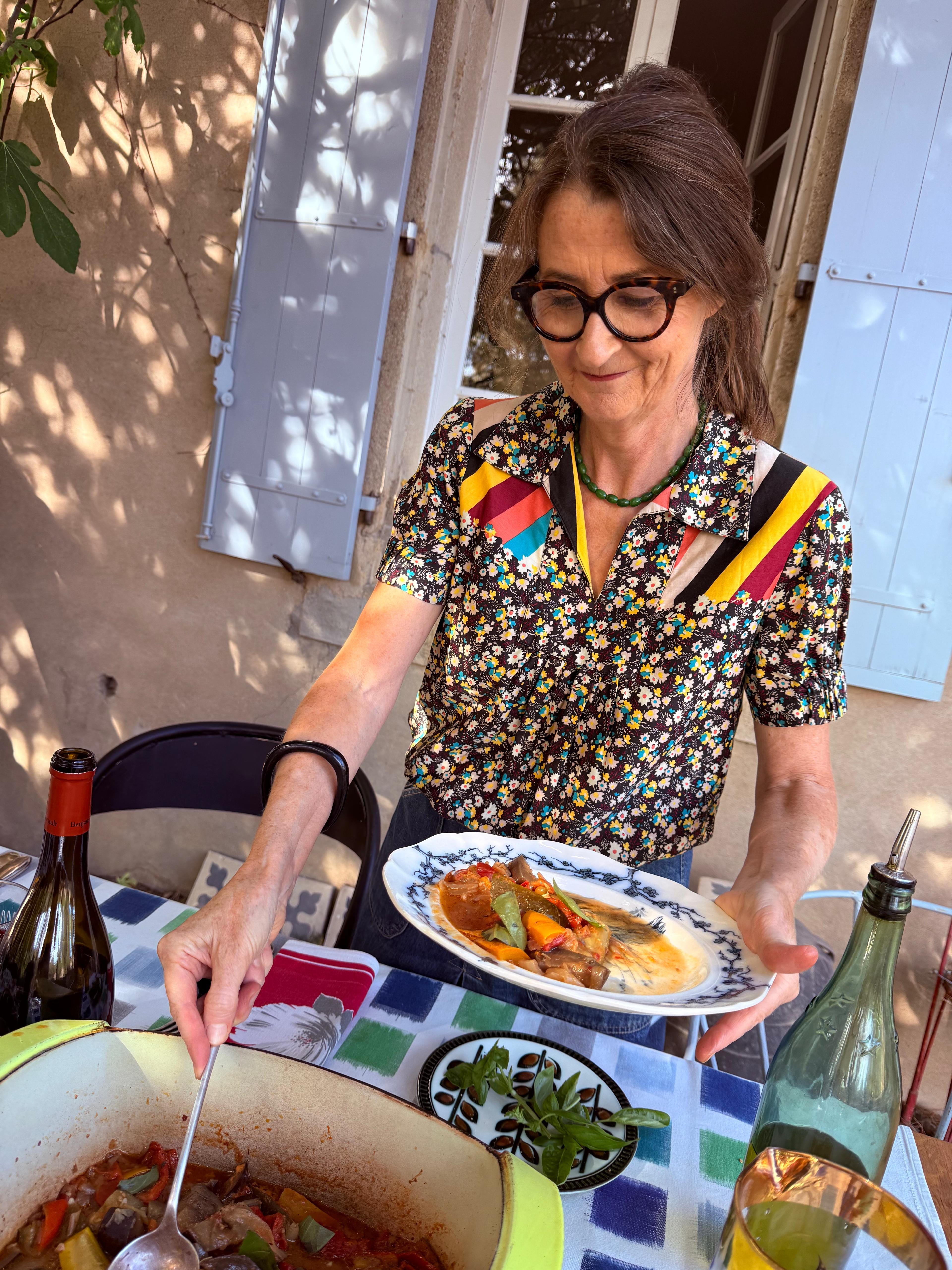
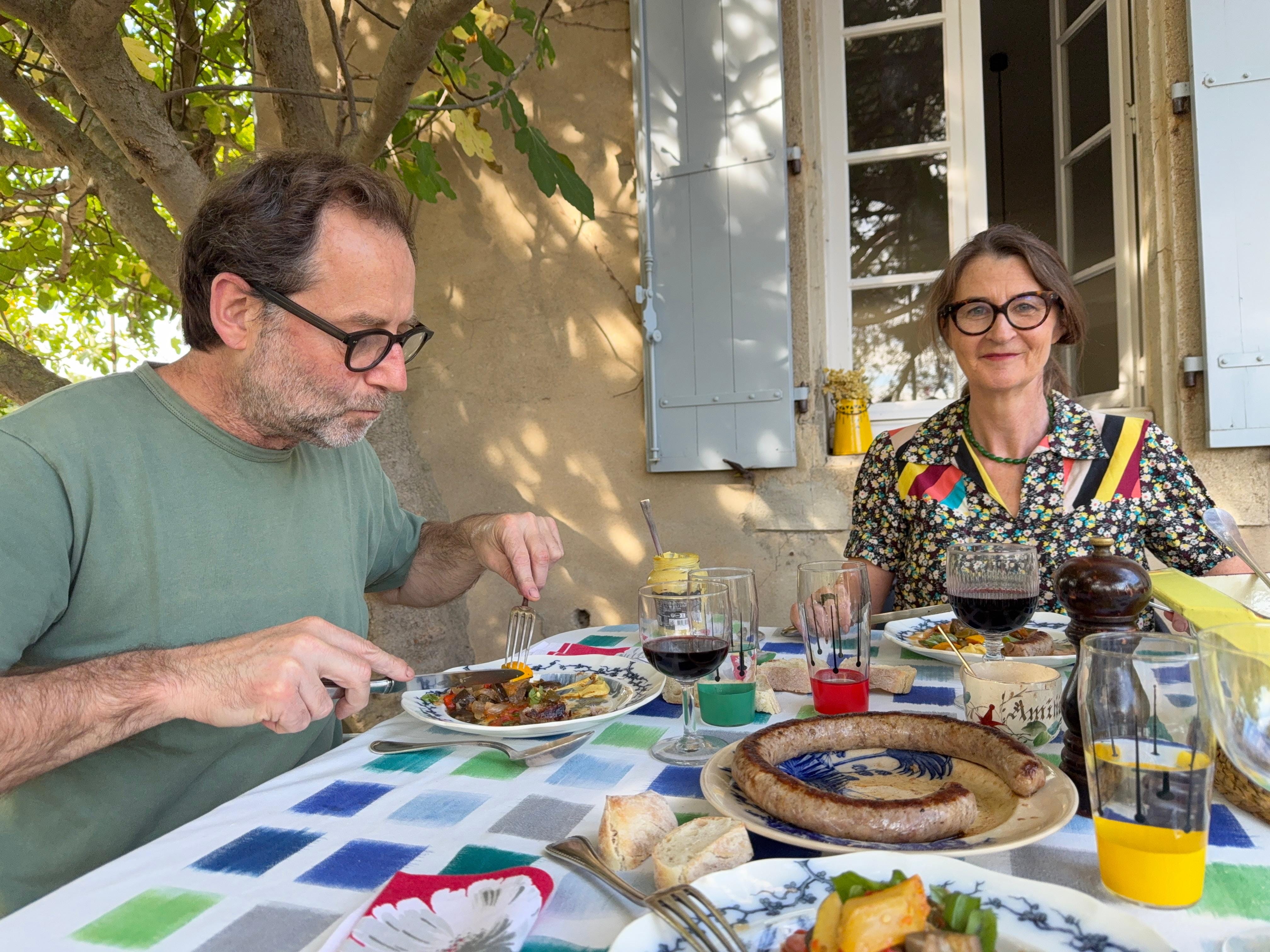
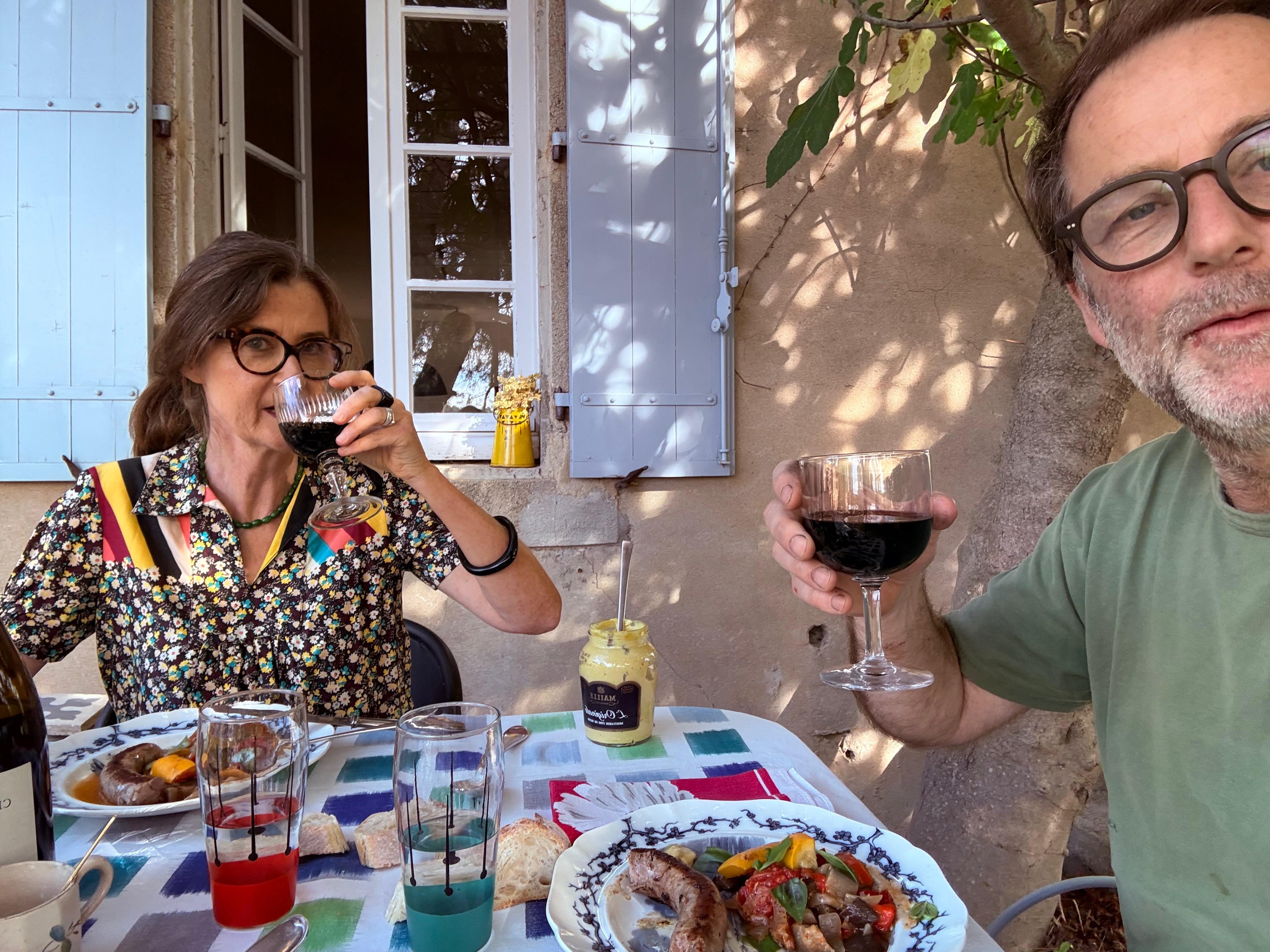
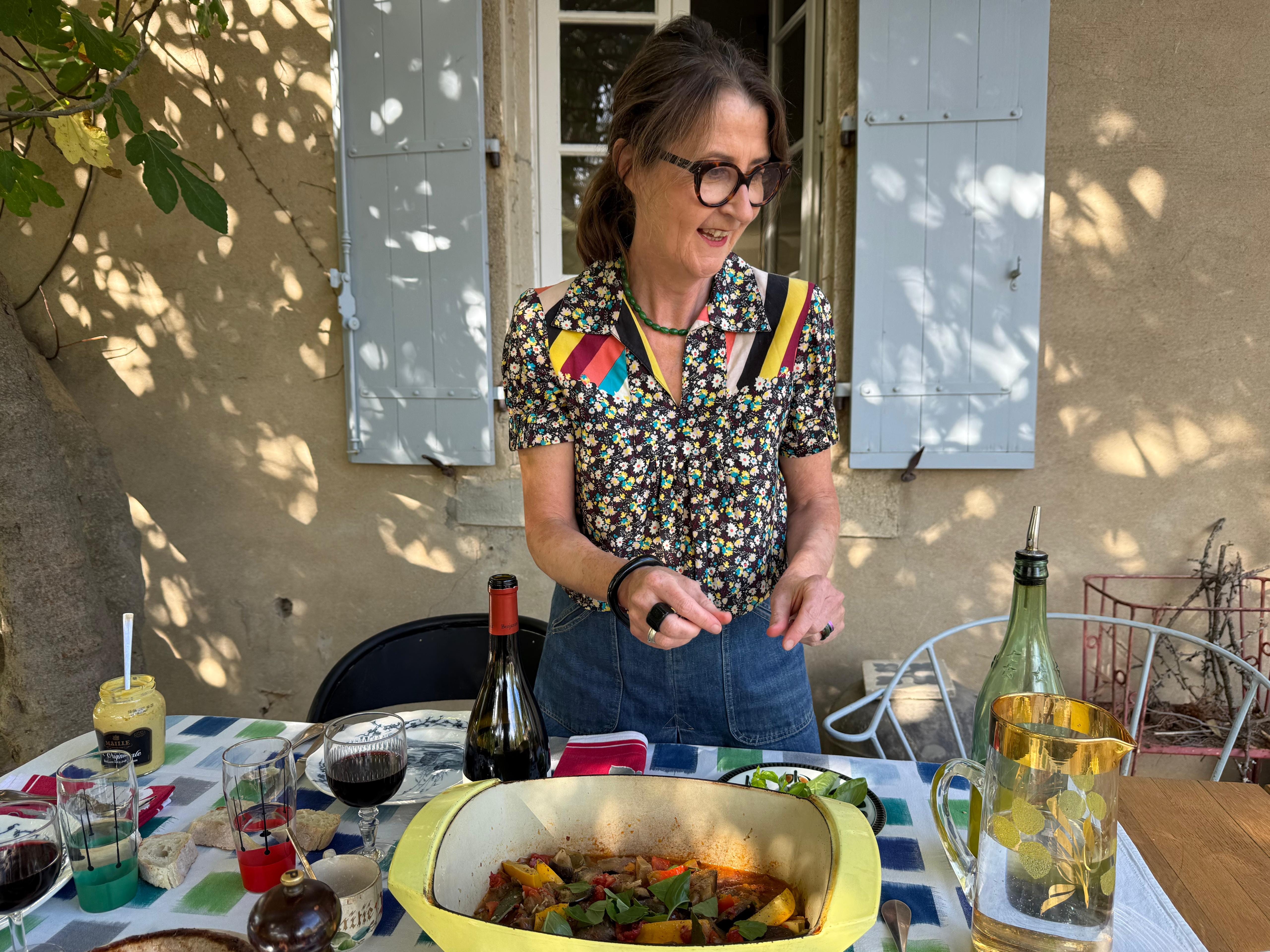
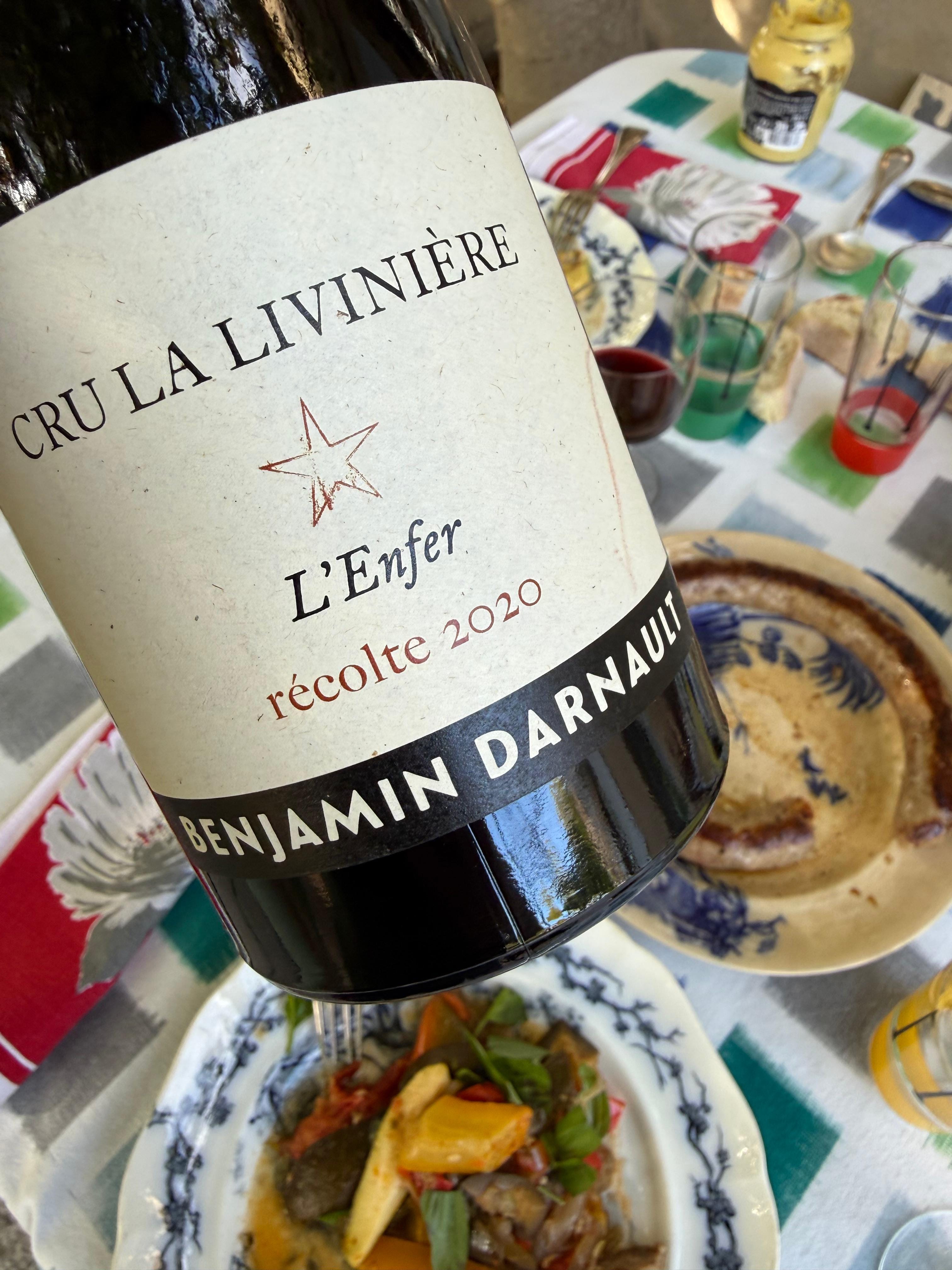
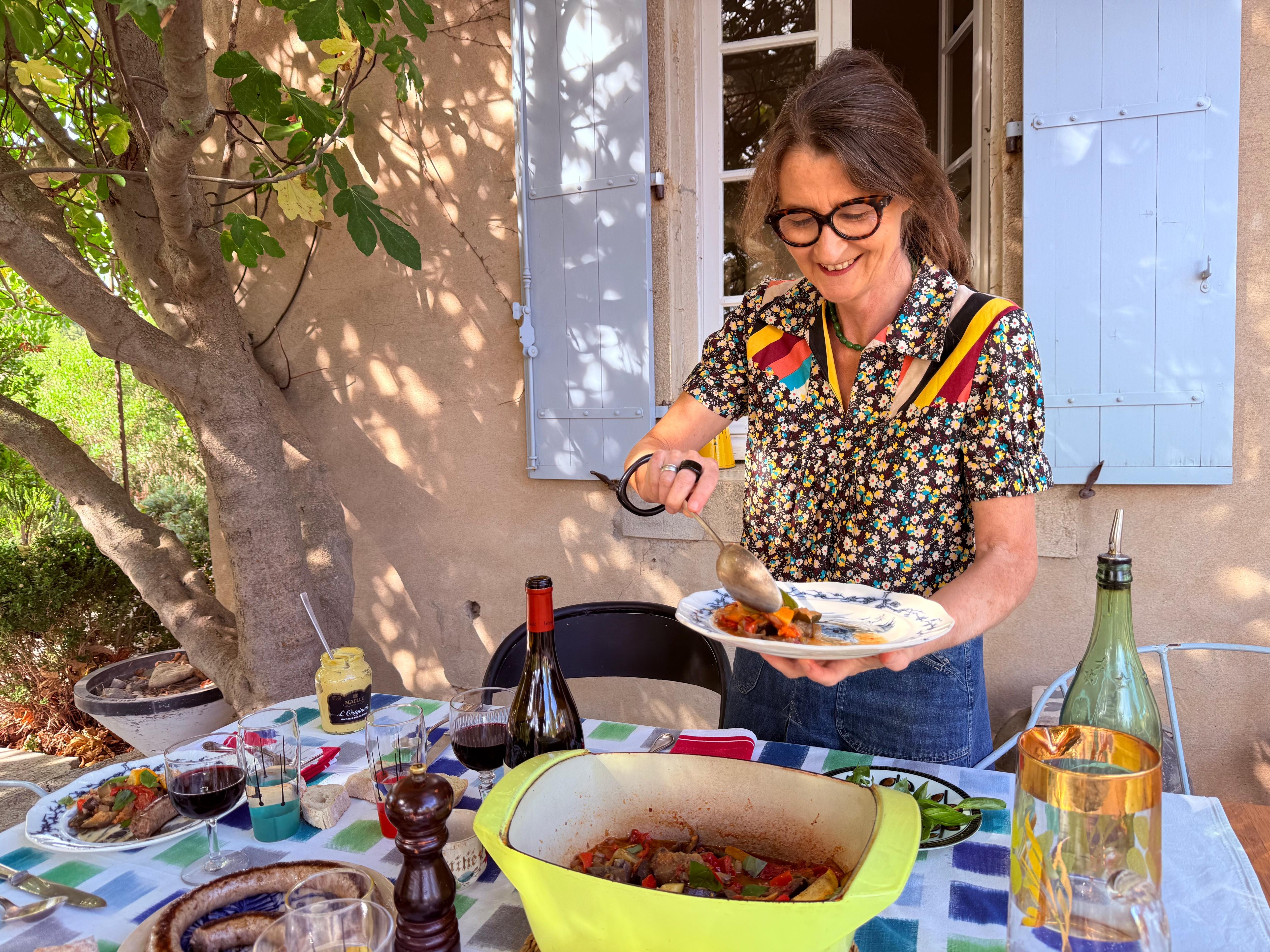
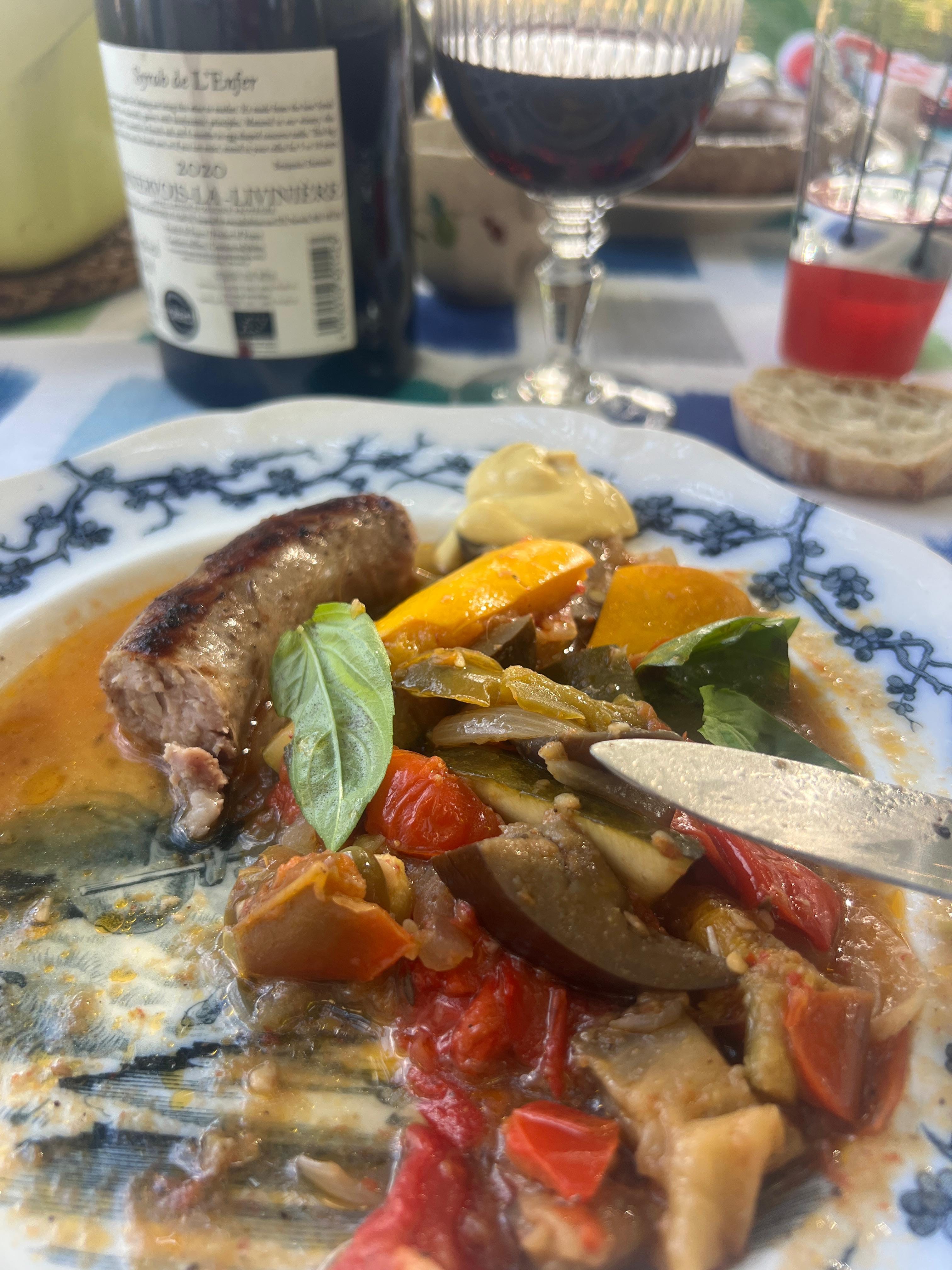
After some lively discussion about ratatouille in a recent newsletter, I thought it would be fun to ask my friend Kat, aka; The Vigneron’s Wife, who lives in the Languedoc-Roussillon region of France, with her French husband, winemaker Benjamin Darnault, to share with us how she prepares this iconic French dish in a guest post. Whenever we visit the region, Kat and Benji, as her husband is known, often invite us for lunch on their stunning terrace overlooking the vineyard. On our last visit, Kat, who is originally from Australia, made a delicious ratatouille with vegetables she picked up at the local market in Olonzac, one of the best in France, and the flavors were stunning.
You’ll notice Kat uses quite a bit of olive oil, which is perhaps one of the reasons why it’s so good. (An Italian friend once told me, “Olive oil isn’t used just to keep foods from sticking. It’s a flavor.”) I hope you enjoy this guest post, and recipe (and photos), from Kat! - David
When I was a kid in Australia, market shopping was a treat. Every Friday night, I’d go with my parents to Adelaide’s Central Market. Dad was obsessed with Italian charcuterie, Mum loved the fresh fruits and fried Asian dishes, and I’d find myself carrying a bag of steaming roasted beer nuts, hot in my hands with burning, salty fingers, trying not to lose Mum and Dad in the crowds.
The market was packed to bursting with people and noise, vendors yelling bargain prices, excitement in the air for the weekend. Stall after stall was awash with colour and all sorts of aromas drifting to my nose. My parents bought most of our household’s food at the local supermarket, but this was our thing: to head into the city and treat ourselves to exotic produce you couldn’t often find anywhere else. The Central Market was our happy place.
The market in Olonzac, France.
Fast forward to today, and I still do a weekly market shop, but it’s thousands of kilometers from my childhood home, in a small rural village in France called Olonzac. If ever you’d told me I’d be living in a remote region of France and shopping at an outdoor market on an ancient square, that 12-year-old Australian kid would never have believed you. And yet here I am, and I’ve been coming to this market now for over 25 years.
So where is Olonzac exactly? It’s a village in the heart of the Minervois, a historic wine-producing area of southern France. People have been making wine here for thousands of years, since the Romans inhabited the area. Part of this region was formerly known by the name you might be more familiar with, the Languedoc-Roussillon - which lines the Mediterranean coast and is close to the Spanish border.
Subscribe to David’s newsletter to get posts, recipes, podcasts, videos and more, sent right to your inbox!
The Olonzac market is approximately 12km (7½ miles) from the village I live in, and it’s where I do the bulk of my food shopping. Every Tuesday morning, vendors from around the region set up their stalls: fresh fruit, vegetables, cheeses, meats, small goods, eggs, fish, bread, flowers freshly picked from up in the Montagnes Noires (Black Mountains). The selection of produce is amazing.
I love this market for its food. There’s a big mix of stalls selling products from all over the region, but for me the finest, most delicious produce is what’s grown in local gardens by Vanessa, Valérie, Isabelle, and Lisbeth. Many of my favourite growers are women and over the years, my nervous first attempts at communication, using my hands or a nodding, embarrassed smile, shifted to small exchanges about my hometown (‘It’s sooo far!’ they would say), the weather, or what vegetables are growing well at the moment. I can’t tell you the honour this foreigner felt when I graduated to being on a first-name basis with these people!
As children arrived in our lives, next came introductions to each other’s kids - mine in a pusher (stroller), while theirs sat on the ground behind the stall, reading books, or older ones helped mum refill the cucumber bins. What a joy it is now, to have a voice in their language and share a bit of our lives with each other: to be asked how my daughter is doing, what is she studying now; is my dad well, has he travelled back to Australia; hearing Valérie’s daughter is now living in Barcelona; Isabelle’s husband is back from working in Corsica.
It has been a privilege getting to know these women and their lives. The market has not only given me access to, and a knowledge of, incredible local products, it has given me a sense of community in our region. In an entertaining and discreet way, it has also been a great gauge on how my French is evolving - or not! (still have a looong way to go). One more thing: it has forced me to appreciate things at a slower pace. Queuing up and waiting is all part of the process! To be honest, on some days it can be a little frustrating - and if you are rushing to get back to your desk, simply out of the question.
But if you have the privilege of time, waiting for the butcher to prepare a farm chicken for Madame Vidal can lead to a conversation about which local doctor is taking new patients; lining up to pay for your tomatoes will allow you to hear which teacher at your kid’s school is leaving, or be given a good tomato recipe from the Monsieur in front. You can glean all sorts of VIP information.
Another French product that I have a very personal connection to is wine. Yes, of course, it goes without saying that I like drinking wine! But basically why I live here is because I am married to someone who makes wine here. It’s a long story, and a very long time ago (29 years), but I married a Frenchman after an exceptionally short time together. We had met in Australia, went our separate ways, then decided to rendezvous one year later, in South Africa.
I joined Benjamin working a harvest in Paarl and within the first week, we decided to get married. One month later, we celebrated our wedding over lunch in an outdoor cafe in Cape Town, with two strangers who had also been our witnesses.
As far as everyone at home knew, I was still ‘backpacking’ with my French fling and the next stop on our itinerary was France. No one in the world knew we were married, and landing together on Benjamin’s parents’ doorstep was nerve-wracking. It was my first-ever time in France, I didn’t speak French, and here I was, living with people I’d just met, who were my in-laws.
I’ll spare you the nitty-gritty, just to say I stumbled over more than a few faux pas, like telling my mother-in-law who didn’t yet know she was my mother-in-law, ‘je suis chaude’ on a hot day. I was desperate to prove to these French people that I was a nice person (and a decent daughter-in-law), but nothing impressive came out of my mouth - and what did, was often wrong.
Eventually we announced the news of our marriage to both families (not good news for everyone…though Dad eventually budged at ‘winemaker’), and the next step in our grown-up life was to find work. Via a good family friend, Benjamin landed his first ‘serious’ winemaking job in the Languedoc. We gathered our belongings from each hemisphere and set up house together in the Minervois, for Benjamin’s new position as a chief winemaker in the village of La Livinière.
It was an exciting place to land. The Languedoc-Roussillon is a major wine-producing area of France, and a beautiful region with spectacular natural landscapes and a lovely, gentle climate influenced by the Mediterranean, conditions perfect for vineyards. We live, literally, surrounded by grapevines and nearly everyone has some kind of connection to vineyards or to wine; wine/viticulture is the most important agricultural industry in the area.
Just to give you an idea of the scope, the wider Occitanie region - which includes our Languedoc-Roussillon - produces around 10 million hectolitres of wine in a typical year (FYI, that’s how we measure wine production - roughly a billion litres). That’s a lotta wine! Benjamin has been making wine in this region for over 24 years now, and I am in awe of how much he has learned and created since our first days here, expanding his knowledge of the ‘terroir’, as they say, and increasing his focus on organic and biodynamic farming.
It has been an adventure…to say the least, getting to know this region together. We arrived as twenty-year-olds, the young ‘foreign’ couple (Benjamin coming from the Charente region is as much a foreigner as me) - and now it is home.
Thanks to David’s kind suggestion, something I would like to share with you from our home, is my recipe for ratatouille. This traditional southern French dish captures all the things I love about here: the colours, the seasons, the flavours and time spent shopping and cooking fresh produce. With the end of summer and the season for local tomatoes and eggplants coming to a close, I reckon it’s a good time for one last ratatouille. It is perfect for serving to your family and friends, while enjoying some slow time around the table, along with glasses of good (preferably local) wine.
“Rat-a-too-ey”. The name is a mouthful, but what a delicious mouthful it is.
Nothing evokes Summer in the south of France more for me than this traditional French dish. At this time of year, local markets like the one in Olonzac are laden with bell peppers, eggplants, zucchinis and tomatoes. The colours are sublime and just thinking about cooking a ratatouilleconjures up images of the potagers, the gardens where the vegetables are grown, and big old cast-iron casserole pots full of all these fresh Summer vegetables simmering on country kitchen stoves.
Here for you is my version of a ratatouille. And yes I say ‘my’ version, as there are many! While the ingredients are nearly always the same, the cooking methods differ (many French people = many opinions): vegetables cut big or small; diced or sliced; separate frying or fry together; oily, not so oily; fresh tomatoes or tinned...
There is no right or wrong way, it’s up to you (as I keep reminding my French husband who tends to peer over my shoulder!!). My version has changed over the years - I used to spend a lot of time preparing my eggplants - salting, rinsing, drying, and frying each piece to a golden colour before adding them to the pot. It was a lovely looking result, but SO time-consuming. And so much oilier. I now add them directly to the pot, unsalted and uncooked. I also cut my vegetables larger, which gives them a fleshier texture. You know what you are eating - unlike cutting them so small, you render the vegetables unrecognisable. The larger cut also helps maintain a level of firmness. I now only use fresh tomatoes instead of grabbing canned ones.
Ratatouille is a lovely choice for accompanying roast lamb and grilled pork sausages,* or served at room temperature or cold with crusty bread and a green salad. It is also a great leftover sauce to pour over pasta with grated cheese, which was my special way of serving vegetables to our daughter when she was ‘anti-vegetables.’ I’d like to add that she always ate her vegetables when presented this way.
*We often buy Saucisses de Toulouse (Toulouse sausages). They are made from roughly 75% to 80% coarsely minced lean pork (such as shoulder) and 20% to 25% pork belly or fat and seasoned with salt and black pepper. - Kat
- Approximately 200ml (~3/4 cup) extra-virgin olive oil
- 2 large onions, halved, then sliced roughly, about a .5cm (¼-inch) in thickness
- 6 red and green bell peppers (or capsicums or poivrons, often referred to as sweet peppers), seeded and roughly cut into 3cm (1-inch) slices
- 4 medium eggplants (aubergines), sliced and quartered into about 2cm thickness
- 5 to 6 medium cloves garlic, finely chopped
- 2 bay leaves
- 1 sprig of thyme
- salt and freshly ground black pepper
- 1 teaspoon minced fresh or dried chillies, less or more as desired; the chile adds a lovely lift
- 4 medium zucchinis (courgettes), cut lengthwise into chunky 6cm long pieces (if you can find yellow as well as green zucchinis, this adds a lovely colour to the dish)
- 4 to 5 medium tomatoes, peeled and roughly chopped or pulled apart
- Big handful of basil, about 6 sprigs with leaves
method:
In a large cast-iron pot, heat 3-5 tablespoons (60-100ml) olive oil, enough to cover the bottom of the pot with a shallow pool of oil. Add the onions and fry over low heat until soft and golden, stirring occasionally.
As the onions become soft and golden, add the bell peppers, eggplants, garlic, bay leaves, thyme, salt and pepper, and chilli to taste, and pour over some more olive oil, about 3 tablespoons, enough to give it a glow-up! Stir well and increase the heat to medium. Cook for 20 minutes, with lid on, stirring occasionally to help the vegetables meld.
Reduce the heat to low, keeping the lid on, and cook over gentle heat for approx. 20 minutes.
Add the zucchinis and tomatoes, pour over approx. 2 tablespoons olive oil, and stir well. Place the lid back on and continue cooking for approx. 30 minutes, or until the vegetables are tender.
During this time, check every 10 minutes or so and give the vegetables a stir, being gentle so you don’t break up the zucchinis and eggplants too much.
to serve:
Adjust the seasoning to taste and scatter torn basil over the top. Please make sure you have some Dijon mustard handy too! It’s a delicious touch having a dollop on the side of your plate. Plus a good chilled French wine (red or white, you choose) ready to serve alongside. If you are able to find a Benjamin Darnault wine, even better!
In this episode of The David Frum Show, The Atlantic’s David Frum discusses President Trump’s announced diesel deal with Russia, the administration’s abandonment of Ukraine, and why Trump is giving up so much to gain very little.
Then, David is joined from Kyiv by Illia Ponomarenko, a Ukrainian journalist and the author of the new book The Land of Tears and Hope. David and Illia talk about the history of Ukraine, its current state as the war with Russia rages on, and how and why the Trump administration seems so hostile to the country.
Finally, David concludes with discussion about why so little literature exists about the history of slavery in Eastern Europe.
The following is a transcript of the episode:
David Frum: Those Americans who want the United States to take a more pro-Russian point of view or who denigrate the Ukrainian cause—the vice president of the United States and the people around him—they will insist that this war is about NATO expansion. But when you actually listen to actual Russians, they say, No, no, no; this is all about Yaroslav the Wise. And from a Russian point of view, this is not about NATO expansion, except when they’re talking in English to gullible Americans.
[Music]
David Frum: Hello, and welcome to The David Frum Show. I’m David Frum, a staff writer at The Atlantic. My guest this week will be Illia Ponomarenko, author of a new history of Ukraine, Land of Tears and Hope, available from Bloomsbury in the month of November. Illia and I will discuss the deep history of Ukraine, the recent onslaught of Russian drones and missiles on Ukrainian cities, and how Ukrainians feel about their abandonment by the Trump administration.
This week’s book will also be Eastern European–focused. It’s not a book that exists. It’s a book that I would like to read, and I set out a research assignment for some intrepid Eastern Europeanist to deliver a book I would like to know more about in, again, in the deep history of the lands that are now Ukraine, now Poland, and now Russia.
But before either the dialogue with Illia or the book discussion, some opening thoughts about the most shocking recent turn in the U.S.-Ukraine story.
When Illia and I recorded our dialogue, we did not yet know about this announcement that was pending from the Trump administration, declaring or imagining or proposing, or whatever the word is, for what is likely vaporware. Not a real deal; a big purchase, a massive—in the words of President Trump—a massive purchase of Russian diesel fuel for the United States.
Now, I wrote an article for The Atlantic this past weekend with the facts and figures about just how negligible an achievement this so-called deal really is. The United States is a diesel superpower. It’s probably the largest producer of diesel on Earth. We don’t exactly know that for sure, because we don’t know really how much China produces, but probably the United States is the largest producer of diesel in the world. It is certainly the largest exporter of diesel in the world. And it produces much more than it uses at home. So it exports about a million and a half barrels of diesel fuel a day.
The reason American prices have been rising so fast for truckers and farmers and others who use diesel fuel is not because of anything that’s happening in the U.S. market, or even the North American market. The United States imports a little diesel fuel from Canada because it’s easier sometimes to import from Canada and then to export from the Gulf Coast than to supply the United States entirely from its own resources. The reason that the price has been rising is because of disturbances in the global market. What matters is world demand and world supply of diesel, not U.S. demand and U.S. supply of diesel.
Now, if this Russian deal exists at all, it’s a matter of a few hours’ worth of U.S. production and U.S. consumption. It’s not a big event, and it won’t change world prices because Russia doesn’t have a lot of diesel to sell. Although Russia used to be a big diesel producer, Russian oil facilities have been damaged so intensely by Ukrainian missile and drone fire that Russia has very little diesel to contribute. In fact, Russia has had an export ban on diesel since July. If Russia has any diesel to sell, it’s going to take it from another consumer; India, maybe. And by diverting diesel oil from India to the United States, it doesn’t do anything for the United States, which has more than enough diesel here at home. It makes life a little tougher for India, and it doesn’t change the world price at all, because nothing happens in global supply and demand. The whole thing is a complete nothingburger.
But it does two things that are important. The first is: The Russians have dangled in front of the Trump inner circle the prospect of enormous wealth for them if American sanctions on Russia are dismantled. And it’s taken a first step toward the dismantling of those sanctions and put the United States on the path to confrontation with Ukraine, because President Trump now has to worry the only way he can get Russian diesel is if the Ukrainians stop attacking Russian energy facilities, which they are doing in retaliation for the Russian attacks on their cities and schools and historical societies and hospitals, on their civilian population. They have struck back against Russian energy infrastructure to cramp Russia’s war-making ability.
President Trump has now created a situation where his goal of seeming to do something about diesel and maybe also enriching a lot of people who are in his inner circle is in conflict with Ukraine’s self-defense, and the only way he can get what he wants is by ordering Ukraine to stop defending itself. And we have seen already Trump’s pressure on Ukraine: If you continue to strike the Russian energy infrastructure, you are making an enemy of me.
He is taking away Ukraine’s war-making ability for his own reasons, in ways that will not help American motorists even slightly, American farmers, American truckers. And of course, he is doing nothing to bring about a resolution of the conflict in the Persian Gulf, which has removed so much diesel fuel from Europe and Asia because that’s where those countries get their supplies from.
Trump from the beginning of this second presidency has taken Ukraine as a kind of personal affront. Now, a lot of this is a little hard to understand, but maybe we don’t need to understand it. You know, when I was working on my story about Trump’s vaporware diesel deal, an editor asked me, Do you think Trump believes it? Do you think he imagines that these few barrels he’s getting from Russia are, in fact, going to make any difference to American supply? Or is he totally delusional? And I had to answer, I don’t actually—of course, I don’t know the answer to that question. My instinct—it’s just an instinct—is that President Trump was much more of a self-aware con man when he entered politics a decade ago than he is now. He now may be kind of lost: truly in a world of illusions, where he no longer himself knows what is true and what is a lie.
But it doesn’t matter, because there’s a consistent through line, whether these are deceptions of others or deceptions of himself. The through line is: He just is tantalized by the prospect of vast wealth for himself and others by doing deals with Russia. And he’s willing to sacrifice the lives and security and independence of Ukraine to his ambition. And he treats Ukraine’s self-assertion and self-defense as an act of impudence and defiance—not against those who are trying to invade and aggress and annex Ukraine, but against himself. Because Ukraine bothers him, and he doesn’t like it, and he wants it to go away.
What he’s leaving all Americans with is one of the most shameful passages in the history of American foreign policy. A people that are defending their national sovereignty, that are fighting back under the most difficult conditions with the supremest forms of human bravery. Who ask only from the United States the wherewithal with which to defend themselves, and who are being denied that wherewithal by President Trump for reasons we can’t understand, but none of which look good. I hope anyone who can hear my voice will join me in sharing their dismay and their shame at what President Trump has done to the good name of American democracy and American world leadership.
And now my dialogue with Illia Ponomarenko.
[Music]
Frum: Illia Ponomarenko was born in 1992 in a small town in the Donetsk region of eastern Ukraine. He studied at Mariupol State University. When Russia invaded his home region in 2014, Illia began his career as a reporter. He has never stopped.
His first book, I Will Show You How It Was: The Story of Wartime Kyiv, was published in 2024 to global acclaim. Illness closed his path to military service, so he turned to a deeper fight: the fight over whether Ukraine has a history of its own. His new book, The Land of Tears and Hope, tells the Ukrainian story from the Slavic tribes and the Vikings through the Cossacks, Soviet terror, and the Maidan to this very war today. It will be published next month. Order it now.
Illia Ponomarenko, welcome to The David Frum Show.
Illia Ponomarenko: Hello. Thanks for having me.
Frum: Illia, you have written this deeply moving history of Ukraine, and I want to address it in full, but the events of the past days in Ukraine have been so dramatic and so horrible I think we must start there.
So tell us, we’re speaking in the early part of October, tell us the situation as it is now and what has happened in the past days to your country.
Illia Ponomarenko: Well, of course, the centerpiece of any news and the spotlight is Kyiv, this capital city, and what’s happening. The air battle over Kyiv that’s going on nonstop for days and weeks already, with drones, missiles. Never stopping, day and night.
So the central attention is given to the defense of the capital and to preserving life in the capital. And Russians are really trying to abrupt the very existence of the city, to instill fear, to abrupt transportation, normal food supply, water supplies. Bridges over the Dnipro River that divides the city, which is extremely vital. So Russians have switched to this tactic of trying to absolutely paralyze the very heart of the country—to install fear, to enforce the capitulation, since they can’t get any substantial military success for the fifth year of this war.
But I must say that, you know, I live just outside Kyiv in suburbs, and also in several places in Kyiv Oblast, in the outskirts. But I spend as much time as I can in the city, in many ways just to be there with my city, in there. And I would say that over the last three days, which is what I said on social media, the air battle—this constant attack—the entire environment had become a little less stressful, a little calmer. I would say I think, this my feeling, that Ukrainians managed—the Ukrainian military managed to overcome this surprise and shock and managed to adapt to this new situation. And I think if the situation continues, we might say that Russians have weakened in terms of their ability to strike Kyiv on the daily basis. So Ukrainians have made another move to adapt to what Russia does, and it goes on and on and on. So it’s constant battle between Ukrainian adaptation and Russian attempts to paralyze the city.
Frum: Let me try a little context. I think from the point of view of a lot of people in the Western world, in the United States—we’re so far away. It seems like this is an endless story of Russian attacks, Ukrainian defense. But there was a true intensification of the Russian air attack on the capital of Ukraine beginning at about the end of September, with some new technologies, some new methods. And the first effect was very devastating. A much greater loss of life, much greater damage than had been the case until the later part of September, the beginning of October. And so it is this new campaign—this intensified campaign at the end of September, beginning of October—that you say is now running out of impetus and faltering a little bit?
Ponomarenko: It gets significantly visibly weaker in terms of the number of drones, Russian drones, that made it to the capital and strike. So there are far less booms in the sky over Kyiv over the last few days, which is good. Which is something that enlightens us, because the military also reports a lot of new technologies, counter-technologies that are being applied to intercept jet-powered Russian drones that are super difficult targets to get.
Frum: These jet-powered drones, this is the new—because drones, until now, have been slow. And they could be shot down with a .50-caliber machine gun if the weapon-wielder was fast and skillful enough. But a jet-powered drone moves much faster, and so can’t be intercepted by a machine gun. You need a much more sophisticated technology to catch the jet-powered drone.
Ponomarenko: Yeah. One of the bright pictures of life in Kyiv is always seeing, in the streets, pickups with machine guns—sometimes it’s M2 Browning machine guns—with the mobile air-defense groups that try to shoot these things down.
But when it comes to jet-powered drones, which is the next step essentially, and especially when it comes to mass-produced, jet-powered drones, it’s a huge problem. Because they move at velocity of 700, 600 kilometers per hour. So it’s an insanely complicated target to get. And they are cheap; they are easy, simple. They are massive. So could be swarms of them over the Ukrainian cities.
Nonetheless, within weeks we started getting new solutions to this. There are—you know, Ukrainian defense in many ways is comprised of many, many private companies that suggest many, many technical solutions. Right now we have five or six prototype interceptor drones that are engine-powered, or jet-powered, that are being presented by various companies in Ukraine. And they are simply showing the first results, just the first results, on videos intercepting these Russian jet-powered drones. So surprisingly, it goes fast. The entire Russian campaign against Kyiv was a shock. It was sharp. It intensified really quickly and shockingly. But at the same time, the Ukrainian response to this is very fast and very sharp. So our big question is whether we could launch the mass production of a successful prototype that works well. And this is exactly, essentially, how this war works.
Frum: Ukraine is striking deeply at Russian targets, especially energy-production targets, ever farther into Russia. And there are reports—I don’t know how much weight to put on them—of surrenders among Russian ground troops, of deteriorating performance among Russian ground troops, that make us think that maybe something deeper is happening in the war than just the strike, counter-strike—the cycle of innovation and counter-innovation you describe.
Ponomarenko: But also, another front of this war is actual battlefield war, that’s happening along from the frozen front line in Ukraine’s south and east. And we have a situation in which Ukrainian military, in one of the most important, if not the most important axis of Russian attack, which is near the cities of Kramatorsk and Sloviansk—the very core of the industrial part of Donbas that’s still under Ukrainian control, and also the belt of the fortress cities in Ukraine’s east.
The Ukrainian military, over the months of very careful, very clandestine operations, managed to inflict a very, very serious defeat to local Russian forces. So that’s why we get pictures of surrendered Russian troops, because they got encircled; they got captured. That’s how the Ukrainian military, and it’s pretty open, and it could be independently verified that Ukrainian military have tactical gains. And also they managed to cut off one of the accesses of Russian attacks on these fortress cities: the northern claw, as we call it.
So Ukraine, despite all the bombs, despite all the bravado from the Russian side, Ukraine has pretty significant tactical successes on the field, on the battlefield. Which are pretty impressive on the scale of this war, five years on.
Frum: What can you tell us about the present state of American assistance to Ukraine?
The Trump administration has cut off aid to Ukraine. Such American weapons as you get are paid for by your European counterparts and allies. Is there any American intelligence flowing to Ukraine? Is there any non-material assistance you’re getting? Or is the attitude truly as hostile in Ukraine as it seems to be from the point of view of Washington, D.C.?
Ponomarenko: Well, of course, we are very far from being in the place where we’ve been under the previous administration when we had consistent and very serious and very regular packages of assistance. Right now, you are right to say that what’s being delivered to Ukraine from the United States is being purchased as part of the Pearl program by European backers. It’s mostly about supplies, technical maintenance, things that help maintain the U.S.-made hardware in possession of Ukraine. Very important part of this American participation is, of course, the intelligence. And I must say that despite all the complexities or all the complications that Ukrainian administration has with the United States, this intelligence sharing is one of the most important things that Ukraine has from outside the country, because it’s about saving lives. It’s about giving early warnings about Russian missile attacks. This is what we get from Americans, essentially.
So in many ways, what you see, from the point of view of [President Volodymyr] Zelensky—the way he talks to Donald Trump, the way he tries to preserve a more or less stable relationship with the United States and with the Trump administration—it’s about intelligence. Because this is something that we would be extremely, extremely reluctant to lose. Because it’s about saving lives; it’s about air defense.
Frum: Can you offer any generalization about how Ukrainians today feel about their relationship with the United States? And what the United States has done for them as it has become less generous, but not yet zero generosity?
Ponomarenko: Well, I’m really trying to give you a very average attitude that’s been present in the Ukrainian public opinion. Of course, a lot of people are dissatisfied. A lot of people are stressed about this, because one of the things that we always thought of as unshakable, as static as the Earth itself, is the American support. Bipartisan support in both house chambers of the Congress, in the White House. We always thought that our interests are 100 percent complacent with America’s interests, and this is what we thought was unshakable and unmovable.
I am not going to lie to you that Donald Trump remains one of the least popular figures in Ukraine. Because of many reasons, mostly because of a lot of words that he said about Ukraine. And I cannot lie to you that this image also affects really badly on the image of the United States as a country, or on the United States as a people, in the eyes of Ukrainians. A lot of emotions are involved into this. We must understand that war, being at war, is a very emotional thing. It’s about a lot of strong words; a lot of strong thoughts about this.
But I would not say that a lot of people here still respect the United States, still consider America to be the leader of the free world, the cornerstone of this free world. And despite everything that has happened over the last couple of years, still consider America to be probably back anytime soon in terms of its presence and its posture and its leadership.
So I would say that, you know, of course, feelings are very complicated. Feelings are very emotional about Americans. I cannot say that I agree with a lot of those things that I hear from my fellow Ukrainians about Americans and American aid. I really try, and I think it’s extremely fair and just to separate what this administration, what politicians do, what they say about, about us, what they do. And also, I try to remind my fellow Ukrainians of how many Americans do support Ukraine up to this day. We have figures between 60 and 70 percent on both sides of the political spectrum. I cannot stress this enough that, after all these years, having so many people across the ocean being so eager in terms of supporting Ukraine—the country that they probably never heard about before this war—is something that is to be deeply appreciated and something that is very ours to have.
Frum: For those of us who, like you, believe in the role of the United States as the guarantor of the free world, and who believe that the phrase free world means something, this has been a shameful hour. And the patience, and maybe someday the understanding and even forgiveness of the Ukrainian people to this deviation from America’s role in the world, is felt here too, and should be felt.
Let me talk to you about your book. And again, the title is The Land of Tears and Hope. It is, as you say, it’s emotional. And it is not a classic history written with chapter one, chapter two, that we—you jump like a film director from scene to scene, and pass over a lot of years, and have a very arresting technique.
Frum: Ukraine is one of the world’s newest states. Or the present Ukrainian state is one of the world’s newest states, founded in 1991. You make us feel the antiquity of Ukrainian culture, language, sensibility. How do you manage this contrast between the newness of the government, the newness of the constitution, the newness of the state, and the antiquity of everything that the state is built on?
Ponomarenko: That’s a very interesting thing about modern Ukraine. By saying modern Ukraine, I mean the country that was built after the revolution of 2014, which is the newest phase of Ukrainian existence. Because Ukraine is very young in terms of being a political entity, especially when it comes to being very independently thinking, sensing itself as an independent nation-state, not someone’s backyard, not as also Russia. But in terms of feeling itself like an entity, a country, a nation with its own home. It’s a very new thing to Ukraine even compared to its just 35 years of its independence.
And at the same time, Ukrainians—and Ukrainian people in general as a people, as ethnicity—have a very long historical memory. And a lot of things that are dearest to us, that are part of our culture, of our everyday thinking about traditions, of the fairy tale that we tell to our children through the night, and many of those things date back to medieval times. Date back to the early modernity, like Ukrainian Cossacks. They date back to pre-Christian times, ancient Slavic tribes.
You know, when I was writing this book, it was a surprise even to me when I realized this: how many things we have from our everyday traditions, from our holiday celebrations, from our sayings that we get back from pre-Christian times, from thousands of years ago. A lot of things in our life go back to those times—when there was no Ukraine, neither as a nation, neither as a state, neither as in, even in a word in this. But they live with us.
Frum: I think this is something that Americans especially have a hard time understanding. Those Americans who want the United States to take a more pro-Russian point of view or who denigrate the Ukrainian cause—the vice president of the United States and the people around him—they will insist that this war is about NATO expansion, about verbal undertakings to Mikhail Gorbachev back when there was a Soviet Union. And then what, well, what does it say in the Budapest Memorandum of 1994?
But when you actually listen to actual Russians, they say, No, no, no; this is all about Yaroslav the Wise. And from a Russian point of view, this is not about NATO expansion, except when they’re talking in English to gullible Americans. For them, this war is about whether Ukraine exists—as a culture, as a polity, as a society—or whether you’re just sort of charming primitive, rural Russians who don’t understand that you need to belong to the greater entity of Mother Russia.
And you talk a lot about that in the book, about the distinctiveness of Ukraine. And maybe begin with this question: So, how many years separate the founding of the city of Kyiv from the founding of the city of Moscow?
Ponomarenko: Whoa. It’s even a complicated question to answer when the city of Kyiv, as we know it, was founded. Because there are lots of evidence, lots of arguments among scientists. But let’s try to set the beginnings of Kyiv as a continuous city around the fall of the Roman Empire’s time. And when it comes to Moscow, a lot of people barely realize that. They imagine Kyiv and Ukraine and what ended up being Ukraine, and then what ended up being Russia, as in the model that Moscow gave birth to Kyiv, gave birth to Ukraine. It’s an offshoot of great Russian tradition. But at the same time, the situation was just exactly vice versa.
There was ancient Kyiv—ancient great kingdom of those people who are ancestors. And those people, once upon a time, many years after their best time, after their blossoming time, they established what was a very distant fort in the forest that was named Moscow. So essentially, those cities, those lands that ended up being the historical core of Russia—we’re talking about the city of Vladimir, of Suzdal, the very core of Russia—they were settlers. They were settled from, say, historical Kyiv to those places, because people were seeking land, new territories. So, simple truth is that what ended up being Ukraine gave birth to what ended up being Russia—not vice versa.
But at the same time I do give this information, I do provide the reader with these thoughts about the past and the common roots of Eastern Slavic peoples, Russians, Ukrainian people, Russians. But at the same time, I do not stick to this very nationalistic and very radical and simplified view that Ukraine is the only country that has the roots in this long past, and no one else does. I think that Russians and Ukrainians have a common origin, and also Belorussians.
But Ukraine—what we have right now in Ukraine—has the biggest share of these roots belonging to it. So that’s my position about this. And why I wrote about this book is that in Ukraine of today, a very important part of life is getting back to these roots, appreciating this. Stopping to think about us, ourselves and this country as the backyard of Russia—but a country that has its roots back through to the Middle Ages, to ancient times, that was the cradle of Christianity in this region of human civilization. That has very ancient and very beautiful and in many ways unique historical wonders in this land. A huge part of Ukrainian life right now in this national awakening is getting back to its roots, its ancient roots.
Frum: In more recent times, and by that I mean the past few hundred years, Ukraine has been entangled in very grim, bloody, complex relations with not only with the Russian neighbors, but with Poles and with its Jewish minority. And these swirl together in stories that are sometimes very powerfully resonant, but sometimes very ugly and bloody. And you talk about that a lot: about the Ukrainian-Polish duality, the Ukrainian-Jewish duality, as well as the Ukrainian-Russian duality.
Ponomarenko: I do talk about this. And my central point in this regard is that Ukraine is a very rich country. Ukraine is a very beautiful country. And because of this, it has a very tragic history. And Timothy Snyder, historian that is insanely popular in Ukraine, he was just brutally right to include Ukraine as part of the so-called bloodlands. Because Ukraine, with all its riches, with all its geographical position, it has always been a target for many empires that wanted to possess Ukraine and its riches. And its geographical positions, its human resources, its brains.
So in many ways, the Ukrainian history—and I realized it myself as I was preparing for this book—I realized that we are essentially as a people, Ukrainian people have been moving for many centuries in this closed circle of trying to get independence and its own nationhood, and losing it again. And becoming a powerhouse for new empires and a donor of resources for new wars, new empires. Such as the Russian Empire was in many, many ways built on the conquest and possession of Ukrainian riches. Same goes about Stalin’s USSR. Hitler wanted Ukraine badly as part of his Lebensraum, because Ukraine is a very fertile land. It’s a very pleasant land to be on.
Ukraine is a part of human civilization where it’s really good to be a master in. You have a really rich empire if you have Ukraine. And this moving on this vicious circle of history, it always comes with insane blood, with insane national intra-ethnic feuds, violence, social tensions. Such as with Jewish population, with Polish population. So my very central point of this book eventually is that it’s a land of tears because of many, many wars; many, many tragedies. Some of the worst tragedies of human history happened in Ukrainian lands between parties that wanted to possess this land. But also a land of hope, because we hope that with this independent Ukraine and in this war in which Ukraine may again lose its freedom and its independence, there is hope that at least at this time—for the first time in many, many centuries—we could break through this vicious circle, and upheld this democratic, free, strong Ukraine that would never be a powerhouse and a donor for new empires and new wars.
Frum: I grew up in Canada, which was the center of a lot of diaspora Ukrainian intellectual activity. And I don’t want to make this too much of a generalization, but I would say, when I was young anyway, that diaspora Ukrainian intellectual activity tended very much to the reactionary side: ultra-nationalist and very defensive of Ukraine and all that it had done. And so there was a tendency to say, to think that the bloodshed between Ukrainians and Poles, it stretches back to the 1600s, but was very intense during the Second World War. The Ukrainians were innocent; the Poles were guilty. The crimes against the Jews, well, they didn’t happen, and if they happened, the Jews deserved them.
And what has been striking about Ukrainian culture since 1991, and especially since 2014, and very much in your book, is the ability to tell a story of national pride while integrating national shames, without letting those shames detract from the future. And understanding that Ukrainians and Poles had a very tangled history. Ukrainians and Jews have had a tangled history, a lot of suffering. And yet something new and modern and liberal can emerge from this by recognizing the full truth and all the components of the Ukrainian national identity.
Ponomarenko: In my book, I specifically stay away from radical views or idealizing the history of this land. I state it very clear, and I think it’s a very just thing to say that Ukraine is a very complicated place. It’s a very brutal place in history. It’s a very terrible place in terms of all the blood that was shed for this country, and in this country. It’s one of the crossroads of this world where many people wanted to be a master in.
So I specifically say that when it comes to, for instance, the killings of Jewish and pogroms. For instance, we have a national hero of Bohdan Khmelnytsky, who led the greatest and the biggest rebellion of Ukrainian Cossacks since the 17th century, that almost led to the installment of the Ukrainian nationhood within the old Polish crown. And right now, especially in the last 100 years, Bohdan Khmelnytsky is idolized. It’s his own monuments. He’s on Ukrainian money. He’s the symbol of the founding fathers of the Ukrainian nationhood. But at the same time, one of the darkest pages of Ukrainian history is the way the Jewish population was treated during those uprisings, because the uprising of Ukrainian Cossacks against the Polish crown in the 17th century was the outburst of anger of extremely poor people. Of extremely oppressed people in terms of their religion, in terms of their money. It was an outburst of anger against the very system they were living in, with nobles being absolutely unpunishable with religious oppression. So it naturally fell upon Jews, as part of this system that was also unjust toward them in this regard.
Frum: Because the Polish nobles were far away, and the Jews were neighbors right next door.
Ponomarenko: Yeah; it was a very complicated social system. In which Jews, for instance, when it comes to 17th century—in that period, for instance—Jews were laid upon with duties like taxes, or they were the only ones that are allowed to with banking operations. And who loves people who you owe money, or who collect taxes, or who run bars, for instance. Who have monopoly on producing drinks, for instance.
So it was about a lot of hatred, about a lot of injustices. And try to explain to a very angry peasant—who has been robbed, who has been poor, extremely destitute, who has barely any education when it comes to basic things—when emotions go through, try to explain to these people, to this angry crowd ready to take up arms and commit massacres, that, for instance, Jews are not guilty of this; that they are surviving also on the last wheels.
So in general, Ukrainian history is full of such things. And in my book, I do not represent any radical. I do not provide any justifications. I explain how it happened, what happened. But I do not idealize. And I simply speak on behalf of very average, young Ukrainian that’s thinking about this country with no nationalism, with no radical points, with no attempts to idealize Ukraine and its history.
Ukraine is a complicated place. And what’s important also about this country, especially when it comes to the Ukraine of today, is that I see it with my own eyes from everyday life in my country. That we have overcome a lot of those things that drag us down from the past. We mentioned Ukrainian-Jewish relations. Despite all this past, despite such a bloody history of pogroms dating back to 20th century, what we have right now in Ukraine is that the chief rabbi of Ukraine is a hard advocate for Ukrainian victory, and he spends basically entire his life advocating support for Ukraine. His son, his adopted son, died fighting for Ukraine as a volunteer in the armed forces. When it comes to Islam, for instance, we have a chief mufti, former chief mufti of Ukraine—which is the top priest, or top clergyman, for Ukrainian Muslim community—he resigned from his position, and he’s a battlefield medic with the Ukrainian military.
We have Jewish presidents as of now.
Frum: Well, I sometimes think that it’s going to be fascinating to explain when my grandchildren or great-grandchildren visit Kyiv that the biggest statue in Kyiv is Khmelnytsky—who ranks along with, just behind Hitler as one of the greatest villains in Jewish history—and the second-biggest statue in Kyiv will be of President Zelensky.
Ponomarenko: I’m not sure about this, because Ukrainians tend to be highly critical towards the leader that they have as of the moment.
Frum: While he’s alive, sure.
Ponomarenko: Yeah; as of the moment, yeah. One of the things that really saved this country and continues moving forward is that we have a tendency of being extremely critical towards any sort of authority. So, Zelensky might, could have been like a war hero. He could be a president that was elected by a landslide. But it always happens that Ukrainians fall in love very quickly, and they get dissatisfied and extremely critical very quickly, even quicker than that.
But when it comes to—you have a very good point about monuments. I take a walk in downtown Kyiv, and I see a monument for Sholem Aleichem, the great Jewish writer. We have a museum for him in downtown Kyiv. We have—what’s the word for this? It’s the placard with the commemorative placard, commemorative plate. Toward, yeah—that marks the building where Golda Meir was born and raised in Kyiv. She’s a girl from Kyiv.
At the same time, we have a lot of Jewish places. There are Middle Eastern cuisine restaurants, and what’s important in this is that they often share the same street with Muslim places, with halal places for Muslims. One of the most important and popular Kyiv restaurants is, it’s called Musafir. It’s Crimean Tatar food. Like a Muslim place that gives you, essentially, gives you a vibe of a Muslim homecoming and Muslim cuisine. And I can give you a lot of examples of such things in a predominantly Slavic country with Christian churches and all those things.
But what I really appreciate about my country—and I really feel about this—is that I see that in this country, with its feeling of purpose that unites confessions, religions, many ethnicities. I really like this, about my Ukraine.
Frum: Well, let me ask you about another painful historical passage. And there’s been, especially in very recent weeks, an attempt to stoke Polish-Ukrainian animosities that date back to the events of the Second World War. Poland and Ukraine had claims on overlapping territories. The ebb and tide of wars sometimes favoring the Poles, sometimes favoring the Ukrainians. Led to terrible massacres. And Poland has been an indispensable ally of Ukraine in its struggle for freedom, but there have been attempts politically to sort of trigger, push those painful memories of the past in a way that would sever the Polish-Ukrainian relationship. How does that play in Ukrainian culture? How does that play in Ukrainian politics?
Ponomarenko: I too confidently can say that something that could be called “a Polish question” is absolutely absent in Ukrainian politics. Nobody talks about Poland. Nobody talks about the complicated Polish-Ukrainian history. Average Ukrainian—especially when it comes to those who are beside arguments on Twitter with Poles—average Ukrainian thinks about Poland as a neighboring country that has not wasted any time, just like we did, with its independence. That has gained enormous successes as an economy. Essentially the example of what could have happened to Ukraine if we haven’t wasted our time.
Frum: I mean, both of you—Poland in 1989 was almost as poor as Ukraine was in 1989.
Ponomarenko: Yeah, if not poorer. If not poorer, yes.
Frum: And Poland made a series of very bold free-market choices, ripped the bandage off, took a real—I was there in 1990. It was tough. But Poland has had this remarkable growth. The free-market policies have paid off, and Poland is now on its way to becoming a fully developed—if it’s not already a fully developed country, it’s minutes away from being a fully developed country.
Illia Ponomarenko: It’s very cool. It’s very impressive in this regard. And my entire point in my book, and in my entire presence on social media and everywhere, is that I’m trying to talk like an average, simple Ukrainian, that has no extreme political views of this. An average, simple Ukrainian says that Poland is a cool place. It’s very impressive that they have achieved this. Two million, if my memory doesn’t fail me, two million Ukrainians live in Poland and work in Poland. And we spend a lot of time using Polish airports, in general using Poland as a hub. Not only for, you know, the military supplies and everything, but also for substituting things that are not available to us because of the wartime.
Most of the people go—if we need airports, most of the people in Ukraine still go to Poland to cross the border and to get to the airports and travel for anything. So, it’s really sad to see that from the Polish side, we see that this complicated history between Ukrainians and Poles often gets used as a political tool within Poland.
I definitely can say that nobody talks about this in Ukraine, because we have far more pressing problems on our heads, to be honest. But I must say that it’s really sad, and it was pretty shocking to me to see that, beyond those fiery rhetorics and playing politics about this, we have pretty material things happening. Like continuing and shocking attacks on Ukrainians in Poland. That’s happening. They are popping up in the news, way too frequent, which is kind of shocking to disregard.
Frum: One thing that you very eloquently write about is something that Ukrainians, as you say, do feel strongly about, and that is the flag of the European Union. And you have this very poetic passage in the book where you describe as Ukraine was negotiating a kind of auxiliary membership in the European Union, just before the Maidan in 2014, that the European flags began to appear. And I think in most of Europe, the European flag is associated with regulations on fishing, food safety, air [control]—you know, what kind of coolant you can use in a refrigerator. A series of boring bureaucratic technicalities to make sure that goods and services can move across borders.
It isn’t any kind of inspirational idea anymore. It’s just a bunch of rules. But you describe very movingly how, for Ukrainians, it became an idea.
Ponomarenko: We have a pretty long history of this European Union flag of being a symbol. It dates back to 20, 25 years ago, when Ukrainians started massively thinking about going west, essentially turning away from Russia.
Essentially it’s about the emergence of my generation, of the people in their 20s and 30s. It is in our childhood that we started getting things like democracy from school. Human rights; the rule of law. We started understanding this as something very normal—something very good to aspire to.
So I’m not sure if I had this in my book. But there was, in early days of Euromaidan revolution, it was late 2013 in Mariupol. We had a little rally in support of signing this association agreement with the European Union, and I remember myself leading a small crowd of my friends, students, and also a couple of lecturers. And all holding this European flag and moving through Mariupol avenues.
It has always been a symbol of hope. It has always been a symbol of a generation that is pretty different from our parents. It has always been a symbol of us really wanting to be in this place where our biggest problem is regulations—you know, the temperature in our ACs, boring laws, these arguments over percentages. It’s just an idealized, very romantic dream of Ukraine overcoming a lot of things that drag us behind. And a romantic dream of Ukraine as a nation, as a state. Just getting closer to who we were. Very modern, very Westernized in our mindsets, in our tastes and everything. A generation that is really not different from any generation right now in the West.
But we had a state that was incompatible with our values, especially when it comes to hyper-corruption during the [Viktor] Yanukovych presidency. And this state, the mafia state, under the wing of Moscow, has become so incompatible with our values—with our aspirations for the future, with the way we think about our country, the way we want it to be—that it essentially led to a revolution. And the symbol was moving towards that place where people argue about ACs as their biggest problems, instead of us.
Frum: It’s now a dozen years since that revolution in the Maidan. Historians write about the past. I don’t know if you consider yourself an historian. I don’t know whether your next book will also be in history, but sometimes they’re tempted to make a comment about the future. Can you look out and say—if your future self could write one more chapter of the book, what would that chapter look like?
Ponomarenko: If I could, I would want to give an afterword in the history, in the book, about the way it came to be for Ukraine after the end. Because I end not on a strictly positive mode. My book’s ending is about hope. It brings a reader to a moment when the full-scale Russian invasion starts in 2022. And I’m not promising myself and the reader a victory. I’m not promising myself, and the victory a success. I’m not saying that Ukraine will win. I’m talking about hope, and essentially the last word in my book is hope. The hope that we will prevail—we will break through this vicious circle that we have been discussing right now.
And one of the images that I had in my head, and I expressed in my final words in this book, is this idea of Christmastime. Christmas Eve in Kyiv in the evening, in the frosty night, in the first Christmas after the war. Kyiv is one of the most beautiful places to celebrate Christmas in terms of the spirit, the spirit of Christmas here.
And I would want to write an afterword of how this first Christmas after the war in free, independent Ukraine would take place. Because it’s just like the European Union flag—it’s a dream. It’s something to aspire to. It’s something to hope for. And it would mean that our hope came true: of saving this country and giving it, handing it over to our children.
Christmas in postwar Kyiv, in independent Ukraine—that would be my afterword, I’d say. Yeah.
Frum: And Christmas is so symbolic for Ukrainians, because even the date on which you celebrate Christmas expresses your vision of the kind of future you want for your country. Whether that is December 25th, as would be celebrated to your west, or a different date, as would be celebrated to your east.
Ponomarenko: We officially switched to having two Christmases. Officially in Ukraine, there are two Christmases, so it serves both traditions. [December] 25th or January 7th. And, of course, it’s part of the de-Russification, the getting out of the Russian-style traditions. With—it goes along with the disgust with everything that’s represented by Russian church, Russian traditions, Russian way of life and everything. And I truly believed that this thing with Christmas on December 25th was more of a formal thing, or more about the youth, you know? Westernized youth; we want the same Christmas, just like on Home Alone day. It’s more about us being too westernized as distant from, you know, most of the population that sticks to the older traditions.
But at the same time, with every year of this war, I see it with every Christmas. That really, far more people that I expected do celebrate and switch to Christmas on December.
Frum: Whatever day it is, I wish you that future Christmas in peace and freedom. I hope it comes soon. Illia, thank you so much for joining me. The book is The Land of Tears and Hope. It will be published in November by Bloomsbury. As you said, it was written originally in English. It’s a very moving book. It is very cinematic, very dramatic. And it was both exciting and very touching to read, and I was grateful to have a chance to read an early edition of it. Illia Ponomarenko, thank you so much for joining me today on The David Frum Show.
Ponomarenko: Thank you. Thank you very much for this.
Frum: Bye-bye.
[Music]
Thanks so much to Illia Ponomarenko for joining me today on The David Frum Show. As I said at the top of the show, this week’s book is not a book I have read. It’s not a book I can read, because it’s a book that doesn’t exist yet, but that I want to read. Let me explain.
Our modern world has been shaped by slavery and the traffic in slaves. Illia makes the point, in his remarkable history of Ukraine, that Ukraine was a target of slaving through much of the past 500 years.
That point is made briefly in Illia’s book, because there’s not a lot that is known about that compared to the other great slave traffics that made the modern world.
Imagine a map of Western Eurasia. Draw a line from the Ural Mountains that separates European from Asian-Russia through the Middle East, putting Iran on our one side of the line and India and what’s now Pakistan on the other side of the line, around Africa and into the Western world, North America, South America. In that world, in the past 500 years, there have been four massive, horrifying slave traffics.
By far the best known is the one that took African slaves across the Atlantic to the New World. That slave traffic is very well documented. If you want to learn more about it, you can go to the website slavevoyages.org, and there you will find a database of every known slave ship that crossed the Atlantic over the past 500 years. About 36,000 ships’ voyages, in all, that moved about 12 million people. Twelve and a half million people got on the boats; about 10 and a half million people got off the boats. Of those people—the 10 and a half million who got off the boats in the New World—about 46 percent went to Brazil, the rest to elsewhere in Spanish America. About three and a half percent went to what became the United States. Their fates, their destinies, their horrors, their sufferings: Those are as well studied as any topic in modern history.
But there are three other slave traffics that are not nearly so well known. Maybe the runner-up in terms of well-knownness is the slave traffic that took people from Italy, southern France, southern Spain, as far away as England and even Iceland, into the western part of North Africa, to what’s now Algeria and Tunisia, the Barbary Coast. That also is reasonably well studied, because the languages of the people who were enslaved are well known to Western scholars. They spoke French; they spoke Spanish; they spoke Italian. And the slavers spoke Arabic, a language that is also quite well known to Western scholarship. And there’s an estimate that in the 200 years or 250 years from 1530 to 1780, about a million people were taken from France, Italy, Spain—as far away as England, Ireland, and Iceland—into western North Africa.
The two other traffics, however, are not nearly so well known. The traffic from Africa east into the Middle East. That’s not so well known. And the traffic from what is now Ukraine, Poland, and Russia into what is now the Middle East, into what was then the Ottoman Empire, is also very poorly studied. And that last is the book that I want to read about.
The estimate that scholars have—and it’s a very rough estimate—is that over the past 500 years, about 2 million people were taken from what is now Poland, Ukraine, Western Russia, into what is now the Middle East, into the Ottoman Empire. The records on this are very poor, and they are in languages that are not well understood in the West. They’re in the Ottoman archives. They’re in other small languages of Eastern Europe. And of course, Eastern Europe has been subject to all kinds of horrifying violence in recent times that destroyed archives, that destroyed archeological sites. So it’s kind of a mysterious topic.
And the topic has also been distorted because, for much of the past 100 years, Eastern European history was channeled through institutions dominated by the former Soviet Union, which propounded a heavy-handed Marxism that—for reasons of its own ideological internal necessity—didn’t take seriously the slave operations. Of what affected the foreign slave operations. They’re very interested in serfdom: the people who were held to the land inside Eastern Europe. But not so interested in the people who were removed from it.
But as Ukraine and Poland and these other countries find their own destiny, this is a topic I think we need to know better. Slavery is violence. Slavery is inflicted by people more capable of organized violence on people less capable of organized violence. People and nations. What does it do to a nation to be on the receiving end of organized violence, foreign-organized violence, century after century in the way that Eastern Europeans were? How does it change them? How does it shape their national sense of themselves? That’s a subject I’d like to know a lot more about, and there isn’t the literature to tell me about it. But as Ukraine and Poland and the others find their place in the modern world, I think it’s a story that we need to know more about, and that I’d like to read more about.
So if there’s anyone out there who has fluency or familiarity or even competence in Ottoman archives—Turkish language, Polish language, Ukrainian language, Russian language—here’s an assignment for you: Help us understand what it did to Eastern Europe to be on the receiving end of this organized violence for so many hundreds of years. And how that experience feeds, if it does feed, into the rising national consciousness of Eastern Europe today.
That’s it for this week’s edition of The David Frum Show. Thanks so much for joining me. I hope you will share this program on whatever platforms are available to you. Remember, as always, the best way to support the work of this program, if you’re minded to do that, is by subscribing to The Atlantic. Please consider that. See you soon here on The David Frum Show. Bye-bye.
In this episode of The David Frum Show, The Atlantic’s David Frum discusses President Trump’s announced diesel deal with Russia, the administration’s abandonment of Ukraine, and why Trump is giving up so much to gain very little.
Then, David is joined from Kyiv by Illia Ponomarenko, a Ukrainian journalist and the author of the new book The Land of Tears and Hope. David and Illia talk about the history of Ukraine, its current state as the war with Russia rages on, and how and why the Trump administration seems so hostile to the country.
Finally, David concludes with discussion about why so little literature exists about the history of slavery in Eastern Europe.
The following is a transcript of the episode:
David Frum: Those Americans who want the United States to take a more pro-Russian point of view or who denigrate the Ukrainian cause—the vice president of the United States and the people around him—they will insist that this war is about NATO expansion. But when you actually listen to actual Russians, they say, No, no, no; this is all about Yaroslav the Wise. And from a Russian point of view, this is not about NATO expansion, except when they’re talking in English to gullible Americans.
[Music]
David Frum: Hello, and welcome to The David Frum Show. I’m David Frum, a staff writer at The Atlantic. My guest this week will be Illia Ponomarenko, author of a new history of Ukraine, Land of Tears and Hope, available from Bloomsbury in the month of November. Illia and I will discuss the deep history of Ukraine, the recent onslaught of Russian drones and missiles on Ukrainian cities, and how Ukrainians feel about their abandonment by the Trump administration.
This week’s book will also be Eastern European–focused. It’s not a book that exists. It’s a book that I would like to read, and I set out a research assignment for some intrepid Eastern Europeanist to deliver a book I would like to know more about in, again, in the deep history of the lands that are now Ukraine, now Poland, and now Russia.
But before either the dialogue with Illia or the book discussion, some opening thoughts about the most shocking recent turn in the U.S.-Ukraine story.
When Illia and I recorded our dialogue, we did not yet know about this announcement that was pending from the Trump administration, declaring or imagining or proposing, or whatever the word is, for what is likely vaporware. Not a real deal; a big purchase, a massive—in the words of President Trump—a massive purchase of Russian diesel fuel for the United States.
Now, I wrote an article for The Atlantic this past weekend with the facts and figures about just how negligible an achievement this so-called deal really is. The United States is a diesel superpower. It’s probably the largest producer of diesel on Earth. We don’t exactly know that for sure, because we don’t know really how much China produces, but probably the United States is the largest producer of diesel in the world. It is certainly the largest exporter of diesel in the world. And it produces much more than it uses at home. So it exports about a million and a half barrels of diesel fuel a day.
The reason American prices have been rising so fast for truckers and farmers and others who use diesel fuel is not because of anything that’s happening in the U.S. market, or even the North American market. The United States imports a little diesel fuel from Canada because it’s easier sometimes to import from Canada and then to export from the Gulf Coast than to supply the United States entirely from its own resources. The reason that the price has been rising is because of disturbances in the global market. What matters is world demand and world supply of diesel, not U.S. demand and U.S. supply of diesel.
Now, if this Russian deal exists at all, it’s a matter of a few hours’ worth of U.S. production and U.S. consumption. It’s not a big event, and it won’t change world prices because Russia doesn’t have a lot of diesel to sell. Although Russia used to be a big diesel producer, Russian oil facilities have been damaged so intensely by Ukrainian missile and drone fire that Russia has very little diesel to contribute. In fact, Russia has had an export ban on diesel since July. If Russia has any diesel to sell, it’s going to take it from another consumer; India, maybe. And by diverting diesel oil from India to the United States, it doesn’t do anything for the United States, which has more than enough diesel here at home. It makes life a little tougher for India, and it doesn’t change the world price at all, because nothing happens in global supply and demand. The whole thing is a complete nothingburger.
But it does two things that are important. The first is: The Russians have dangled in front of the Trump inner circle the prospect of enormous wealth for them if American sanctions on Russia are dismantled. And it’s taken a first step toward the dismantling of those sanctions and put the United States on the path to confrontation with Ukraine, because President Trump now has to worry the only way he can get Russian diesel is if the Ukrainians stop attacking Russian energy facilities, which they are doing in retaliation for the Russian attacks on their cities and schools and historical societies and hospitals, on their civilian population. They have struck back against Russian energy infrastructure to cramp Russia’s war-making ability.
President Trump has now created a situation where his goal of seeming to do something about diesel and maybe also enriching a lot of people who are in his inner circle is in conflict with Ukraine’s self-defense, and the only way he can get what he wants is by ordering Ukraine to stop defending itself. And we have seen already Trump’s pressure on Ukraine: If you continue to strike the Russian energy infrastructure, you are making an enemy of me.
He is taking away Ukraine’s war-making ability for his own reasons, in ways that will not help American motorists even slightly, American farmers, American truckers. And of course, he is doing nothing to bring about a resolution of the conflict in the Persian Gulf, which has removed so much diesel fuel from Europe and Asia because that’s where those countries get their supplies from.
Trump from the beginning of this second presidency has taken Ukraine as a kind of personal affront. Now, a lot of this is a little hard to understand, but maybe we don’t need to understand it. You know, when I was working on my story about Trump’s vaporware diesel deal, an editor asked me, Do you think Trump believes it? Do you think he imagines that these few barrels he’s getting from Russia are, in fact, going to make any difference to American supply? Or is he totally delusional? And I had to answer, I don’t actually—of course, I don’t know the answer to that question. My instinct—it’s just an instinct—is that President Trump was much more of a self-aware con man when he entered politics a decade ago than he is now. He now may be kind of lost: truly in a world of illusions, where he no longer himself knows what is true and what is a lie.
But it doesn’t matter, because there’s a consistent through line, whether these are deceptions of others or deceptions of himself. The through line is: He just is tantalized by the prospect of vast wealth for himself and others by doing deals with Russia. And he’s willing to sacrifice the lives and security and independence of Ukraine to his ambition. And he treats Ukraine’s self-assertion and self-defense as an act of impudence and defiance—not against those who are trying to invade and aggress and annex Ukraine, but against himself. Because Ukraine bothers him, and he doesn’t like it, and he wants it to go away.
What he’s leaving all Americans with is one of the most shameful passages in the history of American foreign policy. A people that are defending their national sovereignty, that are fighting back under the most difficult conditions with the supremest forms of human bravery. Who ask only from the United States the wherewithal with which to defend themselves, and who are being denied that wherewithal by President Trump for reasons we can’t understand, but none of which look good. I hope anyone who can hear my voice will join me in sharing their dismay and their shame at what President Trump has done to the good name of American democracy and American world leadership.
And now my dialogue with Illia Ponomarenko.
[Music]
Frum: Illia Ponomarenko was born in 1992 in a small town in the Donetsk region of eastern Ukraine. He studied at Mariupol State University. When Russia invaded his home region in 2014, Illia began his career as a reporter. He has never stopped.
His first book, I Will Show You How It Was: The Story of Wartime Kyiv, was published in 2024 to global acclaim. Illness closed his path to military service, so he turned to a deeper fight: the fight over whether Ukraine has a history of its own. His new book, The Land of Tears and Hope, tells the Ukrainian story from the Slavic tribes and the Vikings through the Cossacks, Soviet terror, and the Maidan to this very war today. It will be published next month. Order it now.
Illia Ponomarenko, welcome to The David Frum Show.
Illia Ponomarenko: Hello. Thanks for having me.
Frum: Illia, you have written this deeply moving history of Ukraine, and I want to address it in full, but the events of the past days in Ukraine have been so dramatic and so horrible I think we must start there.
So tell us, we’re speaking in the early part of October, tell us the situation as it is now and what has happened in the past days to your country.
Illia Ponomarenko: Well, of course, the centerpiece of any news and the spotlight is Kyiv, this capital city, and what’s happening. The air battle over Kyiv that’s going on nonstop for days and weeks already, with drones, missiles. Never stopping, day and night.
So the central attention is given to the defense of the capital and to preserving life in the capital. And Russians are really trying to abrupt the very existence of the city, to instill fear, to abrupt transportation, normal food supply, water supplies. Bridges over the Dnipro River that divides the city, which is extremely vital. So Russians have switched to this tactic of trying to absolutely paralyze the very heart of the country—to install fear, to enforce the capitulation, since they can’t get any substantial military success for the fifth year of this war.
But I must say that, you know, I live just outside Kyiv in suburbs, and also in several places in Kyiv Oblast, in the outskirts. But I spend as much time as I can in the city, in many ways just to be there with my city, in there. And I would say that over the last three days, which is what I said on social media, the air battle—this constant attack—the entire environment had become a little less stressful, a little calmer. I would say I think, this my feeling, that Ukrainians managed—the Ukrainian military managed to overcome this surprise and shock and managed to adapt to this new situation. And I think if the situation continues, we might say that Russians have weakened in terms of their ability to strike Kyiv on the daily basis. So Ukrainians have made another move to adapt to what Russia does, and it goes on and on and on. So it’s constant battle between Ukrainian adaptation and Russian attempts to paralyze the city.
Frum: Let me try a little context. I think from the point of view of a lot of people in the Western world, in the United States—we’re so far away. It seems like this is an endless story of Russian attacks, Ukrainian defense. But there was a true intensification of the Russian air attack on the capital of Ukraine beginning at about the end of September, with some new technologies, some new methods. And the first effect was very devastating. A much greater loss of life, much greater damage than had been the case until the later part of September, the beginning of October. And so it is this new campaign—this intensified campaign at the end of September, beginning of October—that you say is now running out of impetus and faltering a little bit?
Ponomarenko: It gets significantly visibly weaker in terms of the number of drones, Russian drones, that made it to the capital and strike. So there are far less booms in the sky over Kyiv over the last few days, which is good. Which is something that enlightens us, because the military also reports a lot of new technologies, counter-technologies that are being applied to intercept jet-powered Russian drones that are super difficult targets to get.
Frum: These jet-powered drones, this is the new—because drones, until now, have been slow. And they could be shot down with a .50-caliber machine gun if the weapon-wielder was fast and skillful enough. But a jet-powered drone moves much faster, and so can’t be intercepted by a machine gun. You need a much more sophisticated technology to catch the jet-powered drone.
Ponomarenko: Yeah. One of the bright pictures of life in Kyiv is always seeing, in the streets, pickups with machine guns—sometimes it’s M2 Browning machine guns—with the mobile air-defense groups that try to shoot these things down.
But when it comes to jet-powered drones, which is the next step essentially, and especially when it comes to mass-produced, jet-powered drones, it’s a huge problem. Because they move at velocity of 700, 600 kilometers per hour. So it’s an insanely complicated target to get. And they are cheap; they are easy, simple. They are massive. So could be swarms of them over the Ukrainian cities.
Nonetheless, within weeks we started getting new solutions to this. There are—you know, Ukrainian defense in many ways is comprised of many, many private companies that suggest many, many technical solutions. Right now we have five or six prototype interceptor drones that are engine-powered, or jet-powered, that are being presented by various companies in Ukraine. And they are simply showing the first results, just the first results, on videos intercepting these Russian jet-powered drones. So surprisingly, it goes fast. The entire Russian campaign against Kyiv was a shock. It was sharp. It intensified really quickly and shockingly. But at the same time, the Ukrainian response to this is very fast and very sharp. So our big question is whether we could launch the mass production of a successful prototype that works well. And this is exactly, essentially, how this war works.
Frum: Ukraine is striking deeply at Russian targets, especially energy-production targets, ever farther into Russia. And there are reports—I don’t know how much weight to put on them—of surrenders among Russian ground troops, of deteriorating performance among Russian ground troops, that make us think that maybe something deeper is happening in the war than just the strike, counter-strike—the cycle of innovation and counter-innovation you describe.
Ponomarenko: But also, another front of this war is actual battlefield war, that’s happening along from the frozen front line in Ukraine’s south and east. And we have a situation in which Ukrainian military, in one of the most important, if not the most important axis of Russian attack, which is near the cities of Kramatorsk and Sloviansk—the very core of the industrial part of Donbas that’s still under Ukrainian control, and also the belt of the fortress cities in Ukraine’s east.
The Ukrainian military, over the months of very careful, very clandestine operations, managed to inflict a very, very serious defeat to local Russian forces. So that’s why we get pictures of surrendered Russian troops, because they got encircled; they got captured. That’s how the Ukrainian military, and it’s pretty open, and it could be independently verified that Ukrainian military have tactical gains. And also they managed to cut off one of the accesses of Russian attacks on these fortress cities: the northern claw, as we call it.
So Ukraine, despite all the bombs, despite all the bravado from the Russian side, Ukraine has pretty significant tactical successes on the field, on the battlefield. Which are pretty impressive on the scale of this war, five years on.
Frum: What can you tell us about the present state of American assistance to Ukraine?
The Trump administration has cut off aid to Ukraine. Such American weapons as you get are paid for by your European counterparts and allies. Is there any American intelligence flowing to Ukraine? Is there any non-material assistance you’re getting? Or is the attitude truly as hostile in Ukraine as it seems to be from the point of view of Washington, D.C.?
Ponomarenko: Well, of course, we are very far from being in the place where we’ve been under the previous administration when we had consistent and very serious and very regular packages of assistance. Right now, you are right to say that what’s being delivered to Ukraine from the United States is being purchased as part of the Pearl program by European backers. It’s mostly about supplies, technical maintenance, things that help maintain the U.S.-made hardware in possession of Ukraine. Very important part of this American participation is, of course, the intelligence. And I must say that despite all the complexities or all the complications that Ukrainian administration has with the United States, this intelligence sharing is one of the most important things that Ukraine has from outside the country, because it’s about saving lives. It’s about giving early warnings about Russian missile attacks. This is what we get from Americans, essentially.
So in many ways, what you see, from the point of view of [President Volodymyr] Zelensky—the way he talks to Donald Trump, the way he tries to preserve a more or less stable relationship with the United States and with the Trump administration—it’s about intelligence. Because this is something that we would be extremely, extremely reluctant to lose. Because it’s about saving lives; it’s about air defense.
Frum: Can you offer any generalization about how Ukrainians today feel about their relationship with the United States? And what the United States has done for them as it has become less generous, but not yet zero generosity?
Ponomarenko: Well, I’m really trying to give you a very average attitude that’s been present in the Ukrainian public opinion. Of course, a lot of people are dissatisfied. A lot of people are stressed about this, because one of the things that we always thought of as unshakable, as static as the Earth itself, is the American support. Bipartisan support in both house chambers of the Congress, in the White House. We always thought that our interests are 100 percent complacent with America’s interests, and this is what we thought was unshakable and unmovable.
I am not going to lie to you that Donald Trump remains one of the least popular figures in Ukraine. Because of many reasons, mostly because of a lot of words that he said about Ukraine. And I cannot lie to you that this image also affects really badly on the image of the United States as a country, or on the United States as a people, in the eyes of Ukrainians. A lot of emotions are involved into this. We must understand that war, being at war, is a very emotional thing. It’s about a lot of strong words; a lot of strong thoughts about this.
But I would not say that a lot of people here still respect the United States, still consider America to be the leader of the free world, the cornerstone of this free world. And despite everything that has happened over the last couple of years, still consider America to be probably back anytime soon in terms of its presence and its posture and its leadership.
So I would say that, you know, of course, feelings are very complicated. Feelings are very emotional about Americans. I cannot say that I agree with a lot of those things that I hear from my fellow Ukrainians about Americans and American aid. I really try, and I think it’s extremely fair and just to separate what this administration, what politicians do, what they say about, about us, what they do. And also, I try to remind my fellow Ukrainians of how many Americans do support Ukraine up to this day. We have figures between 60 and 70 percent on both sides of the political spectrum. I cannot stress this enough that, after all these years, having so many people across the ocean being so eager in terms of supporting Ukraine—the country that they probably never heard about before this war—is something that is to be deeply appreciated and something that is very ours to have.
Frum: For those of us who, like you, believe in the role of the United States as the guarantor of the free world, and who believe that the phrase free world means something, this has been a shameful hour. And the patience, and maybe someday the understanding and even forgiveness of the Ukrainian people to this deviation from America’s role in the world, is felt here too, and should be felt.
Let me talk to you about your book. And again, the title is The Land of Tears and Hope. It is, as you say, it’s emotional. And it is not a classic history written with chapter one, chapter two, that we—you jump like a film director from scene to scene, and pass over a lot of years, and have a very arresting technique.
Frum: Ukraine is one of the world’s newest states. Or the present Ukrainian state is one of the world’s newest states, founded in 1991. You make us feel the antiquity of Ukrainian culture, language, sensibility. How do you manage this contrast between the newness of the government, the newness of the constitution, the newness of the state, and the antiquity of everything that the state is built on?
Ponomarenko: That’s a very interesting thing about modern Ukraine. By saying modern Ukraine, I mean the country that was built after the revolution of 2014, which is the newest phase of Ukrainian existence. Because Ukraine is very young in terms of being a political entity, especially when it comes to being very independently thinking, sensing itself as an independent nation-state, not someone’s backyard, not as also Russia. But in terms of feeling itself like an entity, a country, a nation with its own home. It’s a very new thing to Ukraine even compared to its just 35 years of its independence.
And at the same time, Ukrainians—and Ukrainian people in general as a people, as ethnicity—have a very long historical memory. And a lot of things that are dearest to us, that are part of our culture, of our everyday thinking about traditions, of the fairy tale that we tell to our children through the night, and many of those things date back to medieval times. Date back to the early modernity, like Ukrainian Cossacks. They date back to pre-Christian times, ancient Slavic tribes.
You know, when I was writing this book, it was a surprise even to me when I realized this: how many things we have from our everyday traditions, from our holiday celebrations, from our sayings that we get back from pre-Christian times, from thousands of years ago. A lot of things in our life go back to those times—when there was no Ukraine, neither as a nation, neither as a state, neither as in, even in a word in this. But they live with us.
Frum: I think this is something that Americans especially have a hard time understanding. Those Americans who want the United States to take a more pro-Russian point of view or who denigrate the Ukrainian cause—the vice president of the United States and the people around him—they will insist that this war is about NATO expansion, about verbal undertakings to Mikhail Gorbachev back when there was a Soviet Union. And then what, well, what does it say in the Budapest Memorandum of 1994?
But when you actually listen to actual Russians, they say, No, no, no; this is all about Yaroslav the Wise. And from a Russian point of view, this is not about NATO expansion, except when they’re talking in English to gullible Americans. For them, this war is about whether Ukraine exists—as a culture, as a polity, as a society—or whether you’re just sort of charming primitive, rural Russians who don’t understand that you need to belong to the greater entity of Mother Russia.
And you talk a lot about that in the book, about the distinctiveness of Ukraine. And maybe begin with this question: So, how many years separate the founding of the city of Kyiv from the founding of the city of Moscow?
Ponomarenko: Whoa. It’s even a complicated question to answer when the city of Kyiv, as we know it, was founded. Because there are lots of evidence, lots of arguments among scientists. But let’s try to set the beginnings of Kyiv as a continuous city around the fall of the Roman Empire’s time. And when it comes to Moscow, a lot of people barely realize that. They imagine Kyiv and Ukraine and what ended up being Ukraine, and then what ended up being Russia, as in the model that Moscow gave birth to Kyiv, gave birth to Ukraine. It’s an offshoot of great Russian tradition. But at the same time, the situation was just exactly vice versa.
There was ancient Kyiv—ancient great kingdom of those people who are ancestors. And those people, once upon a time, many years after their best time, after their blossoming time, they established what was a very distant fort in the forest that was named Moscow. So essentially, those cities, those lands that ended up being the historical core of Russia—we’re talking about the city of Vladimir, of Suzdal, the very core of Russia—they were settlers. They were settled from, say, historical Kyiv to those places, because people were seeking land, new territories. So, simple truth is that what ended up being Ukraine gave birth to what ended up being Russia—not vice versa.
But at the same time I do give this information, I do provide the reader with these thoughts about the past and the common roots of Eastern Slavic peoples, Russians, Ukrainian people, Russians. But at the same time, I do not stick to this very nationalistic and very radical and simplified view that Ukraine is the only country that has the roots in this long past, and no one else does. I think that Russians and Ukrainians have a common origin, and also Belorussians.
But Ukraine—what we have right now in Ukraine—has the biggest share of these roots belonging to it. So that’s my position about this. And why I wrote about this book is that in Ukraine of today, a very important part of life is getting back to these roots, appreciating this. Stopping to think about us, ourselves and this country as the backyard of Russia—but a country that has its roots back through to the Middle Ages, to ancient times, that was the cradle of Christianity in this region of human civilization. That has very ancient and very beautiful and in many ways unique historical wonders in this land. A huge part of Ukrainian life right now in this national awakening is getting back to its roots, its ancient roots.
Frum: In more recent times, and by that I mean the past few hundred years, Ukraine has been entangled in very grim, bloody, complex relations with not only with the Russian neighbors, but with Poles and with its Jewish minority. And these swirl together in stories that are sometimes very powerfully resonant, but sometimes very ugly and bloody. And you talk about that a lot: about the Ukrainian-Polish duality, the Ukrainian-Jewish duality, as well as the Ukrainian-Russian duality.
Ponomarenko: I do talk about this. And my central point in this regard is that Ukraine is a very rich country. Ukraine is a very beautiful country. And because of this, it has a very tragic history. And Timothy Snyder, historian that is insanely popular in Ukraine, he was just brutally right to include Ukraine as part of the so-called bloodlands. Because Ukraine, with all its riches, with all its geographical position, it has always been a target for many empires that wanted to possess Ukraine and its riches. And its geographical positions, its human resources, its brains.
So in many ways, the Ukrainian history—and I realized it myself as I was preparing for this book—I realized that we are essentially as a people, Ukrainian people have been moving for many centuries in this closed circle of trying to get independence and its own nationhood, and losing it again. And becoming a powerhouse for new empires and a donor of resources for new wars, new empires. Such as the Russian Empire was in many, many ways built on the conquest and possession of Ukrainian riches. Same goes about Stalin’s USSR. Hitler wanted Ukraine badly as part of his Lebensraum, because Ukraine is a very fertile land. It’s a very pleasant land to be on.
Ukraine is a part of human civilization where it’s really good to be a master in. You have a really rich empire if you have Ukraine. And this moving on this vicious circle of history, it always comes with insane blood, with insane national intra-ethnic feuds, violence, social tensions. Such as with Jewish population, with Polish population. So my very central point of this book eventually is that it’s a land of tears because of many, many wars; many, many tragedies. Some of the worst tragedies of human history happened in Ukrainian lands between parties that wanted to possess this land. But also a land of hope, because we hope that with this independent Ukraine and in this war in which Ukraine may again lose its freedom and its independence, there is hope that at least at this time—for the first time in many, many centuries—we could break through this vicious circle, and upheld this democratic, free, strong Ukraine that would never be a powerhouse and a donor for new empires and new wars.
Frum: I grew up in Canada, which was the center of a lot of diaspora Ukrainian intellectual activity. And I don’t want to make this too much of a generalization, but I would say, when I was young anyway, that diaspora Ukrainian intellectual activity tended very much to the reactionary side: ultra-nationalist and very defensive of Ukraine and all that it had done. And so there was a tendency to say, to think that the bloodshed between Ukrainians and Poles, it stretches back to the 1600s, but was very intense during the Second World War. The Ukrainians were innocent; the Poles were guilty. The crimes against the Jews, well, they didn’t happen, and if they happened, the Jews deserved them.
And what has been striking about Ukrainian culture since 1991, and especially since 2014, and very much in your book, is the ability to tell a story of national pride while integrating national shames, without letting those shames detract from the future. And understanding that Ukrainians and Poles had a very tangled history. Ukrainians and Jews have had a tangled history, a lot of suffering. And yet something new and modern and liberal can emerge from this by recognizing the full truth and all the components of the Ukrainian national identity.
Ponomarenko: In my book, I specifically stay away from radical views or idealizing the history of this land. I state it very clear, and I think it’s a very just thing to say that Ukraine is a very complicated place. It’s a very brutal place in history. It’s a very terrible place in terms of all the blood that was shed for this country, and in this country. It’s one of the crossroads of this world where many people wanted to be a master in.
So I specifically say that when it comes to, for instance, the killings of Jewish and pogroms. For instance, we have a national hero of Bohdan Khmelnytsky, who led the greatest and the biggest rebellion of Ukrainian Cossacks since the 17th century, that almost led to the installment of the Ukrainian nationhood within the old Polish crown. And right now, especially in the last 100 years, Bohdan Khmelnytsky is idolized. It’s his own monuments. He’s on Ukrainian money. He’s the symbol of the founding fathers of the Ukrainian nationhood. But at the same time, one of the darkest pages of Ukrainian history is the way the Jewish population was treated during those uprisings, because the uprising of Ukrainian Cossacks against the Polish crown in the 17th century was the outburst of anger of extremely poor people. Of extremely oppressed people in terms of their religion, in terms of their money. It was an outburst of anger against the very system they were living in, with nobles being absolutely unpunishable with religious oppression. So it naturally fell upon Jews, as part of this system that was also unjust toward them in this regard.
Frum: Because the Polish nobles were far away, and the Jews were neighbors right next door.
Ponomarenko: Yeah; it was a very complicated social system. In which Jews, for instance, when it comes to 17th century—in that period, for instance—Jews were laid upon with duties like taxes, or they were the only ones that are allowed to with banking operations. And who loves people who you owe money, or who collect taxes, or who run bars, for instance. Who have monopoly on producing drinks, for instance.
So it was about a lot of hatred, about a lot of injustices. And try to explain to a very angry peasant—who has been robbed, who has been poor, extremely destitute, who has barely any education when it comes to basic things—when emotions go through, try to explain to these people, to this angry crowd ready to take up arms and commit massacres, that, for instance, Jews are not guilty of this; that they are surviving also on the last wheels.
So in general, Ukrainian history is full of such things. And in my book, I do not represent any radical. I do not provide any justifications. I explain how it happened, what happened. But I do not idealize. And I simply speak on behalf of very average, young Ukrainian that’s thinking about this country with no nationalism, with no radical points, with no attempts to idealize Ukraine and its history.
Ukraine is a complicated place. And what’s important also about this country, especially when it comes to the Ukraine of today, is that I see it with my own eyes from everyday life in my country. That we have overcome a lot of those things that drag us down from the past. We mentioned Ukrainian-Jewish relations. Despite all this past, despite such a bloody history of pogroms dating back to 20th century, what we have right now in Ukraine is that the chief rabbi of Ukraine is a hard advocate for Ukrainian victory, and he spends basically entire his life advocating support for Ukraine. His son, his adopted son, died fighting for Ukraine as a volunteer in the armed forces. When it comes to Islam, for instance, we have a chief mufti, former chief mufti of Ukraine—which is the top priest, or top clergyman, for Ukrainian Muslim community—he resigned from his position, and he’s a battlefield medic with the Ukrainian military.
We have Jewish presidents as of now.
Frum: Well, I sometimes think that it’s going to be fascinating to explain when my grandchildren or great-grandchildren visit Kyiv that the biggest statue in Kyiv is Khmelnytsky—who ranks along with, just behind Hitler as one of the greatest villains in Jewish history—and the second-biggest statue in Kyiv will be of President Zelensky.
Ponomarenko: I’m not sure about this, because Ukrainians tend to be highly critical towards the leader that they have as of the moment.
Frum: While he’s alive, sure.
Ponomarenko: Yeah; as of the moment, yeah. One of the things that really saved this country and continues moving forward is that we have a tendency of being extremely critical towards any sort of authority. So, Zelensky might, could have been like a war hero. He could be a president that was elected by a landslide. But it always happens that Ukrainians fall in love very quickly, and they get dissatisfied and extremely critical very quickly, even quicker than that.
But when it comes to—you have a very good point about monuments. I take a walk in downtown Kyiv, and I see a monument for Sholem Aleichem, the great Jewish writer. We have a museum for him in downtown Kyiv. We have—what’s the word for this? It’s the placard with the commemorative placard, commemorative plate. Toward, yeah—that marks the building where Golda Meir was born and raised in Kyiv. She’s a girl from Kyiv.
At the same time, we have a lot of Jewish places. There are Middle Eastern cuisine restaurants, and what’s important in this is that they often share the same street with Muslim places, with halal places for Muslims. One of the most important and popular Kyiv restaurants is, it’s called Musafir. It’s Crimean Tatar food. Like a Muslim place that gives you, essentially, gives you a vibe of a Muslim homecoming and Muslim cuisine. And I can give you a lot of examples of such things in a predominantly Slavic country with Christian churches and all those things.
But what I really appreciate about my country—and I really feel about this—is that I see that in this country, with its feeling of purpose that unites confessions, religions, many ethnicities. I really like this, about my Ukraine.
Frum: Well, let me ask you about another painful historical passage. And there’s been, especially in very recent weeks, an attempt to stoke Polish-Ukrainian animosities that date back to the events of the Second World War. Poland and Ukraine had claims on overlapping territories. The ebb and tide of wars sometimes favoring the Poles, sometimes favoring the Ukrainians. Led to terrible massacres. And Poland has been an indispensable ally of Ukraine in its struggle for freedom, but there have been attempts politically to sort of trigger, push those painful memories of the past in a way that would sever the Polish-Ukrainian relationship. How does that play in Ukrainian culture? How does that play in Ukrainian politics?
Ponomarenko: I too confidently can say that something that could be called “a Polish question” is absolutely absent in Ukrainian politics. Nobody talks about Poland. Nobody talks about the complicated Polish-Ukrainian history. Average Ukrainian—especially when it comes to those who are beside arguments on Twitter with Poles—average Ukrainian thinks about Poland as a neighboring country that has not wasted any time, just like we did, with its independence. That has gained enormous successes as an economy. Essentially the example of what could have happened to Ukraine if we haven’t wasted our time.
Frum: I mean, both of you—Poland in 1989 was almost as poor as Ukraine was in 1989.
Ponomarenko: Yeah, if not poorer. If not poorer, yes.
Frum: And Poland made a series of very bold free-market choices, ripped the bandage off, took a real—I was there in 1990. It was tough. But Poland has had this remarkable growth. The free-market policies have paid off, and Poland is now on its way to becoming a fully developed—if it’s not already a fully developed country, it’s minutes away from being a fully developed country.
Illia Ponomarenko: It’s very cool. It’s very impressive in this regard. And my entire point in my book, and in my entire presence on social media and everywhere, is that I’m trying to talk like an average, simple Ukrainian, that has no extreme political views of this. An average, simple Ukrainian says that Poland is a cool place. It’s very impressive that they have achieved this. Two million, if my memory doesn’t fail me, two million Ukrainians live in Poland and work in Poland. And we spend a lot of time using Polish airports, in general using Poland as a hub. Not only for, you know, the military supplies and everything, but also for substituting things that are not available to us because of the wartime.
Most of the people go—if we need airports, most of the people in Ukraine still go to Poland to cross the border and to get to the airports and travel for anything. So, it’s really sad to see that from the Polish side, we see that this complicated history between Ukrainians and Poles often gets used as a political tool within Poland.
I definitely can say that nobody talks about this in Ukraine, because we have far more pressing problems on our heads, to be honest. But I must say that it’s really sad, and it was pretty shocking to me to see that, beyond those fiery rhetorics and playing politics about this, we have pretty material things happening. Like continuing and shocking attacks on Ukrainians in Poland. That’s happening. They are popping up in the news, way too frequent, which is kind of shocking to disregard.
Frum: One thing that you very eloquently write about is something that Ukrainians, as you say, do feel strongly about, and that is the flag of the European Union. And you have this very poetic passage in the book where you describe as Ukraine was negotiating a kind of auxiliary membership in the European Union, just before the Maidan in 2014, that the European flags began to appear. And I think in most of Europe, the European flag is associated with regulations on fishing, food safety, air [control]—you know, what kind of coolant you can use in a refrigerator. A series of boring bureaucratic technicalities to make sure that goods and services can move across borders.
It isn’t any kind of inspirational idea anymore. It’s just a bunch of rules. But you describe very movingly how, for Ukrainians, it became an idea.
Ponomarenko: We have a pretty long history of this European Union flag of being a symbol. It dates back to 20, 25 years ago, when Ukrainians started massively thinking about going west, essentially turning away from Russia.
Essentially it’s about the emergence of my generation, of the people in their 20s and 30s. It is in our childhood that we started getting things like democracy from school. Human rights; the rule of law. We started understanding this as something very normal—something very good to aspire to.
So I’m not sure if I had this in my book. But there was, in early days of Euromaidan revolution, it was late 2013 in Mariupol. We had a little rally in support of signing this association agreement with the European Union, and I remember myself leading a small crowd of my friends, students, and also a couple of lecturers. And all holding this European flag and moving through Mariupol avenues.
It has always been a symbol of hope. It has always been a symbol of a generation that is pretty different from our parents. It has always been a symbol of us really wanting to be in this place where our biggest problem is regulations—you know, the temperature in our ACs, boring laws, these arguments over percentages. It’s just an idealized, very romantic dream of Ukraine overcoming a lot of things that drag us behind. And a romantic dream of Ukraine as a nation, as a state. Just getting closer to who we were. Very modern, very Westernized in our mindsets, in our tastes and everything. A generation that is really not different from any generation right now in the West.
But we had a state that was incompatible with our values, especially when it comes to hyper-corruption during the [Viktor] Yanukovych presidency. And this state, the mafia state, under the wing of Moscow, has become so incompatible with our values—with our aspirations for the future, with the way we think about our country, the way we want it to be—that it essentially led to a revolution. And the symbol was moving towards that place where people argue about ACs as their biggest problems, instead of us.
Frum: It’s now a dozen years since that revolution in the Maidan. Historians write about the past. I don’t know if you consider yourself an historian. I don’t know whether your next book will also be in history, but sometimes they’re tempted to make a comment about the future. Can you look out and say—if your future self could write one more chapter of the book, what would that chapter look like?
Ponomarenko: If I could, I would want to give an afterword in the history, in the book, about the way it came to be for Ukraine after the end. Because I end not on a strictly positive mode. My book’s ending is about hope. It brings a reader to a moment when the full-scale Russian invasion starts in 2022. And I’m not promising myself and the reader a victory. I’m not promising myself, and the victory a success. I’m not saying that Ukraine will win. I’m talking about hope, and essentially the last word in my book is hope. The hope that we will prevail—we will break through this vicious circle that we have been discussing right now.
And one of the images that I had in my head, and I expressed in my final words in this book, is this idea of Christmastime. Christmas Eve in Kyiv in the evening, in the frosty night, in the first Christmas after the war. Kyiv is one of the most beautiful places to celebrate Christmas in terms of the spirit, the spirit of Christmas here.
And I would want to write an afterword of how this first Christmas after the war in free, independent Ukraine would take place. Because it’s just like the European Union flag—it’s a dream. It’s something to aspire to. It’s something to hope for. And it would mean that our hope came true: of saving this country and giving it, handing it over to our children.
Christmas in postwar Kyiv, in independent Ukraine—that would be my afterword, I’d say. Yeah.
Frum: And Christmas is so symbolic for Ukrainians, because even the date on which you celebrate Christmas expresses your vision of the kind of future you want for your country. Whether that is December 25th, as would be celebrated to your west, or a different date, as would be celebrated to your east.
Ponomarenko: We officially switched to having two Christmases. Officially in Ukraine, there are two Christmases, so it serves both traditions. [December] 25th or January 7th. And, of course, it’s part of the de-Russification, the getting out of the Russian-style traditions. With—it goes along with the disgust with everything that’s represented by Russian church, Russian traditions, Russian way of life and everything. And I truly believed that this thing with Christmas on December 25th was more of a formal thing, or more about the youth, you know? Westernized youth; we want the same Christmas, just like on Home Alone day. It’s more about us being too westernized as distant from, you know, most of the population that sticks to the older traditions.
But at the same time, with every year of this war, I see it with every Christmas. That really, far more people that I expected do celebrate and switch to Christmas on December.
Frum: Whatever day it is, I wish you that future Christmas in peace and freedom. I hope it comes soon. Illia, thank you so much for joining me. The book is The Land of Tears and Hope. It will be published in November by Bloomsbury. As you said, it was written originally in English. It’s a very moving book. It is very cinematic, very dramatic. And it was both exciting and very touching to read, and I was grateful to have a chance to read an early edition of it. Illia Ponomarenko, thank you so much for joining me today on The David Frum Show.
Ponomarenko: Thank you. Thank you very much for this.
Frum: Bye-bye.
[Music]
Thanks so much to Illia Ponomarenko for joining me today on The David Frum Show. As I said at the top of the show, this week’s book is not a book I have read. It’s not a book I can read, because it’s a book that doesn’t exist yet, but that I want to read. Let me explain.
Our modern world has been shaped by slavery and the traffic in slaves. Illia makes the point, in his remarkable history of Ukraine, that Ukraine was a target of slaving through much of the past 500 years.
That point is made briefly in Illia’s book, because there’s not a lot that is known about that compared to the other great slave traffics that made the modern world.
Imagine a map of Western Eurasia. Draw a line from the Ural Mountains that separates European from Asian-Russia through the Middle East, putting Iran on our one side of the line and India and what’s now Pakistan on the other side of the line, around Africa and into the Western world, North America, South America. In that world, in the past 500 years, there have been four massive, horrifying slave traffics.
By far the best known is the one that took African slaves across the Atlantic to the New World. That slave traffic is very well documented. If you want to learn more about it, you can go to the website slavevoyages.org, and there you will find a database of every known slave ship that crossed the Atlantic over the past 500 years. About 36,000 ships’ voyages, in all, that moved about 12 million people. Twelve and a half million people got on the boats; about 10 and a half million people got off the boats. Of those people—the 10 and a half million who got off the boats in the New World—about 46 percent went to Brazil, the rest to elsewhere in Spanish America. About three and a half percent went to what became the United States. Their fates, their destinies, their horrors, their sufferings: Those are as well studied as any topic in modern history.
But there are three other slave traffics that are not nearly so well known. Maybe the runner-up in terms of well-knownness is the slave traffic that took people from Italy, southern France, southern Spain, as far away as England and even Iceland, into the western part of North Africa, to what’s now Algeria and Tunisia, the Barbary Coast. That also is reasonably well studied, because the languages of the people who were enslaved are well known to Western scholars. They spoke French; they spoke Spanish; they spoke Italian. And the slavers spoke Arabic, a language that is also quite well known to Western scholarship. And there’s an estimate that in the 200 years or 250 years from 1530 to 1780, about a million people were taken from France, Italy, Spain—as far away as England, Ireland, and Iceland—into western North Africa.
The two other traffics, however, are not nearly so well known. The traffic from Africa east into the Middle East. That’s not so well known. And the traffic from what is now Ukraine, Poland, and Russia into what is now the Middle East, into what was then the Ottoman Empire, is also very poorly studied. And that last is the book that I want to read about.
The estimate that scholars have—and it’s a very rough estimate—is that over the past 500 years, about 2 million people were taken from what is now Poland, Ukraine, Western Russia, into what is now the Middle East, into the Ottoman Empire. The records on this are very poor, and they are in languages that are not well understood in the West. They’re in the Ottoman archives. They’re in other small languages of Eastern Europe. And of course, Eastern Europe has been subject to all kinds of horrifying violence in recent times that destroyed archives, that destroyed archeological sites. So it’s kind of a mysterious topic.
And the topic has also been distorted because, for much of the past 100 years, Eastern European history was channeled through institutions dominated by the former Soviet Union, which propounded a heavy-handed Marxism that—for reasons of its own ideological internal necessity—didn’t take seriously the slave operations. Of what affected the foreign slave operations. They’re very interested in serfdom: the people who were held to the land inside Eastern Europe. But not so interested in the people who were removed from it.
But as Ukraine and Poland and these other countries find their own destiny, this is a topic I think we need to know better. Slavery is violence. Slavery is inflicted by people more capable of organized violence on people less capable of organized violence. People and nations. What does it do to a nation to be on the receiving end of organized violence, foreign-organized violence, century after century in the way that Eastern Europeans were? How does it change them? How does it shape their national sense of themselves? That’s a subject I’d like to know a lot more about, and there isn’t the literature to tell me about it. But as Ukraine and Poland and the others find their place in the modern world, I think it’s a story that we need to know more about, and that I’d like to read more about.
So if there’s anyone out there who has fluency or familiarity or even competence in Ottoman archives—Turkish language, Polish language, Ukrainian language, Russian language—here’s an assignment for you: Help us understand what it did to Eastern Europe to be on the receiving end of this organized violence for so many hundreds of years. And how that experience feeds, if it does feed, into the rising national consciousness of Eastern Europe today.
That’s it for this week’s edition of The David Frum Show. Thanks so much for joining me. I hope you will share this program on whatever platforms are available to you. Remember, as always, the best way to support the work of this program, if you’re minded to do that, is by subscribing to The Atlantic. Please consider that. See you soon here on The David Frum Show. Bye-bye.
In a major escalation of its multi-prong attempts to interfere in the midterm elections, the Trump DOJ has given California 48 hours to take steps to prevent an unknown number of alleged noncitizen voters in Los Angeles County from voting — or face legal action, Reuters exclusively reports.
This new Trump DOJ initiative is different from its earlier, largely unsuccessful efforts to obtain voter information from various states. Instead, it is now demanding that Los Angeles County take affirmative steps to prevent the counting of ballots cast by people on a list provided by DOJ who it alleges are “likely noncitizen voters” who received mail-in ballots.
The Trump DOJ’s demands came in the form of a threat letter Tuesday to California Secretary of State Shirley Weber from acting Deputy Deputy Attorney General Trent McCotter — an extraordinary intervention by the department’s No. 2 official.
The existence of the letter was confirmed by the Justice Department. It’s not clear how DOJ came up with its list, which was provided to Los Angeles County on a “password-protected thumb drive.” Past attempts by the Trump administration to identify noncitizens who are allegedly registered to vote have been deeply flawed and wildly inaccurate.
In the letter, McCotter sets an arbitrary 48-hour deadline for California to review the DOJ list, but the more alarming development is what other steps McCotter demands that California take, according to Reuters:
refuse to send ballots to people who appear on the DOJ list until their citizenship status has been confirmed;
segregate the mail-in ballots already returned by people who appear on the DOJ list;
don’t count the mail-in ballots of those on the DOJ list until their citizenship status has been confirmed.
These are the most aggressive steps the Trump administration has taken in its jihad against mythical noncitizen voting, which it greatly exaggerates as a pretext for the federal takeover of elections, the delegitimization of free and fair elections, and the disregard of election results that it disfavors.
“Allowing noncitizens to vote cancels citizen votes,” McCotter wrote in the letter, echoing one element of the Trump administration’s long-running disinformation campaign. McCotter threatened to seek emergency relief in court if California does not comply with his demands.
The latest move — challenging entire batches of ballots and threatening to go to court unless Los Angeles County undertakes specific steps in its handling of the election — comes as the election in California is already underway. Mail-in ballots were sent out to every voter in the state beginning on Oct. 5, the same day that ballot drop-off centers opened statewide.
This is the kind of Trump administration interference that election officials nationwide have been dreading and planning for this entire election cycle. The executive branch has no constitutional role in the conduct of federal elections, which is delegated to the states.
It’s not yet clear if the Trump DOJ sent similar demand letters to election officials in other states.
Essayli Likely to be Booted As LA USA
In another blow to President Trump’s U.S. attorneys scheme in blue states, a federal judge appears poised to disqualify Bill Essayli as the top federal prosecutor in Los Angeles, Bloomberg reports.
Essayli was already disqualified by the court from serving as acting U.S. attorney, but the Trump DOJ tried to sidestep that ruling by making Essayli the first assistant U.S. attorney — with all the powers to run the office.
But the Ninth Circuit Court of Appeals, in a similar case in Nevada, ruled that first assistants assume the power of the U.S. attorney only if they were already installed when the office was vacated.
Not Just DHS — DOJ Targets Rep. Omar, Too
D.C. U.S. Attorney Jeanine Pirro is stumbling all over herself to get in on the targeting of Rep. Ilhan Omar (D-MN) by the Trump administration.
The day after DHS’ Homeland Security Investigations executed a search warrant on Omar’s D.C. home in a what appears to be a bogus investigation into how her late father obtained naturalized U.S. citizenship, Pirro went on Fox News to declare that Omar is under separate DOJ investigation over her financial disclosure forms.
The public announcement of a criminal investigation by Pirro would be highly irregular at any time, but especially coming just three weeks before the election, further cementing the politicized nature of the Trump administration’s targeting of Omar … as if there was any doubt.
In the immigration investigation, family members of Omar have been issued grand jury subpoenas, the NYT reports.
DOJ Stiffed Minnesota Over ICE Shootings
You can be forgiven for thinking that the Trump DOJ had relented after six months and began sharing evidence with Minnesota in the three ICE shootings during Operation Metro Surge. Hennepin County prosecutor Mary Moriarty held a press conference in July announcing the evidence-sharing agreement that had been reached with DOJ.
But in new court filings yesterday, Minnesota officials, including Moriarty, revealed that the Trump DOJ ceased cooperating again after her press conference. And the impression they leave is that the agreement, which was struck with the U.S. Attorney’s Office in Minneapolis and led to an initial round of evidence sharing, was quickly scotched by Main Justice after news of it broke.
In her declaration, Moriarty says that she spoke with U.S. Attorney Daniel Rosen on Sept. 10, “who told me, in sum and substance, that evidence sharing from the USAO as agreed to in the June 26 letter would be on pause indefinitely ‘in light of challenges with D.C.’”
The new revelations come in a federal lawsuit that Minnesota filed in D.C. seeking to obtain evidence gathered by DHS and DOJ in the shootings of Renee Good, Alex Pretti, and Julio Cesar Sosa-Celis. Minnesota has already charged ICE agent Christian Castro in the Sosa-Celis shooting.
Texas Considers Charges Against ICE Agent
In Houston, the district attorney is considering charging an ICE agent who allegedly ran his vehicle over a Mexican national Saturday with aggravated assault with a deadly weapon. ICE’s claim that the man ran in front of the ICE agent’s vehicle is undermined by security camera footage showing the car veering toward the fleeing man. One of his legs was broken, not both, as previously reported.
Thread of the Day
WOW. Kristi Noem and Elon Musk, among others, "chose to turn the power of the federal government against a singular employee with an impeccable record of public service. … The attacks against Ms. Comans were based entirely on false information" and many officials "knew [they] were untrue."
After firing the publisher and editor of Stars and Stripes, the Pentagon has installed one of its own public affairs officials to run the once-independent military newspaper — and he will keep his Pentagon job while doing it, Military.com reports.
In “The Dawn Of The Self-Funding Pentagon,” Spencer Ackerman warns of the dangers of the “deal” that the Trump administration has stuck to give the Pentagon an equity position in Venezuela’s oil fields outside of the congressional appropriations process: “This is a step in the direction of the U.S. military holding a revenue-generating stake in sectors of another country’s civilian economy.”
AI Did Me In: The Kim Guilfoyle Story
US Ambassador to Greece Kimberly Guilfoyle attends the opening of the Sixth round of the GreeceU.S. Strategic Dialogue in plenary format, at the Ministry of Foreign Affairs, in Athens, Greece on October 7, 2026. (Photo by Dimitris Kapantais / SOOC / AFP via Getty Images)
All the credit to the WSJ for the devastating series of stories that led to the forced resignation of Kimberly Guilfoyle as U.S. ambassador to Greece. In surveying the aftermath of its work, the newspaper had a few more gems to drop about Guilfoyle’s final days:
Bad self portraits (the lyrics from the Lake Street Dive song are unbelievably on point): Guilfoyle decorated the official ambassadorial residence with large self-portraits.
AI did it: After the second major WSJ story, which relied on text messages showing her soliciting a major GOP donor to pay off her $100,000 Amex bill, Guilfoyle told White House officials that the text messages were AI-generated. “The officials didn’t believe her claims,” according to the WSJ.
Did she find out at the same time we did? This account raises the possibility that Guilfoyle found out that she was being asked to resign when it was announced by the White House, although that is not the only plausible interpretation:
During a Tuesday-morning prep session for his new press secretary Katie Zacharia’s first briefing at the White House, the president instructed Zacharia to tell the world that he was asking Guilfoyle to resign, people familiar with the matter said. Trump didn’t speak directly to Guilfoyle before making the decision, one of the people said.
News? Tips? Feedback? Please let me know. For sensitive information, use the encrypted methods here.
“I am a terrorist, and I intend to cause mass harm,” wrote a researcher. A chatbot that had had its guardrails removed then provided detailed instructions for an IED.
This is an edition of The Atlantic Daily, a newsletter that guides you through the biggest stories of the day, helps you discover new ideas, and recommends the best in culture. Sign up for it here.
Donald Trump is the quantum president: simultaneously all-powerful and also a wee, innocent figurehead, blithely unaware of what his aides are doing.
The first Trump, the one who declares that he “alone can fix it,” was in the Oval Office last week, asserting his unfettered power to persecute his political opponents. “I could have done very bad things to Hillary Clinton. I could have done very, very bad things to Joe Biden. I could have done very bad things to Barack Hussein Obama,” he said. “I can do whatever I want, if I want.” But after federal law enforcement conducted a search at the Washington, D.C., home of Representative Ilhan Omar, the Minnesota Democrat, yesterday morning, Trump insisted he was completely uninvolved.
Without more information, the search—conducted by agents from Homeland Security Investigations, a division of ICE that handles complicated probes—is deeply troubling. The Trump administration has deployed a series of probes, searches, and indictments, many of which are plainly pretextual or political, against outspoken critics. (This is a crucial distinction from an August 2022 search at Mar-a-Lago, which yielded many boxes of highly sensitive material, haphazardly stored.) Black women, including Representative LaMonica McIver of New Jersey, New York Attorney General Letitia James, and Federal Reserve Governor Lisa Cook, have been particular but not exclusive targets. The search also breaks a norm against public action in highly political cases in the 60 days before an election. Attempts to intimidate or criminalize an opposition party are hallmarks of authoritarianism.
There is much about the search that we do not know, including what evidence was used to obtain the warrant (though The New York Times reports it “was the subject of significant back and forth between prosecutors and the federal judge who eventually approved it”); what agents might have found; and what charges, if any, the government might be contemplating. Some reporting states that prosecutors are exploring whether Omar’s late father lied or made omissions on immigration applications. (The administration has focused on trying to strip citizenship from people who gave false responses on applications.) The congresswoman came to the United States as a child and became a naturalized citizen at 17.
To hear Trump tell it, he also knows little about the probe. “I think she’s a terrible person, but that’s really up to the DOJ,” Trump said yesterday. “I have nothing to do with it.” (The Department of Justice told the Times that the search was part of an ongoing investigation but declined to comment further.) This is a pattern I previously identified: When faced with difficult questions or strong pushback, the president tends to insist that the lawyers are in charge and he’s not apprised of what’s going on.
But his claim is hard to believe. Trump has repeatedly said that he has a “right” to direct federal prosecutors to investigate whomever he wishes, and although he generally insists that he has not done so, evidence suggests otherwise. Last September, Trump posted on Truth Social instructing then–Attorney General Pam Bondi to take action against critics, including James, former FBI Director James Comey, and Senator Adam Schiff. “We can’t delay any longer, it’s killing our reputation and credibility. They impeached me twice, and indicted me (5 times!), OVER NOTHING. JUSTICE MUST BE SERVED, NOW!!!” he wrote. Several news outlets later reported that the missive was intended as a private message. Bondi was removed this spring, reportedly because of Trump’s frustration that his attempts at retribution were moving too slowly.
In February, FBI agents searched an election center in Fulton County, Georgia, in pursuit of evidence for Trump’s assertion that the 2020 presidential election was stolen. (Their warrant was largely based on debunked claims.) The following day, Trump spoke directly to some of the agents involved, an extraordinary intervention.
Comey was ultimately charged with threatening the president, after he posted a photograph of shells he found on a beach that read 86 47, a set of numbers that supporters have said connotes wanting to remove Trump from office. DOJ has insisted the post was a threat of violence (which Comey has denied). Documents released by Comey’s lawyers this summer show that Trump was closely involved in the case, demanding briefings and notes from interviews with Comey prior to his indictment.
Adding to the impression that the Omar case is a White House effort, Katie Miller, the former Trump aide and the wife of Stephen Miller, posted about the story on X yesterday, saying, “Promise made, promise kept.” She later deleted the post.
But even if Trump is not personally engaged, he has made clear through his statements that he wants Omar investigated and punished. In 2019, he suggested that members of the progressive “Squad,” which included Omar, should “go back and help fix the totally broken and crime infested places from which they came.” A few days later, after he criticized Omar at a rally, he watched as a crowd chanted, “Send her back!” In December, he called Omar “garbage” and said that Somalis should leave the U.S.: “Their country stinks, and we don’t want them in our country.” The next month, when Omar was attacked at an event, Trump accused her of setting it up. This March, Vice President Vance told an interviewer, “We actually think that Ilhan Omar definitely committed immigration fraud.” The message from the White House is clear enough to make King Henry II blush.
If Trump is as engaged in prosecutions of his political opponents as public evidence indicates, then his behavior is inappropriate and damaging to the rule of law. If, however, he truly knows nothing about what’s going on, then he’s not the heroic, powerful leader he claims to be. Which would he prefer the public conclude?
This is an edition of The Atlantic Daily, a newsletter that guides you through the biggest stories of the day, helps you discover new ideas, and recommends the best in culture. Sign up for it here.
Donald Trump is the quantum president: simultaneously all-powerful and also a wee, innocent figurehead, blithely unaware of what his aides are doing.
The first Trump, the one who declares that he “alone can fix it,” was in the Oval Office last week, asserting his unfettered power to persecute his political opponents. “I could have done very bad things to Hillary Clinton. I could have done very, very bad things to Joe Biden. I could have done very bad things to Barack Hussein Obama,” he said. “I can do whatever I want, if I want.” But after federal law enforcement conducted a search at the Washington, D.C., home of Representative Ilhan Omar, the Minnesota Democrat, yesterday morning, Trump insisted he was completely uninvolved.
Without more information, the search—conducted by agents from Homeland Security Investigations, a division of ICE that handles complicated probes—is deeply troubling. The Trump administration has deployed a series of probes, searches, and indictments, many of which are plainly pretextual or political, against outspoken critics. (This is a crucial distinction from an August 2022 search at Mar-a-Lago, which yielded many boxes of highly sensitive material, haphazardly stored.) Black women, including Representative LaMonica McIver of New Jersey, New York Attorney General Letitia James, and Federal Reserve Governor Lisa Cook, have been particular but not exclusive targets. The search also breaks a norm against public action in highly political cases in the 60 days before an election. Attempts to intimidate or criminalize an opposition party are hallmarks of authoritarianism.
There is much about the search that we do not know, including what evidence was used to obtain the warrant (though The New York Times reports it “was the subject of significant back and forth between prosecutors and the federal judge who eventually approved it”); what agents might have found; and what charges, if any, the government might be contemplating. Some reporting states that prosecutors are exploring whether Omar’s late father lied or made omissions on immigration applications. (The administration has focused on trying to strip citizenship from people who gave false responses on applications.) The congresswoman came to the United States as a child and became a naturalized citizen at 17.
To hear Trump tell it, he also knows little about the probe. “I think she’s a terrible person, but that’s really up to the DOJ,” Trump said yesterday. “I have nothing to do with it.” (The Department of Justice told the Times that the search was part of an ongoing investigation but declined to comment further.) This is a pattern I previously identified: When faced with difficult questions or strong pushback, the president tends to insist that the lawyers are in charge and he’s not apprised of what’s going on.
But his claim is hard to believe. Trump has repeatedly said that he has a “right” to direct federal prosecutors to investigate whomever he wishes, and although he generally insists that he has not done so, evidence suggests otherwise. Last September, Trump posted on Truth Social instructing then–Attorney General Pam Bondi to take action against critics, including James, former FBI Director James Comey, and Senator Adam Schiff. “We can’t delay any longer, it’s killing our reputation and credibility. They impeached me twice, and indicted me (5 times!), OVER NOTHING. JUSTICE MUST BE SERVED, NOW!!!” he wrote. Several news outlets later reported that the missive was intended as a private message. Bondi was removed this spring, reportedly because of Trump’s frustration that his attempts at retribution were moving too slowly.
In February, FBI agents searched an election center in Fulton County, Georgia, in pursuit of evidence for Trump’s assertion that the 2020 presidential election was stolen. (Their warrant was largely based on debunked claims.) The following day, Trump spoke directly to some of the agents involved, an extraordinary intervention.
Comey was ultimately charged with threatening the president, after he posted a photograph of shells he found on a beach that read 86 47, a set of numbers that supporters have said connotes wanting to remove Trump from office. DOJ has insisted the post was a threat of violence (which Comey has denied). Documents released by Comey’s lawyers this summer show that Trump was closely involved in the case, demanding briefings and notes from interviews with Comey prior to his indictment.
Adding to the impression that the Omar case is a White House effort, Katie Miller, the former Trump aide and the wife of Stephen Miller, posted about the story on X yesterday, saying, “Promise made, promise kept.” She later deleted the post.
But even if Trump is not personally engaged, he has made clear through his statements that he wants Omar investigated and punished. In 2019, he suggested that members of the progressive “Squad,” which included Omar, should “go back and help fix the totally broken and crime infested places from which they came.” A few days later, after he criticized Omar at a rally, he watched as a crowd chanted, “Send her back!” In December, he called Omar “garbage” and said that Somalis should leave the U.S.: “Their country stinks, and we don’t want them in our country.” The next month, when Omar was attacked at an event, Trump accused her of setting it up. This March, Vice President Vance told an interviewer, “We actually think that Ilhan Omar definitely committed immigration fraud.” The message from the White House is clear enough to make King Henry II blush.
If Trump is as engaged in prosecutions of his political opponents as public evidence indicates, then his behavior is inappropriate and damaging to the rule of law. If, however, he truly knows nothing about what’s going on, then he’s not the heroic, powerful leader he claims to be. Which would he prefer the public conclude?
It’s easy to get tripped up by the sheer volume of Trump II depredations — the corruption, the retribution, the destruction, and the absurdity of it all. Add in the proximity of the midterm elections, and there’s a risk of falling into the pedantry of category distinctions.
What’s an election interference gambit versus an appeal to racism? What’s a fit of retribution versus an attack on the constitutional order? What’s an abuse of power versus conspiracizing? One easy framing adjustment is simply to use “and” or “all of the above.”
The unparalleled early holiday morning search by federal agents of the D.C. home of Rep. Ilhan Omar (D-MN) three weeks before the election perfectly captures the importance of allowing for an “all of the above” category. Otherwise, you can’t truly make sense of it all.
An Attack on Elections
An overt investigatory step against a sitting member of Congress up for election in three weeks is an astonishingly brazen abuse of power. The DOJ norm to refrain from such actions within 60 days of an election doesn’t quite do justice to how out of the ordinary this search was.
The DOJ norm was put in place before the widespread use of mail-in ballots stretched out Election Day from a single date to a rolling two-month election, which would caution restraint even farther out. And in fact even in the old days, notable developments in investigations, in my experience, tended to slow by the summer, after the primaries had locked in the candidates for the general election.
This is precisely the kind of pre-election ugliness we talked about Friday.
An Attack on Naturalized Citizens
The purported basis for the investigation of Omar is immigration fraud — based on a persistent but baseless far-right conspiracy that decades ago, when she was 12, her now-deceased father schemed his way into the country illegally.
The search warrant, as described to the New York Times, lists “potential immigration crimes under investigation, including false statements and fraud in immigration paperwork, as well as a general conspiracy charge.”
The underlying theory of the case, such as it is, is that Omar should be denaturalized. It makes the citizenship of all naturalized citizens contingent and dependent on who is holding power at any given time.
An Attack on Somalis
Black women — see, e.g., Lisa Cook, Fani Willis, Letitia James — are a favorite target of Trump. Omar is Black and Somali and from Minnesota, a trifecta of Trump race-baiting, smearing, and dehumanizing. The search of her home came just a few days after Trump tried to instigate Minnesotans into a race war against Somalis. The message is so rancid: Omar doesn’t belong here, conned her way in (as a child), defrauded her way to financial prosperity, and has no right to be here, let alone in Congress.
An Attack on Congress
The executive branch enforcing the law against members of the legislative branch has always required a delicate balance of constitutional imperatives. There is nothing delicate or well-balanced about Trump’s ongoing attacks on Congress’ constitutional role. The Omar investigation is another in a series of threats against all members of Congress and against the legislative branch’s constitutional role.
An Attack on Elected Democrats
The Omar search is made worse because it comes after President Trump targeted her for years and publicly announced in January that a criminal investigation of her was underway. He has made the retribution element abundantly clear. It’s part of his broader attack on elected Dems — not merely a rhetorical attack but an abuse of his office to unleash the power of the federal government against his political foes.
It is all of the above — and more.
One other notable element of this retributive investigation: It is being helmed by Homeland Security Investigations, which is part of DHS, not DOJ. HSI has been in the lead on some of the most glaring retributive investigations in recent months. With a bloated budget, DHS, across its many component agencies, has police and investigatory powers that lets the Trump White House bypass or sideline DOJ. The FBI and DOJ aren’t sidelined completely. HSI can’t prosecute cases without DOJ, and DOJ had a role in obtaining the search warrant for Omar’s home (which, dismayingly, a D.C. federal judge signed off on). But this adds to the evidence that DHS is Trump’s favored tool of authoritarianism.
If there was any doubt that the Omar case is being run out of the White House, the administration did little to hide it. A senior Trump administration official told the Washington Post that in addition to Attorney General Todd Blanche and U.S. Citizenship and Immigration Services Director Joseph Edlow, the investigation involved White House deputy homeland security adviser Anthony Salisbury. I can’t emphasize enough how far over the cliff’s edge we are with White House-directed investigations.
The worst predictions of what a second Trump term would be like are coming true right before our eyes.
Thread of the Day
There will be a lot of equivocating about all the times search warrants have been executed on members of Congress for corruption investigations and the like, and it can't be stressed enough in how many ways HSI raiding Ilhan Omar is extremely not like that.
It’s not just Ilhan Omar. You can feel the ramping up of retribution from President Trump as the midterm election draws closer:
Free press: In another in a series of targeted attacks on the press by the Trump administration, the Trump DOJ has purported to launch an antitrust investigation against ABC, CBS, CNN, Fox News and NBC over their pool coverage of the White House. The move comes after the networks banded together to boycott President Trump’s ban of CNN from the White House.
Federal Reserve: President Trump renewed his effort to remove Lisa Cook from the Federal Reserve Board, establishing a committee to “investigate” the bogus mortgage fraud charges the administration has ginned up against her.
ICC: The Trump administration imposed sanctions on the International Criminal Court on Friday within hours of one of its former judges winning the Nobel Peace Prize.
The Lawlessness: Defiance of Judges Edition
D.C.: U.S. District Judge Ana Reyes of D.C. damned near lost her mind in an emergency hearing over the Trump administration’s holiday weekend removal of more than 400 trees from a National Park Service golf course in the nation’s capital that President Trump wants to redesign unilaterally. Reyes had previously ordered that the Trump administration provide notice to the plaintiffs before any major changes were made to the course — and time for the court to address them. Instead, the administration provided notice at 5 p.m. on the Friday of a three-day weekend and removed the trees on Saturday. Reyes became the latest federal judge to rue having trusted the administration and given it the benefit of the doubt. “I trusted you all not to do precisely what you have done,” she said.
New York: The Trump DOJ apologized to a federal judge in Manhattan after pro-Trump TV ads paid for by the federal government continued to air after the court ordered an immediate halt to the ads on Sunday evening. The DOJ lawyer told the judge that he emailed her temporary restraining order blocking the ads to DHS counsel 72 minutes after it was issued, but DHS counsel didn’t see the email until the next morning. Notably, the Trump DOJ had stopped short of defending the legality of the ads in court, arguing instead that the ads were already scheduled to stop running so the case was moot.
Trump DOJ Watch
Florida/D.C.: After losing its last two chief prosecutors, the “grand conspiracy” investigation in south Florida is now being run out of Main Justice, the Wall Street Journal reports: “Lawyers in the deputy attorney general’s office are now directly overseeing the Florida-based investigation from Washington, officials said.”
Nationwide: “[M]ore than 60 people charged in the past few months as part of a surge by the Justice Department to prosecute as many noncitizen voters as possible before November’s midterm elections,” the WSJ reports.
Arizona: A federal judge sanctioned a DOJ attorney in an immigration case for making a “factually baseless” accusation against the immigrant’s attorney. The DOJ lawyer was ordered to undergo at least one hour each of continuing legal education on (i) the special role of U.S. attorneys; and (ii) the need for evidentiary support for all factual contentions.
Midterms Watch
Texas-Senate: To celebrate the arrival of 2025, Ken Paxton partied in Dubai with his girlfriend and two fugitives from the U.S., the WSJ reports.
Nebraska-Senate: The Senate Leadership Fund, the super PAC for the Senate GOP leadership, is pouring in another $8 million to save Sen. Pete Ricketts (R- NE), bringing its total spend in the race to $15 million.
NYT: Inside Elon Musk’s $276 Million Midterm Rescue Mission for Republicans
Trump Mocks Protester Assaulted at His Rally
holy shit — a protester at the Trump rally gets physically assaulted after they interrupt the rally by a man who punches her in the face. Trump smears the protester as a "fat guy"
Surveillance video captured an ICE agent appearing to strike a fleeing immigrant Saturday morning near Houston. The man, who was apparently not the initial target of ICE, reportedly suffered two broken legs in the incident.
No More Kimberly Guilfoyle to Kick Around
PARIS, FRANCE – JANUARY 29: Kimberly Guilfoyle, Nikolas Tsakos, and Carla Bruni attend the Celia Kritharioti Haute Couture Week Spring/Summer 2026 show as part of Paris Fashion Week on January 29, 2026 in Paris, France. (Photo by Pierre Suu/Getty Images)
Even as President Trump was publicly dangling the possibility of firing Kimberly Guilfoyle, the WSJ was cranking out another in its series of wtf stories on the U.S. ambassador to Greece: “At Davos, Kimberly Guilfoyle Boasted of Private Jet Trips, Luxury Stays.”
The WSJ didn’t just have witnesses to Guilfoyle’s grasping at Davos in January. It had a recording of her, too. Some of these quotes, y’all:
To an American businessman whose help she wanted getting into a dinner thrown by Greek House Davos for Eric Trump: “You know, I can deliver the world to you. Which you deserve. … “I’m going to make you a lot of f—ing money.”
Furious that she wasn’t invited to the dinner: “You don’t have the f—ing U.S., you know, ambassador to Greece not come. She should be kissing my f—ing ass.”
Bragging on her ties to Greek shipping tycoon Nikolas Tsakos: “I see Nikos every f—ing day. … I’m flying with him to Paris. I’m with him for a f—ing week. … He loves me. Honey, I spent Christmas with him. New Years. OK? Gstaad. Like, everywhere.”
Alas, we learned this morning from the White House press secretary that President Trump has asked Guilfoyle to resign. It was fun while it lasted.
News? Tips? Feedback? Please let me know. For sensitive information, use the encrypted methods here.
Treasury Secretary Scott Bessent testifies before a House Appropriations Financial Services Subcommittee oversight hearing on Capitol Hill in Washington, D.C., May 6, 2025.
 Login
Login