Login
Login
Why Did Trump Stop the Bombing?
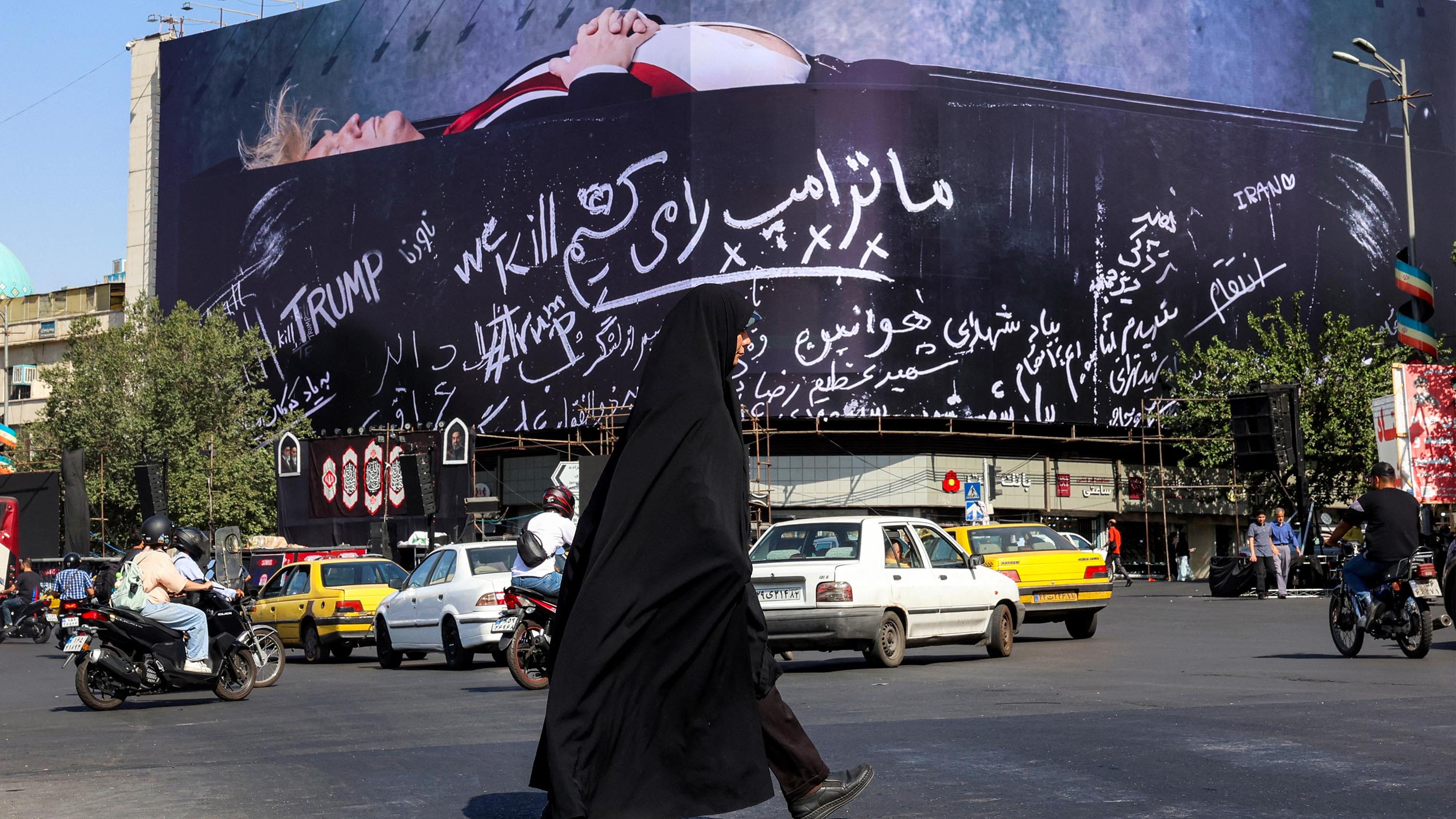
AFTER THIRTEEN CONSECUTIVE NIGHTS of American bombing of Iran, the fourteenth night was quiet.
That silence has generated almost as much speculation as the strikes themselves. The New York Times reported that President Trump ordered the halt out of concern that the United States is running dangerously low on missile interceptors. But that concern doesn’t preclude other reasons for pausing the strikes: Are nascent diplomatic efforts indicating a path beyond military operations? Did America’s regional partners quietly urge restraint? Or did the president’s advisers conclude that continued bombing was no longer advancing America’s strategic objectives?
We may not know the answers for months, perhaps years. But it may be getting through to the administration that the strategy of air strikes it has pursued against Iran for five months isn’t advancing political objectives.
The moment military action begins producing diminishing strategic returns, leaders face one of the hardest decisions in war: whether to continue pressing the attack or adapt before events force them to. Military professionals still use Carl von Clausewitz’s term for that moment: the “culminating point” of an offensive, when continued attacks begin consuming more military capability than the strategic advantage they produce. Modern military commanders, rather than awaiting the culminating point, now seek evidence that they are approaching culmination, because recognizing the signs in advance helps prevent strategic overreach and potential failure.
That distinction matters. Adaptation is one of the defining characteristics of successful military campaigns; the military that adapts first often prevails. And the most important adaptations occur at the strategic level. Adversaries change their methods. Allies reassess their interests. Resources become constrained. Diplomatic opportunities emerge and disappear. A campaign designed to solve one problem frequently evolves into something else, usually something larger. Continuing yesterday’s operational design simply because it worked yesterday is not persistence; it is wrongheaded.
Don’t just read the news. See farther, understand deeper, and join our pro-democracy community by becoming a Bulwark+ member.
HISTORY OFFERS AN INSTRUCTIVE EXAMPLE. In February 1991, after only one hundred hours of ground combat during Operation Desert Storm, President George H.W. Bush, Chairman of the Joint Chiefs of Staff Gen. Colin Powell, and Gen. Norman Schwarzkopf agreed to halt the offensive. Coalition forces retained overwhelming combat power, and they almost certainly could have continued their assault, even driving toward Baghdad. But liberating Kuwait—not toppling Saddam Hussein—was the coalition’s political objective, and that objective had been achieved. Continuing the attack would not have simply extended the campaign; it would have fundamentally changed its purpose.
Images from what later became known as the Highway of Death reinforced another uncomfortable reality. Coalition airpower continued destroying Iraqi forces that were already retreating from Kuwait. Those attacks undoubtedly remained militarily effective, but they also illustrated the growing gap between tactical success and strategic necessity, punishing an enemy unnecessarily. Additional destruction promised little additional political advantage but would have increased humanitarian costs while risking the cohesion of the international coalition. The decision to stop reflected the judgment that military operations had accomplished the mission assigned.
Iran’s military power today is nowhere near as broken as Saddam’s was at the end of Operation Desert Storm. It remains capable of influencing events across the region, particularly through its network of proxy organizations. The Houthis, who at first largely stayed out of the conflict, are now threatening international shipping and attacking Saudi ports and facilities. Their strikes against Aramco refineries and other facilities have widened the conflict, and American naval forces are now protecting both the Strait of Hormuz and the approaches to the Bab el-Mandeb.
The American campaign initially appeared focused on degrading Iran’s conventional military capability. Increasingly, however, the conflict is being shaped by Tehran’s actions and those of its proxies. Every Houthi attack against commercial shipping, every strike against Gulf energy infrastructure, and every disruption of maritime commerce broadens the war geographically while allowing Iran to impose additional costs on the United States. Continuing to concentrate military effort where the conflict began rather than where it is expanding risks fighting yesterday’s campaign while the enemy adapts.
At the same time, the Times report and others indicating that America’s weapons stockpiles are being used up perilously fast deserve attention. Precision-guided munitions are not merely tactical assets. They are strategic resources underpinning deterrence in the Indo-Pacific, reassuring allies in Europe and the Levant, protecting American forces worldwide, and preserving the nation’s ability to respond to crises that cannot yet be predicted. Every Tomahawk missile launched at Iran, every long-range standoff weapon fired from an American bomber in the Middle East, and every interceptor expended defending U.S. forces in Jordan or Kuwait or the UAE must eventually be replaced. The question is not whether America possesses overwhelming military power; it’s whether continuing to expend some of its most sophisticated capabilities produces strategic gains commensurate with the opportunities they foreclose elsewhere. That’s the difference between having more weapons to use and having as many as you might need.
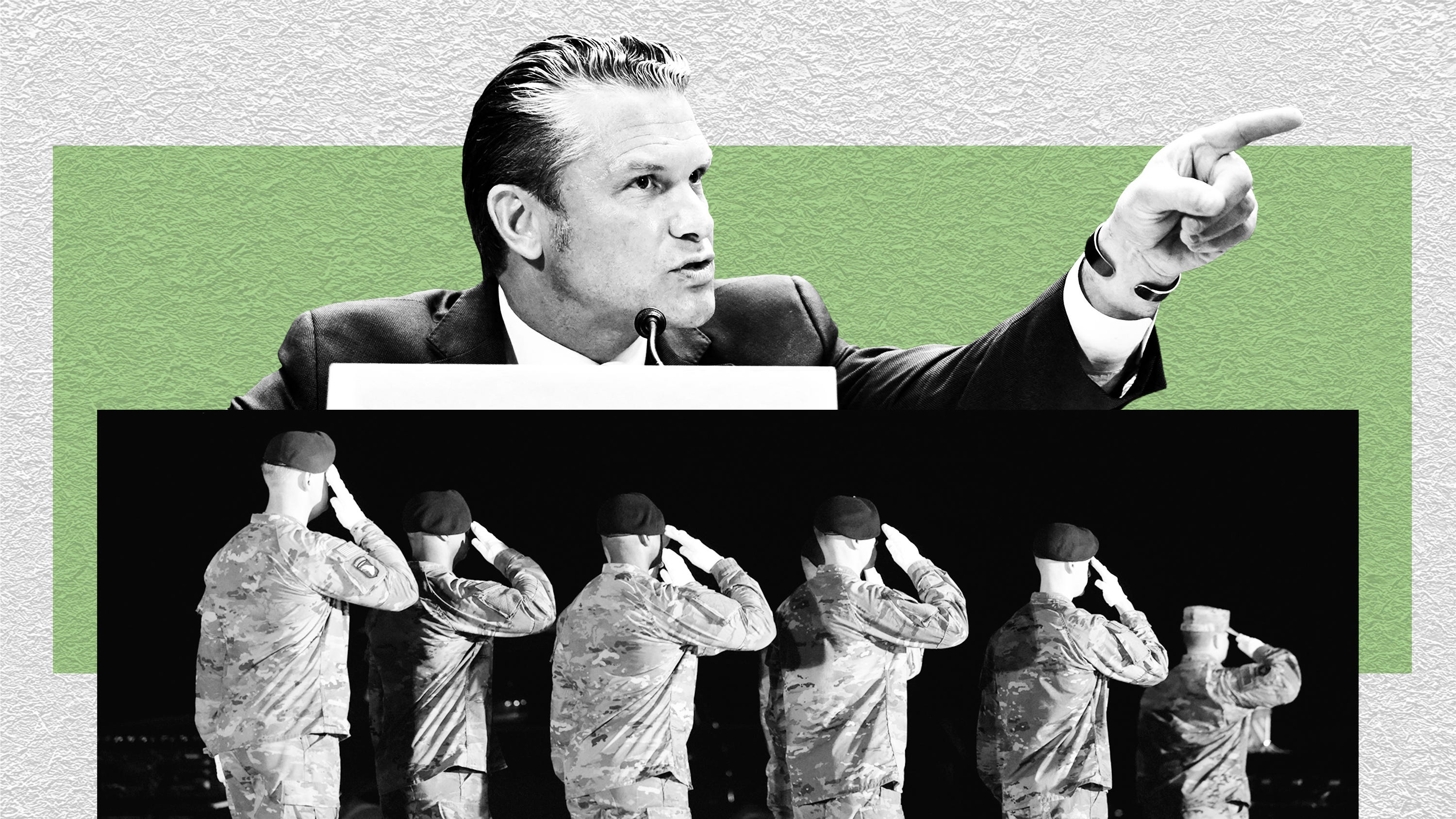
NO COMMANDER—CIVILIAN OR MILITARY—can simultaneously track operational progress, logistical sustainability, alliance implications, resource consumption, and global readiness alone. That job of integrating those perspectives, identifying approaching risks, and recommending adaptation before success on today’s battlefield creates unnecessary vulnerability tomorrow falls in large part to the chairman of the Joint Chiefs of Staff, who commands no combat forces but has a large staff responsible for understanding these kinds of strategic tradeoffs. The joint staff, with its numbered departments, exists to help civilian and military leaders think strategically rather than operationally. The J3 continuously monitors military operations around the world. The J4 evaluates logistics, sustainment, and the consumption of critical resources, including precision-guided munitions. The J5 examines long-range strategy and assesses how today’s operations affect commitments in all the theaters around the world. The J8 evaluates readiness, force structure, industrial capacity, and future requirements.
The president isn’t obligated to listen to the chairman of the Joint Chiefs, or the joint staff, or anyone. As commander-in-chief, his judgment predominates. If the Times’s reporting is correct, and President Trump ordered the strikes against Iran paused or even ended due to concerns about weapons stockpiles, the question for future historians will be: Why now?
STRATEGY HAS ALWAYS REQUIRED military operations to create political space rather than to substitute for political solutions. Bombs and missiles destroy targets; they do not negotiate agreements, reassure allies, stabilize energy markets, or restore international confidence in freedom of navigation. Those responsibilities belong to diplomacy, economic policy, intelligence, and coalition management. Hints that the Trump administration is considering renewed diplomacy, combined with the growing concerns of Gulf partners about the regional expansion of the conflict, suggest that military operations may finally be creating opportunities for those other instruments of national power to assume greater prominence.
Perhaps that is what makes the silence after thirteen nights so significant. It may have reflected concerns about ammunition inventories. It may have resulted from growing proxy activity, expanding diplomatic efforts, or pressure from regional partners. Most likely, it reflected some combination of all those factors, which together suggest that the campaign was approaching—if not past—its culminating point and was unlikely to produce strategic returns.
We may eventually learn exactly why President Trump ordered the bombing campaign paused. Whatever the explanation proves to be, the more enduring lesson extends well beyond this conflict. Successful governments do not demonstrate strength by refusing to change course. They demonstrate strength by recognizing when circumstances have changed, by adapting before operational success becomes strategic overreach, and by understanding that the purpose of military power is not to maximize destruction but to achieve clearly defined political objectives.
If the halt in bombing reflects that realization, history may judge it as the moment strategy finally began catching up with operations. The silence of the fourteenth night may ultimately prove more consequential than the explosions of the previous thirteen.