
 Login
Login
Twelve things we take for granted, but will disappear in our lifetime
(paywall-free popularization on this or other important topics helps to pay my bills and write even more. Thanks for considering a paid subscription or (even better) supporting me with one-time direct donations or in any of the other ways described here)
Imagination is one of the features of authentic intelligence, and a collective loss of imagination - and consequently, of hope and motivation - is one of the big problems of our time, if not a major cause of many of them.
Here, as a tiny stimulus to keep imagination and quests for a better future alive, I list twelve things that today may seem part of the very fabric of reality, but I feel will disappear, or at least be much smaller than today and unrecognizable to people of 2025, in just a few decades. Possibly very, very few decades.
Here are those twelve things, divided in two main groups, for reasons I’ll explain at the end of the post.
Group A
Addictive social media
Mobile phones with cameras
App stores for phones and all other computers
Online matching for dating
AI chatbots for everybody
Physical billboards, if not all advertising
Hundreds of choices for every consumer product
Group B
Air conditioning and buildings that need it
Falsely smart cars
“Smart” consumer products, also known as consumer-IoT
Energy-intensive healthcare and single use medical supplies
This is a surprise, keep reading to see it
Why things in group A will disappear
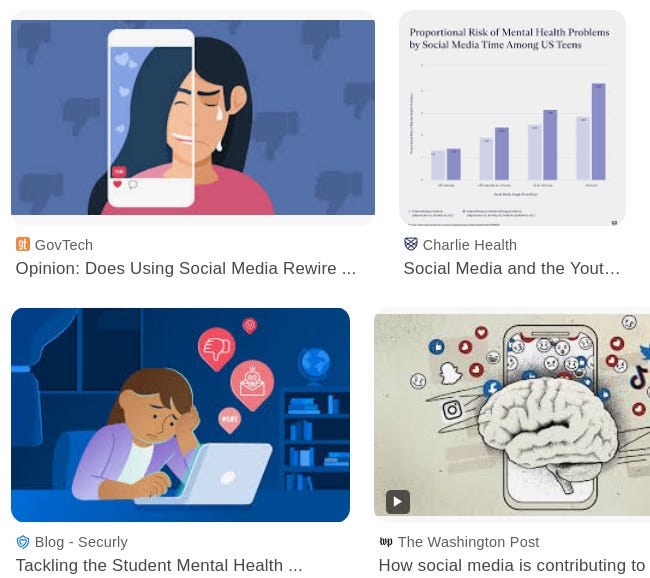
The social media of today will disappear because they are a major cause for a major increase in public levels of anxiety, depression, misinformation and political polarization and inability to concentrate and think clearly. The good news is that this would be possible with a few, really concrete actions like this and these.
Cameras in mobile phones will disappear because, together with algorithms designed to mess with people’s minds, they are a major aggravation to the above-mentioned mental health pandemic. Just think about it: would teenagers and adults alike be as stressed as they are if they had no possibility to show off everything they eat, wear or do, every minute, as if everybody else had a duty to care? Sometimes, I think that the only truly revolutionary act everybody could really do is covering with tape the lenses of their phones now.
Centralized App Stores will disappear because, while we will never all become programmers like Free Software advocates dream, something as stupid as letting a handful of companies castrate and turn into mind-sucking probes inventions as powerful as mobile or stationary computers cannot go on forever.
Online dating that directly matches people through data, not love will be replaced by apps organizing “real-life events in every major city every week” where every group of people who could be good matches for each other will see every other participant how they really are, without AIs to cheat, or possibility to swipe left. That may still be a bit too close to eugenics, for my taste, but will surely be much, much healthier and fairer than today.
Unrestricted access to AI chatbots will end because... it’s already painfully obvious that it is not for the masses.
Physical billboards will disappear because “man is at his vilest when he erects a billboard” and “adverts create obstacles. Without them you can breathe”. Ditto for online advertising, which allows both commercial and political actors to create personalized, reality-distorting bubbles: banning it will be recognized as “the best thing we can do for our world now... “More than gun control. More than tackling climate change. More than lowering the price of eggs.” (For the record, cities that ban billboards already exist worldwide, from Brazil to France)
Excessive choice is what Scott Adams popularized as confusopoly: companies with similar products who, in order to prevent customers from making informed decisions, intentionally confuse them instead of competing on price.
Confusopoly deserves a bit more space because we “First World” citizens suffer from it in every field. We have scores of foods that only differ in their marketing, scores of offers for utilities and mobile contracts that take days to compare with minimal gains, cars with scores of options that all too often cannot be combined just like we’d want, or would cost much more than advertised...
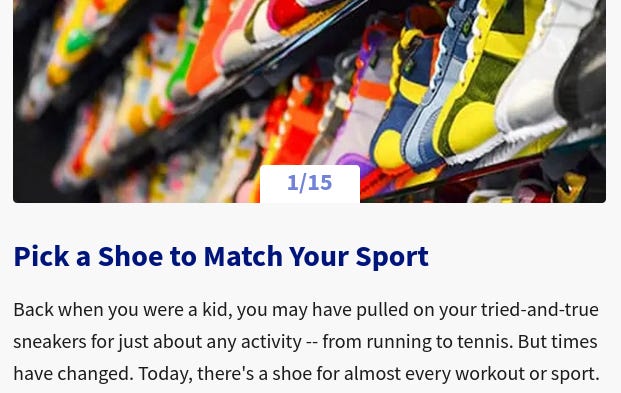
What about sportswear? Today, thanks to changed social norms, machines and healthier working conditions for most jobs, it’s almost impossible to figure out in ten seconds whether someone is a train conductor or an accountant just from his clothes, hands or gait, as Sherlock Holmes could do in the 1880s. But everybody can immediately tell the exact sub-category of sport someone engages in, and how seriously, by looking at which combination of shoes, jacket and pants he’s wearing. The result is that anyone who could and would have occasionally practiced three different sports with the same “equipment” two generations ago is now pushed - to make them spend more, of course - to get multiple sets of gear to practice just one:
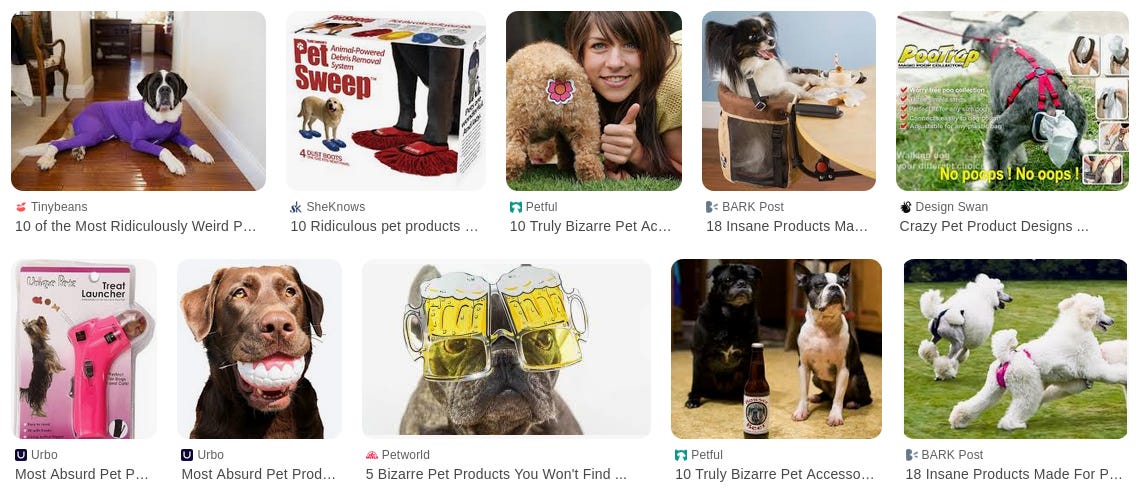
One last example of excessive choice that will end because is both wasteful and cruel is pets. We have created scores of cats and dogs with torture breeding, just to get the literal opposite, that is, of appreciation for choice, diversity and uniqueness: dogs and cats that all look alike, and a really expensive but sadly booming pet cloning business.
Of course, choice is excessive even with pet food “so fancy that I ate some” and… accessories:
This explosion of choices is a wrong turn, not an enrichment : even letting self-gratification aside, when there is too much to choose from, it becomes almost impossible to make the optimal choice. This is why all this choice will disappear, to be replaced by many less models for every product, but all much more customizable and repairable than today.
On to Group B now
Air conditioning as we know it, and buildings that need it will disappear thanks to much more efficient solutions, from cooling by only increasing local airflow to completely new technologies, plus the acknowledgment that air conditioning as strong as it often is today is a really dumb way to get sick, and a really expensive one too.
Uselessly complicated “smart” cars will disappear because they consume loads of energy and raw materials just to, again, be stupid.
Smart devices, appliance and almost all consumer-IoT products will disappear because they are connected to the internet just to make them more expensive, more intrusive and easier to brick.
Energy-intensive healthcare and single use medical supplies will not disappear, but they will be substantially downsized, because the connection between their price or energy use and human health and longevity is not as strong as it seems. Did you know, for example (see previous link for details), that comparisons of cataract surgery in the UK and in India have shown that the same treatment produces only 5% of the emissions and 6% of the solid waste (that is, much lower costs) in the UK?
Two groups, different reasons. Or maybe not
The common reason why the stuff and practices listed in Group B will disappear, at least in their current forms, is really simple: they consume so much energy, money and material that they will increasingly become unaffordable (more on this in a moment).
The services in Group A, instead, will disappear thanks to a combination of collective mental fatigue and increased awareness of their toxicity. If we are smart, that is. If you think that’s impossible, remember that people, including pregnant women, used to smoke indoors because it was addictive and glamorous just a few years ago.
But even if we aren’t smart, the services and products of Group A will disappear anyway because the “surprise” member of Group B that I didn’t name before is... all of Group A: that’s all stuff that requires too much money, energy and material to last much longer.
When will this happen?
Much sooner than you may wish, if several forecasts I’ve seen recently are even half right. The coming bust of the AI and data centers bubble, which can never happen too soon but is surely close, may set things straight all by itself. But even if that issue didn’t exist, the shortage of diesel fuel that several experts (see list below) say will be enough to severely downsize every sector of the economy - including deployment of renewables or nuclear power - may “happen as early as... 2030”.
And now the good news
Here’s the best part of all this, the one that really matters: with the exception of air conditioning, if missing where and to the extent it would be actually needed, none of the changes I listed will decrease authentic quality of life, and most of them will concretely improve it, by decreasing our current levels of stress, loneliness and personal debt. Read the list again, and you’ll agree with me.
Reading suggestions about the coming diesel crisis
Thanks for sharing this post around as much as you can, in and outside Substack!

