
 Login
Login
On wrong things to tell parents about social media, and wrong laws to help them
(paywall-free popularization on this or other important topics helps to pay my bills and write even more. Thanks for considering a paid subscription or (even better) supporting me with one-time direct donations or in any of the other ways described here)
A couple of weeks ago, I attended a cyberbullying seminar for parents. Two police inspectors and a psycho-pedagogists specialized in these matters came to explain to about fifty parents what online or offline bullying is, how it thrives, and which laws and structures are available in Italy to deal with it.
Among other things, those experts mentioned several times how phones and social media actually alter the brain of children and teenagers.
On one hand, the meeting was great. It was thought provoking, and concretely informative. All the speakers know their stuff, and all pointed out, gently but clearly, that it’s parents, not schools, the first agents who must educate kids about these matters.
On the other hand, I found the meeting really frustrating. With all respect for those experts, there were several moments when they really felt like Mark Zuckerberg’s lawyers. I say so because they:
started from, and never questioned, the same wrong, 100% wrong, unacceptable equation that (besides and before AI of course) Big Tech desperately needs us believe for its own survival: Internet = social media = smartphone
said that smartphones are inherently neutral, “what matters is to use them well”
the worst part: they spoke for more than one hour of the dangers of social media, getting closer and closer to the one real issue and its really easy solution, without ever calling it out.
That is, three experts speaking for more than one hour about the dangers of cyberbullying and social media for kids never questioned that what, 80%? of those problems - would just disappear if kids younger than, say, 14 years old had no personal smartphone. Does it happen in other countries too?
I have already explained here and here why personal smartphones for kids aren’t neutral at all, and why banning them (by parents, not governments!) is the only solution for certain problems that could ever work in the real world. That seminar, plus a rising trend of late 2025, confirmed to me that certain things are never repeated enough.
The trend I refer to, which may be even more dangerous in the long run, consists of laws like the one recently approved in Australia, which mandates that children must be at least 16 years old to create a social media account.
Even Jonathan Haidt, the pedagogist who does a great job to denounce the damage social media does to young people (omitting a great solution though) called that law a breakthrough for families and child safety. Haidt wrote that:
“Australia has just taken one of the most important steps yet in the global effort to protect children online. Beginning today... This reform finally corrects two major mistakes made in the early days of the internet: the United States (and then much of the world) set the age of “internet adulthood” to 13, and companies were given no responsibility to verify age at all. As long as a child could type “13,” companies could treat them like adults.
“Australia is the first country to correct those mistakes. Under the new policy, children under age 16 can still watch videos, read posts, and look things up online. What changes is that some of the largest companies on earth can no longer form business relationships with young children or use their personal data to keep them hooked on feeds, likes, and alerts. The policy will reduce the social pressure on kids, give parents back their authority, and help restore a healthier childhood. It may feel like a challenge at first, but it will quickly become the new normal.
Unfortunately, it’s not that simple. Here is the truth about that law, and any other law like it: there is no need whatsoever for such a policy to protect children while leaving them free to “watch videos, read posts, and look things up online”:
children can - and should - do all those things on desktop or laptop computers, that will never be so addictive and uncontrollable as smartphones for the simple, non-circumventable reason that they can’t be carried around all the time.
In practice, no matter how sincere and well-intentioned they may be, in the long run any law like that one in Australia is only going to:
strenghten the concept that the only way to communicate digitally is through top-down, centralized social media, that is through structures that both states and for-profit corporations can easily watch, censor, shut down and generally use to influence public opinion
be actually used to enforce and legitimate more online censorship
de-legitimate parents, depriving them of the responsibility to deploy the only policy that would really work: no smartphones before 14/15 years old
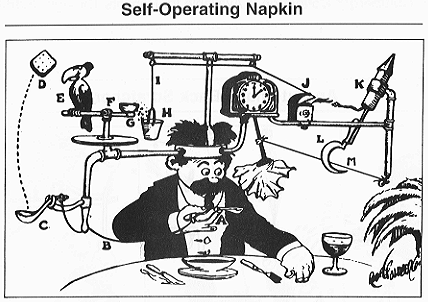
be a Ruby Goldberg machine, born from some combination of ignorance of how the Internet works, and unwillingness to conceive the really simple solutions
fail anyway, because, besides being uselessly complicated and expensive, defining social media (that is, the environments in which the law should be applied) is more difficult than it sounds
Haidt says we “know social media can harm children”, and he’s right, but what about any instant messaging app with support for read receipts and image attachments? Even if it never collected and share any user data, any app like that would still be usable, by design, for cyberbullying, sexting, body shaming and so on.
If, quoting Haidt again, “The goal is to shift the environment so children are not pressured into digital spaces they don’t want, simply to avoid being left out”, laws that require a minimum age to be on “social media” work in the wrong way, in the wrong places, at the wrong level and for no good enough reason.
I’m not saying that age limits for using certain digital services shouldn’t exist. I’m saying that without age limits for smartphones any law mandating age limits would be half useless, half harmful.
Minimum age limits should be enforced above all for smartphones because it’s them, not software, that makes “social media” and “internet” impossible to monitor and regulate, and because physical devices are infinitely easier to keep away from children, at hugely smaller costs, than software apps usable 24/7 on something that, for all practical purposes, ends up attached to a child body like a Matrix plug.

“But social media and smartphones CAN be good for children, I know a child who...”
No. Thanks, but no thanks. I’m sick of “success” stories that, instead of being acknowledged as rare exceptions, are used as alibis to make and keep almost all the other kids dumber or more stressed than they could be.
Can social media and smartphones as they are today be actually good, and worth the parental effort that’s necessary to make a child handle them? Yes, but only for children in one of these two really rare conditions:
children who suffer from some concrete, serious malaise or disability for which nobody, from states to parents, could implement an authentic solution (if such children were many more than one in a thousands, it would almost surely be proof that real solutions that would work much better than social media are needed as soon as possible)
children born to that one one in a thousand families in which parents actually have the astonishingly rare combination of money, time, real digital competence and will to make themselves (not schools or laws) effective mentors, for years, of using intrinsically addictive social media
But I MUST be always in touch with my children. It’s for their safety!
If you still religiously believe smartphones for children are necessary because children must be in continuous contact with their parents, please...
Wake Up, already! You and every other generation before you since Pleistocene grew up well enough without electronic tags, and any mental problem surely wasn’t due to lack of such tags. Your kids - and their mental health needs - are no different. If you really, really believe they should be always reachable in real time, burden them with a camera-less dumbphone instead: that’s all the reachability needed to make you feel safe, with none of the dangers and temptations for your kids.
The conclusion is simple
The solution is really simple. It isn’t used yet only because it does require almost every parent to acknowledge that, 100% in good faith, they did the dumbest, self-harming thing by giving smartphones to their children years before it would have made more good than harm. But it’s simple.
Let’s make laws like that one in Australia useless. Let’s save both parents and states lots of money. Let’s make life harder for wannabe censors.
Let’s progress to giving smartphones to children as socially acceptable as giving kids a packet of cigarettes, that is something that will make both those kids and every other kid breathing around them sick.
It’s much simpler than any other solution, much more effective, and it’s possible. Any time someone tells you it’s impossible, remember them there was a time, well within our living memory, where this:

was glamorous, not just normal, in almost every household, car or workplace. If we could beat that, we can do the same with smartphones.

