Login
Login
Snapshots from Nepal
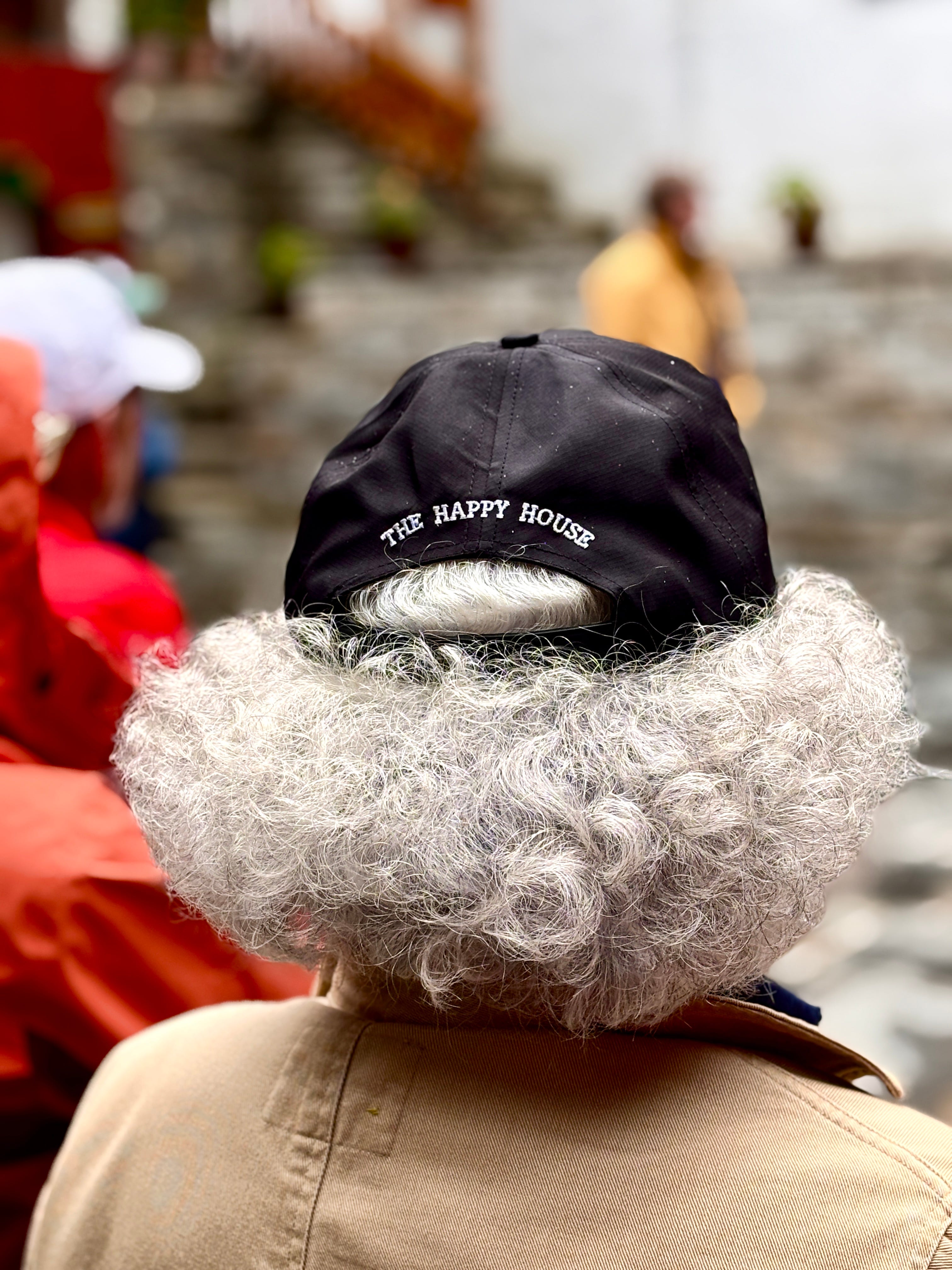
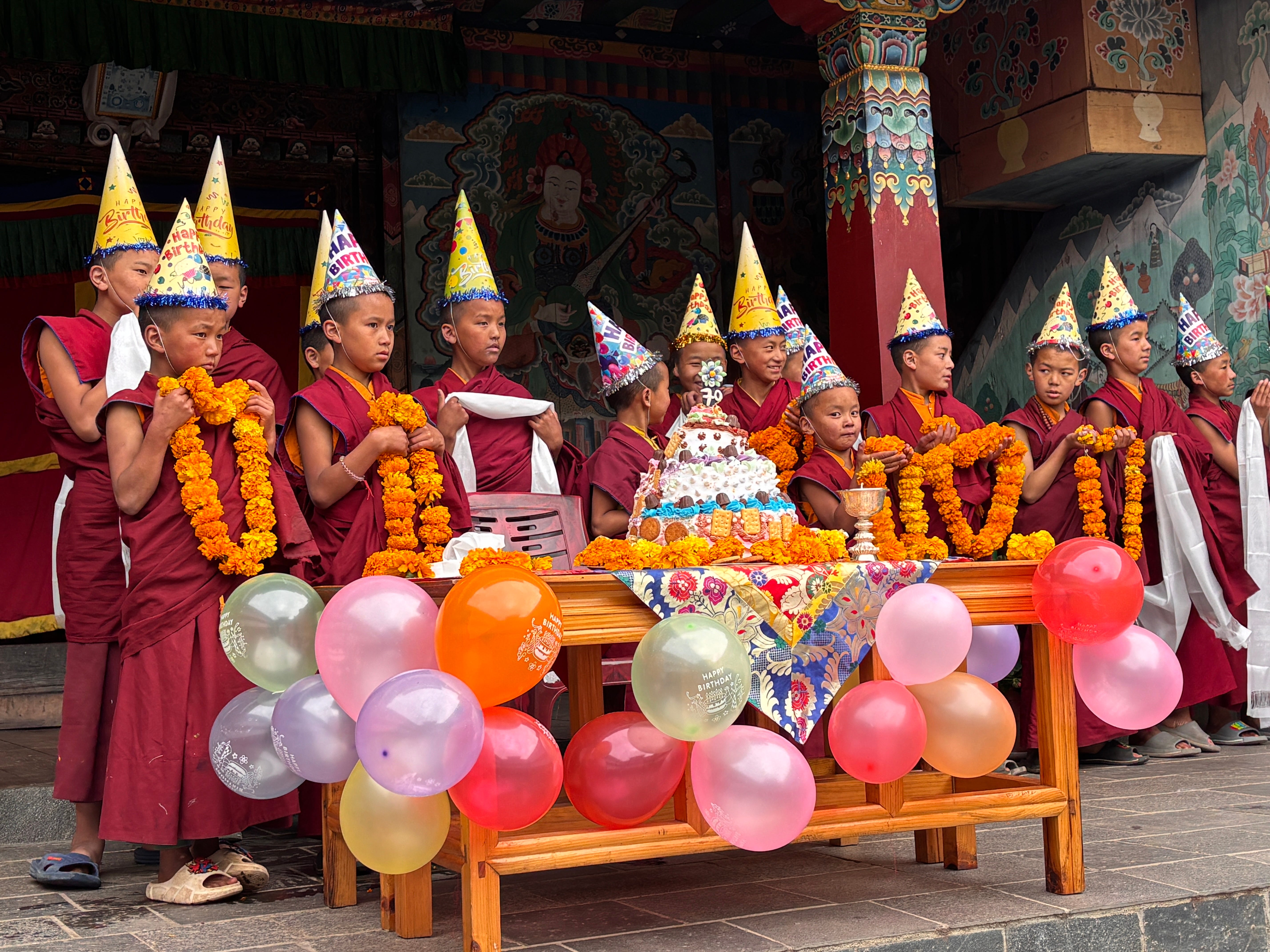
I’ve had a wonderful week in Nepal, starting in Kathmandu, before heading north to Phaplu and staying at The Happy House with friends. We visited monasteries, hiked, drank hot lemon ginger tea, which I’m confident all of us are going to make a habit of drinking when we’re back home. We fêted a friend for his 70th birthday, and did some sound healing, which uses sounds and vibrations from gongs and singing bowls to relax and balance our energy. It’s our last day and I’m amazed by everything we managed to do, and eat, in one week.
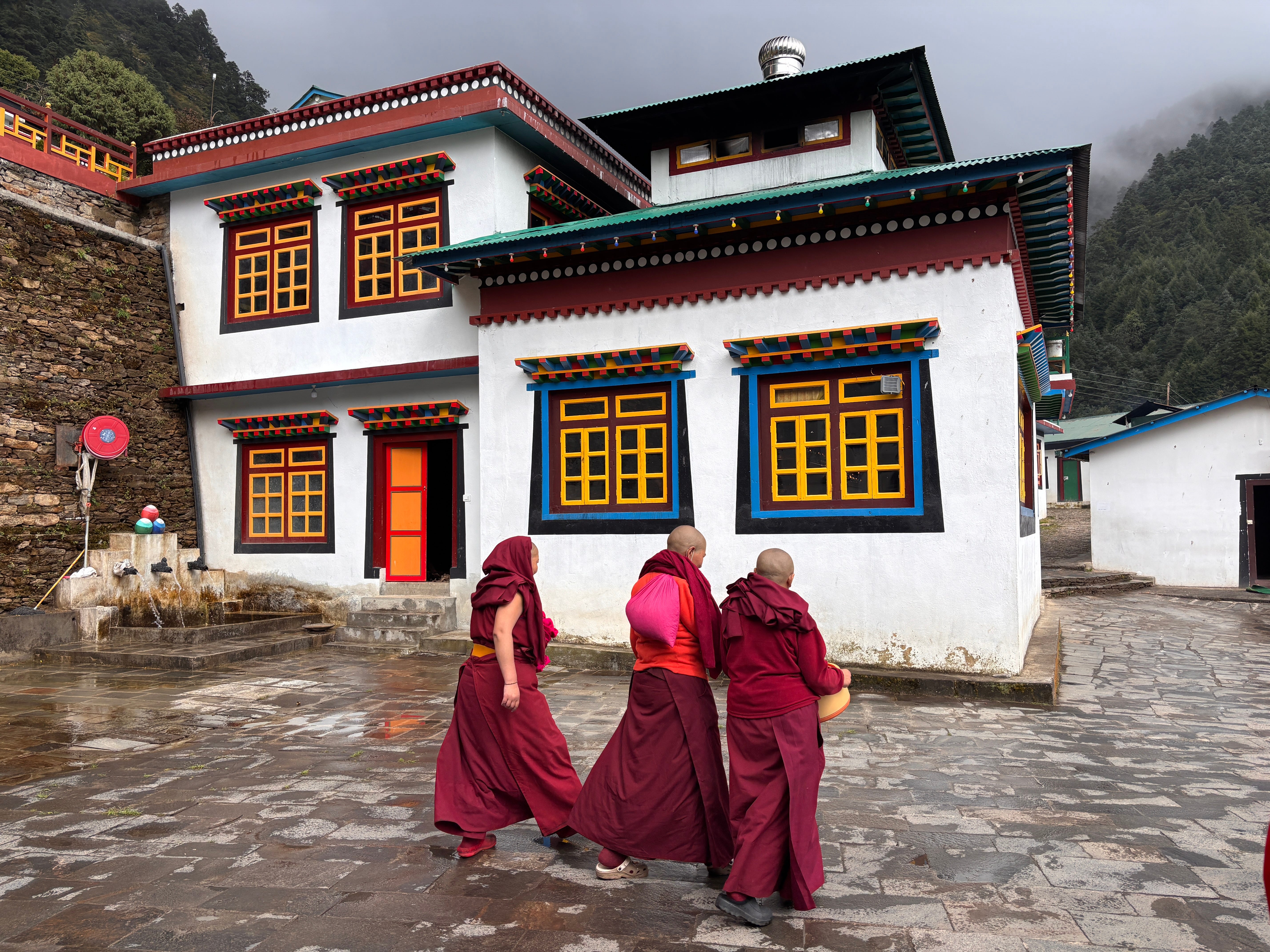
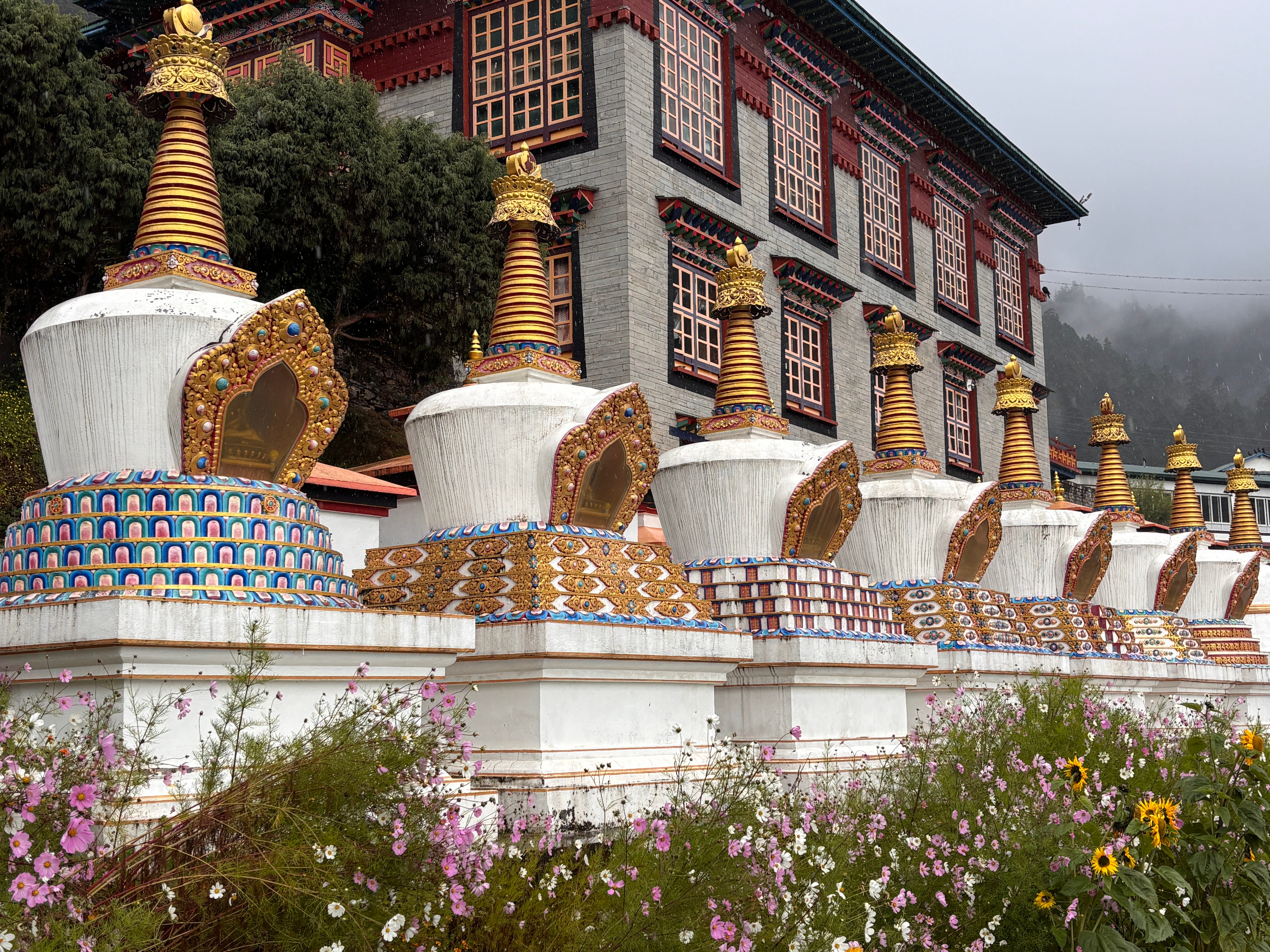
At the two monasteries we visited, one requiring a 3-hour hike up a mountain, we prayed with the monks, who served us yak butter tea.
A local guide told me that she wasn’t a fan of it, and in the north of Nepal, they brew it a lot stronger than what was served to us. I took a few sips and it had a salty-funky taste, reminiscent of clam juice. I didn’t mind it but decided to stick with the lemon ginger tea.
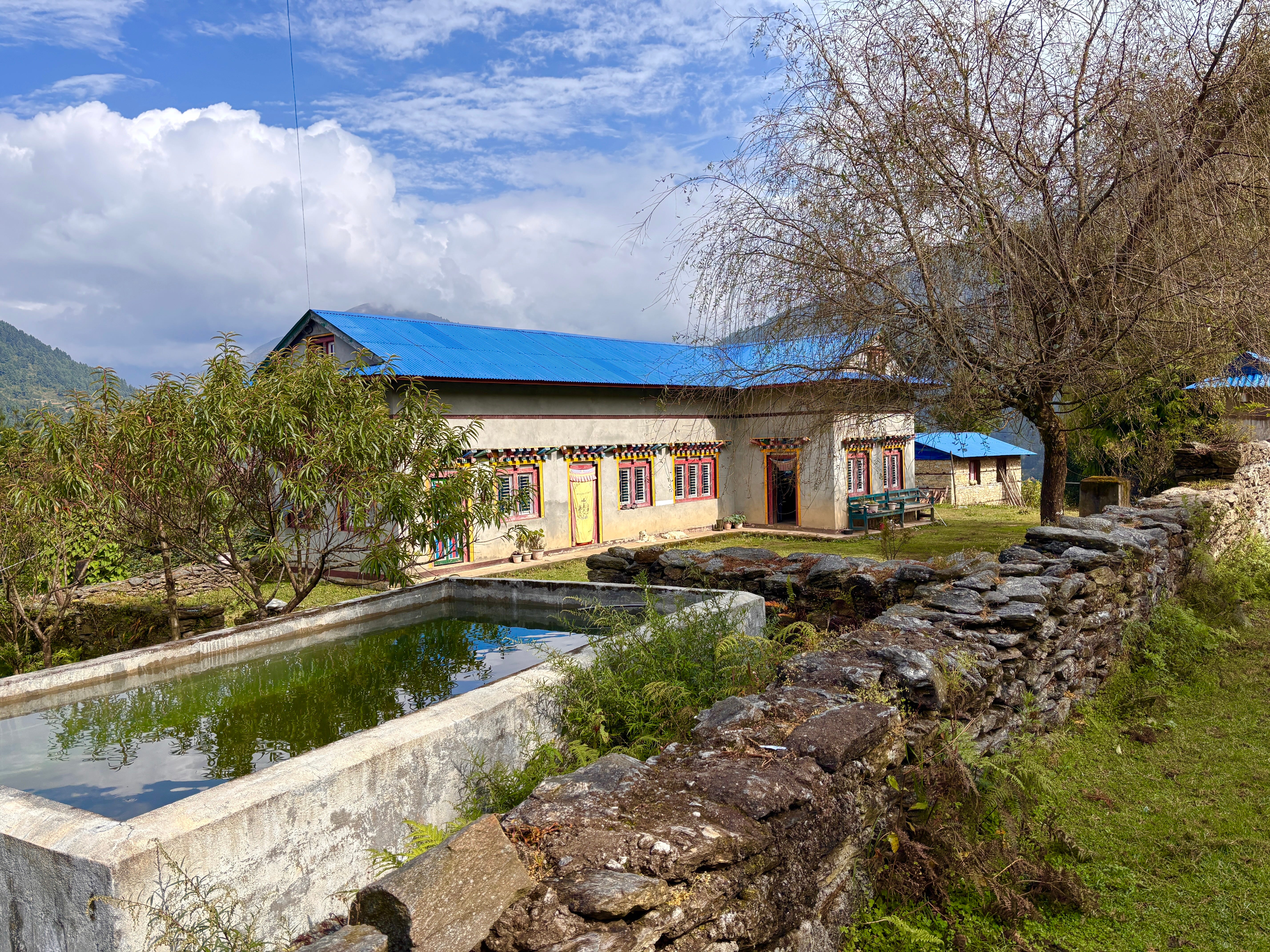
While riding and walking around the country, someone in our group asked why so many houses were painted blue. “That’s the only color that’s available,” our guide told us. While other buildings are sometimes painted red or yellow, if you’ve ever spent hours looking at hundreds of paint samples, trying to decide what’s the exact perfect shade of beige for your bathroom, I like the idea of there just being one color, and that’s what you use.
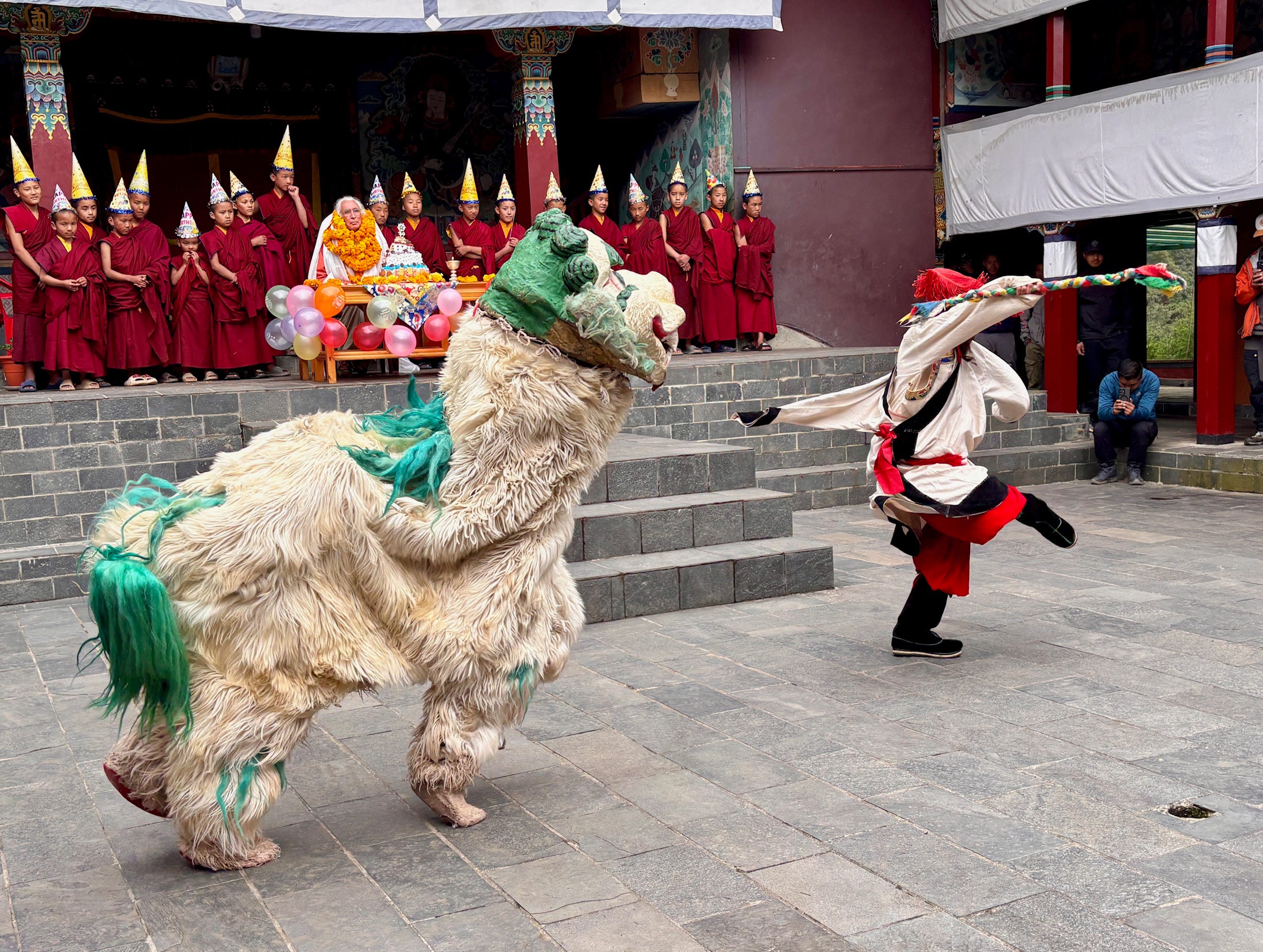
At one of the monasteries they did a dance for our friend’s birthday, with two people working in tandem in a costume, to prance around the courtyard.
Subscribe to my newsletter to get new posts, recipes, and more, sent right to your Inbox!
Share David Lebovitz Newsletter
The kitchens in the monasteries were quite rustic affairs with cauldrons and pots simmering away over wood fires.
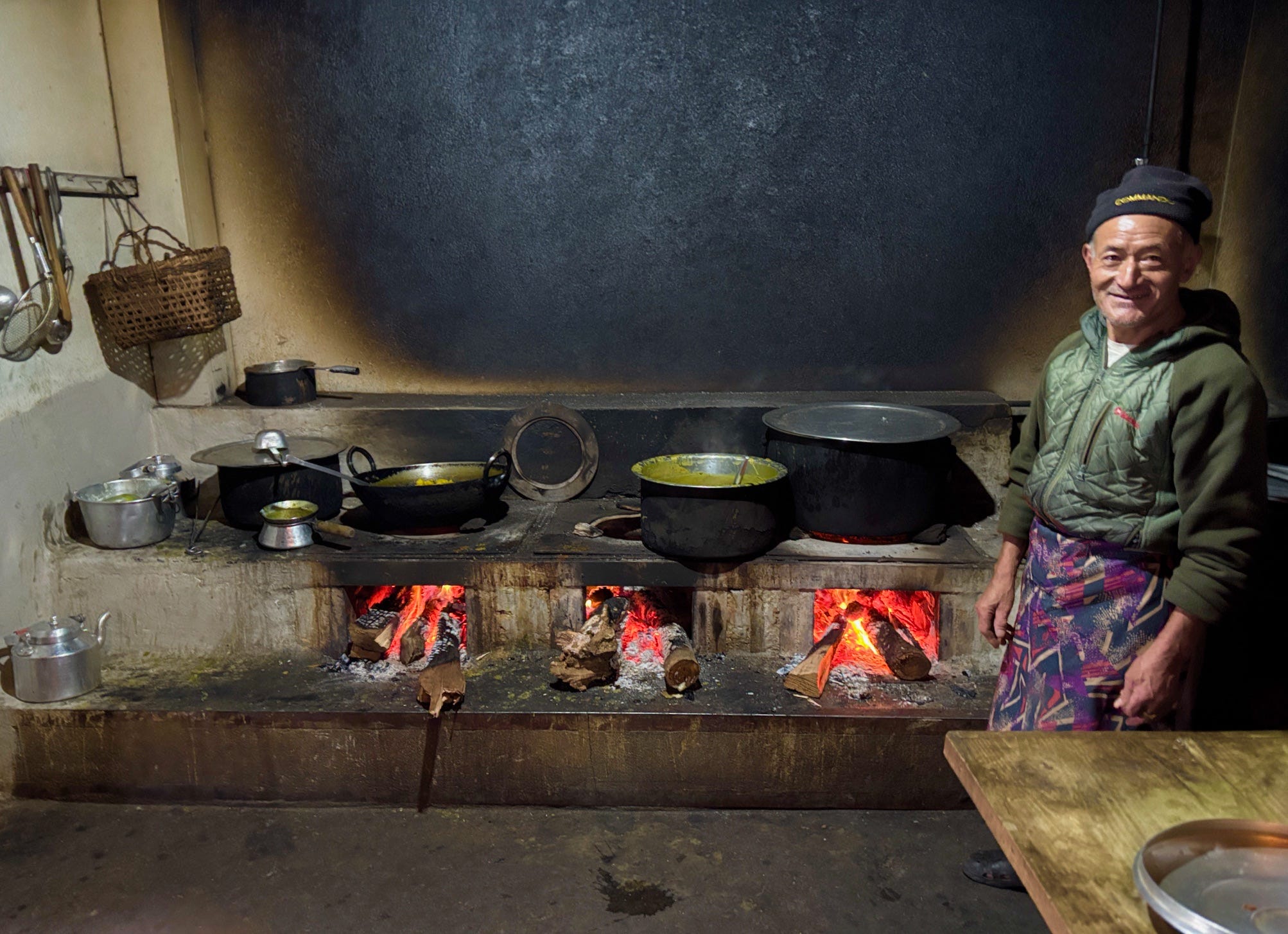
Most of the kitchen staff, understandably, didn’t want their pictures taken. But most were huddled around bowls, sitting on the floor, taking a break. The monks ate sparsely and one was even licking his bowl so thoroughly, it probably didn’t need to get washed afterwards. (Although I’m sure they did.)
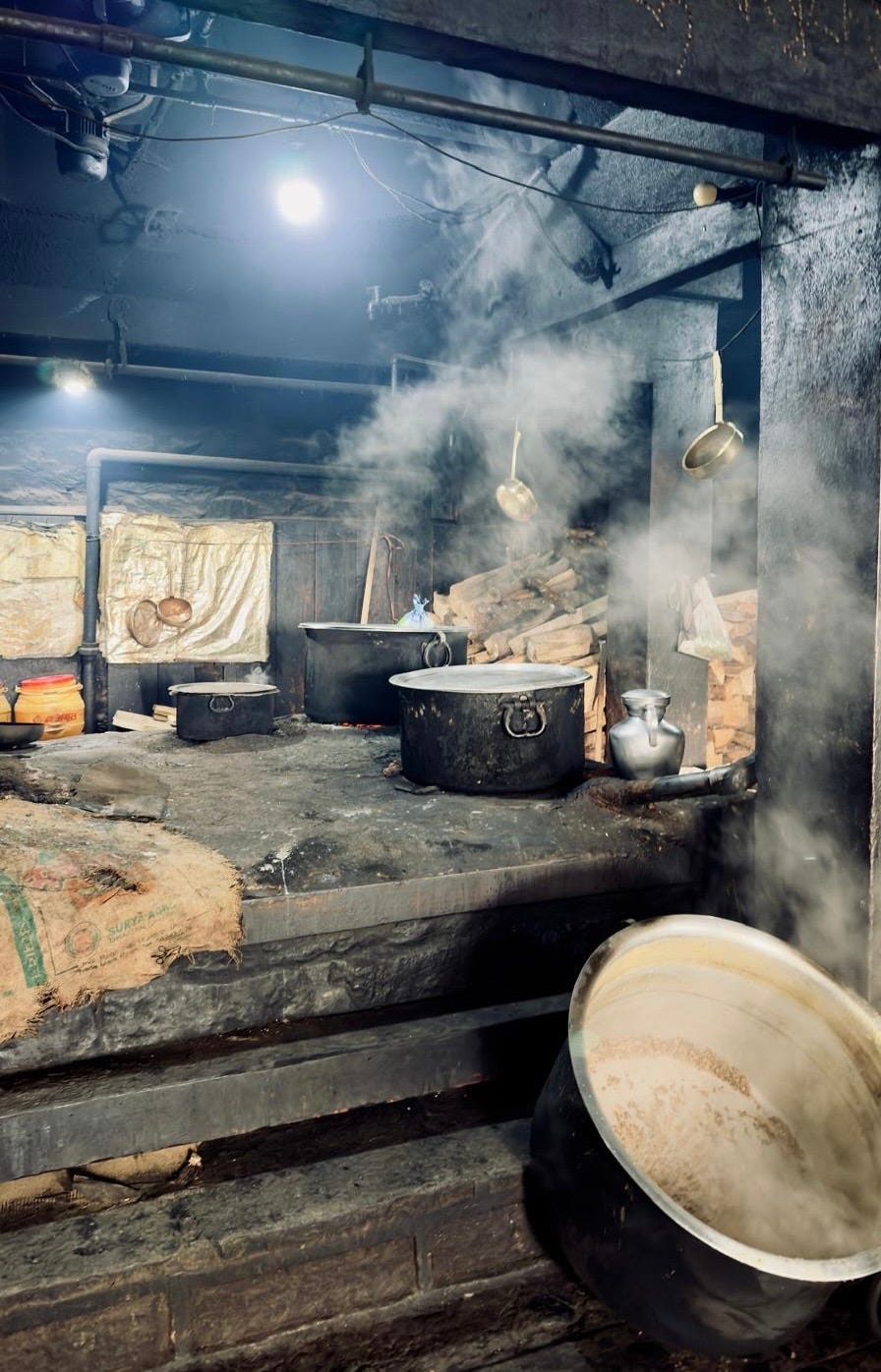
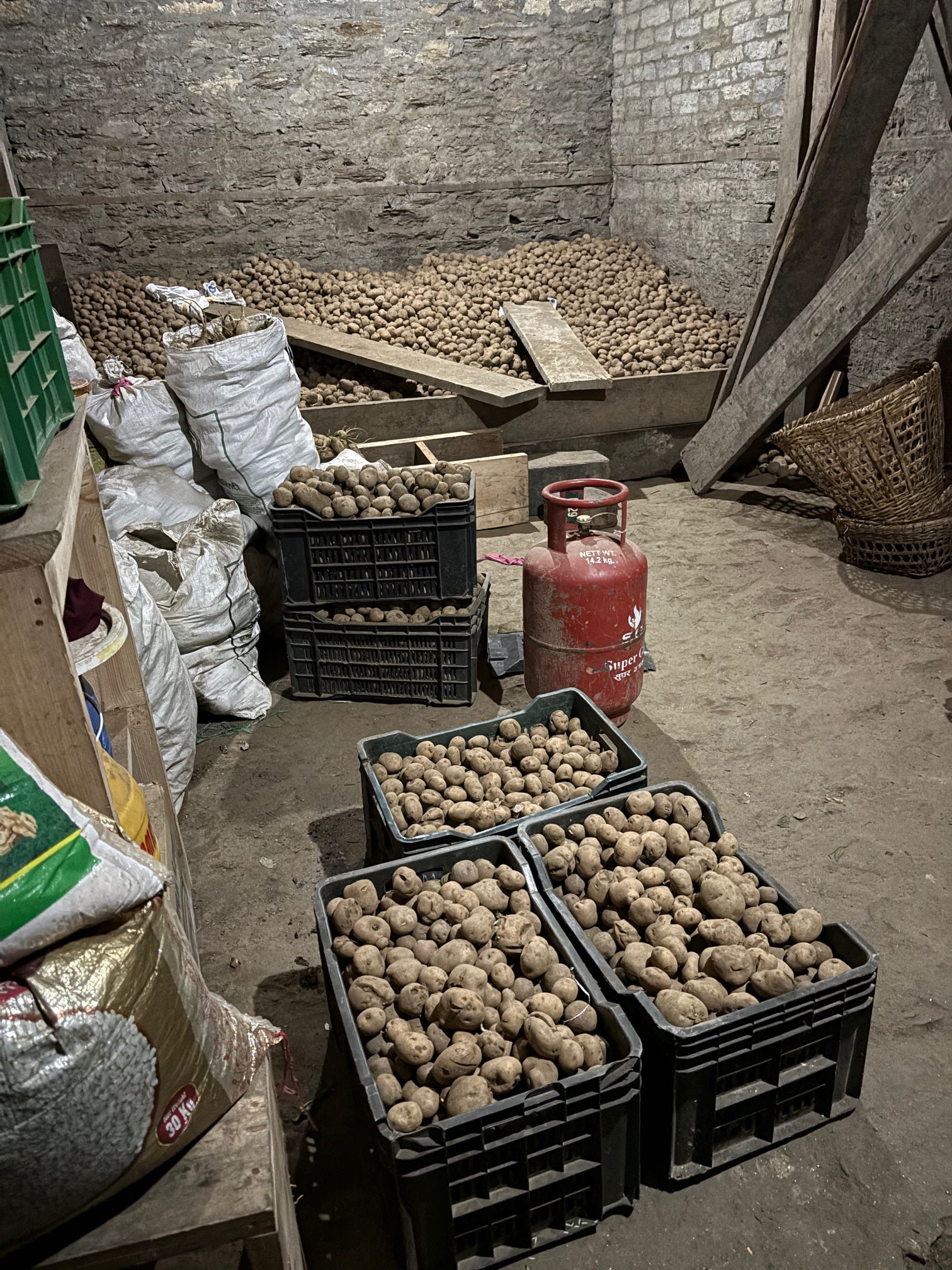
You might not think of cheese when you think of Nepal, especially when you come from a country with over a thousand cheeses. But the cheeses I ate in Nepal made me want to bring a wedge home.
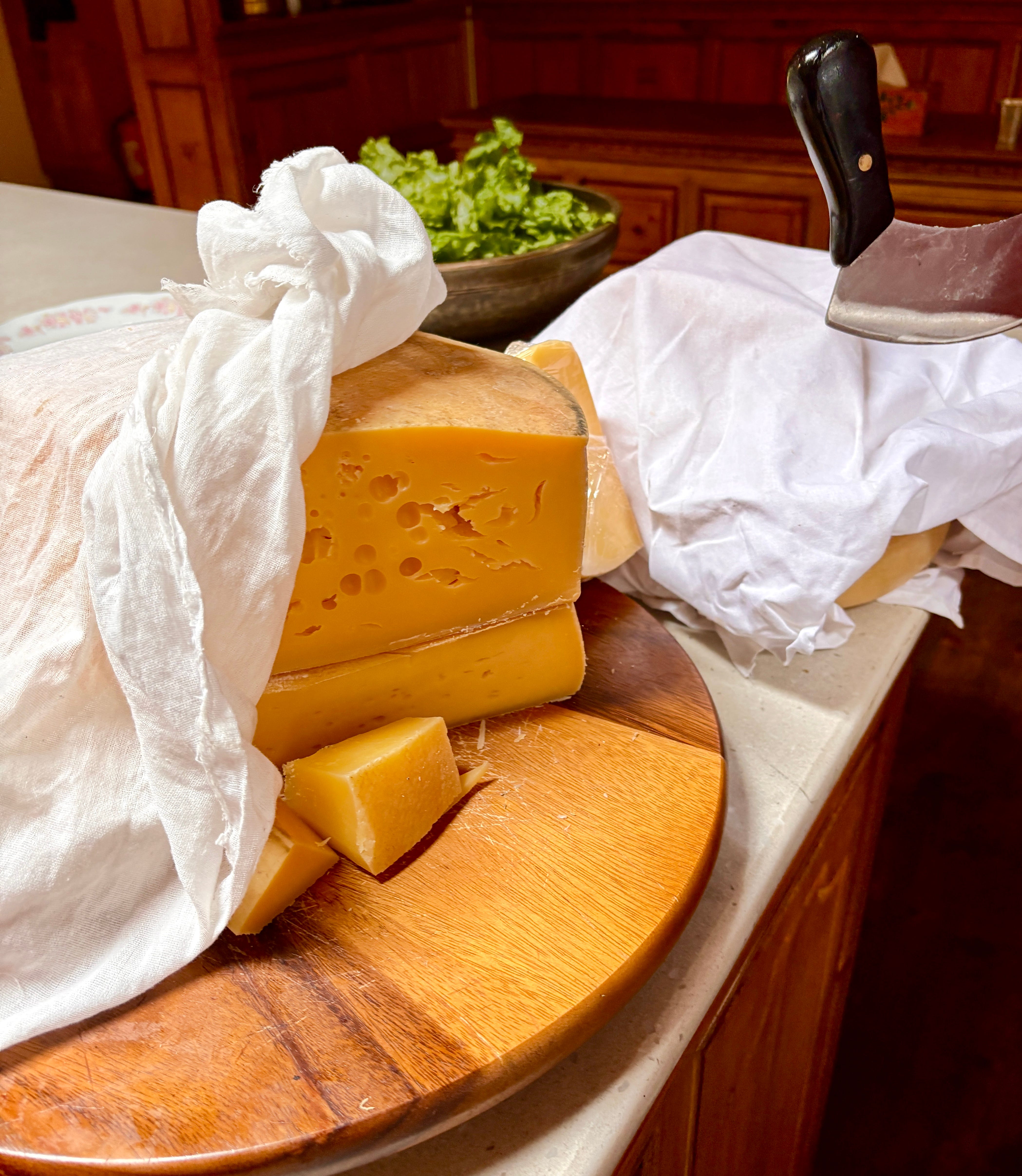
Most of them were made with cow or yak milk, or a combination of both. I didn’t see any goat or sheep’s milk cheese, but perhaps they have them. The ones above tasted similar to Emmental cheese, and one was slightly smoky. Both were delicious.
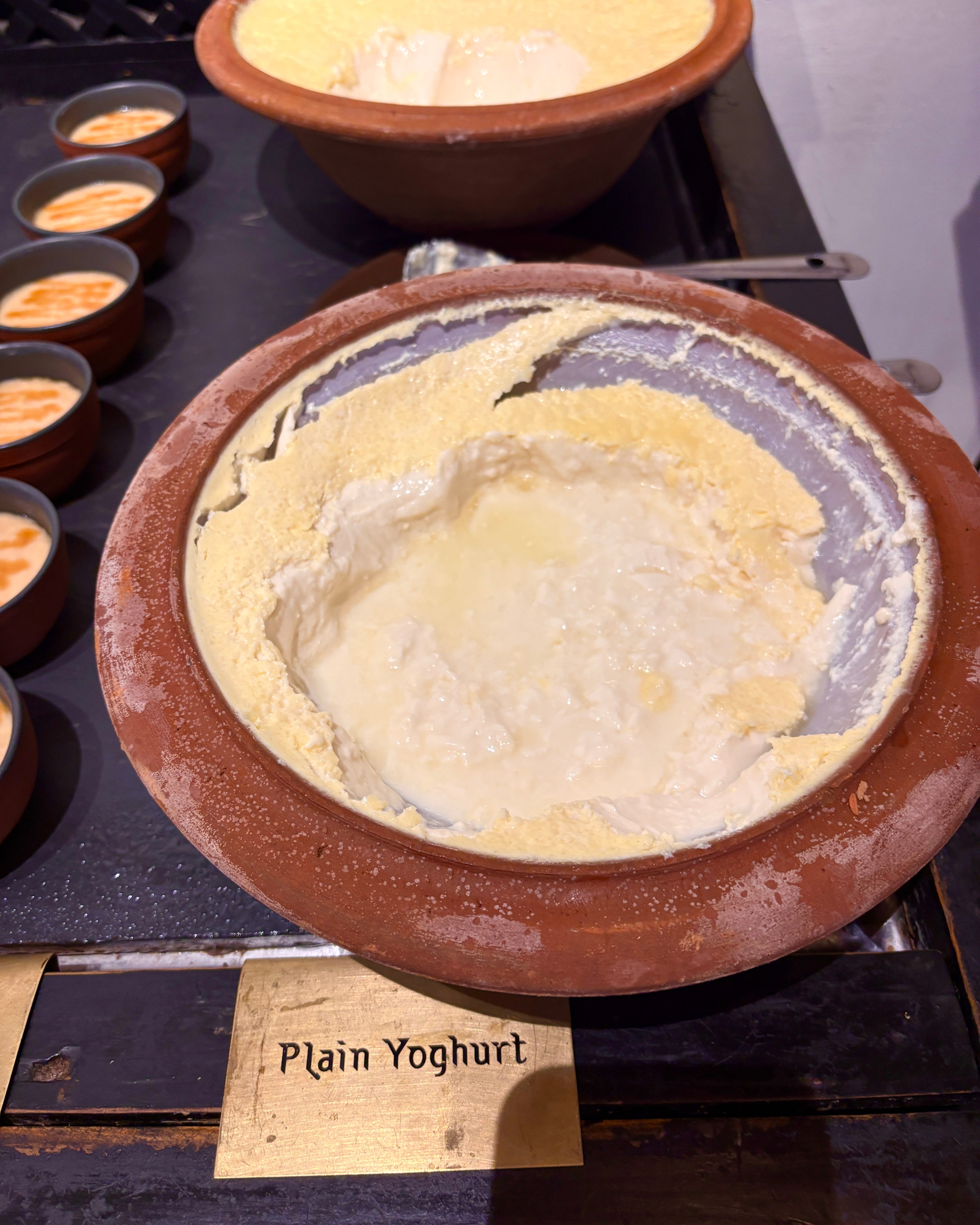
My favorite, though, was the yogurt, the best made with buffalo milk. If you’re one of those people who doesn’t like skin on their pudding or yogurt, please feel free to give it to me. Sometimes the yogurt was a bit coarse and curdy, other times it was made with cooked-down milk, so it was rich and creamy. We get good yogurt in France, but with apologies to mes compatriotes, the yogurt in Nepal is next level.
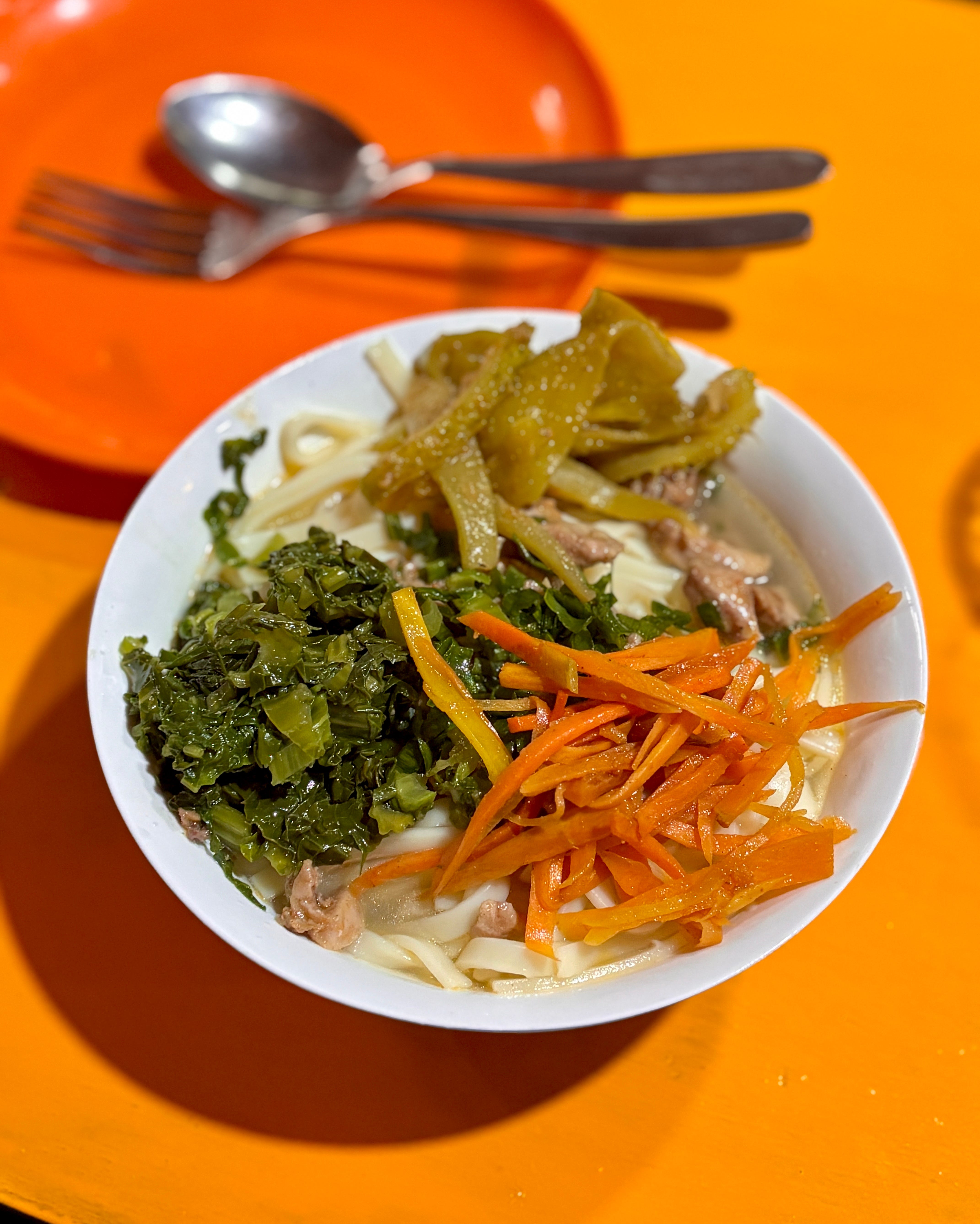
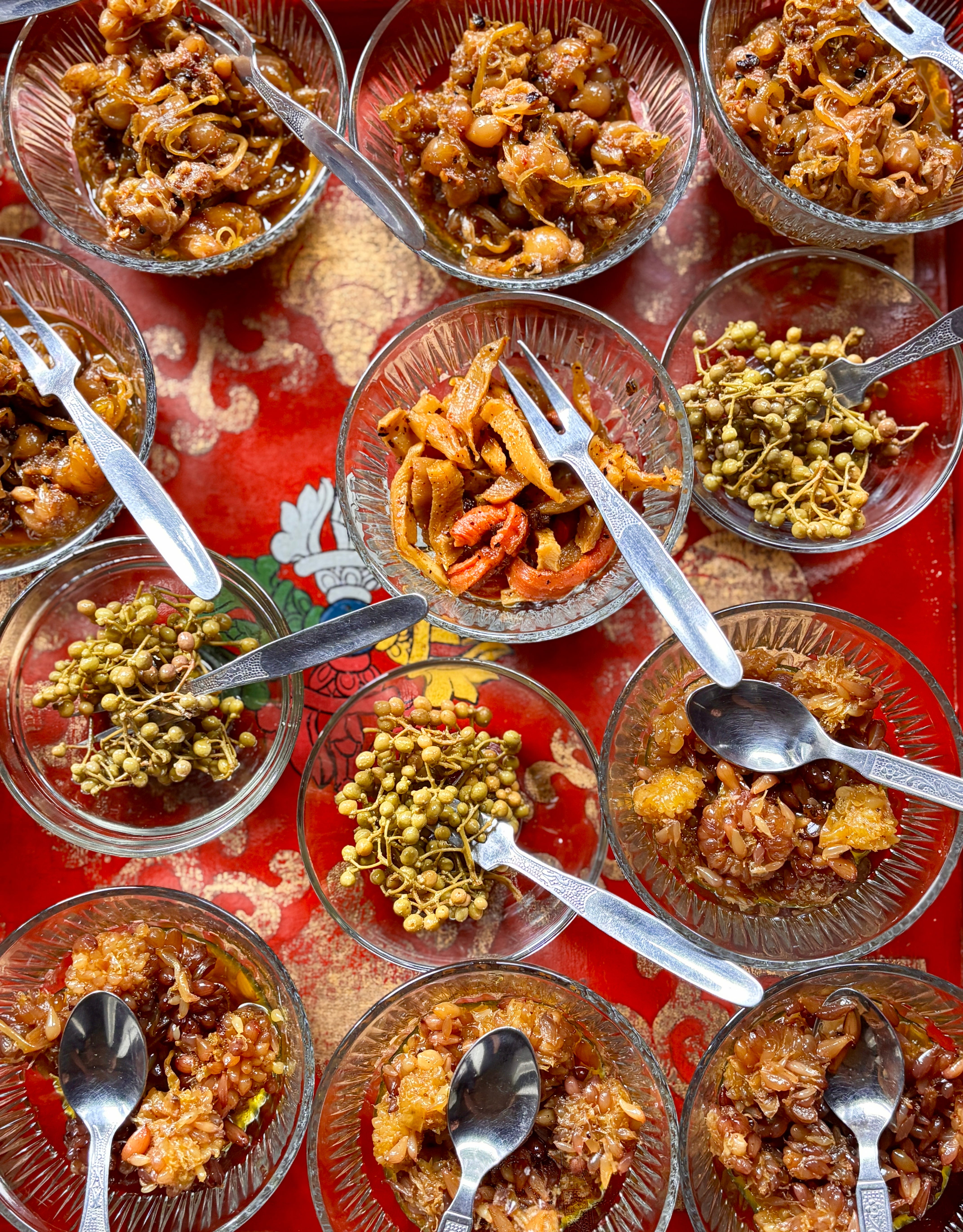
Condiments are another thing you’ll find on Nepalese tables. You can see some at the very top of this post. Some are made with Sichuan peppercorns, which sizzle when you bite into them; other condiments are pickled garlic, spinach, and fermented vegetables. Meat is mostly an accent in the foods we ate, not the main course.
Although one exception was this cocktail…
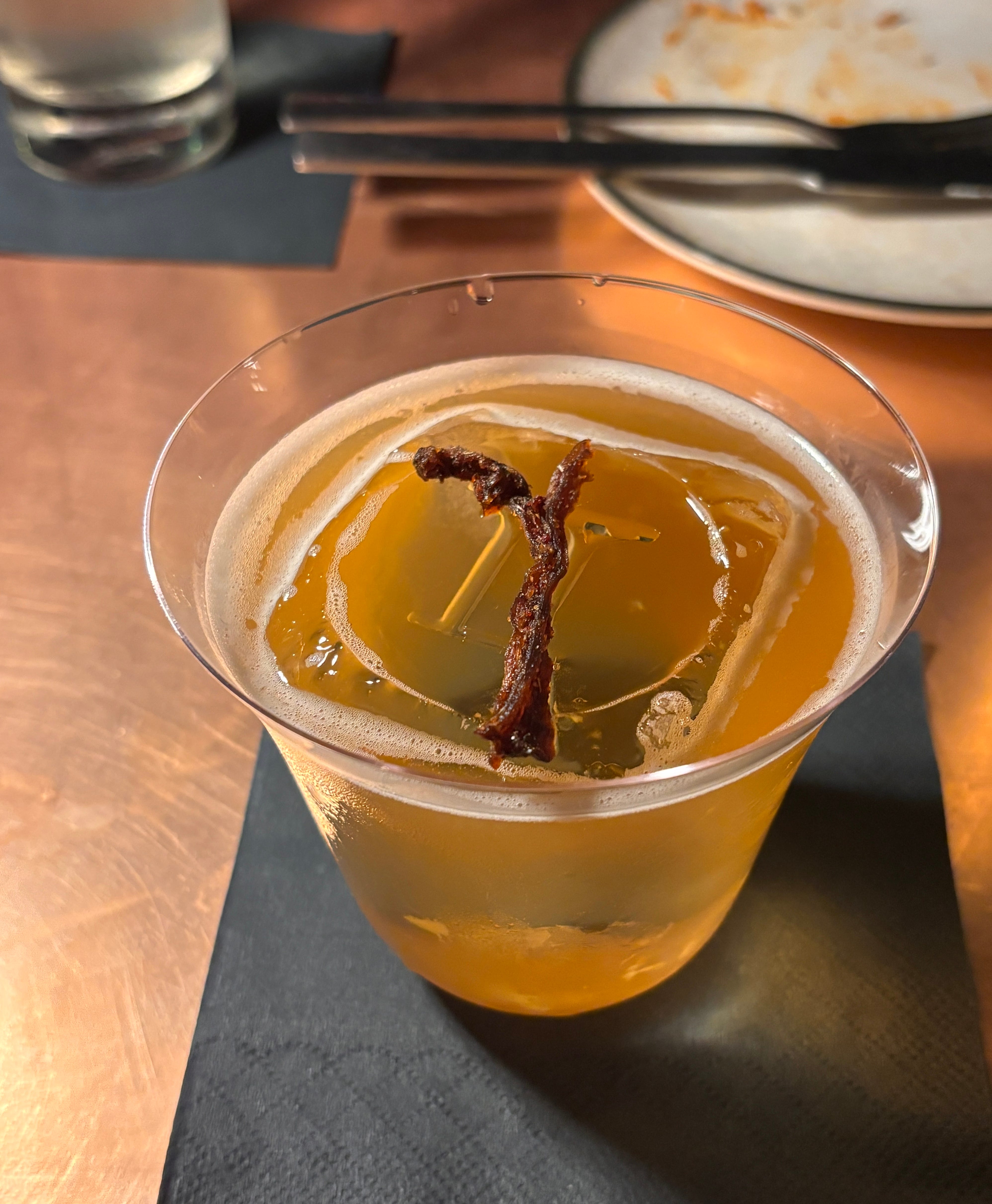
I was told to check out Barc, which is on one of those “50 Best” lists in the cocktail bar category. Barc is located on the top floor of a shopping mall in Kathmandu, and it took us a moment to find the front door, which we eventually did, and sat down to try some cocktails.
The cocktail menu toggles between sweet and savory, and the one above, The Spicy Shukti, was an experimental cocktail, which the server told me as he gently warned me away from it. The drink is made by infusing buffalo jerky with whisky, vermouth, cocktail onions, and tomato, and after a few sips, I couldn’t drink anymore; it was way too meaty for me. It was a nice try, though (but maybe a little more experimentation is needed…) The waiter replaced it with a flight of Aylā, a fermented rice distillation, which ranged from a glass of the unaged clear spirit, to other glasses infused with spices, aged in oak, and betel leaves.
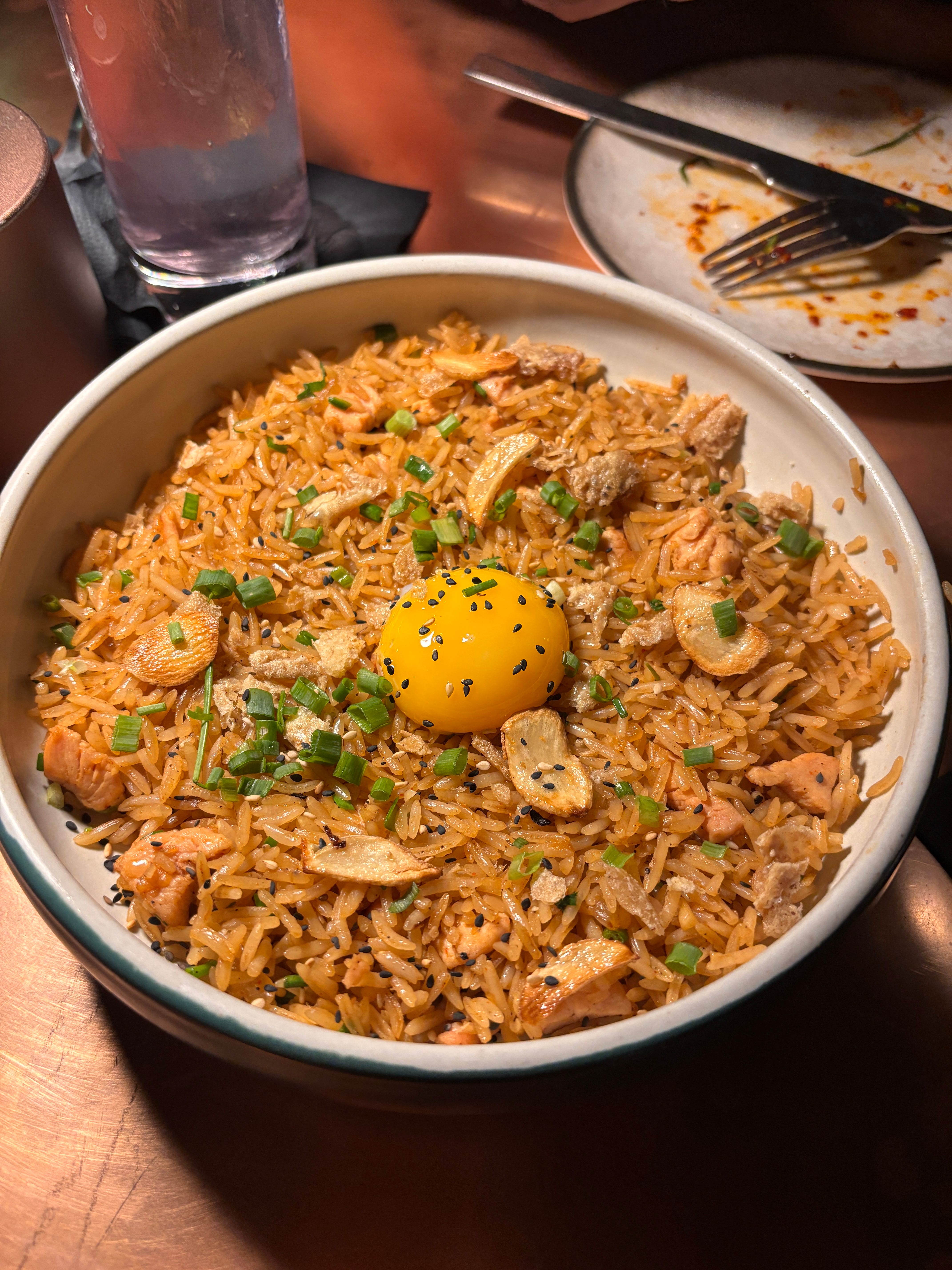
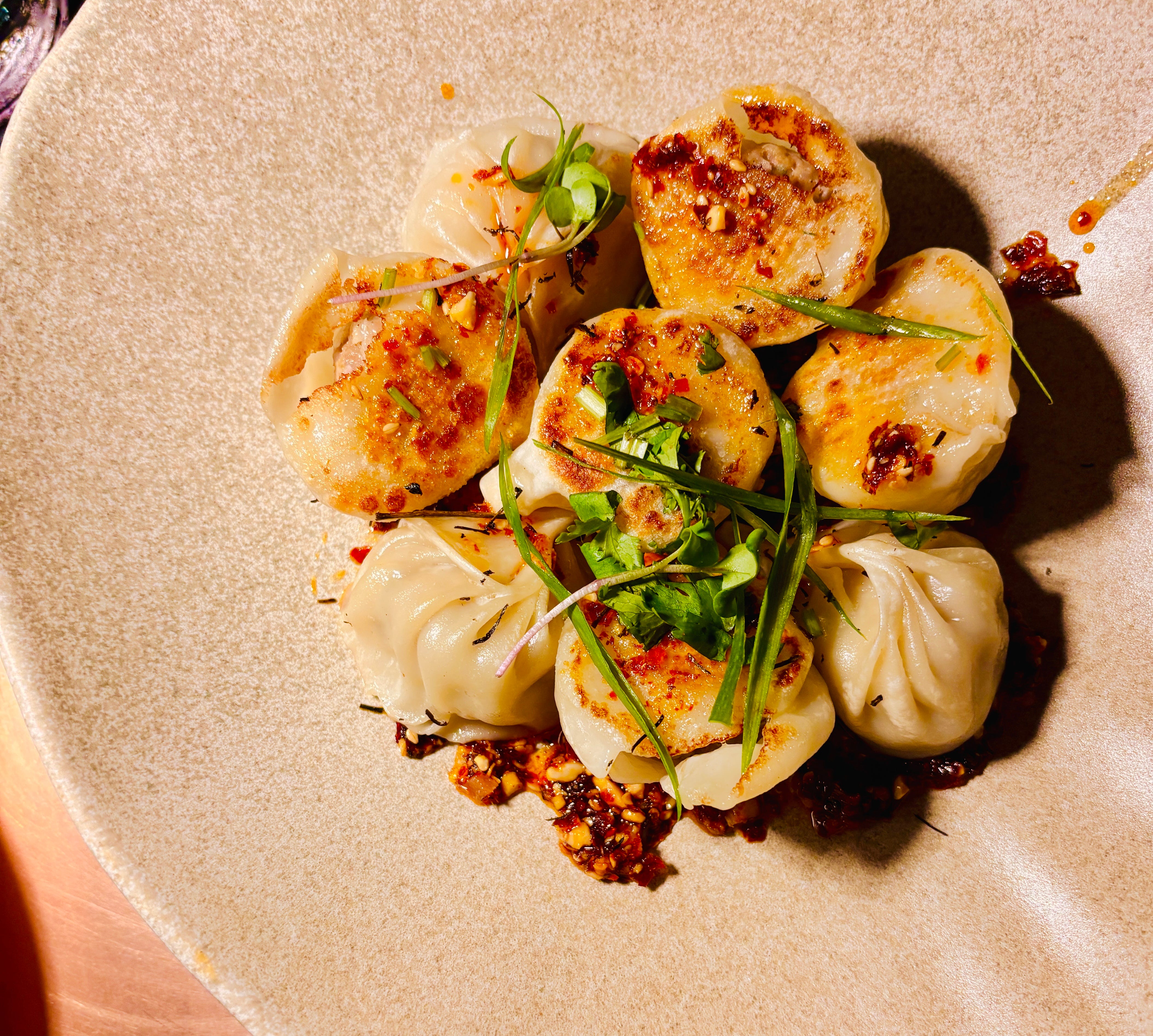
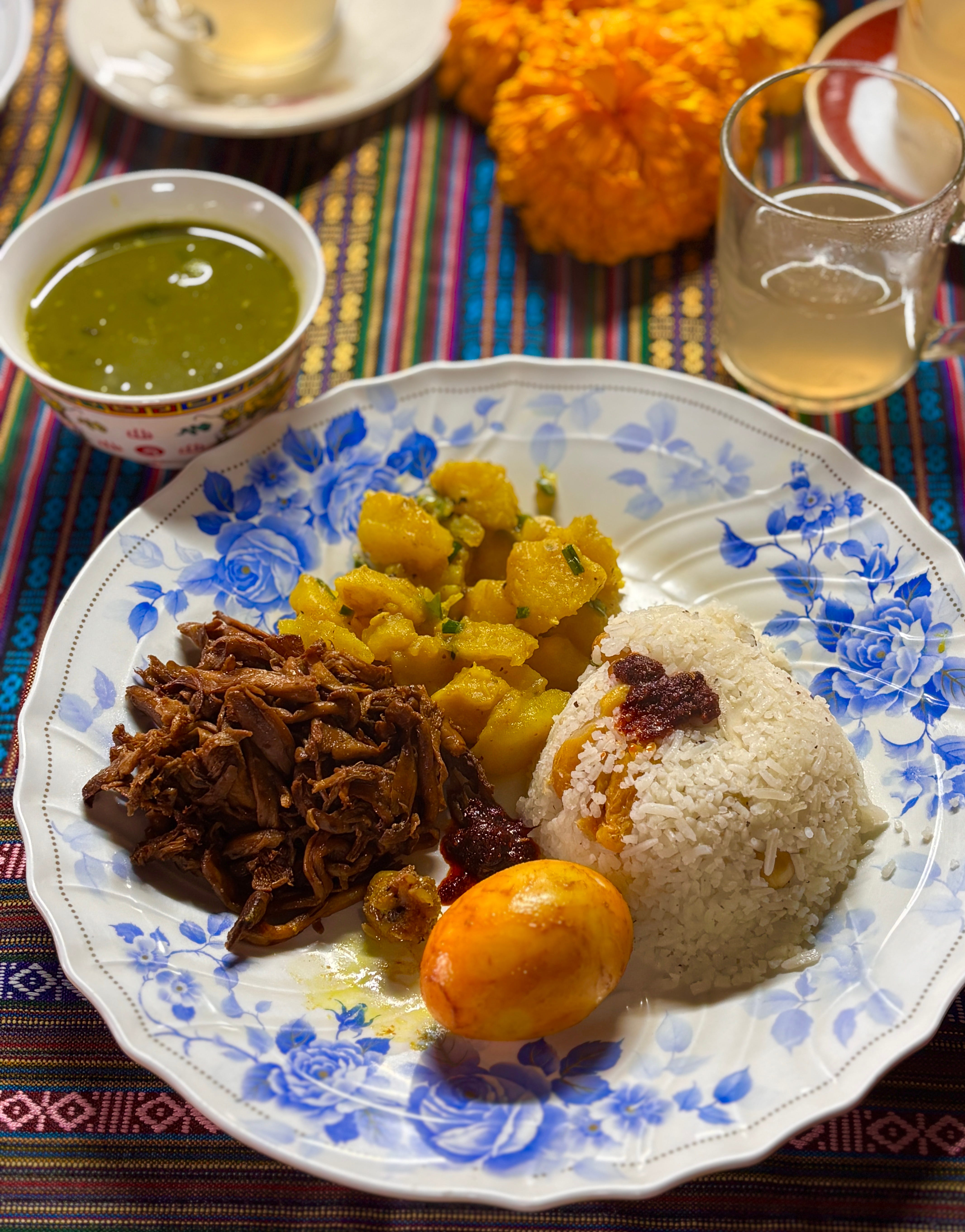
We were bigger fans of the food, rather than the cocktails, which included an excellent chicken fried rice with garlic, above, and spicy, pan-fried momos (dumplings), which were some of the best we had in Nepal.
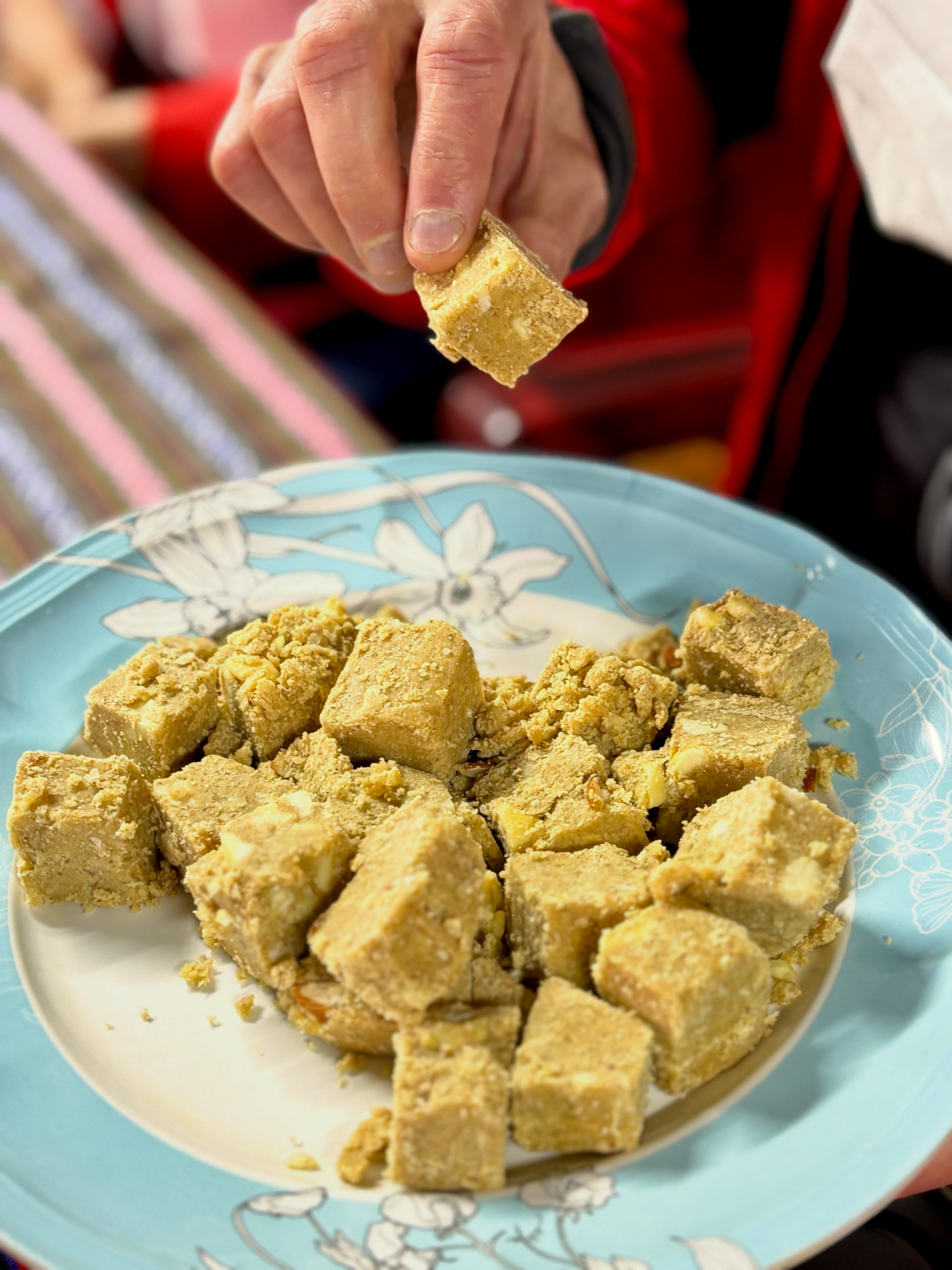
Meals in Asia don’t end with cakes or sweets, as they do in other cultures. In Nepal, Milk Cake is popular, made from cooked-down milk. Some contained grains, such as flour, and others had nuts in them. They were all quite good and trekkers like to snack on them for energy.
We also visited a rustic farmer’s market in Nayabazar, a small village near where we were staying. We got there pretty early, and things were in full swing.
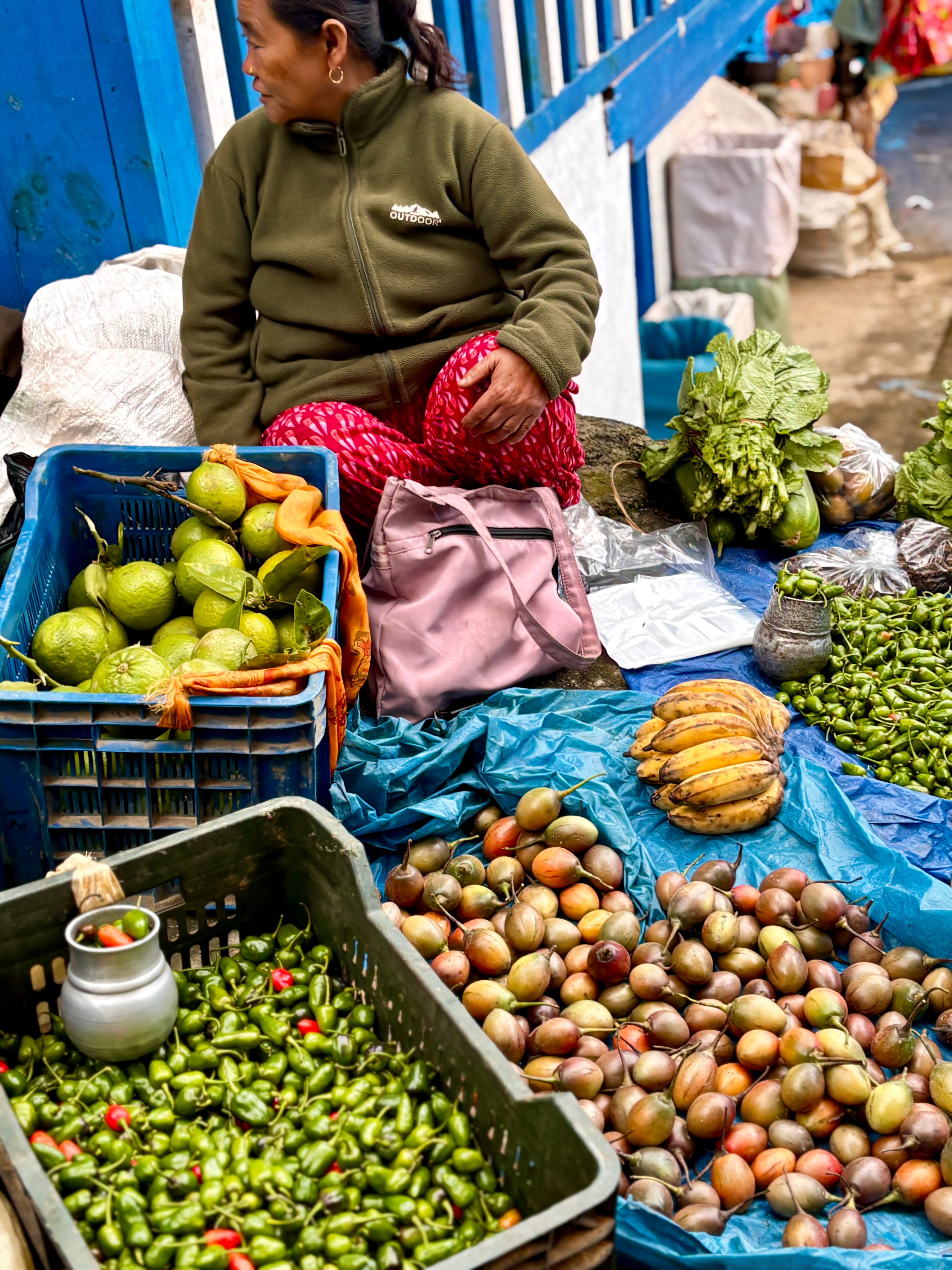
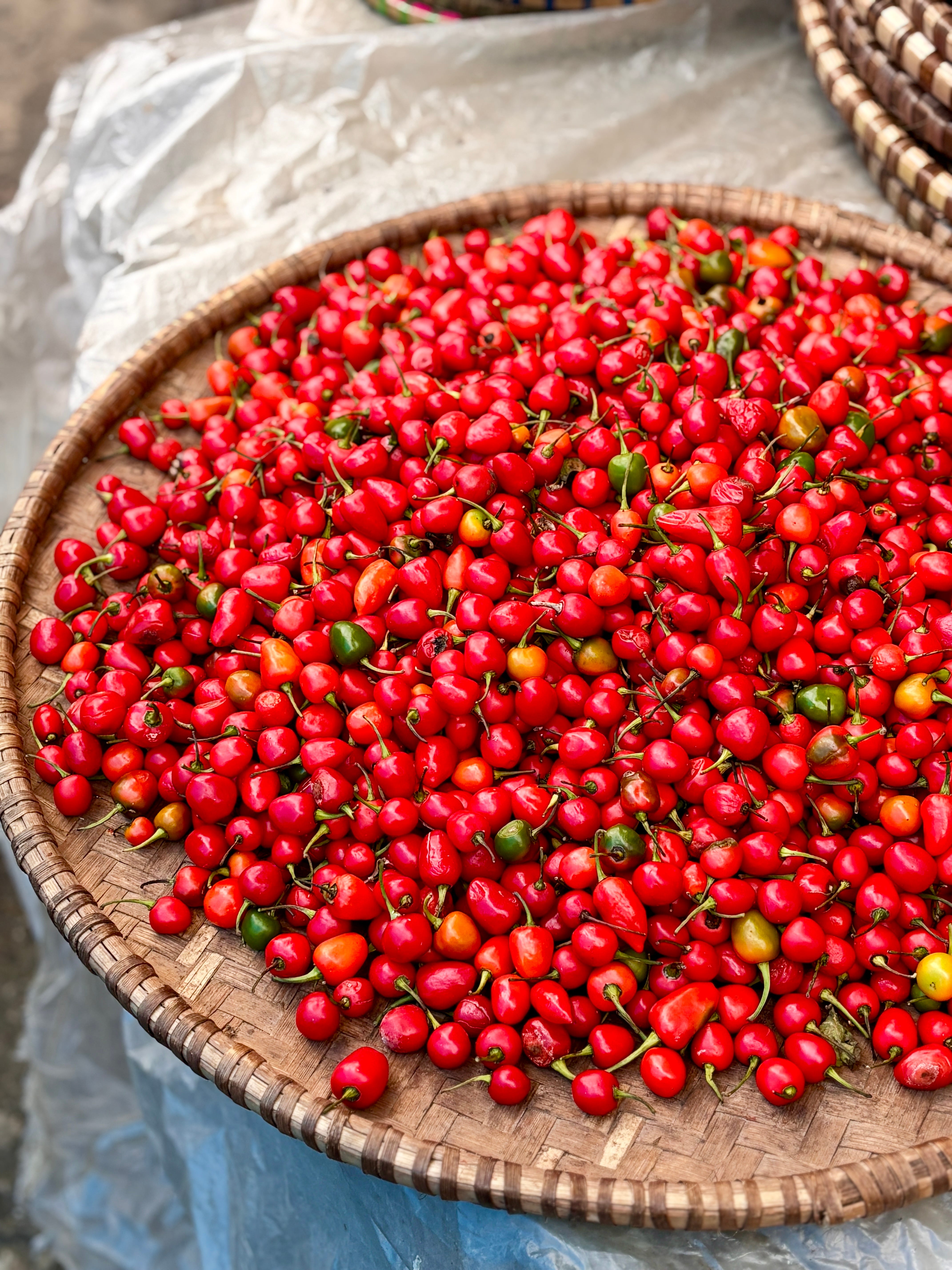
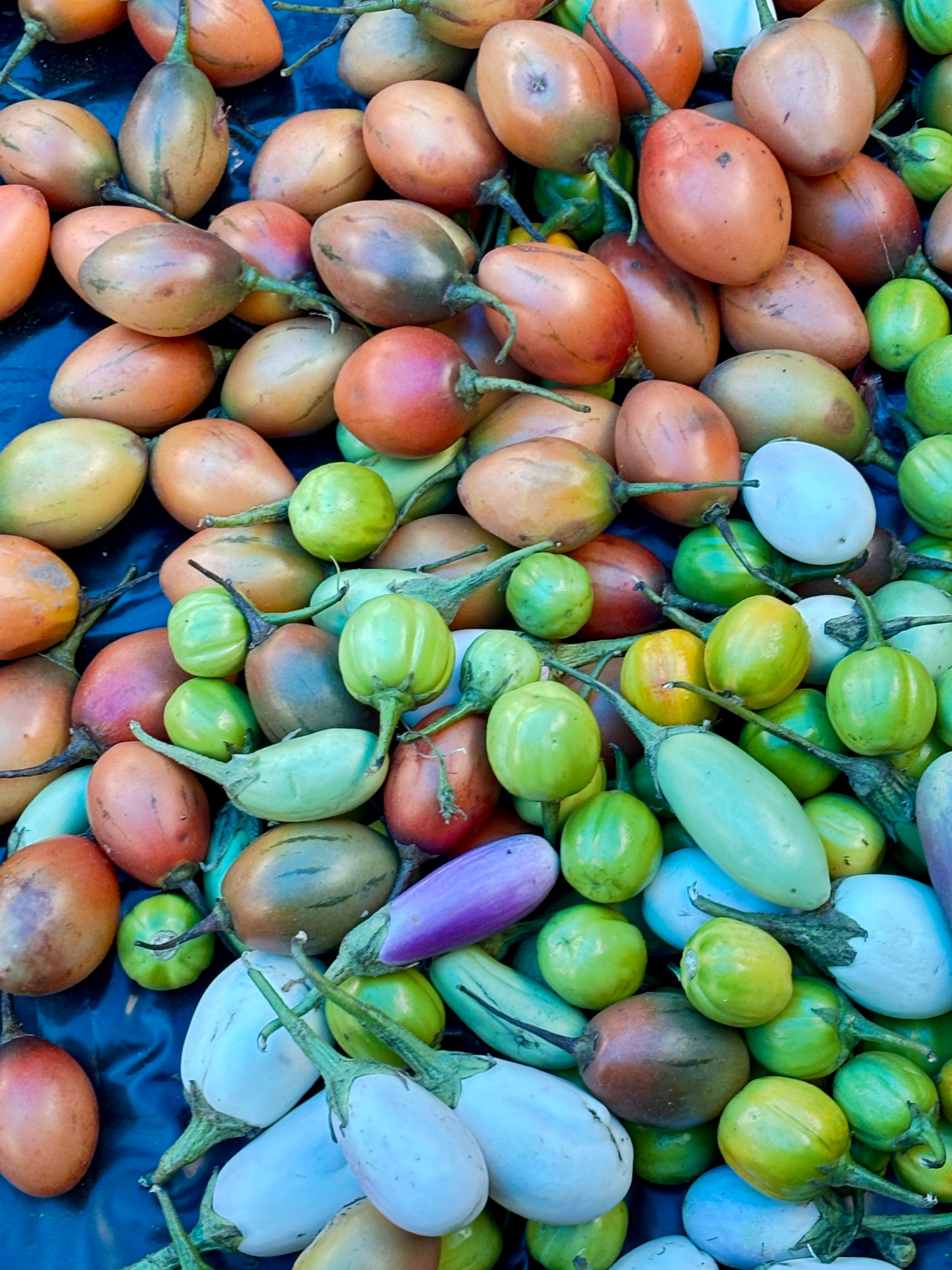
Sellers sold everything, from the chiles and tamarillos above, to Asian pears, bitter melons, cucumbers, tomatoes, and squash. The region isn’t wealthy and some farmers come just to trade ingredients, not buy them. In fact, I don’t know if I saw any money changing hands while we were there.
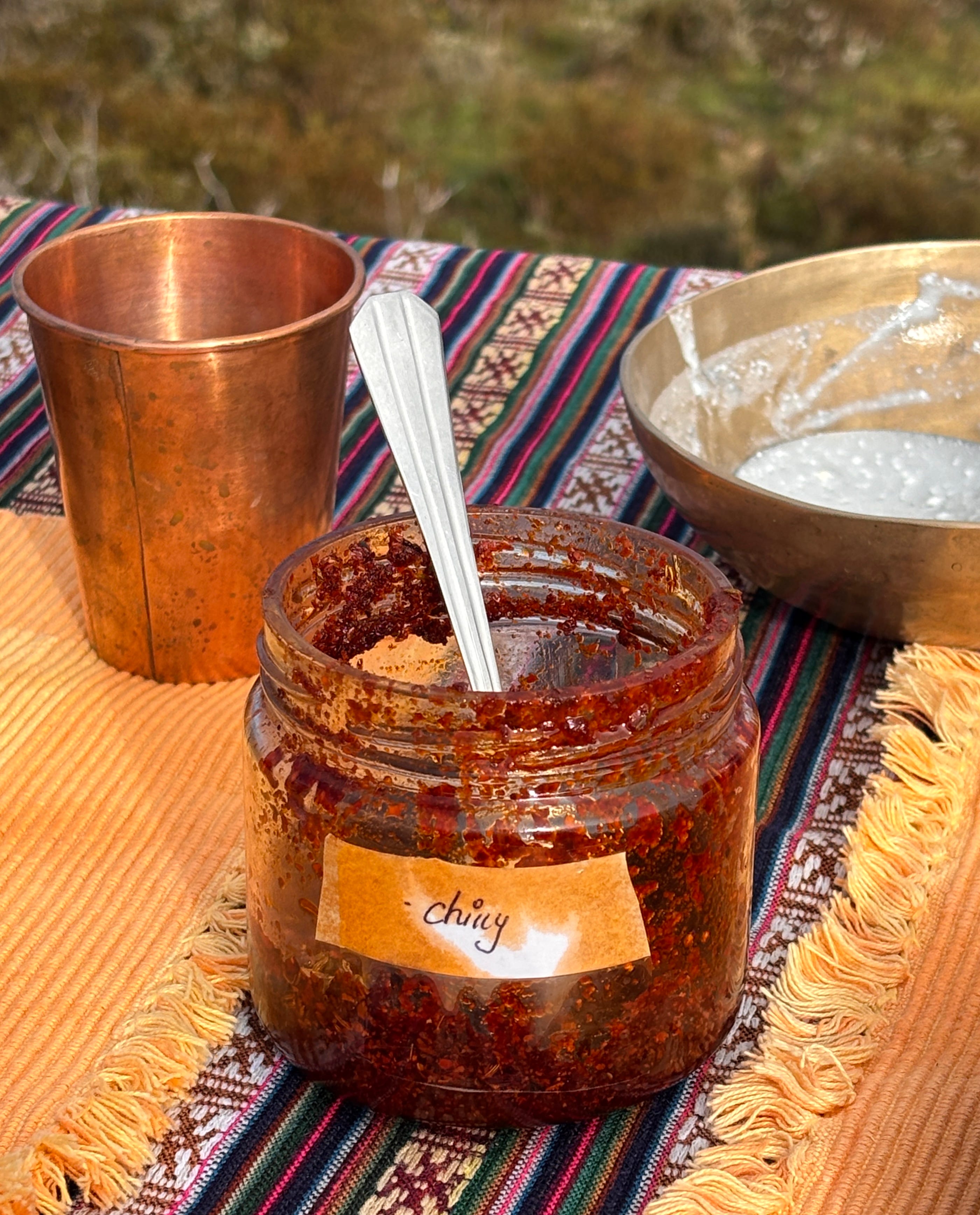
I fell in love with these marble-sized red chiles called dalle Khursani, which are the base of an especially good hot sauce that’s on almost every table in Nepal. They have a particular flavor that was a bit citrusy, and are fairly spicy, but the heat is smooth, rather than abrupt.
It was served with almost everything,
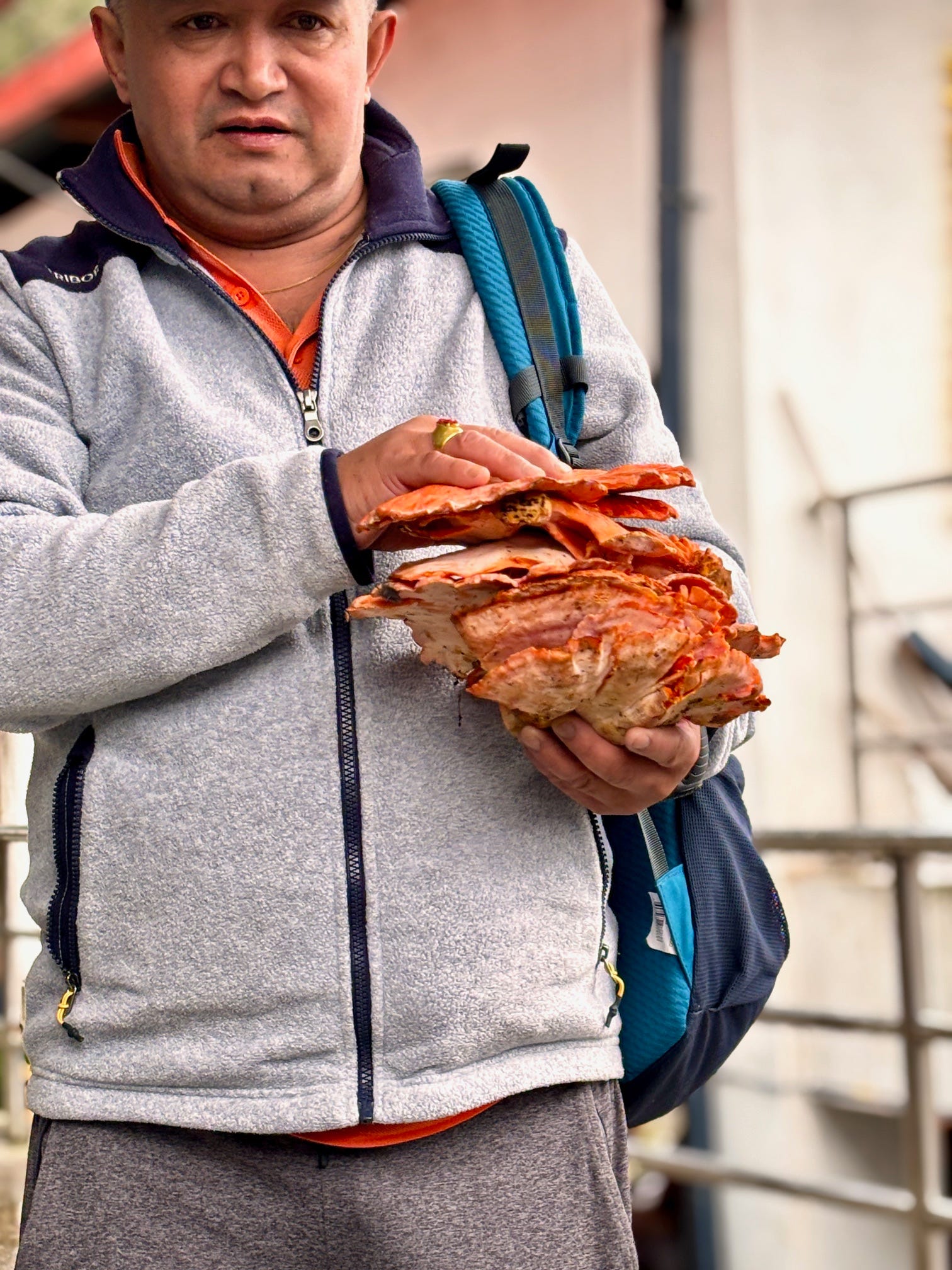
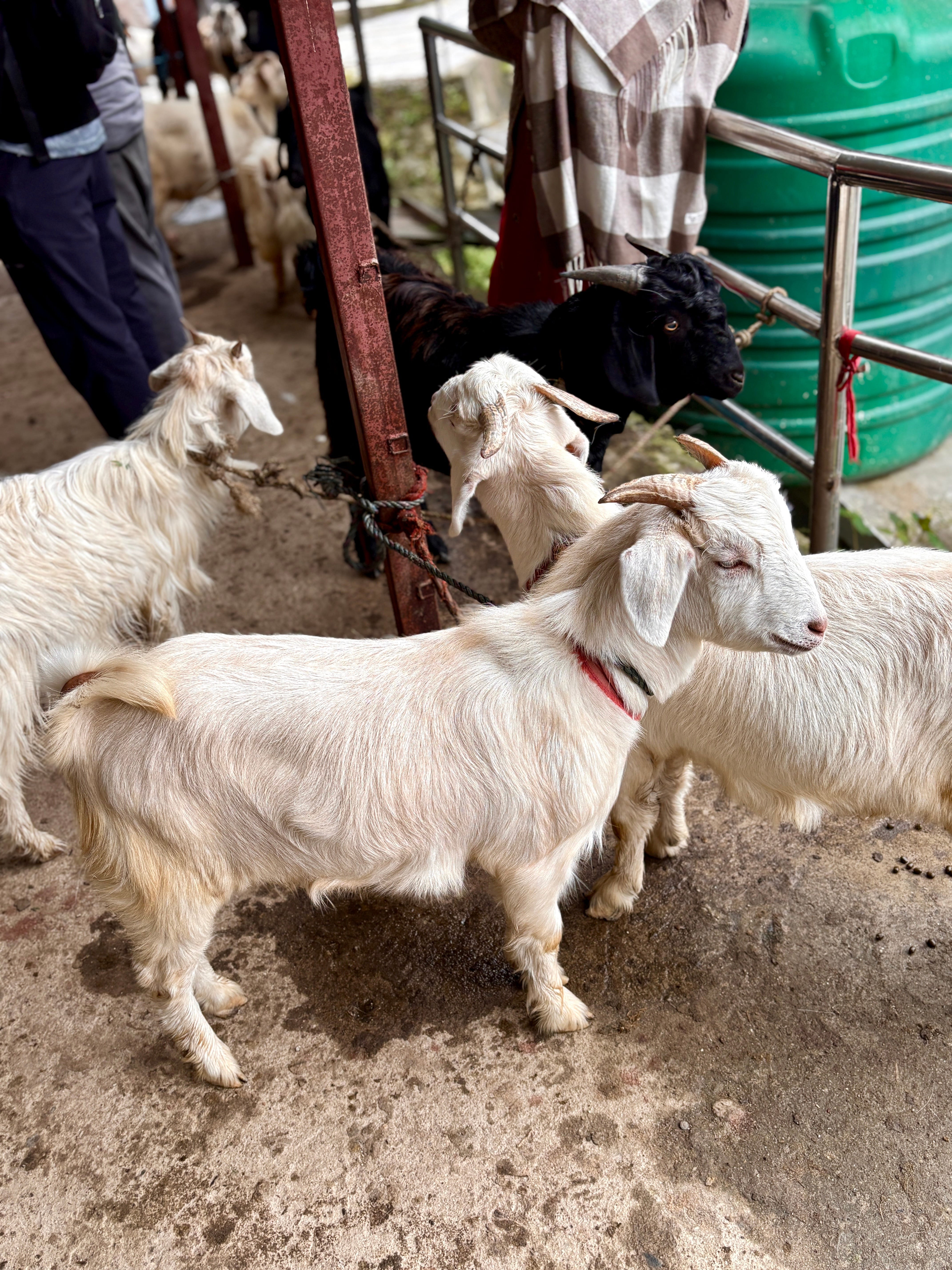
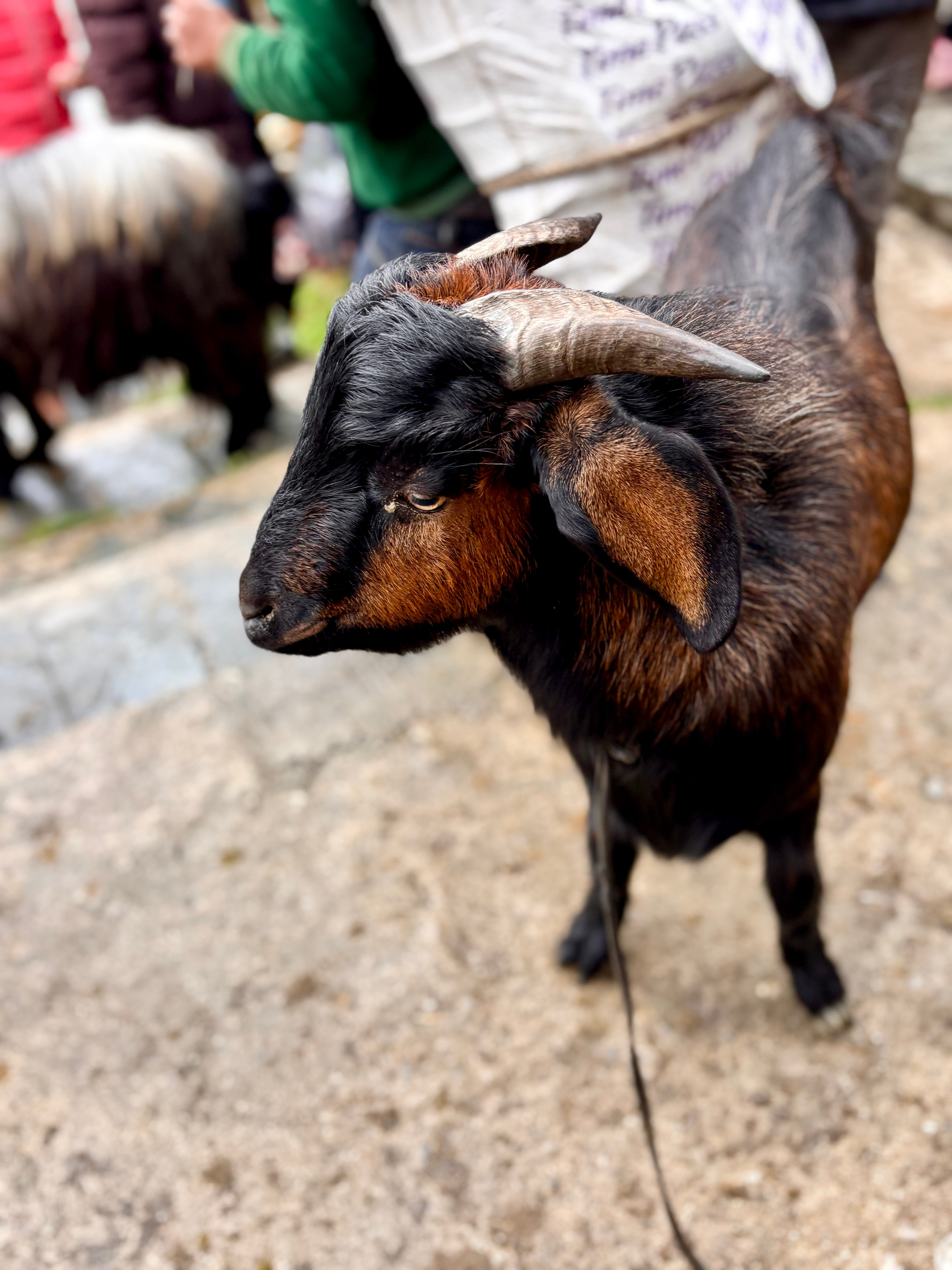
At the market, there were some really cute goats and Suzanne Goin, who’s the chef/owner of A.O.C. restaurant in LA, didn’t want to look at them since we thought they were going to meet their maker, right then and there. But we were relieved they were just being sold, or traded, at the market for farming, not feasting on.
My time at Chez Panisse didn’t overlap much with Suzanne’s time there, but she did tell me when the group of us who worked at CP stayed up late one night laughing together and spilling some tea about our time there, that she was afraid of me.
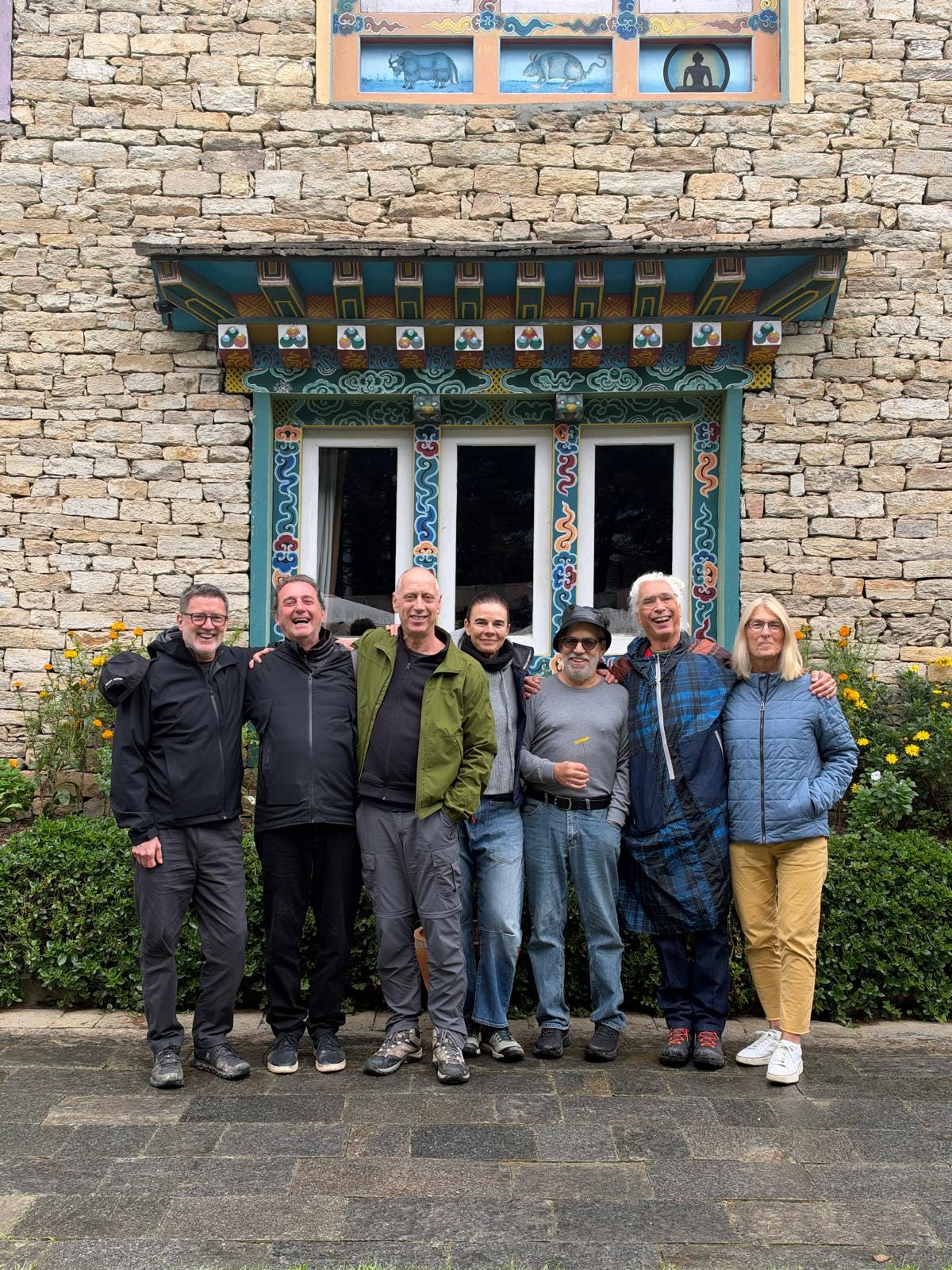
I don’t know why she was afraid since I’m so nice and she’s such a dynamic chef. No one else had any problems with me, but Suzanne and I had a good laugh about it. And I’m glad she’s over it 😆…and we can be friends.
(She actually told me she was afraid of me because I was in the pastry department since we were psychologically separated from the other cooks in the restaurant. Even though we were in the same kitchen, we were doing our own sweet thing.)
After heading back to where we were staying, we divided up into groups for the final hike and overnight camping at the top of a mountain. The hardier folks in our group would do the steep walk while others would ride part way and do that last part by foot, which was the only way it was accessible.
With the higher altitude, hiking was a bit more challenging to me than biking around Paris, so I opted for the slower route, also so I could savor the scenery. We’d taken a pretty substantial hike a few days before that was over three hours long, and if there wasn’t a meal at the end of it, I may not have made it to our destination.
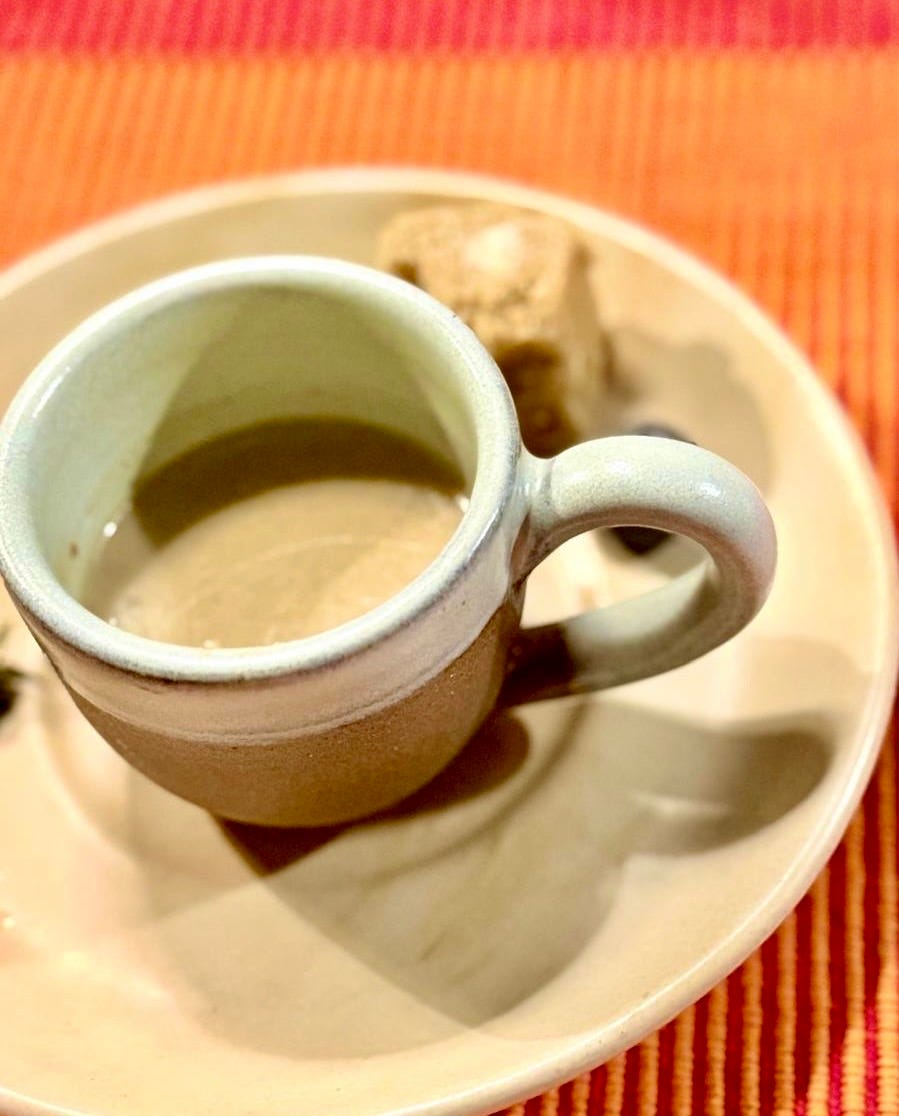
Perhaps the most curious thing we had to eat in Nepal was bhang, a drink with a curious name, whose primary ingredient is cannabis. I later found out that Bhang is the word for weed, in Nepal.
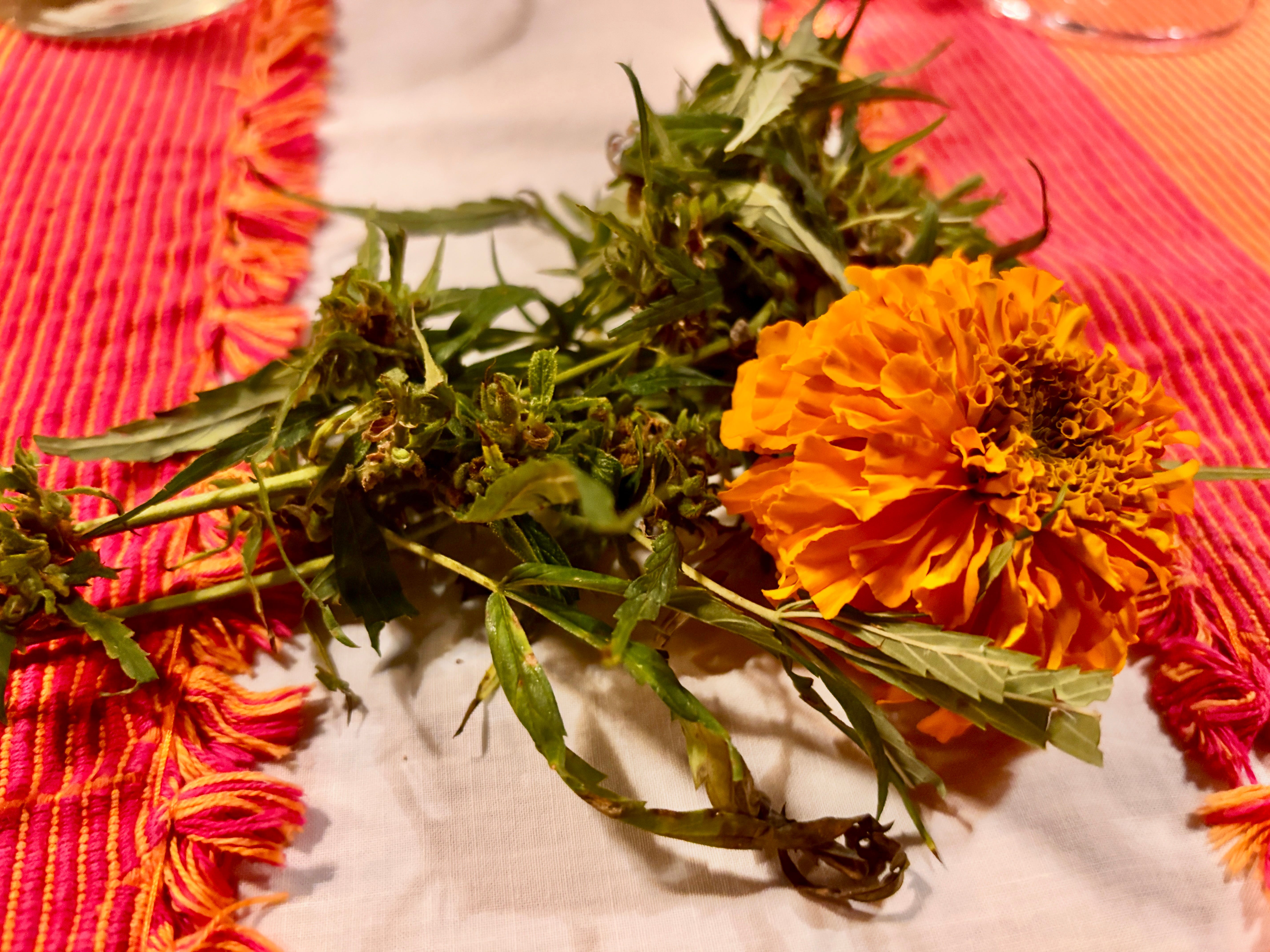
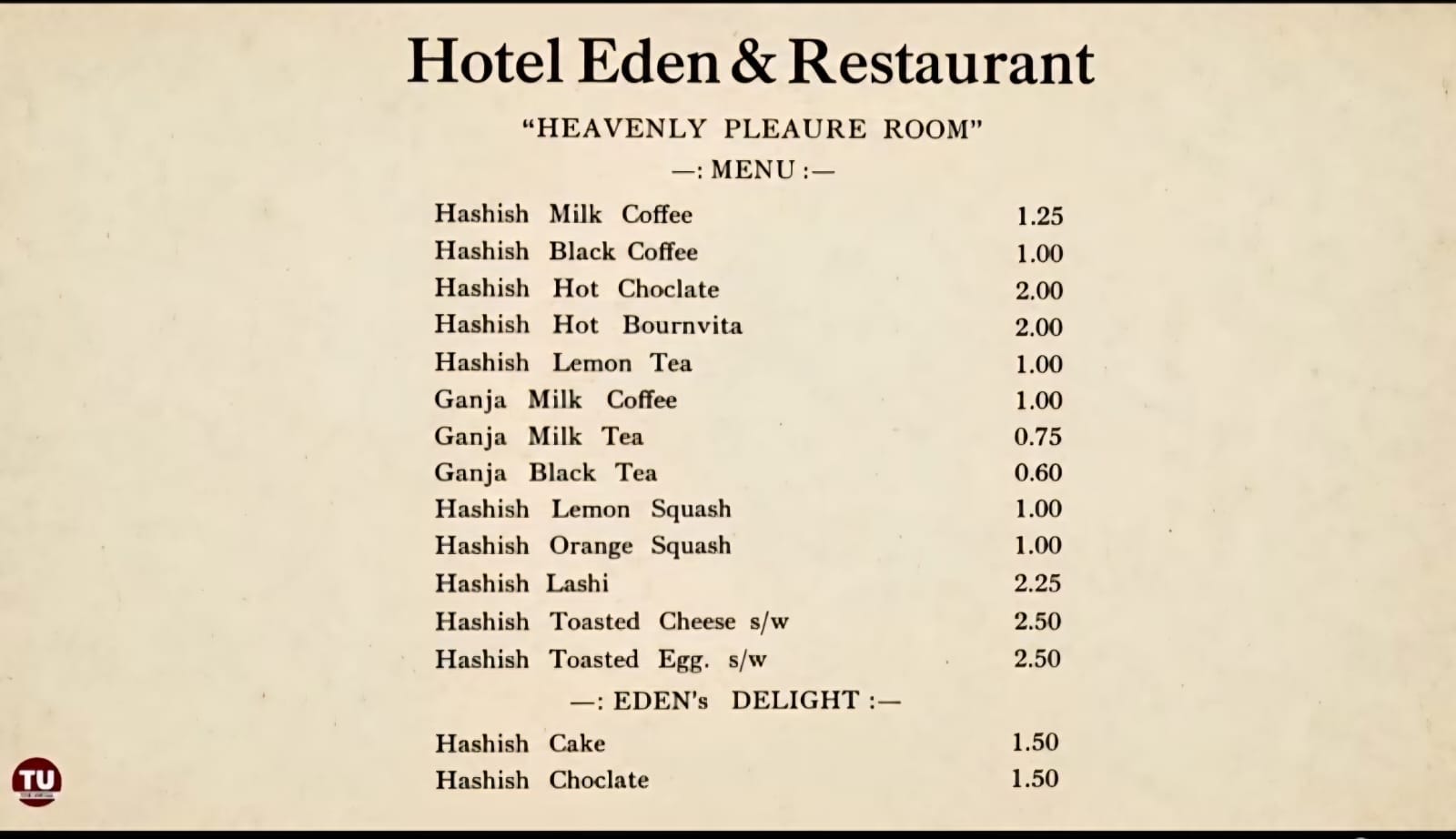
Because I’m a law-abiding citizen, I did ask a local if it was legal and she sent me the above menu from the 1970s, with a message that it is (although the decriminalization of it is actually recent). Anissa Helou, a friend who was on this trip, said farms often have plants, and they feed the leaves to the goats. I wasn’t sure how strong it was, so I focused mostly on the milk cake served alongside.
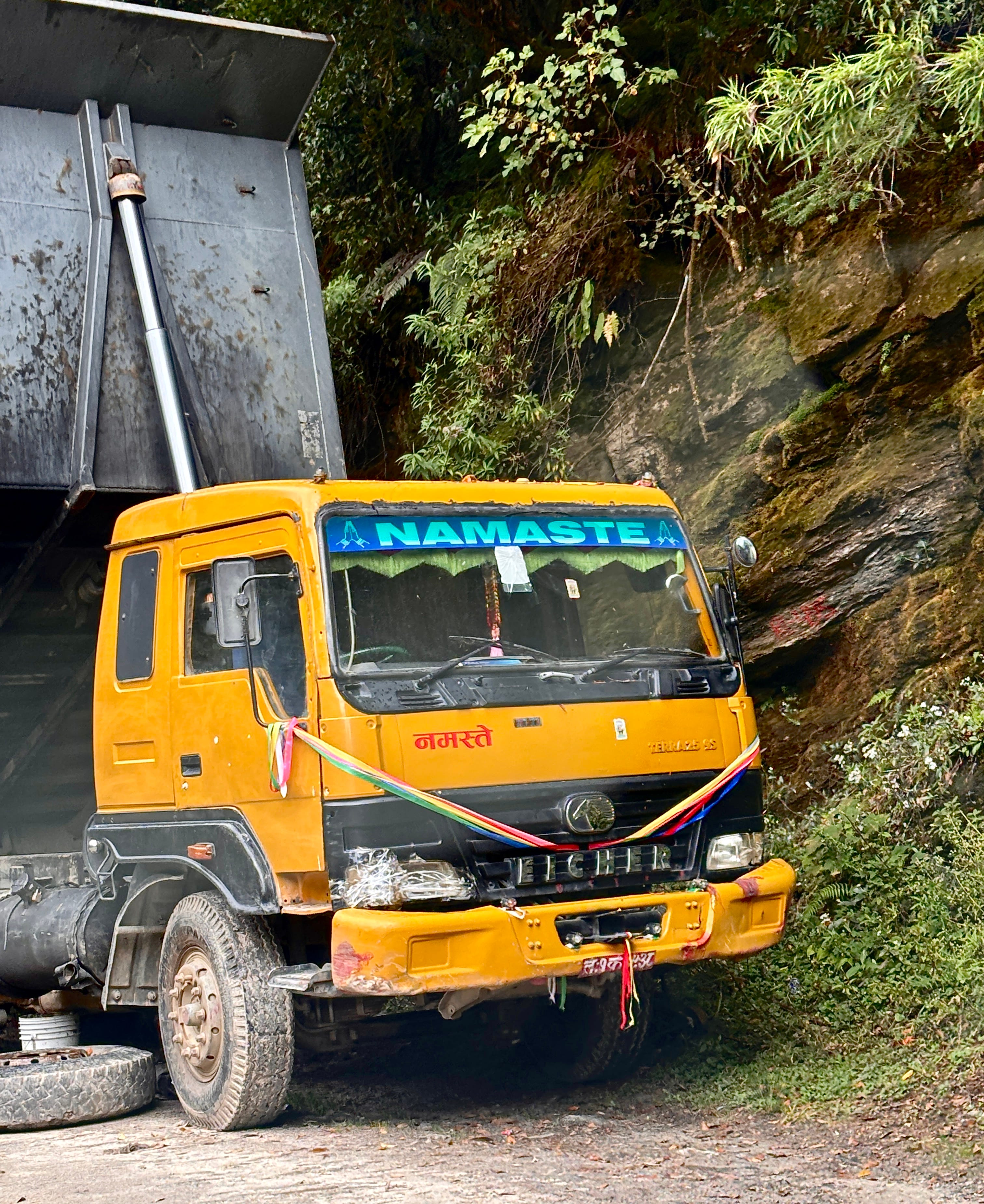
By the time you read this, I’m heading back to Kathmandu, and then returning home. Thanks to everyone in Nepal for their exceptional kindness and graciousness. The Nepalese people have been so welcoming and friendly, and discovering their foods and culinary culture has opened my eyes, and stomach, to a cuisine that I was unfamiliar with. Namaste!

As many of you know, several communities in Nepal were recently hit by devastating flash floods. If you’d like to make a donation to the official relief efforts, you can do so at this link:
Official Nepal Relief Fund website