Reading view

Office Hours: What's Trump's Most Likely Move on the Midterms?

Friends,

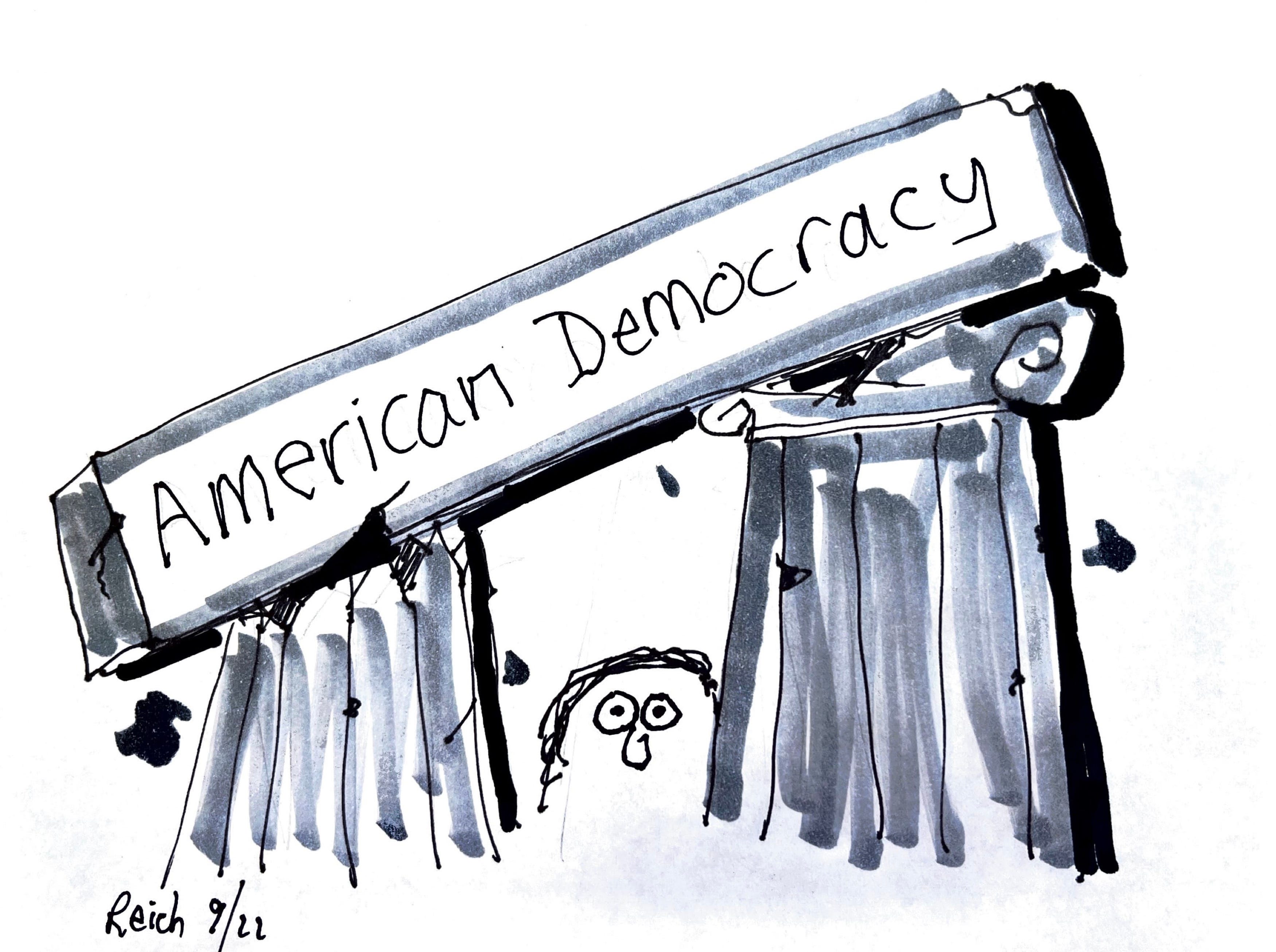
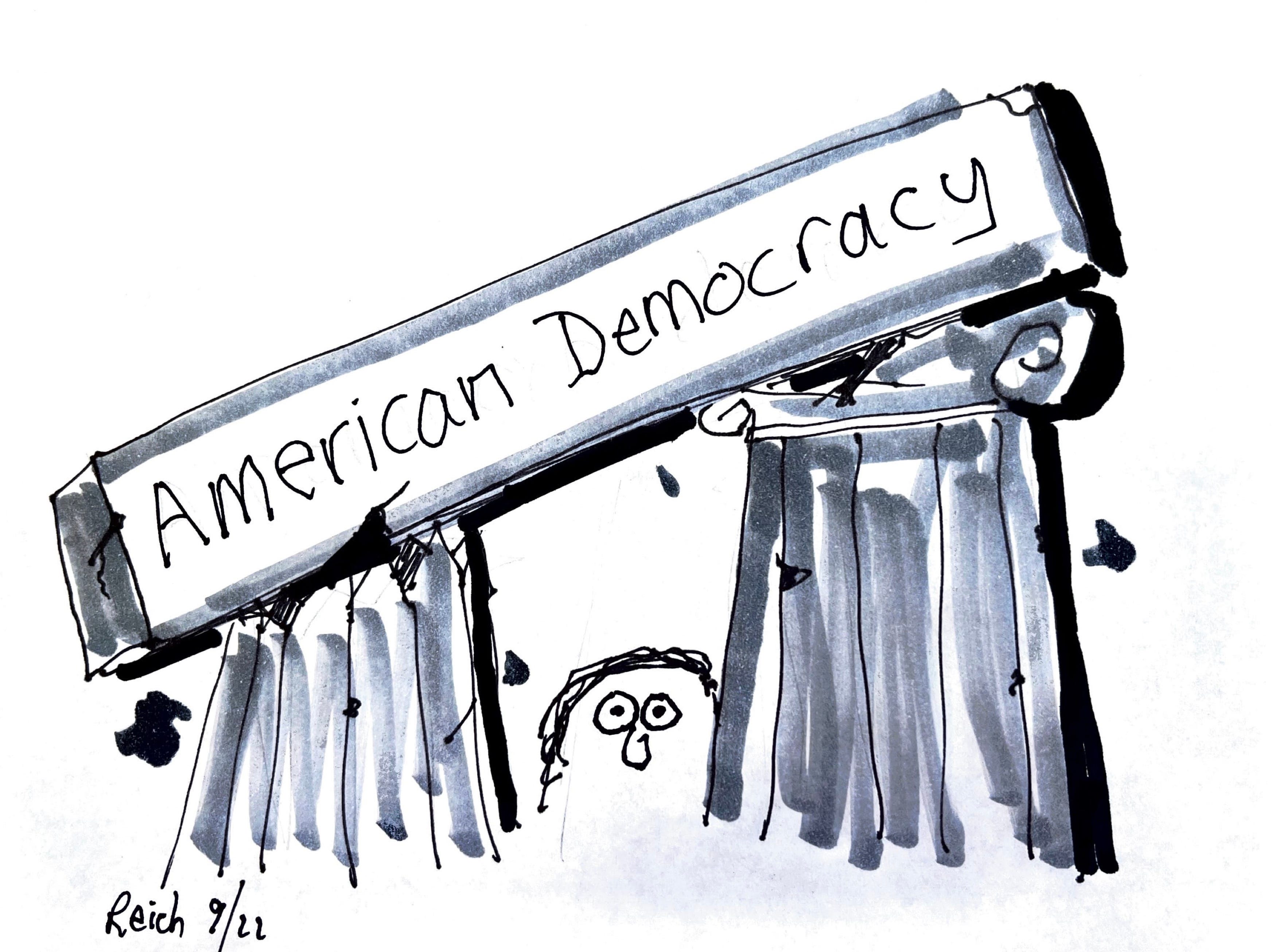
With just 97 days until the midterm elections of 2026, Democrats are fired up, while Republicans are in the doldrums. That means Democrats have a good chance of retaking control of the House. It’s even possible (although less likely) that Dems will retake the Senate.

One of the biggest uncertainties is what (if any) tactics Trump and his lapdogs will use to reduce the odds of a Democratic victory, especially in the House, where 435 seats are up for reelection.

I’ve spent the last several days talking with election experts and political advisers. When I spoke with them last year, they were most worried about gerrymandering, restrictions on mail-in voting, voter IDs, and the demise of what’s left of the Voting Rights Act.

They’re still worried about many of these things (Trump just filed with the Supreme Court an emergency request to allow his executive order that restricts voting by mail, after a federal appeals court blocked key parts of it over the weekend).

But now, with 97 days to go, they’re most worried about the elections process. I’ve summarized their concerns below.

It’s possible that Trump will do nothing to interfere in the elections, of course. It’s also possible that he’ll do everything the experts fear he might do. Please weigh in with your thoughts about what he’s most likely to do.

Read more

  •  

Pluralistic: Enshittification and Reverse Centaurs go global (29 Jul 2026)


Today's links


A bow-wielding cherub standing amidst two antique globes. From behind one looms the poop emoji from the cover of Enshittification, mouth covered in a grawlix-scrawled black bar; from behind the other looms the reverse centaur from the cover of The Reverse Centaur's Guide to Life After AI.

Enshittification and Reverse Centaurs go global (permalink)

It's safe to say that the past couple of years have been good ones for me publishing-wise, thanks to a string of international bestsellers, both novels (Picks and Shovels) and nonfiction (Enshittification, Reverse Centaur), as well as plenty of awards and accolades:

https://craphound.com/shop

Over the past two months, I've won the Locus Award (Enshittification), had a NYT bestseller (Reverse Centaur), gotten a word in the OED ("enshittification"), and had the number one bestselling nonfiction paperback in Canada for more than a month running (Reverse Centaur). I also turned 55 – and my radiologist told me I'm now cancer-free, so it's been a good summer all around.

These books have done especially well internationally because they deal with technopolitics, which means that my readers are disproportionately Internet People, and for historical reasons, these are folks who are more likely to speak English, even if they live outside of the Anglosphere.

This post is primarily for those readers, who often write to me to let me know how much they enjoyed the books, so much so that they'd like to share them with their less online, less English-conversant friends, and want to know whether there is a translation coming in their own language.

Good news! Both Reverse Centaur and Enshittification have many foreign editions that are either published or forthcoming in the next year or so. The foreign rights team at Farrar, Straus and Giroux were good enough to prepare a list of all these editions, which I'm about to reproduce below.

If your preferred language isn't on the list, I apologize. Translation deals are primarily "pull," not "push" – that is to say, a foreign publisher contacts my publisher and asks for the rights (though my publisher does market the rights and attends all the book fairs where these deals are often made).

The upshot here is that I am not really in a position to do more than has already been done to get an edition published in your preferred language or territory. If you happen to have a favorite local publisher, you could always ask them if they would like to get in touch with Farrar, Straus and Giroux foreign rights team to secure a license.

I also need to note here that these deals are generally with established publishers who have relationships with national booksellers and distributors (rather than enthusiastic individuals who want to produce a translation and see if they can get it read by other people in their country). The hard part of publishing isn't the translation, the typesetting, the book design or even the writing – the hard part is connecting a text with its readers:

https://pluralistic.net/2021/07/04/self-publishing/

With that all said, here's the master list of editions of Enshittification and The Reverse Centaur's Guide to Life After AI:

Reverse Centaur: paperback, Jun 2026
https://us.macmillan.com/books/9780374621568/thereversecentaursguidetolifeafterai/

Reverse Centaur: hardcover, Jun 2026
https://www.versobooks.com/en-gb/products/3584-the-reverse-centaur-s-guide-to-life-after-ai

Reverse Centaur (as A Nagy Összemolás/The Big Collapse), not yet scheduled

Reverse Centaur, not yet scheduled

  • Taiwan 🇹🇼: Acropolis
    Enshittification, first quarter 2027
  • Thailand 🇹🇭: Salt Publishing
    Enshittification, Oct 2026

  • Türkiye 🇹🇷: Okuyanus
    Enshittification, Fall 2026

  • Ukraine 🇺🇦: Athena Publishing
    Enshittification, not yet scheduled

(These are the confirmed deals. There are lots of other deals in negotiation, especially for Reverse Centaur, which is only a month old.)

I hope some of you found this useful! If not (or if so!), don't worry, I'll be back with more essays in the days to come.

One final note for newsletter readers: I realize that I have violated my "one emoji per edition" rule with the flags above. Rest assured this will not be a regular thing.


Hey look at this (permalink)


A shelf of leatherbound history books with a gilt-stamped series title, 'The World's Famous Events.'

Object permanence (permalink)

#20yrsago Linux Thinkpads can be controlled by knocking on them https://web.archive.org/web/20060814065844/http://www-128.ibm.com/developerworks/linux/library/l-knockage.html?ca=dgr-lnxw01Knock-Knock

#20yrsago Why the CBC doesn’t need DRM https://web.archive.org/web/20060820121451/https://www.michaelgeist.ca/component/option,com_content/task,view/id,1342/Itemid,85/nsub,/

#20yrsago Aussie mall defends its photons from terrorists https://web.archive.org/web/20060910224208/http://www.theage.com.au/articles/2006/07/29/1153816426869.html

#15yrsago Sleepy English town to be entirely surveilled in case criminals forget and drive through it on their way to crimes https://web.archive.org/web/20110731020858/https://www.telegraph.co.uk/motoring/news/8670642/Sleepy-market-town-surrounded-by-ring-of-car-cameras.html

#10yrsago Lessons from the DNC: Ronald Reagan, the Southern Strategy, and “abnormal politics” https://crookedtimber.org/2016/07/30/philadelphia-stories-from-reagan-to-trump-to-the-dnc/

#10yrsago How to pay no taxes at all! (if you’re Apple, Google or Facebook) https://www.nakedcapitalism.com/2016/07/video-guide-to-legal-tax-evasion-with-an-apple-boycott.html

#5yrsago Games Workshop declares war on its customers https://pluralistic.net/2021/07/30/space-marines/#fairy-use-tale

#1yrago Delta's AI-based price-gouging https://pluralistic.net/2025/07/30/efficiency-washing/#medallion-clubbed


Upcoming appearances (permalink)

A photo of me onstage, giving a speech, pounding the podium.


A screenshot of me at my desk, doing a livecast.

Recent appearances (permalink)


A grid of my books with Will Stahle covers..

Latest books (permalink)


A cardboard book box with the Macmillan logo.

Upcoming books (permalink)

  • "The Post-American Internet," a geopolitical sequel of sorts to Enshittification, Farrar, Straus and Giroux, 2027
  • "Unauthorized Bread": a middle-grades graphic novel adapted from my novella about refugees, toasters and DRM, FirstSecond, April 20, 2027

  • "Enshittification, Why Everything Suddenly Got Worse and What to Do About It" (the graphic novel), Firstsecond, 2027

  • "The Memex Method," Farrar, Straus, Giroux, 2027


Colophon (permalink)

Today's top sources:

Currently writing: "The Post-American Internet," a sequel to "Enshittification," about the better world the rest of us get to have now that Trump has torched America. Fourth draft completed. Submitted to editor.

  • A Little Brother short story about DIY insulin PLANNING

This work – excluding any serialized fiction – is licensed under a Creative Commons Attribution 4.0 license. That means you can use it any way you like, including commercially, provided that you attribute it to me, Cory Doctorow, and include a link to pluralistic.net.

https://creativecommons.org/licenses/by/4.0/

Quotations and images are not included in this license; they are included either under a limitation or exception to copyright, or on the basis of a separate license. Please exercise caution.


How to get Pluralistic:

Blog (no ads, tracking, or data-collection):

Pluralistic.net

Newsletter (no ads, tracking, or data-collection):

https://pluralistic.net/plura-list

Mastodon (no ads, tracking, or data-collection):

https://mamot.fr/@pluralistic

Bluesky (no ads, possible tracking and data-collection):

https://bsky.app/profile/doctorow.pluralistic.net

Medium (no ads, paywalled):

https://doctorow.medium.com/

Tumblr (mass-scale, unrestricted, third-party surveillance and advertising):

https://mostlysignssomeportents.tumblr.com/tagged/pluralistic

"When life gives you SARS, you make sarsaparilla" -Joey "Accordion Guy" DeVilla

READ CAREFULLY: By reading this, you agree, on behalf of your employer, to release me from all obligations and waivers arising from any and all NON-NEGOTIATED agreements, licenses, terms-of-service, shrinkwrap, clickwrap, browsewrap, confidentiality, non-disclosure, non-compete and acceptable use policies ("BOGUS AGREEMENTS") that I have entered into with your employer, its partners, licensors, agents and assigns, in perpetuity, without prejudice to my ongoing rights and privileges. You further represent that you have the authority to release me from any BOGUS AGREEMENTS on behalf of your employer.

ISSN: 3066-764X

  •  

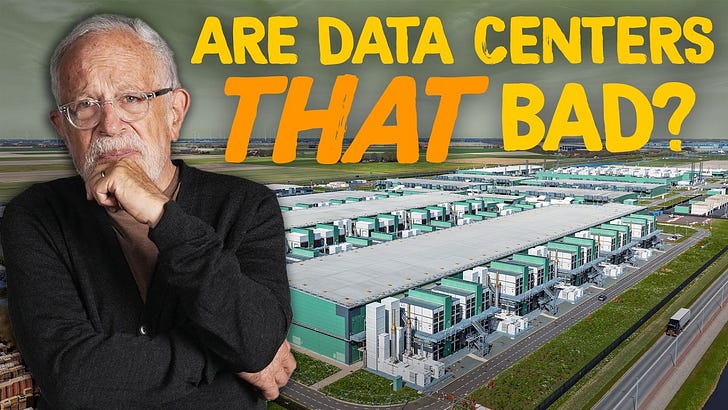
Are AI Data Centers Really THAT Bad?

Friends,

Please take a look at this week’s video, and share.

Share

AI data centers ARE that bad. (They’re even worse.) And AI corporations have huge political power. But here’s the good news: The people are fighting back — and winning.

  •  

Pluralistic: Discernment (28 Jul 2026)


Today's links

  • Discernment: How can you fact-check AI when you're asking it to teach you something you don't understand?
  • Hey look at this: Delights to delectate.
  • Object permanence: How to help with computers; Batman equation; Fuck and the law; NC's racist voting law; Pregancy app is full of spyware; Stiglitz v Apple's "tax fraud"; Accelerometer fingerprinting; Sacklers v bankruptcy; Boss-politics antitrust.
  • Upcoming appearances: Edinburgh, Sydney, Melbourne, Brighton, London, South Bend.
  • Recent appearances: Where I've been.
  • Latest books: You keep readin' em, I'll keep writin' 'em.
  • Upcoming books: Like I said, I'll keep writin' 'em.
  • Colophon: All the rest.


A 1960s classroom. A teacher in a blue dress stands at a blackboard in the background; in the foreground, a child works at a desk. The child's head has been replaced with the head of a killer robot. The blackboard is covered in printed circuits

Discernment (permalink)

As far as I can tell, this dialog between MacArthur prize-winning mathematician Terrence Tao and Chatgpt about "the Jacobian conjecture counterexample" is very impressive:

https://chatgpt.com/share/6a5fdc7a-d6f8-83e8-bbea-8deb42cfed56

Now, the clause "as far as I can tell" is doing a lot of work in that sentence. I am reasonably math literate, up to first-year calculus and a lifetime spent around my father (a mathematician). However, I have never heard of "the Jacobian conjecture," and while I know what all the words in the first paragraph of the relevant Wikipedia entry mean, I can't parse any of the sentences they form:

https://en.wikipedia.org/wiki/Jacobian_conjecture

In other words, I lack the discernment to evaluate the output of the chatbot that Tao exchanged theories with. If you showed me an equally opaque transcript of a "conversation" between a chatbot and a crank with AI psychosis whose math made no sense whatsoever, I couldn't make an a priori judgment about which one was a solid piece of mathematical theorizing and which one was a math-flavored word-salad.

As many skilled programmers can attest, chatbots can produce very useful output – but as even the most ardent AI-assisted coder will admit, chatbot-written code is also full of baffling, obvious errors (and subtle, hard-to-spot ones):

https://pluralistic.net/2025/08/04/bad-vibe-coding/#maximally-codelike-bugs

These errors (which the industry wants us to refer to as "hallucination" – a whimsical, obscuring, anthropomorphizing euphemism) are the reason that reliable AI use requires the discernment that comes from skill and expertise. I use a local chatbot to spellcheck these posts. Chatbots spot all kinds of typos that regular spellcheckers miss:

https://pluralistic.net/2026/02/19/now-we-are-six/#stock-buyback

There's a reactionary group of strangers who seek me out to tell me that I'm a bad person for doing this. These are pointless conversations, mostly because I can barely make out a word over the scraping sounds of all the goalpost-moving these scolding strangers engage in.

They start by insisting that I'm burning down the planet by running a low-CPU load piece of software on my own computer. After I explain that running a chatbot on my machine uses no more carbon than, say, applying a blur effect to an image in my image editor, they tell me I'm unwisely giving my private data to the AI companies. Then I show them the network logs that demonstrate that my local chatbot doesn't send or receive any network data.

Then they turn to the supposed cognitive effects of using a chatbot to find typos in an essay. I explain that I'm not asking an AI to write things for me or explain them to me – I'm asking it to point out where I've forgotten to put a period at the end of a paragraph, or fatfingered a word like "ever" as "every." I even send them the "before" and "after" of an essay after I've corrected some chatbot-identified typos in it:

https://craphound.com/before.txt

https://craphound.com/after.txt

This is when things get increasingly pointless. My interlocutors come up with farcical reasons why it's immoral or dangerous to use this LLM-based spellchecker. They say I'm using too much compute and that I could use a simpler piece of software to do the same thing (which is both untrue and silly – I also run a journaling filesystem on my computer that is vastly overpowered for editing a textfile – who cares?). Or they insist that the mere act of making copies of published works in order to count their elements and the relationships between them is a sin, despite the fact that this standard would kill search engines, the Internet Archive, and the Oxford English Dictionary:

https://pluralistic.net/2023/09/17/how-to-think-about-scraping/

I mean, by all means let's hate the AI companies and work to end their disgusting campaign to pauperize creative workers, but let's not fall into the trap of siding with the media bosses who insist that the salvation of creative labor will arrive when Sam Altman pays David Zaslav for the right to cram the entire Warner catalog into Openai's chatbots:

https://pluralistic.net/2026/03/03/its-a-trap-2/#inheres-at-the-moment-of-fixation

Above all, my interlocutors continue to insist that my LLM-powered, local, open source chatbot spellchecker will make me a worse writer. It's a very strange insistence. My first word processor was a program listing published in a magazine I bought at a corner store and laboriously typed into my Apple ][+. In the 40+ years since, word processors have gotten lots of new features, many of which I thought were useful and many more that I found annoying. There were even some of these features that made the writers who used them worse at writing, in my (expert) judgment.

But from the very start, I knew that you couldn't just trust a spellchecker to correct your documents. I mean, I'm a science fiction writer. I started making up silly words decades before coining "enshittification." I've been telling spellcheckers to fuck off since I learned to type. If you aren't a good writer, spellcheckers are dangerous, and the more "advanced" the spellchecker is, the more dangerous it is.

A few of my collaborators insist that I use Office 365's AI-enabled version of Word to work on documents with them. It's maddening. I estimate the ratio of good suggestions to bad ones that M365 insists on shoving into my face at about 1:100. It's practically unusable – so much so that I often copy the block of text we're working on into a text editor, make my changes, then paste it back into the Word window.

If I were to accept even 10% of these suggestions, my work would be made significantly worse. Putting chatbots into Word pushed it from "annoying" into "enshittening." I certainly understand how relying on a chatbot to make edits to your work could make it worse.

That's where discernment comes in. I have written more than 30 books over the past 25 years. I have lots of experience defending my word choices, and not just against the mechanical judgments of a high-handed spellchecker, but also against overreaching copyeditors and paranoid publisher's lawyers. I know which words I want to write, and I know why I want to write them – and I know when a suggested fix is a good one and when it's wrong or stupid or just plain clunky. When it comes to writing, I have discernment.

That's not true when it comes to higher math. I would no more ask a chatbot to explain "the Jacobian conjecture counterexample" than I would tell my writing students to get a chatbot to suggest ways to fix their stories:

https://pluralistic.net/2026/01/07/delicious-pizza/#hold-the-gravel

I don't know nearly enough about math to ask a chatbot to explain it, or check my work, or even assemble a bibliography of human-authored works I should work my way through if I want to learn about it. If I wanted to understand "the Jacobian conjecture counterexample," I would set aside several days and work my way through that gnarly Wikipedia entry and its references and blue links to related concepts. If I really wanted to understand it, I'd enroll in a course at the Open University or Khan Academy.

All of this has been obvious to me since I first encountered LLM-powered bots. If you understand a subject really well – well enough to discern useful bot output from defective bot output – then bots can be useful. Sometimes very useful, mostly ordinarily useful. For example, I've been writing Pluralistic for about 6.5 years now. I've written 1,683 posts now (1,684 after I hit publish on this one), and the corpus is now getting large enough that I sometimes struggle to find a post I'm trying to reference, even with all my careful tagging and my extensive knowledge of WordPress's URL-line options for searching the database with tag and keyword combos.

I've been toying with the idea of exporting my whole corpus and shoveling it into a local chatbot, so that I can type, "Which post did I talk about the evils of showing people your chatbot output in?" and get a link to the correct essay:

https://pluralistic.net/2026/03/02/nonconsensual-slopping/#robowanking

(Don't follow this link! I will be referencing the essay it goes to shortly; I struggled to find it when I sat down to write today; I'd accidentally tagged it with "at" instead of "ai" and missed the typo when I published it.)

There are very few subjects I have more discernment over than "essays I have written." If I ask a chatbot to tell me which post I'm thinking of, I will instantly know which of its guesses are correct and which ones aren't. No one in the universe is better qualified than me to perform this task. No one ever will be.

Now, as it happens, I know exactly how badly a chatbot can screw up when it comes to my own work, because strangers insist on asking chatbots about me and then, for reasons I find baffling, they send me the output. Please don't show anyone your chatbot transcripts unless they ask to see them. It's embarrassing at best and annoying at worst:

https://pluralistic.net/2026/03/02/nonconsensual-slopping/#robowanking

(There's that reference I promised. You can follow the link now!)

Again, discernment is everything when it comes to getting useful work out of a chatbot. If you don't know anything about my work and you ask a chatbot to explain it to you, you will likely be badly misled. If you are familiar with my work and you ask a chatbot for the best examples where I explain a given subject, you may get a good answer, and if you get a bad one, you'll know it.

The centrality of discernment to productive AI usage is obvious, and that's why I find the insistence that AI can be used as a teaching assistant (or worse, a teacher) so baffling. By definition, a student isn't an expert on the subject they're studying. That's the whole point of studying – to acquire knowledge and thus discernment. Asking students to learn via chatbot explanations is both incoherent and dangerous.

Doubtless, there are ways that teachers might find chatbots useful, but for Christ's sake, don't use them to teach. There's plenty of ways teachers can use chatbots without asking students to learn from them.

Here's an example. My daughter graduated from a big, typical American high school a couple years ago, and I spent her high-school years getting progressively angrier about the bad compromises that her teachers were forced into.

Between "Common Core" and "Advanced Placement," the US system has been highly standardized. Teachers are under enormous pressure to teach specific aspects of specific subjects in a specific order, and students are told that their future life chances turn on their ability to pass high-stakes tests:

https://pluralistic.net/2024/01/16/flexibility-in-the-margins/#a-commons

This gives rise to many frustrations for teachers and students alike, but nothing got my dander up so much as my daughter's math teachers' testing practices. In all of my kid's higher math classes, teachers had a single, prized set of tests, and lived in fear of these escaping into the wild and turning into cheating aids. As a result, teachers collected students' math exams and quizzes and did not return them. Students sat exams, worked through the problems and got their grades – but were not allowed to take home their tests to see where they went wrong.

Look, I know I'm no mathematician, and I know I'm not a math teacher, but I know enough about pedagogy to know that this is crazy. This is like trying to get better at archery by loosing arrows at a target but not checking to see where they hit. It's bananas.

I also understand why the teachers felt they had to do it. Writing test questions that test for specific concepts in a specific order is a lot of work, and generating new tests for every class is the kind of task that would consume time better spent on lesson planning and meeting with students.

It's easy to imagine a teacher who creates prompts for each test question that cause a chatbot to emit a new test paper for each class, along with answer keys. These questions are easily validated by a skilled teacher, who definitionally has the discernment to know whether a test question fits the bill. I could even see vibe-coding a little app to spit these questions out – though again, I would want the teacher to work through the questions each time to make sure they were sound.

Both my parents are teachers. My brother is a teacher. I teach every now and again. Teachers do a lot of repetitive, unrewarding work. They also do a lot of difficult, creative, extremely important work. Good teachers have the discernment to sort good classroom materials from bad ones. They do that already, because just as you don't need an LLM to generate bad spellchecker suggestions, you also don't need an LLM to generate sub-par educational materials. There are plenty of "educational" publishers who'll do that all day long.

AI is a normal technology. That means there are times when it is useful and times when it is pointless or actively harmful. One rule of thumb for chatbots is that they can only provide useful information to experts who have the discernment to ignore the defective output that LLMs always emit. That means that the dream of chatbots as replacements for teachers is a nightmare.

Getting rid of teachers because we all have chatbots is like getting rid of doctors because we all have the plague.


Hey look at this (permalink)


A shelf of leatherbound history books with a gilt-stamped series title, 'The World's Famous Events.'

Object permanence (permalink)

#25yrsago How to help someone use a computer https://pages.gseis.ucla.edu/faculty/agre/how-to-help.html/

#20yrsago Arrested for taking a pic of a cop arresting someone else https://web.archive.org/web/20060813102257/http://www.nbc10.com/news/9574663/detail.html

#15yrsago Batman logo in equation form https://www.reddit.com/r/pics/comments/j2qjc/do_you_like_batman_do_you_like_math_my_math/

#15yrsago Vindictive WalMart erroneously accuses couple of shoplifting, has husband deported, wife fired, costs them house and car https://web.archive.org/web/20111002102637/https://www.courthousenews.com/2011/07/26/38455.htm

#15yrsago House Committee passes bill requiring your ISP to spy on every click and keystroke you make online and retain for 12 months https://www.eff.org/deeplinks/2011/07/house-committee-approves-bill-mandating-internet

#15yrsago Fuck and the law https://papers.ssrn.com/sol3/papers.cfm?abstract_id=896790&

#15yrsago Bill Nye explains to Fox News why lunar volcanoes don’t disprove anthropogenic global warming https://web.archive.org/web/20110924185725/https://www.mediamatters.org/mmtv/201107280007

#10yrsago North Carolina’s voter suppression law struck down as “racist” https://edition.cnn.com/2016/07/29/politics/north-carolina-voter-id/index.html

#10yrsago Pregnancy-tracking app was riddled with vulnerabilities, exposing extremely sensitive personal information https://www.consumerreports.org/electronics-computers/mobile-security-software/glow-pregnancy-app-exposed-women-to-privacy-threats-a1100919965/

#10yrsago “Tellin The World” 1972 voting PSA aimed at 18-25 y/o working-class voters https://archive.org/details/TellinTheWorld

#10yrsago Trump campaign frisks, then blocks ticketed Washington Post reporter at Pence rally https://web.archive.org/web/20160729170353/https://www.washingtonpost.com/news/the-fix/wp/2016/07/28/a-washington-post-reporter-was-banned-from-a-trump-pence-rally-yesterday-that-should-frighten-you/

#10yrsago Nobel-winning economist Joseph Stiglitz calls Apple’s tax strategy a “fraud” https://web.archive.org/web/20160731112543/http://www.bloomberg.com/news/articles/2016-07-28/stiglitz-calls-apple-s-profit-reporting-in-ireland-a-fraud

#5yrsago Unauthorized cups https://pluralistic.net/2021/07/29/impunity-corrodes/#well-run-dry

#5yrsago Tracking you with accelerometer signatures https://pluralistic.net/2021/07/29/impunity-corrodes/#in-motion

#5yrsago Stories from Black women's customer service hell https://pluralistic.net/2021/07/29/impunity-corrodes/#arise-ye-prisoners

#5yrsago Bankruptcy and elite impunity https://pluralistic.net/2021/07/29/impunity-corrodes/#morally-bankrupt

#1yrago Boss-politics antitrust and the MAGA crackup https://pluralistic.net/2025/07/29/bondi-and-domination/#superjove


Upcoming appearances (permalink)

A photo of me onstage, giving a speech, pounding the podium.


A screenshot of me at my desk, doing a livecast.

Recent appearances (permalink)


A grid of my books with Will Stahle covers..

Latest books (permalink)


A cardboard book box with the Macmillan logo.

Upcoming books (permalink)

  • "The Post-American Internet," a geopolitical sequel of sorts to Enshittification, Farrar, Straus and Giroux, 2027
  • "Unauthorized Bread": a middle-grades graphic novel adapted from my novella about refugees, toasters and DRM, FirstSecond, April 20, 2027

  • "Enshittification, Why Everything Suddenly Got Worse and What to Do About It" (the graphic novel), Firstsecond, 2027

  • "The Memex Method," Farrar, Straus, Giroux, 2027


Colophon (permalink)

Today's top sources:

Currently writing: "The Post-American Internet," a sequel to "Enshittification," about the better world the rest of us get to have now that Trump has torched America. Fourth draft completed. Submitted to editor.

  • A Little Brother short story about DIY insulin PLANNING

This work – excluding any serialized fiction – is licensed under a Creative Commons Attribution 4.0 license. That means you can use it any way you like, including commercially, provided that you attribute it to me, Cory Doctorow, and include a link to pluralistic.net.

https://creativecommons.org/licenses/by/4.0/

Quotations and images are not included in this license; they are included either under a limitation or exception to copyright, or on the basis of a separate license. Please exercise caution.


How to get Pluralistic:

Blog (no ads, tracking, or data-collection):

Pluralistic.net

Newsletter (no ads, tracking, or data-collection):

https://pluralistic.net/plura-list

Mastodon (no ads, tracking, or data-collection):

https://mamot.fr/@pluralistic

Bluesky (no ads, possible tracking and data-collection):

https://bsky.app/profile/doctorow.pluralistic.net

Medium (no ads, paywalled):

https://doctorow.medium.com/

Tumblr (mass-scale, unrestricted, third-party surveillance and advertising):

https://mostlysignssomeportents.tumblr.com/tagged/pluralistic

"When life gives you SARS, you make sarsaparilla" -Joey "Accordion Guy" DeVilla

READ CAREFULLY: By reading this, you agree, on behalf of your employer, to release me from all obligations and waivers arising from any and all NON-NEGOTIATED agreements, licenses, terms-of-service, shrinkwrap, clickwrap, browsewrap, confidentiality, non-disclosure, non-compete and acceptable use policies ("BOGUS AGREEMENTS") that I have entered into with your employer, its partners, licensors, agents and assigns, in perpetuity, without prejudice to my ongoing rights and privileges. You further represent that you have the authority to release me from any BOGUS AGREEMENTS on behalf of your employer.

ISSN: 3066-764X

  •  

The biggest question I get from random strangers

Friends,

It happened to me twice today. A stranger came up and asked: “How do you stay sane?” (or some variation on the same question, such as “How do you keep your head from exploding?”)

Here’s what I say back:

We’re all trying to stay sane in this insanity.

How?

Well, here’s what doesn’t work: avoiding the news. It will hit you anyway because a friend or loved one will mention Trump’s latest outrage. Plus, you need to know so you can fight back.

Another thing that doesn’t work is telling yourself it doesn’t matter. It does matter. Trump’s forever war in the Middle East and his bonkers tariffs are driving up the prices of everything you buy. So are his pro-monopoly moves. His domestic police state is making life hell for many of your neighbors, if not for you and your family. His subsidies for Big Oil and rejection of wind and solar energy are making the planet unlivable. His bigotry is inviting cruelty against the most vulnerable. And so on.

A third thing that doesn’t work is pretending there’s nothing that can be done about it — that there’s no point in even trying because we’re all f*cked. That kind of cynicism is exactly what Trump’s billionaire backers and odious oligarchs want — so we give up and let them take it all.

So, what does work? What am I doing?

You should know that it’s not easy for me, either. I have my moments of sorrow and fear. But I’m trying to do three things.

First, I’m channeling my fury into as much active resistance as this old professor can muster. I’m writing you at least once a day on this Substack and doing videos and movies and podcasts — all to give you tools you may find useful.

Second, I’m staying in close touch with young activists who are brimming with energy and hope. Their commitment to democracy and social justice is infectious. They give me energy and hope.

Third, I practice gratitude. I’m grateful to them. I’m also grateful to you.

I appreciate your support and enthusiasm. I’m thankful that you read my daily letters, share them, and comment on them. I value whatever help you’re able to provide.

Friends, all of us are having moments of sorrow and fear. But I’m absolutely convinced we will get through these dark times, stronger than we were before.

Robert Reich

  •  

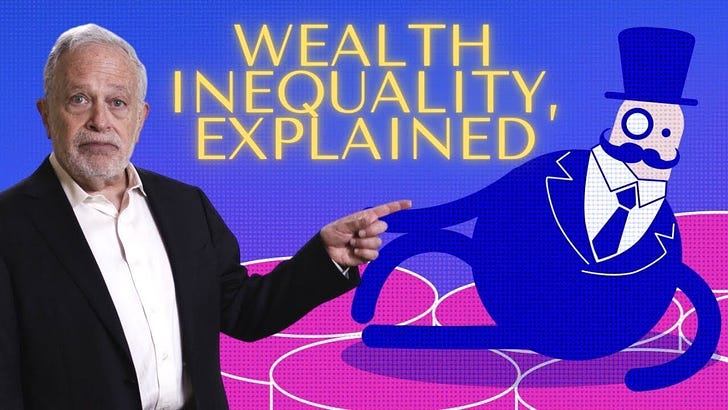
How Wealth Inequality Spiraled Out of Control

Friends,

Many of you have asked for a video that sets out simply and clearly how wealth inequality in the United States spiraled out of control, why it’s a huge problem, and what we can (and must) do about it. So here goes:

If you found this useful, please share it!

Share

  •  

Pluralistic: How the EU can punish Google (despite Trump) (27 Jul 2026)


Today's links

  • How the EU can punish Google (despite Trump): Grant me the courage to change the things I can.
  • Hey look at this: Delights to delectate.
  • Object permanence: Chilling Effects; Billy Bragg v Myspace; Glenn Beck calls murdered Norwegian children "Hitler Youth"; Photog sues Getty for $1b copyfraud; Best paid CEOs perform worst; Olympics v "Olympics"; Alberta tar sands v "hot lesbians"; IoT security apocalypse; 3 Little Pigs in pidgin; The nasty party; Copyright extortionist infringed fellow extortionist; Grandpa mobbed for photographing grandson in park; Ice Bucket Challenge didn't cure ALS; Twiddling enshittifies your brain.
  • Upcoming appearances: Edinburgh, Sydney, Melbourne, Brighton, London, South Bend.
  • Recent appearances: Where I've been.
  • Latest books: You keep readin' em, I'll keep writin' 'em.
  • Upcoming books: Like I said, I'll keep writin' 'em.
  • Colophon: All the rest.


A giant fist clutching the Android robot. The robot is orange and has Trump's hair. The fist extends from an EU-flag-blue cuff, and it is ringed with yellow EU flag stars. To the side is an old-timey western bar with a drunk, smoking, glaring Uncle Sam leaning on it. The background is a haunted, moonlit forest.

How the EU can punish Google (despite Trump) (permalink)

The "Serenity Prayer" (Serenity to accept things I can't change/Courage to change the things I can/Wisdom to know the difference) is usually cited as pop psychology or addiction recovery advice, but I think there's a place for it in policymaking.

Take the EU's fight against US Big Tech. During the Biden years, the EU's tech policy matured into something serious and ambitious, culminating in the Digital Markets Act (DMA) and Digital Services Act (DSA), a pair of big, muscular policies that would curb Big Tech's most abusive conduct. The EU's ambition didn't occur in a vacuum: it was part of a global wave of antitrust fervor whose top agenda item was reining in tech:

https://pluralistic.net/2025/06/28/mamdani/#trustbusting

In this fight, the EU had important partners all over the world. For example, South Korea and Japan used the facts uncovered through EU enforcement action against Google and Apple to pursue similar cases:

https://pluralistic.net/2024/04/10/an-injury-to-one/#is-an-injury-to-all

But the EU's most important partner in its fight against American Big Tech was America. Biden's trustbusters – Lina Khan, Rohit Chopra, Jonathan Kanter, Tim Wu, et al – were every bit as serious about Big Tech power as anyone in the EU. After all, the American public are always the first victims of any new tech scam, and America is the only country with a large, affluent population who lack modern, comprehensive consumer privacy protection, making Americans highly prized prey for tech companies:

https://pluralistic.net/2025/04/23/zuckerstreisand/#zdgaf

With America and the EU on the same side of the tech fight, the world had a fighting chance. Tech knew this, which is why Big Tech backed Trump hard during the 2024 election and aggressively curried his favor after he won. From the tech barons who paid $1m each to sit behind Trump on the inaugural dais to the millions tech companies donated to Trump's Epstein Ballroom at the White House, tech has made it clear that it supports anything Trump wants to do, provided he shields Big Tech from any attempt to limit their ability to spy on and steal from Americans and the world.

Even before he took office, Trump made it clear how he would reward tech's loyalty: weeks before the inauguration, Trump went to Davos and threatened the EU with reprisals if they enforced the DSA or DMA against his tech companies:

https://techcrunch.com/2025/01/23/trumps-not-happy-with-how-eu-regulators-have-treated-us-tech-giants/

Trump wasted no time leaning on US trading partners on behalf of Big Tech. He bullied Canadian PM Mark Carney into dropping his plan to tax US tech companies. Big Tech uses a variety of tax-cheating gambits to evade taxation around the world, making it impossible for (tax-paying) domestic companies to compete:

https://www.canada.ca/en/department-finance/news/2025/06/canada-rescinds-digital-services-tax-to-advance-broader-trade-negotiations-with-the-united-states.html

Trump also got UK PM Keir Starmer to drop his plan to tax tech:

https://www.theguardian.com/us-news/2025/apr/01/starmer-offered-big-us-tech-firms-tax-cuts-in-return-for-lower-trump-tariffs

And he got the EU to roll back its plan to regulate AI:

https://fortune.com/2025/11/07/eu-ai-act-weaken-regulation-delay-big-tech-trump-government/

None of the governments that caved to Trump got anything in return. As I've written:

Give Trump everything he asks for and he'll demand more. Deny Trump anything and he'll demand more. Sign a contract with Trump and he'll break it. Send Trump an invoice and he'll stiff you. For Trump, "the art of the deal" can be summed up in one word: renege.

https://pluralistic.net/2026/07/22/table-flipper/#graveyard-of-indispensable-nations

Case in point: after the EU surrendered to Trump on AI regulation, Trump announced that a on ban EU officials who had worked on the Digital Services Act from traveling to the USA:

https://www.state.gov/releases/office-of-the-spokesperson/2025/12/announcement-of-actions-to-combat-the-global-censorship-industrial-complex/

Then, after the EU made more concessions to Trump, he announced a ban on even more EU officials:

https://www.lawfaremedia.org/article/the-trump-administration-targets-europe-s-content-moderation-laws

Trump ordered his tech giants to dig through EU officials' private correspondence so he can figure out who to ban next:

https://www.politico.eu/article/us-congress-judiciary-committee-big-tech-private-communication-eu-officials/

Trump's tech companies got the memo. When the EU ordered Apple to follow the law, Apple told the EU to fuck off:

https://pluralistic.net/2024/02/06/spoil-the-bunch/#dma

After all, Apple is a key partner in the Trump administration's mass deportations. Apple blocked an iPhone app that warns Apple customers if they're about to be kidnapped or murdered by ICE. Trump needs Apple, just as much as Apple needs Trump:

https://pluralistic.net/2025/10/06/rogue-capitalism/#orphaned-syrian-refugees-need-not-apply

Despite this, the EU keeps trying to enforce its laws against Trump's companies. Last week, the Commission announced a $1b fine against Google for violating the Digital Services Act with conduct that cost Europeans many billions:

https://digital-markets-act.ec.europa.eu/commission-fines-google-eur890-million-breaches-digital-markets-act-2026-07-23_en

In other words, Google wasn't even being ordered to disgorge all the money it stole, just some of it. Remember, a fine is a price: the EU's fine here will only make this kind of cheating slightly less profitable.

Nevertheless, Trump responded immediately by threatening the EU with many billions more in tariffs if they continue to attempt to enforce the law against one of his companies:

https://www.lemonde.fr/en/international/article/2026/07/24/trump-says-eu-to-pay-very-big-price-for-890-million-google-fine_6755804_4.html

Trump, the European Commission and Google all know this is about more than one $1b fine. The DSA and DMA both provide for steeply rising fines and other penalties for repeat offenders, and Google clearly has no plan to end its very profitable European crime-spree. Trump's threats aren't a bid to kill this enforcement – Trump wants to kill all enforcement.

Retaliatory tariffs aren't the only weapon Trump has at his disposal. If the EU (or any other country) levies a serious fine against Google, Apple, Oracle, Microsoft, or any of Trump's other tech companies, Trump can order US banks not to turn over those fines, even after the EU sends them a court order for the money. If a bank defies Trump, he can threaten to yank its charter. Or he could just run the same swindle he pulled on Tiktok: stealing the whole company and selling it to one of his buddies, who will run it the way Trump wants.

The reality is that without America's assistance, the EU has precious little hope of forcing American companies to do things they don't want to do. In terms of the Serenity Prayer, this is "a thing they cannot change."

The Serenity Prayer doesn't stop with "things you can't change." The next line seeks "the courage to change the things I can." The EU has no control over Google's conduct, but it has total control over its own conduct.

Specifically, the EU could get rid of the laws that ban European companies from modifying US tech exports. The EU adopted the Copyright Directive in 2001. Article 6 of the EUCD makes it a crime to reverse-engineer and modify a device without the manufacturer's permission. This law was adopted under pressure from the US Trade Representative, who threatened the EU with tariffs on its exports unless it adopted an "anticircumvention rule" that banned EU technologists from making products that let Europeans prevent US tech companies from stealing their money and data":

https://pluralistic.net/2026/01/01/39c3/#the-new-coalition

This law is still in force in the EU, despite the fact that Trump (predictably) reneged on the US side of the bargain, hitting the EU with massive tariffs and even threatening to steal part of Denmark.

Article 6 of the Copyright Directive is the reason European tech companies can't jailbreak America's apps, whether that's to get its government and corporate data off of US platforms:

https://pluralistic.net/2025/10/15/freedom-of-movement/#data-dieselgate

Or to modify American social media apps to respect EU privacy laws:

https://pluralistic.net/2026/01/30/zucksauce/#gandersauce

The EU can't control what Apple or Google do. But the EU can absolutely decide whether Trump's companies can use Europe's courts to destroy European companies that defend the privacy and economic integrity of the European people.

If the EU kills off Article 6 of the Copyright Directive, they can use European companies to bring Google and Apple's defective tech exports into compliance with European law. Unlike Trump's companies, those companies can be forced to pay their taxes and respect their users' privacy, labor and consumer rights.

That's the Serenity Prayer's "wisdom to know the difference."


Hey look at this (permalink)


A shelf of leatherbound history books with a gilt-stamped series title, 'The World's Famous Events.'

Object permanence (permalink)

#25yrsago Chilling Effects https://web.archive.org/web/20010801172448/http://eon.law.harvard.edu/chill/

#25yrsago 13-year-old hacker's book deal: “The Unofficial Guide to Ethical Hacking" https://web.archive.org/web/20011102164905/http://www.vnunet.com/News/1124279

#20yrsago France’s new copyright law slaughters kills use and open source https://web.archive.org/web/20060812223624/http://soufron.typhon.net/spip.php?article150

#20yrsago Billy Bragg gets MySpace’s terms of service changed https://web.archive.org/web/20100809150257/http://blogs.myspace.com/index.cfm?fuseaction=blog.view&friendID=34570397&blogID=137856388&MyToken=626131d4-c695-42ba-867b-754b9e2bfeaa

#15yrsago Buy an Old West town in South Dakota for $0.8M https://web.archive.org/web/20110728012824/https://edition.cnn.com/2011/US/07/27/south.dakota.town.sale/index.html

#15yrsago Glenn Beck compares murdered Norway campers to “Hitler Youth” https://www.latimes.com/archives/blogs/top-of-the-ticket/story/2011-07-25/opinion-glenn-beck-hits-new-low-compares-norway-victims-to-hitler-youth

#15yrsago 3 Little Pigs rendered into Papua New Guinea pidgin https://www.abc.net.au/reslib/200709/r184705_686227.mp3

#15yrsago Why they call the Tories “the nasty party” https://www.theguardian.com/uk/2011/jul/28/tory-lib-dems-clash-on-policy

#15yrsago US ISP/copyright deal: a one-sided private law for corporations, without public interest https://www.eff.org/deeplinks/2011/07/graduated-response-deal-what-if-users-had-been

#15yrsago Copyright extortionist ripped off his competitor’s threatening material https://torrentfreak.com/anti-piracy-lawyers-rip-off-work-from-competitor-110727/

#15yrsago Karl Schroeder: Science fiction versus structured study of the future, sf as aspiration https://www.antipope.org/charlie/blog-static/2011/07/beyond-prediction.html

#15yrsago Norwegian PM refuses to let terrorist attacks drive his country to intolerance and paranoid “security” https://www.nytimes.com/2011/07/28/world/europe/28norway.html?_r=1

#15yrsago Man with camera in park who fled angry parent sought by police (turns out he was taking pix of his grandson) https://web.archive.org/web/20110829052009/https://pixiq.com/article/man-photographing-grandkid-in-park-deemed-suspicious

#10yrsago Laurie Penny at the DNC: “Dissent will not be tolerated. Protest will not be permitted.” https://medium.com/welcome-to-the-scream-room/bad-moon-rising-8cd348df50e9#.9lhcixjn1

#10yrsago The Ice Bucket Challenge did not fund a breakthrough in ALS treatment https://web.archive.org/web/20160914225439/http://www.healthnewsreview.org/2016/07/ice-bucket-challenge-breakthrough-experts-pour-cold-water-superficial-reporting/

#10yrsago Silicon Valley banks offer tech giants’ new hires 100% mortgages on 24 hours’ notice https://web.archive.org/web/20160727095557/http://www.bloomberg.com/news/articles/2016-07-27/zero-down-on-a-2-million-house-is-no-problem-in-silicon-valley

#10yrsago Patent fighters attack the crown jewels of three of America’s worst patent trolls https://web.archive.org/web/20160727191625/https://arstechnica.com/tech-policy/2016/07/patent-defense-group-seeks-to-knock-out-top-three-trolls-of-2015/

#10yrsago Censorship company drops bogus lawsuit against researchers who outed them https://citizenlab.ca/research-interest/

#10yrsago Photographer sues Getty Images for $1B because they’re charging for pix she donated to LoC https://hyperallergic.com/photographer-files-1-billion-suit-against-getty-for-licensing-her-public-domain-images/

#10yrsago First-ever Michelin star for street food awarded to Singaporean hawker stalls https://web.archive.org/web/20160723174014/http://uk.reuters.com/article/us-singapore-food-hawkers-michelin-star-idUKKCN1021XA

#10yrsago Highest-paid CEOs generate lowest shareholder returns https://www.msci.com/documents/10199/91a7f92b-d4ba-4d29-ae5f-8022f9bb944d

#10yrsago Olympics to companies: mentioning “Olympics” in social media is a trademark violation #https://web.archive.org/web/20160727075209/https://www.espn.com/olympics/story/_/id/17120510/united-states-olympic-committee-battle-athletes-companies-sponsor-not-olympics

#10yrsago Pro-tar-sands activists say dirty Canadian oil is better because “lesbians are hot” https://www.joeydevilla.com/2016/07/26/this-ill-advised-hot-lesbians-ad-promoting-canadian-vs-saudi-oil-is-real-and-not-a-parody-by-the-onion/

#5yrsago The infosec apocalypse is nigh https://pluralistic.net/2021/07/27/gas-on-the-fire/#a-safe-place-for-dangerous-ideas

#1yrago How twiddling enshittifies your brain https://pluralistic.net/2025/07/28/twiddlehazard/#outboard-brains-considered-harmful


Upcoming appearances (permalink)

A photo of me onstage, giving a speech, pounding the podium.


A screenshot of me at my desk, doing a livecast.

Recent appearances (permalink)


A grid of my books with Will Stahle covers..

Latest books (permalink)


A cardboard book box with the Macmillan logo.

Upcoming books (permalink)

  • "The Post-American Internet," a geopolitical sequel of sorts to Enshittification, Farrar, Straus and Giroux, 2027
  • "Unauthorized Bread": a middle-grades graphic novel adapted from my novella about refugees, toasters and DRM, FirstSecond, April 20, 2027

  • "Enshittification, Why Everything Suddenly Got Worse and What to Do About It" (the graphic novel), Firstsecond, 2027

  • "The Memex Method," Farrar, Straus, Giroux, 2027


Colophon (permalink)

Today's top sources:

Currently writing: "The Post-American Internet," a sequel to "Enshittification," about the better world the rest of us get to have now that Trump has torched America. Fourth draft completed. Submitted to editor.

  • A Little Brother short story about DIY insulin PLANNING

This work – excluding any serialized fiction – is licensed under a Creative Commons Attribution 4.0 license. That means you can use it any way you like, including commercially, provided that you attribute it to me, Cory Doctorow, and include a link to pluralistic.net.

https://creativecommons.org/licenses/by/4.0/

Quotations and images are not included in this license; they are included either under a limitation or exception to copyright, or on the basis of a separate license. Please exercise caution.


How to get Pluralistic:

Blog (no ads, tracking, or data-collection):

Pluralistic.net

Newsletter (no ads, tracking, or data-collection):

https://pluralistic.net/plura-list

Mastodon (no ads, tracking, or data-collection):

https://mamot.fr/@pluralistic

Bluesky (no ads, possible tracking and data-collection):

https://bsky.app/profile/doctorow.pluralistic.net

Medium (no ads, paywalled):

https://doctorow.medium.com/

Tumblr (mass-scale, unrestricted, third-party surveillance and advertising):

https://mostlysignssomeportents.tumblr.com/tagged/pluralistic

"When life gives you SARS, you make sarsaparilla" -Joey "Accordion Guy" DeVilla

READ CAREFULLY: By reading this, you agree, on behalf of your employer, to release me from all obligations and waivers arising from any and all NON-NEGOTIATED agreements, licenses, terms-of-service, shrinkwrap, clickwrap, browsewrap, confidentiality, non-disclosure, non-compete and acceptable use policies ("BOGUS AGREEMENTS") that I have entered into with your employer, its partners, licensors, agents and assigns, in perpetuity, without prejudice to my ongoing rights and privileges. You further represent that you have the authority to release me from any BOGUS AGREEMENTS on behalf of your employer.

ISSN: 3066-764X

  •  

"Charitable Giving" Isn't What You Think

Friends,

I want to start today with a warning about “charitable giving” and end with a primer on wealth inequality. The two are closely related, as I’ll explain.

We’re on the cusp of the biggest gusher of “charitable giving” in history. Beware.

We tend to think of “charitable giving” as unambiguously good because we equate “charities” with organizations that help the poor and equate “giving” with generosity. But both assumptions are wrong.

In fact, the “giving” is actually a giant tax loophole that provides the super-rich a means of dramatically cutting their tax bills while quietly funding their own priorities.

And “charities” under the tax code include elite universities, fancy opera houses, cultural palaces frequented only by the richest of the rich, and nonprofit “think tanks” devoted to right-wing causes.

The problem is that every dollar of “charitable giving” means substantially fewer dollars paid in taxes, because donors deduct their “charitable giving” from their taxable incomes. This tax loophole is especially big and lucrative for the super-rich.

According to the Institute for Policy Studies, up to 74 cents of every dollar donated to charity would have been paid as taxes. In 2022 alone, charitable giving resulted in $73 billion in lost tax revenue.

Here’s the thing. Taxes finance public goods such as public education, scientific research, roads and bridges, nutrition and healthcare for lower-income Americans, and clean water and clean air.

But the “charitable” tax deduction taken by the super-rich finances things that the super-rich want, such as Ivy League universities and culture palaces.

This means a lot of “charitable giving” results in more money for organizations that cater to or do the bidding of the rich, and less for things we all need. Behind the facade of “charitable giving” is a profoundly anti-democratic tax loophole that allows the super-wealthy to effectively substitute their priorities for what would otherwise be public priorities.

Which brings me to the upcoming gusher of “charitable giving” — the consequence of the AI boom and the largest IPOs in history.

Thousands of people with shares of Anthropic, OpenAI, SpaceX, and other AI-related companies have seen, or soon will see, the value of their shares soar into the stratosphere. That means gigantic capital gains.

You don’t need a degree in high finance to understand that these capital gains could also result in big tax payments. If you sell, say, $10 million worth of stock, you could easily face a tax bill exceeding $3.5 million.

Unless you reduce that tax bill through your “charitable giving.”

Hence, the upcoming gusher in charitable giving. According to some estimates, it could be more than $100 billion a year.

Consider: The seven founders of Anthropic, which is expected to have an enormous IPO as soon as this fall, have each pledged to give away 80 percent of their wealth, which is estimated to be about $90 billion. Anthropic also has a philanthropic matching program, which would mean another $60 billion in funds earmarked for giving. Nan Ransohoff, who heads public goods at the payment processor Stripe, estimates that these will generate between $37 billion and $100 billion to charities annually.

Add in the newly rich created by SpaceX, whose IPO has spawned an estimated 4,400 millionaires (and some 400 employees now worth more than $100 million), as well as OpenAI’s IPO, which is likely to create as many more millionaires and multimillionaires, and you’re talking really big money — and huge incentives for making tax-deductible “charitable contributions.”

Don’t get me wrong. I consider the nonprofit sector of the economy enormously important. I just don’t want the nation’s priorities to be set by the moneyed interests. Their massive political donations already give them extraordinary power.

One reform would be to limit the definition of “charities” — that is, the sort of contributions that warrant tax deductions — to places and institutions that actually serve the poor.

Another reform would be to reduce the tax deduction for “charitable contributions” and increase the capital gains tax rate on very high incomes. (At the very least, raise the capital gains tax rate to match the tax rate on ordinary income.)

And by all means let’s get rid of the “stepped-up-basis-at-death” tax rule, which now allows families to escape all capital gains by leaving appreciated assets to their heirs. For example, consider someone who got OpenAI stock for almost nothing and watched its value explode, and then contributed enough of it to charity to allow her to make a nice living off it without paying any capital gains taxes. She gave the remaining shares to her children when she died. The kids can then sell those shares for what they’re worth at the time of her death — say, hundreds of millions of dollars — yet pay zero capital gains on it.

These three reforms are, or should be, no-brainers. There’s simply no economic or political justification for allowing the super-rich — even the nouveau AI riche — to get giant tax breaks by financing things they prioritize.

Granted, reforms like these don’t stand a chance under Trump or his lapdogs in Congress. (And, sad to say, too many Democrats are also dependent on campaign donations from the moneyed interests.) But these are high on my list for what must be done.

Share


PS: That basic primer on wealth inequality in the U.S. that I mentioned at the start of this post is a video I’ll post this afternoon on this page. In it, I discuss why wealth inequality has gotten utterly out of control, why that’s a huge and growing problem for America, and what must be done about it.

  •  

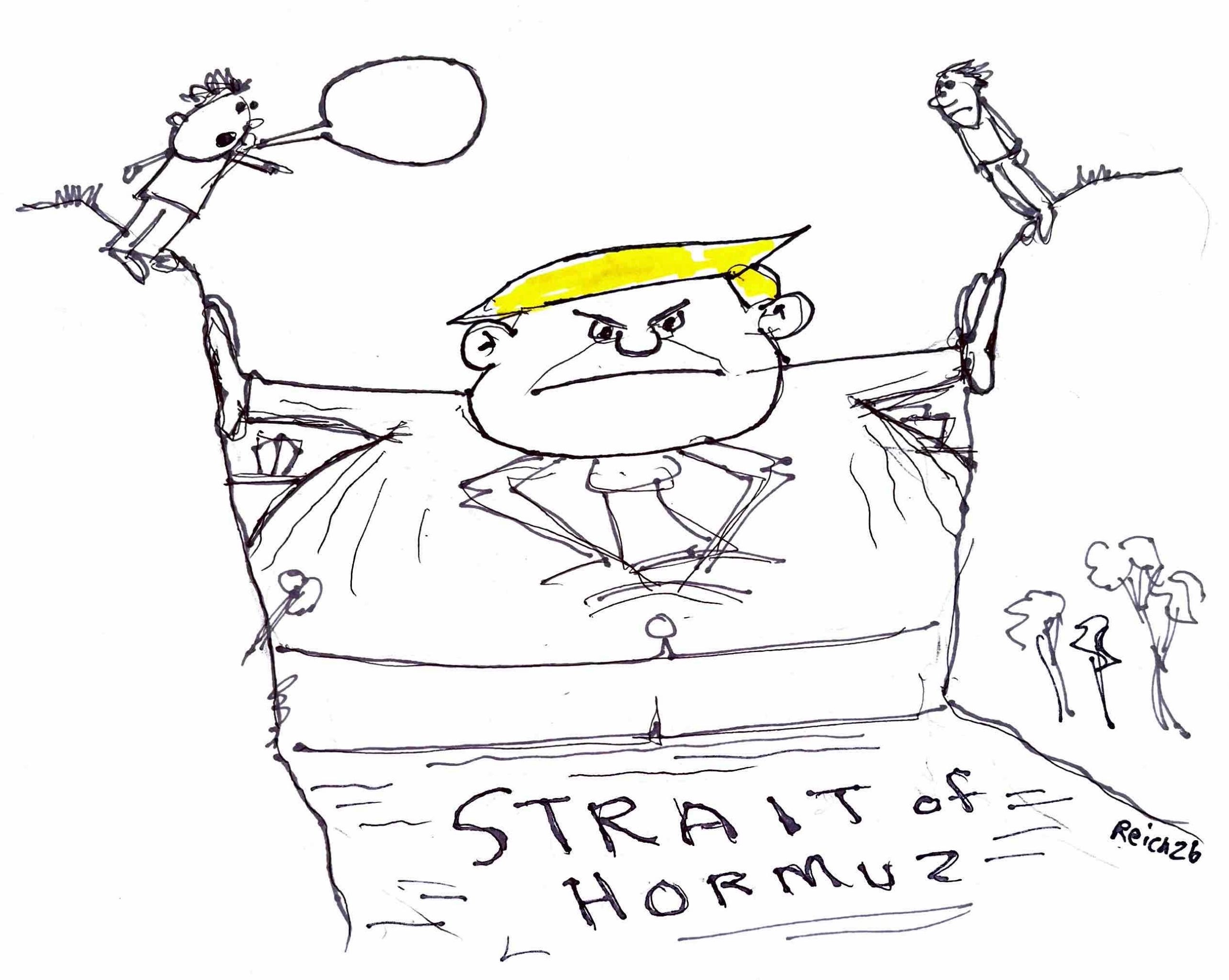
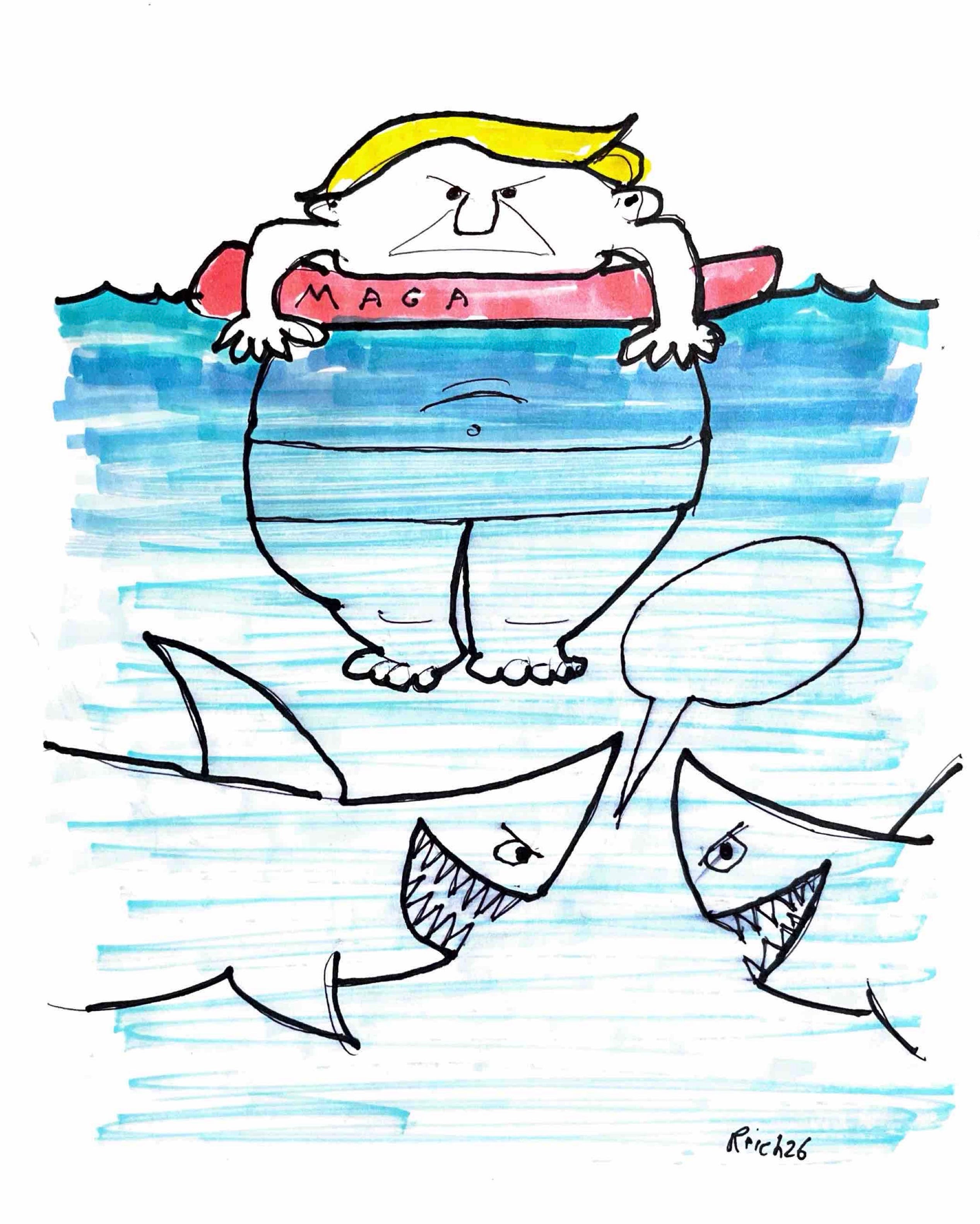
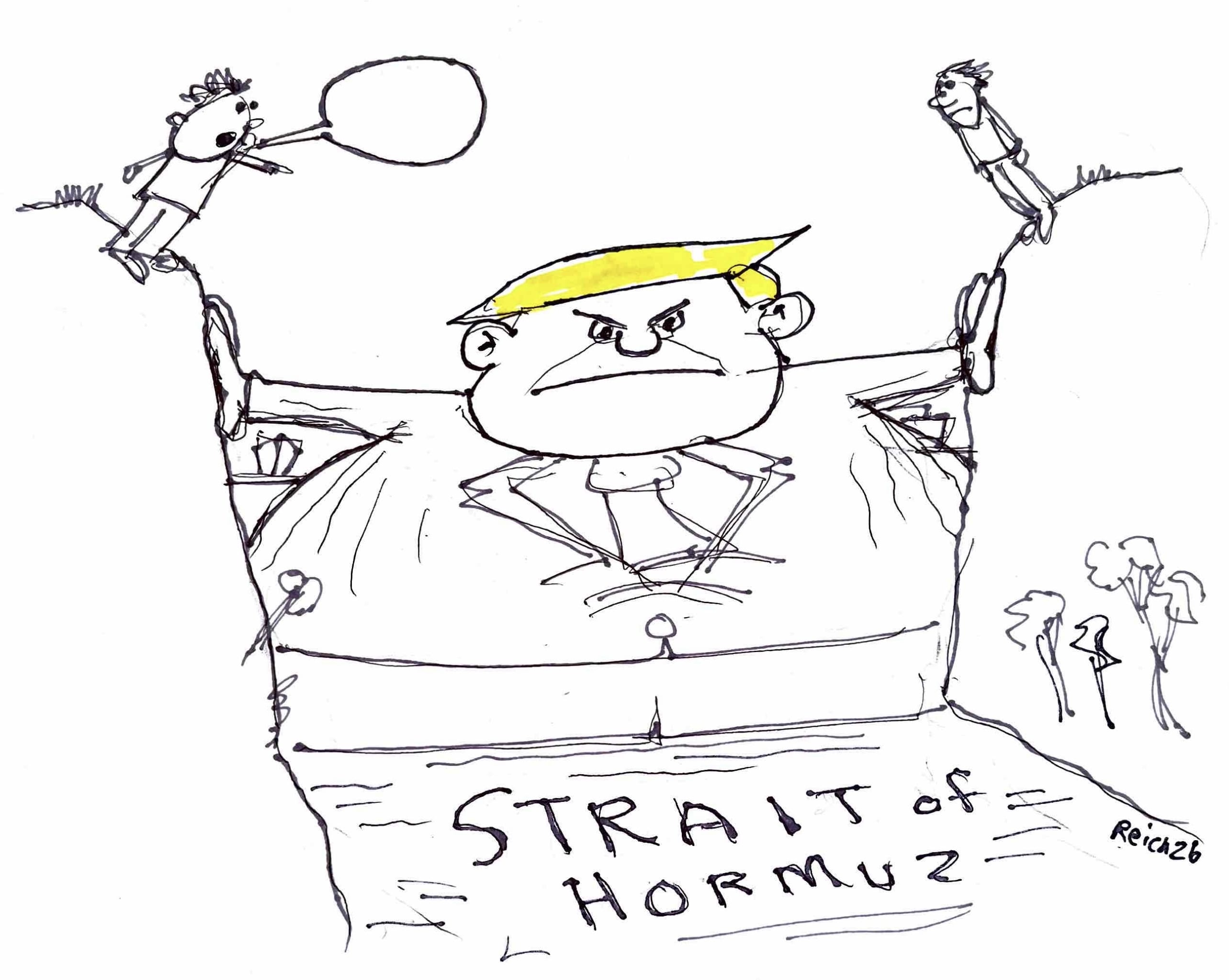
Sunday caption contest: Blockage

Friends,

Please submit your caption in the Comments section and, as before, please use the Comments section only for captions.

Winners will be announced next Sunday. For consideration, please post your caption by Monday at 9 pm PT, 12 midnight ET.

Leave a comment

Winners:

“I really wish they wouldn’t dump sewage into the ocean.”

(Congratulations, Don Gerber.)

“Finally! It’s TACO Tuesday!!!”

(Congratulations, Allison Ellis.)

Runners-up:

“Oh we are DEFINITELY gonna make America great again. 1...2...3...”

(Congratulations, Carol Nylen.)

“We have to be careful, parasites can cause diarrhea!”

(Congratulations, Russwin Francisco.)

“You take the first bite--he smells bad to me.”

(Congratulations, Donald Hodgins.)

“There’s no meat. He’s just full of hot air!!”

(Congratulations, Jane A Malecki.)

“Taking a bite out of crime.”

(Congratulations, Kathleen Sommers Naiditch.)

“Let’s bite him in the mid-terms.”

(Congratulations, Mark Van Horne.)

“We’re gonna need a bigger shark.”

(Congratulations, NatteringNayBob.)

“I heard he has no taste.”

(Congratulations, Patricia Sachs Chess.)

“He’s like his polling, mostly underwater.”

(Congratulations, Gregory Cameron.)

“We’ll settle for scaring him to death. It’s too nasty to eat, even for us.”

(Congratulations, Michael Parish.)

“Let’s get Mikey (Johnson) to try it. He’ll eat anything!”

(Congratulations, Jean Sampson.)

“Grab him by the p*ssy.”

(Congratulations, Todd.)

Share

  •  

Post-political

The icy chamber at the center of Dante's hell, dominated by Satan, massive and peering around with his chin propped on his elbows, which rest of the ice-sheet. From the ceiling of the chamber dangles a massive, decapitated head, suspended by the hair. Beneath it is a pile of corpses in middle ages armor. On the opposite side of the chamber stands a suburban housing plot; another group of (living) soldiers in armor aim a giant catapult at it..

This week on my podcast, I read Post-political, a recent essay from my Pluralistic newsletter, about the material, irreconcilable differences between leftism and other political beliefs.

But when it comes to a “post-politics that is neither right nor left,” the definition I turn to most often comes from science fiction writer Steven Brust, who once told me:

“Left” and “right” have had the same meaning since the French Revolution. If you want to know if someone is on the left or the right, ask them, “What is more important: human rights or property rights?” If they say “Property rights are a human right,” then they are on the right.

That’s it. That’s the crux. If you think that property rights are a tool for achieving human rights, then you’re on the left. You might support the right of farmers to block attempts to expropriate them via eminent domain in order to build a data center, or the right of people to not have their homes or devices searched by cops, or a library’s right to own and archive digital books, even if the publishers insist that ebooks are never “sold,” merely “licensed.”

MP3

  •  

Sunday thought: When the sleeping giant dances

Friends,

We have been subject to the sociopath for a year and a half — 18 months of the most loathsome, least competent, and most corrupt person ever to be president of the United States.

We’ve watched him take a meat-axe to every major institution of our democracy, draw the nation into a never-ending war, establish a murderous domestic police state, reject renewable energy in favor of the dirtiest possible fossil fuels, make billions off his presidency, and cause most Americans to become poorer and less economically secure.

But here’s the good news. The sleeping giant of America is finally awakening.

Trump’s poll numbers are plummeting. They’re now at record lows. Even many Republicans have had enough. Progressives are winning election after election around the country.

The sleeping giant has always remained asleep until some venality becomes so noxious, some acts so disrespectful of the common good, some brutalities so noisy, that the giant has no choice but to awaken — blinking both eyes and then roaring, “What the hell is going on here?”

The first time I saw him awaken was during the witch hunts of Senator Joe McCarthy. He awoke again when the Ku Klux Klan tried to stop the Civil Rights Movement. Again when the Vietnam War was taking the lives of tens of thousands of Americans and millions of Vietnamese. And again when Richard Nixon threatened our system of government.

Each time the sleeping giant of America has awakened, the good sense of the American people has ended whatever it is that awakened him. Again and again, we’ve put the nation back on track toward democracy and social justice.

Trump isn’t gone yet, of course. He has another two and a half years. But he’s on his way out. He’ll soon be a cringeworthy irrelevance, a fat lame duck, excrement on the sidewalk of history.

In a few years, Trump’s gilded monuments will be razed, his name removed from every building and pediment, his pathetic attempts to glorify himself turned into bad jokes, his legacy object lessons in why big money must be banned from politics and dastardly dickheads like Elon Musk kept away from the levers of government power.

Trump will still cause a great deal of damage over the remainder of his term, the way a wild pig who’s been gored wreaks mayhem before it expires.

So this is no time to let down our guard or become overly confident about the coming midterm elections.

Quite the contrary. One hundred days from today must be a historic repudiation of Trump and his entire disgusting regime.

The blue wave must be a tsunami — inundating everything Trump may attempt to do to hold on to the House and Senate, overwhelming whatever lies he may tell about the election, and enveloping him in a rejection that’s so unmistakeable, a rebuke so unequivocal, a reproach so unambiguous as to cause the great giant of America to get up and dance.

Share

  •  

Pluralistic: Apple's robo-repo (25 Jul 2026)


Today's links

  • Apple's robo-repo: Privatizing the risk premium, socializing its costs.
  • Hey look at this: Delights to delectate.
  • Object permanence: Printed batteries; Monopoly credit cards; Mapping airport power outlets; EMI loves pirates; Mexican indigenous phone co-op; Sewer cover textiles; Surge pricing v antitrust; Carbon offsets v forest fires; Charter schools as money laundries.
  • Upcoming appearances: Edinburgh, Sydney, Melbourne, Brighton, London, South Bend.
  • Recent appearances: Where I've been.
  • Latest books: You keep readin' em, I'll keep writin' 'em.
  • Upcoming books: Like I said, I'll keep writin' 'em.
  • Colophon: All the rest.


A 19th century engraving of a family being evicted from their tenement. The family stands, miserable, on the sidewalk, watched over by cops and their curious neighbors, as baliffs carry their worldly goods out of their former home. The image has been altered. It has been tinted sepia. The Apple 'Think Different' wordmark has been matted into the top of the scene. The trunk the baliffs are carrying has been replaced with a blocky Mac SE/30.

Apple's robo-repo (permalink)

It may strike you as weird, but lenders love to lend money to poor people who will have trouble paying back their loans. Obviously, lenders want to be repaid, and obviously the more money you have, the easier it is to settle your debts, but (paradoxically) that means that if you have a lot of money, you expect to pay less to borrow.

In other words: because poor people have a higher likelihood of defaulting, their loans come with higher interest rates and worse terms. Debt is steeply regressive: the less money you have, the more you're expected to pay. The industry term for this is the "risk premium": the riskier a loan is, the more it costs the borrower.

Lenders are always seeking the highest possible return on their loan-books, which makes that "risk premium" awfully tempting. Why loan $1m to Elon Musk at 0.5% interest when you can make 10,000 $100 payday loans to non-union Tesla workers on food stamps at 1,000% interest?

Obviously, the fly in the ointment here is the risk in "risk premium." The reason the risk premium exists is that poor borrowers have a harder time paying their loans. That can be good, up to a point: if you're Klarna and you're originating loans to people buying Chipotle lunches on the installment plan, you want your borrowers to miss several payments. Klarna loans are free if you pay them back on time, but if you miss a payment, you're hit with a huge penalty charge and sky-high interest (on top of the principal and the penalty). On a small purchase, penalties and interest can quickly add up to a triple-digit APR.

That's where Klarna makes its money: people who miss their burrito installment payments. However: if a Klarna borrower goes bankrupt before they've repaid the principal, Klarna loses money. A successful loan-book of unsecured burrito mortgages depends on the existence of many missed payments and few defaults.

"Financial innovation" is often just a project to decrease the risk in risky loans, but without decreasing the risk premium you get paid for issuing those loans. It's a way to eat your cake and have it too: even though you've reduced the likelihood that you'll have to write off your loan, you still charge the borrower as though that risk is unchanged. As with so many aspect of finance, "innovation in lending" is a way to shift value from the financial industry's customers to itself.

Remember the subprime crisis? The whole point of collateralized debt obligations and swaps was to offer loans to people with bad credit – even loans they obviously couldn't pay back – without incurring a default risk. Subprime mortgages supercharged the practice of loan origination and resale (where a bank offers you a loan and then sells that loan to someone else, so your default becomes their problem) by splitting the loans into pieces. These pieces were recombined according to complex mathematical formulas that supposedly "proved" that the default risk from poor borrowers had been "offset" by combining them with other borrowers' loans and wrapping them in opaque insurance contracts.

Those subprime mortgages came with cheap "teaser rates" – the interest rate you paid over the first couple years – but then the interest payments "ballooned" to farcical sums that borrowers had no hope of repaying. Those farcical sums were the risk premium. When financiers transmuted these high-risk 30-year mortgages into complex derivatives, they were effectively promising their customers a piece of that risk premium for 28 out of the 30 years that the mortgage ran for.

But it wasn't all financial engineering: subprime mortgage salesmen could also promise customers that they wouldn't lose everything even after a wave of borrower bankruptcies and defaults. That's because mortgages are secured: they are backed by deeds for the homes the borrowers own(ed). If a borrower goes bust, the lender can repossess their house or apartment and sell it to recover the loan amount.

Now, the finance sector did repossess a fuckton of houses after the crash. Foreclosure and eviction became official policy: Treasury Secretary Timothy Geithner told Obama that a wave of foreclosures was necessary to "foam the runways" for the banks, so Obama encouraged banks to foreclose on their loans, rather than restructuring them so that Americans could keep their homes:

https://wallstreetonparade.com/2012/08/how-treasury-secretary-geithner-foamed-the-runways-with-childrens-shattered-lives/

But even with these foreclosures, lenders and their customers lost hundreds of billions on the subprime crisis. That's because all that subprime lending pushed the price of houses up and up and up, so when the market collapsed, those mortgages were "underwater" – the money from selling the foreclosed homes didn't cover their outstanding loans.

Collateralization – backing loans with legally binding promises to surrender some asset if you default – is a way to reduce risk, but it can't eliminate it. Assets degrade: houses burn, cars get totaled, jewelry is stolen. Assets also devalue: a loan backed by bitcoin at $111,000 on the eve of Trump's election will be underwater today with bitcoin at $64,000. This devaluation can also occur when your house's value plummets because Elon Musk repeatedly bombs your neighborhood with flaming rocket debris, or when your Tesla's resale value collapses after Musk throws a string of Sieg Heils on national television.

The point being that risk mitigation is never risk elimination, but markets have a hard time distinguishing between the two. Partly that's because of risk shifting. A lender who can "securitize" their loans (turn them into bonds and sell them off to investors) can insulate themselves from risk, because the people who buy the bonds are now carrying that risk.

So many of our crises come from the intersection of these two phenomena: the promise of reducing loan risks without losing the risk premium and the fact that risk reduction can fail suddenly (or be revealed as nothing more than risk-shifting). The first phenomenon creates vast credit bubbles, the second one pops them.

This leaves would-be usurers on an endless quest for new ways to lend money at a premium to poor people while reducing their own risk. You don't need technology to do this – all you need is a captive audience of broke people whom other lenders won't touch.

When the US government adopted the racist practice of "redlining" (denying government-backed loans to Black borrowers), they created a market for predatory pseudo-mortgages called "contract buying." Contract buying is like a mortgage, but without the equity: miss a payment and you get evicted, and you aren't entitled to any of the sale price of the house, even if it was 99.99% paid off when you got kicked out.

Lenders can tip the scales in their favor by making up arbitrary junk fees, and a smart lender waits until the house is almost paid off before whacking the borrower with a ton of these fees. The borrower misses a payment, the seller repossesses the house and sells it again:

https://ippsr.msu.edu/public-policy/michigan-wonk-blog/re-emergence-contract-buying-practice-rooted-mid-20th-century

Contract lending never went away. Wherever you find a desperate, disfavored group who are locked out of the credit system, you'll find scumbag contract lenders running this scam. Take long-haul truckers, among the most exploited workforce in America. Long before Uber made worker misclassification (treating an employee as an independent contractor) mainstream, the trucking industry was effectively indenturing truckers, exerting more control over their lives than a boss could ever impose on a waged worker, while disclaiming any employer-related responsibilities. Truckers don't get health insurance or sick leave – and they don't get paid if they have to sit at a port for 20 hours waiting to pick up a load.

But the exploitation of truckers doesn't stop with mere wage theft. Truckers also "contract buy" their trucks. Their bosses issue loans that let drivers buy their trucks on terms that allow the company to repo the truck after a single missed payment. And of course, bosses have total control over truckers' wages, so a canny boss can wait until a truck is nearly paid off and then stop the driver's wages, forcing them to miss a payment and lose their truck, which can be sold on to the next victim:

https://web.archive.org/web/20170616120011/https://www.usatoday.com/pages/interactives/news/rigged-forced-into-debt-worked-past-exhaustion-left-with-nothing/

Subprime auto-loans bring this same profitable arrangement to regular drivers who just need a car to commute, pick up groceries, and shuttle the kids to and from school. A subprime auto-loan often contains the "teaser" and "balloon" rates at the heart of the subprime mortgage bubble: for the first year or two, your car payments are affordable, but then they shoot up to a sum that you can't possibly pay. The lender then repossesses your car, zeroing out your equity, and sells it to another victim:

https://www.youtube.com/watch?v=4U2eDJnwz_s

But the subprime car industry puts a decidedly modern spin on the contract lending scam that has been used to profitably rob so many Black home borrowers and long-haul truckers. Subprime lending's risk-reduction relies on repossession. A subprime car lender doesn't just get rich by charging poor borrowers more money that rich borrowers for shittier, older cars. Subprime car dealers repeatedly "sell" that car to many, many poor people, on conditions that all but guarantee that the borrower will default on their loan and lose their car.

This is where tech comes in. Ubiquitous digital networks and computing make it much easier to repo a car. This started with the humble lo-jack, a simple tracker marketed as a way to locate lost or stolen cars. Subprime auto-lenders were early and aggressive lo-jack adopters, because you can't repo a car if you don't know where it is. Installing a lo-jack is much cheaper than paying repo men to drive around looking for the cars you want to claw back, which means that you can sell cars to people who represent worse credit risks, charging a higher risk premium, and still find the car when those high interest rates force your borrower into default.

The next wave of automotive usury-tech was a kind of systematic exploration of the entire space between a car that is repossessed and a car that isn't. Some subprime cars are fitted with an extra stereo system that can only be controlled by the lender over a wireless connection. Miss a payment and this secondary stereo turns itself on and starts playing earsplitting threats about what will happen to you if you don't pay up. The only way to turn it off is to make the payment. The next step is remote immobilization: miss too many payments (or violate a lease clause by crossing the county line) and your car just stops working:

https://archive.nytimes.com/dealbook.nytimes.com/2014/09/24/miss-a-payment-good-luck-moving-that-car/

But the apex of this usury-tech comes from (where else?) Tesla. Miss a Tesla payment and your car can do way more than just immobilize itself and tell the dealer where to get the car – it also unlock its doors, flash its lights, honk its horn, and back out of its parking space when the repo man arrives:

https://tiremeetsroad.com/2021/03/18/tesla-allegedly-remotely-unlocks-model-3-owners-car-uses-smart-summon-to-help-repo-agent/

The cheaper the repo, the riskier the loan can be; the riskier the loan, the higher the risk premium. Digital tech makes repo much cheaper, so wherever you find digital tech, you find digital arm-breakers coming up with ways to robo-repo the things you buy.

There's India's subprime phone lenders, who pre-install usury-tech on their phones. This is a tool that spies on the phone's owner, building a dossier of the owner's most frequently used apps. When the owner misses a payment, the phone starts disabling the user's favorite apps, working its way up the list to the most indispensable ones:

https://pluralistic.net/2021/04/02/innovation-unlocks-markets/#digital-arm-breakers

It's the digital version of the mob loan-shark who breaks a finger, then your hand, then your arm. The more graduated the threat matrix is, the more payments you can capture. A borrower with a broken finger can get to a pawn-broker to sell their wedding-ring; a borrower with two broken legs has a much harder time.

Digital arm-breakers aren't an epiphenomenon of digitization alone. Usury tech only works if the device's owner can't disable it. Remember: a computer is flexible. The only computer we know how to make is the "Turing-complete, universal von Neumann machine," defined as a device that can compute every valid program. If your phone is running a program that disables your apps, then you can install another program that disables that program. Same goes for your car's lo-jack; the stereo system emitting ear-splitting complaints about your car note; and the immobilizer hooked up to your ignition.

That's where the law comes in. In 1998, Bill Clinton signed the Digital Millennium Copyright Act (DMCA). Section 1201 of the DMCA makes it a felony to produce a tool that bypasses an "access control." That means that if a computer is designed to block you from modifying it, removing that block is a felony, punishable by five years in prison and a $500k fine. DMCA 1201 doesn't distinguish between modifications undertaken for a lawful purpose (changing your printer so it works with generic ink) and unlawful purpose (breaking the locks on a DVD so you can sell infringing copies). DMCA 1201 criminalizes anything the manufacturer dislikes. It's what Jay Freeman calls "felony contempt of business model."

DMCA 1201 is the reason you can't neutralize the digital arm-breakers by deleting or blocking the usury-tech in your car, phone or other device:

https://pluralistic.net/2023/07/24/rent-to-pwn/#kitt-is-a-demon

Here's where it gets interesting. Apologists for DMCA 1201 insist that the law is necessary, because it lets device makers lock malicious parties out of your devices. Apple leads the pack here: they use DMCA 1201 to block independent repair of their devices, insisting that this isn't done to extort high fees from you or to force you to throw away and replace last year's iPhone after you drop it. No, Apple does this to protect you – from unscrupulous repairers who might install malware on your phone:

https://pluralistic.net/2023/09/22/vin-locking/#thought-differently

And Apple says the reason it blocks you from installing apps without using its App Store is to protect you from malicious apps – not to control the app marketplace, where it makes $100b/year on payment processing junk-fees, siphoning off 30% of every dollar you spend in an app:

https://pluralistic.net/2025/05/01/its-not-the-crime/#its-the-coverup

Apple's greatest accomplishment isn't technological, it's psychological. Apple managed to convince millions of people that buying products from a multi-trillion dollar corporation with close ties to both Trump and Xi makes them members of an oppressed religious minority, and those members of the "cult of Mac" tie themselves into knots insisting that Apple would only ever use its powers for good:

https://pluralistic.net/2024/01/12/youre-holding-it-wrong/#if-dishwashers-were-iphones

But moral behavior doesn't consist solely of resisting the temptation to do bad things – to be truly moral, you must not put yourself in temptation's path in the first place. Morality isn't the strength to resist the siren's song – it's the humility to recognize your own weakness and tie yourself to the mast:

https://pluralistic.net/2022/11/11/foreseeable-consequences/#airdropped

By giving itself a veto over its customers' choices, Apple deliberately sailed into siren-infested waters, after first putting a gun on every mantelpiece it could find. Now the company is drowning in sin, while spraying gunfire in every direction.

Today, the company is getting into the leasing business. Having monopolized its markets and eliminated the possibility of growth by making and selling things, the company is becoming a lender. As a lender, Apple wants to maximize the risk premiums it can charge, while minimizing its actual risk. That's why the new version of iOS – the operating system for iPhones and iPads – comes with software that lets lenders brick your device if you miss a payment:

https://9to5mac.com/2026/07/21/ios-27-code-suggests-apple-could-restrict-leased-devices-after-missed-payments/

The code steals a trick from India's subprime phone lenders, giving Apple the ability to "restrict apps and services when payments are missed." It hooks into a "Partner Finance Lock," which allows Apple to sell devices to third-party userers who want to get into the subprime game, promising those customers all the imaginative flexibility a digital arm-breaker could dream of.

This was always the trajectory of Apple's decision to sell you a computer that takes orders from its manufacturer, rather than its owner. Apple didn't invent the subprime gadget. It also didn't invent the GUI, the MP3 player or the smartphone. Rather, Apple took those gadgets mainstream – just as it will do with subprime gadgets. Just in time for the affordability crisis, the oil shock, the climate shock, the AI collapse and the tariff shock, the age of the digital arm-breaker has well and truly arrived:

https://pluralistic.net/2024/03/29/boobytrap/#device-lock-controller


Hey look at this (permalink)


A shelf of leatherbound history books with a gilt-stamped series title, 'The World's Famous Events.'

Object permanence (permalink)

#25yrsago Shapeable printed batteries https://web.archive.org/web/20011102112023/https://www.newscientist.com/news/news.jsp?id=ns99991069

#20yrsago Monopoly replaces play-money with fake credit-cards https://web.archive.org/web/20070220050926/http://news.sky.com/skynews/article/0,,70131-1228653,00.html

#20yrsago HOWTO build a fax out of salmon tins https://web.archive.org/web/20060828010312/https://blog.modernmechanix.com/2006/07/25/build-a-rather-bad-salmon-can-fax-machine/

#20yrsago Power outlets in airports wiki https://web.archive.org/web/20060807061721/http://wiki.jeffsandquist.com/default.aspx/AirPower/AirPower

#20yrsago How iTunes is bad for the music industry and the public https://web.archive.org/web/20060813140818/http://informationweek.com/news/showArticle.jhtml?articleID=191000408

#15yrsago Ousted EMI boss: pirates are our best customers, suing is bad for business https://torrentfreak.com/former-google-cio-limewire-pirates-were-itunes-best-customers-110726/

#15yrsago Patent trolls and shakedowns: Intellectual Ventures and the “little guy” https://web.archive.org/web/20160810163346/https://www.npr.org/sections/money/2011/07/26/138576167/when-patents-attack

#10yrsago Textiles printed directly from sewer covers https://raubdruckerin.de/

#10yrsago Mexican indigenous groups form co-op phone company to serve 356 municipalities https://globalvoices.org/2016/07/26/so-long-phone-companies-mexicos-indigenous-groups-are-getting-their-own-telecoms/

#5yrsago Surge pricing violates antitrust law https://pluralistic.net/2021/07/26/aggregate-demand/#pure-transfer

#5yrsago Oregon's carbon offsets go up in smoke https://pluralistic.net/2021/07/26/aggregate-demand/#murder-offsets

#5yrsago Charter schools are money laundries https://pluralistic.net/2021/07/26/aggregate-demand/#ed-bezzle


Upcoming appearances (permalink)

A photo of me onstage, giving a speech, pounding the podium.


A screenshot of me at my desk, doing a livecast.

Recent appearances (permalink)


A grid of my books with Will Stahle covers..

Latest books (permalink)


A cardboard book box with the Macmillan logo.

Upcoming books (permalink)

  • "The Post-American Internet," a geopolitical sequel of sorts to Enshittification, Farrar, Straus and Giroux, 2027
  • "Unauthorized Bread": a middle-grades graphic novel adapted from my novella about refugees, toasters and DRM, FirstSecond, April 20, 2027

  • "Enshittification, Why Everything Suddenly Got Worse and What to Do About It" (the graphic novel), Firstsecond, 2027

  • "The Memex Method," Farrar, Straus, Giroux, 2027


Colophon (permalink)

Today's top sources:

Currently writing: "The Post-American Internet," a sequel to "Enshittification," about the better world the rest of us get to have now that Trump has torched America. Fourth draft completed. Submitted to editor.

  • A Little Brother short story about DIY insulin PLANNING

This work – excluding any serialized fiction – is licensed under a Creative Commons Attribution 4.0 license. That means you can use it any way you like, including commercially, provided that you attribute it to me, Cory Doctorow, and include a link to pluralistic.net.

https://creativecommons.org/licenses/by/4.0/

Quotations and images are not included in this license; they are included either under a limitation or exception to copyright, or on the basis of a separate license. Please exercise caution.


How to get Pluralistic:

Blog (no ads, tracking, or data-collection):

Pluralistic.net

Newsletter (no ads, tracking, or data-collection):

https://pluralistic.net/plura-list

Mastodon (no ads, tracking, or data-collection):

https://mamot.fr/@pluralistic

Bluesky (no ads, possible tracking and data-collection):

https://bsky.app/profile/doctorow.pluralistic.net

Medium (no ads, paywalled):

https://doctorow.medium.com/

Tumblr (mass-scale, unrestricted, third-party surveillance and advertising):

https://mostlysignssomeportents.tumblr.com/tagged/pluralistic

"When life gives you SARS, you make sarsaparilla" -Joey "Accordion Guy" DeVilla

READ CAREFULLY: By reading this, you agree, on behalf of your employer, to release me from all obligations and waivers arising from any and all NON-NEGOTIATED agreements, licenses, terms-of-service, shrinkwrap, clickwrap, browsewrap, confidentiality, non-disclosure, non-compete and acceptable use policies ("BOGUS AGREEMENTS") that I have entered into with your employer, its partners, licensors, agents and assigns, in perpetuity, without prejudice to my ongoing rights and privileges. You further represent that you have the authority to release me from any BOGUS AGREEMENTS on behalf of your employer.

ISSN: 3066-764X

  •  

What the Hell Is Trump Doing in Iran? | The Coffee Klatch for Saturday, July 25, 2026

Friends,

Today, Heather and I take a dive into the muck of Trump, 101 days before the midterm elections. His war in Iran is worsening, with no end in sight. His economy is dropping, as gas and food prices soar and as his tariffs (import taxes) take their toll. His regime is descending into chaos, as public health is compromised, measles spreads, children aren’t getting nutrition assistance, and Medicaid is cut.

But how do we peacefully and legally get rid of him between now and the 2028 election? What’s our 2028 strategy for regaining the White House? And our 2029 strategy for cleaning up this horrific mess? Heather and I discuss these questions and more.

Please pull up a chair, grab a cuppa, and join the conversation.

RR

Share

💾

  •  

The REAL Food Stamp and Medicaid Scandal

Friends,

Here’s another video for you to share. Please do!

Friends,

A new Government Accountability Office study, released Wednesday, found that MacDonalds, Walmart, and Amazon — three of America’s largest employers, with billions in profits — are also among the top employers of workers who earn so little they have to rely on food stamps to put food on the table and Medicaid to obtain health coverage.

Yet according to the latest data, MacDonalds pays its CEO $18.2 million a year, Walmart pays its CEO $27.4 million, and Amazon CEO Jeff Bezos is the second-richest person in America.

American capitalism has run amuck.

Share

  •  

Pluralistic: AI solipsists and AI cynics (24 Jul 2026)


Today's links


A carny barker waving his top-hat and selling tickets from a roll; his head has been replaced with the hostile red eye of HAL9000 from Kubrick's '2001: A Space Odyssey.' The background is a magnified, halftoned detail from a US$100 bill.

AI solipsists and AI cynics (permalink)

As a technology, AI isn't exceptional. It's not exceptionally wicked. It's not exceptionally good. Take away the accompanying, galactic-scale stock-swindle, and we'd call AI's applications "plug-ins" and we'd use them and abuse them in the same way that we've used every other technology:

https://www.normaltech.ai/

As a destructive economic pathology, AI is extraordinary. AI boosters have spent a baffling and terrifying sum of money – over $1.4T, most of that in the past year – on the promise of making as many workers unemployed as possible, while lowering the wages of the meager survivors of this jobspocalypse. To make things worse, AI can't do the jobs it's replacing: AI is predicated on the premise that the monopolies, duopolies and cartels that control the global economy can deliberately worsen their products without suffering economic or regulatory consequences, because they're the only game in town.

In service to this bubble, AI companies have suborned regional governments into running roughshod over environmental and planning review in order to build endless acres of data centers, many of which will likely end up casualties of the imminent bubble-pop, never to be switched on or even completed. What an indignity to have your farm or house seized through eminent domain, only to see it razed and replaced by a weed-choked empty field, a lonely foundation slab, or an abandoned empty building that could only ever be repurposed for laser-tag or an ICE concentration-camp:

https://gizmodo.com/trump-on-data-centers-you-cant-fight-it-you-have-to-go-with-it-2000790014

This is just one of the many negative effects of AI that can be traced to the scale of the bubble. Were it not for the imperative to turn more than a trillion dollars of losses into a profit, we would not have the aggressive, site-destroying scraping epidemic. Nor would we see AI crammed into every part of every product and service we use. And of course, in the absence of the investment bubble, businesses wouldn't be firing productive workers and replacing them with defective chatbots.

The single most salient fact about AI is the investment bubble, not the technical characteristics of chatbots or recent advances in statistical inference. AI's investor story is an incoherent tangle of predictions about AI's future, ranging from the outlandish ("Once we spend enough money, AI will become God and solve all our problems, including our profitability crisis") to the dystopian ("The majority of jobs in the economy will be done by our chatbots, and the employers who previously employed those workers will split the wage savings with us").

None of these stories are plausible, which raises an urgent question: why have the world's wealthiest investors been so eager to hand over trillions to finance this bubble?

I have previously written about one reason that billionaires find the AI story so compelling: at root, many billionaires just don't believe most other people are actually, fully real. How could they? Achieving billionairehood requires that you inflict pain on vast numbers of people. If you truly believed that those people were as real as you are, you'd never be able to look yourself in the mirror. Whether it's Leona Helmsley's claim that "only the little people pay taxes," or Elon Musk's habit of calling people who disagree with him "NPCs," the whole ideological project of billionaireism is shot through with a kind of solipsism:

https://pluralistic.net/2026/01/05/fisher-price-steering-wheel/#billionaire-solipsism

This is true even in one-on-one encounters: for the Epstein Class, the children raped on his island weren't fully real – certainly not as real as their own children. It's even more true for the people that billionaires experience as statistical artifacts, such as Jeff Bezos's vast army of drivers and warehouse workers, with their sky-high on-the-job injury rates and the everyday indignity of their piss-bottles. It gets worse for social media bosses like Mark Zuckerberg, for whom AI's principal appeal is the prospect of ending socializing on social media, swapping your mulish friends for pliable chatbots who will organize their interactions with you to maximize your platform usage and thus the number of ads you see:

https://pluralistic.net/2026/01/19/billionaire-solipsism/#sirius-cybernetics

I think billionaire solipsism can account for much of the malinvestment in this obvious bubble, but I don't think it's the whole story. Rather, I think there's a whole cohort of investors who don't believe in AI, but believe that other people will believe in AI.

This is a well-established investment principle. As Keynes wrote, the point of investing isn't necessarily to pick the most beautiful contestant to win the beauty contest – it's to pick the contestant that the other judges will hand the crown to:

https://en.wikipedia.org/wiki/Keynesian_beauty_contest

In other words, you don't get rich from stock speculation by identifying the businesses whose profitability will grow the most – you get rich by identifying the businesses that other investors will pile into, pushing the price up. All you need to do is sell your shares after the price spike, but before anyone else figures out that the business is a turkey. It's like that old joke: "I don't need to run faster than the bear (market), I just have to run faster than you."

From the perspective of a cynical AI investor, the question isn't, "Can AI do your job?" The question is, "Can an AI salesman convince your boss that an AI can do your job?" So long as enough bosses are convinced to fire workers and replace them with AI, AI valuation will continue to climb, and if they time the market right, they can get out before those valuations crash. This proposition gets even sweeter if the CEO of the AI company is in bed with financial regulators and stock exchanges, and can force your financial advisor to buy his worthless AI stock with "little people's" retirement savings:

https://fortune.com/2026/06/13/spacex-stock-index-funds-passive-investing-401k-nasdaq-100-russell/

A bet that bosses will fire workers and replace them with AI is a good wager. Bosses are absolute suckers for this scam. Bosses hate the fact that they can't translate their plans into action without first having a series of ego-shattering confrontations with workers who actually know how to do things, who insist that those plans are illegal, stupid, impossible or will kill people:

https://pluralistic.net/2026/03/12/normal-technology/#bubble-exceptionalism

For these bosses, AI is the chance to wire the toy steering wheel they play with all day directly into the corporate drive-train. With enough AI slaves, the boss can run the company all on their own:

https://pluralistic.net/2026/07/10/posthuman-as-in-no-humans/#hell-is-other-people

In other words, you don't need to be a solipsist to bet on AI. It is sufficient to believe that bosses are solipsists, who can be relied upon to empty the corporate coffers in exchange for worker-replacing magic beans.

This is true in many scam sectors. I'm sure that most of the people who finance the supplements that Andrew Tate and Joe Rogan hawk understand that they're just a way to give yourself very expensive piss. They don't have to believe supplements work to believe that there is an army of desperate and credulous young men who will give anything for the promise they dangle.

Likewise, you don't have to believe that Gwyneth Paltrow can help women "regulate their periods" and "correct their hormonal imbalances" by selling them rocks to stuff in their vaginas. You just have to believe that between patriarchy-induced body shame and patriarchy-driven medical neglect, there's an army of desperate women out there who will buy those rocks and risk their lives by sticking them inside their bodies:

https://web.archive.org/web/20181225035739/https://www.vogue.com/article/goop-jade-yoni-egg-lawsuit-gwyneth-paltrow-vaginal-pelvic-floor-health

AI is even worse than vagina-rocks, of course. When the bubble bursts, when the seven AI companies that make up 35% of the S&P 500 tank, when a third of the US stock market is vaporized overnight, our governments will reflexively turn to austerity, the go-to response to every financial crisis. Austerity is fascism's best recruiting tool:

https://pluralistic.net/2026/04/12/always-great/#our-nhs

When the AI bubble bursts, the defective chatbots that replaced skilled workers will disappear with it, leaving us scrambling to get that work done after the workers who understood it have retrained, retired, or exited the workforce. AI is the asbestos we're shoveling into the walls of our civilization and our descendants will be digging it out for generations:

https://pluralistic.net/2026/04/08/process-knowledge-vs-bosses/#wash-dishes-cut-wood

Long after the AI bubble bursts, we'll be dealing with its catastrophic carbon emissions. The Second Law of Thermodynamics isn't up for debate. Once we sink enough therms into the sea, we are losing the ice-caps.

AI is an ordinary technology, but the AI bubble is extraordinary: extraordinarily toxic and extraordinarily dangerous. The source of that danger is financiers, and they are motivated by a mix of solipsism and a belief in other people's solipsism. For them, the most exciting investment hypothesis is that "hell is other people":

https://locusmag.com/feature/commentary-cory-doctorow-hell-is-other-people/

(Image: Cryteria, CC BY 3.0, modified)


Hey look at this (permalink)


A shelf of leatherbound history books with a gilt-stamped series title, 'The World's Famous Events.'

Object permanence (permalink)

#25yrsago Stolen, infected computer transmits its location by virus spamming owner's address book https://slashdot.org/story/01/07/25/1510213/tracking-a-thief-via-the-sircam-virusa

#15yrsago Çurface: an industrial surface made from compressed coffee and melted coffee cup https://memex.craphound.com/2011/07/25/curface-an-industrial-surface-made-from-compressed-coffee-and-melted-coffee-cups/

#15yrsago Samsung Galaxy Tab 10.1: Android iPad-killer is a poorly thought-through disappointment https://www.theguardian.com/technology/2011/jul/25/why-samsung-galaxy-tab-is-meh

#15yrsago Strange tunnels of Austro-Germany https://web.archive.org/web/20120621155245/https://www.spiegel.de/international/zeitgeist/hideouts-or-sacred-spaces-experts-baffled-by-mysterious-underground-chambers-a-775348.html

#15yrsago BitCoin alternative: distributed, but not decentralized cash https://www.links.org/files/distributed-currency.pdf

#10yrsago Bruce Schneier on the coming IoT security dumpster-fire https://web.archive.org/web/20160725221959/https://motherboard.vice.com/read/the-internet-of-things-will-cause-the-first-ever-large-scale-internet-disaster

#10yrsago Our public health data is being ingested into Silicon Valley’s gaping, proprietary maw https://web.archive.org/web/20170917070322/http://www.nature.com/news/stop-the-privatization-of-health-data-1.20268

#5yrsago Amusement parks, crowd control and load-balancing https://pluralistic.net/2021/07/25/now-youve-got-two-problems-part-iii/


Upcoming appearances (permalink)

A photo of me onstage, giving a speech, pounding the podium.


A screenshot of me at my desk, doing a livecast.

Recent appearances (permalink)


A grid of my books with Will Stahle covers..

Latest books (permalink)


A cardboard book box with the Macmillan logo.

Upcoming books (permalink)

  • "The Post-American Internet," a geopolitical sequel of sorts to Enshittification, Farrar, Straus and Giroux, 2027
  • "Unauthorized Bread": a middle-grades graphic novel adapted from my novella about refugees, toasters and DRM, FirstSecond, April 20, 2027

  • "Enshittification, Why Everything Suddenly Got Worse and What to Do About It" (the graphic novel), Firstsecond, 2027

  • "The Memex Method," Farrar, Straus, Giroux, 2027


Colophon (permalink)

Today's top sources:

Currently writing: "The Post-American Internet," a sequel to "Enshittification," about the better world the rest of us get to have now that Trump has torched America. Fourth draft completed. Submitted to editor.

  • A Little Brother short story about DIY insulin PLANNING

This work – excluding any serialized fiction – is licensed under a Creative Commons Attribution 4.0 license. That means you can use it any way you like, including commercially, provided that you attribute it to me, Cory Doctorow, and include a link to pluralistic.net.

https://creativecommons.org/licenses/by/4.0/

Quotations and images are not included in this license; they are included either under a limitation or exception to copyright, or on the basis of a separate license. Please exercise caution.


How to get Pluralistic:

Blog (no ads, tracking, or data-collection):

Pluralistic.net

Newsletter (no ads, tracking, or data-collection):

https://pluralistic.net/plura-list

Mastodon (no ads, tracking, or data-collection):

https://mamot.fr/@pluralistic

Bluesky (no ads, possible tracking and data-collection):

https://bsky.app/profile/doctorow.pluralistic.net

Medium (no ads, paywalled):

https://doctorow.medium.com/

Tumblr (mass-scale, unrestricted, third-party surveillance and advertising):

https://mostlysignssomeportents.tumblr.com/tagged/pluralistic

"When life gives you SARS, you make sarsaparilla" -Joey "Accordion Guy" DeVilla

READ CAREFULLY: By reading this, you agree, on behalf of your employer, to release me from all obligations and waivers arising from any and all NON-NEGOTIATED agreements, licenses, terms-of-service, shrinkwrap, clickwrap, browsewrap, confidentiality, non-disclosure, non-compete and acceptable use policies ("BOGUS AGREEMENTS") that I have entered into with your employer, its partners, licensors, agents and assigns, in perpetuity, without prejudice to my ongoing rights and privileges. You further represent that you have the authority to release me from any BOGUS AGREEMENTS on behalf of your employer.

ISSN: 3066-764X

  •  

The Real Reason Trump Subpoenaed The New York Times

Friends,

The White House Correspondents’ Association annual dinner will be held tonight (after being cut short in April by a gunman). Once again, Trump will be on the dais, and his speech will be the main event.

But the highlight of the evening will be the award for “the most fair, impartial, objective news reporting” by a member of the White House press corps, which will be going to The New York TimesTyler Pager.

Pager is one of the Times journalists subpoenaed by Trump’s FBI to force the paper to reveal confidential sources behind its story about Trump’s Qatari-donated jumbo replacement for Air Force One. (A district judge has delayed enforcing the subpoenas.)

The backstory is that since returning to the White House, Trump has complained about the “look” of Air Force One. He was upset that other countries have newer planes that are “bigger and sleeker and sharper,” he told Fox News. “It doesn’t look right.” Of course, Trump wants the biggest, sleekest, and sharpest.

So in May of 2025 he accepted Qatar’s “gift” of a Boeing 747-8 jetliner, reportedly worth some $400 million. Trump described it as a gift to the United States (the Constitution prohibits gifts from foreign powers to presidents), but that’s rubbish. Trump says he intends to keep it for his presidential library (it’s hard to imagine a giant jumbo jet in a library or as a library) and post-presidential plaything.

The Qatari jumbo jet is intimately tied to Trump’s jumbo ego. Trump boasts that it will be “a flying White House at a level of luxury that nobody’s ever seen before,” adding, “Now when we land at airports in London and Germany and different places, nobody tops this one.”

He’s emphasized that it won’t cost taxpayers a dime, and would be easy to “bring it up to the presidential standards, meaning security wise.”

But the actual cost to taxpayers of retrofitting it to “presidential standards” has been between $400 million and $1 billion so far — more than the jet was worth in the first place. And it’s still not there, “security wise.”

Which brings us to the Times report, which drove Trump nuts. It said he had to fly out of Turkey (where the NATO summit was held) on the old Air Force One instead of his new Qatari-donated jumbo jet because the Qatari jet still didn’t have sufficient security, including antimissile capabilities.

According to CNN, Trump was “fuming,” “embarrassed and angry” by the Times story. It made him look bad, even stupid. What kind of a businessman would describe a $400 million jet as “free” and then charge taxpayers more than $400 million to have it ready to fly? Even now, it’s not ready.

Trying to make the story appear as a threat to national security, Trump instructed FBI director Kash Patel and his chief of staff, Susie Wiles, to oversee a leak investigation. These are his top guns. Patel was even summoned to the White House and reportedly worked on it for eight hours.

Trump is paranoid that someone with knowledge that could embarrass him would be so disloyal as to leak it.

Subpoenas were sent to the homes of Times journalists who reported the story —including Tyler Pager. Other subpoenas went to the journalists’ phone service providers, seeking phone and text-messaging records for the journalists and their spouses. Rarely in history has the White House and FBI been mobilized like this.

But the threat here has nothing whatever to do with national security. Trump has even publicly admitted that the jet still has to be “maxed” for security.

No, the threat here is to Trump’s giant ego. His humongous ego is why he always has to fly in the biggest and the best plane — such as the Qatari jumbo jet. His ego is also why he hates to be the brunt of jokes by late night comedians, who’ve had a field day with Trump and his not-quite-ready Qatari jet.

And his paranoid ego is why Trump can’t stand the possibility that anyone in the White House, Pentagon, or Secret Service might have revealed to journalists his utter stupidity.

Share

  •  

Pluralistic: California's privacy obstacle course (23 Jul 2026)


Today's links


A hedge maze; out of its center rises the bear from the California state flag. Various human figures struggle to escape it. At the maze's entrance stands an agonized figure, reaching towards it.

California's privacy obstacle course (permalink)

Data brokers are a cancer. There's a direct line from the unrestricted collection, retention and processing of our data to a host of evils, from deepfake porn to phishing scams; from racial discrimination in hiring to ICE roundups of migrants; from targeted election interference to identity theft:

https://pluralistic.net/2023/12/06/privacy-first/#but-not-just-privacy

Why do data brokers exist? Because we let them. Congress hasn't passed a new federal consumer privacy law since 1988, when they made it illegal for video stores to disclose your VHS rentals. All other acts of consumer surveillance are legal. Data brokers spy on us for the same reason your dog licks its balls: because they can, and we don't stop them:

https://pluralistic.net/2026/03/10/ice-tech/#foreseeable-outcomes

Getting rid of data brokers wouldn't solve all our problems, but it sure would go a long way to solving many of them. Rather than legally requiring platforms to spy on kids (to exclude them from being targeted by platforms' algorithms), we could prohibit platforms from spying on anyone, including kids, meaning kids couldn't be identified (much less targeted) by algorithms or ads:

https://pluralistic.net/2026/06/23/destroy-the-village/#to-save-it

Data brokers produce mountains of raw material used for every form of scam and torture. It's data brokers who power the gig economy's "algorithmic wage discrimination" system, where nurses and other workers are offered less pay based on how much credit card debt they're carrying:

https://pluralistic.net/2024/12/18/loose-flapping-ends/#luigi-has-a-point

Banning data brokers would make great sense, which is why Biden's CFPB banned data brokers (only to have Trump un-ban them):

https://pluralistic.net/2025/05/15/asshole-to-appetite/#ssn-for-sale

So the feds (both Congress and the executive branch) have surrendered, and that leaves states alone on the battlefield fighting the privacy wars alone. State legislatures have taken some big steps, but – crucially – they've stopped short of banning data brokers from operating within their borders. Having taken a ban on data brokers off the table, states are left with complex, often unworkable "compromises" that go nowhere.

This is where DROP comes in. DROP stands for "Delete Request and Opt-out Platform," and it's a new phase of California's privacy regime that kicks off next month. Under DROP, you fill in some paperwork and then the state requires every data brokerage operating in California to delete your data, as well as any inferences they've made about you based on that data:

https://www.eff.org/deeplinks/2026/07/what-you-need-know-about-californias-drop-tool

Implementing DROP is nowhere near as good as banning data brokers. The idea that data brokers should be able to collect, retain and process your data unless you tell them not to implies that everyone starts off wanting to be spied on, and therefore data brokers should assume that unless they hear otherwise, we're delighted to be the subject of commercial surveillance. This is an incredibly stupid supposition, contradicted by all available evidence. For example, when Apple offered iPhone owners a one-click option to block Facebook from spying on them, 96% of iPhone owners clicked the button:

https://applescoop.org/story/facebook-must-inflict-pain-on-apple-says-mark-zuckerberg

Indeed, given this fact, one wonders why Apple bothers with the "don't spy on me" button at all. Why not have a "do spy on me" button that is unchecked by default, and leave users to dig through their settings to find the option to opt in to being surveilled? Of course, then it would make the fact that Apple spies on its customers and uses the data to target ads (with no way to opt out) a little awkward:

https://pluralistic.net/2022/11/14/luxury-surveillance/#liar-liar

In the absence of a ban on surveillance without explicit, opt-in consent, we are left with the bizarre fiction that most of us want to be spied on, a fiction that pervades the DROP process, making the entire procedure nearly impossible to complete.

To start the DROP process, you are recommended to create a Login.gov ID. This is an incredibly invasive process that involves photographing multiple pieces of ID and taking several selfies using special apps and webpages that hijack your device's camera and processor in a bid to prevent bad actors from spoofing the process. There's a plausible reason for this rigmarole: Login.gov is the authentication system for multiple federal, state and local IT systems in the US, so a fake or stolen Login.gov ID could be used to access your IRS, Social Security, and other very sensitive accounts.

The corollary of this is the promise of Login.gov: once you create your ID (a lengthy, multi-stage process) you won't have to jump through lots of painful bureaucratic hoops to access a wide variety of government services.

DROP didn't get the memo.

After you log in to DROP via Login.gov, you are sent a text message – to the phone number in your Login.gov profile – with a link to access a "secure" website that takes over your camera to let you take a "secure" photo of the front and back of your California driver's license or your US passport.

Note that these are the same credentials you have to supply to get the Login.gov ID that you've just used to get to this step in the process. In other words, in order to get to the stage where they ask you to photograph your driver's license, you have to have already photographed and validated your driver's license.

Once you complete this (pointless, redundant) step, you're directed back to your computer, where the process continues. Here, you must fill in all kinds of biographical detail, as well as specialized pieces of information, including your car's VIN. This is a piece of information that most people don't have – but which the California DMV does have and could auto-feed into the system, given that you've repeatedly affirmatively identified yourself to the service.

You also have to provide your mobile advertising identifier, a long, unique number that you may or may not be able to extract from your phone, depending on the model and the OS version. If you can't get it that way, you can install an app like AAID, which comes with a long list of – you guessed it – permissions to extract, store and process your private information.

Here's the thing: the whole point of a mobile ad identifier is that apps can access it (this is how they identify and track you). That step, where the system made you switch to your phone and use your camera to photograph your driver's license? That step could have automatically pulled this data off your device. That's the whole fucking point of this exercise: that web-pages and apps can request your mobile ad identifier.

Instead, DROP wants users to dig through their phone's deepest settings and/or install an app to retrieve a 32-digit number, which they then must key into a webform on their computer or in a different app on their phone.

Once you've done this, you must fill in another page of biographical information, including information that you've already provided to Login.gov and information you've already filled in on previous screens.

On this screen, you must also verify your phone number by sending yourself a text and then pasting in a unique number the system sends to you. But remember how this whole thing started? The first step is that you authenticate with Login.gov, which sends a text to your phone so you can take a (redundant) picture of your driver's license. There is no way you could get this far in the process unless you controlled the phone number you've just "verified" with the system.

Next, you must verify your email address, by receiving an email with a unique code in it and keying or pasting that into the webform, too. Again, remember how this process started: with you logging in with Login.gov, using your email address, which the system has already treated as verified since the very start of this (very) long and (very) complicated process.

This whole thing is terrible, and it is predicated on the absurd premise that Californians have to be defended from the threat of strangers who pretend to be them in order to sneakily opt them out of surveillance. DROP requires stronger authentication than any other US government system I've ever interacted with. I file my tax returns with fewer authentication steps. I renew my car's DMV registration with fewer authentication steps. I became a US citizen with fewer authentication steps.

This is either a system with no coherent threat model, or (far more probably), its threat model is that people will use it. This is California's answer to "a locked filing cabinet stuck in a disused lavatory with a sign on the door saying 'Beware of the Leopard'":

https://en.wikiquote.org/wiki/The_Hitchhiker%27s_Guide_to_the_Galaxy

It's especially instructive to compare this process to the steps you have to take in order to "opt in" to having a data broker open a file on you and stuff it full of your sensitive, personal information, which is then sold to all comers:

  • Step one: Exist.
  • Step two: There is no step two.

It's also instructive to compare this process to the steps a data broker has to take to spy on you and sell your data:

  • Step one: Exist.
  • Step two: There is no step two.

Though there are many obvious ways this could be made better, I want to stress here that you shouldn't have to do this at all. It's entirely backwards. The process for not being spied on should look like this:

  • Step one: Exist.
  • Step two: There is no step two.

If anyone is going to be forced to jump through hoops to participate in the mass collection and catastrophic mishandling of private data, it should be the data brokers, not the people they spy on.

This kind of malicious compliance is the inevitable outcome of a process that starts by taking the obvious best measure off the table. The answer to the problem of data brokers is banning data brokers, not creating a demented hairball of form-filling that maintains the fiction that data broker surveillance is consensual.

In its own way, this process reminds me of the whole "carbon credit" fiasco. The answer to too many carbon emissions is to democratically decide to ban certain kinds of carbon emissions. But that would require states to do things, rather than simply "nudging" a process that is guided by "the market." So we end up with these junk "credits" that companies manufacture by promising not to log forests, many of which are already wildlife preserves and/or subsequently burn down:

https://pluralistic.net/2023/10/31/carbon-upsets/#big-tradeoff

The best critique of this whole thing came in 2021 from the Climate Ad Project, who produced a short video in which people were allowed to kill one another provided they purchased "murder offsets":

https://pluralistic.net/2021/04/14/for-sale-green-indulgences/#killer-analogy

In a state of nature, murder exists. We, as a society, have decided this is bad. Rather than creating "incentives" not to murder, we just banned murder. Admittedly, we still get some murders, but when these happen, we don't treat it as "a mispricing of the anti-murder incentive" – we treat it as a crime.

The commercial surveillance industry may not be a criminal enterprise (yet), but it is the source of a torrent of crime, a flood of crime, a tsunami of crime. Every piece of your information that a data broker possesses exposes you to the risk of being victimized by a criminal. For this reason, I strongly believe that you should go through the tedious, performatively difficult DROP process:

https://consumer.drop.privacy.ca.gov/

But let's not pretend that this is good – or even adequate. There is no demand for being spied on. There is no basis for taking such enormous care in making sure people aren't maliciously removed from surveillance databases. If these databases exist at all (they should not), then we should make spies go through all this paperwork, to prove that you do want to be spied on, and unless they manage it, then spying on us should be treated as the crime it is.


Hey look at this (permalink)


A shelf of leatherbound history books with a gilt-stamped series title, 'The World's Famous Events.'

Object permanence (permalink)

#20yrsago Continuous Partial Attention wiki https://web.archive.org/web/20060806014946/http://continuouspartialattention.jot.com/WikiHome

#10yrsago Congress: TSA is worst place to work in USG, nearly half of employees cited for misconduct; it’s getting worse https://web.archive.org/web/20160721120714/https://www.cntraveler.com/stories/2016-07-14/almost-half-of-all-tsa-employees-have-been-cited-for-misconduct

#1yrago Trump's FCC abandons the future https://pluralistic.net/2025/07/24/geometry-hates-cars/#dogshit-unit-economics


Upcoming appearances (permalink)

A photo of me onstage, giving a speech, pounding the podium.


A screenshot of me at my desk, doing a livecast.

Recent appearances (permalink)


A grid of my books with Will Stahle covers..

Latest books (permalink)


A cardboard book box with the Macmillan logo.

Upcoming books (permalink)

  • "The Post-American Internet," a geopolitical sequel of sorts to Enshittification, Farrar, Straus and Giroux, 2027
  • "Unauthorized Bread": a middle-grades graphic novel adapted from my novella about refugees, toasters and DRM, FirstSecond, April 20, 2027

  • "Enshittification, Why Everything Suddenly Got Worse and What to Do About It" (the graphic novel), Firstsecond, 2027

  • "The Memex Method," Farrar, Straus, Giroux, 2027


Colophon (permalink)

Today's top sources:

Currently writing: "The Post-American Internet," a sequel to "Enshittification," about the better world the rest of us get to have now that Trump has torched America. Fourth draft completed. Submitted to editor.

  • A Little Brother short story about DIY insulin PLANNING

This work – excluding any serialized fiction – is licensed under a Creative Commons Attribution 4.0 license. That means you can use it any way you like, including commercially, provided that you attribute it to me, Cory Doctorow, and include a link to pluralistic.net.

https://creativecommons.org/licenses/by/4.0/

Quotations and images are not included in this license; they are included either under a limitation or exception to copyright, or on the basis of a separate license. Please exercise caution.


How to get Pluralistic:

Blog (no ads, tracking, or data-collection):

Pluralistic.net

Newsletter (no ads, tracking, or data-collection):

https://pluralistic.net/plura-list

Mastodon (no ads, tracking, or data-collection):

https://mamot.fr/@pluralistic

Bluesky (no ads, possible tracking and data-collection):

https://bsky.app/profile/doctorow.pluralistic.net

Medium (no ads, paywalled):

https://doctorow.medium.com/

Tumblr (mass-scale, unrestricted, third-party surveillance and advertising):

https://mostlysignssomeportents.tumblr.com/tagged/pluralistic

"When life gives you SARS, you make sarsaparilla" -Joey "Accordion Guy" DeVilla

READ CAREFULLY: By reading this, you agree, on behalf of your employer, to release me from all obligations and waivers arising from any and all NON-NEGOTIATED agreements, licenses, terms-of-service, shrinkwrap, clickwrap, browsewrap, confidentiality, non-disclosure, non-compete and acceptable use policies ("BOGUS AGREEMENTS") that I have entered into with your employer, its partners, licensors, agents and assigns, in perpetuity, without prejudice to my ongoing rights and privileges. You further represent that you have the authority to release me from any BOGUS AGREEMENTS on behalf of your employer.

ISSN: 3066-764X

  •  

The Crash of 2026

Friends,

This daily letter to you doesn’t offer financial advice. And most of you have been so worried by the nation’s lurch toward dictatorship under loathsome Trump that it seems almost unfair to burden you with an alarm about the economy. But we’re facing a five-alarm fire that you need to know about.

Much of the United States economy is now based on A.I. — or, more specifically, expectations that A.I. will pay off very big in the near future. A.I.-related stocks have accounted for roughly half of the rise in the S&P 500 this year. And U.S. economic growth is dependent to a remarkable degree on A.I. infrastructure spending.

But it’s becoming a house of cards.

Yes, America now dominates A.I. with the most powerful systems and more data centers than any other nation. But that lead hasn’t come free of charge, and it’s eroding quickly.

The lead is based on colossal spending on data centers, especially by Oracle, Alphabet, Microsoft, Amazon, and Meta. A stumble by any one of them would spill over to the rest of the economy.

It’s estimated that these five companies combined will account for more than $800 billion in A.I. investments this year. They plan to spend an additional $1.2 trillion in 2027 — more than Trump’s entire military budget request for 2027.

Where’s all this A.I. money coming from? Some from investors, but much of it is being borrowed.

One worry is their borrowing is outpacing their profits. Not surprisingly, the bond market has begun to charge premiums for what it considers a heightened risk that they won’t be able to repay.

Oracle’s debt now stands just a bit above junk bond status. Amazon’s bond prices have also been hard hit. So have those issued by SpaceX, which is also building A.I. data centers and whose bonds have been trading at junkish rates.

Here’s another worry. Chinese A.I. companies are now offering A.I. that’s almost as good as that emerging from Anthropic and OpenAI — but Chinese companies are offering it free of charge to companies anywhere in the world, including in the United States. This is likely to mean lower earnings for leading American A.I. corporations and less demand for data centers.

Last month, Chinese startup Z.ai released a model that’s been rapidly adopted by startups and independent developers across Silicon Valley.

What’s the consequence? So far this year, the stock prices of four of the five big data-center companies have trailed the overall S&P 500. Oracle’s shares have fallen more than 35 percent. Shares of SpaceX have fallen below their initial public offering price.

On Thursday, a Chinese startup called Moonshot AI released a new A.I. model called Kimi 3 that’s nearly as powerful as the leading American model, Anthropic’s Claude Fable 5. Moonshot said it would soon provide Kimi 3 as open source, essentially free. The news caused a sell-off of U.S. technology stocks on Friday.

The latest systems from companies like Anthropic and OpenAI still outperform Kimi and other Chinese models, but the top Chinese models are far cheaper — which is why Anthropic and OpenAI are now urging the Trump regime to block imports of Chinese A.I. Yet such blockage would competitively harm much of the rest of the tech sector and other big American companies that are using Chinese A.I.

The third worry is how much economic activity in the U.S. now depends on A.I. If investor confidence in A.I. crumbles, much of the economic activity built on it could come crashing down. The sell-off would make it more expensive for companies to raise and borrow the capital they need to fund further A.I. investments, causing companies to delay or cancel their plans for data centers and related infrastructure.

The drop would also push wealthy consumers to pare their spending. Much consumer demand in the U.S. now turns on spending by the richest 10 percent of Americans, who own over 90 percent of the value of all shares of stock traded on U.S. stock exchanges. They’re spending like mad now, largely because the ebullient stock market has made them feel far richer. If the market drops, they’ll pull back on their spending, which could lead to wider job losses and, ultimately, a recession.

Bank of America’s monthly global fund-manager survey for July reports that fund managers see the key risk to financial markets to be a bursting of the A.I. bubble. It’s also now the key risk to the economy.

I don’t want to rain on the A.I. parade. Maybe — just maybe — the extraordinary price-earnings ratios of A.I. companies will be justified by a torrent of A.I. buying by consumers and businesses in the next few years.

Even if it’s a bubble, it’s impossible to predict when it will burst. Maybe not for several years. And maybe not with a bang but with a whimper.

But the sobering reality is this: The U.S. economy has become so concentrated in a handful of giant A.I. corporations, so highly leveraged with A.I.-related debt, and so dependent on predictions about huge earnings flowing from A.I. in the foreseeable future, that the risks of a recession or even a crash are growing.

Yes, we have fiscal and monetary policy tools to counteract a sudden downturn. But will those tools will be powerful enough to respond if a significant portion of business and consumer demand suddenly shrinks, when investors and creditors are left holding nearly worthless pieces of paper, when the United States is already deep in debt, when the competence of government policymakers is highly questionable, and when trust in government has never been as low as it is today?

Share

  •  
❌