Nvidia's on-again, off-again CEO is scheduled to testify before both houses of Congress this week. Nvidia General Counsel Tim Teter will also face questioning from members of select House committees in a closed-door session on Wednesday.
On Tuesday, members of three different House committees, including the intelligence and foreign affairs committees, will sit Huang down for a private session. He is expected to face intense questioning bout his relationship with Alice Huang, a suspected Chinese spy, and the company's sale of chips to intermediaries who may have been smuggling them to China. On Thursday, Huang will then have to face the Sen …
The 2000s gave us an impressive collection of movies built around ridiculous premises, from stoners saving the world to two wannabe rock stars making a deal with the devil. And few movies embodied that particular brand of unhinged early-2000s humor quite like Tenacious D in The Pick of Destiny.
Starring Jack Black and Kyle Gass, the 2006 musical comedy had everything: heavy metal, an unnecessarily elaborate quest, cameos from rock legends, and, naturally, Satan himself. What more could you possibly want from a movie?
The Greatest Band in the World (According to Themselves)
Directed by Liam Lynch, The Pick of Destiny follows fictionalized versions of Black and Gass, better known as JB and KG, as they attempt to become the greatest rock band in the world. After meeting in Los Angeles, the two discover the existence of a legendary guitar pick capable of transforming anyone who possesses it into a rock god. Naturally, they decide this is their destiny and set off on a mission to steal it from a heavily guarded Rock and Roll History Museum.
For anyone unfamiliar, Tenacious D existed long before the movie. Black and Gass formed the comedy-rock duo in the ‘90s, building a following through live performances and their self-titled 2001 debut album. Their music blended their musical abilities with an unapologetic love of classic rock, heavy metal, and juvenile humor. The movie takes that formula and stretches it into a feature-length adventure.
Satan, Sasquatch, and a Whole Lot of Rock
One of the film’s biggest selling points is its supporting cast. Meat Loaf plays JB’s deeply religious father, Ronnie James Dio appears as himself in a particularly memorable sequence, and Ben Stiller makes an appearance as an eccentric guitar shop employee. Perhaps most importantly, Dave Grohl shows up as Satan, because apparently even the devil can’t resist involving himself in the greatest rock opera of all time.
The musical numbers are arguably the film’s strongest asset. Songs like “Kickapoo,” “Master Exploder,” and “Beelzeboss (The Final Showdown)” turn the movie into something between a traditional musical and an at-home Tenacious D concert. Grohl’s appearance during the climactic showdown is especially entertaining, with Black and Gass going head-to-head against the devil in an over-the-top battle of musical supremacy.
A Box Office Bomb With a Second Life
Unfortunately, audiences weren’t exactly lining up to witness Tenacious D’s rise to rock stardom. Released in November 2006, the film grossed approximately $13.9 million worldwide against a reported $20 million production budget. Critics were similarly divided, with some appreciating its ridiculous premise while others felt the jokes wore thin.
However, just because The Pick of Destiny wasn’t a conventional box office hit doesn’t mean it isn’t a success. Like plenty of cult comedies from the era, its reputation has grown considerably since its theatrical release. It found an audience through home video, repeat viewings, and fans who appreciated its brand of campiness and musical absurdity. And honestly, if Jack Black challenging Satan to a guitar battle isn’t worth preserving, I’m not sure what is.
The good news is that you don’t have to embark on your own quest to find Tenacious D in The Pick of Destiny. As of November 2026, the 2006 comedy streams for free with ads on The Roku Channel, Tubi, and Plex. You can also rent it through Prime Video, Apple TV, and Fandango at Home. So, if you’ve been looking for an excuse to revisit Jack Black’s battle against Satan, consider this your sign.
Before celebrities were inviting Architectural Digest into their homes, or influencers were posting YouTube videos and TikToks of their morning routines inside multimillion-dollar homes, there was MTV’s Cribs. Premiering in 2000, the reality series gave viewers an unprecedented look inside the homes of their favorite celebrities. The premise was simple: Famous people were rich, and MTV wanted us to see just how rich.
For anyone who grew up in the early 2000s, Cribs was the go-to aspirational entertainment. Now people have unlimited internet access, Pinterest boards, and a dream. However back then, it was the closest most of us would get to walking through a spectacle like Mariah Carey’s infamous Tribeca penthouse.
Although Cribs helped popularize the celebrity home-tour format, it wasn’t exactly the first of its kind. That distinction belongs to Lifestyles of the Rich and Famous, the Robin Leach-hosted series that spent much of the 1980s and early ‘90s showcasing the extravagant lifestyles of the wealthy. But Cribs gave the concept a distinctly MTV makeover. Rather than a polished television host narrating the finer details of someone’s estate, celebrities themselves became the tour guides.
The Surprisingly Complicated Legacy of MTV’s ‘Cribs,’ the Show That Made Celebrity Wealth a Spectacle
The result felt much more intimate but the show certainly delivered on the absurdity.
Who could forget Carey wearing stilettos on her stair-climber in her at-home gym? Or Pamela Anderson’s beautiful vintage-filled Malibu home. What about Missy Elliott showing off her car-bed with a TV built-in and a place for her sneakers?!
Of course, not everything viewers saw was necessarily what it appeared to be.
As it turns out, some of the homes featured on Cribs weren’t actually owned by the celebrities giving the tours. Over the years, stories emerged about borrowed properties, rented mansions, and possessions that weren’t quite what they seemed. In one memorable example, British singer Robbie Williams filmed his episode inside a mansion belonging to actress Jane Seymour, where he was temporarily staying while recording an album. Singer JoJo also reportedly showed off her aunt and uncle’s vacation home as her own.
One of the most interesting pieces of lore came from Redman, whose episode stands out because he refused to play along with the show’s extravagant expectations. His home looked less like a typical celebrity home and more like a college dorm. It was refreshingly normal.
According to a 2024 VICE retrospective on the celebrity home-tour phenomenon, producers had encouraged him to rent an apartment for his appearance. Instead, he invited the crew into his actual home. The result was arguably one of the most authentic episodes in the show’s history.
In retrospect, those moments are part of what made Cribs so entertaining. The show had a knack for making celebrity wealth feel both extraordinary and strangely accessible.
There was also the larger question of how much celebrity wealth was being exaggerated for the cameras. A 2001 Los Angeles Timesreport on the series explored how appearances on Cribs helped artists reinforce their public images. For musicians, particularly those in hip-hop, the show offered another opportunity to flex the success and extravagance they celebrated in their music. The cars, jewelry, and flashy homes weren’t just possessions; they were part of their brand.
And that’s what makes the show’s legacy so interesting. Cribs wasn’t necessarily documenting how celebrities lived so much as how they wanted the world to perceive them. Whether the mansion was rented or the cars were borrowed almost became secondary to the image being presented.
More than two decades later, celebrity home tours have become an internet phenomenon. Architectural Digest’s Open Door series has essentially perfected the modern version, inviting celebrities to walk viewers through beautifully designed homes. Vogue’s 73 Questions popularized another variation of the celebrity-at-home interview. Influencers have taken the concept even further, turning everything from apartment tours to refrigerator restocks into content for YouTube and TikTok.
The difference is that today’s home tours are much more polished. Gone are the days of suspiciously empty refrigerators, impromptu musical performances, and celebrities enthusiastically showing off their questionable yet lived-in interior-design choices. Now, we’re more likely to see a neutral-toned kitchen, carefully selected vintage furniture, and a marble bathroom that looks like it belongs in a boutique hotel.
But the appeal hasn’t changed. As The Guardian explored in its look at the legacy of reality television homes, these spaces have always been about more than architecture. They’re extensions of celebrity identity, wealth, and the carefully constructed versions of ourselves that we present to the world.
In many ways, Cribs predicted the influencer economy before most of us even knew what an influencer was. It understood that audiences didn’t just want to hear about celebrities; they wanted access to their lives, possessions, and the spaces they occupied when the cameras weren’t supposed to be rolling.
We may never know how many of those sports cars and massive designer closets actually belonged to the people showing them off. But the fantasy was half the fun.
The therapy sequences on The Sopranos—featuring Tony Soprano (James Gandolfini) and Dr. Melfi (Lorraine Bracco)—were often very serious, but according to Bracco, the mood behind the scenes could sometimes be the exact opposite. For example, in the book Gandolfini: Jim, Tony, and the Life of a Legend, Bracco revealed that when it came time to film her parts of their on-screen conversations, Gandolfini had a tendency to mess with her. This would occasionally involve him dancing and acting “crazy” to try and get Bracco to break. “He was a pain in my a**…Mooning occurred. He had an a** the size of Staten Island,” she recalled.
However, while appearing on the Gangster Goddess Broad-cast in 2020, hosted by her Sopranos co-star Drea de Matteo and Chris Kushner, Bracco pointed out that Gandolfini wasn’t the only one playing pranks during production. As Bracco tells it, she once arranged to have a fart machine rigged up under her chair. Set dresser Jeffrey Marchetti was in on the gag and planned to operate the machine using a remote control. Bracco then proceeded to lay the groundwork for the joke.
‘The Sopranos’ Most Serious Scenes Were Apparently the Hardest to Film Without Laughing
“I said to [Gandolfini], ‘Listen, I don’t feel good. I don’t know what I ate. I did something, I’m sweating, I’m not good, but I’m here. I’m gonna go lie down before we go,’” Bracco explained. “So I set it up—my stomach is killing me…the whole thing,” she continued. “With Marchetti, I would [clench up], and he would press the button. So [Gandolfini] finally said, ‘You’re f—king around with me,’ and he grabs me and he takes my chair and he lifts up the cushion—but there’s nothing there!”
Another time, Bracco took fellow cast member Annabella Sciorra’s hair extensions and put them on the outside of her pantyhose to make it look like her pubic hair was exposed. “I laughed my head off,” Bracco remembered. “[Gandolfini] looked at me like, ‘What the f—k?’” She went on to say, “I had everybody in on it. I had [the hair and makeup team] in on it. I put ‘em in the front, we made sure it was long enough so that it was sticking out of my skirt.”
You can listen to Bracco recount the stories for yourself below.
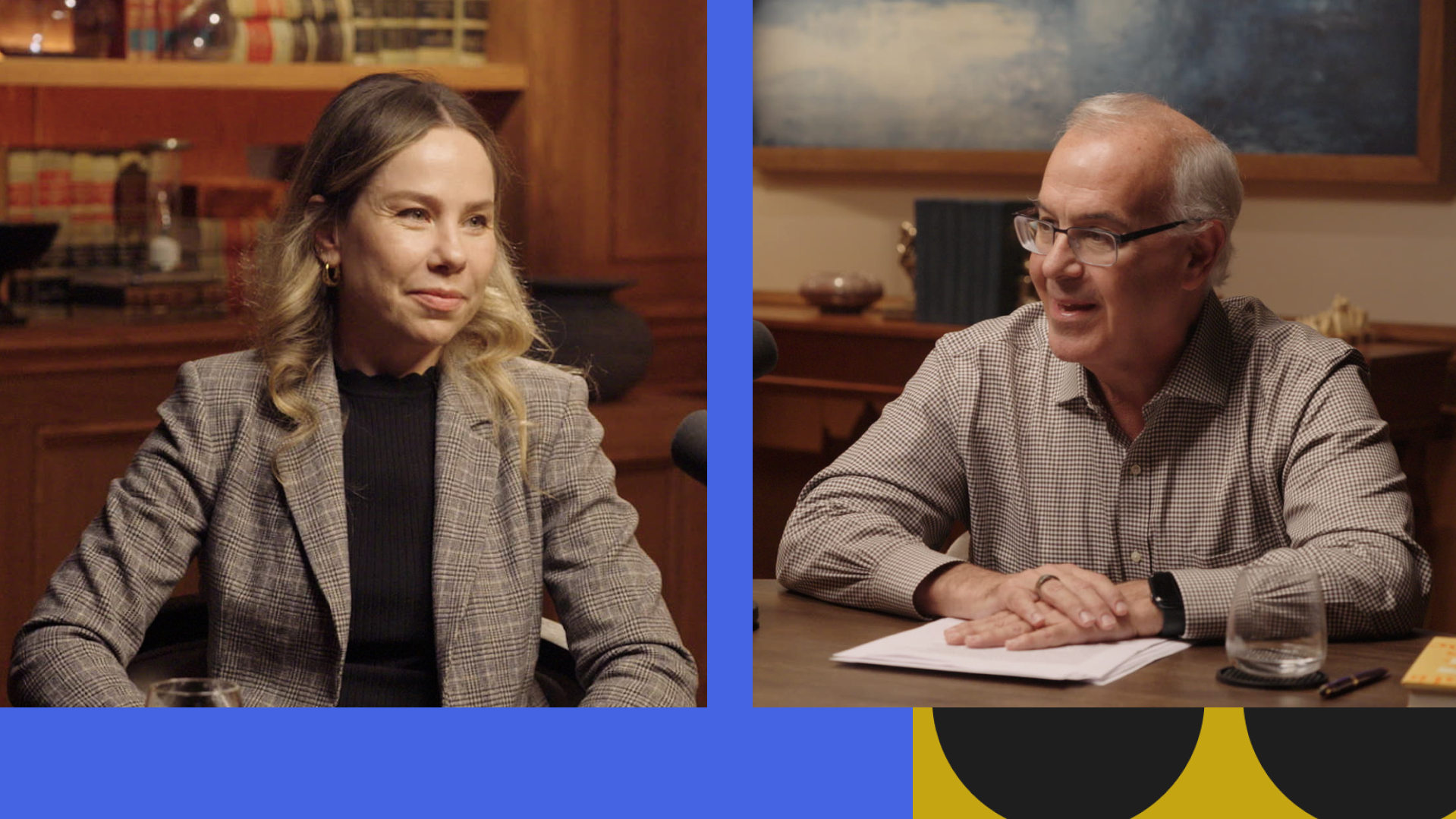
All over the world, in the East and the West, the North and the South, rich nations and poor, people are having fewer kids. In most countries, fertility rates are below replacement level; by century’s end, researchers predict, we’ll see the first global population contraction not caused by war, famine, or disease. On this episode of The Permanent Questions, David Brooks speaks with Anastasia Berg, a philosopher and a co-author of What Are Children For?, about what’s causing this trend, and what might be done to reverse it.
The following is a transcript of the episode:
David Brooks: Eighty-eight percent of Americans say that having children was one of the most important things they have ever done. Only 7 or 8 percent of parents say they regret having kids. Having kids is one of the most socially endorsed activities, and my experience is right in line with that.
When my oldest was born, his Apgar score was low. They rushed him off to the NICU, and I had a thought: Suppose he only lives 15 minutes. Will his brief life have been worth the lifetime of grief his mother and I would have to endure?
The answer was pretty obvious to me then, and today too. Of course it would be. I realize that doesn’t make sense according to utilitarian logic. One of the nice things about love is that it transcends that type of logic.
Fertility rates are declining all across the world. We in the West are entering a period of population decline. Schools will close. Day-care centers are being converted into hospices. One of the most rewarding experiences of life is less common today. Many young people anguish over whether to have kids. Why are so many people walking away from institutions that get such rave reviews?
Some of it is the lack of an appropriate partner. Some of it is the financial strain. But a lot of it is resistance is more about culture and values. Is it right to bring a child into this miserable world? If I have a child, will I lose part of myself? Once you start looking into this question, you realize that the decision to whether you want to have kids is like a cultural MRI machine.
It scans everything and reveals the often unspoken assumptions people have embraced about how to live their lives.
So I was interested in understanding how people are thinking through this decision, and I’m pleased to be joined by Anastasia Berg.
Anastasia holds a bachelor’s degree from Harvard, and a Ph.D. from the Committee on Social Thought and the philosophy department at the University of Chicago. She is now an editor at The Point, a magazine of ideas, and an assistant professor of philosophy at UC Irvine. On top of that, she is a co-author with Rachel Wiseman of What Are Children For? On Ambivalence and Choice.
I’m pleased to welcome Anastasia Berg to this table.
Anastasia Berg, welcome to The Permanent Questions. Thank you for coming to New Haven, Connecticut, to have this conversation.
Anastasia Berg: Thank you so much for having me.
David Brooks: Now, it turns out this question, which you and your co-author, Rachel Wiseman, organized this book around—What Are Children For?—it turns out it’s like an X-ray machine into the values of human beings, because procreating has been an elemental part of human life forever, and now there’s this global drop in fertility rates.
And it’s just weird.
And what I’d really like to do is walk you through some of the causes and some of the implications of this. And the weird fact is it’s global. Some countries are ahead; South Korea’s fertility rate’s really low. But pretty much everywhere—Africa, across Asia.
And so some of this, the boring part, is some of it just must be prosperity.
Tell me if you disagree, but over the last 40 or 50 years, we’ve seen the greatest reduction in poverty in world history, a great reduction in inequality globally, not domestically, a great rise of a mass middle class all over different parts of the world, especially in Asia.
And it’s just a pattern that poorer countries and poorer families tend to have more kids. Do you agree that there must be some economic component in there?
Berg: I think to the extent that there is an economic component, we need to be careful. We know that birth rates have been declining for as long as reliable records exist, which is from the early 1800s. In the early 1800s, the average white American woman would have seven children, while globally women were having on average six.
By the early 1900s, that number was closer to 4.5, and then today we have a situation within the U.S. and in the rest of the world—most of the world is below replacement, which means that you can correlate decreasing birth rates with any human phenomena. So you can correlate it with secularization. You can correlate it with increased education to women. You can correlate it with prosperity. Any other trend in human history can correlate with birth rates.
We hear, when we talk to young people about why they’re not having children, oftentimes financial concerns. So they will describe their perceived lack of prosperity and lack of security as some of the reasons for why they’re not having children or delaying having children or having fewer.
I think what we can positively say about the relationship between prosperity and having children is that we have more options now. But as we say in the book, I don’t think that the kind of explanation that we hear oftentimes is opportunity cost. So that’s the claim that people are having fewer children, not just because they have more money but because the sacrifice they’re making with every single child is greater than it ever was before.
The transformation is more radical. For millennia, we did not apply the framework of opportunity cost to the question of having children. And now we find ourselves with the question of having children, asking: What are the pros, and what are the cons? What am I giving up, and what am I gaining?
Brooks: So I want to get inside that. And I would say one of the things that to me would be a big factor, though far from the only factor, is we’re just more individualistic as a culture.
And I do think that this individualism, that mode of thinking, has affected even the most intimate affairs of our lives.
Berg: So the echoes of what you’re saying in our analysis are found in the way that people are talking about themselves, about what is it that’s alarming them and causing them concern when they face a decision.
So when it comes to relationships, people are not just concerned with maximizing their happiness, but they are actually concerned with maximizing security and stability. So you spend a long time dating before you cohabitate, and you spend a lot of time cohabitating before you make any further commitments. Now, that attitude of insecurity—one can be more cynical about it and just call it selfish.
I think it’s more helpful for me to put it in terms that people can identify with. We also notice that this dynamic of holding yourself up to a standard of readiness that is so murky and so high that you may never reach is something that we see across various dimensions of people’s lives. So it’s not just in the romantic sphere; it’s also in their conception of their own psychological readiness.
You’ll hear people often talk about how they’re not psychologically ready to take on a child. The same is happening when they talk about their professional and financial readiness. So: I have to have an inordinate amount of money, and I have to have an inordinate amount of success and stability before I can so much as contemplate having a child.
And I think those dynamics are fresh, and it’s something that we discovered by talking to the people who will declare that these are open questions for them.
Brooks: But I want to argue the underlying values difference from individualism to communalism is if you’re in an individualistic mindset—which I share—the natural logic is: Is it serving me?
Berg: So when people used to think of themselves, one can say they were thinking about themself communally, but you can also think of it, which is very close formulation—they were constituting their own identities through not just their kin relations, which were 100 percent going into their subjective identification, but they were also understanding themselves as essentially intergenerationally located.
So people understood themselves not just as having parents and uncles and children; they understood themselves as having a past. And unless things go terribly wrong or they make a very difficult sacrifice, say religiously, they will have a future. They will be a part of bringing about a human future.
And so having children was part of the very scaffolding of life. Until recently, you could make the analogy to how a certain class of people at least thought about going to college. It was just something you do. You make it work whether or not you have money or you don’t have money. You take the loans; you don’t take the loans.
You live in your parents’ basement. You just go to college. It was as inevitable as death. So I think the change is not just a change in local values—people cared about other people and now they only care about themselves—is that the very role of myself as a link in this intergenerational chain has now been oftentimes close to eroded, in favor of an understanding of myself as potentially the end of that chain.
Brooks: I may have read this in your book or some other book, but when you ask young people or anybody, “How did your parents meet?”—you ask them about things in their family past—they’re much less knowledgeable now than they used to be. And I didn’t have to think about getting married or having kids or going to college or going to high school. That was the script. I was a normie kid. And so, implicit in a lot of my questions there is a bit of a judgment, not because my way of life is best, but on average, people who are happiest and are flourishing and experience the most meaning in their life are married with kids, on average.
And that doesn’t mean everybody’s going to get married, doesn’t mean everybody’s going to find the right partner. But there was a general social survey result that among liberal women, just among liberal women, if married with kids, 93 percent say they’re happy. Single without kids, it’s like 63 percent. So it’s a 30-point gap, which in these kinds of things is a huge gap.
And so there’s a little hint of bias in the way I think about this—is that on average, and again, emphasize average, people should be thinking about, Oh, maybe that’s the right option for me. And they should have a bias toward that, depending on how their life goes. I think they’re not putting themselves in the best position to have a flourishing life.
Berg: So here’s where I have a lot of judgment. One of the things that I think we often forget, or it’s easy to overlook, is that there’s something huge at stake in the question of whether or not to have children. And it’s not just the shape of your life or how happy you will be, but it is an opportunity to take a stance on the value of human life.
There are other ways of doing it; there are other ways of contributing to a flourishing human future, but having children is the basic condition of any kind of human future. When we are seeing this kind of ambivalence about having children, we’re seeing evidence to a deep ambivalence about a human future at all.
And that I am, to use your language, “judgmental” about. The way I would put it is, say, it gives me tremendous ethical grief.
It’s alarming to see not the specific antinatalist movements that are still small, but the deep antinatalist undercurrent—this lack of faith in a human future, this impossibility of affirming the goodness of human life despite all privations and failures—and not wanting to put yourself out there and sacrifice the huge sacrifices that are required to have children: emotional, temporal, financial.
I’m in general a bit skeptical about self-reports of happiness. But when it comes to these kind of gaps, it’s hard to argue they’re not tracking something. Because our ambition was to help people think through the question, partly motivated by what you’re raising, because making the wrong decision there—that could be a big error for someone’s life. Talking to them about, Did you know that this study published by this conservative institute will show that you will be happy if you had kids?—that does not liberate people into thinking about things in a way where they can actually own that decision. So our ambition has always been: How do we remove the kind of obstacles—the kind of, you can say, brainworms—that are making it hard for people to see a path forward?
Brooks: Okay. I’m going to take your point that the following argument is not necessarily persuasive. Stop being a stupid schmuck.
Berg: You said it. (Laughs.)
Brooks: It’s probably not going to persuade many people. So I’m going to restrain my puritanical judgmentalism and just try to understand what’s going on in the culture. And I do think that the shift to individualism has—or the bias toward individualism in the culture, which is international—the whole world is going in this direction.
I think that’s a real shift, which has huge implications, all sorts of things. There are a lot of subdivisions of that, and one is, I would say, there’s a high, high priority put on personal freedom. You could say there’s a preference for freedom over meaning. The statistics on happiness and marriage and having kids are a little complicated.
The statistics on meaning—do you think this gives you a sense of purpose?—they’re not complicated at all. Having kids gives people a sense of purpose and meaning. But freedom is also of value. And we want to have free choices, and we want to be able to craft our days as we will. And there’s an immature version and a mature version.
And the immature version—again, this might have come from your book—it’s Seth Rogen. He’s on The Howard Stern Show, and he says, “I don’t know anyone who gets as much happiness out of their kids as we,” meaning he and his partner, “get out of our non-kids. Like, we’re psyched all the time. We’re lying in bed on Saturday morning smoking weed, watching movies naked. If we had kids, we would not be doing this.” And that is an expression of freedom. I would not say lying in bed naked, smoking weed, and watching movies on a Saturday morning is—well, it’s fun for maybe once a month, but I wouldn’t want to build my life around that. That’s just me.
But there’s a better version of this and a more sophisticated version. And so this is your co-author, and I think she’s making the point very well here.
“All my life, my parents have wanted my sister and me to be happy. I was offered every individual freedom possible, freedom to choose my career, to find love, to attain creative satisfaction.” And that is a beautiful statement of a certain form of child-rearing, which is how I was raised and, frankly, probably how I raised my kids.
I gave them a lot of freedom. But that’s not universal. If we were in other cultures, the idea is: You have guidance. There’s a way of life. You’re moving into our way of life. You’re going to join in, and if you want to rebel, you’re going to have to rebel, but we’re going to push you. We’re going to guide you toward a certain life, which we think history has shown is the best. And I think there has been a shift with good and bad consequences toward this extreme emphasis on freedom.
Berg: So I think that’s right, although we still want to remember your first point, which was that the declines in birth rates are global and remarkable, and we see them sweeping across societies that we would still identify as quite conservative and religious as well.
One point about Seth Rogen I think helps me respond to your earlier point about how children are increasing happiness, which is I think the “who’s having more fun” wars are one of the parts of the discourse that are not helping people think through this question. The people who are childless will talk about how much fun they’re having without kids, and the people who have children will talk about how much fun they’re having rediscovering their childhood books and running around the field, and how much joy, and how cute their children are, et cetera.
Here’s what I think is universal about having children: In having a child, no matter how well things will actually go, you open yourself up to the possibility of things going tragically and horrendously wrong. And you live that every day of your life. You come to a point where you’d much rather horrible things happen to you than to this other being, and you’re open that way in every day of your life going forward.
That is universal—whether or not you end up having fun, that’s not. And so I want to own that as we open a conversation about having children, and I want to say that the question of what could justify that kind of openness, and that kind of vulnerability, and that kind of risk is a serious one, one that I don’t want to just dismiss by pointing out to the fact that people are more individualistic, although perhaps they are, or more consumerist, which they are as well, or more addicted to notions of freedom. That’s legitimate to fear. If something happens to your child, your life will end in a way that, as an individual without children, you can’t even imagine. What is the perspective we can give on human life that is not religious that can justify that kind of choice and that kind of risk-taking on people.
Brooks: I want to get to the thing you just mentioned: the extreme risk.
But before I get to it, I want to go back to something I said and ask you about it directly, which is the script. I was born into a script, and I lived out the script, and I think it was the norm. Again, I could’ve rebelled against the script. I had freedom, but there was going to be a script.
And it strikes me as part of the individualistic ethos is we don’t want to talk into other people’s scripts. And so, for example, child psychologist Alison Gopnik, she said, “Our job,” meaning parents, “is not to shape our children’s minds; it’s to let those minds explore all the possibilities that the world allows.”
I think this is terrible advice. To me, one of the problems with modern American culture is the privatization of morality. We told successive generations, Come up with your own values; come up with your own truth.
And the first problem with that is: If your name is not Aristotle, you probably can’t do it. And the second problem is: If everybody comes up with their own truth, their own values, we have no shared moral order.
Berg: First thing to note is, of course, the lack of scripts goes hand in hand with what you identified and quoted from Rachel’s introduction, where she talks about this paradigm of acceptance parenting, which she recognizes as the paradigm in which she was raised.
And the thought here is that a parent’s job is not to teach their children right from wrong, but to trust them that they’ll discover their own notions of right and wrong, and how to live, and what it means to have a family.
To our point and to our question that we’re discussing here, which is why is it so difficult for people to make the commitment to having children, I want to point out, to concretize, this kind of general point that you’re raising about scripts, which is the way that Rachel really beautifully analyzes and then puts it in the book.
And she talks about how the fact that her parents could not affirm, wholeheartedly affirm, anything in their own lives as the way it ought to be, as good, made it very hard for her to imagine what would she be doing when she’s having a family of her own. The tenuousness of the traditions that they were observing, their own ambivalent relationships to community and religion made it very hard for her to think about having a family. But not because, the way I understand her, she wouldn’t have a script to follow, but because she didn’t even have a script to rebel against.
And I think that question is really important, because what I take her to be saying is that it’s okay to affirm your own life choices as good. The fear that we will thereby be imposing them on our children tyrannically is misguided because it’s a fantasy.
Her daughter would not have been oppressed by the fact that the mother is willing to affirm her choices. What’s remarkable is that this person who’s dedicated themselves as a parent to two daughters can’t say to their child, I think this is what you should do.
That, to me, would be much more powerful than pointing them to some survey about how people are. Why can’t she talk to her daughter about how this choice had concretely made her happy? And the feeling that we’ll be stepping on our children’s toes by affirming our choices I think is something that we can address without having to revert to a full-blown fantasy of a societal script.
We can debate whether or not that’s a good thing. For me, what really matters is that this is not happening and so any discussion about it is beside the point. The question for me is: Is there a way to move forward that is not leaving people just spinning frictionless in a void? Which is what not just the lack of scripts but the inability to just affirm one’s own choices is doing right now to young people.
Brooks: And of course, it’s a balance. There’s a continuum here. I was here teaching at Yale, and we were going around the room, and I had mostly seniors, and we were talking about what the career plans for various students were. And there was a woman in the classroom from Ghana. And all the American kids were like, Oh, I want to be a doctor. I want to be a lawyer, or because we’re an Ivy League school, I want to go into tech. I want to go into finance. I want to go into consulting. And she said, It’s not up to me to decide. My village sent me here, and we’ll decide. And on the one hand, I thought, Okay, this is why they call us an individualized culture, because that’s not how we think.
And there was something beautiful about that. But on the other hand, I grew up in this culture, and if after college I went back to my little suburb of Wayne, Pennsylvania, and said, Okay, folks, what am I going to do with my life? I would’ve said, No way am I going to ask my neighbors. And so the way I’d phrase it is that there’s a continuum between domination from the older generation and nothing from the older generation. We’ve swung a little too far. And the effect, weirdly, has been a flight toward utilitarianism. And so people have decided to value the things that are most immediate in front of them, which is leisure time and which is the sense of gratification you get out of your job and financial security. These are obvious things that’s uppermost on people’s minds.
And here I’m going to quote another survey, 2019. This is a survey across 42 countries, and just 39 percent of Millennials worldwide listing having kids as one of their life ambitions—last place in the rankings.
Work and leisure are fun, and if you’re 24, whatever, that’s going to be your natural ambition. And weirdly, the part about having kids, marriage, or even love, those seem to be fading away from what people are prioritizing.
Berg: I mean, we’re living in a world where young people are hearing that if they’re not becoming millionaires and probably billionaires, they’re going to be part of a permanent underclass.
I imagine somebody young who’s exposed to that kind of exhortation hearing us say, What about dedicating your life to love?
He’s like, I need to eat. I don’t want to be part of a permanent underclass. So I think the kind of concerns that we were documenting with finances and professional success, starting in 2019 they’re dwarfed by the kind of uncertainty and worries that are happening now.
So the dynamics of tremendous anxiety about what it means to be able to stay afloat have only been exacerbated.
I do want to say one more thing. It’s not something we actually get into too much in the book, but I am, just to clarify, a real pluralist about why people have children. So it’s very easy to moralize or rank reasons for having children. So if you’re doing it because you expect to be happy, it’s somehow lower than if you’re doing it because you want to grow as an ethical being. I think it doesn’t matter, and I think one of the reasons it doesn’t matter why you end up having children is because having children is not just another action that we can take and that we kind of evaluate the reasons for and the reasons against.
We’re bringing into the world another human being. This is remarkable. It is something that transcends any kind of rationalization.
Brooks: I agree with that. There are two things can be true simultaneously. One, this is obviously an individual choice.
What’s ever right for you is right for you. And some people, Eh, it’s just not for me, and no one’s going to judge that. On the other hand, we do have a common culture. And the common culture forms us all, and the shape of that culture is going to have influence on the way we perceive the world and make the big choices in the world.
And so I’m not content to leave it solely up to the individual.
Berg: So let me say something about leaving it up to the individual. If you are leading a certain kind of human life, you are in a position to recognize that the human future is something that you are already committed to. And so I think that we can leave the question of whether or not you’re going to be biologically procreating to individuals, while recognizing that there’s so many responsibilities that we can take as a community.
There’s so much that we can be doing to make people just feel like their families and children are welcome. I think you could be doing that whether or not you decide to have your own kids.
Brooks: So let’s talk about the common culture because I do think whether we like it or not, our common culture shapes how we think, how we perceive. It shapes everything. And so I think that we feel this every day, that there’s just less trust in society; there’s more of a sense of threat, and there’s something going on in our country that we’re not thriving. And I think it has given everybody a bias toward the negative. It just feels like there’s a lot of shit going on, and people are like, Whoa, I gotta take care of myself. There’s so much nastiness in the world today, and that can’t help but affect how you think about any risk behavior.
And, as you said, and I want to get back to this point, having a child, you are giving up control. Falling in love, you’re giving up control. And if you feel like you’re under threat existentially already, it’s just going to be a lot harder.
And so you sort of argue this, that a lot of the reasons people give for not wanting to have kids are not as persuasive as they think they are. One of them, I would say, is: We can’t afford it. Humans have been having kids in poverty, with plagues, in times when half the kids were going to die in childbirth, in times of war.
And I mean, life has never been peaceful on this Earth. It’s probably more peaceful now—especially for us in this kind of country than anywhere else—and yet they were still having kids. And living standards have never been as high as they are right now. And through all that time, people were still having kids at much higher rates than us, even people who lived in cities and suburbs.
And so now the argument that I can’t afford it; I’ve gotta have my financial security—I personally think that’s more to do with the general sense of insecurity, because of the culture and the way we live than it is a good argument for why they’re actually not having kids. You’ve got 4 percent unemployment, 3.7 percent inflation. Not great, not terrible. But if you look at the Michigan consumer sentiment survey, it’s at record lows.
So people’s perceptions—they’re not making this up; this is how they see things—is super negative, and pessimism becomes its own reinforcing. And I completely understand—Joe Biden tried this for two years—you can’t argue people out of their pessimism by citing statistics.
But even I was a little surprised because I took it as a matter of course that Millennial and Gen Z incomes, wealth, and homeownership rates are way worse, and that economically they’re way worse. And you quote some statistics in your book, which is that actually incomes for Millennial and Gen Z are about where Boomers and Gen X were, or even higher.
Wealth, they’ve been catching up. And the one that surprised me the most, frankly, because I would say, Okay, income and wealth is high—but homeownership. That’s so much harder now because homes are so much more unaffordable. And that turns out to be true in certain cities where a lot of people like me live, not necessarily.
And so homeownership rates are a little lower for Millennial and Gen Z, but not a lot. Among 36-year-olds, 57 percent compared to 61 percent of Gen X and 64 percent of Boomers. So that’s a difference, not a big difference. So the economics I don’t think are bad, but the perceptions are real.
I’m trying to understand this really negative perception of threat. It affects every decision we make, as I say.
Berg: I think there’s a perception question there, and there’s also another one, which is the capacity to be truly ambivalent.
So ambivalence—when people say and talk about ambivalence about having children, what it usually means is something like: We’re negative about having children, very uncertain about having children. But ambivalence, which is to be able to have positive and negative attitudes at the same time. And I think listening to you provide this cultural analysis of how people are perceiving themselves in particular societies brought to mind the literary research that we did on two genres of literature that are very relevant to the question of having children.
One was motherhood-ambivalence literature, which is a genre of literature where women writers mostly were talking for the first time about how hard it is for them to either decide whether or not to have children and then to have children. And on the other hand, something that’s called “climate fiction,” or “environmental literature.”
And both of them leaned very heavily on what I came to call “the courage of negativity.” So it’s a stance where you feel very brave and very accomplished, where you’re able to say that this thing around you is just purely bad, whether or not it’s raising children or whether or not it’s humanity itself.
So climate-fiction tropes include the idea that no human beings are really deserving of salvation, and they’re definitely not capable of it, so the only sage figures are children and animals. No adults are worth our time. And when I hear you talk about people looking around themselves and being unable to appreciate what you, in some frustration, are pointing to: Well, what about the actual material conditions? What I hear is that failure of not noticing how good you have it, but not being able to hold on to everything that is good in your life, all the markers of success, while also being able to hold on to the fact that you are worried and you’re concerned and you’re disappointed.
And I think that having children is becoming more and more of an unknown, of a mystery.
People are not being raised in households where they’re seeing younger kids. They’re not being raised in neighborhoods when they’re seeing children, so a huge unknown. But everyone knows it’s not all good, no matter how many surveys you’re going to show them, and I think they’re really worried about their capacity to be able to do that day in, day out without being able to ever press an exit button.
Brooks: You’ve mentioned this point a few times, but I want to highlight it—attitudes toward control. I think if you go back through most of human history, the idea that we were in control would’ve seemed laughable to most people. We didn’t have the science we have now; we didn’t have the resources we have now.
Of course when you’re losing half your kids in childbirth, the idea that you’re not in control is an obvious point. Now almost we can see control right out there, and we’re reaching for it, and we sort of insist on it, and so we develop strategies to try to establish control.
And there’s an ethos, which is the ethos of modern society, of optimization, that humanity moves forward to the degree we can exercise control over our environment. There’s a German sociologist I’m a big fan of named Hartmut Rosa. Mm. And he wrote a book called The Uncontrollability of the World. And he says when you make yourself unavailable to uncontrollability, you’re closing yourself off to what he calls “resonance.”
And resonance is the capacity to touch something or be touched by something, when you smile, when your eyes start watering because you’ve been moved. And he says the essence of love is it’s uncontrollable, and he says if you’re trying to establish control over your environment, then you have rendered yourself unavailable for love.
And you’ve certainly rendered yourself unavailable for children who are really outside your control. I watch other parents trying to control their children’s lives and program them to such a degree that the children will turn out into little perfect achieve-a-trons.
Especially if they’re younger than me, I always want to say, You’re about to be humbled, because they’re going to do what they want to do, and your capacity to control is so more limited than you think. All you can hope is you prepared them with a loving background, so they go out and live their lives.
But I think this ethos of control is somehow self-destructive for people because they do make themselves unavailable for the emotions that are uncontrollable.
Berg: You talked about falling in love as opening yourself up to the unpredictable and to someone else. But of course today, according to the paradigms or many paradigms of what’s permissible in love, an ideal of a relationship is one in which you wake up and you can ask yourselves every single day anew, Do I want to be with this person? Now, from the standpoint of a person who believes in commitment, that’s a horror show.
But that sounds like this beautiful way of affirming every single day the connection.
Brooks: I would say, as someone who’s more center-right, that the one conservative truth that I think has truly been introduced into the world by conservatism is the idea that we live in societies where we worship choice. We get to choose who we want to marry; we get to choose what soap we want to buy, and that’s wonderful. That’s freedom. But to live in a society like this, you have to have a ground set of commitments that precede choice. And most of the things that really are our foundations ought not to be thought of as choices.
So I didn’t choose to become an American. I didn’t choose to be Jewish. I was born it, and that’s it. A lot of the things I didn’t choose. And having a foundation of things that are not susceptible to choice, to me, is the firm foundation upon which all choices are made.
And without that firm foundation, you really are weakening things. I feel like I’ve thrown out so many abstractions—
Berg: Can I say one thing about the choice?
Brooks: Yeah, go ahead, please.
Berg: We do have to then say out loud that the one thing you really don’t choose is who you get as a child.
Brooks: Yeah, that’s for sure.
Berg: That’s terrifying because it could be anyone, and we all look around us and go, I don’t want that guy.
And it can happen because we’ve all seen the same family, and the one sibling is the one that I could imagine myself parenting, and the other one is like, oy vey.
So for me, the universals of making the choice all come down to the unpredictability of this commitment that’s going to end up being one of, if not the most significant human commitment you’re going to be making in your life.
Brooks: And you really have less choice about your children these days.
And on the one hand, that’s the way life has always been. Kids are going to be who they want to be. But parents really have less control than even previous generations of parents because online is raising the kids, and so you’re really confronting radical uncertainty.
Berg: What I hear when I hear those stories is also a reminder that we really don’t need to worry about not sharing our values in very full-throated ways with our children. And you were saying before that it’s the scripts, it’s the subtle norms, it’s accepting the givens that give us the opportunity to then exercise our choice.
Again, I’m more skeptical than you are, just on the empirical feasibility of being able to reintroduce those scripts. People are born Jewish, and they feel that they must determine for themselves what that means for themselves. But what’s clear is—and to me, I think it is one of the factors that goes into how we can liberate people to embrace the choice to have children, that’s the choice that’s right for them, is to remind that they don’t have to be acceptance parents.
They can create the household that they want to create. If they don’t want their kids on social media, they don’t have to give them a device. They can choose the schools they send them to, they can share the traditions, and they can affirm that without kind of shame or discomfort, which I think does characterize, at least in liberal and progressive society, the attitude of a lot of parents, which again, is one of those underemphasized elements that I think is seeding a lot of the—people can’t imagine the kind of family that they would want.
I mean, they talk about various things, but the truth is you ask them, What are you going to do for the holidays?, and they feel confused and lost. The only things people are clear about is that you have to encourage your children to do well at school and do sports, and they can only come together at that.
But people feel the kind of tragedy of that being the only things you can affirm to a child. So one thing I would say is: Just affirm to them whatever. They’re going to end up doing what they want. It’s okay.
Brooks: So I’ve been talking about individualism and putting freedom over purpose and all that kind of stuff.
This may be the dumbest way to think about this problem—is we just suck at relationships more than we used to. The dating is way down, friendship is way down, marriage is down, and therefore, if all those things are down, these are the social on-ramps to fertility and these things are all down.
There’s, again, this Dan Cox book, which I’ve just read. He has a point that I’ve seen so many times made by younger people than me around me, which is men and women have very strong views about each other. They talk about each other often more than they talk to each other. There’s just less relationships.
And so maybe just one of the reasons fertility is so far down around the world; we’re just less active socially.
Berg: I think that no single explanation is going to account for why people are not having children. Say we solved relationship problems. We make love camps. We dissolve these demented fantasies that we see the genders developing about one another. We make them tolerate friction and disagreement, and we have more couples. Everything else we talked about we’ve held constant in this thought experiment.
So they’re still wondering about a future that they can’t control. They’re still maximizing for satisfaction. They still don’t have any vision of family life that they feel comfortable transmitting to their children. They’re still, when it comes to taking a vote on the value of human life, are very uncertain.
So I just want to say that isolating factors is difficult. However, here I just completely agree and share the concern about the quality of human relationships that we’re seeing, and I think it’s all at least likely to get so much worse with the introduction of artificial intelligence into the lives of both adults and children.
I’m reading the Sherry Turkle recent book. And she’s talking about how so many parents, in a bit of control and a bit of trying to fulfill other aspects of their lives, are letting programs to speak to their children who do nothing but affirm their feelings, depriving them of the opportunities to gain the necessary skills of tolerating anxiety, awkwardness, embarrassment, shame, friction, disagreement that will only exacerbate the difficulty of coming together in romantic relationships.
I’m really not optimistic about that.
Brooks: The way I would describe technology is that most of the trends we worry about that we blame on the phones started before the phones and were accelerated by the phones. But I do think that culture can turn around, and we have the power to change the average of behavior in society.
Berg: I want to ask you: How? I think that is the one thing, the deep thing, we philosophically disagree about.
My strong intuition is that once we’re in a me culture, you can’t choose your way into a we culture, to put things simply. You can’t decide to act as if you are constituted by your kin relations and your community by an act of fiat, by kind of existentialist: Here I stand, and now I’m communal.
That these are ways and forms of human life that are essentially inherited, and I can’t see the way forward that recovers the we. So I tend to think of it as nostalgic and impractical. I cannot affirm our me situation, so I say, Look, the task is to see how we can go forward in a way that fully acknowledges what has been lost and tries to recover it, but it’ll be something fundamentally new and different than the we that we put behind.
You have much more confidence, which I would like to share, if possible, in the possibility of going from the me to the we. So how do we do that?
Brooks: I’m going to pull out my medical bag of optimism and just point to history. If you look over the course just of American history, let alone global history, we’ve had periods of secularism, periods of high religiosity.
We’ve had periods of low social trust, periods of high social trust. So the example I’ll give you, and this comes from Robert Putnam, is in the 1870s and 1880s, we were a super individualistic culture, and the reigning social ethos was social Darwinism: Life is survival of the fittest, and people are poor because they’re lazy.
And along comes—in the late 1880s, 1890s—the Social Gospel movement. And you get people like Jane Addams at Hull House in Chicago. And the Social Gospel movement was an antithesis of social Darwinism, and it said, We’re communal. People are poor because of institutional injustice, and we are going to build community.
And as this cultural change happens, you get a civic renaissance. You get the rise, in a few brief years, of the settlement house movement, which was Jane Addams, but also the environmental movement, the Boys & Girls Club, the NAACP, the Sierra Club, the unions. All these institutions get built in a relatively short period of time.
And so how does culture change? In my view, culture changes when a small group of people find a better way to live and the rest of us copy.
Jane Addams sits there and thinks, We’re going to have a settlement house, and we’re going to get families who’ve just come to this country, and we’re going to watch operas together. We’re going to have discussion groups about literature. We’re going to do all this stuff, and it’ll be cool. So you can get pretty rapid cultural change just by having a small group of people. Other people look at them and say, Yeah, that’s an admirable way to live.
And that’s basically what Jesus did, the 12 disciples. Better way to live.
Berg: So I feel like you just really helped me make my argument, which is not that cultural revolution is impossible, but that cultural revolution is never a matter of just copy-pasting the past.
The 1900s are not copy-pasting the 1700s. I want to be, I don’t know if optimistic is the word, but I’m open to the possibility of cultural revolution. The question of how any such transformation in society from where we are today gets us to a point where we are once again embedded in communities I just think is a tremendous challenge.
Brooks: You get these social movements, it seems to me, pretty much constantly through society, and if we can fly in an individualistic direction, we can trend in a more communal direction.
There have been periods of rupture and repair throughout American history, in the 1770s, the 1830s. We were super populist in the 1830s, but not by the time Abraham Lincoln was elected president in 1860. And so I would say if you’re going to have a problem, a cultural problem is the best kind of problem to have, because all you have to do is change minds and values, whereas changing structures—well, that’s super hard. And so that’s my bid for optimism.
Berg: Okay. This is exactly what I hoped to get in this conversation, so thank you.
Brooks: Now I’m going to get to my core points—and this is how we know part of this is values—is: Why can’t progressive people be more like conservatives? (Laughs.) And I say that not because I’m particularly friendly with modern American conservatism, which I am not. But if we’re just thinking about fertility, no American group, or at least of these big political groups, are at replacement level, so there’s no American group that’s at 2.1 or above.
But conservatives are more like 1.7, 1.8, and progressives are more like 1.13, or something like that. And so conservatives are having more babies. If that’s the one thing we care about, it must be partly values, because conservatives are just doing it more.
Berg: Or it’s correlated with other things that are causally linked to—
Brooks: It could be marriage and church attendance.
Berg: For sure. So I don’t know how to answer: Why can’t progressives be more like conservatives?
Brooks: I was being a little facetious.
Berg: Yes, of course. But let’s say something about the political axis and political divisions and fracturing and how they are exacerbating certain trends.
I will say that 1.7 is also kind of shockingly low for conservatives in America.
One thing that I find very lamentable is the politicization of the question of children. So this fear that the question of children, which for me, again, is the question of a human future, becomes divided along political lines.
It seems to me, maybe this is my place of naivete and optimism, that we can come together and we can disagree on how we should be organizing our individual and collective lives on the right and the left, and we can agree that we are united in affirming that some human future is good. I haven’t heard you say it, but in the same way that we hear people say, People are not having kids because of individualism, people will say, We are not having kids because of feminism. Again, I don’t think that’s a helpful way of starting a conversation if you’re actually in the business of helping people think through a question.
But here’s something that I think a progressive liberal woman even can hear, which is that we are taking for granted the postponement not just of having children, but of so much as raising the question of whether or not I should have children, and we’re taking it for granted. We’re taking it for granted that the time to have children is as late as possible in a woman’s life.
Now, that in itself is directly contributing to the fact that people are ending up having either no children or fewer children than they then report they want, because this is a losing strategy. One of the things that’s feeding into that strategy is a cultural taboo in progressive and liberal society, which right now I’m identifying myself fully as a part of, with just simple, honest conversation about women’s fertility and the technological possibilities of intervening with it.
So there’s a lot of misplaced optimism in the possibility of technology, to swoop in any moment in this kind of life cycle of a woman and make it possible for her to have children, and an aversion to talking honestly about just the material limitations of human life in a way that I think underserves women.
If feminism is about empowering women, and knowledge is power, we need to give people the knowledge that they need in order to make responsible choices about their lives. Not in order to “encourage them to have children,” but so they can own the choices that they end up making.
But the information they need is not just the information about how fertility works in the life of a woman. It’s also, I think, the kind of ethical and philosophical resources of thinking through not just their bank accounts, not just their professional trajectories, not even just their fertility trajectories, but actually an opportunity to ask the big philosophical questions of: How do we think about the value of human life?
So I want sex ed to not just teach kids how not to get pregnant, but also how to get pregnant. And then I want part of it to be: How do we think about climate change and having children, and antinatalism and having children, and community and having children, and one’s professional success, and what kind of timelines actually can benefit it?
If you look at a particular person’s life, it might be the case that it’s a much better idea for them to have children earlier rather than later. I often feel that way about my own life. And this, for instance, is a kind of paradigm of what success means in the lives of individuals, and especially women, that is progressive and liberal. And so that’s one thing I think that is accounting for that difference. However, when we talk to conservative women today, we see that that logic is not self-contained among progressive and liberals.
They’re increasingly embracing the idea that the time to have children is later, if not quite as late as possible.
Brooks: I think one of the things that bugs me is how politically coded having kids, family is. In the 1980s, there really wasn’t a difference between left and right on who had children when.
And today, in the 2020s, among ages 25 to 35—so not the latest childbearers, but what used to be the prime time—71 percent of conservative women have kids compared to 40 percent of liberal women. So that’s a 31-point gap that’s grown up since the 1980s, when there was no gap at all.
Berg: The progressive and liberal versus conservative divide is characterized by attention to the fact that it’s the conservative movement that has attacked women’s reproductive choices. Their conception of the circumstances in which one can have children is restricted. How restricted it is varies within the movement, but it feels like they are much less willing to embrace more creative family arrangements than the familiar nuclear one.
Then there’s also just an increased polarization in society that’s working like a magnet. So it seeks to take more and more issues. As I said for me, this is where my naivete really comes out. It seems demented to politicize the very basic question, which has two faces, which is one, where do you really stand on this question of a human future and how are you going to participate in it?
And secondly, the question is what shape your own life is going to take. And you’re going to be radically transformed and shaped by either fate, by being childless or by having children, and to let the politics overdetermine that choice just seems to me like a real tragedy.
Brooks: Yeah, the idea that people are going to make basic life choices based on this strikes me as kind of nuts. And then one thing that’s even become politicized is attitudes toward the decline in fertility.
And conservatives are super alarmed, hair on fire, and progressives are less alarmed. And I wouldn’t say they’re not alarmed, but it’s a difference. Again, I’m going to go back to your ambivalence. I don’t think it’s the end of the world, but I happen to be in higher ed these days, as you are, and I’ve looked at the charts of the demographic cliff, and it’s going to be ugly to be in higher ed for the next 20 years or to be a teacher.
And second, I don’t like the idea. It doesn’t strike me as a healthy society turns day-care centers into hospices. And I kinda like economic growth, and if you have a shrinking population, you do not have economic growth, unless Claude turns out to be more awesome than we think he’s going to be. So I’m moderately alarmed just in terms of the dynamism of society, and to me, that’s not left/right at all.
We should all be kind of alarmed by this.
Berg: So let’s just share with listeners or viewers something that I think, for me at least, was a revelation when I realized this, which is that today, in the U.S. and globally, birth rates are below replacement, which means that every woman is having fewer children than is required to maintain the population at the current level.
When you have a below-replacement fertility rate, you’re not looking at a comfortable, steady decline in the population.
The dynamics are exponential. So we’re looking at a bell curve, and we’re going to hit, according to most recent estimates, the global population peak in about mid-2040s, maybe the ’50s. And then we’re going to see a decline, and the decline is going to be exponential. So within centuries, we’re looking at a very small population.
Now, we’re all used to seeing a lot of alarmist graphs and taking them with a grain of salt, but we have to remember that that is the case whatever the fertility rate is, as long as it’s below replacement. And one of the hardest things to do is to change a fertility rate.
The dynamics are self-reinforcing. As I was saying before, for me, one of the things that’s really underappreciated is how when we’re having fewer kids, we’re thereby encouraged to have even fewer. Being the only person with children on your block is daunting in a way of being the person with children when you see your neighbors who are already playing with one another is not.
Having said that, I myself am also ambivalent. And the reason why I’m ambivalent is because I take an ethical approach to such questions. Is there an ethical problem with a declining population? The very fact that economic progress—well, if people are all comfortable enough—that to me from an ethical perspective is not sufficient to call the decline in the population a problem. I’m not committed to an increase in our quality of life kind of infinitely into the future.
What other problems are there? Well, there’s this aesthetic concern with the day cares becoming nursing homes. I share it viscerally, but I’m not sure what the ethical significance there is.
Brooks: I’d say a loss of dynamism in society, I would say.
Berg: So there’s a question of the loss of dynamism and what kind of value that is. For me, the reason I experience that with a shudder is because I see it as evidence to a collective human vote of no confidence, not just in their own future, but in themselves. People are happy to live out their own lives, but I think are almost nurturing a fantasy of being the last generation.
They can’t come to care and commit themselves to the possibility of marvelous things happening again. That’s where I locate my kinda deepest concerns with the fertility rate.
Brooks: A lot of our understanding of our own lives, more than we imagine, is determined by the fact that the consequences of our lives will go on for a long time—whether I write a book that obviously will be remembered in 500 years as one of the greatest works ever, or having kids, or I help my community.
And I’ll end on an upbeat out for us: This strikes me as something that should not separate left or right.
When people are raising kids, we all want them to be supported. And to show how right-wing I am, I wrote a piece for The Atlantic a couple years ago called “The Nuclear Family Was a Mistake.”
When you had extended families with lots of aunts and uncles, you had a lot of relationships, and if one broke, you could still survive. If you have one kid and two parents and a relationship breaks, that’s a disaster.
And so it seems to me left and right should be able to come together on the idea that we want to surround families with as much social support, whether it’s familial or public, as we possibly can, and we shouldn’t be picky about what kind of support it is. That’s my kumbaya moment of transpartisan unity.
Berg: I think we can agree on that because we can agree that we want people to be able to raise children, shape children, nurture children in dignity, and we can actually separate that from the kind of explicit concerns with fertility rates or fertility demographics.
One thing that is unfortunate is that when people hear that economic support to families doesn’t increase the fertility rate, they take that as an argument for the fact that those are useless reforms. Those are the most necessary reforms in order to guarantee the possibility of raising children in dignity, regardless of whether or not it’s going to make some people have more.
Brooks: Anastasia Berg, thank you for joining us here at The Permanent Questions.
Berg: Thank you so much for having me. This was great.
Brooks: You know, we all argue out of our own lived experience, and my lived experience is having been a parent and having loved it—one of the best experiences of my life. And so you can probably hear in my tone alarm that a lot of people are deciding not to have this experience, even if it’s an option for them, and alarm that fertility rates are dropping.
Having said that, not everybody should have kids. My fear is not so much over whether people decide or not to decide to have kids. My fear is because of a lot of cultural values that Anastasia and I just talked about—people are hesitant to commit to anything. A commitment is falling in love with something and building a structure of behavior around it for those moments when love falters.
Jews love their God, but they keep kosher just in case. And so a marriage is a commitment. Parenting is a commitment. Religion is a commitment. Friendship is a commitment. Joining a company can be a commitment. Joining a political movement can be a commitment. I think our lives are built around commitments, and it’s the restraints we choose are the ones that set us free.
And I’m alarmed if we enter a society where people are afraid, alienated, nervous, and they’re just less willing to make commitments.
Anastasia made a point which frankly I hadn’t thought of before, and she suggested that the cultural changes that we were talking about may not be reversible. I don’t think I agree with that, but it’s a sober reminder that some things you just can’t put back in the bottle. I’ve spent much of my life trying to reverse some of the cultural shifts that have been going on for the last 50 or 60 years, and I confess I haven’t had a lot of success, and neither have a lot of other people who are trying to do the same thing.
And yet hope persists that we became more individualistic; we can become more communal. Despite it all, I’m painfully naive and upbeat and idealistic. So thanks so much for joining us for this week’s conversation with Anastasia Berg.
The Permanent Questions is produced and edited by The Atlantic in partnership with Yale University. New episodes of The Permanent Questions come out on Sundays. You can subscribe on The Atlantic’s YouTube page, Apple, Spotify, or wherever you get your podcasts. And if you want to support the work and the work of my colleagues, you can subscribe to the publication at TheAtlantic.com/Listener.
See you next week.
The Permanent Questions is edited by Christopher Beha and produced by Rebecca Davis with video editing by Lindsey Sitz. This episode was engineered by Miguel Carrascal. Our theme is by Rob Smierciak. Claudine Ebeid is the executive producer of Atlantic audio, and Andrea Valdez is our managing editor.
Cyber Monday is just around the corner, giving you one last chance to save big on our favorite goods and gear before the holidays. We’ve been monitoring the deal landscape since Black Friday kicked off in earnest, and the good news is that not much has changed since then. Many of the best deals are still available, and while there’s no guarantee, it’s possible those that have expired may return for Cyber Monday.
Ahead of the busy shopping season, we sorted through thousands of deals to find the ones truly worth sharing, focused on the products and services we’ve tested here at The Verge. With prices up across multiple categories due to RAMageddon and general inflation, some deals may not seem as big as in prior years. For example, Apple’s latest MacBook Air recently fell to its pre-price-hike level for the first time since July. That’s a good deal to us, and several other discounts are still taking a similar shape in the run-up to Cyber Monday.
Google Home Speaker
Google’s first smart home speaker in six years is built for Gemini for Home. It has 360-degree sound; two can be paired for stereo, or used with a Google TV Streamer for spatial surround sound. It’s also a Matter controller and Thread Border Router. It requires a Google Home Premium subscription for some features. Read our review.
With a 4.3-inch E Ink screen, the Xteink X4 is smaller and more pocketable than any Kindle and Kobo model currently available. It has some drawbacks — it’s limited to TXT and EPUB files — but it’s great for tinkering. It also has a magnetic mount so you can stick it to the back of MagSafe-ready phones.
Apple’s AirPods Pro 3 deliver the best noise cancellation and sound quality of any AirPods yet, along with a more comfortable, secure fit and improved water resistance. They also feature built-in heart rate tracking for workouts and support live translations for a handful of languages. Read our review.
You can get an ad-supported Disney Plus and Hulu bundle for $4.99 a month ($8 off) for an entire year. Both streaming services feature a deep catalog of new and classic TV shows and movies, including The Simpsons, Andor, Toy Story 5, and The Fantastic Four: First Steps.
Lifx’s SuperColor Smart Mirror features individually controllable front and back lighting with full-color effects. Modes like Makeup Check boost brightness and color accuracy, while a built-in anti-fog setting helps keep the mirror clear after hot showers. It also supports Matter and has three programmable buttons for controlling other smart devices directly from the mirror.
Anker’s durable travel adapter delivers up to 100W of power and works in over 200 countries. It doesn’t support AC plugs, but it does offer a trio of USB-C ports and a nifty LCD display to keep tabs on the charge percentage.
The Nintendo Switch 2 features a 7.9-inch LCD display, magnetically attached Joy-Con 2 controllers, backward compatibility with most original Switch games, and exclusive titles like Donkey Kong Bananza and The Legend of Zelda: Ocarina of Time.Read our review.
This curved 21:9 34-inch model uses the new (for 2026) Penta Tandem QD-OLED panel, which aims to deliver improved brightness and better handling of low light scenarios in games than the other QD-OLED monitors in this list.
An HBO Max Basic subscription provides access to shows like A Knight of the Seven Kingdoms, The Last of Us, and The Pitt, as well as films like Superman and Weapons. You can get a year of the monthly ad-supported subscription for $5.49 a month (about $6 off) until December 1st.
The Eufy Omni C28 combines excellent mopping performance with a small self-cleaning dock that’s well suited for apartments and other smaller spaces. It navigates around furniture and into tight areas with ease, while its roller mop does a great job cleaning hard floors.
Do you ever wish you could turn on your coffee maker or hit the light switch without getting up? The SwitchBot Bot lets you do that. All you need to do is stick the inexpensive contraption on a standard button or rocker switch, which will allow you to control or schedule your pet feeder, garage door, and a wide range of other devices from your smartphone.
The AMD version of MSI’s late-2025 Claw handheld features the Ryzen Z2 Extreme, 24GB of RAM, and a 1TB SSD, plus an 8-inch 120Hz 1200p screen. It’s likely one of the best-performing handhelds at this price point.
Apple’s latest AirTags feature an upgraded ultra-wideband chip for more precise location tracking, a noticeably louder speaker, and an expanded Bluetooth range. Read our review.
The Chamera is not a good camera, but that’s not the point. Kodak’s charming, keychain-friendly tchotchke lets you snap lo-fi memories on a whim, with an ultra-small 1.6-megapixel sensor, a built-in LED flash, and the tiniest amount of storage. Read our hands-on.
Apple’s latest MacBook Air features an M5 chip and starts with 512GB of storage, with significantly faster performance than prior generations. It’s still an excellent machine despite the higher base price, especially given the battery life and speakers. Read our review.
Who needs magnets when you have suction cups? Octobuddy’s cheap silicone mount works with most phones to provide hands-free flexibility whenever necessary. It features 24 single-sided cups, which allow you to stick your phone to a mirror, window, or any other surface you think will provide that perfect TikTok angle.
Peacock is a great way to catch up on a wealth of content from NBC’s various networks, whether you plan to rewatch The Office or catch up on all things Bravo. A Premium subscription also grants access to films from studios like Universal Pictures and DreamWorks, along with live sports and a host of Peacock Originals.
Apple’s 11th-gen iPad follows up the 10th-gen model with a new A16 chip and few other changes — and is the only Apple tablet to not support Apple Intelligence.
The P9 is great if you need more storage for your Nintendo Switch 2. The microSD Express card offers sequential read speeds of up to 800MB/s, but only gadgets with a microSD Express card slot can take full advantage of the highest speeds. That includes certain cameras, tablets, and drones with a microSD USH-I slot.
The Fanttik X9 Pro can inflate a car tire in under a minute, making routine maintenance fast and easy. There are four one-click presets for cars, motorcycles, bikes, and balls, along with a manual mode that reaches a maximum pressure of 150PSI.
No one should have to deal with a rat’s nest behind their desk when devices like Anker’s 2-in-1 USB-C cable exist. The handy USB-C cable splits at the end, giving you the ability to charge up to two devices from a single port. That means you can split power between a phone and tablet or juice a 16-inch MacBook Pro to 50 percent in just 20 minutes using a single port.
Govee’s Table Lamp 2 is way more fun than your average table lamp. The color-changing device boasts built-in scheduling and more than 60 dynamic lighting effects, including preset scenes for various holidays. You can even create custom color combos for when “Dandelion” and other presets just aren’t cutting it.
The Wuben G5 flashlight is as small as a Zippo lighter, yet far more versatile, with a bright, rotatable light that can shine in numerous colors. It features USB-C charging and has an adjustable clip.
Paramount Plus Premium provides access to live sports as well as movies and shows from both platforms, including Tales of the Teenage Mutant Ninja Turtles, a host of Yellowstone spinoffs, Star Trek shows, Sonic the Hedgehog 3,Twin Peaks, Dexter, and more.
Sony’s XM4 noise-canceling headphones were so good, the company brought them back with a few minor improvements. They still offer great ANC, a timeless foldable design, and delivering performance nearly on par with Sony’s newer flagships at a fraction of the cost.
Compared to the last-gen base Kindle model (currently $119.99), the Paperwhite is a much better value. It features waterproofing, better battery life, faster page-turning speeds, and a higher-pixel-density screen that’s slightly larger (7 inches vs. 6 inches).
The Ring 5 is a fantastic entry point for new users. While short on improvements over its thicker predecessor, it’s hard not to appreciate that it manages to deliver similar battery life despite being thinner. Read our review.
The water-resistant Sonos Play sits between the Roam 2 and Move 2, offering a balance of portability and room-filling sound. It delivers up to 24 hours of battery life, with a built-in loop for easy carrying. You can also use it as a power bank and pair it with other Sonos speakers over Bluetooth when Wi-Fi isn’t available. Read our review.
Rechargeable AA batteries are handy until it’s time to charge them. Most wall chargers let you refill four, maybe six, at once. Zepath’s clever solution is to ship them in an easy-to-use USB-C charging case that charges eight simultaneously. The batteries themselves are long-lasting, too.
007 First Light, a third-person stealth action game from the studio behind Hitman, is one of the best action games we’ve played this year. It features a wide variety of missions that have you sneaking through enemy territory, engaging in hand-to-hand combat, and taking part in high-speed car chases — you know, classic Bond stuff. Read our review.
Amazon’s last-gen Fire TV Stick 4K Plus streams in 4K and supports Dolby Atmos, Dolby Vision, and Alexa Plus. It also ships with the redesigned Fire OS and, unlike more recent models, still lets you sideload Android TV apps.
Fanttik’s rechargeable electric screwdriver features three adjustable torque settings, a built-in LED light, and 16 S2 hardened steel bits for tackling everything from furniture assembly to small electronics repairs. It also comes with a magnetic storage case and supports USB-C.
Apple TV offers ad-free streaming of original shows and movies, including shows like Severance, Silo, Slow Horses, and Pluribus. The service also features a rotating selection of films, along with live Formula 1 races and Major League Soccer matches.
The Apple Watch Series 12 introduces AI-powered Audio Intelligence features, including sound recognition alerts, Live Rewind, and Siri Recap. It can also track your heart rate every five seconds, even when you’re not exercising, and offers faster charging than prior models. Read our review.
Anker’s 25,000mAh power bank sports two built-in USB-C cables (one of which is retractable), plus one USB-C and USB-A port. It tops out at 165W when charging two devices simultaneously, or 130W when charging three or four.
The cost continues to fall on Samsung’s latest, best foldable yet. The Z Fold 8 is a passport-style phone, like the iPhone Duo, with fast performance and slick design.
You likely won’t find wireless earbuds with a more striking appearance than Nothing’s Ear 3A. They also sound fantastic, boast active noise cancellation, and offer robust EQ settings, making them a great pick for the price. Read our review.
Outside of the Integrity, few spacecraft made as big a splash in 2026 as the one Ryland Grace piloted in Project Hail Mary. And now, thanks to Lego, you can construct a microscale replica of the titular Hail Mary, complete with a miniature Rocky figure.
Hoto’s rechargeable screwdriver is ideal for small repairs. It offers three torque modes, a rotational speed of up to 220RPM, and a helpful circular LED to illuminate dark spaces. The durable case also holds all 25 steel bits and an extension bar for getting into hard-to-reach places.
Sony’s DualSense Wireless Controller for the PlayStation 5 features immersive haptic feedback and resistance triggers, which feel great to use. It offers a built-in mic, a 3.5mm headphone jack, and a mute button; it also works with PC, macOS, and mobile devices via Bluetooth or USB-C.
These smart lights have beautiful colors, a nice selection of festive scenes, and an easy-to-use app. They are super reliable when paired with a Hue Bridge and also work over Bluetooth. They come in three lengths, work with all the major smart home platforms, and are Matter-compatible. Read our review.
Apple’s most affordable laptop uses the same A18 Pro chip found in the iPhone 16 Pro. It features a vibrant 13-inch display, surprisingly good speakers, and 8GB of RAM, making it a solid option for students and anyone who needs a laptop for everyday tasks. Read our review.
The Nex Playground’s motion-controlled gameplay is designed for ages five and up. It comes with games like Fruit Ninja and Whac-a-Mole, but many more titles are available via a subscription. It’s a ton of fun for kids. This is the lowest price so far in 2026. Read our review.
Ember’s latest smart mug is designed to keep your coffee at the ideal temperature for up to three hours, with five temp settings between 120 and 145 degrees Fahrenheit. The third-gen version is similar to prior models; however, you can now adjust the heat settings directly on the mug and throw it in the dishwasher, which wasn’t the case before.
Despite being an entry-level variant of the B6 OLED, this model features four HDMI 2.1 ports, a 120Hz refresh rate, a capable processor, and pixel-perfect image quality and contrast for any content you want to watch. Lower brightness is likely the biggest compromise with getting a cheaper OLED.
TP-Link’s Wi-Fi smart plug lets you remotely control lamps, fans, and other appliances using your phone or voice commands. It supports Matter, so it works with all major smart home platforms to set schedules and timers to automatically turn devices on or off.
One of the most affordable Tandem RGB Stripe OLEDs is even cheaper during Black Friday. The AW3226Q monitor has a 165Hz refresh rate, G-Sync compatibility, better-looking text rendering than most other OLED monitors, and unbeatable contrast.
JBL’s Tour One M3 noise-canceling headphones come with a touchscreen-equipped wireless transmitter that lets you wirelessly listen to audio from in-flight entertainment systems and other devices without Bluetooth. They also offer solid active noise cancellation and last up to 70 hours on a charge.
The latest super-rugged wearable from Apple features better battery life than the previous version, plus AI-powered features like Siri Recap also available on the Series 12.
Iniu’s P55-E2 Power Bank is an ultra-slim three-port USB charger that’s capable of fully recharging an iPhone 16 twice. It supports charging speeds of up to 45W via a USB-C port, which can deliver fast recharging for a range of gadgets.
It’s hard to find a cooler lamp than Govee’s Uplighter floor lamp at this price. It can light a room and display a mesmerizing pattern up your wall and onto your ceiling.
Hisense’s 2026 CanvasTV is a 4K QLED TV that doubles as wall art when you’re not watching. It features a matte, anti-glare display and runs on Google’s excellent TV software; it’s also a great pick for gamers thanks to its snappy 144Hz variable refresh rate and a pair of HDMI 2.1 ports.
The Elegoo Centauri Carbon 2 Combo is a beginner-friendly 3D printer that supports four filament spools. It features an enclosed build chamber, automatic bed leveling, and a large touchscreen, making it easy to produce reliable prints.
Moft’s Trackable Tripod Wallet is a MagSafe-compatible wallet that holds two cards and folds into an adjustable phone stand or small tripod. It also supports both Apple’s Find My network and Google’s Find Hub, offers Qi wireless charging, and includes a detachable shutter remote for taking photos.
Birdfy’s metal smart bird feeder features a wide-angle 4K camera that lets you get an up-close look at visiting birds, along with a 1.8-liter seed capacity and a built-in solar panel for charging. It also offers free AI-powered recognition of more than 6,000 bird species.
The Icemag 3 can wirelessly deliver up to 25W of power to compatible smartphones and up to 35W wired charging via USB-C. The 10,000mAh Qi2 charger can also act as a foldable kickstand, comes with an integrated USB-C cable that serves as a lanyard, and sports a transparent design with colorful RGB lighting.
Saros is a third-person sci-fi shooter in which players fight alien enemies on a mysterious planet trapped in a time loop. The PS5 exclusive features fast-paced combat, a variety of powerful weapons, and challenging boss fights. Read our review.
Bose’s second-gen QuietComfort Headphones build on the original with better sound quality and support for lossless audio over USB-C. They also offer improved noise cancellation and are more comfortable thanks to their lack of “eardrum suck.”
The Dreame X60 Ultra is a powerful robot vacuum and mop that does a great job of cleaning carpets thanks to its dual roller brushes and 35,000Pa of suction. It can climb over tall thresholds, squeeze under low furniture, and automatically detach its mop pads when vacuuming carpets.
Samsung’s last-gen Frame is a 4K QLED TV that displays art on its anti-glare matte screen when not in use. It also supports Dolby Atmos, HDR10 Plus, and popular streaming apps, with refresh rates up to 144Hz on larger models.
Google’s latest pair of wireless earbuds features crisp sound, a comfortable design, and solid active noise cancellation, which is great considering the budget-friendly price tag. They even offer built-in support for Gemini and, unlike the entry-level AirPods, a purple option! Read our review.
Roku now makes some of the most affordable yet feature-packed 4K OLED TVs available for gamers or movie lovers looking for a big TV upgrade under $1,000. The Pro Series LX with better brightness, faster refresh rate, and a polarizer to reduce reflections starts at $200 more.
If you’re on a tight budget but want spectacular contrast and brightness control that only an OLED can provide, here’s a deal for you. Alienware’s 1440p 27-inch QD-OLED monitor with 240Hz refresh rate is selling at its lowest price yet. Read our hands-on.
The best XPS 13 in years. It doesn’t have a headphone jack and starts with only 8GB of RAM, but it’s an excellent thin-and-light with a great screen, a solid Intel chip, and speedy storage.
Soundcore makes some of the best wireless earbuds you’ve never heard of — and the Liberty 5 Pro may be its best pair yet. The sleek buds deliver powerful noise cancellation, good sound, and surprisingly fabulous call quality for less than Apple’s latest AirPods.
The latest Powerbeats Pro are a no-brainer for athletes. They pack fantastic sound and thumping bass, along with active noise cancellation, IPX4 water resistance, and heart rate monitoring. Read our review.
The big difference between the Superstrike and other gaming mice lies beneath its main two mouse buttons. It uses haptic actuators instead of mechanical switches, allowing for lower latency and more longevity.
A great first portable music player/speaker for kids. It uses insertable NFC cards (sold separately) to play music and stories to keep kiddos occupied and entertained without zoning out in front of the TV. This model supports Bluetooth and 3.5mm for private listening, too.
Nothing has changed in terms of aesthetics, but the Max 2 deliver better sound and some new features. Not exactly worth upgrading for, but fantastic for those who are considering them now. Read our full review.
The Meta Quest 3S is a battery-powered standalone VR headset that has the same chipset as the pricier Quest 3, but with the same lenses and screen resolution as the Quest 2. In addition to being able to play many games from the Meta Store, it can also be connected to a gaming PC to play VR games like Half-Life Alyx.Read our review.
Sucker Punch’s follow-up to Ghost of Tsushima is everything you could want in a sequel. The open-world revenge epic brims with fluid combat and a host of welcome narrative twists, all set against the gorgeous backdrop of Japan’s Edo period. It’s precisely the type of game photo modes were made for, even if you never use them.
The Beats 360 are ANC headphones for people who prefer headphones over earbuds at the gym. They’re Beats’ first IP-rated cans, with ear cushions that you can easily remove for cleaning (or style points). They also stay in place during most exercises, while still delivering solid bass. Read our review.
Donkey Kong Bananza is one of the Switch 2’s first exclusive must-have titles. Its destructible environment allows you to smash your way through each of its 17 levels, and the paths you make will remain intact unless you specifically choose to reset the world. Your companion Pauline’s singing allows you to transform into animals that have abilities that allow you to reach previously inaccessible parts of levels. Read our review.
Arguably the best thing to come out of The Book of Boba Fett was the Mandalorian’s N-1 Starfighter, which Lego has re-created here in miniature. It’s not quite as impressive as the 1,802-piece version, but the cheaper set still packs plenty of detail, including a spring-loaded shooter.
Nintendo’s latest Switch 2 exclusive is the best way to relive what is arguably the best Zelda game of all time. The revamped visuals look gorgeous, and while the game’s improved controls might annoy some purists who still cling to the heyday of ’98, we reckon most folks won’t bat an eye.
A 10-inch anti-glare touchscreen that comes in a few design options; it’s a frame that features Alexa and doubles as a smart speaker. It works with Amazon Photos, which offers unlimited storage for Prime members. Read our review.
This innovative new smart lock uses the U1 ultra-wideband (UWB) chip in many iPhones and Apple Watches to automatically unlock your door as you approach. It also works with the new Aliro standard, making it compatible with Android phones for hands-free unlocking. Read our review.
Twelve South’s entry-level Bluetooth transmitter delivers up to 25 hours of continuous use and lets you connect up to two pairs of headphones to an in-flight entertainment system, making it a great travel companion no matter where you’re going.
In Catan, up to four players strategically compete and trade for resources. The iconic board game ends when one player reaches 10 “victory points,” which is achieved by constructing a sprawling civilization of roads, settlements, and cities using sheep, ore, wheat, and wood.
Control Resonant is all about manipulation — of gravity, not people. Remedy’s excellent sequel to Control is an exhilarating action game, with ever-changing combat, twisted level design, and the weirdest traversal mechanics we’ve seen in a long time.
Birdbuddy’s charming, camera-equipped feeder identifies and snaps shots of each bird that stops by, supplementing its 5-megapixel stills with insightful facts via an app. The solar roof helps keep the camera’s battery topped up even when it’s cloudy outside.
Azul is a game in which you arrange patterned tiles in order to create the most beautiful tapestry possible. Arranging tiles in a strategic sequence will help you build your score while limiting your opponents’ ability to grow theirs.
Magna-Tiles are a quintessential kids’ toy. The colorful, semi-translucent geometric shapes are a favorite here at The Verge, especially for those of us who prefer the simplicity of building with magnets rather than bricks.
The Beam isn’t as powerful as the Sonos Arc, nor can it match the flagship soundbar’s Dolby Atmos immersion bubble. But you still get room-filling surround sound for less money — and the Beam ties into the Sonos ecosystem for added convenience. Read our review.
Google wants to sell you on the Pro’s software features, but it’s the underlying hardware that makes it a stellar Android handset. The build quality is incredible, the larger telephoto sensor is an improvement, and it now supports faster wired speeds and Qi2.2 for up to 25W wireless charging. Read our review.
Roborock’s first roller-mop robot vacuum, the Curv 2 Flow, features flagship specs at a midrange price, including excellent mopping, a retractable mop cover, 20,000Pa suction, AI-powered obstacle avoidance, and a compact design. Read our review.
The Insta360 Link 2 offers the same auto-swiveling design as its excellent predecessor, only in a smaller form factor. It also offers a slate of new features, including group tracking and no-follow zones.
With 12.4mm drivers, active noise cancellation, and an IP54 rating, the CMF Buds 2A offer high-end features at an affordable price. You can also customize the sound, adjust ANC levels, and find the earbuds using the Nothing X app.
The Echo Dot Max features a flat design and a redesigned sound system, which delivers nearly three times the bass as its predecessor. It also offers improved conversation detection and better noise filtering, thanks to Amazon’s new AZ3 chip. Read our review.
Glocusent’s clip-in reading light features five brightness levels and multiple color temperature settings, ranging from a soft, warm glow that’s great for late-night reading to a brighter light that’s perfect for daytime use. The slim USB light easily slips into your pocket, too, so you can read anywhere, from a cozy bed to a dimly lit train.
Vantage isn’t your typical open-world exploration game. It’s a sci-fi roguelike that has you traversing an alien planet alongside up to five players, each of whom must solve puzzles and complete their mission before their time, morale, or health runs out. It’s not as charming as Stonemaier’s award-winning Wingspan, but it is far more interesting.
A quiet, battery-powered fan that moves a lot of air despite its small size, the Switchbot Standing Circulator is a surprisingly versatile smart home addition.
The last-gen JBL Go 4 has been around for a bit, but the pocket-sized Bluetooth speaker still delivers with up to seven hours of runtime, dual-device connectivity, and an IP67 rating for water and dust resistance. You can also pair it with other Go 4 speakers for bigger stereo sound, if desired.
Fairphone’s latest is a very light update to the 6, adding a newer processor and carrying forward its repairability and ethical values. Tradeoffs compared to a traditional smartphone are few, and the benefits are real.
Ugreen Nexode 240W USB-C Cable with Digital Display
The proliferation of miniature screens continues with Ugreen’s latest Nexode USB-C Cable, which features a full-color LCD screen on one end that displays current power draw (up to 240W). It also supports 480Mbps data transfer speeds and, unlike similar power meter-equipped cables, lets you turn off the screen when needed.
The Apple Watch SE 3 is a major glow-up, adding an always-on display, wrist-temperature sensor, a more powerful processor, and fast charging. Read our review.
Nintendo’s latest Pokémon spinoff for the Switch 2 is part Pokémon, part Minecraft, and part Animal Crossing. Yet, despite borrowing gameplay mechanics from each, the cozy life sim is more than the sum of its expansive, building-centric parts. It’s breezy and warm-hearted, with enough secrets to keep you occupied for hours on end.
Google’s new Pixel 10A introduces faster wired charging, Satellite SOS, and new AI tools like Camera Coach and Auto Best Take. Otherwise, it’s basically the Pixel 9A, with the same Tensor G4 chip and a dual-camera system. Read our review.
There are many gaming headsets out there, but few as elegant as Fractal’s Scape. The PC-focused (but Switch- and PlayStation-compatible) wireless headset offers great sound and includes a wireless charger, and it has easy-to-master physical controls.
Everyone knows gift cards aren’t the best gift, but with such steep discounts happening on Nintendo eShop credit, you can save a lot on a Switch 2, or games and accessories, if you’re alright with jumping through a couple extra hoops.
USB-C display glasses can make travel (or relaxing on the couch) more fun by putting a huge virtual screen in front of your face. Xreal’s One Pro are some of the best out there at displaying content from your phone, tablet, laptop, or portable handheld.
Govee’s Permanent Outdoor Lights 2 are Matter-ready smart lights you can leave up year-round. They can display multiple colors at once, with 100 preset lighting scenes, customizable effects, and the ability to sync to music. The lights also feature an IP67 rating for dust and water resistance.
The Ecobee Smart Thermostat Premium is an excellent option for adding smarts and some style to your HVAC system. As well as being a smart way to control your energy use, the thermostat can also act as a video intercom for Ecobee’s excellent doorbell camera and an indoor air quality monitor. Read our review.
The Cricut Joy 2 is a small crafting machine designed for smaller projects, including custom cards, stickers, vinyl decals, labels, bookmarks, and iron-ons. It can cut designs up to 4.5 inches wide and brings Cricut’s Print Then Cut feature to its entry-level lineup. Read our review.
Although it’s not Amazon’s first bedside alarm clock, the Echo Time is focused on helping you sleep better. The camera-less Alexa speaker can detect your sleep stage via ultrasound and use smart alarms to ease you into the day, but only if you want it to.
The90’s Gem is a UV-tracking necklace that measures UVA and UVB exposure throughout the day. Its subscription-free companion app tracks exposure trends, offers sunscreen reminders, and uses an optional skin profile to estimate sunburn risk and vitamin D production from sunlight. Read our hands-on impressions.
Power over Ethernet provides this 2K resolution video doorbell with rock-solid connectivity while reducing the number of wires you need. There’s no subscription required to view recorded video; it can record locally on a microSD card, Reolink Hub, or FTP server and connect to a platform like Home Assistant.
The Pro 3 features swappable ABXY face buttons and joystick caps, providing players with a highly customizable experience. It also features new L4 and R4 macro buttons between the triggers and its USB-C charging port, along with more durable and power-efficient TMR joysticks.
Camp Snap’s latest digital point-and-shoot camera may still lack a screen and capture only 8-megapixel stills, but it offers a slimmer design, faster performance, and filters right out of the box. That, along with several other new features, makes it easier for kids to use.
This RGB smart lamp packs a JBL speaker inside to combine snazzy lighting effects and decent sound into one fun, portable package. Battery-powered and with support for Matter, this is a smart light with party speaker aspirations. It’s the perfect size to add a little punch to your next gathering or snazz up a college dorm room. Read our review.
This smart plug offers the most detailed energy monitoring of any we’ve tested. It supports Matter over Thread and is a good choice for Apple Home and SmartThings users, as it offers energy monitoring on those platforms.
The Era 100 SL is a more affordable version of the Sonos Era 100, just without a built-in mic. Otherwise, it uses the same speaker system for bass-rich sound. It also supports Bluetooth audio and line-in playback via an optional adapter.
Despite lacking a multifunction dock, the budget-friendly robot vacuum and mop offers an impressive set of features for the price, including AI-powered obstacle avoidance, sonic mopping, automatic mop lifting, and a self-emptying dock.
Equipped with a fourth-gen Tandem RGB W-OLED panel that can deliver better brightness and inkier blacks than most QD-OLEDs. This monitor is spilling with extras, like USB-C input, and KVM support.
For those who enjoy clever devices that just work, we give you Nimble’s “breakable” SharePower Portable Charger. The magnetically joined power bank quickly snaps into a pair of 20W batteries, letting two people charge their phones, or works as a single 10,000mAh unit for larger top-offs.
You can keep your favorite jogger or cycler safe while they pump up the jams with these specialized headphones. Shokz’s halo-shaped earpieces pulse sound through the wearer’s jawbone, keeping their ears open. A separate speaker greatly improves bass, while splash resistance and long battery life make them ready for any adventure.
As regular readers of The Breakdown know, I live in Michigan and covered the state’s Senate campaign from literally the beginning. I was able to see the candidates and their advisers in action all over the state, get their impressions from behind the scenes, and then immerse myself in how the voters were reacting to them. The articles I wrote along the way captured some of my impressions and knowledge, but only some: I finished the campaign with notebooks’ worth of material.
That material—plus a fresh round of interviews with most of the key players, including all three Democratic candidates—is the basis for what you are about to read. It’s a magazine-length narrative of how the campaign unfolded, through the many twists and turns, with an eye toward what it all means. Today’s newsletter, is the first of two installments.
If you find value in this kind of in-depth reporting and analysis, I hope you will think about becoming a Bulwark+ member. You’ll not only enjoy the benefits of joining our community—including access to all our locked content—but you’ll be supporting journalism like this at a time it’s never been more necessary.
(Photo illustration by Bill Kuchman/The Bulwark | Photos: Getty, AP, Shutterstock)
Detroit, Michigan ABDUL EL-SAYED WAS DONE. Done with Haley Stevens and her fiancé. Done with the ultimatums and demands for apologies. Done with what he believed were sideshows and distractions throwing him off his preferred messages—like how to make sure people had health care, or how to fight corruption in politics.
It was the last week of October. His had been a grueling, bitter general election contest that had captured the nation’s attention. The polls suggested El-Sayed, the former Detroit-area public health official, was on track to beat Mike Rogers, a former House Republican. If it happened, he’d become the first Muslim elected to the United States Senate.
But it wasn’t clear if his margin was large enough to withstand a polling error or a late swing against him. And frankly, it was still a bit hard to believe a Bernie Sanders–style progressive like El-Sayed could be ahead in a swing state that had twice cast electoral votes for Donald Trump.
Now El-Sayed was dealing with yet another source of pressure. Stevens, the four-term House Democrat he had beaten in the primary, was having second thoughts about backing his campaign. The issue, she said, was the same thing that she’d criticized during the primaries: El-Sayed’s positions on Israel, and the statements (or lack of statements) that she said demonstrated his indifference to the safety of Jewish Americans.
The first hint that something was brewing came when Stevens’s fiancé told the Detroit News he was voting for Rogers. The next warning sign came when Stevens went on CNN to say that while she still backed El-Sayed—and still hoped to campaign with him on the final pre-election weekend, as their teams had discussed—she wanted to hear more forceful disavowals of antisemitism.
By this point, politicians’ phones across Michigan and in Washington were abuzz with chatter about whether Stevens might actually pull her endorsement, and maybe go so far as to back Rogers instead. El-Sayed’s campaign received some of those calls, including from allies wondering whether he should reach out to Stevens or make a nod in her direction to keep her on board.
El-Sayed was having none of it. He told his staff Stevens had become a distraction, marveling at the prospect of somebody threatening to rescind an endorsement after losing a primary. He said he had no interest in backchannel diplomacy, and didn’t believe she was—as she would later say—struggling with what to do.
“I understood exactly what was happening,” El-Sayed told me in a recent interview. “They were trying to create a permission structure for themselves, for her to rescind her endorsement.”
“When I realized where this was headed, I thought the best thing we could do is just accelerate this, because they’re going to get there anyway,” he added. “If your endorsement comes with conditions, I don’t want your endorsement. So at that point, I just said, you know what? I actually would rather you stay away. Don’t come to my event. I don’t want to campaign with you.”
Whatever was or wasn’t going through Stevens’s mind, El-Sayed was right about where things ultimately landed: After days of assuring friends she wouldn’t endorse Rogers, Stevens did just that. Less than forty-eight hours before polls opened on Election Day, she joined Rogers at a black church in Detroit, at a moment when El-Sayed’s ability to win over black voters—whom Stevens had carried in the primary—was very much in doubt.
The next few hours played out like a fever dream: Stevens sitting alongside Rogers in the church pews, then recording an off-angle selfie video from her car announcing she had decided to back the Republican. El-Sayed trying to shush a crush of reporters who had appeared at his own morning event, repeatedly telling them “none of this matters” because the real issue was the well-being of all the Detroiters struggling to get by economically.
Publicly, El-Sayed’s camp expressed confidence the Stevens announcement would not affect the election outcome, even suggesting that the move could backfire as Democrats saw it as Stevens betraying the party. But privately, some of his advisers were anxious.
“My first reaction was a little bit of a wave of terror,” Kenneth Pennington, who ran El-Sayed’s digital operation and fundraising, told me. But Pennington and the rest of the political world quickly realized things would work out fine for El-Sayed. Hunched over his laptop in the back of Detroit campaign events, Pennington watched as a real-time dashboard tracked a surge in donations, in what would become the campaign’s biggest twenty-four-hour haul. Over on his social media feeds, he clocked expressions of support even from Democrats who were big-time Stevens backers.
“In two hours my mood had totally changed, and it was like, ‘Oh my gosh, everybody is supporting him.’”
Two days later, El-Sayed prevailed over Rogers by the exact 7-point margin he had predicted three months before he’d even won the primary. And though the Stevens melodrama ultimately did not prove decisive, it was a revealing moment in a campaign defined by a confident, cocky candidate—one unwilling to deviate from his vision of how a politician should act or what he believed the voters wanted. El-Sayed gambled on himself and his ideas, with control of the Senate potentially at stake. And he won.
But already anewdebateisunderway: Did El-Sayed win because of the way he ran, or did a good year for Democrats let him get away with it? Answering that requires looking at how ideology, campaign tactics, and technology shape a Senate race in an era when billionaires make multimillion-dollar donations and social media spreads campaign clips at breakneck speed. As Democrats across the country work toward building a majority that can not only win elections but govern as well, they will draw on insights from this campaign to help understand what kinds of candidates to field in battleground races and what kinds of campaigns they should run.
The 2026 Michigan Senate campaign is just one case study for sorting out these issues. But it’s one I can recount from a close-up perspective, because I covered the campaign from literally its first day. Over the past nineteen months, I attended dozens of events, logging thousands of miles crisscrossing the state. I have spoken to political leaders and to residents who barely notice politics at all, and had dozens of lengthy conversations with candidates and their staff—both in the thick of campaigning and after it was all done and they’d had a chance to reflect.
What follows is an account of what I saw and heard, and what it all means—about the future of the Democratic party and American politics, and an incoming senator with potential to shape both.
(Photo illustration by Bill Kuchman/The Bulwark | Photos: AP, Getty, Shutterstock)
EL-SAYED SAYS THE STORY of his campaign starts in late January of last year, after two political bombshells landed one after the other.
The first was a January 27, 2025 memo ordering a freeze on federal grant money, the start of the Trump administration’s ongoing, all-out assault on government. The order created an immediate crisis for local agencies like the Wayne County Health Department, which El-Sayed had led for nearly two years.
El-Sayed told me he was scrambling to figure out how the agency would stretch its threadbare budget to pay vendors—“knee-deep in budget sheets,” he said, “trying to understand what the impact would be” on vital programs for low-income families. Then, one day later, the second bombshell exploded in the form of a push notification from the Detroit News: Senator Gary Peters wasn’t seeking re-election.1
Peters was a mainstay of Michigan’s political scene. Although just 66—a veritable young gun in the current Senate—he said he was stepping away to make way for a new generation. His former colleague Debbie Stabenow had done the same thing two years earlier, in what worked out more or less like a coronation: Stabenow teamed up with Michigan’s political establishment to clear the field for Elissa Slotkin, a brainy former intelligence officer with a record of winning House seats in Republican-leaning districts.
Peters tried to repeat the trick, by approaching three potential contenders: Gretchen Whitmer, the popular but term-limited governor; former Transportation Secretary Pete Buttigieg, who’d moved to Michigan several years ago; and Kristen McDonald Rivet, recent winner of a tough House race in a district covering Flint and Saginaw. None said yes.
El-Sayed, by contrast, was instantly interested. He had mounted an unsuccessful but surprisingly strong bid for the Democratic gubernatorial nomination in 2018, and kept in close contact with former advisers and supporters. Within hours of Peters’s retirement news, El-Sayed’s phone was full of messages urging him to run. A week later, while delivering a guest lecture at Brown University, he reached out to one of his former advisers who had recently relocated to Providence, Rhode Island.
At 23, Roxie Richner was what qualified in El-Sayed’s circles as a seasoned political hand. She had joined El-Sayed’s 2018 gubernatorial campaign as a volunteer while a high school sophomore in Ann Arbor, initially tagging along with college volunteers from the University of Michigan because she was too young to drive. She’d impressed the paid staff, who kept giving her more responsibility, and later worked on political campaigns while an undergraduate at Michigan State University. She had stayed in touch with El-Sayed, occasionally helping him with outreach for public appearances.
Seeking a change from campaigns, Richner had moved to Providence to work for local government. But, listening to El-Sayed make his case at a local coffee shop, she found it hard not to get excited as he detailed the lessons he’d learned since 2018, including the importance of leaving behind his policy-heavy, academic style that may have struck voters as elitist—or simply not worth their time.
“I was only three years removed from being a professor,” El-Sayed told me of that 2018 run, “and I had some really bad instincts. If you write these fifty-page documents and get deep into the policy weeds, you realize that most voters just don’t have time—they’re too busy trying to make ends meet—to read it.”
El-Sayed really was a policy wonk, but one with the trash-talking, bro-y persona typical of a former college lacrosse player. He’d decided that he shouldn’t try to suppress that side of himself. “I think I was trying to cosplay as a politician, thinking this is how a politician acts and this is what a politician does,” El-Sayed told me, as he’d told Richner at their coffee. “This time, I just said, ‘I’m going to be exactly who I am.’”
RICHNER MOVED BACK TO MICHIGAN just in time to cast her family and an old high school teacher as extras in the video accompanying El-Sayed’s official launch on April 17. It was emblematic of a DIY campaign that spent its first few months operating on a tight budget, with Richner serving as communications director of an essentially three-person paid staff.
At this point, El-Sayed’s primary task was to introduce himself to an electorate that either didn’t know him or had at best had dim memories of his 2018 campaign. He sought as much exposure as possible, sometimes reaching out personally to journalists he knew.
“Would love to sit down for something if you’re interested in writing on the race,” he wrote to me in May, after I’d posted on social media about an appearance he made on a Detroit local news show. “How public health folks are pushing back right now is an interesting piece. . . .” My twentysomething son was about to get married, I explained, so the conversation would have to wait. “Mazel!” he responded, promising to put his communications team in touch with me later.
The problem for El-Sayed was that his contacts list was full of wonky health care writers, not campaign correspondents. And by the late spring, it was clear he would be facing two formidable political competitors.
One was Mallory McMorrow, a state senator who had become a cable news regular after a 2022 floor speech she gave on LGBTQ issues went viral. She had declared her candidacy at the beginning of April, a few weeks before El-Sayed. The other was Stevens, who in her six years in Congress had become well-known across Metro Detroit for her work on manufacturing. She had announced her candidacy shortly after El-Sayed launched his.
“It was incredibly hard to get the networks to even consider having him on,” Richner told me.
One of the campaign’s solutions was to find alternative outlets, including those that weren’t explicitly political—which, as it turned out, was useful in a year when voters from the get-go seemed fed up with politicians. Appearances with cooking, fashion, and fitness influencers, like the time he worked out with exercise guru Mike Israetel, showcased El-Sayed “breaking out of the political pundit bubble and reaching people where they’re actually consuming media,” Richner said.
And then there was the media that El-Sayed and his team were determined to generate on their own—which is why Max Glass, a longtime El-Sayed adviser who was a central architect of the 2026 campaign from the beginning, made sure one of the earliest hires was a videographer.
“People thought I was crazy,” Glass told me. Both El-Sayed and he had thought about the ways campaigns had changed in the era of social media, drawing on Chris Hayes’s book on the attention economy before the campaign. “We were going to capture every moment of this campaign and put it online, and we want people to see it.”
But for all of the ways El-Sayed had learned to sound less like a professor—and for all of the ways his campaign was adjusting to an evolving media environment—the most important change may have been in the political landscape.
The 2018 election had taken place in the shadow of Trump’s first election. It was a shock to the political system and Democratic voters responded by quickly rallying around leadership. By 2026, these voters were struggling financially and nearly as angry with the party’s gerontocracy as they were with Trump. They were much more open to unabashed populism, and liked the idea of lawmakers promising to blow up the system rather than work through it.
The only problem was that, even in his less professorial mode, El-Sayed still hadn’t quite perfected the art of making sure voters were paying attention long enough to hear what he had to say. His stump speech would start with a biographical introduction, which he’d use to frame the point that life expectancy in parts of Detroit is worse than it is in his parents’ native Egypt. Then he’d break down his agenda into three parts—ending the influence of special interests, raising living standards for the non-rich, and creating a single-payer health system—by explaining each one in turn before moving on to the next.
The speeches were still running well past twenty minutes. Even the longtime supporters who were showing up to the early events—sometimes by the dozen, sometimes fewer—seemed to lose interest after a while. El-Sayed and his advisers huddled about how to streamline the pitch, hoping to debut a sharper version in August when he’d be joining Bernie Sanders during a Michigan stop on the Vermont senator’s “Fighting Oligarchy” tour.
One of those advisers was Rebecca Katz, a principal in the progressive consulting firm Fight Agency that had advised Zohran Mamdani on his mayoral run.
Mamdani had run an avowedly populist campaign that packaged policy items into simple, repeatable slogans like “Freeze the Rent.” In an SUV on the way to the Sanders event in Kalamazoo, as Katz remembers it, she looked over a printout of the stump speech and circled the three key phrases El-Sayed had been using to describe his agenda. “Money out of politics,” “money in your pocket,” “Medicare for All.” Would these work as a call-and-response? she wondered aloud.
El-Sayed gave it a go, telling attendees that he wanted them to shout out each of the phrases in turn. The instruction took some time, but the crowd picked it up. “People just went crazy for it,” Glass told me. “We had hit on something.”
The triptych became El-Sayed’s slogan, something he would work into every appearance and staff would place on every available inch of signage as the campaign proceeded. It became so familiar to followers that El-Sayed barely had to cue them at events:
“Money out of . . .”
“Money in your . . .”
“Medicare for . . .”
El-Sayed finally had a message and a way to deliver it. Now, the only question was who else would be trying to win over Michigan’s voters.
(Photo illustration by Bill Kuchman/The Bulwark | Photos: AP, Getty, Shutterstock)
THE CASE FOR MCMORROW’S BID seemed to have impeccable political logic.
She was finishing up her second state senate term, representing a district of mostly middle- and upper-middle-income suburbs north of Detroit. She had first won election in 2018, part of the same blue wave that propelled Whitmer into the governor’s mansion and Slotkin into Congress. She had a reputation for outspoken opposition to the Trump administration, and a pragmatic streak to go with her generally left-leaning politics.
But what McMorrow really stood out for was her communication skills, whether it was for her ability to stir passions the way she had in that 2022 LGBTQ-rights speech or her capacity to break down complex policy topics in ways non-experts could understand. It helped that she had a background in the business world, where she had worked on industrial design. She was also instantly recognizable, thanks to her red hair and lower-register voice.
McMorrow had previously told political allies that she hoped to succeed Peters upon his retirement, and didn’t hesitate when the opportunity presented itself. On April 2, two weeks before El-Sayed would announce his candidacy, McMorrow launched her campaign with a video touting herself as Michigan’s proven fighter. The main focus was on stopping Trump, though it also included swipes at the Democratic establishment.
“It became pretty clear that the powers that be were cockblocking me.” –Mallory McMorrow
Her call for new leadership certainly fit the electorate’s mood, and helped explain McMorrow’s impressive fundraising among small donors. But that also put her into conflict with figures like Chuck Schumer, the Senate Democratic leader, and Kirsten Gillibrand, the chair of the Democratic Senatorial Campaign Committee. And once Stevens was officially in the race, they had a candidate more to their liking—somebody they knew personally from Washington, and whose low-profile, more-center-than-left politics fit their idea of what works politically in Michigan.
One high-profile Democratic financier told me Gillibrand spent the summer and early fall of 2025 offering personal assurances to donors that the DSCC would not promote one candidate over the other, backing up public pledges of neutrality. But the DSCC’s deeds didn’t match those words. In late September, Politico reported that the DSCC had invited Stevens to a Napa Valley fundraiser scheduled for the following month. Neither El-Sayed nor McMorrow was extended an invitation.
“In the middle of it, it became pretty clear that the powers that be were cockblocking me,” McMorrow told me in a recent interview. “This got back to us through some donors. We had donors who committed to either hosting fundraisers or to donating to me, who came back later and basically told us they were told not to support us, and that list just kept growing. It got more and more frustrating.” DSCC officials did not respond to my questions about their position and actions in the primaries, except to point out the full support they gave El-Sayed after the primary, including $23 million in direct spending on his behalf.
Of course, McMorrow wasn’t just battling the Democratic establishment. She was also battling their preferred choice, Stevens. The two had been in contact immediately after the Peters announcement, according to multiple Michigan political sources and some text messages that I was able to see. They discussed the open Senate seat, and their respective intentions to run for the office, although exactly who said what—and when—depends a bit on which sources you ask.
McMorrow’s camp believed that Stevens had indicated she was not interested in running, then changed her mind and tried to pressure McMorrow to exit the race. Stevens’s camp believes she expressed her interest in running as soon as McMorrow expressed hers, and was subsequently dismayed to learn McMorrow was proceeding—and telling mutual donors and supporters that Stevens was not interested.
In both versions, Stevens laid out reasons why she thought McMorrow would struggle in the face of a Republican onslaught. “Know that was a tough if not brutal conversation- comes from a place of tough/love,” Stevens texted McMorrow in early February, reflecting on their discussion about the rigors of a campaign (or, as she put it, “a very small taste of what your life would be like for two years”). She added her admiration of McMorrow’s talents, saying “Proud to know you.” Three weeks later, she texted McMorrow again to say “you need to stop calling donors and telling them falsehoods about our conversation.” At this point, she also mentioned that she already had a million dollars she could transfer from her existing federal campaign account, plus she was likely to raise another million.
Stevens did officially get in the race, twenty days after McMorrow and five days after El-Sayed. And the core strategy of her campaign was to focus on eliminating McMorrow, in order to set up a one-on-one with El-Sayed. Personal feelings may have played a role: “She was always more focused on McMorrow than she was on Abdul,” one former Stevens adviser told me. “She’d take attacks from McMorrow much more personally, would get upset about minor things McMorrow would do.” But mostly it was a strategic choice: The expectation was that El-Sayed would lock up a progressive base accounting for about a quarter of the Democratic electorate, but fail to make real inroads with other groups. Or, to put it in the language Stevens’s campaign staff used internally, they believed El-Sayed was a high-floor, low-ceiling candidate while McMorrow was low-floor, high-ceiling.
“[McMorrow] and Haley checked a lot of the same boxes,” one former Stevens aide told me. “Policywise, they weren’t that far off on a lot of stuff. They both represented Oakland County. They were both white women in [or near] their forties. They both came up around the same time in 2018. There was a lot of donor overlap.”
Throughout the campaign, according to sources on McMorrow’s team, she begged the establishment not for support but simply for neutrality. And once El-Sayed started to gain strength—enough to make clear he could easily get more than 25 percent of the primary vote—McMorrow’s campaign shared internal polling data suggesting Stevens’s record on Israel, immigration, and other issues made her toxic to a large swath of the Democratic electorate.
But McMorrow did not get a meeting with Gillibrand until October 2025, after months of her asking, campaign sources told me. And she didn’t meet Schumer until well into 2026.2 Those snubs mattered, because they meant that to be competitive, McMorrow would need even more support from the party’s progressive wing.
That possibility vanished in April 2026 when Hasan Piker entered the scene.
EL-SAYED ADVISERS TOLD ME the decision to reach out to Piker, the controversial popular Twitch streamer, grew out of ongoing discussions about locking in the youth vote. Their internal polling confirmed what was obvious to anybody following public events: El-Sayed’s base was younger voters. But actually winning the primary meant getting them to the polls—and, ideally, getting the most committed of them to volunteer as organizers.
Aides tossed around the idea of inviting guests who would pique interest, especially on campuses; they also thought it would be important to stage events before students dispersed for the summer. Piker was an obvious choice. His millions of followers skewed young, and El-Sayed had already appeared on his show in late July 2025.
“In today’s age, everything that you do gets clipped [for social media], and the way that most people interact with it is through those clips. So whether you’re clipping from sitting inside his home studio, or you’re clipping from something he said on a stage, it’s a clip.” –Abdul El-Sayed
Aides I interviewed told me they knew the invitation might attract some controversy, but they said they had no idea it would blow up the way it did. Piker told me the same thing when I reached him by telephone. “I was actually shocked,” he said. Both El-Sayed’s aides and Piker noted the lack of reaction to the influencer’s previous engagements with prominent Democrats, which included streaming with other creators from the Democratic National Convention in 2024 and then appearing on a panel at 2025’s Crooked Con with the hosts of Pod Save America.
But Piker’s coziness with Dems had drawn scrutiny from Third Way, a centrist group that said it objected to Piker’s sometimes inflammatory rhetoric on principle and—no less important—considered him a political liability for Democrats. After Politico reported El-Sayed’s plan to campaign with Piker at two April 2026 events, Third Way sent El-Sayed an open letter warning that the appearances would be a “stain” on El-Sayed’s character. It went on to list controversial excerpts from past Piker streams. The letter included moments when Piker said America “deserved 9/11” and that “Hamas is a thousand times better” than Israel, as well as an instance where he described ultra-Orthodox Jews as “inbred.”
Adding to the controversy, El-Sayed’s appearances with Piker were scheduled to take place less than a month after a terrorist attack in which a Lebanese immigrant had rammed a truck into a suburban Detroit synagogue, Temple Israel, in what investigators determined was a failed attempt to set off a load of explosives. The attacker—who killed himself while exchanging shots with security guards—had family members who had been killed in an Israeli assault, and was, according to Israeli officials, related to a Hezbollah commander. The attack shook the area’s Jewish community, especially because young children had been inside the synagogue for school.
In the aftermath of the attack, Jewish Insider published an article presenting McMorrow’s perspective as part of an interfaith marriage (her husband is Jewish) and the mother of a young child. When asked about Piker, McMorrow described him as “somebody who says extremely offensive things in order to generate clicks and views and followers, which is not entirely different from somebody like Nick Fuentes.”
“I was not trying to make any sort of moves, despite what people think,” McMorrow told me later, looking back. “It was just raw emotion, and I ineloquently compared him to Nick Fuentes. Not in terms of what he believes. I had just wanted to convey that this is somebody whose entire business model is on saying scandalous things for clicks and views—and that business model is at odds with campaigning for somebody to become a senator in a purple battleground state.”
El-Sayed proceeded with Piker anyway, drawing several hundred supporters to an event at Michigan State University and then another at the University of Michigan. At the latter stop, I ran into House Democrat Debbie Dingell, who was sitting in the back, there to observe because the event was in her district. She told me she’d never seen that many young people show up for a Senate primary event before. Afterwards, El-Sayed held court with Piker at a press gaggle, defending his decision to work with the influencer by saying it was important that Democrats reach out to new constituencies like the millions who follow Piker.
“The [Hasan Piker] controversy turned heads, and people tuned in. But once they were watching, they heard about money out of politics, money in your pocket, Medicare for All.” –Rebecca Katz
He told me the same thing when I returned to the subject during our most recent interview. And when I suggested that inviting Piker to a campaign rally was different from appearing on his Twitch stream, El-Sayed dismissed the distinction.
“I’m sorry, but we don’t live in a West Wing episode,” El-Sayed said, noting that he campaigned with many people with whom he disagrees on some issues—and that, the very same day of the events, he had appeared on Fox News. “In today’s age, everything that you do gets clipped [for social media], and the way that most people interact with it is through those clips. So whether you’re clipping from sitting inside his home studio, or you’re clipping from something he said on a stage, it’s a clip.”
The problem for El-Sayed was that many Democrats did not see things that way. And many were genuinely upset with what Piker had been saying, or what he represented. The appearances would dog El-Sayed from that point onward. But inside the campaign, advisers came to view it as a “productive controversy.”
“The controversy turned heads, and people tuned in,” Katz told me. “But once they were watching, they heard about money out of politics, money in your pocket, Medicare for All.”
Whether the Piker association was beneficial to El-Sayed or not, what quickly became clear was that it was damaging to McMorrow. Plenty of other Michigan Democrats had condemned the Piker appearance, including Stevens. But McMorrow bore the brunt of the reaction online. Many progressives seemed particularly incensed that McMorrow had compared Piker to Fuentes.
They swarmed her on social media channels—attacking not just her statements about Piker but also old tweets (later unearthed by CNN) complaining about Michigan winters and her own shifting rhetoric on whether Israel’s actions in Gaza could be fairly characterized as a “genocide.” Occasionally, progressive critics even confronted her in person.
“For months, we were saying it’s just online, it’s not real life,” McMorrow told me. “But then it started spilling out into real life. People would scream at me at events about things that just weren’t true. But they were from all these content creators that made it feel true to people.”
One last blow to McMorrow’s campaign came from a poll that, it turned out, was not on the level. A June survey showed McMorrow’s support dropping into single digits. No campaign’s internal data showed this result, and the firm, Wedgewood, did not have an established reputation.
Months later, in October, Wedgewood’s leaders would admit they had fabricated data, claiming they were engaged in an “experimental project” to demonstrate flaws in the polling industry. Whether or not that was true, the survey had gotten the attention of key McMorrow allies and donors, who no longer saw much viability for her campaign.
“I would be on the phone with them, and they would say ‘Hey, we love you. We think you’re the best candidate. But maybe this is the time to look where we are actually at,’” she said. “And that situation—along with the hit to morale among our staff and volunteers—was just really hard to recover from.”
On July 5, McMorrow announced she was suspending her campaign, setting up the two-way race between El-Sayed and Stevens that party leaders had wanted all along.
(Photo illustration by Bill Kuchman/The Bulwark | Photos: Getty, Shutterstock)
UNLIKE EL-SAYED AND MCMORROW, Stevens had stuck mostly to small, invitation-only events, in part because she didn’t really have a field operation. One such event took place on July 11 at a church community meeting room in Ecorse, a city with several large factories just south of Detroit along the river.
The conversation focused on manufacturing, a subject Stevens knew well—and for which she was known—thanks in part to her work on President Barack Obama’s 2009 industry-rescue task force. Several labor and political leaders were in attendance, in a reminder that Stevens was popular not just with the national Democratic establishment but the state’s, as well.
Stevens thanked her backers, then launched into a monologue that jumped from concept to concept before settling on her pitch about how she would be the voice of Michiganders. And not just any old voice, she made clear: “You better believe I’m going to be doing it with a little bit of joy, a little bit of enthusiasm, a little bit of energy, and a little bit of stick it to ’em, because that’s the Michigan Way.”
Stevens announced this in her thick Michigan accent, one so pronounced that online commentators wondered if she might be faking it. During the appearance, she grew more excited as she went, pumping her arms in a cross between a cheerleader’s pom-pom motion and a pantomime of a locomotive train engine. When she got to the “stick it to ’em” line, she pounded her fist into her open hand.
The performance caught the attention of the Republican party’s social media department. They tweeted the clip, with lots of snark. A pile-on of derision followed, some of it from El-Sayed supporters.
But if the video captured Stevens’s awkwardness, it also captured her earnestness, which was what had made her a successful politician in the first place. Unlike Whitmer, McMorrow, and other Democrats who were part of the 2018 blue wave, Stevens rarely made national appearances and focused mostly on unglamorous, narrow pieces of legislation intended to help discrete groups of constituents.3
“It’s not just that the voters are pissed off at Trump. They are pissed off at everything right now.” –former Stevens staffer
Stevens was good enough at this that the nonpartisan Center for Effective Lawmaking recognized her in 2025 as the most effective Democrat in Michigan’s House delegation to the 118th Congress. On the Senate side it gave that distinction to Peters, which seemed fitting, since Stevens was running as a younger, female version of Peters, a lawmaker whose low-key, frequently bipartisan style won him affection across the state.
But members of the Stevens team came to realize that style of politics was unsuited to an angry Democratic electorate, and took particular notice in March 2026 when Juliana Stratton—a progressive campaigning on Medicare for All, a $25 minimum wage, and abolishing ICE—defeated two veteran House Democrats in the Illinois Senate primary.
“We could really see there was a paradigm shift,” one former Stevens staffer told me. “It’s not just that the voters are pissed off at Trump. They are pissed off at everything right now. And we could see the parallels to our race.”
Those parallels included Stevens being on the wrong side of issues that were emerging as litmus tests for Democratic voters, like supporting the end of ICE (Stevens didn’t) and Medicare for All (Stevens had abandoned her onetime support in favor of pursuing universal coverage through incremental changes).
And then there was her record on Israel, which included using her support of the Jewish state to bludgeon a progressive opponent in a heavily contested 2022 Democratic primary. One year later, during an appearance at a public Hanukkah celebration, Stevens said, “Israel comes to me in my dreams, I see Israel’s future.” That comment came just two months after the October 7, 2023 Hamas attacks. But it quickly turned into a political liability amid a Democratic electorate shifting strongly against Israel.
When the Ecorse video started making the rounds, many Stevens staffers initially were worried that the clip would also hurt her. But soon they came to see it, according to one former staffer, as normal “Haleyism. . . . The internet trolls may not like it. But this is who she is.” Stevens conveyed the same message the next day on their morning conference call, and sure enough, the online reaction took a supportive turn.
All of this was happening at a time when, following McMorrow’s exit, a wave of prominent Democrats who were worried about El-Sayed’s candidacy had started endorsing Stevens. Polls showed she was picking up support. Two even showed her pulling ahead of El-Sayed.
“The internet had hated Haley for so long,” a former staffer told me. “We felt like we were finally gaining ground . . . and maybe there was a wave we could catch for the final weeks.”
EL-SAYED HAD PLENTY of endorsements, too—including from the United Auto Workers, Michigan’s largest and most powerful union. Stevens had hoped for the UAW’s backing, given her long association with the auto industry and its workers. But the union had become more avowedly progressive and had rediscovered the more militant populism of its past, a shift that in many ways matched the transformation of the Democratic primary electorate more broadly.
When the UAW came out in support of El-Sayed, one senior El-Sayed staffer described it to me as a “holy shit” moment—the first time a win seemed genuinely possible.
But even the mighty UAW could do only so much to push back against the onslaught of ads attacking El-Sayed, such as a set of videos and mailers suggesting he had a history of disrespecting women, including Michelle Obama.
The ads took a line out of context from a perfectly respectful opinion article about the former first lady’s healthy-living initiatives.4 But they were still laser-guided propaganda bombs designed specifically to target the Detroit area, where black voters have long distrusted their Arab neighbors (and vice versa), and where raw feelings linger about the voters, disproportionately Muslim, who had been part of the “uncommitted” movement that undermined Kamala Harris in 2024.
The ads were part of a much larger campaign against El-Sayed, much of it waged by a political action committee with ties to AIPAC—although, tellingly, many of the spots said nothing about Israel. By the end of the campaign, Stevens and her supporters were outspending the El-Sayed camp by millions of dollars every week.
El-Sayed repeatedly called out AIPAC’s spending against him, as he had throughout the primary, tapping into Democratic voter fury over both the carnage in Gaza and the power of money in politics. But the ads still had a significant impact, according to longtime Democratic pollster Celinda Lake. Stevens “really had a lot of momentum,” said Lake, who served as El-Sayed’s pollster, “and she was consolidating the black community—more so than we had hoped she would be able to do. That was some real pressure.”
The pressure grew even more intense eleven days before the August 4 primary, when Whitmer—who had remained neutral and seemed likely to stay that way—appeared alongside Stevens in Detroit to announce her endorsement.
Whitmer’s own polling had slumped in recent months, and many Michiganders had already cast mail-in ballots by the time she decided to weigh in. But she was still the state’s most popular politician, somebody whose stamp of approval could matter to precisely the sort of low-information voters who hadn’t made up their minds. Making matters even worse for El-Sayed’s team was that they were going blind right at this critical juncture. The campaign had stopped polling, wagering that it made sense to plow every available dollar into persuading voters rather than studying them.
“It had been ten days since we last polled,” Glass told me. “If you remember those ten days, Haley and AIPAC were just closing like a freight train.”
They were. And almost nobody on the campaigns or nationally realized just how close the train was.
My article doesn’t draw just on my own reporting. It also draws on the reporting of some terrific local journalists, especially those at the Detroit News. Their correspondents consistently provided the kind of insight not available in the national press, including this pre-election article by Craig Mauger, who drove from one side of the state to the other and interviewed voters at multiple stops along the way.
Correction (November 29, 2026, 10:30 a.m. EST): As originally published, this paragraph mistakenly stated that McMorrow was never granted a meeting with Gillibrand or Schumer; it has been rewritten to reflect that she eventually was.
An example of the sort of legislation Stevens pushed was a bipartisan bill to improve communications security among ships doing scientific research in the Great Lakes. She also played a role in crafting the CHIPS Act that created incentives to build semiconductor plants in the United States.
For a more thorough examination of the ad and related claims, see this article by Lauren Gibbons of Bridge Michigan, which provided valuable fact-checking throughout the campaign.
Europa gibt jährlich mehr als 500 Milliarden Euro für Verteidigung aus und belegt damit weltweit Platz zwei hinter den USA. Dennoch bleibt der Kontinent militärisch abhängig und ineffizient. Die zentrale Frage lautet, warum diese enormen Summen nicht in echte militärische Schlagkraft münden.
Im Gespräch mit Rixa von Fürsen analysiert Moritz Schularick, Präsident des Kiel Instituts für Weltwirtschaft, die europäische Kleinstaaterei. Am Beispiel von Satellitenkommunikation à la Starlink zeigt er auf, wie nationale Alleingänge und fehlender politischer Wille Milliarden verschwenden.
Die Episode ordnet ein, welche radikalen Schritte für einen echten europäischen Verteidigungsbinnenmarkt jetzt zwingend nötig sind. Sie liefert die ungeschönte Erkenntnis, warum ohne gemeinsame Strukturen bis zum Ende des Jahrzehnts hunderte Milliarden Euro wirkungslos verpuffen werden.
Das Berlin Playbook als Podcast gibt es jeden Morgen ab 5 Uhr. Rixa Fürsen, Maximilian Stascheit und das POLITICO-Team liefern Politik zum Hören – kompakt, international, hintergründig.
Für alle Hauptstadt-Profis: Der Berlin Playbook-Newsletter bietet jeden Morgen die wichtigsten Themen und Einordnungen. Jetzt kostenlos abonnieren.
Titelbild: [IMAGE_CREDIT]
POLITICO Deutschland – ein Angebot der Axel Springer Deutschland GmbH Axel-Springer-Straße 65, 10888 Berlin Tel: +49 (30) 2591 0 information@axelspringer.de Sitz: Amtsgericht Berlin-Charlottenburg, HRB 196159 B USt-IdNr: DE 214 852 390 Geschäftsführer: Christoph Eck-Schmidt, Carolin Hulshoff Pol, Mathias Sanchez Luna
**(Anzeige) Eine Nachricht von YouTube: Hohe Nachfrage nach verlässlichen Inhalten: Dass Menschen auf YouTube gezielt nach fundiertem Wissen suchen, zeigen aktuelle Zahlen – im Juni 2026 schauten über 25 Millionen monatlich aktive Zuschauer*innen in Deutschland akademische Videos. Dieses Vertrauen bestätigt eine Studie von Oxford Economics: 80 % der Zuschauer*innen, die auf YouTube nach Nachrichten suchen, geben an, dass die Plattform eine hochwertige Informationsquelle für aktuelle Ereignisse ist. Mehr Informationen zum gesellschaftlichen Beitrag von YouTube finden Sie hier.**
Did you know the original meaning for the word “nice” was, well, not so nice after all?
That’s right: Oxford English Dictionary traces the origin of the word to c1300–1617, when it originally translated to “foolish, silly, simple; ignorant.” The etymology of “nice” stems from the Latin nescius, which translates to “not-knowing” (from ne– “not” + stem of scire “to know”).
Ironically enough, there have been many instances where I think back and say, “Huh. If I had known any better, I probably wouldn’t have been so nice to begin with.”
Of course, over centuries, the word has evolved to its more modern interpretation of “pleasant” and “polite.” But is there still some truth in its original definition?
What’s So Nice About Being Nice?
According to Dictionary.com, “Nice, it turns out, began as a negative term derived from the Latin nescius, meaning ‘unaware, ignorant.’ This sense of ‘ignorant’ was carried over into English when the word was first borrowed (via French) in the early 1300s. And for almost a century, nice was used to characterize a ‘stupid, ignorant, or foolish’ person.”
Oftentimes, being “nice” today does feel a bit foolish. How many times have you brushed off someone’s offensive or hurtful behavior in the name of being “nice”? I think many of us, especially women, can recall quite a few instances.
There’s a reason so many people give the hilarious yet helpful advice of, “be a b**** or get an autoimmune disease.” Niceness often asks us to over-accommodate others and behave in ways that do not disrupt social harmony. Many “nice” individuals actually have weak boundaries and swallow their own discomfort to avoid causing a scene. If you knew just how self-destructive and damaging that behavior can be, you’d realize that niceness really can be foolishness disguised as politeness.
Nice vs. Kind
Niceness will only get you so far in life, especially if it’s given to the wrong people and not to yourself.
Kindness, on the other hand, is far more valuable. While being nice translates to social politeness and more people-pleasing tactics, kindness describes genuine care, empathy, and regard for other individuals. “Nice” people rarely stand up for themselves or for what’s right; kind people do that.
Growing up, I was always described as the “nice girl.” In fact, I actually earned that senior superlative in high school. But to be completely honest, my “niceness” wasn’t as selfless as it might sound. I was operating from a place of anxiety, conflict avoidance, and people-pleasing, prioritizing social harmony over genuine care and fairness. I dealt with disrespect I didn’t deserve, rarely questioned what was asked of me or told to me, and craved acceptance and validation above all else. Now, you can chalk that up to being a young adult with a weak sense of self, which most of us can relate to. But being labeled as “nice” is no longer a compliment to me.
Today, Merriam-Webster defines “nice” as polite and—sure—kind. But also agreeable, pleasant, appropriate, and socially acceptable. These additional definitions point to more social conditioning and conformity rather than authentic character.
Younger me was nowhere near perfect. Polite and agreeable, sure. But I was, in fact, also incredibly naive and foolish, fitting the original definition of the word. Today, I’d consider myself far kinder, emotionally intelligent, and socially aware, yet much less nice.
Happy Saturday! This week, Adrian Carrasquillo takes us inside Thanksgiving at an ICE detention center in Texas. Many of you read his story and gave generously to Each Step Home, which helps families at the Dilley detention center buy food and other essentials. THANK YOU. Scroll on to read Adrian’s essay (linked below) and chip in if you can.
Also this week, Sam Stein and Liz Oyer follow the money in Trump’s pardon racket, and Jill Lawrence sizes up Gavin Newsom’s 2028 audition. Plus, Tim Miller and Jon Lovett compare midterm notes, and Sonny Bunch has something to watch with your leftovers. These stories and more are all linked below.
Overtime is for everyone. If you like today’s issue, send it to a friend. And if you’re a Bulwark+ member, thank you for making this work possible. Join Bulwark+.
Bulwark readers have donated over $150,000 (so far) to Each Step Home.
🚨OVERTIME🚨
Happy Thanksgiving! I hope you had a great meal with family and friends. In case you need any last minute recipes, The Bulwark community has you covered. If you’d like a quaint reminder of our not-too-distant political past, The Daily Showhas you covered.
Futbol is life! The Columbus Crew shocked Lionel Messi and reigning champs Inter Miami on a rainy Friday to advance. My team, FC Cincinnati, stole a road win from Nashville on the road last weekend and could advance with a win tonight. Go FC! Do it for Fiona!
December Book Club with Mona Charen… How much does testosterone shape the way we behave? Mona will talk with evolutionary biologist Carole Hooven about her book, T: The Story of Testosterone, live for Bulwark+ members on Thursday, December 17 at 1:30 p.m. ET. A replay will be available on The Mona Charen Show. Get the details and leave a question for Mona and Carole.
Founders Town Hall... Founders and Best Friends, join Sarah Longwell and JVL on Wednesday, December 9 at 8:30 p.m. ET. They’ll share what’s ahead for The Bulwark and answer your questions live. Watch your inbox for joining details. We’ll have a replay if you can’t make it. Save the date and send us a question.
Editor’s note: Black Friday may be over, but we’ve already started pooling our favorite Cyber Monday discounts ahead of tomorrow. For an updated list of deals, check out our most recent guide.
Black Friday has passed, but that doesn’t mean you missed out. Far from it. Almost all of the same deals from yesterday are still available, but some retailers plan to end theirs once the clock turns to early Sunday morning. True, expired deals you had your eye on are likely to return for Cyber Monday, though there’s no guarantee of that happening.
In the run-up to the event yesterday, we sorted through thousands of deals to find the ones truly worth sharing, with an eye for the products and services we’ve tested here at The Verge. With prices up across multiple categories due to RAMageddon, some deals may not seem as big as in prior years. For example, Apple’s latest MacBook Air recently fell to its pre-price-hike level for the first time since July. That’s a good deal to us, and several other discounts are still taking a similar shape, even as we approach Cyber Monday.
AirPods Pro 3
Apple’s AirPods Pro 3 deliver the best noise cancellation and sound quality of any AirPods yet, along with a more comfortable, secure fit and improved water resistance. They also feature built-in heart rate tracking for workouts and support live translations for a handful of languages. Read our review.
You can get an ad-supported Disney Plus and Hulu bundle for $4.99 a month ($8 off) for an entire year. Both streaming services feature a deep catalog of new and classic TV shows and movies, including The Simpsons, Andor, Toy Story 5, and The Fantastic Four: First Steps.
Anker’s durable travel adapter delivers up to 100W of power and works in over 200 countries. It doesn’t support AC plugs, but it does offer a trio of USB-C ports and a nifty LCD display to keep tabs on the charge percentage.
With a 4.3-inch E Ink screen, the Xteink X4 is smaller and more pocketable than any Kindle and Kobo model currently available. It has some drawbacks — it’s limited to TXT and EPUB files — but it’s great for tinkering. It also has a magnetic mount so you can stick it to the back of MagSafe-ready phones.
The Nintendo Switch 2 features a 7.9-inch LCD display, magnetically attached Joy-Con 2 controllers, backward compatibility with most original Switch games, and exclusive titles like Donkey Kong Bananza and The Legend of Zelda: Ocarina of Time.Read our review.
This curved 21:9 34-inch model uses the new (for 2026) Penta Tandem QD-OLED panel, which aims to deliver improved brightness and better handling of low light scenarios in games than the other QD-OLED monitors in this list.
An HBO Max Basic subscription provides access to shows like A Knight of the Seven Kingdoms, The Last of Us, and The Pitt, as well as films like Superman and Weapons. You can get a year of the monthly ad-supported subscription for $5.49 a month (about $6 off) until December 1st.
The Eufy Omni C28 combines excellent mopping performance with a small self-cleaning dock that’s well suited for apartments and other smaller spaces. It navigates around furniture and into tight areas with ease, while its roller mop does a great job cleaning hard floors.
Do you ever wish you could turn on your coffee maker or hit the light switch without getting up? The SwitchBot Bot lets you do that. All you need to do is stick the inexpensive contraption on a standard button or rocker switch, which will allow you to control or schedule your pet feeder, garage door, and a wide range of other devices from your smartphone.
The AMD version of MSI’s late-2025 Claw handheld features the Ryzen Z2 Extreme, 24GB of RAM, and a 1TB SSD, plus an 8-inch 120Hz 1200p screen. It’s likely one of the best-performing handhelds at this price point.
Apple’s latest AirTags feature an upgraded ultra-wideband chip for more precise location tracking, a noticeably louder speaker, and an expanded Bluetooth range. Read our review.
The Chamera is not a good camera, but that’s not the point. Kodak’s charming, keychain-friendly tchotchke lets you snap lo-fi memories on a whim, with an ultra-small 1.6-megapixel sensor, a built-in LED flash, and the tiniest amount of storage. Read our hands-on.
Apple’s latest MacBook Air features an M5 chip and starts with 512GB of storage, with significantly faster performance than prior generations. It’s still an excellent machine despite the higher base price, especially given the battery life and speakers. Read our review.
Who needs magnets when you have suction cups? Octobuddy’s cheap silicone mount works with most phones to provide hands-free flexibility whenever necessary. It features 24 single-sided cups, which allow you to stick your phone to a mirror, window, or any other surface you think will provide that perfect TikTok angle.
Peacock is a great way to catch up on a wealth of content from NBC’s various networks, whether you plan to rewatch The Office or catch up on all things Bravo. A Premium subscription also grants access to films from studios like Universal Pictures and DreamWorks, along with live sports and a host of Peacock Originals.
The P9 is great if you need more storage for your Nintendo Switch 2. The microSD Express card offers sequential read speeds of up to 800MB/s, but only gadgets with a microSD Express card slot can take full advantage of the highest speeds. That includes certain cameras, tablets, and drones with a microSD USH-I slot.
The Fanttik X9 Pro can inflate a car tire in under a minute, making routine maintenance fast and easy. There are four one-click presets for cars, motorcycles, bikes, and balls, along with a manual mode that reaches a maximum pressure of 150PSI.
Apple’s 11th-gen iPad follows up the 10th-gen model with a new A16 chip and few other changes — and is the only Apple tablet to not support Apple Intelligence.
No one should have to deal with a rat’s nest behind their desk when devices like Anker’s 2-in-1 USB-C cable exist. The handy USB-C cable splits at the end, giving you the ability to charge up to two devices from a single port. That means you can split power between a phone and tablet or juice a 16-inch MacBook Pro to 50 percent in just 20 minutes using a single port.
Govee’s Table Lamp 2 is way more fun than your average table lamp. The color-changing device boasts built-in scheduling and more than 60 dynamic lighting effects, including preset scenes for various holidays. You can even create custom color combos for when “Dandelion” and other presets just aren’t cutting it.
The Wuben G5 flashlight is as small as a Zippo lighter, yet far more versatile, with a bright, rotatable light that can shine in numerous colors. It features USB-C charging and has an adjustable clip.
Paramount Plus Premium provides access to live sports as well as movies and shows from both platforms, including Tales of the Teenage Mutant Ninja Turtles, a host of Yellowstone spinoffs, Star Trek shows, Sonic the Hedgehog 3,Twin Peaks, Dexter, and more.
Sony’s XM4 noise-canceling headphones were so good, the company brought them back with a few minor improvements. They still offer great ANC, a timeless foldable design, and delivering performance nearly on par with Sony’s newer flagships at a fraction of the cost.
Compared to the last-gen base Kindle model (currently $119.99), the Paperwhite is a much better value. It features waterproofing, better battery life, faster page-turning speeds, and a higher-pixel-density screen that’s slightly larger (7 inches vs. 6 inches).
Noco’s Boost GB40 is a rechargeable battery with jumper cables to start six-liter gas or three-liter diesel engines. It also has USB ports so you can charge your phone, ensuring you always have a backup plan.
The Ring 5 is a fantastic entry point for new users. While short on improvements over its thicker predecessor, it’s hard not to appreciate that it manages to deliver similar battery life despite being thinner. Read our review.
The water-resistant Sonos Play sits between the Roam 2 and Move 2, offering a balance of portability and room-filling sound. It delivers up to 24 hours of battery life, with a built-in loop for easy carrying. You can also use it as a power bank and pair it with other Sonos speakers over Bluetooth when Wi-Fi isn’t available. Read our review.
Rechargeable AA batteries are handy until it’s time to charge them. Most wall chargers let you refill four, maybe six, at once. Zepath’s clever solution is to ship them in an easy-to-use USB-C charging case that charges eight simultaneously. The batteries themselves are long-lasting, too.
007 First Light, a third-person stealth action game from the studio behind Hitman, is one of the best action games we’ve played this year. It features a wide variety of missions that have you sneaking through enemy territory, engaging in hand-to-hand combat, and taking part in high-speed car chases — you know, classic Bond stuff. Read our review.
Amazon’s last-gen Fire TV Stick 4K Plus streams in 4K and supports Dolby Atmos, Dolby Vision, and Alexa Plus. It also ships with the redesigned Fire OS and, unlike more recent models, still lets you sideload Android TV apps.
Fanttik’s rechargeable electric screwdriver features three adjustable torque settings, a built-in LED light, and 16 S2 hardened steel bits for tackling everything from furniture assembly to small electronics repairs. It also comes with a magnetic storage case and supports USB-C.
Apple TV offers ad-free streaming of original shows and movies, including shows like Severance, Silo, Slow Horses, and Pluribus. The service also features a rotating selection of films, along with live Formula 1 races and Major League Soccer matches.
The Apple Watch Series 12 introduces AI-powered Audio Intelligence features, including sound recognition alerts, Live Rewind, and Siri Recap. It can also track your heart rate every five seconds, even when you’re not exercising, and offers faster charging than prior models. Read our review.
Anker’s 25,000mAh power bank sports two built-in USB-C cables (one of which is retractable), plus one USB-C and USB-A port. It tops out at 165W when charging two devices simultaneously, or 130W when charging three or four.
The cost continues to fall on Samsung’s latest, best foldable yet. The Z Fold 8 is a passport-style phone, like the iPhone Duo, with fast performance and slick design.
You likely won’t find wireless earbuds with a more striking appearance than Nothing’s Ear 3A. They also sound fantastic, boast active noise cancellation, and offer robust EQ settings, making them a great pick for the price. Read our review.
Acer’s answer to the MacBook Neo, with an Intel Core 5 processor, 8GB of RAM, 120Hz display, and speedy Thunderbolt 4 ports. We’re still testing this one, but it’s showing promise for an affordable choice.
Outside of the Integrity, few spacecraft made as big a splash in 2026 as the one Ryland Grace piloted in Project Hail Mary. And now, thanks to Lego, you can construct a microscale replica of the titular Hail Mary, complete with a miniature Rocky figure.
Hoto’s rechargeable screwdriver is ideal for small repairs. It offers three torque modes, a rotational speed of up to 220RPM, and a helpful circular LED to illuminate dark spaces. The durable case also holds all 25 steel bits and an extension bar for getting into hard-to-reach places.
Sony’s DualSense Wireless Controller for the PlayStation 5 features immersive haptic feedback and resistance triggers, which feel great to use. It offers a built-in mic, a 3.5mm headphone jack, and a mute button; it also works with PC, macOS, and mobile devices via Bluetooth or USB-C.
These smart lights have beautiful colors, a nice selection of festive scenes, and an easy-to-use app. They are super reliable when paired with a Hue Bridge and also work over Bluetooth. They come in three lengths, work with all the major smart home platforms, and are Matter-compatible. Read our review.
Apple’s most affordable laptop uses the same A18 Pro chip found in the iPhone 16 Pro. It features a vibrant 13-inch display, surprisingly good speakers, and 8GB of RAM, making it a solid option for students and anyone who needs a laptop for everyday tasks. Read our review.
Ember’s latest smart mug is designed to keep your coffee at the ideal temperature for up to three hours, with five temp settings between 120 and 145 degrees Fahrenheit. The third-gen version is similar to prior models; however, you can now adjust the heat settings directly on the mug and throw it in the dishwasher, which wasn’t the case before.
Despite being an entry-level variant of the B6 OLED, this model features four HDMI 2.1 ports, a 120Hz refresh rate, a capable processor, and pixel-perfect image quality and contrast for any content you want to watch. Lower brightness is likely the biggest compromise with getting a cheaper OLED.
TP-Link’s Wi-Fi smart plug lets you remotely control lamps, fans, and other appliances using your phone or voice commands. It supports Matter, so it works with all major smart home platforms to set schedules and timers to automatically turn devices on or off.
One of the most affordable Tandem RGB Stripe OLEDs is even cheaper during Black Friday. The AW3226Q monitor has a 165Hz refresh rate, G-Sync compatibility, better-looking text rendering than most other OLED monitors, and unbeatable contrast.
JBL’s Tour One M3 noise-canceling headphones come with a touchscreen-equipped wireless transmitter that lets you wirelessly listen to audio from in-flight entertainment systems and other devices without Bluetooth. They also offer solid active noise cancellation and last up to 70 hours on a charge.
The latest super-rugged wearable from Apple features better battery life than the previous version, plus AI-powered features like Siri Recap also available on the Series 12.
Iniu’s P55-E2 Power Bank is an ultra-slim three-port USB charger that’s capable of fully recharging an iPhone 16 twice. It supports charging speeds of up to 45W via a USB-C port, which can deliver fast recharging for a range of gadgets.
Hisense’s 2026 CanvasTV is a 4K QLED TV that doubles as wall art when you’re not watching. It features a matte, anti-glare display and runs on Google’s excellent TV software; it’s also a great pick for gamers thanks to its snappy 144Hz variable refresh rate and a pair of HDMI 2.1 ports.
The Elegoo Centauri Carbon 2 Combo is a beginner-friendly 3D printer that supports four filament spools. It features an enclosed build chamber, automatic bed leveling, and a large touchscreen, making it easy to produce reliable prints.
Moft’s Trackable Tripod Wallet is a MagSafe-compatible wallet that holds two cards and folds into an adjustable phone stand or small tripod. It also supports both Apple’s Find My network and Google’s Find Hub, offers Qi wireless charging, and includes a detachable shutter remote for taking photos.
Birdfy’s metal smart bird feeder features a wide-angle 4K camera that lets you get an up-close look at visiting birds, along with a 1.8-liter seed capacity and a built-in solar panel for charging. It also offers free AI-powered recognition of more than 6,000 bird species.
The Icemag 3 can wirelessly deliver up to 25W of power to compatible smartphones and up to 35W wired charging via USB-C. The 10,000mAh Qi2 charger can also act as a foldable kickstand, comes with an integrated USB-C cable that serves as a lanyard, and sports a transparent design with colorful RGB lighting.
Saros is a third-person sci-fi shooter in which players fight alien enemies on a mysterious planet trapped in a time loop. The PS5 exclusive features fast-paced combat, a variety of powerful weapons, and challenging boss fights. Read our review.
Bose’s second-gen QuietComfort Headphones build on the original with better sound quality and support for lossless audio over USB-C. They also offer improved noise cancellation and are more comfortable thanks to their lack of “eardrum suck.”
The Dreame X60 Ultra is a powerful robot vacuum and mop that does a great job of cleaning carpets thanks to its dual roller brushes and 35,000Pa of suction. It can climb over tall thresholds, squeeze under low furniture, and automatically detach its mop pads when vacuuming carpets.
Samsung’s last-gen Frame is a 4K QLED TV that displays art on its anti-glare matte screen when not in use. It also supports Dolby Atmos, HDR10 Plus, and popular streaming apps, with refresh rates up to 144Hz on larger models.
Google’s latest pair of wireless earbuds features crisp sound, a comfortable design, and solid active noise cancellation, which is great considering the budget-friendly price tag. They even offer built-in support for Gemini and, unlike the entry-level AirPods, a purple option! Read our review.
Roku now makes some of the most affordable yet feature-packed 4K OLED TVs available for gamers or movie lovers looking for a big TV upgrade under $1,000. The Pro Series LX with better brightness, faster refresh rate, and a polarizer to reduce reflections starts at $200 more.
If you’re on a tight budget but want spectacular contrast and brightness control that only an OLED can provide, here’s a deal for you. Alienware’s 1440p 27-inch QD-OLED monitor with 240Hz refresh rate is selling at its lowest price yet. Read our hands-on.
The best XPS 13 in years. It doesn’t have a headphone jack and starts with only 8GB of RAM, but it’s an excellent thin-and-light with a great screen, a solid Intel chip, and speedy storage.
Soundcore makes some of the best wireless earbuds you’ve never heard of — and the Liberty 5 Pro may be its best pair yet. The sleek buds deliver powerful noise cancellation, good sound, and surprisingly fabulous call quality for less than Apple’s latest AirPods.
The latest Powerbeats Pro are a no-brainer for athletes. They pack fantastic sound and thumping bass, along with active noise cancellation, IPX4 water resistance, and heart rate monitoring. Read our review.
The big difference between the Superstrike and other gaming mice lies beneath its main two mouse buttons. It uses haptic actuators instead of mechanical switches, allowing for lower latency and more longevity.
A great first portable music player/speaker for kids. It uses insertable NFC cards (sold separately) to play music and stories to keep kiddos occupied and entertained without zoning out in front of the TV. This model supports Bluetooth and 3.5mm for private listening, too.
The Nex Playground’s motion-controlled gameplay is designed for ages five and up. It comes with games like Fruit Ninja and Whac-a-Mole, but many more titles are available via a subscription. It’s a ton of fun for kids. This is the lowest price so far in 2026. Read our review.
Nothing has changed in terms of aesthetics, but the Max 2 deliver better sound and some new features. Not exactly worth upgrading for, but fantastic for those who are considering them now. Read our full review.
It’s hard to find a cooler lamp than Govee’s Uplighter floor lamp at this price. It can light a room and display a mesmerizing pattern up your wall and onto your ceiling.
The Meta Quest 3S is a battery-powered standalone VR headset that has the same chipset as the pricier Quest 3, but with the same lenses and screen resolution as the Quest 2. In addition to being able to play many games from the Meta Store, it can also be connected to a gaming PC to play VR games like Half-Life Alyx.Read our review.
Sucker Punch’s follow-up to Ghost of Tsushima is everything you could want in a sequel. The open-world revenge epic brims with fluid combat and a host of welcome narrative twists, all set against the gorgeous backdrop of Japan’s Edo period. It’s precisely the type of game photo modes were made for, even if you never use them.
The Beats 360 are ANC headphones for people who prefer headphones over earbuds at the gym. They’re Beats’ first IP-rated cans, with ear cushions that you can easily remove for cleaning (or style points). They also stay in place during most exercises, while still delivering solid bass. Read our review.
Donkey Kong Bananza is one of the Switch 2’s first exclusive must-have titles. Its destructible environment allows you to smash your way through each of its 17 levels, and the paths you make will remain intact unless you specifically choose to reset the world. Your companion Pauline’s singing allows you to transform into animals that have abilities that allow you to reach previously inaccessible parts of levels. Read our review.
Arguably the best thing to come out of The Book of Boba Fett was the Mandalorian’s N-1 Starfighter, which Lego has re-created here in miniature. It’s not quite as impressive as the 1,802-piece version, but the cheaper set still packs plenty of detail, including a spring-loaded shooter.
Nintendo’s latest Switch 2 exclusive is the best way to relive what is arguably the best Zelda game of all time. The revamped visuals look gorgeous, and while the game’s improved controls might annoy some purists who still cling to the heyday of ’98, we reckon most folks won’t bat an eye.
A 10-inch anti-glare touchscreen that comes in a few design options; it’s a frame that features Alexa and doubles as a smart speaker. It works with Amazon Photos, which offers unlimited storage for Prime members. Read our review.
This innovative new smart lock uses the U1 ultra-wideband (UWB) chip in many iPhones and Apple Watches to automatically unlock your door as you approach. It also works with the new Aliro standard, making it compatible with Android phones for hands-free unlocking. Read our review.
Twelve South’s entry-level Bluetooth transmitter delivers up to 25 hours of continuous use and lets you connect up to two pairs of headphones to an in-flight entertainment system, making it a great travel companion no matter where you’re going.
In Catan, up to four players strategically compete and trade for resources. The iconic board game ends when one player reaches 10 “victory points,” which is achieved by constructing a sprawling civilization of roads, settlements, and cities using sheep, ore, wheat, and wood.
Control Resonant is all about manipulation — of gravity, not people. Remedy’s excellent sequel to Control is an exhilarating action game, with ever-changing combat, twisted level design, and the weirdest traversal mechanics we’ve seen in a long time.
Birdbuddy’s charming, camera-equipped feeder identifies and snaps shots of each bird that stops by, supplementing its 5-megapixel stills with insightful facts via an app. The solar roof helps keep the camera’s battery topped up even when it’s cloudy outside.
Azul is a game in which you arrange patterned tiles in order to create the most beautiful tapestry possible. Arranging tiles in a strategic sequence will help you build your score while limiting your opponents’ ability to grow theirs.
Magna-Tiles are a quintessential kids’ toy. The colorful, semi-translucent geometric shapes are a favorite here at The Verge, especially for those of us who prefer the simplicity of building with magnets rather than bricks.
The Beam isn’t as powerful as the Sonos Arc, nor can it match the flagship soundbar’s Dolby Atmos immersion bubble. But you still get room-filling surround sound for less money — and the Beam ties into the Sonos ecosystem for added convenience. Read our review.
Google wants to sell you on the Pro’s software features, but it’s the underlying hardware that makes it a stellar Android handset. The build quality is incredible, the larger telephoto sensor is an improvement, and it now supports faster wired speeds and Qi2.2 for up to 25W wireless charging. Read our review.
Roborock’s first roller-mop robot vacuum, the Curv 2 Flow, features flagship specs at a midrange price, including excellent mopping, a retractable mop cover, 20,000Pa suction, AI-powered obstacle avoidance, and a compact design. Read our review.
The Insta360 Link 2 offers the same auto-swiveling design as its excellent predecessor, only in a smaller form factor. It also offers a slate of new features, including group tracking and no-follow zones.
With 12.4mm drivers, active noise cancellation, and an IP54 rating, the CMF Buds 2A offer high-end features at an affordable price. You can also customize the sound, adjust ANC levels, and find the earbuds using the Nothing X app.
The Echo Dot Max features a flat design and a redesigned sound system, which delivers nearly three times the bass as its predecessor. It also offers improved conversation detection and better noise filtering, thanks to Amazon’s new AZ3 chip. Read our review.
Glocusent’s clip-in reading light features five brightness levels and multiple color temperature settings, ranging from a soft, warm glow that’s great for late-night reading to a brighter light that’s perfect for daytime use. The slim USB light easily slips into your pocket, too, so you can read anywhere, from a cozy bed to a dimly lit train.
Vantage isn’t your typical open-world exploration game. It’s a sci-fi roguelike that has you traversing an alien planet alongside up to five players, each of whom must solve puzzles and complete their mission before their time, morale, or health runs out. It’s not as charming as Stonemaier’s award-winning Wingspan, but it is far more interesting.
A quiet, battery-powered fan that moves a lot of air despite its small size, the Switchbot Standing Circulator is a surprisingly versatile smart home addition.
The last-gen JBL Go 4 has been around for a bit, but the pocket-sized Bluetooth speaker still delivers with up to seven hours of runtime, dual-device connectivity, and an IP67 rating for water and dust resistance. You can also pair it with other Go 4 speakers for bigger stereo sound, if desired.
Fairphone’s latest is a very light update to the 6, adding a newer processor and carrying forward its repairability and ethical values. Tradeoffs compared to a traditional smartphone are few, and the benefits are real.
Ugreen Nexode 240W USB-C Cable with Digital Display
The proliferation of miniature screens continues with Ugreen’s latest Nexode USB-C Cable, which features a full-color LCD screen on one end that displays current power draw (up to 240W). It also supports 480Mbps data transfer speeds and, unlike similar power meter-equipped cables, lets you turn off the screen when needed.
The Apple Watch SE 3 is a major glow-up, adding an always-on display, wrist-temperature sensor, a more powerful processor, and fast charging. Read our review.
Nintendo’s latest Pokémon spinoff for the Switch 2 is part Pokémon, part Minecraft, and part Animal Crossing. Yet, despite borrowing gameplay mechanics from each, the cozy life sim is more than the sum of its expansive, building-centric parts. It’s breezy and warm-hearted, with enough secrets to keep you occupied for hours on end.
Google’s new Pixel 10A introduces faster wired charging, Satellite SOS, and new AI tools like Camera Coach and Auto Best Take. Otherwise, it’s basically the Pixel 9A, with the same Tensor G4 chip and a dual-camera system. Read our review.
The entry point into RTX Spark laptops, the Asus ProArt is a creator-focused MacBook Pro wannabe with a sleek blacked-out design and lovely OLED display. Read our initial Nvidia RTX Spark hands-on.
There are many gaming headsets out there, but few as elegant as Fractal’s Scape. The PC-focused (but Switch- and PlayStation-compatible) wireless headset offers great sound and includes a wireless charger, and it has easy-to-master physical controls.
Everyone knows gift cards aren’t the best gift, but with such steep discounts happening on Nintendo eShop credit, you can save a lot on a Switch 2, or games and accessories, if you’re alright with jumping through a couple extra hoops.
USB-C display glasses can make travel (or relaxing on the couch) more fun by putting a huge virtual screen in front of your face. Xreal’s One Pro are some of the best out there at displaying content from your phone, tablet, laptop, or portable handheld.
Govee’s Permanent Outdoor Lights 2 are Matter-ready smart lights you can leave up year-round. They can display multiple colors at once, with 100 preset lighting scenes, customizable effects, and the ability to sync to music. The lights also feature an IP67 rating for dust and water resistance.
The OpenRun Pro 2 are among the best open-ear headphones for outdoor workouts. They rest on your cheekbones, deliver great bass and AI-powered noise cancellation, and keep your ears open so you can hear your surroundings. Their thin earhooks also make them feel secure and comfortable, even if you wear glasses.
The Ecobee Smart Thermostat Premium is an excellent option for adding smarts and some style to your HVAC system. As well as being a smart way to control your energy use, the thermostat can also act as a video intercom for Ecobee’s excellent doorbell camera and an indoor air quality monitor. Read our review.
The Cricut Joy 2 is a small crafting machine designed for smaller projects, including custom cards, stickers, vinyl decals, labels, bookmarks, and iron-ons. It can cut designs up to 4.5 inches wide and brings Cricut’s Print Then Cut feature to its entry-level lineup. Read our review.
Although it’s not Amazon’s first bedside alarm clock, the Echo Time is focused on helping you sleep better. The camera-less Alexa speaker can detect your sleep stage via ultrasound and use smart alarms to ease you into the day, but only if you want it to.
The90’s Gem is a UV-tracking necklace that measures UVA and UVB exposure throughout the day. Its subscription-free companion app tracks exposure trends, offers sunscreen reminders, and uses an optional skin profile to estimate sunburn risk and vitamin D production from sunlight. Read our hands-on impressions.
Power over Ethernet provides this 2K resolution video doorbell with rock-solid connectivity while reducing the number of wires you need. There’s no subscription required to view recorded video; it can record locally on a microSD card, Reolink Hub, or FTP server and connect to a platform like Home Assistant.
The Pro 3 features swappable ABXY face buttons and joystick caps, providing players with a highly customizable experience. It also features new L4 and R4 macro buttons between the triggers and its USB-C charging port, along with more durable and power-efficient TMR joysticks.
Camp Snap’s latest digital point-and-shoot camera may still lack a screen and capture only 8-megapixel stills, but it offers a slimmer design, faster performance, and filters right out of the box. That, along with several other new features, makes it easier for kids to use.
This RGB smart lamp packs a JBL speaker inside to combine snazzy lighting effects and decent sound into one fun, portable package. Battery-powered and with support for Matter, this is a smart light with party speaker aspirations. It’s the perfect size to add a little punch to your next gathering or snazz up a college dorm room. Read our review.
This smart plug offers the most detailed energy monitoring of any we’ve tested. It supports Matter over Thread and is a good choice for Apple Home and SmartThings users, as it offers energy monitoring on those platforms.
The Era 100 SL is a more affordable version of the Sonos Era 100, just without a built-in mic. Otherwise, it uses the same speaker system for bass-rich sound. It also supports Bluetooth audio and line-in playback via an optional adapter.
Despite lacking a multifunction dock, the budget-friendly robot vacuum and mop offers an impressive set of features for the price, including AI-powered obstacle avoidance, sonic mopping, automatic mop lifting, and a self-emptying dock.
Equipped with a fourth-gen Tandem RGB W-OLED panel that can deliver better brightness and inkier blacks than most QD-OLEDs. This monitor is spilling with extras, like USB-C input, and KVM support.
This kit is everything you need to get started with Lutron’s excellent smart lighting system and turn your existing wired lights into smart ones that you can control from anywhere. It replaces your standard wall switch and works with all the major smart home systems, making it easy to dim or adjust multiple lights from your wall switch, your phone, or with your voice.
Kodak’s retro Charmera comes in multiple colors and styles. | Photos: Andrew Liszewski / The Verge
We wouldn’t normally recommend a bad camera, but we’ll make an exception for the Kodak Charmera. As my colleague Andrew Liszewski pointed out in his review, the tiny retro keychain camera takes pretty lackluster photos, yet it’s charming enough that he kept using it anyway. That makes it a great gift for anyone who loves cute gadgets, especially now that it’s on sale at Amazon and B&H Photo for an all-time low of $29.74 (about $5 off).
The Charmera is small enough to carry on your keys and comes in a blind box, so you won’t know which of the six retro designs or the rarer transparent version you’re getting until you open it. It’s a simple point-and-shoot with a tiny LCD screen, and its 1,440×1,080-pixel photos often look fuzzy and washed out. Some of the built-in effects can make the results more interesting, though. Liszewski had some fun with the black-and-white mode and found that the red, blue, yellow, and gray pixel filters could produce bolder two-tone images. Video and audio quality are poor, too, and you can’t adjust much to improve them. Still, for a $30 keychain, it offers a surprising amount to play with.
The Charmera isn’t something you’d want to rely on for an important occasion, but it can be fun to experiment with. Liszewski found that even though most pictures weren’t worth keeping, he’d occasionally get one interesting enough to share. That makes it a fun stocking stuffer for someone who loves cute, unusual gadgets.
It may be Thanksgiving, but at TPM we gather together this weekend to celebrate what really matters: the morally bankrupt elected officials and techno-authoritarian oligarchs who broke new ground and demonstrated ingenuity in the realm of public corruption this year. In the last few weeks alone, the Trump administration and its MAGA allies have stretched the bounds of impunity, betrayed the country, acted oafishly and imbued political scandal with new meaning — and that was all before the Trump administration’s Nvidia disgrace unfolded just as we entered TPM’s annual Golden Dukes award season.
Celebrating all the public figures who reached new heights of depravity in 2026 is as American as pumpkin pie. And that’s the spirit of our annual award ceremony. If you are new here, you’re in for a treat. Toward the end of each year, the TPM community gathers together (online) to raise a glass (whiskey, neat) to the sickos, freaks and losers who behaved badly best. We’re kicking off the Golden Dukes 2026 award season in today’s edition of The Weekender. We asked the editorial team to commence festivities with their own personal nominations. We hope reading about their hapless hall-of-famers will help you, TPM readers, brainstorm which buffoons you want to nominate for this sacred honor. Categories, staff nominations and the form to submit your own nominations are below.
So this holiday season, as we give thanks for the food we can barely afford surrounded by family who had to brave a trip on crumbling public infrastructure to reach us, let’s join hands, raise a glass and revel in the cartoonishly incompetent behavior that’s brought us to this historically sloppy moment in American history <3
Link Copied
By Nicole LaFond
Staff Nominees
FEMA Guy Who (Claimed He) Teleported to Waffle House
Nominated for: Meritorious Achievement in the Crazy
Nominated by: Nicole LaFond
The real scandal is not that Gregg Phillips claimed he possessed the tech to transport himself across space and time to land at a Waffle House, the only U.S. diner chain that deserves a Michelin star solely for its employees’ deescalation skills. It’s that he lasted as long as he did as head of the Federal Emergency Management Agency with such a wild backstory. Phillips was ousted as the director of FEMA in June, not long after President Trump learned about his teleportation tales. During past appearances on right-wing podcasts, Phillips not only claimed that “God” was responsible for his trip across the cosmos (to, again, travel 50 miles and land at Waffle House, an establishment you will not find this midwesterner disparaging), but he also perpetuated lies about the 2020 election and suggested that immigrants were coming to America to kill people. As we’ve learned after two years of Trump II, the president only fires his closest aides when they are caught self-dealing in a way that he finds cringe. While Phillips’ beliefs about immigrants and the 2020 election perhaps initially resonated with Trump, the spiritual transport stories were apparently a bridge too far.
That “sounds a little strange,” Trump said when he was presented with CNN’s reporting on Phillips’ grand adventuring. “I know nothing about teleporting or him, but I’ll find out about it right now.” Not long after, he was ousted from the agency.
Nick Shirley’s Shockfluencer Schtick
Nominated for: Meritorious Achievement in Grifting
Nominated by: Layla A. Jones
I hate to elevate this clown any further, but the way he passes off the content farming desperation of a has-been influencer as legitimate right-wing policy deserves some sort of award. Recently, after Shirley accused an Asian-owned business of EBT fraud, an exec from the store showed that the 24-year-old shockfluencer simply had no idea how a cash register worked, forcing him to issue a rare retraction. Shirley’s pathetic schtick would be a lot funnier if it hadn’t won him an influential relationship with the president and led to the lethal ICE operation in Minnesota. Trump gave him a $10,000 check for that.
Trump’s Payout Promise
Nominated for: Best Scandal — General Interest
Nominated by: Emine Yücel
Possibly the biggest underdog for this category, despite the VERY transparent, in-your-face nature of the scandal, are several instances of Trump promising to send — and in some cases actually sending — checks to Americans to bribe encourage them to support his homies and priorities. There was a $2,000 tariff dividend payout that never materialized. Trump also pledged $5,000 to every adult U.S. citizen on the condition that Republicans win control of both the House and Senate in the midterm elections; that, of course, also did not come to fruition due to the historic bluenami.
But for a select group of Americans, two other payouts did materialize. The Trump administration sent two separate one-time checks — one for $90 and the other for $500 — to Medicare Part B enrollees and those enrolled in the Affordable Care Act (ACA) marketplace who do not receive premium assistance, respectively. The payments, unveiled weeks ahead of the midterm election, were a transparent attempt to encourage voters to forget Republicans’ recent destructive actions making healthcare harder to access and afford. Clearly the payouts did not work as intended, but at least some charities and Dem candidates reaped the benefits.
A Big Fat Greek ‘Quid Pro Quo’
Nominated for: Meritorious Achievement in Grifting
Nominated by: David Kurtz
We wouldn’t dare leave Kimberly Guilfoyle off the list of Golden Duke nominees and earn her wrath. “You don’t have the f—ing U.S., you know, ambassador to Greece not come,” as she herself was once recorded saying. Guilfoyle is now the former ambassador after that bit of messiness about trying to get a GOP donor to pay off her AMEX bill became public: “Honey please I need you to get this done for me today,” she reportedly texted the donor. The 57-year-old former wife of Gavin Newsom and former fiancée of Don Jr. may have been galavanting around Europe with the 39-year-old top lobbyist for a Greek construction firm, but she never took her eye off of the U.S. national interest. “I’m going to make you a lot of f—ing money,” she was recorded telling an American businessman as she angled for a dinner invite. No need to lobby for inclusion in the Golden Dukes, Kim. You’re on the list!
The Rise and Fall of Tom Smith
Nominated for: Best Scandal — Local Venue
Nominated by: Hunter Walker
Tom Smith wanted to run for Congress. Then, he didn’t, but he won the GOP primary in his Michigan House district anyway. His victory, which came after he withdrew from the race, was widely believed to have been fueled by racist voters because Trump’s pick for the seat had a Muslim name, while Smith’s is as generically American as it gets. As if that wasn’t enough of a scandal, during Smith’s campaign, TPM exclusively revealed that he had been in Washington, D.C. for the Jan. 6 attack on the Capitol. Smith insisted he wasn’t involved in the violence that unfolded that day. His presence at the event had gone uncovered because he basically liveblogged the whole thing on an anonymous social media account for his military-themed salsa company. In the end, Smith lost his House race to Rep.-elect Kristen McDonald Rivet (D). Smith’s saga has it all: the karmic justice of racism backfiring, utter ineptitude and salsa.
The ‘Bimbo-ification’ of Byron Noem
Nominated for: Best Scandal — Sex & Generalized Carnality
Nominated by: Christopher Mathias
We don’t kink-shame here at TPM. If Byron Noem weren’t married to former DHS Secretary Kristi Noem, it wouldn’t even be newsworthy that he is a “secret cross-dresser who dons gigantic fake breasts and pink hotpants to chat with online fetish models,” as as a viral Daily Mail “exclusive” revealed. There is absolutely nothing wrong with stuffing two balloons inside your shirt “to resemble breasts – positioning the knots to mimic nipples,” as the tabloid put it. It’s a free country, goddammit. If your thing is “bimbo-ification” and “3000cc-plus boobs,” and there’s a way for you to indulge that fetish responsibly and consensually with another adult, rock on.
What makes it a newsworthy scandal at all — beyond the photos of Byron with balloon boobs potentially constituting a blackmail risk from hostile foreign intelligence agencies — is that Kristi spent her tenure as governor of South Dakota stigmatizing anyone who, like her husband, might have non-traditional views of their gender. She made it easier to discriminate against LGBTQ+ people in her home state, banned gender-affirming care for trans youth and opposed same-sex nuptials on the grounds that “marriage is a special bond between a man and a woman.” As head of DHS, when Kristi wasn’t spending $220 million in taxpayer’s money to film advertisements for the agency, she was sending queer undocumented people to a notorious gulag in El Salvador. Kristi, a “family values” Christian, was also heading up DHS while reports suggested she was carrying on an extramarital affair with Corey Lewandowski. She’s publicly denied there was an affair, but notably did not deny its existence when testifying under oath before Congress. The Noems have since split and their divorce was finalized in September. Here’s hoping Byron gets to live in America where people like his ex aren’t in charge of how we perform, present and play around with our gender.
James O’Keefe Commits an Election Crime to Show that Crimes Are Illegal
Nominated for: Meritorious Achievement in the Crazy
Nominated by: Josh Kovensky
I love the simplicity of this: James O’Keefe and influencer sidekick Cam Higby set out to prove that it’s possible to commit voter fraud. So they went to a Minnesota primary, donned what might be described as a daring interpretation of Islamic garb and lied to several elections officials about their identities as they tried to vote. It worked: they showed that, yes, you can commit a crime in trying to vote. They also showed that you are subject to prosecution for doing so. They now face charges of identity theft and using a false identity to vote.
America’s Horniest CEO
Nominated for: Best Scandal — Sex & Generalized Carnality
Nominated by: Catherine Thompson
I don’t need to rehash Jensen Huang’s affairs for you here. The sordid details of the Nvidia chief’s sex life have been A1 material every morning for weeks now, from the initial news that he cozied up to another tech exec thought to be a Chinese spy, to the follow-ups on his secret relationship with a subordinate that prompted his resignation from one of the most valuable companies in the world. This perpetually-leather-jacket-clad lothario reportedly confessed to the Nvidia board that he had another affair with a second subordinate before stepping down, and that same board quickly agreed to reinstate him (after a call from the president that surely had no strings attached, but still)! I could go on about this midlife-crisis main character’s flagrant exploitation of workplace power dynamics, and how no big, bad #girlboss would ever be afforded such a comeback opportunity. But I’ll hold my tongue. Instead, I’m sending subliminal support to Huang’s wife of 41(!) years, Lori, who hasn’t made a public peep since we all learned her husband was running Nvidia’s C-suite like his personal polycule. Huang has said she’s the stylist behind his signature greaser look, which gives me hope that Lori has been playing a long game to humiliate her unfaithful partner. I’m rooting for a divorce chock-full of leaked amorous text messages, because enquiring minds need to know: Just what kind of game was Huang spitting to pull this many baddies?
The Trump Administration’s Attempt to Throw the Book at an Olympian
Nominated for: Best Scandal — Local Venue
Nominated by: Kate Riga
A constant of Trump II has been the administration’s efforts to prosecute the denizens of Washington D.C., who they see as pesky impediments to the president’s many construction projects. In June, the esteemed Judge Box of Wine Jeanine Pirro charged David Hearn, a three-time U.S. Olympic slalom canoeist, with a felony — a felony — for dipping his hand into the Reflecting Pool. Readers will remember Trump’s fixation at the time with painting the pool “America flag blue” for the country’s 250th anniversary celebration, a boondoggle that left the pool’s lining peeling and its water festooned with algae. Prosecutors had to drop the charge by July, when they failed to produce any proof that Hearn had done $1,000 worth of damage (the threshold to upgrade the charge from a misdemeanor to a felony).
Melania’s Big Amazon Payday
Nominated for: Meritorious Achievement in Grifting
Nominated by: Hunter Walker
The president’s family has made a pretty penny from one of America’s biggest businessmen. In January, Amazon MGM Studios, which is a subsidiary of the online retailer owned by centibillionaire Jeff Bezos, released “Melania,” a documentary about Trump’s wife. The film, which was panned by critics, featured the First Lady prancing around her various opulent estates and preparing for the locked-down inauguration celebrations, which were attended by Bezos and other oligarchs. If this display of absurd wealth and cronyism wasn’t brazen enough, the numbers behind the scenes were even more eye-popping. The Trumps reportedly received an eight-figure sum for participating in the not-at-all probing project. Amazon also spent a massive amount marketing the doc — and with audiences largely skipping it, experts noted the money didn’t really make sense in conventional box office terms. In other words, it all smelled like a cash handoff to the White House. This month, Amazon followed this flop up with a two-part streaming series that is earning equally terrible reviews. Thanks to Melania and Jeff Bezos, you can now watch unprecedented corruption unfold from the comfort of your living room.
America 250 Gave Us the Best Example of MAGA Grifting Ever
Nominated for: Meritorious Achievement in Grifting
Nominated by: Josh Kovensky
“I’m mad at Trump!” So went the cry of one disappointed attendee trudging out of the Great American State Fair, the Trump administration’s celebration of the country’s 250th birthday. There, he and I saw what the tens of millions of dollars budgeted for the event resulted in: overpriced water, empty stages, sweltering tents and an endless run of pay-to-play exhibits. You gotta give the event’s organizers points for sheer audacity: they’re putting the whole country on sale, and used July 4 to flaunt it.
America 250 Gave Us the Best Example of MAGA Grifting Ever
Nominated for: Meritorious Achievement in the Crazy
Nominated by: Hunter Walker
Victor Marx, the Republican nominee for governor in Colorado, was not your typical political candidate. Over the course of his career as an evangelical minister and author, Marx claimed he has mastered multiple martial arts, traveled into war zones to spread the Gospel, rescued countless women, and maybe also killed people. Along with these earthly heroics, Marx boasted of having battled the supernatural. TPM published a series of stories exposing how Marx alleged that he has fought “demons” with “reptilian” eyes and even Satan himself. For whatever reason, Colorado voters did not buy Marx’s whole thing. He was trounced by Democratic Gov.-elect Phil Weiser by more than 25 points.
Link Copied
By
Now It’s Your Turn
Who do you think is most deserving of a Golden Duke award this year? Submit your nominations for your favorite bad actors below:
The Nothing Ear 3A are on sale for $69 during Cyber Monday. | Photo: John Higgins / The Verge
Between holiday travel, gifts, and the rising cost of just about everything, expenses can quickly add up during this time of year. Thankfully, you don’t have to dip too far into your savings to take advantage of some of the better Cyber Monday deals we’ve seen.
You can get an ad-supported Disney Plus and Hulu bundle for $4.99 a month ($8 off) for an entire year. Both streaming services feature a deep catalog of new and classic TV shows and movies, including The Simpsons, Andor, Toy Story 5, and The Fantastic Four: First Steps.
Although it’s not Amazon’s first bedside alarm clock, the Echo Time is focused on helping you sleep better. The camera-less Alexa speaker can detect your sleep stage via ultrasound and use smart alarms to ease you into the day, but only if you want it to.
Anker’s durable travel adapter delivers up to 100W of power and works in over 200 countries. It doesn’t support AC plugs, but it does offer a trio of USB-C ports and a nifty LCD display to keep tabs on the charge percentage.
An HBO Max Basic subscription provides access to shows like A Knight of the Seven Kingdoms, The Last of Us, and The Pitt, as well as films like Superman and Weapons. You can get a year of the monthly ad-supported subscription for $5.49 a month (about $6 off) until December 1st.
Noco’s Boost GB40 is a rechargeable battery with jumper cables to start six-liter gas or three-liter diesel engines. It also has USB ports so you can charge your phone, ensuring you always have a backup plan.
Apple’s latest AirTags feature an upgraded ultra-wideband chip for more precise location tracking, a noticeably louder speaker, and an expanded Bluetooth range. Read our review.
The Beats Studio Buds Plus sport an eye-catching translucent option and build upon the original with improved sound, better voice quality, and more effective ANC. They also include swappable silicone ear tips and support for native iOS and Android features. Read our review.
The Liene Pearl N200 Pro is a dye-sublimation photo printer that produces vivid, colorful prints for journals, scrapbooks, and more, with an easy-to-use companion app for customization. This particular bundle includes 50 sheets of photo paper and five ink cartridges, though refills are relatively affordable at around $25 for 50 sheets.
Peacock is a great way to catch up on a wealth of content from NBC’s various networks, whether you plan to rewatch The Office or catch up on all things Bravo. A Premium subscription also grants access to films from studios like Universal Pictures and DreamWorks, along with live sports and a host of Peacock Originals.
Do you ever wish you could turn on your coffee maker or hit the light switch without getting up? The SwitchBot Bot lets you do that. All you need to do is stick the inexpensive contraption on a standard button or rocker switch, which will allow you to control or schedule your pet feeder, garage door, and a wide range of other devices from your smartphone.
Ember’s latest smart mug is designed to keep your coffee at the ideal temperature for up to three hours, with five temp settings between 120 and 145 degrees Fahrenheit. The third-gen version is similar to prior models; however, you can now adjust the heat settings directly on the mug and throw it in the dishwasher, which wasn’t the case before.
Paramount Plus Premium provides access to live sports as well as movies and shows from both platforms, including Tales of the Teenage Mutant Ninja Turtles, a host of Yellowstone spinoffs, Star Trek shows, Sonic the Hedgehog 3,Twin Peaks, Dexter, and more.
Apple’s entry-level stylus attaches magnetically to supported iPads, though it doesn’t support magnetic charging. Instead, you pair and charge it by connecting it to your device’s USB-C port. It includes tilt sensitivity and Apple Pencil Hover support, but it doesn’t offer double-tap gestures or pressure sensitivity.
You likely won’t find wireless earbuds with a more striking appearance than Nothing’s Ear 3A. They also sound fantastic, boast active noise cancellation, and offer robust EQ settings, making them a great pick for the price. Read our review.
Rechargeable AA batteries are handy until it’s time to charge them. Most wall chargers let you refill four, maybe six, at once. Zepath’s clever solution is to ship them in an easy-to-use USB-C charging case that charges eight simultaneously. The batteries themselves are long-lasting, too.
The P9 is great if you need more storage for your Nintendo Switch 2. The microSD Express card offers sequential read speeds of up to 800MB/s, but only gadgets with a microSD Express card slot can take full advantage of the highest speeds. That includes certain cameras, tablets, and drones with a microSD USH-I slot.
With a 4.3-inch E Ink screen, the Xteink X4 is smaller and more pocketable than any Kindle and Kobo model currently available. It has some drawbacks — it’s limited to TXT and EPUB files — but it’s great for tinkering. It also has a magnetic mount so you can stick it to the back of MagSafe-ready phones.
Amazon’s last-gen Fire TV Stick 4K Plus streams in 4K and supports Dolby Atmos, Dolby Vision, and Alexa Plus. It also ships with the redesigned Fire OS and, unlike more recent models, still lets you sideload Android TV apps.
007 First Light, a third-person stealth action game from the studio behind Hitman, is one of the best action games we’ve played this year. It features a wide variety of missions that have you sneaking through enemy territory, engaging in hand-to-hand combat, and taking part in high-speed car chases — you know, classic Bond stuff. Read our review.
Fanttik’s rechargeable electric screwdriver features three adjustable torque settings, a built-in LED light, and 16 S2 hardened steel bits for tackling everything from furniture assembly to small electronics repairs. It also comes with a magnetic storage case and supports USB-C.
Outside of the Integrity, few spacecraft made as big a splash in 2026 as the one Ryland Grace piloted in Project Hail Mary. And now, thanks to Lego, you can construct a microscale replica of the titular Hail Mary, complete with a miniature Rocky figure.
Sony’s DualSense Wireless Controller for the PlayStation 5 features immersive haptic feedback and resistance triggers, which feel great to use. It offers a built-in mic, a 3.5mm headphone jack, and a mute button; it also works with PC, macOS, and mobile devices via Bluetooth or USB-C.
Apple TV offers ad-free streaming of original shows and movies, including shows like Severance, Silo, Slow Horses, and Pluribus. The service also features a rotating selection of films, along with live Formula 1 races and Major League Soccer matches.
Hoto’s rechargeable screwdriver is ideal for small repairs. It offers three torque modes, a rotational speed of up to 220RPM, and a helpful circular LED to illuminate dark spaces. The durable case also holds all 25 steel bits and an extension bar for getting into hard-to-reach places.
Moft’s Trackable Tripod Wallet is a MagSafe-compatible wallet that holds two cards and folds into an adjustable phone stand or small tripod. It also supports both Apple’s Find My network and Google’s Find Hub, offers Qi wireless charging, and includes a detachable shutter remote for taking photos.
Govee’s Table Lamp 2 is way more fun than your average table lamp. The color-changing device boasts built-in scheduling and more than 60 dynamic lighting effects, including preset scenes for various holidays. You can even create custom color combos for when “Dandelion” and other presets just aren’t cutting it.
The Icemag 3 can wirelessly deliver up to 25W of power to compatible smartphones and up to 35W wired charging via USB-C. The 10,000mAh Qi2 charger can also act as a foldable kickstand, comes with an integrated USB-C cable that serves as a lanyard, and sports a transparent design with colorful RGB lighting.
Saros is a third-person sci-fi shooter in which players fight alien enemies on a mysterious planet trapped in a time loop. The PS5 exclusive features fast-paced combat, a variety of powerful weapons, and challenging boss fights. Read our review.
TP-Link’s Wi-Fi smart plug lets you remotely control lamps, fans, and other appliances using your phone or voice commands. It supports Matter, so it works with all major smart home platforms to set schedules and timers to automatically turn devices on or off.
Google’s latest pair of wireless earbuds features crisp sound, a comfortable design, and solid active noise cancellation, which is great considering the budget-friendly price tag. They even offer built-in support for Gemini and, unlike the entry-level AirPods, a purple option! Read our review.
Sucker Punch’s follow-up to Ghost of Tsushima is everything you could want in a sequel. The open-world revenge epic brims with fluid combat and a host of welcome narrative twists, all set against the gorgeous backdrop of Japan’s Edo period. It’s precisely the type of game photo modes were made for, even if you never use them.
Donkey Kong Bananza is one of the Switch 2’s first exclusive must-have titles. Its destructible environment allows you to smash your way through each of its 17 levels, and the paths you make will remain intact unless you specifically choose to reset the world. Your companion Pauline’s singing allows you to transform into animals that have abilities that allow you to reach previously inaccessible parts of levels. Read our review.
Arguably the best thing to come out of The Book of Boba Fett was the Mandalorian’s N-1 Starfighter, which Lego has re-created here in miniature. It’s not quite as impressive as the 1,802-piece version, but the cheaper set still packs plenty of detail, including a spring-loaded shooter.
Nintendo’s latest Switch 2 exclusive is the best way to relive what is arguably the best Zelda game of all time. The revamped visuals look gorgeous, and while the game’s improved controls might annoy some purists who still cling to the heyday of ’98, we reckon most folks won’t bat an eye.
Twelve South’s entry-level Bluetooth transmitter delivers up to 25 hours of continuous use and lets you connect up to two pairs of headphones to an in-flight entertainment system, making it a great travel companion no matter where you’re going.
In Catan, up to four players strategically compete and trade for resources. The iconic board game ends when one player reaches 10 “victory points,” which is achieved by constructing a sprawling civilization of roads, settlements, and cities using sheep, ore, wheat, and wood.
Nothing’s Ear (a) earbuds have the same general design as the company’s previous earbuds — but you can get these in a snazzy yellow. They include ANC, more than decent sound quality, and other features like multipoint for well under $100. Read our impressions.
Control Resonant is all about manipulation — of gravity, not people. Remedy’s excellent sequel to Control is an exhilarating action game, with ever-changing combat, twisted level design, and the weirdest traversal mechanics we’ve seen in a long time.
The Chamera is not a good camera, but that’s not the point. Kodak’s charming, keychain-friendly tchotchke lets you snap lo-fi memories on a whim, with an ultra-small 1.6-megapixel sensor, a built-in LED flash, and the tiniest amount of storage. Read our hands-on.
Azul is a game in which you arrange patterned tiles in order to create the most beautiful tapestry possible. Arranging tiles in a strategic sequence will help you build your score while limiting your opponents’ ability to grow theirs.
The market is flooded with surprisingly cheap yet good over-ear headphones with active noise cancellation. The Headphone Pro by CMF are certainly some of the best-looking out there, and they come in multiple colors.
Magna-Tiles are a quintessential kids’ toy. The colorful, semi-translucent geometric shapes are a favorite here at The Verge, especially for those of us who prefer the simplicity of building with magnets rather than bricks.
The Clip 5 is a compact Bluetooth speaker that provides big sound. It has a customizable equalizer, so you can adjust the sound to your taste, along with an IP67 rating and up to 12 hours of playtime. It also has a built-in carabiner (hence the name), making it easy to clip the speaker to a backpack for easy listening on the go.
Anker’s 25,000mAh power bank sports two built-in USB-C cables (one of which is retractable), plus one USB-C and USB-A port. It tops out at 165W when charging two devices simultaneously, or 130W when charging three or four.
With 12.4mm drivers, active noise cancellation, and an IP54 rating, the CMF Buds 2A offer high-end features at an affordable price. You can also customize the sound, adjust ANC levels, and find the earbuds using the Nothing X app.
The Wuben G5 flashlight is as small as a Zippo lighter, yet far more versatile, with a bright, rotatable light that can shine in numerous colors. It features USB-C charging and has an adjustable clip.
No one should have to deal with a rat’s nest behind their desk when devices like Anker’s 2-in-1 USB-C cable exist. The handy USB-C cable splits at the end, giving you the ability to charge up to two devices from a single port. That means you can split power between a phone and tablet or juice a 16-inch MacBook Pro to 50 percent in just 20 minutes using a single port.
The Echo Dot Max features a flat design and a redesigned sound system, which delivers nearly three times the bass as its predecessor. It also offers improved conversation detection and better noise filtering, thanks to Amazon’s new AZ3 chip. Read our review.
Iniu’s P55-E2 Power Bank is an ultra-slim three-port USB charger that’s capable of fully recharging an iPhone 16 twice. It supports charging speeds of up to 45W via a USB-C port, which can deliver fast recharging for a range of gadgets.
Glocusent’s clip-in reading light features five brightness levels and multiple color temperature settings, ranging from a soft, warm glow that’s great for late-night reading to a brighter light that’s perfect for daytime use. The slim USB light easily slips into your pocket, too, so you can read anywhere, from a cozy bed to a dimly lit train.
Vantage isn’t your typical open-world exploration game. It’s a sci-fi roguelike that has you traversing an alien planet alongside up to five players, each of whom must solve puzzles and complete their mission before their time, morale, or health runs out. It’s not as charming as Stonemaier’s award-winning Wingspan, but it is far more interesting.
LIFX’s dimmable, color-changing bulbs offer Wi-Fi connectivity, simple setup, and Matter compatibility, so they work with any major smart home platform. The company is currently trialing a Thread beta that will bring the option to add Thread connectivity to all its Matter devices.
A great first portable music player/speaker for kids. It uses insertable NFC cards (sold separately) to play music and stories to keep kiddos occupied and entertained without zoning out in front of the TV. This model supports Bluetooth and 3.5mm for private listening, too.
A quiet, battery-powered fan that moves a lot of air despite its small size, the Switchbot Standing Circulator is a surprisingly versatile smart home addition.
The standard OpenRun are a lighter option than the newer OpenRun Pro 2, with a streamlined wraparound design, up to eight hours of battery life, and an IP67 rating for better water resistance. However, they don’t offer the same bass performance or USB-C charging.
The last-gen JBL Go 4 has been around for a bit, but the pocket-sized Bluetooth speaker still delivers with up to seven hours of runtime, dual-device connectivity, and an IP67 rating for water and dust resistance. You can also pair it with other Go 4 speakers for bigger stereo sound, if desired.
Nintendo’s latest Pokémon spinoff for the Switch 2 is part Pokémon, part Minecraft, and part Animal Crossing. Yet, despite borrowing gameplay mechanics from each, the cozy life sim is more than the sum of its expansive, building-centric parts. It’s breezy and warm-hearted, with enough secrets to keep you occupied for hours on end.
Ugreen Nexode 240W USB-C Cable with Digital Display
The proliferation of miniature screens continues with Ugreen’s latest Nexode USB-C Cable, which features a full-color LCD screen on one end that displays current power draw (up to 240W). It also supports 480Mbps data transfer speeds and, unlike similar power meter-equipped cables, lets you turn off the screen when needed.
The Kobo Remote lets you turn pages on a compatible Kobo e-reader with the click of a button, so you can keep reading without reaching for the screen. It connects directly over Bluetooth and features a curved, handheld design that doesn’t require clipping anything onto your e-reader.
The Buds Pro 2 offer a surprisingly robust set of features for the price, including ANC and a transparency mode that lets you tune into your surroundings. Their included charging case also features a smart dial that lets you adjust the volume, while multipoint Bluetooth support lets them connect to two devices simultaneously.
Fujifilm’s Instax Mini 13 is the best instant camera if you want to spend less than $100. While it lacks more advanced features, the simple instant camera takes good-quality shots quickly and easily and offers a built-in selfie mode along with a self-timer. It’s sold in a variety of fun colors that’ll especially appeal to kids and tweens.
The Tile Pro is the company’s loudest Bluetooth tracker, one that benefits from a 500-foot range. It also features a user-replaceable battery, unlike some other Tiles, and works with both iOS and Android devices.
Camp Snap’s latest digital point-and-shoot camera may still lack a screen and capture only 8-megapixel stills, but it offers a slimmer design, faster performance, and filters right out of the box. That, along with several other new features, makes it easier for kids to use.
The 8BitDo Ultimate 2 is a Bluetooth gamepad with TMR joysticks and an included charging dock. It’s compatible with Switch (and Switch 2 after an update) as well as Windows.
At more than half off, Ring’s 2K battery-powered video doorbell is a great deal, offering 2K video and easy installation. However, its battery is built in, so you’ll need to remove the doorbell to charge it via USB-C.
Roku’s Streaming Stick Plus supports 4K playback and features a slim design, so it won’t block nearby ports. It plugs straight into your TV’s HDMI port and can be powered by your TV’s USB port, so you don’t need an additional plug. It also comes with Roku’s Voice Remote, giving you hands-free control.
Ein Ende der Ukraine-Hilfen, Verständnis für russische Einflusssphären und enge Drähte zur amerikanischen MAGA-Bewegung: Die außenpolitischen Visionen der AfD brechen radikal mit dem bisherigen Kurs der Union, der SPD und der Grünen. Markus Frohnmaier, enger Vertrauter von Alice Weidel und außenpolitischer Sprecher der Partei, skizziert beim Spaziergang mit Gordon Repinski durch das Berliner Regierungsviertel eine neue geopolitische Ausrichtung.
Warum fordert der AfD-Politiker ein Ende der Sanktionen gegen Russland und lehnt Sicherheitsgarantien für die Ukraine strikt ab? Im Gespräch offenbart sich nicht nur der Blick der Partei auf den Ukraine-Krieg und den Anschlag auf die Nord-Stream-Pipelines, sondern auch eine Verteidigung des umstrittenen Konzepts der „Remigration“.
Repinski hakt nach, wie die AfD ihre Machtansprüche mit Alice Weidel als Kanzlerkandidatin und Tino Chrupalla an der Spitze realisieren will und warum die deutsche Erinnerungskultur umgebaut werden soll.
Das Berlin Playbook als Podcast gibt es jeden Morgen ab 5 Uhr. Rixa Fürsen, Maximilian Stascheit und das POLITICO-Team liefern Politik zum Hören – kompakt, international, hintergründig.
Für alle Hauptstadt-Profis: Der Berlin Playbook-Newsletter bietet jeden Morgen die wichtigsten Themen und Einordnungen. Jetzt kostenlos abonnieren.
POLITICO Deutschland – ein Angebot der Axel Springer Deutschland GmbH Axel-Springer-Straße 65, 10888 Berlin Tel: +49 (30) 2591 0 information@axelspringer.de Sitz: Amtsgericht Berlin-Charlottenburg, HRB 196159 B USt-IdNr: DE 214 852 390 Geschäftsführer: Christoph Eck-Schmidt, Carolin Hulshoff Pol, Mathias Sanchez Luna
**(Anzeige) Eine Nachricht von YouTube: Hohe Nachfrage nach verlässlichen Inhalten: Dass Menschen auf YouTube gezielt nach fundiertem Wissen suchen, zeigen aktuelle Zahlen – im Juni 2026 schauten über 25 Millionen monatlich aktive Zuschauer*innen in Deutschland akademische Videos. Dieses Vertrauen bestätigt eine Studie von Oxford Economics: 80 % der Zuschauer*innen, die auf YouTube nach Nachrichten suchen, geben an, dass die Plattform eine hochwertige Informationsquelle für aktuelle Ereignisse ist. Mehr Informationen zum gesellschaftlichen Beitrag von YouTube finden Sie hier.**
The Eufy Omni C28 has dropped to a new low of $379.99 for Black Friday. | Photo: Jennifer Pattison Tuohy / The Verge
Black Friday is here, and if you want a little help keeping your floors clean this holiday season, now is a great time to pick up a robot vacuum. Some of the best models we’ve tested over the last year or two are on sale for up to 60 percent off, whether you’re after a basic robovac for quick cleanups or a more advanced model that vacuums, mops, and practically takes care of itself.
This year’s sale has made some pricier robot vacuums a lot more affordable. The Eufy Omni C28, for example, now costs about what you’d expect to pay for a budget bot, while the Matic — which impressed us with its almost humanlike navigation — is getting a rare discount in the form of a bundle. If none of those are quite what you’re looking for, we’ve also found good deals on models from Roborock, Dreame, and more, with picks below for a variety of budgets and cleaning needs.
Roborock Qrevo Curv 2 Flow
Roborock’s first roller-mop robot vacuum, the Curv 2 Flow, features flagship specs at a midrange price, including excellent mopping, a retractable mop cover, 20,000Pa suction, AI-powered obstacle avoidance, and a compact design. Read our review.
Despite lacking a multifunction dock, the budget-friendly robot vacuum and mop offers an impressive set of features for the price, including AI-powered obstacle avoidance, sonic mopping, automatic mop lifting, and a self-emptying dock.
The Matic robot vacuum and mop is ideal for cluttered homes with pets, multiple floors, and a mixture of carpets and hardwood. It offers almost humanlike navigation, tackling high-pile rugs and mopping up wet spills. The quiet bot also requires less maintenance than many rivals thanks to its onboard water tank and dust bag. Read our review.
The Eufy Omni C28 combines excellent mopping performance with a small self-cleaning dock that’s well suited for apartments and other smaller spaces. It navigates around furniture and into tight areas with ease, while its roller mop does a great job cleaning hard floors.
The Dreame X60 Ultra is a powerful robot vacuum and mop that does a great job of cleaning carpets thanks to its dual roller brushes and 35,000Pa of suction. It can climb over tall thresholds, squeeze under low furniture, and automatically detach its mop pads when vacuuming carpets.
The Narwal Flow 2 is an excellent robot vacuum for hardwood floors. A superb mop with a wide flat roller pad and a good vacuum, the Flow 2 also has top-notch navigation and obstacle detection. Its sleek base station is also less of an eyesore than most models. Read our review.
Roborock’s Saros 20 stands out for its ability to climb tall thresholds, avoid obstacles with impressive accuracy, and clean under low furniture thanks to its slim design. It also combines powerful 36,000Pa suction with great spinning mop pads, which is why we recommend it for homes with multiple floor types and tricky transitions between rooms.
Ecovacs’ robot vacuum and mop can pretreat stains, keep carpets dry with a smart mop cover, and deliver powerful 22,000Pa suction. It also includes an all-in-one dock that automatically empties the dustbin, refills the water tanks, and washes the mop with heated, pressurized water.
The Matter-compatible SwitchBot K11 Plus is ideal for small apartments, bedrooms, and home offices. It can easily navigate around chair and desk legs and into tight spaces that most other bots miss. It also features a commendable 6,000Pa of suction power — which is great for this price point — and works well on both hardwood and carpet.
With high suction power, an improved brush system, and the ability to scale thresholds up to 6cm, the X50 Ultra stands out as a great robot vacuum-mop hybrid. While its 20,000Pa suction isn’t quite as powerful as the X60 Ultra’s and it can’t tackle especially high thresholds as well, it’s still an excellent option. Its edge cleaning also isn’t quite as effective as the X60 Ultra’s, but you’re otherwise getting many of the same features for a lot less.
The Dreame L40 Ultra Gen 2 delivers powerful 25,000Pa suction, AI-powered obstacle avoidance, and a self-cleaning dock that empties the dustbin, washes the mop, and refills its water tanks. Unlike the X50 Ultra, however, it lacks the ability to climb high thresholds or stairs.
The Freo X Ultra features spinning triangular mop pads and can swing slightly to reach baseboards. Its large charging dock holds two big water tanks, while Narwal’s disposable onboard bin compresses the dust. It’s also relatively quiet when it returns to the dock, and its anti-tangle brush and 8,200Pa of suction perform well on most carpets.
A discounted one-year subscription to World of Warcraft is among the Black Friday deals. | Image: Blizzard
While deals on consoles and key PC components are in short supply during Black Friday (or simply not good enough to warrant covering), there are numerous fantastic discounts on video games, accessories, and monitors to make up for it. We thought it’d be useful to display all of the deals we think are worth your attention on one page instead of sprinkled here and there in our coverage.
Below, you’ll find the very best discounts we’ve found for PlayStation, Xbox, Nintendo Switch 2, and PC players to shop. You can filter the table below to display exactly the type of products you’re looking for.
Sony DualSense Edge
Both the white and midnight black versions of the DualSense Edge are discounted. Refurbished versions (with the same warranty as new controllers) are another $25 off.
The Nintendo Switch 2 features a 7.9-inch LCD display, magnetically attached Joy-Con 2 controllers, backward compatibility with most original Switch games, and exclusive titles like Donkey Kong Bananza and The Legend of Zelda: Ocarina of Time.Read our review.
The P9 is great if you need more storage for your Nintendo Switch 2. The microSD Express card offers sequential read speeds of up to 800MB/s, but only gadgets with a microSD Express card slot can take full advantage of the highest speeds. That includes certain cameras, tablets, and drones with a microSD USH-I slot.
Donkey Kong Bananza is one of the Switch 2’s first exclusive must-have titles. Its destructible environment allows you to smash your way through each of its 17 levels, and the paths you make will remain intact unless you specifically choose to reset the world. Your companion Pauline’s singing allows you to transform into animals that have abilities that allow you to reach previously inaccessible parts of levels. Read our review.
The Pro 3 features swappable ABXY face buttons and joystick caps, providing players with a highly customizable experience. It also features new L4 and R4 macro buttons between the triggers and its USB-C charging port, along with more durable and power efficient TMR joysticks.
Nintendo’s latest Switch 2 exclusive is the best way to relive what is arguably the best Zelda game of all time. The revamped visuals look gorgeous, and while the game’s improved controls might annoy some purists who still cling to the heyday of ’98, we reckon most folks won’t bat an eye.
The Meta Quest 3S is a battery-powered standalone VR headset that has the same chipset as the pricier Quest 3, but with the same lenses and screen resolution as the Quest 2. In addition to being able to play many games from the Meta Store, it can also be connected to a gaming PC to play VR games like Half-Life Alyx.Read our review.
The Nex Playground is a motion-controlled console that connects to your TV and uses a built-in camera and AI to track your movements as you play. Designed for ages five and up, it comes with games like Fruit Ninja and Whac-a-Mole. You can download more games, including titles featuring popular characters like Elmo, with a paid Play Pass subscription.
The World of Warcraft Celebration Pass cuts the price of a 12-month subscription during Black Friday, offering access to World of Modern WoW, WoW: Forever, and WoW: Classic at a discounted rate.
The Witcher 3 lets you explore the war-torn Northern Kingdoms as Geralt of Rivia while preparing to face the mysterious Wild Hunt. The recent remaster adds improved visuals, smoother combat, and better movement, cementing the game’s status as one of the best RPGs of all time.
Clicking the Superstrike feels like using a regular gaming mouse, which is impressive considering there are no mechanical switches inside. Instead, it uses haptics to emulate the effect (to great effect).
One of the most affordable Tandem RGB Stripe OLEDs is even cheaper during Black Friday. The AW3226Q monitor has a 165Hz refresh rate, G-Sync compatibility, better-looking text rendering than most other OLED monitors, and unbeatable contrast.
Make this the year that the gamer in your life has an OLED TV to play their console games on. Despite being affordable, the B6E doesn’t skimp on features.
A gift for the gamer who already has all the gear they need (and who loves to read about gaming when they’re not gaming). The site focuses on well-researched deep dives and oral histories on classic video games.
The 1440p 240Hz refresh rate screen is sleek, but pretty basic for the price. It stands out, though, thanks to its DualSense-charging cradle that extends from its bottom. This is the first discount.
No game has delivered more thrills per minute (TPM) this year than Star Wars Galactic Racer. Podracing is back, and it’s better than ever with this title’s stellar sense of speed, plus it has a surprisingly memorable cast of characters.
Everyone knows gift cards aren’t the best gift, but with such steep discounts happening on Nintendo eShop credit, you can save a lot on a Switch 2, or games and accessories, if you’re alright with jumping through a couple extra hoops.
Halo: Campaign Evolved lets you revisit the original Halo: Combat Evolved campaign with better graphics, updated controls, and improved sound. The well-crafted remake also adds three new missions starring Master Chief and Sgt. Johnson, which take place before the main campaign. Read our review.
USB-C display glasses can make travel (or relaxing on the couch) more fun by putting a huge virtual screen in front of your face. Xreal’s One Pro are some of the best out there at displaying content from your phone, tablet, laptop, or portable handheld.
Nintendo’s latest Pokémon spinoff for the Switch 2 is part Pokémon, part Minecraft, and part Animal Crossing. Yet, despite borrowing gameplay mechanics from each, the cozy life sim is more than the sum of its expansive, building-centric parts. It’s breezy and warm-hearted, with enough secrets to keep you occupied for hours on end.
The latest entry in the long-running survival horror series returned in 2026, with two different styles of gameplay (tense first-person and guns-blazing third-person perspectives) via its dual protagonists. Read our review.
Ecobee’s Smart Thermostat Premium is under $200 for the first time (for Costco members). | Photo by Jennifer Pattison Tuohy / The Verge
If you were in too much of a post-turkey haze to snap up some of the best smart home deals this weekend, I have good news: most of them are still going through Cyber Monday.
Smart home is one of the best categories to shop around Black Friday/Cyber Monday, as this is traditionally when robot vacuums, video doorbells, smart locks, and thermostats see their lowest prices of the year. This year Roborock’s flagship Saros 20 is under $1,000 for the first time, and Ecobee’s excellent Smart Thermostat Premium has finally dropped under $200 (for Costco members through Monday, November 30th).
There are also still some great first-time discounts on the latest Birdbuddy smart bird feeder, which I reviewed this summer and found to be a really good value. The new Alexa digital photo frame I just reviewed is down to $115, an excellent price for this smart photo frame / smart speaker.
This time of year is also a good opportunity to grab a bargain on higher-priced items you may have been eyeing for a while, such as Skylight’s giant 27-inch digital wall calendar, GE Profile’s fun smart mixer, Lifx’s neat smart mirror, and Aqara’s new high-tech UWB smart door lock that unlocks as you approach.
Here are my picks for the best discounts on some of my favorite smart home products.
Google Home Speaker
Google’s first smart home speaker in six years is built for Gemini for Home. It has 360-degree sound; two can be paired for stereo, or used with a Google TV Streamer for spatial surround sound. It’s also a Matter controller and Thread Border Router. It requires a Google Home Premium subscription for some features. Read our review.
U-tec’s Apple Home Key smart lock also supports tap-to-unlock on Android phones, so it’s a good option for multi-platform smart homes. There’s no fingerprint reader, but there is a keypad and a physical key. Built-in Wi-Fi adds support for Amazon Alexa, Google Home, and Samsung SmartThings.
Lifx’s SuperColor Smart Mirror features individually controllable front and back lighting with full-color effects. Modes like Makeup Check boost brightness and color accuracy, while a built-in anti-fog setting helps keep the mirror clear after hot showers. It also supports Matter and has three programmable buttons for controlling other smart devices directly from the mirror.
This pan-and-tilt indoor security camera offers up to 4K video resolution and works with every major smart home platform thanks to Matter support and support for Apple’s HomeKit Secure Video. It can record locally to a micro-Sd card with no subscription required. The G350 also works as a hub for Aqara‘s Zigbee products and can automatically deploy a privacy shield over its dual lenses. Read our review.
This RGB smart lamp packs a JBL speaker inside to combine snazzy lighting effects and decent sound into one fun, portable package. Battery-powered and with support for Matter, this is a smart light with party speaker aspirations. It’s the perfect size to add a little punch to your next gathering or snazz up a college dorm room. Read our review.
LIFX’s dimmable, color-changing bulbs offer Wi-Fi connectivity, simple setup, and Matter compatibility, so they work with any major smart home platform. The company is currently trialing a Thread beta that will bring the option to add Thread connectivity to all its Matter devices.
A 10-inch anti-glare touchscreen that comes in a few design options; it’s a frame that features Alexa and doubles as a smart speaker. It works with Amazon Photos, which offers unlimited storage for Prime members. Read our review.
This innovative new smart lock uses the U1 ultra-wideband (UWB) chip in many iPhones and Apple Watches to automatically unlock your door as you approach. It also works with the new Aliro standard, making it compatible with Android phones for hands-free unlocking. Read our review.
The Birdbuddy Nook is the company’s least expensive and smallest model, and it packs a lot of bang for your buck. Its 4K HDR camera delivers excellent image quality, and a 3.8-cup seed capacity means less frequent refills. An optional solar panel extends the already good battery life. Read our review.
Roborock’s first roller-mop robot vacuum, the Curv 2 Flow, features flagship specs at a midrange price, including excellent mopping, a retractable mop cover, 20,000Pa suction, AI-powered obstacle avoidance, and a compact design. Read our review.
These smart lights have beautiful colors, a nice selection of festive scenes, and an easy-to-use app. They are super reliable when paired with a Hue Bridge and also work over Bluetooth. They come in three lengths, work with all the major smart home platforms, and are Matter-compatible. Read our review.
A digital touchscreen display designed to help families manage calendars, to-do lists, meals, and chores. It connects to Wi-Fi and features a 27-inch screen that can display photos when not in use. Read our review.
Power over Ethernet provides this 2K resolution video doorbell with rock-solid connectivity while reducing the number of wires you need. There’s no subscription required to view recorded video; it can record locally on a microSD card, Reolink Hub, or FTP server and connect to a platform like Home Assistant.
Even if your mom lives halfway around the world, the Aura Aspen can help her feel close. The 12-inch display looks more akin to a traditional photo frame than other models, in part due to an antiglare screen, slim bezels, and a 4:3 aspect ratio. It can also automatically showcase images via Google Photos, iCloud Photos, or a companion app, the latter of which even allows for text captions. Read our review.
The Narwal Flow 2 is an excellent robot vacuum for hardwood floors. A superb mop with a wide flat roller pad and a good vacuum, the Flow 2 also has top-notch navigation and obstacle detection. Its sleek base station is also less of an eyesore than most models. Read our review.
This kit is everything you need to get started with Lutron’s excellent smart lighting system and turn your existing wired lights into smart ones that you can control from anywhere. It replaces your standard wall switch and works with all the major smart home systems, making it easy to dim or adjust multiple lights from your wall switch, your phone, or with your voice.
This smart plug offers the most detailed energy monitoring of any we’ve tested. It supports Matter over Thread and is a good choice for Apple Home and SmartThings users, as it offers energy monitoring on those platforms.
This smart mixer is great for the tech-forward baker. With a built-in digital scale and Auto Sense and Active Stir to take some of the busywork off your hands, it features a high-powered motor with a 7-quart bowl. It’s compatible with all front-mounted KitchenAid attachments. Read our review.
SwitchBot’s Matter-compatible Smart Candle Warmer lets you set schedules to turn it on and off in the app or any connected smart home platform and have pleasant scents waft safely throughout your home on demand.
At more than half off, Ring’s 2K battery-powered video doorbell is a great deal, offering 2K video and easy installation. However, its battery is built in, so you’ll need to remove the doorbell to charge it via USB-C.
The Echo Dot Max features a flat design and a redesigned sound system, which delivers nearly three times the bass as its predecessor. It also offers improved conversation detection and better noise filtering, thanks to Amazon’s new AZ3 chip. Read our review.
This bot can climb high transitions between rooms and get over obstacles, meaning it’s less likely to get stuck than other bots. The Saros 20 is also really slim — just 3.13 inches tall, small enough to squeeze under most furniture — and it’s equipped with excellent obstacle avoidance, making it a great robot for cluttered households. Read our review.
This fun smart lamp can light up your ceiling or cast a warm white reading light over a chair, making it super versatile. It has three separate lighting zones that can display white or color-changing lights and offers a huge array of dynamic effects. It supports Matter, so it will work with all the major smart home platforms.
The Ecobee Smart Thermostat Premium is an excellent option for adding smarts and some style to your HVAC system. As well as being a smart way to control your energy use, the thermostat can also act as a video intercom for Ecobee’s excellent doorbell camera and an indoor air quality monitor. Read our review.
The MacBook Pro with PROLED XDR has hit a new low price just a few months after release. | Photo: Antonio G. Di Benedetto / The Verge
Black Friday is entering the evening, which means one of the best times of the year to save some cash on a new pair of AirPods or the latest Apple Watch is coming to a close. After all, the holiday savings can help offset the unfortunate price hikes from earlier this year, when Apple raised the cost of some of its most popular gear. Some discounts still apply to recent releases like the Apple Watch Series 12 and touchscreen MacBook Pro, too, which are available at their lowest prices to date.
In addition to a variety of discounts across retailers, Apple is offering up to $300 in gift cards with select purchases between November 27th and November 30th. How much you get back is determined by how much you spend, with up to $100 available for some iPhone and Apple Watch purchases, and up to $300 for the 16-inch MacBook Pro. That said, in some cases you may be able to save more by buying from other retailers.
Earbud and headphone deals
AirPods Pro 3
The latest AirPods Pro offer improved noise cancellation and richer bass, along with built-in heart sensors that work with Apple’s Fitness app to monitor calories burned across more than 50 workouts. Read our review.
Beats’ fitness-focused earbuds feature ear hooks designed to stay put during even the most intense workouts as well as built-in heart rate monitoring. They also deliver relatively bass-rich sound for their design, along with solid noise cancellation, wireless charging, and AirPods features like adaptive audio thanks to Apple’s H2 chip. Read our review.
You can buy the AirPods 4 on sale at Walmart for around $89 ($40 off), which is $20 shy of their best price. Apple’s last-gen earbuds lack active noise cancellation, but they still deliver good, relatively bass-rich sound, even if they don’t quite match the newer AirPods 5. They also offer voice call quality on par with the latest AirPods Pro. Read our review.
The second-genAirPods Max are down to $419 ($130 off) at Amazon and Best Buy, which is $19 shy of their best price to date (Target also has them for about $10 more). Like the original, Apple’s latest over-ear headphones feature a luxurious build consisting of aluminum, steel, and a mesh fabric, but they offer better sound and noise cancellation. The new H2 chip also enables features like adaptive audio and live translation. Read our review.
Beats Studio Pro
The latest Beats Studio Pro feature improved noise cancellation, sound quality, and comfort. They also support lossless audio over USB-C and offer native support for a range of iOS and Android features like other Beats headphones. Read our review.
The Beats 360 are ANC headphones for people who prefer headphones over earbuds at the gym. They’re Beats’ first IP-rated cans, with ear cushions that you can easily remove for cleaning (or style points). They also stay in place during most exercises, while still delivering solid bass. Read our review.
If you want over-ears and are comfortable going without active noise cancellation, the Beats Solo 4 are on sale starting at $79.99 ($120 off) at Amazon and Target — a new low price. The headphones are a noticeable improvement over their predecessor, delivering more detailed sound and support for lossless audio. They also last up to 50 hours on a single charge, while their memory foam ear cushions make them comfortable enough for long listening sessions. Read our review.
The Beats Studio Buds Plus are down to around $89.95 ($80 off) at Amazon, Best Buy, and Target, nearly matching their lowest price to date. The wireless earbuds feature a slick, eye-catching transparent option and solid noise cancellation, especially at this price. They’re also exceptionally comfortable, with four ear tip sizes to help you find a secure fit. Sure, you don’t get wireless charging, but they offer IPX4 water resistance and up to nine hours of battery life on a single charge. Read our review.
MacBook deals
MacBook Neo
Apple’s most affordable laptop uses the same A18 Pro chip found in the iPhone 16 Pro. It features a vibrant 13-inch display, surprisingly good speakers, and 8GB of RAM, making it a solid option for students and anyone who needs a laptop for everyday tasks. Read our review.
Apple’s latest MacBook Air features an M5 chip and starts with 512GB of storage, with significantly faster performance than prior generations. It’s still an excellent machine despite the higher base price, especially given the battery life and speakers. Read our review.
The recently released 16.3-inch MacBook Pro with a PROLED XDR display, 24GB of RAM, and 1TB of storage is on sale starting at $3,099 ($300 off) — a new low price — at Amazon. The redesigned laptop is Apple’s first with an OLED touchscreen, which allows for rich colors and deep blacks. It’s also noticeably thinner and lighter than the non-touchscreen 16-inch MacBook Pro, and features a new Dynamic Island that replaces the notch and provides quick access to controls and notifications. Read our review.
The 14-inch M6-powered MacBook Pro is on sale starting at $1,749 ($250 off) at Amazon and Best Buy, which is a new low price. The Pro builds on its predecessor with a faster chip and support for Wi-Fi 7. In our testing, it handled multitasking, photo editing, and occasional video editing with ease while still delivering exceptional battery life. It lacks the newer MacBook Pro’s gorgeous OLED display, but its Mini LED screen still looks great, especially given its smooth 120Hz refresh rate. It also offers excellent speakers and a good selection of ports, including three Thunderbolt 4 ports, HDMI, and an SD card slot. Read our review.
Apple Watch deals
Apple Watch Series 12
The Apple Watch Series 12 introduces AI-powered Audio Intelligence features, including sound recognition alerts, Live Rewind, and Siri Recap. It can also track your heart rate every five seconds, even when you’re not exercising, and offers faster charging than prior models. Read our review.
The Apple Watch SE 3 is on sale in the 40mm / GPS configuration starting at $179 ($50 off) at Amazon and Walmart, matching its best price to date, while Best Buy is currently $20 higher. Apple’s newest entry-level smartwatch remains our top recommendation for anyone who wants a basic fitness tracker, as it offers all the essentials alongside an always-on display and Apple’s S10 chip, which enables on-device Siri requests. Read our review.
AirTags, chargers, and other deals
Apple AirTag (second-gen)
Apple’s latest AirTags feature an upgraded ultra-wideband chip for more precise location tracking, a noticeably louder speaker, and an expanded Bluetooth range. Read our review.
The Baseus PicoGo AM52 is a 10,000mAh magnetic power bank that supports fast 25W Qi2.2 wireless charging and up to 45W wired charging via its built-in USB-C cable. It was one of the fastest wireless chargers we tested, bringing an iPhone 17 Pro Max to 65 percent in an hour. Read our guide to the best Qi2 batteries.
Apple’s 11th-gen iPad offers 128GB of storage — twice that of its predecessor — and runs on a faster A16 chip. It also comes in four colors: blue, pink, yellow, and silver.
You can buy the last-gen iPad Mini with 128GB of storage and Wi-Fi on Amazon in select colors for $484 ($115 off), which is the best price we’ve seen since Apple’s recent price hikes. It has a smaller screen and a slower chip than the newer model, and it lacks an OLED screen, the Acoustic Display, and water resistance. Still, it’s a great option for reading and everyday use that’s currently more affordable than its $599 successor, with support for Apple Intelligence and the Apple Pencil Pro. Read our review.
Apple’s latest Magic Mouse is matching its all-time low of $59.99 ($20 off) at Amazon. The wireless mouse features a touch-sensitive surface that lets you scroll through documents and swipe between apps with simple gestures; it also pairs automatically with compatible Macs and offers support for USB-C.
Apple Pencil (USB-C)
Apple’s entry-level stylus attaches magnetically to supported iPads, though it doesn’t support magnetic charging. Instead, you pair and charge it by connecting it to your device’s USB-C port. It includes tilt sensitivity and Apple Pencil Hover support, but it doesn’t offer double-tap gestures or pressure sensitivity.
The Icemag 3 can wirelessly deliver up to 25W of power to compatible smartphones and up to 35W wired charging via USB-C. The 10,000mAh Qi2 charger can also act as a foldable kickstand, comes with an integrated USB-C cable that serves as a lanyard, and sports a transparent design with colorful RGB lighting.
Designed to pair with a Mac, the latest Apple Studio Display features a sharp 5K Retina display, a great 12-megapixel Center Stage camera that keeps you in frame during video calls, and a good six-speaker sound system with spatial audio. Sadly, it only offers two Thunderbolt 5 ports in addition to a pair of USB-C ports. Read our review.

 Login