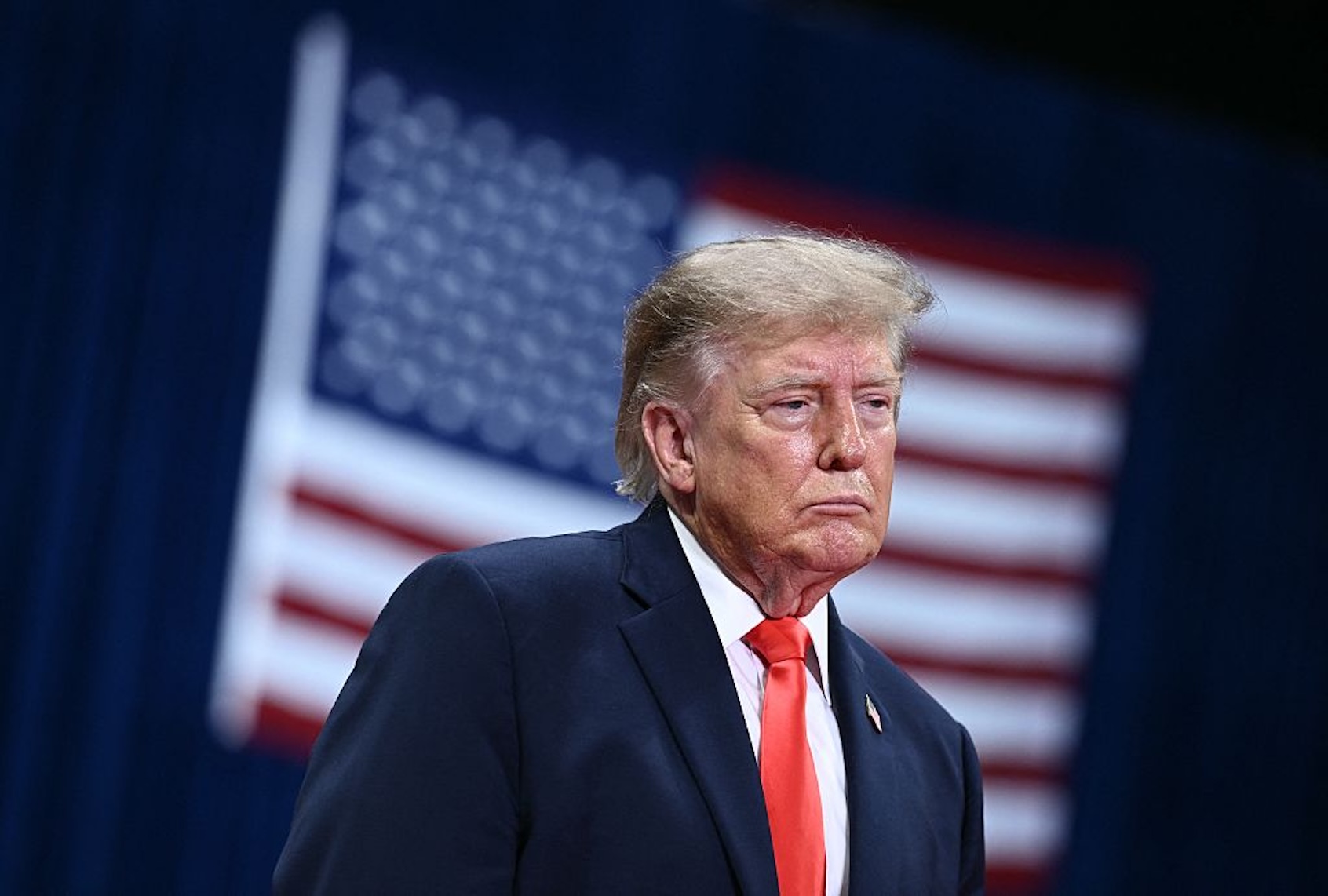
Republicans are continuing to push for their lame-duck priorities in preparation for Democrats taking back control of Congress in January. There’s a slew of last-minute nominations the Trump administration is trying to force the Senate to confirm, some of which are highly problematic, but the chances don’t look great on all of their picks.
That includes President Donald Trump’s eleventh-hour choice to lead the Government Accountability Office (GAO), Eric Ueland, who is facing what looks like an uncertain path to confirmation.
A handful of GOP senators have been publicly questioning if Ueland, a top deputy for Office of Management and Budget (OMB) Director Russ Vought, is the right guy to lead the independent watchdog agency. Outgoing Sen. Thom Tillis (R-NC) on Thursday said he would oppose the Ueland nomination to be included in a nomination package Senate Republicans plan to approve before Dems take back control of the chamber.
Most, if not all, Senate Democrats are expected to oppose Ueland’s confirmation. Democrats on the Senate Homeland Security and Governmental Affairs Committee expressed concern over Ueland’s rushed and partisan nomination, as well as his ability to run what is supposed to be a nonpartisan agency that regularly scrutinizes the agency Ueland currently works for Thursday morning.
Follow along with us as we navigate the lame-duck session:
I don’t mean to diminish the threats that Attorney General Todd Blanche has been outlining against Democrats new and old in recent days with this headline, but it does seem as though the venue he’s using for the threat roll-out is intentional during the post-midterms doom vortex Fox News’ viewers may find themselves in.
This article is part of TPM Cafe, TPM’s home for opinion and news analysis.
The exuberance about control of Congress is not misplaced. It’s hard earned. And Democratic-led investigations and oversight that pours sunlight on the illegal horrors of this administration will be meaningful. But it won’t cancel the medical debt that burdens 100 million Americans, or raise the minimum wage. Nor will it stop what’s already coming from the “Big Beautiful Bill”, including Medicaid cuts projected to strip coverage from 10 million people. Federal legislation that fundamentally and materially changes our lives is unlikely to be signed into law in the next two years. The president has already vowed to use his veto power aggressively.
For 48 hours, Stephen Miller did not tweet. His last message — “get to the polls and protect the ones you love” — lingered on top of his timeline, which, on most other days, produces a steady stream of anti-immigrant vitriol.
President Donald Trump since the election has been restrained, almost meek. He has reverted to a kind of pre-presidency state, talking with great affection about construction projects and renovations while occasionally providing color commentary on national politics as if he is not at all involved.
The righteous outrage that Americans across the political spectrum feel toward Big Tech oligarchs coming in and draining crucial water supplies in their communities, polluting their air and driving up the costs of basic necessities — like electricity — was overwhelmingly apparent at the voting booth. Voters rejected data centers both literally and figuratively in dozens of races across the nation.
Republicans’ mid-decade gerrymanders did not withstand Tuesday’s bluenami, as Democrats hung on to nearly all of their targeted seats. In some states it actually backfired, delivering Democrats seats exceeding their pre-redistricting total.
On Tuesday night, two things happened at once, and the country will be tempted to remember only one of them.
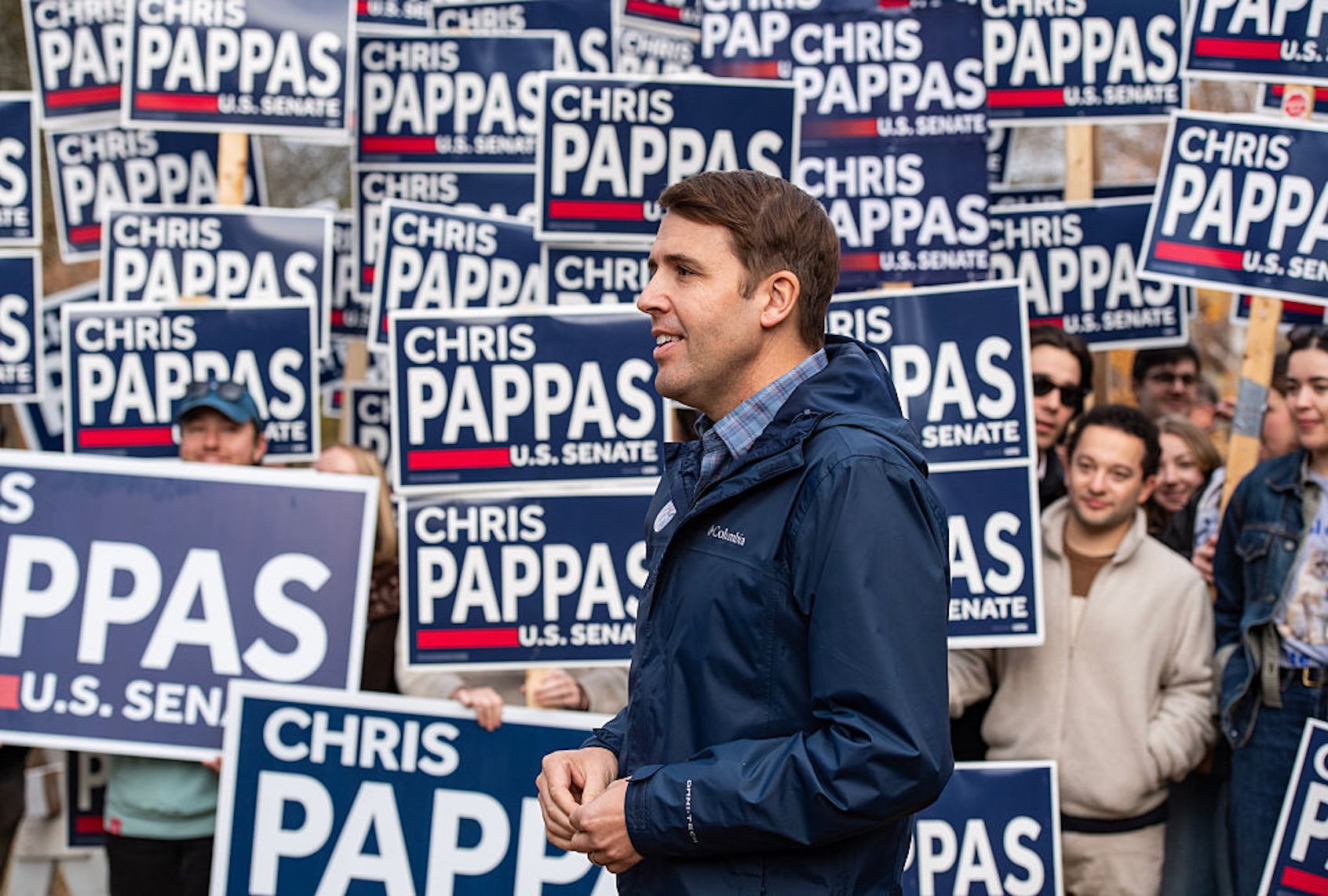
The first made me go quiet at my kitchen table. Chris Pappas won election to the U.S. Senate in New Hampshire, becoming the first openly gay man ever sent to that chamber, and part of the margin that handed Democrats the Senate. In Indiana, J.D. Ford, the first openly gay person ever elected to that state’s legislature, unseated a Republican incumbent and is headed to the House. In Texas, of all places, James Talarico beat Ken Paxton to become the first Democrat to win statewide in more than thirty years, after a campaign in which anti-LGBTQ+ messaging was reportedly Paxton’s single largest category of advertising, and in which the vice president of the United States stood on a stage and used “gay” as a punchline against him. Talarico is straight, and he won anyway.
And on Long Island, in a district Donald Trump carried, a gay Democrat named Chris Gallant, whose private photographs were leaked against him precisely because someone believed that seeing him would be enough to end him, came within about two points of flipping a seat the forecasters had rated safely Republican. He conceded the election on Wednesday, down by roughly 6,700 votes in the closest race of the incumbent Republican Nick LaLota’s career. In the same breath, Gallant called LaLota a brother in arms and told the district he was still their neighbor, which is to say he refused the shame he was supposed to feel from the photo leak to the very end. Whatever that is, it is not the story of a man sunk by leather. It is the story of a man who nearly won the unwinnable while carrying the exact weight that was supposed to be disqualifying.
In 2026, you cannot reliably win an American election by making a man’s gayness, real or invented, the center of your campaign. Republicans tried it in Texas and lost the whole state. They tried it on Long Island and watched a red seat nearly flip.
Put those results next to one another and a sentence forms that would have been unimaginable a decade ago: In 2026, you cannot reliably win an American election by making a man’s gayness, real or invented, the center of your campaign. Republicans tried it in Texas and lost the whole state. They tried it on Long Island and watched a red seat nearly flip. The oldest weapon in the drawer — the one that raised me, the one that could empty a lunch table in the 1990s — is losing its edge at the ballot box. Voters keep looking at the openly gay candidate and sending him to Washington.
That is the headline, and it is real, and I am not going to let anyone talk me out of being moved by it.
But here is the second thing that happened Tuesday night. In the same hours, often on the same ballots, and it is the part the rainbow-wave coverage is already rushing past. In Arizona and Nebraska, voters approved measures to bar transgender girls from girls’ sports. In Colorado, two measures aimed at transgender young people, one on sports and one restricting certain surgical care for minors, are narrowly passing. In Washington State, an initiative to keep transgender girls out of girls’ sports passed comfortably. The same electorate that refused to punish a Senate candidate for being gay reached down the ballot and punished trans kids for existing.
This is the thing I need people to see before the celebration hardens into a story we tell ourselves. The contempt did not disappear on Tuesday. It relocated. A political movement that has learned it can no longer win by hating gay men has not given up the strategy. It has updated the target. The MAGA machine that aired the Paxton ads and laughed at Vance’s joke is the same one now writing ballot measures about 11-year-olds, because cruelty still tests well when it is aimed at the group with the least power to answer back. Gays are simply the part of the community that got powerful enough to be left alone.
I know this pattern in my body, because I have watched it my whole life. The fear moves. First it was the plague, then it was the gay man as predator, then it was marriage as the end of the world, and each time the broader culture eventually got bored or ashamed and the fear went looking for a new address. Right now the address is a trans child in a locker room. The people who found that child did not arrive by accident. They are the same people, running the same play, because it is the only play they have ever had.
So I want to be careful about the victory lap, even as I take one. It is a genuine and hard-won thing that Chris Pappas will be a senator and J.D. Ford will be a congressman, and that a straight man in Texas could not be destroyed by being called gay. Those wins are not small, and the people who did the work to make them real earned every bit of the joy.
But a movement does not get to accept its own seats at the table while the youngest and most defenseless members of its own community are voted off the field in four states on the same night. This is not a win we get to keep cleanly. It is a split screen, and if we only look at our half of it, we become exactly the kind of people who could be bought off with a little representation while someone else pays the bill.
The refusal to be ashamed won some rooms on Tuesday. I felt it. The task now is to extend that refusal to the people the machine has decided to hunt next, to say as loudly for trans kids what the voters of New Hampshire and Indiana and Texas just said for us: that you do not get to make a person’s existence a punchline, or a wedge, or a ballot measure. We learned that lesson about gay men the slow and brutal way. The whole point of learning it is to spare the next group from learning it alone.
Chris Gallant did not quite win. But he came close enough to prove the old weapon is dulling. The question Tuesday really asked is whether we will hand the people wielding it a new one, or finally take the thing out of their hands.
Democrats flipped control of both the Senate and House on Tuesday. Though we’re still waiting on some results from places like Alaska and Mississippi, losses there wouldn’t take much away from the very comfortable margins Dems secured in both chambers until the end of President Donald Trump’s term.
Now comes major shifts in Congress.
Besides the obvious majority-minority flip, we’re already seeing dynamic shifts in caucus leaderships. Outgoing House Speaker Mike Johnson (R-LA) announced he would not be running for Minority Leader in a private call `Wednesday. That job will be up for grabs.
There will, of course, be a new speaker. Likely Hakeem Jeffries, who would make history by becoming the first Black Speaker of the House.
Follow along with us as we enter into GOP’s last chance for passing anything for the foreseeable future — the lame duck session — and some possible internal races for majority and minority leadership positions in both chambers.
When the pied piper loses his audience, we must ask whether the people have rediscovered their conscience or simply found a new tune to follow.
On Tuesday night, Donald Trump and his MAGA movement saw what happens when political influence collides with the everyday realities of the people it seeks to lead.
The 2026 midterm elections brought a dramatic shift in political power. Democrats won control of both the House and the Senate, flipping Senate seats in states such as Texas and Kansas, which were long thought to be out of reach, and winning House districts Trump easily carried just two years ago.
Voter polls placed the president’s approval at approximately 38%, with roughly six in 10 voters saying he was a factor in their vote. But beneath those numbers lies a more consequential story. Americans are confronting the cost of living, the economic consequences of tariffs, the uncertainty of war with Iran and diminishing confidence in American leadership abroad.
Trump promised his voters he would drain the swamp, end foreign wars and bring prices down. Yet many Americans went to the polls questioning whether those promises had been kept. Unlike the Pied Piper of Hamelin, who rid the town of its rats, Trump now faces an electorate concerned that the problems he promised to eliminate have instead multiplied.
In the original story, the Piper fulfilled his bargain. He played his pipe, led the rats into the river and freed the town. But when the townspeople refused to pay him, he returned to exact revenge by leading away their children.
Over and over again throughout the midterm campaign, Trump urged supporters to vote as though he were personally on the ballot. In this telling, the Piper did not eliminate the rats. He added to them, and still he expected to be paid.
Critics argue that Trump reversed that bargain. Rather than delivering the relief promised to ordinary Americans, the administration has left many struggling with economic uncertainty while continuing to demand political loyalty. Over and over again throughout the midterm campaign, Trump urged supporters to vote as though he were personally on the ballot. In this telling, the Piper did not eliminate the rats. He added to them, and still he expected to be paid.
Trump’s supporters see a different story. They point to immigration raids and mass deportations, deregulation and challenges to established political institutions as evidence that the president delivered on important commitments. From their perspective, voters who rejected those policies after experiencing the consequences resemble townspeople who accepted the Piper’s services, but refused to honor their bargain.
Both interpretations expose a fundamental ethical question: When does political loyalty cease to be an expression of shared principles and become an abdication of independent judgment?
In a democracy, voters are not obligated to follow the music indefinitely. They retain the right to question the destination, reconsider promises and withdraw their support. Political loyalty is not a debt citizens owe their leaders. It is a trust that leaders must continually earn.
Albert Hirschman, an American economist and author of “Exit, Voice, and Loyalty: Responses to Decline in Firms, Organizations, and States,” distinguished between voice (working to change an organization from within) and exit (abandoning it). A vote against an incumbent is often itself an act of a voice. But where voters withdrew their allegiance from a party or movement altogether, Tuesday looked more like an exit. Hirschman saw loyalty as what keeps members inside, speaking up rather than leaving. His framework suggests that when loyalty silences voice instead, exit becomes the only remaining option.
But elected officials carry a different and greater responsibility.
Like the children of Hamelin, many Republican lawmakers followed the music toward an uncertain destination. Unlike those children, however, they had the authority — and the responsibility — to question where they were being led. Some embraced the president’s direction; others followed him despite reservations, knowing that dissent could invite a primary challenge. After all, they had seen others who challenged his leadership pay a considerable political cost. Kentucky Rep. Thomas Massie and Louisiana Sen. Bill Cassidy lost their Republican primaries to Trump-backed challengers.
Political cooperation is essential to governing. But cooperation becomes ethically troubling when loyalty to an individual displaces the obligation to question, deliberate and act independently. The oath of office is not a pledge of allegiance to a president, a party or a political movement. It is a commitment to uphold the Constitution. A president can command attention, share public debate and place enormous pressure on members of his own party. But the ability to demand loyalty does not create a moral entitlement to receive it.
The children of Hamelin’s Pied Piper tale had no part in the broken bargain, yet they paid its price. In our democracy, ordinary Americans and future generations often inherit the consequences of political decisions, and today they are paying a price. Economic instability, weakened public trust and the costs of war do not disappear when an election ends. A leader’s success cannot be measured solely by the number of people willing to follow along with them. It must also be measured by what happens to those who never chase the tune.
The election has shifted power in Washington. Democrats, after winning sizable, historic victories throughout the country, will soon have an opportunity to exercise congressional oversight and reinforce the institutional independence our constitutional system requires.
But changing who holds the instrument does not necessarily change the music.
Democrats now face their own ethical test. Will they exercise power with the transparency, accountability and respect for constitutional checks they demanded from their opponents? Will they welcome dissent within their own ranks? And will they resist the temptation to substitute partisan loyalty for independent judgment?
An election can change the balance of power overnight. It cannot, by itself, restore public trust or guarantee ethical leadership. That requires leaders willing to place constitutional responsibility above political convenience, institutions prepared to exercise meaningful oversight, and citizens who refuse to surrender their judgment to the most compelling voice in the room. The first six months of the 120th Congress must be defined not merely by a change in political power, but by a demonstrable commitment to ethical reform, transparency, and accountability. The American people did not vote simply for a change in leadership. They voted for a government worthy of their trust.
The Pied Piper’s greatest power was not simply his ability to play a captivating tune. It was his ability to persuade others to follow without questioning where their journey would end.
Political ethicist Dennis Thompson called this the problem of many hands: When many officials each contribute a small part to a collective outcome, responsibility seems to dissolve until no one bears it. So, when political loyalty becomes more important than independent judgment, who bears responsibility — the leader who plays the tune, or those who willingly follow? Thompson’s framework does not allow individual lawmakers to hide behind presidential leadership, party discipline or collective decisions. Nor does it assign blame equally. Responsibility depends on each official’s authority, knowledge, contribution and the alternatives available to them. By that measure, those who knew better and had the power to act cannot claim they were merely following the music from the leader in the red hat.
When the music finally stops, the question is not simply who will lead next.
It is whether we have learned to listen differently.
For all the horrible things Donald Trump has wrought upon the world — and there are so, so many — he’s also taught us some important lessons. Trump is proof of several truths: A red-meat-and-stress-addled heart can withstand otherwise unthinkable conditions with the federal government’s medical secrets; reality television ruined the world; and, if we’re not careful, we’re all liable to become parodies of ourselves one day, crying about it online.
That latter bit is certainly true for filmmaker Taika Waititi, whose otherwise tacky-yet-progressive veneer cracked last weekend when he took to Instagram to condemn the poor reviews of his latest film, “Klara and the Sun.” After a torrent of bad press and worse box-office performance, the film’s distributor, Sony, opted to scale back the movie’s wide release, reducing the sci-fi dramedy’s reach from 2,000 theaters nationwide to 800, most of which returned a meager profit. Never one to take his mediocrity on the chin, Waititi deflected the negativity outward, which, as we know, always paints someone in a good light!
Waititi’s childish outburst is straight from the MAGA playbook. And while refuting film critics isn’t akin to Donald Trump’s most damning sins, Waititi’s mockery is a symptom of a problem that won’t be washed away by one blue wave, no matter how sizable.
Waititi reposted a graphic claiming that “Klara and the Sun” was “rebounding” with a 78% audience score on Rotten Tomatoes, a 53-point gap from the film’s 25% critics score. (For what it’s worth, neither number should ever be used to accurately measure a film’s quality.) “I haven’t read a review of anything aimed at me or my peers in 15 years,” Waititi captioned the post. “But I do listen to the people . . . Let’s spare a thought for those sad, lost souls who couldn’t achieve their dreams of becoming artists, and thus settled, and became critics. Irrelevant. Out of touch. Obsolete. In the bin.”
Reading Waititi’s emoji-peppered caption, I was surprised to find it so carelessly evoked the Trumpian crybaby approach to social media. Whether on X or his own Truth Social, Trump’s favorite way of addressing critics and opponents has long been to toss out adjectives at will. Tack a “SAD!” at the end of Waititi’s caption, and it could easily pass for one of Trump’s poetic musings. (If only Waititi had gone so far as to parrot my personal favorite Trump quip about Barney Frank by saying, “The critics looked disgusting, nipples protruding, in front of my movie. Very very disrespectful.”)
Want more from culture than just the latest trend? The Swell highlights art made to last. Sign up here
Ironically, all those admonishments in Waititi’s caption are also fitting descriptors for the state of Donald Trump’s agenda, the one imitated by his legions of Republican cronies spread out across America, hoping to be elected in Tuesday’s midterms. But judging by the results, MAGA’s influence is waning fast. Seven Senate seats flipped, historically red states turned blue and a spate of monumental wins popped up nationwide. The MAGA bubble popped in real time. Americans have seen firsthand what little good fascist ideology does for the average, working-class person. And though the country may not become great again overnight, it appears the last 12 years of freefall have finally been suspended — at least for now.
Not to be all, “Oh, won’t someone think of the celebrities?” about it, but such overwhelmingly positive election results left me wondering what happens to someone like Waititi, whose childish outburst is straight from the MAGA playbook. For over a decade, Trump has used social media to peddle broadly disparaging, dangerous rhetoric that has legitimate impact outside the phone screen. The reckless hatred comprising MAGA ideology is so potent that it’s bled into the ways even otherwise progressive people wield their power, like crude oil painting an ocean black. And while refuting film critics isn’t akin to Trump’s most damning sins, Waititi’s mockery is a symptom of a problem that won’t be washed away by one blue wave, no matter how sizable.
One would think that Waititi would know better. For one, the guy is 51 years old, certainly experienced and well-established enough to let a flop roll off his back. How fitting that his biggest success is the anti-fascist yet aesthetically tasteless political satire, “Jojo Rabbit,” which won the Oscar for best adapted screenplay in 2020, just as the Trump era was revving up for its second leg. That film, about a 10-year-old Hitler Youth who begins to grapple with the realities of life in 1940s Germany, examines propaganda’s influence and the power of hegemony, even if it often lacks the nuance and perspective such a satire warrants. For better, or more often, for worse, Waititi’s writing displays a self-possessed vulgarity that gets in the way of his more salient observations. Case in point: It’s downright ludicrous to stake your name on a film renouncing hate, then take aim at critics — people not exactly matched in influence to someone like Waititi — just six years later.
But this is the rot that social media creates. Whether it’s Instagram, X, TikTok, or YouTube, these sites have incentivized and monetized incendiary opinions. Their algorithms push small people into major power. What was designed to ostensibly be a great equalizer has only divided the world more, making animosity easily accessible to anyone who gets their rocks off on sewing discourse through cruelty.
For some time now, arts critics have been easy targets on these platforms. Gone are the days of the critic playing dilettante, having intellectual conversations over martinis and cigarettes at the month’s salon for like-minded individuals. To be a critic today — to pursue one’s passion for art and writing and learning, all rolled into one — is to subject oneself to a pretty bleak existence. In most cases, the pay is meager. The hours are long. The job is demanding. And virtually no one has the patience or attention span to read an entire article anymore, let alone engage with its ideas. A legitimate critic doesn’t stumble into the job just to point and laugh; they write because they have real passion for what they cover. Surely someone like Waititi would say the same when he begins a new project after a string of flops.
If living in MAGA-world for a decade has taught us anything, it’s that things aren’t just good because one person says so. Uniformity is the enemy of art, and blind trust is the scourge of politics. There is no future without recognizing the subtleties existing between the lines.
What Waititi fails to realize is that he’s not punching up or down, but laterally. This is artist versus artist. If the context is right, a good piece of criticism can be as life-altering as a good film. But that’s hard to see when the internet has built such a wide chasm between people, reducing the impact of writing in favor of scrolling. Along with social media’s effect on human behavior, it’s had a heavy hand in blunting the journalism industry. If everyone’s a critic, then no one is, and that’s precisely why monitoring Rotten Tomatoes scores like they’re poll numbers is futile and ridiculous.
But it’s not just Waititi who’s vulnerable to this unique form of MAGA-tinged, social media-brained psychosis; critics can fall prey to it, too. Whether it’s a filmmaker, a film critic, or just your average filmgoer, social media has confined us all to its machine. No one is exempt from consumer tech’s sway. And if a writer or filmmaker wants to make a splash, tossing out an inflammatory opinion aimed at a peer is a surefire shortcut. I’ve seen this affect critics’ prose over time, with certain writers (or their outlets) favoring button-pushing pull quotes and headlines for attention. But in most cases, no critic is happy to spend two hours watching something they find insufferable. No matter how gleeful Siskel and Ebert used to look sparring over movies, their industry was built on intellectual debate in pursuit of cinematic resonance, not schadenfreude.
What’s most concerning in Waititi’s response is his foul self-importance, which is the real stain of MAGA politics. While an artist should avoid burdening themselves with hypothetical responses to their work before it’s even out in the world, considering the eventual reaction is worthwhile. Engaging with other people’s perceptions is a practice we could all stand to do with more grace and tact. Contemplating a differing opinion shows maturity and humility, not absolute agreement. Pointing a finger won’t do anything for a person’s growth, artistic or otherwise. America’s politicians are only just beginning to relearn that lesson, understanding the value in trying to address problems, rather than gesture toward them with a shrug.
If America’s blue wave is indeed going to usher in a new era where politicians actually act in favor of the people, and Trumpian artists like Waititi make themselves look foolish on Mark Zuckerberg’s Instagram, we owe some props to one of the century’s most prolific liberals. Aaron Sorkin’s “The Social Reckoning” actually got a few things right. In last month’s companion piece to “The Social Network,” Sorkin posited that the average American would soon be mobilized by their fatigue with MAGA politics and social media. But his director’s eye lacked style and discernment. Sorkin responded to criticisms with pleasant diplomacy, even questioning his own merits as a director versus a screenwriter. “I’m worried that the parts of directing that I’m not good at are those parts you can’t learn,” he admitted.
While there may be truth to his concern, Sorkin’s introspection is precisely the kind of pause this country could learn from. If living in MAGA-world for a decade has taught us anything, it’s that things aren’t just good because one person says so. Uniformity is the enemy of art, and blind trust is the scourge of politics. There is no future without recognizing the subtleties existing between the lines. The only thing that is, to quote Waititi, irrelevant, out of touch and obsolete is the arrogance in thinking anyone could know it all.
Massie Will Launch Hegseth Impeachment as GOP Tries to Figure Out Its Future
Rep. Thomas Massie (R-KY), who lost his primary earlier this year amid a Trump-backed campaign to oust him from Congress, says he will trigger a vote to impeach Secretary of “War” Pete Hegseth when Congress returns next week. Even with Republicans still in the majority in the House — for now — sources told CNN they expect Massie’s effort to advance.
If the House impeachment effort moves forward, I think it’s extremely unlikely that two-thirds of the members of this current Senate would vote to remove Hegseth. Still, impeachment in the House would be a dramatic rebuke of one of the most absurd Cabinet secretaries, and a sign of where the party is at.
Those Republicans who are trying to make some kind of sense of Tuesday’s loss — and not merely resorting to (very funny) catastrophizing — are blaming it on the Iran War. It’s certainly easier to scapegoat Hegseth, the cartoonish Fox News anchor-turned-defense secretary, than it is to blame Trump himself. Despite takes that we’ve reached the “end of Trumpism,” Republicans (and, probably, many TPM readers) know it won’t be over until it’s really, truly over.
Still, we’ll be tracking the ways in which the MAGA coalition starts to crack in the weeks and months ahead. Already, we can see the signs. Massie going rogue is nothing new, but adequate Republican support to begin his Hegseth-impeachment effort would be. Potential 2028 candidates — most notably, DeSantis and JD Vance — are scrambling to disassociate themselves from the Iran War; America Firsters like Massie claim (not unreasonably) that Trump lost support because he didn’t deliver on a few very important promises.
“Tonight’s outcome isn’t about placing faith in Democrats or socialist principles; it’s about holding Republicans accountable for betraying their promises,” Massie wrote on social media.
Meanwhile, Hegseth might get a mercy killing before the impeachment effort gets underway: CBS reports Trump is asking advisors about whether he should replace him.
Big Decision for Alito and Thomas
WASHINGTON, DC – MAY 22: Clarence Thomas, associate justice of the US Supreme Court, greets a member of the military during a swearing-in ceremony for Kevin Warsh, chairman of the US Federal Reserve, not pictured, in the East Room of the White House on May 22, 2026 in Washington, DC. (Photo by Al Drago/Getty Images)
“Just think what this means, having 56 senators,” outgoing Florida governor Ron DeSantis mused yesterday. “That means no Supreme Court justice will be confirmed under President Trump’s administration unless something happens in the next six weeks.”
What might “happen”? Well, the oldest and most right-wing Supreme Court justices — Sam Alito and Clarence Thomas — might retire. Thomas is 78 and Alito is 76.
Except Alito has repeatedly said he will not. He reiterated that commitment to friends this week, after the midterms, the New York Times reported yesterday, citing “two people close to the justice.”
Thomas, who for years was famous for saying very little during Supreme Court oral arguments, has said very little.
Election Day brought a big blue earthquake of anti-Trump sentiment that rumbled as far inland as Kansas and shook GOP ground in the Carolinas and Texas. By the time late victories rolled in on Tuesday night, there had been so many wins that subsequent Democratic pickups had begun to feel more like aftershocks, even in states that haven’t voted blue since Bill Clinton was in the White House.
Florida narrowly missed the quake, with Republicans winning all the major statewide races by the thinnest of margins. The one-time quintessential purple state, a so-goes-the-nation bellwether with a relatively even amount of registered Republicans and Democrats, turned remarkably red in the Trump era following Barack Obama’s back-to-back wins in 2008 and 2012. The state legislature redrew its maps to enshrine a supermajority, and a post-Covid influx of GOP transplants seeking lower taxes and lax regulations shifted the balance significantly. A Democrat hasn’t made a fight of the governor’s race this decade, and no Democratic Senate candidate has come close to winning since Bill Nelson lost his reelection bid in 2018.
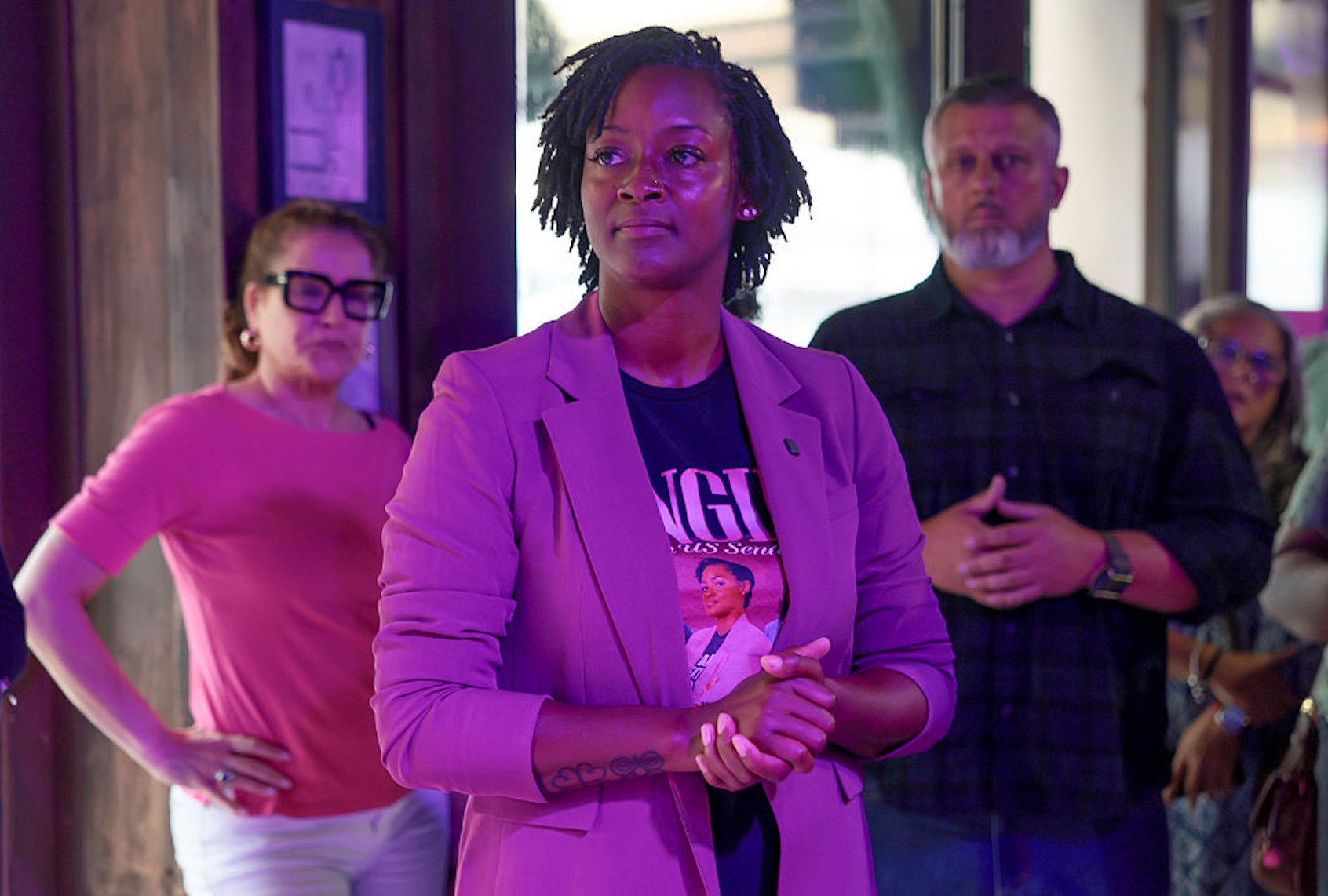
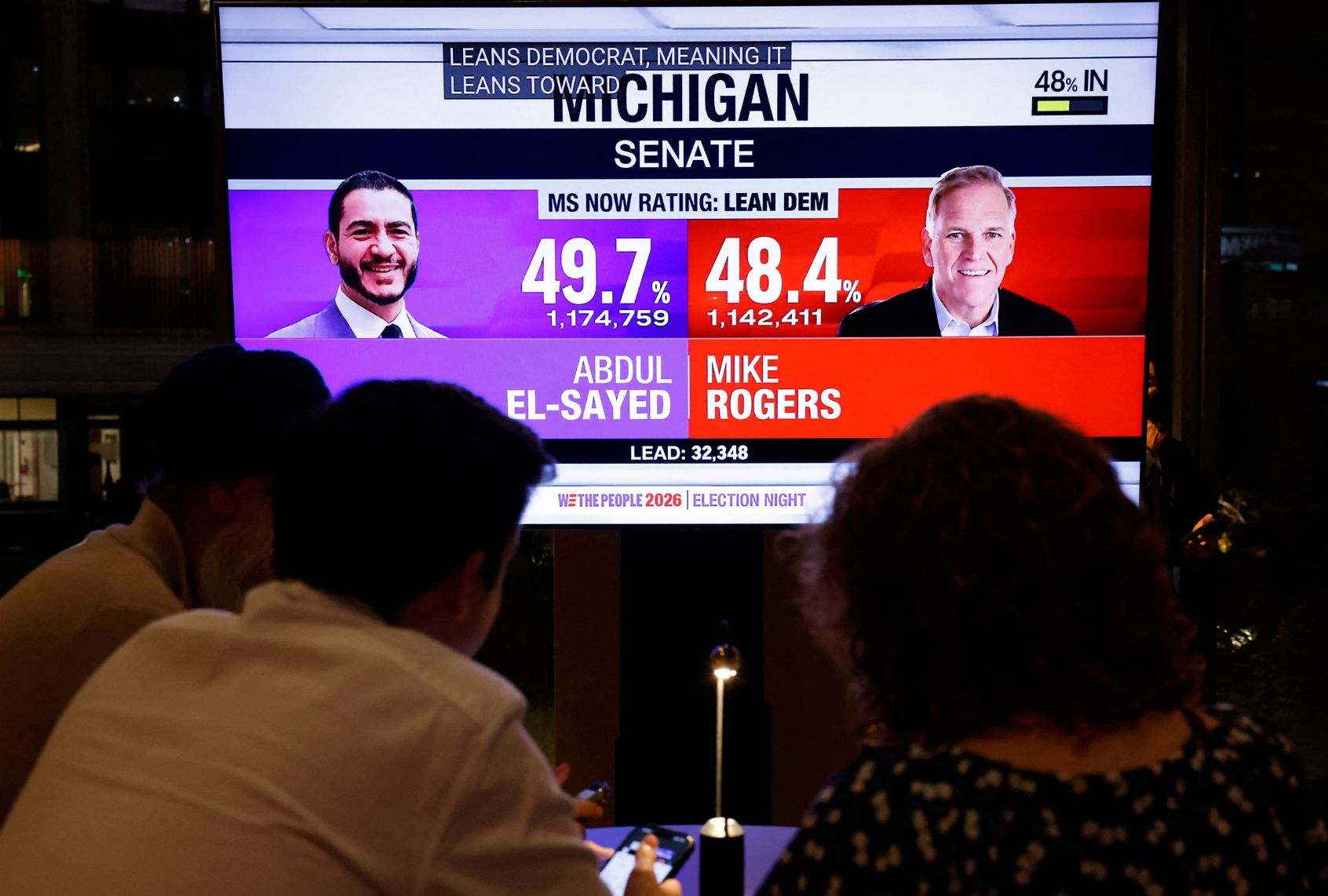
Angie Nixon felt different. The Jacksonville organizer and bookstore owner ran a proudly democratic socialist campaign, advocating for universal healthcare in a state beset by multiple insurance crises and affordability issues. Her polls looked good up to Election Day, and on Tuesday night, victories across the country made her race in the Sunshine State look winnable. Ultimately though, Nixon could not replicate the victories of other rabble-rousers like Dr. Abdul El-Sayed in Michigan and James Talarico in Texas. She lost to incumbent Ashley Moody, who was appointed by Gov. Ron DeSantis to fill the seat left vacant by Marco Rubio’s confirmation as secretary of state, by less than two percentage points. Moody outspent Nixon by more than double to barely eke out a majority.
The Florida Democratic Party deserves some blame for being woefully behind the times. After a 2019 squeaker between DeSantis and the progressive Andrew Gillum, the party moved as fast as it could from any candidate that might excite its base. They ran a former Republican for governor in each of the last two gubernatorial races, no doubt depressing turnout and enthusiasm among the Democratic base with their moderate picks.
But a close look at the rest of the Florida races reveals the culprit in Nixon’s narrow loss. Despite a gerrymander meant to calcify Republican supermajorities in the state and a political stiff in the form of David Jolly at the top of the ballot for governor, the GOP lost seats in the state legislature. The energy in Florida and, remarkably, throughout the South, was with anyone running against Republicans. The blame for Nixon’s defeat lies almost solely with national Democrats and their stubborn refusal to back Nixon with either messaging or money.
Since her shock primary win in August, Nixon has complained about Democratic Senatorial Campaign Committee recalcitrance to anyone who will listen. In September, she told MS NOW hosts Symone Sanders Townsend and Eugene Daniels that Senate Minority Leader Chuck Schumer was less than thrilled about her race.
“When I did speak with Sen. Schumer on the phone, it was basically a ‘we will see,’” she said. “He’s going to look into it. That’s what was said, that he’s going to look into it.”
Nixon went on to say that Democrats were wary of throwing in behind a Black woman in the South following Kamala Harris’ 2024 loss: “Folks are a little gun-shy because, unfortunately, Vice President Harris lost as a Black woman, and so people are being very hesitant in terms of funding Black women, especially in the South.”
In later interviews, she claimed that national Democrats wrote off Florida in advance, declining to put money behind her candidacy because they believe the state is “racist.”
The pale blue dots on Florida’s election map tell the story. The democratic socialist was able to win in Miami-Dade County, despite a Cuban-American population that shudders at anything that sounds like revolution. On the other end of the state, typically Republican Jacksonville swung to the left. An enthusiastic push in the state’s timidly liberal cities could have narrowed the gap in favor of Nixon and added tens of thousands of votes to her final total. According to analysis by Wesleyan Media Project, the national party and affiliated PACs spent 10 advertising dollars in Iowa for every one they spent in Florida in the race’s final weeks, and it showed. The Hawkeye State now has a new Democratic governor-elect and senator-elect.
It was the same story throughout the South. Democrats overperformed in states where the national party bothered to fight.
It was the same story throughout the South. Democrats overperformed in states where the national party bothered to fight. Blue Texas became a reality because of seemingly unlimited spending — it was the most expensive Senate race in history — and national messaging hits on behalf of Talarico. Louisiana and Mississippi offered two incredibly close Senate races in states long assumed to be GOP strongholds. In Louisiana, Democrat Jamie Davis lost to Republican Julia Letlow by only two points. As New York Times contributing opinion writer Steven Rattner pointed out, Davis kept the race close despite receiving zero advertising dollars from the national party in October, per the WMP’s analysis.
Mississippi, though, could turn out to be a miracle — in spite of the DSCC. With 96% of precincts reporting, Democrat Scott Colom, a district attorney, leads the incumbent Sen. Cindy Hyde-Smith by only 138 votes, with around 15,000 provisional ballots outstanding.
Speaking to Anderson Cooper on Wednesday, Mississippi state Rep. Cheikh Taylor, a Democrat, blamed the nail-biter on a lack of investment from the national party.
“Early money always helps. Monies have come to the state of Mississippi, just not through the traditional means, though the DNC. We all know that the Colom campaign was locked out of that $30 million contribution to U.S. Senate races,” he said. “Even though the money didn’t come, in Mississippi, we figure it out.”
Don’t get me wrong. Colom, Davis and Nixon all deserve praise for their stunning performances, even if at least two of them came up short. Tuesday night’s news offered a rare glimmer of hope in a bleak few years, but Democrats had a chance to permanently rebuke MAGA — and instead they squandered it based on their own misconceptions about the South.
Grabbing two more close races via some well-placed funding for the party’s nominees would have left them in a much better position to harry and harass the president and block his MAGA agenda over the next two years. All it would have taken was not capitulating in advance.
In 2025, Texas Republicans, pushed by President Donald Trump, redrew the state’s congressional map before the midterms, converting five Democratic-held districts into ones Trump would have carried by at least 10 percentage points.
The move backfired: GOP candidates lost four of five seats their new congressional map was designed to flip and lost two of their own.
That means Texas Republicans will head to Washington in January with 24 U.S. House seats, one less than they had at the start of the current Congress. When the state Legislature in Austin pursued the controversial mid-decade gerrymander, Republicans had hoped for a 30-8 split in the delegation but will end up instead at 24-14.
In South Texas, moderate Democratic Reps. Henry Cuellar of Laredo and Vicente Gonzalez of McAllen both won reelection, surviving the redraw that put more Trump voters in their districts. Republicans also lost ground in the lone Rio Grande Valley district they already held, as Tejano musician Bobby Pulido ousted two-term Rep. Monica De La Cruz, R-Edinburg.
Democrats picked up another seat with Katy Padilla Stout’s win over YouTuber and gun-rights activist Brandon Herrera in the 23rd Congressional District, a sprawling seat covering San Antonio to the outskirts of El Paso. The district has been vacant since former GOP Rep. Tony Gonzales resigned in April over a sex scandal with a staffer. Despite the district’s 15-point lean for Trump, Padilla Stout, a San Antonio attorney and former teacher, made it onto the radar of national Democrats who saw opportunity in the district’s majority-Hispanic status and Herrera’s history of edgy, controversial comments.
Democrats held fast to districts elsewhere, despite their incumbents being displaced due to the redraw. In the San Antonio area, Bexar County sheriff’s deputy Johnny Garcia beat Republican Carlos De La Cruz, the brother of Monica De La Cruz, in the newly crafted 35th Congressional District, a GOP target that Trump carried by 10 points.
In Houston, the grassroots campaign of Democrat Leticia Gutierrez topped Army veteran and former investment banker Alex Mealer, despite being vastly outspent in a district that Trump won by 20 percentage points two years ago. Gutierrez raised just a fraction of Mealer’s $2.8 million haul over the midterm cycle, as of mid-October, according to Federal Election Commission filings.
Republicans had high hopes for the redraw, which Democrats fought by fleeing the state, keeping the map in limbo by temporarily denying Republicans the headcount to pass it. But the new lines could not withstand the blue wave that swept through much of the country Tuesday, driven in part by the leftward swing of Latino voters. Texas’ new map banked on the GOP holding most of Trump’s 2024 gains with Latino Texans, who made up a majority of the eligible voting population in four of the five targets.
Nor did the redraw deliver what the White House wanted from it: a buffer that would preserve Republicans’ slim U.S. House majority. Trump’s push for the Texas map kicked off a tit-for-tat redistricting war across the country, producing similarly skewed maps in a number of states.
After Texas, Republicans were most hopeful to flip four Democratic seats they redrew in Florida. Three of them stayed blue, and the other was within a one-point margin. In California, where Democrats retaliated with new congressional maps of their own, they had picked up three of the five they targeted and were leading in the remaining two.
With GOP-leaning congressional maps powerless in the face of the blue wave, Democrats won the U.S. House and are set to have a substantial majority.The party has also wrested control of the U.S. Senate, leaving Trump to reckon with a Congress under full Democratic control for his last two years in office.
New faces
Under less dramatic circumstances, a number of new faces will join the ranks of Texas’ congressional delegation to replace ten U.S. representatives who are either retiring, gave up their seats to run for other offices or lost their primaries for reelection. Most of the races were in noncompetitive general election districts.
Two sitting representatives ran for U.S. Senate but lost in their respective primaries: Rep. Jasmine Crockett, D-Dallas, fell to James Talarico while GOP Rep. Wesley Hunt, R-Houston, finished behind Sen. John Cornyn and Ken Paxton.
Reverend Frederick Haynes III won Crockett’s endorsement to succeed her in the heavily Democratic 30th District. A Dallas native, Haynes has been pastor of the city’s Friendship-West Baptist Church for more than 40 years. He sailed his way into Congress in the deep blue district Tuesday.
Mortgage loan officer Jon Bonck will succeed Hunt in the safely red 38th District. Bonck received endorsements from Trump, Sen. Ted Cruz and other influential Republicans leading up to his victory in the general election.
The tenure of Rep. Chip Roy will also come to an end in January after the congressman ran for Texas attorney general, a contest he lost in a primary runoff to Mayes Middleton. This election left the staunchly Republican 21st District in the hands of Mark Teixeira, a former professional baseball player who started his 14-season Major League career as the fifth overall draft pick for the Texas Rangers in 2001.
And one incumbent, Rep. Dan Crenshaw, was forced into an early exit from his safe Republican seat by his primary rival, state Rep. Steve Toth of Conroe. The business owner defeated investment banker and Democratic nominee Shaun Finnie, and will be joining the U.S. House after five total terms, including the last eight years, as a state legislator.
Among the six soon-to-be retirees, two are Democrats. The seats of Reps. Lloyd Doggett and Marc Veasey will be filled, respectively, by Rep. Greg Casar, who ran for Doggett’s Austin seat after his own district was scrambled, and former Rep. Colin Allred. Both are returning to Congress — Allred after two years out of office — in new districts.
A new cast of Republicans will take over in four other safe districts.
Five-term Rep. Jodey Arrington will leave his seat to Tom Sell, who worked in the office of former Rep. Larry Combest. Sell worked at a law firm he founded with Combest before running for the U.S. House.
Rep. Michael McCaul will be succeeded by Chris Gober, who, before running for office, worked as the chief lawyer of Elon Musk’s America PAC that has channeled $216 million toward Republicans this cycle.
Rep. Morgan Luttrell also chose not to run for reelection after two terms. That opened the door for Jessica Steinmann, an attorney who previously worked in Cruz’s office as well as in the first Trump administration’s Department of Justice.
And a deceptively familiar face will replace Rep. Troy Nehls – that of his identical twin brother, Trever Nehls, who served in the U.S. Army for more than three decades and retired from the military as a Colonel. He’ll represent the Houston-area 22nd Congressional District.
Democrats had a big night on Election Day. The bluenami was also filled with tons of nationwide firsts, with many candidates breaking the so-called glass ceiling.
Forty-five minutes before the first polls closed on Tuesday, Greg Gutfeld was still doing what Fox News does best, acknowledging reality just long enough to replace it with a culture-war hallucination. “Gas prices are so high, I’m going to vote for the party that wanted to trans my kids,” he joked on “The Five,” adding that he didn’t see Democratic wins on the horizon. “There is no blue wave materializing,” Clay Travis, the Outkick founder and Fox contributor,posted at 3 p.m. EST, adding that Republicans were surging in Florida and the polls were about to be proven wrong yet again.
Then the polls closed, and MAGA’s delusions were pulverized. The country that right-wing media had spent two years describing as angry, ascendant and permanently realigned voted in an avalanche that crushed years of manufactured MAGA hype. American voters told the president to take his $5,000 “Trump Dividend” checks and shove them. Elon Musk, who moved to Texas to get away from Democrats and then spent a reported $150 million to deliver the Lone Star State for Republicans, saw his early Tuesday post urging people to vote red disappear from his profile by Wednesday.
The country woke up to results that few expected — and a long list of historic firsts. Georgia elected Keisha Lance Bottoms, the first Black woman governor in American history. Michigan sent Dr. Abdul El-Sayed to Washington as the first Muslim senator. New Hampshire elected Chris Pappas as the first openly gay man in the Senate. New Mexico made Deb Haaland the first Native American woman governor, and Peggy Flanagan became Minnesota’s first Native American woman senator. Texas elected Gina Hinojosa over three-term Gov. Greg Abbott — the state’s first Latina governor and its first Democratic governor in more than three decades. Ohio got its first woman governor in Dr. Amy Acton. South Carolina tapped Dr. Annie Andrews as its first elected woman senator. Democrats won a Senate seat in Kansas for the first time in 94 years. While votes are still being counted in key races, solid majorities in both the Senate and House are assured, and Democrats are set to make Hakeem Jeffries the country’s first Black speaker.
Even the New York Post, Rupert Murdoch’s tabloid and a loyal Trump house organ, refused to mince words on its front page: “Trump suffers historic rebuke as Dems romp in midterms,” with “BLUE TSUNAMI” blaring beneath it. On “Fox and Friends” Wednesday morning, Ainsley Earhart warned viewers that “your wallet and your way of life” are now in the crosshairs.
The deeper truth the conservative media apparatus could never say out loud is that MAGA was always a Trump-specific phenomenon. It does not transfer to his imitators, and it only ever worked when the economy let voters treat Trump as entertainment.
It is no surprise that Trump 2.0, stripped of its previous establishment Republican guardrails like Mike Pence and Mitch McConnell, has culminated in such total structural collapse. The deeper truth the conservative media apparatus could never say out loud is that MAGA was always a Trump-specific phenomenon. It does not transfer to his imitators, and it only ever worked when the economy let voters treat Trump as entertainment. Right-wing media spent years confusing its ability to dominate a conversation with its ability to represent a country. When Tuesday’s returns exposed the difference, its leading voices reached for almost everything except accountability. They blamed immigration. They blamed insufficient restrictions on voting. They blamed each other. Alex Jones even decided Trump might secretly be a Democrat.
For the network’s election night coverage, Fox News seated former New York Mayor Bill de Blasio between two of Trump’s former press secretaries, Kayleigh McEnany and Karoline Leavitt, and he told them to their faces that they were “missing the plot.” He said, “The American people are looking at a war they do not believe in, and they did not authorize. They’re looking at prices that are making it impossible for middle-class people, let alone working-class people, to live.”
Trump, watching at the White House, raged on Truth Social — “Why does FoxNews have deBlasio” — and seethed at the panel’s lone liberal: “I can’t stand Jessica Tarlov’s voice — DUMB AS A ROCK, but it’s the voice that gets me.” After Gutfeld read the president’s text on air — which is as good a diagram as exists of what Fox News is now: a suggestion box the president monitors live — Tarlov answered on X, not on Truth Social: “Reality is a tricky thing,” and the president “should get better at dealing with it.”
On Newsmax, things were somehow worse. Political strategist Dick Morris argued that Trump’s problem was effectively excessive success: He had solved the major problems that would otherwise motivate Republican voters. The influencer ecosystem, meanwhile, went straight for the circular firing squad, and every faction picked a different target.
Jones, livestreaming as the returns buried his movement, said Trump himself is the plant: “I think he’s a Democrat. I’m 100% at war with Trump. He’s not that r*tarded. He did this on purpose. I think he’s the ultimate Democrat sleeper cell and he works for them.” Benny Johnson and Libs of TikTok reached for the great replacement theory, and Fox’s Lawrence Jones supplied the broadcast version, surveying Texas and concluding, “Texas, there is a lesson here. Don’t be so welcoming.”
So much for celebrating people voting with their feet and the U-Hauls leaving California.
Laura Loomer went straight doomer: “America is over and so is the American Dream.” Others blamed Sen. John Thune for failing to pass the SAVE Act and shrink the electorate further, as though the answer to such a broad repudiation were fewer voters. The Daily Wire’s Ben Shapiro posted the “everything is fine” fire GIF — “Just checking in to see how things are goi—” — and the Federalist’s Sean Davis answered with the hot-dog-suit meme, the one where the man in the costume insists everyone else is the problem.
The recriminations got personal fast. Rep. Nancy Mace told Fox’s Mark Levin to “STFU,” blamed his “beloved” war for the losses and called the night “devastating . . . for the hard-working American who can’t afford to buy a home, or fill their tank with gas or put food on the table.” Levin returned fire: Mace was a “washed up political loser” and “one of the most mentally unhinged POS to ever be in Congress.” She was angry, he said, “because you’ll actually have to now work for a living . . . Good riddance, crackpot.” Florida Gov. Ron DeSantis gloated that with governors’ races lost in Texas and Ohio and Georgia, the Sunshine State would stand alone among the ten most populous states with a Republican governor. And Katie Miller — podcaster, administration wife, professional MAGA explainer — told CBS’s Norah O’Donnell that she had not voted at all. “I did not vote in Virginia because in Virginia when you vote, you dox your own address, and so I prefer my own safety and security over giving that up.”
In the end, the movement’s loudest voices spent the cycle performing for each other. Some of them couldn’t even be bothered to vote.
Ever since the Covid-19 pandemic, America has been in a funk. The whole country has seemed to be in a sour mood, unhappy with everything, feeling as if the world has gone off its axis and life is out of balance. The trauma of that experience was probably far deeper and more injurious than we wanted to admit, so we just sort of sleepwalked as events cascaded around us, feeling emotionally distanced and impotent.
We finally woke up and shook it off. For the first time in six years, the American people took back control of their own destiny and issued a stunning, overwhelming rebuke to the Republican Party, which had fallen back into power during that period of national somnolence and took a wrecking ball, figuratively and literally, to the country. America, it seems, decided to save itself.
The historic landslide Democratic victory in Tuesday’s midterms elections is far more thorough than even the most positive polls had indicated. Analysts assured us that while it looked likely the party would gain at least a House majority, the so-called real victory would be if Democrats reduced the margins in red states, which would serve as a warning to Republicans that they had gone too far. Nobody really expected that Democrats would actually win in places like South Carolina, Kansas, Iowa or perhaps even Mississippi, where, as I write this, Democrat Scott Colom has a 43-vote lead over GOP incumbent Senator Cindy Hyde-Smith.
Political polarization was assumed to be set in stone; the GOP’s redistricting gambit and the Supreme Court’s gutting of the Voting Rights Act meant that Democrats could not expect to flip more than a handful of seats, and the party was facing one of the most inauspicious midterm Senate maps in recent memory. At this moment, they are expected to end up with 245 to 255 seats in the House and possibly 55 seats in the Senate, an unthinkable outcome as recently as yesterday morning.
It will be a while before we see the final tally, but the results are so obviously decisive that even Donald Trump cannot fatuously claim that this election was stolen. All the threats against election workers and plans to contest the outcome are empty in the face of such a victory. It is finally, once and for all, clear that the country does not want the insanity and chaos that Trump has wrought.
According to voter polls — formerly known as exit polls — the top issue for voters was the cost of living, as expected. Reversing the tariffs and putting an end to the war with Iran would be the obvious ways to begin to alleviate some of the stress, followed by restoration of funding for healthcare and other vital safety net programs. Rolling back Trump’s tax cuts for the wealthy would go a long way as well. But the president Trump has already promised to be “Mr. Veto,” so the prospect for a new era of bipartisan comity with the White House does not look good.
It’s always possible that congressional Republicans will feel chastised enough that they will work with Democrats to create veto-proof majorities on those issues, but I wouldn’t hold my breath. The best the Democrats can hope for is that Trump decides he needs to do something positive for his legacy besides building his ballroom and renaming the Atlantic Ocean, and he agrees to compromise on something. I wouldn’t hold my breath on that either. But that doesn’t mean Democrats shouldn’t pass the legislation — and make Trump and Republicans block it.
Progress is hard to attain when, to maintain a majority, your coalition must include some who are opposed to it.
As great as it is that Democrats will decisively control both houses of Congress, that big tent brings with it some perennial problems that are likely to manifest themselves again. The red state-blue state divide represents a structural problem that has always been around, and it has been a specific problem for Democrats going back to at least the time of Franklin Roosevelt. Progress is hard to attain when, to maintain a majority, your coalition must include some who are opposed to it. During Roosevelt’s long presidency, the Democratic coalition included powerful southerners who controlled many congressional committees, and they would simply not pass anything that included civil rights or equitable federal programs. By the end of the 1930s, they had successfully joined with northern Republicans to block much of what remained of the New Deal agenda.
Eventually, as we know, most of that bloc migrated to the GOP, but until fairly recently it’s always been a somewhat fluid dynamic with a few conservative states in the heartland, the West, Southwest and even the South that would elect conservative Democrats. In the last Congress, we dealt with West Virginia’s Joe Manchin and Arizona’s Kyrsten Sinema in the Senate, and it was like pulling teeth to get legislation passed as they used their leverage to extract concessions and block progressive initiatives.
In the not too distant past, Sen. Zell Miller, D-Ga., cosponsored tax cuts, supported the Iraq War resolution and even delivered a keynote speech at the 2004 Republican National Convention. Centrist senators Ben Nelson of Nebraska and Joe Lieberman of Connecticut, along with the conservative Blue Dog Caucus in the House, successfully blocked progressive provisions of the Affordable Care Act. There were other so-called mavericks throughout the 1990s and 2000s who would join with the GOP or leverage their position to thwart liberal initiatives.
I only bring this up to remind people that with the addition of these red state legislators will come a whole set of problems. But given the alternative, they are good problems to have. While the pundits have already begun their ritual of handwringing over the possibility of progressives “overreading the mandate,” the reality is that everyone else understands that the most important priority for Democrats, as a now powerful force of opposition, is to put a check on Trump and begin the critically important process of oversight and accountability. One suspects that on this issue there will likely be unity among all the factions. MS NOW reports that their voter poll showed that 90% of voters said that government corruption was a crucial or major factor in their House vote. That also tracks with the findings of a recent Gallup poll. I would say that’s a pretty clear mandate and a good place to start.
Whatever problems await the Democrats, and there will be many, this was the result we have needed ever since Trump first won the presidency 10 years ago. The damage he has caused in this decade of destruction is immeasurable, but maybe, just maybe, we have finally reached the beginning of the end of our long national nightmare, and we can begin the process of renewal and reformation.
Ten years ago, watching the dawning of the Trump era on Fox News felt appropriate somehow. Notice that I didn’t say it felt right; after all, we were sinking into an anti-Enlightenment Age propped up by Rupert Murdoch’s propaganda machine. Nothing about any of that felt right.
Still, once the phrase “President-elect Donald Trump” became as inevitable as Thanos, and Fox’s anchors giggled like ascendant supervillains, staring into that snarling maw seemed like the responsible thing to do.
Training my focus on CNN and MS NOW in time to catch 2026’s predicted blue wave promised to be just as illuminating. Back in 2016, while everyone else on CNN struggled to make sense of what was happening, commentator Van Jones somberly characterized the results as “whitelash against a changing country.”
Shortly after Trump was inaugurated, he turned against CNN full force, branding it and every other outlet denying favorable coverage as fake news. Trump’s 2024 victory further endangered any media outlets outside of the right-wing echo chamber, as he hit news organizations with obscenely ridiculous legal complaints to force them to bend the knee.
So we’ll pardon Jones for his deliciously petty reaction to what Jake Tapper, the emcee of CNN’s “Election Night in America” telecast, awkwardly described as a “blue-nami.” By the time the Democrats took control of the House and Senate, the previously funereal Anderson Cooper was gleefully eager to hear what Jones had to say. And his colleague did not disappoint, delivering what may have been the night’s most satisfying monologue.
“If you join a cult, at some point the cult leader takes you to Jonestown and tries to get you to drink the Kool-Aid,” he observed as chastened GOP pundit Scott Jennings sat inches away. “This is Jonestown for the Republican Party. They drank the Kool-Aid, and they have candidates that are dropping like flies across the country because they did not stand up to this guy when he was doing things that were wrong . . .
“You join a cult, at some point, you go to Jonestown,” Jones repeated in closing. “That’s where you are tonight, Republicans.” Then he pretended to pass a cup to his Trumpian counterpart.
Election night news coverage is a stressful affair in the best of times. In 2026, CNN and MS NOW, the channel formerly known as MSNBC, entered the fray as battered underdogs. MS NOW is now owned by Versant, a group of cable channels spun off from NBCUniversal. CNN, part of Warner Bros. Discovery, will soon be owned by Skydance and its Trump-allied owner David Ellison.
Neither newsroom can claim relief over what’s on the horizon, which is why Cooper led CNN’s coverage with the air of an undertaker greeting democracy’s mourners. America’s major news outlets have been taking it on the chin with the rest of us — including Cooper, a former “60 Minutes” correspondent who fled Bari Weiss’ CBS takeover only for Ellison to come for his cable news shire anyway. Blue wave or not, CNN’s future is uncertain.
So although MS NOW may be scrappier and looser these days, at least its reporters and pundits aren’t working through an institutional existential crisis. That fatigue showed up in how CNN’s Magic Wall wrangler, John King, lived cautiously from moment to moment, allowing only a mild display of wonder as he shifted between the largely scarlet 2024 map and the much bluer 2026 version.
“What’s happening right now?” King wondered. “What’s the right word? Is it a rebuke? Is it repudiation? Is it shellacking? Is it a spanking? I mean, at the moment, this is the collapse of the president’s party on live television as you watch it play out.”
And for the first time in a decade of watching election nights, it was a joy to experience — like learning how to hope again.
Peddling optimism isn’t the job of any journalistic organization, of course. But knowing what CNN’s newsroom is contending with regardless of this election outcome makes their composure especially admirable. The CNN team had a 10-ton weight pressing down on them and still managed to convey the sense of celebration presumably gripping most of its viewers.
Most people tune out election night noise regardless of whether the vote goes in their favor, perhaps gleaning what they can from the flashy graphics and chyrons. This gave MS NOW’s Ali Velshi an advantage at the network’s Big Board now that his former co-worker Steve Kornacki has moved over to NBC. Both have earned fandoms by injecting levity into managing each election’s data flood. On Tuesday night, Kornacki inspired a meme simply by being captured on his new network’s Kornacki Cam as he walked down a hall.
But Velshi kept his version of his predecessor’s two-step going, buzzing around on MS NOW’s Big Board with a hummingbird’s energy. “Annie Andrews is outperforming, and Darlene Graham is underperforming,” he rapidly blurted, breaking down the Democratic challenger’s road to her unexpected win in South Carolina over the late Republican Sen. Lindsey Graham’s sister, before turning to the camera with a delightfully bemused look to say, “This is a totally weird conversation that we are having. Right?” It’s true. After years of polls overstating the Democrats’ chances, it did feel strange to have underestimated how much they’d win.
Still, Rachel Maddow‘s ebullience from the moment MS NOW’s coverage began was tough to beat. Before a single result came in, she cheerfully offered, “So far, the one thing we can definitively say is that Americans like our democracy, and they are enjoying using it in record numbers in this cycle.”
Once Democrats claimed majorities in the House and Senate a few hours later, she let loose. In calling the race for Pennsylvania’s 8th congressional district for Democratic Scranton Mayor Paige Cognetti, Maddow couldn’t resist calling her Republican opponent, Rob Bresnahan, a “sometime ghost hunter” as her colleagues snickered in the background.
This is an understandable reaction to voters’ referendum on the president’s unpopular and economically detrimental policies. Americans, regardless of partisan stance, are struggling to afford the basics. But as Chris Hayes pointed to the shock of so many Democratic upsets, he noted that high prices aren’t the only thing forcing this drastic change. “The rot that is coming from the top of the country is very, very, very clearly on voters’ minds,” he said.
So if Jones wants to indulge in a little grave dancing, so be it.
It was even better to see other correspondents take stock of all the history made on Tuesday night. New Hampshire voters chose a Democrat, Chris Pappas, to join the U.S. Senate, making him the first out gay man elected to the chamber.
Voters turned Texas blue and elected four Black governors – including former Atlanta mayor Keisha Lance Bottoms, who became the first woman and the first Black person to be elected governor in Georgia, and the first female Black governor in our country’s history.
Once that state’s contest for governor was called for Bottoms, MS NOW’s team tapped Symone Sanders-Townsend to contextualize what that meant for voters and Black women. Sanders-Townsend reminded us that when Trump calls Georgia to gripe, it will be Bottoms on the other end of the line. She’ll also be the one to ensure the 2028 election is certified for the rightful winner.
Want more from culture than just the latest trend? The Swell highlights art made to last. Sign up here
But when Sanders-Townsend’s colleagues asked her to share how Bottoms’ victory made her feel, her reaction hit home. “After the 2024 presidential election, for myself and Black women all over this country, it felt like a repudiation of us,” she said, holding back tears. “…There were Black women, myself included, that felt like, ‘Well, maybe America just does not want us.'”
So to Sanders-Townsend, and all the other Black women disappointed by their fellow citizens in 2024, Bottoms’ victory said, “Georgia wanted Keisha.”
That moment didn’t diminish Jones’ take on what this election night meant to him. “This is like Christmas and a birthday and an Easter bunny and Halloween!” he said. “This is the repudiation of Trumpism that people have been hoping for, seeing American democracy stand up.”
But by allowing herself to cry on camera, Sanders-Townsend broadcast a different kind of signal. She let us know that on this night, and for the first time in a long time, it was OK to ease into some sense of relief. And that’s better than the fleeting pleasure of retaliatory pettiness, well-earned though it may be.
Against the backdrop of an unpopular war in Iran, Secretary of Defense Pete Hegseth announced on July 15, 2026, that the Pentagon would begin testing male service members 30 and older for low testosterone. That, the department later said, would include assessing symptoms of low testosterone such as “reduced libido, loss of spontaneous morning erections, erectile dysfunction, diminished energy and physical performance, impaired concentration, reduced muscle mass, and depressed mood.”
The combination of aggressive masculinity and militarism with the implications of testing for something like “spontaneous morning erections” as necessary for war fighting is emblematic of the administration’s tendency to combine fascist ideas and symbols with outright embarrassing messaging, or what I call “cringe fascism.”
And that’s where the concept of cringe fascism fits in. In online parlance,“cringe” is a kind of embarrassment by proxy when someone posts something that should be embarrassing but which doesn’t seem to be to them.
But the purported silliness of these ideas, as with Hegseth’s testosterone policy, hides a much more serious – and to some critics, fascist – reality. That, moreover, is why the deployment of cringe can be effective: It can generate enthusiasm among conservative voters by trolling the left while reducing deadly serious policy debates to the level of online memes.
As a scholar of conspiracy theories, I have been amazed at some of the more blatant efforts to repurpose fascist imagery by members of Trump’s inner circle.
ewz
Consider, for example, the use of ethnonationalist and fascist imagery of “blood and soil” in sloganeering by the Department of Homeland Security, or encouraging U.S. Immigration and Customs Enforcement recruits to “Defend the Homeland.”
Alongside the authoritarian and fascist tropes, the Trump administration cannot seem to avoid “cringe.”
Recent examples include the White House tweeting images of Trump as a videogame character on a select screen with sleeveless blue suit and bulging muscles, or sharing an AI parody of the new Legend of Zelda: Ocarina of Time game with an awkward video of a pixelated Trump running around the White House lawn. Or consider the post depicting Trump as Green Lantern, using his magic ring to raise a spectral border wall, launch a military attack and fix American industry.
Trump’s seemingly incongruous comments occur at the same time that the secretary of defense is advocating hypermasculinity in the military through testosterone testing, reflecting a heady mix of masculinity and military supremacy that has long been a hallmark of fascism. Such a policy is also at odds with how the professional military has presented itself under previous administrations.
Cringing our way to the midterms
The mixture of fascist aesthetics with cringe posting underscores the internal contradictions of the Trump administration.
It is difficult to see critics’ view of Trump’s second term as “fascist” when observers get such awkward online displays of silliness. And when official communications from the White House and federal agencies are equal parts tough talk, trolling and cringe, the underlying policies can get lost in the shuffle.
Masked ICE agents continue to operate with some legal protections from the White House in their sometimes-deadly efforts to pursue and round up people it broadly accuses of being in the country illegally.
The deployment of cringe might seems like a ridiculous, even unconscious, exercise by an administration that – as with the five-day tenure of former press secretary Katie Zacharia shows – regularly exposes itself to derision and satire. Yet that’s why the use of such a concept can be so strategically effective: It turns potentially deadly serious policy consequences and ideological choices into a game of memes and online gamesmanship.
Two years into President Donald Trump’s unruly presidency plagued by endless lawlessness, corruption, self-dealing, executive branch overreach, a lethal immigration enforcement operation and an unauthorized war that has tanked the economy, House Democrats successfully took back control of the House, and, as a result, Congress.
The Associated Press made the call at 1:25 a.m. EST after Democrats officially secured 218 seats and the majority, hours after Democrats’ flip of the Senate became official.

 Login