Login

The Inside Story of How Abdul El-Sayed Pulled It Off
As regular readers of The Breakdown know, I live in Michigan and covered the state’s Senate campaign from literally the beginning. I was able to see the candidates and their advisers in action all over the state, get their impressions from behind the scenes, and then immerse myself in how the voters were reacting to them. The articles I wrote along the way captured some of my impressions and knowledge, but only some: I finished the campaign with notebooks’ worth of material.
That material—plus a fresh round of interviews with most of the key players, including all three Democratic candidates—is the basis for what you are about to read. It’s a magazine-length narrative of how the campaign unfolded, through the many twists and turns, with an eye toward what it all means. Today’s newsletter, is the first of two installments.
If you find value in this kind of in-depth reporting and analysis, I hope you will think about becoming a Bulwark+ member. You’ll not only enjoy the benefits of joining our community—including access to all our locked content—but you’ll be supporting journalism like this at a time it’s never been more necessary.
–Jonathan
Detroit, Michigan
ABDUL EL-SAYED WAS DONE. Done with Haley Stevens and her fiancé. Done with the ultimatums and demands for apologies. Done with what he believed were sideshows and distractions throwing him off his preferred messages—like how to make sure people had health care, or how to fight corruption in politics.
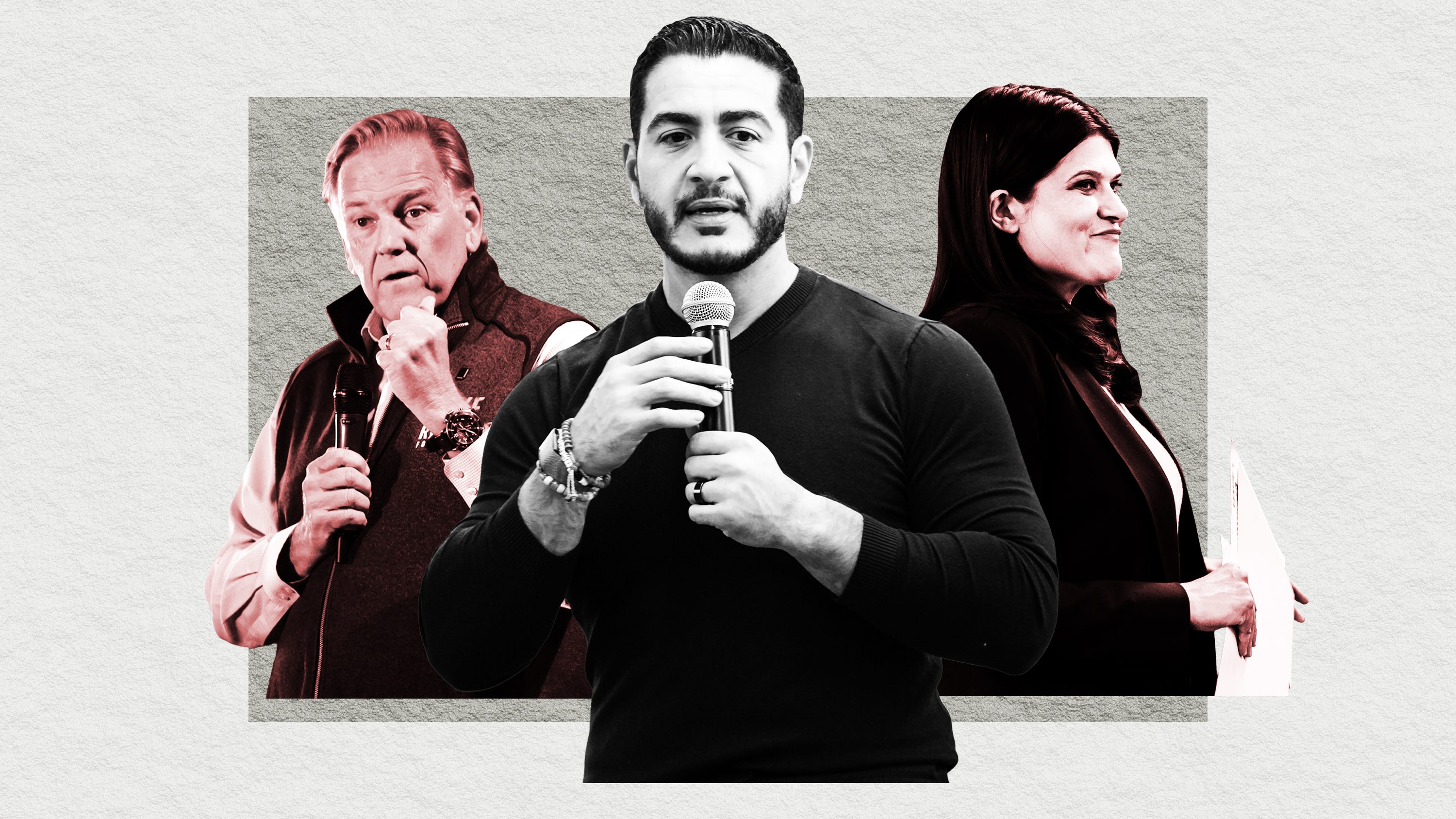
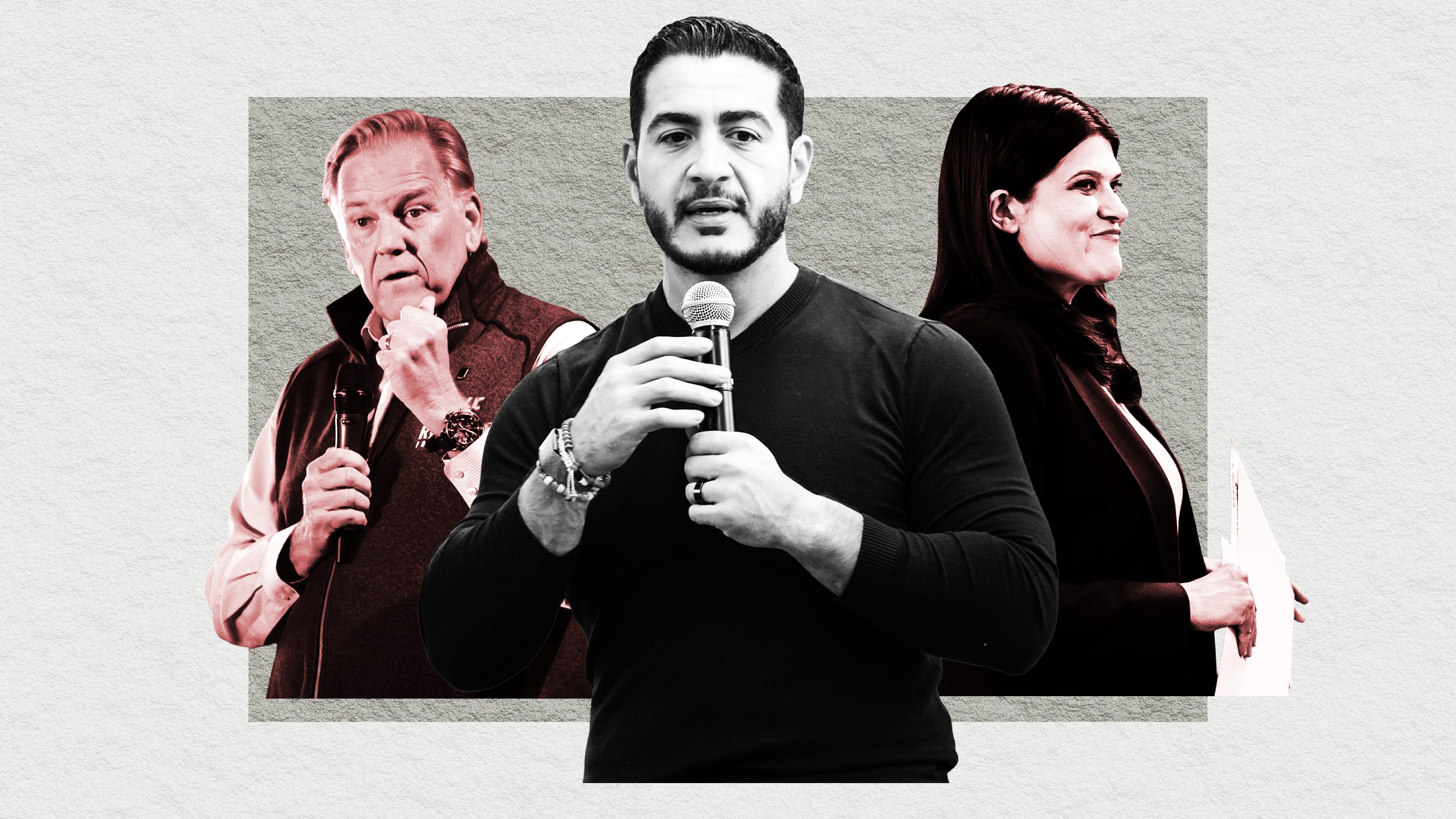
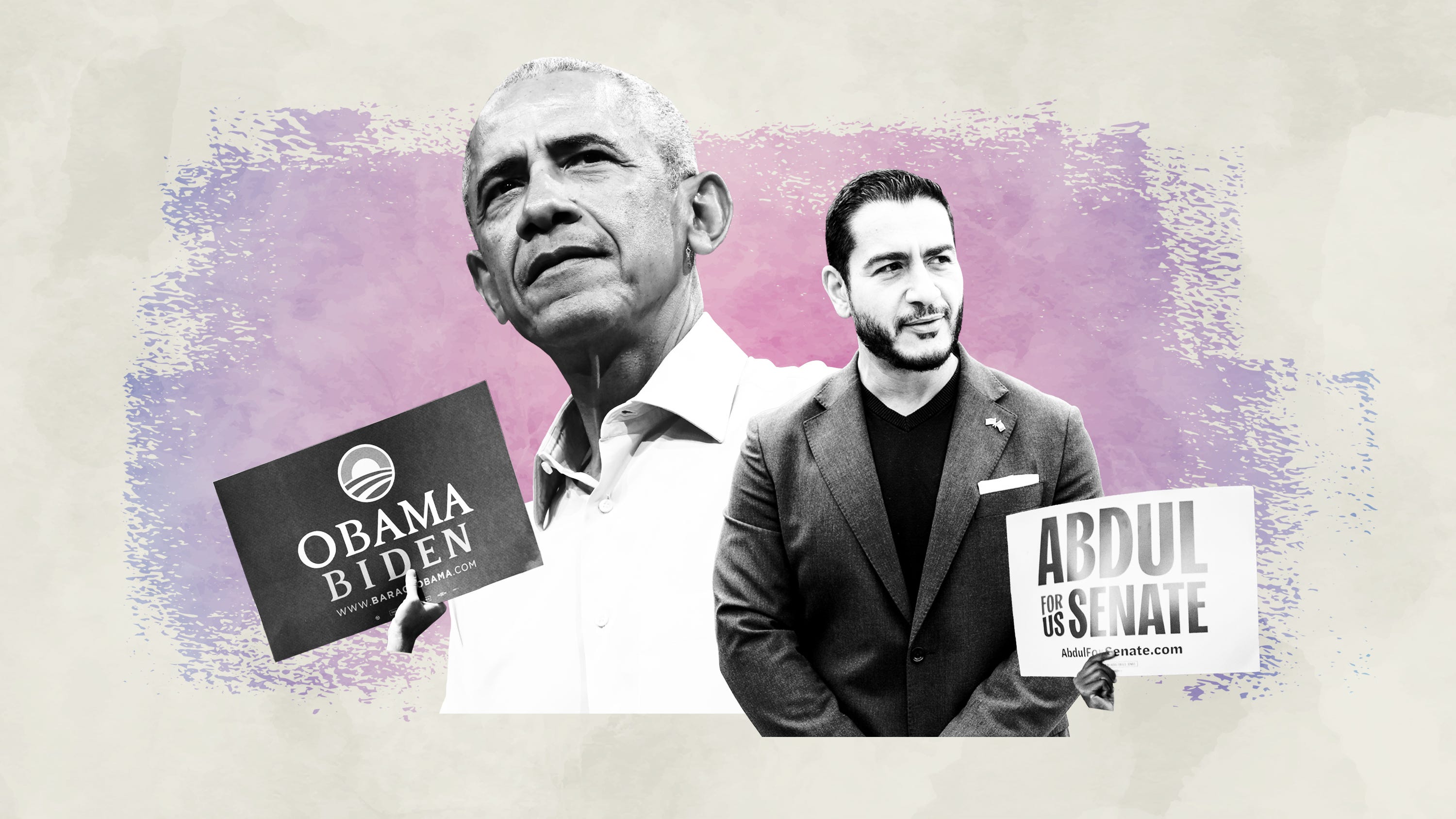
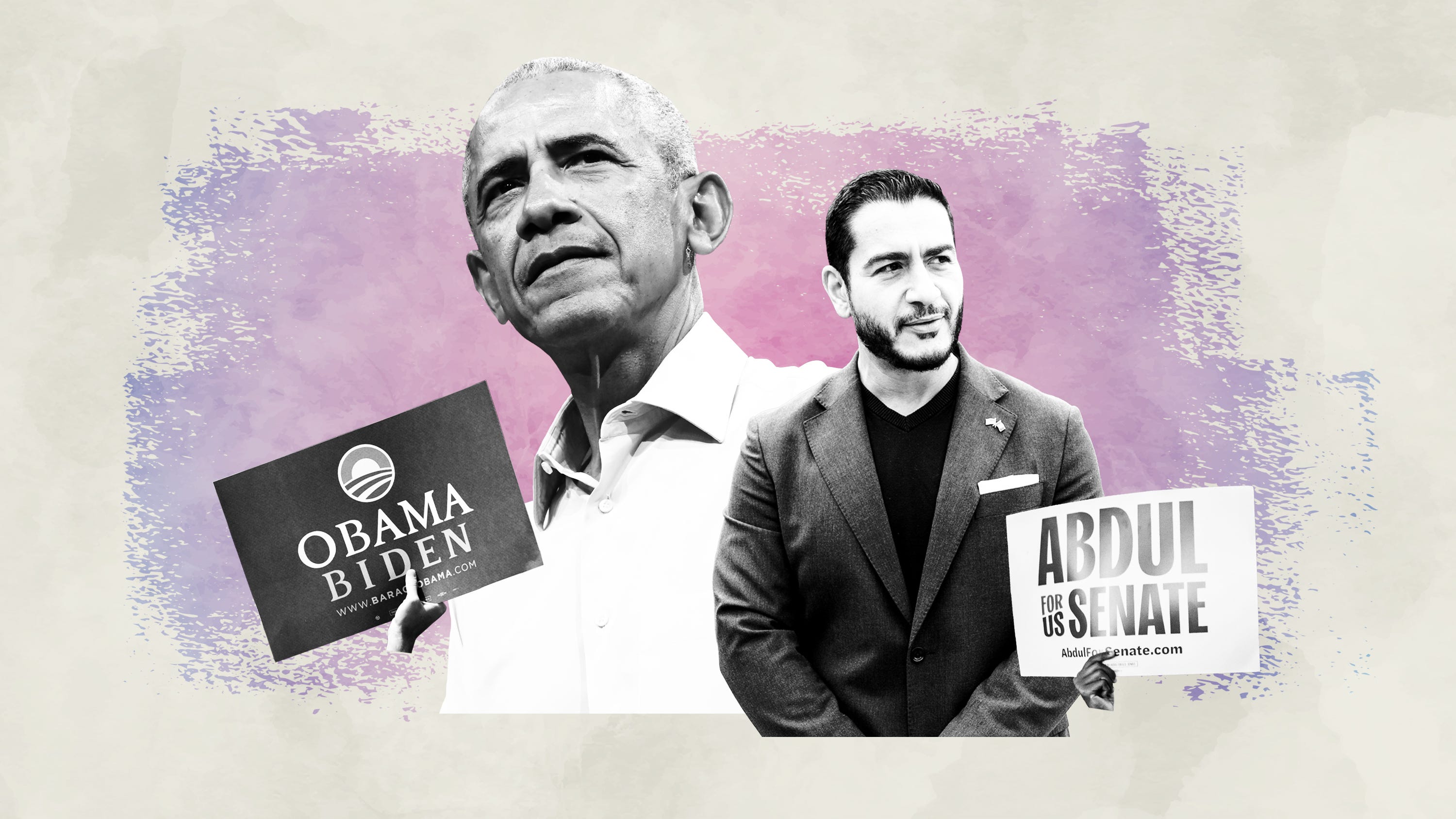
It was the last week of October. His had been a grueling, bitter general election contest that had captured the nation’s attention. The polls suggested El-Sayed, the former Detroit-area public health official, was on track to beat Mike Rogers, a former House Republican. If it happened, he’d become the first Muslim elected to the United States Senate.
But it wasn’t clear if his margin was large enough to withstand a polling error or a late swing against him. And frankly, it was still a bit hard to believe a Bernie Sanders–style progressive like El-Sayed could be ahead in a swing state that had twice cast electoral votes for Donald Trump.
Now El-Sayed was dealing with yet another source of pressure. Stevens, the four-term House Democrat he had beaten in the primary, was having second thoughts about backing his campaign. The issue, she said, was the same thing that she’d criticized during the primaries: El-Sayed’s positions on Israel, and the statements (or lack of statements) that she said demonstrated his indifference to the safety of Jewish Americans.
The first hint that something was brewing came when Stevens’s fiancé told the Detroit News he was voting for Rogers. The next warning sign came when Stevens went on CNN to say that while she still backed El-Sayed—and still hoped to campaign with him on the final pre-election weekend, as their teams had discussed—she wanted to hear more forceful disavowals of antisemitism.
By this point, politicians’ phones across Michigan and in Washington were abuzz with chatter about whether Stevens might actually pull her endorsement, and maybe go so far as to back Rogers instead. El-Sayed’s campaign received some of those calls, including from allies wondering whether he should reach out to Stevens or make a nod in her direction to keep her on board.
El-Sayed was having none of it. He told his staff Stevens had become a distraction, marveling at the prospect of somebody threatening to rescind an endorsement after losing a primary. He said he had no interest in backchannel diplomacy, and didn’t believe she was—as she would later say—struggling with what to do.
“I understood exactly what was happening,” El-Sayed told me in a recent interview. “They were trying to create a permission structure for themselves, for her to rescind her endorsement.”
“When I realized where this was headed, I thought the best thing we could do is just accelerate this, because they’re going to get there anyway,” he added. “If your endorsement comes with conditions, I don’t want your endorsement. So at that point, I just said, you know what? I actually would rather you stay away. Don’t come to my event. I don’t want to campaign with you.”
Whatever was or wasn’t going through Stevens’s mind, El-Sayed was right about where things ultimately landed: After days of assuring friends she wouldn’t endorse Rogers, Stevens did just that. Less than forty-eight hours before polls opened on Election Day, she joined Rogers at a black church in Detroit, at a moment when El-Sayed’s ability to win over black voters—whom Stevens had carried in the primary—was very much in doubt.
The next few hours played out like a fever dream: Stevens sitting alongside Rogers in the church pews, then recording an off-angle selfie video from her car announcing she had decided to back the Republican. El-Sayed trying to shush a crush of reporters who had appeared at his own morning event, repeatedly telling them “none of this matters” because the real issue was the well-being of all the Detroiters struggling to get by economically.
Publicly, El-Sayed’s camp expressed confidence the Stevens announcement would not affect the election outcome, even suggesting that the move could backfire as Democrats saw it as Stevens betraying the party. But privately, some of his advisers were anxious.
“My first reaction was a little bit of a wave of terror,” Kenneth Pennington, who ran El-Sayed’s digital operation and fundraising, told me. But Pennington and the rest of the political world quickly realized things would work out fine for El-Sayed. Hunched over his laptop in the back of Detroit campaign events, Pennington watched as a real-time dashboard tracked a surge in donations, in what would become the campaign’s biggest twenty-four-hour haul. Over on his social media feeds, he clocked expressions of support even from Democrats who were big-time Stevens backers.
“In two hours my mood had totally changed, and it was like, ‘Oh my gosh, everybody is supporting him.’”
Two days later, El-Sayed prevailed over Rogers by the exact 7-point margin he had predicted three months before he’d even won the primary. And though the Stevens melodrama ultimately did not prove decisive, it was a revealing moment in a campaign defined by a confident, cocky candidate—one unwilling to deviate from his vision of how a politician should act or what he believed the voters wanted. El-Sayed gambled on himself and his ideas, with control of the Senate potentially at stake. And he won.
But already a new debate is underway: Did El-Sayed win because of the way he ran, or did a good year for Democrats let him get away with it? Answering that requires looking at how ideology, campaign tactics, and technology shape a Senate race in an era when billionaires make multimillion-dollar donations and social media spreads campaign clips at breakneck speed. As Democrats across the country work toward building a majority that can not only win elections but govern as well, they will draw on insights from this campaign to help understand what kinds of candidates to field in battleground races and what kinds of campaigns they should run.
The 2026 Michigan Senate campaign is just one case study for sorting out these issues. But it’s one I can recount from a close-up perspective, because I covered the campaign from literally its first day. Over the past nineteen months, I attended dozens of events, logging thousands of miles crisscrossing the state. I have spoken to political leaders and to residents who barely notice politics at all, and had dozens of lengthy conversations with candidates and their staff—both in the thick of campaigning and after it was all done and they’d had a chance to reflect.
What follows is an account of what I saw and heard, and what it all means—about the future of the Democratic party and American politics, and an incoming senator with potential to shape both.
The Crisis, the Candidate, and the Catchphrase
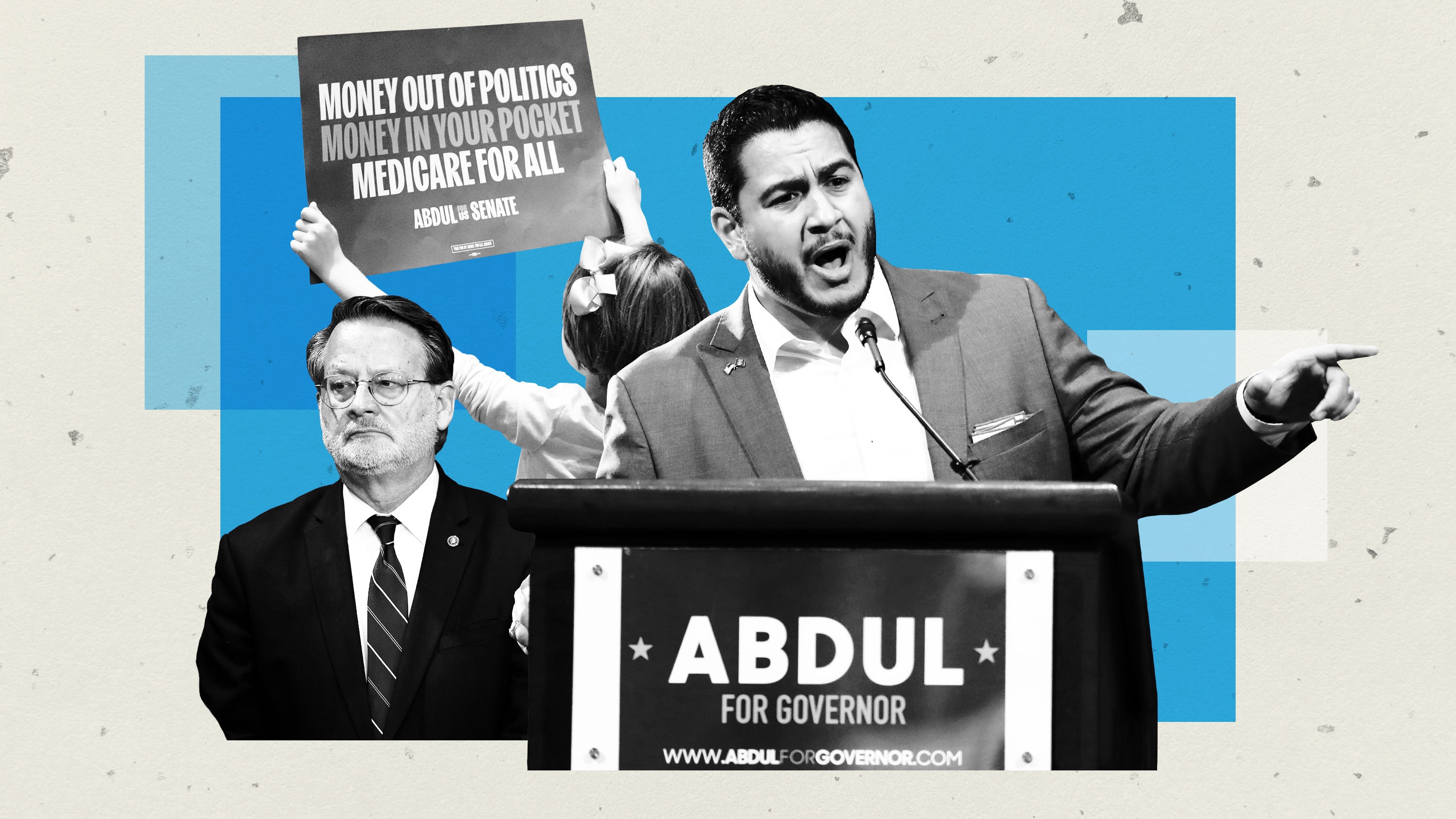
EL-SAYED SAYS THE STORY of his campaign starts in late January of last year, after two political bombshells landed one after the other.
The first was a January 27, 2025 memo ordering a freeze on federal grant money, the start of the Trump administration’s ongoing, all-out assault on government. The order created an immediate crisis for local agencies like the Wayne County Health Department, which El-Sayed had led for nearly two years.
El-Sayed told me he was scrambling to figure out how the agency would stretch its threadbare budget to pay vendors—“knee-deep in budget sheets,” he said, “trying to understand what the impact would be” on vital programs for low-income families. Then, one day later, the second bombshell exploded in the form of a push notification from the Detroit News: Senator Gary Peters wasn’t seeking re-election.1
Peters was a mainstay of Michigan’s political scene. Although just 66—a veritable young gun in the current Senate—he said he was stepping away to make way for a new generation. His former colleague Debbie Stabenow had done the same thing two years earlier, in what worked out more or less like a coronation: Stabenow teamed up with Michigan’s political establishment to clear the field for Elissa Slotkin, a brainy former intelligence officer with a record of winning House seats in Republican-leaning districts.
Peters tried to repeat the trick, by approaching three potential contenders: Gretchen Whitmer, the popular but term-limited governor; former Transportation Secretary Pete Buttigieg, who’d moved to Michigan several years ago; and Kristen McDonald Rivet, recent winner of a tough House race in a district covering Flint and Saginaw. None said yes.
El-Sayed, by contrast, was instantly interested. He had mounted an unsuccessful but surprisingly strong bid for the Democratic gubernatorial nomination in 2018, and kept in close contact with former advisers and supporters. Within hours of Peters’s retirement news, El-Sayed’s phone was full of messages urging him to run. A week later, while delivering a guest lecture at Brown University, he reached out to one of his former advisers who had recently relocated to Providence, Rhode Island.
At 23, Roxie Richner was what qualified in El-Sayed’s circles as a seasoned political hand. She had joined El-Sayed’s 2018 gubernatorial campaign as a volunteer while a high school sophomore in Ann Arbor, initially tagging along with college volunteers from the University of Michigan because she was too young to drive. She’d impressed the paid staff, who kept giving her more responsibility, and later worked on political campaigns while an undergraduate at Michigan State University. She had stayed in touch with El-Sayed, occasionally helping him with outreach for public appearances.
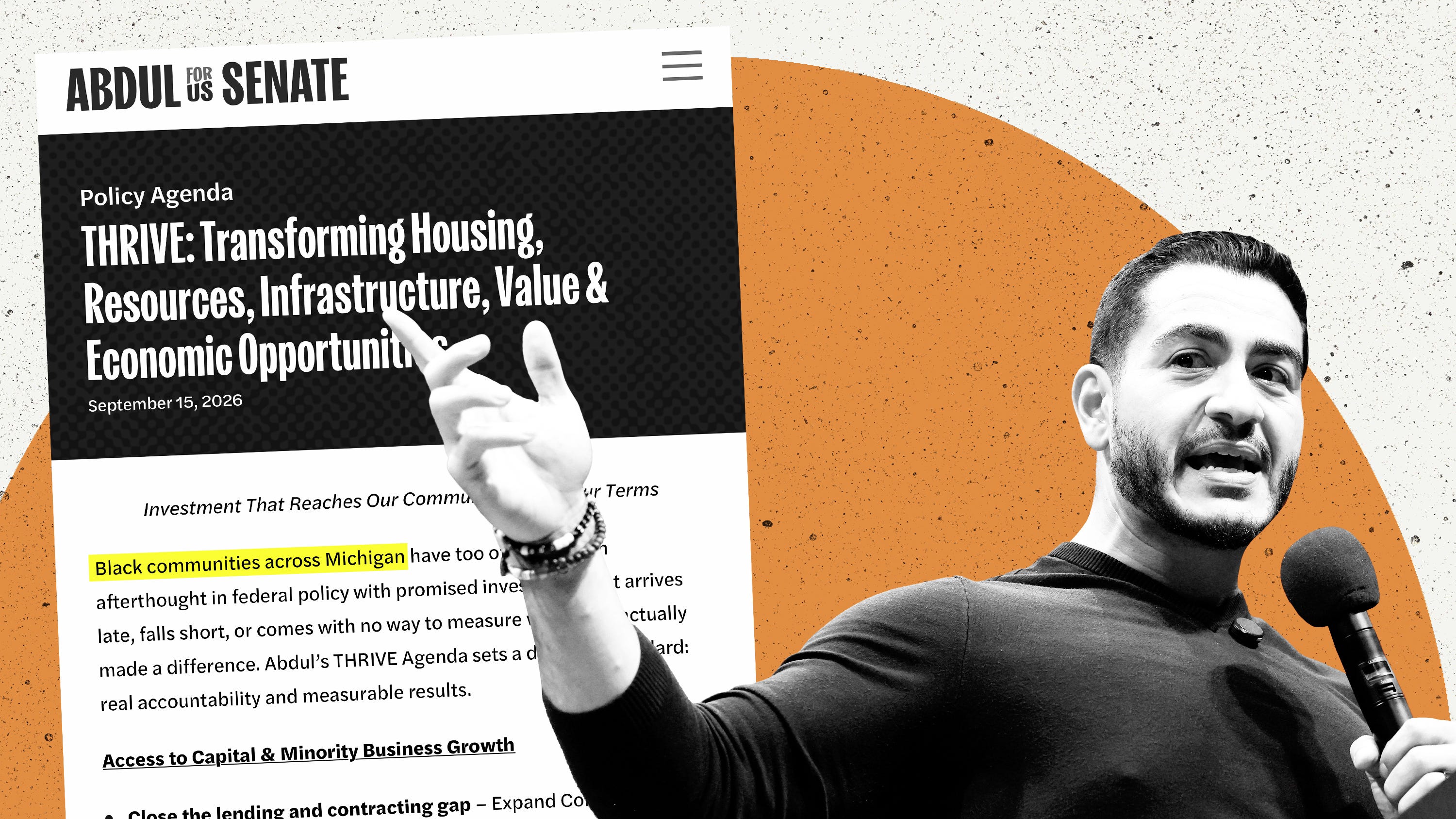
Seeking a change from campaigns, Richner had moved to Providence to work for local government. But, listening to El-Sayed make his case at a local coffee shop, she found it hard not to get excited as he detailed the lessons he’d learned since 2018, including the importance of leaving behind his policy-heavy, academic style that may have struck voters as elitist—or simply not worth their time.
“I was only three years removed from being a professor,” El-Sayed told me of that 2018 run, “and I had some really bad instincts. If you write these fifty-page documents and get deep into the policy weeds, you realize that most voters just don’t have time—they’re too busy trying to make ends meet—to read it.”
El-Sayed really was a policy wonk, but one with the trash-talking, bro-y persona typical of a former college lacrosse player. He’d decided that he shouldn’t try to suppress that side of himself. “I think I was trying to cosplay as a politician, thinking this is how a politician acts and this is what a politician does,” El-Sayed told me, as he’d told Richner at their coffee. “This time, I just said, ‘I’m going to be exactly who I am.’”
RICHNER MOVED BACK TO MICHIGAN just in time to cast her family and an old high school teacher as extras in the video accompanying El-Sayed’s official launch on April 17. It was emblematic of a DIY campaign that spent its first few months operating on a tight budget, with Richner serving as communications director of an essentially three-person paid staff.
At this point, El-Sayed’s primary task was to introduce himself to an electorate that either didn’t know him or had at best had dim memories of his 2018 campaign. He sought as much exposure as possible, sometimes reaching out personally to journalists he knew.
“Would love to sit down for something if you’re interested in writing on the race,” he wrote to me in May, after I’d posted on social media about an appearance he made on a Detroit local news show. “How public health folks are pushing back right now is an interesting piece. . . .” My twentysomething son was about to get married, I explained, so the conversation would have to wait. “Mazel!” he responded, promising to put his communications team in touch with me later.
The problem for El-Sayed was that his contacts list was full of wonky health care writers, not campaign correspondents. And by the late spring, it was clear he would be facing two formidable political competitors.
One was Mallory McMorrow, a state senator who had become a cable news regular after a 2022 floor speech she gave on LGBTQ issues went viral. She had declared her candidacy at the beginning of April, a few weeks before El-Sayed. The other was Stevens, who in her six years in Congress had become well-known across Metro Detroit for her work on manufacturing. She had announced her candidacy shortly after El-Sayed launched his.
“It was incredibly hard to get the networks to even consider having him on,” Richner told me.
One of the campaign’s solutions was to find alternative outlets, including those that weren’t explicitly political—which, as it turned out, was useful in a year when voters from the get-go seemed fed up with politicians. Appearances with cooking, fashion, and fitness influencers, like the time he worked out with exercise guru Mike Israetel, showcased El-Sayed “breaking out of the political pundit bubble and reaching people where they’re actually consuming media,” Richner said.
And then there was the media that El-Sayed and his team were determined to generate on their own—which is why Max Glass, a longtime El-Sayed adviser who was a central architect of the 2026 campaign from the beginning, made sure one of the earliest hires was a videographer.
“People thought I was crazy,” Glass told me. Both El-Sayed and he had thought about the ways campaigns had changed in the era of social media, drawing on Chris Hayes’s book on the attention economy before the campaign. “We were going to capture every moment of this campaign and put it online, and we want people to see it.”
But for all of the ways El-Sayed had learned to sound less like a professor—and for all of the ways his campaign was adjusting to an evolving media environment—the most important change may have been in the political landscape.
The 2018 election had taken place in the shadow of Trump’s first election. It was a shock to the political system and Democratic voters responded by quickly rallying around leadership. By 2026, these voters were struggling financially and nearly as angry with the party’s gerontocracy as they were with Trump. They were much more open to unabashed populism, and liked the idea of lawmakers promising to blow up the system rather than work through it.
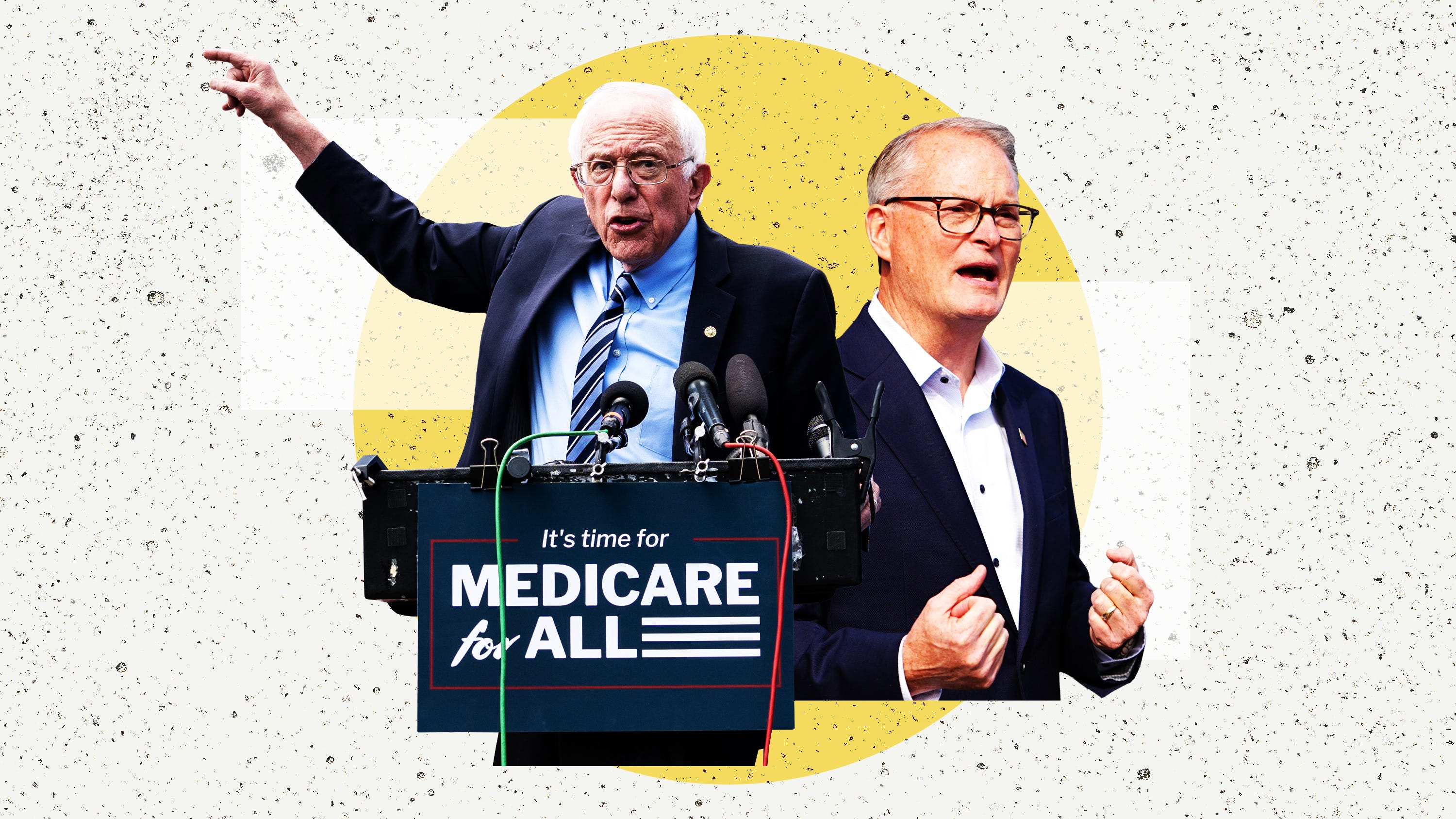
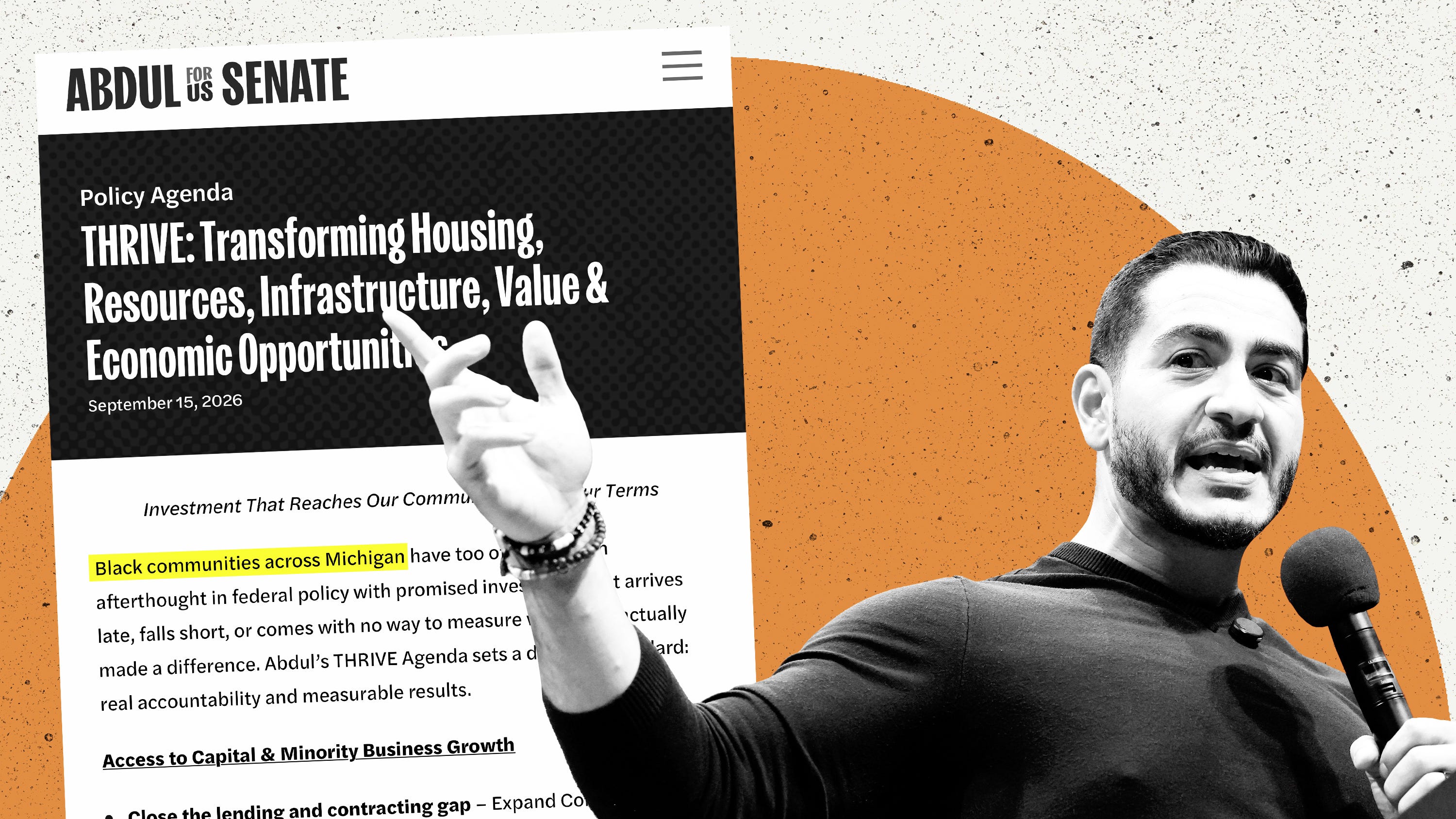
The only problem was that, even in his less professorial mode, El-Sayed still hadn’t quite perfected the art of making sure voters were paying attention long enough to hear what he had to say. His stump speech would start with a biographical introduction, which he’d use to frame the point that life expectancy in parts of Detroit is worse than it is in his parents’ native Egypt. Then he’d break down his agenda into three parts—ending the influence of special interests, raising living standards for the non-rich, and creating a single-payer health system—by explaining each one in turn before moving on to the next.
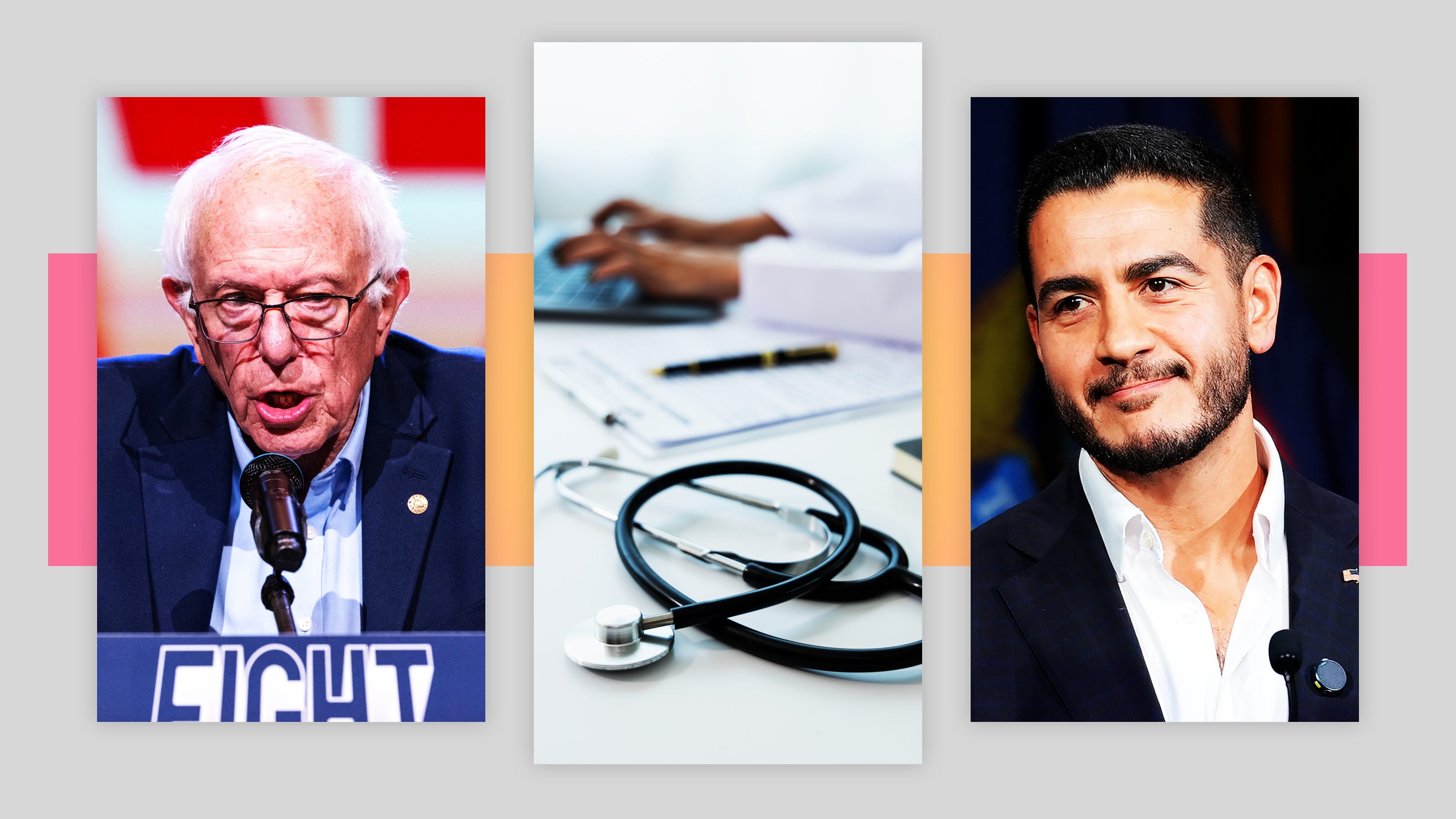
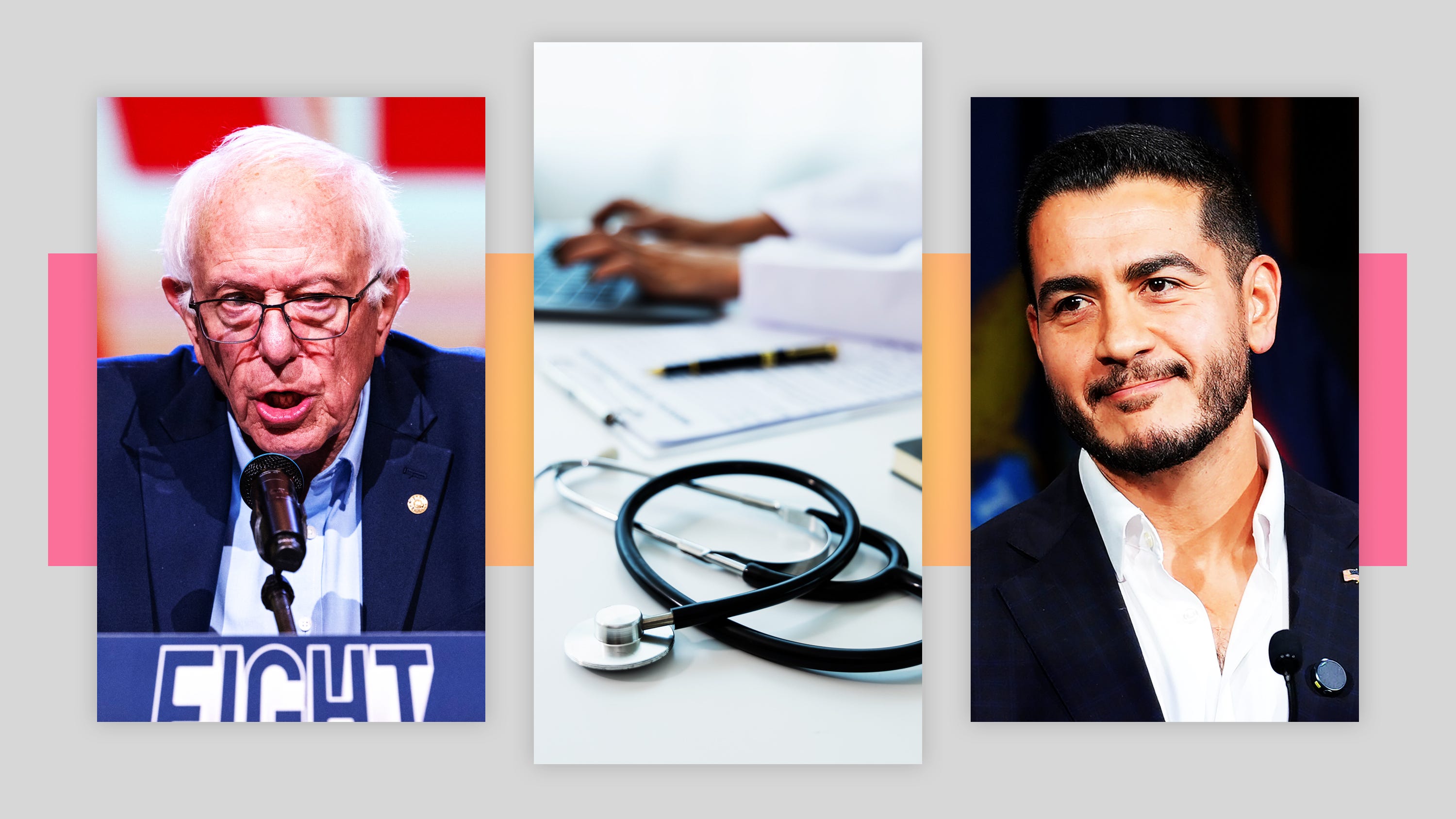
The speeches were still running well past twenty minutes. Even the longtime supporters who were showing up to the early events—sometimes by the dozen, sometimes fewer—seemed to lose interest after a while. El-Sayed and his advisers huddled about how to streamline the pitch, hoping to debut a sharper version in August when he’d be joining Bernie Sanders during a Michigan stop on the Vermont senator’s “Fighting Oligarchy” tour.
One of those advisers was Rebecca Katz, a principal in the progressive consulting firm Fight Agency that had advised Zohran Mamdani on his mayoral run.
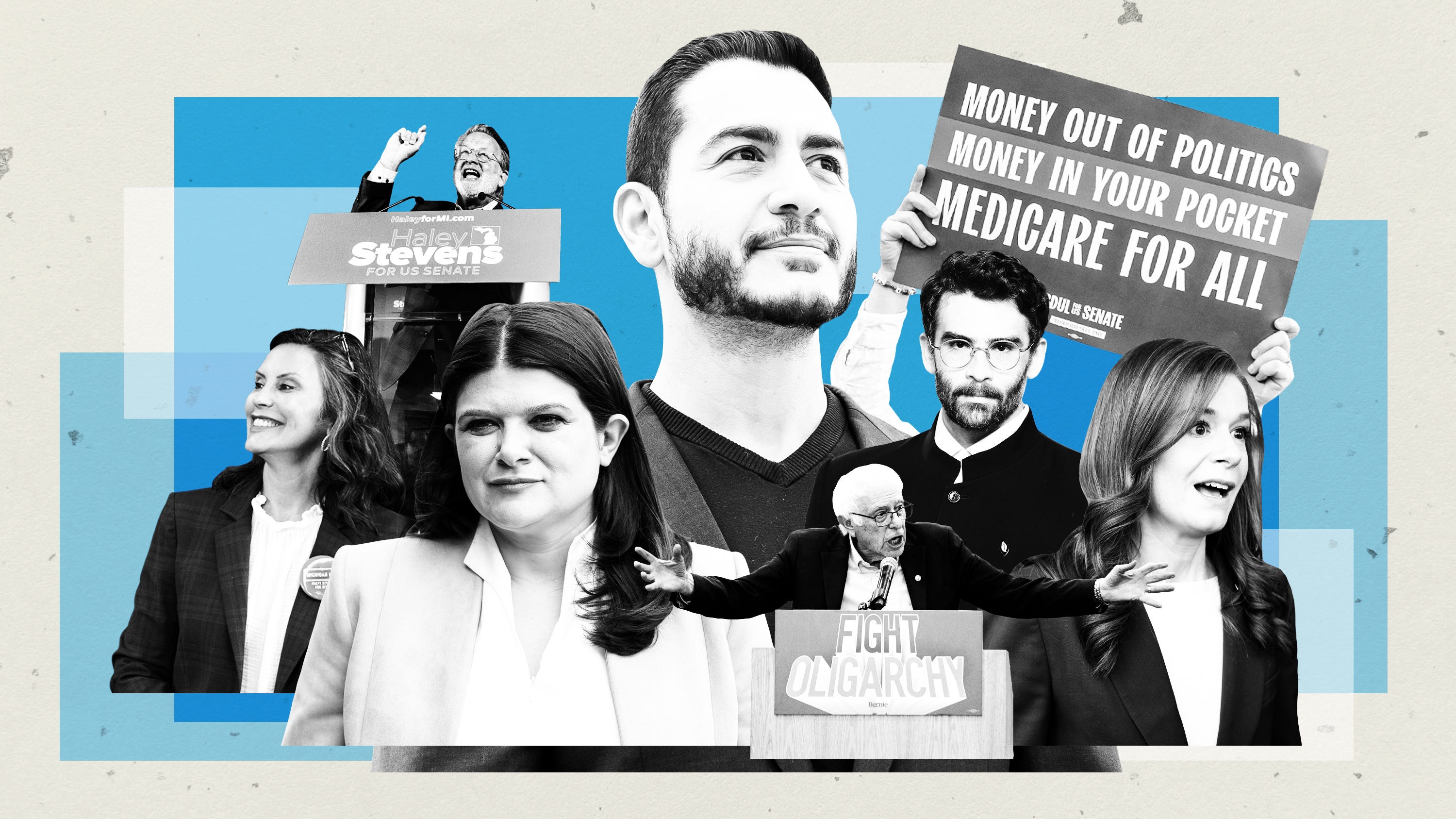
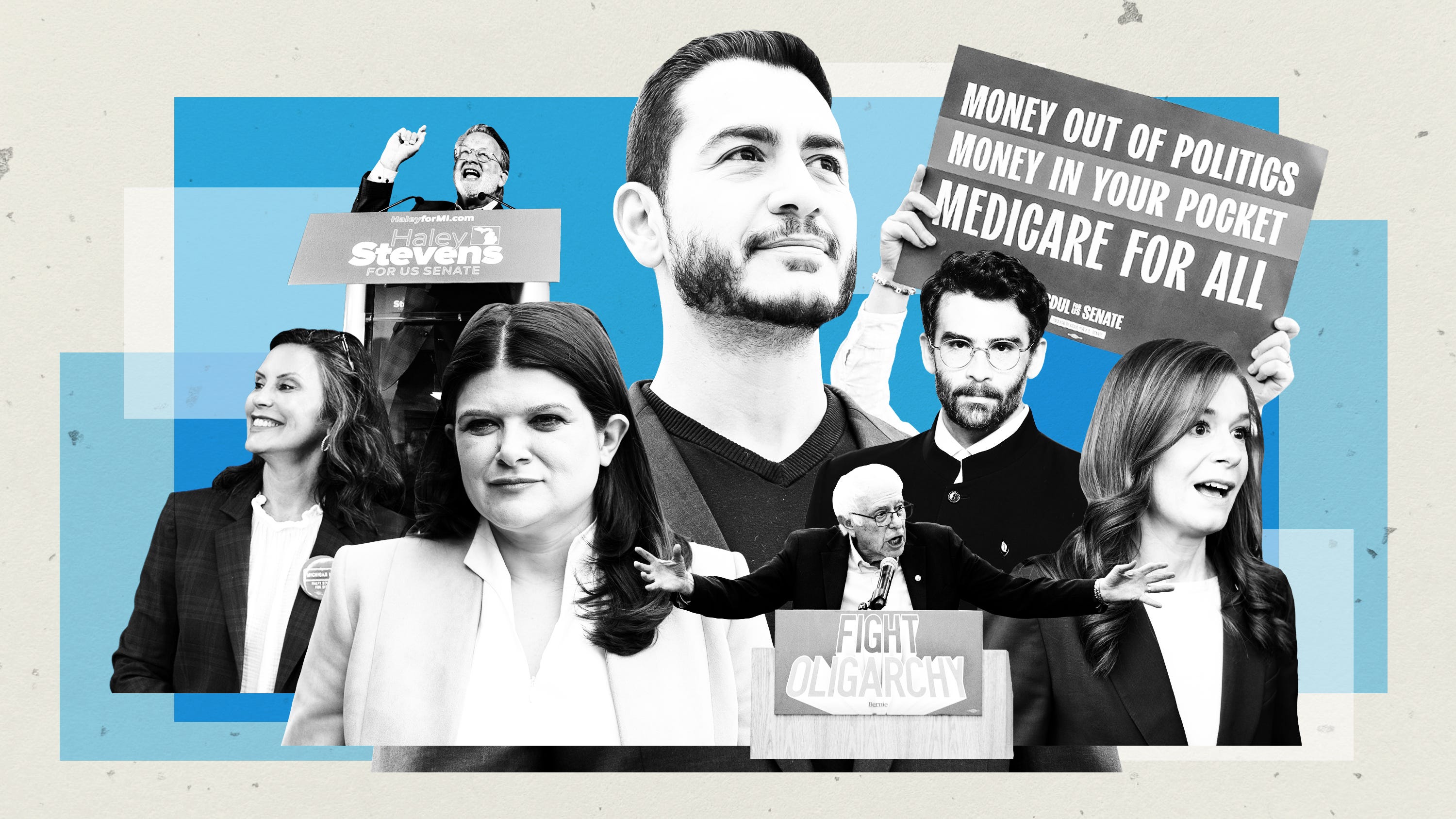
Mamdani had run an avowedly populist campaign that packaged policy items into simple, repeatable slogans like “Freeze the Rent.” In an SUV on the way to the Sanders event in Kalamazoo, as Katz remembers it, she looked over a printout of the stump speech and circled the three key phrases El-Sayed had been using to describe his agenda. “Money out of politics,” “money in your pocket,” “Medicare for All.” Would these work as a call-and-response? she wondered aloud.
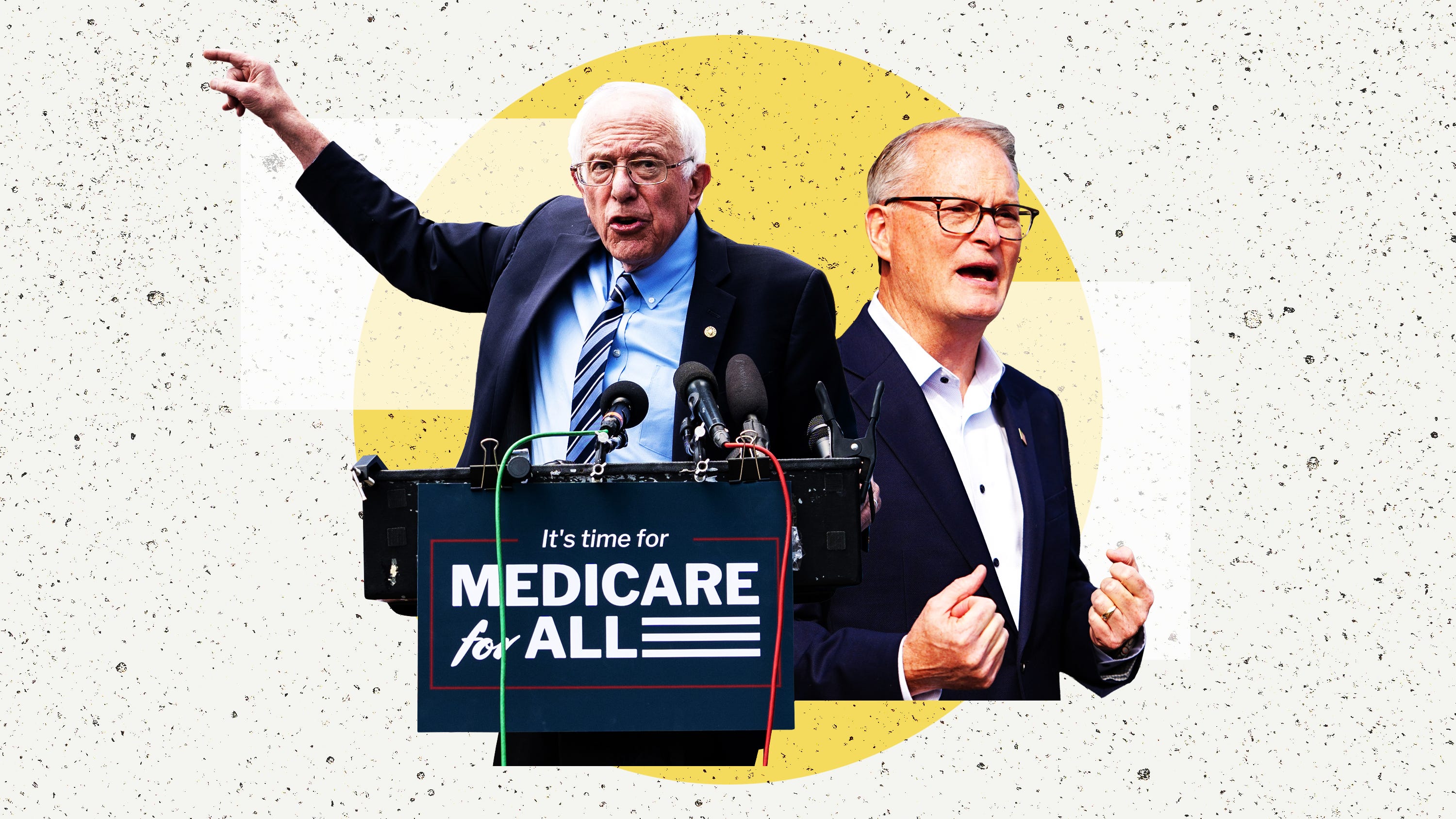
El-Sayed gave it a go, telling attendees that he wanted them to shout out each of the phrases in turn. The instruction took some time, but the crowd picked it up. “People just went crazy for it,” Glass told me. “We had hit on something.”
The triptych became El-Sayed’s slogan, something he would work into every appearance and staff would place on every available inch of signage as the campaign proceeded. It became so familiar to followers that El-Sayed barely had to cue them at events:
“Money out of . . .”
“Money in your . . .”
“Medicare for . . .”
El-Sayed finally had a message and a way to deliver it. Now, the only question was who else would be trying to win over Michigan’s voters.
The Cable Star and the Twitch Streamer
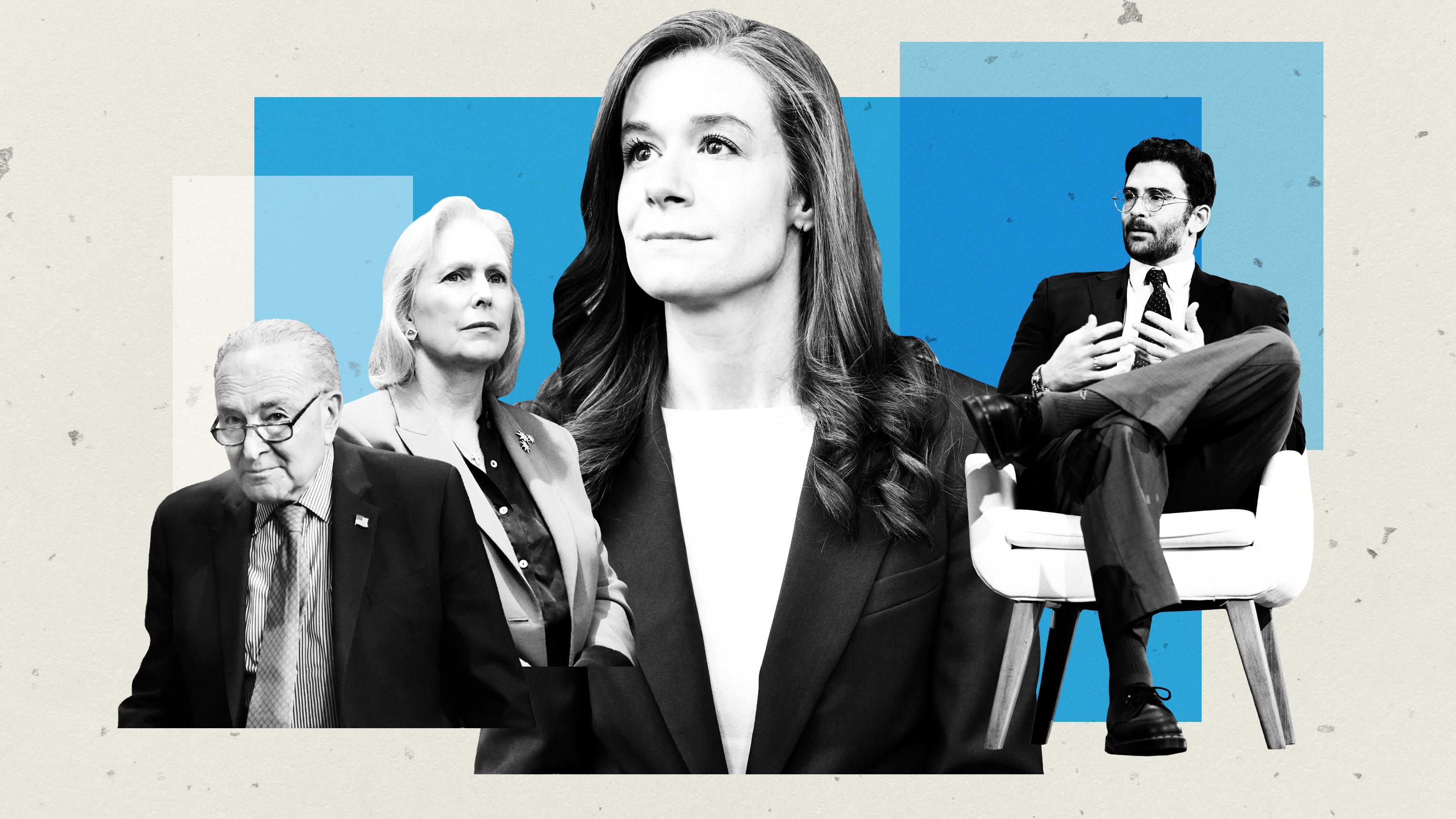
THE CASE FOR MCMORROW’S BID seemed to have impeccable political logic.
She was finishing up her second state senate term, representing a district of mostly middle- and upper-middle-income suburbs north of Detroit. She had first won election in 2018, part of the same blue wave that propelled Whitmer into the governor’s mansion and Slotkin into Congress. She had a reputation for outspoken opposition to the Trump administration, and a pragmatic streak to go with her generally left-leaning politics.
But what McMorrow really stood out for was her communication skills, whether it was for her ability to stir passions the way she had in that 2022 LGBTQ-rights speech or her capacity to break down complex policy topics in ways non-experts could understand. It helped that she had a background in the business world, where she had worked on industrial design. She was also instantly recognizable, thanks to her red hair and lower-register voice.
McMorrow had previously told political allies that she hoped to succeed Peters upon his retirement, and didn’t hesitate when the opportunity presented itself. On April 2, two weeks before El-Sayed would announce his candidacy, McMorrow launched her campaign with a video touting herself as Michigan’s proven fighter. The main focus was on stopping Trump, though it also included swipes at the Democratic establishment.
“It became pretty clear that the powers that be were cockblocking me.”
–Mallory McMorrow
Her call for new leadership certainly fit the electorate’s mood, and helped explain McMorrow’s impressive fundraising among small donors. But that also put her into conflict with figures like Chuck Schumer, the Senate Democratic leader, and Kirsten Gillibrand, the chair of the Democratic Senatorial Campaign Committee. And once Stevens was officially in the race, they had a candidate more to their liking—somebody they knew personally from Washington, and whose low-profile, more-center-than-left politics fit their idea of what works politically in Michigan.
One high-profile Democratic financier told me Gillibrand spent the summer and early fall of 2025 offering personal assurances to donors that the DSCC would not promote one candidate over the other, backing up public pledges of neutrality. But the DSCC’s deeds didn’t match those words. In late September, Politico reported that the DSCC had invited Stevens to a Napa Valley fundraiser scheduled for the following month. Neither El-Sayed nor McMorrow was extended an invitation.
“In the middle of it, it became pretty clear that the powers that be were cockblocking me,” McMorrow told me in a recent interview. “This got back to us through some donors. We had donors who committed to either hosting fundraisers or to donating to me, who came back later and basically told us they were told not to support us, and that list just kept growing. It got more and more frustrating.” DSCC officials did not respond to my questions about their position and actions in the primaries, except to point out the full support they gave El-Sayed after the primary, including $23 million in direct spending on his behalf.
Of course, McMorrow wasn’t just battling the Democratic establishment. She was also battling their preferred choice, Stevens. The two had been in contact immediately after the Peters announcement, according to multiple Michigan political sources and some text messages that I was able to see. They discussed the open Senate seat, and their respective intentions to run for the office, although exactly who said what—and when—depends a bit on which sources you ask.
McMorrow’s camp believed that Stevens had indicated she was not interested in running, then changed her mind and tried to pressure McMorrow to exit the race. Stevens’s camp believes she expressed her interest in running as soon as McMorrow expressed hers, and was subsequently dismayed to learn McMorrow was proceeding—and telling mutual donors and supporters that Stevens was not interested.
In both versions, Stevens laid out reasons why she thought McMorrow would struggle in the face of a Republican onslaught. “Know that was a tough if not brutal conversation- comes from a place of tough/love,” Stevens texted McMorrow in early February, reflecting on their discussion about the rigors of a campaign (or, as she put it, “a very small taste of what your life would be like for two years”). She added her admiration of McMorrow’s talents, saying “Proud to know you.” Three weeks later, she texted McMorrow again to say “you need to stop calling donors and telling them falsehoods about our conversation.” At this point, she also mentioned that she already had a million dollars she could transfer from her existing federal campaign account, plus she was likely to raise another million.
Stevens did officially get in the race, twenty days after McMorrow and five days after El-Sayed. And the core strategy of her campaign was to focus on eliminating McMorrow, in order to set up a one-on-one with El-Sayed. Personal feelings may have played a role: “She was always more focused on McMorrow than she was on Abdul,” one former Stevens adviser told me. “She’d take attacks from McMorrow much more personally, would get upset about minor things McMorrow would do.” But mostly it was a strategic choice: The expectation was that El-Sayed would lock up a progressive base accounting for about a quarter of the Democratic electorate, but fail to make real inroads with other groups. Or, to put it in the language Stevens’s campaign staff used internally, they believed El-Sayed was a high-floor, low-ceiling candidate while McMorrow was low-floor, high-ceiling.
“[McMorrow] and Haley checked a lot of the same boxes,” one former Stevens aide told me. “Policywise, they weren’t that far off on a lot of stuff. They both represented Oakland County. They were both white women in [or near] their forties. They both came up around the same time in 2018. There was a lot of donor overlap.”
Throughout the campaign, according to sources on McMorrow’s team, she begged the establishment not for support but simply for neutrality. And once El-Sayed started to gain strength—enough to make clear he could easily get more than 25 percent of the primary vote—McMorrow’s campaign shared internal polling data suggesting Stevens’s record on Israel, immigration, and other issues made her toxic to a large swath of the Democratic electorate.
But McMorrow did not get a meeting with Gillibrand until October 2025, after months of her asking, campaign sources told me. And she didn’t meet Schumer until well into 2026.2 Those snubs mattered, because they meant that to be competitive, McMorrow would need even more support from the party’s progressive wing.
That possibility vanished in April 2026 when Hasan Piker entered the scene.
EL-SAYED ADVISERS TOLD ME the decision to reach out to Piker, the controversial popular Twitch streamer, grew out of ongoing discussions about locking in the youth vote. Their internal polling confirmed what was obvious to anybody following public events: El-Sayed’s base was younger voters. But actually winning the primary meant getting them to the polls—and, ideally, getting the most committed of them to volunteer as organizers.
Aides tossed around the idea of inviting guests who would pique interest, especially on campuses; they also thought it would be important to stage events before students dispersed for the summer. Piker was an obvious choice. His millions of followers skewed young, and El-Sayed had already appeared on his show in late July 2025.
“In today’s age, everything that you do gets clipped [for social media], and the way that most people interact with it is through those clips. So whether you’re clipping from sitting inside his home studio, or you’re clipping from something he said on a stage, it’s a clip.”
–Abdul El-Sayed
Aides I interviewed told me they knew the invitation might attract some controversy, but they said they had no idea it would blow up the way it did. Piker told me the same thing when I reached him by telephone. “I was actually shocked,” he said. Both El-Sayed’s aides and Piker noted the lack of reaction to the influencer’s previous engagements with prominent Democrats, which included streaming with other creators from the Democratic National Convention in 2024 and then appearing on a panel at 2025’s Crooked Con with the hosts of Pod Save America.
But Piker’s coziness with Dems had drawn scrutiny from Third Way, a centrist group that said it objected to Piker’s sometimes inflammatory rhetoric on principle and—no less important—considered him a political liability for Democrats. After Politico reported El-Sayed’s plan to campaign with Piker at two April 2026 events, Third Way sent El-Sayed an open letter warning that the appearances would be a “stain” on El-Sayed’s character. It went on to list controversial excerpts from past Piker streams. The letter included moments when Piker said America “deserved 9/11” and that “Hamas is a thousand times better” than Israel, as well as an instance where he described ultra-Orthodox Jews as “inbred.”
Adding to the controversy, El-Sayed’s appearances with Piker were scheduled to take place less than a month after a terrorist attack in which a Lebanese immigrant had rammed a truck into a suburban Detroit synagogue, Temple Israel, in what investigators determined was a failed attempt to set off a load of explosives. The attacker—who killed himself while exchanging shots with security guards—had family members who had been killed in an Israeli assault, and was, according to Israeli officials, related to a Hezbollah commander. The attack shook the area’s Jewish community, especially because young children had been inside the synagogue for school.
In the aftermath of the attack, Jewish Insider published an article presenting McMorrow’s perspective as part of an interfaith marriage (her husband is Jewish) and the mother of a young child. When asked about Piker, McMorrow described him as “somebody who says extremely offensive things in order to generate clicks and views and followers, which is not entirely different from somebody like Nick Fuentes.”
“I was not trying to make any sort of moves, despite what people think,” McMorrow told me later, looking back. “It was just raw emotion, and I ineloquently compared him to Nick Fuentes. Not in terms of what he believes. I had just wanted to convey that this is somebody whose entire business model is on saying scandalous things for clicks and views—and that business model is at odds with campaigning for somebody to become a senator in a purple battleground state.”
El-Sayed proceeded with Piker anyway, drawing several hundred supporters to an event at Michigan State University and then another at the University of Michigan. At the latter stop, I ran into House Democrat Debbie Dingell, who was sitting in the back, there to observe because the event was in her district. She told me she’d never seen that many young people show up for a Senate primary event before. Afterwards, El-Sayed held court with Piker at a press gaggle, defending his decision to work with the influencer by saying it was important that Democrats reach out to new constituencies like the millions who follow Piker.
“The [Hasan Piker] controversy turned heads, and people tuned in. But once they were watching, they heard about money out of politics, money in your pocket, Medicare for All.”
–Rebecca Katz
He told me the same thing when I returned to the subject during our most recent interview. And when I suggested that inviting Piker to a campaign rally was different from appearing on his Twitch stream, El-Sayed dismissed the distinction.
“I’m sorry, but we don’t live in a West Wing episode,” El-Sayed said, noting that he campaigned with many people with whom he disagrees on some issues—and that, the very same day of the events, he had appeared on Fox News. “In today’s age, everything that you do gets clipped [for social media], and the way that most people interact with it is through those clips. So whether you’re clipping from sitting inside his home studio, or you’re clipping from something he said on a stage, it’s a clip.”
The problem for El-Sayed was that many Democrats did not see things that way. And many were genuinely upset with what Piker had been saying, or what he represented. The appearances would dog El-Sayed from that point onward. But inside the campaign, advisers came to view it as a “productive controversy.”
“The controversy turned heads, and people tuned in,” Katz told me. “But once they were watching, they heard about money out of politics, money in your pocket, Medicare for All.”
Whether the Piker association was beneficial to El-Sayed or not, what quickly became clear was that it was damaging to McMorrow. Plenty of other Michigan Democrats had condemned the Piker appearance, including Stevens. But McMorrow bore the brunt of the reaction online. Many progressives seemed particularly incensed that McMorrow had compared Piker to Fuentes.
They swarmed her on social media channels—attacking not just her statements about Piker but also old tweets (later unearthed by CNN) complaining about Michigan winters and her own shifting rhetoric on whether Israel’s actions in Gaza could be fairly characterized as a “genocide.” Occasionally, progressive critics even confronted her in person.
“For months, we were saying it’s just online, it’s not real life,” McMorrow told me. “But then it started spilling out into real life. People would scream at me at events about things that just weren’t true. But they were from all these content creators that made it feel true to people.”
One last blow to McMorrow’s campaign came from a poll that, it turned out, was not on the level. A June survey showed McMorrow’s support dropping into single digits. No campaign’s internal data showed this result, and the firm, Wedgewood, did not have an established reputation.
Months later, in October, Wedgewood’s leaders would admit they had fabricated data, claiming they were engaged in an “experimental project” to demonstrate flaws in the polling industry. Whether or not that was true, the survey had gotten the attention of key McMorrow allies and donors, who no longer saw much viability for her campaign.
“I would be on the phone with them, and they would say ‘Hey, we love you. We think you’re the best candidate. But maybe this is the time to look where we are actually at,’” she said. “And that situation—along with the hit to morale among our staff and volunteers—was just really hard to recover from.”
On July 5, McMorrow announced she was suspending her campaign, setting up the two-way race between El-Sayed and Stevens that party leaders had wanted all along.
The Workhorse, the Ads, and the Close Call
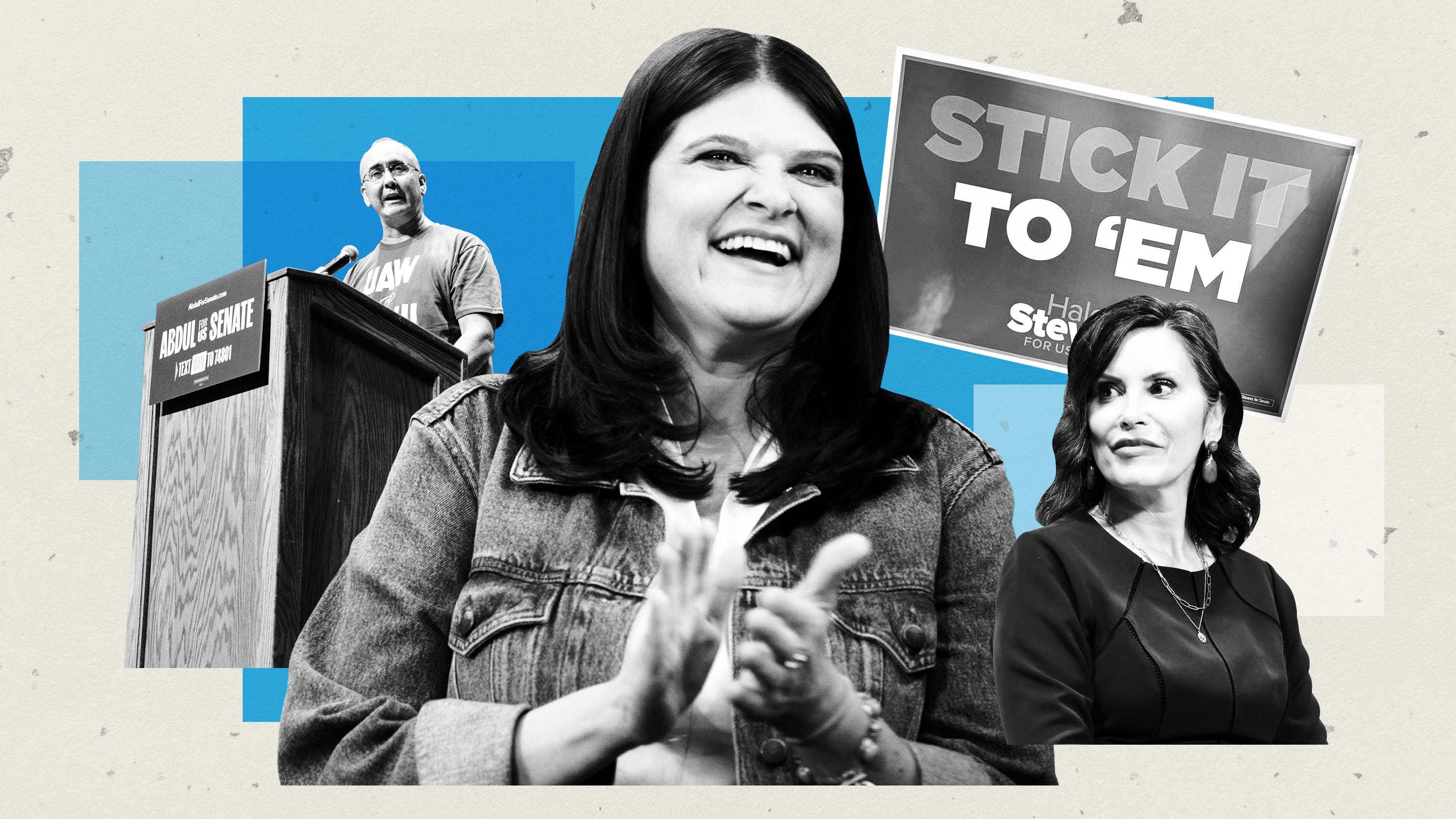
UNLIKE EL-SAYED AND MCMORROW, Stevens had stuck mostly to small, invitation-only events, in part because she didn’t really have a field operation. One such event took place on July 11 at a church community meeting room in Ecorse, a city with several large factories just south of Detroit along the river.
The conversation focused on manufacturing, a subject Stevens knew well—and for which she was known—thanks in part to her work on President Barack Obama’s 2009 industry-rescue task force. Several labor and political leaders were in attendance, in a reminder that Stevens was popular not just with the national Democratic establishment but the state’s, as well.
Stevens thanked her backers, then launched into a monologue that jumped from concept to concept before settling on her pitch about how she would be the voice of Michiganders. And not just any old voice, she made clear: “You better believe I’m going to be doing it with a little bit of joy, a little bit of enthusiasm, a little bit of energy, and a little bit of stick it to ’em, because that’s the Michigan Way.”
Stevens announced this in her thick Michigan accent, one so pronounced that online commentators wondered if she might be faking it. During the appearance, she grew more excited as she went, pumping her arms in a cross between a cheerleader’s pom-pom motion and a pantomime of a locomotive train engine. When she got to the “stick it to ’em” line, she pounded her fist into her open hand.
The performance caught the attention of the Republican party’s social media department. They tweeted the clip, with lots of snark. A pile-on of derision followed, some of it from El-Sayed supporters.
But if the video captured Stevens’s awkwardness, it also captured her earnestness, which was what had made her a successful politician in the first place. Unlike Whitmer, McMorrow, and other Democrats who were part of the 2018 blue wave, Stevens rarely made national appearances and focused mostly on unglamorous, narrow pieces of legislation intended to help discrete groups of constituents.3
“It’s not just that the voters are pissed off at Trump. They are pissed off at everything right now.”
–former Stevens staffer
Stevens was good enough at this that the nonpartisan Center for Effective Lawmaking recognized her in 2025 as the most effective Democrat in Michigan’s House delegation to the 118th Congress. On the Senate side it gave that distinction to Peters, which seemed fitting, since Stevens was running as a younger, female version of Peters, a lawmaker whose low-key, frequently bipartisan style won him affection across the state.
But members of the Stevens team came to realize that style of politics was unsuited to an angry Democratic electorate, and took particular notice in March 2026 when Juliana Stratton—a progressive campaigning on Medicare for All, a $25 minimum wage, and abolishing ICE—defeated two veteran House Democrats in the Illinois Senate primary.
“We could really see there was a paradigm shift,” one former Stevens staffer told me. “It’s not just that the voters are pissed off at Trump. They are pissed off at everything right now. And we could see the parallels to our race.”
Those parallels included Stevens being on the wrong side of issues that were emerging as litmus tests for Democratic voters, like supporting the end of ICE (Stevens didn’t) and Medicare for All (Stevens had abandoned her onetime support in favor of pursuing universal coverage through incremental changes).
And then there was her record on Israel, which included using her support of the Jewish state to bludgeon a progressive opponent in a heavily contested 2022 Democratic primary. One year later, during an appearance at a public Hanukkah celebration, Stevens said, “Israel comes to me in my dreams, I see Israel’s future.” That comment came just two months after the October 7, 2023 Hamas attacks. But it quickly turned into a political liability amid a Democratic electorate shifting strongly against Israel.
When the Ecorse video started making the rounds, many Stevens staffers initially were worried that the clip would also hurt her. But soon they came to see it, according to one former staffer, as normal “Haleyism. . . . The internet trolls may not like it. But this is who she is.” Stevens conveyed the same message the next day on their morning conference call, and sure enough, the online reaction took a supportive turn.
All of this was happening at a time when, following McMorrow’s exit, a wave of prominent Democrats who were worried about El-Sayed’s candidacy had started endorsing Stevens. Polls showed she was picking up support. Two even showed her pulling ahead of El-Sayed.
“The internet had hated Haley for so long,” a former staffer told me. “We felt like we were finally gaining ground . . . and maybe there was a wave we could catch for the final weeks.”
EL-SAYED HAD PLENTY of endorsements, too—including from the United Auto Workers, Michigan’s largest and most powerful union. Stevens had hoped for the UAW’s backing, given her long association with the auto industry and its workers. But the union had become more avowedly progressive and had rediscovered the more militant populism of its past, a shift that in many ways matched the transformation of the Democratic primary electorate more broadly.
When the UAW came out in support of El-Sayed, one senior El-Sayed staffer described it to me as a “holy shit” moment—the first time a win seemed genuinely possible.
But even the mighty UAW could do only so much to push back against the onslaught of ads attacking El-Sayed, such as a set of videos and mailers suggesting he had a history of disrespecting women, including Michelle Obama.
The ads took a line out of context from a perfectly respectful opinion article about the former first lady’s healthy-living initiatives.4 But they were still laser-guided propaganda bombs designed specifically to target the Detroit area, where black voters have long distrusted their Arab neighbors (and vice versa), and where raw feelings linger about the voters, disproportionately Muslim, who had been part of the “uncommitted” movement that undermined Kamala Harris in 2024.
The ads were part of a much larger campaign against El-Sayed, much of it waged by a political action committee with ties to AIPAC—although, tellingly, many of the spots said nothing about Israel. By the end of the campaign, Stevens and her supporters were outspending the El-Sayed camp by millions of dollars every week.
El-Sayed repeatedly called out AIPAC’s spending against him, as he had throughout the primary, tapping into Democratic voter fury over both the carnage in Gaza and the power of money in politics. But the ads still had a significant impact, according to longtime Democratic pollster Celinda Lake. Stevens “really had a lot of momentum,” said Lake, who served as El-Sayed’s pollster, “and she was consolidating the black community—more so than we had hoped she would be able to do. That was some real pressure.”
The pressure grew even more intense eleven days before the August 4 primary, when Whitmer—who had remained neutral and seemed likely to stay that way—appeared alongside Stevens in Detroit to announce her endorsement.
Whitmer’s own polling had slumped in recent months, and many Michiganders had already cast mail-in ballots by the time she decided to weigh in. But she was still the state’s most popular politician, somebody whose stamp of approval could matter to precisely the sort of low-information voters who hadn’t made up their minds. Making matters even worse for El-Sayed’s team was that they were going blind right at this critical juncture. The campaign had stopped polling, wagering that it made sense to plow every available dollar into persuading voters rather than studying them.
“It had been ten days since we last polled,” Glass told me. “If you remember those ten days, Haley and AIPAC were just closing like a freight train.”
They were. And almost nobody on the campaigns or nationally realized just how close the train was.
[Part two coming soon. . .]
My article doesn’t draw just on my own reporting. It also draws on the reporting of some terrific local journalists, especially those at the Detroit News. Their correspondents consistently provided the kind of insight not available in the national press, including this pre-election article by Craig Mauger, who drove from one side of the state to the other and interviewed voters at multiple stops along the way.
Correction (November 29, 2026, 10:30 a.m. EST): As originally published, this paragraph mistakenly stated that McMorrow was never granted a meeting with Gillibrand or Schumer; it has been rewritten to reflect that she eventually was.
An example of the sort of legislation Stevens pushed was a bipartisan bill to improve communications security among ships doing scientific research in the Great Lakes. She also played a role in crafting the CHIPS Act that created incentives to build semiconductor plants in the United States.
For a more thorough examination of the ad and related claims, see this article by Lauren Gibbons of Bridge Michigan, which provided valuable fact-checking throughout the campaign.