❌

Reading view

Midweek gems #67: Bake Sum cookbook recipe sampler & giveaway!

Hello there!

Much of what we do to be worthy humans is to help other folks and establish a sense of belonging and community. Sometimes it starts out with a cold call or email. From there a relationship begins.

Three years ago, after Ever-Green Vietnamese released, I got an email from Joyce Tang, the baker and owner of Bake Sum, a hip Asian bakery in Oakland. She invited me for a book signing and offered to feature one of my recipes. We chose the Vietnamese Mocha Cake and she replicated it beautifully, complimenting me on how my recipe scaled up well for her commercial bakery needs. She put her own spin on the cake by adding a Vietnamese coffee Swiss meringue buttercream.

I had a fun afternoon hanging out at the bakery and meeting folks. Bake Sum impressed me with how it exists as a hub for anyone interested in Asian American flavors. Joyce and I got talking about a potential book project so she could share her journey and recipes.

Three years later, she has a cookbook, co-authored with another friend of mine, chef, author, and James Beard Award-winning journalist Soleil Ho. With Bake Sum the pastry shop and book, Joyce realized her dream.

If you want to be on the cutting edge of what captivates and influences the cool kids, Joyce has pro-level ideas for you. Bake Sum’s recipes include classics like egg tarts and moon cakes and newfangled gochujang garlic pull-aparts, black sesame snickerdoodles, and a vegan five-spice chocolate cake that relies on an Asian baking technique to get its moist texture.

What about recipe testing bakery formulas for home cooks? If you’re cookbook curious, give a listen to the podcast that and I did with Joyce and Soleil! 🎧 👂

Then make two easy Bake Sum recipes! I’m a matcha fan so I picked these . . .

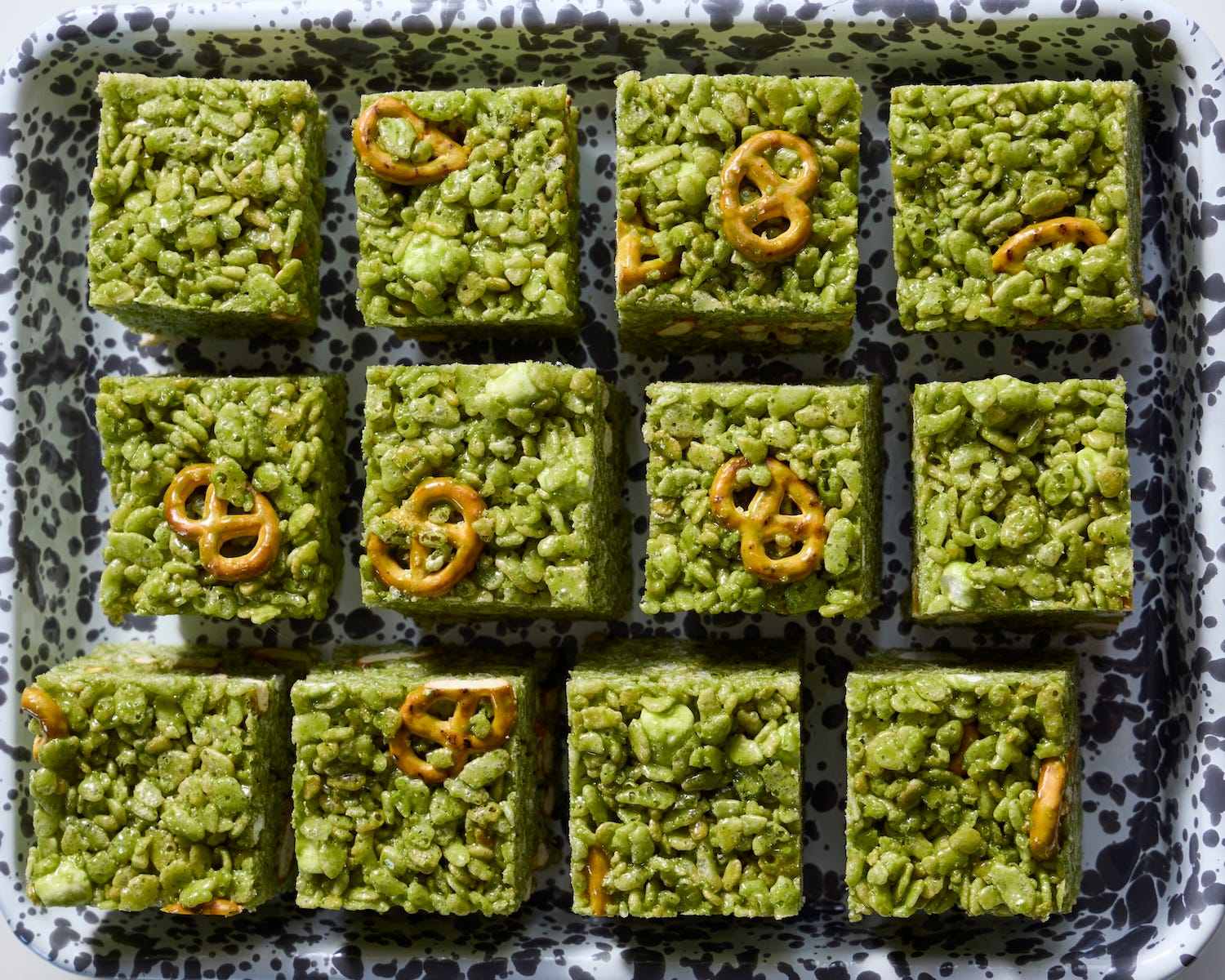
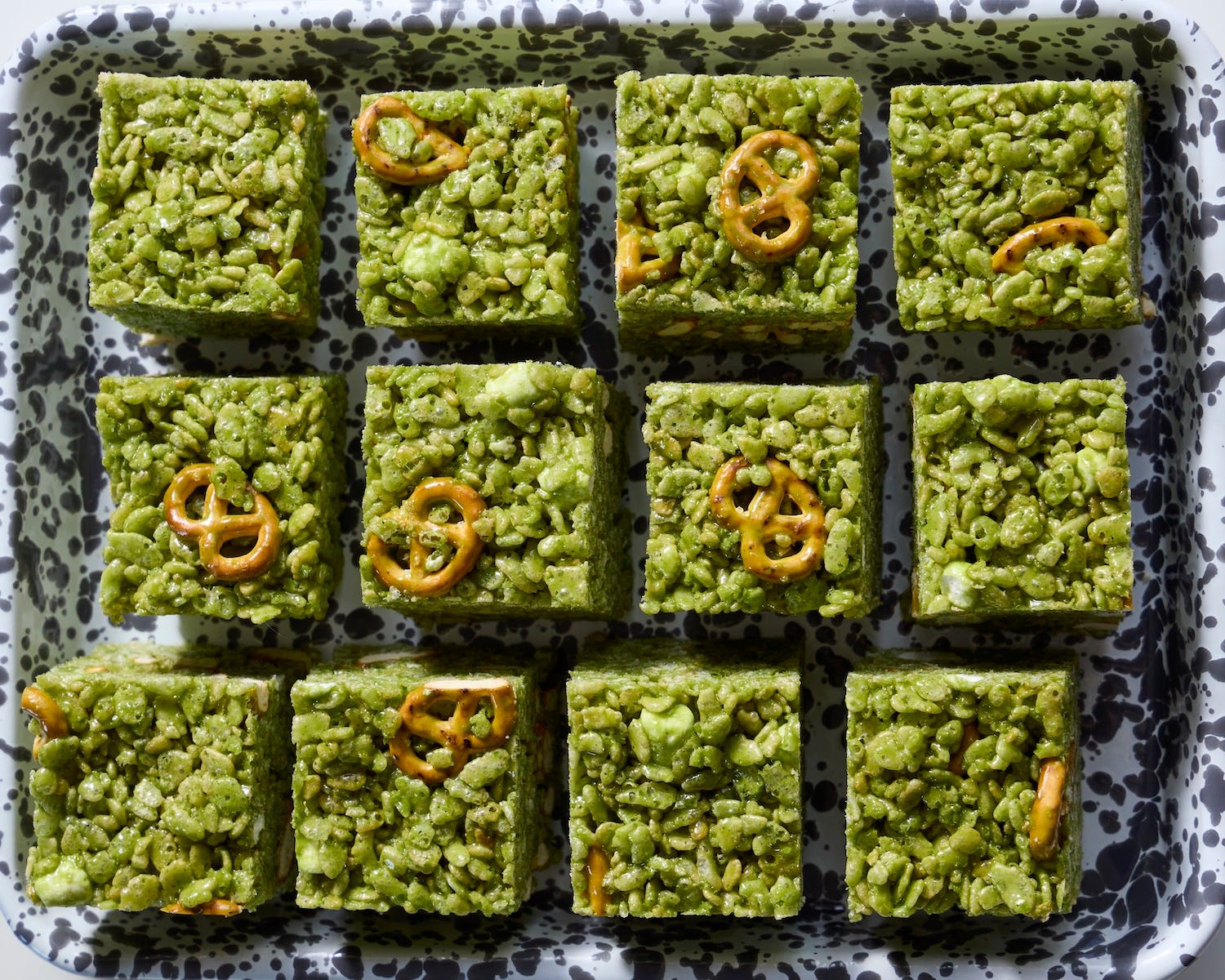
💎 Matcha Fancy Rice Crispy Treats

My sisters and I used to make rice krispy treats in the 1970s so Joyce’s recipe for Fancy Rice Crispy Treats that caught my eye. It looks grownup and fun with matcha and salty pretzels! It’s gluten-free and you can totally adapted it to be vegan. Instead of pretzels, put salted roasted peanuts in the mixture or add furikake. Get Joyce’s 🆓 Fancy Rice Krispy Treats recipe at my website.
Subscribe now

💎 Matcha Strawberry-Ginger Latte

Bake Sum has a fun menu of drinks and I really liked the Matcha Strawberry-Ginger Latte. It was verdant, zippy, rich and tangy — and had the colors of the Italian and Mexican flag too! The MSGL is the first recipe in Bake Sum! It’s easy to prepare and as Joyce describes, “This drink looks and tastes like California in a cup, filled with pastures of green and tons of strawberries.”
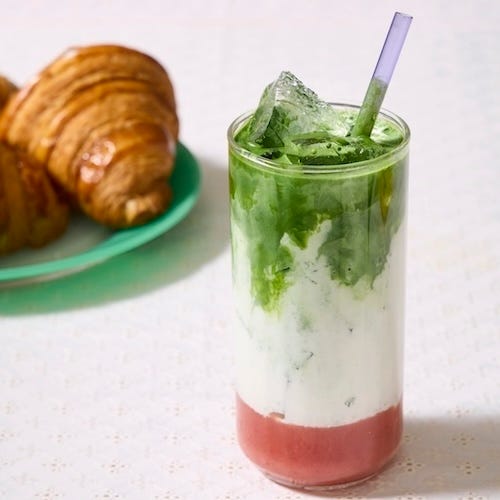
✅ From Joyce: Use in-season strawberries if possible. If you use frozen berries, add a bit of extra sugar and lemon juice to balance flavors. If you don’t have a matcha bowl, a small bullet blender will work; however, you’ll end up wasting a little bit of the precious green elixir.

✅ From Andrea: I cheat by using an electric milk frother to make matcha fast. As for matcha powder, I regularly drink Tenzo Tea and Kirkland brand.

Matcha Strawberry-Ginger Latte

Makes 2 drinks

Ingredients

Strawberry-Ginger Puree

  • 1-inch | 2.5 cm knob of fresh ginger, peeled and sliced

  • ½ cup | 100g sugar

  • ½ cup | 113g water

  • 1 cup | 155g strawberries

The rest

  • 1 teaspoon matcha powder

  • 2 tablespoons water

  • Ice cubes

  • 2 cups | 454 g oat or cow milk

Instructions

Make the strawberry-ginger puree: In a small saucepan, combine the ginger, sugar, and water and simmer over low heat for about 10 minutes, or until the ginger’s bright yellow color starts to become dull. Remove from the heat and cool for a few minutes until it is no longer hot to the touch.

In a blender, combine the strawberries and cooled ginger and its syrup and blend until it’s pourable but still a bit chunky. The ginger should be minced into fine pieces. (The puree can be made ahead and stored in the fridge for up to 2 weeks.)

Assemble the matcha lattes: Sift the matcha powder into a chawan, or matcha bowl, and add the water (see Note). Use a chasen, or matcha whisk, to start whisking vigorously back and forth in a straight line (not in a circular motion). Continue until the whisk has started to produce microfoam.

Pour the strawberry puree into the bottom of two 12-ounce (355 ml) glasses, then top with ice. Fill two-thirds of the way up the glass with the milk of your choice. Pour the just-prepared matcha over the top. Stir and enjoy as soon as possible.

💎 Enter to win a copy of Bake Sum!

Bake Sum has 75 recipes total so there’s lots more to explore. I’ve got a copy to gift one of you lucky PTFS subscribers!

Bake Sum Cookbook Giveaway lowdown:

  • The prize: One (1) copy of Bake Sum: Asian American Pastries, Breads, and Other Treats (value $35)

  • Eligibility: You must subscribe to Pass the Fish Sauce, be 18+ years of age, and have a valid U.S. shipping address.

  • Giveaway end date: Wednesday, October 21, midnight PST.

  • Selection and notification method: Based on the number of comments, I will randomly draw a winner and notify the person by email.

  • ⚡️ To enter: ❤️ Like this post AND leave a comment (e.g., What’s your favorite classic or modern Asian-y sweet treat? What’s your favorite Asian bakery? What ingredient(s) signal ‘Asia’ to you?) 👇👇👇

Leave a comment

💎 Coming up . . .

Joyce’s recipes got me all nostalgic so I’m taking a walk down memory lane this Sunday with an updated take on a Viet-Chinese snack. Join us behind the paywall, if you have not!

See you on Sunday,


  •  

Hainan Chicken Rice: An Easier, Healthy-ish Take with Rotisserie Chicken and Brown Rice

September through February is “soup season.” But as someone born in a tropical country, I have to tell you this — it’s soup season year round in Vietnam. Temperature doesn’t matter much.

Pho sure, we eat brothy soups for breakfast, lunch and dinner. A proper Vietnamese family meal includes a simple soup (canh) loaded with vegetables plus a stir-fry or braise, a green vegetable side, and lots rice. I don’t eat Viet soups or proper Viet meals everyday but I do regularly prepare simple brothy soups for lunch and dinner.

I can use instant bouillon and canned broth, BUT the soup has amazing life-giving qualities whenever I have homemade chicken stock on hand. My routine is to make a batch of Instant Pot chicken stock on Monday to use throughout the rest of the week. (I pick Monday because that night, we take the trash out so it’s easy to say bye-bye to the detritus.) My recipe uses lots of scraps, chicken feet, and vegetables and takes about 1 hour, most of which you — the cook, do nothing! The result is golden, slightly gelatinous, and practical.

In northern Vietnamese, stocks and broths are called nước dùng (“nook zdung”), which can be lyrically translated as “useful liquid”. When tasty and rich, it functions as a foundational base, root, trunk, a building block. Having good stock around is akin to having lots of culinary capital to dole out for easy flavor returns! It’s liquid gold.

Above are my recent midday soup forays — the chicken stock, which I keep in a pot and portion into a small saucepan for lunch. A bunch of watercress went in one day. When I was developing last week’s Viet rotisserie chicken noodle soup recipe, I used that broth for a lunch with bok choy one day. The next day, I dropped in some tofu, napa cabbage, and mushroom. Bring it to a boil, simmer very briefly, and voila! — lunch is ready!

With the stock handy, you can splash a little into a stir-fry and not think twice about opening a can or diluting instant bouillon. I keep canned broth and bouillon paste around but if there’s a chicken carcass, skin bits, and veggies, I’m making chicken stock! Add chicken feet and it’s gelatin rich and oh soooo good. Get my go-to chicken stock 🆓 recipe on the website. The instructions are for the Instant Pot, pressure cooker, and stockpot so you have no excuse!

Whatever your technique, have some liquid gold on hand in the fridge or freezer. Your Vietnamese Rotisserie Chicken Noodle Soup will be extra excellent.

A tasty, healthy Hainan Chicken Rice

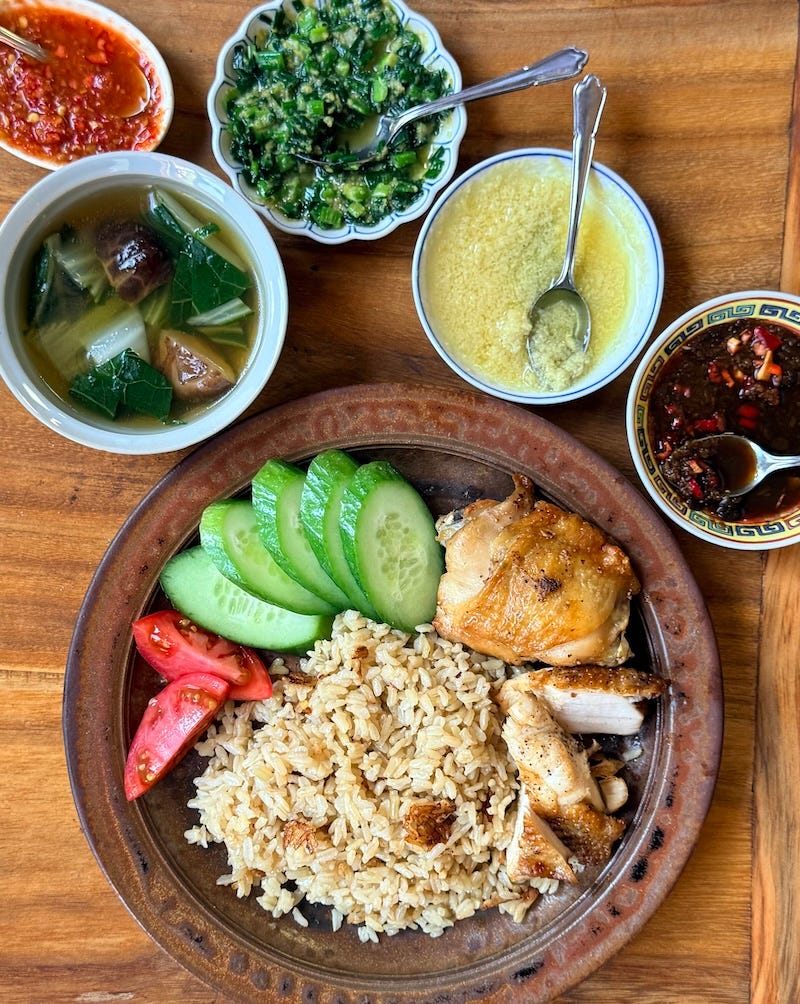
You can also use that stock or broth for this week’s PTFS recipe — Hainan Rotisserie Chicken Rice. I’ve eaten the renowned version at Singapore hawker centers, where the chicken is gently poached and the resulting light cooking liquid is used for making the rice, which is served with the chicken and a bunch of different sauces with varying amount of ginger, chile, and green onion. It’s good but subtle and a bit heavy.

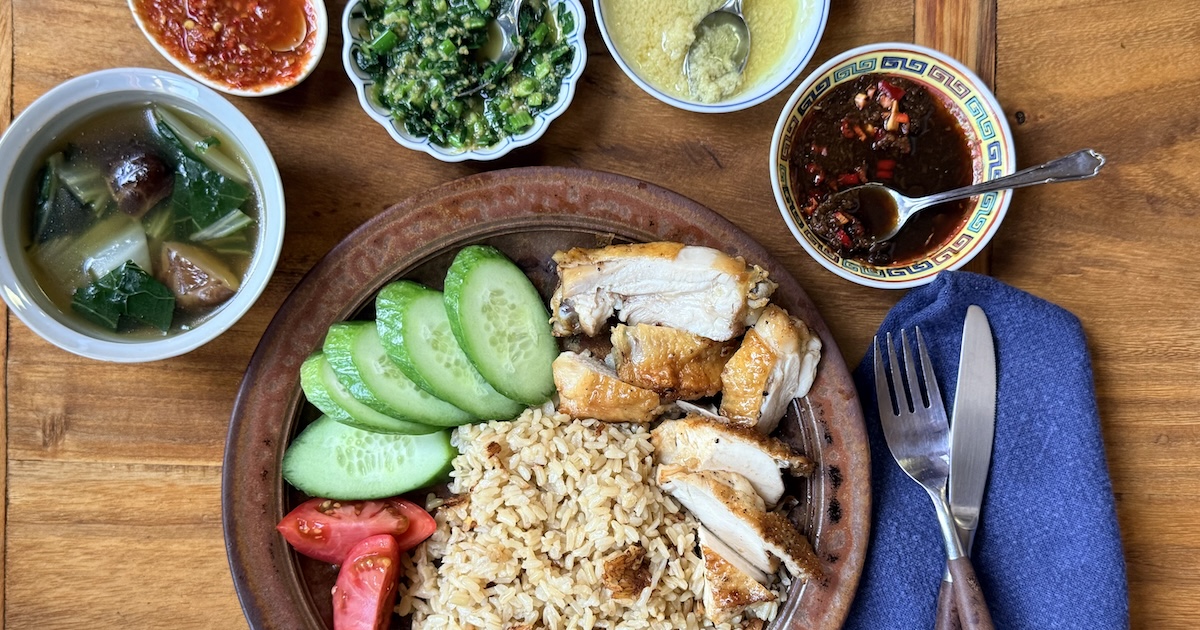
Hainan chicken rice is typically a project dish. My new recipe is a one-dish meal that you can pull off with minimal fuss. In the above photo, the components are:

  • Rotisserie (or roast) chicken allows you to have succulence and crispy skin! (Not everyone is a poached chicken lover.) Buy the bird already cooked or roast it yourself with a simple salt and pepper seasoning. (Shout out to , the former editor-in-chief of Cooking Light magazine, for suggesting this idea and saying I could borrow/steal it!)

  • Ginger-garlic rice is arguably the star of the dish. Thanks to a whole grain hack in ’s new How to Cook Everything Vegan (written with ), I was finally able to make Hainan chicken rice with brown jasmine rice! You can load it with crispy rice bits if you want (I’ll tell you how!). Feel free to just make the rice to serve with other dishes. In the recipe below, I’ve also got instructions for using white jasmine rice.

  • A vegetable-laden soup that’s wholesome and more flavorful than the light broth served with traditional Hainan chicken rice.

  • Four (4) easy sauces — rich ginger sauce, ginger-scallion sauce, chile-ginger sauce, and ginger-soy sauce. My recipes just requires stirring a few ingredients together! Make at least 2, if not all of them.

Below in text and in a dowloadable PDF, you’ll see a five (5) recipe package for: Hainan Rotisserie Chicken Rice and all the sauces. Additionally, look for the brown rice hack explainer so you can apply it elsewhere, advance prep tips to help you avoid getting cranky, and tweak suggestions so you can play around with the recipe.

Because you are smart cooks, I know you’ll use these five recipes as building blocks for other dishes in your rotation!

Support Pass the Fish Sauce however you can. Join as a free subscriber. Or, become paid subscriber for this recipe and access to 225+ others, along with class discounts, and much, much more.

Read more

  •  

Your Rotisserie Chicken Has a Great Vietnamese Meal in It

Hello October!

I hope you had a good week, despite the general levels of angst that seems to float about these days over the economy, AI, and so much more!

I’m not quite ready to crawl into a cave because there’s a lot of optimism out there. For instance, our neighbors have been starting families and their young are full of life, curiosity and hope. I also find solace in people doing good things in the culinary world.

Food and Wine magazine released its 2026 Best New Chefs list, and I contributed the write up on Kiln, a two-Michelin star restaurant in San Francisco. I wasn’t prepared to enjoy the 20-course tasting menu but it was super flavorful and not fussy. Chef John Wesley is also a remarkable person with incredible talent. Moreover, FW’s picks includes The Paper Bridge, a Vietnamese restaurant in Portland, OR, owned by Quynh Nguyen, a Hanoi-native, and Carlo Renardi, her American husband. Check out the BNC 2026 listing to see what may be near you!

If you subscribe to , its new issue #35 celebrates women at the forefront of home cooking. Yours truly is in the issue (contributors were asked: “What tastes like home?”). CB selected Cooking Thai as an outstanding fall cookbook and included Pim’s kabocha squash coconut custard dessert recipe.

And, my local Bookshop Santa Cruz announced that our book sold very well last month. 🥳 You may still get signed copies there or at Omnivore Books in SF.

What to cook right now? Some dishes are evergreen like my Vietnamese fish salad (gỏi cá), which Gail recently made with cod cheeks and reported stellar results, including the leftovers!

On the other hand, certain dishes are seasonally appropriate. October is part of the shoulder season. Summer warmth lingers in the day while autumn cool creeps in as the golden light fades. The two recipes I’m sharing this week help you straddle and enjoy the best of both seasons and make the most of what you’ve got.

Make a swank take on a Thai icon 🍃 🌶️

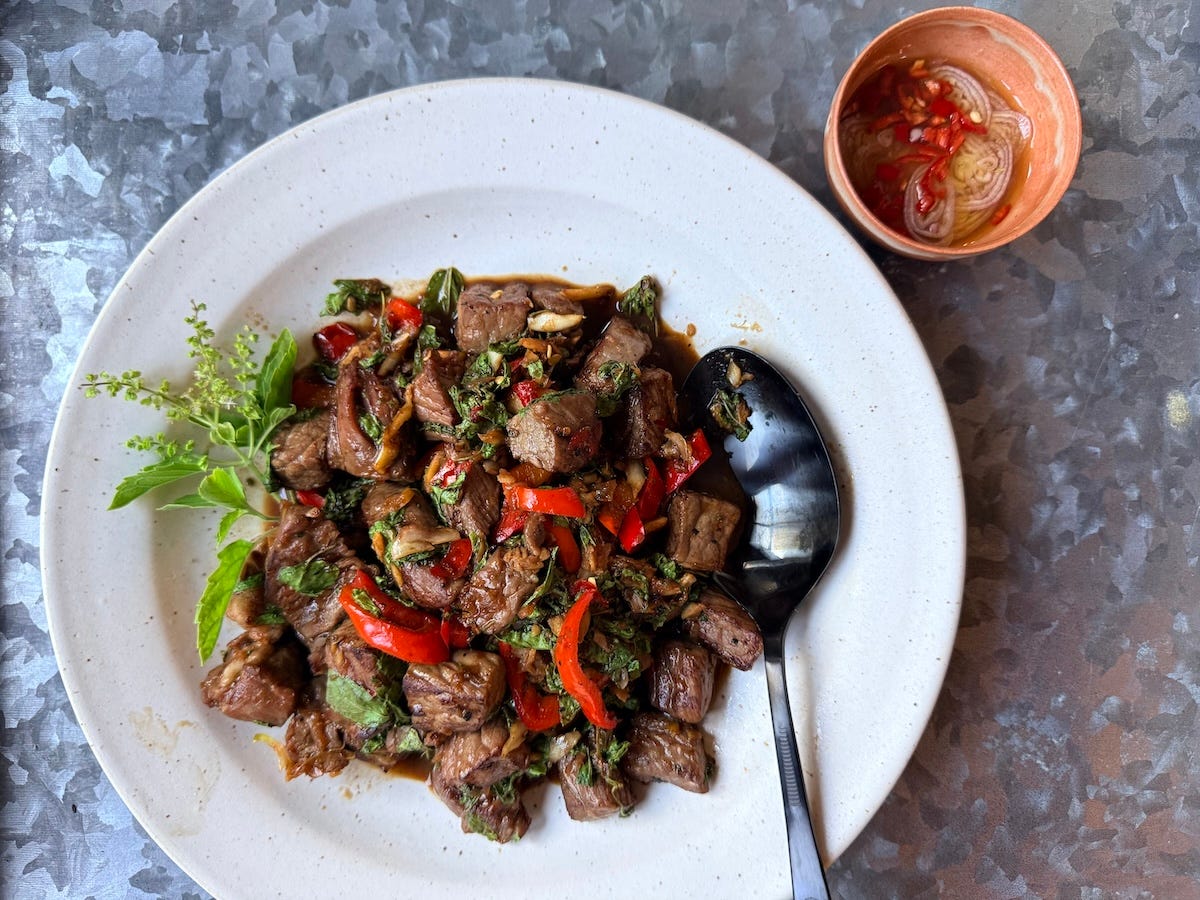
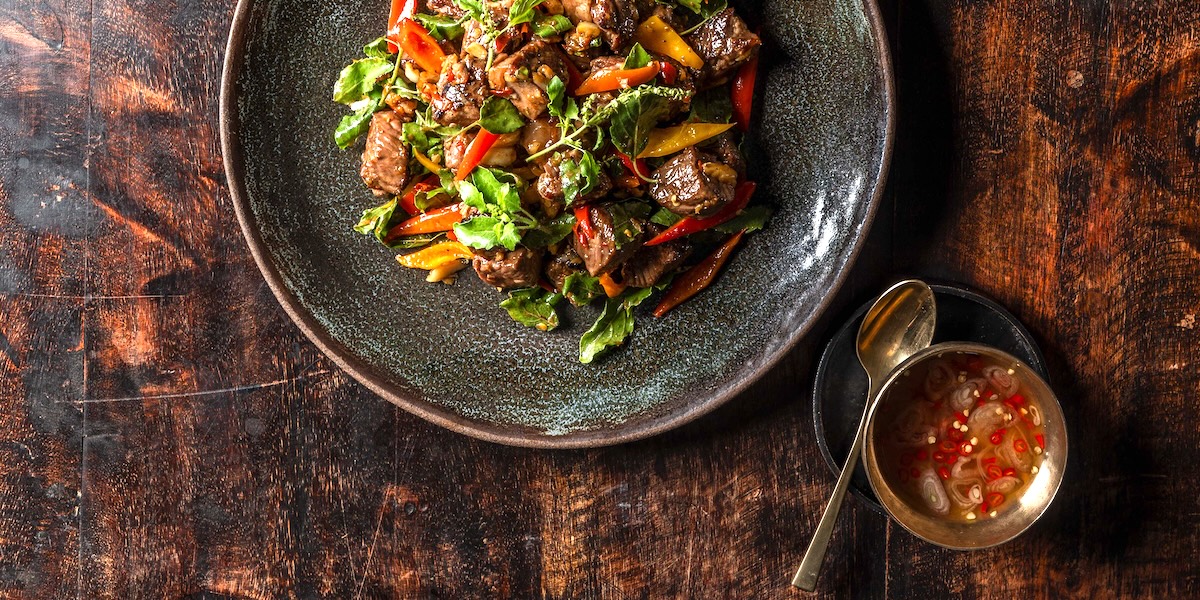
First up is a premium take on pad gaprao, the go-to stir-fry for many people in Thailand. The Thais eat it about once a week, according to an article that Pim found while we were writing Cooking Thai. (Sorry, pad Thai!) I asked her for a recipe and she returned with a masterful one featuring juicy, seared beef steak cubes that are shot through with the garlicky, punchy heat that makes Thai food sultry and exciting. Lots of basil functions as a seasoning, not a garnish.

bougie pad gaprao beef from cooking thai cookbook
This came from my kitchen and soon, you’ll be making your own too!

Pim cheekily named her recipe Bougie Pad Gaprao because the typical rendition uses ground meat. If you have the book, the main recipe is on page 233 followed by three (3) variations on page 234. For those of you who don’t yet have the book, I’ve shared our recipe and pro tips — including smart basil swaps — on my website. Pad gaprao is on rotation at our house. It comes together fast so get the 🆓❣️ pad gaprao recipe to experience Asian basil are at its peak.

Leave a comment

Use leftover rotisserie chicken for shortcut Viet-Chinese noodle soup (mì gà tiềm) 🍗 🍜

While there’s a hurry to savor summer herbs, we’re also looking to hibernate a bit with cozy soup. There’s plenty of time to simmer for hours during winter’s depth. For now, I’m still into quickies and hacks.

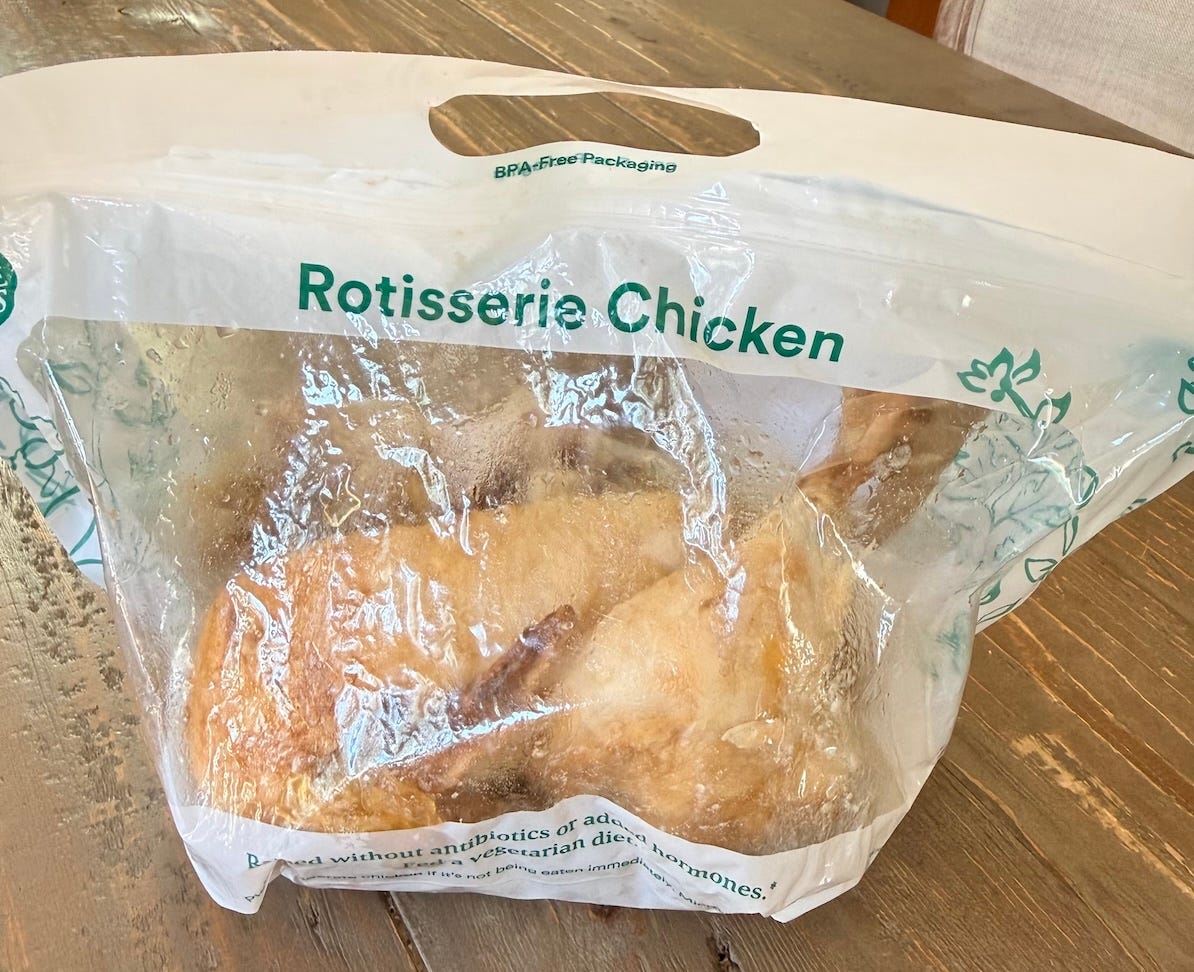
This week, I needed to deal with leftover rotisserie chicken. The store bought bird saved my cooking life last Sunday when I was too tired to cook from scratch. Its comforting roasted flavor, convenience and affordability rescued me. But what to do with the leftovers? Yes, you can make a sandwich or salad but those dishes often blatantly remind you that you’re still eating the same bird. Day-after rotisserie chicken can be dry as a cotton ball and hard to swallow.

rotisserie chicken
This bird didn’t know what would soon happen to it! On Tuesdays, my local Whole Foods runs a $2 off sale on rotisserie chickens. Maybe yours does too?

Not wanting to discard more than half of the bird, I transformed its flesh and all the scraps into a Vietnamese-Chinese noodle soup. It took about 45 minutes and transported me to a family friend’s Chinese barbecue shop in San Diego. Mr. and Mrs. Tan owned the shop that my parents frequented. While the adults talked, I scarfed down Mrs. Tan’s specialty — mì vịt tiềm (“mee VEET tiam”), a braised duck Vietnamese egg noodle soup with a rich, spiced broth. It’s a specialty of the Chinese diaspora in Vietnam, particularly the one in Chợ Lớn, Saigon’s Chinatown neighborhood.

The landmark Binh Tay market in Cho Lon. You can’t miss it. Great place to shop for wholesale housewares though you have to buy lots.

Mrs. Tan gave my mom her recipe, which I used to create the recipe for my first cookbook, Into the Vietnamese Kitchen. That twenty year old recipe on page 220 remains my favorite iteration but it’s time consuming to prepare. Who wants to roast duck or go find one? When traffic is perfect, the closest Chinese barbecue shop is 45 minutes away! And nowadays, what’s sold at those shops as roast duck is anemic.

Leave a comment

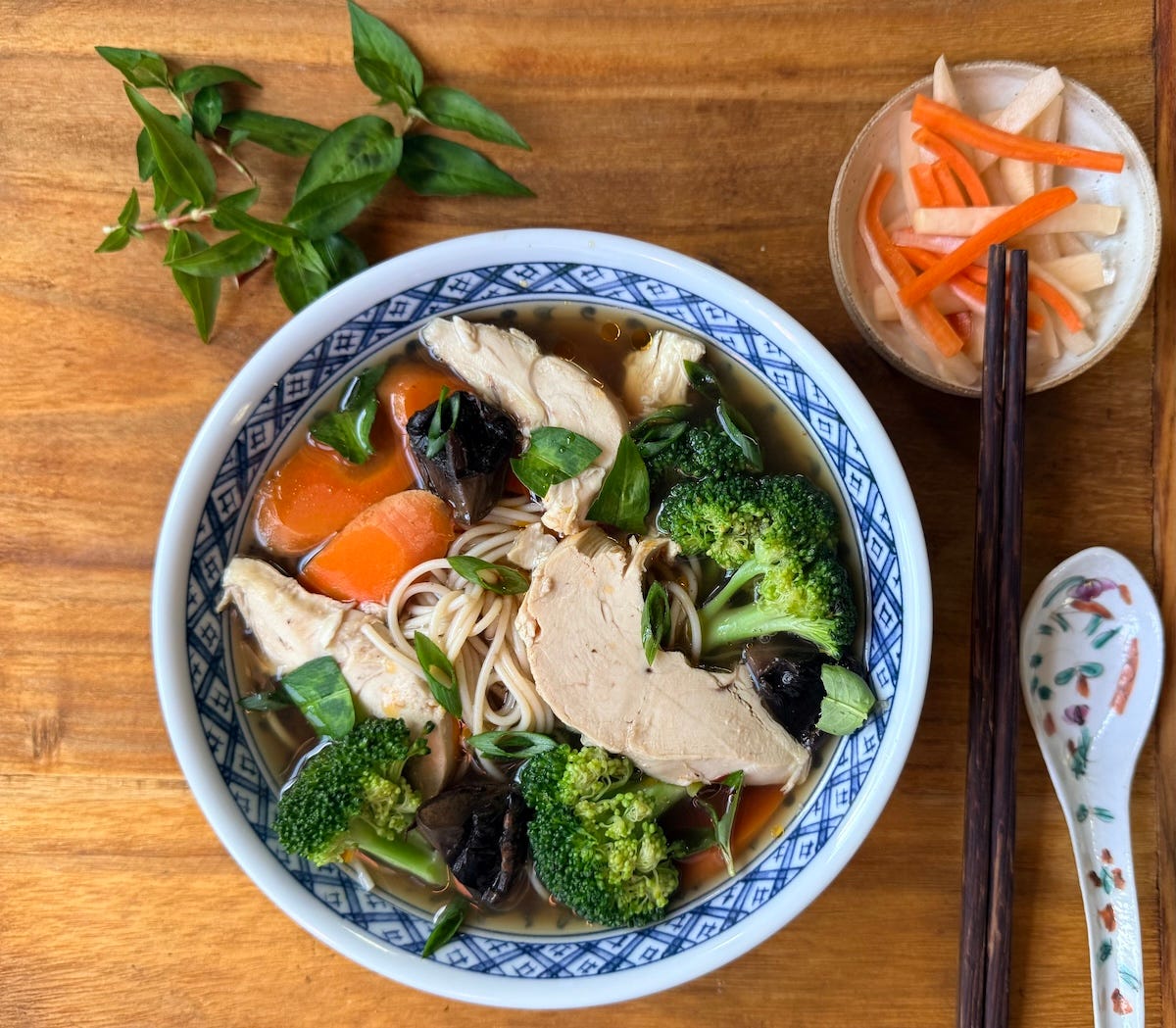
Wanting a cozy shortcut and aiming to use up my rotisserie chicken, I cooked up this shortcut version with chicken. This 45-minute Mì Gà Tiềm hack transforms the chicken into a remarkably fun and special treat. The flesh moistened up, but most importantly, the results made me forget that we were eating humble leftovers. Rory dreaded eating rotisserie chicken dishes but he perked up when I served him a bowl of this noodle soup.

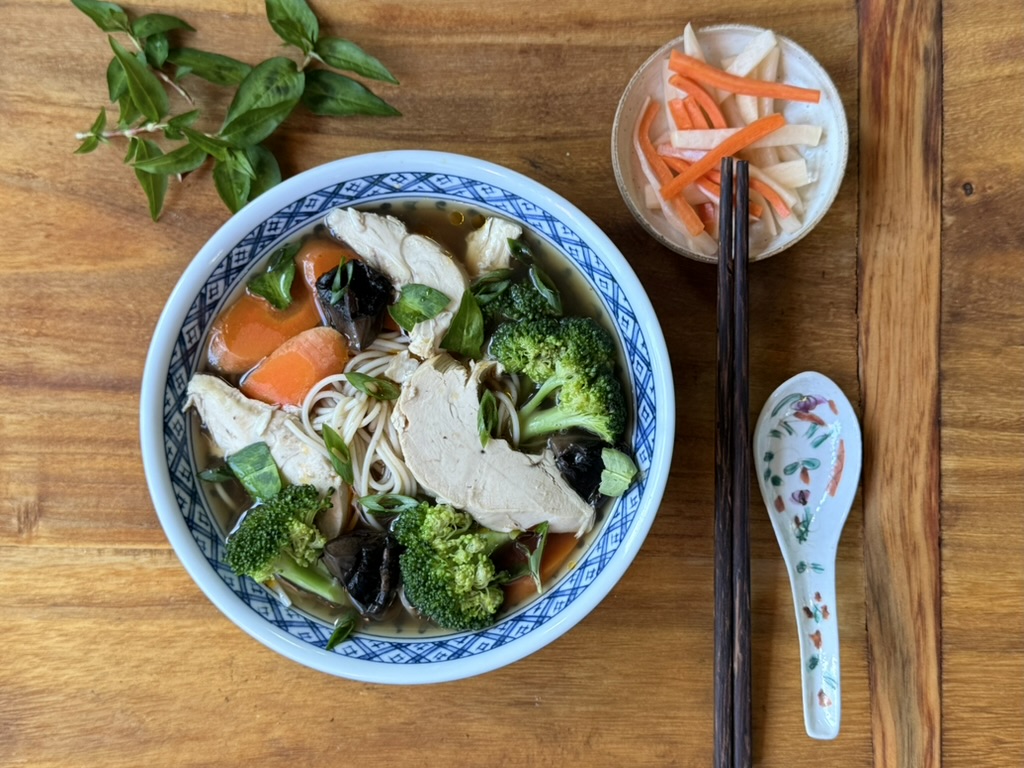
vietnamese rotisserie chicken noodle soup mi vit tiem
I loaded mine up with vegetables. That’s not traditional but it makes for a complete, wholesome meal. If you want to be super traditional, eat this noodle soup with pickled daikon and carrot. The tang and crunch adds textural contrast and brightens the noodle soup.

When you make this shortcut Mì Gà Tiềm (“mee GAH tiam”), you’ll realize its many virtues.

  • It uses every bit of the bird for a potent broth. Use your roast chicken leftovers, if you want. Rotisserie chicken isn’t the only game in town. 😆

  • If you don’t have enough meat, at least turn the leftover scraps into tasty broth. Add mushroom, tofu and napa cabbage and you have quick and easy soup for lunch.

  • Use Chinese egg noodles, rice noodles, soba, or ramen. Instant ramen is fine.

  • Employ fresh or dried mushrooms, depending on the time used.

Below you’ll find the recipe in text and a downloadable PDF. Plus you’ll have all my recipe development notes for you to tinker with.

Ok, the clock is running and you’re hungry. Let’s make this noodle soup!

Support Pass the Fish Sauce as much as you can. Become paid subscriber for this recipe and access to 225+ others, along with class discounts and much, much more.

Read more

  •  

The Mid-Autumn Dispatch: Capture Peak Herb Season in Your Kitchen 🌝 🌱

Folks, we’re in a critical four-week window here—and no, I’m not talking about the upcoming midterm election campaigns in America. I’m talking about the garden.

For those of us in the Northern Hemisphere, autumn is officially here, but there are still lingering warm days. That means one thing: it’s time to enjoy, harvest, and preserve your summer bounty before it’s lost to cooler, darker days!

This weekend, I’m at my mom’s house to check in with her. We’re also celebrating the Harvest Moon Festival. It’s a massive holiday across East Asian cultures—celebrated in China, Japan, North and South Korea, Vietnam, and anywhere vibrant East Asian communities thrive. (Despite being in Southeast Asia, Vietnam is anthropologically an East Asian country because it’s heavily influenced by China.)

Growing up Vietnamese, I know it as Tết Trung Thu (pronounced “Teyt Troong Too”), which literally means "Mid-Autumn Festival” but mostly identified the holiday with the annual lantern festival. I always looked forward to lighting those glossy, colorful cellophane lanterns whose frames were made of delicate bamboo. Then, we’d parade around the neighborhood holding our lanterns. Back then, the night skies in Saigon were often clear and people felt a certain happiness. The lanterns were so fun, nearly magical — well, up until when my lantern would inevitably catch on fire because I was such a klutz!

Why do you celebrating Tết now?

We’re not replacing or double dipping for the New Year. Tết means “festival” so even though Viet people say “Tết” as a shorthand for Tết Nguyên Đán (Lunar New Year), it’s not the only Tết people celebrate. In the scheme of things, Tết Trung Thu is second to the Lunar New Year. It falls during the end of the rice harvest so it signals a pause to assess all the blessings in life. If possible, you you go home to see family and celebrate togetherness. Think of it as an early Thanksgiving!

This year’s holiday fell on Friday. For a bit of cheesy fun, Rory and I went outside to check out the moon and sing “Moon River.” We repeated it last night when the moon was technically at its brightest — officially called the Harvest Moon because it’s closest to the autumn equinox. The moon will remain big and luminous for a few more days, so make sure to gaze!

Stepping outside to see the moon was a perfect excuse to get up from the dinner table, where we’d just finished an incredible meal of Bún Chả (“boon chah”), the famous Hanoi-style grilled pork and rice noodles. There was also mixed nut moon cakes, a gift from my friend Stacey, a local Chinese restaurateur.

I make this Northern Vietnamese icon my way, but my mom, who is 92, has her own brilliant, time-tested approach:

  • The Cut: Mom uses only sliced pork for casual bún chả. I prefer a mix of sliced pork and pork patties for textural contrast. You can easily do both!

  • The Shortcut: For ultimate convenience, she marinates the pork and keeps it frozen for weeks, trotting it out whenever she wants it. Remember, she’s 92 and still cooking! (Personally, I keep just the marinade frozen to save prep time.)

  • The Heat: She slices the pork on the thicker side and broils it. Her days of grilling outdoors over charcoal ended the moment she left Vietnam in 1975. You can broil it, grill it on the stove, or cook it outdoors. In a pinch, just sear the pork on a ripping hot cast iron, carbon steel, or stainless steel skillet!

👉 Get the Recipe: My Best Bún Chả Recipe & Step-by-Step Guide

And, if you’re not into pork, try my Vegan Bún Chả. It’s an absolute knockout that stands entirely on its own, or you can serve it alongside the traditional pork version to please everyone at the table.

Get herby while they’re still good

Whichever version of bún chả you prepare, you’ll need a mini mountain of fresh herbs. Every herby leaf we’ve been eating at Mom’s came straight from my own garden, which looks completely jungly these days. NOW is the time to enjoy herbs at their absolute peak—before they fade for the winter or become harder to find at the markets!

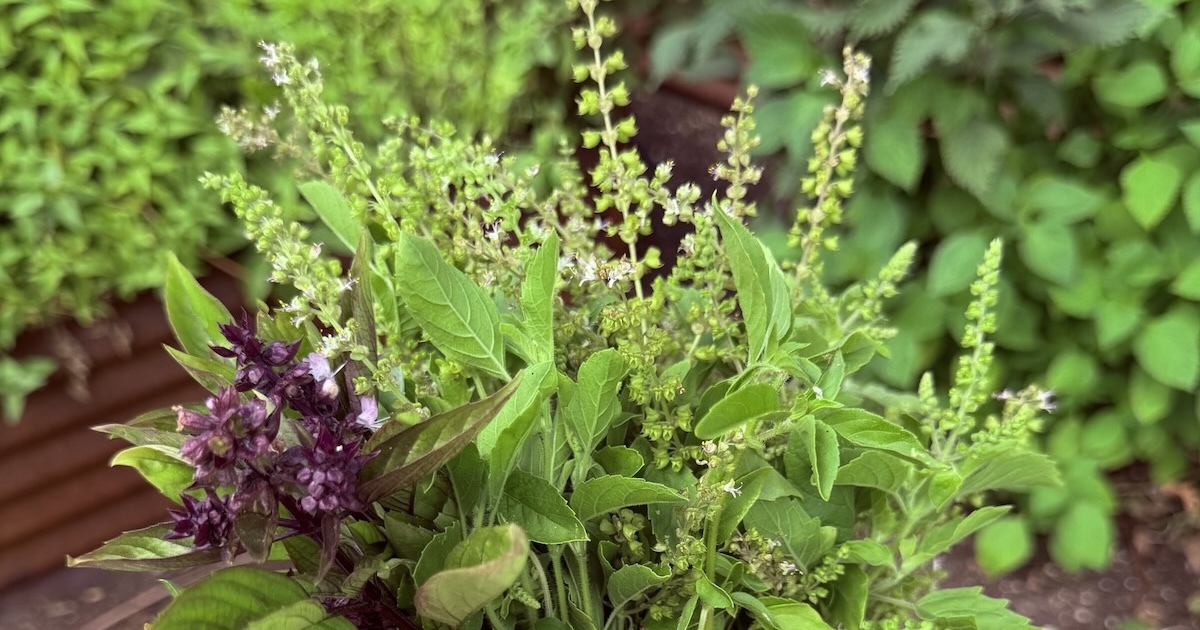
When I harvested a bunch of basil this week, I noticed my Italian basil was looking incredibly scrawny. Why? Because my Asian basil varieties grew so wild that they completely eclipsed it. They have officially taken over my garden!

I don't expect you to let them take over your yard, but you should absolutely let them take over your kitchen. To help you dive in, head over to the website for Beyond Pesto: A Guide to Thai, Holy and Lemon Basil (it’s 🆓).

Use Asian basils and other herbs (get quick guidance from my Vietnamese Herb Guide 🆓) for these brilliant seasonal dishes from the blog and newsletter archives:

Need more inspiration? Paid subscribers can unlock our full, searchable PTFS Recipe Index, which now contains over 225 master recipes!

Unlock the 225+ Recipe Index by becoming a paid subscriber. Thanks for supporting me at any level!

Alright, I’m heading back to the kitchen to see what my mom is cooking up next. Whether you’re harvesting the wild corners of your backyard or hunting for herbs at the market this weekend, I hope you pour yourself a beverage, step outside to check out that massive moon, and eat something incredibly fresh.

Happy Harvest Moon,


  •  

No Asian Market Needed: A Foolproof Recipe for Vietnamese Goi Ca (Fish Salad)

Supermarket fish counters in America can often be uninspiring. You see the same usual suspects — salmon and mild white fish fillet such as cod, rockfish, sole, and tilapia. Fish is healthy and delicious but what healthy thing can you do with fish aside from grilling or pan-frying it? It can get b.o.r.i.n.g.

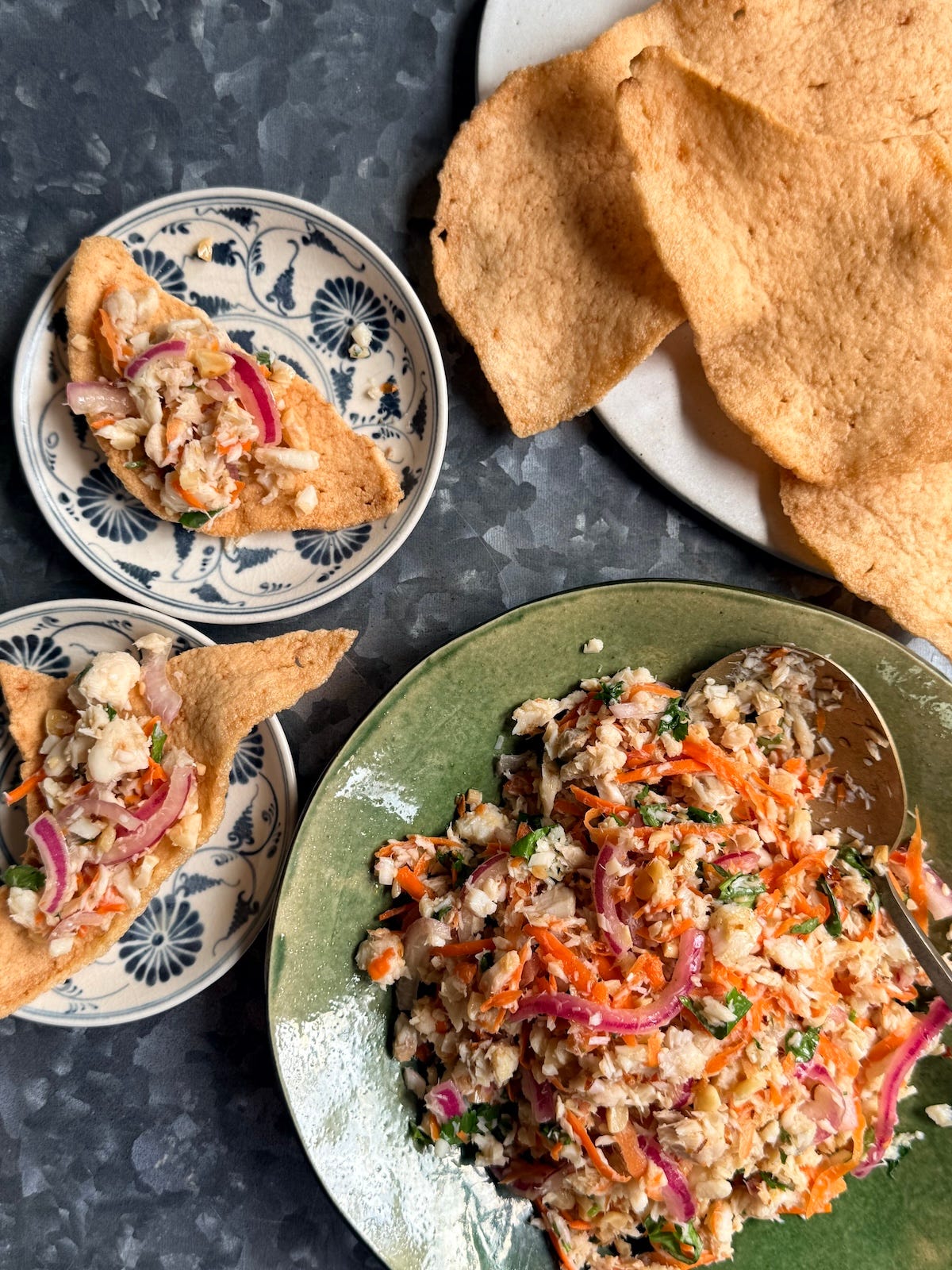
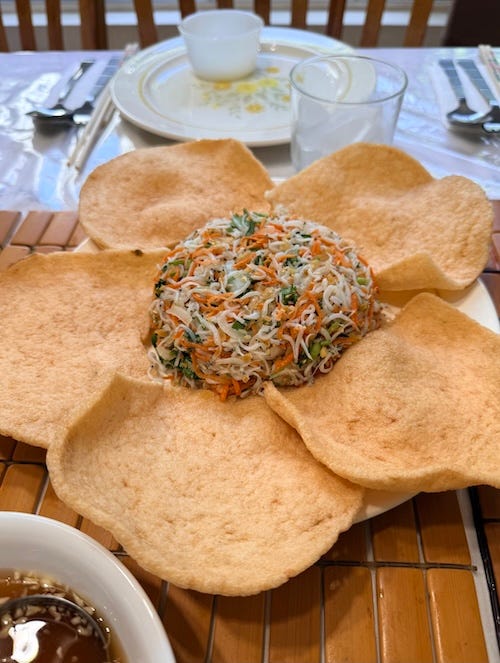
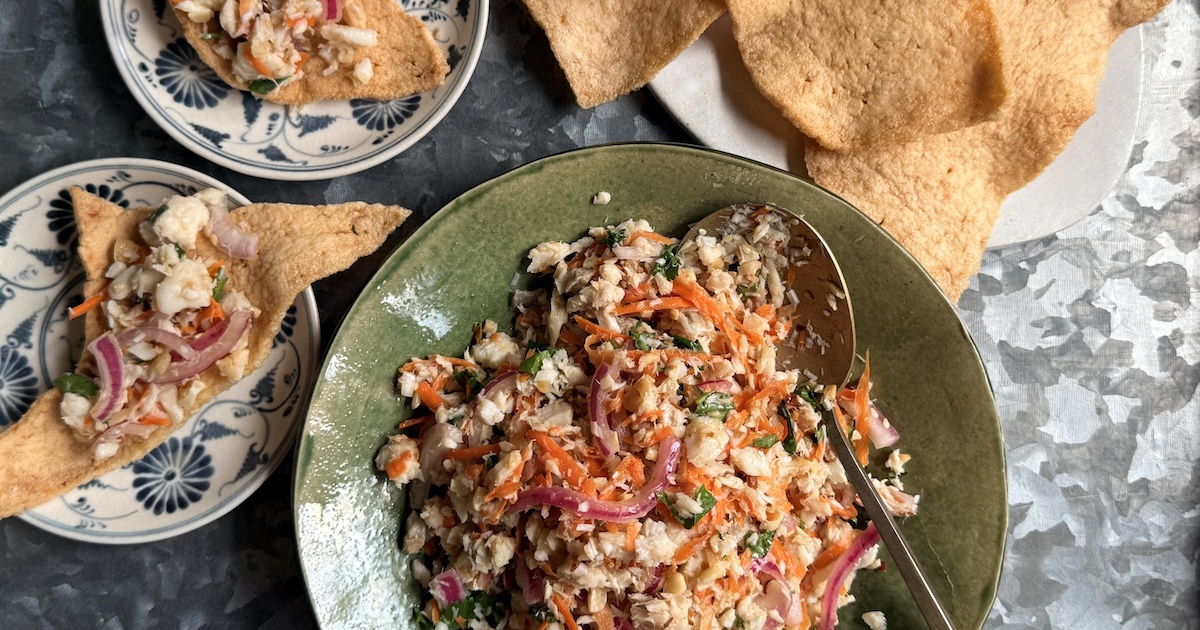
How about turning it into a tangy, garlicky, herbaceous, and slightly spicy Vietnamese fish salad called gỏi cá? It’s a refreshing salad that my family enjoys with crunchy fried shrimp crackers for a classic Viet-style starter or snack.

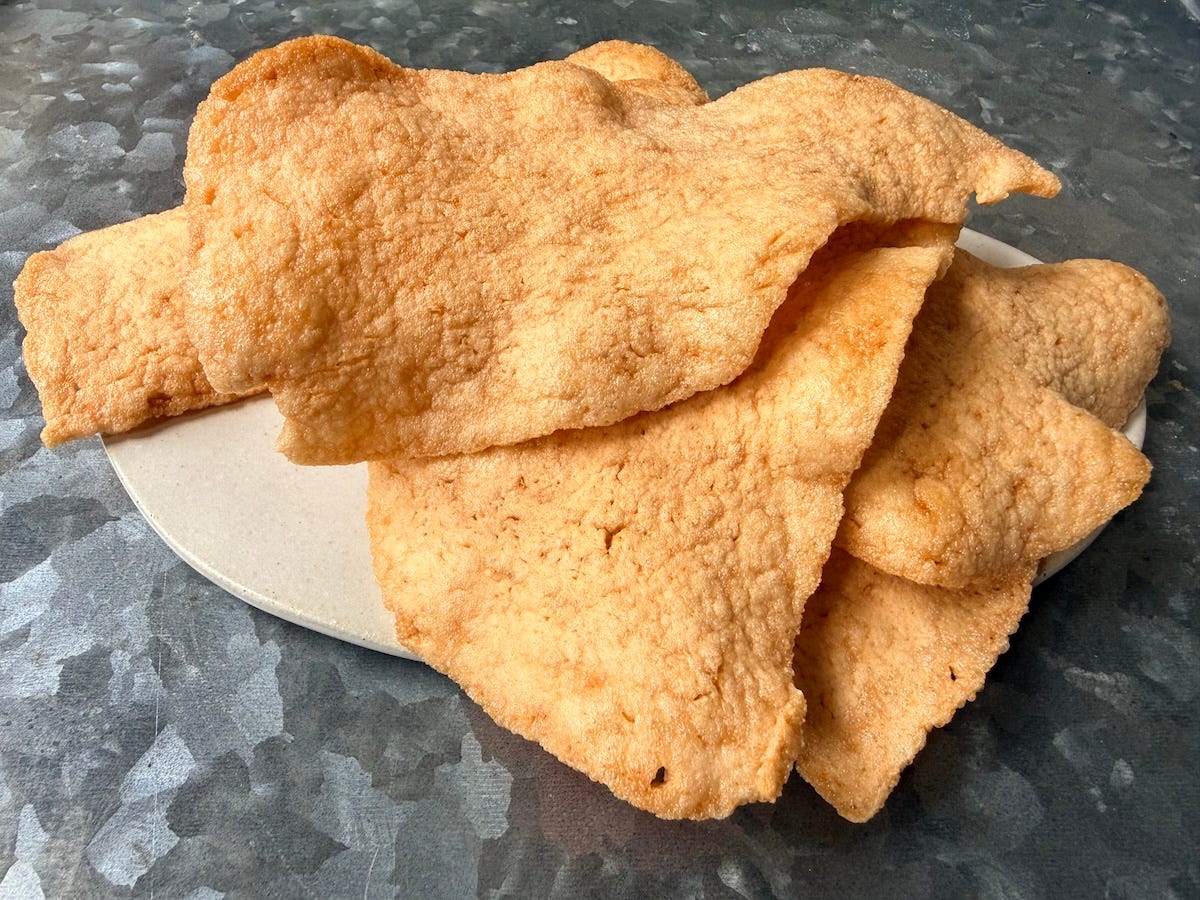
In fact, to eat properly eat many Viet salads, you need the ultimate crunchy scoop: fried shrimp crackers (banh phong tom). If you’ve never made them at home, I just published a guide to buying and frying the best ones on my website. (Don’t want to get the crackers? I suggest substitutes in the recipe below!)

But you don’t have to be traditional with gỏi cá. Let loose your creativity and cravings. Viet salads aren’t usually lettucey affairs BUT that didn’t stop me from serving my fish salad atop a pile of lettuce ribbons (no need for dressing because it’s well seasoned). Rory added tomatoes for a fab plate. You can even put it in a rice paper roll!

Traditional Vietnamese Fish Salads

But first, let me explain what Viet fish salads are about. In Vietnam, there are many regional kinds of gỏi cá (pronounced “goy KAH?”) that feature raw super fresh fish. For instance, cooks on Phu Quoc island prepare gỏi cá with freshly caught sardine filets, which you can buy from the ladies who expertly fillet the fish at the daily outdoor market.

Given the freshness of the fish and other ingredients, please don’t ask me to replicate what I’ve eaten there. It’s a specialty best left to the island folk.

What my family enjoys as gỏi cá is a lightly cooked version created by my aunt Bác Hàng. She came to America in the 1980s, married my dad’s older brother, and became a nail artist and breadwinner for her family. She also cooks very well. She’s a superwoman in many ways.

For about 30 years, my mom made Bác Hàng’s fish salad like her sister-in-law did — with tiny slender frozen silverfish (aka icefish or noodlefish) that’s sold froen at Chinese and Vietnamese markets. My family’s gỏi cá composition of the miniature white fish accented by fried garlic oil, shredded orange carrot slivers, pickled red onion, and chopped fresh herbs. Lime juice and vinegar lends the salad a bright ceviche-ish quality but the fish is fully cooked. It looks special too.

My sister Tasha adores the salad so my mom, even at 92, still makes extra to pack up for her daughter to take home. My husband Rory adores the salad but gets creeped out at all the little eyes staring back at him in every bite. (You can’t see them in the photo below but they’re there.)

August 1, 2026. For her 92 birthday bash, Mom made the fish salad with silverfish. That. may be the last time, now that I’ve got this recipes!

What I didn’t realize was this: My mom has long wondered if the salad can be made without her having to shop at a little Saigon market. “It’s too much trouble to go all the way there for the fish,” she said. Silverfish have little flavor on their own, but they readily absorb the flavors of other ingredients, which are nothing special. They’re loaded with water so removing excess moisture is laborious and the yield is not much — a waste of money!

Earlier this week, standing at the fish counter and eyeing a glistening, very fresh fillet of cod, I had a revelation: What if I used cod as a Silverfish substitute? My mom’s reaction to my newfangled method, “If you can make the salad with supermarket fish I would be relieved. It would be much easier!”

I’m here to report that I did it! It only took one try to get this gỏi cá exactly where I wanted it. All the intriguing textures and flavors are there. Compared to the silverfish version, this evolved gỏi cá version 2.0 tastes more vibrant because the fish is fresh, allowing all the other elements to shine brighter and create excellent flavor.

With this new recipe, my mom and sister will be happier, and so will Rory! More importantly, Bác Hàng’s awesome fish salad can now be enjoyed by you and many other people! Make it whenever you want, with whatever kind of mild, white-flesh fish you find at the market or catch!

The ultimate crunch: How to fry perfect shrimp crackers

What are Asian shrimp crackers? The Viet version is called bánh phồng tôm, and they are a legendary snack and salad accompaniment.

A quick warning: Resist the temptation to microwave them! While it’s a common hack to make them puff up, they just turn out hard and tasteless. For the real deal, buy the dried discs and shallow fry them at home—they are leagues better than any pre-bagged shrimp chips you’ll buy at the store.

Want to master the perfect puff? Check out my step-by-step guide to buying and frying the best shrimp crackers on my website (it’s 🆓 and includes a quick how-to video!).

With the shrimp crackers and fish salad on hand, you can enjoy them many ways.

And I nearly forgot this — leftover fish salad tastes nearly as good as fresh. The salad keeps well so take it on the road, make it for a party, share it at a potluck.

This Vietnamese fish salad is ridiculously easy and versatile. Below, you’ll get the (1) full recipe in text and downloadable PDF, (2) process shots to guide you to success, and (3) many other pointers.

Curious cooks, readers and eaters fuel this newsletter. Paid subscribers sponsor PTFS and this gỏi cá recipe is designed for them. Join us as a paid subscriber for the whole shebang, fully use the recipe index + save 25% on future cooking classes! Thank you!

Read more

  •  

Three Low-Lift Vegetable Recipes That Do the Heavy Lifting

If you live in California, this week was a corker. We nearly melted when temps hit 100 degrees Fahrenheit in Santa Cruz. As we chugged iced water, Rory and I laughed at how he grew up in the blazing hot San Fernando Valley and I was born in tropical Saigon. After living in the Monterey Bay area for nearly thirty years, we’ve become hot weather wimps!

In our town, going out mostly means heavy food options — pizza, burritos, pasta, and burgers. We wanted light fare to keep us cool and refreshed. I didn’t want to turn on the oven for lengthy bakes or grill outdoors under the blazing hot sun. So, I focused on easy cooking — little things that I could do quickly without breaking a literal sweat and then use later on in many ways. I looked in the fridge at my vegetable bins and started tinkering.

With Thai cooking on my mind these days, I revisited a favorite recipe Thai-style watermelon salad. It’s got garlic, dried shrimp, lime leaf and other ingredients to turn watermelon into a salty, sweet, spicy refreshing salad. The 🆓 watermelon salad recipe is at my website, along with watermelon selection tips.

Feeling refreshed and energized, I experimented to create 3 solid recipes, plus a combo of two of them to make yet another 1/2 recipe, to share with you today:

  • Cheater’s Confit Tomatoes preserves tomatoes with umami depth in as little as 10 minutes.

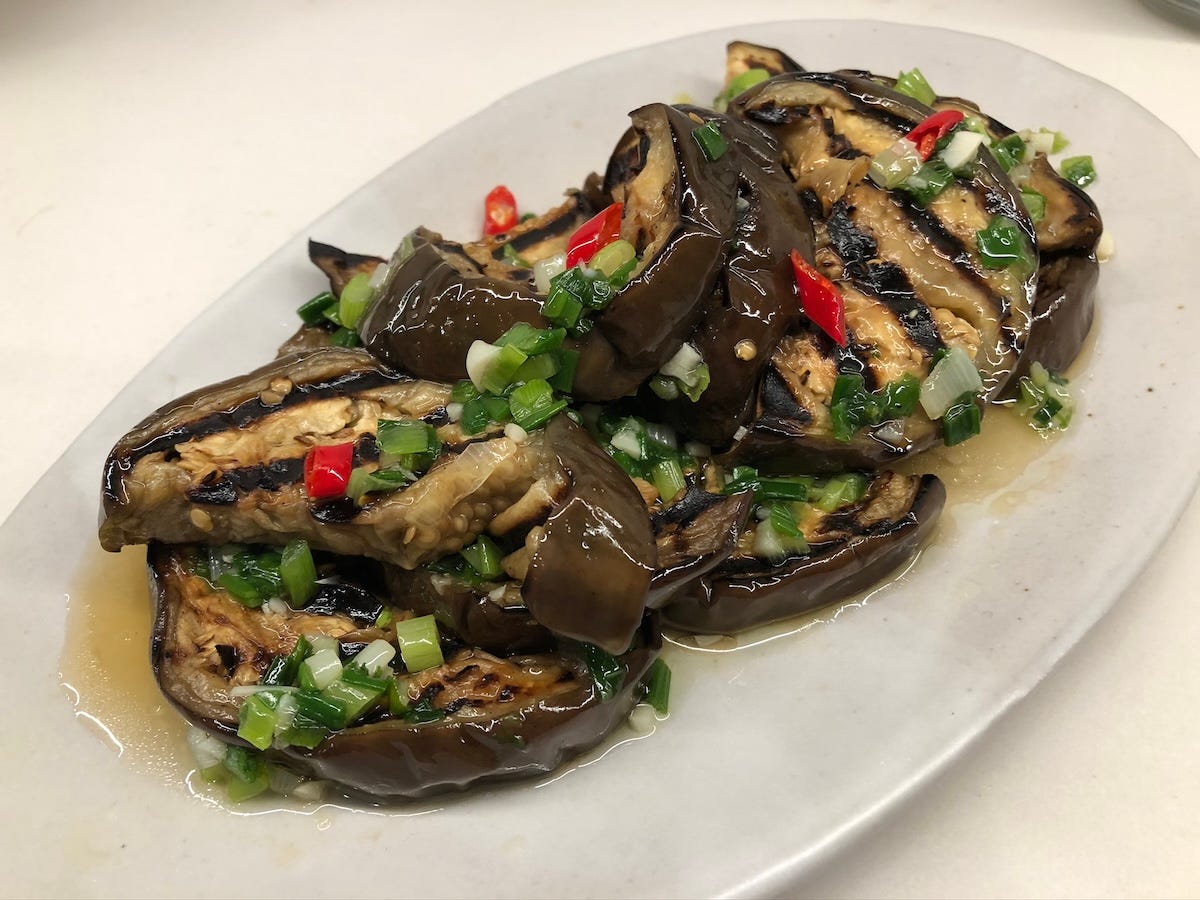
  • Viet Grilled Eggplant and Garlicky Green Onion Sizzle (yields plush rich-tasting eggplant that evokes fatty pork. Use it with the confit tomatoes for what I describe as an Grilled Eggplant “Bonanza” Platter (that’s the combo I mentioned).

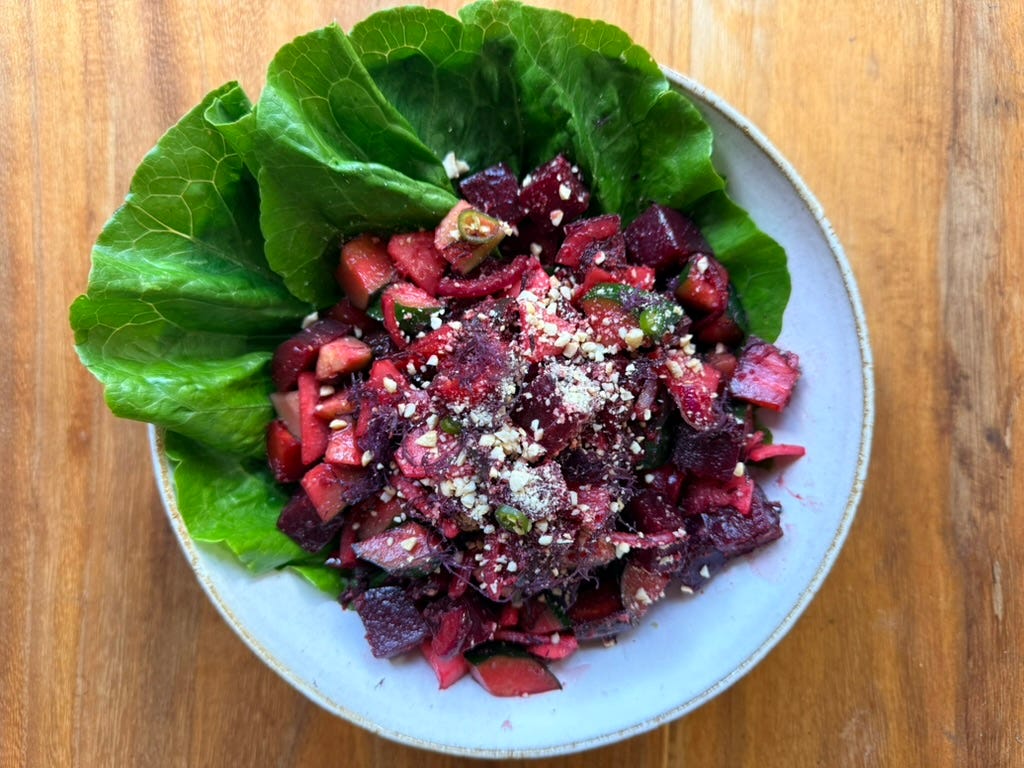
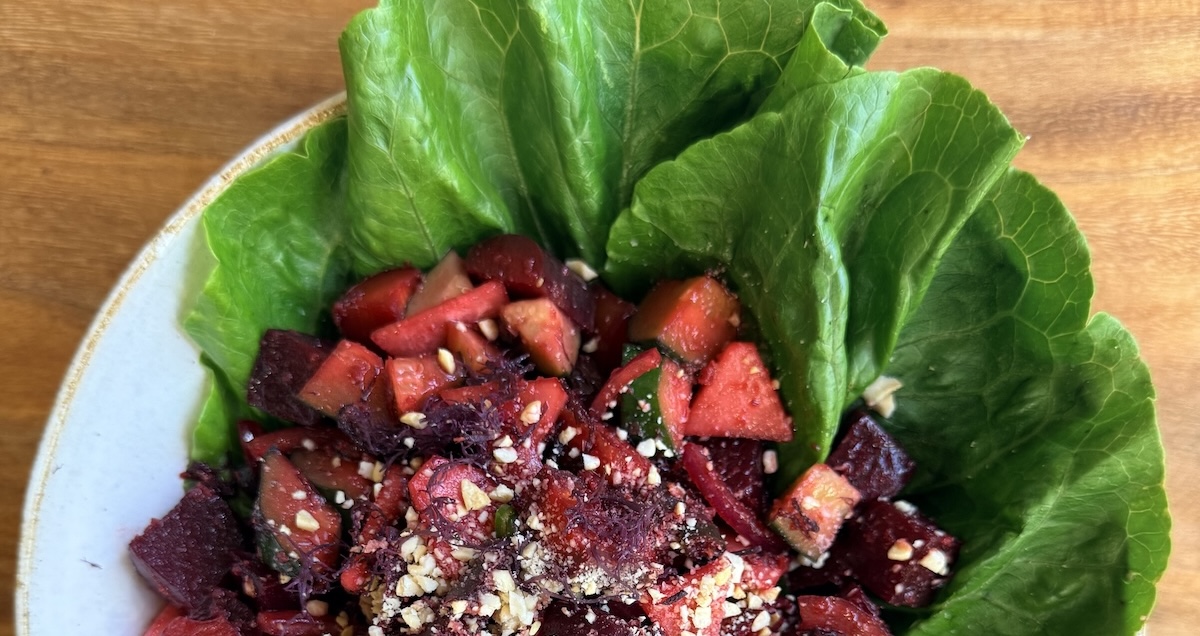
  • Roasted Vegetable Poke is nontraditional and remarkably good. The veggies are great as is and even better dressed up as poke.

Viet grilled garlic and garlicky green onion sizzle!
Depending on how you serve the poke, it can be Carmen Miranda-ish!

Moreover, I realized that a good recipe is the draw, but what makes it highly valuable is any enterprising cooking techniques held inside it. Those culinary takeaways you come across will enhance your cooking skills and life.

This week’s recipes are loaded with mini building blocks for you to make healthy, tasty food fast. Having building blocks around is how a chef or a restaurant effortlessly puts deliciousness on the table for their guests. They’re back-of-the-pocket small recipe that you can whip out as you need them.

Think of these three recipes like a three-piece suit that you can mix and match, plug and play with. They take little time to prep and prepare. The varied flavors, colors, and textures are joyful, to boot.

Above are two lunches we had this week. They each took about 15 minutes to prepare because I had the building blocks around. Soon, you will too!

Curious cooks, readers and eaters fuel this newsletter. Paid subscribers sponsor PTFS and this dispatch is designed exclusively for them. Join us as a paid subscriber for the whole shebang, fully use the recipe index + save 25% on future cooking classes!

Read more

  •  

Balanced Cooking and Eating: Whipped Cream Topping and Poke 2 Ways (Salmon and Tofu!)

Hey there!

A balanced lifestyle combines a little naughty with lots of nice and healthy. With that in mind this week, I have three (3!) recipes for you.

The first is a delicate, fluffy vegan whipped cream topping that’s remarkably sturdy. It keeps for days, if not for a good week in the fridge. It’s texturally lighter than the vegan frosting I developed for the vegan strawberry and cream cake because you want something ethereal when you’re aiming for a whipped cream topping. That said, you also do not want it to deflate!

After days in the fridge, the topping is still fluffy. I ain’t a kidding you. It’s outstanding and available for free at the website.

Why would you make a vegan whipped cream topping? Because the commercial plant-based options for whipping cream are inconsistent and not widely distributed.

If you’re following a vegan diet, the recipe is for your dessert pleasure! Dip fresh fruit in for a simple treat. Spoon it onto a cake or pie for a rich garnish.

If you’re lactose challenged or a curious cook who likes to have a few tricks in your back pocket for emergencies -- the vegan whipped topping recipe is a great fallback for when you need a whipped topping but don’t have regular whipping cream handy.

Get and make the 🆓 vegan whipped cream topping recipe. It’s a knockout, trompe-l’œil.

Poke, a food rooted in versatility

To counterbalance my forays into the land of whipped cream topping, I made some light meals this week. I had a little poke festival. We’ve got our minds on Hawaii with hurricane Lowell bearing down on it. We hope all our friends there are safe.

At the same time, I’ve thought about our grocery trips to the Foodland at the Ala Moana shopping center in Honolulu. It’s one of the fanciest markets I’ve been to on the islands. The poke bar dazzles with so many freshly made, incredible options. And they’re not all made from ahi tuna, as we think poke is chiefly is.

The word “poke” means “section” or “to slice or cut”. Hawaiians have been poke-ing various kinds of fish for centuries — long before Captain Cook arrived in the 1700s to ‘discover’ the islands.

Using reef-caught fish, locals would cut or scrape the flesh from the fish bones (this scraping is a technique that’s common in Southeast Asia to make fresh fish pastes). The Hawaiians would flavor the fish with sea salt, umami-laden fresh seaweed (limu), and ‘inamona, a seasoning mixture of salt and pounded candlenuts (candlenuts are also used in Indonesian, Malaysian, and Peranakan (Nyonya) cuisines).

Think about the shared Asian Pacific cooking techniques and ingredients and you realize how seafaring people exchanged ideas across the oceans over time. The concepts are simple yet brilliant for putting fresh food on the table.

Obviously, poke evolved over time and purists love the Hawaiian-style poke prepared with seaweed and ‘inamona. But the prevailing poke nowadays, as chef Sheldon Simeon writes about in his book, Cook Real Hawai’i — is shoyu poke, poke seasoned with soy sauce and a myriad of other ingredients, depending on your taste and mood.

Learning to poke from a local

I learned to make poke from Kiki Aranita, a Hong Kong and Hawaii-raised chef who now lives in Philly. She’s known for smartly adapting island flavors on the mainland.

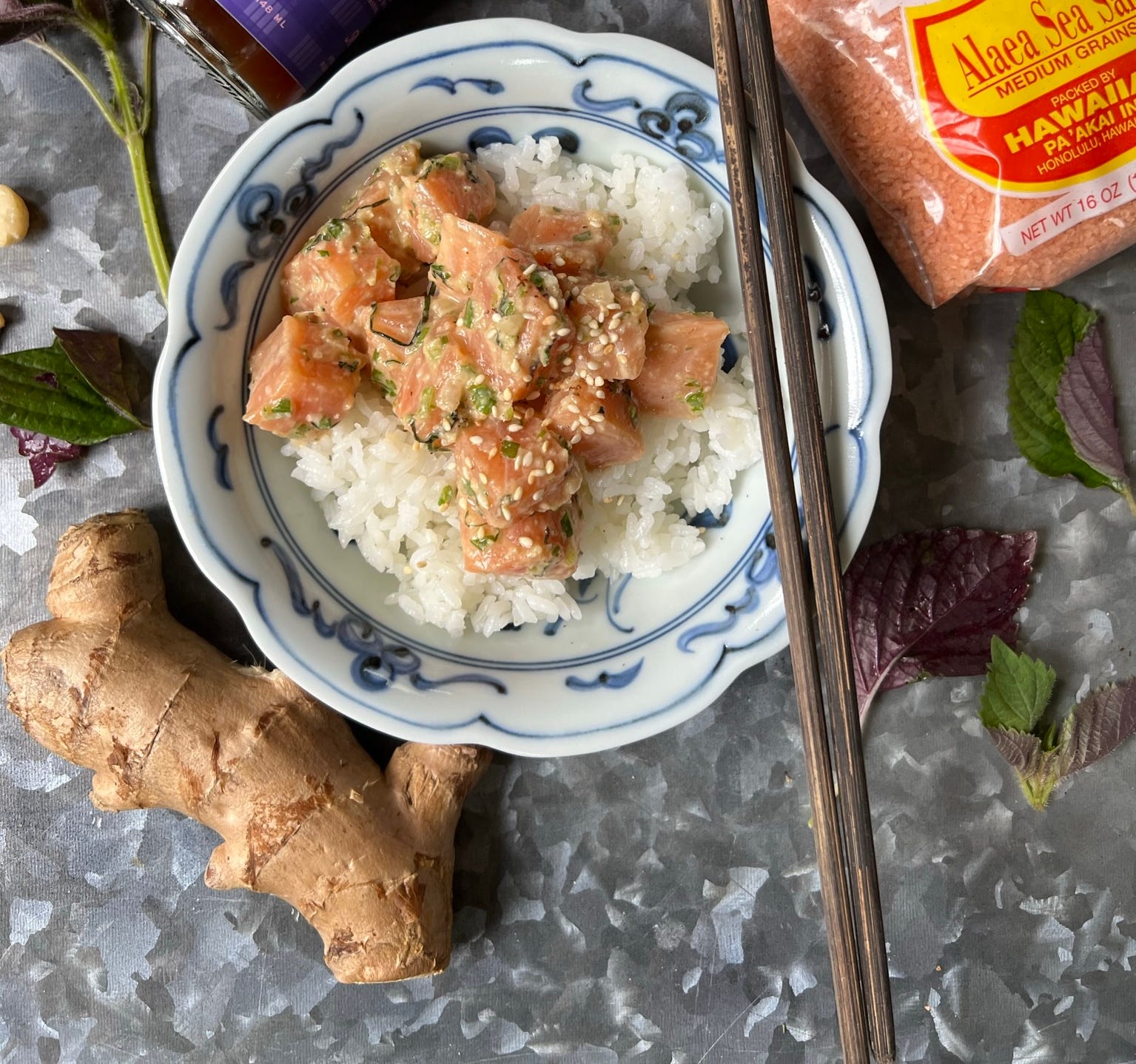
We chatted for a Food & Wine article years ago and she taught me her basic framework for making poke and shared her recipe for a delicious ponzu and ginger salmon poke seasoned with a bit of shiso. Vietnamese shiso (tia to) is totally fine, Kiki told me. It’s easy to find at Vietnamese markets and is affordable.

Kiki’s ginger-ponzu salmon poke. Recipe below!

And, there are many ways to enjoy poke. For a casual wine and snacks get together, my friend Lori, a PTFS subscriber and Kauai native, served poke as a pupu (appetizer, small bite). She distributed chopsticks and we noshed on her poke selection, shelled and nibbled edamame, drank lots of wine and caught up! Or, you can have poke as a rice bowl. I like to make poke lettuce wraps too. How do you like to eat poke?

Leave a comment

This week’s poke exploration yielded three renditions — I’m not ready to premiere one of them quite yet. Look for my roasted vegetable recipe coming soon! The two quickies are:

  1. Kiki’s Ginger Ponzu Salmon Poke

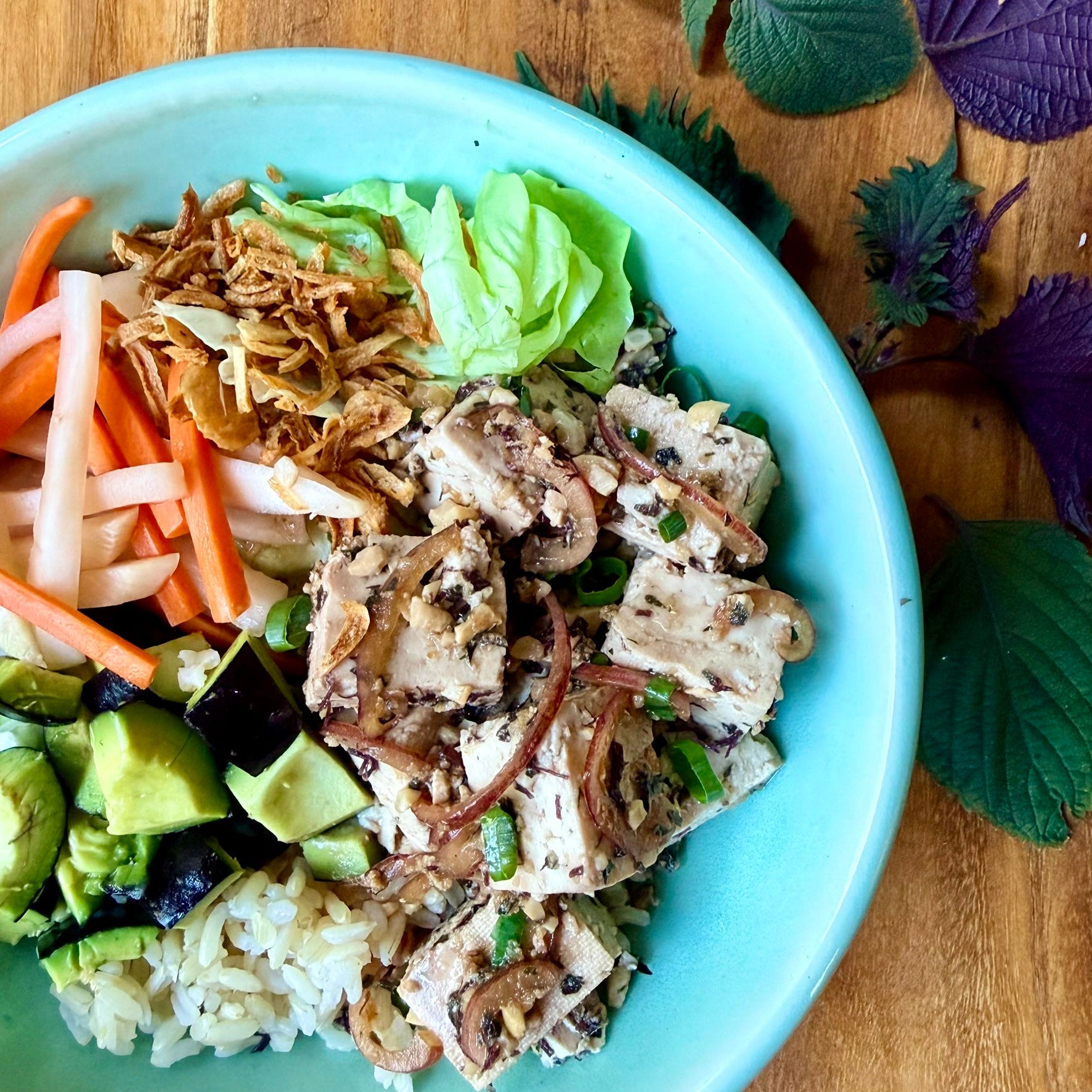
  2. Andrea’s Tofu Poke

Poke is fresh tasting, healthful, and casual. When made with tofu or a cooked ingredient, it keeps well in the fridge too, for meal prep and snacks. Below you’ll find discussions on

  • Basic parameters for making and serving poke

  • The two recipes in full text and downloadable pdf

  • Ingredient sourcing plus substitutions (Do you need Hawaiian seaweed and candlenuts? How to buy salmon that’s safe to eat raw?!)

  • Variation suggestions

Let’s unleash your poke-mania!

Curious cooks, readers and eaters fuel this newsletter. Paid subscribers sponsor PTFS and this poke filled dispatch is exclusively for them. To get both recipes, fully use the recipe index + save 25% on my cooking classes, become a paid subscriber! Your support makes a big impact.

Read more

  •  

Midweek gems #66: Nampla Prik, the 1-minute Thai wonder sauce

Hello there,

I have a knack for saying things that many people think and few dare to voice openly. Airing dirty laundry has gotten me in trouble a few times with my family but in the past week, in talking to people about Cooking Thai, I’ve had private conversations with folks who quietly say, “You know, such and such Thai restaurant is not very good.” My sister Linh and I have the same conversation about Vietnamese restaurants.

So I have to admit to you that a lot of Thai and Vietnamese restaurants are not great. Many offer the same menus and flavors. To borrow from the New York Times food critic Ligaya Mishan, “We’re in an epidemic of sameness.”

I empathize with the restauranteurs.

If you’re a Viet or Thai restaurant owner, you’ve got financial goals to meet and are looking to fill seats and sell food. You cannot afford to spend too much time to labor to make food that’s going to be as good as homemade. You’ve got to cater to a broad swath of customers. As a result, your menu may be huge and your flavors can easily become diluted.

But, you as the diner — if you’re armed with cooking knowledge, you can make good food yourself to satisfy your palate, save money, and learn. Perhaps you’ll eventually engage with local restaurant owners so they know you have a high level of appreciation of their craft. Maybe they’ll feel more open to try new dishes and offer bolder flavors.

Cooking at home and eating out are not mutually exclusive. I love the healthy and relaxed aspects of home cooking but I want someone else to plan my meal and wash the dishes once in a while!

So, that’s why I write cookbooks and teach cooking — so you can understand how foods are prepared, make them yourself, and be a more informed diner! It’s a Nguyen-win if all that happens. A girl has to maintain and manifest her dreams!

💎 Nampla prik — a 1 minute Thai Wonder Sauce

A few months ago, someone asked about nampla prik, whether or not Pim had a recipe for it. Yes she does, and it’s tucked away in a recipe Note (always read recipe endnotes in the book to unmask little hidden gems!).

Nampla prik literally means fish sauce with chilies spiked with lime juice. I’d had it before at restaurants where it was lackluster, but Pim adds thinly sliced shallot and the sauce dazzles with complex flavor. You can have it as you like — with or without chilies — as much as you like, sometimes with garlic. Add extra lime juice to boost the tanginess for your taste.

How does Thai nampla prik compare to Viet nuoc cham?

Nampla prik is more intensely tart, salty, spicy and pungent. There’s no sugar and no water involved like what’s in my nuoc cham recipes. Also, nampla prik is enjoyed in relatively small, yet potent, quantities. You stir together it together and serve with a small spoon like you see in these photos from Cooking Thai.

Nampla prik isn’t super multipurpose like nuoc cham. In the book, we present it as a Thai “serving sauce” to accompany dishes like the holy basil stir-fries, salted egg yolk-shrimp fried rice and northern curry and mushroom fried rice. But ubiquitous holy basil stir fries (pad gaprao) can be made with practically any kind of meat or tofu so you’re apt to see the same sauce on many tables.

How to make Pim’s nampla prik

Nampla prik brightens and enlivens anything it touches. Use a small spoon to sprinkle the sauce onto your food at the table.

In a small bowl, mix together 1½ Tbsp lime juice, 1½ Tbsp fish sauce (or Thai thin soy sauce), and 1 Tbsp chopped fresh Thai chilies. If you like, stir in 1 Tbsp very thinly sliced shallot. Makes about 1/4 cup to serve 4.

I always pack my tablespoon with the shallot because it tastes really good after sitting in the lime juice and fish sauce. For a primer on Thai fish sauce, check page 22 of the book or visit this page on my website for a 🆓 guide to salty, spicy Thai condiments and seasonings.

Pass the Fish Sauce is a reader-supported publication. To receive new posts, mine the 150+ recipe index, and get 25% off class sign-ups, become a paid subscriber. I welcome your support at all levels!

💎 Take this life expectancy quiz. I got an “F”.

Getting only four out of ten questions right underscored the marvelous facts I didn’t know about living longer! Rory happily said that he may live past 100 so I better get ready to take care of him in his dotage. 🫡

Take the life expectancy quiz via my free gift link. You may have to click through some pitch to subscribe but you should get there. There are good explainers and statistics at the end.

💎 Coming up . . .

In this coming Sunday Special, you’ll see some easy, light recipes that have recently impressed me more than I expected.

  •  

Cooking Thai is indispensable in many ways, not only because Nigella says it is

First up — I realized that a correction needed to be made for last weekend’s vegan strawberry and cream cake recipe. You don’t want to use vanilla paste. I tried and the vegan whipped cream was no bueno because of the xanthan gum involved. Grab the updated the vegan recipe and PDF. The correction did not impact the standard recipe for the strawberry and cream cake for fans of eggs and dairy!

It’s not every week that you have a book launch and the icon Nigella Lawson says that parts of your new book are indispensable. Yes, she did. Nigella featured Cooking Thai in this week’s post at her website’s Cookbook Corner, which offers not just recipes from cookbooks but also Nigella’s inimitable voice and authentic reflections on food writing and cooking.

Cooking Thai is my eighth cookbook release and it was not as stressful because I am a co-star. At the book launch dinner at Pim’s restaurant, Nari, I got to enjoy the food cooked from the book, flowing wine, and company! I did have to work a bit for our book launch talk held at Omnivore Books in San Francisco. It was standing room only with overflow onto the sidewalk. Thankfully, they handed us microphones and had a speaker outside.

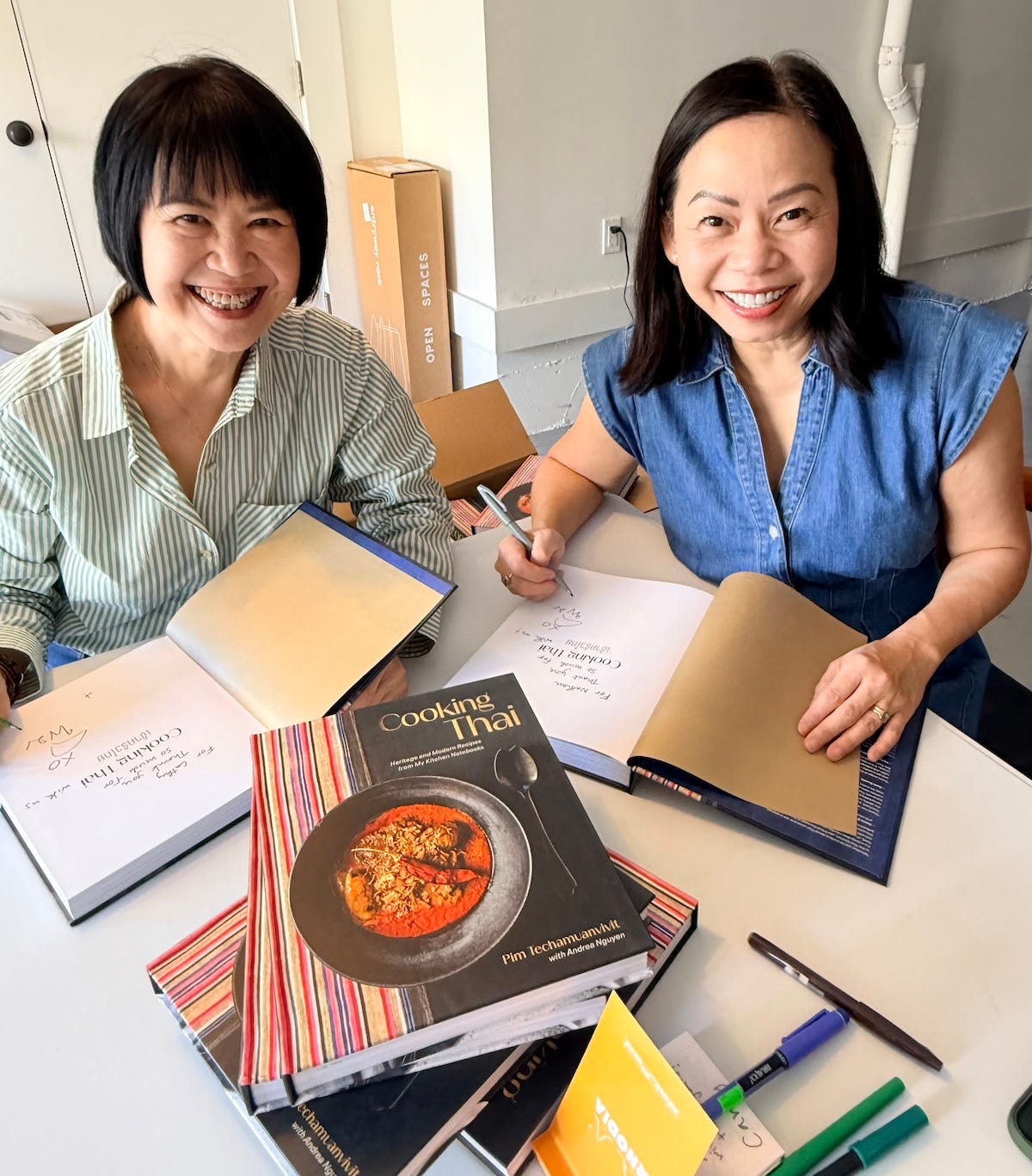
We signed many copies Cooking Thai, which ought to be en route to PTFS folks who pre-ordered from the shop. I also signed copies of my solo book projects too so if you want those, check the Omnivore Books website. It was great to briefly catch up with old friends, PTFS subscribers, and meet new cookbook authors, like , who has a fabulous new book — Great Bakes from the Midwest.

This coming Tuesday in Santa Cruz! RSVP or pre-order.

Cooking Thai condiment guide

Among the many things Nigella wrote about Cooking Thai was that the section on ingredients was indispensable. We built it to be just that but we didn’t know if others would take note of it! I’ve been in the fog about many Thai ingredients for decades. Pim answered all my Thai ingredient questions, which helped us build the book with extra detail and insights.

If you already have the book, turn to page 22. If you’re waiting for the book and gearing up or just curious about the Thai pantry, check out article on Basic Salty, Spicy Condiments and Seasonings for Cooking Thai Food at the website (it’s free!).

Cooking Thai spotlights near and far

Raise your hand if you’re a Food & Wine magazine fan! The September issue that just hit the newsstand contains a “Curry Class” feature article written by Pim and me. In the book, the curry chapter (over 50 pages long) is the biggest because curries are essential to Thai daily life and celebrations. For that reason, the chapter contains a wealth of practical tips and techniques along with some of Pim’s brilliant curry pastes formulas and favorite curry recipes.

Food & Wine editors and test kitchen crew test drove a handful of recipes for the feature, including this one. I’m thrilled by the magazine’s positive response.

If you’re more of an online reader, Nigella spotlighted the book’s Bougie Pad Gaprao (holy basil and beef stir-fry) on her website. To try some Cooking Thai recipes on Substack, check out these newsletter dispatches by Bay Area author (Savory Thai Citrus-Herb Salad) and NY-based Maggie Hoffman of (Kin Khao Wings; Maggie also interviewed Pim for her podcast and post).

For a behind-the-scenes look at cookbook making, interviewed me about my first cookbook collaboration for the Cookbook Collective.

Pass the Fish Sauce is reader-supported. To receive new posts and support my work, become a free or paid subscriber.

Sharing the Cooking Thai love . . .

When you cook from Cooking Thai, tag me (on Substack Notes or on Instagram
@ andreanguyen88) and Pim (@ chezpim) so we can amplify your enthusiasm! And, please review the book on Amazon or wherever you purchased your copy to help other people realize the book’s value.

Emily (@lucylovesbooks) got her signed copy from Now Serving in Los Angeles. Maia (@thecookbooknerd) went Thai grocery shopping. Joe made a DIY book bundle from Amazon! Cooking Thai’s laab Issan and Thai tea cheesecake prepared by Nikki (@skoppbakery).

If you have any questions about Cooking Thai or Thai cooking, let me know. I might be able to help!

Leave a comment

I hope you had a good week yourself and I’ll be back on Thursday with a Midweek Gems — which we’ve not had in a while!

  •  

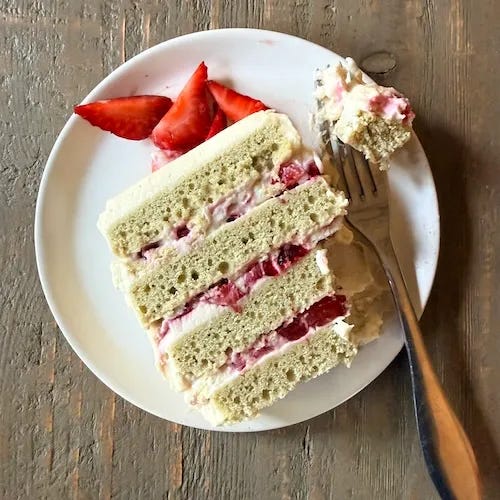
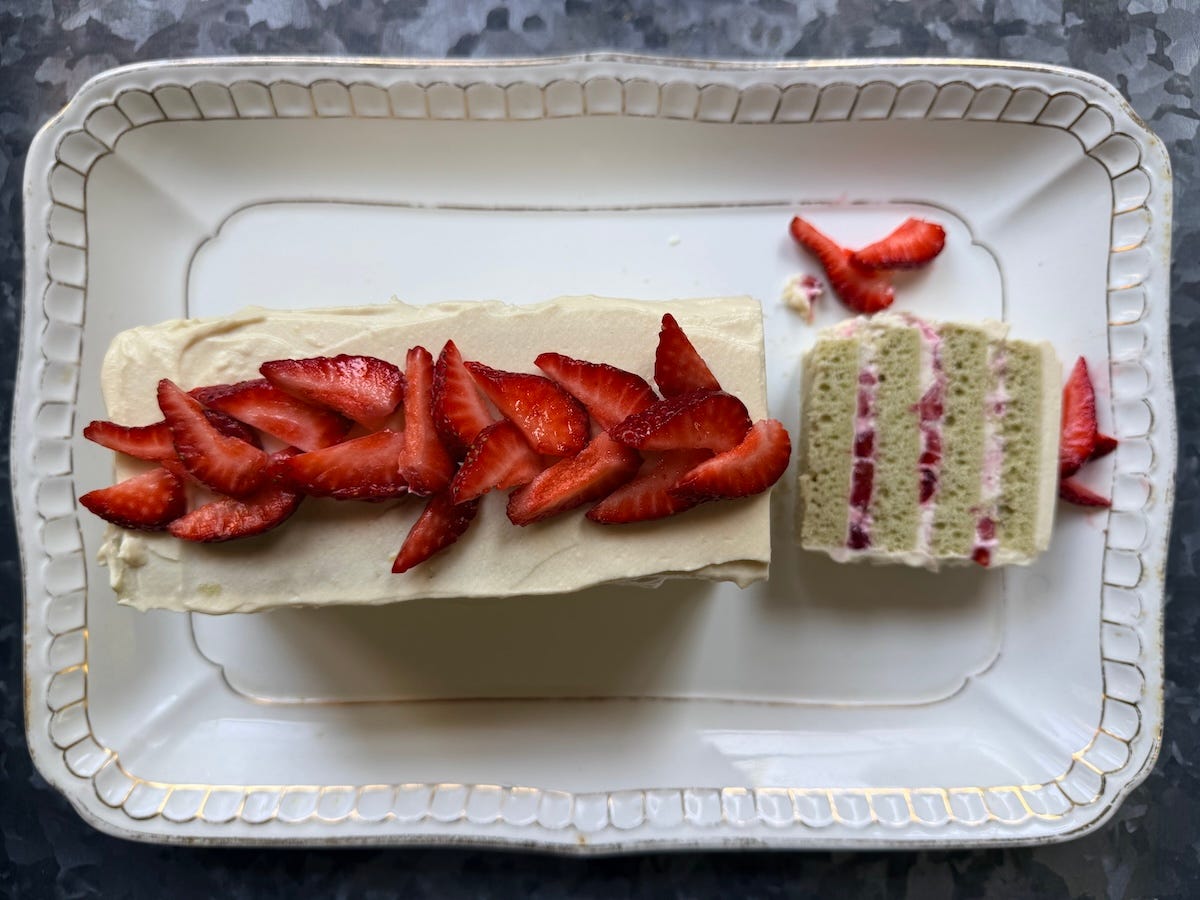
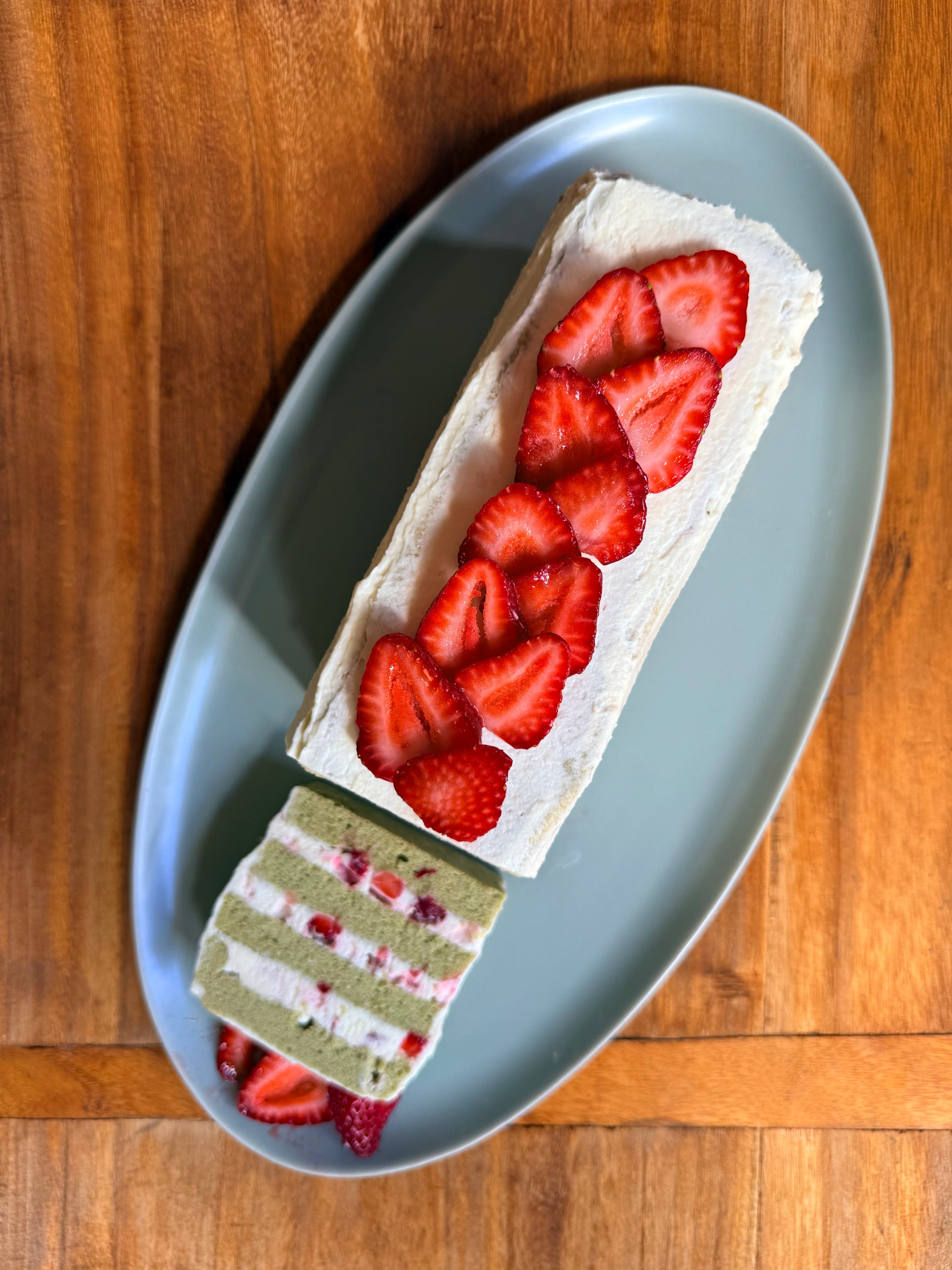
A Vegan Strawberry and Cream Cake That Fooled Me

Last weekend, soon after the Strawberry and Cream Dream Cake recipe published, Anh emailed asking if I thought a vegan version was possible. I know little about vegan baking. What to do about eggs for the batter? What about the whipped cream frosting? Those are are all ingredients that brilliantly and naturally function to make baking’s chemistry work.

Could I come up with a version that would fool even non vegans?

To goad me on, Rory reminded me of the 1970s Chiffon margarine commercial:

Ha! So, I spent most of this past week working on an eggless, dairy-free version of my pandan-strawberry and cream cake. Finally, I got satisfaction on Saturday afternoon.

Just because you’re vegan doesn’t mean you should be left out of the dream cake action. I shared the cake with two neighbors — one who’d sampled the regular cake on two trials, and the other is a former vegan. They all enjoyed the vegan cake!

vegan pandan strawberry and cream cake

Rory was skeptical but was impressed by the cake’s flavor, which allowed the pandan to shine more than in the regular version. He adored the vegan whipped cream frosting. “No one would know that the whipped cream frosting is vegan,” he said.

The whipped cream

A close up look at the cake!

The main reason this cake took me so long to figure out was the whipped cream. I went six (6) rounds with it. Most of the experiments tasted gross or failed to fluff up. No, I didn’t want to use a commercial product because they’re unreliable and can taste funny. In the end, I manipulated a recipe by Miyoko Schindler to get the flavor, texture, and performance that I wanted for this frosting — which is icing on the cake in many ways.

With this vegan cake recipe, the Strawberry and Cream Dream Cake reaches a much a broader range of eaters!

🌱 If you follow a vegan diet— here’s your dream cake with variations and a luscious whipped cream frosting that you’ll be using for lots of other treats.

🥛 🚫 If you’re lactose intolerant, the whipped cream frosting is phenomenal. It would be great for the regular version of this cake or other cakes.

⚡️ If you’re an omnivore, these recipes offer useful takeaways on how to fool Mother Nature and up your cooking game.

While I have you here, watch my helpful video tip for moving a cake around:

There’s lots more below to help you avoid my fumbles and succeed:

  • Two (2) recipes in full text and downloadable PDF

    • Vegan Pandan-Strawberry and Cream Cake

    • Vegan Vanilla Whipped Cream Frosting

  • Three (3) cake variations for vegan versions of Matcha-Strawberry and Cream Layer Cake, Citrusy Strawberry and Cream Layer Cake, and Vanilla-Strawberry and Cream Layer Cake

  • Explainers about why certain hero ingredients work better than others

  • Advance prep pointers to help you easily make this cake

Let’s whip up this cake!

Curious cooks, readers and eaters fuel this newsletter. Paid subscribers sponsor PTFS and this Sunday Special dispatch is exclusively for them. To veganize the strawberry and cream cake, fully use the recipe index + save 25% on my cooking classes, become a paid subscriber! Your support makes a big impact.

Read more

  •  

Why this Strawberry and Cream Cake is my Dream Cake

When Asian people celebrate — birthdays, graduations, retirement, whatever — there’s likely to be a layer cake featuring fresh strawberries and light, fluffy whipped cream. Such cakes are stalwarts at Asian bakeries, which churn them out daily. But truth be told, the cakes are rather tasteless because they are mass produced with unripe, sturdy fruit. The whipped cream doesn’t taste like much and neither does the cake itself. I’ve been disappointed too many times by these perfect looking cakes. So I bake my own.

Gearing up for my mom’s 92nd birthday luncheon, I dreamt of baking her a pandan cake. My initial thoughts went to a favorite pandan chiffon cake recipe (🆓 on my website). It’s showstopper green and fragrant from the alluring vanilla-coconut flavor of pandan leaf (screwpine, lá dứa in Vietnamese). Baked in an angel food cake mold, pandan chiffon cake is casual. I needed easy-ish celebratory sparkle, a cake I could bake after a day of work and one that would hold up to an 8-hour roadtrip to my mom’s house. 💖

In the end, I tweaked Shilpa Uskokovic’s strawberry roll cake recipe in a recent issue of Bon Appetit. My creation was a pandan-strawberry cake filled with a coconutty whipped cream. We had twelve adults and two toddlers and when it came time for dessert, I presented the cake. Viola!

My sister Tasha gasped. “You made that?” she said. She’d eaten lots of strawberry and cream cakes with me when we lived near Monterey Park in the 1990s.

Everyone loved the cake, though Linh, my avid baker sister, said, “The cream is delicious but I’d like more cake.” I agreed. You didn’t taste enough pandan. Plus the cake was strangely salty. (Linh had baked a Sicilian orange cake for my mom so our cakes shared the plates.)

Driving home, I sketched out a new recipe for a thicker cake in my head. It took two more bakes before I arrived at the versatile recipe I’m sharing with you today.

Along the way, test cakes went to the neighbors. One neighbor shared a big piece with their grieving best friend who’d just lost her mother to a long battle with breast cancer. The friend ate the biggest piece, I was told.

As I aimed for a thicker cake, I realized that you can’t roll it because the cake cracks and breaks. You can’t see it in the cake on the left but there’s a fissure that kept getting bigger as the cake sat. The neighbors didn’t mind, though!

I tinkered with the batter again and the cake broke during rolling. What to do?

I patched up the cake and pivoted to building a rectangular layer cake. Rory said it looked much fancier than the roll cake. They’re the same cake! 😆 😆 I gifted cake #4 to a different neighbor, who’d just finished an arduous week on a construction project. He couldn’t believe I had baked it and as you see (in his text above), he was so happy.

What began as an Asian celebration cake turned out to be a happiness cake for everyone. Along the way, I made different flavored cakes — pandan, matcha, citrus, and vanilla. I also made two kinds of whipped cream: vanilla and coconut. And yes, I also crafted roll and layer cakes. There were so many wondrous possibilities.

For all those reasons, this is my Strawberry and Cream Dream Cake recipe!

Below you’ll find a versatile, useful package of information containing.

  • The Pandan-Strawberry and Cream Cake recipe that you can make as a roll cake or as a layer cake (in full text and downloable PDF), with vanilla whipped cream or a coconutty whipped cream!

  • Three (3) cake variations for Matcha-Strawberry and Cream Layer Cake, Citrusy Strawberry and Cream Layer Cake, and Vanilla-Strawberry and Cream Layer Cake

  • Pointers for choosing flavorful berries, natural pandan shortcuts, and making fluffy, stable whipped cream that holds up for days

  • A video tips for making billowy cake batter

  • Make ahead timing tips so you won’t get cranky

I’m not a skilled cake baker but I mastered this one enough to impress my jaded family and neighbors. It took me a few tries to get here but you’ll make a knockout cake on your first time out because I’ve eliminated a lot of the vagaries.

Bring this dreamy strawberry and cream cake into your dessert rotation.

Curious cooks, readers and eaters fuel this newsletter. The dispatch was created for paid subscribers who sponsor PTFS. For the complete strawberry and cream cake lowdown, fully use the recipe index plus save 25% on my cooking classes, become a paid subscriber. Your support makes a big impact.

Read more

  •  

Cooking Thai: Peek inside our new cookbook for great Thai food at home

Hello friends!

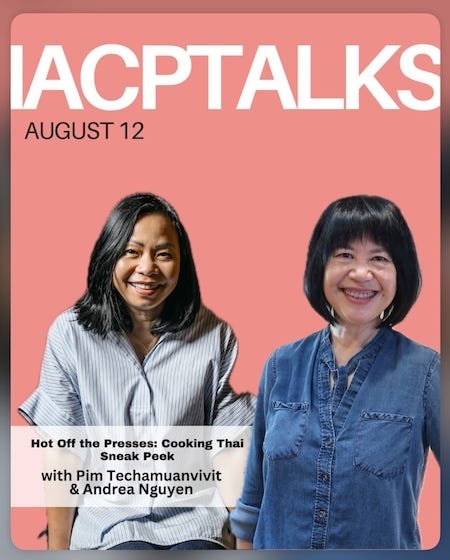
Rob from Asheville, NC, emailed earlier this week asking about Thai cooking classes and I pointed him to Cooking Thai, which releases on August 25. I wish I had had this video to share with him. It’s the playback of our cookbook preview talk last Wednesday, August 12.

In the Zoom session, you’ll learn how we structured the book, worked together, and how much we love Cooking Thai. We hope you do too!

We appreciate IACP giving us the space to share our new book baby. I’ve been a member of the organization for decades. If you’re interested in joining, IACP shared this code » 20%offjoinnow « for a discount on your membership.

A zillion thanks to the PTFSers who attended from as far as New Zealand where it was very, very early in the morning! You asked standout questions on topics such as wine pairing and fresh coconut milk (Grant), tofu substitutions (Ann), turmeric storage (Jen), and the joy of cookbook collaboration (Nina). More about the book at my website.

If you have not already pre-ordered — head to a local bookshop or check out various online vendors. If you’re in the Bay Area, we’d love to meet you!

Signing books for our 30 recipe testers!

Coming up on Sunday is a pandan-strawberry and cream cake recipe I’ve been developing for too long. After going four (4) rounds with the recipe, I’m happy to report that it’s finally ready for you.


  •  

5 Asian Cool Noodle Recipes to Stay Chill

Well hello there!

Oh boy — I’m late with this dispatch because our water heater pooped out yesterday. It was basically on its 10th birthday. We tried trouble shooting it and eventually called the plumber, who labeled it planned obsolescence. We’re switching to a top-of-the-line tankless Navein unit which he says is energy efficient and lasts a very long time so long as we do regular maintenance and repairs.

Before sharing today’s recipes, I’m spotlighting cool ideas from PTFSers!

PTFS community tips

I’m thrilled whenever you send me a great tip. Here are ones from this past week!

  • and I are obsessed with artisanal Tin fish sauce from Vietnam. Its producer dates back centuries and the flavor is excellent — smooth and not too intense. My mom loves it too, not just because it’s from Phan Thiet, where my dad once served as provincial governor. If you’re in the Bay Area, Maia spotted it at the Costco on Almaden. It is imported by the Lee’s Sandwich people, I’m told, so I was also able to buy it at Lee’s Supermarket in San Jose after the local Costcos quickly sold out.

  • used my Kewpie Dupe Mayo recipe to make a dupe of Duke’s mayonnaise! Duke’s is delicious and unavailable in many parts of the U.S. It’s got a cult following in the American South. Get Steph’s tips in the comment section of the Kewpie Dupe mayo recipe (🆓 at le blog!)

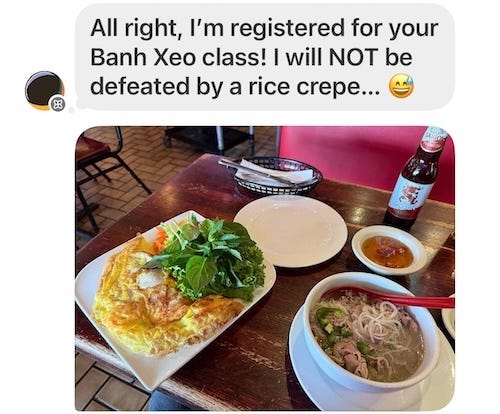
  • shared an article about 10 must-Try Vietnamese foods. Bánh xèo (sizzling rice recipes) is on the list. Nina took my recent best bánh xèo class and commented that the crepe in the article did not look as good as the one from my recipe. ☺️ My response is that now, she’s making them better than many cooks in the world! 😉 I love being an enabler — especially whenever people make my recipe theirs.

Share

5 Cool Asian Noodles

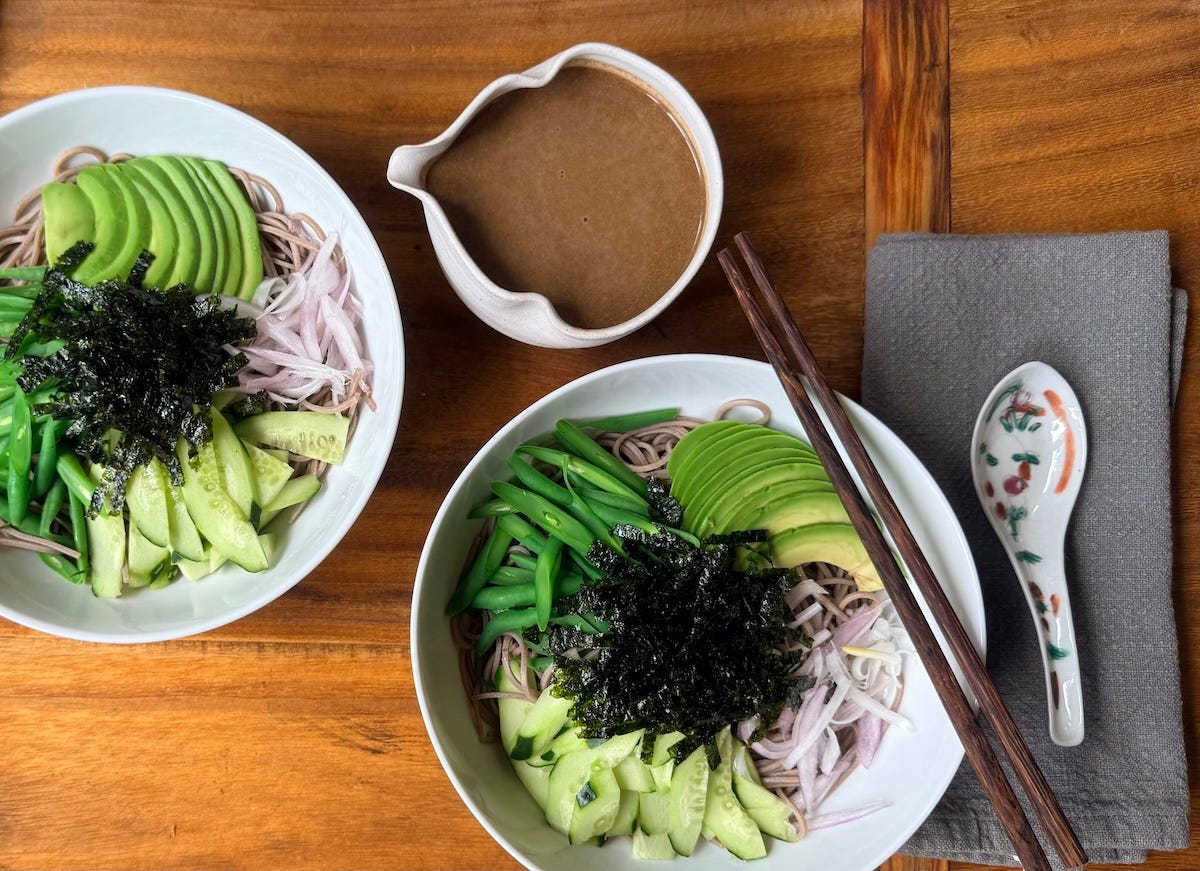
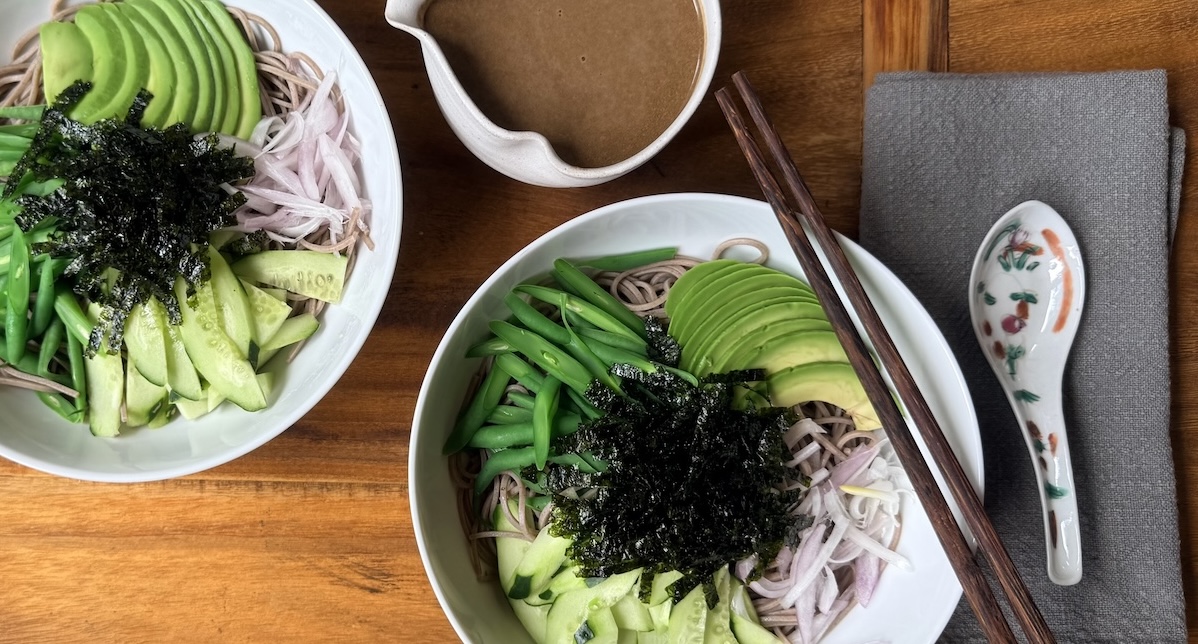
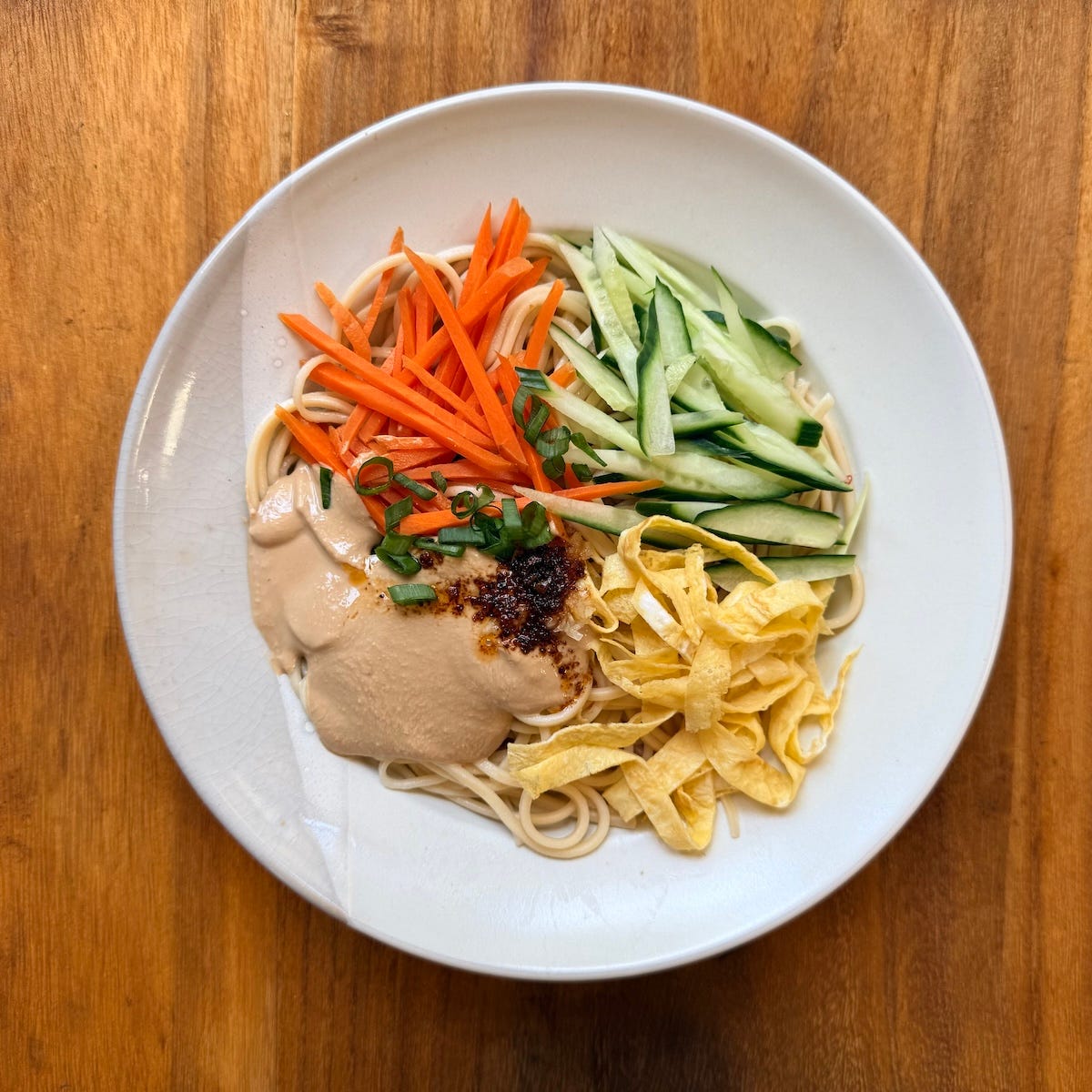
Speaking of making a recipe your own, I recently test drove a cold soba dish that’s just sensational. It’s not the classic zaru soba, which always leaves me feeling hungry. This sesame soba is super satisfying yet light and special tasting.

For the free Cold Sesame Soba recipe, head to the blog.

It’s Goma Dare Soba (Cold Sesame Soba) — a cold noodle that’s served with lots of veggies and seasoned by an umami-rich, nutty sesame-soy milk broth. A pop of wasabi at the table enlivens the whole thing. It’s hearty but light. If soba isn’t handy, make it with different noodles or even a capellini or spaghetti (but change the name into something like “Cold Sesame Ramen”).

The recipe comes from Japanese Comfort Cooking, a great new book by Tadashi Ono and Harris Salat. I made minor tweaks and took their cues to play with the toppings. The recipe uses dashi so you can now make more of the wondrous Japanese broth! Slurp up the 🆓 Cold Sesame Soba recipe at my blog.

Cold or Cool Noodles?

Ya know, such Asian noodle dishes are never served super cold or even coolish, though they are cooling. They are room temperature.

But compared to a steaming hot bowl of ramen or pho, Japanese goma dare soba and Vietnamese bún are ‘cold.’ If you’re dealing with diners who like to split hairs, stick with the dish’s native language name to avoid misleading them.

Or maybe is has to do with Japanese and Chinese cultures?

In Vietnamese, we don’t have the “cold” or “cool” notion of noodles like in other East Asian cuisines. Certain noodle dishes feature supple tangles of noodley carbs at room temp or slightly warm. If you chill rice noodles, they break! Identifying the temperature of the noodle isn’t important to identify a dish. We want to know what noodle is served. That’s why a ‘cold’ noodle dish like bún chả is just about the noodles and the other main feature.

With that in mind, we are deep in grilling season so it’s time to lean into Vietnamese bún rice noodles. They’re on repeat at our house for rice paper rolls and bún salad bowls.

Just last week, my mom served us Hanoi-style bún chả grilled pork and rice noodles. Southern California was having a minor heat wave and the noodles comforted us without adding to the heat of the day. Make my traditional bún chả recipe with pork or take the veggie path with my meatless version. Heck, combine the two, like I have!

Want to freestyle your bún bowls? Play with my bún rice noodle bowl template to create your own (lots recipes and tips included in the 🆓 post on my blog!).

Pass the Fish Sauce is reader-supported. To receive new posts and support my work, becoming a subscriber. Or, be a paid subscribers to get all recipes and bonus perks.

That said, Viet people are not wedded to their noodle dishes. My mom requested the Taiwanese sesame noodles for her birthday luncheon last week! She made most of her 6-course meal but wanted me to add the noodles. In East Asian culture, noodles symbolize long life and she wants to stick around to eat more good food!

My grand nephew asked to help out with the cooking so I let him put on the final touches. He’s three years old. His parents took leftover noodles home for dinner.

My mom’s a formal lady and I was surprised that she was so smitten with these casual noodles from Taiwan. She loves them and so does the rest of our family. Make the Taiwanese sesame noodles for an easy one-dish meal, or include it in a party menu — present it on a communal platter and ask someone at the table to toss and serve! Along with other dishes, each batch will serve 8.

Meet me at upcoming Cooking Thai events!

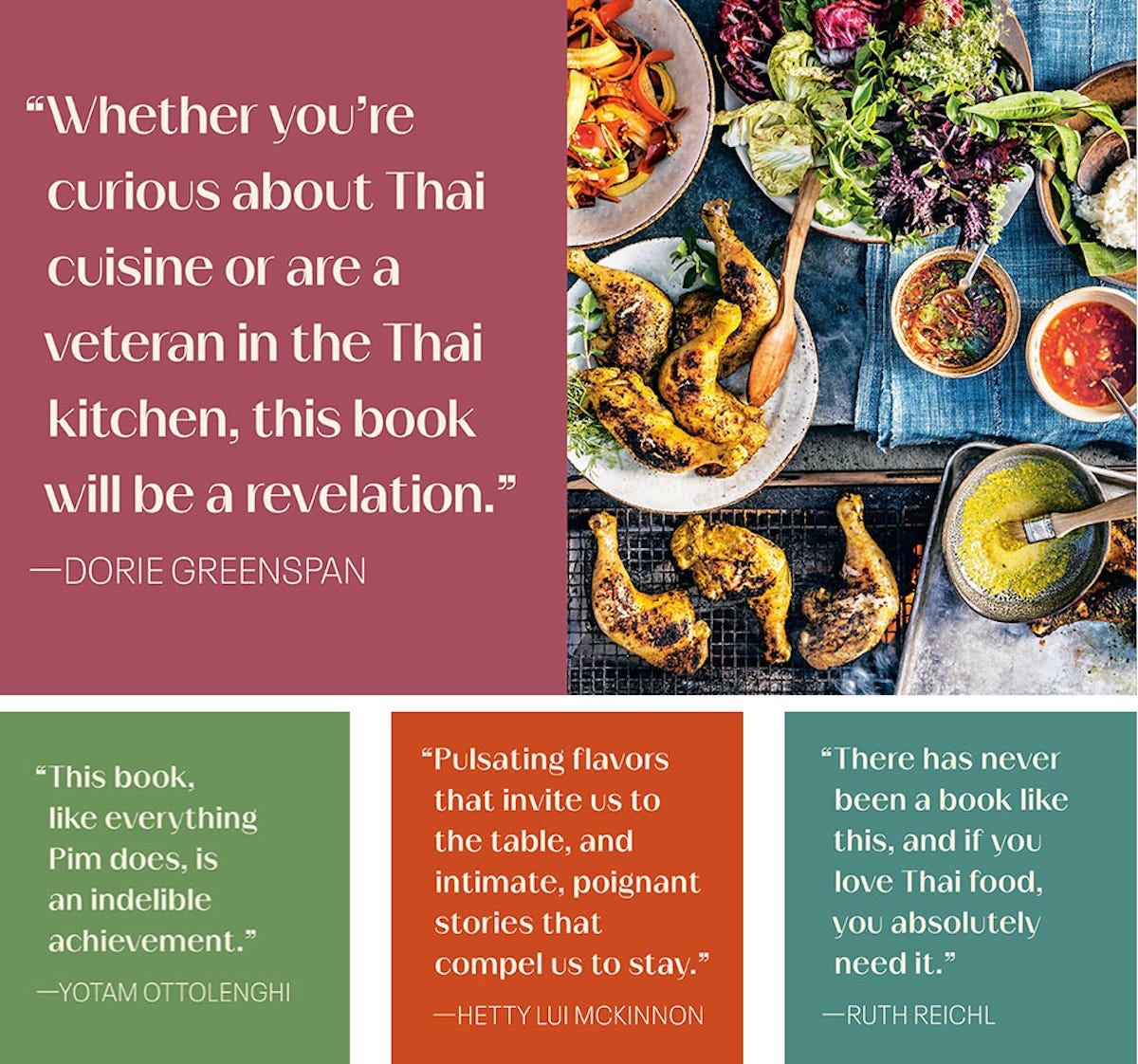
Cooking Thai releases soon on August 25. If you haven’t checked out the book, the early assessments and praise by heavy hitters like Yotam Ottolenghi, Ruth Reichl, David Lebovitz, Dorie Greenspan, and Hetty McKinnon are stunningly positive. I’m thrilled, totally stoked.

Event-wise, things are unfolding and thus far, I’ll be joining Pim at these events:

Coming next weekend for paid subscribers is a stupendous pandan roll cake that I’ve been tinkering with for months. It wowed my family at mom’s birthday party. My taste testers (the neighbors!) love it just as much. I hope you do too!

  •  

Summer recap in 30+ recipes and deep dives galore

Here we are in August already. The July 19 banh xeo sizzling crepe class sold out (hard to believe!!!) and the fun 2-hour session flew by. There was clean up afterwards (of course) and exhaustion but I had dinner made already!

The next day, we packed for a week-long trip to Kauai. It’s our second time there this year to hang out with our dear friend, the fashion and jewelry designer Chan Luu. Where I eat while I’m on the island? At Chan’s home. Her property is loaded with fresh tropical fruit, produce, and now hen-laying chickens. We do market runs to Foodland, Safeway, or Costco for anything else we need!

Some notes on the photos:

  • The pineapple crowns I saw in January now have fruits! Chan grows many kinds and the pink one looks cool but has little flavor, Chan says. The white Sugarloaf is a bit too sweet for me. The yellow one (above) had a balanced sweet-tanginess. We clean up the pineapple crown so it will root and then Chan’s staff replants them. About 1 1/2 years later, there’s fruit to eat! You can grow from store-bought pineapples but success all depends on growing conditions. She has well draining soil and very good sun on a slope.

  • The spiky fruit in the basket is soursop, which has a tart-sweet flavor. We had lots of tasty bananas, too.

  • We also harvested and processed a jackfruit! The tree isn’t big but it produces fruits weighing 12 to 15 pounds. That felt like a giant bowling ball. You don’t want one to fall on your head. If you have to cut jackfruit apart, oil your knives, wear gloves and work on a tarp to minimize its latex mess.

  • And, next time you’re near a fresh coconut, remember this tool:

Construction workers on her property gift her food they catch (fish!, crab!), hunt (wild pigs!), or forage. One of them, a generous young man named Kaiola, took us into the rain forest on Native Hawaiian land where we picked edible pohole fern tips. Loaded with nutrition, they’re snappy and have flavors similar to asparagus and green beans but with a slightly mucilaginous quality.

Absolutely delicious for stir-fries, salad, and soup. They need to be washed well and then quickly cooked to preserve their texture and color. We wrapped them in banana leaf to keep for about 3 days in the fridge. The fern is available in Thailand, where it’s called pak kood, and is made into salads, stir-fries and even dessert.

Island life is good in Hawaii — the most Asian of all States in the nation.

Thanks for reading Pass the Fish Sauce! This post is public so feel free to share it.

Share

🤙 Kale and Shoyu Mushroom Salad 🤙  

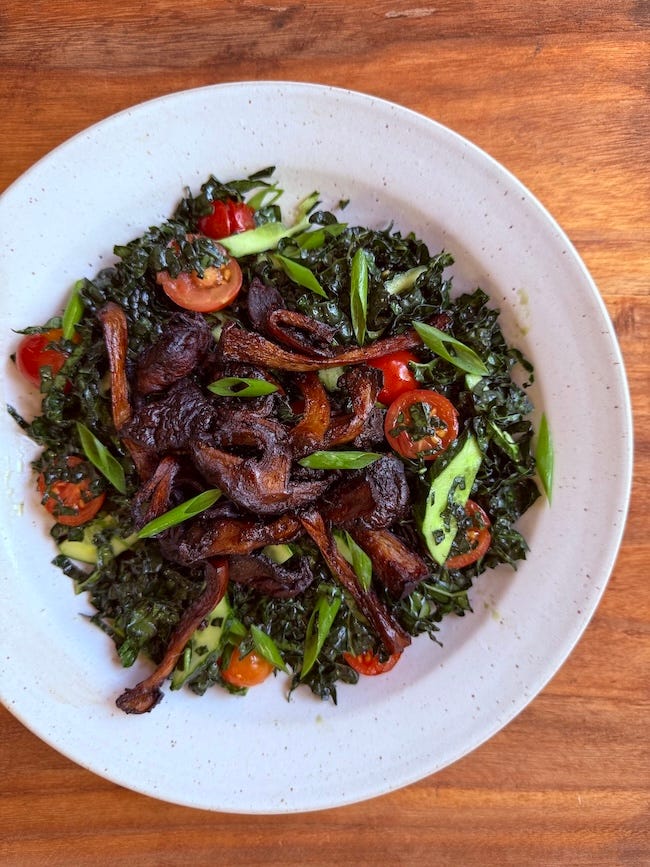
When you wish a vacation would continue, it means it was a good vacation. The day after we got home, I opened Alana Kysar’s new cookbook, Aloha Veggies. Alana has a knack for capturing the spirit of her native Hawaii in recipe form while making the dishes doable for mainlanders like me.

Mushrooms in my fridge and ripe cucumber, green onions, cherry tomatoes from my garden led me to Alana’s Kale and Shoyu Mushroom Salad. All I had to buy was trimmed lacinato (dino) kale leaves from Trader Joe’s. While I roasted the mushrooms and made the sesame soy dressing, Rory cut the greens. Our restorative lunch came together in about 30 minutes!

The vegan salad is simple to make yet layered with the cultures and foodways that make Hawaii inviting and interesting. It was deliciously energizing (dark leafy greens with plenty of fiber!) but moreover, it allowed me to savor island life a little longer. For Alana’s Kale and Shoyu Mushroom Salad recipe, head to my website, where it’s available for free.

Summer in 30+ recipes and oodles of kitchen pointers

Looking ahead at the rest of the year for PTFS, I had to look back. When I did, I realized that we’ve covered a hella lot of territory in since mid May, when I posted the last recap.

There have been so many delicious recipes and a bunch of focused deep dives. Anything marked 🆓 is available to all. The others are for PTFS paid subscribers.

For full access to all paywalled recipes (not just ones listed here!), become a paid subscriber. You’ll also get class discounts and seed new content, too!
⚡️⚡️ Try PTFS for a year at a discount, or save for life! Your support matters.

30% off for 12 months

Save 20% forever!

Recipes

Tools + Techniques + Tastings

Cooking Thai Sneak Peek on 8/12 @ 9am PT

Cooking Thai releases on August 25 but Pim and I are going to do a fun chat about the book for (International Association of Culinary Professionals). If you want to check out the book before (or after) you pre-order it, sign up here for the virtual session. All are welcome to the free IACP event.

I’ll share info on SF and Santa Cruz book events soon!

Hope summer is treating you well — that you’re not overheating somewhere. Stay cool and well fed.

  •  

Agedashi Tofu: The Crispy Japanese Tofu Classic You Can Make Two Ways

Hello there!

I hope the heat dome has not been too unkind to you. This week’s Sunday Special arrives early because on Sunday, I’ll be readying for the cooking class. I’m so excited and looking forward to seeing all of you.
Gadzooks! So many people are interested in mastering crispy banh xeo rice crepes. The class is packed. And there I was worried that no one would sign up! Thank you for your enthusiasm.

🏝️ Vacation Mode 🏝️ : To celebrate our 30th wedding anniversary and take some much needed time off, we’re going on vacation next week. That means you won’t hear from me again until Sunday, August 1. If I don’t see you this Sunday in class, enjoy the rest of July!
But before I go, I want to share a recipe that will repay you many times over.

Among the paid subscriber recipe suggestions this year was for more Asian basics. Those workhorse recipes help you build meals with greater ease. Earlier, I unleashed all I know about making Vietnamese nước chấm dipping sauce. This week, I wrote up my recipe for dashi stock. It’s utterly easy and incredibly transformative.

However, because dashi involves ‘exotic’ ingredients — kombu (dried kelp) and katsuobushi (shaved bonito flakes), most English-language recipes call for instant dashi. I have done that to lower recipe’s barrier to entry and get you to try something new.

When dashi is needed in a small amount to be used as a seasoning, it’s too much effort to make it from scratch. Instant is fine. However, when dashi stars in a dish, using instant dashi takes your food down a couple of notches. It’s worth it to go homemade in such situations.

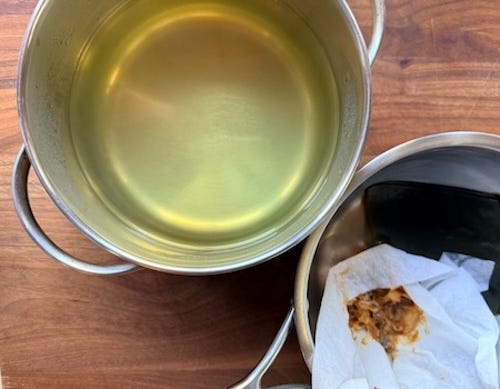
Dashi looks like there’s little going on but it has umami superpowers.

But know this: Dashi stock is much much faster and easier than making chicken, beef, vegetable, or ramen stock!

  • Dashi only involves 2 key ingredients plus water.

  • Most of the “cooking” is you letting the kombu soak in water! You can cook while you’re sleeping.

My dashi recipe plus a buying guide for kombu and dried bonito flakes are on the website. The stock keeps well for days! I included a vegan dashi variation too! Get the dashi stock 🆓 recipe and tutorial!

And, just like when you have any kind of homemade stock, when you have dashi in the fridge, a flavorful world opens up. I’m not just saying to make miso soup! I’m talking about agedashi dofu, a classic tofu dish that dates back centuries.

In Japanese, “age” refers to something fried. “Dashi” refers to the basic Japanese stock.

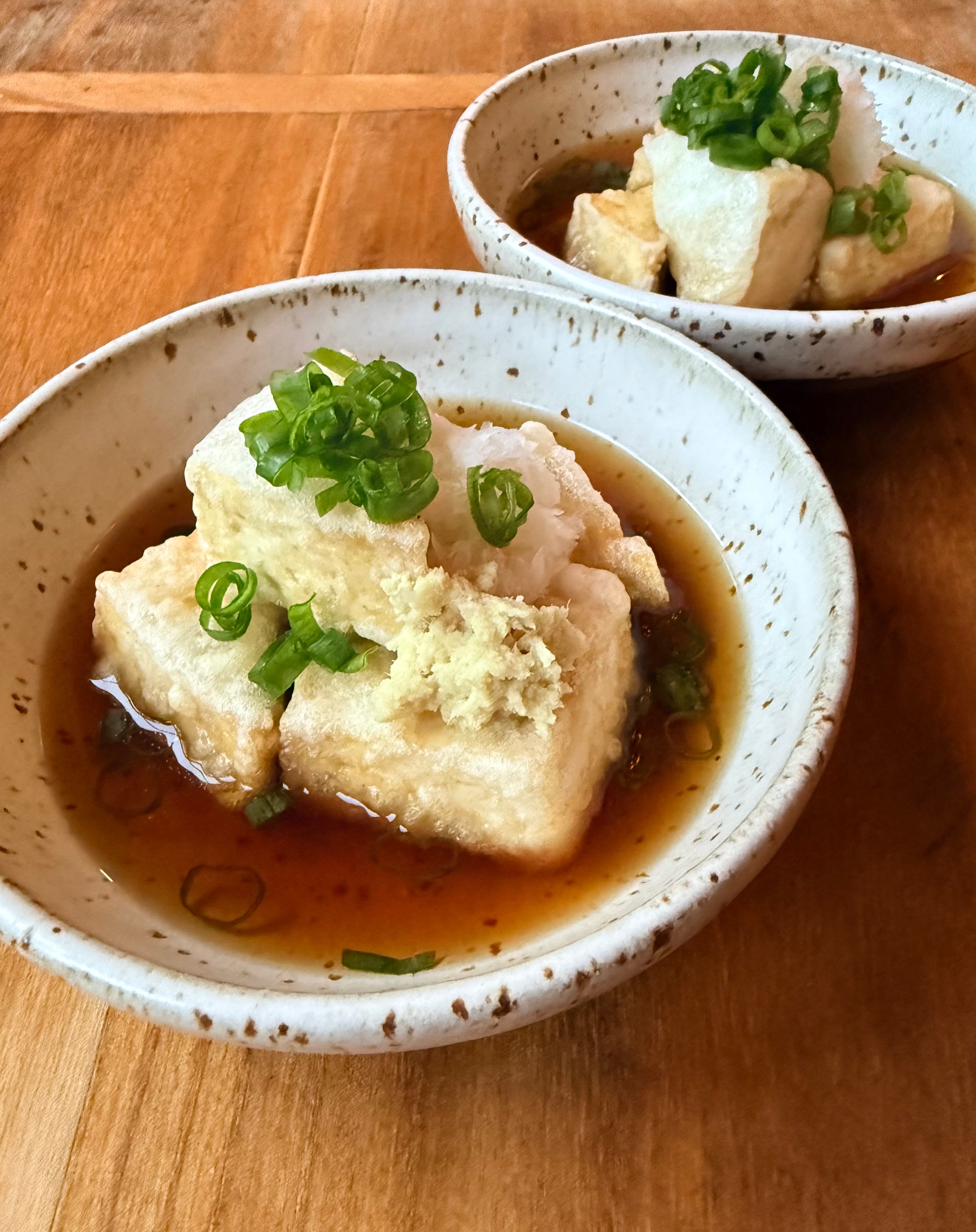
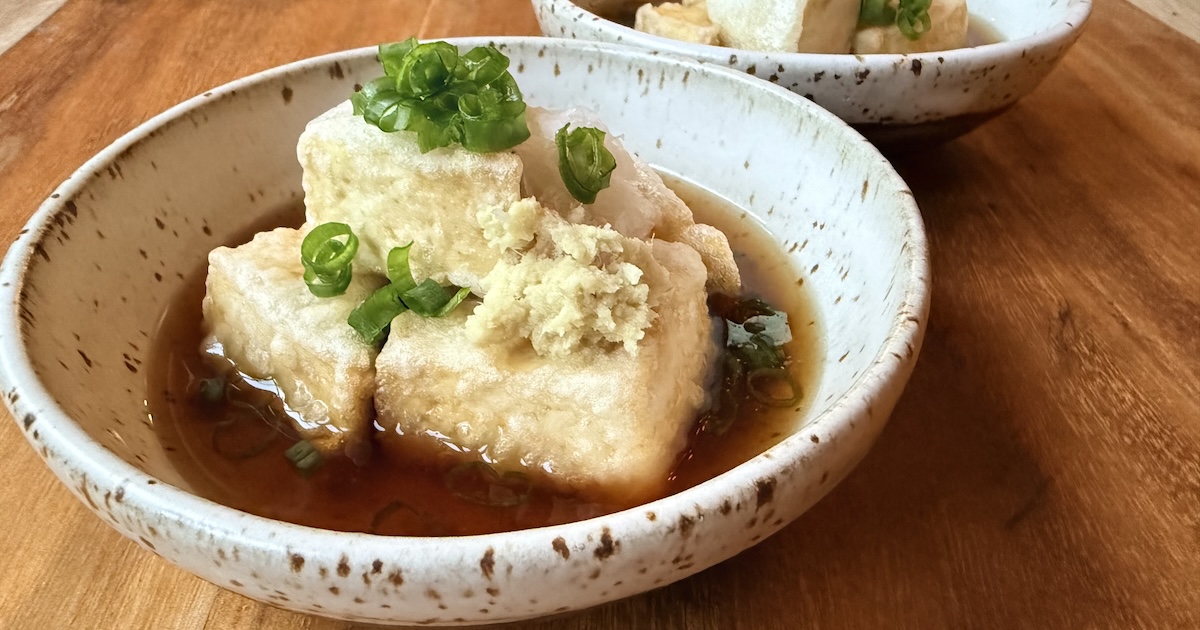
For agedashi tofu, blocks of tofu are fried to a crisp then quickly served in a savory-slightly sweet sauce of seasoned dashi. Ginger and green onion add heat and pungency. If you like, add grated daikon to cut the richness and/or a bit of bonito flakes for a smoky touch. Either way, agedashi tofu’s flavor and textural contrasts are strikingly synergistic.

You’re looking at oven-fried tofu! I was mightily impressed with what the Combi produced.

A tofu bestseller

The first formal recipe for agedashi tofu appeared in Tofu Hyakuchin (100 Tofu Recipes), a 1782 bestseller! The tofu cookbook was such a hit that two additional volumes of tofu recipes followed. Tofu in Japan is taken seriously.

Centuries later, agedashi dofu remains on countless menus all over the world and is prepared by home cooks too. It’s heavenly comfort food when the tofu is fried to a slight crisp and the delicate sauce just lightly cloaks. Most often, the tofu is sadly soggy from waiting too long to be delivered to your table. If you make agedashi dofu at home, you can eat the tofu as soon as it’s ready!

Agedashi tofu is typically deep-fried but I devised a great air-fried option in my Ninja Combi Multicooker oven (you can use your air fryer). You’ll find those cooking instructions in my package of tofu tastiness below:

  • The agedashi tofu recipe with deep-fried and oven-fried directions for cooking the tofu. It’s all provided both as text and as a downloadable PDF.

  • An explainer on what makes the tofu crispy (so you can use it elsewhere).

  • Two sauce options, depending on how saucy you want to be!

  • Timing and planning tips so you can impress friends and family.

Agedashi tofu is often listed on menus as a snack but I’ve served it as a main dish with rice and other dishes.

Curious cooks, readers and eaters fuel this newsletter. The dispatch was created for paid subscribers who sponsor PTFS. For the complete agedashi tofu recipe, fully use the recipe index plus save 25% on my cooking classes, become a paid subscriber. Your support makes a big impact.

Read more

  •  

Vietnamese Rice Paper Pizza: Crispy, Clever, and Deeply Vietnamese

Summertime is grilling season and in case you missed it, listen to my chat with Francis Lam on the Splendid Table. Our July 4 episode was all about grilling!

We’re also in sandwich season and my favorites are banh mi and tomato-mayo. The two were born in different places on our planet but they overlap in their reliance on mayonnaise. The synergy between mayo and Maggi seasoning sauce heavily defines the rich umami of a good banh mi. You likely buy mayonnaise but it’s expensive, despite being made of only egg, oil, and seasonings!

I’d love for you to make your own mayo because I have a ridiculously easy, 2-minute method for a Kewpie-style mayonnaise. I call it “Q.P. Mayonnaise” because Q.P. stands for Quick Prep. I’ve never had a bad batch.

My recipe plus a video to show you how easy it is to make are at my website. So, skip the grocery store run and make my 🆓 Kewpie dupe recipe (in the article, you’ll also get links to a master banh mi blueprint and hot dog banh mi recipe).

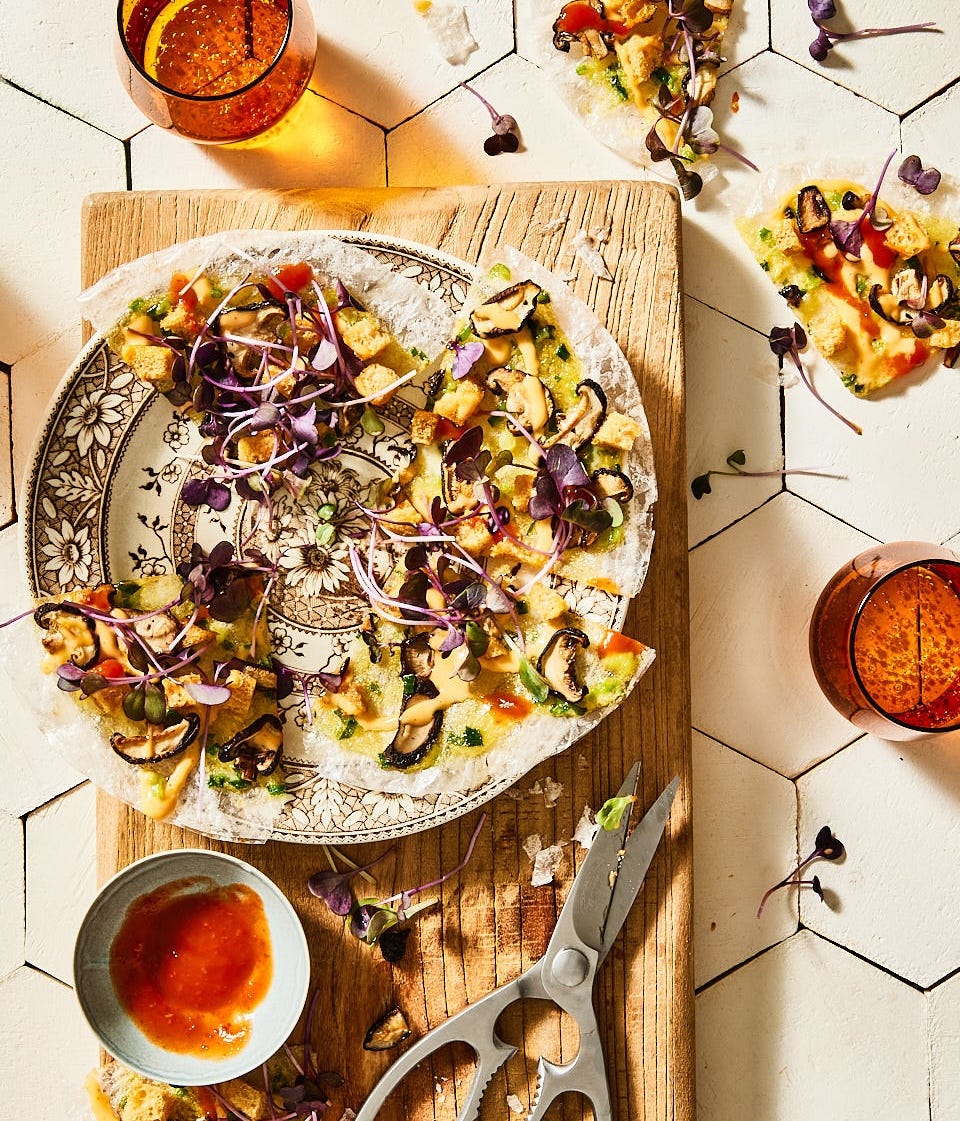
Grilling and mayo intersects in Vietnamese cooking in the form of rice paper pizzas called bánh tráng nướng (grilled rice paper). After reading about them in ’s newsletter dispatch, asked about the pizzas. They were a wonderment to Yotam’s children, who adored them and couldn’t stop talking about them. Yotam didn’t offer a recipe. Did I have one?

Yes I do, in Ever-Green Vietnamese. Drew looked up the recipe in my book and we discussed the possibility of the pizza being a fun thing for kids and adults alike. Thanks to Yotam and Drew, today’s newsletter features the pizzas!

From a street food to a home cooking home run

A beloved modern snack, bánh tráng nướng is sad to have originated in Phang Rang, a coastal city in southern Vietnam with Cham roots. It’s not the same as traditional thick rice crackers of the same name; Viet food terms to confuse.

From Phan Rang, the grilled rice paper “pizzas” trended upward in hipster-ish Da Lat and Saigon (HCMC) where young people literally ate them up. A Neapolitan would scoff at calling them “pizza”, but that’s how many Viet people have described the crispy, chewy grilled rice-paper platforms, which are topped with a mixture of eggy green-onion oil and a choice of savory, crunchy, unctuous, spicy toppings. Like with Italian pizzas, toppings vary endlessly.

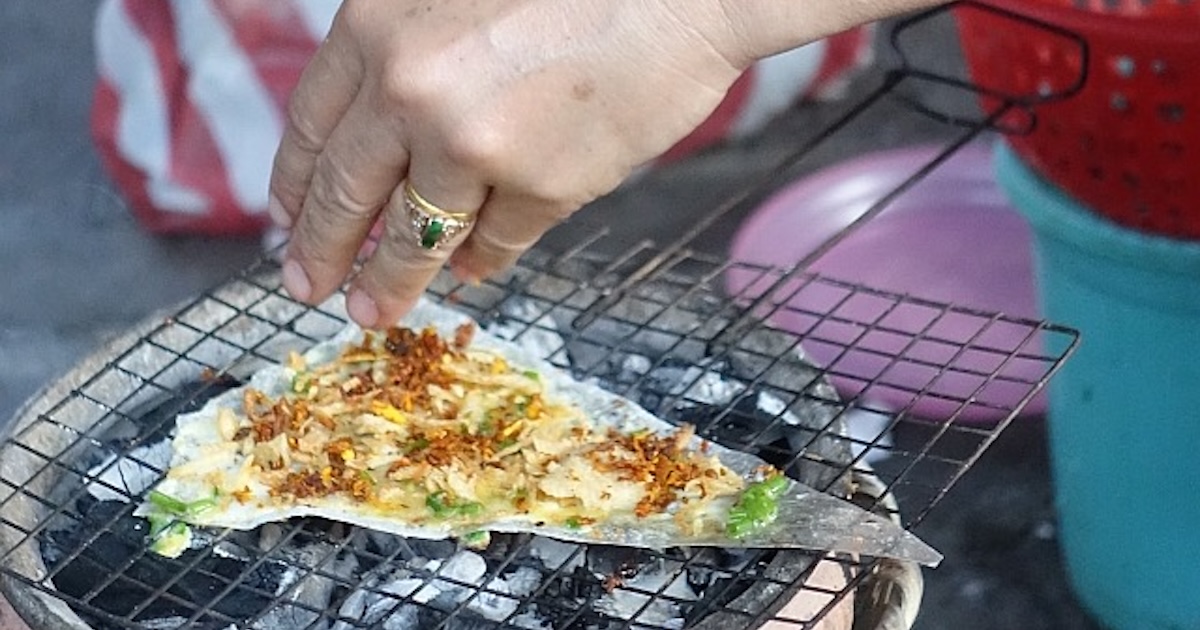
I first had rice-paper pizzas prepared by a street vendor in Da Nang, a coastal town in southern Vietnam. It was early afternoon and she had positioned herself near a school. Why wasn’t she near businesses like other vendors I has seen?

The snack is a hit with schoolkids, she told me.

School hadn’t let out yet so I got to spend a while watching her craft my order on a coal-fired brazier. She had all her mis en place ready and rhythmically prepared each one, asking me what toppings I wanted. “The works!” I said. Among her toppings was a hot, salty-sweet sauce and crunchy canned shoestring potato sticks!

I grabbed a little video of her cooking:

The sauce was a byproduct from a beef jerky maker, she divulged. No wonder it tasted so good. Her riotous combo of textures and flavors was superb. My travel buddy, Karen, ate so many that she got a stomachache afterwards. We’re either kids at heart or the pizzas are damn good or both. My vote is both!

What’s fabulous about Vietnamese pizzas is that they’re fashioned from next to nothing but they are so much more than the sum of their humble parts. That’s the genius of street food vendors whose craft needs to be portable, uniquely delicious, and financially viable (low cost).

A leaf fan was part of the lady’s barebones set-up. Over the years of traveling to Vietnam, I’ve seen Viet pizzas as rounds or folded up like a quesadilla or small burrito.

Replicating food that you taste while traveling isn’t easy because of differences in ingredients and cooking equipment. There are countless hyperlocal rice papers in Vietnam that aren’t available in America. And I’m not going to ask you to get a charcoal brazier going to serve 4! After weeks of trying, I got an assist from chef friends. Their tips along with lots of recipe testing and development is how I successfully translated this street food from Vietnam into a doable recipe for your home kitchen.

Below you’ll find:

  • A versatile recipe for Grilled Rice Paper Pizzas in text and downloadable PDF

  • Step-by-step photos and instructions to manipulate rice paper into a crispy pizza!

  • Selection tips for choosing suitable rice paper

  • Timing and planning tips so you can make a fun group activity around bánh tráng nướng

Let’s grill them up!

Curious cooks, readers and eaters fuel this newsletter. The dispatch was created for paid subscribers who sponsor PTFS. To get the full Vietnamese grilled rice paper lowdown, fully use the recipe index plus save 25% on my cooking classes, become a paid subscriber. Your support makes a big impact.

Read more

  •  

Midweek gems #65: Affordable Napa Tips (it is doable!)

Hello there!

California’s Napa Valley wine country is dreamy but it’s also expensive. A couple weekends ago, we went to Napa for a friend’s 90th birthday party and we were astounded by the prices. So, I’d leading off with pointers gleaned from our recent experience there.

💎 Do go on Sunday through Thursday when hotel prices tend to be lower. On a Saturday night at the tidy Best Western Plus, we [ahem] paid $400‼️ (tax and fees included); the midweek rate is about $140. Across the street from the BW are an In-and-Out burger, McDonald’s and Raley’s supermarket so you can get snacks and/or breakfast — which are not included in the hotel price. There’s a swankier Hampton Inn nearby. Stay on the edge of Napa to save money and drive a few minutes into Napa central. You’ll have to drive to the wineries anyway!

💎 Don’t overlook the wine bars and restaurants run by the Culinary Institute of America. They are located in Napa at Copia and at the historic Greystone campus on Highway 29 in St. Helena. The wine bars are automated and you can sample what you like from a curated list (you won’t have a bad wine). It’s fun and low-pressure. The CIA restaurants are helmed by student chefs who prepare and serve a la carte and multi-course dinners with wine pairings. The grounds at Copia and Greystone are great to stroll around, too. More about the CIA wine bars and restaurants here.

Very close to Copia is Oxbow Marketplace for fancy-casual food, an outpost of Gott’s Refresher (good burgers), the Model Bakery (sinful English Muffins and more), plus the Fatted Calf (sandwichery, butcher shop, charcuterie). Grab lunch or dinner or make yourself a picnic.

💎 Pop in for lunch at charming Oakville Grocery. Compared to when I first went in the late 1980s, the grocery store is now much more upscale but in a pleasant, casual elegant way. There’s outdoor seating, plenty of parking, and a automated wine bar. Order a sandwich, pizza, or salad or grab a sweet. Buy a split bottle of bubbly and sit outdoors under the shade for a splendid, lazy lunch.

Opus One’s pyramid-esque building, as seen from the Oakville Grocery parking lot.

You’ll be hanging out adjacent to Opus One (Mondavi’s ultra luxe winery), a spectacular facility where the “Opus One Experience” costs $250 per person. Less expensive is the Mondavi Estate that just reopened after renovations; tastings and tours are ticketed and worthy, if you’re a wine enthusiast and Mondavi fan.

💎 Buy beans at Rancho Gordo’s official shop! They recently moved to a bigger location on Main Street, where you can peruse their full selection. The staff is super knowledgeable, and I always notice a new bean or two when I go there (versus shopping online for RG beans). Beans make great gifts.

💎 Eat well at Stateline Roadhouse, if you’re in the Kansas City barbecue mood. Stand in line to place your order at the counter and they’ll bring it to your table. Along with the regular menu, check out the specials by chef/co-owner Darrell Bell, who trained in France and has cooked at Michelin-star restaurants in the States. One time, we got a hamachi collar special that was a knockout.

Pass the Fish Sauce is a reader-supported publication. To receive new posts, mine the 150+ recipe index, and get 25% off class sign-ups, become a paid subscriber. I welcome your support at all levels!

💎 What have you been cooking up?

The PTFS community is near and far, which I’m grateful for in unfathomable ways. I write these dispatches and share recipes that I think you’ll want to cook because they’re tasty, fun, and out of the ordinary.

Bob recently shared a special Peking duck dinner with pancakes and salad with the nuoc cham vinaigrette. Duck and lychee with nuoc cham vinaigrette is an idea I’m borrowing! Also, I love how Bob got a duck from Weee! Do you shop at Weee!?

made the apricot ginger jam with ‘cots on the East Coast and reports the results were 💯! I made a second batch and gifted some to the neighbors whose trees I gleaned. The stellar recipe is 🆓 on my website for you to use!

in France made the fresh apricot sauce with his local abricots and loved it. He had fun taking it in many directions.

I’m stoked that my recipes offer you entry points to play with food in ways that you normally wouldn’t. To keep me posted and share photos, comment on my dispatches, or use Substack Notes or Subcriber Chat (better for pics). I love hearing from you!

💎 Coming up . . .

Don’t forget to register for the July 19 cooking class! It’s only 10 days away. Paid subscribers can sign up for a 25% discount with a special promo code (which you can share with friends and family). Details here: 👇

For this upcoming Sunday Special, I’m sharing knowhow for making a Viet street food that’s popular with kids of all ages. I consider us all youthful adults.

  •  

Ginger Herb Sauce, a Miracle Worker in the Kitchen

Hello there!

We’re heading into a long weekend so I’m heading things off by sending this early. You won’t hear from me on Sunday but I’ll be back next week. A zillion thanks to all the folks who’ve registered for the virtual “Banh Xeo Fry Off” cooking class on July 19! Seats are still available. 😁 Join me!

The United States has its problems and we are divided on many issues. However, I’m happy to be an American citizen, especially when I reflect upon the clever, delicious ways that flavors and traditions have naturally come together at our tables. You can enjoy purist beef pho noodle soup but there are Viet cooks making smoked brisket pho in Texas and New York. In California, I’ve spotted menus offering birria pho.

For past July 4 menus, I’ve patriotically prepared red white and blue potato salad and enjoyed hot dogs and burgers. This year, I’m leaning toward the Hanoi-style bún chả grilled pork with rice noodles (aka the “Obama Special”).

Vietnamese people have been in America for over half a century and have contributed plenty. Why not include some Vietness to celebrate the nation’s commitment to democracy and self determination?

Many other Asian people have been in the United States far longer than Viet people. Filipinos were the first Asian people documented to have arrived, landing in Morro Bay , California, in 1587. They were part of the Spanish galleon trade which transported people, many of whom were enslaved, between Manila in the Philippines and North America. The ship the Filipinos were on soon departed from California bound for Acapulco, its final destination.

Numbering about 4.6 million, Filipinos comprise the third largest group of Asian Americans (nearly 20 percent of the total Asian American population), according to Pew Research. The Filipino population is most concentrated in California and Hawaii. There are Filipino restaurants and many capable Filipino chefs creating incredible culture-bending foods.

I thought of all this while paging through a new cookbook by Maui-based chef and restaurateur, Sheldon Simeon. He’s got extra cred and popularity from being a favorite Top Chef contestant. Simeon is Filipino American and like many Fil-Am chefs I’ve met, has a knack for cleverly tweaking and combining classics.

His new book is called Ohana Style (“Ohana” means blood family as well as your community, your people). The book is filled with cheffy homey fare.

This week, I test drove two recipes. One is a fabulous Vietnamese Coffee Swirl Brownie that marries fudgy American brownies with Viet coffee and condensed milk. The cream cheese swirl makes the brownie seem cheesecake like too. It’s a high-class, handsome sweet that’s easy to make. Cut the brownie into big or small pieces, depending on who’s coming over. They freeze well too so you can enjoy some now and later.

Get the Vietnamese Coffee Swirl Brownie recipe on my website; it’s 🆓 for all to make.

Aside from the brownie, I test drove the “Ginger Chimichurri” from Ohana Style. It’s cheffy in how all the flavors are layered into one gingery herb sauce. Simeon’s recipe isn’t like a classic, loose chimichurri, but rather more like a creamy sauce — so I’ve renamed it as Ginger Herb Sauce here. Whatever you call it, it’s light and you really experience the ginger, herb mixture plus lingering allium notes. As a bonus, the sauce is packed with good-for-you phytochemicals.

Simeon’s flavors combination was excellent though there were no weight measurements to serve as guardrails for the ingredients. I went two rounds with the sauce recipe and added weight measurements so you can follow it easily and make tweaks of your own. Also, I simplified the process so you can quickly blitz your way to Ginger Herb Sauce happiness.

The notion of combining all these flavors is boldly American. Better yet, the sauce can be quickly manipulated to make many flavorful dishes.

What to do with all the Ginger Herb Sauce that you’re about to make? 😉 In Ohana Style, Simeon shows it photographed with prime rib. He suggests serving it with grilled or roasted meats or using it as a dressing for vegetable dishes, dip for bread, or “any other way you can think up.”

With that cue, I thought up four simple ways to use the sauce aside from just swiping bread through it.

Ginger Herb Sauce can be used for many, many things. Here’s a very simple, very tasty grilled chicken plus a potato salad!

Served with crispy tofu, the sauce lends a rich bright flavor. Quickly manipulated into a dressing, the sauce turns potato salad emerald green. Brushed on grilled chicken, the sauce veils it with gingery, herbaceousness. In thirty seconds, I turned it into a salad dressing for mixed greens too. I bet you can smear it on a roast beef sandwich in lieu of horseradish or mustard! It’s a rare recipe that can magically transform so many ingredients from land and sea into something new and exciting.

Below you’ll find a package of five (5) recipes in text and as a downloadable PDF. There are bonus pointers, too!

  • Ginger Herb Sauce recipe

  • Crispy Tofu with Ginger Herb Sauce

  • Ginger Herb Grilled Chicken

  • Emerald Potato Salad

  • 30-Second Green Salad

The sauce is vegan adaptable and keeps for 1 week. I’m sure you’ll come up with more ideas than what I’ve offered you here.

People from all over the world have come to America over the centuries, melding traditions to create new ones. I doubt that these culinary ideas could have been born and executed so well in another country. Happy Independence Day! 💥

Curious cooks, readers and eaters fuel this newsletter. The dispatch was created for paid subscribers who sponsor PTFS. To get all five recipes, fully use the recipe index plus save 25% on my cooking classes, become a paid subscriber. Your support makes a big impact.

Read more

  •  

Spice up Summer with Sichuan Tofu and Peanuts in Hot Bean Sauce

Hello there!

Wowza — I’m thrilled that so many of you are interested in the July cooking class. I worried that it was summer and you’d not be available. But I was wrong!

Coincidentally, and I have been chatting about the challenges of making bánh xèo well. He has used my recipe in Vietnamese Food Any Day but hasn’t gotten satisfaction so he signed up for the class! Sometimes you need to watch someone to get all the moves and pointers so you can finesse your own cooking. Also, the VFAD recipe is good but the new one that I’ll be teaching is excellent.

That’s the beauty of taking a cooking class. I’ll be your banh xeo coach.

Joe sent this photo of banh xeo and pho from a Viet restaurant. I assured him that his will be better. 😆

For details on the upcoming cooking class and promo codes, check this dispatch. (You can get the Early Bird deal till 6/30!)

Now for something spicy.

When I researched and developed the versatile only kung pao chicken you need, it dawned upon me that Sichuan cooking has a knack for using peanuts to yield heady dishes. Kung pao is one of them but there’s another popular dish called “second sister rabbit cubes” (èr jiě tù dīng 二姐兔丁 ) that includes peanuts, poached rabbit, fermented chile sauce, and green onions.

I make a vegan riff with tofu because it’s easier, healthy, and just as rich, spicy and umami laden. Also, the rabbit version is cool weather fare but the tofu version is lighter and great year round. Without a nickname, my take on the Sichuan favorite is simply called “spicy tofu and peanuts” (huā rén dòufu gān 花生豆腐干).

I wish you could take a whiff of the tofu to take in its tantalizing aroma. Yes, tofu dishes can look and smell inviting!

Like kung pao chicken and mapo tofu 🆓, dishes like this one are wickedly addictive. They possess a broad range of flavors — from rich and salty to spicy and pungent. The spectrum of textures span from soft to crunchy to chewy. Stand over the bowl, inhale the tofu’s aromas, and you’ll want to dive right in.

Your nose will tingle just a bit from the chile heat — which you can partly control with homemade chile oil. This condiment is a constant in my kitchen like it is in many Asian kitchens. It’s more useful than chili crisp because it plays with other flavors well without taking over.

Make the 2-ingredient recipe from my 🆓 free chile oil recipe at the website. Dial in the heat and play with the flavors! Aside from using chile oil here and in the Taiwan sesame cold noodles, you can drizzle it onto noodle soup, mix it into dipping sauces, and so much more.

Below you’ll find:

  • Spicy Tofu and Peanuts recipe in text and as a downloadable PDF

  • Pointers on sourcing and using two umami powerhouses — fermented chile bean sauce and fermented black beans

  • Tips for how to choose the “right” tofu and prep it for big flavor

  • Ingredient substitutions (because we all like them!)

  • Serving suggestions so you can make the most of this recipe

And, this tofu dish happens to be vegan. I hope you befriend and make it often.

Curious cooks, readers and eaters fuel this newsletter. The dispatch was created for paid subscribers who sponsor PTFS. To get all the spicy tofu details, fully use the recipe index plus save on my cooking classes, become a paid subscriber. Your support makes a big impact.

Read more

  •  

July Vietnamese Bánh Xèo Cooking Class!

One of my 2026 goals was to teach more online cooking classes! It’s taken so long to open a class because I’ve been fine tuning a recipe for bánh xèo — Vietnamese sizzling rice crepes. They are a classic Saigon treat that many people swoon over. To make bánh xèo thin, crispy, and light is a feat normally left to professional street food chefs or tenacious home cooks.

But, you can rival them. I’ve come up with batter options and techniques for you to make them just as good as the pros! After months of tinkering, this recipe is the best I’ve ever made. I’m very happy with the results, which wowed even my mother.

My new bánh xèo recipe is:

  • Doable with supermarket or with Asian market ingredients

  • Consistently crispy with just the right amount of chew

  • Easy to fry up and won’t make a mess of your stove

  • Gluten-free, dairy-free and vegan friendly!

Despite using everyday ingredients, the crepes involve a certain level of finesse. Given that, I built a new online class called “Mastering Bánh Xèo” so you can make the Vietnamese sizzling rice crepes yourself.

The crepe recipes yields a satisfying one-dish meal but to round things out, I developed a fruity 3-color dessert parfait (chè ba màu hoa quả) to go with the crepes!

Take the class and I’ll walk you through making a fabulous menu to celebrate Vietnamese street food at its best. You can entertain and make a party from this menu too!

Bánh Xèo class details

  • Topic: Mastering Bánh Xèo: Make Vietnamese Sizzling Rice Crepes at Home

  • Day and time: Sunday, July 19, 2 to 4pm PST
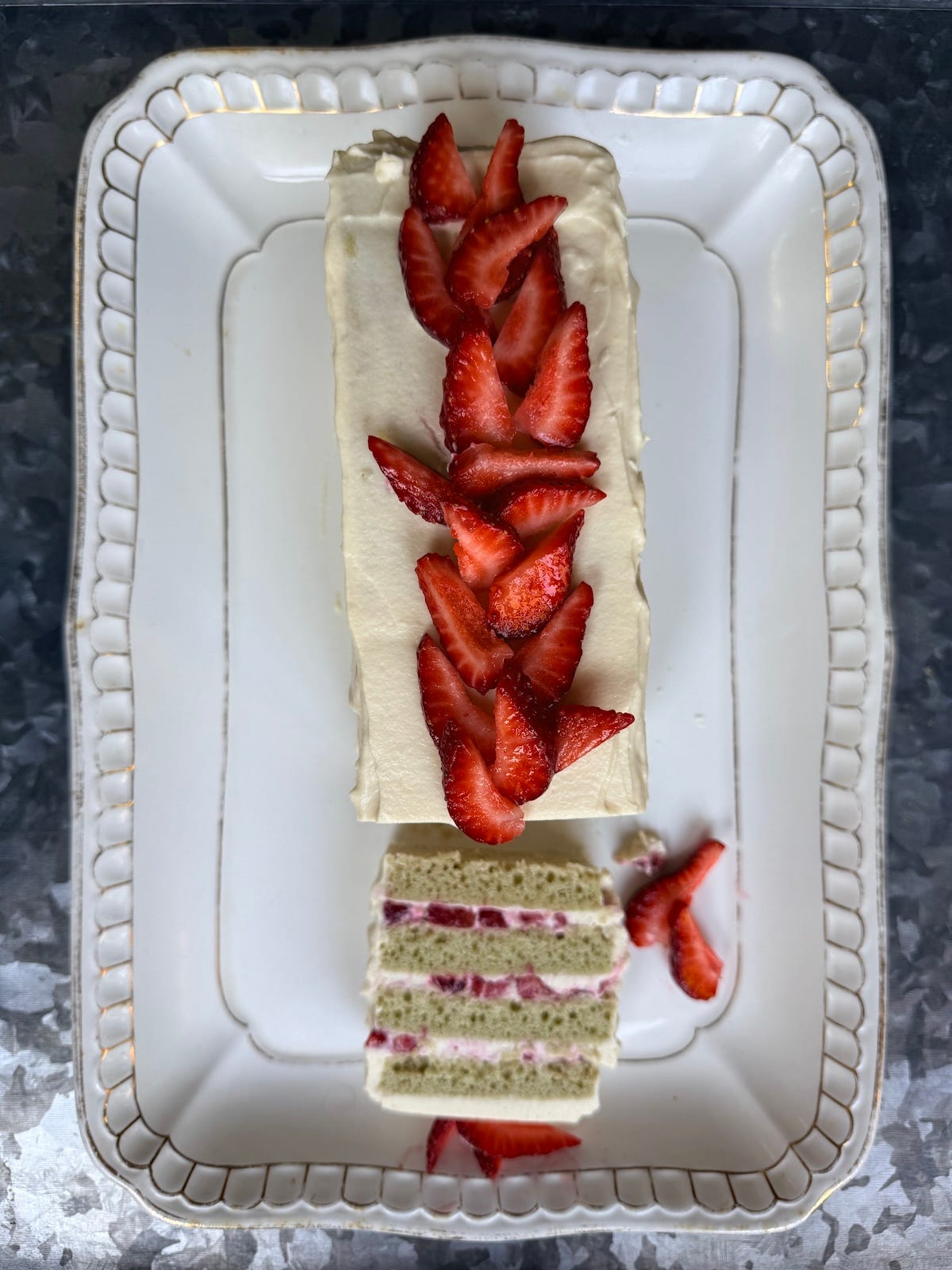
  • Cost: $42.50 per person (includes all recipes and video playback)

  • How to register: Use this link to buy a ticket at Eventbrite

  • Can’t attend the livestream? Sign up for the class to receive the recipe packet and video playback. You can also email me questions!

Registration discounts

🐦‍⬛ 🌅 Early bird discount: Between now and June 30, save 15% off the ticket price with this special code: sizzle15

✨ 🎁 Paid PTFS subscribers always receive a 25% off discount between now and when ticket sales close. That promo code is in this dispatch for paid subscribers.

If you’ve been on the fence about upgrading, now’s a great time! Save 30% for 1 year. Save on the class ticket too!

Cooking class general information

The low-down on how the classes run:

  • Day and time: Sundays, 2-4pm PST, so you can make something for dinner or for the week ahead. It’s also (hopefully) an unhurried time for you.

  • Class length: 2 hours, including Q&A

  • Online platform: Zoom, with a playback recording for all registrants

  • Ingredients: Most ingredients are available at supermarkets. Asian market shopping is sometimes required. You will get pointers, such as brand suggestions, in class materials.

  • Equipment: Basic home kitchen equipment. Nothing fancy or exotic is required. If there’s something special, it will be flagged in the class materials.

  • Class materials: After registering, you’ll get a confirmation email with a link to a downloadable PDF of class materials which contain all recipes, Zoom link, plus lists and pointers (groceries, equipment, and prep).

  • Zoom class link: The day of class, you will get an email reminder with the link again.

  • Cost: Each ticket is $42.50

  • Refund-ability: Unfortunately, class registrations are not refundable. Student attendees receive the detailed class materials, livestream class, plus access to the recorded playback.
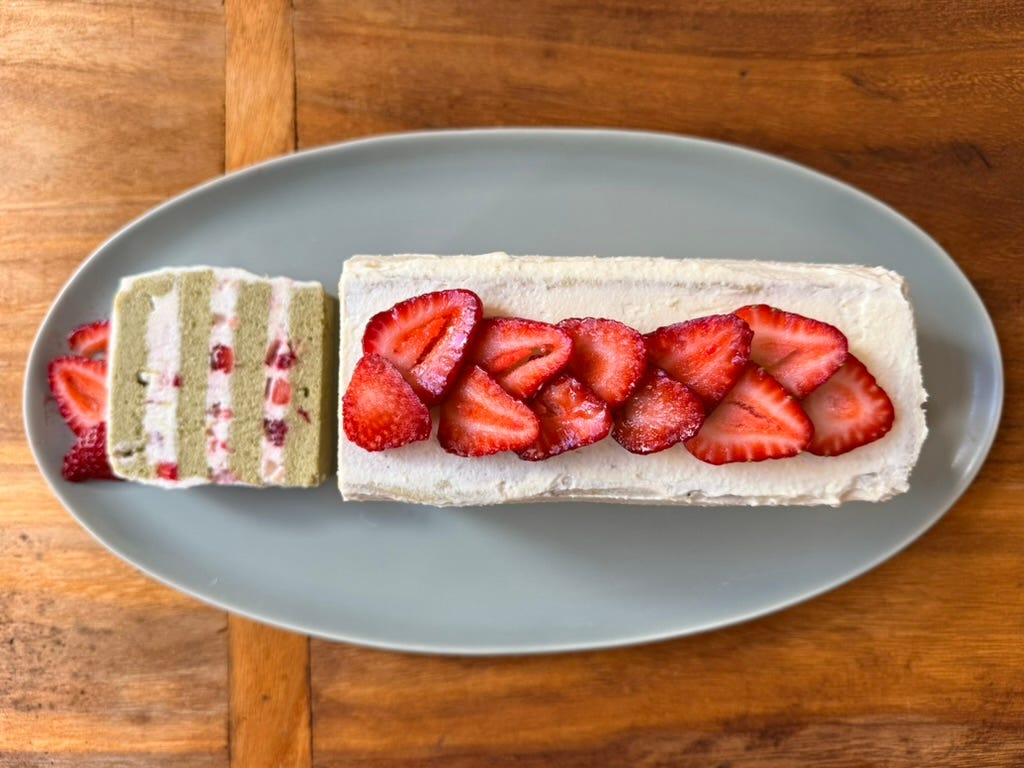
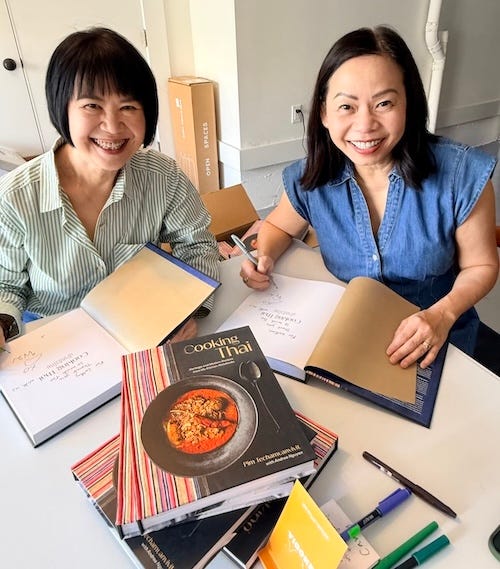
  • Want the class but can’t attend? Just sign up to get the class materials and recording to watch. Whether or not you attend the livestream, you can email me follow-up questions.

I’m so excited about teaching you how to make this new recipe. Join me on July 19.

P.S. Coming this Sunday — a spicy, nutty tofu to keep on hand, take on a picnic or bring to a potluck. It’s deliciously indestructible!

  •  
❌