After last week’s spirited discussion on cross-cultural, third-culture, and fusion cooking, I found myself thinking about my 2008 pho crawl in El Monte, California. At one pho shop, English, Vietnamese, and Spanish bounced off the walls. It was there that I first pondered Viet-Mexican cooking. As I watched the floor manager and expeditor interact, I wondered: if they opened a restaurant together, what would the menu offer? If they had a family, what would they serve at their table?
I’ve seen and tasted pho birria, a pho-ritto, pho tamales, and pho tacos. Recently, at a busy Venice Beach lunch spot, I found pickled jalapeños in a fried tofu banh mi prepared with a bolillo roll! The tangy, spicy chile was good.
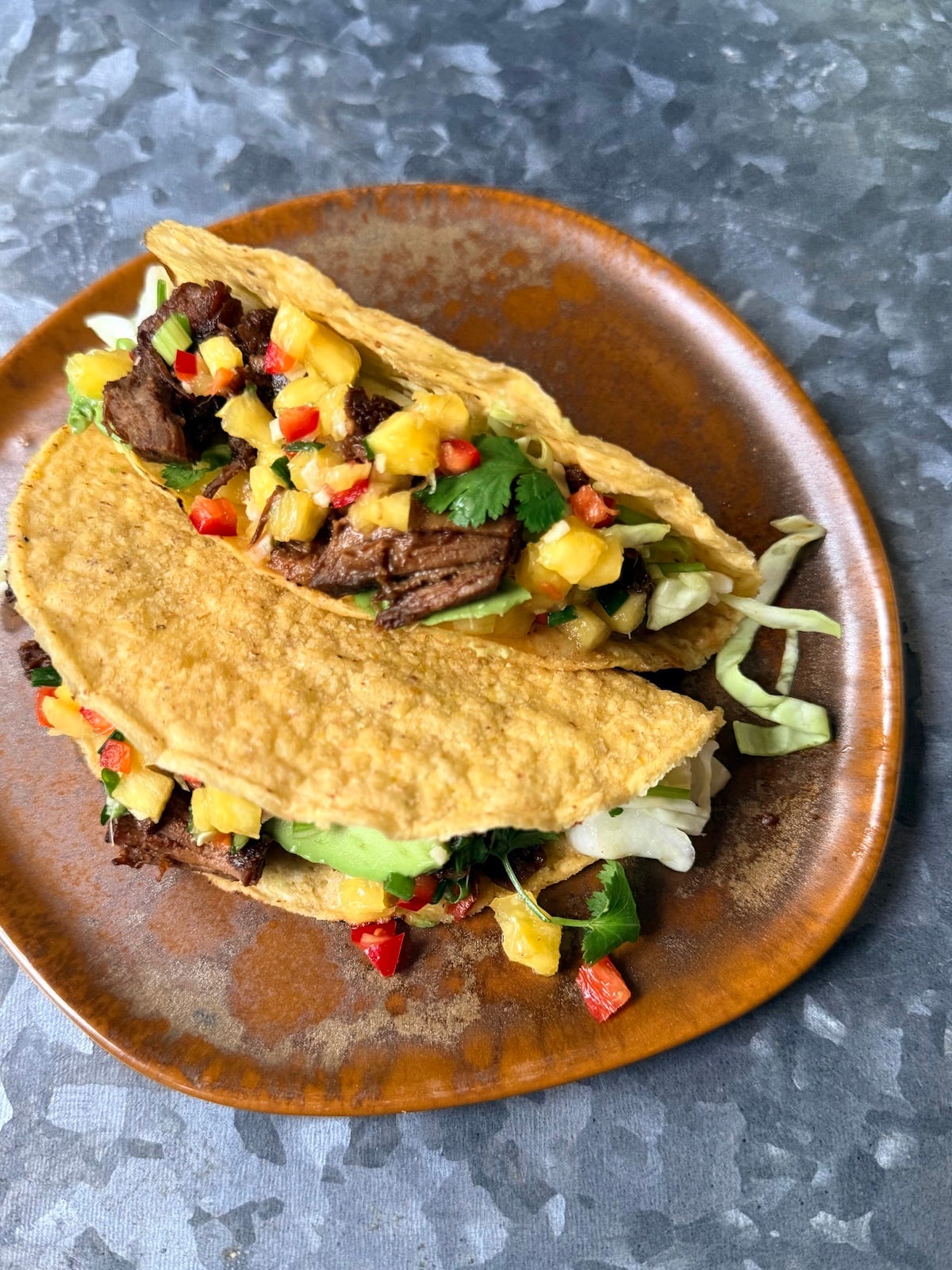
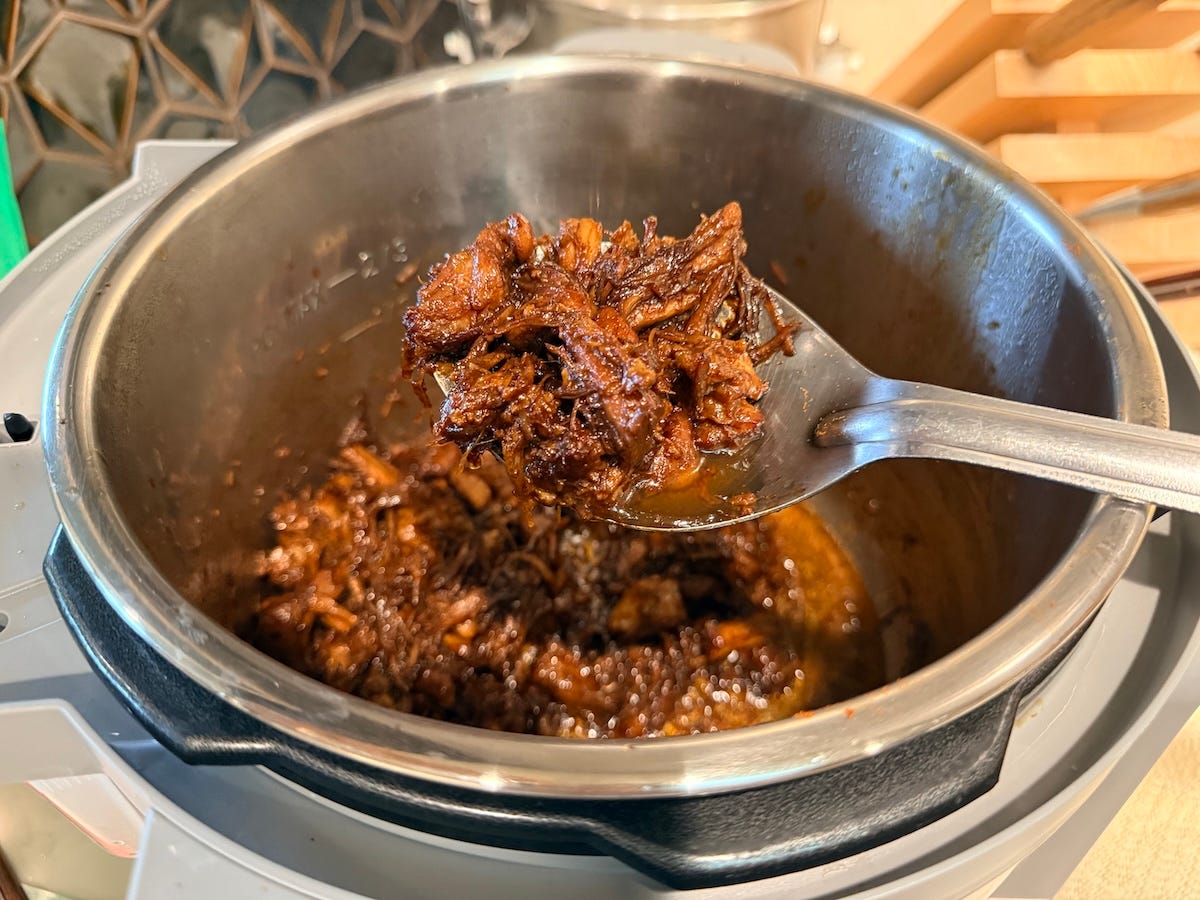
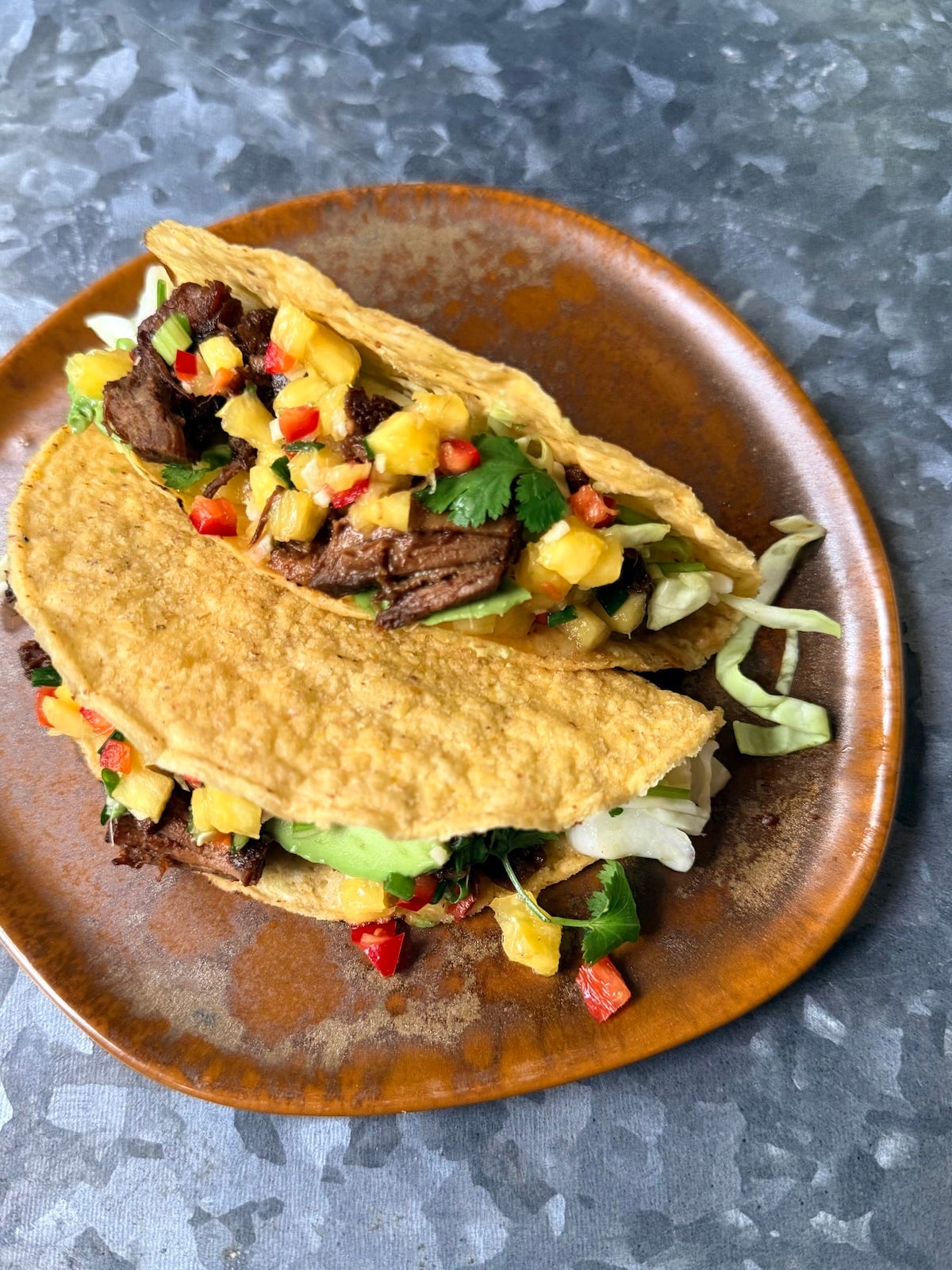
Thinking about the future of Vietnamese and Asian food in America, I developed a weeknight-friendly Instant Pot recipe for char siu pork carnitas, which I stuffed into crispy taco shells with a tangy cabbage slaw accented with Viet herbs and pineapple-ginger salsa. Called xá xíu in Vietnamese, Cantonese char siu pork is a beloved salty-sweet roast pork deeply ingrained in the Viet repertoire.
Label them as tasty fusion, third-culture, Viet-Mexican-Chinese-American cooking, or whatever you like. But do make them. Rory and I enjoyed the tacos twice in a week! The carnitas reheat like a dream. I even tinkered with the leftovers and added mushrooms to make them less meaty! You can do a lot with this new recipe.
Crunchy or soft tacos?
I tucked the char siu carnitas into crunchy taco shells because they remind me of ones from Tito’s Tacos, a Los Angeles icon. Located in Culver City, Tito’s began serving American-style hard shell tacos in 1959. Rory and I regularly shared half a dozen tacos and chased down the shredded beef filling, iceberg lettuce, and shredded cheese with gulps of orange soda. Tito’s was cash only until 2016.
Along with being fun, crunchy taco shells also make dinner extra-easy. Reheat them on a sheet pan in the oven or toaster oven for just a few minutes. Of course, you can get fancy with char siu carnitas soft tacos prepared with fresh tortillas. (I use Masienda and follow the package recipe, weighing the water and masa.)
🌱 For a vegan take, replace the char siu pork with my char siu jackfruit, a free recipe on the website.
The complete Char Siu Carnitas Taco recipe, including the herbaceous slaw and tropical salsa, is below in full text and as a downloadable PDF. I’ve also included ingredient swaps and pointers (what’s the best hoisin and what if you don’t have any handy?). Make this carnitas many ways – cook it in an Instant Pot, stovetop pressure cooker, or regular pot. Instructions are included.
This recipe was created for paid subscribers who sponsor Pass the Fish Sauce. Support the newsletter however you can. Become a paid subscriber for this splendid carnitas recipe and access to 225+ others, along with class discounts and more!
Much of what we do to be worthy humans is to help other folks and establish a sense of belonging and community. Sometimes it starts out with a cold call or email. From there a relationship begins.
Three years ago, after Ever-Green Vietnamese released, I got an email from Joyce Tang, the baker and owner of Bake Sum, a hip Asian bakery in Oakland. She invited me for a book signing and offered to feature one of my recipes. We chose the Vietnamese Mocha Cake and she replicated it beautifully, complimenting me on how my recipe scaled up well for her commercial bakery needs. She put her own spin on the cake by adding a Vietnamese coffee Swiss meringue buttercream.
I had a fun afternoon hanging out at the bakery and meeting folks. Bake Sum impressed me with how it exists as a hub for anyone interested in Asian American flavors. Joyce and I got talking about a potential book project so she could share her journey and recipes.
Three years later, she has a cookbook, co-authored with another friend of mine, chef, author, and James Beard Award-winning journalist Soleil Ho. With Bake Sum the pastry shop and book, Joyce realized her dream.
If you want to be on the cutting edge of what captivates and influences the cool kids, Joyce has pro-level ideas for you. Bake Sum’s recipes include classics like egg tarts and moon cakes and newfangled gochujang garlic pull-aparts, black sesame snickerdoodles, and a vegan five-spice chocolate cake that relies on an Asian baking technique to get its moist texture.
What about recipe testing bakery formulas for home cooks? If you’re cookbook curious, give a listen to the podcast that and I did with Joyce and Soleil! 🎧 👂
Then make two easy Bake Sum recipes! I’m a matcha fan so I picked these . . .
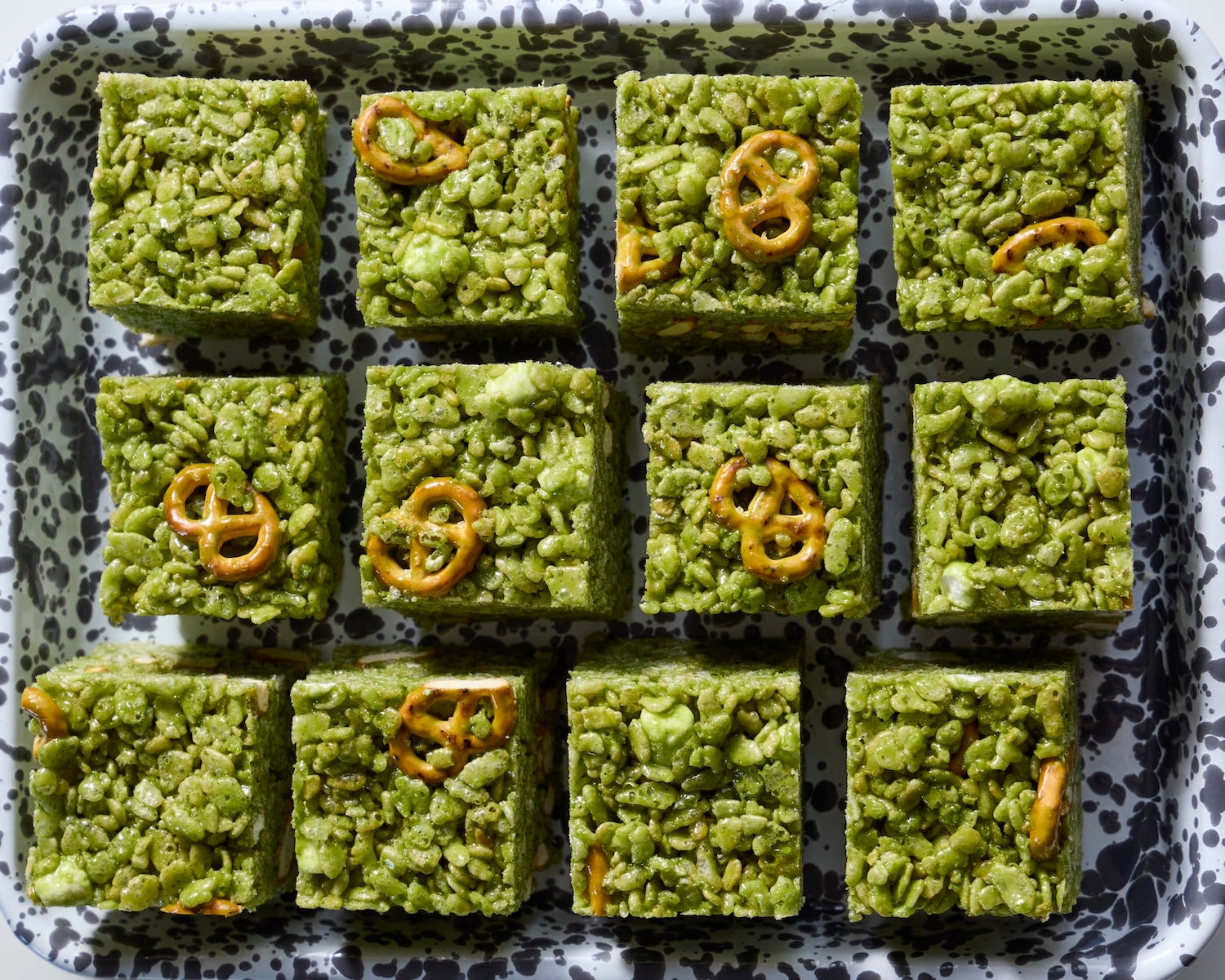
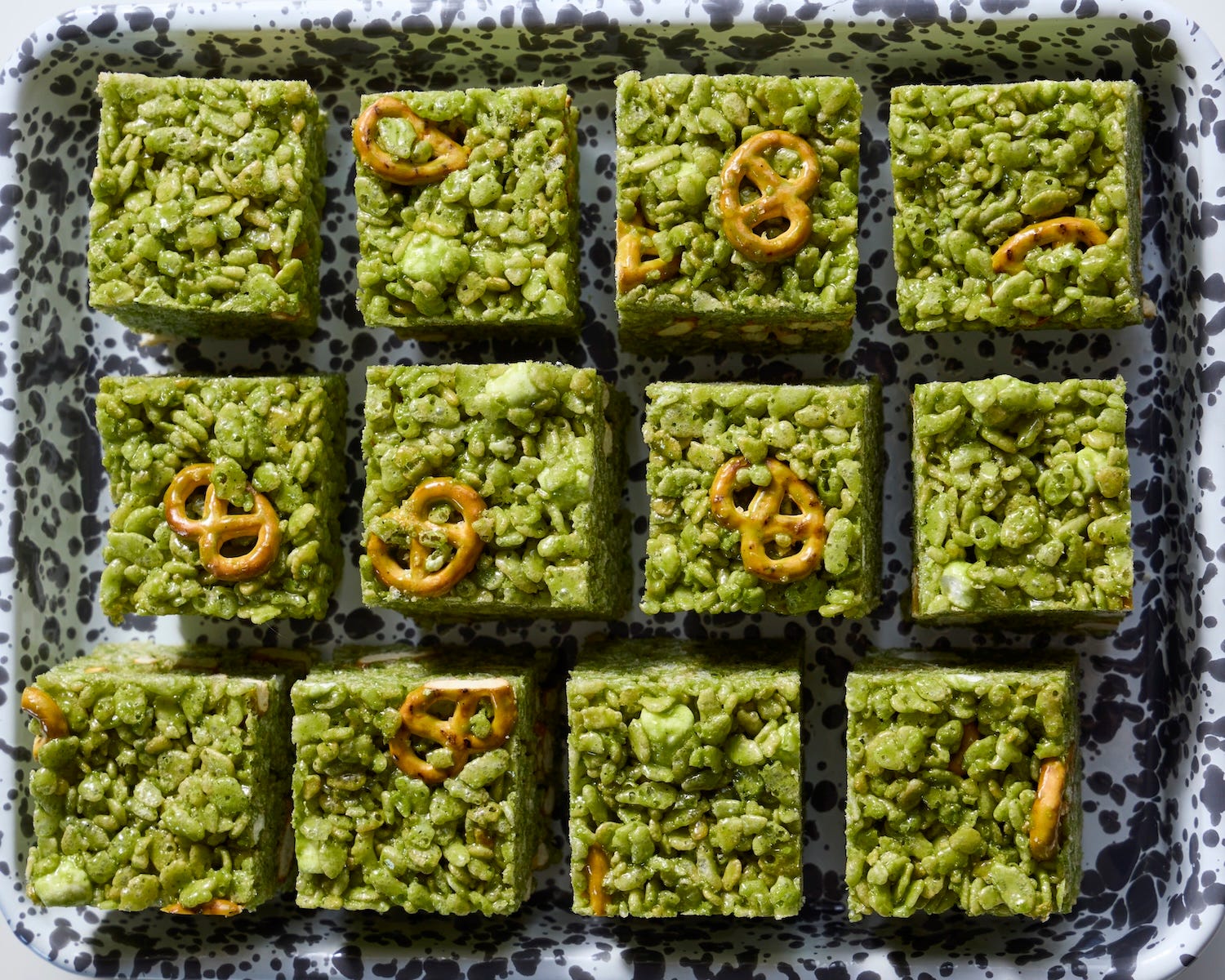
💎 Matcha Fancy Rice Crispy Treats
My sisters and I used to make rice krispy treats in the 1970s so Joyce’s recipe for Fancy Rice Crispy Treats that caught my eye. It looks grownup and fun with matcha and salty pretzels! It’s gluten-free and you can totally adapted it to be vegan. Instead of pretzels, put salted roasted peanuts in the mixture or add furikake. Get Joyce’s 🆓 Fancy Rice Krispy Treats recipe at my website.
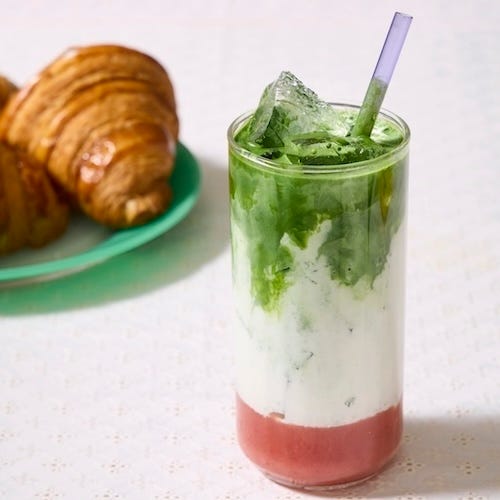
Bake Sum has a fun menu of drinks and I really liked the Matcha Strawberry-Ginger Latte. It was verdant, zippy, rich and tangy — and had the colors of the Italian and Mexican flag too! The MSGL is the first recipe in Bake Sum! It’s easy to prepare and as Joyce describes, “This drink looks and tastes like California in a cup, filled with pastures of green and tons of strawberries.”
✅ From Joyce: Use in-season strawberries if possible. If you use frozen berries, add a bit of extra sugar and lemon juice to balance flavors. If you don’t have a matcha bowl, a small bullet blender will work; however, you’ll end up wasting a little bit of the precious green elixir.
✅ From Andrea: I cheat by using an electric milk frother to make matcha fast. As for matcha powder, I regularly drink Tenzo Tea and Kirkland brand.
Matcha Strawberry-Ginger Latte
Makes 2 drinks
Ingredients
Strawberry-Ginger Puree
1-inch | 2.5 cm knob of fresh ginger, peeled and sliced
½ cup | 100g sugar
½ cup | 113g water
1 cup | 155g strawberries
The rest
1 teaspoon matcha powder
2 tablespoons water
Ice cubes
2 cups | 454 g oat or cow milk
Instructions
Make the strawberry-ginger puree: In a small saucepan, combine the ginger, sugar, and water and simmer over low heat for about 10 minutes, or until the ginger’s bright yellow color starts to become dull. Remove from the heat and cool for a few minutes until it is no longer hot to the touch.
In a blender, combine the strawberries and cooled ginger and its syrup and blend until it’s pourable but still a bit chunky. The ginger should be minced into fine pieces. (The puree can be made ahead and stored in the fridge for up to 2 weeks.)
Assemble the matcha lattes: Sift the matcha powder into a chawan, or matcha bowl, and add the water (see Note). Use a chasen, or matcha whisk, to start whisking vigorously back and forth in a straight line (not in a circular motion). Continue until the whisk has started to produce microfoam.
Pour the strawberry puree into the bottom of two 12-ounce (355 ml) glasses, then top with ice. Fill two-thirds of the way up the glass with the milk of your choice. Pour the just-prepared matcha over the top. Stir and enjoy as soon as possible.
💎 Enter to win a copy of Bake Sum!
Bake Sum has 75 recipes total so there’s lots more to explore. I’ve got a copy to gift one of you lucky PTFS subscribers!
Bake Sum Cookbook Giveaway lowdown:
The prize: One (1) copy of Bake Sum: Asian American Pastries, Breads, and Other Treats (value $35)
Eligibility: You must subscribe to Pass the Fish Sauce, be 18+ years of age, and have a valid U.S. shipping address.
Giveaway end date: Wednesday, October 21, midnight PST.
Selection and notification method: Based on the number of comments, I will randomly draw a winner and notify the person by email.
⚡️ To enter: ❤️ Like this post AND leave a comment (e.g., What’s your favorite classic or modern Asian-y sweet treat? What’s your favorite Asian bakery? What ingredient(s) signal ‘Asia’ to you?) 👇👇👇
Joyce’s recipes got me all nostalgic so I’m taking a walk down memory lane this Sunday with an updated take on a Viet-Chinese snack. Join us behind the paywall, if you have not!
I hope you had a good week, despite the general levels of angst that seems to float about these days over the economy, AI, and so much more!
I’m not quite ready to crawl into a cave because there’s a lot of optimism out there. For instance, our neighbors have been starting families and their young are full of life, curiosity and hope. I also find solace in people doing good things in the culinary world.
Food and Wine magazine released its 2026 Best New Chefs list, and I contributed the write up on Kiln, a two-Michelin star restaurant in San Francisco. I wasn’t prepared to enjoy the 20-course tasting menu but it was super flavorful and not fussy. Chef John Wesley is also a remarkable person with incredible talent. Moreover, FW’s picks includes The Paper Bridge, a Vietnamese restaurant in Portland, OR, owned by Quynh Nguyen, a Hanoi-native, and Carlo Renardi, her American husband. Check out the BNC 2026 listing to see what may be near you!
If you subscribe to , its new issue #35 celebrates women at the forefront of home cooking. Yours truly is in the issue (contributors were asked: “What tastes like home?”). CB selected Cooking Thai as an outstanding fall cookbook and included Pim’s kabocha squash coconut custard dessert recipe.
And, my local Bookshop Santa Cruz announced that our book sold very well last month. 🥳 You may still get signed copies there or at Omnivore Books in SF.
What to cook right now? Some dishes are evergreen like my Vietnamese fish salad (gỏi cá), which Gail recently made with cod cheeks and reported stellar results, including the leftovers!
On the other hand, certain dishes are seasonally appropriate. October is part of the shoulder season. Summer warmth lingers in the day while autumn cool creeps in as the golden light fades. The two recipes I’m sharing this week help you straddle and enjoy the best of both seasons and make the most of what you’ve got.
Make a swank take on a Thai icon 🍃 🌶️
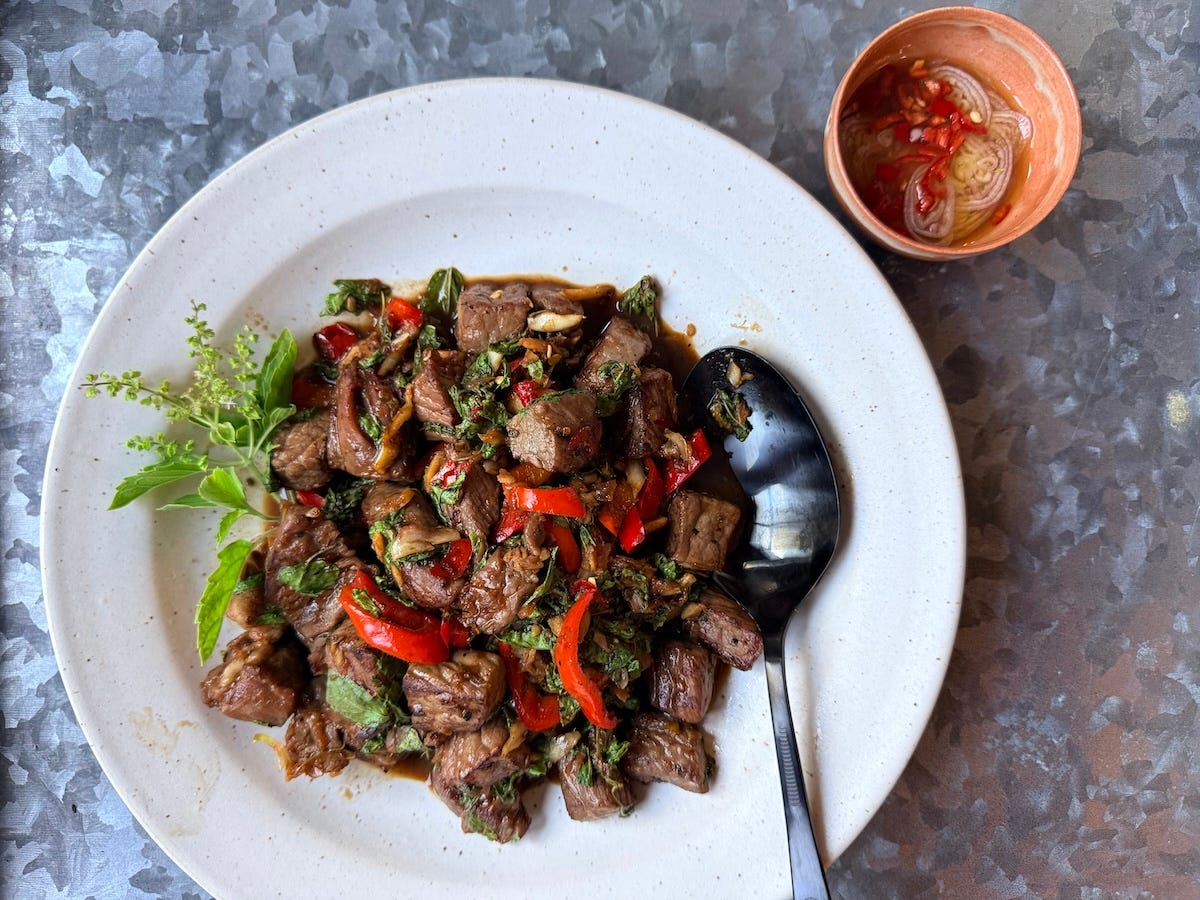
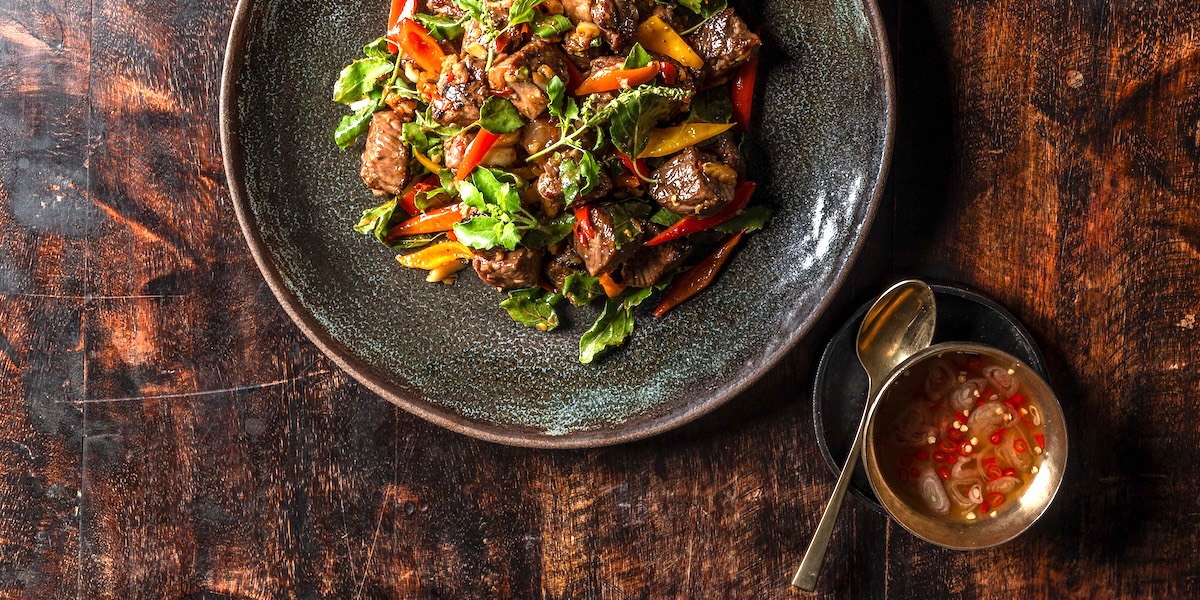
First up is a premium take on pad gaprao, the go-to stir-fry for many people in Thailand. The Thais eat it about once a week, according to an article that Pim found while we were writing Cooking Thai. (Sorry, pad Thai!) I asked her for a recipe and she returned with a masterful one featuring juicy, seared beef steak cubes that are shot through with the garlicky, punchy heat that makes Thai food sultry and exciting. Lots of basil functions as a seasoning, not a garnish.
This came from my kitchen and soon, you’ll be making your own too!
Pim cheekily named her recipe Bougie Pad Gaprao because the typical rendition uses ground meat. If you have the book, the main recipe is on page 233 followed by three (3) variations on page 234. For those of you who don’t yet have the book, I’ve shared our recipe and pro tips — including smart basil swaps — on my website. Pad gaprao is on rotation at our house. It comes together fast so get the 🆓❣️ pad gaprao recipe to experience Asian basil are at its peak.
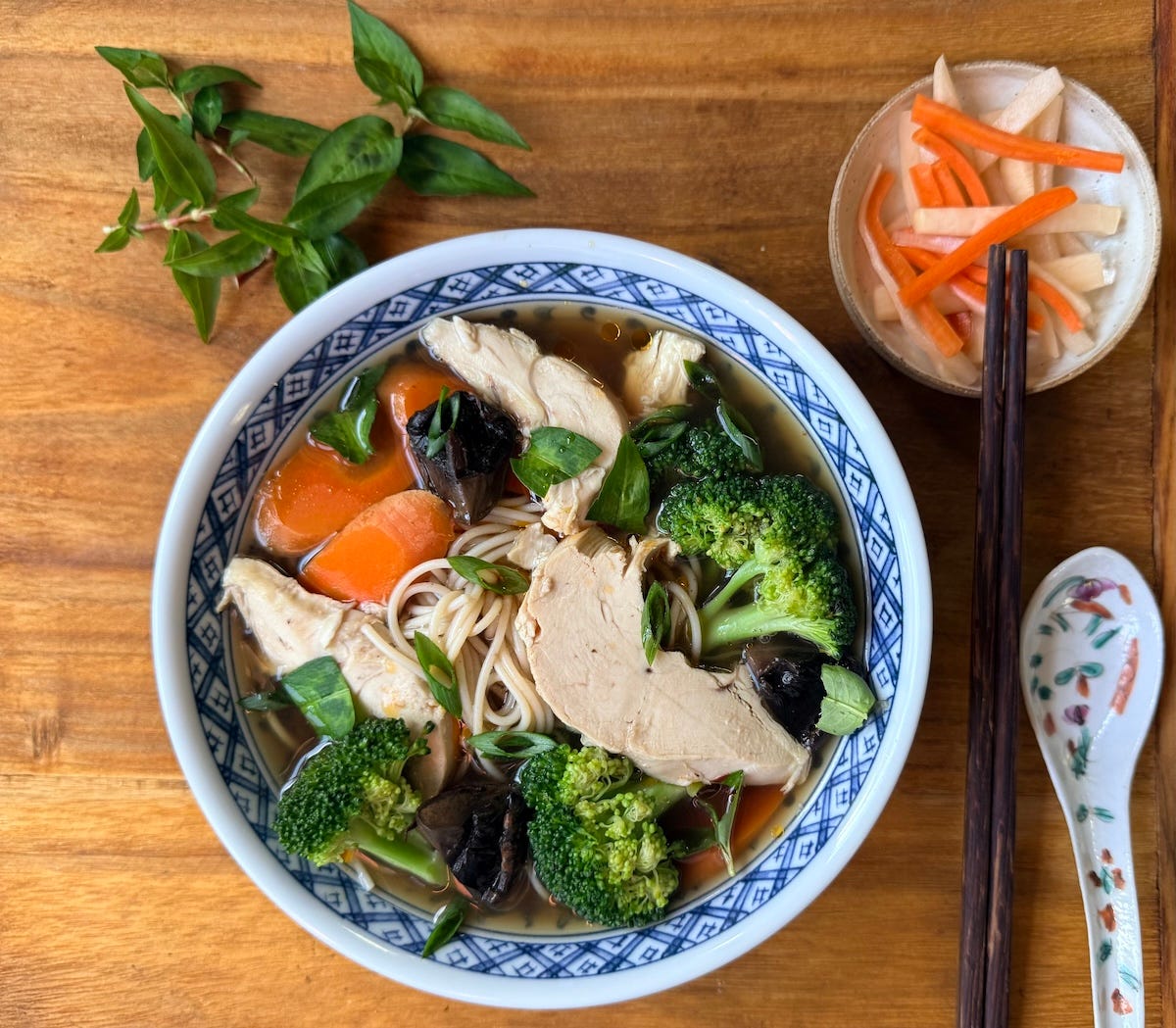
Use leftover rotisserie chicken for shortcut Viet-Chinese noodle soup (mì gà tiềm)🍗 🍜
While there’s a hurry to savor summer herbs, we’re also looking to hibernate a bit with cozy soup. There’s plenty of time to simmer for hours during winter’s depth. For now, I’m still into quickies and hacks.
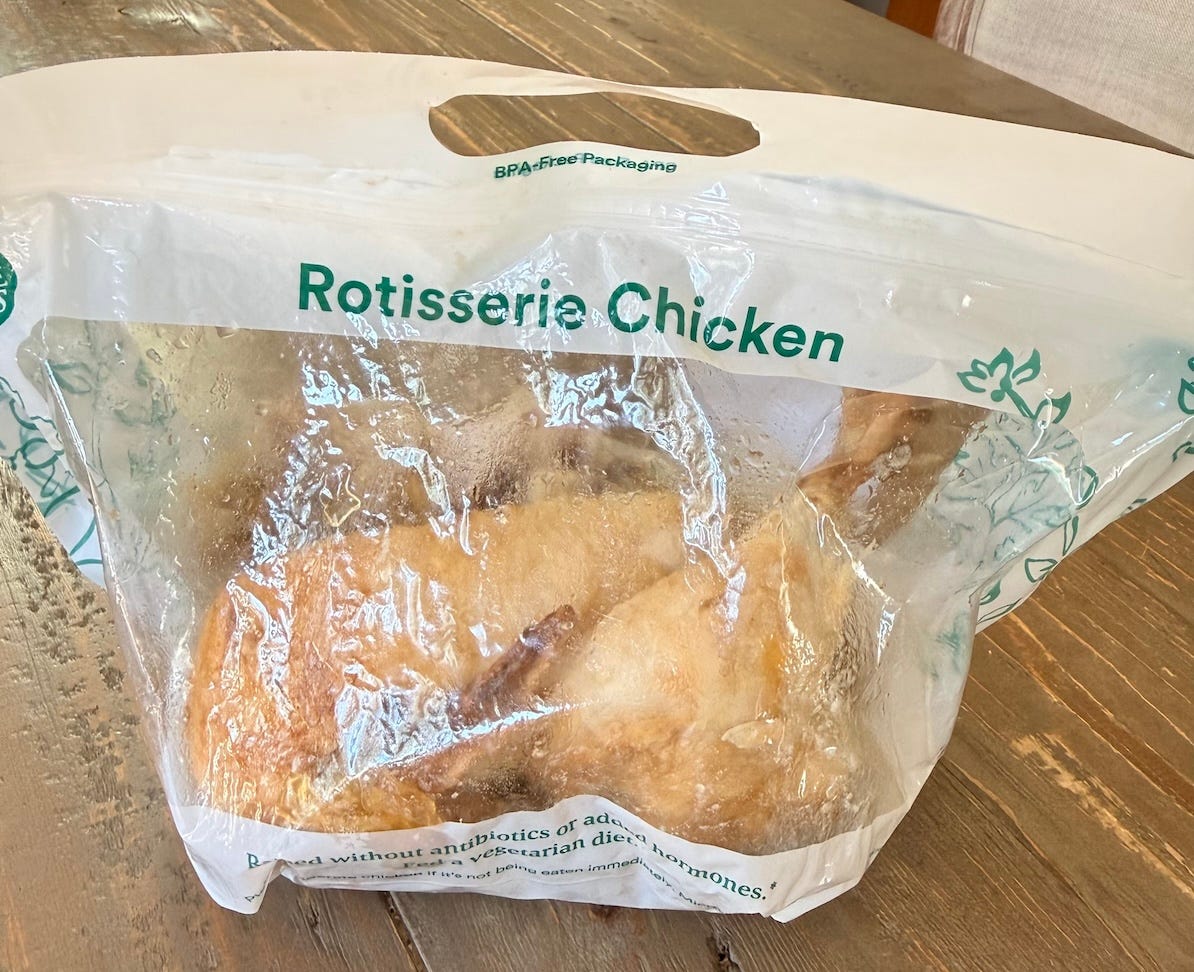
This week, I needed to deal with leftover rotisserie chicken. The store bought bird saved my cooking life last Sunday when I was too tired to cook from scratch. Its comforting roasted flavor, convenience and affordability rescued me. But what to do with the leftovers? Yes, you can make a sandwich or salad but those dishes often blatantly remind you that you’re still eating the same bird. Day-after rotisserie chicken can be dry as a cotton ball and hard to swallow.
This bird didn’t know what would soon happen to it! On Tuesdays, my local Whole Foods runs a $2 off sale on rotisserie chickens. Maybe yours does too?
Not wanting to discard more than half of the bird, I transformed its flesh and all the scraps into a Vietnamese-Chinese noodle soup. It took about 45 minutes and transported me to a family friend’s Chinese barbecue shop in San Diego. Mr. and Mrs. Tan owned the shop that my parents frequented. While the adults talked, I scarfed down Mrs. Tan’s specialty — mì vịt tiềm (“mee VEET tiam”), a braised duck Vietnamese egg noodle soup with a rich, spiced broth. It’s a specialty of the Chinese diaspora in Vietnam, particularly the one in Chợ Lớn, Saigon’s Chinatown neighborhood.
The landmark Binh Tay market in Cho Lon. You can’t miss it. Great place to shop for wholesale housewares though you have to buy lots.
Mrs. Tan gave my mom her recipe, which I used to create the recipe for my first cookbook, Into the Vietnamese Kitchen. That twenty year old recipe on page 220 remains my favorite iteration but it’s time consuming to prepare. Who wants to roast duck or go find one? When traffic is perfect, the closest Chinese barbecue shop is 45 minutes away! And nowadays, what’s sold at those shops as roast duck is anemic.
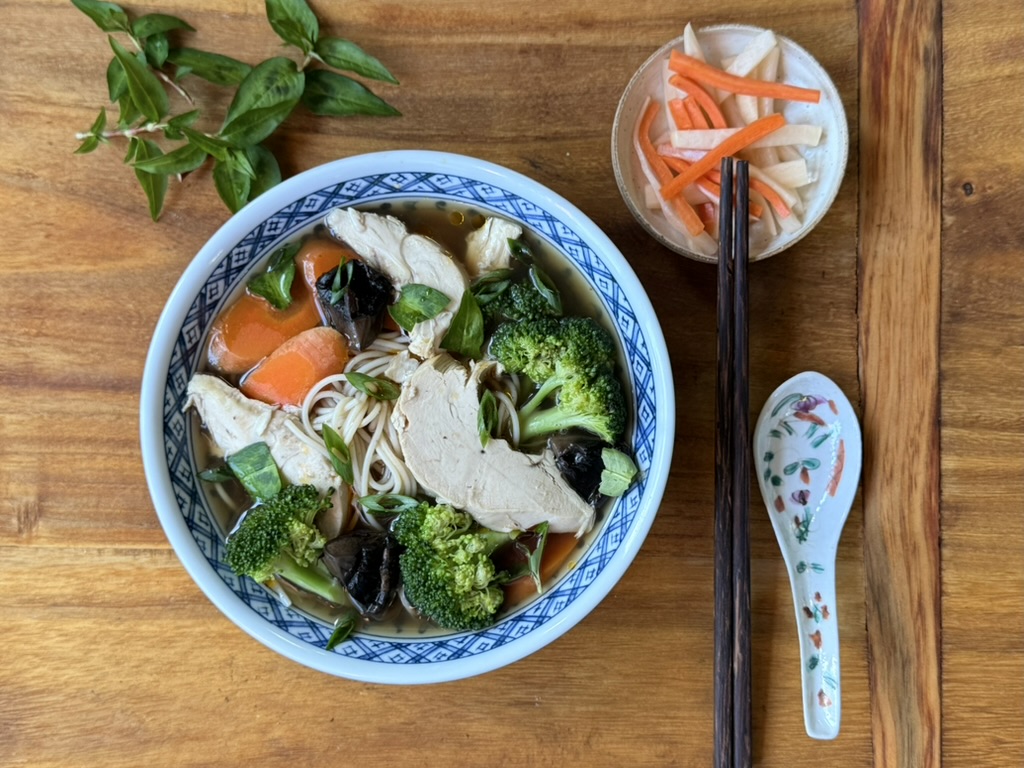
Wanting a cozy shortcut and aiming to use up my rotisserie chicken, I cooked up this shortcut version with chicken. This 45-minute Mì Gà Tiềm hack transforms the chicken into a remarkably fun and special treat. The flesh moistened up, but most importantly, the results made me forget that we were eating humble leftovers. Rory dreaded eating rotisserie chicken dishes but he perked up when I served him a bowl of this noodle soup.
I loaded mine up with vegetables. That’s not traditional but it makes for a complete, wholesome meal. If you want to be super traditional, eat this noodle soup with pickled daikon and carrot. The tang and crunch adds textural contrast and brightens the noodle soup.
When you make this shortcut Mì Gà Tiềm (“mee GAH tiam”), you’ll realize its many virtues.
It uses every bit of the bird for a potent broth. Use your roast chicken leftovers, if you want. Rotisserie chicken isn’t the only game in town. 😆
If you don’t have enough meat, at least turn the leftover scraps into tasty broth. Add mushroom, tofu and napa cabbage and you have quick and easy soup for lunch.
Use Chinese egg noodles, rice noodles, soba, or ramen. Instant ramen is fine.
Employ fresh or dried mushrooms, depending on the time used.
Below you’ll find the recipe in text and a downloadable PDF. Plus you’ll have all my recipe development notes for you to tinker with.
Ok, the clock is running and you’re hungry. Let’s make this noodle soup!
Support Pass the Fish Sauce as much as you can. Become paid subscriber for this recipe and access to 225+ others, along with class discounts and much, much more.
I have a knack for saying things that many people think and few dare to voice openly. Airing dirty laundry has gotten me in trouble a few times with my family but in the past week, in talking to people about Cooking Thai, I’ve had private conversations with folks who quietly say, “You know, such and such Thai restaurant is not very good.” My sister Linh and I have the same conversation about Vietnamese restaurants.
So I have to admit to you that a lot of Thai and Vietnamese restaurants are not great. Many offer the same menus and flavors. To borrow from the New York Times food critic Ligaya Mishan, “We’re in an epidemic of sameness.”
I empathize with the restauranteurs.
If you’re a Viet or Thai restaurant owner, you’ve got financial goals to meet and are looking to fill seats and sell food. You cannot afford to spend too much time to labor to make food that’s going to be as good as homemade. You’ve got to cater to a broad swath of customers. As a result, your menu may be huge and your flavors can easily become diluted.
But, you as the diner — if you’re armed with cooking knowledge, you can make good food yourself to satisfy your palate, save money, and learn. Perhaps you’ll eventually engage with local restaurant owners so they know you have a high level of appreciation of their craft. Maybe they’ll feel more open to try new dishes and offer bolder flavors.
Cooking at home and eating out are not mutually exclusive. I love the healthy and relaxed aspects of home cooking but I want someone else to plan my meal and wash the dishes once in a while!
So, that’s why I write cookbooks and teach cooking — so you can understand how foods are prepared, make them yourself, and be a more informed diner! It’s a Nguyen-win if all that happens. A girl has to maintain and manifest her dreams!
💎 Nampla prik — a 1 minute Thai Wonder Sauce
A few months ago, someone asked about nampla prik, whether or not Pim had a recipe for it. Yes she does, and it’s tucked away in a recipe Note (always read recipe endnotes in the book to unmask little hidden gems!).
Nampla prik literally means fish sauce with chilies spiked with lime juice. I’d had it before at restaurants where it was lackluster, but Pim adds thinly sliced shallot and the sauce dazzles with complex flavor. You can have it as you like — with or without chilies — as much as you like, sometimes with garlic. Add extra lime juice to boost the tanginess for your taste.
How does Thai nampla prik compare to Viet nuoc cham?
Nampla prik is more intensely tart, salty, spicy and pungent. There’s no sugar and no water involved like what’s in my nuoc cham recipes. Also, nampla prik is enjoyed in relatively small, yet potent, quantities. You stir together it together and serve with a small spoon like you see in these photos from Cooking Thai.
Nampla prik isn’t super multipurpose like nuoc cham. In the book, we present it as a Thai “serving sauce” to accompany dishes like the holy basil stir-fries, salted egg yolk-shrimp fried rice and northern curry and mushroom fried rice. But ubiquitous holy basil stir fries (pad gaprao) can be made with practically any kind of meat or tofu so you’re apt to see the same sauce on many tables.
How to make Pim’s nampla prik
Nampla prik brightens and enlivens anything it touches. Use a small spoon to sprinkle the sauce onto your food at the table.
In a small bowl, mix together 1½ Tbsp lime juice, 1½ Tbsp fish sauce (or Thai thin soy sauce), and 1 Tbsp chopped fresh Thai chilies. If you like, stir in 1 Tbsp very thinly sliced shallot. Makes about 1/4 cup to serve 4.
I always pack my tablespoon with the shallot because it tastes really good after sitting in the lime juice and fish sauce. For a primer on Thai fish sauce, check page 22 of the book or visit this page on my website for a 🆓 guide to salty, spicy Thai condiments and seasonings.
Pass the Fish Sauce is a reader-supported publication. To receive new posts, mine the 150+ recipe index, and get 25% off class sign-ups, become a paid subscriber. I welcome your support at all levels!
💎 Take this life expectancy quiz. I got an “F”.
Getting only four out of ten questions right underscored the marvelous facts I didn’t know about living longer! Rory happily said that he may live past 100 so I better get ready to take care of him in his dotage. 🫡
Take the life expectancy quiz via my free gift link. You may have to click through some pitch to subscribe but you should get there. There are good explainers and statistics at the end.
💎 Coming up . . .
In this coming Sunday Special, you’ll see some easy, light recipes that have recently impressed me more than I expected.
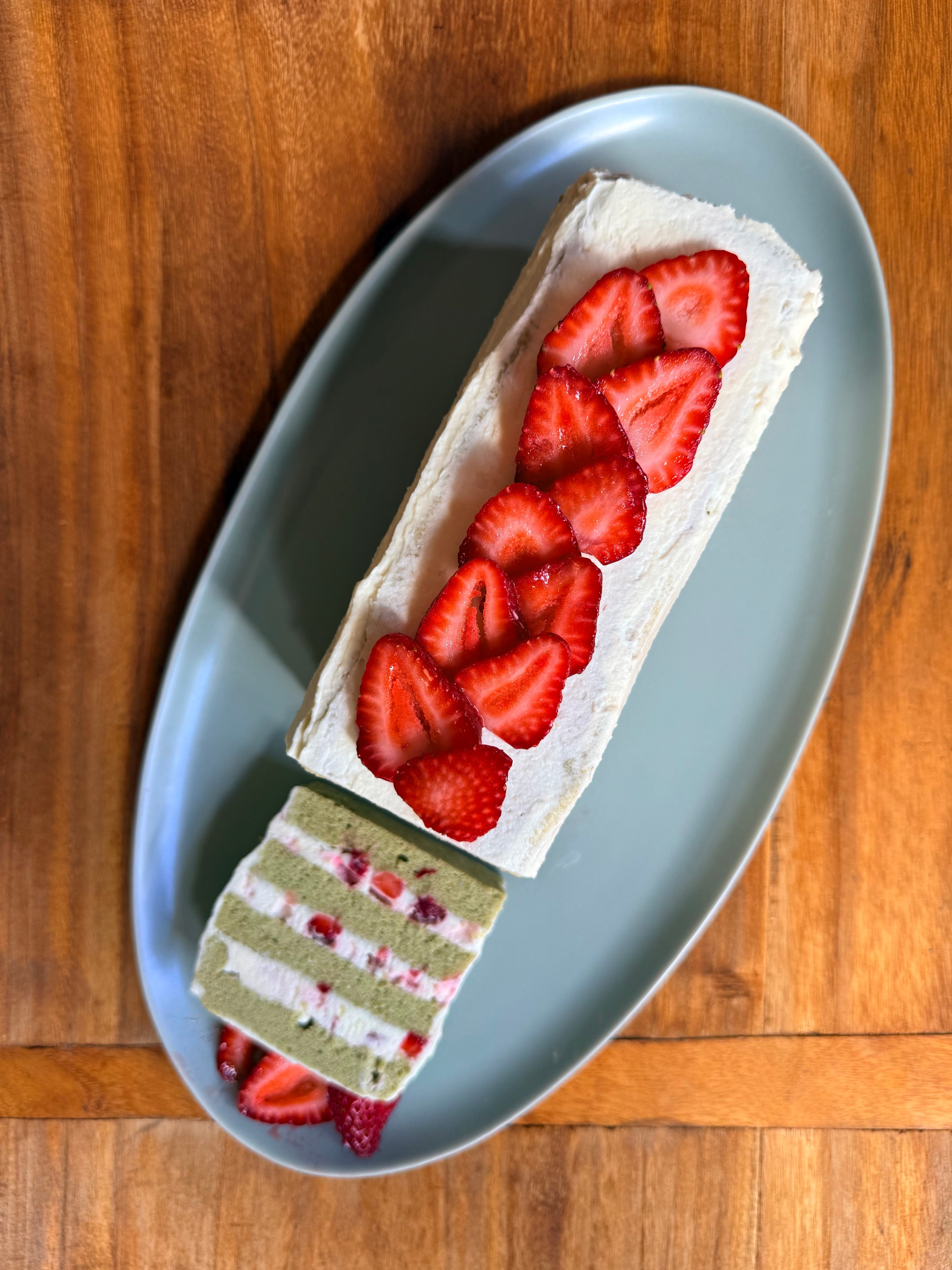
When Asian people celebrate — birthdays, graduations, retirement, whatever — there’s likely to be a layer cake featuring fresh strawberries and light, fluffy whipped cream. Such cakes are stalwarts at Asian bakeries, which churn them out daily. But truth be told, the cakes are rather tasteless because they are mass produced with unripe, sturdy fruit. The whipped cream doesn’t taste like much and neither does the cake itself. I’ve been disappointed too many times by these perfect looking cakes. So I bake my own.
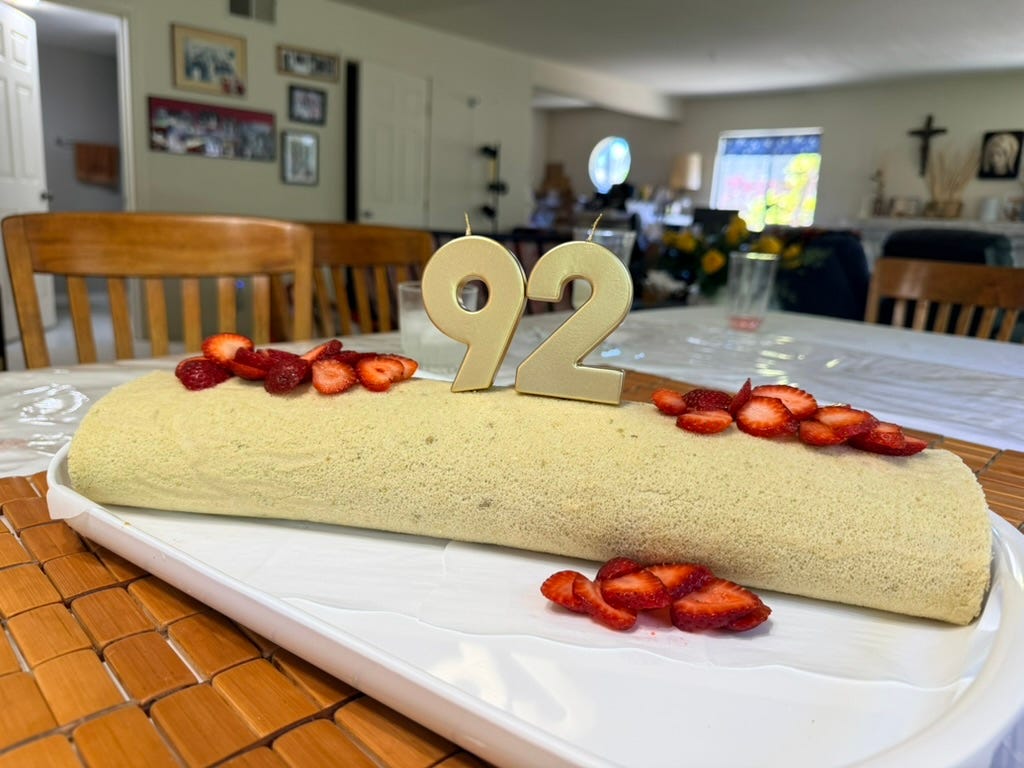
Gearing up for my mom’s 92nd birthday luncheon, I dreamt of baking her a pandan cake. My initial thoughts went to a favorite pandan chiffon cake recipe (🆓 on my website). It’s showstopper green and fragrant from the alluring vanilla-coconut flavor of pandan leaf (screwpine, lá dứa in Vietnamese). Baked in an angel food cake mold, pandan chiffon cake is casual. I needed easy-ish celebratory sparkle, a cake I could bake after a day of work and one that would hold up to an 8-hour roadtrip to my mom’s house. 💖
In the end, I tweaked Shilpa Uskokovic’s strawberry roll cake recipe in a recent issue of Bon Appetit. My creation was a pandan-strawberry cake filled with a coconutty whipped cream. We had twelve adults and two toddlers and when it came time for dessert, I presented the cake. Viola!
My sister Tasha gasped. “You made that?” she said. She’d eaten lots of strawberry and cream cakes with me when we lived near Monterey Park in the 1990s.
Everyone loved the cake, though Linh, my avid baker sister, said, “The cream is delicious but I’d like more cake.” I agreed. You didn’t taste enough pandan. Plus the cake was strangely salty. (Linh had baked a Sicilian orange cake for my mom so our cakes shared the plates.)
Driving home, I sketched out a new recipe for a thicker cake in my head. It took two more bakes before I arrived at the versatile recipe I’m sharing with you today.
Along the way, test cakes went to the neighbors. One neighbor shared a big piece with their grieving best friend who’d just lost her mother to a long battle with breast cancer. The friend ate the biggest piece, I was told.
As I aimed for a thicker cake, I realized that you can’t roll it because the cake cracks and breaks. You can’t see it in the cake on the left but there’s a fissure that kept getting bigger as the cake sat. The neighbors didn’t mind, though!
I tinkered with the batter again and the cake broke during rolling. What to do?
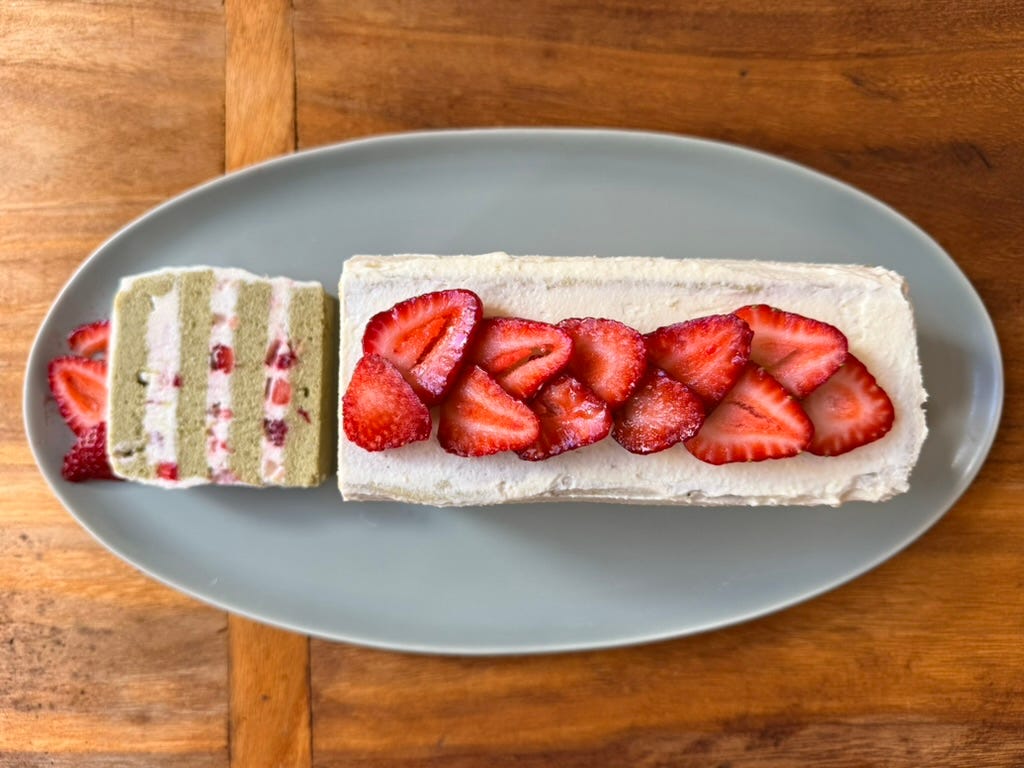
I patched up the cake and pivoted to building a rectangular layer cake. Rory said it looked much fancier than the roll cake. They’re the same cake! 😆 😆 I gifted cake #4 to a different neighbor, who’d just finished an arduous week on a construction project. He couldn’t believe I had baked it and as you see (in his text above), he was so happy.
What began as an Asian celebration cake turned out to be a happiness cake for everyone. Along the way, I made different flavored cakes — pandan, matcha, citrus, and vanilla. I also made two kinds of whipped cream: vanilla and coconut. And yes, I also crafted roll and layer cakes. There were so many wondrous possibilities.
For all those reasons, this is my Strawberry and Cream Dream Cake recipe!
Below you’ll find a versatile, useful package of information containing.
The Pandan-Strawberry and Cream Cake recipe that you can make as a roll cake or as a layer cake (in full text and downloable PDF), with vanilla whipped cream or a coconutty whipped cream!
Three (3) cake variations for Matcha-Strawberry and Cream Layer Cake, Citrusy Strawberry and Cream Layer Cake, and Vanilla-Strawberry and Cream Layer Cake
Pointers for choosing flavorful berries, natural pandan shortcuts, and making fluffy, stable whipped cream that holds up for days
A video tips for making billowy cake batter
Make ahead timing tips so you won’t get cranky
I’m not a skilled cake baker but I mastered this one enough to impress my jaded family and neighbors. It took me a few tries to get here but you’ll make a knockout cake on your first time out because I’ve eliminated a lot of the vagaries.
Bring this dreamy strawberry and cream cake into your dessert rotation.
Curious cooks, readers and eaters fuel this newsletter. The dispatch was created for paid subscribers who sponsor PTFS. For the complete strawberry and cream cake lowdown, fully use the recipe index plus save 25% on my cooking classes, become a paid subscriber. Your support makes a big impact.
Here we are in August already. The July 19 banh xeo sizzling crepe class sold out (hard to believe!!!) and the fun 2-hour session flew by. There was clean up afterwards (of course) and exhaustion but I had dinner made already!
The next day, we packed for a week-long trip to Kauai. It’s our second time there this year to hang out with our dear friend, the fashion and jewelry designer Chan Luu. Where I eat while I’m on the island? At Chan’s home. Her property is loaded with fresh tropical fruit, produce, and now hen-laying chickens. We do market runs to Foodland, Safeway, or Costco for anything else we need!
Some notes on the photos:
The pineapple crowns I saw in January now have fruits! Chan grows many kinds and the pink one looks cool but has little flavor, Chan says. The white Sugarloaf is a bit too sweet for me. The yellow one (above) had a balanced sweet-tanginess. We clean up the pineapple crown so it will root and then Chan’s staff replants them. About 1 1/2 years later, there’s fruit to eat! You can grow from store-bought pineapples but success all depends on growing conditions. She has well draining soil and very good sun on a slope.
The spiky fruit in the basket is soursop, which has a tart-sweet flavor. We had lots of tasty bananas, too.
We also harvested and processed a jackfruit! The tree isn’t big but it produces fruits weighing 12 to 15 pounds. That felt like a giant bowling ball. You don’t want one to fall on your head. If you have to cut jackfruit apart, oil your knives, wear gloves and work on a tarp to minimize its latex mess.
And, next time you’re near a fresh coconut, remember this tool:
Construction workers on her property gift her food they catch (fish!, crab!), hunt (wild pigs!), or forage. One of them, a generous young man named Kaiola, took us into the rain forest on Native Hawaiian land where we picked edible pohole fern tips. Loaded with nutrition, they’re snappy and have flavors similar to asparagus and green beans but with a slightly mucilaginous quality.
Absolutely delicious for stir-fries, salad, and soup. They need to be washed well and then quickly cooked to preserve their texture and color. We wrapped them in banana leaf to keep for about 3 days in the fridge. The fern is available in Thailand, where it’s called pak kood, and is made into salads, stir-fries and even dessert.
Island life is good in Hawaii — the most Asian of all States in the nation.
Thanks for reading Pass the Fish Sauce! This post is public so feel free to share it.
When you wish a vacation would continue, it means it was a good vacation. The day after we got home, I opened Alana Kysar’s new cookbook, Aloha Veggies. Alana has a knack for capturing the spirit of her native Hawaii in recipe form while making the dishes doable for mainlanders like me.
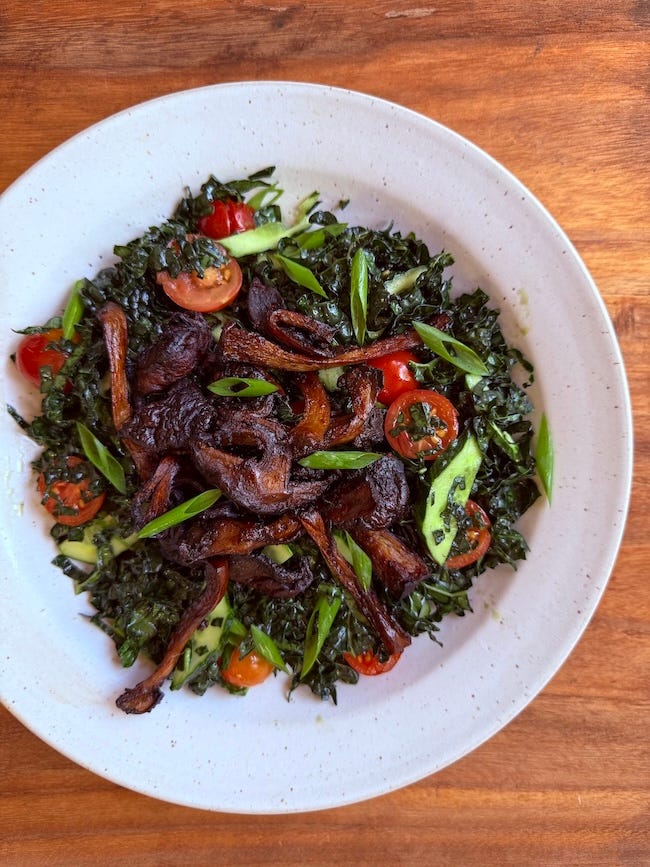
Mushrooms in my fridge and ripe cucumber, green onions, cherry tomatoes from my garden led me to Alana’s Kale and Shoyu Mushroom Salad. All I had to buy was trimmed lacinato (dino) kale leaves from Trader Joe’s. While I roasted the mushrooms and made the sesame soy dressing, Rory cut the greens. Our restorative lunch came together in about 30 minutes!
The vegan salad is simple to make yet layered with the cultures and foodways that make Hawaii inviting and interesting. It was deliciously energizing (dark leafy greens with plenty of fiber!) but moreover, it allowed me to savor island life a little longer. For Alana’s Kale and Shoyu Mushroom Salad recipe, head to my website, where it’s available for free.
Summer in 30+ recipes and oodles of kitchen pointers
Looking ahead at the rest of the year for PTFS, I had to look back. When I did, I realized that we’ve covered a hella lot of territory in since mid May, when I posted the last recap.
There have been so many delicious recipes and a bunch of focused deep dives. Anything marked 🆓 is available to all. The others are for PTFS paid subscribers.
For full access to all paywalled recipes (not just ones listed here!), become a paid subscriber. You’ll also get class discounts and seed new content, too! ⚡️⚡️ Try PTFS for a year at a discount, or save for life! Your support matters.
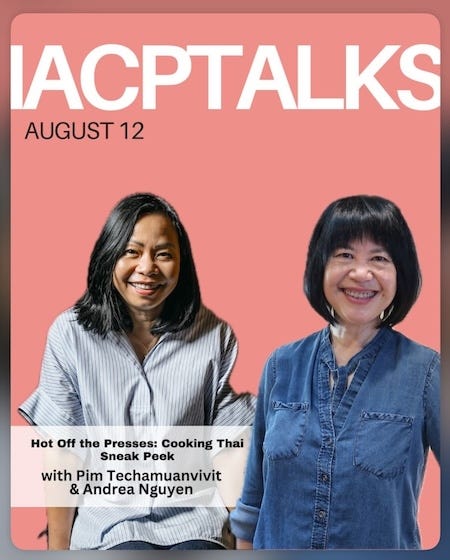
Cooking Thai releases on August 25 but Pim and I are going to do a fun chat about the book for (International Association of Culinary Professionals). If you want to check out the book before (or after) you pre-order it, sign up here for the virtual session. All are welcome to the free IACP event.
I’ll share info on SF and Santa Cruz book events soon!
Hope summer is treating you well — that you’re not overheating somewhere. Stay cool and well fed.
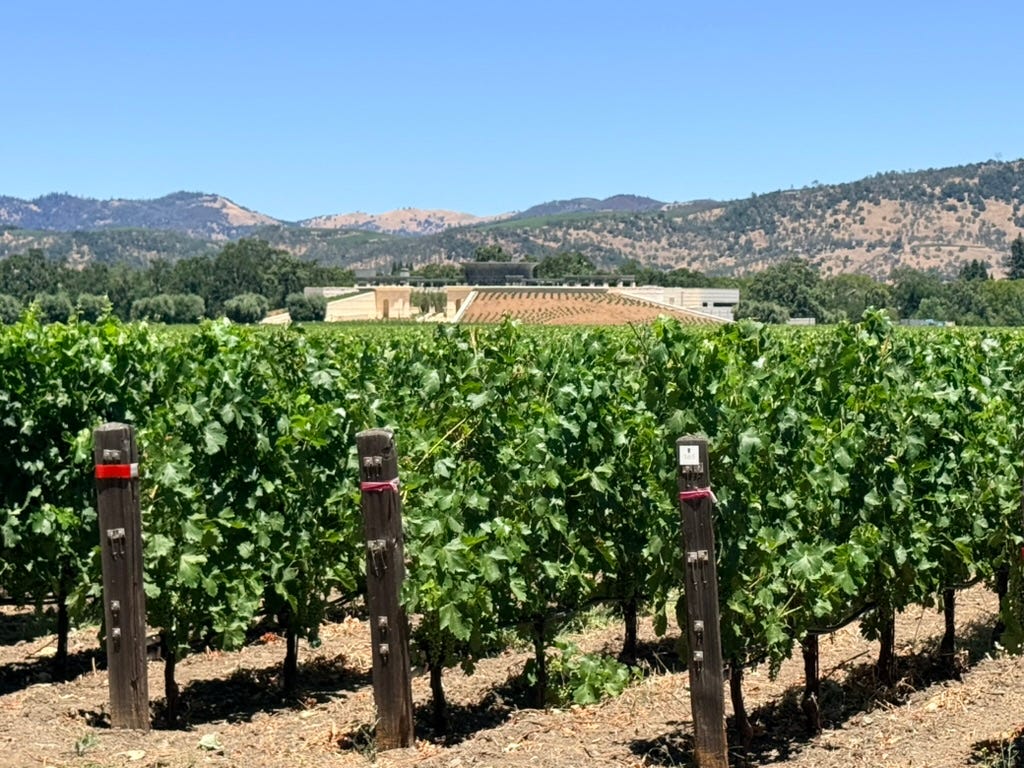
California’s Napa Valley wine country is dreamy but it’s also expensive. A couple weekends ago, we went to Napa for a friend’s 90th birthday party and we were astounded by the prices. So, I’d leading off with pointers gleaned from our recent experience there.
💎 Do go on Sunday through Thursday when hotel prices tend to be lower. On a Saturday night at the tidy Best Western Plus, we [ahem] paid $400‼️ (tax and fees included); the midweek rate is about $140. Across the street from the BW are an In-and-Out burger, McDonald’s and Raley’s supermarket so you can get snacks and/or breakfast — which are not included in the hotel price. There’s a swankier Hampton Inn nearby. Stay on the edge of Napa to save money and drive a few minutes into Napa central. You’ll have to drive to the wineries anyway!
💎 Don’t overlook the wine bars and restaurants run by the Culinary Institute of America. They are located in Napa at Copia and at the historic Greystone campus on Highway 29 in St. Helena. The wine bars are automated and you can sample what you like from a curated list (you won’t have a bad wine). It’s fun and low-pressure. The CIA restaurants are helmed by student chefs who prepare and serve a la carte and multi-course dinners with wine pairings. The grounds at Copia and Greystone are great to stroll around, too. More about the CIA wine bars and restaurants here.
Very close to Copia is Oxbow Marketplace for fancy-casual food, an outpost of Gott’s Refresher (good burgers), the Model Bakery (sinful English Muffins and more), plus the Fatted Calf (sandwichery, butcher shop, charcuterie). Grab lunch or dinner or make yourself a picnic.
💎 Pop in for lunch at charming Oakville Grocery. Compared to when I first went in the late 1980s, the grocery store is now much more upscale but in a pleasant, casual elegant way. There’s outdoor seating, plenty of parking, and a automated wine bar. Order a sandwich, pizza, or salad or grab a sweet. Buy a split bottle of bubbly and sit outdoors under the shade for a splendid, lazy lunch.
Opus One’s pyramid-esque building, as seen from the Oakville Grocery parking lot.
You’ll be hanging out adjacent to Opus One (Mondavi’s ultra luxe winery), a spectacular facility where the “Opus One Experience” costs $250 per person. Less expensive is the Mondavi Estate that just reopened after renovations; tastings and tours are ticketed and worthy, if you’re a wine enthusiast and Mondavi fan.
💎 Buy beans at Rancho Gordo’s official shop! They recently moved to a bigger location on Main Street, where you can peruse their full selection. The staff is super knowledgeable, and I always notice a new bean or two when I go there (versus shopping online for RG beans). Beans make great gifts.
💎 Eat well at Stateline Roadhouse, if you’re in the Kansas City barbecue mood. Stand in line to place your order at the counter and they’ll bring it to your table. Along with the regular menu, check out the specials by chef/co-owner Darrell Bell, who trained in France and has cooked at Michelin-star restaurants in the States. One time, we got a hamachi collar special that was a knockout.
Pass the Fish Sauce is a reader-supported publication. To receive new posts, mine the 150+ recipe index, and get 25% off class sign-ups, become a paid subscriber. I welcome your support at all levels!
💎 What have you been cooking up?
The PTFS community is near and far, which I’m grateful for in unfathomable ways. I write these dispatches and share recipes that I think you’ll want to cook because they’re tasty, fun, and out of the ordinary.
Bob recently shared a special Peking duck dinner with pancakes and salad with the nuoc cham vinaigrette. Duck and lychee with nuoc cham vinaigrette is an idea I’m borrowing! Also, I love how Bob got a duck from Weee! Do you shop at Weee!?
made the apricot ginger jam with ‘cots on the East Coast and reports the results were 💯! I made a second batch and gifted some to the neighbors whose trees I gleaned. The stellar recipe is 🆓 on my website for you to use!
in France made the fresh apricot sauce with his local abricots and loved it. He had fun taking it in many directions.
I’m stoked that my recipes offer you entry points to play with food in ways that you normally wouldn’t. To keep me posted and share photos, comment on my dispatches, or use Substack Notes or Subcriber Chat (better for pics). I love hearing from you!
💎 Coming up . . .
Don’t forget to register for the July 19 cooking class! It’s only 10 days away. Paid subscribers can sign up for a 25% discount with a special promo code (which you can share with friends and family). Details here: 👇
For this upcoming Sunday Special, I’m sharing knowhow for making a Viet street food that’s popular with kids of all ages. I consider us all youthful adults.
I can’t remember if we had El Nino or La Nina last year but the weather yielded a bumper crop of apricots in Santa Cruz. One of my neighbors is out of the country and I’ve been gleaning the fruit that’s fallen off his trees. Successive windy days knocked lots of the delicate Royal Blenheims off his trees. So far, my windfall ‘harvest” has yielded about 30 pounds of apricots. If I didn’t gather the fruit, the ants would have feasted and I would have cried.😆
At home with the fruit, I sorted them into piles of soft (eat or cook soon) and firm (hold). Blenheims are known for their intense aroma and sweet flavor. They bruise easily so I keep them refrigerated in recycled shoe boxes.
Add to that, another neighbor texted that he was leaving town and I was welcomed to glean what remained on his apricot tree. He even left his picker out for us to grab the fruit at the top of the tree.
We’re eating lots of apricots now to savor their summertime splendor; they’re a delicious, fiber-filled fruit. Plus, I’ve been cooking with them in various recipes. For instance, I’m experimenting with making umeboshi apricots, which will take till July or so to finish. Instead of red shiso, I’m using Vietnamese shiso (tia to), which is garnet and green. This Japanese recipe and this other recipe are serving as my guides.
Here are three other recent apricot projects of mine from this past week that you may be interested in!
The first time I shared a jar of apricot ginger jam with my dad, he ate it right off the spoon. His eyes widened and a big grin spread across his face. The jam was and is that good. It’s not too sweet and has enough lemony tang and gingery bite to balance the flavors and make it taste super special. It’s one of my favorite ways to preserve apricots for winter when I’m needing some sweet sunny summer cheer.
Use apricots from your tree (or someone else’s!), the farmer’s market (ask for jam-quality fruit to save money), or the supermarket. Make a half batch with just 2 1/2 pounds (1.1kg) of fruit, if you like! The jam makes a great gift too so bank your efforts for the holiday gift giving season. The stellar recipe is 🆓 on my website for you to use!
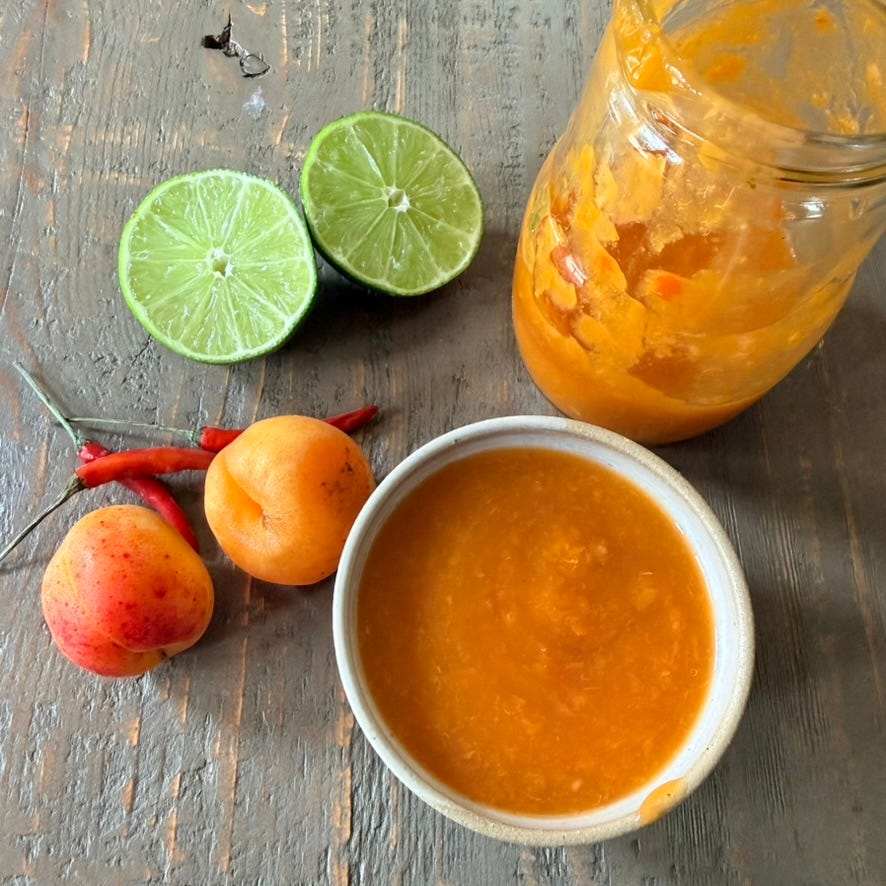
💎 Spicy fresh apricot sauce
Thank for this saucy idea that she suggested on Substack Notes — make a fresh apricot sauce with chile and fish sauce for grilled seafood. I did just that and it was great — even on rice, which reminded me of when my mom used to serve us kids sliced ripe mango with rice and a smidgen of fish sauce. It was Mom’s clever way to get us it to “get the rice to go down.” I’ve adored the fruity-funky combo ever since I was 5 years old! Rory is new to the idea and loved the sauce on rice too.
Enjoy the apricot sauce at room temperature as a dipping sauce or chutney-ish relish. Keep scrolling for the recipe . . .
Spicy Fresh Apricot Sauce Recipe
In a small food processor blend together:
8 ounces (225g) pitted ripe apricots (soft ones are welcomed!)
1 Thai chile, coarsely chopped
2 Tbsp fresh lime juice, plus more to taste
1 Tbsp fish sauce, plus more to taste
1 very small clove garlic, finely chopped
Taste and adjust the flavor with extra lime juice by the to tame sweetness or fish sauce to add savory umami-ness. Incrementally add each by the 1/2 Tbsp (1 1/2 tsp). Use immediately or store in a jar for up to 1 week.
Support Pass the Fish Sauce! Join us for free or upgrade to a become a paid subscriber to enjoy 150+ professionally developed recipes, seed new content, and get future class discounts. Thanks for your enthusiasm!
💎 Almond Apricot Cake (gluten free)
Apricots are from Central Asia and China and almonds may have hailed from those regions too. They are destined to be together in a sweet treat. I wanted an easy cake to combine and celebrate the two ingredients and created this delight. I riffed on ’s almond butter cake recipe from her brilliant Gluten-Free Flavor Flours cookbook, but baked fresh apricots right into the cake, an idea poached from the French moelleux of summer fruits, a cake recipe that wrote about a number of years ago.
One cake serves 8, if you decide to share it.
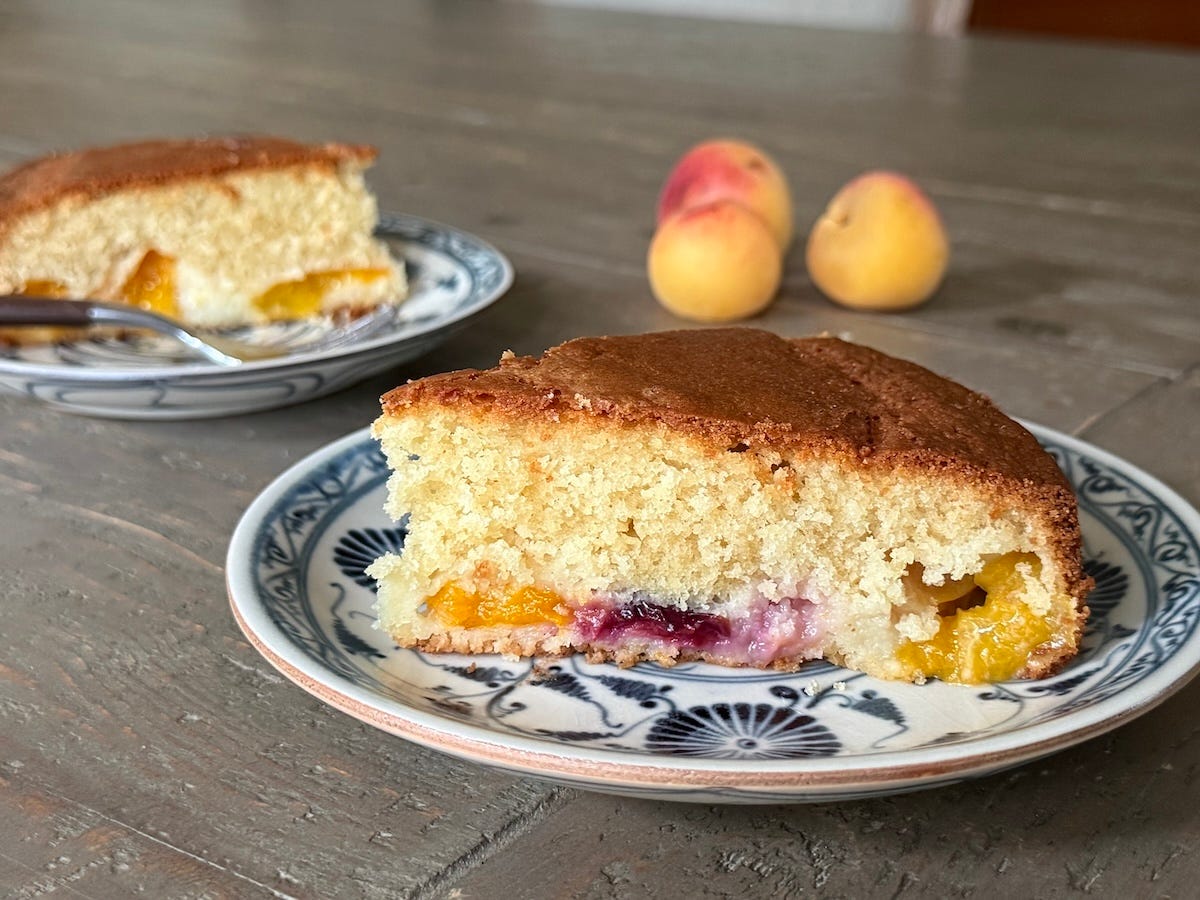
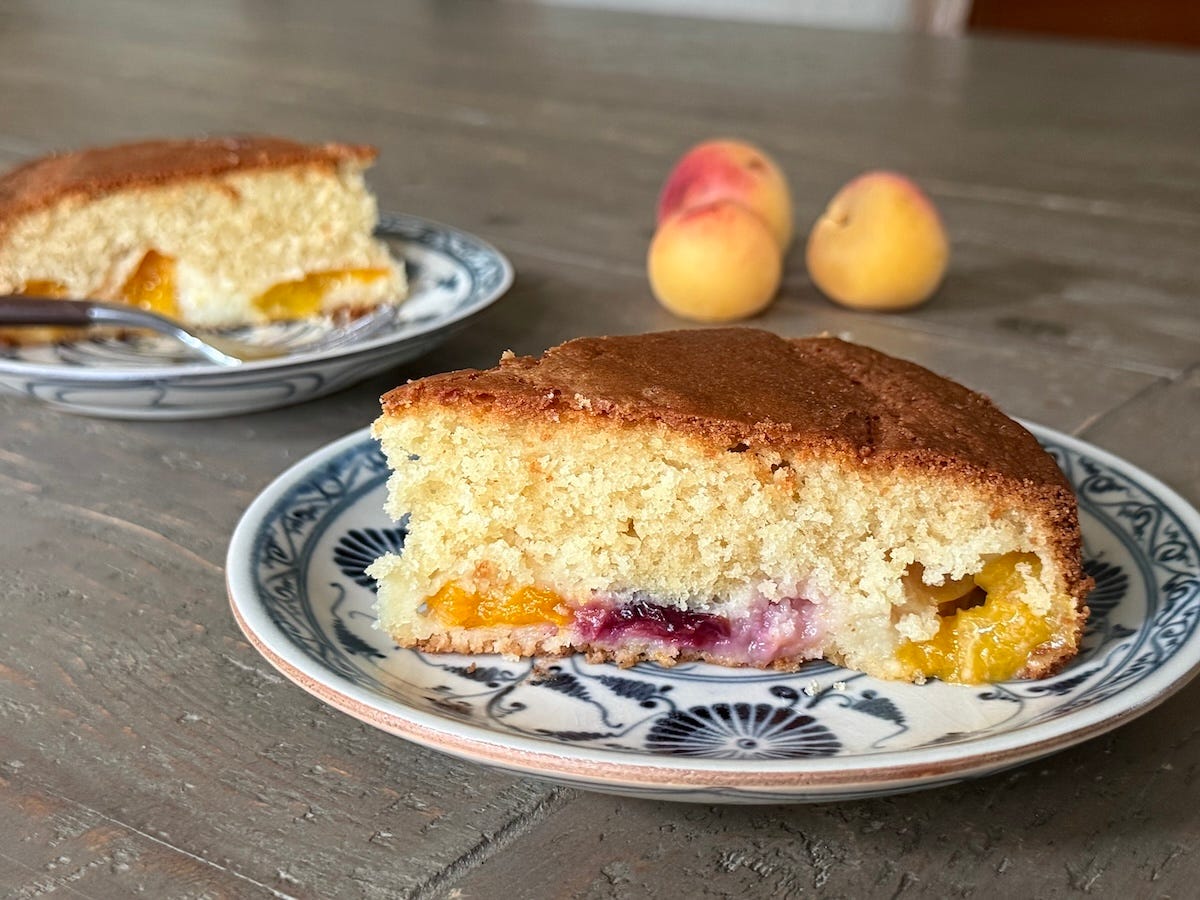
The fruit sank into the bottom and didn’t turn totally mushy; it added a tangy contrast to the cake that was wonderful to eat. The top baked to a delicate crispness that finished the cake with a truly special crust. (Yes, I think you can make this vegan too!)
I shared some with neighbors, two of whom enjoyed it to celebrate their baby’s 6 month birthday (their baby is also named Rory).
Like the popular PTFS easy lime pound cake recipe, this one is also made in the processor. (I’m a somewhat lazy cake baker.) I’ve just written the 🆓 recipe up at the website for you to bake it up yourself. You can easily play with it too. Make this almond apricot cake recipe your summer go-to!
Coming up for this Sunday Special are ideas for the grilling season that is now upon us!
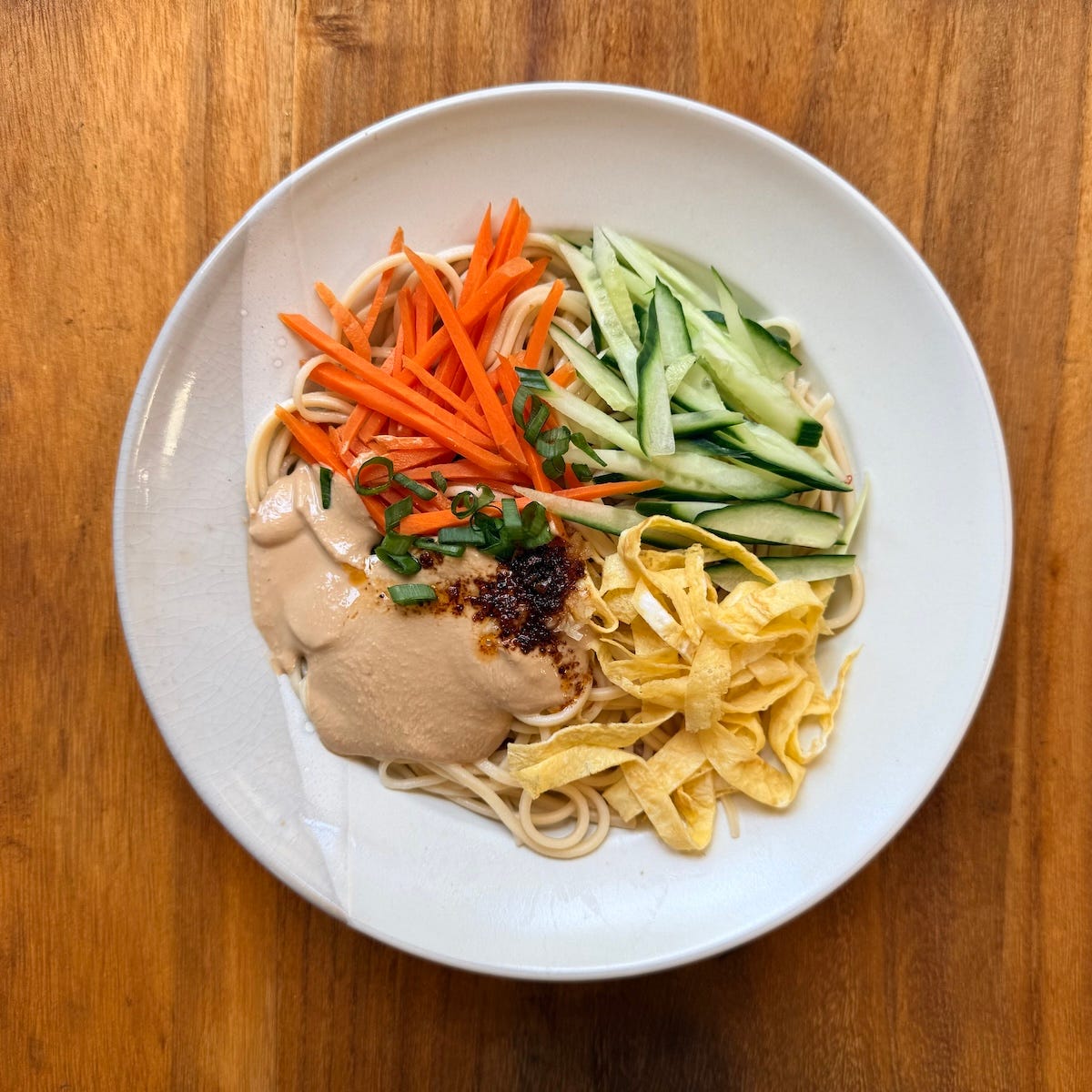
For those of you who wondered how long the Taiwanese sesame noodle sauce lasts, I’m confirming that it’s freezable. I froze a jar of it for a week, then drove it to my mom’s house in Southern California where I whipped up the noodles for a fast lunch. The sauce tasted like it was freshly made! So go ahead and make a double batch of the cold sesame noodles sauce and use one now. Freeze the balance as 1/3 cup (80ml) portions for single servings and faster thawing.
Using egg strips for the sesame noodles reminded me how useful egg sheets are as a protein-rich addition to East Asian noodles, dim sum, and rice dishes. I grew up with trứng tráng (egg sheets in Vietnamese) in sophisticated Hanoi-style bún thang noodle soup and cheery mixed rice (cơm trộn).
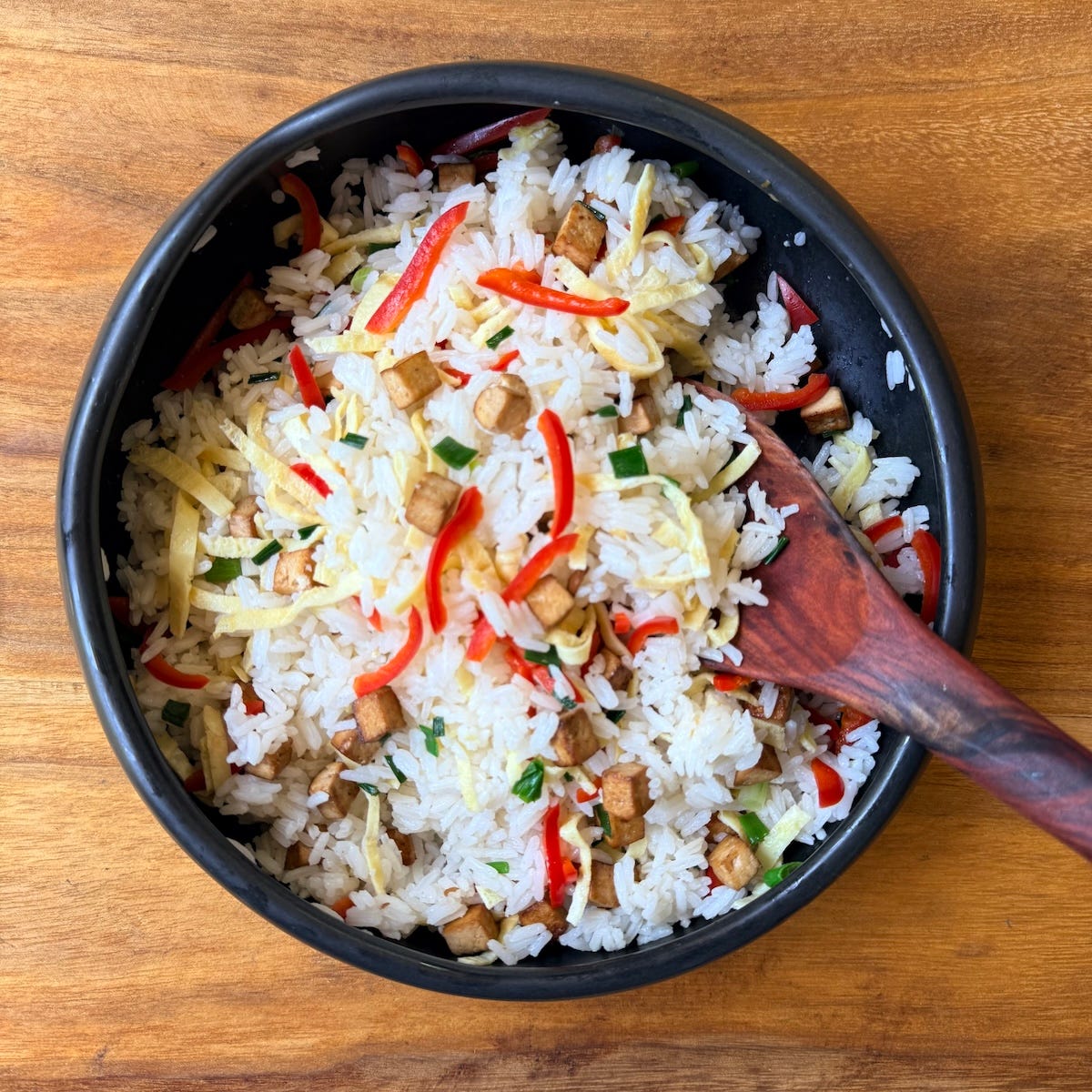
My mom regularly prepared the rice dish, which is easy breezy and healthier than fried rice. Cơm trộn is simply hot rice mixed with add-ins but done in a particular fashion so it tastes special and fun. In the photo below, the red strips are a quick pickled sweet pepper which lends a crunch, piquant note to the rice.
Vegetarian mixed rice (cơm trộn chay) with seared tofu. I’ve prepared it with grilled leftovers during summer and thrown in a handful of fresh herbs too. The sky’s the limit with mixed rice so get the blueprint and make it!
Feeling nostalgic and hungry the other day, I threw together a vegetarian batch of cơm trộn for an easygoing lunch. However you make mixed rice, it’s lite and can be served warm or at room temp. It was so good that I shared my blueprint recipe and tips on the website for you to craft your own. When you make my mixed rice, look for the link to the recipe for egg sheets too (you’re welcome). Get friendly with the Viet mixed rice recipe this summer!
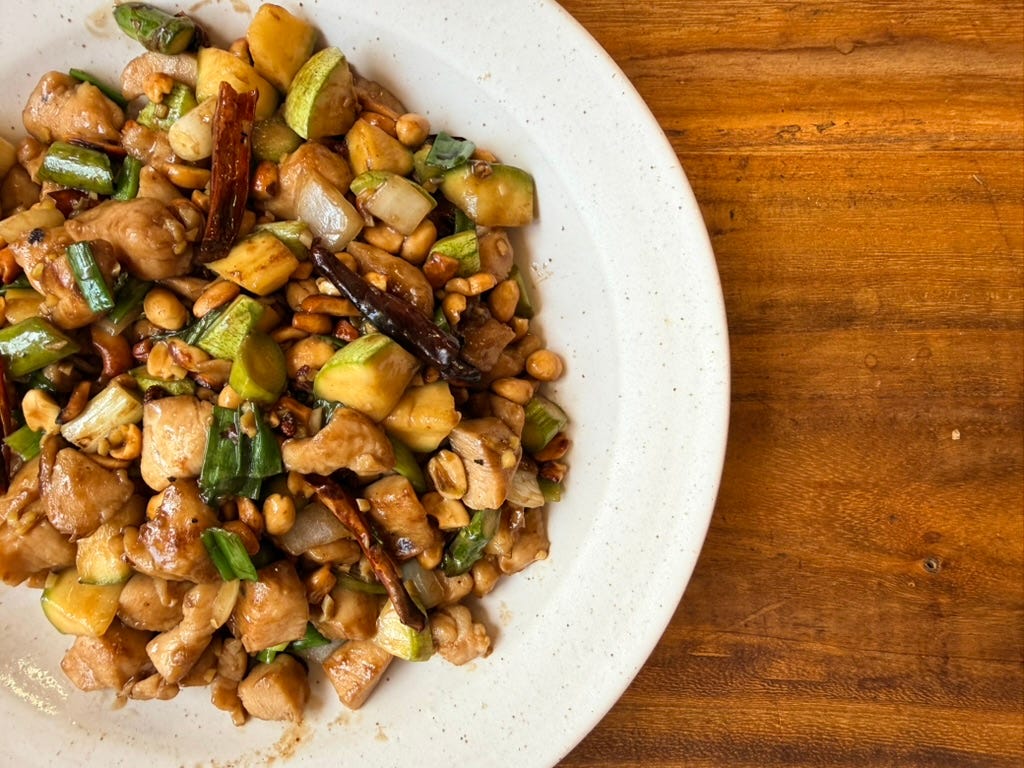
This week’s big cooking star was kung pao. I challenged myself to come up with a stellar kung pao chicken recipe that:
Can be used as a plug-and-play template to feature other proteins or be vegan
Includes enough vegetables so it can be eaten with rice as a satisfying, wholesome meal
Allows nuts to shine, not just be minor decor as they usually are in takeout versions
Breaking kung pao rules (sort of)
In Mandarin Chinese, 宫保鸡丁gōngbǎo jī dīng literally means “Palace Guardian Chicken Cubes”. It was a favorite dish of an 18th century provincial governor named Ding Baozhen (1820–1886). Parsing the Chinese name:
宫保 gōng bǎo (Palace Guardian) was part of Ding Baozhen’s official title
鸡 jī means chicken
丁 dīng means cubes and also is a pun on the man’s surname, Ding
Kung pao chicken, the Sichuanese spicy, tangy chicken stir-fry that we know today, likely originated from the time the governor spent his youth in Guizhou (a southwestern Chinese province located north of Vietnam). Modern cooks in Guizhou season kung pao with fermented bean sauce and chili-garlic-ginger paste. No nuts are included in Guizhou kung pao. And, there are versions with chicken, shrimp, potatoes, and even pig’s stomach.
Ding loved chicken stir-fries so much he told his cooks to include it on menus for guests. When he governed northeastern Shandong province, he enjoyed a chile-less version with walnuts or cashews instead of peanuts.
His last post was in Sichuan, which explains why the popularized version of kung pao chicken includes dried chile, Sichuan peppercorns, peanuts, and Chinkiang vinegar. Those ingredients are found in other Sichuan favorites.
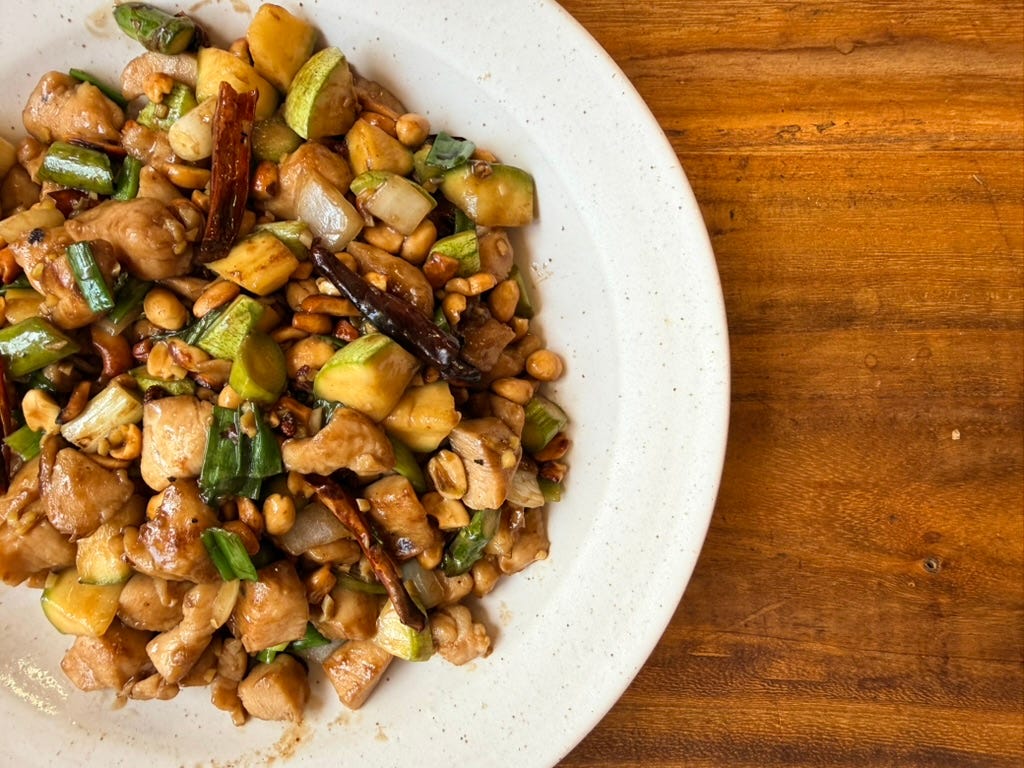
My version of Sichuan kung pao chicken.
Compared to other Sichuan dishes like mapo tofu, kung pao chicken is not overly spicy or fiercely hot. Perhaps the governor’s cook incorporated all the ideas from the three provinces where governor Ding had been posted? He and his family moved about the country with a staff, including cooks, who likely adopted his favorite chicken dish to local tastes and ingredient availability, writes Fuchsia Dunlop in an article for the Los Angeles Times1.
As a result, nerdy kung pao fans will recognize Guizhou, Shandong and Sichuan versions. I’ve not graduated to nerdish level and am stuck in the Sichuan level so I focused on that iconic iteration for the foundation of my recipe. That said, kung pao has a rich backstory that makes it much more interesting than what we may normally think. You can play with it.
After formulating my kung pao chicken recipe, I used it to make scallop kung pao and a mushroom kung pao. From one recipe, I got three (3) surprisingly delicious kung pao stir fries. AWESOME.
To prime you to flex your kung pao muscles, watch me make the stir-fry and preview the techniques.
Below you’ll find:
My master kung pao chicken recipe in full text and downloadable PDF
Notes for making Kung Pao Scallop and Kung Pao Mushroom
Ingredient tips for chiles and peppercorns
Pointers for getting kung pao’s vinegary tang just right
Paid subscribers sponsor PTFS. This kung pao tour de force is for them. Upgrade to paid status to get the whole shebang, mine the full newsletter recipe index, and gain so much more. Thanks for your considerations.
Hello there! I hesitated to send a Midweek Gem this week because I realized that Substack sends you a lot of emails about the livestreams that I’ve been doing. Moving forward with the livestreams, I’m going to curtail those emails.
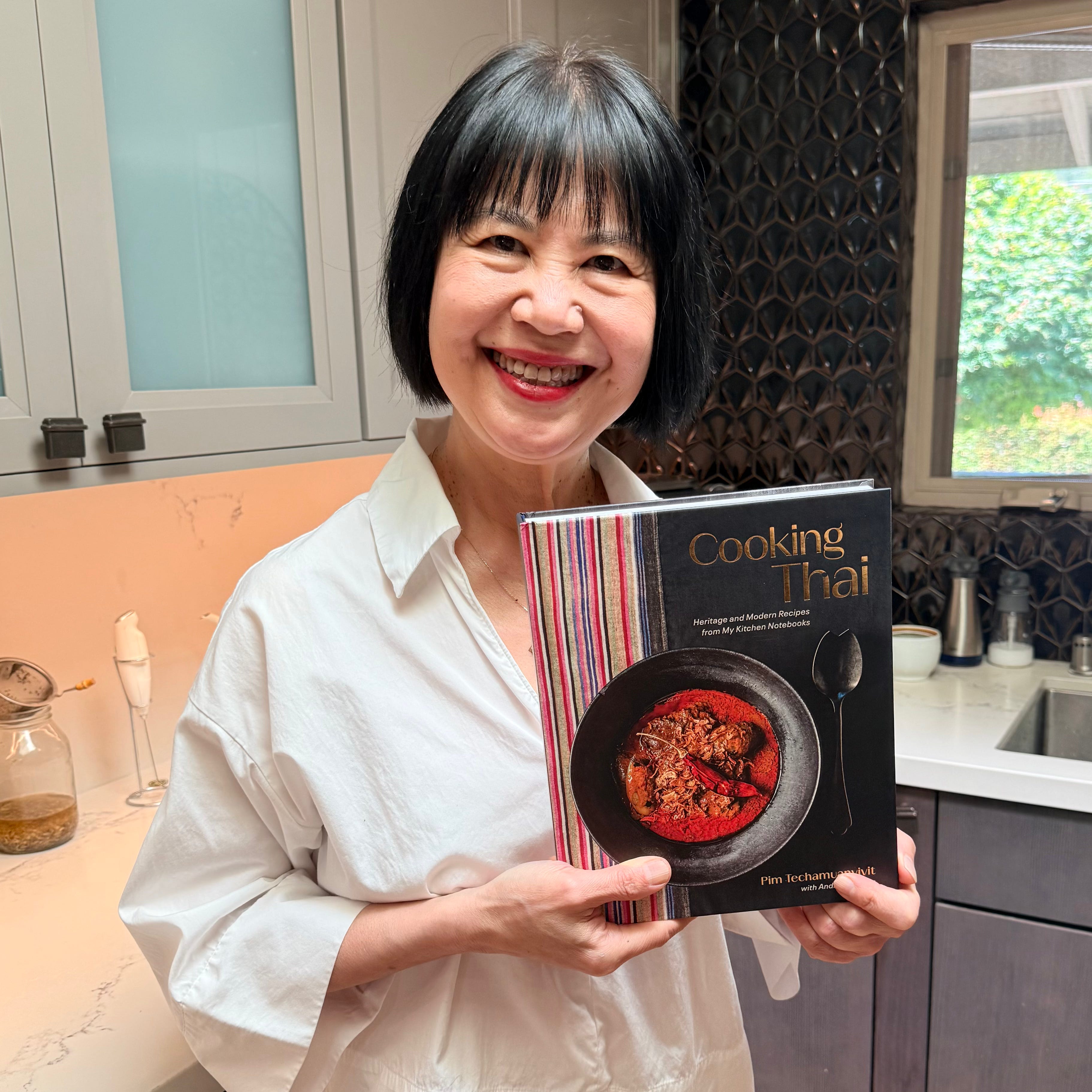
That said, I wanted to share some exciting news with you! Something called an “advance copy” of Cooking Thai recently arrived on my doorstep.
The book is still being printed overseas but my publisher gets a handful of copies. Chef Pim and I each got one and we’re totally gobsmacked about holding the actual book baby in our hands!
What’s on the cover? One of our favorite recipes in the book — Massaman Curry, based on a time tested recipe by Pim’s grandmother. Pim’s curry pastes are stellar and we developed recipes for you to make it with meat or meatless. There are tips to tweak the heat level so you don’t have to have a Thai built-in heat shield to enjoy this food!
A number of Cooking Thai recipe testers are also PTFS subscribers. We were overwhelmed by their positive response to the flavors and techniques.
It’s been quite a journey to bring Cooking Thai to print. Lots of thrills and near spills. We’ve built it as a solid guide for your Thai cooking adventures for years to come. That’s how Pim and I intend to use the book so we hope you’ll do the same!
How and when can you get the book?Cooking Thai releases on August 25, 2026. The printer is in Asia but luckily the books won’t be shipped through the Strait of Hormuz!
To get a copy ASAP, pre-order it from your favorite book store, cookbook shop, or a vendor like the ones listed here. Pim is planning the book tour so more news will come as things develop. Thanks for your ongoing interest and support.
Congratulations to for winning the giveaway. She cooks lots of Cantonese food so I’ll be curious to know what she thinks of adding Taiwanese flavor to her recipes.
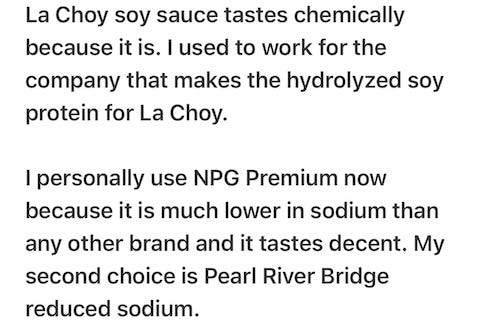
Thanks to all of you who shared your soy sauce brands. And, also to who shed light on La Choy soy sauce and then some.
💎 Focaccia di Recco (one of the best things I’ve ever eaten)
If you live in the Santa Cruz area, get yourself to Mentone in Aptos and order the focaccia di Recco off the specials menu! I’d love for chef David Kinch to permanently add the bedsheet thin flatbread-cracker-quesadilla filled with milky crescenza cheese on the menu. My photo on the right does not do the focaccia justice. 😩
I was so taken by it — a marvel in dough management and manipulation — that I looked up how to make it when we got home from dinner. There are a handful of recipes out there but Janet Fletcher has the scoop from Lidia Bastianich’s recipe. It’s all here on Janet’s website. To get a sense of how it’s made, watch this:
Support Pass the Fish Sauce! Join us for free or upgrade to a become a paid subscriber to enjoy 150+ professionally developed recipes, seed new content, and get future class discounts. Thanks for your enthusiasm!
Coming up for this Sunday Special is a cool noodle dish that Rory and I have been enjoying all week long and we’ve not tired of it.
On the heels of our fish sauce 101 livestream a couple weeks ago, I reached out to cookbook author and now entrepreneur , who recently co-founded Hey Doh, a new artisanal soy sauce company. Clarissa is among my go-to experts on Taiwanese and Chinese cooking. A former Los Angeleno, she’s now based in Taipei, Taiwan.
She sent me Hey Doh products that I’m going to taste for the first time on Thursday, May 21 during a livestream! I’ve also got lots of soy sauce questions because despite using it regularly, I don’t know enough about it.
Due to our time difference, I’ve scheduled the livestream for 6pm PST / 9pm ET / 9am TPE — it’ll be happy hour or breakfast, depending on where you are. The interview will run 30 to 45 minutes.
To recap, on Thursday, May 21, at 6pm PST, you’ll get a Substack email about the livestream. Click on the link to join our chat about Hey Doh, soy sauce making, and why Taiwanese soy sauce is distinctive.
💎 Weeknight Vegetable Stir-Fry Blueprint
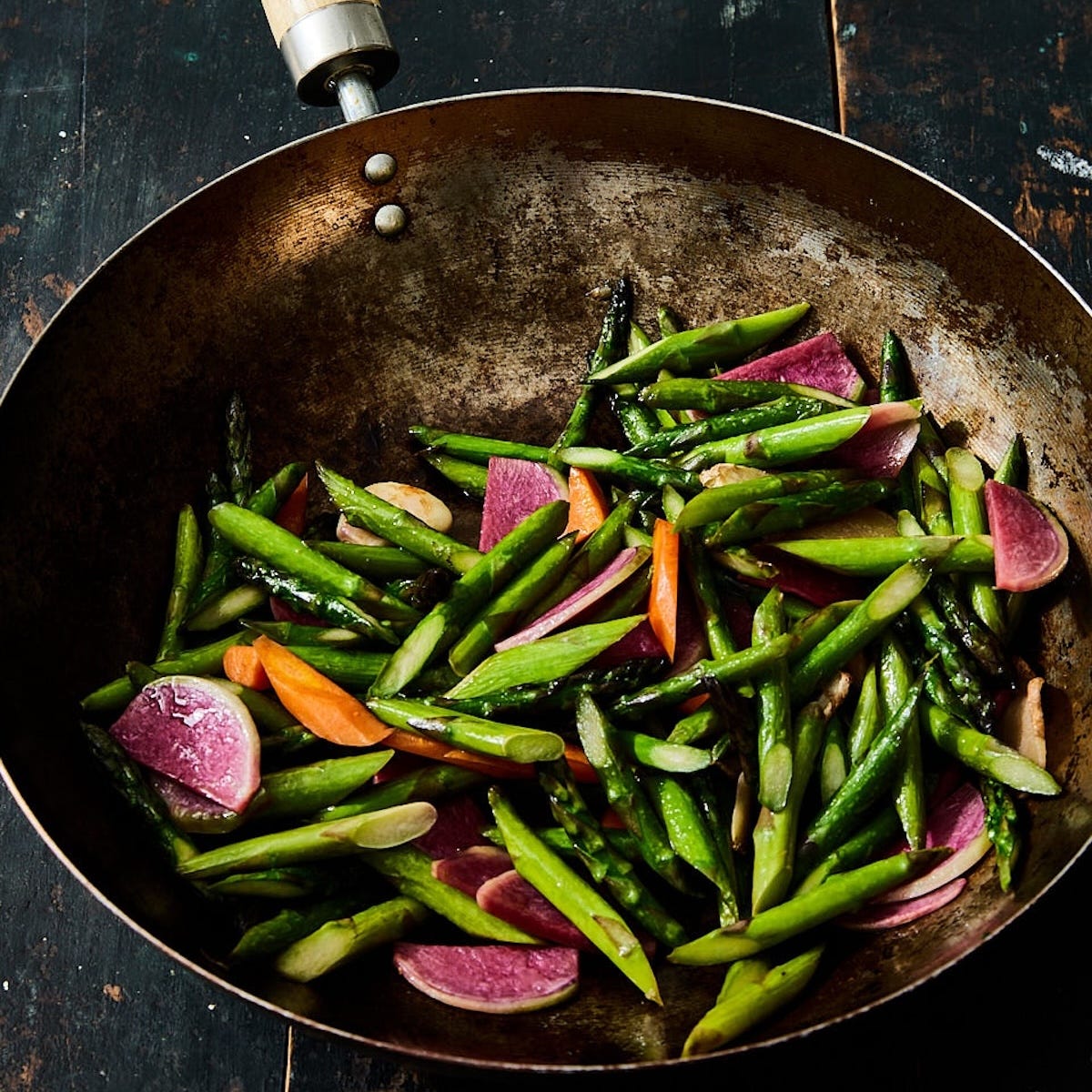
I’ve been adding asparagus to many recipes of late because it’s one of my favorite spring-time vegetables. Why not indulge till you’re nearly satiated? Susan M. wrote last week and reminded me of a terrific stir-fry from Ever-Green Vietnamese. It’s the Weeknight Vegetable Stir-Fry on page 195, in the sides chapter. I love that chapter because I could make a meal of sides.
I originally conceived of this stir-fry in spring, when our farmers harvest super delicious asparagus, carrots, and radishes. (Yes, you can cook radishes and they’re good. Chef David Chang got me doing it it years ago and I’ve never looked back.)
I set up the stir-fry recipe as a blueprint for you to plug and play with it. If you don’t yet have the book, I just published the recipe on my website. Make the Weeknight Vegetable Stir-Fry recipe a couple times and you’ll be riffing on it endlessly.
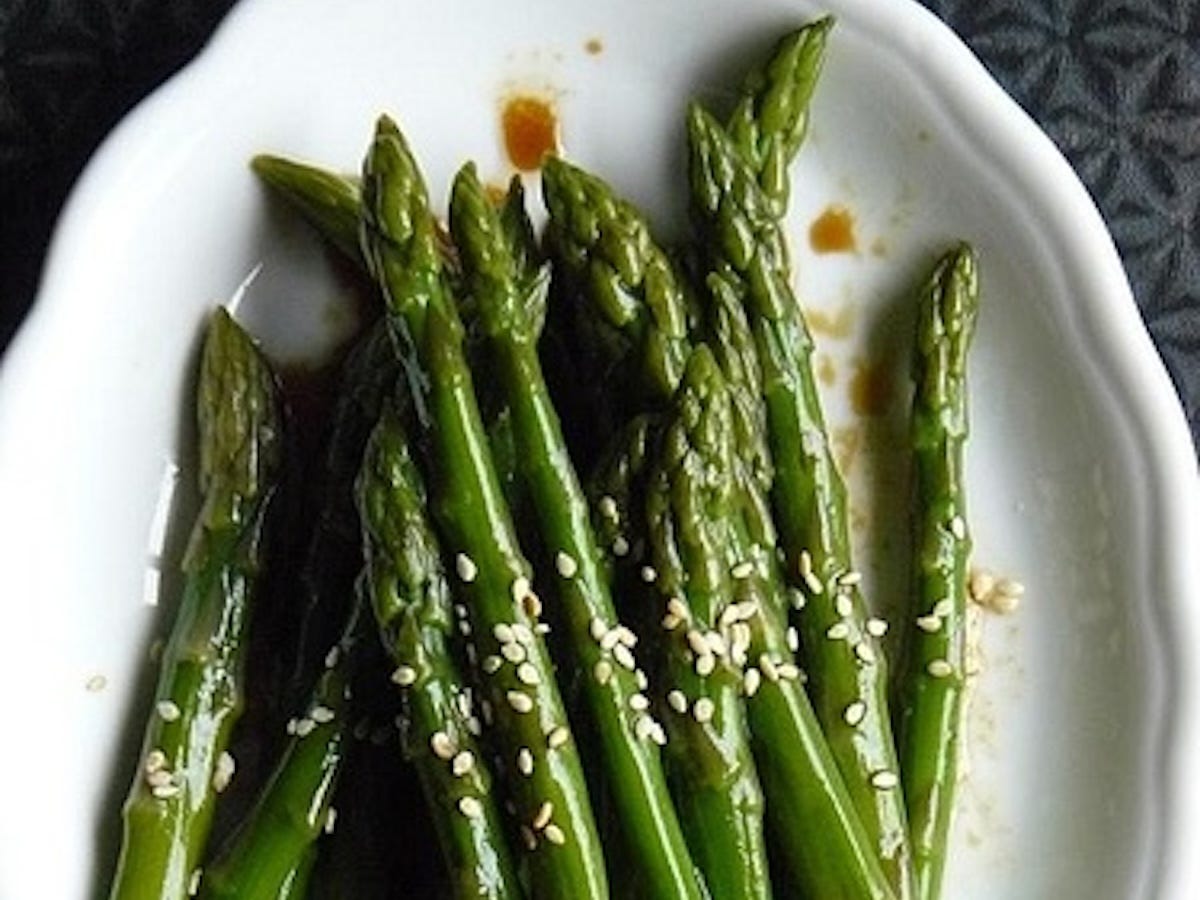
If you want an asparagus only side dish to serve at room temp, look to my very easy asparagus dressed up with a veil of soy sauce and sesame oil. It’s a great combination of asparagus’s natural umami with that of soy sauce, all of which is made fragrant and enriched by the power of sesame.
I return to this Chinese-ish asparagus annually. I have it on my mind because of next week’s conversation with Clarissa. Get the asparagus with soy sauce and sesame recipe. (P.S. It’s naturally vegan, like the Weeknight Vegetable Stir-Fry!)
💎 Recipe recap from the last 2 months
No wonder March and April flew by. I cooked up a lot for you to play with. Here are the recipes mentioned in my dispatches to you. Below are PTFS recipes as well as those posted at the website. I’ve updated the PTFS recipe index to include them too!
And, don’t forget the mega Fish Sauce FAQ and buying guide at the website. It’s not a recipe but the ingredient figures into so many recipes nowadays.
Support Pass the Fish Sauce! Join us for free or upgrade to a become a paid subscriber to enjoy 150+ professionally developed recipes, seed new content, and get future class discounts. Thanks for your enthusiasm!
Coming up for this Sunday Special are some butchering tips I owe you.
Among my 2026 goals is to try Substack’s live streaming function. Let’s do it next week:
When: Thursday, 4/30, 11-11:30am PST / 2pm EST / 7pm UK
What: Ask Me Anything (AMA) about Fish Sauce + uncommon fish sauce (I have some unusual fish sauce that I’ve never tasted before so why not register my opinion to you on the spot?!)
How to attend: You’ll get an email ping when I go live. I will also schedule it in Substack’s Notes app. Attend to ask your questions in the chat function. If you can’t attend and have a question, leave a comment in this dispatch. After the livestream, I’ll share the video so everyone will get the recording.
Now, as for my mom’s stove . . .
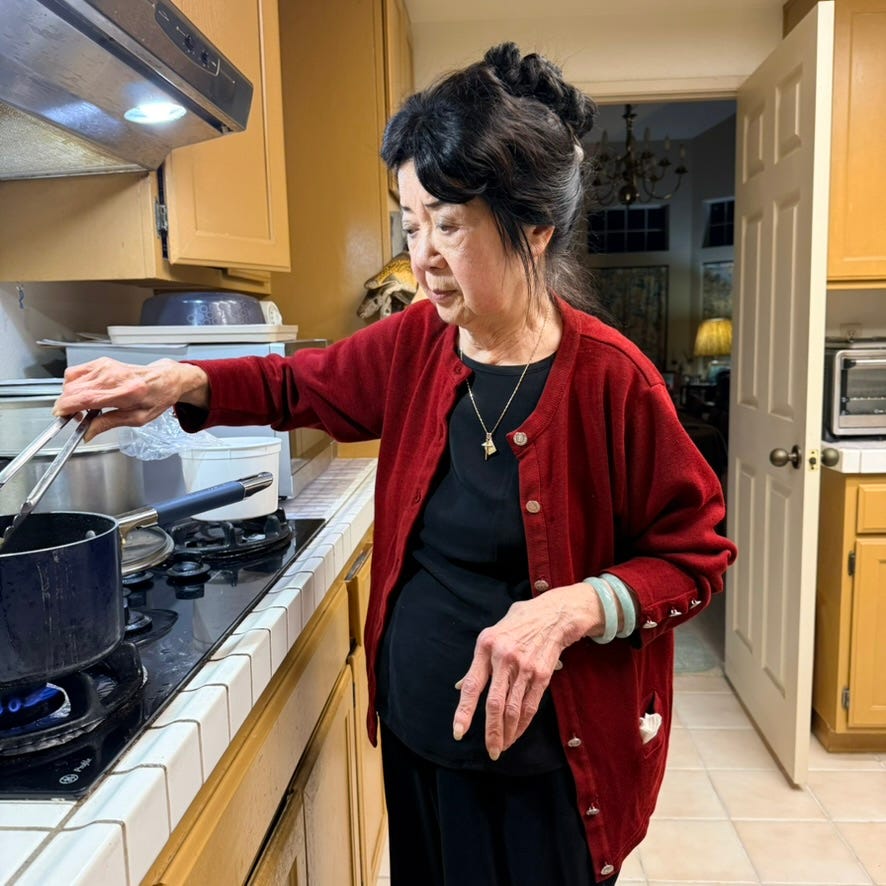
When you cook a lot, your stove is your BF (best friend). My parents bought a new tract house in the late 1980s and it came with an ok cooktop. By the early 2000s, my mom had put that cooktop through its paces and it was crapped out. She soldiered on because the first house she and my dad bought in the late 1970s still had had its original stove from the early 1960s. So anything was an improvement! Mom learned to cook using rice straw (really!) and can bake cakes using indirect coal heat and a flimsy metal box. My how times have changed!
Around 2010, a lady in the neighborhood was doing a kitchen renovation project and set her old cooktop out on the sidewalk with a “For Sale $100” sign.
That neighbor owned a swank home appliance shop, my mom said. The shop’s appliances were nice so my mom figured that the stove was good. After the cooktop languished for a few days with no takers, the sign changed to “Free”.
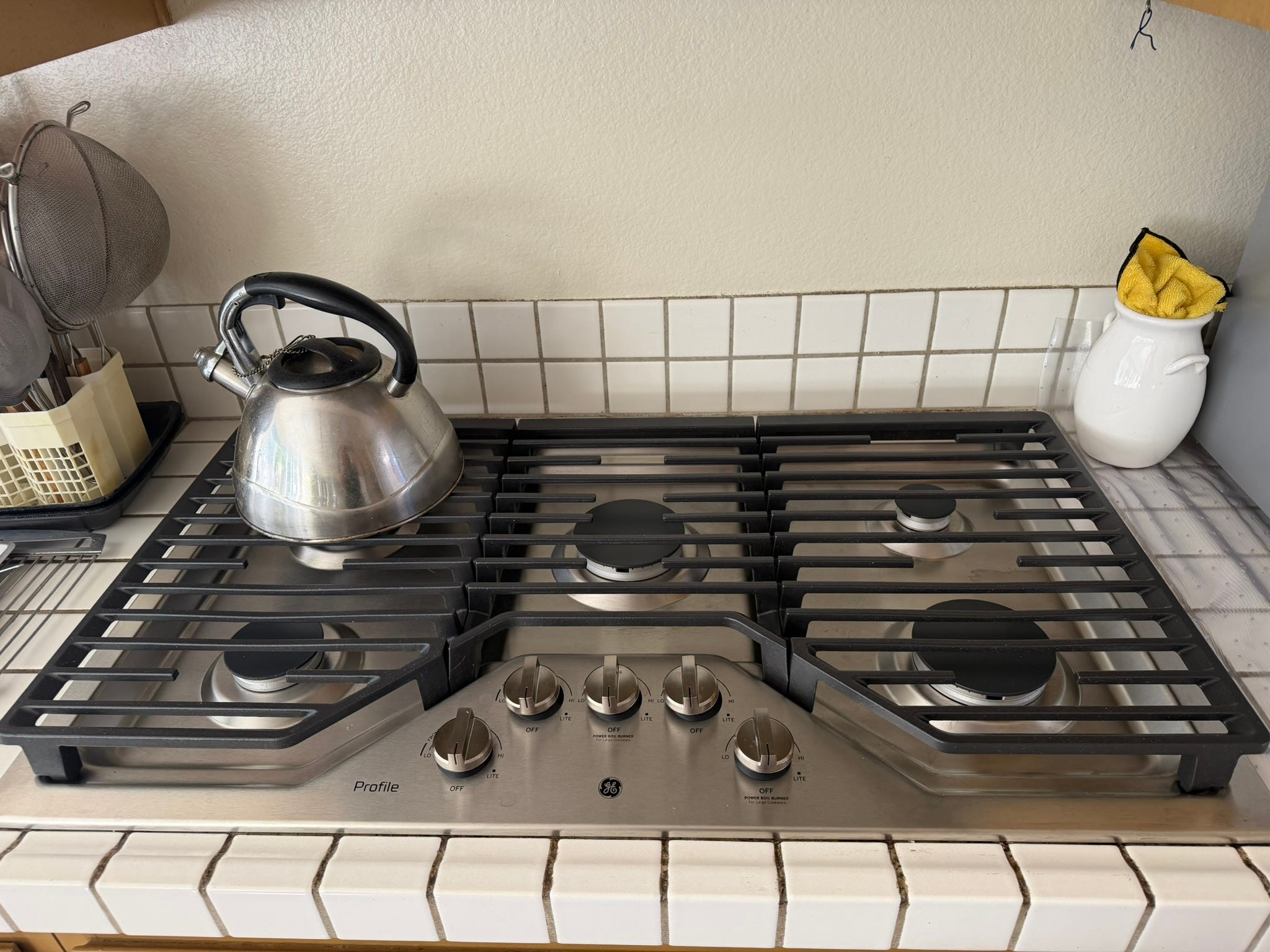
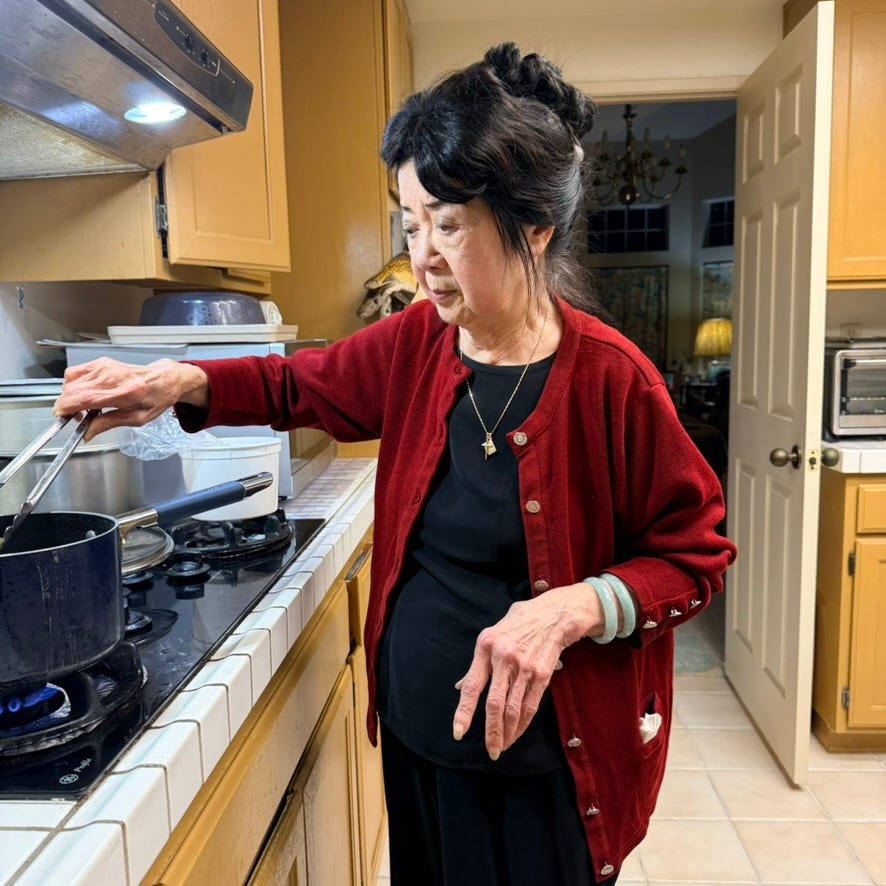
My dad promptly went over and brought the cooktop home. A handyman happened to be working for my parents that day, so within an hour, my mom had a “new” stove — a fancy-ish 36-inch, five-burner GE Profile.
The stove was well used before Mom got it but was reliable. She’s cooked on it for big family feeds, to prepare my dad’s last meals, and now, to cook for herself and her children whenever we’re around.
Mom at her very well used stove.
A couple weekends ago, we visited my mom and after we came back from a walk, Rory and I both smelled gas in the house. My mom was watching Viet shows on YouTube. I marched over to the stove and turned all the nobs to check. Sure enough, one of them was not fully turned off.
Thankfully, the smell dissipated right away.
“I smelled something and went to the stove to check but could not figure out how to stop it,” my mom said. “The same thing happened not long ago.”
The next morning, to my surprise mom said, “If you’re not busy today, would you take me shopping for a new stove?” Heck yes. I had lots of experiencing going back to when I selected my dream stove.
I’ll look online first to research, I told her. Her major caveat is that she wanted to touch the stove before deciding, she said.
Mom, Rory and I drove to Lowe’s where we considered the arrangement of the burners. Why were some curved and others straight? Thinking about how we cook and the pots and pans we have, my mom and I realized this: a curved arrangement of the burners means you can fit bigger pans along with smaller ones on the cooktop.
Additionally, the grates vary in weight and height. My mom lifted the grates of various cooktops and some were very heavy — even for 30-inch models. She had to get a 36-inch cooktop so she knew the grates would weigh more. “I will manage them,” she said.
The burners on her old stove were wimpy (none were more than 9,000 BTU but the cast iron grates heated up fast. The stove that Mom chose . . . a GE Profile was the priciest of the lot but she decided based on function and design. After 51 years of scrimping and saving, she bought herself a fancy new stove! I was so happy and excited for her.
The new stove!
She and my niece dealt with the installer who arrived a few days later. The grates sit up pretty high, as you can see. The flatness of the grates allow her to drag heavy pots across the stove easily, if she wants.
HOWEVER, once she started “making friends with the stove” my mom said that the burners were taking longer to heat up the pans than her old stove. The new stove’s flames heat up the grates so it takes longer to conduct heat to the pans. But after everything heats up, things stay very hot for a long time.
Moreover, when the knobs are on, there’s a blue backlight. That’s a fabulous reminder to turn off the stove.
“Your sisters wanted me to replace the toilets in the house so we did. But this stove is a more important purchase for me,” she said.
My mom is in the autumnal season of her life. Decades ago we talked about beginnings and nowadays, discussions lean toward endings. This stove, however, energizes my mom. She’s excited about learning to use it well for her cooking needs.
I told her, “Well, you better stick around longer to teach me how to cook more dishes!”
Remember our discussion about aging and maintaining the Japanese notion of ikigai (生き甲斐) — a life purpose? Turns out, ikigai can come in the form of a new stove.
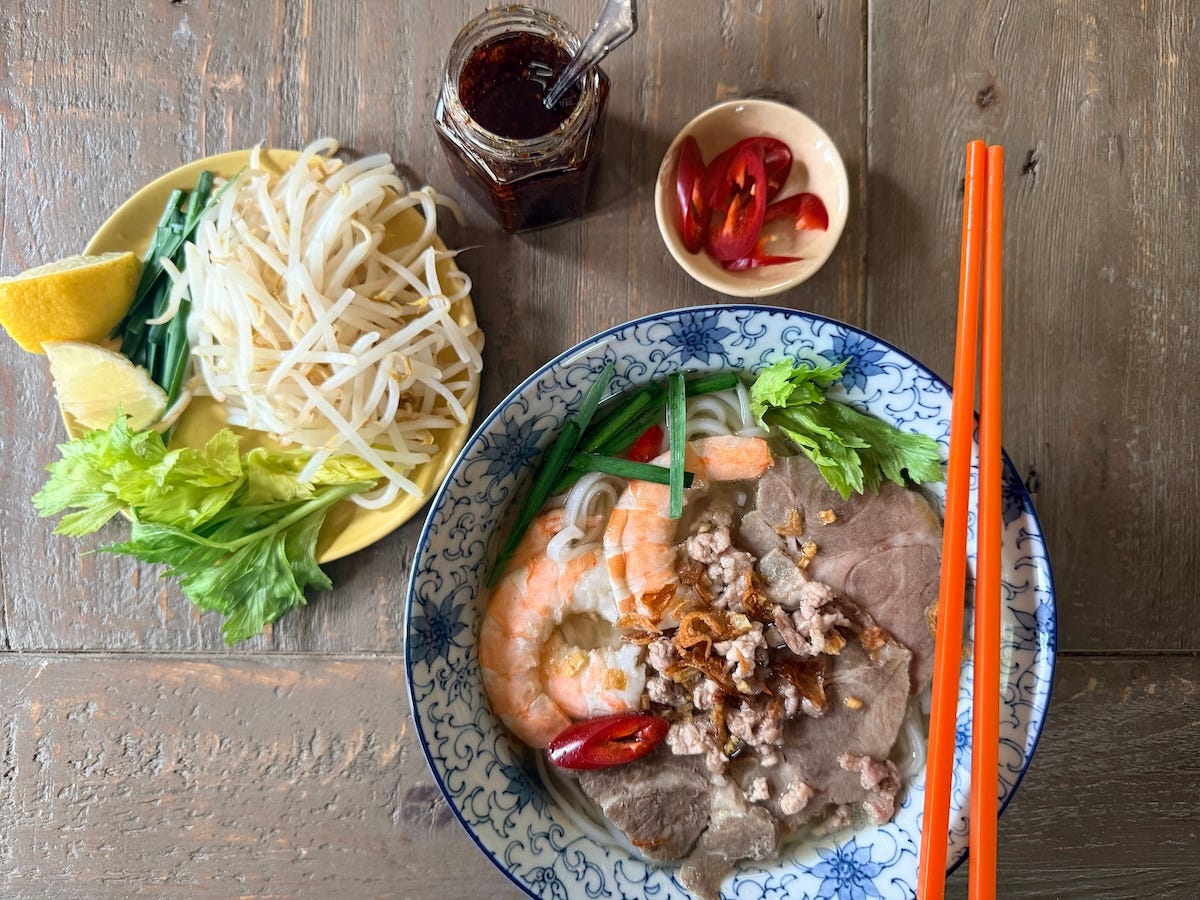
Even though my mom is northern Vietnamese to the core, she does appreciate a good bowl of hu tieu, the iconic southern Vietnamese noodle soup. There are many renditions but the one our family enjoys most it hu tieu Nam Vang — Phnom Penh-style hu tieu. It’s a Chinese-Cambodian-Southern Vietnamese surf and turf combo.
Hu Tieu Nam Vang — a surf-and-turf classic southern Viet noodle soup.
I don’t make it often but thinking about what I’d like to make for my mom on her new stove, I made hu tieu this past week from a recipe that my family has relied on for many years. Unlike pho, it’s very versatile. I updated the recipe to offer tips and pointers so you can plan ahead and tweak it as you like. Get the Hu Tieu Noodle Soup recipe at the website!
💎 Stress-testing lemongrass tofu
As a recipe tester, I leave food in the fridge to determine how long it stays fresh. That’s to say, I stress test my recipes. I’m happy to report that the crispy lemongrass tofu and its crispy lemongrass-y topping can be kept refrigerated for five days. I kept the stuffed tofu in one container and the topping in another. I finished the tofu in the pan and served it up for dinner on Wednesday. So, it’s extra handy for meal planning or even just to top a salad. Head to the PTFS Crispy Lemongrass Tofu recipe!
Support Pass the Fish Sauce! Join us for free or upgrade to a become a paid subscriber to enjoy 125+ professionally developed recipes, seed new content, and get future class discounts. Thanks for your enthusiasm!
Coming up for this Sunday Special are recipes and ideas to celebrate a precious springtime vegetable.
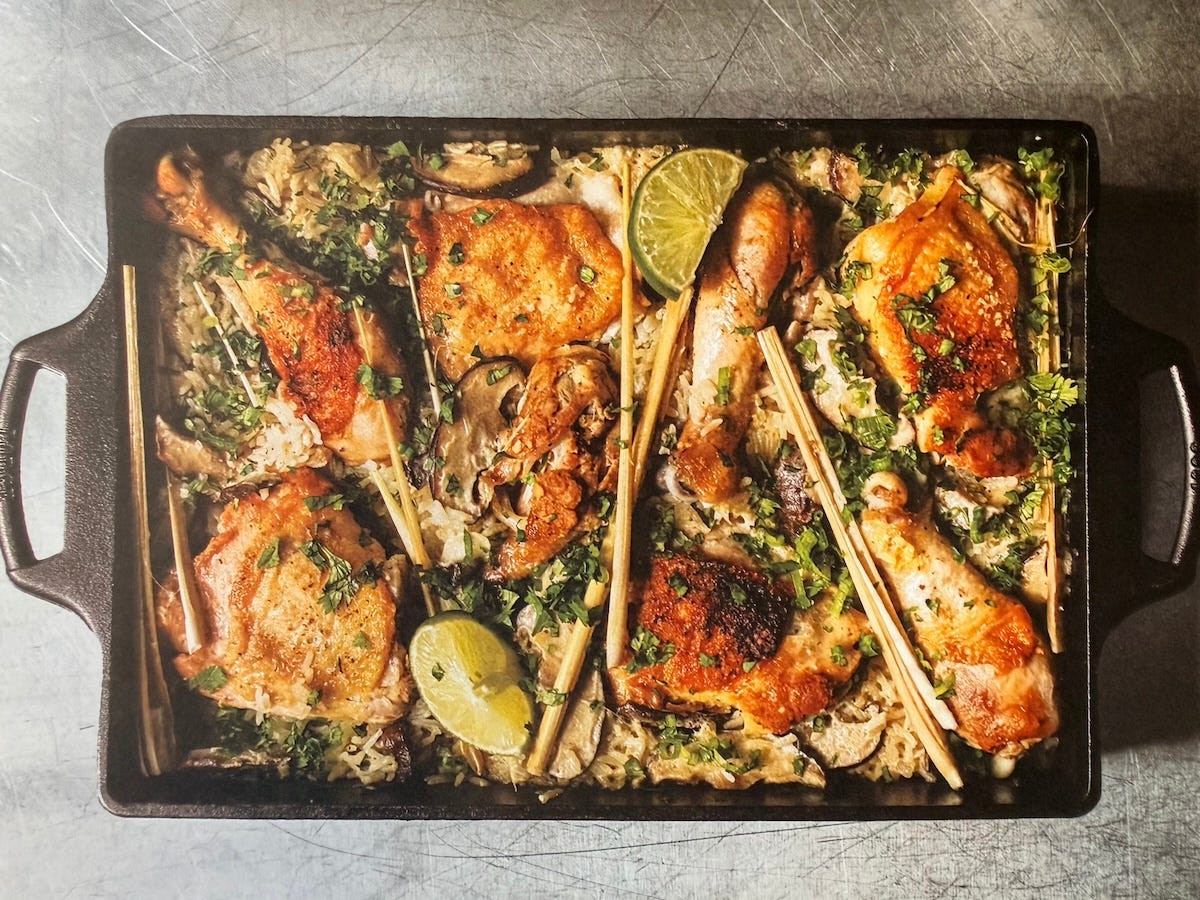
While working on our taxes I needed a fun, easy dinner and landed on chef Ron Hsu’s uncommonly good chicken and rice casserole.
His recipe in Down South + East cleverly layers gingery, garlicky, umami notes into a one-pan dish that’s doable on a weeknight. He’s also loaded the keeper recipe with great pro-chef ideas. Get Ron’s recipe for chicken and rice casserole.
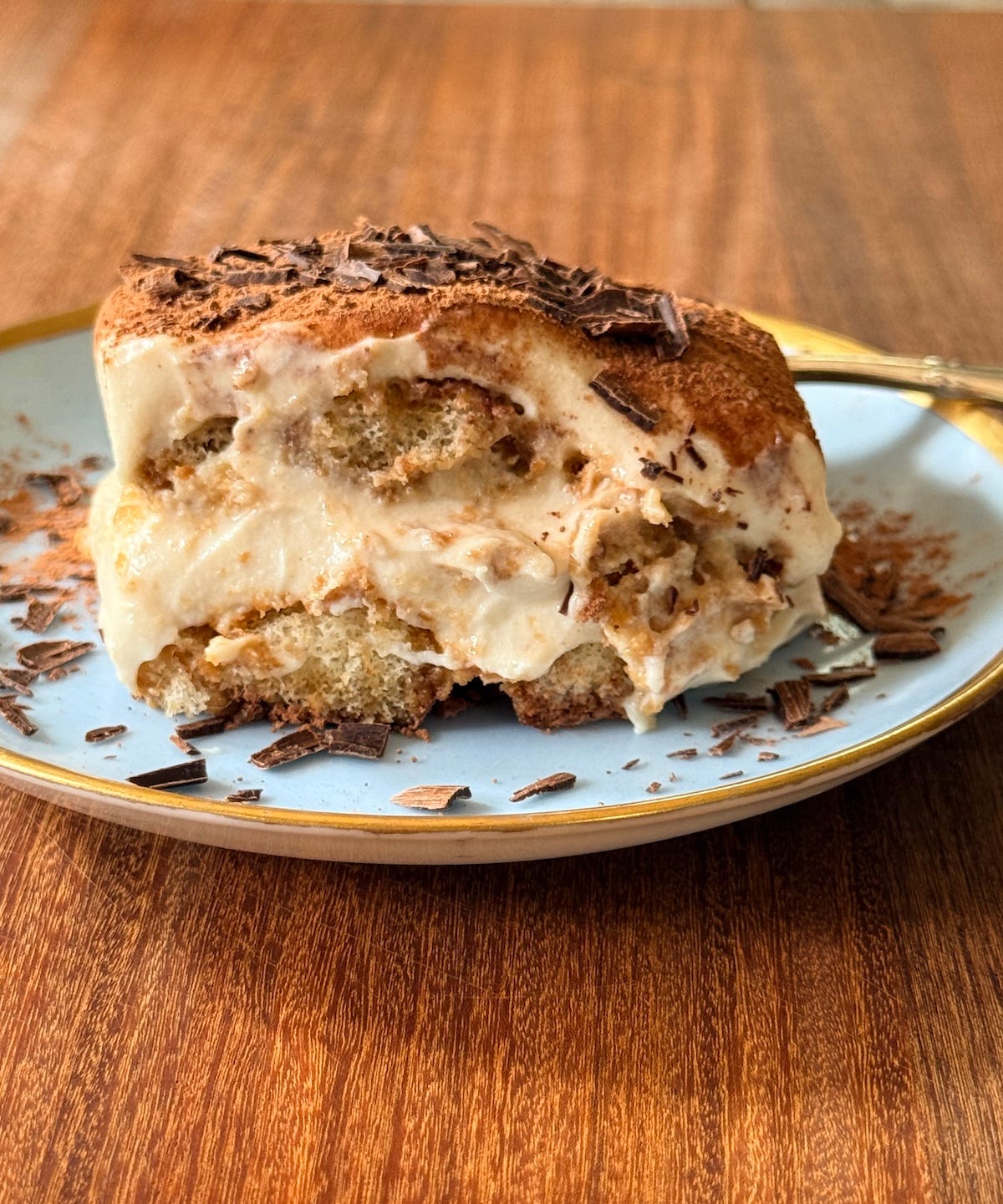
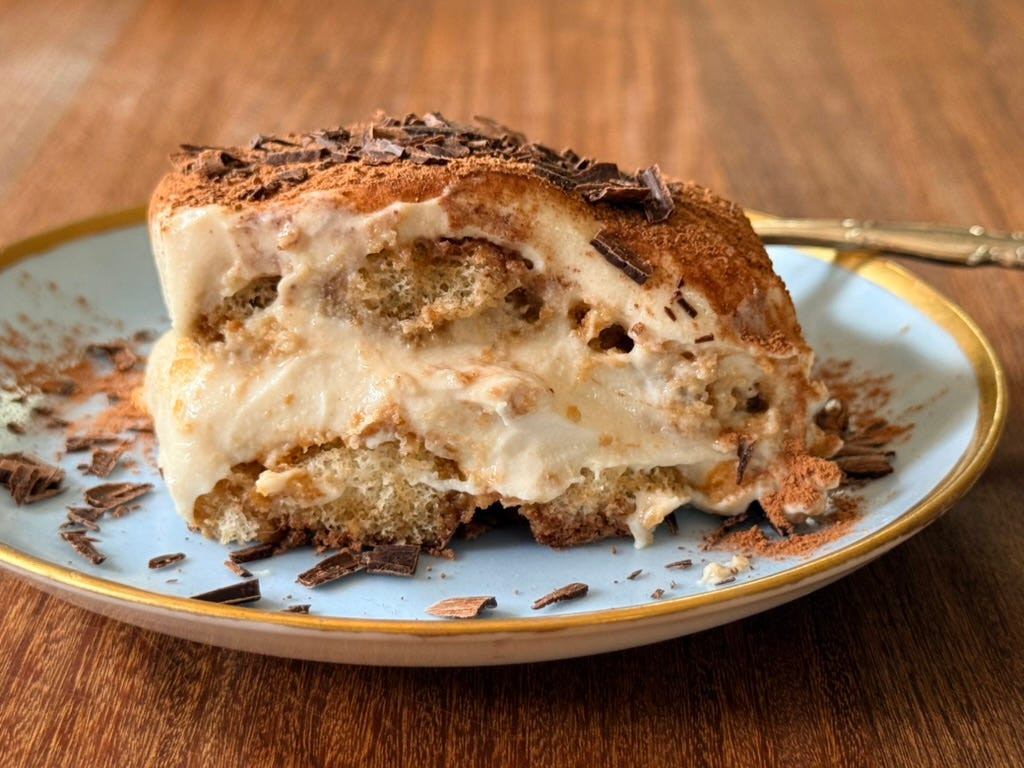
Ron’s casserole recipe got me thinking about dishes that get assembled in a deep dish. Although tiramisu doesn’t require baking, it’s traditionally put together in a casserole dish. It’s made of layers of coffee soaked savoirdi biscuits (crisp ladyfinger cookies, not the soft ones) bound together by a heavenly, slightly sweet cream; it’s finished with a dusting of cocoa powder and maybe chocolate too. Tiramisu needs to sit overnight to age into excellence, making it an utterly easy and impressive make-ahead sweet.
Traditional tiramisu involves whipping egg yolks and sugar to a thick consistency much like you’d do for Vietnamese egg coffee. Thinking about casseroles and egg coffee led me to buy a large (400g) package of savoirdi biscuits at Eataly. (Note that there are gluten-free biscuits made with rice flour nowadays, too!)
When Rory saw me holding the savoirdi, he sweetly said, “Maybe you’ll make tiramisu for me?”
Spousal mind meld moment. However, I’d give my tiramisu a Viet touch!
In Vietnam, there are mousse cakes called bánh Tiramisu but I wanted to devise a Viet take on the Italian icon, which has a fuzzy history.
Tiramisu may have originated in the 1800s at a brothel in Treviso, Italy, as an aphrodisiac; if that’s true, it gives new meaning to the name’s literal meaning as a ‘pick me up’. Or perhaps someone invented it in the 1930s. No one really knows, but what is clear is tiramisu’s incredible popularity, which started in the 1980s. It’s now known internationally, with endless iterations.
By the end of the week, I had gone three rounds with tiramisu.
What I learned was this: Tiramisu is elastic and foolproof. All of the trials tasted very good, though they have their pluses and minuses, which I detail below.
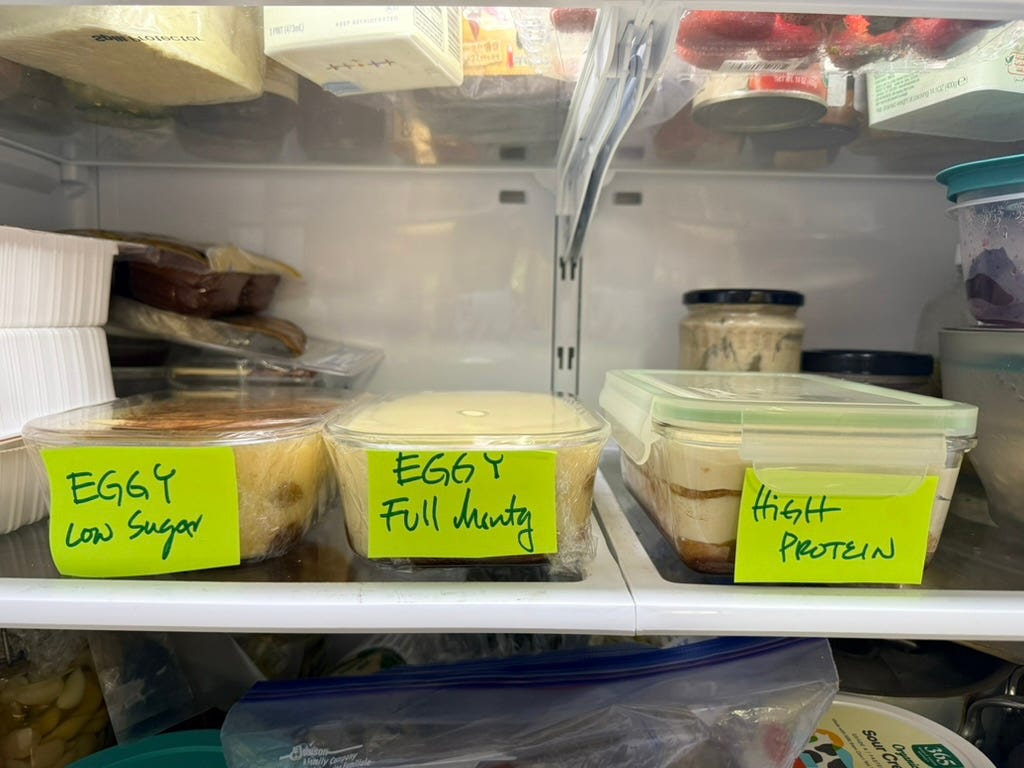
It was hard to decide which to present to you so this tiramisu recipe allows you to choose for yourself. Shape your Vietnamese coffee tiramisu for your needs and interests! Regardless, the result will be a delicious Italian-Viet dessert. (Rory is very happy and so are our neighbors with all three versions.)
This dispatch fully equips you to make a killer good tiramisu. You’ll find the following:
Vietnamese Coffee Tiramisu recipe in full text and as a downloadable PDF
Three ways to craft tiramisu (old school, low sugar, or high protein)
Ideas for making vegan tiramisu
Pointers for building Vietnamese coffee flavor, scaling up this small-batch recipe, and how to serve tiramisu gracefully
Ingredient swaps and advance prep ideas to save time
Thank you for being here. Full access to this tiramisu recipe is for paid subscribers who sponsored this recipe and much, much more. Join us to pitch in and benefit in many ways. I appreciate your support on all levels.
Paula Wolfert, the cookbook author and expert on Mediterranean cuisines, once told me that she didn’t like marginalia in cookbooks. The notes and scribbles soiled the book, she said. I didn’t respond because I was thinking of the countless times I’d jotted down notes in cookbooks. I didn’t want to forget my tweaks and preferences.
For me, handwritten notes and scribbles signal that a cookbook had value for the cook. I like finding marginalia in used cookbooks too because they feel more like artifacts. For those reasons, Pat’s email tickled my fancy.
It’s a cookbook author’s dream to know that their recipes are part of other people’s rotation. Feel free to email me your marginalia!
💎 PTFS in Parade Magazine!
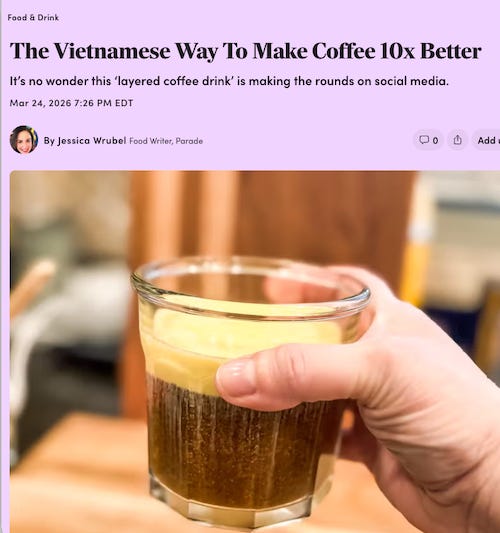
A PTFS recipe got into Parade magazine last week! It was the one for Vietnamese egg coffee, which I wrote up alongside Vietnamese salt coffee in this dispatch.
Jessica Wrubel reached out to interview me for the story. Unknown to me, egg coffee has been making the trendy caffeinated rounds in the States. I’m totally stoked because ca phe trung (egg coffee) is a fun, different way to experience Vietnamese coffee culture. Read Jessica’s story and get the recipe.
Egg coffee is enjoyed in smallish amounts so you can have it in moderation while still adhering to a healthy diet, which brings us to . . .
💎 American Heart Association’s Dietary Guidelines
The Trump Administration’s dietary guidelines under RFK, Jr is full of holes for many reasons. The American Heart Association (AHA) recently weigh in. When I read about it in a Wall Street Journal article this week, I had to mark up the salient points.
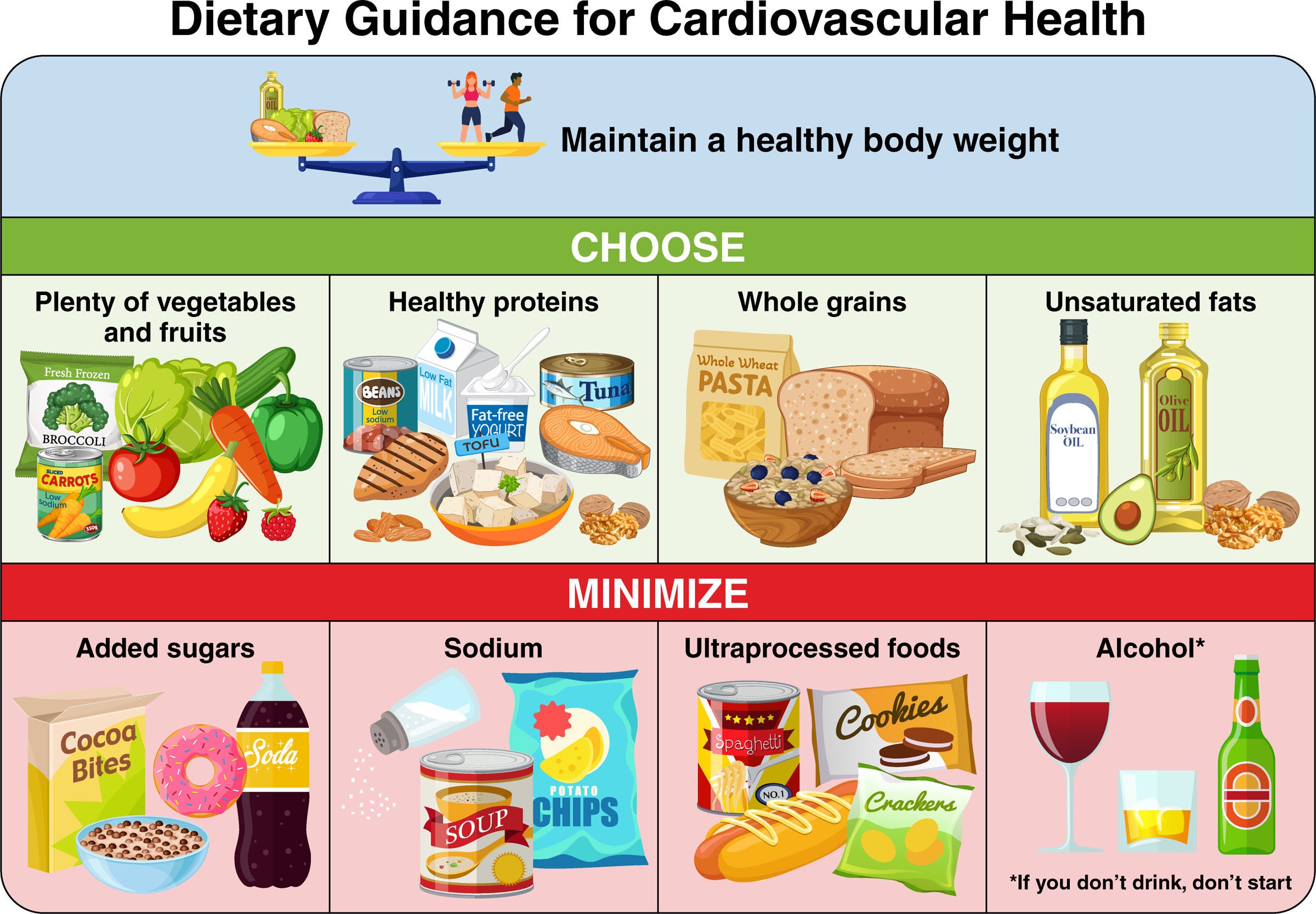
If you can’t read the article by enlarging the image, here’s a gift link to the full story (click to close the subscription window so you’ll get to the story). The AHA aligns with the government’s definition of a healthy diet BUT pushes for less red meat and less full-fat dairy. The heart association’s guidelines make better sense for human and environmental health reasons and is more affordable and accessible to more people. Tallow and grass-fed beef are pricey!
Below is the AHA’s guidelines which showcases tofu as a healthy protein!
Early last year I realized that DOH! — “enriched” flour had to had stuff added to it because wheat’s original nutrition had been removed during the modern milling process. I began playing with baking with whole grain flours.
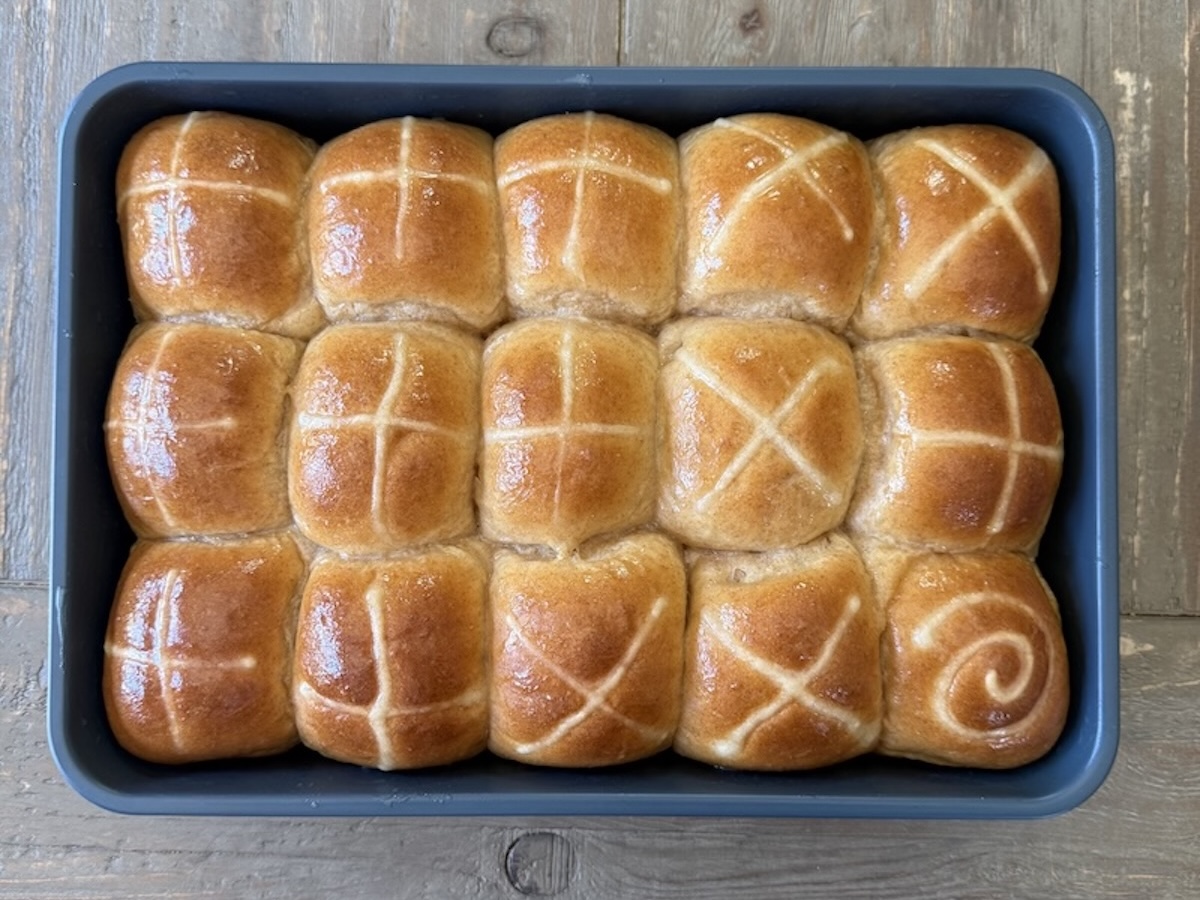
One of the experiments was with a fluffy roll, which I adore making from Chris Tan’s hot rolls recipe. It’s lofty, tender and rich. When I substituted half of the regular flour with 50 percent whole wheat flour, the texture remained the same as usual but the flavor was much more complex. The rolls had bigger personality.
I’ve used the rolls as a side with ham or turkey. They’re also killer good with char siu pork steak or char siu chicken from Vietnamese Food Any Day (if the book is handy in your kitchen).
The rolls keep well for days and you can freeze them too. Decorate them with crosses to make hot cross buns for Easter. But I would make the rolls anytime, not just to celebrate a Catholic holiday or bunnies. Get the hot rolls recipe at the website. Play with the recipe!
💎 Down South + East Asian cooking
Recently, I wrote about Chinamaxxing, why I learned Mandarin, and how Chinese and Vietnamese cultures have rubbed shoulders and commingled for eons. Chinese chefs usually don’t discuss Vietnamese food unless they are Vietnamese Chinese. But then Chef Ron Hsu’s new cookbook arrived. Written with Hugh Amano, Down South + East offers Ron’s unique life experiences through recipes.
When I first opened the book, it fell open Ron’s take on Vietnamese caramel pork (pictured below); his version is somewhat like mine but he’s added his imprint by using sorghum syrup (a southern staple) plus makrut lime leaves and lemongrass. And he says it’s great with rice or grits. How is that?
His Malaysian-Chinese parents owned multiple beloved Chinese restaurants in the Atlanta area and Ron began peeling onions for those kitchens at a very young age. He got hooked, went to culinary school, cooked at Le Colonial, a Vietnamese restaurant in Manhattan, and then rose to be creative director for chef Eric Ripert at Le Bernardin, one of the best restaurants in America.
But Ron’s roots are in Atlanta, Georgia, where he now runs his Michelin-starred Lazy Betty. I’ve dined there and figured that Ron would showcase his cheffy chops in his debut book.
I was wrong. Down South + East is thoughtfully written for home cooks. It aims to simply present America’s cross-cultural flavors through the palate of a talented Asian American chef.
The book’s riffs on classics thoughtfully and matter-of-factly combine southern and East and Southeast Asian flavors and techniques. Tweaks are intentional — his mother’s take on Southern fried chicken includes lots of cornstarch, an Asian secret for crunchy coating. There are more great pro-chef tips tucked into the book.
Support Pass the Fish Sauce! Join us as a free or upgrade to a become a paid subscriber to enjoy 125+ professionally developed recipes, seed new content, and get future class discounts. Thanks for your enthusiasm!
Coming this Sunday, I’ll share something I’ve cooked from Down South + East plus a sweet treat that Rory requested.
The weather in Santa Cruz swung back to being chilly, which is why if you see me, I may be wearing this super soft and cozy cashmere ascot. It’s designed by Kitty Nguyen of Semifinalist.
I’ve yet to fully acclimate to daylight savings time. Have you? If anyone has tips for how to adjust smoothly, please share them! I haven’t gotten a decent good night’s sleep since the time change. I initially blamed it on post-menopause but Rory said that he also had not slept well since we had to move our clocks forward. We know it will pass.
Meantime, Vietnam does not adhere to daylight savings time. My brother, Dan, is vacationing there right now and this morning (his late night), he sent this video of a Hanoi bánh cuốn rice roll vendor:
That is the old school method. It’s tricky and you have to make the rice batter just right and have a special pot rigged up for steaming the batter. The egg is a novelty filling from northeastern Vietnam. Typically, the filling is pork and mushroom, or veggie. My workaround is a much easier rice paper hack published in my book, Ever-Green Vietnamese(see page 77); my mom hailed that bánh cuốn recipe as a game changer.
It’s been a while since I’ve posted Midweek Gems and I’ve been collecting some fun things for your consideration.
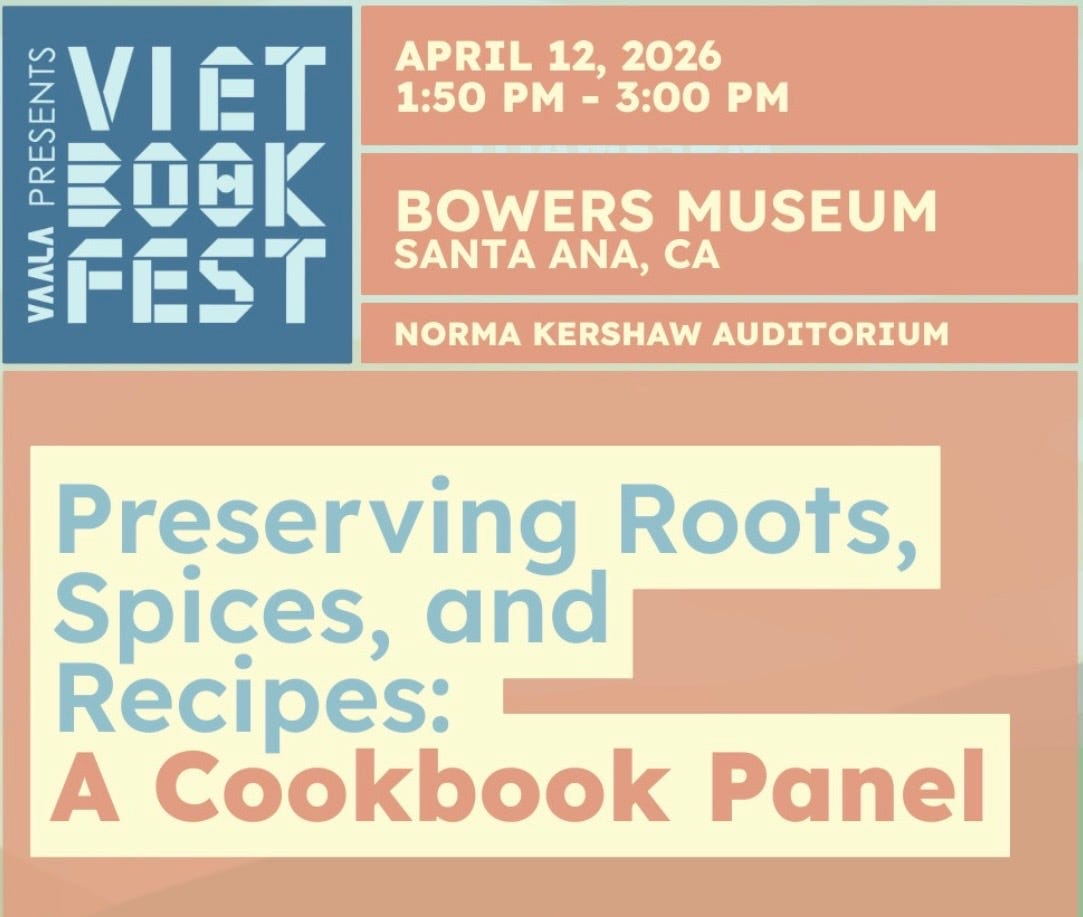
💎 Meet me at Viet Book Fest!
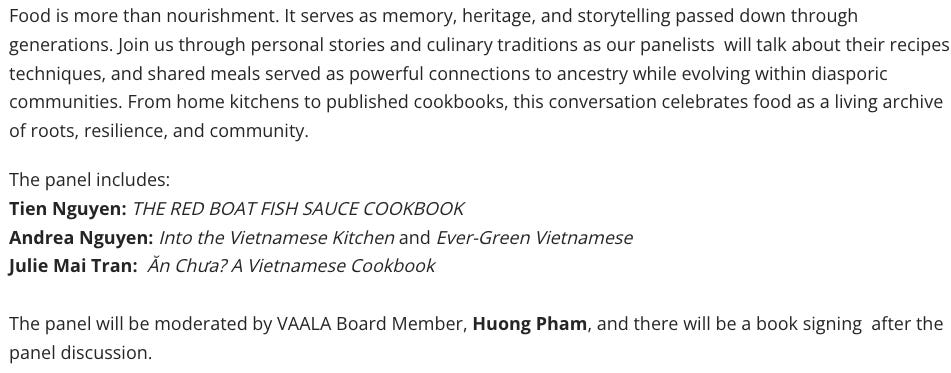
Twenty years ago when I wrote my first book, Into the Vietnamese Kitchen, no one organized Vietnamese American authors. That’s drastically changed, thanks to a younger crop of authors and events like the annual Viet Book Fest in Santa Ana, California. I’ll be speaking on this afternoon panel:
Knowing my fellow authors, it will be a spicy conversation. Join us if you’re nearby.
Speaking of Asian American heritage, many of us were introduced to Chinese food through mom-and-pop restaurants serving up Cantonese dishes. Those spots fed us quickly, affordably, and deliciously yet they often are unnoticed and under appreciated.
This year, the James Beard Foundation announced that it is awarding an American Classic award to Eng’s, a 99-year-old Chinese American restaurant in Kingston, a small town in upstate New York.
What is a Beard Classic award about? It is given to longstanding, beloved restaurants that have enhanced their communities. The restaurant business is hard and longevity is rare. If you last for decades, you deserve a medal, at the least.
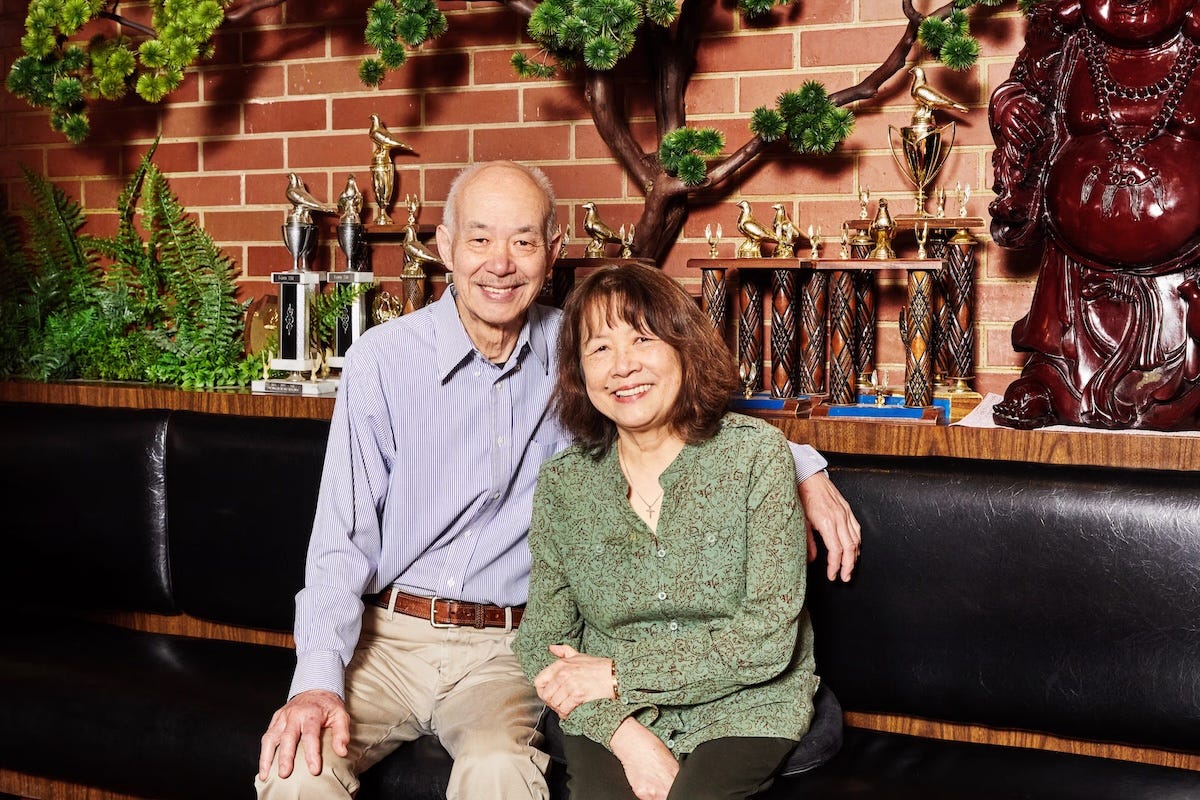
Operating since 1927, Eng’s was Kingtson’s first Chinese restaurant. Over the years, it has moved and expanded locations and is currently owned and operated by Tom and Faye Sit. They are the parents of a friend of mine, Jennifer Sit.
Tom and Faye Sit of Eng’s. They look fit and youthful for folks who’ve been in the business for over 50 years. Source: James Beard Foundation.
Jennifer is one of the best cookbook editors around. But she still has time now and then to put in a shift at Eng’s to help with the dinner rush for dine-in and takeout orders. Her parents are aged but they remain engaged with the business, she’s told me.
Eng’s restored midcentury dining room, “smorgasbord” buffet, and signage harken back to a different era. There’s even live music nowadays to draw diners in for sit-down meals. Source: Eng’s restaurant.
What makes a Chinese American classic menu? So many things. For instance,Eng’s menu includes a pu pu platter and tropical chicken on skewers. There are also Cantonese sub gum stir-fries, which feature a main protein supported by a colorful melange of other ingredients. “Sub gum” is similar to the Vietnamese notion of thập cẩm (a well-curated assortment of flavors, textures and color). On modern Chinese restaurants menus, subgum has been replaced by phrasing like “chicken and mixed vegetable stir-fry'“ which lacks pizzazz.
Seeing Eng’s get the national spotlight warmed my heart so much. There are countless restaurants like it all over the country. They make a difference in their communities by keeping flavors and traditions alive.
Read more about Tom Sit from the Beard Foundation’s awards page and check out Eng’s Restaurant if you’re in the area!
💎 What is a combi oven?
Many of you have expressed interest in multi-use compact kitchen appliances. I’ve been thinking about combi ovens because some of my chef friends adore how they cook with steam (wet) and conventional (dry) heat, or both. Professional combis are expensive but Ninja makes a good, affordable unit for home use. Last week, I purchased one and have been playing with it. There are fourteen (14!) functions so my evaluations will take time.
This combi oven is quirky but it shows promise. I’m impressed after a week, though Rory is on the fence. I like the baking and air-frying functions, thus far. I just wrote up my preliminary experiences and made a couple short videos to show you how the combi oven works. Learn more about the combi oven and weigh in at the website.
Support Pass the Fish Sauce! Join us as a free or upgrade to a become a paid subscriber to enjoy 125+ professionally developed recipes, seed new content, and get future class discounts. Thanks for your enthusiasm!
I hope you’ve been thinking about nước chấm since last weekend. Coming this Sunday is something to enjoy with your Viet dipping sauce!
It’s been a brutal work week because we’re sending Cooking Thai to print very, very soon. This weekend, chef Pim and I are reviewing the book for the final time. Authors work with a team of folks to produce cookbooks, and given that there are countless moving parts (ingredient measurements, instructions, photos, page number references), mistakes may be made. At this stage, we scrub and polish and then practice the art of letting go.
It’s always an exhaustive process at the end but this time, I feel extra energized. That’s because now more than ever, there is incredible openness and interest in Asian cultures. I credit that to phenomena like Korean pop stars and Japanese anime.
Recently, there’s “Chinamaxxing” — a social media trend that has young American TikTokers wanting to ‘become Chinese’ by getting into things like practicing qigong, cooking congee, stocking up on groceries at Asian markets, and wearing slippers around the house. They want to be their “Chinese baddie” best because this is their “Chinese time of life”. (Remember the 1980 hit song, Turning Japanese by the Vapors? It did not result in women running out to buy kimonos.)
The rise of Chinese soft power, mostly among Generation Z, is an unexpected 180-degree turn. It’s uplifting but also ironic, given that there’s been a certain level of suspicion of Chinese goods and services for a long time.
Here at PTFS, we’ve discussed things like the fervent Prop 65 warnings on Asian ingredient labels. A few years back, shared his insights on people’s concerns over French made-in China cookware to empower consumers to thoughtfully choose.
And, remember when some folks nicknamed Covid-19 as “kung flu” and how the pandemic caused a surge in Asian hate crimes and discrimination? Those were good times, right?
Way before the pandemic, looking Asian could be viewed negatively. About fifteen years ago, as Rory and I were taking a walk in our neighborhood, a group of young men drove passed and one of them leaned his head out the window and screamed, “Go back to China!”
I reflexively stopped, raised my middle finger to give them the bird, and screamed back, “Fuck off! I’m not Chinese! I’m Vietnamese!” I stood my ground with minimal fear because we were across the street from a friendly Black-owned barbershop. We could run there for help, if needed.
The car briefly stopped before the young men took off. They surely forgot about the incident. For all I know, in 2026, they may be looking to live their best Chinese lives.
There’s plenty of analysis of Chinamaxxing from TIME magazine and also some humorous-not-so-humorous advice from the South Morning Post, the leading newspaper outlet in Hong Kong, China. I’m usure what to make of the current Chinamaxxing meme and trends, but I do hope that it results in genuine greater cultural appreciation.
Chinamaxxing also got me thinking about my own interests in Chinese culture, which started in college when I decided to minor in Chinese languages and culture. I eventually scored a fellowship in Hong Kong, traveled to China and partly built my food writing career on researching and writing about Chinese food.
Why go out of my Vietnamese lane? China is geographically and culturally connected to Vietnam through migration, politics, war, language, and yes, food. The relationship between the two countries has not always been a happy one, but understanding China helped me to better understand my Vietnamese heritage and history.
A temple in Hanoi, Vietnam. Note all the Chinese characters because Vietnamese was once written in a Chinese-character based language system.
For instance, when I was in my twenties, I hung out with Teresa, a gal from Hong Kong whose father used to be film director. Their family lived in Monterey Park and Teresa introduced me to a wonderful Chinese-Islamic restaurant, where I fell for dishes such as fragrant stir-fried lamb spiced with cumin and lots of green onions and a thick, crunchy sesame scallion bread. To this day, I love to eat the two together, stuffing the stir-fry into the bread and wiping up the sauce with even more bread!
Over the decades, I’ve tried all kinds of recipes for a fabulous rendition of the bread recipe and this past Friday, to get my mind off of book proofreading, I made it again and landed on my best rendition yet. Get the sesame-scallion bread recipe and make it sooner than later to enjoy its tender chewy, nutty, rich flavors.
Because Vietnamese and Chinese languages are linked in many ways, when I learned that the sesame scallion bread (zhīma dà bǐng) was a type of bǐng (餠, the Chinese word for bread, pancakes, pies, and certain other doughy foods), I was able to wrap my head around the Vietnamese notion of bánh, a very broad category of food that includes bánh mì, cookies, cakes, dumplings, crepes and other starchy foods.
When I started out writing about food, I befriended Chinese Vietnamese chefs too. The late chef Charles Phan of the Slanted Door was Chinese Vietnamese, for instance. So are my pals, chef restaurateurs Eric and Sophie Banh of Monsoon and Ba Bar in Seattle. Chinese people have been in Vietnam for a long time, so much so that there are countless people who identify as Chinese Vietnamese. They mostly see themselves as Vietnamese but can speak Cantonese and or Teochew.
Knowing about and being able to prepare and share Chinese cuisine is part of Vietnamese culture. In the early 1960s, when my dad was provincial governor in Phan Thiet in South Vietnam, my mom planned dinners that included Vietnamese, Chinese, and French dishes. She employed two cooks — one of whom was nicknamed Chú Năm Bếp (Uncle of Five Kitchens). Mom described him as a charming, talented man whose could cook practically anything; the five kitchens reflected his mastery of five cuisines.
Those factors and many others contributed to my affinity for Viet cha gio fried imperial rolls and bun rice noodle bowls as well as for Chinese fried wontons, lo mai gai sticky rice in lotus leaf, and wonton noodle soup. Hybrid foods like bo kho — the beef stew with star anise, lemongrass, tomato and carrot has southern Chinese Vietnamese roots and is considered an iconic Vietnamese dish. It has evolved over the years and cooks have taken to serve in many ways but it’s still Vietnamese at heart. I felt confident with turning the classic stew into a quick bolognese-style bo kho sauce to enjoy with wide rice noodles or pappardelle pasta. (Along the same vein, what would stop you from putting some in a banh mi roll because or use for a Viet-ish sloppy Joe. Just some suggestions!)
Chinese-ness in unexpected savors
So when I researched and wrote about the history of pho, it wasn’t a surprise that Chinese cooks and language were part of the story, which also includes the French colonials too. I’d always wondered if there was a Chinese pho recipe. ’s cookbook on Yunnan cuisine answered my question with its Chinese beef pho recipe, which you could add pickled mustard greens to, if you want. (The Red River flows from Yunnan eastward through Hanoi and out to the Gulf of Tonkin, so of course there are connections!)
Pho is highly elastic as I’ve written in The Pho Cookbook so you can play around with it with recipes like the beef short rib and vegetable pho. My traditionalist mother may think it’s weird but I like the recipe’s vegetable component, lower cost, and easy cooking in a pressure cooker or Instant Pot.
And, if you survey global cuisines, you’ll see how far Chinese foodways have migrated. Consider how widespread ingredients like tofu, soy sauce and rice noodles are. Chinese la mian noodles begot Japanese ramen. Wok cooking went to Peru and birthed Chifa cuisine and lomo saltado which then went back to Asia and eventually into Vietnam, where it yielded a beef stir-fry served atop fried potatoes. (Make my delicious umami-rich tofu and French fries iteration.)
Pass the Fish Sauce is a reader-supported publication. Get new posts and support my work by becoming a free or paid subscriber.
Finally, if you shop at a Chinese market or online at Weee!, check the frozen food section because you may find frozen peeled Chestnuts from China. As noted in an earlier newsletter, American chestnuts grow on Chinese trees. So you can purchase the Chinese chestnuts, know about their history, and use them in Chinese ways like the Red-Cooked Chestnut Chicken and Braised Chestnuts with Napa Cabbage which hail from Shanghai. These are no longer fall or winter dishes. They can be enjoyed whenever, if you get your paws on frozen Chinese chestnuts!
Today’s world is incredibly economically, politically, and culinarily interrelated. If you consider all the ways that China influences our lives, there is a certain truth to what China calls itself in Chinese: 中国 (中國; Zhōng Guó), which literally means the Middle Kingdom, the center of the world.
As a Vietnamese person who’s gone the extra distance to understand Chinese culture, do I want to become Chinese?
No way! I’m too feisty and proud to relinquish who I am. However, by cooking and looking around to connect the dots, I know that I can be a Chinese baddie on my own terms. I hope you find these insights and ideas to help you add to your knowledge base, if not just sound awesome to a young person. 😆
Back to proofreading the book. Thanks for being here.

 Login