
Reading view

Spain Is Ready for an Extraordinary Run of Eclipses

Normal days in Spain can suddenly turn otherworldly. On a trip to Málaga in April, for instance, during Semana Santa, my friends and I happened upon a midnight procession of about 50 men in hoods who were carrying a 1,000-pound sculpture of a crucified Jesus Christ on their shoulders, lit by hundreds of candles that swayed with every step they took. But starting tomorrow, Spain’s regular drumbeat of fairs, street parties, and patron-saint festivals will be accompanied by improbable astrological luck.  

After a century of no total solar eclipses over the Iberian Peninsula, and none in mainland Europe in the 21st century so far, three solar eclipses will be observable from Spain in the next 500 days or so. This is “very, very unusual,” Sandra Benitez Herrera, the head of science communication and education at the European Space Agency, told the German broadcaster DW last month. It will also probably be a lot of fun.

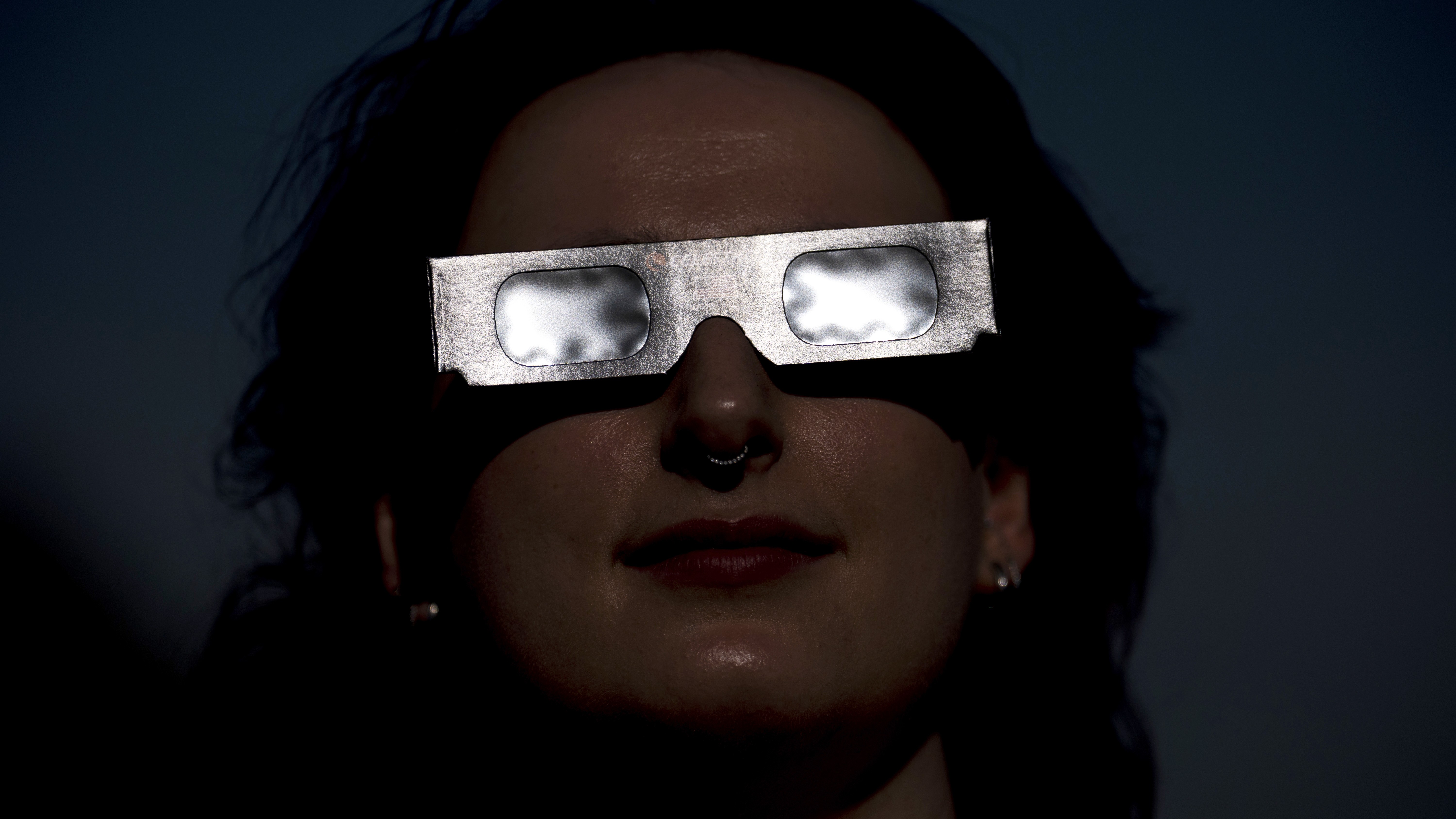
The Spanish government expects hundreds of thousands of astrotourists—including me—for Eclipse Number One this week. In most places on the path of totality, the sun will be fully eclipsed for about a minute or two, which makes this the shortest of the three celestial events. But totality will hit at sunset, a coincidence that amplifies the experience of the eclipse and occurs only about once in a decade globally, Kelsey Johnson, an astrophysicist and the former president of the American Astronomical Society, told me. The shadows will feel strange, she said: Sunset already makes shadows long, and the eclipse will add its own distortions, including the white squiggles of light that sometimes coat the ground just before totality. Then, after the sun has set, people can gawk at the 60 to 100 meteors that are expected an hour, as the Perseid meteor shower peaks against the blank slate of a new moon.

Madrid and Barcelona will see 99 percent totality, but, as Annie Dillard wrote in her classic 1982 essay, “seeing a partial eclipse bears the same relation to seeing a total eclipse as kissing a man does to marrying him.” So eclipse chasers are traveling to smaller towns that will go completely dark, where visitors are liable to encounter the particularities of Spanish August. This is the month when Spaniards return from cities to their hometowns, and the heat makes people nocturnal. They throw summer festivals, put on concerts, and release the bulls. The eclipse only adds to a general sense that this is a time to cast routine aside.

Take A Coruña, the first major city in Spain that will experience totality. The city’s minute of total darkness will end at 8:29 p.m.; half an hour later, A Coruña’s professional football team, Deportivo, plays Real Madrid for the first time in nearly a decade after clawing its way back from a lower-tier league. “A bunch of people are going to be looking at the eclipse right outside the stadium and then going straight to the game,” Pablo Gomez-Garcia, a University of Virginia law student who returns to A Coruña every August to see family, told me. Others might chase the eclipse with a concert: The city is in the midst of a monthslong festival that is named for María Pita, a woman who stabbed an English captain with his own spear after her husband was mortally wounded defending the city, and that features daily outdoor performances in the evenings. The performer tomorrow will be an orchestra called the Satellites. The city is expecting so many visitors—20,000 are supposed to enter by cruise ship alone today and tomorrow—that its government decided to close one popular viewpoint, a Roman-era lighthouse on the northwest coast, to avoid trampling.

In Briviesca, a town in the north of Spain, the eclipse overlaps with the weeklong patron-saint festival. On the day of the eclipse, the city will host, among many free activities, a fishing contest, performances by local bands, a parade of “giants and big heads”—a tradition from the Middle Ages that involves people donning 13-foot papier-mâché costumes depicting royals and monsters—and a toro de fuego, a metal bull filled with fireworks that will shoot sparks at people in the town square. In Tarragona, where I’m viewing the eclipse, there will also be a showcase of human-tower making, during which people stack themselves into six-to-10-person-tall monuments, a Catalan tradition.

These local practices are meant to be outlandish visual spectacles that eject you from the everyday. The weirdness of witnessing an eclipse can conjure a similar sense of awe and delight—and the eclipse fervor that has gripped many visitors suggests a hunger for that sense. The colors change. The shadows get very sharp. “You sound like a crazy person, but the feeling is like, I must not be on Earth anymore,” Jesse Tomlinson, an eclipse chaser and the creator of a popular app that helps people choose eclipse viewpoints, told me. The wind direction shifts, and the temperature suddenly drops. You grow giddy to see another. Johnson, the astrophysicist, said that her flight from Virginia to Barcelona was full of eclipse chasers chatting across rows.

Like any massive party, these eclipse celebrations have the potential to get out of hand. The population of Mallorca, for instance, already swells in August, and eclipse tourists are heaping onto the island’s temporary population. The regional government of the Balearic Islands has decided to not promote the eclipse to avoid creating an even larger surge in visitors, and is papering the area with reminders to avoid engaging in dangerous observation practices, going drunk boating, and lighting fires. On the podcast Majorca Mallorca, Nick Brown, a Brit living in Mallorca, predicted that “this is going to be the colapso to end all colapsos.” In the days leading up to the eclipse, local Spanish governments have denied permits to eclipse festivals marketed to Anglophone ravers.

But for the most part, Spain’s central government has gone all-in on promoting this eclipse and has called the Iberian Peninsula “the only populated place in the world where the total solar eclipse of August 12 can be fully enjoyed.” (This is a bit of a snub to Iceland’s capital of Reykjavík, where totality is more likely to be marred by bad weather.) The setting you experience an eclipse in does matter, Johnson said. She is leading a tour group off the coast of Mallorca from a boat that seats 80; natural settings, she said, can help establish the transcendent connection to Earth you want to find during the brief window where the moon blocks the sun.

Still, anyone in the path of totality has a chance to experience something out of the ordinary, even if there are no human towers for miles around. And this eclipse is really just a rehearsal for the one to come. Spain’s next eclipse, in August 2027, is already being billed as “the Eclipse of the Century” for the six minutes of totality it will bring.
© Jordan Pettitt / PA Images / Getty
  •  

The Most Basic Step of the Ebola Response Is Falling Short

The fight against Ebola is not going well. Last week, the head of Africa CDC, Jean Kaseya, announced that the ongoing outbreak of the virus in the Democratic Republic of the Congo had ballooned into the second worst of all time, a milestone he had thought was possible to avoid only weeks before. Rather than the spread of the virus slowing, cases are doubling about every 10 days; more than 1,800 people have died, though the actual toll is likely at least twice as high. His organization is now fighting to keep this Ebola outbreak from becoming the worst on record, Kaseya said at a press conference.

This outbreak is spreading more quickly than any other in history partly because one of the basic tools needed to control infectious disease—testing for the pathogen—is not working. So the Congolese government, along with scientists, aid groups, the World Health Organization, and the world’s biotech companies, is racing to fix it.

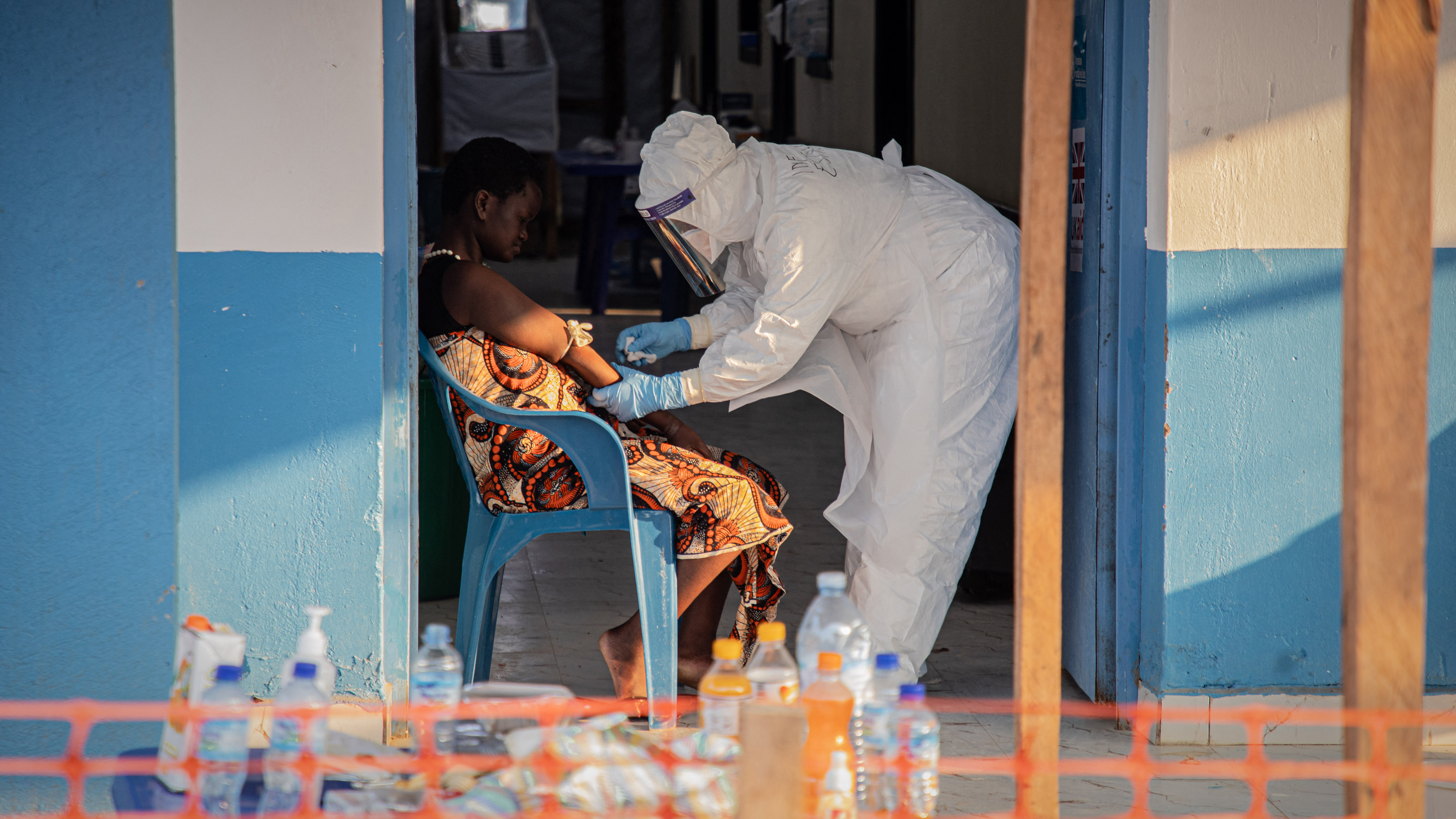
In its early stages, Ebola can resemble several more common viruses, including malaria, so health-care workers rely on tests, rather than symptoms, to diagnose the disease. After the 2014 West African Ebola outbreak, which killed more than 11,000 people, Congo began stockpiling machines that could detect the Zaire species of Ebola virus, which causes most outbreaks. Hundreds of these GeneXpert devices are now in hospitals all over Congo, along with cartridges that can test a patient’s sample for the virus within an hour, Christian Happi, a molecular biologist who leads a team in Congo working on surveilling this outbreak, told me.

Health officials in Congo began using those stockpiles to test patients for Ebola on April 30, after a smattering of health-care-worker deaths, a calling card of the virus. The results came back negative. So did more samples a couple of weeks later. Ebola, we now know, was circulating. But the species turned out to be Bundibugyo, which is far rarer than Zaire, and which cannot be detected by the existing supply of GeneXpert cartridges. That didn’t become clear until officials had sent samples more than 1,000 miles away, to Kinshasa, for more robust PCR testing, creating a disastrous four-week gap between when the first known patient developed symptoms and when officials received laboratory confirmation of a new Ebola outbreak.

PCR testing is still the only reliable way to detect the Bundibugyo strain in Congo. Under the current system, a car drives to Ebola-treatment centers in affected regions, picks up tests, then drives back to labs that can run the tests, Trish Newport, a lead on Doctors Without Borders’ Ebola programs, explained to me. Some routes take longer than they otherwise would because the samples have to be driven over uneven roads that are frequently blocked by fighting between the Congolese military and the armed group known as M23. After the PCR is run, the car returns handwritten results to the centers.

Nineteen laboratories in Congo can now run PCR tests to detect Bundibugyo, which is a major improvement since the beginning of the outbreak, when only two labs had that capacity in a country of more than 116 million people. But according to figures released by Africa CDC in July, one in eight Ebola tests still took more than 72 hours to return a result. Despite the increase in Ebola testing, the proportion of tests that come back positive has stayed constant, about 45 percent. That probably means the country is still dramatically undertesting, Abraar Karan, an epidemiologist at Stanford, told me.

Meanwhile, Ebola is expanding into new parts of the country. Bringing the outbreak to heel will almost certainly require upping testing to catch more cases, trace chains of transmission, and isolate people who are contagious before they spread the disease further. Modeling done after the 2014 Ebola outbreak suggested that diagnosing 60 percent of patients within one day rather than within five days could have drastically reduced the infection rate.

The fastest solution to Congo’s testing crisis would be to distribute GeneXpert cartridges that can detect Bundibugyo. After all, hundreds of hospitals already have the machines, and each can run 80 or so patient samples at once, which would allow many patients to get same-day results, Happi said. A GeneXpert cartridge that tests for every human strain of Ebola does exist: The U.S. Department of Defense funded its development as part of a biothreat-preparedness program in 2020. The FDA approved the panel earlier this year—but only for use by labs at DOD, which intended to continue conducting research on them. (The Department of Defense did not respond to repeated requests for comment.)

In June, with DOD’s permission, Cepheid, the company that makes GeneXpert machines, donated at least some of the tests meant for U.S. government research to Congo’s national health system, Larry Kelmar, the vice president of government relations for Cepheid, told me. (Kelmar did not say how many.) But before they can be used, their accuracy will still need to be compared with PCR tests. Shanelle Hall, a principal adviser at Africa CDC, told me that the GeneXpert cartridges have been tested and that data from those tests are currently being analyzed. A decision on approval is expected in a matter of “weeks, maybe days.”

Other companies and institutions are scrambling to speed up testing, too. Last month, the Gates Foundation issued a Global Grand Challenge to fund teams that will work urgently to develop “field-ready” diagnostics. The WHO has selected eight Ebola diagnostics capable of detecting Bundibugyo—including the GeneXpert cartridges—for fast-track testing, and has already approved two. A test made by a South Korean company, the RADIONE, was approved for use in patients earlier this summer and has become the cornerstone of the WHO’s plan to decentralize and speed up Ebola testing. A senior official at Africa CDC told reporters in early June that 50 RADIONE machines would be in Congo by the end of that month. As of this week, 37 have been delivered. But the machines can test only 24 or so patient blood samples at once, too few to make the dent in diagnosis times needed, Happi said. In a statement, a spokesperson from the WHO said the organization has “established a joint validation platform to rapidly evaluate the performance of a selection of diagnostic products” and that the introduction of new PCR machines has increased testing capacity from 200 tests a day to more than 2,000. KH Medical, the small manufacturer that makes the RADIONE tests, did not respond to a request for comment.

Meanwhile, Happi told me, some Ebola-treatment centers without enough isolation wards are sending suspected Ebola patients home to wait for test results and, potentially, expose other people during that wait. Africa CDC also plans to intensify its contract-tracing efforts by sending thousands of health workers door-to-door, which would require still more testing capacity to support.

The wait for results can discourage the feverish from presenting themselves for testing, Newport, who has been in Congo most of this summer, said. In part because of the delays—and in part because many people in Congo are skeptical of international responders, or believe that treatment centers are places people go to die—those who show up to the hospital typically do so late in disease progression. That’s a real problem, not just because they stay in the community infectious for longer, but also because Ebola cases are far more survivable when they’re caught early, Newport said. Currently, most Ebola deaths are happening at home, rather than in a treatment center or hospital, meaning that many of these infections are never recorded and that teams meant to disinfect homes and sanitarily bury the dead to prevent further spread of the disease never intervene.

The shortage of tests throughout this outbreak has resulted in a shortage of answers to fundamental questions about how the disease has been spreading. Experts still disagree on whether the outbreak began in January or in April. Patient zero remains a mystery. Currently, 80 percent of people who test positive for Ebola haven’t had contact with any other confirmed patients. If that number doesn’t go down, Kaseya told reporters last week, “we will not stop this outbreak.”

© Benediction Murhbazi /  AFP/  Getty

  •  
❌