❌

Reading view

Why Have Kids?

Subscribe here:  Apple Podcasts | Spotify | YouTube

All over the world, in the East and the West, the North and the South, rich nations and poor, people are having fewer kids. In most countries, fertility rates are below replacement level; by century’s end, researchers predict, we’ll see the first global population contraction not caused by war, famine, or disease. On this episode of The Permanent Questions, David Brooks speaks with Anastasia Berg, a philosopher and a co-author of What Are Children For?, about what’s causing this trend, and what might be done to reverse it.

The following is a transcript of the episode:

David Brooks: Eighty-eight percent of Americans say that having children was one of the most important things they have ever done. Only 7 or 8 percent of parents say they regret having kids. Having kids is one of the most socially endorsed activities, and my experience is right in line with that.

When my oldest was born, his Apgar score was low. They rushed him off to the NICU, and I had a thought: Suppose he only lives 15 minutes. Will his brief life have been worth the lifetime of grief his mother and I would have to endure?

The answer was pretty obvious to me then, and today too. Of course it would be. I realize that doesn’t make sense according to utilitarian logic. One of the nice things about love is that it transcends that type of logic.

Fertility rates are declining all across the world. We in the West are entering a period of population decline. Schools will close. Day care centers are being converted into hospices. One of the most rewarding experiences of life is less common today. Many young people anguish over whether to have kids. Why are so many people walking away from institutions that get such rave reviews?

Some of it is the lack of an appropriate partner. Some of it is the financial strain. But a lot of it is resistance is more about culture and values. Is it right to bring a child into this miserable world? If I have a child, will I lose part of myself? Once you start looking into this question, you realize that the decision to whether you want to have kids is like a cultural MRI machine.

It scans everything and reveals the often unspoken assumptions people have embraced about how to live their lives.

So I was interested in understanding how people are thinking through this decision, and I’m pleased to be joined by Anastasia Berg.

Anastasia holds a bachelor’s degree from Harvard, and a Ph.D. from the Committee on Social Thought and the philosophy department at the University of Chicago. She is now an editor at The Point, a magazine of ideas, and an assistant professor of philosophy at UC Irvine. On top of that, she is a co-author with Rachel Wiseman of What Are Children For? On Ambivalence and Choice.

I’m pleased to welcome Anastasia Berg to this table.

Anastasia Berg, welcome to The Permanent Questions. Thank you for coming to New Haven, Connecticut, to have this conversation.

Anastasia Berg: Thank you so much for having me.

David Brooks: Now, it turns out this question, which you and your co-author, Rachel Wiseman, organized this book around—What Are Children For?—it turns out it’s like an X-ray machine into the values of human beings, because procreating has been an elemental part of human life forever, and now there’s this global drop in fertility rates.

And it’s just weird.

And what I’d really like to do is walk you through some of the causes and some of the implications of this. And the weird fact is it’s global. Some countries are ahead; South Korea’s fertility rate’s really low. But pretty much everywhere—Africa, across Asia.

And so some of this, the boring part, is some of it just must be prosperity.

Tell me if you disagree, but over the last 40 or 50 years, we’ve seen the greatest reduction in poverty in world history, a great reduction in inequality globally, not domestically, a great rise of a mass middle class all over different parts of the world, especially in Asia.

And it’s just a pattern that poorer countries and poorer families tend to have more kids. Do you agree that there must be some economic component in there?

Berg: I think to the extent that there is an economic component, we need to be careful. We know that birth rates have been declining for as long as reliable records exist, which is from the early 1800s. In the early 1800s, the average white American woman would have seven children, while globally women were having on average six.

By the early 1900, that number was closer to 4.5, and then today we have a situation within the U.S. and in the rest of the world—most of the world is below replacement, which means that you can correlate decreasing birth rates with any human phenomena. So you can correlate it with secularization. You can correlate it with increased education to women. You can correlate it with prosperity. Any other trend in human history can correlate with birth rates.

We hear, when we talk to young people about why they’re not having children, oftentimes financial concerns. So they will describe their perceived lack of prosperity and lack of security as some of the reasons for why they’re not having children or delaying having children or having fewer.

I think what we can positively say about the relationship between prosperity and having children is that we have more options now. But as we say in the book, I don’t think that the kind of explanation that we hear oftentimes is opportunity cost. So that’s the claim that people are having fewer children, not just because they have more money but because the sacrifice they’re making with every single child is greater than it ever was before.

The transformation is more radical. For millennia, we did not apply the framework of opportunity cost to the question of having children. And now we find ourselves with the question of having children, asking: What are the pros, and what are the cons? What am I giving up, and what am I gaining?

Brooks: So I want to get inside that. And I would say one of the things that to me would be a big factor, though far from the only factor, is we’re just more individualistic as a culture.

And I do think that this individualism, that mode of thinking, has affected even the most intimate affairs of our lives.

Berg: So the echoes of what you’re saying in our analysis are found in the way that people are talking about themselves, about what is it that’s alarming them and causing them concern when they face a decision.

So when it comes to relationships, people are not just concerned with maximizing their happiness, but they are actually concerned with maximizing security and stability. So you spend a long time dating before you cohabitate, and you spend a lot of time cohabitating before you make any further commitments. Now, that attitude of insecurity—one can be more cynical about it and just call it selfish.

I think it’s more helpful for me to put it in terms that people can identify with. We also notice that this dynamic of holding yourself up to a standard of readiness that is so murky and so high that you may never reach is something that we see across various dimensions of people’s lives. So it’s not just in the romantic sphere; it’s also in their conception of their own psychological readiness.

You’ll hear people often talk about how they’re not psychologically ready to take on a child. The same is happening when they talk about their professional and financial readiness. So: I have to have an inordinate amount of money, and I have to have an inordinate amount of success and stability before I can so much as contemplate having a child.

And I think those dynamics are fresh, and it’s something that we discovered by talking to the people who will declare that these are open questions for them.

Brooks: But I want to argue the underlying values difference from individualism to communalism is if you’re in an individualistic mindset—which I share—the natural logic is: Is it serving me?

Berg: So when people used to think of themselves, one can say they were thinking about themself communally, but you can also think of it, which is very close formulation—they were constituting their own identities through not just their kin relations, which were 100 percent going into their subjective identification, but they were also understanding themselves as essentially intergenerationally located.

So people understood themselves not just as having parents and uncles and children; they understood themselves as having a past. And unless things go terribly wrong or they make a very difficult sacrifice, say religiously, they will have a future. They will be a part of bringing about a human future.

And so having children was part of the very scaffolding of life. Until recently, you could make the analogy to how a certain class of people at least thought about going to college. It was just something you do. You make it work whether or not you have money or you don’t have money. You take the loans; you don’t take the loans.

You live in your parents’ basement. You just go to college. It was as inevitable as death. So I think the change is not just a change in local values—people cared about other people and now they only care about themselves—is that the very role of myself as a link in this intergenerational chain has now been oftentimes close to eroded, in favor of an understanding of myself as potentially the end of that chain.

Brooks: I may have read this in your book or some other book, but when you ask young people or anybody, “How did your parents meet?”—you ask them about things in their family past—they’re much less knowledgeable now than they used to be. And I didn’t have to think about getting married or having kids or going to college or going to high school. That was the script. I was a normie kid. And so, implicit in a lot of my questions there is a bit of a judgment, not because my way of life is best, but on average, people who are happiest and are flourishing and experience the most meaning in their life are married with kids, on average.

And that doesn’t mean everybody’s going to get married, doesn’t mean everybody’s going to find the right partner. But there was a general social survey result that among liberal women, just among liberal women, if married with kids, 93 percent say they’re happy. Single without kids, it’s like 63 percent. So it’s a 30-point gap, which in these kinds of things is a huge gap.

And so there’s a little hint of bias in the way I think about this—is that on average, and again, emphasize average, people should be thinking about, Oh, maybe that’s the right option for me. And they should have a bias toward that, depending on how their life goes. I think they’re not putting themselves in the best position to have a flourishing life.

Berg: So here’s where I have a lot of judgment. One of the things that I think we often forget, or it’s easy to overlook, is that there’s something huge at stake in the question of whether or not to have children. And it’s not just the shape of your life or how happy you will be, but it is an opportunity to take a stance on the value of human life.

There are other ways of doing it; there are other ways of contributing to a flourishing human future, but having children is the basic condition of any kind of human future. When we are seeing this kind of ambivalence about having children, we’re seeing evidence to a deep ambivalence about a human future at all.

And that I am, to use your language, “judgmental” about. The way I would put it is, say, it gives me tremendous ethical grief.

It’s alarming to see not the specific antinatalist movements that are still small, but the deep antinatalist undercurrent—this lack of faith in a human future, this impossibility of affirming the goodness of human life despite all privations and failures—and not wanting to put yourself out there and sacrifice the huge sacrifices that are required to have children: emotional, temporal, financial.

I’m in general a bit skeptical about self-reports of happiness. But when it comes to these kind of gaps, it’s hard to argue they’re not tracking something. Because our ambition was to help people think through the question, partly motivated by what you’re raising, because making the wrong decision there—that could be a big error for someone’s life. Talking to them about, Did you know that this study published by this conservative institute will show that you will be happy if you had kids?—that does not liberate people into thinking about things in a way where they can actually own that decision. So our ambition has always been: How do we remove the kind of obstacles—the kind of, you can say, brainworms—that are making it hard for people to see a path forward?

Brooks: Okay. I’m going to a take your point that the following  argument is not necessarily persuasive. Stop being a stupid schmuck.

Berg: You said it. (Laughs.)

Brooks: It’s probably not going to persuade many people. So I’m going to restrain my puritanical judgmentalism and just try to understand what’s going on in the culture. And I do think that the shift to individualism has—or the bias toward individualism in the culture, which is international,—the whole world is going in this direction.

I think that’s a real shift, which has huge implications, all sorts of things. There are a lot of subdivisions of that, and one is, I would say, there’s a high, high priority put on personal freedom. You could say there’s a preference for freedom over meaning. The statistics on happiness and marriage and having kids are a little complicated.

The statistics on meaning—do you think this gives you a sense of purpose?—they’re not complicated at all. Having kids gives people a sense of purpose and meaning. But freedom is also of value. And we want to have free choices, and we want to be able to craft our days as we will. And there’s an immature version and a mature version.

And the immature version—again, this might have come from your book.—it’s Seth Rogen. He’s on The Howard Stern Show, and he says, “I don’t know anyone who gets as much happiness out of their kids as we,” meaning he and his partner, “get out of our non-kids. Like, we’re psyched all the time. We’re lying in bed on Saturday morning smoking weed, watching movies naked. If we had kids, we would not be doing this.” And that is an expression of freedom. I would not say lying in bed naked, smoking weed, and watching movies on a Saturday morning is—well, it’s fun for maybe once a month, but I wouldn’t want to build my life around that. That’s just me.

But there’s a better version of this and a more sophisticated version. And so this is your co-author, and I think she’s making the point very well here.

“All my life, my parents have wanted my sister and me to be happy. I was offered every individual freedom possible, freedom to choose my career, to find love, to attain creative satisfaction.” And that is a beautiful statement of a certain form of child-rearing, which is how I was raised and, frankly, probably how I raised my kids.

I gave them a lot of freedom. But that’s not universal. If we were in other cultures, the idea is: You have guidance. There’s a way of life. You’re moving into our way of life. You’re going to join in, and if you want to rebel, you’re going to have to rebel, but we’re going to push you. We’re going to guide you toward a certain life, which we think history has shown is the best. And I think there has been a shift with good and bad consequences toward this extreme emphasis on freedom.

Berg: So I think that’s right, although we still want to remember your first point, which was that the declines in birth rates are global and remarkable, and we see them sweeping across societies that we would still identify as quite conservative and religious as well.

One point about Seth Rogen I think helps me respond to your earlier point about how children are increasing happiness, which is I think the “who’s having more fun” wars are one of the parts of the discourse that are not helping people think through this question. The people who are childless will talk about how much fun they’re having without kids, and the people who have children will talk about how much fun they’re having rediscovering their childhood books and running around the field, and how much joy, and how cute their children are, et cetera.

Here’s what I think is universal about having children: In having a child, no matter how well things will actually go, you open yourself up to the possibility of things going tragically and horrendously wrong. And you live that every day of your life. You come to a point where you’d much rather horrible things happen to you than to this other being, and you’re open that way in every day of your life going forward.

That is universal—whether or not you end up having fun, that’s not. And so I want to own that as we open a conversation about having children, and I want to say that the question of what could justify that kind of openness, and that kind of vulnerability, and that kind of risk is a serious one, one that I don’t want to just dismiss by pointing out to the fact that people are more individualistic, although perhaps they are, or more consumerist, which they are as well, or more addicted to notions of freedom. That’s legitimate to fear. If something happens to your child, your life will end in a way that, as a individual without children, you can’t even imagine. What is the perspective we can give on human life that is not religious that can justify that kind of choice and that kind of risk-taking on people.

Brooks: I want to get to the thing you just mentioned: the extreme risk.

But before I get to it, I want to go back to something I said and ask you about it directly, which is the script. I was born into a script, and I lived out the script, and I think it was the norm. Again, I could’ve rebelled against the script. I had freedom, but there was going to be a script.

And it strikes me as part of the individualistic ethos is we don’t want to talk into other people’s scripts. And so, for example, child psychologist Alison Gopnik, she said, “Our job,” meaning parents, “is not to shape our children’s minds; it’s to let those minds explore all the possibilities that the world allows.”

I think this is terrible advice. To me, one of the problems with modern American culture is the privatization of morality. We told successive generations, Come up with your own values; come up with your own truth.

And the first problem with that is: If your name is not Aristotle, you probably can’t do it. And the second problem is: If everybody comes up with their own truth, their own values, we have no shared moral order.

Berg: First thing to note is, of course, the lack of scripts goes hand in hand with what you identified and quoted from Rachel’s introduction, where she talks about this paradigm of acceptance parenting, which she recognizes as the paradigm in which she was raised.

And the thought here is that a parent’s job is not to teach their children right from wrong, but to trust them that they’ll discover their own notions of right and wrong, and how to live, and what it means to have a family.

To our point and to our question that we’re discussing here, which is why is it so difficult for people to make the commitment to having children, I want to point out, to concretize, this kind of general point that you’re raising about scripts, which is the way that Rachel really beautifully analyzes and then puts it in the book.

And she talks about how the fact that her parents could not affirm, wholeheartedly affirm, anything in their own lives as the way it ought to be, as good, made it very hard for her to imagine what would she be doing when she’s having a family of her own. The tenuousness of the traditions that they were observing, their own ambivalent relationships to community and religion made it very hard for her to think about having a family. But not because, the way I understand her, she wouldn’t have a script to follow, but because she didn’t even have a script to rebel against.

And I think that question is really important, because what I take her to be saying is that it’s okay to affirm your own life choices as good. The fear that we will thereby be imposing them on our children tyrannically is misguided because it’s a fantasy.

Her daughter would not have been oppressed by the fact that the mother is willing to affirm her choices. What’s remarkable is that this person who’s dedicated themselves as a parent to two daughters can’t say to their child, I think this is what you should do.

That, to me, would be much more powerful than pointing them to some survey about how people are. Why can’t she talk to her daughter about how this choice had concretely made her happy? And the feeling that we’ll be stepping on our children’s toes by affirming our choices I think is something that we can address without having to revert to a full-blown fantasy of a societal script.

We can debate whether or not that’s a good thing. For me, what really matters is that this is not happening and so any discussion about it is beside the point. The question for me is: Is there a way to move forward that is not leaving people just spinning frictionless in a void? Which is what not just the lack of scripts but the inability to just affirm one’s own choices is doing right now to young people.

Brooks: And of course, it’s a balance. There’s a continuum here. I was here teaching at Yale, and we were going around the room, and I had mostly seniors, and we were talking about what the career plans for various students were. And there was a woman in the classroom from Ghana. And all the American kids were like, Oh, I want to be a doctor. I want to be a lawyer, or because we’re an Ivy League school, I want to go into tech. I want to go into finance. I want to go into consulting. And she said, It’s not up to me to decide. My village sent me here, and we’ll decide. And on the one hand, I thought, Okay, this is why they call us an individualized culture, because that’s not how we think.

And there was something beautiful about that. But on the other hand, I grew up in this culture, and if after college I went back to my little suburb of Wayne, Pennsylvania, and said, Okay, folks, what am I going to do with my life? I would’ve said, No way am I going to ask my neighbors.  And so the way I’d phrase it is that there’s a continuum between domination from the older generation and nothing from the older generation. We’ve swung a little too far. And the effect, weirdly, has been a flight toward utilitarianism. And so people have decided to value the things that are most immediate in front of them, which is leisure time and which is the sense of gratification you get out of your job and financial security. These are obvious things that’s uppermost on people’s minds.

And here I’m going to quote another survey, 2019. This is a survey across 42 countries, and just 39 percent of Millennials worldwide listing having kids as one of their life ambitions—last place in the rankings.

Work and leisure are fun, and if you’re 24, whatever, that’s going to be your natural ambition. And weirdly, the part about having kids, marriage, or even love, those seem to be fading away from what people are prioritizing.

Berg: I mean, we’re living in a world where young people are hearing that if they’re not becoming millionaires and probably billionaires, they’re going to be part of a permanent underclass.

I imagine somebody young who’s exposed to that kind of exhortation hearing us say, What about dedicating your life to love?

He’s like, I need to eat. I don’t want to be part of a permanent underclass. So I think the kind of concerns that we were documenting with finances and professional success, starting in 2019 they’re dwarfed by the kind of uncertainty and worries that are happening now.

So the dynamics of tremendous anxiety about what it means to be able to stay afloat have only been exacerbated.

I do want to say one more thing. It’s not something we actually get into too much in the book, but I am, just to clarify, a real pluralist about why people have children. So it’s very easy to moralize or rank reasons for having children. So if you’re doing it because you expect to be happy, it’s somehow lower than if you’re doing it because you want to grow as an ethical being. I think it doesn’t matter, and I think one of the reasons it doesn’t matter why you end up having children is because having children is not just another action that we can take and that we kind of evaluate the reasons for and the reasons against.

We’re bringing into the world another human being. This is remarkable. It is something that transcends any kind of rationalization.

Brooks: I agree with that.  There are two things can be true simultaneously. One, this is obviously an individual choice.

What’s ever right for you is right for you. And some people, Eh, it’s just not for me, and no one’s going to judge that. On the other hand, we do have a common culture. And the common culture forms us all, and the shape of that culture is going to have influence on the way we perceive the world and make the big choices in the world.

And so I’m not content to leave it solely up to the individual.

Berg: So let me say something about leaving it up to the individual. If you are leading a certain kind of human life, you are in a position to recognize that the human future is something that you are already committed to. And so I think that we can leave the question of whether or not you’re going to be biologically procreating to individuals, while recognizing that there’s so many responsibilities that we can take as a community.

There’s so much that we can be doing to make people just feel like their families and children are welcome. I think you could be doing that whether or not you decide to have your own kids.

Brooks: So let’s talk about the common culture because I do think whether we like it or not, our common culture shapes how we think, how we perceive. It shapes everything. And so I think that we feel this every day, that there’s just less trust in society; there’s more of a sense of threat, and there’s something going on in our country that we’re not thriving. And I think it has given everybody a bias toward the negative. It just feels like there’s a lot of shit going on, and people are like, Whoa, I gotta take care of myself. There’s so much nastiness in the world today, and that can’t help but affect how you think about any risk behavior.

And, as you said, and I want to get back to this point, having a child, you are giving up control. Falling in love, you’re giving up control. And if you feel like you’re under threat existentially already, it’s just going to be a lot harder.

And so you sort of argue this, that a lot of the reasons people give for not wanting to have kids are not as persuasive as they think they are. One of them, I would say, is: We can’t afford it. Humans have been having kids in poverty, with plagues, in times when half the kids were going to die in childbirth, in times of war.

And I mean, life has never been peaceful on this Earth. It’s probably more peaceful now—especially for us in this kind of country than anywhere else—and yet they were still having kids. And living standards have never been as high as they are right now. And through all that time, people were still having kids at much higher rates than us, even people who lived in cities and suburbs.

And so now the argument that I can’t afford it; I’ve gotta have my financial security—I personally think that’s more to do with the general sense of insecurity, because of the culture and the way we live than it is a good argument for why they’re actually not having kids. You’ve got 4 percent unemployment, 3.7 percent inflation. Not great, not terrible. But if you look at the Michigan consumer sentiment survey, it’s at record lows.

So people’s perceptions—they’re not making this up; this is how they see things—is super negative, and pessimism becomes its own reinforcing. And I completely understand—Joe Biden tried this for two years—you can’t argue people out of their pessimism by citing statistics.

But even I was a little surprised because I took it as a matter of course that Millennial and Gen Z incomes, wealth, and homeownership rates are way worse, and that economically they’re way worse. And you quote some statistics in your book, which is that actually incomes for Millennial and Gen Z are about where Boomers and Gen X were, or even higher.

Wealth, they’ve been catching up. And the one that surprised me the most, frankly, because I would say, Okay, income and wealth is high—but homeownership. That’s so much harder now because homes are so much more unaffordable. And that turns out to be true in certain cities where a lot of people like me live, not necessarily.

And so homeownership rates are a little lower for Millennial and Gen Z, but not a lot. Among 36-year-olds, 57 percent compared to 61 percent of Gen X and 64 percent of Boomers. So that’s a difference, not a big difference. So the economics I don’t think are bad, but the perceptions are real.

I’m trying to understand this really negative perception of threat. It affects every decision we make, as I say.

Berg: I think there’s a perception question there, and there’s also another one, which is the capacity to be truly ambivalent.

So ambivalence—when people say and talk about ambivalence about having children, what it usually means is something like: We’re negative about having children, very uncertain about having children. But ambivalence, which is to be able to have positive and negative attitudes at the same time. And I think listening to you provide this cultural analysis of how people are perceiving themselves in particular societies brought to mind the literary research that we did on two genres of literature that are very relevant to the question of having children.

One was motherhood-ambivalence literature, which is a genre of literature where women writers mostly were talking for the first time about how hard it is for them to either decide whether or not to have children and then to have children. And on the other hand, something that’s called “climate fiction,” or “environmental literature.”

And both of them leaned very heavily on what I came to call “the courage of negativity.” So it’s a stance where you feel very brave and very accomplished, where you’re able to say that this thing around you is just purely bad, whether or not it’s raising children or whether or not it’s humanity itself.

So climate-fiction tropes include the idea that no human beings are really deserving of salvation, and they’re definitely not capable of it, so the only sage figures are children and animals. No adults are worth our time. And when I hear you talk about people looking around themselves and being unable to appreciate what you, in some frustration, are pointing to: Well, what about the actual material conditions? What I hear is that failure of not noticing how good you have it, but not being able to hold on to everything that is good in your life, all the markers of success, while also being able to hold on to the fact that you are worried and you’re concerned and you’re disappointed.

And I think that having children is becoming more and more of an unknown, of a mystery.

People are not being raised in households where they’re seeing younger kids. They’re not being raised in neighborhoods when they’re seeing children, so a huge unknown. But everyone knows it’s not all good, no matter how many surveys you’re going to show them, and I think they’re really worried about their capacity to be able to do that day in, day out without being able to ever press an exit button.

Brooks: You’ve mentioned this point a few times, but I want to highlight it—attitudes toward control. I think if you go back through most of human history, the idea that we were in control would’ve seemed laughable to most people. We didn’t have the science we have now; we didn’t have the resources we have now.

Of course when you’re losing half your kids in childbirth, the idea that you’re not in control is an obvious point. Now almost we can see control right out there, and we’re reaching for it, and we sort of insist on it, and so we develop strategies to try to establish control.

And there’s an ethos, which is the ethos of modern society, of optimization, that humanity moves forward to the degree we can exercise control over our environment. There’s a German sociologist I’m a big fan of named Hartmut Rosa. Mm. And he wrote a book called The Uncontrollability of the World. And he says when you make yourself unavailable to uncontrollability, you’re closing yourself off to what he calls “resonance.”

And resonance is the capacity to touch something or be touched by something, when you smile, when your eyes start watering because you’ve been moved. And he says the essence of love is it’s uncontrollable, and he says if you’re trying to establish control over your environment, then you have rendered yourself unavailable for love.

And you’ve certainly rendered yourself unavailable for children who are really outside your control. I watch other parents trying to control their children’s lives and program them to such a degree that the children will turn out into little perfect achieve-a-trons.

Especially if they’re younger than me, I always want to say, You’re about to be humbled, because they’re going to do what they want to do, and your capacity to control is so more limited than you think. All you can hope is you prepared them with a loving background, so they go out and live their lives.

But I think this ethos of control is somehow self-destructive for people because they do make themselves unavailable for the emotions that are uncontrollable.

Berg: You talked about falling in love as opening yourself up to the unpredictable and to someone else. But of course today, according to the paradigms or many paradigms of what’s permissible in love, an ideal of a relationship is one in which you wake up and you can ask yourselves every single day anew, Do I want to be with this person? Now, from the standpoint of a person who believes in commitment, that’s a horror show.

But that sounds like this beautiful way of affirming every single day the connection.

Brooks: I would say, as someone who’s more center-right, that the one conservative truth that I think has truly been introduced into the world by conservatism is the idea that we live in societies where we worship choice. We get to choose who we want to marry; we get to choose what soap we want to buy, and that’s wonderful. That’s freedom. But to live in a society like this, you have to have a ground set of commitments that precede choice. And most of the things that really are our foundations ought not to be thought of as choices.

So I didn’t choose to become an American. I didn’t choose to be Jewish. I was born it, and that’s it. A lot of the things I didn’t choose. And having a foundation of things that are not susceptible to choice, to me, is the firm foundation upon which all choices are made.

And without that firm foundation, you really are weakening things. I feel like I’ve thrown out so many abstractions—

Berg: Can I say one thing about the choice?

Brooks: Yeah, go ahead, please.

Berg: We do have to then say out loud that the one thing you really don’t choose is who you get as a child.

Brooks: Yeah, that’s for sure.

Berg: That’s terrifying because it could be anyone, and we all look around us and go, I don’t want that guy.

And it can happen because we’ve all seen the same family, and the one sibling is the one that I could imagine myself parenting, and the other one is like, oy vey.

So for me, the universals of making the choice all come down to the unpredictability of this commitment that’s going to end up being one of, if not the most significant human commitment you’re going to be making in your life.

Brooks: And you really have less choice about your children these days.

And on the one hand, that’s the way life has always been. Kids are going to be who they want to be. But parents really have less control than even previous generations of parents because online is raising the kids, and so you’re really confronting radical uncertainty.

Berg: What I hear when I hear those stories is also a reminder that we really don’t need to worry about not sharing our values in very full-throated ways with our children. And you were saying before that it’s the scripts, it’s the subtle norms, it’s accepting the givens that give us the opportunity to then exercise our choice.

Again, I’m more skeptical than you are, just on the empirical feasibility of being able to reintroduce those scripts. People are born Jewish, and they feel that they must determine for themselves what that means for themselves. But what’s clear is—and to me, I think it is one of the factors that goes into how we can liberate people to embrace the choice to have children, that’s the choice that’s right for them, is to remind that they don’t have to be acceptance parents.

They can create the household that they want to create. If they don’t want their kids on social media, they don’t have to give them a device. They can choose the schools they send them to, they can share the traditions, and they can affirm that without kind of shame or discomfort, which I think does characterize, at least in liberal and progressive society, the attitude of a lot of parents, which again, is one of those underemphasized elements that I think is seeding a lot of the—people can’t imagine the kind of family that they would want.

I mean, they talk about various things, but the truth is you ask them, What are you going to do for the holidays?, and they feel confused and lost. The only things people are clear about is that you have to encourage your children to do well at school and do sports, and they can only come together at that.

But people feel the kind of tragedy of that being the only things you can affirm to a child. So one thing I would say is: Just affirm to them whatever. They’re going to end up doing what they want. It’s okay.

Brooks: So I’ve been talking about individualism and putting freedom over purpose and all that kind of stuff.

This may be the dumbest way to think about this problem—is we just suck at relationships more than we used to. The dating is way down, friendship is way down, marriage is down, and therefore, if all those things are down, these are the social on-ramps to fertility and these things are all down.

There’s, again, this Dan Cox book, which I’ve just read. He has a point that I’ve seen so many times made by younger people than me around me, which is men and women have very strong views about each other. They talk about each other often more than they talk to each other. There’s just less relationships.

And so maybe just one of the reasons fertility is so far down around the world; we’re just less active socially.

Berg: I think that no single explanation is going to account for why people are not having children. Say we solved relationship problems. We make love camps. We dissolve these demented fantasies that we see the genders developing about one another. We make them tolerate friction and disagreement, and we have more couples. Everything else we talked about we’ve held constant in this thought experiment.

So they’re still wondering about a future that they can’t control. They’re still maximizing for satisfaction. They still don’t have any vision of family life that they feel comfortable transmitting to their children. They’re still, when it comes to taking a vote on the value of human life, are very uncertain.

So I just want to say that isolating factors is difficult. However, here I just completely agree and share the concern about the quality of human relationships that we’re seeing, and I think it’s all at least likely to get so much worse with the introduction of artificial intelligence into the lives of both adults and children.

I’m reading the Sherry Turkle recent book. And she’s talking about how so many parents, in a bit of control and a bit of trying to fulfill other aspects of their lives, are letting programs to speak to their children who do nothing but affirm their feelings, depriving them of the opportunities to gain the necessary skills of tolerating anxiety, awkwardness, embarrassment, shame, friction, disagreement that will only exacerbate the difficulty of coming together in romantic relationships.

I’m really not optimistic about that.

Brooks: The way I would describe technology is that most of the trends we worry about that we blame on the phones started before the phones and were accelerated by the phones. But I do think that culture can turn around, and we have the power to change the average of behavior in society.

Berg: I want to ask you: How? I think that is the one thing, the deep thing, we philosophically disagree about.

My strong intuition is that once we’re in a me culture, you can’t choose your way into a we culture, to put things simply. You can’t decide to act as if you are constituted by your kin relations and your community by an act of fiat, by kind of existentialist: Here I stand, and now I’m communal.

That these are ways and forms of human life that are essentially inherited, and I can’t see the way forward that recovers the we. So I tend to think of it as nostalgic and impractical. I cannot affirm our me situation, so I say, Look, the task is to see how we can go forward in a way that fully acknowledges what has been lost and tries to recover it, but it’ll be something fundamentally new and different than the we that we put behind.

You have much more confidence, which I would like to share, if possible, in the possibility of going from the me to the we. So how do we do that?

Brooks: I’m going to pull out my medical bag of optimism and just point to history. If you look over the course just of American history, let alone global history, we’ve had periods of secularism, periods of high religiosity.

We’ve had periods of low social trust, periods of high social trust. So the example I’ll give you, and this comes from Robert Putnam, is in the 1870s and 1880s, we were a super individualistic culture, and the reigning social ethos was social Darwinism: Life is survival of the fittest, and people are poor because they’re lazy.

And along comes—in the late 1880s, 1890s—the Social Gospel movement. And you get people like Jane Addams at Hull House in Chicago. And the Social Gospel movement was an antithesis of social Darwinism, and it said, We’re communal. People are poor because of institutional injustice, and we are going to build community.

And as this cultural change happens, you get a civic renaissance. You get the rise, in a few brief years, of the settlement house movement, which was Jane Addams, but also the environmental movement, the Boys & Girls Club, the NAACP, the Sierra Club, the unions. All these institutions get built in a relatively short period of time.

And so how does culture change? In my view, culture changes when a small group of people find a better way to live and the rest of us copy.

Jane Addams sits there and thinks, We’re going to have a settlement house, and we’re going to get families who’ve just come to this country, and we’re going to watch operas together. We’re going to have discussion groups about literature. We’re going to do all this stuff, and it’ll be cool. So you can get pretty rapid cultural change just by having a small group of people. Other people look at them and say, Yeah, that’s an admirable way to live.

And that’s basically what Jesus did, the 12 disciples. Better way to live.

Berg: So I feel like you just really helped me make my argument, which is not that cultural revolution is impossible, but that cultural revolution is never a matter of just copy-pasting the past.

The 1900s are not copy-pasting the 1700s. I want to be, I don’t know if optimistic is the word, but I’m open to the possibility of cultural revolution. The question of how any such transformation in society from where we are today gets us to a point where we are once again embedded in communities I just think is a tremendous challenge.

Brooks: You get these social movements, it seems to me, pretty much constantly through society, and if we can fly in an individualistic direction, we can trend in a more communal direction.

There have been periods of rupture and repair throughout American history, in the 1770s, the 1830s. We were super populist in the 1830s, but not by the time Abraham Lincoln was elected president in 1860. And so I would say if you’re going to have a problem, a cultural problem is the best kind of problem to have, because all you have to do is change minds and values, whereas changing structures—well, that’s super hard. And so that’s my bid for optimism.

Berg: Okay. This is exactly what I hoped to get in this conversation, so thank you.

Brooks: Now I’m going to get to my core points—and this is how we know part of this is values—is: Why can’t progressive people be more like conservatives? (Laughs.) And I say that not because I’m particularly friendly with modern American conservatism, which I am not. But if we’re just thinking about fertility, no American group, or at least of these big political groups, are at replacement level, so there’s no American group that’s at 2.1 or above.

But conservatives are more like 1.7, 1.8, and progressives are more like 1.13, or something like that. And so conservatives are having more babies. If that’s the one thing we care about, it must be partly values, because conservatives are just doing it more.

Berg: Or it’s correlated with other things that are causally linked to—

Brooks: It could be marriage and church attendance

Berg: For sure. So I don’t know how to answer: Why can’t progressives be more like conservatives?

Brooks: I was being a little facetious.

Berg: Yes, of course. But let’s say something about the political axis and political divisions and fracturing and how they are exacerbating certain trends.

I will say that 1.7 is also kind of shockingly low for conservatives in America.

One thing that I find very lamentable is the politicization of the question of children. So this fear that the question of children, which for me, again, is the question of a human future, becomes divided along political lines.

It seems to me, maybe this is my place of naivete and optimism, that we can come together and we can disagree on how we should be organizing our individual and collective lives on the right and the left, and we can agree that we are united in affirming that some human future is good. I haven’t heard you say it, but in the same way that we hear people say, People are not having kids because of individualism, people will say, We are not having kids because of feminism. Again, I don’t think that’s a helpful way of starting a conversation if you’re actually in the business of helping people think through a question.

But here’s something that I think a progressive liberal woman even can hear, which is that we are taking for granted the postponement not just of having children, but of so much as raising the question of whether or not I should have children, and we’re taking it for granted. We’re taking it for granted that the time to have children is as late as possible in a woman’s life.

Now, that in itself is directly contributing to the fact that people are ending up having either no children or fewer children than they then report they want, because this is a losing strategy. One of the things that’s feeding into that strategy is a cultural taboo in progressive and liberal society, which right now I’m identifying myself fully as a part of, with just simple, honest conversation about women’s fertility and the technological possibilities of intervening with it.

So there’s a lot of misplaced optimism in the possibility of technology, to swoop in any moment in this kind of life cycle of a woman and make it possible for her to have children, and an aversion to talking honestly about just the material limitations of human life in a way that I think underserves women.

If feminism is about empowering women, and knowledge is power, we need to give people the knowledge that they need in order to make responsible choices about their lives. Not in order to “encourage them to have children,” but so they can own the choices that they end up making.

But the information they need is not just the information about how fertility works in the life of a woman. It’s also, I think, the kind of ethical and philosophical resources of thinking through not just their bank accounts, not just their professional trajectories, not even just their fertility trajectories, but actually an opportunity to ask the big philosophical questions of: How do we think about the value of human life?

So I want sex ed to not just teach kids how not to get pregnant, but also how to get pregnant. And then I want part of it to be: How do we think about climate change and having children, and antinatalism and having children, and community and having children, and one’s professional success, and what kind of timelines actually can benefit it?

If you look at a particular person’s life, it might be the case that it’s a much better idea for them to have children earlier rather than later. I often feel that way about my own life. And this, for instance, is a kind of paradigm of what success means in the lives of individuals, and especially women, that is progressive and liberal. And so that’s one thing I think that is accounting for that difference. However, when we talk to conservative women today, we see that that logic is not self-contained among progressive and liberals.

They’re increasingly embracing the idea that the time to have children is later, if not quite as late as possible.

Brooks: I think one of the things that bugs me is how politically coded having kids, family is. In the 1980s, there really wasn’t a difference between left and right on who had children when.

And today, in the 2020s, among ages 25 to 35—so not the latest childbearers, but what used to be the prime time—71 percent of conservative women have kids compared to 40 percent of liberal women. So that’s a 31-point gap that’s grown up since the 1980s, when there was no gap at all.

Berg: The progressive and liberal versus conservative divide is characterized by attention to the fact that it’s the conservative movement that has attacked women’s reproductive choices. Their conception of the circumstances in which one can have children is restricted. How restricted it is varies within the movement, but it feels like they are much less willing to embrace more creative family arrangements than the familiar nuclear one.

Then there’s also just an increased polarization in society that’s working like a magnet. So it seeks to take more and more issues. As I said for me, this is where my naivete really comes out. It seems demented to politicize the very basic question, which  has two faces, which is one, where do you really stand on this question of a human future and how are you going participate in it?

And secondly, the question is what shape your own life is going to take. And you’re going to be radically transformed and shaped by either fate, by being childless or by having children, and to let the politics overdetermine that choice just seems to me like a real tragedy.

Brooks: Yeah, the idea that people are going make basic life choices based on this strikes me as kind of nuts. And then one thing that’s even become politicized is attitudes toward the decline in fertility.

And conservatives are super alarmed, hair on fire, and progressives are less alarmed. And I wouldn’t say they’re not alarmed, but it’s a difference. Again, I’m going to go back to your ambivalence. I don’t think it’s the end of the world, but I happen to be in higher ed these days, as you are, and I’ve looked at the charts of the demographic cliff, and it’s going to be ugly to be in higher ed for the next 20 years or to be a teacher.

And second, I don’t like the idea. It doesn’t strike me as a healthy society turns day-care centers into hospices. And I kinda like economic growth, and if you have a shrinking population, you do not have economic growth, unless Claude turns out to be more awesome than we think he’s going to be. So I’m moderately alarmed just in terms of the dynamism of society, and to me, that’s not left/right at all.

We should all be kind of alarmed by this.

Berg: So let’s just share with listeners or viewers something that I think, for me at least, was a revelation when I realized this, which is that today, in the U.S. and globally, birth rates are below replacement, which means that every woman is having fewer children than is required to maintain the population at the current level.

When you have a below-replacement fertility rate, you’re not looking at a comfortable, steady decline in the population.

The dynamics are exponential. So we’re looking at a bell curve, and we’re going to hit, according to most recent estimates, the global population peak in about mid-2040s, maybe the ’50s. And then we’re going see a decline, and the decline is going to be exponential. So within centuries, we’re looking at a very small population.

Now, we’re all used to seeing a lot of alarmist graphs and taking them with a grain of salt, but we have to remember that that is the case whatever the fertility rate is, as long as it’s below replacement. And one of the hardest things to do is to change a fertility rate.

The dynamics are self-reinforcing. As I was saying before, for me, one of the things that’s really underappreciated is how when we’re having fewer kids, we’re thereby encouraged to have even fewer. Being the only person with children on your block is daunting in a way of being the person with children when you see your neighbors who are already playing with one another is not.

Having said that, I myself am also ambivalent. And the reason why I’m ambivalent is because I take an ethical approach to such questions. Is there an ethical problem with a declining population? The very fact that economic progress—well, if people are all comfortable enough—that to me from an ethical perspective is not sufficient to call the decline in the population a problem. I’m not committed to an increase in our quality of life kind of infinitely into the future.

What other problems are there? Well, there’s this aesthetic concern with the day cares becoming nursing homes. I share it viscerally, but I’m not sure what the ethical significance there is.

Brooks: I’d say a loss of dynamism in society, I would say.

Berg: So there’s a question of the loss of dynamism and what kind of value that is. For me, the reason I experience that with a shudder is because I see it as evidence to a collective human vote of no confidence, not just in their own future, but in themselves. People are happy to live out their own lives, but I think are almost nurturing a fantasy of being the last generation.

They can’t come to care and commit themselves to the possibility of marvelous things happening again. That’s where I locate my kinda deepest concerns with the fertility rate.

Brooks: A lot of our understanding of our own lives, more than we imagine, is determined by the fact that the consequences of our lives will go on for a long time—whether I write a book that obviously will be remembered in 500 years as one of the greatest works ever, or having kids, or I help my community.

And I’ll end on an upbeat out for us: This strikes me as something that should not separate left or right.

When people are raising kids, we all want them to be supported. And to show how right-wing I am, I wrote a piece for The Atlantic a couple years ago called [“The Nuclear Family Was a Mistake”].

When you had extended families with lots of aunts and uncles, you had a lot of relationships, and if one broke, you could still survive. If you have one kid and two parents and a relationship breaks, that’s a disaster.

And so it seems to me left and right should be able to come together on the idea that we want to surround families with as much social support, whether it’s familial or public, as we possibly can, and we shouldn’t be picky about what kind of support it is. That’s my kumbaya moment of transpartisan unity.

Berg: I think we can agree on that because we can agree that we want people to be able to raise children, shape children, nurture children in dignity, and we can actually separate that from the kind of explicit concerns with fertility rates or fertility demographics.

One thing that is unfortunate is that when people hear that economic support to families doesn’t increase the fertility rate, they take that as an argument for the fact that those are useless reforms. Those are the most necessary reforms in order to guarantee the possibility of raising children in dignity, regardless of whether or not it’s going to make some people have more.

Brooks: Anastasia Berg, thank you for joining us here at The Permanent Questions.

Berg: Thank you so much for having me. This was great.

Brooks: You know, we all argue out of our own lived experience, and my lived experience is having been a parent and having loved it—one of the best experiences of my life. And so you can probably hear in my tone alarm that a lot of people are deciding not to have this experience, even if it’s an option for them, and alarm that fertility rates are dropping.

Having said that, not everybody should have kids. My fear is not so much over whether people decide or not to decide to have kids. My fear is because of a lot of cultural values that Anastasia and I just talked about—people are hesitant to commit to anything. A commitment is falling in love with something and building a structure of behavior around it for those moments when love falters.

Jews love their God, but they keep kosher just in case. And so a marriage is a commitment. Parenting is a commitment. Religion is a commitment. Friendship is a commitment. Joining a company can be a commitment. Joining a political movement can be a commitment. I think our lives are built around commitments, and it’s the restraints we choose are the ones that set us free.

And I’m alarmed if we enter a society where people are afraid, alienated, nervous, and they’re just less willing to make commitments.

Anastasia made a point which frankly I hadn’t thought of before, and she suggested that the cultural changes that we were talking about may not be reversible. I don’t think I agree with that, but it’s a sober reminder that some things you just can’t put back in the bottle. I’ve spent much of my life trying to reverse some of the cultural shifts that have been going on for the last 50 or 60 years, and I confess I haven’t had a lot of success, and neither have a lot of other people who are trying to do the same thing.

And yet hope persists that we became more individualistic; we can become more communal. Despite it all, I’m painfully naive and upbeat and idealistic. So thanks so much for joining us for this week’s conversation with Anastasia Berg.

The Permanent Questions is produced and edited by The Atlantic in partnership with Yale University. New episodes of The Permanent Questions come out on Sundays. You can subscribe on The Atlantic’s YouTube page, Apple, Spotify, or wherever you get your podcasts. And if you want to support the work and the work of my colleagues, you can subscribe to the publication at TheAtlantic.com/Listener.

See you next week.

The Permanent Questions is edited by Christopher Beha and produced by Rebecca Davis with video editing by Lindsey Sitz. This episode was engineered by Miguel Carrascal. Our theme is by Rob Smierciak. Claudine Ebeid is the executive producer of Atlantic audio, and Andrea Valdez is our managing editor.
© The Atlantic


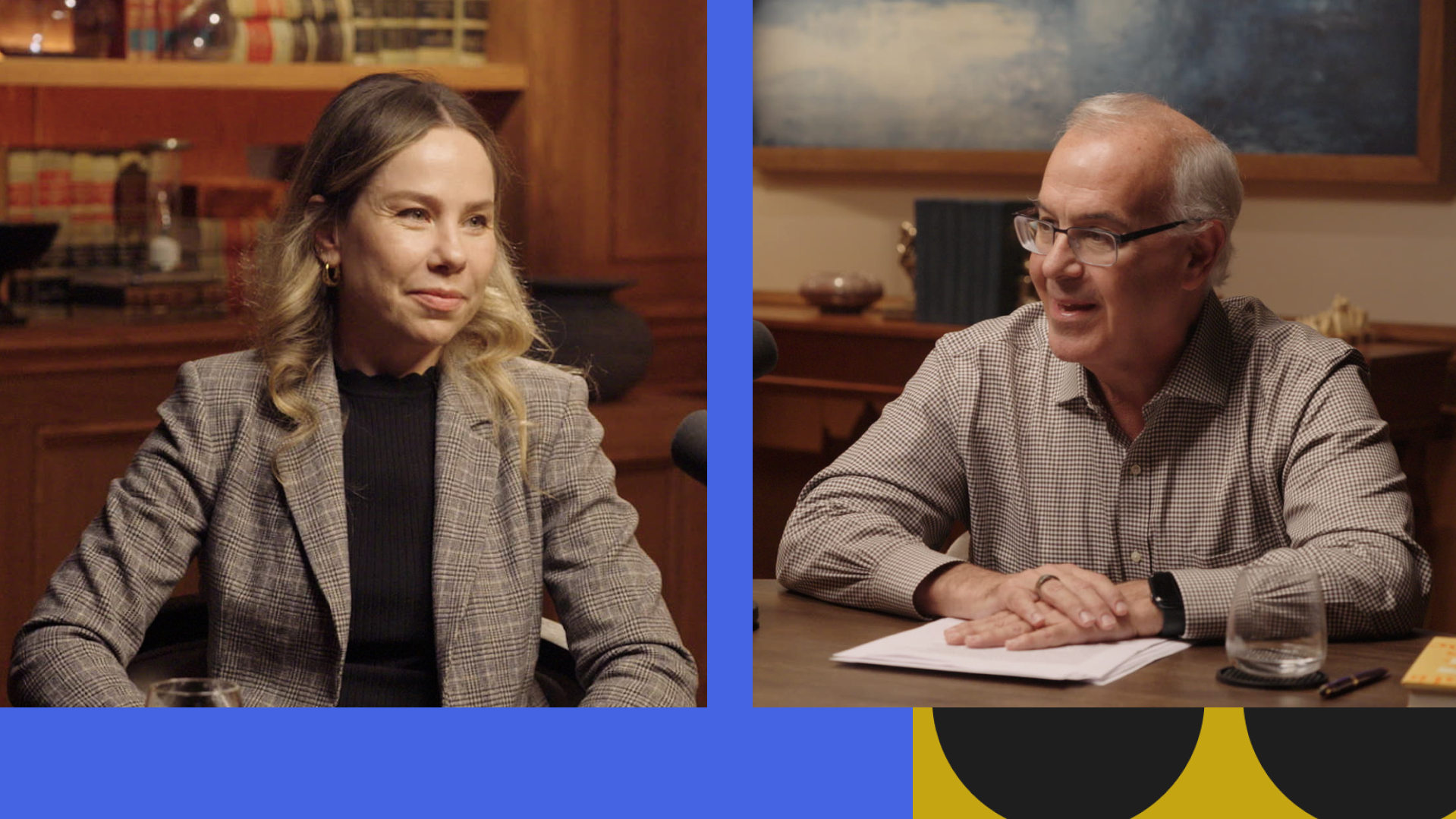
David Brooks and Anastasia Berg
  •  

Gift Guide for the AI Apocalypse

A cataclysm that destroys all human life is bad for many reasons, among them the resulting uselessness of a gift guide. Setting aside an extinction scenario, the more interesting—and more likely—outcome of an AI apocalypse is one in which ordinary life continues, but changed. This is closer to the biblical sense of the term apocalypse, which means a pulling back of the curtain on a divine truth. And of all the ways to prepare for an apocalypse brought about by artificial intelligence, surely the most American would be to go shopping.

Before we start, here are the rules of this AI-apocalypse shopping spree. First, the calamitous scenarios (and the giftable baubles!) must be specifically connected to artificial intelligence. A backup generator and a supply of nonperishable foods would be useful in all sorts of situations: natural disasters, conventional warfare, climatological stress, terrorism. But owning them makes you a prepper of a more generic stripe. You can find lots of gift guides of those sorts in other types of publications. Godspeed.

Second, the gifts need not attempt to prevent an apocalyptic outcome from arising—as if that would even be possible—nor solve a calamity once it does. The wares we seek will not avert AI ruination, but they should help curtail its impacts in a meaningful way. Perhaps more important, pondering the gift ought to help elucidate the threat itself—and reframe our understanding of what counts as an AI calamity in the first place.

[Read: Prepare for the AI apocalypse like you’d prepare for a snowstorm]

And finally, a good AI-apocalypse gift ought to be handy now, in advance of civilization-scale doomsday. The forces that might lead to bad outcomes live in the present as much as the future.


Gifts for the Loss of Shared Reality

The internet has undermined truth for decades now. Blogs and social-media platforms offered an alternative to the gatekeeping of traditional media. They democratized expression but also fragmented communities. Eventually, everyone’s ability to say anything all the time helped erode the institutional authority of science and the government. Accuracy became less important than engagement. These incentives industrialized misinformation, making fabrication profitable. Personalized feeds mated to algorithmic recommendations accelerated the culture of conspiracy theories.

AI threatens to eradicate the fragments of truth that remain. Misinformation used to spread by accident, simply because billions of people could say anything online. Then disinformation duped people on purpose. But AI has installed automated and personalized synthetic text, images, video, and audio absolutely everywhere. It’s overwhelming. Humankind risks suffocating in so much seemingly real but actually fake information that the distinction between the two might become erased.

Reality can’t be brought back entirely, but some tools can help. The Leica M-11P is a digital camera that includes hardware-authenticated digital signatures to verify the images it creates, including a record of their provenance and changes that have been made to them. The device is somewhat bulky and extremely expensive. A related alternative: any film camera. A physical negative offers material evidence of what the camera saw.

Reality Defender is a software service that uses a variety of methods to detect AI manipulation in images, audio, and video. The service is intended for corporate and industrial use at a cost of about $400 a year for 1,000 scans a month, but a free plan offers 50 image analyses each month.

A print-newspaper subscription is a fixed, physical version of the daily or weekly news that allows you to hold the same information as your friends and neighbors. It also offers a record of what was reported at a given time, unperturbed by questionable summaries, screenshots, or social-media posts.

Gifts for the Collapse of Expertise

Artificial intelligence offers an effective solution to almost any intellectual or practical problem. It can compose an email, write a job application, tell you what to eat for dinner, build a stock portfolio, offer instructions for servicing a septic tank. Or, better put, AI can appear to offer such solutions, cheaply and instantaneously. As more people and organizations take AI outputs as presumed expertise, the people who possess actual expertise in any subject could become displaced. People may stop learning how to do things for themselves—or they may come to trust the confidence of a machine, delivered effortlessly, more than they trust other people.

Unlike reality, expertise really is something you can purchase, by hiring people with knowledge, experience, and credentials to carry out tasks or offer advice. This might be a graphic designer, a structural engineer, a turf-lawn-management expert, an accountant, or a tutor in a specialized subject. Your situation, and that of the individual who might receive your gift, will be particular. The trick, of course, is finding an actual expert amid the din of faux competence. If you can, recommend people you know or have worked with personally, but if you can’t, Bark offers a directory of professionals in many domains.

Wikipedia isn’t a perfect host of reliable expertise, but it’s human-made and better than many alternatives. Kiwix offers an offline version of the complete English Wikipedia—along with emergency planning, repair guides, medical references, and other resources. It’s $350 as a hardware device or $35 for the data alone. The offline version is meant to defend against infrastructural collapse, but your gift recipient could use it just to access knowledge in a deliberate, internet-disconnected way.

Your local library also offers an easy way to find expertise offline. Many local libraries also give you the ability to borrow ebooks, audiobooks, and magazines via the Libby app. Libraries are generally free for residents of the municipality they serve, but you need a library card to use them—and getting one typically requires an in-person visit. Overcoming that hurdle might be harder than people think. The gift, then: Take someone to lunch and then the library to get them signed up.

illustration of two cheerful figures standing in front of colorful bowling balls, at an alley ready to play!
Illustration by Vincent Kilbride

Gifts for the Decline of Relationships

Lunch or dinner is great for people you already know. What about people you don’t? In 2000, the political scientist Robert Putnam published Bowling Alone, the original screed against American solitude. The title refers to bowling leagues, which were once popular sources of community but fell out of favor. Putnam’s book has been enormously influential, but many readers treat bowling leagues as a metaphor rather than a concrete activity people can and do participate in. You can still go bowling! The United States Bowling Congress can help you find local leagues, memberships in which can cost as little as $10 a week. You don’t need a bowling ball to start, but affordable sets of ball, bag, and shoes make for something you can wrap.

It is curious that human relationships have become so challenging to steward, given that technology allows us to connect with one another constantly and for free. Perhaps writing letters, making long-distance phone calls, and paying people a visit in person offered greater connectivity because they demanded a break from ordinary life. Some defamiliarization might help human connections thrive. You could, I suppose, give someone a stationery set and invite them to write letters again. But that feels retrograde. Instead, consider one of the oddball examples of telepresence that have been commercialized. The Friendship Lamp, for example, comes in a set of two glowing objects, one for you and one for someone else. When one of you touches the device, the other one lights up too. Bond Touch offers a similar idea in bracelet and necklace form.

Gifts for Cultural Stagnation

Being an artist of any kind has always been difficult, but generative AI could erode the market for human cultural production so much that such work becomes commercially unviable. When partnered with a consolidated industry for distribution, AI could even become the dominant source of what is currently known as human expression. And if AI were to replace a sufficient quantity of original human works, culture would enter a kind of death spiral, in which no new art can arise except as rehashings of what came before.

The best way to combat the automation of human culture is to support culture itself. This can’t be done just once, but must happen over and over again, as a practice. A season pass to your local symphony, theater, or ballet offers one way to help someone develop such a relationship. So does buying real art from real artists—galleries in your area are bound to offer affordable drawings, prints, paintings, and plastic arts that can help start a collection. Many bookstores feature works by local writers too.

Culture would be better if more people produced it in addition to consuming it. Digital life confused that process. It appeared to democratize creation, giving everyone the tools to make music, writing, art, and moving images—and then distribute their wares globally. Online platforms also distorted culture into a thing primarily meant to produce attention and monetization. Nothing was really ever stopping you from learning to produce (and then improve) your own cultural work, whether music, writing, painting, ceramics, or whatever else that might strike you. Buy a violin or an easel (or anything of the sort that seems right for your gift recipient), along with a local class to get them started.

Illustration of an analog watch whose face is a smiley face
Illustration by Vincent Kilbride

Gifts for the Unabiding Din of Machines

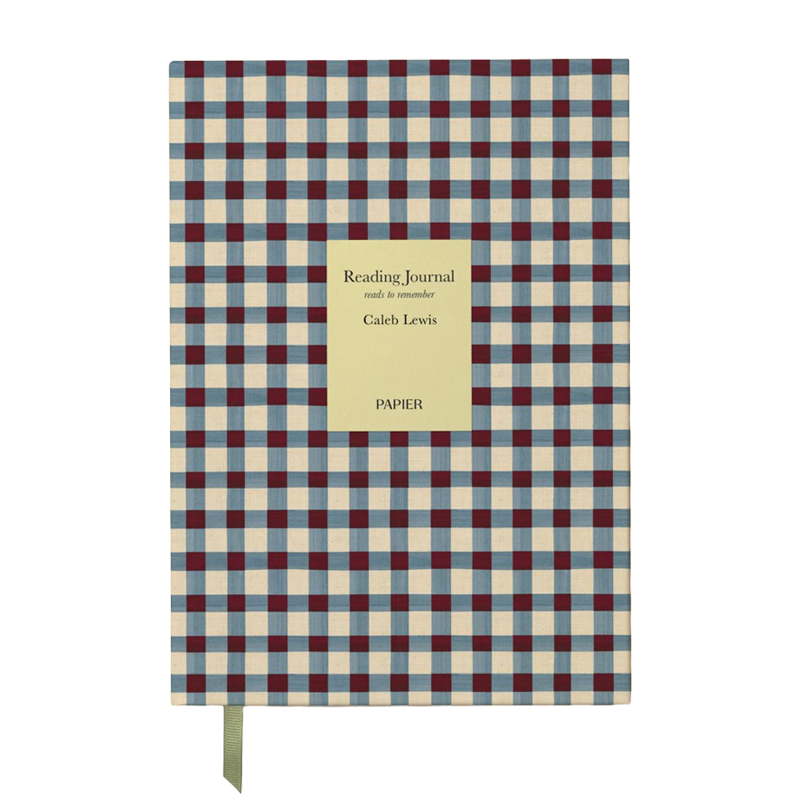
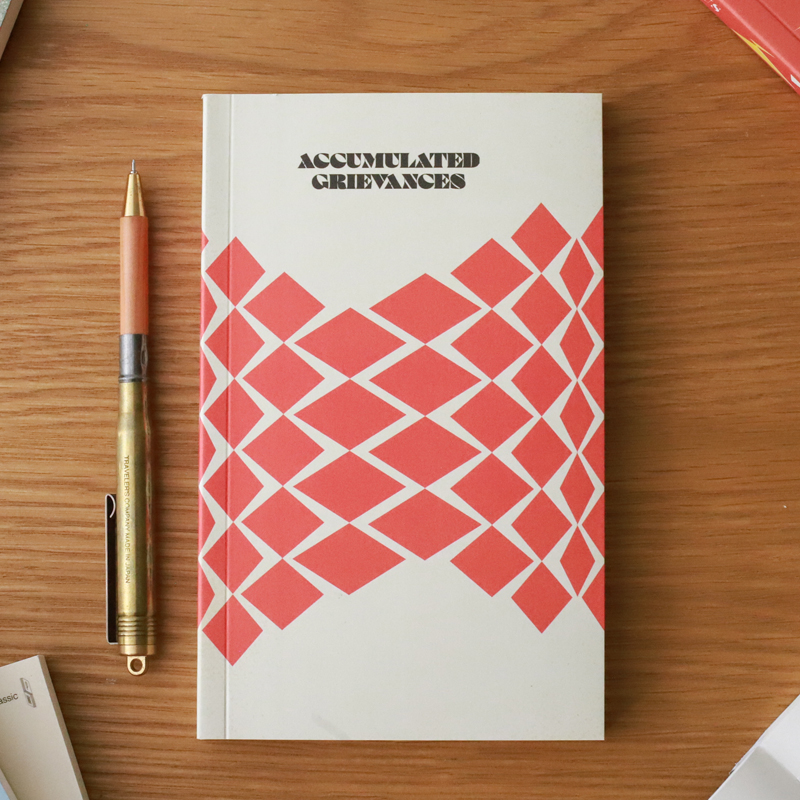
AI chats you up constantly now. Word processors, apps, even Google searches now typically initiate a conversation with an AI agent, whether you asked for one or not. Digital-detox gifts offer one way to quell the noise: for example, a redesigned but old-school media device such as the Fosi Audio compact-disc player, a deliberately limited digital device such as the Light Phone, or the Brick smartphone lock. But those options are defensive. By contrast, an array of objects that offer simple, quiet, and unmediated attention remains available. A nice mechanical wristwatch—or even a simple, cheap Casio—can do it. So can a good kitchen tool, such as an ice-cream scoop or a potato ricer. A delightful notebook and writing implement are always good for some quiet, as is a print book of almost any type.

Gifts for the Digital Panopticon

Years ago, information such as your home address and voting history might have been available in public records, but they were obfuscated by the need to access them in person. Online services ended that. And then, Big Tech started collecting and sharing information about you, with or without your permission. AI extends that tendency by improving machines’ abilities to infer knowledge about individuals—including intimate facts—from the ever-enlarging supply of data (including apparently innocuous data) constantly collected by apps, services, sensors, facial-recognition cameras, transaction records, and more. The ability to carry out one’s life in modest obscurity had already become difficult. AI could do away with it entirely.

[Read: Read this website while you still can]

You can buy tools that can, to some extent, defend against digital surveillance: a Faraday bag can block incoming and outgoing signals when you put your smartphone inside it; a service such as DeleteMe finds and removes information about you online; and adversarial apparel can stymie computer-vision surveillance. But you can also reduce your digital footprint in simpler ways. An envelope of cash allows your gift recipient to spend money without creating a transaction record for data-broker discovery. A nice paper planner allows you to keep a calendar without sharing your deeds with Google. Gmail can scan all of your emails for advertising targeting, something a private email account on a service such as Proton Mail or Apple iCloud+ does not. A subscription, along with a custom domain name, would make for a privacy-forward gift.

Gifts for the Swamp of Sycophancy

Large language models tend to affirm what a user provides as input—“I agree”—even if that entails validating flawed views or circumventing accurate responses. Over time, AI models’ designers may reduce this sycophancy effect, but they will have to overcome a strong incentive not to do so: an agreeable and even obsequious AI creates greater engagement, use, and thereby value for the AI companies. Should AI’s tendency to grovel increase while human reliance on it also expands, then a plurality of people may come to expect and acclimate to sycophancy in every nook and cranny of ordinary life.

To help someone wade out of the swamp, a gift needs to offer psychological and social effects rather than utility or even delight. A demanding book of puzzles is an option, such as Cain’s Jawbone (a legendary 1934 literary puzzle) and The New York Times Seriously Hard Crossword Puzzles. A difficult or complex board game (Car Wars, perhaps, or High Frontier 4 All) or video game (such as Dark Souls) could fit the bill too.

Physical activity also has a role to play: A couple of trips to an indoor-climbing wall or a few consultations with a personal trainer might be enough to reveal that the world was not built for you alone.

Gifts for Trust’s Twilight

The loss of shared reality, fueled by the swamp of sycophancy, could cause members of the public to withdraw into their own addled, private realities. Just as likely, it could ignite paranoia. Every email, text message, phone call, viral video, and internet post that seems authentic might also be fake. AI impersonation, already enormously convincing, is poised to improve, and tools to detect evidence of AI intervention in text and audiovisual material remain dubious. Once every shard of apparently earnest or human-created content raises suspicion, almost nothing will seem trustworthy. When trust itself cannot be assumed, perhaps ever, an almost delusional suspicion may become the default mode of interaction.

Some companies are trying to solve the trust problems that computers create with … more computers. Hardware-security keys such as YubiKey offer better protection against phishing and hacking attacks than password managers or two-factor authentication. And Vicem, designed to avert telephone scams, offers an AI phone monitor. Other, simpler tools also exist. You can still get a landline number that you don’t share publicly—or a supposedly private virtual number from a service such as GetUnlisted. A more baroque (and affected) solution from the past: a personalized wax seal, along with stationery on which to apply it.

Illustration of a door's mail slot with gift-wrapped magazine sliding through
Illustration by Vincent Kilbride

Gifts for the End of Serendipity

Optimization and efficiency, once values of business alone, have leaked into ordinary life. The practice of living one’s life—dating, parenting, dining out, working, even seeking leisure—has turned into accomplishing tasks along the way to supposedly even better tasks. In the end, human life may turn away from any encounter whose outcome is not predictable, even known in advance. Contingency, accident, and improvisation could disappear as people eschew those putatively useless disomforts—and then forget about them entirely.

In a way, a good gift of any kind—AI-aware or not—counts as a gift of serendipity. Something given as a true surprise, and perhaps even absent of need, offers a door to an unexpected act. I can’t tell you what might count as such a gift for the individuals on your list; consider it a gift of judgment to ponder the matter. One idea: a paper map or atlas, the kind that can live in a car’s seat-back pocket. It might inspire someone to use a city absent computer guidance.

Serendipity may be on the decline, but many of the sources that once delivered it remain available, if in fragile forms. A monthly print-magazine subscription (such as this one) puts a package of surprising stories in the mailbox on the regular. A short-wave radio, or an HDTV antenna and HDHomeRun device, delivers whatever is being broadcast right now to your home. A gift certificate to a local shop with no online ordering, or to a local restaurant that does not offer delivery, can ignite the delight of browsing again.


An apocalypse feels like something you can do nothing about beyond panicking or hunkering down, as if awaiting a meteor’s collision with Earth.

[Read: What if the apocalypse is already here?]

But “apocalypse” may not be the right way to understand the distinctive challenges that artificial intelligence presents to human life. The temptation to catastrophize—an urge the internet rewarded long before AI—can obscure the ways that ordinary life can steer nimbly around cataclysm simply by each of us making modest choices where alternatives are available.

When carried out in the best spirit, gifts allow recipients and givers alike to see the world, and their place in it, in a marginally different light. This makes the holidays an ideal time to imagine and then embrace slightly different ways of living. None of artificial intelligence’s apocalypses, at least the ones humankind might survive, represents wholly new circumstances that AI invented. Instead, artificial intelligence wore deeper ruts into prior habits.

One such rut is the discourse surrounding artificial intelligence: Either the world will be saved by AI, or else AI will ruin it. You and I and all of the people on your holiday gift list get cast as passengers, careening toward deliverance or doom. The reality will probably be more banal. Most of AI’s threats are not existential, and likewise many of the defenses against those threats will not defeat the technology. The survival equipment suitable to fortify against that erosion will be correspondingly ordinary. A notebook preserves the capacity to write. A violin hands down the experience of making music. A dinner out demands face-to-face interactions with friends. A telephone whose number only a few people know rings with delight rather than foreboding. A paper map requires interpretation; a library invites perusal; a bowling lane can facilitate new conversation. The world is not ending.

© Illustration by Vincent Kilbride

  •  

Forgive the Bad Texters

Illustrations by Hannah Robinson

Updated at 6:47 p.m. ET on November 5, 2026

Whenever I receive a text, this is what happens. I pick up my phone. So far, so good. I experience whatever emotion the message elicits—the pleasant warmth of being reached out to, possibly the annoyance of being interrupted. Then, if conditions are right, if I’m not too busy or in the middle of talking with someone else, if my mind is at peace, if my anxiety is at no more than a low hum, if Mercury is not in retrograde, I will respond right then and there. If conditions are not right, it will be as though the text never existed at all.

Right now, I have 30 unopened texts. Scrolling through my messages, I find several more that I opened but forgot to respond to for anywhere between a few hours and a week and a half—from my parents, my sister’s fiancé, old friends who are accustomed to this kind of behavior, and new friends who are just beginning to be disappointed in me. At least two people texted me so long ago—more than a month—that to respond now and remind them how long they’ve been waiting would be worse than not responding at all.

I’m not proud of leaving people hanging. Every text I owe is a tiny siren in the back of my mind, blaring intermittent pulses of guilt. Unless I forget about it entirely, in which case I’ll remember it with a shameful jolt some days or weeks later. I’m not one of those modern hermits who thinks you don’t owe anyone anything, who likes every Instagram post she sees about boundaries and thinks that flaking on plans is self-care. I write about relationships for a living, and I believe that showing up for one another is the purpose of our existence. That’s, like, my whole brand. And so this is my greatest shame: I am a Bad Texter. I am slow to respond. I am forgetful. I get overwhelmed. My own mother has said I’m “probably worse than 90 percent of the other people that I text with.”

This might seem like a trivial pathology, but it isn’t. Texting is the currency of modern relationships. In 2024, Americans exchanged more than 2 trillion text messages, about 42 billion more than the year before, according to CTIA, a trade group representing the wireless industry. Some of those texts are probably spam. Some are advertising. Some are bits of automated busywork (click this link to confirm your appointment ). But many of them, hopefully most of them, are between people who know one another, reaching out for connection over the waves of the wireless spectrum.

According to a 2023 survey, texting is the No. 1 way that people communicate with their loved ones, beating out mobile-phone calls and absolutely crushing face-to-face conversations, which got only 8 percent of the vote. Texting came out ahead in every age bracket except the oldest; those 55 and older ranked texting and mobile-phone calls equally. No age group used any other method more frequently than texting.

Yet at the same time, texting stresses people out. A third of Americans report feeling overwhelmed by the number of texts they need to respond to, and a majority say they struggle to keep up with their group chats. As Pranav Malhotra, who studies communication and media at the University of Michigan, told me, texting “is what the people want, but it’s not doing them any good.” And so, many of us end up feeling like Bad Texters. We are here, we are legion, and we are sorry for our delayed response.

Texting dominates our social lives like nothing else. According to the research firm Nielsen, American cellphone users started texting more than they called in 2007. Since then, unlimited phone plans and widespread Wi-Fi have removed many of the barriers that once led people to restrict their texts.

The ubiquity of text-messaging hardly seems worth questioning—it’s simply the way things are. But when you think about it, the modern predilection for managing all of our relationships by typing on a tiny touch screen is a bit odd. “For darn sure, it’s a lot faster to talk about things than it is to text them,” Naomi Baron, who studies language and technology at American University, told me. “Particularly if you have more than, let’s say, 100 characters’ worth to say. But it’s become the way of doing things.”

Texting achieved domination because it’s convenient—you can message someone at any time without waiting to see if they’re available first—and because it offers a sense of control. You don’t need to risk the uncertainty that comes with live conversation; you can plan out exactly what you want to say, and people won’t see how you react to their response. This is one of the things that people say they like best about texting. But the ease of sending messages means, on the flip side, that people are receiving more.

[Listen: Would you go back to a time before smartphones if you could?]

As texting became our default mode of communication, messages that once might have taken another form—your hair salon calling to confirm an appointment, an email invite to your best friend’s birthday party, a paper medical bill—started arriving as texts. And the act of texting is no longer confined to whatever mobile app processes your SMS messages. I have four different texting-specific apps on my phone: the standard iPhone Messages, WhatsApp, Signal, and KakaoTalk—a Korean messaging app where my in-laws’ family group chat lives. Then there are social-media DMs, which function much like texting, and Slack, where my colleagues send me DMs that would have been emails not so long ago. These show up on my home screen as notifications, and when I respond on my phone, the feeling is very similar to texting.

I have sometimes attempted to deal with my texting overwhelm by communicating in other ways. Lately, I’ve been trying to call people more to catch up, which is wonderful, but it can also cause alarm. One British survey from 2024 found that more than half of young adults said they assumed unexpected calls meant bad news. (Surely you would just text anything else you want to say.) Sometimes I’ll send my friends voice messages when I want to tell them a story that’s too long to type, but this, too, is controversial. I love voice messages—I think they feel so much more intimate than a text—but many people think that expecting a friend to take five minutes out of their day to listen to a mini-podcast you recorded is annoying, or even selfish. For party invitations, vacation planning, or anything logistical, I prefer to use email, but I’ve received explicit feedback from my husband and many of my friends that I should be texting instead, because “no one checks their email.” (Can this possibly be true?) Whenever I try to escape, social pressure always seems to push me back to texting.

And so the texts multiply, taking up more and more space in our relationships, until to be called a Bad Texter feels like being accused of being a bad spouse, sibling, child, parent, or friend.

illustration of woman in red shirt holding hammer and looking suspiciously at smartphone ringing on table
Hannah Robinson

Instagram’s algorithm must have me figured out because it recently served me a video of an episode of “SubwayTakes,” in which the comedian Delaney Rowe shared her take: “There’s no such thing as a bad texter; they just don’t want to respond.” Claiming to be bad at texting, she said, is a “cop-out,” because a lack of responsiveness is conditional. “When a bad texter gets a crush? Best texter in the world,” she said.

This is what I fear my loved ones think: that my response time is directly correlated with how much I care about them. What else could it be? Americans check their phone nearly 200 times a day on average, and the overwhelming majority keep their phone on them “almost all the time,” according to recent surveys. The modern expectation that everyone is constantly reachable is unreasonable, but it’s not that unreasonable, given how attached people are to their phones.

Lizzie Post is a great-great-granddaughter of the early-20th-century etiquette writer Emily Post, and a co-president of the Emily Post Institute, where she writes about modern manners. Unfortunately, she confirmed that politeness requires responding to texts promptly, and that too long a delay is rude. (Though the meaning of promptly can vary depending on the context.) “I hate to say it,” she told me, but “I would really try to prioritize it a bit more.”

She was not the only expert I spoke with who said I needed to shape up. “Get one with the idea that people who text expect fast responses,” Paul Leonardi, a technology-management professor at UC Santa Barbara and the author of Digital Exhaustion, told me. You don’t have to meet that expectation, but there are consequences for not doing so. He pointed out that, especially with long-distance loved ones, a text thread is “the meat of our relationship.” A shared experience is happening there, and you’re either contributing to it or you’re not. Often, he advised, it’s better to just say something—anything—quickly, rather than waiting to form the perfect response later. (I do sometimes delay texting people because I want to wait until I can put more thought into my message. But the longer I wait, the better I feel the message needs to be to justify the delay. The pressure builds.) Post agreed. By responding too slowly, I’m at risk, she said, of making people think I don’t want to connect with them—even if that’s not true.

One of the costs of conducting so much of our relationships via text is the loss of context. In exchange for convenience, we give up tone of voice, eye contact, and body language. When all we have to go on are the words in front of us (or the lack thereof), we tend to “overinterpret very minor cues as signals of rudeness or as signals of Oh, this person doesn’t care about me,” Gretchen McCulloch, a linguist who studies online communication and the author of Because Internet, told me. Hence the unwritten rule that putting a period at the end of a text is passive-aggressive. My mom recently had a serious dustup with a friend, seemingly just because my mom put the word not in all caps in a text. Gaps in information too often get filled in with projections and insecurities.

I know my haphazard approach to texting risks fanning just such insecurities. And I’ve tried to be better. I put responding to texts on my to-do list. I’ve tried not opening any texts until I’m ready to write back, letting the notifications pile up and remind me every time I open my phone. I made a calendar reminder for every day at 4 p.m. that says “RESPOND TO TEXTS!!!,” following the advice of several experts who suggested setting aside time to deal with all my texts at once, rather than taking them as they come. This helps, although it also makes me feel like I’m treating my loved ones like a productivity problem instead of a source of joy. And there’s nothing to stop me from ignoring the reminder the same way I would a text.

Social obligation is as old as human society. In the 19th century, the practice of making social “calls” seems to have produced a feeling similar to the anxiety I get when I open my texts. An 1895 column in the Rocky Mountain News declared that the problem was one of volume—there were simply too many calls that one was expected to pay. “It may certainly be a pleasure to visit one’s friends,” the anonymous author wrote, but the pleasure fades “when you are meeting them every day almost, by dozens and scores and hundreds.” One woman quoted seemed to be on the verge of a nervous breakdown: “The calls I owe haunt me. They rise up in my dreams and chase me with spectre fingers.”

Falling behind on your correspondence is nothing new, either. “The guilty message—‘I’m sorry it took me so long to respond’—has a very long history,” Steven Mintz, a historian at the University of Texas at Austin, told me. Indeed, in the 1922 edition of Emily Post’s Etiquette, the author writes, “One of the frequent difficulties in beginning a letter is that your answer is so long delayed that you begin with an apology, which is always a lame duck.”

The difference is that although an unanswered letter may have caused guilt and anxiety, you weren’t expected to respond to it within five minutes. Technology has taken our sense of social obligation, accelerated it, amplified it, and splintered it into billions of little green and blue bubbles, each one both a point of connection and a task hanging over our heads.

“People always say we’re wired to connect, but this isn’t the kind of connecting that we’re wired for,” Lori Gottlieb, a psychotherapist and the author of Maybe You Should Talk to Someone, told me.

Being a Bad Texter might harm your relationships, but being a Good Texter will not necessarily help them. Research is unclear on this front. In terms of connection, texting seems to be better than nothing, but nowhere near as beneficial as phone calls or face-to-face conversations. The latter are definitely good for us, and they’re declining. Time-use data show that over the past couple of decades, Americans have been spending less time socializing in person. One study even found that the number of words people speak out loud each day has decreased.

[From the February 2025 issue: Derek Thompson on the anti-social century]

Some research has suggested that the more someone texts, the lonelier and less satisfied they feel. In one study, researchers theorized that people found texting exasperating because they were using it with the intention of keeping in touch, but it didn’t actually do all that much to maintain relationships. And every text message is a little interruption, taxing your attention and taking focus from the people who may be right in front of you.

Nothing in the research definitively says we shouldn’t be texting one another—but nothing says we should prioritize it the way we do, either. “The one thing that’s consistent about it is that it’s inconsistent,” Jess Dominguez, who researches communication at the University of Kentucky, told me. Technology, she said, “is always good and bad, and always at the same time.”

The overwhelming emotion associated with texting seems to be ambivalence. The same things that make texting appealing also make it stressful. It’s easy; it’s convenient; it can be done anytime, anywhere. But that means you can end up feeling like you should be available to respond all the time, everywhere. Texting allows you to keep up with more people at once than phone calls or letters ever did. But those exchanges are shallower and less fulfilling. It gives welcome control over communication, but that can lead to pressure to draft the ideal response, or to using texting as a shield to hide from the messiness of real-time conversation. It is fun and it is frustrating, and it doesn’t really matter if you like it, because it is more powerful than you are, and it’s not going anywhere.

illustration of wild-eyed angry woman leaping and throwing her smartphone across the room into a trash can
Hannah Robinson

Eventually, we all must do things we have been dreading, whether it is apologizing for not texting someone back for a month or, in my case, interviewing my friends and family for this article. A story like this requires a reckoning, and narratively, I recognized that I must face up to who I am and what I have done to those I love. But I didn’t want to, and I put it off as long as I could, until just before my deadline.

Feedback was kind, but mixed. “I have no complaints,” my husband said. Vindication?! But “my bar is very low.” Oh. A friend of mine called my failure to respond to a dinner invite until the day of “chaotic.” When I asked my parents how their experience texting with me has been, my dad immediately said, “Poor.” He had recently sent me a Mountain Goats song he likes; I hadn’t responded. “A little too much to ask that you put a heart?” he said, only half-joking. “Couldn’t do it, could you?”

My mom said she’s never been offended, only confused. “I always walk this line between: Did she see the text, couldn’t answer it, and then forgot about it? Or did she see the text and she’s still going to answer it? It’s, like, this waiting thing,” she said. “Should I remind her? Should I not remind her?” Several people told me they didn’t think of me as a notably Bad Texter, or at least they weren’t bothered by my slowness. My friend Morgan pointed out that a text, like any other form of communication, is a “bid for connection.” But it’s different than if someone opened their arms for a hug and I just walked away. Although I may drop the ball on responding sometimes, Morgan said, “I don’t feel like you’ve ever dropped the ball on maintaining a connection.”

I once read somewhere that trying to keep up with your work emails is a trap. The emails will never stop coming, and your only reward for responding quickly will be more emails. So you have two choices: You can be good at responding to email or you can be good at your job.

[Listen: What it takes to reclaim your attention span]

I feel a similar way about keeping up with my texts. I suppose I could opt out entirely and throw my phone into the sea. But opting out of texting would mean, to some degree, choosing isolation. I don’t want people to stop reaching out to me; I don’t want to give up on the good parts of texting, even if they’re inextricable from the bad. So I will try to carve out the occasional hour to attend to my correspondence. But I also want to let go of some of the guilt that tells me every delayed response means I’m being a bad friend, daughter, sister, wife.

I bring other things to the table, after all. If you need practical help—someone to feed your pets, watch your kids, help you move—I would be delighted to provide it. I’ll make spreadsheets to plan our vacations. I’ll buy you little gifts, and alarm you with cold calls just to catch up. If we’re together, I’ll put my phone away and give you my full attention. But if you text me, you may not hear back for a while.

You can be good at texting. You can be good at your relationships. Maybe for some people, it’s possible to be both. But they are not the same thing.


We want to hear from you: Tell us how many unread messages you have—or send a screenshot!—along with your name and the reason you’re not-so-great at responding promptly. Text your response to (202) 266-7715. (By participating, you agree to grant The Atlantic permission to use, modify, and distribute your submission text in all media.)


This article has been updated to clarify that texting is the most common way people communicate with their loved ones, not the preferred way. The article appears in the November 2026 print edition with the headline “Confessions of a Bad Texter.” When you buy a book using a link on this page, we receive a commission. Thank you for supporting The Atlantic.

© Illustration by Hannah Robinson

  •  

The Problem With Child-Led Potty Training

The time has come to admit it: The United States has a potty-training problem. In Utah, a law came into effect last year mandating that, with some exceptions, children will not be allowed to enroll in public school without first being toilet trained. Kansas lawmakers introduced a similar bill in January, and at least one district in Florida is considering a policy change that could force kindergartners to stay home until they are out of diapers.

These directives have come about because growing numbers of children are showing up to school unprepared to use the toilet. And U.S. schools aren’t the only ones confronting this issue. In the United Kingdom, the nationally representative School Readiness Survey found that last year, more than a quarter of children were not toilet trained when they began primary school (which most children do the September after they turn 4). Felicity Gillespie, the chief executive of Kindred Squared, the organization that commissions the annual survey, told me this means that teachers “can never really get into the curriculum, because they’re constantly having to take kids out and change their nappies.”

The shift toward delayed potty training, I learned while reporting this article, has been under way for quite a long time. And the sources I spoke with pointed to a few factors driving it. One is that easy access to disposable diapers—which reduce the mess involved in having a child who can’t reliably make it to the toilet—has made the need for training less pressing. Another is that many families with working parents are short on the considerable time needed for monitoring trips to the bathroom. But from Gillespie’s perspective, the root of the issue is that parents are taking a child-led approach to what should be a “100 percent parent-led activity,” she said. “You don’t sit and wait for a child to say, ‘Do you know what? I think I’d like to try wearing pants today.’”

A desire to empower children as decision makers in their own lives, as well as an underlying wariness about parental authority, manifests in many trending parenting philosophies—and is perhaps most recognizable in “gentle” or “respectful” parenting, which emphasizes guidance and persuasion over rules and instruction. Broadly, this approach is rooted in an admirable desire to respect children as humans. The author of The Sovereign Child, a 2025 book that advocates for rules-free parenting, describes a general philosophy of “taking children seriously.” What it amounts to, though, is going to great lengths to avoid just telling your kid what to do.

[Read: Parenting in America keeps getting more intensive]

Potty training offers a strong case study in how easily the child-led approach can break down amid the realities of modern life.

In the United States, official guidance on toilet training has been through a huge evolution over the past century. In a 1938 guide to infant care, the U.S. Children’s Bureau advised that bowel training should begin at six months or earlier and be completed by the child’s first birthday; bladder training should start at 10 months, and daytime dryness should be achieved by age 2.

Things shifted in the mid-20th century, particularly after the pediatrician T. Berry Brazelton published a paper titled “A Child-Oriented Approach to Toilet Training,” in which he argued that a child needed to reach certain physiological and psychological milestones before their training could begin. Brazelton’s emphasis wasn’t really on starting at a particular age but on allowing the child to direct the process. “Don’t rush your toddler into toilet training or let anyone else tell you it’s time,” he said years later, in a 1998 Pampers commercial. “It’s got to be his choice.”

The child-led approach has had formal backing from established experts, including the American Academy of Pediatrics, since the 1960s. To this day, many American parents are coached to wait for signs of their child’s readiness before kick-starting the potty-training process. (Readiness is a fuzzy term, but it essentially means that a child will, in addition to hitting specific physical and cognitive milestones, ideally give indications that they’re motivated to use the toilet, such as expressing discomfort in soiled diapers and a desire to wear “big-kid” underwear.) A University of Michigan poll last year, of a national sample of parents, found that 75 percent reported initiating training when their child “seemed ready.” Other motivations for beginning—preparation for day care or preschool, the high cost of diapers—weren’t as influential.

All of this waiting for readiness has coincided with the emergence of delayed potty training. According to data from the 1950s, a large majority of kids, 80 percent, had completed bowel training by 24 months; only 5 percent were still bowel training after 34 months. Even within a sample of 1950s children whose parents were advised by Brazelton to use his child-oriented approach, 98 percent were daytime potty trained by age 3. Over the next few decades, this timeline was pushed back. A 2001 study found that close to zero percent of kids had completed potty training by 24 months, and only about half had done so by 36 months. Still, that study found that almost all kids had started training before their third birthday. These days, only 21 percent of kids begin potty training before they hit 2—and about a quarter do not begin until after they turn 3.

In parents’ defense, the readiness framework can be hard to follow. Tinne Van Aggelpoel, a Belgian pelvic-floor physiotherapist who has conducted research aimed at understanding the causes and consequences of delayed toilet training, told me that no consensus exists regarding what ought to count as a sign of readiness or when parents can expect signs to manifest. Some, such as the ability to stably sit on a potty, tend to emerge very young. Others, such as the capacity to walk or dress oneself, develop far later. And some seem unlikely to develop until potty training has begun: A child probably won’t start asking to use a potty chair or demonstrate the ability to sit on it for long stretches unless a potty chair is already in the picture. “If you don’t give your child a bicycle,” Van Aggelpoel said, “then they don’t learn to ride the bicycle, right?”

[Read: This influencer says you can’t parent too gently]

The deeper issue, though, is that readiness does not develop in a vacuum. It is influenced by all sorts of social and environmental factors, including diapers, Van Aggelpoel said. Bodily cues—expressions that a child needs relief—are one common sign that a kid is ready to toilet train. But research by Van Aggelpoel and her colleagues suggests that disposable diapers reduce these signals. Without a diaper on, kids squirm and touch themselves when they need to use the toilet. Kids wearing a disposable diaper mostly carry on playing. And of course, to a great extent, readiness boils down to a child’s dissatisfaction with the diapered status quo—the discomfort of which today’s diapers have been explicitly designed to mitigate.

From Van Aggelpoel’s perspective, there’s no such thing as training too early. Continence, like crawling or walking, is a motor skill that develops over time. Its development relies on sensory feedback acquired through a messy trial-and-error process of exercise and repetition. “You do something, and something goes wrong,” Van Aggelpoel said, “and then you know, This was wrong; I need to do it in another way.” Just as children learning to roll, crawl, and walk need plenty of opportunities to lie on the floor, pull up on chairs, and tumble around, children learning to control their bowels need plenty of opportunities to experience all of the bodily sensations that go along with failing to hold it. Disposable diapers directly inhibit this feedback loop.

In the United Kingdom, experts have lately been departing from the readiness-centric paradigm. This past spring, when I was living in England, a health-care provider examining my then-10-month-old told me that there was no need to put off potty training, and then texted me a link to a site offering parents guidance on how to get started. “Should we wait for ‘signs of readiness’?” the FAQs read. “No!” the answer said. “The idea of readiness is not based on good research evidence.”

In the United States, too, experts seem to be subtly backing away from recommending that parents delay. In 2008, guidance from the American Academy of Family Physicians stated in no uncertain terms that the skills required for toilet training do not emerge until after age 2; it cited research suggesting that children benefit little from starting training earlier than 27 months, because the earlier training begins, the longer it takes. But an updated version of the guidance, published in 2019, acknowledged that kids in a lot of countries are trained much earlier—89 percent of Vietnamese children begin training by six months, and 98 percent are trained by 2, for example—and that normally developing children seemed to experience “no harms from early training.”

As recently as 2022, the American Academy of Pediatrics’ webpage outlining the right age to potty train stated that “child-development experts now believe that toilet training works best for most families if it can be delayed until the child is ready to control much of the process herself.” The current page is far less heavy-handed about children calling the shots, advising parents to “expect hesitancy.”

Dorota Talalay, a Polish writer who has pointed out how odd the delayed approach to potty training looks to many people outside the Anglosphere, acknowledged that training can indeed take longer the earlier that you start. But she told me that this doesn’t necessarily mean the training is harder. When she began plopping her child, at six months old, on the potty every 90 minutes or so, she received little resistance. “You just sit them on the potty,” she said, “and because they can’t walk, they just sit there, they do their thing, and then everybody moves on with their lives.”

By contrast, the current U.S. norm of waiting until kids are at least 2 means that potty training is aligned with a child’s “peak defiance,” Talalay said. She may be on to something. Per the Michigan poll, the most common potty-training difficulty that parents cite is the child “not being cooperative.” Oddly enough, then, if the goal is to avoid urging a child to begin training when they’d rather not, the key may be not to delay—but to start early.


​​When you buy a book using a link on this page, we receive a commission. Thank you for supporting The Atlantic.

© Illustration by Matteo Giuseppe Pani / The Atlantic. Source: Buyenlarge / Getty.

  •  

Advent Calendars Are Totally Out of Control

This article was featured in the One Story to Read Today newsletter. Sign up for it here.

It is believed that in the fourth century, European followers of the still-newish religion called Christianity first formally observed the period in December leading up to the birth of Jesus Christ. They called it “the Advent,” from the Latin word for “approach” or “arrival,” and it was a somber time, one for preparation and contemplation. In the sixth century, Pope Gregory composed many of the texts still associated with the Advent, at least as it is practiced by Catholics. In the 19th, German Protestants turned the waiting into something more like counting, lighting candles to mark the days until Christmas. For millions of people, for more than 2,000 years, the Advent has represented an opportunity to reflect, to anticipate—to make holiness out of the spiritual equivalent of standing in line, to sit in stillness during the year’s darkest time and know the light is coming.

In 2025, the Advent seems, mostly, to represent an opportunity to pluck miniature diversions out of perforated-cardboard compartments. People with even a tenuous relationship to Jesus Christ are nonetheless spending their Decembers counting down the days until his birthday; they are doing this by opening paper doors, behind which they are finding just about anything a person can possibly buy—tea, designer lipstick, wine, weed, chili crisp, cheese, knives, crystals, smoked summer sausage, toys for children, toys for cats, toys for dogs, toys for sex. They are participating (possibly subconsciously) in an ancient, sacred ritual by unboxing their daily thong. They are counting down to Christmas without compromising their gains, as Jesus would have wanted. They’re celebrating the season the way it was meant to be: with Keurig cups.

The Macy’s website currently offers many dozens of advent calendars, ranging in price from just under $20 (chocolate) to $955 (an assortment of goodies from the Swedish luxury brand Byredo). Williams-Sonoma has more than 20, including two cross-branded with the Netflix show Bridgerton. Burger King and Kraft Natural Cheese each do an advent calendar, as does Red Bull, though I gotta say, that one looks suspiciously like a normal 24-pack of cans. Sometimes, advent calendars cost as much as a small boat; sometimes they merely contain two dozen (very) small boats. Bonne Maman, the French jam company, has quadrupled production of its advent calendar since debuting it in 2017, and the calendar still sells out every year, a representative of the company told Modern Retail. Advent calendars have now gone so wide that they’re not just for Christmas anymore—Hanukkah and Valentine’s Day have both received the advent-calendar treatment, in a development that is wholly natural, if you think the point of advent calendars is to invent new categories of acquisition, or a bit goofy, if you think the point of advent calendars is to observe the Advent.

[Read: The luxury makeover of the worst pastry on Earth]

Advent calendars as mass-marketed products have been around since the early 20th century, when European companies began selling simple paper ones, mostly for children. Their slow march toward secular adult indulgence kicked into warp speed about a decade and a half ago, when beauty companies began putting sample-size products into glamorous boxes and marketing them under seasonal names. The idea presented two opportunities at once: Advent calendars were aimed at loyalists but also roped in new customers unwilling to spring for a full-size tube of goo who might be persuaded by what they saw as a good deal on two dozen petite ones. The calendars’ once-a-year nature also allowed companies to create artificial scarcity, drumming up excitement and demand. Most important, they provided nearly a full month of daily exposure to a company and its products—for the people who bought the calendars, and for whomever they were showing them to. Not insignificantly, this was shortly after YouTube was founded: Unboxing videos were one of that platform’s earliest native hits, and the only thing better than a single unboxing is 24 unboxings in a row.

The unboxing videos are now on TikTok, too, and they follow the same format and offer the same thrills: surprises, ribbons, novelties in tiny, adorable packages. Everyone loves a small treat, especially one that feels like a deal. More and more, giving gifts has also become something that people are doing for themselves—I think it’s notable that the very premise of an advent calendar, which one typically starts opening nearly a month before Christmas, means it’s probably not a gift. (“A little moment, just for you,” whispers the copy inside the cover of an advent calendar full of waterproof jewelry.) The season has morphed into a weeks-long festival of consumption, its own liturgical calendar’s worth of shopping holidays: Black Friday, Cyber Monday, Boxing Day. The advent calendar began as a form of religious expression. It still is—it’s just a different religion.

© Illustration by Ben Kothe / The Atlantic

  •  

Enough With the Brussels Sprouts Already

Brussels sprouts are played out. Kale was a mistake. This winter, embrace cabbage. Affordable, delicious, and astoundingly versatile, it has much more to offer than its reputation suggests.

It is a cliché of food writing to refer to a vegetable as “humble”—the humble carrot, the humble potato—but in the case of cabbage, the cliché is apt. Mark Twain wrote that “cauliflower is nothing but cabbage with a college education.” Lewis Carroll’s walrus and carpenter discuss topics so unalike from one another that they talk of “cabbages—and kings.” Cabbage, a staple of peasant cuisine across Eurasia, is not merely humble, but the very symbol of humility.

Two thousand years before Twain considered the subject, however, Cato the Elder offered a different view. “Brassica est quae omnibus holeribus antistat,” he wrote: “The cabbage surpasses all other vegetables.” Setting aside the specifics of his argument, which to modern ears will sound oddly focused on the urine of cabbage-eaters, the overall sentiment is spot on.

By weight, cabbage is among the cheapest foods you can buy. (For simplicity’s sake, I’m focusing exclusively on standard-issue green cabbage, and not other wonderful varieties such as savoy and napa.) A USDA database ranked 93 different vegetable categories by price as of 2022. Green cabbage came in at No. 93. Because it is so dense, a single head produces an astonishing amount of food. It lasts in the refrigerator almost indefinitely, long past the point when kale begins to stink and carrots go limp. And it is almost impossible to overcook.

[Read: What home cooking does that restaurants can’t]

Cabbage lends itself to endless preparations. This is a good thing, because if you buy one average-sized head, you will have to figure out how to use it all. You can roast, grill, or pan-sear it. This will produce something with a meaty texture and rich, nutty flavor. You can turn it into cole slaw, which is fabulous on a leftover-turkey sandwich, or go in a more vinegar-based direction and call it a cabbage salad. It’s great sautéed or stir-fried, or braised until practically melting in the bottom of a pan underneath a roasting chicken or Thanksgiving turkey.

Despite its many virtues, cabbage has yet to inspire the kind of enthusiasm directed at some other members of the Brassica oleracea species, including kale, broccoli, brussels sprouts, and cauliflower, which collectively have been on an astounding culinary trajectory over the past three decades. (Yes, they are all the same species, a bit like how Great Danes and dachshunds are both Canis familiaris.) These plants, also known as cruciferous vegetables, were long synonymous with healthy but unappetizing food that kids must be forced to eat. During one challenge to the Affordable Care Act at the Supreme Court, much of the oral argument turned on the hypothetical question of whether Congress could pass a law requiring Americans to eat broccoli.

If the idea of a “broccoli mandate” now doesn’t seem like such a threat to liberty—if cruciferous vegetables have become less menacing—it’s largely because America has gotten better at cooking them. When I was a kid, in the 1990s, the dominant way to prepare them was steaming or, worse still, boiling. So backwards was the national approach to veggies at the time that a 1993 New York Times article by Florence Fabricant reads like a dispatch from another planet. In the essay, Fabricant alerted readers to a new and unfamiliar culinary trend: roasting. Chefs in fancy restaurants, she wrote, were beginning to use the technique not just for big cuts of meat but for other foods, including vegetables. “Instead of boiling beets or carrots,” Fabricant suggested, readers should “try roasting these foods.” Over time, home cooks would heed the call. Cooking veggies with high heat, oil, and salt turned out to work wonders for both flavor and texture. Many of my Atlantic colleagues report that their young kids happily eat roasted broccoli.

This century, several breeds of Brassica oleracea have taken their turn as the “it” vegetable. In the early 2010s, thanks in part to endorsements from such celebrity proto-influencers as Gwyneth Paltrow and Beyoncé, kale went from obscurity to sudden ubiquity. Bon Appétit declared kale the trendiest vegetable of 2012 and named one Brooklyn restaurant’s kale salad its dish of the year. Unless expertly prepared, kale salad tastes like something you might use to insulate the walls of your house, a fact that only bolstered its claim to “superfood” status. Surely something so palpably fibrous must have borderline medicinal properties.

Cauliflower followed not long after, less as a superfood than as a toothsome shape-shifter. The Atlantic contributing writer Rachel Sugar observed in 2018 that Twain’s college-educated crucifer had begun appearing as a meatless, grain-free stand-in for all sorts of other foods. Suddenly you could buy cauliflower-crust pizza in the frozen-food aisle and order fried Buffalo cauliflower bites at the sports bar.

But no crucifer’s rise has been as stunning and total as that of brussels sprouts. “What’s the difference between brussels sprouts and boogers?” a joke from my childhood began. “Kids don’t eat brussels sprouts.” Two things made the vegetable’s subsequent reputational reversal possible. First, in the 1990s, a Dutch scientist identified the chemical compounds that made it bitter. This allowed growers to gradually breed versions of brussels sprouts with less and less of those compounds. However you cook them, modern brussels sprouts taste better than they used to.

Second, chefs started doing something that now seems obvious but at the time was novel: serving charred brussels sprouts with bacon. David Chang’s Manhattan restaurant Momofuku is widely credited with starting the trend, in 2004. Now you can order crispy brussels sprouts at Red Lobster. Eventually the mini cabbages caught on among home cooks, who realized that they could be good even without bacon, and became a staple of many a Thanksgiving table.

At this point, brussels sprouts have become overexposed—and their flaws have become harder to ignore. They are rather tedious to prepare. The bottoms must be cut off one by one, and then each sprout must be cut in half. Some fancy recipes even involve individually pulling all the layers of leaves off each one, which sounds like some kind of boarding-school detention.

[Read: Eat your vegetables like an adult]

Cooking sprouts just right is also difficult. If you’re roasting them, you need to brown and crisp the outsides before the insides overcook and turn to mush. But you don’t want the bottom to blacken while the interior remains crunchy. As with french fries, the window for eating roasted brussels sprouts closes quickly. Once they’ve been sitting for a few minutes, no matter how well you cooked them, they lose their crispiness and go mealy. (By the way, those “roasted” sprouts served at restaurants are typically not roasted but deep-fried. You have to drown them in oil to achieve similar results at home.)

And so the time has come to give brussels sprouts a break and let cabbage have its close-up. According to a 2024 Times article, this process has already begun at hip restaurants. But cabbage has yet to catch on widely among home cooks, who in fact have been buying steadily less of it since the turn of the century. This might be because they find it intimidating in its bulk and density. Cabbage is the only vegetable that could plausibly fill in for a bowling ball. As a result it can be a bit hard to slice open, and it takes time to become tender.

These challenges are easily overcome. It is important to have a well-sharpened knife. Cut from one direction, and if you get stuck, rotate the cabbage and finish the cut from the other side. Don’t cut your pieces too thick, and have patience. Get your cabbage going early and give it the time it needs to cook through while you handle other kitchen tasks. If you’re roasting, slice it into wedges about 1.5 inches thick at the widest point, get some oil on it, and wait. Once the bottom is nice and charred, flip and repeat on the other side. Or use cabbage to make something even easier: soup. I must say that this is my personal favorite use case. Brown some ham and add onions, celery, carrots, white beans, and a finely chopped half-head of cabbage, then let it all simmer until the cabbage is nice and soft, perhaps 45 minutes. The result is sweet, savory, and a little smoky.

What other vegetable, cruciferous or otherwise, can play so many roles with such aplomb? The truth about the humble cabbage is that it is fit for a king.

© Universal Images Group / Getty

  •  

Thanksgiving Recipes Keep Getting More Outlandish

This is an edition of The Atlantic Daily, a newsletter that guides you through the biggest stories of the day, helps you discover new ideas, and recommends the best in culture. Sign up for it here.

Sometimes, at a party or on the internet, you will encounter someone who is unimpressed by human ingenuity. The pace of technological progress has stalled, they’ll say. Our art is getting dumber. We aren’t as creative as we used to be.

I suggest those people Google the phrase twist on Thanksgiving, because if they do, they will be met with thousands or possibly millions of examples of our species’ boundless capacity for invention. The Pioneer Woman recommends covering your turkey in a lattice of bacon, like a pie. Food & Wine recently published a list of 25 turkey alternatives, including timpano, salmon Wellington, and something called a “Greens-and-Cheese-Stuffed Cinderella Pumpkin.” Just now, as I was writing this newsletter, The New York Times emailed me about a cornbread-chorizo stuffing topped with esquites. As a culture, we simply cannot stop trying to chop and screw Thanksgiving.

Even The Atlantic, a publication not necessarily known for its cooking coverage, has joined in on the project of perennial reinvention. Over the years, we have published Thanksgiving recipes for cornbread and mustard-greens pudding and for baked tomatoes stuffed with creamed spinach. We’ve suggested serving ricotta gnocchi and wild mushrooms, roasting pears with fresh vanilla bean instead of making cranberry sauce, starting the meal with mushroom French onion soup, and adding black-pepper marinated beef brisket to the table “for a variety.”

“The overused phrase ‘new traditions’ is all too apt,” Sally Schneider wrote in a 2009 article that argued for replacing mashed potatoes with “unexpected purees” made from Tunisian-spiced winter squash, celery root and apple, or fennel seed and chestnut. The next year, this magazine published an article by the chef Regina Charboneau that was headlined “Reinventing Thanksgiving: Traditional Foods, Fresh Recipes.” (This mostly involved, in Charboneau’s words, “jazzing up squash.”) Five days later, we ran a column by an American living in Italy who tried to adapt the holiday’s food to suit her “husband’s Tuscan palate”; the menu included various crostini to start, mashed-up persimmons served with ricotta cream in a shot glass for dessert, and for the main course, Tuscan turkey with cornbread stuffing:

I bought a turkey breast and sliced away, making a large, not-too-neat one-inch-thick scallop. I piled plenty of stuffing in the middle, then wrapped the turkey around it and stitched loose ends together (I’m not good at sewing) to make what looked like a roast, then wrapped the whole thing in caul fat (subbing for turkey skin, adding a porky element, always a good idea). The result, when sliced, was a strip of moist turkey that surrounded the stuffing. It was a big hit.

I believe it. Trying something new—especially when it involves bread enveloped in meat—is exciting, and expanding Thanksgiving’s remit to include ingredients and preparations drawn from traditions beyond the WASPy New England canon is an undeniably good thing. For the individual home cook, reinventing Thanksgiving is a chance to impress guests you rarely see, or maybe just a way to entertain yourself amid the tedium of preparing a big meal. But for cooking media, there’s a financial incentive: Every year, food publications devote their November issues to our most cooking-centric holiday, and every year, they tell us to do something different. Magazines need to sell copies (or, more recently, persuade people to click their links), and We Did the Exact Same Thing This Year is not a particularly compelling headline. Just as U.S. News & World Report needs to find a way, each year, to slightly reorder its college rankings, food magazines need to find a way to make Thanksgiving—a holiday with roots more than a century older than this country—feel new.

Any of us would be lucky to eat one of the recipes I’ve mentioned here, even the bacon thing. But we’d also probably be just fine with old flavors and un-jazzed squashes. And yet, we reinvent. Myself very much included: Just this week, I argued for moving Thanksgiving to October—and I was completely right.

Related:


Explore all of our newsletters here.

When you buy a book using a link in this newsletter, we receive a commission. Thank you for supporting The Atlantic.

© Jonathan Knowles / Getty

  •  

Tossing a Bird That Does Not Fly Out of a Plane

This article was featured in the One Story to Read Today newsletter. Sign up for it here.

YELLVILLE, Ark.—It is October in the Ozarks. The grass has dried out and the trees have bronzed and browned. Deer lie glaze-eyed in the back of camouflaged pickup trucks. High-school football helmets crack every Friday night. And seven days a week, workers in processing plants are helping to kill, gut, pluck, and truss turkeys for Thanksgiving tables around the country.

Here in Yellville this cold and rainy weekend, there are turkeys everywhere—turkey shirts and turkey costumes and turkey paraphernalia. There is a raffle giving away birds for Thanksgiving dinner. There’s a brisk trade in turkey legs, too, pulled out of a barrel smoker. At the bandstand, a judge announces the winner of the “Miss Drumsticks” contest, who gleams and sparkles in her pageant finery. “It’s Miss Drumsticks because they’re judging who has the best thighs,” an older woman explained to me, matter-of-fact.

But—and this is unusual, and much to the dismay and consternation of many locals—there are no live turkeys. None in a cage towed behind a pickup. None thrown from the courthouse roof. None pitched off the bandstand and picked up by screaming teenagers. And none dropped out of an airplane. That is what the Yellville Turkey Trot festival is famous and infamous for, you see: living, breathing, squawking birds getting lobbed out of a low-flying aircraft.

Turkeys, it seems worth mentioning, do not fly. Although the wild, dark-feathered ones you see in flocks on exurban roads are capable of fluttering up into and in between trees, the factory-farm-bred, white-feathered ones you eat on Thanksgiving are closer to the penguin side of the avian flying-ability spectrum. The birds can slow their descent by flapping wildly and catch the wind and glide, should they find themselves free-falling from 500 feet. But some die on impact, fleshy anvils with useless wings.

Once a year for the past seven decades, with just a few breaks, Yellville has had a dozen or so fowl demonstrate this gravitational reality. The Turkey Trot is a much-anticipated event for people with a lot of Ozark pride but without a lot of money, organizers and attendees explained—a transgressive event that locals love to love, love to hate, love to go to, and really love to talk about. “There’s a festival that goes on in Fayetteville that’s huge. They have booths there where you walk up and you just stop in your tracks and go, ‘Holy cow, that’s neat!’” Bob King, the owner of a local retreat property, told me. “We’re a small-town festival. It is important to people.”

Yet the tradition might be as dead as the turkeys whose legs were getting smoked and sold in the street. Years of negative and mocking media attention, criticism from animal-welfare groups and their supporters, and the involvement of a variety of regulatory and legal authorities have led to the live-turkey part of the weekend getting shut down, perhaps for good.

As the lip-synch contest echoed and the quilting guild showed off its wares, some worried that the everything-else portion of the weekend would wither away, too. Local-business owners fretted that a vital source of income was gone—with some hoping that a plane foisting the birds would show up, cops and politicians and op-ed writers and vegan busybodies be damned. “We will have to see how the numbers end up,” said Keith Edmonds of the chamber of commerce, a note of resignation in his voice. Every time an aircraft passed overhead, little kids checked to see if a bird would come out.

[Read: What America is losing as its small towns struggle]

Was it worth it, ending a town’s beloved annual event to save a few birds from a few moments of confused terror? Was it meaningful, given how many billions of birds raised for meat face a far more gruesome life and death? Would it stick, given the steeliness of the residents of this corner of the Ozarks and the devotion of Americans to their meat-eating and cold-weather traditions?

I was not sure before going to the festival, and I was even less sure after it. But I knew this: This was not a Thanksgiving story about throwing a bird that does not fly out of an airplane. This was a Thanksgiving story about the human will to throw a bird that does not fly out of an airplane.

Children watch a boy climbing a tree to grab a turkey that landed in branches. (Wallace Kirkland / The Life Picture Collection / Getty)

The Turkey Trot is tradition in a part of the country where tradition still matters, where the people are big-C Conservative and small-c conservative, too: That was a consistent refrain I heard in Yellville. It got started as World War II ended, when the town’s American Legion post sponsored an autumn turkey-calling contest with a turkey giveaway. A few years later, a local pilot tossed some turkeys from a plane for the crowd assembled below, giving the event its wings.

The origins of the Turkey Trot were silly. They were outrageous. But they were also noble, or so the story goes. “The day’s activities were intended to be a wild turkey–conservation activity, calling attention to Arkansas’s dwindling turkey population,” according to one history. A few birds were meant to survive and flourish in the thick Ozark woods, while others went home to be prepared for dinner.

The Turkey Trot remained a hometown, word-of-mouth kind of thing over the next several decades, with pretty much every resident of Yellville and many people from the surrounding region flocking downtown once a year to eat, chitchat, and perhaps walk away with a bird. Contrary to what a few older folks told me, the event does not seem to have been the inspiration for that famous episode of the old sitcom WKRP in Cincinnati; hurling a bird that does not fly out of an aircraft is the kind of peculiar idea that has struck more than one great American mind, evidently.

[Read: America’s great divergence]

Things started changing when the National Enquirer took notice. In the late 1980s, the tabloid sent two reporters to the turkey drop and ran an exposé titled “It’s Sick! Yellville Turkeys Tossed Out of Planes—For Fun.” The story described the “nightmarish scene” of the birds plunging to their death below.

One turkey slammed into a power line so hard the wire bent down about three feet before snapping back up. The bird hit the ground, shocked and dazed, and tried to walk … pitifully trying to run on two obviously broken legs before it was crushed to death by a pileup of kids … After smashing into a tree and coming to rest on a branch, one of the birds was pursued by a gang of kids who captured and fought over it—using it in a grisly tug-of-war that ended when one boy tore the turkey’s wing off.

(A news-of-the-weird addendum to this news-of-the-weird story: I am relying on a secondhand version of the Enquirer article. The publication’s archives were destroyed after being contaminated with anthrax.)

The prose was purple, the descriptions overwrought. But not by much. Ample documentary evidence recorded in the years since, as well as the testimonies of a number of townsfolk, indicate that this was and is pretty much what happens when you drop a turkey from hundreds of feet in the air. The panicked animals try to right themselves. Some catch a gust. Others do not. Some die when they hit the ground. Others survive with broken bones. Yet others are grievously injured when they are fought over by local kids. Some perish of apparent shock. A few, it is fair to note, are rattled, but physically unharmed.

“I was standing in the alley behind one of the buildings in town, and that plane came right overhead,” said Rose Hilliard, who attended last year’s festival to try to save some of the birds. “We’re all trying to chase it down and I’m thinking, Oh my God, I can’t outrun 15 kids! There’s no way. They weren’t supposed to drop them over town. They were supposed to be across the river there, across the creek. But the pilots kind of think they can do no wrong and they’re proud of it.” The turkeys she encountered were heat-stressed and in shock and bruised, she told me. “It is not entertaining to watch a frightened animal trying to get away from a crowd of people. That’s—I don’t call it entertainment.”

But it was, in some strange and compelling way. After the Enquirer piece, the turkey drop became not just a local-media staple but a national-media fascination. The coverage that ensued was horrified, mocking, condescending, and eye-rolling—the Turkey Trot depicted as a fall festival for the kind of people who grocery shop at the gas station, as a baroque example of human delight in animal suffering, as a can-you-believe-it bit of weird Americana.

[Read: How America is putting itself back together]

It was not just the media that noticed. People for the Ethical Treatment of Animals got word of the event more than 20 years ago, Daphna Nachminovitch, who leads PETA’s cruelty-investigations department, told me, and has agitated against it in some way or another ever since. “When Bill Clinton was the governor of Arkansas, we started receiving complaints about it,” she told me. “Complaints from local people. We’ve been aware of it forever. It almost sounded as if somebody made it up, because who would think that it’s funny to throw a live animal out of an airplane?”

PETA blasted information on the event out to its followers. It petitioned the event’s organizers. It also offered $5,000 for information leading to the arrest of the pilot who drops the birds, and at one point hired a private investigator to look into things. Tommy Lee of Mötley Crüe, among others, campaigned with PETA to stop the drop. “Arkansas offers plenty of cool outdoor gatherings that don’t rely on sadism,” he wrote in an open letter. “I’m writing to add my voice to the thousands of others asking you to help deep-six this sick stunt.”

The media attention fostered activist attention, political attention, and the summoning of various local and national agencies to figure out whether there were legal means to prevent the birds-and-planes part. But animal-cruelty laws are surprisingly lax, particularly when it comes to farm animals. They are species- and purpose-specific, meaning that a scientist might be able to legally vivisect a research rat, but not her pet dog. And, of course, they need to be enforced, which they often are not. If you want cheap burgers, you need a degree of animal cruelty that most Americans would consider horrifying if confronted with it.

Hilliard made a complaint at the local sheriff’s office. “I physically did have to do that,” she told me. “I filed a complaint for animal cruelty against the pilots of the plane. They did nothing about it. They said, ‘Well, we’d have to catch him in the act of doing it before we could even do anything.’” Ultimately, she said, “they pretty much just blew me off.”

Animal-rights activists also looked into getting the Federal Aviation Administration involved, given that it seems unwise to let Americans fly around chucking farm animals out of planes near population centers. Last year, Lynn Lunsford, a spokesperson for the FAA, said the agency did not have the right to intercede. “FAA regulations don’t specifically deal with dropping live animals out of airplanes, so we have no authority to prohibit the practice,” she said. Representative Dina Titus, a Nevada Democrat, attempted to spur the FAA to act, but that went nowhere either.

[Read: How P. T. Barnum helped the early days of animal rights]

As I interviewed folks about what various legal authorities were trying and failing to prevent, I marveled at how little was actually said about what needed preventing. Whose turkeys were these? Who arranged the event? Who knew what?

Small-town omertà kicked in as I asked those questions. Yellville’s mayor would not comment for the story, a receptionist told me, because the town had nothing to do with it. “It’s a private event put on by private groups,” she said—never mind the fact that public schools shut down for the day to celebrate it, or that the birds got thrown off the courthouse roof, or that the town’s police would seem to have jurisdiction. Edmonds said the Chamber of Commerce had nothing to do with the turkey drop itself; in recent years, a since-identified “phantom pilot” had been the one to do the high-altitude work.

Nevertheless, a conditional-clause, passive-voice, no-ma’am-not-me sense of how this thing might happen emerged. The birds might have come from a backyard-type operation, not a big farm or an auction. They might have been domesticated heritage birds, not wild ones, as some Yellville residents thought. A few guys might have helped load them into an open-cage trailer behind another guy’s truck. Then it might have gone to a local airstrip, because maybe someone had a plane and thought the whole thing was a hoot. Imagine how loud and messy it would be in that tin can!  

The political and media attention on the hoot became too much. Members of the Chamber of Commerce began to receive thousands of messages, some threatening, about the event. “Local businesses were getting their servers shut down,” Edmonds told me. “They were receiving credible threats: ‘I hope your kids die a horrible, painful death, as if they were being thrown from an airplane.’” This spring, the Chamber of Commerce decided to stop sponsoring the Turkey Trot, a decision made unanimously but tearfully. The Rotary Club said it would take over as sponsor, provided that there were zero live turkeys on the premises.

Was it overkill to focus so much attention on one town’s small, if unsavory, fall tradition? The point was never to stop the town from having a fall festival or celebrating in the way it saw fit, Nachminovitch of PETA said. “There was this idea that this was us thumbing our noses at them, but that’s not it,” she said. “It’s about the turkeys. It’s about animal cruelty. It’s about human decency. Where animals are being abused, that’s where we are.”

But in town, PETA was cast as the villain of the Turkey Trot saga. “Congratulations, your followers’ flatulent cacophony of violent threats and extremism have killed the Turkey Trot Festival after 72 years of success,” wrote Josh Dooley, a photojournalist for The Baxter Bulletin, a local paper. “Much like the people and practices you decry for the obliteration of various animal species, you killed something without understanding it or attempting to even comprehend the destruction you caused.”

The festival always had strong partisans on both sides, though. A number of folks felt that it gave the town a bad image. A number were disgusted. “Let’s face it: It is just plain mean. What kind of folks are we?” read one April 2018 letter to the editor in the Arkansas Democrat-Gazette. “If only they could speak, would turkeys not gobble out pleas to be spared the forced flight so they might be humanely join the 100 million turkeys to enjoy their God-given destiny … to have their scrawny necks severed from their unsuited-for-flight, outrageously enlarged breasted bodies” for Thanksgiving dinner.  

A boy crossing the square toting a turkey he caught in the kids' scramble (Wallace Kirkland / The Life Picture Collection / Getty)

[Read: Why different cultures eat different animals]

The letter writer made a good point. What happens to farmed birds is far worse. That reality is well understood in this corner of Arkansas, which produces a good chunk of the birds that end up on Thanksgiving tables. The nearby town of Ozark has been dubbed the “town that runs on turkey.” Butterball is currently constructing a hulking plant just outside of Yellville.

Laying hens probably take gold in the farm-animal misery Olympics. Male chicks are threshed to death. Female chicks grow up to be hens placed in boxes so small they cannot stretch out their wings, incapable of performing any of the activities that make chickens feel like chickens. Though chickens can live for well more than a decade, laying hens are killed as soon as their egg production slows down in a year or two, if prolapse or septicemia or cannibalism does not kill them first.

Turkeys have it only a little better. Born in hatcheries, poults head to warehouses where they will spend the rest of their life, conditions becoming more cramped as they get bigger and bigger. Because the stress of being packed in leads them to peck one another, sometimes to death, the birds have parts of their beak and toes clipped off. Toms also have their snood—the colorful flesh that dangles near their beak—removed. Then they grow, standing in their own urine and feces, eating pellets. Many develop sores and fractures. Few receive individualized medical care. It is not unheard-of for badly injured turkeys to die of starvation.

On the way to the slaughterhouse, they are crammed into cages, a process that frequently results in broken bones. (One million turkeys die en route to a slaughterhouse each year, due to crushing, exposure, or another cause.) When they arrive, they are strung upside down by their feet—more broken bones—before their head is dunked in electrified water and their throat is cut. Turkeys, like chickens, are not covered by the Humane Methods of Slaughter Act. This means there are few penalties for companies that grievously mistreat turkeys. The production lines run so fast that birds are sometimes still alive as blades cut them, alive as they are dunked in scalding water.

Their very bodies are no less cruel than what humans do to those bodies. Turkeys, as you might remember from elementary school, are native to the Americas. Domestication occurred hundreds or perhaps even thousands of years ago. Right around when the Yellville Turkey Trot was getting started, in the 1940s, big agricultural companies began to breed domesticated turkeys intensively to obtain more meat from them, faster. The experiment was an astonishing success: The broad-breasted white, the bird that is most likely on your Thanksgiving table, went from a 15-pound bird in 1960 to a 30-pound bird today, and it grows to that weight far more quickly than nature intended.

These are Franken-creatures, like bulldogs or racehorses. They cannot reproduce naturally, and their body is incompatible with a healthy, long life. The birds, if not slaughtered, face grotesque problems with their skeleton, their heart, and their respiratory system, as their cartoonishly oversized breasts distend and stress their body. “They get these compound fractures and leg injuries—often these things can’t be fixed—because they grow so fast,” said Susie Coston, the national shelter director of Farm Sanctuary, a major farm-animal rescue organization. “They are just too big.”

Another strange thing about them: The birds suffer from compulsive insatiability. If you leave food out for them to eat at will, “they just never stop eating,” Coston told me. “I’ve never seen anything like it. They eat so much that they injure their intestinal tract.”

If you withhold food, as is necessary to keep them alive, she said, “they are always hungry.”

[Derek Thompson: Will we ever stop eating animal meat?]

Falling from a plane might be a reprieve for a turkey.

In Yellville, some birds do escape, repopulating the Ozarks as the event’s founders intended, though only briefly, given their human-cast physiology. Some are raised as pets. And some make it to farm sanctuaries. Hundreds of miles from the Ozarks sits a pocket rescue farm managed by Lisa McDonald and Joe Dinan, who also run a brewery and evince a spirit of crunchy goodwill.

The nonhuman residents of Sweet Bear Rescue Farm include a bristle-haired pig that occasionally presents his belly for scritches; two goats; a variety of chickens, split into two warring gangs; and a number of shaggy dogs. I visited the farm to meet a turkey that had survived Yellville. Volunteers had picked him up and helped get him and some of his brethren to Farm Sanctuary, which sent a pair to live at Sweet Bear. The turkeys were named Paul and George, after the Beatles.

As I walked with McDonald into a paddock in front of a barn, followed Disney-princess-like by chickens, dogs, and the pig, George came running out to meet us. “He loves people,” said McDonald, as George went on peacock-like display, the fleshy parts on his face coloring as he puffed up his iridescent feathers. McDonald pulled out a Tupperware container of tomato pieces to feed him by hand, which he pecked at berserker-like. “He loves blueberries and blackberries—those are his favorite, favorite things,” she told me.

Now he gets to be a turkey, doing the kinds of turkey things that farmed animals rarely get to do. He bathes in the dust, roosts in a barn, picks at mud, and cleans himself. He enjoys human company and preens for attention, vocalizing for and socializing with the other farm animals. (Turkeys are highly communicative prey animals; in transport and in slaughter they shriek to let their brethren know of the danger.)

George was happy. But the drop had scarred the two birds, McDonald explained. Paul “had the worst injuries of the ones who survived,” she said. “We think there was a post-traumatic-stress thing going on with him, where his heart was weakened from the event.” Just after making it to Sweet Bear, he died. “The day before, he was fine,” she told me, petting a one-eyed chicken. “It was devastating and came out of nowhere. But he had something so unnatural and terrifying happen to him. These stories of animals that survive these crazy events—they are such symbols of strength. And you are like, ‘No, this is not supposed to be this way! You are supposed to have a good life! You’ve already made it through the bad stuff!’”

George had not been the same since the death of his friend, McDonald said. “They were together when Paul died,” she said. “Joe found Paul in the morning. At first we thought, Well, maybe George does not know what’s going on. But he’s fully aware. He lost his person.”

“He doesn’t want to hang out with you as much anymore,” she went on. “The only person who spoke his language around here is gone, and now he’s just getting bossed around by some chickens. For the first week, it was hard to even get him off his roost. He had to grieve, and he’s very lonely now.” She choked up a little. “We’re just hoping to get him another companion soon. There’s always turkeys to be rescued around Thanksgiving.”

She knelt down to smooth his feathers. “It just is not the same for him.”

That George had recovered from the turkey drop but not from the death of his friend. That he had physically recovered, but was emotionally devastated. That was the only thing I encountered while reporting this story that made me cry. I got in the car after meeting him and sobbed while cleaning muck off of my boots. Couldn’t that one bird just feel some peace?   

I felt nothing for the turkeys whose legs were for sale at the Yellville turkey drop, and nothing for the birds in the surrounding hills—even when I knew they were sitting, crowded by their neighbors, legs broken and beak cut, awaiting the electric bath and the scalding tank and the dinner table. I felt nothing for the turkey toms threshed to death as soon as they were born. I felt something for the birds chucked out of the plane, flapping wildly to try to stay upright. I felt something for the birds panting and panicking when caught by children below, pinned down with their heavy breasts and thick thighs and thin bones. I felt perhaps too much for George, that fabulous ham of a turkey that had rushed out to greet me but was too shy to take some tomato out of my hand.

To think this way and to feel this way is, of course, to be human. To paraphrase Joseph Stalin, one turkey thrown out of a plane is a tragicomedy; 46 million turkeys killed in a slaughterhouse is Thanksgiving dinner. You can hold the suffering of one being in your head and your heart, but the suffering of many becomes static.

The turkey drop got to people not just because it seemed excessive or baroque, but also because it happened to single birds whose plight they could see and feel and imagine. That uncanny image of a bird incapable of flying, nevertheless falling through the country air—it made the birds individuals, not a mass; a “George,” not a “turkey.” This is why animal-rights activists focus so much on charismatic individuals in their pleas to the vast, meat-eating, habitat-destroying public. “The theory is that if you can get people to care about one animal, you can get them to think about what is happening to all of them,” said Bruce Friedrich, a longtime PETA staffer who now leads the Good Food Institute. Marc Bekoff, a professor emeritus of ecology and evolutionary biology at the University of Colorado Boulder, put that sentiment in a striking way to me: “I spend a lot of time talking about who you eat, not what you eat.”

Animals are both who and what to humans, who are cruel and humane and contradictory above all. The same people who love and pamper their dogs eat chickens bred to suffer and die. Half of Americans say that slaughterhouses should be banned, but nearly all eat meat. Many would never purchase foie gras and would happily protest a town that throws turkeys out of a plane, but think nothing about what needs to happen for them to consume a cheap bologna sandwich. The Turkey Trot is a carnival of disgusting and tasteless excess, but Thanksgiving is just Thanksgiving.

Of course, none of this incongruity was lost on the people in Yellville, many of whom keep animals at home and work in turkey-processing plants and grew up on farms. What had happened—what got the festival shut down—the argument went, was that a lot of national attention got focused on a nice local event whose quantum of animal cruelty was insignificant given what happens in the Ozarks, or the country broadly.

That left them feeling their own kind of loss. “It was hard on my wife,” Edmonds told me. “We went to Hot Springs to get away from it all” during this year’s Turkey Trot, he said. “I’m not saying it’s a bad thing for Rotary. I’m hoping they have success with it. It is what it is.” I hummed along some acknowledgment and continued taking notes.

He paused for a moment. “You know, there were actually turkeys released from a plane this year,” he said. “It was just kept quiet, I guess.”

I was stunned. “What? I didn’t see that.”

“Happened on Friday. They released on the south end of the city limits, and I don’t know for sure if or how many were released on Saturday.”

“Do you know anybody who might have either seen it happen or picked up the birds?”

“I just know about it from a Facebook post. No idea.”

That tip led me to Wesley Shipman, a longtime Yellville resident. Reached by phone, he was initially coy about what had happened. “Nothing was hurt or anything. I never even got out of my vehicle,” he said.

But in time, he opened up. The birds were not thrown out of a plane this time, he said, just off the back of a truck. It was a small, private bird-throwing event for devoted locals. “It was just a word-of-mouth thing because there had been so much controversy,” he said. “It’s nothing official, so everybody goes away happy.”

All was as it should be, he said. Tradition continued, humans being humans and birds being birds. “PETA would come down here and jump on these little people,” Shipman told me. “It seemed like they didn’t care if you ate a dead turkey leg there at the festival. But PETA did not want those turkeys to have a fighting chance.”

© Wallace Kirkland / The Life Picture Collection / Getty

The 1953 turkey drop starts as the first bird is tossed from a low-flying plane.
  •  

How Friendsgiving Took Over Millennial Culture

Every year for the past five or so, the Emily Post Institute—long considered the leading authority on matters of manners and courtesy—fields at least one or two etiquette questions about “Friendsgiving.” Usually they come from people in their 20s and 30s, says Lizzie Post, the co-president of the institute and the eponymous etiquette authority’s great-great-granddaughter. The advice seekers are often anxious about exactly how to host a Friendsgiving party, a Thanksgiving-themed meal for their close friends.

When, for example, is a Friendsgiving supposed to take place? (The weekend before Thanksgiving or the weekend prior, usually.) Is it an imposition to ask everyone to gather for a Thanksgiving meal a week or so before they’ll have another? (Not necessarily, but Post recommends deviating a little from the traditional Thanksgiving menu to avoid stealing the real Thanksgiving’s thunder.) And what’s the most polite and egalitarian way to organize a Friendsgiving? (Hands down, potluck-style, with dishes and supplies assigned via a Google spreadsheet. “From everything from organizing parties to lending out camping equipment, shared spreadsheets are amazing,” Post says.)

The Google Trends graph of the word Friendsgiving—indicating how often people have Googled the term over the past nearly six years—looks like a row of increasingly menacing icicles flipped upside down: From 2004 to 2012, virtually nobody was scouring the internet for the term, but a tiny nub of search interest in November 2013 gave way to a small spike in November 2014, followed by exponentially intensifying spikes the next three Novembers. Food publications such as Chowhound and Taste of Home have recently released Friendsgiving host guides; almost 960,000 posts pop up when you search Instagram for the hashtag #friendsgiving. At press time, some 3,000 of those had been added in the past 24 hours.

Google Trends

Post and others I spoke to for this story agree that Friendsgiving seems to have evolved in recent years from a sort of ad hoc Thanksgiving replacement (implemented when people found themselves far away from family on the holiday but near friends) to a common in-addition-to-Thanksgiving event, one that’s exclusively for friends. In other words, Friendsgiving has become a widely celebrated American holiday in its own right—and while it’s hard to know in real time what cultural shifts or forces have led to the rise of Friendsgiving, there are a few compelling theories as to why you may be seeing the term pop up again and again in Venmo transactions this week.

It is, of course, distinctly possible that the surging popularity of Friendsgiving is directly tied to the power of portmanteaus. Slapping a catchy name onto an existing concept can, after all, make it seem trendy or suddenly ubiquitous, even if the thing itself has been around for decades (see: bromance or jorts). But one way to understand Friendsgiving’s recent popularity is as the expansion of the Thanksgiving holiday into something more like a Thanksgiving season.

As Matthew Dennis, a University of Oregon professor emeritus who’s studied the nearly 400-year history of Thanksgiving, points out, holiday celebrations are always evolving. For example, “Halloween has really transformed a lot in the last generation or two. It’s completely different from what it used to be,” he says. Ever since the late 1980s or 1990s, “it’s almost as much an adult holiday as it is a kids’ holiday.” Plus, it’s not unheard of for certain holiday celebrations to sprawl into the surrounding days and weeks: Lots of friend groups have Christmas or winter holiday parties in the lead-up to whatever they might have planned with their families on the actual holidays. So do offices—which have also lately become common sites for Friendsgivings.

Natalie Sportelli, a 25-year-old content and brand manager in New York, has participated in weekday work-lunch Friendsgivings at both her current job and her last job. “Q4 is really stressful. Heading into Thanksgiving and then the rush to the end of the year, it’s a really nice stress reliever,” she says. “And it’s like a teaser for the main event.” (To emphasize that the office Friendsgiving is about relieving stress and not adding to it, this year she and her colleagues ordered a turkey for delivery to the office pantry rather than assigning someone the task of roasting one.)

The “friends” part of Friendsgiving, however, is a somewhat novel element added to the Thanksgiving tradition, Dennis says. For almost as long as Thanksgiving has existed, it’s been considered a holiday to spend with family—or, at the very least, its strong ties to family developed long before it became a federal holiday in 1863, when President Abraham Lincoln issued a proclamation that made Thanksgiving a national holiday at the urging of the writer and magazine editor Sarah Josepha Hale. But even before then, Dennis says, “people who were spread all over the country were encouraged to come home for Thanksgiving. ‘Home for Thanksgiving’ became a mantra.” Lithographs from around that time, he points out, often depict people traveling home for Thanksgiving. “Given that the United States was a mobile society and people were moving and spreading out everywhere, Thanksgiving was a moment when people wished to reconstitute their families.”

So another reason Thanksgiving celebrations have changed may be that families themselves have changed—and nonrelatives have become more likely to take on family-like roles in people’s lives. Given what we know about the Millennial generation’s habit of delaying marriage and parenthood into later stages of life compared with prior generations, it makes sense to Dennis that, especially for those who remain unmarried and/or childless well into their adult years, the most important people in their lives might be friends.

When childless or unmarried adults consider themselves to be in a temporary, transitional phase, with marriage and kids and traditional adulthood hallmarks such as homeownership just around the corner, they may not place as much emphasis on friends or Friendsgiving, Dennis theorizes. But if they believe they’ll remain childless or unmarried for a long time, “maybe there’s more of a motivation to do this kind of self-constituting of family and community.”

[Read: Dear Therapist, I don’t want my nightmare brother at Thanksgiving].

It’s also possible, he notes, that young adults with the space and equipment to host a dinner party might find themselves eager to host a grown-up Thanksgiving meal but not in a position within their own families to host the “official” event.

Malcolm Harris, meanwhile—the author of Kids These Days: Human Capital and the Making of Millennials—sees something darker at work in the “Friendsgiving” phenomenon. Harris thinks affixing the “cutesy” label of Friendsgiving onto a scraped-together, potluck-style event popular with Millennials that will never actually rival the lavish spreads of real Thanksgiving implies approval by the powers that be of Millennial adults’ lower income and lower living standards compared with those of prior generations. “Friendsgiving,” he says, “is a propaganda weapon used by the ruling class to further their plans for wage stagnation.”

But for some, Friendsgiving is a pricey event unto itself. The preholiday holiday has become such a staple of some people’s lives that it’s become—much like family Thanksgiving—an event to travel to from out of town. For example, 26-year-old Roshawna “Ro” Myers of Virginia Beach, Virginia, will drive four hours this weekend to make it to her best friend’s Friendsgiving in Washington, D.C. It’s their friend group’s third year celebrating together, and she’s “already counting down.”

Now that all her friends are adults and have moved to different places for work and school, “we’re not always able to see each other. Even if I see my best friend one weekend, I’m not able to see everyone together,” Myers says. “So Friendsgiving is when everybody’s like, ‘Okay, we’re all gonna be here this weekend to see each other.’ If you miss somebody and you want to see them and catch up, that’s the time.” This year—she checks her group text thread to get the exact head count—14 people will be in attendance.

Danielle Ireland, 39, was an early adopter of the Friendsgiving tradition; her annual gathering started out simply as a helpful “practice run” for her pub-trivia team in Milwaukee to try its Thanksgiving dishes before the big day. But in the “sevenish” years since that inaugural event, it’s become a raucous, boozy (and kid-free) annual reunion—and she’s moved away to Virginia. This year, flights were too expensive for Ireland to attend the event, but she usually makes the trip out to Milwaukee. “This is my ‘framily,’” she says, smushing together friends and family. “The family I picked. I love my biological family, but there is something magical about this group of people.” Plus, the cooking is always an adventure: One guest insists on bringing a “vintage dish” (usually involving a Jell-O mold) every year, and “there is nothing more exciting,” she says, “than watching your friends almost set the house on fire.”

The institution of Friendsgiving may, to some, feel like Thanksgiving overkill. But Dennis, the Oregon professor emeritus, who was unfamiliar with the growing Friendsgiving tradition until I interviewed him for this story, finds a pre-Thanksgiving Friendsgiving to be a perfectly acceptable extension of the holiday. “In some ways, the thing that’s distinctive about Thanksgiving is that it’s not Christmas. It’s not about gift-giving, it’s not about spending a lot of money. A lot of it should be homemade and improvisational. Whereas Christmas is, well, you know, this bonanza of commerce,” he says. Thanksgiving has managed to hang on to its original ideals: hospitality, generosity, inclusion. What’s more inclusive than expanding the holiday to include friends as well as family?

And perhaps if you really think about it, Dennis says, you could conceive of Friendsgiving as a way of bringing Thanksgiving back to its roots. “The first Thanksgiving, in the fall of 1621, was made up of the white English settlers of Plymouth Colony and their native neighbors, who outnumbered them by a lot. The idea was to have a Thanksgiving to create friends,” he says. “It was, aspirationally, a Friendsgiving, in a way.”

© Getty; The Atlantic

  •  

Thanksgiving’s Most Underrated Food

Since the start of 2022, I’ve consumed more than my body weight in sweet potatoes. The average American eats closer to the equivalent of one (1) fry a day, but for the past decade, I’ve had at least half a pound of the roots at almost every dinner. I travel with sweet potatoes more reliably than I travel with my spouse. All I need in order to chow down is a microwave and something to cushion my hands against the heat.

Tomorrow, Americans will finally put sweet potatoes in the spotlight—and still not appreciate all that they’re worth. Families across the country will smother the roots with sugar and butter beneath a crunchy marshmallow crust. This classic casserole may be the only serving of sweet potatoes some people have all year—which is a travesty in terms of both quantity and (sorry) preparation style. Sweet potatoes deserve so much more than what Thanksgiving serves them. And maybe they’d get it, if they weren’t so misunderstood.

For starters, sweet potatoes are not potatoes or yams. Each belongs to a distinct family of plants. And although potatoes and yams are technically tubers, a riff on a plant stem, sweet potatoes are a modified root. The common name doesn’t exactly help, which is why many experts want to change it from sweet potato to … sweetpotato. Even in grocery stores, confusion abounds. A small part of Lauren Eserman-Campbell, a geneticist and sweet-potato expert at the Atlanta Botanical Garden, dies every time she spots a can of Bruce’s Yams.

Mostly, the sweet potatoes in American markets resemble Bruce’s (Not) Yams: orange-fleshed, brown-skinned, sugary, moist. But the plant’s true range is much more diverse. The outside comes in earthy umbers, ruddy reds and purples, and sandy beiges; the interior can be cream, buttercup yellow, cantaloupe, lilac, even a shade of violet that verges on black. Some are rather watery; others are almost as dry and starchy as bread. Not all of them are even perceptibly sweet. And thanks to the plant’s zany genetics—six copies of each of 15 chromosomes—nearly every combo of color, texture, taste, shape, and sugar and water content can spring out of a cross between, say, a dryish, veiny purple and a moist, smooth-skinned orange. Craig Yencho, a sweet-potato breeder and geneticist at North Carolina State University, told me that, given enough time, “I could find a sweet potato that would be enjoyable to just about any consumer.”

The common misconception that potatoes are fattening and devoid of nutrition (slander!) might make some people assume the same or worse of sweet potatoes. But that couldn’t be further from the truth. Pit their nutritional profile against other staple crops, such as rice, wheat, and corn—all of which command a larger share of the world market—and, in many respects, “sweet potato is on top,” says Samuel Acheampong, a geneticist at the University of Cape Coast, in Ghana. The orange-fleshed varieties, in particular, come chock-full of iron, zinc, and beta-carotene, a precursor to vitamin A; the purples are rich in cancer-fighting anthocyanins. Even sweet-potato leaves are a powerhouse, packed with folate and a surprising amount of protein. Also, they’re delicious stir-fried.

[Read: America’s lost story of crops rewrites the history of farming]

Sweet potatoes tend to get America’s attention only in November, but they’re hardy, flexible, and ubiquitous enough to be an anytime, anywhere kind of food. They’ve taken root on every continent, save for Antarctica; they’ve been rocketed into space. Acre for acre, sweet potatoes also yield edible crop far more efficiently than many other plants do, “and that is really important in families where they don’t have enough quality food,” says Robert Mwanga, a sweet-potato geneticist based in Uganda, where some locals eat the roots at nearly every meal. In Kenya, sweet potatoes have sustained communities when other crops have failed. Among some populations, the roots have earned an apt moniker: cilera abana, protector of the children.

But even among scientists, sweet potatoes get, if not a bad rap, at least an underwhelming one. “It’s a tiny community, and there’s not a lot of funding,” Eserman-Campbell told me. “I went to a sweet-potato breeders’ meeting one time, and I just thought there would be more people there.” It doesn’t help that the plants can be a bit of a genetic pain, Mwanga told me. Their many copied chromosomes make breeding tricky, and new sweet-potato varieties can be propagated only by clonal cuttings. Among consumers, the sweet potato has also struggled to shed its reputation as a poor person’s food, turned to in times of famine or war and culturally linked to rural, low-income farmers.

People in the Western world are catching on—especially now that nutritionists so often tout sweet potatoes as a superfood, says Ana Rita Simões, a taxonomist at Kew Gardens, in London. In the past decade, demand for Yencho’s sweet potatoes has tripled, maybe quintupled; “I have never seen a crop take off like that,” he said.

[Read: The correct time to eat Thanksgiving dinner]

Culinarily, though, Americans are still batting in the sweet potato’s minor leagues. The big hitter remains the Thanksgiving casserole—a dish Acheampong likes but remains a bit mystified by. “You guys add a lot of sugar,” he told me, which is amusing, considering that the orange-fleshed varieties are already plenty sweet. Plus, the casserole is (gasp) under the thumb of Big Confection: Its invention was commissioned as part of a ploy to sell more marshmallows. It’s sugar all the way down.

I am not here to yuck anyone’s yam; I celebrate any dish that features sweet potatoes. More preferable, though, would be casting these wonderful roots in a starring role. In other parts of the world, sweet-potato recipes run the gamut from sugary to savory, from appetizer to main to dessert. They’re pureed, stir-fried, noodle-fied; they’re blended into soups, beverages, and pastries. They’ve even found their way into booze. Imagine how they could dress our Thanksgiving tables: sweet potatoes roasted; sweet potatoes grilled; sweet potatofurkey—I mean, why the heck not.

[Read: How to engineer the optimally delicious Thanksgiving plate]

Or perhaps there is a more modest proposal to be made: Enjoy the roots all on their own. Yencho, like me, is a purist; he likes his sweet potatoes plain, baked until soft, no condiments necessary. They just don’t need anything else.

© The Atlantic

  •  

The Relationship That Can Survive Not Talking for Years

If you don’t speak with a relative for years, you’re probably estranged. If you’re dating someone who’s dropped contact for the past month, you’ve been ghosted. You haven’t heard from your boss in six months? Uh-oh. But one kind of relationship seems to consistently defy the laws of interpersonal physics: friendship. When friends reunite, the fabric of time can pleat seamlessly, allowing them to simply, as the saying goes, pick up where they left off.

“Time doesn’t take away from true friendship, nor does separation,” Tennessee Williams wrote in Memoirs. “When we’re together, the years fall away,” Judy Blume once wrote of her best friend, Mary. In the 100 interviews with groups of friends that I conducted for my series The Friendship Files, I often heard similar sentiments. “It was like we’d never been apart,” one person told me of reconnecting with his Army buddies after more than a decade. “It’s as if nothing has changed,” another said of their relationship with friends from kindergarten.

If friendship has a superpower, it is the time travel of reconnection. Before these moments, sometimes weeks, months, or years pass with only sporadic communication, if not complete silence. Yet through these fallow periods, friendship can persist without diminishing in strength.

I’ve come to think of these empty spaces as friendship’s dark matter. It is the part of friendship we can’t see, directly measure, or definitively prove exists—but we know it’s there, and we feel its effects. In a 1991 paper, Stuart Sigman, a communication researcher, emphasized the importance of the part of relationships that happens in the silence between interactions. “Relationships do not cease after the face-to-face events (conversations) engaged in by co-members are terminated,” he wrote. “In a sense, relationships are ‘larger’ than the physical presence or interactional accessibility of the participants.”

Although all relationships have some of this dark matter, friendship is unusual because of how much silence it can survive. Someone doesn’t necessarily lose the title of “friend” just because you haven’t talked to them in a while. With family or romantic partners, a reunion after a long separation could be expected to bring some drama. Yet seeing an old friend is often described as frictionless.

[Read: How friendships change in adulthood]

The nature of friendship allows for this goodwill. “Freedom lives at the heart of friendship,” William Rawlins, a professor emeritus of communication at Ohio University, told me. You can’t choose your parents, but every friendship is created from scratch by the participants themselves. It can take any form they imagine. Cultures have shared expectations for how romantic relationships progress and when families ought to gather. Although couples and families don’t necessarily conform to those scripts, they’re still aware of them.

Those cultural guideposts barely exist for friendship. There is no universal prescription for how often friends ought to talk to or see one another. “Our friendship is going to exist as long as we are living up to each other’s expectations of the friendship,” Rawlins said. Friendships can go dormant for a while without dying, he wrote in his 1992 book, Friendship Matters, so long as all parties still think of one another as friends: “The unspoken in friendship, its shared image, may excuse former neglect.”

So what is happening when nothing is happening between friends? This is the question Kinneret Lahad, a professor of women’s studies at Tel Aviv University, explored in a paper she published last year. The short answer, as she wrote, is that when nothing happens, “everything happens at the same time.” The full answer is more complicated.

“Friendship is imbued with so many sensations, so many intensities that cannot be quantified or qualified or represented in narratives,” Lahad told me. (I’ll try my best to represent some of them in this narrative nevertheless.) Nothing visible or measurable may be happening between two friends; they may be, by all appearances, out of touch. But perhaps they think of each other often. Maybe one helped the other find a job that took them to a new place many years ago; their whole life trajectory remains shaped by that friendship, even though they’re now apart. One friend might see something that makes them think of the other, wonder whether they should reach out, and almost do it, only to hesitate at the last moment. Any or all of that could be happening when a friendship appears dormant. “When nothing is happening in friendship, all of friendship’s ambiguities, possibilities, and constraints are laid bare,” Rawlins said. Lahad’s point is that all of these almosts, maybes, and intangible thoughts still matter. They still affect the friendship and the people within it. This dark matter can, like the universe’s, be the glue that keeps friends together, or it can be the shadows in which misunderstandings and resentments fester.

One indirect piece of evidence for the existence of friendship dark matter is that the feeling of closeness between friends is not necessarily linked to how often they are in touch. In a study of long-distance and geographically close friends, Amy Janan Johnson, a professor of communication at the University of Oklahoma, found that although far-flung friends did fewer “maintenance behaviors”—such as calling each other, joking around together, and offering emotional support—that did not mean they felt less connected or invested in the relationship.

In fact, she told me, some long-distance friends’ commitment to the relationship was “still increasing.” Johnson suggested that in addition to the active maintenance of talking to and seeing one another, people might also engage in passive maintenance of their friendships by, for instance, looking at old photos and feeling fond feelings, or thinking of someone and wishing them well. These things seem small and ephemeral, but they are ways that friendship can be present even in absence. And they may contribute to the feeling, upon reunion, that the friendship was never interrupted at all.

[Read: Want closer friendships? Move away from your friends.]

Lahad recently published another paper, with her friend and co-author Klara Goedecke, about the feeling of reconnecting after a period of nothingness. And in the most scholarly way possible, they basically said that it’s magic: “Sensed suspension of the sociotemporal order that would otherwise cast time apart as rupture has a ‘mythical’ or ‘extra-temporal’ quality,” they wrote, “which we conceptualize as a sense of wonder.”

This wonder is not guaranteed. Let us not over-romanticize the flexibility of friendship; it is completely possible that the dark matter contains not the comforting certainty of continued connection, but confusion and hurt. Friends can drift apart over long separations, and reuniting may be awkward rather than smooth. “Meeting up with an old friend constituted a friendship trial,” Lahad and Goedecke wrote, “a moment where the friendship was put to the test, as it were.” Reconnection comes with risk. Although you may have thought that everything was fine, that it was mutually understood that you still loved each other through the silence, your friend might be upset with you for not reaching out. “Treasured old friendships persist partly as vital (and hopefully mutual) fantasies,” Rawlins wrote. The risk is that the fantasy is not mutual.

As technology has made keeping in touch easier and easier, the dark matter of friendship may feel heavier than it did in previous generations. Rawlins and Johnson both pointed out that for those who didn’t grow up with the internet and social media, and had only calls and letters to bridge the distance, long silences between friends may have felt more benign. Friends have so many ways to reach out to one another now that it may feel more fraught when they don’t.

This sense that reconnection is risky could be why, as a couple of studies have found, people tend to be reluctant to contact their old friends. Even when they say they’d like to, many hesitate to actually do it. But the risk may not be as high as they think. Another study found that people tend to consistently underestimate how happy those in their social circle are to hear from them.

What makes a friendship more or less likely to pick up where it left off? Kristina Castaneto, a psychology Ph.D. student at Simon Fraser University, in Canada, is trying to investigate what makes a person more likely to reconnect with an old friend; her adviser, Lara Aknin, worked on the study about reluctance to reach out. In a recent study, they could not find any personality traits that were linked to someone’s likelihood of getting back in touch. The only thing that seemed to move the needle was a new concept they’ve come up with: friendship resiliency, which they define as “the belief that the friendship will remain despite how much time has passed,” Castaneto told me. That sounds, essentially, like a belief in friendship dark matter. She is still working on developing a way to reliably measure this concept. But it seems possible that the very thing that brings friends back together might be the belief that they’re never truly separated, even when they’re apart.

Yet I can’t help but wonder how much this phenomenon is a special property of friendship, and how much it is a survival mechanism in a culture that puts friendship last. Lahad said that she and Goedecke got a similar critique from a colleague regarding their paper on reconnection and wonder. People should be working on their friendships, this person said, not coasting on the assumption that the time apart will collapse when they get back together. The dominant values of American culture—and many other cultures—still say that you should prioritize your work and your family before your friends. When friendship is expected to make way for these other things, people may get used to tolerating lapses in contact, or think that they have no choice but to accept them as part of friendship.

The “assumption of benevolence” through a dormant period, as Rawlins put it, can be a beautiful part of friendship. But “at the same time, Julie, at some point, you kind of have to live that with each other,” he told me. You have to prove the benevolent assumption correct. You have to actually pick up where you left off. That’s the thing about friendship dark matter—it can hold the visible matter together … so long as there is some visible matter.

Friendship does require taking action, at some point, if you want it to be more than a fond memory. But it is more than the sum of the actions taken. Even if you do make your friends a priority, even if you are regularly in touch, the magic, unmeasurable dark matter remains. Lahad told me about a woman she’d interviewed whose friend had offered her a room to stay in when she was thinking of divorcing her husband. She never took her friend up on it, but just knowing that she had that safety net if she needed it helped give her the confidence to take action and get divorced. Something that wasn’t actually happening was shaping everything. “Friendship also exists in these ways that cannot be boiled down only to how often we meet and how often we talk,” Lahad said.

In the dark matter, there is uncertainty, yes. But, as Rawlins said, “the other side of uncertainty is faith.”

© Illustration by Tina Zhou / The Atlantic. Source: Getty.

  •  

Thanksgiving Should Be in October

This article was featured in the One Story to Read Today newsletter. Sign up for it here.

You are so tired! I can tell because I’m tired too. In a couple of days, tens of millions of Americans will get on planes or trains or highways, crunching our limbs in godless ways for hours on end, worrying if we left the stove on or packed enough layers. We will fight the crowds, brave the chaos, pay the money. And then we will get to wherever we’re going, and we’ll eat. It will probably be lovely, or maybe it will be bad, but either way, it will be a little nuts because we will then (then!), in less than the time it takes a carton of half-and-half to go bad, do it all again.

Or at least many of us, those who are gluttons for punishment, will. We’ll move our bodies and our belongings around the country during precisely the time of year when the climate becomes, in many places, dark, wet, icy, and freezing—again. We’ll contemplate togetherness, and family, and potatoes—again. Maybe we’ll watch football—again. Many of us will eat turkey—again. We’ll pack all our traveling and relative-wrangling and big-mealing into one overstuffed, exhausting month, and for no extrinsic reason.

There’s a better way to do things, and in fact another country already does it. That country is Canada, and it celebrates Thanksgiving in October. We should too.

Canadian Thanksgiving is the second Monday of October, though many people observe it over the weekend. To preserve some tradition, I propose we reschedule ours to fall on the Thursday before Canada’s holiday. Superfans of the calendar may notice that this is the same long weekend as Indigenous Peoples’ Day/Columbus Day, which seems fine—they’d each have their own days, and besides, you can probably appreciate that there’s some thematic overlap here. So we’d have Thanksgiving Thursday and another holiday Monday, creating one mega-long weekend, and then roll gently into Halloween. After that, we’d have a whole month to avoid interstate travel and its attendant costs, spiritual and financial. We’d get our blood sugar in order before the holiday-party season begins in earnest.

[Read: The no-drama Thanksgiving]

Halloween and Thanksgiving decorations can easily commingle if we want them to—a squash is a squash—and we’d get to celebrate the bounty of the harvest during the actual harvest. In the parts of the country where the leaves turn, they would be beautiful. Everywhere, it would be a little warmer, a little easier to schlep around. We’d let the holiday season stretch out long and easy, making time for Thanksgiving on its own terms, rather than treating it like the dress rehearsal for Christmas. We could still eat the same stuff, still have a parade, and still, I’m sure, go shopping the next day. The only difference is the timing, which will now have been made rational.

We tend to think of Thanksgiving as something fixed—part of our national topography, like Mount Rushmore. A major feature of holidays is, after all, that they are pretty much the same every year. But another major feature is that they are social constructs, and Thanksgiving has been changing basically since it was invented. The first Thanksgiving—the one many of us learned about in school, the one with the Pilgrims—is believed by historians to have taken place sometime between September and November, and aside from being a meal, it had almost nothing to do with our modern celebration.

In 1789, George Washington and the first Congress did declare Thursday, November 26, a “Day of public Thanksgiving,” but this wasn’t enshrined anywhere in perpetuity: For decades, the holiday was just observed ad hoc by individual governments and families when events warranted giving thanks, which meant not necessarily in the same way, or on the same day, or even in same month, or at all. Not until the 19th century did the Thanksgiving we now know come to be, in part because Sarah Hale, the editor of an influential women’s magazine, decided America needed a holiday that honored the domestic sphere—that is, the topics her magazine covered—and celebrated Protestant values. For years, she “badgered” the government about this, according to the historian Anne Blue Wills, and in 1863, Abraham Lincoln, hoping to unite the nation while war cleaved it apart, acquiesced: Thanksgiving was now a federal holiday, celebrated permanently on the last Thursday of November.

Not that permanently, though, because 76 years later, we moved it. In 1939, Thanksgiving fell on the last day of the month, and retailers worried that a late start to the Christmas-shopping season would depress sales. Fred Lazarus Jr., the chairman of the company that would later become Macy’s, lobbied President Franklin D. Roosevelt to move Thanksgiving a week earlier, to the second-to-last Thursday of the month. Lazarus was successful, though the whole thing did not go over super well. Football coaches were enraged, having seen their big-ticket games suddenly moved from a major holiday to a random Thursday. A political rival of Roosevelt’s accused him of acting with “the omnipotence of Hitler.” The Three Stooges mocked the change in a short film. Only 23 of the 48 states honored the new date, and until 1941 we had two Thanksgivings, a week apart. Finally, Congress passed a resolution declaring Thanksgiving the fourth Thursday of November, where it has remained ever since.

My point is that we as a society are pretty resilient. I think we can handle changing Thanksgiving again. It seems unlikely that retailers will mind much, and I’m sure that if given enough notice, the football coaches can prepare. And Thanksgiving, as many Americans’ favorite secular celebration, deserves better. At its best, the holiday welcomes people regardless of religion or relationship status, and it doesn’t even require them to bring a gift. It pulls us together with the people we love and honors one of the highest art forms of human existence: gratitude, though on Thanksgiving the more apt word is the one Buddhists use—katannuta, “to have a sense of what was done.”

[Read: How to be thankful when you don’t feel thankful]

Thanksgiving has changed along with the country. We started celebrating it in November because of, “basically, one woman’s understanding of the national calendar,” as Wills told me, and then we moved it because some guy named Fred asked the president to. We have made and remade it to serve the needs of nationalism, business, politics. What’s stopping us from remaking it again?

© Illustration by The Atlantic. Source: Getty.

  •  

Silicon Valley Is Suffering From Model Collapse

For anyone living outside Northern California, a lot of the messages coming out of Silicon Valley feel like they’ve been sent from another planet. Last week, many of the industry’s top minds engaged in Olympic-level mental gymnastics as they defended the former Nvidia CEO Jensen Huang’s affairs: We must excuse his dalliances with two employees and an alleged Chinese spy, they argued, not just because Huang is absolutely necessary to the American economy, which is being propped up by AI investment, but because we are in a geopolitical  superintelligence race with China.

Then this week, Anthropic, the company most vocally obsessed with the existential risk of AI, went public in an effort to raise $90 billion so that it could speed up construction of the very same systems it’s warning us about.

How do we explain this pattern of illogical behavior? Maybe it’s standard avarice: Shareholders stand to make unfathomable amounts of money from Nvidia and Anthropic stock, and, ultimately, cash rules everything around me. But many Anthropic employees seem uninterested in the money. Maybe it’s groupthink. Maybe it’s a religious-level belief in the abundance of a future in which humans have ushered in superintelligence. Or maybe it’s the cult of the founder and a messianic sense of grandeur—the conviction that only those who see the future first in San Francisco can help protect us from the scourge of disease, from the Chinese, or from ourselves.

[Read: ]A $5.7 trillion face-plant

But watching the AI doomerism on X, the lead-up to Anthropic’s IPO, and the fallout from Huang’s resignation, I think there’s a better framework for understanding what we’re seeing. The degradation of logic, the inscrutable decision making, and the bizarre detachment from popular opinion all point to a dynamic that the AI industry calls model collapse. The term describes a type of digital inbreeding that can theoretically occur when AI models train off synthetic AI output. The most influential figures in AI now sound as if they, having marinated in the insular worlds of the Bay Area and X, are suffering from their own version of the phenomenon.

Model collapse isn’t a perfect analogy. AI companies actually take pains to filter out AI slop when training their language models. But humans? Not so much. You might call it circular reasoning, but the overall takeaway is the same: The corporate leaders shaping our future seem stuck in their own world. A recent post on a popular AI blog captures this spirit well, comparing AI-company employees to people who are microdosing psychedelics. These individuals appear as if they are “in a chronically mildly altered state of mind,” the post argues. Maybe, the post suggests, this state of mind allows them to “see some things more clearly” about AI models and their progress and capabilities than those of us on the outside. The downside, of course, is some form of inebriation. This is a helpful framework through which to view a lot of what’s coming out of the Bay Area. But there’s also a compounding effect: All day, every day, this culture talks with itself, its participants training on a recursive loop of information about the world and what they are building. This information bubble is self-reinforcing, frequently illogical, and also alienating.

The Silicon Valley discourse about recursive self-improvement in AI offers the best example of this degraded, circular reasoning. RSI refers to the concept of AI models improving themselves without human intervention or supervision, which would improve AI capabilities exponentially, accelerating discoveries in different fields and increasing the likelihood that models show signs of superintelligence and become far better than humans at any task they pursue. The downside of RSI, according to individuals including the Anthropic CEO Dario Amodei, is that models “could outrun our ability to understand and control these systems.” Humans would be flying blind and thus would likely rely more heavily on AI systems to interpret what is happening inside other AI systems. This is already happening to varying degrees when AI companies train and test new models, but RSI would speed it up to the point that humans would have fully relinquished control. This prospect seems to terrify many of the people who are closest to the technology. “There is not yet a viable scientific plan to solve risks from recursively self-improving AI. Please look up!” Anna Wang, an alignment researcher at Anthropic, wrote this fall.

Yet companies keep racing toward RSI out of fear that someone less principled will get there first. Anthropic argues that pushing forward with an eye toward AI safety will create a virtuous cycle of innovation—a “race to the top.” But you could just as easily argue that these companies are plowing ahead to justify and pay for hundreds of billions of dollars in infrastructure investments. Or that they are so deeply locked in competition with other AI companies and open models in China that they’re behaving irrationally.

This September, Amodei wrote an essay arguing for a multilateral slowdown of AI development, a process he dubbed “pacing the frontier.” Ten days later, Anthropic released its newest model. Roughly a month later, in its IPO filing, the company confessed that its call to pace the frontier “does not describe our own model development or release timelines.”

Sometimes, you can see the model collapse happening at an individual level—and it looks like naked hypocrisy. In September, an Anthropic researcher named Jacob Coxon quit the company in order to argue that AI companies might kill us all. He offered a heartfelt and convincing case in favor of taking the risk of human extinction seriously. But then, when asked in an interview that surfaced this week whether he would donate his OpenAI shares, he seemed to laugh off the suggestion that doing so would make any difference. “I like the money, bro,” he told the audience. He has since agreed to donate his equity.

Sigal Samuel, a writer who covers AI at Vox, has argued that at least some of this dynamic can be explained by a Silicon Valley culture steeped in effective altruism and rationalism. In this sphere, it’s not uncommon for adherents to justify huge risks using counterintuitive and dispassionate rationale. Some see this as a sophisticated form of argumentation, one that can eschew conventional morality (by risking rogue-AI swarm hacks or worse) for a greater purpose (achieving a technological utopia). Samuel argues that the hyperrational thinking deployed by these leaders is overly clever. “Commonsense morality is actually often commonsense for a reason,” she told me recently. “And that’s because it tracks intuitions. Usually, reasoning like ‘If you don’t want a doom machine, don’t build a doom machine’ tends to be good reasoning.”

Some who have quit the AI companies in protest describe the internal cultures as nonsensical, even schizophrenic, in nature. David Robinson, who wrote OpenAI’s transparency reports as a safety lead, argued in this publication that the company, which speaks obsessively about safety, approached AI development “with unimpeded optimism about being able to solve problems as they arise,” leading it to adopt a trial-and-error approach that is no longer responsible, given the power of its models. Relentless optimism is a necessary component of technological achievement but, as Robinson suggests, it can veer into hubris.

And so the Gordian knot grows ever tighter: Founders argue that humanity must accept enormous trade-offs for the benefit of a technological revolution. In exchange for curing cancer, one must be willing to risk the many-sided threat of gradual disempowerment, in the form of either mass job loss or a world where much of the cognitive work is performed by machines. Many of the people grinding away to usher in this future seem to lack humility or be unable to articulate whether the society they’re building toward is one that’s worth living in at all. At some point, their plainly stated claims can end up sounding, frankly, insane. Recently on X, an AI enthusiast argued that one possible positive end state for humans in an AI utopia would be that “we become the happy dogs” living in a world that “does not belong to them.” Musk has said that we might end up like a “pet Labrador if we’re lucky.” He has also argued that it is “unlikely” that humans will be in control in 10 years’ time. It all signals a certain irrational confidence in where the future is headed, and a disregard for how off-putting it all sounds.

To prevent model collapse, AI companies don’t just add more data to training sets; they add higher-quality information from a diverse array of sources. The dynamic, according to some research, is not an evenly distributed phenomenon, meaning that it appears in specific areas of a model where there are weak points in the training data. A natural fix is to identify the blind spots or shallow areas and bolster them with better data. If Silicon Valley followed this example, perhaps what they would find is an enormous political blind spot.

A June survey of Americans by the Pew Research Center showed that just 9 percent of respondents were more excited than concerned about AI, while 52 percent were more concerned than excited. In an exit poll from the recent midterm elections, 56 percent of voters responded that AI and data centers were a “crucial or major factor” in how they had voted. A recent survey of 1,000 young Americans suggested that few of them trust tech CEOs to act responsibly with AI. Yet many voices in Silicon Valley seem either disconnected from this reality or spiteful of it, accusing anti–data center voters of destroying America’s path to prosperity. As the fallout from the Nvidia scandal shows, Silicon Valley’s disconnect goes beyond just the general public; the venture capitalists arguing for Huang’s reinstatement seem to miss or simply not care about the bipartisan anger in Washington over Huang’s clearly reckless behavior. In an industry that has thoroughly embraced civilizational risk, the notion of the replaceable founder seems to be the true existential threat to the tech elite.

Tech executives are failing at politics for the same reason they’re struggling among regular Americans: They’ve been so monomaniacally focused on winning the AI race that they’ve ignored everything else, including the need to build consensus or even a baseline of enthusiasm for their plans. That may be why the midterm shift away from MAGA took them by surprise. Maybe it’s because they believe that nobody, outside of the AI companies, is qualified or intelligent enough to judge their work, making them both perpetually unaccountable and correct in every argument. Perhaps it is because they believe that the technology is so self-evidently powerful that a public consensus is irrelevant. That could prove to be true, but in the interim, their rhetoric comes off as incomprehensible, frequently condescending, and too often frantic.

At some point, the behaviors that signal a model collapse can also resemble those of a gambler on a bender. One day’s ecstasy over abundant superintelligence turns into the next day’s dire warnings about the future. Half of Silicon Valley appears to be arguing that AI progress is unstoppable—that human loss of control (or life) within the next year seems inevitable; the other half seems to suggest that the entire fate of both AI progress and the economy hinges on one man in a leather jacket who sells chips. Regardless, the only way out is through, so you go harder and faster—anything to increase your odds.

The AI industry, after all, is built on a historic bet: of marshaling as much human knowledge and capital as possible to conjure an alien intelligence greater than our own. Everything we’ve seen from Silicon Valley’s leaders in recent months—the legitimate safety fears, the people willing to cast all morality aside to defend Huang—is the result of this bet. The model-collapse behavior is its own form of recursive self-destruction: AI companies are building the very thing they fear; safety obsessives are alienating themselves from the public who could help them tackle an extraordinary collective-action problem.

This is what happens when the bet becomes so big—when the industry is so full of financial, geopolitical, and existential risk—that it creates its own warped logic. It transforms human innovation from a worthy ambition to an inexorable force and, finally, into something akin to a hostage situation. To stop now, Silicon Valley’s leaders argue, would mean losing not merely the future, but also the present. We’re committed to whatever happens next; nothing is more important than driving forward, and no price is too steep.

This is the lie the gambler tells himself. But how can we accept the premise when the logic behind it is degraded? I don’t doubt the power or even the potential of what many in Silicon Valley are building. But this is an industry that is asking for an unprecedented level of trust—trust it has neither earned nor seems all that interested in cultivating. At least for now, humans still have a right to self-determination and are under no obligation to submit to an ideology that might remove our agency without our consent. No vision of the future, no matter how well capitalized it is, is inevitable. Silicon Valley must widen the aperture. Its leaders must broaden the conversation around what this future might look like, what we will value, and how to keep it human.

© Illustration by The Atlantic

  •  

The 2026 Atlantic Gift Guide

Welcome to The Atlantic’s 2026 gift guide! Our editorial team has selected 55 gifts for this holiday season; find something to delight everyone in your life.

The Quintessential Host

The Best Cheese in America

A variety of cheeses, and a jar of olives, and a jar of raw honey displayed on a table.
Courtesy of Jasper Hill Farm

Not to brag, but I used to have an in with the best cheese in America. My best friend worked at Jasper Hill for many years. In that time, I became intimately acquainted with its funky, gooey, nutty, ashy products. Some of them, such as the cheddar and the blue, are the highest possible expression of cheeses you know and love. Others—the squashy Willoughby and molten Harbison—taste like nothing you’ve ever had before. If someone in your life throws dinner parties that seem unimprovable, give them a few months of Jasper Hill.
— Lily Meyer, Staff Writer

$105/month on Jasper Hill Farm

Marionette Replicas

A puppet replica from "The Lonely Goatherd" in "The Sound of Music"
Courtesy of Marionettes.cz

Every time I have friends over and half-heartedly throw on some YouTube music videos, I think: If only I had $23,210 to buy the requisite set of replica marionettes, I would be entertaining these guys right now with a shot-perfect re-creation of “The Lonely Goatherd” from the 1965 film The Sound of Music. Granted, that’s a lot of money, and getting the goatherd’s yodeling to look just right will take significant practice, but it will be so worth it when your guests say, “What?” and also, “Why?”
— Drew Goins, Senior Editor

$23,210 on Marionettes.cz

The Perfect Juicer

A yellow citrus squeezer squeezing juice into a glass.
Courtesy of Dreamfarm

My household is such a big consumer of sour-sweet concoctions that we joke that citrus is the fifth element. Like fire, air, earth, and water, lemons resist taming: squirts in the eye, acid under the nails, seeds in the salad. But the Fluicer, a juice press that smashes with horizontal force, avoids mess and wastes no drop. Pour up your tangy treat of choice and celebrate man’s latest victory over nature.
— Spencer Kornhaber, Staff Writer

$19.99 on Dreamfarm

Top-Tier Coffee

A variety of six coffee bags
Courtesy of Trade

I am more pretentious and particular about my coffee than anything else. Imagine having coffee beans from all the best hipster roasters around the country brought to your doorstep each week. That’s what Trade offers. You fill out a questionnaire on how you take your coffee, what flavor profiles you prefer, and how adventurous you want to be. The company matches you with different shops that send you freshly roasted beans on the weekly. I’ve subscribed for years, and have expanded my palate every which way.
— Matt Viser, Staff Writer

$66 for a three-month subscription on Trade

The Muscle Car of Espresso Machines

A silver Protifec espresso machine
Courtesy of Whole Latte Love

Espresso lovers have plenty of cheap, one-touch, self-timing options for the home kitchen. But jeweled Nespresso pods and Breville automation have their limits when caffeine addiction succumbs to the obsessive quest for the perfect pour. The Profitec Go, a German-engineered, Italian-made machine, operates more like a classic stick-shift muscle car than a shiny new Tesla. Every part is adjustable—the pressure, the temperature, the timing—which makes each shot an aspirational leap for the unreachable ideal. The hardware heats up slower than the competition. But in a world of creeping mediocrity and oppressive efficiency, we all must choose where to make our stand.
— Michael Scherer, Staff Writer

$1,199 on Whole Latte Love

Handcrafted Knives

A knife with a wooden handle rests on a white background
Courtesy of Everett Noel Knives

Few tools are more essential to cooking than a good, sharp knife. Everett Noel, a cutler wunderkind, began making knives at 13, and taught himself how by watching YouTube videos. Fifteen years later, he has honed his craft into something sublime, and produces some seriously beautiful knives, including this paring knife. Based in the Sierra Nevada foothills, Everett makes each handle from locally sourced hardwood, much of it salvaged from fallen trees, and forges the blades from steel. The result is a functional work of art.
— Sophia Grace Carter, Associate Editor

$100–$725 on Everett Noel Knives

The Silverware You Can Keep Gifting

A fork and knife with tortise-print handles resting on a white plate
Courtesy of Sabre Paris

This set will help you stop agonizing over what to get your kitchen-savvy friend for every gift-giving occasion. Sabre is known for its unique, stylish cutlery that comes in a bunch of colors and patterns. Pick one, and then give your friend something from the collection again and again. Bottle openers! Butter knives! Tart servers! More spoons! Soon, your friend will have a drawer full of matching tortoiseshell tableware, thanks to you.
— Katie Anthony, Associate Editor

$122.50 on Sabre Paris

The Joy of Cooking

A thick, white hardbound book with the title Joy of Cooking in red
Courtesy of Simon & Schuster

Much like the Velveteen Rabbit knew he was loved because of his threadbareness, to know a cookbook is adored is to see it soiled with stains. My copy of The Joy of Cooking is splotched all over. When I was 19, my mother gave me this 1,000-page doorstopper, and since then, it’s taught me how to boil an egg, roll out fresh pasta, make Swedish meatballs, and perfect a bone broth. When people ask me, “Can I have your key-lime pie recipe?” I sheepishly admit that it’s not mine at all, but rather filched from the cookbook whose only misery is to be covered in food.
— Andrea Valdez, Managing Editor

$45 on Bookshop

A Fun Cake Server

A white cake server in the shape of a hand with red nail polish
Courtesy of Coming Soon

A cake or pie server is one of those hyper-specific things—no one needs one, but without it, whenever dessert time rolls around, you are left either using a boring spatula or, worse, wrangling a piece of cake awkwardly using two forks, which usually ends with losing half the slice on the table. Nothing screams “fun host” more than a hand-shaped server!
— Tina Zhou, Designer

$50 on Coming Soon

The Lifelong Student

Your Own Ticker

A wooden box with a pixelated screen showing the day of the week and temperature and a sun in the corner.
Courtesy of Tidbyt

You know the ticker that scrolls through sports scores or stock prices at the bottom of your TV screen? Now you can have your own! This snazzy little display zips through the weather forecast and news headlines. You can personalize it via an app; we use it to monitor real-time traffic, subway updates, and, most important, sports scores and standings. Need to know who is leading the American League East? Just wait a moment! But there is a downside: When the Patriots lost the Super Bowl this year, the score display felt like a relentless reminder (my sons and I turned the NFL app off until the new season). The one I have appears to no longer be in production, but Amazon has a similar product.
— Jonathan Lemire, Staff Writer

$135.99 on Amazon

A Whole Library

A close-up photo of books stacked together.
Getty

People often suggest books as gifts—why not get serious about it and buy an entire library? The Boston-based company Ars Libri acquires the libraries of the world’s greatest scholars, collectors, and curators when they retire, downsize, or die, and sells them to universities and libraries. But they will sell to you too! For about $730,000, you could buy a library comprising 500 key books on scientific knowledge from Enlightenment France, including a beautiful copy of Diderot’s Encyclopédie. Or, for just $285,000, you could have a library of 3,240 titles compiled by Sheldon Peck, a collector of Dutch Golden Age drawings. What else are you going to do with that spare room?
— Sebastian Smee, Staff Writer

$730,000 on Ars Libri

A Custom Insect Specimen

Two dried moths displayed inside a black frame with weathered book paper as the background.
Courtesy of Lawrence Forcella

For my husband’s 30th birthday, I asked Lawrence Forcella, otherwise known as the God of Insects, to frame two walking-leaf-bug specimens. He found me a male Pulchriphyllium bioculatum and a female Cryptophyllium celebicum, and set them in a custom frame for $240 (plus shipping) from somewhere in New York State. I don’t have my husband’s fondness for or fascination with insects, but even I love to look at them. They’re stunning. They’re unbelievable! Aliens on Earth. You’ll have to write to Mr. Forcella well in advance, because he’s an artist.
— Kaitlyn Tiffany, Staff Writer

Varies on God of Insects

A Guide to American Goods

A yellow book with cover illustrations of a backpack, jacket, and socks, titled "Crafted with Pride."
Courtesy of Crafted With Pride

I thought this was a weird gift when someone gave it to me, but it has actually changed my life, by which I mean: how I shop, dress, and think about my country. This is the most comprehensive guide to wearable goods made in America, including sunglasses, T-shirts, blankets, and custom cowboy boots. If you’re not much of a shopper, you’ll be putting together a story about how people keep a tradition alive that used to define this country. If you are one, you’ll discover truly original designs, and understand better why you might want to pay a little extra for them.
— Hanna Rosin, Senior Editor

$39.95 on Crafted With Pride

Not Your Average Candle

A small tin candle with a miniature wax reconstruction of a walled city being attacked by ships.
Courtesy of JD + Kate Industries

The history enthusiast in your life has enough books and maps. What they really want, even if they don’t know it yet, is a tiny wax tableau that they can light on fire to “watch the Roman forum melt into a puddle.” Or to find out “what it smells like when you dump 46 tons of tea into Boston Harbor during a New England winter.” Literary types might prefer to contemplate the “smoking ruins” of Mr. Rochester’s Thornfield estate. As the company puts it: “Sometimes when you lock your wife in the attic and propose to the governess, your house gets burned down. Actions have consequences!”
— Karen Ostergren, Deputy Copy Chief

$25 on JD + Kate Industries

A Journal to Remember What—And Where—You Read

A journal with a red, white, and blue gingham pattern and a yellow label reading &quote;Reads to Remember.&quote;
Courtesy of Papier

After my grandmother passed away, we went through all of her books and found that she had written notes inside hundreds of covers. Yes, she jotted down her thoughts on the book at hand, but she would also note the location of her grandchildren at the time of reading, her favorite lines, who recommended the title, and even where she was sitting when she finished the book. I’ve taken up the practice, but a reading journal also keeps these notes in one place. A book is as much about the moment in which you read it as anything else.
— Grace Buono, Assistant Editor

$38 on Papier

The Ultimate Board Game

The cover of "Twilight Struggle" featuring a globe, a biohazard sign, politicians talking, a rocket, and the Olympic rings.
Courtesy of GMT Games

This two-player, world-encompassing, multi-hour card-and-board game—in which one person plays for global domination as the U.S.S.R., and the other as the United States—had me, a generally very nice person, screaming at my partner about approaching DEFCON 1. Don’t buy Twilight Struggle for your casual board-gamer friend. It’s a gift for board-game sociopaths who feel invigorated by infinite numbers of play decisions about historical events from 1945 to 1989. For the highest tier of board-game evangelists in your life, you can preorder the 20th-anniversary edition.
— Shan Wang, Programming Director

$94 on GMT Games

A Better Way Down

A photo of a person paraglding over mountains with autumn colors and a blue sky.
Courtesy of Aspen Paragliding

I hike up Ajax Mountain in Aspen, Colorado, a few times a week. It’s a three-mile hike with 3,200 feet of elevation. For my birthday, my wife gave me a tandem-paragliding flight (from Aspen Paragliding). So one morning, I hiked to the top, met my pilot, strapped myself to him, and ran off the side of the mountain. It was exhilarating, surprisingly peaceful, and an entirely new way to see a mountain I thought I knew. It also beats taking the gondola down. The only downside: I couldn’t bring my dog.
— Russell Shaw, Contributing Writer

$400 on Aspen Paragliding

A Written Time Capsule

A hard-bound book covered in gray & white striped fabric, with a red bookmarker ribbon and a label featuring a tree stump.
Courtesy of Tamara Shopsin

Nearly everyone wants more time, but no one has figured out how to tie a bow on it. Thankfully, a sense of time affluence usually has less to do with quantity than with quality—how our days are lived and remembered. For this, there is a gift! Tamara Shopsin’s elegant, clothbound five-year diary may look dainty, but it can hold the details of every day across five years. I’m on my third, and I’ve pushed this book into more hands than I can count. Not everyone takes to it, but those who do appreciate the way that a simple chronicle of an ordinary Tuesday delineates and enriches what might otherwise get lost with time.
— Emily Bobrow, Senior Editor

$29.95 on Amazon

The Person Who Has Everything

Ridiculously Fragrant Laundry Detergent

Three little white jugs with cursive type on light brown labels.
Courtesy of Tyler Candle Store

Tyler Glamorous Wash laundry detergent is something that no one in their right mind would buy for themselves. I don’t own this detergent; it’s far too expensive to purchase, and I am in my right mind. However, the last time I visited wealthy friends, I found myself huffing their bath towels like they were doused in nitrous oxide. This is the most perfumed product civilization has ever created. What does it smell like? Rich people’s towels. You can get a sample set of three scents for $24–$30 (plus shipping). You’ll be shocked at how little detergent this buys!
— Caity Weaver, Staff Writer

$30 on Tyler Candle Store

Limited-Edition Oreos

A set of "Monsters" Oreos that have been covered in colored chocolate and have googly eyes.
Courtesy of Oreo

Food seems like an undeniable gift in theory, but rarely in practice: Your cousin’s girlfriend inevitably has some allergy you were unaware of, making your homemade treat a biohazard. But a weirdly flavored prepackaged snack is fun—even for those who don’t actually want to eat it. I consider myself an Oreo-cookie connoisseur, and I taste-test every limited-edition cookie as soon as it’s released. This year brought a BTS-branded, brown-sugar-pancake flavor to shelves (pretty good), as well as a chicken-and-waffles cookie (vile). My friends insisted that a Marvel Comics–themed creation from earlier this year tasted like garlic—I didn’t agree, but the mere fact that I brought them such a peculiar Oreo to try was well received. It’s sometimes more fun to ponder whether a cookie will taste good than it is to actually try it.
— Allegra Frank, Senior Editor

$10–$42.99 on Oreo

Peepy

A stuffed animal with large googly eyes, cow print fur, and yellow feet and beak.
Courtesy of Item Label

Peepy is a little stuffed creature whose body usually consists of two orbs. I say “usually” because there are, in fact, many different Peepy variants, some of which get pretty abstract. The standard Peepy is white with black spots, like a cow, but there’s also Snakepy, a Peepy in the process of being swallowed by a snake, and Island Peepy, which appears to be sprouting a palm tree. My little cousin got a kick out of the now-sold-out Ice Cream Peepy. I have a hunch that there’s a Peepy for everyone.
— Will Gottsegen, Staff Writer

$30 on Item Label

The Best Peanut Butter in the World

A jar of peanut butter with a green label and lid, featuring a teddy bear.
Courtesy of Teddie

The very best peanut butter, perhaps even the best food in general, comes in a thick glass jar with a bear reclined across the label: Teddie Peanut Butter. Teddie’s—those in the know make it possessive, as if the product was the bear’s own—contains just two ingredients, peanuts and salt, ground into a thick goop in Everett, Massachusetts. Last year, the family behind Teddie’s compiled a series of peanut-butter-forward recipes—cookies, fudge, “Asian sesame chicken meatballs”—and although I’m sure they’re excellent, let’s not kid ourselves. The best way to enjoy Teddie’s is on your feet, spoon in one hand, jar in the other, refrigerator light dancing across the glass.
— Andrew Aoyama, Deputy Managing Editor

$4.79 on Target

A Professional Home Organizer

A photo of someone's hands folding towels and putting them into a box.
Getty

The dream for everything I buy is that it will fix my life. New pants, new mascara, that 3 p.m. latte. And they do fix it—for a moment. But one purchase keeps giving: a home organizer. She emptied my cabinets, my kid’s 2 million toy baskets, and my husband’s 3 million hobby boxes. Then she put everything back, neatly labeled and easily discoverable. She even revealed more storage space, which, in New York City, is akin to discovering untapped oil. Organizers are pricey, but look: This person fixed my life. Find a service in your loved one’s city, and they’ll be thanking you for days to come.
— Serena Dai, Senior Editor

A Cuckoo Clock

A white minimalist box with a bird in a hole at the top and a gray clock face below.
Courtesy of Muji

When I first encountered this adorable Muji device and its tiny resident bird at my friend’s house, I coveted it immediately. My husband wasn’t convinced. Wouldn’t it be annoying? My answer, now that I own one, is a confident no: This clock is perfect. It is tall and skinny, like a cuckoo townhouse, and looks stylish on a bookshelf or gallery wall. Every 30 and 60 minutes, the bird lets out a string of chirps, but thanks to the built-in light sensor, she doesn’t sing at night. Just in case, there is a mute button.
— Elaine Godfrey, Staff Writer

$79.90 on Muji

A Home for Their Butter

A white ceramic butter keeper with specks of black paint throughout, sitting on a wooden table next to a decorative rosemary sprig.
Courtesy of Blake ’n’ Grey

A wisely chosen present will remind the recipient of your affection and good taste every time they use it, so it’s advisable to give them something that they can reach for daily. Consider the butter crock: a two-piece ceramic creation, at once a sculpture and a feat of engineering, that uses a water seal to keep butter soft and fresh and spreadable outside the fridge. Variations of this fabulous artifact are available on Etsy for as little as $30. Give a butter crock, and the recipient will think of you at the sight of butter melting on bread.
— Gisela Salim-Peyer, Associate Editor

$33 on Etsy

A Post-Shower Luxury

A white box on wheels with a lid, with two towels folded behind it.
Courtesy of Serene Life

Every so often, I receive a present so indulgent that I never would have bought it myself. This towel warmer, which my cousin got me as a (literal) housewarming gift, is exactly that. Do I need to be wrapped in toasted fabric every time I emerge from the shower? Probably not. Are there other more practical things with which I should be filling my still-not-fully-furnished apartment? Definitely. I owned a towel warmer before I owned a coat rack. But this thing makes every dark, cold morning a little better.
— Kelsey Ables, Staff Writer

$99.99 on Amazon

Perfume for the It Girl

A light pink perfume bottle in an hourglass shape with a fabric tassle on it, next to a matching pink travel tube.
Courtesy of Parfums de Marly

We all have that one friend who’s the group chat’s It Girl. My friend introduced me to Delina Exclusif Parfum Parfums de Marly, and I’ve been obsessed ever since. Look, I debated even mentioning the perfume in this gift guide. So this is my present to you: Delina Exclusif Parfum smells like the richest and most refined form of femininity. And in the words of my friend, who, by the way, never, ever steers me wrong: When it’s the good stuff, you only have to spray it once.
— Jenisha Watts, Staff Writer

$450 on Parfums de Marly

Dessert in a Bottle

A glass syrup bottle with a label that reads "Indian Gulab Jamun"
Courtesy of Transcendence Coffee

Gulab Jamun is one of the best Indian desserts—warm, spongy, and rich with hints of rose and cardamom. Imagine that in your coffee (or pancakes, or ice cream). I love that the spices in this syrup are not overpowering, and that you can control how sweet you want your latte. Delicious!
— Akshita Chandra, Art Director

$19 on Transcendence Coffee

The Person Who Needs to Touch Grass

Low-Pressure Painting

Small watercolor paintings sit on large rocks outside, clipped on little clipboards of paint.
Courtesy of Tobios Kits

Once you’ve committed to touching grass, this gift can help you, and others, with what to do next. Look at the grass, your dog, or just out the window. Consider the shadows, textures, and colors. Then, if you’re like me (meaning untrained in watercolor technique), use this set to paint in a low-pressure way. The special water brush allows you to get going without any additional containers, and check out the clever wristband water blotter. Remember, if you get creatively stuck, you can always pull up a YouTube painting tutorial and keep one foot in the digital world.
— Jocelyn Frank, Senior Producer

$34 on Amazon

A New Way to Read

The back of a silver iPhone with a credit-card-sized attachment set in front of it.
Courtesy of Xteink

Maybe you’ve heard that Americans are doing too much doomscrolling and not enough reading. To get off your screen, consider buying … another screen! This e-reader, which is the size of a credit card, has changed my relationship with reading. Unlike e-readers with distracting features, this one is bare-bones. The best thing about this ridiculous gadget is that it magnetically snaps to the back of an iPhone, making it easy to get some reading in whenever you have a little bit of free time. Since I bought an Xteink, my screen time has decreased by 25 minutes a day—and I haven’t had to put my phone down.
— Saahil Desai, Senior Editor

$69 on Amazon

Sapphire Hunting in Montana

A woman's hand sifts through a metal box of small, round stones in various shades of light blue and sea green.
Courtesy of Gem Mountain Sapphire Mine

The first sapphires were discovered in the Big Sky state in the 1860s by miners looking for gold. Montana sapphires are extremely distinctive: They are typically gray-blue before heat treatment, but they can also be pink, orange, or even, adorably, bicolored. Today, several mines allow summer tourists to buy a big bag of sapphire-bearing gravel and pan for stones themselves, before sending off any gem-grade discoveries for heating and cutting. Even better, most of the sites are so deep in the countryside that there’s no cellphone reception.
— Helen Lewis, Staff Writer

$55 per bucket on Gem Mountain

Rad Gloves

A white and red glove with a cartoon Robot pictured on it and the word "ROBOT" written at the wrist.
Courtesy of Freezy Freakies

I was a kid of the ’80s, and in the winter, that meant snow days equaled endless snowball fights. This was pre-streaming, pre-Netflix, and pre-internet. Outside was way more fun than inside. And when Freezy Freaky gloves and their newfangled technology came about, I was desperate for a pair, in particular the Robot gloves. Their full retro glory reveals itself only once they are out in the cold (below 40 degrees). They are still rad, and would be a totally awesome gift for someone in your life who needs to get outside and touch snow, whether they are 6 or 60.
— Claudine Ebeid, Executive Producer

$29–39 on Freezy Freakies

A Simple Watch

A clear digital watch face showing the time and day of the week, with a white fabric strap.
Courtesy of CW&T

Sometimes, you just need to tell the time. Watch snobs and tech junkies alike will appreciate the Solid State Watch, a reimagination of the ubiquitous Casio F-91W, a reliable workhorse of a wristwatch that has remained unchanged since its 1989 release. Part experimental art, part utility item, the artist-engineers Che-Wei Wang and Taylor Levy permanently entombed this watch in resin, so it has no buttons, no fancy functions, and no way of changing its 10-year battery. The machine will just keep ticking and ticking through the next decade, grounding you in a way that only a good timepiece can.
— Fiza Kuzhiyil, Assistant Editor

$199 on CW&T

A Tea Era

A black stone teapot with a set of five white cups.
Courtesy of Tezumi Tea

Every person deserves a tea era, and I don’t just mean guzzling Starbies matcha lattes with five pumps of vanilla syrup. For tea newbies and veterans alike, I recommend the Shudashi Kokudei Tokoname tea set from Tezumi. The set comes with one well-made Tokoname-yaki kyusu, a traditional Japanese ceramic teapot, and four elegant porcelain teacups. Making a good pot of sencha or gyokuro or houjicha (all of which Tezumi also sells) is a great way to slow down and be in the real world for a moment, and, perhaps, to share that moment with people you love.
— Vann R. Newkirk II, Senior Editor

$148 on Tezumi Tea

The Book of Distraction

A white notebook with a red diamond pattern on the front, with the words "Accumulated Grievances" at the top.
Courtesy of Goods for the Study

Look, we all have bad days. But we also all have certain people in our circles who can’t let them go, and for those people, this slightly passive-aggressive gift offers a place to vent that isn’t your ear at happy hour. Encourage the frustrated complainer in your life to release their troubles into this Accumulated Grievances notebook. Journaling has many proven mental and emotional benefits, one being that it boosts self-awareness, so your loved one may come to realize how solipsistic they’re being.
— Sophie Gilbert, Staff Writer

$10 on Amazon

A Fishing Rod for the Everyman

A blue fishing rod with a wooden handle.
Courtesy of Pflueger

Largemouth bass are the people’s fish. They can be found in remote southern farm ponds, sprawling western reservoirs, and Central Park. The pursuit of largemouth can be a desperately complicated (and terribly expensive) affair if you want it to be—but the truth is that bass are quite easy to catch from shore with simple gear and minimal effort. Pflueger has long made high-quality but affordable rods and reels: This 6-foot-6-inch medium combo, some eight-pound monofilament line, a pack of size 1/0 “octopus” hooks, and a few bags of five-inch “Senko” plastic worms (rig them “whacky” style) is all anyone needs to get started.
— Tyler Austin Harper, Staff Writer

$95.99 on Pflueger

Whimsical Vases

Miniature colored vases in orange, pink, yellow, and purple sit on a kitchen tabe with little flowers in them.
Courtesy of the MoMA Design Store

Last holiday season, I bought these mini glass vases for my mom and husband (read: also for myself), and they were a huge hit. They’re colorful, adorable, and affordable, and they add a bit of whimsy to nearly every part of your home. Sometimes, we use them to dot our bookshelves, and other times, we line them up on our kitchen table, making a rushed weeknight dinner feel just a little more bright. My kids especially love walking through our neighborhood to gather individual tiny flowers to fill different vases.
— Ashley Parker, Staff Writer

$20 on MoMA Design Store

The Cadillac of Binoculars

A black pair of binoculars.
Courtesy of B&H

More and more young people are touching grass by way of birding. Your loved one could be next! For all-purpose birding and nature observation, 8x42 binoculars (with eight times magnification and a 42-millimeter lens) are a great bet and come at virtually every price point. My birding sources tell me that Vortex offers the best value (I once tried the Vortex Diamondbacks and loved them), but for the best possible vision, this Zeiss pair is the way to go.
— Rachel Gutman-Wei, Senior Editor

$2,999.99 on B&H

The Practical One

The Communal Outdoor Couch

An extra long black and green camping chair
Courtesy of Kelty

Lounging around a campfire, at the beach, or at an outdoor concert should be a communal activity, but the one-seater camping chair renders it a curiously solo affair. Enter the Lowdown Couch. Sturdy and comfortable, it seats three adults, or some combo of adults, kids, and pets. Although it’s not exactly light, it won’t tax you on a short walk, and you don’t need an engineering degree to fold it up. But the couch’s true value is in making you friends. Everyone will want to sit on it, first for the novelty, then for the obvious reason. Why, indeed, isn’t this standard hanging-out gear?
— Evan McMurry, Senior Editor

$149.96 on Amazon

A Lazy Cat Lover’s Dream

A cat standing inside a black Litter-Robot litterbox
Courtesy of Whisker

I love cats because they’re awesome—and because I’m lazy. Dogs are marvelous creatures, but you have to walk them no matter the time or weather. Cats are tidier, but we do have to scoop and change icky litter. No more! The Litter-Robot 4 and LitterHopper are great gifts for any cat owner. The Litter-Robot senses when your cat has, ah, visited; empties clumps into a container; and the LitterHopper (sold separately) adds fresh litter. An app tells you when to empty the waste drawer and replenish the hopper. They’re not cheap, but cats are worth it.
— Tom Nichols, Staff Writer

$699 on Amazon

A Matchmaker

A cupid bow and arrow on a blue background
Getty

This one’s a high-risk, high-reward gift. The risk is that your family member or loved one might get super offended that you think they can’t find love on their own. The potential reward? A lifetime of happiness! There are a million options when it comes to matchmakers, but Liv Schreiber’s company Hot and Social just started a matchmaking service that seems promising.
— Annie Joy Williams, Assistant Editor

Varies on Hot and Social

More Than a Candle

A small floral lampshade on a shiny golden base with a floral candle sitting below.
Courtesy of Anthropologie

Most people probably don’t understand why someone would need an expensive substitute for a matchbox—but if you’re afraid of fire (as I am) or have a fluffy-tailed cat with limited spatial awareness (as I do), a candle warmer is a revelation. It’s basically a heat lamp that allows you to release a candle’s scent without an open flame. And if your gift recipient hates candles or is fine with matches, it looks like a beautiful table lamp.
— Rose Horowitch, Staff Writer

$58 on Anthropologie

Bento Boon

Two silver bento boxes filled with food
Courtesy of Japanese Taste

Maybe you’ve noticed that everybody—your co-worker, your high-school friend, your mom’s suburban mah-jongg club—is going to Japan lately. That is a long journey, and an expensive one. But for roughly $50, you can gift a piece of Japanese dinnerware to a friend without needing to travel farther than your front door. These two-tier bento boxes, made in Japan, are stainless steel (easy to sanitize and odor resistant) with a divider to prevent foods from mixing for the picky eater. They’re sleek, compact, and useful for just about anybody who needs to pack a meal on the go. Plus, any money saved from not buying lunch can go toward that plane ticket!
— Stephanie Bai, Senior Associate Editor

$49 on Japanese Taste

A Sleek Bedside Assistant

A simple black alarm clock
Courtesy of Loftie

As a recovering doomscroller, I’ve tried to make my phone less essential to my morning and bedtime routines. About a year ago, I bought a very good alarm clock and bedside lamp that helped—all while making my nightstand much prettier in the process. Every morning, I wake up to calming sounds and light that gradually brightens like a sunrise, inspired by destinations such as Joshua Tree and Fiji. And at night, I program a little bedtime appetizer of soothing stories, meditations, and lullabies as the lamp shifts to warm, ambient colors that encourage sleep. They made both ends of my day feel a bit gentler and more elevated.
— Janay Kingsberry, Staff Writer

$199.99 on Loftie

An Electric Gargoyle

A black bug zapper with a blue light inside
Courtesy of GOOTOP

Who knew that the sound of love was actually a quick and clarion zap? Listen, I know your loved one does not like mosquitoes, gnats, or other tiny airborne menaces. Every zap is a reminder that a merciless electric gargoyle is attentive to its duty. This bug zapper is great for a patio or yard, though I’ve used mine as a satisfying nuclear option against fruit flies in the kitchen. And sure, it’s not the most aesthetic gift, but bug bites aren’t stylish either.
— Bhumika Tharoor, Managing Editor

$39.99 on Amazon

A Ritual for Your Candle

A golden set of candle trimming scissors and a matching candle snuffer.
Courtesy of Candlefy

Buying yourself a nice scented candle is already a once-a-year luxury—or so the voice in my head chides me as I purchase a new one every few weeks. But buying a special tool kit to take care of your fancy candles and turn lighting them into a small evening ritual? That’s just a bridge too far to get for yourself, which is, of course, what makes it the perfect gift.
— Marie-Rose Sheinerman, Assistant Editor

$19.99 on Candlefy

Better Tools

A black and orange pair of heavy-duty scissors
Courtesy of Fiskars

Most of us have a household drawer filled with a dubious collection of tools accumulated over time, including wobbly scissors and maybe a clunky old box cutter. Why not make life a bit better with some quality cutting tools, such as the Fiskars shop shears or folding utility knife? I replaced our old scissors with these shears years ago, and actually love when any cutting needs to be done. The blades are sharp and strongly connected for precise cuts. And the folding utility knife is comfortable and a joy to use.
— Alan Taylor, Senior Editor

$16.89 on Amazon

Boots Really Made for Walking

A black Dr. Marten boot
Courtesy of Dr. Martens

Do you want to feel like a superhero with the power to confidently walk through a blizzard without slipping? If so, I’d highly recommend a pair of Dr. Martens boots. I bought my first pair back in 2019, and they remain one of the best gifts I’ve ever gotten myself. When the next snowstorm hits, you’ll wish you had a pair of durable and reliable shoes.
— Michael Blackmon, Senior Associate Editor

$210 on Dr. Martens

The Creative Person

A Four-Day Pass to the Best, Weirdest Musical Festival

A poster listing the lineup of the Big Ears 2027 festival, featuring names of the acts performing.
Courtesy of Big Ears Festival

For a long weekend every spring, the best place in the world to hear live music is Knoxville, Tennessee. I’ve never quite figured out how to describe Big Ears, a festival that includes jazz, indie rock, contemporary classical, folk, and ambient music, but you could do worse than calling it NPR-core. Perhaps the best endorsement is that you stand a good chance of sitting or standing next to an off-duty headlining artist as they intently take in another show on the lineup.
— David A. Graham, Staff Writer

$450–$550 on Big Ears Festival

An Eye-Popping Print

An illustration of a kitchen table & chair featuring plates of eggs and fruits, cups of juice and milk, and a large flower vase.
Courtesy of Julia Foote

Wall decor is a source of stress for me. One section of my room has been devoted to the same set of postcards pretty much since I went to college, but I wasn’t sure how to curate more things that felt like me. Enter the farmers’ market near my apartment—which is more of a market for stuff at this point—where I found some beautiful, eye-popping prints. They feel like a step up art-wise, without being overly snooty, and they really brighten up a room. For another unique option, my friend makes these gorgeous, quilt-inspired ones.
— Elise Hannum, Associate Editor

Varies on Julia Foote

Bookplates

The title page of a book by Salvador Dali, with a stamp of an orange fox under the title and the wooden stamp tool lying on top of it.
Courtesy of Morgane Rospars

These limited-edition bookplates are designed by Morgane Rospars (“a Breton woman living in exile in Le Havre”!) and can be customized with the recipient’s name. If you have room in the budget, you can commission an original design themed around your memories, hobbies, favorite artists; for a bit less, you can throw in an ink pad instead.
— Sophia Nguyen, Staff Writer

Starting at 75€ on Morgane Rospars

Tree of Life Pitcher

A tall white ceramic pitcher featuring illustrations of birds, angels, hearts, and flowers.
Courtesy of Gunia

In February 2020, less than a year into his presidency, Volodymyr Zelensky gifted Pope Francis a ceramic pot from Gunia Project, one of Ukraine’s coolest young design houses. Two years later, when Russia invaded Ukraine, Gunia began to reflect the horrors of the war and Ukraine’s hope for victory in its ceramics, jewelry, clothing, and accessories. One incongruous and unforgettable design depicted an angelic figure holding a Molotov cocktail. The company’s co-founder Natasha Kamenska was a frequent presence in Zelensky’s fortified compound during the first two years of the Russian invasion, when she worked as a stylist for the first lady of Ukraine.
— Simon Shuster, Staff Writer

$200 on Gunia Project

An Actually Unique Tote

A silver, slightly shiny tote bag made of fabric sewn in a 3D chevron pattern.
Courtesy of the LACMA Store

I might count the curtains among my favorite objects inside the new wing at the Los Angeles County Museum of Art. The textile designer Reiko Sudo used a process called sputtering to deposit a film of metal onto a thin layer of polyester, creating a gauzy, transparent fabric that defends artwork from UV light while giving off a purplish, metallic shimmer. These pleated, collapsible totes are made of the same material, and, I suppose, will protect your rare books and other delicate possessions that deserve better sun protection.
— Francesca Billington, Copy Editor

$150 on LACMA Store

Pet Portrait

A painting of a black labrador retriever with its tongue sticking out, on a white background in a black frame.
Courtesy of JesseHotshoePhoto

Commissioning a portrait of your loved one’s furry companion is a perfect way to honor the deep bond between a pet and their owner. It also acknowledges that, for many people, pets are an important (dare I say, equally important) part of the family unit, even if they are woefully underrepresented in the picture frames dotting our homes. I recommend using a shop like this one, which will paint the portrait by hand using watercolors, rather than printing off a digital—and potentially AI-generated—design.
— Madison Hahamy, Assistant Editor

$19.95–$339.95 on Etsy

A Life-Crisis Solver

A black switchboard featuring orange buttons, switches, and discs.
Courtesy of Pioneer DJ

For people nearing 30, a lifestyle change can sometimes quell the fear of aging. Some decide to settle down and become parents—rarer amid our “romance slump”—whereas others start running marathons, each mile inching them closer to a knee replacement. If someone you know suddenly appears with chick-like hair, talks about a club’s “great sound system,” and ultimately looks like a Brat-summer reenactor, they might be in need of a DJ controller, such as Pioneer’s DDJ-FLX4. Get your life back together at 140 beats per minute.
— Álex Maroño Porto, Associate Editor

$329 on Pioneer DJ

© Illustration by Roberts Rurans

  •  

Choose Your Overlord

Updated at 7:00 a.m. ET on October 14, 2026

This article was featured in the One Story to Read Today newsletter. Sign up for it here.

The Adriatic has been crossed by Odysseus and Caesar, by Venetian fleets and Napoleon’s navy, by countless men bent on dominating the world. It has seen its share of courage and folly. But one day in June 2025, off the island of Cres, it witnessed something genuinely new: a man worth $240 billion standing waist-deep in bubbles on the deck of a $500 million yacht, wearing a white bucket hat.

The man is Jeff Bezos, and the woman photographed in the string bikini next to him—hugging him, rubbing him with bubbles—is his fiancée, Lauren Sánchez. Bezos is shirtless, and it must be said: He is ripped. His hairless torso is so buff, his expression so amused, that he looks more like a louche cartoon character—a Club Med Ninja Turtle—than a 61-year-old corporate executive. In the foreground, an anonymous crew member, his face hidden from view and his thoughts forever unknown, mans a cannon blasting bubbles into the Croatian sky.

The foam party was a birthday celebration for Sánchez’s 19-year-old son, a prelude to the Bezos-Sánchez wedding five days later in Venice—with 200 VIP guests, hundreds of protesters, and an estimated cost of $50 million. The wedding consumed the internet for a week and was treated as a self-contained cultural event, a thing worth interrogating or gawking at on its own terms.

In fact it was the culmination of one of the weirder decades that any American billionaire has ever had. The whole republic, to be fair, has been pretty nuts, and Bezos has been both caught up in the insanity and an agent of its acceleration.

In 2013, Bezos, who founded Amazon and still owns roughly 8 percent of the company, purchased The Washington Post for $250 million. Two years later, Donald Trump accused him of using the paper as a tax shelter, to which Bezos jokingly responded that Trump should be launched into space. Trump then said at a rally, “If I become president, oh, do they have problems.” Trump became president, and the Pentagon steered a massive cloud-computing contract away from Amazon Web Services, while Trump repeatedly pressured the U.S. Postal Service to raise Amazon’s shipping rates.

In 2019, Bezos and his wife, MacKenzie, announced their decision to divorce. A month later, Bezos accused the National Enquirer’s parent company of attempted extortion after he said it threatened to release intimate photos, including what its chief content officer described in an email as a “below the belt selfie—otherwise colloquially known as a ‘d*ck pick.’ ” (The company said it had “acted lawfully” but would conduct its own investigation.) This is how much of the world learned about Lauren Sánchez, which was awkward because her brother Michael, a court later determined, had spoken with the tabloid about his sister’s relationship and sold—for $200,000—information, text messages, and a number of Bezos’s “ ‘racy,’ ‘explicit’ photos.” Bezos suggested, without evidence, that the plot had been instigated by the Trump administration and the Saudi government in retaliation for the Post’s reporting on the murder of its columnist Jamal Khashoggi by the Saudis.

That’s already a lot, even by billionaire standards.

Bezos then stepped down as CEO of Amazon in 2021; went to space aboard a rocket built by Blue Origin, the aerospace company he’d quietly founded two decades earlier; and began devoting the majority of his time to the company. Over roughly the same period, he commissioned the world’s largest sailing yacht and worked on building a 10,000-year clock inside a mountain. By the time of his second wedding, Bezos had transformed physically and politically—killing a Post endorsement of Kamala Harris for president, attending Donald Trump’s second inauguration in a seat of honor, reorienting the paper’s Opinion section around “personal liberties and free markets,” cheerleading Amazon’s reported $40 million deal for a documentary and future docuseries about Melania Trump.

People change. And if Bezos were just another middle-aged guy using his money to become unrecognizable to his former self—God bless. Enjoy the Met Gala.

But we live in a society where trivializing the actions of our wealthiest citizens is both unbeatable fun and a form of recklessness. For most of the past decade, the changes in Bezos that attracted attention were the meme-able ones: his body, his partner, his yacht. This made the transformation that mattered harder to see. We’ve been gawking at Bezos becoming a different kind of billionaire while missing his attempt to become a different kind of historical figure. The man who once rewired how the planet buys and sells everything has been chasing an even grander project—creating the infrastructure for an off-world economy upon which human civilization might someday depend.

If this sounds implausible and potentially menacing, you will not be surprised to learn that the person standing between Bezos and his ambition is the implausible and menacing Elon Musk, who has spent the past two decades building a commanding lead in space while pursuing a different vision of where humanity should go once it gets there.

Together, in fierce competition, these two billionaires are in the early stages of a race to vertically integrate the galaxy—a process that involves rockets, moon landings, enormous satellite constellations, and space-based data centers running AI models fueled by computing power that no terrestrial supplier can match. Both say they hope to preserve human life from the specter of climate change and expand mankind’s understanding of the universe. Both would also like to dominate a market that, unlike every other market they’ve previously conquered, has no ceiling and few established rules.

Whether any of this is wise is a question the rest of us are not really being asked. For most of human history, the power to decide where a civilization went next belonged to governments, monarchs, or despots. It’s a measure of how much has changed that a retail executive from Seattle and a South African–born engineer are well positioned to exercise that power. Nobody voted for either of them. And they may be the only ones who can check the other’s power. Jake Sullivan, Joe Biden’s national security adviser, described this to me as “a very weird situation.” You’ve got two men with unfathomable power and an unshakable faith that they’re destined to shape the world. But neither of them is “actually Lex Luthor,” Sullivan said.

“ … Right?”

Perhaps not. But any answer requires a deeper understanding of the two men involved. Musk, typically, has overshared. Bezos has been more secretive. To reveal his character and intent, you first have to get past the foam.

In the 1990s, when reporters began tracing the origin story of the first king of e-commerce, they made their way to Miami, where Bezos grew up, and to Ursula Werner, his high-school girlfriend. They had listened to ABBA together and he’d made her adoring flyers for her birthday, and she told those reporters something about him that, for years, seemed like just another cute bit of color: “The reason he’s earning so much money,” Werner said, “is to get to outer space.”

photo of Jeff Bezos seated on floor holding beach ball with map of the globe on it
Chris Carroll / Getty
Jeff Bezos in 1999

In his high-school-valedictorian speech, Bezos quoted Star Trek—“Space, the final frontier”—and asked his audience to imagine vast orbital colonies where humanity could relocate Earth’s most polluting industries, an idea cooked up by the Princeton physicist Gerard K. O’Neill in the 1970s. “The earth is finite,” Bezos explained to a local reporter. “And if the world economy and population is to keep expanding, space is the only way to go.”

All of this nerd enthusiasm was out in the open until 2000, when Bezos created Blue Origin Enterprises. He based the company a short commute from Amazon’s Seattle headquarters and kept its existence a secret for three years, until Newsweek discovered it. This was not the only strange thing about Blue Origin.

For a while, the company’s sole employee was the science-fiction writer Neal Stephenson, best known for Snow Crash, a 1992 novel set in a near-future America where the government has collapsed and corporations run everything. In a blog post, Stephenson wrote that his title at Blue Origin was “Member, Technical Staff,” and that he “performed operations as prosaic as punching down Ethernet cable, operating a plate grinder, and passivating rocket parts.”

But that was just part of the job. “The bulk of my efforts,” Stephenson wrote, “were devoted to investigating possible alternatives to conventional rockets.”

Bezos wanted to know if almost a century of rocket science had gotten the basic question wrong—whether there was a smarter way to get to space than attaching a tube to massive amounts of fuel and setting it all on fire. Stephenson and the handful of other employees who were eventually hired ran software simulations that would either validate the conventional approach or, Bezos hoped, find its replacement. This is a pretty wild way to spend your money.

Three years of experiments proved that Wernher von Braun and Robert Goddard hadn’t missed anything. Only then did Bezos hire the former NASA engineer Rob Meyerson and buy 165,000 acres of Texas scrub brush where rocket prototypes might someday be launched without scrutiny.

Eventually Meyerson would be promoted to president—but of what, exactly? In the early years, Blue Origin had no customers or finished product, and little of what ordinarily makes a company a business. Bezos left the CEO job vacant and imposed no conventional timetable. It did have a tortoise mascot and a motto—“Gradatim ferociter” (“Step by step, ferociously”)—that reinforced its commitment to getting to space slowly, secretly, and stubbornly. Employees were focused on whiteboarding a tourism rocket, but Bezos told Meyerson not to worry about sales or pitching government agencies; he didn’t want to be held hostage by customers. It was “a science experiment for the first 15 years,” Tom Jones, Blue Origin’s vice president of human resources from 2016 to 2019, told me.

Contrast this with the hyper-logical way that Bezos had conceived Amazon. In an early interview, Bezos explained that the internet was growing at 2,300 percent a year; to capitalize on that growth, he needed a product category with more variety than any physical store could stock. There were more than 3 million active book titles worldwide. Therefore: books.

If Amazon was the company that Mr. Spock would create, Blue Origin was where Bezos got to lead with his heart and be Captain Kirk. He’d take days off from Amazon for field trips, packing Blue Origin employees onto his private plane and dropping in on companies with cultures or engineering accomplishments that he admired. Gradually, Bezos cleared all of his Wednesday afternoons and many of his Saturdays to work at the Blue Origin office. When Bezos wanted to learn about heat-transfer codes—software that models how heat moves through a rocket engine; the difference between an engine that survives its own combustion and one that doesn’t—Meyerson hired an employee to tutor him.

I asked Meyerson, who is now the CEO of Interlune, which aims to mine the moon for helium-3, if managing Bezos’s enthusiasm ever got in the way of accelerating Blue Origin’s progress. “My job was to do both,” he said. “The time that he put into Blue was a gift to us, because the more he understood, the more he was willing to support what was needed for the long run.”

And yet, when it came to money, the accountant overruled the dreamer. Bezos was rich—Forbes’s 100th-wealthiest American—but not send-my-money-to-the-moon rich. He didn’t want “to spend the kind of money he’s spending today,” Meyerson said. Blue Origin would work through simulations, models, and small prototypes—staying within its means until Bezos was ready to scale up.

This would have been fine if Blue Origin were operating in a vacuum. But two years after Bezos founded his dream company, someone else started a company with a dream just as large. And he was not interested in moving slowly.

Impatience is part of Elon Musk’s mystique. So is an eagerness to break and remake things: the economics of car buying (Tesla), the operations of the federal government (DOGE), the last remaining norms of social media (X—now a platform for disturbing racial theories).

But Musk didn’t set out to revolutionize aerospace and become the world’s most successful rocket builder. Originally he just wanted to be a rocket buyer.

photo of young Elon Musk standing in front of SpaceX capsule with hatch open
Dan Tuffs / Getty
Elon Musk in 2008 with an early model of SpaceX’s Dragon capsule, designed to carry a crew or cargo into space atop a rocket

In 2001, Musk announced that he would send a robotic greenhouse into space, scoop up some Martian soil, and use it to grow a plant. This scientific publicity stunt may not go down as Musk’s best idea, but his attempt to buy refurbished intercontinental ballistic missiles for the Martian-soil gambit led him to Moscow, where, according to Ashlee Vance’s biography, Elon Musk, a Russian engineer spat on him (literally) and his PayPal millions. Flying back from a second unsuccessful trip, Musk opened a spreadsheet and realized that he could build a rocket for less than the $8 million the Russians wanted to charge him to buy one—and for less than anyone had ever built a rocket before. He founded SpaceX a month later.

It’s easy in hindsight, and with this year’s $1.8 trillion SpaceX IPO, to say that Musk had a better plan than Bezos to get to space. What’s inarguable is that Musk had a faster plan. He staffed up by cold-calling college aerospace students and handing them ludicrous deadlines—the first launch was scheduled for 15 months after the company was created. Speed gave SpaceX swagger, and that swagger gave its young employees faith. But the company’s most important virtue was thrift. Not as a means of preserving Musk’s wealth, but because lowering costs was the entire point of the business.

For decades, getting a person or a satellite into orbit was so expensive that only governments and the largest defense contractors could afford it. Musk believed that this had little to do with physics; unlike Bezos, he spent no time wondering whether there might be a fundamentally different way to get to space. Instead, he looked at launch costs the way a deregulator might have looked at long-distance telephone rates in the 1970s: not as a law of nature, but as the product of the people who had gotten there first and decided what to charge.

If SpaceX could create a reusable rocket capable of driving launch costs down far enough, it wouldn’t just swallow all the existing demand—it would transform space from a cartel into a free market. Satellite builders, scientists, start-ups, and, eventually, anyone with a payload and a business case could participate. Access to space would become as abundant as telephony. And then all sorts of innovation might happen.

Bezos had a similar vision, and both men believed that reusable rockets were the key to making space affordable. But while Blue Origin was moving step by step, SpaceX skipped every step it could. Employees were celebrated for outrageous hacks, such as figuring out that off-the-shelf car-wash valves worked just fine for rockets if you swapped their seals. All of that ingenuity led to Musk’s promise that SpaceX’s first rocket, Falcon 1, would carry a 1,400-pound payload into orbit for $6.9 million—75 percent less than any competitor.

He nearly went bankrupt doing it. The first three Falcon launches failed. By 2008, SpaceX and Tesla were burning cash. Musk was barely solvent enough to make one more launch attempt. On September 28, Falcon 1 reached orbit, making SpaceX the first privately funded company to launch a liquid-fueled rocket into space. The timing was exquisite. Three months later, as the global financial system teetered and Musk was days away from missing payroll, NASA awarded SpaceX a $1.6 billion contract to resupply the International Space Station. The company had gone from near death to indispensable in a single quarter.

A former senior NASA official who visited both companies in their early years described Blue Origin to me as an academic lab and SpaceX as a pirate ship. “SpaceX was scrappy,” the official said. “I went to the Blue factories in Kent, Washington, and they were these beautiful, massive buildings with the world’s best 3‑D printers. And I was like, Where are the people? Then you go to SpaceX in Hawthorne, and there’s these young people running around; everybody’s greasy.”

The differences were hardly lost on the people watching from Blue Origin. SpaceX had taken Amazon’s “get big fast” playbook and applied it to rockets⁠—staffing up, sprinting to deadlines, and treating its failures as content rather than embarrassment. The launch explosions and misfires it shared on social media didn’t make SpaceX look reckless; they made it look humble. At Blue Origin, the contrast was unmistakable: SpaceX seemed to be having more fun.

SpaceX soon proved that it could reuse rocket boosters—the bottom part where the flames shoot out. Its first reusable rocket, Falcon 9, launched and landed in 2015. By May 2016, SpaceX was on its way to becoming the UPS of low Earth orbit. Satellite customers could buy launches at published prices, and Falcon 9 was beginning to fly on something approaching a regular schedule. NASA was already relying on SpaceX to shuttle cargo to the International Space Station; the Air Force had certified Falcon 9 for national-security missions and had just awarded the company its first military-launch contract.

In West Texas, Blue Origin was completing the first takeoffs and landings of its New Shepard tourism rocket. Those missions were uncrewed and suborbital—which is to say, the rocket went to space the way a ball tossed upward in a backyard goes above the roofline: fleetingly. On Twitter, Musk pointed out how far ahead SpaceX was, beginning a series of exchanges in which two of the world’s richest men engaged in public rocket-measuring contests. Musk won most of these, which makes sense, because Musk was winning.

People who have worked closely with Bezos bring up two defining characteristics. The first is a comfort, bordering on delight, at being misunderstood. “I think he enjoys it,” a former Amazon senior executive told me. “You have no idea how stubborn he can be in defense of an idea only he believes. And of course a lot of times he’s right.” The second is that Bezos does not like multitasking. He’s told audiences that as a little kid in Montessori school, he was so resistant to leaving things undone that he had to be picked up in his chair and moved to the next activity. Bezos prefers to direct his focus, as intensely as possible, on one problem at a time. As long as he remained the CEO of Amazon, that problem was Amazon. For the first 15 years of Blue Origin’s existence, the company had to accommodate that reality.

Whether it was Musk’s taunts or the unignorable fact that SpaceX was racing ahead, Bezos finally changed course in 2016. During one of his regular Saturday meetings at Blue Origin, he asked a question that nobody in the room wanted to answer honestly: Why hadn’t Blue Origin directly bid on an Air Force contract for rocket-engine development that had just gone to SpaceX? The answer: Because you’ve always told us not to.

Bezos delivered a new mandate to Meyerson: “From now on, we go after everything that SpaceX bids on.”

When people in aerospace talk about SpaceX’s advantages, they nod to Musk’s maniacal expectations, his engineering instincts, and the particular quality of his attention. But Musk’s attention has at times been distributed across Tesla, X, the neurotechnology company Neuralink, the tunnel start-up the Boring Company, the federal government, and 14 children by four women.

Musk’s life is a browser with too many tabs. X is the tab that’s always open. It’s where he challenged Mark Zuckerberg to a cage match, offered to give Taylor Swift a child and guard her cats “with my life,” and feuded with (partial list) Kanye West, the British government, the Australian government, the Brazilian supreme court, and a cave diver in Thailand he called a “pedo guy”—leading to a defamation lawsuit that Musk won after his legal team argued that the phrase was a generic insult. It’s also where he regularly posts memes and has promoted anti-Semitic content that makes him, justifiably, a pariah among people who believe society is plenty coarse enough without him. (SpaceX did not respond to interview requests for this story.)

The point is, Musk is no more focused than Bezos. The difference is that he’s never needed to be. This is because, in 2002, he had a three-minute conversation with Gwynne Shotwell. Shotwell is 62, and remarkable in several ways—a woman in a male-dominated field, a proud former high-school cheerleader with degrees in mechanical engineering and applied mathematics. But her unique gift is the ability to read her boss’s mind while ignoring his id. “I like his in-person self better than his Twitter self,” Shotwell said in a 2022 talk at Stanford.

Shotwell is self-aware and funny. Not aerospace funny—actually funny. She grew up in the “boonies” north of Chicago and was a sophomore in high school when her mother dropped her off at a Society of Women Engineers event. She decided to become a mechanical engineer that day in part because one of the presenters “had the best suit on, and she had great shoes, and her bag matched her shoes,” Shotwell told a podcast interviewer with delight.

Shotwell was in the middle of a career in traditional aerospace when she went to lunch with a former co-worker who had been poached by SpaceX. She was introduced to Musk on a tour of the office, and received a job offer to be vice president of business development that afternoon. For weeks she hesitated before pulling over on the Los Angeles freeway, calling Musk, and telling him that she was an “effing idiot” for not accepting sooner. He laughed and welcomed her to the team.

Since then, Shotwell and Musk have built one of the most drama-free partnerships in 21st-century business. He oversees engineering and technology while she takes care of everything else—sales, operations, manufacturing, workforce vibes. While Musk was supervising the 2008 do-or-die Falcon-rocket launch, Shotwell was at an industry conference in Glasgow, watching the livestream at 2 a.m. in her hotel room while writing the company’s bid to resupply the International Space Station. When the rocket reached orbit, she ran down the hallway to rouse her colleagues and broke into the hotel bar to drink warm champagne.

In 2015, having proved that SpaceX could reliably deliver payloads to space, Musk announced plans for a constellation of thousands of satellites, now known as Starlink. The pitch had a noble dimension—SpaceX would bring high-speed internet to parts of the world that fiber-optic cables had left behind. But this disguised its real purpose. SpaceX’s first act—flying rockets for hire—was not profitable enough. Getting in on boring old telecommunications would give the company a way to monetize its own launch capability. Starlink was created to be the thing that would pay for everything else.

The following year, Musk revealed the full scope of his plan: SpaceX would build a fully reusable two-stage rocket and spacecraft standing just over 400 feet tall and powered by 42 engines, with a capsule—the top part—capable of carrying 100 people to Mars (or 60 Starlink satellites into orbit). “The objective is to become a spacefaring civilization and a multiplanet species,” Musk said at the time. “The main reason I’m personally accumulating assets is to fund this.”

Previous spacecraft carried only what they needed for a mission. This would be like launching a Costco.

Scale is the great paradox of rocket science. A rocket twice as large as its predecessor isn’t just twice as hard to build; as the rocket grows, so do the forces trying to tear it apart. At the size Musk envisioned, the fully fueled vehicle would weigh more than 10 million pounds, more than one and a half times the weight of the Saturn V, which carried astronauts to the moon. Lifting it would require engines more powerful than anything SpaceX had built before, with roughly three times the pressure of the engines powering its Falcon rockets—conditions so extreme that SpaceX would need to invent new manufacturing techniques simply to build the combustion chamber. And Musk intended to reuse everything: Both the giant booster and the spacecraft above it would return to Earth and fly again.

The design would change repeatedly—first landing legs, then enormous mechanical arms—but the economic premise remained the same. If full and rapid reuse worked, Musk believed that the cost of reaching orbit could eventually fall below $100 a kilogram, which would make the things that had always died on a spreadsheet—lunar bases, enormous satellite constellations, perhaps even human flights to Mars—possible. The architecture was elegant in its circularity. Starship, as the giant rocket and spaceship would come to be known, would make Starlink, the satellite array, far cheaper to deploy. Starlink would then generate revenue to pay for a fleet of Starships. And Starships, eventually, would get humans to Mars. Engineering, commerce, and Musk’s interplanetary ambition, all stacked inside the same rocket.

People at Blue Origin first noticed the woman around 2018. She was seen at the Cedarbrook Lodge near the Seattle airport, a few minutes before Bezos arrived for drinks with executives. In West Texas, she began showing up as a contractor on the helicopter video team that documented New Shepard launches.

Lauren Sánchez Bezos is impossible not to notice because her lifelong goal, exuberantly pursued, is to be noticed. Sánchez Bezos grew up in New Mexico, learned she was dyslexic in community college, hustled her way into the University of Southern California, and for several years proceeded through the carnival of gigs (local news, Extra, So You Think You Can Dance) available to attractive and relentless people who want to be on television. She had a child with the former NFL tight end Tony Gonzalez before marrying Patrick Whitesell, the Hollywood agent and power broker, with whom she had two more children. In 2016, she got her helicopter pilot’s license and started an aerial-production company.

The first public encounter between Bezos and Lauren Sánchez was at a December 2016 Amazon Studios party for the grim kids-die-in-a-fire movie Manchester by the Sea. It must have been like meeting Jayne Mansfield at a shiva. Both were married at the time, and what happened next seems clear enough, even without the benefit of any photos from the National Enquirer. “Wonderful madness” is how Barry Diller, the media mogul and Bezos’s close friend, describes the relationship.

Understanding the force and fury of the response to the couple requires some unpacking, and it starts with the woman Bezos left. MacKenzie Scott studied creative writing at Princeton under Toni Morrison, did Amazon’s early bookkeeping out of Bezos’s garage, and has spent the years since their 2019 divorce giving away her share of the proceeds—more than $26 billion to more than 2,000 organizations—while largely erasing any evidence of her generosity. In August, she released a complicated third novel on Substack.

“I have great respect for and fondness for MacKenzie,” Diller told me. “You can see how she’s conducting her charitable work, which is remarkable—but it’s all quiet and private. And that’s MacKenzie.”

couple at event with arms around each other and Amazon logo in background
J. Countess / Getty
Bezos with his first wife, MacKenzie Scott, in 2005
couple at event in formal wear with arms around each other
Cindy Ord / MG24 / Getty
Bezos with Lauren Sánchez at the Met Gala in 2024

Lauren Sánchez Bezos enjoys being photographed at parties and events, and her picture is prominent on the website for the Bezos Earth Fund, a $10 billion investment in protecting “the best planet in this solar system,” where she’s vice chair. She’s written three children’s books—The Fly Who Flew to Space, The Fly Who Flew Under the Sea, and The Fly Who Flew to the North Pole—and if a brick wall were the only thing standing between her and the best-seller list, you wouldn’t want to be the wall.

“People assume she’s going to be Cruella, and she’s not,” a woman who’s been friends with Sánchez Bezos for a decade told me. “She’s smart and kind, and she has real accomplishments. But it’s confusing because snobby people look at her big, vulgar boobs, and she’s like, Yeah! Look at ’em! She likes being sexy. She just wants everyone to have a good time, and she doesn’t mind being the good time.”

Bezos and Sánchez Bezos make each other happy. This is not nothing, but the wonderful madness has had its costs. There was an alleged blackmail attempt to manage, a 25-year marriage to unwind, and a company that still depended on Bezos’s attention. The scandal “had a huge impact at Blue Origin,” Alexandra Abrams, the former head of employee communications, told me. (Abrams, who was fired in 2019, later went public with complaints about flight safety and criticized leadership, Bezos included, for what she described as a “toxic” culture; in response, the company said it had no tolerance for discrimination or harassment and stood by its safety record.) Abrams said that the news of Bezos’s relationship with Sánchez “started to break the goodwill of a lot of the senior employees at the company. They were shocked that Jeff would comport himself in that way.”

Only Bezos can say how much of his transformation has been driven or enabled by his new wife, and how much was always there, waiting for permission. And Bezos, who declined multiple requests for an interview, isn’t talking.

A few weeks after the Manchester by the Sea party, Trump’s NASA transition team invited Blue Origin to a meeting. With Bezos’s decree to start competing, Bretton Alexander, the director of business development and strategy, scrambled to prepare.

Mike Pence was passionate about space. Trump understood the MAGA value of rockets and astronauts. So, the transition team asked: What big idea could Blue Origin offer that would be ready by the electorally convenient date of 2020?

“I didn’t see the question coming,” Alexander told me. But he blurted out, “We’ve landed New Shepard in the desert five times in the last year. We can land something on the moon, because we have the engines and we have the technology.”

The last person to walk on the moon was the Apollo 17 commander, Gene Cernan, who let a crewmate climb the ladder before him so that he could utter the following: “We leave as we came and, God willing, as we shall return, with peace and hope for all mankind.” That was in 1972.

There’s no single explanation for why America hasn’t returned, but there are several timely reasons to go back. The moon is the most convenient place in the cosmos: three days away, without the communication lags that make deep-space operations so complicated. It has water-ice deposits, which theoretically could sustain human life and be split into hydrogen and oxygen, also known as rocket fuel. And because the moon’s gravity is one-sixth of Earth’s, less fuel is required to launch from its surface and explore the rest of the solar system. For 4.5 billion years, celestial objects have used the moon as target practice, enriching the lunar soil with most every rare mineral the solar system has produced. Half its face is shielded from Earth’s electromagnetic noise, which makes it valuable for radio telescopes and, as national-security officials will warn in varying degrees of specificity, potentially useful to America’s adversaries. The Chinese have committed to landing astronauts on the moon by 2030.

For all of these reasons, Alexander’s pitch appealed to the transition team. That it nudged federal space policy toward the moon—elevating Bezos’s high-school dreams while usurping Musk, who hoped the Trump administration would back a Mars mission—was, for Blue Origin, the chef’s kiss. Alexander called Rob Meyerson right away. “I said, ‘Oh shit, I just created a program.’ ”

Greg Autry, who now leads international space policy at the State Department, was on the transition team. “We knew they didn’t really have this thing in their garage,” Autry told me. The company had announced New Glenn, its first orbital rocket, earlier that year, but the new rocket had not even carried a commercial payload, let alone human beings. But Blue Origin had “what appeared to be a simple and relatively quick way to get there, with a reusable system.” NASA, perhaps, was also beginning to realize that having a single dominant space-launch provider might in itself be a risk.

Animosity continued between Trump and Bezos, who remained publicly critical of the president’s immigration policies. The Pentagon awarded a cloud-computing contract worth up to $10 billion to Microsoft when Amazon Web Services was the undisputed market leader. Amazon sued—and asked for Trump to be deposed, arguing that the president’s dislike of Bezos had corrupted the bidding process. (The Pentagon’s Office of Inspector General found no direct evidence of White House interference but noted that it could not complete its assessment, because senior officials had asserted “presidential communications privilege.” The suit was thrown out in 2021 when a new contract was awarded to both Amazon and Microsoft.)

But meaningful friction appears to have stopped at Blue Origin’s door. A few months after Alexander’s meeting, Bezos flew to Washington to personally present his company’s proposal to the transition team. “That didn’t necessarily happen with the other companies,” Autry said. “You didn’t see their CEO or funder take the time to do that.” So began a drip of white papers and study contracts that, over several years, led to $592 million in government funding. Other than a 2019 meeting where Pence’s chief of staff told a Blue Origin executive that the company had a “Washington Post problem”—a detail later reported in The Washington Post—no one I spoke with could recall an instance when the Trump administration’s hostility toward Bezos translated into prejudice against Blue Origin.

There was plenty of turbulence at Blue Origin during this period, but it was self-inflicted, and well overdue.

At a Saturday leadership-team meeting in 2017, Bezos was presented with a memo outlining Blue Origin’s annual budget request. Senior leadership wanted more than $1 billion, double the current budget. All of which would come out of Bezos’s pocket.

When Bezos finished reading the memo, “he walks out, doesn’t say a word,” Tom Jones, Blue Origin’s former vice president of human resources, told me. “About 15 minutes later, he walks in and he says, ‘Why did I not know that you were going to be making a request this large until today?’ ” Jones described Bezos as calm, even affectionate; Bezos said that he loved the people in the room but that the request was “craziness,” and wildly disproportionate to their achievements. The company had convinced Washington to take its lunar ambitions seriously, but it had yet to put anything into orbit. “It’s probably one of the things that might have led to him thinking, like, Okay, I’ve got to make a change here.”

Bezos responded by bringing in Bob Smith, a veteran of the aerospace company Honeywell, as Blue Origin’s first CEO in September 2017. Smith told me he arrived at a company with no steady revenue stream and no supply chain: “Engineers would design a part, put the order out, and then it’d show up by mail back on their desk.” It was essentially “a prototype shop.”

Blue Origin might not have had a supply chain, but it did have a cosmology. Bezos “is God at Blue Origin,” Alexandra Abrams said. “Jeff’s big message was that it’s too late for climate-change efforts on Earth, and we need to be able to leave. We need to sustainably go into space and build resources, have a base on the moon, which would act as a gas station to the rest of the solar system. At the company, everyone felt like we were saving humanity.” (After publication of this story, Bezos said, through a spokesman, that he does not believe that it is too late for Earth.)

But God remained an intermittent presence. Bezos had tried to extract himself from Amazon for years—installing deputies, restructuring leadership. COVID wrecked that project; Amazon’s logistics network buckled in the spring of 2020, and Bezos had no choice but to dive back in. Meanwhile, Blue Origin was in the middle of a significant expansion. Bezos had authorized Smith to make thousands of new hires and build new factories, a transformation that required exactly the kind of consistent attention he couldn’t provide. Bezos had made himself indispensable by being the only person who knew exactly what he wanted. He had never found his Gwynne Shotwell—or perhaps he’d never believed the job could be done by someone who wasn’t him. In his absence, Blue Origin was growing fast and bidding on everything, but it was still chronically late.

New Glenn, Blue Origin’s version of the Falcon, still wasn’t flying by the time SpaceX began developing Starship. SpaceX announced its Starlink constellation in 2015, put prototypes into orbit in 2018, and began deploying at scale in 2019—at which time Amazon had not yet launched a single prototype for Project Kuiper, its we-can-do-satellites-too Starlink competitor. Bezos wasn’t chasing Musk so much as arriving at places Musk had already left.

The pattern held as SpaceX started flying astronauts to the International Space Station. Blue Origin’s answer, when it finally came, was personal.

On July 5, 2021, Bezos vacated the CEO seat at Amazon. Two weeks later, he flew to space on New Shepard, the tourism rocket his company had spent years building, alongside his brother, Mark; the aviation pioneer Wally Funk; and an 18-year-old whose father, a Dutch financier, had bought him a ticket. Bezos stepped out of the capsule in the West Texas heat wearing a cowboy hat and declared it the best day ever.

photo of rocket launching
Joe Raedle / Getty
Blue Origin’s New Shepard rocket lifting off in 2021, with Bezos aboard

The Bezos who returned to Blue Origin was different. He seemed determined to run the company the way he had once run Amazon—present, demanding, involved in every significant decision.

Smith’s 2023 resignation took no one by surprise. He had grown Blue Origin from roughly 850 employees to more than 10,000, accumulated billions of dollars in customer orders, and built enormous manufacturing facilities in Huntsville, Alabama, and Cape Canaveral, Florida. But New Glenn continued not to launch. And when NASA, under the Biden administration, finally awarded the contract for its Human Landing System—the moon lander that Bretton Alexander had improvised into existence—it did not go to Blue Origin. SpaceX, proposing a lunar lander based on its Starship architecture, undercut Blue Origin’s $6 billion bid by more than half.

What followed was also personal—and a little embarrassing.

Blue Origin filed a protest, prompting Musk to tweet, “Can’t get it up (to orbit) lol,” and to offer Bezos some unsolicited management advice. “I think he needs to run BO full-time for it to be successful,” Musk told The Washington Post. “Frankly, I hope he does.” Bezos offered to cover $2 billion of the lunar-lander costs, then $3 billion. When NASA ignored Bezos, Blue Origin sued. Musk, again: “You cannot sue your way to the moon.” The courts agreed. The saga ended when NASA, nudged by Senators Patty Murray and Maria Cantwell of Washington, awarded Blue Origin a $3.4 billion contract to build a competing lander.

Bezos decided that the next person to lead Blue Origin didn’t need to understand rockets or politics; they needed to understand him. Dave Limp had run Amazon’s consumer-devices business—Kindle, Echo, Alexa—for nearly 14 years. Limp had also overseen Project Kuiper, where he pushed to spread the risk among multiple launch providers rather than depend on Blue Origin alone. He even said Amazon would be “crazy” not to consider SpaceX, given its track record.

In his final interview before accepting the job, Limp asked a single question: Was Blue Origin a hobby or a business? Because if it was a hobby, he wasn’t interested. Bezos told him, “It’s obviously a business. It has to be a business or it’s not going to work.”

During the decade when Bezos was reorganizing his life around space, he walked away from a promise he’d made on the day he bought the Post : “The paper’s duty will remain to its readers and not to the private interests of its owners.”

The killing of the Harris endorsement, the subscriber cancellations, and the cascade of staff reductions—all of this has been well chronicled, because there’s no beat that journalists swarm quite like a competitor’s newsroom. But the core questions about Bezos and the Post remain: Why does he appear to have inverted his own promise? Was this an act of betrayal or of neglect? And, in the end, is there a difference?

When Bezos first showed up in Washington, the paper’s circulation was plummeting. One former Post executive described Bezos’s 2013 arrival to me as a kind of rapture. He was a forceful presence, respectful of the wall between the editorial and business sides, but relentless about improving the customer experience. Those first two years were “absolutely fucking magical,” the former executive told me. The Post went on a sustained run of profitability, and subscriptions surged throughout the first Trump administration.

But traffic and urgency declined in the Biden years, while COVID and Bezos’s other interests made him a phantom in Washington. He surfaced to participate in hiring Sally Buzbee to succeed Marty Baron as executive editor in 2021. In 2023, the Post lost $77 million. Bezos surfaced again, to replace the paper’s longtime publisher with Will Lewis, a British-tabloid veteran.

There were other candidates—a person close to the hiring process told me that one of them found their conversation with Bezos baffling. The Post’s owner couldn’t answer basic questions about the newspaper. Bezos seemed inattentive, and said that his priorities would not change: He was focused on Blue Origin and Lauren. Bezos appeared to think that his lack of involvement would be attractive; the next publisher would have free rein.

I was a columnist at the Post for a year, and had a few conversations with Lewis early in his tenure. He’d been a journalist before entering the wolf pack of Rupert Murdoch’s executive program, and among his talents was an unusual ability to throw back pints with reporters while keeping the secrets of powerful men. I found him to be a delightful, charismatic scoundrel.

Many colleagues were charmed by Lewis. But within a few months, his fury over the newsroom’s coverage of accusations that he’d helped conceal or destroy evidence while managing a scandal at Murdoch’s News International⁠—accusations he has denied—had soured the dynamic. Equally concerning was that Lewis barely demonstrated any interest in his job. The Post lost $100 million in his first year—and an astonishing 60 million monthly visitors from November 2020 to November 2024. But Bezos wasn’t paying much attention to Lewis or the newsroom; he regularly canceled meetings with top editors.

Bezos seemed more interested in the Opinion section. He never forbade the editorial board from writing what it wanted, and seldom voiced strong feelings about politicians or parties. But his interests and ideology were evolving, and as the owner, he hoped the editorial board would move in step. Bezos seemed to enjoy speaking with the section’s editor, David Shipley, about creating a forum for pragmatic ideas and policy solutions. Wonky centrist stuff.

That hands-off approach changed with the spiking of the Harris endorsement 11 days before the 2024 election—abruptly ending a half-century-long tradition and provoking 250,000 subscription cancellations. Those sympathetic to Bezos say that the last-minute timing wasn’t his fault. Lewis had told the editorial board that he would handle getting Bezos’s approval. But as the election drew closer, it clearly had not been handled—or was not handle-able. “The timing of their refusing to endorse was too close to the election,” Barry Diller told me. “If the Post had been his only job, he would have done that much earlier.”

Lewis, who stepped aside in February 2026, did not respond to requests for comment. He certainly deserves blame for some of the destruction. But the most consequential decisions were not his. It was not Lewis who withheld the endorsement. It was not Lewis who complained to Trump about the “terrible” businesspeople at the Post shortly after Trump’s reelection, according to Maggie Haberman and Jonathan Swan’s Regime Change. It was not Lewis who dined with the president on the very day he announced that the Opinion section would focus exclusively on “personal liberties and free markets” (a decision that prompted Shipley’s resignation).

Bezos has framed the changes at the Post as a matter of necessity and opportunity, writing in an op-ed that he wanted to reposition the paper for Middle America. Journalism isn’t a charity, and Bezos’s own politics have clearly shifted. He is, after all, the owner.

photo of rally with Washington Post building in background and large cardboard protest sign with Jeff Bezos's face on it
Kent Nishimura / Bloomberg / Getty
A rally outside The Washington Post’s headquarters in February after the company announced layoffs

But Bezos plainly appears to have made a Faustian bargain. Just as Blue Origin was getting its act together, a second Trump presidency dawned, with Bezos’s chief antagonist, Elon Musk, in a position of extraordinary influence. Musk had spent $288 million to help elect Trump and other Republicans. He was a senior adviser to the president. Amazon had fought the first Trump administration for more than a year over a cloud-computing contract. The administration had been lobbied hard by Oracle, Amazon’s cloud competitor, whose co-founder had reportedly given about $45 million to a nonprofit supporting Trump’s reelection. Oracle had also produced a docket of baseless conspiracies about Amazon that found its way to the president’s desk.

Marty Baron was the executive editor of the Post from 2013 to 2021, a gilded era that produced 11 Pulitzer Prizes and vital reporting on Edward Snowden, the Trump Access Hollywood tape, and the Robert Mueller investigation. “Everything I saw in my years there was that he truly believed what he was saying about democracy and the press,” Baron told me. “But I don’t think he thinks these other businesses could survive unless he finds a way to successfully navigate through the Trump era. And if the Post is the thing that has to pay the price, then, well, that’ll have to be the thing that pays the price.”

Donald Trump is not a simple transactional figure. He gets what he wants, but he also warps reality in the process. Countless executives have learned that successfully dealing with him requires both capitulation and an insistence that no capitulation has occurred. If Bezos and Trump did come to an arrangement, it would make Bezos a hypocrite twice: once for breaking his promise to Post readers, and once for pretending he hadn’t.

Jeff Bezos also tends to get what he wants—and unlike Trump, he’s willing to wait years for it. He’s comfortable with being misunderstood. Which is another way of saying that there’s more than one way to look at a Faustian bargain: not in terms of what must be sacrificed, but in terms of what might one day be gained.

“NG‑3, baby!” whooped a man in a Titusville, Florida, 7-Eleven in April, shortly before flashing me his admittedly glorious NASA-logo calf tattoo. People who live along Florida’s 72-mile Space Coast rarely end up there by accident. Some work in aerospace; the rest seem to wish they did. They buy condos and arrange their schedules for optimal viewing of the rockets rising from the Kennedy Space Center. As subcultures go, they’re somewhere between Deadheads and bird-watchers: obsessive, migratory, and willing to wait a very long time for the thing they came to see.

I was in town at the invitation of Blue Origin to witness the third launch of New Glenn—NG‑3. This would be the first time Blue Origin reused a booster from a previous launch, a crucial step. The nonreusable upper part of NG‑3 would be carrying a large telecom satellite for AST SpaceMobile.

Dave Limp was in from Washington State to watch the launch and schmooze the satellite guys. Limp is 60, and in his sensible jeans, glasses, and Blue Origin three-quarter zip, he looks like the most reasonable man in every room he enters. When he started the job, he’d wondered if a consumer-electronics guy was the right fit for a rocket company, but he’d come around to Bezos’s diagnosis—that Blue Origin needed more disciplined decision making, more manufacturing expertise, and more Bezos. “Jeff can be annoying at times, but he’s right a lot,” Limp told me. “And he was right on this.”

The standard that Limp is being held to has a name: Gwynne Shotwell. Limp is an admirer, and has arranged his duties accordingly. “My job is to have Jeff live in the future,” Limp said. “So if he has to hear about an HR issue or a financial issue or a schedule issue, I have not done my job.”

His other job is to get rockets up, fast. The Federal Communications Commission requires satellite operators such as AST to put a certain percentage of their constellations in space by specific dates, or they risk losing authorization for the satellites they failed to deploy. Amazon was supposed to deploy half of its 3,236 satellites by July 2026. The FCC granted a waiver in June after Amazon explained that it was producing satellites faster than any of its launch providers—including Blue Origin—could get them into space.

A year earlier, the New Shepard tourism rocket had carried a team of six women, including Lauren Sánchez and Katy Perry, into space. Now Limp put it on indefinite hiatus. All focus, he told me, was on the lunar lander and getting New Glenn rockets produced with assembly-line speed: “The ‘step by step’ component of our motto—let’s fast-walk it, you know?”

At 7:25 a.m. the next morning, NG‑3 lifted off from Blue Origin’s launchpad at Cape Canaveral Space Force Station. It did not blast off like the rockets of old. Accelerometers and gyroscopes fed its position to the guidance system as computers continuously adjusted thrust and steering, making millions of pounds of rocket seem almost to levitate. When the rocket disappeared, it left behind a long, knobby cloud—a strangely beautiful albino Cheeto. Six minutes later, the booster landed a few hundred miles away in the Atlantic Ocean on the drone ship Jacklyn, named for Bezos’s late mother. Everyone went nuts.

I didn’t find out for a few hours that the mission had been a dud. One of NG‑3’s engines had failed to produce enough thrust and dropped AST’s satellite in the wrong orbit, too low to be useful. AST had insurance, but the customer doesn’t care if you save money by reusing your booster; it cares that you get the job done. Blue Origin had not.

At 12:12 p.m., the day got a little worse: SpaceX announced that it had just landed its Falcon 9 booster for the 600th time.

A month later, a New Glenn rocket undergoing a static-fire test caused the largest explosion in the history of Cape Canaveral, badly damaging Blue Origin’s only operational launchpad and temporarily grounding the program.

Only two people have the means and ambition to vertically integrate the galaxy, and one of them has the upper hand. In 2025, SpaceX launched 83 percent of the mass sent into orbit—about 10 times more than its nearest competitor, the Chinese government. Starlink’s 11,000-plus satellites account for roughly two-thirds of all active spacecraft orbiting Earth.

Limp, at least, knows all of this. He acknowledged that SpaceX is “by far the leader.” But, he said, “there’s so much demand for space right now that if we get to the scale and the execution of SpaceX, the world will be a happy place. And that does not mean Gwynne and Elon have to fail.”

The exact size of that demand is debatable. SpaceX and Blue Origin, along with a handful of smaller competitors, provide launch services to other companies and the federal government, but most of the demand comes from their own or affiliated satellite fleets. In finance, this is called captive demand, and it’s generally regarded with suspicion. In commercial space, it’s called vertical integration, and it’s the whole point.

This is why the SpaceX prospectus reads like both a filing with the Securities and Exchange Commission and a transcript of an investment banker’s weekend on mushrooms. “Our mission,” it states, “is to build the systems and technologies necessary to make life multiplanetary, to understand the true nature of the universe, and to extend the light of consciousness to the stars.” It then arrives at a number for a total addressable market that includes the light of consciousness: $28.5 trillion. It must have been fun to sit in the room as that number got calculated.

Musk’s mesmeric power over investors is well-known. Tesla earned just $3.8 billion in 2025 and is somehow one of the world’s dozen most valuable companies. (Caterpillar, which makes backhoes, earned approximately $8.9 billion.) It’s best to read the prospectus not as a ledger but as the blueprint for a future empire: the East India Company of space.

The business is a ladder that starts with rocket-launch capability. The next rung up is satellite arrays. This is a much more profitable business—Starlink really does pay for most everything at SpaceX—but it depends on launch capability. The third rung requires a leap of engineering faith: data centers in space. The fourth is the reason to build them—control over an off-world computing economy capable of training and running AI models at a scale that’s hard to achieve on Earth. In January, SpaceX filed a proposal with the FCC to operate up to 1 million data-center satellites in orbit—describing the project, in the filing itself, as the “first step towards becoming a Kardashev II–level civilization.” A Kardashev Type II civilization is one capable of harnessing the entire energy output of its star.

Does this sound crazy? If so, technology’s biggest players are eager to break into the asylum. Space offers AI companies abundant solar energy available 24 hours a day, and freedom from the NIMBYism that makes earthbound data centers and power plants so contentious. “Should I make a rocket company?” OpenAI’s CEO, Sam Altman, asked on a podcast in 2025. OpenAI subsequently tried, unsuccessfully, to take over Stoke Space, a reusable-rocket start-up founded by former Blue Origin employees. Alphabet’s Google and the satellite operator Planet intend to launch two prototype satellites in early 2027 to test whether AI chips can operate effectively in orbit.

Google and OpenAI do not have their own ladders. Musk does, and he’s already climbed the first two rungs; in August, he posted that SpaceX would put its first satellite data center in orbit by the end of next year. Bezos is in between—he has a ladder; it’s just shorter and shakier. The question is how much the gap matters as the race moves upward, into new areas of engineering and imagination where no one—not even SpaceX—has a lead.

In late 2027, Blue Origin plans to deploy TeraWave, a constellation of 5,408 new satellites custom designed to provide data centers and governments with internet up to 6,000 times faster than Amazon’s satellites. New Glenn is expected to place TeraWave into orbit.

John Couluris leads Blue Origin’s lunar-permanence team, charged with creating the infrastructure for colonization. “Maybe seven years ago, people wouldn’t have said, ‘Well, we could do data centers on the moon,’ ” Couluris told me. Now he considers it complicated but more and more plausible. The challenges are real—chips fail, cosmic radiation is weird, and maintenance is essentially impossible. But if launch costs continue to drop, they’ll offset the expense. Couluris said Blue Origin is already working on manufacturing solar cells directly from lunar soil. The chips would come from Earth; almost everything else could be made on-site.

The destination for all of this potential computing power has only recently become clear. In 2024, I heard rumors about Prometheus, a company whose plans were inscrutable even by the standards of AI start-ups. No one associated with Prometheus would confirm its existence. Given the history of Blue Origin, this should have been a tell.

What’s now known is that Prometheus is trying to build something quite different from the generative-AI models that spit out text or code. The most complicated things that humans create—jet engines, drug molecules, semiconductors—live at the intersection of invention and engineering, where physical forces interact in ways that are expensive to model and even more expensive to test. An engineer can sketch a thousand designs; each one still has to survive contact with physics. Prometheus is intended to compress that process—to create an artificial general engineer capable not merely of proposing designs, but, it seems, of simulating, testing, refining, and, eventually, helping manufacture them. The grandest possible outcome is a machine that makes machines.

There’s an echo here for Bezos. Neal Stephenson and Blue Origin’s other early employees spent years exploring engineering possibilities in slow motion while the competition raced ahead. An artificial general engineer could compress all of that painstaking discovery into rapid computation: a Neal Stephenson bot.

This could be useful to all humankind—and particularly useful to someone trying to build dexterous warehouse robots, cheaper rockets, and data centers on the moon. Whether any of this is possible, and on what timeline, is unknown. Large language models were jump-started by the availability (or theft) of trillions of words; there’s less training data on the physical world. The models also have to understand multiple kinds of physics at once, account for uncertainty, and produce results trustworthy enough to bet hardware and human lives on. Those problems are very expensive to solve. At least for most people.

In November 2025, Prometheus’s existence became public, along with the news that it had raised $6.2 billion, the largest chunk of which came from Bezos. He was also named co-CEO, his first operational role since Amazon. Prometheus has since hired 150 people, many from OpenAI and Google DeepMind. Dave told me that Bezos spends his days bouncing between Prometheus and Blue Origin. “But he multitasks very well. Well, he single-tasks in a multitask world very well.”

Musk already has his own AI company, xAI, which he merged with SpaceX. His chatbot, Grok, has mostly distinguished itself through creepiness and anti-Semitism, but Musk used $60 billion in stock from the IPO to buy Cursor, an AI-coding assistant that’s one of the fastest-growing software companies. That leaves tens of billions more to spend on the most precious commodity in tech: margin for error.

It’s not a coincidence that, a few weeks after the SpaceX IPO, Blue Origin said it had secured $10 billion in outside funding, the first non-Bezos money in the company’s 26-year history. Limp called it a sign of confidence. It was also an acknowledgment of reality: Blue Origin is going to need more money. It has less margin, and more errors.

photo of New York City skyline at twilight with rocket streaking across sky leaving a trail
Gary Hershorn / Getty
A SpaceX Falcon 9 rocket passes over Lower Manhattan in August.

SpaceX is winding down Falcon 9, the workhorse rocket that’s served as the West’s space-transportation system, in order to concentrate on Starship (as of this writing, the company was preparing for its 14th test flight—the first to attempt orbit). Other satellite companies have reported trouble buying Falcon launches beyond 2028. Starship will offer significantly more capacity—but SpaceX may use much of that capacity itself: Starlink and the orbital data centers it hopes to build are potentially far more lucrative than carrying other people’s satellites. In other words, the company that solved America’s launch shortage may now be creating another one.

This is not just a business problem. It also matters to a sovereign nation that has recently discovered that one of its citizens possesses powers normally reserved for states. All of humanity may learn what it means to have its future built atop someone else’s rocket.

In 2022, Ukraine asked Musk to extend Starlink coverage over Crimea so it could carry out military operations. Musk refused. General Mark Milley, then the chairman of the Joint Chiefs of Staff, and National Security Adviser Sullivan spoke with him about the decision. “And there wasn’t much we could do about that, absent taking some very coercive measures,” Sullivan told me—measures no one wants to take.

Three years later, during an X fight with Trump, Musk threatened to immediately decommission SpaceX’s Dragon capsule, the only American vehicle capable of transporting astronauts to and from the International Space Station. Without it, NASA would have had to pay Russia $80 million a seat on Soyuz capsules. A few hours later, Musk backed down. “We absolutely need diversification on this,” Sullivan said. “And what’s challenging is that the most likely pathway to diversification lies through another mercurial billionaire.”

That the republic finds itself needing Bezos’s extraordinary concentration of private power to mitigate Musk’s extraordinary concentration of private power is probably not what the Founders had in mind. I asked Senator Mark Kelly, a former astronaut, if he trusted either man completely. He replied, “Kind of a loaded question.”

Kelly has met Bezos. His history with Musk dates back to at least 2012, when he joined SpaceX’s human-spaceflight safety-advisory panel, consulting on the Dragon capsule that would eventually make SpaceX indispensable to NASA. After Kelly, who serves on the Armed Services and Intelligence Committees, visited Ukraine in 2025, Musk called him a “traitor” on X. So it goes. But Kelly doesn’t begrudge SpaceX its dominance. “It’s not SpaceX’s fault, right?” Kelly said. “They got ahead. They do it well.” What he wants is for SpaceX to “continue to be a successful company because it is in our national-security interest that that’s the case. I also want to see Blue Origin be successful.”

The pragmatist’s position, shared by most of the national-security community, is that one company capable of getting you to space is better than none, and two is better than one. But even if Bezos is the less mercurial billionaire, Blue Origin is not yet a reliable substitute for SpaceX.

photo of Elon Musk wearing all-black 'Make America Great Again' baseball cap and sunglasses speaking at event next to Donald Trump in suit
Andrew Harnik / Getty
At the start of Trump’s second term, Elon Musk served as a senior adviser to the president and wielded extraordinary influence.

So the government can’t use Blue Origin as leverage. It can threaten to withhold contracts from SpaceX, but, as Trump discovered, Musk will respond by threatening to decommission the only American vehicle capable of reaching the space station. It can nationalize the companies, which would require a political consensus that doesn’t exist and a legal argument that hasn’t been made. Kelly thinks campaign-finance reform would make it harder for the next Musk to buy his way into the center of government, or the next Bezos to buy his way back into its good graces. When I asked which is more likely to happen first—campaign-finance reform or data centers on the moon—Kelly laughed. “I hope it’s campaign-finance reform.”

The government is not negotiating from a position of strength, but Bezos and Musk have a shared vulnerability: Both say they would like to go to the moon—for their empires, for glory, and because their youthful love of space has never settled into something more rational. To put it in terms they and the president would all understand, the moon is leverage. If the people trying to bargain with Charles Foster Kane had known about Rosebud, they would have dangled a sled.

For all of the stated urgency of the 2016 Trump transition meeting, what’s really happening with America’s return to the moon is only just now coming into view. In February, Musk posted on X that SpaceX had shifted focus from Mars to building a “self-growing city on the Moon.” The SpaceX prospectus has a section called “Establish the lunar economy,” which includes a base supplied by a continuous flow of people and cargo, eventually capable of producing its own water, fuel, power, and manufactured goods. Moontown sounds great, but the engineering details are a kind of truth serum—revealing the distance between what Bezos and Musk say they want and where their priorities actually lie.

SpaceX’s Starship cannot get to the moon without stopping for gas. The plan it sold NASA works roughly like this: SpaceX launches a Starship to serve as a fuel depot; then it launches a succession of tanker Starships to fill the depot; then it launches the lunar lander, which gasses up at the depot and departs for the moon. NASA’s Office of Inspector General estimates that at least 15 Starship launches will be needed to deliver all the fuel. No spacecraft has ever transferred ultracold methane and oxygen between vehicles in orbit.

In August, SpaceX committed $100 billion to build what Musk called “the biggest launch site on Earth” in Louisiana. This, along with its other facilities, should allow it, eventually, to launch multiple rockets a day. But even if SpaceX can get refueler rockets to the depot before the other rockets run out of gas, Doug Loverro, NASA’s former associate administrator for human exploration and operations, told me he’s skeptical of all the other things Starship has to prove: that it can reach orbit, keep astronauts alive, transfer fuel repeatedly in space, fly to the moon, land, and—crucially, if you’re an astronaut—take off again. His point is not that any single step is impossible. It’s the sheer number of steps that have to work in sequence. “Hurdle No. 1 is let’s get Starship to orbit,” Loverro said. “Which still hasn’t happened yet.”

Blue Origin’s route to the moon is complicated too: New Glenn first sends a transporter into low Earth orbit to be refueled. The lander, Blue Moon, launches separately, takes on fuel, and heads toward the moon, while the transporter climbs to a higher orbit for another fill. Near the moon, the two dock for one final transfer. Only then do the astronauts arrive and move into Blue Moon, which they use to descend to the surface and return to their spacecraft.

It’s an elaborate chain of rendezvous and refuelings, but the jobs are divided among purpose-built vehicles: New Glenn launches, the transporter carries fuel across deep space, and Blue Moon lands. SpaceX assigns nearly all of those jobs to variants of the same enormous Starship.

photo of Jeff Bezos on stage gesturing toward huge image of lunar lander
Saul Loeb / AFP / Getty
Jeff Bezos unveils Blue Moon, a lunar lander, in Washington, D.C., in 2019. 

Also, as NASA’s Office of Inspector General has pointed out, Starship’s lander is 171 feet tall—roughly the equivalent of a 14-story building—and its astronauts descend in an elevator that begins 115 feet up. There’s no other way back into the vehicle if the elevator fails. Blue Moon is 52 feet, and its crew walks down a set of stairs that starts six feet off the ground.

If you’re curious why, 60 years after Apollo, getting to the moon seems harder, part of the answer is that NASA has 60 years of pent-up expectations. The original astronauts flew in tin cans atop disposable rockets. A sustained presence on the moon will require more mass and more propellant.

Most people I spoke with have reached the same conclusion: On this, Blue Origin is ahead. It has completed thermal-vacuum testing on Blue Moon, and, as of August, its structure, propulsion, and avionics were fully assembled; it’s already communicating with NASA’s satellites and deep-space network. Even with the launchpad explosion, Blue Origin still plans to deliver an uncrewed test mission to the moon by early next year. That first flight will be a chance to work out many of Blue Origin’s hardest lunar-specific tasks on a single trip.

The crux of the difference is that Blue Origin—the smaller, slower company in need of a win—seems to have built a product to fit the brief, while Musk has built a giant rocket designed for his satellite business and his personal goal of deep-space travel to Mars. Making Starship work for the moon is like adapting a cargo ship to win a yacht race.

None of this guarantees that Blue Origin gets to the moon first. “I’m the first to say never count Elon out,” Loverro told me. “He’s a clever guy.” It also doesn’t really solve the mercurial-billionaire problem as much as shift it. But Loverro had a suggestion so simple and clever that it made me laugh out loud.

The Apollo missions also sprang from private industry, but NASA divided the work among contractors—Boeing, North American Aviation, IBM, and more. Different companies, different roles, forced into collaboration by NASA. Why not make Starship the refueling station for Blue Moon? SpaceX would have to reconfigure some of its designs, but “it only takes one Starship to fill up a Blue lander. It may take 10 or 15 Starships to fill up a Starship lander. If they work together, they could both get there sooner.

“We’re individualistic in the United States,” Loverro continued. “Every man for themselves. But that’s not how we do great things. We do great things because we find the best of everything that we can bring to the table, and then we do it together. That’s what NASA’s job truly is—to organize that team. And they’re failing to do so.”

The person responsible for organizing that team is NASA’s administrator, Jared Isaacman, a self-made billionaire who twice flew to space on SpaceX’s Dragon capsule and performed the first private spacewalk. His relationship with Musk complicated his confirmation. On his first day in the job, Isaacman said that whichever lander was ready first would get the mission. He declined an interview request for this story.

Isaacman may hold to his winner-take-all position. He may avoid angering two of America’s most powerful men and hope their engineering successes or failures make the decision for him. But the Solomonic solution has a certain appeal: Force Musk and Bezos to work together, and test their willingness to share a win.

One small step toward reminding them that the nation is still king.


This article appears in the November 2026 print edition with the headline “Choose Your Overlord.” When you buy a book using a link on this page, we receive a commission. Thank you for supporting The Atlantic.

© Illustration by Thomas Burden

  •  

The Next Major Grounding Will Be Worse

Call me Dumb Nostradamus.

Two days ago, I was on my friend Pablo Torre’s podcast to discuss some of my recent reporting on artificial intelligence. A lot of accomplished cybersecurity people I’ve spoken with are convinced that the combination of rapidly advancing AI systems, the diffusion of those systems via open-source models, and the rickety state of the world’s software will lead to something like rolling waves of chaos. Paraphrasing those experts, I told Pablo, “There’s going to be stuff that doesn’t work that disrupts your daily lives—and that’s the best you can hope for.”

That I learned all domestic flights in the United States were being grounded minutes after my own flight this evening landed—safely, and with the country’s chillest passengers and Delta crew—just goes to show that predicting chaos and being prepared for it are two very different skills.

To be clear, I have no idea what caused this. Transportation Secretary Sean Duffy blamed a communications issue for interfering with air traffic control. It could be a classic software-upgrade face-palm; the extremely rare ground stop coincided with the FAA’s recent rollout of SMART (Strategic Management of Airspace Routes and Trajectories), an $875 million AI-enhanced air-traffic-management system. The system’s maker, Air Space Intelligence, denies that its technology was at fault. Of course, the stop also coincided with yesterday’s Microsoft Outlook outage. That’s a lot of cyber smoke in two days.

Even if today has a boring explanation, the experts I’ve been talking with are pretty sure that plenty of days like this are coming, for two main reasons.

[Ian Bogost: Airport chaos began long before the ground stop]

First, anyone can be a bad guy now. Switching off a country’s power grid has technically been possible for a long time. What stopped anyone was the logic that kept the Cold War cold. The only people capable of that kind of chaos were governments, and governments know that turning off another country’s lights is exactly the sort of thing that gets answered with missiles. Deterrence works on parties who have something to lose and an address where you can send a reply. The trouble with AI (um, one of the troubles) is that it may hand state-grade capability to people who have neither.

You can’t deter a vandal. You don’t know who he is, and he doesn’t care, and he may currently be eating cereal in a gaming chair. The kids who used to grab a bat and swing at mailboxes can now grab some compute and turn off a town’s refrigerators—not for money or a cause, but because why not? Historically, that’s been the motive behind a great deal of human mischief.

Second, our best defense against this kind of chaos is amputation. None of the security people I’ve talked with has predicted an apocalypse. But they’re pretty convinced that the next 18 months are going to be a hassle, with regular disruptions to services that we rely on. That’s because when cyber defenders find a hole they can’t patch fast enough, the rational move is to amputate: Switch the system off and wait. Big institutions already do this, more quietly and more often than you’d think. Whatever caused today’s ground stop, halting every departure in the country “for reasons of safety” until someone works out what’s going on isn’t a sign that the system is failing. More and more, it is the system. I’ve just watched it from 22C.

You can do some things to protect yourself, but they fall into the realm of flossing: Install the update when your phone nags you, use passkeys instead of text-message codes, keep a little cash and water around. There’s some safety in numbers. Gmail and your giant bank are obvious targets, but they also employ armies of very serious, very well-paid people whose whole job is looking for trouble. And if they go down, hey, we’ll all have problems big enough that the world reading your love letters and poring over your credit-card statement will be the least of them.

The disorientation will be harder to adjust to. Most of us have been privileged to live in a world of peace, prosperity, and, above all, stability. We’ve gone to bed without having to wonder whether the traffic lights will work tomorrow. Now, if my sources are correct, we should plan to wake up in Software Beirut, where nothing is broken all the time, but anything might break at any time, and the main skill you need is not being surprised.

© David Ryder / Reuters

  •  

Why Black Voters Abandoned Trump

Early in 2024, Donald Trump took the stage at the Black Conservative Federation gala in South Carolina. “We love you!” one audience member yelled. “We love you,” Trump responded, adding, “We’ve energized the Republican Party, and we’ve expanded the Republican Party.” At the time, he was right: The share of Black voters supporting Trump had ticked up in 2020 and seemed to be growing. “And they’re going, Wait a minute—there must be a mistake here; they’re saying, Black people must really like Trump. It must be a mistake,” he said. As he looked around at the organization’s leaders onstage with him, he smiled and said, “These guys know it’s no mistake.”

When ballots were cast later that year, roughly 15 percent of Black voters chose Trump over Kamala Harris in the general election, up from 6 percent in 2016 and 8 percent in 2020, according to the Pew Research Center. The gains were mainly among Black men, about 21 percent of whom took a flier on Trump, according to exit polling. Theories for the shift abounded: The culprit was misogyny, or frustration with President Biden and the Democratic Party in general, or the lure of rhetoric about strong families and self-reliance, or the appeal of Trump’s bravado to otherwise-disempowered young men. No one argument could capture the full picture, but the bottom line was clear: Black voters seemed to be moving, however tentatively, toward Trump and the GOP.

Two years later, the picture looks different. According to the Associated Press, about 90 percent of Black voters supported Democrats last Tuesday, up from the roughly eight in 10 who went for Harris in 2024. Strong turnout throughout the country—and especially in majority-minority counties in the South—helped secure historic wins for Democrats. In Georgia, where Keisha Lance Bottoms became the first Black woman to be elected governor of any U.S. state, the share of Black midterm voters who went to the polls last week reached 54 percent, up from 45.5 percent in 2022 and 39 percent in 2010. In Texas, where a blue wave swept the entire slate of Democrats into statewide office for the first time in decades, the early and absentee Black vote rose 53 percent from 2022. And in Mississippi, where Scott Colom displaced the Republican incumbent to become the state’s first Black senator since Reconstruction, Black voters made up 33 percent of the electorate, up from 30 percent in 2024. Only about one in 10 Black men voted for the Republican on the ballot—except in Florida, where about a quarter of Black men and 10 percent of Black women backed the GOP candidate, Byron Donalds, making him the state’s first Black governor.

The question now is whether last Tuesday’s vote proves that 2024 was an anomaly and that Black voters have come back to the Democratic Party to stay, or whether they will be up for grabs in 2028 and beyond. Christopher Towler, a political scientist at California State University at Sacramento who studies Black voting behavior, argues that the shift toward Trump in 2024 was never as significant as it appeared, and that much of it could be explained by diminished overall turnout among Black voters that year. “Turnout influences how we interpret these partisan supports,” Towler told me. He said the share of Black voters who choose Republicans has stayed relatively stable for six decades (except for 1996 and 2008, when nearly all Black voters backed the Democrat for president), but it accounts for a larger percentage of the Black vote in low-turnout elections. Towler never bought the idea that the 2024 election marked the start of a racial realignment in politics. “All the evidence has suggested that is absolutely not the case,” he said. Instead, that spike in Black support for Trump more likely reflected who showed up and who stayed home.

But for Democratic operatives, the 2024 numbers should still ring some alarm bells. Charles Coleman Jr., a civil-rights lawyer and political analyst, told me fluctuations in turnout reflect a paradigm shift in how Black Americans participate in politics. Black voters have always been pragmatic: They vote for the party that they believe will “do us less harm,” he said. But this has been changing. “There are more and more members of the Black electorate who are tired of a ‘less harm’ orientation,” he said. They “want proactive policy that is going to benefit them.” If they don’t get it, they may just stay home.

[Madeleine Carlisle and Russell Berman: Republicans redistricted themselves out of Congress]

In practice, this means that Democrats can no longer assume that being the least-bad party will energize Black voters. The confluence of events that catalyzed a surge in Black turnout this year cannot be counted on to boost voter rolls in the next election or the one after that. Any party seeking to either keep Black voters in the fold or woo them to their camp will have to offer more than promises.

Black voters have grown accustomed to an insulting routine: When election season rolls around, candidates go to Black churches and barbershops to make their pitch and show voters that they care. This can make Black people feel like props, glad-handed just in time for their votes.

Garlin Gilchrist, a Democrat and Michigan’s first Black lieutenant governor, who was just elected Michigan’s secretary of state, told me that he traveled to every one of Michigan’s 83 counties at least three times. “I try to model consistency. I’m here with you, talking to you, listening to you, understanding what’s going on,” he said. But he noticed in his tours that many Black voters had grown jaded. “What I see are people who are just like, I’m sick of running in place, I’m sick of these people lying, I’m sick of these prices going up, and I’m sick of people acting like I only matter sometimes,” he said last week, not long after he cast his ballot.

Ever since President Lyndon B. Johnson, a Democrat, signed the Civil Rights Act of 1964, which banned racial segregation in public places and outlawed employment discrimination, Black voters have been the Democratic Party’s most reliable bloc. The “southern strategy” embraced by the Republican Party in the 1960s, which saw politicians play to the prejudices of white voters across the region, transformed the southern political landscape and alienated Black voters. For decades, the political calculus for Black voters had been clear: The Democrats are the “less harm” party. But a choice between empty promises and outright bigotry is hardly a choice at all.

Yet that calculus may be changing. While campaigning amid the coronavirus pandemic and the racial reckoning of 2020, Biden made a number of commitments to appeal to Black people. As he had promised, he tapped a Black woman for vice president and appointed the first Black woman to the Supreme Court. He also made Juneteenth a federal holiday and fought racial discrimination in the housing market. But Black voters began souring on him after his first year in office, disappointed by the failure of Democrats to pass key voting-rights legislation, and later by rising prices. By May 2024, pundits warned that Black voters were starting to splinter off from the Democratic coalition.

Over the past decade, the share of Black Americans who identify as Democrats has fallen, from 65 percent in 2013 to 49 percent in 2025, whereas the shares of those who identify as independent, Republican, or “other” have all risen. The share of “other” Black voters grew the most, from 7 percent in 2013 to 18 percent last year. Terrance Woodbury, a pollster, has done focus groups with Black voters who have gone back and forth with their vote—those who supported Barack Obama and then Trump, or Bernie Sanders and then Trump. “These voters feel like they have not been getting a fair deal. Their lives have simply not been getting better, despite giving Democrats 90 percent of their votes,” he told me. This, he said, made many of these voters “Trump-curious” in 2024: “They just wanted to give him a shot and see what he would do.”

These voters have now seen what Trump would do, and they didn’t like it, especially the war in Iran and rising fuel prices. The hardships that began under Biden have hardly let up under Trump: From 2022 to 2025, there was a 25 percent drop in median Black-household wealth, according to a recent report from the Federal Reserve. The Black unemployment rate climbed to 7 percent in September—almost double the rate of white workers.

But economic problems only partly explain why Black voters turned out in force last Tuesday. According to exit polls, voters were eager to not only repudiate Trump, but also push back against Republican-led efforts to redraw district maps to weaken Black congressional representation. In 1886, the Supreme Court called voting a fundamental right because it was a “preservative of all rights.” This year, that same Court gutted key parts of the Voting Rights Act, the 1965 legislation that protected Black suffrage by prohibiting voter suppression in southern states. Although the decision in Louisiana v. Callais purports to ban racial discrimination in voting, it allows lawmakers to carve up political districts for partisan reasons rather than racist ones when the two are so closely linked—especially in the South, where partisanship remains a solid proxy for race.

[Adam Serwer: Voters can be disenfranchised now]

Over the past two years, Black voters have watched as one Republican-run state after another tried to gerrymander them out of a voice. They responded by foiling those plans on Election Day. Representative Shomari Figures of Alabama, a Black Democrat representing the Second Congressional District, held on to his seat, despite the efforts of state lawmakers to redraw the map to favor his Republican rival. Especially high turnout in majority-Black counties helped explain why. In Georgia, the margins of victory for Democrats, including Bottoms, apparently squelched Republican plans to redraw the state’s congressional map. The outgoing Republican governor, Brian Kemp, announced last week that he would not call a special session for a gerrymander. “The voters of our state have spoken,” he said.

In a poll of 700 Black women ahead of last Tuesday’s election, 95 percent said that they were concerned about the impact of changes to voting rights. “We have to protect the right to vote jealously; we have to guard it,” Janai Nelson, the president of the NAACP Legal Defense Fund, told me. Without it, she said, the American idea of representative democracy falls apart. But, she added, the landscape for voting rights remains “quite bleak.” The new district maps may have failed to pay off this year, but the Supreme Court has ensured that lawmakers can still try to silence Black voters in the future—not that that will necessarily pay off for them. Republicans appear to have squandered the party’s nascent gains in the Black vote by trying to marginalize it. As LaTosha Brown, a co-founder of the advocacy group Black Voters Matter Fund, put it to my colleagues: “I call it the great Blacklash.”

Democrats shouldn’t necessarily count on Black voters to stay energized. The electoral stakes won’t always feel so high; the president won’t always be so unpopular; the Democrats could once again fall short of their promises. The voters who chose their couch over the voting booth in 2024 could do so again. If voters don’t feel like lawmakers are working with them to make their lives better—beyond a few church visits in the months before an election—they may question whether it’s worth heading to the polls at all.

“I get asked all the time from Democratic candidates and campaigns, What do we need to say to Black voters?” Woodbury told me. He explained that promising to make Black lives better can be a winning message. But it works for politicians only if they actually do it.

© Jeff Swensen / Getty

  •  

AI Is Destroying the Trust Between Writers and Readers

One evening last fall, a middle-aged couple, heads bent in conversation, approached the table where I sat signing books. “Go ahead,” the woman urged. Speaking softly, her husband explained that he had Parkinson’s disease. Although he hadn’t read my novel The Weight of Ink, it was his understanding that it featured a character with Parkinson’s who chose to die by assisted suicide rather than endure her decline. He had some objections.

I was horrified—not because I’d written something that offended him, but because I hadn’t. Helen Watt, the character with Parkinson’s in The Weight of Ink, does not, in fact, end her own life. I didn’t know for certain where his misunderstanding had originated, but I had a guess. Just a few weeks earlier, I’d asked ChatGPT a few questions about my novel; it responded to certain queries with this false rendition of Helen’s plotline. Ever since, I’d worried that the misrepresentation might somehow have a real-life impact. Now, it seemed, it had.

Any working writer can expect to be called out for their choices; critique is part of the terrain. As a novelist, I’ve been chided for details including a character’s self-defeating relationship decisions and an incorrect date for a 17th-century full moon. But that evening in late 2025 was the first time I’d been called to account for something I hadn’t actually written. And even as I explained to the couple before me that what they’d seen online was incorrect, I wondered: How many other people had been similarly misled?

The proliferation of artificial intelligence has raised new fears about the long-term viability of writers’ already tenuous profession, as the technology infiltrates prize-winning writing, scrapes books for learning material, and perhaps erodes readers’ attention spans. But alongside that upheaval, another subtler sort of destruction is under way. AI-enabled meddling is turning the reader-writer connection into a hall of fun-house mirrors, and threatening to break the trust that is essential to that bond.

In the Monty Python sketch “Bookshop,” a customer requests a progressively more absurd list of copycat Charles Dickens works. Does the shop have a copy of Knickerless Knickleby? Or perhaps titles by one Charles Dikkens (“that’s Dikkens with two K’s”)? The customer’s insistence on the legitimacy of these books gradually drives John Cleese’s bookshop-clerk character into a frenzy. What was delightfully preposterous decades ago is now uncomfortably familiar. With a blizzard of literary fakery overtaking the world of books, discerning what’s real requires vigilance on the part of readers.

[Read: The worst thing about AI writing]

In 2017, when I published The Weight of Ink, there was no other book by that title in the English language. This remained the case until the fall of 2025. Since then, at least five other novels with titles identical to mine have become available on Amazon, three of them published in the space of three weeks. Several other books with nearly identical titles also are listed for sale. I don’t know whether, or to what extent, AI was used in creating these books whose content otherwise seems to bear little or no resemblance to my novel; I found only one that contains an up-front disclaimer acknowledging AI authorship. But as Will Oremus noted in a recent Atlantic article, new-book releases on Amazon skyrocketed after 2022, around the time that AI models became widely accessible to the public. “That’s probably not because humans suddenly dedicated themselves en masse to the written word,” Oremus wrote. Similarly, it’s hard to believe that this profusion of Weight of Inks is the result of an abrupt, hyperspecific surge of entirely human creativity.

In some ways, I felt lucky to have just my title copied; in late 2024, my friend the novelist Daphne Kalotay discovered that her author page on Amazon featured a brand-new novel that she hadn’t written. This book, which Kalotay described as “an AI hallucination based on descriptions of Russian Winter,” her 2010 novel, had been paired with a title and cover from a completely unrelated book from decades earlier and was being sold under her name. “What was most unsettling,” Kalotay told me, “was how difficult it was to prove it was garbage.” In the end, the Authors Guild, an advocacy organization of which Kalotay is a member—and which has launched a certification program designed to distinguish human-authored books from those generated by AI—succeeded in getting Amazon to delete the book from her author page.

This sort of scam is now everywhere in publishing. Generating book-length texts using AI costs almost nothing, and Amazon lets individuals upload a maximum of six books a week, allowing for endless churn. Anyone selling AI-generated texts need only mislead a few customers per book—whether by using an existing work’s title or an author’s name—in order to turn a profit. “Amazon spends a lot of time and effort trying to prevent these books from getting posted,” Mary Rasenberger, the CEO of the Authors Guild, told me, “but it’s always a game of catch-up.”

The fakery cuts both ways: Writers are also being bombarded by AI-generated phishing attempts in the guise of emails from appreciative readers. Such emails are so pervasive that, like many of my peers, I now sometimes hesitate to even open my reader mail. Each of these notes begins personally, only to morph into an offer of paid marketing services. A recent example begins: “Dear Rachel, This feels scary to send, but I’m trusting my heart today.” The subsequent description of my work’s ostensible impact (“Your words found me at a time when I was quietly falling apart”) is followed by a pitch for a marketing plan to promote my novella, I Was Here. These promotion schemes are, of course, more fakery; the Authors Guild maintains a running list of such scams, in which writers who sign up see their money vanish.

[Read: Deepfakes are coming for your bank account]

Although fraudulent emails in writers’ inboxes usually purport to be from readers, some are sent under the names of published writers. (Some are also brazenly posthumous; a friend of mine received compliments on her memoir from “Charlotte Bronte.”) Earlier this month, a writer I don’t know forwarded me an email he’d received from someone claiming to be me. In that email, “Rachel Kadish” reached out to him “author to author” to express interest in his work. Below my alleged signature on the email were links to my actual website, as well as to my Amazon and Goodreads pages.

I reached out to “Rachel Kadish” to ask them to explain their purpose in using my identity. The reply I received—an ingratiating and incoherent piece of clearly AI-generated text—acknowledged the impersonation before going on to explain that the ruse had all been for my benefit. (“My intention was to connect with fellow authors and introduce them to your work, as I believe authors discovering and supporting one another can be valuable.”) The best part was the sign-off: “Going forward, I will communicate under my own name and will not use your identity to contact other authors. Sincerely, Rachel.”

This is a new, bleak kind of fraud, different from the literary deception of earlier eras, in which scandals at least had something to teach us. Consider The Education of Little Tree: Published in 1976 as the true autobiographical story of a Cherokee boy, the book was revealed in 1991 to be the work of a former member of the KKK. Or Binjamin Wilkomirski’s Fragments: Memories of a Wartime Childhood, whose exposure as a fake gave rise to the term Wilkomirski syndrome for the phenomenon of non-Jews posing as Holocaust survivors. These scandals revealed not only the writers’ lies but also the degree to which readers’ desire for certain stories can blind us. There was human folly and frailty to learn from. A few recent scandals, involving prize-winning writing that was suspected of being AI-generated, likewise force us to stare into the abyss of our own clichés and expectations. But we can glean no meaning from a marketing bot spitting out derivative novels or slathering one writer with praise under another’s name.

When readers and writers can no longer reliably connect, the literary world loses some of its richness and potential. Charles Dickens (that’s D-I-C-K-E-N-S) famously reexamined his use of anti-Semitic tropes in response to a reader’s rebuke, resulting in a notable change in his depiction of Jews; though the gentle Mr. Riah of Our Mutual Friend is arguably as two-dimensional as the villainous Fagin of Oliver Twist, his depiction undeniably represented progress. Arthur Conan Doyle’s choice to kill off Sherlock Holmes in the 1893 story “The Final Problem” sparked such grief and outrage from his readers that, even years later, publishers were offering Conan Doyle serious money to revive the great detective—bait that Conan Doyle eventually decided to take in 1903, resulting in three more collections of Holmes stories and one more novel.

[Read: How Sherlock Holmes broke copyright law]

Most reader-writer interactions, of course, don’t make literary history. Yet even passing exchanges can have a powerful effect. Every writer can recall a moment when a reader’s pointed question made them rethink a choice—or else pissed them off enough that they gleefully doubled down at the next literary opportunity. Every reader, for their part, can name a book that outraged them, or challenged or even rewrote their understanding of the world.

“Narrative is radical,” Toni Morrison said in her 1993 Nobel Prize lecture, “creating us at the very moment it is being created.” This is what’s most fearsome about AI’s intrusion into storytelling: It separates us from those opportunities for growth and empathy in a world where these are desperately needed.

That man and woman who approached me that evening last year to confront me about my character’s alleged suicide were speaking from the depth of their personal experience. They deserved the chance to find out whether I’d written my characters with a thoughtfulness worthy of their trust. And I deserved the chance to have a human conversation, even a painful one, about a story I’d actually written—not a figment of the imagination of a machine.

© Illustration by Adam Maida / The Atlantic

  •  

Netanyahu’s January 6 Moment

No one can mistake me for a supporter of Israeli Prime Minister Benjamin Netanyahu, or an apologist on his behalf. Over the years, I’ve published hundreds of articles criticizing him and warning of the great damage he has caused to Israel. My criticism only grew stronger after October 7, 2023, when my entire family was almost murdered under his watch.

Still, in conversations with American friends who share my dislike for Netanyahu, I often find myself rejecting and correcting one line of criticism: “Netanyahu is just like Trump.” The two populist leaders are close in age and share a similar style of politics, but until recently, they were also separated by a major difference, one that Netanyahu, to my mind, deserved credit for: Unlike Donald Trump, he was not an election denier. When he won—and he did, most of the time—he took the win. But when he lost, he didn’t try to throw out the votes of the Israeli people in order to remain in power.

Sadly, this distinction between Trump and Netanyahu no longer holds. Over the past two weeks, Trump has more or less accepted his party’s crushing defeat in the U.S. midterm elections (apart from one social-media post, which I’ll touch on in a moment), while Netanyahu has refused to respect the results of Israel’s election last month and has tried to overturn them in ways that resemble the U.S. president’s role in stoking the events of January 6, 2021.

This is something new. When Netanyahu lost reelection in 1999, after his first term as prime minister, he accepted defeat without challenging the foundations of Israeli democracy. He did the same when he led the Likud party to its worst-ever result, in 2006. After his return to power in 2009, he won two more elections, but in 2019 and 2020, he failed three times to win a majority in a series of deadlocked elections. In none of these elections did he try to dispute the results, even though they were uncomfortable for him.  

The gap that once existed between Netanyahu and Trump was most obvious in 2021. In the first week of that year, Trump’s refusal to accept Joe Biden’s victory, and his cries of a stolen election, paved the way for an armed insurrection. Netanyahu lost power six months later, when Naftali Bennett and Yair Lapid succeeded in creating Israel’s short-lived “government of change.” Unlike Trump, he didn’t deny the results or incite his supporters to question the legitimacy of the election. Instead, he moved to the opposition benches of the Knesset and staged a comeback the following year, when the Bennett-Lapid government collapsed.

Some fellow Netanyahu critics would point out, correctly, that when Netanyahu lost power in 2021, Biden was in the White House, and therefore any attempt to stage an illegal power grab would have run into strong headwinds from Washington. This is true, but until recently, I believed that even without the threat of a harsh American rebuke, Netanyahu still would have done the right thing and allowed for a peaceful transition of power. The events of the past weeks have convinced me otherwise.

On Monday, Trump put up a social-media post in which he questioned for the first time the validity of the midterm results. America mostly shrugged. For now, the president has shown no sign of the dangerous urgency with which he disputed Biden’s victory in 2020. Trump’s original response to the Republican Party’s collapse—he distanced himself from the results (“I wasn’t on the ballot”), blamed specific lawmakers for their losses, and said that the Iran war was worth the electoral shellacking—seems more authentic than his rant about how wrong the polls turned out to be.

Israel, however, faces a real crisis that has received relatively little coverage by American media, which has been singularly focused on the midterms.

This crisis began in the days leading up to the October 27 election, when public-opinion polls predicted that Israel’s Arab citizens, who make up approximately 20 percent of the country’s population, would be voting in historically high numbers. In the previous election, in 2022, just over half of Arab Israeli voters cast a ballot, while just over 70 percent of the overall voting population did. The parties representing the Arab population won only 10 seats out of the Knesset’s total of 120.

Before this year’s election, Yousef Makladeh, the top pollster surveying Israel’s Arab population, estimated that approximately 70 percent of Arab Israelis would vote this time, and that the parties representing them would receive at least 17 seats. Because the seats in the Knesset are allocated to parties based on their proportion of the vote, Makladeh’s prediction (which ended up being too cautious) meant that the bloc of parties supporting Netanyahu—his own Likud party, the ultra-Orthodox parties, and the far right—had no chance of winning a majority as it did in 2022.

[Gal Beckerman: The bursting of the Tel Aviv bubble]

On Friday, October 23, four days before the election, Israel’s Channel 12 aired a news report stating that Likud was preparing to dispute the results of the election with unfounded claims of widespread irregularities in Arab cities and villages. Israel doesn’t allow early voting of any kind, except for diplomats stationed abroad and soldiers serving on remote bases—which means that this news item was broadcast before a single vote had been cast in any Arab polling station anywhere in the country.

Netanyahu’s party “is examining a list of possible complaints regarding irregularities in the Arab vote, ahead of election day and afterwards,” the report said. “These include women voting with veils, voting hours in Bedouin communities, and the ages of election workers at the polls.” The same report also noted that Likud and Religious Zionism—a far-right party in the pro-Netanyahu bloc—“will dispatch 2,000 election-integrity overseers to polling stations in the Arab sector.”

Just as Trump’s claims of fraud in 2020 began appearing before the election and intensified once it became clear that he had lost, Netanyahu was laying the groundwork for a similar scenario. But unlike Trump, he found willing accomplices within the very institutions tasked with protecting the integrity of the election.

On the morning of the election, hours before the polls opened, the Israeli police announced that it had arrested three activists affiliated with the United Arab List, one of the two main parties representing Arab voters, on suspicion of “election bribery.” The statement included grainy photos of envelopes that were found in the activists’ homes, supposedly containing thousands of shekels that were meant to be distributed to citizens in Arab towns in return for their votes.

Netanyahu’s campaign pounced on the news, bombarding the airwaves and social media with angry and apocalyptic statements about an attempt to steal the election. My Haaretz colleagues Bar Peleg and Omer Benjakob calculated that Netanyahu published or shared more than 70 posts on election day warning of the high Arab turnout and the threat of the election being stolen.

Eleven years ago, during Israel’s 2015 election, Netanyahu tried to energize his base by publishing a panicky video statement in the middle of election day, warning that “Arab voters are heading to the polling stations in droves.” That video was strongly criticized at the time by the Obama administration, Democrats in Congress, and parts of the American Jewish community, leading Netanyahu to issue a rare apology after the election and host several Arab lawmakers in his office for a lengthy conversation on the needs of their constituents.

Compared with the bluntly racist content that he shared on this year’s election day, the 2015 video looks like a polite infomercial. “Supporters of the Muslim Brotherhood are storming the polling stations and stealing the election,” he wrote in one post. “You have to watch this,” he wrote in another, sharing a video showing Muslim women with their faces covered outside a polling station in southern Israel. Three hours before voting ended, a journalist thought to be close to Netanyahu reported that Likud had filed more than 700 complaints about “irregularities” in the Arab sector with Israel’s Central Elections Committee.

[Graeme Wood: Netanyahu goes into full panic mode]

When the dust cleared on the morning of October 28, two things became obvious. First, that the Arabs had indeed arrived “in droves” this time, breaking every previous record and securing an unprecedented 19 seats for their political parties. Second, that Netanyahu’s campaign had been effective, to a point: His scaremongering drove up turnout in Likud strongholds, bringing the party to a surprisingly positive result of 27 seats.

Even so, Netanyahu has no path to forming a government. The Zionist parties that oppose him won 48 seats (one is held by my father, who ran as part of Naftali Bennett’s “Together” list). Combined with the 19 seats that the Arab parties won, this would be more than enough to keep Netanyahu very far from any possibility of assembling a coalition.

But instead of recognizing the results and accepting the fact that his bloc of parties had shrunk from 68 seats in the outgoing Knesset to only 53 in the new one, Netanyahu doubled and then tripled down on the stolen-election narrative, just as the Channel 12 report before the election had predicted he would do.

The place to watch this campaign of lies take hold in real time was Channel 14, the country’s most pro-Netanyahu television outlet. When Trump denied the results of the 2020 election, Fox News largely cooperated with his unfounded claims, specifically the conspiracy theory involving voting machines (which ended up costing the network hundreds of millions of dollars). Channel 14 played a similar role for Netanyahu, with endless broadcasts about the “stolen election” and the use of the term polling-sites terrorism to describe the Arab public’s participation in Israeli democracy.

In some ways, Channel 14 went even further than Fox. After all, in 2020, the Fox News Decision Desk, led by the analyst Arnon Mishkin, first placed Arizona in Biden’s column, ruining Trump’s plan to declare victory on Election Night before most votes had been counted. Channel 14’s pollster, by contrast, continued to show the pro-Netanyahu bloc winning a majority for long hours on election night, even when all other Israeli channels were predicting the exact opposite. When the final results resembled those channels’ exit polls and not Channel 14’s prediction, a useful explanation emerged: The Arabs had cheated and stolen the election.

A dramatic headline came out two days after the election: Israel’s Shin Bet, the intelligence agency responsible for, among other things, protecting Israeli democracy, was investigating an alleged attempt by a foreign country to influence the election by bolstering the Arab parties. The investigation began before election day but was made public only after the results had been published.

The current head of the Shin Bet is David Zini, a former general with close ties to those in Netanyahu’s orbit. He was handpicked for the job by the prime minister despite having no prior intelligence background, and despite being opposed by almost every living former chief of the organization. Zini has faced public criticism over the fact that one of his brothers has been charged with smuggling goods worth hundreds of thousands of shekels into Hamas-controlled areas of Gaza.

On election day, Zini gave a short statement at the headquarters of the Central Elections Committee, alongside Noam Sohlberg, a conservative supreme court justice who serves as the head of the committee. Zini said that the election had been “safe, proper, and supervised,” seemingly contradicting Likud’s claims of widespread irregularities. But a day later, he met Netanyahu and presented to him raw intelligence pointing to the possibility of foreign intervention on behalf of the Arab parties. According to reports in the Israeli media, only after sharing the information with Netanyahu did Zini update Sohlberg on his explosive suspicion.

Sohlberg gave Zini a formal letter permitting the Shin Bet to broaden its investigation into the allegations. Shortly afterward, that letter was leaked to the media, and was immediately followed by a bombastic Likud statement that the elections had been “stolen by Arab parties that support terrorism.” Netanyahu’s party accused the Arab parties of using “bribery, violence, threats, and cheating” to alter the election results. Never before in Israel’s history had a political party—certainly not the ruling one—issued such severe allegations against its political rivals.

Likud ministers and members of the Knesset quickly began demanding that the election be nullified altogether. Netanyahu stopped short of this but shared several videos on social media calling to annul the results and hold a new election instead. This message was then repeated endlessly by Channel 14 and other pro-Netanyahu media outlets. Netanyahu’s far-right allies, such as National Security Minister Itamar Ben-Gvir, also joined the call.

On January 6, 2021, the U.S. Capitol Police stopped an insurrectionist mob from taking over Congress and derailing the election-certification process. Federal and state judges played key roles in blocking Trump’s attempts to overturn the election with fake electors and other schemes. Last but not least, Trump’s vice president at the time, Mike Pence, refused to go along with the real-life plot against America.

[Joe Biden: What Trump did on January 6 ‘should follow him to his grave’]

In Israel, the plot fell apart once the courts and the attorney general got involved. The case against the three activists who were arrested on election day, supposedly on their way to deliver envelopes full of cash to potential voters, collapsed within days, when a judge pressed the police for evidence and discovered that little to none existed. The activists were released to house arrest and later had all restrictions removed. Multiple Israeli news outlets reported that the tip that had led to their arrest came directly from Netanyahu’s chief of staff, bypassing the chain of command in order to manufacture dramatic headlines just before the polls opened.

The Shin Bet investigation has also run into a dead end. Zini’s original suspicion, as presented to Justice Sohlberg, involved tens of millions of shekels that had supposedly been funneled to Israel’s Arab parties illegally. However, he has been able to show only one suspicious transfer of funds, to a retiring lawmaker, worth several hundred thousand shekels. The allegation is notable and must be investigated, but it is a far cry from the headlines that conquered the national agenda two weeks ago, when Sohlberg’s letter authorizing an investigation was published.

Israel’s attorney general and a senior police team that has been tasked to work with the Shin Bet on this investigation remain highly skeptical of Zini’s claims and, more crucial, of his motives. After igniting a public firestorm, Zini has so far failed to present any evidence to back up his accusations. Sohlberg, a religious justice who lives in a West Bank settlement and is respected by both liberals and conservatives in Israel, announced last week that the investigation will have no impact on the election results—and indeed, last week the Central Elections Committee officially ratified them. On Tuesday, a new Knesset was sworn in, including the 19 lawmakers from the Arab parties.

Netanyahu failed, but his fight is not over. He still hopes to remain in power and force another election on Israel. He’s likely counting on internal conflicts to sink the so-called change bloc, which now has a clear majority in the Knesset, but is divided over ideological questions. By peddling lies about a stolen election, the prime minister is trying to erode the legitimacy of any political cooperation between the Zionist opposition and the Arab parties. That way, he can discredit the results, even without having them overturned.

© Erik Marmor / Getty

  •  
❌