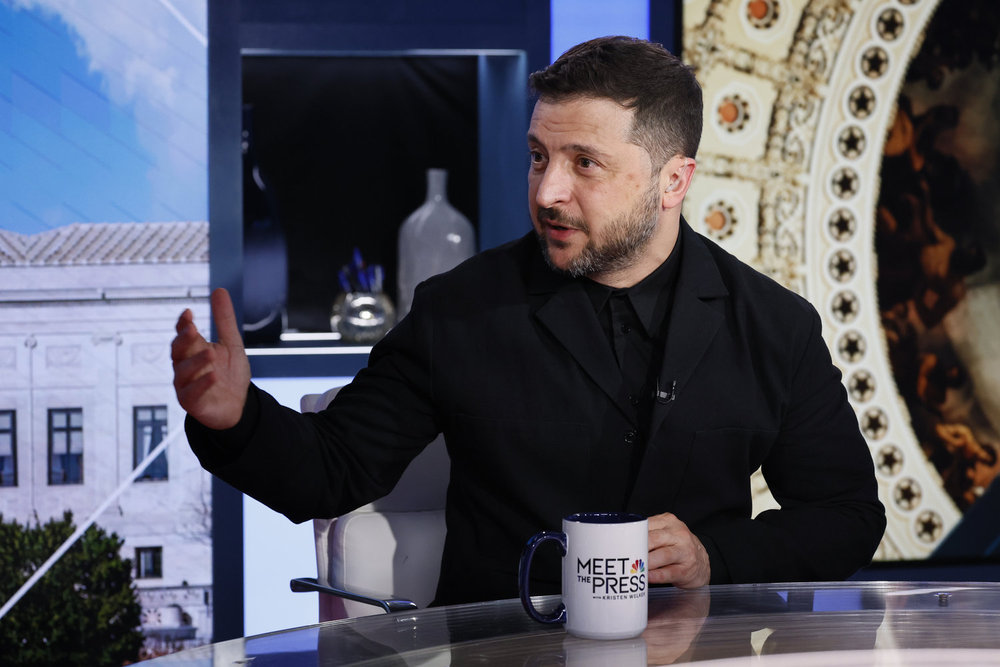
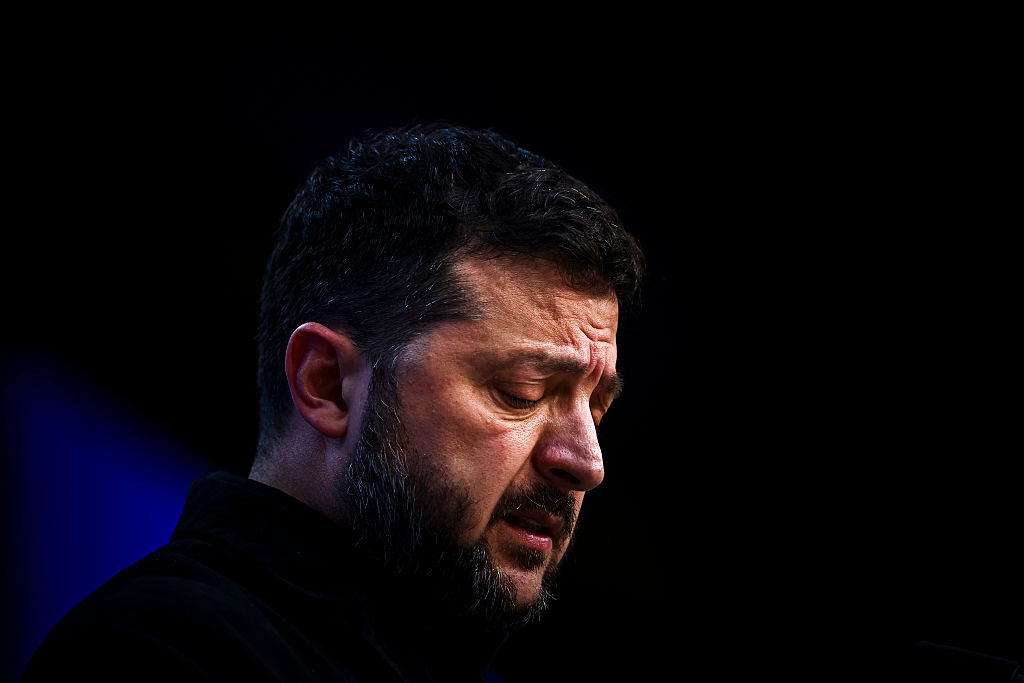
Ukrainian President Volodymyr Zelenskyy confirmed Sunday that the United States temporarily interrupted intelligence-sharing with Ukraine, as a Republican congressman demanded an investigation into separate disruptions affecting Ukrainian battlefield communications.
Speaking on NBC’s “Meet the Press,” Zelenskyy said American intelligence used to detect incoming Russian missile strikes had been restored after a brief interruption.
“We are very thankful for this,” Zelenskyy said. “Now it works.”
President Donald Trump previously maintained that intelligence-sharing had never stopped, despite Ukrainian officials reporting that some Russian attacks occurred without warning.
Zelenskyy also criticized the administration’s decision to allow Russian diesel imports and waive new sanctions targeting Moscow, warning that Washington’s actions could undermine Ukraine’s defense.
“If the United States will officially take the side of Russia … we will not prevail and we will not be able to stand,” he said.
Treasury Secretary Scott Bessent, appearing on the same program, declined three times to directly answer whether the United States considers Ukraine an ally.
“I’m not the secretary of state. I’m not the president,” Bessent said after repeated questioning by moderator Kristen Welker.
Bessent pointed to continued American intelligence and military assistance, arguing that Washington was seeking a negotiated end to the war.
Meanwhile, Rep. Mike Turner, R-Ohio, called for a congressional investigation into disruptions involving SpaceX’s Starshield satellite communications system, which Ukrainian forces rely on for battlefield operations.
“Absolutely not,” Turner said when asked whether Rubio’s explanation was sufficient. “There needs to be a congressional investigation.”
Turner warned that interrupted communications could endanger Ukrainian lives and urged Trump to reconsider waiving sanctions on Russia.
The tensions also provided material for Saturday night’s “SNL UK,” which spoofed Zelenskyy’s meeting with British Prime Minister Andy Burnham.
James Austin Johnson, reprising his Trump impersonation from the American “Saturday Night Live,” crashed the meeting as the fictional Zelenskyy pleaded for restored Starlink access. Johnson’s Trump offered to help Ukraine with anything, “provided it’s not help with war.”
The nationwide “No Kings” protest movement took its opposition to President Donald Trump from the streets to the ballot box Saturday, holding rallies across the country to encourage early voting ahead of the Nov. 3 midterm elections.
Organizers billed the latest demonstrations as a nonpartisan effort to increase voter participation and protect election integrity, marking a shift from the massive anti-Trump marches that have defined the movement since his return to the White House.
In Washington, demonstrators gathered at the Lincoln Memorial carrying signs reading “VOTE EARLY” and “HANDS OFF MY VOTE!” Similar events took place in New York, Los Angeles, Atlanta and communities across the country.
At an Atlanta rally, City Councilman Michael Julian Bond urged participants to recognize the power of their ballots.
“You don’t see Superman giving up his power,” Bond told the crowd, according to The Associated Press. “You don’t see Black Panther giving up his power.”
But the movement’s officially nonpartisan message did not prevent some demonstrators from explicitly advocating Democratic victories.
In Alexandria, Virginia, protesters told Fox News Digital they wanted Democrats to win control of Congress, despite national organizers’ instructions against endorsing candidates or political parties.
“We got to take the power away from Trump, from the Republicans,” one participant said.
No Kings spokesperson Eunic Epstein-Ortiz defended the movement as a peaceful, nonpartisan coalition. Individual protesters’ political statements do not, by themselves, establish that organizers violated election laws.
The rallies also came amid escalating disputes over voting access. On Thursday, the Trump administration sued California election officials over mail ballots from people federal authorities identified as potential noncitizens. The Justice Department subsequently warned local election officials about possible criminal investigations involving such ballots.
With Election Day approaching, the movement’s latest demonstrations reflected a new emphasis: turning public opposition to Trump’s administration into participation at the polls.
President Donald Trump endorsed Israeli Prime Minister Benjamin Netanyahu for reelection Sunday, warning Israeli voters against choosing the “wrong Leader” just nine days before the country’s national election.
In a lengthy Truth Social post, Trump praised Netanyahu as a “Great Warrior Prime Minister” and a partner in confronting Iran, while suggesting that electing someone else could complicate future U.S. military action against Tehran.
“If Israel has the wrong Leader, which would be anyone other than Bibi, America will have to do this work ourselves, and I am not inclined to do so,” Trump wrote.
Trump also threatened to “soon finish the job” against Iran unless its leaders “change their ways, rapidly.”
The endorsement marks a shift for Trump, who had spent months declining to publicly back Netanyahu despite their longstanding alliance. Earlier this month, when asked whether he supported Netanyahu’s reelection, Trump told Time magazine, “I’m not involved in politics anymore.”
Their relationship has been strained by disagreements over the nearly eight-month war with Iran, Israeli military operations in Lebanon and efforts to negotiate a ceasefire in Gaza.
Netanyahu welcomed Sunday’s endorsement.
President Trump, my friend Donald – thank you for your extraordinary endorsement. Israel has never had a greater friend in the White House. Together we will never let Iran’s regime get nuclear weapons. Thank you for your clarity, courage and unwavering support.
@realDonaldTrump https://t.co/GqaOVB74Dj
— Benjamin Netanyahu – בנימין נתניהו (@netanyahu) October 18, 2026
“Thank you, President Trump, for the tremendous support and work together,” Netanyahu wrote on X. “Together we will complete the mission!”
His Likud party also circulated a campaign video featuring the two leaders.
Netanyahu faces a competitive election against opposition parties led by figures including former military chief Gadi Eisenkot and former Prime Minister Naftali Bennett. Recent polls suggest Netanyahu’s governing bloc could fall short of the 61 seats needed to command a majority in Israel’s 120-member parliament.
Trump has increasingly departed from the traditional U.S. practice of avoiding explicit endorsements in foreign elections, backing candidates in countries including Hungary, Japan and Argentina.
Israelis vote Oct. 27 in their first national election since Hamas’ October 2023 attack.
I can’t remember the last time a catch-up phone call with a confidante didn’t include one of us marveling that we haven’t caught an assault charge. If any law enforcement happens to be reading this, I want to make it clear that will never happen.
Well, let’s call it a non-zero chance. At the end of the day, I am a realist; anything can flip a person’s switch from off to blackout rage. However, I have decades of practice holding back my inner She-Hulk. So do most women.
Every day, we wake up in a nation controlled by a convicted felon accused of multiple sexual assaults, while a college student seeking justice after alleging she was gang-raped at a fraternity party is doxxed and swatted. We are not taken seriously in politics or at work. The manosphere has poisoned our water coolers and social media feeds.
Women have had it, including with each other. Aspiring tradwives and “Live, Laugh, Love” Karens selling out everyone else to keep up their manicures are legion. They threaten to run you down in crosswalks and refuse to bow out gracefully when told, for instance, that a pretty mechanical bird mounted on a boutique’s wall isn’t for sale.
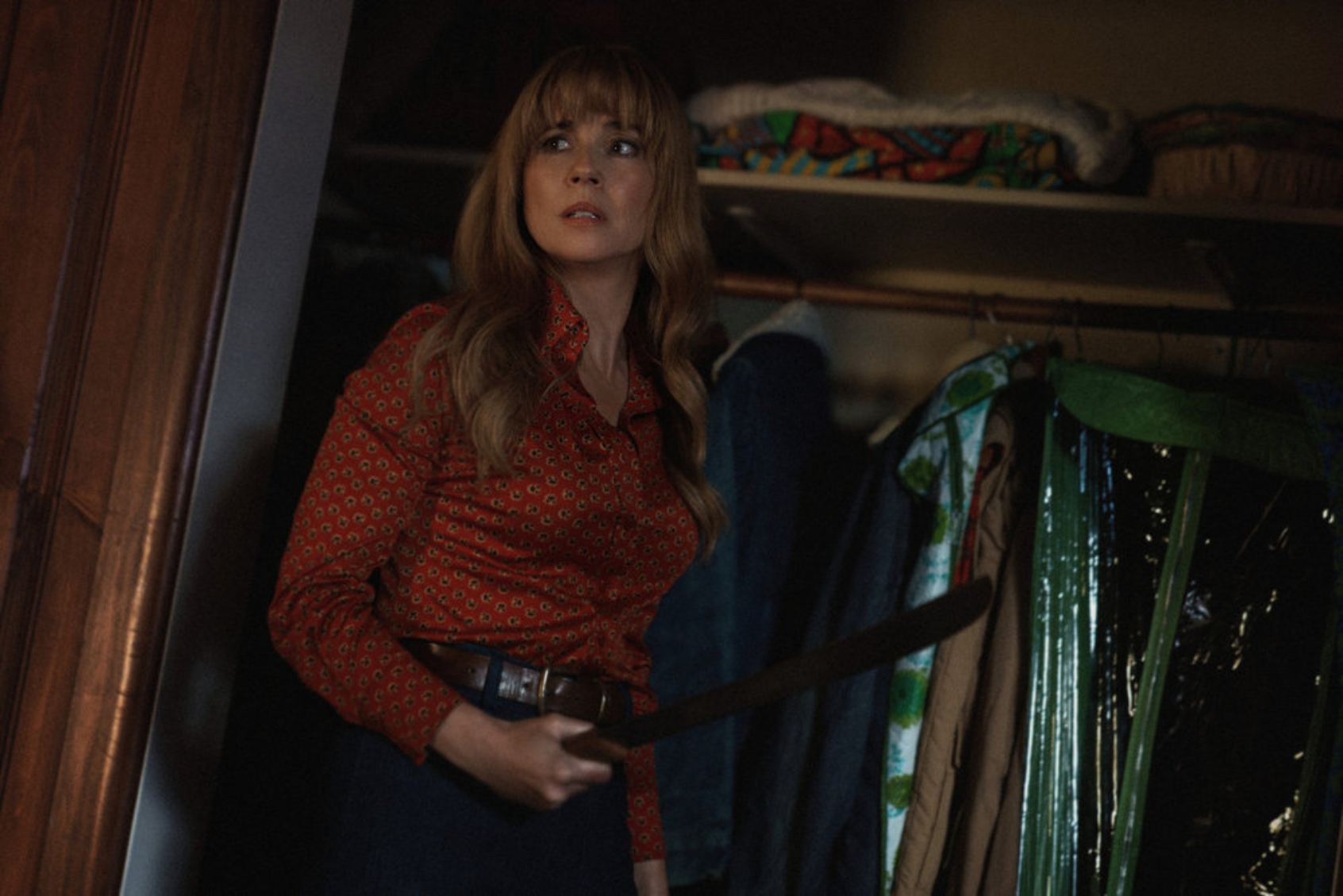
Ladies, look to your left. Now look to your right. One of you is dying to knife somebody. Only Pamela Voorhees, brought to life by Linda Cardellini in “Crystal Lake,” has the guts to act on that impulse. Her bloodlust coats her skin in the crappy opening scene of this “Friday the 13th” prequel, after she’s dispensed with two goons who make the fatal blunder of invading her home and taunting her. One goes down with a swift nick to the jugular. The other loses half his face to the Voorhees family’s machete.
The thing is, by the time we’re assaulted by all that, we understand that Pamela has had it, too. She lost her gentle son, a boy born with hydrocephalus, a birth defect in the brain, who is endlessly bullied until he drowns at camp. The town moves from pitying her to whispering that she’s crazy, leaving her rutted in the anger stage of the grieving process. As she chops away at the men who attack her, I found myself muttering, “Yes. Get him. Again. Again!”
Don’t confuse this for an endorsement. Please don’t. “Crystal Lake” is a barely watchable gorefest, with a plot riddled with more seeping holes than Pamela’s victims. (Of course, if you’re into that kind of thing, which I am not, I guess that counts as a recommendation.) What passes for story amounts to little more than a two-dimensional cartoon rendered in human-flesh puppetry, courtesy of actors capable of much better, Cardellini included.
Even so, it’s kind of great to watch one of TV’s most enjoyable performers massacre a gaggle of sex-crazed hippies, or knock an abusive parent into a deep fryer for stress relief. Few of us can claim to have never daydreamed about, say, an anvil dropping from the clouds to erase some menace from our lives, whether it’s an entitled relative or an idiot comedian. Jason Voorhees’ mom simply prefers a hands-on approach.
I understand why the many chefs who mucked up the “Crystal Lake” cauldron, starting with Bryan Fuller, were compelled to fill in the blanks of Pamela’s origin story. The beauty of the character, once her truth was revealed in the original 1980 movie, is her relative mystery. Who would suspect a frumpy matron in a humble sweater could wreak such unhinged havoc? Other women, that’s who. We’ve always suppressed murderous desires. (See: “Dateline,” “Snapped” and rest of the Oxygen channel’s true crime lineup.) Only recently have we taken to saying that out loud.
Long before the medical and pharmaceutical industries made perimenopausal rage fashionable, Pamela Voorhees was a genre outlier, especially in a cultural climate that had already started retreating from a decade of legislative gains for women’s rights.
Now, in this post-Roe v. Wade world of ours, feminine wrath must be mansplained to be taken seriously. While women have produced excellent recent examinations, including “Furious” and “East of Eden,” the brutal truth is that the “Friday the 13th” movies are IP recognizable to hockey-masked trick-or-treaters too young to watch them.
So it falls to “Crystal Lake” to tell most of us why the mother of slasher cinema’s patron saint was driven to kill, kill and kill again in the first place. But it also helps us understand why a crumpled sock in the middle of the living room or dirty dishes on the kitchen counter makes the exhausted woman in your life crash out.
Let’s assume that if you’re reading this far, you already know the first movie’s big twist: the real killer wasn’t Jason Voorhees, but his mad mama. If not, I mean, what gives? Did you see that picture of Cardellini and wonder what cool-as-a-cuke Lindsay Weir from “Freaks and Geeks” has been up to? With regret, I present this as your answer.
But as any old-school porn hounds skilled in fast-forwarding through “the plot” will tell you, there’s merit in skipping straight to the action — meaning, Pamela destroying fools with something more cutting than wit.
Maybe Fuller, the guy who classed up “Hannibal,” could have done something brilliant with Pamela. But he exited the project early due to creative differences, leaving “It: Welcome to Derry” showrunner Brad Caleb Kane to expand the legend of a woman whose motives were fairly basic. I mean, if your kid died because two horny teen counselors shirked their lifeguard duties to bone in a shed, you might harbor a few homicidal compulsions too.
Alas, in these days of milking dormant franchises for every drop of ichor, a simple explanation isn’t enough. Therefore – and this will either save you the trouble of enduring all eight episodes or spoil them – Pamela Voorhees is revealed to be a victim of a patriarchal industrial plot.
The former professional singer gets knocked up by her lover, Elias (Hamish Linklater), who works for a company called Bellflower. When she nearly miscarries, he convinces her to marry him and move to his company’s sponsored enclave that’s popping with pregnant women like her. Once she’s settled in, her husband plies her with Bellflower-manufactured TV dinners and happy pills, occasionally shuttling her to the doctor to be pumped full of mystery muck. Truly a MAHA conspiracist’s nightmare.
Sometime later, Jason arrives and demonstrates a knack for reviving from naps the average human wouldn’t wake up from. So father secretly subjects son to all manner of mad science, including massive radiation exposure. Once Pamela discovers this, she rescues Jason, turning the skull of the man who gets in her way into soup, and they escape to Crystal Lake.
Want more from culture than just the latest trend? The Swell highlights art made to last. Sign up here
Cardellini’s Pamela Voorhees is what happens when women drinking from a bottomless well of contempt and human carelessness hit their limit. The writers, in their clumsy way, cater to that idea by having her dispose of her first slaughter by slathering the bodies in a deconstructed tonnato sauce of canned fish and honey, and standing by as a massive bear lumbers up to feast.
Before the animal takes a bite, it sizes up Pamela, sniffs her tears, and leaves her be. You could view this as one predator recognizing another. To women of a certain mood, though, it confirms what we already know: that a bear is preferable company to thoughtless, dangerous people. Plus, it’ll help rid you of pesky evidence without asking questions, which only a true, understanding friend would do.
All episodes of “Crystal Lake” are streaming on Peacock.
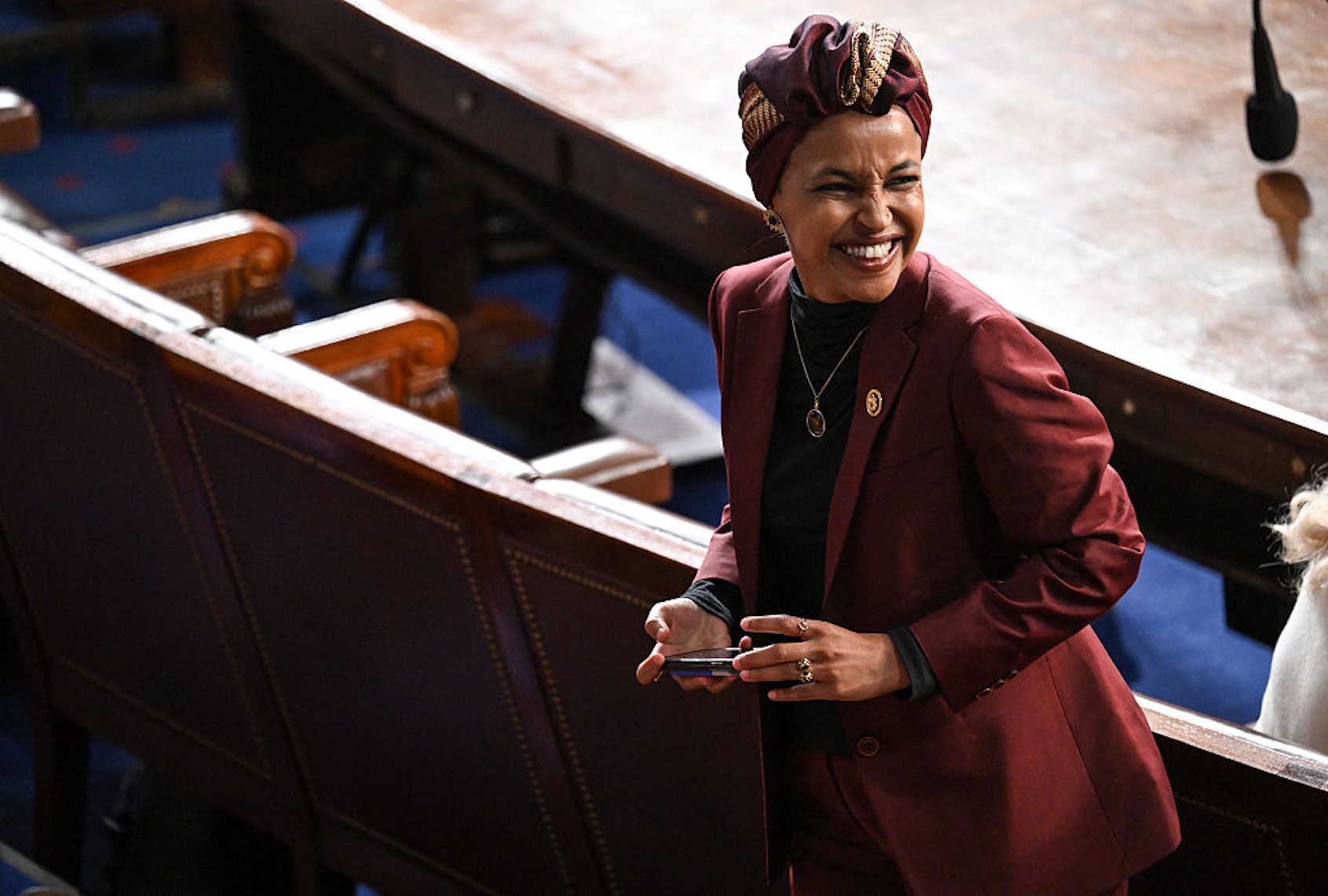
When Donald Trump clinched the presidency in 2016, my wife broke into tears on camera as a local journalist interviewed patrons at a bar in Queens that had advertised a presidential watch party, complete, in its wide-eyed audacity, with Clinton cocktails. As an immigrant and Deferred Action for Childhood Arrivals (DACA) recipient who had to navigate the cruel vagaries of the U.S. immigration system, she grokked then what it would take many people years to understand. Not long after, Trump attempted to dismantle DACA, the executive order that defended immigrant children in lieu of the DREAM Act. While my wife is now a citizen, the raid of Democratic Minnesota Rep. Ilhan Omar’s home is a reminder that not even U.S. citizenship guarantees the safety of immigrants in Trump’s United States.
The case against Omar worries me, not only because it’s bald-faced political vengeance, a grim milestone in our collective lurch toward fascism, but also because of what it means for naturalized citizens in the United States — people like my wife, my sister and my mother. Attacks on citizens who did not arrive on the Mayflower or through Ellis Island is an extension of the Trump administration’s remorseless persecution of immigrants in the U.S. Child of immigrants? Side eye. Naturalized citizen. Well, let’s revisit that paperwork, shall we?
On the first day of his second term, Trump attempted to end birthright citizenship, how I became a U.S. citizen, via executive order. Over the summer, the Supreme Court ruled against the president, but a month later, he signed two more executive orders targeting so-called birth tourism and birthright citizenship. As this latest attack on immigrants faces fresh challenges, the Department of Homeland Security is focusing on denaturalization.
In June 2025, DHS issued a memo about “prioritizing denaturalization,” a process that enables the federal government to strip people of their citizenship, which historically was reserved mostly for Nazi war criminals. At the time, I worried the memo signaled the escalation of an effort to broaden the discretion of the federal government to determine, even retrospectively, who deserves to be a U.S. citizen. Given Monday’s sweep of Omar’s Washington, D.C., home by Homeland Security Investigations agents, my fears appear to be well-founded.
The federal case against Omar follows years of accusations and innuendoes — and even a review during Trump’s first term that reportedly found no issues with her citizenship. But the president has still repeatedly called for her denaturalization and deportation, saying on social media earlier this year that she “should be in jail” and “sent back to Somalia.” He has called people from Somalia “scammers” and “lowlifes.” Vice President JD Vance has also suggested that Omar is likely guilty of immigration fraud. But what is the actual case against her?
Unfortunately, the judicial warrant is sealed, and as usual, the Department of Justice hasn’t revealed much information except to say that it is an “ongoing criminal investigation.” The involvement of Immigration Customs and Enforcement in the search, however, gives weight to comments made by public officials about potential immigration fraud. Is there any merit to the accusation? Not really.
The U.S. government granted Omar’s family, refugees from Somalia, asylum in 1995. Five years later, Omar became a U.S. citizen via a law in which minors are eligible for citizenship once their parents naturalize. Some critics have suggested without evidence that Omar was born a year earlier, which would have made her ineligible for citizenship through the aforementioned law. The bigger question is: Why now?
It’s been over 25 years, and the federal government happened to unearth “incriminating” evidence of a vocal Trump critic three weeks before the midterm elections? It’s dubious at best, and a rank abuse of power at worst.
It’s been over 25 years, and the federal government happened to unearth “incriminating” evidence of a vocal Trump critic three weeks before the midterm elections? It’s dubious at best, and a rank abuse of power at worst. Even in the worst-case scenario, Omar was a girl at the time, so any fudging of numbers would have been done by her late father, who filed the paperwork.
But this is nothing new for Trump. Casting doubt on a political adversary’s right to be in the U.S. was how Trump made his presidential bones. His 2011 birtherism tour, in which he suggested President Barack Obama was not born in the United States but rather in Kenya, was his beautillion ball, laying the groundwork for what would become his primary political strategy: Attack with conspiracy theories. Never bother to substantiate. Repeat ad infinitum. The difference now is that he has a loyal Justice Department and DHS at his back.
The birtherism lie was not unlike the current mudslinging campaign against Omar. But between then and now, a couple of major changes have taken place. One, Trump became president, and two, in his second term, he has, through a series of executive orders, communiqués and personnel rejiggering, weaponized DHS, Customs and Border Protection, ICE, Border Patrol, U.S. Marshals and other federal agencies by affording them a dangerous amount of latitude.
A salient example is the expanded 287(g) program, which allows ICE to deputize local law enforcement, thereby entangling local and federal police, effectively eliminating a peacekeeping backstop against federal overreach. Congress established the 287(g) program in 1996 through the Illegal Immigration Reform and Immigrant Responsibility Act, but in Trump’s second term, the program has so far ballooned from 140 memorandums of agreement to 2,660 agreements in 38 states and two U.S. territories.
Combine that with $70 billion in immigration funding, donning masks, failing to produce identification and eschewing judicial warrants in favor of administrative warrants — nothing more than a performative gesture — and Trump has effectively created a paramilitary domestic force that does his bidding, including going after political foes with impunity.
Denaturalizations are up, owing to this administration’s expressed priority, and naturalizations are down 75%, a consequence of intimidation tactics and the practice of federal agents ambushing immigrants at green card and naturalization hearings.
Omar’s case will be a litmus test for this administration’s authority, both in terms of carrying out political vendettas and processing denaturalization. Even if Trump’s DHS fails to denaturalize and expel the congresswoman from the country, the mere attempt sends a chilling message to naturalized citizens across the country, including my own family: You’re not safe in Donald Trump’s America.
In January, my wife and I will return to the U.S. for the first time in 15 months — the longest time we’ve been away from the country. Before becoming a U.S. citizen four years ago, my wife hadn’t left the country since she arrived as a toddler. Suddenly, she was free to come and go as she pleased, so when her postgraduate program in Versailles accepted her application, we went. Now, as our return to the U.S. approaches, a worm of doubt squirms within us. We’re both U.S. citizens, safe on paper, but what if the value of our papers has changed? What if the manner by which we obtained our citizenships — birthright and naturalization — now invites skepticism and scrutiny?
Before we moved to Europe, we went on a weekend trip to Montreal. Ahead of our return, prompted by horror stories I had seen in the news about people being detained for something as innocuous as a meme, I deleted media on my phone that could be construed as critical of the Trump administration, and I turned my phone off while going through customs. It was the only time in my life I’ve done that.
Conservatives have long pitched their project as a return to normalcy, a way to set right a world that’s gone off its axis. In theory, it’s an understandable goal. Who doesn’t react to getting older and more removed from the engine of culture with an initial feeling that the next generation is doing it wrong?
In practice, the right’s message is more of a respectable veil covering the fact that they want the power to beat up on minorities and buy anything they want. But there’s one arena where the right might actually be bringing back an honest-to-goodness return to tradition: the multiplex.
The lines between television and the movies used to be rather rigid. There were movie stars and there were television actors, and rarely did the twain meet. Actors without matinee idol looks or sufficient draw could make a living as character actors. Faded stars could scrape out a second act in B-movies and lesser studio offerings without losing the prestige of the silver screen. Television actors traded that type of cachet for steady work and wider audiences. A movie star appearing on television was a sign of terminal decline.
The rise of prestige television and streaming shook up the established hierarchy. If television could hit something approaching the same cinematic highs and emotional depths as a Hollywood movie, even if rarely, then the stigma of going episodic couldn’t last. The prestige TV gold rush inspired plenty of marquee stars to jump ship, taking roles from deep-pocketed streamers for niche audiences. (Somebody must be watching Reese Witherspoon and Billy Crudup on Apple TV’s “The Morning Show,” but I can’t say I’ve ever seen them.) The old order and the connotations of each medium had gone post-modern and topsy-turvy.
Enter Ben Shapiro.
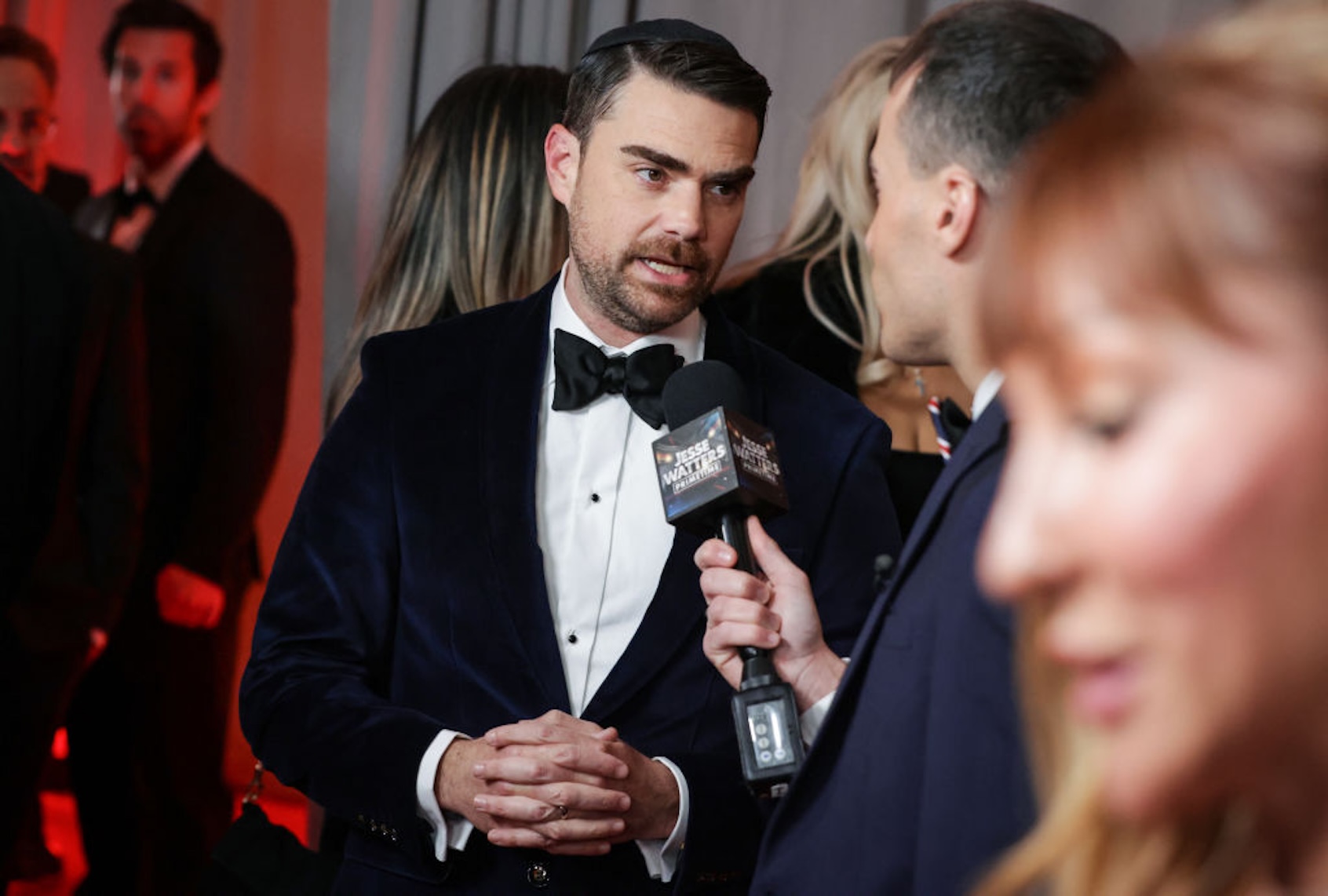
The Daily Wire co-founder and conservative political commentator has made several attempts to break into Hollywood. Over the years, he has repeatedly alluded to a script he wrote as a young man at the behest of the late ABC executive Leonard Goldberg, while his dramedy about a conservative student at Harvard never got off the ground. But that hasn’t deterred Shapiro. He’s used his political commentary outlet as a springboard to produce a series of execrable comedies and thrillers, from 2023’s irredeemable and laughless “Lady Ballers,” which centers on a group of former high school basketball players reuniting to compete in women’s basketball by posing as transgender women, to the semi-competent and bloody hatefest “Run Hide Fight: Infidels.”
Shapiro’s films haven’t made much of a dent in Hollywood, let alone the wider culture. But that is likely to change with The Daily Wire’s upcoming film “Confession.”
Shapiro’s films haven’t made much of a dent in Hollywood, let alone the wider culture. But that is likely to change with The Daily Wire’s upcoming film “Confession.”
Written by Shapiro, “Confession” follows an academic in Moscow under the rule of Joseph Stalin. He’s brought in for questioning after allegedly conspiring with a dissident priest, only to find that his interrogator is a former student. In less ideological hands, the film could be an interesting examination of loyalty and state overreach. Coming from the man who accused Baron Harkonnen, the villain in the “Dune” science-fiction franchise, of being a communist, we aren’t holding our breath.
Still, the announcement of “Confession” made a splash, less for its logline than its topline. The cast is chock full of former Oscar nominees and one-time A-listers. The participation of James Franco, Rob Lowe, Brad Dourif and Emile Hirsch make this the most star-studded production Shapiro has ever produced. Beyond the musty Cold War paranoia and production design straight out of the “Command & Conquer: Red Alert” video game, the film is small-c conservative in its appeal to a bygone tradition: giving disgraced actors a mid-budget springboard from which to launch their career revivals.
Franco was once a megawatt star, but his career faltered shortly after several women accused him of sexual misconduct in 2018. In the late aughts, with a Screen Actors Guild-nominated turn in “Into the Wild,” Hirsch was positioned to be the next big thing. But the belly flop of “Speed Racer” and a 2015 assault of a female Paramount Pictures executive at the Sundance Film Festival put his career on ice. Lowe’s scandal-plagued days are long behind him, but he’d settled into a career as a reliable network television star. Most recently, the star of “The West Wing” has been a mainstay on Fox’s campy disaster series “9-1-1.” “Confession” sees him trying out long atrophied dramatic acting muscles, taking a tentative step into Hollywood. Dourif has never generated any significant controversies to our knowledge, but his appearance is notable because it contradicts his 2024 retirement announcement.
Taken with the blink-and-you’ll-miss-it starring turn from Jonathan Majors in “Infidels,” The Daily Wire’s gambit becomes clear. In reaching out to disgraced or out-of-fashion actors, the company is getting notable names for their bargain-basement productions. The actors, in turn, can add a few performances for their sizzle reels that post-date whatever controversy pushed them out of the limelight.
It’s not a bad deal for either party. From the actors’ perspective, they’re just following the B-list trails blazed by actors like John Travolta and Nicolas Cage, stars who spent decades cranking out direct-to-video duds while seeking the right role to catapult them back into notoriety. What’s new is the ideological bent of a studio like Shapiro’s. Typically, appearing in outwardly conservative fare was the mark of an inwardly conservative star. Think Kirk Cameron’s Christian schlock or Kevin Sorbo’s post-Hercules output. When a name like Jim Caviezel shows up in QAnon-adjacent thrillers, it’s a bit of a “fork found in kitchen” situation.
Shapiro’s comeback machine is something slightly different. Given what we’ve seen from the films he has worked on in the past, the machine is likely to be clunky — but that won’t matter to either party if it works.
Conservatives’ belief that “cancel culture” has gone too far, that men chastised for behaving badly are really victims of a radical mob run amok, allows them to take on names that are not welcome in Hollywood. If the ploy works, it’s proof that they were right all along — that cooler heads prevailed and the initial controversy was an overreaction.
With the Daily Wire’s film arm, Shapiro is bringing back the B-list for a cancel culture age, offering dimmed stars the chance to bide their time until the unistudio of Paramount/Warner Bros. comes calling.
Since news about the lawsuit against the “Cornell 7” broke, the internet has been rife with discourse about how Millennial parents are “raising sons differently.” That doesn’t just mean teaching young boys about consent. As Tomika Anderson wrote in Essence recently, “I want to raise a son who understands that his responsibility to another human being doesn’t end with, ‘I didn’t do it.'”
“Masculinity isn’t aggression, and being a good man isn’t about never having anger or difficult emotions,” one mom said. “It’s about learning what to do with those emotions without making somebody else pay for them.”
From online influencers to Reddit threads and group chats, it’s not the first time discussions have sparked around whose responsibility it is to teach young boys about consent, boundaries and rape culture. As a Millennial boy mom myself, I’m deeply familiar with this discourse. And as an American mom living in Italy, we aren’t free of gender-based violence. In September, Italy saw its seventh alleged femicide since mid-August. But instead of the conversation focusing on consent, this generation of parents appears to be expanding it to teaching young boys to be willing to speak up. Curious, I asked parents what they’re doing differently, and then I asked a few psychologists if it might be working.
Stephanie Janét is a Millennial mother of two boys. But since she had her first child when she was 19, she said she’s seen firsthand how the cultural conversations around boys, masculinity, respect and boundaries have evolved over the years. From a young age, she would start to introduce empathy with her sons by simply saying, “Mommy doesn’t like this,” or asking, “How do you think that would make somebody feel?” Janét said she’s also tried to communicate that masculinity isn’t synonymous with aggression.
“Masculinity isn’t aggression, and being a good man isn’t about never having anger or difficult emotions,” she said. “It’s about learning what to do with those emotions without making somebody else pay for them.”
For 35-year-old Katie Mills, she said raising her sons differently means that they know not to be afraid “to ask for help.” That they “understand their own mental health and know that becoming an adult doesn’t mean having to face everything alone.”
Want more from culture than just the latest trend? The Swell highlights art made to last. Sign up here
Indeed, reframing masculinity is a big part of the conversation among Millennial parents — and research supports this shift in mindset among generations. According to a Pew Research poll, Millennials were more likely than Boomers to say it’s a good thing for parents to encourage young boys to play with toys and pursue activities normally associated with girls. The same poll found that women are more likely than men to think both boys and girls should be encouraged more to share their feelings.
Diana Chu, a licensed marriage and family therapist and executive coach in California, said she thinks Millennials are the first generation of parents to parent with a vocabulary for feelings— something, she said, that many of them learned in therapy as adults.
As for the “consent talk,” Chu said, it is not enough on its own. She said that parents need to think about how to teach their sons the ability to “break from the group.” In her own work as an executive coach, Chu has observed how men who run companies are afraid to break from the group when they’re in a room with people they want to like them. “They learned early that staying in step with the group was safer than being right, and the cost of questioning values and ethics is high,” she said. “The question parents are asking after Cornell is really how to raise a boy who will take the risk and leave the room.”
Chu said teaching young boys to become men who aren’t afraid to break from the group can start at home, at a young age, with low stakes. For example, letting a six-year-old say no to you and watching the no “hold.” She added that young boys also learn from seeing their parents disagree and repair.
“If a son never hears his father say ‘I was wrong’ or ‘I’m scared,’ he learns that men don’t, and the boys who can’t say a small true thing are the ones who go quiet when a big one is happening,” Chu said.
Stephonia Llewellyn, a therapist who works with children, adolescents and families, said when it comes to raising today’s boys “differently,” it’s important to focus on helping them develop emotional intelligence, empathy and accountability from an early age. “We should be creating environments where they can express sadness, fear, disappointment and vulnerability without being shamed or told to ‘toughen up,’” she said. “At the same time, emotional expression needs to be paired with responsibility—children should learn that having strong emotions is okay, but hurting others or violating someone’s boundaries is not.”
Llewellyn emphasized that fathers and other male role models have an especially meaningful role to play. “Children learn a great deal from what they observe,” she said. “When boys see the men in their lives communicate openly, apologize when they are wrong, respect others, manage frustration appropriately, and treat women and other people with dignity, those lessons can be incredibly powerful.”
“The question parents are asking after Cornell is really how to raise a boy who will take the risk and leave the room,” says Diana Chu, a licensed marriage and family therapist.
Christopher Everett, a father of a four-year-old boy, said he is obviously not sitting his son down to discuss the details of the Cornell 7 lawsuit today. But stories like these do make him think deeper about what he’s teaching long before these conversations can occur.
“For me, raising a boy differently has less to do with telling him what kind of man he should become and more to do with what we allow him to practice now,” Everett told me. “I want him to be able to say when he’s scared, hurt, embarrassed or wrong without feeling like those things diminish him.”
Everett added that he wants to teach him that strength and being gentle “are not opposites.”
“I want him to learn that another person’s boundaries matter even when he doesn’t understand or agree with them and that kindness isn’t something you perform only when adults are watching,” he said. “A lot of that begins in very small moments.” For example, how he treats his little sister, how they handle conflict at home, and whether Everett apologizes when he gets something wrong.
Everett said he doesn’t believe one generation of parents gets to declare they have figured out how to “raise boys correctly,” but he’s seen his peers trying to give their sons a larger emotional vocabulary than they inherited. “Without confusing emotional openness with an absence of responsibility or discipline,” he added.
Republicans running for governor across the country are backing away from abortion bans they once endorsed.
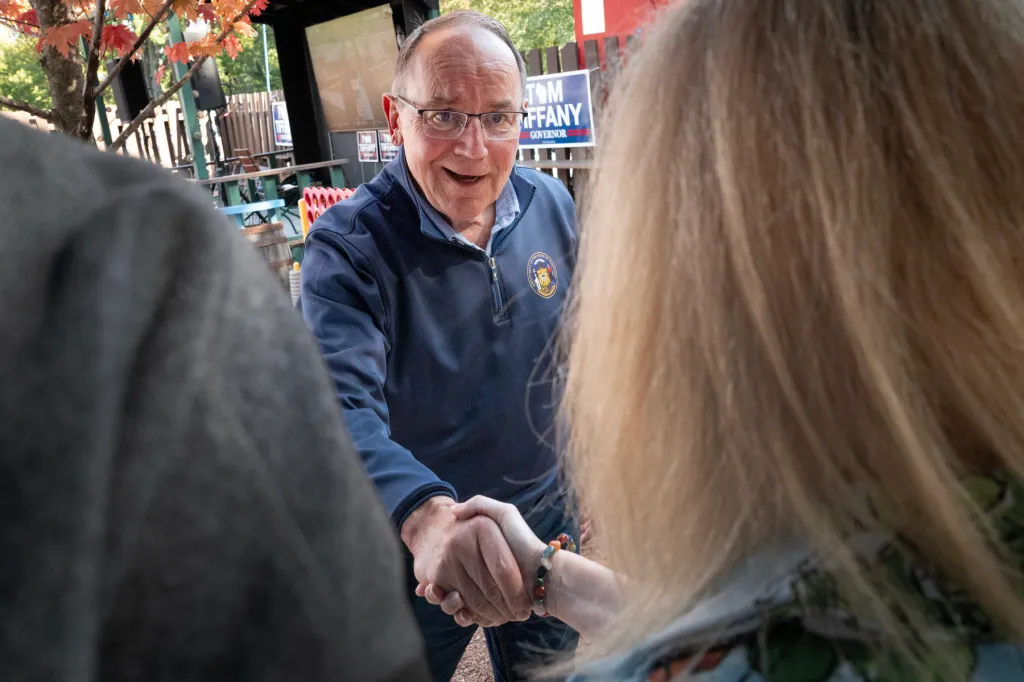
U.S. Rep. Tom Tiffany, the Republican candidate for governor in Wisconsin, calls his state’s 20-week abortion limit “settled law.” Just three years ago, he co-sponsored a bill that would have banned abortion six weeks into pregnancy.
Stacy Garrity, the GOP’s candidate in Pennsylvania, has said during her campaign that she would “respect” the state’s current law, which allows abortion until 24 weeks of pregnancy. Four years ago, she called on abortion opponents “to engage and make a difference” in state laws after the fall of Roe v. Wade.
In Kansas, where abortion is legal until 22 weeks, Republican Ty Masterson has demurred when asked if, as governor, he would support a statewide referendum to eliminate the Kansas constitution’s abortion protections. Masterson had previously spoken at protests in opposition to reproductive rights and won the backing of state and national anti-abortion groups.
The candidates’ retreat suggests that, even as reproductive rights fade from the national spotlight and polls show voters are far more likely to prioritize cost-of-living concerns, the political ramifications of pushing for new abortion restrictions remain substantial. The rhetorical distancing also moves political conversations away from an issue that overwhelmingly energizes Democrats.
“That might be their strategy there, to try to demotivate Democratic turnout in the state to take abortion off the table as a voting issue,” said Ashley Kirzinger, a pollster at KFF, a nonpartisan health policy research, polling and journalism organization. That’s especially true in tighter races such as those in Wisconsin and Kansas, she said.
Tiffany’s, Garrity’s and Masterson’s campaigns did not reply to requests for comment. The 19th contacted multiple Republican-aligned pollsters who also did not immediately respond.
About 60 percent of Americans believe that abortion should be legal in most or all cases, including about two-thirds of independents, according to a poll from The 19th and YouGov.
That said, pushing for abortion restrictions has never been broadly popular. Even before Roe v. Wade was overturned in 2022, Republicans seeking general election typically would not campaign overtly on abortion bans, said Molly Murphy, a pollster and president of Impact Research, a Democratically-aligned polling firm.
“It would get discussed in donor meeting hot mics, endorsement questionnaires, etc, but candidates wouldn’t run on the fact that they’d ban abortion,” she wrote in an email.
Wisconsin Republican gubernatorial candidate Tom Tiffany is now calling his state’s 20-week abortion limit “settled law”, when only three years ago he co-sponsored a bill that would have banned abortion six weeks into pregnancy.
(Scott Olson/Getty Images)
Voters largely don’t consider abortion to be “settled law,” said Celinda Lake, a longtime Democratic pollster, noting that the share of voters opposing abortion bans has increased since the fall of Roe. “They feel like, ‘Wait a minute, it can be taken away again.’”
In some races, Democrats and their allies are trying to push abortion rights back under the microscope — a strategy geared toward energizing liberal voters, Kirzinger said.
Wisconsin’s Democratic nominee for governor, David Crowley, has said that, if elected, he would work with the state legislature to enshrine abortion rights into the state constitution — though it’s not clear how expansive that protection would be or whether it might supplant the state’s 20-week cutoff.
Pine Tree State Prosperity, a political action committee associated with the national Democratic Governors Association, is running advertising in Maine that highlights anti-abortion remarks made by Bobby Charles, the state’s Republican pick for governor. The Democratic nominee, Hannah Pingree, has led by double digits in recent polls. Charles’ campaign did not reply to a request for comment.
Planned Parenthood’s super PAC, called Planned Parenthood Votes, has focused its resources in states such as Michigan, where the Republican candidate, U.S. Rep. John James, has said that abortion is “decided.” Four years ago, James said he opposed abortion in all cases, and he has compared the practice to genocide. His campaign did not reply to a request for comment.
James’ running mate, Jay DeBoyer, recently suggested leveraging a state constitutional convention to enact a 12-week abortion ban in Michigan, according to recordings of the remarks reported by The Detroit News and Michigan Advance. DeBoyer has since said publicly that abortion is a “settled” issue in Michigan, where voters in 2022 amended the state constitution to protect abortion before fetal viability.
Some gubernatorial candidates are still pushing for abortion restrictions, albeit far less ambitious ones.
In New Mexico, where Democrats are expected to keep control of the governor’s mansion and already control both legislative chambers, Republican candidate Gregg Hull said he was “fully committed” to working with Texas Gov. Greg Abbott to reduce the number of Texans coming to the neighboring state for abortions.
Hull has repeatedly called himself “pro-life” but also said that he would not change the state’s abortion law, which imposes no time limits on the procedure, without legislative support. His campaign did not respond to a request for comment.
Abortion opponents are trying to revive the issue in a handful of states. SBA Pro-Life America, one of the nation’s leading anti-abortion groups, is pushing ads that characterize Democratic candidates for governor as well as the U.S. Senate and House of Representatives as extreme on the issue, including in Ohio, Wisconsin and Michigan.
But generally, voters are less likely to trust conservatives on abortion, Lake said. And talking about abortion, she added, is more likely to generate enthusiasm among key Democratic voting blocs, particularly young women and college-educated women, who typically support reproductive rights.
“We have in our research people who say, ‘I used to be pro-life, I didn’t support abortion, I would never get one, but I think this is a decision that needs to be made by a woman and her doctor,’” Lake said. “People now feel this is just way too dangerous. This has gone way too far.”
A New Mexico judge has dismissed child sexual abuse charges against Timothy Busfield, best known for playing Elliot Weston on the ABC drama “thirtysomething.” But the ruling, which cited prosecutorial misconduct, does not prevent prosecutors from seeking a new indictment against the actor.
State District Judge Joseph Montano ruled Friday that prosecutors improperly prevented grand jurors from hearing testimony from witnesses they had requested, compromising the integrity of the proceedings.
“The prosecuting attorney failed to act in a fair and impartial manner,” Montano wrote, finding that the state’s actions effectively withheld witnesses from the grand jury.
Busfield, 69, was indicted in February on four counts of criminal sexual contact with a minor. The allegations stemmed from his work directing the Fox series “The Cleaning Lady,” where he was accused of inappropriately touching a young actor on set between 2022 and 2024.
The actor and director, also known for his acting roles in “The West Wing” and “Field of Dreams,” has consistently denied the allegations and pleaded not guilty.
Although the indictment was dismissed, Montano explicitly left the door open for another prosecution. The Bernalillo County District Attorney’s Office said it was evaluating its options.
Busfield’s attorney, Amber Fayerberg, said her client was “relieved and grateful,” but acknowledged the legal fight might continue.
“We know this may not be the end,” Fayerberg said. “If the State chooses to try again, Tim is ready, and so are those witnesses.”
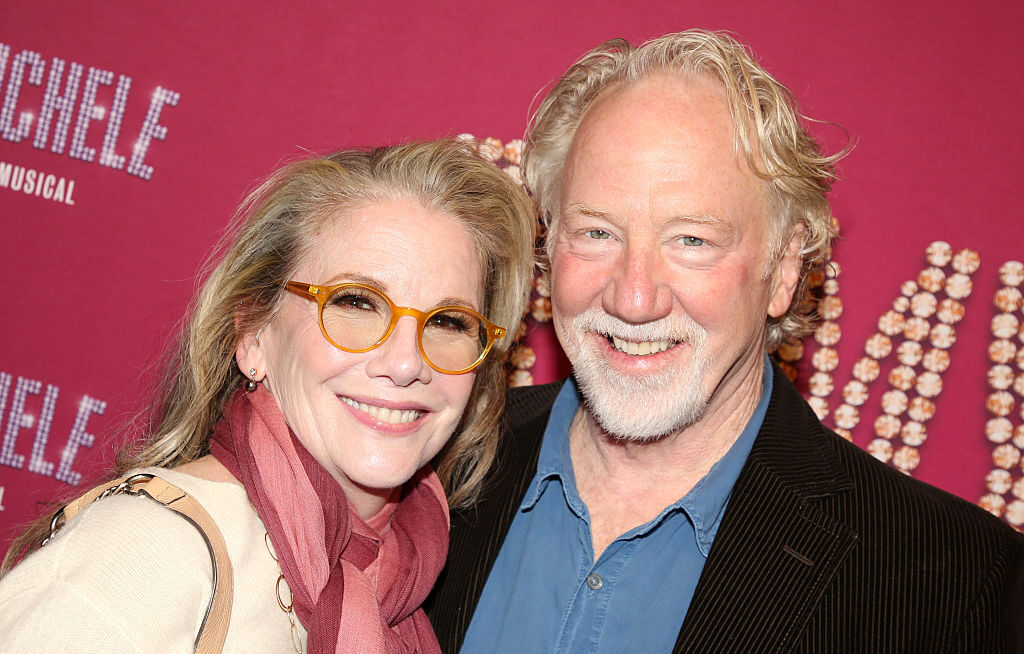
The allegations have also placed Busfield’s marriage to “Little House on the Prairie” star Melissa Gilbert under public scrutiny.
Gilbert, who married Busfield in 2013, has steadfastly defended her husband. In an April interview with ABC’s “Good Morning America,” she described the allegations as devastating to their family and his career.
“Our life as we knew it is done,” Gilbert said, adding that she believed Busfield would be exonerated.
Following Friday’s dismissal, Gilbert shared a news report about the ruling on social media, signaling her continued support.
For now, the indictment is gone, but the possibility of renewed criminal proceedings remains.
“A decision was unfortunately made in America to completely disregard the Lindsey Graham Act, which was supposed to impose truly effective pressure on Russia to bring this war to an end,” Zelenskyy wrote Saturday.
Yesterday, the Russians carried out one of their largest attacks on Ukraine’s energy sector – more than 15 critical power generation and transmission facilities were targeted across different regions of Ukraine. Restoration work is ongoing, with all necessary services and all available resources of Ukrainian energy companies involved. I thank everyone working practically nonstop to restore power.
The most difficult situation was in Lutsk, Rivne, Zhytomyr, Vinnytsia, Shepetivka, Slavuta, and Netishyn. Energy facilities in the Kharkiv, Kyiv, Dnipro, and other regions were also hit. The Russians have scaled up their anti-energy operation and are trying to stretch our reserves and repair capabilities as thin as possible. Between 7 p.m. yesterday and 7 a.m. today alone, more than 320 jet-powered and gasoline-powered “shaheds,” along with loitering munitions, cruise missiles, and ballistic missiles, were used against our energy sector, our cities, and our communities. And although our warriors are shooting down a significant number of them, the sheer scale and unrelenting pace of Russia’s strikes, specifically against our energy sector, are unfortunately having severe consequences.
It is important that our European partners have already prepared new support packages for Ukraine. I am grateful to them for this. And it is important that everyone in America also sees what is really happening. At a time when the Russians have carried out such a massive attack on our energy sector, a decision was unfortunately made in America to completely disregard the Lindsey Graham Act, which was supposed to impose truly effective pressure on Russia to bring this war to an end. This Act could have helped enormously – and still can! But it needs to actually work, and every voice in support of it matters.
Russia is trying to cause a blackout in Ukraine – right before winter. Russia is trying to leave millions of our people without electricity and heating. Pressure is needed to stop this. A U.S. sanctions blackout, easing pressure on the aggressor, financial rewards for Putin – all of this only encourages him to keep attacking. We must not give up ground. We must keep trying to end the war. To end it, not give Putin every reason to continue it indefinitely. I thank everyone who is truly fighting for peace and helping Ukraine!
— Volodymyr Zelenskyy / Володимир Зеленський (@ZelenskyyUa) October 17, 2026
“This Act could have helped enormously — and still can! But it needs to actually work, and every voice in support of it matters,” he added.
The White House said the waiver was in the national interest. The order suspends the new penalties but leaves existing sanctions against Russia in place.
Moscow, meanwhile, welcomed the decision. Kirill Dmitriev, Putin’s investment envoy, called it an “important and truly historic moment,” suggesting it could open the door to renewed economic cooperation with Washington.
The move comes as Russia intensifies attacks on Ukraine‘s energy infrastructure ahead of winter. Zelenskyy said Russian forces targeted more than 15 energy facilities in an overnight assault. Ukraine’s air force reported 332 drones and four cruise missiles launched during the attacks.
Rep. Don Beyer, D-Va., accused Trump of undermining bipartisan efforts to pressure Moscow.
“Trump’s latest surrender to Putin again betrays our Ukrainian partners and defies clear congressional intent of legislation designed to punish Russia for its illegal war of aggression,” Beyer said.
Trump just waived all of the sanctions on Russia provided for in the Lindsey Graham Sanctioning Russia Act, just as I and others warned he would.
Trump’s latest surrender to Putin again betrays our Ukrainian partners and defies clear congressional intent of legislation designed to punish Russia for its illegal war of aggression.
Trump has proven he will twist this law and abuse the powers it conferred on him, and while he has let the tariff powers lie for the moment, the law as written also empowers Trump to weaponize new trade authorities against our allies and trading partners.
Congress must fix this flawed law to stop Trump from capitulating to Putin and ensure that it truly supports Ukraine.
The Graham Act authorized new economic penalties, including tariffs targeting countries that purchase Russian energy, but also granted the president authority to waive them on national-interest grounds.
In the first episode of his hit HBO series, “The Rehearsal” — a show about evaluating the outcomes of hypothetical real-life situations — comedian Nathan Fielder admits, “I’ve been told my personality can make some people uncomfortable, so I have to work to offset that.” For Fielder, who is equal parts lovably strange and dryly hilarious, offsetting other people’s discomfort can be a sizable task. It’s not easy to go through life in a double consciousness, hyperaware that one’s behavior might offend or unease. “Humor is my go-to instinct,” Fielder says about trying to reassure others. “But every joke is a gamble.”
Consider, then, the overlap between Fielder and someone like Elizabeth Holmes, founder of the bogus blood-testing company Theranos, who was convicted of swindling hundreds of millions of dollars from investors with her purportedly revolutionary blood-analysis device. Even before her downfall, Holmes drew the media’s attention with her wide, unblinking eyes, bold red lip, deep voice and stilted speech — all of which became parody-ready upon her indictment. But all the more perplexing was Holmes’ reticence to admit guilt when caught with hands as red as her lipstick, talking herself in circles in pursuit of her truth. Her statements always seemed misaligned with the evidence, as if she were so convinced of her company’s virtue that she didn’t care about the eerie dissonance between her reality and the world’s. If Holmes was indeed playing a character she made up, as many people speculated, she was a skilled method actor.
As Fielder gains steady footing on the margin dividing observation and manipulation, aiming the camera at either side, he uncovers something deeply, cosmically sad: Holmes can’t seem to tell the difference between the two.
Sitting just inches apart around a San Diego beach rental’s dinner table in Fielder and co-director Lance Oppenheim’s magnificent new documentary, “You Can See Everything,” Fielder and Holmes look decidedly comfortable with one another. They share an ease and rapport neither has readily exhibited on camera before — certainly not around virtual strangers. But while they may not share many overt similarities, the strange duo align in their mutual slipperiness.
Before them lie components of Theranos’ blood-analyzer, which Holmes hopes to turn into a new product after her 11-year prison sentence, set to start 34 days after filming begins. Trying to explain the device, and how her claims of its efficacy were misread by investors and the public, Holmes once again can’t translate her thoughts into words that make sense to Fielder. Instinctually, Fielder makes a joke. “Isn’t it funny that I hosted a show about business scams, and now you’re in trouble for a business scam?” Holmes remarks that she hadn’t thought about it until now, and the tension lifts as her frustration dissipates. Despite his well-intentioned wisecrack — or perhaps because of it — Holmes can relate to her new associate. Somehow, Fielder can see her.
But which version of her Fielder — and, by extension, the audience — sees, and which version is the truest, remains up for debate. The title “You Can See Everything,” taken from a text Holmes sent to Fielder during production, is an obvious red herring. This documentary is about a woman notorious for her deception. We, of course, can’t really see anything.
And yet, it’s all on display. Fielder, Oppenheim, and the viewer share the task of putting those pieces together legibly, to tell Holmes’ story in a way that hasn’t already been done for her by the media, Hulu’s limited series “The Dropout,” and Holmes’ muddled observations. As the film plays out, its three-hour runtime gliding by in a flash, it becomes painfully clear that this is what Elizabeth Holmes has wanted all along: for someone to tell her story in a way she can’t — not because she doesn’t want to, but because she herself is unclear about what that story is. Breaking through Holmes’ tight circle of dubious companions, Fielder pulls at every thread he can, attempting to unravel a greater truth from life’s gnarled yarn. As he gains steady footing on the margin dividing observation and manipulation, aiming the camera at either side, Fielder uncovers something deeply, cosmically sad: Holmes can’t seem to tell the difference between the two.
That does not, however, mean she doesn’t want to try. Holmes is intent on letting the cameras see as much of her life as possible, not only to prove the innocence she’s maintained all along, but to show that she has nothing to hide. She understands that the world sees her a certain way, a way she doesn’t understand — or, in the case of the infamous photo of her holding a vial of blood between two fingers, outright refutes — but that people’s perception is entirely out of her control. Maybe emerging from hiding for the first time in seven years with a full-scale documentary team isn’t such a bad idea. Five weeks out from a decade in prison, what’s the worst they could uncover?
“You Can See Everything” isn’t so much about big, jaw-dropping revelations as it is about the people behind them, and the assortment of personality and/or neurodevelopmental disorders fueling their actions. Holmes raves about her husband, San Diego hotel-chain heir William Evans, whose ego takes up most of the space in their beachside rental. When Fielder asks how he and Holmes met, Evans relays murky details of a 2017 party where the two spoke for an hour before he realized who Holmes was, even though he’d toured the former Theranos building the day before.
Later, during a visit from Holmes’ parents, Fielder asks Holmes’ father, Christian, about her former lover and Theranos business partner, Sunny Balwani. Evans immediately interjects, trying to halt and redirect the conversation. Persisting, Fielder asks Christian to pinpoint a turning point in his daughter’s life. “That’s an easy one,” Christian says, confessing that the turning point came when Holmes was sexually assaulted at 19, a crossroads that Holmes admits had a hand in her dropping out of Stanford and starting Theranos.
Want more from culture than just the latest trend? The Swell highlights art made to last. Sign up here
When Evans derails the conversation again, a new question pops up — an occurrence in this film as natural and frequent as breathing. Is Holmes’ husband trying to maneuver the situation because he cares for his wife, or because his behavioral patterns mirror those of Balwani and Holmes’ assailant? All three men directly impacted Holmes at vulnerable points in her life, and from the film’s outset, it’s clear Evans savors controlling the narrative, whether through Holmes’ life’s work or simply the way she whisks eggs for scrambling. What’s constantly baffling is how much affection Holmes has for her repugnant husband, no matter how much he twists stories or alienates the film crew. One could say the two share a talent for deception, but it always feels more complex and tricky than that, as if it would be too easy to say that Holmes and Evans get along because they’re both hucksters, skilled in fabrication. They both get something out of this relationship. Whether it’s love is anyone’s guess.
What’s brutally, painfully clear, beyond a shadow of a doubt, is that Holmes has not yet learned how to use her own voice. She knows how to speak, dictate orders and ideas. (And, obviously, how to fool powerful people.) But Holmes doesn’t grasp where her ideas end, and someone else’s influence begins. She personifies a complete lack of identity, so irrevocably tied to her inventions, physical or otherwise, that, compared to Fielder — whose work is marked by his own keen self-awareness — she looks like the diametrical opposite. Holmes is the tragedy to his comedy. Naturally, the two are intrinsically connected.
Many things about Elizabeth Holmes aren’t certain. But what’s irrefutable is that she knows how lonely it is not to be able to communicate the world inside her head, and how painful it is not to understand others the same way. It’s no wonder that, when she meets someone who can bridge that gap, she wants to make a monument of it.
All of the questions about who’s running Holmes’ show take new, thorny form as the film blossoms in its latter half — the portion that, thanks to a surprise guest, makes the movie one of the most startling and memorable exercises in metafiction ever concocted. But the film’s most heartbreaking and pivotal scene comes in its first third, before Holmes surrenders for her prison sentence, when Fielder gathers her and Evans on the couch to show them Abbott and Costello’s famous “Who’s on First?” act.
Fielder tells Holmes that he was reminded of the bit the day before, when Holmes tried to describe the science and intention of Theranos in front of its deconstructed prototype. Holmes has never seen the routine, and gives it a few chuckles. But when Fielder asks her to explain the joke — that “Who” is the name of the baseball player on first base, yet sounds like a question, confusing the two men — and why it’s funny, she can’t. As Fielder clarifies the punchline, Holmes breaks down in tears across from him, frustrated that she can’t understand.
In this moment, Fielder conjures a world of empathy for his subject, again posing questions about what gets lost between two people who believe they’re being perfectly clear, yet aren’t making sense to one another. Many things about Elizabeth Holmes aren’t certain. But what’s irrefutable is that she knows how lonely it is not to be able to communicate the world inside her head, and how painful it is not to understand others the same way. It’s no wonder that, when she meets someone who can bridge that gap, she wants to make a monument of it — be it a business, a marriage, a film or a profession of love.
Though the questions persist: Is this all part of Holmes’ master plan? Is she letting the cameras in to dupe us, to make us feel sorry for someone whose actions caused real harm? Maybe. Those seeking clear answers will leave with nothing more than new questions, but that’s the glorious part of “You Can See Everything.” In an era when documentaries are made for everything and nothing, it’s critical to remember that searching for reason in something as immense as the human condition is a fool’s errand.
Fielder might be fascinated by motive and rationale, but he’s primarily interested in circumstance, and he understands Holmes’ circumstances perfectly. His film is a self-reflexive study of the inability to act as people expect — of masking and deception. How much of life is a performance? Can anyone truly be themselves when society’s bylaws not only dictate proper human behavior but also how successful anyone can be in something as complicated and unknowable as life itself? In seeking the truth, all one finds is more differences, more judgment. Sure, we can see everything. But whether we really should is another question entirely.
At 16, I was entrusted with one of the most important pieces of technology at a suburban Chili’s: a wire rack full of restaurant pagers.
The restaurant occupied a sprawling shopping center alongside an Olive Garden, a Cabela’s and a Costco, making it something of a regional mecca for homecoming dinners, birthday parties and Little League victories. The air smelled perpetually of tortilla chips, and the soundtrack was an agreeable mixture of Matchbox Twenty and sizzling fajita platters.
I liked the job. I liked asking people what brought them in, hearing about their celebrations and making small talk while consulting my restaurant map and section list. On busy nights, I’d estimate the wait, scribble down a last name, party size and pager number in black pen, then hand over a pleasantly hefty plastic puck.
“You can wander as far as your car,” I’d explain.
“Ope! Was hoping to make a Costco run,” some dad would inevitably reply. I laughed every time. It was a very reliable joke.
Every five or 15 minutes, another pager returned to the host stand, blinking and vibrating in the hands of a customer whose table was finally ready. I particularly liked watching one go off. A group could be deep in conversation when the puck sprang to life, producing a brief, collective flicker of delight. Dinner!
They were not beautiful objects. One woman who came in weekly after church complained that hers was ugly and bulky, then set it on the red pleather waiting bench so that it would vibrate against the upholstery rather than any part of her body. Occasionally, someone stole one, apparently deciding that a restaurant pager belonged in the same category of souvenir as a pebbled Coke glass. Sometimes the rechargeable batteries flagged, and we’d pull a pager out of rotation.
There was a reason these contraptions belonged to the Chili’s end of the dining spectrum. You wouldn’t mistake one for fine-dining theater. But they had an appealingly limited set of ambitions. They buzzed, they blinked, and when the wait was over, we took them back. The technology stayed at the restaurant.
I don’t remember exactly when the pagers mostly disappeared. There was no retirement ceremony, no last call for the little plastic puck. I began noticing their absence most acutely when restaurants reopened after the first wave of the pandemic. Minimizing shared surfaces made sense then. Why distribute and disinfect pagers when customers already had phones in their pockets? Digital waitlists predated COVID-19, of course, but for me, that was when the phone began to feel less like an option and more like a condition of dining out.
And it rarely stops at the host stand. Your phone tells you the table is ready. It may supply the menu via QR code, take your order and settle the bill. Hours later, another text arrives asking you to rate the experience.
At some point, the meal has ended, but the restaurant apparently hasn’t finished with you.
None of this is inherently awful. Some of it is useful. But every time I wake my phone to perform one of these little tasks, I’m also opening the door to everything else it contains: emails, notifications, messages I wasn’t planning to answer over lunch. What was supposed to simplify dinner can turn it into another administrative process requiring a charged device and a willingness to look at it.
Restaurants are hardly alone in this. I reach for my phone to ride public transit, pay for parking, produce concert tickets, check in at the doctor’s office and occasionally prove to one website that I am the person trying to sign into another. Each request arrives dressed as a convenience. Together, they have made the phone feel less like a personal possession and more like mandatory civic infrastructure.
And mandatory infrastructure really ought to work.
For a while, I happily used the Ventra card on my phone to ride Chicago public transit. One less thing to carry! Then, for a miserable stretch, several Red Line stations I frequented seemed to stop recognizing it. One morning, I joined a small congregation of commuters attempting to convince the turnstiles that our phones were, in fact, perfectly legitimate fare payment.
“It worked yesterday!” one man exclaimed.
“The terminals are old! They weren’t meant for this,” a tired CTA employee explained, kindly ushering us through the stroller entrance as the next train rumbled toward the platform.
The backup plan wasn’t faring much better. Around the same time, the ticket machines were proving similarly unreliable about accepting credit cards. A little queue had formed at the station ATM, where commuters were withdrawing cash to buy physical transit cards so they could get on the train.
We had arrived at the future, and it required a trip to the cash machine.
After a few weeks of this, I surrendered. I now carry a physical Ventra card, load $20 onto it when necessary and go about my business. It gets me through the turnstile without involving my phone. A modest pleasure, but one I’ve come to appreciate.
The trouble isn’t that every digital convenience is destined to malfunction. Plenty work exactly as advertised. It’s that we’ve become so accustomed to conducting ordinary life through our phones that we rarely stop to consider whether they’re necessary to the transaction in the first place.
Consider, for instance, a recent brunch in which absolutely nothing went wrong.
Recently, my husband and I went to a brunch spot I love in Chicago’s Andersonville neighborhood. The front-of-house staff always seem to be navigating the aftermath of a complicated breakup between two polycules, but the breakfast sandwich is truly good enough to make the interpersonal intrigue part of the charm. I wanted to do very little beyond sit somewhere pleasant, eat something delicious and enjoy being newly married. There was a short wait. The host asked for my number; I provided it, then sat with my husband in two lobby chairs. We chatted. We waited. We did not move.
My phone buzzed. Our table was ready.
I looked up. The host stand was approximately two feet away.
The system had worked flawlessly. Somewhere, a piece of restaurant software had facilitated communication between two people who could reasonably have passed each other a saltshaker. The host hadn’t done anything wrong, and neither had I. But a moment that might once have involved someone looking up and saying, “You’re all set,” now required me to be reachable by a device I had no particular desire to consult.
I understand the alternative. A digital waitlist lets you wander around the neighborhood, browse the shops, maybe get a head start on another errand. Sometimes that’s a genuine gift. But I’m not convinced that being able to do two things at once means enjoying either one more. And sometimes I don’t want to wander. I want to be there, waiting for brunch, with the reassuring knowledge that the restaurant is handling the details.
That’s part of the pleasure of hospitality, isn’t it? For a little while, someone else tends to the logistics. You don’t need to manage every notification or keep every system running. You can just be a guest.
I don’t expect restaurant owners to read this and order a fresh shipment of vibrating pucks. If texts work best, fine. I’d simply like us to question whether requiring a phone is always an improvement, and remember that convenience isn’t much of a convenience when opting out stops being possible.
Maybe the pager never comes back. I can live with that. I’d just like to be able to let my phone die in my bag and still be called to breakfast.
Though I will say this for those ugly little pagers: At least you could hand one back.
Donald Trump relished delivering two devastating words — “You’re fired” — in his role on the reality show “The Apprentice,” and years later, he repeated them incessantly on the campaign trail, much to the delight of his audiences. But the president has a dirty little secret: He does not like confrontation. In real life, he prefers to delegate the unpleasant task to an underling.
This emerged as a pattern during his first term, when personnel churn was a constant. Trump often had his chiefs of staff — there were several — deliver the bad news, and sometimes he would even fire people on social media rather than confront in person. Rex Tillerson, Trump’s first secretary of state, famously learned of his dismissal from his staff via a printed tweet after returning from a diplomatic trip to Africa. FBI Director James Comey saw the news of his firing on TV news reports. Once the person was gone, Trump often publicly insulted them, portraying them as “lowlifes,” “nutjobs” and worse, never seeming to realize the glaring contradiction — that a man with his alleged business savvy should have had better judgment than to hire such people in the first place. According to a Brookings analysis, the president had a 92% turnover rate among his “A team” during his first administration, the highest of any president in history.
Trump’s second term has been much more stable. Where before Trump had hired qualified people — aside from his daughter Ivanka and son-in-law, Jared Kushner — recommended by experienced Washington hands, this time around he has surrounded himself with nothing but the most loyal sycophants. As a result, there has been much less personnel drama. Still, there have been a few notable departures.
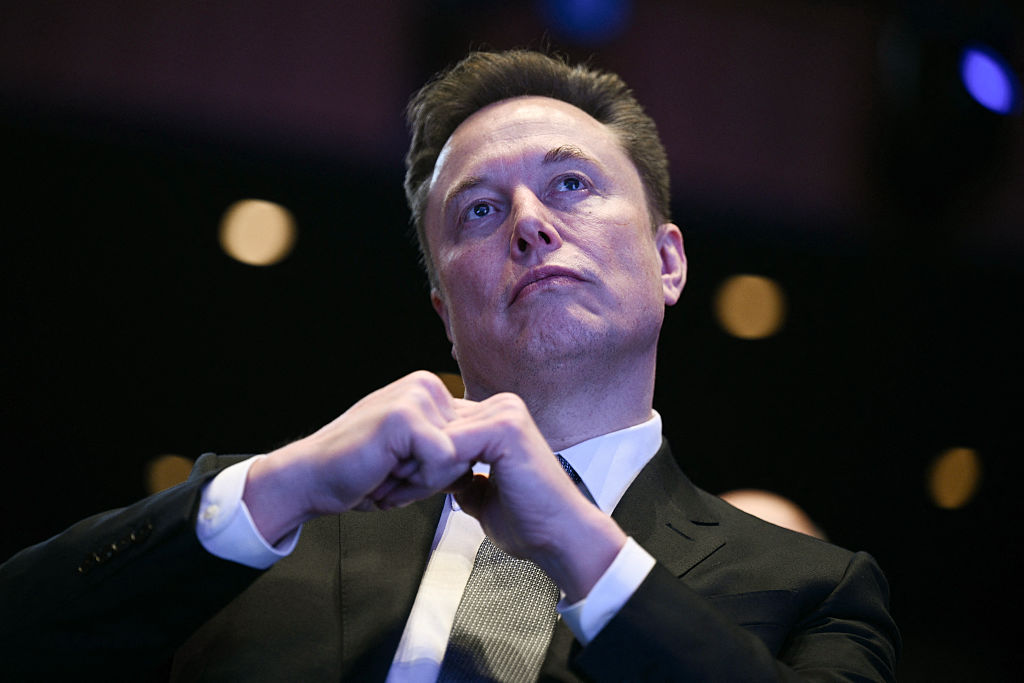
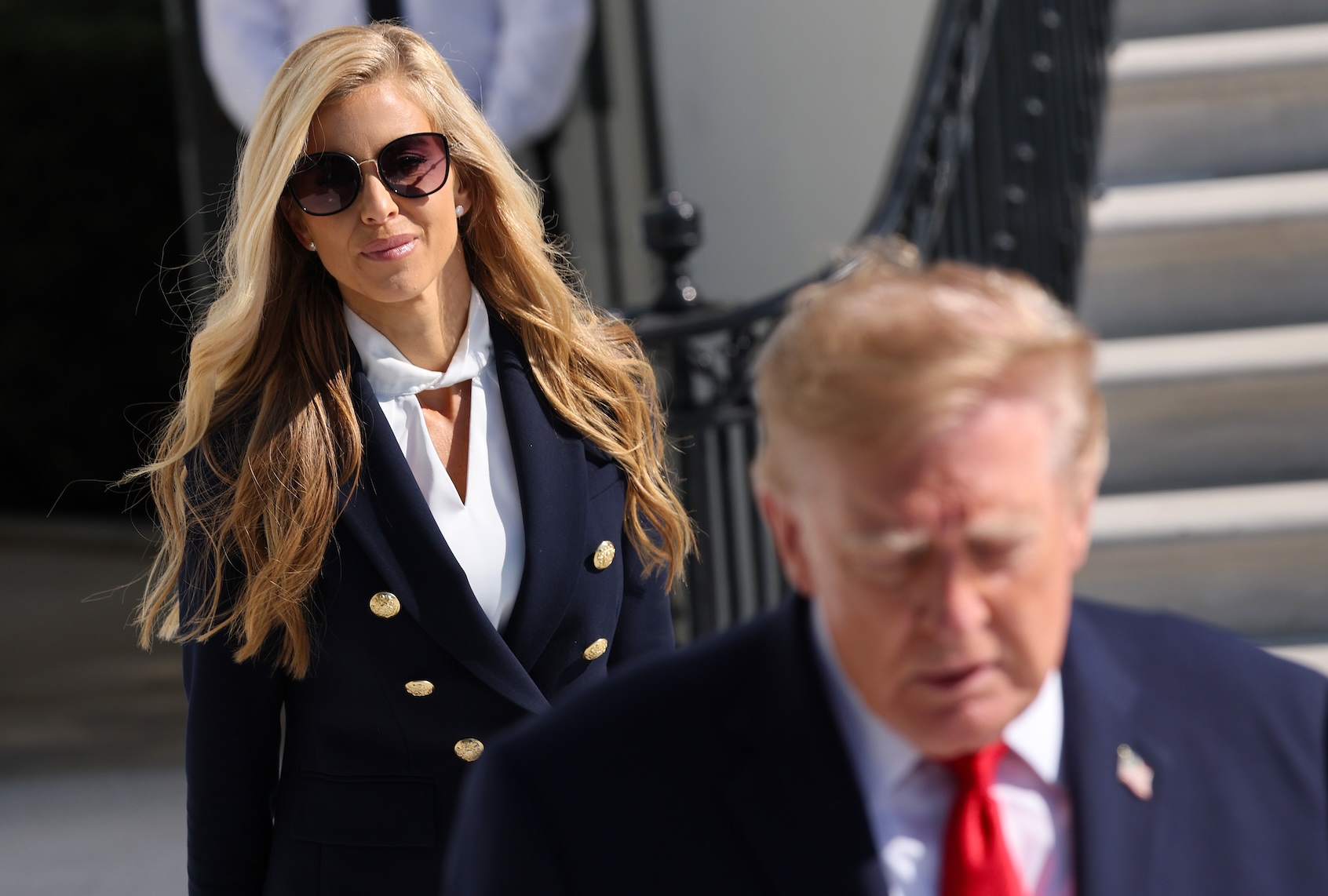
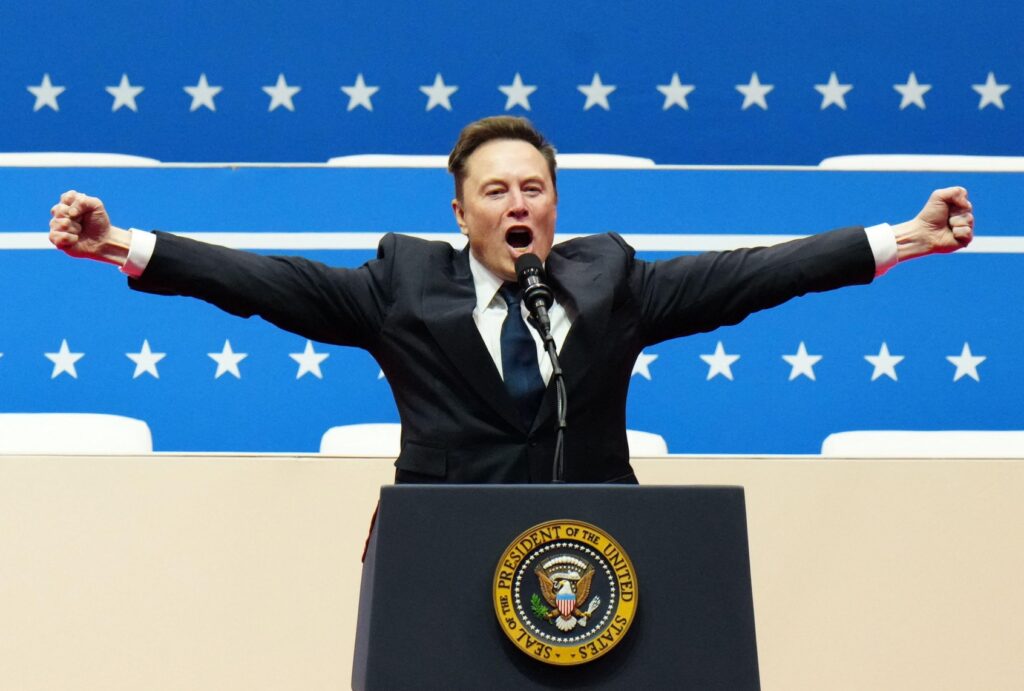
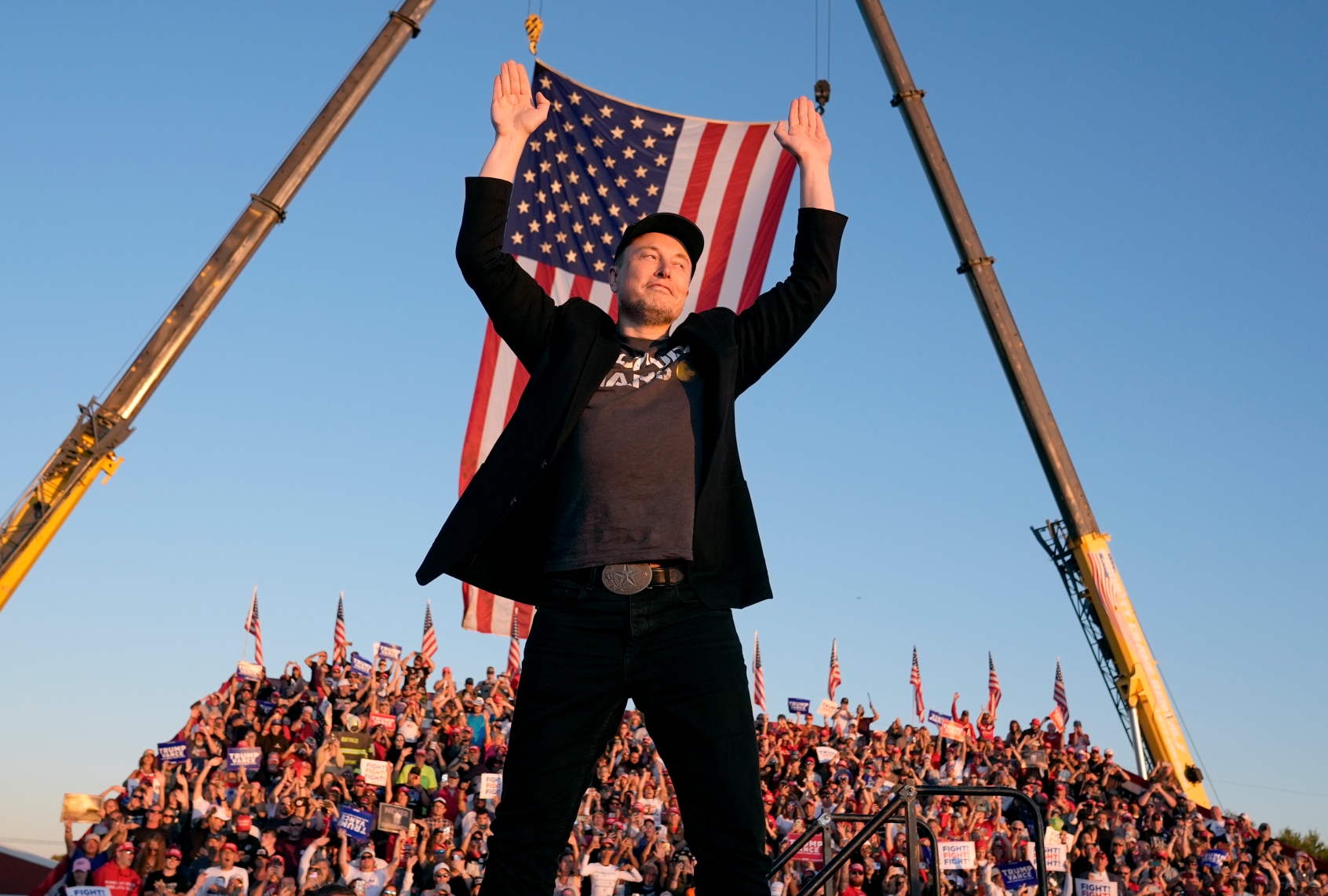
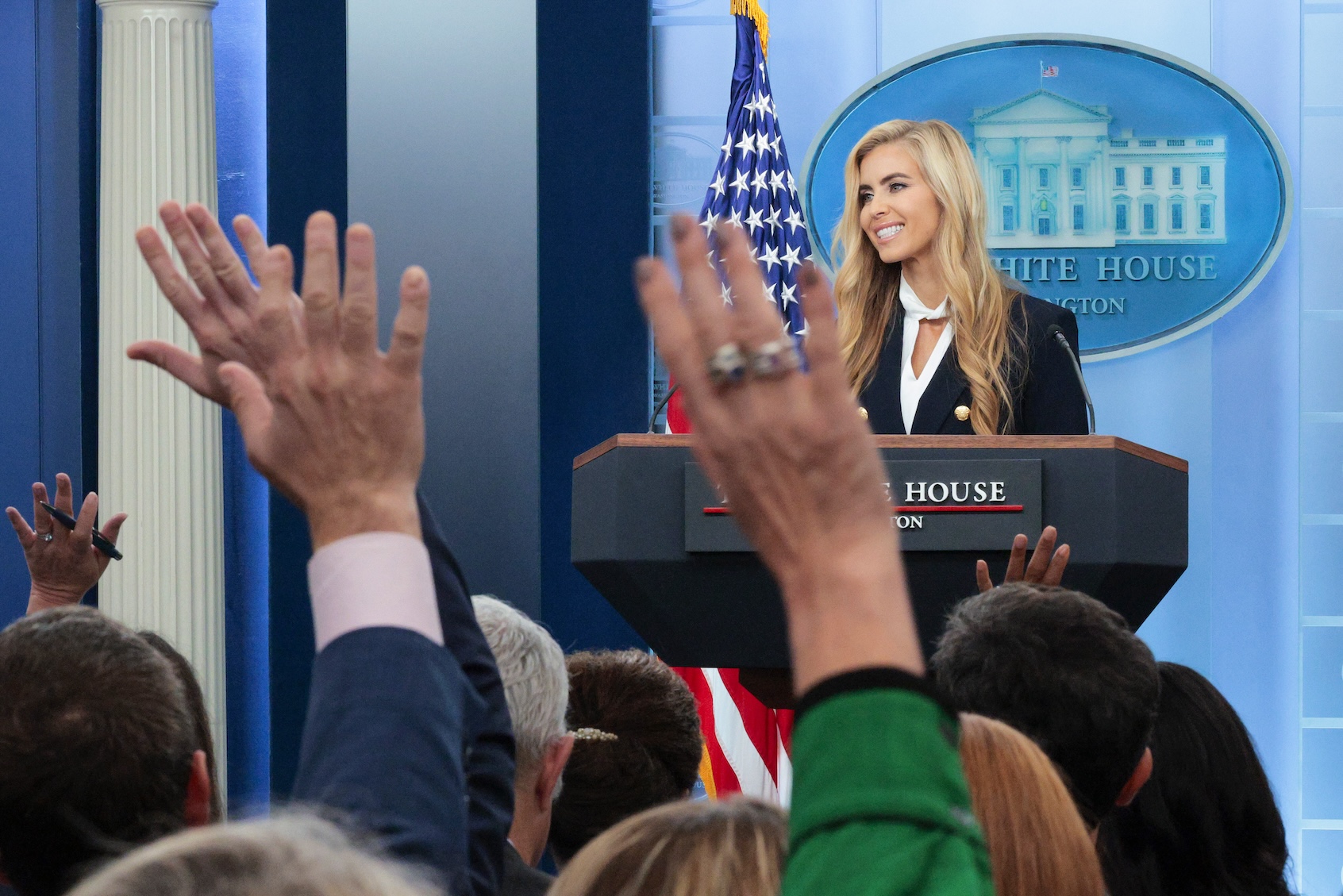
The first was the richest man in the world, Elon Musk. After a bromance budded between the billionaire and Trump during the transition period, when Musk essentially moved into Mar-a-Lago, the president appointed him to head the Department of Government Efficiency and take a chainsaw to the federal government. Then there was a rupture in the relationship and Musk departed, although they seem to have mended fences. Since then, Trump has only fired a few people: Attorney General Pam Bondi, Department of Homeland Security Secretary Kristi Noem, Centers for Disease Control Director Susan Monarez, Labor Secretary Lori Chavez-DeRemer, Director of National Intelligence Tulsi Gabbard and Ambassador to Greece Kimberly Guilfoyle. (The latter three “resigned” under duress.) On Friday afternoon, after only a few days on the job and widespread criticism of her tenure, Trump dismissed White House press secretary Katie Zacharia.
The White House has insisted it’s entirely coincidental that all the firings have been women. But as the New York Times reported on Wednesday, “In many instances, the female officials who departed appeared to have failed some kind of loyalty test to Mr. Trump.” (You know how women are.) The departures of these women isn’t because none of the administration’s men have been implicated in misconduct or corrupt dealings. To the contrary: Some of Trump’s male officials and staffers are stunningly incompetent and dishonest, but their behavior has either been overlooked or rewarded with promotions and transfers.
So when reports surfaced that another high-profile female staffer may be on the chopping block, it would have come as no surprise — if it weren’t for the fact that the woman in question is the single most powerful female in the administration.
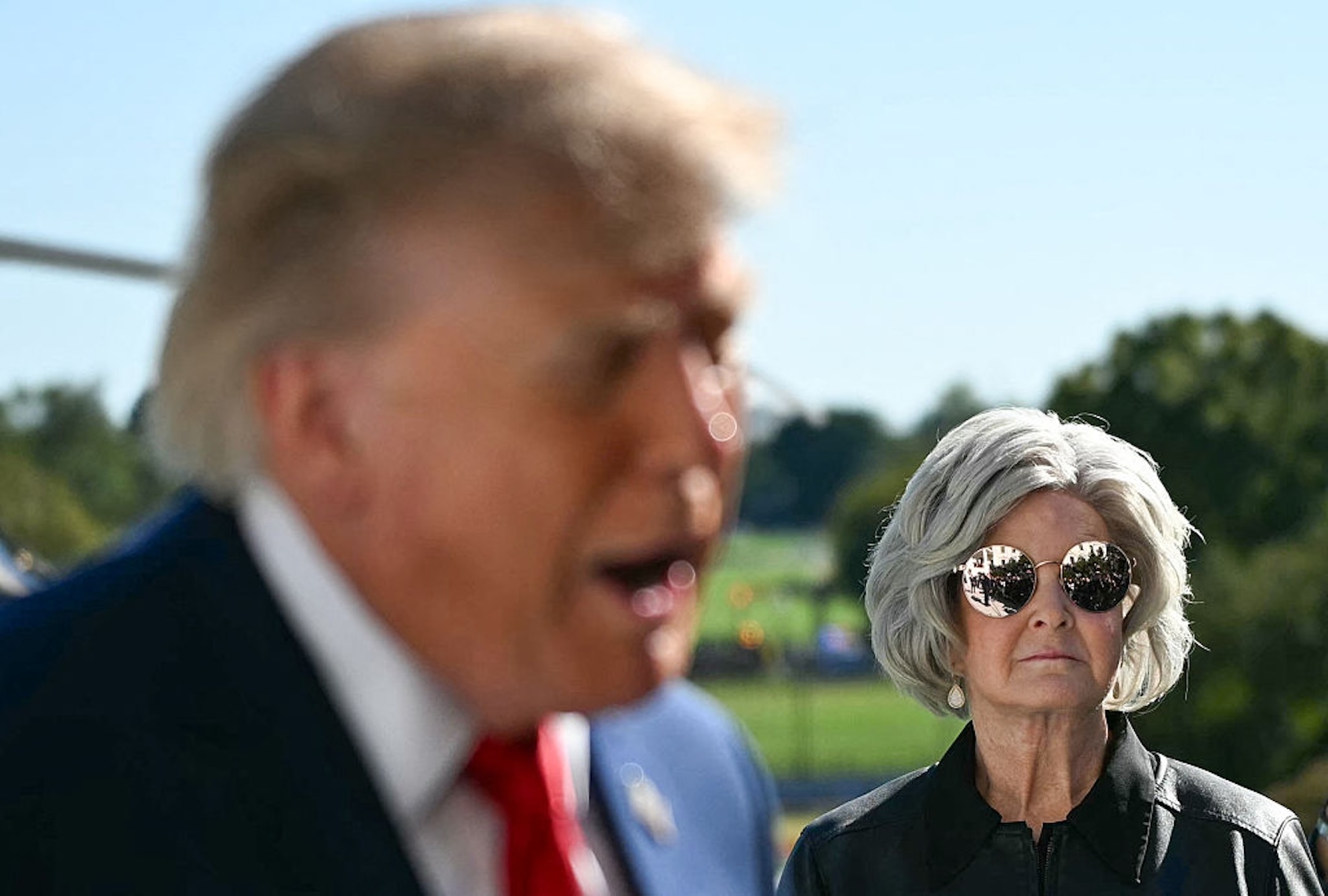
Susie Wiles has earned the distinction of being Trump’s longest tenured chief of staff, and with good reason: She has managed to stay on the president’s good side by enabling him and never telling him what he doesn’t want to hear. She has admitted that herself, saying, “These seminal moments where you have to go in and tell the president what he wants to do is unconstitutional or will cost lives. I don’t have that.”
One would certainly think that would guarantee her job security. But ahead of the monumental loss Republicans are expected to endure during the upcoming midterm elections, Trump is reportedly raging — and looking for a scapegoat. Apparently, it’s going to be Wiles. According to recent reports, the president has been calling around to friends to see what they think of his chief of staff — a common precursor to a Trump firing. According to POLITICO, plenty of people have their knives out for Wiles, with one person close to the White House saying, “She’s burned a lot of people.”
Since Wiles, who guided Trump to his historic 2024 comeback, has also been tasked with doing the same in 2026, she is in the presidential crosshairs, even though there is little room to address Trump’s overwhelming unpopularity because he won’t listen to anyone.
This, though, is an occupational hazard for any Trump chief of staff. It’s also not unusual for turnover following a midterm election. But the GOP is facing what looks to be a massive loss, attributed to the president’s historically low approval ratings among the American people. Since Wiles, who guided Trump to his historic 2024 comeback, has also been tasked with doing the same in 2026 — along with her partners James Blair and Chris LaCivita — she is in the presidential crosshairs, even though there is little room to address Trump’s overwhelming unpopularity because he won’t listen to anyone.
The big question now centers on Wiles’ replacement. POLITICO reported there are three likely candidates. One is Bill Pulte, the head of the Federal Housing Finance Agency and chairman of Fannie Mae and Freddie Mac, a fierce Trump loyalist known most recently for spending as much time as possible with the president, feeding him memes and ideas on big white poster boards. Another is Kevin McCarthy, the former House Speaker who once told an aide to fill a jar with only the red Starburst candies for him to give to the president because he had noticed that Trump preferred them, earning him the presidential sobriquet “My Kevin.” Then there is Stephen Miller, the notorious senior adviser of everything.
The choice of Pulte or McCarthy would signal a continuation of current practices, albeit with less discipline and adult behavior in the White House, which may be inevitable no matter who wins the job. Pulte is dramatically unqualified, but since Trump once made him acting director of national intelligence, that distinction is obviously not an impediment.
McCarthy is one of the most incompetent and ignorant leaders in GOP history, but this is likely a plus, since Trump likes people who are just like him. If anyone expects that the president is looking for someone who is stronger than Wiles, the fact that McCarthy is being considered should lay those thoughts to rest.
The most frightening prospect is, of course, Miller, who is already serving as the shadow president and would, as chief of staff, essentially have the full power of the presidency at his fingertips. Trump is obsessed with his legacy projects and making as much money as possible, and the only other thing he cares about is vengeance on his enemies, a desire he shares in equal fervor with Miller. If Miller has the full power of chief of staff, we can assume that he will be ordering and approving the most authoritarian policies the United States has ever seen, and Trump may not even know it’s been done. That is clearly Miller’s mission, and given the power to enact such policies, he will not hesitate.
Being far more ruthless and determined, Miller would no doubt run a tighter ship than Pulte or McCarthy. Trump, though, will still be in charge, and it’s easy to imagine that Miller’s actions would make him even more unpopular than he is now. That could make the legacy-concerned president uncomfortable as he confronts the possibility that he will leave office with a personal reputation far worse than Richard Nixon’s and a record of failure lower than Jimmy Carter’s.
It’s not too early to start blaming Miller for Trump’s unpopularity, and Democrats would be wise to start doing that publicly as soon as possible. If he becomes the chief of staff wielding power with fascist fervor, it may just be too late.
The pre-dawn search of Rep. Ilhan Omar’s Washington, D.C., home on Monday should have prompted a searching national outcry about presidential power and the weaponization of federal law enforcement for political purposes. Federal agents seized her phone and passport and searched her residence as part of an investigation into allegations dating back to her childhood. Authorities have also issued more than a dozen grand jury subpoenas, including to her relatives. But instead of treating this escalation as a major test of American democracy, the mainstream media’s editorial response to the breaking news has been sorely lacking. Rather than interrogating the fascistic implications of a president weaponizing federal immigration agencies to threaten political opponents with deportation, major media outlets platformed the administration’s narrative that something fishy must be occurring.
This is not how the American press normally reacts when armed agents of the federal government knock on the door of a prominent political figure. As media watchdog Adam Johnson noted at the Intercept, the very day of the FBI raid against former national security adviser John Bolton brought scathing editorials from the New York Times, The Washington Post and The Wall Street Journal. Over the next week, each newspaper published opinion pieces opposing the raid and leveling outrage at the obvious power grab. The raid was explicitly condemned in POLITICO, The New Yorker and The Atlantic, which published four different indignant columns.
The asymmetry in the mainstream media’s response to the Omar raid is the story. It is not simply the search itself but the absence of a sustained institutional response to the right’s yearslong campaign targeting the congresswoman that made it possible.
The asymmetry in the mainstream media’s response to the Omar raid is the story. It is not simply the search itself but the absence of a sustained institutional response to the right’s yearslong campaign targeting the congresswoman that made it possible. For years, the press treated each escalation against Omar as a discrete political controversy rather than examining how the attacks were clearly building toward a confrontation with the federal government. The allegations appeared on right-wing television, circulated through MAGA podcasts and were repeated by administration officials. The investigation was discussed publicly before the search took place. By the time agents arrived at Omar’s home, the political narrative had been prepared. Yet the national conversation too often focused on whether there might be something suspicious about Omar rather than on how the administration had transformed longstanding partisan allegations into a federal investigation.
Right-wing media had agitated for this result for months, as Media Matters’ Matt Gertz has documented. In July, Fox News host Sean Hannity told a caller on his radio show that an investigation into Omar was underway. “I can tell you this: There is an investigation going on. I don’t know why it’s being slow-walked,” he said. In September, right-wing podcaster Benny Johnson said he had been hearing “rumblings” about Omar and that Vice President JD Vance had told him on the record that something was about to happen.
The administration was not subtle about what it wanted. In March, Vance said on Johnson’s podcast that “we think Ilhan Omar definitely committed immigration fraud against the United States of America,” and then described the project in plain terms: “That’s the thing that we’re trying to figure out is what are the legal remedies now that we know that she’s committed immigration fraud — how do you go after her, how do you investigate her, how do you actually do the thing, how do you build a case necessary to get some justice for the American people?” In September, Homeland Security Secretary Markwayne Mullin told Johnson there was an “ongoing investigation” into Omar and raised the possibility of deportation, declaring that “something’s going to happen” while stating as fact that Omar “married her brother to try to bring him to the United States.”
But not everyone in the MAGA coalition was satisfied. Laura Loomer, the conspiracy theorist and internet personality who once traveled to Minneapolis in her own fruitless attempt to prove that Omar had married her brother, fumed after the Mullin interview that the congresswoman was somehow being protected from deportation. Fox host Tomi Lahren was angrier still, devoting much of her Sept. 12 show to accusing Mullin of using Omar’s case as a sideshow to distract from the lack of larger-scale deportations. “If they want to do an investigation, do an investigation,” Lahren said, while also noting that whether Omar married her brother wouldn’t “get people out to vote.” What would, she said, was “promises made, promises kept” — mass deportations.
After Monday’s search, the celebration became even more explicit. Johnson opened his show by asking his audience whether they were excited to send Omar “back to her indigenous peoples” before announcing, “We were right. Forgive us. We’re going to gloat just a bit today.” He called the developments his “crowning achievement for life” and presented the investigation as a victory for his program. Katie Miller, the wife of White House deputy chief of staff Stephen Miller, reportedly posted “promises made, promises kept” above an article about the search before deleting the post. Even CNN anchor Jake Tapper’s questioning why Omar’s didn’t seek to make a deal with the Biden Justice Department was celebrated by MAGA influencers and right-wing outlets such as Breitbart as evidence that mainstream journalists shared their suspicions.
The federal inquiry apparently reaches back to 1995, when Omar arrived in the United States as a Somali refugee, and to her naturalization in 2000. The warrant reportedly lists conspiracy, false statements on immigration paperwork and immigration fraud. Officials are examining allegations concerning Omar’s age and her late father’s records. Mullin has also discussed a possible racketeering case, suggesting that a conspiracy theory could connect alleged conduct across different periods. Jeanine Pirro, the U.S. Attorney for the District of Columbia, has said that several investigations involving Omar are underway, including one concerning her financial disclosures.
The scope of these inquiries makes independent scrutiny essential. A congressional watchdog previously cleared Omar of wrongdoing in connection with financial disclosures that are now reportedly under examination. The Washington Post has also reported that immigration officials scrutinized similar allegations during Trump’s first term and did not find citizenship-related issues. The administration has not publicly demonstrated why the earlier review was insufficient or what new evidence now justifies the extraordinary escalation. These are precisely the questions that a serious press corps should pursue relentlessly.
This pattern extends beyond Omar. Former FBI Director James Comey and New York Attorney General Letitia James faced indictments after Trump publicly pressured his attorney general to prosecute them. Both indictments were later dismissed because of a defect involving the appointment of the prosecutor, although the Justice Department subsequently pursued a new indictment against Comey. Former Federal Reserve Chair Jerome Powell and Fed governor Lisa Cook have faced investigations or other government actions following sustained attacks by Trump. Their cases differ in important respects, but together they raise questions about the relationship between presidential hostility and the exercise of state power.
The consequences of this dynamic extend beyond Omar. When an administration can repeatedly identify enemies, encourage public speculation about their criminality and then launch investigations without facing sustained institutional scrutiny, the boundary between law enforcement and political retaliation becomes harder for the public to discern. The next target may be a different member of Congress, a public official or a naturalized citizen without Omar’s visibility or resources. The danger lies in normalizing a method of governance in which the president’s adversaries are continually placed under suspicion while the administration’s motives receive comparatively little examination.
The press cannot determine the outcome of Omar’s investigation, and it should not prejudge the evidence. But it can insist on transparency where legally possible, investigate the history of the allegations and examine whether officials are adhering to the standards that protect prosecutorial independence. It can also refuse to let the story disappear once the initial spectacle has passed.
Trump’s advantage lies in his ability to make extraordinary actions feel routine. Each failure to examine the cumulative pattern makes the next escalation easier to present as ordinary government business. That is how a media blind spot becomes a political opening. If the media can summon immediate outrage when federal power threatens one political figure but offer only procedural coverage when it threatens another, it risks helping normalize the very abuse it is supposed to expose.
WASHINGTON — After months of being outspent by Democrat James Talarico on the airwaves, Republicans launched a massive rescue mission for Ken Paxton in September, dropping over $200 million to boost their U.S. Senate candidate in Texas.
New campaign finance filings revealed that much of the advertising flurry was funded by one highly motivated donor: Elon Musk, the world’s wealthiest man.
Musk, who lives near the SpaceX Starbase facility in South Texas, appears to have poured nearly $190 million into the U.S. Senate race in his adopted home state. His role in financing Paxton’s air support was disclosed in reports filed Thursday to the Federal Election Commission by Senate Leadership Fund, the Senate GOP’s main super PAC and the biggest spender in Texas’ Senate contest.
On Sept. 9, the first day of the GOP midterm convention in Dallas, Musk gave $75 million to SLF. The next day, SLF put $75 million into a new entity called Texas PAC. By the weekend after the convention, the new super PAC was up on the air with a positive spot about Paxton’s work on sex trafficking and a negative ad attacking Talarico as being for “they/them, not you.”
Two weeks after cutting his first check, Musk gave an additional $83 million to SLF, according to the group’s filing. Sure enough, SLF deposited $83 million into Texas PAC’s coffers the following day.
Musk’s donations armed Senate Republicans to take over the airwaves in Texas. Using Texas PAC as the vessel to book airtime, SLF has thus far spent over $159 million on TV, radio and digital advertising, double the outlay from Talarico’s campaign, according to media tracking firm AdImpact.
SLF backed Sen. John Cornyn in the primary, estimating that a Paxton candidacy would require $150 million to $200 million to retain the seat — money that could come at the expense of other states. While the prediction proved prescient, Musk’s investment has changed the calculus.
“Thanks to some generous investors who have dedicated money to an affiliate, Texas PAC, we’ve been able to go in and support Ken Paxton,” SLF executive director Alex Latcham told Bloomberg TV Wednesday. “We’ll spend nearly $200 million in that race. But again, thanks to Leader John Thune and the Republican caucus and our fundraising, we haven’t had to subtract resources from other states to do so.”
The Tesla and SpaceX founder got involved in the race after his political team reached out to Senate Leadership Fund, the Senate GOP’s main outside campaign group, to voice Musk’s concerns about Paxton’s standing in the race, according to a person familiar with the conversations. That led to an agreement between Musk’s orbit and SLF — Musk would provide $10 million to Lone Star Liberty PAC, the main outside group boosting Paxton, if SLF gave $5 million and the PAC raised an additional $5 million. The details of the conversation were first reported by Axios.
That windfall was badly needed. Lone Star Liberty PAC had only $35,000 in the bank at the end of June, having drained its coffers on Paxton’s hard-fought primary win over Cornyn. Talarico, meanwhile, was continuing his torrid fundraising pace and was poised to keep dominating the political ad spending battle if help did not arrive for Paxton.
Talarico posted another record quarter amid Paxton’s SLF-powered ad surge, hauling in $64 million between July and September — a third-quarter record among all U.S. Senate candidates. The Austin Democrat has maintained a polling lead for months in averages of nonpartisan public surveys, an alarming sight for a Republican Party whose unbeaten streak in Texas statewide races spans more than three decades.
With Musk’s donation and the matching funds, Lone Star Liberty PAC spent $17.5 million on broadcast TV advertising in early September, by far the most significant pro-Paxton ad buy of the general election. By the end of the month, a handful of outside groups led by SLF had dropped over $217 million on ads in the Texas Senate race.
X not a part of Paxton’s Big Tech crusade
Paxton has not commented publicly about Musk’s support.
In the past, the attorney general has praised Musk for backing Republicans in 2024. He spent hours at Musk’s home two days before that year’s election hearing Musk recount all his efforts to boost GOP candidates, Paxton said at Turning Point USA’s AmericaFest in 2024.
“Aren’t you all glad he’s on our side?” Paxton said to cheers. “I am convinced that whatever he did, whatever rocket science thing he did, made a huge difference in this election.”
Paxton has also aligned himself with Musk through his role as Texas attorney general — and largely skirted scrutinizing Musk’s companies as his office has increasingly taken on Big Tech.
In 2022, as Musk sought to buy Twitter, Paxton opened an investigation into the social media company for how it reported the number of accounts on the platform that were fake or bots — inspecting whether the service was inflating the number of its actual users to boost its value for revenue. At the time, Musk was raising similar questions. He ultimately bought Twitter and renamed it X.
In 2024, Paxton opened an investigation into World Federation of Advertisers, an organization that represents marketers, to assess whether its members were conspiring to boycott specific social media services. TechCrunch reported Musk’s X, which had filed an antitrust suit against the group, was likely among the social media platforms.
Meanwhile, Paxton has taken on tech giants including Netflix, WhatsApp, Discord, and Meta — probes he has touted on the campaign trail.
“As attorney general, I’ve sued some of the largest companies in the world … for taking advantage of our kids by exposing them to dangerous, addictive material,” Paxton said after defeating Cornyn in May. “In Washington, I will not stop fighting to protect Texas children from Big Tech.”
But Paxton has taken arrows from critics who’ve accused him of turning a blind eye to X and Musk. In January, a group of Democratic state representatives demanded the attorney general investigate the platform’s artificial intelligence agent, Grok, and its creation of exploitative content about children and women. Paxton did not respond to the letter publicly.
The same month, a group of attorneys general from across the country sent Musk’s company a letter demanding that it address its AI agent’s creation of child sex abuse content. Paxton was not among the signatories.
Funding the GOP ground game
Musk’s political operation is also deeply involved in the Republican ground game in Texas, from canvassing to mailers, across several key races. America PAC, which he seeded with nearly $90 million last quarter, had pumped $18.8 million into the Senate race through Tuesday, per FEC filings, which capture efforts like text messaging, mailers and ads but not in-person canvassing such as block-walking and phone-banking. Over 80% of that money has gone to anti-Talarico messaging.
The tech mogul has significant business interests in the Lone Star State. Musk has moved the state of incorporation for many of his companies to Texas in recent years. Boring Company and X are headquartered in Bastrop, SpaceX is near Brownsville and Tesla’s corporate headquarters is now in Austin.
And it’s not just the Senate race. Musk’s PAC has spent about $800,000 boosting Republican candidates in the five most competitive U.S. House races in Texas. The biggest share has gone to the 35th Congressional District, a San Antonio-area seat Republicans redrew last summer with the intention of flipping, but which has proven highly competitive.
Musk spent hundreds of millions in 2024 to boost Republicans, including Donald Trump’s presidential bid. Trump rewarded Musk by tapping him to lead the controversial Department of Government Efficiency initiative. The two had a public falling out later that year, when Musk disparaged the president’s signature legislative effort and alleged Trump was in the Jeffrey Epstein files.
The dustup did not appear to sap Musk’s appetite for bankrolling Republicans’ political spending. The world’s wealthiest man has already surpassed his 2024 political spending this cycle, with Texas the largest focus of his operation.
Other GOP groups are fundraising off of Musk’s Texas spending bonanza as well.
“Elon Musk understands what it’s like to live under far left Democrats,” reads one National Republican Senatorial Committee fundraising email, which notes that Musk has spent $276 million in the midterms and directs readers to a WinRed fundraising page. “He fled an oppressive regime in California that crippled the state with a radical agenda before finding a new home in Texas. But now, the same Far Left Democrats that ran California into the ground are coming to SEIZE Elon’s new home!”
While far from reaching Musk’s investment levels, some prominent Texas GOP donors also came off the sidelines for Paxton in recent months, new filings show.
West Texas oil billionaire Farris Wilks, who has supported Paxton in his state campaigns and directed millions to hardline Republicans, donated $250,000 to one of Paxton’s joint fundraising committees in mid-August, his first federal expenditure of the cycle.
Amarillo billionaire Alex Fairly, meanwhile, had maxed out to Paxton’s direct campaign account with a $7,000 donation in the spring; in late August, he gave $274,300 to Paxton’s joint fundraising committee.
Paxton also received large sums this quarter from the Dallas Cowboys brass. Team president Stephen Jones and chief sales and marketing officer Jerry Jones Jr. gave $122,000 and $100,000, respectively. Their father, Cowboys owner Jerry Jones, donated a six-figure sum in the second quarter.
Disclosure: Meta and WhatsApp have been financial supporters of The Texas Tribune within the past five years. The Texas Tribune is a nonprofit, nonpartisan news organization that is funded in part by donations from members, foundations and corporate sponsors. Financial supporters play no role in our journalism. Find a complete list of them and more information about our financial and disclosure policies here.
Well, that didn’t last too long. Katie Zacharia became White House press secretary just five days ago, but after President Donald Trump told reporters she should “reconsider,” the New York Times reported she’d been fired Friday afternoon.
Zacharia held the position for less than a week, but generated considerable controversy in that short time. Her first briefing on Tuesday lasted only 14 minutes as she took questions from just three reporters at Breitbart, Fox News and the Daily Mail, appearing flustered and disorganized. Meanwhile, questions about her credentials took center stage, as she identified herself as a lawyer but in fact had never passed the bar exam. Her long history of pushing far-right conspiracy theories like QAnon also resurfaced.
Then, Zacharia made two appearances on Fox News, both of which did not seem to go well. Sean Hannity grilled her on her false credentials Thursday night and told her, “I can give you some unsolicited advice. That’s never going to be a friendly room to you,” referring to the White House press pool. The next morning, she appeared on “Fox and Friends” and was asked if she still had the “confidence” of the president. “I-I-I’m standing here and I was able to travel with him through all of the midterm convention — or, excuse me — the midterm rallies, and I hope to be able to build the trust and confidence of everyone around me,” she replied.
Apparently, she did not have Trump’s confidence. Speaking to reporters at the White House Friday, the president said he told her “Honestly, if I were you, I’d reconsider.” He added that he would leave the decision to her, according to CNN, but said they would speak when he returned to the White House. “Katie, do you need this? I don’t think you need this,” he said he told her. A few hours later, she was out.
Numerous people online compared Zacharia’s short tenure was compared to Anthony Scaramucci, who was appointed White House Communications Director in 2017 during Trump’s first term, but just lasted 11 days. “To put it more precisely: a Zacharia is about .4 of a Scaramucci,” Anna Bower, a senior editor at Lawfare, posted on Blue Sky. The Mooch, as Scaramucci is popularly known, posted on X that “Records are made to be broken. But I take no pleasure in other people’s pain.”
Zacharia replaced secretary Karoline Leavitt, who resigned from the position in August.
😳 Zacharia flames out on Fox News for the second time in 12 hours 😳
With the wreckage still smoldering from her debacle on Hannity, Katie went on Fox & Friends and received another grilling from Fox hosts
LAWRENCE JONES: It’s been a tough week for you. Do you wish you would’ve disclosed to the president about not passing the bar?
In a digital flyer promoting the stand-up shows that would culminate in her new HBO comedy special, “Parmesan,” comedian, actress and one of America’s greatest working artists, Kate Berlant, posed an important question: “HAVE YOU SEEN THIS CLOWN?” In one photo, Berlant, fresh from glam, seduces the camera; in the other, her face contorts into a rascally grin, eyes half-crossed for effect. No dichotomy better represents Berlant’s razor-sharp, thoroughly tasteful wit, which sits halfway between refined humorist and go-for-broke court jester.
If you haven’t seen this clown, there’s no better time than the present. Like most of Berlant’s work — from her extensive collaborations with best friend John Early to her unforgettable one-woman show, “KATE” — “Parmesan” is a masterful send-up of a time when we’re all doing character work. What begins as an honest account of modern life’s bleak state is distorted alongside Berlant’s malleable expressions, slowly blossoming into something life-affirming, like a diamond among the rubble. Some comedians like to say they give their audience a “night off” from the world. Berlant, on the other hand, relishes the chance to remind her audiences of just how blissfully hysterical the world can be.
Everyday life, in the Berlantian sense, is driven by affection for both the mundane and the surreal in equal measure. In the joke that inspires the special’s title, she measures an Instagram comment’s subzero value in a wide scope, lampooning the communal yet cartoonish nature of our endless scroll. Elsewhere, Berlant gets more personal than she ever has on stage, using the relatively recent discovery that she isn’t straight as the springboard for bits about how embracing queerness later in life can be as beautiful as it is uniquely mortifying.
But with Berlant, it’s not just about the jokes; it’s about the rhythm and physicality that accompany them. No one understands their audience better than she does, knowing comedy relies as much on observation as on good, old-fashioned slapstick. Berlant’s a tenured professor at the Make-‘Em-Laugh Institute, and “Parmesan” proves her research-driven thesis statement time and again: There’s no bad mood a good clown can’t improve.
From the moment Alex Gibney announced he was working on “Musk” in 2023, it became one of the most anticipated documentaries around – and a source of trepidation for its titular subject, tech mogul Elon Musk. But we may have underestimated how far the world’s wealthiest man and his ilk would go to prevent audiences from seeing it.
Weeks before “Musk” hit theaters, its distributor, Bleecker Street, couldn’t buy ads on TikTok, YouTube, Mark Zuckerberg’s Meta-owned Facebook and Instagram or, here’s a shocker, Musk’s own X. A Hollywood Reporter story published on Sept. 25 made YouTube and Meta reverse course – a rare case of two media giants shamed into living up to their free-speech claims.
But this attempted media suppression shows “Musk” has struck a nerve, despite its namesake dismissing it as a “hit piece that misses.”
What happened to Bleecker Street, then, is both familiar to Gibney and extraordinarily alarming. “You can see how a few platforms coalescing around the endorsement of what these tech viziers are doing decide that a criticism of tech power is somehow political and can’t be allowed in terms of open discourse on their platforms,” Gibney told Salon. “So that was really disconcerting.”
It’s shaping up to be a dark autumn for Silicon Valley’s villains. In early December, Luca Guadagnino’s “Artificial” turns our attention to OpenAI CEO Sam Altman, played by Andrew Garfield.
Meanwhile, “Musk” was recently joined in theaters by Aaron Sorkin’s “The Social Reckoning,” in which Jeremy Strong portrays Zuckerberg as a soulless ghoul prioritizing clicks over user safety. In “You Can See Everything,” notorious prankster Nathan Fielder shadows notorious (for different reasons) Theranos fraudster Elizabeth Holmes in the days before she went to prison.
Gibney also profiled Holmes in his 2019 work “The Inventor: Out for Blood in Silicon Valley,” which adds another layer of coincidental symmetry: Fielder’s film hits theaters on Oct. 16, the same day “Musk” opens nationwide.
But “Musk” is unquestionably a tougher watch, and given its subject’s extensive integration into the second Trump administration, it can’t help but be political.
Of course, “Musk” isn’t campaigning for anything except our need to confront the existential threat posed by one man exercising significant control over our media and our military.
A chorus of testimony from people who were once closest to Musk builds a profile of a megalomaniacal con artist. Two of Musk’s most incisive critics, his ex-wife Justine Musk and former right-wing influencer Ashley St. Clair, describe him as a gaslighter and a nuke, respectively.
But perhaps the most damning testimonial comes from Musk himself – or rather, existing audio recordings of Musk delivered by a CGI version of the Tesla and SpaceX CEO, since he refused to participate.
All of it boils down to simple questions Gibney poses at the film’s outset: How could Musk assume so much power, and why have we given it to him? I discussed those questions with Gibney, and what they taught him about Musk and our penchant for enabling men like him, in a wide-ranging conversation transcribed below.
This interview has been edited for length and clarity.
Salon: You’ve done a documentary on Putin. You did one on Scientology, a famously litigious organization. You have a vast filmography featuring subjects who might have taken issue, or have taken issue, with what was said in your documentaries. Where does this rank in terms of threat level, legal or otherwise?
Gibney: Well, high. I mean, when just before “Going Clear” was released, the Church of Scientology took out full-page ads in the New York Times and the L.A. Times with a big picture of me, sort of denouncing me. And there were people, you know, who would pop up in dark parking lots, you know, sort of accosting me, trying to kind of destabilize me psychologically. But I think in this case, he’s the richest man in the world. He has a lot of resources… And he has this platform, Twitter, which has become a kind of Thunderdome of hate and vitriol, and that activates, you know, unpredictable characters who sometimes act on their own…
That said, I don’t want to exaggerate what’s happened to me so far. Other people put themselves at greater risk than I, in the sense that they came forward and appeared on camera.
One of the things that you said in other interviews, and I think you actually said this in the documentary as well, is that you used to be a fan of Elon Musk’s products.
I mean, I looked at him from afar. I have some history on this whole electric car thing because I was brought in long ago to help with the editing of a doc called “Who Killed the Electric Car,” which is about GM’s first foray into the world of electric cars. A woman I met on that film, Jessie Deeter, later produced a film called “Revenge of the Electric Car,” and Elon Musk is in that. And Jessie, when she worked with him on that, was a big fan. [Deeter is also a producer on “Musk.”]
(Courtesy Bleecker Street Film / Gregg Segal)
So, you know, I had a certain connection to him. And I’m a big electric car guy. I own one — not a Tesla— but I own one, and I had a Tesla Powerwall in my house. I also sort of liked the kind of mumbling charisma that he had for a while, because he seemed like very much a regular guy. He was joking with people around on Twitter and stuff like that.
That said, he could also do unpredictable, chaotic and sometimes offensive things. But largely speaking, my view of him was positive. But I was interested in the fact that he accumulated so much power, and so that was the basis on which I dug in back in 2022.
Do you think that his ability to amass this much power is related to the fact that he is doing it in the American capitalist system, or do you think he could have done it in any other place in the world?
Well, I mean, there are a lot of intersections of opportunities for Elon Musk, and I also think he discovered, to use a phrase of his, the anomaly in the matrix for the American system. And that is money. He discovered that not only can you get a lot of money from the federal government, but if you have a lot of money, you can use it to influence sometimes how much money you get from the federal government or state governments. So I think there was that.
The other big thing is that in America we also have a kind of grudging admiration for the P.T. Barnum-like qualities of certain larger-than-life entrepreneurs, you know, and you see that a lot in Silicon Valley . . . That is a kind of cultural trope in this society for which I think we have a weakness. We sort of like to see them trick us all, though we also do like to see them go down after they’ve tricked us. So I think for all those reasons that maybe Elon was able to succeed here in a way that really exploited some of the flaws in our system and our psyche.
There’s also a propensity in our culture to believe in some superhuman aspect of genius, which I think your documentary gets at very well.
Yeah, it’s also that our weakness for money, or the power of money, in this culture also causes us somehow to think that if you’re wealthy, you’re also wise rather than just ruthless, right?
I often think of that famous line from “Citizen Kane,” where Orson Welles is joking with somebody, you know, having been very successful playing this William Randolph Hearst character, who said, “It’s no trick making a lot of money if all you want to do is make a lot of money.” Meaning, if you’re ruthless and determined, you can make a lot of money. Doesn’t mean you’re a genius, and it doesn’t mean that you’re a tech genius either.
I also think Elon Musk, having seen the ascent of Steve Jobs, was sort of defining himself in that way too – or going back to Thomas Edison, who had his own P.T. Barnum-like qualities in terms of inventing a character for himself to play. It’s not just the investor; it’s the inventor.
“Musk” runs for almost four hours. Did you always know it would be that long?
No. In fact, I had a cut of the film in the spring of 2024 that was under two hours. We were moving to release that and put it into the fall festivals. Then, in Butler, Pennsylvania, Trump is nearly assassinated, and Musk hitches his wagon to the Trump train. And my friends at HBO said, “You’re not done. You have to follow this story because it could go to places that you don’t expect, and having spent as much time as you have, you have to follow it to at least a moment of greater conclusion.”
So I did, and that ended up being the reason that it’s at such a length. You see patterns from the first film that then repeat themselves, but on a much larger scale, in the second film. Suddenly economic power meets political power, economic and technological power meets political power, and that is the making of an epic story.
(Courtesy Bleecker Street Film / Ken Cedenoupi / UPI Alamy News) Elon Musk
In addition, it just so happened that as he embarked on his political project, a lot of people that I was talking to in the background, trying to persuade them to come forward, did come forward because they saw some of the more problematic aspects of Musk wielding power as part of MAGA world. That gave the story a kind of human dimension as well.
Weirdly, you know, I was having trouble kind of putting it all together, and I didn’t really get a sense of how to shape it until I watched Guillermo del Toro’s “Frankenstein,” which in itself was a kind of take on the tech bros. That helped me kind of find a way forward in terms of what became a kind of epic narrative.
How so?
Well, you know, you start with a scientist who wants to do something big and important. And there’s even a sense of idealism about his ambition. But then he literally creates a monster, and the whole enterprise becomes utterly reckless and irresponsible and all about his own sort of grandiosity. Rather than a mission that might help people, it becomes about him.
What are you hoping this documentary will do in terms of making people a little bit more aware of who Elon Musk is and getting at the man behind the curtain, so to speak?
Well, I mean, it is an agent provocateur. I don’t provide a solution, but I do provide, I think, a pretty compelling story, which asks the kind of fundamental question I posed at the beginning, which is, how did this guy get so much power, and why did we give it to him? Because it’s both about him and it’s about us, and it asks some discomforting questions about how literally existential power rests in the hands of one man who is increasingly chaotic, unhinged, and seemingly pursuing power without reason. There’s a chilling moment at the end of the film where somebody asks him, “Why have you accreted so much power?” And he literally can’t answer the question…
He’s a very peculiar character who’s a chaos agent. But we’ve allowed him to become normalized in a way.
I remember writing about him being on “Saturday Night Live” and people shrugging it off, like, “Oh, it’s not that big of a deal.” But it was a very big deal. Those kinds of things make him into a character when the reality is he has massive access to power.
And he’s saying things, even on “Saturday Night Live,” that were patently untrue… Even when he says, “Did you think I was going to be a chill, normal dude?” Well, there’s a funny hidden message there, which is kind of discomforting if you really think about it. Like, if you want to drive a Tesla, be prepared to endure a lot of performative cruelty from me, including cruelty that may end up killing people. . . That’s a pretty brutal message, honestly, for “Saturday Night Live.” But it was a joke, right? And that’s the genius, in a way, of Elon Musk: he’s constantly saying stuff that is deadly serious and a joke at the same time.
Speaking of that, the images and the joke, let’s talk about using the [CGI] avatar. I remember when the news first broke about that, someone said, “Well, I wonder if that’s Alex kind of trolling Musk back.”
I mean, it’s kind of a troll-back, yeah. In a way, it’s kind of investing in him, playing in his sandbox, because he didn’t agree to appear.
And I should make it clear, as I tried to do in the film, that what we hear from him are actual audio recordings of him. In other words, they’re not AI-confected answers. We didn’t ask AI what Elon would say. We’re taking real audio recordings, but how to couch that visually? And we took our cue, having done all this research into stuff that Elon said, from something he kept going over again: This idea that we’re likely living in a simulation. So I thought, OK, how about a simulated interview?
And yes, he’s famous for trolling people. He’s famous for creating memes. What was it he said in 2020 on Twitter? He said, you know, parodying “Dune,” he said, “He who controls the memes, controls the universe,” right? OK, well, here’s a meme for you, Elon, of you.
Want more from culture than just the latest trend? The Swell highlights art made to last. Sign up here
What, if anything, about this documentary may help illuminate a few things for people, regardless of their political leanings, as we approach the midterms?
I mean, this should be our concern, whether you’re from the left or the right, is giving people unaccountable power. Also, this whole idea that our politics and, indeed, our Department of Justice and our Department of Defense can be utterly transactional.
We’re not getting the best that money can buy. We’re getting what money can buy. Period. In other words, the military stuff that you’re seeing is a third-rate frontier AI technology being fully integrated into our Department of Defense. And why is the worst technology being integrated? Because Elon Musk is literally paying for political advantage. So it’s a payback system, and we should all be outraged about that, left, right, or otherwise.
And now you’re seeing him trying to buy the midterms. He’s spending way more now than he did for the presidential campaign in 2024, and in part that’s to get more money for himself in the form of military contracts. But also, he knows that a reckoning is coming for him if the Democrats take over the House and the Senate, and there’s going to be a lot of investigations into him for corruption and abuse of power, taking our information, particularly possibly relating to DOGE, and doing God knows what with it.
Our whole system is built on a system of checks and balances, and the idea that the government is our instrument for making a better world, rather than, you know, making a few people rich…
But I think that what’s changed now with Trump is that the Department of Justice has become a protection racket for those who flatter and ally themselves with the president, and an instrument of revenge for those who oppose the president. You can’t depend on it as a kind of law-enforcing mechanism, and that may be the scariest thing of all. . . What we’re talking about is Putin’s Russia here, right? And if people want to avoid that, then I would strongly urge them to go out to the polls. Because this is a rogue administration that goes beyond any kind of sense of party affiliation. It’s a rogue administration that’s literally destroying our democracy.
Donald Trump’s new White House “pep secretary,” Katie Zacharia, introduced herself to America in the Brady Briefing Room this week, to anticipated criticism from Democrats and some unexpected criticism from Republicans.
At first, the press pool acted like that was just business as usual. It didn’t last long. As of Friday afternoon, multiple news reports indicate that Trump has already seen enough, and has asked Zacharia to step down from her role at the White House after just five days on the job.
According to a post on X by reporter Aaron Rupar, Trump told the press corps he had said to Zacharia that “she was treated very, very unfairly by the news. Let’s call it the fake news. I said, ‘Katie, do you need this? I don’t think you need this.’ We’re talking about doing something. I want her to have a good life. She’s being brutalized by the media.”
In all likelihood, that will end one of the shortest tenures of any Trump White House official, only about half the length of the notorious Anthony Scaramucci during Trump’s first term.
Maybe Zacharia was just unlucky. After all, she made her debut on Oct. 13. She showed up 15 minutes late. She spent the next eight minutes telling us how great Trump was. She took questions from just three people. She was gone 15 minutes later. In her praise of Trump, Zacharia sounded like former press secretary Sean Spicer talking about Trump’s inaugural crowds nearly a decade ago as she made dubious claims about the number of attendees at the president’s recent campaign rallies in high school gymnasiums and small arenas.
“Attendance is at record highs as enthusiastic, hard-working Americans are lining up and packing arenas to support President Trump,” she said with a straight face. Yep. The lies have already begun. Don’t act surprised.
When she finally took questions, only Breitbart (which lavished her with praise for allowing them in the building), Fox News and the Daily Mail got to ask questions. She dropped one legitimate piece of news: The president had asked for Kimberly Guilfoyle’s resignation as U.S. ambassador to Greece, based on her evident corruption and widely reported misbehavior, which even Trump didn’t try to defend. The punchline to that incident came a short time later as Trump was departing the White House, when he barely acknowledged Guilfoyle’s existence: Kimberly? Kimberly who?
A handful of defenders noted that the new press secretary had only a day to get ready for her debut. “Katie Zacharia had less than 24 hours to prepare for her inaugural briefing, as she juggled a cross-country move, and only received briefing materials this morning,” the Wall Street Journal reported. OK, so who forced her to go on stage, and why?
She could have taken all the time she needed. It’s not like we were getting press briefings every day anyway, and Trump always says he’s his own best press secretary. So there was no pressure from the press, although more reporters than usual showed up to be part of Zacharia’s inaugural standup routine.
Zacharia didn’t take the time to get to know us, and as a result we once again got a low-grade sideshow at the White House. Don’t expect anything more, and don’t expect the press to push back.
I’ve worked with incoming press secretaries at all levels, from City Hall to the White House. The best of them took the time to study policy briefings, meet department heads and the most active beat reporters before holding their first briefing. By doing that, they avoided being criticized for a lack of preparation and having to look for names on an index card. They also got a feel for the issues and questions they needed to address. Getting to know someone is the key to any long-term relationship, whether professional or personal.
That sort of protocol has long since been forgotten and abandoned, at least at the White House. Today we can’t get into the upper press area of the West Wing to talk with the press secretary. She didn’t take the time to get to know us, and as a result we once again got a low-grade sideshow. Don’t expect anything more, and don’t expect the press to push back. The White House Correspondents’ Association is in “go along to get along” mode. It’s cringeworthy to watch and heartbreaking to endure.
There was no reason to expect much of Zacharia’s first staged appearance, and that’s why no one should be surprised to see her draw as much criticism for her attire and demeanor as for the content of the information she provided. She appeared nervous, at one point calling her husband “my president.” She giggled at herself for that: “That’s a good one.” That was self-deprecating, which I appreciate. As for her attire, it was professional, but not something I would wear. As for being nervous, that’s to be expected. But again, why did she feel the need to brief us on her first day in the office?
She called on Trump-friendly media exclusively, and then excused herself, saying she had to travel to Alaska with the president, who’s hoping to shore up support for incumbent Sen. Dan Sullivan, one of many struggling Republicans this fall.
Mind you, if Zacharia had arrived on time, she could have doubled her time with us. Why start late and then cut it short? If she knew she was going to leave with Trump, there was no reason to soil her laundry doing a shortened briefing. Either show up on time or do it upon your return, after you get settled. Nobody would have said anything about that — and nobody would care if they did. That might have given the president another excuse to belittle the press.
I know some Republican lawmakers and even some reporters who believe that Trump set up Zacharia for failure by ordering her first appearance. That certainly isn’t beyond Trump. He’s the best when it comes to lowering expectations.
Those expectations at the moment are so low as to defy measurement.
Just this week Trump has announced his pleasure with a DHS investigation into Rep. Ilhan Omar’s immigration papers, a deal to import diesel fuel from Russia, and possible new air strikes on Iran, while Vice President JD Vance made a weird homophobic joke about Texas Senate candidate James Talarico and Speaker Mike Johnson claimed to have no idea why gas prices are spiking. Meanwhile, Trump blamed Ukrainian President Volodymyr Zelenskyy for not ending a war that began with Russia’s invasion of his country.
Of course, none of these issues were brought up in the new pep secretary’s very short briefing, the strangest of those issues being the bizarre deal made with Russia. In an attempt to lower prices at the pump, which have spiked because of the war Trump started, the president now says he’s ready to buy diesel from Vladimir Putin’s government.
In essence, Trump has agreed to pay an enemy government that is helping those trying to kill Americans in a war that’s entirely his doing. All to eradicate a supposed threat that he claimed he had “obliterated” a year earlier.
Just to refresh everyone’s memory, Russia is backing Iran in its war with the U.S., reportedly providing intelligence on U.S. bases to the Iranian military. In essence, Trump agreed to pay an enemy government that is helping those trying to kill Americans in a war that’s entirely his doing. And all this to eradicate a supposed threat that Trump had claimed didn’t exist at all because he “obliterated” Iran’s nuclear program a year earlier.
Come to think of it, a two-hour briefing on just that subject wouldn’t have been enough to explain that insanity. How do you tell the press that we’re paying our enemies to attack us?
Even so, that wasn’t the peak of insanity this week.
A few days earlier, a judge in Virginia ruled that the Trump administration had misled the public with a long list of false accusations about Mary Comans, the former chief financial officer of FEMA.
“Armed only with false statements, high-ranking government officials undertook a premeditated campaign to impugn the personal and professional integrity of Ms. Comans, a non-partisan, career public servant,” U.S. Magistrate Judge William E. Fitzpatrick said. “Their intent was to disseminate false and derogatory information about Ms. Comans as widely as possible.”
Comans was accused of money laundering, willfully violating a presidential executive order, undermining public safety and misspending federal funds. As the judge found, none of that was ultimately true. He added that “high-ranking” government officials accused her of such things while “knowing they were false.”
Dealing with that insanity might also require a two-hour press briefing.
Finally, there’s the matter of the lawsuit filed by CNN, MSNOW and Politico against the Trump administration. Judge Timothy Kelly ruled Tuesday night that the temporary restraining order preventing Trump from banning those outlets from the White House would remain in force while their lawsuit proceeded.
Trump had also engaged in “unlawful viewpoint discrimination” by banning those reporters, Kelly said. The president also apparently never gave those news organizations any meaningful list of standards they had to comply with or risk losing their press passes. Trump’s actions, the judge said, “likely did not … come close to satisfying Karem.”
Yes, that’s me. He was referring to the Karem v. Trump case in 2019, when I beat the administration in court on three occasions and got my press credentials back. And the judge is right, by the way: Trump’s actions don’t satisfy me. But unpacking my own victory over Trump would be a tough task for the best press secretary. So would dealing with any of this week’s issues, let alone dealing with a president who seems to have reached peak insanity, especially for a brand new press secretary who just moved to town with questionable credentials.
To be completely fair, Trump threw Zacharia to the dogs with no prep time, no knowledge of the issues she would have to handle and no readiness to handle even the straightforward questions about her own legal background. (She graduated from law school but is not a licensed attorney in any state.)
Zacharia read a bunch of lies off a written statement, smiled at us and got out of there. It now seems possible that her first day briefing the White House press will also be her best day, as well as her last day. The aforementioned Anthony Scaramucci publicly mused that she may not last as long as he did at the White House (which was 11 days). I’ve heard some reporters saying they won’t even bother to learn how to spell her name.
But what we saw in the briefing room this week was far more troubling than one woman falling on her face. It was a panicky president approaching peak insanity throwing a scapegoat on stage in an effort to deflect attention from his ruthless and corrupt conduct. True to form, the press corps took the bait, and seemed more interested in what Zacharia was wearing and whether she’d exaggerated her qualifications than in the important issues facing this country as a result of the president’s insanity.
I have plenty of empathy for anyone working in the Trump White House, but no sympathy for anyone who willingly joins the lunacy, particularly at this late date.
The midterm elections are at hand. Trump is criminally negligent and mentally unwell. Anyone who goes to work for him now is just asking for trouble.
Donald Trump and his MAGA followers are obsessed with Somali-Americans. The president frequently rants about immigrants from the easternmost African country and their children, using racist rhetoric that would not be out of place at a Ku Klux Klan rally. At a campaign event Monday in Ohio, ostensibly to boost Sen. Jon Husted’s campaign against Democratic challenger Sherrod Brown, Trump fixated at length on Somali-Americans. They “don’t have pants to wear,” he claimed, but then he also expressed anger that they drive “Mercedes Benz and BMWs.” He accused them of being “low IQ” and alleged that they “plundered, ransacked and destroyed” Minnesota, a state with a large Somali immigrant population.
The president’s remarks followed past comments in which he called Somali immigrants “garbage” and said they “aren’t people that work.” Last week, Trump demanded on Truth Social that Minnesotans “fight back,” saying, “Somalians should not be allowed to get away with what they are doing.” Just in case his violent implications weren’t clear enough, Trump promised “the Federal Government will come to your rescue” should anyone follow his instructions.
It’s worth remembering Trump’s history of condoning violence. In January 2025, on his first day back in office, the president pardoned people convicted of violent crimes during the Jan. 6 riot at the Capitol. A year later, his administration took pains to shield officers responsible for the shooting deaths of pro-immigrant protesters Renee Good and Alex Pretti in Minneapolis.
So it wasn’t too big a surprise when Homeland Security officials raided the home of perhaps the most famous Somali-American in the country, Rep. Ilhan Omar, D-Minn., on Monday. The action is part of an all-hands-on-deck effort to prove a conspiracy theory that has been percolating on the right for years now, accusing Omar and her family of falsifying her documents to become a U.S. citizen when she was 17. The administration hopes it can denaturalize and deport the progressive lawmaker, whom Trump has deemed “deranged and sick,” repeatedly calling for her to be ejected from the country.
Odds are that the Trump administration has no case at all against Omar — as is true of thousands of other cases it has lost against immigrants so far. Instead, the raid on the Minnesota congresswoman’s home must be understood more as a campaign stunt by a president desperate to distract from his economic failures and the disastrous war in Iran. Omar herself called the raid “pointless” and “the weaponization of federal law enforcement to target political enemies.” This isn’t even the first time Trump’s goons have gone hunting for evidence that Omar’s citizenship is illegitimate. On Thursday, the Washington Post reported that, during his first term, Trump made the same demand of immigration officials, but they found “insufficient evidence of wrongdoing” and “eventually abandoned” the search.
No matter how many insults or threats Trump flings Omar’s way, he cannot hide that the congresswoman is exactly the opposite of the racist stereotypes he traffics in. She is smart, beautiful and hard-working. Unlike Trump, who grew up a spoiled rich kid in Queens, Omar has overcome steep odds to be where she is. At only eight, she fled war-torn Somalia with her family after gunmen attacked their home and lived in a refugee camp in Kenya for four years. Whatever one’s views of her politics, there can be no denying that everything Omar has attained, from her education to her career, has been earned against high odds.
Trump’s accusations against Omar and Somali-Americans in general have more than a whiff of psychological projection to them.
Trump’s accusations against Omar and Somali-Americans in general have more than a whiff of psychological projection to them. He calls her “crooked” and “terrible,” but in reality it’s Trump who was convicted of defrauding New York State to the tune of half a billion dollars. It’s Trump who tried to steal the 2020 election, and it’s Trump who is using gerrymandering and frivolous lawsuits to try to cheat his way out of Republicans losing the midterms. It’s Trump who has amassed over a billion dollars in shadily sourced wealth as president through cryptocurrency schemes. He even regularly cheats at golf because he’s so incapable of playing fair.
But that all underscores the greater truth about the administration’s attacks on Omar and her fellow Somali-Americans. The success of the congresswoman and her fellow immigrants handily disproves the claim that non-white people are inferior, and instead proves that progressives are right — that the U.S. is better off for allowing people from around the world to live here. For MAGA, the fear of immigration is not about feeling contaminated, but being shown up and exposed as mediocrities in comparison to industrious newcomers.
Trump’s attack on Omar is reminiscent of his previous accusations that Barack Obama was not a real U.S. citizen. In 2011, Trump, who was then a host on NBC’s “The Apprentice,” started a noisy public campaign demanding the then-president produce his Hawaiian birth certificate, implying that Obama, whose father was Kenyan, could not be a legitimate citizen. Obama eventually did release his birth certificate, but that ultimately didn’t matter to Trump and others who promoted and believed the birther lie, because this was never about the legal definition of “citizen.” It was about the way that the erudite, charismatic Obama revealed the insecurities of the people who, only a few years later, would call themselves “MAGA” by disproving their hopes that whiteness confers an excellence that they, on their own merits, could never produce.
Trump made this especially clear by also trying to prove Obama secretly had bad grades in college. The president’s psychological projection isn’t subtle. Unsurprisingly, he has not been keen on releasing his own grades and test scores, but he is quick to assure us he’s a super-genius because he was able to tell the difference between a man and a woman on a medical exam to diagnose dementia.
Another pointed reminder of MAGA’s true fears came recently when Bo French, the Republican nominee for Texas Railroad Commissioner, tweeted a photo of non-white students celebrating a University of Texas football win and complained, “The problem is now obviously far worse than anyone imagined.” He later whined about the university accepting foreign students, though he had no evidence these young people in the photo were born outside the country and neglected to offer any rational arguments for why the school should discriminate against worthy students from overseas.
French’s outburst kicked off a debate among right-wing commentators about what they crudely called “the Indian question,” an apparent nod to a Nazi euphemism for antisemitic ideas that eventually led to the Holocaust. This revealed an unbelievably noxious racism, and also served as a tacit admission that concern about immigration is not, despite all the “garbage” talk, about immigrants dragging down the country. The MAGA coalition’s fear is that immigrants will make it a lot harder for mediocre white people to compete for plum jobs and school admissions. While decades of right-wing blather about meritocracy was always a lie, now conservatives are basically admitting it: Racism is a protection racket to shield white D-level students from the consequences of their own laziness.
This understanding exposes why Trump and MAGA have it in for Somali-Americans. Like any group of people, the Somali immigrant community contains good and bad people in it, but on the whole, their very existence is a testament to human tenacity. Like so many waves of refugees before and after, these are people who took huge risks to survive, and many of them, like Omar, are thriving. Even though the community suffers from extensive poverty due in part to discrimination and the few resources refugees from a war-torn country are able to marshal, it has also produced a large number of entrepreneurs. Somali-Americans have higher than average rates of labor participation and contribute an estimated $8 billion a year to Minnesota’s economy alone. Like many immigrant communities, such as Irish and Italians in the early 20th century, the second generation is doing much better economically than their parents.
In other words, Somali-Americans are living the industrious values that a lot of MAGA types valorize but at which many, especially rich boys like Trump, fall short. This, too, would be fine, if only conservatives could just relax. Part of the American dream is being able to move beyond working that 60-hour week that so many recent immigrants have to put in to survive. There is nothing wrong with being a C student — as long as you don’t take your insecurities out on the A students who just so happen to have darker skin. That’s what makes this racism so baffling. It’s not just that it’s immoral. It’s also a waste of a one precious life to be so angry that someone who looks a little different might be better at some stuff.

 Login