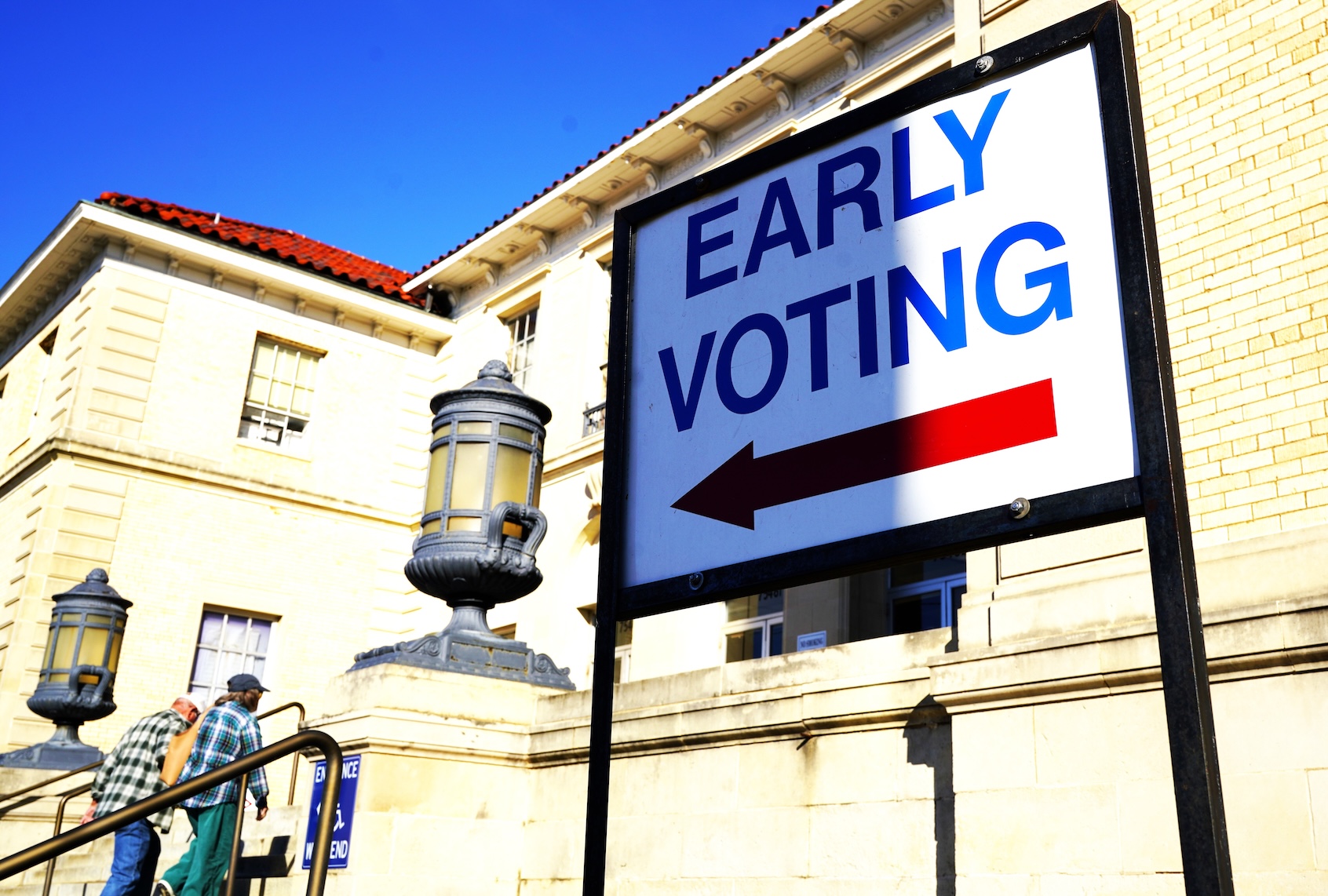
Ahead of Tuesday’s midterms, Democrats are biting their nails and enduring sleepless nights, wondering whether they will be forced to endure yet another election that has so often characterized the Trump era: close races that seem inevitably to go to the Republicans. All the fundamentals and polls indicate a possible blowout and a big one, but after watching Americans shockingly elect Donald Trump the first time, live through his Big Lie and witness his historic comeback only two years ago, no one can feel confident that this era of chaos, corruption and cruelty might finally be beginning its descent into the dustbin of history. We thought we were here before, and it didn’t end well.
There are reasons to be hopeful, though, even if you assume that the polls are underestimating Republican enthusiasm for their leaders once again. While there have been misses in the polling over this past decade, it hasn’t manifested in midterms as it has in the races with Trump on the ballot. In those years, the polling was pretty much on the money. Democrats have done very well in all the off-year and special elections this cycle, and although that’s no guarantee, it has to be considered a good sign.
The big difference this time is that Trump’s approval rating is hovering close to 30%, a lethal number, and he has presided over a high cost of living and a war of choice with Iran, both things he promised would never happen if he were president. The one election he lost in 2020 was the result of his mismanagement of the only crisis he faced, the Covid-19 pandemic, and this second term has solidified the impression among many voters who were inclined to give him the benefit of the doubt anyway, that he simply doesn’t know what he is doing.
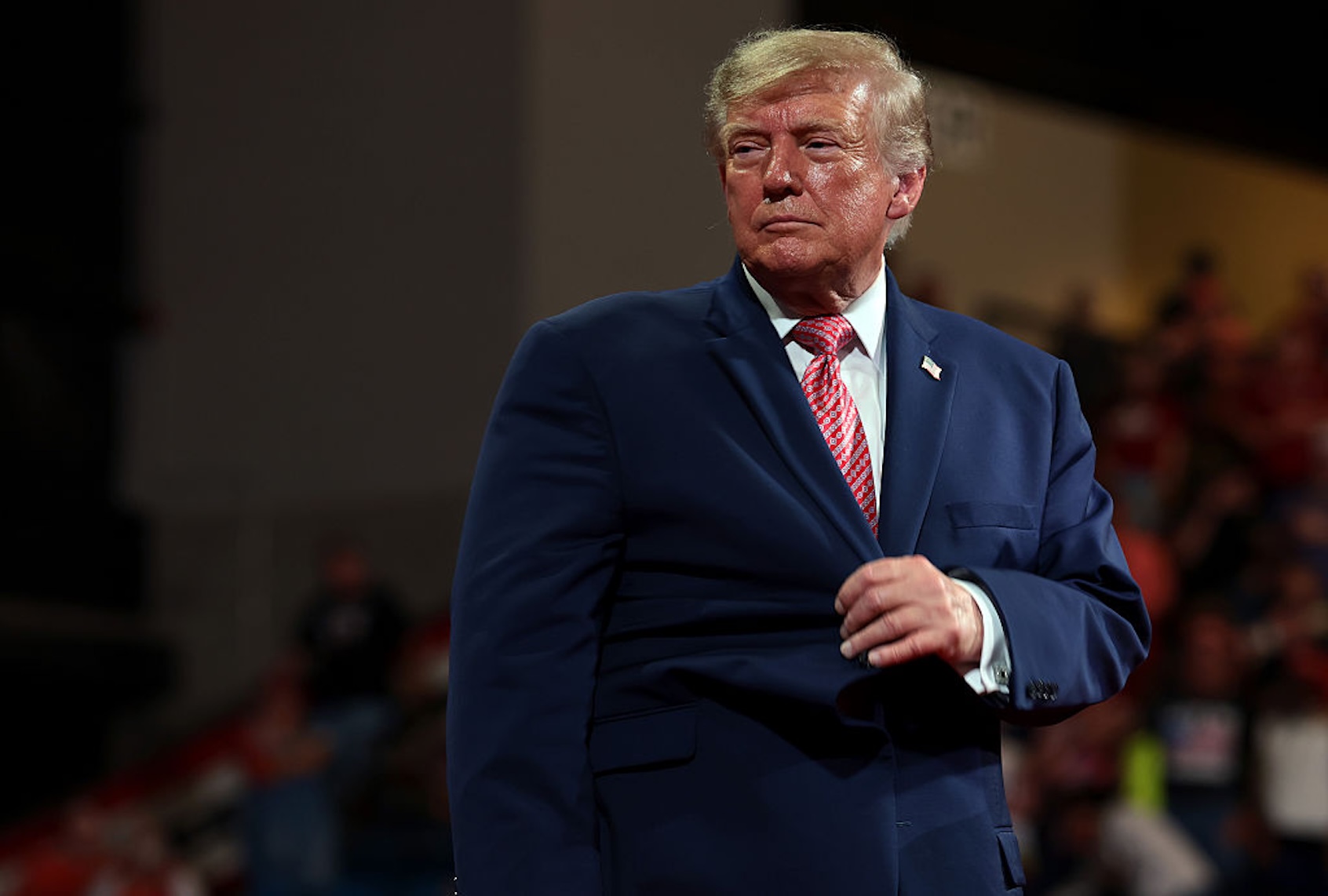
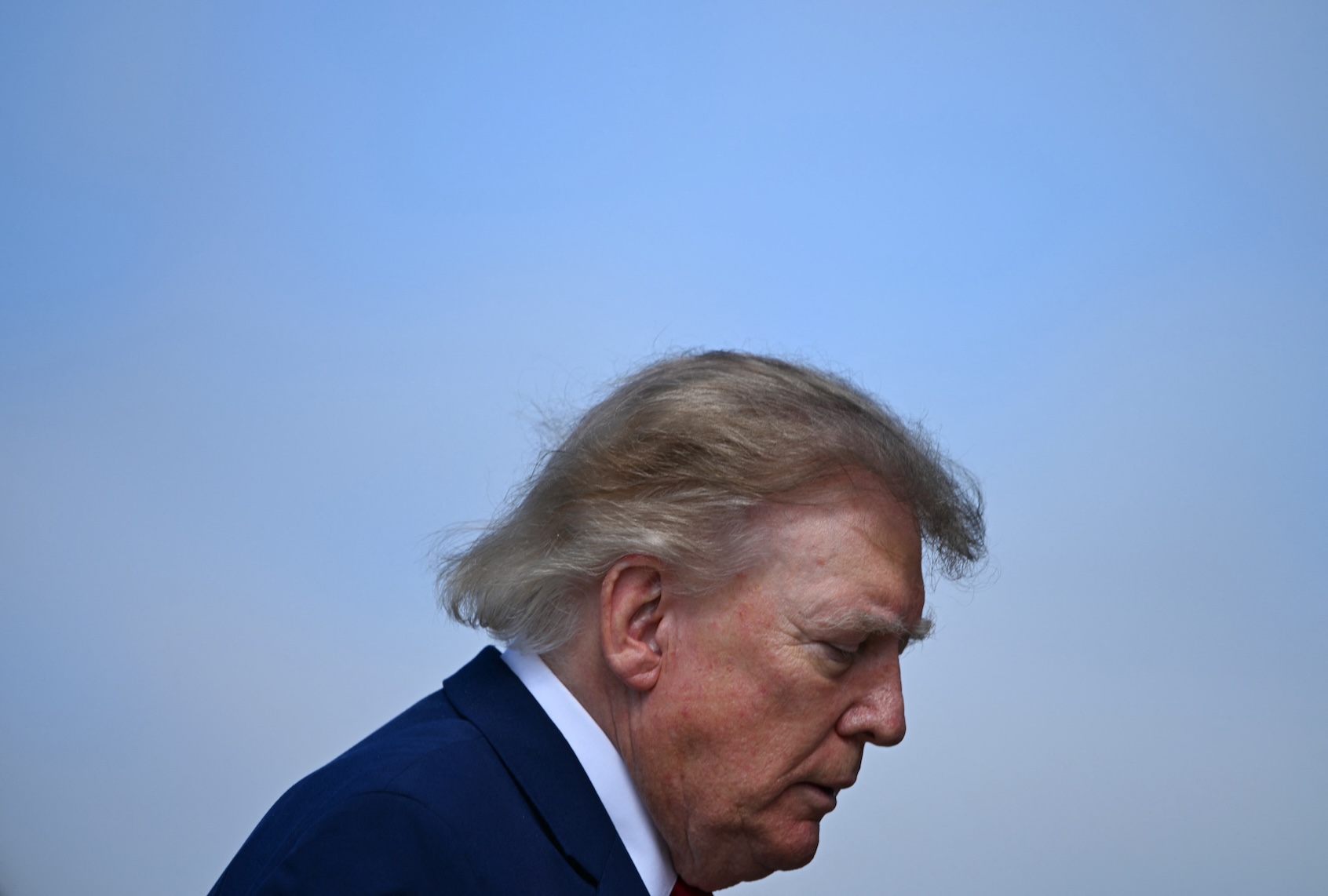
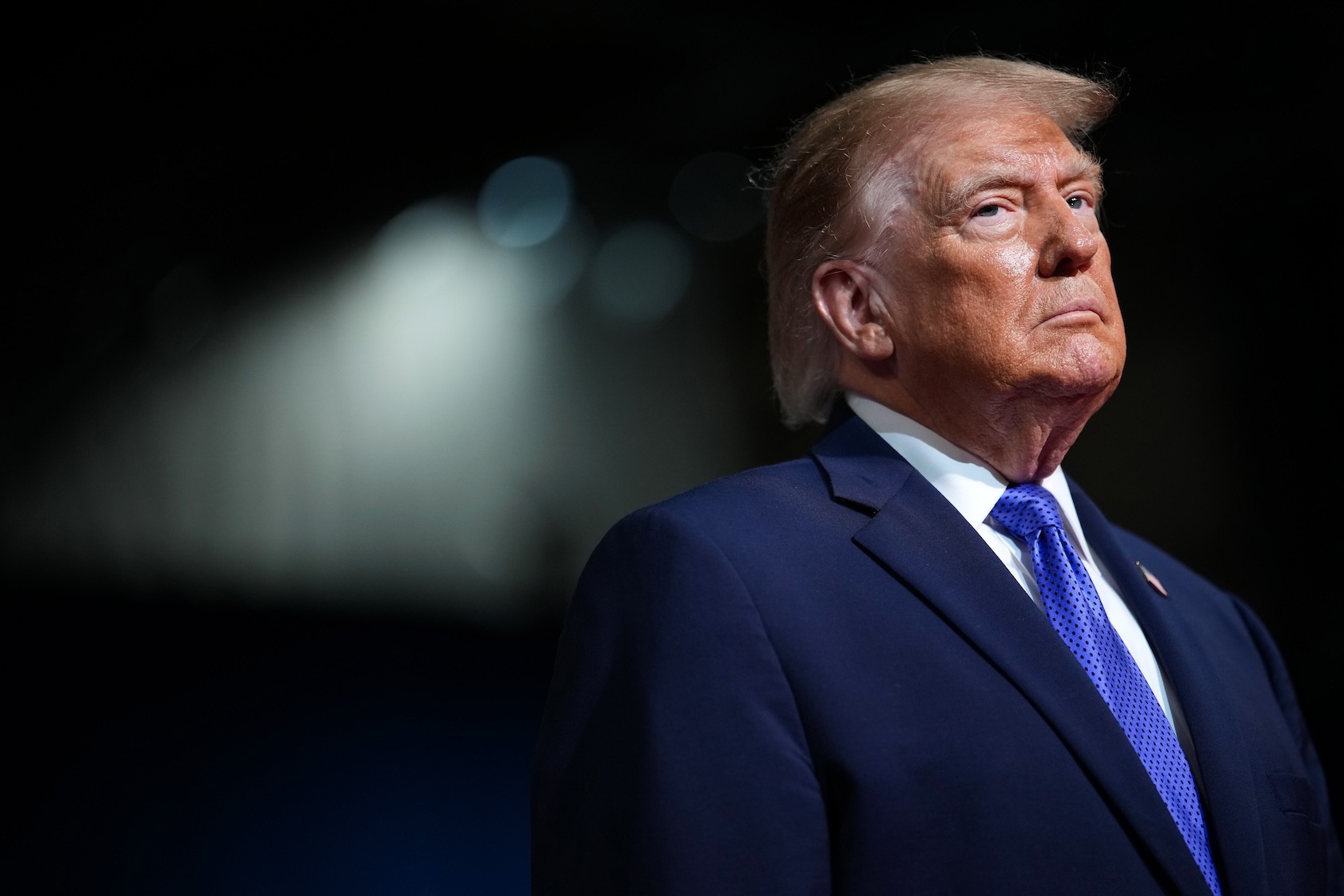
One sign that should give Democrats some real comfort in these last couple of days is Trump’s performance on the campaign trail. To say the 80-year-old has lost a step is an understatement. Sure, he barnstormed through all the battleground states and even attempted to shore up enthusiasm in places that should not need his presence to get out the vote. But his patented “weave” is unraveling at every stop.
Trump has taken to doubling down on the weirdness, going on about men’s bodies to a truly bizarre degree, being under the impression that because his trained rally goers will ritualistically cheer anything he says, this is a winning message. His recent comments warning people to stay away from Mar-a-Lago, his private Florida club, because they would be unable to afford the hamburgers could not be more in keeping with his apparent pursuit of Marie Antoinette’s legacy.
After years of ragging on Democrats for bringing celebrities on the campaign trail and bragging that he didn’t need any to help him fill up stadiums, the president has invited some to join him at campaign rallies — although one could scarcely call them A-listers.
But most embarrassing for the president is that he is no longer the singular star of the Trump show. As POLITICO reported, after years of ragging on Democrats for bringing celebrities on the campaign trail and bragging that he didn’t need any to help him fill up stadiums, the president has invited some to join him at campaign rallies — although one could scarcely call them A-listers. The cast leans heavily on older athletes, from retired NFL players to race car drivers, although Trump did manage to talk at least one genuine country music star, Jason Aldean, to join him in a rally held just a few miles from his home. Rapper Nicki Minaj has become a staple on the trail, and the president’s old friend Mike Tyson is often with him. Trump simply can’t carry the show by himself anymore.
This is the most expensive campaign in history, with Elon Musk alone spending more than $400 million in money he dug out of his couch cushions, but the total spending on both sides has reached upwards of $16 billion, the vast majority of it to benefit the Republicans. The fact is that it doesn’t appear to have done them much good. In fact, their spending is almost all coming from large donors like Musk, while their small donor base has shrunk considerably. That’s usually a sign of a lack of enthusiasm, and it doesn’t bode well for Tuesday’s results.
The election’s stakes are profound. America crossed the Rubicon in 2024 when it invited Trump back into power after he tried to overturn the election, was convicted of fraud, and was revealed to have possessed and leaked classified information after he was out of office. The media and the nation’s elites interpreted that victory as a sign that Trump was some sort of magical superhero, and that it was in all their interests to join with him and reap the rewards. The result has been nothing short of catastrophic, revealing gaping holes in our constitutional order, weaknesses in our democratic system and a void in our society where moral authority used to be. America has never been perfect, and it always falls short of its professed ideals, but this political era has stripped away the belief that we have any at all.
The corruption on display, coupled with a lack of concern for the lives of ordinary people, is breathtaking. And while it remains shocking that tens of millions of Americans still support this administration, it seems that a majority may have finally had the veil lifted from their eyes, allowing them to see the incompetence, grift and megalomania for what it is.
It’s hard to see how a nation founded on the ideas espoused in the Declaration of Independence can survive without even the pretense of ethics or universal values. At the moment, the American creed is simply “to the victor go the spoils,” by which Trump is not just imperiously referring to the foreign countries he seeks to colonize. He’s talking about America itself.
There can be no more questions about what the Republican Party is capable of, and as weak as he appears on the campaign trail, Trump is clearly frustrated and angry. Reporting suggests that he plans to double down on all of it the minute the election is over. If the American people somehow fail to forcefully repudiate Trump and the oligarchs who use and manipulate him, it’s unlikely we’ll get another chance.
More than 40% of people flagged by the Trump administration as suspected noncitizen voters in California aren’t on the state’s current voter rolls, according to a new analysis filed in federal court Saturday, raising fresh questions about the Justice Department‘s efforts to intervene in ballot counting days before the midterm elections.
Researchers with UCLA’s Voting Rights Project examined a list of 20,930 people identified by federal officials as potentially ineligible voters. They found that 8,880 names, or 42%, could not be matched to California’s current voter file.
The analysis also identified at least 22 people who appear to be U.S. citizens, with researchers warning that the number of citizens included on the list could be considerably higher.
The findings were submitted in litigation brought by the Coalition for Humane Immigrant Rights, which is challenging the administration’s efforts to use federal immigration data to identify suspected noncitizen voters.
🚨 CHIRLA & the UCLA Voting Rights Project have filed a federal lawsuit to defend voting rights ahead of the 2026 midterms.
The case seeks equal treatment under the Constitution for all U.S. citizens, regardless of birthplace.
No second-class citizens. No second-class votes.
The Justice Department demanded that California election officials separate ballots associated with the listed individuals and withhold them from counting until their citizenship can be verified. Federal prosecutors have also warned election officials of potential criminal consequences for knowingly processing ballots cast by noncitizens.
California officials rejected the demands, questioning the list’s reliability and warning that separating ballots could disrupt an election already underway.
On Friday, the 9th U.S. Circuit Court of Appeals rejected the administration’s emergency request to force California to set aside the disputed ballots. The court concluded that the government had not demonstrated that such extraordinary intervention was legally justified.
A federal district judge had previously rejected the request, warning that it could disenfranchise eligible voters and create chaos in the election system.
The Justice Department maintains that its efforts are intended to prevent illegal voting, which is prohibited in federal elections. The administration has defended its data and argued that counting ballots from ineligible voters would undermine legitimate votes.
But the new analysis raises questions about whether the government’s list accurately identifies people who are registered to vote, much less whether they are ineligible.
The dispute comes as millions of Californians have already cast ballots ahead of Tuesday’s midterm elections.
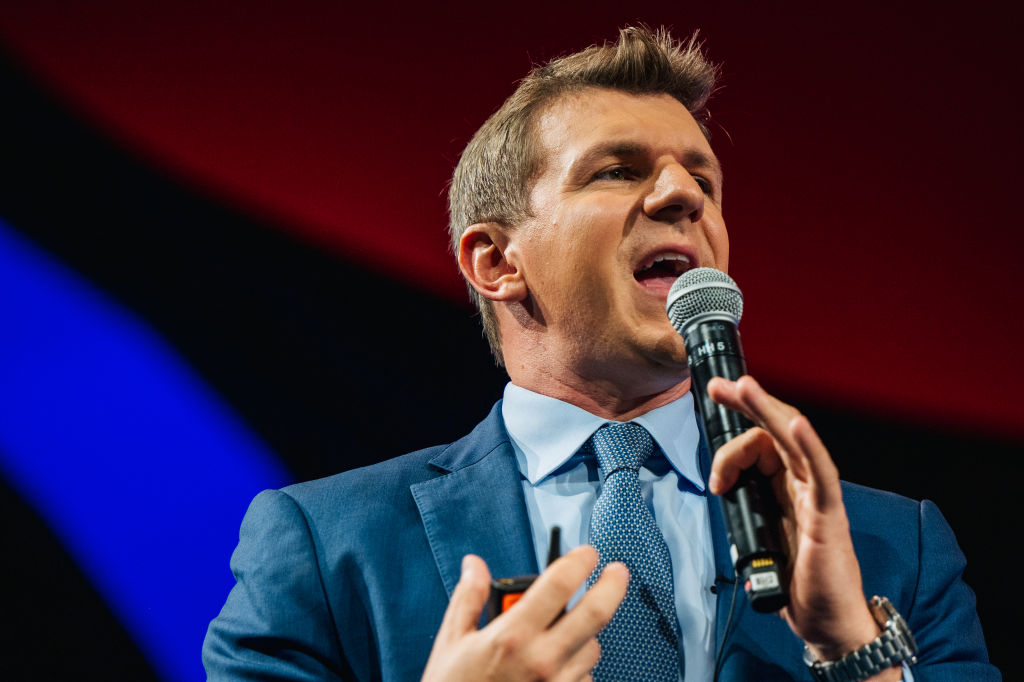
Conservative activist James O’Keefe set out to expose alleged vulnerabilities in Minnesota’s election system. Now, he faces felony charges stemming from the undercover operation.
O’Keefe, formerly of Project Veritas and current CEO of the O’Keefe Media Group, and conservative influencer Cameron Higby were charged Wednesday with unlawful voting and identity theft after allegedly impersonating registered voters at Minneapolis polling places during the state’s Aug. 11 primary.
According to Hennepin County prosecutors, the men wore disguises, used fake accents and provided election workers with the names of registered voters without their knowledge or permission. They filmed the encounters and later posted videos claiming to expose weaknesses in Minnesota’s voter registration procedures.
The operation targeted the state’s *vouching* system, which allows registered voters to verify the residency of people seeking to register on Election Day. The process requires sworn statements and identifying information from prospective voters.
Neither O’Keefe nor Higby cast a ballot or signed the required vouching oath. Prosecutors contend that misrepresenting their identities while beginning the voting process was itself unlawful.
O’Keefe defended the operation as investigative journalism, calling the prosecution an attack on First Amendment rights. Higby also denied breaking the law, saying the pair intended to expose election vulnerabilities.
The charges are the latest controversy involving O’Keefe’s undercover tactics. In 2017, reporters at the Washington Post caught him trying to sell them a false story. In 2009, he collaborated on hidden-camera investigations targeting Planned Parenthood and gained national attention for videos involving the community organization ACORN. He later settled a lawsuit brought by a former ACORN employee for $100,000 without admitting wrongdoing.
But Minnesota officials say the latest operation demonstrated something different from what O’Keefe intended.
Election workers noticed suspicious behavior and reported it, prompting an investigation. Hennepin County Attorney Mary Moriarty said the state’s system for identifying and responding to potential misconduct functioned as intended. This vouching process itself accounted for fewer than 0.6% of votes cast in Minnesota’s 2024 general election, according to state election officials.
O’Keefe and Higby are scheduled to appear in court Nov. 16. Neither has been convicted.
On Thursday night, the smear at the heart of the mysterious transgender mailers that have rocked the final weeks of the midterm elections in Texas completed its journey. What began as baseless social media whispers quickly ascended the ladder of conservative influence, jumped into mailboxes across the Lone Star State and ultimately into the comforting prime-time embrace of Fox News.
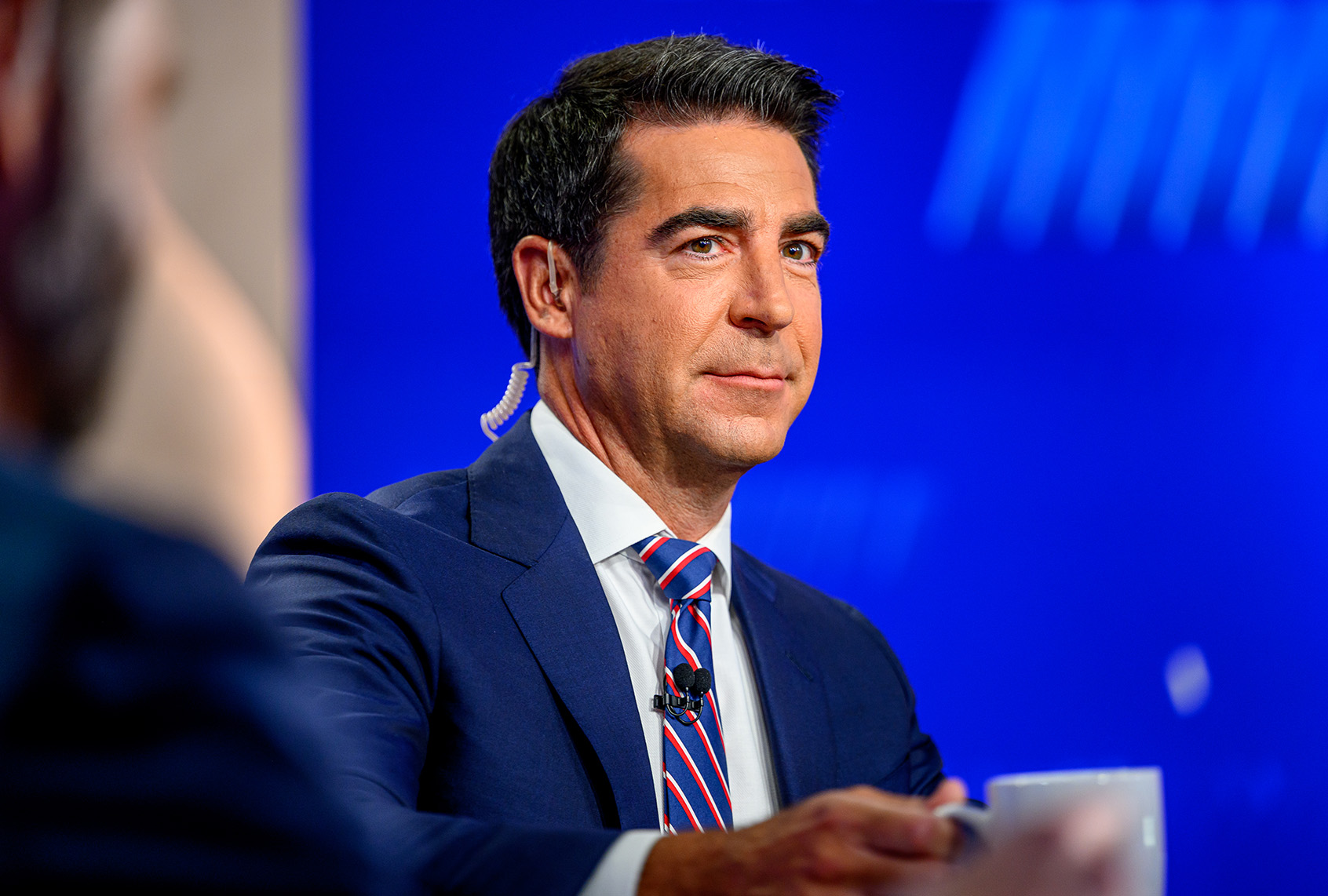
At a town hall in Fort Worth, a Texas mother of six named Rebekah Smith told Vice President JD Vance that her 11-year-old daughter had received a letter explaining how to transition without her parents ever knowing, and asked how Republicans would keep the government out of her family. “I don’t know who sent that letter to your child,” the vice president said, “but I think the person who sends a letter to an 11-year-old about gender transition, what I call that in my family is a pervert, and that person ought to go to prison.” Host Jesse Watters, never one to let a grievance go to waste, promised that Fox would investigate “this perverted letter.” Vance asked Smith to talk to his staff because he would “like the Department of Justice to investigate that” as well.
Watters rushed to promote the spectacle. “WHOA! Texas MOM tells JD Vance her DAUGHTER received a letter telling her TO TRANSITION TO A BOY,” he posted on X, followed by Vance’s promise. Missing from that framing was the question that should have governed the segment: Who actually sent the material?
Nobody on that stage mentioned that the pamphlet was a fake. Nobody mentioned that the real transgender advocacy group named inside it had disavowed the mailer. Nobody mentioned that sworn testimony filed that same week had tied the text messages that accompanied it to a national Republican organization. The vice president was asking federal prosecutors to chase a forgery that may well have originated in his own party’s orbit — and he was doing it on a network whose viewers had been marinating in that forgery for weeks.
The race between Republican Attorney General Ken Paxton and Democratic challenger James Talarico has become a crucible for dark-money maneuvers. As polls show the Republican grip on the Lone Star State slipping, conservative campaigns and their surrogates have resorted to increasingly desperate tactics. In early October, for example, Talarico took a brief hiatus from the campaign trail to recover from a severe case of the flu. Rather than accepting a routine human illness, the right-wing echo chamber treated a temporary absence as evidence of mental illness. Within days, the fabricated scandal has collapsed — yet the machinery of right-wing media simply pivoted to amplifying a more insidious operation designed to trigger visceral outrage.
This second October surprise involved millions of unsolicited text messages and a wave of physical mailers sent to Texas households with materials that directed readers to the website of the Transgender Education Network of
It does not need to survive scrutiny. It just needs to circulate upward.
Texas while inserting provocative advice on child emancipation that the real organization says it never authored or authorized. By flooding the electorate with extreme material disguised as progressive advocacy, right-wing operatives appear to have sought to create a fake controversy that could be weaponized in attack ads and campaign speeches. Vance, for instance, told the Fox News audience that Talarico has “a weird fascination with trans kids,” and that “he’ll probably defend the right of the person sending the letter, not the right of the parent who is rightfully creeped out by this.” Vance claimed that Talarico “has actually called it abusive when parents try to prevent their children from transitioning” and that Paxton “has fought hard to prosecute those people, whereas James Talarico has fought hard to protect those people.” Even the distortion had been laundered by then — Talarico called denying a child’s gender identity abusive, a different claim from saying parents must permit medical transition, but at the top of the ladder the difference no longer exists.
That is how a smear works in the closed ecosystem of the American right. It does not need to survive scrutiny. It just needs to circulate upward. An anonymous account posts it; an influencer adopts it; a donor-funded outlet reports the influencer’s outrage as news; an elected official demands an investigation, and the demand becomes proof the story matters; cable news books the controversy; a vice president promises federal action. Each rung launders the one below it. The correction, when it comes, travels in the opposite direction and arrives nowhere.
The paper trail looks like what you would expect from a covert operation. Texas Transgender Student Union LLC was formed in Wyoming on Sept. 2 through a commercial registered agent that helps owners stay anonymous. After CBS News Texas visited the agent’s address in Sheridan, Wyoming, the agent announced it was resigning. The mailers listed a Houston-area post office box. The Texas Observer reported that the barcode on the envelopes traced to a mail-tracking company that has taken federal campaign money from only one group this year, the National Republican Congressional Committee. The committee said it had nothing to do with the mailers, and the company would not say who paid. CBS News Texas reported that the bulk-mail permit belongs to an Illinois printer owned by the Zerrusen family, who have given heavily to Republican PACs and been photographed with Donald Trump.
When the real Transgender Education Network of Texas filed a petition in Travis County court to unmask the perpetrators behind the impersonation campaign, the partisan safety nets of the Texas judiciary eventually snapped into action. A deposition of Infobip, the messaging company that delivered the texts, which a Travis County judge ordered made public, indicated that the texts were sent on behalf of the Republican Women’s Caucus Fund and a man named John Braun. But on Friday, the Texas Supreme Court, composed entirely of judges appointed by Republican Governor Greg Abbott, issued an administrative stay that blocked its release. Chris Hilton, an attorney who previously served under Paxton, defended him during his impeachment trial and was later pushed out of office amid sexual harassment allegations, argued on behalf of the company that the mailers were not political speech because they named no candidate or party.
Dirty tricks are an old tradition of American politics. This cycle, Republican PACs in Nevada mailed a flyer calling a nonpartisan candidate, Danielle Ford, the “AOC of Nevada,” hoping voters would mistake her for the actual Democratic nominee, Aaron Ford. This week also brought word that the group that funded Cornel West’s 2024 ballot drives raised every dollar through a dark-money network bankrolled by Elon Musk.
The president’s party whines about decoy candidates in Alaska while running them at home. Ratf**king is a long and proud Republican tradition, and the Texas operation fits inside perfectly.
ALAMO, Tex. – Eustorgia Santos de Torres has lived here for four decades. Last year, she turned to a trusted Rio Grande Valley nonprofit for help navigating the citizenship application process. The same nonprofit — La Unión del Pueblo Entero, or LUPE — then helped her register to vote, and she cast her first ballot as a citizen in the primary election last March.
Santos de Torres, 67, is retired after years cleaning houses and working as a healthcare aide. She speaks mainly Spanish and is the primary caretaker for her husband, Nemorio, who is blind. “Yo soy sus ojos,” Santos de Torres said — I am his eyes.
But last month, Santos de Torres, a new voter, struggled to help Nemorio, an American-born citizen, understand and cast his mail ballot for the November election. All the information on the ballot is in English, she said, and the letters are small.
So Santos de Torres helped Nemorio to the car and made the familiar 7-minute drive to LUPE’s headquarters in the neighboring town of San Juan to ask for help with her husband’s ballot.
This time, though, LUPE workers reluctantly turned the couple away.
In 2021, Texas’ GOP-dominated state Legislature passed a sweeping and controversial overhaul of election laws known as SB1. Among other changes, SB1 made it illegal for anyone to receive compensation for helping voters fill in their ballots.
That not only makes it illegal for paid nonprofit staff to help voters, but also criminalized common past practices, such as organizations giving volunteers gas money or stipends. Violations are a felony punishable by up to 10 years in prison and a fine of up to $10,000.
In the wake of the law, Texas Attorney General Ken Paxton, a Republican currently running in the state’s nationally watched U.S. Senate race, investigated and prosecuted voting rights advocacy groups and organizers in heavily Latino communities across the state.
Groups such as LUPE say they have been forced to alter or stop some voter outreach as they worry about running afoul of the law. LUPE used to send workers out walking blocks to help voters. Now it has to instead ask volunteers to do more limited versions of that work.
LUPE is known for providing one-on-one assistance to people in the Latino community, so the restrictions on helping with voting are a real pain point for the organization, Executive Director Tania Chavez Camacho said. Texas has strict rules limiting who is eligible to use mail ballots, but people over 65 may do so. LUPE helps around 30,000 people a year, she said, including people with disabilities and many older people who, each year, “want to vote by mail and they come in wanting help.”
Now, Chavez Camacho said, when the group holds public town halls for residents to instruct them on how to vote, if a voter pulls out their mail ballot to ask for help, organizers must ask the voter to leave so paid employees aren’t near the ballot.
And if workers for LUPE’s advocacy arm are canvassing for candidates and a voter shows them a mail ballot and asks for help filling it out, workers have been trained to say they can’t and walk away, Chavez Camacho said.
“We literally have to turn them away,” Chavez Camacho said. “We’ve had to do a lot of training with our staff for the past three years because they were so accustomed to helping folks one-on-one and now they can’t.”
Santos de Torres did what she could to help her husband, who mailed back his ballot about a month ago.
“But I don’t think it’s right that LUPE can’t help us,” she told a reporter in Spanish. “That law is not right. It’s excluding people who need help.”
“What if,” she added, “my husband didn’t have me?”
‘A person who doesn’t know how to read has to do it on their own’
The Rio Grande Valley, where LUPE is based, covers roughly 4,300-square-miles across Hidalgo, Cameron, Starr, and Willacy counties along the Mexico border at Texas’ southern tip. It’s a diverse community with some residents who primarily speak Spanish. Younger generations of residents easily switch between English and Spanish in conversation.
Many households are made up of families whose members have mixed legal statuses, including some who have lived in the area for generations. The Valley also has a history of activism as the birthplace of the Texas farmworker movement of the 1960’s. Farmworkers – who harvested cotton, vegetables and fruits — organized and marched for roughly 400 miles from the Valley to Austin to demand fair wages and better working conditions. Mexican-American farmworker labor today remains key to the area’s growth and agricultural economy.
But due to the lack of affordable housing, Mexican Americans for years purchased land they could afford in rural areas outside of city limits, often lacking basic infrastructure and public services. Those communities are known now as the colonias.
Alamo, where Santos de Torres lives, and San Juan, where LUPE is based, are neighboring cities. The landscape varies depending on the side of town. In the southern parts of the cities, closer to the border with Mexico, modest residential homes with green front lawns adorn along palm tree-lined streets. Shopping centers, chain restaurants, stadiums, and commercial developments lie to the north of the cities, along Interstate Highway 2, reflecting the transition from the once primarily agricultural community to a growing metropolitan hub. The Valley has for years relied on its trade of goods and services with Mexico. It has a population of more than 1.4 million people and 90% of them are Hispanic or Latino, according to Census data.
About 24% of people in the Valley live below the poverty line, which is more than double the national rate. And about 30% of Valley residents don’t have health insurance – one of the highest uninsured rates in the country. The area also has one of the highest rates of diabetes in the country; Nemorio Torres’ blindness is a complication of the disease.
LUPE and other advocacy groups have long worked with residents in the colonias and all over the Valley, providing resources to find affordable housing and medical treatment, or helping with complex procedures such as filing taxes. Voter education and outreach was part of the mission.
Now, instead of providing one-on-one assistance, LUPE hosts group sessions with a screen projector showing what mail ballot applications and mail ballots look like. Facilitators point at the screen indicating what the instructions say and explaining how the forms should be filled out.
The limitations are frustrating, Chavez Camacho said, especially “si una persona no sabe leer” — if a person can’t read. “It doesn’t matter that we’re doing those sessions because a person who doesn’t know how to read has to do it on their own and we can’t help them to know where to mark,” she said.
Instead, LUPE’s workers and volunteers now focus on letting people know key deadlines are coming up. They also have fewer volunteers willing to guide and interpret for voters at the polls, she said, because the law now requires such people to sign an oath affirming the voter is qualified to receive help because they are disabled or need an interpreter, and detail their relationship with the voter. They must also affirm they are not being paid by a candidate or political committee, which would be illegal. Volunteers fear any misstep while assisting voters could get them in trouble, Chavez-Camacho said.
“We really feel that the people are not getting the support they need,” Chavez Camacho said.
Election and voting law experts say the courts have interpreted “compensation” prohibited from going to volunteers by SB1 as any type of benefit. That interpretation is so broad that it makes it difficult for voter outreach organizations to know whether they are violating the law, said Zachary Dolling, litigation director at Texas Civil Rights Project, which works with groups to design trainings in voter outreach that comply with the law.
Dolling said some organizations historically provided unpaid volunteers dinner, T-shirts, or pens, and others have given volunteers college credit for their work.
“All of those things are items of value” and could be considered compensation, he said.
Advocates warned state leaders of added burdens for people with disabilities
Texas Republicans passed SB1, the sweeping overhaul of election law, in part responding to false claims and conspiracy theories about the 2020 election.
Republicans claimed the law would increase public trust and confidence in the elections. Democrats argued the legislation would disproportionately burden voters of color and people with disabilities, and staged two walkouts and a 15-hour Senate filibuster in their failed attempt to defeat the bill.
Despite lawsuits from voting rights organizations including LUPE, the League of United Latin American Citizens and organizations representing Texans with disabilities, a federal appeals court ultimately upheld key provisions of SB1, including the restrictions on voter assistance.
Other attempts to expand voting help for people with disabilities were meanwhile unsuccessful.
In 2023, Gov. Greg Abbott, a Republican, vetoed a bipartisan bill that would have expanded vote-by-mail access for people with disabilities — specifically people who are blind or paralyzed and need assistance marking their ballot — by allowing such voters to request an electronic ballot and use a computer to mark their choices. Similar options in Texas are already available for military overseas voters and astronauts, but not for voterswith disabilities.
The challenges Santos de Torres and her husband have faced are an example of what advocates worried about under SB1, said Lydia Nunez Landry, statewide coordinator for REV UP Texas, which works to get out the vote among people with disabilities.
“That was our worst fear and now it’s happening,” she said. Nunez Landry has muscular dystrophy, uses a power wheelchair, and needs help doing basic tasks such as opening the refrigerator.
The state has made voting “just so impossible and so arduous for people — and now people are also terrified of helping us,” she said.
An increased ‘sense of anxiety’
Groups across the state have been changing their voter outreach work to comply with SB1.
Asian Texans for Justice conducts voter outreach in Asian communities, focusing on San Antonio, Houston, Austin, and North Texas.
The stricter rules associated with voting by mail under SB1 have created “a sense of anxiety” in those communities, Executive Director Nabila Mansoor said. She said that the process is now much more complicated for elderly voters, who must provide one of two forms of ID on their application and pay close attention to pages of instructions that are written in font that is small and hard for them to read. In addition, an error could force them to restart the whole process of applying for a ballot.
“That anxiety comes from this kind of fear that they’re going to do something wrong,” Mansoor said. “Whenever you have that kind of fear, it is one more barrier for that person to actually go out and vote.”
Now that Asian Texans for Justice can no longer provide one-on-one help, they’ve turned to providing checklists for voters, she said, which she believes is less effective when some voters may need help reading and understanding the ballot and instructions
Mansoor said she believes that SB1’s goal was to make it harder for people to vote.
“It means that we have to be more careful. It means that we have to dot our i’s and cross our t’s. It means that we have to take good records. It means that we have to be very thorough in terms of our training of our volunteers,” she said, adding that the organization assembled a legal team to defend against challenges to their work as well.
In the meantime, volunteers for LUPE and other groups say they are doing their best to fill the gap.
Maria Gomez, better known as Doña Mary, of Pharr, worked as a farmworker for years in Hidalgo County and has been a member of LUPE since the organization was founded. Gomez, 78, was involved in the farmworker movement years ago. She now ensures her elderly friends and neighbors are aware of election deadlines, know where to vote, and have a ride to the polls if they need one.
After she drops off her grandkids and great-grandkids at school, she makes her rounds around the Colonias in San Juan in her small red SUV. She chats up her neighbors, and asks them what they need help with or if they need resources or a ride. She’s always fielding calls.
“People don’t vote because sometimes they can’t leave their home and because they might not have access to that piece of paper that they need to sign to receive their ballot,” Gomez said in Spanish, referring to voter registration forms and ballot-by-mail applications.
One of her friends, 80-year-old Teresa Corona Garza of San Juan, has relied on Gomez for rides to the polls for some time now. Corona Garza struggles to stand for long periods of time and can’t see very well out of her left eye. Even though she qualifies to vote by mail, she prefers to go to the polls in person.
“There’s so much on there you have to fill out, and those letters are small,” Corona Garza said in Spanish. “No, I prefer to go, quiero ver que mi voto cuenta,” she said – I want to see that my vote is counted.
The laws have gotten so complicated and strict that Gomez worries state leaders may even try to prevent volunteers like her from providing rides to the polls.
“I don’t know what’s going to happen, if they’re going to keep making this harder for people,” she said, “but I would like to see people who want to vote to be able to do it.”
Natalia Contreras covers election administration and voting access for Votebeat in partnership with the Texas Tribune. Natalia is based in Corpus Christi. Contact her at ncontreras@votebeat.org.
Votebeat is a nonprofit news organization covering local election integrity and voting access. Sign up for their newsletters here.
Republicans are shaking in their boots about the upcoming midterm elections, according to numerous reports. In a Wednesday episode of his podcast, Sen. Ted Cruz, R-Texas, said his home state “is excruciatingly close,” adding that “we could lose Texas. Let me repeat that: We could lose Texas. And by the way, not just the Senate race. We could lose every single statewide race in Texas. That’s how close these numbers are.”
According to Politico, House Republicans aren’t quietly discussing whether or not they’ll lose their majority, but are counting how many seats. “It could be quite a brutal evening,” a senior Republican told the outlet. The mood at the White House is “grim,” the New York Times reported as advisers close to the White House anticipate at least losing the House, if not the Senate.
That’s seemingly why the world’s richest man, Elon Musk, has dumped nearly half $1 billion into the race, mostly into his own America PAC. The PAC’s spending has focused overwhelmingly in Texas with approximately $48 million, followed by Michigan and Ohio around $9 million and Iowa at $4 million. According to CNN, Musk’s spending streak “makes him the single, largest disclosed donor in modern American politics and one of the Republican Party’s largest-ever benefactors.”
But some people are already looking beyond next Tuesday to see how President Donald Trump may react, and not just by challenging the results, which is more than expected and arguably already being attempted. But the president’s legal options are limited, so even if he does try to seize voting machines, declares a national emergency, or otherwise wedges the federal government into the electoral process, there’s a chance it could fail. Jonathan Diaz, director of voting advocacy and partnerships at the Campaign Legal Center, told Forbes that the president can “certainly try” to intervene, but there “just isn’t a lot that he can actually do.”
Still, most analysts anticipate that the president will turn the dial up on his dual wars, the trade wars with America’s partners and the Iran war Trump started alongside Israel in late February 2026. The Pentagon is slowly building up its military presence in the Middle East, including drawing up plans to strike Iran’s nuclear facilities, energy infrastructure and missile and drone stockpile.
“It might be difficult for Democrats in Congress to restrain Trump from a course of action which he is strongly committed to, but they can still raise the political costs associated with plowing ahead,” Andrew Gawthorpe, a senior research fellow in the Foreign Police Centre, told The Independent. “Facing a hostile Congress, Trump might become even more willing to simply ignore domestic opposition and plow ahead with controversial and unpopular policies, as he did by attacking Iran or threatening to annex Greenland.”
Laugh or cry, we’ll be here all week. Try the veal.
I wonder what a Todd Blanche outfit looks like? The image of Frankenstein’s monster, for some reason, sticks in my mind.
It’s time to sit back, relax and enjoy the elections — a midterm extravaganza featuring two flailing political parties jockeying for supremacy in a nation full of educated young adults working as cabbies and delivery drivers who aspire to be “influencers” while their parents wonder how in the name of God they’ll be able to afford retirement.
To be able to handle that good news, maybe you can channel your inner Hunter S. Thompson, without resorting to dropping a couple of hits of acid or snorting lines of cocaine in Studio 54 while Donald Trump ogles the dancers in tight pants, female and male alike.
Then again, you might need a tall glass of Wild Turkey 101 on ice (Thompson’s favorite) when you hear Trump say that Democratic U.S. Senate candidate Mary Peltola should be prosecuted because there are two Dan Sullivans running for office in Alaska, or declares that the country “would be gone” if he hadn’t won the presidency two years ago.
Everything old is new again. At any rate, we’ve seen this carnival roadshow before, though it seems a bit different this time. Trump has less energy as he flails about dancing to the Village People. He plays before smaller crowds every week. He seems to be on stage only to get laughs. “Am I right?” he whispered hoarsely with a big grin last Saturday night in Georgia, after mocking Democrats one more time. He apologized for his raspy voice and kept going with the low-energy insult comedy. His small crowd chortled and ate it up.
In the last week on the campaign trail, Trump has appeared at a livestock arena, a school gymnasium, a hockey rink and, on Thursday in Rock Hill, South Carolina, at a venue that holds just 1,200 people. He doesn’t seem to care. He’s on autopilot. The war in Iran? He’s got nothing. The war in Ukraine? Nothing. Corruption, immigration, AI (sorry, never “SI”), the economy and any other real-world issue? He’s either got nothing, or it’s all nonsense we’ve heard before: The Democrats, Joe and Kamala, and marauding bands of violent dark-skinned immigrants and communists are to blame. As for the economy, he tells us he’s doing great and making billions. We should all be happy.
In the last week on the campaign trail, Trump has appeared at a livestock arena, a school gymnasium, a hockey rink and, on Thursday in Rock Hill, South Carolina, at a venue that holds just 1,200 people. He doesn’t seem to care. He’s on autopilot.
Forget it. He’s done with campaigning, quite literally. The White House confirmed Thursday that two campaign stops planned for Kansas and Iowa this weekend have been canceled. What happens next is what we need to watch. It must be the season of the witch. Or as Thompson himself told us, “When the going gets weird, the weird turn pro.”
Thompson was covering Richard Nixon when he penned that epigram, but it is equally applicable to covering the surreal spectacle of vampires, zombies, ghouls and degenerates awkwardly shuffling across the MAGA landscape. It certainly should be a factor in understanding what Trump does on Nov. 4 and afterward. Ask anyone, Republican or Democrat, and they’ll all say the same thing: Whatever happens is likely to be simultaneously annoying and frightening.
Trump has already filed suit against Alaska’s election results, even though the election has yet to occur. In Missouri, the GOP lost three times trying to gerrymander districts in a case that went to the Supreme Court, all in hopes of gaining one seat in the House. That move may have backfired big time. Not only did Republicans fail to gain a guaranteed seat, but in Missouri’s Second District Democrat Fred Wellman is poised to pull off a miracle against Republican incumbent Rep. Ann Wagner (albeit with little support from party leaders in D.C.). Trump appears ready to file suit there as well. Some insiders say he might try to sue in every state where an incumbent Republican loses. Check your favorite gambling app for the over/under on that.
At the same time, there’s a constant susurrus from Trump about “voter fraud” that surfaces wherever his candidates look to be failing. There are rumors of National Guard and ICE officers roaming the countryside on Election Day hunting and bagging anyone with a good tan who speaks something other than English. Long voting lines and randomly closed precincts are a given. A general feeling of chaos among the electorate, whipped into a frenzy by the president himself, is expected. There’s still stray talk about invoking the Insurrection Act and declaring martial law. What’s the over/under on that move?
I’m actually tired of the talk. We all know Trump will not go gentle into that good night. If the GOP loses control of Congress, his administration will likely see more people convicted and jailed than Nixon’s during the Watergate weirdness that made Thompson “turn pro.”
On the other side of the aisle, the aging Democratic leadership looks as lost and confused as Trump. Some in the party want to remain silent, cross their fingers and hope for the best, fearful of Democratic infighting and hopeful that Trump is really on his last legs. Others want to defeat Trump then turn on the “establishment” Democrats.
I don’t want to listen to this from either side. After covering Trump for 10 years, he reminds me of my children during their pre-pubescence, always cocksure, arrogant and wrong. My children grew up to be adults. Trump never has. The same can be said for some of the more argumentative Democrats.
The Democrats, as is often the case, lack focus and leadership at the national level. The headless horsemen run amok, trying to scream “The Trumps are coming!” while fighting with each other, even before they hold any power. It does not exactly inspire confidence. Younger voters find each party equally repellent, and for good reason. If Democrats win a majority in the House, as nearly everyone expects, and the Senate, as a growing number of Democrats have the audacity to hope, how long will it be before they slice each other’s throats over their marginal political differences while what remains of the GOP looks on with glee?
Still, the Republican Party at this point looks like a horde of zombies led by Art the Clown. To extend the horror-movie metaphors even further, Trump is such a crude cartoon character that if he isn’t the Terrifier then maybe he’s Pinhead from “Hellraiser.”
For lazy reporters, or those who’ve never covered another president, Trump makes the job easy. He doesn’t hold news conferences. He has no policies. There are no long meetings with press secretaries. Come to think of it, there’s no press secretary.
But our president can still generate media attention, even as his crowds continue to diminish. He may soon be reduced to appearing before middle school PTA meetings across the South, but he’ll still be on TV. As one of the younger members of the White House Correspondents’ Association recently said, in all earnestness, “We’ll miss him when he’s gone.” Some reporters even find his insults of the press amusing. I don’t agree, but I admit that my experience is limited to the Ronald Reagan presidency — and every one since then.
Some of us were here before Trump, and will still be here when he’s gone. For lazy reporters, or those who’ve never covered another president, Trump makes the job easy. He doesn’t hold real news conferences. He has no policies. We don’t have directives to read or position papers to study. There are no long meetings with press secretaries. Come to think of it, there’s no press secretary. Covering Trump is easier than covering a traffic accident, and twice as gory. That’s how he governs.
It’s obvious to even the most casual political observer that Trump’s campaign tactics are the signs of a desperate man with dwindling influence. After he lost control of Congress in the 2018 midterms, he purged his staff and yanked press passes from reporters. Some senior officials quit. Expect a repeat of all that, beginning next week. Only now most of my colleagues in the press pool will wag their tails and bark a bit before waiting for a presidential treat.
Secretary of Defense Pete Hegseth, unless he gets appointed as a senator from Tennessee, is most assuredly a goner. Even the Republicans in Congress dislike him, and Trump, who never accepts responsibility for anything, still needs a scapegoat for the war in Iran — the one he has claimed is over on more than a dozen occasions.
While Speaker of the House Mike Johnson says he’ll do his job and seat every Democrat who wins in the midterms, Trump is eagerly searching for ways to stop that from happening. Some believe he’ll try to stage another insurrection, while others believe he’ll let government funding run out and spend the rest of his presidency presiding over a government shutdown, in effect dissolving Congress.
Whatever he does won’t work. His recent public appearances add up to a tell on how badly he will fail. High school basketball teams in Kentucky are filling gymnasiums better than this president.
White House pool reports from Trump’s campaign stops no longer mention the venue capacity or attendance, but the empty seats in those modest arenas and his listless rhetoric, combined with ever-louder outbursts from protesters, are evidence enough that this guy isn’t what he once was.
While Speaker of the House Mike Johnson says he’ll do his job and seat every Democrat who wins in the midterms, Trump is eagerly searching for ways to stop that from happening.
Whether he’s complimenting another man’s (or woman’s) behind, berating reporters or making deals with Russia while screwing over former allies, his raging incompetence is still center stage at these increasingly feeble campaign events. We still can’t look away.
I recently watched a documentary about the fall of the Bronze Age civilizations. It was an era of climate change, supply chain collapse, earthquakes, famine, disease, migration, drought and armed incursions and invasions. Stop me if you’ve heard any of that before.
What worries one of the archaeologists in the documentary and causes him to lose sleep is how similar our world is to that one.
We are ripe for catastrophe, and poor leadership exacerbates the problems we currently face. “How resilient will we be? How will we get back up?” the documentary asks. Those are excellent questions to ask now.
After the midterm elections are settled, we may learn some answers. If Hunter S. Thompson was right, maybe there’s some hope. After all, I’ve never seen politics any weirder than this.
Trump looks done, in ways I’ve never seen him look done before. I’ve seen him stumble, fall and constantly deflect reality. He’s always managed to survive those stumbles. Not now. The cancellations, his delusional ramblings, his anger and increasing desperation, the smaller crowds, the raspy voice combined with the collective shoulder-shrug I see from even his closest allies — countered by the quiet optimism of the Democrats and their muted sniping at each other — have created a stew of weirdness that Thompson might find eclipses the waning days of the Nixon administration.
All this leaves us pondering two questions: How far will Trump go to challenge the outcome of the midterms, and what will the Democrats do with power if they get it?
Trump’s waning influence may ultimately be the deciding factor in both questions.
If I’m wrong, I’ll admit it. But if the Democrats win both houses of Congress, I don’t think Trump will do much of anything after the midterms. He will make lots of threats. But he has to deal with the zombies in his administration and all the fires they have started: wars, battles with immigrants, court cases, affordability issues, the economy, personal corruption, racism, misogyny, the destruction of healthcare and education and the existential problems brought about by ignoring climate change. That’s too much for almost any leader, and way above his level. For the next two years, we’re likely to see Trump in the White House on Tuesdays and Wednesdays and in Bedminster or Mar-a-Lago the rest of the week, somewhere on the back nine.
Meanwhile, we teeter on the brink, and any one of those issues I just mentioned could push us over the edge. During the Bronze Age, a natural climate disaster led to the decline of the culture. Today we can do that ourselves.
The week ahead will be challenging week, no matter what happens. I need to channel my inner Morgan Freeman, from the film “Se7en”: “Ernest Hemingway once wrote, ‘The world is a fine place and worth fighting for.’ I agree with the second part.”
Jon Husted has a problem: People can’t seem to remember who he is. The former lieutenant governor of Ohio was appointed to be the state’s junior U.S. senator in 2025, after JD Vance became vice president. But Husted hasn’t much of an impression on the Buckeye State’s residents. In an August poll conducted by Emerson College, nearly four in 10 Ohio voters answered “unsure/never heard of” when asked their opinion of the Republican incumbent. Only 14% answered the same regarding his Democratic opponent, former Sen. Sherrod Brown. In fact, one in four voters in a Bowling Green State University poll even mistakenly identified Brown, a popular veteran of Ohio politics, as the incumbent. (In fact, Brown lost his seat to Ohio’s other Republican senator, Bernie Moreno, in 2024.)
The Husted campaign has tried to spin his forgettability as an asset, hoping to trick voters into thinking of Brown as a failed incumbent, but it doesn’t seem to be working. Brown is pulling ahead in the most recent polls, riding a larger national turn away from the GOP. So Republicans turned to the one person who knows how to get a headline: Donald Trump.
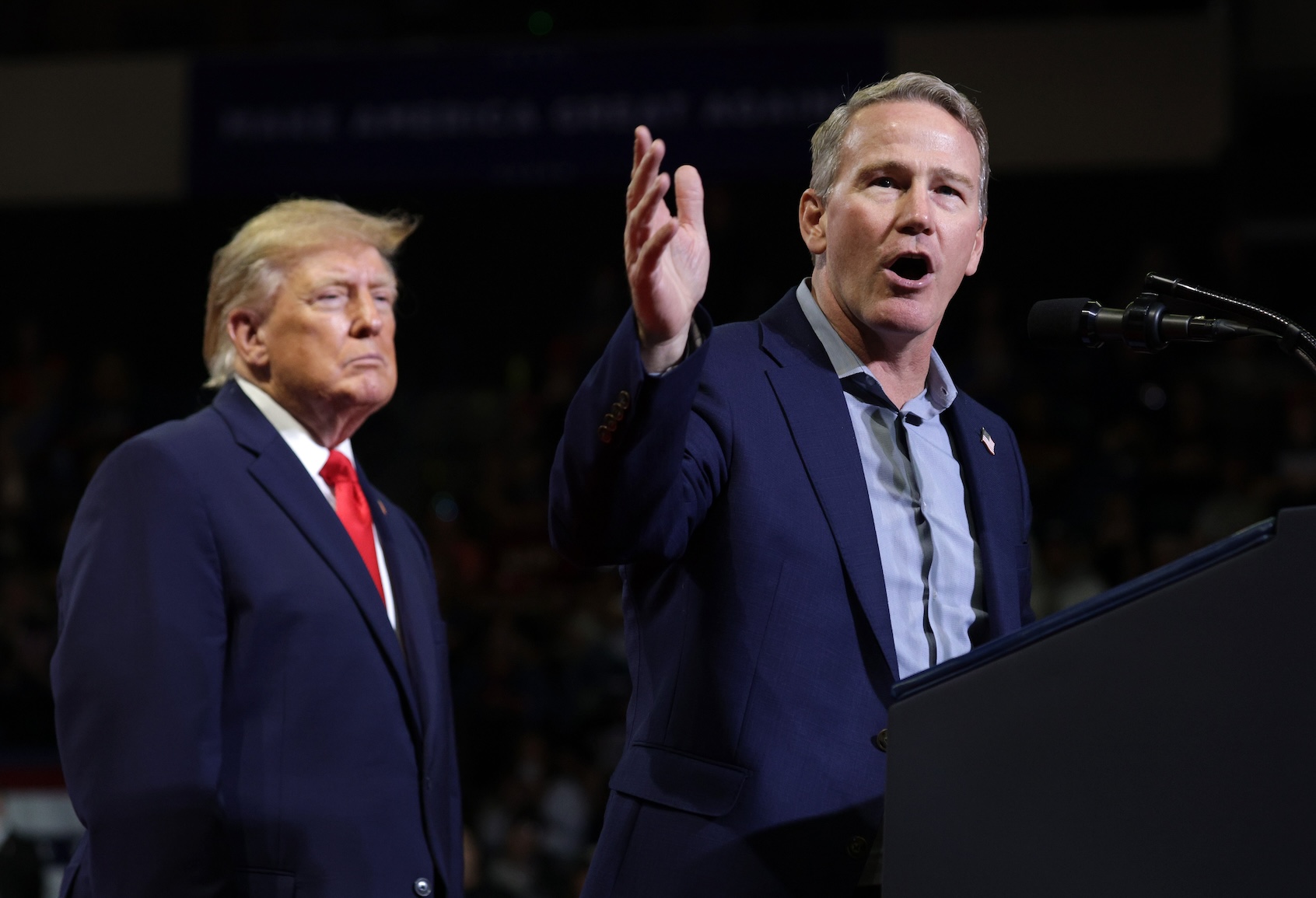
Bringing the president to campaign in Ohio has certainly helped to boost Husted’s name recognition, but at a painful cost. Now Husted has become the single most famous male victim of Trump’s relentless appetite for sexual harassment.
The president’s public ogling of Husted started at a Youngstown rally on Oct. 12, when Trump delivered a monologue about how he’d “started examining [Husted’s] body” and had seen big hands and shoulders. Then he said the word “ass.” This caused a reaction of shock and laughter reaction in the crowd and also generated a lot of media attention. So Trump, like a narcissistic rat pushing the “applause” button, turned it into a running joke. At nearly every rally now, whether in Ohio or somewhere else, Trump raves about the 59-year-old Husted’s reputedly spectacular and muscular backside.
Trump is famously a lifelong heterosexual, so many in the media and on the left are confused. They assume that latent homoerotic yearnings are burbling up, perhaps from the disinhibition that can occur among people who take regular tests for dementia, as does our president. But that’s unlikely, and not just because Husted actually possesses the softer derrière typical of a man his age. If genuine same-sex desire was behind Trump’s leering, the overtly homophobic crowds who populate MAGA rallies would be highly uncomfortable.
Bringing Trump to campaign in Ohio has certainly boost Husted’s name recognition, but at a painful cost. Now he’s the single most famous male victim of Trump’s relentless appetite for sexual harassment.
Instead, as videos show, they scream with the same laughter they produce when Trump goes on a racist tirade, encourages audience members to commit acts of violence or otherwise showcases his affinity for childish bullying, which remains his main and often sole selling point to his base. It’s a large-scale version of the infamous “Access Hollywood” tape, where Trump tried to impress the show’s host, Billy Bush, with braggadocious claims that he can grab women’s genitals and they have to put up with it.
The MAGA crowd may not favor the term “sexual harassment,” but they get that’s what Trump is doing to Husted. He did the same bit with Nicki Minaj, making the rapper-turned-MAGA shill stand up and show off her backside to the crowd at a Michigan rally. As feminists like to remind folks, sexual harassment is about demonstrating power, not lust. Husted is far from the only man Trump ever catcalls. As the New York Times notes, Trump loves making a spectacle out of men’s looks, for the approval of hooting MAGA audiences who get a vicarious thrill from watching Trump say inappropriate things to fellow Republicans, who have no choice but to grin and pretend they enjoy it. It’s a continuation of the other ways Trump displays his dominance over Republicans with fancy job titles, such as senators and Cabinet officials, by expecting them to flatter him grotesquely on camera or to wear ill-fitting shoes he has “gifted” them.
None of this should make us feel any sympathy for Husted or other Republicans, who could at any point grow an actual spine and reject Trump’s abuse. These people grovel for their failing leader in the vain hope that some of his celebrity stardust will rub off on them and boost their political ambitions. Husted is a classic example of the problem now facing Republicans. Like most in his party, he has nothing to offer voters, unless they’re hyper-rich capitalists seeking deregulation or massive tax cuts. He has no discernible charisma of his own, either. So all that’s left is leeching onto Trump and hoping his ability to speak to the lizard-brain impulses of bigots will rally enough voters to drag Husted’s empty pair of pants (and his mediocre ass) across the finish line.
Like most in his party, Husted has nothing to offer voters, unless they’re hyper-rich capitalists seeking deregulation or tax cuts, and no discernible charisma. All that’s left is leeching onto Trump and hoping his ability to speak to the lizard-brain impulses of bigots can drag Husted’s empty pants across the line.
What’s funny about all this is that Husted’s blandness is likely what landed him in the unfortunate spot of getting rhetorically goosed by Trump almost every night. By his own account, Trump knew very little about the Ohio Republican he was there to support at the Youngstown rally, but learned shortly beforehand that Husted played football in college. Trump, whose background is in reality TV, resorted to his tendency to reduce a person to a single defining trait that could fit on a chyron. So even though Husted’s gridiron career ended decades ago, Trump indulged in lame fantasies about how he thinks a football player should look like, complete with broad shoulders and well-defined glutes.
Likely, it would have ended with one iteration if he hadn’t praised Husted’s ass, which elevated a pedestrian effort to define a candidate into the realm of attention-getting weirdness. But of course that remark got everyone’s attention, and Trump will reliably return to any bit, no matter how bizarre, as long as it draws eyeballs. So it was that Husted, who was on the verge of being relegated to “Former College Football Player” in the sprawling reality show cast of Trump’s political orbit, instead became the butt of Trump’s favorite new joke.
It could be worse, of course. Trump has a similar bit he likes to trot out about Texas Attorney General Ken Paxton, the Republican nominee for that state’s Senate seat. Except instead of being an imaginary muscleman like Husted, Trump has cast Paxton in the role of ugly loser. In nearly every speech where he mentions Paxton, Trump has to talk about how hideous the guy is and how poorly he supposedly dresses.
With both of these GOP candidates, Trump’s oversimplified, theatrical descriptors don’t have much to do with reality. Whatever he once looked like, Husted doesn’t really have the athletic build Trump fantasizes about. Paxton is nobody’s idea of a handsome man, but it’s simply not true that he dresses poorly. There are many terrible things we could say about Paxton, but his wardrobe appears perfectly fine — especially compared to Trump, who seems to believe that wearing enormously oversized suits will hide his ever-expanding bulk. But these two guys are now characters in Trump’s world, where, as in reality TV shows, individual humans are stripped of all their complexities to be turned into broad, easily consumed caricatures.
Whether he’s inviting the world to stare at these men’s allegedly spectacular rear end or daring them to smile while he calls them ugly, Trump is sending a message: He owns these people. He can define them in reductive, humiliating language, and they have been so hollowed out as human beings that they won’t even defend themselves. Normally, when a leader is both a lame duck and cratering in his approval polls, the way Donald Trump is now, that person’s party will start looking for ways to move on and forge a new identity. It’s a sign of how empty the Republican Party is that they seem incapable of doing that. They don’t just submit to Trump’s continued abuse, but even keep seeking it out. That must be a miserable experience, but clearly they feel that without him, they’re nothing at all. It’s tough to disagree.
With less than a week to go before the midterms, the Republicans’ desperation is becoming obvious. Donald Trump is stumping in Mississippi, where Sen. Cindy Hyde-Smith is locked in a tight race, and half the Cabinet is running around giving speeches to people who don’t know who they are. But the biggest sign of the GOP’s anxiety is the resurrection of a tried-and-true tactic: racism.
Only months ago, the party went all-in on red-baiting, accusing mainstream Democrats of being communist sympathizers, a reaction to the 2025 victory of New York Mayor Zohran Mamdani and the primary wins of a few democratic socialist candidates. This came alongside the now perennial attacks on transgender Americans, led by the president who continues to insist that elementary schools are performing gender-affirming surgeries in the nurse’s office without parental consent.
We knew they would rely on xenophobia, which has been the central organizing principle of Trump’s decade of political dominance. He may not have kept most of his promises, such as “no new wars” and “bringing prices down on day one,” but he has delivered magnificently on his pledge to incarcerate and deport as many immigrants, undocumented and otherwise, as humanly possible. In fact, he’s even exceeded expectations.
Since they make up the largest share of immigrants, Latinos have been hit the hardest by this cruel policy, and Trump has long asserted that they are all violent criminals. But as we were warned in the 2024 presidential campaign, Haitians have also been among the top immigrant groups targeted by MAGA leaders, with Vice President JD Vance homing in on the racist right-wing id by declaring that these Black immigrants were eating the household pets of their Real American white neighbors.
For a moment, there seemed to be a new target when a social media post by Bo French, the GOP’s nominee for Texas Railroad Commissioner, went viral, exposing a growing conservative antipathy to Indian Americans. This was somewhat surprising since Vance, one of the party’s leading race-baiters, is married to the daughter of Indian immigrants, and Vivek Ramaswamy, another child of Indian immigrants, is Ohio’s Republican nominee for governor.
But none of these attacks and lies has gotten the traction they were hoping for, so the party has gone back to the deep well to draw up a big bucket of Islamophobia.
In the wake of 9/11, some in the GOP became infected by a strain of anti-Arab bigotry that, to his credit, George W. Bush attempted to fight. It waxed and waned as the attacks grew more distant. Then came Trump, whose demonization of Muslims goes back to the 2016 campaign. At that time, the U.S. was in the midst of an outbreak of “lone-wolf” terrorist attacks, and his violent rhetoric really got the crowds going.
Trump famously said he wanted to take up waterboarding “and worse,” and told lurid stories about dipping bullets in pigs blood to scare terrorists. Declaring that he would ban all Muslims from coming to America “until we can figure out what the hell is going on,” he executed his infamous “Muslim ban” days after taking office in 2017, an order that became the focus of legal challenges and, after some re-tooling by the administration, was ultimately upheld by the Supreme Court in 2018.
Rep. Ilhan Omar, D-Minn., has long been a particular focus of Trump’s ire. As a progressive, she has been a fierce critic of the administration, but no more than most other Democrats. But she’s a Black woman, an immigrant and a Muslim who wears a hijab. Omar, who fled Somalia with her family at eight and lived for years in a Kenyan refugee camp, represents Minnesota, which became one of Trump’s bete noirs after Kamala Harris chose the state’s governor, Tim Walz, as her running mate. Trump began attacking Minnesota’s community of Somali Americans with some of the most bigoted comments in American history, and that’s saying something.
Somalia, he said, is “garbage, a “sh*thouse country” that “stinks.” He has even claimed that 98% of Somali immigrants don’t work and that they are all criminals driving around in Mercedes-Benz and BMWs. Reprising his role as inciter-in-chief, the president called for (white) Minnesotans to “fight back” against the state’s Somali population, writing that they “view you as weak and stupid people.”
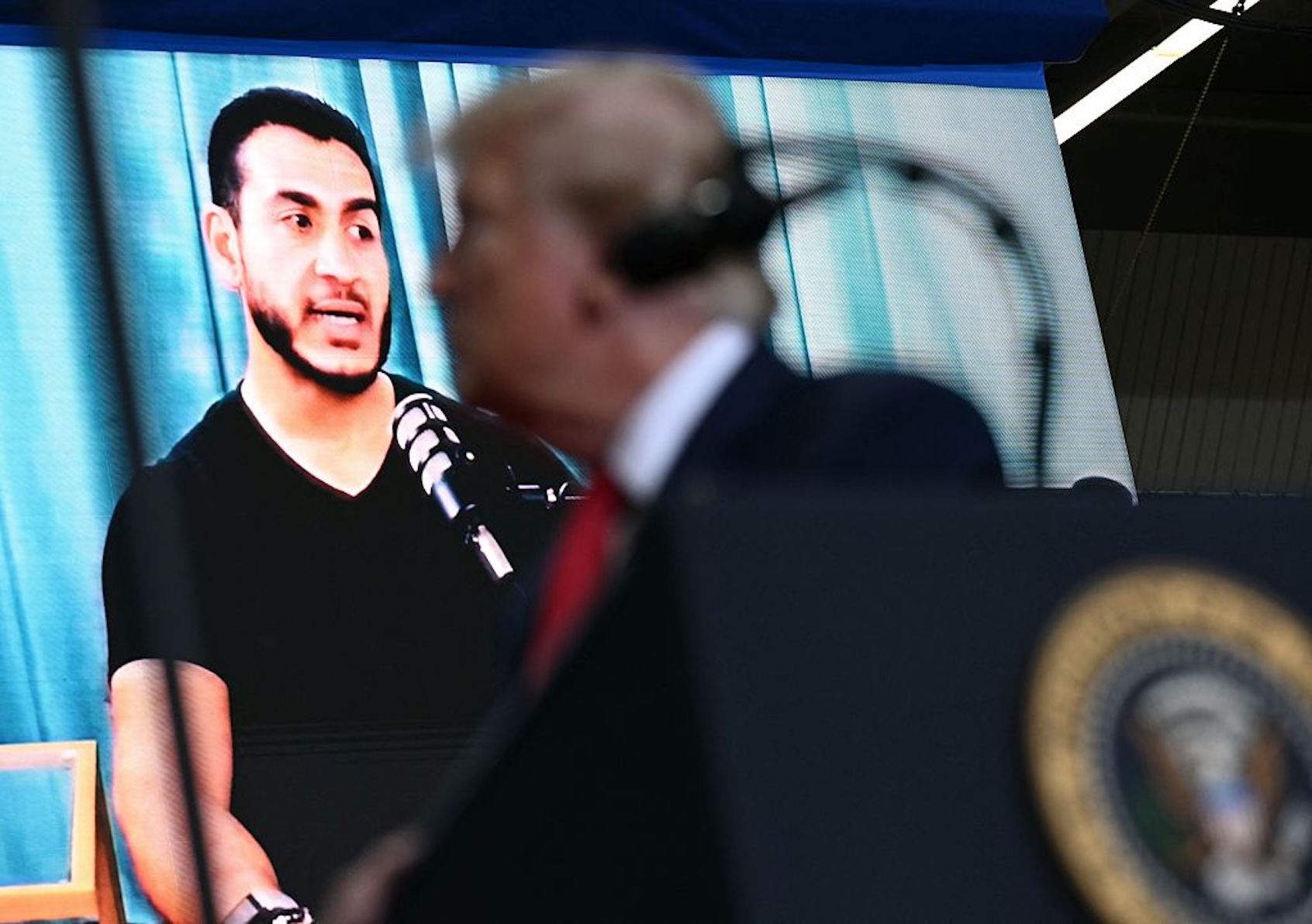
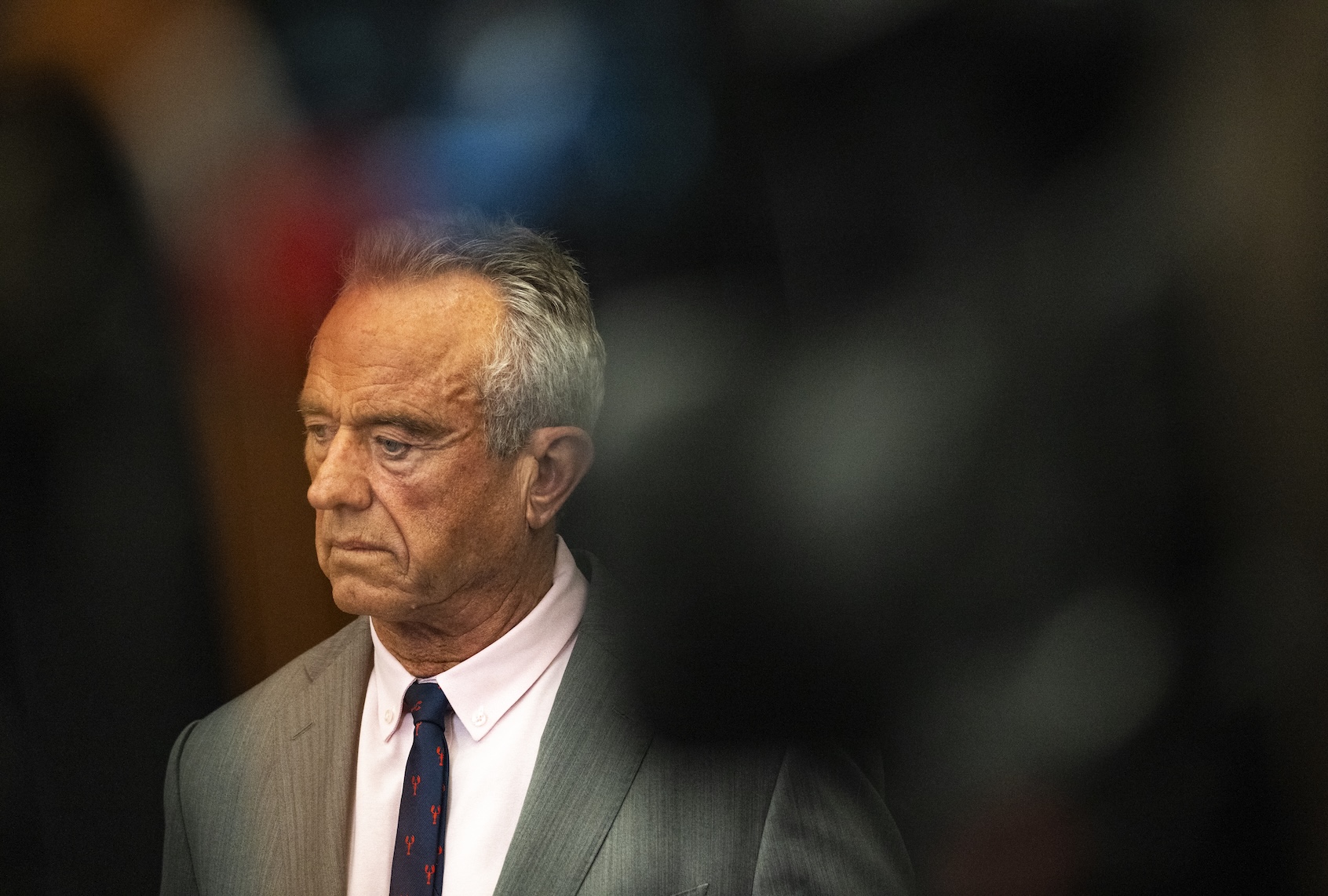
Another target of MAGA’s anti-Muslim bigotry is Dr. Abdul El-Sayed, the Michigan-born Democratic nominee for the Senate. Earlier this week, Vance referred to him as “very, very evil,” a “psychopath” who pushes “anti-white racial hatred.” This charge of reverse racism is one of the favorite tropes of the modern right, guaranteed to draw cheers at a MAGA rally. Trump called El-Sayed a violent jihadist, and Health and Human Services Secretary Robert F. Kennedy Jr. expanded the attacks, saying that the one billion Muslims worldwide contribute nothing to society, having never won the Nobel Prize or any other prestigious awards, an easily disprovable lie.
The blatant bigotry of these latest attacks is enough to take your breath away, not because they are unprecedented; this is America, after all, and racism is one of our “exceptional” characteristics. But until the last decade, Republicans had learned that it was far better for them to obscure their racism with dog whistles and code words so as not to scare the suburban white people.
The blatant bigotry of these latest attacks is enough to take your breath away, not because they are unprecedented; this is America, after all, and racism is one of our “exceptional” characteristics. But until the last decade, Republicans had learned that it was far better for them to obscure their racism with dog whistles and code words so as not to scare the suburban white people. The famous quote from the notorious GOP strategist Lee Atwater, who recommended referring to “welfare” and “busing” to stand in for overtly racist language, held true for years.
Republicans stuck with that tactic for decades, starting with Richard Nixon, who used the term Trump thinks he invented, “law and order,” as a code word for cracking down on Black protests in inner cities. Ronald Reagan famously talked about “welfare queens” during his 1976 primary bid for president, and four years later he opened his presidential campaign by declaring his belief in states’ rights — another dog whistle — in Mississippi, near the spot where white civil rights workers were killed. Three decades later, Trump turned even more creative with his “birther” campaign against President Barack Obama, combining the party’s burgeoning Islamophobia with classic All-American racism. To this day, Trump refers to Obama using his full name — Barack Hussein Obama — with a childish glee.
I don’t think claiming that a whole African country is a “sh*thouse” or saying that Black immigrants are barbecuing their neighbors’ cats for dinner is the kind of subtlety Atwater was talking about. In fact, I will not be surprised to see Trump, who has lost virtually all rhetorical restraint, drop the ugliest epithets of all someday soon. It’s just a matter of time. And if he does, I’m sure JD Vance and all the rest of MAGA’s staunchest loyalists will find a way to rationalize it as something the other side is responsible for.
Every president leaves a signature accomplishment. Abraham Lincoln preserved the Union. Franklin Roosevelt rescued capitalism from itself. Donald Trump’s will be something no predecessor ever attempted: He has done more than any American in history to convince his fellow citizens that their votes are not counted honestly. That dubious achievement belongs in the first line of his obituary.
On Oct. 18, “60 Minutes” reported that in the 21 months of his second term, Trump has said, “in so many words, the vote can’t be trusted — more than 150 times.” This is not the grievance of a defeated candidate. It is the drumbeat of a sitting president who won an historic election in 2024, controls the executive branch and still insists that the system that elected him is rotten.
The record is not hard to find. The day before his second inauguration, Trump told a crowd at a rally in Washington, D.C., that he would be president for the 2026 World Cup and the 2028 Olympics — which he would have missed had he won in 2020 — only “because they rigged the election.” In February and again in April 2026, he posted that “America’s Elections are Rigged, Stolen, and a Laughingstock all over the World,” adding, “We are either going to fix them, or we won’t have a Country any longer.” In September, at the Republican National Committee’s Midterm Convention, he told supporters, “I’m going to try to cheat like hell like they do.” He doubled down on those claims earlier this month when he posted that vote counts “take weeks to rig, I mean, calculate. Voting in America is CORRUPT!!!” And on Oct. 16 in Georgia he declared that Sen. Jon Ossoff “lost that election [in 2020], but they gave it to him because it was a rigged election.”
But the centerpiece of Trump’s election lies came on July 16, when he used a primetime address to the nation from the White House to warn that our elections “were left vulnerable to being rigged and stolen” and that the system “falls catastrophically short.” He promised proof. He delivered heavily redacted documents that, according to election officials and security experts, showed vulnerabilities long known and studied, but included no evidence that any American election had been stolen. He cited only some fraudulent registrations in Michigan, which authorities flagged, and no fraudulent voter registrations were processed.
What it all adds up to is this: Six years after Trump claimed that millions of illegal votes were cast against him in 2020, he failed to document a single illegal vote.
I have studied American elections for more than four decades, and during that time I have testified as an expert witness in more than 100 voting rights cases. Let me be precise about where legitimate concern lies. There are serious reasons to question how congressional districts are drawn. Partisan gerrymandering, now escalating into mid-decade redistricting wars between red and blue states, lets politicians choose their voters rather than the other way around. These are real problems.
But the accuracy of the count is not among them. Nearly every American jurisdiction leaves a paper trail for ballots. Bipartisan local officials tally them, audit them and, when margins are close, recount them. After the 2020 election, Trump’s own cybersecurity chief called it “the most secure in American history.” William Barr, his own attorney general, found no fraud on a scale that could have changed the result. Georgia, under a Republican secretary of state, counted its presidential ballots three times. More than 60 lawsuits failed, some before judges Trump appointed. Studies of non-citizen voting find it vanishingly rare.
Compare Trump with the presidents who came before him. In 1800, John Adams handed power to his bitter rival Thomas Jefferson, establishing the peaceful transfer between parties that defines our republic. In 1864, with the nation at war, Lincoln held an election he expected to lose and privately pledged to cooperate with his successor. Herbert Hoover in 1932, Jimmy Carter in 1980 and George H.W. Bush in 1992 all lost as incumbents and accepted the verdict without a word against the count.
Richard Nixon, a Republican, and Al Gore, a Democrat, swallowed razor-thin defeats in 1960 and 2000 rather than tear at the nation’s faith in its elections. Both graciously conceded despite having some basis for challenging results. Presidents have complained about the press, the courts and Congress. None of them made the American voter’s ballot the enemy — until Trump.
That is the damage he has caused. Democracy rests on a simple bargain: The loser accepts the result because both sides trust the count. Each time a president claims, contrary to the evidence, that the count cannot be trusted, he weakens that bargain. He also hands his supporters a ready excuse to reject any outcome they dislike, including the coming midterms. Americans should hold elections to the highest standard and fix what is genuinely broken, starting with how congressional districts are drawn. But they should not mistake a president’s endless repetition of baseless claims for proof of fraud. The evidence shows that America’s votes are counted honestly. The untrustworthy voice comes from the one who keeps telling them otherwise.
Trump has said he would accept the midterm results if they are “honest” — code for Republicans winning. He has already interfered with elections by suing Alaska to overturn results if having another Daniel Sullivan on the ballot allegedly defeats the Republican Senatorial incumbent with the same name. He has also sought to compel California to set aside the votes of 20,000 alleged non-citizens based on an error-ridden database and a dubious matching with registration rolls.
As happened after Trump’s 2020 defeat, we can expect more lawsuits and pressure on Republican legislators and election officials to alter results.
Not two weeks after the Tennessee legislature carved Memphis into three congressional districts this spring, in a move designed to eliminate Democratic representation, Republican state Sen. Brent Taylor made his electoral expectations clear in a photo posted on social media.
Taylor and U.S. Rep. Tim Burchett, a fellow Republican, sat side by side on the U.S. Capitol steps. “My friend Tim Burchett showing me the dadgum ropes,” Taylor wrote in a Facebook post.
On May 7, the same day that the new districts were approved, Taylor had announced his bid to represent the redrawn Congressional District 9, which for more than four decades had stood as the state’s sole majority Black district. During that time, it covered mostly the Memphis area; it now stretches across half the state and is majority white.
Taylor, 58, already has a track record with many of the voters he is now seeking to represent in Washington, D. C.: In his nearly four years as a state senator, he has taken steps to strip authority from local officials elected by many of those same voters. With the backing of a Republican supermajority, Taylor, who is white, pushed through half a dozen laws that superseded the power and priorities of local politicians.
Around the country, state legislatures from both parties have used preemption laws to control local governments. That tactic has been embraced by Republican-dominated statehouses in recent years as a way to restrict the ability of Democratic-led cities to enact policies state leaders disagree with, including protections for civil rights, public health and workers.
Memphis has long struggled with high rates of violent crime that have begun to fall only in the last couple of years. This is where Taylor focused his legislative efforts. He led the charge to prohibit judges from considering a defendant’s ability to pay when making bail decisions. He has tried to oust Steve Mulroy, the first Democrat elected as Shelby County district attorney in 25 years, and pushed through legislation authorizing the state to review every decision made by his office. And he co-sponsored a law that voided the Memphis City Council’s ban on police stops for minor traffic infractions, which had been passed after the 2023 beating death of Black motorist Tyré Nichols.
The question of how to keep communities safe has drawn divergent political approaches in Memphis — from Mulroy’s focus on rehabilitation as part of his effort to lower violent crime, to Taylor’s emphasis on aggressive prosecution and incarceration. Those approaches can mean very different experiences for the people of Memphis, which makes up most of Shelby County. Some elected officials and criminal justice experts warn that the laws Taylor has championed will embolden police to detain drivers without justification and the criminal justice system to lock up more people for longer periods in the already overcrowded county jail, where more than 65 people have died since 2018.
“I think he’s very dangerous for Shelby County, and he’s going to be very dangerous for the Ninth District if he gets elected,” said former Shelby County General Sessions Court Judge Bill Anderson, referring to how Taylor’s policies could especially harm Black men. Anderson retired in May 2025 after clashing publicly with Taylor over bail reform measures. (Anderson supported them; Taylor opposed them.)
Taylor is favored to win because of redistricting by Tennessee Republicans after a U.S. Supreme Court ruling in April made it harder to challenge gerrymandering that dilutes the Black vote. The Mississippi native, who lives in an antebellum-style mansion in a tiny and heavily white community east of Memphis, has loaned his congressional campaign $1.5 million. The candidate made millions after selling his funeral home businesses to a private equity firm.
Taylor’s opponent is state Rep. Justin J. Pearson, a 31-year-old Black Democrat who has taken a very different approach to what the district needs. Pearson has called for addressing the root causes of crime by improving schools and economic opportunities instead of a singular focus on incarceration. He first made national headlines for his role in stopping the construction of an oil pipeline in a Black Memphis neighborhood. He is also one of two Democratic legislators expelled by the Republican supermajority after leading a protest calling for gun control following a 2023 school shooting. With deep family roots in southwest Memphis, Pearson has positioned himself as the better fit for the historically Democratic Ninth Congressional District. He has also received support from national Democrats and has outraised Taylor in campaign donations.
Taylor, who declined to be interviewed for this story, has said that the laws he has championed prioritize public safety. He did not respond to detailed questions.
But John Pfaff, a professor at Fordham School of Law who has studied how state preemption laws impact prosecutors, said tough-on-crime laws like the ones Taylor helped pass have historically been “a form of social control against disliked minority groups” under the guise of public safety. Non-urban voters, Pfaff said, “do feel, however incorrectly, sort of victimized by expanding civil rights” that urban voters choose. While these voters cannot cast ballots in city elections, he said, they have another path by which to exert power: “If the suburbs and rural areas control the governor’s mansion and the state legislature, they then can use their power there through preemption laws that finally tell Memphis what they want Memphis to do.”
Prohibiting Limits on Police Traffic Stops
In January 2023, the month Taylor took office, the nation was shaken by video of violent policing in Memphis.
A street surveillance camera and police body cameras captured what happened after undercover Memphis police officers pulled over 29-year-old Nichols just a few blocks from his mother’s home. For three minutes, officers repeatedly punched the unarmed man in the face, hit him with a baton and kicked him as he screamed for his mom. Nichols would die from his injuries in the hospital three days later.
After pressure from Nichols’ family and community organizers, the Memphis City Council unanimously passed an ordinance in April of that year barring police from pulling motorists over for minor traffic violations, such as a broken tail light, as a pretext for investigating an unrelated, more serious crime. Research shows that these stops are disproportionately used to detain Black drivers, undermine the public’s trust in police and create unnecessary police encounters that can turn deadly.
Taylor, who had been in the state Senate for a few months when the city ordinance passed, said it made the public less safe by limiting the potential for police to investigate more serious crimes. The next year, he and state Rep. John Gillespie, a Shelby County Republican, sponsored legislation that prohibited local government from curbing law enforcement’s ability to conduct traffic stops, effectively undoing Memphis’ ordinance.
Nichols’ mother, RowVaughn Wells, pleaded with lawmakers to drop the bill. Speaking on the Senate floor, Taylor responded, saying that as a funeral home director, he empathized with the Nichols’ family, but “we can’t let that empathy, Mr. Speaker, cloud our judgment in protecting 7 million Tennesseans.”
Taylor’s intervention suggests “that Memphis voters don’t know what their best interests are,” said Martavius Jones, who was chair of the Memphis City Council when the city ordinance passed. “What we were trying to do would not jeopardize the safety of anyone — not even in Memphis, but much less the rest of the population of Tennessee.”
Tennessee Gov. Bill Lee, a Republican, told reporters before signing the law that no one should limit police in their enforcement methods and officers should be held accountable for their actions.
“I think what’s most important for us to remember is that we can give law enforcement tools,” Lee said, “but we’ve got to hold law enforcement to a standard of using those tools appropriately, where there’s an appropriate interaction with the public.”
Eight months after Tennessee lawmakers passed Taylor’s preemption bill, the U.S. Department of Justice released its investigation of the Memphis Police Department, finding that its aggressive traffic enforcement had harmed Memphians. The Justice Department recommended that the city limit the use of pretextual stops. Such police activity enabled the “regular use of excessive force with impunity” and unlawfully discriminated against Black residents, the Biden administration’s report said. When President Donald Trump took office in 2025, his Justice Department retracted those findings.
Over the last year, law enforcement has ramped up the use of such stops, especially in immigration enforcement, as Trump’s Memphis Safe Task Force — a collection of more than two dozen state and federal law enforcement agencies, including the National Guard — descended upon the city. Taylor supported the effort, testifying before the U.S. Senate days before it began that the task force would “succeed in doing the hard work to infiltrate gangs and arrest more routine criminals.”
Unprecedented Scrutiny of a District Attorney
Since his first year in the state Senate, Taylor had also been working to displace the decision-making authority of another locally elected office: district attorneys, especially Mulroy, one of Tennessee’s two Democratic county prosecutors. Taylor called him a “far-left zealot” who “has the potential to make the scourge of violent crime even worse.”
In 2023, Taylor sponsored a law that transferred the power to review certain death penalty cases from county prosecutors, who are elected, to the state attorney general, who is appointed by the state Supreme Court. While the law applied statewide, it disproportionately impacted Shelby County, where half of the state’s 40 death row prisoners were prosecuted. The law, Mulroy said at the time, “effectively disenfranchises the voters” who chose their district attorney.
Taylor would go on to further weaken Mulroy’s office following Trump’s 2025 deployment of his crime task force to Memphis. As arrests soared, Taylor worked to place the district attorney’s decisions under unprecedented scrutiny, saying he wanted to ensure that the prosecution of task force cases was as aggressive as the task force itself.
One new law, co-sponsored by Taylor, authorized the state attorney general to review every case that comes through Mulroy’s office, including those that stem from arrests made by Trump’s task force, “to ensure the proper administration of justice necessary to protect the safety of the community.” The dispositions of each case, along with bail recommendations, would be reported to legislative leaders.
Republican state Rep. Andrew Farmer, who introduced the bill in the House, noted that it is designed to ensure that “all crimes that deserve to be prosecuted are prosecuted.”
Mulroy is “just going to have to work harder and ensure that people are continuing to stay safe,” Farmer said on the House floor. “We want Memphis to continue on the path that it’s going — up.”
The state’s district attorneys general conference, led by Republican former District Attorney Stephen Crump, opposed an early version of the bill, which would have applied to district attorneys across the state, because it could lead prosecutors to second-guess their decisions. He dropped his objections after the bill was narrowed to apply to only Mulroy.
That law has another provision aimed at Mulroy as well: If he declines to prosecute specific categories of crime, the state attorney general can ask the state Supreme Court to intervene by installing a temporary district attorney who would then decide whether to prosecute. Taylor has long sought to limit Mulroy’s authority, and the provision would be a way to do so. Mulroy said the effect would be “an unelected shadow DA operating in parallel to the duly elected DA.”
“Prosecutorial discretion and prosecutorial independence is a key fundamental part of our criminal justice system,” Mulroy said. “It’s clear under both the text of the Tennessee constitution and Tennessee Supreme Court case law, and this bill does great violence to those principles.”
Taylor co-sponsored a second law, passed in May, that requires Mulroy’s office to report to the state and the U.S. Department of Justice within 10 business days every time it has entered into a plea deal, or dismissed or lowered the charges on a felony offense that resulted from a task force arrest.
“Memphis residents deserve confidence that the significant investments being made to combat violent crime are matched with accountability at every level of the justice system,” Gillespie, who co-sponsored the bill in the House, said at the time.
Mulroy has sued to stop both laws, claiming they are unconstitutional because they unfairly single out Shelby County and create an administrative burden. The lawsuit is pending in state court. Meanwhile, Mulroy has objected to his staff spending time on the reporting requirements, which he called “pointless busywork.”
Mulroy’s election in 2022 as the county’s first Democratic district attorney in more than two decades came on the heels of a year with a record number of homicides. But Republicans’ tough-on-crime approach had grown unpopular with voters, and Mulroy vowed to be an alternative. He promised to deprioritize the prosecution of low-level offenses such as marijuana possession and shoplifting; emphasize rehabilitation such as drug treatment, mental health counseling and job training; and establish a unit to examine the validity of convictions.
One of the people who campaigned for him was William Arnold, who had spent nearly seven years in state prison before his conviction was dismissed following examination by a Davidson County conviction review unit. The community organizer said he saw Mulroy’s candidacy as a way to “support someone who could help Memphians in a different way.”
To see Mulroy’s power being muted by Taylor is disheartening, Arnold said. But that is not surprising to him, given how the state legislature has long treated the predominantly Black city, including replacing the Memphis Shelby County Schools’ elected board with a state-appointed one.
Bail Calculator Scrapped
Among the preemptive legislation Taylor has sponsored, a 2023 effort stood out: the dismantling of a bipartisan effort to ensure Shelby County’s bail practices did not discriminate against poor people, who are disproportionately Black.
Under state law, magistrates are to “impose the least onerous conditions” when deciding bail and should set bail “as low as the court determines is necessary” to assure the defendant returns to court.
But in practice, hundreds of people were being detained at the Shelby County Jail simply because they couldn’t afford bail, according to Just City, a Memphis criminal justice reform organization, which along with the American Civil Liberties Union threatened to sue the county in 2021 for violating existing state law. Being jailed while awaiting trial can cause arrestees to lose jobs and child custody, the organizations argued.
In August 2022, the organizations and county officials — including Mulroy’s predecessor, Republican District Attorney Amy Weirich — agreed on a new bail order that included an “ability to pay” calculator.
That tool quickly drew Taylor’s ire, and by the following January he had co-sponsored a bill to kill it, characterizing the calculator in a Senate Judiciary Committee meeting as a way of “essentially asking defendants how much money they happen to have in their pocket so that they can make bail.”
The bill’s supporters said judges should prioritize public safety when deciding whether to release defendants. “There is blood running in the streets of Memphis today because they’re letting people out,” state Rep. William Lamberth, a Republican, said on the House floor.
State law requires judges, when setting bail, to consider several factors, including a defendant’s financial condition. And Josh Spickler, executive director of Just City, said that’s exactly what the tool helped judges do.
Under Taylor’s law, however, “the defendant’s ability to pay shall not be considered.”
“That tied our hands as judges,” Anderson, the former Shelby County judge, said in an interview.
A 2025 University of Memphis study found that the median bail amount increased after Taylor’s law took effect. And the law’s impact falls hardest on Black residents, Anderson said, because they are more likely to be low-income and make up a disproportionate share of Shelby County jail occupants.
“To those of us in the system, it’s obvious what he’s doing,” said Anderson, who resigned in 2025 with six years left of his eight-year term. “He called them reform acts, but they’re not reform.”
Barely noticed among all the talk in the election campaign about great asses, shithouse countries and commie jihadists running for the Senate was a report from The New York Times warning of “heightened levels of tension and risk” surrounding Israel’s parliamentary elections, slated for today, and America’s Nov. 3 midterms due to the countries’ war with Iran, which has “entered a new phase.” They also offered this bracing observation: “This is how countries can escalate into full-scale war, several diplomats and outside experts noted.”
How’s that for a wake-up call?
In fairness, Donald Trump has mentioned in passing that he plans to “finish the job” after the midterm elections, with CNN reporting that the president “appears to be leaning toward major action.” On Oct. 15, the outlet revealed that the U.S. is considering using the “mother of all bombs” on Iranian energy infrastructure and nuclear facilities. (They admit that such a strike would be “performative,” since it would not actually accomplish anything, but would supposedly allow Trump to declare victory.)
If anyone had the idea that a midterm election campaign would be the place where serious people of goodwill debate the major issues of the day, they were mistaken. For the most part, the war with Iran has hardly come up, and to the extent that it has, it’s been in the context of high gas prices.
If anyone had the idea that a midterm election campaign would be the place where serious people of goodwill debate the major issues of the day, they were mistaken. For the most part, the war with Iran has hardly come up, and to the extent that it has, it’s been in the context of high gas prices, not the possibility of the conflict turning into a major conflagration from which the United States will not be able to walk away after putting on a fireworks show. We may be at a turning point, and nobody’s paying attention.
The U.S. has received credible intelligence, according to the Times report, that Iran has “advanced” plans to attack Americans at home and abroad. According to Reuters, the State Department has ordered non-emergency government employees and their family members to leave U.S. diplomatic missions in Saudi Arabia and has reduced staff in Lebanon, the United Arab Emirates, Qatar and Jordan. NBC News revealed that “the U.S. military has been quietly scaling back its troop presence at bases across the Middle East as well.” It certainly sounds as if something is afoot, which the Times characterized in fairly alarming terms:
The fact that Prime Minister Benjamin Netanyahu of Israel and President Trump are facing critical elections that could dramatically affect the balance of power in their countries feeds into the complex set of calculations that all sides are making. Even if he is defeated on Tuesday, Mr. Netanyahu could decide to launch one last strike that he may believe his successor would hesitate to execute. Similarly, Mr. Trump, who knows how unpopular the war is even among his strongest supporters, may want to show that at least when it comes to his powers as commander in chief, his authority is undiminished.
Trump has claimed dozens of times that we have already won the war. This is not out of character; his habit is to prematurely declare victory in everything, apparently assuming that the force of his declaration makes it a reality. In the lead-up to the U.S. and Israel’s Feb. 28 attacks on Iran, Trump was apparently so pumped up by his historic political comeback and success at cruel mass deportation, murder on the high seas and the conquest of Venezuela, an oil-rich country, that he assumed he could succeed at what every former president knew was a fool’s errand: take over Iran, seize its oil and dominate the world’s oil supply. And, as Haberman and Swan reported in their book “Regime Change,” Trump had been convinced by whom he called a presidential historian (actually a caddie for Gary Player) that he was “the most powerful man who’s ever existed on the planet by far” — more powerful than Mao, Alexander the Great, Stalin, Hitler, all of them.
What Trump has succeeded in doing is making Iran a global power, capable of re-ordering the world through control of one of the most important waterways on the planet. In the process, he has exposed the U.S. as a second-rate military power, at least compared to the country’s previous reputation, by insisting on fighting an unnecessary war of choice without a strategy while being low on munitions and proving that it lacks the capability of fighting on more than one front. Having let down our Middle Eastern partners who assumed that by allowing bases in their countries they could count on America to defend them — not to mention the administration’s destructive tariffs and abandonment of Ukraine — the world knows that the U.S. is unreliable, and they are looking elsewhere for alliances and economic partnerships.
All this brings to mind historian Barbara Tuchman’s “The March of Folly.” Published in 1984, the book examines tragic wars of choice that needn’t have been fought but, because of hubris and ignorance, were waged anyway, despite being against the best interests of the countries that started them. As Tuchman put it:
To qualify as folly for this inquiry, the policy adopted must meet three criteria: it must have been perceived as counter-productive in its own time, not merely by hindsight . . . Secondly a feasible alternative course of action must have been available . . . third . . . the policy in question should be that of a group, not an individual leader.
Among the conflicts Tuchman chronicled in the book are the errors of the Catholic Church that led to the Reformation, as well as King George III’s epic misunderstanding of the dynamics driving the colonists (and England’s other enemies) to rebel against the British Crown. She also turned her keen historical eye to the big kahuna of her era, Vietnam, in which the U.S. squandered its power and moral authority on a war that began as an ideological experiment, escalated for political reasons, and ended in failure and embarrassment only 51 years ago. You’d think that lesson would still be fresh enough that we wouldn’t indulge in such a folly again.
But, of course, we have. While Afghanistan had at least the fig leaf of justification after 9/11, Iraq and now Iran have both demonstrated that the U.S. has learned nothing from its own recent history. Eight months in, Trump’s misadventure in the Islamic Republic has proven even more irrational than the others. As with all the follies, Trump indulged his fantasies, failed to understand the adversary and ended up working against his country’s own interests.
A delusional, psychologically unfit president started a war based on shifting rationales, finally landing on the idea that Iran was pursuing a nuclear weapon. This was the same country that had been complying with an agreement not to pursue a nuclear weapon, but which this president tore up simply because it had been negotiated by the man he succeeded in office.
We don’t yet know whether these latest threats will lead to an escalation by either party. But either way, the deed is done. The world has been fundamentally changed by Trump’s daft decision to start this war, and there is no going back. That’s how all these follies end, and it’s very rarely a happy ending for the countries that started it.
For a preview of the conservative copium that could follow the Nov. 3 midterm election results, look no further than the conspiracy theories MAGA’s biggest voices are already spinning about Brazil. The immediate reaction to the country’s presidential race makes clear that MAGA is preparing to unleash a predictable wave of election denialism.
On Sunday, the incumbent leftist Luiz Inácio Lula da Silva came back from a first-round deficit to beat Sen. Flávio Bolsonaro, son of the former right-wing president Jair Bolsonaro. It was the first time since Brazil returned to democracy in 1985 that the candidate who lost the first round won the runoff, and it made Lula the first person elected to his country’s presidency four times. Before the disappointment had settled, Lula’s MAGA detractors were turning an inconvenient result into an international election fraud narrative — and warning their followers that the same supposedly sinister forces were coming for the United States. Conservative podcaster and former Trump strategist Steve Bannon made the connection explicit: Without action, he claimed on his show, it would happen “next Tuesday.”
Other influential MAGA figures immediately began manufacturing reasons to doubt the outcome in Brazil, telling Americans that a right-wing defeat cannot possibly reflect what voters wanted. Nick Shirley primed his audience’s disappointment with an exuberant before picture. The 24-year-old YouTuber traded his trademark hoodie and the Minnesota daycare centers that gained him right-wing notoriety for a spot on Bolsonaro’s campaign bus and a pre-election parade, then reported back to his followers. “I have never seen crowds and energy like this for an election,” he posted Saturday, adding that thousands of people were chanting that Lula is a thief whose place is prison. On Sunday Shirley declared that Brazil’s right-wing revolution had begun. Then Lula won by roughly 4.4 million votes and the revolution lasted about as long as the polls stayed open. The hoodie had returned on Monday, along with Shirley’s posts about corruption and election meddling.
The centerpiece of the fraud story is a two-hour extension of voting on Sunday, ordered by Supreme Court Justice Cristiano Zanin amid bad weather and transportation problems. Zanin once served as Lula’s personal lawyer, and the American right has treated that line on his résumé as a signed confession. MAGA conspiracy theorist Jack Posobiec called the ruling unprecedented and said it came from a judge loyal to Lula.
What MAGA leaves out is that both campaigns asked for more time. Lula’s side cited bus delays in cities where he was strong. Bolsonaro’s side cited flooding in regions largely loyal to him. In a race decided by millions, early data shows that fewer than 40,000 votes were cast during the added window. Still, Elon Musk told his 241 million followers that the math doesn’t add up. But it does. It just doesn’t add up to the answer he wanted.
Bolsonaro himself initially called the extension a “dirty trick” and said he would challenge the outcome. Donald Trump supplied his blessing. At Maryland’s Joint Base Andrews, where he was about to board Air Force One to hold a rally for Sen. Cindy Hyde-Smith, who is in a surprisingly tight re-election bid, the president told reporters, “It looked like another rigged election, frankly.” The White House Rapid Response account promptly promoted the clip, even as the president insisted he had not taken sides. He offered no evidence because there is none.
Minutes after Trump signaled that he would not intervene, Bolsonaro effectively conceded and backed off his call to annul the election results. He said he would instead sue Lula for abusing the power of incumbency. “I wasn’t the one who lost; the system won,” Bolsonaro said, vowing to turn the overwhelming conservative legislature into a fortress against what he called barbarism.
The personal and political networks linking the MAGA movement to Bolsonaro’s ultra-conservative apparatus run deep, and they have been cultivated over years.
The personal and political networks linking the MAGA movement to Bolsonaro’s ultra-conservative apparatus run deep, and they have been cultivated over years. Prominent figures within the American right, including Bannon and senior MAGA advisers like Jason Miller, have long maintained intimate ties with the Bolsonaro family. Organizations like the Conservative Political Action Conference have repeatedly expanded their presence into South America, hosting regional summits that fuse American-style culture war rhetoric with local right-wing nationalism. Mar-a-Lago has also served as a gathering ground for the Bolsanaros. When Jair Bolsonaro faced legal consequences and potential imprisonment in Brazil following his own post-election maneuvering, his political allies in the U.S. took the development as a personal warning, treating the legal accountability of a foreign leader as a direct threat to their own domestic political project.
Bannon’s “War Room” podcast has become a hub for election denialism. Right-wing pundits and administration officials alike have used the show to argue for a national emergency declaration covering the midterms. Bannon spent Monday demanding that Secretary of State Marco Rubio cut off diplomatic relations with Brazil and shut down trade entirely. The goal of his rant was clear: to convince MAGA that democratic institutions across the globe have been captured by hostile forces, rendering standard electoral participation obsolete unless it is backed by relentless resistance. Alex Jones declared that Brazil must be liberated. The disgraced former national security adviser Michael Flynn asked whether Brazil was turning into a banana republic. Kari Lake, who is hardly a neutral authority on losing gracefully after claiming fraud in her own losing bids for Arizona governor and the U.S. Senate in 2022 and 2024, said Brazil’s elections reminded her of Arizona’s.
Running underneath the fraud talk is a conservative creation myth. MAGA lore holds that the Department of Government Efficiency’s dismantling of the U.S. Agency for International Development dismantled the left’s machinery in Latin America, and its triumphalists claim the left has not won a single election in the region since. But much of the region has been governed from the right for decades, and its longest-lived left-wing governments expelled USAID years ago precisely because they regarded it as a hostile American instrument, not a benefactor.
The immediate deluge of claims alleging manipulation and shadowy state intervention is more than standard right-wing culture wars. They are a calculated effort to prime American audiences for the idea that any electoral outcome unfavorable to Trump’s MAGA coalition is inherently fraudulent. The narratives depend on a selective performance of democracy in which visible enthusiasm for a preferred candidate counts as evidence of popular legitimacy, all while the actual votes can be dismissed as fraudulent whenever they produce an unwelcome result. Crowds become proof that a candidate must win. A defeat becomes proof that the system is rigged. No outcome can disprove the theory.
House Minority Leader Hakeem Jeffries, D-N.Y., recently told CNN that Americans have to assume Republicans will try to come up with any diabolical scheme to prevent Nov. 3 from being a free and fair election. After watching Brazil, you could argue the scheme is no longer diabolical so much as announced.
A few months into President Donald Trump’s second term, political appointees at the Department of Homeland Security made an unusual request of its agency focused on cybersecurity: Secretly acquire a voting machine and hack it.
The appointees wanted the Cybersecurity and Infrastructure Security Agency to procure the machine, examine it and report back the findings so they could be given to the White House, according to two former administration officials with knowledge of the request.
The proposition was shocking to CISA’s career staffers, according to one of the former officials. CISA typically worked to thwart hackers. Moreover, the agency had been directed not to alert the voting machine company if it uncovered flaws, contrary to its standard practices. The request made the CISA employees fear they were being asked to take part in political interference.
“My thought was they could keep it in their back pocket to invalidate any [election] results they don’t like,” one of the former officials said. “This goes against everything CISA represents.”
The CISA employees repeatedly told the political appointees that their request was impossible, in part because the agents capable of pulling off such an operation had just been laid off by Elon Musk’s Department of Government Efficiency initiative. The appointees eventually stopped pressing CISA.
Though not acted on, the request shows how the Trump administration has tried to use the agency for its own ends while draining it of resources for one of its critical missions: protecting the nation’s voting systems.
In Trump’s second term, his administration has laid off or pushed out more than 1,000 CISA employees, shrinking the agency by about one-third. The president’s 2027 budget proposal would reduce funding for the agency by another $700 million, which could necessitate 900 additional layoffs.
In response, Democratic lawmakers have called for an investigation into CISA’s ability to do its job and demanded answers as to why federal funds are not being used to support election security as directed by Congress.
Since Trump signed the CISA Act in 2018, the agency has worked with state authorities and voting machine vendors to help protect election infrastructure from cyberattacks. During Trump’s second term, though, CISA has abandoned much of this work. Several state election authorities said the agency provided them no assistance — and no explanation for its absence — during the most critical planning stages for the upcoming midterms.
“There is a difference between deprioritizing and being nonexistent,” said Ryan Macias, an election technology and cybersecurity expert who has worked as a consultant for CISA. In 2025 and through mid-September 2026 — when the bulk of preparations for the election typically would have been completed — “they were nonexistent. Literally nonexistent.”
While Trump has repeatedly warned that America’s elections are vulnerable to hacking, in some cases repeating disproven claims, experts said his administration is undermining the federal government’s role in helping secure them.
Though CISA re-emerged in September with a last-minute security plan for the election, some state officials told ProPublica they fear that what is left of the agency has been compromised by a conspiracy-obsessed presidential administration. In recent months, in reviving debunked theories about the 2020 election, the Trump administration has declassified troves of records, including sensitive material that state officials provided to CISA. Some state authorities said they no longer trusted the administration enough to share information with CISA, a key to the agency’s success in past elections.
“They’ve violated the entire premise of that information-sharing relationship,” said one former high-ranking federal cybersecurity official who now advises state governments on national security. “There’s no fucking way they’re ever going to give any information to CISA. And it’s unclear if they ever will in the future.”
A spokesperson for the White House declined an interview request but defended Trump’s handling of election security in an emailed statement. “President Trump has done more than any other President to ensure we have free and fair elections,” said Lauren Bis.
Bis referred specific questions about CISA’s handling of elections to DHS. DHS and CISA did not respond to interview requests or to a detailed list of questions.
“There’s no fucking way [state governments are] ever going to give any information to CISA. And it’s unclear if they ever will in the future.”
A former federal cybersecurity official who advises state governments
Current and former CISA employees and state election officials describe an agency that has become significantly less equipped to help states fight legitimate cyber threats. State leaders say they have used their own resources to shore up gaps left by CISA, such as paying for sensor technology that can detect unusual activity in election networks. But some services, like intel on foreign actors, can’t be replicated. Some people interviewed said they were worried that Trump and his allies continue to ratchet up rhetoric about voting security, particularly about threats to voting machines. Officials in one large voting jurisdiction said they have met privately with machine vendors to come up with a contingency plan if the federal government seizes their machines or declares them unusable.
“I don’t pay attention to what the president says. I pay attention to what his administration does,” Arizona Secretary of State Adrian Fontes said. “And what they’ve done is basically cut us off and left us on our own.”
Defending elections from hackers wasn’t always part of DHS’s remit.
Throughout the mid-1990s and 2000s, a series of cyberattacks rocked the federal government, demonstrating the emerging threat. In 2007, hackers broke into the Pentagon and stole terabytes of sensitive data. The digital heist, by an unknown foreign adversary, was so damaging that one intelligence leader later described it as an “espionage Pearl Harbor.”
Under George W. Bush, DHS underwent a reorganization to more effectively combat terrorism and respond to disasters like Hurricane Katrina. The department dedicated resources under an office called the National Protection and Programs Directorate to help fortify advanced cyber defense systems and important infrastructure. The office’s work ranged from helping secure events like the Super Bowl to protecting chemical plants to issuing cybersecurity warnings to the private sector and the public. In 2018, Trump signed a bill making the office a stand-alone agency, allowing for more federal funding and transforming it into, essentially, the ultimate tech support desk for anything DHS designated “critical infrastructure.” The bill renamed the agency CISA.
Though Trump helped create CISA, he didn’t much appreciate the work the agency did under its old name to expose the extent of Russia’s meddling in the 2016 presidential election. Russian agents had unleashed a massive disinformation campaign, with a Kremlin-backed troll farm creating thousands of social media accounts posing as Americans and promoting Trump, according to bipartisan reports from the U.S. Senate Select Committee on Intelligence released before the 2020 election. A dozen Russian military agents were indicted for what the Justice Department described as “a sustained effort to hack into the computer networks of the Democratic Congressional Campaign Committee, the Democratic National Committee, and the presidential campaign of Hillary Clinton.”
Trump publicly downplayed this interference, but DHS leadership saw the Russia attack as an escalation. In January 2017, before Trump took office, DHS upgraded America’s elections to the status of critical infrastructure. This placed the polls and all voting technology used in federal elections under the watch of what would soon become CISA.
To carry out this function, CISA needed help. But states and voting machine vendors were wary about sharing data on weaknesses in voting systems, fearing it could be exploited if certain details were to become public. State officials were also reluctant to cede any role in election preparation to the federal government.
Gradually, though, CISA and state election officials negotiated a fragile trust. At its center was a commitment: The sensitive information states and vendors shared with CISA would be kept confidential.
“It took years and years of building trust, of talking to election officials, of hiring people with elections experience who could be validators for the work that CISA wanted to do, before they finally built strong working relationships,” said Derek Tisler, who specializes in election security as counsel for the nonprofit Brennan Center for Justice, a nonpartisan institute based out of New York University School of Law.
Under Director Chris Krebs, CISA hosted penetration testing in which its agents would try to hack into a state’s system to locate weaknesses that could then be patched, along with tabletop exercises simulating a series of potential catastrophes around elections. CISA also offered regular secret-level briefings to secretaries of state to share federal intelligence. And CISA paid for sensor technology that looked for potential malicious online activity on election networks, notifying officials about emerging threats.
“The staffing was there, the expertise was there, the visibility was there, the funding was there,” Macias said.
The consortium shared data as run of the mill as spambots as well as more serious threats. If Virginia caught unusual activity in its system, it could let other states know to be vigilant.
While CISA had prepared for attacks from the Chinese and Russian governments, or lone wolf hackers, few there had expected the threat to elections would come from inside the White House. But when Trump refused to concede to Joe Biden in 2020, claiming the vote had been rigged, CISA became a key component of the guardrails that ultimately led to the election results being certified.
The agency, in a statement co-signed by secretaries of state and voting machine vendors, vouched for the election’s integrity, calling it “the most secure in American history.” When Krebs publicly rebutted claims amplified by the White House as “unsubstantiated” or “technically incoherent,” Trump fired him over Twitter.
As Congress prepared to vote on certifying the election results, it was members of CISA, along with the FBI, who convinced then-Attorney General Bill Barr that the conspiracy theories embraced by the president could be explained by human error, not systemic fraud or hacking.
When Trump returned to the White House in January 2025, his administration immediately started to dismantle CISA. The administrative notices were sent out just a couple of weeks after the inauguration and included the team in charge of dispelling disinformation.
For the employees under the DOGE microscope, work became impossible, said one former senior CISA employee. “Those groups couldn’t even order a pizza.”
DOGE laid off people critical to the agency’s election work, including those who’d worked closely with states. The Trump administration cut funding for the technology that monitored web and election servers, blinding the federal government to breaches it had detected.
When it came time for states to prepare for the 2026 midterms, CISA had disappeared.
On the evening of July 16, in the Black Hills of South Dakota, dozens of election officials and their staffs gathered for a reception near Mount Rushmore. It was the third night of an annual conference for secretaries of state, drawing participants from red and blue states. They’d spent the week discussing state voter roll maintenance and voter ID — issues that at times made for disagreements.
At about 8 p.m., a wave of discomfort swept through the crowd, visible on attendees’ faces as they glanced frequently at their phones, according to people at the event. Any minute now, Trump was going to address the nation on election security. Some at the reception worried he would declare a national emergency, as his allies had urged him to do months earlier, and use it as a pretext to direct the government to seize voting machines.
Then reports on the speech began rolling in, and the mood shifted. The claims Trump was making were unsubstantiated and outlandish. Many had been examined ad nauseam, including by those at the reception, and roundly debunked. The collective anxiety that was palpable moments earlier melted away, as many saw the speech as another attempt to revive disproved theories unlikely to be taken seriously by most voters.
“Everyone just sort of guffawed and put their phones away and went to the bar,” recalled Quinn Raymond, co-founder of VoteShield, a nonprofit that works with states to help monitor voter registration data, who was at the event.
Still, if the speech made little impact, records published by the Trump administration to support the president’s claims damaged the already eroding relationship between CISA and state election officials. The material included raw information states had shared with the agency that was supposed to remain private, such as a log of communications from Election Day 2020 detailing activity being monitored in several states.
“It betrayed the trust of all partners who were willing to share information at the time,” said Geoff Hale, who worked on CISA’s elections team from the agency’s inception until last year. Now he specializes in election security at the Center for Democracy & Technology, a nonprofit that advocates for digital and civil rights.
Bis, the White House spokesperson, denied that the Trump administration broke any agreements in releasing the information. “The release of such information is exactly the sort of transparency news organizations should applaud,” she said. Bis also defended Trump’s speech, saying it had been fact-checked “by the agencies whose evidence was released and did not mischaracterize any information.”
Hale and others said the speech was one of several instances demonstrating the Trump administration’s reckless attitude toward sensitive data collected by CISA. Earlier this year, Politico reported that acting CISA Director Madhu Gottumukkala had uploaded records to ChatGPT, even though DHS had barred its employees from using the unsecure program. A CISA spokesperson told Politico that Gottumukkala had been permitted to use the technology for a “short-term and limited” basis.
Last May, an independent journalist named Brian Krebs exposed that CISA published private data, including passwords, cloud keys and other information, on its public GitHub page, in a folder labeled “Private-CISA.” A CISA spokesperson told the journalist there was no indication that sensitive data was compromised.
Some state election authorities were also alarmed to see the lengths to which the Trump administration went to legitimize the president’s fixation on the 2020 race.
In fall 2025, Missouri election officials produced a memo stating Andrew McCoy Warner, a Department of Justice official and prominent 2020 election conspiracy theorist, had called several clerks asking for access to voting machines. Tulsi Gabbard, then the director of national intelligence, had also led an operation in Puerto Rico to seize election machines. When the private cybersecurity contractor hired to examine the machines, Mojave Research Inc., failed to find evidence supporting claims about 2020, the federal government became “dissastified” with its services and stopped renewing its contract, its CEO later told reporters.
A spokesperson for the Office of the Director of National Intelligence told reporters in August that Mojave’s work ceased because it had completed its contract. Testifying before Congress in March, Gabbard said the seizing of voting machines came at the request of an assistant U.S. attorney in Puerto Rico.
“What happened in the second Trump administration is from almost day one — I mean, literally the first two months — they took all that was built up by Trump 1 and just decimated it,” said David Becker, founder of the nonpartisan Center for Election Innovation and Research, a nonprofit that works with state election authorities. “Election officials lost trust in the federal government.”
It didn’t help that, in his speech, the president mocked CISA’s defense of the 2020 election, calling the statement about it being the most secure in history a “very pat line” concocted as part of a deep-state cover-up. One former career CISA employee described being crestfallen at the Trump administration’s erosion of all they’d accomplished.
“We worked so hard to build that trusted relationship,” said Caitlin Durkovich, former DHS assistant secretary for infrastructure protection and co-founder of the cybersecurity firm Civira Partners. “I don’t know how you put it back together.”
A few weeks after Trump’s speech, the state election officials gathered once more, this time for a video call with Nick Andersen, who had replaced Gottumukkala as CISA’s acting director.
Though the primaries were already under way, this was the first time many had met Andersen, a former cybersecurity adviser to Trump’s White House who had joined CISA a year earlier. Andersen is also a district representative for the Republican Party in Virginia, according to the party’s website. In March, he gave a speech to the Fairfax GOP chapter titled “Fighting Democrat Redistricting.”
Speaking over video in August, the boyish-faced former Marine Corps engineer announced that DHS was preparing to release a plan on how it would work together with state officials to secure the election, according to five people who were present at the video meeting, some of whom shared notes with ProPublica.
Many on the call were stunned at what they perceived as a lack of understanding of election planning. Early voting for the general election was just around the corner. They had spent over a year preparing for the midterms, and there was no more time for ambitious work.
Some peppered Andersen with questions: Where had CISA been when there was still time to make improvements?
Andersen blamed any lapses or perceived breaches in trust on the federal government shutdown in fall 2025, twirling his pen uncomfortably and sipping from a Monster energy drink.
Fontes, Arizona’s secretary of state, was blunt about his feelings regarding working with Andersen and CISA, according to several of the people on the call.
“I told him I didn’t trust him,” Fontes recalled in an interview. “I did raise my voice a little bit, because I’m frustrated — very frustrated — that they would have the temerity to come in, clear the entire deck of competent professionals, stop supporting the states, eviscerate the coordination efforts that they had and then suddenly come in and say: ‘Oh, we’re from the federal government. We’re here to help.’”
Indeed, one recently departed CISA official said attempting to do the agency’s typical election work now would be futile. In previous years, CISA had finished almost all its preparations with the states by Labor Day.
“That ship has sailed,” the official said.
CISA published its security plan for the 2026 election on Sept. 24. The 13-page document describes how, over the past two years, CISA has “recommitted to its statutory mission and remains resolute in strengthening the security of elections.”
State officials said their planning will ensure a secure election, even without help from CISA. Yet they and cybersecurity experts worry that Trump will say the election was hacked if Republicans don’t win in November.
The security plan calls for “leveraging collaborative partnerships” with states the agency has abandoned since Trump took office. Shenna Bellows, Maine’s secretary of state, said she’d welcome that but was skeptical of the agency’s motivations.
“For CISA to promise election officials now, at this point in time, that they are going to be a resource for the 2026 election is too little, too late,” she said.
President Donald Trump escalated his attacks on Michigan Democratic Senate candidate Abdul El-Sayed on Sunday, accusing him without evidence of being a Muslim extremist, a day after former President Barack Obama defended El-Sayed against attacks on his religion and patriotism.
“Heading to Michigan to fight a Jihadist Member of the Muslim Brotherhood,” Trump wrote on Truth Social, referring to the physician and former public health official, who is running against Republican Mike Rogers.
Trump also claimed El-Sayed wanted to impose Sharia law in the United States, adding, “If it ever does, he should be the first that’s tried!” He offered no evidence for either accusation.
The remarks followed Obama’s Saturday campaign appearances in Ohio and Michigan, where the former president criticized Trump’s leadership, rallied Democratic voters and delivered a memorable assessment of the president’s gold-heavy White House renovations.
“He’s got the White House looking like Saddam Hussein opened a Cheesecake Factory,” Obama joked during a Cleveland rally. “He should be on HGTV,” Obama added, questioning Trump’s priorities as Americans contend with rising costs.
Obama appeared alongside Ohio Senate candidate Sherrod Brown, who is challenging Republican incumbent Jon Husted, and gubernatorial candidate Amy Acton, who faces Trump-backed Vivek Ramaswamy. He also criticized a Ramaswamy campaign advertisement featuring Acton’s estranged mother, arguing that political ambition did not justify such personal attacks.
In Detroit, Obama campaigned for El-Sayed and gubernatorial candidate Jocelyn Benson, invoking the racist birther conspiracy theories Trump promoted against him while defending El-Sayed.
“We have seen this movie before. I starred in it,” Obama said. “I have a long form birth certificate to prove it.”
Trump, meanwhile, escalated his attacks on El-Sayed during a Sunday rally in Port Huron, Michigan, where he campaigned for Republican Senate candidate Mike Rogers.
“I’m here to keep a jihadist Muslim Brotherhood member from becoming a United States senator,” Trump told supporters, echoing his Truth Social post from earlier in the day. El-Sayed, a former public health official who would become the Senate’s first Muslim member if elected, has repeatedly denied any affiliation with the Muslim Brotherhood and rejected attacks on his faith and patriotism.
Trump also invoked the Sept. 11, 2001, terrorist attacks, comparing opposition to El-Sayed’s candidacy to the passengers who fought back against hijackers aboard United Flight 93. “Twenty-five years later, Michigan needs to stand up and fight, just like Todd did, to stop a jihadist from walking into the Capitol,” Trump said, referring to passenger Todd Beamer.
Todd Beamer’s father, David Beamer, also addressed the crowd, questioning El-Sayed’s claim to American identity and arguing that being born in the United States and having an American birth certificate does not, by itself, make someone a “real American.”
The president’s lengthy remarks ranged from familiar, unsubstantiated claims about fraud in the 2020 election to attacks on Michigan Secretary of State Jocelyn Benson, the Democratic gubernatorial nominee. Rogers and Republican gubernatorial candidate John James also addressed the crowd, urging supporters to vote.
For all their political differences, Obama and Trump appeared to agree on one thing this weekend: Trump is on the ballot in November, even if his name isn’t.
Republicans wanted the 2026 midterms to be a victory lap for Donald Trump’s tax cuts. Instead, the GOP’s signature legislation from the president’s second term — 2025’s One Big Beautiful Bill Act — is shaping up to be a sleeper vulnerability for the party.
When Republicans first passed Trump’s signature bill in party-line votes in both the House and Senate in 2025, its tax cuts took effect immediately, while the deepest cuts to Medicaid were scheduled for after the midterms, when the voters who would feel them could no longer hold anyone accountable. But even then, one of their own issued a warning that now hangs over the midterms. North Carolina Sen. Thom Tillis, who announced his retirement after indicating he would oppose the legislation, told CNN’s Jake Tapper that the bill would result in losses of the kind Democrats suffered in 2010 after passing Obamacare.
Republicans passed the One Big Beautiful Bill Act anyway. Now, across social media, Americans are sharing stories of children cut off from cancer treatment and families struggling to afford prescriptions.
On Tuesday, Children’s Mercy Hospital announced that families in the Kansas City metropolitan area who buy coverage on the Affordable Care Act marketplace will find the region’s only dedicated children’s hospital out of network on Jan. 1 — a devastating development for parents whose children depend on specialized care. It is also the kind of story that can demolish incumbent Kansas Sen. Roger Marshall’s carefully constructed distinction between cutting government spending and hurting actual people.
The story went viral fast. Influencer Jen Hamilton’s video walking viewers through what the Children’s Mercy Hospital news means for families drew 3.2 million views across three social media platforms and was shared on Facebook at 73 times her average rate. Kasey Jackson, a Kansas City mother whose son is being treated for cancer, posted a series of videos explaining that her family’s marketplace plan would stop treating his hospital as in-network when the new year arrived. Jackson explained that she previously sold her small business to pay for her son’s leukemia treatments, but had few options left with no health plans to choose from. “As entrepreneurs, we don’t really have access to a group plan, so we have to go through the [Affordable Care Act] because there’s nobody that will provide private insurance for a kid with a pre-existing condition,” she explained. One clip passed half a million views.
The Children’s Mercy news arrives at an especially dangerous moment for Marshall, who has found himself in the middle of a re-election bid that was never supposed to be competitive.
The Children’s Mercy news arrives at an especially dangerous moment for Marshall, who has found himself in the middle of a re-election bid that was never supposed to be competitive. Kansas has not elected a Democrat to the Senate since 1932, and Trump carried it by 16 points in 2024. Yet the Cook Political Report moved the race to a toss-up this month, and an Emerson College poll gives his challenger, Adam Hamilton, a Kansas City-area megachurch pastor running on the cost of living, a two-point lead.
Republicans have quadrupled their ad spending in the state since late September, a move that must be particularly galling for the party because as a physician, Marshall should have been inoculated against a healthcare attack. Instead, the OB-GYN specialist’s career choices have come under heavy scrutiny.
In September, The New York Times reported that Marshall’s former practice had sued more than 700 of its own patients over unpaid bills, some as small as $101, and that 81 people were arrested as a result. Hamilton’s campaign built an ad around Meischa Zimmerman, who says she was arrested while eight months pregnant after missing a $50 payment, and found herself pleading not to be handcuffed in front of her two-year-old. “Roger Marshall preyed on the low-income families of Kansas,” she says. The ad has been viewed more than a million times on X. Marshall’s lawyers have called it defamatory, demanding it come down, saying the debt was larger and the arrest was for missing court dates. Marshall himself told cameras there were “no Medicaid cuts” in the law he voted for, dismissing the Times’ reporting as a “hit job.” A doctor-senator insisting the largest Medicaid cut in American history does not exist, while his own brutal record of collecting fees runs in heavy rotation, is the Big Beautiful Bill’s national problem in miniature.
But the social media outrage is not confined to one hospital or one state. The issue is also the number one subject in Senate advertising and the number two issue in House advertising, according to the nonpartisan Cook Political Report’s Battleground Issue Tracker, which found that Democrats are airing tens of thousands more ads and spending tens of millions more on the issue than Republicans, who have all but declined to defend their own law. GOP candidates in competitive races have run a total of four television ads about the Big Beautiful Bill since its passage, according to AdImpact.
Still, a POLITICO poll released last week found an overwhelming majority of voters know the law and oppose its contents, with their views slightly worse than when the bill was passed and signed into law. At the time, a KFF survey found opponents outnumbering supporters two to one. Since then, the White House’s attempt to rebrand the package as the “Working Families Tax Cuts” has moved almost no one, per the same POLITICO poll.
The problem for the GOP is that voters do not have to agree with every Democratic argument about healthcare to dislike paying more for their own insurance. In a KFF health opinion poll conducted in June, 37% of Republican voters said healthcare costs were extremely important. More than half of Republican and Republican-leaning independents who identify with the MAGA movement said Congress had done the wrong thing by allowing enhanced Affordable Care Act subsidies to expire, according to KFF polling released in March. Among marketplace enrollees, 62% blamed Republicans or Trump for the expiration.
Meanwhile, Vice President JD Vance recently announced that the Centers for Medicare and Medicaid Services had canceled ACA enrollments covering 760,000 people, citing claims of widespread fraud. The Trump administration views its focus on fraud in federal health programs as a message that will resonate with voters. A KFF poll in mid-September found that 44% of voters and 54% of Republican voters call fraud in government programs extremely important for candidates to address, and a separate KFF and Associated Press survey found it was the top topic rural Republicans want to hear about. The administration withheld about $2 billion in Medicaid funding from California, and announced plans to defer more than $500 million in federal funds from Minnesota, claiming the state had failed to protect its Medicaid program from abuse.
Republicans are betting on energizing their base — and hoping to pull along persuadable voters. Polling, however, points the other way. A fraud crackdown may be the top concern for Republican-leaning voters, but only 44% of voters overall call it extremely important, according to KFF, which found healthcare to be the top issue for the electorate at large.
Some of the largest disruptions from the Big Beautiful Bill Act that Republicans scheduled for later are being moved forward by state budgets. Because the law shifts enormous new costs onto states in the coming years, some state lawmakers are cutting now to brace for the shortfall. Colorado, facing a $1.5 billion hole, has cut what it pays doctors who treat Medicaid patients. In Maine, a hospital has eliminated its labor and delivery unit. The $50 billion rural health fund that Republicans added to the bill at the last minute amounts to a fraction of what rural communities stand to lose from the same law.
Democrats who have made the bill’s Medicaid cuts a leading message are tied or leading in many battleground races, including in states Trump previously won. In Georgia, ACA enrollment dropped by more than half a million, hitting Trump strongholds like the district in northwestern Georgia formerly represented by Marjorie Taylor Greene, where the number of uninsured is higher than the national average. Incumbent Sen. Jon Ossoff, D-Ga., has been laser-focused on hitting GOP cuts on the campaign trail all year. In Maine, incumbent Republican Sen. Susan Collins is being attacked by Troy Jackson, her Democratic challenger, for casting a procedural vote to advance Trump’s cuts to Medicare and Medicaid to a Senate floor debate.,Although Collins voted against final passage of the One Big Beautiful Bill, Jackson argues her vote helped pave the way for its enactment. In the House, California Rep. David Valadao’s Central Valley toss-up district, where roughly six in 10 constituents are enrolled in Medicaid, could help give Democrats control of Congress. Valadao, a Republican, voted for the Big Beautiful Bill. During a televised Oct. 6 debate, he said there are no actual cuts to Medicaid. His Democratic challenger has supported Medicare-for-All.
The GOP’s scramble explains why, weeks before the election, the Trump administration began mailing one-time payments of $500, along with a letter from the president touting his health record, to more than 950,000 people in the 30 states that use HealthCare.gov. The money comes from accumulated marketplace user fees, but only enrollees who bought coverage without premium subsidies qualified, which means roughly one in 20 marketplace customers received a check while the rest got the higher bills. Trump has also promised every American adult $5,000 if Republicans keep Congress, and Medicare beneficiaries have been told to expect $90.
But it is not just drastic healthcare cuts driving voters’ alienation from the GOP. An analysis published Thursday showed that millions of Americans have lost critical food assistance since Trump signed last year’s massive Republican tax giveaway for the superrich, with soaring grocery prices and cuts to school meals exacerbating the crisis. According to a report from the Center on Budget and Policy Priorities, approximately 5.5 million people, including roughly two million children, have lost Supplemental Nutrition Assistance Program assistance since July 2025. SNAP participation and spending have been falling, and the decline is much deeper than the Congressional Budget Office initially projected. These are by far the deepest SNAP cuts in history, and each month, new data reveals the damage is worse than previously anticipated. Republicans have responded that a slight reduction from an explosive increase is hardly a cut, and they have cheered SNAP participation returning to pre-pandemic levels, ignoring the mounting human toll.
As Election Day approaches, the reality of these policy choices has turned the GOP’s signature legislative victory into a major political liability. The strategic miscalculation of the One Big Beautiful Bill Act is getting harder for conservatives to contain. By forcing millions of Americans to choose between basic medical care and daily necessities, Republicans transformed tax cuts for the rich into a personal crisis unfolding on screens and in living rooms nationwide.
There’s this old joke about a guy’s first day in hell. He’s being given the orientation: Here’s where we keep the pitchforks. Here’s where we make the printers. Then the time comes to pick his eternal punishment. The first room is fire and brimstone, eternal agony. “That’s not for me,” the man says. The second is full of people being eaten by animals. “Pass,” he says. In the third room, he finds people sipping coffee while waist deep in excrement. “I think I can handle that,” he says. The door closes behind him as a demon yells, “Coffee break’s over! Back on your heads!”
I’m not naive enough to think that Jesse Walters came to Fox News during a proverbial break in their typical wallowing. He came on as a production assistant to former host Bill O’Reilly during the boom years of George W. Bush’s first term. Watters made a name as an liberal-needler, confronting progressive targets in the halls of congressional office buildings and peppering them with bad faith questions, and he’s since parlayed his willingness to be irritating into a decades-long career. Now nearing 50, there are signs that Watters is tiring of playing the enfant terrible, that he’s over standing on his head and then coming up to flash the requisite grin.
Take, for example, his subtle distancing from Mike Rogers and Ken Paxton, the Republican Senate nominees from Michigan and Texas. On his afternoon panel show “The Five” earlier this month, Watters refused to wholeheartedly join in on bashing James Talarico, Paxton’s Democratic opponent in the Lone Star State. While his co-hosts jeered at Talarico for being weak — and possibly even vegan — Watters admitted that Paxton’s past fraud allegations and general demeanor marked him as a bit of a creep.
“[Talarico is] running against Paxton, and Paxton has a lazy eye and this whiff of corruption around him,” Watters said. “There’s just something off-putting about him.”
Likewise, while covering the Michigan Senate race, Watters has been remarkably friendly toward the Democratic nominee, Dr. Abdul El-Sayed. While the progressive rabble-rouser represents the exact opposite of nearly everything Fox News stands for, he still seems to pass the “would like to have a beer with him” test. After a contentious interview with the candidate on Aug. 25, Watters admitted that El-Sayed was “not your typical stiff,” even though he thought his policy goals were the work of a “lunatic.”
“I actually like Abdul,” Watters said. “I probably shouldn’t like him, but I do.”
It’s not the first time that Watters has been slightly out-of-step with his network. Attorney General Todd Blanche dropped by “Jesse Watters Primetime” on his first day on the job, almost certainly expecting a friendly interview. Watters grilled Blanche about the Justice Department’s handling of the Epstein files and accused him of not understanding why Americans felt stiffed by their slow-walked release.
Lately, Watters has been openly grousing about Fox News’ coverage of the upcoming midterms. The polling does not look good for Republicans, with reliable states like Texas and Alaska seemingly turning into coin tosses. While the Senate projections are narrower, most prognosticators expect Democrats to take back the House and narrowly win the upper chamber. Watters noted that the only path to avoid a congressional bloodbath for Republicans was amping up the “fear porn.”
“You have to say, ‘These people are going to take your healthcare, they’re going to let in the Third World, they’re going to jack up your taxes,’ and that’s what’s going to get people to come out to vote,” he said on Oct. 15. “You have to say, these people are scary and dangerous.”
But Watters seems to be growing weary of flimsy culture war fights. Earlier this week, the host rejected a planned segment on the WNBA and the trans panic surrounding the league — in which no trans athletes play — that his network has played an integral role in fostering.
“I hate the story,” he said on “The Five.” “I hate the WNBA. I don’t watch it. No one watches it. The only time we talk about it is like, they fouled the white star too hard or someone wore a t-shirt . . . I don’t want to push this story anymore! I want to leave this story alone! I am no longer talking about the WNBA. As of now, I boycott this segment.”
Watters has seen the polling. In his “fear porn” hot tip, he noted that the MAGA base will come out and vote, but that the rest of the GOP coalition is unmotivated. In fleeing from the talking points of a Trump administration gloating over an unpopular war, Watters appears to be distancing himself from election results that are, at best, likely to be deeply embarrassing.
In fleeing from the talking points of a Trump administration gloating over an unpopular war, Watters appears to be distancing himself from election results that are, at best, likely to be deeply embarrassing.
Watters has weathered enough sea changes over his decades at Fox News that he can chart the tides. He made the turn from gleeful prankster to established host as the nation soured on Bush’s brand of “aw shucks” neoconservatism. He held on through Trump’s various impeachments and election losses thanks to a winking persona that could quickly drop any talking point that didn’t go over. Now that the coffee break is almost over, that the second Trump administration’s brief period of celebratory cruelty is almost certainly coming to an end, Watters isn’t quite ready to get back on his head.
His smug presentation won’t jibe with a hamstrung Trump administration, and there’s no room for outsider outrage while their guy is still in the White House. Look for Watters’ shows to get all the more murky and interesting in the back half of Trump’s term. Expect him to run from issues around gender and immigration, especially once the new Congress is in session and hammering Trump daily on kitchen table issues.
You have to wonder if he’ll lose a bit of the arrogance, if the space between Watters’ segments and the network’s chosen tack will grow even wider. After all, it’s hard to be self-satisfied eating in that third room, and anyway, according to Fox News, that’s supposed to be the Democrats’ job.
President Donald Trump is urging Republicans across the country to vote early and by mail, even as his Justice Department escalates legal challenges to election procedures in multiple states less than two weeks before the midterms.
In a series of nearly identical Truth Social posts promoting Republican turnout, Trump encouraged voters to use virtually every available method of casting a ballot.
“Whether you VOTE early, absentee, by mail, or in-person, Republicans must SWAMP the Radical Left Dumocrats with massive turnout!” he wrote.
The enthusiastic endorsement of mail voting comes from a president who has repeatedly attacked the practice as vulnerable to fraud and previously sought sweeping restrictions on mail ballots.
Meanwhile, federal prosecutors sent letters Friday to election officials in at least 18 California counties, demanding that they identify and set aside ballots suspected of belonging to noncitizens within 48 hours.
“Any election official who knowingly processes the ballot of a noncitizen is opening themselves to legal jeopardy,” First Assistant U.S. Attorney Bill Essayli warned.
The demands follow a Justice Department lawsuit seeking to prevent California from counting ballots associated with roughly 20,000 people the administration considers likely noncitizens. State officials dispute the reliability of the federal government’s data and warn that eligible voters could be disenfranchised.
Federal prosecutors have charged 28 people in California with illegally registering to vote, some of whom also allegedly cast ballots. Research has consistently found noncitizen voting to be extremely rare.
In Alaska, Trump’s Justice Department filed a separate lawsuit seeking to block certification of the Senate race under certain circumstances if Republican incumbent Dan Sullivan loses to Democrat Mary Peltola. The dispute centers on another candidate named Daniel Sullivan, whom Republicans argue could confuse voters.
“I’m the one that said do it,” Trump told reporters Friday, acknowledging that he directed the lawsuit.
The California and Alaska cases involve different legal questions, but together underscore the administration’s aggressive involvement in state election administration. For Republican voters, however, Trump’s message remains straightforward: Use every available voting method to defeat Democrats.
By most metrics, measles in the U.S. is out of control. Last week alone, cases jumped by 8%, with 330 infections reported, outpacing the entire total of cases in 2024, in which the Centers for Disease Control and Prevention counted 285 cases. There are large outbreaks in Texas and South Carolina, but Pennsylvania has been hit especially hard lately, with over 1,300 cases and 250 hospitalizations reported this year so far. Due to underreporting, public health officials caution that the true number of cases is likely higher, potentially as high as 6,000.
“We’ve seen more measles cases during this report than we’ve seen in the last quarter century — combined,” Noel Brewer, a professor of public health at the University of North Carolina, told POLITICO this week. Brewer served on a key vaccine advisory panel to the CDC before Health and Human Services Secretary Robert F. Kennedy Jr., a noted believer and spreader of anti-vaccine conspiracies, overhauled the committee.
A highly contagious viral disease, measles is characterized by a distinct rash. Though most people recover, it can cause pneumonia, blindness and swelling in the brain, and erase the immune system’s memory, leading to easily acquired secondary infections. About one to three people out of 1,000 die from measles, with children at the greatest risk of dying. Vaccines against measles are highly effective and safe. According to the World Health Organization, between 2000 and 2024, an estimated 59 million deaths globally were prevented by measles vaccination.
Data from the CDC reports there have been 42 outbreaks this year, there have been at least 4,410 confirmed measles cases as of Oct. 15, almost double the total in 2025. But critics say the CDC isn’t giving the full story. The agency’s measles dashboard lists three deaths, adding one on Wednesday, but Pennsylvania has alone reported five deaths this year, with a sixth under investigation. The CDC still hasn’t named the state where the latest death occurred, although health experts say there is no reason to withhold this info.
Measles is just one of seemingly countless self-inflicted crises at the heart of the Make America Healthy Again movement, which Kennedy spearheaded in his 2024 presidential bid before endorsing Trump and joining the administration.
Why the discrepancy? That’s what Pennsylvania’s Health Secretary Debra Bogen wants to know. Late last week, Bogen sent a letter to CDC Director Erica Schwartz requesting that the state’s deaths be counted and demanding answers on how the agency is tracking measles fatalities. “By not acknowledging the deaths, the CDC obscures the seriousness of this disease and the toll of measles across the U.S.,” Bogen wrote. Schwartz has only been CDC director since August, replacing acting director Jay Bhattacharya.
It’s not the first time Bogen has sent such a letter. In September, she asked Schwartz to acknowledge the deaths back when the number was four. Later that month, Reuters reported that Kennedy asked Schwartz to remove two measles deaths from the CDC’s dashboard, which she implemented “without objection,” according to three sources familiar with the matter. While the deaths have since been added back to the tally, they are marked with an asterisk indicating that the “number is subject to change.”
Pennsylvania Gov Josh Shapiro, a Democrat, has also taken issue with the CDC’s response, publicly blaming Kennedy and the Trump administration for sowing doubt about vaccines. Kennedy has denied being at fault, dismissing the outbreak as a global problem and saying, “We have done better, and particularly, my administration has done better at controlling the outbreak than any other country in the world.”
Kennedy has made this claim before. It’s true that other countries have seen skyrocketing measles cases, especially Indonesia, Guatemala, India and Bangladesh, with the latter registering over 65,000 infections in the last 12 months. That doesn’t change the fact that the U.S. is experiencing a severe failure to protect the public from measles, with vaccination rates continuing to fall. Yet Kennedy has been reluctant to promote vaccines, continues to cast doubt on their safety and upholds unproven remedies for treating measles, like vitamin A and cod liver oil. That advice has been associated with an increase in calls to poison control for vitamin A exposure, according to research published in June in JAMA Network.
Kennedy has tried to flip the script by accusing Shapiro of “politicizing” the outbreak and refusing federal help. But that assistance was only initially refused because the CDC was not counting deaths accurately, with Pennsylvania requesting emergency assistance in September. The state and the federal government are now working together. Last week the CDC sent a “disease detective” within the agency’s Epidemic Intelligence Service to Pennsylvania.
All this comes as the WHO is due to review the U.S. status on measles elimination, which was achieved in 2000 and is given when a country goes a full 12 months without continuous transmission of the virus. But when the Pan American Health Organization, an arm of the WHO, meets in November, they are expected to revoke the U.S.’s status, just as it did to Canada last November, 25 years after our northern neighbor had eliminated the disease.
Measles is just one of seemingly countless self-inflicted crises at the heart of the Make America Healthy Again movement, which Kennedy spearheaded in his 2024 presidential bid before endorsing Trump and joining the administration. As such, Kennedy has been busy lately stumping for Republicans in the midterms, sometimes hopping aboard military planes to do it, while MAHA-aligned groups have spent nearly $2 million backing candidates associated with the health secretary. POLITICO reported last week that “the MAHA PAC and MAHA Action PAC, two political action committees supporting candidates committed to the health secretary’s agenda, announced they donated a combined $1.65 million to support Republican Zach Lahn’s campaign for governor of Iowa.”
Other than elections, Kennedy’s major focus lately is redefining junk food, but the public is apparently increasingly losing trust in the MAHA movement. Recent data from an Axios-Ipsos poll suggests that only one in four people trust health information coming from Kennedy. While he has emerged as a primary target for Democrats to investigate or even impeach if they win congressional majorities, replacing the health secretary isn’t likely to be enough to restore public health. As healthcare policy experts Steven Grossman and Michael Miller recently wrote in MedPage Today, “even an outcome that brings more pro-vaccine members to Congress will still leave vaccines facing long-term existential threats at both the federal and state levels through regulatory and legislative proposals and actions. Heavy lifting from pro-vaccine policymakers and advocates will be essential over the next 2 years, but this need will likely stretch into 2029 and beyond.”
Amid the deluge of scandals pouring out of the Trump administration, the corruption, war and skyrocketing cost of living, the comeback of measles may not be top of mind for most voters. But every day that public health leadership ignores a spiraling crisis adds up to more people hospitalized, disabled and dead. If the midterms don’t bring some form of reckoning for MAHA and its assault on public health, we can expect to lose a lot more than the WHO’s elimination status.
In early August, election workers north of Spokane, Washington, went across the street to the post office to check for late mail-in ballots. It was three days after the primary and they were expecting no more than a few dozen.
Instead, their mailbox was brimming with envelopes — more than 500 of them, each a vote that wouldn’t count. The sight was “jarring,” said Auditor Lori Larsen, a Republican who oversees voting in Stevens County.
Across the region, other election officials were getting similar jolts. In the 11 predominately rural counties in eastern Washington, nearly 2,000 ballots came in late, compared to about 600 in 2022, the previous midterm primary.
But a ProPublica data analysis shows that delays resulting from the U.S. Postal Service’s cost-cutting measures have endangered the validity of ballots cast in rural areas, not only in Washington, but across the country.
Over the past three years, as mail volume continued to plummet and annual deficits ballooned, the Postal Service started consolidating the processing of first-class mail at larger regional plants instead of at smaller hubs closer to local post offices. Then, in a little-noted switch that mostly took effect after the 2024 election, the agency cut the frequency of mail pickups in half at many post offices 50 miles or more from these processing plants, from twice daily to once.
The changes often added a day or more to delivery time and, most importantly for ballots, pushed back postmarking, which doesn’t happen until mail reaches the regional centers.
In this year’s primary, the effects of the cuts were clearest in five states that make detailed data on mail-in ballots available: Washington, California, Ohio, North Carolina and Oregon. All have or recently had grace periods allowing ballots to count if they come in after Election Day as long as they’re postmarked by the deadline.
In these states, the number of ballots rejected for arriving late soared in counties affected by the service changes compared to 2022, ProPublica’s analysis showed.
Rejection rates in counties where services were cut doubled or tripled from what they were four years ago, dwarfing any increases in counties where postal pickups remained as they were, our analysis showed. In urban Spokane, for example, the number of ballots rejected for being late actually dropped this year.
Across the five states, the delays have had the most substantial effect in areas that voted for Trump in 2024, ProPublica’s analysis shows. In Washington, Secretary of State Steve Hobbs, a Democrat, said he sees the service changes directed by Republican appointees leading the Postal Service as a way to undermine mail-in voting.
“I don’t think they realized how much it was going to affect their voter base,” he said, adding that Washington has “a lot of rural Republican voters.”
Postal Service leaders say such delays are less likely in the Nov. 3 general election because of “extraordinary measures” the agency puts into place for these votes, when there’s typically far more turnout. They have circulated a memo to the nation’s more than 30,000 post offices saying that for the 10 days before the election, managers should separate completed ballots from other first-class mail and deliver those intended for local election offices the day they come in.
At an Oct. 15 news conference, Postal Service leaders emphasized the agency’s longstanding recommendation that voters mail ballots back at least a week before their states’ deadlines, while defending the agency’s ability to fast-track ballots through the system.
“We work to identify and address issues quickly,” said Amber McReynolds, chair of the Postal Service board of governors, “so ballots can continue to move swiftly from election offices to voters and from voters back to election offices.”
Election consultants, researchers and former Postal Service officials told ProPublica that the guidance for the upcoming vote gave more detailed directions on how to expedite ballots. They said they hoped the agency’s special measures would limit delays, but some said mistakes were likely.
“I don’t think we can say with any kind of conviction that there will be no ballots rejected,” said Tammy Patrick, chief programs officer of the National Association of Election Officials. “It isn’t a question of ‘if,’ but a question of ‘how many.’”
A pilot program instituting the delivery changes in 18 regions before the 2024 election ran into problems. An audit by the Postal Service’s inspector general found that agency staff in these areas sometimes didn’t handle ballots correctly, mainly because instructions weren’t clearly communicated. (A Postal Service spokesperson said “learnings from the pilot” have been applied as the program has expanded.)
After this year’s primary, reports by media outlets noted that mail-in ballot rejection rates were higher than in the past, but ProPublica’s analysis shows these increases were directly connected to Postal Service changes. Research published in September by the Brookings Institution also found this connection, projecting that if the pattern held in the general election, tens of thousands of mail-in ballots could be rejected.
At least seven closely contested congressional districts — including Washington’s 3rd, California’s 22nd and North Carolina’s 11th — are in areas that were affected by service changes in the primary, ProPublica found.
Elena Patel, who conducted the Brookings analysis, said service changes may still imperil mail-in votes in the general election.
“I think there remain risks to ballots,” she said, adding that the Postal Service’s plan for the general election “depends on flawless execution.”
Mail-in voting has become more popular over the last decade, with many states broadening access to it during the COVID-19 pandemic.
When Louis DeJoy was appointed postmaster general in spring 2020, he inherited an $81 billion operating deficit and rapidly took steps such as eliminating overtime to reduce costs, under pressure from Trump and others in his administration. (DeJoy did not respond to questions from ProPublica.)
The NAACP sued that August, alleging the measures could affect mail-in votes in that year’s general election. Courts ordered DeJoy to reverse some of the cuts and the Postal Service agreed to implement special procedures to ensure ballots weren’t delayed. The Postal Service has continued following those procedures since.
Still, DeJoy went forward with a 10-year restructuring plan designed to save the agency billions. It ended evening pickups from some post offices, often in rural areas. Trucks serving these places travel long distances and at times were mostly empty. This part of the plan — called regional transportation optimization, or RTO — was projected to eventually save the Postal Service $4 billion a year.
The agency announced the national rollout of the RTO plan in 2024, but DeJoy agreed to pause it leading up to that year’s November election, leaving only about 4,000 ZIP codes in the pilot project affected by the service changes.
In January 2025, the Postal Regulatory Commission, which oversees the Postal Service, warned that moving forward with the plan would be disruptive to rural communities and might not save as much money as expected. The Postal Service rolled out the reductions anyway, extending the changes to almost 20,000 ZIP codes to date. Officials said they expect the system to be fully implemented within two years.
This January, the agency put out a statement saying the transportation cuts would mean it took longer for mail, including ballots, to be postmarked and delivered. But the Postal Service didn’t specify which voters would be affected by the slowdowns and which wouldn’t.
Though the delay from RTO is often only a day, mail can be delayed longer if it’s deposited in a mailbox after the daily pickup time, or just before Sunday or a holiday.
A Postal Service spokesperson said the agency told election officials that RTO would change schedules and reemphasized the need for voters to get their ballots in the mail at least a week ahead of time. Election officials in Washington said the Postal Service wasn’t direct enough about the fact that the changes would lead to delays in delivering and postmarking ballots.
“What they said was, ‘We are going to change the way we do postmarks,’” said Hobbs, Washington’s secretary of state. “That was it.”
Patel, the Brookings analyst and a former Postal Regulatory Commission employee, said that more direct communication to voters could have helped change their behavior. “That’s the part that I think has not been super transparent about the whole process,” she said.
Many of the areas that saw a spike in late ballots were in Western states, which were the earliest and most enthusiastic adopters of expanded mail-in voting.
In 2004, Washington became the second state to start conducting all-mail elections, in which every eligible voter automatically receives a mail-in ballot. Most residents vote by putting their ballots in drop boxes. Still, in 2024, about 33% put them in the mail.
In the 30 mostly rural Washington counties most affected by RTO, the percentage of ballots postmarked late more than tripled compared to the 2022 primary, ProPublica found.
In Garfield County, in southeastern Washington, 19 ballots — nearly 1 in 10 cast — had late postmarks this year. In 2022, only a single ballot was postmarked late. In Pend Oreille County, in northeast Washington along the Idaho panhandle, 6% of ballots were rejected for arriving late, compared to 1% in the 2022 primary.
“It was pretty awful telling people we couldn’t count their votes,” said Marianne Nichols, Pend Oreille’s longtime auditor. “They were quite upset because they felt like, ‘Why? This was in the mailbox on election day, the post office picked it up and had it.’ They felt like it should have counted.”
In Stevens County, the percentage of ballots rejected for having a late postmark jumped to 8%, from 1% in 2022.
Steve Hutkins, a retired professor who analyzes the effect of Postal Service changes on Savethepostoffice.com, also found that places in Washington with RTO had more ballot rejections during local elections earlier this year for school board and other measures. The patterns “set off the alarm bells,” he said.
Stuart Holmes, the state’s director of elections, said he reached out to Postal Service officials to find out what had happened, but got few answers and no specifics on delays related to RTO, which were a “total surprise,” he said.
Election officials in California and Oregon also reported thousands more ballots rejected for arriving late during their primaries. Counties affected by RTO, including Kern County, California, had substantially higher rates of ballots rejected for mail-related reasons, ProPublica found.
Kern County’s assistant registrar of voters, Laura Cantu, said election officials are urging rural voters to use drop boxes to cast their ballots in the general election.
The expansion of RTO had a similar effect in North Carolina and Ohio, where the rates of late ballots were about twice as high in counties affected by the restructuring as rates in counties that weren’t. Since 2022, these states have also eliminated grace periods in which ballots postmarked by Election Day could count even if they arrived later. Voters unused to the tighter deadlines also could have contributed to an increase in late ballots.
ProPublica didn’t find any association between RTO and higher rates of late ballots in Wisconsin, even though clerks reported delays involving mail-in ballots cast in its state election, held this spring. (Other Postal Service changes may have contributed to the delays.)
Wisconsin’s data does not distinguish ballots sent by mail from those cast in drop boxes or in person, making it impossible to definitively measure rejection rates just for ballots returned by mail. Election researchers said Wisconsin’s deadline for mail ballots, which must come into election offices by 8 p.m. on Election Day, also probably had an effect.
“If you know that you don’t have a grace period, it probably affects voter behavior,” said Patel, the Brookings researcher.
Recent Postal Service audits have found that RTO-related changes had saved the agency about $2.8 billion by the end of fiscal year 2025 — less money than expected — and are slowing down all first-class mail, not just ballots. Residents of rural areas are waiting longer for everything from prescriptions to bills, a report published in September by the Postal Service’s inspector general said.
A Postal Service spokesperson still defended the plan, both for financial reasons and to adjust to the changing marketplace. “These savings are both significant and necessary,” he said.
In the lead-up to Nov. 3, the agency’s plan is to route ballots meant for local election offices to a nearby postal facility or directly to their destination. They shouldn’t go to regional plants, which the Postal Service says should minimize delays.
Larsen, the Stevens County auditor, is encouraging Washington voters to deposit their ballots in drop boxes rather than relying on the mail. Since the primary, she’s increased the number of red, white and blue drop boxes that sit outside government buildings from seven to 12. Near each box, there’s a large sign encouraging people to take selfies when they vote and send the photos to Larsen.
In prior years, Larsen said, she avoided telling voters how or when to vote, concerned they might regret choices they made if critical information later emerged about the candidates. That’s no longer uppermost in her mind.
“Now we are more concerned that we get your ballot,” she said.

 Login