It’s difficult to get one’s hopes up when it comes to the dicey state of Hollywood filmmaking, and even more difficult to keep them there. Mergers and consolidations threaten to dictate which films can get made. Theatergoing is only starting to boast consistent numbers again, taking six years to bounce back from its pandemic freefall. And Netflix has a Rolodex of movie stars trapped in terrible roles. But when things get tough, and our spirits wane, there’s no better pair to summon than Mulder and Scully, who are returning (technically) to the feature-length format with “The X-Files: I Want to Believe — Vrach Frankenshteyn.”
This version of Mulder and Scully’s widely panned 2008 outing has more gore, more grit and more gothic delights, courtesy of its director and “X-Files” series creator, Chris Carter, returning to clean up the mess left by Fox 18 years ago. Following the FBI duo as they search for a missing colleague, Carter’s director’s cut is for the most staunch sci-fi fans, those who crave every little bit of “X-Files” lore they can get.
Carter says that when the original film was in production, he faced intense pressure to cut enough grisly material to get a PG-13 rating so the movie could reach as many people as possible. That’s not an uncommon phenomenon, especially when working with a big, financially successful, well-loved property, but it is frustrating. And more often than studios realize, fans and even the average moviegoer can sense when a studio has tampered with a film.
But, notably, Carter’s director’s cut arrives on Hulu on the heels of Ryan Coogler finishing an “X-Files” reboot pilot for the streamer. Coogler’s recent deal with Warner Bros. to regain ownership rights to his smash hit “Sinners” was a boon for filmmakers who’ve long been frustrated with studio greed and meddling. That Carter’s been able to release the film he always intended to make, and Coogler’s helping to turn Hollywood in favor of artists, movie fans may finally have enough proof to believe again — though Scully, as always, would be skeptical.
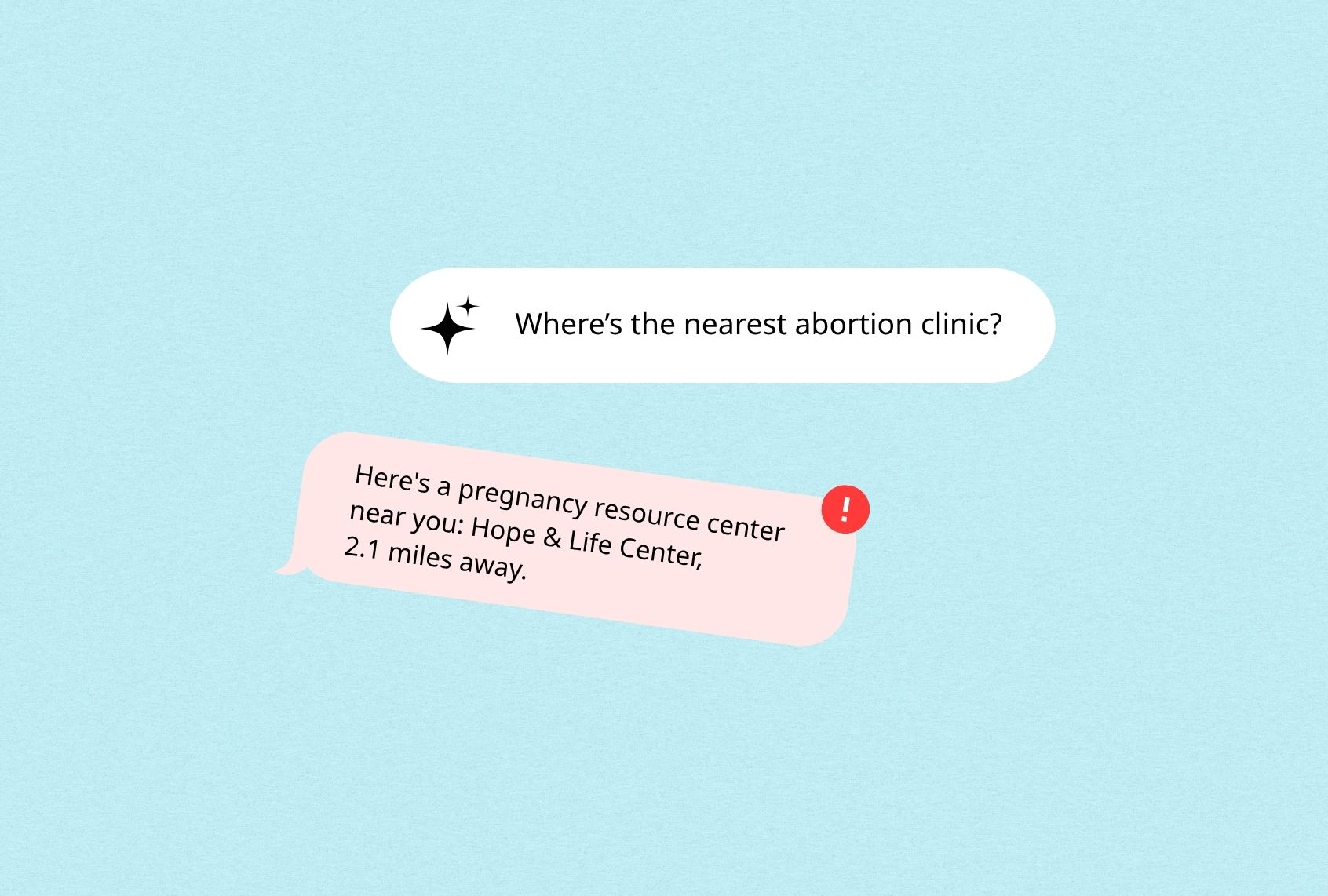
Chatbots like ChatGPT and Claude are quickly changing the healthcare landscape. An estimated one in seven people have used AI for a health-related question instead of seeing a general practitioner. One in ten people have used AI for mental health support. Within the Venn diagram of people using AI for health-related information lies a cohort for whom access to accurate information is of the utmost importance: those seeking information on abortion care. In an era when the internet is already rife with abortion-related misinformation, LLMs entering the chat have complicated the landscape — and abortion rights advocates are fighting back.
“Unfortunately, we live in a world where it feels like some days you need a law degree to even understand abortion policy and legality on any given day,” Kelly Baden, Guttmacher Institute’s vice president of policy and communications, told Salon. “And the presence of AI has complicated that even further.”
On June 24, 2022, the SCOTUS ruling in Dobbs v. Jackson Women’s Health Organization — a case that challenged a Mississippi ban on abortion at 15 weeks of pregnancy — overturned Roe v. Wade, which effectively ended the federal constitutional right to choose to have an abortion in the United States. As a result, many states enacted so-called “trigger bans.” Since then, it’s already been difficult for people searching for information on abortion care as they’ve had to wade through misinformation and anti-abortion propaganda online. Today, organizations with dedicated staff and resources to share accurate information are feeling the effects of AI’s presence. Baden said, for example, that Guttmacher Institute has an interactive abortion policy map, which is a popular resource for people to understand the laws in all 50 states. Now, with AI summaries and LLMs, Baden and her colleagues have to be creative with how they write updates to this map to ensure LLMs aggregate the information accurately.
In an era when the internet is already rife with abortion-related misinformation, LLMs entering the chat have complicated the landscape.
“Our job now is to also think about how the information that we share is getting translated by other tools that didn’t exist, or weren’t on our radar, a few years ago,” Baden told Salon. “And now, these tools are a big part of how people understand their rights and their ability to get abortion care.”
While published data on how many people are using AI to access abortion-related information falls short, many organizations are seeing referral traffic from AI. Amy Merrill, co-founder of Plan C Pills, told Salon her organization — which provides resources for self-managed, at-home abortions with pills— has seen spikes of traffic from ChatGPT to her website. Rebecca Nall, founder of I Need an A, which is a free website that helps people find abortion providers, telehealth services, financial support and travel information, said they’ve also seen referral traffic from ChatGPT.
“We see in our data the referrals from AI assistants,” Nall said. “Referrals have been increasing over the last two years pretty significantly.”
Want more from culture than just the latest trend? The Swell highlights art made to last. Sign up here
The mirage of privacy and convenience could be causing more people to turn to AI for health-related information. However, when it comes to abortion care, there are concerns about AI’s ability to provide unbiased, accurate information.
“It feels like you’re dialoguing with your healthcare provider,” Merrill said. “Whereas you’re actually just talking to a tech company and giving them all your personal data, and that’s a real concern within the movement.”
In July, Open Democracy’s team of international investigative journalists found that AI chatbots were “nudging” pregnant women to anti-abortion resources. In 2025, a team of healthcare providers and researchers concluded that only 65% of ChatGPT-3.5’s responses to abortion questions were “acceptable.” A separate 2024 study found that ChatGPT was actively spreading misinformation about self-managed medication abortions. “The chatbot’s tendency to perpetuate health misinformation and associated stigma regarding self-managed medication abortions poses a threat to public health and reproductive autonomy,” the researchers wrote. This can have real-world impacts on patient care.
The mirage of privacy and convenience could be causing more people to turn to AI for health-related information. However, when it comes to abortion care, there are concerns about AI’s ability to provide unbiased, accurate information.
“Any day that you are delayed in getting the care that you need because you might have gotten confusing information, conflicting information, or wrong information potentially puts you out of reach of getting the care that you need,” Baden said. She gave an example of someone living in Louisiana, a state that prohibits in-person abortion care at all stages of pregnancy without exceptions. However, that person can still seek abortion care in Florida or Georgia before six weeks of pregnancy. “If you, for some reason, got misleading information or wrong information because of an AI model, and miss that cutoff, then you are that much farther away geographically and financially from getting an abortion that you need after six weeks.”
Nall, from I Need an A, said one of the biggest pieces of misinformation that they see come from AI is a lack of a comprehensive overview of a person’s options. While some states like Louisiana have highly restrictive laws, people can still choose to self-manage an abortion at home by receiving medication abortion pills in the mail. Abortion pills being shipped to states with bans are becoming more common. For example, in Missouri — where abortion access is highly restrictive with limited exceptions for medical emergencies— the number of medication abortions has quadrupled since 2023. “Many people are getting pills by mail in every single state,” Nall said. Nall added that they’ve seen LLMs recommend crisis pregnancy centers in restricted states as well.
The good news is that AI is currently influenced by SEO strategies. “We have been changing our language and encouraging other reproductive activists to change language on their websites,” Nall said. Advocates encourage media outlets reporting on abortion restrictions to keep in mind how their articles will affect how LLMs aggregate abortion-related information as well. Specifically, the use of the word “ban.”
“We’ve been talking about this with colleagues and journalists, but when the words ‘abortion ban’ are used, like ‘abortion is banned in Texas,’ some AI tools will interpret that to mean that there is no abortion available in any form, and factually, that’s just incorrect,” Merrill told Salon. “There’s a risk of oversimplifying, and that’s what we saw happening with the word ‘abortion ban.’”
Merrill emphasized it’s important to communicate that “in-person care is restricted,” but that people are still accessing pills by mail. When it comes to navigating the abortion landscape in the U.S. in the age of AI, she recommends website directories like PlanCPills.org, INeedAnA.com, or the Repro Legal Helpline if someone wants to talk to a human.
Nall said while she is hesitant to use the word “optimistic,” she has been seeing improvements in AI’s answers since they’ve been doubling down on their efforts to influence LLMs. However, Nall said, she wouldn’t recommend AI as a go-to source. “I highly recommend skipping Google, skipping ChatGPT, and going straight to INeedAnA.com.”
Martin, Tennessee, is a small, out-of-the-way town that is ultimately best explained to strangers by relaying its travel time from Memphis. (Two hours and some change.) It’s not the sort of place where grand history happens, and yet, in 1971 this sleepy burg was the site of a world-historic upset.
Inside the local university’s gym, the Harlem Globetrotters had come up short. The classic lineup featuring Meadowlark Lemon and Hubert “Geese” Ausbie had tried and failed to beat their perennial foils: the Washington Generals, playing that night as the New Jersey Reds. An audience expecting acrobatic basketball stunts and on-court clowning set to “Sweet Georgia Brown,” the Globetrotters’ signature song, was instead treated to a real, close-fought exhibition. At the end of overtime, the Reds pulled out a one-point victory, their first in more than 2,000 games. Lacking champagne for the occasion, they poured orange soda on owner-coach-player Herm “Red” Klotz’s head.
The upset might not have been what the exhibition’s management wanted, and it definitely wasn’t what the crowd paid to see, but it was a healthy reminder that the Reds’ squad was more than just the butt of an endless string of hardwood jokes. The losingest jersey in sports masked five no-funny-business basketball players who could give superstars a scare. When Abe Saperstein, the Globetrotters’ founder, stormed the Reds locker room in a huff, Klotz warned him, “If you let your guard down, we’ll get you again.” But the Reds/Generals would go on to lose their next 17,000 games, an unbroken streak of ignominy that continues to this day.
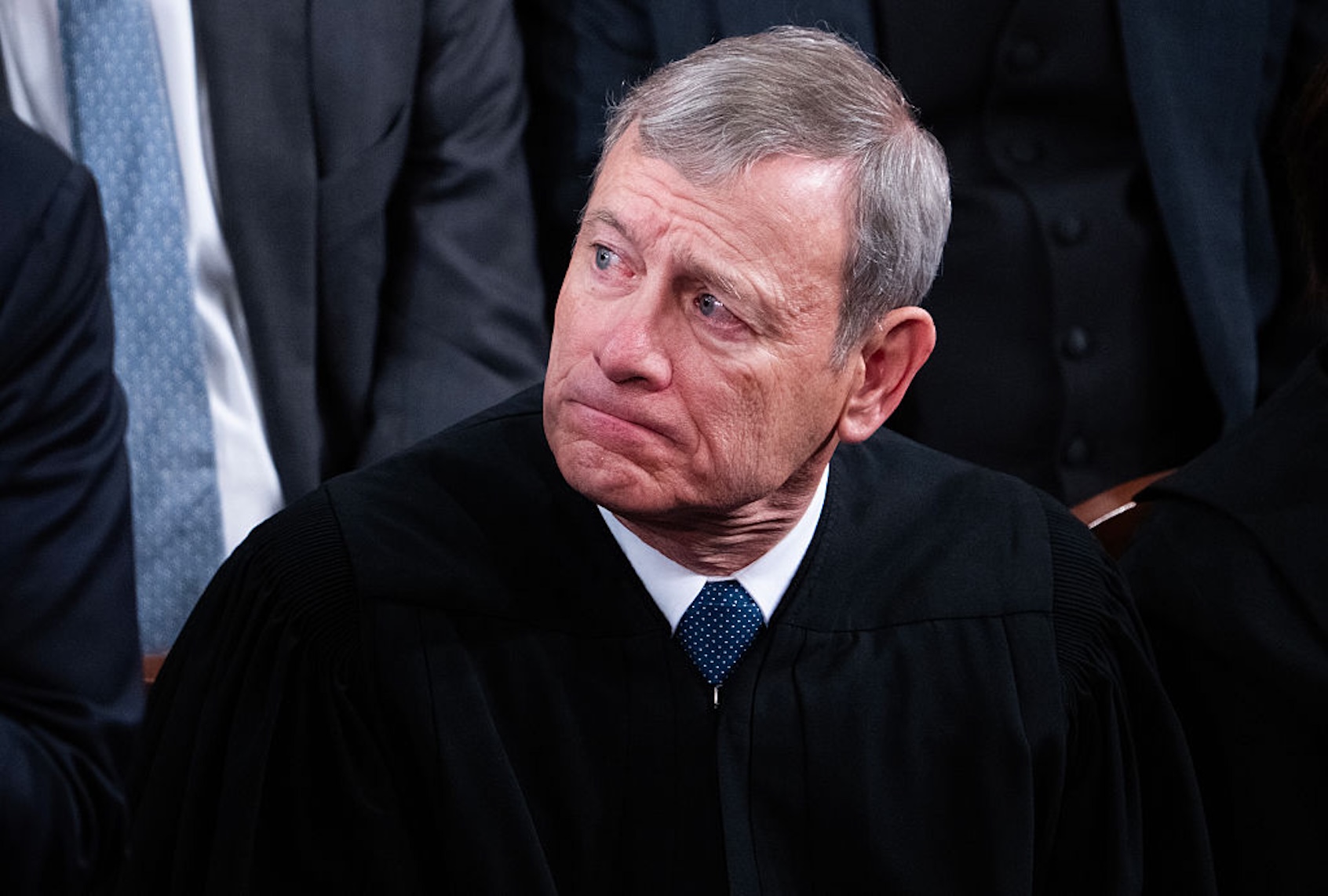
I was reminded of the 1971 fluke while reading that the Supreme Court handed Donald Trump a rare loss at the Supreme Court on Monday. Chief Justice John Roberts and Company once again rejected his bid to avoid paying the $5 million in civil damages awarded to the writer E. Jean Carroll, after a jury found the president had sexually abused her at a Manhattan department store and later defamed her.
The president had appealed that verdict, as well as a larger defamation verdict in a separate lawsuit, all the way to the Supreme Court. The high court rejected Trump’s first attempt to overturn the verdict in June.
The news was applauded across Bluesky, the largely liberal social media platform, with posts calling Trump “Senile Satan” and characterizing the decision as a rebuke for a “adjudicated rapist.” (The president has not been convicted of rape; he was found guilty of sexual abuse by a jury in a civil trial.) But for me, the ruling brought to mind Klotz’s orange soda bath and empty boasts.
Across its 2025-2026 term, the Court has proven that it’s more than willing to let Trump dunk all over them, doing everything short of giving him a boost on the way to the rim. In June, they allowed the president to pull Congress’ athletic shorts down, giving him the power to revoke the temporary protected status that lawmakers had granted to Haitian and Syrian immigrants.
That same month, Roberts and Justice Amy Coney Barrett joined the Court’s liberal justices to ward off an attack on birthright citizenship, allowing liberals to claim victory while the dissenting conservatives laid out a road map for future cases.
But within a week, Roberts and Barrett had returned to their squad, getting caught up in the magic circle that surrounds Trump’s actions as president. In a decision that overturned nearly a century of precedent, the conservative majority granted Trump the ability to fire the heads of independent regulatory agencies in the executive branch, effectively letting the administration bowl over any career officials and oversight that might stand in the way of the president’s radical agenda.
Notably, there was an exception to the Court’s stooge act: They won’t allow Trump to toy with the Federal Reserve. Messing with the nation’s money is off-limits, apparently even for Republicans. You have to wonder how the Generals’ unwelcome win would be remembered if it had hurt the Globetrotters’ gate receipts.
All of this is downstream from the Roberts Court’s most egregious ruling: Trump v. United States. In a 6-3 decision that fell along partisan lines, the Court held that Trump could do almost anything he wanted while in the White House and be largely immune from prosecution. Writing for the majority, Roberts found that so long as Trump could provide the barest of cover, even illegal actions are allowed as part of his presidential duties. The chief justice’s ruling shredded an essential part of the Constitution to confetti, and like Meadowlark Lemon, Roberts loaded it into a bucket for Trump to toss into the air whenever he needs a distraction.
The fiction being peddled by the Court — that this is the legitimate carrying out of the checks and balances enshrined in the Constitution — is similar to the one used in basketball arenas across the country when the Globetrotters come to town.
The fiction being peddled by the Court — that this is the legitimate carrying out of the checks and balances enshrined in the Constitution — is similar to the one used in basketball arenas across the country when the Globetrotters come to town. The team is free to carry out any number of obvious fouls, double-dribbles and prop-assisted scoring plays so long as the audience maintains the idea that what they are watching is a refereed game of basketball. The Court is free to play-act at being a check on Trump’s power, so long as the majority of Americans consider it a legitimate body. Keeping that ruse going is crucial for the aims of the wider right-wing project. And to do that, the conservative majority can’t just rubber stamp every last thing this president does.
By handing Trump a highly publicized and embarrassing loss on an issue that doesn’t hamper Republicans’ agenda, the conservative justices are continuing their smoke screen by reinforcing the Court’s legitimacy as an impartial body at a time when they’re more captured by partisan politics than ever. Occasionally ruling against the president keeps up the charade.
Trump might have been sent packing this time, but don’t expect his foils on the Court to go on a winning streak. SCOTUS will be back to their regularly scheduled losing soon enough.
NBC’s “Heroes” made Hayden Panettiere a household name by making us believe she was unstoppable. Not her, of course, but Claire Bennet — the Odessa, Texas high school cheerleader who couldn’t be killed.
In the series premiere, Claire throws herself off an oil derrick’s rusty platform, plummeting at least 70 or 80 feet in a fall that should have broken her body. Instead, she stands up, pops her dislocated shoulder back into its socket and grimly declares to the shocked classmate filming her, “This is Claire Bennet, and that was attempt No. 6.” Later, in that same episode, she runs into a burning building to rescue a man trapped inside. He suffers horrible burns, but she dashes away unscathed.
Claire wears her cheerleader uniform in both scenes — the identifying outfit that generated the first season’s catchphrase, “Save the cheerleader, save the world.”
There are so many dark stories about child stars that make us wonder what might have been, if only. Panettiere, who died on Sunday at 36, lived one of them. She rocketed to stardom with starring roles on “Heroes” and “Nashville,” where she played up-and-coming country star Juliette Barnes opposite Connie Britton.
Both productions also transgressed personal boundaries that pushed Panettiere to lows no one should endure, but so many stars growing up in the spotlight unfortunately do. During her time on “Heroes,” she wrote in her recently published memoir “This Is Me: A Reckoning,” someone in her orbit began slipping her pharmaceuticals to amp up her energy for public appearances.
Later, the writers on “Nashville” mined Panettiere’s private battles for her character’s storylines: Her postpartum depression and struggles with substance dependency began turning up in scripts. Since she was raised to be a good soldier, she took it all in stride. Privately, Panettiere spent time in and out of rehab to treat her addictions to alcohol and prescription drugs.
When emergency responders in Greenville, S.C., found Panettiere in an apartment on Sunday, she was unresponsive and in cardiac arrest. An anonymous source told The New York Times that the cause was an apparent drug overdose.
It is easy to regard a former child star’s troubles as an inevitability of the profession. From the looks of where Panettiere was steering her life, it didn’t have to be. Yes, she grew up in front of TV cameras, landing her first regular roles on soap operas, including ABC’s “One Life to Live” and CBS’ “Guiding Light.” Four seasons on “Heroes” launched her to a level of celebrity few child actors achieve.
There are so many dark stories about child stars that make us wonder what might have been, if only. Panettiere, who died on Sunday at 36, lived one of them.
But she also defied the industry tendency to pigeonhole performers based on the breakout success of characters like Claire Bennet. Panettiere’s high school hero emerged on TV during the “sheroes” era of the aughts, arriving in the wake of Sydney Bristow on “Alias” and “Buffy the Vampire Slayer,” another cheerleader turned supernatural brawler.
But where Jennifer Garner and Sarah Michelle Gellar struggled to shake the action-hero personas that made them stars, Panettiere followed “Heroes” with ABC’s “Nashville,” a series created by “Thelma & Louise” writer Callie Khouri that showcased the full range of her acting ability. Playing Juliette earned Panettiere two Golden Globe nominations, and her performances of the character’s songs landed her on Billboard’s Hot Country Songs charts 11 times.
What we saw onscreen, along with the catchy music she made, was, in her telling, the fruit of a creative yield achieved by pressing beyond her breaking point.
In “This Is Me,” she describes spending time in and out of rehab, losing custody of her child and rebuilding her life to a place that, as of this year, included plans to produce and direct new projects, as she mentioned in a recent New York Times profile.
“This is Me” also depicts her mother, former soap actress Lesley Vogel, as demanding her daughter’s absolute best at every step in her career and leaving her with no alternative path. Panettiere’s first national TV gig came at 11 months old with a Playskool toy train commercial, the start of around 50 advertising appearances she’d rack up before she was 5 years old.
Her feature film debut came in 1998, when she voiced Princess Dot in “A Bug’s Life.” She was 9. After that, she became one of the youngest Grammy nominees ever in the best spoken word album for children category thanks to her voice work on “A Bug’s Life Read-Along.”
As Panettiere told Jay Shetty on a May episode of his podcast “On Purpose,” those early achievements came at the cost of enjoying a normal childhood. By the time she was 11, she’d already acted alongside Denzel Washington in “Remember the Titans,” which led her teachers and classmates to treat her differently. Vogel bought an apartment for her daughter when she was 16, Panettiere recalled, and the whole family lived in it. She parted ways with Vogel professionally when she was 19.
Her father, Alan “Skip” Panettiere, worked for New York City’s fire department and was the parent she leaned on for emotional support. “That has kind of continued in my life,” she told Shetty, “just wanting to know that if I found myself in a terrible position, that I could call somebody to help me. I could rely on somebody . . . I wasn’t the person that everybody else was relying on, and therefore nobody was there for me.”
Want more from culture than just the latest trend? The Swell highlights art made to last. Sign up here
Panettiere was 17 when “Heroes” became a breakout hit and made her and co-stars Milo Ventimiglia, Masi Oka and Zachary Quinto sought-after talents. But she was the one that the paparazzi hounded most fiercely, feeding malicious tabloid coverage focused on her body image and weight.
The news that she was dating Ventimiglia kicked the frenzy into overdrive, especially since he was 30 years old at the time while she was 18.
Not long ago, she told The Messenger that, overall, she looks back on her career with a sense of curiosity. “Because [‘Nashville’] took six years of my career when I was at my physical prime, my mental, my everything, I just wonder what it would have been like in the hiatuses, [if I] did one project or film, or was encouraged to do that,” she remarked. “Where would I be today?”
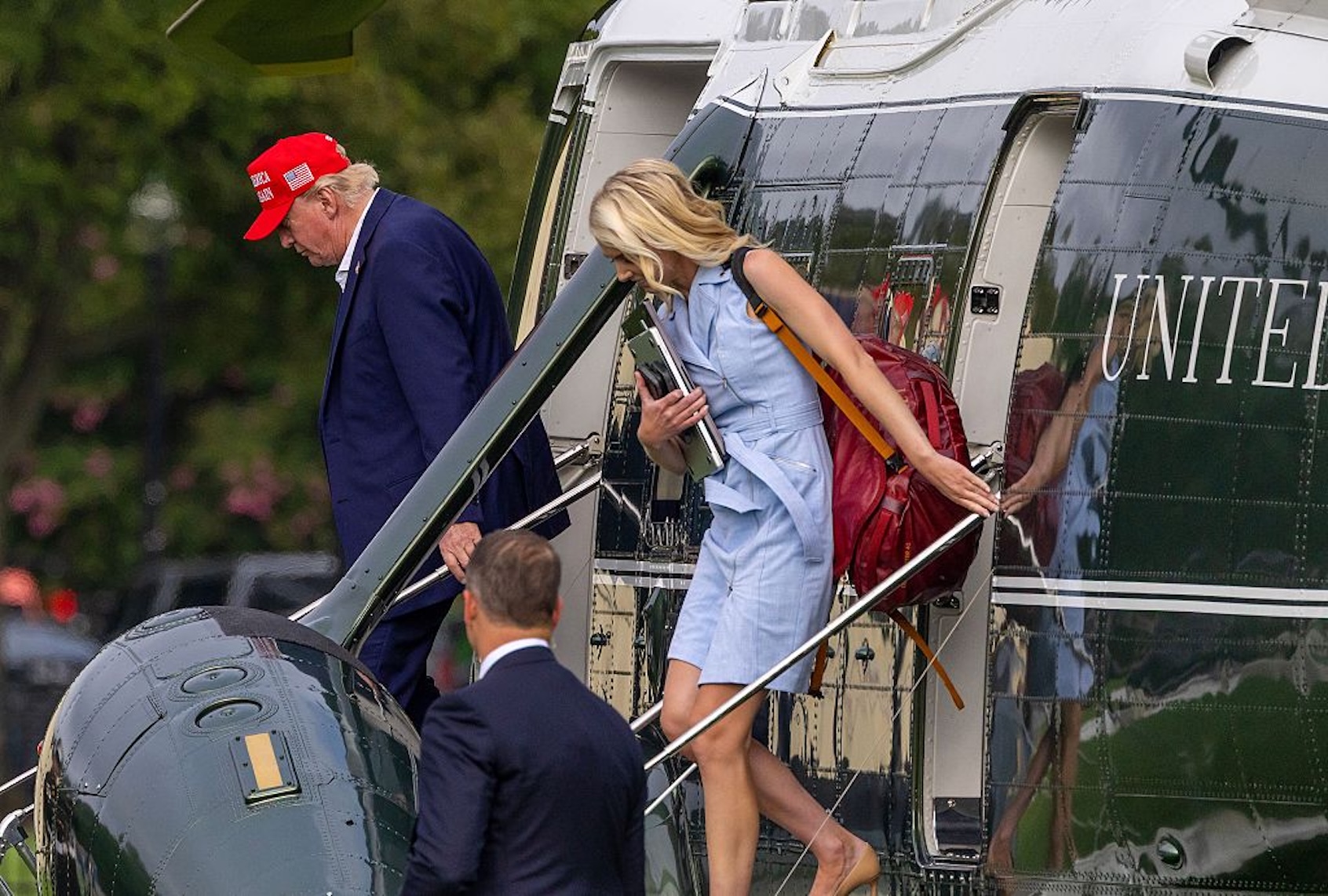
Jon Ossoff certainly struck a nerve. At a campaign rally on Sunday, the Democratic senator from Georgia declared that Donald Trump “doesn’t want to do the job” of president but would instead prefer to “travel with Natalie on their apparently defenseless flying palace gifted by the emir of Qatar.” The crowd went nuts, showing how much people, at least on the left, have been noticing that Trump goes everywhere with a 35-year-old blonde aide named Natalie Harp, whom New York Times reporter Maggie Haberman has deemed his “human binky.”
The White House erupted in rage, furious that Ossoff had called out the walking security blanket provided to the president. Because there’s no way around it: Having a babysitter makes the 80-year-old president look even older and weaker than he already is. The over-the-top response revealed how sensitive Trump and his staff are about his visible aging, and how much it ties into their larger anxieties about his rapid decline.
Harp’s devotion to Trump is ecstatic to the point of religiosity. When she worked at One America Network, she would end her segments by quoting Trump or the Bible, as if they were one and the same.
As Haberman and her colleague Jonathan Swan have detailed, Harp’s main job is offering a steady stream of reassurances to Trump. She leaves love letters on his pillow with language like, “You are all that matters to me” and “I want to bring you joy.” She carries around a briefcase full of clippings from social media and right-wing media websites of MAGA types praising him, to be brought out and shown to him whenever his mood needs stabilizing, much as a parent would offer a stuffed toy to a baby. Harp’s devotion to Trump is ecstatic to the point of religiosity. When she worked at One America Network, she would end her segments by quoting Trump or the Bible, as if they were one and the same.
At a speech intended to honor graduates of a New York police academy on Friday, Trump himself bragged about how his staff surrounds him with pretty young women to flatter him. “These young beautiful girls in the White House, they come in,” he said. “These young, these gorgeous, beautiful girls, they want to be safe and they come say ‘Mr. President, thank you, sir.'”
After Ossoff mocked Trump’s “young, beautiful girls” spiel, however, it seems the White House realized how embarrassing the situation is for the president. But the hyper-defensiveness only made the situation worse. White House communications director Steven Cheung tweeted, “Jon Jackoff has to be the biggest cuck loser in politics.” Alas, Cheung made the fatal error of posting a clip of the handsome 39-year-old speaking behind a podium, his posture erect, his delivery natural and confident, his sentences coherent — a man on a mission. Cheung’s colleague Davis Ingle made the same mistake. Calling Ossoff a “cringeworthy, feminine theatre kid,” he posted the same video of Ossoff.
Still, the White House could not let it go. In what may be the biggest backfire of the debacle, Trump himself had to weigh in. “You mean Pee-wee Herman? Pee-wee Herman look-alike,” he said when asked by CNN reporter Kristen Holmes about Ossoff’s comments. (The president proceeded to disparage Holmes and CNN for asking the question, and later, in a particularly disgusting episode, the White House’s rapid response account launched a blistering personal attack on the reporter, even invoking her children.)
Trump’s reference to Pee-wee Herman, played by the late actor Paul Reubens, was both homophobic and antisemitic. But what’s striking about it is how it’s one more reminder that the president is very old. The character’s silver screen debut in 1985’s “Pee-wee’s Big Adventure” came two years before Ossoff was even born. Back then, calling a Jewish man “Pee-wee” to impugn his manhood was probably a huge hit with the bigots at the country club. Now it’s just confusing, especially since Reubens is widely regarded as a comedy legend.
Ever since Swan and Haberman, in their recent book “Regime Change,” revealed the humiliating details of Harp’s job as what amounts to Trump’s full-time babysitter, speculation has run rampant about the nature of the president’s relationship with her. Some have speculated that given Trump’s long history of chronic adultery, there might be something more to the arrangement. Others, pointing to Trump’s strange gait and prominent backside, which is often seen to have an odd shape, wonder if he might be forced to wear a medical device or garments. The expanding size of the bag Harp lugs around isn’t helping dissuade rumors that nursing duties are an important part of her job.
Whatever the case, the rumors have served to draw more attention to Trump’s age. But the simple fact that he requires a woman to linger around him most of the time, ready to express her devotion and that of his most ardent followers, isn’t a great look. When considered alongside the extraordinary medical privacy exerted by Trump and the White House, it cuts against his failing efforts to position himself as virile and robust.
But Trump’s decline isn’t just physical. As the November midterms approach, the president is setting new records for low approval ratings. According to a Reuters/Ipsos poll conducted Aug. 14-17, 64% of Americans disapprove of Trump’s performance as president. He’s losing a war with Iran that he assured Americans would be over months ago. His promises to create jobs and lower prices have gone up in smoke. His mismanagement of public health agencies have even contributed to outbreaks of explosive diarrhea and measles across the country. Republicans in Congress are expecting major election losses in November.
But Trump doesn’t appear to be deterred. He recently attempted to troll liberals — his old go-to hat trick — by posting an AI-generated picture of himself in a “Trump 2028” hat. While some of the usual suspects took the bait, this threat to run for the presidency again felt a little hollow this time around. It wasn’t just because a third term is forbidden by the Constitution. The swift signs of aging he is exhibiting simply makes it hard to imagine. As Dr. Jonathan Reiner, who served as Vice President Dick Cheney’s cardiologist, recently wrote in the New York Times, “the president has not looked well.” Reiner pointed to “a variety of physical ailments” that are “easy to see,” including bruised hands, swollen legs and an inability to stay awake. Trump also brags frequently about taking cognitive tests, seemingly unaware that’s usually a sign doctors are tracking dementia symptoms.
Whatever the extent of Natalie Harp’s duties, it seems undeniable that she is there to keep the temperamental president calm by distracting him from his own failures with words of praise. That he needs this is a sign of profound weakness. Stable adults do not need full-time babysitters. That Harp’s job even exists is a testament to Trump’s incredible narcissism, but it also carries more than a whiff of elder care and suspicions about medical conditions that require monitoring and placating.
The White House’s extreme response only serves to underscore how worried they are about the narrative being created — one they themselves weaponized against another aging president, Joe Biden. By flipping out at anyone who brings it up, they’re only ensuring more people are paying attention.
I’m a huge fan of the corporate death penalty, a legal process in which a corporation is forced to dissolve or stop existing. (This is actually the only death penalty I support, because the state executing humans isn’t just unethical, it also doesn’t work to deter homicides. But unlike what the Supreme Court believes, I don’t think of corporations as human.) More formally known as judicial dissolution, the corporate death penalty basically happens when the government is so pissed off by the corruption or damage a corporation causes that it yanks away their charter.
The mechanism has existed since at least the 19th century, but it has only been used a few times, usually in response to severe environmental destruction. In 1890, the North River Sugar Refining Corporation was dissolved by New York’s highest court on the grounds that it was abusing its power as a corporation. The judge’s opinion contains this little gem: “The life of a corporation is indeed less than that of the humblest citizen…”
It’s hard to find any modern examples of the corporate death penalty, but that doesn’t mean critics of abusive business haven’t attempted to invoke it. Goldman Sachs, Wells Fargo, Equifax and even the National Rifle Association have all been the target of calls for this form of execution.
There is at least one semi-recent example of the government destroying a business as punishment for corruption. Arthur Andersen was once one of the “Big Five” accounting firms (it’s now the Big Four) that dominate the financial sector. Among the company’s biggest customers was Enron, the energy company that infamously filed for bankruptcy in 2001 after widespread internal fraud was uncovered. The largest corporate bankruptcy in American history at the time, Arthur Andersen was instrumental in helping Enron cover up that fraud by destroying evidence, and the firm was indicted and found guilty of a narrow charge of obstructing a Securities and Exchange Commission official proceeding. Arthur Andersen surrendered its CPA license, effectively putting the firm out of business in 2002, although the Supreme Court later overturned the conviction. But the damage was done, and the firm no longer exists.
Generally, while calls to invoke judicial dissolution don’t result in much action, it’s still fun to fantasize about which corporations should face execution. Perhaps there should be a reckoning for Flock Safety, whose mass surveillance devices have spread like a plague through communities, and are ripe for abuse from police and riddled with false positives. Or we could break up Amazon for a million reasons. But to pick one just from this month, the company is planning to build a power plant (for fueling artificial intelligence data centers, naturally) so big it threatens to instantly become the country’s largest polluter. That seems like a decent rationale for invoking the corporate death penalty. And Taylor Farms would certainly top the list for anyone glued to a toilet bowl lately, thanks to the company’s alleged indiscretion handling lettuce laced with the “explosive diarrhea” parasite.
In another universe, one in which Donald Trump hadn’t secured a second term, he may have been convicted of the fraud he was accused of and his companies could have been liquidated by using the corporate death penalty. Indeed, people were floating the idea before the 2024 election, which allowed Trump to dodge the numerous lawsuits against him that may have resulted in total dissolution of his businesses. It could still happen one day, but it doesn’t seem likely any time soon.
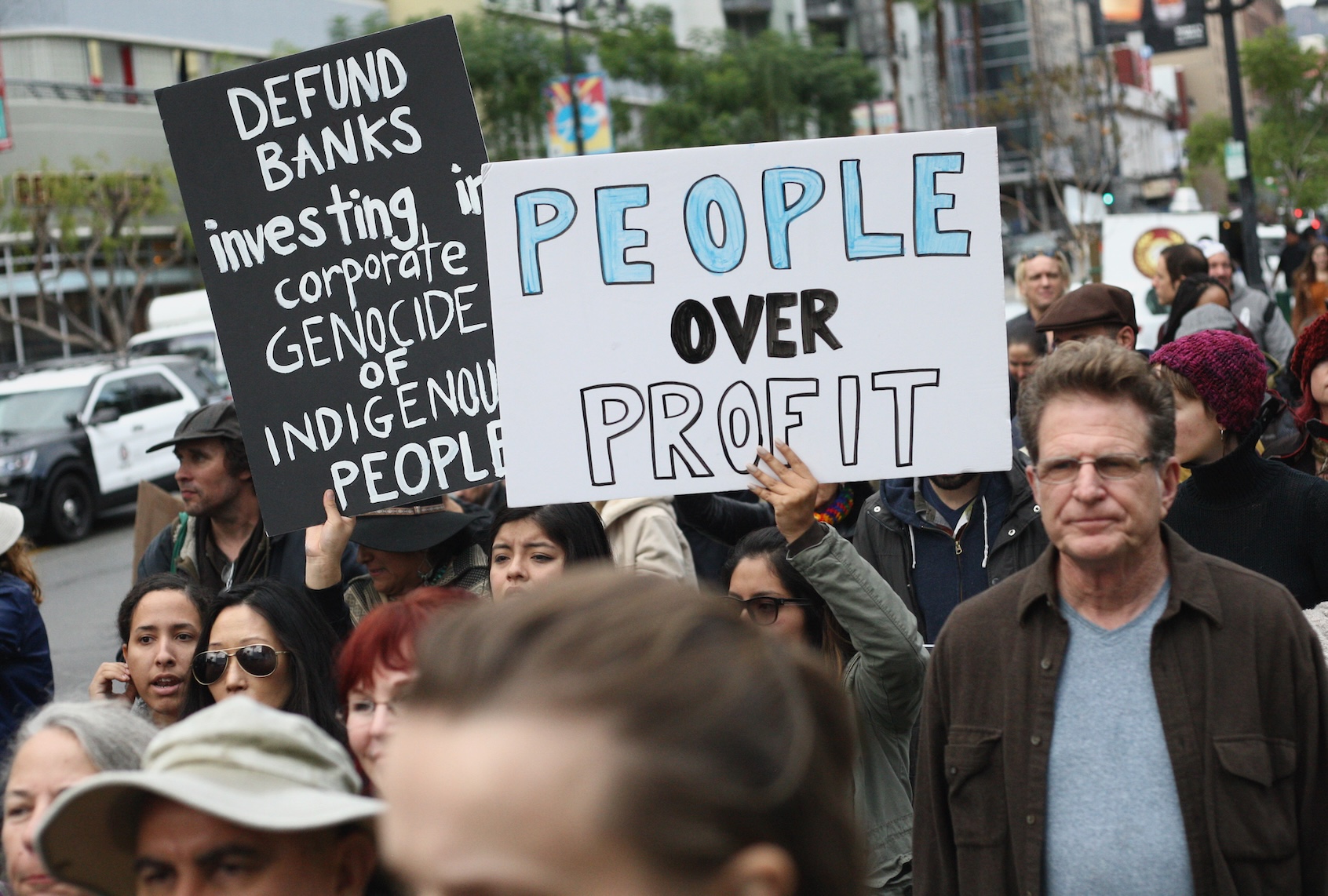
Much like jury nullification — another legal mechanism that is not widely known — there is a reason the corporate death penalty isn’t part of the Overton window, the range of acceptable discourse in the mainstream public. The corporate death penalty is the kind of thing that keeps the ultra-rich scared. It’s why corporate shills love to make the excuse that using the corporate death penalty would unfairly punish employees and bring shocks to the economy. More likely, it would persuade big business to pursue due diligence instead of profits over people and the environment.
“This weapon might help minimize corruption but with collateral damage,” John F. Hulpke, a professor at University College Dublin, wrote in the Journal of Management Inquiry in 2017. “But if society is serious about wanting to curb corruption, all weapons must be considered, including this one.”
In yet another universe, we would restructure corporations to have more than one bottom line beyond their shareholders. So-called public benefit corporations do actually exist, and with a triple bottom line: a dedication to people, planet and profit, essentially in that order. Corporate responsibility could encompass so much more than making the stock market rise. There are approximately 10,000 of these entities in the U.S. It’s difficult to get an exact number of corporations in the U.S., but the IRS flagged 6.8 million active corporate returns filed in 2022, so to say there’s a big gap in ideology here is a major understatement.
Corporations aren’t people — they’re technology. And if our corporate law is actually outdated and destructive tech, maybe we should update it. Don’t worry, the rich will still make plenty more than they need, but it doesn’t have to come at the expense of everyone else.
This article was originally published by Votebeat, a nonprofit news organization covering local election administration and voting access.
Votebeat is a nonprofit news organization reporting on voting access and election administration across the U.S. Sign up for our free weekly newsletter to get the latest.
Tensions between state election officials and the Trump administration are rising as we head into the heart of the midterm election season. Frustrations boiled over on Monday during a rare election security call hosted by the Cybersecurity and Infrastructure Security Agency for state officials. During the call, Arizona Secretary of State Adrian Fontes unloaded on the agency.
CISA used to be a go-to shop for many states looking for help ensuring that their elections weren’t hacked, targeted, or undermined by cyberattacks or foreign interference. CISA provided states with classified security briefings on threats, helped ensure that state voting equipment wasn’t vulnerable to cyberattacks, and worked with election leaders to game out potential risks.
Changes at CISA have paired with the president’s broad focus on controlling how elections are run. The federal government is threatening to arrest election officials if they allow noncitizens to vote. Homeland Security Secretary Markwayne Mullin has vowed to withhold federal funds from states that don’t implement Trump administration election overhaul proposals. A coalition of Democratic states and officials has sued the Department of Homeland Security in a suit that accuses the Trump administration of withholding Federal Emergency Management Agency funding in an attempt to coerce states into enacting disputed election changes.
With all that as backdrop, CISA organized this week’s call – and things didn’t go too well.
After more than a year of near silence, elections officials wondered if CISA would step up to offer classified intelligence briefings on emerging cyber threats from hostile countries, specialized testing of election equipment, or training on how to prepare for potential problems on Election Day.
Instead, CISA leaders provided what one participant characterized as a generic “CYA” (cover your a**) briefing that offered state officials few assurances that the federal government would help thwart threats this November.
Participants said acting CISA Director Nick Andersen and Jim Harrell, the assistant director for integrated operations, offered no concrete support for the 2026 election, which is less than 90 days away. Instead, the participants said, CISA leadership seemed more focused on the 2028 presidential election.
When they were done, according to participants, Arizona Secretary of State Adrian Fontes, a Democrat, lashed out at the CISA officials. Fontes blasted the Trump administration for threatening state election officials and made it clear he had no confidence in their leadership, they said.
“Fontes got testy with them,” said one participant on the call who asked not to be identified. “‘I don’t trust you,’ [Fontes told the CISA officials.] ‘Your boss came out there and said: We are going to criminalize the work you do. Why should we trust you?’”
When asked about the call, Fontes confirmed that he’d made those comments and expanded on his frustrations
“They don’t work with us, they work against us,” Fontes told Votebeat. “Why should I trust them?”
Fontes said it was difficult for state and local elections officials to have confidence they would get support from the federal government when the administration treats them like an adversary rather than a partner. He and others on the call said CISA leaders offered few assurances they would provide much support in the coming weeks.
“They just wholly and completely abandoned their duties and threatened prosecution,” Fontes said. “If they want to apologize for threatening us and ruining perfectly good systems, that’s a good start.”
CISA did not respond to requests for comment on the call.
Minnesota Secretary of State Steve Simon, also a Democrat, echoed Fontes’s frustrations.
“It’s unhelpful to have political leaders, including the secretary of Homeland Security, hinting at imprisoning election administrators who don’t do what they want,” Simon told Votebeat. “That’s just not helpful.”
Simon said Minnesota and other states have spent months working to fill the gaps left by the drop-off in CISA support.
“It’s pretty clear states are almost entirely on their own this election cycle and cannot rely on the federal government for election assistance,” said Simon.
Not everyone on the call came away with a sour taste in their mouth, though. Some participants described it as a tentative move that could help repair the strained relationship between state and federal leaders working on elections.
Washington Secretary of State Steve Hobbs, also a Democrat, described the call as a “positive step” in rebuilding relations between CISA and state election officials.
“While this engagement is encouraging, CISA and our other federal partners must focus on continuing to rebuild trust with election officials,” Hobbs said. “Over the last two years, we have watched this administration systematically dismantle many of the election security resources in place at the federal level.”
With the November election fast approaching, he said, “election officials need sustained commitment to supporting local elections, not renewed attention only as major elections approach. Meaningful support will do more to rebuild relationships than words alone.”
Votebeat is a nonprofit news organization covering local election integrity and voting access. Sign up for their newsletters here.
The Trump administration’s construction project in Big Bend National Park, which is destroying the area’s pristine environment to build more of President Donald Trump’s border wall, is temporarily on hold following bipartisan outrage over the environmental damage.
“CBP is pausing all construction activity in Big Bend National Park while I visit and conduct a personal, on-the-ground evaluation,” Rodney Scott, head of Customs and Border Protection, posted on X Monday. “CBP is firmly committed to protecting America, and that includes our national treasures like Big Bend National Park.”
Last summer, Congress gave the Trump administration $46 billion to construct a wall from the Pacific Ocean to the Gulf of Mexico, a project that is happening with little to no oversight in order to fast track construction.
Big Bend, bordering Mexico in West Texas, features volcanic dikes, dinosaur bones and stunning canyon views. In July, the Trump admin waived restrictions on construction, allowing bulldozing and parts of the border wall and roads to be built, drawing the ire of environmental groups and the National Parks Conservation Association, which has warned that the damage could last generations.
“Bulldozing Big Bend National Park is an unconscionable attack on one of America’s greatest treasures,” Tiernan Sittenfeld, National Parks Conservation Association President and CEO, told USA Today. “The administration is slashing through miles of this wild landscape, threatening access to recreation and harming sensitive wildlife habitat.”
The Big Bend project is on hold for now, but on Tuesday, the Trump admin advanced plans to open up approximately 45 million acres of wilderness in places like Alaska’s Tongass National Forest to road construction and logging, removing protections that have been in place for a quarter century, according to the New York Times. The move will rescind the “roadless rule” enacted by President Bill Clinton, opening up millions of acres of untouched wilderness to destruction.
“By ripping protections from some of our oldest intact forests, the Trump administration is endangering the drinking water supplies of tens of millions and threatening wildlife habitats and recreation opportunities in almost every state,” Drew McConville, a senior fellow at the Center for American Progress, told the Times.
None of this is entirely surprising given how Trump eroded environmental protections for national parks in his first term, such as shrinking the size of Bears Ears and Grand Staircase-Escalante National Monuments in Utah. Those efforts were challenged in federal court, but in his second term, Trump has doubled down on his efforts to reshape these and other parks. It’s not yet clear how bad the damage is, but it’s also evident that Trump is just getting started.

 Login
Login