Tim Miller shares highlights from his MS NOW appearance with John Heilemann and Jessica Taylor—Trump's political struggles, a scorching anti-war ad targeting Mike Rogers, Bill Cassidy's confirmation vote, and a state-by-state look at the Senate map, from Georgia to Texas to Kansas.
An F/A-18F Super Hornet preparing to launch from the flight deck of USS Abraham Lincoln on June 25, 2026. (Photo: U.S. Navy)
ACTING SECRETARY OF THE NAVY HUNG CAO traveled to San Diego to meet with families of sailors who are part of the USS Abraham Lincoln Carrier Strike Group. On Thursday night, he walked into a room filled with people who were angry, exhausted, frightened, and looking for answers about when their loved ones were coming home.
I know something about walking into that room.
In April 2004, the 1st Armored Division was preparing to return to Germany after a year in Iraq. Families had been counting the days; ribbons and ‘Welcome Home’ banners decorated our bases in Europe. The lucky soldiers who would be the first to leave were packing their gear and helicopters were receiving shrink-wrap. Then, by the time some of our troops had already been home a few days, came word that we would be extended in Iraq for an indeterminate number of months to counter the uprising of Muqtada al-Sadr’s militia. His group’s uprising was spreading across Baghdad and central Iraq, the security we had fought for over the last year was rapidly deteriorating, and the Pentagon believed we should stay to provide additional combat power.
Our twelve-month deployment would become fifteen months. Worse, because some units had already begun returning home, we had to recall back to Iraq roughly a third of our 20,000-person force that had already been reunited with their families in Germany.
In announcing the extension to our team, our division commander, Maj. Gen. Marty Dempsey, gathered his commanders. He told us something I have never forgotten. We could be disappointed, he said. We could even be angry. But we were leaders, and we had been given a new mission by the secretary of defense. Our responsibility was to explain that mission to our soldiers, prepare them for it, and lead them through it.
Then Marty gave me another mission that night: “We need to send a senior leader back to Germany to talk to the families. I want you to do it.” He kidded that it would likely be tougher than combat. To a degree, he was right.
Over three days, I traveled to the seven communities where our soldiers and families lived. At every stop, I walked into an auditorium filled with spouses and children who had expected their soldiers to be home within days or weeks. Instead, they had just been told that husbands, wives, fathers, and mothers would remain in combat for another few months.
When I arrived at the Ramstein airport, my wife was there to meet me. We hadn’t seen each other since the deployment began. After a hug, she gave me the best advice I ever received when talking to families.
Don’t tell them the mission demands their soldiers stay. They already know their soldiers have a mission.
Don’t tell them to be strong. They’ve already been strong for a year.
Don’t brief them on what the division is doing. They really don’t care about that.
Instead, listen to them and answer their questions until they don’t have any more questions to ask, and answer them honestly with what you know and don’t know.
So that’s what I did in all seven of those meetings. And the statements and questions began to flow.
One mother told me that she and her children had filled a jar with M&Ms—one for every day remaining in the deployment. Each night, the children removed one. The jar was almost empty. Now, she asked, what was she supposed to tell them? What was she supposed to do?
A young teenage girl told me she had been waiting for her father to come home because she wanted him to take her to the father-daughter dance at her high school. He wasn’t going to make it, so who would take her?
A 19-year-old Army wife stood up and, with a mixture of anger and confusion, simply said she had married her soldier right before they came to Germany, and he left for Iraq right after they arrived. She’d been making her way so far with the help of the other wives, but now she didn’t understand what was happening. She wasn’t interested in hearing about operational requirements in Baghdad or the strategic implications of the Sadr uprising. She wanted someone to explain why the Army had changed the bargain she thought it had made with her family, and she wanted her new husband home.
There were dozens of questions like those. Some were angry. Some were heartbreaking. A few couldn’t really be answered.
But something happened in those auditoriums. The anger didn’t disappear—nor should it have. Instead, it gradually changed into understanding and, finally, a reluctant acceptance of what their soldiers had been asked to do, and in turn what they had been asked to do. Not because I gave them a brilliant briefing. I didn’t. It happened because someone had come to listen to them, stood in front of them, and treated their fears as legitimate.
I THOUGHT ABOUT THOSE FAMILIES when I heard about the acting secretary of the Navy visiting the families of the Abraham Lincoln.
Their situation is, in many ways, much tougher than what faced us. The Lincoln left San Diego late last year for what was expected to be a normal deployment and was subsequently diverted to the Middle East and combat operations against Iran. Its crew eventually endured 208 consecutive days at sea without a port visit—a modern carrier record—and families now describe sailors dealing with broken toilets and laundry facilities, moldy showers, food shortages, limited supplies, and the grinding physical and psychological effects of months aboard a warship conducting never-ending combat operations.
An aircraft carrier may be one of the most impressive machines ever built, but it is still operated by human beings. Flight decks are extraordinarily dangerous workplaces even under normal conditions. Sailors work long shifts around jet engines, fuel, weapons, heavy machinery, electrical systems, nuclear propulsion, and aircraft launching and recovering day and night. Fatigue accumulates. Attention wanders. Judgment deteriorates. Small mistakes in that environment can become catastrophic ones. This is the human side of war.
That is what some Lincoln families now fear. They aren’t merely complaining that their sailors are tired. They are worried that prolonged stress, exhaustion, and enemy activity could eventually get their loved ones killed.
Cao, himself a retired Navy captain and combat veteran, deserves credit for going to face those families. But showing up is only the first requirement of leadership. The more important requirement is understanding what those families need when you get there.
They don’t need to be told their sailors are heroes. They already know that. They don’t need to be told the mission is important. They understand that better than most Americans. And they certainly don’t need to be told to be strong.
They need leaders to listen. They need honest answers about what the deployment is all about, why the deployment continues, what is being done to reduce the strain on the crew, and—if no one can tell them when their sailors are coming home—an honest explanation of why no one can tell them. Military families accept extraordinary burdens. But accepting those burdens doesn’t mean surrendering the right to ask hard questions of the people who impose them.
Twenty-two years ago, I learned that lesson in seven auditoriums across Germany. Sometimes the most important thing a senior military leader can do isn’t explain the mission. It’s stand in front of the people paying the price for it—and listen.
YOU MIGHT THINK DEMOCRATS would be up in arms over the violence perpetrated by the Trump administration and its agencies in implementing its deportation agenda.
And on its official social media channels, the Democratic party has issued powerful statements, as well as posts highlighting the last words of those killed by state violence.
But a closer look reveals that that social media energy has not translated into actual midterm messaging.
On July 26, less than two weeks after Johan Sebastián Durán Guerrero’s death in Maine, House Democratic leader Hakeem Jeffries unveiled the party’s “Fighting for an Affordable America” agenda in Pennsylvania alongside Gov. Josh Shapiro. The program made clear how the Democrats are framing the run-in to the midterms, with a focus on pocketbook issues such as (in the AP’s summary) “restoring healthcare cuts, bringing the cost of living down and ending the war in Iran to beat Republicans and hold President Donald Trump accountable.”
Glaringly absent from the Democratic priorities: reining in ICE abuses.
Again, it’s not that Democrats aren’t aware of the case for urgent action on Trump’s deportation regime. Privately, immigration advocacy groups have been pushing for them to speak out. Just four days before Jeffries’s agenda unveiling and before the August recess, a hundred Democratic members of Congress were briefed on the stakes of—and the electoral opportunity in—facing Trump’s brutal anti-immigrant program head-on.
During a weekly meeting convened by Rep. Katherine Clark, the House Democratic whip, Todd Schulte and Maria Praeli of the immigration-advocacy group FWD.us encouraged House Dems to meet the moment by “confronting anti-immigrant actions and violence.” Their PowerPoint presentation, obtained by The Bulwark, contends that the country has undergone a transformation on immigration in the last year, making immigration a viable, even critical, electoral issue that Democrats must seize upon heading into this fall’s midterms.
Schulte and Praeli told the Democratic lawmakers that forcing a government shutdown fight over Department of Homeland Security funding after the killings of Renée Good and Alex Pretti in Minneapolis—and linking immigration enforcement overreach and waste with affordability in general—was a political success, reinforcing voters’ growing belief that Trump’s priorities are warped.
They also highlighted that ICE’s exorbitant funding extends well past Trump’s term into 2029. And not only that—with the money that Congress has appropriated for it, the agency could actually continue to run at fiscal year 2025 levels well past the end of the decade, with enough cash to keep going “without [receiving] another dime until 2033.” Schulte and Praeli emphasized that ICE is toxic among voters: Citing data from the progressive polling firm Navigator showing ICE at its lowest net approval rating this spring, even before its recent Houston and Maine killings, which they linked to the $270 billion it received in federal funding.
The pair recommended a range of action items for Democrats to profitably focus attention on immigration, including advising them to:
mention specific stories of individuals who have been here for decades and are caught in the Trump administration dragnet,
continue to tie immigration overreach and corruption to affordability concerns,
hold more detention center visits,
conduct field hearings, and
participate in national days of action for Lorenzo Salgado Araujo and Johan Sebastián Guerrero.
The advice for Democrats to go on the strategic offensive on immigration was offered in part to further shake the party out of its post–2024 election paralysis. Back then, Democrats felt that they had completely missed where Americans were on questions of border security and immigration. That uncertainty led to awkward strategic silences and a lack of coherent strategy in response to the early ramp-up of Trump’s mass deportation campaign.
Support our independent political journalism and access all our locked content—sign up for a Bulwark+ membership.
During those bleak months, Democrats regularly assured me that Trump would go too far and a messaging opening would appear, but until that happened, they and their colleagues were frozen.
Trump did go too far, and some of the administration’s most egregious actions chipped away at voter trust in the president and his party on immigration. The presentation reminded lawmakers of the litany of DHS scandals and outrages over the last year and a half, including the time Kilmar Ábrego Garcia was mistakenly sent to a torture prison in El Salvador, and the multiple invasions of American cities, which started with federal agents descending on Los Angeles last summer and eventually resulted in shocking deaths in Minneapolis and elsewhere.
The proof is in the polling. A Fox News survey from mid-July shows voters now trust Democrats on immigration more than they do Republicans, eating into a previously winning issue for the GOP.
The party’s left flank long ago began to heed the call to push back against Trump more assertively on immigration, but their more moderate colleagues have often seemed more hesitant. Chris Newman, legal director of the National Day Laborer Organizing Network (NDLON) and an attorney for Ábrego García, published an opinion article this week titled “Trump’s Immigration Policies Have Been Rejected; Why Won’t Dems Act Like It?”
Newman argued that Trump was always going to fail on immigration, and Democrats, too cowed to speak up in March 2025, now have an opportunity to do so with voter winds in their sails.
“Democratic elites should join the grassroots in fighting the real adversary—the brutal, violent, white-nationalist deportation campaign now tearing this country apart. They should get out of their conference rooms and Zoom calls and hit the streets with us,” he wrote.
Newman praised Democrats like Sen. Chris Van Hollen (D-Md.) who went to El Salvador to meet with Ábrego García, as well as Reps. Joaquin Castro, who fought for the release of children and families from the detention center in Dilley, Texas, and Sylvia Garcia (D-Tex.), who stood with Lorenzo Salgado Araujo’s family after his killing in Houston. There were others, too, like Sen. Andy Kim and Reps. LaMonica McIver and Rob Menendez, who fought against the abuses of Delaney Hall, a detention center in their state of New Jersey.
“Every Democrat should do the same,” Newman wrote. “Not as a photo op, but because it’s right. And because in every election to come, Democrats will be judged not by their campaign promises, but by what they did in the years Trump was in office.”
The False Choice Between Fighting ICE and Winning Elections
Still, a good chunk of the Democratic party seems to remain in that state of paralysis. In reporting this story, I heard over and over from Democrats involved in tight races that while immigration is a top-polling issue across the country, campaigns weren’t willing to risk advertising on it, especially now that we’re just three months out from November’s general election. Putting campaign dollars into anti-ICE messaging is still considered too much of a gamble.
“It was everywhere in the primary. When it was Dem-on-Dem, every Democrat was using immigration and ICE as a cudgel,” one strategist involved in more than fifteen Democratic races across the country told me. “Now in the general, pollsters do a poll and immigration shows up as a top-three issue, but Democrats are scared to talk about it because they think it’s going to turn off Trump voters, and they’re wrong.”
The pattern often becomes visible in local races, where money is tight, and campaign teams prefer to spend it on safe and reliable messaging on economic issues and Trump’s corruption rather than gambling it by crafting anti-ICE ads or making immigration policy pronouncements. That dynamic has been reinforced by outside PACs and groups, who can’t coordinate with the campaigns directly on messaging, and so need to take their cues from what the campaign prioritizes publicly. That coordination-by-another-name works easiest when the campaign’s messaging is most familiar to everyone involved.
Not all Democrats are locked into the old patterns. Manny Rutinel, a 31-year-old Colorado state House member running for Congress in the hypercompetitive 8th district, which the Cook Political Report rates a tossup, has put immigration at the center of his campaign. During the primary, he picked it up and used it to hammer his opponent Shannon Bird over an ICE-in-sensitive-locations bill; he clobbered her by 28 points. Rutinel is still talking immigration, now in the context of the general election, which he hopes to win to represent the most Hispanic congressional district in Colorado. Rutinel makes his priorities clear on the front page of his website: An inscription there reads, “I’m running to represent Colorado’s 8th Congressional District, and I’m fighting to lower costs, stop ICE from terrorizing our communities, and stand up to Trump’s attacks on our rights.”
“There was a bill where we came together to be able to stop ICE from going into schools and hospitals,” Rutinel told me, recounting his work in the state legislature:
It was a clear demonstration that Donald Trump isn’t interested in safety. What he’s doing here is targeting women and children, and terrifying our communities. . . . I highlighted that bill because there was a contrast there. It’s personal for me as a son of an immigrant in a district that is 40 percent Latino.
While few districts nationwide have such high Latino populations, Rutinel’s approach could still be adapted to campaigns in other parts of the country. He told me the people of his district feel betrayed by Trump for failing to follow through on his promise to go after violent criminals and instead tearing families apart.
“Folks are feeling the whole thing is being mismanaged. The focus is not on things they want the Trump administration to focus on. Folks across this district can’t afford rent,” he added, before lumping Trump and his opponent Gabe Evans together: “If they spent as much time thinking about lowering costs as they do about tormenting immigrants, things would be less expensive.”
Colin Rogero, a Democratic admaker who worked on two immigration-related ads hitting Bird for Somos PAC, a Latino voter-engagement group that backed Rutinel, told me Democrats can’t allow Republicans to define the playing field on immigration.
“It moves us enough to the right that it has voters asking what the difference is between us and Republicans when we’re taking money from the same people,” he said. “They shouldn’t just be killing and jailing people indiscriminately, but who is saying we have to stand up and fight that? It has to be us as a party.”
Happy Saturday! Overtime is for everyone. If you’re a Bulwark+ member: thank you. If you’re not, there’s no better time to subscribe to Bulwark+ than today. If you like today’s issue, you can share this newsletter with someone you think would value it.
This week, I wrote two items on our gubernatorial race. When I got my start in politics (checks calendar) 27 years ago, I was an active participant in campaigns. Now, I observe them and write about them. It’s been an interesting trip down memory lane for me, but more on that in a bit. I hope you enjoy the Buckeye coverage and will join me in the comments for some #OhioTalk.
Join Mona Charen and Bill Kristol for the next edition of The Bulwark Book Club LIVE at 1:30 p.m. EDT. This month’s pick is Mark Twain’s Pudd’nhead Wilson. Read it this weekend–it’s a quick read–then drop your questions, comments, thoughts on it for Bill and Mona through the comments of this post. We are excited for an afternoon of book talk and community with you.
Much like any job… Being a former political operative is not unlike working at McDonald’s. Once you’ve operated the fryer or manned a drive-thru window, you’ll never look at ordering fast food the same way.
For me, since politics is everywhere, being back in Ohio, where I grew up and worked in politics since I could drive, there’s a lot more I can’t unsee. Parades, county fairs, festivals. You watch the present-day practitioners and inevitably think back to your own glory days, perhaps even glamorizing the good old days a little. (The merch these days is way better.)
As I was waiting for Vivek Ramaswamy in Clermont County, I scanned the audience like I was doing advance work, making note of the potential disruptors. Not because I was worried about a heckler, but because I was curious about their perspective. And in Cincinnati, as I waited for Amy Acton to arrive at the local union hall, I kept thinking about a police union hall I was in 20 years ago, wondering if it had the same architect.
Suffice to say, if you read my two pieces, only one candidate, Amy Acton, has nostalgia on offer, the Ohio of yesterday. Vivek Ramaswamy seems to be “conservativemaxxing” hoping that decades of Republican rule will pay off for him. But it’s hard to be the candidate of change when your party has run the joint for decades.
As we saw in Missouri this week, voters rejected a ballot initiative to phase out the income tax. In Ohio, too, as I watched voters ask Vivek questions about his multitude of plans to make you pay less (or zero) for things that make the state and local governments run, I had a shred of hope.
Nobody loves paying income taxes or property taxes. But even people who have a sort of ironic disconnect who will laugh off extreme rhetoric as part of the game realize that at the end of the day, we have to pay for things. (Vivek had not yet announced his “free electricity in exchange for data centers” plan.)
In these 88 days until election day, I look forward to reporting more from the trail here in the Buckeye state on these campaigns, as well as from Springfield. It’s been so nice to hear from longtime members in my inbox and in the comments about their Ohio memories. And I’ve even met some readers who used to live in my Cincinnati neighborhood.
So this week’s comment prompt is: What do you miss about the politics of yesteryear? How much of that can we bring back, and how do you convince people to #Believe?1
After Sen. Lindsey Graham’s passing in July, South Carolina is holding a special Republican primary to replace him as the nominee for U.S. Senate. His sister, Sen. Darline Graham, has President Trump’s endorsement. But the polls (and our focus group) suggests that that may not be enough to fend off a cadre of other challengers. Associated Press national politics reporter Meg Kinnard joins Sarah to discuss Lindsey Graham’s legacy among South Carolina Republicans, and the state’s unexpected (and fast) special election.
There are more tickets to see Sarah and JVL on September 8 in NYC! We are about to sell out the orchestra section—but we want to sell out the balcony, too. It’s a point of pride. Come hang with us. Tickets are here.
Full ad-supported episodes of The Focus Group are available wherever you get your podcasts and on YouTube. Hit that like 🤍 button and share this episode with a friend.
Ad-free editions like this one are available exclusively for Bulwark+ members on the site, the Bulwark App, via your member-only RSS feeds, and the Substack mobile and TV Apps. Upgrade now to listen without ads and to join the community in the comments.
Tim Miller sits down with Isaac Saul, founder of Tangle, to discuss Donald Trump’s plans to build a border wall through and around Big Bend National Park in West Texas. Saul explains why local residents, business owners, sheriffs, and even some Trump-supporting officials are pushing back against the project. Tim and Isaac discuss the environmental damage from construction, the enormous $19.4 billion cost for the new border barriers, and the surprising possibility that new roads and infrastructure could actually make it easier for migrants to navigate the area.
Andy Ogles is officially not returning to Congress after losing his Tennessee Republican primary. Brendan Hartnett and Lauren Egan, give their takes on Ogles’ stunning defeat and why Trump’s endorsement wasn’t enough to save him. We break down Ogles’ history of disgusting, racist and homophobic comments, his controversial $25,000 GoFundMe for a memorial garden that never happened, and how Tennessee’s redistricting helped reshape the race. Plus, Brendan and Lauren talk about what Ogles’ defeat means for Democrats hoping to flip the newly redrawn district and whether Trump’s endorsement is still the force it once was in Republican primaries.
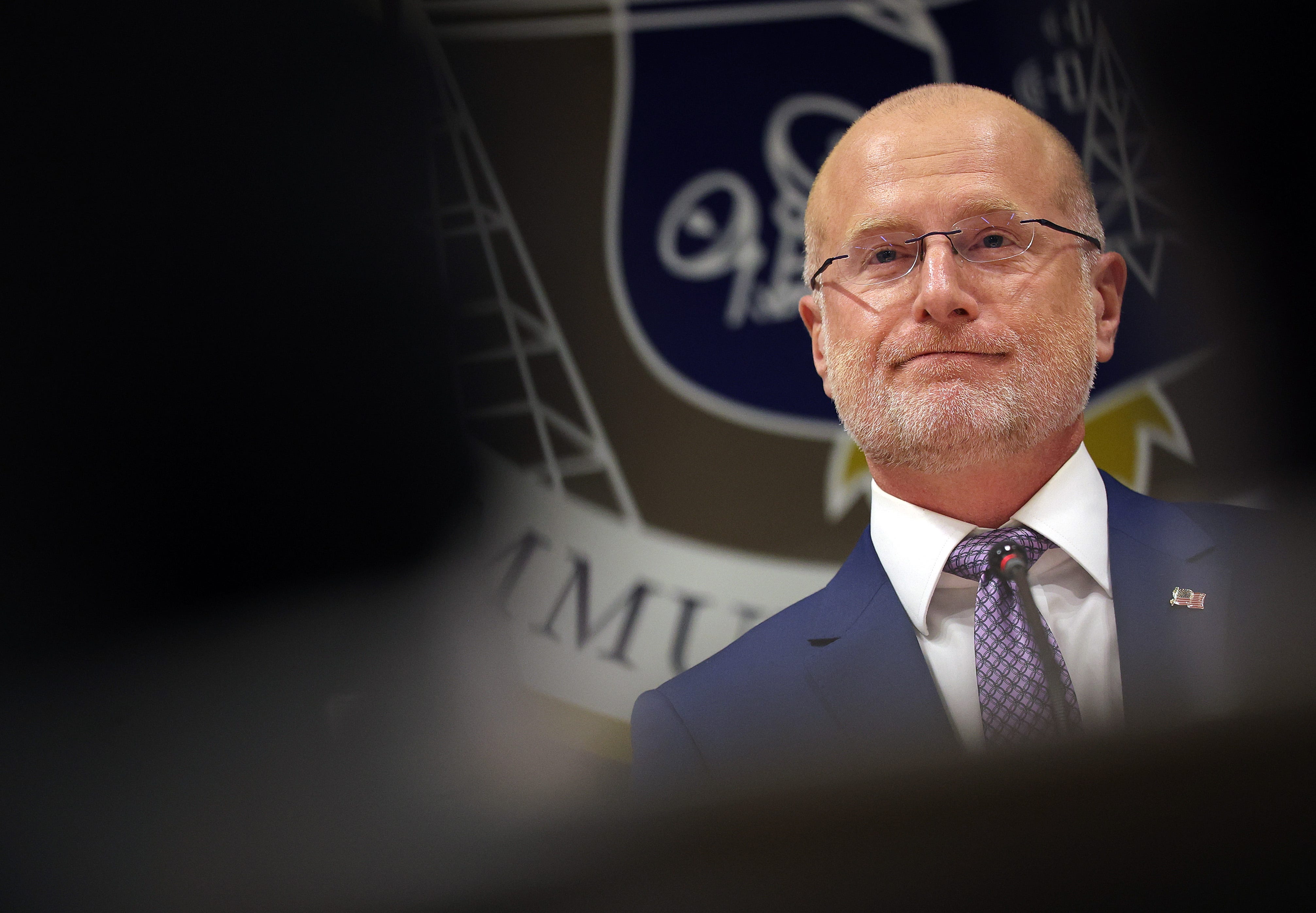
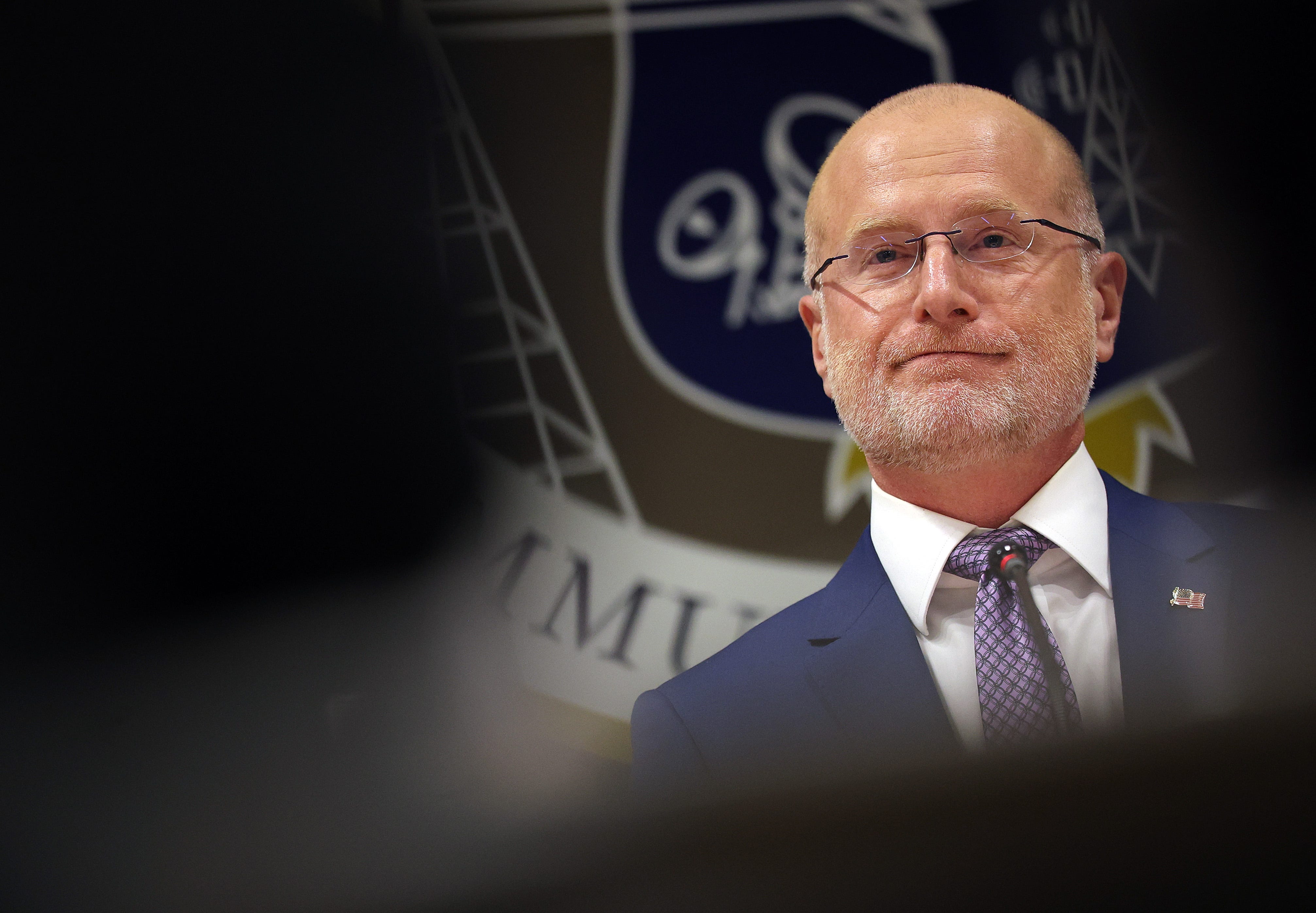
FCC Chairman Brendan Carr. (Photo by Kevin Dietsch/Getty Images)
WHEN NEWS BROKE YESTERDAY that the Federal Communications Commission voted to allow further consolidation of local broadcast networks, few were surprised. After all, putting the brakes on ownership of the media by conservative-leaning companies like Sinclair was never in the cards for the Trump-aligned FCC or his lapdog its chair, Brendan Carr.
But I do think the focus of the coverage has been ever so slightly misplaced. Much has been made of the topline number: 39 percent. For two decades, that has been the percentage of U.S. households that owners of broadcast networks were limited to. The idea was that, by keeping some control out of the hands of major conglomerates—by at least limiting their reach—local owners would keep some control of local TV networks. That was the hope, anyway. With its vote yesterday, the FCC has scrapped the limit.
Opponents of the move have repeatedly argued that the FCC simply does not have the legal authority to do this. Congress passed a law creating the 39 percent cap, and according to interest groups like the Free Press,1 the FCC cannot unilaterally lift it. “Changing this limit requires congressional action, but Carr doesn’t care. He’ll do whatever it takes to clear the way for Trump-aligned billionaires to swallow up stations wherever and whenever they please. The result would be just one or two dominant broadcasters in every market, deep job cuts for journalists, and an influx of bargain-basement content disguised as local news,” Free Press general counsel Matt Wood said in a statement.
I, frankly, don’t have terribly strong opinions on this, at least on the consolidation front: There’s a decent business case to be made that local news is in real trouble in an age of near-infinite viewing options, and consolidation will help cut costs even if it means reducing the usefulness of the news in some locales. In an ideal world, every town would have three healthy and competitive broadcast channels offering up a diverse array of morning and afternoon news, but we don’t live in an ideal world. We live in a world of broadcast and cable and streaming and YouTube and TikTok and the infinite scroll. (Speaking of which: If you want some viewpoint diversity, make sure to sign up for The Bulwark’s YouTube feed!)
What I do find concerning, though, and what I think everyone should find concerning, is the FCC’s explanation of how it will regulate media deals now that the 39 percent cap is gone: “Under a case-by-case approach, the Commission’s interests in localism, viewpoint diversity, and competition (to the extent they are implicated in a case) can be fully analyzed and vindicated in the context of a specific transaction. There may be transactions that would have exceeded the limits of the 39% national cap that do not promote the public interest and those will be denied.” (Emphasis added.)
But really, no government entity should have this power. And I think on some level, most Americans agree with that. It is noxious to American beliefs about freedom of speech and the First Amendment that the government should determine who should or shouldn’t get to own an outlet dedicated to the promulgation of news and opinions and entertainment due to the viewpoints of the owners. It’s why it rankled that Donald Trump attempted to use the power of the government to hold up the AT&T/Warner Bros. deal during his first term because he wanted to try and hurt CNN.
Support our growing coverage of movies, books, arts, ideas, and culture—become a Bulwark+ member today:
THAT’S ALSO WHY, frankly, David Ellison is smart to try and shift the argument over the Paramount/Warner Bros. merger away from a question of market share and toward the much more fraught issue of CNN’s ownership.
In an opinion piece for the New York Times about the lawsuits filed by Democratic attorneys general aimed at stopping the merger, Ellison—the chairman and CEO of his family’s Paramount Skydance Corp. and the would-be buyer of Warner Bros.—framed the question thus: “I believe a plainer worry sits beneath the briefs and the news releases: the news. The issue is whether I can be trusted as a steward of Warner’s CNN. There has been speculation about my politics, my loyalties, my intentions.”
Now, as I wrote a couple of weeks back, a Paramount-WB merger would likely be terrible for theaters. And it would likely be terrible for the writers and actors and directors who would lose jobs if the merging of streamers and studios led to less product being created, as it almost certainly would, eventually. I think the AGs are smart to frame their argument this way and to sidestep entirely the question of CNN’s ownership. I hope they stick to this. Because I also believe that Ellison intuitively understands that there’s something . . . unsettling about the power of the government being used to keep a news organization out of the hands of an owner whom those in power in the government dislike.
And this goes both ways. I personally found it abhorrent that the Ellisons used their proximity to and friendliness with Trump as a cudgel in their effort to strong-arm Warner Bros. away from Netflix. The looming threat of a long, drawn-out regulatory process—a process that would, wink wink, be shortened if the Ellisons were the guys writing the check—was despicable, full stop. So maybe there’s some element of turnabout being fair play here. That said, it’s one thing to dislike the idea of an Ellison-owned CNN or to worry about what it means for the folks who work there and the journalism being done there. But it’s another entirely to use the power of the government to block someone whose views we dislike from owning that outlet. Whether the person wielding that power is Brendan Carr or a Trump-led Department of Justice antitrust division . . . or a friendly attorney general.
If you have a friend or family member who cares about free speech and keeping the government from controlling the press, send them this newsletter:
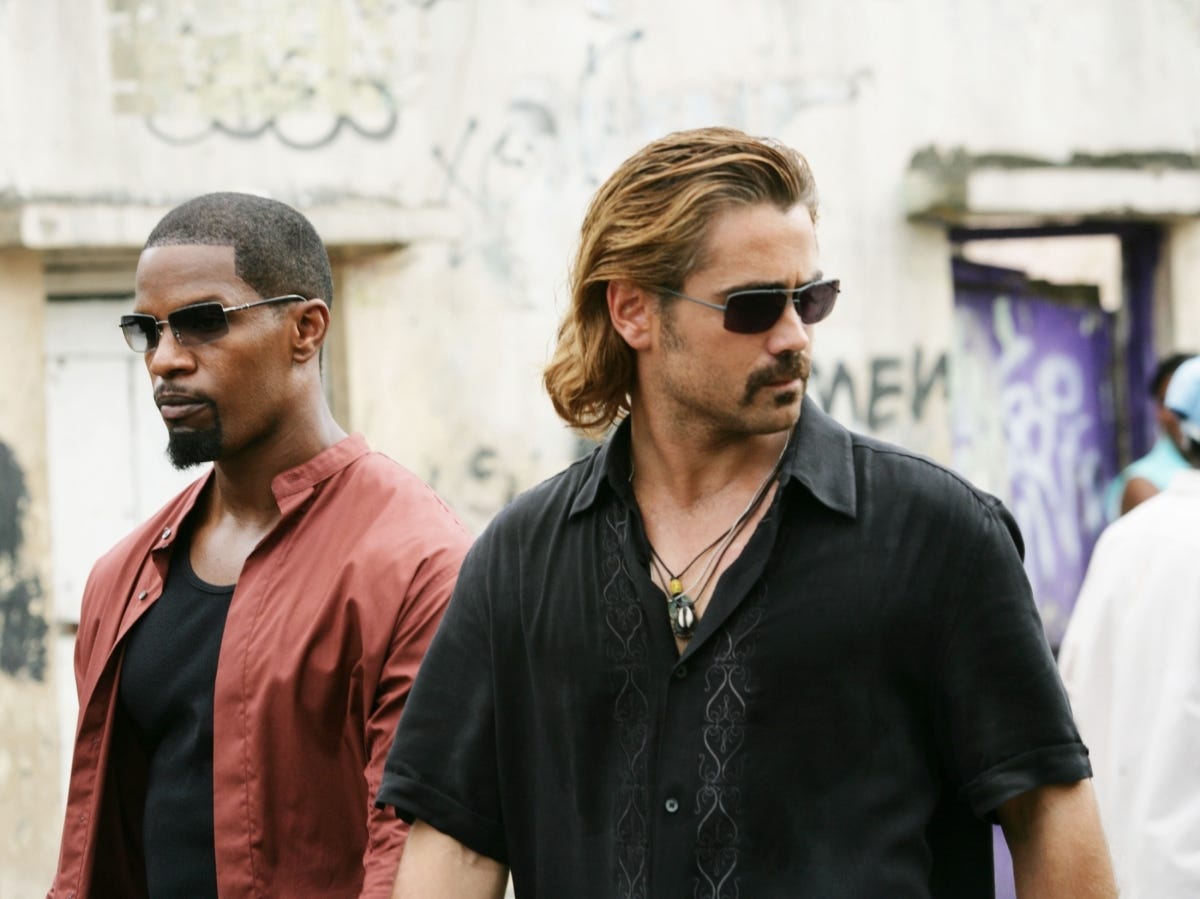
Jamie Foxx and Colin Farrell in Miami Vice. (Courtesy Universal Pictures)
Okay, I’m not assigning Miami Vice because it was recently the twentieth anniversary of the film’s release and, as Bilge Ebiri has persuasively argued over the years, its reputation deserves to have evolved from misfire to masterpiece. I’m not even assigning it because I myself recently rewatched it, needing to feel a little something after a rough day. (What does it say about me that my feel-good flick starts with a Linkin Park/Jay-Z remix needle drop? Something awesome, I presume.)
No, I’m assigning it because this is the moment everyone should have realized that Colin Farrell was the real deal. Yes, he’d been good in stuff before this—Minority Report, Tigerland, etc.—and he’d soon hit another level of critical acclaim by partnering with Martin McDonagh in In Bruges, Seven Psychopaths, and The Banshees of Inisherin over the next decade-plus. But Farrell does such exquisitely subtle desperate longing in this film that it went over most everyone’s head the first time around. The whole core of the film is Sonny’s desire for the life his partner, Rico (Jamie Foxx), already has, and you almost miss it on first viewing. He’s as emotionally closed off as any of director Michael Mann’s other men, but there’s a depth of feeling behind the eyes that just kills you on every rewatch.
Anyway, consider this yet one more subtle plea by me to watch Sugar on Apple TV, which winds up its second season this week. I talked to showrunner Sam Catlin on the podcast last week, and he had nothing but kind things to say about Farrell. Give it a listen and watch the dang show!
Tim got his hopes up that Bill Cassidy was going to come out against Blanche as AG. But of course, the senator showed once again that Republicans will do anything to stay on Team Trump—including turning our government into a corrupt, gangster oligarchy. Never mind that ordinary Americans are still dealing with the stink bombs Trump dumped on our economy with his tariffs and failed war: We’ve got lousy job numbers and higher prices across the board. Plus: The deportation of legal immigrants is a moral stain on our country, Russia’s energy crisis has backed Putin into a dangerous corner, and Trump is on a goldmaxxing spree. Susan Glasser joins Tim Miller for the weekend pod.
As always: Watch, listen, hit the like button or leave a comment. We want to hear from you.
Ad-free editions of The Bulwark Daily are available exclusively for Bulwark+ members.
Tim Miller’s Bulwark Daily is available wherever you get podcasts and on YouTube. New shows drop each weekday afternoon. If you like the show, leave a comment and ⭐⭐⭐⭐ wherever you listen. Add The Bulwark Daily to your player of choice, here.
The Secret Podcast with JVL and Sarah is exclusively for members of Bulwark+. To watch or listen to future episodes and join the Secret community in the comments become a Bulwark+ member today. Ride with us.
Hi guys! It’s Jasmine here, filling in today for JVL. You may know me from my omnipresence in the comments section or from the Triad Mailbags. This is my first time writing a Triad, so I hope you’ll let me know your thoughts in the comments. Today, we’re going to talk about “woke”—the ideas behind it, plus the political impulse that fell under that umbrella term—and I want to prime you all:
Woke began as one inner-circle concept and ballooned into many other things.
Because of its many meanings, people often talk past one another when it comes to woke.
Keep that in mind when reading below and in our discussion in the comments.
Now let me give you the short version: It’s time we bring back woke.
I’m kidding! I kid because I know that out there on X, someone is going to say, “The Bulwark wants MORE woke?!” And that’s not what I’m arguing here. Today I’m trying to explain the evolution of woke. I want to see if we can come up with a theory for what a new and improved wokeness would look like.
(Spoiler: I think maybe we can?)
But this only works if everyone dials back and engages in good faith. Which I know you guys will do.
If you want to be heard in the comments section, please join us as a Bulwark+ member. That way you can read today’s full newsletter and let me know what I’ve gotten right and where I’ve gone wrong. And you can enjoy all our other locked content. Click here:
(Photo illustration by Sarah Rogers/The Bulwark | Photos Shutterstock)
1. The re-awokening
The word “woke” is as curious a cultural phenomenon as it is a linguistic one. Woke’s great language problem is its flimsy definition: Across roughly a decade, it went from being one half of a phrase used within the Black community (“stay woke”) that meant simply to be aware of social injustice; to a term adopted earnestly by progressives for the same reason; to an insult leveled against sensitive, politically correct leftists; to an amorphous criticism used to describe anything the speaker does not like.
This current definition—“woke” as an all-purpose pejorative used by both the right and the left—is a familiar villain’s journey.
After gaining traction during the first wave of the Black Lives Matter movement in 2014, woke went mainstream. By 2017, lexicographers added it to the Oxford English Dictionary and the political phenomenon became so prominent that commentators started joking, sometimes disparagingly, about a “Great Awokening.” Then woke went off the rails, careening into unpopularity by 2020 when leftists started insisting upon agreement with a host of social and policy issues ranging from expanding bike lanes, to diversity hiring quotas, to critical race theory in K-12 schools.1
This is when, for a swath of America, the left took woketoo far. The crossover point where woke peaked and the MAGA “vibe shift” began was probably around 2022. By 2024, Donald Trump was able to return to the White House in part by running against woke identity politics (think of the “they/them” attack ads he ran against Kamala Harris).
The irony, of course, is that to the extent that wokeness was repressive, it was nothing compared to the total obeisance Trumpism demands of Republicans. The canceling, the censorship, the sycophantic ass-kissing, the overreach—these are now inalienable features of the Republican party. Except the Trump administration has outshone woke and created an actual authoritarian agenda, with real-life, dire consequences—but more on that in a moment.
A word of caution: I am not arguing that we should bring back wokeism. Woke created in-groups and out-groups based on the acceptance of an inflexible ideology that divided society into victims and oppressors, from which the latter group was supposed to grovel for the forgiveness of the former. If woke was attempting to build a unifying coalition to bring about actual change, that was decidedly not the way to do it.
But woke is having a bit of a renaissance. The electoral victories of left-wing Democrats such as Zohran Mamdani,2 D.C.’s Janeese Lewis George, and Colorado’s Melat Kiros—people who would’ve been easily identified as “woke” just a few years ago (and sometimes still are)—may not mean that this strain of candidate is about to sweep the country. But it probably means something.3
Yet Democrats continue to balk at their woke adolescence, cringing at their old social media posts and statements like a twentysomething recalling their embarrassing college years. The latest viral example is from Wisconsin gubernatorial-hopeful Francesca Hong: After facing criticism online over her 2020 post that Thanksgiving should be abolished because it celebrates colonialism, Hong now says it is her favorite holiday.
Canceling Thanksgiving is a ridiculous idea, and it’s equally ridiculous that a candidate for governor is having to talk about this. Many woke trademarks were like this: trivial and irrelevant outside of certain feisty corners of the internet.4 But the terror campaign that Republicans have executed during their government trifecta is of actual consequence. Republicans made a bogeyman out of liberal woke repressiveness—even comparing it to Soviet purges under Stalin—but have stood by as their own party turned into a far more repressive, submissive collective. Yet Democrats refuse to point out this hypocrisy.
Instead, the consensus among Democratic officeholders and candidates—from Gov. Gavin Newsom to Abdul El-Sayed, from Sen. Bernie Sanders to James Talarico—seems to be to continue to distance themselves from wokeism to save face ahead of the midterms. In an article published in the Guardian shortly after the Democratic victories in last November’s off-year elections, labor union leader Dustin Guastella wrote that to maintain the Democrats’ newfound momentum, progressives should embrace moderates, and he warned against “reanimating the dead-end politics of fringe woke causes.”
To be clear: Democratic operatives are wise to widen the party’s aperture to left-wing populism. It’s more likely to create a winning coalition than wokeness, which sabotaged itself by issuing mandates of compulsory guilt and shallow activism. But in the scramble for center-left Democrats to shake off wokeness and brandish populism, they are ignoring that “woke,” flawed as it was, was also not completely off the mark—and that some of its core demands foreshadowed
Get around the paywall by joining our growing community:
Catherine Rampell and Sam Stein went live to cover the terrible jobs report this month, the White House's attempt to spin the economy as booming, the bill in the Senate that could give Trump more tariff power, and a federal appeals court blocking construction on Trump's ballroom.
With America’s stockpiles of crucial munitions getting worryingly low, America’s adversaries seem to be getting interested in testing the boundaries of what they can get away with. Citing U.S. intelligence reports, the Wall Street Journal reports that Vladimir Putin is mulling the possibility of “testing NATO’s resolve” with a “limited assault” on a member country in the next few years. Hey, Vlad, there’s a lot going on over here—could you give us a minute?
In other news, we got some pretty disappointing jobs numbers today: The economy lost 23,000 jobs in July, while May and June’s reports were revised down by a combined 103,000 jobs more. The unemployment rate actually ticked down a hair, to 4.1 percent, as 260,000 people left the labor force. In other words, employers aren’t hiring and workers are starting to notice. To wit, this stat from the Journal: “In recent months, almost three in 10 of the unemployed have been looking to work for more than six months, the greatest share since the pandemic recovery four years ago.” Happy Friday.
Join Catherine Rampell and Sam Stein for Receipts Live on Substack and YouTube today at 12:00 p.m.
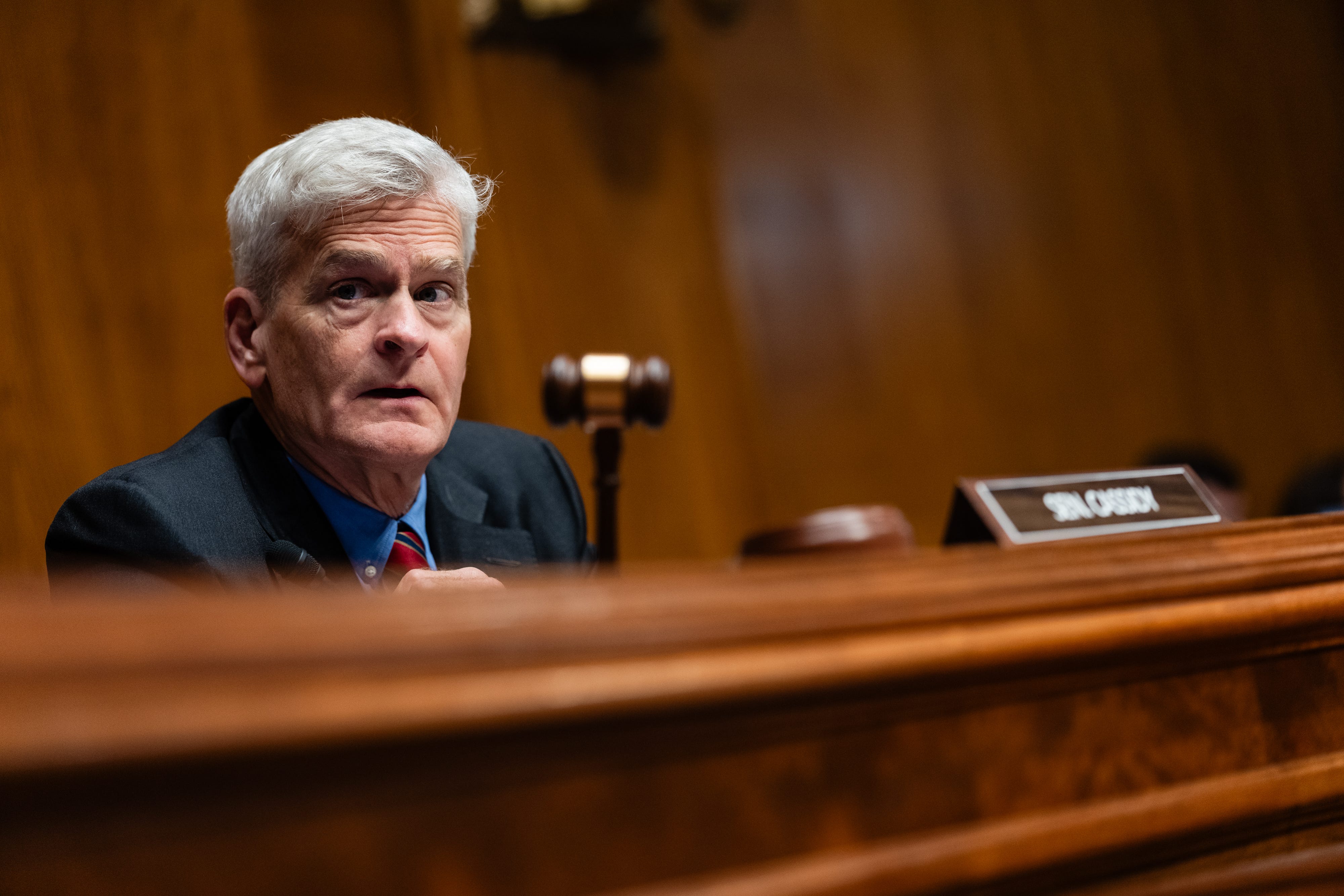
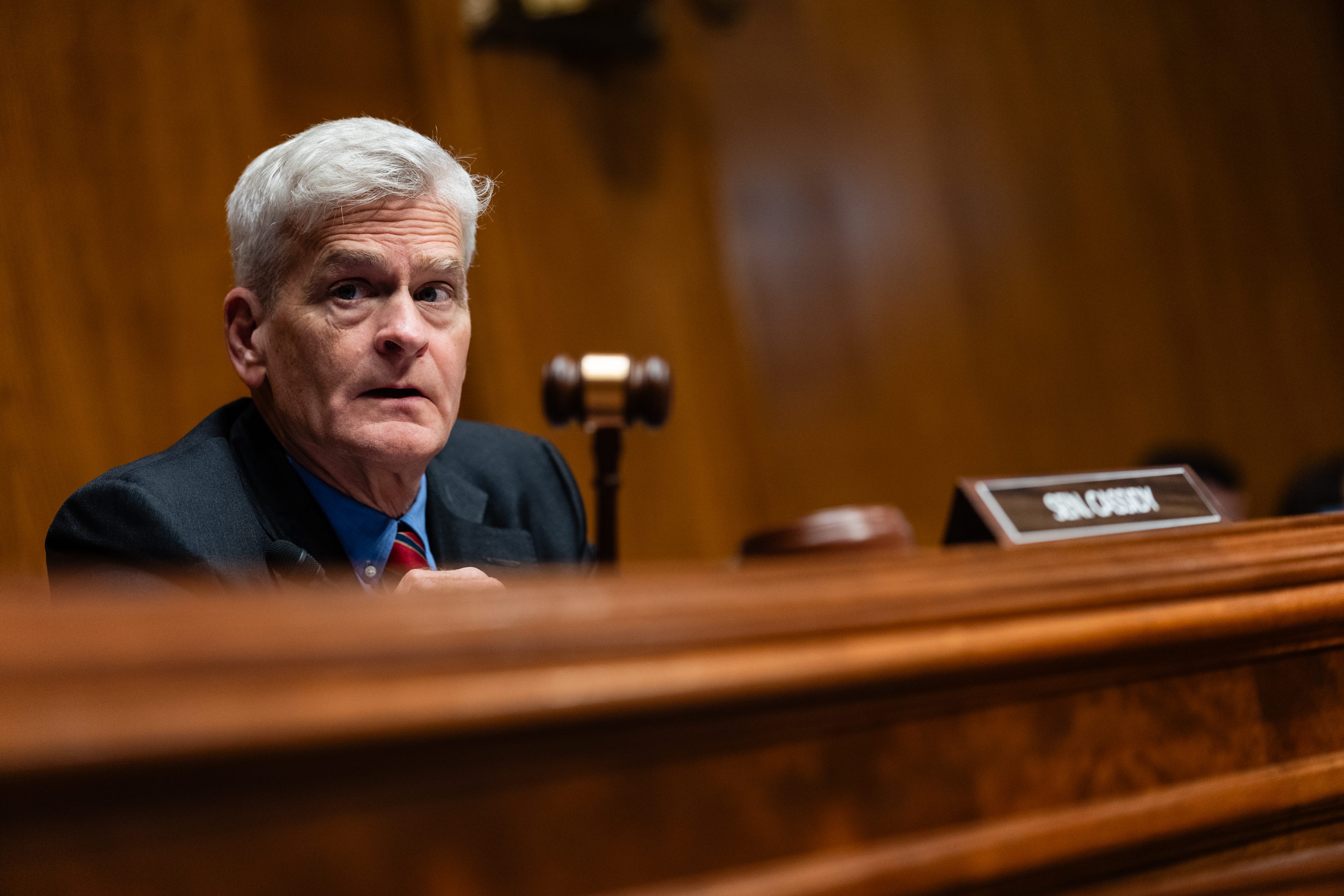
(Photo by Eric Lee/Getty Images)
Cassidy in the Spotlight
by William Kristol
[Update (August 7, 2026, 12:30 p.m. EDT): In remarks on the Senate floor an hour after this newsletter was published, Sen. Cassidy announced he would be voting for Blanche after all. So it goes.]
With Sen. Lisa Murkowski’s (R-Alaska) announcement early this morning that she will oppose Todd Blanche’s confirmation as attorney general, it all comes down to the senior Republican senator from Louisiana, Bill Cassidy.
Cassidy could join Murkowski in opposition. They had, after all, met together with Blanche on Wednesday. This morning Murkowski cited “the politicization—even weaponization” of the Department of Justice that “accelerated” during this administration as her reason for opposing Blanche. Cassidy had already said prior to that meeting that he was “very concerned about the weaponization of the Justice Department” under Blanche. All Cassidy has to say now is that Blanche didn’t satisfy his concerns, as he didn’t satisfy Murkowski’s.
And Cassidy owes Trump nothing. After he voted to convict Trump in the February 2021 Senate impeachment trial, Cassidy was targeted by Trump, and was crushed in the Republican primary earlier this year by a Trump-backed challenger.
What’s more, at the beginning of Trump’s second term, after much public agonizing, Cassidy, a physician and chair of the Senate Health, Education, Labor, and Pensions Committee, provided the decisive vote to confirm Robert F. Kennedy Jr. as secretary of Health of Human Services. He’d received several assurances from Kennedy about what Kennedy would do and wouldn’t do as secretary—assurances that Kennedy has subsequently broken. So you’d think Cassidy would have plenty of reason to resolve not to be fooled again.
Share this story with a friend who keeps getting fooled to help them wise up.
But will he so resolve? Will he do the right thing? Or will he follow in the footsteps of his Republican colleague, North Carolina Senator Thom Tillis?
Tillis was elected to the Senate in the same year as Cassidy, in 2014. A businessman who had entered politics a decade before and had become Speaker of the North Carolina House of Representatives, he ran for the Senate that year with the backing of Jeb Bush, Mitt Romney, and the Chamber of Commerce. He was the establishment pick. And after he defeated a couple of Tea Party Republicans for the nomination, he seemed set to be a relatively centrist North Carolina senator.
Then came Trump. Tillis joined the vast majority of his colleagues in years of accommodation, appeasement, and acquiescence. In February 2021, he chose not to follow Cassidy or, for that matter, his fellow Republican senator from North Carolina, Richard Burr, in voting to convict Trump. But Burr wasn’t planning on running for re-election in 2022, while Tillis was focused on his bright political career ahead.
Nonetheless, by June 2025, his lack of true Trumpist zeal meant that he would face a likely primary challenge from the Trump wing of the party. So Tillis announced he wouldn’t run for re-election.
A couple of weeks ago, Tillis demanded as a condition of his support that Blanche meet with the Epstein survivors whom he’d shunned for eighteen months. Once Blanche’s behavior in that meeting turned out to be utterly disrespectful of the survivors, it would have been easy for Tillis to announce his opposition to Blanche, which would have killed the nomination.
But Tillis caved.
You might think that such a record of repeated capitulation to Trump would induce Tillis to slink off quietly into the sunset. But he didn’t even have the dignity for that. Instead, as the publishing house HarperCollins announced yesterday, he has written a book.
According to HarperCollins, How to Lose Friends and Antagonize Presidents brings us Tillis “outspoken and uncensored.” The book is a “bare-knuckled, darkly funny wake-up call,” a “sharp, no-BS book, “ “a bracing tonic to stiffen spines.” Tillis “pulls no punches” about the “spineless Republican yes-men (and -women), and the weirdos of the MAGA world,” about “the grifting sycophants and useful idiots in Trump 2.0.”
As the kids used to say, gag me with a spoon.
Underscoring the absurdity of it all is the book jacket. It features as examples of the sycophants and idiots of Trump 2.0, photos of Kristi Noem, Robert F. Kennedy Jr., and Pete Hegseth. Tillis voted to confirm all three to their Cabinet posts, along with every other Trump nominee.
Does Cassidy now look at Tillis—and the other pathetic, gag-inducing Respectable Republicans™—and find it just too much? Is it possible that this morning Bill Cassidy is saying to himself: Don’t be Thom Tillis? Or does he too decide that he can write a post-Senate memoir about fake courage without displaying actual courage when he could make a difference?
BIRTHRIGHT CITIZENSHIP, AGAIN: When it comes to throwing out constitutional amendments via executive order, Donald Trump has a simple philosophy: If at first you don’t succeed, try, try again. Two months after the Supreme Court tore up his last attempt to restrict birthright citizenship as “facially unconstitutional,” Trump signed a pair of executive orders attempting to nibble around the edges of which infants born on U.S. soil automatically qualify as citizens. Here’s the New York Times:
It was not immediately clear how the twin orders could realistically be enforced. They would restrict those who could qualify for birthright citizenship, to exclude children of staff working for foreign governments but serving in the United States, and the babies of mothers who lie about their intentions for visiting the country while pregnant. There is a third category, for babies born in U.S. territories, but that would first require congressional action.
And then there are children whose parents are tagged by the government as being part of known terrorist groups or who are “alien enemies.”
Given how tightly the summer’s ruling has tied the administration’s hands on this matter, most of yesterday’s signing ceremony was simply an occasion for grumping. Stephen Miller fumed that the 14th amendment had been passed “exclusively . . . to ensure that the children of slaves would be citizens,” and that it “had no other meaning and purpose outside of that.”1 But there may be some policy levers left to the administration. For example, White House Staff Secretary Will Scharf suggested that they were considering guidance to deny visas to visitors who they suspect are entering the country for the purpose of delivering a child here.
PRESIDENT CARLSON?: Could Tucker Carlson run for president? At the very least, he’s plainly trying to keep the possibility on people’s minds. The former Fox News broadcast star raised eyebrows this week after photos were released of him eating dinner at his Maine home with several exiled MAGA dissidents, including Rep. Thomas Massie, former Rep. Marjorie Taylor Greene, and former administration official Joe Kent. “We said no more foreign wars and we meant it and supported Donald Trump because he made that promise,” Greene posted. “The movement has begun.”
Then, on Wednesday, Carlson released a 90-minute livestream containing what he described as a a ten-point program for “whatever comes next”—a program marrying typical MAGA and MAHA impulses (America should be “sovereign,” “beautiful,” “healthy,” and “united”) with populist attacks on the sort of open corruption and foreign adventurism Trump has embraced (one set of rules must apply to everyone, even presidents, and government officials should be punished for lying to citizens).
There was a lot more to it than that, some of which JVL, Andrew, and Will Sommer discussed on video yesterday. But we have a feeling we’re going to be hearing a lot more from Tucker in the days and weeks to come.
LOSING ALLIES: The list of Republicans calling on Rep. Max Miller to suspend his re-election campaign and resign from Congress continues to grow. Yesterday, two more senators joined the chorus: Jon Husted, who serves alongside Miller’s father-in-law Bernie Moreno as Ohio’s other senator, and Montana Sen. Tim Sheehy. Husted’s statement was more diplomatic—Miller, he said, ought to resign “to focus on what is in the best interest of his daughter”—while Sheehy’s was somewhat less so:
This guy is clearly a degenerate sociopath. Max should step aside and seek help. Staying in this race makes it far more likely we lose this seat and hand Democrats a majority to impeach President Trump.
It’s already too late for district Republicans to hold a special election to replace Miller as their nominee, but party leaders could still replace him in the ballot if he were to drop out before Monday. Miller continues to insist he’s being railroaded and doesn’t intend to drop out. But our old colleague Marc Caputo reports for Axiosthat not everybody is convinced he’ll stick with it: “Republicans privately expect that Miller will drop his re-election bid by the end of this week, according to two sources.”
[Update (August 7, 2026, 2:05 p.m. EDT): The bill discussed in this newsletter passed the Senate 86–11 on Friday afternoon. Efforts to strip the tariff powers from the legislation (led by Sens. Ron Wyden and Rand Paul) failed. The bill now goes to the House.]
DONALD TRUMP HAS SPENT the past year and a half bending every obscure trade law until it snapped, alienating global allies and jacking up costs for Americans. Democrats have heaped scorn on him for this, and Republicans have expressed their own displeasure via indirect or anonymous grumbling to the press. Yet now, lawmakers from both parties are poised to give the president even more tariff power.
And not just any tariff power. It’s potentially the nuclear bomb of tariff power.
A new, bipartisan bill could allow Trump to drop 100 percent tariffs on virtually any country he likes, for as long as he likes, and with pretty much bulletproof legal authority to do so; which means even the Supreme Court couldn’t bail out Congress (or the rest of us) next time.
This is all happening through the Lindsey O. Graham Sanctioning Russia Act, which is rapidly moving through Congress with broad bipartisan support. It is expected to clear the Senate, where it has 62 cosponsors (including 21 Democrats), as soon as today.
As the name implies, the bill is intended to honor the legacy of the late South Carolina Republican and to punish Russia via sanctions.
In reality,
Blast past the paywall: Sign up for Bulwark+ to read on.
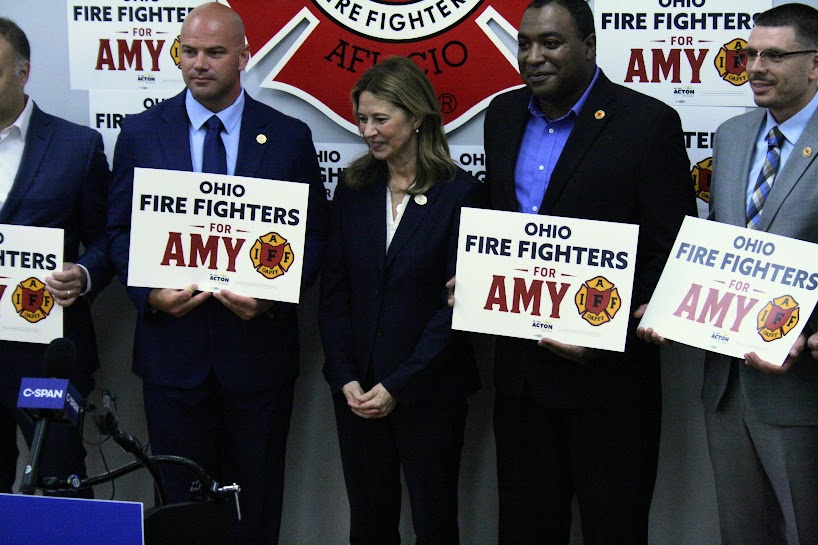
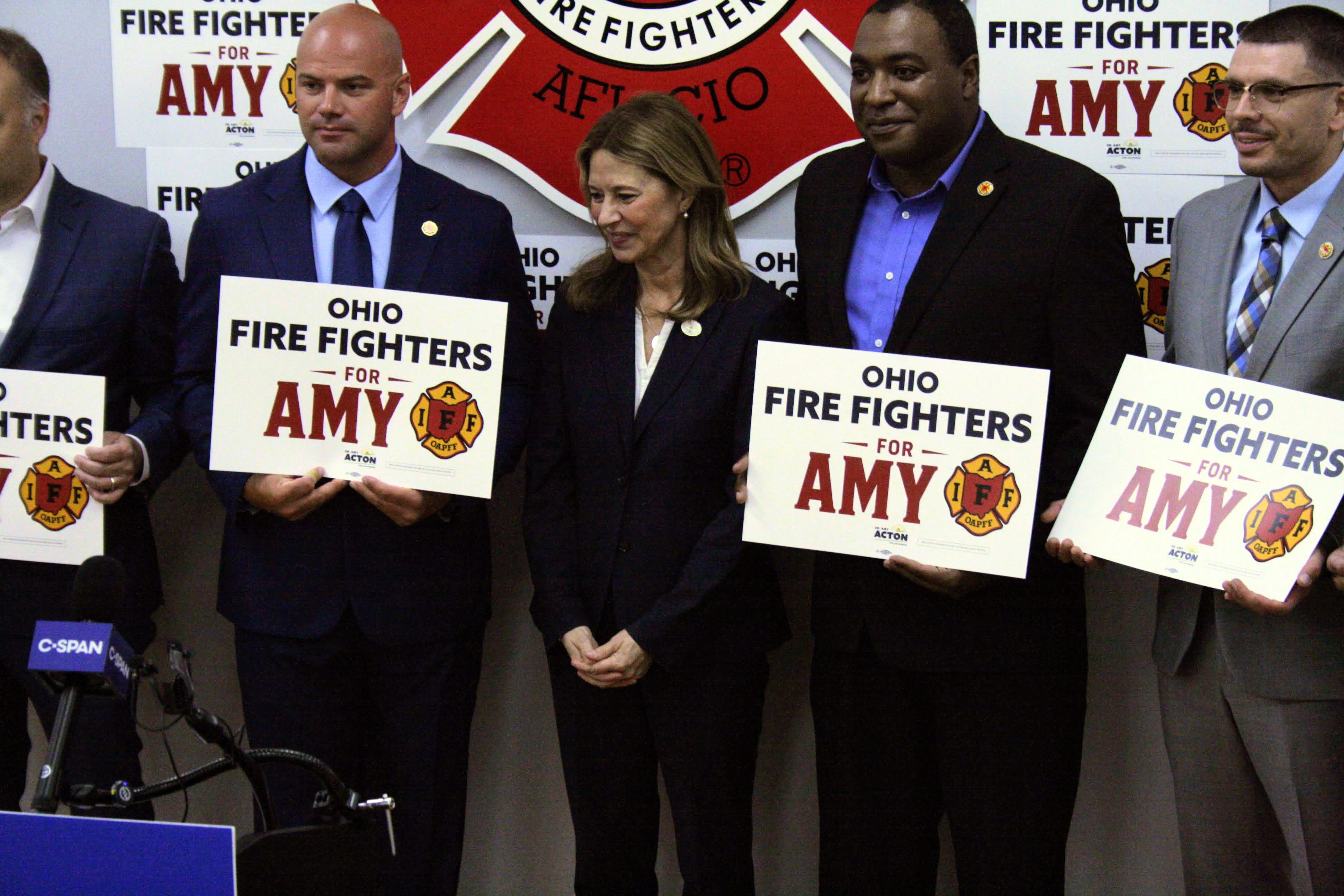
Cincinnati, Ohio AMY ACTON PICKED UP A BIG ENDORSEMENT Monday in a union hall on the city’s west side. In a room decorated with historical mementos honoring Cincinnati’s fire department, the oldest professionalized municipal fire department in the country, Acton was surrounded by a dozen or so union leaders as the Ohio branch of the International Association of Fire Fighters threw its support behind her gubernatorial bid.
This year, the cops-and-firefighters split is stark in Ohio. The state’s Fraternal Order of Police gave Republican Vivek Ramaswamy its endorsement, which it also extended to every other Republican running statewide. And while the firefighters have in the past gone in for both Republicans and Democrats, for most of the last decade and a half—ever since then-Gov. John Kasich in 2011 pushed for and signed a law (later repealed) sharply curtailing public employees’ collective-bargaining rights—they’ve placed their bets pretty firmly with Democrats. This fall they are all-in on Acton.
On this hot summer day I’ve come to the Fire Fighters Union Local 48 hall to see Acton in action and grab her for a chat after. The event, closed to the public but open to some members of the press, will be the first chance I’ve gotten to observe the candidate up close.
(Photo by Jim Swift)
The first thing to grab my attention is a reminder from the president of Columbus’s Local 67, Steve Stein, of how Acton, a physician who was director of Ohio’s Department of Public Health from 2019 to 2020, responded to the pandemic. For Republicans, seething over COVID public health interventions has become de rigueur. There was some freshness, then, in hearing words of praise for a public servant who did battle with a deadly virus against which we were initially almost defenseless:
We weren’t sure if we were going to lose half of our workforce responding to this [COVID]. And every single one of our members said, “We’ll see you tomorrow.” And it was leadership—proven leadership—[from] people like Dr. Acton, Gov. DeWine and the team, and the hard work of our firefighters, EMTs, and paramedics, that responded to every single Ohioan, no matter where they lived. . . . Those decisions weren’t partisan. They were decisions about safety. They were decisions about serving other people.
Stein wouldn’t be offering this praise if Acton didn’t welcome it, which suggests the candidate is going to respond to Republicans’ COVID-related attacks by refusing to cede the ground of science and memory to them. A preference for the truth shouldn’t be extraordinary in mainstream political candidates, but in 2026, it’s a promising opener for anyone who would prefer not to be gaslit about that recent episode of extraordinary suffering and death.
When Acton gets up to speak, she makes clear she is less interested in relitigating the pandemic than in talking about the Ohio she wants to build. But as she gives her values-forward stump speech, it’s tempting to let your mind wander backwards, to a time before the pandemic and before MAGA. In some ways, the future Ohio envisioned by Acton sounds an awful lot like the one she knew during childhood.
“When I was growing up in Youngstown, we didn’t know what party you were in,” she says. “We knew what union you were in.”
Fearless reporting. Sharp analysis. And commentary that helps you see around corners. Make sure you miss nothing—join Bulwark+.
In the Youngstown of Acton’s memory, partisan affiliation was an abstract feature of a person’s identity. The concrete things about you had to do with the institutions down the street: unions, yes, but also churches, neighborhoods, and civic organizations, and underneath all that, the general expectation that you and your neighbors would look out for one another. It’s the spirit of small-town Ohio—a pretty faithful impression, even if the warts have been removed.
Life in such a setting can be far from idyllic, of course. Acton and her brother experienced a childhood marked by abuse and neglect—the subject of her first campaign ad. For a time, they lived in a tent during a Youngstown winter. This morning, she emphasizes that it was often first responders and neighbors who intervened to make sure the pair of kids were okay. Some would even invite them onto their front porch for an impromptu breakfast “just because we were hungry.”
It might be because of this hardscrabble background, but Acton’s empathy doesn’t feel like an act in the way it so often does with other candidates out on the campaign trail. “I’m a doctor. I’m not much of a politician,” she says, adding, “I’m becoming one right in front of your eyes.” Watching Acton, it seems to me that she doesn’t work a room so much as observe it, and in a way that reminds me of the moment a physician looks you over before starting the conversation during an exam. In response to questions, she sometimes pauses to take in the questioners for so long that it’s almost physically discomfiting. Call it retail bedside manner.
The doctor’s diagnosis is that the state has an acute infection of political acrimony that needs to be addressed in order to treat a deeper underlying condition: economic malaise. “Everywhere we go, people are longing for public servants again, and they’re longing for this hate and chaos and vitriol and purposeful pitting against one another to end,” she says. “The issues they talk about—95 percent of them—no one would disagree on: It’s the cost of living, housing, educational costs, childcare, property taxes.”
She cites a Clermont County family with premature twins who had accumulated $300,000 in medical debt from a neonatal intensive care stay. They had done everything right, she says, yet still found themselves financially overwhelmed. Anecdotes like this frame Acton’s defense of her medical debt–relief policy, which Ramaswamy recently seized on as proof that she is a socialist of some kind.
It’s a stark contrast to Ramaswamy—who recently was booed by an audience of conservatives for claiming his generation is “going to be fine” and has “already made it.”1
“For pennies on the dollar, we’re renegotiating that debt,” Acton says—noting that “Illinois spent $10 million of state funding, and they alleviated a billion dollars of people’s debt.”
After this, Acton moves through a cavalcade of pocketbook-focused policies, concluding with her proposal for a “circuit breaker” rebate for middle-income homeowners facing steep tax increases. After that, a moment of vintage Americana.
“This endorsement means everything to me,” she tells the firefighters. “You’ve been my heroes, and I promise that I’ll be fighting so that no one in this state is ever unseen.”
SITTING DOWN WITH ME after her speech, Acton reiterates that she isn’t a natural politician. “My last office I ran for was in high school,” she tells me. “The instincts of being a 60-year-old doctor and doing public health and preventive medicine—it’s always about going to ground. It’s always about the community as your patient. That was my instinct all along, and I started going around listening even before I filed my paperwork to make the decision to run.” In her Toledo-built Jeep Wrangler, she says, “I’ve been to every county in Ohio. . . . I wanted to meet people where they are.”
Meet them she did. At a recent Democratic dinner in Fulton County that normally draws a few dozen people, more than three hundred attendees turned out. Many, she recalls, introduced themselves not as Democrats but as lifelong Republicans. Acton believes some of her draw, and some of the willingness of those guests to put aside partisan loyalties, traces back to the pandemic.
“It’s a deep bond that formed around going through such a very hard time. It’s very unique. I don’t think a politician could intentionally create this kind of connection,” she reflects.
That experience of collective suffering—and Acton’s presence in communal memories of it—also helps explain why, she says, “I’ve never been in a room in two and a half years where someone doesn’t cry.”
Every campaign has its unique rhythms and quirks; regular weeping from eventgoers is far from the strangest I’ve encountered over my years of following national politics. But it provides a curious point of contrast with the aversive reaction associated with Ramaswamy’s campaign.
“My opponent was just out last week with the whole, ‘victors not victims, you’re whiny and complaining’ stuff,” she tells me. I point out that, during his humiliating performance at YALCon, there were quite a few whiners in the crowd.
FOR ALL THE ATTENTION PAID to Acton’s public health role during Ohio’s experience of the pandemic, it is easy to forget that it represents only a small chapter in her career. She has worked with five governors—Republicans and Democrats—and her experiences have given her a zest for (reasonable) bipartisanship.
If elected, she says, she will appoint Republicans to her cabinet, because Ohioans should expect their governor to work with anyone willing to solve everyday problems.
One former Republican governor in particular genuinely excites her: Bob Taft.2 Acton and her running mate, lieutenant governor candidate David Pepper, recently met Taft for lunch. The former governor arrived carrying a crumpled, coffee-stained sheet of paper on which he’d listed everything he’d hoped to accomplish when he became governor in 1999.
Together, Acton tells me, the three of them walked through the list. The Taft of yesteryear had set his sights on constructive, reasonable goals: new parks, initiatives to encourage economic development, and other long-term projects of the sort that rarely dominate campaign speeches but can shape a state for decades.
Acton explains that she didn’t see this as an exercise in nostalgia. Rather, she takes it as a reminder that governors once measured success by what they built. In a time of endless, unproductive scrapping, that seems like a useful thing to recall.
But in addition to the economic and material considerations informing Acton’s policy offer and her own desire for building up Ohio, she has a priority issue in the area of cultural politics. The question: Why are we all so bummed out? Acton’s answer: because we are so damn lonely.3
Ohioans are “absolutely exhausted of hate, chaos, and vitriol, and being pitted against one another,” she tells me. “We are hardwired for human connection.” As an exhausted and angry Ohioan, I am inclined to agree.
She invokes Bowling Alone, sociologist Robert Putnam’s landmark study of America’s fraying civic life and declining social capital that has been helping people see those problems more clearly for over a quarter century. Putnam’s book is “about the fabric of our civic society. I was talking earlier about [how] people didn’t know what party you were in; they knew what union you were in,” she tells me. “They also knew what hat you wore, if you were an Elk or a Moose or whatever. There’s so much pride, and people wanna have pride again in Ohio.”
As an Elk (and a fan of Putnam, who has been a Bulwark Daily guest), I heard Acton speaking to me in my own born-again Ohioan’s language. Our state’s politics, culture, and even our sports teams are subject to derision and often made the butt of hostile jokes. People still laugh about the Cuyahoga River catching on fire. But damn it, I still love Ohio. I moved back here, after all. It’s clear that Acton does, too.
“I always say when I’m going around the country, it’s the United States of Ohio,” she says. “We’re the test market. We represent the whole United States.” That’s part of what being the “Heart of It All” is all about. But the heart is deceitful above all things, and it’s got reasons that reason does not know—all of which is to say, it’s going to be another three months of weeping and whining before we know the road ahead for Ohio, and for the United States thereof.
It’s certainly understandable that Ramaswamy would have a loose grasp of on-the-ground issues for Ohioans, given that he appears to have spent almost half his time during this campaign outside the state.
Tucker Carlson has a new message for the Republican Party—and it sounds an awful lot like the opening pitch of a presidential campaign. JVL, Andrew Egger and Will Sommer give their takes on Tucker's sweeping "10-point" vision for America, why he's increasingly distancing himself from Donald Trump, and whether he's laying the groundwork for a 2028 White House run. Plus, we break down Tucker's appeal to disaffected MAGA voters, the growing rift inside Trump's coalition over foreign policy and corruption, and why JD Vance, Donald Trump Jr., and the rest of the Republican field should be paying attention.
POTUS has always used lies to great advantage, but his fakery can’t disguise the dangerous reality that the United States is running out of missiles. What a time for Trump to don an SNL-grade wig. Meanwhile, AIPAC may be evolving into a Trump super PAC, Max Miller keeps showing everyone he’s a sociopath, the GOP Islamophobia is looking very 2002, and Republican Gov. Joe Lombardo accidentally admits Trump is looking out for the billionaires. Plus: The new Democratic Senate nominee from Kansas, pastor Adam Hamilton, joins Tim to discuss that sleeper race and how incumbent Roger Marshall is all about championing Trump and not the people of Kansas.
Sam Stein and Kansas Democratic U.S. Senate nominee Adam Hamilton join Tim Miller.
As always: Watch, listen, hit the like button or leave a comment. We want to hear from you.
Ad-free editions of The Bulwark Daily are available exclusively for Bulwark+ members.
Tim Miller’s Bulwark Daily is available wherever you get podcasts and on YouTube. New shows drop each weekday afternoon. If you like the show, leave a comment and ⭐⭐⭐⭐ wherever you listen. Add The Bulwark Daily to your player of choice, here.
(Photo illustration by The Bulwark | Images: Facebook, X, Shutterstock)
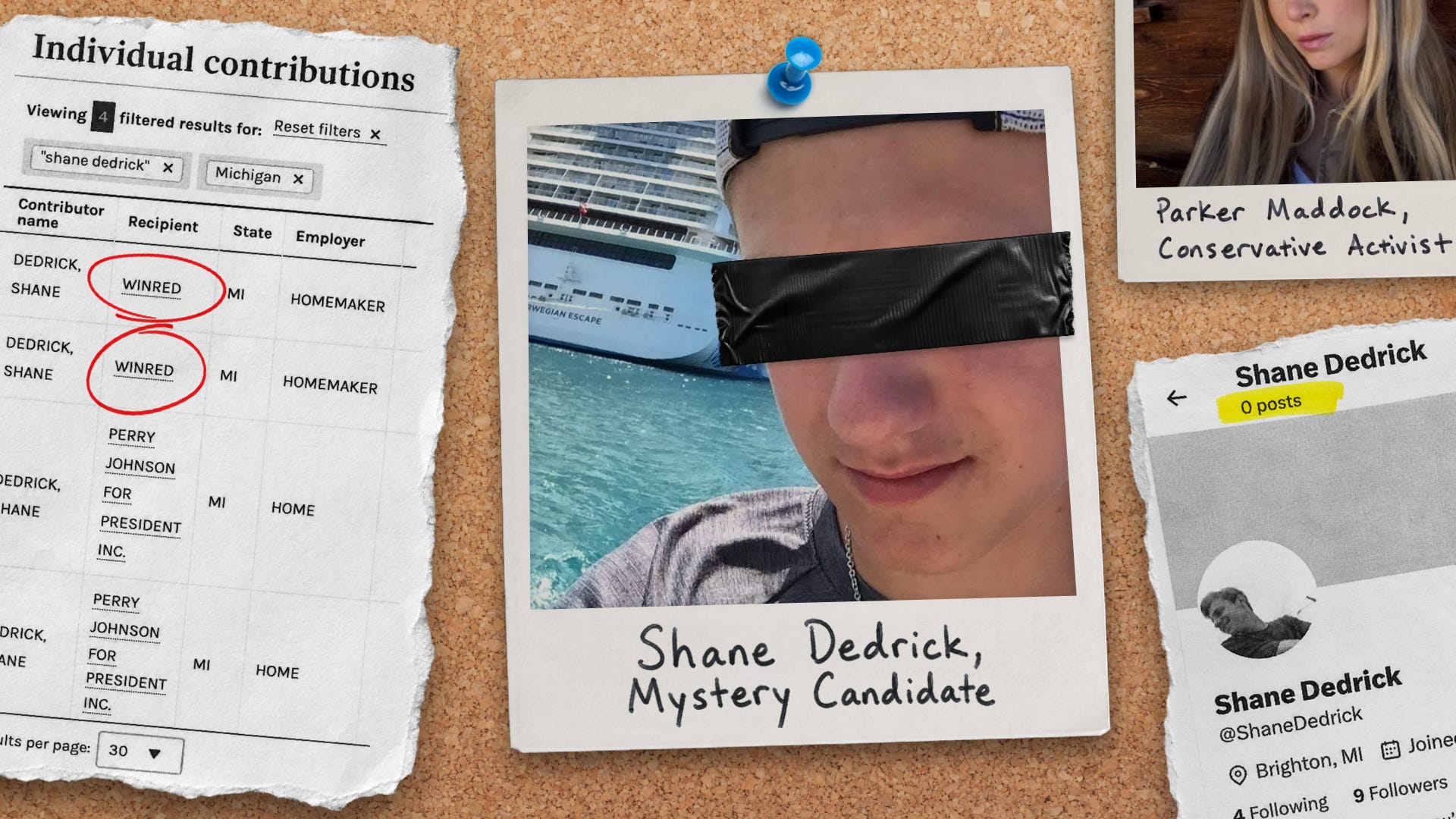
OF ALL THE CONGRESSIONAL DISTRICTS up for grabs this fall, Michigan’s 7th may be the most hotly contested. Smack in the middle of the state, the 7th went to Donald Trump by just one percentage point in 2024. Its current congressman, Republican Tom Barrett, won his seat that year despite Elissa Slotkin, a Democrat, carrying the district in her Senate victory.
This go-around, Barrett is facing off against William Lawrence, the 35-year-old cofounder of the hyperprogressive Sunrise Movement. Lawrence clinched the Democratic primary on Tuesday after a conservative group secretly boosted his candidacy and two moderate Democrats split the remaining vote.
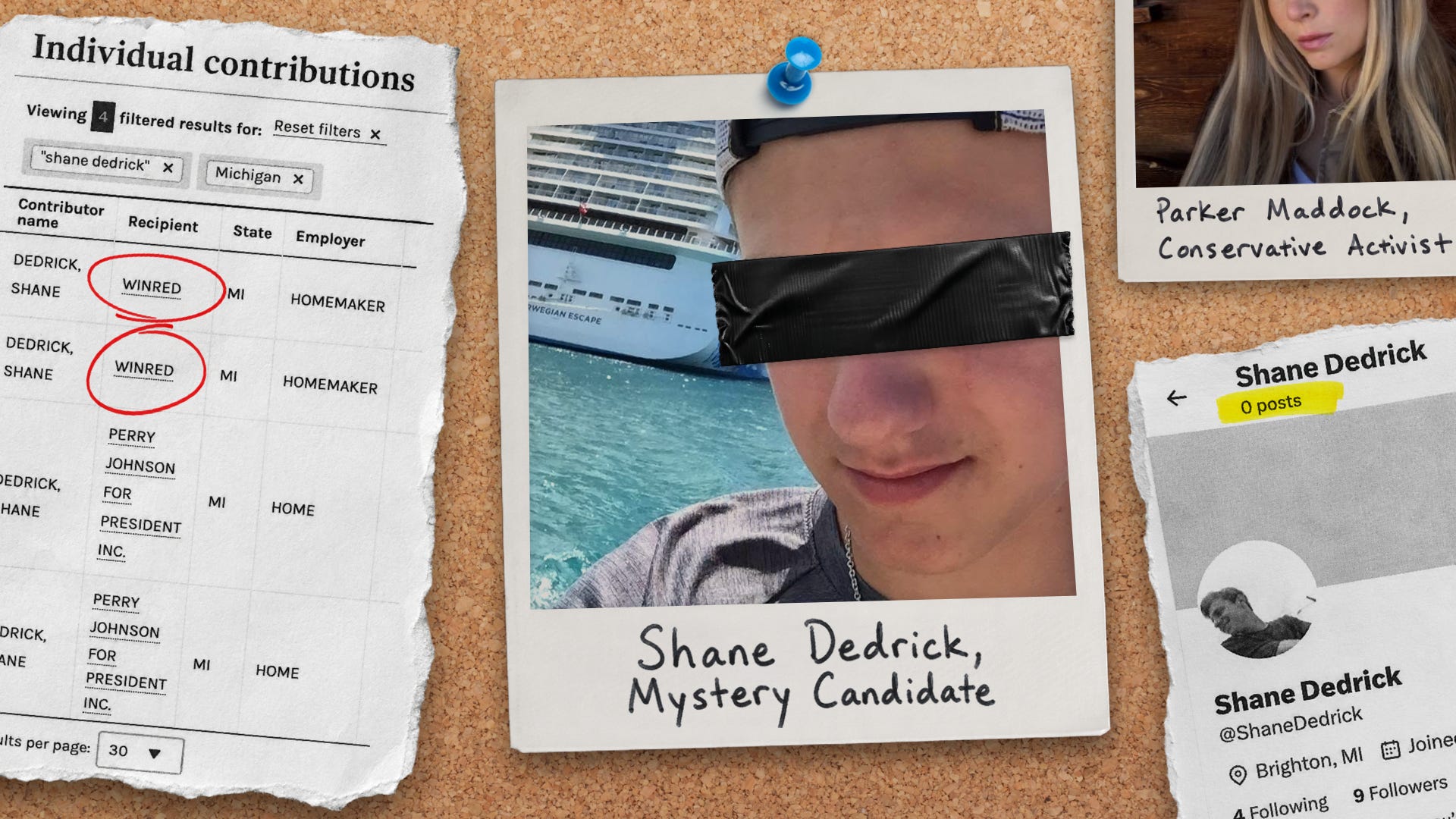
In a race that promises to be close, the presence of a third-party candidate could prove decisive. And this year, the Green Party of Michigan has fielded just such a candidate. His name is Shane Dedrick. You would be excused for having no clue who he is.
Dedrick has almost no digital footprint. What is out there, however, doesn’t give any indication that he is the type of earthy environmentalist that typically runs under the Green Party banner. It might seem that, given Lawrence’s sterling progressive credentials, Dedrick’s candidacy is redundant. But don’t be surprised if he stays in the race. Because, if anything, the online breadcrumbs suggest a real possibility that Dedrick may be a Republican plant.
Sen. Ron Wyden (D-OR) joins Catherine Rampell to discuss his years-long investigation into Jeffrey Epstein's finances and why he believes major Wall Street banks helped enable Epstein's sex trafficking operation by failing to report suspicious transactions. Wyden explains why he says top bank executives should be held accountable, responds to questions about the 60 Minutes interview that never aired, and lays out what Congress could do if Democrats retake the Senate. Wyden also breaks down his opposition to the bipartisan Russia sanctions bill, arguing that it would hand Trump sweeping new tariff powers that could drive up costs for American consumers.
Today I’m going to sketch out a blueprint for reforming the systemic problems with how the federal government is constituted. I do not have a snappy, camera-ready name for it, but that’s a feature not a bug.1
Ready to roll up your sleeves? Let’s look at America’s problemschallenges opportunities and come up with some real-world, non-fantasy solutions.
1. Structures
What is the root of our problem right now?
It’s the character of the American people. Some significant minority of the country wants a post-liberal order.
We can’t change that reality. It will either get worse or resolve itself, independent of any conscious choices made by the forces of liberalism.
What we can do is reform our system of government, which has gone from protecting minority rights to enforcing minority rule. If post-liberalism is going to triumph, at least the chuds should have to earn it at the ballot box. We shouldn’t get dog-walked into a post-liberal order because a bunch of existing liberal institutions got hacked.
So the mission is: How do we reform existing systems to rebalance the power afforded to the minority?
I come to you today not with complaints, but answers. Let’s ride.

 Login
Login