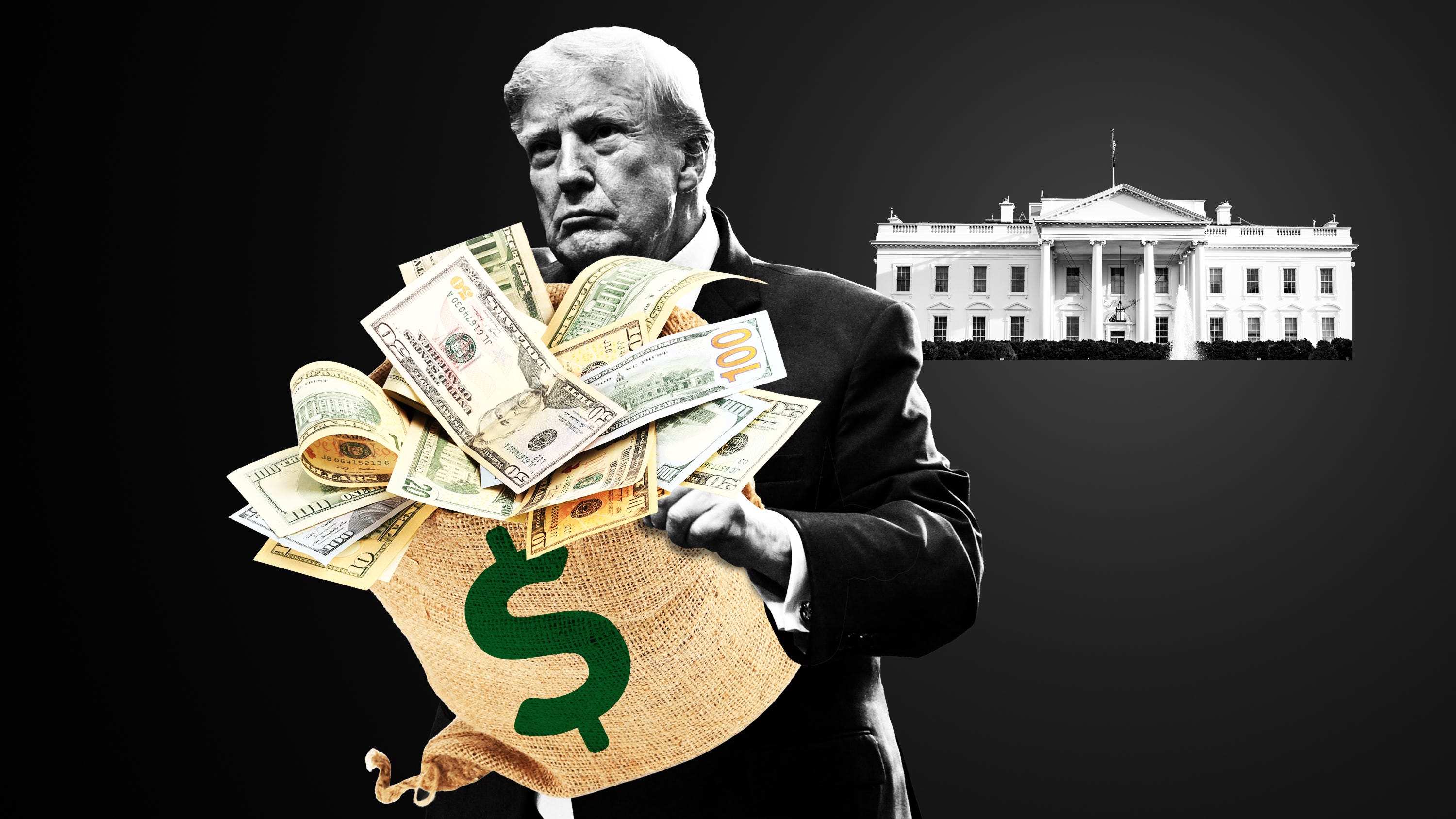
(Photo illustration by Sarah Rogers/The Bulwark | Photos: Getty, Shutterstock)
The postman
American elections are safe and secure. That was the conventional wisdom for a long time. But lately, some Democrats have started to worry about the safety and security of one method of ballot-casting: voting by mail.
To make sure this is clear from the jump: No, Democrats haven’t come to find Republicans’ arguments against voting by mail any more convincing. They don’t believe that foreign operations are compromising ballot security or that fraudsters and noncitizens are voting on behalf of the dead.
However, they have discerned a new threat vector. You might say that the call is coming from inside the (White) House.
Yes, we know. Paywall. Sorry.
We’d love to give everything away. Unfortunately, reporting on what the Trump administration is doing, asking members of Congress questions they’d rather dodge, and publishing smart, independent arguments about what it all means requires work and time and money.
So this is the bargain: Our Bulwark+ members support our work, and we keep doing it.
There’s a lot ahead between now and 2028. We’d love to have you with us. Join today for 30 percent off the regular annual price.
The king of the birther conspiracy knows he needs to round up the white male vote, so he's serving up one of his old faves—straight-up anti-Muslim bigotry. And he's added a new one: Making Americans pay for another political ad, this time about what a tough guy he is. But Trump also has another corruption problem, courtesy of Trump Jr.'s ex-fiancée, Amb. Kimberly Guilfoyle, who seems to have a habit of calling in very expensive favors. Plus: Rubio is laying the groundwork for 2028, Hegseth is lobbying to keep his job after the midterms, the Democratic establishment is coming together for El-Sayed, Bibi has been very bad for Israel, and Trump has created a long-term security crisis for the West as a result of his Iran war.
As always: Watch, listen, hit the like button or leave a comment. We want to hear from you.
Ad-free editions of The Bulwark Daily are available exclusively for Bulwark+ members.
Tim Miller’s Bulwark Daily is available wherever you get podcasts and on YouTube. New shows drop each weekday afternoon. If you like the show, leave a comment and ⭐⭐⭐⭐⭐ wherever you listen.
This is what makes The Bulwark different: going straight to the people involved, asking the uncomfortable questions, and getting answers you won’t hear anywhere else. If you value that work, please consider supporting us by becoming a Bulwark+ member.
Sam Stein on Thursday spoke with Eric Deters, the man at the center of the Wall Street Journal’s explosive report on Kimberly Guilfoyle’s troubled finances, political conflicts, and unethical conduct.
Deters described his relationship with Guilfoyle, the hundreds of thousands of dollars he spent trying to influence her and other Trump world figures, and his claims that she promised access and favors in exchange for money.
Deters explained why he came forward and why he says Guilfoyle asked him for another $100,000 to pay off her credit card debt right before her confirmation hearings to become ambassador to Greece. He also detailed her attempts to connect him with Tucker Carlson and former IRS Commissioner Billy Long, her warnings to stop putting things in writing, and why he now says, “I feel like a dumbass.”
A few clarifying notes on other things Deters said: In describing his efforts to get the extradition of Dr. Abubakar Atiq Durrani (for which he asked Guilfoyle for help), Deters said the doctor performed 580 unnecessary surgeries. Lawsuits against Durrani alleged that more than 500 patients received unnecessary care. However, there are no precise numbers as to how many patients in total received those surgeries, how many children received those surgeries or how many of them died because of those procedures.
In addition, Deters said that Jared Kushner received a $3 billion investment for his private equity firm from Saudi Arabia’s sovereign wealth fund. Reports put that number at $2 billion.
The entire interview is a wild ride, but one that underscores the degree to which graft is one of the major features underlying this entire administration. Enjoy.
(Photo illustration by Sarah Rogers/The Bulwark | Photos Getty, Shutterstock, Facebook)
1. Angie
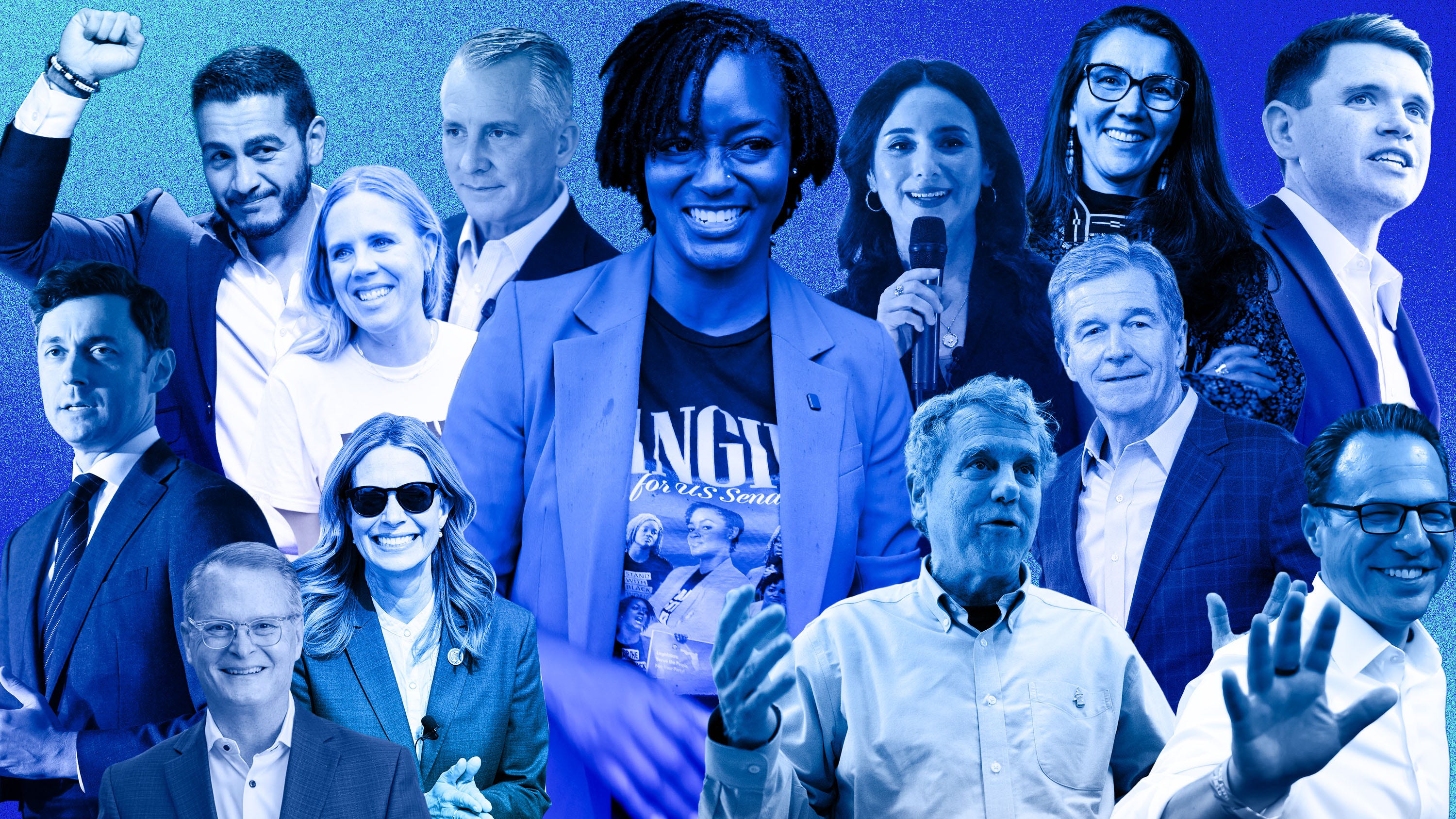
If you haven’t listened to Tim’s conversation with Angie Nixon on yesterday’s Bulwark Daily, you should. Nixon probably won’t win, and she isn’t a generational political talent. But she’s got a chance to flip a Senate seat in Florida. And that’s because she’s a good candidate. She’s smart and passionate. She talks like a normal human being. On paper, she might not blow you away, but in person? She’s darn good.
And that’s a theme uniting Democratic candidates pretty much everywhere this cycle: They’re good candidates.
Nixon and David Jolly in Florida are both good horses. Jon Ossoff is a stud. Sherrod Brown is a workhorse and Amy Acton has a unique value proposition. Josh Shapiro might win re-election by 25 points in a state Trump carried. James Talarico and Gina Hinojosa are extremely different, but are both running energetic, smart campaigns. Maybe Abdul El-Sayed will turn out to be too progressive for Michigan, but that’s an ideological fit question—as a political athlete, he’s A-tier. Roy Cooper is built for North Carolina. Annie Andrews is a longshot in South Carolina, but she’s running a great race. Adam Hamilton has opened a can of whoopass in Kansas. Mary Peltola was engineered in a lab for Alaska voters.
Strip out your personal preferences and tell me, just as a matter of political talent, who are the good Republican candidates this cycle?
Seriously. I’ll wait.
You have any answers? Because from where I sit, the top two are probably Susan Collins and Vivek Ramaswamy. One of them is a 73-year-old who can’t keep her voice from quavering1 and the other is a guy who got rich scamming Alzheimer’s patients and swings a bat like this:
But at least Collins has a connection with Maine voters and a theory of the case. And at least Vivek is efforting his race. The rest of the Republican field is a mix of weirdos, layabouts, and dilettantes. Darline Graham? Ken Paxton? AYFKM? Are Roger Marshall and Dan Sullivan even trying to win?
All of which brings me to a lesson the Democratic party needs to learn, ASAP:
(Photo illustration by Bill Kuchman/The Bulwark | Photos: Getty Images, Shutterstock)
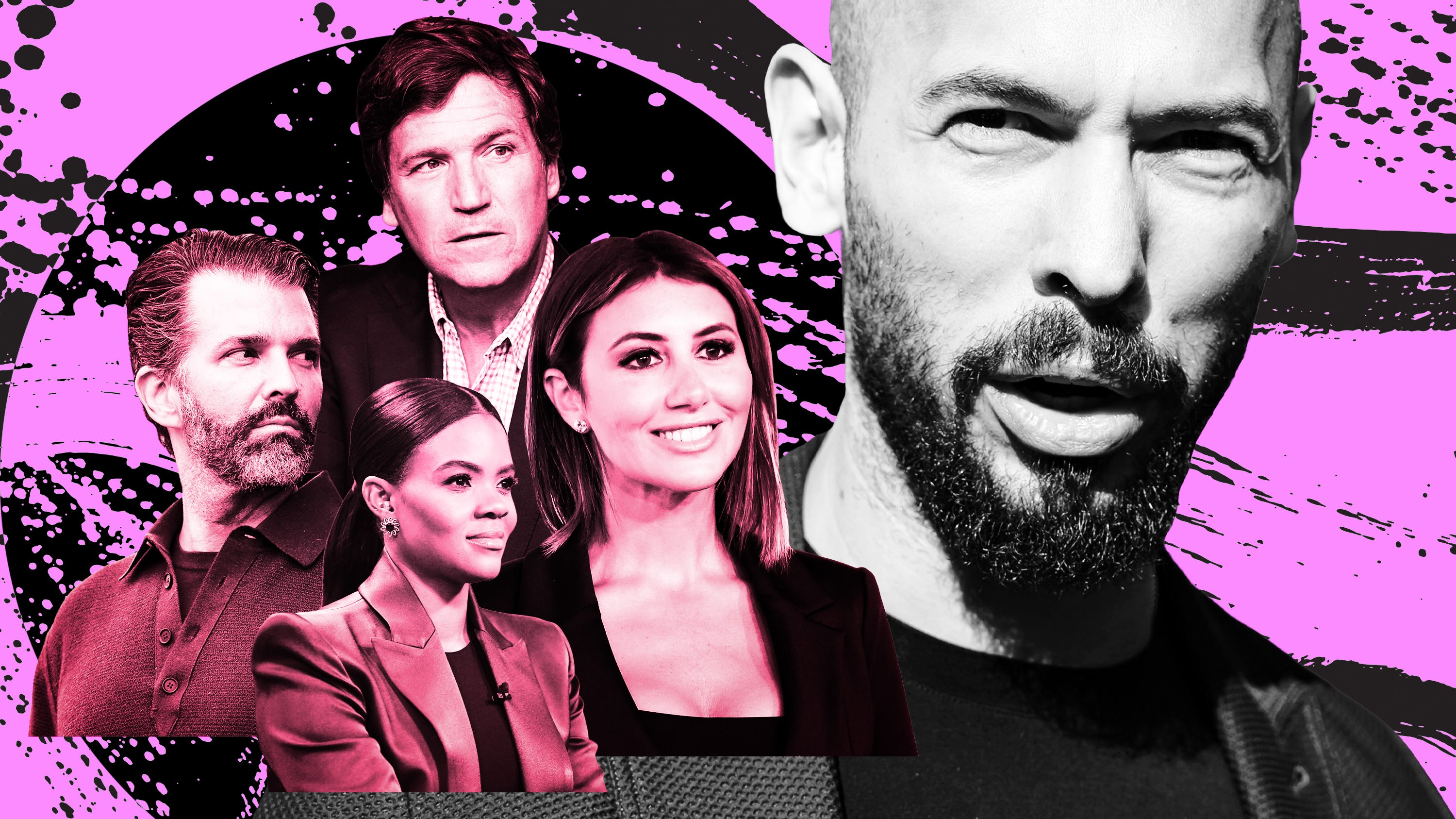
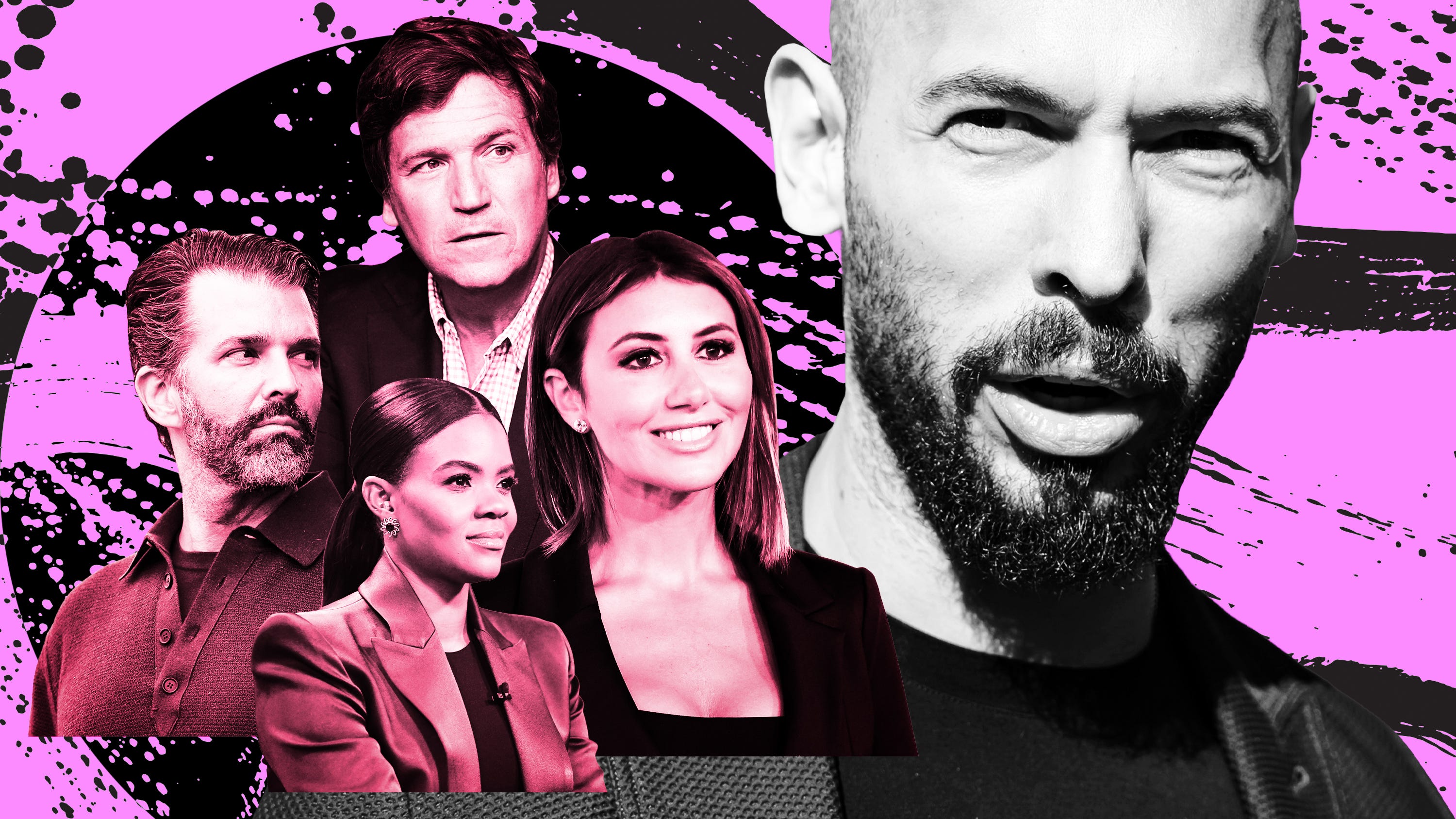
FOR ACCUSED SEX TRAFFICKERS AND RAPISTS, Andrew and Tristan Tate have been a real hit with the American right over the years.
A gleeful Tucker Carlson visited the Romanian compound shared by the brothers while they were under house arrest, gushing over how famous the two manosphere social media stars were. Candace Owens hosted Andrew Tate for friendly interviews and has attacked his victims. And Benny Johnson interviewed Andrew Tate in 2025, with a promo image showing crying liberals reflected in their sunglasses.
Hell, even Trump world luminaries have saddled up with the Tates. Alina Habba, Trump’s former lawyer who briefly and unlawfully served as a U.S. attorney, appeared on Johnson’s show with Tate, saying she was a big fan of his. Trump envoy Ric Grenell reportedly lobbied Romania to allow the brothers to leave the country. After their devices were seized in 2025 when they entered the United States, White House staffer and former Tate lawyer Paul Ingrassia intervened to get them back to the brothers. Trump son Barron reportedly “admires” Andrew Tate, and has told the far-right star he thinks the Romanian case against him on charges of human trafficking, trafficking of minors, and rape is unfair.
The chumminess toward the Tates was always controversial and grotesque given the nature of the allegations against them. But the most recent discoveries make that chumminess look far more damning.
As the brothers sit in a Miami jail awaiting extradition to the United Kingdom on charges including rape, assault, and trafficking, newly unsealed court documents reveal an even more sinister side to Andrew Tate’s alleged sex crimes—no small feat, given that Tate has been open from the beginning about building a business empire premised on exploiting women through sexual webcam performances.
The most eye-catching of the new revelations involves bestiality. One of the charges involves Tate possessing an image of “a person performing an act of intercourse with a live animal, namely an eel.” Another makes a similar claim about an image involving a horse.
But the most serious new allegations relate to Andrew Tate’s alleged work to get a 17-year-old girl to produce pornography.
According to the documents, Tate taught the girl to film herself as she took an extreme action to her genitals. He did so because a man was willing to pay him $1,000 a day for videos of the act. In a text message, Tate allegedly said he “told her she had to do it.”
Both brothers face rape charges, with Andrew often accused of choking women to the point of unconsciousness as he raped them. In one account in the new files, a woman regains consciousness only because Tate is crying on her:
Andrew Tates’ [sic] tears were splashing on her face, and he was crying, saying, “I love you ... that’s why I am raping you because I love you.” She remembers thinking that he was a psychopath and that she had let a serial killer in her house.
This is far from the first time Tate’s alleged crimes have been laid out in horrifying detail. And while the newly unsealed files are especially explicit, it’s been clear for years that the Tate brothers abused women—often because they said so themselves.
In fact, one of the stranger things about the Tates’ rise among commentators and podcasts on the American right is how so much of it happened after their initial sex-trafficking arrest in 2022.
Will those commentators now have a change of heart? I wouldn’t hold your breath.
In the wake of the bestiality porn and underage pornography allegations, I have seen none of the Tates’ erstwhile backers walk back their support. Johnson, Carlson, and Owens have all been silent. So have onetime Tate pals like Donald Trump Jr.
Indeed, there appears to be no appetite at all in MAGA media to reflect on how the Tates have been treated as podcast-friendly bad boys rather than prolific alleged sex criminals and pornographers. The lone sane person here may be talk-radio host Erick Erickson, who asked on his substack on Wednesday why right-wing media embraced this guy after he was already charged with sex trafficking. It doesn’t seem like anyone else will be joining him.
I felt like I was back in 2019 this week, after the online right was shaken once again by the old debate over whether making the “OK” sign is a symbol of membership in the alt right.
This saga stars 27-year-old Paul Tinkle, a staffer for the Indiana Republican Party. On Friday, Tinkle posted on X that he had been fired from his job for “making an OK symbol with my fingers.”
A week earlier, Tinkle said, he posed for a picture while canvassing with other Republicans. Tinkle said he was holding a sign, but, in an ominous hint about Republicans’ midterm hopes, he was told to put the placard away because it described the candidate as “Trump-endorsed.”
Unsure of what to do with his hands, Tinkle said he made the “OK” sign—what he describes as a mere “universal human symbol.”
In his telling, that prompted a furious local Republican official to accuse him of ruining the photo, and ultimately led to his firing. Tinkle claims he just loves making the “OK” sign, after picking it up teaching English to “OK”-crazed students in Japan.
Naturally, suspicion has fallen on that local GOP official who supposedly complained about Paul Tinkle: Hamilton County GOP Chairman Mario Massillamany. In a bizarre piece of reporting, the conservative outlet the Blaze claimed that the complaint fit a “pattern of anti-whiteness” from Massillamany, who is not white. The county chairman, who didn’t respond to a request for comment, has claimed on X that he’s not responsible for Tinkle’s firing.
Ultimately, the debate over whether Tinkle was just making the “OK” sign or was doing some Pepe the Frog symbology isn’t that interesting to me. I’m more intrigued that the Indiana Republican Party would care at all about something like this in 2026, and how Tinkle’s tweet thread prompted a wave of support from prominent MAGA media figures.
Tinkle, previously a little-known figure on the right, became a cause célèbre after he said he was fired for making a circle with his fingers. Support poured in from Turning Point USA, Jack Posobiec, and the Blaze’s Jonathan Keeperman—last in the news for debating “The Indian Question.”
On Monday, the Indiana GOP announced that it was giving Tinkle his job back.
Last year, Donald Trump pardoned Democratic Rep. Henry Cuellar1, who was under indictment for federal bribery charges. All he expected in return was that Cuellar, out of gratitude, would immediately switch parties and become a Republican. To his shock, Cuellar never did. “Many considered this to be a tremendous act of disloyalty,” Trump fumed on Truth Social last night, “and certainly showed him to be an extremely ungrateful person.”
He then encouraged Texas voters to vote Cuellar out in November. We’ve said it before and we’ll say it again: It’s genuinely amazing how little Trump tries to hide his own mob-boss style. Happy Thursday.
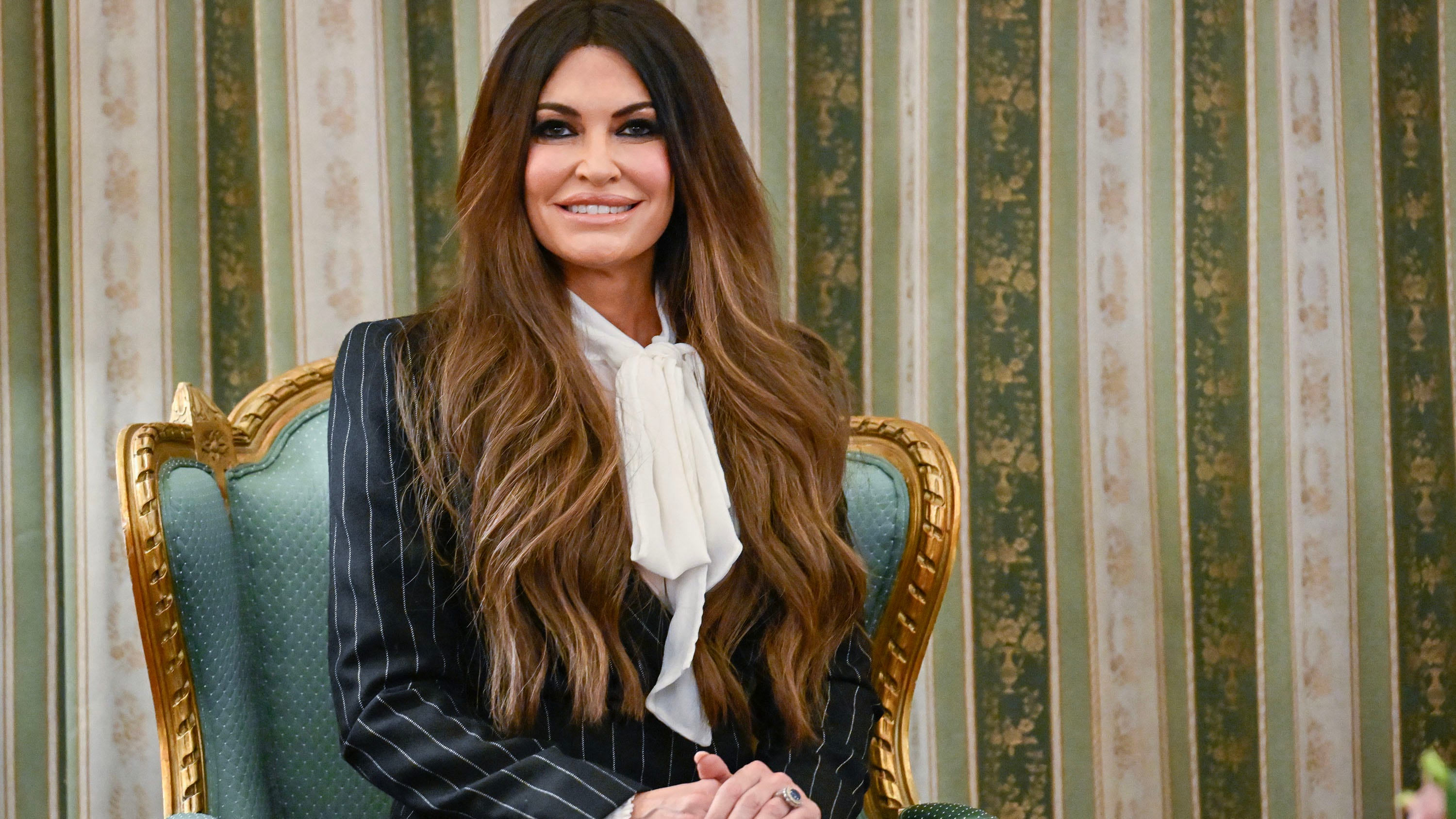
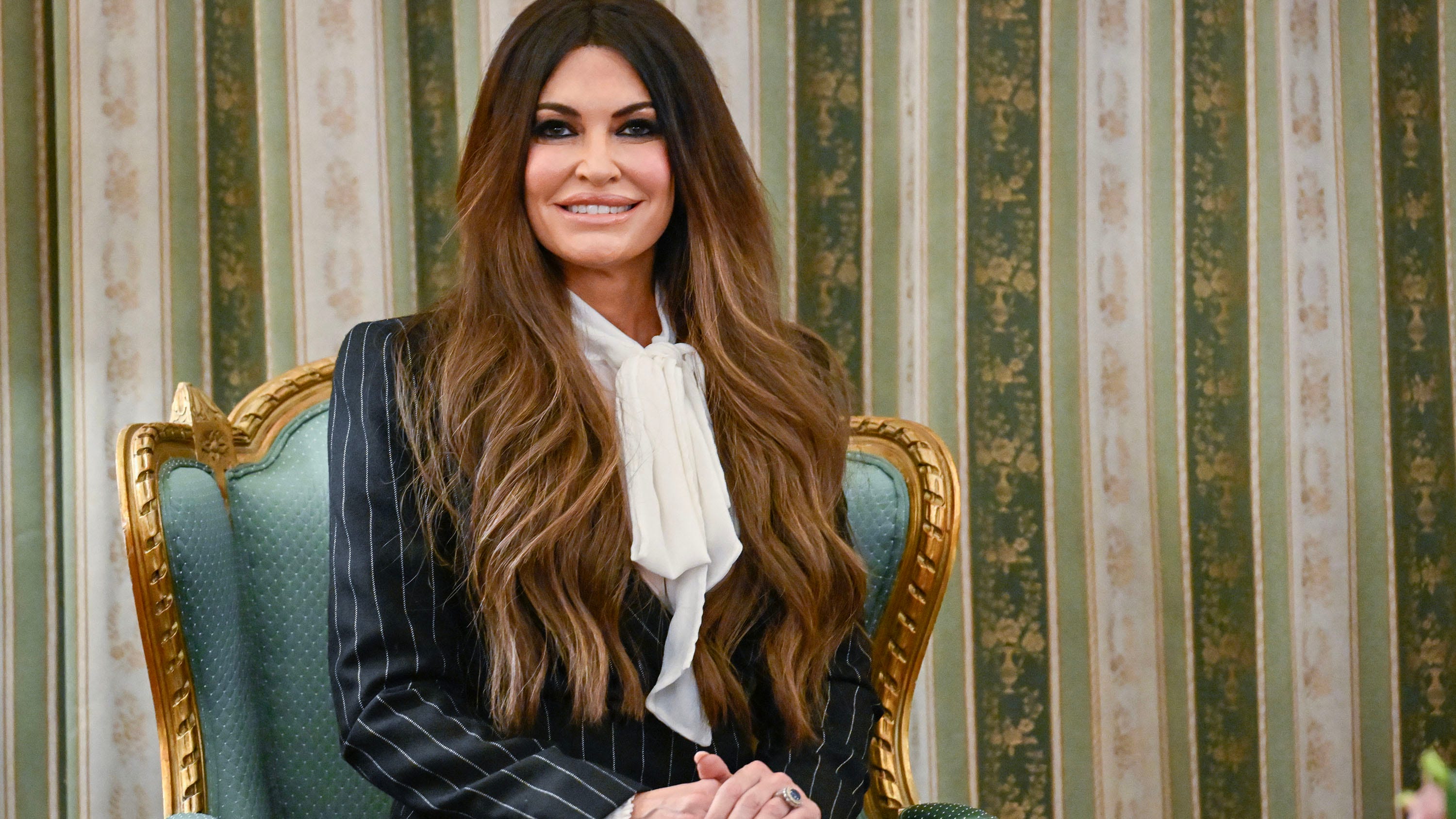
Kimberly Guilfoyle posing at the Greek presidential palace in Athens before presenting her credentials as U.S. ambassador to the Greek president on November 4, 2025. (Photo by Aris Messinis/AFP/Gerty)
Quid Pro Guilfoyle
by Andrew Egger
Some MAGA scandals take unpacking. Others, not so much. Yesterday, we got one of the latter. The Wall Street Journal headline: “‘Honey Please’: Kimberly Guilfoyle Pushed Donor to Wire $100,000 to Her Amex Account.” Sourced to her own smoking-gun text messages, the report is the latest example of this administration’s open, staggering corruption.
We haven’t heard much from Guilfoyle lately. Once a fixture of Trumpworld as the girlfriend of Donald Trump Jr., the family quietly put her out to pasture after Don Jr. moved on to his next paramour and now wife, Bettina Anderson Trump. In true royal-court fashion, as thanks for years of services rendered, she got a lavish parting gift: an ambassadorship to Greece.
But Guilfoyle, who had evidently become accustomed to a certain lifestyle, was soon living beyond her means. Which is how she found herself last summer wheedling Eric Deters, a penumbral MAGA figure and Trump donor, for a little quid pro quo cash.
The transaction was simple. Deters wanted someone in the family—so to speak—to help get a few requests in front of the right people. He wanted the administration to ask Pakistan to extradite the defendant in a lawsuit he was involved in, and he was hoping the IRS could make a little audit problem he was having go away.
We’re not asking for more money. We’re asking for less. Join Bulwark+ now and get 30 percent off for the first year.
Guilfoyle assured Deters she was his guy. “Every secretary of you know defense, transportation, treasury commerce IRS commissioner everyone gets right back to me,” she texted. “Oh yeah, I’m forgetting cash Patel.2” Deters had promised her as much as $1 million if she was successful, but she was happy to badger him for a little advance: Days before her July confirmation hearing last year, she asked Deters to wire $100,000 to American Express to pay off her credit card balance.
Eventually, Deters began to lose patience. Was Guilfoyle going to deliver the promised access or not? “I have paid you $300,000 over the years,” he wrote her. “As of this memo, I have not received one favor. I am not naive or a sucker. I need results.”
“Eric, I really wish you would stop papering all these things,” Guilfoyle responded. “It’s really dangerous and not helpful to you or me while you could simply just call me on signal.”3
Papering. It’s one thing to have a U.S. ambassador openly selling access to the government to cover her personal debts. It’s another thing to have her lecturing her briber on bribing best practices. And it’s yet another for her to be so fluent in those best practices that she is inventing slang to talk about them.
So far, Guilfoyle seems determined to brazen the story out, or at least to try. Through a lawyer, she engaged in the usual rote denials: Insisting without evidence or even specific argument that the texts were not “authentic,” that all money paid her by Deters had been to cover speaking and travel fees, and that she remains “committed to representing the American people with dedication and integrity.” Secretary of State Marco Rubio—who is in Greece—declined to comment this morning, instead treating reporters to a minute of silly bluster about how presumptuous it is to ask public figures to comment on stories they haven’t read yet. (Sure you haven’t, Jan.)
Will Trump keep Guilfoyle around? On the one hand, this is an open-and-shut case of staggering corruption—and it’s hard to imagine that this is the end of it. What’s more likely: that Guilfoyle only ever tried to sell access the one time, and got really unlucky with the dance partner she tried to sell it to? Or that the usual rules about seeing a roach in your kitchen apply?
In theory, Trump could get ahead of some headaches by cutting Guilfoyle loose now. But there’s a reason they gave her that ambassadorship in the first place: She was too close to the family for too long to put out on the streets safely. She knows where too many of the bodies are buried.
And after all, what’s $100,000 here or there? To you or me, that might sound like a hefty wad of cash. But on the scale of this administration’s graft, it’s chump change. Trump himself, recall, made more than $2 billion last year on his own various grifts and access-trading schemes. At her going rate, Guilfoyle would have had to shake down twenty thousand donors to get that kind of action.
That’s the grisly thing about any new story of corruption in this administration, of which this certainly won’t be the last. Every new outrage only serves to remind us how many the public has already, somehow, been willing to swallow.
The October Surprise? You’re going to want The Bulwark.
The midterms are coming. The surprises are inevitable. Get the reporting, analysis, and conversations you won’t get anywhere else.
• Unlock everything: Every Bulwark story + exclusive newsletters, including Sarah Longwell’s new Focus Group newsletter.
• Hear what others don’t: Member-only pods like The Secret Podcast with Sarah Longwell and JVL.
‘Trump Is the Picasso of Corruption’... The grift is relentless, the conflicts are everywhere, and the public keeps getting stuck with the tab, writes MONA CHAREN.
He Fled a Dictatorship. We Sent Him Back… Russian activist Leonid Melekhin sought refuge in America. His reward was a one-way trip to a penal colony, reports CATHY YOUNG.
HE’S LOOKING INTO IT: In yesterday’s newsletter, we discussed how two top Trump aides are pulling in hundreds of thousands of dollars consulting on behalf of the pro-Russian government of the Republika Srpska, part of Bosnia and Herzegovina. It turns out this may have been news to Trump, too. Yesterday, he had this to say on Truth Social:
Chris LaCivita and James Blair are outside consultants. They do not work for me, other than as outside consultants. They most likely have numerous clients, but for that, you would have to ask them. They are allowed to do work for others, just like all consultants in Washington, D.C. I do not have any idea who else they work for but will, on reflection, ask them and, if there’s a conflict, I will terminate them, immediately! Thank you for your attention to this matter.
So not to worry, then: On reflection, the president has decided to look into what foreign entanglements his own senior aides might have. Glad to have him on the case.
GREAT SCOTT: In theory, Scott Bessent—Donald Trump’s treasury secretary and Wall Street whisperer—is supposed to be an adult in the room. In reality, he’s as unserious as the rest of them: Unable or unwilling to talk the president out of his own economy-killing policy urges, and liable to turn and blame his own underlings for the ongoing economic under-performance. The Wall Street Journal gives the grim scorecard:
20 months into his tenure at the department, Bessent is facing skepticism on Wall Street and an economy that could wreck Republican chances in November’s midterm elections.
Bessent advised Trump to pursue a “3-3-3” policy: cutting the budget deficit to 3% of gross domestic product by 2028, spurring GDP growth of 3% and producing an additional three million barrels of oil a day. But growth has been around 2%, and oil production has increased less than a million barrels a day since Trump took office. The budget deficit is now over 6% of GDP, according to the Committee for a Responsible Federal Budget. U.S. debt overall recently topped $40 trillion.
A deepening selloff in U.S. government bonds has driven the yield on the 10-year U.S. Treasury note to highs last seen more than two decades ago, despite a stepped-up buyback program Bessent set into motion to contain the increase. The result is higher borrowing costs for Americans, a perilous trend for Republicans.
This was a recurring gripe for Guilfoyle. Months earlier, she had scolded Deters for talking too openly about their “private arrangement” with others. “It’s unbelievable when we have a private arrangement with you that you would now CC a producer talking about money,” she wrote. “What a nightmare you’ll literally cost me my ambassadorship stop writing.”
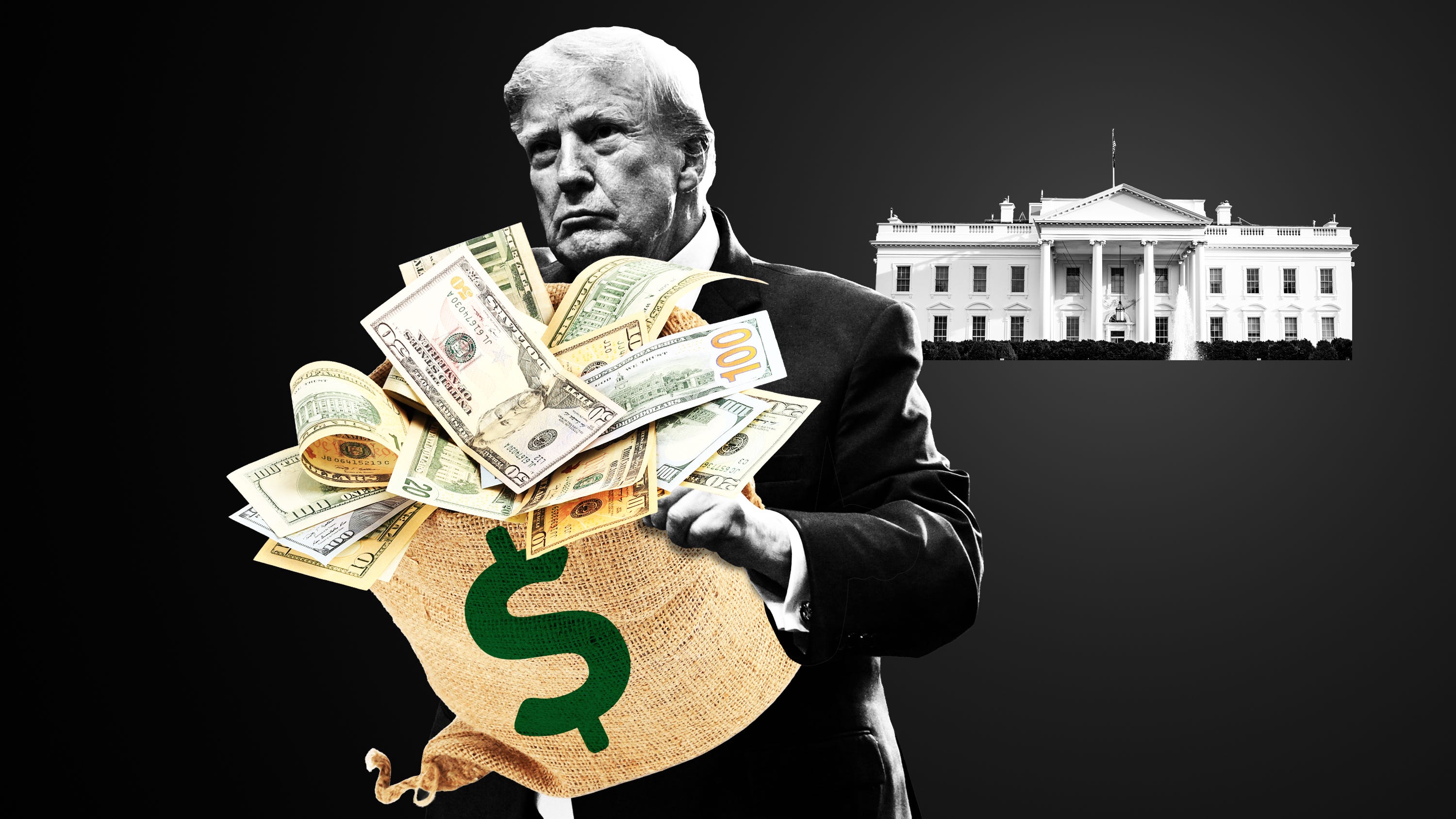
(Photo illustration by Bill Kuchman/The Bulwark | Photos: Getty, Shutterstock)
TRAYON WHITE, A MEMBER of the city council in the District of Columbia, just walked away from a hung jury in a bribery trial. The facts were kind of wild. Though White admitted to accepting $35,000 in cash from a city contractor (who turned out to be an FBI informant), and the prosecution presented evidence that he tucked white envelopes full of bills totaling between $5,000 and $15,000 into his jacket pocket on several occasions, the jury was deadlocked. Whatever. Juries are unpredictable. The point is, this run-of-the-mill public corruption case got prosecuted in a D.C. courtroom when, just a few blocks away, the president of the United States is accepting bribes and favors that dwarf anything White could even dream of.
Journalists love expressions like “the most corrupt since Watergate” or the “worst official corruption since Teapot Dome.” The trouble with those formulations is that they suggest that Watergate and Teapot Dome are the standards against which wrongdoing should be judged. If what we’re seeing now is only the “worst since,” then it means it isn’t quite to that level. The truth is that nothing—no scandal, no graft in American history—comes remotely close to the level of corruption the Trump administration is perpetrating. I have chronicled some of thisbefore, but with this crew, we have only begun to skim the scummy surface of the cesspool.
Every single day brings news of some flagrant conflict of interest, bribe, emolument, kickback, fraud, or theft. Most of it involves Trump himself and his family. But just as a fish rots from the head, Trump’s example has contaminated his administration. A glance at this week’s papers reveals that former Homeland Security Secretary Kristi Noem, before she left office, finalized a government purchase of several aging Boeing jets from one of her campaign donors, paying way above market value. There’s another ongoing probe of a Noem hire who was reportedly paid $19,000 a week.
When she wasn’t busy slandering Renée Good as a “domestic terrorist” or posing in front of men locked up in El Salvador’s CECOT megaprison, Noem was reportedly awarding no-bid contracts to cronies for a $220 million ad campaign that featured her on horseback at Mount Rushmore, among other things. Contracts totaling $143 million were allegedly given to an entity that was incorporated only eleven days before the solicitation. The role of Corey Lewandowski seems totally on the up and up: He was, in effect, Noem’s deputy, yet took no salary for nearly two years’ work during a time when he was widely believed to be her romantic partner. A number of executives complained to the White House that they were being asked to funnel funds to Lewandowski’s entities.
Everywhere you look, the pay-for-play nature of this government surfaces like herpes. The Campaign Legal Center keeps a running roster of donors who’ve received valuable posts, pardons, tariff waivers, regulatory relief, or contracts from the White House. It runs to more than forty pages of small print.
Nothing is untainted. Donald Trump Jr.’s wedding party in the Bahamas? You might suppose that the Trump family, after extracting $2.7 billion in wealth since the paterfamilias’s re-election in 2024, could afford the weekend party at a private island. But no, it was bankrolled by a Russian oligarch with close ties to Vladimir Putin. The bride, Bettina Trump, was offended that small-minded people might object, explaining that Umar Kremlev is a “dear friend” who hosted the party as a gift “for which we were and remain incredibly grateful.” As Sen. John Curtis (R-Utah) put it: “A toaster is a wedding gift. A private-island party paid for by a Putin-connected oligarch is something else.”
If someone, even a “dear friend,” shells out several hundred thousand dollars to celebrate your wedding, is there any doubt in anyone’s mind that he will want something in return? Is there any doubt that this is not a gift, but a bribe or a “stay sold” measure? Of course not. But beyond that, imagine being fine with accepting such gifts indirectly from a war criminal. Apples/trees. (Trump Jr. has since said he will reimburse Kremlev.)
Exposing corruption isn’t a one-day job. Neither is defending democracy.
It takes journalists willing to keep digging and holding powerful people accountable.
And it takes a community of readers who understand that the work doesn’t end with any one scandal, investigation, or election.
Let’s face it together. Come be part of the community that makes this work possible.
Join Bulwark+ today for 30 percent off the normal price.
NOTHING THE TRUMP ADMINISTRATION does can be taken at face value. Just as judges can no longer expect Department of Justice lawyers to be telling the truth and acting in good faith (the “presumption of regularity” is moribund), citizens can no longer take it for granted that the government is acting in the public interest and not aiming to line the pockets of the Trump family and friends. Let’s take three examples: kidnapping Nicolás Maduro and trying him, pursuing an aggressive deportation regime, and negotiating to end the war in Ukraine.
The Maduro capture, which convinced Trump that he could easily topple the Iranian regime the following month, was in no sense an effort to improve the lives of the Venezuelan people. It was plunder. Recall that Trump’s criticism of Operation Iraqi Freedom was that we failed to “take the oil.” No surprise, then, that taking Venezuela’s oil was foremost on his mind after the Maduro snatch-and-grab. Trump’s White House boasts that “In the biggest oil deal in world history, President Donald J. Trump has secured U.S. majority control of more than 65 billion barrels of proven oil reserves in Venezuela.” Some of Trump’s personal and political allies are swooping in to take advantage of the Venezuela opportunities. Meanwhile, the funds from the sale of this oil have supposedly been moved to an account in Qatar, but the administration has not shared a detailed breakdown of these funds with Congress or the public. Trump has claimed that the oil windfall has paid for the Venezuelan military operation “many, many, many times over” but there has been zero transparency about how much oil has been sold, where the proceeds are, and how they’ve been spent.
Doubtless the Trump administration is sincere in its demonization of immigrants and indifference to the suffering of those it wrongly rounds up, detains, and deports (sometimes to third countries with which the immigrants have no ties, including countries with appalling human rights records). But if there’s also a way to pay off big donors while enjoying all this human suffering and injustice, all the better. The GEO Group and CoreCivic, two firms that operate private prisons and detention centers, donated $2.8 million to Trump’s re-election effort and inauguration. Since then, GEO has been awarded more than $1 billion in ICE contracts. CoreCivic sold two facilities to ICE for $1.5 billion. Perhaps it was a coincidence. A former senior ICE official expressed amazement at the price tag. “So, $1.5 billion just for the facilities,” the former official remarked to CalMatters. “And how many migrants are ever going to come in and out of there who are national security and public safety threats? The people that we actually do need to keep off the streets.”
Remember the attempted shakedown of Volodymyr Zelensky in 2025, when Trump and Vice President JD Vance teamed up to bully him in the Oval Office and Trump demanded access to Ukraine’s rare-earth minerals? That spirit persists. According to New York Times reporting this week, Steve Witkoff and Jared Kushner, who are notionally negotiating to end the Russia/Ukraine war, have “expanded” their talks to include a multibillion-dollar oil deal that would benefit “Middle Eastern business executives with ties to”—guess who? Jared Kushner and Steve Witkoff.
The leading group seeking the deal includes an American investor, Todd Boehly, who has donated $2 million to President Trump’s political causes; two Middle Eastern groups that have done business with Mr. Kushner or Mr. Witkoff’s family; and an arm of the U.S. government itself.
While “there is no indication that Mr. Kushner and Mr. Witkoff themselves stand to profit,” the Times writes with considerable understatement that it is “a striking intermingling of personal business ties with geopolitics.”
THE TRUMP SONS are doing well, too. Companies in which Eric and Donald Jr. have invested have been awarded $3.2 billion in direct government business and secured another $3.1 billion in future contract options, according to a Washington Post analysis.
The list of corrupt, tainted transactions is virtually endless. On April 30, the tobacco company Reynolds American donated $5 million through a subsidiary to MAGA Inc. Executives were then invited to lunch at one of Trump’s clubs. They complained about an FDA regulation of vaping cigarettes. Trump made a call then and there to Robert F. Kennedy Jr. and, voila, the regulation was changed a few days later.
Other than the $Trump memecoin, the most direct pathway for dollars to Trump’s pocket has been the scheme to sell early access to Truth Social posts. For $100,000 a month, Trump will sell you his often market-relevant posts a few seconds before everyone else sees them. The funds would go directly to Trump Media, which Trump owns. Attempting to defend this corrupt arrangement in a federal court on Wednesday, a Department of Justice lawyer compared it to Franklin Roosevelt’s “fireside chats.” The judge immediately interrupted him: “Well, President Roosevelt didn’t charge money for his fireside chats, did he?”
As Brendan Ballou, the lawyer representing media organizations who are suing to stop Trump’s Truth Social grift, put it, “In some ways, Trump is the Picasso of corruption. He comes up with schemes that just wouldn’t occur to you or I, and the Truth Social one is an example of that.”
The MAGA intellectuals—and yes, there are some—imagine that they are keeping the United States from decline by supporting Trump. They say things like “Import the Third World, become the Third World.” But it is Trump’s record-shattering corruption that is rushing us toward Third World status. Trayon White at least faced a jury. Trump’s only reckoning can come from the ballot box, and while that may be encouraging, it’s not nearly proportional to the destruction he is wreaking.
(Photo illustration by Bill Kuchman/The Bulwark | Photos: Shutterstock)
HORROR STORIES FROM the Trump administration’s mass deportation regime—from deportees facing horrific conditions in “third countries” to suicides among refugees stripped of legal protection—have become depressingly routine. The latest such story comes from Russia, where, on Monday, an activist deported from the United States in July 2025 was issued a sentence of six years in a penal colony on absurd charges of “justifying terrorism.” The depressing (but hardly unusual) part is that this outcome was entirely predictable.
Leonid Melekhin, 35, fled Russia in late 2023 when it became clear that his political activism placed him in jeopardy. Earlier that year, he had been detained and beaten by the police in his native city of Perm after a one-man protest in the city center with a poster that called for freedom for then-imprisoned (and later murdered) dissident Alexei Navalny. This was not Melekhin’s first brush with Vladimir Putin’s police state: Melekhin had been previously arrested at a pro-Navalny protest in Perm in 2021 and had resisted pressure to testify against members of Navalny’s political organization. But by 2023, protest in Russia had become far more dangerous. When he was arrested that year, police threatened to have him conscripted to fight in Ukraine.
Melekhin made it to Mexico and used the Biden administration’s CBP One app to request an appointment to present himself at the U.S. border and seek asylum. He did everything by the rules, waiting eight months to be notified of an appointment to present himself to U.S. immigration officers at an authorized crossing. (His wife and two children, then aged five and one, had stayed behind in Russia; the plan was to get them out after receiving asylum.)
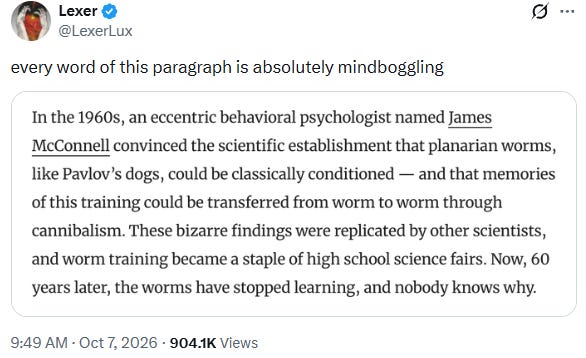
Just before crossing the border, on August 15, 2024, Melekhin took a selfie and sent it to another expatriate activist from Perm, Yuri Bobrov, with a request that it be posted to Bobrov’s Telegram blog along with another photo he had sent Bobrov earlier—one he had taken on his last night in Russia as a final act of protest. That second image seems to depict a cardboard cutout of a human figure suspended from a bridge by a rope. The cutout is rigged up with a photo of Vladimir Putin over its face and a poster that reads, “Putin V.V. is a murderer, a fascist, a usurper. All that is needed for evil to triumph is for good people to do nothing. Hang the fascist.” Bobrov obliged and posted both images.
In the United States, Melekhin ended up in immigration detention, but he was confident he would be granted asylum. In December 2024, his case was heard by Anne Kristina Perry, an immigration judge appointed under the first Trump administration.1 Another Russian asylum seeker whose case was adjudicated by Perry told Joshua Yaffa of the New Yorker—from whose reporting my account of Melekhin’s time in the United States is largely drawn—that Perry acted “like a prosecutor more than a judge,” subjecting applicants like himself to “a real interrogation.” Perry found that Melekhin was “a credible witness” and had presented “plausible, consistent, and detailed” evidence to support his claim. This did not stop her from concluding that he did not have an “objectively reasonable well-founded fear” of being targeted for reprisals—the criterion being at least a one-in-ten chance that he would face persecution if deported to his home country. How such an estimate can be calculated is unclear, but Melekhin’s past arrests and the police search of his apartment back in Russia after Bobrov posted the photo of his anti-Putin poster would have seemed to put the risk much higher than 10 percent. Nonetheless, Perry ruled against relief for Melekhin and ordered his removal; he appealed her decision.
While his appeal was pending, Melekhin was transferred from the Imperial Regional Detention Facility in Calexico, California to another detention center in Arizona with reportedly harsher conditions. He also learned that criminal charges had been filed against him in Russia, apparently because of the Telegram photo. None of that mattered: In June 2025, his appeal was rejected without a new hearing. The appeals board—which may or may not have been aware of the charges he was now facing—agreed with Perry’s conclusion that Melekhin had failed to present convincing evidence of “clear probability of future persecution” and affirmed the deportation order.
When activists face persecution, when governments punish dissent, when people seeking refuge find the doors closing, independent journalism has an obligation to pay attention.
To investigate. To bear witness.
We can’t promise that telling stories like this will change everything. But we know that looking away won’t.
And we know there are people who still believe truth, decency, and democracy are worth defending. You’re one of them.
Come be part of our community. Join Bulwark+ for 30 percent off one year.
Melekhin was transferred back to Imperial, where fellow inmates tried to persuade him to file another appeal—this one with the U.S. Court of Appeals. But, Yaffa reports, he had grown depressed and lost hope of a fair outcome. Terrified of being repatriated, he clung to a small glimmer of hope: boarding a flight to a different country during a layover, since there are no direct deportation flights to Russia. According to the Moscow Times, such escapes had sometimes worked in the past but became essentially impossible in the summer of 2025 after Immigration and Customs Enforcement had “established a single route through Egypt and begun coordinating deportations with the Egyptian (and likely Russian) authorities.” Deportees trying to escape at Cairo International Airport, the Moscow Times says, “have been captured and beaten by Egyptian special services.”
Finally, in July 2025, Melekhin was flown to Moscow. His Russian court-appointed lawyer, Valery Kuznetsov, has said that he chose to “self-deport” voluntarily once he realized that his chances of staying in the United States were extremely slim. Some expatriate Russian activists doubt this scenario and suggest that he was likely pressured by ICE agents into agreeing to be deported—or even “tricked” by being told that a second appeal was useless.
Be that as it may, Melekhin was arrested at the Sheremetyevo airport immediately on his return. On the same day, reports the independent Russian website Mediazona, the police searched his apartment and confiscated his wife’s phone, then returned it and allowed her to call her husband. Melekhin told her that “everything is fine.”
A few days later, Melekhin’s family and friends found out about his arrest from a local news site. Mediazona learned that he had been on a “wanted” list at least since June 2024, even before his crossing into the United States; in October of that year, he had also been placed on the government’s registry of “extremists and terrorists.”
Now comes the inevitable conclusion: After a trial held behind closed doors by the Central District Military Court in Yekaterinburg, Melekhin has been handed a six-year sentence. His offenses: the anti-Putin poster and an undisclosed online comment.
THIS OUTRAGEOUS CASE IS, sadly, far from the only one of its kind. A year ago, the Insider, a bilingual expatriate Russian media project, published a harrowing report on the removals of Russian refugees—more than a hundred of them in just June and August 2025. The cruelty of the deportations themselves—one person was sent back despite having been arrested in absentia in Russia for spreading alleged “fake news” about the war in Ukraine—was exacerbated by the ordeal that preceded them: overcrowded detention facilities where inmates slept on cold floors with no mattresses or blankets, inadequate food and medical care, and degrading treatment by guards. According to the Insider, at least one deportee besides Melekhin—Artyom Vovchenko, a draftee who had deserted from an army base after being coerced into signing a contract—was arrested on arrival and transported straight to prison. Miraculously, Vovchenko later succeeded in escaping from a clinic where he had been allowed to seek medical treatment and getting out of Russia a second time.
The plight of Russian refugees in the United States did not begin with the Trump administration. A directive prohibiting ICE from releasing Russians with pending asylum applications was issued in May 2024, when Joe Biden was still president; an activist named Yevgeny Mashinin, who had a long history of detentions and fines for his political protests, was denied asylum around June 2024—by an immigration judge appointed under Biden—and deported to Russia later that year. He was promptly visited by the police and charged with misdemeanor offenses related to his activism. (Like Vovchenko, Mashinin got an improbable happy ending: When the charges against him were heard in December 2024, he was sentenced only to a fine and two days of detention, and after getting out of jail, he managed to escape to Morocco.)
The New Yorker’s Yaffa, no Trump sympathizer, also concludes in his August 2025 article that the culprit in Melekhin’s case may have been less this administration’s anti-immigration crackdown (or its Russia-friendly stance) than “an overwhelmed immigration system making snap judgments without time or capacity to fully consider the dangers that asylum seekers may face back at home.” But there is no question that the Trump administration has made things far worse with its overhaul of immigration courts and its overt hostility to refugees—except for South Africans fleeing a mythical “white genocide.” Asylum grant rates in immigration courts have dropped precipitously, from an already-low 32 percent of applications at the end of Biden’s term to less than 6 percent by June 2026, and removals of unsuccessful asylum seekers have been cranked up to industrial speed.
There’s a certain grim irony in the fact that the poster that sealed Melekhin’s fate included the words, “All that is needed for evil to triumph is for good people to do nothing.” He was referring to Vladimir Putin’s Russia. But the warning fully applies, as well, to Donald Trump’s America.
An “immigration judge,” despite being called a judge, is a Justice Department official who presides over immigration hearings and rules on deportation and requests for relief, including asylum.
Sam Stein, Marc Polymeropoulos, and Michael Weiss went live to take on the bombshell Wall Street Journal report that reveals Kimberly Guilfoyle’s extraordinary private messages with a Trump donor, including a $100,000 request to pay her Amex bill and repeated warnings to stop creating a paper trail.
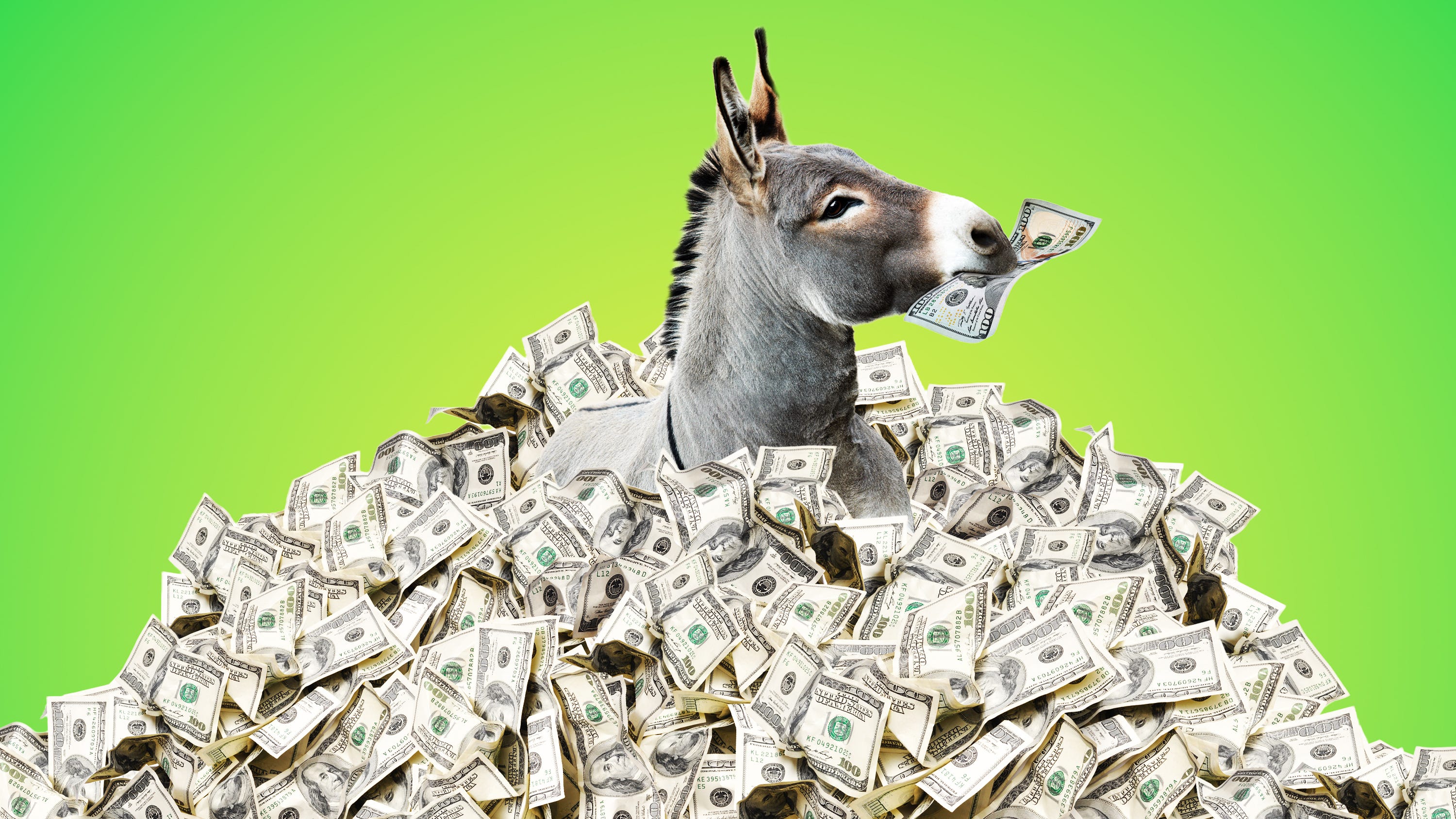
(Photo illustration by Bill Kuchman/The Bulwark | Photos: Shutterstock)
AS THEY WATCHED their midterm standing worsen in recent months, Republicans soothed their anxiety by noting the massive cash advantage they enjoyed over Democrats.
That may be changing.
Various Democratic operatives and fundraisers have told me that the party’s financial standing has improved dramatically over the past few weeks as Democrats’ prospects of winning have brightened. House Majority PAC, the top Democratic super PAC charged with winning back the lower chamber, and its affiliated organizations raised $230 million in the third quarter of 2026—their best quarter ever. Senate Majority PAC and its affiliated organizations announced that they also had the best third quarter in their history, raking in $202 million.
Campaign officials working on some of the most competitive Senate races this cycle told me
The October Surprise? You’re going to want The Bulwark.
The midterms are coming. The surprises are inevitable. Get the reporting, analysis, and conversations you won’t get anywhere else.
• Unlock everything: Every Bulwark story + exclusive newsletters, including Sarah Longwell’s new Focus Group newsletter.
• Hear what others don’t: Member-only pods like The Secret Podcast with Sarah Longwell and JVL.
Will Saletan breaks down the Maine Senate debate between Republican incumbent Susan Collins and Democratic challenger Troy Jackson, and why Collins is struggling to separate herself from Donald Trump in a state where the president remains deeply unpopular.
Jackson repeatedly tied Collins to Trump on the Iran war, tariffs, abortion, health care and the Republican tax and spending bill, while Collins tried to emphasize her independence and point to the work she has done for Maine. But with Collins having cast several crucial votes for Trump’s agenda, Will explains why her strategy of distancing herself from the president may be difficult to sell to voters.
A quick note: We’re proud that The Bulwark can make videos like this. Not everything should be built to chase the algorithm. Sometimes you want someone as talented and tenacious as Will Saletan to take the time to dig through the record, connect the pieces, and make the full case. That kind of work takes time and resources, and it’s only possible because our audience supports it.

 Login
Login