Login

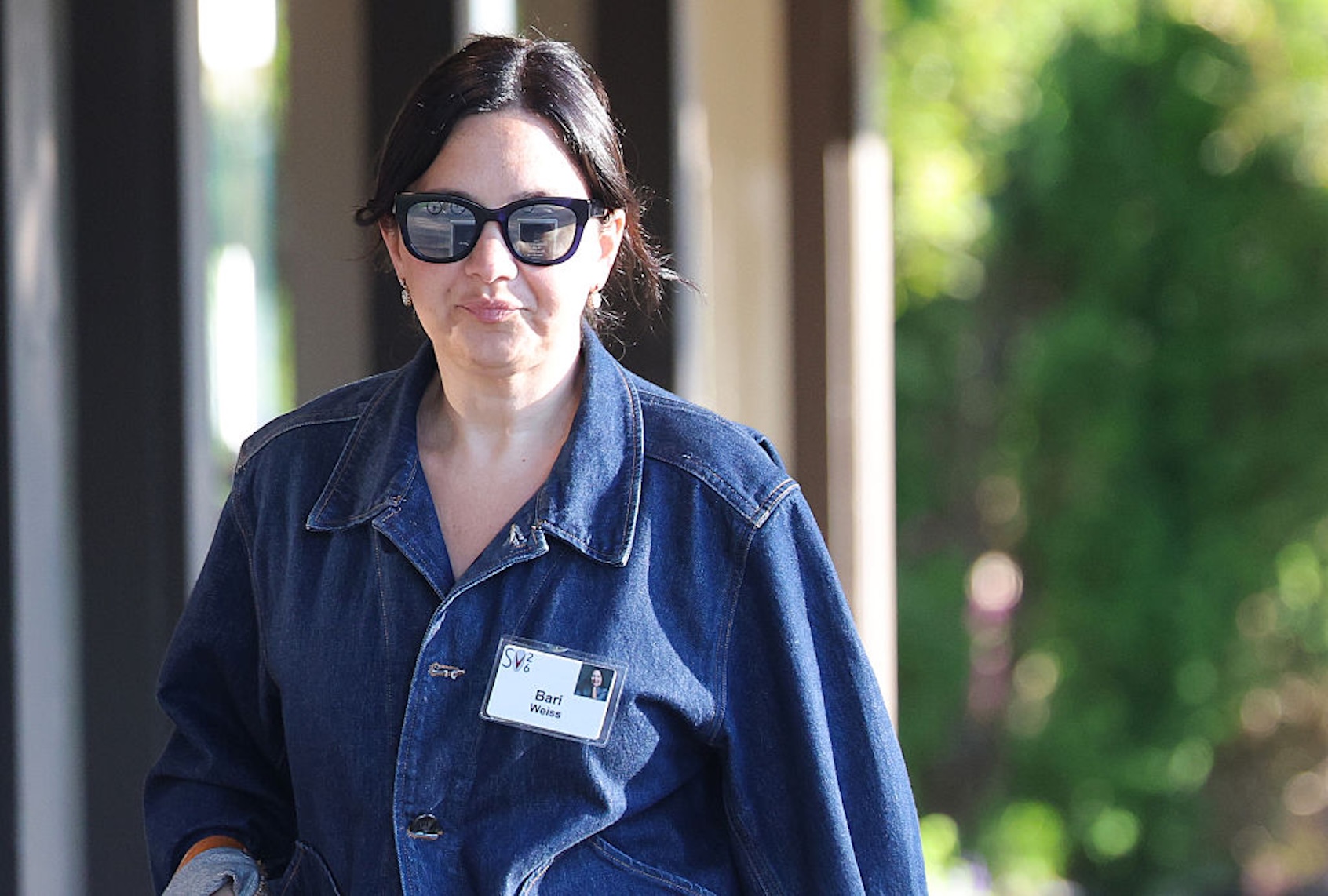
Bari Weiss’ pro-MAGA CBS News pivot is falling flat
When I watched veteran “60 Minutes” correspondent Lesley Stahl report from the West Bank on a recent Sunday night, my first thought was to wonder how the segment had slipped past the watchful eyes of Bari Weiss. Stahl accompanied a group of Palestinians trying to reach their own land, only to be confronted by Israeli settlers clad in black. The Palestinians had approached the settlers with their hands behind their backs to make plain they posed no threat. One man was headbutted in the face and his nose fractured. An Israeli army captain finally defused the standoff, but the Palestinians never reached their property and the settlers appeared to suffer no consequences. It was a riveting piece of television, framed by the Oct. 27 Israeli elections.
The report did not slip past Weiss, of course. Within a day, Oliver Darcy of the Status newsletter reported that screenings of the segment had grown extraordinarily contentious, with the CBS News editor-in-chief taking a “very, very hands-on” role and Stahl, who has been at the broadcast since 1991, privately floating the idea of quitting. Darcy’s sources said Weiss’ objections were not confined to a single factual assertion but ranged far more broadly, and that some on the team were unsure the report would even air at all.
CBS News, for its part, called the Status account a “ludicrous, twisted narrative” and insisted the piece received far fewer edits than most. Perhaps so. But even the network’s version concedes the larger point: A correspondent of Stahl’s stature had to survive an internal fight over an eyewitness account of violence that she and her crew watched unfold.
The former Free Press editor arrived at the network promising to rescue mainstream news from ideological conformity. Yet her tenure has increasingly been defined by disputes over editorial interference, the departure of veteran journalists and a growing perception that certain political narratives receive more scrutiny than others.
That contradiction sits at the heart of the Bari Weiss experiment. The former Free Press editor arrived at the network promising to rescue mainstream news from ideological conformity. Yet her tenure has increasingly been defined by disputes over editorial interference, the departure of veteran journalists and a growing perception that certain political narratives receive more scrutiny than others. As I’ve previously argued, the crisis at CBS News is bigger than one controversial editor. It is about what happens when corporate power no longer values a news organization’s independence as a principle to be defended.
Under the watch of Skydance boss David Ellison and Weiss, whom he handpicked, CBS News’ rightward renovation is running into a problem. The internal revolt at the network has become a daily reality for rank-and-file employees who watched the forced departures of foundational figures like Scott Pelley, Sharyn Alfonsi and Cecilia Vega. The journalists who remain have not all agreed to become instruments of Weiss’ apparent worldview; many are leaking their misgivings to media reporters. Nor do the audience numbers establish that replacing an investigative institution’s identity with a slickly packaged right-wing populist brand constitutes a successful business strategy. Now the network is caught struggling to hold on to the credibility it inherited while forging the political project its leadership appears determined to impose.
If you want to hear what passes for rigor in Weiss’ newsroom, the tape is available. After Weiss fired London bureau chief Claire Day in April — her offense was apparently coverage of Israel that displeased the new regime — she installed Shayndi Raice as foreign editor. Last week Raice summoned the foreign staff to a virtual meeting and delivered a 15-minute tirade that Status obtained on audio and later released in full. “This is not your publishing platform,” she told the assembled journalists. “This is a company that we all work for, and there’s a hierarchy in place.” Failure to follow that hierarchy, she explained, “is called insubordination, and it’s legal grounds for firing.”
When Holly Williams, the veteran correspondent whose report on the anniversary of the Oct. 7 attacks had been edited to remove the Palestinian death toll, respectfully challenged her, Raice informed Williams that she had gotten her own story “wrong.” Williams, Raice said, does not know it as well as she does. As for the figure itself — more than 74,000 Palestinians killed in Israel’s bombardment of Gaza — Raice waved it off as a “magic number.” Including it in the report, she suggested, amounted to “posturing” rather than journalism.
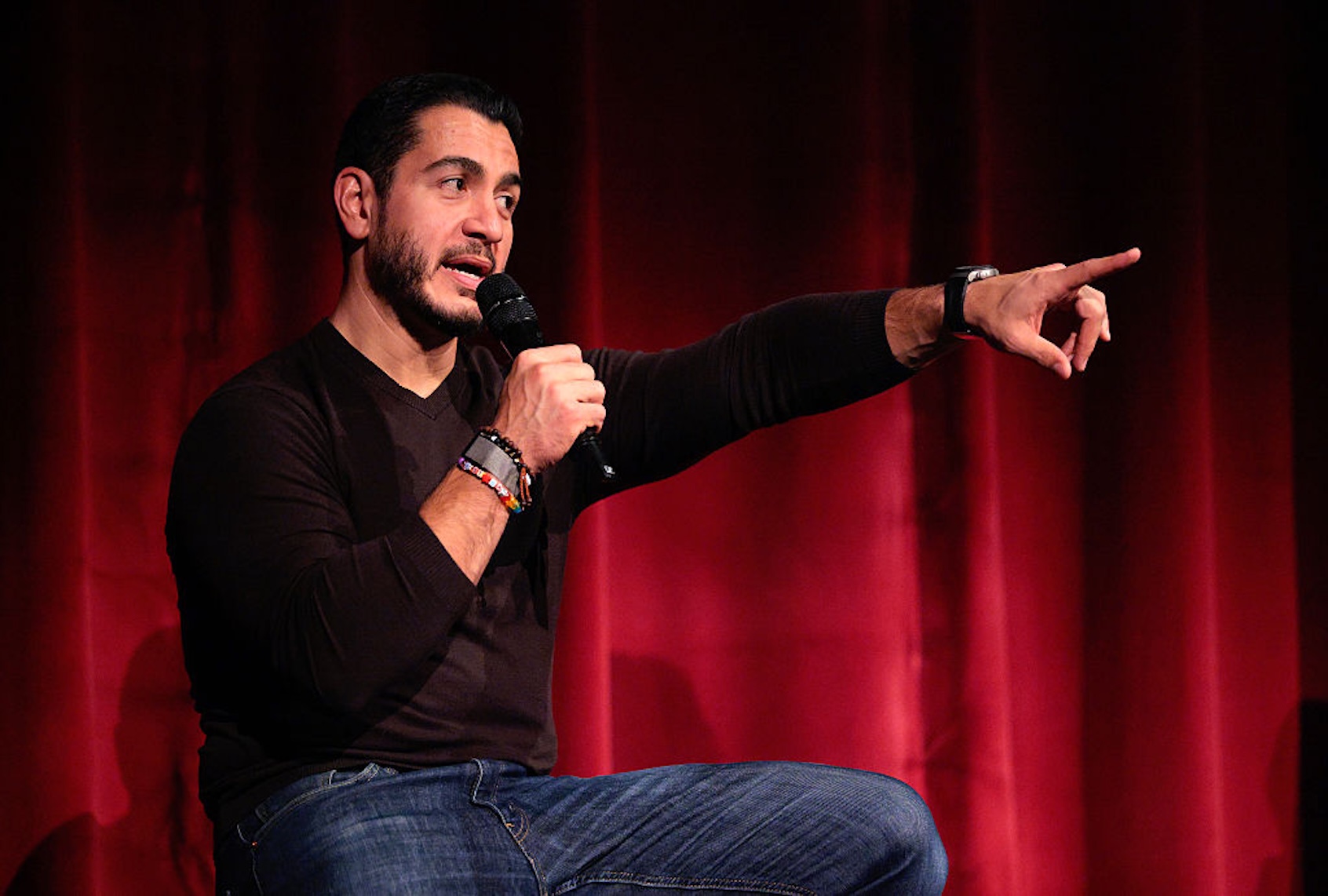
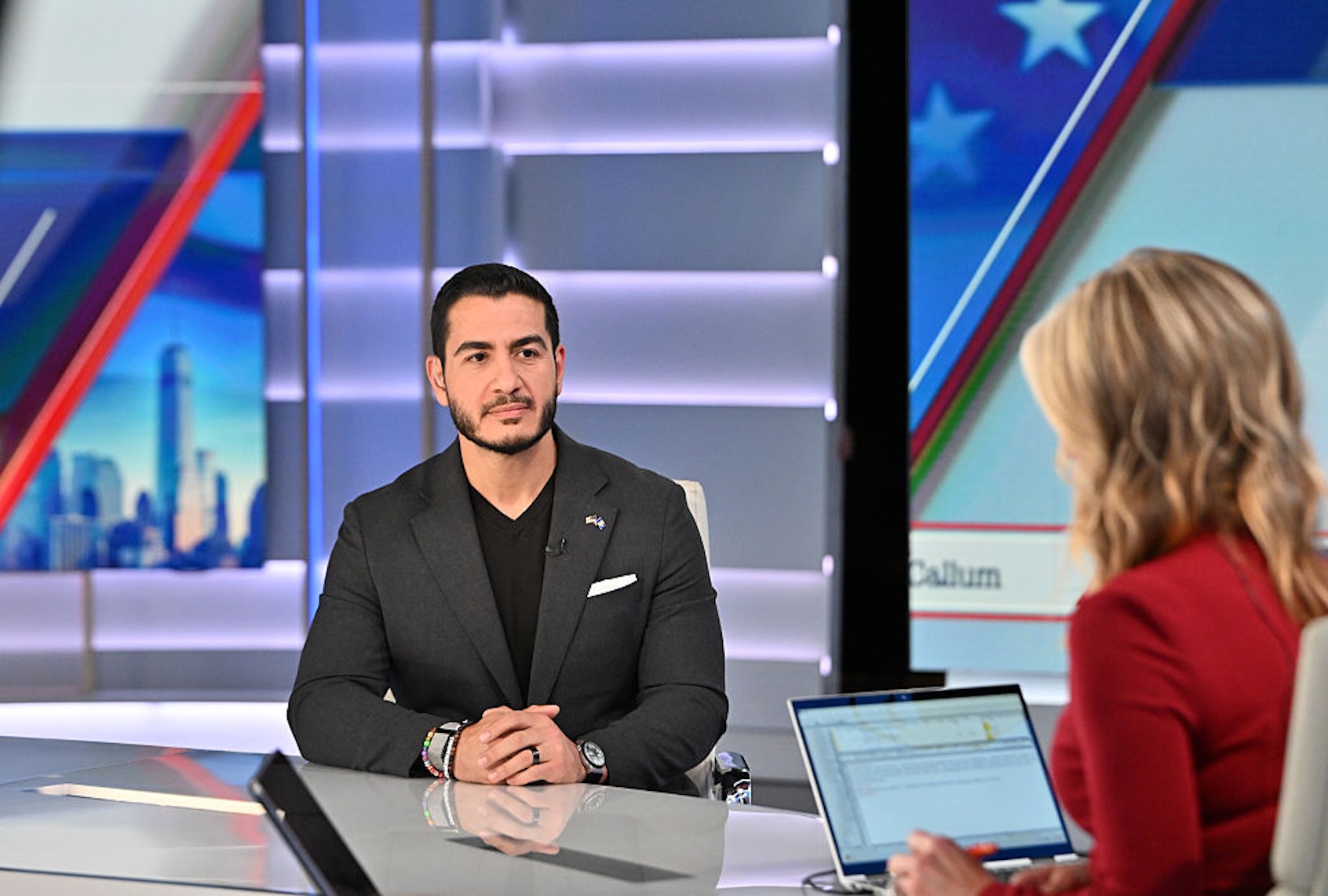
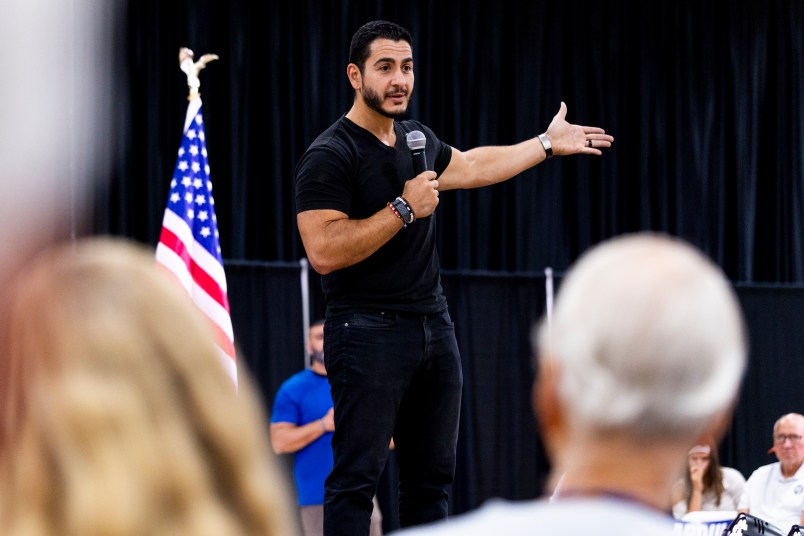
The same partisan thumb has appeared on the scales in CBS’s domestic political coverage. Semafor’s Max Tani reported that Weiss has taken a personal interest in Michigan’s Senate race, and she has pushed CBS journalists to pursue story after story about Democratic nominee Dr. Abdul El-Sayed and his supposed sympathy for the Muslim Brotherhood, raising the subject on editorial calls and tasking the network’s investigative unit with combing his background for a link to the organization.
The raw material for this enterprise is a 2012 tweet by El-Sayed’s half-sister describing a conversation with their mother about her activism in the Muslim Brotherhood in Egypt in the early 1970s. El-Sayed has disavowed the group. He has explained that his parents divorced when he was young and that he was raised by his father and stepmother, and the leap from a mother’s politics in another country half a century ago to a candidate’s secret loyalties is the kind American journalism once required evidence to make.
Want more sharp takes on politics? Sign up for our free newsletter, Standing Room Only, written by Amanda Marcotte, now also a weekly show on YouTube or wherever you get your podcasts.
To be fair, El-Sayed is a legitimate story. A Senate candidate’s family history is fair game, and there is nothing inherently scandalous in an editor telling reporters to look into it. The scandal, though, is in the selectivity. The same editor who dispatched investigators after a Democrat on the strength of his mother’s biography also tasked staff with pursuing the theory that James Talarico, the Democratic nominee for Senate in Texas, had secretly checked into a mental health facility during his nine-day absence from the campaign trail, a claim right-wing influencers manufactured out of a bad case of the flu — and one that collapsed on contact with a hospital’s denial and time-stamped security footage. One CBS staffer told Semafor that Weiss’ story ideas “routinely come from social media influencers or from opposition research that’s been placed in conservative outlets,” and that the resulting reports “usually leave out important context and facts.”
It is worth highlighting what unites the targets: El-Sayed and Talarico are both progressives who have criticized Israel’s conduct in Gaza and the West Bank.
What Weiss is building with her other hand is a stage to platform MAGA. Her signature project is Things That Matter, a town-hall series she devised and launched by interviewing Erika Kirk, the widow of Turning Point USA founder Charlie Kirk, in a December broadcast that drew 1.87 million viewers, which was notably down 11% from what CBS ordinarily draws in that hour. Of the series’ single-guest town halls since, exactly one has featured a Democrat, Maryland Governor Wes Moore. The segment’s latest installment on Saturday handed a Michigan stage to Vice President JD Vance a little over two weeks out from the midterm elections, in a state where the administration needs every vote it can find.
We need your help to stay independent.
Ironically, the format’s one unscripted moment came from the audience. Joey Amor, whose wife, Master Sgt. Nicole Amor ,was one of six American soldiers killed in an Iranian drone strike on an outpost in Kuwait in March, asked the vice president when this administration would hold its own officials accountable for the failures that left those troops exposed. Vance pleaded unfamiliarity, explaining that “sometimes information doesn’t filter up to me.”
The irony was abundant: A town hall designed as a coronation had accidentally produced a news story, and the news was that the vice president of the United States had nothing to say to a man widowed by President Donald Trump’s war of choice.
Now consider what the new CBS has gotten for all this friction. “60 Minutes” recently saw the smallest audience of the season and the smallest for a fourth episode in at least a quarter century. The season premiere in September managed 7.94 million, a 21% drop from 2025 and the weakest opening this century.
This is a broadcast that grew 9% last season. Nobody was asking Weiss to fix it.
Read more
from Sophia Tesfaye
The post Bari Weiss’ pro-MAGA CBS News pivot is falling flat appeared first on Salon.com.