 Login

chocolate pecan pie bars


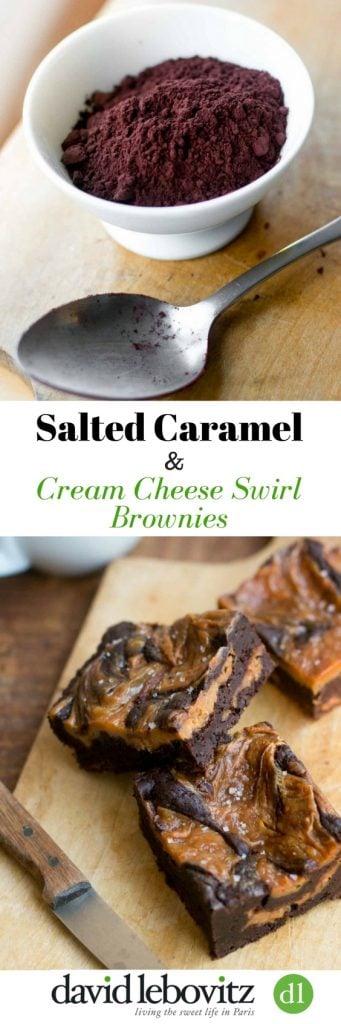
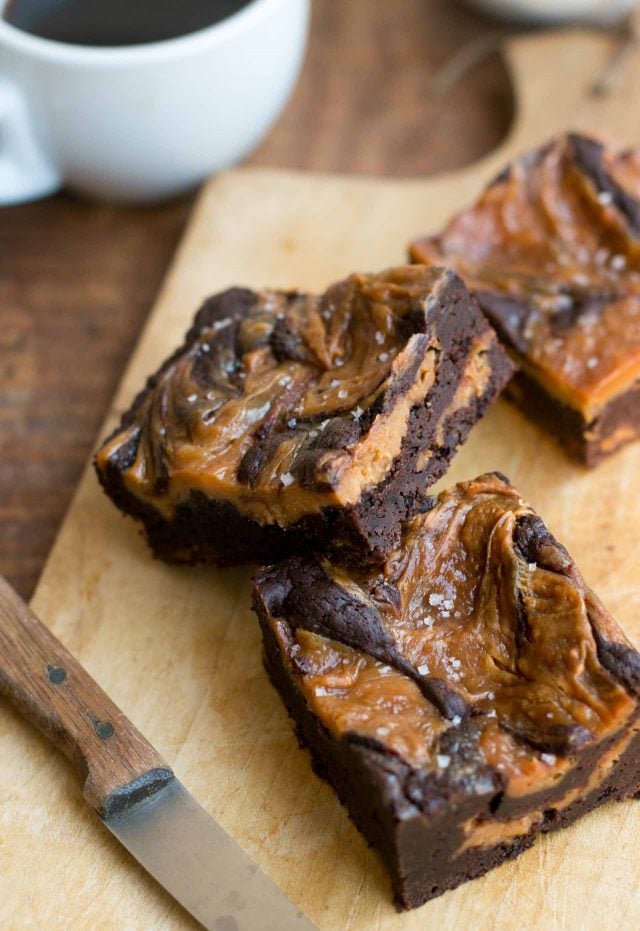
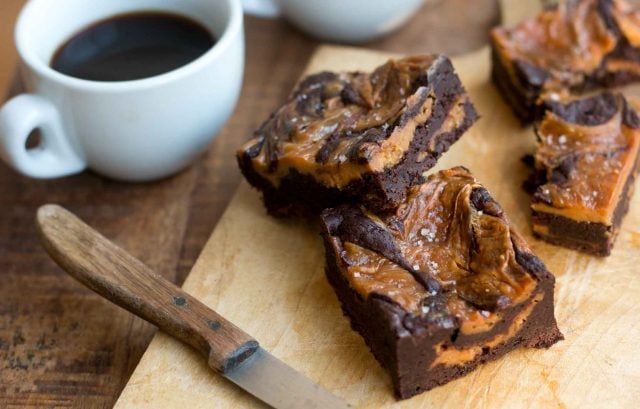
A few years ago, a favorite bakery in Paris near where I lived was offering brownies. The baker gave me one to taste and although I was happy they were expanding their repertoire outside of their borders (actually, many French pastries are influenced from other cultures), the plain, somewhat dry brownies weren’t doing it for me. They didn’t understand that a brownie is best when it’s a moist, compact square with an intense chocolate flavor, like these are.
Being a diverse country, some Americans like their brownies cake-like and others prefer chewy. Some prefer nuts, some don’t. But one thing we do share – even with the French, is a love of salted butter caramel, and – yes, cream cheese, too.
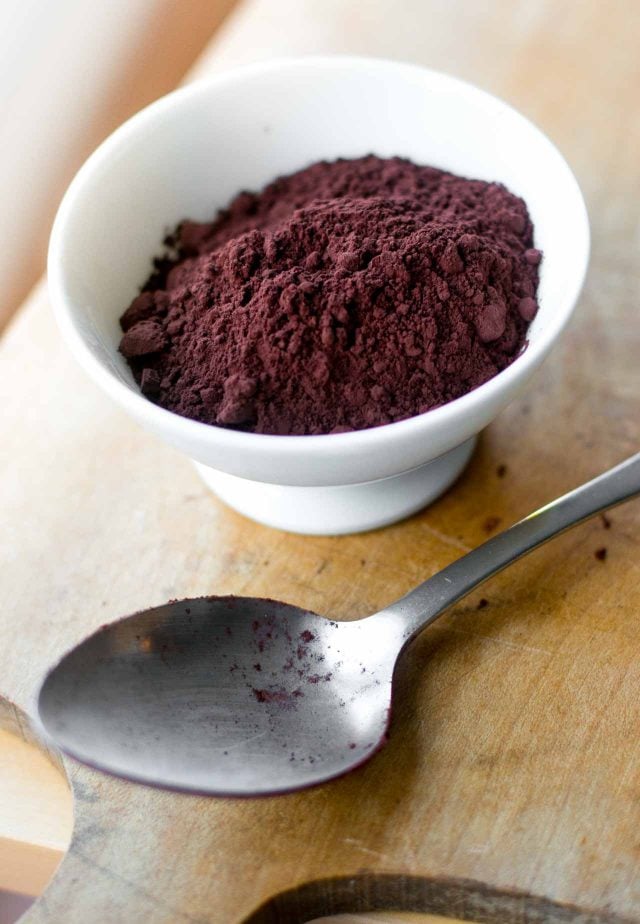
Salted butter caramel is credited to the fine folks in Brittany, who traditionally add salt to their butter to preserve it, since they use so much of it. Although it’s not an expression you hear in French, adding it to caramel is a “no-brainer.” Adding it to pâte à tartiner (cream cheese, which is usually just called le Philadelphia), could be called très américain, since we like to take things over-the-top.
One could say that Irvin Lin falls into that category. He has a blog, Eat the Love, and a baking book, Marbled, Swirled, and Layered, which offers up a collection of traditional recipes that are marbled with peanut butter, swirled with browned butter, and layered with apple-cinnamon, as well as a kaleidoscope of other flavors. It’s clear he likes playing around in the kitchen, and with lots of fun notes and sidebars throughout the book, he demystifies, and challenges, bakers to take some chances. Even old warhorses like me.

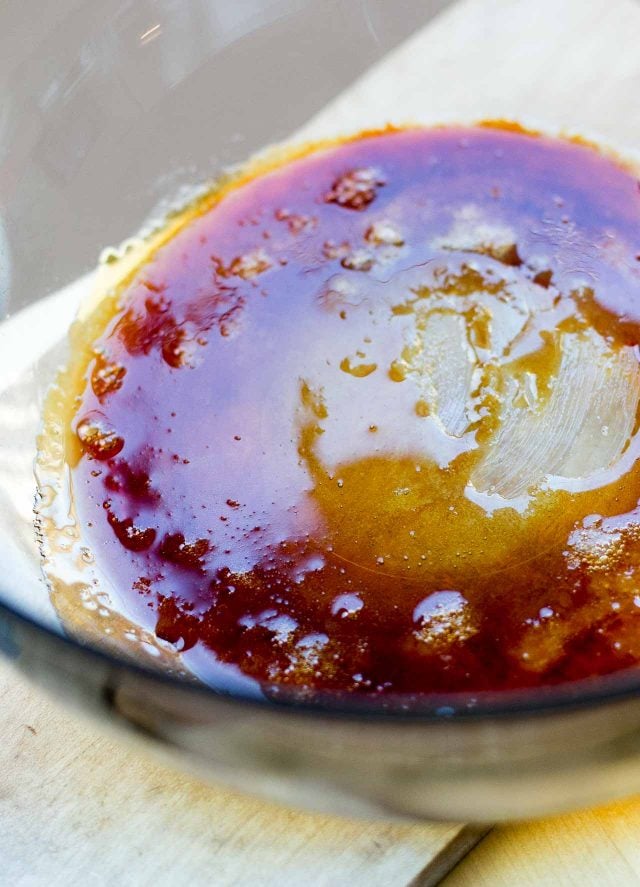
For example, I’ve never made caramel in the microwave. I have a microwave oven, but don’t like using it for certain tasks, like melting chocolate, because you have to stand there and press the button and open the door repeatedly to check on the progress, whereas on the stovetop, the melting chocolate is all right there in front of you. Call me crazy, but I like watching (and helping) solid chunks of dark chocolate gently melt into a puddle of smooth, shiny, darkness. It’s one of life’s greatest pleasures and I don’t want anyone taking that away from me.
Nevertheless, I’m not a rigid traditionalist and instead of jumping on the anti-microwave bandwagon, I decided to take mine for a ride with this recipe. The technique worked well and although I’m not putting my skillets on the market, I was interested to try something new.
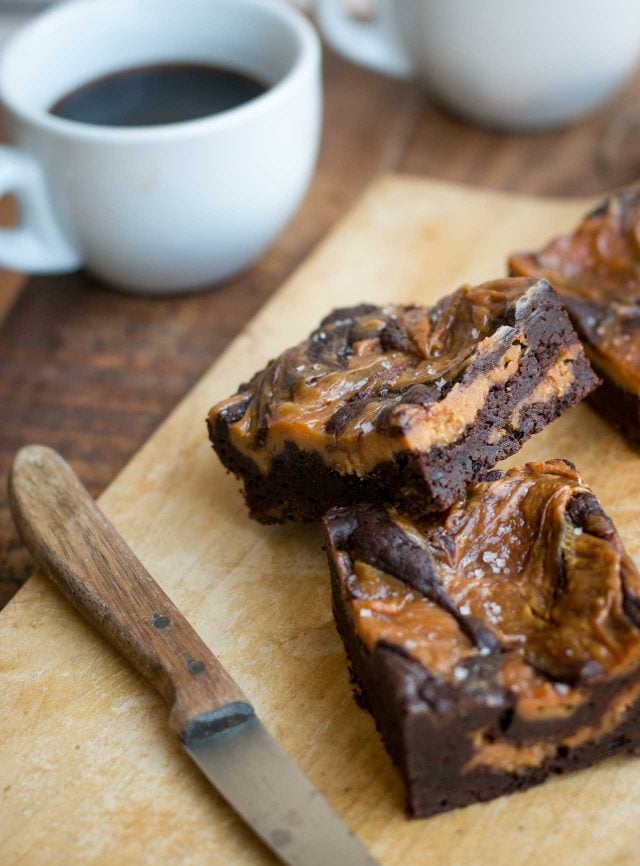
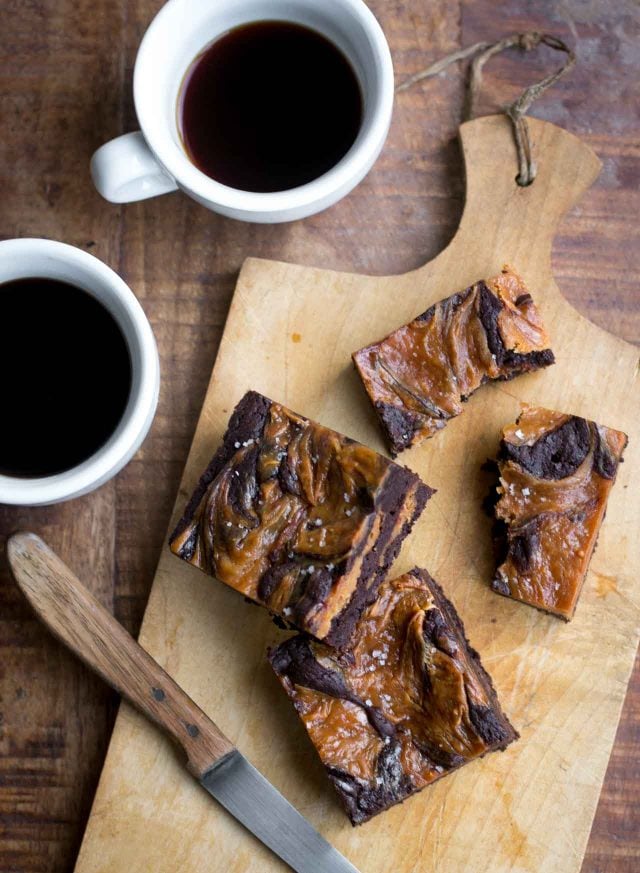
Even better, once blended with the cream cheese, the caramel…and subsequent flurry of sea salt…took traditional cream cheese brownies to another place. And it was a place that I wanted to be. I don’t like messing too much with what I think is already le top du top, but the salted caramel definitely took it over that.
Related Posts and Recipes
American Baking Ingredients in Paris
When to Use, and Not Use, Corn Syrup in a Recipe
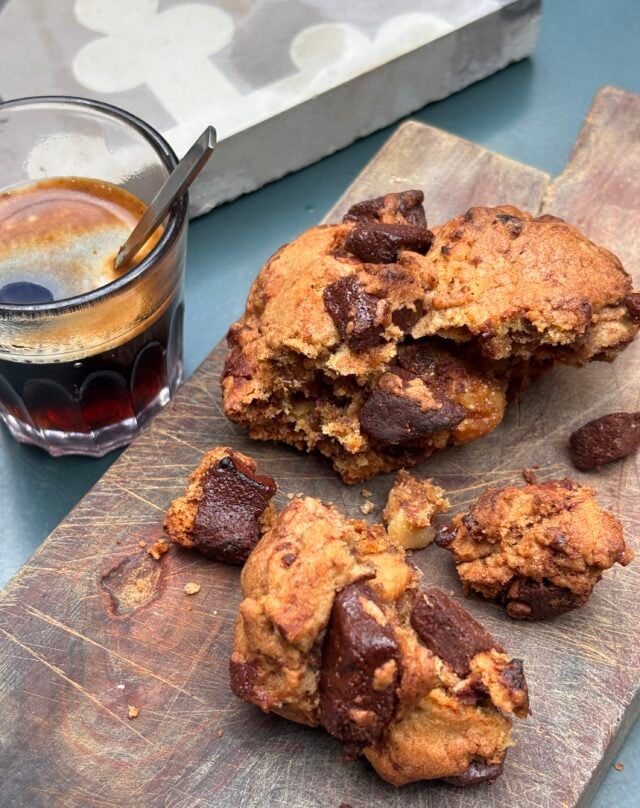
There are two things I need to tell you about these cookies.
One is that they’re crazy-good. And the other is that they’re huge. The recipe makes just five cookies but each one is so packed with flavor, that you’ll be glad you can have one all to yourself. Your other four friends or guests will be delighted as well. (But they’re quite generous, so it’s okay to share…)
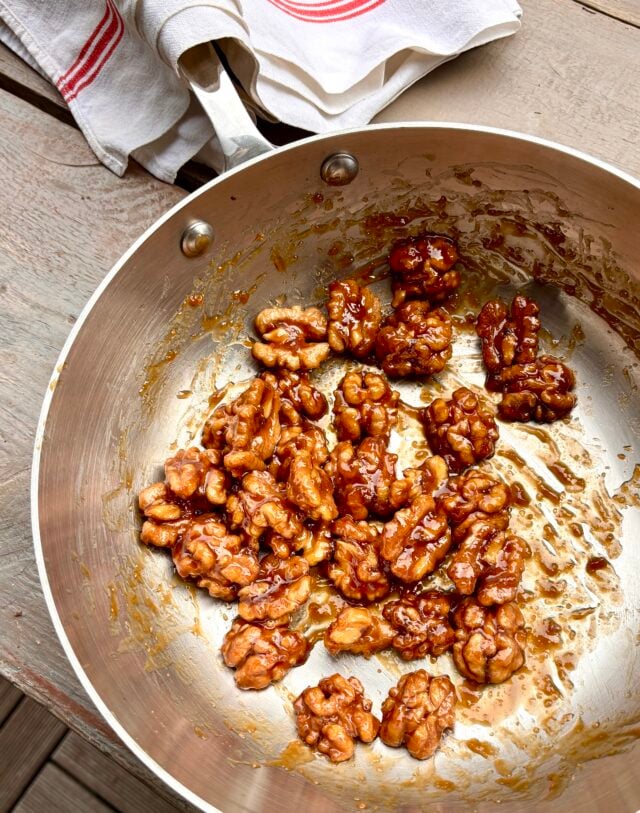
What makes these cookies extra special is their slightly savory, umami note, due to walnuts glazed with white miso. Miso is fermented soybean paste that can be purchased in Asian markets, but has become so popular, you can often find it in grocery stores. In these cookies, it adds a little je ne sais quoi, since it adds a subtle, yet complex note of flavors. Umami is often described as a flavor that’s craveable, and it certainly makes a compelling case for that description in these cookies.
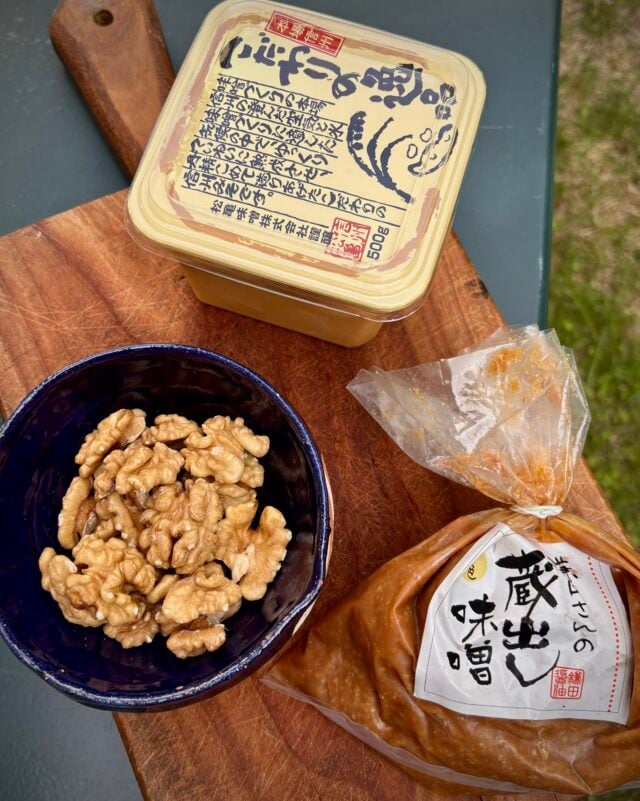
If you don’t have white miso, or don’t want to make the candied walnuts, no problem. Just use toasted walnuts. Pecans, or another favorite nut will also work. You can also leave the nuts out, or swap in dried fruit for them. Do-ahead tip: The walnuts can be made a few days in advance and kept in an airtight container. The glaze will get a little sticky, but the walnuts are perfectly fine to use in these cookies.
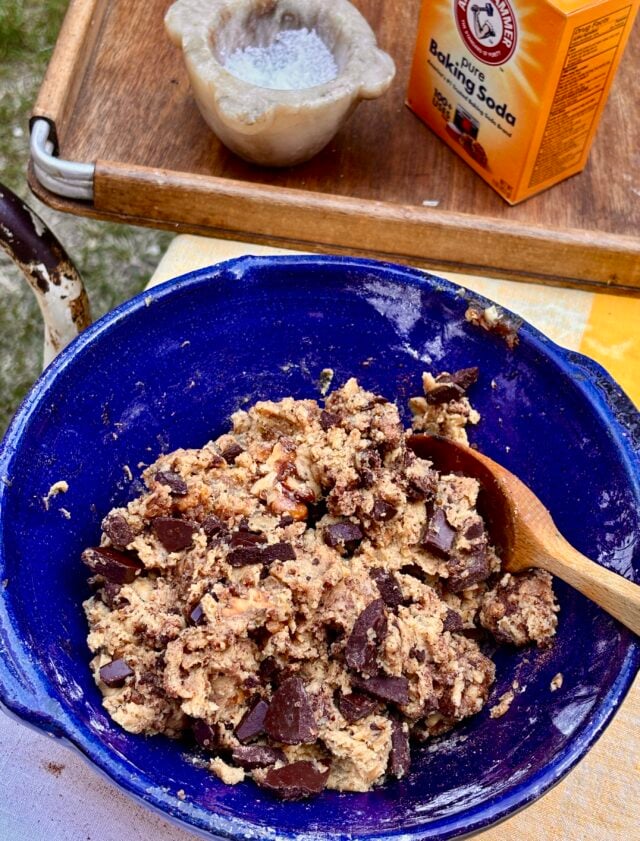
Another “secret” to these cookies is to incorporate large chunks of chocolate into the dough. While it may be tempting to use chocolate chips, they’re really best if you chop up chocolate from a bar of good-quality chocolate. I leave the pieces quite rough and irregular, which – when baked – create large pockets and bites of dark chocolate.
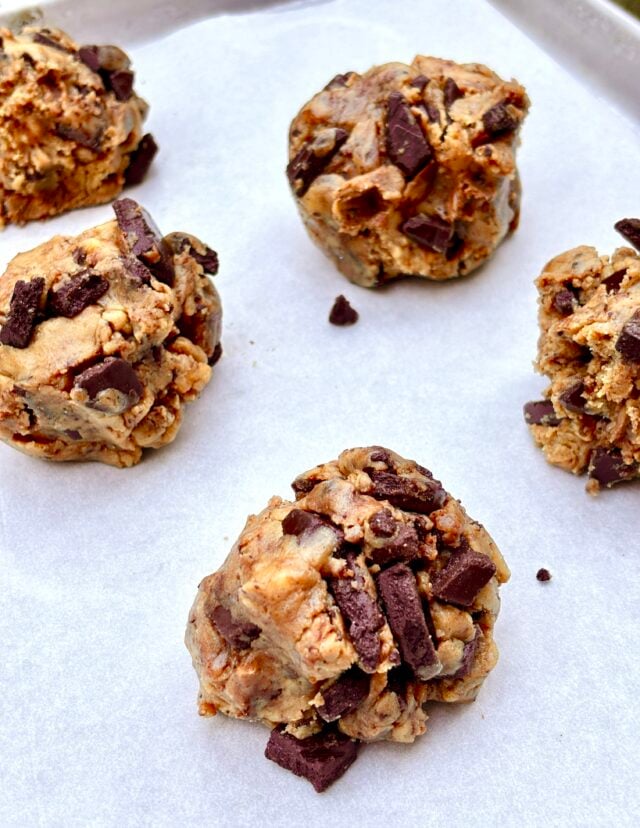
I’ve adapted the recipe from SIFT: The Elements of Great Baking by Nicola Lamb. Her book explains many of the hows and whys of baking, as well as offering an array of creative recipes. Some are completely original and others are riffs on classics, and it’s a book that I refer to often and these cookies are a big hit whenever I bake them. I hope you enjoy these cookies as much as I do!
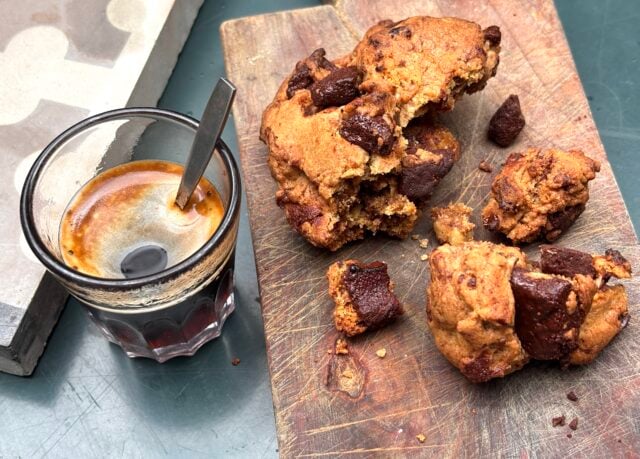


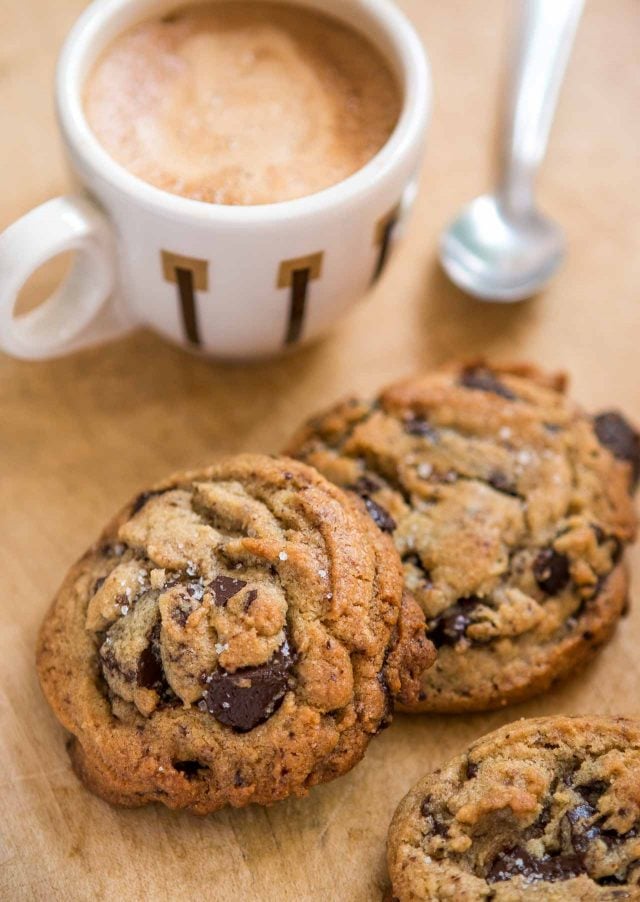
Whenever I mention “Chocolate Chip Cookies,” this recipe seems to come up in the conversation. I’ve been making chocolate chip cookies all of my life, and am always happy to add new ones to my repertoire. I’ve made them with various kinds of flours, different types (and sizes) of chocolate, some with nuts (or cocoa nibs), and others without. In some cases, the salt in the chocolate chip cookies may be in the butter, or sprinkled on top. Or there might be a double-dose of chocolate in them.
But I haven’t done too much tinkering with the butter, because to me, that’s one thing that’s non-negotiable in chocolate chip cookies. But when I heard about tahini, my loyalty to butter was put into question.
You (and I) can relax, because these chocolate chip cookies do use butter, but get an underlying richness from sesame paste, a common ingredient in Middle Eastern cooking that I always keep on hand. So although I thought I’d done everything possible that a man could do to a chocolate chip cookie, and then some, I was finally ready to tackle a batch of these chocolate chip cookies.
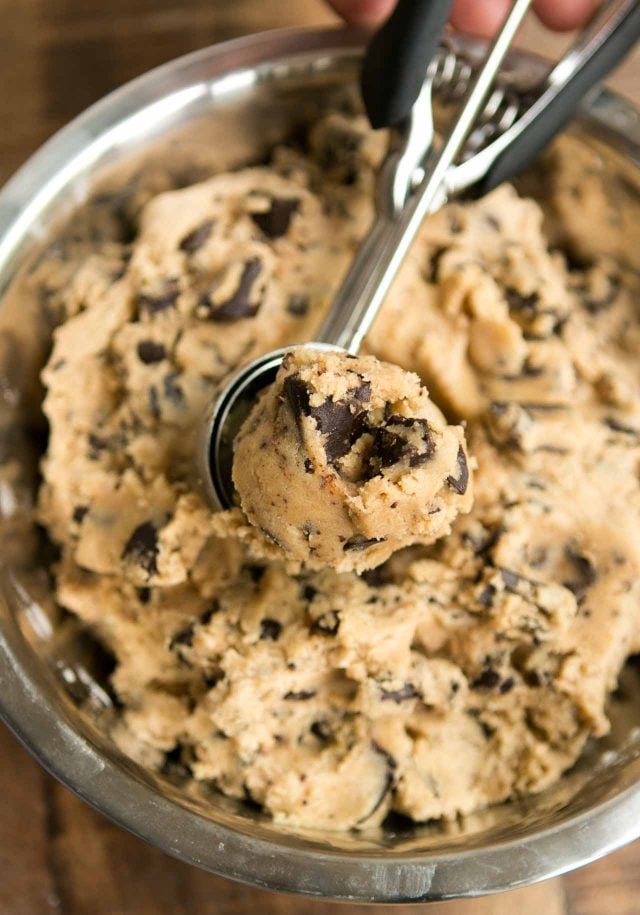
The recipe is adapted from Modern Israeli Cooking by Danielle Oron, that also was in the New York Times. In addition to having everything on hand, they were easy to mix up, and the soft sesame paste made a dough that was hard not to snack on before the cookies went into the oven.
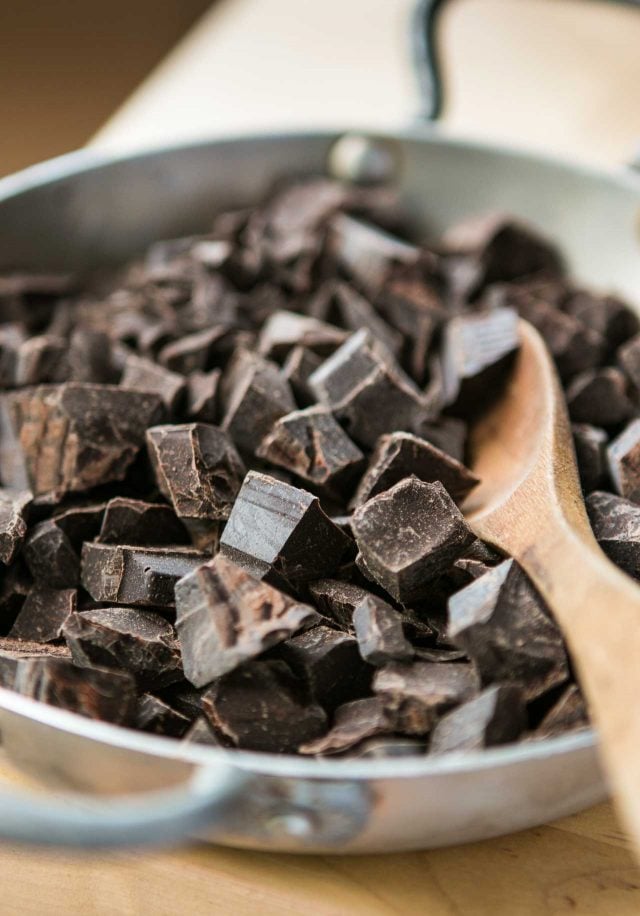
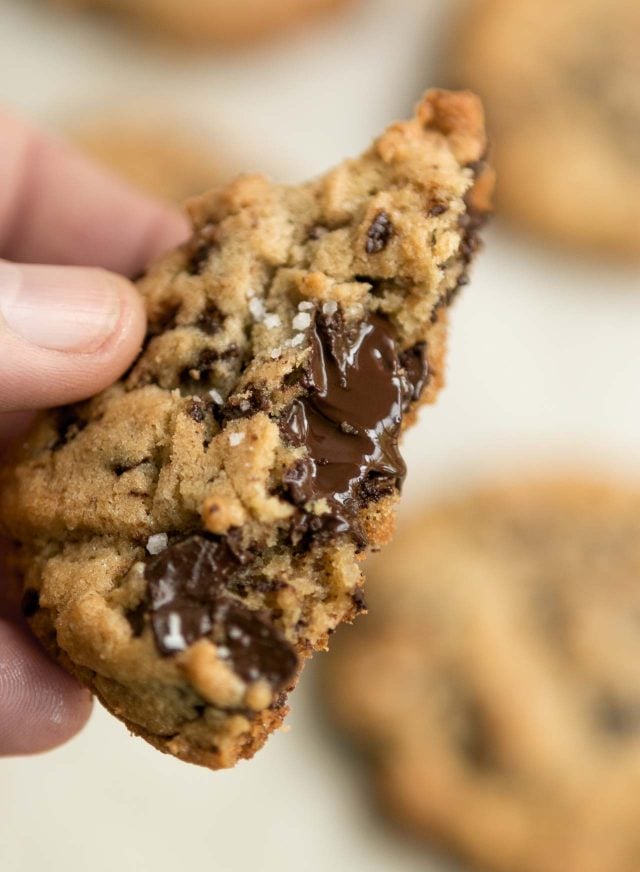
I prefer to chop chocolate for chocolate chip cookies, rather than use conventional chocolate chips. I have nothing against chocolate chips, but most are made of what’s called baking-resistant chocolate, which is designed to hold their shape once baked. I like big, oozing chunks of chocolate in my chocolate chip cookies, and I don’t care so much what they look like, so much as how they taste.
So I took a knife to a block of chocolate and made my own. Some makers are now producing what are called chocolate “chunks” which may or may not have similar qualities, but chopping a block of chocolate, while a bit messy, puts me in one of my happy places. And I’m happy to make my own chips, or chunks, I should say.
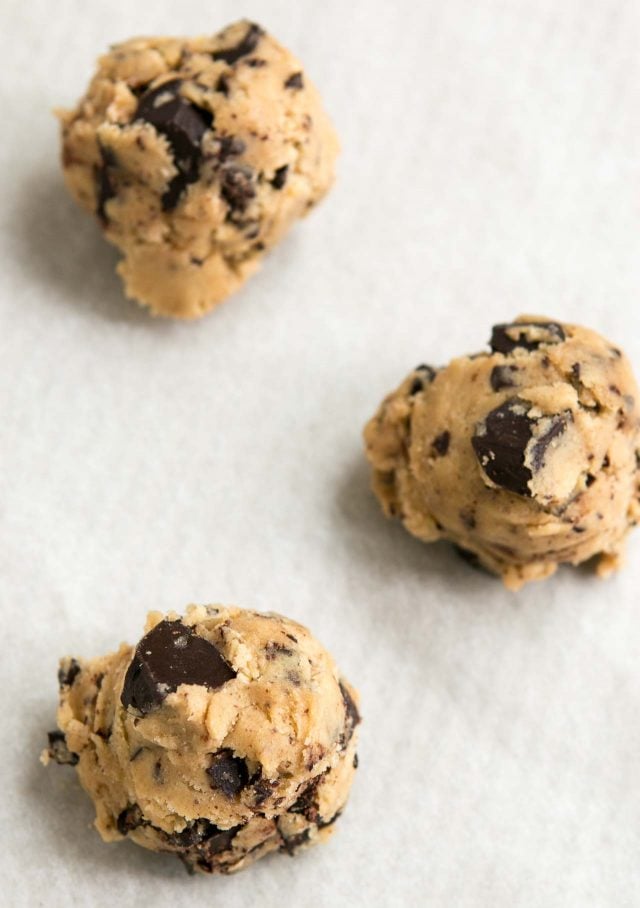
These cookies were some of the best chocolate chip cookies that have ever come out of my oven, and I don’t say that lightly. The tahini gives them a gentle savory taste, with a faint musky flavor that pairs remarkably well with dark chocolate and a touch of salt, so don’t be afraid to use a very strongly flavored chocolate. I futzed with the original recipe a little, to make them chewier, and couldn’t resist adding even more chocolate. But can you blame me?

Related Posts and Recipes
Baking Ingredients and Substitutions
Ingredients for American Baking in Paris
Soom Tahini (Amazon)
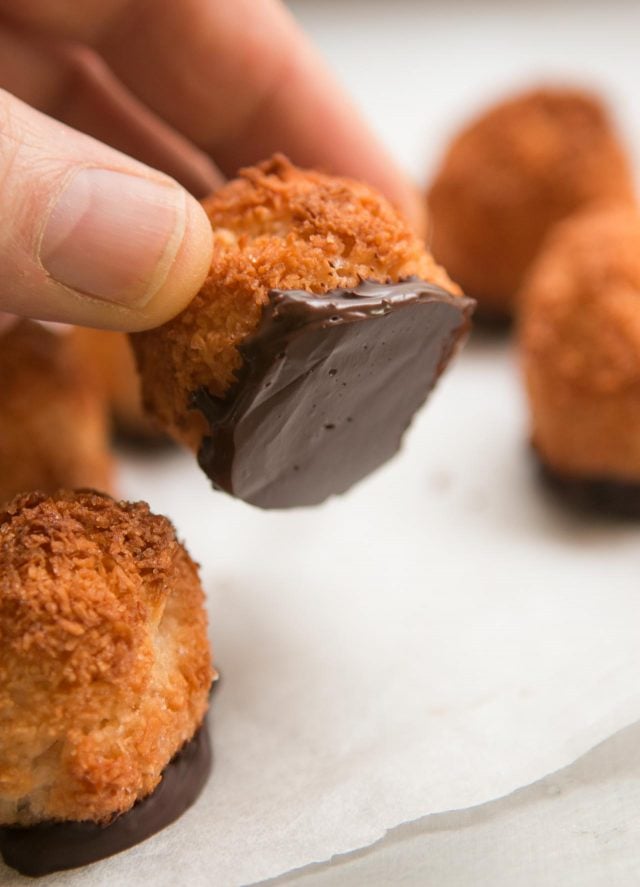
Many people tell me this is one of their favorite recipes from my cookbook, Ready For Dessert. In addition to these fantastic Coconut-Dipped Chocolate Macaroons in it, you’ll find the much-loved recipe for Fresh Ginger Cake, which makes a fantastic dessert served with sliced, juicy peaches or flavorful strawberries and raspberries in the summer, or tangy lemon cream in the winter, as well as my other most frequently requested recipes.
I’m often asked about the different between Parisian macarons and American-style macaroons, like these. Both are egg white-based, however the European version (which was invented in Italy) uses almonds whereas the American ones use coconut. There’s some dispute about how the American ones came to be made of coconut; one theory is that European immigrants who came to the United States couldn’t get almonds, or they were too expensive, so they used coconut.
Another theory is that European companies wanted to ship their macarons over longer distances, so swapped out coconut for the spoilage-prone nuts. Others credit Franklin Baker, an American flour miller, who found the then-exotic shredded coconut more interesting (and less-expensive) to use than nuts. Either way, I like all kinds of macaroons…or macarons.
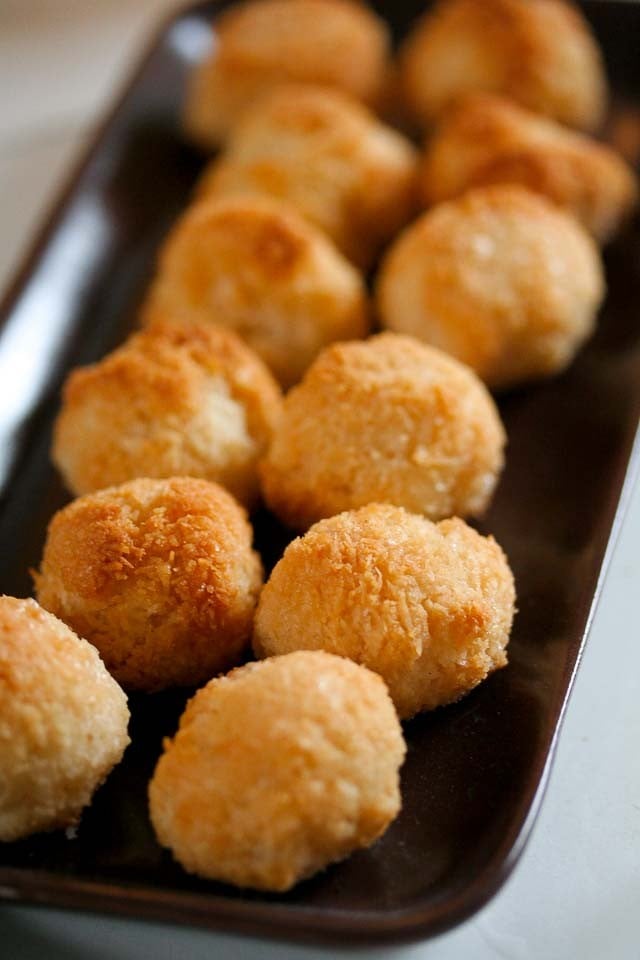
The French do make coconut cookies, which are called Congolais or Rochers à la noix de coco, usually shortened to Rochers coco, or coconut “rocks.” I’ve not seen them dipped in chocolate in any French bakery – but why not?
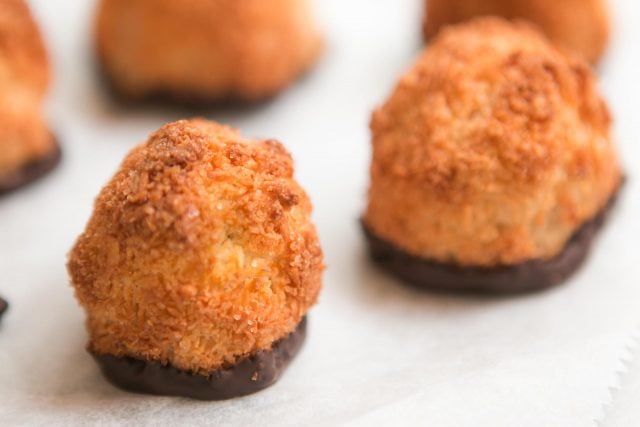
I’ve tweaked this recipe over the years and tested them with flour alternatives, which I’ve noted in the headnote in the recipe, and they come out great. You can even skip swiping the bottoms in bittersweet chocolate if you wish. No matter how you make them, I hope they become one of your favorite cookies, too.

