
 Login
Login
Two Votes for Midterm Chaos on the Supreme Court
One Crisis Averted
Kate Riga has the details here, but a moment we’ve long been anticipating arrived last night: The Supreme Court ruled on Trump’s mail-in voting executive order. It blocked it, at least for now. That likely settles it — at least for this election. “The ruling is a titanic one before the midterms,” Kate writes, “and a major loss for the Trump administration as it seeks to influence the election by attacking absentee voting.”
Justice Brett Kavanaugh suggested he might support the dramatic scheme the Postal Service had cooked up to comply with Trump’s executive order — but not so close to the midterms. “There is at least a fair prospect that the final rule falls within the Postal Service’s statutory authority,” he wrote. But “state and local election officials do not have sufficient time to reasonably implement the rule before the elections.”
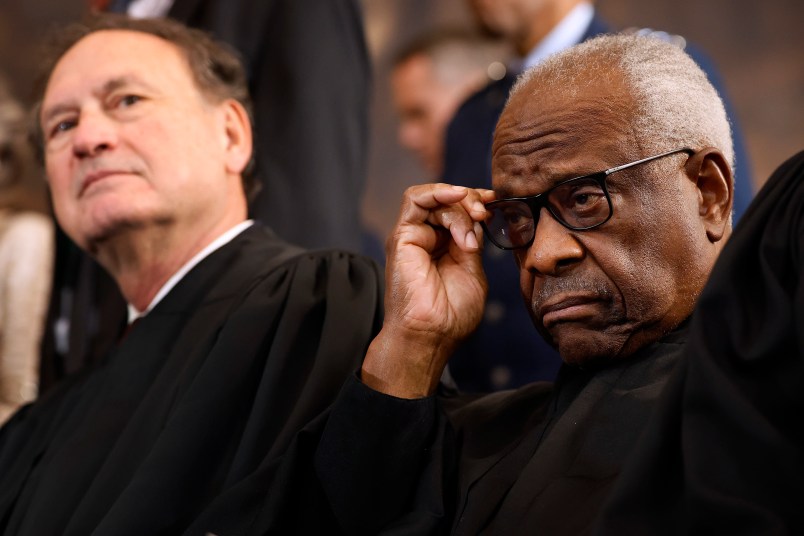
There were two justices who wanted the rule to go forward: Sam Alito and Clarence Thomas. In a dissent authored by Alito and joined by Thomas, they argued that the Postal Service had the authority to promulgate and implement the rule, and that that was the end of the story.
It’s hard to overstate the dramatic nature of what the Postal Service was up to; it prompted alarm from election workers and whistleblowers within the USPS itself. The new system featured multiple ways in which not just a single mail ballot but whole reams of ballots could be rejected based on, simply, an error on one. Setting that aside, it created a scenario in which, election experts calculated, ballots would take weeks or even years to be processed. It raises questions about “whether catastrophic failure would be a feature rather than a bug,” lawyers for the Postal Service whistleblower wrote.
Election law scholar Rick Hasen noted that Alito’s dissent made no mention of what the rule would do to the midterms. “The voters make no appearance whatsoever in Justice Alito’s reasoning,” Hasen wrote. “He, like the government, does not dispute that using the rule in 2026 would disenfranchise millions of our most vulnerable people. He doesn’t care. It’s despicable and antidemocratic.””
Whistleblower Details DHS’ ‘Voter Fraud’ Push
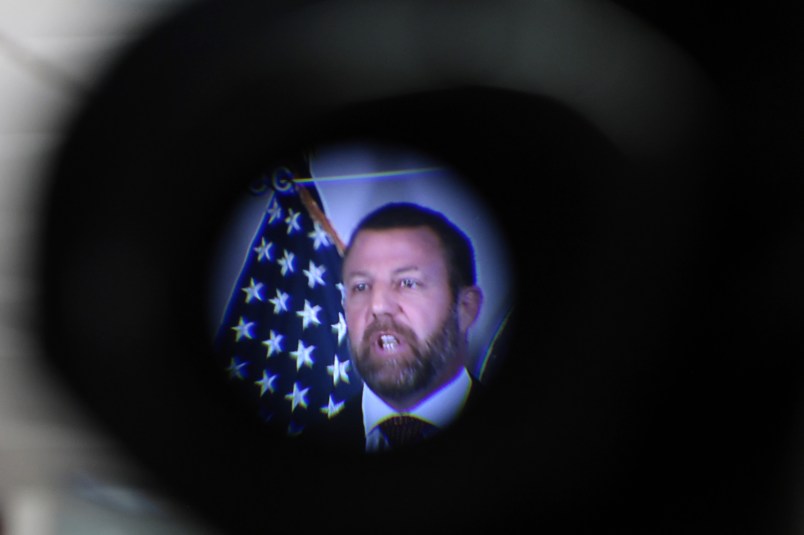
As part of the Department of Homeland Security’s (so far, it seems, not very successful) effort to scrounge up some instances of voter fraud that the administration can tout ahead of the midterms, officers have been scouring states’ voter rolls, and plugging individual voters’ names and other information into states’ public-facing voter websites, which are meant to be used by the voter themselves to check their registration.
As part of this push, a whistleblower alleges, agents may be breaking the law.
- According to the whistleblower, officers received little training — just an instructional video, some links to states’ voter registration websites, and a power point presentation.
- With that preparation, they are expected to comb through “the personal information of tens or hundreds of thousands of individuals throughout all 50 states, including US citizens,” according to lawyers for the whistleblower. “Officers are supposed to review and determine if the information belongs to an ‘unlawful voter’ and were given a quota of at least five subjects to be reviewed per hour.”
- In a letter to DHS Secretary Markwayne Mullin, Senators Chuck Schumer (D-NY) and Alex Padilla (D-CA) demanded answers to a list of questions, including one noting that the slipshod investigation, as described, could lead to baseless criminal investigations. “It equates to approximately 12 minutes per subject – a completely inadequate timeline for investigating and reconciling multiple Alien Registration Numbers mistakenly or inadvertently issued to an individual, increasing the likelihood of error,” the senators wrote. “Individual cases identified by this initiative can then be taken up by HSI for further action, including criminal investigations.”
- The whistleblower also expressed concern that by effectively posing as a voter to plug identifying info into these state websites, officers were breaking the law. Training materials asserted that officers were “not personally liable for conducting these searches when done as part of their official duties and properly documented,” suggesting DHS was, in fact, aware of that issue.
