Reading view

Trump sued the BBC — now Jared and Ivanka may pay for it

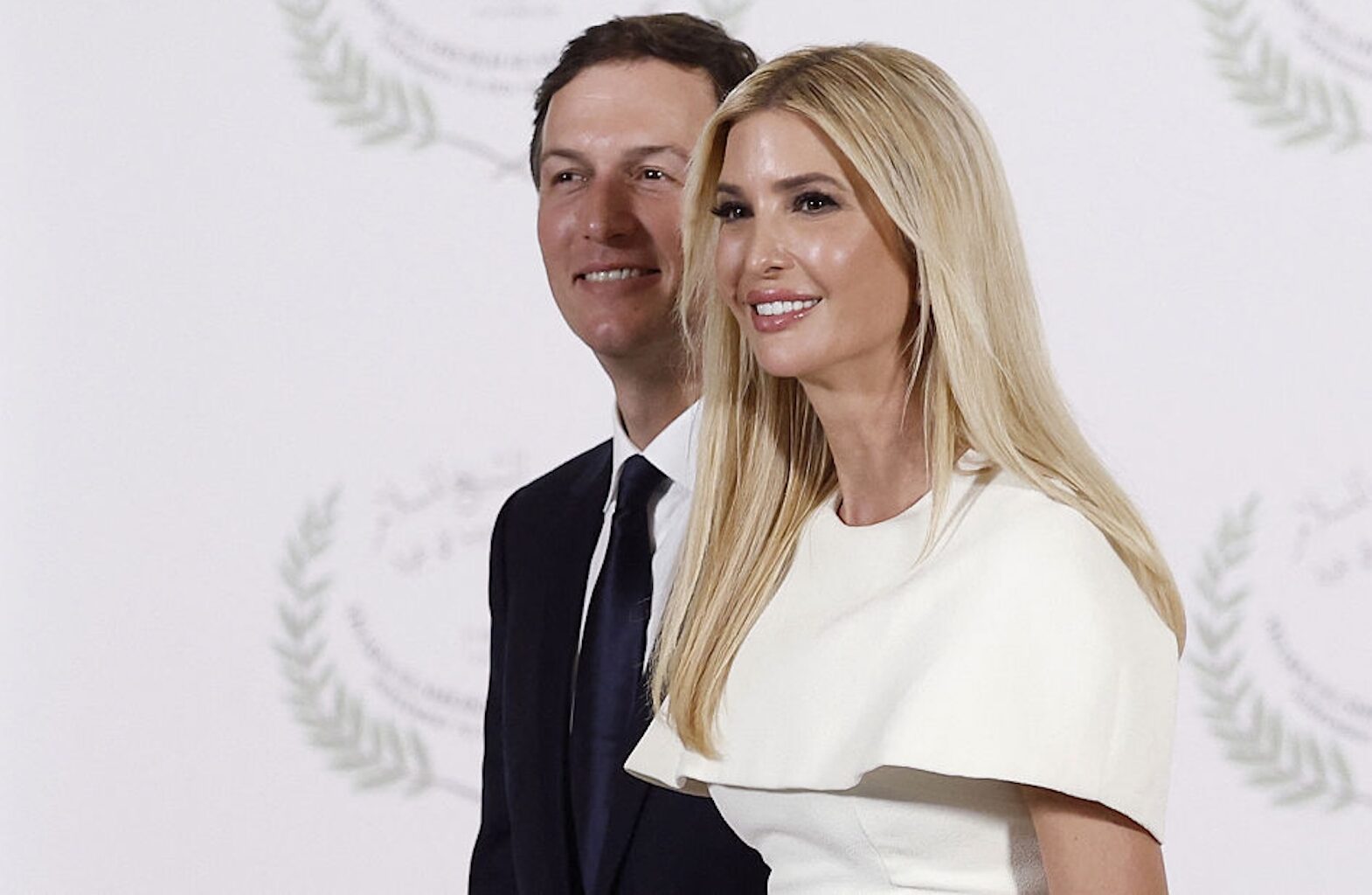
In the year the United States celebrates the 250th anniversary of its break with the British crown, there is something almost painfully ironic about a broadcaster from the kingdom that once ruled us now being more willing to stand up to Donald Trump than much of the American establishment. But the irony isn’t really the story. The story is that the president filed a $10 billion lawsuit to punish the BBC, and in doing so, he may have handed the corporation a legal instrument to drag his children Ivanka and Donald Jr., and his son-in-law Jared Kushner, into a Miami courtroom to answer for what happened on Jan. 6.

The lawsuit was supposed to be another exercise in the familiar Trumpian playbook: File a claim, demand an astronomical sum, bury the target in legal expenses, force a humiliating settlement that gets marketed as a political win. That strategy has worked before. In 2024, ABC News agreed to pay $15 million after network anchor George Stephanopoulos inaccurately said Trump had been found liable for rape. Paramount later paid more than $24 million over CBS News’ handling of an interview with Vice President Kamala Harris that took place during the 2024 presidential race. With that track record, Trump had every reason to expect the BBC to fold in the same way.

He miscalculated badly. As a public service corporation, the BBC operates under a royal charter that explicitly bars it from entering into out-of-court financial settlements to make litigation disappear. It cannot cut a check to sweep away Trump’s claims. The corporation is legally bound to fight until a verdict is reached — or until Trump himself gives up. And its defense team, anchored by the First Amendment firm Ballard Spahr, has used that obligation to go straight at the people closest to Trump on Jan. 6.

The underlying claim concerns a 2024 documentary about Trump’s candidacy that aired on “Panorama” — the same program that aired the former Prince Andrew’s toe-curling interview with Emily Maitlis about his alleged abuse of the late Virginia Roberts Giuffre and connections to Jeffrey Epstein. Titled “Trump, A Second Chance?”, the program edited together separate portions of Trump’s Jan. 6 speech so that it sounded as though he said, in immediate sequence, “We’re going to walk down to the Capitol and I’ll be there with you,” followed by “we fight, we fight like hell.” Those lines were actually spoken nearly an hour apart, and the BBC has apologized for how the edit was constructed. But the corporation has not apologized for the underlying accusation — because the documentary’s producers and the BBC’s lawyers believe it is true. The BBC has also noted the documentary never aired in the U.S., including in Florida, which creates its own problem for Trump’s attempt to establish the legal connection between the broadcast and the injury he claims to have suffered.

But the discovery fight is where this stopped being a media dispute and became a family liability. Because the entire defamation claim hinges on Trump’s intent — on what he meant by the phrase “fight like hell” — the BBC’s lawyers moved to subpoena the people who helped draft that speech and who were closest to him as the Capitol riot unfolded. On Aug. 14, the BBC asked a federal court in Miami for permission to compel testimony and records from Kushner, Ivanka Trump, Donald Trump Jr. and Kushner concerning the drafting and meaning of the speech.

According to the BBC’s own filings, Donald Jr. and Ivanka were in the room while the speech was being revised and were present when it was delivered. Kushner drafted a statement condemning the Capitol violence that the White House never issued. He also reportedly told then-chief of staff Mark Meadows the situation was “getting really ugly” as it unfolded, while Trump Jr. texted Meadows begging him to get his father to “condemn this” immediately. 

These are not neutral bystanders being swept into a media spat. They are three people who watched the fire get lit and, by their own contemporaneous words, knew exactly what was burning.

These are not neutral bystanders being swept into a media spat. They are three people who watched the fire get lit and, by their own contemporaneous words, knew exactly what was burning. And if the case proceeds, they may have to say so under oath.

Trump’s own conduct made this exposure worse. The BBC also sought his financial records to test the legitimacy of the massive damages he claimed to have suffered — a maneuver that prompted him to quietly abandon his monetary claims rather than open his ledgers to public scrutiny. His lawyers had previously dismissed the request as a “fishing expedition.” But this is how discovery works: If you claim a broadcast inflicted extraordinary economic harm, the defendant gets to test that claim. Trump built the case that now threatens to expose his own children and son-in-law, and he built it because he assumed no one would ever call his bluff.

But the most revealing part of the BBC’s filing isn’t the subpoenas themselves — it’s the account of what happened when the network tried to serve them. Process servers attempting to deliver subpoenas to Ivanka and Kushner at their fortified Miami residence in May were physically blocked by local law enforcement, who directed them to coordinate through the Secret Service. When the BBC’s legal team did exactly that, Secret Service counsel Troy Epstein flatly declared the agency was neither authorized to accept service on the family’s behalf nor willing to help facilitate it. The BBC says it also could not serve Trump Jr. at Trump Tower. It has now asked the court for permission to use alternative methods — email or certified mail — because the ordinary machinery of American process service has been quietly closed off by a federal agency to a foreign broadcaster trying to hold the president’s family accountable.


Start your day with essential news from Salon.
Sign up for our free morning newsletter, Crash Course.


That is the part of this story that should trouble people well beyond press freedom circles. Taxpayer-funded federal security agencies are being used as a private shield for a political dynasty, deployed to physically block the basic mechanics of a civil lawsuit that Trump himself initiated. It echoes the darker pattern already established around this family and this date — the Secret Service’s unexplained failure to preserve text messages and call logs from around Jan. 6, and allegations that agents played a role in intimidating witnesses like former Trump aide Cassidy Hutchinson before her explosive congressional testimony. A protective detail meant to keep the first family safe is being repurposed to keep it unaccountable.

Trump has responded predictably, complaining that the BBC is “abusing the deposition process.” His projection is transparent. Nobody dragged his family into this. He is the plaintiff. He asked for $10 billion. He put his own reputation, his financial losses and the meaning of his own speech at the center of a case he chose to bring, and in doing so he opened the door to exactly the kind of scrutiny now aimed at Ivanka, Donald Jr. and Kushner. A defendant testing the plaintiff’s claims isn’t harassment. It’s the legal process working according to centuries of jurisprudence — just as the president intended.

None of this guarantees the subpoenas will be enforced, or that Ivanka, Donald Jr. or Kushner will ever sit for testimony. The court could still limit the subpoena’s scope, and the family’s lawyers will fight the serving of them on every available ground. But the posture itself matters. 

While the BBC absorbs real financial strain from international litigation against a sitting American president, it has refused to play the domestic game of corporate capitulation that has defined how ABC, CBS and so many other news outlets have handled Trump’s legal threats. It punched back in the fight Trump started and pushed it toward the people who were actually in the room on Jan. 6 — the same people the taxpayer-funded Secret Service is now, apparently, working to keep out of reach.

The post Trump sued the BBC — now Jared and Ivanka may pay for it appeared first on Salon.com.
  •  

The Trump-Kim Jong Un bromance comes roaring back

Donald Trump, wearing a blue suit with a red tie, gives a thumbs up as he walks across the tarmac.
President Donald Trump gives a thumbs up before boarding Air Force One in Cleveland, Ohio, on August 11, 2026. | Jim Watson/AFP via Getty Images

This story appeared in Today, Explained, a daily newsletter that helps you understand the most compelling news and stories of the day. Subscribe here.

Hi readers, it’s me again! Caitlin will be back on Wednesday. Now, for today’s news: President Donald Trump, South Korea, and the state of the US’s military alliances.

Remember Trump’s first-term “love letters” with North Korean dictator Kim Jong Un? Trump was so fond of them that he took them with him when he left the presidency in 2021 (the National Archives did not approve). Now, it seems like the two leaders are taking up where they left off.

Over the weekend, Trump announced in a social media post that he would “substantially reduce” scheduled joint military exercises between the US and South Korea, which get underway today. The reason? His “very good relationship with Kim Jong Un, of North Korea.” 

But there may have been another reason. Trump also wrote that “While somewhat unrelated (?), I recently asked the President of South Korea if they would like to join us in the Denuclearization of the Islamic Republic of Iran, and they said, “No thanks!””

The US-South Korea exercises “are not only costly, with much of these costs paid for by the United States of America (as usual!),” Trump wrote, “but send a signal that is totally inappropriate and hostile, to a Country that, as long as Donald J. Trump has been President, has been unthreatening and respectful.”

That last part — “unthreatening and respectful” — is not exactly true; in 2017, Kim called Trump “a mentally deranged US dotard” whom North Korea would “tame…with fire.” But in the present day, Trump’s announcement is a boon to the North Korean leader, who has denounced the military exercises. 

It’s also just the latest incident in the historically close US-South Korea relationship (the two countries have held military exercises annually for more than 70 years). Earlier this year, Trump lashed out with new tariffs, accusing South Korea of “not living up to its Deal,” referring to a 2025 agreement on trade and security between the two countries that South Korea’s legislature had not yet approved.

Go a little deeper

The US has more permanent troops in South Korea than it does almost anywhere else in the world, behind only its deployments in Japan and Germany. Under Trump, though, those once-durable commitments have started to look a lot shakier.

Europe — and Germany in particular — has borne the brunt of Trump’s second-term harassment: In May, Trump announced his intent to remove 5,000 US troops from Germany and threatened to go “a lot further”; the Pentagon has said that withdrawal will take place within 12 months. The US currently has more than 38,000 troops stationed in Germany.

Trump has made similar threats about US troops stationed in Italy and Spain, and even suggested removing all US troops from Europe.

Most of these threats have been triggered by Trump’s unhappiness with European defense spending, which he’s eternally trying to boost. 

But in his second term, the threats have grown much more tightly tied to Trump’s personal ambitions and grievances. Trump’s Germany announcement followed a clash with German Chancellor Friedrich Merz over the US war with Iran, which Trump has tried — unsuccessfully — to drag US allies into. Spain, in particular, has also drawn Trump’s ire for vocally opposing the war. 

Last month, he also tied the US troop presence in Europe to his insistence that the US be allowed to take over Greenland, which belongs to Denmark, a US ally and founding NATO member.

One link for later

➨ A low-tech way to save coral reefs. My colleague Benji Jones visited the island nation of Palau, in the western Pacific Ocean, to learn about a new approach to reef restoration. Scientists there are testing species of coral specifically for heat resistance to find better options for replanting reefs — all using some plastic picnic coolers and a bit of hot water. 

Before you go…

  • Did you know…that the Vera C. Rubin Observatory in the Chilean Andes has the largest digital camera ever made? It captured its “first light” last year in staggering high-definition. 
  • Today’s trivia: What was the title of Iran’s ruler until 1979? (You can find this and other brain puzzles in Vox’s daily crossword. Look for the answer in tomorrow’s edition.)
  • Friday’s trivia: On Friday, we asked you which US president responded to inflation by ordering wage and price freezes. That was President Richard Nixon.
  •  

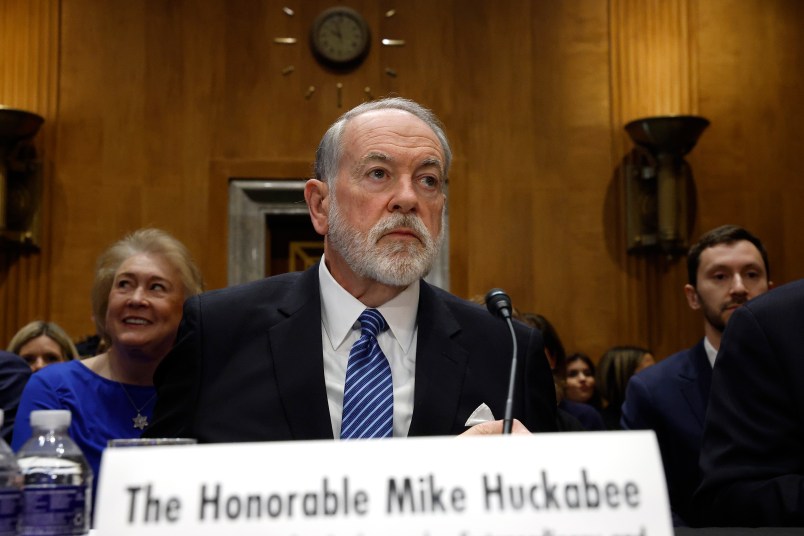
Evangelicals Think They’ve Found Their Post-Trump Era Leader in … Mike Huckabee?

In Church, Merch, and State, Sarah Posner writes about the intersection of religion and politics in the United States. This column is part of Cafe, TPM’s home for opinion and news analysis.

In an early sign that evangelical leaders are planning for a post-Trump future that doesn’t include Vice President JD Vance, Christian Broadcasting Network reporter and well-known evangelical whisperer David Brody is planting some seeds for 2028 on behalf of Mike Huckabee, the current U.S. Ambassador to Israel. Writing at All Israel News, a site run by Joel Rosenberg, a fervent Christian Zionist known for his apocalyptic-minded books and right-wing television broadcasts, Brody gives some oxygen to the presidential prospects of the 70-year-old former pastor, Arkansas governor, Christian broadcaster, and twice-failed presidential candidate. Brody writes that he was inspired to explore a Huckabee candidacy by the Christian nationalist organizer David Lane, who wrote in a newsletter he sends to 70,000 pastors: “We’ll throw Mike Huckabee’s name in the hat for 2028.” Based on that suggestion, Brody proceeds to make the case that Huckabee, for reasons of political experience, affable temperament, and theological commitment to America’s relationship with Israel, might just be the one to bring MAGA’s anti-Israel contingent together with its zealously pro-Israel Christian Zionists.

  •  

Pete Hegseth is Trump’s favorite kind of failure

The tale of Donald Trump sneaking off Air Force One in a catering truck captured public attention for many reasons. It was a reminder that, for all his tough talk, the president harbors a sense of fear. Hiding away in a glorified ice chest would also have been a blow to the 80-year-old’s dignity. But the charade, which was first revealed by the Washington Post, also gave us insight, as political scientist Scott Lemieux wrote, “into who he considers his actual inner circle.”

Left behind on the decoy plane were Secretary of State Marco Rubio, Treasury Secretary Scott Bessent, White House deputy chief of staff Stephen Miller and other administration officials and aides. The only people deemed worthy of saving from Iran’s reported threat were people whose full-time jobs are tending the president’s body and, more importantly, his ego: Natalie Harp, who writes Trump love letters, and whose main job is showing him flattering social media posts. Body man Walt Nauta. Dan Scavino, Trump’s former golf caddie. Oh yeah, and Pete Hegseth. 

The defense secretary’s inclusion on this list does not suggest he is an especially well-regarded or important person, especially when other prominent Cabinet members — not to mention White House reporters — were left vulnerable to the rumored assassination threat. On the contrary, his inclusion in Trump’s flock of flatterers is another sign that Hegseth’s main skill is fluffing up the narcissist-in-chief. It helps explain how Hegseth — unlike former Cabinet members such as former Attorney General Pam Bondi or former Homeland Secretary Kristi Noem, who recently lots their jobs — seems in no danger of losing his job, even as his manifest incompetence is a big part of the reason Trump is losing the war with Iran. He may be bad at running the military, but Hegseth is good at lying to (and attacking) the press and stroking his boss’s ego, which are the only skills that count in Trump’s White House. 

Recent news about the ongoing disaster aboard the USS Abraham Lincoln is another reminder of why Hegseth may indeed lead the highly competitive race to be the most hated man in Washington. Both Stars and Stripes and the Military Times reported that multiple service members had attempted to jump off the aircraft carrier, which has been deployed for over eight months without any real breaks. Sailors are reportedly “struggling with exhaustion and declining morale, including reports of suicidal thoughts,” explained Alison Bath of Stars and Stripes.

The details coming from family members offer a chilling illustration of how little regard Hegseth has for the actual well-being of service members, even as he releases videos implying they have low testosterone levels or berates them for being “fat” or “beardos.” Sailors have reported being fed “rotten” food or barely being fed at all, and desperate family members have been begging the Navy for relief. The wife of one sailor told MS NOW’s Priya Sidhar that the company is working 12-14 hour days and that her husband “said that he was exhausted working on the flight deck.” He also raised safety concerns with his superiors. “His prescription contact lenses had expired,” Sidhar reported, “and he told his chain of command that he couldn’t even see what he was doing, and he was worried about causing accidents.”

Hegseth, though, is shrugging off the concerns, telling reporters the issue is “completely misrepresented” and that the service members have “everything we can provide them at every single moment.”

Trump was even more callous and dishonest about the suffering of the sailors, saying that the deployment was “not nearly long enough,” even though, at over 260 days, it has set a record for the longest deployment. (On Friday, the acting Navy secretary announced the ship would be returning to the U.S. and replaced by the USS George Washington.)

Trump and Hegseth clearly share a disregard for the lives of the very service members they are asking to wage war on Iran. But the debacle also reveals how Hegseth’s twisted priorities appear to have endeared him to his boss, seemingly above every other sycophant surrounding the president. Beyond operating in the Northern Arabian Sea to aid in logistics and serve as a deterrent to Iran, it seems like the reason the USS Lincoln is being held in this Kafkaesque hell is to shore up the illusion — or perhaps even Trump’s delusion — that the war with the Islamic Republic will be over soon.  

The president, desperate to keep stock markets afloat and MAGA voters on the hook, has been playing a game for months where he announces a “deal” with Iran to end the war, usually timed to the market’s opening bell, buoying stock prices. But the news invariably turns out to not be true. The danger for Trump is that investors might finally wise up and stop falling for false promises. Swapping out a major aircraft carrier deployed in the Middle East, as the Pentagon is now planning to do, could blow the whole game up, as it is a tacit admission that the war is not ending in the next few days, as we’ve been told is happening for months. Sunday’s news, reported by the Wall Street Journal, that Iran is secretly planning to “escalate the war” will also not help matters.


Want more Amanda Marcotte on politics? Sign up for her free newsletter, Standing Room Only, now also on YouTube or wherever you get your podcasts.


This pattern suggests Hegseth is far more concerned about his boss’s fixation on stock prices and media coverage than he is about listening to the advice of admirals, who have been bearing the brunt of complaints from families of service members over the USS Lincoln. Even by the low standards of Trump appointees, Hegseth has shown an eagerness to back up the president’s every lie and delusion, not matter the cost. This dubious distinction is no doubt why, even as he is shepherding what may turn out to be Trump’s most notable entry in a long list of failures, Hegseth was included in the small club of people Trump opted to save from a possible attack on Air Force One. 

The secretary may be in Trump’s good graces, but in the real world, his reputation — which was never good to begin with, since he was comically unqualified for this job — is in the toilet. The American public loathes Hegseth. As CNN’s Harry Enten recently explained, at 22 points under water, Hegseth’s approval ratings are “the lowest of the low.” 

Hegseth is also widely loathed by fellow Republicans on Capitol Hill, even as they held their noses and voted for him to pacify Trump. As POLITICO reported, Hegseth has been “regularly trekking to the Hill in recent weeks and hobnobbing with lawmakers,” asking them to pass the largest defense spending bill in history. This request — asking Republicans to spend lavishly on weapons — should be as easy as talking Hegseth into another round of martinis at breakfast. But GOP members are worried about the midterms, and they don’t want to answer for the Iran war or the equally unpopular defense secretary. 

Hegseth is likely to stay, though, even as Trump posts on Truth Social that he’s “extremely happy with the job that Pete Hegseth is doing,” including “getting rid of DEI.” Sure, the secretary has mismanaged the military to the point that sailors are reportedly attempting suicide. But he has blocked the promotions of talented leaders who annoy MAGA by being women or Black, and that’s what really counts.

One sailor who reportedly jumped overboard is only 19 — practically still a kid. The terror and trauma Hegseth is inflicting him and his fellow service members in this losing war points to a man with no moral character at all. No wonder Trump loves him. 

The post Pete Hegseth is Trump’s favorite kind of failure appeared first on Salon.com.

  •  

USS Lincoln sailors endured 260 days. Trump says that’s “not nearly long enough”

The top U.S. military commander in the Middle East visited the USS Abraham Lincoln on Saturday as the aircraft carrier’s exhausted crew nears the end of a nearly nine-month deployment marked by reports of deteriorating living conditions and mental health concerns.

Adm. Brad Cooper, commander of U.S. Central Command, spent several hours aboard the Lincoln meeting with sailors and Marines during a 10-day tour of the region. It was the only ship Cooper visited during the trip.

The visit comes as scrutiny grows over conditions aboard the carrier, which left San Diego in November and has now been deployed for more than 260 days. The Lincoln has gone more than 200 days without a port call while supporting U.S. operations in the war with Iran.

Families have reported food shortages, problems with drinking water, broken showers and laundry facilities and growing psychological strain among the roughly 5,000 sailors and Marines aboard. Reports of sailors attempting to go overboard have further raised concerns about the crew’s mental health. The Navy has acknowledged mental health cases but disputed reports that the ship is experiencing a broader crisis.

The administration has largely dismissed the criticism.

Defense Secretary Pete Hegseth has said reports about conditions aboard the Lincoln have been misrepresented. President Donald Trump went further Friday, telling reporters that the carrier’s record-setting stretch at sea was “not nearly long enough.”

Families of deployed sailors have pushed back, accusing Trump and Hegseth of dismissing what their loved ones have experienced aboard the ship.

Sen. Ruben Gallego, D-Ariz., a Marine Corps veteran, blamed the administration Sunday for what he called a “true lack of leadership.”

Retired Adm. Mike Mullen, former chairman of the Joint Chiefs of Staff, told ABC’s “This Week” that morale aboard the Lincoln has improved since sailors learned they will finally be coming home.


Start your day with essential news from Salon.
Sign up for our free morning newsletter, Crash Course.


Relief, however, comes with a strategic cost.

The USS George Washington, the Navy’s only forward-deployed aircraft carrier, is being pulled from the western Pacific and sent toward the Middle East to replace the Lincoln. The move will temporarily leave the western Pacific without a U.S. aircraft carrier even as China increases military activity in the region.

The Lincoln’s return date has not yet been announced.

The post USS Lincoln sailors endured 260 days. Trump says that’s “not nearly long enough” appeared first on Salon.com.

  •  

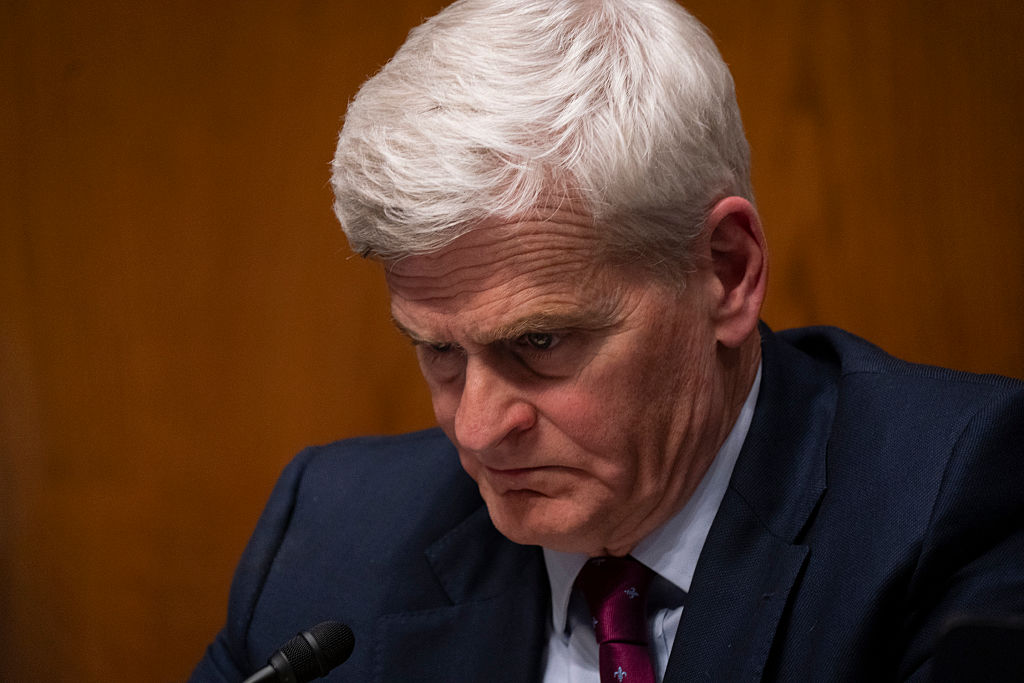
Sen. Cassidy: “If you’re pro-life, you should be pro-vaccine”

Sen. Bill Cassidy, R-La., offered a blunt assessment Sunday of President Donald Trump‘s new childhood vaccine policy: It could mean more shots, more doctor’s visits, higher costs and more sick children.

“If it wasn’t so potentially tragic, you would break out laughing at a comment like that,” Cassidy, a physician and chairman of the Senate Health, Education, Labor and Pensions Committee, told CNN’s Jake Tapper on “State of the Union.”

Cassidy was responding to Trump’s assertion that “nothing bad can happen” from his administration’s plan to overhaul the childhood vaccination schedule.

Cassidy also warned that requiring families to return repeatedly increases the chance children will miss doses, leaving them — and others — vulnerable to preventable illnesses.

“If you’re pro-life, you should be pro-vaccine,” Cassidy said.

The Louisiana Republican pointed to a recent case involving a pregnant woman who contracted a vaccine-preventable illness after exposure to an unvaccinated person and subsequently lost her pregnancy. Cassidy noted that immunity can decline during pregnancy, making community vaccination particularly important for protecting pregnant women.

“That is being pro-life,” he said.

In addition, Cassidy argued that the changes could turn two MMR shots into six individual injections — while requiring additional trips to the doctor’s office.

Trump has called for separating the combined measles, mumps and rubella vaccine into individual shots and spacing out childhood vaccinations across additional medical visits, despite opposition from major medical organizations.

“Instead of mom or dad missing work twice,” Cassidy said, parents could have to “miss work or take vacation or personal leave six times.” More office visits would also increase costs for insurers and potentially premiums, he argued.

“This is working backwards on affordability,” Cassidy said.

The physician also warned that requiring families to return repeatedly increases the chance children will miss doses, leaving them vulnerable to preventable illnesses.

Trump has called the combined MMR vaccine potentially “lethal” and compared administering multiple vaccines to a “nuclear weapon.” Tapper reminded Cassidy that the senator previously called for someone to challenge “crazy stupid things” that undermine confidence in immunization and asked whether Trump’s statements qualified.

“Yeah, that’s a crazy stupid thing,” Cassidy replied.


Start your day with essential news from Salon.
Sign up for our free morning newsletter, Crash Course.


Cassidy’s criticism carries additional political weight because he provided a crucial Republican vote to confirm Health and Human Services Secretary Robert F. Kennedy Jr., a longtime vaccine skeptic. Cassidy initially expressed concerns before supporting Kennedy after receiving assurances about vaccine policy, which he has since accused Kennedy of breaking.

Tapper pressed Cassidy on whether Kennedy’s history should have been warning enough.

Cassidy declined to revisit his vote, instead arguing that Trump’s policy will “decrease immunization rates” while being “less convenient and costing families more.”

The post Sen. Cassidy: “If you’re pro-life, you should be pro-vaccine” appeared first on Salon.com.

  •  

Trump’s new ballroom adviser has been dead for 227 years

President Donald Trump has apparently found a new adviser for his embattled White House ballroom: George Washington.

Trump spent part of his weekend sharing a series of seemingly AI-generated images depicting himself alongside the nation’s first president, including one showing the pair writing with quill pens, another riding horses together and a short video in which Trump and Washington stroll through the still-unbuilt ballroom.

“Thank you, George, for some of your brilliant ideas on this great Military Complex/Ballroom!” Trump captioned the 10-second video.

Washington’s newfound role as Trump’s 18th-century architectural consultant comes as the president fights to continue construction on the $400 million White House project. The Trump administration asked the Supreme Court on Friday to intervene after a federal appeals court ruled that aboveground construction could not proceed without congressional approval.

The imaginary collaboration also contains a historical wrinkle: Washington never actually lived in the White House.

Washington selected the site for the President’s House and oversaw aspects of its planning and construction, but left office in 1797 and died in 1799. John Adams became the first president to live in the still-unfinished building when he moved in the following year.

Trump’s Washington posts arrive amid an increasingly public effort to shape his own presidential legacy. His administration is simultaneously fighting over the ballroom and efforts to place his name on the Kennedy Center, while Trump has repeatedly shared heroic and AI-generated depictions of himself online.

On Saturday, he added another image to the collection: a photograph of himself wearing a “Trump 2028” hat accompanied by the declaration, “WE ARE GOING TO WIN.”

The 22nd Amendment prohibits anyone from being elected president more than twice, something Trump acknowledged earlier this month when he conceded that the law on presidential term limits is “very strong.”

Washington, meanwhile, famously made relinquishing power part of his own legacy.

After commanding the Continental Army during the Revolutionary War, Washington voluntarily surrendered his military commission to Congress rather than retaining control of the army. He later declined to seek a third presidential term, establishing the two-term tradition eventually written into the Constitution.

Washington’s legacy has hardly escaped historical scrutiny. He enslaved more than 100 people at Mount Vernon, and historians continue to grapple with the contradiction between the nation’s founding ideals and the human bondage practiced by its first president, among his strong mythology.


Start your day with essential news from Salon.
Sign up for our free morning newsletter, Crash Course.


But Trump’s latest posts appear less interested in interrogating Washington than in imagining him as a collaborator — writing, riding and offering design tips to his 21st-century successor.

Whether Washington would have approved of Trump’s ballroom is impossible to know. In Trump’s AI-generated version of history, however, George has apparently already signed off.

The post Trump’s new ballroom adviser has been dead for 227 years appeared first on Salon.com.

  •  

Even MAGA loves socialism now

As you may have noticed, many members of the American media and political classes are currently rending their garments in terror and despair at the perceived threat of “socialism.” It’s not at all clear what that word means in 2026, in this context or any other. 

It only helps a little to observe that whatever “socialism” is supposed to refer to these days, it doesn’t have much to do with an economic or political system where the state or the working class control the means of production. I’m sure we could find people out there who advocate that. Hell, I might be among them, if it were a remotely realistic possibility. But none of those people are prominent in the current (and long overdue!) internal power struggle within the Democratic Party and the American left writ large.

Come to think of it, you know who really wants state control of the economy, if only in an incoherent, ass-backward, “Mixed-up Files of Mrs. Basil E. Frankweiler” kind of way? Donald Trump, that’s who. For all his extended excoriations of Democrats as woke America-hating Marxist radical traitors, Trump has meddled more extensively and more directly in the economy than any Democratic president since Franklin D. Roosevelt. 

It’s clearly going too far to call Trump a socialist, largely because profoundly corrupt autocratic or oligarchic regimes like his cannot easily be captured in ideological categories. He’s definitely not a democratic socialist (or a constitutional democrat of any other variety). But there’s no way around the fact that his fantastical DIY presidency has consigned conventional right-wing ideology about the sacredness of free-market capitalism to the proverbial dustbin. Let’s put it this way: Romanian dictator Nicolae Ceaușescu called himself a socialist; legendary Argentinian president Juan Perón did not. Trump belongs on the same historical shelf as those guys, if only as a wannabe.

Almost everything about Trump’s management of the economy during his second term, and pretty much everything else, has been disastrous. But even if we assume that the epic personal and institutional graft of his presidency will not survive his departure, he has created a haphazard regime that’s so deeply enmeshed in fossil fuels, Big Tech and AI, rare earths, pharmaceuticals, shipbuilding, semiconductors and the weapons industries that no one will be able to disentangle it anytime soon. 

It’s going too far to call Trump a socialist. But his fantastical DIY presidency has consigned conventional right-wing ideology about the sacredness of free-market capitalism to the proverbial dustbin.

As Indiana University scholar Sarah Bauerle Danzman told Foreign Policy in 2025, it’s “jarring” to encounter “a Republican administration embracing state capitalism in a way we haven’t seen in a long time, while all the time decrying ‘socialism.’” According to more recent reporting in Forbes, the federal government now holds equity stakes in roughly 30 different companies across a range of industries. “What started with a ‘golden share‘ in U.S. Steel,” writes Keith Johnson of Foreign Policy, “has morphed into a government takeover of vast swathes of the economy,” best exemplified by capricious tariff policies that seem motivated by the president’s personal whims and grievances. As libertarian economist Tad DeHaven tells Johnson, since all this “is driven by one man’s personal desires, there is no plan and no strategy. It changes by the day.”

Fanatical Republicans from deep-red districts can keep staging government shutdowns and preaching the defeated gospels of Milton Friedman as much as they like. But it’s difficult to imagine any future GOP putting the genie all the way back in the bottle and entirely undoing this unexpected turn to oligarcho-socialism or state capitalism or, ahem, national socialism or whatever else it might be called. The Econ 101 term would be “dirigisme,” which was coined to describe the highly interventionist, quasi-socialist economy that rebuilt France after World War II and has more recently been applied to China, Singapore, South Korea and so on.

This raises the amusing possibility that the mainstream Democratic Party — always ready to turn itself into the punchline of historical irony — will once again end up holding the bag for a set of policies supported by their donor class and literally no one else. More than 70% of registered Democrats, according to a Fox News poll taken in March, say that capitalism is “not working very well or not working at all.” So naturally the party leadership seems prepared to go to the barricades to defend it.


To be entirely fair, in some cases the centrist moral panic over “socialism” seems to refer to rational or at least straightforward electoral concerns. Fairly or otherwise, mainstream Democrats convinced a tiny plurality of Wisconsin voters that gubernatorial candidate Francesca Hong was too much of a humorless leftist to survive exposure to the mythical but coveted “median voter” in November. They may well have been correct; we don’t get to re-run the experiment and find out.

But in other instances, such as Zohran Mamdani’s historic victory in New York in 2025 and a series of Democratic primary wins by progressive or socialist-aligned candidates in that city and across the country, the hysteria has more to do with generational and attitudinal change — yeah, I’m sorry, with a vibe shift — than with specific policy proposals or ideological labels. 


Want more sharp takes on politics? Sign up for our free newsletter, Standing Room Only by Amanda Marcotte, also a weekly show on YouTube or wherever you get your podcasts.


On one level, it seems incredible that deep-dyed Democratic insiders like James Carville or former DNC chair Jaime Harrison are surprised that their party, which collectively decided to “resist” the second coming of Trump by doing absolutely nothing and steadfastly ignored the scale of Israel’s war crimes in Gaza for as long as possible, is seen as hopelessly weak by its own voters. Carville recently called for a “schism” (a delightfully old-fashioned word) within the Democratic Party, and Harrison has urged the so-called socialists to leave the Demo-normies alone and “focus on building the party you actually support.” That old saw about being careful what you wish for comes to mind.

Guys like James Carville and Jaime Harrison were raised on ancient fables of the ideological excesses of the 1960s and ‘70s, and no doubt still get misty-eyed over Bill Clinton and the “New Democrats” of 1992.

On the other hand, there’s nothing especially mysterious about those attitudes. Those guys and others like them were raised on ancient fables of the ideological excesses of the 1960s and ‘70s, and no doubt still get a bit misty-eyed over Bill Clinton and the “New Democrats” of 1992. Don’t stop thinking about tomorrow!

Their version of the Democratic Party eagerly devoured the devil’s candy, in the form of unbreakable partnerships with Madison Avenue, Wall Street and Silicon Valley and closed-door, $10,000 fundraising dinners in East Hampton and the Napa Valley. There’s no escape from that kind of political bargain on this side of the apocalypse. 

They have always viewed left-wing opposition as childish and contemptible, but not far below the surface they have dreaded the day it rises up to bite them in the ass and destroy their glorious temples of political triangulation. That day has now come, and they are in danger of becoming the last advocates of a faith that both the right and left have abandoned. They can only hope that Donald Trump’s corruption and incompetence will save them from their own. 


The post Even MAGA loves socialism now appeared first on Salon.com.

  •  

“Talladega Nights” predicted America’s Sunbelt shift

Stop us if you’ve heard this one before: The man is lost. A desperate ploy to end a long-running war took more from him than he could bear. While working his way back home, he’s forced to outsmart a vicious beast at close quarters, and he takes up residence with a suitor. His offspring are made of lesser stuff than him, but our hero manages to earn redemption by flinging a stockcar around a tri-oval racetrack 180 times at 200 miles per hour. 

Don’t worry, you didn’t miss a super-secret cut of Christopher Nolan’s “The Odyssey” that’s only projected on the side of Buc-ee’s locations nationwide. This deep-fried Ulysses is Will Ferrell in “Talladega Nights: The Ballad of Ricky Bobby,” which turns 20 years old this month. Part of Ferrell’s man-child trilogy with Adam McKay, the film follows a blowhard racecar driver as he works his way back to the winner’s circle following a dramatic and embarrassing wreck.

But Ricky Bobby’s return to glory was about more than the importance of humility and friendship. To anyone watching this free-wheeling gag showcase in theaters in 2006, it was obvious this high-speed hick was a stand-in for President George W. Bush. Now, 20 years on, it has a lot to teach us about life in Donald Trump’s America.

The film introduces us to Ricky Bobby’s family with a gross-out splat, implying the soon-to-be stock car racer was born in the back of a speeding Chevelle driven by his reprobate father. We jump ahead in time and see a grade-school-aged Ricky Bobby on Career Day, let down again by his dad’s absence. His father appears for the first time in over a decade and is quickly tossed out of Ricky Bobby’s school for inappropriate behavior, leaving his son with a bit of parting wisdom that may or may not have been the ramblings of an inebriated fool. 

Ricky Bobby spends the rest of his life attempting to follow in his father’s tire tracks, working his way up to be in the big show but not a star. Dumb luck and a last-minute assist from his less charismatic, bumbling pseudo-sibling finally get him into the spotlight. He develops a reputation for aggression, seemingly fighting a war against everyone on the asphalt that spins out when he attempts to bully a cosmopolitan French driver into submission. His buffoonish bravado and frequent failures alienate everyone who is not completely in his camp. The movie ends with Ricky Bobby speeding in a car without sponsors, a massive “ME” splashed on the hood. For anyone who lived through eight years of Bush and saw Ferrell’s impression of him on “Saturday Night Live,” the real star’s identity is obvious. 

“Talladega Nights” was reacting to its immediate surroundings, rubbing and racing against America’s political currents only three years after Bush’s invasion of Iraq.

“Talladega Nights” was reacting to its immediate surroundings, rubbing and racing against America’s political currents only three years after Bush’s invasion of Iraq. The film saw that the future was in the sprawling boomtowns of the Sunbelt, that making a movie about America in 2006 required taking a hard-left into Southern culture — and that there was no better avatar for the country’s anti-intellectual and anti-coastal skid than Bush-via-Ferrell.

Bush’s brand and accent were Texan, with the hat to match, but his roots are in the WASPy New England. His father followed the money south in the 1950s and stayed there, but George H.W. Bush never quite lost his boarding school bearing. The younger Bush was different, leaning into his sun-baked upbringing while keeping one boot firmly back East. When the time came to get an education, he skipped College Station for stints in New Haven and Cambridge. “Talladega Nights” pegs this missing link between America’s urban past and its exurban future from its opening seconds, putting a quote about “hot, nasty, badass speed” in the mouth of New York Swell Eleanor Roosevelt. The future was coming on fast, and it was dumb as a brick.   

We’re now living in Ricky Bobby’s world. The culture and politics of the Sunbelt — sometimes called “America B” by people who spend too much time online — is now inescapable. From Stanley cups to dirty soda franchises, everything’s a little bit more SEC and a little less Ivy in 2026. Where Tumblr-ites dreamed of the cloistered quads and moody libraries of Princeton in the 2010s, TikTok-ers now obsess over the elaborate rituals of University of Alabama sororities.

This reality operates on zero-sum logic. Following his father’s maxim that “if you ain’t first, you’re last,” Ricky Bobby can’t imagine a win for anyone else as anything less than something stolen from him. If you’re at all up on the paranoid and protective stance of major right-wing media, this sounds awfully familiar. That pitch – they’re stealing from you – helped the nation elect Donald Trump in 2016, himself a late-in-life Sunbelter, and following his election loss four years later, it drove him to accuse Democrats of rigging the outcome in Joe Biden’s favor.


Start your day with essential news from Salon.
Sign up for our free morning newsletter, Crash Course.


The film is littered with nods to the new normal. Ricky Bobby lives in a McMansion in some isolated North Carolina community. His sons are given tough names, lifted from a cut-rate Chuck Norris television show, in the same way conservatives today tend to name their sons after firearms manufacturers. Fast-food branding and half-hearted evangelicalism are a constant presence.

The film feels spooky in its prescience, but Ferrell and McKay were far from alone in noticing the culture was heading out of the cities. Mere months before Rickky Bobby ran around an infield in his underwear swatting at imagined flames, Bravo debuted the first season of their juggernaut “Real Housewives” series, which focused on the comings-and-goings of women living in palatial homes in master-planned communities outside Los Angeles.

The franchise fled further and further from coastal cultural centers, shifting from the “Real World” of New York City and Chicago to the air-conditioned enclaves of New Jersey and the suburbs of Washington, D.C. In 2026, no one questions a reality show set 20 minutes from Park City, Utah, or wonders why Netflix dating shows host their casting calls in exurban Charlotte. That this is a reflection of America is taken as a given, the same way “Love Is Blind” contestants don’t feel the need to mention their evangelical beliefs.

One hundred fifty years after Union Gen. William T. Sherman stormed from Atlanta to Savannah, the Savannah Bananas, an independent baseball team, took the greater United States by storm, capturing algorithms and filling stadiums with coordinated dance routines.

It’s odd to revisit “Talladega Nights” now. The Bushes and the Ricky Bobbys of the world have spent the interceding 20 years winning battle after battle in the political and cultural war. For those of us who actually do like crepes, though, there are some glimmers of hope. 

For one, Donald Trump bringing the Sunbelt into the White House has been a disaster. A Democratic wave is expected in the coming midterms, one that may well carry on into 2028. For another, Formula 1 and soccer, sports frequently coded as elite and coastal, are experiencing booms of popularity across the country. Gen Z is pushing back against influencers, delighting in Obama-era signifiers like frozen yogurt and fighting off the “tradwife” trend.

While we’ve been racing on a closed loop for the last two decades, the cyclical nature of politics and culture will bring us back to the starting line faster than you might expect.

The post “Talladega Nights” predicted America’s Sunbelt shift appeared first on Salon.com.

  •  

Iran’s strategy to simply outlast Trump’s presidency

By now most of us have heard the acronym TACO, for Trump Always Chickens Out, but I was recently introduced to NACHO, which means Not a Chance Hormuz Opens. I’m not entirely sure how I feel about these cutesy insults — Donald Trump surely enjoys them, given his apparent enthusiasm for Mexican food — but appropriate or not, the labels seem accurate. 

On Monday, Iran announced the strait will remain closed until Trump gives in to their demands, which include, according to the New York Times, “the lifting of the U.S. naval blockade and sanctions on Iran, the withdrawal of American forces from around the country, the payment of war reparations, the release of frozen Iranian assets, and the end of attacks on Iran’s allies in the region.”

Trump is so eager to claim victory in the war he started alongside Israel that he might even be willing to walk away without a nuclear deal, unnamed U.S. officials told the Wall Street Journal. The president has also made his own list of demands, not all of which are coherent, that includes compensation for the 18 U.S. service members killed since the war began. In a Truth Social post, he also demanded that “compensation should be paid to the families of the hundreds of thousands of innocent protestors that Iran has killed over the last 50 years, not to mention the 52,000 that have been killed in the last five months.”

Iran’s timetable of negotiations is reportedly designed to drag out past the midterms, with the expectation being Republicans will get clobbered in elections over high gas prices and the deeply unpopular war.

Let’s not pretend Trump truly cares about dead Iranian citizens, given how many have been killed by U.S. and Israeli bombs. But even if Trump were to agree to the Islamic Republic’s terms tomorrow, Tehran seems unlikely to serve up the victory he so badly craves. Iran’s timetable of negotiations is reportedly designed to drag out past the midterms, with the expectation being Republicans will get clobbered in elections over high gas prices and the deeply unpopular war. Such a loss could lead to Trump’s third impeachment — a very big if! — or at least hobble any further funding for the conflict. 

But failing that, Tehran’s Plan C could already be coming clear: Just wait till Trump is gone. As reported by the International Business Times, Majid Shakeri, a senior adviser linked to Iran’s parliament, has urged the nation’s leaders to avoid both open war and a definitive agreement with Trump. The best strategy, he argues, is simply to wait until the end of Trump’s term, writing on X, “The path to victory in this war is neither just fighting nor just reaching an understanding. The path to victory is ‘managing the process of neither war nor peace, up to the point of victory.’”

Similarly, Brig. Gen. Mohammad Reza Naqdi told PBS NewsHour on Tuesday that “One way is to prolong this war until we get to the next term of the presidency and cause attrition, so that if anyone else wants to attack Iran, they will know there is a cost.”


Start your day with essential news from Salon.
Sign up for our free morning newsletter, Crash Course.


While such a pathway is not Iran’s official policy, it nonetheless seems like a plausible outcome. But waiting until Jan. 20, 2029, when Trump’s second term will end — assuming he doesn’t die first, get impeached and removed from office, or try to break the Constitution badly enough to somehow serve a third term — could backfire. (That might mean an end to Iran’s problems, but it certainly wouldn’t be for Americans. A Tucker Carlson win in 2028 might sound like a joke now, but so did Trump in 2015.)

At any rate, the president’s war with Iran is clearly unsustainable in the long-term, and the U.S. may have to bow out sooner rather than later. Since attacking Iran, the U.S. has increasingly ran low on weapons stockpiles. A recent report from the Center for Strategic and International Studies details why this is happening; it’s not just the Iran war, but the entire spectrum of how the military operates, including the Pentagon’s budget process and how the U.S. has engaged in recent wars, including under the Biden administration. While I’m skeptical of such reports being used to further inflate the military-industrial complex — look no further than Trump and Defense Secretary Pete Hegseth’s demands for a $1.5 trillion Pentagon budget — numbers are numbers, and you can’t bomb something with what you don’t have.

Meanwhile, the Department of Energy announced Monday that the Strategic Petroleum Reserve fell by 6.1 million barrels to just under 300 million barrels last week. That’s the lowest the SPR has been since 1983. For this and numerous other reasons, such as the recent jobs report that shows how badly the economy is faring under Trumponomics, many folks are comparing the president to Jimmy Carter, who famously faced his own economic challenges and stalemate with Iran during the 1979-1980 hostage crisis. But really, this level of incompetence is in a league of its own.

There are other dumb acronyms for the Trump administration, continuing the taqueria theme, such as EMPANADA, for Everybody Makes Promises and Nobody Actually Delivers Anything, and TAMALES, for Trump Always Messes Around, Leaves Everybody Shafted. I have my own feelings about this era, steeped in euphemism, but whatever people decide to brand it, there’s no denying reality: As we should’ve learned with Vietnam, Korea, Iraq, Afghanistan and so on, you can’t just drop bombs on countries and expect them to do your bidding. Or as I might put it, SALSA: Someone Always Loses to Stupid Aggression. That someone is inevitably us.

The post Iran’s strategy to simply outlast Trump’s presidency appeared first on Salon.com.

  •  

Trump can’t take no for an answer on his ballroom

President Donald Trump lashed out Friday night at the preservation group challenging his White House ballroom project, calling its members “TREASONISTS” just hours after his administration asked the Supreme Court to let construction continue.

“These are the TREASONISTS that brought the suit against the Military Complex,” Trump wrote in a lengthy Truth Social post targeting the National Trust for Historic Preservation. “They revealed Top Military Secrets!”

The administration filed an emergency application with the Supreme Court on Friday after a divided federal appeals court ruled that Trump lacked congressional authorization to continue aboveground construction on the $400 million, 90,000-square-foot project. The appeals court temporarily paused its ruling, giving the administration time to seek relief from the high court. Chief Justice John Roberts has asked the National Trust to respond by Tuesday.

The administration has increasingly characterized the ballroom not simply as an event space but as part of an integrated national security complex. Solicitor General D. John Sauer told the court the project is already 65% complete and argued that stopping construction would interfere with security improvements at the White House.

Trump reinforced that argument Friday night by posting — and then reposting — statements from senior officials defending the project.

Joint Chiefs Chairman Gen. Dan Caine called it a “valid military requirement” necessary to protect the president and provide command-and-control capabilities. Trump also shared a statement attributed to Secretary of State Marco Rubio arguing that the project is necessary both for security and diplomacy, noting that the United States currently hosts major foreign dignitaries in temporary tents with “unsafe and unsanitary portable bathrooms.”

Trump’s fury comes amid another battle over his efforts to remake Washington’s landmarks.

On Thursday, the Trump-controlled Kennedy Center board again voted to put Trump’s name on the performing arts complex and approved plans to close most of the center for two years of renovations. A federal judge previously ruled that the board could not rename the Kennedy Center without congressional approval and blocked an earlier closure plan. The latest proposal would instead add “Restored and Renovated By President Donald J. Trump” to the facade and name the surrounding grounds “President Donald J. Trump Plaza.”

The new Kennedy Center plans must still be presented to the judge who blocked the earlier proposal.


Start your day with essential news from Salon.
Sign up for our free morning newsletter, Crash Course.


Back at the White House, Trump insisted Friday that those standing in the way of his ballroom were abusing the legal system.

“It is this kind of gross and flagrant abuse of our Courts that is exactly why Americans are losing faith in our System of Justice,” Trump wrote.

The Supreme Court will now decide whether Trump can keep building while the larger fight over his authority to remake the White House continues.

The post Trump can’t take no for an answer on his ballroom appeared first on Salon.com.
  •  

Why Trump is tearing up a beloved national park

Dust rises from a bulldozer as it clears trees in Big Bend National Park.
A bulldozer clears a pathway in Big Bend National Park, Texas, on August 12, 2026. | Kaylee Greenlee/Bloomberg via Getty Images

This story appeared in The Logoff, a daily newsletter that helps you stay informed about the Trump administration without letting political news take over your life. Subscribe here.

Welcome to The Logoff: Remember President Donald Trump’s first-term border wall? It’s still being built — through a pristine Texas national park.

What’s happening? The Trump administration is preparing to build hundreds of miles of roads through Big Bend National Park in southwest Texas as part of its latest border security project, despite a bipartisan outcry over damage to the beloved park. 

Starting last week, bulldozers and heavy machinery began to clear land for the construction of about 200 miles of patrol road, new border barriers, and electronic surveillance measures to cover the park’s 118 miles of shared border with Mexico. The construction is proceeding after the administration overrode environmental laws intended to protect places like Big Bend earlier this year.

What does a border wall look like in 2026? In this case, “wall” is a bit of a misnomer. Despite Trump’s fixation with an actual, physical wall circa 2016, the Trump administration’s current project isn’t always 30 feet high and topped with concertina wire.

Instead, the Big Bend project is part of what the administration has described as a “smart wall,” which will combine stretches of traditional wall elsewhere along the US-Mexico border with patrol roads and vehicle barriers like those planned for the park, all blanketed with surveillance. 

It’s a small retreat from the administration’s original plan for a border wall through Big Bend, which sparked outrage earlier this year. Still, the administration intends to build about 700 additional miles of “primary” wall, spanning all four border states. The whole project is slated to cost around $47 billion. 

Why Big Bend? It’s hard to say. As the New York Times reported earlier this year, the park has long been considered low-priority given its remote location and inhospitable weather. Only about 1 percent of those apprehended for crossing the US-Mexico border have been detained in Big Bend.

And with that, it’s time to log off…

Hi readers, happy Friday! Before we log off today, here’s a story from my colleague Allie Volpe about how to bring some playfulness back into your life and why we’d all stand to benefit from it. You can read it here with a gift link. 

Have a good weekend, and we’ll see you back here on Monday!

  •  

Background on the Breakdown of the Trump-Netanyahu Love Affair

A follow up to last night’s post on Mike Huckabee, now U.S. Ambassador to Israel. Axios reports that Donald Trump is pretty conspicuously declining to endorse Benjamin Netanyahu for Israel’s October election. I would be remiss I didn’t explicitly note that it is unprecedented and outrageous that a U.S. president is even considering a formal endorsement in the election of an allied country. They’ve often had preferences of course. But we used to have respect for the internal affairs of foreign governments, especially allied ones. In any case, we don’t now. And here we are.

This appears to be part of Trump’s deliberate move away from Israel and the closely related annoyance that Israel continues to complicate his other priorities, which are one part conventional geopolitics and one part corrupt deals with various Gulf States. But there’s another factor Axios points to which we’re familiar with from the U.S. endorsement game. Netanyahu’s polls look bad. And Trump doesn’t want to back a loser.

  •  

The worst White House press secretary of all time

On most days in what many people still call the “United” States of America, our president sets the daily national news agenda with noxious blasts from his favorite media platform — the one, of course, that he owns and operates.

To put it another way, our president is making money selling us information we are due as members of what’s supposed to be an open democratic society. Reporting to us is in the job description. Donald Trump simply doesn’t care.

For Trump, this proposition is a win-win. Those who need or want to hear what he has to say keep him in business. Those who disapprove or try to ignore him have no effect. Trump has been impeached twice, is a convicted felon and publicly defends insider trading. You think he gives a squat about what you think? Honestly, he doesn’t care what he thinks. He only cares about the money.

I must confess that I long ago lost interest in what he was selling. Since it is a professional necessity for me to stay tuned in, I also must confess that I can only do so now by envisioning Trump as a failed standup comic, or a Hallmark movie watched while on bad hallucinogens and cheap speed — the kind we used to call a “greenie.” 

Trump may be the biggest greenie of all time. 

I find it difficult to stomach people who are only half as annoying as Trump. Who wants to watch the dozing Mad Hatter, doped up on stimulants, while his cursed kitchen demons poke and prod him through another “Weekend at Bernie’s” moment in the Oval Office? Sometimes I wonder what would happen if he didn’t wake up. Would he find a way to make money off that? 

If he could, he would, and Truth Social would be involved somehow. After all, that platform remains Trump’s trumpet for his “Darwin Mayflower” agenda of total world domination.  

On Wednesday, by way of this gateway to his shallow soul, the president told us that one of his “most trusted aides” was leaving the White House. Did Secretary of State Marco Rubio or Treasury Secretary Scott Bessent offer their resignation?  After all, he’d left them holding the bag on Air Force One while he snuck away in a catering truck before being evacuated on a military jet from Turkey last month.

No. So far both Rubio and Bessent are still around. But we’ll see. Rubio didn’t look happy on Wednesday, as he stood  before a group of reporters and was asked about Trump using him as a human shield. He smiled weakly and quickly turned away. 

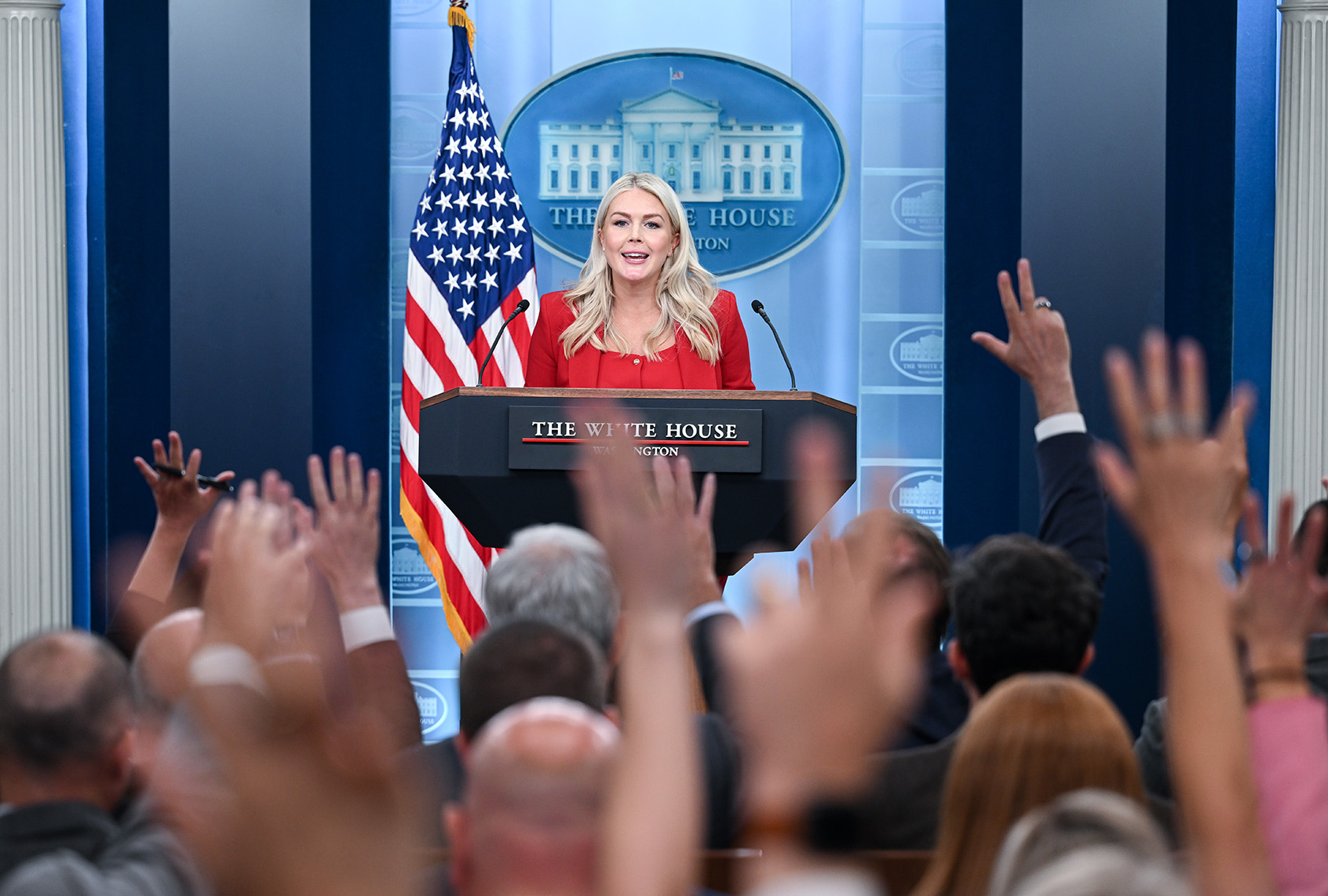
The person actually leaving, of course, is White House “pep secretary” Karoline Leavitt, who returned from paid maternity leave about a month ago and has only briefed the press corps twice since returning.

Did I miss anything?

Trump said on Truth Social that Leavitt is departing her role at the end of the month so she can spend more time with her children and family: “A decision I totally understand and respect!” 

Leavitt, with her cheerful brand of obfuscation, lies and propaganda, has the potential to go much further than Sarah Sanders did. In today’s politics, the bar is so low that the sky is unlimited for someone like her.

That’s almost word for word the same explanation Sarah Sanders gave when she left Trump’s first administration. Trump’s response was also similar. Then, a few short breaths later, Sanders was running for, and winning, the Arkansas governor’s office once occupied by Bill Clinton.

Leavitt, with her cheerful brand of obfuscation, lies and propaganda, has the potential to go much further than Sanders did. In today’s politics, the bar is so low that the sky is unlimited for someone like her.

In fact, Leavitt may well become the gold standard for press secretaries  into the foreseeable future. In politics, success creates imitators. Leavitt, by never failing to placate, flatter and worship her boss, has displayed a singular and decisive pathway, although not a very original one, to political success. And she has a singular talent for it.

In Leavitt’s world, Trump is always right. He has won every election by a landslide, slayed the dragons, corraled the wild beasts and brought peace, tranquility and a great economy to his kingdom. Don’t worry about Jeffrey Epstein, the Iran war or anything else. All is well, except that  the Democrats are communists and ravenous beasts who probably eat their young. The price of eggs is down, and the price of gas will be, any day now

In reality, Leavitt is without a doubt the worst White House press secretary that I’ve ever had the displeasure of encountering since the day I first met Larry Speakes during the Reagan administration. Larry was polite and professional. I never had a problem getting access to ask a question. In this administration, reporters aren’t allowed access to the press secretary’s office. So much for transparency. 

Trump’s escape from Ankara was a huge embarrassment, exacerbated by a floundering and incompetent press secretary. When the Secret Service devised a plan to transport Bill Clinton from India to Pakistan in 2000, it was similar to the plan that Trump employed on July 8. But back then, press secretary Joe Lockhart got the Secret Service to change the plan. 

“Protecting the president is important, but there was a way we could protect the president without putting other lives at risk. We didn’t want to use the press and staffers as decoys,” Lockhart explained.


He worked with the Secret Service to develop a strategy whereby people who were present or watching on television could see that Clinton did not board the same plane as the staff and press. Three smaller military jets were nearby and was impossible to tell which plane Clinton had actually boarded. “That’s the difference between a public servant who serves the public and a monarch who believes the public serves him,” Lockhart said. “We didn’t lie, we included the press and we kept everyone safe. In Trump’s case it isn’t that they didn’t know the protocol. They didn’t care.”

In 2026 in Turkey, Trump ditched us and didn’t bother to tell us about a threat that could have gotten us all killed. Later, he said, “If I go, you go,” when apparently, he already went. Leavitt lacked the understanding, intelligence or inclination to manage the situation. Her value does not lie in critical thinking. The planning, and consideration employed by someone with Lockhart’s experience is simply beyond her capabilities, although the required empathy really shouldn’t be.

Trump lavished more effusive praise on Leavitt than anything he has recently said about Jeanine Pirro, Pete Hegseth or Kash Patel. Of course, they still fared better than Bessent and Rubio, who were offered up as a potential sacrifice on Air Force One.

Ironically, Bessent and Rubio are among the most experienced and professional of Trump’s closest advisers and top officials. Sure, that’s a low bar, but nothing Trump does encourages deep thought and professionalism. He favors those like Leavitt.

It’s all part of his “simple approach” to life, as exemplified in his so-called Patriot Games, conducted on Tuesday. Some compared this event to the fictional Hunger Games, but according to reporter John Bennett from CQ/Roll Call in a Tuesday pool report, it was “more like American Ninja Warrior.”

Trump lavished more effusive praise on Leavitt than anything he has recently said about Jeanine Pirro, Pete Hegseth or Kash Patel. They still fared better than Bessent and Rubio, who were offered up as a potential sacrifice on Air Force One.

Trump, regarding the final competition with the air of a Caesar, praised the teenage competitors’ “deep love for the country,” and went on to say that, “love of … our great country has never been better.”

All I know is that this event, which was supposed to represent one male and female from every high school in the United States, looked suspiciously monochromatic. 

The reporting was colorless too. Here’s what passed as a pool report from the event: “’I knew what I wanted to do so I just did that,’ the kid from Utah told a camera afterward. It was aired on the screen here.” A reminder for those who didn’t know or had forgotten: The White House press pool is in place to report on the president, not write P.R. copy on a teenage athlete from Utah.

What was the president’s goal with this event? Who knows. Don’t look for his communication staff, or his press secretary, to provide useful information. On the other hand, if you want to insult the press, obfuscate the facts, ignore important questions and call the media people “fake news” and the “enemy of the people,” you want Karoline Leavitt. 

If you want facts, here’s one they’ll probably miss: The term “Patriot Games” may be a weak callback to an inferior Harrison Ford political thriller, but at root it is a reference to an Irish folk ballad about a teen going to war that satirizes and questions the political fervor of people like Trump. As I recently learned, Bob Dylan once considered recording it. 


Want more sharp takes on politics? Sign up for our free newsletter, Standing Room Only by Amanda Marcotte, also a weekly show on YouTube or wherever you get your podcasts.


Some press secretaries have bucked their boss, understanding that their true audience isn’t the audience of one in the White House but hundreds of millions of people across the United States, and billions more around the world, whatever their political views. 

It’s been a long time since we’ve seen anything like that from a press secretary, but no one has mastered the dark art of hucksterism with Leavitt’s aplomb. She has been the cheering cherub of disinformation, the bright face and upbeat smile of divisiveness and the wholesome All-American grin of hate, death and destruction.

She fits in well with the phony Patriot Games,  the potentially disastrous escape from Turkey and the monotonous daily march into madness this administration represents. Trump will miss her, but the rest of us shouldn’t. 

If Leavitt is being honest about her reasons for leaving, which few people in the Trump administration ever are, then I wish her well. You only get one chance to raise your kids, and if more of us took that seriously, the world would be in far better shape.

But Leavitt rarely tells the truth, so we’ll probably soon find her anchoring a Fox News show or running for office in her home state of New Hampshire, where she lost a congressional race in 2022. One could certainly lead to the other.

After all, the sky is the limit for this new breed of press secretary, an unabashed public worshipper of the king who is more like a court jester than an information node; one who is wholly ignorant of the commitment, fortitude and intelligence the job requires, but entirely devoted to the art of covering their boss’s exposed rear end.

Welcome to the Brave New World. Join us at the Patriot Games.

The post The worst White House press secretary of all time appeared first on Salon.com.

  •  

OLC’s New Opinion on Executive Privilege Is a ‘Devious Tactic’ to Cover Up Trump Admin Corruption

The Justice Department’s Office of Legal Counsel (OLC) put out a new opinion earlier this week arguing that President Donald Trump can assert executive privilege over communications with advisors even if they do not work at the White House or within the government at all.

Experts tell TPM that the legal opinion is likely an effort from the Trump administration and his DOJ to preemptively interfere with congressional investigations that Democrats plan to launch if they manage to take control of one or both chambers after the 2026 midterms.

  •  

Time for James Carville to sit down and shut up

For much of the 20th century, there were two relatively straightforward ways to win elections in the United States. Conservatives espoused their belief in traditional family values and getting out of the way of the wealthy. They defended the status quo against various liberation movements and labor coalitions, fighting to keep everything as it had always been in service of the people who most benefited from the old arrangement. With their natural orientation toward the past, conservatives would run on the good old days and attack anything that read as newfangled, trusting voters who thought similarly to show up at the polls in defense of American values. 

Liberals did the same, but in reverse. They fought for the rights of all people and defended the working class from the attempts of the wealthy to claw back hard-won protections. They pushed a larger, protective federal government that held back retrograde currents looking to lock people of color, women and other minorities into a permanent underclass. They ran on these values, trusting unions and activists to back them at the ballot box. 

But in the late 1980s, a new path to electoral victory emerged, blazed by people who pushed left-leaning politicians to erode labor victories and sell out loyal constituencies, creating a tacked-together centrist position that left almost everyone a little bit unhappy. This “Third Way” urged Democratic politicians to adopt the hands-off economic policies of their rivals while making welfare programs more punitive, all in the hopes of netting a few wishy-washy right-wingers come election time. For nearly four decades, this thinking has birthed a seemingly endless parade of candidates, political strategists and columnists pushing the idea that the ideologues are wrong. “Shut up,” they have said to anyone believing a better world is possible, “the adults are talking.”

Outside the masthead of The Atlantic, no one better represents this political tendency better than James Carville. The “Ragin’ Cajun” first rose to national prominence in 1991 by encouraging Arkansas Gov. Bill Clinton, who had just announced his presidential bid, to point out to a strapped country that the economy wasn’t doing so hot. At the same time, Carville encouraged Democrats to carve up the welfare state that was buoying Americans taking the brunt of the economic downturn. Democrats had been locked out of the White House since 1980, and they were willing to try anything to win. These counterintuitive policy solutions were assumed to be smart, and Clinton’s victory in November 1992 proved it. Carville was a kingmaker, and his “please nobody” politics were the Democratic Party’s future. 

A congressional wash-out just two years later couldn’t knock the bloom off the Third Way rose among Washington’s Democratic consultant class. Carville’s reputation for colorful turns of phrase, and his tendency to stomp on any calls for the party to move left, made him a favorite of cable news programmers looking to make entertaining television. 

As progressives and democratic socialists have notched recent wins across the country, Carville has been there to tell the activist wing of the Democratic Party to pipe down and tack toward Republican stances on issues like transgender rights and police reform.

Now 81, Carville has remained a stock choice for cheap heat, even as his positions became more predictable, such as a recent slam on left-wing media personality Hasan Piker in which he called the streamer a “raving antisemite” due to Piker’s opposition to America’s support of Israel and his comment that he would “vote for Hamas over Israel every single time.” As progressives and democratic socialists have notched recent wins across the country, Carville has been there to tell the activist wing of the Democratic Party to pipe down and tack toward Republican stances on issues like transgender rights and police reform

To Carville’s credit, he’s said that he would support Abdul El-Sayed, a progressive who won Michigan’s Democratic primary for Senate, because his Republican opponent, former Rep. Mike Rogers, is a “clown.” But that admission came just one month after democratic socialist Darializa Avila Chevalier’s primary victory for a U.S. House seat in New York led Carville to call for the party to split from its progressive wing

“I actually do think it’s time for Democrats to talk the ‘s’ word: schism,” he said. “I really do. Everybody’s always said, ‘No, no. We’re a coalition. We’re a big tent.’ There’s just some s**t I can’t be in the same tent with.”  

All this wouldn’t grate quite so much if it were coming from someone else, someone who could point to real, sustained political wins outside of a few choice Novembers. To borrow Carville’s folksy schtick, the Ragin’ Cajun was born on third base and has spent his whole life telling network anchors he hit a triple. Tagged by the Clinton campaign and a fascinated media as a strategic genius, his standard strategy of tacking toward the center has been taken as gospel by many in the Democratic Party ever since. In truth, Clinton was a neutron bomb of charisma running against an unpopular president in a bad economy. If you need proof that the tactic doesn’t work without a generational schmoozer as its face, just look at the presidential elections since Clinton term-limited out. 


Start your day with essential news from Salon.
Sign up for our free morning newsletter, Crash Course.


Extenuating circumstances in Florida provided useful cover for the Democrats’ 2000 loss in an election that never should have been close. John Kerry blew it against George W. Bush’s 40% approval rating. It took Barack Obama, another hall-of-fame charmer, to win back the White House in 2008. Then came 2016. 

Trump’s win should have forced reflection among Carville and his ilk, some admission that the project of the New Democrats had ended in obvious failure. Kamala Harris’s Liz Cheney-boosting, Glock-boasting campaign should have erected the tombstone on Third Way’s grave. Instead, Carville can still be counted on to punch left for the cameras while his ideological allies fill out the opinion pages of most major American newspapers. 

He defended Graham Platner, the former Maine Senate candidate who ended his campaign in disgrace following allegations of sexual misconduct, seemingly because of an innate need to be on the opposite side of every issue from Massachusetts Sen. Elizabeth Warren, who recently told TMZ, “James Carville has an opinion on everything, and I pay attention to almost one out of 10.”

You don’t need to look at Senate Minority Leader Chuck Schumer’s approval ratings to know the centrist wing of the Democratic Party is clearly out of gas. The energy of the party is now with progressives like El-Sayed, New York City Mayor Zohran Mamdani and New York Rep. Alexandria Ocasio-Cortez. Ocasio-Cortez’s early wins proved that Democratic voters had an appetite for left-leaning solutions to the ongoing economic crises. Mamdani offered an amiable leftist alternative to “making the trains run on time,” flexing state power to make life easier and more affordable for average citizens. In his recent primary election, El-Sayed showed that centrists’ belief in playing nice with the opposition was played out. 

Recent progressive wins have shown that there’s no need to accept the framing of conservatives on issues like reeling in corporations and the war in Gaza. Allowing debate about the party’s supposed core beliefs on Republican terms is the sort of milquetoast politics that led us to where we are now: constantly fighting against whatever fantasy Carville’s counterparts on cable news have cooked up instead of talking about substantive issues. 

We don’t need any more of that.

The post Time for James Carville to sit down and shut up appeared first on Salon.com.
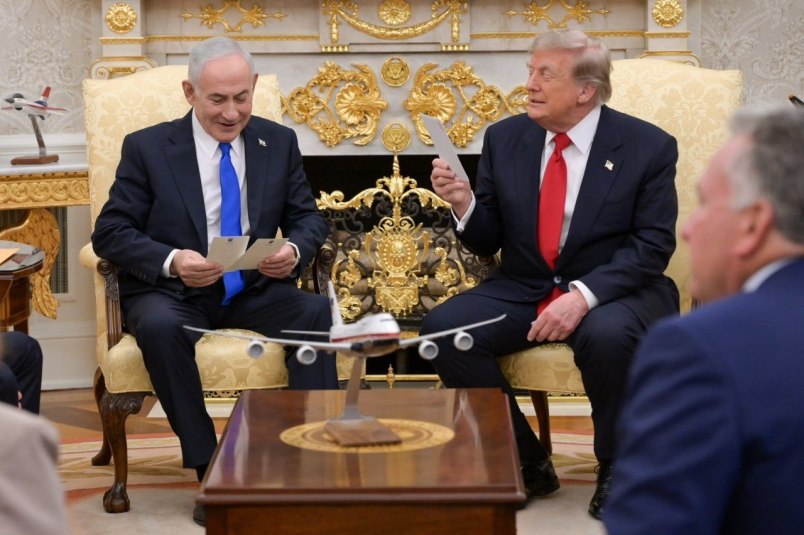
  •  

The Iran war’s mental toll on US sailors

The USS Abraham Lincoln aircraft carrier is seen in profile with jets on its deck and another to the right above its stern.
The USS Abraham Lincoln deployed in the Arabian Sea on April 16, 2026. | US Navy via Getty Images

This story appeared in The Logoff, a daily newsletter that helps you stay informed about the Trump administration without letting political news take over your life. Subscribe here.

Welcome to The Logoff: The cracks are starting to show in President Donald Trump’s Iran campaign.

What’s happening? Conditions on a US warship deployed in the Middle East have grown so dire, multiple sailors have reportedly tried to go overboard (at least one did so but was rescued safely, according to CNN). 

The attempts to jump overboard comes as family members of sailors are raising concerns with Democratic lawmakers about deteriorating mental health on the ship amid sanitation issues and shortages of food and basic supplies

The USS Abraham Lincoln aircraft carrier has been deployed for more than 250 days, starting last November, including a stretch of more than 200 days at sea — a modern record. Its deployment was supposed to end months ago, in May, but has continued as Trump’s Iran war stretches on

How is the administration responding? Defense Secretary Pete Hegseth said Thursday that reports about conditions on the Lincoln are “completely misrepresented.” Help is on the way for the Lincoln, though, with another US aircraft carrier en route to the area to replace it (according to the Wall Street Journal, the replacement was already planned, and not in response to deteriorating conditions on the Lincoln).

Why does this matter? Conditions on the Lincoln are not the only recent stumbling block for the US war with Iran. Earlier this month, we learned more about the US’s increasingly serious shortages of key offensive and defensive missiles, including THAAD and Patriot interceptors used to protect US troops and allies. On top of that, the Washington Post reported Thursday that the US has run through around a quarter of its Reaper drones, which cost tens of millions of dollars apiece. 

It’s the latest example of how the math of the war is starting to slant against the US: Reaper drones and Patriot missiles are incredibly expensive, while Iran has figured out how to mass-produce attack drones on the cheap. And with no end in sight, shortages and situations like the Lincoln will only become a larger problem.

And with that, it’s time to log off…

Here’s some good news from my colleague Adam Clark Estes: As wrecked as your attention span may feel, it’s not permanently degraded. He talked with attention experts to figure out how to repair his, and how we can all do the same. You can read his full story here with a gift link — and then, for all of our brains’ sake, let’s log off. We’ll see you back here tomorrow. 

  •  

Karoline Leavitt and the trap of MAGA womanhood

Trump with Karoline Levitt
President Donald Trump and press secretary Karoline Leavitt, among others, attend an event on July 22, 2026, for US service members killed during operations in the Middle East. | Saul Loeb/AFP via Getty Images

This story appeared in Today, Explained, a daily newsletter that helps you understand the most compelling news and stories of the day. Subscribe here.

Karoline Leavitt, the 28-year-old firebrand who became the nation’s youngest-ever press secretary in 2024, is stepping down to “spend more time with her beautiful young children.”

President Donald Trump announced the news on Wednesday night in a Truth Social post, adding that Leavitt would remain an adviser and “an influential voice within the Republican Party.”

It feels fitting that Leavitt — whose public persona required her to perform both her job and her role as a wife and mom — is stepping down to parent. In MAGA’s conception of womanhood, there can be no higher calling. Not even serving the president. 

For more than two years, however, Leavitt made a show of trying to do both. She returned to work on Trump’s reelection campaign only days after the birth of her first child and regularly shared photos of herself working while holding her son. 

Leavitt also welcomed a daughter over the spring, amid what Fox News dubbed a White House “baby boom.” Officials and conservative media quickly turned the new mothers into advertisements for the pro-natalist movement: Proof that women could, and should, have both careers and children. 

Leavitt is still being held up that way, even — perhaps especially — as she departs. “She’s been a role model to millions and millions of young women,” deputy chief of staff Stephen Miller told Fox News on Wednesday. “A mother, a family woman, a press secretary, a patriot.”

MAGA’s rules for women

The MAGA movement tends to glorify traditional female roles — wife, mother, homemaker — while simultaneously (and confusingly) elevating ambitious, career-driven women like Leavitt. 

At first glance, her prominence — and that of other women in Trump’s administration — would seem to rebut the charge that the movement is misogynist. In fact, that’s a line of defense that Trump himself has advanced

But look a little closer, and you’ll see the structural contradiction at the heart of MAGA femininity: Female power is only legitimate when it’s exercised on behalf of Trump, and by women who conform to traditional expectations around gender, marriage, motherhood, and physical appearance.

To Trump, a female White House correspondent was a “piggy,” for instance. But a female press secretary who defended the slur was “knocking them dead.” 

A female employee at a Trump golf course was asked to sign an NDA after reporting harassment. But the female attorney who allegedly pressured her to sign it was, according to Trump, “a rocket ship.”

A female politician rose to prominence championing the president’s deportation agenda. But to get there, she had to find her “Mar-a-Lago face” — and she was ousted after showing signs of personal ambition. (In fairness, she was also very bad at her job.) 

It’s a very tricky little tightrope to walk. And lately, that strain has begun to show. While Trump began his second term with an unusually high number of female Cabinet members for a Republican president, women now hold only four of 23 Cabinet or Cabinet-level positions. 

Trump’s support is also down among young women. In Congress, a bloc of prominent conservative female lawmakers recently broke from their party to censure Republicans accused of misconduct. Now, the MAGA movement is losing one of its fiercest female proxies in Leavitt. 

Even at the height of her powers, however, Leavitt never really got her due. The luxurious office traditionally reserved for the White House press secretary instead went to another White House staffer. A dude.

One link for later

➨ Meet the latest and greatest exercise cult. It’s called HYROX — yes, in all caps — and it’s an eight-round agility and strength competition. Participants spend thousands of dollars on training, registration, and travel for these events, which tend to “subsume your entire existence.” That’s a very hard no for me, personally…but a lot of very fit and competitive people are apparently into it

Before you go…

  • Did you know…that the US attempted to assassinate longtime Cuban dictator Fidel Castro by poisoning his ice cream? And that’s somehow not even the weirdest or most far-fetched Castro assassination scheme. 
  • Today’s trivia: Who was the first woman to perform hip hop at the White House? (You can find this and other brain puzzles in Vox’s daily crossword. Look for the answer in tomorrow’s edition.)
  • Yesterday’s trivia: Yesterday we asked you for the German philosopher who wrote Critique of Practical Reason. That would be Immanuel Kant, whose work also arguably inspired one of the core conflicts in the Avengers films.
  •  

The Justice Department Is a Glorified Pro-Trump Law Firm Now

This article is part of TPM Cafe, TPM’s home for opinion and news analysis. It was originally published at Balls and Strikes.

Earlier this week, Todd Blanche was sworn in as the newest attorney general of the United States. Administering the oath of office to Blanche, who previously served as President Donald Trump’s criminal defense lawyer, was another former member of Trump’s legal team: Judge Emil Bove, whom Trump nominated in 2025 to a life-tenured seat on the Third Circuit. 

For both Blanche and Bove, the reunion must have been a real treat. Three years ago, they were unknown New York City-area law firm partners taking a long-shot bet on a disgraced ex-president who stood accused of, among other things, sexually assaulting a magazine writer, storing classified government documents in a Mar-a-Lago bathroom, making illegal hush money payments to kill an unflattering news story about his philandering, and trying to fraudulently overturn his loss in the 2020 election in Georgia. (That last list item should not be confused with separate federal charges stemming from Trump’s involvement in efforts to foment a violent insurrection and overthrow the government on January 6.)

Thanks in part to the work of Blanche and Bove, though, none of those cases resulted in meaningful consequences for Trump. And now that he is president again, their respective appointments are best understood as hard-earned rewards for their troubles. After Bove finished conducting Blanche’s swearing-in ceremony Monday, the two former colleagues got to hug it out in the Oval Office as their bored-looking benefactor clapped politely.

  •  
❌