Björn Höcke nutzt den Volkstrauertag für eine gezielte Provokation und präsentiert stark überhöhte deutsche Opferzahlen zu Flucht, Vertreibung und alliierten Luftangriffen. Die AfD fordert einen Schlussstrich unter die NS-Vergangenheit, doch wie funktioniert diese geschichtspolitische Umdeutung genau, und auf welche fragwürdigen Quellen stützt sich die Partei dabei?
Mit dem ehemaligen Fußballweltmeister Thomas Berthold schickt die AfD zudem einen Kandidaten für das Amt des Bundespräsidenten ins Rennen, der offenkundig Verschwörungserzählungen und Reichsbürger-Thesen verbreitet: Von Schattenmännern, die die Welt regieren, bis hin zu bizarren Gesundheitstipps.
Pauline von Pezold und Frederik Schindler analysieren, wie die AfD mit gezieltem Geschichtsrevisionismus eine neue nationale Identität stiften will. Zudem beleuchten sie, warum die Personalie Berthold die Zerrissenheit der Partei offenlegt und welche strategischen Ziele die Parteispitze mit solchen Nominierungen verfolgt.
„Inside AfD“ ist der POLITICO-Podcast über die umstrittenste Partei des Landes. Trotz Radikalisierung und Beobachtung durch den Verfassungsschutz wächst die AfD weiter. Wie ist das möglich? Was treibt ihre Anhänger, Strategen und Gegner an? Wie funktioniert das Innenleben der Partei? Und was bedeutet ihr Aufstieg für das politische System Deutschlands?
POLITICO Deutschland – ein Angebot der Axel Springer Deutschland GmbH Axel-Springer-Straße 65, 10888 Berlin Tel: +49 (30) 2591 0 information@axelspringer.de Sitz: Amtsgericht Berlin-Charlottenburg, HRB 196159 B USt-IdNr: DE 214 852 390 Geschäftsführer: Christoph Eck-Schmidt, Carolin Hulshoff Pol, Mathias Sanchez Luna
L’initiative n’est pas habituelle : 110 professeurs de droit ont cosigné une tribune dans Le Monde, mercredi dernier, pour rappeler les règles prévues en matière révision de la Constitution. Leur message : modifier notre loi fondamentale via l’article 11, utilisé jadis par Charles de Gaulle, est irrégulier. Or, Marine Le Pen prévoit d’y recourir pour faire adopter par référendum ce qui constitue le cœur de son programme : la préférence nationale, la prééminence du droit national, ou encore la suppression du droit du sol. Anthony Lattier évoque les enjeux de cette dispute juridique et politique avec le constitutionnaliste Benjamin Morel, maître de conférence en droit public à l’université Paris-Panthéon-Assas, qui a interviewé, il y a quelques jours, la candidate du RN pour la revue Le Grand continent. Des questions ? Des commentaires ? Ecrivez-nous sur Whatsapp au +32 494 07 69 41.
Ein Video über Donald Trump bringt Tino Chrupalla in der eigenen Partei massiv unter Druck. Weil der AfD-Chef die US-Migrationspolitik als zu hart kritisiert, erntet er offenen Widerspruch von Alice Weidel und einen Richtungsstreit in der Fraktion.
Exklusive Einblicke in geleakte Austritts-Mails zeigen zudem, warum einst loyale Mitglieder der Partei frustriert den Rücken kehren. Die internen Dokumente offenbaren eine tiefe Entfremdung. Es geht um zunehmende Radikalisierung, Intrigen und einen pro-russischen Kurs, der langjährige Unterstützer abschreckt. Der Blick in die Postfächer zeigt schonungslos, wo die rote Linie für viele an der Basis verläuft.
Außerdem gibt es eine überraschende taktische Wende in Sachsen-Anhalt: Der AfD-Kandidat Ulrich Siegmund würde bei der Ministerpräsidentenwahl womöglich doch mehrfach antreten. Welche Rolle die CDU bei diesem Manöver spielt und was das für die künftigen Machtverhältnisse bedeutet, ordnet diese Folge präzise ein.
„Inside AfD“ ist der POLITICO-Podcast über die umstrittenste Partei des Landes. Trotz Radikalisierung und Beobachtung durch den Verfassungsschutz wächst die AfD weiter. Wie ist das möglich? Was treibt ihre Anhänger, Strategen und Gegner an? Wie funktioniert das Innenleben der Partei? Und was bedeutet ihr Aufstieg für das politische System Deutschlands?
POLITICO Deutschland – ein Angebot der Axel Springer Deutschland GmbH Axel-Springer-Straße 65, 10888 Berlin Tel: +49 (30) 2591 0 information@axelspringer.de Sitz: Amtsgericht Berlin-Charlottenburg, HRB 196159 B USt-IdNr: DE 214 852 390 Geschäftsführer: Christoph Eck-Schmidt, Carolin Hulshoff Pol, Mathias Sanchez Luna
All eyes are once again on Ukraine this week, as a fresh round of diplomatic talks puts Europe’s future in the balance.
The continent’s focus will largely be on Ukraine as trilateral talks among the U.S., Kyiv and Moscow happen in Abu Dhabi. The stakes are high, as President Donald Trump’s promise of a “big, beautiful deal” that “might involve all of Europe” has capitals on edge. On the show, Zoya Sheftalovich and Nick Vinocur unpack potential outcomes from the talks.
Next, EU foreign policy chief Kaja Kallas has a new adversary: French far-right presidential candidate Marine Le Pen. If she takes power in elections next year, Le Pen wants to dismantle — or at least drastically scale back — the EU’s diplomatic arm, the European External Action Service. What could that mean for Brussels’ influence on the world stage?
Finally, European leaders are gearing up for their first joint meeting on AI, but administrative delays threaten to derail their ambitions before they get off the ground.
Questions? Comments? Message us on WhatsApp here or at +32 491 05 06 29.
PARIS — EU diplomatic chief Kaja Kallas has another enemy who wants her out: Marine Le Pen.
The far-right French leader wants to dismantle, or at the very least drastically reduce, the EU’s diplomatic arm if she wins the 2027 presidential election, according to four National Rally officials.
“The reality is that [Kallas’s] usefulness is very limited, and she duplicates the diplomacy of member states,” said Charles-Henri Gallois, adviser to National Rally President Jordan Bardella. “No one recognizes her legitimacy, particularly not the United States, nor China.”
The comments reveal growing tensions over the EU’s power as nationalist parties from France to Germany and Poland seek to wrest power back from Brussels, with foreign policy among their top targets. They also put extra pressure on Kallas and the European External Action Service, which has been locked in a protracted turf war on foreign policy with the European Commission headed by Ursula von der Leyen.
The view inside the National Rally is that the EU’s diplomatic service is not only a waste of taxpayer money but also gets in the way of European nations being able to flex their muscles on the world stage.
One example is Ukraine, on which Kallas and Le Pen are deeply divided — although they have not clashed publicly. The former Estonian prime minister is one of Russian President Vladimir Putin’s fiercest critics and a staunch supporter of Ukraine’s Volodymyr Zelenskyy, while Le Pen is pushing for an international peace conference to settle the conflict and says Europe has run out of money to give to Kyiv.
Kallas has “used very warrior-like language on Ukraine,” said National Rally MEP Jean-Paul Garraud. “We support Ukraine but if we expressed ourselves like that we would be in total war” with Russia, he said.
Le Pen has directed her most vicious attacks against von der Leyen, who has long been accused by the far right of exceeding her powers. But it’s Kallas and the EEAS that risk becoming collateral damage under a far-right presidency in France.
Le Pen is the front-runner ahead of next year’s presidential election. In a recent visit to Brussels, she vowed to downsize the European Union if she comes to power.
“France will no longer accept that the Commission exercises diplomatic competences, and even less military or intelligence competencies,” she told reporters. This shrinking of EU institutions would include snipping the wings of the EEAS, according to the four National Rally officials, who were granted anonymity to speak freely.
The move would put the National Rally on a collision course with pro-European parties, which see the EU’s diplomatic arm as an essential tool as the global stage becomes more competitive and more aggressive.
Marine Le Pen greets the audience after a campaign rally in Orléans, France on Oct. 25, 2026. | Quentin de Groeve/Hans Lucas/AFP via Getty Images
“If Marine Le Pen becomes president of France, she will quickly realise that … France is a medium-sized country on the global stage,” said Irish Renew MEP Barry Andrews, who chairs the European Parliament’s development committee.
“Without the collective power of Europe, France has no chance going up against the U.S. or China alone,” he said.
The EEAS snapped back at the criticism. “Across Europe, the far right is against the very idea of European cooperation,” said an EEAS spokesperson.
“EU diplomacy defends European interests, including those of France. The EU’s global delegation network is a major strategic asset,” the official told POLITICO in response to Le Pen’s comments.
Money matters
The push against Kallas and her diplomats also comes as the National Rally limbers up for a fight with the Commission over France’s EU budget contribution, if they win the election. Last month, the National Rally unveiled its plans for a €11 billion cut to France’s EU contribution for 2027, which is currently expected to total approximately €30 billion.
POLITICO’s Poll of Polls puts Le Pen on 34% in the first round, well ahead of far-left leader Jean-Luc Mélenchon on 17% and center-right hopeful Edouard Philippe on 16%. Polls also suggest she would beat most of her potential rivals in a runoff.
A large screen displays the results of a vote during a session of the National Assembly on the first-reading examination of the 2027 draft state budget bill in Paris on Nov. 4, 2026. | Ludovic Marin/AFP via Getty Images
While France could not unilaterally cut the EEAS’s budget, the National Rally says it sees allies in Italy, in Spain’s nationalist party Vox (which could end up working with the center-right after this month’s election), and in Andrej Babiš’s Czech Republic.
The offensive could get nasty as the Commission and Le Pen arm-wrestle over money.
“The EEAS is great for friends of friends, who want jobs,” said one National Rally official. “The real estate bought or rented by the EEAS is a waste of money. I’m shocked to see the amounts involved in local contracts; it’s unbelievable,” said a National Rally MEP.
The concerns voiced by senior diplomats in both countries focus on the fact that the EEAS lacks policy tools to influence foreign relations. The Franco-German initiative suggests integrating the EEAS with the Commission, which has a larger budget as well as control over trade and tech policies.
It also coincides with proposals to severely cut back on the EU’s foreign policy budget. Commission officials have internally simulated slashing the bloc’s Global Europe budget — worth €200 billion in the last long-term budget — by as much as 40% in the next budget.
The EEAS itself, which has an annual budget of close to €1 billion and employs more than 5,200 people globally, is working on internal reforms that Secretary-General Kajsa Ollongren is expected to present to staff later this month.
Major budget cuts would have the effect of gutting the EU’s network of more than 100 global delegations, which are staffed by diplomats as well as Commission personnel from external-facing units like DG MENA (the Directorate-General for the Middle East, North Africa and the Gulf).
International organizations have pushed back forcefully against plans to slash the EU’s development aid budget, with United Nations Secretary-General António Guterres writing to the heads of the Commission and Council and urging them to preserve the funding.
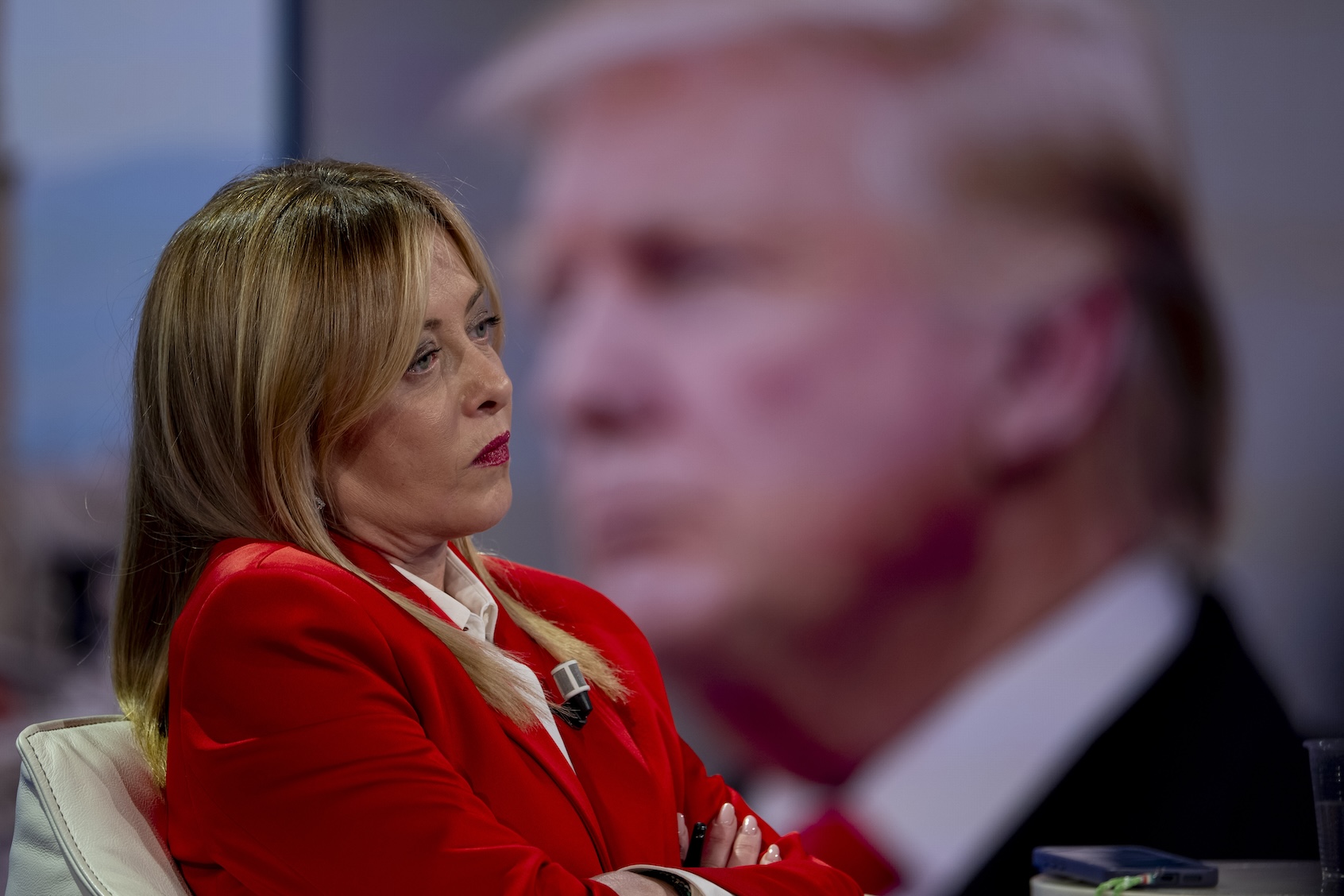
When Donald Trump returned to the White House in 2025, he seemed like the leader, or at least the dominant figure, of a globalized version of the MAGA movement, a worldwide network of far-right parties sometimes described as the “nationalist international.” We can make a long list, starting with Nigel Farage’s Reform UK, Marine Le Pen’s National Rally in France, the not-quite-neo-Nazi Alternative for Germany, or AfD, and Giorgia Meloni’s Brothers of Italy, along with other previously-fringe parties now creeping toward the mainstream in many different places.
If it strikes you that the term “nationalist international” contains its own contradiction, by the way, you’re miles ahead of JD Vance and Stephen Miller and the rest of the Trumpian pseudo-intellectuals, who still haven’t figured that out.
That vision of a MAGA-centric new world order was always an illusion, although it began with some fragments of plausibility and was enormously amplified by the Trump distortion effect, meaning our president’s uncanny ability to soak up media attention and make himself the main character of every narrative. Now that illusion has melted away like an ice cube in Europe’s catastrophic summer (where I personally experienced a 104℉/40℃ day in Berlin, the highest recorded temperature in that city’s history).
Indeed, the world now faces another apparent contradiction, or at least a historical irony. If Trump still looms over the American landscape like an unkillable ogre in a third-rate AI fairytale, he is all but finished as a political force. He has done more damage to his own country than anyone since Jefferson Davis, his disillusioned supporters are deserting him, he is universally despised around the world and he’s headed for a potentially historic electoral defeat in November.
Europe’s far right, on the other hand, is doing fine without him. It’s about a 50/50 proposition that by the end of this decade the four largest nations in Europe will be governed by right-wing populist parties. All of them at some time sought inspiration and financial support from Trump and his Mar-a-Lago hangers-on, and pretty nearly all of them have now ghosted him entirely, and pretend they never really knew the guy: “Neues Handy, wer bist du?”
Trump’s second term began with a triumphal sense that a hard-right “vibe shift” was transforming not just America but the world (which Americans are always ready to perceive as a picturesque but unreliable subsidiary). Those early months of 2025 were undeniably terrifying and inordinately destructive, but they were also ridiculous. In retrospect, from half a tick into the future, those guys were immeasurably high on their own supply, based on a narrow electoral victory over incompetent and disorganized opposition.
Early in Trump’s second term, Vance, Marco Rubio, Elon Musk and others were dispatched to various world capitals to urge support for right-wing candidates or to deliver preposterous blood-and-soil history lessons straight out of wingnut “Great Books” podcasts.
As part of that extended touchdown dance, Vance, Marco Rubio, Elon Musk and others were dispatched to various world capitals to urge support for right-wing causes and candidates, or to deliver preposterous blood-and-soil history lessons straight out of wingnut “Great Books” podcasts. That tendency culminated in the now-legendary 2025 National Security Strategy, a document that offers most presidential administrations a chance to deliver boilerplate language about shared values, human rights and democracy.
Not this time. As I wrote last year, the NSS featured a poisonous combination of “Great Replacement-fueled fanboy enthusiasm for far-right parties” and “unhinged and unconcealed racist panic.” Europe was losing its cultural identity, the document warned, and faced the “stark prospect of civilizational erasure” as well as the (entirely imaginary) possibility that “certain NATO members will become majority non-European.”
That was one of many vainglorious MAGA failures to read the room, on an international scale. Right-wing European politicians traffic in similar rhetoric, to be sure. But nobody on that continent, of any dispensation, enjoys receiving arrogant lectures on history and civilization from Americans, and even extremist parties like Reform UK or the AfD prefer to cloak the bigotry in layers of euphemisms and some degree of plausible deniability.
In a long and painful video interview with Economist editor Zanny Minton Beddoes published this past week, for instance, AfD co-leader Alice Weidel professed horror and amazement when asked whether her party contains overtly racist or proto-fascist elements. As Weidel took pains to point out, she is married to a Swiss woman of Sri Lankan ancestry, which presumably cleanses her of any bad intentions when she rejects “gender theory” or insists that all the Syrians and Afghans now living in Germany must leave.
That interview is an instructive experience in other ways. Beddoes repeatedly asks Weidel why she can’t just be a normal budget-cutting conservative, of a variety less frightening to readers of The Economist. Oh, but she absolutely is, Weidel insists, lulling her interlocutor for a while with prodigiously dull business-school chatter before returning to her central theme: Germany’s financial woes will be cured, somehow, by expelling the Muslims.
To return to our main theme, Weidel mentions Trump only twice, with evident distaste, in that hour-long conversation. That’s not exactly news at this point. By the time the above-mentioned NSS was published last December, Europe’s far-right populists had already reached the conclusion that Trump was a loser. Or, in the more delicate phrasing of Armida van Rij in the newsletter Strategic Europe, that “Trump’s repeated threats to invade Greenland, his attacks on the pope and Italian Prime Minister Giorgia Meloni, and his trade war on the EU have made the friendship electorally costly.”
That became obvious to the entire world last April, when MAGA darling Viktor Orbán was routed in Hungary’s election after JD Vance’s campaign visit provided the “political kiss of death,” in the words of Daniel Hegedüs of the Institute for European Policy in Berlin. That was the same month, as it happens, when Meloni publicly broke with Trump over the latter’s criticisms of Pope Leo XIV.
But Marc Bassets of the Spanish newspaper El País identifies the real turning point a full year earlier, in the Canadian elections of April 2025, when Trump’s threats and mockery drove mainstream liberal Mark Carney to an unexpected victory over a MAGA-friendly opponent who seemed to hold the advantage.
That result, coming just three months into Trump’s term, “became an example closely watched in Europe,” Bassets writes, which was replayed in several subsequent elections. Then came Trump’s threatened annexation of Greenland, his raid on Venezuela and his disastrous war with Iran, all of which were blatant violations of national sovereignty, the core principle of Europe’s new right.
Like Trump’s capricious tariff war and his public feuds with Meloni and the pope, this reflected the president’s profound ignorance about the world and a fundamental mismatch between the grandiose neo-imperialism of MAGA foreign policy and a European far right that “increasingly presents itself as a rebellion against Americanization” and wants no part of world maps plastered with the Stars and Stripes or arbitrarily renamed bodies of water.
All of this reflects a fundamental mismatch between the grandiose neo-imperialism of MAGA foreign policy and a European far right that “increasingly presents itself as a rebellion against Americanization” and wants no part of world maps plastered with the Stars and Stripes.
That quotation comes from Robert Benson of the centrist think tank Center for American Progress, who argues that the Trump administration “has mistaken cultural affinity for strategic alignment” in empowering political parties like the AfD that may “share mutual enemies” with MAGA — such as multiculturalism, racial justice, LGBTQ rights and climate policy — but “do not share American interests, or even the interests of this administration.”
As Europe’s far-right leaders draw closer to holding power (or already do, as in Meloni’s case), Trump’s support “appears almost as a liability,” as Dominique Moïsi of the Paris think tank Institut Montaigne tells El País. Trump has long been massively unpopular among European voters across the political spectrum, and his approval ratings cratered to new lows after the Iran war drove energy prices into the stratosphere. Across Europe, the U.S. is now viewed less favorably than either Russia or China, a remarkable accomplishment whose long-term effects are impossible to calculate.
In France, Marine Le Pen is focused on winning next year’s presidential election and has conspicuously avoided saying Trump’s name throughout his second term. She leaves that to her deputy and potential future prime minister, Jordan Bardella, who has repeatedly castigated Trump’s “totally erratic” war with Iran: “No one can say what the ideological backbone of this war is, a war whose end seems nowhere in sight.”
Meloni recently became the longest-serving Italian prime minister since World War II — an extraordinary fact in itself — and over her four years in office has gone from “Trump whisperer” to the evident conclusion that Trump is a “toxic asset,” in Bassets’ phrase. (The “Trump whisperer” label has also been affixed to former British Prime Minister Keir Starmer and current German Chancellor Friedrich Merz, with dire political consequences.)
Even the AfD, despite its aforementioned “cultural affinity” with MAGA and a mutual eagerness to throw Ukraine overboard and make nice with Vladimir Putin, has evidently concluded that glowing endorsements from the likes of Musk, Vance and Rubio are a mixed blessing when the U.S. “has become so unpopular in Europe that being close to Trump is not a source of legitimacy,” in Moïsi’s words. Weidel has reportedly described the Iran war as a “catastrophe” in private meetings, while Björn Höcke, the most inflammatory figure on the AfD’s right flank, has mocked mainstream politicians as “German-speaking Americans” and demanded the withdrawal of U.S. troops from German soil.
All of this points us toward the inescapable conclusion that Donald Trump was never the leader of anything. He was an empty vessel into which hundreds of millions of people in America and around the world poured their confusion, rage and desire. He became a global symbol of the failure of liberal democracy, but was not the reason for it. As he fades from the scene, the global crisis he came to represent is more urgent than ever.
Donald Trump was never the leader of anything. He was an empty vessel into which hundreds of millions of people in America and around the world poured their confusion, rage and desire. He was a global symbol of the failure of liberal democracy, not the reason for it.
As Italian journalist Mattia Ferraresi recently observed in a New York Times panel discussion, “Mainstream liberal politics, in both its left- and right-wing versions, failed to deliver on its promises, not only in terms of welfare and economic growth but also in the more complex realm of identity and meaning.” What we see around the world today, in the ascendant far right and in a newly radicalized generation of young people from Paris to New York, are “expressions of the same disillusionment with liberalism and its policies.”
It has become almost irresistible to compare this era to the 1930s, when “bourgeois democracy” collapsed in Europe, plunging the world into murderous darkness. If the parallels are clear enough, the world is a very different place in this century and the outcome does not have to be the same. The future remains unwritten, and Donald Trump will not be its author.

 Login