An diesem Vormittag wartet die IT-Abteilung von Babor auf einen Cyberangriff. Genauer gesagt auf das Ergebnis eines Cyberangriffs, den sie selbst in Auftrag gegeben hat: Ein Penetrationstest soll zeigen, wie gut die Systeme des Kosmetikherstellers geschützt sind. Denn die Bedrohungslage verändert sich. Künstliche Intelligenz verändert nicht nur, wie Unternehmen arbeiten, sondern auch, wie sie angegriffen werden. Phishing-Mails lassen sich heute in Sekunden auf ihre Opfer zuschneiden, Schadsoftware kann sich automatisiert an Abwehrmechanismen anpassen, und Angriffsmuster entwickeln sich schneller weiter, als klassische Sicherheitskonzepte nachziehen können. Für Unternehmen werden damit zwei Fragen immer wichtiger: Wie schnell erkennen sie einen Angriff und wie reagieren sie darauf?
Ein Härtetest für die IT-Sicherheit
Gemeinsam mit den Expertinnen und Experten von Vodafone und SITS hat das Team die eigene IT-Infrastruktur einem kontrollierten Cyberangriff ausgesetzt. Die Frage ist, wie gut die Systeme einem echten Angreifer standhalten würden und vor allem, wie früh ein solcher Angriff erkannt wird. „Das Ergebnis haben wir mit Spannung erwartet“, sagt Mirella Fiebes, Teamlead Systemadministration bei Babor. Für die IT-Abteilung ist der Test mehr als eine technische Übung. Babor betreibt rund 200 Server am Hauptsitz in Aachen, dazu kommen weitere Rechenzentrumsstrukturen an unterschiedlichen Standorten. ERP-Systeme, Datenbanken und Kollaborationstools bilden die Grundlage der täglichen Geschäftsprozesse. Weltweit vernetzte Standorte mit Tochtergesellschaften in Europa und Nordamerika sowie mehr als 1000 Mitarbeitern machen die Infrastruktur zusätzlich komplex. Entsprechend hoch sind die Anforderungen an ihre Absicherung. Die bisher eingesetzte Sicherheitslösung stieß zunehmend an ihre Grenzen. Gesucht war ein Ansatz, der nicht nur automatisiert auf verdächtige Aktivitäten reagiert, sondern die gesamte Infrastruktur rund um die Uhr im Blick behält und bei Bedarf Security-Expertinnen oder -Experten hinzuzieht. Inzwischen ist ein solches Security Operations Center (SOC) bei Babor im Einsatz. Der Penetrationstest sollte deshalb auch zeigen, wie gut die neue Sicherheitsarchitektur im Ernstfall funktioniert.
Der Moment der Wahrheit
Der Angriff wurde in einem frühen Stadium erkannt, lange bevor Ressourcen in unserem Intranet kompromittiert werden konnten.
Endlich liegen die Ergebnisse des Tests auf dem Tisch. Die Anspannung weicht der Erleichterung. „Wir waren dann aber ein Stück weit beruhigt: Der Angriff wurde in einem frühen Stadium erkannt, lange bevor Ressourcen in unserem Intranet kompromittiert werden konnten.“ Der Test zeigt damit zweierlei: Die vorhandenen Schutzmechanismen greifen und das Zusammenspiel aus automatisierter Erkennung und der Analyse durch Security-Expertinnen oder -Experten funktioniert. Gleichzeitig wird deutlich, dass IT-Sicherheit eine Aufgabe ist, die kontinuierliche Aufmerksamkeit erfordert. Denn ein Angriff hält sich nicht an Bürozeiten, und eine IT-Abteilung kann nicht rund um die Uhr vor den Bildschirmen sitzen.
Die Lösung: Security Operations Center
Das SOC hilft dabei, aufmerksam zu bleiben, rund um die Uhr – auch dann, wenn in Aachen längst niemand mehr vor den Bildschirmen sitzt.
Das externe Security Operations Center übernimmt für Babor die kontinuierliche Überwachung der IT-Infrastruktur und kombiniert automatisierte Prozesse mit der Analyse durch erfahrene Security Expertinnen oder -Experten. Sicherheitsrelevante Ereignisse werden fortlaufend analysiert, Auffälligkeiten bewertet und bei Bedarf entsprechende Maßnahmen eingeleitet. Für die interne IT bedeutet das eine zusätzliche Sicherheitsebene und zugleich mehr Freiraum für andere Aufgaben. Statt sämtliche sicherheitsrelevanten Ereignisse selbst rund um die Uhr überwachen und einordnen zu müssen, kann das Babor-Team auf die Expertise der SOC-Spezialisten zurückgreifen. Auch Anforderungen, die über den reinen Schutz der IT-Systeme hinausgehen, lassen sich auf diese Weise berücksichtigen. Dazu zählen etwa Vorgaben aus dem Bereich Compliance oder Anforderungen der Cyberversicherung. Das SOC schafft damit eine Struktur, in der Sicherheitsereignisse kontinuierlich beobachtet und nach definierten Prozessen bearbeitet werden können. Für Rüdiger Mohnen, IT Leiter von Babor, macht sich die Unterstützung bereits im Arbeitsalltag bemerkbar: „Das Security Operations Center entlastet unsere IT spürbar, sodass wir uns voll auf unser Kerngeschäft konzentrieren können. Wir wissen, dass unser Firmennetz durch eine zusätzliche Instanz zuverlässig geschützt ist und haben im Ernstfall jederzeit kompetente Unterstützung an unserer Seite. Für mittelständische Unternehmen ist der Verzicht auf ein SOC aus meiner Sicht fahrlässig.“ Der Cyberangriff an diesem Vormittag war kontrolliert. Die nächste Attacke wird es möglicherweise nicht sein. Für Babor kommt es deshalb darauf an, Bedrohungen nicht erst dann zu erkennen, wenn sie Schaden angerichtet haben. Das SOC hilft dabei, aufmerksam zu bleiben, rund um die Uhr – auch dann, wenn in Aachen längst niemand mehr vor den Bildschirmen sitzt.
Eine zusätzliche Schutzinstanz
Drei Fragen an Mirella Fiebes, Teamlead Systemadministration bei Babor, und Rüdiger Mohnen, IT-Leiter von Babor.
Mirella Fiebes und Rüdiger Mohnen
Warum setzt Babor beim Schutz seines Firmennetzes auf ein externes Security Operations Center?
Mirella Fiebes: Für uns war entscheidend, ein durchgängiges 24/7-Monitoring sicherzustellen. Unsere Cybersicherheit muss auch an Wochenenden und Feiertagen ohne Einschränkungen gewährleistet sein.
Rüdiger Mohnen: Zuverlässiger Cyberschutz ist für uns essenziell – nicht zuletzt im Hinblick auf Compliance-Anforderungen und die Vorgaben unserer Cyberversicherung. Ausfälle infolge von Cyberangriffen würden schnell erhebliche Kosten verursachen.
Unsere Cybersicherheit muss auch an Wochenenden und Feiertagen ohne Einschränkungen gewährleistet sein.
Welche konkreten Vorteile bringt Ihnen das SOC?
Rüdiger Mohnen: Das Security Operations Center entlastet unsere IT spürbar, sodass wir uns konsequent auf unser Kerngeschäft fokussieren können. Gleichzeitig gewinnen wir zusätzliche Sicherheit durch eine unabhängige Instanz sowie durch die enge Zusammenarbeit mit den Security-Expert:innen. Im Ernstfall haben wir jederzeit kompetente Unterstützung an unserer Seite.
Warum haben Sie sich für Vodafone Business als Partner entschieden?
Mirella Fiebes: Das Angebot von Vodafone hat uns inhaltlich und konzeptionell überzeugt. Diese Entscheidung wurde sowohl in der Implementierungsphase – gemeinsam mit dem Partner SITS – als auch im laufenden Betrieb bestätigt.
Lesen Sie weitere Erfolgsgeschichten von Unternehmen in Zusammenarbeit mit Vodafone:www.vodafone.de/referenzen
Mayor Zohran Mamdani said Monday night that New Yorkers must resist the narrative that an AI takeover is inevitable and demand regulations that protect the public and put power back in their hands.
The US is building more fossil fuel infrastructure than it has in a decade while renewable energy growth slows down, a new report shows.
Electricity demand is also climbing faster than it has in more than a decade with more data centers, factories, and electric vehicles plugging into the grid. Despite those growing demands, the Trump administration has sought to hobble the wind and solar industries in favor of fossil fuels.
America's energy landscape is already shifting as a result, according to the report published last week by the nonprofit Environmental Defense Fund and research firm Atlas Public Policy. If all the gas projects in the d …
CoreWeave had a bad week last week. Its bonds slipped into distressed territory by a common definition - when investors demand 1,000 basis points more in yield than they'd get from government bonds. Last Tuesady Chamath "SPAC King" Palihapitiya noticed the distressed debt, and also asked whether the AI buildout was a private credit bubble. Its shares are down more than 20 percent since Tuesday's close, which is kind of a lot! There even seemed to be some collateral damage in the market on other AI companies, too.
Now, I have also asked if the AI industry is a bubble, but when the SPAC King echoes concerns held by a lady whose ongoing questi …
The idea of embedded evaluators — in which supposedly "neutral" third-party observers are placed inside AI organizations — has been popularized over the last several months, as AI labs grapple with a rash of safety incidents that have spurred concerns over the potential harms of their technology.
Amazon wants to break Nvidia’s hold on PyTorch, the free toolkit used to build most AI apps, so that more developers run their apps on alternative chips like its own.
OpenCode is an open source AI coding agent that's become a popular alternative to Claude Code and Cursor. But hackers got into part of its online platform and stole some users’ API keys, and the AI tools it turned to for help kept refusing to look at the malicious code.
Eugenia Kuyda's newest startup Wabi is positioned to take advantage of an idea she had more than a decade ago. Wabi offers a personal AI assistant with a twist, free and downloadable to anyone today.
Today, I’m talking with Illinois Gov. JB Pritzker, who has a lot of thoughts about AI, tech, and privacy.
If you’ve been listening to the show, you know that one of my running theories is that those issues are driving a big and maybe kind of unexpected political realignment — and with the midterms coming up next month, and early voting already underway in a lot of places, the stakes are pretty high right now.
So I asked Gov. Pritzker about all that, and he was surprisingly willing to dive right into the absolute existential weeds of what government is even for. You’ll hear him say — and it’s hard to disagree — that some problems are just collective action problems that require the government to do a lot of work. We can’t solve all these problems one at a time, or even one state at a time. It’s a pretty deep conversation, and we really got into it on a lot of issues.
And of course, I had to ask him: Are the Bears gonna stay in Illinois?
Before we get going, do me a favor and subscribe to Decoder on YouTube, where we put out new episodes every Monday and Thursday.
Okay: Illinois Gov. JB Pritzker. Here we go.
Gov. JB Pritzker, you’re the governor of Illinois. Welcome toDecoder.
Thanks, Nilay. Great to be with you.
I am very excited to talk to you. We’re in the heart of midterm season. You are running for reelection. I have to tell you. I have to be very honest with you. I personally feel a lot of pressure in this interview, not only because I’m speaking to a governor, but because I went to school in Chicago. My sister still lives in Chicago. My wife grew up in Illinois. Her entire family is farmers in North Central Illinois. Boy, do I have a list of questions for you. I have to do a good job here.
Well, we’re claiming you. Now that I know all that, we’re claiming you. You’re an Illinoisan.
Verge subscribers, don’t forget you get exclusive access to ad-free Decoder wherever you get your podcasts. Head here. Not a subscriber? You can sign up here.
I don’t know about that. I grew up in Wisconsin. Here’s my first question for you. I’m a die-hard Packers fan. Are you going to let the Bears move to Indiana?
That is not our intention. We are, in fact, in discussions with the Bears and the NFL about keeping the Bears either in Chicago or in Arlington Heights, but in Illinois.
I’m saying, as a Packers fan, nothing is funnier than the outcome of the Bears moving to Indiana. I just want to put that out there. Openly biased in this case — I own two shares of that stock — but I’m going to make the comparison here. And the reason I started there is not only because I think that’s a funny outcome, although I do, but it feels like we are in the middle of a generational political realignment.
I’m sure you feel that, in this election campaign, the idea of big business and how that should interact with the government, and how the government should be able to push back on big business and not give in to big business. All of that feels up for grabs.
And the comparison I will make in this specific case is your fellow governor, Gavin Newsom, in California. They sued the Ellison family, Paramount, over the Warner Brothers merger. Paramount threatened to leave. They made a lot of noise about Nashville, Texas, Miami, or wherever you make noise about these days, and it feels like Newsom caved. It feels like he pressured his Attorney General, Rob Bonta, to settle that lawsuit and keep them there.
They settled the lawsuit. The next day, the Ellison family is like, “We never… We’re from California. We would never leave.” I see a parallel here with the Bears that is connected to that larger realignment, how government and business should interact. Do you see that parallel? Do you feel that realignment?
Well, what I can tell you is we’re pretty tough negotiators in Chicago and Illinois, and that’s really what we’re in the midst of now with the Bears. But I understand your point about realignment. I mean, there is a generational change, and I think it’s also an attitudinal change about protecting taxpayers, protecting people who frankly are among the most vulnerable to all the technology that’s overtaking people’s lives and invading people’s homes.
And so I do believe that the government has to be more active now and become a fighter for our people and not just a collaborator with business on everything. I’m a businessman, as you know, before I became governor. But I also know that, for the people of Illinois anyway, my job is to protect the working people of this state who often don’t have anybody protecting them except a government that will stand up for them. So that’s kind of the realignment that I see.
And that generational shift, I agree with you. It’s partly a Democratic Party generational shift. Generationally, we’re a little more aggressive. And I’m probably older than the next generation that’s already possibly taking office this November. I’m 61 years old, but I think of myself as having come out of the tech world and as somebody who has been a fighter for progressive values that, yeah, we’ve got to become more aggressive and make sure we’re standing up for our people.
There are two places where I see the realignment in particular. One is data centers, one is privacy, and you just see that as a bipartisan backlash to those things. I would actually add a third, which is antitrust broadly. It’s weird if you go into Silicon Valley. David Sacks is retweeting Lina Khan from the Biden administration talking about whether the AI industry needs an antitrust exemption to manage safety.
They both agree that these companies don’t need antitrust exemptions. They actually should be more competitive. Again, putting that in the context of regulating these companies, thinking about the dynamic between the government and the biggest companies in the world. I’ll just ask the question, I guess, more directly. Do you think Newsom was right to give in to Paramount, or do you think he should have forced them to make good on that threat to leave?
I can’t speak to the Paramount situation well enough to give you an answer, so it would be unfair for me to do so. I can say once again that our orientation today — and I think about the big AI companies and the big social media companies as well — has to be like, wait a minute, too much power in too few hands.
Particularly when we talk about AI, where it’s potentially existential, but certainly transformative, which is probably a kind way to say it about the economy, that we’re going to have to get very engaged. Guardrails, of course, on both parts, but also addressing what I think on the AI front is potentially a significant change in employment in the United States. I’m not somebody who is necessarily convinced that we have to see a whole bunch of job loss, but that does feel like that’s the direction this is going.
What I’m suggesting is we better be prepared, and we better be protecting people who are going to lose their jobs, or at least it appears they’re going to lose their jobs. And I’ll just give you this thought. If these days 4 percent unemployment is kind of the acceptable near full employment number, I think the problem we’re going to see is — if that’s sort of the level that we’re going to hopefully aim for and stay at — that in very short order, we could end up at 7 percent and have that be the baseline, or maybe 10 percent.
And if you think about what’s happened, the upheavals of economies and of governments when you get to 10 percent unemployment in any country. We better be focused on how we’re going to give people the dignity of work and enough income so that they can make a life for themselves when you’re going to put people out of work by virtue of this technology. By the way, much of the benefit of that is going to go to a very, very few people. So we’ve got to wrestle with that and come to a conclusion.
I wanted to start with some of the brinksmanship we have seen in the negotiations between, particularly, states and the big companies, because that brinksmanship is real. The threat is we will leave. We just covered, I don’t know, Kevin O’Leary in Utah talking about data centers, andthe people of Utah really pushed backagainst Kevin O’Leary building that data center. But his argument was, “Well, I’m just going to shop around.”
This is what states do. They compete with tax incentives and benefits, maybe for data centers, which will put everyone out of a job. They compete for land use rights. You’ve got a rural state with a lot of farms in it. How are you thinking about that dynamic? Do you feel like you’re in competition with the other states, or is this bipartisan realignment creating more of a level playing field where these companies are going to have to actually give something?
We are in competition. We just are because it isn’t bipartisan, at least if you ask me. Unless there is a change in the government. I’ll pick on Texas for a second, and there is a chance that you’ll see a new governor in Texas as of November 3rd. In fact, a good chance. But if you look at Texas as it’s run today by a three-term, hoping to be a four-term, Republican governor and a Republican legislature, they have no intention of changing their alignment about incentives.
In the state of Illinois, we don’t want to have to do that. I mean, we obviously want to protect the revenue that we’ve got for the state to pay for the things we think are valuable to our people, but we also want to make sure that we’re attracting jobs and not losing jobs. And in a world where South Carolina, Michigan, Texas, Florida — pick your poison. Michigan may be slightly different just because it’s got democratic control, but these are our competitors. When I’m competing to have a company move to Illinois, I’ve got to make sure, first of all, that I’m somewhere in the ballpark when it comes to the incentives, because otherwise we don’t even get considered.
And then when I say somewhere in the ballpark, I mean, I want to give away less than more, and then I want to provide whatever other advantages I can that aren’t financial so that I can protect the resources that we have. An example of that is, we like to talk about a kind of white-glove service that we offer to companies. If you’re going to bring a factory here, let’s say, just to give an example, we want to make sure that we’ve got somebody who’s kind of a concierge for your company that’s walking you through each of our departments where you need a permit. It doesn’t mean we’re lowering the standards. It just means, a lot of times, the bureaucracy eats up so much time that it makes it impossible for a company to actually do what they want to do in your state.
We try to make sure that if we’re going to attract a large company, with 1,000, 2,000, 3,000 jobs, that we’re at least making it a little easier for them to go through without having to give them massive tax incentives. So that’s the way I think about it. We are in competition. There’s just no doubt about it. Should we be? There’s a lot of discussion about whether we shouldn’t, and maybe at the federal level we should do something about leveling the playing field, but this is the world we’re living in right now.
I wanted to ask those questions just to set the baseline. I really do think something is happening. A lot of young people are dissatisfied with the status quo. A lot of people in general are dissatisfied with what big tech companies are trying to do with AI, with the potential for job loss.
And the relationship between the people, the government, and those companies seems more fraught than ever, especially as they’re trying to expand their physical infrastructure with data centers, as they all become defense contractors, literally taking our tax dollars to sell weapon systems and collect data for the government. That’s a big swirl.
I wanted to start there, but I just want to take one second here and ask you theDecoderquestions because I personally think the operation of government is so opaque. It’s very easy to figure out how big companies are run. The CEOs won’t shut up. They’re on podcasts all day long. I think most people have no idea how your job works.
So you were elected governor. How is your office set up, and how have you structured the state government of Illinois?
Just starting from where I sit, and then, of course, we look at it from a customer service perspective. But starting just at the top, I actually did something that no governor of Illinois has ever done — which is that I created not just one deputy governor. We obviously have a lieutenant governor who’s elected also, but a deputy governor is somebody getting appointed by me to serve under me, to help manage the government with me. What I did was put four deputy governors in place, a general counsel, and my chief of staff.
Why is that important? Because what I’ve tried to do is to break down the silos of government. I took all of the health and human services-related departments — that’s the Department of Public Health, the Department of Human Services, the Department of Healthcare and Family Services, everything from health insurance, Medicaid, and public health during the pandemic — and put it all under one deputy governor working directly for me. The idea is that instead of my having, let’s say, 26 direct reports, I’ve got four or five direct reports plus my chief of staff, who each have, let’s say, six or seven departments underneath them.
From my perspective, what I wanted to do was make sure that I’m breaking down the silos of government, making these departments that are often building walls, and they don’t want to talk to one another because they’re afraid they might lose jobs in one department to another department, or lose control of a program if they’re talking to one another. That’s the way it used to be. Now we’re like the deputy governor is there to either beat the heads together or at least bring them together so that they will be operating the government more efficiently. Okay, so that’s from the top.
From the bottom, which is: how do people who live in Illinois interact with the state government? And obviously, technology is one of the upgrades that’s occurred and made it easier. Illinois, frankly, had not significantly invested in those processes before I became governor, or in the technology that was necessary. And I’ll just give you one example of this: We created something called BEACON, which is designed to address the problem that parents and families have with mental health for children. It turns out that there were seven different ways in which people approached the government to get help, and we weren’t coordinating those, and we weren’t helping to provide all of the resources.
I’m talking about outside resources. How do you find a therapist? How do you find a psychiatrist? And how do you pay for those things? Medicaid, if you can’t afford it on your own. But the point is, there’s one door to enter through BEACON that allows you to get access to all of those resources, even if they’re in multiple departments. So that’s just one example. We’re trying to think of this as a customer service operation. It’s one thing to say this is how the org chart looks and another thing to say, this is how you access all the resources of the government that you need.
We provide programs that really matter to people. We have a birth equity initiative to reduce maternal mortality, particularly in Black and Brown communities. And free diapers for some people. The problem is, people don’t even know that the programs exist, and how would you ever figure out that the programs exist, especially if you’re a working person who’s working two minimum-wage jobs? You don’t have any time, and you don’t have any money, and you don’t even know how to talk to the government. And so we’re trying to fix all of those problems of the government with the way that we interact with people.
It’s funny. It feels like that is one of the bigger opportunities when it comes to AI, just letting the AI navigate a bureaucracy for you and communicate what resources are available. The flip side of that is that people hate AI. They truly dislike it, and it doesn’t feel like that connection has been made — that a lot of these tools can actually just navigate a bureaucracy for you. Are you thinking that should be an investment that you make, that it might be what turns the tide in terms of how people feel about these tools?
Yes, but I’m not plunging headlong into it. And I realize that there are probably states that are plunging headlong into it.
I mean, the United States government rolled outits AI chatbotto look at webpages across the government.
Well, there you go.
I guess what I’m trying to do is make sure that… I created something called the AI Cabinet in my government, and that is to essentially bring the experts on AI together with the leaders of my mainstay agencies of state government, so that we’re thinking about privacy, safety, and efficiency. And those things have to be talked about together. You can’t just say we’re going after efficiency and we don’t really care about the other two.
So that’s the idea, the AI cabinet. It’s also that, honestly, there are things, as you know, about AI that are dangerous. And so we’ve got our emergency management agency on that AI cabinet. We’ve got our state police on that AI cabinet. And remember, a lot of the people that work in those agencies aren’t particularly proficient at AI or really understand the potential and the potential dangers.
That’s why we brought in experts, for example, from the University of Chicago, the University of Illinois, just as two examples of places where we’re drawing expertise. So yeah, there’s a lot to be done. I would say we’re trying to approach it carefully before it gets out of control to a point where we have no way to pull it back in.
The otherDecoderquestion I ask everybody is about decisions. You have a big job. You have some constraints in your decision-making process, right? There’s a state legislature, there’s a federal government, you have other agencies in your state. How do you make decisions? What’s your framework?
Well, I don’t do it the way Donald Trump does.
It’s funny you say it that way. I guess I start with the idea that we have a problem to solve and that decisions have to get made. Are those decisions ones that need to come to the governor? Because you’re right, I only have so much bandwidth. So the question is: which are the most serious ones that can’t be solved by other people, or are unlikely to get the outcomes that I would want by handing them over to other people? And then those automatically come to me.
So what I’m making decisions about is kind of the first answer to your question, and then it’s how do I actually make the decisions? For me, I am not one of those people who thinks that I’m right 100 percent of the time. Maybe a good way to describe it, and I’m joking a little bit when I say it, is that I’m 90 percent sure I’m right, but there’s also a 10 percent chance that I’m dead wrong. I want to make sure that I’m getting input and a debate before I actually make the final decision.
Someone once told me that the best CEOs are ones that, in their organization, are a little bit below average in terms of their capability and intellect. I’m not saying we want below-average leaders. I’m just saying you’re so good at hiring that you’ve got people in your organization who are really far better than you are at various things that you’re not particularly good at. Maybe knowing what you don’t know and being willing to ask for help is a philosophy that I have. Be willing to ask for help if it’s something you really don’t know.
And I’ll be honest, when you become governor of a state, there are a whole lot of topics within the purview of a governor. Making decisions about all those topics, maybe a human being who has super intelligence might be able to do it, but most people don’t start out knowing everything there is to know about public health, public safety, and education. And so you start out with what you know and then try to add expertise to it and then make decisions based upon the best experts debating one another in front of you. At least that’s how I like to do it.
Give me an example. Governor Kathy Hochul from New Yorkwas on the show. She said in her first week she needed to declare a state of emergency because of a hurricane, and she just didn’t know how, which was very humanizing in its way. Give me an example of when you became governor, and there was something where you just didn’t know.
COVID.
Sure.
I mean, honestly, no one runs for governor thinking there’s going to be a global pandemic. You think you’re going to solve education problems for people or put more money in people’s pockets by raising the minimum wage or whatever, but COVID comes along. And I have to admit, the level of expertise, I don’t think any governor… Well, maybe Josh Green, the doctor who’s the governor of Hawaii, maybe he had a lot to [of expertise] start with — but for the rest of us humans, that was one where we were learning on the job.
We were working 18 hours per day. My entire team was all in, and we had to do things like emergency procurement of ventilators and masks, and we had to go outside the box. It’s not like we could just put it through our central management services, look for a contract, or whatever. This was like, I need masks in three days.
I’ll tell you a quick story, if you’re interested, about my interaction with Donald Trump at the time because I think it’s interesting, anyway. But I’m not a big fan of Donald Trump, in case you didn’t know. I was one year into office when the COVID pandemic hit, and I had not… I mean, I talked to his administration, but I didn’t talk to him directly. So I picked up the phone and called him, and I said, “Mr. President.” By the way, I wrote a script for myself because I know he likes to be flattered, and I’m not somebody who normally likes to flatter him, but I wrote a script for myself. I saved it; I even have it today.
And I said, “Mr. President, you’re a great businessman, but you can understand that paying $8 for an N95 mask that should cost us 75 cents means we’re in a national emergency. We need to be able to get these things and afford them, and I’m competing against all the other states. We need to invoke the Defense Production Act in order to make sure that we’re making enough masks in the United States.” That’s what I told him. And then I said, “But I need masks right now. What can you do for me?” I said, “I need 2 million N95 masks, and I need 4,000 ventilators.” And he never delivered, just so you know, even though he promised that he would deliver.
The challenges in COVID were mighty, and the organization that we had to create around it… I had meetings every morning just on this topic, figuring out, okay, how many hospital beds [are available]? We didn’t have a system that would tell us statewide how many hospital beds are available in each region. What happens if you have an outbreak and it really is overtaking some region? What do we do?
And so these were all the things we had to learn on the fly. And all I can tell you is, once again, back to hiring great people to have around you, I really felt like I proved that I had done a good job of hiring because the people around me were tremendous. One of whom, by the way, is now running as my lieutenant governor partner in this election.
It’s interesting you brought up COVID in the context of our conversation about generational political realignment. I would actually point to COVID as the beginning of a particular realignment around what the government should measure, how much control the government should have over people, and all of that has led, I think, directly into the bipartisan pushback against Flock cameras.
The very notion of privacy is not, in my mind, left or right anymore. The CEO of Flock got himself in all kinds of trouble because he kept saying all the people who wanted to ban Flock cameras are criminals, and he would go on MAGA media and say this. I think that position was just rejected. We can see in states around the country that there’s pushback against Flock cameras. I would point to COVID as the beginning of that.
The idea that the government could be too intrusive, and in particular, the government should not be able to measure things. “If you don’t test, there won’t be COVID” just became an idea. And the idea that we shouldn’t measure things, or we should tear down our systems of measurement, is a big part of the second Trump administration. But I see that privacy connection very clearly to COVID. In one world, the government coming together to protect its citizens and build a bunch of systems could have gone a very different way. In the one we live in, there’s ferocious pushback to that, on the left and the right in some ways. How do you feel about privacy right now?
I know Illinois leads the nation. You’ve got the Biometric Identification Protection Act. Every time I fly to Chicago, I’ve got to push the button at the airport to say that it’s okay to look at my face. That’s one way of going about it. But then you do have, I think, hundreds of Flock cameras in Cook County alone. People have Meta glasses with cameras in them. There’s something happening with privacy that is running right into the aftershocks of COVID and how people feel about government intrusion. How are you finding a way through that balance?
Well, and don’t forget AI.
Yep.
As you’re suggesting. I mean, talk about a collision. This focus on privacy is warranted and long overdue, to be honest with you. I understand what you’re describing about COVID, but I think something that came out of COVID got accelerated, and that was conspiracy theories.
Yes.
And I’m not suggesting that everything you hear now about the pushback around privacy is a conspiracy theory, but it is easy for these things to spread, and people have misinformation that’s informing them about how these things are used. Having said that, I guess what I think is that we are having to solve multiple problems at the same time, and that AI is coming.
Let’s just go to AI for a second. It’s here. I mean, I say it’s coming, but it’s here. It’s not going to stop. We’re not going to become Luddites without any AI. So the question is, in the context of privacy, what guardrails are we putting on AI, and how are we managing it? This idea that the president and David Sacks had, where they got all the companies together and said, “Hey, how about you guys self-police?” That’s not going to work, at least not for protecting people’s privacy. And frankly, it’s not going to provide any safety either because everybody’s going to operate in their own self-interest. It’s one of the reasons why you need a government, in my view.
I’m not suggesting the government is any smarter than these companies. But one of the reasons you have any kind of collective action of the government is because, separately, as you know, people operate in their own self-interest. I mean, you could have a Hobbesian world where people are killing each other, and there are no rules about it. So I think we’ve got to use the government as a tool and also be smart within the government. And that’s where the generational change, I think, is hugely important. Use the government as a smarter, less bureaucratic collection of people devoted to protecting the privacy of everyone and making sure that we’re addressing all the other challenges that come from AI.
So I guess I’ll just say, I don’t think we’re anywhere near where we need to be, but I will say, if we don’t have a federal government, now I’ve got a lot of… I’m very proud of the things that we’ve done here in Illinois around the AI Safety Measures Act, which is the toughest in the country, the Children’s Social Media Safety Act, and so on. I’m proud of the work we’ve done, but state by state, this is not the way to do this. We’re doing the best we can in the absence of a federal government that is addressing these issues.
And when I say federal government, I’m not just pointing at Trump. I’m pointing at Congress. No action on their part means that we’re going at it alone. And right now, I don’t know how many AI safety measure acts have been passed, but it looks like three to me. I mean, it’s New York, California, and Illinois. Maybe you could name a couple of others, but we three were the first. And yet, we’ve got 47 other states.
This worries me a great deal. You’re raising issues, and I’d love to tell you I have all the answers. I can tell you what we’re trying to think about is that we are the… People sometimes say that the states are laboratories of democracy. They’re actually laboratories of policy, and we are trying to, at least in Illinois, use ourselves as a laboratory for policy while not creating disadvantage for ourselves. And so that’s a very challenging thing to do, and why we need to change what’s happening at the federal government.
Focus on privacy for one second. I understand what you’re saying about AI. I think part of the privacy debate around Flock cameras, for example, is, well, sure, you can have one license plate reader in one intersection. And if the cops had to go there and pull the SD card out of it, drive it back to headquarters, upload it to their Apple IIe, and look at it manually, maybe people would feel one way about it.
But those cameras are all networked. They don’t have any access controls really. There are infinite reports of local police chiefs tracking their girlfriends across state lines with these cameras. You add in a system like Palantir, which can synthesize multiple databases and do all kinds of tracking across all kinds of systems. People see that.
The turn that is being made is that you can connect a lot of databases of information together, search them without a warrant, and track people across the entire country. You could ban that state by state. You could regulate it city by city, which we’re seeing happen with Flock, and you could maybe have some federal controls around privacy there. None of it’s really happening, but on the ground, people are ferociously pushing back. And that’s the connection I’m making to COVID, conspiracy theories, and how much power the government should have to surveil you and look at you.
Something happened in there where people’s attitudes about that really shifted. And I would say one of my core beliefs is that Americans do not like being told what to do. Party politics aside, Americans don’t like being told what to do. Something about that flipped and connected to: we have a network of license plate-reading cameras, and we’re going to tear them down when we see them because there’s something about that that offends us as Americans.
Illinois does have privacy laws. I think the last update to the biometric law you did was in 2024, and it has changed again. It’s gotten more vociferously opposed to tracking and surveillance in this country. Do you think you need another update to that privacy law?
I think we should be looking at that question every year. I’ll give you an example of it. We passed it, and again, I’m back to AI because I think how you’re describing it was a perfect way to say it. If it was an SD card that they had to go grab and then analyze back at the station, it’d be a different thing. But it’s AI that’s operating these things, and that’s allowing this stuff to move instantaneously and track people.
Look, should we be addressing it? Yeah, every year. It’s like the issue of ethics in government. What I mean is, the minute you put an ethics law in place, there’s somebody who’s trying to get around it. I mean, every year, it’s like every law… this is probably true across all of capitalism, maybe. There are always people trying to find a way around the law. Put a tax law in place, and someone’s trying to figure out how to get around it. And I think the point you’re making is that that’s why you need to have a proactive government, less bureaucratically and more aggressively trying to address these things. Are we going to be able to keep up with it? I’ll be honest, I don’t think so. And I also don’t think you can say, “Well, we’re just going to shut it all down” because there are things you’re missing out on.
It’s sort of like, and again, I keep going back to AI, but I think a lot about it. My children are 21 and 24. They’re going to live to 100 or 110 years old because AI is going to solve a whole bunch of medical challenges, and already is. There’s a cure now for sickle cell anemia, and people who would otherwise die at 25 or 30 years old are going to live full lives. This is going to happen across the board in cancer and everything else. And so there’s all good in there, and then there’s the bad. So I know what you’re saying. I guess all I can tell you is I’m a believer that we can progressively — I don’t mean that in a political fashion — address these challenges.
In Illinois, we passed a law that disallows the use of AI in therapy for people because we think too much information gets collected, not enough humanity in the process, and we think that it should have humanity in it. Again, we’re not trying to shut it down across the board, but we’re going to have to see how it gets used and where it’s improper.
And I know that sounds imperfect because the technology is moving so fast that the idea that we’re going to be able to keep up with all the ways in which someone’s privacy could be breached seems very difficult, but I don’t know any other way to do it. That’s why you have a government, and maybe in the end we’re going to have this competing use of things like AI, where AI is monitoring AI, and AI that’s kind of privacy-friendly or focused on privacy is going to be monitoring the AI that’s not. But again, I know you don’t want to just talk about AI.
I am concerned. This issue of privacy has been around for a long time. You’ve been talking about it, I’m sure; I’ve been talking about it since before AI. This is like everybody giving over their personal information in exchange for access to something. And that was happening for a while, and then we’re all getting ads that are personalized to us based on stuff that we’ve essentially given up privacy for.
No, it’s funny. People believe, and we can write as many stories as we want about how your iPhone is not actually listening to you, but the ad tracking is so good that everyone believes that their iPhones are listening to them. The next turn is that it is now technologically feasible for these systems to listen to you all the time. And I can’t fall back on the idea that it’s cheaper for them to do the ad tracking when you hit I accept than to listen to you all the time, which was, for a decade, the right answer.
The economically correct answer was that ad tracking was cheaper than listening to you all the time. That might be very different in the future. There are already devices that we cover here at The Verge that purport to listen to you all the time and turn that into some actionable data. And it feels to me like the tech industry is trying to drive a truck through our privacy law, through our lack of AI regulations, through an entire system of governance that is designed for the pre-AI era.
The notion that you don’t have privacy in public worked really well when everyone didn’t have a cell phone that could connect to the cloud and instantly search every photo all at once, all the time, and do facial recognition. We live in that world now. I would say the public sentiment towards the idea that you don’t have privacy in public places has turned.
They don’t like the Meta glasses. They call them pervert glasses for a reason. And somewhere in there is, well, the federal government should pass privacy law. It is a failure of imagination in the United States. We don’t have federal privacy law. And then somewhere in there is the notion that the states are laboratories of democracy and policy.
It is amazing, by the way, how often on this tech and business show, Thomas Hobbes comes up and the very notion that the government is there to serve as an extension of us solving collective action problems. It comes up over and over again because I think the tech industry does not want to respect that dynamic.
This is why I started with that relationship between government and business, and the pushback and the negotiation, because here it feels like the tech industry is in a bubble of its own making. Truly, in a media bubble of its own making. And then all of the polling is, well, we hate AI. In particular, young people hate AI. And then all of the action is around data centers where NIMBYism, the most American of policy levers, is being pulled to keep these data centers out of communities. And that’s one way to stop AI.
You just pulled back on data center tax incentives in July. You’re pushing the state legislature to adopt a suite of guarantees on reforms for new construction. Do you think data centers and the pushback on data centers is an effective route towards AI regulation?
No, I don’t. I think it’s an effective route toward data center regulation. I know that people have conflated and put together their opposition to data centers with their opposition to AI. And a lot of people can’t describe why they’re opposed to one or the other because they’re conflated with one another. But I can say that — I mean, at least our aim is focused on the idea, and people really feel this, right, and there’s real data to back this up — the data centers themselves put aside what they’re doing inside a data center.
The data centers and what’s happening are eating up the available electricity, and that’s causing your electric bill to go up. At least that’s how everybody feels. There are a lot of things that we should have been doing in many years gone by to get to a point where electricity bills shouldn’t have to go up now. And that has to do with building out the grid. It’s a world where regulation and cross-border challenges have made it nearly impossible for a lot of the grid to get built the way that it should have. We produce a lot more electricity in the United States than we use, but we just don’t transport it well enough, and we would have a lot more available if we transported it better.
Okay, but even if you think that can’t happen efficiently, we need to build more capacity on the grid. My only point is the opposition to data centers is, in part, a result of the economic situation that’s happening right now in the country, where electric bills, gas, rent, everything has gone up. Your electric bill shows up every month, and it continues to go up, and people kind of scratch their heads and say, “Who am I paying for?” This is happening, and this is particular to Illinois.
We’re not going to have a whole discussion about energy policy, but I could just say this: We produce more nuclear power in the state of Illinois than any other state. Roughly 53 or 54 percent of our electricity comes from nuclear power, and we’re a net electricity exporter. So we have an excess in Illinois, but our bills are going up, and that’s because of the methodology of the regional transmission organizations. Again, not to get into all the details of it, but essentially, if Ohio decides to build a hyperscale data center, our bills in Illinois are affected, and that’s shocking to people who live in Illinois. But what they know is they don’t want their bill to go up, so they don’t want another data center nearby — even though the one in Ohio is actually causing the problem, even if you choose to oppose data centers.
So this is a challenge. I think there’s a lot of information that needs to be spread. But most of all, we just need a whole lot more capacity and a whole lot more grid that will, I think, subside some of the concern about data centers. To your point, privacy is, I think, more related to AI than data centers. And it’s not just AI, but the way AI is used. So we’re going to have a lot of opposition. You make an excellent point. I think this feeling of being out of control — you are not in control of your environment anymore — that’s the thing that is causing anxiety.
I want to go back to something really important that I was saying earlier. We need better people running for public office. We need smarter policy development in government. And part of that is a generational shift that’s needed and a better understanding. We have people who are serving in the United States Senate who have no idea. Was it the Secretary of Education, Trump’s Secretary of Education, who called it A1? I mean, because we’ve got older people who don’t have any exposure who are making policy theoretically on these things, and it should disturb us all. It’s one of the reasons we’ve got to advance the cause of better people and better systems in government.
We are on the cusp of an election. There might be a new Congress. There might be new leadership in Congress. There are a bunch of old Democrats too. In fact, I could probably point directly to Joe Biden’s age in the last election as the reason that he lost. Do you think that you need a wholesale change of leadership of the older Democrats as well?
You said, “Do we need a wholesale change?” I mean, I can tell you that I don’t think we should be telling —
Well, now I live in New York. I’ll just ask you, do you think Chuck Schumer should be the Senate majority leader if the Democrats take the Senate?
That’s a decision people in the Senate are going to make. I have no influence over it. I can tell you this: I am opposed to term limits because I think that you should have all the choices. You’re a voter. If you want to vote for the 75-year-old, I mean, go ahead.
I’m just suggesting that a great case could be made for the 45-year-old who’s just as smart as the 75-year-old was when he was 45, or maybe is now, but has a modern look at the issues around AI privacy, everything else we’re discussing, and a more aggressive view of how we ought to be reining in big corporations in their invasion of our lives. But I think people ought to make their own choices. I mean, for us to say, “Well, we should have an age limit. You’re 70, that’s it, you’re out.” I think that belies who we are as a democracy.
Well, you convinced me. I’m 46. I’m announcing my run for president here with you, Governor. That was a rousing speech.
Listen, I would vote for you in a second if the choice was you and Donald Trump.
A low bar, but I’m glad I crossed it.
Let me tie two ideas together at the end. We’ve talked a lot about AI regulation. You mentioned social media regulation a little bit earlier in this conversation. I know that Illinois has a social media law. You have a bell-to-bell ban on phones in schools for kids.
I’m just going to pick on Mark Zuckerberg. It’s easy to pick on Mark Zuckerberg. If you look at how he talks about social media regulation, he basically describes the tragedy of the commons. You signed the landmark settlement with him. I think Illinois is due to get $750 or $760 million out of that settlement. And a big part of it is that TikTok and YouTube have to agree to the same terms, and then Meta will pay the rest of the money. And Zuckerberg very clearly has said that’s because if Instagram falls back on engagement bait and TikTok doesn’t, the kids will just use TikTok. And so the government has to get everyone to agree.
I will tell you that Neal Mohan, the CEO of YouTube, does not agree. He’snot going to sign onto this. That’s one whole fight. Look at how Mark Zuckerberg talks about AI regulation. There’s none of that dynamic at all. He’s like, “It should be a free-for-all. We’ll all compete. If it’s not safe, the market will tell us. We’ll be fine.” And in my mind, these ideas are at total odds with each other.
In the market where he makes all the money, the government has to step in and stop him from hurting kids because apparently there’s no market demand for safe social media. And in the market where the AI CEOs are telling us they might kill us all if we don’t stop them, it’s a free-for-all, and the market will tell us if they accidentally kill everybody. How do you reconcile those things? Are you just happy that you got the social media case done after a decade of failing to regulate social media, or do you think you can solve AI with regulation this time instead of letting it just cook?
Look, I’m an optimist at heart, so I’m not going to suggest to you that I absolutely know that we can solve all the problems that we’re now facing, but I don’t know what else we can do. Other than, again, progressively making sure that we’re trying to address each of these things, trying to anticipate them to the extent we can. Can we be faster than AI is developing? I don’t know. But we can’t stop trying. I know that. And I would suggest to you that my optimism is founded because I think the vast majority of people want what you’re describing, which is reining it in.
And again, without destroying companies. I don’t think we’re all trying to do that. What we’re trying to do is stop the invasion into our home, stop the invasion into our children’s lives. I do think we can do that, but that’s because we’ve solved a whole lot of huge problems. That’s kind of like my answer to: is AI potentially existential? The answer, of course, is yes. And can we solve it? I don’t know. Nuclear weapons… I mean, just to give something of an analogy to something else. I mean, nuclear weapons are still hanging over us as a danger to humanity. And so far anyway, we’ve managed not to blow up the world. I don’t know whether that gives you any optimism, but it does to me.
We, as a country, can figure out how we want to rein it in here. That we, as a country, can work with our allies to figure out how we want to collectively try to rein it in. And then we have enemies in the world and competitors in the world, and we’ve got to figure out how we’re going to… Maybe it’s mutually assured destruction, like it was with nuclear weapons, but these are all things we’re going to have to work on, and work on fast.
And it’s scary because someone analogized this to… I mean, think about the early 1950s when every kid had to learn that if there was a nuclear blast, an atomic bomb that went off, get under your desk. That wouldn’t have been very effective. But the point is, people lived with the idea that a terrible nuclear holocaust could occur with a nuclear explosion. And so I think we’re heading into that world again with AI. I hope I didn’t stray too much from your question, but —
Let me ask you this, and it’s a little bit of a wild card here at the end.
We cover this industry so closely here, and the big difference with nuclear weapons is that there weren’t five companies building bleeding-edge nuclear weapons in private capacity, led by five guys who all hated each other. But that’s the dynamic of the AI industry. They all truly hate each other, and they’re all trying to make as much money as they can as fast as they can.
And then some of them think the AI is alive. If you ask Anthropic, and we’ve done this, “Is Claude alive?” They don’t say no. They will argue with you about the definition of alive and suggest that, to them, alive means having a biological component and Claude doesn’t have that, but it might be conscious.
There’s a race to build AGI in the industry. Some people truly believe they’re building alien minds that have a different kind of consciousness. I’m not sure any government at any level has ever had to regulate that, or has ever come up against an industry that is religious about the fact that it might be building the next kind of intelligence.
Where do you stand? Do you think that they’re building a next kind of consciousness that stands alongside humans, or do you think that this is normal technology as some others do?
Boy, that is really another podcast for us, but I’ll just say this one thing: I just want to disagree with you for a second. Nobody could ever imagine a nuclear weapon either. And…
But the government built nuclear weapons. It wasn’t —
I understand. I’m not suggesting it’s the same. I’m suggesting it’s so new at the time that figuring out how you’re going to rein it in… Because remember, it’s not just one government, and the same thing with AI. It’s not just those five guys either. I mean, it’s like there’s somebody in China. Maybe five of those. I don’t know, and somebody in Europe or whatever. You could say we’re ahead, or they’re ahead. I don’t know.
But all I’m saying is, yeah, this is a proliferated situation and it’s not government-controlled. One hundred percent, you’re right; it’s not like nuclear weapons in that sense. But it is like nuclear weapons in the sense that nobody’s ever seen it before. It’s a complete mystery to start with. How are we going to rein it in? I mean, nobody thought Russia was going to get the bomb, and they got it. We’ve figured out somehow how to deal with it.
Again, you’ve got to be an optimist to believe we can end up with the right solution here. I don’t know that we have the answer to “how do we rein it in?” I will say, though, that if we had the power to create it, we have the power, in my view, to rein it in. Is it conscious? You’re asking a deep question.
Have you felt the AGI?
I mean, do you think it’s conscious? Because I understand why people think it might have consciousness or it’s going to be conscious. But I think that’s why the ethicists and technologists need to be involved. And especially, in my view, the government’s got to be involved because how else are you going to rein in the five guys and the companies that have developed this? There is no other way.
I will tell you, I don’t think it’s conscious. And every now and again, you have an experience where it’s blindingly clear why other people believe that. When you watch a reasoning model take 90 steps over an hour and arrive at a conclusion, it’s impressive, and you can see why people believe that. I do not, and I have a lot of reasons for that.
It just occurs to me that if you set out to regulate a technology like this, if you believe one thing, you would maybe go down one path. And if you believe that you were building a consciousness, you might go down another.
Again, the whole industry itself does not agree on this. Jensen Huang and Dario Amodei do not agree on whether it’s alive. Jensen just wants to sell a bunch of chips, and he will happily tell you it’s just technology and you can control it. I think Dario thinks he’s building AGI, and that’s a different… There’s a whole reason he proposes different kinds of regulatory structures there. I’m just asking you, have you felt the AGI? Do you think it’s one path or the other?
I’m not going to give you a satisfactory yes or no.
I mean, I haven’t felt it. I guess that’s what I’m… My basic answer is I haven’t felt it.
Governor Pritzker, this was very fun. Thank you for indulging this last existential loop of a question. You’re going to have to come back toDecodersoon.
I would like to do that. Thanks, Nilay.
Questions or comments? Hit us up at decoder@theverge.com. We really do read every email!
A hacker broke into more than 100 websites using an army of AI agents that mostly operated on their own, according to findings from the AI security firm Norforge. Though Norforge doesn't name the targets, Reuters reports that the victims included companies like John Deere, SharkNinja, and Cummins.
Fed up with ads, tracking, and sluggish interfaces, some smart TV owners are turning to AI agents to strip away bloatware and take back control of their TVs.
Nvidia is leaning hard into the trend of enterprise companies wanting to run their own open models in their own data centers and also trying to make on-device, private AI agents a thing.
Democrats could win back control of Congress this November, and if they do, they'll need to decide how to approach one of the country's newest and thorniest political issues: AI.
Polls predict Democrats will flip at least one chamber of Congress in the midterm elections, which would put committee leadership back in their hands. That could usher in a wave of newfound scrutiny for AI companies. Top Democrats on key committees have already signaled their willingness to press the industry on tax credits tied to data centers and recent hacking incidents, and would be able to set committee agendas if they take over, allowing them to call CEOs to …
Homan States Explicitly That Denaturalization is an Option
On Saturday, Tom Homan, President Trump’s “Border Czar,” made explicit what had only been reported before based on unnamed sources: the administration is looking at denaturalizing Rep. Ilhan Omar (D-MN), an outspoken critic of the president and one of the first Muslim members of Congress.
“I’m not going to get ahead of the bureau or HSI, but I’ve been told they have a strong case, and we’ll let the evidence lead where it leads,” he said on Fox.
“Of course, if you lie during the naturalization process, there is a process to denaturalize somebody,” he said at another point, adding, “And certainly, if the evidence points that way, that could happen.”
Homan, the kindler, gentler face of Trump’s immigration crackdown after Greg Bovino was shown the door amid his too-explicit fascism, is developing a reputation for his blunt comments making clear the administration is doing exactly what it appears to be doing. Long before the raid, he had been saying during media appearances that Omar was under criminal investigation.
DHS Secretary Markwayne Mullin also made the “strong case” claim on a Turning Point USA podcast Friday. “This was about enforcing once again our nation’s laws, and it’s a strong case,” he said.
The Trump administration has attempted to ramp up denaturalizations, though it’s a complicated process and its ability to navigate it has seemingly fallen far short of its ambition. It’s filed hundreds of cases, though each of those cases is still pending.
This latest, politicized prosecution, ramped up, in violation of DOJ policy, within weeks of the midterms, has inspired widespread condemnation. “The full weight of the federal government is being brought down on a law-abiding elected official because she has dared to criticize the president,” former President Barack Obama said over the weekend, joining that chorus.
Omar’s lawyers said in a letter Friday, reported by multipleoutlets, that the search violated her rights and the restrictions a magistrate judge placed on DHS. Her lawyers were not given a copy of the search warrant, they said, and DHS didn’t consult with the House general counsel, which would have given Omar an opportunity to prevent congressional work product from being seized.
“There is no legitimate basis for any suggestion that she has violated any law concerning her citizenship status,” said the letter, per the Wall Street Journal.
A Talarico Win Downballot
Much of the national conversation has focused on the possibility that a James Talarico win would help Democrats flip control of the Senate. That level of support for a Democrat could, however, have significant effects down-ballot as well.
Governor Greg Abbott is facing a strong challenge from state Rep. Gina Hinojosa, with Cook Political Report on October 1 shifting the race from “likely Republican” to “lean Republican.”
In the U.S. House, there is the possibility that Republican’s attempt to gerrymander their way to a majority will backfire. In order to create five districts in which they hoped their candidates would win, they had to make many others less Republican; Democrats now have a real chance in some of those.
Meanwhile, even the districts Republicans gerrymandered in such a way that they expected them to flip may not: they used a vote for Trump to measure the districts’ Republican lean, but many voters — especially Latino voters — voted for Trump in 2024 but still voted for Democrats down ballot.
The Texas state legislature could also see a significant shift, as former Speaker of the Texas House Dade Phelan outlined in a fascinating recent interview with Texas Monthly. “People say eight Republican seats are at risk. I could see ten,” Phelan said. “I hear there’s more than that in the margin of error. That doesn’t mean they’re all going to lose. But these suburbs are nasty. Nasty. Houston, DFW, Bexar County [San Antonio]—you can’t spend enough money to keep up. And if Talarico wins this and gets the margin up to six or seven, it’s a bloodbath down [the] ballot. I don’t know how people survive.”
When Donald Trump returned to the White House in 2025, he seemed like the leader, or at least the dominant figure, of a globalized version of the MAGA movement, a worldwide network of far-right parties sometimes described as the “nationalist international.” We can make a long list, starting with Nigel Farage’s Reform UK, Marine Le Pen’s National Rally in France, the not-quite-neo-Nazi Alternative for Germany, or AfD, and Giorgia Meloni’s Brothers of Italy, along with other previously-fringe parties now creeping toward the mainstream in many different places.
If it strikes you that the term “nationalist international” contains its own contradiction, by the way, you’re miles ahead of JD Vance and Stephen Miller and the rest of the Trumpian pseudo-intellectuals, who still haven’t figured that out.
That vision of a MAGA-centric new world order was always an illusion, although it began with some fragments of plausibility and was enormously amplified by the Trump distortion effect, meaning our president’s uncanny ability to soak up media attention and make himself the main character of every narrative. Now that illusion has melted away like an ice cube in Europe’s catastrophic summer (where I personally experienced a 104℉/40℃ day in Berlin, the highest recorded temperature in that city’s history).
Indeed, the world now faces another apparent contradiction, or at least a historical irony. If Trump still looms over the American landscape like an unkillable ogre in a third-rate AI fairytale, he is all but finished as a political force. He has done more damage to his own country than anyone since Jefferson Davis, his disillusioned supporters are deserting him, he is universally despised around the world and he’s headed for a potentially historic electoral defeat in November.
Europe’s far right, on the other hand, is doing fine without him. It’s about a 50/50 proposition that by the end of this decade the four largest nations in Europe will be governed by right-wing populist parties. All of them at some time sought inspiration and financial support from Trump and his Mar-a-Lago hangers-on, and pretty nearly all of them have now ghosted him entirely, and pretend they never really knew the guy: “Neues Handy, wer bist du?”
Trump’s second term began with a triumphal sense that a hard-right “vibe shift” was transforming not just America but the world (which Americans are always ready to perceive as a picturesque but unreliable subsidiary). Those early months of 2025 were undeniably terrifying and inordinately destructive, but they were also ridiculous. In retrospect, from half a tick into the future, those guys were immeasurably high on their own supply, based on a narrow electoral victory over incompetent and disorganized opposition.
Early in Trump’s second term, Vance, Marco Rubio, Elon Musk and others were dispatched to various world capitals to urge support for right-wing candidates or to deliver preposterous blood-and-soil history lessons straight out of wingnut “Great Books” podcasts.
As part of that extended touchdown dance, Vance, Marco Rubio, Elon Musk and others were dispatched to various world capitals to urge support for right-wing causes and candidates, or to deliver preposterous blood-and-soil history lessons straight out of wingnut “Great Books” podcasts. That tendency culminated in the now-legendary 2025 National Security Strategy, a document that offers most presidential administrations a chance to deliver boilerplate language about shared values, human rights and democracy.
Not this time. As I wrote last year, the NSS featured a poisonous combination of “Great Replacement-fueled fanboy enthusiasm for far-right parties” and “unhinged and unconcealed racist panic.” Europe was losing its cultural identity, the document warned, and faced the “stark prospect of civilizational erasure” as well as the (entirely imaginary) possibility that “certain NATO members will become majority non-European.”
That was one of many vainglorious MAGA failures to read the room, on an international scale. Right-wing European politicians traffic in similar rhetoric, to be sure. But nobody on that continent, of any dispensation, enjoys receiving arrogant lectures on history and civilization from Americans, and even extremist parties like Reform UK or the AfD prefer to cloak the bigotry in layers of euphemisms and some degree of plausible deniability.
In a long and painful video interview with Economist editor Zanny Minton Beddoes published this past week, for instance, AfD co-leader Alice Weidel professed horror and amazement when asked whether her party contains overtly racist or proto-fascist elements. As Weidel took pains to point out, she is married to a Swiss woman of Sri Lankan ancestry, which presumably cleanses her of any bad intentions when she rejects “gender theory” or insists that all the Syrians and Afghans now living in Germany must leave.
That interview is an instructive experience in other ways. Beddoes repeatedly asks Weidel why she can’t just be a normal budget-cutting conservative, of a variety less frightening to readers of The Economist. Oh, but she absolutely is, Weidel insists, lulling her interlocutor for a while with prodigiously dull business-school chatter before returning to her central theme: Germany’s financial woes will be cured, somehow, by expelling the Muslims.
To return to our main theme, Weidel mentions Trump only twice, with evident distaste, in that hour-long conversation. That’s not exactly news at this point. By the time the above-mentioned NSS was published last December, Europe’s far-right populists had already reached the conclusion that Trump was a loser. Or, in the more delicate phrasing of Armida van Rij in the newsletter Strategic Europe, that “Trump’s repeated threats to invade Greenland, his attacks on the pope and Italian Prime Minister Giorgia Meloni, and his trade war on the EU have made the friendship electorally costly.”
That became obvious to the entire world last April, when MAGA darling Viktor Orbán was routed in Hungary’s election after JD Vance’s campaign visit provided the “political kiss of death,” in the words of Daniel Hegedüs of the Institute for European Policy in Berlin. That was the same month, as it happens, when Meloni publicly broke with Trump over the latter’s criticisms of Pope Leo XIV.
But Marc Bassets of the Spanish newspaper El País identifies the real turning point a full year earlier, in the Canadian elections of April 2025, when Trump’s threats and mockery drove mainstream liberal Mark Carney to an unexpected victory over a MAGA-friendly opponent who seemed to hold the advantage.
That result, coming just three months into Trump’s term, “became an example closely watched in Europe,” Bassets writes, which was replayed in several subsequent elections. Then came Trump’s threatened annexation of Greenland, his raid on Venezuela and his disastrous war with Iran, all of which were blatant violations of national sovereignty, the core principle of Europe’s new right.
Like Trump’s capricious tariff war and his public feuds with Meloni and the pope, this reflected the president’s profound ignorance about the world and a fundamental mismatch between the grandiose neo-imperialism of MAGA foreign policy and a European far right that “increasingly presents itself as a rebellion against Americanization” and wants no part of world maps plastered with the Stars and Stripes or arbitrarily renamed bodies of water.
All of this reflects a fundamental mismatch between the grandiose neo-imperialism of MAGA foreign policy and a European far right that “increasingly presents itself as a rebellion against Americanization” and wants no part of world maps plastered with the Stars and Stripes.
That quotation comes from Robert Benson of the centrist think tank Center for American Progress, who argues that the Trump administration “has mistaken cultural affinity for strategic alignment” in empowering political parties like the AfD that may “share mutual enemies” with MAGA — such as multiculturalism, racial justice, LGBTQ rights and climate policy — but “do not share American interests, or even the interests of this administration.”
As Europe’s far-right leaders draw closer to holding power (or already do, as in Meloni’s case), Trump’s support “appears almost as a liability,” as Dominique Moïsi of the Paris think tank Institut Montaigne tells El País. Trump has long been massively unpopular among European voters across the political spectrum, and his approval ratings cratered to new lows after the Iran war drove energy prices into the stratosphere. Across Europe, the U.S. is now viewed less favorably than either Russia or China, a remarkable accomplishment whose long-term effects are impossible to calculate.
In France, Marine Le Pen is focused on winning next year’s presidential election and has conspicuously avoided saying Trump’s name throughout his second term. She leaves that to her deputy and potential future prime minister, Jordan Bardella, who has repeatedly castigated Trump’s “totally erratic” war with Iran: “No one can say what the ideological backbone of this war is, a war whose end seems nowhere in sight.”
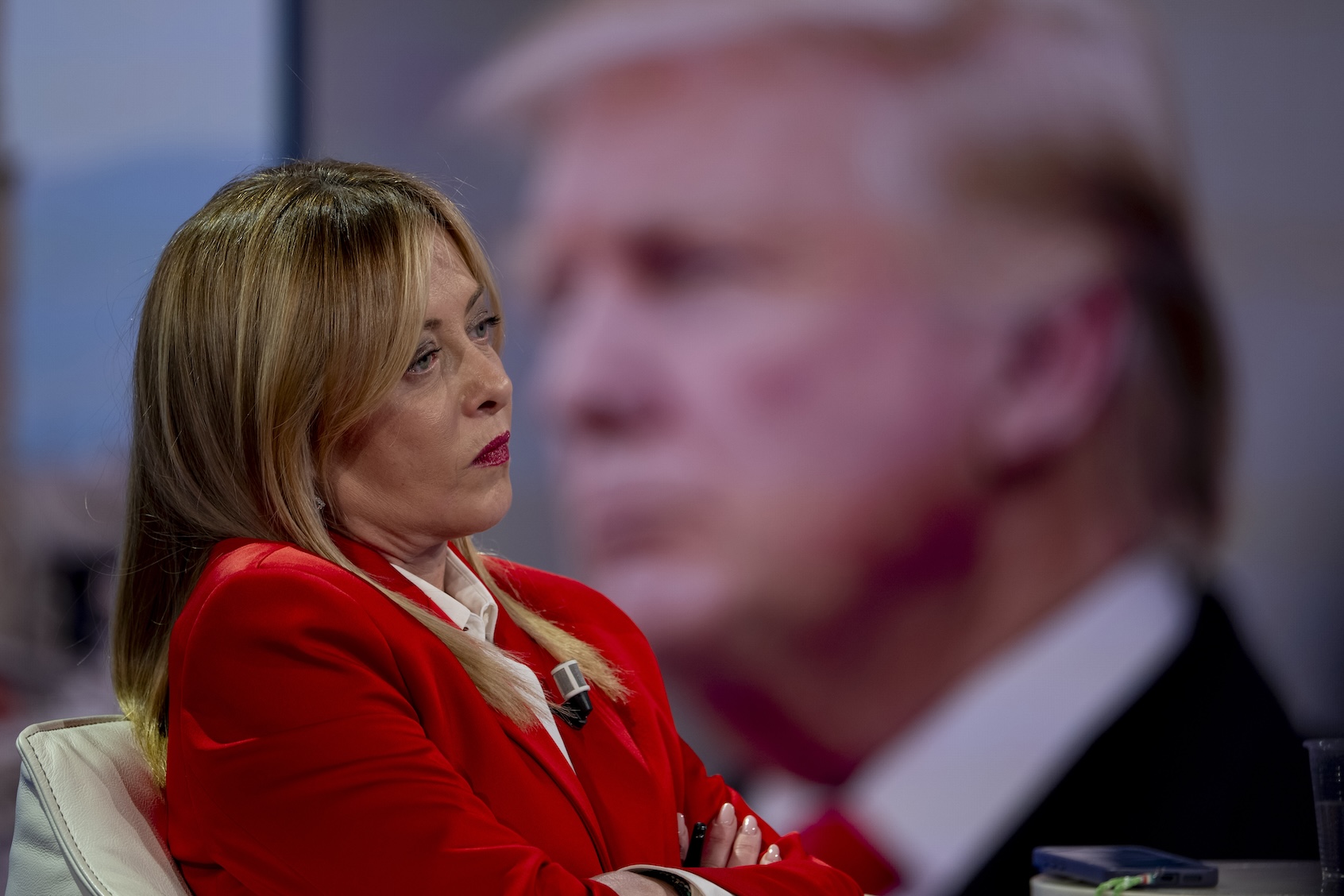
Meloni recently became the longest-serving Italian prime minister since World War II — an extraordinary fact in itself — and over her four years in office has gone from “Trump whisperer” to the evident conclusion that Trump is a “toxic asset,” in Bassets’ phrase. (The “Trump whisperer” label has also been affixed to former British Prime Minister Keir Starmer and current German Chancellor Friedrich Merz, with dire political consequences.)
Even the AfD, despite its aforementioned “cultural affinity” with MAGA and a mutual eagerness to throw Ukraine overboard and make nice with Vladimir Putin, has evidently concluded that glowing endorsements from the likes of Musk, Vance and Rubio are a mixed blessing when the U.S. “has become so unpopular in Europe that being close to Trump is not a source of legitimacy,” in Moïsi’s words. Weidel has reportedly described the Iran war as a “catastrophe” in private meetings, while Björn Höcke, the most inflammatory figure on the AfD’s right flank, has mocked mainstream politicians as “German-speaking Americans” and demanded the withdrawal of U.S. troops from German soil.
All of this points us toward the inescapable conclusion that Donald Trump was never the leader of anything. He was an empty vessel into which hundreds of millions of people in America and around the world poured their confusion, rage and desire. He became a global symbol of the failure of liberal democracy, but was not the reason for it. As he fades from the scene, the global crisis he came to represent is more urgent than ever.
Donald Trump was never the leader of anything. He was an empty vessel into which hundreds of millions of people in America and around the world poured their confusion, rage and desire. He was a global symbol of the failure of liberal democracy, not the reason for it.
As Italian journalist Mattia Ferraresi recently observed in a New York Times panel discussion, “Mainstream liberal politics, in both its left- and right-wing versions, failed to deliver on its promises, not only in terms of welfare and economic growth but also in the more complex realm of identity and meaning.” What we see around the world today, in the ascendant far right and in a newly radicalized generation of young people from Paris to New York, are “expressions of the same disillusionment with liberalism and its policies.”
It has become almost irresistible to compare this era to the 1930s, when “bourgeois democracy” collapsed in Europe, plunging the world into murderous darkness. If the parallels are clear enough, the world is a very different place in this century and the outcome does not have to be the same. The future remains unwritten, and Donald Trump will not be its author.

 Login