❌

Reading view

The dark reasons behind all the Richard Nixon worship

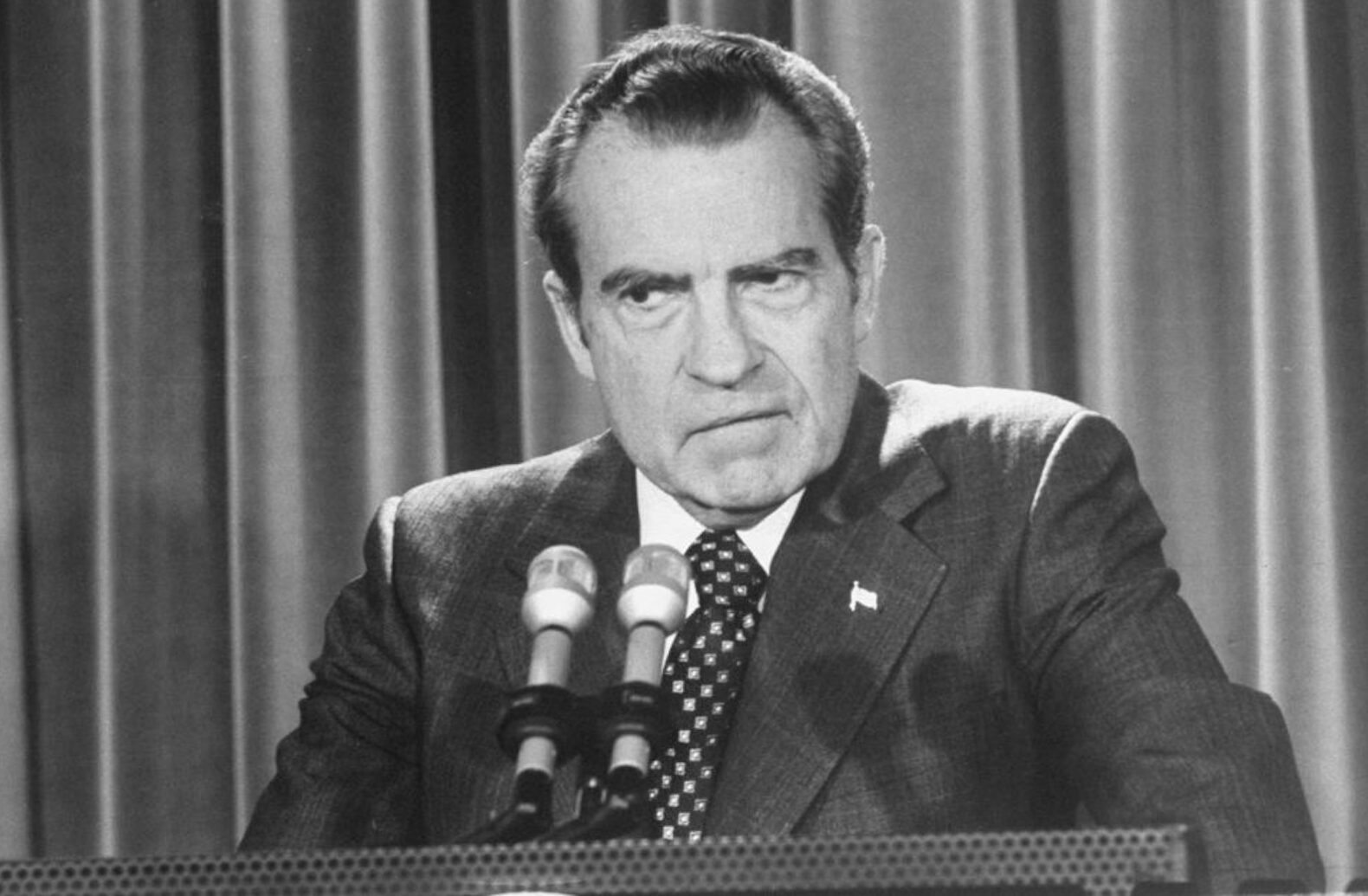
I suppose a Richard Nixon revival was inevitable. After all, the 37th president was the modern model of the corrupt, abusive presidency that is currently being perfected by Donald Trump and his corrupt administration. In fact, much of the legal theory of the unitary executive under which the current administration operates sprang from the bowels of right-wing think tanks smarting from Nixon’s fall from grace. 

Many of the norms, rules and laws that governed the executive branch until Trump and his loyalists systematically threw them in the White House dumpster originated in the aftermath of Watergate, so reimagining Nixon as the first victim of the so-called deep state serves as a perfect rationale for what is happening today. For conservatives, the long-awaited historical payback has finally come.

In July, the Wall Street Journal reported that Nixon is suddenly all the rage among young conservatives who are “Nixonmaxxing” all over social media and sporting merch with sayings like “Nixon now, more than ever” and “Pretty girls for Nixon.” One young fan mused, “Is Nixon pulling off the greatest posthumous political comeback in history?” 

Maybe so. This new interest among the Gen Z crowd is actually a well-designed public relations campaign by The Nixon Foundation, which used social media in 2018 to celebrate the 50th anniversary of his presidency. Short-form videos featuring Nixon saying “I am not a crook” over gangster rap, along with clips from “Mad Men” showing Jon Hamm-as-Don Draper saying, “Kennedy, I see a silver spoon, Nixon, I see myself,” went viral. 

But the fandom is more than just vibes. Podcasters like Joe Rogan and Tucker Carlson have both recently called Watergate a setup, never mind the evidence or admissions by Nixon’s accomplices like H.R. Haldeman in his diary. Even Vice President JD Vance is in on the act, comparing himself to Nixon in June during an event to promote his memoir at the Richard Nixon Presidential Library and Museum: “Young senator, vice president, writes some bestselling books, is hated by the media.” (He’s not wrong.) 

“I’ve always liked Richard Nixon,” Vance said, calling him a political genius. The vice president praised Nixon’s foreign policy acumen, giving him props for the opening of China and the Vietnam peace process, while conveniently leaving out the part about bombing Cambodia. Vance also denigrated the Watergate hearings and investigations that eventually brought Nixon down, saying, “If Watergate happened tomorrow, it would be a 12-hour news story. The idea that it would have taken down a presidency is crazy.”

Nixon didn’t have the right-wing media machinery that now excuses Trump’s criminality and spreads conspiracy theories — like the trope that the “deep state” is out to get the president. That alone has managed to keep the MAGA base and Republican officials on board with Trump.

Sadly, he’s probably right. Nixon didn’t have the right-wing media machinery that now excuses Trump’s criminality and spreads conspiracy theories — like the trope that the “deep state” is out to get the president. That alone has managed to keep the MAGA base and Republican officials on board with Trump, which is why he was acquitted in two impeachment trials during his first term. After all, Nixon didn’t resign until he was told that he had lost his base in the Senate and faced certain conviction and removal from office. That wasn’t the case in February 2021, of course, when the Senate refused to convict Trump for “Incitement of Insurrection.”

But there is also evidence that even Nixon had his limits. Yes, he grossly abused the office of the presidency, treating the executive branch like his private fiefdom. He ordered the FBI and the CIA to commit crimes. He bribed, blackmailed and paid off potential witnesses against him. But he didn’t burn the tapes, and he dutifully turned them over when the Supreme Court ordered him to do so. And although there was that infamous “19-minute gap” on one of the tapes that would have sealed his fate, many of the conversations revealed a profane, corrupt president. 

But even as Nixon’s overall approval rating sank to 24% during the week before his resignation on Aug. 9, 1974, Republicans — 62% of them — still supported him. These were undoubtedly some of the die-hards who eventually began pushing to roll back the reforms that were enacted in Nixon’s wake.

During a post-presidency with British television presenter David Frost, Nixon famously said, “When the president does it, it’s not illegal.” Those words sounded then — and sound now — like an authoritarian gaffe. But in reality, the idea was based on a very real concept popular among right-wing Republicans, who believed that the president should have unfettered power to enact policies to “protect” the nation. 

After that interview, Nixon penned a 2,500-word essay explaining he didn’t believe the president is above the law, but that the nation’s executive must be granted “some faith in his judgment” and given “room for maneuver.” 


Want more sharp takes on politics? Sign up for our free newsletter, Standing Room Only, written by Amanda Marcotte, now also a weekly show on YouTube or wherever you get your podcasts.


“His powers are not unlimited,” Nixon wrote. “But neither can be existing law — in a limited way, and at times of special need — and still meet these larger responsibilities.” Apparently, “special need” could be defined as whatever the president says it is, and therein lies the unlimited power. 

This notion forms much of the logic of the unitary executive theory that has been growing among thinkers on the right for decades, and with court cases beginning in the early 1980s, the presidency has been granted more and more such power. This, of course, culminated in Trump v. United States, the 2024 Supreme Court ruling that gave the president near total immunity from prosecution for anything done in office. (The president had already been granted immunity from civil liability by the Court in Nixon v. Fitzgerald in 1982.) Now, the idea that presidents are above the law is gaining steam with yet another “investigation of the investigation,” this time into the special prosecutors who scrutinized Nixon back in 1974.

The Wall Street Journal reports that the Trump Justice Department is now officially looking into that case based upon the conspiracy theories promulgated by Geoff Shepard, a former Nixon aide turned historical revisionist and conspiracy theorist who presented “a two-hour presentation at Justice Department headquarters called ‘Watergate As Lawfare,’” making the argument that, you guessed it, the deep state took down Richard Nixon.

There’s a method to all this madness, and it’s best illustrated by the fact that Vance is the one leading the charge. Any ambitious Republican official thinking about the future has to find some way to excuse their complicity in Trump’s corrupt — and likely illegal — behavior. If they have any hope of being elected to national office, their only choice is to try to maintain these MAGA fictions and arcane conspiracy theories after Trump is gone by continuing to deny the reality of what he’s done. One way to do that is to convince people that it was never just about Trump; the deep state has been out to get Republicans ever since Nixon.

If they can’t convince people that their complicity was actually righteous resistance to a secret cabal of bureaucrats and dirty cops fighting to keep Republicans from enacting their righteous agenda, then potential GOP presidential candidates like Vance are likely going to have a hard time overcoming what is likely to be a massive revolt against Trumpism once he is out of office. 

We’re seeing the edge of it now — and it’s not just about the price of gas. The air is finally going out of MAGA, and every single Republican politician who took advantage of it will be held accountable by the voters for what they have done. The GOP’s only hope is to find a Republican somewhere who hasn’t been touched by Trump and MAGA. 

Good luck with that.

The post The dark reasons behind all the Richard Nixon worship appeared first on Salon.com.
  •  

After Democrats beat Trump in the midterms, here’s how they finish him

There may only be one person in the world who thinks that a Democratic majority in Congress could actually roll back all of Trumpism in a matter of months. 

That’s Donald Trump.

“We gotta win this election,” he told the audience at a rally in North Carolina on Sept. 16. “If we don’t, all of those things that we got you . . . they’re all gonna go away. All of the things that we’ve done, the strongest border in the history of our country, it’s all gonna go away. If we lose, you’re going to lose your border, you’re going to lose your tax cuts, you’re going to lose your wealth, and our country is going to go through hell, and we’re going to be a laughingstock all over the world, just as we were two years ago.”

It’s almost like he doesn’t know he has a veto.

Back here in the real world, Democrats will likely flip the House in November, and maybe the Senate too. But if they want to have something to show for it two years from now, they’re going to have to find a way to get around Trump’s veto power. 

That will require the kind of aggression — the kind of fight — the current crop of Democratic party leaders has never shown.

Imagine, instead, a Democratic leadership with a to-do list in one hand — starting with a compelling affordability agenda — and a how-to list in the other hand, something like this:

  • No more cowering from veto threats. Democrats should dare Trump to veto popular legislation and make him own the consequences if he does.
  • Demand major concessions from Trump in return for passing a new debt limit and a defense spending bill, and shut down the government if necessary.
  • Drive a wedge between Republican legislators and their increasingly unpopular and irrational leader.
  • No more protecting “centrist” Democrats from tough votes.
  • Tell the lobbyists to take a hike.
  • Impeach Defense Secretary Pete Hegseth for malfeasance.
  • Impeach Office of Management and Budget director Russell Vought for violating congressional spending directives.
  • Order the Capitol Police to arrest and jail administration officials if they refuse to honor congressional subpoenas.

Democrats in leadership and on the campaign trail talk a lot about their lofty legislative goals. But some of those goals are unattainable as long as Trump has the veto — and even more so if Republicans keep the Senate. Democrats need to be thinking and talking about what they can practically achieve — and how. And they need to have a battle plan so they can hit the ground running in January.

I raised questions about how they could do that in a Sept. 2 op-ed for MS NOW. As part of my hunt for answers, I turned to some wise left-leaning Washington veterans for their thoughts.

“This is going to be really tricky business,” Norman Ornstein, the longtime congressional analyst, told me.

“It would require a wholesale change in the DNA of House and Senate Democrats,” said Jim Manley, a political strategist who spent more than 20 years working in the Senate, including six years as spokesman for then-Senate Majority Leader Harry Reid.

Triumphant congressional Democrats “are going to be feeling feisty, they’re going to feel vindicated, and they’re going to feel like fighting like hell,” said Robert Kuttner, who co-founded the Economic Policy Institute and the American Prospect.

“If they aren’t assertive,” Ornstein warned, “they may not hold their majority for very long.” 

Each of these experts, with decades of experience between them, all agreed that whether Democrats control one of both chambers, they need to pass lots of popular bills and make it painful for Trump and Republicans to oppose them. If the legislation becomes law, it’s a huge victory. If it’s blocked, the public will know who to blame. 

“The old playbook says you’ve got to be concerned about the threat of a veto,” Manley said. “Why go through that exercise if it can’t get through the Senate and/or is going to be subject to the president’s veto? You’ve got to husband your resources.” 

“We’ve got to adopt a strategy that you never know until you try. You never know until you apply pressure. You never know until you force a vote.”

But now, he said, “If the president wants to veto it, that’s fine. We’ve got to adopt a strategy that you never know until you try. You never know until you apply pressure. You never know until you force a vote. Trump is incredibly weakened already. He’s going to be even weaker next year. He’s losing juice on Capitol Hill. He’s losing altitude with the American people.”

Democrats are in general agreement about one starting point: an affordability agenda recently outlined by House Democratic leader Hakeem Jeffries. It calls for bringing down the cost of healthcare, groceries, gas and housing. Of those four areas, healthcare is approaching a major crisis, which sets the Democrats up for their first major battle: Restoring the devastating Medicaid cuts in Trump’s “One Big Beautiful Bill” that Republicans in 2025 intentionally postponed until after the 2026 midterms.

“Very few people appreciate the fact — except for the authors of the bill that did it — how much healthcare spending is going to be cut, and how many people are going to be hurt in the next year,” said Manley.

As Ornstein explained, “Medicaid money doesn’t go to the 10 million people who are going to lose their health insurance because they impose these new onerous work and reporting requirements. It goes to the providers.”

Hospitals and nursing homes will lose money and some will close, putting even more pressure on those that remain.

“So first,” Ornstein said, “you’re going to hold hearings pointing out why this is happening, and that it was the Big Beautiful Bill that did it. Two, you are going to pass bills that restore funding. And if Trump vetoes them then you’re going to hold a bunch of hearings on why he is undermining health care in America.”

Legislation to restore Medicaid cuts— and to restore the tax credits for the Affordable Care Act that Trump cut last year, throwing three million people off their insurance plans — “those are the kinds of things that are just very, very popular that are going to be hard for Republicans to oppose,” Kuttner said.

“There will be negotiations,” he said. “And the more Republicans [that] Democrats have siding with them, then the more pressure there is on Trump.”

Fissures are sure to keep growing between Trump and Republicans in Congress, Kuttner said. “If the Republicans have a wipeout in both houses — and it’s increasingly looking like that could well happen — and Trump is in his last two years and is a crazier and crazier lame duck, a lot of the loyalty starts dissipating.”

“It’s not like they’ll suddenly recover backbone or principle,” he said. “This is just a simple calculation of self-interest.”

“Will there be ways to try and exploit that and try and get stuff done?” Manley asked. “It’s possible, yes.”

When it comes to demanding that Trump do — or stop doing — something in particular, Democrats don’t have a lot of leverage. But they’ve got some.

“Trump’s got two things that he needs to do next year,” Manley said. “He needs to figure out a way to fund defense spending, and he needs to be a part of an effort to pass a debt limit increase. Beyond that, he doesn’t really need anything legislatively.”

That gives Democrats two big chances to refuse to go along with the president until their demands are met. “They should go to the mat,” Ornstein said, “and that might include government shutdowns, maybe even having extended government shutdowns.” 

While Manley cautioned that any leverage Democrats earn after the midterms “only goes so far,” he pointed out that “doesn’t mean they can’t try to use it.” Democratic leadership is also going to have to start getting tougher with the caucus, he said. 

Manley pointed out that two conservative Democrats cast the decisive votes on Sept. 1 advancing a Republican legislative package. “I just find that highly objectionable. The leadership’s going to have to figure out a strategy to not have people defect on key votes.”

Manley invoked his own history as a Senate staffer as evidence. “The old Jim — the guy who worked for Harry Reid — always looked out for the caucus as a whole, trying to protect the centrists. I get this. But there’s going to have to be some changes.”

Manley invoked his own history as a Senate staffer as evidence. “The old Jim — the guy who worked for Harry Reid — always looked out for the caucus as a whole, trying to protect the centrists. I get this. But there’s going to have to be some changes.”

Democrats will need to do a better job of resisting lobbyists. “You know, former members — and let’s be honest, there’s going to be former members, former staffers — they’re going to go up to the Hill and they’re going to try and plead with Democrats to cut their clients some slack,” Manley said. “And the leadership and the committee chairs are just simply going to have to say no.”

Oversight will be another important way to put Trump and Republicans on the defensive. Once Democrats have the power to hold hearings and issue subpoenas that comes with being in the majority, there will be “so many incredible opportunities for investigation,” Kuttner said.

There will also be one major obstacle: Ever since 2019, shortly after the midterm elections during his first term that gave Democrats a majority in the House, Trump has simply refused to honor congressional subpoenas.

During Trump’s first administration, Democratic House members voted to issue criminal contempt citations to two Cabinet officials — Attorney General Bill Barr and Commerce Secretary Wilbur Ross — who denied them documents. But it didn’t work: Criminal contempt enforcement is up to the Department of Justice, and with Barr in charge, the department balked.

There is, however, a way Democrats can escalate: They can brush off their “inherent contempt” power, and enforce it themselves.


Want more sharp takes on politics? Sign up for our free newsletter, Standing Room Only, written by Amanda Marcotte, now also a weekly show on YouTube or wherever you get your podcasts.


“How far are you willing to go?” asked Ornstein. “Are you actually going to use your power, set up a little jail in the Capitol, and have the Capitol Police arrest them?” 

Ornstein’s answer: Yes. “I’d like to see that. If people are going to defy Congress, hold them accountable, knowing that this Justice Department won’t do so.”

If they win a majority in the Senate, of course, Democrats will also have the ability to confirm or reject Trump appointees, including judges. “You would hope that they would basically say: ‘no more radical lunatic judges, no more rattle radical lunatic Cabinet members or sub-Cabinet members,’” Ornstein said.

Trump could counter by putting those appointees — or even worse choices — in acting roles. But, as Ornstein put it, “You’re not going to have an opportunity to put in lifetime appointments — and you certainly will not have the opportunity with the Supreme Court.”

Finally, there’s impeachment. On the one hand, launching impeachment proceedings in the House is unlikely to result in removal, which requires a two-thirds vote of the Senate. But they’re great for focusing the public’s attention. 

Ornstein supports the impeachment of some Trump Cabinet members — starting with Hegseth. Republicans are already so terrified of having to take a stand on Hegseth that after renegade Kentucky Rep. Thomas Massie introduced articles of impeachment against him on Sept. 16 and demanded a vote, Speaker Mike Johnson chose to call an early recess instead.

“For the vast majority of Americans who have no clue what horrors have been inflicted upon the country by these monstrous people, you’re going to actually be able to shine a light on them,” Ornstein said. “You can shine a light on what Pete Hagseth has done to get us into this disastrous war, to hollow out the military, to undermine American national security.” 

And, Ornstein said, “I would also, at minimum, make clear that there’s no statute of limitations for this” and that “we can promise you that [he] will be charged in 2029.”

Next on his list would be Health and Human Services Secretary Robert F. Kennedy Jr. and Agriculture Secretary Brooke Collins, which would create yet more heartache for Republicans. “Are you going to side with people undermining food safety, people taking away Alzheimer’s research, and causing measles outbreaks and deaths? Or are you going to do the right thing?” Ornstein said.

If the administration keeps ignoring congressional budget appropriations, Manley said, “then Russell Vought goes to the top of the impeachment list.”

Impeachment hearings also force the media to pay attention. “You’re going to embarrass them and you’re going to highlight the fact that the terrible things happening to people are being caused by the Trump administration,” Ornstein said. “Which, mind you, the press should have been telling them very clearly over the last several years, but they haven’t, and with the hook of the Democrats conducting these hearings, they will.”

Ornstein said the future for a Democratic congressional majority is uncertain. “They’ve made these promises. But they don’t have the power to implement them. They’re on the firing line and people may blame them. And Trump and billionaires will put a lot of money into blaming them for everything bad that happens. And then the question becomes: Are they able to use tough leadership over the power of the purse to bring about some changes? And I don’t know the answer to that.”

The post After Democrats beat Trump in the midterms, here’s how they finish him appeared first on Salon.com.

  •  
❌