❌

Reading view

5 things the EU wants to change about its Arctic policy

BRUSSELS — The European Union is beefing up its presence in the Arctic to catch up with neighboring powers carving new trade lanes and drilling for resources under the melting ice.

On Tuesday, the EU unveiled a new plan called Northern Neighborhood. It’s meant to prepare for rising military and commercial activity in the north driven by climate change, and calls for new transport, research and security infrastructure in the region.

“The Arctic is one place where the tectonic plates of geopolitics are colliding. And it’s not someone else’s frontier. It’s part of the European Union,” Commission President Ursula von der Leyen declared as she unveiled the strategy.

She pointed to Russia’s expanding military footprint and the race for emerging shipping routes and critical resources as forces reshaping Europe’s security and economic future.

Climate change is dramatically affecting the Arctic. Planet-warming emissions are making the ice melt faster, disrupting the region’s fragile ecosystems. But where the ice is disappearing, countries like China, Russia and even Canada see an opportunity.

The EU is now scrambling to update its existing policies on the Arctic — once largely focused on environmental protection — to give more importance to security, shipping and extracting resources.

The strategy calls for a rebranding of the EU’s existing partnerships with Norway, Iceland, Canada and the U.K., backed by regular summits to set joint priorities and launch projects.

Here are five things Brussels wants to change about its Arctic policy.

1. Defense and security 

The strategy warns that Russia is rebuilding its military presence in the Arctic and that China has growing strategic ambitions in the region.

The EU plans to set up a pilot research project using satellite and maritime observation in 2027 and share ship-tracking data to help identify Russian shadow fleet vessels.

In the longer term, it wants EU countries to lead on a maritime security hub to pool intelligence on threats ranging from undersea cable sabotage to illegal fishing. It also calls for setting up an Arctic Cable Hub alongside NATO to monitor and protect subsea cables in the North Atlantic and the Arctic. The strategy lacks any information on funding for these projects, however.

Finnish MEP Mika Aaltola of the European People’s Party said the new focus on the Arctic is long overdue.

“Europe hasn’t been thinking about [the Arctic] enough,” Aaltola said. “Because of the ice melting and climate change, it’s becoming kind of the next great game. And if that happens, then what are the European positions when it comes to Russia, China and also the United States?”

2. Access to energy resources

The new policy sticks with EU promises not to drill for fossil fuels in the Arctic.

“The EU remains committed to ensuring that oil, coal and gas stay in the ground, including in Arctic regions,” it reads. Instead, Brussels promises to develop renewable energy projects in the region but drops an old commitment to convince the rest of the world to follow its lead. 

“It is good that the Commission maintains its opposition to oil and gas drilling in the Arctic,” said Delara Burkhardt, a Socialist MEP, but not pressing for a global ban “weakens the EU’s ability to push for stronger international protection and leaves the door open for other countries to exploit one of the world’s most fragile ecosystems.”

The EU’s former Arctic policy — drafted in 2021 — committed the bloc to pursuing an international moratorium on Arctic oil and gas extraction. 

Norway — which supplies a lot of energy to the EU — has made it clear it would still drill in the Arctic regardless of the bloc’s position.

3. Critical raw materials 

The EU is under pressure to secure new supplies of critical raw materials to reduce its dependency on China.

The new strategy says it will continue working with Canada, Greenland, Norway and the United States to develop critical raw materials projects in the region, but insists it will do so while following the “highest social, environmental and governance standards,” and work to the “benefit of local communities in respect of Indigenous Peoples’ rights.” 

Brussels has already labeled several critical raw materials projects, including the Sokli project in Finland and the Per Geijer rare earth deposit in northern Sweden, as “strategic” under EU law, which means they could benefit from faster permitting procedures.  

But some of these projects face serious local resistance from local and indigenous communities, who say the mining plans threaten reindeer herding and protected ecological sites. 

4. New trade routes

Melting ice is opening up new shipping routes in the far north, and the EU is worried that it could be sidelined from the region. But the strategy offers little on that front; its only action is a study on new shipping lanes.

The number of vessels operating in the area covered by the Polar Code — international regulations covering shipping in the Arctic and Antarctic — rose by 40% between 2013 and 2025, while the total distance sailed nearly doubled, said Michael Kingston, a special adviser on polar issues to the Arctic Council on marine protection.

Recent transits by Chinese and South Korean container ships using the Northern Sea Route running along Russia’s Arctic coast show the appeal of a route that is about 20 days faster than conventional routes, he added. 

“Russia builds the infrastructure, China facilitates and funds some of it,” Aaltola said, calling it part of a “grand bargain” between the two.

He complained that the EU is left on the sidelines. “When it comes to the Arctic, there is a vacuum of interest, and there’s also a vacuum of resources and institutions participating.” 

The route is still mostly seasonal for Russian oil and gas tankers, said Ksenia Vakhrusheva, project manager and Arctic project adviser at the environmental group Bellona. Ice, unpredictable weather, increased insurance costs and Moscow’s control over the route make it unlikely to become a mainstream commercial corridor anytime soon, she added.  

Europe also has leverage as the final customer for Chinese shipments, Vakhrusheva said.

“If the EU sends a strong message to China that they do not want goods shipped via NSR, China won’t use this route for transit,” she said. “For NSR to become a valid transit route you need two sides,” she said, “a seller on one side and a buyer on the other.” 

5. Environmental protection 

The strategy is light on measures to shield the Arctic from the impact of global warming. However, it does warn that increased shipping in an “inherently harsh and poorly charted environment” raises the risk of “catastrophic accidents, severe marine pollution” and hybrid interference.  

“Increased shipping in the Arctic both exploits this vulnerability and exacerbates it,” said Dave Walsh, an adviser at the Clean Arctic Alliance NGO, citing carbon emissions, wastewater discharge and noise as some of the impacts of more traffic.

Safety and the environment have not been a priority for Moscow, said Vakhrusheva, and a shortage of high ice-class ships combined with the need to sell oil and gas “to whoever is ready to buy it” raises the risks. 

Protections such as a ban on heavy fuel oil are still negotiated at the International Maritime Organization, where the EU is a key player, she said, adding that such measures will push up the cost of Arctic shipping. 

The strategy says Brussels will push at the IMO to turn measures to limit black carbon — soot emitted by ships that falls on snow and ice and accelerates melting — from voluntary guidelines into binding rules.

It also calls for expanding the definition of Arctic waters to everything north of 60 degrees latitude, replacing the current boundary, which excludes much of the waters around Iceland and Norway from special Arctic shipping rules.

It also promises to keep pressing for compliance with the Polar Code through tools such as an IMO regulation that involves national maritime authorities inspecting foreign-flagged ships in Arctic ports to verify compliance with international safety, environmental and crew-qualification standards. 

The document includes non-binding commitments on biodiversity loss and plans to boost ocean and Arctic research programs. It also promises to launch an “initiative to promote local public and private investment in the Arctic around blue economy sectors.” 

Jakob Weizman contributed reporting.

  •  

Ryanair’s O’Leary warns of ‘biggest increase’ in EU airfares next year

BRUSSELS — High jet fuel prices could trigger “the biggest increase in airfares, I would say, in history in Europe” next year, Ryanair CEO Michael O’Leary told reporters Tuesday.

If fuel prices remain twice as high as before the U.S. war against Iran, O’Leary warned ticket prices could rise by up to 20%.

Hedging contracts have locked in fuel prices for much of airlines’ consumption so far. This has helped European carriers avoid sharp ticket price increases, despite jet fuel prices more than doubling following disruptions to shipping through the Strait of Hormuz since the war in the Middle East began.

But O’Leary said most European airlines lack significant hedging next year. “As we go out into next year, we’re only 15% hedged at $85 a barrel. Basically, we’re unhedged into the summer of 2027,” O’Leary told POLITICO in an interview ahead of a press conference in Brussels.

Ryanair’s hedging contracts expire in April 2027. “We will still be profitable, although less profitable than currently, if oil prices remain high,” he said.

O’Leary warned that fewer available seats and higher fares could become the new normal as more airlines face financial struggles. “You’re going to see dramatically less capacity this winter and into the summer of 2027.”

Ryanair itself is cutting 20 routes from Belgium this winter as a response to an increase in national aviation taxes, from €2 in 2025 to €7 from January.

The fuel price hike is also intensifying the airline sector’s opposition to EU climate policies, which many carriers argue are adding to their already rising operating costs.

Ryanair had long advocated extending the EU’s Emissions Trading System to all flights to and from the EU, a call O’Leary reiterated on Tuesday.

“It’s indefensible that … Europe’s citizens are paying all these environmental taxes, while the Yanks, the Asians and the Chinese land and take off in Europe completely exempt from their fair share of environmental taxes.” He added that Ryanair would pay €1.5 billion in ETS compliance costs in 2026.

He argued that the ETS should also cover long-haul services operated by European rivals such as Lufthansa and Air France-KLM.

“And why not? Those are the most expensive flights in the world. They’re also the most profitable flights they have, because they’re exempt from Europe’s bullshit environmental taxation,” O’Leary said.

The EU currently applies the ETS to aviation emissions from flights within the European Economic Area, as well as flights to Switzerland and the U.K. The European Commission proposed last summer to extend carbon pricing, starting in 2029, to flights departing the EU for destinations within 5,000 kilometers of Frankfurt Airport, including to North Africa and the Middle East.

The proposal would affect Ryanair’s flights to destinations such as Morocco, while continuing to exempt most long-haul services operated by other airlines to more distant destinations like the U.S. and China.

  •  

Ukraine strikes oil facility in St. Petersburg as part of ‘massive’ drone attack

Ukraine struck an oil terminal in St. Petersburg Sunday morning in what Russian state media called “one of the biggest drone attacks of the year.”

Alexander Beglov, governor of St. Petersburg, said on Telegram Sunday that the city underwent a “massive” overnight attack from Ukrainian drones. “The Ministry of Emergency Situations continues to extinguish fires at the Petersburg Oil Terminal, the Ruchyi oil depot, and industrial warehouses in the Kolpino district,” he said, adding that one person died and several others were injured in the incident.

The drone strikes come as Kyiv and Moscow ramp up attacks on each other’s infrastructure. Ukrainian President Volodymyr Zelenskyy said last week he had ordered the resumption of strikes on Russian oil refineries following a three-day pause after U.S. President Donald Trump declared he had brokered an energy ceasefire between Ukraine and Russia.

Trump repeatedly urged Ukraine to halt its attacks and blamed the country for rising fuel prices — while also calling for Zelenskyy to be replaced as president.

Writing on X Sunday morning, the Ukrainian president highlighted Moscow’s continued attacks on Ukraine. “In total, over this past week, the Russians have attacked Ukraine with almost 2,700 attack drones, 1,700 aerial bombs, and 66 missiles, most of them ballistic,” he wrote, adding that the U.S. “should see that Russia is not taking any reciprocal steps in response to sanctions relief or agreements.”

Separately, Vilnius said that a suspected drone may have self-detonated in Lithuania while on a flight path toward Latvia Sunday morning. A spokesperson for the Lithuanian armed forces said NATO air defense mission fighter jets were scrambled in response to the incident near the Latvian border.

The provenance of the suspected drone is unclear, but Robertas ​Kaunas, Lithuania’s defense minister, said the object was likely a ​drone which had entered the country from Poland, adding that he had proposed a ⁠joint investigation with his Polish counterpart.

Police searches are also underway in eastern Poland after reports of an unidentified object entering the country’s airspace following a Russian attack on Ukraine.

  •  

Scottish government set to drop opposition to new oil and gas fields

ABERDEEN — The SNP-led Scottish government is set to drop its long-standing opposition to new oil and gas exploration in the North Sea.

Two senior members of the Scottish government — granted anonymity to discuss a strategy not yet ready for publication — told POLITICO the government will revise its energy plans to take a more pro-oil and gas exploration position.

Tests on compatibility with the government’s climate targets will remain, but Scotland will no longer begin from a position of opposition to new oil and gas projects. The move marks a major change in the Scottish government’s energy policy.

The Scottish government — led by the SNP since 2007 — released a draft energy strategy in 2023 which set out its “presumption against” new oil and gas fields in the North Sea.

That draft strategy is “out of date,” one senior Scottish government official said. They said a new strategy, expected by the summer, will not contain this wording. A second person with knowledge of the policy said the new strategy will “reflect the world as it is.”

The shift in policy comes with the U.K. government widely expected to give the go-ahead to the Jackdaw gas field next week.

While the Scottish government has little power over the granting of new licenses for projects such as Jackdaw or the Rosebank oil field — where a decision is expected to come separately and at a later date — it has an important symbolic role, and can apply pressure to the U.K. government to approve licenses. 

SNP politicians at the party’s conference in Aberdeen privately admitted the stance on Jackdaw has hurt the party electorally. 

The party passed a resolution at its conference Friday which stated that the “utilisation of domestic production” of oil and gas is “clearly preferable to importation”. This was seen as a further softening of the position of the SNP — which governed in a quasi-coalition with the anti-exploration Scottish Greens until as recently as 2004.

This resolution, which changes the party’s official policy, will be used as the government writes its new energy strategy, the two people quoted above said.

In the summer, the SNP lost a key parliamentary by-election in Aberdeen to the pro-drilling Conservative Party, where their North Sea messaging was a key focus. “It was bruising ,” the official quoted above said. “But we’d been shifting our position for a while.” 

Speaking in the debate at the party’s conference Friday, the defeated SNP candidate in that by-election said the victorious Conservatives had hung the words ‘presumption against’ around “our necks lie an albatross.”

”We need to put to bed any suggestion that our party, or our government, supports a ‘presumption against’,” Richard Thomson said. 

  •  

Von der Leyen floats EU ‘strategic reserves’ for gas amid winter supply fears

BRUSSELS — European Commission President Ursula von der Leyen wants EU leaders to look into the idea of developing bloc-wide strategic gas reserves amid concerns the continent faces a winter shortage, three diplomats and two EU officials told POLITICO.

Europe’s existing gas storage caverns — which are typically refilled over the course of the year by commercial actors — are running at record lows this year after high summer prices linked to the war in Iran undercut market incentives to restock, leaving the bloc underprepared for winter.

While it wasn’t immediately clear to diplomatic officials what form the reserve idea would take, one senior EU official described it as a long-term measure to cushion the bloc against future supply risks, as countries already do with oil and refined products. The Commission president’s comments came at a major summit of European leaders in Brussels on Thursday.

Documents detailing November plans to revamp the bloc’s gas security architecture, seen earlier this year by POLITICO, include plans to encourage better crisis management by companies. However, they stop short of explicitly endorsing strategic reserves that governments would have to fill to a set level to offset supply shortages, regardless of market conditions.

Countries that typically rely on commercial refilling have already been forced to change tack this year as the limits of the existing model became clear. The Netherlands has moved to subsidize energy purchases, costing it almost €1 billion, while Germany is exploring whether to develop its own strategic stockpile.

A separate Commission proposal to set up an EU-wide mechanism to carry out joint energy purchases was received without enthusiasm by EU leaders on Thursday, two diplomats said.

  •  

How Russia plans to revive its ties with Slovakia

BRUSSELS — Slovakia is reviving a dormant cooperation forum with Moscow, putting Russia’s gas and oil supplies, nuclear fuel and the treatment of Russian athletes high on the agenda of their first such meeting in five years, according to a Russian government note obtained by POLITICO.

The note, written by Russian Science and Higher Education Minister Valery Falkov, says Slovak Foreign Minister Juraj Blanár agreed during an Aug. 20 video call to hold a meeting of the Russian-Slovak Intergovernmental Commission in Moscow.

Slovakia’s Prime Minister Robert Fico said Wednesday the meeting is scheduled for Nov. 25. The Russian note — which is dated Sept. 10 — initially set the date of the meeting as Oct. 26-27.

The IGC, which covers economic, scientific and technical cooperation, has been dormant since Russia’s full-scale invasion of Ukraine in February 2022. The last meeting was the commission’s 21st session, held in Bratislava on Nov. 12, 2021.

The meeting comes as Moscow finds openings in other international arenas. The U.S. has invited Vladimir Putin to December’s G20 summit in Miami, while the International Olympic Committee has provisionally lifted its suspension of the Russian Olympic Committee and urged sports bodies to ease restrictions on Russian athletes.

Asked about the purported agenda for the IGC, the Slovak foreign ministry directed POLITICO to Blanár’s public statements after the Aug. 20 call. “We pursue a policy in all directions and maintain dialogue with all countries that are interested in pragmatic cooperation with us for the benefit of the Slovak Republic’s national interests,” Blanár said at the time.

The Russian foreign ministry did not respond to a request for comment.

The renewed push for warmer Slovak-Russian relations follows Fico’s May 9 visit to Moscow, where he met Russia’s President Vladimir Putin during Victory Day commemorations. It comes after Viktor Orbán’s defeat in Hungary’s April election, which cost Putin one of his closest partners in Europe and forced him to look elsewhere for EU allies.

Months before losing the election to Péter Magyar, Orbán rebooted the Russian-Hungarian Intergovernmental Commission on Economic Cooperation, which had been suspended for several years after the 2022 invasion. Magyar’s government did not confirm to POLITICO whether the commission would go ahead next year.

EU leaders, including Fico, will gather in Brussels on Thursday for a two-day summit focused on issues including energy prices and support for Ukraine, with the country’s President Volodymyr Zelenskyy expected to join them for a conversation on Friday.

Oil imports and cultural integration

In the August video call, Blanár raised Slovakia’s opposition to the EU’s phaseout of Russian gas imports and asked to discuss supplies at the Moscow meeting, according to the document, which POLITICO could not independently verify but bears the hallmarks of a legitimate Russian ministerial note. Slovak representatives also stressed the importance of continued Russian oil deliveries through the Druzhba pipeline and welcomed regular shipments of nuclear fuel for Slovak power plants, according to the note.

Slovakia remains heavily reliant on Russian oil and gas, and Fico has argued that ending imports would raise costs. When the two leaders met in Moscow on May 9, Putin said Russia would do everything to meet Slovakia’s energy needs.  

The agenda for the meeting next month reaches beyond energy, according to the document. The sides plan to explore working groups on culture, tourism, agriculture and environmental protection, and to discuss the status of the Russian Center for Science and Culture in Bratislava.

Falkov also records Blanár’s opposition to what the note calls the “discrimination against Russian athletes” at international competitions, noting the issue is to be discussed at the IGC meeting.

The International Olympic Committee lifted the suspension of the Russian Olympic Committee in July and said its previous recommendations restricting Russian athletes’ participation no longer applied. World Archery lifted restrictions on Russian athletes and officials in August. FIFA President Gianni Infantino has also called for Russia to be allowed back into international football.

The approach echoes Moscow’s recent effort to lock in closer ties with Orbán’s Hungary. Budapest and Moscow in December agreed on a 12-point plan to expand cooperation in areas including energy, trade and culture. The plan was signed by then Hungarian Foreign Minister Péter Szijjártó and Russian Health Minister Mikhail Murashko after talks in Moscow in December. The Slovak note points to a similar breadth of ambition.

The Kremlin’s outreach to Fico shows how Moscow can use energy ties to pull individual EU countries away from a united stance on Ukraine. Putin made a similar pitch in Washington last weekend: After a call with the Russian leader, President Donald Trump said Russia would supply diesel to U.S. and global markets to bring down fuel prices. The deal would provide revenue to Moscow while weakening efforts to maintain a united front against the Kremlin.

But there are questions over whether Putin can follow through on his pledge to Trump. Ukraine has been stepping up drone strikes on Russian refineries, aiming to disrupt fuel supplies and cut revenue for Moscow’s war effort. Kyiv said this month that strikes had disabled 51 percent of Russia’s oil-refining capacity.

  •  

How Maroš Šefčovič talked his way to a China trade breakthrough

How Maroš Šefčovič talked his way to a China trade breakthrough

Europe’s trade chief has won a first concession from Beijing. Now he must convince EU leaders that dialogue can deliver more.

By Camille Gijs and Carlo Martuscelli
in Brussels

Illustration by Natália Delgado/POLITICO

When Maroš Šefčovič set out his strategy for engaging with China to European Union ambassadors in July, he had a warning for governments urging tougher action on trade against Beijing.

“Sometimes, it’s even popular to start a trade war, but it’s very difficult to finish it,” the EU trade chief recalled later in an interview with POLITICO.

Three months on, Šefčovič has secured a first breakthrough, reaching a deal in Beijing last week to sharply reduce imports of Chinese hybrid cars. The symbolic win marks a small step toward stabilizing a trading relationship that Brussels believes has reached a dangerous tipping point.

The agreement, which will initially cap imports at 350,000 vehicles a year, marks a significant concession from Beijing, whose carmakers have been flooding the European market with increasingly competitive vehicles. 

For Šefčovič, who negotiated last year’s tariff truce with Donald Trump, the agreement suggests his strategy of engagement backed by the threat of tougher trade measures may be starting to pay off.

Šefčovič agreed to launch the trade dialogue at a meeting with Chinese Commerce Minister Wang Wentao in Brussels in late June.

By focusing initially on cars — an area where the EU has leverage as one of the few major markets still open to Chinese manufacturers — the Slovak commissioner hoped to secure a confidence-building win before tackling thornier questions, from critical raw materials to China’s vast industrial overcapacity.

At the same time, he worked to coalesce European governments behind a parallel effort to strengthen the bloc’s trade defenses, reinforcing his negotiating position with the threat of tougher action to bring down the EU’s €1 billion-a-day trade deficit with China.

The hybrid deal, however, is only the opening move in a much bigger contest.

EU leaders meet in Brussels on Thursday to take stock, weighing the benefits of continued engagement against demands for more aggressive action to protect European industry from a surge in Chinese imports.

The meeting will test whether a commissioner who has made a career of finding compromises with difficult partners can maintain Europe’s support for a strategy whose success is far from assured.

“You have to deal with the same partner across the table,” Šefčovič said of the risks of starting a trade war, in the interview with POLITICO in August. “So if you can avoid this, it would be much better.”

Market power

Šefčovič’s opening move was to focus on an area where Europe still has leverage: access to its market of 450 million people.

China’s fiercely competitive manufacturers have become global powerhouses, but they are struggling with weak demand at home. A prolonged property slump has weighed on consumer spending, while cutthroat competition has triggered price wars. Domestic sales of passenger vehicles fell 28% in September from a year earlier.

That makes overseas markets increasingly important. With the U.S. shutting out Chinese imports, Europe remains one of the most lucrative markets still open to Chinese manufacturers.

Šefčovič gambled that Beijing would prefer to accept limits on exports rather than risk losing access to the European market altogether.

He set his sights on the automotive sector, where Chinese manufacturers have been making rapid inroads. Chinese carmakers accounted for just 2% of both the European hybrid and plug-in hybrid markets in 2024; by the first half of 2026, their respective shares had risen to 14% and 25%, industry figures show.

The Commission was preparing to restrict hybrid imports even without an agreement. But a negotiated settlement also offered Šefčovič something valuable politically: evidence that engagement with Beijing could deliver tangible results.

BYD electric cars in a dealership in Berlin on April 5, 2025. | Sean Gallup/Getty Images

The negotiations were intense, according to a person familiar with the talks on the Chinese side.

“It was very, very tough,” the person said, speaking on condition of anonymity to discuss the closed-door negotiations. “Both sides hadn’t seen such intensity in a long time. No summer break, no holidays. They worked around the clock even one, two days prior to Šefčovič’s trip to Beijing.”

While pursuing dialogue, Brussels also wanted to convince Beijing that it was prepared to take tougher action if the negotiations failed.

Šefčovič had earlier flagged plans for a new “diversification instrument” that would require businesses in critical sectors to source essential inputs from at least three suppliers — a move to reduce China’s ability to exploit Europe’s dependence on its critical raw materials.

Then, just three days before Šefčovič’s trip to Beijing, France and Germany raised the stakes.

President Emmanuel Macron and German Chancellor Friedrich Merz called for a powerful new trade weapon that would allow Brussels to restrict — or even shut off — access to the European market within days for countries deemed to have severely distorted the bloc’s single market.

The proposal did not explicitly name China, but Beijing was its obvious target. 

Keeping it together

EU leaders are expected to welcome the agreement but also press the Commission to act quickly to strengthen the bloc’s trade defenses, according to several diplomats. The understanding reached in Beijing has bought time, but hasn’t settled how far Brussels should go if Chinese exports keep rising or negotiations stall.

“We’re losing thousands of jobs in industry; olive oil and ice cream won’t solve the core issue,” said one EU diplomat after Šefčovič briefed ambassadors on Sunday, referring to reported deliverables from the talks.

A senior German official welcomed the Beijing deal as a first step in the right direction. “It’s a positive sign — which, of course, doesn’t fully solve the problem of the trade deficit with China,” the official said.

But Berlin’s support for a tougher line might prove short-lived.

Alicia García-Herrero, a senior fellow at the Bruegel think tank, argued that Beijing’s concessions had been calculated to assuage Berlin, given the importance of the automotive industry to the German economy.

Production line at the Stellantis multinational car manufacturer’s plant in Poissy, France on April 15, 2026. | Simon Wohlfahrt/AFP via Getty Images

“I’m just hoping Merz doesn’t turn away from the letter he sent to the Commission,” she said. With the German chancellor politically weakened at home, García-Herrero fears he may be reluctant to risk a prolonged confrontation: “I worry Merz will take this quick win and run.”

That leaves Šefčovič facing a balancing act: keeping EU governments on board with continued engagement with China while maintaining a credible threat of tougher action if the talks break down. 

“I expect [leaders] to give the Commission a nod to move ahead with other trade defense measures. China may see this as a betrayal. If that is the case, we could return to conflict very quickly,” said Noah Barkin, a senior adviser at the Rhodium Group’s China practice.

The battle ahead

For Šefčovič, the challenge now is to turn a limited breakthrough on cars into a broader rebalancing of trade with China — while buying Europe time to strengthen its defenses should the negotiations fail.

“There is an argument for doing to China what China had done to Europe for years — bogging Beijing down in dialogue and process while Europe gets its tools in place. But the EU needs to make full use of the time that these talks provide,” said Rhodium’s Barkin. 

The trade chief is expected to hold a video call with Wang in January, before the two meet again next March. Those talks will test whether Beijing is prepared to make further concessions in sectors where European industry is increasingly on the defensive, including chemicals.

Another priority is critical raw materials, where China has agreed to continue issuing export licenses for rare earths. Beijing’s grip on their supply gives it considerable leverage over European manufacturers, underscoring the limits of Šefčovič’s negotiating position.

The Commission is also preparing two proposals for December: the diversification instrument, aimed at reducing dependence on Chinese supplies, and a mechanism to shield European industries and regions from retaliation.

The scale of the challenge is daunting. Chinese hybrid imports were worth €6.7 billion in the first half of 2026, against an EU-China trade deficit of €360 billion last year. The agreement offers some relief to European automakers but does little to address the underlying imbalance.

Brussels hopes the hybrid safeguard can serve as a blueprint for protecting other industries facing a surge in Chinese imports.

“We hear our industry. That includes the chemical industry, the wind industry, the furniture industry. We know where there’s a surge, and we know what hits the hardest in terms of our deindustrialization,” a senior Commission official said on Monday.

Šefčovič acknowledged the limits of dialogue in his August interview, warning that negotiations would become harder to sustain without tangible progress.

“What would be very important is to come back to say there is acknowledgment of the issue and there are already some pilot schemes which we want to test and to see if they are working,” he said.

“But if simply there will be no action, then of course it will be much more difficult for us just to talk about these issues.”

Jordyn Dahl in Brussels and Hans von der Burchard in Berlin contributed reporting. 

  •  

Cheesy Vegan Enchilada Skillet (30 Minutes!)

Cheesy Vegan Enchilada Skillet (30 Minutes!)

Everything you love about enchiladas, minus the fuss! This super flavorful, cheesy vegan enchilada skillet comes together in about 30 minutes with simple methods, minimal dishes, and no need to fill or roll tortillas. 

This easy, nourishing dish features tender cubed sweet potato or winter squash, fiber- & protein-rich black beans, and a rich red enchilada sauce. Everything gets simmered in 1 pan and topped with a melty cashew “cheese” that makes it SUPER satisfying and delicious!

Cheesy Vegan Enchilada Skillet (30 Minutes!) from Minimalist Baker →

  •  

Europe pushes tougher line on Russia in growing split with Trump

WARSAW — European leaders are preparing to demand tougher sanctions on Russia at a summit on Thursday, putting them at odds with Donald Trump just days after the U.S. president struck a deal with Vladimir Putin to ease restrictions on Russian diesel exports.

The leaders plan to call for further sanctions and measures targeting Moscow’s oil revenues at the European Council, according to a recent draft joint statement obtained by POLITICO, as EU governments reject Trump’s claim to have secured an energy ceasefire between Russia and Ukraine.

The disagreement exposes a widening divide over how to bring Moscow to the negotiating table. While Trump is seeking to bring down U.S. fuel prices by allowing more Russian diesel onto global markets, European leaders argue that restricting the Kremlin’s energy revenues remains essential to forcing Putin to end the war.

“Russia is not interested in deescalation, ceasing fire or peace,” Polish Prime Minister Donald Tusk told a security conference in Warsaw on Monday. “That is why I will go to Brussels to ask my partners to consider seriously increasing sanctions against Russia.”

German Chancellor Friedrich Merz also called for further restrictions, pointing to Moscow’s continued attacks on Ukraine’s energy infrastructure despite Trump’s announcement of a ceasefire.

“Russia will only negotiate in good faith under pressure,” Merz said Monday. “Following Moscow’s reckless attacks on Ukraine’s civilian energy supply, we must even tighten [sanctions] further.”

German Chancellor and leader of the Christian Democratic Union (CDU) Friedrich Merz at the two-day retreat of the CDU leadership on Oct. 12, 2026. | Sean Gallup/Getty Images

The push comes after EU foreign ministers on Monday approved the bloc’s largest-ever addition to its Russia sanctions list, targeting more than 1,600 individuals and entities. The European Commission is also preparing a 23rd package of sectoral sanctions, which Kyiv expects to be circulated to EU governments by the end of the year, according to a senior Ukrainian official who was, like others in this article, granted anonymity to speak frankly on the sensitive negotiations.

Other European countries are taking a similar position. Britain and Norway have also pledged to increase pressure on Moscow.

“It’s important to sanction Russia not to finance the war,” Norwegian Defense Minister Tore O. Sandvik told POLITICO, calling for loopholes in existing restrictions to be closed.

Trump’s election calculation

Behind closed doors, many European diplomats see Trump’s abrupt shift toward easing restrictions on Russian energy as driven primarily by domestic political concerns ahead of next month’s U.S. midterm elections.

That is the “broadly held view” among EU officials, according to one senior official.

The president is under mounting pressure over fuel prices, which have surged since the outbreak of the U.S.-Israeli war with Iran. Having promised during his 2024 campaign to bring gasoline prices below $2 a gallon, Trump now faces an electorate paying more than twice that amount, with Republicans at risk of losing control of Congress.

His agreement with Putin is intended to release an additional 4.8 million tons of Russian diesel onto global markets over the coming months, easing pressure on fuel supplies and prices.

But European and Ukrainian officials question whether the additional supply will make a meaningful difference, saying that the total volume promised amounts to only around 10 days of U.S. demand. They feel the deal risks undermining efforts to deprive Moscow of the revenues funding its invasion.

“The reality” is that the additional fuel will have a “minimal” impact on U.S. prices, the senior EU official said.

“This is about the midterms,” a second EU official said. “He said he would bring down prices, but then he decided to go to war with Iran.”

The officials also question whether Putin intends to honor Trump’s purported energy ceasefire. Russia has continued striking Ukrainian energy infrastructure since the announcement, while Kyiv says it was not consulted on the arrangement.

For now, most European officials are reluctant to criticize Trump publicly, despite any doubts about the agreement. The EU and Ukraine should maintain their position over the coming weeks, when the administration’s longer-term intentions toward Kyiv may become clearer, one diplomat said, adding that Trump might even change course again if Putin fails to deliver the promised diesel.

Pressure on Washington

The dispute has also revived European calls for Washington to enforce its own sanctions against Moscow.

Tusk urged Europe and the United States to act together to show Russia they were prepared to impose tougher measures, while EU foreign policy chief Kaja Kallas called on Washington to align its approach with Brussels.

Kallas pointed to sweeping Russia sanctions legislation championed by the late Republican Senator Lindsey Graham, which Trump signed into law last month but has yet to fully implement.

The legislation gives Washington additional tools to target Russia’s energy trade and those helping sustain its war effort. European officials want the administration to use them rather than loosen restrictions on Russian exports.

Some Republicans are also calling for tougher action.

“I think we need to be implementing the Russia sanctions bill,” Republican Representative Dan Crenshaw told the Warsaw conference.

The disagreement is raising wider questions in Europe about its dependence on Washington, particularly amid reports that U.S. officials have threatened to restrict Ukraine’s access to American weapons unless Kyiv stops attacking Russian oil refineries.

There is currently “no sign” Washington is following through on those threats, a NATO official told POLITICO, arguing that restricting sales would also hurt American weapons manufacturers.

“PURL is a good deal for the Americans,” the official said, referring to the NATO initiative under which European allies finance purchases of U.S. weapons for Ukraine.

European Defense Commissioner Andrius Kubilius, without directly addressing the reports, said Europe needed to take “primary responsibility” for its own defense more urgently as Washington reduces its military presence on the Continent.

The immediate test, however, comes on Thursday, when EU leaders will seek to maintain pressure on Moscow even as their most powerful ally moves in the opposite direction.

Victor Jack and Sebastian Starcevic contributed reporting from Brussels, James Angelos contributed reporting from Berlin, Esther Webber contributed reporting from London.

  •  

‘This deal doesn’t help’: Europe slams Trump’s plan to buy Russian diesel

European governments rebuked U.S. President Donald Trump’s plan to import hundreds of thousands of tons of Russian diesel, and vowed to keep isolating Moscow and supporting Ukraine as it heads into a brutal wartime winter.

Trump said over the weekend he would import 300,000 tons of Russian diesel, weeks ahead of U.S. midterm elections in which the Republicans are polling badly and in which energy prices and cost-of-living concerns are expected to play a major role.

But his announcement — which included a claim that Russia and Ukraine had agreed an “energy ceasefire” and a call for Ukrainian President Volodymyr Zelenskyy to step down — drew skepticism and scorn from European capitals and the EU.

“This deal doesn’t help neither the price of oil products nor the unity of the transatlantic community,” Lithuanian Foreign Minister Kęstutis Budrys said at a gathering of the bloc’s foreign ministers on Monday morning, adding “it is not the European way.”

Irish Foreign Minister Helen McEntee called Trump’s announcement of a deal with Moscow “concerning,” while German Minister of State for Europe Gunther Krichbaum said every dollar spent on Russian energy funded the purchase of weapons used against Kyiv.

The EU’s top diplomat, Kaja Kallas, reminded Washington that “Russia has started this war. We should not forget this.”

On Monday, Zelenskyy suggested that Washington had other motives for pursuing an energy agreement with Moscow, arguing that the Russian fuel involved would make little difference to global supplies.

Speaking at the Warsaw Security Forum, Zelenskyy said proposed Russian diesel deliveries were insignificant compared with global monthly consumption of roughly 120 million tons.

“I don’t think that this will have a tangible impact,” Zelenskyy said. “I believe that there are different rationales behind this decision.”

Zelenskyy also suggested Washington should consider an alternative arrangement with Kyiv. “Why doesn’t America then conclude a diesel deal with Ukraine?” he asked. “Let’s propose a diesel deal with Ukraine.”

He also revealed that Kyiv had not been informed beforehand of Trump’s announcement that he had secured an energy ceasefire. “No, we did not know about that,” Zelenskyy said. “We’ve learned that from the media as well.”

On their way into their meeting, the EU’s foreign ministers remained united in their insistence that increasing pressure on Moscow was the only way forward.

“Obviously our position has not changed — pressure on Russia, sanctions, support to Ukraine, Russia’s isolation is the way to peace,” Latvian Foreign Minister Baiba Braže said.

The British Foreign Office’s minister of state Stephen Doughty said London was “not planning to follow suit with” purchasing Russian energy and would ratchet up “economic pressure” on Moscow.

“Pressure, pressure, pressure on Russia,” Lithuania’s Budrys said.

What ceasefire?

Trump’s claim that Ukraine and Russia had agreed to an “energy ceasefire” drew confusion from Kyiv and its allies over the weekend, with Zelenskyy saying the truce and its terms were “news” to him but that he would support it nonetheless — provided Moscow followed suit.

Just hours after Trump’s announcement, however, Russian bombs fell on Ukrainian power plants, causing widespread blackouts.

Kyiv is bracing for its fifth winter since Russia launched its full-scale invasion in February 2022, which Polish Prime Minister Donald Tusk said last month could prove “tragically critical” for Ukraine due to Russia’s near-constant strikes on infrastructure.

At the opening session of the Warsaw Security Forum on Monday, Tusk slammed “anyone who is trying to introduce any symmetries, who suggests it is Ukraine responsible for the war,” saying doing so “gives a valuable present, gift, to the aggressor, to Putin.”

Kallas said any ceasefire shouldn’t “only apply to the refineries, where Ukraine has one and Russia has plenty,” adding that would “definitely [be] in the benefit of the Russians.”

She also called on Washington to join Brussels and London in imposing harsh sanctions on Russia. “Of course the U.S. is our biggest ally,” she said, “but our message is clear: If we want to end this war, the only way we can do this is putting more pressure on Russia.”

Ukraine’s financial needs are set to come up at a meeting of European heads of state and government on Thursday in Brussels. The IMF estimated that Kyiv will face a financing gap of $30 billion to $35 billion next year.

“Ukraine will be front and center at this week’s European Council,” European Commission President Ursula von der Leyen said in a statement Sunday night after a phone call with Zelenskyy, adding the war was entering a “new, grimmer phase.”

Zoya Sheftalovich contributed reporting from Brussels. Nick Vinocur contributed reporting from Warsaw.

  •  

Wie Trumps Ölkrise zur Ukraine-Frage wird

Donald Trump verkündet eine „Energie-Waffenruhe“ zwischen der Ukraine und Russland an. Fraglich allerdings ist, was die beiden Länder davon wirklich wissen. Um den heimischen Druck durch steigende Ölpreise abzufedern, lockert Trump zuvor die Sanktionen gegen Russland. Weil er dafür von Wolodymyr Selenskyj kritisiert wird, fordert er, die Ukraine brauche einen neuen Präsidenten. Währenddessen ringen die EU-Außenminister in Luxemburg um ein neues Sanktionspaket gegen Russland. Hans von der Burchard ordnet zusammen mit Rixa Fürsen ein, wie Europa die russische Schattenflotte stoppen will und welche Konsequenzen der Drohnenangriff von Leipzig wirklich hat.

Im Konrad-Adenauer-Haus herrscht derweil Krisenstimmung bei herbstlichem Wetter. Angesichts verheerender Umfragewerte sucht die CDU-Spitze nach einem Ausweg aus dem Tief. Rasmus Buchsteiner analysiert die Strategie des CDU-Präsidiums, das sich in Klausur befindet, und wie Parteichef Friedrich Merz in seiner Position stabilisiert werden soll.

Im 200-Sekunden-Interview warnt Dennis Radtke, Vorsitzender der Christlich-Demokratischen Arbeitnehmerschaft (CDA), vor einer inhaltlichen Schieflage seiner Partei. Er fordert echte Strukturreformen bei Rente und Gesundheit statt reiner Sparprogramme und erklärt, warum die Union dringend Antworten auf die alltäglichen Sorgen der Menschen finden muss.

Das Berlin Playbook als Podcast gibt es jeden Morgen ab 5 Uhr. Rixa Fürsen, Maximilian Stascheit und das POLITICO-Team liefern Politik zum Hören – kompakt, international, hintergründig.

Für alle Hauptstadt-Profis: Der Berlin Playbook-Newsletter bietet jeden Morgen die wichtigsten Themen und Einordnungen. Jetzt kostenlos abonnieren.

POLITICO Deutschland – ein Angebot der Axel Springer Deutschland GmbH
Axel-Springer-Straße 65, 10888 Berlin
Tel: +49 (30) 2591 0
information@axelspringer.de
Sitz: Amtsgericht Berlin-Charlottenburg, HRB 196159 B
USt-IdNr: DE 214 852 390
Geschäftsführer: Christoph Eck-Schmidt, Carolin Hulshoff Pol, Mathias Sanchez Luna

  •  

Europeans back Zelenskyy after Trump calls for new Ukrainian leader

The United Kingdom, Germany and Poland have reaffirmed their support for Ukrainian President Volodymyr Zelenskyy after U.S. President Donald Trump said the country needed a new leader.

Polish Prime Minister Donald Tusk wrote on X that he was “absolutely convinced” nobody could break Ukraine and its president in their “fight against Russian aggression.”

“I have assured [Zelenskyy] that he can count on Poland’s and Europe’s full solidarity with the Ukrainian nation,” he added.

German Foreign Minister Johann Wadephul also reaffirmed his country’s support for Zelenskyy Sunday, while calling for greater pressure on Moscow to return to peace talks.

“We need continued consistency and clarity on the side of Ukraine,” he told Reuters at a meeting of the governing Christian Democrats.

The show of support comes after Zelenskyy and Trump traded barbs Saturday following Washington’s decision to ease diesel sanctions on Russia. “I think it’s time for Ukraine to get a new president,” Trump told reporters at the White House as he criticized Ukrainian strikes on Russian oil facilities.

On Sunday, the Ukrainian president stated on social media that his country would be prepared to stop attacking Russian oil refineries “if Russia stops striking our energy infrastructure.”

The U.K. also reiterated its support for Kyiv following Trump’s remarks. “We stand with Ukraine. We stand with President Zelenskyy,” British Defense Secretary Wes Streeting told the BBC Sunday morning, adding that Ukrainians alone should decide who leads their country.

Streeting said Russian President Vladimir Putin started the war and could end it, and added that Britain’s priority would be to seek reconciliation between Kyiv and Washington.

On Saturday, British Prime Minister Andy Burnham spoke with Zelenskyy and reiterated Britain’s “complete solidarity,” Downing Street said. Burnham acknowledged that “the last 24 hours had been difficult for Ukraine” and pledged to strengthen sanctions, according to the statement.

  •  

EU countries will release fresh oil stocks only after top agency assessment

BRUSSELS — The EU will only conduct further releases of oil and diesel reserves after the International Energy Agency has made it clear such a move would not be damaging to the bloc’s energy security, three diplomats familiar with the matter told POLITICO.

The Group of Seven — which includes Italy, Japan, Germany the U.K., France and the U.S. — agreed on Friday to release 100 million barrels of oil and diesel after U.S. officials threatened to ban diesel exports if they didn’t tap stockpiles.

However, the IEA appeared to confirm Wednesday that that release would draw from stocks pledged under an agreement in March and not include additional supplies. In other words, it would not amount to a new release at all, but would simply fulfil prior promises.

In a meeting Wednesday afternoon, EU officials endorsed the position, pledging to defer any future drawdowns “pending a clearer IEA assessment of market conditions and security-of-supply risks,” said one of the diplomats. Countries need to know “how low we can go,” said another.

While diesel prices are high as a result of airstrikes on energy infrastructure in Russia and the Middle East, some EU countries warned that releasing stocks now could leave them vulnerable in the event of a supply crisis.

There remain enough untapped stocks among IEA members to satisfy the pledge to release 100 million barrels.

Of the 400 million barrels pledged in March, 325 million have been released, with some countries releasing “greater volumes than they initially pledged,” the IEA said in a statement following an emergency ministerial meeting. That leaves around 100 million left that countries can still release under that agreement, it added.

It said the fresh commitment would represent a “completion” of that March agreement. The IEA’s 32 members include wealthy European, North American and East Asian countries.

POLITICO reported earlier Wednesday that France and Germany — which hold some of Europe’s most significant stockpiles — had signalled they would release no or minimal supplies on top of those already pledged.

It remains unclear what share of the releases non-EU members of the IEA will accept, after Japan, another member, ruled out any further releases.

Further details on the breakdown of the G7 release will be discussed at a meeting of the IEA’s governing board next week, the second diplomat said.

  •  

Trump’s Iran war has economists aghast

America and Israel’s ongoing war against Iran has sunk the global economy so deeply in the mire that economists are now seemingly throwing down their pencils in frustration. On Thursday, for the first time since the start of the conflict, analysts at JPMorgan said they don’t have a baseline view of oil markets. 

“We simply don’t know how to model the endgame,” Natasha Kaneva, head of the company’s global commodities strategy, said in a note. According to CNBC, analysts at JPMorgan assumed there were some economic red lines the U.S. simply would not cross in the conflict, and that President Donald Trump would eventually be forced to reach a deal with Iran. But close to seven months after the war began, most of those red lines — including oil hitting more than $100 a barrel, gasoline nearing $5 a gallon at the pump or 10-year Treasury yields rising above 5% — have already been crossed, and “the exit strategy is less clear, not more,” in Kaneva’s words.

Earlier this month, diesel prices climbed above $6 per gallon in the U.S. for the first time ever, and continues to climb. Costs are expected to rise as winter approaches, a season of peak demand for the fuel. Meanwhile, oil stockpiles continue dropping toward record lows, as highlighted by a new analysis from the S&P Global Energy Fuels and Refining team, which warned “winter is coming for diesel markets.”

Karim Fawaz, executive director at S&P Global Energy, warned in the analysis that “Inventories are low, spare refining capacity is scarce, and seasonal demand is about to strengthen at exactly the wrong moment.” 


Start your day with essential news from Salon.
Sign up for our free morning newsletter, Crash Course.


Maybe it’s bad news when even the economists have quit pretending that everything will be fine. The Iran war continues to be a disaster, yet Trump has refused to stop bombing the Islamic Republic. On Thursday he indicated he might even double down, telling Axios, “I have a big decision coming up. Do I want to go in and annihilate them [the Iranian regime] or do I not? It’s a big decision. Anything could happen with me.”  

Anything but peace, I imagine. The previous day, the president recycled an old line, claiming that the Iranians “want to make a deal.” Given how many times we’ve heard that one before, I’m just not convinced. Economic forecasts for the coming months continue to be grim as fighting in the Middle East intensifies. A drone attack that heavily damaged one of Saudi Arabia’s pipelines is expected to cause crude oil exports to fall by 400,000 barrels per day this month alone. That’s just one of countless reasons why energy prices are predicted to keep spiking. Although more war clearly isn’t helping, Trump is now promising to sell 48 F-35 fighter jets to Saudi Arabia. Just what everyone needs.

Earlier this week, the Pentagon told Congress that the cost of the war has climbed to $42 billion, a bit over the most recent estimates of $38 billion from the Congressional Budget Office. Some experts have estimated the cost to be even higher, such as Linda J. Bilmes, the Daniel Patrick Moynihan senior lecturer in public policy at the Harvard Kennedy School, who told The Hill it could be as much as $100 billion — and that was back in July.

But honestly, who cares about gas prices and grocery bills? The most severe cost in war is always human, and Trump’s aggression in the Middle East has resulted in an estimated 1,800 to 3,800 civilian deaths. The Washington Post reported Friday that the Pentagon is also not disclosing the true number of U.S. soldiers who have died in the war. The Pentagon’s public database cites 18 servicemember deaths, but officials who spoke on the condition of anonymity to discuss the figures, said the true number could be as high as 23, plus three U.S. contractors based in the region have died since Feb. 28. Meanwhile, Yemen’s Iran-backed Houthi rebels have attracted significant attention for their attacks along the Red Sea coast, threatening Saudi Arabia’s oil exports, but less attention is being paid to the more than 100,000 people who have fled the renewed fighting.

On Thursday, the U.N.’s top human rights body reported “reasonable grounds” to believe that the U.S. has committed war crimes in Iran, citing two strikes, including one on a school in the southern city of Minab that killed 150 people, including 120 children. A White House spokesperson responded that the human rights body has “accomplished nothing for human rights while spouting unserious nonsense for decades.” While the focus on bottom lines and costs at the pump is understandable, I don’t need baffled economists to know that Trump’s war is born of absolute insanity.

The post Trump’s Iran war has economists aghast appeared first on Salon.com.

  •  

Easy Eggplant Bolognese (1 Pot!)

Easy Eggplant Bolognese (1 Pot!)

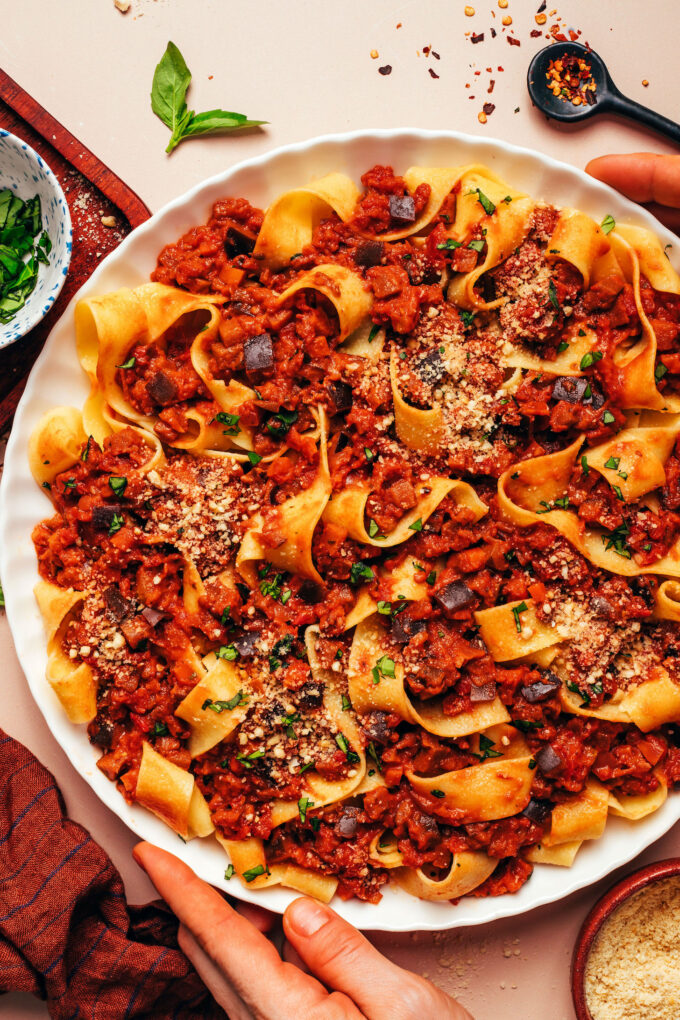
When we add another bolognese to the blog (Yes, we already have versions 1, 2, 3, and 4), you know it’s something special! This newest version is made with EGGPLANT, meaning it’s the perfect bolognese for late summer. It’s light yet satisfying, creamy yet bright, and full of bold Italian-inspired flavor — everyone will be asking for seconds!

Even better? It’s a breeze to make — just 1 pot required!

Easy Eggplant Bolognese (1 Pot!) from Minimalist Baker →

  •  

SUMMER MUSINGS: True audiophile aspirations; recent events in the audiophile culture - end of Atkinson's Stereophile measurements, YouTube influencer legal drama.

Through my years as an audiophile, I've come across articles in magazines and online talking about hobbyist "aspirations". At audio shows, and seemingly each new issue of magazine we read, we're introduced to the latest and greatest piece or gear, the next "must have" item to consider in this never-ending path of upgrade to satisfy luxury consumeristic appetites.Given that it's "Summer Musings"

  •  

Easy Jalapeño Corn Fritters (Vegan)

Easy Jalapeño Corn Fritters (Vegan)

Just when we thought summer’s most perfect veggie couldn’t get any more delicious, corn FRITTERS graced our palettes. These crispy-on-the-outside, tender-on-the-inside, lightly spiced fritters are a must-try appetizer or side!

Not only are they incredibly delicious, but these fritters are vegan, optionally gluten-free, and SO easy to make! Grab your mixing bowl and 10 basic ingredients, and you’ll be enjoying fritters in 30 minutes or less.

Easy Jalapeño Corn Fritters (Vegan) from Minimalist Baker →

  •  

On Envy, "Cope", and just plain Reality in Audiophilia. More GR-Research/Danny Richie drama.

After writing the articles looking at room acoustics over the last month, I thought this would be a good time to discuss another observation about the psychology and culture of the audiophile hobby and some of the claims that people make.As I noted last time, room treatments like the IKEA Mittzon absorption panels are far from the exciting products highlighted in magazines each month or even

  •  

Audiophile Malls Asia: Highsun/Haiyin Plaza - Guangzhou, China. (And thoughts about China and the global order.)

Last time, we talked about Seoul's Yongsan ETLand, so moving along in my Asia trip, let's check out another audiophile mall, this time in Southern China, in the city of Guangzhou. I've been in this city before (as per 2016 post) but not at this exact location, the Highsun/Haiyin (name used interchangeably) Plaza.It looks like in the last 10 years, this place has really become quite concentrated

  •  

Easy Fattoush Salad (1 Bowl!)

Easy Fattoush Salad (1 Bowl!)

Introducing weeknight-friendly fattoush salad! This EASY, 1-bowl, 20-minute version is our inspired take on the classic Levantine dish. Think fresh, crunchy veggies tossed in a bright pomegranate dressing with herby mint leaves, crispy pita chips, and pomegranate arils (major YUM)!

It’s a refreshing side to pair with other Mediterranean- and Middle Eastern-inspired recipes, or toss in some chickpeas to make it a light meal on its own.

Easy Fattoush Salad (1 Bowl!) from Minimalist Baker →

  •  
❌