❌

Reading view

Alina Habba’s $50 million scandal exposes MAGA pardon racket

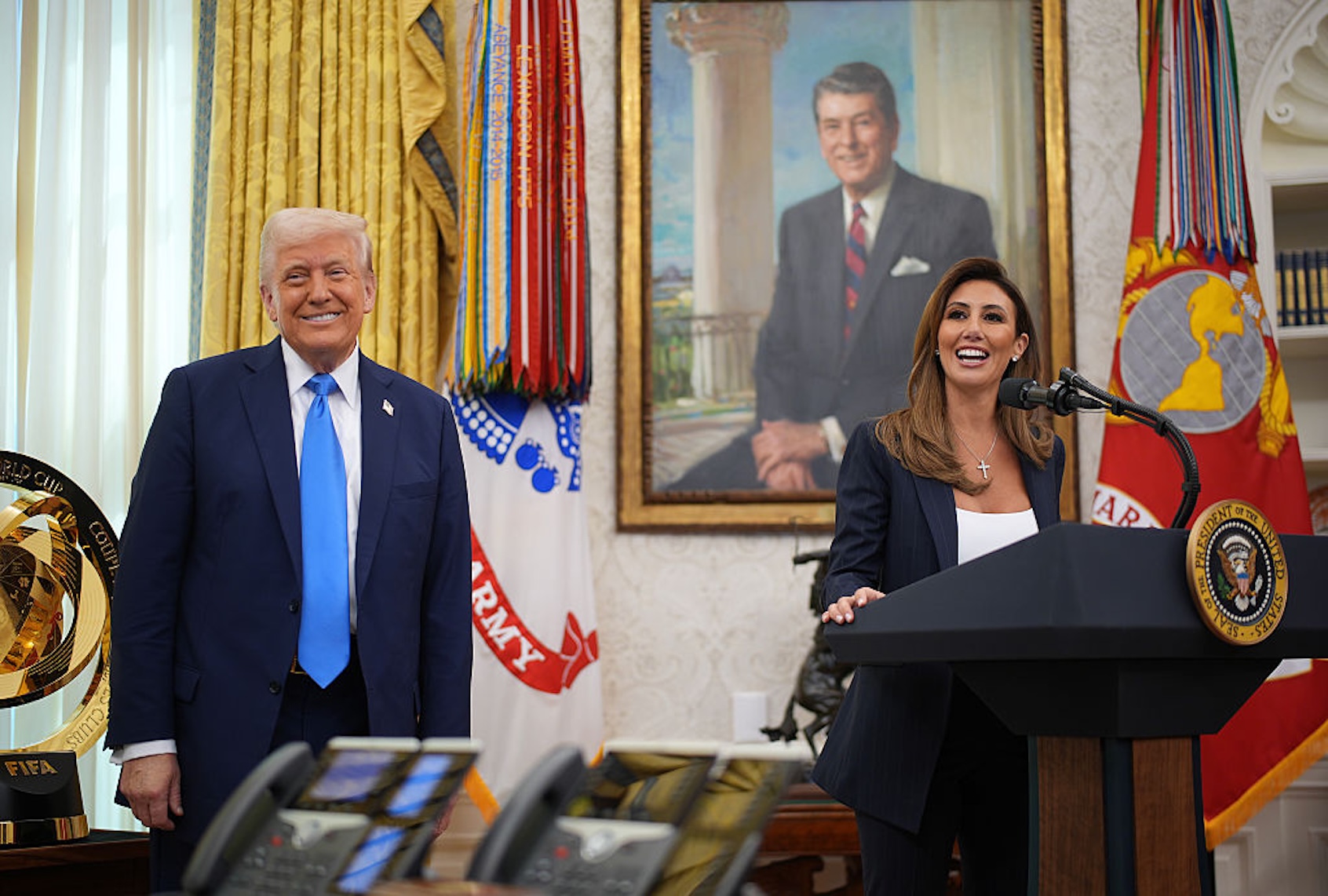
In March, Homeland Security Secretary Kristi Noem was fired after it was revealed she and her assistant, Corey Lewandowski, had been funneling multi-million dollar contracts to a political ally for self-serving TV advertisements. On Oct. 13, Ambassador to Greece Kimberly Guilfoyle resigned under pressure from the administration when it was reported she had shaken down a donor for $100,000 to pay her American Express bill. This week, Alina Habba, Donald Trump’s former personal lawyer and Acting U.S. Attorney for New Jersey, said, “Hold my beer, ladies,” when The New York Times reported she had been given a $50 million personal contract in exchange for securing a presidential pardon. 

Habba is the perfect example of the Trump insider. A graduate of Widener University Commonwealth Law School, she practiced law at her first husband’s firm and served as general counsel for a parking garage company owned by her second husband. A New Jersey local, she caught the president’s eye when she joined his Bedminster Law Firm and soon appeared on Fox News, where she defended him in the way that pleased him. In September 2021, Trump hired her for his legal team. One of her first actions was to file a $100 million lawsuit against The New York Times and Mary Trump, the president’s niece, and take over defending Trump in a defamation case brought by a former contestant of “The Apprentice” after several veteran lawyers withdrew. The Times case was dismissed for “fail[ing] as a matter of constitutional law.” The former contestant dropped hers after Habba countersued her for trying to “stifle Donald Trump’s free speech.”

Habba was part of the team that represented Trump in the fraud case brought by New York Attorney General Letitia James, where the lawyer’s main contribution appeared to be mimicking Trump’s patented mugshot glower before the cameras. She served as lead attorney in the E. Jean Carroll case, during which the judge admonished her repeatedly for her poor legal skills. The case ended up with a jury awarding Carroll $83.3 million in damages. 

But Habba’s most infamous case as the president’s personal lawyer was one brought in the Southern District of Florida in May 2022. Trump sued the Democratic National Committee, Hillary Clinton, John Podesta, Jake Sullivan, Florida Rep. Debbie Wasserman Schultz and others for allegedly perpetrating “a calculated scheme to defraud the news media, law enforcement, and counterintelligence officials for the purpose of proliferating a false narrative of collusion between Trump and Russia.” 

U.S. District Judge Donald M. Middlebrooks was not amused. Four months later, he dismissed the case, saying it was inadequate in all respects. In January 2023 he sanctioned Trump and Habba to the tune of nearly $1 million, writing, “Here, we are confronted with a lawsuit that should never have been filed, which was completely frivolous, both factually and legally, and which was brought in bad faith for an improper purpose.”


Want more sharp takes on politics? Sign up for our free newsletter, Standing Room Only, written by Amanda Marcotte, now also a weekly show on YouTube or wherever you get your podcasts.


Naturally, Trump appealed, but the 11th U.S. Circuit Court of Appeals upheld the ruling. Earlier this month, the sorest loser appealed the case to the Supreme Court. 

Habba’s record as the president’s personal attorney speaks for itself. She didn’t fail up as spectacularly as U.S. Circuit Judge Emil Bove and Attorney General Todd Blanche, but Trump did bring her into the White House as counselor to the president and later nominated her to be the U.S. Attorney for the District of New Jersey. 

As interim U.S. attorney, Habba immediately began to cause chaos. Like Noem, she cosplayed as U.S. Marshal and announced she would pursue political prosecutions of prominent New Jersey Democrats, including the governor. A panel of judges, following the law, refused to allow Habba to serve in an interim capacity, forcing Trump to withdraw her name from consideration for the job, designating her acting U.S. attorney instead. Eventually, the U.S. Court of Appeals for the Third Circuit found that Habba was not lawfully appointed to that post as well, disqualifying her from the position.

She was then hired to a post clearly made up on the fly, pending a reversal of the opinion, in which case she would be reappointed as U.S. Attorney. That never came about, and at least according to what we learned from the explosive New York Times report, Habba had other plans anyway. 

As it happens, right around that time a Venezuelan billionaire banker named Julio Herrera Velutini wanted a pardon. He had already been given a very generous deal by Trump’s Justice Department, which had reduced felony bribery charges to a misdemeanor, but he wanted his record cleared completely. He hired Christopher Kice, another of Trump’s former personal lawyers, to help him grease the skids. To sweeten the pot, Herrera’s daughter, who holds U.S. citizenship, had contributed $3.5 million to Trump’s super PAC. But by fall 2025, nothing had happened, so the Herrera family decided to hire someone with a little more juice. They tapped Habba, who was still working at the Justice Department, and allegedly offered her $10 million a year for four years and at least $10 million in bonuses. 

They created a company, Concord Partners, which has no known business dealings, and in January 2026 Habba signed on as its general counsel. Days after she took the position, Trump granted Herrera the pardon.

This is the most egregious case involving the sale of pardons under Trump that we’ve heard about . . . The grift has become so blatant that the public has finally started to notice — and they don’t like what they see.

This is the most egregious case involving the sale of pardons under Trump that we’ve heard about. According to various reports, procuring presidential pardons has apparently become a cottage industry among many MAGA insiders, who are becoming wealthy trading on their access to Trump. For his part, the president appears to be handing them out to Republicans like Hershey bars on Halloween. The grift has become so blatant that the public has finally started to notice — and they don’t like what they see.

Habba apparently hasn’t yet collected her fee, and this revelation may just end up depriving her of most of it. But she needn’t worry. She just married a much younger Turkish billionaire named Turhan Mildon in a reported $10 million wedding attended by fellow Trump officials including Blanche, FBI Director Kash Patel and civil rights division head Harmeet Dhillon. Habba has no financial worries, and there will almost certainly be no legal ramifications for this flagrant conflict of interest and pay-to-play scheme. 

But she is embroiled in yet another convoluted scandal involving her new husband, in which he supposedly sent $17 million to Richard Grenell, Trump’s former adviser to Venezuela who currently serves as director of the embattled John F. Kennedy Center for the Performing Arts. This donation, later determined to have actually been sent from the Republic of Congo, where Mildon has many business dealings, went to a Texas defense contractor. Habba is alleging that the portion meant for the Kennedy Center — an obvious sop to Trump after he took it over — never made it. 

The full contours of this dispute are not yet clear, and Grenell has denied any knowledge of the matter. But never fear: The White House is on it. Trump assigned Will Scharf, the White House counsel, to look into the matter, and no doubt Habba was pleased. After all, Scharf was one of the honored guests at her wedding. It’s nice to keep it all in the family.

The post Alina Habba’s $50 million scandal exposes MAGA pardon racket appeared first on Salon.com.
  •  

Democrats have discovered the key to midterm victory

Former Speaker of the House Nancy Pelosi always said that the only way for Democrats to win elections was to focus on the proverbial “kitchen table issues.” As the leader of the caucus for 20 years, she had quite a track record, presiding over quite a few big wins and many small ones, so she knew what she was talking about. According to her way of thinking, people are motivated to vote over concerns about their own material well-being, and in recent years, this has meant healthcare, job security and the cost of living — the basics.

Republicans, by contrast, tend to rely on a broader appeal to security in general. “Law and order” has been their bumper sticker, covering a wide range of free-floating anxieties in American society having to do with cultural changes, race and the loss of status of straight white males. Their answer to economic stress comes down to blaming the bogeyman of the day, whether it’s immigrants or the deficit, and the answer is always tax cuts and more tax cuts. 

Democrats have usually been trusted more on the kitchen-table issues, depending on whether they happen to be in office when some kind of economic crisis hits. Jimmy Carter paid a high price, losing his 1980 re-election bid after having inherited crippling stagflation from his GOP predecessors, and was hit with a big recession as a result of the Federal Reserve policies — which he supported — to break it. His successor, Ronald Reagan, reaped the benefit, a common consequence of painful Democratic policies necessarily deployed to clean up a Republican administration’s economic mess.

The GOP enjoyed 12 years in the White House after Carter’s loss, including a big boom which inevitably turned into a recession and helped ensure Bill Clinton’s victory over George H.W. Bush in the 1992 election. Clinton presided over an economic boom that saved his presidency, which was otherwise dogged by scandals largely perpetrated by the GOP’s final evolution from the party of mainline Protestants and main street business owners to one of ruthless street-fighters.

Economics, of course, aren’t the only issue that motivates voters. While more abstract notions of foreign policy and national security are rarely at the top of the agenda, war certainly can be. George W. Bush learned this in 2006, when the American people finally realized the Iraq war was a disaster. But something else was looming on the horizon. Bush had also made the fatal mistake of trying to privatize Social Security, breaking whatever trust people had in Republicans to safeguard their hard-won benefits. The Democrats won the midterm election in a rout.

Two years later, Barack Obama was hit with a double whammy. The war in Iraq was still the top issue, but at the height of his campaign against Arizona Sen. John McCain, the Republican nominee, the bottom fell out of the housing market and the world suffered the worst financial crisis since the Great Depression. At the same time, the healthcare crisis had reached a crescendo, with millions of people going bankrupt, and many suffering and dying due to the high price of insurance. After his win, those kitchen-table issues were front and center in shaping Obama’s presidency. In fact, two years into his first term, as the Great Recession continued to drag on, the American people let out the equivalent of a political primal scream and gave Democrats what Obama famously admitted was a “shellacking” in the 2010 midterms. Perversely, this was largely caused by the passage of the Affordable Care Act, the party’s healthcare plan, underscoring that no good deed goes unpunished.


Want more sharp takes on politics? Sign up for our free newsletter, Standing Room Only, written by Amanda Marcotte, now also a weekly show on YouTube or wherever you get your podcasts.


Then came Donald Trump. When he announced his candidacy for president in 2015, the economy was on the upswing, and just enough people were gulled by his phony reputation as a great businessman and promises to make everyone rich that he eked out an Electoral College win. Once in office, Trump basically just rode the recovery that was already underway and took credit for it. When the Covid-19 pandemic hit and his incompetence fully manifested itself, voters turned against him. If there was ever a kitchen-table issue, the pandemic was it: We were all stuck sitting around the table for months, wondering if the world was ever going to be the same. Trump failed to rise to the occasion.

But he was elected again after Joe Biden presided over the pandemic’s economic recovery, which was painful, ushering in inflation for the first time in decades to a chunk of a population that had never experienced it. The issue did him — and his vice president, Kamala Harris, who replaced him on the ticket — in, returning Trump to the White House on the promise that he would restore the economy to the alleged golden age of his first term. Unfortunately for America and the world, enough people bought into Trump’s chicanery once again, and here we are today in a crisis of chaos, mistrust, incompetence and despair over the radical policies wrought by a second Trump administration. 

Kitchen-table issues are still at the top of most voters’ lists. The cost of living remains high and keeps climbing. Housing is out of control, and gas prices are through the roof due to Trump’s war of choice with Iran. His much-ballyhooed tariffs have helped keep inflation high, and there is now little doubt what is driving the polls showing that Republicans are about to take a drubbing in the November midterms. 

But the concept of kitchen-table issues has its limits. Not everything in life is actually about money, and people’s perceptions of the economy are often colored by other issues that don’t appear at first glance to be directly related.

But the concept of kitchen-table issues has its limits. Not everything in life is actually about money, and people’s perceptions of the economy are often colored by other issues that don’t appear at first glance to be directly related. Bush’s losses in 2006, for instance, were affected by his mishandling of Hurricane Katrina and the Iraq War, both of which contributed to a sense that the administration suffered from hubris and incompetence. There is little doubt that the backlash against Obama during his first term was also driven by the recoil on the right to his identity as the first Black president. Trump likewise benefited from the fact that misogyny and racism were in play in his victories over the first two women to win the nominations of a major party.

The problem is that Democrats have too often relied solely on the kitchen-table issue agenda and failed to address underlying anxieties that contribute to their distress. And with Donald Trump, they are legion. 

The unrelenting pandemonium of his presidency, from his brutal immigration crackdown to the flagrant corruption and degeneration of the president himself, as manifested in his obsession with gold and the building of personal monuments in a time of economic stress, is making the public depressed and angry. The fact that Trump broke one of his fundamental promises to not get the country into a war, as he whines constantly about being denied the Nobel Peace Prize, is maddening. His ongoing disregard of the rule of law and the assault on the democratic process are obvious. The disconnect between what average Americans are feeling and the way their leaders are behaving is a mile wide.

People have been yearning for a holistic explanation for this chaos and confusion — and Democrats have finally found a way to express it. As POLITICO recently noted, Sen. Jon Ossoff of Georgia, along with Senate candidates Dr. Abdul El-Sayed of Michigan and James Talarico of Texas, as different as they are individually, are “leaning hard into anti-corruption messaging in the final weeks of the campaign as new research suggests that linking corruption to Americans’ economic struggles can boost Democrats into the home stretch.”

The corruption argument is compelling. Beyond the hated war in Iran (and its resulting gas prices), Trump’s son-in-law Jared Kushner and old friend Steve Witkoff’s deals in the Middle East have come under scrutiny and outrage, as have the government contracts being handed out to companies in which Trump’s sons are invested. Pardons are being sold to anyone with enough cash, some of them to people convicted of healthcare fraud, even as the Republicans are cutting Medicaid and healthcare subsidies. Contrary to his blarney, Trump’s Louis XIV-style monuments to himself are being largely paid for by the taxpayers. On top of all that, there are the reports that Trump has made $2 billion since returning to the White House, a figure that is excessive, even for him. 

The shameless grifting is too obvious for voters to overlook, and the Democrats have finally realized that the critique of Trump and MAGA Republicans must go beyond the kitchen table because it is all connected. The chaos, incompetence, deceit and self-dealing are at the heart of America’s distress, and it’s benefiting Trump and his cronies at the expense of average taxpayers. 

Distilling all this into a media-ready indictment, a soundbite, is difficult, but “Washington is rigged to benefit the wealthy at the expense of everyday Americans” is about as good as it gets. Let’s hope Democrats can carry this message of reform past Election Day and actually do something about it.

The post Democrats have discovered the key to midterm victory appeared first on Salon.com.

  •  

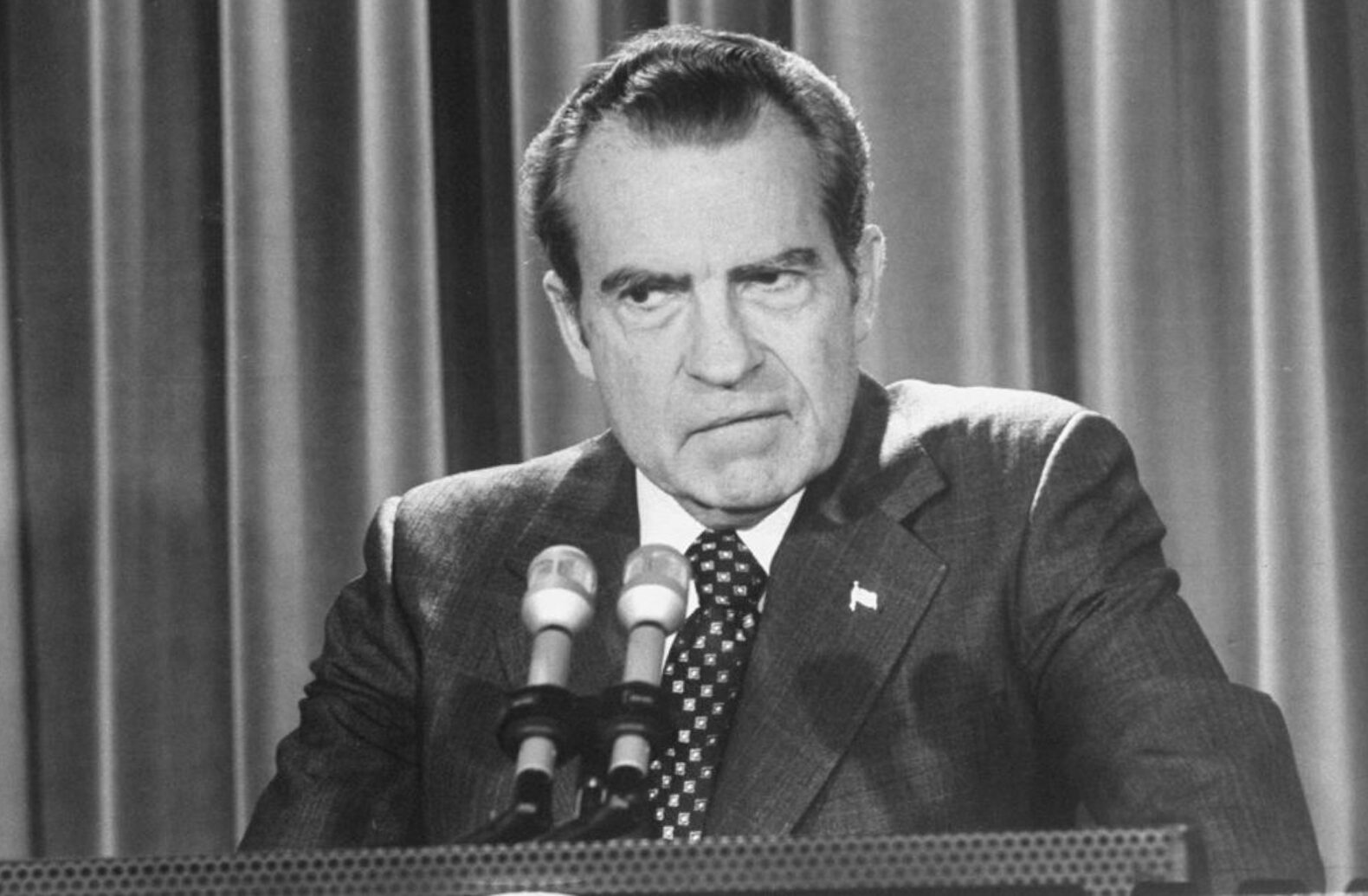
The dark reasons behind all the Richard Nixon worship

I suppose a Richard Nixon revival was inevitable. After all, the 37th president was the modern model of the corrupt, abusive presidency that is currently being perfected by Donald Trump and his corrupt administration. In fact, much of the legal theory of the unitary executive under which the current administration operates sprang from the bowels of right-wing think tanks smarting from Nixon’s fall from grace. 

Many of the norms, rules and laws that governed the executive branch until Trump and his loyalists systematically threw them in the White House dumpster originated in the aftermath of Watergate, so reimagining Nixon as the first victim of the so-called deep state serves as a perfect rationale for what is happening today. For conservatives, the long-awaited historical payback has finally come.

In July, the Wall Street Journal reported that Nixon is suddenly all the rage among young conservatives who are “Nixonmaxxing” all over social media and sporting merch with sayings like “Nixon now, more than ever” and “Pretty girls for Nixon.” One young fan mused, “Is Nixon pulling off the greatest posthumous political comeback in history?” 

Maybe so. This new interest among the Gen Z crowd is actually a well-designed public relations campaign by The Nixon Foundation, which used social media in 2018 to celebrate the 50th anniversary of his presidency. Short-form videos featuring Nixon saying “I am not a crook” over gangster rap, along with clips from “Mad Men” showing Jon Hamm-as-Don Draper saying, “Kennedy, I see a silver spoon, Nixon, I see myself,” went viral. 

But the fandom is more than just vibes. Podcasters like Joe Rogan and Tucker Carlson have both recently called Watergate a setup, never mind the evidence or admissions by Nixon’s accomplices like H.R. Haldeman in his diary. Even Vice President JD Vance is in on the act, comparing himself to Nixon in June during an event to promote his memoir at the Richard Nixon Presidential Library and Museum: “Young senator, vice president, writes some bestselling books, is hated by the media.” (He’s not wrong.) 

“I’ve always liked Richard Nixon,” Vance said, calling him a political genius. The vice president praised Nixon’s foreign policy acumen, giving him props for the opening of China and the Vietnam peace process, while conveniently leaving out the part about bombing Cambodia. Vance also denigrated the Watergate hearings and investigations that eventually brought Nixon down, saying, “If Watergate happened tomorrow, it would be a 12-hour news story. The idea that it would have taken down a presidency is crazy.”

Nixon didn’t have the right-wing media machinery that now excuses Trump’s criminality and spreads conspiracy theories — like the trope that the “deep state” is out to get the president. That alone has managed to keep the MAGA base and Republican officials on board with Trump.

Sadly, he’s probably right. Nixon didn’t have the right-wing media machinery that now excuses Trump’s criminality and spreads conspiracy theories — like the trope that the “deep state” is out to get the president. That alone has managed to keep the MAGA base and Republican officials on board with Trump, which is why he was acquitted in two impeachment trials during his first term. After all, Nixon didn’t resign until he was told that he had lost his base in the Senate and faced certain conviction and removal from office. That wasn’t the case in February 2021, of course, when the Senate refused to convict Trump for “Incitement of Insurrection.”

But there is also evidence that even Nixon had his limits. Yes, he grossly abused the office of the presidency, treating the executive branch like his private fiefdom. He ordered the FBI and the CIA to commit crimes. He bribed, blackmailed and paid off potential witnesses against him. But he didn’t burn the tapes, and he dutifully turned them over when the Supreme Court ordered him to do so. And although there was that infamous “19-minute gap” on one of the tapes that would have sealed his fate, many of the conversations revealed a profane, corrupt president. 

But even as Nixon’s overall approval rating sank to 24% during the week before his resignation on Aug. 9, 1974, Republicans — 62% of them — still supported him. These were undoubtedly some of the die-hards who eventually began pushing to roll back the reforms that were enacted in Nixon’s wake.

During a post-presidency with British television presenter David Frost, Nixon famously said, “When the president does it, it’s not illegal.” Those words sounded then — and sound now — like an authoritarian gaffe. But in reality, the idea was based on a very real concept popular among right-wing Republicans, who believed that the president should have unfettered power to enact policies to “protect” the nation. 

After that interview, Nixon penned a 2,500-word essay explaining he didn’t believe the president is above the law, but that the nation’s executive must be granted “some faith in his judgment” and given “room for maneuver.” 


Want more sharp takes on politics? Sign up for our free newsletter, Standing Room Only, written by Amanda Marcotte, now also a weekly show on YouTube or wherever you get your podcasts.


“His powers are not unlimited,” Nixon wrote. “But neither can be existing law — in a limited way, and at times of special need — and still meet these larger responsibilities.” Apparently, “special need” could be defined as whatever the president says it is, and therein lies the unlimited power. 

This notion forms much of the logic of the unitary executive theory that has been growing among thinkers on the right for decades, and with court cases beginning in the early 1980s, the presidency has been granted more and more such power. This, of course, culminated in Trump v. United States, the 2024 Supreme Court ruling that gave the president near total immunity from prosecution for anything done in office. (The president had already been granted immunity from civil liability by the Court in Nixon v. Fitzgerald in 1982.) Now, the idea that presidents are above the law is gaining steam with yet another “investigation of the investigation,” this time into the special prosecutors who scrutinized Nixon back in 1974.

The Wall Street Journal reports that the Trump Justice Department is now officially looking into that case based upon the conspiracy theories promulgated by Geoff Shepard, a former Nixon aide turned historical revisionist and conspiracy theorist who presented “a two-hour presentation at Justice Department headquarters called ‘Watergate As Lawfare,’” making the argument that, you guessed it, the deep state took down Richard Nixon.

There’s a method to all this madness, and it’s best illustrated by the fact that Vance is the one leading the charge. Any ambitious Republican official thinking about the future has to find some way to excuse their complicity in Trump’s corrupt — and likely illegal — behavior. If they have any hope of being elected to national office, their only choice is to try to maintain these MAGA fictions and arcane conspiracy theories after Trump is gone by continuing to deny the reality of what he’s done. One way to do that is to convince people that it was never just about Trump; the deep state has been out to get Republicans ever since Nixon.

If they can’t convince people that their complicity was actually righteous resistance to a secret cabal of bureaucrats and dirty cops fighting to keep Republicans from enacting their righteous agenda, then potential GOP presidential candidates like Vance are likely going to have a hard time overcoming what is likely to be a massive revolt against Trumpism once he is out of office. 

We’re seeing the edge of it now — and it’s not just about the price of gas. The air is finally going out of MAGA, and every single Republican politician who took advantage of it will be held accountable by the voters for what they have done. The GOP’s only hope is to find a Republican somewhere who hasn’t been touched by Trump and MAGA. 

Good luck with that.

The post The dark reasons behind all the Richard Nixon worship appeared first on Salon.com.

  •  
❌