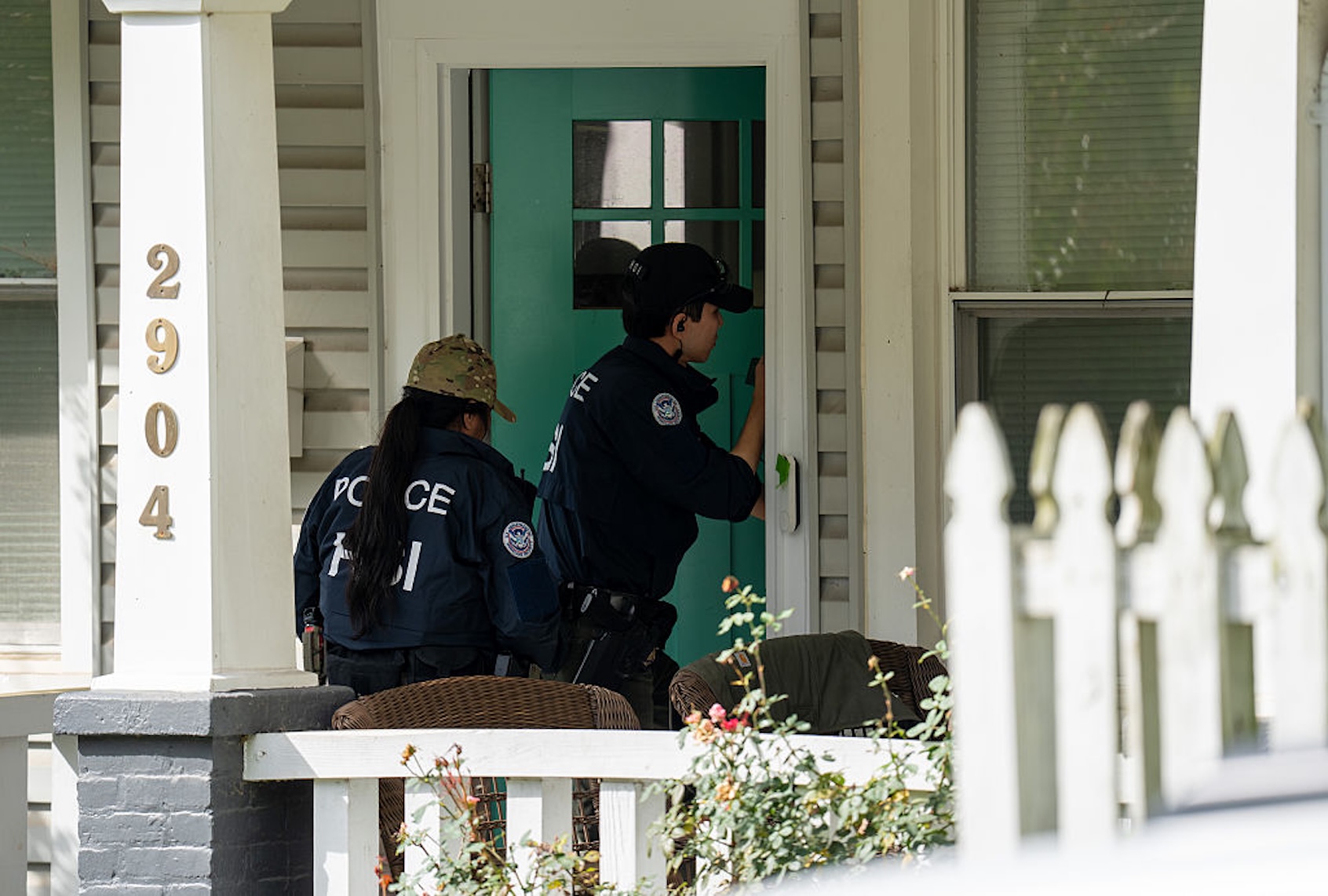
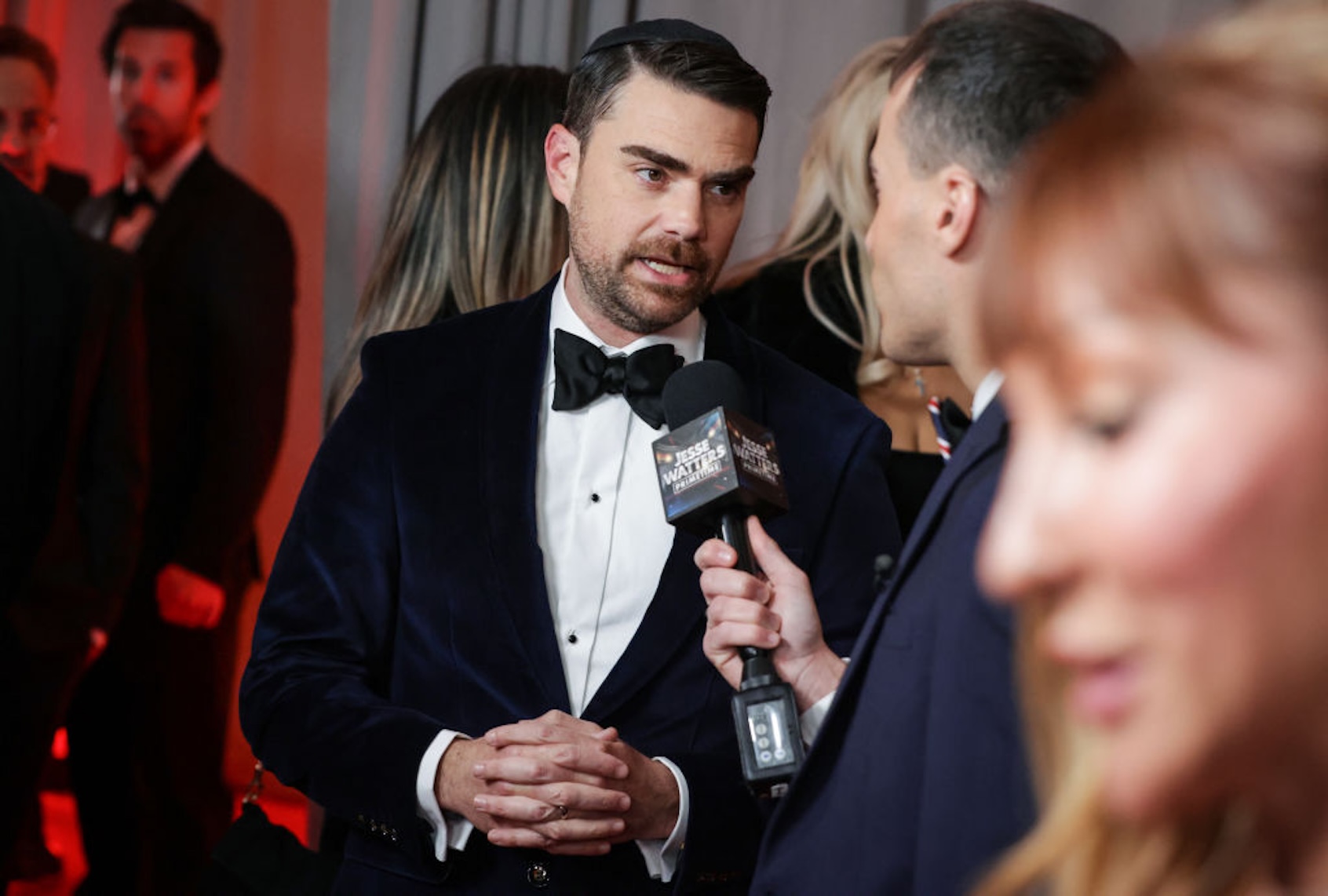
In 2020, Maricopa County became the epicenter for Trump’s claims the election was stolen. Six years, later the president and his allies are dusting off their “rigged” playbook ahead of the midterms.
BRUSSELS — Preparations are underway to hold a March 2027 meeting of EU leaders in Rome, before Italian elections due next year.
“Preparations in view of holding the March 2027 EUCO in Rome are ongoing,” an EU official, granted anonymity to speak about the plan, confirmed on Monday.
The plan, first reported by Italian newspaper La Stampa, would see EU leaders gather in the Italian capital to mark the 70th anniversary of the signing of the Treaties of Rome in 1957.
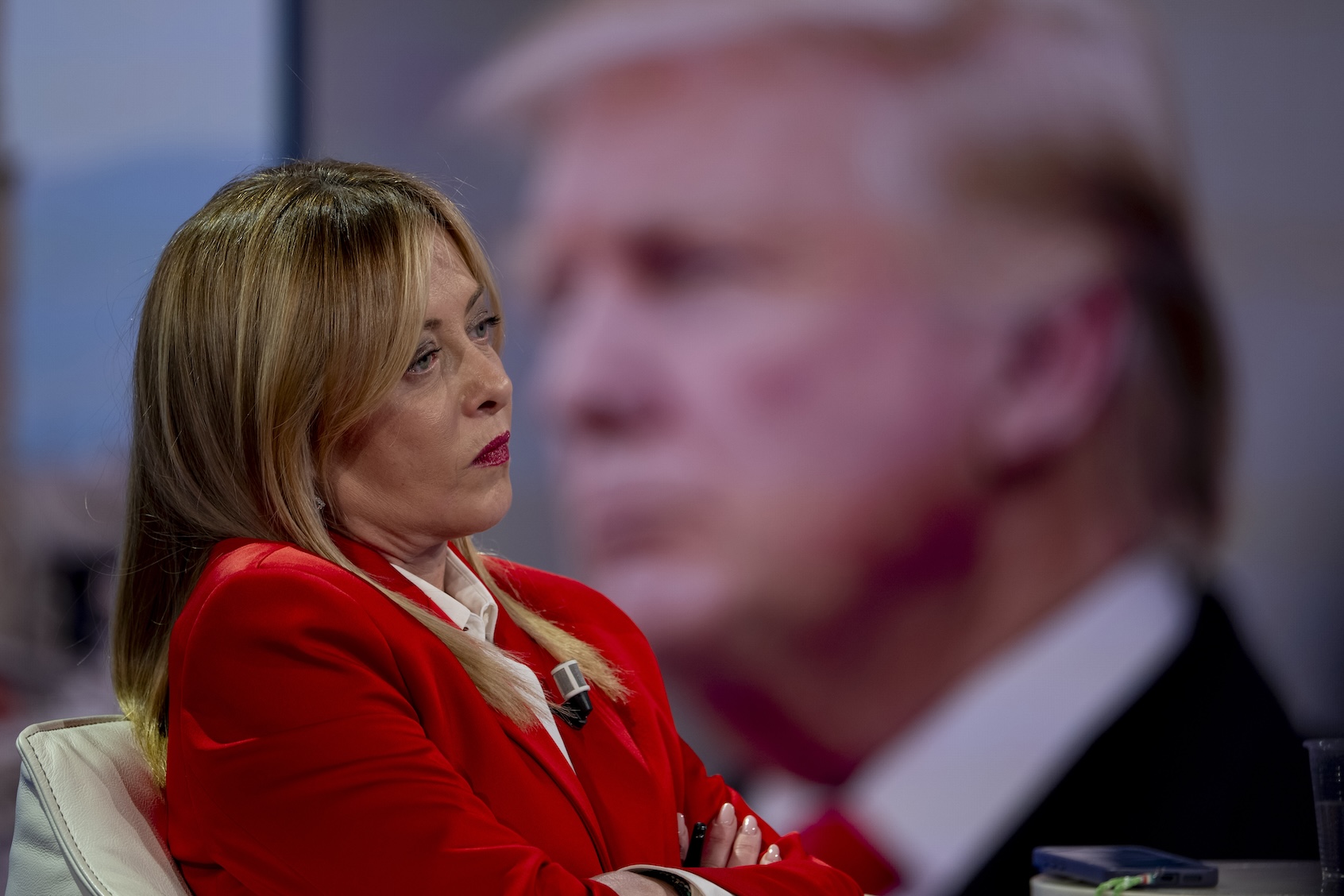
Hosting EU leaders in Rome would put Prime Minister Giorgia Meloni in the international spotlight in an election year, although no date has been set for the ballot.
The Italian government did not immediately respond to a request for comment.
The move would be exceptional, as formal European Councils are held in Brussels. Under the European Council’s rules, relocating a summit requires unanimous agreement among member states at ministerial or ambassadorial level, meaning a single country could block the move. No final decision has yet been announced.
EU leaders gathered in Rome in March 2017 to mark the 60th anniversary of the treaties, but that was a commemorative meeting rather than a formal European Council summit. A regular summit that month took place in Brussels.
French presidential candidate Gabriel Attal reiterated his call to grant the government power to selectively block access to social media platforms to quell riots in the aftermath of widespread unrest across France over the weekend.
“You have young people at home who see their friends going out to loot, which gives the impression that they’re getting away with it; they see them on social media, and then they go out too,” Attal said in an interview with French radio station RTL.
Attal, a former prime minister who now leads French President Emmanuel Macron’s political party, said the measures must be “temporary” and “limited to the area where the riots are taking place.”
Saturday saw hundreds of thousands of protesters take to the streets nationwide across France, with students — who have been blockading schools in recent weeks to call for better study conditions, more teachers and more funding — joining trade unions and members of the public to protest the cost of living. While many protested peacefully, scenes of extreme violence also played out across the country. According to the latest figures from the interior ministry, some 2,000 people were arrested during the turmoil.
During Attal’s tenure as prime minister in 2024, France blocked TikTok access to one of its overseas territories, New Caledonia, amid widespread protests there. But France’s highest administrative court ruled that this suspension constituted “a disproportionate infringement of rights and freedoms.”
It’s unclear whether Attal’s latest proposal would survive a judicial review given that over the summer, France’s Constitutional Council, which reviews the constitutionality of French legislation, blocked a bill seeking to ban access to social media for under-15s after finding the legislation disproportionately infringed on minors’ right to freedom of expression and communication.
Such internet restrictions are more commonly associated with countries like China, Iran, Russia and, more recently, India. These countries either have permanent blocks on certain social media platforms or have more recently restricted them during protest movements, with India and Iran going so far as to block internet access completely.
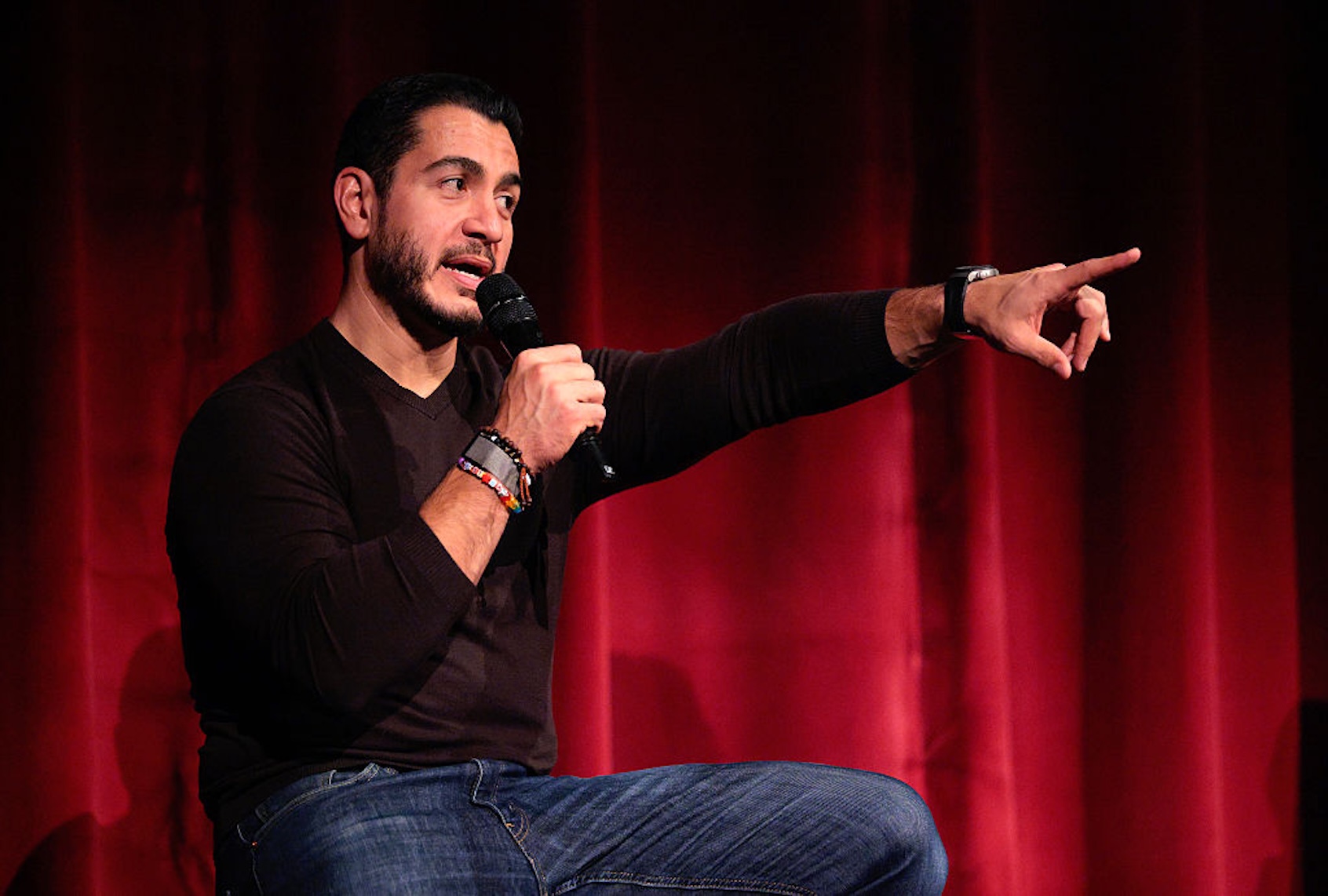
Jesse Watters can’t seem to stop admiring Dr. Abdul El-Sayed. The Fox News host loves to talk about how Michigan’s Democratic nominee for the Senate is “in great shape” and how “Abdul . . . beat the machine” — meaning the party establishment’s candidate, Rep. Haley Stevens — in a hard-fought primary. During an interview in August, Watters clearly enjoyed El-Sayed’s jokes and blunt speech, which included calling his opponent, former Rep. Mike Rogers, a “beta,” and asking the host if he was circumcised when Watters tried to corner him on gender-affirming surgery for minors. The next day, Watters made no bones about El-Sayed’s appeal. “I like him,” he said. “I don’t want to like him. I like him for some stupid reason.”
But the reason was obvious. The doctor-turned-politician has an aggressive bro style that appeals to someone like Watters. Quick-witted with bulldog energy, El-Sayed never backs down from a fight. But despite Watters’ admiration, Fox News has become obsessed with taking El-Sayed down. It’s not because he’s Muslim, though Republicans are ratcheting up the racism in their efforts to derail his campaign. It’s because he is a model for how Democrats can escape their reputations for being weak and feckless.
El-Sayed has a lot going for him. He spent years running public health services in the Detroit area and speaks eloquently and with authority about people’s struggles to afford healthcare, even writing a book about Medicare for All. Most importantly, he’s an excellent communicator who can boil down complex policy ideas into easily digestible concepts without dumbing them down. A video of him explaining to Trump voters why universal healthcare is cheaper than the insurance system went viral for good reason. One can see that, for these voters, it’s likely the first time someone plainly explained how removing executive salaries and profit incentives from healthcare makes it cheaper.
Other politicians, like Sen. Bernie Sanders, I-Vt., or Sen. Elizabeth Warren, D-Mass., are good at explaining progressive policy. But what really seems to scare Republicans about El-Sayed is his political persona as a brawler — and for good reason. Vice President JD Vance learned this last week when he lobbed a strange insult at El-Sayed during a rally in Michigan for Rogers. The Democrat, Vance said, is “a little weasel who should shut his mouth and show a little gratitude.”
This is a common and deeply racist attack from Vance, who portrays non-white progressives as undeserving recipients of white people’s largesse — a caricature that has no relation to reality. El-Sayed left a position as an assistant professor at Columbia University to work in public health, where he won awards for his success in protecting children’s health from environmental pollution. During this same period, Vance worked as a venture capitalist who was close with tech billionaire Peter Thiel.
El-Sayed resisted the temptation to “well, actually” Vance, and instead hit back by calling the vice president and those around him “carnival barkers” who “are small and want to make us small like them.” His response was smooth. “JD Vance called me a little weasel today,” El-Sayed said. “I’m like, ‘No, no, no. What you’re talking about is a Wolverine,'” a reference to the mascot for the University of Michigan, where the Democrat got his undergraduate degree.
As Salon’s Sophia Tesfaye recently wrote, El-Sayed has been courting Fox News viewers by appearing on the channel and running endless ads on it, all without softening his left-leaning message. He clearly hopes his bravado will woo some of the network’s audience, just as it won over Watters.
For his part, President Donald Trump is worried that El-Sayed is right. He’s been openly complaining at rallies and on Truth Social about how charming the candidate is in his Fox appearances. In early October, Axios reported that the White House contacted the network to complain about El-Sayed’s coverage. Trump was especially miffed at the Democrat’s interview with Martha McCallum, during which the host’s efforts to bait him into saying something that could be spun as “radical” failed. Instead, MacCallum embarrassed herself by defending billionaires hoarding wealth, to which El-Sayed said that he’d rather pay for schools than be so “focused on allowing a billionaire to make another billion.”
Since then, it seems that Fox producers got the White House’s message that they have to do something to dirty up El-Sayed. But they’ve learned the hard way that it won’t work to come at him directly, because he ends up dominating interviews and beguiling those who, like Watters, love his commanding and clever style. MacCallum later tried to redeem herself by interviewing progressive activist Corbin Trent and pretending he was a stand-in for El-Sayed.
At first glance, Trent performed as Fox producers no doubt hoped he might. He took MacCallum’s bait by defending the Muslim Brotherhood, something that the host could not get El-Sayed to do. The problem, though, is that Trent has no discernible relationship to the candidate. While he has worked for other progressives, including Sanders, I found no evidence that he has even met El-Sayed, much less is qualified to speak for him.
This attempt to hobble El-Sayed was revealing; it’s clearly all Fox News has. If the network tries to bring El-Sayed on again to ask him the same questions, they know from experience that he’ll probably just win over even more of their viewers. This isn’t idle speculation. MS NOW recently conducted a focus group with regretful Trump voters in Michigan and found that five out of the six are voting for El-Sayed. Republicans should be worried about the young male demographic in particular. Trump won male voters under 30 by a narrow margin in 2024, but they are jumping ship and now strongly favor Democrats.
El-Sayed is a compelling model for a new kind of Democrat. Polling by Strength In Numbers/Verasight shows that even Democratic voters take a negative view of the party, but not because they think their leaders are too progressive. “[T]he single most common complaint about their own party is that it is too weak, too cautious, or not fighting hard enough,” writes G. Elliott Morris in an analysis of the poll.
The Democratic base wants the party to take a more aggressive stance toward their GOP opponents, which will be key to building a more lasting coalition — especially one that includes younger and more male voters. El-Sayed is doing just that, and it has the right scared.
When Donald Trump returned to the White House in 2025, he seemed like the leader, or at least the dominant figure, of a globalized version of the MAGA movement, a worldwide network of far-right parties sometimes described as the “nationalist international.” We can make a long list, starting with Nigel Farage’s Reform UK, Marine Le Pen’s National Rally in France, the not-quite-neo-Nazi Alternative for Germany, or AfD, and Giorgia Meloni’s Brothers of Italy, along with other previously-fringe parties now creeping toward the mainstream in many different places.
If it strikes you that the term “nationalist international” contains its own contradiction, by the way, you’re miles ahead of JD Vance and Stephen Miller and the rest of the Trumpian pseudo-intellectuals, who still haven’t figured that out.
That vision of a MAGA-centric new world order was always an illusion, although it began with some fragments of plausibility and was enormously amplified by the Trump distortion effect, meaning our president’s uncanny ability to soak up media attention and make himself the main character of every narrative. Now that illusion has melted away like an ice cube in Europe’s catastrophic summer (where I personally experienced a 104℉/40℃ day in Berlin, the highest recorded temperature in that city’s history).
Indeed, the world now faces another apparent contradiction, or at least a historical irony. If Trump still looms over the American landscape like an unkillable ogre in a third-rate AI fairytale, he is all but finished as a political force. He has done more damage to his own country than anyone since Jefferson Davis, his disillusioned supporters are deserting him, he is universally despised around the world and he’s headed for a potentially historic electoral defeat in November.
Europe’s far right, on the other hand, is doing fine without him. It’s about a 50/50 proposition that by the end of this decade the four largest nations in Europe will be governed by right-wing populist parties. All of them at some time sought inspiration and financial support from Trump and his Mar-a-Lago hangers-on, and pretty nearly all of them have now ghosted him entirely, and pretend they never really knew the guy: “Neues Handy, wer bist du?”
Trump’s second term began with a triumphal sense that a hard-right “vibe shift” was transforming not just America but the world (which Americans are always ready to perceive as a picturesque but unreliable subsidiary). Those early months of 2025 were undeniably terrifying and inordinately destructive, but they were also ridiculous. In retrospect, from half a tick into the future, those guys were immeasurably high on their own supply, based on a narrow electoral victory over incompetent and disorganized opposition.
Early in Trump’s second term, Vance, Marco Rubio, Elon Musk and others were dispatched to various world capitals to urge support for right-wing candidates or to deliver preposterous blood-and-soil history lessons straight out of wingnut “Great Books” podcasts.
As part of that extended touchdown dance, Vance, Marco Rubio, Elon Musk and others were dispatched to various world capitals to urge support for right-wing causes and candidates, or to deliver preposterous blood-and-soil history lessons straight out of wingnut “Great Books” podcasts. That tendency culminated in the now-legendary 2025 National Security Strategy, a document that offers most presidential administrations a chance to deliver boilerplate language about shared values, human rights and democracy.
Not this time. As I wrote last year, the NSS featured a poisonous combination of “Great Replacement-fueled fanboy enthusiasm for far-right parties” and “unhinged and unconcealed racist panic.” Europe was losing its cultural identity, the document warned, and faced the “stark prospect of civilizational erasure” as well as the (entirely imaginary) possibility that “certain NATO members will become majority non-European.”
That was one of many vainglorious MAGA failures to read the room, on an international scale. Right-wing European politicians traffic in similar rhetoric, to be sure. But nobody on that continent, of any dispensation, enjoys receiving arrogant lectures on history and civilization from Americans, and even extremist parties like Reform UK or the AfD prefer to cloak the bigotry in layers of euphemisms and some degree of plausible deniability.
In a long and painful video interview with Economist editor Zanny Minton Beddoes published this past week, for instance, AfD co-leader Alice Weidel professed horror and amazement when asked whether her party contains overtly racist or proto-fascist elements. As Weidel took pains to point out, she is married to a Swiss woman of Sri Lankan ancestry, which presumably cleanses her of any bad intentions when she rejects “gender theory” or insists that all the Syrians and Afghans now living in Germany must leave.
That interview is an instructive experience in other ways. Beddoes repeatedly asks Weidel why she can’t just be a normal budget-cutting conservative, of a variety less frightening to readers of The Economist. Oh, but she absolutely is, Weidel insists, lulling her interlocutor for a while with prodigiously dull business-school chatter before returning to her central theme: Germany’s financial woes will be cured, somehow, by expelling the Muslims.
To return to our main theme, Weidel mentions Trump only twice, with evident distaste, in that hour-long conversation. That’s not exactly news at this point. By the time the above-mentioned NSS was published last December, Europe’s far-right populists had already reached the conclusion that Trump was a loser. Or, in the more delicate phrasing of Armida van Rij in the newsletter Strategic Europe, that “Trump’s repeated threats to invade Greenland, his attacks on the pope and Italian Prime Minister Giorgia Meloni, and his trade war on the EU have made the friendship electorally costly.”
That became obvious to the entire world last April, when MAGA darling Viktor Orbán was routed in Hungary’s election after JD Vance’s campaign visit provided the “political kiss of death,” in the words of Daniel Hegedüs of the Institute for European Policy in Berlin. That was the same month, as it happens, when Meloni publicly broke with Trump over the latter’s criticisms of Pope Leo XIV.
But Marc Bassets of the Spanish newspaper El País identifies the real turning point a full year earlier, in the Canadian elections of April 2025, when Trump’s threats and mockery drove mainstream liberal Mark Carney to an unexpected victory over a MAGA-friendly opponent who seemed to hold the advantage.
That result, coming just three months into Trump’s term, “became an example closely watched in Europe,” Bassets writes, which was replayed in several subsequent elections. Then came Trump’s threatened annexation of Greenland, his raid on Venezuela and his disastrous war with Iran, all of which were blatant violations of national sovereignty, the core principle of Europe’s new right.
Like Trump’s capricious tariff war and his public feuds with Meloni and the pope, this reflected the president’s profound ignorance about the world and a fundamental mismatch between the grandiose neo-imperialism of MAGA foreign policy and a European far right that “increasingly presents itself as a rebellion against Americanization” and wants no part of world maps plastered with the Stars and Stripes or arbitrarily renamed bodies of water.
All of this reflects a fundamental mismatch between the grandiose neo-imperialism of MAGA foreign policy and a European far right that “increasingly presents itself as a rebellion against Americanization” and wants no part of world maps plastered with the Stars and Stripes.
That quotation comes from Robert Benson of the centrist think tank Center for American Progress, who argues that the Trump administration “has mistaken cultural affinity for strategic alignment” in empowering political parties like the AfD that may “share mutual enemies” with MAGA — such as multiculturalism, racial justice, LGBTQ rights and climate policy — but “do not share American interests, or even the interests of this administration.”
As Europe’s far-right leaders draw closer to holding power (or already do, as in Meloni’s case), Trump’s support “appears almost as a liability,” as Dominique Moïsi of the Paris think tank Institut Montaigne tells El País. Trump has long been massively unpopular among European voters across the political spectrum, and his approval ratings cratered to new lows after the Iran war drove energy prices into the stratosphere. Across Europe, the U.S. is now viewed less favorably than either Russia or China, a remarkable accomplishment whose long-term effects are impossible to calculate.
In France, Marine Le Pen is focused on winning next year’s presidential election and has conspicuously avoided saying Trump’s name throughout his second term. She leaves that to her deputy and potential future prime minister, Jordan Bardella, who has repeatedly castigated Trump’s “totally erratic” war with Iran: “No one can say what the ideological backbone of this war is, a war whose end seems nowhere in sight.”
Meloni recently became the longest-serving Italian prime minister since World War II — an extraordinary fact in itself — and over her four years in office has gone from “Trump whisperer” to the evident conclusion that Trump is a “toxic asset,” in Bassets’ phrase. (The “Trump whisperer” label has also been affixed to former British Prime Minister Keir Starmer and current German Chancellor Friedrich Merz, with dire political consequences.)
Even the AfD, despite its aforementioned “cultural affinity” with MAGA and a mutual eagerness to throw Ukraine overboard and make nice with Vladimir Putin, has evidently concluded that glowing endorsements from the likes of Musk, Vance and Rubio are a mixed blessing when the U.S. “has become so unpopular in Europe that being close to Trump is not a source of legitimacy,” in Moïsi’s words. Weidel has reportedly described the Iran war as a “catastrophe” in private meetings, while Björn Höcke, the most inflammatory figure on the AfD’s right flank, has mocked mainstream politicians as “German-speaking Americans” and demanded the withdrawal of U.S. troops from German soil.
All of this points us toward the inescapable conclusion that Donald Trump was never the leader of anything. He was an empty vessel into which hundreds of millions of people in America and around the world poured their confusion, rage and desire. He became a global symbol of the failure of liberal democracy, but was not the reason for it. As he fades from the scene, the global crisis he came to represent is more urgent than ever.
Donald Trump was never the leader of anything. He was an empty vessel into which hundreds of millions of people in America and around the world poured their confusion, rage and desire. He was a global symbol of the failure of liberal democracy, not the reason for it.
As Italian journalist Mattia Ferraresi recently observed in a New York Times panel discussion, “Mainstream liberal politics, in both its left- and right-wing versions, failed to deliver on its promises, not only in terms of welfare and economic growth but also in the more complex realm of identity and meaning.” What we see around the world today, in the ascendant far right and in a newly radicalized generation of young people from Paris to New York, are “expressions of the same disillusionment with liberalism and its policies.”
It has become almost irresistible to compare this era to the 1930s, when “bourgeois democracy” collapsed in Europe, plunging the world into murderous darkness. If the parallels are clear enough, the world is a very different place in this century and the outcome does not have to be the same. The future remains unwritten, and Donald Trump will not be its author.
This story is part of Gen Z at the Ballot Box, a collaboration betweenStates Newsroom and The 19th.
It was the beginning of her junior year, and 20-year-old Mia Tedesco was setting up a table for the campus open house where more than 200 recognized student organizations were preparing to recruit new students. Tedesco laid out bracelets that read “We are Charlie Kirk” — an homage to the prominent conservative media personality who was fatally shot at an event in Utah last year.
It was her first semester as president of Turning Point USA (TPUSA) at Butler University, a private school in Indiana, and she wanted to make sure her table looked nice.
“We are a more left-leaning college and university; we are a liberal arts school — I knew that signing up and coming and committing to college,” Tedesco said. “I knew I wanted to challenge it a little bit.”
She had civil conversations with many students who approached the table to learn more about TPUSA, the organization founded by Kirk, though some people scoffed or flipped her off. She considered setting up a camera for safety. Tedesco noticed that some people were taking handfuls of bracelets; then a friend told her that there were facetious posts about them on Yik Yak, a hyper-local social media platform for college students that lets users be anonymous. Many of the bracelets ended up in the trash.
It wasn’t the first time the conservative student organization had faced backlash: The previous semester, their chat on the platform GroupMe was hacked. Someone changed the name to “We love socialism,” updated chat names and photos, and kicked out members. The group chat, which was the main point of communication for the group, went from 70 members to 30.
“I know with the Democratic Club and many other clubs, there’s been loud dislike with us,” Tedesco said. “But I also know that if we don’t try, then we’re not using our voice like Charlie would want.”
Founded in 2012, TPUSA has grown to become one of the largest and most prominent conservative youth movements in the country. The September 2025 assassination of Kirk inspired conservative students across the country — many who had not even heard of Charlie Kirk or TPUSA prior — to continue the organization’s mission to champion conservative values. An evangelical Christian, Kirk advocated for gun rights; condemned abortion; held up men as the heads of households; denounced Islam; and called diversity, equity and inclusion initiatives “racist.” Within a year of his death, high school chapters jumped 180 percent and college chapters increased 60 percent — resulting in more than 1,500 college chapters as of September 2026, according to the organization.
That same day, Tyler Bowyer, the chief operating officer of Turning Point Action — a sister organization to TPUSA founded in 2019 and designed for direct political action — and a longtime colleague and friend to the Kirks, posted a prediction of sorts on social media: “Charlie Kirk came and converted the young men. Erika Kirk is coming to convert the young women.”
While the number of chapters has exploded and thousands of young women have shown up to events, the organization’s influence and ability to mobilize young voters as it has in the past is uncertain.
The larger Republican base is fracturing, the war in Iran continues and gas prices are still on the rise. Disillusionment with MAGA and the Republican Party is growing among young conservatives. With that backdrop, some TPUSA members describe rising tension on campuses. Some college conservatives — especially Gen Z men — are frustrated with Erika Kirk’s leadership, wondering if she can deliver the same firebrand energy her husband did.
When Kirk was assassinated on September 10, 2025, Tedesco and a friend were in the process of starting a TPUSA chapter on Butler’s campus. For Tedesco, who grew up Catholic in a small town, it was important to create a space on campus for Christian representation, where students like her could incorporate their faith in day-to-day life and community. The assassination was “the final push” that got the paperwork across the finish line.
“Charlie was very outgoing when it came to the youth,” Tedesco said. “There was a lot of clickbaiting in his videos, but a lot of it was eye-opening. This person sees this way, that person sees that way — how can we get to a civil conversation? Charlie was able to have that connection as one human being with another.”
‘I’m not sure I can really trust her’
Andrew Roth, along with three other men, was in the process of filling out the proper documents to start a TPUSA chapter at Taylor University, a private Christian school in Upland, Indiana, when Charlie Kirk was assassinated.
“Prior to that, we were being very careful with how we were doing the paperwork because we wanted to make sure we got it right,” said Roth, now a junior and president of his TPUSA chapter. “Then Charlie died, and we were like, ‘OK, we just gotta send it.’”
Roth said 120 people showed up to an informal meeting to gauge interest in the new TPUSA chapter. During the club’s first semester as an official chapter in the spring of 2026, Roth said, he was surprised to see more women than men show up to events.
“In general, 20- to 21-year-old guys are just statistically more right-wing than girls are at this age,” said Roth, who is now a junior. “So I just kind of assumed it would be more guys than girls.”
Roth’s analysis bears out: Polling from The 19th and YouGov found that Gen Z women are far more likely than men to identify as liberal (38 percent vs. 28 percent) and as Democrats (37 percent vs. 21 percent).
Roth said some women were probably drawn to Erika Kirk. In June, she spoke at TPUSA’s annual Women’s Leadership Summit and addressed more than 2,000 young women, encouraging them to embrace their Christian faith and biblical womanhood — a theological concept that defines women’s role as homemakers, nurturers and submissive to their husbands — while critiquing modern feminism.
Nearly 20 percent of Gen Z women consider themself to be a “strong feminist” compared with less than 7 percent of Gen Z men, according to The 19th/YouGov poll.
“My husband always believed in this event because he could see young women being sold a vision of life that looked empowering on the surface, but left many of them increasingly dissatisfied underneath,” Erika Kirk said in her opening remarks at the summit. “He wanted to create a place for conservative women to connect with like-minded women and be poured into by female voices that would talk to them about the sanctity of life, about fiscal responsibility, about liberty and family.”
Erika Kirk’s message is less overtly political than that of her late husband. Her speeches tend to have fewer policy talking points. When asked in a Vanity Fair interview about her stance on Israel, for example, she responded that she doesn’t “sit around thinking about what Bibi Netanyahu is doing.”
“My brain bandwidth right now is honoring my husband, loving on my babies and building Turning Point to be everything it could be. I don’t really have the bandwidth to go down the rabbit holes of all of it,” Kirk said.
Erika Kirk did not respond to requests for comment.
By some measures, TPUSA has been wildly successful under Erika Kirk. In the past year, Turning Point PAC, Inc. raised the most political campaign money in its history, raking in around $9 million ahead of the 2026 midterms — compared with the $7 million it raised in the 2024 election cycle, when it became a core part of the Republican Party’s swing state strategy. The group’s nonprofit wing also reported a 30 percent spike in revenue, bringing in $115 million in 2025 on top of its $81 million endowment.
But her message does not appear to be resonating in the same way with many of the young men her husband appealed to: Roth, who is in a group chat with other TPUSA chapter presidents around the country, said people are frustrated and questioning whether Erika Kirk can be trusted. Roth pointed to one example when Erika Kirk praised the U.S. military’s war efforts in Iran under President Donald Trump — while her husband warned in April 2025 a new Middle East war would be “a catastrophic mistake.”
“People are looking at that and they’re wondering whether she’s just trying to toe the line so she doesn’t alienate Trump,” Roth said. “I’m not sure I can really trust her that much.”
Roth also noted that at least one TPUSA chapter disaffiliated from Turning Point in March, citing concerns with the national organization’s new direction.
Roth said he wants to hear more conversations about Israel’s involvement in U.S. foreign policy, the war in Iran, the Epstein files and government corruption — all topics Charlie Kirk was speaking about before his death.
“Charlie Kirk was fine to upset the people in power,” Roth said. “He had a more anti-establishment government stance. I feel like without him, they have fallen in line a little bit more.”
‘The one who was somehow able to hold it all together’
Amy Binder, a sociology professor at Johns Hopkins University, has studied how campuses shape young conservatives for more than a decade. While conducting research in 2008, Binder said the main organization for young conservatives was College Republicans. But things shifted a few years later when Charlie Kirk and TPUSA came to campuses.
“Charlie Kirk was an incredible entrepreneur who had a real faculty with connecting with donors and big money,” said Binder, who has written multiple books about politics on college campuses. “He was very friendly with the Trump family and had a really good sense of what would excite kids on campus.”
He painted College Republicans as old, fusty and not visible enough. Meanwhile, TPUSA became the “far more expressive, fun, energetic, confrontational group,” Binder added.
James Yock, a junior at Butler University, is both the vice president of his school’s TPUSA chapter and president of the College Republicans chapter.
“I think Turning Point resonates more with youth,” Yock said. “It’s easier to relate to someone who is younger like Charlie, more up to date with things compared to someone who our grandparents or parents might resonate with in the College Republicans.”
In the decade after its launch, Binder said she saw TPUSA’s footprint on American campuses grow. The group was able to raise enough money to funnel resources to campus organizations for events, campaigns and media efforts.
Binder said that she thinks some young conservatives, particularly young women, are fans of Erika Kirk. But Charlie Kirk was more than the leader of TPUSA — in many ways, he was the heir apparent for MAGA, she said. Without him, there’s a sense that it’s “all falling apart” as the feuding factions within the Republican Party — including the nationalists, post liberals and populists — battle for dominance.
Binder saw that at the December 2025 AmericaFest, TPUSA’s large annual event. Conservative personalities Tucker Carlson and Ben Shapiro clashed over Carlson’s interview with Nick Fuentes, a far-right commentator known for racist, misogynist and antisemitic views, and Shapiro attacked Candace Owens, a fringe personality, former TPUSA employee and close friend of Charlie Kirk’s, for her conspiracy theories. What united them, she said, was anti-trans and anti-Democrat talking points.
“If Charlie Kirk were still alive, would the base be fracturing in the same way that it is today?” Binder said. “When I listen to conservative opinion, both on the intellectual right and the more populist right, I hear that attributed to him a lot — that he was the one who was somehow able to hold it all together.”
‘No longer with Trump’
Erika Kirk took over TPUSA as young conservatives were growing increasingly frustrated with their party and searching for political leadership.
Polling consistently shows that Gen Z is unhappy with the current political situation, according to Melissa Deckman, political scientist and chief executive of the Public Religion Research Institute. They are far less confident in major institutions, from the federal government to law enforcement to organized religion and the media.
“A lot of Gen Zers feel as though they play by the rules, but yet they’re unable to get ahead,” said Deckman, who also wrote the book “The Politics of Gen Z.” “The price of housing, the price of living, filling up a gas tank — all these things disproportionately hit them harder.”
And young conservative men tend to support more economically populist and sometimes progressive policies than older generations or Republicans of the past.
“The young men hate cancel culture, but they want healthcare,” Deckman said.
Roth said he and his peers are frustrated with most of the conservatives up for election.
“People my age don’t know if we even want to vote because I don’t feel like the Republican Party even represents me,” Roth said. “They just say the right things to get into power, and then they don’t do anything.”
Roth said a lot of people his age became particularly disenchanted and distrustful of government and politicians after living through the COVID-19 pandemic. He was in the eighth grade when the first shutdowns began.
“We were in favor of the 2024 Trump campaign because it was against all these things, it promised to expose all the secrets and clean up the system,” Roth said, noting Trump’s campaign promise to end forever wars, release the files related to convicted sex offender Jeffrey Epstein and put America first. “So many people my age are no longer with Trump because they didn’t see that happen.”
Gen Z men who voted for Trump are more likely to say they now regret that decision than men Trump supporters in any other generation, according to polling from Navigator Research.
Some of the biggest conservative women’s voices are also turning on Trump. Influencers Savanna Faith Stone and Alex Clark — keynote speakers at TPUSA’s Women’s Leadership Summit this year — have given multiple interviews describing their sense of being betrayed by the president they helped elect in 2024.
In a June interview with CBC News, Stone said she’s decided not to vote in the upcoming midterm elections. She said Trump “made it seem like everything was going to become more affordable; now the economy’s worse. He promised no more wars in the Middle East, and we are in a war. So it’s disappointing.”
Clark, the host of a conservative and wellness podcast with more than half a million followers on Instagram, said in an interview with Politico that young women are considering not voting. She told the White House that people want “fight, fight, fight Trump” — not “ballroom Trump.”
“I feel some of the magic and the spark that helped us win 2024 is missing,” Clark added.
‘Where does the Republican Party go after Donald Trump?’
Eli LaGrange said he was in class at Indiana Wesleyan University, a private evangelical Christian school, when Charlie Kirk was killed. He didn’t know much about Kirk or TPUSA at the time.
“I was really curious to learn: Why did they kill this guy?” LaGrange said. “Political violence is always sad. I started watching his videos and talking to people. He was spreading a good message and encouraging conversations, which I thought was great, and it’s so sad to see a voice get silenced.”
LaGrange decided his campus — which he described as not having too many political clubs — could benefit from a TPUSA chapter. Along with a few like-minded friends, he collected more than 300 student signatures in support, drafted a constitution, and presented it to the student government and a board of teachers and faculty. After he addressed some concerns that a new chapter could cause tensions or make people on campus upset, LaGrange said, his proposal was approved.
Event participation has ranged anywhere from 15 people to more than 200. They’ve had a pickleball night to introduce themselves to new students, coffee meet-and-greets, debate tables and game nights. They’ve invited pastors to do a racial reconciliation night and even brought in the lieutenant governor to discuss faith and local politics.
“My elevator pitch to get people to join is focused on the importance of having political conversations,” LaGrange said. “Bad things happen when you don’t talk to the people you see, when you’re getting all your information and opinions from social media and the Internet. You need to go talk to people. You need to go have hard conversations with people.”
LaGrange said some of the hottest topics are immigration, Flock cameras and artificial intelligence. Perhaps most pressing, however, is trying to get conservatives to align on the future direction of the GOP.
“I think the biggest question is, ‘Where does the Republican Party go after Donald Trump and MAGA?’” LaGrange said.
LaGrange said that most of his campus TPUSA chapter’s leadership is women and that about half of the people who come to events are women. He sees young conservatives’ voices as critical to the conversation about who will lead the movement.
Some are pushing to advance MAGA while others call for a return to older, traditional conservative politics, hearkening back to past presidents like President Theodore Roosevelt. LaGrange said he falls in the latter camp.
“Organizations like Turning Point have a lot of influence, so whoever they give their voice to will probably lead,” LaGrange said. “So I think we need to take the time to decide who really is a good leader for the future of conservative politics.”
Object permanence: PNH x Mike Ford; Singapore v Far East Economic Review; Publishing v bestsellers; Architecture v security; Vista v everyone; Free Bieber; Belarus sells the sugar bowls; OCCUPY GEORGE; Grey type sucks; Spinal Tap v studio math; Terry Pratchett x $10t coin; Boy Scouts x copyright maximialism; Canadian Tories x DRM; Herman Cain's 9-9-9 plan; ACLu v secret laws; Fined for suing the cops who shot you; Chicago PD steals millions for cop toys; Turing's Law; Copyleft v Vizio; Trump's killswitch.
"Technopolitics" are the politics embedded in technology. The Ur-text of technopolitics is "Do Artifacts Have Politics?" by the rock critic turned scholar Langdon Winner:
With "Do Artifacts," Winner demands that we move beyond the idea of technologies having "intended consequences" and "unintended consequences" and towards a political economy of tech. In service to this, he divides the politics of artifacts into three categories:
I. Artifacts that have politics embedded in them by their creators, like Robert Moses's infamous bridges over the Long Island parkways. According to Moses biographer Robert Caro, Moses deliberately specified that these bridges must be too low for a city bus to pass under, in a bid to block Black people from traveling from New York City to the beaches he'd developed on Long Island.
Today those bridges are more than a century old, and they are still too low for city buses to pass under them, and this continues to mean that people who don't own private vehicles find it more difficult to get to the beach, and as it's still the case that race is a predictor of low incomes, those are still racist bridges.
II. Artifacts whose politics are accidental but unavoidable. Winner cites a kind of tomato harvester that vastly improved the efficiency of tomato pickers. These harvesters became very popular, which allowed tomato farmers to lay off large numbers of agricultural workers, and also allowed them to price the mechanically harvested tomatoes so cheaply that they crowded out other kinds of tomatoes.
Because these machines created a large pool of unemployed workers, they shifted power from labor to capital, and because these picking machines were too rough for all but the hardest varietals of tomato, they changed the flavor profile of tomatoes in America for the worse, towards a bland, tough tomato.
These picking machines were not designed to make workers poorer, nor were they designed to make tomatoes taste worse, but because of their technical characteristics, this was the unavoidable outcome, the inextricable politics of these machines.
III. Artifacts whose politics are intrinsic to their design. Here, Winner contrasts solar panels with nuclear reactors. Solar panels may require highly centralized industrial systems to produce, but once they are in the field, solar panels are compatible with looser, less coordinated political arrangements. A world of small anarchist communes is fully compatible with solar energy.
Contrast this with nuclear reactors: the prudent ongoing operation of a reactor requires a highly centralized state that is capable of fielding reliable, trustworthy independent inspectors. This state must also be capable of exercising the coercive power to shut down badly maintained or incompetently operated reactors.
The politics of nukes are the politics of a centralized, powerful state; the politics of solar are less determined. Solar is compatible with a wide variety of political systems, including (but not limited to) weak, decentralized states.
(For a further exploration of "Do Artifacts Have Politics?" I highly recommend Ginger Coons' reading guide:)
I really like Winner's framework for exploring technopolitics, but I have my own gloss on it. Winner's framework doesn't explicitly contemplate the idea of technological countermeasures. For example, what if someone were to design a city bus that was low enough to fit under Robert Moses's bridges? At that point, they'd cease to be "racist bridges," and merely become "bridges built by a racist":
Which brings me to the technopolitics of ad-tech. Lots of people think that advertising is "the original sin of the internet," setting in motion the surveillance dystopia that is closing in on us from all sides today:
I think this is wrong. I think that finding ways to communicate ideas and pitches to the general public is fine. Without some channel for reaching people with ideas and propositions they may not be familiar with, it would be infinitely harder to reach people for political causes. It would also be harder for new books, movies and music to find new audiences. It would be much harder to get people out to your independent craft fair, your zine show, or your No Kings march.
For me, the internet's original sin isn't advertising, it's surveillance. Contrary to what you have been told – and pax Winner's framework – the internet is fully compatible with privacy:
It wasn't the internet's technopolitics that made it a surveillance nightmare. It was just plain politics. Specifically, our politicians decided to stop enacting and enforcing privacy laws. The last consumer privacy law we got in America was a bill that made it illegal for video store clerks to disclose your VHS rentals:
The widespread phenomenon of ad-tech companies spying on us is the result of the decision to allow them to do so. That decision has had innumerable negative downstream effects, such as skyrocketing "surveillance prices":
It's created vast surveillance databases that are critical to Trump's racist pogroms, providing dossiers and precise location data on the people ICE kidnaps to Salvadoran slave-labor camps:
Surveillance also promotes oligarchy. Without surveillance, oligarchs must give up more of their fortunes to keep the public happy, because the alternative is spending even more money on guards to keep the public from building guillotines on their lawns. Surveillance lets oligarchs make targeted strikes on restive radicals, which is much cheaper than broad-spectrum policies that make us all better off and neutralize the case for guillotines:
These are the technopolitics of surveillance, not advertising. There is nothing about advertising that demands surveillance. For centuries, advertising was not meaningfully linked to surveillance. The decision to fuse surveillance with advertising was just that – a decision, not an inevitability.
Any time we forget this, we let spying tech bosses off the hook. After all, if advertising demands surveillance, then tech bosses are just the avatars of the great forces of history, prisoners of the imperative to spy in order to advertise. By remembering that surveillance advertising is a choice, we put the blame squarely where it belongs: on the guillotineable oligarchs who made that choice, and amassed spectacular fortunes thereby.
Surveillance is political, but surveillance advertising has its own distinct technopolitics, and to understand those technopolitics, we must contrast them with the technopolitics of contextual advertising. Up until a decade or two ago, contextual advertising was simply called "advertising." Contextual advertising is the practice of running refrigerator ads next to articles on cooking and kitchen remodeling; ads for roadside restaurants on highway billboards; ads for Disney vacations in parenting magazines.
Your intuition probably insists that context advertising is less effective than surveillance advertising. After all, surveillance advertising allows a running shoe company to target users who are training for a marathon no matter where they are and no matter what they're doing. Surely this translates into increased "conversions" (clicks and/or purchases, depending on who you're talking to)?
It does, but not by much. Advertisers get about 5% more value from surveillance ads than they do from context ads:
Surveillance is a capital-intensive activity: spying on billions of people as they move through the digital and physical world is incredibly expensive. That is a good part of the reason that online advertising has collapsed into the Meta/Google duopoly, who control about 80% of display advertising.
The harms of surveillance monopolies have a severely distorting effect on policy debates. For example, it's led some anti-monopolists to call for government-issued surveillance identifiers that follow us from birth to death in order to facilitate commercial spying to foster more competition in surveillance:
Here's the thing about monopolists: they cheat. Google and Meta have an illegal, collusive arrangement to rig the advertising market, overcharging advertisers and underpaying publishers:
All of this has driven the majority of web users to install a privacy-blocker (like EFF's Privacybadger.org), meaning that surveillance ads are disproportionately likely to not even show up in a reader's browser:
So while it's possible that, in a state of nature, a surveillance ad would outperform a context ad, delivering more sales for advertisers and more revenue for publishers, the monopolistic tendency of ad-tech means that publishers earn less from surveillance ads (because more users block them, and because monopolistic ad-tech platforms extract higher commissions), and advertisers see fewer sales from them (because more users block them, and because monopolistic ad-tech platforms extract higher prices).
Context ads, meanwhile, are always going to give power to publishers, because publishers will always understand the materials they publish better than any ad-tech platform could. Commissioning, editing and publishing an article, podcast or video gives a publisher unique and inalienable insight into that material.
Surveillance data about audiences is a kind of ambient vapor floating around websites and places and payments that has to be condensed through a heroic and expensive effort that gives power to whichever company can muster the capital and infrastructure to do so. Meanwhile, information about the content of publishers' offerings is already refined into ingots that are already in publishers' own possession.
It's possible to run "programmatic ads" without surveillance. Rather than building an ad-tech stack through which publishers transmit sensitive information about their audiences ("Who will pay me to advertise to this 18-34 year old man-child from the outer boroughs who owns an Xbox and has recently researched gonorrhea symptoms?"), we can build systems through which publishers transmit information about their own materials ("Who will advertise to a user with a New York IP address who is reading an article comparing running shoe brands?").
Not only is this possible, but it actually generates more revenues for publishers than the surveillance-based ad-tech stack:
On top of that, publishers who don't gather personal information about users also don't need to show their users those awful pop-up ads asking their permission to gather their data. Everyone hates those notices, and they are yet another negative aspect of surveillance advertising that disappears with the switch to context ads.
An ad-tech stack for context ads is far less prone to monopolization. Such a stack can be "federated," with multiple "demand-side platforms" (the part of the system that advertisers use to place bids for the right to show their ads) all communicating with the same "supply-side platform" (the part of the system publishers use to transmit opportunities to place ads).
This is also in the technopolitics of context ads: they do not tend toward the "efficiencies of scale" that lead to abusive monopolistic middlemen who steal from publishers and advertisers and sell out the public to fascists who want to arrest them and deport them to Salvadoran slave-labor camps.
When the ad-tech sector is composed of smaller companies that are more competitive with one another, it is much harder for any of them to collude to rig the market. That fierce competition also means it's harder to create a cozy conspiracy to lobby together to block privacy laws, and it leaves the companies with lower margins and less retained earnings to spend on those lobbying efforts.
Surveillance ads also promote all kinds of parasitic businesses. The fact that a publisher can serve ads related to users rather than the subject of their media means that sensationalistic and deceptive websites can sell ads that run against content that's totally unrelated to advertisers' products and services. And because it's cheaper to produce lies and garbage, these publishers can undercut the ad prices demanded by high quality outlets and let advertisers reach the same users. This is the whole reason that "chumboxes" exist:
Just as nuclear power favors a centralized state, surveillance advertising:
favors middlemen over publishers and advertisers;
tends toward monopoly;
favors low-quality media over high-quality production;
impedes the passage of privacy laws;
provides authoritarian states with an off-the-books, warrantless source of surveillance data.
And just as solar allows for decentralized, anti-authoritarian societies, context advertising:
favors publishers over middlemen and advertisers;
tends towards pluralism and diversity of voices;
favors high-quality media by reserving the lion's share of the rewards to the producers;
does not rely on a weak privacy environment;
does not militate for "democratizing spying" by issuing every person with a permanent advertising identifier.
There's nothing (necessarily) wrong with building systems to tell people about things you want them to know. There's nothing (necessarily) wrong with paying for media with ads. It's possible for both of these things to go awry, but they are not in and of themselves bad. They have contingent technopolitics.
But surveillance ads have completely unavoidable, absolutely ghastly technopolitics. Surveillance ads are bad for publishers, for advertisers, and for democracy. We should ban surveillance ads:
"Red Team Blues": "A grabby, compulsive thriller that will leave you knowing more about how the world works than you did before." Tor Books http://redteamblues.com.
"Chokepoint Capitalism: How to Beat Big Tech, Tame Big Content, and Get Artists Paid, with Rebecca Giblin", on how to unrig the markets for creative labor, Beacon Press/Scribe 2022 https://chokepointcapitalism.com
“Once Is Enemy Action,” a science fiction novel about the origins of modern technofascism. Today's words: 574 (7730 total).
"The Post-American Internet," a sequel to "Enshittification," about the better world the rest of us get to have now that Trump has torched America. Fourth draft completed. Submitted to editor.
A Little Brother short story about DIY insulin PLANNING
This work – excluding any serialized fiction – is licensed under a Creative Commons Attribution 4.0 license. That means you can use it any way you like, including commercially, provided that you attribute it to me, Cory Doctorow, and include a link to pluralistic.net.
Quotations and images are not included in this license; they are included either under a limitation or exception to copyright, or on the basis of a separate license. Please exercise caution.
"When life gives you SARS, you make sarsaparilla" -Joey "Accordion Guy" DeVilla
READ CAREFULLY: By reading this, you agree, on behalf of your employer, to release me from all obligations and waivers arising from any and all NON-NEGOTIATED agreements, licenses, terms-of-service, shrinkwrap, clickwrap, browsewrap, confidentiality, non-disclosure, non-compete and acceptable use policies ("BOGUS AGREEMENTS") that I have entered into with your employer, its partners, licensors, agents and assigns, in perpetuity, without prejudice to my ongoing rights and privileges. You further represent that you have the authority to release me from any BOGUS AGREEMENTS on behalf of your employer.
Having more than a million young people not in education, employment or training is an “economic catastrophe” according to the prime minister. So, what will the government do about it?
With Alan Milburn’s long-awaited review due next month, is Andy Burnham laying the groundwork for tougher benefit conditions in the budget – as ministers look to rein in the spiralling welfare bill?
Sam Coates and Anne McElvoy examine how the report’s findings could complicate the government’s plans for reform.
Plus, Anne has the latest on the protests in France and a stark warning over the political cost of attempting to shrink the size of the state.
Donald Trump’s latest moves on Russia and Ukraine have alarmed Kyiv and European capitals alike. But rather than scrambling to contain the fallout, EU leaders are keeping their cool. Zoya Sheftalovich and Nick Vinocur explore Europe’s strategy for weathering Trump’s midterm storm — and what it means for Ukraine.
Then, France reels from a weekend of violent protests, with more than 1,800 arrests and widespread destruction. As political leaders trade accusations, we look at how the unrest is shaping the battle ahead of the 2027 presidential election from Paris.
Plus, hackers turn supermarket fridges into heaters, exposing some surprisingly basic cybersecurity vulnerabilities.
If you have a question or comment, don’t hesitate! Message us on our WhatsApp here or at +32 491 05 06 29.
Ein mögliches rot-grün-rotes Bündnis in Berlin schlägt bundespolitisch hohe Wellen. Während z.B. Grünen-Chef Felix Banaszak vor radikalen Kräften warnt und die Tür zur CDU taktisch offen halten will, ist Friedrich Merz wiederum hart und unerbittlich im Ton gegenüber Grünen und der SPD, wenn es um die Gespräche mit radikalen linken Kräften geht. Rasmus Buchsteiner ordnet ein, wie nun auch in der SPD der Widerstand wächst und Parteichef Lars Klingbeil sich derweil zurückhält.
Die Junge Union fordert derweil drastische Konsequenzen: Eine künftige Berliner Landesregierung soll z.B. von Geheimdienstinformationen des Bundes abgeschnitten werden. Im 200-Sekunden-Interview erklärt der CDU-Abgeordnete Johannes Volkmann, warum er Teile der Berliner Linken als Sicherheitsrisiko sieht und eine politische Ächtung der Partei verlangt.
Auf internationaler Bühne sorgt die Kehrtwende der USA für Entsetzen, nachdem Donald Trump die Sanktionen gegen Russlands Schattenflotte auf Eis gelegt hat. Hans von der Burchard analysiert, wie dieser Schritt Europa sicherheitspolitisch erneut herausfordert und welche Folgen der Wegfall amerikanischer Unterstützung für die Ukraine im nahenden Winter haben könnte.
Das Berlin Playbook als Podcast gibt es jeden Morgen ab 5 Uhr. Rixa Fürsen, Maximilian Stascheit und das POLITICO-Team liefern Politik zum Hören – kompakt, international, hintergründig.
Für alle Hauptstadt-Profis: Der Berlin Playbook-Newsletter bietet jeden Morgen die wichtigsten Themen und Einordnungen. Jetzt kostenlos abonnieren.
POLITICO Deutschland – ein Angebot der Axel Springer Deutschland GmbH Axel-Springer-Straße 65, 10888 Berlin Tel: +49 (30) 2591 0 information@axelspringer.de Sitz: Amtsgericht Berlin-Charlottenburg, HRB 196159 B USt-IdNr: DE 214 852 390 Geschäftsführer: Christoph Eck-Schmidt, Carolin Hulshoff Pol, Mathias Sanchez Luna
POLITISCHE WERBUNG
**(Anzeige) Eine Nachricht der PKV:Wir sind die Besser-für-alle-Versicherung. Warum? Weil wir als private Krankenversicherung die medizinische Versorgung stärken, nachfolgende Generationen entlasten und den medizinischen Fortschritt beschleunigen. Das kommt allen Menschen in Deutschland zugute, auch den gesetzlich Versicherten. Mehr auf PKV.de**
Sponsor: Verband der Privaten Krankenversicherung
Diese Werbung steht im Zusammenhang mit der Debatte über Belastungen der privat Pflegeversicherten zugunsten der sozialen Pflegepflichtversicherung (SPV).
Last week’s summit gave Brussels a taste of how hard it’s going to be to get a deal on the budget — or anything else.
By SEBASTIAN STARCEVIC in Brussels
Illustration by Natália Delgado/POLITICO
The EU is already struggling with how to get its largest-ever budget agreed, plug a massive financial hole for Ukraine and navigate geopolitical pressure from the U.S. and China. Now, it also faces being paralyzed by domestic political strife in the countries that collectively make up around 60% of its GDP and population.
“Everybody used to understand that we need to finish … a political agreement by the end of the year,” Cypriot President Nikos Christodoulides told POLITICO in an interview on the sidelines of last week’s European Council, referring to the bloc’s fraught budget negotiations.
But the Spanish election means that will no longer be possible, he said. And next year, “it’s going to be France, Italy” and others going to the polls, Christodoulides added, predicting even more complications for the bloc.
The EU is facing an unprecedented dilemma: Its four biggest economies are all heading into elections or political upheaval, potentially hamstringing the bloc’s ability to get anything done.
Spain will go to the polls next month, with the center right and far right on track to take power. France is changing presidents in April, with polls favoring far-right figurehead Marine Le Pen. The Alternative for Germany is ascendant, putting Friedrich Merz’s chancellorship in doubt. And Italian Prime Minister Giorgia Meloni’s unusually long-serving government is also heading to an election in 2027.
The consequences are already becoming clear.
António Costa, Volodymyr Zelenskyy and Ursula von der Leyen arrive to attend an EU summit in Brussels on Oct. 16, 2026. | Nicolas Tucat/AFP via Getty Images
The bloc’s latest summit offered an early taste of what lies ahead: After two days of talks, leaders failed to make headway on the €2 trillion budget and instead became embroiled in an unexpectedly bitter row on energy policy. The summit’s conclusions notably omitted any mention of finding consensus on the budget before the end of the year, with member countries resisting a push by European Council President Antonio Costa for an end-2026 deadline, although there are summits scheduled for November and December.
If those meetings fail to produce a deal, then the already fractious talks will spill over into 2027, when electoral battles are likely to loom even larger over negotiations — and governments may be increasingly reluctant to make the compromises needed to reach agreement.
Triple assault
The paralysis Brussels fears as Europe’s election cycle gathers pace is already beginning to take hold, with last week’s summit exposing how difficult it is becoming to forge the compromises the bloc needs.
Rather than strike any big deals (a Franco-German accord on cars was the one exception), the leaders used the gathering to dig in on entrenched positions and seek tactical advantages over rival camps.
The pessimism was palpable, according to six diplomats and officials POLITICO spoke to, with several warning the EU faces sharp headwinds in the coming months. All were granted anonymity to speak freely.
“Next year, it will be worse,” said one senior EU diplomat.
“It’s true, because of this calendar for the elections … in the next year it’ll be much more difficult in the member states and inside the [European] Parliament,” said Carla Tavares, a senior MEP with the Socialists and Democrats and co-lead on budget negotiations.
The bloc’s internal malaise could hardly come at a worse time.
From U.S. President Donald Trump’s undermining of the transatlantic alliance to an ever-widening trade imbalance with China, the EU is facing mounting geopolitical and economic pressures on multiple fronts.
Costa, Bart De Wever, Emmanuel Macron and Rob Jetten speak during a European Council summit in Brussels on Oct. 15, 2026. | Nicolas Maeterlinck/AFP via Getty Images
“They seek our division. They want our division,” Belgian Prime Minister Bart De Wever told reporters at a late-night briefing during the summit, not mentioning names but referring to countries to the east and west of Brussels. “And they have, of course, points where they can hurt us.”
Former Lithuanian Foreign Minister Gabrielius Landsbergis, now a visiting fellow at Stanford University, was less circumspect. “Now we are under assault from three sides: from the U.S., Russia and China,” he said.
Washington is questioning the old alliances that have underpinned European security for generations. Moscow is waging a shadow war across Europe, from cyberattacks and sabotage to an attempted drone attack at Leipzig airport that Berlin blamed on the Kremlin. Beijing is tightening its grip on critical supply chains and flooding European markets with cheap exports.
Then there’s the Ukraine problem. The country is facing a budget shortfall of $30 billion to $35 billion next year, according to the IMF, with Russia battering its energy infrastructure ahead of a brutal winter. That’s despite the €90 billion the EU already agreed to stump up last year.
Landsbergis said the coming months are looking “extremely dire” for Kyiv. “Everything falls on European shoulders,” he said.
Ukrainian President Volodymyr Zelenskyy sounded a grim note at last week’s summit, telling reporters that if Ukraine falls, 20 million Ukrainians will flood into the EU. “Russia is killing us,” he said. “They don’t want to stop.”
One solution to Ukraine’s funding woes could be the €200 billion in Russian assets that have been immobilized indefinitely in Brussels-based financial depository Euroclear. But there is no sign of the EU finding common ground on that front either, with Belgium, which vetoed previous efforts to use the assets to help Ukraine, still refusing to budge.
“Nothing has changed,” Swedish Prime Minister Ulf Kristersson said as he exited last week’s summit early.
Other potential solutions, such as issuing more joint debt, will require messy compromises — just as Brussels finds itself with even less room to maneuver.
Who you gonna call?
The EU’s problems go beyond its budget or individual policy files. With the political futures of several of Europe’s most powerful leaders in question, Brussels risks losing the stable alliances and long-serving national heavyweights needed to broker compromises.
“We now have Europe with no obvious leader,” another EU diplomat argued. Commission President Ursula “von der Leyen is powerful. But we do not have a Merkel or Mitterrand.”
French President Emmanuel Macron cannot constitutionally serve a third consecutive term and will have to find new digs in Paris after leaving the Élysée Palace in April. During a closed-door discussion at last week’s summit, Macron admitted he wouldn’t have a political mandate to sign a deal on the budget in his final months in power, four European diplomats said.
Spanish Prime Minister Pedro Sanchez is on track for defeat after eight years in power, according to polls. Spaniards will vote on Nov. 29, meaning Sanchez will be in full election mode during EU leaders’ meetings on Nov. 13 and Nov. 26.
Costa, who has stressed the need to reach an agreement on the EU’s budget by the end of 2026 to make sure it’s ready to go by 2028, waved off fears that the bloc’s next spate of elections could get in the way.
“We are living in 27 democracies,” he said on Friday. “More or less every month we have one election. If it’s about elections, we never could approve a new budget.”
Regardless of the result, Madrid is not expected to form a government until January, which could derail the budget talks, according to two EU diplomats.
Photo-Illustration by POLITICO/source via Getty Images
It’s anyone’s guess how long German Chancellor Merz has left in office. While the next federal election is not scheduled until 2029, the AfD’s growing strength and his own nosediving popularity complicate how much Merz might be willing to compromise.
Italy, too, is set for elections in October 2027. Another EU diplomat said they did not expect Meloni to wait that long, arguing she could call a vote much earlier.
There could be a sweet spot in January to get the budget over the line, a senior EU official suggested. It may be the last chance to strike a deal before Europe’s political upheaval makes compromise even harder to come by.
So far, the EU’s leaders have simply been “too slow,” said Siegfried Mureșan, the European People’s Party’s co-lead on the budget. “Time is running out.”
BRUSSELS — Europe’s three mainstream political groups must strike a deal to keep out the far right ahead of an election year that could reshape the EU, the head of the liberal Renew Europe group in the European Parliament told POLITICO.
“I’m truly convinced that nobody can afford to let the coalition erode from a very practical point of view because this is the only way to deliver an ambitious and a stronger Europe for our citizens,” said Valérie Hayer, a close ally of French President Emmanuel Macron, adding that there’s “no other way.”
Since the 2024 EU election shifted the Parliament to the right, the conservative European People’s Party — the largest in the assembly — has passed legislation with right-wing and far-right groups, angering its traditional liberal and social democratic allies. Hayer said Renew’s priority ahead of the next EU election, in 2029, is to rebuild the centrist alliance.
Speaking by phone after a gathering of EU liberals ahead of a leaders’ summit on Thursday, Hayer said “we need a strong European platform from the center to deliver for Europeans” on issues such as competitiveness, defense, climate change and decarbonization, especially with major EU countries facing national elections, including Spain in November and Italy, France and Poland in 2027. “We should be prepared for this new cycle of elections.”
To lock in the centrist majority, Hayer wants the three groups to strike a detailed coalition agreement. The EPP has largely voted with its centrist allies during the first half of the current term, but has occasionally turned to the right to pass legislation when disagreements with its traditional partners proved too difficult to bridge.
Hayer said Renew would not back any candidate for Parliament president without first agreeing on a detailed coalition deal. “A majority needs a program before it needs a president, so we need a coalition agreement before any leadership agreement, and no coalition agreement would mean no leadership deal.”
That could force the EPP to the negotiating table, as the conservatives want to get Roberta Metsola reelected for a third term in January. However, the EPP has in the past been reluctant to sign a detailed coalition agreement.
Hayer and the leaders of the EPP (Manfred Weber) and Socialists and Democrats (Iratxe García) already signed a two-page agreement to work with each other after the 2024 EU election, but the EPP has nonetheless voted on laws with far-right groups.
To prevent this, Hayer wants not only leaders but all “key members” of the groups, including vice-chairs, whips and coordinators, to negotiate and endorse the agreement.
“I want us to be very concrete, I want a midterm agreement that binds us to delivery on the budget, on the IAA, for example, on EU Inc.” — referring to the Industrial Accelerator Act (a proposal to steer public procurement and subsidies toward European manufacturers) and a plan to give startups a single set of rules.
She also wants the far right excluded from powerful posts in the Parliament, including vice-presidencies.
Hayer said the centrist leaders had “already discussed” the agreement and expressed confidence it could advance. García has said she is ready to negotiate with the EPP to reach an agreement, although Weber hasn’t publicly commented on the idea.
Hayer wants any candidate for Parliament president to be hands-on to ensure the center holds, because “you can’t say I’ve been elected and then I don’t care about the majority and the people who elected me.” Metsola says she needs to represent the entire hemicycle, but has voiced a preference for majorities built “from the center out.”
Hayer also wants commissioners to “bring the groups together” before proposing new laws, in order that they have “a first discussion and first kind of agreement.”
Asked if she trusted Weber to comply with any deal, Hayer said“we are working together every day” and that any deal “should be done in a fair way and sincere way.”
As for the socialists, she urged them to be “constructive in the negotiations.”
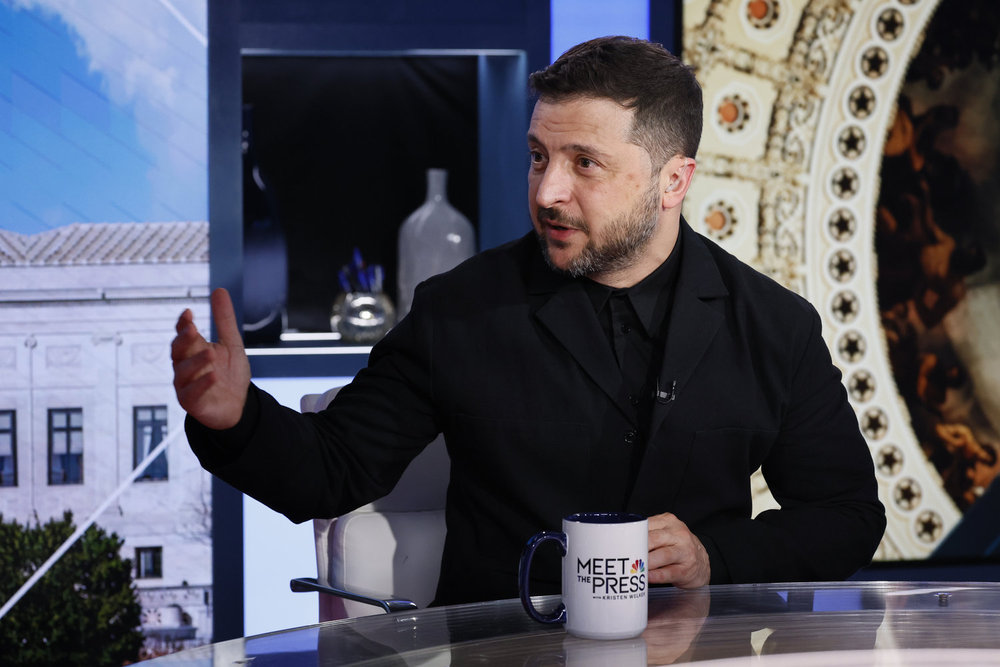
Ukrainian President Volodymyr Zelenskyy confirmed Sunday that the United States temporarily interrupted intelligence-sharing with Ukraine, as a Republican congressman demanded an investigation into separate disruptions affecting Ukrainian battlefield communications.
Speaking on NBC’s “Meet the Press,” Zelenskyy said American intelligence used to detect incoming Russian missile strikes had been restored after a brief interruption.
“We are very thankful for this,” Zelenskyy said. “Now it works.”
President Donald Trump previously maintained that intelligence-sharing had never stopped, despite Ukrainian officials reporting that some Russian attacks occurred without warning.
Zelenskyy also criticized the administration’s decision to allow Russian diesel imports and waive new sanctions targeting Moscow, warning that Washington’s actions could undermine Ukraine’s defense.
“If the United States will officially take the side of Russia … we will not prevail and we will not be able to stand,” he said.
Treasury Secretary Scott Bessent, appearing on the same program, declined three times to directly answer whether the United States considers Ukraine an ally.
“I’m not the secretary of state. I’m not the president,” Bessent said after repeated questioning by moderator Kristen Welker.
Bessent pointed to continued American intelligence and military assistance, arguing that Washington was seeking a negotiated end to the war.
Meanwhile, Rep. Mike Turner, R-Ohio, called for a congressional investigation into disruptions involving SpaceX’s Starshield satellite communications system, which Ukrainian forces rely on for battlefield operations.
“Absolutely not,” Turner said when asked whether Rubio’s explanation was sufficient. “There needs to be a congressional investigation.”
Turner warned that interrupted communications could endanger Ukrainian lives and urged Trump to reconsider waiving sanctions on Russia.
The tensions also provided material for Saturday night’s “SNL UK,” which spoofed Zelenskyy’s meeting with British Prime Minister Andy Burnham.
James Austin Johnson, reprising his Trump impersonation from the American “Saturday Night Live,” crashed the meeting as the fictional Zelenskyy pleaded for restored Starlink access. Johnson’s Trump offered to help Ukraine with anything, “provided it’s not help with war.”
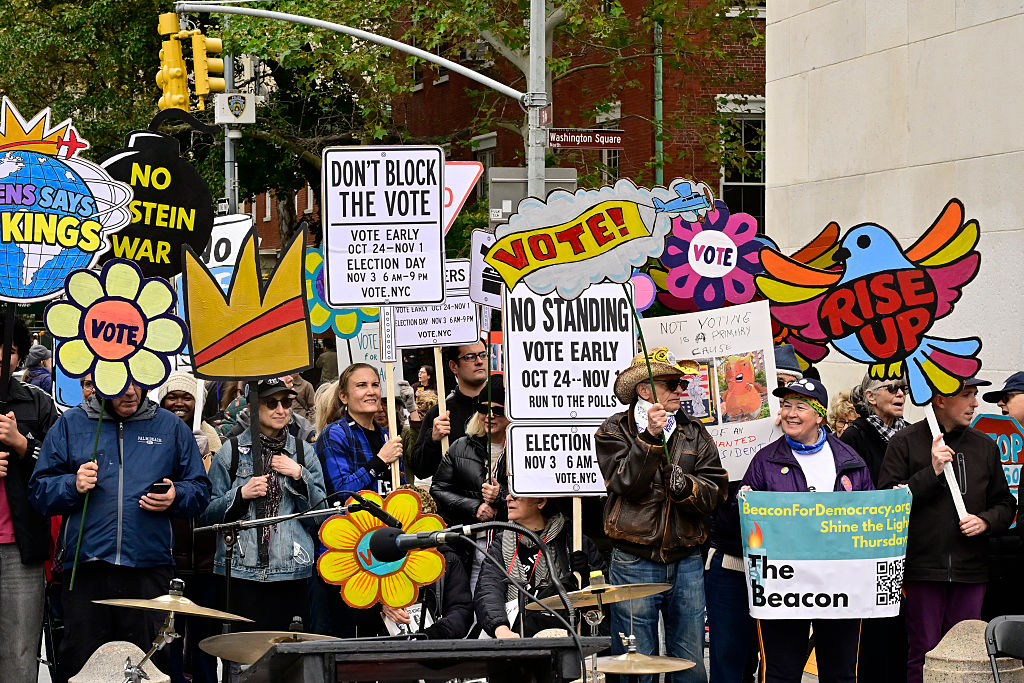
The nationwide “No Kings” protest movement took its opposition to President Donald Trump from the streets to the ballot box Saturday, holding rallies across the country to encourage early voting ahead of the Nov. 3 midterm elections.
Organizers billed the latest demonstrations as a nonpartisan effort to increase voter participation and protect election integrity, marking a shift from the massive anti-Trump marches that have defined the movement since his return to the White House.
In Washington, demonstrators gathered at the Lincoln Memorial carrying signs reading “VOTE EARLY” and “HANDS OFF MY VOTE!” Similar events took place in New York, Los Angeles, Atlanta and communities across the country.
At an Atlanta rally, City Councilman Michael Julian Bond urged participants to recognize the power of their ballots.
“You don’t see Superman giving up his power,” Bond told the crowd, according to The Associated Press. “You don’t see Black Panther giving up his power.”
But the movement’s officially nonpartisan message did not prevent some demonstrators from explicitly advocating Democratic victories.
In Alexandria, Virginia, protesters told Fox News Digital they wanted Democrats to win control of Congress, despite national organizers’ instructions against endorsing candidates or political parties.
“We got to take the power away from Trump, from the Republicans,” one participant said.
No Kings spokesperson Eunic Epstein-Ortiz defended the movement as a peaceful, nonpartisan coalition. Individual protesters’ political statements do not, by themselves, establish that organizers violated election laws.
The rallies also came amid escalating disputes over voting access. On Thursday, the Trump administration sued California election officials over mail ballots from people federal authorities identified as potential noncitizens. The Justice Department subsequently warned local election officials about possible criminal investigations involving such ballots.
With Election Day approaching, the movement’s latest demonstrations reflected a new emphasis: turning public opposition to Trump’s administration into participation at the polls.
PARIS — President Emmanuel Macron promised that rioters who “destroyed” things will face consequences as he addressed the nation on Sunday after a weekend of massive unrest across France.
Hundreds of thousands of protesters took to the streets nationwide on Saturday, with students joining trade unions and members of the public to protest the cost of living. While thousands protested peacefully, footage of mayhem including public buildings being set on fire, stores being looted and clashes with riot police drew widespread condemnation in France and abroad.
“Those who destroyed must pay; those who looted must reimburse,” Macron said.
The French government has been accused of mismanaging and underestimating the protests, with calls for Interior Minister Laurent Nuñez to resign emerging both on the left and the far right.
According to the latest figures from the French interior ministry, some 2,000 people were arrested during the turmoil. Police, firefighters and demonstrators suffered injuries as the situation unraveled.
Serge Papin, France’s minister for small business, will meet with company reps at the Ministry of Economy tomorrow to assess the damage and suggest assistance for businesses that were affected.
Macron said he was awaiting “clear answers” on why the protests turned violent. The French president accused “troublemakers from far-left splinter groups, joined by numerous delinquents” of engaging in “unbridled violence.”
With six months to go before next year’s presidential election in France, the events of Saturday quickly took on a political dimension.
Prime Minister Sébastien Lecornu also accused the “ultra-left” of fomenting the violence, alleging that the France Unbowed movement and its presidential candidate Jean-Luc Mélenchon had played an “important role” within a “far-left network” driving the unrest.
Mélenchon, along with left-wing representatives from several other parties, joined Saturday’s protests and encouraged his supporters to attend, although condemning looting and violence. He said accusations that he was responsible for the mayhem were aimed at weakening his presidential bid, and accused Macron of “letting the situation deteriorate” without offering solutions to appease the anger.
Mélenchon is currently in a close race with center-left candidate Raphaël Glucksmann and center-right candidate Edouard Philippe to clinch second place behind far-right frontrunner Marine Le Pen in next year’s election. The top two candidates in the election move to a runoff if no candidate wins a majority of votes in the first round.
“At stake, too, are France’s image, its credibility, and its influence around the world,” Philippe said ahead of Macron’s statement. “These images of violence have consequences that extend far beyond our borders.”
Le Pen and her far-right National Rally have brandished the violent footage to pitch herself as the candidate of an “appeased France.” The National Rally accused Macron and his government of being the “party of chaos,” and Mélenchon’s France Unbowed of “legitimizing violence.”
The protesters had “legitimate social demands,” Le Pen said. “The French people are fed up with being caught between the government’s austerity measures and heavy-handed taxation, and the insurrection activists.”
With the U.S. midterms around the corner on Nov. 3, President Donald Trump seized on the violence to blame migration. “France is burning! The immigration of people from an entirely different world, people with hatred in their hearts, has shattered that once great country,” Trump wrote on his Truth Social platform Sunday afternoon.
90 Prozent des weltweiten Warenhandels laufen über die Meere und genau dort attackiert Russland die westliche Sicherheitsarchitektur. Was oft als harmlose Nadelstiche abgetan wird, entpuppt sich im Schwarzen Meer und in der Ostsee als gezielte hybride Kriegsführung. Wenn Handelsschiffe ins Visier geraten und globale Lieferketten reißen, schlägt das direkt auf die deutsche Wirtschaft und die Preise an der Zapfsäule durch. Darüber spricht Rixa Fürsen mit dem Experten für maritime Sicherheit, Dr. Moritz Brake, in dieser Ausgabe.
Deutschland ist als Exportnation extrem abhängig von sicheren Seewegen, leistet sich aber die kleinste Marine aller Zeiten. Bracke analysiert, warum die deutschen Streitkräfte bei der Abwehr von russischen Schattenschiffen und Sanktionsbrechern rechtlich oft machtlos sind. Wie lässt sich diese eklatante Lücke schließen, bevor die nächste Eskalationsstufe erreicht ist?
Die Illusion der absoluten Sicherheit ist vorbei. Diese Episode zeigt auf, warum der Ruf nach gesellschaftlicher Resilienz mehr ist als nur ein politisches Schlagwort. Ein Blick nach Schweden offenbart, wie sich eine Bevölkerung mental und praktisch auf Krisen vorbereitet und warum die Zeiten der Rundum-sorglos-Mentalität endgültig der Vergangenheit angehören.
Das Berlin Playbook als Podcast gibt es jeden Morgen ab 5 Uhr. Rixa Fürsen, Maximilian Stascheit und das POLITICO-Team liefern Politik zum Hören – kompakt, international, hintergründig.
Für alle Hauptstadt-Profis: Der Berlin Playbook-Newsletter bietet jeden Morgen die wichtigsten Themen und Einordnungen. Jetzt kostenlos abonnieren.
POLITICO Deutschland – ein Angebot der Axel Springer Deutschland GmbH Axel-Springer-Straße 65, 10888 Berlin Tel: +49 (30) 2591 0 information@axelspringer.de Sitz: Amtsgericht Berlin-Charlottenburg, HRB 196159 B USt-IdNr: DE 214 852 390 Geschäftsführer: Christoph Eck-Schmidt, Carolin Hulshoff Pol, Mathias Sanchez Luna
**(Anzeige) Eine Nachricht von YouTube: Die Auffindbarkeit von Qualitätsjournalismus ist entscheidend für eine lebendige Medienlandschaft. 79 % der Medienunternehmen, die YouTube nutzen, an, dass digitale Videoplattformen ein wichtiger Vertriebskanal sind, so Oxford Economics. Und 81 % der Medienunternehmen mit YouTube-Kanal erreichen darüber weltweit neue Zielgruppen. Hier klicken und mehr erfahren.**
Rep. Ritchie Torres of New York's 15th congressional district in the Bronx introduced the Power To The Players Act this week. If passed, the bill would direct the Federal Trade Commission to establish regulations that guarantee consumers ownership of a game when they pay for it, rather than a licensing agreement.
It's increasingly common for games sold to require a connection to a server. Meaning that when a company decides to shut down those servers, the games often become unplayable. Rep. Torres singles out NBA 2K25 as a recent example. 2K will be delisting the game from storefronts at the end of the month and shutting down its servers on …
When Donald Trump clinched the presidency in 2016, my wife broke into tears on camera as a local journalist interviewed patrons at a bar in Queens that had advertised a presidential watch party, complete, in its wide-eyed audacity, with Clinton cocktails. As an immigrant and Deferred Action for Childhood Arrivals (DACA) recipient who had to navigate the cruel vagaries of the U.S. immigration system, she grokked then what it would take many people years to understand. Not long after, Trump attempted to dismantle DACA, the executive order that defended immigrant children in lieu of the DREAM Act. While my wife is now a citizen, the raid of Democratic Minnesota Rep. Ilhan Omar’s home is a reminder that not even U.S. citizenship guarantees the safety of immigrants in Trump’s United States.
The case against Omar worries me, not only because it’s bald-faced political vengeance, a grim milestone in our collective lurch toward fascism, but also because of what it means for naturalized citizens in the United States — people like my wife, my sister and my mother. Attacks on citizens who did not arrive on the Mayflower or through Ellis Island is an extension of the Trump administration’s remorseless persecution of immigrants in the U.S. Child of immigrants? Side eye. Naturalized citizen. Well, let’s revisit that paperwork, shall we?
On the first day of his second term, Trump attempted to end birthright citizenship, how I became a U.S. citizen, via executive order. Over the summer, the Supreme Court ruled against the president, but a month later, he signed two more executive orders targeting so-called birth tourism and birthright citizenship. As this latest attack on immigrants faces fresh challenges, the Department of Homeland Security is focusing on denaturalization.
In June 2025, DHS issued a memo about “prioritizing denaturalization,” a process that enables the federal government to strip people of their citizenship, which historically was reserved mostly for Nazi war criminals. At the time, I worried the memo signaled the escalation of an effort to broaden the discretion of the federal government to determine, even retrospectively, who deserves to be a U.S. citizen. Given Monday’s sweep of Omar’s Washington, D.C., home by Homeland Security Investigations agents, my fears appear to be well-founded.
The federal case against Omar follows years of accusations and innuendoes — and even a review during Trump’s first term that reportedly found no issues with her citizenship. But the president has still repeatedly called for her denaturalization and deportation, saying on social media earlier this year that she “should be in jail” and “sent back to Somalia.” He has called people from Somalia “scammers” and “lowlifes.” Vice President JD Vance has also suggested that Omar is likely guilty of immigration fraud. But what is the actual case against her?
Unfortunately, the judicial warrant is sealed, and as usual, the Department of Justice hasn’t revealed much information except to say that it is an “ongoing criminal investigation.” The involvement of Immigration Customs and Enforcement in the search, however, gives weight to comments made by public officials about potential immigration fraud. Is there any merit to the accusation? Not really.
The U.S. government granted Omar’s family, refugees from Somalia, asylum in 1995. Five years later, Omar became a U.S. citizen via a law in which minors are eligible for citizenship once their parents naturalize. Some critics have suggested without evidence that Omar was born a year earlier, which would have made her ineligible for citizenship through the aforementioned law. The bigger question is: Why now?
It’s been over 25 years, and the federal government happened to unearth “incriminating” evidence of a vocal Trump critic three weeks before the midterm elections? It’s dubious at best, and a rank abuse of power at worst.
It’s been over 25 years, and the federal government happened to unearth “incriminating” evidence of a vocal Trump critic three weeks before the midterm elections? It’s dubious at best, and a rank abuse of power at worst. Even in the worst-case scenario, Omar was a girl at the time, so any fudging of numbers would have been done by her late father, who filed the paperwork.
But this is nothing new for Trump. Casting doubt on a political adversary’s right to be in the U.S. was how Trump made his presidential bones. His 2011 birtherism tour, in which he suggested President Barack Obama was not born in the United States but rather in Kenya, was his beautillion ball, laying the groundwork for what would become his primary political strategy: Attack with conspiracy theories. Never bother to substantiate. Repeat ad infinitum. The difference now is that he has a loyal Justice Department and DHS at his back.
The birtherism lie was not unlike the current mudslinging campaign against Omar. But between then and now, a couple of major changes have taken place. One, Trump became president, and two, in his second term, he has, through a series of executive orders, communiqués and personnel rejiggering, weaponized DHS, Customs and Border Protection, ICE, Border Patrol, U.S. Marshals and other federal agencies by affording them a dangerous amount of latitude.
A salient example is the expanded 287(g) program, which allows ICE to deputize local law enforcement, thereby entangling local and federal police, effectively eliminating a peacekeeping backstop against federal overreach. Congress established the 287(g) program in 1996 through the Illegal Immigration Reform and Immigrant Responsibility Act, but in Trump’s second term, the program has so far ballooned from 140 memorandums of agreement to 2,660 agreements in 38 states and two U.S. territories.
Combine that with $70 billion in immigration funding, donning masks, failing to produce identification and eschewing judicial warrants in favor of administrative warrants — nothing more than a performative gesture — and Trump has effectively created a paramilitary domestic force that does his bidding, including going after political foes with impunity.
Denaturalizations are up, owing to this administration’s expressed priority, and naturalizations are down 75%, a consequence of intimidation tactics and the practice of federal agents ambushing immigrants at green card and naturalization hearings.
Omar’s case will be a litmus test for this administration’s authority, both in terms of carrying out political vendettas and processing denaturalization. Even if Trump’s DHS fails to denaturalize and expel the congresswoman from the country, the mere attempt sends a chilling message to naturalized citizens across the country, including my own family: You’re not safe in Donald Trump’s America.
In January, my wife and I will return to the U.S. for the first time in 15 months — the longest time we’ve been away from the country. Before becoming a U.S. citizen four years ago, my wife hadn’t left the country since she arrived as a toddler. Suddenly, she was free to come and go as she pleased, so when her postgraduate program in Versailles accepted her application, we went. Now, as our return to the U.S. approaches, a worm of doubt squirms within us. We’re both U.S. citizens, safe on paper, but what if the value of our papers has changed? What if the manner by which we obtained our citizenships — birthright and naturalization — now invites skepticism and scrutiny?
Before we moved to Europe, we went on a weekend trip to Montreal. Ahead of our return, prompted by horror stories I had seen in the news about people being detained for something as innocuous as a meme, I deleted media on my phone that could be construed as critical of the Trump administration, and I turned my phone off while going through customs. It was the only time in my life I’ve done that.
During a rally on Saturday, October 17th, in Highland Heights, Kentucky, Donald Trump bragged about how much more powerful and influential he was during his second term. While listing off his accomplishments, he mentioned his decision to rename the Gulf of Mexico and Lake Ontario.
"This is a much more powerful term. I can do stuff that's unbelievable … I called Google, Google Maps. See, Google wouldn't have taken my call in the first term. Now they kiss my ass."
Trump seems to be implying that he convinced Google to reflect the name change personally. That would seem to contradict Google's statement on the matter, in which it said that …
Conservatives have long pitched their project as a return to normalcy, a way to set right a world that’s gone off its axis. In theory, it’s an understandable goal. Who doesn’t react to getting older and more removed from the engine of culture with an initial feeling that the next generation is doing it wrong?
In practice, the right’s message is more of a respectable veil covering the fact that they want the power to beat up on minorities and buy anything they want. But there’s one arena where the right might actually be bringing back an honest-to-goodness return to tradition: the multiplex.
The lines between television and the movies used to be rather rigid. There were movie stars and there were television actors, and rarely did the twain meet. Actors without matinee idol looks or sufficient draw could make a living as character actors. Faded stars could scrape out a second act in B-movies and lesser studio offerings without losing the prestige of the silver screen. Television actors traded that type of cachet for steady work and wider audiences. A movie star appearing on television was a sign of terminal decline.
The rise of prestige television and streaming shook up the established hierarchy. If television could hit something approaching the same cinematic highs and emotional depths as a Hollywood movie, even if rarely, then the stigma of going episodic couldn’t last. The prestige TV gold rush inspired plenty of marquee stars to jump ship, taking roles from deep-pocketed streamers for niche audiences. (Somebody must be watching Reese Witherspoon and Billy Crudup on Apple TV’s “The Morning Show,” but I can’t say I’ve ever seen them.) The old order and the connotations of each medium had gone post-modern and topsy-turvy.
Enter Ben Shapiro.
The Daily Wire co-founder and conservative political commentator has made several attempts to break into Hollywood. Over the years, he has repeatedly alluded to a script he wrote as a young man at the behest of the late ABC executive Leonard Goldberg, while his dramedy about a conservative student at Harvard never got off the ground. But that hasn’t deterred Shapiro. He’s used his political commentary outlet as a springboard to produce a series of execrable comedies and thrillers, from 2023’s irredeemable and laughless “Lady Ballers,” which centers on a group of former high school basketball players reuniting to compete in women’s basketball by posing as transgender women, to the semi-competent and bloody hatefest “Run Hide Fight: Infidels.”
Shapiro’s films haven’t made much of a dent in Hollywood, let alone the wider culture. But that is likely to change with The Daily Wire’s upcoming film “Confession.”
Shapiro’s films haven’t made much of a dent in Hollywood, let alone the wider culture. But that is likely to change with The Daily Wire’s upcoming film “Confession.”
Written by Shapiro, “Confession” follows an academic in Moscow under the rule of Joseph Stalin. He’s brought in for questioning after allegedly conspiring with a dissident priest, only to find that his interrogator is a former student. In less ideological hands, the film could be an interesting examination of loyalty and state overreach. Coming from the man who accused Baron Harkonnen, the villain in the “Dune” science-fiction franchise, of being a communist, we aren’t holding our breath.
Still, the announcement of “Confession” made a splash, less for its logline than its topline. The cast is chock full of former Oscar nominees and one-time A-listers. The participation of James Franco, Rob Lowe, Brad Dourif and Emile Hirsch make this the most star-studded production Shapiro has ever produced. Beyond the musty Cold War paranoia and production design straight out of the “Command & Conquer: Red Alert” video game, the film is small-c conservative in its appeal to a bygone tradition: giving disgraced actors a mid-budget springboard from which to launch their career revivals.
Franco was once a megawatt star, but his career faltered shortly after several women accused him of sexual misconduct in 2018. In the late aughts, with a Screen Actors Guild-nominated turn in “Into the Wild,” Hirsch was positioned to be the next big thing. But the belly flop of “Speed Racer” and a 2015 assault of a female Paramount Pictures executive at the Sundance Film Festival put his career on ice. Lowe’s scandal-plagued days are long behind him, but he’d settled into a career as a reliable network television star. Most recently, the star of “The West Wing” has been a mainstay on Fox’s campy disaster series “9-1-1.” “Confession” sees him trying out long atrophied dramatic acting muscles, taking a tentative step into Hollywood. Dourif has never generated any significant controversies to our knowledge, but his appearance is notable because it contradicts his 2024 retirement announcement.
Taken with the blink-and-you’ll-miss-it starring turn from Jonathan Majors in “Infidels,” The Daily Wire’s gambit becomes clear. In reaching out to disgraced or out-of-fashion actors, the company is getting notable names for their bargain-basement productions. The actors, in turn, can add a few performances for their sizzle reels that post-date whatever controversy pushed them out of the limelight.
It’s not a bad deal for either party. From the actors’ perspective, they’re just following the B-list trails blazed by actors like John Travolta and Nicolas Cage, stars who spent decades cranking out direct-to-video duds while seeking the right role to catapult them back into notoriety. What’s new is the ideological bent of a studio like Shapiro’s. Typically, appearing in outwardly conservative fare was the mark of an inwardly conservative star. Think Kirk Cameron’s Christian schlock or Kevin Sorbo’s post-Hercules output. When a name like Jim Caviezel shows up in QAnon-adjacent thrillers, it’s a bit of a “fork found in kitchen” situation.
Shapiro’s comeback machine is something slightly different. Given what we’ve seen from the films he has worked on in the past, the machine is likely to be clunky — but that won’t matter to either party if it works.
Conservatives’ belief that “cancel culture” has gone too far, that men chastised for behaving badly are really victims of a radical mob run amok, allows them to take on names that are not welcome in Hollywood. If the ploy works, it’s proof that they were right all along — that cooler heads prevailed and the initial controversy was an overreaction.
With the Daily Wire’s film arm, Shapiro is bringing back the B-list for a cancel culture age, offering dimmed stars the chance to bide their time until the unistudio of Paramount/Warner Bros. comes calling.

 Login