 Login
Login
RFK Jr’s Relentless Anti-Vax Push Will Disproportionately Hurt Children on Medicaid
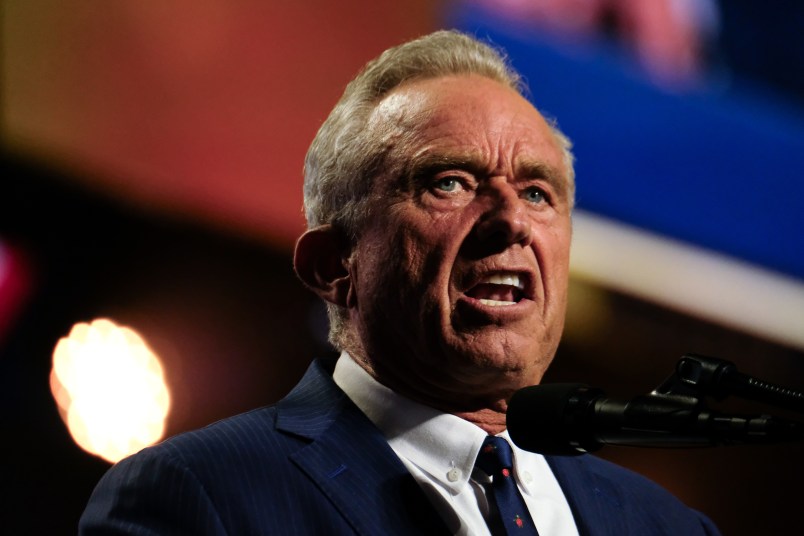
Robert F. Kennedy Jr. has already demonstrated his Department of Health and Human Services has no concern for disparities.

Robert F. Kennedy Jr. has already demonstrated his Department of Health and Human Services has no concern for disparities.
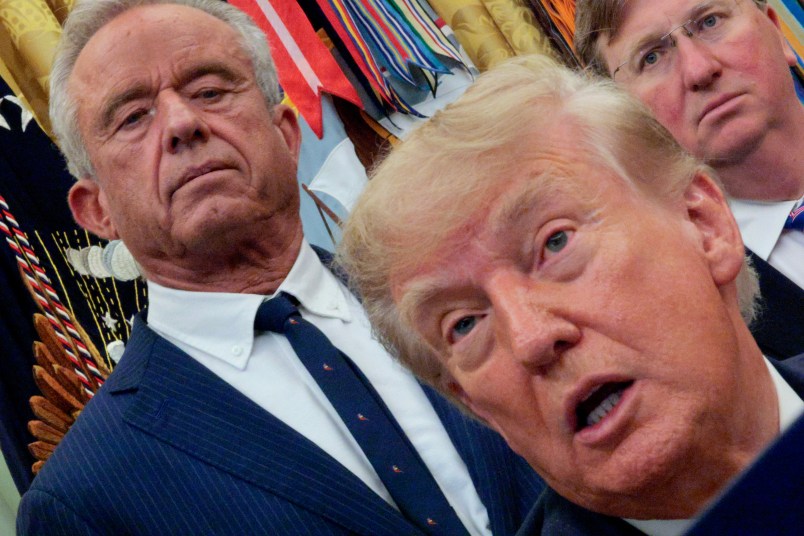
Robert F. Kennedy Jr. has escorted his dangerous vaccine skepticism into the homes of every American through his role as secretary of the Department of Health and Human Services. Now, public health experts and attorneys are worried that Kennedy might do away with effective federal vaccine recommendations altogether.
Right now, vaccines are recommended either on a universal basis, using a risk-based assessment for people with specific risk factors, or using what Kennedy’s HHS calls shared clinical decision-making, a controversial vaccine skeptical-adjacent category that the department has defined as an individualized process between a patient and physician. The comment period for an HHS request for information concluded on Sunday and sought comment on whether existing types of federal vaccine recommendations should remain in place.
The request, posted to the Federal Register, also sought to consider “individual autonomy and religious freedom…and the communication practices necessary to earn and maintain public trust,” related to the federal childhood vaccine schedule.
But while shrouded in language implying greater freedom, pediatric health advocacy groups, health attorneys, and public health researchers said in public comments that further changes to vaccine recommendations will only jeopardize public health and child safety.
And HHS’s apparent plan to change childhood vaccines is groundless.
““[T]here simply is no basis for the RFI’s implicit suggestion that the current recommendation framework produces unsafe results and needs fundamental revision,” wrote a group of health advocacy groups and scholars, including the American Public Health Association, Robert Wood Johnson Foundation, and Bruce G. Gellin, former deputy assistant secretary of Health and director of the HHS National Vaccine Program Office.
The HHS request poses its own potential vaccine categories, including vaccines that are recommended but not for babies, or recommended, but with other undefined caveats.
It comes as part of President Donald Trump’s August 2026 executive order, which required HHS to revive a defunct childhood vaccine task force and to reevaluate childhood vaccines.
“The arbitrary categories identified in the RFI without context, without accompanying evidence and without a clear communication strategy with medical professionals, the public health system, and the American public will inevitably produce widespread confusion and uncertainty,” the group of public health advocacy organizations and experts wrote in the public comment. “In the setting of such confusion, the principle of informed decision-making is at risk with the likely result that vaccine doses will be missed and diseases that are vaccine preventable will recur.”
Currently, America is experiencing its worst year for measles, the once all-but-eradicated viral disease, since 1991, according to the Associated Press. There have been 792 cases of the disease in Pennsylvania this year alone, and four people in the state have died of the illness since January. RFK battled Governor Josh Shapiro, claiming without evidence that state officials errantly attributed the deaths to measles. Kennedy had two of the Pennsylvania deaths removed from the Centers for Disease Control and Prevention measles dashboard which, as of Sept. 18, did not have any measles deaths listed.
Echoing Trump’s executive order, the HHS information request emphasizes that evidence, alongside freedom and trust, are paramount when considering vaccine recommendations. A public comment submitted by members of Georgetown University’s McCourt School of Public Policy, however, notes that patients overwhelmingly trust their personal healthcare providers. A July survey by KFF found 86% of respondents trust their own doctor compared to 51% who trust the CDC and 34% who trust RFK. Even MAGA Republicans are more likely to trust their healthcare provider than RFK, at 86% compared to 74%.
“Any change to the current categories could cause provider and public confusion, leading to greater mistrust and wider spread of misinformation,” Hannah Green, state health policy analyst, and Kelly Whitener, an associate professor, wrote in the Georgetown public comment.
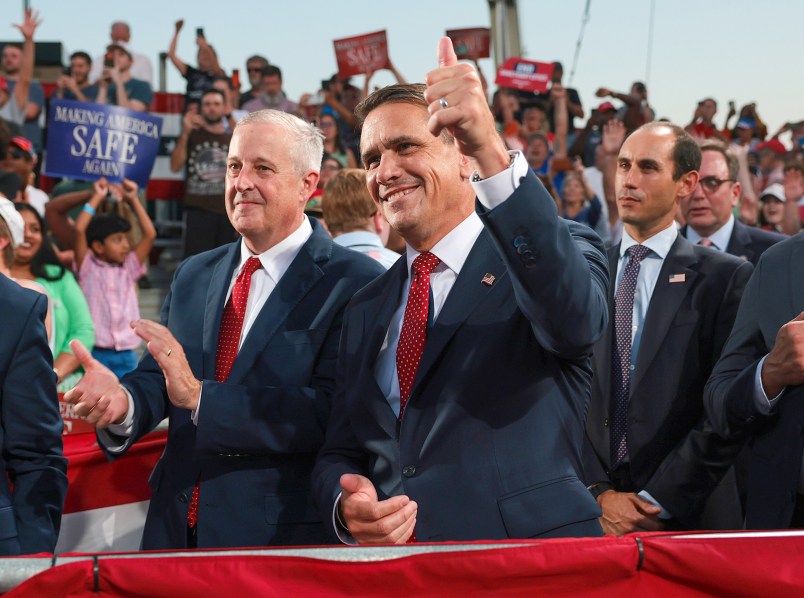
Earlier this week, one of our TPM reporters let me know he was tuning into the White House’s press conference. I was surprised when he told me who the fill-in press secretary would be that day: Attorney General Todd Blanche.
I probably shouldn’t have been. Blanche, since winning Senate confirmation, has set about fully demolishing yet another norm: that the attorney general stay out of politics. Not only has he given a White House press briefing — in recent weeks, he’s hit the campaign trail.
The press conference this week saw Blanche affirming that Trump and his family were right on all the issues of the day.
Last week, Blanche spoke at the Republican midterms convention, an effort (however questionably successful) to get the base hyped to vote. On Wednesday, he campaign for former RNC head Michael Whatley, who is running for Senate in North Carolina and badly trailing former governor Roy Cooper (D). Blanche’s political campaigning pales in importance compared with the department’s aggressive prosecution of the president’s enemies — from random protesters and social media shit-stirrers to former FBI directors. But it is all of a piece.
The norm of the attorney general remaining apolitical dates back to the ’70s, Charlie Savage writes in the New York Times, when Nixon’s first attorney general, John Mitchell, ran Nixon’s 1968 and 1972 campaigns and, in between, played a central role in multiple aspects of Watergate.
Amid everything going on — Watergate would be a “12-hour news story” today, as JD Vance so memorably put it — it can feel like weak tea to talk about the vagaries of the Hatch Act, or norms of Justice Department independence. It can feel quaint to remember how Merrick Garland launched an investigation into Biden just a few short years ago. Remember the freakout that ensued when Bill Clinton and Obama attorney general Loretta Lynch chatted for 30 minutes on an airport tarmac while Hillary Clinton was under investigation? It may have set off a chain of events that brought us Trump in the first place.
Still, it’s worth keeping sight of how quickly things have changed, just to keep perspective.
When Sen. Bill Cassidy’s (R-LA) voted to confirm Blanche, he asserted that if Blanche wasn’t the Senate-confirmed attorney general, Trump would likely go find an acting attorney general who was worse. Because Blanche had been Trump’s personal lawyer, he had developed the ability to talk the president out of his worst ideas, Cassidy reasoned. “I am realistic that President Trump can be unrelenting,” he sighed. He, therefore, had not choice but to confirm Blanche, he decided.
That whole line of reasoning may be pathetic, but there’s something to it. And it’s a striking statement on where we’re at.
This is an unpaid cross promotion from our friends at Popular Information: Are you curious about what politicians are funded by major corporations? Would you like to know how money impacts important policy decisions? Would you like to peek behind the curtain of DC’s influence game? If you answered yes to any of these questions, we recommend signing up for Popular Information, an independent newsletter dedicated to accountability journalism.
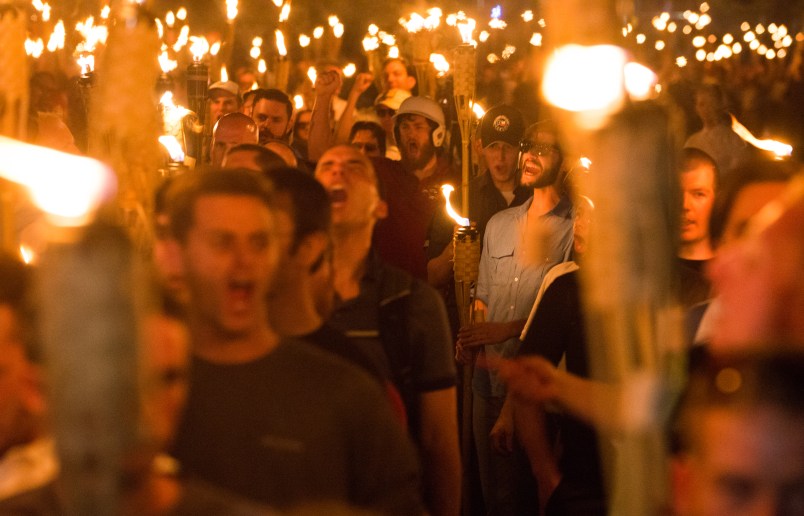
On Monday, TPM reporter Chris Mathias revealed that Republicans’ nominee for a Florida legislature seat attended the Charlottesville white supremacist rally, part of years of activism alongside a neo-Confederate group called League of the South. Marshall Rawson’s candidacy, we found, had seemingly become a kind of cause célèbre among the furthest-right activists in American politics, who donated at least $15,000 to his campaign. Rawson had personally made it “very clear” to one former Klan lawyer “that he’s taking a stand against discrimination against white people,” the lawyer told us.
The story was covered by The Washington Post, The New York Times, MS NOW, The New Republic, Politico, The Independent, The Guardian, and local outlets including Charlottesville Weekly, the Tampa Bay Times, and the ABC affiliate for northcentral Florida.
So, is the GOP standing by Rawson?
Yes.
