❌

Reading view

The power of Latinas’ Trump regret could swing this election

This story was originally reported by Mel Leonor Barclay of The 19th. Meet Mel and read more of their reporting on gender, politics and policy.

RIO GRANDE CITY, Texas — When Cynthia Villareal voted for President Donald Trump in 2024, she did so trusting his campaign promises of lower gas prices, border security and “assistance for the people — for the middle class.”

The 43-year-old mother of four turned out for Trump alongside a sizable majority of voters in heavily Latino Starr County, which hugs the border with Mexico and had reliably turned out for Democratic candidates for five generations.

Less than two years later, Villareal said the promise of her vote never materialized. “He said gas prices were gonna go down. They haven’t — they haven’t at all,” said Villareal, who drives around the Rio Grande Valley for her job supervising home health aides and feels every little surge. Villareal manages workers in a shortstaffed, tough profession where wages have simply not kept up with the cost of living. Many of her best workers, she said, are immigrants without permanent legal status experiencing the brunt of Trump’s immigration agenda. 

“I mean, he didn’t mention that these ICE agents were just going to be picking up all of these hardworking employees, you know, that have no backgrounds,” Villareal said, referring to immigrants without a criminal record. “They’re leaving people without their family, basically, and then some of the people are even dying in there,” she said of immigration detention. “Like, who knows what they’re doing to these poor people?”

For Villareal, life is more expensive, and her job harder. “It’s just too much.” 

Latina voters’ rightward shift was a crucial part of Trump’s reelection in 2024, and while more Latino men backed the president, Latinas actually made larger strides to the right in the last four presidential cycles. 

Ahead of the midterms, Latinas are also registering higher levels of regret when thinking about their support for Trump, a dynamic that may decide the outcome of competitive races from Texas to Florida and beyond. 
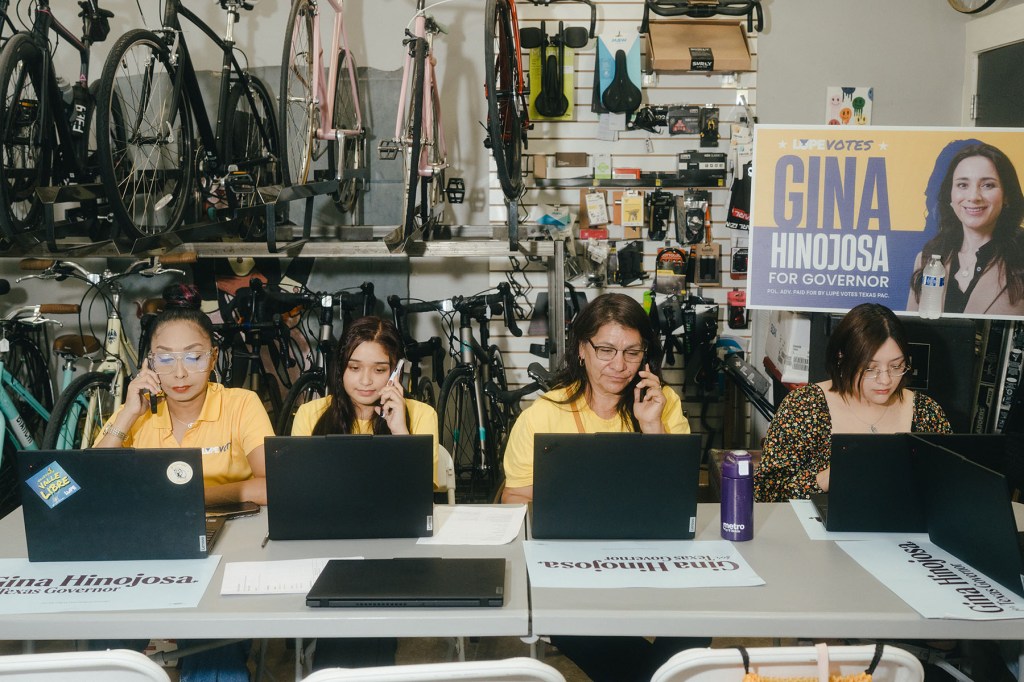
Four volunteers sit at a long table inside a bicycle shop, working on laptops. Two speak on phones while another looks at her screen. Bicycles hang behind them, and a Gina Hinojosa for governor campaign sign is displayed overhead.      
Volunteers with LUPE Votes phone bank for Democratic candidate for Texas governor Gina Hinojosa in Brownsville, Texas, on September 15, 2026.
(Brenda Bazán for The 19th)

Voters like Villareal shed light on how Trump regret among this swingy and powerful group of voters — Latinas vote at higher rates than Latino men — may be the swell that breaks into a blue wave for Democrats this November. 

“I do think the narrative of this election could be that Latina women, in particular, help decide who is in control of the House of Representatives and the balance of government. And I say that because of the shifts we’ve seen over time and the shifts back that we are seeing now among Latina women in particular,” said Stephanie Valencia, who studies Latino voters at Equis Research.

Latinos’ political power this cycle is spread across the midterms map. Latinos make up at least 15 percent of the population in six of the 17 most competitive congressional districts, as well as in 29 other districts considered broadly competitive, mostly in the Southwest, California and Florida. Latino voters could be the deciders in competitive races for the U.S. Senate in Texas and Florida. Also in Texas, Latinos could swing the most competitive governor’s race the state has seen in years and, in doing so, elect the first Latina to the state’s top job. 


Start your day with essential news from Salon.
Sign up for our free morning newsletter, Crash Course.


“Trump appealed to their pocketbooks and people were suffering here. I also think people were tired. We’ve been Democratic for over 100 years — why don’t we try something different?” said Cecilia Hernández, who founded the local political group Somos STARR this year in response to the big swings to the right she’s seen in her community. 

In an interview at the office of her family’s trash collection business, Hernández said voters’ views are shifting this cycle. 

“I think along with everything that’s happening with immigration and with the cost of living today, what I’ve been receiving a lot is, ‘I’m in the middle,’” Hernández said. “They don’t want to be seen as far right, and they don’t want to be seen as far left, either.”


Latinas stand out in just how much they are feeling the burn of rising costs. They report higher levels of financial stress and are less optimistic about the national economy, according to multiple surveys of Latino voters conducted over the past year. 

An expansive survey of Latinos conducted in the spring and sponsored by UnidosUS, a Hispanic civil rights and advocacy organization, found that Latinas are more likely than Latino men to say that they have trouble meeting expenses — 23 percent of women vs. 17 percent of men. Men are much more likely to say they can meet their expenses and even have a little left over.

Thirty-eight percent of Latinas voted for Trump in 2024, versus half of Latino men, according to one high-quality analysis, driven by high costs and lack of confidence in the party in power on the economy. The UnidosUS survey of 3,000 Latino voters found that almost a third of Latinas who voted for Trump had regrets about their vote —  seven points more than Latino men. 

Regret is most striking among young Latinas: 42 percent said they would not vote for him again, a 12-point gap with young Latino men. Latina voters are more likely to register and turn out to vote, and with Latino voters skewing younger, young Latinas wield outsize political power. 

Juan Lozada smiles at the camera wearing a black cowboy hat topped with a blue "Gina for Texas" baseball cap. He has a white mustache and wears a black Western-style shirt with a decorative collar and bolo tie.      
Juan Lozada, a supporter of Democratic candidate for Texas Governor Gina Hinojosa, at an event in McAllen, Texas on September 14, 2026.
(Brenda Bazán for The 19th)

“Latina women have a large gender pay gap. We also have higher unemployment. We also generally have the responsibility of going to the supermarket and paying the grocery bills and understanding that eggs and and everything else is more expensive,” said Katharine Pichardo, the president and CEO of the Latino Victory Project, which backs progressive Democrats. Latinas are more likely to be closely involved in their kids’ education and doctors’ appointments, a frontline view on rising costs that Pichardo said shaped how they voted in 2024 and their views on that vote now. 

Melissa Morales, the president of Somos Votantes, which does political outreach to Latinos on behalf of Democratic candidates, said Latinas started peeling away from Trump almost immediately in his second term, while Latino men started shifting in the latter part of 2025. 

While Latinos, like voters overall, broadly rank the cost of living as their top issue, the disparate impact of the administration’s immigration policies on Latino communities is also registering among Latino voters. 

A New York Times/Siena poll conducted in mid October found that only a third of Hispanic voters approve of the administration’s handling of immigration. UnidosUS’ survey found significant gender gaps between Latino men and women. While both groups rank the importance of the issue about the same, Latinas were more likely to oppose policies like ending birthright citizenship and more funding for Immigration and Customs Enforcement (ICE). Latinas were also more likely to support banning ICE from sensitive locations like schools and hospitals and to support requiring warrants for enforcement at home or in a workplace. 


Some of the most dramatic shifts toward Trump and Republicans in 2024 were logged in Texas’ Rio Grande Valley, where Villareal lives. A string of counties in this part of Texas saw double-digit shifts in Trump’s favor compared with the 2020 election, after significant shifts to the right from 2016 to 2020. 

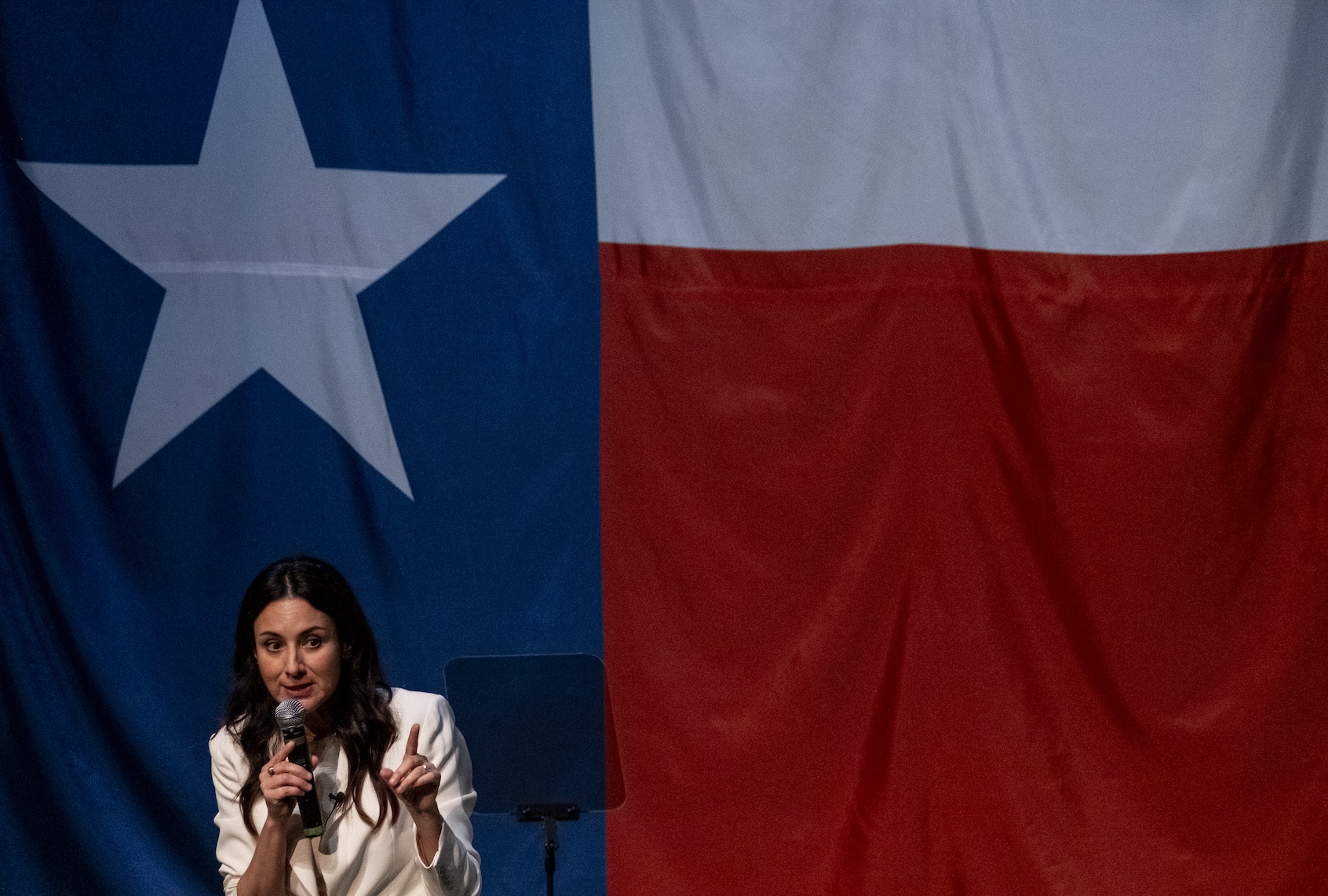
Latina voters in the Rio Grande Valley and around Texas will have a big impact on the Texas governor’s race, where Democrat Gina Hinojosa is locked in a dead heat with three-term Gov. Greg Abbott. Hinojosa describes herself as a populist who will tackle corruption and undue influence in government, which she ties to rising costs, weakened public schools and more. 

Hinojosa rarely acknowledges the history-making potential of her campaign as a Latina in a state that has never elected a Latino to the governor’s mansion. She instead nods to it by saying that she’d be the first governor from the Rio Grande Valley, which for Texans may as well mean the same thing. 

Gina Hinojosa speaks into a microphone on an outdoor stage at night, raising one fist in the air. Bright stage lights illuminate her as audience members hold up phones in the foreground.      
Gina Hinojosa speaks at an event in McAllen, Texas, on September 14, 2026. If elected, Hinojosa would become the state’s first Latina governor and its first governor from the Rio Grande Valley.
(Brenda Bazán for The 19th)

Hinojosa, who is bilingual, flexes her Spanglish easily on the stump, telling voters that the most important lesson she ever got came from her mother was the scolding, “No te dejes.” It doesn’t have a direct translation in English. 

“The best thing I can come up with is, ‘Know your worth and defend it,’” Hinojosa said in an interview. Asked if the Spanish phrase was connecting with voters, Hinojosa said, “for sure with Latinos, and 1,000 percent with Latinas.” 

“I’ve learned on the campaign trail that this is a saying that is mostly passed down through the women in the family,” she added. “And I think it’s because of this knowledge that women have for their daughters, grandmothers have for their granddaughters, that the world is tough, and we have to be strong.” 

At campaign events in the Rio Grande Valley in September, several voters cited Hinojosa’s identity and approach to politics as a motivating factor. 

Juanita Vallejo, 40, of Edinburg, Texas, said she sees Hinojosa as an “empowered woman,” and likes her firm stances in support of public schools and curtailing data centers. 

“I don’t want to say it this way, but I’m going to say it — she wouldn’t kiss ass to Trump. I think she would stand up to what is right,” said Rosie Hernandez, 56 of McAllen. 
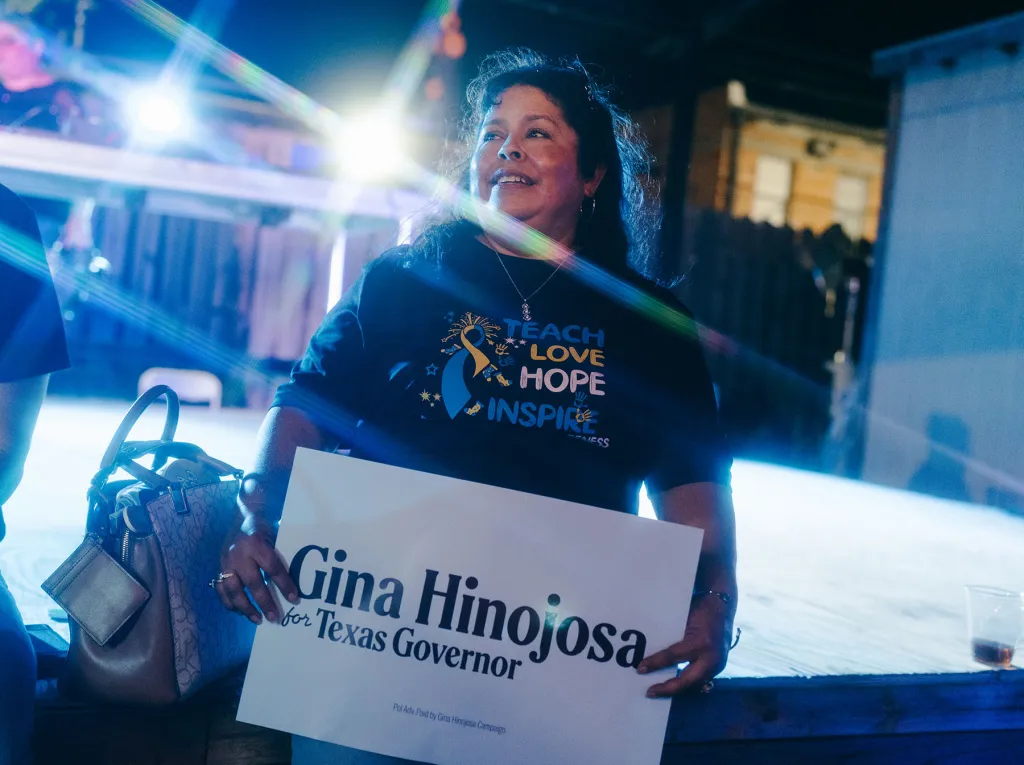
Rosie Hernandez smiles while holding a large Gina Hinojosa for Texas governor campaign sign. She wears a dark T-shirt with the words "Teach Love Hope Inspire," with bright stage lights shining behind her.      
Rosie Hernandez, a supporter of Democratic candidate for Texas governor Gina Hinojosa, at an event in McAllen, Texas, on September 14, 2026. Hernandez, 56, said she believes Hinojosa would stand up to Trump and fight for public schools and curtailing data centers.
(Brenda Bazán for The 19th)

Hinojosa is one of the breakout candidates of the cycle, but she has had to plead for funding from national Democrats hesitant to spend in Texas. Earlier this month, a group of influential Latinos in Democratic political circles put pressure on Kentucky Gov. Andy Beshear, who chairs the Democratic Governors Association (DGA), to invest $10 million in the Texas governor’s race. The DGA decided to send $1 million.

Valencia, who signed onto the letter, said Democrats’ investment in Hinojosa’s race has larger implications for the party and sends a message to Latinos. “She’s a once-in-a-generation candidate from a state that is disproportionately Latino that has been the unicorn that Democrats have chased for decades,” Valencia said. 

“To have such a young, dynamic, charismatic Latina candidate in this environment and to not back her is a statement in and of itself, and it says a lot about how certain national Democrats feel about Texas and how they feel about certain candidates.” 

Hinojosa’s ability to build enthusiasm for her campaign after starting out with a low profile as a state legislator from Austin could bode well for one the biggest challenges when it comes to Latino voters: turning them out. 

Latinos had the lowest turnout rates among the major racial and ethnic groups at 51 percent, compared with 71 percent among White voters and 60 percent among Black voters. Nearly 6 million eligible Latinas did not vote in 2024.

During a town hall in Houston with a local Latino influencer this month, Hinojosa mused about the event likely being the first time a candidate for governor hosts an event in Spanish. Before Hinojosa arrived on stage, the host ushered to the microphone a woman who identified herself as a 46-year-old Houston native who had never voted before. Holding a white and orange slip, she said she had registered to vote earlier that day. “Quiero cambio,” she said to cheers. “No more Trump.” 
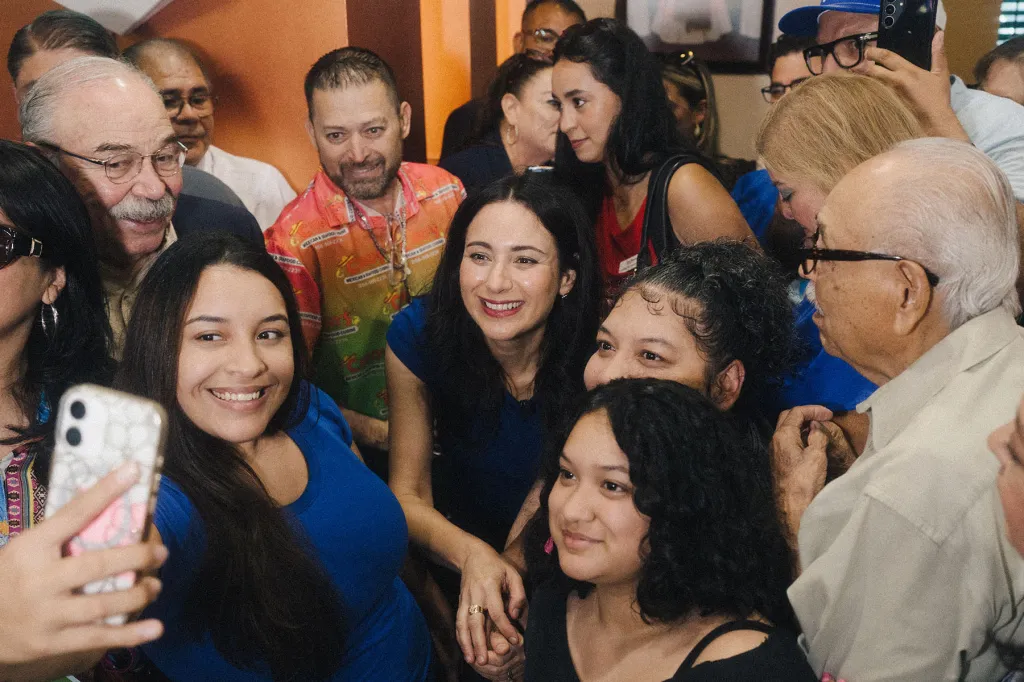
Gina Hinojosa smiles amid a tightly packed group of supporters, several of whom lean in for a photo. A young woman in the foreground holds up a phone to take a selfie while others crowd around the candidate.      
Democratic candidate for Texas governor Gina Hinojosa meets with supporters in Weslaco, Texas, on September 15, 2026.
(Brenda Bazán for The 19th)

As both parties look ahead to the 2028 presidential election, they’ll have to contend with the fact that the Latino vote is a swing vote. Whatever gains Democrats make this cycle, they have a lot of ground to make up — especially with Latinas.

Nine days out from Election Day, Villareal said she is planning to vote for Democrats up and down the ballot. She described her vote this time as against Republicans — a register of regret — rather than about enthusiasm for the Democrats on the ticket. 

“We have to trust somebody. We have to vote for somebody no matter what,” Villareal said. 

“And obviously, the way things went in 2024 with Republicans, there wasn’t a change at all. It’s just been worse. So we’re gonna try and see.”

To check your voter registration status or to get more information about how to vote and what’s on your ballot, visit vote.org.

The post The power of Latinas’ Trump regret could swing this election appeared first on Salon.com.

  •  

A Democrat told her opponent not to ‘mansplain.’ It struck a chord

This story was originally reported by Grace Panetta of The 19th. Meet Grace and read more of their reporting on gender, politics and policy.

PEEKSKILL, New York — Betsy Abrams, a 67-year-old executive assistant, showed up at a political rally held in a park on the banks of the Hudson River wearing a shirt that read, “Sit over there, I don’t need your mansplaining.” She was also holding a stack of yard signs for Cait Conley, the Democratic challenger in New York’s 17th Congressional District.

Abrams didn’t support Conley in the primary, but she’s been impressed with her on the campaign trail. Conley, who’s challenging Rep. Mike Lawler in one of the country’s most competitive races, also won Abrams over in an October 15 debate in a heated back-and-forth over a question about whether there should be a federal standard for consent.

Conley told Lawler: “I do not need you to mansplain to me what sexual assault and domestic violence against women is and the appropriate response. Don’t start. Sit over there.” 

As a survivor of abuse herself, Abrams said, “It hit a chord with me.” 

Cait Conley speaks into a handheld microphone behind a campaign podium, with a large American flag hanging behind her and wooded hills in the distance.      
Cait Conley, the Democratic challenger in New York’s 17th Congressional District, speaks at a get-out-the-vote rally in Peekskill, New York, on October 25, 2026. Conley, who’s challenging Rep. Mike Lawler in one of the country’s most competitive races, won over some supporters after a heated debate exchange about sexual assault and domestic violence.
(Adrianna Newell for The 19th)

The question was sparked by a bombshell lawsuit filed by a former student at Cornell University, some 200 miles north of the district. The plaintiff, identified in court documents as Jane Doe, is suing the university and seven men she accuses of raping her at a fraternity house in 2024. Lawyers for all seven defendants have denied the allegations. Both the university and the local district attorney, who initially declined to prosecute the men, have come under fire for how they handled the case.

Along with Abrams, Dawn Greenberg, a 63-year-old Conley supporter, and several other women showed up at Saturday’s rally with House Minority Leader Hakeem Jeffries in Peekskill with T-shirts and buttons referencing Conley’s line.

“One of the things I love about her is her fire in her belly,” Greenberg said of Conley. “That spoke to me.”   

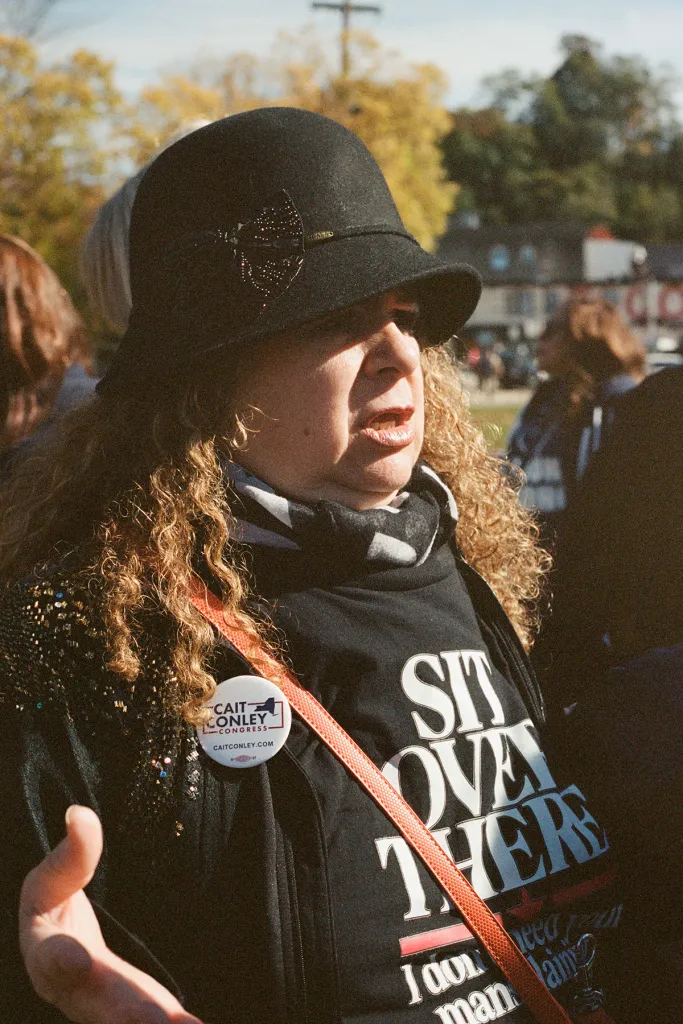
Mellicent Dyane, wearing a black cloche hat, patterned scarf and Cait Conley campaign button, speaks outdoors at a rally. Her shirt reads, "Sit over there. I don't need your mansplaining."      
Mellicent Dyane, a filmmaker and Democratic district leader in Pleasantville, attends a get-out-the-vote rally for Cait Conley in Peekskill, New York, on October 25, 2026. (Adrianna Newell for The 19th)

The cost of living, healthcare and the impact of the second Trump administration’s policies have been the biggest issues in the race for New York’s 17th District and around the country. But in a year where multiple men have resigned from Congress amid allegations of misconduct; the Cornell case brought campus sexual assault back to the forefront of the national conversation; and revelations from millions of files connected to the late sex offender Jeffrey Epstein have led the headlines, the exchange struck a chord with many women supporters. 

Mellicent Dyane, a 60-year-old filmmaker and Democratic district leader in Pleasantville also wearing the shirt, is one of many women who were disturbed by those blaming the victim of the alleged assault and what she saw as a lack of accountability for perpetrators.   

“Universities need to stop this bullshit,” she said.


Start your day with essential news from Salon.
Sign up for our free morning newsletter, Crash Course.


Conley, who has served multiple tours of duty overseas as a military police officer, said rates of sexual assault and domestic violence are “unacceptable.” 

“I think we do need to relook at how the law enforcement structure around violent crimes on campuses is, and make sure that every victim gets access to quality law enforcement and justice, regardless of ZIP code,” she told The 19th. “America is about freedom, equality, and justice for all, but that’s not what’s happening right now.” 

When asked about their exchange in the debate, Lawler said Conley’s charge of mansplaining was “manufactured” political theater. 

In the debate, Conley and Lawler sparred over their associations with men accused of misconduct. Conley said she was “disappointed” with Lawler’s support of his colleague Rep. Max Miller of Ohio, who has been accused of domestic abuse by his ex-wife and mother of his daughter; Miller has denied the allegations. Lawler, in turn, criticized Conley for taking campaign donations from former New York Gov. Eliot Spitzer, who resigned in 2008 after a federal investigation revealed he had hired sex workers; he was not accused of abuse or charged with a crime. 

Republican Rep. Mike Lawler speaks into a microphone on a stage framed by blue curtains and New York state flags. An audience member raises a hand in the foreground, partially obscuring the stage.      
An attendee reacts as Rep. Mike Lawlerspeaks during a town hall on April 12, 2026 in Mahopac, New York.
(Eduardo Munoz Alvarez/Getty Images)

“Fact is, she attacked me, and I pointed out her hypocrisy on the issue of taking support from a sexual predator, Eliot Spitzer, and her response is not to denounce Eliot Spitzer, but to say that I’m mansplaining,” Lawler told The 19th. “That didn’t land as well as you or others may think it did, with her made-up T-shirts that magically were produced right away.” 

Lawler, first elected in 2022, is running on his record of achieving results and working across the aisle. He’s one of just three House Republicans representing a district that voted for Vice President Kamala Harris in 2024 and has been endorsed by Democratic colleague Rep. Jared Golden of Maine.

“At the end of the day, people know who I am, they know what I stand for. I’ve consistently been rated among the most bipartisan and effective members of Congress, and ultimately, I think people will judge me based on my record and who I am,” Lawler said in a brief interview in Nanuet on Sunday, adding that people in the district “don’t actually know” or care who Jeffries is. 

But defeating Lawler is a top priority for other Democrats, including Assemblymember Didi Barrett, who said she’d seen him be “a real jerk,” in the state assembly. That’s also a goal for  Jeffries, who is poised to be House speaker if Democrats retake the chamber and called Lawler a “MAGA extremist phony” in Peekskill. 

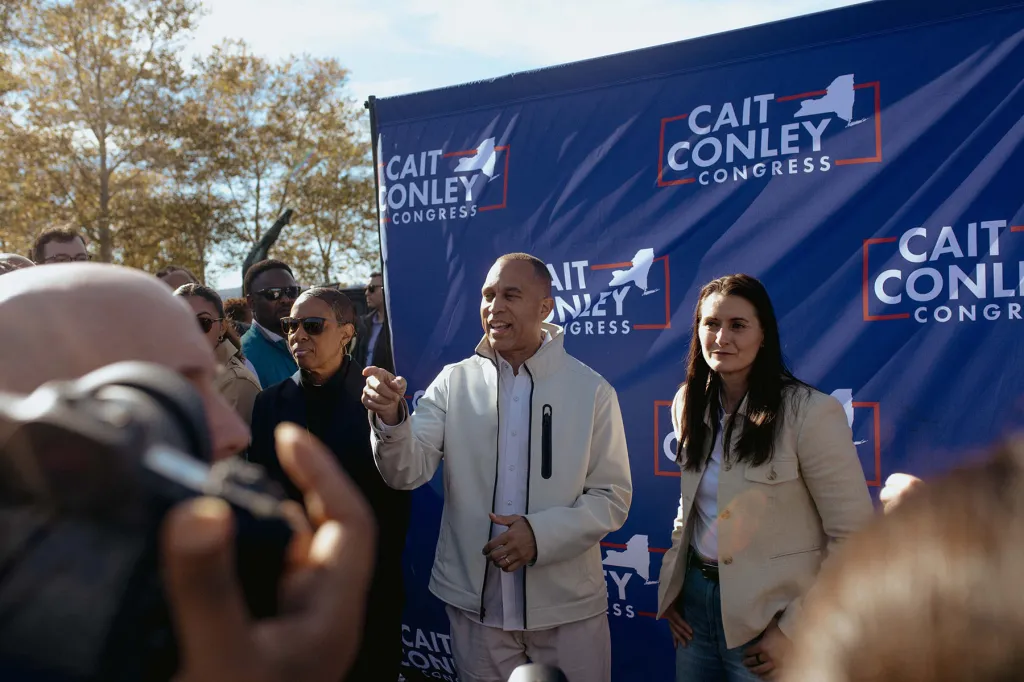
House Minority Leader Hakeem Jeffries gestures toward a crowd while standing beside Cait Conley in front of a blue campaign backdrop. Photographers and supporters gather around them.      
House Minority Leader Hakeem Jeffries and Cait Conley greet supporters at a get-out-the-vote rally in Peekskill, New York, on October 25, 2026.
(Adrianna Newell for The 19th)

The firestorm around the Cornell case has also spurred some Democrats to call for changes to New York’s laws around intoxication and consent — and to elect more women lawmakers.  

“From Congress to Cornell, it’s clear we need more women,” Barrett said at a rally and canvass launch for Conley and other down-ballot women candidates later Saturday in East Fishkill, about an hour’s drive north of Peekskill. 

“I think that everybody needs to understand that if women aren’t at the table, things are going to keep happening like that,” she told The 19th.   

To check your voter registration status or to get more information about how to vote and what’s on your ballot, visit vote.org.

The post A Democrat told her opponent not to ‘mansplain.’ It struck a chord appeared first on Salon.com.
  •  

Betrayed, disappointed, hurt — and backing Democrats anyway

This story was reported in partnership with Uncloseted Media, an LGBTQ-focused investigative news outlet.

Max Sorgenfrey was sipping a coffee at a cafe in Charleston, South Carolina, in early October when her phone began lighting up with messages. People were sending her a new ad from Annie Andrews, the state’s Democratic Senate nominee, that referred to transgender women like Sorgenfrey as “biological men,” a marked shift in language that confounded many of her supporters.

Appearing in the direct-to-camera ad wearing a white lab coat and a stethoscope slung over her shoulders, Andrews, a pediatrician, said she would oppose “gender surgery for minors” and “men in women’s sports” as South Carolina’s first Democratic senator in more than 20 years. “I want you to hear me loud and clear,” Andrews said in the ad, released October 8, days after President Donald Trump had called her an anti-trans slur on social media.

The backlash to Andrews’ ad was swift. Twenty local LGBTQ+ rights groups signed an open letter denouncing “transphobic attacks, slurs, and fear-based political messages” in midterm races across South Carolina. “We deserve leaders who support transgender people as whole people worthy of safety, dignity, and care,” the groups wrote.

Sorgenfrey, a co-chair of the Charleston chapter of the Democratic Socialists of America, helped the organization draft its own statement. “What message does it send by showing Trump’s bullying works?” the Charleston DSA wrote on its Instagram page. “Why are so many of Democratic politicians willing to sacrifice everything but their personal comfort when fights come to their doorstep?”

Sorgenfrey struggled with what to do with her vote. She was frustrated and angry that Andrews, who had once called statewide restrictions on trans athletes “shameful” and criticized a South Carolina hospital system for suspending gender-affirming care for youth under pressure from Republicans, had appeared to have been moved by the same forces.

She’s still voting for Andrews on November 3. 

“At the end of the day, her winning proves a lot about what’s possible in South Carolina,” Sorgenfrey said. “Her winning still pushes the momentum in a direction that is positive for the state, and hopefully, in the wake of that momentum, there can be stronger forms of accountability in terms of not backing down on LGBTQ values.”

Lorien Lucero is probably voting for her, too. Lucero is a consultant who met Andrews at a Pride event over the summer, where Andrews had asked her for her support in November and pledged to fight for trans people in Washington.

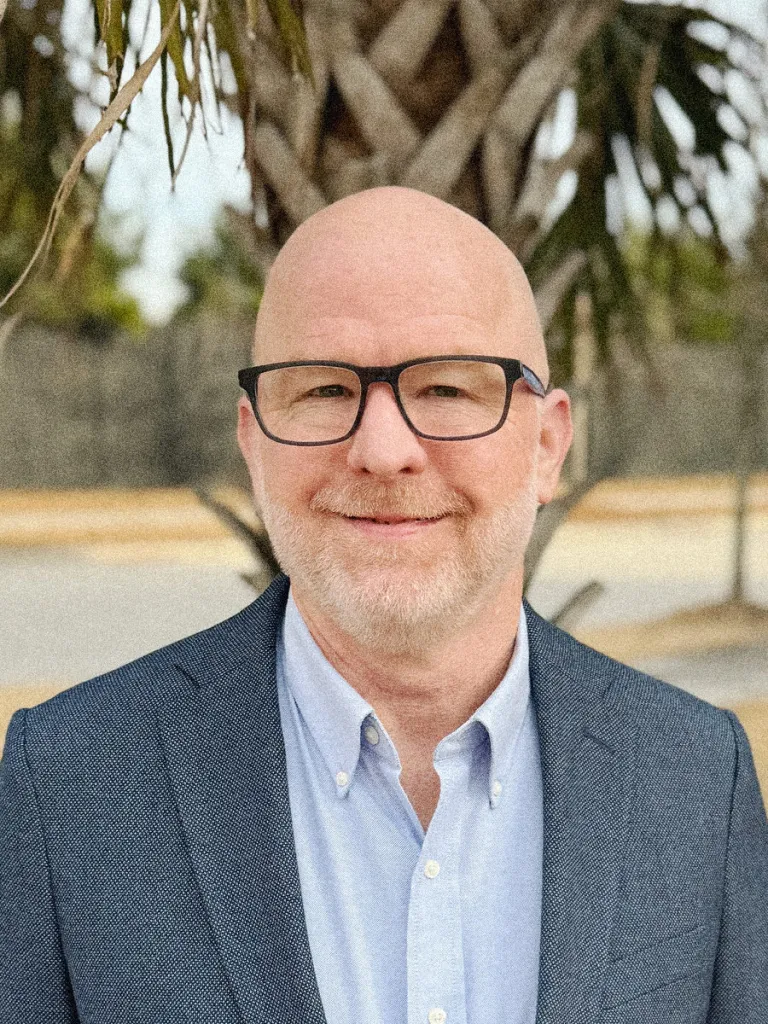
Portrait of Bell in a blue suit against a palm tree background.         
David Bell
(Rebecca Bell)

David Bell already did. He’s a longtime South Carolina resident whose adult daughter is trans. He found Andrews’ choice of words in the ad “deeply, deeply hurtful.”

“Answering the way she did only solidifies that we’re leaving trans people behind, because she’s using the same rhetoric. It makes it feel like trans people are being thrown away,” he said.

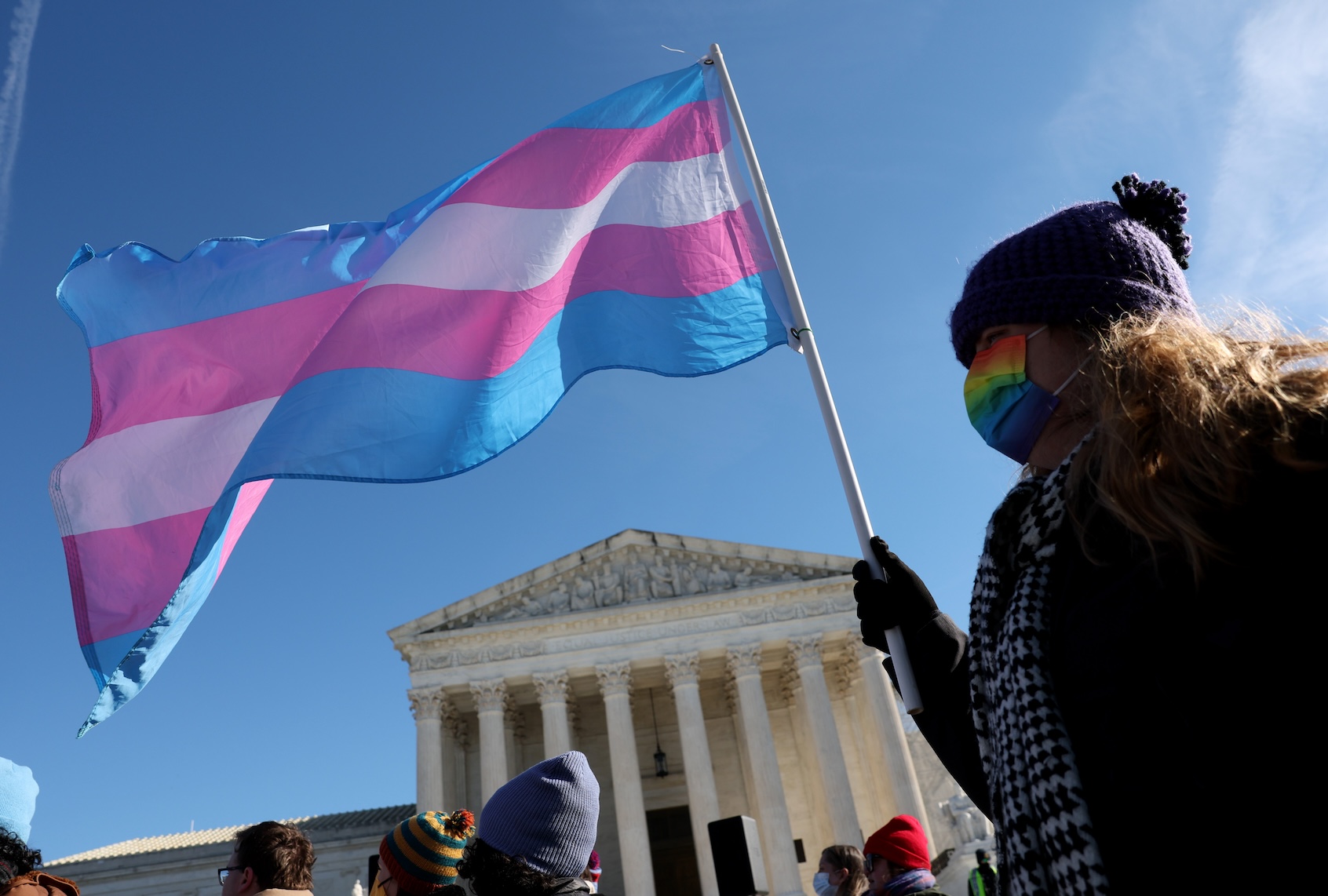
In the United States, a years-long offensive on trans rights has been led largely by Republicans. Conservative lawmakers have introduced — and passed — hundreds of bills meant to restrict trans rights and gender expression in state legislatures nationwide. The Trump administration has also proposed and implemented multiple policies restricting the rights and recognition of trans people.


Start your day with essential news from Salon.
Sign up for our free morning newsletter, Crash Course.


This year, some Republican-aligned groups have questioned whether focusing solely on “culture-war issues” may be enough to win in November, especially as polling shows trans issues are not a top concern for voters. But with public support for the president slipping and the cost of living rising, conservative candidates are leaning into those attacks, hoping they can tip the scales in their favor. Elon Musk, the world’s richest person, has spent hundreds of millions of dollars, including on ads with anti-trans messaging, to help Republicans win this fall. In a recent 19th/YouGov poll, nearly half of adults said they were more likely to vote for a candidate who supports banning trans athletes from girls’ and women’s sports, for instance, over one who does not.

And red state Democrats in competitive races are responding to the attacks and the polls, often by walking back their own previous support for trans people with language that purposefully misgenders them. Trans voters and their loved ones said they have grappled with difficult choices this election season as the party they have aligned with continues to disappoint them. Even so, most said they either have voted for Democrats or will.

The same dynamic is playing out in South Carolina, a state Trump won by 18 points in 2024. It’s also happening in Ohio, where Trump won by 11 points, Iowa (13 points) and Texas (14 points).

In June, Amy Acton, the Democratic nominee for governor of Ohio, drew outrage from LGBTQ+ leaders and progressive groups when she told a local newspaper that she does not support “boys” in girls’ sports. Equality Ohio, one of the state’s largest LGBTQ+ advocacy organizations, updated Acton’s status on its 2026 Candidate Scorecard from an “A” grade to “pending” in response.

“It was just really hurtful and betraying,” Kathleen Burns, a Democratic voter in Columbus, Ohio, said of Acton’s choice of words. Burns is not trans, but her spouse, whom she married last year, is trans and nonbinary. The couple would like to see a Democrat in the governor’s mansion next year, Burns said, but neither is planning to vote for Acton.

“I’ve just been asked too many times in my entire adult life to vote for a lesser evil,” she said. “I can’t do this anymore. I’m so tired.”

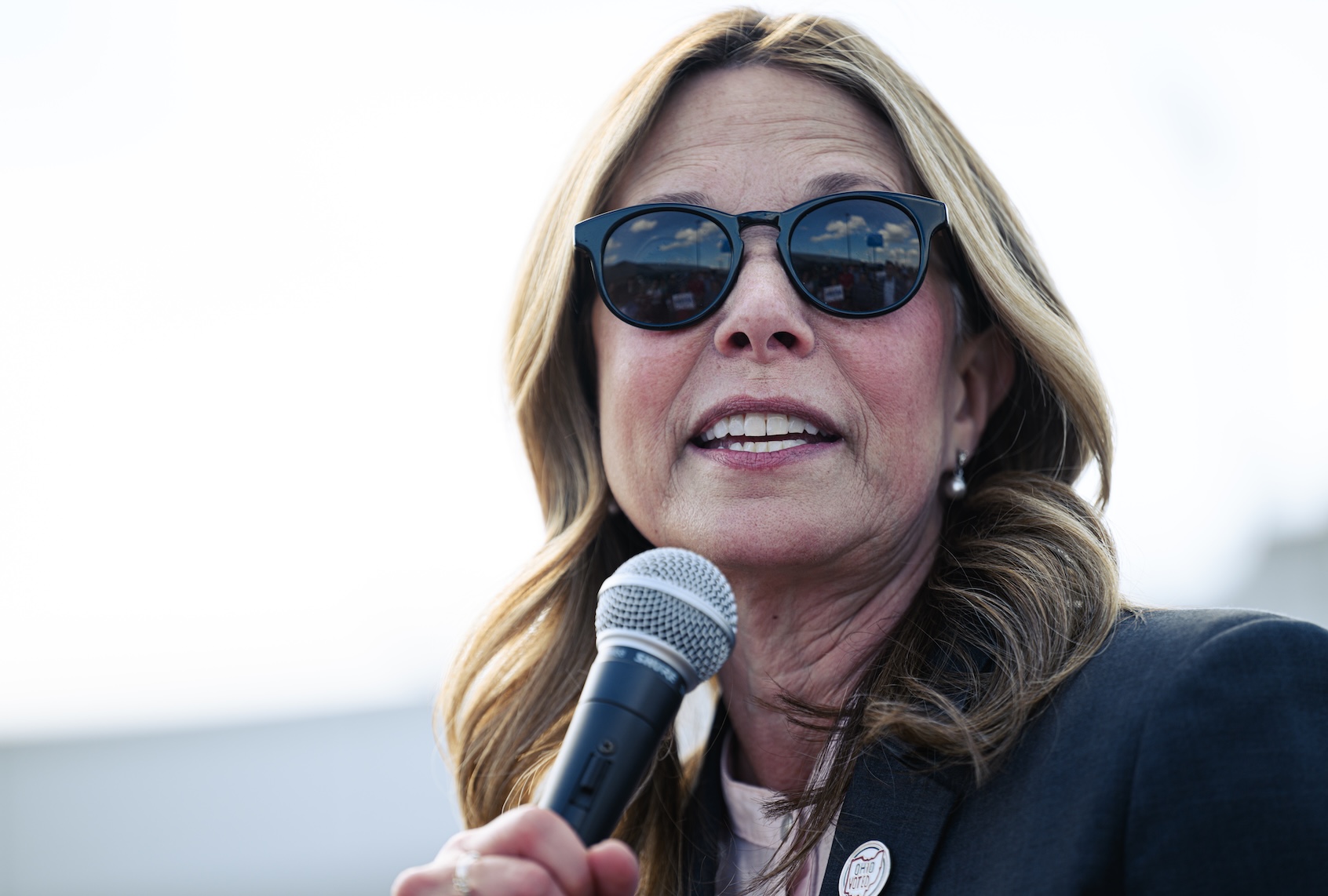
Burns said she plans to support other Ohio Democrats, including Sherrod Brown, a former senator running to unseat Sen. Jon Husted, a Republican endorsed by Trump.

“I wouldn’t say he’s like a staunch advocate for trans people, but it seems like the bar is low,” Burns said of Brown, whose campaign has faced a barrage of anti-trans attack ads from powerful Republican super PACs including the Senate Leadership Fund and Musk’s America PAC.

“Congress is kind of a political chess game that is at risk if I wouldn’t vote for him, so I probably will vote for him,” Burns said. “But I think I will leave the governor’s race blank.”

Kaden, a trans man in Geauga County, Ohio, who spoke on the condition that only his first name be used out of concern for his privacy, said he was unhappy with Acton but had still voted early for her. Acton seems more likely than her opponent, Vivek Ramaswamy — who has described being trans as a mental illness — to engage with trans people as governor, he said.

“Maybe we can sit down and talk and say, ‘Listen, you really need to think about this. You really need to understand that what you said hurt,’” he said. Kaden’s home in northeastern Ohio is largely rural and has voted for Republican presidential candidates since the mid-1960s.

But his community — including his three adult children and his parents, both in their late 80s — has accepted him all the same. He believes Acton will, too.

Democratic candidates in Iowa have faced similar backlash from some voters and LGBTQ+ advocacy organizations for how they’ve spoken about trans people. In an August campaign ad, Sarah Trone Garriott, a Democratic state lawmaker and congressional candidate, said she opposes “letting men in women’s locker rooms,” despite voting against a bathroom bill in the legislature. Josh Turek, who is running for Senate, said that he does not believe that “biological males” should be allowed to compete in women’s sports and that he opposes “taxpayers paying for sex changes.”

In August, Rob Sand, Iowa’s state auditor and the Democratic nominee for governor, said, pointedly: “Girls’ sports are for girls, and boys’ sports are for boys.” Iowa’s Republican-controlled legislature banned trans student-athletes from competing in line with their gender identity in 2022.

A selfie of Shipston         
Aria Shipston
(Aria Shipston)

Aria Shipston, a 29-year-old drag performer and LGBTQ+ rights advocate in Iowa, said Democrats adopting anti-trans rhetoric are falling into “a trap” laid by Republicans.

“They’re still harming trans people because they’re still perpetuating this idea of trans women being men,” she said. “Even if they’re thinking they’re being helpful, they’re still harming the public perception of trans people — and it hurts the trans people watching. When I hear the Democratic candidates that I’m supposed to be supporting saying that I’m a man in a women’s bathroom, it’s extremely disheartening.”

Shipston said she still plans to vote for Sand and other Democrats next month, but doesn’t see her vote as much of a choice. “Rob Sand doesn’t know how to talk about me and borrows a Republican framework that he just shouldn’t borrow, but Zach Lahn actively wants me to not be allowed to exist in public,” she said.

Lahn, a private school founder, has described being trans as a false identity and has repeatedly criticized Sand’s support for LGBTQ+ people, including his opposition to a 2025 law removing gender identity protections from Iowa’s civil rights code. In a recent Facebook post, Lahn questioned Sand’s attendance at a progressive Christian church that has hosted drag shows and featured a trans guest pastor.

During a September town hall in Iowa City, Sand acknowledged that some of his supporters may be “disappointed” by his support for restrictions on trans student-athletes but pledged to veto other “culture war bills” as governor.

Shipston said it can be painful to support a party that doesn’t appear to fully support her. It was refreshing, she said, when a recent campaign ad for Iowa state Rep. Christina Bohannan, a Democrat running to unseat Republican Rep. Mariannette Miller-Meeks, declined to directly engage with a claim that Bohannan had failed “to protect girls’ sports” by voting against restrictions on trans athletes in the legislature.

“As the only one in this race who ran track in high school, it matters to me that girls’ sports are fair. That’s why Mariannette Miller-Meeks’ false smear campaign is downright pathetic,” Bohannan said in the ad, taped on an outdoor track lined with hurdles. “What Miller-Meeks is doing in Washington, siding with the drug companies, taking their money and sticking it to Iowans, that’s what’s really unfair.”

“She intentionally didn’t use the framing ‘men in women’s sports’ and rerouted the argument into, ‘Here’s something actually harmful and unfair that my opponent is doing,’” Shipston said of Bohannan’s ad. “I thought that was a really good way to handle it. I would like to vote for her now, and I will.”

Annie Sarcone, a 34-year-old delivery driver in Des Moines, said they felt similarly about Bohannan — but had expected better from Trone Garriott, Turek and Sand, all of whom have been entrenched in Iowa politics for years.

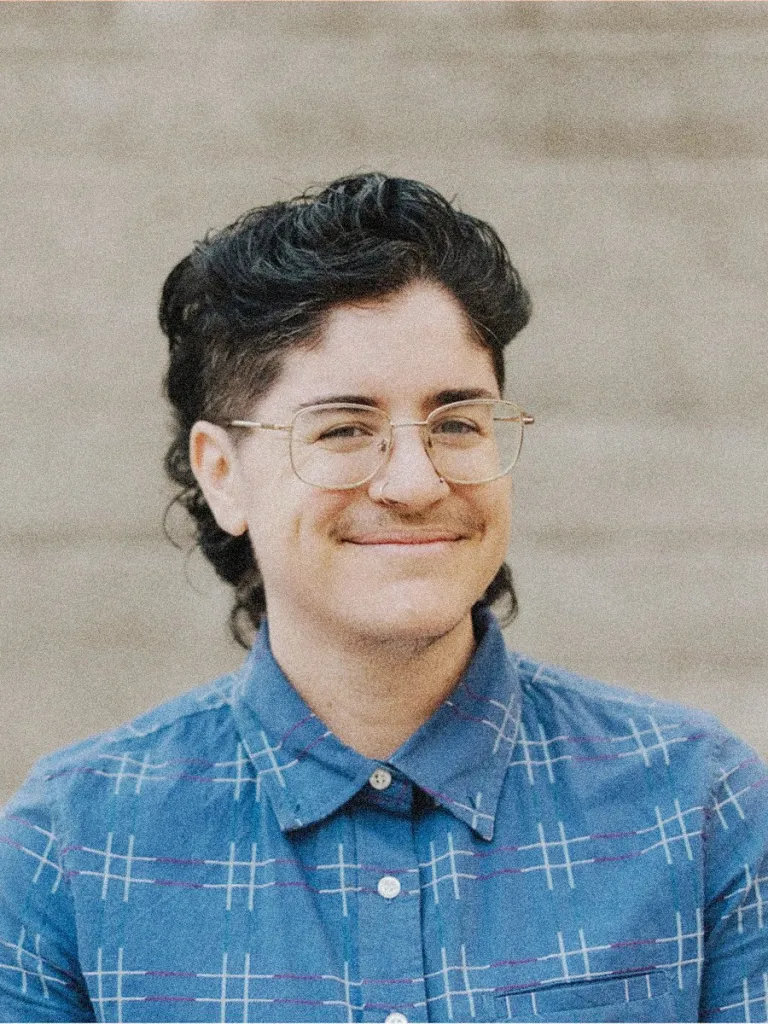
A portrait of Sarcone in a blue shirt         
Annie Sarcone
(Jasper Chung)

“From my perspective, I’m thinking, ‘How have you not prepared to answer some of these political attacks in a more thoughtful manner that doesn’t throw trans people under the bus?’” they said. “Like, you’ve been seeing this happen for years now.”  In the last year alone, 30 bills targeting LGBTQ+ people were introduced in Iowa’s Republican-controlled legislature, according to the ACLU.

Sarcone, who volunteers at a local LGBTQ+ youth resource center they also founded, still plans to vote for all three. “I have decided that, and it’s hard. I’m not going to lie, it’s really hard,” they said. “But if we get them in office, we can’t stop — we have to keep their feet to the fire, and we have to keep voicing our concerns to them.”

Trans voters in Texas said they were similarly disappointed when state Rep. James Talarico, the Democratic nominee for Senate, said he opposed trans student-athletes in girls’ sports “if it risks safety or fairness” during an interview with Fox News. Talarico had opposed restrictions on trans athletes in the state House.

State and national Republicans have targeted the Democratic lawmaker over his previous support for trans people and past comments where he said “God is nonbinary” and that there are six sexes. Stephen Miller, the White House deputy chief of staff, has called Talarico trans on social media. During a rally in October, Vice President JD Vance implied that Talarico is gay.

“I’ll be the first to admit that I missed the mark on some of those old statements,” Talarico told NBC News in May.

In September, Gina Hinojosa, Texas’ Democratic nominee for governor, responded to an assertion from her Republican opponent that she is “too woke” for Texas with a campaign ad that said her “pronouns are mom, Texan and soon-to-be-governor.” Some saw the ad as minimizing threats to trans rights in Texas.

“I’ve had to abandon the desire and hope that they’ll say that they’re pro-trans, or actually just say something rather than just being silent or wishy-washy,” Bryanna Jenkins, an attorney in Houston, said of Talarico, Hinojosa and other Texas Democrats. She said she still plans to vote for them but that it is “more a decision of strategy” than a vote of confidence.

Hinojosa and Talarico’s Republican opponents — Texas Gov. Greg Abbott and Ken Paxton, the state’s attorney general — have openly rejected trans identities and played leading roles in enacting some of the nation’s most stringent and restrictive laws for trans people.

In a 2022 legal opinion, Paxton mused about whether allowing a minor to receive gender-affirming care may “legally constitute child abuse,” driving Abbott to call for statewide investigations into families with trans kids. In March, Paxton declared it illegal for mental healthcare providers in Texas to “transition” minors and threatened to revoke the licenses of practitioners who affirm a child’s gender identity over their sex assigned at birth. The state’s Republican-controlled legislature banned gender-affirming care for minors in 2023.

Texas Democrats, Jenkins said, hadn’t done enough to make her or others’ lives any easier. She’s considered channeling her disappointment into a run for office, but has decided against it for now, citing concerns about her safety as a Black trans woman. She continues to work closely with state and national civil rights groups, and is holding out hope that grassroots organizing will usher in a “watershed” moment.

Avery Belyeu, CEO of the Montrose Center, an LGBTQ+ community center in Houston, said she planned to support Talarico and Hinojosa over Paxton and Abbott — and was excited to do so. Talarico, whom she had met personally at a fundraising event, had proven himself a particularly strong ally, she said.

Portrait of Jenkins in a red shirt against a white backdrop         
Bryanna Jenkins
(Sway Ambrose)

“He’s been very vocal in support of trans people, and he can’t escape that record because he’s been in the state legislature,” she said. “He’s spoken out and been very clear on his stance.”

Belyeu said national media attention on Talarico’s comments on trans athletes did not necessarily align with how she and other trans Texans felt about his candidacy or whether he would fight for them in Washington.

“The issue of transgender youth in sport is not a central issue of concern in this moment for transgender people,” she said. “We’re currently living in a state where there is a ban on trans youth receiving medical care, where a transgender adult cannot change their gender marker on their driver’s license. So when you’re living in that context, it’s kind of Maslow’s hierarchy of needs.”

Belyeu stressed the importance of turning out to vote in November. “I think the greatest danger we have in this moment is being demoralized and being discouraged and not claiming our power — our vote is our power.”

In South Carolina, Andrews’ opponent, Sen. Darline Graham, has opposed gender-affirming healthcare for trans youth and allowing trans students to compete on school sports teams matching their gender identity. South Carolina has banned both for over two years.

“I’m a conservative Republican,” Graham said in her very first campaign ad. “Every life is precious, men don’t belong in women’s sports and only American citizens should vote in our elections.”

Bell, a Navy veteran who previously ran as a Democrat for the South Carolina House, tied his early vote for Andrews to the potential impact in the Senate. “I voted for her, but I didn’t vote for her,” he said. “I voted for two Supreme Court picks in the next six years. In the long term, I think Annie being senator is the right move.”

Lucero, who moved to South Carolina more than two decades ago, said she disagreed with calls to vote for a third-party candidate instead. 

“I’m an idealist, but I’m also a pragmatist,” she said. Even if Democrats were to learn that turning against trans people will not win them elections, that lesson “would be far outweighed by the actual harm that would be done if the conservative candidate wins.”

She’s largely lost trust that politicians will act in her best interest.

“It’s extremely frustrating to be constantly reduced every single day of my life to a controversy, rather than being seen as a human being, even by the people who are supposed to have our backs,” Lucero said. “It’s exhausting.”

The post Betrayed, disappointed, hurt — and backing Democrats anyway appeared first on Salon.com.
  •  

Amy Acton survived childhood abuse. Her Republican opponent is using it to attack her

This story was originally reported by Amanda Becker of The 19th. Meet Amanda and read more of their reporting on gender, politics and policy.

Republican Vivek Ramaswamy is closing out one of the nastiest races of the 2026 cycle by suggesting that Democrat Amy Acton, his opponent in the Ohio governor’s race, has lied about the well-documented childhood sexual abuse she experienced for political gain. 

In a contest marked by sharp personal attacks and partisan rancor, Ramaswamy’s latest attempt to paint Acton as unfit for office came in the form of a minute-long ad that began circulating Monday night featuring Donna Arthur, Acton’s estranged mother. It was widely condemned on both sides of the political aisle. President Donald Trump and Vice President JD Vance, however, both defended the ad as an appropriate one to run in the closing days of a campaign. 

Arthur lost custody of Acton and her younger brother in 1978 after her second husband, Cledith Arthur, was arrested, charged and indicted for raping then 12-year-old Acton. In the ad, Donna Arthur said her daughter has “lied her entire life.”

“Amy has a serious problem, she is a liar, she lies about her past. She says she grew up living in a tent, none of that is true. She’s lied her entire life. My daughter needs help. And she can’t help you if she needs help herself,” Arthur said. 

Acton, a pediatrician and former health director under Ohio’s current Republican Gov. Mike DeWine, has spoken openly during her campaign about facing abuse and neglect as a child, while in her mother’s custody. Acton has said that for a time the family lived in a tent before she and her brother moved in with their biological father. 

Court records and local media reports at the time confirm key details of Acton’s story and contradict Donna Arthur’s suggestion that her daughter lied about the abuse. 

“My birth mother did nothing to protect me. I’ve always known that she was deeply sick and unwell,” Acton wrote on Tuesday in a Facebook post responding to the ad. “It’s sad to see Vivek Ramaswamy exploit her all for his own political gain.”

Cledith Arthur did not show up for a court hearing following his 1978 indictment. He and Donna Arthur left the state, and there were warrants out for his arrest. The Arthurs remained married until Cledith Arthur’s 2004 death in Pennsylvania. 


Start your day with essential news from Salon.
Sign up for our free morning newsletter, Crash Course.


Acton has said the last time she saw her mother was in the courtroom after her stepfather was charged, when her mother rebuffed her kiss. “That was the last time I ever saw her,” Acton told the Vindicator, her hometown newspaper in Youngstown, when she was selected by DeWine as the state’s health director. 

Ohio’s gubernatorial race is one of the most competitive in the country despite the Midwestern state solidly backing Republican Trump in all three of his White House bids. Acton is vying to be the state’s first elected woman governor and the first Democrat elected to the office since 2006.

The most recent reliable nonpartisan polls show her with a  4-to-9 point lead over Ramaswamy, a biotech entrepreneur and failed Republican presidential candidate. 

The contest has been notably light on policy. Though Acton and Ramaswamy have staked out different positions on everything from reproductive rights to data centers, neither candidate faced a competitive primary that compelled them to outline their policies in detail. Acton has tightly controlled media access at her events and declined to debate Ramaswamy in the general election. 

The ads blanketing the battleground state have therefore largely been personal attacks. Acton has suggested Ramaswamy is an out-of-touch billionaire and a biotech fraud. Ramaswamy and others in his orbit have sought to portray Acton as unfit to lead Ohio, zeroing in on a 2019 incident when Acton’s daughter called police and said her mother and stepfather were arguing — and that Acton had been drinking. 

The disagreement had ended by the time police arrived. Acton’s husband has taken responsibility for starting the argument and said that his wife had a single drink. Ohio’s Republican Party nevertheless posted a computer-generated image of Acton’s Jeep with the license plate: “Drunk Mom.”

Previous Ramaswamy-aligned ads have suggested that the childhood abuse Acton experienced — and her response to it — should be disqualifying. 

Childhood abuse is common. At least one in seven children in the country experience abuse or neglect each year, according to the Centers for Disease Control and Prevention, and rates of child abuse and neglect are higher among families experiencing poverty or economic insecurity.

Ramaswamy in April shared a video on the social media site X of a speech in which he said Acton had no positive vision to lead Ohio, “other than to complain about what someone else did to her,” seemingly referring to her childhood abuse.

Ads run by the Ramaswamy-aligned V-PAC — the name stands for Victors, not Victims — highlighted Acton’s disclosure on her medical licensing application that she sought therapy to process childhood abuse. V-PAC is funded by a group of out-of-state billionaires that includes Elon Musk, the owner of X, Tesla and SpaceX.

“I won’t normalize somebody who said my childhood is just something I’m complaining about,” Acton said in a Tuesday appearance on Spectrum News. 

Acton added that Ramaswamy has shown a “pattern” of using his opponents’ family dynamics for political attacks. She pointed to Ramaswamy’s comment directed at Nikki Haley in a 2016 Republican presidential primary debate that she should “take care of your family first” during an exchange over TikTok and her adult daughter’s use of the video-sharing platform.

When the video with Acton’s estranged mother initially surfaced on social media Monday night, it did not state who paid for it or which candidate it supported, as is legally required for a political ad to air on television. By Tuesday evening, Ramaswamy confirmed to an ABC affiliate in Columbus that his campaign was responsible for it and defended its contents. Axios reported early Wednesday that Ramaswamy’s campaign will drop $4 million to get the ad in front of Ohio voters in the final stretch before Election Day.

His Tuesday night campaign event was interrupted when an attendee attempted to confront him over the ad. Television personality Meghan McCain, the daughter of late GOP senator and Republican presidential nominee John McCain, wrote on X that the Ramaswamy spot was a “dastardly ad” that “never should have been created.” Democrat Sherrod Brown, who is vying to reclaim his former U.S. Senate seat representing Ohio, called the ad “disgusting.” The conservative National Review obtained court records that corroborated Acton’s account. A Republican member of DeWine’s cabinet denounced the advertisement. 

Trump told ABC News on Wednesday that he wasn’t aware of the ad’s specifics, but he didn’t “think that has anything to do with Vivek,” after being informed at least twice that the ad had been made by Ramaswamy’s campaign. Vance, campaigning in his hometown of Cincinnati on Wednesday, told reporters that Republicans should “stop whining about an advertisement and go win the race.” 

“Whether the ad was appropriate or not is not really my concern,” Vance added.

Acton’s campaign released a response ad featuring her younger brother, Phil Stearns, who has said that Acton shares their childhood abuse not to complain but because it is “something that informs who she is and builds this core of strength that she has.”

“She was 11- and 12-years old, and to think that’s somehow a talking point? Shame on Vivek. It’s the contempt he has for Amy, it’s the contempt he has for Ohio. He’s not fit to lead,” Stearns said in the ad.

To check your voter registration status or to get more information about how to vote and what’s on your ballot, visit vote.org.

The post Amy Acton survived childhood abuse. Her Republican opponent is using it to attack her appeared first on Salon.com.

  •  

The uncertain future of Erika Kirk’s Turning Point USA

This story was originally reported by Mariel Padilla of The 19th. Meet Mariel and read more of their reporting on gender, politics and policy.

This story is part of Gen Z at the Ballot Box, a collaboration between States Newsroom and The 19th. 

It was the beginning of her junior year, and 20-year-old Mia Tedesco was setting up a table for the campus open house where more than 200 recognized student organizations were preparing to recruit new students. Tedesco laid out bracelets that read “We are Charlie Kirk” — an homage to the prominent conservative media personality who was fatally shot at an event in Utah last year. 

It was her first semester as president of Turning Point USA (TPUSA) at Butler University, a private school in Indiana, and she wanted to make sure her table looked nice. 

“We are a more left-leaning college and university; we are a liberal arts school — I knew that signing up and coming and committing to college,” Tedesco said. “I knew I wanted to challenge it a little bit.” 

She had civil conversations with many students who approached the table to learn more about TPUSA, the organization founded by Kirk, though some people scoffed or flipped her off. She considered setting up a camera for safety. Tedesco noticed that some people were taking handfuls of bracelets; then a friend told her that there were facetious posts about them on Yik Yak, a hyper-local social media platform for college students that lets users be anonymous. Many of the bracelets ended up in the trash. 

It wasn’t the first time the conservative student organization had faced backlash: The previous semester, their chat on the platform GroupMe was hacked. Someone changed the name to “We love socialism,” updated chat names and photos, and kicked out members. The group chat, which was the main point of communication for the group, went from 70 members to 30. 

“I know with the Democratic Club and many other clubs, there’s been loud dislike with us,” Tedesco said. “But I also know that if we don’t try, then we’re not using our voice like Charlie would want.” 

Founded in 2012, TPUSA has grown to become one of the largest and most prominent conservative youth movements in the country. The September 2025 assassination of Kirk inspired conservative students across the country — many who had not even heard of Charlie Kirk or TPUSA prior — to continue the organization’s mission to champion conservative values. An evangelical Christian, Kirk advocated for gun rights; condemned abortion; held up men as the heads of households; denounced Islam; and called diversity, equity and inclusion initiatives “racist.” Within a year of his death, high school chapters jumped 180 percent and college chapters increased 60 percent  — resulting in more than 1,500 college chapters as of September 2026, according to the organization. 


Start your day with essential news from Salon.
Sign up for our free morning newsletter, Crash Course.


Eight days after Kirk’s death, his wife, Erika, was publicly appointed his successor to lead one of the most active organizations in conservative politics. 

That same day, Tyler Bowyer, the chief operating officer of Turning Point Action — a sister organization to TPUSA founded in 2019 and designed for direct political action — and a longtime colleague and friend to the Kirks, posted a prediction of sorts on social media: “Charlie Kirk came and converted the young men. Erika Kirk is coming to convert the young women.” 

While the number of chapters has exploded and thousands of young women have shown up to events, the organization’s influence and ability to mobilize young voters as it has in the past is uncertain. 

The larger Republican base is fracturing, the war in Iran continues and gas prices are still on the rise. Disillusionment with MAGA and the Republican Party is growing among young conservatives. With that backdrop, some TPUSA members describe rising tension on campuses. Some college conservatives — especially Gen Z men — are frustrated with Erika Kirk’s leadership, wondering if she can deliver the same firebrand energy her husband did. 

When Kirk was assassinated on September 10, 2025, Tedesco and a friend were in the process of starting a TPUSA chapter on Butler’s campus. For Tedesco, who grew up Catholic in a small town, it was important to create a space on campus for Christian representation, where students like her could incorporate their faith in day-to-day life and community. The assassination was “the final push” that got the paperwork across the finish line. 

“Charlie was very outgoing when it came to the youth,” Tedesco said. “There was a lot of clickbaiting in his videos, but a lot of it was eye-opening. This person sees this way, that person sees that way — how can we get to a civil conversation? Charlie was able to have that connection as one human being with another.” 

‘I’m not sure I can really trust her’

Andrew Roth, along with three other men, was in the process of filling out the proper documents to start a TPUSA chapter at Taylor University, a private Christian school in Upland, Indiana, when Charlie Kirk was assassinated. 

“Prior to that, we were being very careful with how we were doing the paperwork because we wanted to make sure we got it right,” said Roth, now a junior and president of his TPUSA chapter. “Then Charlie died, and we were like, ‘OK, we just gotta send it.’” 

Roth said 120 people showed up to an informal meeting to gauge interest in the new TPUSA chapter. During the club’s first semester as an official chapter in the spring of 2026, Roth said, he was surprised to see more women than men show up to events. 

“In general, 20- to 21-year-old guys are just statistically more right-wing than girls are at this age,” said Roth, who is now a junior. “So I just kind of assumed it would be more guys than girls.” 

Roth’s analysis bears out: Polling from The 19th and YouGov found that Gen Z women are far more likely than men to identify as liberal (38 percent vs. 28 percent) and as Democrats (37 percent vs. 21 percent). 

Roth said some women were probably drawn to Erika Kirk. In June, she spoke at TPUSA’s annual Women’s Leadership Summit and addressed more than 2,000 young women, encouraging them to embrace their Christian faith and biblical womanhood — a theological concept that defines women’s role as homemakers, nurturers and submissive to their husbands — while critiquing modern feminism.

Nearly 20 percent of Gen Z women consider themself to be a “strong feminist” compared with less than 7 percent of Gen Z men, according to The 19th/YouGov poll. 

“My husband always believed in this event because he could see young women being sold a vision of life that looked empowering on the surface, but left many of them increasingly dissatisfied underneath,” Erika Kirk said in her opening remarks at the summit. “He wanted to create a place for conservative women to connect with like-minded women and be poured into by female voices that would talk to them about the sanctity of life, about fiscal responsibility, about liberty and family.”

Erika Kirk’s message is less overtly political than that of her late husband. Her speeches tend to have fewer policy talking points. When asked in a Vanity Fair interview about her stance on Israel, for example, she responded that she doesn’t “sit around thinking about what Bibi Netanyahu is doing.”

“My brain bandwidth right now is honoring my husband, loving on my babies and building Turning Point to be everything it could be. I don’t really have the bandwidth to go down the rabbit holes of all of it,” Kirk said. 

Erika Kirk did not respond to requests for comment.

By some measures, TPUSA has been wildly successful under Erika Kirk. In the past year, Turning Point PAC, Inc. raised the most political campaign money in its history, raking in around $9 million ahead of the 2026 midterms — compared with the $7 million it raised in the 2024 election cycle, when it became a core part of the Republican Party’s swing state strategy. The group’s nonprofit wing also reported a 30 percent spike in revenue, bringing in $115 million in 2025 on top of its $81 million endowment. 

But her message does not appear to be resonating in the same way with many of the young men her husband appealed to: Roth, who is in a group chat with other TPUSA chapter presidents around the country, said people are frustrated and questioning whether Erika Kirk can be trusted. Roth pointed to one example when Erika Kirk praised the U.S. military’s war efforts in Iran under President Donald Trump — while her husband warned in April 2025 a new Middle East war would be “a catastrophic mistake.”

“People are looking at that and they’re wondering whether she’s just trying to toe the line so she doesn’t alienate Trump,” Roth said. “I’m not sure I can really trust her that much.”

Roth also noted that at least one TPUSA chapter disaffiliated from Turning Point in March, citing concerns with the national organization’s new direction.

Roth said he wants to hear more conversations about Israel’s involvement in U.S. foreign policy, the war in Iran, the Epstein files and government corruption — all topics Charlie Kirk was speaking about before his death. 

“Charlie Kirk was fine to upset the people in power,” Roth said. “He had a more anti-establishment government stance. I feel like without him, they have fallen in line a little bit more.” 

‘The one who was somehow able to hold it all together’

Amy Binder, a sociology professor at Johns Hopkins University, has studied how campuses shape young conservatives for more than a decade. While conducting research in 2008, Binder said the main organization for young conservatives was College Republicans. But things shifted a few years later when Charlie Kirk and TPUSA came to campuses. 

“Charlie Kirk was an incredible entrepreneur who had a real faculty with connecting with donors and big money,” said Binder, who has written multiple books about politics on college campuses. “He was very friendly with the Trump family and had a really good sense of what would excite kids on campus.”

He painted College Republicans as old, fusty and not visible enough. Meanwhile, TPUSA became the “far more expressive, fun, energetic, confrontational group,” Binder added.  

James Yock, a junior at Butler University, is both the vice president of his school’s TPUSA chapter and president of the College Republicans chapter. 

“I think Turning Point resonates more with youth,” Yock said. “It’s easier to relate to someone who is younger like Charlie, more up to date with things compared to someone who our grandparents or parents might resonate with in the College Republicans.” 

In the decade after its launch, Binder said she saw TPUSA’s footprint on American campuses grow. The group was able to raise enough money to funnel resources to campus organizations for events, campaigns and media efforts. 

Binder said that she thinks some young conservatives, particularly young women, are fans of Erika Kirk. But Charlie Kirk was more than the leader of TPUSA — in many ways, he was the heir apparent for MAGA, she said. Without him, there’s a sense that it’s “all falling apart” as the feuding factions within the Republican Party — including the nationalists, post liberals and populists — battle for dominance. 

Binder saw that at the December 2025 AmericaFest, TPUSA’s large annual event. Conservative personalities Tucker Carlson and Ben Shapiro clashed over Carlson’s interview with Nick Fuentes, a far-right commentator known for racist, misogynist and antisemitic views, and Shapiro attacked Candace Owens, a fringe personality, former TPUSA employee and close friend of Charlie Kirk’s, for her conspiracy theories. What united them, she said, was anti-trans and anti-Democrat talking points. 

“If Charlie Kirk were still alive, would the base be fracturing in the same way that it is today?” Binder said. “When I listen to conservative opinion, both on the intellectual right and the more populist right, I hear that attributed to him a lot — that he was the one who was somehow able to hold it all together.” 

‘No longer with Trump’

Erika Kirk took over TPUSA as young conservatives were growing increasingly frustrated with their party and searching for political leadership. 

Polling consistently shows that Gen Z is unhappy with the current political situation, according to Melissa Deckman, political scientist and chief executive of the Public Religion Research Institute. They are far less confident in major institutions, from the federal government to law enforcement to organized religion and the media.

“A lot of Gen Zers feel as though they play by the rules, but yet they’re unable to get ahead,” said Deckman, who also wrote the book “The Politics of Gen Z.” “The price of housing, the price of living, filling up a gas tank — all these things disproportionately hit them harder.”

And young conservative men tend to support more economically populist and sometimes progressive policies than older generations or Republicans of the past. 

“The young men hate cancel culture, but they want healthcare,” Deckman said. 

Roth said he and his peers are frustrated with most of the conservatives up for election. 

“People my age don’t know if we even want to vote because I don’t feel like the Republican Party even represents me,” Roth said. “They just say the right things to get into power, and then they don’t do anything.”

Roth said a lot of people his age became particularly disenchanted and distrustful of government and politicians after living through the COVID-19 pandemic. He was in the eighth grade when the first shutdowns began. 

“We were in favor of the 2024 Trump campaign because it was against all these things, it promised to expose all the secrets and clean up the system,” Roth said, noting Trump’s campaign promise to end forever wars, release the files related to convicted sex offender Jeffrey Epstein and put America first. “So many people my age are no longer with Trump because they didn’t see that happen.” 

Gen Z men who voted for Trump are more likely to say they now regret that decision than men Trump supporters in any other generation, according to polling from Navigator Research.

Some of the biggest conservative women’s voices are also turning on Trump. Influencers Savanna Faith Stone and Alex Clark — keynote speakers at TPUSA’s Women’s Leadership Summit this year — have given multiple interviews describing their sense of being betrayed by the president they helped elect in 2024. 

In a June interview with CBC News, Stone said she’s decided not to vote in the upcoming midterm elections. She said Trump “made it seem like everything was going to become more affordable; now the economy’s worse. He promised no more wars in the Middle East, and we are in a war. So it’s disappointing.” 

Clark, the host of a conservative and wellness podcast with more than half a million followers on Instagram, said in an interview with Politico that young women are considering not voting. She told the White House that people want “fight, fight, fight Trump” — not “ballroom Trump.”

“I feel some of the magic and the spark that helped us win 2024 is missing,” Clark added. 

‘Where does the Republican Party go after Donald Trump?’ 

Eli LaGrange said he was in class at Indiana Wesleyan University, a private evangelical Christian school, when Charlie Kirk was killed. He didn’t know much about Kirk or TPUSA at the time.

“I was really curious to learn: Why did they kill this guy?” LaGrange said. “Political violence is always sad. I started watching his videos and talking to people. He was spreading a good message and encouraging conversations, which I thought was great, and it’s so sad to see a voice get silenced.”

LaGrange decided his campus — which he described as not having too many political clubs — could benefit from a TPUSA chapter. Along with a few like-minded friends, he collected more than 300 student signatures in support, drafted a constitution, and presented it to the student government and a board of teachers and faculty. After he addressed some concerns that a new chapter could cause tensions or make people on campus upset, LaGrange said, his proposal was approved.

Event participation has ranged anywhere from 15 people to more than 200. They’ve had a pickleball night to introduce themselves to new students, coffee meet-and-greets, debate tables and game nights. They’ve invited pastors to do a racial reconciliation night and even brought in the lieutenant governor to discuss faith and local politics. 

“My elevator pitch to get people to join is focused on the importance of having political conversations,” LaGrange said. “Bad things happen when you don’t talk to the people you see, when you’re getting all your information and opinions from social media and the Internet. You need to go talk to people. You need to go have hard conversations with people.” 

LaGrange said some of the hottest topics are immigration, Flock cameras and artificial intelligence. Perhaps most pressing, however, is trying to get conservatives to align on the future direction of the GOP. 

“I think the biggest question is, ‘Where does the Republican Party go after Donald Trump and MAGA?’” LaGrange said. 

LaGrange said that most of his campus TPUSA chapter’s leadership is women and that about half of the people who come to events are women. He sees young conservatives’ voices as critical to the conversation about who will lead the movement. 

Some are pushing to advance MAGA while others call for a return to older, traditional conservative politics, hearkening back to past presidents like President Theodore Roosevelt. LaGrange said he falls in the latter camp. 

“Organizations like Turning Point have a lot of influence, so whoever they give their voice to will probably lead,” LaGrange said. “So I think we need to take the time to decide who really is a good leader for the future of conservative politics.”

The post The uncertain future of Erika Kirk’s Turning Point USA appeared first on Salon.com.

  •  

The GOP candidates walking back some of their abortion stances

This story was originally reported by Shefali Luthra of The 19th. Meet Shefali and read more of their reporting on gender, politics and policy.

Republicans running for governor across the country are backing away from abortion bans they once endorsed.

U.S. Rep. Tom Tiffany, the Republican candidate for governor in Wisconsin, calls his state’s 20-week abortion limit “settled law.” Just three years ago, he co-sponsored a bill that would have banned abortion six weeks into pregnancy.

Stacy Garrity, the GOP’s candidate in Pennsylvania, has said during her campaign that she would “respect” the state’s current law, which allows abortion until 24 weeks of pregnancy. Four years ago, she called on abortion opponents “to engage and make a difference” in state laws after the fall of Roe v. Wade. 

In Kansas, where abortion is legal until 22 weeks, Republican Ty Masterson has demurred when asked if, as governor, he would support a statewide referendum to eliminate the Kansas constitution’s abortion protections. Masterson had previously spoken at protests in opposition to reproductive rights and won the backing of state and national anti-abortion groups.

The candidates’ retreat suggests that, even as reproductive rights fade from the national spotlight and polls show voters are far more likely to prioritize cost-of-living concerns, the political ramifications of pushing for new abortion restrictions remain substantial. The rhetorical distancing also moves political conversations away from an issue that overwhelmingly energizes Democrats. 

“That might be their strategy there, to try to demotivate Democratic turnout in the state to take abortion off the table as a voting issue,” said Ashley Kirzinger, a pollster at KFF, a nonpartisan health policy research, polling and journalism organization. That’s especially true in tighter races such as those in Wisconsin and Kansas, she said.

Tiffany’s, Garrity’s and Masterson’s campaigns did not reply to requests for comment. The 19th contacted multiple Republican-aligned pollsters who also did not immediately respond.


Start your day with essential news from Salon.
Sign up for our free morning newsletter, Crash Course.


About 60 percent of Americans believe that abortion should be legal in most or all cases, including about two-thirds of independents, according to a poll from The 19th and YouGov. 

That said, pushing for abortion restrictions has never been broadly popular. Even before Roe v. Wade was overturned in 2022, Republicans seeking general election typically would not campaign overtly on abortion bans, said Molly Murphy, a pollster and president of Impact Research, a Democratically-aligned polling firm. 

“It would get discussed in donor meeting hot mics, endorsement questionnaires, etc, but candidates wouldn’t run on the fact that they’d ban abortion,” she wrote in an email.

Tiffany shakes hands with two people during a campaign stop.    
Wisconsin Republican gubernatorial candidate Tom Tiffany is now calling his state’s 20-week abortion limit “settled law”, when only three years ago he co-sponsored a bill that would have banned abortion six weeks into pregnancy.
(Scott Olson/Getty Images)

Voters largely don’t consider abortion to be “settled law,” said Celinda Lake, a longtime Democratic pollster, noting that the share of voters opposing abortion bans has increased since the fall of Roe. “They feel like, ‘Wait a minute, it can be taken away again.’” 

In some races, Democrats and their allies are trying to push abortion rights back under the microscope — a strategy geared toward energizing liberal voters, Kirzinger said. 

Wisconsin’s Democratic nominee for governor, David Crowley, has said that, if elected, he would work with the state legislature to enshrine abortion rights into the state constitution — though it’s not clear how expansive that protection would be or whether it might supplant the state’s 20-week cutoff.

Pine Tree State Prosperity, a political action committee associated with the national Democratic Governors Association, is running advertising in Maine that highlights anti-abortion remarks made by Bobby Charles, the state’s Republican pick for governor. The Democratic nominee, Hannah Pingree, has led by double digits in recent polls. Charles’ campaign did not reply to a request for comment. 

Planned Parenthood’s super PAC, called Planned Parenthood Votes, has focused its resources in states such as Michigan, where the Republican candidate, U.S. Rep. John James, has said that abortion is “decided.” Four years ago, James said he opposed abortion in all cases, and he has compared the practice to genocide. His campaign did not reply to a request for comment.

James’ running mate, Jay DeBoyer, recently suggested leveraging a state constitutional convention to enact a 12-week abortion ban in Michigan, according to recordings of the remarks reported by The Detroit News and Michigan Advance. DeBoyer has since said publicly that abortion is a “settled” issue in Michigan, where voters in 2022 amended the state constitution to protect abortion before fetal viability.

Some gubernatorial candidates are still pushing for abortion restrictions, albeit far less ambitious ones. 

In New Mexico, where Democrats are expected to keep control of the governor’s mansion and already control both legislative chambers, Republican candidate Gregg Hull said he was “fully committed” to working with Texas Gov. Greg Abbott to reduce the number of Texans coming to the neighboring state for abortions. 

Hull has repeatedly called himself “pro-life” but also said that he would not change the state’s abortion law, which imposes no time limits on the procedure, without legislative support. His campaign did not respond to a request for comment.

Abortion opponents are trying to revive the issue in a handful of states. SBA Pro-Life America, one of the nation’s leading anti-abortion groups, is pushing ads that characterize Democratic candidates for governor as well as the U.S. Senate and House of Representatives as extreme on the issue, including in Ohio, Wisconsin and Michigan.

But generally, voters are less likely to trust conservatives on abortion, Lake said. And talking about abortion, she added, is more likely to generate enthusiasm among key Democratic voting blocs, particularly young women and college-educated women, who typically support reproductive rights.

“We have in our research people who say, ‘I used to be pro-life, I didn’t support abortion, I would never get one, but I think this is a decision that needs to be made by a woman and her doctor,’” Lake said. “People now feel this is just way too dangerous. This has gone way too far.”

The post The GOP candidates walking back some of their abortion stances appeared first on Salon.com.

  •  

In rural Wisconsin, politics is still about meeting voters. Online, it’s getting weird

This story was originally reported by Grace Panetta of The 19th. Meet Grace and read more of their reporting on gender, politics and policy.

LA CROSSE, Wisconsin — September is both campaign season and parade season in Wisconsin, as communities across the state celebrate Oktoberfest and the harvest of fall crops like apples and pumpkins. And many Democrats say a candidate can gauge how the November general election will go by the reaction they get along the parade route. 

Democratic congressional candidate Rebecca Cooke was one of the many elected officials out stumping for votes during a late September weekend. She had a packed schedule: first at Oktoberfest in the city of La Crosse and then at the annual Apple Festival in the small town of Gays Mills, about an hour’s drive away. And this year, the crowds’ responses are pointing in her favor. 

At Oktoberfest, she and staffers wearing forest green T-shirts with “Let Her Cooke” on the back criss-crossed the parade route backward at first, shaking hands and passing out campaign literature to voters, before marching with the local Democratic Party and statewide candidates including gubernatorial nominee David Crowley and his running mate, Sarah Godlewski.   

Two years ago, Democrats said the response to their candidates was more tepid, a harbinger of President Donald Trump’s victory. Four years ago, it was split, reflecting a midterm year in which anger over the Supreme Court’s overturning a federal right to abortion helped blunt the usual trend of the president’s party losing seats in midterms, but Republicans still won back the House of Representatives by flipping seats like Wisconsin’s 3rd Congressional District, represented by Rep. Derrick Van Orden. 

Rebecca Cooke reaches out to greet a festivalgoer on a crowded street as large bubbles float nearby.        
Rebecca Cooke greets festivalgoers in Gays Mills, Wisconsin, on September 27, 2026.
(Jenn Ackerman for The 19th)

But this year, Cooke and fellow Democrats got lots of cheering and whooping on the route — and many politely declined campaign literature, saying Cooke already had their vote. 

“I’ve seen her on TV!” exclaimed one child upon seeing Cooke, reflecting what it’s like to grow up in a swing state.  

“Van Orden should be in jail!” shouted one woman along the Oktoberfest route. 

Cooke is facing Van Orden in a rematch for their critical battleground district. It’s one of many rural, Midwestern seats that once voted reliably Democratic before shifting right and voting for Trump in three straight presidential elections. Democrats are betting on voters’ unhappiness with the economy and high prices to flip the seat and make inroads in rural America. 

“It’s a district where Obama’s message and Trump’s message resonated,” said Anthony Chergosky, a professor of political science at the University of Wisconsin-La Crosse. “I hesitate to make any long-term predictions about the partisanship of this district because we have seen people as different as Obama and Trump do well here.”


Van Orden, a former Navy SEAL now seeking a third term, has long drawn controversy for his behavior, including an episode in 2021 when he confronted a teenage library worker over a Pride display of LGBTQ+ books in a manner she described as threatening, and a 2023 incident when he unleashed a profane outburst of anger at a group of young Senate pages. He’s also a prolific online poster: the Wisconsin Democratic Party has taken to putting out “Whine Wednesday” news releases rounding up Van Orden’s week of activity on X. 


Start your day with essential news from Salon.
Sign up for our free morning newsletter, Crash Course.


Van Orden also has a history of making inflammatory statements about women, including comments appearing to blame single mothers and women being in the workforce for all sorts of social ills. The Wisconsin Muslim Alliance has repeatedly condemned him for remarks he made in September criticizing Gov. Kathy Hochul of New York for wearing a hijab while speaking at a Muslim civic center, when he accused her of “kowtowing to Muslim men because that’s what that culture is all about.” 

Recently, Van Orden has ramped up his use of AI-generated imagery and deepfakes of Cooke, which Cooke and her team have said are misleading and an effort to deceive voters, as the Midwest has become an epicenter for a cross-partisan grassroots backlash against data center construction. 

The district, in western Wisconsin, is a microcosm of many of the dynamics shaping the midterm elections, and Democrats see momentum and enthusiasm on their side, largely due to frustration with the Trump administration’s economic policies. Tariffs have hit farmers and the agriculture industry especially hard. Rising gas and diesel prices, exacerbated by the Trump administration’s war in Iran, are also top of mind for many voters, especially in rural areas.

Rep. Derrick Van Orden speaks at a press conference in front of a cornfield as journalists with cameras look on.        
Rep. Derrick Van Orden speaks during a press conference on September 24, 2026, in Menomonie, Wisconsin.
(Stephen Maturen/Getty Images)

“The unique combination of overall economic anxiety, rising healthcare costs, and gas and diesel prices that are just adding insult to injury in rural Wisconsin,” said Joe Zepecki, a Wisconsin-based Democratic strategist. “All of those ingredients are there for a good year for Democrats in Western Wisconsin.”


Cooke first ran for Congress in 2022, losing the Democratic nomination to state Sen. Brad Pfaff. After Cooke won the Democratic nomination in 2024, Van Orden defeated her by less than three percentage points, underperforming Trump’s eight-point victory in the district. The fact that Cooke outperformed Vice President Kamala Harris was a sign, she said, that her campaign’s strategy of going everywhere and having meaningful conversations in rural communities was working. 

Cost of living is the top thing she hears about while out knocking doors, she said, and voters are squarely placing the blame on the war in Iran. 

“I think the thing with this administration is they promised a lot of folks an America First agenda, and then this is the opposite of an America First agenda,” Cooke said in an interview after walking in the La Crosse Oktoberfest parade. 

Voters in the district cited both the high cost of living and Van Orden’s voting record as reasons they supported Cooke in November. 

Peter and Keely, a couple along the parade route in Gays Mills who declined to give their last names, said prices were “way too expensive” and that Trump had “overpromised and underdelivered.” Cooke would be “level-headed”, Keely said, at a time when “we need hope.” 

“Democrats have more to offer,” she added. “The GOP is more extreme.”  

Van Orden is “out of control,” said Sue Doeherty, another voter in Gays Mills, citing his vote for Republicans’ major tax-cut and spending bill, which further restricted eligibility for programs like Medicaid and SNAP. 

“None of us care for him,” she said. “He’s for everything Trump wants.”  

Scott Cardinale, the 52-year-old owner of Dantes Bar and Grill in downtown Gays Mills, said he was supporting Cooke because “Republicans suck.”

“Just look at gas prices, inflation and interest rates,” he said while putting burger patties on the grill outside the bar. “Everything Trump has done,” he said, has had a negative impact on small business owners like himself. 

Cooke, a sixth-generation Wisconsinite who grew up on a family dairy farm in Eau Claire, worked in professional politics before returning home, where she started a small business and then a nonprofit focused on economic development and job creation — while also working part-time as a waitress. She’s running as a candidate with working-class roots, focused on the farmers and rural communities she argues both political parties have neglected. 

Rebecca Cooke smiles while carrying plates of food inside a restaurant.        
Cooke, a sixth-generation Wisconsinite who grew up on a family dairy farm in Eau Claire, worked in professional politics before returning home, where she started a small business and then a nonprofit focused on economic development and job creation — while also working part-time as a waitress.
(Courtesy of Rebecca Cooke)

“I’ve lived failed policies of all sorts of administrations,” she said. 

“It sort of doesn’t matter whoever’s in power, it always feels like people in rural America and farm families, in particular, are very much put last, and so I think that having that sort of lived experience allows me to understand a lot of the issues that people are going through,” she said. “And I also think it helps to earn trust with people that I’m going to go to DC and not just play politics as usual, but work to actually get things done. And because I give a shit, you know?”

Cooke has avoided getting pigeonholed ideologically: she’s among a small group of Democratic candidates dubbed the “Bernie Dogs” for earning endorsements from both ends of the Democratic Party’s ideological spectrum: progressive Sen. Bernie Sanders and the political arm of the moderate Blue Dogs caucus. The Bernie Dogs, she argued, will be “the majority makers” if Democrats win back the House, and their votes will be critical to passing policies in Congress. 

While different factions of Democrats have been hashing out their own ideological differences in races across the country this year, Cooke said the key dividing line in the party isn’t left versus center, but about who can build a “big tent.”

“When I say expand a big tent, I don’t mean a Democratic tent, I mean a getting-Trump-voters-to-vote-for-Democrats big tent,” she said. “And that’s what every Democrat should be focused on.” 


The district, rated a tossup, has drawn national interest — and outside spending — from both parties, with several members of Trump’s Cabinet stumping for Van Orden in the district in recent months. Van Orden and Republicans have painted Cooke as being in lockstep with the far-left flank of the Democratic Party and have attacked her background as fake and “phony.” 

“The only thing worse than paid political operative Rebecca Cooke’s fake waitress act is her radical far-left agenda that is completely out of touch with western Wisconsin values. Commie Cooke has been rejected by Wisconsinites twice and will be rejected once again this November,” Zach Bannon, a spokesperson for the National Republican Campaign Committee, House Republicans’ campaign arm, said in a statement. 

“This election has increasingly become about authenticity, where the two candidates are talking about the issues in their campaign ads, but they’re also accusing the other of being inauthentic — or certainly, that’s been a theme of the Van Orden campaign,” Chergosky said.  

Cooke and her lawyers have increasingly called out Van Orden for posting AI-generated deepfakes of Cooke on social media. 

Cooke supports a federal moratorium on new data center construction and has run ads hitting Van Orden on the issue. Trump has embraced the emergence of artificial intelligence and said communities who don’t get behind new data centers will be “backwards and poor,” even as downballot Republicans in other competitive races have pivoted to opposing data centers.  

The backlash to Van Orden’s posts reached a fever pitch last week, when a lawyer for Cooke’s campaign sent Van Orden a cease-and-desist letter last week over the AI-generated deepfake videos he’s posted of her throughout the campaign. 

Rebecca Cooke walks down a street with campaign staff and supporters, holding literature as vehicles and American flags line the route behind them.        
Rebecca Cooke distributes campaign literature at the Gays Mills Apple Festival in Gays Mills, Wisconsin, on September 27, 2026.
(Jenn Ackerman for The 19th)

Van Orden’s campaign called the cease-and-desist a “stunt” and accused Cooke of running ads he said made “blatantly false” claims about his record on tax credits for data centers and on banning members of Congress from trading stocks.

“She is not to be trusted and has proven over the last six years that she will say whatever it takes to get elected to Congress,” Van Orden said in a statement. 

He then responded by doubling down with more AI slop. In two videos Van Orden posted to X and “Made with Grok Imagine,” X’s proprietary AI tool, depict Cooke as an indignant red duck. In one, a cartoon duck wears a blue shirt reading “DSA,” a reference to Democratic Socialists of America (of which Cooke is not a member), and another more realistic-looking duck (apart from its bright red feathers) wears a shirt saying: “I demand DVO cease and desist from telling the truth about me.”

The post In rural Wisconsin, politics is still about meeting voters. Online, it’s getting weird appeared first on Salon.com.

  •  

As Susan Collins goes for a sixth term, Maine Democrats worry she’s a ‘Teflon candidate’

This story was originally reported by Grace Panetta of The 19th. Meet Grace and read more of their reporting on gender, politics and policy.

BATH, Maine — Election after election, Republican Sen. Susan Collins has defied national political winds to return to office, representing a state that has backed Democrats in every presidential contest since 1992. But her Democratic opponent, Troy Jackson, is betting that her eight-year-old vote to confirm Justice Brett Kavanaugh and the Supreme Court’s subsequent overturning of federal abortion rights will persuade voters to sweep her out of office. 

Collins, seeking a sixth term, became the last Republican standing in a blue state by cultivating a moderate image, including supporting abortion rights, and leveraging her expertise and seniority to bring federal dollars back to Maine.

“To be effective in the Senate, you need knowledge, experience, seniority and relationships,” she said Tuesday in her first debate against Jackson, the former Maine Senate president. “That combination has allowed me to pass bipartisan legislation.”

But Collins, 73, now faces her toughest race yet, thanks to President Donald Trump’s poor approval ratings and the impact of his administration’s policies on the state. Though even with the impact of tariffs raising prices and the unpopularity of the Trump administration’s immigration enforcement agenda, Maine doesn’t seem to be an easy target for Democrats. Polls show a razor-thin margin between Collins and Jackson, who, according to some surveys, is running a closer race than Democratic Senate candidates in redder states like Texas, Ohio and Alaska. For Jackson to win, the Democratic women who have split tickets to vote for Collins before need to stick with their party — and Democrats think her vote for Kavanaugh might help sway them in the other direction.

A dozen Maine Democratic voters told The 19th they’re hopeful about Jackson’s chances, but they’re not counting Collins out in a state with a strong independent streak and parochial political culture where local issues take precedence over the hyper-polarized national climate.  

“I’m nervous,” said Faith Woodland, a voter who attended a town hall event focused on abortion that Jackson’s campaign held in the seaside town of Bath. “We’re all hoping Troy wins,” she added, but she fears that Collins “may be another Teflon candidate.” 

Concerns over the cost of living and voter discontent with Trump’s second term are the top issues in the race. Jackson, a former logger with deep ties to the labor movement, is running as a champion for working people  — at campaign events, staffers wear T-shirts with phrases like “Solidarity” and “Kicking Ass for the Working Class.” 

Jackson is also making abortion central to his case against Collins, casting her 2018 vote to confirm Kavanaugh, who sided with the majority to overturn Roe, as a major error in judgment that undercuts her image as a measured decision-maker. He argues that it shows Mainers can’t trust her to protect their rights, even though the procedure remains protected in Maine. 


Start your day with essential news from Salon.
Sign up for our free morning newsletter, Crash Course.


“She said that she doesn’t regret that vote. Well, most everyone I know does,” Jackson, wearing a bright pink T-shirt that read “I Stand With Planned Parenthood” over his button-down, said at the event on Monday alongside Nicole Clegg, a vice president at Planned Parenthood New England. 

“I mean, she thinks we’re stupid, that’s really what it comes down to,” he said later. “She thinks that we don’t understand the process, that she didn’t know what he was going to do. I mean, everyone in the country knew exactly what he was going to do. It’s not us that’s stupid, it’s her.” 

(At the end of the event, he clarified that he meant that Collins “would have been stupid” if she thought people didn’t know what would happen with Kavanaugh, not that she is stupid.)  

And their first debate on Tuesday fell on the eight-year anniversary of Collins’ vote, which she took after she said Kavanaugh assured her he believed Roe v. Wade was settled law. When the candidates were given the opportunity to question each other, Jackson asked her: “What will it take for you to admit you’re ever wrong?” 

Collins noted she voted to confirm more liberal Supreme Court justices who voted against overturning Roe v. Wade. When pressed by the moderator as to whether she thought Kavanaugh lied to her, she said that she didn’t — but that he “should not have said it was settled law.”  

Outside groups like Planned Parenthood Votes are spending and running ads focused on abortion in Maine, which is home to a considerable number of older women who remember life before Roe v. Wade. Kristin Malin, who lives in Georgetown and attended the event Monday, said she recalled the time before unmarried women could access even contraception. For them, defeating Republicans is an imperative. 

“I’m not in love with Troy Jackson,” former state Sen. Margaret Craven, who served in the legislature for over 20 years, told The 19th while participating in a small anti-Trump demonstration in downtown Lewiston on Tuesday. But Collins, she said, “has let women down” and has been “a total failure.” 

Eileen Coyne, a Jackson supporter who was also out protesting, agreed.  “Young women don’t realize what they’re losing,” she said. 


Jackson, who placed third in the Democratic primary for governor this year, didn’t plan on running for Senate. But he became the nominee this summer in a fast-tracked party-run process to replace previous nominee Graham Platner, who galvanized a grassroots movement around his campaign but dropped out of the race after being accused of sexual assault. He denied the allegation. 

The switch from Platner to Jackson caused some consternation among the party’s grassroots base.

Lisa Sabatine, 67, was involved with Platner’s campaign from the outset as a volunteer coordinator and is now organizing and canvassing with another group, People Power Maine. She said Monday that she supports Jackson but has been “struggling” with national Democrats and outside consultants’ involvement in his campaign. When Jackson replaced Platner, she said “I thought we just handed Susan Collins a win.”

Both Jackson and Collins have reputations not as expert orators chasing the political spotlight, but as workhorses focused on getting results. While some have expressed concerns about Jackson’s skill as a retail politician, others argue his down-to-earth approach and authenticity are assets. 

“Maine is a really independent-minded state, and Mainers don’t like being told what to do,” Devon Murphy-Anderson, executive director of the Maine Democratic Party, said Tuesday. “Troy speaks like a Mainer, and he has Maine values, and he fights like a Mainer because he is a Mainer. He is not polished like Washington because he has not spent his career in Washington.”

With decades-long careers in public office, both Jackson and Collins are striking a balance between defending their records and acknowledging that voters think the status quo is broken. Each argues that they’re best positioned to fix it.

“Under Troy Jackson’s failed leadership, Maine is less affordable and education scores have plummeted,” Samantha Cantrell, a spokesperson for the National Republican Senatorial Committee, said in a statement Tuesday night. “Mainers already rejected Troy once this year, and they will do it again in November.”

“It’s a very tense time,” said Chris Holden, who said she was “grateful” for Collins’ service in her first two terms in office (Collins initially said she would only serve two terms when she first ran for the Senate in 1996), but believes it’s time for her to move on. She lamented the influence of outside spending in the race, saying, “money talks.” 

Debora Houdek, who lives in Auburn and has been out canvassing and volunteering for Jackson, was also concerned about Democrats’ ground game. 

“I’m starting to get worried,” she said. “We need more people in the streets.”   


All those factors raised the stakes for Jackson’s first debate against Collins, which Democrats agreed he resoundingly won by landing several sharp attacks on Collins and accusing her of not doing enough to stop the most unpopular elements of Trump’s second-term agenda. When Collins noted that she worked to get road salt, essential for Maine winters, removed from the list of Canadian goods subject to tariffs, Jackson quipped back: “We can’t eat road salt.”    

Collins highlighted the legislation she’s gotten passed and the federal funding she secured for projects in Maine from her powerful position leading the Senate Appropriations Committee. 

“It was clear from the beginning that Senator Collins is running to serve Maine, and Troy Jackson thinks he’s running against Donald Trump,” Blake Kernen, a spokesperson for Collins, said in a statement following the debate. 

But Collins spent much of her speaking time on the defensive, disputing the methodology behind statistics Jackson cited, including an analysis concluding that she votes with Trump 96 percent of the time, and untangling the intricacies of Senate procedure to defend her record in the body. 

Maine Senate President Mattie Daughtry, who attended a watch party state Democrats held in downtown Portland, said after Jackson “definitely dominated” and won the debate. “He had Senator Collins on her back foot,” she added. 

“Statistics don’t fill your fuel tank. Statistics don’t make your grocery bill not $200,” Daughtry said. “She’s wrong with her votes 96 percent of the time, and she’s arguing about parliamentary procedure.”

The post As Susan Collins goes for a sixth term, Maine Democrats worry she’s a ‘Teflon candidate’ appeared first on Salon.com.

  •  
❌