❌

Reading view

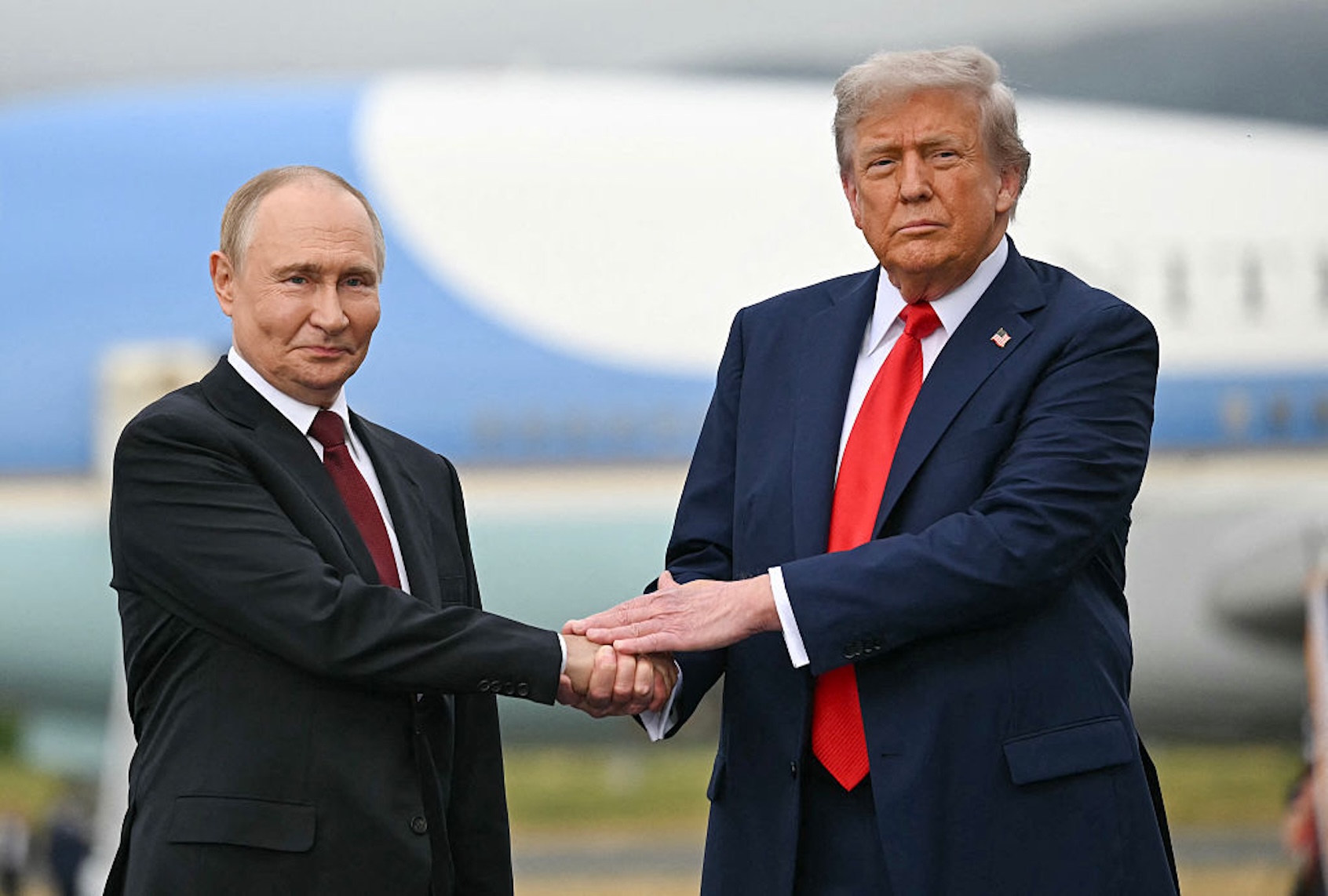
Putin has Trump right where he wants him

America’s descent into chaos and depravity was foretold 10 years ago at a press conference. Donald Trump, who had just been nominated for president at the 2016 Republican National Convention, issued an invitation for one of America’s foes to hack the emails of Hillary Clinton, the former secretary of state and Democratic nominee for president. “Russia, if you’re listening, I hope you’re able to find the 30,000 emails that are missing,” he said. “I think you will probably be rewarded mightily by our press.”

The call came only days after emails from the Democratic National Committee were released following the hacking of the organization’s computer servers, which was widely assumed to have been perpetrated by Russian agents. As would become the habit over the following decade, many dismissed Trump’s remarks as mere trolling that weren’t intended to be taken seriously. 

This was not the first time he had invoked Russia. Throughout the primary season, Trump had gushed in multiple interviews about Russian President Vladimir Putin and signaled his intentions to draw closer to Putin once in office. Trump even defended the dictator’s extra-judicial killings, blithely explaining, “Our country does plenty of killing.” But the press conference did mark the first time he enlisted Russia as his ally. 

The overtures continued throughout Trump’s first term, most infamously when he sided with Putin during a bilateral meeting over America’s own intelligence agencies, which had found that Russia had interfered in the 2016 election. The president suggested an “election integrity” sharing operation between the two countries, a proposal that made it clear Putin had Trump wrapped around his little finger. 

Then came Russia’s war of aggression against Ukraine. Throughout the 2024 election, Trump pledged to end the war in Ukraine within 24 hours of taking office — or of being elected. (His rhetoric often shifted.) He apparently believed that he could get on the phone with Ukrainian President Volodymyr Zelenskyy and order him to immediately surrender or face his mighty wrath. Needless to say, this did not happen, and since then Trump has grown increasingly frustrated that he’s been shown to be nothing more than a paper tiger, a frustration that has now reached fever pitch due to his abject failure in the Iran war. Desperate for a “win” — by which he means a Russian win — the president is now in the process of completely selling out Ukraine to his good friend Vlad. 

Trump has grown increasingly frustrated that he’s been shown to be nothing more than a paper tiger, a frustration that has now reached fever pitch due to his abject failure in the Iran war. Desperate for a “win” — by which he means a Russian win — the president is now in the process of completely selling out Ukraine to his good friend Vlad. 


In recent days, Trump has signed an executive order temporarily lifting the sanctions on Russian oil. While supposedly done to secure diesel fuel for the United States, which has seen prices skyrocket due to the president’s war of choice with Iran, the act is in practice a sign of goodwill toward Putin, America’s enemy, and will help him fund his war against Ukraine, our erstwhile ally. A few days later, Trump waived several additional sanctions that a bipartisan congressional majority had passed just a few weeks ago at the behest of the late Sen. Lindsey Graham, R-S.C., who foolishly believed himself to have the president under his control. 

Worse yet, in what will go down as one of the most appalling betrayals by a U.S. president in history, Trump and his good friend Elon Musk apparently sabotaged Ukrainian intelligence by slowing the Starlink and Starshield communications systems the country relies on for its defensive and offensive weapons systems. Russia took swift advantage of the favor and unleashed one of the most massive bombardments of the war, killing civilians and hitting Ukraine’s energy sector. Trump also called for Zelenskyy’s ouster, and in an interview with Bloomberg published Sunday, the Ukrainian president accused Trump of pushing the country to surrender to Russia.


Want more sharp takes on politics? Sign up for our free newsletter, Standing Room Only, written by Amanda Marcotte, now also a weekly show on YouTube or wherever you get your podcasts.


Trump has a number of apparent rationales for these moves. He wants to be seen before the midterms to be doing something about the price of gas and diesel. But that is a crisis of his own making due to his misbegotten war in Iran, for which he has no way out that will solve the problem. His ongoing war has altered the global energy markets in ways that are not easily fixed, which was the reason no president before him was stupid enough to attack Iran. So now Trump is blaming Ukraine because it is bombing Russian oil refineries and demanding they stop so that Russia can sell its diesel — and finance its war, which led to the sanctions in the first place. Not to be overlooked is that Russia is a staunch ally of Iran and is helping them fight us, which Trump has waved off as having “nothing.” Some might argue that could constitute providing “aid and comfort” to America’s enemy.

Meanwhile, fingers are being pointed in multiple directions. Musk said the government is to blame for the Starlink/Starshield gambit. According to sources in the Pentagon, the order came from the White House. Trump claimed he doesn’t know anything about it. Secretary of State Marco Rubio shrugged that “it just sort of happened.” Now, lest the Europeans get it in their heads that they should try to step up their own defenses by restricting Starlink in favor of a European-based system, the U.S. government is reportedly threatening them with “devastating” or “destructive” economic retaliation.

As a cherry on top of the administration’s full-on embrace of Russia, the Wall Street Journal reported that Putin has floated a summit with Trump and Chinese President Xi Jinping to decide Ukraine’s fate. (On Monday, Trump told reporters he was open to a meeting but denied it would focus on Ukraine, saying he wanted to discuss denuclearization.) If Trump knew any history, he would know that such a meeting would prove to be his Yalta, the trilateral conference between President Franklin Roosevelt, British Prime Minister Winston Churchill and Soviet Premier Joseph Stalin that carved up Europe in the wake of World War II. The summit became widely seen by the right as “the sell-out at Yalta” because the Soviets ended up with Eastern Europe, but things have changed within the GOP. 

The summit is clearly intended to elevate Russia back to superpower status, which it is not in any economic or military sense, and to demonstrate a new order in which Trump, Putin and Xi run the world. In reality, Putin and Xi now have the United States dancing to their tune, handing them power and influence to dominate their respective spheres. 

The president’s flagrant betrayal of Ukraine is an outrage that has seemingly awakened some of the slumbering Republicans who know they are facing a drubbing at the polls in the quickly approaching midterm elections. Whether it will arouse the consciences of enough to truly step up and stop this breach of trust is unknown. But the mere fact that Trump has gone this far to salve his ego, defy his critics by embracing Putin even more fervently and drum up a lame excuse for what may be the worst national security decision in American history leaves this country weaker, poorer and more distrusted around the world. It hardly seems possible, but we have reached yet another new low.

The post Putin has Trump right where he wants him appeared first on Salon.com.
  •  

Trump says he is open to trilateral summit with Putin and Xi

President Donald Trump said Monday he was open to a trilateral meeting with Russian President Vladimir Putin and Chinese President Xi Jinping, but said such a meeting would not focus on the war in Ukraine.

Trump told reporters at the White House that he would participate in a summit with both leaders if the purpose was to discuss denuclearization. The comments came after reports that Putin had proposed that the three leaders meet on the sidelines of next month’s APEC summit in China to discuss how to end the war in Ukraine.

“I would do it, not so much for Ukraine,” Trump said. “Russia, frankly, has been fine on Ukraine. They have not been doing much. And the same thing with China. We would have it to talk about nuclear weapons, denuclearization. And anytime I can have a meeting on denuclearization.”

Trump made room for the possibility of other topics to be discussed in such a meeting but reiterated that it would be “based on denuclearization.”

“If President Xi wants to have it, I’d have it,” he said. “I’m sure we would talk about other things like trade too but yeah I would do that.”

Kremlin spokesperson Dmitry Peskov confirmed to The Wall Street Journal that discussions were taking place over the possibility of a meeting, but there was no “clear understanding” yet about what the potential summit’s agenda would consist of.

The possibility of a high-level summit between the three leaders comes as Trump has waived sanctions on Russia and announced a diesel deal with Putin, while placing the blame for the four-year war on Ukrainian leader Volodymyr Zelenskyy, who earlier Monday briefed a bipartisan group of lawmakers about the conflict.

“To be honest, I think it is time for somebody else to negotiate on behalf of Ukraine, because what has happened?” Trump said to reporters. “Very little land has moved, but a million people, a tremendous number of people are dead.”

  •  

Trump’s Russia rethink — and Europe’s response

Donald Trump’s latest moves on Russia and Ukraine have alarmed Kyiv and European capitals alike. But rather than scrambling to contain the fallout, EU leaders are keeping their cool. Zoya Sheftalovich and Nick Vinocur explore Europe’s strategy for weathering Trump’s midterm storm — and what it means for Ukraine.

Then, France reels from a weekend of violent protests, with more than 1,800 arrests and widespread destruction. As political leaders trade accusations, we look at how the unrest is shaping the battle ahead of the 2027 presidential election from Paris.

Plus, hackers turn supermarket fridges into heaters, exposing some surprisingly basic cybersecurity vulnerabilities.

If you have a question or comment, don’t hesitate! Message us on our WhatsApp here or at +32 491 05 06 29.

  •  

Wie die Hauptstadt für die Bundesregierung zur Belastungsprobe wird

Ein mögliches rot-grün-rotes Bündnis in Berlin schlägt bundespolitisch hohe Wellen. Während z.B. Grünen-Chef Felix Banaszak vor radikalen Kräften warnt und die Tür zur CDU taktisch offen halten will, ist Friedrich Merz wiederum hart und unerbittlich im Ton gegenüber Grünen und der SPD, wenn es um die Gespräche mit radikalen linken Kräften geht. Rasmus Buchsteiner ordnet ein, wie nun auch in der SPD der Widerstand wächst und Parteichef Lars Klingbeil sich derweil zurückhält.

Die Junge Union fordert derweil drastische Konsequenzen: Eine künftige Berliner Landesregierung soll z.B. von Geheimdienstinformationen des Bundes abgeschnitten werden. Im 200-Sekunden-Interview erklärt der CDU-Abgeordnete Johannes Volkmann, warum er Teile der Berliner Linken als Sicherheitsrisiko sieht und eine politische Ächtung der Partei verlangt.

Auf internationaler Bühne sorgt die Kehrtwende der USA für Entsetzen, nachdem Donald Trump die Sanktionen gegen Russlands Schattenflotte auf Eis gelegt hat. Hans von der Burchard analysiert, wie dieser Schritt Europa sicherheitspolitisch erneut herausfordert und welche Folgen der Wegfall amerikanischer Unterstützung für die Ukraine im nahenden Winter haben könnte.

Das Berlin Playbook als Podcast gibt es jeden Morgen ab 5 Uhr. Rixa Fürsen, Maximilian Stascheit und das POLITICO-Team liefern Politik zum Hören – kompakt, international, hintergründig.

Für alle Hauptstadt-Profis: Der Berlin Playbook-Newsletter bietet jeden Morgen die wichtigsten Themen und Einordnungen. Jetzt kostenlos abonnieren.

POLITICO Deutschland – ein Angebot der Axel Springer Deutschland GmbH
Axel-Springer-Straße 65, 10888 Berlin
Tel: +49 (30) 2591 0
information@axelspringer.de
Sitz: Amtsgericht Berlin-Charlottenburg, HRB 196159 B
USt-IdNr: DE 214 852 390
Geschäftsführer: Christoph Eck-Schmidt, Carolin Hulshoff Pol, Mathias Sanchez Luna

POLITISCHE WERBUNG

**(Anzeige) Eine Nachricht der PKV: Wir sind die Besser-für-alle-Versicherung. Warum? Weil wir als private Krankenversicherung die medizinische Versorgung stärken, nachfolgende Generationen entlasten und den medizinischen Fortschritt beschleunigen. Das kommt allen Menschen in Deutschland zugute, auch den gesetzlich Versicherten. Mehr auf PKV.de**
  • Sponsor: Verband der Privaten Krankenversicherung
  • Diese Werbung steht im Zusammenhang mit der Debatte über Belastungen der privat Pflegeversicherten zugunsten der sozialen Pflegepflichtversicherung (SPV).

Weitere Informationen zu politischer Werbung hier.

  •  

5 fights that will shape NATO’s next Russia war plans

BRUSSELS — NATO is beginning talks this month on the forces and weapons allies would need to defend against a Russian attack — and how they would pay for them.

The talks will set capability targets for 2029, requiring each of NATO’s 32 member countries to provide specific forces and equipment.

The deadline raises the stakes: European officials have warned that Russia could be ready to attack a NATO country by then.

At the same time, the Trump administration is weighing a sharp reduction in U.S. forces in Europe, which could leave the alliance short of troops and critical capabilities with fewer like refueling aircraft, long-range missiles and intelligence, surveillance and reconnaissance assets.

The negotiations will test how much each country is willing to spend, how much Europe can do without the U.S. and whether NATO’s military plans should make greater use of technologies such as robotics and artificial intelligence.

“It’s going to be tough,” said one senior NATO diplomat, who, like others, was granted anonymity to speak freely on the sensitive issue. “Burden sharing, the U.S., how to combine the level of ambition with political priorities … it’s huge.”

NATO allies will begin discussing the broad mandate for the new targets — known as Political Guidance — in the coming days. It’s the first step in a five-part effort called the NATO Defence Planning Process.

“The ambition … is for this to be a transformation cycle and not one that’s just off the shelf,” said French Adm. Pierre Vandier, NATO’s Supreme Allied Commander Transformation and the alliance’s chief for future warfare.

POLITICO spoke to 15 current and former NATO officials and diplomats to get a sense of the five key debates likely to define the negotiations.

1. Deciding on ambition

The most significant issue will be deciding exactly how many troops and military capabilities allies want to provide — known as the level of ambition.

Historically, NATO allies have agreed that beyond the forces needed for major operations, they should have 18 spare brigades — each a unit of about 5,000 soldiers — to carry out smaller crisis-management missions outside alliance territory, like Afghanistan or Kosovo.

But U.S. pressure to hand off more security responsibility to European allies — dubbed NATO 3.0 — could put pressure on allies to reduce or even eliminate requirements for any smaller operations.

Discussions will also cover whether to speed up the process itself in future in response to the furious pace of battlefield innovation, from AI to ground robots. 

Allies are also likely to tackle how to provide conventional military support — like ground troops or aircraft — to nuclear-armed countries like the U.K. and U.S.

“Conventional support … capabilities are absolutely part of the NDPP process,” said Nassima Barrows, NATO’s nuclear policy director, “so that is one of the big messages that we underline as a part of the next [negotiations].”

2. Filling the American gap

Looming over the talks is the Pentagon’s upcoming review of American forces in Europe. Washington earlier this year already pulled assets like strategic bombers, fighter jets, drones, submarines and warships from the pool of forces NATO can draw on.

The review lands in December, midway through the NATO talks, prompting concerns it may delay negotiations. There are worries that the U.S. could pull out assets Europe needs, like heavy transport aircraft.

Washington’s drive to curb its military presence in Europe will set off a scramble among allies to replace its capabilities. That will open discussions on how to share the burden fairly, likely to be very difficult as national budgets are increasingly squeezed.

“Not so long ago, the whole NATO process was … you do the math on what NATO needs, and then when you realize you don’t have everything, the U.S. fills in the gaps,” said Camille Grand, head of the ASD defense lobby and a former senior NATO official. “This is no longer the case.”

One way to tackle that is to shift away from specific weapons requirements to assigning objectives to countries, such as having their forces eliminate Russian command outposts. That could create more flexibility for European allies to who can’t access U.S. weapons like Tomahawk cruise missiles.

“We don’t have to have thousands of Tomahawks … but we can have thousands cheaper, low-cost alternatives,” said Fabrice Pothier, a former NATO policy planning director who is now CEO of the Rasmussen Global consultancy.

3. Regional divides

The focus on Russia is likely to cause friction with allies worried about other threats.

On paper, NATO espouses a “360-degree” approach to security. In practice, the alliance’s focus has shifted eastward since Russia’s full-scale invasion of Ukraine in 2022, and northward in the past year as it set up an Arctic mission (largely in response to pressure from Donald Trump over Greenland).

Some allies would like to see more attention given to the alliance’s southern and southeastern flanks. Issues include Russian mercenary presence in Libya, the potential for weaponized migration and increased submarine activity, alongside drone attacks on vessels in the Black Sea.

“There is too much north,” said a second NATO diplomat. “We should reset.”

4. More drones or more tanks

The drone warfare dominating the frontlines in Ukraine is likely to force a debate on the balance between adding unmanned capabilities and continuing to build up conventional military equipment like tanks and artillery.

Most allies are making plans to increase their use of unmanned systems.

The U.K. this year announced a “hybrid fleet” that leans on autonomous vessels like Type 93 uncrewed underwater vehicles. France has earmarked roughly €8.4 billion for drones and loitering munitions while Germany is establishing its first dedicated drone regiment next year.

Europe’s difficulties in recruiting soldiers also feed into the debate, said Grand. “One thing that is driving everybody in the direction of more unmanned [systems] is we have aging societies — we have a manpower issue.”

Countries also have to figure out how to match Russia’s technological developments without breaking national defense budgets.

Vandier said Russia produces 9 million drones a year, a figure that requires a “pretty radical effort” from the alliance. He suggested one fix could be a subscription-style model for hardware updates to keep weapons systems from becoming obsolete.

5. Learning from Ukraine

Most NATO allies agree that Ukraine contributes to their security thanks to its large and battle-hardened military and its rapid technological developments in air, sea and ground drones, air defenses, missiles, and its advanced Delta battlefield management system.

That has some countries calling for closer military and industrial cooperation, even as others urge caution because the war in Ukraine is different from NATO’s doctrine, which calls for rapid-maneuver warfare, air superiority and standoff precision strikes.

“There are tremendous lessons from the conflict that we need to capture,” NATO’s top commander, U.S. Gen. Alexus Grynkewich, told the European Parliament earlier this month. But “we do not want to fight that kind of war.”

  •  

Zelenskyy warns: “We will not prevail” if U.S. backs Russia

Ukrainian President Volodymyr Zelenskyy confirmed Sunday that the United States temporarily interrupted intelligence-sharing with Ukraine, as a Republican congressman demanded an investigation into separate disruptions affecting Ukrainian battlefield communications.

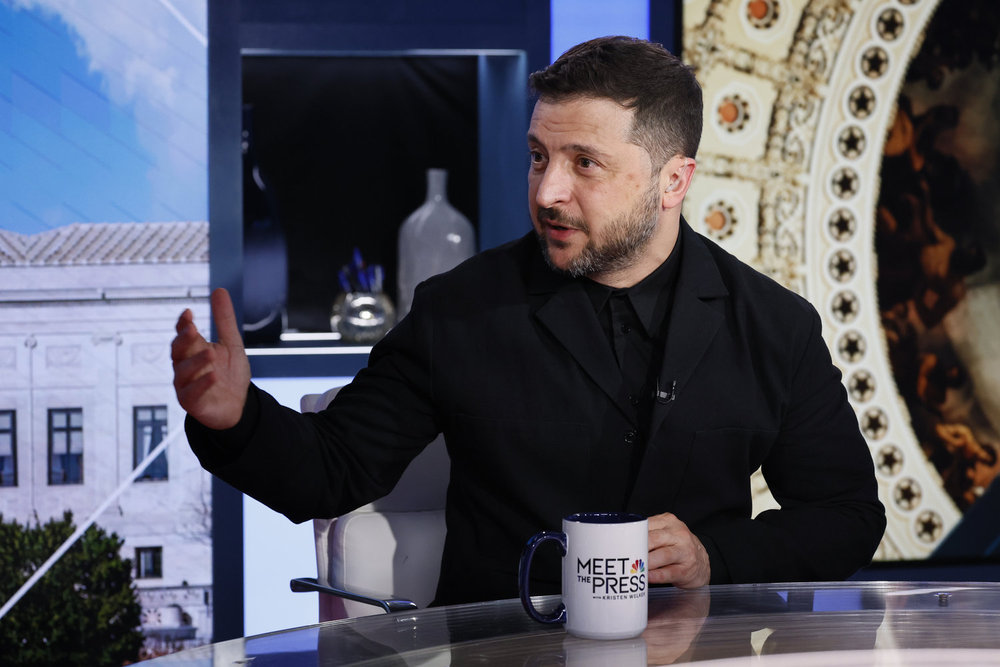
Speaking on NBC’s “Meet the Press,” Zelenskyy said American intelligence used to detect incoming Russian missile strikes had been restored after a brief interruption.

“We are very thankful for this,” Zelenskyy said. “Now it works.”

President Donald Trump previously maintained that intelligence-sharing had never stopped, despite Ukrainian officials reporting that some Russian attacks occurred without warning.

Zelenskyy also criticized the administration’s decision to allow Russian diesel imports and waive new sanctions targeting Moscow, warning that Washington’s actions could undermine Ukraine’s defense.

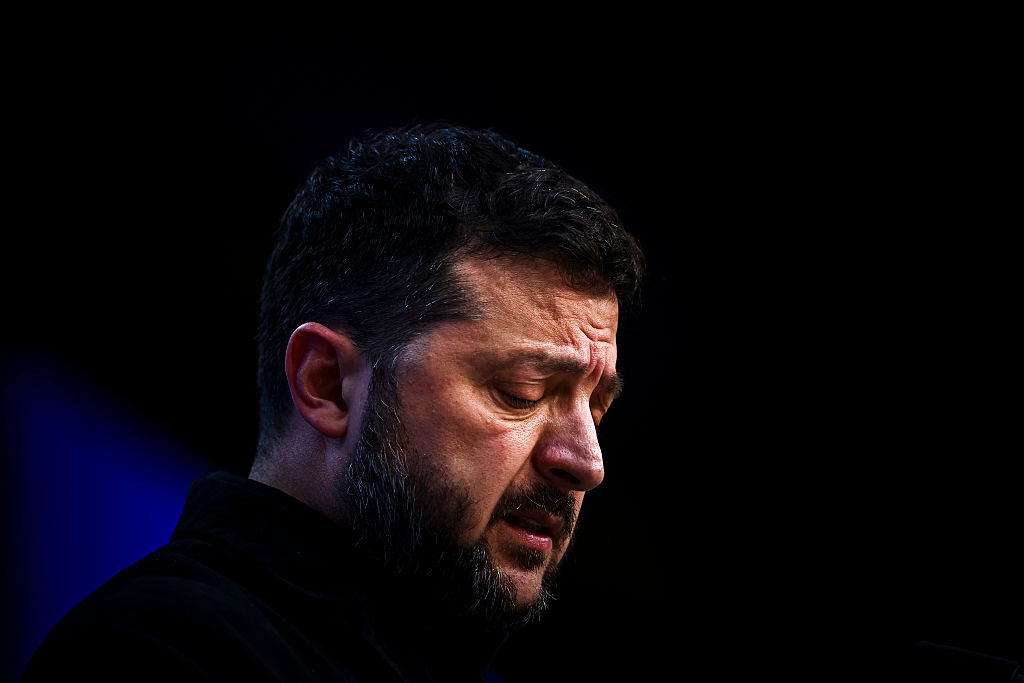
“If the United States will officially take the side of Russia … we will not prevail and we will not be able to stand,” he said.

Treasury Secretary Scott Bessent, appearing on the same program, declined three times to directly answer whether the United States considers Ukraine an ally.

“I’m not the secretary of state. I’m not the president,” Bessent said after repeated questioning by moderator Kristen Welker.

Bessent pointed to continued American intelligence and military assistance, arguing that Washington was seeking a negotiated end to the war.


Start your day with essential news from Salon.
Sign up for our free morning newsletter, Crash Course.


Meanwhile, Rep. Mike Turner, R-Ohio, called for a congressional investigation into disruptions involving SpaceX’s Starshield satellite communications system, which Ukrainian forces rely on for battlefield operations.

On CBS’ “Face the Nation,” Turner rejected Secretary of State Marco Rubio‘s explanation that the slowdown occurred without a White House order.

“Absolutely not,” Turner said when asked whether Rubio’s explanation was sufficient. “There needs to be a congressional investigation.”

Turner warned that interrupted communications could endanger Ukrainian lives and urged Trump to reconsider waiving sanctions on Russia.

The tensions also provided material for Saturday night’s “SNL UK,” which spoofed Zelenskyy’s meeting with British Prime Minister Andy Burnham.

James Austin Johnson, reprising his Trump impersonation from the American “Saturday Night Live,” crashed the meeting as the fictional Zelenskyy pleaded for restored Starlink access. Johnson’s Trump offered to help Ukraine with anything, “provided it’s not help with war.”

The post Zelenskyy warns: “We will not prevail” if U.S. backs Russia appeared first on Salon.com.

  •  

Ukraine strikes oil facility in St. Petersburg as part of ‘massive’ drone attack

Ukraine struck an oil terminal in St. Petersburg Sunday morning in what Russian state media called “one of the biggest drone attacks of the year.”

Alexander Beglov, governor of St. Petersburg, said on Telegram Sunday that the city underwent a “massive” overnight attack from Ukrainian drones. “The Ministry of Emergency Situations continues to extinguish fires at the Petersburg Oil Terminal, the Ruchyi oil depot, and industrial warehouses in the Kolpino district,” he said, adding that one person died and several others were injured in the incident.

The drone strikes come as Kyiv and Moscow ramp up attacks on each other’s infrastructure. Ukrainian President Volodymyr Zelenskyy said last week he had ordered the resumption of strikes on Russian oil refineries following a three-day pause after U.S. President Donald Trump declared he had brokered an energy ceasefire between Ukraine and Russia.

Trump repeatedly urged Ukraine to halt its attacks and blamed the country for rising fuel prices — while also calling for Zelenskyy to be replaced as president.

Writing on X Sunday morning, the Ukrainian president highlighted Moscow’s continued attacks on Ukraine. “In total, over this past week, the Russians have attacked Ukraine with almost 2,700 attack drones, 1,700 aerial bombs, and 66 missiles, most of them ballistic,” he wrote, adding that the U.S. “should see that Russia is not taking any reciprocal steps in response to sanctions relief or agreements.”

Separately, Vilnius said that a suspected drone may have self-detonated in Lithuania while on a flight path toward Latvia Sunday morning. A spokesperson for the Lithuanian armed forces said NATO air defense mission fighter jets were scrambled in response to the incident near the Latvian border.

The provenance of the suspected drone is unclear, but Robertas ​Kaunas, Lithuania’s defense minister, said the object was likely a ​drone which had entered the country from Poland, adding that he had proposed a ⁠joint investigation with his Polish counterpart.

Police searches are also underway in eastern Poland after reports of an unidentified object entering the country’s airspace following a Russian attack on Ukraine.

  •  

Zelenskyy: Trump is letting Putin off

Ukrainian President Volodymyr Zelenskyy criticized President Donald Trump’s decision to waive new sanctions against Russia on Saturday, warning that easing economic pressure would only embolden Russian President Vladimir Putin.

Trump signed an executive order Friday suspending sanctions and tariffs under the Lindsey O. Graham Sanctioning Russia and Iran Act, which he signed into law last month. The penalties were scheduled to take effect Sunday.

“A decision was unfortunately made in America to completely disregard the Lindsey Graham Act, which was supposed to impose truly effective pressure on Russia to bring this war to an end,” Zelenskyy wrote Saturday.

Yesterday, the Russians carried out one of their largest attacks on Ukraine’s energy sector – more than 15 critical power generation and transmission facilities were targeted across different regions of Ukraine. Restoration work is ongoing, with all necessary services and all available resources of Ukrainian energy companies involved. I thank everyone working practically nonstop to restore power.

The most difficult situation was in Lutsk, Rivne, Zhytomyr, Vinnytsia, Shepetivka, Slavuta, and Netishyn. Energy facilities in the Kharkiv, Kyiv, Dnipro, and other regions were also hit. The Russians have scaled up their anti-energy operation and are trying to stretch our reserves and repair capabilities as thin as possible. Between 7 p.m. yesterday and 7 a.m. today alone, more than 320 jet-powered and gasoline-powered “shaheds,” along with loitering munitions, cruise missiles, and ballistic missiles, were used against our energy sector, our cities, and our communities. And although our warriors are shooting down a significant number of them, the sheer scale and unrelenting pace of Russia’s strikes, specifically against our energy sector, are unfortunately having severe consequences.

It is important that our European partners have already prepared new support packages for Ukraine. I am grateful to them for this. And it is important that everyone in America also sees what is really happening. At a time when the Russians have carried out such a massive attack on our energy sector, a decision was unfortunately made in America to completely disregard the Lindsey Graham Act, which was supposed to impose truly effective pressure on Russia to bring this war to an end. This Act could have helped enormously – and still can! But it needs to actually work, and every voice in support of it matters.

Russia is trying to cause a blackout in Ukraine – right before winter. Russia is trying to leave millions of our people without electricity and heating. Pressure is needed to stop this. A U.S. sanctions blackout, easing pressure on the aggressor, financial rewards for Putin – all of this only encourages him to keep attacking. We must not give up ground. We must keep trying to end the war. To end it, not give Putin every reason to continue it indefinitely. I thank everyone who is truly fighting for peace and helping Ukraine!

— Volodymyr Zelenskyy / Володимир Зеленський (@ZelenskyyUa) October 17, 2026

“This Act could have helped enormously — and still can! But it needs to actually work, and every voice in support of it matters,” he added.

The White House said the waiver was in the national interest. The order suspends the new penalties but leaves existing sanctions against Russia in place.

Moscow, meanwhile, welcomed the decision. Kirill Dmitriev, Putin’s investment envoy, called it an “important and truly historic moment,” suggesting it could open the door to renewed economic cooperation with Washington.

The move comes as Russia intensifies attacks on Ukraine‘s energy infrastructure ahead of winter. Zelenskyy said Russian forces targeted more than 15 energy facilities in an overnight assault. Ukraine’s air force reported 332 drones and four cruise missiles launched during the attacks.


Start your day with essential news from Salon.
Sign up for our free morning newsletter, Crash Course.


Rep. Don Beyer, D-Va., accused Trump of undermining bipartisan efforts to pressure Moscow.

“Trump’s latest surrender to Putin again betrays our Ukrainian partners and defies clear congressional intent of legislation designed to punish Russia for its illegal war of aggression,” Beyer said.

Trump just waived all of the sanctions on Russia provided for in the Lindsey Graham Sanctioning Russia Act, just as I and others warned he would.

Trump’s latest surrender to Putin again betrays our Ukrainian partners and defies clear congressional intent of legislation designed to punish Russia for its illegal war of aggression.

Trump has proven he will twist this law and abuse the powers it conferred on him, and while he has let the tariff powers lie for the moment, the law as written also empowers Trump to weaponize new trade authorities against our allies and trading partners.

Congress must fix this flawed law to stop Trump from capitulating to Putin and ensure that it truly supports Ukraine.

— Rep. Don Beyer (@RepDonBeyer) October 17, 2026

The Graham Act authorized new economic penalties, including tariffs targeting countries that purchase Russian energy, but also granted the president authority to waive them on national-interest grounds.

The post Zelenskyy: Trump is letting Putin off appeared first on Salon.com.

  •  

Starlink restrictions in Ukraine a ‘planned operation’, Zelenskyy says

Starlink restrictions hampering Ukraine’s war effort are “a planned operation,” Ukrainian President Volodymyr Zelenskyy said on Saturday.

The satellite service operated by Elon Musk’s SpaceX is still deactivated in Ukraine at speeds over 160 km/h, which prevents some of its drones to intercept high-speed Shahed drones used by Russia, Zelenskyy told reporters in a WhatsApp chat.

He added that Ukraine conducted a test by sending Starlink-equipped vehicules to European Union countries, at speeds over 180 km/h. “Starlink kept working … The conclusion is this: the restrictions are in effect in Ukraine, but they are not in effect in European Union countries. So, this is a planned operation,” Zelenskyy said.

The restrictions have revived questions on Ukraine’s reliance on the satellite system operated by a U.S. company amid escalating tensions between Kyiv and the White House. “This will cost many of us our lives,” an experienced Ukrainian officer told POLITICO and the Axel Springer Global Reporters Network earlier this week.

“We’re reaching out to everyone at the military level, at the Ministry of Defense level, and at the diplomatic level, including to SpaceX. Right now, no one is responding to our military or the Ministry of Defense,” Zelenskyy told reporters.

The European Union is under increasing pressure to provide Ukraine with an alternative to Starlink. But negotiations between Brussels and Kyiv over access to the bloc’s Govsatcom program — which gives participating governments secure communications capabilities— have been stalling. And IRIS², the EU’s in-house planned network to match Starlink, is only expected to come online in 2030.

“The Europeans are now raising the question of alternatives themselves. And they’re already working on them. They’re already making progress, and they’ll succeed in this area. I can already see that,” Zelenskyy said.

SpaceX did not immediately responded to a request for comment.

Earlier on Saturday, Zelenskyy accused Russia of looking to create a blackout across Ukraine, amid attacks on energy infrastructure and the waiver of U.S. sanctions on Moscow.

“Russia is trying to cause a blackout in Ukraine right before winter. Russia is trying to leave millions of our people without electricity and heating. Pressure is needed to stop this,” he said on Telegram.

“An American sanctions blackout, easing pressure on the aggressor, monetary rewards for [Russian President Vladimir] Putin: all of this only encourages him to keep striking,” he added.

The Ukrainian leader’s comments come after Russia carried out strikes on the war-torn country’s energy sector, including power generation and transmission facilities, with more than 320 jet-powered Shahed drones, loitering munitions, cruise and ballistic missiles. Power was reportedly cut for about 1 million people.

They also come as U.S. President Donald Trump signed on Friday an executive order that waived key sanctions on Russia — a decision that Kirill Dmitriev, Putin’s special envoy for investment and economic cooperation, described as “an important and truly historic moment.” Trump’s move comes only a few days after he made a deal with Putin over supplying barrels of diesel, leaving European countries and Ukraine stunned.

“A decision was unfortunately made in America to completely ignore Lindsey Graham’s bill, which was supposed to introduce truly effective pressure on Russia to end this war,” Zelenskyy said. “This bill could have helped a great deal, and it still can! But the law needs to actually work, and every vote for it matters.”

This article was updated. Veronika Melkozerova contributed reporting.

  •  

EU faces growing pressure to plug Ukraine’s Starlink gap

BRUSSELS — The European Union is under pressure to keep Ukrainian troops fully online after Elon Musk’s Starlink was restricted amid volatile U.S. support for Kyiv.

“It was a very dangerous and unpleasant surprise,” Ukrainian President Volodymyr Zelenskyy told reporters after EU leaders met in Brussels, referring to Starlink speed limitations experienced by military troops in recent days. “We were using Starlink to intercept jet-powered Shaheds [combat drones] that are attacking our civilian infrastructure and killing our families … When the speed limits were lowered, we became incapable of shooting [them] down.”

Ukraine has long relied critically on Musk’s satellite constellation for wartime efforts. Reuters reported Friday that the order to slow Ukraine’s military-grade Starshield service came from the White House, days after Washington pressed Kyiv to halt strikes on Russian refineries, amid soaring energy prices and ahead of November’s midterm elections.

“It is unacceptable for Ukraine’s defense — and therefore Europe’s security — to depend on the goodwill of a single American billionaire or on Donald Trump’s decisions,” French centrist Member of the European Parliament Christophe Grudler told POLITICO.

Ahead of Thursday’s high-level meeting, European lawmakers had been calling on the EU executive to fast-track Kyiv’s access to satellite capabilities already pooled under the bloc’s Govsatcom program — which gives participating governments secure communications capabilities.

Negotiations between the EU executive and Ukraine over this access have been ongoing since March, with no breakthrough. Norway and Iceland secured such an agreement earlier this year.

“What I don’t understand is why the European Commission and the Member States have not done everything possible to quickly reach an agreement that would allow Ukraine to benefit from it,” added Christophe Grudler, who wrote to EU leaders.

He also called on them to speed up work on IRIS² — the EU’s in-house, planned satellite network and full-fledged match to Starlink, which is only expected to come online in 2030.

Commission spokesperson Thomas Regnier confirmed in a statement that it is “currently in talks with Ukraine to fully associate” the country with the EU’s Govsatcom program. “The war in Ukraine shows that our security also depends on space. And the EU has been doing quite a lot. We are ready to support Ukraine where we can support Ukraine,” he added.

Calls to crack down on dependence on foreign providers and boost alternatives to Starlink also come at a time when legislators are negotiating a series of laws that could tame Musk’s ambitions in Europe.

“Ukraine’s dependence on Starlink highlights the vulnerability of European defence systems that rely on U.S. technology, Another reminder that Europe must reduce its dangerous technological dependencies — ASAP,” center-right Finnish lawmaker Aura Salla said on social media.

Policymakers across Europe have been joining forces to curb Starlink’s dominance in low-Earth orbit, where satellites fly close to Earth to deliver faster connections.

“As legislators, we must ensure that European operators are well positioned in the market and limit the dominance of foreign players,” German center-left lawmaker Matthias Ecke said. In Brussels, lawmakers, including Ecke, are backing European telcos gunning for prized satellite frequencies, currently licensed to U.S. operators until next year and eyed by Starlink.

Meanwhile, Zelenskyy said Ukraine was working bilaterally with EU countries to secure more capabilities, citing France. He also expressed hopes that Starlink restrictions could be lifted. “My partners told me there were signals from the White House that they would return these capabilities.”

SpaceX — Starlink’s parent company — didn’t respond to POLITICO’s request for comment.

  •  

Trump wants Ukraine to stop hitting Russian refineries. The White House throttled the wrong drones

Coincidentally, at the same time, not a puppet but a convicted criminal, Donald Trump wants Ukraine to stop blowing up Russian oil refineries; someone inside the White House ordered Ukraine's Starshield military satellite service to be slowed to a crawl.

Diaper Don calls the attacks a "disgrace," and blames them, not his war in Iran, for skyrocketing energy prices. — Read the rest

The post Trump wants Ukraine to stop hitting Russian refineries. The White House throttled the wrong drones appeared first on Boing Boing.

  •  

21 things we learned at the EU leaders’ summit

This was supposed to be an EU summit about the EU’s long-term budget. But things are never easy for EU leaders, and world events have a nasty habit of making their way onto the itinerary.

That meant this European Council had a lot more on the agenda than the last handful of summits, at least: Energy, migration, enlargement, Ukraine, and more besides were covered — and very little, if anything, was decided.

Have FOMO because you weren’t there? Don’t worry, we’ve got you covered. Here’s POLITICO’s rapid roundup of what we learned at the European Council.

1) Energy stole the show right out of the gate

The summit’s first major clash came Thursday morning, with EU leaders split over whether to delay ETS2, the bloc’s second phase of carbon pricing, to address high energy prices, triggering a three-hour-long standoff.

Italy and Greece joined the Visegrád Four — Czechia, Hungary, Poland and Slovakia — in calling for a delay, a push rejected by the majority of countries.

The debate dragged on, delaying lunch (spare a thought for our hungry leaders!) and leading to the cancellation of a press conference on Thursday night.

2) Budget negotiations are a marathon…

Negotiations on the bloc’s next long-term budget were expected to be one of the summit’s most contentious topics. But they were a nothingburger, with most leaders repeating positions they have held for months. The summit brought them no closer to a breakthrough.

Many countries, of course, want a smaller budget, with Swedish Prime Minister Ulf Kristersson telling reporters that his country is “not an ATM for the EU.”

Belgian Prime Minister Bart De Wever, meanwhile, said he had no choice but to be frugal at the European level, arguing he is used to tightening his belt at home because his wife is Dutch. Think of Bart next time your Dutch friends ask you to pay them back for that coffee.

3) … and a sprint

European Council President António Costa is still aiming to get a budget deal before the end of the year, according to two EU officials. He announced that leaders will hold a special summit at the end of November to try and make progress (and there’s a December summit too). But that timing leaves them up against the clock to reach a deal by year’s end.

See you all back here on Nov. 26!

4) EU leaders may need to bring extra luggage next time

If leaders do hope to agree on the EU’s long-term budget this year, they should prepare for long negotiations in November and December.

German Chancellor Friedrich Merz suggested the pre-Christmas summit could last longer than the scheduled two days. “For the December summit, we should pack a few more shirts than usual,” he said. Gulp!

5) Your next holiday to Cyprus might be a little easier

Cypriot President Nikos Christodoulides told reporters he hopes EU leaders will discuss his country’s bid to join the Schengen travel zone at the December summit.

“All technical preparations have already been completed, and we hope that the matter will be discussed by the relevant council in December so that the final political decisions can be made,” he said.

6) Rose-colored glasses have come off when it comes to Costa

European Council President António Costa drew the ire of some leaders over his handling of negotiations to curb high energy prices, which had become a “mess,” three EU diplomats told POLITICO, with another two diplomats saying that leaders were fuming at Costa for allowing talks to go off the rails.

7) Drink (a little) less beer to help Ukraine

Ahead of the summit, Latvian Prime Minister Andris Kulbergs told reporters that supporting Ukraine costs each European the equivalent of one beer a year.

“That one beer is just a cost [for EU citizens]. There, it’s a cost of life. We drink less, their lives are saved,” he said. “Simple as that.”

He didn’t say whether he meant a beer bought in Stockholm or Prague. As anyone in Belgium knows, not all beers are created equal — or cost the same.

8) The EU Parliament wants you to know it matters too

The European Parliament’s two lead negotiators on the EU budget made the rounds of the press room to make sure journalists heard their views. Siegfried Mureșan (of the European People’s Party) and Carla Tavares (Socialists and Democrats) both stressed that the Parliament’s position is important.

Meanwhile, European Parliament President Roberta Metsola joined leaders for the first part of the summit. Metsola said she had made it clear to them that “the Parliament is not a rubber-stamp and never will be.”

9) Talking China (without mentioning China)

Leaders discussed trade imbalances (read: China) over lunch on Thursday and welcomed the deal the European Commission struck with China last week to curb imports of Chinese hybrid vehicles. Czech PM Andrej Babiš even went so far as to call the deal “fantastic.”

POLITICO scooped that the European Commission is expected to work on trade measures tackling imports of chemicals and industrial machinery in an effort to protect European industry from unfair Chinese competition.

10) New bromance brewing

Hungarian PM Peter Magyar posted a late-night selfie with Dutch PM Rob Jetten on social media after day one of the summit. The two were all smiles and “tired, but not sad”, as Magyar put it in his tweet.

In reaction to the tweet, Jetten told reporters, “We are more or less of the same generation and a tad more direct and pragmatic than some colleagues in the European Council, so there’s a click.”

We started at 7:30 this morning in Brussels. The second shift begins after 10 PM, with Dutch Prime Minister Rob Jetten @MinPres.
Tired, but not sad. pic.twitter.com/dmtSMbqG4m

— Magyar Péter (Ne féljetek) (@magyarpeterMP) October 15, 2026

11) Back to the castle

António Costa announced that another competitiveness summit at Alden Biesen castle in the Belgian countryside will take place in February 2027, three EU diplomats told POLITICO.

Leaders already visited the castle earlier this year, and they clearly loved the Belgian countryside so much they want to return (or Costa is forcing them to go).

12) Still reeling from Ceuta

Ahead of Friday’s talks, 16 EU leaders met to discuss migration over breakfast (before discussing migration over lunch with everyone else).

According to one EU diplomat, leaders broadly agreed that the EU should be able to suspend asylum applications when faced with a sudden influx of migrants that may have been engineered on purpose. But would that mean the EU will implement pushbacks (which are banned under EU law)?

13) Denmark, Italy and Poland want to be tougher on migration

The three leaders joined forces to argue that migration is a concern for many EU citizens and is contributing to rising crime rates. That caused a delay to an already shockingly long summit.

14) There were some agreements

Italy’s Giorgia Meloni and Spain’s Pedro Sánchez found some time on the sidelines of the summit to chat about Rome’s restrictions on Spanish nationals sparked by the Ceuta crisis.

Plus, France and Germany said they had struck a deal to favor European-made cars under the Industrial Accelerator Act in exchange for weakening a 2035 vehicle emissions target, ending months of wrangling between the bloc’s two biggest economies.

15) EU leaders get the good stuff to eat

Thursday’s lunch menu featured a “full-flavored vegetable jus.” Not a little flavor, not a medium amount of flavor, but the full flavor. Then on Friday there was a “rich jus”. There was also a Champagne sauce. Only the best for our leaders!

16) The same can’t be said for reporters

Some POLITICO journalists lamented the lack of vegetarian options at the Council canteen. Pray for us.

17) No harsh words from EU to Zelenskyy

At a press conference on Friday afternoon, Volodymyr Zelenskyy was asked whether EU leaders had expressed annoyance at his recent tone toward U.S. President Donald Trump. The question followed reports that some capitals were frustrated with him and worried he was further riling the White House.

But it was all love from Zelenskyy, who said there had been no harsh words during his time in the summit room. “I heard from my European colleagues support and only support, and I’m grateful for this,” he said.

18) No hugs for Fico

As Zelenskyy entered the European Council building, he was seen hugging and kissing fellow leaders — with one exception: Slovakia’s Prime Minister Robert Fico received no hug. That may well have been because Slovakia is preparing to revive a dormant cooperation forum with Moscow.

19) 20M Ukrainians could flee to Europe if Russia wins war

Zelenskyy issued a stark warning to Europe: if Russia wins the war, as many as 20 million Ukrainians could be forced to flee to Europe. Over 4 million Ukrainians already live in EU countries under temporary protection status, according to Eurostat. 

20) EU leaders have forgotten about Britain … or have they?

There was plenty of talk across the Channel this week about the U.K. potentially rejoining the bloc, but the subject did not come up at the summit, even with an EU-U.K. summit due next month. EU leaders have more pressing issues on their minds.

Still, some had things to say about the U.K.’s relationship with the EU. Foreign policy chief Kaja Kallas said “all our friends are welcome to join,” naming Britain alongside Canada, Norway and Iceland as partners seeking closer ties.

Latvian Prime Minister Andris Kulbergs suggested the U.K. “should come back to the family,” although he also said that Russia “had its hands on Brexit.”

21) At POLITICO, we save the best for last

Covering European Councils often involves a lot of waiting around, but during this summit conditions were a little tougher because of a phantom farter among reporters waiting for Zelenskyy’s press conference. POLITICO went viral in Brussels’ diplomatic and journalistic circles for reporting the hard facts on our live blog.

While this summit’s agenda was packed, in the end not many concrete decisions were taken. Some might say the summit was a load of hot air.

  •  

Zelenskyy warns 20M Ukrainians could flee to Europe if Russia wins war

BRUSSELS — Ukrainian President Volodymyr Zelenskyy warned Friday that as many as 20 million Ukrainians could be forced to flee to Europe if his country falls to Russia.

“Russia is killing us,” Zelenskyy told reporters at a press conference on Friday during a summit of European Union leaders, adding Ukrainians were being “pushed” out of their country. “They [Russia] don’t want to stop.”

In the early days of Russia’s full-scale invasion, millions of Ukrainians fled their homes in Europe’s fastest and largest refugee crisis since World War II. Today, over 4 million Ukrainians live in EU countries under temporary protection status, with the largest populations in Germany, Poland and Czechia, according to Eurostat. 

Zelenskyy’s stark warning comes as Ukraine heads into a brutal fifth wartime winter under Russian bombardment. Kyiv faces a budget shortfall of $30 to $35 million next year, according to projections from the International Monetary Fund — even accounting for a €90 billion loan Brussels agreed to provide last year. 

The Ukrainian president traveled to Brussels to meet with European leaders and shore up financial support for his embattled country. While the EU is Ukraine’s staunchest backer, the bloc’s list of priorities is stacked with rising energy costs, looming elections, geopolitical crises and an impasse over its €2 trillion budget. 

  •  

White Nationalist Attempted Mass Shooting at Hindu Temple While Indian-American Congressman Was Inside

‘We Were Very Fortunate That Something Much, Much Worse Did Not Happen’

For years, but with increasing ferocity lately, the far-right has been directing its hatred toward Indian Americans and other immigrants of South Asian descent. Some Republican candidates have seized on this strain of bigotry, perhaps hoping a panic over demographic change will fuel voter turnout.

This week, this dark, very American story advanced to its inevitable next chapter, as a young man who police have described as unstable targeted a Hindu temple west of Chicago for a mass shooting.

However, when 19-year-old Alexandros Paporakis showed up at the temple in Aurora, Illinois, his gun jammed, police say.

He texted a colleague at Taco Bell, where he worked, about what he was up to. The colleague called the authorities.

“I think we were very fortunate that something much, much worse did not happen,” Palatine, Illinois’ police chief, Bill Nord, told press. “The seriousness of this alleged threat cannot be overstated,” he said later.

Police found tactical gear and hundreds of rounds of ammunition at the 19-year-old suspect’s home, as well as white nationalist material. They also found a manifesto titled “Why I Fought: A.K.A.: (Aurora Shooter’s Manifesto).” The manifesto targeted South Asian, Jewish and Black people, per local reports.

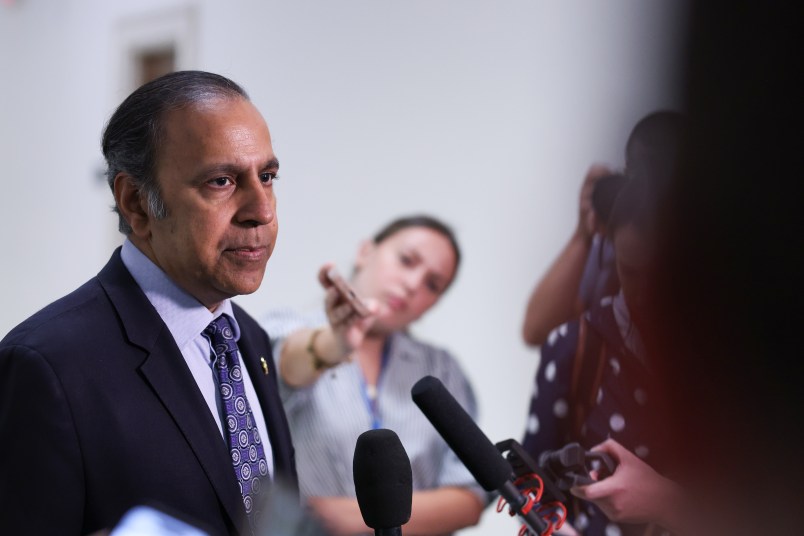
Rep. Raja Krishnamoorthi (D-IL) was at the temple on Sunday when Paporakis turned up, he said, and on Thursday called on the feds to get involved.

“We know this type of hate is coursing thorough social media online, it’s exploded,” Krishnamoorthi told a local news station. “We can’t rely on luck, that’s why we have to condemn the hatred. We can’t stay silent, or worse, condone it or fan the flames.”

“Secondly,” he continued, “we have to redirect the FBI’s focus to domestic violent extremism and trying to uncover these plots.”

The FBI, under Trump, has largely abandoned efforts to track neo-Nazi extremists, in some cases repositioning resources toward targeting the president’s critics and political enemies.

Trump’s Long-Brewing Effort to Oust Ilhan Omar From America

WASHINGTON, DC December 10: U.S. Rep. Ilhan Omar (D-MN) poses for a portrait in her office on Capitol Hill on Wednesday December 10, 2025. (Photo by Demetrius Freeman/The Washington Post via Getty Images)

The Trump administration effort to eject Muslim representative Ilhan Omar (D-MN) from the country is the culmination of a years-long fixation.

  • Way back in 2019, TPM reporter Christopher Mathias noted this week, attendees at Trump rallies were chanting “send her back” when the president mentioned Omar.
  • That year, the Washington Post reported yesterday, a “political appointee in the first Trump administration” demanded that DHS scrub Omar’s immigration records for any indication of fraud. It ultimately did not find what it needed to to move forward with a case.
  • In its second term, the Trump administration is increasingly attempting to make use of denaturalization, an extremely difficult outcome to achieve legally. That, however, is the goal with its latest investigation of Omar, per the Wall Street Journal.
  • To successfully denaturalize someone, “the government needs to show that there was an omission or falsehood on the naturalization paperwork of such magnitude that it would have prevented the person from getting citizenship had the truth been shared with immigration authorities,” writes TPM’s Josh Kovensky, who has been covering the administration’s denaturalization efforts for us since 2024.
  • The administration appears to specifically be looking into whether Omar’s father filed immigration paperwork claiming she was 17 when she was actually 18, a theory that has been pushed on the right for years, most prominently by a QAnon-supporting candidate who once challenged Omar in a primary campaign, Josh reports. A 17-year-old minor naturalizes with their parent when their parent obtains citizenship, while an 18-year-old adult must apply for citizenship independently.
  • “I think her citizenship is solid and there wasn’t any fraud there,” one former official involved in the 2019 investigation told the Washington Post.

Tabs

  • The White House is denying that Trump himself gave the order to restrict Ukraine’s access to Starlink, Bloomberg reports. But the order came “from inside the White House,” Reuters reports. “The officials said ‌leaders at the Defense Department received a message that the SpaceX Starshield service for the Ukrainian military needed to be slowed,” the Reuters report says.
  • Meanwhile, Ukraine has run out of patriot missiles, CNN reports. The U.S. seems to be withholding them as Trump punishes the country’s leader, Volodymyr Zelensky, for criticizing his pre-midterms diesel deal with Russia. Patriot missiles, which are used as interceptors, are in extremely short supply more generally thanks in part to the war with Iran. As a result, Russian missiles are more easily striking Ukrainian targets.
  • Hunter Walker profiles Bobby Pulido, the Tejano singer who, thanks in part to a GOP Texas gerrymandering effort that appears increasingly to have been misguided, stands a real chance of flipping his district from red to blue.

Man of the Hour

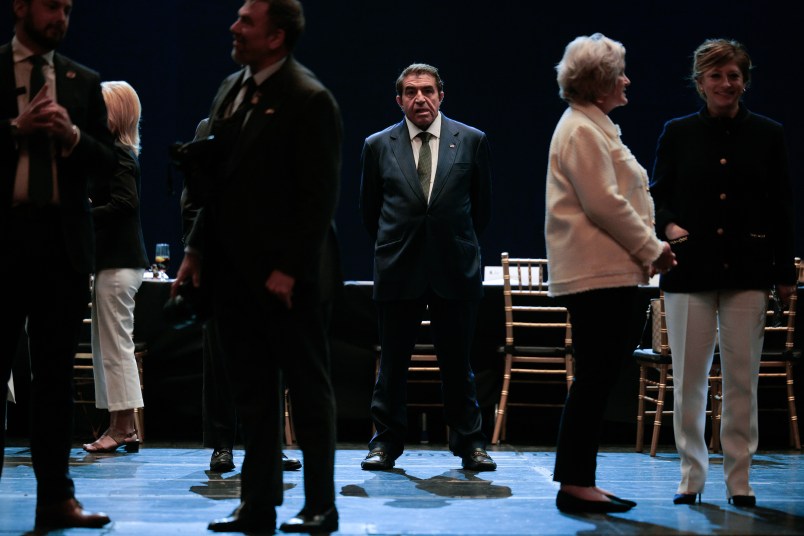
WASHINGTON, DC – MARCH 17: Paolo Zampolli (C), who was appointed by U.S. President Donald Trump to the board of the John F. Kennedy Center for the Performing Arts stands on the stage of the Opera Hall with fellow board members following a meeting on March 17, 2025 in Washington, DC. (Photo by Chip Somodevilla/Getty Images)

It’s longtime Trump friend and now-former State Department Special Envoy for Arts and Culture Paolo Zampolli, who, Politico recently reported, has been in a bizarre, long-running, sprawling feud with his boss, cc-ing a dozen-plus people as they snap at each other over email. Among other issues, Zampolli blamed said boss, Deputy Secretary of State Christopher Landau, for, he thought, being the source of a New York Times article that said Zampolli got his longtime girlfriend deported by ICE as part of a custody battle over their son. (Yes, it’s messy.) The girlfriend, in turn, threatened to reveal details she said she knew about Trump, Melania, and Jeffrey Epstein. (Messy.) Anyway, Trump — who, as Josh Marshall observes, suddenly seems to have no taste for drama — canned Zampolli yesterday

Are We at War?

No, says Rep. Rob Wittman (R-VA).

“Right now we are defending U.S. assets there, so there is no war as we speak,” Wittman told HuffPost Thursday.

  •  

Trump slams Ukraine’s decision to resume energy strikes as a ‘disgrace’

U.S. President Donald Trump said Thursday that Ukraine’s announcement to end the truce on Russian energy facilities was “a disgrace,” following reports that an oil refinery was hit in Russia’s Ryazan region.

Regional Governor Pavel Malkov said the Ryazan refinery was struck in a large Ukrainian drone attack Thursday, though Ukrainian authorities have not confirmed this. It is the first reported strike on Russian energy infrastructure since Trump announced an “energy ceasefire” between Kyiv and Moscow last Sunday.

Russia continued to hit Ukrainian energy sites despite Trump’s announcement, while Ukraine held fire on Russia’s energy sector. On Wednesday, however, Zelenskyy announced the pause was over — a decision Trump sharply criticized, saying it would drive up global oil prices.

“All he’s doing is making the world oil price higher. Well, I think that’s a disgrace,” Trump told Newsmax Thursday evening, adding that he was “not a big fan of Zelenskyy” and he was “more difficult to deal with than Putin.”

“There are a lot ‌of targets you can ‌hit, but when you shoot at diesel refineries where you make, you know, ‌diesel oil, and we need that, and the world needs that, then he’s not doing a good service for the world,” he added.

Relations between Kyiv and the White House have become increasingly strained since Trump announced last week that the U.S. would ease sanctions on Russian diesel imports, while Ukraine’s Starlink services were restricted.

  •  

Merz bei den jungen Wilden: Der nächste Showdown?

Friedrich Merz reist morgen zum Deutschlandtag der Jungen Union nach Bonn und trifft auf eine Parteijugend, die nach dem Rentenstreit des Vorjahres weiter voller Frust steckt. Die vielleicht nicht jungen, aber jüngeren Mitglieder um Johannes Winkel wollen endlich Reformen. Ob der Parteichef die Basis befrieden kann, ordnet Rasmus Buchsteiner von Bonn aus ein.

Im 200-Sekunden-Interview skizziert die Parlamentarische Geschäftsführerin der Unions-Fraktion, Catarina dos Santos-Wintz,, wie ein zukunftsfestes Gesamtpaket ihrer Meinung nach aussehen muss und warum die Junge Union und die Junge Gruppe der Fraktion beim Thema Generationengerechtigkeit keine faulen Kompromisse mehr akzeptiert.

Auf dem EU-Gipfel in Brüssel ringen die Staats- und Regierungschefs derweil um die wirtschaftliche Zukunft Europas. Hans von der Burchard analysiert das Treffen, sowie den neuen handelspolitischen Härtetest mit China. Zudem zeigt sich, wie dramatisch die Finanzierungslücke bei der Ukraine-Hilfe angesichts bröckelnder US-Unterstützung wirklich ist.

Das Berlin Playbook als Podcast gibt es jeden Morgen ab 5 Uhr. Rixa Fürsen, Maximilian Stascheit und das POLITICO-Team liefern Politik zum Hören – kompakt, international, hintergründig.

Für alle Hauptstadt-Profis: Der Berlin Playbook-Newsletter bietet jeden Morgen die wichtigsten Themen und Einordnungen. Jetzt kostenlos abonnieren.

**(Anzeige) Eine Nachricht von YouTube: Die Auffindbarkeit von Qualitätsjournalismus ist entscheidend für eine lebendige Medienlandschaft. 79 % der Medienunternehmen, die YouTube nutzen, an, dass digitale Videoplattformen ein wichtiger Vertriebskanal sind, so Oxford Economics. Und 81 % der Medienunternehmen mit YouTube-Kanal erreichen darüber weltweit neue Zielgruppen. Hier klicken und mehr erfahren.**

POLITICO Deutschland – ein Angebot der Axel Springer Deutschland GmbH
Axel-Springer-Straße 65, 10888 Berlin
Tel: +49 (30) 2591 0
information@axelspringer.de
Sitz: Amtsgericht Berlin-Charlottenburg, HRB 196159 B
USt-IdNr: DE 214 852 390
Geschäftsführer: Christoph Eck-Schmidt, Carolin Hulshoff Pol, Mathias Sanchez Luna

  •  

In Europe, the Trump shock factor is wearing off

Jamie Dettmer is associate editor and a foreign affairs columnist for POLITICO.

Cast your mind back to last year, when European leaders scrambled back and forth across the Atlantic, seeking to patch up tattered relations between U.S. President Donald Trump and Ukraine’s President Volodymyr Zelenskyy.

After the Oval Office brawl where a scolded Zelenskyy pushed back against Trump and his vice president before being ejected from the White House, then-U.K. Prime Minister Keir Starmer and French President Emmanuel Macron led the effort to engineer a call between the pair, during which the Ukrainian president expressed regret about the meeting — but fell short of apologizing.

Likewise, after Trump’s August summit in Alaska with Russia’s Vladimir Putin, Starmer and his top security adviser Jonathan Powell worked feverishly alongside other European leaders to rescue the broken relationship between Kyiv and Washington. They even came up with a ceasefire plan and got U.S. buy-in. NATO Secretary General Mark Rutte also did some heavy lifting.

But this time, after Trump unveiled a controversial diesel deal with Russia and called — once again — for Zelenskyy to step down, the European reaction has been less febrile. Of course, they have offered Kyiv strong rhetorical support and unveiled more Russia sanctions, but there has been no frantic, panicky outreach effort to Trump to mediate a speedy repair.

Ukraine’s President Volodymyr Zelenskyy looks on during a bilateral meeting with U.S. President Donald Trump on the sidelines of the 81st United Nations General Assembly in New York, on September 22, 2026. | Brendan Smialowski/AFP via Getty Images

Why not?

Because the Trump shock factor is wearing off, hazards Ukraine’s former Foreign Minister Dmytro Kuleba. “The primary answer is that they have got used to him,” he told POLITICO. “They have all had an immunity shot, and they don’t feel as scared as they did last year.”

“Another reason is they’re drowning in their own problems,” he added. “And I think that first they feel they have to try to figure out how what Trump is doing will impact them — how big their bill will become as a result.”

European leaders are not scrambling like they did last year because Trump is “losing his leverage,” said Lia Quartapelle, an Italian lawmaker from the opposition Democratic Party who is vice chair of the parliament’s Foreign and European Affairs Committee. “We realize he cannot be trusted and we are on our own,” so there’s little point lobbying him.

According to the Financial Times, EU officials plan to urge Zelenskyy to tone down his increasingly sharp remarks about Trump, fearing they are only inflaming the situation. Starmer’s successor, Andy Burnham, is positioning himself as someone who can “lay the ground” for a reconciliation, he explained to the House of Commons Wednesday. 

Nonetheless, the calmer reaction to Trump’s maneuvers stands out, acknowledges Daniel Fried, a former senior U.S. diplomat who served as assistant secretary of state for European and Eurasian Affairs under U.S. President George W. Bush.

“The Europeans seem to have taken Trump’s measure,” Fried told POLITICO. “They want to avoid the worst. They want to mitigate the damage over the next two years while Trump is in office. They do work with people in the Trump administration with whom they can work. And there are such people.” 

Speaking from Warsaw, fresh from attending a recent security conference in the Polish capital, he said the Europeans understand now that much of what Trump does is performative and has a short life span — like the Russian diesel deal, which has a shelf life of two or three days, he said. “I’m not sure it’s going anywhere as it is utterly impractical and legally questionable, and it isn’t clear the Russians actually can supply the diesel,” he said. In other words, why get worked up about it?

Daniel Fried, Atlantic Council speaks at The 2017 Concordia Annual Summit at Grand Hyatt New York on September 19, 2017 in New York City. | Paul Morigi/Getty Images for Concordia Summit

Fried said in his conversations with European leaders and officials, he has detected increasing exasperation with the overall inconsistency of the American position: “Trump wants Europe to do more militarily, but it must buy American,” he said. “But we can’t sell to the Europeans because of our needs, so they will have to wait even though they can’t build it themselves. Nonetheless, they have to carry the load in Ukraine without us. That’s utterly inconsistent, and they are exasperated by it.” 

And they’re just tired of having Trump jerk them around, Fried added. “One thing they are trying to avoid is having Trump snap his fingers and they come flying. Because then it looks like they are at Trump’s beck and call and are his supplicants, and they don’t want to do that. Besides, if they fly out and talk him into something, how long will what he agreed to last?”  

Of course, the Europeans can also console themselves with the high chance of Trump reversing himself. “There is a pattern,” said Kuleba. “He launches a cavalry attack … and then retreats. That’s what we saw in February last year. That’s what we saw in November 2025. And that’s what we will see this time too.”

  •  

‘We give back’: Zelenskyy replies to Le Pen’s pledge to cut aid

PARIS — Ukrainian President Volodymyr Zelenskyy replied to French far-right presidential hopeful Marine Le Pen’s pledge to cut financial aid with a message: Europe is benefitting from Ukraine.

“Ukraine will give back security. It’s security and experience, the price is not so high as people’s lives, that’s why I think that Madame Le Pen is not deeply [acquainted] with some details,” he told the Financial Times. “We give back and this is very important.”

Le Pen has repeatedly said, including to POLITICO, that she would stop financial aid to Ukraine if she’s elected as French president next year — but suggested France could keep training Ukraine’s military and provide non-financial assistance. Le Pen, the National Rally candidate, is currently leading the polls.

Zelenskyy stressed that European armed forces and defense industries, including France’s, were benefiting from Ukraine’s battlefield experience. “It’s win-win,” he said. `

He argued that Le Pen should keep supporting Ukraine because it’s helping the Franco-Italian air defense system SAMP/T, which is currently deployed in the war-torn country, be more efficient. “We made a lot of different changes together with French guys, because they saw how it worked and how it works now.”

“The French industry only wins with these technologies, cooperation, co-production,” he added. “I will not vote for her … because I’m Ukrainian,” he also joked.

  •  

Seven missing after tanker catches fire off Romanian coast

Seven crew members are missing after a tanker caught fire close to Romanian territorial waters in the Black Sea Thursday morning, Romanian authorities said.

The San Marino-flagged chemical tanker sent a distress call at 7 a.m. local time about 13 nautical miles from Sulina, a port on Romania’s eastern coast, close to the Ukrainian border. Romanian border police, along with aviation units, arrived to assist the crew, the Romanian Naval Authority said.

Five people have been rescued so far, the naval authority told local media. Another tanker was affected by a fire late on Wednesday close to Sulina, with authorities confirming the crew were safe.

Romanian authorities have not given a reason for either incident. The fires broke out hours after the country’s defense ministry announced an air alert around Snake Island — a Ukrainian territory located about 40 kilometers from the spot where the San Marino tanker sent its distress signal. A drone was also spotted near Sulina overnight `”after which it disappeared from the radar,” the ministry wrote.

At least five commercial vessels have been hit by suspected drone strikes in the Black Sea over the past two weeks. The deadly attacks are affecting a key route that carries 95% of Ukraine’s grain exports.

On Oct. 6, drones struck two ships in Bulgaria’s Black Sea economic zone. One sank, and its 10 crew members went missing. On Tuesday two more ships were struck near Bulgaria, leaving 11 crew members missing.

Romanian President Nicusor Dan will meet Bulgarian Prime Minister Rumen Radev and NATO Secretary General Mark Rutte for talks on the sidelines of the European Council summit in Brussels at 1:30 p.m. today.

  •  

The internet isn’t dead. It’s even worse

Earlier this month, three data centers in western Russia suddenly went dark due to a “rapid unplanned disassembly,” to use euphemistic engineering parlance. They exploded, in other words. Operated by Yandex, a Russian technology company often compared to Google that offers many similar services — a search engine, online shopping, cloud computing and the like — the centers were heavily damaged in a series of coordinated drone strikes over four days by Ukraine, which saw them as a valuable target in the country’s military campaign against Russian infrastructure.

As Russia’s war against Ukraine slogs on, both sides are increasingly adopting this strategy. While power plants and oil refineries have been hit, data centers and internet facilities are becoming the latest quarry for drone and missile strikes — and not just in Europe. Data centers operated by Amazon in Bahrain and the United Arab Emirates have also been targeted in the ongoing Iran war.

Few Americans have probably heard of Yandex, let alone use its services, and most likely didn’t notice when many of its hosted websites became inaccessible. But after Ukraine’s attacks, many people started to claim that social media was seemingly different. Ukrainian President Volodymyr Zelenskyy was quick to suggest his country had dealt a massive blow to Russia’s online disinformation machine, saying, “It suddenly became a little easier to breathe on many social platforms. There was less hate, less division and fewer provocations.” Several reports seemed to support his claims, citing data from internet monitoring service Cloudflare, that allegedly showed “Russia’s Yandex bot traffic nearly eliminated overnight.” 

But the truth is far more complicated, as some experts have noted. Yandex did experience a crash in bot activity, but at least some of that traffic seems to be legitimate. “When Cloudflare data shows a precipitous drop in ‘bot’ traffic, that does not mean ‘automated social media troll accounts’, it means ‘software that makes automated web requests on a large scale,’” Michał ‘Rysiek’ Woźniak, an internet infrastructure expert, told The Guardian. Others noted that they haven’t seen an actual drop in online disinformation. “Our platforms are still monitoring Russian social networks across the world and there is no discernible change in their posting patterns,” said Amil Khan, the chief executive of Valent, a tech startup that tracks disinformation.

None of that has stopped Reddit and other corners of the web from celebrating and memeing the issue. If those celebrations aren’t quite justified, there’s still something to be learned from the ordeal, which digs into the so-called dead internet theory. The basic premise is that almost nothing we see online is human-generated anymore. In his 2025 book “Market-Oriented Disinformation Research,” business academic Carlos Diaz Ruiz, who has studied how disinformation spreads in social media echo chambers, describes what many of us experience online on a daily basis: “an eerie feeling that the Internet is made up of bots talking to bots, following and liking bots, and posting AI-generated content designed for machine consumption, the algorithm, not humans.”

Indeed, bot traffic makes up an increasingly large share of the internet, surpassing human traffic for the first time in history over the summer, according to a June Cloudflare report. No doubt the surge in generative artificial intelligence use is what tipped the scales, but of course, not all bots are created equal. Many have legitimate, beneficial uses, like archiving web data.


Start your day with essential news from Salon.
Sign up for our free morning newsletter, Crash Course.


Some people have wedged dead internet theory into a conspiracy theory that Diaz Ruiz divides into “weak” and “strong.” The weak version of the theory is that the internet is now little more than a hall of mirrors used to manipulate the masses into fighting a culture war instead of a class war. “The Internet drama keeps the population occupied and distracted, preventing them from resisting the elites secretly controlling the world,” as Diaz Ruiz says. “The ‘strong’ version of the dead internet conspiracy theory claims that online activity is entirely disconnected from human activity because our society ceased to exist some time ago. In some versions, a catastrophic event occurred in the past, triggering society’s collapse.”

OK, so we’re basically talking the plot of “The Matrix” here. The argument that humanity peaked in 1999 may be compelling, and I won’t argue against it. If reality truly is nothing more than a hallucination, dream or computer screensaver in the brain, why should we waste time disputing it? Proving a negative with such a lack of evidence is fruitless. The point is, some people may be taking dead internet theory a little too far, but that doesn’t change the fact that within the last week people felt like they got a taste of some version of it.

If we lift the hood on some of these conspiracies, we can understand what people are really afraid of. Last December in the journal Computer, Hal Berghel, a computer science professor at the University of Nevada, argued the dead internet is more than a conspiracy and should not be dismissed, writing, “There’s certainly evidence of the distortion of the internet from the original concept as a liberating, self-healing, packetized purveyor of useful and important information: the original commitment to net neutrality is on life support, the goal of a shared public information repository is constantly compromised by paywalls, the content has moved from valuable scholarship to a sub-cerebral landfill, and the users are subjected to a mind-numbing cacophony of digital threats: spam, phish bait, spyware, malware, online bullying, online fraud, extortion, hacking, VoIP 911-swatting, doxing, slander, pretexting, etc.”

In other words, there’s a good reason so many people find dead internet theory attractive. Once a zone of promise and connection, the web has not only rotted and enshittified, it’s turned into a literal warzone. There really are algorithms out there, unleashed by governments actively dropping bombs on one another, that are designed to infect our minds and prejudice our ability to perceive the truth. It’s one of the many ways modern warfare has become invisible, pervasive and endless. No wonder social media is making so many people depressed — it can be a form of assault.

“In tandem with proxy warfare, cyber operations have become a central pillar of modern statecraft. Cyber warfare enables states to conduct aggressive acts; espionage, sabotage, infrastructure disruption without engaging in kinetic violence,” philosophers Oluyemi Opeoluwa Adisa and Kareem Shwan Adham wrote last year in a study published in the International Journal of Scientific Research and Management. “The strategic advantage of cyber warfare lies in its stealth and ambiguity. Because it blurs the line between war and crime, attribution becomes difficult, enabling perpetrators to operate with minimal consequences.”

How do we even tell how much of the dead internet theory is true? Perhaps through that old tech-support adage: Turn it off and back on again. And no, I don’t mean bombing more data centers, though we’re likely to see more of that, for better or worse. If everything feels fake, maybe we’re better off getting outside and experiencing something real for a minute. Yeah, yeah, we’ve all been told to touch grass so much that such advice is routinely mocked, and anyway, not everyone can easily do that.

But here’s your daily reminder that humans are primates whose still-evolving brains are exponentially outpaced by technological advancement. Being in nature is essential because we are nature. There’s a certain reset available in the presence of trees, birds and clouds. Even more important is connecting with real humans: family, friends, neighbors. Socialization is the essence of the primate brain too. You don’t have to uninstall any apps or delete Facebook, though you could try it too. Off, on again. 

And when you are online, which is unavoidable for many of us, try to remember that you are probably interacting with fewer humans than you might think. So don’t take it so seriously. Temper those outrageous emotions, the ones the algorithms have gotten so good at teasing out of us. Maybe instead we can fortify them into weapons to attack the real problems we face, like widening wealth gaps, destruction of the environment and the rise of authoritarianism. 

The post The internet isn’t dead. It’s even worse appeared first on Salon.com.

  •  
❌