❌

Reading view

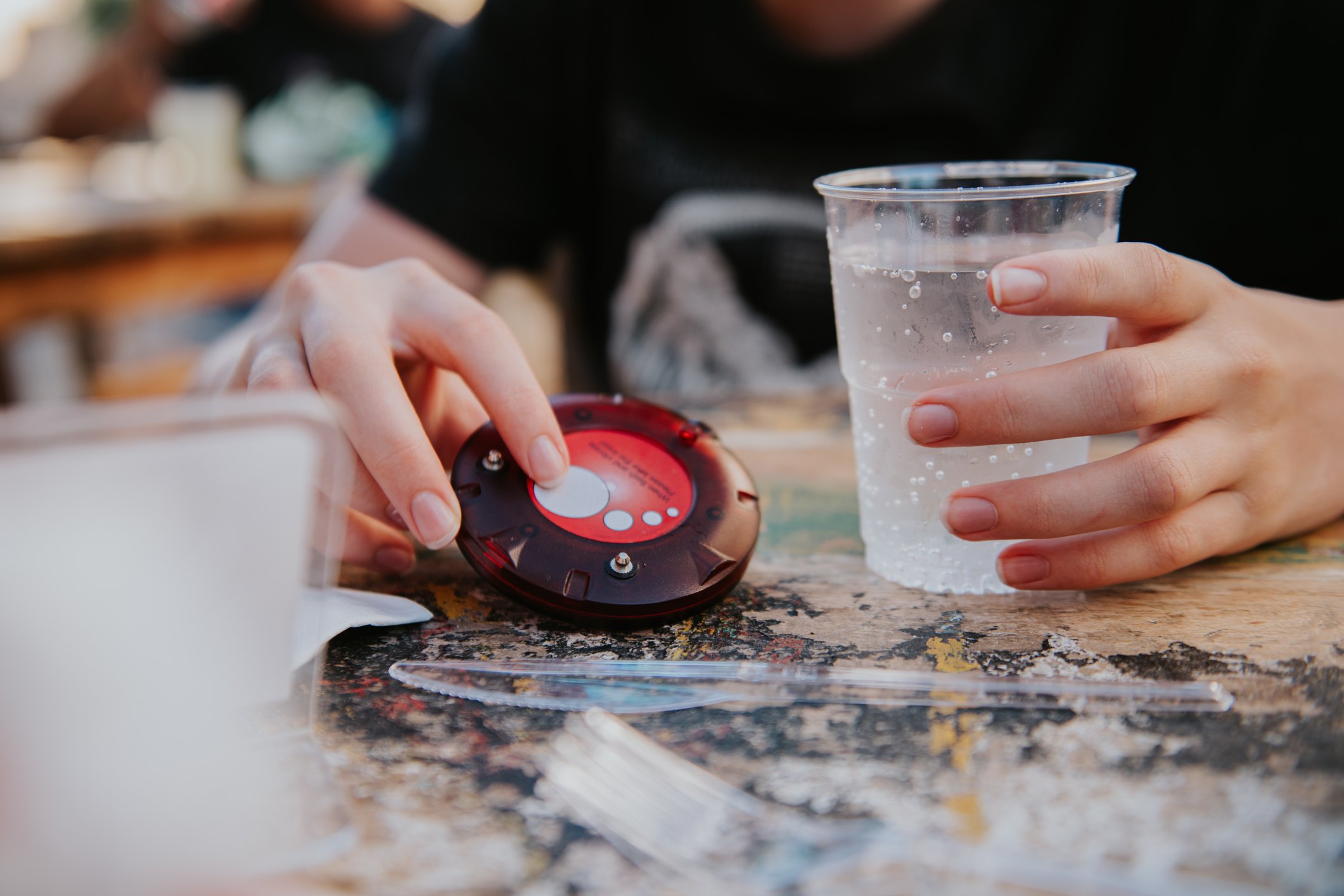
I miss the restaurant pager

At 16, I was entrusted with one of the most important pieces of technology at a suburban Chili’s: a wire rack full of restaurant pagers.

The restaurant occupied a sprawling shopping center alongside an Olive Garden, a Cabela’s and a Costco, making it something of a regional mecca for homecoming dinners, birthday parties and Little League victories. The air smelled perpetually of tortilla chips, and the soundtrack was an agreeable mixture of Matchbox Twenty and sizzling fajita platters.

I liked the job. I liked asking people what brought them in, hearing about their celebrations and making small talk while consulting my restaurant map and section list. On busy nights, I’d estimate the wait, scribble down a last name, party size and pager number in black pen, then hand over a pleasantly hefty plastic puck.

“You can wander as far as your car,” I’d explain.

“Ope! Was hoping to make a Costco run,” some dad would inevitably reply. I laughed every time. It was a very reliable joke.

Every five or 15 minutes, another pager returned to the host stand, blinking and vibrating in the hands of a customer whose table was finally ready. I particularly liked watching one go off. A group could be deep in conversation when the puck sprang to life, producing a brief, collective flicker of delight. Dinner!

They were not beautiful objects. One woman who came in weekly after church complained that hers was ugly and bulky, then set it on the red pleather waiting bench so that it would vibrate against the upholstery rather than any part of her body. Occasionally, someone stole one, apparently deciding that a restaurant pager belonged in the same category of souvenir as a pebbled Coke glass. Sometimes the rechargeable batteries flagged, and we’d pull a pager out of rotation.

There was a reason these contraptions belonged to the Chili’s end of the dining spectrum. You wouldn’t mistake one for fine-dining theater. But they had an appealingly limited set of ambitions. They buzzed, they blinked, and when the wait was over, we took them back. The technology stayed at the restaurant.

In retrospect, what a gift. 

I don’t remember exactly when the pagers mostly disappeared. There was no retirement ceremony, no last call for the little plastic puck. I began noticing their absence most acutely when restaurants reopened after the first wave of the pandemic. Minimizing shared surfaces made sense then. Why distribute and disinfect pagers when customers already had phones in their pockets? Digital waitlists predated COVID-19, of course, but for me, that was when the phone began to feel less like an option and more like a condition of dining out.

And it rarely stops at the host stand. Your phone tells you the table is ready. It may supply the menu via QR code, take your order and settle the bill. Hours later, another text arrives asking you to rate the experience.

At some point, the meal has ended, but the restaurant apparently hasn’t finished with you.

None of this is inherently awful. Some of it is useful. But every time I wake my phone to perform one of these little tasks, I’m also opening the door to everything else it contains: emails, notifications, messages I wasn’t planning to answer over lunch. What was supposed to simplify dinner can turn it into another administrative process requiring a charged device and a willingness to look at it.

Restaurants are hardly alone in this. I reach for my phone to ride public transit, pay for parking, produce concert tickets, check in at the doctor’s office and occasionally prove to one website that I am the person trying to sign into another. Each request arrives dressed as a convenience. Together, they have made the phone feel less like a personal possession and more like mandatory civic infrastructure.


Want more great food writing and recipes? Sign up for Salon’s free food newsletter, The Bite.


And mandatory infrastructure really ought to work.

For a while, I happily used the Ventra card on my phone to ride Chicago public transit. One less thing to carry! Then, for a miserable stretch, several Red Line stations I frequented seemed to stop recognizing it. One morning, I joined a small congregation of commuters attempting to convince the turnstiles that our phones were, in fact, perfectly legitimate fare payment.

“It worked yesterday!” one man exclaimed.

“The terminals are old! They weren’t meant for this,” a tired CTA employee explained, kindly ushering us through the stroller entrance as the next train rumbled toward the platform.

The backup plan wasn’t faring much better. Around the same time, the ticket machines were proving similarly unreliable about accepting credit cards. A little queue had formed at the station ATM, where commuters were withdrawing cash to buy physical transit cards so they could get on the train.

We had arrived at the future, and it required a trip to the cash machine.

After a few weeks of this, I surrendered. I now carry a physical Ventra card, load $20 onto it when necessary and go about my business. It gets me through the turnstile without involving my phone. A modest pleasure, but one I’ve come to appreciate.

The trouble isn’t that every digital convenience is destined to malfunction. Plenty work exactly as advertised. It’s that we’ve become so accustomed to conducting ordinary life through our phones that we rarely stop to consider whether they’re necessary to the transaction in the first place.

Consider, for instance, a recent brunch in which absolutely nothing went wrong.

Recently, my husband and I went to a brunch spot I love in Chicago’s Andersonville neighborhood. The front-of-house staff always seem to be navigating the aftermath of a complicated breakup between two polycules, but the breakfast sandwich  is truly good enough to make the interpersonal intrigue part of the charm. I wanted to do very little beyond sit somewhere pleasant, eat something delicious and enjoy being newly married. There was a short wait. The host asked for my number; I provided it, then sat with my husband in two lobby chairs. We chatted. We waited. We did not move.

My phone buzzed. Our table was ready.

I looked up. The host stand was approximately two feet away.

The system had worked flawlessly. Somewhere, a piece of restaurant software had facilitated communication between two people who could reasonably have passed each other a saltshaker. The host hadn’t done anything wrong, and neither had I. But a moment that might once have involved someone looking up and saying, “You’re all set,” now required me to be reachable by a device I had no particular desire to consult.

I understand the alternative. A digital waitlist lets you wander around the neighborhood, browse the shops, maybe get a head start on another errand. Sometimes that’s a genuine gift. But I’m not convinced that being able to do two things at once means enjoying either one more. And sometimes I don’t want to wander. I want to be there, waiting for brunch, with the reassuring knowledge that the restaurant is handling the details.

That’s part of the pleasure of hospitality, isn’t it? For a little while, someone else tends to the logistics. You don’t need to manage every notification or keep every system running. You can just be a guest.

I don’t expect restaurant owners to read this and order a fresh shipment of vibrating pucks. If texts work best, fine. I’d simply like us to question whether requiring a phone is always an improvement, and remember that convenience isn’t much of a convenience when opting out stops being possible.

Maybe the pager never comes back. I can live with that. I’d just like to be able to let my phone die in my bag and still be called to breakfast.

Though I will say this for those ugly little pagers: At least you could hand one back.

The post I miss the restaurant pager appeared first on Salon.com.

  •  

Trump’s tariffs may kill free chips and salsa

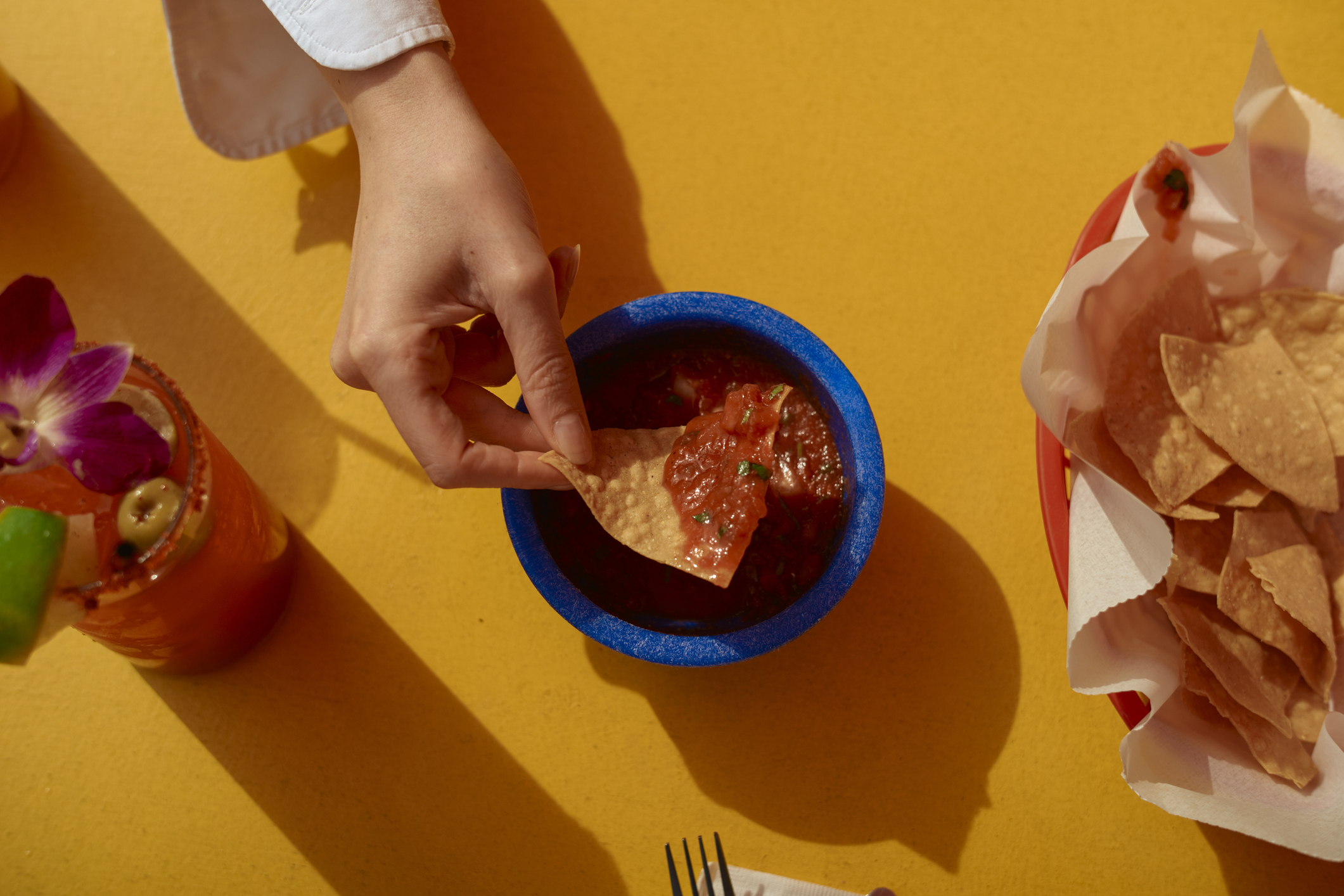
There are certain sensations you don’t realize belong to an era until they’re gone: the modem’s electronic shriek as it connected to the internet, the satisfying clack of a landline receiver, the little metallic weight of an arcade token in your palm. Lately, I’ve been wondering if the basket of free chips and salsa — dropped almost ceremonially onto the table before anyone has ordered a thing — might eventually join them.

At El Nopal, a regional Mexican chain my family has frequented for years, the opening minutes of dinner follow a familiar choreography. We slide into a pleather booth beneath burnt-orange walls and televisions playing Spanish-language fútbol. Half the table orders Diet Coke, the other water with lemon; someone requests a skillet of molten white queso. Then come the chips: hot, sturdy, generously salted, piled into black woven baskets alongside ramekins of fire-engine-red mild salsa and a darker, spicier version flecked with onion and jalapeño.

For our family of six, there are always two baskets, dividing the table into loose territories. Those seated in the middle are expected to choose a side; reaching from both feels vaguely lawless. Everyone has a salsa ritual. Mine is two-thirds spicy, one-third mild. My sister mixes the mild with queso until it turns a muted pink. One of my brothers splashes vinegary house hot sauce into the spicy. Soon the menus are stacked, the pebbled Coke cups are sweating rings onto the table and somebody is pointing with a chip while saying, “No, no, tell her the part about —”

The Trump administration has made that little ritual more expensive to maintain.

In July 2025, the administration withdrew from a long-standing agreement governing fresh tomatoes imported from Mexico and imposed a 17.09% antidumping duty on most of them. The Commerce Department said the move was intended to counter Mexican tomatoes being sold in the United States at unfair prices and protect domestic growers.

Then the weather got bad.

Poor conditions in Mexico and Florida further reduced supplies, and tomato prices climbed to their highest level in roughly two decades. Dante Galeazzi, president of the Texas International Produce Association, told Houston Public Media that at one point the fresh tomato market had jumped to about $80 a box. Grocery stores began backing away from tomatoes earlier in the year; restaurants, he said, held on longer.

There is only so much a restaurant can absorb.

“The challenge is for our Texas restaurants, they operate on very narrow profit margins in what I would call good economic times,” Kelsey Erickson Streufert, chief public affairs officer for the Texas Restaurant Association, told the publication.

These are not, she continued, particularly good economic times for running a restaurant. Food is more expensive, but so are labor, utilities, insurance and credit card swipe fees — virtually everything required to keep the doors open. Eventually, the arithmetic gets down to the ramekin.

“You have restaurants that are simply saying, ‘Look, I can’t afford to put salsa on the tables anymore,’” Galeazzi said. “What are consumers going to do? Where are consumers going to find this relief?”

The tragedy of a $4 basket of chips is obviously not the $4. It is the moment someone at the table inevitably says, “Eh, do we need these today?” Sometimes the answer will be yes. Some days undoubtedly call for acid, salt and crunch. On other days, maybe you skip them. You wait patiently for the entrées. The stories still get told. Someone finds a plastic straw to point with instead.

It’s fine.

But the texture of the wait is different.


Want more great food writing and recipes? Sign up for Salon’s free food newsletter, The Bite.


That small decision — chips or no chips — moves the diner almost imperceptibly from guest to customer. The thing that once arrived as part of the welcome now joins the same mental ledger as everything else: Drinks? An appetizer? Queso? Dessert? Do we need it? Is it worth it? Should we just save the money?

People sometimes joke online about whether you grew up in an “appetizers and drinks” family or an “entrées and water” family. It is a joke, mostly, about the invisible financial rules children learn at restaurants: what counts as normal, what counts as a treat and what you know better than to ask for.

Part of the appeal of the neighborhood Americanized Mexican restaurant has long been that it offers a particularly accessible kind of abundance. You can order an inexpensive combination plate and a soda, or water with a squeeze of lime, eat something hot and filling and deeply flavorful, and be out the door in 45 minutes without anybody making you feel strange about any of it.

And while you wait, you get the same chips as the table ordering margaritas.

Free chips briefly flatten the distinction between the appetizers-and-drinks family and the entrées-and-water family. Everybody gets to start with something.

Of course, restaurants cannot run on symbolism.

The “free” things on the table have never actually been free to them. Somebody bought the tomatoes. Somebody fried the chips. Somebody washed the ramekins and refilled the baskets. Hospitality has always had scaffolding beneath it; ideally, the guest simply doesn’t spend much time looking at it.

Lately, that scaffolding has become harder for restaurants to hide.

One of my favorite Chicago breakfast spots recently changed the way it serves Texas toast. Two slices had been the default for years. Now the waiter asks: Do you actually want two, or would one be enough? They were happy to bring two, he explained. But a lot of second slices were coming back uneaten, and they simply couldn’t afford to keep throwing them away. It is difficult to begrudge a restaurant that calculation. In fact, the question struck me as a rather thoughtful solution: Have as much toast as you want. Just tell us you want it first.

But it also made visible, for a moment, the financial scaffolding behind the plate.

That is what interests me about the chips and salsa, too. Not that restaurant owners are becoming less generous, but that the economic forces pressing on them increasingly require them to show their work.

Trade policy tends to arrive in public dressed in abstraction: percentages, agreements, investigations, duties, markets. Then someone opens an invoice. A tomato costs more. A batch of salsa costs more. The complimentary appetizer that was once cheap enough to disappear into the cost of doing business becomes expensive enough to notice. Eventually, somebody has to decide whether hospitality can continue to absorb it.

And then, one night, a server has to ask if you would like to add chips.

This is a mundane outcome of economic policy — almost comically so. No one’s dinner is destroyed. No one sits staring mournfully at the bare lacquered table. There is simply a small patch of negative space where something automatic used to happen.

But small gestures are often where hospitality lives.

The loss of free chips and salsa isn’t really about chips and salsa. It is about what happens when policy decisions force restaurants to make the scaffolding of their hospitality more visible — when a gesture designed to make guests forget about the transaction becomes part of the transaction itself. At El Nopal, when the baskets arrive, nobody asks who is paying for this round. Nobody pauses to determine whether everyone wants enough chips to justify them. Nobody calculates how hungry they are with their entrée still twenty minutes away.

Someone tells a story. Someone interrupts to improve the punchline. Someone else points across the table with a tortilla chip. And everyone reaches into the basket without asking.

The post Trump’s tariffs may kill free chips and salsa appeared first on Salon.com.

  •  

We’re over restaurant slop

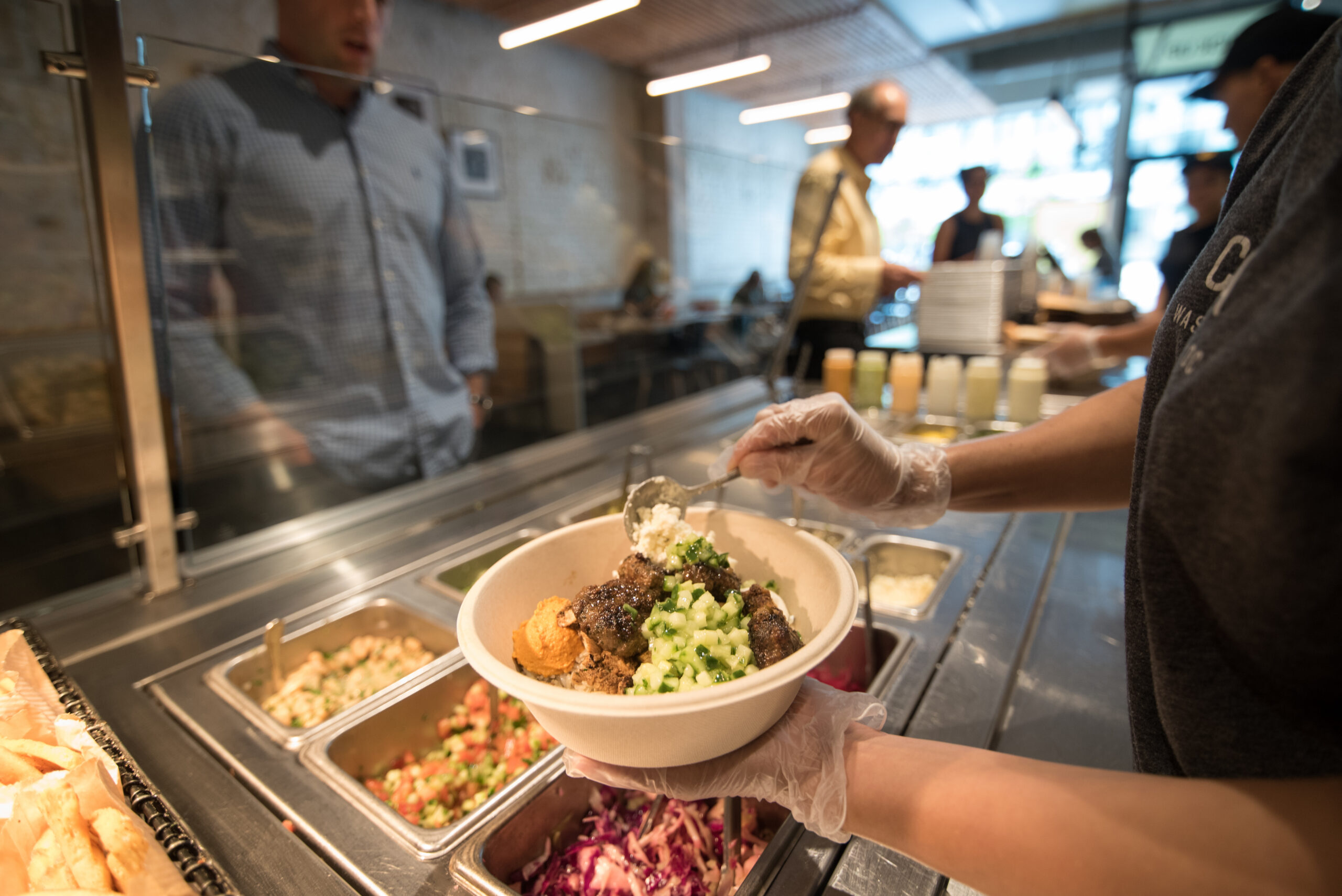
Recently, between medical appointments, I ended up at a grain-bowl-and-salad place in a suburban strip mall, the kind of sleek fast-casual restaurant that looks a little like an Apple Store decided to start serving brown rice and green goddess dressing. There were a few customers in scrubs and two self-order kiosks, both broken. The menu wasn’t posted anywhere else, except via a QR code printed on the back of several glossy takeout menus behind the register, which the cashier repeatedly warned us not to take because they only had a few.

The bowls themselves were fine. Watching them come together was more memorable: the cashier held each plastic container practically at arm’s length as he scooped, two vapes clacking around in his apron pocket, with the air of someone completing a task wholly unrelated to food. What arrived cost about $14 and tasted perfectly acceptable. It was also, somehow, shockingly anonymous.

There’s a word for this feeling now: slop. 

It describes several overlapping anxieties about modern restaurant food, but its prehistory belongs, at least partly, to the ghost kitchen.

In March 2020, as dining rooms shut down, Chuck E. Cheese launched Pasqually’s Pizza & Wings, a delivery-only brand operating out of its existing kitchens. The name was technically an Easter egg: Pasqually P. Pieplate is the chef in Chuck E. Cheese’s animatronic house band. 

To anyone not conversant in Chuck E. Cheese lore, though, Pasqually’s looked on Grubhub like a new pizza-and-wings joint. CEC maintained that the pizza itself was different — thicker crust, more sauce — but plenty of customers still felt tricked when they realized the restaurant at the address they’d ordered from was, in fact, Chuck E. Cheese.

The revelation inspired a small genre of internet consumer detective work. “Now I look up the addresses of places on delivery apps before I try something ‘new,’” one Reddit user wrote after discovering that an apparent new Indian restaurant was another business operating under a second name. Elsewhere, someone warned that “Pasquale’s Pizza and Wings on delivery is just Chucky Cheese.” In the same thread, though, came the rebuttal: there were good ghost kitchens. You were simply ordering from the lousy ones.

That argument feels almost quaint now. Ghost kitchens asked diners to accept a peculiar new distance between the restaurant being advertised and the human reality of the meal. What diners surrendered wasn’t necessarily quality so much as a little hospitality, a little transparency and, increasingly, the expectation that a restaurant represented somebody’s particular idea of what a restaurant should be.

From there, the abstraction moved onto the plate.

The “slop bowl” became internet shorthand for the familiar fast-casual mash-up — grains, greens, globally inspired protein, sauce, perhaps an avocado surcharge — assembled with the logic of a cafeteria line and an over-$10 price. The joke has always contained some affection; people like these bowls because they are easy, reliable and customizable. But the name also catches their underlying sameness. There is a reason so much online energy is devoted to “hacking” them: swapping sauces, doubling proteins, gaming the system in hopes of coaxing a little more pleasure from something designed, above all, to be frictionless.

And now the same aesthetic has escaped the bowl. AI slop has begun appearing on restaurant menus, signs and advertisements, offering food imagery that looks optimized for appetite without necessarily resembling anything a person could cook. My digital feed is littered with truly uncanny generated sandwiches, but I’ve only encountered a few in the wild: outside a cafe, a poster for a coffee drink topped with marshmallow “pearls” so perfectly round and iridescent that they looked less edible than cultured in a lab; on the train, hamburger ads where the meat resembled slabs of smooth, steak-rippled marble. The images have the visual grammar of food photography without much evidence that food has ever been involved.

Diners, meanwhile, are already expressing an aversion to the whole thing. Late last year, CNN’s Jordan Valinsky noted that Cava, Chipotle and Sweetgreen — “the big three slop slingers” — were all reporting softer business among younger customers, particularly those between 25 and 35. Some of that was straightforward economics. On Chipotle’s final earnings call of 2025, CEO Scott Boatwright said younger customers weren’t defecting to another chain so much as returning to the grocery store. “They feel the pinch,” he told analysts, “and we feel the pullback.”

Yet alongside that financial retreat, though, there is a more aesthetic refusal taking shape. In one food group I follow, posts about AI restaurant marketing increasingly read like miniature boycott pledges. “If you use AI to advertise your restaurant, market, or anything else,” one person wrote, “I will know that you don’t care about food or the planet and I will never ever patronize your business.” Another was more prescriptive: “Take pictures of your food. Spend a little time and effort to make your own flyer.” 

The complaint isn’t merely that the pictures are creepy. Diners are reading them as evidence: if a restaurant cannot be bothered to photograph its own food, hire an artist or make an ugly little flyer itself, what exactly is being communicated about the care happening elsewhere? 

That inference may not always be fair. Restaurant margins are brutal, and a generated image costs less than a photo shoot. But fairness is almost beside the point. Once diners begin treating evidence of human effort as part of the product, efficiency itself can start looking suspicious.

Which may explain the newest addition to the slop lexicon: PE, or private-equity, slop. The term is less a description of any particular food than a prediction about what happens when the people optimizing a restaurant become increasingly distant from the people cooking in it.


Want more great food writing and recipes? Sign up for Salon’s free food newsletter, The Bite.


Consider Los Tacos No. 1. The New York taco shop opened in 2013, earned a devoted following for its al pastor and handmade tortillas, and eventually grew to nine locations. As The Guardian reported, when it announced this September that it had taken an undisclosed investment from private-equity firm TSG Consumer to pursue what a press release called “thoughtful, founder-led growth,” customers immediately began writing its obituary. Social posts predicted “the beginning of the end,” along with smaller portions and worse food. The response became so intense that Los Tacos’ founders issued a reassurance that sounded almost like parody: “No, we’re not going to start charging extra for guac. We’re not switching to horse meat. And no, we’re definitely not messing with the tacos.”

The tacos had not, at that point, been messed with. That’s what makes the reaction interesting. “PE slop” names an anticipatory fear: that somewhere down the line, somebody who has never stood over the grill will notice that a particular ingredient costs slightly more, or a particular process takes slightly longer, and ask whether anyone would really notice if it disappeared.

My colleague Alex Galbraith recently argued that food may be where consumers most easily recognize the otherwise abstract mechanics of private equity. Newspapers can become thinner and health care more Byzantine in ways that are difficult to trace back to an investment firm. Lunch is more intimate. 

Galbraith points to a recent interview with comedian Stavros Halkias who summed it up like this: “Everybody understands that Wendy’s has gotten s**ttier. The spicy chicken sandwich now uses shredded lettuce. Right there, that is private equity. That is someone saying ‘We don’t want a fresh head of lettuce that costs more money. So, we’re going to give you bagged sh**ty lettuce. I know in the grand scheme of things it’s not a big deal, but people will notice.”

I don’t think all these things are “slop” because they’re necessarily bad. I think we’ve reached a point of saturation with food that feels devoid of human authorship. For years, restaurants have been encouraged to become frictionless, scalable, customizable and infinitely replicable. Now diners seem increasingly sensitive to the moment when all that optimization scrubs away specificity.

The opposite of slop isn’t necessarily handmade, independent, expensive or even particularly beautiful. A chain can have it; a bowl can have it; a restaurant backed by investors can have it. It’s simply the sense that something looks and tastes the way it does because somewhere along the line a person said, I like it this way, so I make it this way.

This isn’t an argument for turning every anonymous strip mall back into a village of idiosyncratic mom-and-pop shops. It’s something smaller, and probably more achievable. After years of food designed to work everywhere for everyone, diners may simply be hungry again for evidence that somebody meant it.

The post We’re over restaurant slop appeared first on Salon.com.

  •  

I don’t want another restaurant app

The other afternoon, I was trying to take a nap.

I had worked late the night before, and dinner was still several hours away, and I had achieved that particular state of adult exhaustion in which closing your eyes for 20 minutes begins to seem less like a luxury than a medically indicated procedure. Unfortunately, the universe had other plans.

First came the whippet who lives down the hall, galloping outside my apartment and then, as he often does, failing to account for the slickness of the linoleum. There was a skid, followed by the unmistakable sound of dog meeting trash cans: bowling ball, pins. Then two neighbors began, ironically, shouting outside my window about which of them was less considerate about the amount of noise they made. Then I remembered that the ceiling fan has one speed at which it rattles faintly but insistently, so I got out of bed, yanked the chain and sent the blades spinning faster.

Finally, I lay back down. The apartment quieted. My breathing slowed. I had just begun to lilt toward sleep when my phone buzzed.

“We miss you! You deserve something sweet…”

It was an ice cream chain in a city where I no longer live.

There is something uniquely irritating about being emotionally pursued by a corporation that has also failed to notice you moved away. I lay flat on my back and began rage-unsubscribing from every company that had recently texted me in the voice of a human being. We miss you. STOP. Treat yourself. STOP. Your favorites are waiting. STOP. I continued until my phone was quiet and, eventually, so was my brain.

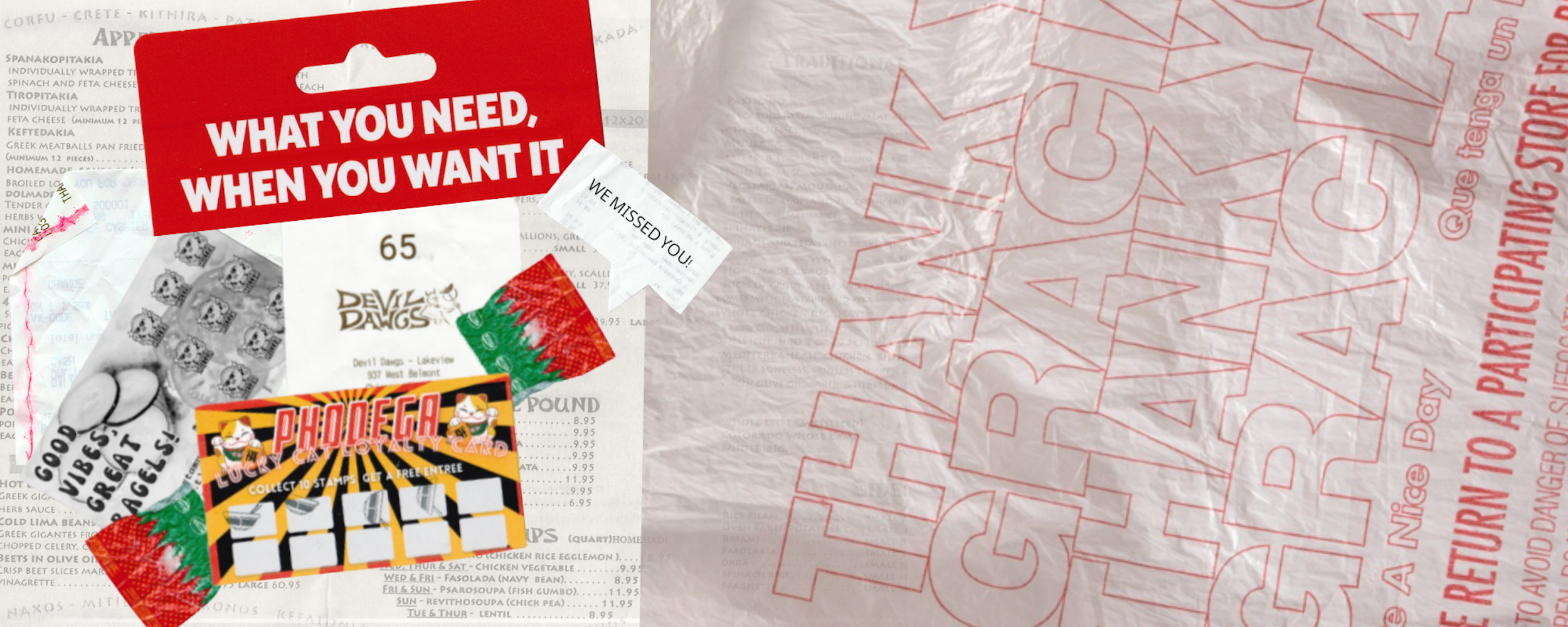
A few days later, rifling through my wallet, I passed a small red-and-gold card decorated with lucky cats and a rising sun. Across the top, in chunky yellow letters, it reads “Phodega.” On the back are ten little boxes. Collect ten stamps, get a free entree.

I have three.

Phodega is an Asian-American noodle and snack shop in Chicago’s West Town, a few blocks from a house where my partner and I stay when we’re house-sitting for family — a little borrowed-neighborhood life we slip into for a couple of weeks at a time, usually twice a year. Inside, a neon sign reading SEND NOODS hangs above a pyramid of Café Bustelo cans. Over the counter, another sign cheekily warns: “Don’t Try It. You Won’t Like It.” The menu includes salt-and-pepper chicken skins with sweet-and-sour sauce and something called the Viet Dip, a sandwich served with a little cup of pho jus.

The punch card is almost comically unsophisticated. It cannot send a push notification. It does not know where I live, what time I usually eat lunch or whether I have recently been searching for sandwiches. If I neglect it for six months, it will not announce that it misses me.

And yet it works.


Want more great food writing and recipes? Sign up for Salon’s free food newsletter, The Bite.


Every so often, while looking for a credit or business card, I flip past it and think about Phodega Fries — ribeye, cilantro, onion, jalapeños and gravy piled over seasoned fries — and decide that perhaps it is time to acquire punch number four.

During those house-sitting stretches in the neighborhood, I started feeling, embarrassingly quickly, like something of a local. The third time I walked into Phodega in about two weeks, the woman behind the counter looked up, smiled broadly and asked whether I wanted what I’d gotten last time (the Viet Dip) or wanted to try something new.

Something new, I decided. I ordered the Hainan-style chicken rice.

This is, of course, exactly the sort of interaction that restaurant apps are forever attempting to imitate. They remember what we ordered. They remind us of our favorites. They greet us by name. They offer suggestions based on what we liked last time. But there was a crucial difference in that question from behind the counter: The same thing, or something new?

She remembered me without assuming that remembering me meant she knew what I wanted.

“We know your favorites”

I like being known in restaurants. I like going to the coffee shop where the barista remembers that I take my mint tea iced and unsweetened, and I remember that she has a puppet showcase coming up. I like the brunch place where a waiter knows I want blackberry jam with my Texas toast, and I know what his nieces have been reading lately. This kind of familiarity is one of the pleasures of becoming a regular somewhere: over time, without really deciding to, two people accumulate small pieces of information about each other.

The information goes both ways.

This, increasingly, is what feels strange about the language of food apps. They borrow the vocabulary of that relationship — we remember you; we know your favorites; we missed you — while removing the reciprocal part entirely. They may know precisely what I ordered at 9:43 p.m. on a Wednesday six months ago, but there is nobody on the other side for me to know in return.

And increasingly, there is an app for almost every place we eat. The fast-food standards have them, of course, but so do regional chains and neighborhood coffee shops: download this, order ahead, skip the line, collect points, save your usual. The bargain is convenience, and often it genuinely is convenient. But increasingly, buying a sandwich or a cup of coffee also means initiating an ongoing relationship — one in which the restaurant gets a permanent little doorway into your attention long after the transaction is over.

And lately, simply remembering what we bought is beginning to look almost quaint. The next frontier is not merely knowing what we have wanted before.

It is trying to decide what we are going to want next.

A few weeks ago, I opened GoPuff, a grocery delivery app, and noticed a button I hadn’t seen before: a black square with a blue-and-white “go” glowing in the center. I tapped it.

CURATED FOR YOU.

“Pulled your late-night comfort picks,” it explained, “the usual craving fix when you order after dark.”

The screen looked almost like a cheerful kitchen-table flat-lay: products arranged over a wood-grain background, hovering around a GoPuff bag as though someone had just come home and emptied the evening’s provisions onto the table. Some were plausible: grape Uncrustables, chocolate-covered raspberries. Then came paper towels, Method cleaner, dish soap, lime sparkling water and grapefruit-scented antibacterial wipes. Apparently my 2 a.m. self is part snack-seeking raccoon, part conscientious housekeeper.

Only then did I realize this wasn’t simply a recommendation screen. GoPuff had already put every item in my cart.

The price wasn’t displayed there. I had to navigate into the cart to discover the total: $50.30.

There was an “undo auto-add” option, but it appeared in smaller, considerably less enthusiastic type. The phrase itself got me. Auto-add. The assumption was built into the feature: We have already begun shopping for you. Correct us if necessary.

I removed everything one item at a time and haven’t used the app since. I was already in the process of thinning out my reliance on delivery apps, mostly because I’ve been thinking more carefully about the cost of all that frictionless convenience — not only in money, but in how quickly every minor want can become immediately fulfillable. I haven’t sworn off delivery, nor do I particularly want to. But GoPuff made another part of the bargain newly explicit: convenience was beginning to include having my wants interpreted for me.

If a company is going to behave like a friend, eventually the friend can become presumptuous.

That is the distinction I keep returning to.

I don’t mind recommendations. Sometimes I want help deciding. But “Would you like help?” is different from “We went ahead and decided.”

Perhaps I’m protective of that difference because, of course, companies have always tried to stoke and steer desire. What feels different now is how easily they can follow us while doing it, often in the faux-friendly voice of someone who knows us — popping up on the little televisions in the backs of taxi cabs, slipping into the social media feeds in our pockets, texting us that they miss us while we’re trying to take a nap. The sales pitch has become harder to escape precisely as it has become more intimate.

Appetite, though, is not always something we know in advance.

Recently, I went to the grocery store intending, more or less, to buy ingredients for spaghetti with a weeknight Bolognese. I had already picked up a white onion, although an onion is hardly a binding commitment; so many good dinners begin that way.

The sales pitch has become harder to escape precisely as it has become more intimate.

Then I saw a jar of sun-dried tomatoes I’d never noticed before, packed with dark, jewel-like fruit. A pile of particularly good-looking spinach caught my eye. One decision tugged at another, and by the time I checked out, dinner had become rigatoni with chicken, spinach and sun-dried tomato sauce.

This is not an earth-shattering example of the mysterious contours of human desire. Dinner simply changed. But food is full of these tiny departures: the dish ordered on a whim that becomes the thing you return for; the ingredient you taste for the first time and immediately begin imagining in everything; the afternoon when what sounded good yesterday suddenly sounds terrible today.

That is one of the pleasures of appetite. Sometimes you enter the store with an idea and let yourself be talked out of it by a vegetable. Sometimes you only discover what you want as you go.

Food companies are increasingly interested in that interval, too. As Cris Tolomia reported this week at Quartz, Nestlé is piloting AI-powered simulations designed to model how shoppers might react to new products before they launch, while a separate AI system scans social media for shifts in what consumers want. The tools are part of a broader push into AI-assisted product development, including Nestlé’s work on foods for people taking GLP-1 drugs.

That is obviously several steps removed from GoPuff loading antibacterial wipes into my late-night cart. Nestlé is looking for signals across markets, not deciding what one particular shopper should eat at 2 a.m. But both illustrate how valuable it has become for food companies to arrive earlier — to understand appetite not merely after a preference has been expressed, but while it is still taking shape.

Which makes the moment when we still have to ask ourselves what sounds good feel increasingly precious: a little unoptimized space before something has been recommended, queued or dropped into a cart for us.

Maybe that is why I like that little Phodega card so much. It will wait in my wallet until I decide I want another sandwich, and when I do, someone will punch another square.

It rewards the wanting after it happens. It leaves the wanting itself to me.


The post I don’t want another restaurant app appeared first on Salon.com.

  •  

Russ Vought’s Latest Scheme to Tighten His Grip on Federal Grants

Russ Vought Wants to Veto NIH Funding

The White House’s attempts to clamp down on government funding — in direct defiance of Congress, which has largely rolled over — have become sort of cyclical.

First, there was DOGE. Then, there were a series of efforts by Russ Vought to continue DOGE’s work — if not literally, than in spirit. One particular target of his has been the National Institutes of Health, and for a period of months in 2025 Vought blocked the agency’s research grants until a mostly quiet lobbying campaign by Republican senators forced him to relent. But Vought, the White House Office of Management and Budget director, has reared his head periodically over the last year and a half, each time with a new gambit to slash government grant-making and not spend money Congress had directed the White House to spend.

Another such episode unfolded this weekend, documented in three reports from the Washington Post, which broke the news, then Politico and finally the New York Times.

This story involves Vought attempting to again assert control over NIH grantmaking — the Post reported that he was concerned that despite rounds of cuts to research into LGBTQ issues, women’s health, and other supposedly “DEI”-tainted initiatives, the NIH’s work was still overly “woke.” Politico and the Times reported another motivation for meddling in NIH grantmaking: to screw with Harvard, after repeated, failed Trump administration efforts to do so.

Vought and Trump reportedly summoned Jay Bhattacharya, the NIH director, who, while a fellow ideological traveler with Trump and Vought in some respects, is reportedly a defender of research into racial disparities in health outcomes and a friend of Harvard’s president. A big argument ensued, according to the three reports, and Bhattacharya refused to let Vought get more deeply involved with his agency’s work.

But Trump apparently thought Vought made some good points. And, so, now we are on track for a new executive order to put Vought or someone similar in charge of this research funding — to move NIH grantmaking, or at least the power to veto individual line items, from the hands of career scientists to political appointees. The Post reported on Saturday afternoon that the White House was looking into an order establishing a “commission to review the NIH’s grants”; Politico then reported on Saturday evening that Trump had directed Vought to draft such an order, and the Times reported on Sunday that work of drafting the order had already begun — it will, the Times said, “create a new external committee with the power to veto awards in the National Institutes of Health’s vast research portfolio that do not conform to Mr. Trump’s political agenda.”

This sounds a lot like another, broader plan from earlier this year to put political appointees in charge of all grantmaking that was roundly denounced by scientists and politicians of both parties, and then, in August, blocked in the Senate (and later in the House). But, typically for this Congress, not forever. Just until after the midterms.

This new attempt at an executive order would be another direct challenge to Congress, one to which Sen. Susan Collins (R-ME), Republican chair of the appropriations committee, should have to respond. We will see if she considers legislation to block it permanently, and not simply until after her reelection.

German Far-Right Continues to Rise

A new round of German elections Sunday again showed the far-right party Alternative für Deutschland gaining ground, winning a plurality in one state for the second time this month.

  • In Mecklenburg-Western Pomerania, north of Berlin, the party came in first, with 38.3% of the vote. The center-left Social Democrats (SPD) came in second at 35.4%.
  • Earlier this month, in another German state, Saxony-Anhalt, AfD almost won an outright majority, with 44% of the vote.
  • In Berlin, which also held elections Sunday, AfD’s strength grew to 16.3% — significant in the capital. A left-wing party, Linke, came in first place with 25.3% of the vote.
  • Chroniclers of the far-right see the party’s rise as a particularly dark sign, given that it is the first time since the 1940s when the far-right in Germany has shown such strength.
  • Terrible numbers for Chancellor’s Friedrich Merz’s party in recent elections also raise the possibility that AfD’s rise could challenge the national government.
  • AfD is extreme even by the standards of European far-right parties, stridently opposing immigration and LGBTQ rights while also seeking to revise how German history is remembered. The party shares many connection with Trump world.
  •  

What is the tiny handle on a maple syrup bottle actually for?

maple syrup bottle handle — Ano Lobb / CC BY 2.0 (Wikimedia Commons)

This photo of a classic glass maple syrup bottle was posted on the Things for Ants subreddit. This page shares ant-sized objects. The creepy idea here is that the tiny glass handle is just the right size for some little ants to sit inside of and eat the sugar (ew!). — Read the rest

The post What is the tiny handle on a maple syrup bottle actually for? appeared first on Boing Boing.

  •  

Pluralistic: Google is a scammer's paradise (05 Aug 2026)


Today's links


A hand-tinted Depression-era photo of an elderly man entering a building whose door has the hand-lettered words 'Hotel Rooms 30¢.' The door is half-covered with the intaglio portrait of Ben Franklin as depicted on a US$100 bill; he wears a robber's domino mask.

Google is a scammer's paradise (permalink)

Forget "Don't be evil"; Google's true motto is a form of vulgar spidermanism: "With great power comes no responsibility." The internet's de facto boss is an absentee landlord.

Google – a thrice-convicted monopolist – is the gateway to the internet, with more than a 90% search market share that it attained by buying out all its competitors and bribing Apple more than $20b/year not to start a rival search engine:

https://www.democracynow.org/2024/8/6/google_monopoly

Google likes to position itself as a wise steward of the internet. They say they use their vast troves of data about the internet and its users to connect the right person with the right information at the right moment. As their mission statement has it, "organize the world's information and make it universally accessible and useful":

https://www.google.com/intl/en_us/search/howsearchworks/our-approach/

The tacit argument is, "Sure, we repeatedly violated antitrust law in order to monopolize the internet, but the internet needs a monopolist. It's scary out there! We have amassed power so that we can protect and guide you."

It's a bullshit argument and no one should accept it – but even if you think it's worth harnessing monopoly power to promote a wise king to rule over the internet, you'd still want Google to take that responsibility seriously. If we're to have a landlord for our civilization's digital nervous system, let's not have it be an absentee landlord.

Google is an absentee landlord. In 2019, they chose to deliberately worsen search results in order to make you search repeatedly to find the information you're seeking, because every fresh query lets them serve fresh advertisements:

https://pluralistic.net/2025/05/26/babyish-radical-extremists/#cancon

Not all of Google's enshittification can be attributed to deliberate sabotage. Much of it is the result of neglect. Ask Google for a product review and they'll pass over the most rigorous, honest websites on the internet in favor of affiliate scammers who repackage Amazon best-of lists to peddle overpriced, underperforming junk that's sometimes so bad it's dangerous:

https://pluralistic.net/2024/02/21/im-feeling-unlucky/#not-up-to-the-task

Google keeps announcing that it Takes This Problem Very Seriously – and then nothing happens:

https://pluralistic.net/2024/05/03/keyword-swarming/#site-reputation-abuse

And of course, Google AI search results present the company with a highly refined and confident-sounding way to launder spam into product recommendations:

https://pluralistic.net/2025/07/15/inhuman-gigapede/#coprophagic-ai

Could Google do better? Provably so. Kagi, a small company that runs a search engine powered by Google's own search index consistently delivers results that are substantially superior to Google's – using Google's own infrastructure:

https://pluralistic.net/2024/04/04/teach-me-how-to-shruggie/#kagi

If Kagi (a startup with a handful of engineers) can extract useful search results from Google's databases, then Google – a thrice-convicted monopolist that's had its pick of thousands of the top computer scientists from the world's most prestigious universities for a generation – could also do so.

They just choose not to.

They're too big to fail. They're too big to jail. They're too big to care.

Google's AI search isn't a way to fix its broken core product: it's a way to partially remediate the damage Google itself inflicted on the open internet, while imprisoning the web in a walled garden that would make Steve Jobs drool:

https://pluralistic.net/2026/06/29/arsonist-firefighters/#im-feeling-lucky

It's a deadly combination: Google has committed hundreds of billions to stock buybacks and its AI money-furnace, financed by mass layoffs targeting the people who keep the core services useful. The too-big-to-care company is still the internet's gatekeeper, but half the guards at the gate have been fired and the other half have pulled so much overtime that they keep falling asleep on the job.

Google has become a scammer's paradise.

Take Google's "answer box." This is the part of the search results page that tries to answer your query directly, without sending you elsewhere for that info. Back in 2023, Google's Answer Box was taken over by scammers who impersonated airline help desks. When Google's users searched for airlines' toll-free phone numbers, Google directed them to phones that rang in the scammers' boiler room, where they were tricked into giving up their passport info and credit card numbers to boiler-room thieves:

https://www.nbcnews.com/tech/tech-news/phone-numbers-airlines-listed-google-directed-scammers-rcna94766

(This was an especially devastating attack because the airlines themselves hide their customer service phone numbers – as enshittified monopolists, they want your money, not your complaints – so it's normal to search Google for the number you're seeking, rather than scouring the airlines' deliberately confusing customer service sites.)

This is especially galling because Google has an extensive "verified merchant" program that goes to enormous lengths to establish the true identity of every merchant whose businesses are listed on Google, in maps, ads and search results. Google "knows" which URLs belong to the airlines. If it can be tricked into scraping a different website for the airlines' phone numbers, that's because Google couldn't be bothered to connect its own database of canonical airline URLs to the process that serves phone numbers to the 90% of the web-using public who search with Google.

Google's database of the canonical URLs for businesses doesn't stop at airlines or even large businesses. Nearly every local merchant has undergone Google's verification process, which includes a step where Google physically mails a postcard with a unique number to the merchant's registered address, which the merchant must then key into Google to prove that they're located where they say they are.

Despite this, Google's ad-sales system will happily sell anyone the right to advertise a different website for queries for specific merchants, and those ads appear above the real result for the business's website. To make this even worse, Google's spent years making it more difficult to distinguish ads from "organic" search results, changing the font and size of the "ad" warning to make it harder to spot, and making the font and color of the ad itself closer to the color of the search results below it.

This is a gift to fraudsters. I had my own run-in with it in 2023, when I was tricked by a Google ad into ordering dinner from my local Thai place using a scam site that had cloned the restaurant's menu. The scammers marked up the price by 15%, then passed the order on to the restaurant, pocketing the vig:

https://pluralistic.net/2023/02/24/passive-income/#swiss-cheese-security

This scammer – based out of a UC Berkeley dorm-room – had copied hundreds of restaurant websites, then bought Google ads for the restaurants' names, ensuring that searchers would see the scam result before the real one. Remember: Google knows what the true URL is for every one of those restaurants but it sold the scammer ads for a different URL that appeared when people searched for the restaurant by name.

Google could trivially add a step to the ad sales pipeline that detects mismatches between a merchant's known URL and the URL in an ad bought against the merchant's name. It could automatically resolve these mismatches by sending an email to the merchant's verified email address that says, "Hey, are you buying an ad with a new URL? If so, just reply to this email."

I don't know why Google doesn't do this. Maybe they make huge sums from these scam ads and they don't want to forego the revenue. Or maybe they just don't care.

Whichever it is, there's real consequences for this negligence by the internet's absentee landlord. Take abortions: fake abortion clinics – where pregnant women are bullied or tricked out of the abortions they're seeking – buy Google ads against the names of real abortion clinics. Google makes millions sending abortion-seekers to fake abortion providers:

https://pluralistic.net/2023/06/15/paid-medical-disinformation/#crisis-pregnancy-centers

Google started off as the ideal "intermediary" – the fancy economist's term for a "middleman." They took as their duty to figure out the best websites for you to look at based on your interests, serving as an honest broker between internet users and internet publishers. In the quarter-century since the company's founding, as it transformed itself into a monopolist, it developed the curse of every intermediary: it got Main Character Syndrome.

This is Tim Wu's formulation: the reason for an intermediary existence is to serve the parties to the transaction. Ebay says it exists to connect buyers and sellers, Uber is supposed to connect drivers and riders, dating sites are supposed to connect people with their love-matches. But intermediaries are cursed with an enviable position: by dint of sitting between these different groups of people, the intermediary learns everything about both sides of the transaction, while each side only knows about its own position.

Amazon knows the price you're willing to pay, it knows who's set the lowest price, and it knows how many identical items that match your query are for sale. But the sellers don't know any of that, and you only know some of it. By capitalizing on that information (rather than using it to efficiently match buyers and sellers), Amazon can match you with the sellers willing to pay the highest junk fees, rather than the ones who offer the best price for the best goods:

https://pluralistic.net/2023/11/03/subprime-attention-rent-crisis/#euthanize-rentiers

This is Wu's Main Character Syndrome in action. Once Amazon attains a dominant market share, it can maximize its own welfare at the expense of its buyers and sellers, transforming itself from a helper to a parasite:

https://www.lawfaremedia.org/article/lawfare-daily–tim-wu-on–the-age-of-extraction

Google says it wants to "organize the world's information and make it universally accessible and useful," but every dime it spends fighting fraud (a critical part of this mission!) is a dime it can't spend on stock buybacks, executive compensation and AI servers. "Organize the world's information and make it universally accessible and useful" is the mission of a good intermediary; "do the absolute minimum to fight fraud" is the mission of a formerly good intermediary with terminal Main Character Syndrome.

Google keeps finding ways to expose its users to fraud while lining its own pockets. That restaurant markup scam that caught me in 2023? Three years later, it's way worse.

San Francisco City Attorney David Chiu just filed suit against GuestReservations.com, BookOnline.com and Booking Holdings for running a massive version of the restaurant menu scam – one that extracted millions from people booking hotel rooms:

https://www.kron4.com/news/bay-area/alleged-sf-hotel-booking-scam-had-up-to-85-markup-fees-city-attorney/

Here's how the scam worked: these companies put up websites with deceptive URLs, like SanFranciscoMarriott.GuestReservations.com, and then bought the associated Google ad-word ("San Francisco Marriott"). At the top of Google searches for "San Francisco Marriott booking" was the ad for SanFranciscoMarriott.GuestReservations.com. This site would sell you a room at the Marriott, at a markup of 35% to 85%.

This is a pure ripoff. If Google had served the correct result at the top of the page – if it had used its own database of confirmed merchants and their associate websites to validate its ads – then people booking hotels would have saved 35% to 85% on their rooms.

City Attorney Chiu says that the perps here registered domains for all kinds of hotels, even tiny ones in small towns, all over America. That means that it's not just visitors to San Francisco who got screwed by these creeps – it's also San Franciscans who booked hotel rooms around the country.

Google bears the lion's share of the blame here, but Visa and the other credit card companies are critical to these scams. Card companies allow merchants to set terms of service that refuse refunds under almost any circumstances, and, more often than not, the card issuers side with the merchants over their own customers when they call to cancel a charge from one of these scammers.

I discovered this for myself when I was tricked into buying theater tickets from a ripoff site that had registered the URL of the show I wanted to go to. I figured out that I'd been rooked within a minute of clicking the buy button, but it took months and multiple appeals – and ultimately a threat to cancel my credit card – to get Visa to refund me.

Visa – another bloated monopolist with terminal Main Character Syndrome – can see that it has merchants who generate zillions of appeals and charge-backs because they run scam businesses like these. They could treat these merchants as the fraudsters they are, but because the crooks wreathe themselves in gauzy excuses and lengthy terms of service, Visa enables these massive, nationwide cons.

Google, Visa and the other monopolists who serve as de facto regulators for our society have arrogated to themselves the power to observe every transaction and block the obvious scams. We pay for their failure to take minimal, obvious steps to protect us from the scammers who thrive on their platforms.

Why should they? They're the main characters. They're Bizarro-world spidermen, whose great power confers no responsibility.


Hey look at this (permalink)


A shelf of leatherbound history books with a gilt-stamped series title, 'The World's Famous Events.'

Object permanence (permalink)

#25yrsago Steve Ballmer: DEVELOPERS DEVELOPERS DEVELOPERS DEVELOPERS DEVELOPERS http://www.ntk.net/ballmer/dancemonkeyboy.mpg

#15yrsago HOWTO E-Z realistic corpse from a cheap plastic skeleton https://propnomicon.blogspot.com/2011/08/quick-and-dirty-corpses.html

#15yrsago $300 Million Button: making customers create logins to buy cost etailer $300M/year https://centercentre.com/

#10yrsago 1 billion computer monitors vulnerable to undetectable firmware attacks https://www.defcon.org/html/defcon-24/dc-24-speakers.html#Cui

#10yrsago Stiglitz quits Panama’s official money-laundering panel over internal sabotage https://www.reuters.com/article/us-panama-tax-idUSKCN10G24Z/

#10yrsago BBC will use surveillance powers to sniff Britons’ wifi and find license-cheats https://web.archive.org/web/20160806155022/https://www.telegraph.co.uk/news/2016/08/05/bbc-to-deploy-detection-vans-to-snoop-on-internet-users/

#10yrsago How and why to short Uber https://qz.com/707947/investors-have-placed-a-one-way-bet-on-uber-which-made-us-want-to-figure-out-a-way-to-short-it

#5yrsago Facebook's official disinformation research portal is a bad joke https://pluralistic.net/2021/08/06/get-you-coming-and-going/#potemkin-research-program

#5yrsago Scammers sell griefers social media banning services https://pluralistic.net/2021/08/06/get-you-coming-and-going/#curse-of-bigness

#1yrago Which jobs can be replaced with AI? https://pluralistic.net/2025/08/06/unmerchantable-substitute-goods/#customer-disservice


Upcoming appearances (permalink)

A photo of me onstage, giving a speech, pounding the podium.


A screenshot of me at my desk, doing a livecast.

Recent appearances (permalink)


A grid of my books with Will Stahle covers..

Latest books (permalink)


A cardboard book box with the Macmillan logo.

Upcoming books (permalink)

  • "The Post-American Internet," a geopolitical sequel of sorts to Enshittification, Farrar, Straus and Giroux, 2027
  • "Unauthorized Bread": a middle-grades graphic novel adapted from my novella about refugees, toasters and DRM, FirstSecond, April 20, 2027

  • "Enshittification, Why Everything Suddenly Got Worse and What to Do About It" (the graphic novel), Firstsecond, 2027

  • "The Memex Method," Farrar, Straus, Giroux, 2027


Colophon (permalink)

Today's top sources:

Currently writing:

  • “Once Is Enemy Action,” a science fiction novel about the origins of modern technofascism. Today's words: 623 (1336 total).
  • "The Post-American Internet," a sequel to "Enshittification," about the better world the rest of us get to have now that Trump has torched America. Fourth draft completed. Submitted to editor.

  • A Little Brother short story about DIY insulin PLANNING


This work – excluding any serialized fiction – is licensed under a Creative Commons Attribution 4.0 license. That means you can use it any way you like, including commercially, provided that you attribute it to me, Cory Doctorow, and include a link to pluralistic.net.

https://creativecommons.org/licenses/by/4.0/

Quotations and images are not included in this license; they are included either under a limitation or exception to copyright, or on the basis of a separate license. Please exercise caution.


How to get Pluralistic:

Blog (no ads, tracking, or data-collection):

Pluralistic.net

Newsletter (no ads, tracking, or data-collection):

https://pluralistic.net/plura-list

Mastodon (no ads, tracking, or data-collection):

https://mamot.fr/@pluralistic

Bluesky (no ads, possible tracking and data-collection):

https://bsky.app/profile/doctorow.pluralistic.net

Medium (no ads, paywalled):

https://doctorow.medium.com/

Tumblr (mass-scale, unrestricted, third-party surveillance and advertising):

https://mostlysignssomeportents.tumblr.com/tagged/pluralistic

"When life gives you SARS, you make sarsaparilla" -Joey "Accordion Guy" DeVilla

READ CAREFULLY: By reading this, you agree, on behalf of your employer, to release me from all obligations and waivers arising from any and all NON-NEGOTIATED agreements, licenses, terms-of-service, shrinkwrap, clickwrap, browsewrap, confidentiality, non-disclosure, non-compete and acceptable use policies ("BOGUS AGREEMENTS") that I have entered into with your employer, its partners, licensors, agents and assigns, in perpetuity, without prejudice to my ongoing rights and privileges. You further represent that you have the authority to release me from any BOGUS AGREEMENTS on behalf of your employer.

ISSN: 3066-764X

  •  

paris restaurants (new updates)

I’ve been featuring some new and revisited favorite restaurants in Paris, writing them up in my newsletter. You can find a list of my Favorite Restaurants in Paris on my website but here are links to the posts in my newsletter of places I’ve eaten at lately…

To get more Paris tips (and stories and recipes) sent right to your Inbox, subscribe to my newsletter here:

  •  
❌