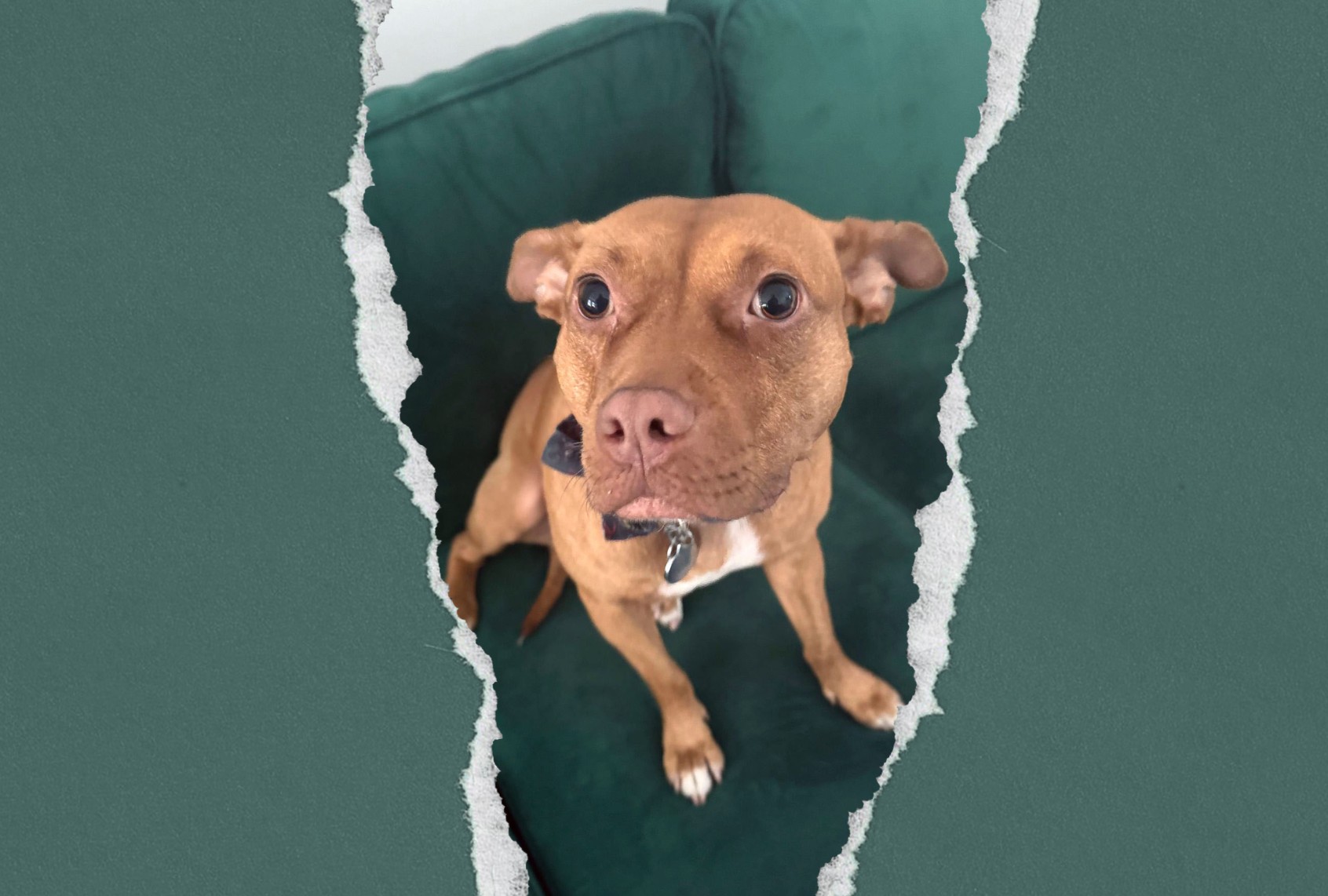
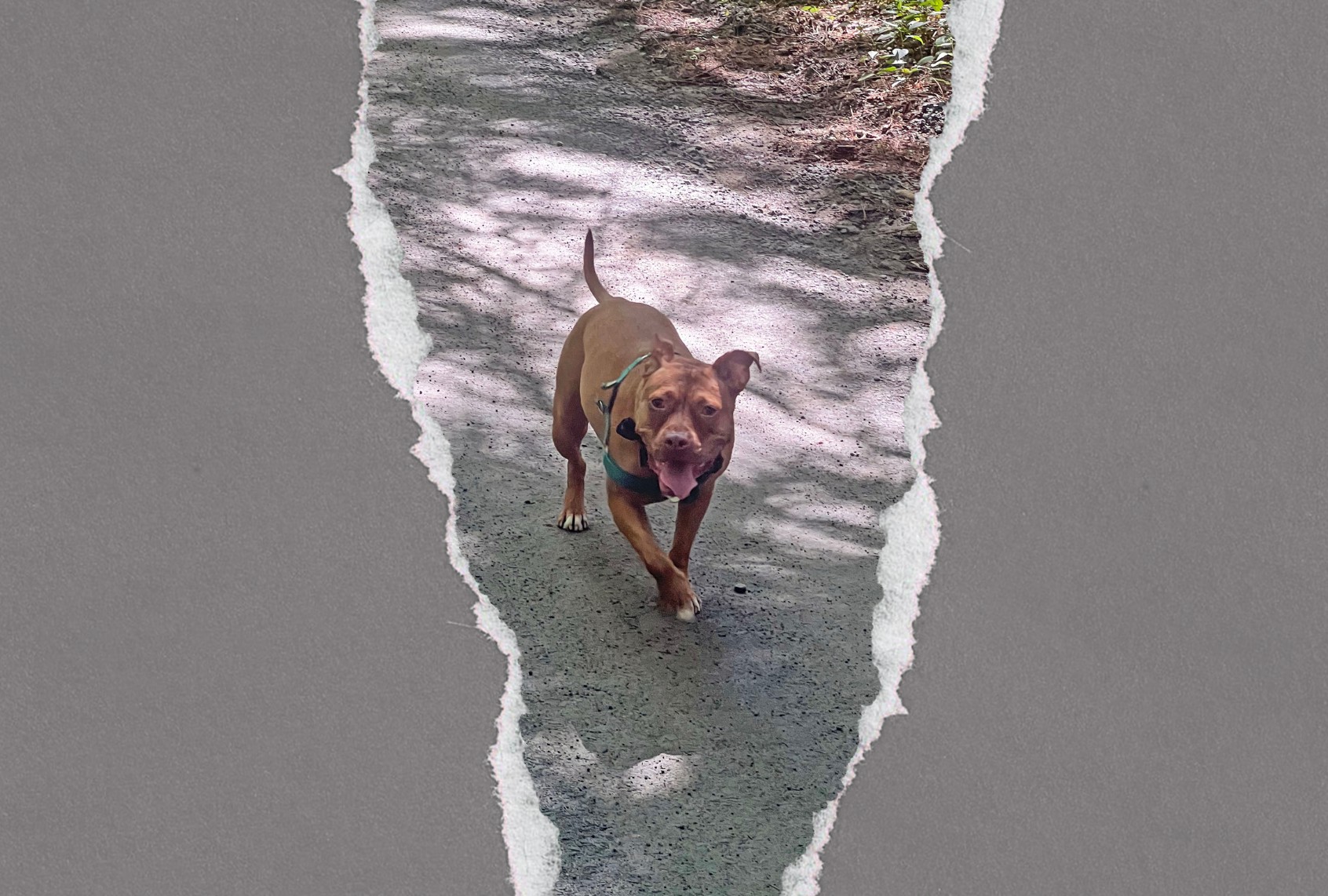
You’ve probably seen it with your own eyes before, but a research team that published its findings in the journal Science says it noticed it at an epigenetic level: big dogs age faster. Chihuahuas, for as obnoxiously yappy as they are, seemed to last forever, while Great Danes, those big lovable galoots, give you about a decade before they cross the rainbow bridge.
Researchers at Arizona State University analyzing DNA from nearly 900 dogs in the Dog Aging Project finally know why big dogs don’t last as long. It all has to do with rogue “jumping genes.”
Scientists Say ‘Jumping Genes’ Could Explain Why Big Dogs Have Shorter Lives
Inside dog DNA, a specific class of “jumping” genes called LINE1s exists. Normally, a biological process called DNA methylation stamps chemical tags onto these genes to keep them locked down, but as big dogs age, that regulatory process falls apart and LINE1s start shaking loose, jumping between chromosomes, shredding DNA apart in the process, thus causing instability in the cells, triggering inflammation and cancer.
This happens to all dogs, but in big dogs it happens catastrophically and early. Giant breeds shed roughly 35 percent more LINE1 methylation per year than smaller dogs that fit in a purse.
Or, to put it less scientifically: there’s just too much dog for their bodies to keep up with. Humans specifically bred big dogs for their rapid growth, but that early growth leads to a genetic mess later in life, as their biological clocks essentially run twice as fast as a smaller dog’s.
The researchers think these out-of-control jumping genes could be a universal mammalian aging mechanism, and that learning more about them could eventually help us learn a little about ourselves, too, since dogs get a lot of the same age-related diseases that we do, largely because we share environments.
Bulkhead has responded to Wardogs Season 2 backlash, admitting that its progression changes in the new patch were the “wrong call.” Following complaints from players, the studio has promised balance fixes and is even considering releasing Season 3 content early.
Wardogs Developer Apologizes For Season 2 Launch
Screenshot: Bulkhead
Wardogs Season 2 recently launched and quickly sparked backlash from playersupset that the new content was too easy to complete. Many complained that the update didn’t deliver the fresh start they expected, with some users even unlocking most of the end-game gear within days of the wipe. Now, developer Bulkhead has responded to the criticism in a post on X.
“Season 2 was meant to be a fresh start, and for a lot of you it hasn’t felt like one. We sped up progression on deliberately and tried to balance the game better, as set out in the patch notes, but it was the wrong call. Some players are reaching end game gear like Tier 4 armour and MBTs within days, so the wipe never really landed.”
ANNOUNCEMENT
Season 2 was meant to be a fresh start, and for a lot of you it hasn't felt like one. We sped up progression on deliberately and tried to balance the game better, as set out in the patch notes, but it was the wrong call.
Bulkhead then admitted that Wardogs Season 2 had balance issues that they plan to fix. “Some things are clearly out of balance and we’ll fix them. Others have the community split, so we want to see how those play out first.”
Will Wardogs Season 2 Get a Reset?
Screenshot: Bulkhead
Despite calls for another progression wipe, Bulkhead confirmed that it will not reset Wardogs Season 2 this weekend. According to the developer, doing so would be unfair to players who are already enjoying the progression.
Instead, the studio is considering a significantly earlier launch for Season 3, along with some of its planned content, to give players another fresh start. Bulkhead says it will share more details in its developer vlog next week.
Whether that will be enough to turn around player sentiment remains to be seen. For now, Bulkhead is working on balance fixes, with an earlier Season 3 potentially giving players the fresh start they expected from Season 2.
We’ve long known that humans are susceptible to something called the “bouba-kiki effect,” a weird trick of the brain that links the nonsense words “bouba” and “kiki” to specific shapes. “Bouba” feels soft and rounded, while “kiki” feels sharp and spiky, both looking a little like comic-book impact effects, or stars, with solid centers surrounded by spokes. Not that you needed me to explain that. You probably already imagined it.
Researchers at the University of Parma gathered 51 domestic dogs and their humans to test whether the dogs share this quirk of the brain. Sitting in a room flanked by screens displaying the respective shapes, the dogs listened to a human voice broadcast the nonsense words while cameras and AI tracked their gaze.
When “bouba” played through the speakers, the dogs lingered on the rounded shape; when “kiki” dropped, they stared harder at the spiky shape.
Dogs and Humans Share a Strange Brain Quirk, New Study Finds
To make sure the owners weren’t influencing the results, the researchers reran the trial with owners wearing headphones blasting rock music. The results stayed the same.
The first cohort showed only a mild overall bias toward the spikier “kiki” shape, which the scientists attribute to the fact that dogs’ faces look much more angular and pointy than ours. This goes hand in hand with humans showing a similarly slight bias toward “bouba,” since we’re used to seeing rounded features. But in the second test, where the human owners wore headphones, the dogs were just as likely to think of “kiki” as spiky and “bouba” as round as we were.
This suggests that whatever drives our ability to associate sounds with symbols isn’t exclusive to us, as recent studies also show that baby chicks and even macaque monkeys seem to agree that “kiki” is spiky and “bouba” is round. This sensory wiring could be shared across species.
Who knows, maybe other animals associate the sharpness or roundness of words with the sharpness or roundness of shapes?
This photo of a Borzoi lying in a patch of green grass is visually stunning, yet silly because of the angle. The angelic pup looks more like a rug than a canine spread out in the grass. His fur doesn't help him look like a dog because it's so flat and long. — Read the rest
Getting older means learning that peace of mind is absolutely, 100% for sale. Or, at least for rent. When I rescued my dog, Ivy, I made a purchase, an investment. But in New York, everything seems to be temporary.
Hypervigilance is the name of the game when you have a reactive dog. It wouldn’t pose as much of a problem if she weren’t such a social being. She loves meeting new people and runs faster than any dog I’ve ever seen. To me, Ivy is a perfect dog. She cuddles next to me when I’m sick and sits on my chest when I cry. But when she sees another dog, everything changes: she snarls, barks loud enough to startle a city block, and lunges with so much force it takes all my strength to hold her back. In just one moment, she is reduced to an aggressive, rescue pit bull and nothing more.
Getting older means learning that peace of mind is absolutely, 100% for sale. Or, at least for rent.
I knew that moving to New York would be a challenge, but I didn’t think about how, with dog parks off the table, there is no off-leash space for her. And I thought, “I wonder if there’s something like Airbnb for yards.” So I googled that phrase, and Sniffspot came up. Their homepage reads, “Rent safe and private dog parks hosted by locals.” One of the locations was a 15-minute walk from my apartment, and for $15 an hour, Ivy could play and run without any risk. It wasn’t a huge space, but it was something.
The whole experience got me thinking about rental culture and privatization. Everything we need (privacy, calm, companionship, etc.) costs extra. The rise of the gig economy is well-documented. We rent bikes, dresses and chargers. We rent side gigs. We rent other people’s time to clean our homes, walk our dogs and run our errands.
Services like rentable yards and InstaCart highlight something deeper: the way city living often turns basic needs into things we have to schedule and pay for. Open space becomes a subscription. Saving time and carving out a little peace of mind for ourselves becomes a luxury.
Everything we need (privacy, calm, companionship, etc.) costs extra.
Take dog yoga and kitten therapy. Our love for animals runs so deep, and our need for their companionship is so strong, we’ll pay for it by the hour. These programs are especially exciting for people who can’t afford to have a pet full-time. Pat Apap, a graduate assistant at NYU, helped plan kitten therapy for grad student appreciation week. “This served as our mental health or wellness style event.” The process was fairly simple. “They were able to provide six kittens for two hours of ‘therapy’ sessions for students, and on top of that, they provided materials going over how to foster and adopt the kittens, so there was the opportunity for our community to support theirs.” Just a couple of phone calls and there they were, kittens for everyone’s enjoyment. Michelle Rifkin Mamaradlo owns The Party Pups in Staten Island. “ I do everything from baby parties to adults, to elderly homes, to employee parties.” Mamaradlo breeds cocker spaniels that live with her when they’re not “working.” Currently, she has eleven “champion trick-trained” dogs that can even ride skateboards if the party gets too dull. She says her business succeeds because of one universal truth: “ people love animals.”
It’s easy to laugh at pet culture until you realize this market didn’t emerge out of nowhere. The loneliness epidemic, combined with late-stage capitalism, means that anything can be rented. Who said that money can’t buy happiness? The desire for connection is so strong that, in the fallout of remote pandemic work, people are willing to pay just to work next to another person.
Olivia Bannerman, 27, used WeWork twice, but it didn’t stand out to her. She couldn’t find a coffee shop that fit her needs. Poor Wi-Fi, time limits, and a lack of seating are common issues she still encounters. I asked her if she had ever worked at a public library as an alternative, and she said that she “honestly hadn’t even considered that.” The one bonus of a paid work environment? Security. “ I felt like I could get up and go pee and just leave all my stuff . . . I wasn’t worried about theft or any weirdness.” Even businesses are renting offices now. Regus offers companies space “by the hour, day, or as long as you need,” according to its website. Lana Zolzak, an associate of Regus, told Salon that its flexibility is what sets it apart. “Some people don’t want to have to get a long-term place,” she says, and signing a lease doesn’t allow any wiggle room for exigent circumstances. Plus, when companies use Regus for their office, they deal with “bills, cleaning, and everything.” While Regus’ co-workspaces are more common among young people and start-ups, Zolzak says, established businesses are opting for office rental post-COVID. As remote work ends, people need a place to go, she adds.
It’s easy to laugh at pet culture until you realize this market didn’t emerge out of nowhere. The loneliness epidemic, combined with late-stage capitalism, means that anything can be rented.
I’ve seen a lot of talk online about the loss of “third spaces.” These are areas separate from home and work, including parks, libraries, coffee shops, bars, etc. Bannerman lives on the Upper West Side and has noticed a lack of third spaces. Every option has a catch: cafés close early, bars are solely focused on alcohol, and restaurants are expensive. She commented that the hostility of anti-homeless architecture and police presence has even made parks less enjoyable. She said, “I think it’s important to get out; you have new experiences, you learn new things about yourself. You develop friends, memories and connections. You get closer to your community, which can make your life fuller and richer.”
(Illustration by Salon / Annie Bennett / Dikas Studio) Ivy in relax mode
I think that renting has also soared because it’s been normalized by the unaffordability of ownership. ZipCar is more affordable than a car payment and a 12-month lease is a great option for those of us who can’t afford to buy a home. Having a pet is expensive, but an hour of dog yoga is cheaper. Renting used to be a phase. Now it’s a way of life.
David Adams, the founder of Sniffspot, spoke with me about the company’s immense growth over the last seven years. He said that their rise in popularity has been slow but steady. “It’s been a gradual process of learning that this is something people want.” As of June 2025, Sniffspot has over 30,000 hosts and almost one million guests.
The sites range from the U.S. to Australia, Canada, and even South Africa. Adams saw a gap in the market for his app because “people love making their dogs happy . . . and Sniffspot can be part of that.” He explains that dog parks are important but unpredictable. In addition to dogs like Ivy, who can be aggressive towards others, there are unknown diseases, people, and elements in a public park. When Adams lived in Seattle with his pets, he realized that all these factors disappeared with private land that he noticed was “otherwise not being used.” These days, in cities, especially, he argues, “dogs are bred to run free and that’s just not possible.”
Airbnb has simply changed the way we look at assets. Adams said that even though that company was his primary inspiration, he has also taken measures to ensure that Sniffspot doesn’t follow a similar path towards unfair practices that draw public criticism. For instance, the business model doesn’t lend itself to people buying property just to rent out. And since the sales are hourly, not nightly, hosts don’t make enough to rely on it. It’s a quieter, more sustainable kind of sharing economy, one where empty spaces serve a specific emotional need, not just economic opportunity.
Loving a dog like Ivy is a profound act of emotional labor. It requires you to be patient, calm, gentle and alert. It’s not that I haven’t tried to fix the behavior. After thousands of dollars in training, she’s able to happily interact with people in controlled spaces. But New York City is not controlled. I may have rescued her from a cramped pen in a city pound, but I brought her into a world that wasn’t designed for her. And I’m not sure it was designed for me either. Sniffspot is a great resource to have in my back pocket, but it’s not a catch-all solution. People say Ivy and I act alike and even look alike. I don’t know if that’s true, but we do have one thing in common: we’re both relying on rental culture just to get by.
For over a hundred years, Denali's huskies have patrolled 1,000s of miles of wilderness. Hauling supplies through desperate conditions, these dogs are government employees who receive no paycheck. The Trump Administration doesn't want to pay for their caretakers.
The kennel program can't simply be paused during a funding shortfall and restarted when money becomes available, he said.

 Login
Login